Blog

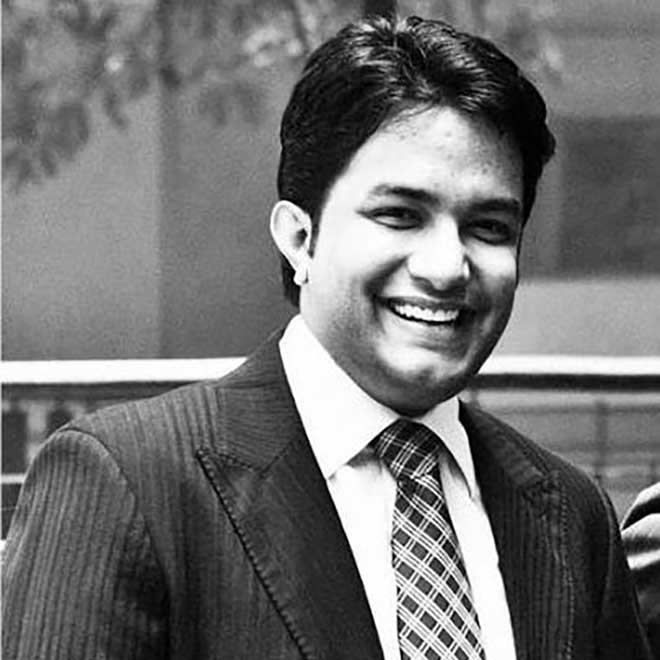
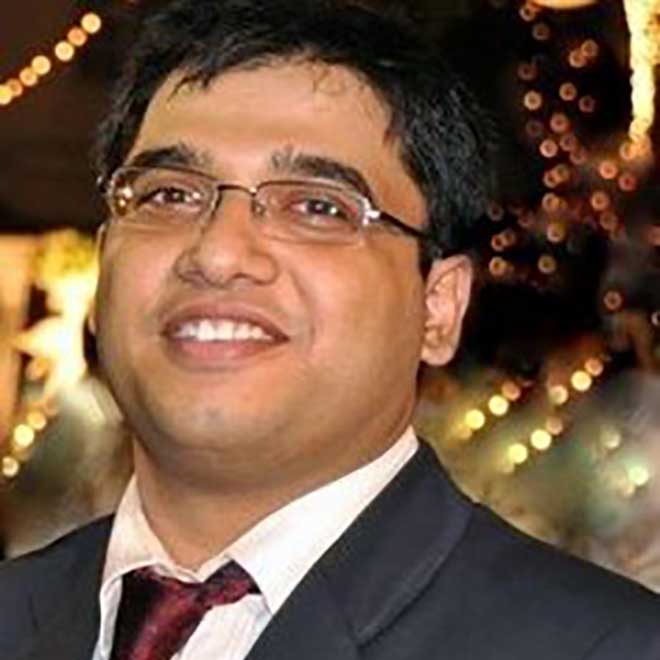
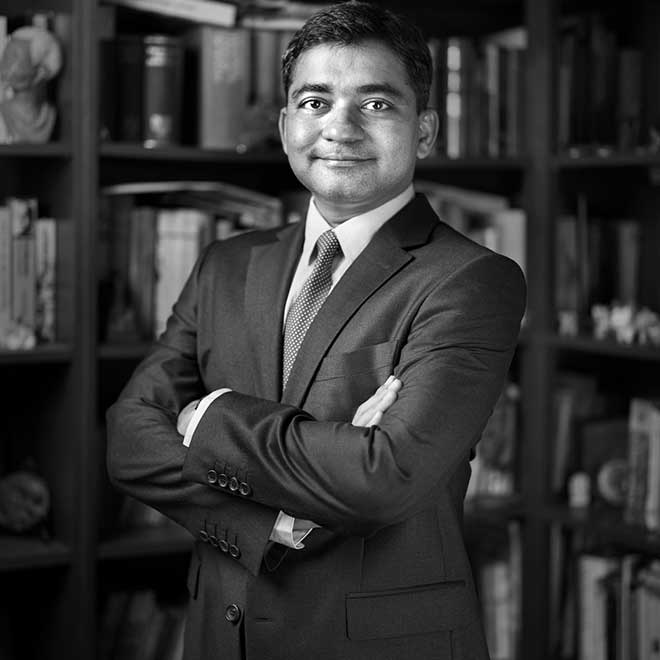
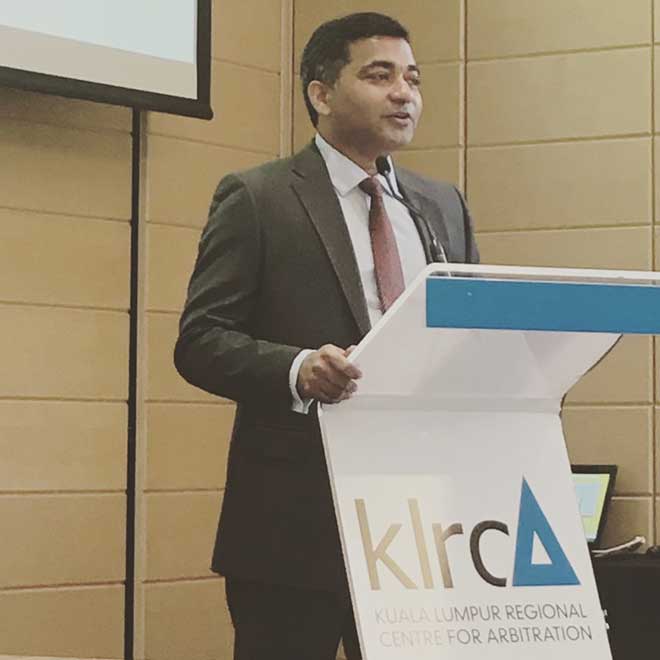
  • Iqbal Khan, Partner, Shardul Amarchand Mangaldas, on his time in LSE, his diverse experience, and plans for the future

    Iqbal Khan, Partner, Shardul Amarchand Mangaldas, on his time in LSE, his diverse experience, and plans for the future

    Iqbal Khan graduated in law From London School of Economics and Political Science in 2006. Prior to that he had attended DePaul University, where he pursued his Bachelor’s Degree in Computer Science. Following his graduation in law, he went on to pursue his JD from Columbia School of Law as a GradeHarlan Fiske Stone Scholar. He is currently Partner at Shardul Amarchand Mangaldas, where he is member of the Private Equity and Mergers & Acquisitions Practice Group. He advises some of the largest sovereign wealth funds, global private equity funds and strategic corporates, and specializes in private equity investments, mergers and acquisitions (both domestic and cross-border), joint ventures, advisory on foreign investment laws and corporate and commercial laws. His experience also includes advising on franchising and restructuring laws.

    In this interview we talk to him about:

    • Transitioning from science to law
    • Working for international and Indian firms
    • Striking a work-life balance

    How would you like to introduce yourself to our readers?

    I can best describe myself as an M&A / PE deal junkie with a passion for cricket, food and Bollywood films. I am currently an equity partner at Shardul Amarchand Mangaldas. My work primarily focuses on M&A and PE investments.


    What motivated you to switch from science to law?

    (Iqbal transitioned to law after completing his B.Sc. in Computer Science from DePaul University.)

    At DePaul, which then had one of the best computer sciences programmes in the U.S., I completed my four year degree in less than three years and then started consulting for Cambridge Technology Partners and Microsoft, respectively. While on a flight to a client’s office, I found a book, Barbarians at the Gate – The Fall of RJR Nabisco in my seat cover. This book changed my life. Barbarians at the Gate details the story of the leveraged buy-out of RJR Nabisco (a must read for every aspiring M&A / PE lawyer).  This book was a turning point in my career and inspired me to change direction, and pursue a career in law with a focus on mergers and acquisitions and private equity investments.

    In fact for all their many differences, law and computer science are surprisingly similar disciplines. They both train you to make decisions and to articulate a framework for managing exceptions. My background in computer sciences had given me solid analytical skills and these were indispensable in my study of the law. Hence, my biggest challenge, as we lawyers like to say, was not substantive, but procedural.

    Pursuing a law degree also meant placing on hold other opportunities for career development.  So I declined several promising roles with start-ups and consulting firms; and in retrospect I am happy with the decisions I made. Law school also meant a significant financial commitment and at the time this was challenging though I was fortunate to have a great deal of moral support in pursuing the degree in spite of the fact that it seemed more attractive to continue working at the time.


    Tell us a bit about your time studying law at LSE. 

    The LSE, in my opinion, is one of the best educational institutions in the world.  If we ever have kids and if they ever decide to study abroad, I would recommend that they go to the LSE.  Its teaching philosophy is modelled after its moto — rerum cognoscere causas, a line taken from Virgil’s Georgics meaning “to know the causes of things.”  I have fostered relationships at the LSE, both with academics and students, each of which I value deeply, and hopefully, when I am even more established and successful, I would like to give back to the LSE – both financially and with my time.

    In terms of activities, while I was a student at the LSE, I was on a very tight budget because I was self-funding my education then. So I enjoyed London – a colloquial for I walked everywhere and ate what I could afford.  And this helped me, at in my view, become a more humble man.  And therefore, I believe the LSE gave me a great education in law, and life at the LSE, gave me a great education in life!


    What are the parameters that must be considered in deciding what the next step should be after graduation?

    I place a great deal of value on work experience at a law firm and I would consider this to be the best step to pursue after graduation.  Joining a law firm helps young graduates develop and refine their own logical framework of addressing legal issues and this is critical in the practice of law.

    As a young associate, students also have the opportunity to work with multiple Partners and across a range of complex transactions. This builds important skill sets, including the ability to manage clients, your immediate boss and to prioritize competing deadlines.  As a young associate you’ll learn a great deal from each transaction, and each experience is an important building block in informing your strategy for your next deal. Law firms also tend to be less bureaucratic for young associates. If you’re willing to work hard, you can navigate your way across different types of transactions so you make the most of your experience.


    Do you try to consciously build a specific body of work?

    Over the past few years the role of senior lawyers has changed.  We are no longer called on only to execute an agreed upon term sheet.  Instead we are seen as critical collaborators for our clients when the deal is in its most nascent stage.  Clients frequently bring me in to advise on the strategy for the transaction and not just its execution.

    For me, my transactions give me an opportunity to extend the firm’s relationship with the client; new or vintage. This is a business where reputation matters, and it is always a moment of pride for us at SAM when our existing clients bring in new clients to the firm.  It’s a testament of how much they value the advice, expertise and trustworthy relationship that we bring to the table. I have a clinical approach to choosing transactions. I tend to work on deals where I can best leverage my expertise in advising on strategy for complex transactions. I also enjoy working on deals, which allow me to draw on my international experience to find new and creative ways to structure a transaction. This has been my approach to building my practice.


    Tell us about your early professional experiences at Paul, Weiss, Rifkind, Wharton & Garrison LLP and Kirkland & Ellis LLP?

    My wife used to call Paul, Weiss my first love, because I spent more time at work, then at home with her.  Both Paul, Weiss and Kirkland are exceptional legal institutions, and instilled in me the work ethic and the commitment to clients; both of which are essential to a successful legal career.  Beyond the deals (and both firms have been at the helm of major transactions) and the 2 am sushi dinners at work, both firms introduced me to a formidable set of mentors and collaborators, and I am privileged to count them among my most trusted friends and colleagues.

    The sheer breadth of experience and diversity of transactions at both firms was a key strength for me in my early years as a lawyer.  While at Paul, Weiss, I was part of the team that represented Apollo in what has been designated as one of the key material adverse change cases – Huntsman v. Hexion.  At Kirkland, I what part of the team that did the largest leverage buy-out transaction in India – Apax’s PIPE in iGate for acquisition of Patni.

    All in all, I have been very fortunate for these opportunities, and my own practice in India is modelled after the ethical values I learned at these institutions – that of respect and of immaculate client service.


    How did you come to work with Khaitan & Co.? 

    I moved to India in 2013 on account of family reasons.  When I left Kirkland in New York, I had just worked on the Apax-iGate-Patni transaction with Khaitan, as the Indian counsel on the transaction.  Therefore, even though I had offers from some of the top Indian law firms then, I decided to move with Khaitan because of my comfort level with the team there.

    At Khaitan, I fostered some very good relationships, but the ones which I value the most are with RBJ, Sid, Bijal, Bhatta, Moin, Niren, Jean, Chemburkar and Vaishali (now at Agram, and my rakhi sister) – all very good lawyers (except for Jean and Chemburkar – they are exceptional BD professionals) in addition to being wonderful friends. Also, a special shout out to Shankar – the cafeteria manager – for amazing unda pav and missal pav!


    How did you make the transition from working at international law firms to an Indian one? 

    There is great deal of a difference between international law firms and Indian ones, and then among Indian law firms.  I can probably write a book on this topic, so let me talk about one or two key difference.  International law firms, at least the ones I have worked for, are very particular about the kind of transactions / cases they choose from and they do not shy away from declining a matter for any number of reasons, including when it comes to fees.  In addition, lawyers at international firms – from a first level associate to the senior most of partners – are always accessible 24×7 to their clients.  Also, I remember my Paul, Weiss induction course till this date where every member of the incoming class was taught by the senior leadership to never compromise on your ethical value systems and to never disrespect your colleagues – ever!  Finally, another element that I miss the most are the support services at some of these firms.  For e.g., from subsidized gourmet cafeterias and gym memberships to 24×7 word processing services.

    SAM is modeled after a top-tier international firm (minus the gourmet cafeteria and free gym memberships).  For e.g., even when I travel, I am always reachable thanks to SAM’s technology and infrastructure team.  Further, neither do we encourage nor do we tolerate disrespectful behaviour at the firm.  Finally, Shardul sir, Pallavi ma’am and Akshay have been very clear regarding maintaining the integrity of the firm and regarding never diluting the value of our letter head.


    As Partner at Shardul Amarchand Mangaldas & Co, what does a typical working day look like for you? 

    Law is a demanding career, and the long hours are a common feature irrespective of seniority. Regardless of how busy my days are I try and keep a balanced schedule, which includes an hour of meditation at 4:30 am and a late night walk on marine drive. Irrespective of my schedule these two components add stability (and sanity) to my days and are an indispensable source of strength and peace of mind.

    I am an early bird, and I like to get into work by 7:30-8:30 AM before the calls and the meetings start, as I do most of my drafting and reviewing work in the morning.

    Between noon and early evenings on most of my day, I am either on calls or in meetings – with my team on various matters or client meetings. My days usually end at 10:30 PM on average though hours are deal sensitive and when we have a signing / closing, there really isn’t a hard stop to my day.  I am not a believer in face time, so unless there is a live deal, my teams don’t work crazy hours and can work from home late at night depending on the pace of each transaction. I have seen a number of associates burn out early in their career, so it’s important for me, and I also encourage my team, to retain a balance and sense of perspective.


    What advice would you give to lawyers who aspire to develop a proficiency in Corporate and Commercial Laws?

    Just one – read, read and read, and when you are tired of reading, read some more.  Reading case laws, transaction documents, statutes and scholarly articles will help you grow your repertoire, and then will come a time, when this will become second nature!


    Did you have a mentor or guide during the formative years of your career?

    Mentors have a formative role across careers, and law is no exception. I have been fortunate to have benefited from the guidance of a formidable set of mentors, including professors at the LSE and at Columbia, senior partners at Paul, Weiss and Kirkland and of course Shardul sir and Pallavi ma’am at SAM.  My own view is that while there is a lot of attention devoted to finding mentors, there is much less attention focused on making yourself mentor-worthy.  Mentors are great sources of collaboration and advice, but engaging and retaining a mentor is hard work and requires discipline, focus and a commitment to excellence in your field.  If you bring this to the table, you will find mentors happy to encourage, advise and even collaborate with you.

    At the LSE, Professor Martin Loughlin played a very important role in my development as a law student.  Followed by Igor Kirkman and Tervor Norwiz (both partners at Watchell) at Columbia who taught me how to dissect an M&A agreement at lightning speed and how to negotiate – a key skill set for every M&A lawyer.

    I am also very grateful for the mentorship and friendship of Ariel Deckelbaum at Paul Weiss.  The same credit extends to Sri Kaushik at Kirkland.  In addition, a special shout out to Bob Schumer, Tarun Stewart and Justin Hamill at Paul, Weiss for teaching me, by example, the qualities of an exceptional lawyer, and to Leo Greenberg for the same at Kirkland.

    I honestly believe that as lawyers we continue to learn from our mentors, and even today at Shardul Amarchand, I am floored by the humility and the legal acumen of Shardul sir and Pallavi ma’am. I consider them both as my mentors as well.


    What are the key attributes that one must develop in order to excel in this industry?

    There are two types of attributes: those based on aptitude and another set, based on attitude. So all lawyers need to check off the boxes in terms of knowledge of the law and adherence to the cardinal principle of attorney-client privilege. But these are simply the attributes of a good lawyer.

    Good lawyers are defined by knowledge. Great lawyers are measured by the trust their clients have in them; and trust is a function of excellence and personal integrity. These two attributes define success in law (as they do in most other fields as well).

    As a lawyer, it is also critical to appreciate your client’s requirements while addressing complex and challenging issues and to build your relationship with each client. At the end of the day clients need to know that their case has your individual and personal attention. In terms of my own practice, I have built it on both depth and breadth, i.e., working on new matters with existing clients as well as taking on new matters from new clients. Both in my view are critical to building out a Michelin 3-star type practice.


    How do you manage your time between your professional and personal interests? 

    I am a very religious man – if you, like me, designate cricket as a religion.  Besides watching cricket (and doing the Govinda dance every time Virat slams the ball across the boundary) and tennis (go Federer!), I enjoy watching Bollywood movies.  I have deep affinity for everything Indian – from the Indian Cricket team to my favourite cuisine – Indian; and much of this is based on the fact that I have spent a better part of my life outside India. So the connect to all things Indian has been strong.

    I also have an interest in cars (vintage rules), art (both Renaissance and modern) and architecture. Volunteering is a passion and both my wife and I are actively involved in voluntary capacity with the institutions and agencies of the Aga Khan Development Network.


    Where would you like your career to take you five years down the line?

    At the end of the day, career trajectories are all about excellence. The notion that you’ve “arrived” or “made it” is misleading because when you reach what used to be your milestone, another one appears over the horizon. I would say simply this that I wish to build my career in pursuit of excellence and that means continuing to have one of the best M&A / PE practices in the country and ensuring that SAM continues to be one of the most well respected firms in the field.

    Given the dynamic nature of the field you practice in, how do you keep yourself updated about the latest developments in the law?

    Law and perhaps medicine are two fields where continuing education is critical to survival. Because law doesn’t function in a vacuum (and depends on political, social and economic context, among other factors), advising clients on structure and interpretation can be complex in a rapidly changing environment. SAM is fortunate to benefit from an amazing CLE team that provides daily deal and regulatory updates.

    Within my team we are also required to write articles (which therefore means we need to stay updated) and discuss key issues each week.

    For e.g., we’ve discussed everything from arbitration provisions (and the issues involved from a private equity investor point of view) to various transaction structures and their implications.  To attend and to be part of the CLE curriculum – at a firm level and at a team level – is an absolute requirement for all my team members.


    What advice would you like to give our readers, who are mostly law students and young lawyers?

    My advice would be to twofold: the first that students invest in quality education and target only the best possible schools for their law degree.  

    The second that they invest in continuing education as well. Law is a complex and rapidly evolving field and frequent changes both in substance and interpretation require that students invest in continuing education throughout the course of their career.

    Overall, neither of these are possible unless you love the field of law. Good lawyers are defined by knowledge but great lawyers have a passion for the law. Pursuits based on passion bring success!

  • Anandh Venkataramani, Associate, Shardul Amarchand Mangaldas, on competition law, studying in the US, and his teaching experience

    Anandh Venkataramani, Associate, Shardul Amarchand Mangaldas, on competition law, studying in the US, and his teaching experience

    Anandh Venkataramani graduated from Symbiosis Law School in 2011. After a successful stint at LakshmiKumaran and Sridharan, he went on to pursue his Masters at New York University School of Law, with a specialization in antitrust, litigation, and corporate law. He has been admitted to the Bar in the Republic of India, and the State of New York, USA. He is currently Associate at Shardul Amarchand Mangaldas, with a focus on competition law.

    In this interview we speak to him about:

    • Qualifying the NY Bar and studying in the US
    • His diverse experience
    • His interest in teaching

    How would you like to introduce yourself to our readers?

    As someone who is curious and always looks forward to new experiences and and new opportunities for learning. I’d say I’m the same professionally as well.


    How did you go about choosing law as your career?

    I was bent on preparing for SATs in my 12th standard with an aim to study biotechnology. Zoology interested me a lot. My father, also in the legal profession, encouraged me to study biotechnology, and he just happened to give me some basic readings on political philosophy and legal essays, generally. While the not so subtle encouragement I received from people in the legal profession made me consider pursuing law, it was the readings that appealed to my love for debates and tipped me towards applying to law schools.


    Tell us about your experience as a student of Symbiosis Law School.

    In two words, colourful and enriching. The time spent during those five years were formative for all of us. I surely learnt a lot, both in and outside the classroom while at Symbiosis Law School. My batch at Symbi was the last to have a relatively un-demanding curriculum, with no internal assessment or other curricular activities. This gave us freedom, and incentive to engage in a number of co-curricular and extra-curricular activities and competitions in Symbi and other colleges. Many of the now established cells, and student activities were being created by our seniors, and some of us as well, and being part of that process was a great learning experience. It’s heartening to see how students have grown these student cells and activities well beyond what we had foreseen or even hoped. These activities aroused a sense of kinship amongst students, creating bonds as strong as those of the dear friends we made for life during these years. Symbi, in essence, was a sanctuary for every kind of student – if you sought it, you would find it. If pure academics was your interest, you’d find support. If championing human rights was your calling, it would be nurtured. If not (purely) law, but music or sports was your passion, you’d find cheering encouragement. My peers and I are all testament to this.


    Having been a consistently good student in your college days, how important is doing well in academics?

    I’ll be adding no new insights in saying that it’s fairly important, and at the same time, I cannot take the truth away from that. It shows to someone assessing you that you have caliber – that you’re intelligent, and / or  you’re focussed, and /r you’re hard-working. While it may help in securing job interviews, doing well in the legal profession barely has any connection to academic performance. Once you find your focus and passion, you’re bound to do well, regardless of what you did or scored during law school.

    How have your roles in positions of leadership shaped you as a lawyer?

    (Anandh has held several leadership positions during his time at college and served as the Editor of his student law review.)

    In college, and the “real world” after that, you brush your shoulders and work with a number of people. The positions I held during law school (for instance in the cabinet of the Student Council, editor of the student law review and the newsletter, or heading committees in the college festival) taught me how to work in a team and head them. They also taught me empathy and respect for others, which we all could use more of. Individually, each of these positions also honed other skills that have held me in good stead during my time in New York and San Francisco, and continue to aid me now.


    Working as an Associate at Shardul Amarchand Mangaldas & Co., what does a working day look like? 

    Shardul Amarchand Mangaldas is a highly competitive Tier 1 firm in India. Big law firms (with significant numbers of attorneys) usually attract large clients, who have work that can only be handled by well resourced teams. That’s the nature of the beast. The Competition team at SAM, which I’m a part of, is no exception. Both, on the merger control, and antitrust (behavioral) aspects of competition law, the team is usually grappling with some of the largest transactions and complex cases in India. With jurisprudence slowly developing in the law, it’s an exciting time to be a part of the practice. This excitement and the endless opportunity to learn with these cases and transactions, is what keeps one ticking through the pressures of the tight deadlines and long work hours. The range of tasks in my practice, would include drafting written submissions and pleadings before the Competition Commission of India, the Appellate Tribunal, the High Courts and the Supreme Court, corresponding and liaising with the Commission on ongoing cases, preparing notification forms for merger approvals, providing advice to clients (oral and written), drafting opinions, among other things. There’s always enough to keep you on your toes.


    Tell us about your other interests and how you manage to maintain a work-life balance?

    My interests are as varied as they can be – among other things, I love riding motorcycles and meddling with them, reading, experimenting with my DSLR, playing music, building and listening to my record collection, watching gigs/concerts, and the outdoors generally.

    Honestly, I’m still figuring out what an ideal work-life balance would be in law practice. Many at the top of the legal profession have told me that the balance has to be foregone in the favour of work, and I find that happening during the phases when I’m driven and focused on my goals. But pursuing my other interests is critical, as they help me unwind and settle myself. Whatever windows of time I get, I try to fit these things in. As important, of course, is spending time loved ones and friends – who will always be an essential support system in our often demanding world.


    What advice would you give budding lawyers on choosing the right internships?

    (Anandh has an impressive array of internships at top law firms and judicial clerkships including Lakshmi Kumaran & Sridharan, J. Sagar Associates, Anand & Anand etc.)

    There are a lucky few who, from the first couple years of law school, are focused about what they intend to do professionally. For the rest of us, I think it is best to have varied experiences through varied internships to be able to make a more informed choice about the professional life after college. Whether you get the internships through dogged persistence, through winning moots and competitions, through connections, or just random luck, what’s most important is that you make the most of what that organisation and the people in it have to offer. You learn very little law during these short one-month stints, but it’s your ability to learn and absorb working skills, and engage with people in a professional environment that are the real take-aways. As an associate, I find myself well more impressed by an intern’s ability to understand, apply herself, and complete the task, than by mere knowledge of the subject matter.

    Like having a good academic record, having the “right” internships too may help getting a law school student noticed, but I can confidently say that more than simply the name of the law firm, company or advocate, it’s your ability to articulate what you’ve learnt in those internships that matters.


    As a former intern who then took up the position of an Associate at LKS, what would your suggestion be to law students aspiring to receive a PPO? 

    Students usually give their best during internships – often because of the pressure to get a job at/with a “prestigious” law firm / company / advocate, but not as often because they have a true or deep interest in the subject area. If you have that passion or deep interest, or even curiosity about an area of law, you’re amicable to work with, and you’re hard working, you’ll get noticed by the organisation you’re interning with. Students should be driven by their interest, and not by the tag of an Amarchand, AZB, or an LKS, however appealing it may be.

    I enjoyed my internship at LKS in the Customs team, as I found the law to be at the intersection of regulation, fiscal and economic (and sometimes social) policy, and interpretation of statutes – all things I had, and continue to have a keen interest in. I had interned with a partner in the Customs team, Mr. Amit Jain, and after applying and securing an interview, I joined as an Associate under the same partner, working primarily with excise laws. My time at LKS laid an extremely well nurtured and strong foundation for me in the legal profession, under the guidance of Mr. Amit Jain, Mr. B.L. Narasimhan, and of course, Mr. Lakshmi Kumaran, who is an utter perfectionist.


    What motivated you to pursue an LLM?

    I had spoken to people who had completed their LL.M.s abroad, and the academic and cultural experience they described fascinated me – enough that I applied to and got through a couple of London Universities in my final year at Symbi without much of an idea about why or what area I wanted to pursue my LL.M. in. I dropped the idea then, but over the next year or so, the reasons crystallized – I wanted a world-class academic atmosphere, a window to get some work experience abroad, and focus on subjects I had interests in. A mentor told me that the curriculum in the U.S. is well more demanding, and I saw that as a good opportunity to push myself. I picked New York University in the end because of its location and the variety of courses it offered.

    It is important to be clear about why you want to pursue your masters, i.e., what you seek to achieve from it, because after all, it’s a huge investment in time and money. Whilst the LL.M. opens large windows of opportunities, mismatched expectations may demoralise or frustrate you. The question of at what stage one should pursue an LL.M. is one of the most important considerations. If it’s only an academic experience you seek, to satiate interest and curiosity in certain areas, there’s no right or wrong time. But if you’re looking to use the LL.M. to find work abroad, having a minimum of three to four years of post qualification experience (PQE) by the time you join the program is critical. When employers (including law firms) look at LL.M. students, they look for candidates with substantial work experience in a certain area. I noticed that Indians pursuing LL.Ms abroad usually the youngest, with under two years PQE, often putting us in a disadvantaged position – too inexperienced for a masters candidate, and not exactly a fresh graduate either. Also, finding a job after switching practice areas through the LL.M. is always a gamble, especially if your previous work experience does not give you demonstrably transferable knowledge or skill sets.

    But regardless of the above, I would always encourage people to pursue an LL.M. from a good global university, because of the intangible benefits you gain – forging a wide network of professional and personal connections; a chance to really open your world-view, and to learn about other jurisdictions, i.e., a cross-border legal and cultural learning; an impressive tag on your resume (which demonstrates your commitment and focus to a certain practice area), and a brilliant conversation starter. And in our profession, networking and conversations can make all the difference.  


    Was the academic environment at NYU very rigorous?

    I would say, it certainly was. Even if you want to be a passive observer (which is unlikely), you’ll have to finish your readings in advance of the class, else you’d not follow anything. That’s the minimum that’s expected. Whilst in the US, you’d primarily be taking your classes along with 2nd and 3rd year J.D. (LL.B.) students, it doesn’t take away from the fact that readings are slightly advanced (or at least different from what we’re used to) or are voluminous. Unlike the UK (and maybe other countries), you will be taking more than four modules / courses in an American LL.M. through the year, translating to two to three classes each day. If you’re really trying to absorb the material, that’s a lot to read. More often than not, I was in the library or in the dorm till the wee hours of the morning, finishing the readings.

    The position of teaching assistant was after I had completed the LL.M. and given the New York Bar examination, so it, thankfully, didn’t affect my academic year. But one can take up a position of research assistant, which, depending on the professor, can also be a demanding task. On the up-side, these positions pay a decent pocket money – enough to sustain some material or culinary indulgences.


    What are the things you enjoyed the most about studying at NYU?

    Three things come to mind. First, the academic challenge – learning and grappling with new or complex ideas, in what was usually a socratic class, gave me a rush. Second, – the access to a wide network of professionals and academics – given its location in New York, I had access, through professors and guest lectures, to academics and professionals engaged in important legal developments as they occurred. Some of these people were living legends. Third, the excellent cross-cultural experience – I got a chance to learn about so many languages, legal systems and political views, food and beverages from different parts of the world, and have made friends and connections worth a lifetime.


    How did you prepare for the New York Bar Examination?

    You begin preparing for the Bar almost immediately after you finish graduation – meaning, two whole months of preparations. Almost all students who take (and pass) the bar exams in the US enroll with private tutorials (similar to LST that we have for law school entrances) such Kaplan, or Barbri. These tutorials provide the study material, have live or pre-recorded classes, have excellent online test-taking software, and practically have the entire two months planned for you, including the daily study routines.

    While this makes it sound easy, it wasn’t. A candidate has to learn thirteen new sets of laws within the short span of two months, and be able to not only answer reasonably tough multiple choice questions, but be able to apply the law in fact-pattern based essays. Specially for someone from a common law jurisdiction, memorising contract and tort law principles was confusing – I had some vague recollection of Indian and British contract and tort law principles in my head. I then had to forget all this, and substitute it with the US federal as well as New York state principles on these subjects. Four sets of rules all jumbled up in the head. The schedule set out by the tutorials required over ten hour work-days (including weekends), with all of it as voluntary self-study. The exam itself is a bombardment of six hours of writing / testing over two consecutive days. The Bar exam is, then, more a test of commitment and discipline, than intelligence or aptitude. If you have that resolve, you’ll pass. I managed to muster some up resolve, and was able to enjoy every other weekend as well, to keep my sanity.  


    Being eligible to practice in both India and US after clearing the bar exams in India and New York, how do see your career path a few years ahead? 

    While in the US, I was very keen on getting work experience there. I found the working style, the court and regulatory systems extremely structured and fascinating, and was very keen on engaging with it and learning from it. There was a lot to imbibe and internalise. I was looking to work in Europe as well. But even then, I always had a plan to come back to India. Though I was looking forward to the challenge of setting up my legal career in a new jurisdiction, I always knew that I could do my best with home-ground advantage – with readier access to professional networks.


    How did you go about securing internships in the US?

    (Anandh has been a judicial intern at various courts like the New York Supreme Court and the California Court of Appeal.)

    My first internship with Justice Saliann Scarpulla of the New York Supreme Court, was indirectly through Ms. Shashikala Gurpur, Director of Symbi. She had introduced me to Judge Fern Fisher (Deputy Chief Administrative Judge, New York Supreme Court) and Fred Rooney (associated with City University of New York) – both amazing people who guided me through my time in the US. Judge Fisher and Fred Rooney have visited Symbi on multiple ocassions. They in turn put me in touch with Judge Scarpulla. I am deeply grateful to all of them. The second internship with Justice Stuart Pollak of the California Court of Appeal, was one through one of the 50+ applications I had sent out to judges across the east and west coasts of the US.

    The internship with Justice Scarpulla was during my second semester at NYU, and the one with Justice Pollak was after the LL.M., in San Francisco. In these internships, I had the opportunity observe the workings of two of the most sophisticated and largest state court systems in the US. I researched on some novel propositions of law, and even wrote opinions (judgments). Four words to describe the court proceedings and systems there – structured, purposeful, ordered, and efficient. The appellate court oral arguments were very similar to moot court competitions! The courts have administrative wings that publish guides prescribing standards of review for every kind of question of law or fact that may be brought in appeal. It was an absolute pleasure to work in these courts, under the guidance of two excellent judges and supporting attorneys and secretaries.  


    As someone who has taken lectures on competition law, taxation and political theory at SLS, would you consider a shift into full-time academia in the future?

    There’s a part of me that loves to share what I have learnt – to share knowledge, and to try understand something completely. So, I do enjoy the odd chance I get to teach. At this stage, I am not sure whether I would like to shift full-time to academia, but I would surely love to be continually involved with law schools, especially my alma mater, whether in Pune, Noida or in Hyderabad. I strongly believe in alumni giving back to their alma mater. We owe it to them, at some level. More importantly, this is the way we can bridge the gap between current legal practice and the law schools, a gap that students complain about.

    Finally, what would you like to say to our readers who are mostly budding lawyers, as a parting note?

    Justice Therese Stewart, a fascinating person, gave me some advice based on her own life, and I think it’s very relevant for young lawyers and law students. She told me it was all right for a young lawyer not to be working in the practice area that is connected to her ultimate goal or passion from the very beginning of her career. What’s more important, she said, is to work hard in the first few years in environments and organisations that hone your skills and make you a great lawyer. This would enable you to be effective when you do move toward your goal, through your legal career. I would only add that it’s very important to find the thing that deeply interests you – whether strictly connected to law practice or not – and not just follow or stray into career paths because “that’s what people do”.

  • Sudeshna Chatterjee, Legal Head-Asia, Aggreko, on business law, studying in Singapore, and her experience

    Sudeshna Chatterjee, Legal Head-Asia, Aggreko, on business law, studying in Singapore, and her experience

    Sudeshna Chatterjee graduated from NALSAR, Hyderabad, in 2005. After successful stints with Luthra and Luthra, and Sarthak Advocate and Solicitors, she went on to pursue her Masters at NYU@NUS, with a focus on corporate and financial services law. She’s currently Head of Legal-Asia, at Aggreko’s Power Solutions business, where she handles general corporate advisory, assists in setting up corporate structures, assists in cross border transactions, acts as lead negotiator and assists in M&A activities.

    In this interview we speak to her about:

    • Her time at NALSAR
    • Her experience in business law
    • Studying at NYU@NUS


    How would you like to introduce yourself to our readers?

    I am a business lawyer with a commercial bent of mind. This entails that I wear multiple hats at all times – when I am evaluating and mitigating risks, I put on the lawyer’s hat and when I am taking a call on whether to go ahead with a transaction or not, despite the risks involved, I put on the business/ commercial hat.


    What motivated you to pursue law?

    My father had studied law, but he never practiced it. Being an avid reader I discovered Erle Stanley Gardner’s Perry Mason, Harper Lee’s Atticus Finch and John Grisham quite early on, and as clichéd as it might sound, these piqued my interest in law. When I wanted to sit for the entrance exams (there was no CLAT at that time) there was an initial resistance from my parents. The preferred choice for a majority of students (and more importantly, the parents) in Bengal at the turn of the century was to undertake further studies in engineering or medicines only; anything other than these subjects was an anathema. However, I managed to convince my parents and joined NALSAR.


    Tell us something about your time at NALSAR.

    I was part of the third batch of students at NALSAR, which was a new and upcoming university in the year 2000. Coming from Bengal and Bengali speaking culture, the cosmopolitan culture of NALSAR was quite a bit to take in at the beginning. However my seniors were lovely and adjusting to the new environment was no trouble. I enjoyed my classes (which used to be conducted then within the girls and boys hostels as the academic blocks had not yet come up until late 2001) – especially criminal law, intellectual property law, corporate law, administrative law and transfer of property. The class of 2005 had a healthy dose of scepticism coupled with an unquenchable appetite for questioning, which was an interesting mix to be a part of.

    There were not too many activities apart from moot courts during my undergraduate years. I attended a couple of inter-class moots and quickly realised that I was not interested in moots. I enjoyed debating in school; however there were no formalised debating societies at that time. Sometimes a few of us would debate on topics relevant to the prevailing times. I also wrote a column for ‘Edict’ which was a student’s magazine that one of my classmates had started, for a little while. My free time would be spent reading books, listening to music and generally hanging out with my friends.


    Could you tell us about the internships you took up, and what you learnt from those experiences?

    I undertook a variety of internships while at NALSAR. I appreciated that internships were a way of exploring my interests.

    I took an internship with Mobile Creches, Delhi where I got to work with property developers and builders providing safe creches for the children of construction workers. I also took an internship at the National Innovation Foundation, Ahmedabad under the auspices of Professor Anil Gupta where I worked with grass-root innovators. Both these internships satisfied my desire to give back to the society and were enriching experiences.

    I took a number of internships with Senior Advocate, Mr. Dinesh Mathur, who practiced criminal law at the High Court of Delhi. During those internships I learnt that criminal law was not only about the victim, as was taught in law school. The first duty and obligation of the lawyer is towards the client, who may or may not have been the victim. This shift in paradigm from victim-oriented jurisprudence to perpetrator-oriented jurisprudence made me appreciate criminal law and the criminal justice system.

    Securing internships at law firms was very difficult for me because I neither had the network nor the clout. Further, NALSAR did not then have a robust internship committee that they have now. I managed to get an internship with Khaitan & Co., Kolkata after multiple follow ups. At Khaitan, I worked with the litigation practice and assisted with research, drafting petitions and affidavits. Despite working with the litigation team and spending time in court, this internship gave me a flavour of what it would be like to work in a law firm.


    What advice would you give students in avoiding a decision paralysis?

    It is always good to have more choices rather than few, however if the variety of choices leads to procrastination, then such choices are more detrimental than useful. The best way to go about, in my opinion, is to do proper research, speak to seniors, friends, mentors, and whoever the person can rely on, to gather information. There is no easy answer for this and everyone must find their own equilibrium. The ultimate choice has to be their own. It may or may not be the correct choice – however it is better to have tried and failed, than never to have tried. I would say, don’t be afraid to explore. No amount of knowledge or experience ever goes waste, although the benefits may not be apparent immediately.

    Not everyone has the same circumstances, so the parameters for considering next steps after graduation may vary depending on that. Some prefer to join the profession, through campus recruitment into law firms, with senior advocates or in-house, whereas some prefer to finish their higher education and dive into a masters’ degree immediately. My suggestion to law graduates would be to consider what they want to do in the long run. I appreciate that many may not be very clear about their choices and in such circumstances, it is always more fruitful to practise for some time before going in for higher studies. This allows for more mature understanding of specialised subjects when they go for their masters’ degree.

    Tell us about your early professional experiences at Luthra & Luthra.

    On the first day of campus recruitment I had two offers, one from Luthra & Luthra, Delhi and the other from one of the big four accountancy firms at their office in Bangalore. While considering which offer I accepted, I bore in mind that L&L may be a better fit as it was a full service law firm and I would have the opportunity to explore different practice areas. With the other offer, I would have been ‘pigeonholed’ as a tax practitioner (which I was not convinced that I would enjoy). The availability of choice tipped my decision to accept the offer from L&L.

    In retrospect, joining L&L was the best decision that I made. It is a great place to work in and Mr. Luthra and the team of senior partners bring passion and excitement to work. I had wonderful colleagues and work was exciting and challenging. I started with the trade law practice, followed by working with the intellectual property team and finally settling into the securities and equity capital markets practise at L&L. I was given the choice of moving teams so that I could explore what made me tick. I have always been grateful to Mr. Luthra for that.


    What was the application process like for the NYU/NUS programme? 

    The application process for NYU@NUS program is just like any other masters’ degree program with requirements such as statement of purposes, academic and work references and a specific write up about oneself other than the statement of purpose to show background and whether suitable for scholarship. There were a number of documents (educational qualifications, various certifications etc.) that was required to be submitted along with the applications. The administration at NALSAR was very helpful in getting the documents authenticated and sent across for submission purposes.

    During the final year at NALSAR I had applied and had been offered a seat at the Queen Mary University of London, however I could not take it up at that time. Doing a masters’ degree was always on the cards and I just had to find a suitable time to pursue it. I had relocated to Singapore for personal reasons and thought that the time was ripe to undertake the masters’ degree. However I was not very keen to move out of Singapore to pursue higher education. I was considering NUS but when I found out about the dual degree that was offered by NUS@NUS, the option to undertake the degree from two prestigious universities that are NYU and NUS made more sense. The courses panned from complex securities law to challenging international law, to oversight of business laws, to anti-corruption laws, taught by illustrious professors from both NYU and NUS, hence there was no reason for me to look further than this degree.


    What was the experience at NYU@NUS like?

    NYU@NUS was a great experience – enriching and fulfilling, both from an education and a personal perspective. The class had all of 30 plus students from eighteen countries, so there was a diverse bunch of students with varied legal education and work experiences.  The term started in May, the first three months were NYU subjects and the faculty flew into Singapore for intensive classes. The NUS session started in August followed by NYU session in December and ended with a mixed-bag of NYU and NUS classes between January and March. The NYU@NUS course allowed students to top-load credits so a couple of students finished their entire NYU and NUS credits by December.

    It was an amazing experience to match wits from lawyers around the world, spend nights in the study rooms and at the library, work on multi-party negotiations which were taped and dissect performances thereafter, paper submissions, presentations etc. The list is endless. It really tested my time management and prioritizing skills to the fullest, not to mention the patience it took to concentrate on studies and not get distracted.

    It will be completely unfair to just speak of the education and not mention the personal relationships that I forged in less than a year. I now have friends all over the world – from places like Ecuador, Bogota, Berlin to Zurich, Bologna, Paris and Quebec. I think these friendships have been enriching and have added to the experience that is NYU@NUS.


    How did you come to take up a position with Aggreko?

    Aggreko happened while I was still undergoing my masters’ degree. I was approached by a legal recruiter in Singapore. I had never worked in-house; hence I was circumspect about the role and its requirements. However as I still had about three months left to complete the course, I thought it would be a good experience to give it a try and if it did not fit, I would still have time to explore other opportunities in Singapore.

    Working with Aggreko has been very satisfying. Since I was a securities lawyer and had not worked in projects, it was very important for me to understand the product of the company, the space it functioned in and what was required of me on a day to day basis.  This entailed a detailed learning on the technical aspects which brought me up to speed with generators, load banks, temperature control equipment, how they function, what are the risks in the business and how to mitigate them. Educating myself on the legislative framework in the region was relatively easier.

    There has not been a single dull day at Aggreko. I have advised on tenders, negotiated multi-million dollar contracts and been part of events like the Formula 1, Cricket World Cup and the Olympics, where Aggreko provides primary or standby power. I have also undertaken compliance checks to ensure that the region is always ethically and legally compliant. The thing that I enjoy the most is seeing a transaction from the beginning to the end. I get involved at the start of a deal and handhold the relevant stakeholders until the deal is done – providing legal and commercial advice along the way. It is important to note here that being an in-house lawyer, I am required to provide legal advice without caveats – this requires clarity of thought and a complete appreciation of the risks involved and ways to mitigate it. This is both challenging and invigorating.


    As the Head of Legal – Asia at Aggreko, what does a typical working day look like for you?

    Aggreko is a London-listed FTSE 250 company and the world’s largest temporary power provider. As its Head of Legal for the Asia region, I am responsible for about fifteen countries in the region. I travel quite a bit, depending on the business requirement to support the power project team with negotiations and tenders. Unless I am travelling, my typical day would start with a brief meeting with my team where we would take stock of the deliverables for the day including but not limited to contracts, standard documents, interpretation of internal policies and negotiations. Since the business involves temporary power, some of the power requirements are on an emergency basis, thus requiring agility and quick turnaround of documents to ensure that the business requirements can be satisfied.

    I also get involved with the commercial discussions for various power projects that we set up for public utilities. This includes liaising with the finance and the senior management teams to prepare white papers, project risk summaries and discussions on commercial models to understand the viability of such projects. Unlike popular belief, my work does not have fixed 9AM-5PM timing because emergency power could be required anytime. Hence there are days when conference calls and turnaround of documents may go on until the wee hours in the morning.


    On what parameters do you choose the projects you work on?

    Although there are no fixed parameters to choose the projects that I work on, I usually end up working on tenders and multi-party negotiations. I have a lean but competent team which takes care of daily queries, standard contract reviews, negotiations, due diligences, among others, which enables me to focus on the challenging negotiations and the complex tenders.


    What are the challenges and learning opportunities that you are faced working heading Aggreko Legal? 

    There have been challenges and opportunities both while heading Aggreko’s legal department in Asia.

    Some of the challenges are/have been:

    1. Working in-house is different from working in a law firm. One needs to first reorient oneself that instead of being the revenue centre, they are now the cost centre. This means that budget is important and I do not have the luxury of engaging external counsels on every deal that I undertake;
    2. Culturally each of the countries where I advise in is different. This requires me to be sensitive towards different sets of cultures, protocols and customs;
    3. Time zones and language: travelling across several countries on a frequent basis means that I have to constantly make adjustments to suit time and language differences.

    The opportunities provided by these hurdles are:

    1. Undertake in-depth commercial analysis of the business in order to provide innovative solutions and negotiate contracts successfully;
    2. Working in developing countries where power is scarce and then being able to deliver power in record time gives immense satisfaction, high profile events like the Formula 1, Commonwealth Games, World Cup and the Olympics adds to the excitement.

    The trick of sustaining oneself in this dynamic work environment is to understand what I can control and take charge of it and to let go of things I cannot control. I have a clear understanding of the deliverables from my stakeholders and I never agree on unreasonable timelines as that builds false expectations. This allows me to prioritize the work and ensures that my stakeholders know what they can expect from me and my team. This also ensures that I am not under pressure for things that are not under my control.


    How do you manage your time between your professional and personal interests? 

    I am a meticulous planner where my work is concerned, hence I am more proactive than reactive in the work I do. This allows me time and flexibility to dabble in my new-found passion for photography. I travel quite a bit in and around the region, so I carry my camera along with me and have started photo-blogging the places I visit through Instagram. Further, my kindle is my new best friend and allows me to be on top of my reading lists of thrillers. I am also regularly involved with the Bengali Association of Singapore and its various cultural activities.


    Given the dynamic nature of the field you practice in, how do you keep yourself updated about the latest developments in the law?

    Read, observe, practice and read some more. Speak to law firms, legal contacts, discuss, subscribe to legal tools and then read some more. As I stated earlier – not knowing is not an excuse.


    What advice would you like to give our readers, who are mostly law students and young lawyers?

    I have the same advice for aspiring lawyers and to practicing lawyers – ‘stay hungry, stay foolish’. Our core skills as lawyers never change. Changing ones area of practice is only difficult if you don’t have faith in your abilities to re-invent yourself.


  • Aditi Ranjan Ojha, Legal Manager, NDTV, on IPR enforcement, litigation, and her diverse experience

    Aditi Ranjan Ojha, Legal Manager, NDTV, on IPR enforcement, litigation, and her diverse experience

    Aditi Ranjan Ojha graduated from Symbiosis Law University, in 2009. She went on to work for Luthra and Luthra as Associate for four years before venturing into independent practice at the Delhi High Court. She is currently Legal Manager at NDTV, where her role entails IPR enforcement.

    In this interview we speak to her about:

    • Her experience in litigation
    • Her role at NDTV
    • Striking work-life balance


    What would you like to say to our readers in the manner of an introduction of yourself?

    I am the first born to a bureaucratic father and a home maker mother. I did my schooling from Delhi (DPS Mathura Road) in the humanities since I was never interested in science and commerce. Thereafter, I did one year of history honours from Daulat Ram College, North campus. In the interim I gave my law entrance exams and joined Symbiosis Law School, Pune. I graduated in 2009 and joined Luthra and Luthra law offices, New Delhi in 2010. Was working there till December 2014. In 2015 I joined NDTV and I am presently here as Manager-Legal.


    What motivated you to take up law as your choice of career? 

    Law was by choice. I was the first one from my family, however there were no challenges as such. Though there were times when what to do and in what manner was a task, however people around me were very supportive especially my parents.


    Did you take part in co-curricular activities while in college? 

    I have done good amount work for some local charitable institutions in Pune outside college, specially working with underprivileged children, Kashmiri immigrants, and sex workers. Even during my short college stint at North Campus I was part of an NGO called Hriday. I have also participated for legal aid services through college.

    In my understanding co-curricular activities can teach you the practicality of the situation which otherwise a college lecture or the lecturer may not be in a position to teach.


    What kind of activities did you undertake in law school that helped you nurture this interest in litigation?

    My interest in litigation was there even before I started studying. I have been a decent orator throughout my student life which also played a pivotal role. Law school nurtured my strengths.


    Could you tell us about the internships you took up, and what you learnt from those experiences?

    Largely I had interned with Luthra & Luthra Law offices only. One of the few thing colleges don’t teach is the manner of drafting. I learned all minor drafting work in Luthras. Also since Luthra offer services in all spheres of law, as interns we were given lot of research work from all legal sectors. These further strengthen overall knowledge.

    From a law student to a lawyer, how will you describe the transition?

    The transition has not been smooth but has been very interesting. I had to put in double the effort as a lawyer in the beginning. Handling clients  and meeting deadlines were not taught in college. Pun intended ;-).  However this also helped me to understand my weaknesses and gave me time to work on it. As a student our prime concern was to clear the papers. Understanding the nature of work, how to interpret law and use it accordingly was taught only once I started working.


    Tell us about your early professional experiences at the Luthra and Luthra. 

    Luthra’s was a wonderful experience both professionally and personally. Since I joined freshly after college, I had no practical experience of the manner in which court functions, how to present an argument or even for that matter how to take an adjournment etc. Luthras gave me the confidence to appear in court. Unlike other law firms Luthra and Luthra believed in crediting junior for their achievements and that was a bonus factor. We were at liberty to do work at our own pace (till my stint their) and this gave us time to analyse things at depth.


    In deciding between Corporate and Litigation practice, what are the parameters that you considered? 

    I have always been interested in wearing the black gown, to voice my opinion, to fight against injustice and since childhood court rooms fascinated me. Corporate was never my choice. Being born in the family of bureaucrats I was always fascinated with litigation. To watch my father discuss provisions of criminal law made me inclined towards litigation all the more.


    On what parameters do you choose the projects you work on? 

    There are no specific parameters. I usually try to do justice with whatever comes my way. I have done matters within different spheres in  litigation as well. From matrimonial matters to copyrights to negotiable instruments I have tried my hand at everything. I believe that one or two matter or ‘interesting cases’ as you have put cannot build your career. I am the kind of person who measures career graph not only through professional growth but also personal growth. One needs to have not only the professional aptitude but also an attitude. Attitude for a litigation lawyer works very well. And by attitude I don’t mean anything negative.


    Given the dynamic nature of the field you practice in, how do you keep yourself updated about the latest developments in the law?

    I read legal journals regularly. Working in a media agency has also played a pivotal role. I now have four lawyers in my immediate family and so they keep me updated at times by choice at times forcefully.


    What books, judgements that you have read would you say have played an integral role in shaping your legal philosophy?

    Philosophy is in itself very vast and talking of legal philosophy being shaped up by way of book and judgments is not just and proper. I am still reading, understanding and still shaping it.


    What are the causes you feel strongly about? 

    No matter how progressive we become Indian mind-set is still patriarchal. Harassment at workplace is one such cause which I feel strongly about. By harassment I not only mean physical, but mental and emotional as well. I am yet trying my best to work towards it.


    As the Legal Manager at NDTV, what does a typical working day look like for you?

    Working in NDTV is exciting and challenging as well. From attending court matters to analysing proposals and moulding them into agreements, I undertake whatever is assigned to me. NDTV is not only into news broadcasting but also indulges in lifestyle channels to creating web platforms for various services. So the nature of work is diverse.


    What does the scope of work you undertake include at NDTV Legal? 

    I am dealing with court matters which are inclusive of defamation, copyright, telecom disputes etc. I also handle agreements such as service, media collaboration agreement, etc. The working atmosphere is very nice. People in NDTV are really helpful and supportive, specially my team. Had it not been for my team I wouldn’t have survived here.


    How do you manage your time between your professional and personal interests? 

    I write poems and also sing, though I am not a trained singer. I do as I am passionate. I also like reading.

    Where would you like your career to take you five years down the line?

    I live each day as it comes. So have never really thought about where will life take me five years from now. I would rather give 100% at present to whatever I am indulging in professionally. This I think would pave a smooth way for the times to come.


  • Vijay Kumar Makyam, IPR Attorney, I-WIN IP Services, on IPR in India, his diverse experience, and plans for the future

    Vijay Kumar Makyam, IPR Attorney, I-WIN IP Services, on IPR in India, his diverse experience, and plans for the future

    Vijay Kumar Makyam graduated in law from Osmania University in 2003. He then went on to pursue his Masters in 2013, with a specialisation in Alternative Disputes Resolution. He has been a Senior Trademark Analyst at Brain League IP Services, and Guest Faculty at National Institute of Pharmaceutical Education and Research, Hyderabad. He is founding member at I-WIN IP Services and IP Markets. where he heads Patents and Trademarks. His role entails handling  procedures like registration of copyrights and trademarks, filing patent application and processing in India and coordinating filing and prosecution at USPTO, European Patent office, etc.

    In this interview we speak to him about:

    • Being an IPR lawyer
    • His teaching experience
    • Plans for the future

    How would you like to introduce yourself to our readers? 

    I would like to introduce myself as IPR Attorney; Apart from registered Patent and Trademark Agent, I am a litigating lawyer, appearing for my clients in District Courts and High Courts in various parts of the country.  Yes, my education went into different streams like wind blow, I have pursued the courses as per the need of hour. Apart from the regular main stream education, I have also pursued P.G. Diploma in Intellectual Property Rights from NLSIU, Bangalore and computer skills in that I have done PG Diploma in Computer Applications, Diploma Client Server Applications, Diploma in Desk Top Publishing. Someone has rightly quoted “Education moulds the person”, my personality and career has certainly been moulded by Education. In simple words whatever I am today is because of the education I pursued.  When I was studying B. Com, I was unhappy in with the fact that I am not going through a professional course and that prompted me to pursue LL.B., since I am qualified only for Law; Medicine and Engineering were not possible because of my financial conditions existing then and my parents wanted me discontinue education to support the family.


    What motivated you to pursue law?

    I am first generation lawyer in my family. As I earlier answered, it is only that I wanted to pursue some professional course, I pursed LL.B., as otherwise I was more interested in Computer Science and that is the reason why I did M.S. in Computer Science. Though I had a law degree, I did not want to practice law, since I believed in a myth that lawyers are liars and I would have to support false cases largely. I was also under an impression that truth followers never knock the doors of the court. Thus, I was looking for some chamber practice. Intellectual Property Rights protection was an area I felt was perfect for such chamber practice and I Registered myself initially as Trademark Agent. There was no guidance to me, since no one in our family were lawyers. So, I was guided by my law school seniors and professors in choosing this career.


    Did you take part in co-curricular activities while in college? 

    Yes, I have attended about eight National Moot Court Competitions; all of which enhanced my research skills. We were unaware of internship programs those days and as such I have not taken up any internship. However, I believe Moot Court Competitions coupled with Internship programs can provide real time experiences to the law students.


    What triggered your interest in IPR law?

    I attended the 5th Raj Anand Moot National Court Competition, which introduced IPR Subject to me, which until then I was unaware about. Thereafter I attended several national seminars on IPR topics and most importantly my law school super senior who attended FPLC for his LL.M encouraged me to get into IPR.


    Could you tell us about the internships you took up, and what you learnt from those experiences?

    As I stated earlier, we were unaware of the internship programs during our law school days. So, I did not get an opportunity to work as an intern. However, the first firm where I worked is a start-up IPR Firm, where all the processes are established from the scratch and the team specifically is quite qualified that helped us in brain storming sessions and coming up with greater ideas for providing specialized services in IPR.


    From a law student to a lawyer, how will you describe the transition?

    Yes, it was huge difference. From novice to an expert lawyer.  Five important things that shaped me as a good lawyer today are 1) Language 2) Vocabulary 3) Presentation 4) Dressing sense 5) Spontaneity. These five aspects I have not learned in law school, but during my practice.


    Tell us about your early professional experiences at the Brain league IP Services. 

    Yes, Brain League gave me an opportunity to build my career as it stands today. Brain League was one of the early IPR Start-ups in India, at that point of time we had no clients interested in the services that we offered, services such as IP Audits, IP Valuation, IP Licensing, IP Monetization etc., since IPR itself was new to Indian Society at that time. So, Brain League chose IP Training as its main stream services and slowly developed various services which helped them in creating a market for their core services being IP Audits, IP Valuation, IP Licensing, IP Monetization. I played an important role in implementing Brain League’s Services as we were very small team, we had no restrictions on what work we took up. I was also involved in administration, marketing of Brain League services which helped me setting up my own firm latter.


    Having worked at I-WIN IP Services for over eight years, how would you describe your work experience there? 

    I-WIN IP Services was started in the year 2009, we were three team members when we started I-WIN IP Services, Being the founder I had to establish all the procedures in I-WIN IP Services, my work experience at Brain League helped me a lot in doing so. I enjoyed working on Trademark Opposition proceedings, participating invention disclosure meeting with the clients and implementing Training programs.


    As a guest faculty at NIMSME, how do you find the Indian legal education standards? 

    At NIMSME, I teach international students on Indian IPR as well as entrepreneurs on effectively protecting and managing their IPRs. The difference I can point out in regular academics is that they lack practical exposure. The law Professors are not practitioners as such they will not interpret the law the way practitioner interpret for the benefit of their clients. I have seen couple of law professors updating themselves by reading law journals or taking inputs from practising lawyers; however, that will not create the knowledge for dissemination to students. Further Indian legal education need to be streamlined from text book oriented education to practical approaches. While teaching at NIMSME I provide lot of practical examples that my clients faced and overcome; this makes the audience interesting then reading a provision of law and citing an example.


    What is the academic background and qualification necessary to become a patent agent in India?

    Section 127 of Patent Act, 1970 prescribes any Science or Engineering degree to be qualified to take up Patent Agent Examination. This is precisely why I did M.S. in computer Science. I was into IPR Domain from long time and I was taking assistance of Registered Patent Agent for filing Patent Applications of my firm. Thus, I was determined to become a Patent Agent and pursed M.S. Computer Science before taking up Patent Agent Examination.


    Given the dynamic nature of the field you practice in, how do you keep yourself updated about the latest developments in the law?

    Technology helped me a lot in keeping myself updated. I browse through blogs, youtube videos and Whatsapp Groups to keep me updated with the latest updates. Seminar and Training programs that I frequently attend will help me to keep myself updating updated. Further, the cases I handle will also make me to read on particular provision of the law and brain storm on those specific topics. Finally our interns also contribute to my knowledge.   


    What are the causes you feel strongly about? 

    The knowledge and awareness on IPR is still quite low in Indian Society as well as in lower courts judiciary. There had been occasions when the lower Court Judges were not even aware of what I was arguing while handling an IPR Matter. It was left up to us to educate them initially in the subject then latter put forth the factual positions to obtain an order.


    As the Senior IP Analyst at IP Markets, what does a typical working day look like for you?

    I need to attend Courts every day. By 9:30 AM I shall be in office picking up the bundles necessary for the day in various courts, by 10.30 we will be in the Court Rooms, sometimes we need to await for our case to be called or else we shall advance our arguments and return to office by 2:30 PM and work on next day cases either research on a particular point of law or drafting affidavits, counters and written arguments etc., till evening 5:30 PM; post which we will have couple of client meeting till 8:30 or 9.30 PM to conclude the day.


    How do you feel about the present IPR regime in India? 

    IPR is still at a nascent stage in India; this is primarily because Indian system has not been developed to adapt to the IPR regime. Thank fully the National IPR Policy and its one of the objective to create IPR Awareness in the country and is helping India to shape its IPR Regime. To the extent of legislations, yes, we are sought of created enough legislations, however, we still need advanced law to tackle various situations prevailing in Information Technology, Biotechnology, Nanotechnology etc., that apart we are still at a novice stages in IP Licensing, Technology commercialization, IP Insurance etc., are concerned. Competition law, Standards in Patent System etc., are few concerns we are trying to address. However, still in most of the Indian industry IPR Centres are considered as cost centres than Innovation hubs. We don’t have proper mechanism where we can connect the innovation to industry in proper line; our academic research is all going in drain or exported to foreign countries. We don’t have specialized laws tackling knowledge exports. In conclusion I would say that we have just begun our journey in the IPR Regime and there is a long way to go.


    On what parameters do you choose the projects you work on? 

    We specifically concentrate on all or any IPR issues. Thus our parameters is to choose only those projects wherein some IP issue is involved. Given the present team size we have no specific body constituted for specific work; I also believe when the team size is small every one gets to learn everything. One interesting case we handled for one of our Pharma Client where two big MNC companies fighting Patent Infringement suit in US Delware Court obtained stipulated protected orders and directed a Letter Regoratory,  enforcement letter seeking confidential data of our local pharma client. The Honourable High Court appointment Commissioner and issued enforcement directions. We had to oppose enforcement of the orders because the data was confidential and it cannot be compromised even though there is a court Stipulated Protective Order. This is more so since the information and data is sought from a third party i.e., my client who was not even impleaded in the litigation at US Courts.  


    How do you manage your time between your professional and personal interests? 

    In spite of my demanding professional life, I still manage to keep my personal life unaffected and I spend time with my family and friends as and when it is needed. Social networking and Travelling are my other interests. Travelling and exploring new places excite me. My work allows me to travel different places and thus my personal interests are also satisfied with my professional Life.


    Where would you like your career to take you five years down the line?

    I would like to be called one of the top IP Lawyers in the country and I would like to use this position to benefit of my country in protecting its Intellectual Capitalism.


    What advice would you like to give our readers, who are inclined to developing a proficiency in IP Law?

    There are no short-cuts to the success, Hard work, dedication and using technology to the core are mantras to success; every case gives an opportunity to learn a new aspect; don’t judge yourself to be experts of any subject and further every day reading of the law and the case law will keep you abreast with the latest developments.

  • Simon Z. Rajan, Legal Consultant, Ployprathip International Law Office Co., on working in Thailand, and his diverse experience

    Simon Z. Rajan, Legal Consultant, Ployprathip International Law Office Co., on working in Thailand, and his diverse experience

    Simon Zubin Rajan graduated from Symbiosis Law School in 2010. He is currently Legal Consultant at Ployprathip International Law Office Co., Ltd., where he handles Private Equity transactions and Commercial law related assignments. His profile typically entails contract drafting, due diligence, Board of Investment Promotion, Labour Law advisory as well as litigation support.

    In this interview we speak to him about:

    • His time in Symbiosis
    • Independent practice in Calcutta
    • The work ethos in Thailand

    How would you like to introduce yourself to our readers?

    Well, when I am not being a suit pursuing some obscure objective or an arguably just cause, I am a novice culinarian and an armchair aviator. I am in awe of the sky and the machines that take to it. I like food, drink and song, preferably with a pinch of class and refinement, but I am not averse to slumming it either, so long as the company and conversation are worth it.


    Are you a first-generation lawyer? 

    Is that what we are referred to? A relegation to antiquity of sorts, but I could get used to it. To claim I had a ‘career plan’ would be specious–deceitful even. Like most youth, or at least that self-appointed semi-conscious intelligentsia, I had absolutely no idea where I was going to nor what it was I wanted to do–Diderot may have approved. I seriously doubted that I had a commercially viable skill set at all worth the expense of an education, until the education persuaded me otherwise. In hindsight, the law was something that happened to me. It let me take my time, and more importantly, it let me find myself. I have always had innate interest in human relationships and its constant bed-fellow, conflict. What higher ideal could there be than to resolve this, be it in the boardroom or the bedroom? To my mind the law is a means to an end–to keep or restore balance appeals to my aesthetics and affords me a sense of achievement when the day is won.


    Tell us a bit about your time studying law as an undergraduate student at Symbiosis Law School

    As with most mishaps, professional or otherwise, expectations weren’t defined prior to embarking on the perilous business of acquiring an education in the law. My time served at Symbiosis Law School was more often than not characterised by a glaring lack of discipline. I should imagine that is probably why the rather feeble imposition of a uniform by the college administration. I did manage to get a word in at the occasional debate and essay not just for myself but for others too. Learning how to swim at the Khadki pool, was a personal epoch on the extra-curricular front, an experience that resonated with my academic struggles when a trusted fellow opined in rather deadpan tones over heavily chlorinated water, “Dude, the lifeguard will throw you out if you don’t learn to swim within the next ten minutes. That, or I will drown you!”


    Could you tell us about the internships you took up, and what you learnt from those experiences?

    Internships seemed to reinforce a rather droll suspicion I harbored of the faculty who had the grave misfortune to teach me–that they were dispatching the lot of us to a pre-determined fate ill prepared and none-the-wiser. Poor attempts at levity aside, internships lent much needed perspective to the overly pedantic leanings of legal commentary and misconstrued interpretations. My internships were almost always at the solicitor firms of distinction and repute that crowd Old Post Office Street opposite and adjacent to the High Court at Calcutta, and usually over the holidays as an ostensible ruse to keep me busy and out of trouble.

    My novice years were often enlightening in ways that I never expected. One particular interaction with the venerable R.N. Jhunjhunwalla at Khaitan and Co., Calcutta, during the summer of 2006 if memory serves, is worth the reminiscence. Subsequently after a breathless but convincing spiel as to why I sought to intern at his firm, I enquired of him as to who was the most important person in his office. After some deliberation, he pointed to his chauffer. Throwing caution to the wind, I probed further to discern the reason why he of all the mighty souls at Emerald House was anointed with this rather heavy onus. It turned out the indubitable chauffeur was then the only keeper of the keys to the office and nobody would be able to get in without him! The fact that R.N Jhunjhunwala was magnanimous enough to pay yours truly a stipend in honorarium–a princely sum of a few thousand rupees still affords me a sense of warmth even today when freezing the family jewels in an ivory tower.

    In my final years at law school, I interned with Marzia Rohani-Dalal, an intellectual property legal consultant in Pune. It was under her tutelage, that I half-learnt that a highfalutin vocabulary and unwarranted hubris do not maketh the man; integrity and kindness do.


    What areas of law interested you during your legal education?

    Constitutional Law, Evidence, Medical Jurisprudence, Philosophy, Psychology, Criminology and Criminal Law, International Law and Political Science.

    Tell us about your early professional experiences at Radhika Singh & Co. 

    Green but beady-eyed from law school, hers was the only offer on the table. That and naiveté, were the  deciding factors.


    What prompted your move from Radhika Singh & Co. to taking up a position with R. Ginodia & Co.?

    I loathe being diplomatic but this once I will peg it down to professional differences. R. Ginodia & Co., was a buttress from a looming fate of becoming a professional bum–culturally a much favoured vocation of the youth of Calcutta. Pecuniary compensation was pathetic to say the least, a reflection of the paltry value ascribed to human life not just in the glorious state of West Bengal. The omniscient chief minister had even contemplated a thousand-rupee stipend for aspiring young legal beagles–verily a shining example of State apathy to the monetary incentive required to take up the practice. As a tyro, people will do and say their damnedest to impress upon you the nobility of the profession and how long and what they did to establish themselves, but you have to look deep down inside to find what it is you truly stand for. You can go only so far with someone else’s reasons.


    What kind of cases did you take up after you started independent practice in Calcutta in 2011?

    The work profile typically entailed international as well as domestic transactional work and even some criminal matters, besides advisory and drafting assignments. Naturally, getting work was the primary concern but it was not something I lost too much sleep over. Strife and hardship, if one is mindful about it, breed a sublime sense of self-confidence. Once the volume of work started to build, biting off more than I could chew became the next dilemma. While you shouldn’t be afraid to share and spread the wealth, collaboration has its own pitfalls–you must be very careful as to whom you choose to work with.


    Please share with us some of the interesting cases that you worked on.

    Without going into yawn worthy details, I cut my teeth with one of my first advisory assignments. I was privately counselling a regional union leader in the giddy sway of the popular vote elected to proceed with a strike action while on the payroll of a loss making public utility service, despite a court order and advice to the contrary. From the client’s perspective, in light of severely throttled salaries and arrears over a period of six long months of penury, a strike was perhaps justifiable. Alas, not quite under the law. The contempt proceedings that followed may have been a vindication of advice rendered, and even earned me return business, but there is a distinct truth in the old proverb, ‘the path to hell is often paved by the best intentions’.  Your advice is discrete from a client’s actions. Professional detachment is mandatory. This certainly helps during collection.


    Could you tell us about your transition from litigation to core corporate work?

    My being a foreigner precludes the possibility of appearing in a Thai Court of Law–hence the transition. Nevertheless, litigation avoidance, negotiation and alternative dispute resolution are still within my domain of expertise besides corporate work.


    On what parameters do you choose the projects you work on? 

    Fee quote acceptance and execution capacity are the foremost considerations. I certainly do attempt to specialize in a specific body of work–being private equity transactions and arbitration. Of course, bridging the gap between desired work and actual assignments could possibly be a task better suited to the Bombay Sappers.


    Can you tell us about your role as the Senior Associate at Ployprathip International Law Office, Bangkok, Thailand? 

    My profile has evolved from being execution centric to now involving client handling and liaison, and as a result has acquired an element of management that covers engagement, workflow and personnel, client retention, as well as billing and collection; in other words, the entire work cycle-reminiscent of my days as an independent practitioner.


    What is the experience like working in Thailand? Do you intend to return to India eventually?

    When I first arrived here on holiday in 2012, Thailand struck me as the India that never was. The cultural and religious similarities echo in many aspects of daily life. Our best attributes are manifest. Confrontations and conflict will be assiduously avoided–professionally and legally even. Thai dispute resolution procedure incorporates provisions for court supervised mediation which are regularly invoked thereby effectively reducing the caseload unlike in India where the pendency of cases is only mounting with every passing day.

    You can’t get away with irate and inconsiderate conduct–your job just won’t get done. Procrastination can be an issue especially with impossible deadlines, but with relationships taking precedence, there is always a way here in Thailand. I have acquired a reputation of being a hustler, as is typical of most of Indians abroad, one that I am not averse to.  

    With regard to returning home, this is not on the immediate horizon especially since the prevailing rate of taxation is significantly lower than in India given my level of income and more so because there is a greater tangible correlation between the infrastructure provided by the government in return for taxes paid.


    What are the key nuances in advising clients successfully and developing a proficiency in corporate drafting and advisory? 

    Comprehending commercial intent in context of what is permitted by the law and what is not, is crucial. Often, you may have to ground your client and when you do, you should have a better alternative to the one whose plausibility you have called into question.

    Outlining expectations and billing is imperative-especially when payments are due from clients in different jurisdictions unfamiliar with local ethical rules. Never lose sight of the money.

    I apply the OODA (Observe, Orient, Decision, Action) loop to my work process, (somewhat synonymous with the IRAC methodology) which is an air combat theory propounded by USAF Colonel John Boyd, that emphasizes on agility over power (or leverage) to manoeuvre within an opponent’s tactics. It is especially relevant to adversarial situations and even business continuity planning where it is comparable to the Shewhart cycle. There is an order to chaos.

    #1 lesson for rookies-Know Your Client! Know exactly whose interest it is your job to uphold and where the line must be drawn between professional care and personal obligation.


    Did you have a mentor or guide during the formative years of your career? 

    A fair number of my friend’s hail from top tier firms and are kind enough to keep me informed of trends and developments in the practice, especially the best sources online to continually enhance my knowledge quotient–so they are my guides and benefactors. In fact, I try and learn something from every single person I meet or do not meet–this way I transcend the superficial and build meaningful relationships, however brief.

    Mentorship is vital. You need to have someone not just to inspire you, but to also point out a better and faster way of getting the job done-somebody to watch and learn from while you practice your art.


    How do you manage your time between your professional and personal interests? 

    I believe in getting things done on time and honing my situational awareness to anticipate and act decisively before things go FUBAR. There are certainly days when time-management goes out of the window, but the objective of a successful practice is for your client to take a calculated risk acting on reliable advice as opposed to an uncalculated risk hinged on arbitrary time and cost constraints.

    While the practice of law itself has managed to pique my curiosity over these last seven years, at the end of the day, the nature of the profession is such that we are bootmakers to kings, to borrow an expression from the film, The Good Shepherd. Lincoln could not have put it better, ‘A lawyer’s time and advice are his stock in trade’. It would be dangerous to allow the paucity of one to impinge on the other.


    What are the challenges you have faced in building up your career as it stands today? 

    The hurdles have almost always been a construct of fear; a trepidation of whether work would be futile; if futility was obvious, how was I then to improvise and get around and on top of a situation; fear of how a maverick strategy would be received and implemented; fear of committing to something; a performance anxiety in a manner of speaking-but then as you get older, you begin to appreciate and work with it-it is verily the harbinger of the thought process that makes a good idea better; that failure in itself is a test by fire so that you can improve on the enterprise you embarked on so long you keep at it. Ultimately somebody is going to give up. It just isn’t going to be me.

    Five years down the road? ‘Do I dare to eat a peach?’ Partner, if my practice is up to snuff.


    Giving the dynamic nature of the field you practice in, how do you keep yourself updated about the latest happenings in the law?

    Read voraciously. Read, read, and read some more. Digital, paper, whatever-anything you can get your hands on. Subscribe, if you must, to blogs and online legal news. Find out what your competitors are up to. Have an ear to the ground. Take the time to acquire actionable intelligence. Be curious. Be flexible. Not knowing, is not an excuse.


    What advice would you like to give our readers, who are mostly law students and young lawyers?

    Stand up for what you believe in. If you can’t, you are probably not going to do a very good job of representing someone else. And if you are going to take a stand, know your ground.

    “As soon as we abandon our own reason, and are content to rely on authority, there is no end to our troubles.” Bertrand Russel.


  • Siboney Sagar, Founder, Resolve, on studying in NLSIU, qualifying the NY Bar, and her diverse experience

    Siboney Sagar, Founder, Resolve, on studying in NLSIU, qualifying the NY Bar, and her diverse experience

    Siboney Sagar graduated from NLSIU, Bangalore, in 1998. She then went on to pursue her Master’s degree from Columbia Law School, with a focus on Corporate Law, International Law and International Affairs. She has worked in the Chambers of (then) Attorney General of India, Advocate Soli J. Sorabjee. Since then she has worked with AMSS as Associate, GE Consumer and Industrial as General Counsel and later as Vice President-Legal and Compliance. In 2015, she founded her own firm, Resolve, a dispute resolution forum, where she’s Managing Partner.

    In this interview we speak to her about:

    • Working under Advocate Soli J. Sorabjee
    • Her illustrious career and diverse experience
    • Founding and managing Resolve

    How much of your success would you owe to your alma mater, NLSIU?

    The education curriculum and delivery at NLSIU has been geared for understanding and experiencing the rigors and breadth of lawyering. I benefited from the tight schedules and deliverables but most of all from the fraternity and the size and comfort of the community.


    Did you moot, or engage in any extra curricular activities? 

    I engaged in the legal services clinic, on the editorial team for publication and was very active in the Sports and Cultural Committees. Extra-curricular of both, related to law and otherwise, are most relevant. The legally oriented activities open a window to the world ahead and the non-legal activities allow us to engage and collaborate with persons other than our immediate peers.


    Tell us about pursuing your Masters from New York’s Columbia University. 

    Columbia has been a very defining experience. I used the opportunity to engage in many different courses and also expanded my view of the legal profession.


    Can you give us some clarity on the application process?

    I applied to the universities that had separate LLM classes along with options to study with complementary schools and courses. The university looks at grades, statements and experiences that realistically define your personality to fit with their goals and aspirations for their graduates.


    How did you prepare for the New York State Bar?

    The New York (NY) Bar is a rigorous exam and there are professional companies for preparation of the same. I attended BAR BRI and had a wonderful group of frats for study work. The NY Bar is one of the most challenging exams for the sheer size of the material.


    What did your role at Soli Sorabjee’s entail?

    When I joined the chambers of Soli J. Sorabjee, he was the Attorney General for India and the work was very diverse. While working with the counsel representing important matters for the Union of India, the teaching in Soli J. Sorabjee Chambers has helped not only the formative years but until today the great lessons of research, organisation and approach to an issue are invaluable and useful in different ways.


    How was your stint at AMSS? 

    I loved my stint at AMSS. I worked with the Infrastructure Corporate Team during my time there. The quality of clients as well as the resources were very relevant to support my venture being a commercial attorney.


    Tell us about what makes a good lawyer in a corporate setting.

    (Siboney was the General Counsel at GE Consumer & Industrial (India), and has been duly recognized for your efforts.)

    A good lawyer in a corporate setting is benefited by using their client-counselling skills along with always expanding their commercial and service their understanding.


    How would you say work as an in-house counsel was different than that of a law firm?

    An in-house counsel carries the responsibility for the execution of the legal advice further than an attorney advising or assisting from a law firm. In addition, an in-house counsel is required to almost always extend their capacity and creativity to manage commercial expectations while balancing the rigor of compliance.


    Can you elucidate further on the in-house options for law students? 

    Today in-house lawyers function like large law firms which gives lawyers many opportunities after graduating. In case you plan on working in-house, it is a good opportunity as it creates and develops subject area expertise along with the position and designation of legal skills.


    What motivated you to start ‘Resolve’?

    (Siboney has founded ‘Resolve’ which is an initiative geared towards encouraging and catering to private mediation in India.)

    Resolve is a forum for developing conflict resolution and conflict negotiation capacities as the backdrop to panels of practioners of mediation, conciliation and arbitration. A whole series of serendipitous events have led to the evolution of Resolve. My experience as a General Counsel with the status of execution, implementation and the viability of litigation and the balance with commercial realities have shaped my perspective so much. Further, the personal learning toward productive, creative and viable solutions, with the tendency to look for the most utilitarian and commensurate options, shaped my negotiation style in conflicts. Also, the skills discovered and developed really allowed me to appreciate the varied uses of the legal, analytical and creative process. The result has been the development of Resolve which is in its initial years of finding the appropriate space.

    I truly believe in advancing stages of negotiation, collaboration and mediation which will be most relevant as the world shrinks.


    How do you manage a work-life balance?

    If life takes a back-seat then that’s where we will find ourselves. In the back seat!

    I practise yoga and teach when possible, travel to discover myself and others, and try to keep myself in the front seat as far as my breath and brain go!


    Being eligible to practice both in India, and in New York, what are the notable differences of being a lawyer in both these jurisidictions?

    I have worked as a commercial lawyer in different jurisdictions. As I have not practiced before the courts in New York, I cannot comment.

    As commercial lawyers, counsel from different cultures bring that nuance to their style and approach, while the commerce dictates the functional attributes of the lawyering at any court.


    What are you currently working on?

    Nurturing and providing direction to Resolve has been the mainstay while developing personal practise as mediator, conflict speacialist, coach and counsel.

    I am teaching a course on negotiation and conflict at NLSIU, Bangalore this year. I have also taught at ISB, Hyderabad to train corporate leaders as well as counsel in adavanced negotiation, conflict management and effective dispute resolution.

    It’s an exciting and daunting time to develop some ideas, curriculum and skill enhancement workshops for us at Resolve.


    Would you have some words of advice for our readers, who are mostly prospective lawyers themselves?

    Practice! Practice! Practice! Whatever it is you are doing at this time, put your energy to it even it is devastatingly boring. Anything you do with intent gives you a lesson that is useful anytime especially in the diverse practice of law.

    Allow the creative streak to develop as it’s a misnomer that lawyers are only intellectually inclined. You have many avenues to best use lawyering skills (so spare the friends and family from arguments)!


  • Yudhist Narain Singh, Real Estate Lawyer, Khaitan & Co., on working with Tier-I firms, legal writing, and his diverse experience

    Yudhist Narain Singh, Real Estate Lawyer, Khaitan & Co., on working with Tier-I firms, legal writing, and his diverse experience

    Yudhist Narain Singh graduated from Symbiosis International University in 2009. Since then he has worked at Fox Mandal Little as Corporate and Real Estate Lawyer, at the Supreme Court as Legal Counsel, at Tata Sky Ltd., and J. Sagar Associates. He is currently working with Khaitan & Co., where he specialises in Real Estate matters and Stamp Duty structuring/advise.

    In this interview we speak to him about:

    • Being a real estate lawyer
    • His experience in legal writing
    • Working at Tier-I firms

    How would you like to introduce yourself to our readers?

    I’am a lawyer specializing in real estate and stamp duty laws presently retained by Khaitan and Co. I advise clients (both international and domestic) on a wide array of real estate/stamp duty related matters such as conveyancing, leasing, transfer through schemes of arrangement, stamp duty structuring, negotiations etc. Previously, I advised regularly on various corporate/commercial/regulatory/international laws and dispute resolution which has provided me with a diverse and sound platform for understanding client requirements.


    In your opinion, what are the activities you would recommend as necessary experiences for every law student?

    Law school is probably the best phase in one’s journey of becoming a lawyer and while it is important to have fun and develop as a person, it is also very important to retain a career oriented focus. While activities such as participation in moot courts, pro-bono /legal aid activities etc. are important, I’am of the firm view that good internship(s) play a vital role in skill development and enable law students to understand the profession they are entering into. The time spent in law school is mostly centred around academic development while internships/on the job training provide law students with an unadulterated and realistic view of how the legal profession works which enables the student to gauge whether they have the correct aptitude to work with law firms, a senior advocate etc. Good internship’s also helps create a discipline of hard work, quick thinking, research skills, presentation abilities etc. which are absolutely crucial to one’s career development. Leading firms often base their recruitment decisions for a candidate solely on the basis of their work delivery during these internships.
    Paper publications do help in introducing yourself to the legal fraternity and growing visibility. However, it is very important to research extremely well on the topics that one is writing about. This development of research skills as a student goes a long way in making you a better lawyer. I also highly recommend that authors continue to be actively updated on the latest happenings on topics which they have written previously. Clients/prospective clients tend to follow up and gather information which a lawyer needs to be up-to-date on at all times.
    That said, it is important to have a blast and enjoy law school! Those memories will stay with you forever!


    Tell us how you developed an interest in Real Estate Law.

    At the beginning of my career I was blessed to gain a broad exposure working on various laws in both international and domestic environments. However, right from my first day in the profession, I have been actively involved in various real estate matters and gradually developed a keen interest in this sphere of law. My family also actively invested in various properties which gave me a sound practical knowledge of how the business side of real estate operates. During my international stints, I always took a keen interest to understand lands laws of different jurisdictions and consistently compared it to the regime in India. A few years back, I became actively involved in several large real estate transactions which provided tremendous opportunities for me. At the conclusion of these transactions, the sense of satisfaction and reward helped me seal the deal and made me decide that I was going to focus solely on real estate and stamp duty matters. It is truly a pleasure to invest oneself fully in a subject which one is passionate about!


    What internships would you recommend to a student who also aspires to profess in the same area of law?

    Real Estate is a subject which touches every strata of society. Therefore, most of the lawyers I have met have dealt with certain aspects of real estate law in some form or the other. However, this area of law is very vast, substantive and specialized. Most lawyers tend to have dealt with only matter specific areas of real estate law. In order to truly understand whether real estate law is for you, you must work with a specialized real estate team who have the requisite skill-set and knowledge to advise the client correctly on real estate matters. Land revenue work, a complete understanding of transfer/devolution of title of property, advise in relation to mortgages/the effects of creating a charge on immovable properties, stamp duty implications in transactions etc. require a certain degree of specialization which only comes to those who are dealing with these subjects day in and day out. Therefore, I suggest that anyone seriously considering to specialize in this direction should intern with a specialized team. It is a very interesting and challenging area of law!

    A very solid understanding of the Transfer of Property Act, Indian Easements Act, Indian Stamp Act, and Registration Act etc. is a fundamental pre-requisite in this area of practise and one needs to be conceptually clear as you will keep referring back to the bare act/commentary on a regular basis while advising clients.


    From your experience in legal writing, please share with our readers the kind of topics that one must write on if they hope to get their work published in reputed journals.

    In my view writing on relevant and burning topics is a huge value-add as a professional since it requires a lot of research and requires the author to view the topic from an objective third-person standpoint. During this research, you often get a clear perspective of what are the happenings at a macro-level in the nation while also being able to see how new legislation/change in the regulatory framework is actually affecting people at the ground/local level.
    For instance, in the early days of demonetisation people tended to take a very sceptical and negative view for real estate. However, with the passage of time and the governments thrust on the implementation of Real Estate (Regulation and Development) Act, single-window clearance regulations for getting building approvals, proposals by various States to lower circle/revenue rates etc. there is a new sense of enthusiasm in the real estate market and people are expecting the market to come back in a highly transparent and regulated manner with a more realistic market value. Therefore, a great amount of research and objectivity is required to draft a sound and balanced article. International journals/publications required the latest position on relevant topics which need to be well researched and represented in a succinct and clear manner for people in various jurisdictions to easily understand. In my view as a legal professional writing regularly does increase market visibility and helps you to stay up-to-date on many issues.

    Please share details of your Ashurst internship experience with our readers.

    Working/training at Ashurst and/other well-established international law firms in a foreign jurisdiction provides great insight and learning. In many ways these firms work in a highly structured and efficient environment which most Indian firms cannot even fathom. As a trainee, one gets access to research tools, learns drafting skills, attends international conferences/forums etc. which one would not ordinarily have exposure to in India at such a young age. In my view, stints with law firms abroad are essential in developing and broadening a young lawyers own outlook on a global scale and broadens your view of the legal profession. It teaches young lawyers to work in a culturally diverse environment and really shows you that professionalism can overcome any cultural/language barriers irrespective of the backgrounds of the people you are working with. Today, I have a huge level of comfort working with various international clients which stems from the international opportunities that I actively participated in at the beginning of my career. While working in London, Rome, Paris and Milan was rewarding, travelling on work at a young age really changes your outlook towards the world and people, not only as a lawyer but also as a person.

    Please describe your experience at Gianni Origoni Grippo Cappelli & Partners, Milan.

    Gianni Origoni Grippo Cappelli & Partners is truly a world class firm and my secondment experience with the firm was very good. Even though Italy has its origin in civil law jurisdiction, the cross-border investment transactions that I was involved in was very insightful and challenging and taught me that irrespective of jurisdictions, corporate commercial deals (and diligence/documentation) is very similar all over the world. Working in a truly European firm also exposes you to how seamless business is within the EU, and the significance of international treaties/charters.
    International firms look for young lawyers who are bright, hardworking and are willing to work in a culturally diverse environment. They look for young candidates who have a global perspective and senior foreign lawyers are very interested in learning about Indian laws and cultures. A global perspective of the inbound/outbound deals and macro understanding of the Indian economy are crucial. Excellent command of the English language and clear communication/presentation skills are a pre-requisite as most international opportunities have huge business development roles/involvement as well.


    Give us some insights on the qualities that Tier-I firms look for in prospective candidates.

    (Yudhist has work experience at Jyoti Sagar Associates as well as Khaitan & Co., two of the most sought after firms by law students.)
    Khaitan and Co. is an excellent firm to work for and there is a surge of energy when you arrive at office everyday which cannot be described. It has a pro-active “can do” environment and does not shy away from taking on extremely challenging assignments from clients. They have adopted globally accepted best practises and the firm has a solid foundation on the basis of which it has grown consistently. The Partners are very approachable and there is a lot of positive synergy between teams/resources. Similarly, J. Sagar Associates was also a good firm to work with.
    Tier-1 firms look for young bright candidates who have a positive attitude and clarity of thought. These firms expect that these candidates have their fundamental legal concepts extremely clear. In my view, these firms know very well that new lawyers (in their first or second year) are not going to be experts and invest a tremendous amount of time and resources developing and training these young resources. In my experience Tier-1 firms adopt a long-term perspective for their candidates with a view to helping them grow so that the relationship between the firm and the candidate is a mutually beneficial one.


    How important are grades in order to get into a Tier-I firm?

    In my humble view, the law school or GPA is no measure of how good a lawyer is going to be! This is not to discourage people who have worked hard to get into top tier law schools, but in reality, I have seen it is your personal motivation and willingness to learn and grow that makes you the lawyer that you are.


    Can you tell us about your experience with Tata Sky Ltd. as legal counsel?

    My role at Tata Sky was a challenging and refreshing one! The work undertaken by me was mainly in relation to regulatory laws as the DTH industry was highly regulated by the Ministry through TRAI. This role involved interpretation of various regulations and involved actively lobbying/interacting with various government bodies and officials. It taught me a lot in terms of how to handle government departments and made me realise that corporates and government bodies can find common ground for development of an innovative and relatively unexplored industrial sector. Additionally, the AGR matter in the Supreme Court was particularly a challenging matter to work on and it also gave me a great opportunity to brief/work with Mr. Arvind Datar who I sincerely feel is a phenomenal Senior Advocate.


    In my view, working at in-house teams in India is very subjective. It is based solely on the organisations requirements. Some companies have cutting edge in-house legal teams which are at par with law firms (for instance Facebook, TATA Sons, Google, PepsiCo.) while others merely have legal ‘managerial’ roles. For prospective law students considering to join an in-house team my advise is to really do some thorough research on the team and its involvement in the company’s operations. As a practising lawyer, I would always advise fresh law graduates to practise for a while before settling for an in-house position in order to determine what this profession has to offer.


    Younger law schools do not have the benefit of a well-connected Recruitment and Placement Cell or an established alumni network. How should students from these colleges go about applying for internships or jobs and overcome this disadvantage?

    I agree that established and prominent law schools, especially the National Law Schools have a firmly established presence with an unmatched alumni which makes it easier for recruitments from these schools.
    This profession involves a lot of resilience –keep applying irrespective of the outcome and keep wanting to grow no matter what the circumstances. Study hard, publish well researched articles regularly, grow visibility, and participate in moots/debates. It is vital to add value to not only to yourself but the institution that you are studying in. Every law school was once new and it takes years to establish one-self in a highly saturated market. I sincerely believe if you are hardworking and earnest, an opportunity will click in your favour!


    What would be the specific career advise you would give to persons entering into the legal profession?

    I would advise fresh entrants as follows:

    1. Enter the legal profession with an open mind without limitations and a positive outlook.
    2. Simply put, there is absolutely no alternative to hard work and putting in the hours.
    3. Take on all the work you are given, everything is a learning opportunity.
    4. There are no failures, only lessons learnt. It is a tough profession and it is vital to be resilient.
    5. It sounds clichéd, but don’t focus on money solely at the start of the profession, it will come.
    6. Gradually develop a long term view of where you want to be.
    7. This is a highly competitive profession and I am of the firm view that you must find your own niche area which should be based ideally on a subject you enjoy.
    8. Enjoy this noble profession. It is as rewarding as it is challenging!
  • Christopher S. Kumar, Legal Officer, Dr. Reddy’s Laboratories, on litigation, core commercial practice, and studying in London

    Christopher S. Kumar, Legal Officer, Dr. Reddy’s Laboratories, on litigation, core commercial practice, and studying in London

    Christopher S. Kumar graduated from Symbiosis Law College, batch of 2008. He went on to pursue his Master’s degree from Queen Mary University of London, specializing in banking and finance laws. He is currently the Legal Manger and Head of Legal for IPDO and Biologics business units in Dr. Reddy’s Laboratories Limited. As part of his job profile, he handles the world wide legal portfolio and advises on all legal issues from the perspective of the research and development (IPDO) and biosimilars (Biologics) business unit. Prior to Dr. Reddy’s, he was engaged in general commercial practice with Rajinder Narain and Co., the litigation department with PepsiCo, and as a trainee solicitor at a criminal solicitors firm of Lloyds PR Solicitors in the UK.

    In this interview we speak to him about:

    • Studying in London
    • Transitioning from litigation to core commercial practice
    • Heading IPDO and Biologics at Dr. Reddy’s Laboratories


    What motivated you to pursue law?

    I am very much a first generation lawyer, I never had any inclination of the legal profession before class IX in school. My parents are teachers in a school and we had a life where being entangled with the law was a big ‘no’, as you can well imagine in a middle class home. However, in class IX, I wrote one of those aptitude tests that are set up by career counselors in school, and law was the only option that the career counselor had in mind for me. That got me thinking, and since then, yes, I have worked towards that path, and especially after going through the rigor of writing the entrance tests at law schools, and background of applying precedents and general knowledge in law, I was hooked.


    Tell us a bit about your time as an undergraduate at Symbiosis Law School?

    First and foremost, my classmates and professors just made the whole environment apt and conducive for learning and experiencing new ideas. The friends you made in college and the professors who had a personalised approach to everyone was very helpful. When your torts professor knew everyone’s name and paid special attention to each member of your class, in a class of 160, that makes a huge difference. We also had to a lot of internships, not just because you were going to get a pre-placement offer, but because we had healthy competition in college, which brought out the best in everyone. These are just some instances which made Symbiosis a great place to be in for college. Obviously, it goes without saying that we had a whole lot of fun as well, just within the batch or with seniors and juniors, it was family away from your family.


    What are the factors that you considered while deciding to join your work place?

    We all passed out of college with certain expectations and aspirations. Most of my classmates had a tier 1 law firm as their prime objective after college. Unfortunately, I did not have a preferred stream of law even after passing out. There was never a doubt that law should be my career, but even in law, with the choices available it was still a hard choice to make, unless life made that choice for you, or you had the wisdom and foresight to think that well this is what I want to do and this is what I will be doing with the rest of my life. All I had in mind was that I have not completed my education as of now. Considering that, I consciously decided to practice different areas of law and gain experience in several areas before making my final assessment of what I wanted to do as my career. Therefore I started out with a legal offshore company, where I would get to experience UK law as well as gain insight on commercial laws in general. I found my calling for commercial law in that first stint. After my LLM I pursued other streams including litigation first as trainee solicitor with a UK criminal law firm and then with corporate litigation with PepsiCo. Rajinder Narain was next in line to experience general commercial laws and the Indian law firm environment. Lastly, and where I found that this is my preferred destination was Dr. Reddy’s which has along with law, the avenues of business and strategy very intricately woven into the profession. I have been here for a significant duration of time now, and I believe the in house counsel role is where I see myself for the foreseeable future.


    What prompted you to take up an LLM?

    Even when starting my first job, I was quite adamant that my education wasn’t complete after Symbiosis, and I always believed that everyone has to continue learning and educating themselves, in order to stay up to date with the market / business trends and just getting to know new concepts in law and otherwise. I pursued the LLM with this open mind, ready for any learning that I could get, and Queen Mary was an ideal location for the same. It was important to have a college mentor in this time to show you how much you can learn by the LLM experience and to give you a direction for learning. My professor, Angie Raymond (I believe she has now moved to the Indiana University since I left college) was an inspiration in this time, she inspired us to attend several lectures even if it was unconnected to the current course.  My course was International Banking and Finance laws, but that didn’t stop me from attending other classes even if it was only for the sake of listening to the professors and not getting any credits for the same. We used to attend classes by several professors including joint classes with Kings College and UCL. There were also guest lectures from experts from the industry area – banks and companies, and regulatory agencies like the Bank of England, which offered a huge array of learning.

    Another important reason to study abroad is to open your perspective and horizon. There are people studying with you from all over the world in a place like Queen Mary and one of the important lessons I learnt was for example, while a Chinese student may not agree with CISG, a US student may argue vehemently for it, and a Brazilian student will try and push his own national laws. They may have different perspectives and reasons why they came to that conclusion and this is important to you, as a on looking student to know what the difference is, it will teach you analyse your own perspective on the situation, and you will be able to provide your client the same different perspectives depending on what you learnt there at that very occasion. This is applicable in several situations especially dealing with international law and law in different jurisdictions, and this continues to help me in my current work place.


    Could you tell us about your transition from litigation (Lloyds PR and PepsiCo) to core corporate commercial work (Rajinder Narain & Co and Dr. Reddy’s Laboratories)?

    At the end of the day, the question here is what do you see yourself doing in your career; is it the thrill of standing in front of a judge and arguing your matter, or is it the equally exciting transactional work that is the backbone of a multi-million dollar deal. For some, the thrill and excitement in a courtroom is the basis for their endeavour, for me, the excitement was dealing, drafting and negotiating. At the end of the day both from a litigation and corporate commercial point of view you are trying to best protect your client and get the best deal for your client, but regardless of if you come into the picture at the beginning of the situation where you draft out the agreement or at a later stage where your are dealing with a dispute situation the deciding factor should be what makes your want to practise law more. That is something that every law student should think about before coming to a decision, and that is the same reason why I shifted from litigation to core corporate.


    What is your current role as the Legal Head of IPDO and Biologics at Dr. Reddy’s Laboratories like?

    In Dr. Reddy’s the business units I handle are a very intellectual property centric business. R&D and biosimilars both deal with high protection of IP, but as a generic pharmaceutical company, we are not entirely dealing with patents- it’s more know how and how to protect it, not only in India, but in over a 100 different jurisdictions all over the world, that forms the backbone to the business. Whether you out-license your technology to a third party for manufacture and  sale of the product in a different country or if a third party is developing some new method to manufacture a generic molecule for Dr Reddy’s, it is inherent, to always protect your IP through documentation. That IP will be intrinsic value for the company, and any sales of the product in any market will be based on your intrinsic value that you bring to the table. Apart from the usual business, there are other issues that as a huge pharmaceutical company you might also have to deal with, for example, securing electricity for your plants with a captive solar power plant, acquiring companies with technology that compliment your current portfolio, securing financing for different projects. So even though one might think that a pharma company would have only legal issues relating to pharmaceuticals, at most times that is not the case. As the business counsel I have to interact with several teams in the organisation and also deal with all the HR legal issues, litigation and Information Technology issues that complement the business.


    Did you have a mentor or guide during the formative years of your career? 

    I believe it is not only important, but also quite necessary to have mentors at different stages of your professional life. In college it was my professors, and seniors who had a huge say on what to learn and how to go about your career. At the work place, its someone who takes you under their wing and someone you can look upto, for inspiration and ideas. Luckily I have had mentors wherever I worked, especially my current General Counsel at Dr. Reddy’s – Suprio Dasgupta who has taught me a great deal. One life value he gave me as a business counsel, and he always keep saying this to me and other colleagues, is that one should ‘build your depth before you can build your width’ in your profession, and that is something I am abiding by, that I should get to know all the details of how my current business works before I pursue and undertake other challenges and projects. I think that will apply to all sorts of careers, especially if there are any young lawyers reading this.

    What advice would you like to give our readers, who are mostly students and young lawyers?

    Yes, one advise I would like to tell your readers is, it is okay not to know what you want from your profession at the start of your career. There is enough time for you to experiment and get to know what you really like doing. Many of my peers are now quitting the once sought after tier 1 law firm to do other things in life. It is something that will come with experience, but once you do get to know your purpose, you will thrive in it, and not only thrive but excel in it.