Blog

  • Chitranjali Negi, A Lawyer, On working as an ODR Research Scholar and dedicating her career to Human Rights


    Chitranjali Negi graduated from Rohilkhand University in 2009. She is a Master degree holder in Law (LLM) [Administrative & Constitutional Law (Comparative)] & Ph.D. Law Research Scholar (Online Dispute Resolution).  

    At present, she works as a Lawyer at the Supreme Court of India, Permanent Member of Supreme Court Bar Association. She is also a partner at Santaniello International Law firm based in Italy Rome (2011- Present), Writing Legal Research Papers for Social Science Law Network, New York USA.

    In this interview she talks about:

    • Choosing Law as a career and her experience at Rohilkhand University.
    • Her experience at Santaniello International Law firm
    • Her keen interest in Human Rights and their protection.
    • About Online Dispute Resolution.

    FB_IMG_1457166791383

    Most of our readers are law students and young lawyers. How will you introduce yourself to them?

    I am proud village girl who started with the rights of people through Amnesty International. Presently I am Lawyer at Supreme Court of India (2010- Present), Partners at Santaniello International Law Firm based in Italy Rome (2011- Present), Writer of a legal research paper at Social Science Research Law Network, New York USA & Ph.D. Research Scholar (Law).

    Why did you decide to study law? Tell us about your college life.

    My active interest in human rights and their protection was one of the major reasons why I decided to study Law. It gave me a profound insight how people are deprived of their rights because of ignorance and lack of care from government officials. This situation created my keen interest in Law. My college life was just like any other student

    Describe your experience as a partner at Santaniello International Law firm.

    I was invited by Luca Santaniello to be a Partner at Santaniello International Law Firm in the year 2011. I have been given several task, including Legal Research, Legal article writing, Drafting, Mediation, Arbitration, etc. This Firm respects my knowledge of Competitive Constitution, Human Rights & International Law, etc. My experience with them has been of mutual respect & in good faith.

    It is a common belief that working in the areas of human rights and policy research doesn’t pay well. How much of a hindrance is it for people joining this area of work?

    Human Rights & Policy Research in itself is a very satisfying experience. It would be not right to say money is everything. This experience is going to help me in my further career which is greater than money consideration.  

    Your work shows a great enthusiasm and interest in the field of Human Rights Law. What brought you into Human Rights? Were there any incidents which inspired you into it?

    It touched my heart on the occasion of World Indigenous day(9th August)  to be with indigenous (Boksha Tribes of Uttrakhand). I realized all top wealthy people are making a show of celebration of World Indigenous Day without involving the indigenous in reality. This touched my heart that how hypocritical the world is. This was my beginning in the path of human rights and supports a man on the street whose rights & dignity I must protect.

    What was your motivation for pursuing LL.M.? Why you opted for Administrative and Constitutional Law?

    It is my desire to get the pinnacle of my professional education, which is Ph.D. Thus to get Ph.D. in Law LLM is mandatory. To bring a change in any given society both Constitutional Law & Administrative Law have to be developed to a very high degree of efficiency.

    Is it better to work for a couple of years and then go for an LL.M or do one immediately after graduating?

    I too waited for some time to do LLM. This is necessary to get the ground reality before jumping into LLM studies.FB_IMG_1457166770068

    Where do you suggest one can intern or apply for an opportunity if he is interested in working on Human Rights issues?

    First of all, a lawyer should take up cases of Human Rights and understand the obstacle which comes in the way, the insufficiency of law in the protection of Human Rights. Then do some research & alongside join one of the International Organization of United Nations, Amnesty International, etc.

    What are the courses you have taken up as a law student? And which are the ones that may have a long-lasting impact on your career as a Human Rights Researcher?

    I am passionate with gaining knowledge & I take up an opportunity to enhance my level of understanding in Legal matters concerning Human Rights. Thus, I have studied Law, Human Rights Course, Amnesty International’s Workshops & Human Rights Campaigns.

    What are the top three things you keep in mind while compiling a research work? How do you suggest we become efficient at it?

    First of all, one should be in real love with the subject; Secondly, one should have an inquest mind to take a look at the frontier of that knowledge and take it beyond that frontier with research. Lastly, the research itself is a product of profit to look for money is a negative approach. Obsession! Obsession! The obsession to find the truth or unknown.  

    Please tell us about your current occupation. What do your primary duties and assignments include?

    My current profession is a practicing Lawyer at Supreme Court & Ph.D. Scholar ODR. I am handling cases which are at the final hearing stage & preparing my Ph.D. thesis which is at the point of editing to be submitting in next 3 months. I am invited by The Hague Institute of International Law at Peace Palace, The Hague, Netherlands to attend Online Dispute Resolution Conference 2016 on May. I am hoping to deliver a fine presentation on ODR’s future which I am working on now.

    What are the pros and cons of Online Dispute Resolution?

    ODR is a new animal in the arena of law; it has promises and faults. It promises democratization and humanization for the majority of citizen in an efficient and painless manner while cost efficient. It challenges the present system and threatens the people in power to share with ODR their authority.

    Where do you see yourself by the end of the coming five years? What are your long-term objectives?

    My foremost aim is to be a scholar in law. To contribute at international level in making it possible for every human being on this planet the right to seek justice without any hindrance.

    Lastly, what would be your message to people who want to have a career in human rights?

    Human Rights are the centre point which spells harmony and peace to our human family. It would be the greatest gift to human by judiciary. As a passing remark the President of USA, why Mr. Jimmy Carter, who declares, US will not have any relations with any State that abuse human rights.

  • Aounkar Anand, A Lawyer, on his startup RostrumLegal.com and current scenario of startup in India


    Aounkar Anand is a Co-Founder and COO of RostrumLegal.Com, an online legal education platform. He graduated from School of Law, MATS University, Raipur in 2014. He is currently pursuing LL.M in International Business/Trade/Commerce from National University of Study and Research in Law (NUSRL). Aounkar holds a Diploma in Cyber Law from Asian School of Cyber Law & GLC, Mumbai. Aounkar has interned with Wadia Gandhy & Co., Singhania & Co. LLP, FoxMandal Little, A.O.R Manoj Swarup in Supreme Court of India. Aounkar has Also worked as a Judical Clerk under Hon’ble Justice Satish Sharma, Office of Public Prosecutor District & Session Court Dhanbad, Citizen Consumer and Civic Action Group (CAG).

    In this interview, Aounkar talks about:

    • His experience at the Law School
    • Rostrum Legal and his team
    • How he is managing the finances of his business
    • Current scenario of startup in India

    How would you introduce yourself? Please share a bit of what motivated you to pursue law as a career.

    Born and brought up in the Coal Capital of India, Dhanbad. I have seen the diverse lifestyle starting from the downtrodden people to higher class executives and realised that there do not lies a much difference in a way they are brought up. It is the mind and intellect of each that helps him building his lifestyle. In this scenario, I was a very friendly, helpful and happy to go, person. I enjoyed my schooling in many ways. I even got the opportunity to serve the nation by joining NCC and went up to Sergeant Rank. This gave me a disciplined life and taught me the perfection and management of any work entrusted to me.

    Like many others, I did my higher secondary schooling with the science background and took coaching for engineering entrance examinations for two years. There are numerous reasons for choosing to study law. I was fascinated towards working in the legal system since my childhood. One instance that I remember “Once I became a judge in a role-play in my school” and I think that particular incident was responsible for making me interested in studying law. Entering the law school opened a vast array of career options for me, and I have never regretted choosing to study law.

    AA

    Kindly acquaint us with your college life. What activities were you involved in apart from the regular academic curriculum?

    Life, at law school, was not so comfortable but full of adventures and learning. Being the first batch of the fresh, we were always the part of management’s experiment, but thankfully everything went well. The five years in law school were the best part of my life, and there are numerous stories which I can share.

    I was actively involved in managing and organising various events in the law school. I was the convener of Legal Aid Cell, Library Committee and Moot Court Committee. I utilized these forums, organizing various legal awareness programmes and campaign at various countryside places of Chhattisgarh. These committees helped me a lot in honing my organizational skills, improved my legal understandings and also made me acquainted with real legal perplexity in the society.

    As a sophomore, in a “Management Subject Assignment” I along with my classmates started a t-shirt designing company named “INSANETEES”. We made more than 50 t-shirts and sold it on campus. This exercise was the foundation of my journey as an entrepreneur. Henceforth, The time in law school was overall a fun experience.

    You’re the Co-Founder of RostrumLegal.com. Please tell us about Rostrum Legal.

    RostrumLegal.Com is a brainchild of my Co-Founder Anurag Parihar. Before coming on black and white in December 2012, the embryo was conceived in 2009 itself. It was the hardships that we felt and the law schools having a faculty crunch gave us the idea to start with Rostrum. We started our journey with a course on Consumer Protection Act and amazingly we got 1012 registration in just 8 days. This was a great motivation for us, and we decided to move further and today we have more than 20,000/- learners from across 86 countries worldwide.

    Please explain to our readers how RostrumLegal.com functions.

    Rostrum has a unique team of legal professionals from working people in PSU’s and Private entities along with some of the Professors, Associate Professors and Assistant Professors from different private and National Law Schools. It is accredited with International Accreditation Organisation.

    At Rostrum, we try to provide lectures and study materials from many other faculties of different law schools on a single platform. The idea is to make the same learning platform for a student ranging from a remote law school to an elite one. A learner needs to make a profile on the website and has to access the course of his choice. There lies a discussion forum along with certain badges to bring the enthusiasm to study further. Also, we provide course completion certificate which can be verified either from the website or by writing to the office.

    Could you also introduce us to your team?

    I should not forget to mention the hard effort of the faculties of our law school along with the cooperation of our batch mates and juniors who helped us to form Rostrum and are included as a team. It has been co-founded by Mr. Anurag Parihar, currently pursuing his LL.M. at Melbourne Law School and myself. Also, the team compromises Campus Ambassadors and the legal professionals from different organizations.

    How do you plan to expand Rostrumlegal.com regarding operations, infrastructure, as well as attracting more investments?

    We started our journey from a college hostel and within 3 months of the incorporation, we shifted to a space of 144 sq.ft. in the area in the heart of Raipur. After that in another 10 months, we moved into our second fully customised 1000 sq.ft office having all the unique and modern technology of imparting online education. Subsequently in April 2015, we moved our office to Bengaluru to give a moulding to the on-going process. In near future, we are planning to have professional tie-ups with some of the organizations, and our aim is to make Rostrum a platform for everyone to come and teach or to come and learn and help the society to have a digital world of education.

    What motivated you to start RostrumLegal.com?

    During my journey, I realised that, in India, there is a lack of uniformity in the teaching profession. Though we have more than 1000 law schools, it is only a matter of record. My inner subconscious has an omnipresence saying that “Teaching is a mission, not a profession” and I wanted to justify the same.

    With so much of competition existing in the online legal service field, what makes Rostrum Legal different from its peers?

    It cannot be said that Rostrum is altogether very different from its peers, but the thin line difference is the learner’s satisfaction. We take care of any complaint or suggestion made. We are also very happy to share the certificate verification from not only employers but also for many prestigious universities around the world. The pricing of the courses is pocket-friendly and does not put a burden; the learners are free to take any course at any point of time with a lifetime membership of the course.

    How would you compare the Indian startup scenario with the rest of the world?

    If we talk about the ground zero in India, the reality is very harsh and pathetic. The government is coming with many new policies and laws to regulate the startup community but the officials at the lower level are not manageable. The next big problem is the society not accepting the start-up culture. Parents still want a secured government job and a peaceful life of 10 to 5. Whereas in rest of the world the situation is entirely opposite and there is no role of corruption at the grassroots level.

    How are you financing the business? How do you plan to finance future expansion?

    Initially, we had started with on Rs. 2700/- and after that we are managing with the earnings from the different courses along with the annual classes for CLAT. Rostrum is looking for potential investors to invest in the future expansion and believes to get an investment by early 2017.

    Share the biggest challenges that you faced in the initial days of your career. How did you address them?

    As officially we started in the 3rd year of our law school the biggest challenge was to manage the classes along with the meeting with officials for necessary approvals and associations. Our Campus was 45 kms away from the city and had a difficult time with the internet connectivity. Hence, we used to go to some of the malls to use the internet connectivity. Also, to go hand in hand with classes and certain meeting dates coinciding with examinations were a significant challenge. In our early days, we managed it by working for more than 18 hours a day.

    What skills and qualities do you think have helped you achieve your current position?

    The fresh and calm attitude of both Anurag and me is the key mantra for the success. We did have differences but were able to sort them out due to our ethical mindset. Being a good manager along with the ability to work with perfection has helped me a lot in achieving the current position.

    Aounkar Anand

    Where do you see yourself five years down the line?

    It is very much difficult to predict, but I want to see myself as a person helping millions of people regarding education and wish to build a society which is not divided at least regarding education.

    However, being the Chief Operating Officer of RostrumLegal.Com my dream is to setup a law school with all the ultramodern technologies and unexcelled facilities regarding other resources.

    What would be your message to our readers, particularly young lawyers and law students, who wish to foray into entrepreneurship?

    Well, be it a law student or a person from any background, he should not forget to fight for his rights and should never forget that no work is small or big. Being a law student if we cannot fight for our rights how will we stand for others? To start with entrepreneurship, risk-taking and decision-making capability should be inculcated. This helps you out in any scenario and gives you the way to your success.

  • Vaibhav Choudhary, An Independent Practitioner, on his international publications and experience at the Supreme Court of India

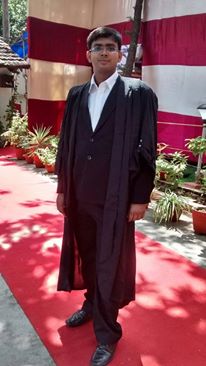
    IMG-20160218-WA0002

    Vaibhav Choudhary is an Independent Practioner at the Supreme Court of India. He graduated from Rajiv Gandhi National University of Law, Punjab, in 2012. After that, He has worked as a Research Assistant-cum-Law Clerk under honorable Justice Dipak Misra, Supreme Court of India. In 2014, He also practiced under Senior Advocate, Mr. Gopal Jain for a year. Since then he’s been practicing independently. Vaibhav has many publications to his credit for various Indian and International Law Journals. While in college, Vaibhav Interned with Trilegal, Finsec Law Advisors, ALMT Legal, Chambers of Senior Advocate Mr. P. P. Rao, Senior Advocate Mr. Pravin H. Parekh, Additional Advocate General Mr. G. R. Punia and PUCL, Jaipur.

    In this interview, Vaibhav talks about:

    • His experience at the Law School
    • His International Publications and their importance
    • How he prepared for Clerkship interview at the Supreme Court of India
    • His Landmark cases and his overall experience in the field of Law.

    How would you like to introduce yourself to our readers?

    As an independent legal practitioner, if you allow. The center of my practice revolves in and around Supreme Court of India.

    Also as an optimist, who is trying to build his legal practice in this strange and competitive land based on skills, guidance, and legal acumen.

    Describe your experience at Law school as an undergraduate student. Any highlights and incidents you would like to share?

    I did my law from Rajiv Gandhi National University of Law, Punjab. As I was part of the second founding batch of the university, which was new in the arena and was building itself as a premier law school in the country, it seems like I grew with the University. When I took admission in 2007, our law school was running from a temporary campus located in the middle of the city. There were no hostels inside the campus. The idea of the permanent campus was yet to be put in shape. So the law school being in the formative years required more efforts as well as provided more opportunities for individual development. One such example was the formation of a Centre for Advanced Study in International Humanitarian Law, a one of its kinds in India and I was appointed the student coordinator for the same. This gave me an opportunity to advance the awareness of Humanitarian law in our country. We started an essay competition namely ‘ENSAYO’ to promote the humanitarian law among the law students in India. This Competition was directly sponsored by ICRC while offering significant cash rewards as prize money. This competition has now become international and got participation from SAARC countries students as well. Looking back, being part of such new initiatives, I feel proud to be part of such activities during my law school, and this has thus, stuck as a good memory.

    Like any other law school student, I also forayed into the diverse world of moot court competitions and debates. But later on, I diverted my path and decided to focus on legal writing and promoting legal research among my contemporaries which was then ignored in our law school. Resultantly, a lot of legal research followed and led to more than 15 paper publications internationally and nationally in the best legal journals in the world.

    Tell us about your international publications and importance of those publications.

    Two important extracurricular activities in a law school are moot court competitions and publications. I participated in few moot court competitions but, later on, decided to utilize my research skills into legal writing. All of my international publications were my project topics either assigned by my college or chosen by me. My first International publication was in the European Intellectual Property Review on the issue of software patentability. I was the first student in my law school at that point in time to get an international publication in such a reputed journal. Later on, my various college projects which I converted into article got published in numerous Journals and books i.e. International Tax Journal, Asian Journal of International Law, International Journal of Research in Commerce Economics and Management, International Academy of Law, etc. Research is more important than participating in a moot court competition. I have to admit it candidly that my selection for the clerkship in the Supreme Court was purely based on my research skills and publications. So, I got my first job because of my extensive research work. But if anyone is planning to opt for pure litigation as a career choice than publications or any other activities are of not that help per se, but it always comes in handy in legal drafting. 

    IMG-20160218-WA0003

    Where did you do your internships while at law school? How important were these internships in shaping your career?

    Internships are next best aspect of a law school. Not just career-wise, internships frame your personal outlook too. They help to decide career path and also prepare you in advance for your future work experience. During my law school, my internships were not very precise or centered on one aspect of law only. I interned in PUCL, which by now was my best experience in law school. We did a survey on the social and economic aspects of the Jaipur Bomb blast victims which turned out to be quite informative and adventurous. I also did a Judicial Clerkship in Delhi High Court as well which gave me first-hand experience of ‘the Bench’ and its working which was a major reason for me to opt for Judicial Clerkship in the Supreme Court of India, post law school. I also interned with Senior Advocates in the Supreme Court, Mr. P. P. Rao, and Mr. P. H. Parekh. These internships helped me to build my end career choice of litigation. To also get a corporate law firm experience, I interned with ALMT Legal, FINSEC Law Advisor, and Trilegal. These internships helped me to get into the insight of the law firm working. So all the internships let you discover the in’s and out’s of all spheres of law, and one can identify without any recriminations, where their calling is.

    How did you prepare for the clerkship interview in the Supreme Court? What were the questions asked by the interviewer?

    No one prepares for an interview with the Supreme Court in strict terms, as there was never an accurate knowledge of what working in the Supreme Court entails, earlier. The Interview for the selected candidates was conducted on the premises of the Supreme Court. My Interview was taken by two former CJI’s- Justice Altamas Kabir and Justice HL Dattu. Both the Judges were very calm during the interview process and gave me ample opportunity to put forward my views. I was asked a variety of questions i.e. law school experience, extracurricular activities, legal questions, contribution to legal aid society, publications, etc. However, both the Judges were highly impressed by my publications and asked various questions related to it. I was among the fifteen students who were selected by Supreme Court Judge Panel through interview out of 200 students from various National Law Schools. 

    How was your experience with HMJ Dipak Misra as a Law Clerk?

    The experience was wholesome. It shapes the way I draft all legal documents, the way I do legal research, the way I put forward arguments in court, etc. even today. All the LCRA works through Judges Residence. HMJ Dipak Misra is very soft-spoken and intellectual person. He used to treat me as part of his family. I assisted him in drafting bench memoranda for the regular hearing matters, analysis notes of the legal issues and the plausible arguments which could be advanced, research on the settled law and related comparative law propositions, preparing pointers for judgments and orders so as to enable HMJ to dictate the same. I worked for two years with him. I consider him as my Mentor, who taught me how to read and interpret the law. He is a father figure to me and even after resigning from his office he keeps guiding me whenever I need his assistance. LCRA has shaped me as a better lawyer and has given me an edge over my contemporaries.

    What was the initiative taken by you and your fellow law clerks to increase the stipend?

    The stipend for the LCRA was Rs 25,000 per month. It is hard to stay in the NCR with that amount. So I along with my fellow law clerks approached the CJI to increase the same. However, then CJI RM Lodha denied our request at that stage. But with the help of other Judges who were part of the collegium it got increased by then CJI HL Dattu. But until that time, most of us left our clerkship.

    Tell us something about the transformation period into litigation in the Supreme Court.

    During my clerkship in Supreme Court, I was not able to figure out whether to go for a corporate firm or independent litigation. HMJ Dipak Misra came to my rescue and recommended me to join the litigation. Then the next question that came into my mind what type of litigation and from which Court should I start. Then by accident I met Senior Advocate Mr. Gopal Jain and joined his chambers. The transformation happened very quickly, thus, I was only able to take stock after a full month. Going from the chambers of a Supreme Court judge to that of a Senior Advocate is challenging. The work environment, as an example, changed completely. My mindset also had to take a complete U-turn as well as the work expected of me.

    What was your initial litigation experience with Senior Advocate, Mr. Gopal Jain?

    As also stated earlier, after Joining Mr. Jain I was bombarded with a variety of work which I never did during my clerkship. Mr. Jain has a broad range of practice which includes arbitration, telecom matters, electricity matters, legal opinions, vetting and settling of various legal documents, etc. With him, I have appeared in APTEL, CERC, DERC, TDSAT, NGT, NCDRC, High Court and Supreme Court. It was quite an extensive experience ranging from different courts and different matters. Although the beginning is always tough after some time, I got used to it. The best part of Mr. Jain’s Chamber was his office staff and his colleagues. All of them were very helpful and always ready to assist you. Mr. Jain is one of the outstanding seniors we have in the Supreme Court. He is very chilled and relaxed. He is among those lawyers with whom all young lawyers would like to groom their legal skills. Mr. Jain gives your free hand to do your independent practice while working with him. He will assist you and also appear in your personal cases as well. I will recommend him to all those who want to enter into the legal arena and want to build their practice subsequently.

    Discuss your landmark cases which you filed and won in the Supreme Court and Delhi High Court. (AIPMT cancelation by SC, All India Quota for AIPMT aspirants, Admission denial to LLB candidate by DU, Faculty of Law, etc.)

    After joining the bar, my first case which I filed in the SC was for the cancelation of the AIPMT examination due to mass irregularity. This matter was heard by the vacation bench and finally decided in our favor by the Supreme Court. Subsequently, I filed a writ petition in Delhi High Court on behalf of a Llb student against Delhi University, Faculty of law for denial of admission on the ground of non-submission of relevant documents. The HC decided in our favor and granted admission. Later on after re conduct of AIPMT examination I filed another writ petition in SC for Implementation of All India quota for the AIPMT aspirants. The SC decided in our favor and directed Medical Council of India not to transfer seats to State Medical Colleges. However, the order of the Court was not implemented in its full spirit by various States and contempt petition is pending in SC against the MCI.

    What challenges you faced as an independent practitioner in the initial stage?

    Being an outsider and without any legal family background, it is tough to set your practice in Delhi, or perhaps in any court for that matter. Initially, you have to fight out to get matters from people. The ultimate test of patience and perseverance is the establishment of your independent legal practice. Some matters you have to do as pro bono to make your goodwill in front of the clients as well recognition from the Bench.  Getting empanelment from PSUs and other places is quite a challenging task which requires tremendous backing and ‘Jugad.’ Presently I am working with my friends and colleagues to finalize and start our LLP in Delhi. We have yet to cross a couple of hurdles in that direction and are hoping to launch it soon.

    What are your views on the recent Supreme Court judgments?

    Recently, Supreme Court has been quite equivocal and strict, though fair. Supreme Court through its decisions from time to time has crossed many phases, ranging from judicial activism to pro-environment, etc.

    NJAC Judgment: I strongly feel that the SC has taken a very bold and right step by setting aside the NJAC Act and maintain Independence of Judiciary. This Judgment is a slap in the face of the executive who made a mediocre attempt to intrude with another vital organ of governance- Judiciary with their political appointments.

    Section 377 Curative Petition: CJI TS Thakur has taken a very bold step in the right direction by referring the matter for further adjudication to a Five Judge Bench to correct the mistake committed in NAZ Foundation. However, this is for the first time in the history of the SC that the three senior-most Judges of the SC has referred a matter to Constitution Bench in a curative petition. The issue of maintainability of such reference is yet to be decided.

    Supreme Court as Guardian of Law: The Indian SC has been recognized as World’s Most Powerful Court. Recently, the Court in a variety of decisions has shown its power and protected the rule of law i.e. Section 66A of IT Act Judgment, Yakub Menon Late Night Mercy Petition hearing, Coal Block cancelation, Patiala House Court Lawyers Matters, Banning of Diesel Cabs in NCT, Sahara’s case, etc.

    Last but not least, what’s next for you?

    My next step is to finalize the work on our LLP and launch it soon and serve our clients to the best of my ability. This along with the independent legal practice is keeping me occupied at the moment and the near future.

  • Karthik Ranganathan, an independent practitioner, on working as a tax expert and studying LL.M from NYU

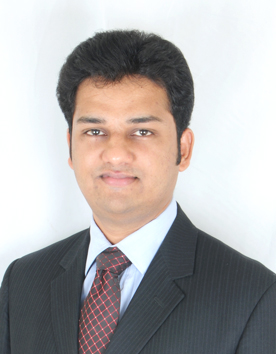
     SL Photo 1

    Karthik Ranganathan graduated from JSS Law College, University of Mysore, in 2004. After that, he completed Company Secretary course from Institute of Company Secretaries of India in 2007. He worked as a tax consultant for Ernst & Young for two years and then in KPMG, as a Tax Senior, for one year. He then went to NYU School of Law for studying LL.M in International Taxation. He has worked with Nishith Desai Associates for a year on the matters of International Taxation. Since then, he has been practicing as an independent Taxation and Corporate Lawyer.

    In this interview, Karthik Ranganathan talks about:

    • His experience at NYU School of Law
    • What prompted him to choose law as a career
    • What opportunities opened up for him after doing the Company Secretary course
    • Building his own practice as a Taxation and Corporate Lawyer

    What prompted you to think of law as a career? If not law, what other options would you have considered?

    I know this may sound cliché but true.  I am a science student.  I should have become an engineer.  Thanks to my father’s persistent persuasion to do law.  I am a lawyer because of him.  He used to take me to advocates’ offices in my town for his court cases even while I was ten years old to inculcate the liking for this profession.  Though he always wanted me to become a lawyer, he could not see me becoming one.  I have never regretted to have become a lawyer.  I love this profession very much.  I want even my son to become a lawyer.  By the way, he is three years old.  I would have become an engineer but for this profession.

    SL Photo 3

    Describe your experience at New York University School of Law.

    NYU School of Law is an excellent place to do your LL.M. program.  It attracts students from across 70 countries every year for different LL.M. programs.  I always wanted to do an LL.M. abroad after my LL.B. degree (from JSS Law College, Mysore).   Being a company secretary as well, I first got admission for the NYU Corporation LL.M. program but later I decided to do LL.M. in International Tax.  I worked for three years at Ernst & Young and KPMG, Chennai to get into the NYU Tax LL.M. program as it is very competitive.  I also got admission at Georgetown University Tax LL.M. program.  But I preferred NYU to GU.  NYU has an International Tax Program (ITP) for past the two decades for foreign-trained lawyers and admits 25 candidates every year.  NYU also has General Tax Program (GTP) mainly for American applicants.  But both ITPians and GTPians sit together for several courses.  This makes the grading curve very competitive for ITPians.

    My experience at NYU was exciting but highly demanding.  I guess this is one of the hardest LL.M. programs.  However, the Professors at NYU are fabulous, but they make you run for your money when it comes to curriculum.  It is a ten months program having two semesters, the Fall and the Spring.  The Fall courses at NYU were pretty hard as it had required/ compulsory courses like US inbound and outbound taxation, corporate taxation, etc.  The Spring courses were relatively lighter.  But for me, the Spring too was hard as I chose some challenging courses like Subpart F income (Anti-deferral), Transfer Pricing, etc.  NYU Tax program has more than 60 courses to choose.  It has some of the finest Professors who have been with NYU for decades.  They are also senior partners of reputed US tax law firms, and so, they have hands-on experience with the developments and reasonably foresee the changes that may happen in the tax system.

    The ITP majorly concentrates on international aspects of US income taxation.  To get an idea of other jurisdictions’ tax system, there are several courses to choose which are taught by renowned Professors from other Universities.  I very strongly recommend this program to those who have a flair for tax laws.  Unfortunately, very few Indians do/ have done this program.  Good understanding of Indian income taxation and few years of related work experience should be sufficient to get into this program.  That apart, I have extensively traveled in the US during my LL.M. program and have earned some of the best friends from here.

    Why did you prefer to go abroad?

    It is mundane that Indians go abroad for the LL.M. program.  But it will shape your career and perspective if you get into the right program in the right University.  And, for specializing in international tax, I felt I have to go abroad. SL Photo 2

    How did you ensure University Ranks in BAL and LLB degrees?

    I took law career seriously from day one in my college.  I always assured that I read only books of reputed authors for the exams even though it wasn’t necessary all the times.  I did not read these books only for the purpose of exams.  This I think should have resulted in quality answers in my answer scripts which earned me two ranks.

    Why did you choose International Tax in LL.M.? What motivated you to choose that?

    I should have ideally done Corporate LL.M. being a company secretary at the time when I applied for LL.M;  I learned that NYU is excellent for its tax program and since I was in the tax team at EY for some time, I had gained more interest for tax laws.  It was a safe bet.  I cherish being a tax lawyer.  Tax laws are vibrant and provide much food for your interpretative skills.  If one can understand tax laws well (be it direct or indirect taxes) then I think she/ he can handle other laws comfortably as well.

    What are the opportunities that open up after completing the Company Secretary course?

    Frankly, I did not do company secretary course to become a practicing company secretary.  The course has very practical and profound insights of corporate and allied laws.  So I did it.  Further, doing LL.B. and company secretary course is a good combination, especially, for lawyers who graduate from tier 2 and tier 3 law schools.  The combination is suitable for both job opportunities as well as to set up practice in corporate laws.  It requires dedication as it is not as easy as you pass your law examinations!  I was told that the answer scripts are reviewed by three evaluators each one trying to lessen the marks obtained.  You can become a successful corporate lawyer if you do company secretaries course.

    Describe your experience in litigation and as an advisor.

    I am a litigating lawyer and an accidental advisor.  I started practicing in the Madras High Court soon after I finished law.  I made it a point that I do not specialize in any particular law right away so that I understand well the basic laws like Code of Civil Procedure, writ jurisdiction of High Court, appellate jurisdictions of various courts, arbitration proceedings, etc.  I also practiced a bit before the trial courts.  There is nothing more satisfying for an advocate than appearing before a judge and being heard patiently and even more satisfying if one gets a favorable order.  I practiced in the Madras High Court for a couple of years and then intended to specialize in a particular field of law.  As my senior with whom I practiced was a Senior Counsel for Central Government then, I was exposed to indirect tax matters at the High Court.  With this experience and my company secretary degree, I joined Ernst & Young, Chennai in its indirect tax team.  Ever since I joined EY until recently I started my independent practice, I have been majorly doing advisory services.  Now that I am independent, I ensure that I do both litigation and advisory services which include documentation.

    I feel it will be safe for independent lawyers to lay their hands on both litigation and advisory services simultaneously to the extent possible as both are good areas of practice, and one leverages the other when the flow of work gets limited.  There is much scope for advisory and documentation, given the recent trend in investments in and out of India, which may eventually result in one type of litigation or other.

    What are the skills an advisor must acquire?

    I feel advisory practice is harder than litigation practice.  You need to be superb in what you claim to be an expert so that you meet all your clients’ requirements.  Advisory will always be time bound.  A client hardly ‘adjourns’ your deliverable date nor can you frequently seek ‘extension of time’ for the deliverable.  Your clients will always nitpick or quibble over your deliverable, and most of them will have adequate knowledge in the area of your advice.  So you need to provide a good amount of value addition to their needs.  Further, you need to be always updated in the laws that you predominantly advise.  For tax, I can say, it always keeps you on the run.  Continuous reading and updating, talking to peers, attending educative events, etc. will help you to become an excellent advisory lawyer.

    What challenges you faced to become the most popular author among Indian readers and as a contributor with a most popular article in India on “Direct and Indirect Taxes on Union Budgets”?

    This recognition was by surprise.  In fact, I was awarded these titles thrice.  I usually write articles on tax and corporate law developments.  Union Budget is the mother of all tax updates.  When I published my article on my website, the concerned head of Mondaq.com which picks selective articles from across 80 countries called me from London and said that my article has been chosen as the most read article by its readers.  He said that within two days of its publication there were approximate, 7000 viewers for my article on interim Union Budget in 2014.  After that, my 2015 Union Budget articles were also awarded this recognition, and I received emails from them in this regard.  Article writing is pivotal to advisory practice.  I developed much interest in article writing soon after I completed law and have written couple of articles while doing company secretary course and while being with KPMG.  However, this was well nurtured when I was working with Nishith Desai Associates which shows incredible thrust for legal alerts.

    One needs to follow the relevant developments in the area of practice carefully and should ensure that the same is passed on to others by writing quality articles.  Much time and thought are required for creating a good read.  We always need to keep in mind the readers while writing articles as they are the intended beneficiaries.  Plagiarism, if practiced, will eventually come to light.

    Describe your experience when you appeared for the first time in English Business News Channel.

    It was with Bloomberg TV all the three times.  I was working with Nishith Desai Associates then.  The tax alerts authored/ co-authored by me were interesting to the news channel I guess as it dealt with the contemporary tax controversies.  The first two were on the live show which is usually just before the Mumbai stock markets open for trading, and the third one was recorded.  It was a pleasant experience.  I have to give the total credit to Mr. Nishith Desai and Bijal Ajinkya (my partners at NDA) to have given me a free hand to appear on the News Channel.

    How to become a member of professional organizations like IFA, IACC, FKCCI, and AIFTP?

    Becoming a member of professional organizations is essential.  There are many quality professional organizations.  For advisory practice, this helps.  You get to meet several people who may need your services, and you get updates from your fellow members.  You may get a chance to address them which gives you recognition.  All these organizations have some basic requirements to become a member which are usually not difficult to meet.  One needs to keep in mind that some organizations’ entry and renewal fees are expensive but worth it.

    How important are the moot courts in the career of a law student? How can one increase his convincing power?

    Moot courts are crucial both for advisory and litigation practices.  Your research skills help you in your advisory practice and your oratory skills, before a court.  You get to learn those aspects of law which you will never learn in the law school.  You learn to win and lose which is typical when you become an advocate.  It improves your writing, research and analytical skills which are critical to providing good advice to clients.  If you participate in the moots to learn rather than to just win, you will become a matured law student and will catch up with the profession very quickly when you enter it. By preparing well for the moots and participating in the couple of them will enhance your convincing capabilities.

    Why did you go independent after working with big law and accounting firms?

    To practice independently was in my mind always.  There was much need for me to become independent because of my varied academic and work experiences.  I wanted to consolidate my litigation and advisory services which can be done only if I independently practice.  I do not regret this decision.  However, it takes a time to be recognized by clients and peers.  I have always felt that those who are confident and who can afford it should always go independent.  End of the day, it always feels good when your client knows you rather than for whom you work.

    What made you teach and what is your perspective on teaching?

    Again, I am an accidental teacher.  Soon after I quit my law firm job, I had plenty of time.  I sought an appointment with the Vice Chancellor, Prof. Venkat Rao, of NLSIU to discuss some academic initiative.  When I met him and explained the purpose of the meeting, in the end, I was surprised with an offer to be a guest faculty to teach tax laws to the LL.B. and LL.M. students.  Given that there was a vacancy and that it relates to my area of practice, I accepted it.  I have been teaching at NLSIU since July 2013 as a guest faculty.  Many thanks to the VC and my students to have accepted me.  I also travel to other law schools in India once a year to provide a single credit seminar course on tax, investment or securities laws for about a week.  My greatest inspiration to teach comes from my NYU Professors who have been teaching for ages and have also been very successful tax attorneys in the US.  I firmly believe teaching can never get in your way of successful practice.

    Personally, I believe it is crucial that alumni of law schools should consider sharing their work experiences, preferably, in the form of teaching a course to the students of their alma mater or nearby law schools.  This will make the law students feel comfortable about the profession and will give access to practical insights even while being a student.

    Where do you see yourself in five years?

    I am in my initial days of independent practice and am moving things inch by inch.  More the confidence I earn from my clients and peers, the quicker I can reach a respectable position, I guess.  I believe I am on the right track.

    What would be your advice to our readers?

    This is one profession which will never let you down if you are dedicated to it.  There is always space and a need for quality lawyers.  The laws are becoming more and more complex in all areas.  Integrity towards clients and love for this profession will find your level anytime soon.

  • Sonia Saini, An independent practitioner, on choosing family matters, consumer matters, co-operative society matters and SS Global Law Firm

    Sonia Saini, An independent practitioner, on choosing family matters, consumer matters, co-operative society matters and SS Global Law Firm

    picture superlawyer 3

    Sonia Saini is a graduate of Amity Law school, 2010 batch, an independent legal practitioner running her office in Dwarka, New Delhi in the name and Style of SS Global Law Firm for the last 3 years. As a litigation lawyer, she takes up family law matters, consumer matters, focusing on disputes against builders and Co-operative Society matters. She is also an empaneled lawyer with two nationalized banks and also handles corporate compliance for start-ups.

    In this interview, Sonia talks about:

    • Her life in Law School and what inclined her towards legal education
    • Practicing independently
    • Challenges she faced due to not having a legal background
    • SS Global Law Firms and its motives

    How would you like to introduce yourself to our readers?

    I would introduce myself as a litigation lawyer and a learner, striving hard to learn as much as I can to be a better and a knowledgeable person.

    Tell us about your Pre Law school years. What inclined you towards legal education?

    I did my schooling from St. Francis De Sales School and joined Amity Law School in 2005. I was a medical aspirant till the time. suddenly one day, during my medical preparation days I realized that I was not made for it. Soon after my 12th boards, I kept all my medical books in the cupboard and locked it. I did not know what I wanted to be then, but I knew what I did not want. After this, I went online to find out the options I had after 12th standard and after thorough research, I found law as an attractive option. So, I  decided to follow my heart and started preparing for law entrance soon after my board exams and got through Amity Law School. Though initially my parents did not approve of my decision but later I convinced them.

    As a law student which activities did you participate in and how did it help you?

    As a law student, I participated in moot courts conducted by the college and some inter college moot court competitions. I represented my college in International Arbitration moot at IICLAM and National Law School and bagged Runners Up and best Memorial Prize. Participating in moot courts helps you develop confidence as a lawyer and inculcates the habit of researching and putting forward your views and prepares you to handle the initial fear that you face as a junior in court.

    What were your areas of interest while you were in law school? How did you go about developing expertise and knowledge in these regions?picture superlawyer 2

    My areas in Law School were mainly Arbitration as I participated in many Arbitration Moots and Criminal Law because I found it fascinating. We used to read a lot of books and commentaries on these subjects and always tried to understand the concept rather than just memorizing it for the sake of exams.

    There is a notion that one should work at least a few years under a Senior Advocate to understand the intricacies and practical aspects of Law. You started your practice independently after working for 3 years. How did you overcome your initial jitters in a courtroom full of experienced lawyers and judges?

    Yes, the notion is somewhat correct, but I would rather say that it is tough for any lawyer to find a good senior these days and, therefore, the sooner you get independent better it is for you. I always prepare well before going to any court. Even when I started whenever I did not know what to do the next day in court, I often went to attend a hearing on similar matters to understand the procedure. I always and till date read my files thoroughly and research well in advance to understand the case. I remember, once a senior told me during my internship days that a lawyer should never think he is too inexperienced to handle anything. if he knows what’s there in his brief, he is as good as other senior lawyers. The key is focusing and working hard each single day of your life.

    What all challenges did you face while starting up given that you do not have any legal background? What were your challenges and how did you face them

    Though I did not have a legal background as my dad is a business man and my siblings are doctors still after working with a district lawyer and a law firm initially I decided to go independent as this is what I always wanted. The feeling of being independent and living life on your terms always fascinated me. therefore, as soon as I felt I could take the risk life I left everything on God and Destiny and made the leap. Initially, being a female lawyer and till date, sometimes, you face bias by your fellow lawyers in court. I have always taken everything as a learning experience which makes me a stronger and a better litigator each day.

    Describe your experience when you appeared in the court for the first time.

    It was a thrilling experience. It was during my first month of practice with an advocate at the District Court that my senior handed over his file to me as he had to attend some other matter in Delhi High Court. The matter which I was supposed to handle was Interim Injunction application to stop a builder from further construction as the construction was hampering the right of my client. Initially, I was a bit scared but later I read the file thoroughly and delivered my best! and we got the injunction.

    Did you ever have any other plans other than litigation? What are your views on LL.M.? Do you think Indian Legal Education needs to improve?

    I  wanted to be a judge when I finished law school and as a matter of fact I cleared some judicial service exams up to certain level, but when I could not get the desired results in 1.5 years, I decided to focus on litigation and eventually started my practice. I think LLM is not essential but practically getting an LLM from some good foreign university does help in getting jobs in good firms. Yes, I feel Legal Education requires upgradations not only at the student level but also at the professional level. Legal education is not treated seriously as other professions which are not only degrading the standards of the bar but injuring the reputation of the whole legal fraternity.

    Why did you choose family matters, consumer matters, and co-operative society matters? What motivated you to choose that?

    I am an excellent listener. Therefore, clients always approached me for their family matters for they require a lot of patience. As I started taking more and more family law matters, I developed a liking for such them. Consumer Matter against builders came to me initially through contacts but later I developed an interest in it and the feeling you get when you fight for your clients right against big corporations thrills me. My client’s appreciation towards my work and their trust in me even though I am still a young lawyer and not as experienced as others motivates me more.

    Please tell us something about “SS Global Law Firm”. What does the day at work looks like? What is the most challenging or stressful part of being a litigation lawyer? 

    SS Global Law Firm is a law office providing services in Litigation, Arbitration and Intellectual Property. The firm is handled by me and four other partners who are my senior and friends. Each partner handles matters according to their expertise. The day starts at 6:30 every day reading files at home for the days hearing, attending court hearing till 4:00 pm, returning to the office by 5:00, attending client meetings and then preparing papers and case files for the next day and leaving home by 7:00 pm.

    What would be your advice to young law students? Whether they should join a firm or practice at bar? How should they approach the legal career?

    My advice to law students would be to follow your heart because your heart knows what you truly want in life. Both firm and practice at bar are equally good but what is important is at the end of the day is that you should be a happy and a satisfied person. No amount of money can buy happiness and professional satisfaction for you. Therefore, it is best to understand yourself and to make the best choice for yourself.The law as a career is superb because whatever field you are in be it a litigation lawyer, a corporate lawyer, a legal advisor, a professor of law you always get an opportunity to learn something new every day which is not the case with most professions. As a lawyer, you don’t have to invest in equipment and machinery or other things you just have to invest in yourself, and eventually, you get lucrative returns for this investment.

  • Aparajita Kapoor, A Lawyer, on working on Multi-Jurisdictional matters and importance of building relationships as a legal professional

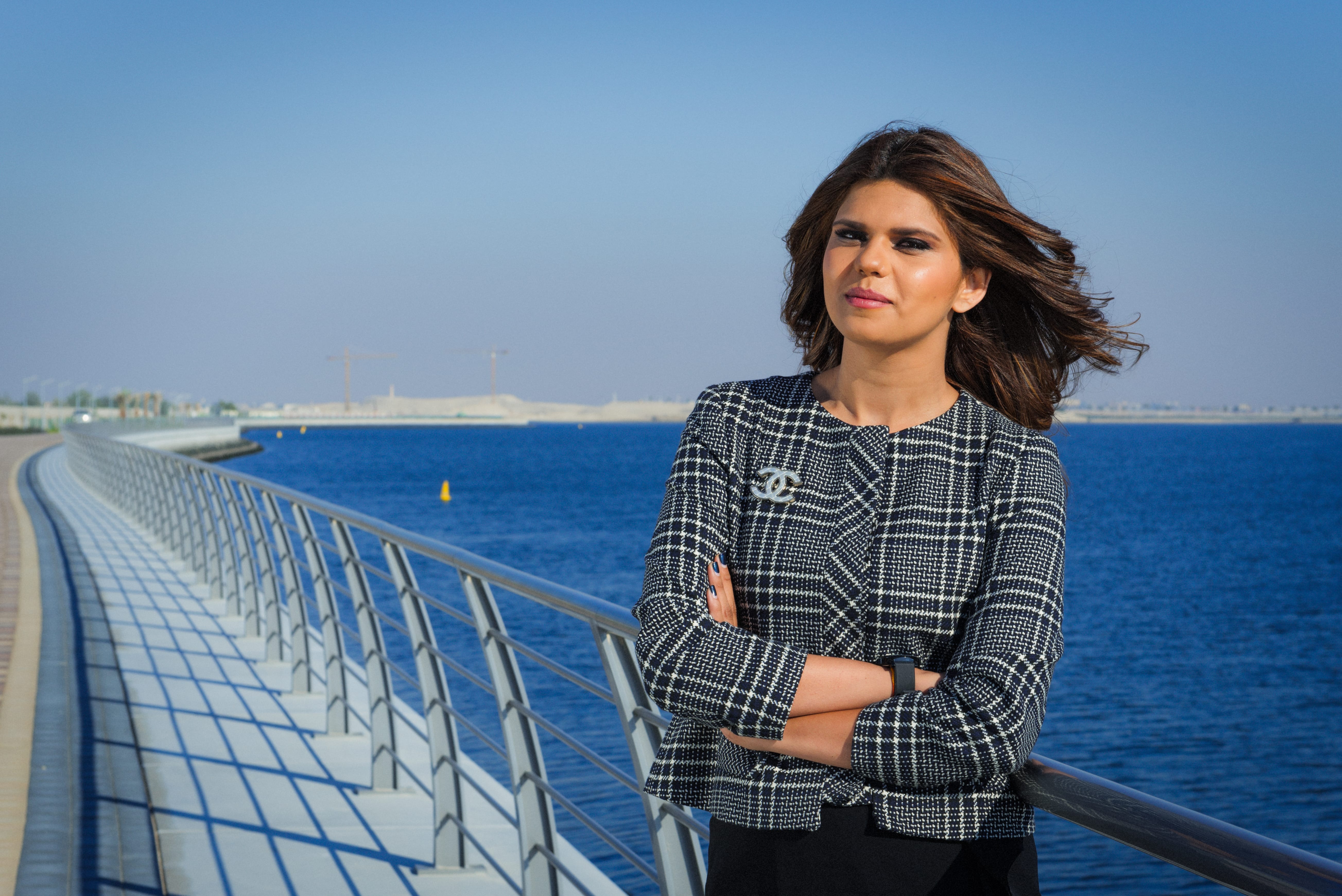
    Aprajita-3-min

    Aparajita is a corporate lawyer with varied international work experience gained in India and UK.
    She graduated from Hidayatullah National Law University (HNLU) in India in 2010. She commenced her law practice with D. H. Law Associates, Mumbai where she was involved in advising multinational and domestic blue-chip clients on mergers, acquisitions, joint ventures and technical collaborations.

    In 2012, Aparajita moved to England to pursue Masters in Banking and Finance Laws from Queen Mary University of London. In London, she worked for a large international firm in their corporate team where she was involved in advising the clients on transactional and regulatory issues relating to establishing a business presence in London.

    Aparajita is a member of Bar Council of Delhi, India. Her articles feature in national and international journals, and she is a regular speaker at international forums. Her recent publication includes the book titled “Investing in Dubai- made easy”.

    Aparajita is currently involved in Merritz M&A and corporate and commercial practice across the UAE, Central Asia, and India. Her practice also focuses on developing relationships between UAE and Indian businesses and advising them about the legal and regulatory environment in each other’s countries.

    Aparajita is also the Marketing and Operations Co-founder of a SAAS based portal focusing solely on answering questions related to UAE laws at www.lexxplain.com.In this Interview, Aparajita talks about

    In this Interview, Aparajita talks about

    • What made her stand out as a lawyer and see early growth
    • Her experience of working on multi-jurisdictional matters
    • Importance of presentation and networking in the career of a lawyer
    • Why it is important to be simple and friendly


    Tell us about your childhood. How were your growing up years?


    The majority of my life I studied in villages with 5 people on an average in my class, and I was always in the top 2 ;). As a child, very obviously I was developing the feeling of “I am so cool” “I am doing what it takes to be a good student” “Dad got me a bicycle last year- I am surely his hero” and many similar thoughts. As years passed, this attitude inflated even further, and one day I sat down with myself and something hit me. I do not recall the trigger, but I actually realized- “I think too highly of myself” “this village is not the world” “there is a bigger platform, greater competition and a lot of video games in the city- I must move and aspire to see what I have not”, (and, of course, the video games I played were the biggest motivation). I moved to the city, and it all started from there with this permanent shift of challenging the status quo.

    What made you want to study law? What would you say is your source of motivation as a lawyer?

    Lawyering began with the chase for money and recognition. Very natural and fairly acceptable viewpoint. I have woken up to calls from clients saying “we need to conclude this arbitration- my doctor said this stress has increased my chances of cardiac arrest.” Another call – “Aparajita- if we do not settle these high-value disputes, our head office will shut the operations, and thousands of employees will lose their jobs as we are underwriting way beyond limits”. When these words echo, you no more work for the cheques, you work for a purpose, a calling, and a meaningful cause. Now I wake up with the thought of “I cannot let the lady suffer a heart disease” and “I cannot let those people lose their jobs”.  Try to find that purpose – it is in you already deeply embedded. You merely need to expose yourself to as many situations and experiences as possible and allow that purpose to come to the fore. You will realize that as high-end professionals, even photocopying will become enjoyable should you realize YOUR purpose. Find your end. Find out why you are in it and how you can increase the quality of people’s life. Don’t think about how I get successful fast. Think about how I can create something super meaningful and super important.

    How does a foreign LLM help Indian lawyers? Can one expect to start an international legal career following an LLM abroad?

    In my experience, LLM does not seem to be a tool to land a new job in a magic circle firm. Alongside my curriculum, I used the opportunity of studying in London to work in a law firm, learn fashion from my European batch mates, play football, walk around the city, explore international cuisine and spend time with people who are culturally, socially, physically, economically, politically and in several other ways so different from me.  If your idea of LLM is to merely read books, write exams, score a distinction and come back, an online tutorial would do nearly a similar job.

    The legal profession is extremely competitive. As a lawyer, how should one deal with the ugly side of competition?

    I have been noticing a disturbing trend from the day I joined the legal fraternity- we end up considering a lawyer as just another competition.

    Let me paint a picture for you. Your colleague is a phenomenal lawyer, and you know it and accept it. Scenario one-treat him as a competitor and use every single opportunity to beat him down and enjoy your victory. You must also understand this is always not possible if you have limitations. Scenario two- Ask him for a coffee and try to bond. Tell him he is a great asset to his firm and share ideas with him.  I guarantee you the next time you face a legal bottleneck, you can always call him and ask “hey have you handled a similar issue before? May I have your insight as the subject is gray and your experience will do a world of good.”   I bet you will have his guidance and guess what, you will find a friend for life, a much stronger bond than a competitor. It is also critical to develop that “information sphere” around you to support you with soft knowledge which has not been documented in any primary or secondary sources of law.

    What should young lawyers do today in order to develop themselves as extraordinary lawyers of the future?

    Try to identify the most powerful trait in you and work on it regularly. Find ways to sharpen that skill every day. Keep noticing the gradual growth of that trait and eventually, you will realize you have mastered that quality and it is time for you to make it YOUR Unique Selling Proposition!! (it could be your dazzling sense of humor and networking skills or your stunning cricket stardom.)


    You have achieved a lot at a very young age. How does networking help lawyers? Is it necessary to be successful?

    Someone told me- if you cannot say what you do in a sentence, you have already lost the audience. The most amazing relationships are made in the most unexpected places where you are least prepared; therefore, work on your 30-second elevator pitch and that one line which describes “what you do”. With one sentence, I did not mean “Hi- I am a lawyer.” This is considered too broad and is known to include everything. Everything means nothing. For example- “I want a car” vs. “I want a Moroccan Blue 7-series beamer”- go as specific as possible to create that memory hook and allow people to refer you relationships- qualified relationships.

    Take networking seriously. We are very used to doing things which are familiar and comfortable and network with people who are similar to us. Here is the thing- try to build relationships with people who are very different from you. The diverse network is a source of pattern identification and also of wide-ranging solutions because you have people who are thinking differently than you are and their advice will come handy to have multiple perspectives on a situation.


    Most lawyers come across as intellectual, argumentative and distant people who are difficult to talk to. Your personal brand is very different from that. You are very simple, approachable and friendly. How does this impact your career?

    Lawyering has been unfortunately associated with the terms “too intense” “I do not get what lawyers talk” “serious professionals” etc. People wish to see our lighter sides to break the ice and feel comfortable. What I learned along the way is- you need to sound sincere and not serious to win trust. Have that humor alive in you (of course in moderation) and use simple sentences. Industry jargons are for legal drafts and successful lawyers have this unique quality of explaining the most complicated transactions in most simple words.  I connected with my first client on an Italian brand and we spoke on how and why we love those bags or shoes. Today she is one of my biggest and most loyal clients. The connection is a funny thing- happens very unexpectedly.

    Any thoughts on fashion for lawyers? What works and what doesn’t work?Aprajita-11

    Always dress to kill no matter where you are. How we look and how we dress affects how we are perceived and it is so important to project the right image through your fashion. You might be a human rights activist or a general counsel, do not miss out on a single opportunity to dress, impress and inspire.


    What really differentiates ordinary lawyers from the best ones?

    One of those days I heard someone talking about an incident. Two people sitting at NASA reception called the floor cleaner and asked- “don’t you feel terrible about yourself when you are surrounded by the best brains in the world and all you do is clean the floor all day and all life? The guy answered with a smile- I am helping men reach the moon”. Imagine what a delight it would be to learn this life lesson from a floor cleaner that could change your perspective about life in seconds.

    Stay very receptive to the world around and try striking a conversation with everyone to broaden your understanding of fine things in life.


    We hear the term Rainmaker frequently about law firm partners. How can one become a rainmaker in a law firm?

    Over the years I realized that all networking leaders have one thing in common- no matter which profession they represent, whenever they meet someone, their radar automatically switches on and they immediately begin to think “who can I introduce this person to.” Carefully listen to people and connect them to that one person in your contact sphere who you believe will be a valuable relationship. Be a part of their individual journeys and you will leave a remarkable impression behind that would last longer than you survive in this world.

    Lawyers often struggle to catch up with new technology. What’s your thought on this?

    Be it timesheets, billing software, scanning apps, contact management tools, quick links to create designs- always be ahead of technology and look for new tools. It will increase your efficiency manifold (of course besides making you look like a rockstar).  I recently learned Chicago may soon be announcing computer science to be a compulsory core subject for all high school graduation- gets me to think how next 10 years will look.


    How important is it to find a mentor as a lawyer?

    Find yourself mentors and require that they hold you accountable. A mentor can provide a fresh perspective — a new way of looking at a problem. Look for a relationship in which the mentor facilitates your decision-making process by suggesting alternatives rather than telling you what to do.


    How can a lawyer be innovative? Is it even possible?

    Take a mini diary and write 5 ideas every day. These could be ideas around the daily chores you do for example- how to print documents in a go green way, how to wear a tie in 30 seconds, how to create a portal in your firm connecting all the photography lovers and millions of limitless ideas. Do this for six months and you will be surprised how many ideas you have and how remarkably you have trained your brain to get ideas in any given situation. When you get those ideas, don’t hold on and don’t keep it in a closet. Share it with people and assemble the right brains that can help the idea to get better with their own experience.

    How does one build credibility as a lawyer?

    We belong to a profession where trust forms the basis of any relationship, be it client-attorney or associate-partner.  In desperation of meeting revenue targets or cracking a tier 1 firm job, we often start selling ourselves. Do not sell, rather facilitate the sale. Start with making people feel safe around you, give them ideas and tips which may help them in any way- a health tip to a legal tip- it all works. Win the trust and you will never have to look back in your career.

    What does it look like for a lawyer to be a leader in the practice of law?

    I always believe that leaders are never head down and deep neck into daily engagements, they look around corners to shape their future and not just react to it. It is time for you to stand out and prepare yourself not for the predictability of yesterday, but also for the reality of today and those unknown countless possibilities of tomorrow.

    Law firms of late have been complaining about the recession and global downturn. How did it affect you?

    Recession – I am so consumed with this term which has been used as a defense to say “no” to opportunities. A coach perfectly put it – recessions are a part of a normal business cycle. Frequency, intensity and duration may change. Whichever situation you are in, create opportunities and look for a way around it. When I say “create opportunities,” I did not mean to have a pushy and tricky attitude of selling sand to Arabs. I mean, identify the need, find the perfect solutions and there will surely be some opportunity in some form in the most devastating scenario- explore it further.  Never give in to a “no”. Never. Never.


    Is it important for a lawyer to have online profiles?

    Online reviews, your interactions with others and the frequency and quality of your posts help to form a positive impression in the potential clients’ mind, making a future possibility of working together more likely.  If done right, the online experience will always leave a good memorable experience. The quality of content and how it is disseminated relying on social channels such as the blogs and social media pages to spread awareness increases your search engine rankings. A possible tip could be publishing topics of interest and pain points that are relevant to clients and prospects, which will help you stay ahead of trends and build credibility which is the cornerstone of legal practice.

    What are your future plans with respect to your career?

    Taking lawyering as a profession was not enough, I began taking it as a calling, a passion a religion. Alongside the usual revenue targets and deliverable deadlines, I passionately involved myself in co-developing a SAAS based start up Lexxplain www.lexxplain.com, which is a portal of registered UAE lawyers focused solely on answering questions on UAE laws without any fee. Tap the trend and bring a revolution, find a wrong and make it right.

    How can lawyers give back to the society?

    I pledge 5 hours every month for community service. Why is this important to our practice?  Because I simply find it a way to reach out and relate to the pain of an individual and it helps me in building my legal practice around a sound and sensitive approach towards the clients and the community.

    How can busy lawyers have a work life balance?

    Millions of dollars will not compensate the lost smile of your mother- always make an approach to get the priorities right. Take control of work by proactively and efficiently delivering, which will allow you time for the loved ones who can lift your mood in the most distressed and challenging situations and keep you moving and outperforming other lawyers.


    How is it to be a lawyer dealing with multi-jurisdictional issues? Can you share some anecdotes?

    We were representing a company (“Claimants”) in an arbitration against another company (“Respondents”) having offices across 6 countries (as shown on their website). Claimants approached us with great confidence presuming the Respondents have sufficient funds to pay off the claim amount to the Claimants. Rule 1 is to never settle for what clients tell you- look beyond and facilitate their understanding of the chances of success in any matter, which may also require you to communicate that it might appear the Respondents are cash and/or asset rich but it might just be a very superficial thought. Alongside reviewing the documents to find validly existing arbitration clause and exhausting all remedies set out in the contract before invoking the said arbitration clause, we approached the Registrar of Companies (and/or their equivalent) in every jurisdiction where it appeared that the Respondents may have offices. We realized that in some countries the Respondents only had associate partners and in some countries they merely had representative offices. With limited facts, we undertook a SWOT and identified that the ultimate purpose of this matter was to recover the claim amount for our clients (sometimes it is more than just the recovery of claim amount should you do the risk assessment of a dispute right). At the outset, we understood that the Respondents did not have assets as they projected on media and through information available on public domain, which meant the purpose of arbitration will stay frustrated if the Respondents were dissolved or liquidated. Highly demotivating this may sound, no one in my team gave up. We sat down and decided to push the clients to dig down every single document and correspondence they have had with respect to the transaction with any party whatsoever. After days of fact finding, we found a tiny signature on a small letter which turned out to be a guarantee letter signed by another company (“Guarantor”) confirming to fulfill the obligations in the event the Respondents failed to do so. That was a victory. This led us to start chasing the Guarantor and their assets globally. This also required us to travel urgently to places which didn’t have great connectivity, but the lawyers were determined to find a solution no matter what. Spanning from approaching all our relationship in airlines to book us into the first flight available, to carrying a mini dictionary to use the local language as far as possible, we did it all.


    We approached local lawyers in these countries and requested opinions on the precautionary attachment of assets of the Respondents and Guarantor in their respective countries of incorporation. We may not be aware of procedures in their country, but we questioned every step, and it took us to be more than just the lawyers in UAE.


    On the basis of guarantee letter, we filed the arbitration proceedings; however, the Guarantors had also reorganized their company structure and privity of contract became one of the biggest points of discussion.  The arbitration institution was unable to serve the notice of arbitration to the Guarantor and instructed us that in the event we are unable to furnish them the address of the Guarantor, this will result in termination of arbitration proceedings since the party to whom the arbitration notice has not been served, may challenge the award and it may lead to setting aside of the award eventually.  Also, for us to initiate the precautionary attachment in several countries, the courts required proof that the arbitration proceedings have commenced. This led us to find “out of the box” ideas to procure the physical addresses of the Guarantor. We began to contact individually any and all directors, employees, members, officers and employees of the Guarantor on linked in to procure any information- we found heads up, we got some leads, and we worked on it further.


    This matter entailed us to not only sit behind our computers and churn out thousands of pages of written statement or correspondence with the arbitration institution. It took us to step out of our offices, talk, seek help, look around and to not give in to any limitation.

    What would be your advice to law students who want to become extraordinary lawyers going forward?

    The majority of us find the best-paying jobs and believe that’s the end of our chase. A powerful business card, a swanky office, and a pay cheque better than others- is all the consideration we put into while we decide our careers. The intellect, exposure, and strength you have, calls for bigger risks in a wider scheme of things. I personally also applied to big firms and would get demotivated if I was rejected. But I took a moment of solitude for a few days and challenged the way my peer would force me to be. I questioned- why should I restrict my capacity and give in to the trend created by everyone? I joined a small firm and I grew with it. It gave me opportunities to travel around and find my strong traits.  I pursued higher studies, strengthened my core competence, travelled beyond I could imagine, gained exposure, moved to UAE and joined a fast growing firm as a Partner- a firm where we think outside the routine, follow the market movements, expand intelligently and believe in bringing legal revolution. Today we refer legal assignments to those big firms where I once craved to be a small part for the want of the pressure created by others. This is just the beginning and years to come will see a remarkable difference in the way the legal profession has been perceived. Do not settle for the normal, do not believe what has been set as a trend is the end. Question beyond, answer more relevant questions and fight against the routine that has been decided by others for you. Come out of the closet and be the first mover. The trend is changing. I hear lawyers heading business and sales verticals of fortune 500 companies. I hear lawyers being the entrepreneurs and creating new and outstanding technologies to support legal profession.  I hear lawyers running online tutorials and reaching every corner of the world to provide access to legal education for the people who desire to learn but do not have resources to move to the cities and universities. I hear lawyers running successful training companies to teach innovation. Imagine if they settled for the “trend” and the best-paying jobs in their careers? We would never see the world growing into something so inspirational (having said that these risk takers earn a fortune).

  • Sonal Mattoo, Lawyer, on practicing as an independent litigator and dedicating her career for women’s welfare

    SONAL

    Sonal Mattoo graduated from National Law School of India University (NLSIU) in 1996. Since then, she has been practicing as a Criminal Litigator. She founded Helping Hands, in 1996, which helps implement policies against Sexual Harassment/ gender sensitization and other forms of harassment and discrimination at the workplace, besides carrying out training and investigation on complaints filed with the organization.

    She is also a founder and principal consultant of Mantran Consultants, a firm specializing in CSR activities, Counselling, Diversity policies, and workshops. She supports various clients as an independent Ombudsperson, handling employee complaints.

    Sonal is a Non-Executive Independent Director of Ashiana Housing Limited (a listed company) where she is the Chairperson of Investors Grievance Committee and a member of the Audit Committee and Remuneration Committee of the directors. Sonal is also a Non-Executive Independent Director of Vatika Marketing Limited and V-Mart.

    Sonal’s initiatives in these areas and notably on sexual harassment workshops have been covered twice by ‘Femina’, ‘Around Town’ and ‘again twice’ by Cosmopolitan and Readers Digest ‘Joy’. She has also been invited by E-TV to develop and present 12 TV episodes on ‘Legal and General Issues Specific to Women’ for their program, `Nari’.

    A keen reader, Sonal has written articles on Sexual Harassment for Human Capital (India’s premier journal on HR), newspapers, seminars, and contributed a chapter on `Sexual Harassment’ for `Empowerment of Women in India, 2003,’ published by Law Publishers, Allahabad.

    In this interview she talks about:

    • Choosing law as a career and her experience at NLSIU, Bangalore
    • Her experience as a founder director of “Helping Hands”, Its motive and the activities it indulges in
    • Sexual Harassment at a workplace
    • Choosing to become an Ombudsman and her programme “Nari”

    What prompted you to think of law as a career? If not law, what other options would you have considered for your career?

    I always wanted to be part of a justice process. I didn’t have a plan B, so had to make my plan A work.

    Describe your experience at National Law School of India University as an undergraduate student.

    I was initially intimidated with the level of intellectual competency every student and faculty member possessed. The curriculum was designed to make you think, work hard, understand rather than memorize. An awesome 5 years, difficult to describe, but left a mark on everyone, NLSIU contributed to my personal and professional growth more than any other experience. There was outstanding, dedicated faculty and friends for life were the added bonus.

    How did you become a founder director at “Helping Hands”? What were the challenges that you faced?

    As a litigating lawyer, I found most people completely unaware of their basic legal rights and options. Moreover, 20 years ago the parallel Redressal mechanism was not as refined as it is now. We saw a gap in these two areas and set up Helping Hands to primarily support and educate people about their legal rights and provide a platform for counseling/conciliation/settlement of disputes.

    Helping Hands is a self-funded NGO. Funding was a challenge, so I decided to dedicate a portion of my earnings towards funding the NGO.

     12247020_10153702727915833_1187854441058432058_nWhat are the activities Helping Hands indulges in?

    At a corporate level:

    • Redressal, inquiry into complaints of workplace harassment,
    • Awareness sessions, training of ICC members and employees,
    • Support organizations as an ombudsman.

    At a non-corporate level:

    • Counseling
    • Education and awareness on legal rights and options
    • Resolving and negotiating family disputes.
    • Supporting senior citizens with preparing wills etc.

    What were the initial missions of the organization and what kept you motivated?

    The initial years were focused on supporting women and children who were victims of domestic violence, sexual abuse. The missions also included creating education and awareness around sexual harassment at the workplace.

    What do you think about the current situation of sexual harassment at a workplace? How do you think the situation can be improved?

    I’m fortunate to support organizations that have a zero tolerance policy and go beyond the letter and spirit of the law to ensure they are fair and provide a safe and conducive work environment to all employees.

    However, from the many independent clients, I advise the lack of sensitivity towards victims, corporate failure to take these matters seriously, protecting star performers and senior management, retaliation towards the Complainant are grim realities.

    Mandatory education and awareness are the only way out.

    If I want to become a founder director of an NGO how should I go about it?

    Find like-minded people to join your cause. Passion and commitment are the only requirements. Leave the rest, like registration, etc. to your lawyer and CA!

    How did you become an ombudsman? Is an ombudsman same as a mediator?

    As a member of the ICC, my email address and contact details was often circulated to the employees. Several would write requesting for help to resolve workplace issues, not necessarily related to sexual harassment. They were more comfortable speaking with a neutral third party. Hence, I started to support various clients as an independent Ombudsperson. While the primary effort is to resolve the concerns raised and mediate, often concerns raised call for an inquiry and stringent action basis on findings.

    Why should the leader(s) of an organization listen to an Ombudsman?

    The Office of the Ombudsperson is independent and works in the best interest of the parties involved. A third person’s perspective is always valuable and brings another dimension into the conversation.

    Describe your experience as an independent director of Ashiana Housing Ltd, Vatika Marketing Ltd, and V-Mart.

    Being the only woman on both boards, it’s driven home the point that both sexes must be represented in decision-making processes. The learning has been great for me. My colleagues on the board are incredibly intelligent and competent individuals, we bring our unique experiences on board and learning and listening to them encourages you to strive harder. I have finally learned to read a balance sheet!

    What were the issues you covered in the programme “Nari”?

    The programme covered legal issues pertaining to women, dowry, maintenance, legal rights as a victim, etc.

    How exactly would you define social entrepreneurship?

    The intention to help and bring about a positive change in the lives of people if given a formal structure and direction can have a wider reach with greater impact. The ROI is making a difference in people’s life.

    Do you think having family members or mentors with a legal background help in this profession?

    I’m sure it does, but it’s not a requirement. Anyone with passion, drive the ability to work hard and committed to the cause, irrespective of their support structures will be a success in the legal profession.

    What would be your advice to our readers?

    Do what you love and enjoy, the long hours and hard work won’t tire or bore you.

  • Arun Gupta, Founder, Factum Legal, on a profile in Corporate Commercial work and the Corporate Secretarial

    Arun Gupta is a Fellow member of ICSI and a member of the Bar Council of Delhi. He graduated with a B.Com(H) degree in 1995 followed by CS degree in 1999 and later qualified in law.  Arun is a lawyer with more than 15 years experience in Corporate and Commercial matters.

    Arun acted as a key contributor to the book authored by Corporate Professionals titled “Insight into Companies Bill 2012” and he is also an author of a book titled “Companies Act 2013- Impact on foreign companies in India” published by CCH, Wolters Kluwer in 2014.

    He started his own firm – Factum Legal, Advocates and Solicitors in 2013.

    In this interview he tells us about:

    • Life, law and the choices he’s made while pursuing it.
    • The benefits of having a commerce background while practicing corporate law and the value of additional degrees.
    • Factum Legal – its establishment and his plans for expansion.
    • His publication and the role of academic pursuits in a lawyer’s career.


    How would you like to introduce yourself to our readers, most of whom are students studying law?

    This is Arun Gupta, a Law Graduate and also a Fellow Member of ICSI, presently practicing as a lawyer in Corporate & Commercial Laws. I love to learn a lot and I’m always keen to upgrade my knowledge of changes in law and the impact of the same on industries.


    Tell us about your life before you joined college. Where did your interests lie as a student and what made you gravitate towards law?

    I was from a business family so as usual, I did not plan anything in my childhood. So I tried my luck in the family business also along with my studies, but after just a few months I realised that this is not my cup of tea and God had planned something else for me. I was always good in terms of scoring marks in school exams and enjoyed the law subjects, while doing regular B.com (h), so I think that was the beginning of an inclination to enter the field of corporate law.


    You specialize in corporate matters, Mergers & Acquisitions, tax law, among others. How did your interests develop in this field?

    Yes I specialise in corporate matters, Mergers & Acquisitions, Due Diligence, Compliances & Governance etc. Actually being a qualified company secretary and practitioner of Corporate Law what I enjoyed the most, from the beginning of my professional career, was to find solutions in all type of transactional issues in restructuring and also assessing and finding the potential risk in any acquisition or joint venture apart from governance and compliances issues. Being part of some fund raising activities including Initial Public Offer (IPO) & Preferential Allotment etc by corporates in India, the interest towards such areas developed and sharpened.


    How helpful was your background in commerce in aiding you with a better understanding of corporate law? Would you recommend professional degrees like the Company Secretary degree or any other such degree?

    This is very interesting, I strongly believe that a commerce background really helped me a lot in understanding commercial law, Economic and accounting issues. I initially registered myself for the science stream after passing class X, but after 5-7 days I shifted to the Commerce stream and I am extremely happy for that decision and thankful to one of my teachers for such wonderful advice. Well, I believe that an LLB degree itself gives a wider horizon in commercial, corporate, and Personal laws, but if somebody wants to explore Corporate law then a Company Secretary course would definitely add value to that person. My CS degree really helps me a lot in all kinds of Corporate Transactions and General Corporate Advisory, however one must not forget that the most important part in practical life is not really additional degrees but the approach in handling complex situations.


    Tell us about your initial years in practise – from starting out independently to the time you founded your own firm. What challenges did you face initially?

    Well, the initial years of practice were very tough, I started practicing from the beginning of my professional career and no one in my family was either an advocate/ Chartered accountant or company secretary, so to setup an independent practice was really a daunting task. But I did not bother about monetary earnings, what I concentrated on was whether I was earning knowledge or not and that really helped me in setting up own firm in 2013 again. So I think you need to maintain your patience also to be in the practice of law.


    arun-gupta-1

    Your firm, Factum Legal, has been featured as one of the Promising Legal consultants of India, 2015 by SiliconIndia. Tell us about the firm in general and the kind of work you deal with on a daily basis.

    Yes, we have been recognised as one of the Promising Legal consultants of India 2015 by a business magazine Silicon India and the credit goes to the hard work of our team factum legal and the trust of our clients. We are a boutique law firm providing a comprehensive range of legal services and solutions for domestic and international clients. Our practice area embraces advisory, execution and representation services and dispute resolution.  We are involved in all kinds of M& A transactions, Legal Due Diligence, Commercial Agreements, Corporate Compliance, Governance & Secretarial Practice, Private Equity help desk, Litigation & Alternate Dispute Resolution, Inbound & Outbound Investment Transactions, Registration and Licensing Services, Renewable Power Projects.


    What would you advise young lawyers who are starting out working in the corporate sector. What areas might they find interesting?

    My advice is don’t jump into corporate law because it is a lucrative career, but do what you enjoy most. We are lucky that we are born and practicing the profession in India as there are ample opportunities in every sphere of Legal services, so you should choose the subject based upon your knowledge and interest. My advice to all young lawyers and students is that there is no shortcut to gain knowledge, you have to work hard to become an expert in your area of interest.


    You have authored a book on the Companies Act 2013 and have quite a few publications to your name. How helpful is an academic pursuit in the life of a practising lawyer and how can one find time out for the same considering the hectic schedule one inevitably finds himself in?

    Authoring a book or writing articles and publications needs a huge time investment, and you cannot do such things just for the sake of doing them. You can write articles on a particular topic when you have command over the subject. The practice of law is based upon knowledge and expertise and an academically strong lawyer can really achieve a lot in a short period of time. If you ask about finding time, then I am of the view that time is essential, time is precious but if you enjoy something you always have time to pursue those things. Just to inform you, now also, I am working on a book relating to Companies Act 2013.


    In the present environment of cross border transaction among corporates, what is your strategy to expend internationally?

    We as a firm, believe in collaboration and mutual cooperation, so in that direction, we have joined an international legal network, which will surely help us in gaining knowledge and executing cross border transaction with local and cultural expertise. Further we have also entered into a strategic relationship with a European Full service Law firm ‘Adamas’ to serve our clients in their cross border transactions in the best and most effective manner. We will continue to expend internationally with such mutual cooperation for another few years.


    Finally, what would be your parting advice to our readers?

    I would like to suggest everyone ‘Have a zeal to learn, work hard, and discover your interest area as early as possible’ and the rest will follow on its own.

  • Gopal Sankaranarayanan, Advocate, Supreme Court of India, on building a career in litigation and on legal writing

    Gopal Sankaranarayanan, Advocate, Supreme Court of India, on building a career in litigation and on legal writing

    Gopal Sankaranarayanan is an advocate at the Supreme Court of India. He graduated from NLSIU, Bangalore in the 2001 batch, immediately after that he went for a Masters in Criminology from the London School of Economics. A prolific writer in various journals and leading dailies, a co-founder of Care For Air, an independent, volunteer organization and a successful practitioner of law, Gopal speaks to about:

    • His college and university experiences.
    • Mooting – the culture and its importance.
    • Helping Bhutan draft its Constitution
    • Legal writing, research and his new project Care For Air.
    • His views on Section 498-A and his advice for being successful in both personal and professional spheres.


    Could you please introduce yourself to our readers?

    I am a son, husband, father and friend. I am also an Advocate of the Supreme Court.


    You graduated from NLS Bangalore in 2001. How was preparation for the entrance exam like then?

    The entrance exam in the mid-90s was very different from what it is now. There were fewer candidates taking it then – a few thousand or so – and the questions were fairly straightforward Math, English, GK, Logic and Legal Reasoning. With time, they have become more complex, and with the advent of the CLAT, fairly random, inconsistent and thoughtless, which is why I am helping my friend Prof. Shamnad Basheer in his challenge to its arbitrary nature which is pending in the Supreme Court.

    Preparation for me when I took the exam was interesting. I took it twice, in fact. The first time in 1995 with less interest, a week after a teenage romantic heartbreak and which led me on to the NLS waiting list and then St.Joseph’s College in Bangalore for a year. That was probably my best year of College – I travelled the country for literary fests, I bunked classes to have beer at Brigade Road and investigated kabab roll joints across the city.

    The second time the following year I spent a week reading that godforsaken Competition Success Review and flipped through the equally mammoth Manorama Yearbook to figure out who had won the Padma Vibhushans and to understand what GATT was. It didn’t help. But what did was the fact that a friend was in NLS and she gave me a few ideas, most important being to finish all the questions. I weaselled my way in, though if the faculty had any idea, they would have nipped it in the bud!


    How was your time at NLS – could you share your experience with us?

    My time at NLS was a lot like life. It was a microcosm of India – girls and boys from across the country from a variety of backgrounds all thrown into this melting pot– there was competition, pettiness, talent, imagination and insecurity. I tried my best not to change who I was (which wasn’t a great idea because I have a prickly personality!). As a result, I tried everything, giving academics the least priority. I played a lot of sports, and was most partial to Cricket and Hockey. I mooted nationally and internationally, helped co-found and convene our annual fest LeGala led by the wonderful Meghana Abraham, participated in literary and cultural events across the country from all the IITs to BITS Pilani’s unparalleled Oasis, sat in dive bars in Nagarbhavi, did all-nighters with cigarettes and dumb charades, danced and sang, choreographed fashion shows, and loved my internships with K.K.Venugopal, Zia Mody and Karanjawala. Subject wise, I fell in love with Constitutional and criminal law and fortunately, that affair continues.

    I made some very dear friends at NLS – many for life, and I am happy that their interactions have made me richer, while not necessarily enriching them! One of those collegemates now shares her life with me, though she claims she barely noticed me then.

    On the flip side, I had my share of controversy and run-ins with the faculty, a few of whom completely lacked the emotional maturity to deal with young people. There were others, like Prof.N.L.Mitra who probably saw some potential in my rebellious streak, and when I objected to the undemocratic manner of NLS student elections, he allowed me to form a Committee to revise our Constitution. That effort thankfully bore fruit largely due to the efforts of P.M.Thimmaiah and Nandan Kamath.

    In my entire tenure at NLS, there were very few members of the faculty who really had what it took both academically and emotionally – A.K.Rai and V.S.Mallar were the exceptions, and the blame for this lies at the doors of a series of Vice Chancellors who were insecure and lacked the imagination to encourage young academics to truly flourish.


    You did your Masters in Criminology in the London School of Economics. Tell us a little about your time there.

    I guess the fact that I didn’t seem like a nerd appealed to LSE when I applied seeking to enlarge my passion for theoretical criminology. At the time, LSE was still a part of the University of London and we had multiple faculty across King’s, UCL and SOAS taking a single subject. I knew Nicky Lacey was at LSE, and that’s why I applied, but to have the erudite Robert Reiner and the accomplished Ben Bowling (now Deputy Dean at King’s) teaching us about feminist theory, stop-and-search and media manipulation was fantastic. The rigour they expected and the inputs we got from international students made the subjects so much more attractive. As we could opt for a non-specialized subject as well, I chose International Law of Armed Conflict & Use of Force, which was helmed by Prof.Christopher Greenwood (now a judge at the ICJ). Greenwood to me sums up everything a Professor ought to be – charming, informed, witty, humble and extremely disciplined. While he taught us, he was also a Queen’s Counsel, advising the British Government on the invasion of Iraq (this was shortly after the September 11 attacks), editing the ILRs (with Lauterpacht Jr.), churning out a series of articles in the top International journals, appearing before the ICJ and also taking 4 other courses on law. Teaching one course at the Masters level can be exhausting – to do all this is superhuman. Along with Greenwood, giants like Christine Chinkin and Rein Mullerson (Gorbachev’s former Advisor) brought into sharp perspective the practical real-life experience that is so necessary for a good academic. I could probably bore you to death about how the approach of teachers in the UK ought to be emulated here – so that they give you some respect and treat you as equals, or at least sentient beings.

    Apart from the classes, which after a long while, I truly enjoyed, I also played Hockey for LSE’s First XI team, and won medals for the Universities League and Championship that year. We trained under the shadow of the iconic Battersea power station and I will never forget freezing my butt off while running around on this Pink Floyd pitch.


    What is the value addition of a Masters in your career?

    I think if you are curious and you like to learn, you should always step beyond our shores to try and experience that world. For me, my Masters was always just going to be knowledge for the sake of it, as I had no plans of working in London and was coming back to practice. I have almost never used the actual lessons or the subject matter of what I was taught in my practise, but the tools of research, of pithy presentation, of verification of sources, of comparison, of context I apply on a daily basis.


    What has been the role of sport in your college days and thereafter? What role do you think sport plays in getting a postgraduate seat?

    I was and continue to be passionate about sports. I still play tennis, badminton, basketball and golf as time permits, and whenever Amit Sharma remembers, I will turn out for a day-night cricket match! As the great American broadcaster Heywood Broun said – “Sport doesn’t build character. It reveals it.” If you allow it, it can be the most defining aspect of who you are. Sport has taught me passion, camaraderie, leadership, sharing and loyalty. It has given me perspective about everything else I do because it is so inclusive and rewarding. You don’t have to play it, you don’t have to be good at it, you don’t even need to understand it to actually be moved to tears when something great happens. I haven’t seen anybody crying enraptured by a great argument in court or a wonderful contract clause. If I were unwell, I would probably skip Court, but I have stepped onto a cricket field with one hand in a cast, and shared a 45 run partnership for the last wicket with Siddharth Agarwal, who now knocks it out of the park in Delhi’s criminal courts.

    During my years as a lawyer, I have been happy to see the seniors at the bar readily reach for their cheque books when I approached them to donate for Shiva Keshavan’s luge at the last Winter Olympics, and my own recent experience as Secretary of the Lodha Committee has been very rewarding in helping formulate policy at the highest levels of one of the world’s most watched sports.

    As far as your applications question is concerned, I can imagine sport playing a big role if you apply to Universities that have strong sports agendas (Duke, Michigan, etc.) or if the evaluator is partial to sport. But if you are unfortunate to have your exquisite essay read by a serial academic topper who frowned at such frivolities, you are up the creek without a paddle.


    What are some of the important observations you have found regarding the moot culture in India in recent years, when you have acted in the capacity of judge?

    I have had varying experiences. I know it’s very tough to know what to prioritize before which judge – some prefer citations, some (like me) love to go into the facts and work the angles, others just want to show how much they know. There are, however, 3 basic things I tell mooters –

    (1) Dont interrupt the judge, but please don’t be obsequious;

    (2) Stick the moot problem on your bedroom door and read it a hundred times – it always throws up something new;

    (3) Use real life examples to illustrate your point and make it simpler to understand (this is actually the Mukul Rohatgi staple!)


    What role do you think mooting should play in a law student’s life?

    I think it has its place. It shouldn’t be an overarching priority because there is so much else on offer in your 3 or 5 years at college. For most young people, this is your last free stretch before responsibilities overtake you. If you can, enjoy it by doing other stuff and meeting new people. This might be the time to walk over and talk to that girl or guy who sits quietly in the second last row without interacting with anybody. Go over, have a coffee together and figure out what makes them tick. Not as a social experiment, but just because it is what humans ought to do.


    Will you give us a brief recount of the time you helped the Kingdom of Bhutan draft their Constitution?

    This really happened by chance. I was in the Chambers of K.K.Venugopal, Sr.Advocate [KKV] and he was approached by the erstwhile King of Bhutan, Jigme Singye Wangchuk to advice on a Constitution. He is quite a forward thinking man, and as a monarch, realized that a Constitutional set-up would be a progressive one. There were many interactions with the Law Minister and the Chief Justice of Bhutan, accompanied by their advisors. Their initial draft was a mish-mash of the UDHR, the ICCPR, the US and Indian Constitutions. KKV spent hours reworking it while I researched the areas that required special attention and suggested alterations where necessary. This was not an easy task for two reasons: One, it required me to fully understand the development of South Asian constitutional law, and Two, KKV almost always asked me questions to which I had no answer! Eventually, the Constitution came into force, with KKV playing the role of Bhutan’s Ambedkar and B.N.Rau rolled into one, while I visited Thimphu in 2008 and sat in their Parliament watching their most polite legislative proceedings.


    You have several publications to your credit. Tell us a little about writing legal articles and research in a lawyer’s career.

    Research is compulsory. Articles are voluntary. Just as with moots, I spend several hours reading caselaw, online articles and books to come to terms with a legal point. If it is a considerable one which I believe the public would like to know about, or an anomaly, or something which is just patently unfair, then I feel compelled to publish. I write from the heart, and I know that often candour is unappreciated, but it also corrects an incorrect impression that people may have. I believe legal writing should be so exhaustively researched that there can be no doubt that it is original and that also there is something novel to say. Also, anyone interested in writing should attempt to have their work spread across multiple publications so that there is no suspicion of nepotism or partiality.


    Is there any habit or skill you picked up over the years that you believe is critical to a lawyer’s success?

    Integrity. If you try to mislead the court or try pulling a fast one on a colleague, the ephemeral pleasure will ruin your reputation for life. Before you know it, judges and lawyers put you down as someone whose word cannot be trusted, and their displeasure starts dampening your performance. While hard work and application are important, they are meaningless without the respect of others.

     

    gopal-sankaranarayanan-2

    Tell us a bit about your love for Constitutional law and work experience.

    As I mentioned earlier, this was something born out of some invigorating classroom discussions we had in Law School with Profs. Mallar and Vijayakumar.

    When I came into practise, I started assisting KKV in some Constitution Bench cases and I realized how much reading it involved. A turning point came when Mr.Fali Nariman, after seeing me assist KKV in a matter recommended me as his junior counsel for the 9-Judge Constitution Bench hearing the scope of the Ninth Schedule [I.R.Coelho]. I was overwhelmed by his generousity, and later by the fact that preparing for it meant I had to read Golak Nath and Kesavananda cover to cover! It was a brief 5 day hearing under the strict gaze of Chief Justice Sabharwal, and we subsequently succeeded, but even if we hadn’t, it was a personal achievement – to spend hours brainstorming critical aspects of our Constitution’s fundamentals and then to assist one of our finest minds in putting it across.

    Subsequently, I spent 4 continuous months on the reservation challenge in Ashoka Kumar Thakur and learnt that nothing about Constitutional law is easy or brief. It requires rigour and reading, and while it takes time for an opportunity to come your way, it invariably will. I was thus fortunate to address the Constitution Bench concerning the postponement of reportage [Sahara v. SEBI] and to successfully challenge Section 6-A of the Act setting up the CBI [Subramaniam Swamy]. Recently, my arguments on vagueness and liberty were accepted by the Bench that heard the challenges to Section 66-A of the IT Act [Shreya Singhal] and also struck down Section 118-d of the Kerala Police Act.

    At NLS, we were taught one trimester by the late Justice A.M.Bhattacharjee, whose unique grasp of the subject is best reflected in his book “Equality, Liberty & Property” [now out of print]. I remembered his Chapter on Privacy when we were doing the AADHAR case earlier last year, and it was this little bit of stray reading which allowed us to have the case referred to the Constitution Bench, doubting the correctness of how Kharak Singh had been followed. So, you never know when a little extra can come to aid!

    Outside of its use in the Courts, I was always fascinated that while the Constitution was our most important textual document, we had little general knowledge about it. How many Indian homes have a Constitution? But many have the Gita, Bible or Koran. The more I realized how Indian courts have made the Constitution such a dynamic instrument of social change, I felt something needs to be done to increase its reach. An early suggestion to Sumeet Malik from the Eastern Book Company to have a coat pocket edition of the Constitution bore fruit, and the slim leatherbound volume of which I am the proud editor is now in its ninth edition. It is an endeavour to have it in every home soon – our entire Indian cricket team have personal copies and this was what was presented by the President to Arvind Kejriwal when he visited him on the occasion of his election last year.

    I also conceived of an Oral History project which was implemented by Rainmaker, where we conduct and upload free on YouTube hour-long video interviews with the doyens of the legal profession so that those who might otherwise not have a chance to interact might have access to their lives. Soli Sorabjee, Iqbal Chagla, Harish Salve, Gopal Subramaniam, Ashok Desai, Raju Ramachandran, Goolam Vahanvati, and several dozen more have shared their life stories.

    Things like this, apart from actually arguing in court, are way more fulfilling, as they allow your countrymen to slowly become aware of their Constitution and their rights.


    What are your views on Section 498-A and the realities of its application?

    I think, much as the Supreme Court itself has, that this provision is being abused often. In some States there are police advisories not to automatically arrest the accused in such cases and to be cautious. Marital discord is usually irreparable once you reach this stage, and the deepset rancour coupled with the lethargy of our judicial process eventually leaves the victim (husband or wife) with no way out of an unhappy situation. Based on my Note, the Supreme Court recently laid down guidelines in Arnesh Kumar, but I don’t know how it is being implemented in the respective States.


    How do you manage your professional life and personal life? Do you keep both separate?

    Actually, I don’t. I am thankful that my wife Haripriya Padmanabhan (also a Supreme Court advocate) is such an excellent multi-tasker – she does her Court work (much better and more thoroughly than me), she manages our three kids, she cooks wonderfully and she discharges her role as the Secretary of the school PTA, so that all I really have to manage is my own practise!

    One of the things Haripriya and I agree on is that family is more important than anything. Thus, we have our office a mile away from home so we can be close to the kids, but we don’t work on anything together. We have our distinct practise areas (she is more into commercial litigation, education and civil law) and we never discuss law at home. Our work grants us the flexibility to be home with the children during the day and when there is pressing work, we work into the night after they sleep.

    It’s not easy, especially when you come into Delhi from outside and you don’t have grandparents around, but with patience, luck and friendship, you will always find a way.


    What do you do in your free time? Have you continued activities related to literary and debating (as you were given awards for the same in college)?

    I love films, books and music. The arts have always been my weakness and I collect what I love. Travelling Wilburys, Billie Holliday, Sam Cooke, Guru Dutt, Stanley Kubrick, Wong Kar Wai, Watchmen, Sandman – I love them all.

    Recently, a more grim issue has taken up my time – air pollution. It is something that is slowly enveloping our cities and making India unliveable, particularly affecting the very young, the pregnant and elders. A few of us have founded Care For Air, [www.careforair.org] an organisation aimed at raising awareness about the problems and solutions regarding the toxic air. We make presentations to school and residential communities and continue to spread the message.

    L&D-wise, one of the things I do on an annual basis is to host MyLaw’s A Question of Law, a quiz on law for lawyers, law students and the general public on Law Day (November 26th). Its light hearted and fun, which is evident from it being conducted at Monkey Bar! We just finished 5 years of that, and it is a lot of fun with several hundred participants and regular rounds of tequila shots.


    Do you have any parting advice for all our readers out there?

    Just one: tomorrow, you could be hit by a truck, so don’t keep worrying about your majestic long-term goal. Keep small workable milestones which have nothing to do with your peers and where they have reached in their lives. Make time for sport or music or painting or language or whatever you enjoy. Try and travel, even to small places nearby. Don’t let work come in the way of your important relationship moments (weddings, birthdays, anniversaries, even funerals). If you have a partner or a child, try and be there for his or her doctor’s appointments or school performances or shows. When you’re 55 with an empty nest, you won’t remember which case you were arguing when your daughter was winning the relay.

    As the windows of Chartres Cathedral will tell you, as long as we are on the shoulders of the giants who came before, we will always be okay.


  • Gulika Reddy, Advocate, Madras High Court, and IBJ fellow, on work in the social sector

    Gulika Reddy, Advocate, Madras High Court, and IBJ fellow, on work in the social sector

    Gulika Reddy is a lawyer in the High Court of Madras, a consultant at the Centre for Child and Law at National Law School of India University, an International Bridges to Justice Fellow and the founder of Schools of Equality. She graduated from ILS Law College in 2011 and since then has worked extensively in the field of human rights, crusading for the rights of women, children, climate refugees and various other victims of discrimination and injustice.

    In this interview, she tells us about:

    • Human rights law – the areas she works in and why.
    • The International Bridges to Justice Fellowship
    • Schools of Equality
    • Advice for law students wishing to pursue Human Rights Law.


    Which areas of human rights interest you most and which human rights abuses are you most interested in working to address in your career, and why?

    Social groups have been divided on the basis of various facets of identity including race, gender, sexuality, class, caste and religion, resulting in violations of individual or group rights merely due to one or more aspect of one’s identity. Growing up in India, I felt anger at the normalization of this form of social injustice. Since my life experience is closely tied to my gender, related issues were those that resonated most strongly with me. Compounding this was the social acceptance and general sense of apathy towards gender-based violence in India. My untested belief that knowledge of law was empowering and a powerful instrument for social change motivated me to go to law school.

    After I graduated, I began practicing in the High Court of Madras and soon realized that in India legal responses have neither reduced its occurrence nor have they improved access to justice for victims. In spite of protective legislations, millions are unaware of their rights, conviction rates are abysmal and attitudes within the judiciary prevent rather than promote justice. Examples of judges telling victims of abuse to “adjust” to their circumstances and suggesting rape victims mediate with or marry their rapist as a form of compromise expose inadequacies in the current system and make evident the need for a change. I have been working towards facilitating this change through interventions in the legal and education system.


    gulika-reddy-1

    You are the recipient of two fellowships the International Bridges to Justice fellowship. Describe the kind of work you’ve done as a part of the fellowship.

    While practicing in the High Court of Madras, it became apparent that several other challenges exist which lie outside the ambit of litigation.These relate to lack of rights awareness, inadequate access to affordable and sensitized counsel and ineffective implementation of the law. To address these issues, I began to advise non-profits that work in the field of human rights alongside my litigation practice. In recognition of my work, I was awarded a Fellowship by International Bridges to Justice, which allowed me to scale up my efforts.

    Using the fellowship, I set up a collaborative program that brought together non-governmental organizations (NGOs) andacademic institutions and to organize periodic rights awareness programs and dispense free legal aid forindigent and marginalized women. I also set up a pro bono network of lawyers to provide free legal aid for these women in prison, most of whom were sex workers who had been coerced into the sex trade and then abandoned by their families due to the “shame” associated with the trade.


    gulika-reddy-2

    What motivated you to start Schools of Equality? How would you describe the work that it does?

    Despite receiving free legal assistance, women at the awareness workshops expressed reluctance to approach the legal system, as they felt further victimized by the judicial process and functionaries under the law. To encourage functionaries to act with sensitivity and a sense of urgency, I conducted training and sensitization programs with human rights lawyer, Ms. Geeta Ramaseshan.In spite of our efforts I observed that attendees were unable to shift deeply entrenched attitudes towards women. It became apparent that the insensitivity present within the Court system was symptomatic of widely held beliefs about women and gender roles in society.

    Recognizing that gender socialization begins early and is reinforced by societal institutions, culture and media, I started Schools of Equality, an organization that runs activity-based programs which aim to shift social attitudes that perpetuate gender-based violence. The program encourages students to question notions of power related to gender and its intersectionalities like caste, class, religion and sexuality; to understand the right of choice; and to respect each other’s rights.As a part of the curriculum, they learn about their rights; interact with social justice movements, lawyers, artists, writers, photographers, musicians, performance artists, and therapists; frame their own opinions; learn creative modes of self-expression; and take action to build communities of respect.


    What is the format of the program?

    Our year-long programme has been incorporated within the mainstream school curriculum. We organize one session a week conducted by a trained facilitator, who exposes the students to a variety of approaches to equality, allowing them to frame their own opinions. Our team of facilitators come from a variety of backgrounds including law, film, journalism, art, education, psychology and theatre. This year, the sessions in the first term focussed on examining issues of identity and stereotypes. Sessions in the second term will focus on creating rights awareness and discussing the impact of media and popular culture on equality and social justice and the final term will see students draft their school constitution, plan campaigns and organise events within their local community.


    gulika-reddy-3

    How have schools responded to the programme? Can you include quotes or testimonials from schools?

    Although it was challenging to introduce this curriculum within the existing conservative school system, transformation amongst the students and action taken by them within their communities captured the attention of other schools, the national media and the local government. The local government in Chennai and Kadapa district in Andhra Pradesh appreciated this approach to addressing social justice issues and have now introduced the program in government schools at the city and village level.

    We have received extremely positive feedback from teachers, parents and students we work with. Here are some of the responses:

    Teachers: “Schools of Equality provides a safe and empathetic platform for students to talk about the most essential yet sensitive, so-called forbidden topics in society…helping students become resilient and global citizens, aware of their rights”

    “It’s so nice to see the space you have created for them (the students) where they feel comfortable to speak. They’ve opened up and seemed more confident in their own skin. For some of them, the transformation has been so positive that it’s difficult to even recognize them anymore.”

    Parent: “I have been hearing about Schools of Equality from my son. I feel you have made him feel empowered and I see him empathize as well.”

    Students:

    “I liked all of us interacting and talking about each other’s problems and also realising what empathy is and how much it matters.”

    “The questions asked in this class were thought-provoking and intriguing. This class was very useful to us.”

    “Schools of Equality has changed the way I view everything.”


    gulika-reddy-4

    What is your vision for the role human rights law and lawyers should play in promoting social justice?

    My vision is a human rights framework that provides a robust mechanism to bring national government responses closer to their international commitments. While it is important to carefully assess and arrive at a human rights framework that sufficiently represents all stakeholders, what is even more critical is ensuring states’ compliance with the same.

    We have multiple actors and agencies, working on the global issue of social injustice in different locations, at different paces, and none free from partisan politics. Rights on paper are insufficient in the absence of genuine participation in what needs to be a collective effort to deal with issues of social justice internationally. Therefore, while framing law, equal emphasis must be laid on creating fundamental enabling conditions that will aid effective implementation. This will involve building collaborative networks, facilitating coordination between state and non-state actors and conducting training and capacity building to prevent and respond to social justice violations.

    Also, lawyers must look beyond formal legal structures and be innovative and creative in developing interventions along with experts in other disciplines. These interventions must appreciate the embededdness of social injustice issues within the larger socio-cultural context, and must involve community engagement to address it at the interface of law and society. Only a multi-pronged approach that is designed with a clear understanding of this systemic problem, the factors that have contributed to it and the societal and institutional roadblocks that contribute to its perpetuation will help address issues of social injustice.


    What advice would you give law students wishing to pursue a career in Human Rights Law?

    A lot of the advice I have for a law student interested in a career in Human Rights Law is captured in the “Letter to a law student interested in social justice” by William P. Quigley: https://law.duke.edu/curriculum/pdf/interested_social_justice.pdf