Blog

  • Adyasha Das, Associate Khaitan & Co., on Corporate Law, getting a PPO and moots

    Adyasha Das, Associate Khaitan & Co., on Corporate Law, getting a PPO and moots

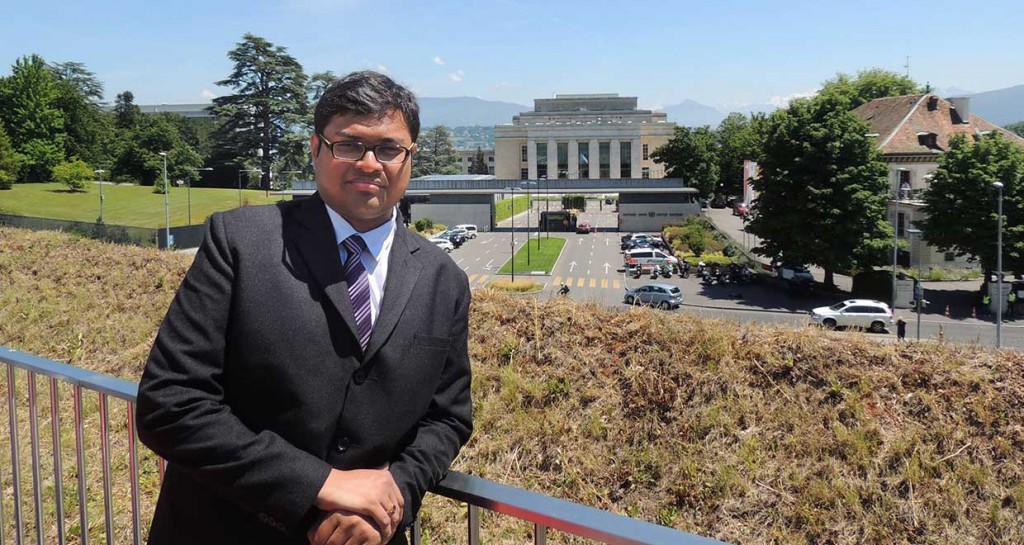
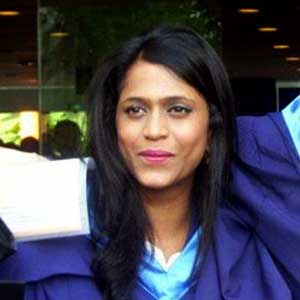
    Adyasha Das graduated from the 2013 batch of National Law Institute University. She is one of the most diligent and illustrious scholars of NLIU and has a noteworthy academic, mooting and debating record. She was also the Convener of Moot Court Society, NLIU (2012-2013). Currently she works as a Corporate Law associate at Khaitan & Co. She has gone about achieving things on the sole basis of her merit.

    We asked her to share her experiences and strategies she used over the years. In this interview, she tells us about:

    • Work experience as the Convener of Moot Court Society, NLIU
    • Her journey from being an intern to getting job offer from Khaitan & Co.
    • Importance of academics, internships, debates and moots


    What motivated you to choose law as a career?

    Considering the number of lawyers and people from the legal background that dominate the corporate, social, and political scenes of the country, I don’t agree that there is currently any prejudice against law as a career in India.  If there were any apprehensions against the profession, the emergence of CLAT, national universities and lucrative job offers are fast changing perceptions about the profession.

    That said law wasn’t my first career choice. Although I did not come from a background that was prejudiced against law as a career, I wasn’t aware of the opportunities, relevance, and prominence of a legal career. In fact to be honest I inadvertently stumbled upon law, but that is a long story. However, what made me continue the pursuit was that law indulged my curiosity and engaged my attention.


    Tell us about your time at NLIU, Bhopal and the highlights of your college life and achievements?

    Time at NLIU was life aptly described by Calvin and Hobbes “Life’s a lot more fun when you aren’t responsible for your actions.” College is place that redefines the phrase spoilt for choice in every conceivable way. I made some incredible friends, learnt a lot and mostly enjoyed my time there.

    I am from a small city and hence for me the biggest highlight of NLIU was that it made me come across so many people, ideas, influences, thoughts, and possibilities. To add to that, I was always fortunate to have mentors (professors, seniors, and peers) to guide me around.  I believe that universities are not institutions devoted only to traditional education but rather help broaden the horizons of the students. NLIU, apart from being responsible for my basic understanding of law, has also substantially influenced  knowledge and views on music, books, movies, culture, social issues, political orientations, economic rights  etc. through its numerous committees that I was associated with throughout the five years.


    What skills did you get to hone while managing the NLIU moot court society?

    Mooting was my love in college. Consequently, everything associated with moots became a passion. Convenership was a great experience for me but that can mostly be attributed to the fantastic team and faculty I had to work with.  I would not be able to put in words all that I gained from this experience but among other things it taught me: “How to work with a team with differing expectations, unequal levels of execution and opposite countenances”.


    Having participated and won Best Speaker awards in a few moot competitions, what would be your suggestion to budding mooters?

    As I already mentioned, mooting was love for me. All my hard work and preparation was entirely influenced by how much I loved the activity itself. I could go days without food, sleep, classes and friends if a particular question of law caught my fancy. Good research and hard work are almost synonymous with a moot win. Based on my experience my only advice would be that participants should invest more interest in the moot they pick.

    Speaker awards are hugely dependent on articulation, persuasion, and spontaneity of the speaker. It is important to gauge the judge and engage his/her attention with the right arguments and points of law. This can be easily achieved by practising the orals in advance. Plus no amount of effort for a shiny trophy at the end is a bad investment.


    How does one make a winning memo? According to you, what is the difference between a great and an average memo?

    The answer is ‘Research’. I cannot emphasise the importance of good research any further. Good research has to be understood in context of the fact that almost every student now has access to a huge pool of resources and therefore any average memorial would contain the standard statutory provisions and case laws. What makes a difference is identifying the issues correctly and addressing them with support of authority. You will be surprised at the scope of creativity available within law.


    adyasha-das-1

    You had also participated in the ICC International Commercial Mediation Competition. How was your experience?

    Mediation competitions are fairly different from moots and require preparation of a separate set of skills. Mediations generally test the commercial bent of a participant and her persuasion and negotiation skills. Understanding the people sitting on the opposite table plays a key role in tackling competitions like this.

    Although ICC International Commercial Mediation Competition was a brilliant opportunity for me, it was also a revelation of the fact that Indian teams required a lot more preparation considering we do not have enough mediation competitions in the country.


    What are your thoughts on activities like mooting, debating and publications in journals? How important do you think are these activities in shaping the legal career of a law student?

    Concentrating only on academics in a course that runs for half a decade can become quite mundane. Extra-curricular like moots, debates, model united nation competitions, publications; sports etc. provide an effective way to not ‘make Jack a dull boy’. The numerous kinds of extra-curricular available these days to students are also sufficiently varied to pique anybody’s interest. Plus these activities are a never ending source of new things to learn.

    Even objectively, recruiters across the country would not generally ignore a CV reflective of five years of constant activity. Therefore I don’t see any reason for not pursuing either one or all of the available extra-curricular that any university has to offer.


    How did you manage to keep up your grades?

    I am not aware of other colleges’ schedules but NLIU generally did not have a very hectic curriculum. So maintaining grades and doing well in moots remained two mutually exclusive fields. It did not require any more strategy than keeping aside 2 weeks for exams which included the week of actually writing the exams.


    Tell us about your internships. What skills have you acquired from these internships and how helpful have they been in your legal career?

    Technically my only corporate law internship was at Khaitan & Co. All my other internships have ranged from UNICEF, State Information Commission, an accountancy firm, a shipping company to working with a media consultant and I wasn’t interning as a law student under anyone of the above.

    Internships, of all kinds, are a great way of learning the practical aspects of law. For students, it provides an excellent work-life perspective and helps them make an informed choice about the kind of work and lifestyle they intend to choose after college.


    Did you have an interview before you were offered the PPO from Khaitan & Co.? Tell us about the interview process and how did you prepare for it?

    Yes I had to undergo an interview before getting the PPO. The interview was substantially the same as a campus interview. I had prepared for the interview by reading up subjects that were mentioned in my CV and things I had worked on while interning at Khaitan & Co.


    What are the things you consider sine qua non for positive feedback or a “call-back” from an internship?

    I am not the right person to ask this as it is really the recruiters’ decision. However anyone who shows interest in the work given to them and pays attention to the work submitted inevitably gets the attention of the seniors. Apart from that, sincerity, accountability, punctuality, and hard work always earn you brownie points.


    If you could re-live your five years in Law school, is there something you would do differently?

    I am not unhappy with how I spent my 5 years in college but if I could re live it, I would definitely have a lot more fun, would read a lot more than I did and do Jessup again.


    What would be your message to your juniors from law school?

    Work hard and have fun while you are at it.

  • Suvarna Mandal, Associate, Saikrishna & Associates on specialisation in IPR from Kings College

    Suvarna Mandal, Associate, Saikrishna & Associates on specialisation in IPR from Kings College

    Suvarna Mandal graduated with a BSL.LL.B (Hons) degree from ILS, Pune in 2012. Soon after Graduation, she went on to pursue Masters in Intellectual Property Law from Kings College, London. She has an enviable academic record and an excellent series of internships at top law firms. She has also done Diploma courses in Corporate Laws, Cyber Law, Intellectual Property Law, and Business Laws. Currently, she works as an Associate at Saikrishna and Associates.

    In this interview, she talks about:

    • Law school experience at ILS
    • Pursuing further studies and LL.M from Kings College
    • Appointment at Saikrishna and Associates


    Though it’s one of the most asked questions but yet, why law?

    Well, to be completely honest, I wasn’t planning on doing law when I was in High School. I intended to pursue a career in either medicine or journalism. However, in addition to having a keen interest in public-speaking, I was also an avid follower of legal luminaries like Nani. A. Palkhiwala and Leila Seth, and consequently, a career in law fascinated me. I procured an admission into ILS, Pune and though I had secured admissions into various colleges in Delhi University as well, I was advised by many to definitely look into law as a career option.

    Luckily, I had the chance to attend college at ILS for a month before I had to finally decide my career path, and within a month, I was sure that law is the best career option for me. It is my personal opinion that as a lawyer you are constantly learning and constantly adapting to a dynamic environment, and the knowledge that one procures from their LL.B degree is just the tip of the iceberg. From what I have gathered so far, even a lifetime is not enough to specialise in a particular genre of law. This was one of the deciding factors for my inclination towards law.


    Tell us something about your college life? What all activities did you participate in?

    While in college, academics was always the first priority, and I spent a major portion of my time understanding and studying the subjects that were taught in every semester. In addition to that, in order to expand my knowledge in specialised fields, I had done Diploma courses in Corporate Laws, Cyber Law, Intellectual Property Law, and Business Laws from Asian School of Cyber Laws, Pune and ILS itself. I had also participated in a couple of Moot Courts conducted internally at ILS and also represented my college as a Speaker in the National Round of the Commonwealth Moot Court Competition, 2009, at School of Law, Christ University, Bangalore. My preference for Intellectual Property Law directed me to write a couple of articles on IP related topics. As far as co-curricular activities are concerned, I was part of the Corporate Law Cell and the theatre group “Aahwaan” of ILS.


    You have interned at top-notch law firms including Khaitan, AZB & Partners, Karanjawala and LexCounsel. How did these experiences help mould you as a lawyer?

    My internship experiences at all these firms have been varied as I have had the opportunity to work in different departments and areas of law including IP Law, Corporate Law and basic civil litigation. Personally, internships have benefitted me greatly because my internship with the IP team at Khaitan made me realise that Intellectual Property is definitely my core area of interest. As a law student, it is difficult and in fact premature to make up your mind about the field of law that you would like to practise in. In my view, as a student of law, it is sufficient to just have a general idea about your areas of interest. In this regard, internships help you a great amount because you get to experience first-hand, what it would be like, to work in that particular area of law.


    suvarna-mandal-2

    Right after graduating, you went for LL.M. Please share with us all the decisive moments leading to this.

    Many law students are often torn with the decision of choosing to pursue their LL.Ms soon after their LL.B. or getting some work experience before opting for the same. There are pros and cons in either scenario, and the decision has to finally be taken by the individual. I too had my share of the dilemma and confusion, but I was clear that  Intellectual Property Law was my preferred area of interest and that I wanted to study more for a comprehensive understanding of the subject. This encouraged me to first complete my Masters and then start working as a legal professional.

    Since I was sure that IP Law was the subject I wanted to specialise in, I started looking for LL.M. courses that offer the same, and The Dickson Poon School of Law, Kings College London was one of the premier and top rated institutes in UK for the same. KCL offered a specialist LL.M. Degree that focussed on Intellectual Property law prevalent in various jurisdictions and had modules that helped the prospective students in developing a speciality in the subject in academic as well as practical aspects.

    The faculty was excellent and comprised of the top-names in the field like Tanya Aplin, David Llewelyn and Sir Robin Jacob. Due to all of these reasons, this course was obviously my first choice and I was fortunate to secure an admission at Kings College, London.

    The experience of studying at KCL was enriching on all fronts which gave me the opportunity to learn from the best intellectuals in the sphere of IP, and learn with students of different backgrounds and cultures.

    As of today I can confidently say that my LL.M. at KCL has benefitted me personally and professionally. One of the main reasons for me to apply for an LL.M. outside of India was to understand the manner in which IP laws were interpreted and how they operate at a global level and its comparison with IP Laws in India.


    Please tell our readers about the application procedure and other requirements?

    From personal observation, I had noticed how Universities (especially abroad) gave importance to student profiles that indicated that the student has put in hard work to build a rounded CV representing his interests and activities not only in his law course but also in co-curricular activities of his choice. Internships, publications, involvement with NGO’s and social causes, cultural activities, etc. facilitate in building an overall strong profile. Having said that, a good score is essential to get into a college of your choice as that is the first criterion that Universities look into.

    The applications for LL.M. should be sent out as soon as the Universities commence with registration process as many a times, good candidates are left out merely because of applying late. Very important aspects of your LL.M. Applications are to have a crisp Statement of Purpose and to obtain good Recommendation Letters. If you have decided to pursue your masters then it is essential to start working on your recommendation letters (from faculty and from your internships, if you are not already working) and your SOP.


    What were your areas of interest while you were an undergraduate student and how have they helped in choosing your subjects/courses for the LL.M programme?

    I have been a voracious reader all through and have found that reading has always leaded to my inspirations and aspirations in life by broadening my horizons. As an undergraduate student, in addition to being involved with activities that were offered by my college, I was also involved in Theatre and Music. I was part of an English theatre group of Pune and performed on stage for the same. Music has been a part of my life since I was a child and I have received training in singing in Indian Classical Music and Western Music. This particular interest directed me towards writing my own songs, and after composing a couple of melodies I couldn’t help but wonder how I could protect these compositions. My interest in these creative fields and the element of curiosity to protect my musical compositions made me want to explore the field of Intellectual Property Law.


    Tell us something about your LL.M year. What kind of activities were you involved in over there?

    My LL.M. experience was challenging, enriching and ultimately very rewarding. I was given the esteemed opportunity to study under and interact with internationally acclaimed academicians and practitioners who helped me greatly in my analytical and critical approach to the issues in IP Law. I studied amongst students of different nationalities, some of them were established legal professionals with substantial work experience, and some of them had recently graduated law, just like me.

    As postgraduate students of KCL and University of London we had access to some to some of the best law libraries worldwide, including Maughan Library of KCL, and the law library at the University of London’s Institute of Advanced Legal Studies (IALS). The college encouraged its students to participate in various seminars and workshops by Guest speakers, networking events, etc. organised internally or externally conducted. The students were also given an opportunity to meet legal experts such as Judges, solicitors, barristers, in-house legal counsels, etc. in order to discuss a career in IP Law.


    How difficult was studying abroad in terms of finding accommodation, finances and settling in? Are there any scholarships for studying at KCL?

    There is no denying that living in a city like London may be a little intimidating at first, but eventually you get comfortable. As soon as you are accepted into a college, you are provided with various accommodation options that the college can offer you, and fortunately, I was able to secure a hostel accommodation at KCL even before going to London.

    There are also several options available to students who do not wish to live in accommodations provided by the college and several organisations/websites work towards helping such students. London is a very student friendly city as there are substantial amounts of discounts available to students in public transport, restaurants, grocery stores etc. which is a relief considering that London is an expensive city to live in. As far as scholarships are concerned KCL does offer a couple, however they are extremely competitive and mostly inapplicable to Indian students. The website of the college offers all the details pertaining to the same.


    How was the faculty and academic schedule at KCL? Given your experiences how would you pit Indian students with their foreign counterparts?

    That pretty much depended on your choice of modules. The modules that I chose, required me to attend about 3-4 classes per week with a pre-defined reading list that needed to be studied before the class. This way, the understanding of what you studied from the list became crystal clear when the same was discussed in class with the professors. A glaring difference in the mind-set of the foreign students viz. a viz. their Indian counterparts is that the former believed in a more ‘comprehension based’ education system whereas we believe in memorising our syllabus, sometimes without understanding the underlying concept. I am of the opinion that if we are able to inculcate an application-based and practical method of comprehending the subject in our education system and combine that to the gruelling hard work that Indian students are used to, then we would have the perfect recipe for all round success.


    Was there time enough for non academic pursuits at KCL? How did you find the study-life balance to be?

    Though the LLM course is rigorous and requires commitment, there was enough time to explore London and indulge in the activities that it had to offer. The city has a rich history and culture and there are many places that one could visit in and around London even on a student budget. The recipe for balancing your student life and unwinding in one of the most renowned cities of the world is simple. One should make it a point to study the reading list given to you before classes, regularly attend your classes, engage in discussions with your peers and professors during classes, and always complete the assignments given by your faculty. This will help you greatly for your examinations and at the same time you will also have enough leisure time to relax and enjoy student-life at London.


    Soon after Masters, you joined Saikrishna and Associates as an Associate. Tell us about your induction into the firm.

    Getting absorbed into Saikrishna & Associates is a privilege and I grow and learn as a legal professional every single day. It is truly a terrific opportunity to be able to work with and rub shoulders with the best and the brightest minds in the industry. The seniors of the firm are fantastic mentors and dedicated lawyers that inspire you to work harder and learn more. I have been an Associate at S&A for almost a year now, and have had the chance to work in various verticals and practise areas of the firm such as IP Litigation, Transactions, Company Law Litigation, Advisory and Policy Reform, etc. I have also had the chance to co-author with my seniors, several publications in legal journals and magazines.


    Many lawyers would say that the actual learning takes place in the years of practice. How far would you say it is true? What was the case in your situation?

    Well, knowledge is power and experience enriches our knowledge. A good educational background lays down the foundation to be a good professional. As a lawyer the learning is constant irrespective of what stage you are in, whether a student or a professional, and you never really cease to be a student of law. It is essential to be true to the role that you are currently in and to try and meet the expectations of that role. There is obviously a difference in studying law and practising law, however the comfort level to understand both comes with hard-work, patience and time.


    What would be your advice to students interested in Intellectual Property Rights?

    Intellectual Property Law is a dynamic and constantly growing field. We currently live in a digital and global society and Intellectual Property Rights permeates into our daily lives. IP Law in India is developing at an exponential rate and has tremendous untapped potential. Students who wish to study and understand IP law should try and secure internships in firms that practise the same. In addition to that they should try and take up diploma courses in IP law so as to increase their knowledge base in the subject. It is also essential to stay abreast with the developments and major judgments in the field.

  • Aditya Sondhi, Senior Counsel, Karnataka High Court, on building a career in litigation

    Aditya Sondhi, Senior Counsel, Karnataka High Court, on building a career in litigation

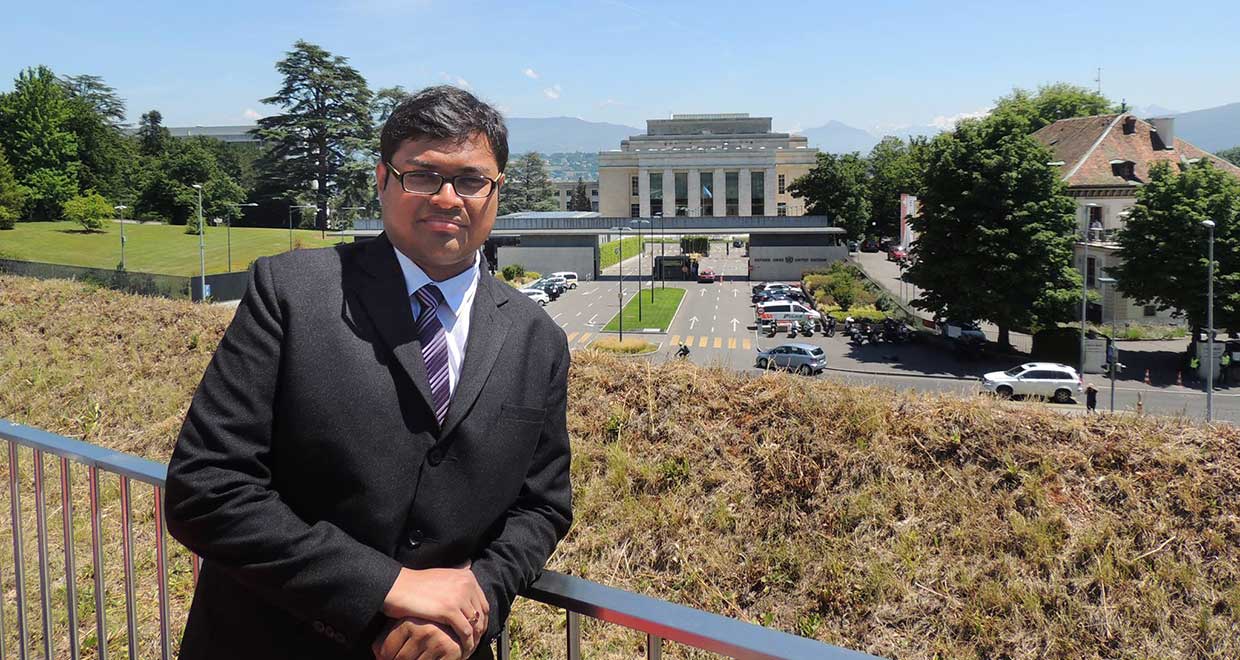
    Aditya Sondhi is an alumnus of the NLSIU, Bangalore. He graduated from NLSIU in 1998, and had thereafter independently set up his litigation practice, ‘brick-by-brick’. He was recently (in June, 2014) designated a Senior Counsel at the Karnataka High Court.

    In this interview, he reckons his first hearing at the court and shares with us his in-depth experience of advocacy. There is so much to learn from here. Read on!


    Please tell our readers what motivated you to take up legal studies?

    I was an accidental lawyer. One had heard of the NLSIU at Bangalore in the early 1990s, and when the entrance exam came along, I sat for it just for a lark. My plans were to go to England after my 12th standard. As it turned out, I cleared the Law School exam and ended up staying on in Bangalore.


    Have the NLUs been able to produce socially relevant lawyers? What is your take on this, given that many chose to take up firm jobs?

    Quite so, because those who have taken up social-action practice have made their mark. There is a saying in Hindi – Sau sonar ki, ek lauhar ki (For a hundred blows of a goldsmith, a single blow of the blacksmith). Despite many NLU alumni taking up corporate law at firms, the few who have taken up socially relevant lawyering have [sociallocker] more than made up for their tribe. Like my classmates and friends at the ALF.


    aditya-sondhi-2

    How was your law school experience at NLSIU? Are there any memorable moments which you would like to share?

    I was fairly nonchalant about being in NLS and hence didn’t necessarily get very deeply influenced by the ethos of the place. Equally, my contribution to the institution as a student was negligible. I do, however, vividly remember our founder-director Dr. Madhava Menon at the orientation programme in 1993, clearly mentioning that the object of the Law School was to contribute purposefully to the Bar. For me, that was a clarion call of sorts and helped me take up litigation once I graduated without even an iota of doubt.


    How do you say a law student can shape up his profile for litigation while still in law school? Do moots and academic writing help?

    Moots and academic writing scarcely help one shape up for practice. Though moot courts may give a mild flavour of what it is like to prepare and argue a brief, the lack of accountability to a real client or a real cause makes the experience artificial. Academic writing in fact makes it difficult to adjust to pleadings for court, which are meant to be concise, uncomplicated and largely factual. Even the legal grounds that are pleaded are expected to be scholarly, yet pithy. Closer attention to research and strenuous litigation internships can surely muster up a skill-set that comes handy in the long run. Most importantly, law students must stay clear of the anti-litigation propaganda that goes around and make up their own minds about practice.


    How were the first few years after your graduation? Would you say law school prepared you for the real world practice of law?

    They were the toughest years of my life. Simply, because I realized how ignorant and wet behind the ears I was. It was more a case of trying to survive in practice, rather than succeed. This was due to the fact that one knew so little and experience could only be gathered the hard way. Law School did not prepare me for this episode, as the culture in NLS was generally removed from litigation and concentrated more on academia and corporate, in-house practice. Of course, the few professors who had shown us glimpses of the real world outside, like Dr. Lalit Kumar Rao (may he rest in peace), were valuable mentors.


    Please tell us about how you decided to pursue litigation. What were the other opportunities you were considering?

    As I said earlier, Dr. Menon’s message stayed with me. This, coupled with the fact that I was offended by very senior professionals coming down for pre-placement talks and simply selling their firms to the students. I always wanted to work in an environment where I would be inspired by my seniors. Not be seduced by them to join them. That changes the entire grain of how you approach your life ahead. A robust placement in my fourth year with Mr. Dipankar Gupta in the Supreme Court and in the final year with Mr. Udaya Holla clinched it for me.


    Did you have a mentor while in your formative years of your practice? How was your experience arguing at the court for the first time?

    Not directly, but Mr. Holla shaped my career tremendously by simply giving me opportunities to argue matters in the High Court from the day I enrolled. His style of mentorship is quite stringent and effective – to throw you in the deep and let you swim for yourself. Something he has done himself with remarkable élan. On the evening that I got my sanad, when I offered my senior some sweets, he reciprocated by offering me two files for the next day to argue in Court!

    One was a writ petition before the legendary Justice R V Raveendran, in which former Advocate General Mr. B V Acharya appeared for the petitioner, and I could not get to open my mouth for the respondent! Not so much out of fear, but more because I had over-prepared for the case and did not know where to begin. (Fortunately for me, the other case allotted to me was adjourned!).


    What was the attitude of judges towards new advocates? Has it changed over the years? Are there any specific challenges to be faced on the first day?

    As I recounted my first hearing above, I can say that soon enough I became confident to argue more assertively and calmly in Court, and tribute here must be paid to some wonderful judges at the time who were most encouraging to juniors. I can recall Justice Dattu, Justice Rangavitalachar, Justice P V Reddy, Justice Mohan Kumar, Justice Thakur, Justice PatriBasavangoud and Justice Rajaratnam, among many others. Some of them were tough task-masters but at the same time, never bullied or discouraged juniors. This brings out the best in junior advocates – knowing they need to be fully prepared and that the Court will hear them impartially. The greatest challenge in the beginning is the mind-block that one has with the system – uncertainty as to how the Courts will treat a new entrant. Good seniors and judges help you keep the faith.


    How do you say we can boost the fiduciary relations between clients and us? How many years of practice would you say is required to build a firm clientele?

    One good performance is sufficient to build faith in the party. Clients, generally, only expect their Counsel to be prompt in their filings, honest to the T and to give it their best when the case is heard. Of course, the unethical practice of soliciting clients makes it very difficult for solo, first-generation practitioners who stay true to their code of conduct. I would say, my clientele was never as large as many other lawyers. However, it was built brick-by-brick, and that takes years.


    What all does a Senior Counsel have to do? Please tell us about a typical work day.

    Seniors have the benefit of not having to worry about mundane, micro-management of cases and are only required to argue their matters to the best of their ability, after being briefed by the advocate on record. However, the very fact that one is a designated Senior mandates greater preparation, better submissions and total fairness to the Hon’ble Court. Typically, a day entails briefings by Counsel on record and interaction with juniors to prop up the research. Thereafter, it’s a question of waiting your turn in Court and arguing the brief. Evenings are at Chambers, where briefings and reading continue.


    aditya-sondhi-1

    What are your core areas of practice? How do you say one can find his domain?

    I’ve always maintained that litigation is a speciality in itself and thereafter one may or may not concentrate on any core area of law. I would say my work broadly covers commercial and constitutional law, on both the civil and criminal side. Having said that, there is a great thrill in arguing newer areas of law, where one is outside his / her comfort zone and where one must work doubly hard to do justice to a brief. Unless one already knows what area of law he should practice in, it is best to free-fall and discover the areas of interest as one goes along.


    What is the transformation from being a Counsel to Senior Counsel like? Are business development skills mandatory at such higher roles?

    A designated Senior Counsel at the time of his / her designation must already be made of the stuff that is expected of a Senior. If that is so, the transition is not so sharp, though one does face several practical changes in terms of retiring from pending cases, avoiding direct client interaction and so on.

    I’m afraid, that the words ‘business’ and ‘practice’ do not go together in the profession. The skills are professional and entail the entire gamut of skills required for better advocacy. Not least, a high degree of ethics, which one must constantly strive to uphold. And which is no easy task.


    How did you take time out for pursuing higher studies? Would you say higher studies are necessary for a career in litigation?

    I got my masters’ in political science through correspondence and thereafter a PhD, while I was practising. This I did only because I missed the academic side a little. Otherwise, neither did I intend to pursue an LL.M nor do I think one can afford to take much time off from practice to pursue higher studies. Particularly, if you are a first-generation lawyer and have to stay at it from day one.


    What are the skills that you look for when you hire juniors under you? How do you reckon that law students should develop these skills?

    The hunger to learn and the modesty to know that they know very little. My chambers are ill-suited for juniors who are smug and all-knowing. These are not so much skills as they are an attitude. And that attitude needs to be developed by introspection.


    When you accept interns under you, what kind of qualities do you look for? How do you say interns should go about their work so as to get noticed in a positive way in the limited time they have?

    I find it quite difficult to screen interns considering the number of students who apply. And I get all sorts. Really good, keen interns and others who are there as a formality. Interns clearly need to slog and make the most of their time in Court, without waiting to be spoon-fed assignments. Internships are meant to get a feel of what Courts are like, and that effort has to come from the interns themselves. A lot of them sit around hoping I will do the needful for them. And they are usually disappointed.


    Having mentored quite a few students have you found any difference between NLU and Non-NLU students? Do you think law schools have a role to play in one’s career trajectory?

    Non-NLU students show a greater hunger to learn, especially non-NLSIU ones. There is no chip-on-the-shoulder and there is an eagerness to show the world that one’s aptitude does not necessarily depend on the law school that they come from. In any case, NLSIU alumni do not choose to work with me and I have had all of two NLSIU products work with me in all these years! My best juniors have come from the local law colleges. My first junior, Nidhishree, was a gold-medallist from the ULC, Bangalore and has proved to be fine advocate with a bright future ahead of her.


    Is there any other suggestion you would like to give to our budding lawyers?

    The Law is an amazing universe – with diversity and depth, with unsolved mysteries and with room for everyone who accepts it whole-heartedly. But, as they say in cricket, no one is bigger than the game.

    [/sociallocker]

  • Rajni Singh, Associate at Hariani & Co. on work experience in Media and Entertainment Law

    Rajni Singh, Associate at Hariani & Co. on work experience in Media and Entertainment Law

    Rajni Singh is a practicing Media and Entertainment lawyer. She graduated with Bachelors of Mass Media degree from SIES College in 2009. Her interest in law led her to join Government Law College, Mumbai and pursue LL.B. During law school, she participated in various co-curricular activities including moot court competitions, debates, and conferences. She also has a couple of publications to her name. Soon after Graduation she started working as an Associate at Naik, Naik and Co. and has recently joined Hariani and Company.

    We asked her to share her experiences and strategies she used over the years. In this interview, she talks about:

    • Pursuing Law after Bachelors in Mass Media
    • Work experience at Naik, Naik & Co. and Hariani & Co.
    • Work opportunities in media law


    Most of our readers are law students and young lawyers. How will you introduce yourself to them?

    Hi! I am a practicing Media and Entertainment lawyer. I completed my LL.B. from the Government Law College, Mumbai and prior to law school, I completed my under graduation in media studies. Cinema, travel and world cuisine make up for the remainder of my non-work life.


    You are a high distinction media graduate, what led you to pursue law?

    During my Media School days, I learnt the nuances of the media industry including the movie production process, the television broadcasting, advertising, public relations among others. I also interned at various media houses.

    Media provided me with great exposure and I grew increasingly aware and concerned about my immediate surroundings. Issues such as corruption in the private and public space and global warming really affected me. I felt the urgent need to address the problems in whatever way I could. As a result I co-founded the Socio-Enviro Club in my college. The members of the club would make efforts to bring awareness about the impact of social and environmental challenges being faced at a micro level. I was also actively involved in inter-collegiate debating and socio-political discussions these activities taught me how to think on my feet and how to clearly put my point across. In the process I realised that I wanted to take up something with a wider scope and larger social impact.

    Further, exposure to subjects like sociology, political science, economics and more importantly, media and press laws and ethics also played a very important role in my decision to pursue law. I recount being one of the very few students who actually enjoyed the legal aspects of Media. I ended up presenting my final year project on the Consumer Protection Act, 1986 with legal precedents.

    Towards the end of media school, I had to choose from three available options, working ant a leading advertising agency, a seat at a B-School and confirming my admission for a three year LLB at the Government Law College. I chose to spend three more years into studying the law.


    rajni-1

    How would you describe your time at GLC, Mumbai? What are the co-curricular activities you took part in GLC?

    The years spent at GLC were the most memorable years of my life. Amidst the short comings, the College survives because of its meritorious students and active student led bodies. One of the best things about the College was its inclusiveness. No matter what you wish to pursue, you could. Not only was the college very close to the Bombay High Court and all the law firms, but it also offered the Mumbai advantage. One could pursue non-academic artistic and cultural interests. Especially the South Bombay area is very culturally rich.

    I consciously decided to not intern during my first year and be involved in college activities. I participated in more activities than I could take. I was an active member of the Student Council, Moot Court Association and the Legal Aid Committee. I participated in several National and State Level Moot Court Competitions, winning a very few and losing many. I personally enjoyed writing research papers particularly on the subject of Intellectual Property Rights and I also professionally learnt Spanish.

    For all the three years, I was associated with an NGO ‘Public Concern for Governance Trust’. I was actively involved with the NGO for spreading awareness across Mumbai about Right to Information Act, 2005 and also the Anti-Corruption Cell. The NGO gave me an opportunity to script and direct plays in Hindi language on the practical application of the RTI Act. The play was performed before a non-English speaking audience and several colleges across the city. The entire process was thoroughly enjoyable and I do not think I could have understood the RTI Act with this clarity if I were to write an exam on it.


    You were heading the Legal Aid Committee (LAC) of the GLC for one entire academic year and you were also awarded the ‘Best Legal Aid Worker’. How do you recall that opportunity?

    That was by far the best decision of my life. The kind of work LAC does, I was fortunate to have had the opportunity to head it. The friendships made while working in the committee will last a lifetime. As a committee, we did some exciting work. To name a few, we started the Annual GLC Legal Quiz which is presently the most loved activity in the College. The idea of the quiz was to test general knowledge of students in creative ways and we consciously decided to un-bore the quiz. To give you an example, we used movie clips in the buzzer round wherein the participants were quizzed on the criminal and civil offences being committed in that particular clip. It was a great learning experience for the organisers as well as the participants.

    We also worked towards the mental rehabilitation of the Juvenile delinquents. My initial years at Law School were spent at the Dongri Remand Home and the Juvenile Court which made all aspects of theoretical legal learning come alive. Members of the LAC also regularly visited the Byculla and Arthur Road Prisons and filed Bail applications for under trails who could not afford legal representation. These bail applications were either for release of the under trails on cash bonds or personal bonds. Can any internship or any law firm give a first year law student this level of exposure? I do not think so.


    What sort of internships did you do while in law school? How instrumental were these internships in helping you decide what field of law you wished to specialize in?

    To be honest, I was always clear about pursuing Media Laws transactional or litigation. Therefore, I chose my internships accordingly. However, there is no doubt that internships really open your mind and help you understand what you like to do or sometimes by law of elimination, what you do not enjoy doing.

    I wanted to understand court practice and procedures first, that’s why my first internship was in the chambers of Sr. Counsel S. Venkiteshwaran I was exposed to Maritime laws and various matters related thereto. Pursuant to that, I interned with Vidhi Partners in their Media and Entertainment team, Anand and Anand in their Trade Mark team and thereafter I was selected to work as a long term intern with Naik Naik and Co. throughout my final year and concentrated on Media and Entertainment Laws. I learnt a lot under my seniors at each place of work. I must mention the learning involved both active learning as well as passive. It merely involves observing the seniors deal with clients or appear in the courts. The dedication and toil they put into their work was amazing. There was just so much to learn.


    What do you feel about the perception that students of certain ‘elite’ NLU’s have a much easier time in kick-starting their career as compared to law students from other colleges? Is this true at all?

    I feel it is more to do with the person. Unless you put in effort, irrespective of which college you are from, one thing is sure, you will not succeed in the long run. I commend GLC for its encouraging attitude towards Counsel Practice (litigation) which is sadly not a very popular option in other law colleges in the Country any more.

    To answer your second question, unlike other professions, in the legal space, kick starting a career does not guarantee a long lasting one. I see law as a big equalizer in that sense.


    What brought you towards Media Law?

    I have been asked this question a number of times and every time I end up saying I don’t know. I will be wrong if I say it is the only aspect of law that excites me. Law is so multi-dimensional, it is impossible to choose a favourite subject. I thoroughly enjoyed reading Constitutional Law, IPR, Law of Crimes, Torts and Contract laws. Therefore, I chose a field of interest in which I could apply all of my above said favourite subjects and cater to the industry I feel I belong and have been exposed to from a commercial/ non-law perspective as well. It really helps me as a Media and Entertainment Lawyer to better understand the industry needs and problems that clients face.


    Tell us something about this new and emerging field of law that you practice?

    You chose your words correctly. It is both considerably new and very emerging. Traditional media was disorganised and rather a close knit emotional lot. I say emotional because till date members of media are very cautious of the words they use. The entire industry at one time and to some extent even today, functions on trust and oral arrangements. In fact, in the earlier days, there was hardly any transaction on paper.

    However, the landscape has changed considerably. With corporate houses and studios setting in and with the digital boom, the complexities of the industry, in terms of commercial exploitation of creative content, has grown enormously. With emergence of new platforms, formats and mediums, the dissemination and reach of information is unimaginable. With intermediaries playing an important role, there arising questions such as profit share, royalties and of course the global favourite piracy.

    Media Law includes several statues such as the Copyright Act, 1957, Telecom Regulatory Authority of India Act, 1997, Cable Television Networks Act, 1995, Trade Marks Act, 1999 and nodal agency of Ministry of Information and Broadcasting and other self-regulation guidelines such as Advertising Standards Council of India, Indian Broadcasting Foundation and so on.


    You have been involved in a few pro-bono matters. What is your opinion on advocates taking up pro-bono matters?

    “Maybe after 35 when I have enough money” is what most of my friends say when we discuss the possibility of taking up pro-bono matters. They are not necessarily wrong, it is their way to look at it. For me, I think it is more selfish, I do it for the satisfaction it gives me.

    The Legal Aid Committee of the GLC always looks for advocates willing to take up matters pro-bono and there are several NGOs and independent practitioners who do take it up.

    I personally feel we should do these matters while we are young, with minimum liabilities and maximum learning curve. I have been fortunate to meet partners of law firms who are willing to spare time into taking up matters pro-bono. I have contributed to a matter on RTE for a minor girl and a few domestic violence matters among others.


    What should the students who look for internships actually look for?

    • Small teams: From personal experience I would recommend one must go for a smaller set up or a firm which has team structures. This allows maximum exposure and learning because one gets to do actual work and be involved in the process.
    • Court exposure: I also strongly recommend Judicial Clerkship and at least one litigation exposure as an intern preferably the first internship.
    • Term: Lastly, even though I know it is not always possible, but the endeavour should be to keep the term of your internship as at least for three continuous months so that it is mutually beneficial.


    Many law school students aspire to secure a job. What do you think most are doing wrong, from your observations?

    While securing a job is very important, I must mention it is not everything. I see students who start interning as early as 17-18 years of age and from day one, work towards securing a job with top tier law firms and the big pay package, I feel the approach may not be correct.

    Students must realise that they have to work all their adult life so they must pause and take it easy. Spend college time in developing skill sets, friendships, play a sport, learn a language, Moot, even if you lose (you will), even if you are embarrassed (you will be) and even if you do it all wrong (you may), but please Moot. Mooting will teach you the Law, in a way it can never be taught. Framing arguments, research on a moot point and tedious drafting (including formatting) are very critical for ones development as a practicing lawyer.

    Finally, chose a field of law not because it is lucrative financially, but because it interests you and you feel like waking up excited to go to work each day. I remember so many of my class mates took up Corporate Laws because it was “the big thing”. Two years into it, many of them realise that they don’t enjoy it as much they thought and find it rather dry. So think personally, what kind of law you would like to practice and then take it up.


    What are the three things a law student should keep in mind while facing an interview or applying for a job?

    From my limited experience, I can say the following:

    1. Comfort: Be comfortable, take it easy, be reasonably confident and strike a conversation, if possible. Also, you can disagree with the interviewer humbly if you don’t agree to what he/she is saying and it’s alright to say ‘I don’t know’ if you don’t know an answer to a question asked;
    2. Keep your CV short and to the point: Know your CV. You need to sound like the same person whose CV you have submitted, so the endeavour should be to keep it in tune with your actual significant achievements and experiences;
    3. Structure your CV in line with the job that you are applying for: For example: if you have a lot of Litigation experience in your CV and you are applying for a Corporate Job, you need to build up your CV accordingly to show that you are actually interested in Corporate Laws. Maybe supplement it with a research paper or a moot on the subject and be ready to face questions accordingly.


    What is your take on LLM?

    Right now I am learning my subjects of interest from some really learned seniors at Hariani and Co. and I am not willing to trade that, even for a year. Also, LLM for me is an expensive affair and needs planning. It does excite me a lot, because I enjoy reading the law, however, right now, I think I need to work and improve my craft. Maybe, after a few years I may look at a professional LLM.

    I must add, if any student wishes to pursue academics, LLM becomes a necessity and plays a very important role. The sole determining factor while choosing to pursue LLM should be what you personally want to do in your career and at what time.


    How important is scoring well in Law School?

    I think there is no taking away from the students who are academically inclined and are consistently high scorers. I have consistently scored well myself. Law as a field is very academic. One has to spend considerable time reading and therefore, you need to have an academic approach towards the profession. However, I think the profession requires more than just high marks. You have to be increasingly interested in what you are doing beyond answering a mere exam.


    What do you think is your way forward?

    I frankly don’t have a conclusive answer for you right now. However, I definitely want to be a good lawyer in my field of practice and currently I am in the pursuance of the same. Having said that, I have a strong liking and inclination towards legal writing, pro-bono litigation and academics so may be a combination of all.


    Do you go back to College?

    Oh yes. Very regularly, I look for opportunities to go there. So whenever I am invited for judging debates, moots or Quiz, I am there.


    Lastly, what would be your parting message for our readers?

    Be open minded about law. There is simply so much that law has to offer. There are academics, research, NGO, policy making, think tanks, litigation and firm practice. Therefore, take your time (you have 5 years) and thereafter but be open to trying and failing and again trying. If you go wrong it’s okay, you can always join the dots backwards and it will all make sense.

    Good luck!

  • Savni Dutt, Associate at Saikrishna, on copyright, patents and authoring a book

    Savni Dutt, Associate at Saikrishna, on copyright, patents and authoring a book

    Savni Dutt graduated from NLUJ in 2013. She has represented her college at prestigious moot court competitions like the ICLN ICC Trial Moot Court Competition where her team went for the International Rounds. Apart from being a part of the Editorial team during her internship with the Centre for Legislative Research and Advocacy, she has also published her book, ‘Freedom to Publish’. With her specialization and interest in Intellectual Property Law, she joined the litigation team at Saikrishna & Associates and is now working there as an Associate.

    In this interview we asked her about:

    • Graduating from NLUJ and working at Saikrishna & Associates
    • Importance of Internships, maintaining grades and experience at mooting
    • Approach to Academic Writing and publishing a book


    How would you introduce yourself? Could you please share a little bit of what motivated you to pursue law as a career?

    Throughout my time at school in Gurgaon, I was mostly involved in academics. Other than that, my interests were dance and theatre, and they continue to be. I studied law at National Law University, Jodhpur and now work as an Associate in the litigation team at Saikrishna & Associates. My interest in the study of law stemmed from the many stories I had heard of my late grandfather who was a practicing lawyer in Delhi. However, I was always inclined towards a career in research or policy and studying law seemed to be the most appropriate step towards achieving that. So while I knew I wanted to study law, the decision to actually practice law as a career only came about incidentally.


    savni-dutt-1

    Tell us a bit about your days at National Law University, Jodhpur?

    NLU, Jodhpur is a fully residential university that allows its students to make it their own. It gives its students a lot of time and flexibility. There is an active and competitive mooting culture at NLU Jodhpur. Most students seem to gravitate towards it but there’s enough time for other things like writing and sports to name a few, if one is interested. I chose to spend my time in helping organize our college fests as also other intra-university events.


    How were you internship experiences?

    Internships play a huge role in helping a law student find his/her area of interest and are the best source of learning. The kind of hands-on experience that a good internship can provide is unbeatable. Therefore, it is very important to choose the right kind of place for an internship to suit your interest and then to give it your best. As a student looking to learn at the job, I tried to do as many different kinds of internships as I could. My main goal was to use the period of 5 years to experience as many different kinds of legal work as I could to be able to make an informed decision about what I wanted to do once I graduated. I interned with an NGO, a research organization, with a trial court lawyer at the Tiz Hazari district court in Delhi, as also some corporate law firms. I also briefly interned with the in-house legal team of an international company. But it was the brief encounter I had with litigation during my internship at Saikrishna & Associates, which gave me the opportunity to assist on some very interesting cases, and helped me finally choose litigation over other options.


    You’ve represented your university at prestigious moot court competitions in India and abroad. How significant do you think mooting is for law students?

    I think mooting is something that all students must participate in at least once during their law course. While mooting might not be a reflection of what courts are really like, the lessons that one learns from the process and approach followed in moot courts are helpful even professionally. To me the most important things about mooting are working as a team and working within the limitations of time, pages, format, etc., that can truly be very stressful. Moot Court Competitions are a great way for students to push themselves into thinking out of the box. These are the important skills that according to me have been the handiest while drafting pleadings for court, often on short deadlines and appearing before an actual Court.


    savni-dutt-2

    At the 2012 ICLN ICC Trial Competition your team was one of the two that qualified from India. What was the experience like?

    The 2012 ICLN ICC Trial Competition was a surreal experience from the time our entry, for the qualification round, was scored the highest amongst the Indian entries. The format of the competition is very different from other moots and it was nerve-wracking because each speaker was responsible individually for each round. The subject matter of the moot is international criminal law, which was a big challenge for us because we had to start our reading and research on the subject from scratch. As part of our preparation we had completed a certain amount of reading even before the topic for our written assignment was sent to us. After our qualification to the international rounds and the submission of the memorials, it was a series of oral practices that continued for around two months to perfect the structure of our speech, timing and modulation.


    Please tell us about your book- ‘Freedom to Publish’. How would you recommend that law students approach academic writing?

    ‘Freedom to Publish’ is a primer aimed at an audience of authors, publishers, students and professionals to empower them with basic knowledge of possible legal issues that one must be wary of when publishing something. The book has been published by ‘Manas Saikia Foundation’ and is distributed free of cost in public interest. Mr. Saikia had the idea for the book in the wake of the growing number of instances where books and publications were being abandoned or withdrawn because of potential legal actions. The book has been kept short and simple to increase its accessibility and utility to someone who isn’t a lawyer.

    An academic piece should appeal to a wide audience. Thus, it is imperative for an author, to put ideas and research in a coherent and streamlined manner. There is also an additional responsibility to check, recheck and be absolutely sure of what is being published. These are important skills for any lawyer, and with each academic piece, one perfects them. Law students, interested in academic writing, should ensure that their publication is focused on a specific issue instead of it being on a broad subject. It is also important that the publication proposes a solution or an alternative or a concrete conclusion to explain, to the reader, the purpose that has been achieved by it.


    You’ve been a member of an editorial team as well. Please tell us about the experience. What are the things you get to learn from such an experience?

    I got an opportunity to work with the editorial team on the Policy Booklet for Parliamentarians on Millennium Development Goals and Gender Budgeting in India, during my internship with the Centre for Legislative Research and Advocacy. It was an interesting experience though short lived, as it was limited to the duration of my internship. Nevertheless it was an enriching experience that taught me the importance of compartmentalization of work while working as a team. It also taught me how I can filter my writing and appropriately convey my ideas by making them crisp and easy for the reader. This proved very helpful in the process of writing the book.


    We would love to hear about your work profile. What made you choose this particular avenue?

    After studying a course on IP, I realized that there was no other subject that came as naturally to me as this one. I also believe that our professor of IP, at the time, Mr. Yogesh Pai had a role in making the subject that much more interesting. Eventually, to test my interest I chose to intern at Krishna & Saurashtri in Bombay but I was convinced only after gaining some litigation experience at my two internships with Saikrishna & Associates in Delhi.

    I work with the litigation team so my work primarily involves cases dealing with issues of copyright, patents, trademarks along with some cases relating to media law, personality rights and tort law in the form of unfair competition and commercial misappropriation. Additionally, I’ve been lucky to be involved in the series of ongoing litigation concerning the possible overlap between the competition law and patent regime. An ordinary day at work is a balanced mix of court action, drafting, researching and brainstorming with other associates.


    What were the biggest hurdles and challenges in the first few months? How did you deal with them?

    The first six to eight months of my career were exciting, intimidating and annoying all at the same time. They were exciting because I was finally doing what I had been waiting to do from December 2012 to August 2013. It was intimidating because my actions now had consequences. One of the biggest challenges for me in the first six months of my career was coming to terms with the responsibilities that come with being a professional. Finally, I use the term annoying because for the first few months it felt like I knew nothing, which made it harder to focus. While I am still trying to figure out how to deal with being both happy and angry about work at the same time, there is one thing that I have learnt. I have learnt that things will get done.


    What, according to you, are the skills required of an advocate aspiring to build a successful career in intellectual property law?

    Every time I have been in doubt, I have been told that to be able to do build a successful career in law, one need not be a genius. Average intelligence with hard work is all one needs to become a successful lawyer.  Whatever be the field of law, there is no substitute for hard work. For those interested in IP as a potential area of practice, I would suggest extensive reading on the subject. IP is vast, it is growing and most of it is still unclear, so there is a lot of room for different views. If there is a topic that interests you, read about it as much as you can but importantly write about it too. I also feel that we focus a lot on the concepts in IP and forget the procedure. One must pay equal attention to the filing and procedure for grant or registration of an intellectual property.


    How important do you think that extra-curricular activities are to a law student?

    Any extra-curricular or co-curricular activity is extremely important for a law student simply because it adds value to one’s time and experience as a student at the same time developing some skill or characteristic. It is also a great way to begin networking, which is extremely important for any lawyer/law student. Through law school, it was my attempt to choose a different activity every semester. So if I chose to participate in a moot one semester, the next semester was dedicated to a sports fest or a parliamentary debate. This way I was able to give importance to academics, participate in events and have some spare time at college.


    As a concluding message, what would be your suggestions to law students?

    Law students must remember that it is very important to maintain a good grade and to participate and to intern but it is equally important to enjoy law school. I borrow here the unconventional yet inspiring closing words by Judge Kozinski from Mattel v. MCA Records, Inc.,

    “The parties are advised to chill.”

  • Jomol Joy, Associate at Chambers of Geeta Luthra, on experience of Year 1 in litigation

    Jomol Joy, Associate at Chambers of Geeta Luthra, on experience of Year 1 in litigation

    Jomol Joy graduated from NLIU, Bhopal in 2014. Her interest in litigation led her to start her career with practice and is currently an associate at the Chambers of Senior Advocate Geeta Luthra. She has been quite involved in Debating and Mooting as a student. We asked her to share her experiences and strategies she used over the years.

    In this interview she talks about:

    • Her life and journey as a law student
    • Mooting and other co curricular activities
    • Internships during law school
    • A career in litigation practice


    What brought you into legal studies? Did you not consider medical or engineering as a career?

    Even though I believe that no one knows you better than yourself, but when it comes to answering the question, it is always a challenge. I’m an advocate by profession, who in her little time of her own likes organising events only as a matter of interest. I like clicking pictures, cooking, teaching and dancing. If asked to describe myself, I would say I’m an energetic, hardworking, ambitious, tolerant, adaptive, and a positive social butterfly who believes that your happiness is in your hands.

    I’m answerable to my conscience, I have had a vision and for many years to come the only set goal and desire is to be designated as a Senior Advocate from the Delhi High Court. Back in college, I was given the title of ‘Joan of Arc’, which I believe suits the fighter in me. Maybe it is the same tendency that brought me to this profession. I’m a believer of the saying, “Everything happens for a reason”. My decision to pursue law was certainly not a result of an in-depth introspection, even though many factors were responsible for the decision.

    The most honest and genuine reason was to explore the option of studying in a national law university in my own hometown. Another predominant factor was CLAT. It is only after solving a mock test paper at one of the coaching centres did I get an idea about the legal studies and it was only after that I decided to do law. However, till date I have never regretted my decision to pursue law, in fact from the very first year of my law school I have felt that I belong to the profession, and as time passed and I gradually unfolded the new faces of the legal profession, I was always more excited for the next. I did consider engineering at the first instance, as I always had an interest in programming, but when it came to choosing either of the two, I chose law.


    jomol-joy-2

    Tell us about your years in law school. What made your journey with NLIU worth it?

    Five years is not a very long period according to me, but even those five years of time spent at NLIU had been the most remarkable and life changing years of my life. Each passing day at NLIU had only been a new learning experience for me. Not even a single day would pass when I had to sit idle doing nothing.

    Today as a litigating lawyer when I have to work even 20 out of 24 hours mostly on a daily basis, I do not find it burdensome or unusual as NLIU has prepared me for this right from the beginning. Be it moot courts, debates or client counselling, or activities of different university cells, NLIU has honestly played a major role in my overall grooming as a lawyer and has equipped me to adapt to the lifestyle of a lawyer. With each passing day, my decision to pursue law has only become stronger, because had it not been for the co-curricular activities I would not have got a platform to mould my legal aptitude.

    In the first two years I experimented as much as I could and by the third year I streamlined my schedule and devoted my time to those activities which I thought were more pertinent to my career in litigation such as moots, client counselling. Also in our university, activities of all kinds are student prerogative mostly, so that always gave us a room for exploring and experimenting new things, and fortunately our faculty members have always supported our, so organising university moots or other competitions in the University were always fun and easygoing.

    Also being a part of the NLIU fraternity has only opened doors to more and more opportunities for me, be it receiving invites for some of the most reputed law schools of the country or the respect one gets by virtue of being a part of the NLIU family has always boosted my spirits.


    Tell us about the trimester system at NLIU. Any improvements you feel it could do with?

    As the popular opinion goes, trimester system is demanding and taxing, to an extent true, especially in a law school. One has to work their way up to be consistently able to regularly perform the balancing act where on one hand you need to meet your deadlines for both academics  as well as co-curricular activities. But by the end of these five years at NLIU I have realised that the trimester system had played a very crucial role in preparing my work schedule. I can draw several similarities between the trimester system and my work schedule.


    Tell us about some of your most interesting internship experiences.

    I cannot grade my internships, but I can say one thing that every internship has helped me grow, be it an NGO or chambers of an advocate or a corporate firm, every place has played a major role in  helping me decide my future. Unless one explores all the options at ones disposal, one cannot make an informed choice so according to me internships were highly instrumental in my decision making.

    However my internship at the chambers of Advocate Satish Tamta has developed my interest in criminal law. I believe Satish sir is one of the very few advocates who would take pains to take time out from his busy schedule and discuss law with his interns which made that internship an extremely enlightening experience. Also it is very important to have an experienced yet approachable mentor who believes in sharing his valuable understanding of law with his juniors.


    You have participated in various moot court competitions and have also won few of these competitions. What is your advice to budding mooters?

    Mooting for me had become a passion so much that in the last few months of fifth year when most of the students prefer chilling and partying, I chose to do a last moot of my law school life which I was adamant on winning as a tribute to my law school. It played a huge role in inculcating my interest in litigation, and which by God’s grace we won.


    You have joined the Chambers of Geeta Luthra as an Associate this June. Did you ever plan to join a corporate law firm? Do you plan to pursue litigation from now onwards?

    Litigation was not always on my list nor did I pursue law to litigate, in fact like any other student of law, when I joined the law school only thing I was sure of was that I want to do law but what after that was something I had figured out only in the due course. And when you are not sure as to where you have to head, the best thing to do is to explore and experiment as much as you can in the time available and I did exactly that. Starting from Human Rights Commission to NGO to litigation firms to corporate, I explored quite a many of them and by the end of my 3rd year I was clear about one thing, which was that corporate law practice was certainly not my cup of tea, the very thought of not going to courts, not being able to argue, not being able to practice made me more inclined to litigation. I wish to set up my own practice independently. I had always been in awe of the profession, especially the work style of a litigating lawyer, from soliciting to counselling to arguing, the joy of being known for your work, being known for your work as an attorney, the pride of being designated. The power, the respect the profession gives you is unparallel.


    How did your appointment at the Chambers of Geeta Luthra take place? What would you say clicked in favour of you in getting to work with her?

    I had applied at the chambers for an internship in my fourth year during the summer break in the month of June, but unfortunately as the courts had closed, I only had the opportunity to assist Geeta Ma’am for only four days on two bail matters, and thereafter some of the associates at the chambers, including Sanjeev sir and Harish sir with some drafting. But it was only during this internship that I realised that quality does matter, more than quantity. If your work has quality, it can make an impact, and that too a long lasting one.

    Since by the time the courts opened and work resumed I had gone back but even in that short time, Geeta Ma’am and other associates had acknowledged my work and recognised me for it which gave me a great boost.

    Thereafter, I was offered a place in their chambers, however to get a little more acquainted with the work culture and to be sure about my decision I had a call back internship in October for another 15 days, and it came as a surprise to me that Geeta Ma’am was kind enough to recognise me and appreciate me for the work I did for her and the entire office welcomed me back and it was then I realised that this is where I belong to. So the best thing about this office is that it has young minds, some of the best in the profession with great calibre which keeps the healthy spirit of competition on at the same time a warm and friendly environment thus making it a family which stands by each other. If you have the ability then you will be rewarded with opportunities, you will be guided throughout, shielded and most importantly your work will be rewarded.


    A lot of law students prefer corporate jobs over a career in litigation. Is it better to work in the corporate sector for a few years before starting litigation?

    To each his own, but it is true that there is an increasing trend to join corporate jobs over the traditional litigation practice. According to me, the biggest factor that influences the decision is the quick earning and perks corporate offers right after your studies. Everyone aims at a comfortable secure life, especially after college, one would not want to burden their parents or ask them for money, so it is natural to have money factor playing a predominant role in deciding and shaping ones career choices.

    Not everyone is fortunate to be able to afford a luxurious lifestyle and still be doing a job of his own choice. However, for those who wish to secure their finances before stepping into litigation, and who wish to try their hand at corporate, it is always an option. However, as my little understanding goes, both are two distinct fields of practice of law so it is not necessary to begin with corporate, however as I said it is good to experience everything, depending on the time and opportunity one has. For me, doing what I wanted mattered more than money because when you are living your dream any sacrifice you make, any hardship you go through gives you a great sense of pride and not misery. Moreover, hard work and smart work never ditches you, so if you do your bit, money is certain to follow.


    Do you think top notch grades have given you an advantage over others in your arena of litigation? How useful would you say would be being a topper for people who want to practice?

    I was never among the toppers of my batch and to be honest, I did not even make an attempt to. That however does not mean I had a casual approach about law or the profession, our system is such where good grades and consistent good performance is given importance, and in that process very often the importance of quality education and in-depth study is lost, at least I felt it on many occasions.

    So those who topped the batch they certainly put their best foot forward and their efforts are worth appreciating and they have their own priorities, but as far as I’m concerned I believed in doing a holistic study not just for the sake of scoring well but as a matter of learning, so I scored decent enough. As far as litigation is concerned, I haven’t come across a situation where I had to prove my grades; however excellence and brilliance is appreciated everywhere, even in litigation. There it is more about proving your mettle in court appearances, earning the confidence of the client and that of the judge, making a place for yourself in the bar and getting favourable orders.


    What is your workday like? Are there new challenges every day or did work fall into a predictable pattern?

    Workday here at the Chambers of Sr. Advocate Geeta Luthra is a new challenge every day. Presently I’m doing a potpourri of matters ranging from bail petitions, suits, writs, SLPs and many more matters ranging from criminal law to matrimonial law to service matters to land acquisition matters. For someone who is barely 6 months into the profession, having exposure to such a variety of matters is indeed a blessing.


    How necessary is it to have a mentor/guide to handhold a young lawyer while still in the formative years of litigation?

    I’m a person who believes that everyone has something to teach, irrespective of his age or experience. I’m not of the opinion that one needs to have a designated senior as his/her mentor in the initial years of litigation, but I believe to have someone who can handhold you in fact  supervise your actions and not spoon feed you is who you need. Someone who gives you enough room to experiment, who wishes to see your growth with his, who trusts you with his work at the same time keeps a close watch on your work just in time to salvage in case of a faux pas.

    Thus, what one needs is a vigilant yet a comforting senior. And I must mention, I’m in the right hands, if you are looking for a vast exposure, from civil to criminal law, increasing opportunities to argue, in an office where you are assigned matters and are expected to handle it fully from handling the clients to getting it filed and to argue the matters and it goes without saying, opportunity to work on some fine cases, work with some of the best legal minds in the profession are few of the many perks you get while working at the chambers of Senior Advocate Geeta Luthra.


    How difficult would you say it is to build a reputed practice?

    Well it is too early for me to answer this question as I’m still in the “early days of practice” as you put it. But having seen many others who have set up their full fledged practice in the profession, I can only say it is very unpredictable, it highly depends on the career decisions you make, your performance, your social skills, it differs from person to person and even law to law, I have heard people say that it is still easier to make a standing in civil side but to develop a clientele on the criminal side and to make a standing there can take even more time than what it should take on the civil side. I’m yet to explore this aspect so maybe I’m a little too young into the profession to answer the question.


    Do you think your experience in mooting shall help you in your litigation career?

    My answer is a big yes to this question.  In fact, I realised it in my last two years of law school that my mooting experience had been a great help, I could myself sense a drastic difference in my internship performance post the increasing moot exposure. Even though there are many factors which affect the mooting experience such as the kind of moot one decides to go for, the issues of law involved, etc., but moots of all kinds do play a massive role in grooming the lawyer in you. There are several things which I find are in common between a moot and real practice of law.

    Approach to a given problem, applying one’s mind to it, analysis and digging the issues involved, strategising the arguments and then drafting a foolproof written submission, addressing the court and putting forth your submissions in a way that you get your arguments across in the desired way are challenges which I face even today as a practising advocate. Thus, moots are an excellent platform to hone your advocacy skills, thus winning or losing does not matter, what you take home is more refined better prepared lawyer, therefore in a moot everyone is a winner.


    What can the law schools do to encourage more people into litigation?

    I guess law schools should understand the relevance of internships and inculcate the practice of interning at different places right from the beginning of their law school. College administration should facilitate students with as many opportunities to intern as many law schools have a student run PCC which needs to be backed by the university administration so that the internship and recruitment of the students gets a boost.

    It is also important to guide students into selecting the right kind of internship at the right time, for instance internship in a top tier corporate firm in your very first year of law education might not do as much help as an internship with probably a district court or an NGO. Thus, this is where the law school needs to chip in. Also, law schools should facilitate interactive sessions of students with some of the inspiring minds in the legal profession so that they could make informed choices.

    What would be your parting message to law students who want to litigate just after graduation?

    I would say, go for it. If you wish to practice, and this goes without saying; sacrifices and hard work are quintessential for anything one decides to go for. People often start with a career in corporate fearing the initial financial burden that one might face in litigation, but at the end I have seen many switch to litigation for want of interest to work in corporate. Thus, striking a balance between what you want to do and your other considerations in life is a must.

    Even though some of them who are quite focussed and have already planned their career to suit their needs, my advice is not for them, as there happens to be many out there initially wish to pay off their education loan or wish to build a bank balance for their initial years of litigation struggle. But most important is to have your priorities set straight, and the determination to sustain. Many a times into the profession one might lose patience and feel low, but one must remember that only temporary, hard work and good work is appreciated and rewarded everywhere, sooner or later.

    In fact there are many litigation firms that pay decent remuneration to freshers also, considering you perform well. If you feel for the profession with utmost passion, all these sacrifices would only make you a strong person and more importantly give you a sense of pride. Working hours and remuneration all seem small before the joy of getting favourable orders from the court, at least that is what my little experience says. So, according to me right after graduation is always a better option as then you have the energy the zeal at its peak which could help you sail through the tough building years of litigation.

  • Jyotika Jain on Judicial Clerkship under Justice S.K. Mishra, Delhi HC

    Jyotika Jain on Judicial Clerkship under Justice S.K. Mishra, Delhi HC

    Jyotika Jain is a graduate of 2010 batch of Amity Law School. She has publications in renowned journals to her credit and has extensive experience of the Supreme Court & Delhi High Court atmosphere. She is currently working as a Judicial Clerk in Delhi High Court. In this interview we asked her in depth about her experience of working as a judicial clerk under Justice S.K.Mishra, the application procedure and the future prospects of her legal career.


    Given that most of our readers belong to legal fraternity, how would you introduce yourself to them?

    I am an accidental lawyer. Law had never been one of the options that I had narrowed down to while choosing a career path. I wanted to pursue medicine. After my board exams in class 12th, the next thing I knew was that I was sitting in a class of Law of Contracts.


    Legal studies are still only a backup option for quite a lot of students. What motivated you to choose law as a career? How did you get through to Amity Law School?

    I never gave law a serious thought. Medicine had always been on my mind. That’s what you would expect in a class with students who have taken Physics, Chemistry, Maths and Biology, as their chosen subject combination. However, one of my batch-mates, did want to pursue Law and she was perhaps the only one. At present, she is pursuing her PhD, and that isn’t remotely in any legal field. Hers and mine is only just an example. There are a lot of students who choose law, and end up in law school. But, I believe ultimately what happens is destiny. No matter how many plans you have in mind, or the amount of preparation you go through, things happen differently.

    Coming to Amity Law School, was another chance. I decided to drop a year after 12th so that I could join one of the many coaching institutes and give a good shot at PMT. In the meanwhile, I needed admission in some college as a back-up. I chose Amity over a course in physiotherapy. At the time when I was getting into law school, CLAT had not yet been introduced. Every university had its own entrance examination. I believe that coming from a ‘pure science’ stream, helped me develop an analytical bent of mind. Therefore, without much preparation I was able to clear the GGSIPU’s common entrance test for Law.


    What were your areas of interest during your graduation? How did you go about developing expertise and knowledge in these areas?

    A lot of decisions that I made through law school, whether for the best or not, were somehow still revolving around science. My favorite subjects were criminal law, mainly due to forensic science, and IPR within which I was fascinated by Patent Law. I always had an interest in these areas, so reading articles or blogs, came as a natural interest. In fact, my dissertation was based on ‘Patenting of Transgenic Animals’. When it came to criminal law and criminology, I just went with my gut and all the information I had absorbed through TV series such as Medical Detectives and Criminal Minds. The key lies in keeping yourself updated. I would never miss out an article with a scientific theme in the newspaper. Somethings just catch your fancy.

    In retrospect, things could have been different. The advise that I can give to the next generation of law graduates is; read, read and read. Make a database, make an index for legal areas, and just read a lot. Keep yourself updated with the latest legal principles. You’ll do yourself a favour if you start this exercise now. You’ll find yourself relying on this database very often.


    As a law student which activities did you participate in? Did you have any guidance on how to go about your academics, co-curricular activities and internships?

    I am a first generation lawyer. Throughout five years of law school, I learnt from observation and from my own mistakes. I didn’t receive any guidance, and I didn’t have anyone’s hand over my head. That hand over your head will make your life much easier throughout law school and later as well. There is no hiding from this fact or being ashamed of it. That’s how it works. At the same time, the other side to this is that, if you don’t have a support system, you can manage fairly well by just working hard. It pays off, and it did in my case.

    First year for me was just exploration. It was a new world. So many new faces and a lot more stories about the ‘cool’ seniors we had, who I would say were ‘mooting studs’. Since the very beginning there was this mystical power one would get if they were a mooter, and this is what attracted a lot more people to the arena. My first moot, an internal one, made me cry from the inside, and I ended up with a resolve, not such a firm one, clearly, that I would never moot again. But it was this first moot itself that made me realise that I had a natural gift for research work. As time progressed, I started participating in moot court competitions throughout India, voluntarily choosing to go as a researcher. Believe me.

    Around the time I came to third year, I was introduced to Parliamentary Debates (PD). The adrenaline rush in that is much more than moots. In moots you have a lot of time to prepare and furnish your research work. Preparation for PD can never be complete. You can’t know what motion would be thrown at you. The only preparation you can possibly have is, just reading up on current affairs and having bills/propositions prepared before hand, but whether that is used or not is another question. It was this rush, that finally pushed me to go for a moot as the second speaker in my final year at law school.

    I never missed a chance on any kind of extra-curricular activities. Moots, Parliamentary Debates, and Essay competitions. One should try for everything. These days there are a lot of colleges that have taken the initiative for letting students present papers at conferences and other events. Which is a good opportunity and one should try and present a paper, or at least try and get two publications.

    When it came to academics, I didn’t have a problem. It was as simple as that. I did not shy away from giving my notes to my batch-mates or my juniors. During exams, I was perpetually surrounded by twenty people. Twenty people who had just opened their books hours before the exam. Explaining concepts, and helping them made me revise my course over and over again. Throughout five years, I held the top three ranks in my class. Academics is something I didn’t consider as something that I had to work for. Moots and PDs on the other hand required work and effort. It didn’t take much to recall things from class lectures, or remember case laws. The fact that I could understand legal principles easily can be attributed to my science background, which helped me analyse propositions. As I said before, a lot of what I did revolved around science. Of course, this is not a rule, I am an exception.


    jyotika-jain-1

    What kind of internships did you do while you were a student? Any remarkable experiences during your internships that shaped your career choices later?

    One thing that I didn’t skip or compromise on was internships. I didn’t while away time during June and July, the months when we had vacations. June is the worst time to try for litigation internships. Courts are shut. There is hardly any work before the vacation benches, just one or two odd matters.

    Looking back, there are two broad areas in which I can divide my experience during internships; Litigation and Research.

    I’ll start with the research based ones. The first one was with the National Commission for Women, followed by Centre for Policy Reasearch, where I got the opportunity to work with Dr. Subhash C. Kashyap, on his book on Constitutional Law. After which, I worked with Mr. Shyam Divan, Senior Advocate on the third edition of Environmental Law and Policy in India. This book has been authored by Mr. Divan and Mr. Armin Rosencranz, and is perhaps the only such book available that covers the legal and policy aspects of the environment. In all these three internships, there was a lot to read on legal aspects. Digging and sifting through thousands of precedents, cherry picking applicable areas and then presenting them in a sumarrised form. Although, with Mr. Divan, this wasn’t limited to just precedents, but also covered other literature, where topics related to the environment were being discussed. Imagine in 2009, I’m reading something about vendors on the street, and it is now that the Street Vendors Act got introduced. There were many ancilliary things which were related to the environment that I read about. This helped me build a strong foundation, which helped me later when I interned with the Ministry of Environment and Forests, when Mr. Ramesh was holding charge.

    When it comes to litigation, I worked with counsels and in firms. I worked with Mr. Sushil Kumar Jain, who has now been designated as a Senior Advocate and with Mr. Shyam Divan. I went twice to Karanjawala and Co., once in 2010 and before that in 2008, and I also worked with Vaish Associates Advocates.

    Ministry of Environment and Forests wouldn’t per se qualify as a litigation based internship, although I did work on some legal briefs there. This was heavily based on policy work and the new amendments that were going to be introduced in the Wild Life Protection Act. It was around this time when the idea for NGT and NEPA was being talked about. There was a lot of interaction with the members of the civil society and also with citizens who had grievances with the proposed amendments. Generally we are used to saying that the government doesn’t really work, but here we went through emails and queries from citizens and also gave them personal hearings. Every day was a different day, and most days had frenzied activity. One of the richest experiences from this internship that I took with me, was working on the Gola Elephant Corridor issue. Having a ground zero and hands on experience with the conflict between man and environment was a very unique experience.


    Did you find that your law school education had prepared you sufficiently for the many tasks you were required to execute during your internships?

    I believe that what you do in law school and what you do in the field are two entirely different things. Keeping in mind the existing law school curriculum, there isn’t any law school that can prepare you for the world outside. Law school revolves around books, and extra-curricular activities. The life outside these books is another dimension. Well, using research databases such as SCC and Manupatra, is something that you would do in law school and also outside while interning or working. Books would provide a settled principle of law, litigation is on grey areas. Therefore, no law school can prepare you for internships or work. If I could draw an analogy, it is like saying I read Grey’s book on human anatomy and then I performed an autopsy. Practical experience can never come from books.


    You have published a lot of papers in various prestigious journals. Can you give us a few tips to ace the art of paper writing?

    Art of writing. Well that’s a tough question. You can’t be perfect, there is always something that you can do to make it better. To develop some sort of mastery would require 20-30 years. Writing requires a lot of revision as well. Especially, legal writing, where you can say the same thing in twenty different ways, but the best way would always be the way in which a lay man understands what you are trying to say. Grammar is another area which requires work. I still have a Wren and Marting with me, and a book that tries to explain the usage of punctuation marks on my desk. Understanding rules is one aspect, the other aspect is to read. I stopped reading in between thinking that reading someone else’s work would take away my own unique writing style. I know a lot of people who have gone through this phase. I was wrong. There is a lot you can discover through someone else’s work, and you can learn a lot.


    How has your mooting and debating experience been?

    Mooting experience, that was a joy ride. As I said, I voluntarily chose to be a researcher mostly, till I chose to finally go as a speaker. All the moots that I participated in, I never got anything back. As a researcher, I could only pass ‘chits’. It was my last moot that changed everything. My team was awarded the prize for the Best International Team in IICLAM. This was also my college’s first ever international trophy. It is something that will always be memorable.

    PDs on the other hand, I picked up on faster. It was in my second PD in NLSIU Bangalore, which was organised by Allen and Overy, in which I came runners up in the Novice Championship.

    Every student should at least participate in one. There is so much you can learn, and you also get to meet new people during these competitions, people you can learn from as well. Don’t worry about messing it up, or worrying about not getting any awards. The first moot or PD will always be an ice-breaker.


    How helpful do you think is mooting for a law student? Does it serve a real purpose or is just another way to crowd up the CV?

    Mooting will help you build up on your confidence. It will teach you to not lose your composure when the judge tries to heckle you on a point. I have also judged few moots, and I know why judges try to heckle. They want to see if you break under pressure. It is nothing personal. Most judges heckle those who are good orators. If you are missing the law point, or are fumbling, or don’t understand the question, the judge knows, and they won’t bother with asking you questions and waste time. It’s the good ones whose mettle we try and test.

    I don’t think moots should be used to crowd up your CV. You should use it as a means to grow and learn. The purpose it will serve is that it will help you think on your feet, come up with ingenious arguments and at times will also help you in becoming witty.


    Currently, you work as a Judicial Clerk at the Chambers of Hon’ble Mr. Justice Sudershan Kumar Misra, High Court at New Delhi. What had contributed towards this appointment?

    After law school, I decided to sit for the Civil Services Examination. I believed that having a background in law would help me. I didn’t clear my exam, and I had to start from scratch. I started the process for rebuilding everything. A judicial clerkship is a very good beginning. Although, it is quite unfortunate that in India the value attributed towards this is comparatively quite low as compared to other countries. Even within the legal fraternity here, a clerkship is never viewed as a crowning glory.

    One thing that helped me was that even though I have a huge gap on my CV, I still had numerous internships, and extra-curricular activities on it. Getting into law school and sticking to it is not a hard and fast rule. Your life won’t come to an end if you decide to try something else. You should try it, and it is better than living with the regret that ‘I wish I had given this a shot.’ My past work experience and my overall performance in law school helped me immensely.


    How did you obtain the Judicial Clerkship? What is the standard procedure to do so?

    Every Judge in the High Court and Supreme Court is allowed two law clerks. Generally, one comes through the Registry and the other one is based on the discretion of the Judge. The standard procedure is to go through the Registry.


    Did you ever consider a career in the corporate sector? What influenced your decision to work in this sector?

    I considered working in the Corporate sector. I don’t have hard and fast notions about careers within the legal field. A lot of decisions depend upon experience and your level of comfort in that field. Ideally, one should try everything, you never know what would click. I haven’t had the chance to work in a corporate environment, so I can’t say much. However, when it comes to litigation, I like the frenzy of the courtrooms and the rush of adrenaline.


    What does your current work profile consists of? What is your workday like? Are there new challenges every day or did work fall into a predictable pattern?

    Work can be challenging on some days. Employees in the High Court, leave at 5 p.m. Filing counters, Registry etc., shuts in the evening. By 7 p.m. the Court is deserted. But you’ll still have a few Stenographers working, and one or two law clerks that you’ll bump into. I leave when I finish my work. Even though Courts adjourn at 4;30 p.m. there are days when it is not adjourned till seven in the evening. In the evening there are no fixed timings. You’ll leave when you are done for the day. On the other hand, my day at work starts at 9:30 a.m.

    Working on the other side, and this is no exaggeration, that at times over 120 matters are assigned to a Judge. The Court timings are from 10:30 a.m. to 4:30 p.m. and in this short period of time, it is not possible to adjudicate upon 120 cases. Judges try their best, and I have seen that. Every person wants a fair amount of time to be heard, and the judges try and give them the time. But honestly, they are just overburdened. We need to at least double the current strength of the High Court Judges. 60 would be a good number to start with.

    As a law clerk, one duty which is common to all clerks is to ensure that there are no errors; typographical or grammatical, in the Order or Judgments, before those are given to the Judges. These errors are mostly human errors, which inadvertently creep in when the orders are typed. The court rooms are packed and at times the level of noise is a little high and when the orders are being dictated in the courtroom, some word is missed out by the stenographers. Even a single comma can drastically change the meaning. It is something I have learnt working with Hon’ble Justice Mr. Sudershan Kumar Misra, and he has been a wonderful teacher is this process. His guidance has been invaluable.

    Second common task is research work. Your research skills should be very strong, and you’ll sharpen them while working with a judge. The point of law that is being debated upon, is so fine at times, but you need to find something, or be enterprising an ingeneous and try and relate several points together to get to it.

    Reading files and making short notes, or as it is called ‘peshis’ is something which other clerks do as well. Making short notes helps you learn how to sift through information and get to the point. Summarising one file into one page is an art and it requires practice.

    I don’t think there is a predictable pattern, but yes there are some very slow days at work as well. However, one interesting case will make up for it.


    Tell us about your work mantra? What do think are the most essential things required to excel in clerkship?

    Everyone has their own personal shortcomings or weak areas. I would only say that you should not shy away from it and work towards improving yourself. My work mantra, or rather mantras would be; work hard, drop your ego, learn how to listen, and always strive towards learning more.


    Do you consider pursuing an LL.M abroad? A lot of LL.M aspirants opt for judicial clerkship before higher studies; what is your thought on this?

    I would say that if one wishes to pursue an LLM, doing a clerkship is the right thing to do. As I mentioned earlier, in India a clerkship doesn’t hold much value, but for example in USA, a clerkship is viewed as a valuable experience.


    What will be your suggestions to our readers who wish to be a judicial clerk?

    My suggestion would be that one should seriously consider this as an option. There is a lot you can gain from a clerkship, and these are things that you will realise later. It is a good stepping stone.


    What are your future plans?

    I wish to continue into litigation. In fact from my batch there are only a handful who chose to be in litigation. Losing possible litigators to easy money is a loss to this field. So, for now my eyes are set here and my feet are firmly planted in the court.

  • Pralika Jain on representing Bollywood celebrities, work at Star India and LL.M in IPR from Georgetown

    Pralika Jain on representing Bollywood celebrities, work at Star India and LL.M in IPR from Georgetown

    Pralika Jain is a media and entertainment lawyer with about three years of experience in the broadcasting and entertainment industry. She graduated from GLC, Mumbai in 2011. Thereafter she worked at Star India Pvt. Ltd. for one year and then with a Talent Management Agency, CAA KWAN as a lawyer to Bollywood Celebrities. Currently, she is pursuing Masters in Intellectual Property Law at Georgetown University Law Centre.

    In this interview Pralika talks about:

    • Work experience at Star and CAA KWAN
    • Choosing Masters over a job
    • Writing an SOP and getting recommendation letters


    Most of our readers are law students and young lawyers. How will you introduce yourself to them?

    I would say I am a media and entertainment lawyer with about three years of experience in the broadcasting and entertainment industry. In an informal setting I would say that I have been a lawyer for the past three years, worked mainly in the media and entertainment industry, tried experimenting in the start-up space and have a passion for technology and still trying to find a way to amalgamate all of that.


    How did you gravitate towards law? Why law and not engineering or medical studies?

    The fear of Math made me gravitate towards law. Being inherently inquisitive growing up, I assumed engineering would be the apt choice for me, but then I realised that, only being a lawyer will give me the opportunity to explore all the facets of this world, be it business, media, technology, health care/medicine or aero-space. Being a lawyer would give me the opportunity to learn everything there is out there to learn and what better way than to get paid for it, right?


    pralika-jain-3

    How would you describe your time at GLC, Mumbai? What sort of internships did you do while in law school?

    I thoroughly enjoyed my time at GLC on and off campus. The first two years at GLC were spent being involved in committees, as most GLC students do. This is where I think we all built our soft skills that no one teaches you in college. Directly connecting with senior lawyers, judges and other eminent personalities to be a part of our college’s activities taught us a great deal about communicating with people, respecting their time and gave us an insight to their work. This was my first preview into the world of law.

    I also enjoyed attending lectures (definitely a few) by Professor Pithawala, Professor Ratho, Professor, Professor Chuganee to name a few. From around the second year onwards I started interning full-time, like most GLC students do. Although I had a fair mix of corporate, litigation and firm internships, my internship at Disney introduced me to the world of media and entertainment, more particularly the role lawyers play in the media and entertainment industry. This internship amplified my interest in the industry and led me to pursue another internship at Viacom. I believe both these internships played an instrumental role in introducing me to an industry I never would have considered pursuing much less enjoy working there.


    You worked at Star India Pvt. Ltd. for a year and at CAA KWAN as a lawyer to Bollywood Celebrities. How would you describe your experiences working there?

    While I had secured a job from the on-campus recruitment at a corporate law firm, I was inclined towards media and entertainment. So I started connecting with lawyers working at various media and entertainment companies and as luck would have it, the then VP of Star and now the General Counsel of Snapdeal, Mr. Ashish Chandra responded to my cold email on LinkedIn.

    I had a quick conversation with him which led to an interview and then my first job at Star. My experience at Star set a strong foundation of law as well as the media, entertainment and broadcasting industry. Using my experience at Star as a springboard, I joined CAA KWAN as the legal counsel.

    Here, I discovered the media and entertainment industry from the other side which was an exciting experience. I was lucky to have the opportunity to work on Bollywood as well as a few deals in Hollywood. Working with celebrities was exciting at first, but it soon lost its charm, as they are your clients at the end of the day. The time spent working will be a memorable one, as I worked with a team of people who were not only brilliant at what they did but also were great mentors to me. The other thing about working in the media and entertainment industry is the informal environment, which I think contributed a lot to my growth there.


    Do you think courts in India are equipped to handle entertainment and media law cases?

    With the increase in entertainment and media litigation I think the courts are getting better at handling those cases. To answer your second question, I think law is never up to date with technology. Technology is growing at a rate faster than expected and no legal regime in the world is equipped for it yet.

    Were you in double minds before joining Georgetown University Law Centre? How did you prefer Masters over your job?

    I knew that I always wanted to pursue my masters, but choosing to study after working for three years was the most difficult decision to make. Once you are used to working and have a comfortable lifestyle it is difficult to get dissuaded to pursue further education. The reason I chose to pursue my masters was because my employers at CAA KWAN were very supportive of it and helped me realise the value any higher education would bring to me. I realised that if I missed out on pursuing the opportunity to study now I would get sucked into the black hole of being employed and would regret not pursuing my masters. I would encourage every student who has the opportunity to pursue their masters to do so. It is an invaluable experience and having good education has never and will never be a waste.


    pralika-jain-1

    How did you choose Georgetown University over others? How did you go about choosing a university?

    Georgetown Law did not seem an obvious choice to me at first, but after I got admitted I researched the faculty and the subjects offered which drew me towards Georgetown Law. My professors are a mix of Judges, Practitioners, Congressmen and Law Makers. I doubt I would have had an opportunity to be taught directly by the law makers in any other school.


    How did you go about writing your SOP? Are there any key factors which one should keep in mind before writing the SOP?

    Writing the SOP was the most difficult bit for me. I was lucky to have a bunch of my seniors from GLC who had followed the same path help me figure how to write a good SOP. I think speaking to people who know you and have been through this process is a good start. Getting your drafts reviewed by others is also very important, as we tend to miss out on a lot of mistakes when we try to proof read our document. Another thing that is good to keep in mind while working on your SOP is being a true reflection of yourself. Writing achievements and stories that do not have a substantial background do not sound convincing.


    How about recommendation letters? Who all recommended you to pursue LL.M?

    I got recommended by my professors and employers. Most foreign law schools would specifically state how many letters of recommendation they want and from whom.


    How is your experience so far? Tell us about the faculty and facilities. Anything memorable that is stuck in your mind?

    My experience so far is great, and people don’t lie when they say the LL.M is going to be the best year of your life. I have made some great friends; I am enjoying the quality of education as well as the campus located in the heart of D.C.


    Where do you see yourself five years from now?

    I hope to be following my passion in the technology world in the entrepreneurial sector or attempting to decipher the media and entertainment industry, all of it as a lawyer.


    Lastly, what would be your parting message for our readers?

    It is a very competitive world out there, so work hard but don’t be too hard on yourself.

  • Sankalp Sharma, Partner at Sankalp Sharma & Associates on How he established an independent practice

    Sankalp Sharma, Partner at Sankalp Sharma & Associates on How he established an independent practice

    Sankalp Sharma graduated from NLIU, Bhopal in 2010. He thereafter joined the Office of Manjit Singh Ahluwalia and then moved on to work with Virender Goswami & Associates. His work at these places spanned a time period of almost 2 years. In June 2012, he started up with Sankalp Sharma and Associates.

    We asked him to share his insights of:

    • Building a career in litigation
    • Building up a firm clientele
    • Challenges of setting up a law firm on one’s own


    How did law happen? Did you ever think of alternate career options?

    Law for someone like me, was always the most logical thing to do, the idea was to be someone that is both independent and socially useful. Growing up all that I wanted to be is someone who’s not dependent on others for survival, I guess the idea has stuck and found the basis behind a lot of decisions that I take in life. I believe I was just made for litigation.


    sankalp-sharma

    Tell us about your years in law school. Do you believe that excellent CGPA is the key to all success?

    Years in law school can be summarized as the most amazing learning experience both academically, socially, and personally. For a person who comes from a small city, every day spent at the NLIU was absolutely worth it. I took part in almost everything that came my way, be it mooting, client counselling, being part of organization committees of different events organized at the Institute. The idea was rather simple, I wanted to know more and more about different spheres of people in the society, how they function, how do they approach difficulties and these minute observations can only be made when you participate, no matter what event it is, different people that you meet and participate with, each and every one of them will teach you something new. I personally believe mooting definitely made a huge difference. It helped me to learn the skill of penetrative and focused research, structured presentations, anticipation and on the spot witty responses that in a real life court room make a huge difference.

    Whether CGPA is key to all success, the answer is definitely not, however CGPA is for sure key to most of the success. I am yet to find people, out of law school, who have done well for themselves academically and not in professional life. The academic years make the foundation of what you turn out to be later. In whatever little time I have spent in the profession, I can tell you this much, that it does not allow you to rework your basics, you may find people really working hard in professional life and succeeding without having great CGPA’s; however, with same hard work people with good CGPA’s have done wonders. Amongst all the fun and once in lifetime experience at the Institute, we must never forget that the basic reason we are at that place is to learn.


    What were your areas of interest during your graduation?

    I fell in love with the constitution, right at the nascent stages of my college life, It was followed by contract, CPC, CrPC, Company Law, Competition law and so forth. The principle that I personally followed with my academic work was to keep it really simple, multiple readings of the bare provision followed by prolonged discussions with professors and my friends. I have found that there is no shortcut to learning, you simply have to study. Participating in events always help and one should do more and more, life post college turns extremely competitive, your participations help you hone your skills, be it speaking, logical thinking and analysis, it also helps you to built connections that help you in later years.


    Right after graduation, you joined the Office of Manjit Singh Ahluwalia where you worked for almost one year. How did your appointment take place? Please tell us about your experience working there.

    Mr. Manjit Singh Ahluwalia, is one of the leading advocates practicing in Delhi High Court. I had interned with him during my college years, at the last one, he made me an offer to come and join him, kind of what we call as PPO. Working with him I learnt the basics. The best thing about his office was that he had all sorts of matters, from civil to criminal work at High Court, from arbitrations to hard core trial matters. Personally he is a gem of a person, I would say an amazing defense lawyer, an intriguing legal mind with a knack of just ripping into the opposite side. He gave me a lot of freedom, right from drafting to arguments, and all that he ever said “go ahead and do it, I am right behind you”. The result was, right after passing out from the College, I was independently handling clients, arguing matters. My days with him taught me almost everything that one can possibly learn standing from defense side. He was the one, who taught me the practical fundamentals of independent litigation practice, the difficulties that you face and how to just keep going despite the ups and downs in the profession.


    You thereafter left the Office of Manjit Singh Ahluwalia to start working at Virender Goswami & Associates. What led to this shift? How was your experience working there?

    The Shift from Mr Ahluwalia to Mr. Goswami was a planned move. I had worked a lot with Mr Ahluwalia during my internship years as well, and after almost an year I realized that I was getting more and more comfortable, things were getting easier, I have followed a simple formula in life; don’t let yourself get too comfortable, if you are getting comfortable, means that your learning curve is starting to go down. So I decided that it’s time for me to move on, next I wanted to work at an office that has more work from the plaintiff/ prosecution side, I had to learn the art of prosecuting, Mr. Goswami again is one of the leading lawyers at Delhi High Court, I am yet to see any lawyer who is better than him in terms of cross examination of a witness, his was an art that has been learnt from years of practice, at times with him in a cross examination I could see him toying with the witnesses. Even before the cross examinations he would predict the responses to each and every question, the detailed planning and possible tactics were well thought of, the depth and understanding of evidence law that he posses is unmatched, with him I learnt looking at matters differently, more from the perspective of how something gets proved, what facts will make your case and how to put them correctly.


    After having worked at Virender Gowami & Associates for one year, you started your independent practice. What prompted you to make this choice and start a law firm?

    I worked with Mr. Goswami for one and a half year, the idea of starting on my own was always on my mind, the plunge was again based on the same fundamental, life getting too comfortable. While working at both the offices, I had already started working on my social contacts, people had started approaching me with small matters, once the number started increasing to a level where I felt I could take the risk of starting on my own, I just went for it.


    How did you overcome your initial jitters in a courtroom full of experienced lawyers and judges? Tell us about the highs and lows.

    You never overcome the small amount of nervousness, at least I haven’t , I personally believe that it’s a good thing, it means that you are serious about your job. I was never too overawed by big lawyers and judges, for me they were always people from whom I had to learn, yet maintain my own individuality. My High came in terms of one of the matter that I argued for a socially backward class girl that was thrown out of a school, the matter was greatly argued at the High Court level and ultimately went up to the Supreme Court where it was compromised with school consenting for admission. The low came in terms of a matter in the Supreme Court, The matter was relating to a lady who killed a man trying to rape her, the matter embroiled in a political controversy and resulted in her conviction for life. I tried my best to build a case up In Supreme Court, yet despite my best efforts I could not make a good case.


    Did you ever consider a career in the corporate sector? Is it better to work in the corporate sector for a few years before starting litigation?

    I was always inclined towards litigation, I Just loved the feel of court rooms, the big arguments, the entire set up, However, I did my internships on the corporate side as well, just to be sure that I am not made for it. Preferring corporate or litigation is always a personal choice, it is also a personality choice, some of us are simply not made for the rigors of litigation, some of us don’t have the patience to see it though, at times financial reasons don’t allow you to chose litigation as well. Litigation without doubt takes a lot of courage, a little madness, you have to be mentally strong, give up the natural human tendency to go for the comforts of life, money, stability etc. Especially when you know that you too could easily take that route. If you intent to litigate, the early you start the better it is for you, if you enter into corporate world, it makes you comfortable in terms of financial stability, and after that its hard to enter litigation where financial stability is a big question.


    Please tell us a bit about “Sankalp Sharma & Associates”. What is a day at work like? Is it easy to have a work-life balance?

    We are a start-up, the idea is to provide professional, honest and comprehensive solutions to legal issues. We are focused in providing legal solutions to our clients that would help them in long term business development as well. Integrity, sincerity and honesty is what we live by. Working at office is based on a simple philosophy of “we do what we say.” The most difficult part is to build up a clientele and fulfil the commitment that we give to our clients. With a start-up your reputation is always tested and is on the line each and every time. The work life balance is obviously not easy to maintain, you have to make schedule and try your best to follow it, at times it works at times it doesn’t and that’s life.


    If someone who works with you makes a mistake or an error in an assignment what course of action do you follow as a partner?

    Work culture is simple, be sincere and work hard, in a litigation office, the challenges are never-ending, every matter has its own twist, litigation has nothing predictable, trust me. Mistakes are part and parcel of our lives, all of us make them, and the idea is to learn and not to repeat it again. All that I expect from people who work with me is to give their 100 %, as long as you are doing it, all is fine.


    What were the difficulties you faced in the early days of your practice? How difficult would you say it is to build a reputable practice?

    The most difficult part in the early years of practice, especially when you are young is to make your client believe that, though you do not have grey hairs on your head, the grey matter inside is good enough to give the opponents a good run for their money. Initial infrastructure developments, financial managements, building social contacts are obvious difficulties. However, the hidden difficulties that you face is the constant question mark that people around you put up to you about your success, the capacity to keep the fire burning despite a series of bad days, lack of clients and so forth.

    It’s not only about the practice, anything in life that you want to make big, will come with its own baggage of problems, no one will ever say that I became successful in life without going through the problems associated with it. Similarly in practice the problems are many, yet you will always have answers to them, if you are willing to put your heart and soul into it.

    One cannot fix a time frame to build a clientele, for one it’s a continuous process. Secondly it greatly depends on your social contacts and connections with the right people and the hard work that you put in to it. However, in my experience, if you are reasonably active and connected and are working heard and sincere with your work, your practice should start to move in span of two years, a decent clientele would take reasonable 5 to 7 years to build.


    What can the law schools do to encourage more people into litigation? Do you think the law school curriculum requires overhaul?

    I personally believe, that no one can encourage you to be in litigation, it is a very personal and introspective choice in life, law schools are not structured to make someone make a certain choice. Moreover, litigation is not merely a profession, it’s how you choose to live your life till the end of days and no law school, no person can make it for you, no one can push you to take it either. It should always be a well thought of decision in life. I don’t think that law school curriculum needs an overhaul, it only needs restructuring. I have a very firm belief that the role of the law school is limited to make a young mind look at the various options he has in life, introduce him to an amazing number of subjects and choice, ,teach him to read law, and thereafter leave him free to make his own path, curriculum etc are very minute things in the bigger picture of life.


    Do you take interns? What do you look for in a prospective applicant?

    We do take interns, the procedure is similar to most of the places, you write to us and we respond back with loads of question to see you fit our requirement or not. What we look for is sincerity, hard work and the ‘never say no’ attitude.


    What would be your message to law students who dream of having their own law firm one day?

    If you have a dream be it owning your own law firm or any other thing, you have to treasure it, see it as a small plant, that has to be nurtured, protected from the storm and lightning, you have to have that belief in you and your dream to make it a reality. Hard work, sincerity, patience, perseverance, self belief, honesty, integrity and never say never attitude are qualities or pillars on which your dreams will stand.

    For litigation, you should start as early as possible, in law school focus on core subjects like Constitution, CPC, CrPC, Evidence, TPA, IPC and the likes, develop the capacity to study for long hours, develop skills of research and speaking. Participate in as many competitions that you can. Don’t focus on big names while your internships, rather focus on places that have loads of work and less hands, so that you get an opportunity to deal with the real things, work at places where you can see a variety of work, place that gives you freedom to implement your learning and ideas. Start working on your social contacts at a very early stage; decide which areas you are most comfortable with and which city you would want to start your practice at. Work for some time with a good office so as to give yourself sometime to make your presence felt in that circle and lastly, once you have that self belief that you are ready. Take the Plunge.


  • Saurabh Kumar on Litigation at Trial and Supreme Courts and an MBA from IIM Calcutta

    Saurabh Kumar on Litigation at Trial and Supreme Courts and an MBA from IIM Calcutta

    Saurabh Kumar is a graduate of the 2004 batch of Amity Law School, GGSIPU. Right after graduation he joined Scriboards and thereafter he took to independent practice at Trial Courts. Later in 2007, he had the opportunity to work for Senior Advocate, H. S. Phoolka as a Senior Associate, and he worked there till 2009.

    In 2009, he started up his own litigation practice with a team of four lawyers mainly practising in Economic Offences and IP matters. In 2013, he secured himself admission in IIM Calcutta for an MBA and on graduation from there he was appointed as a Senior Manager of the Legal Team at Marvel Realtors in 2014 He has since then been given additional responsibility of all Marketing activities, heading a team of 10 and is also responsible for sales performance audit as part of the CEO’s office..

    He is currently a professional with a dual profile, one of that of an MBA and another of a lawyer, with a keen interest in technology, and in-depth understanding of various business and legal processes.

    In this interview you will get to read what he has to say about:

    • Choosing law as a career option
    • Litigation experience at High Court and Supreme court
    • Pursuing an MBA from IIM Calcutta
    • Important skills of a Lawyer


    What impressed upon you the idea to study law? How was your law school experience?

    I had a pretty circuitous route to law school. I had joined the National Defence Academy right after my school. After about 2 years, I had to leave the course on medical grounds probably making me one of country’s youngest pensioners at the age of 19!

    My father then encouraged me to prepare for law school. At that time, Amity was starting their first five year law program in Delhi. I did well at the entrance exam and secured admission. At that time, my parents were a bit reluctant to send me to another city to read law. So studying law as a day scholar was the option for me. I really enjoyed my tenure at the law school. I had the privilege to be the first ever representative of the law school at National level moots. I absolutely loved moot courts. If I can single out one memory/ one method of learning law, it would be moot courts. Apart from Moots, I was also into quizzing and I won a few competitions there at the law school and later even at IIM Calcutta.


    A lot of law students promise to take up pro-bono work and do some socially relevant work. Have these ideas ever crossed your mind?

    I think at one level it is fashionable to say that as a lawyer, one is doing pro-bono work. But just because there are no financials involved between a lawyer and client, the level of legal effort involved does not reduce. I had the privilege to work with Mr. H.S. Phoolka senior advocate, who does a lot of social work with his heart and soul. To be honest, that was one of the points that attracted me to him and his practice and a chance to be part of it. I was also part of the Delhi High Court legal aid committee. I did some matters there. It was a mixed bag. While some clients were indeed grateful, some others were probably the most demanding clients I have ever dealt with. At present, I assist some smart entrepreneurs, but mostly those who are at present operating out of the incubation centre set up at IIM Calcutta and at IIT Madras. It is more out of friendship though. One must, as much as one can, do some pro-bono work. But how much would depend on one’s personal bandwidth.


    Soon after graduation you joined Preconcept, (Now called Scriboard) as an Associate. How did your appointment take place?

    I had interned a large part of my college days with Lex Orbis. Prof. Balachandran was kind enough to introduce me to Manoj Pillai (Partner, Lex Orbis). I absolutely loved the place. Whatever little I know about IPR, are from my learnings there. It made me extremely confident of what I can achieve as a lawyer (maybe overconfident J ).

    Rodney was starting off own his own. At that time, I felt, it would be a good idea to join a start-up. We did not really have structured placements at that time at Amity, Delhi. It was more as to who knows who. Rodney was a visiting faculty at law school. That is how I knew him.


    Generally the first year after graduation is the most defining time of a fresh law graduate. What would you suggest a fresh law graduate should do to hold spirit and utilise the opportunities available?

    One word: Learn. While law school gives you the depth. Practicing law gives you a totally different approach to law. Suddenly you see law affecting real people, real situations and you, as a young lawyer are in the middle of it. Personally, it took time for me to grasp this difference. (between court room law and class room law). If I could go back in time, I would perhaps try to reduce the awe I had of the interaction between law and real life and focus more on the learnings.

    Another thing: while at law school, we majorly study substantive law. In the real world, practice has a lot to do with people management and legal procedures. It takes time to learn both.


    After working at Preconcept for a year you left it to start practice at Trial Courts of Delhi and started working with Mr. Prashant Mendiratta. How did that go?

    I was always keen on trial court practice. At that time Prashant Mendiratta, from the first batch NLS, Bangalore was looking for a junior. I had worked earlier with Prashant as an intern (from Prof M.K. Balachandran’s reference, a former professor of NLS Bangalore and now the director of Amity Law School) Since I was keen on trial court practice, it was a no-brainer to start work with Prashant.


    What did you gather from your experience at the trial courts?

    Trial court practice opens up your mind to the real aspects of law. What are pleadings and why are the way they are , the value of evidence, the way documents/events are proved, What and the whys of proof, dealing with varied personnel, be it the court staff, police, opposing counsels and of course the Judge. The way the various applications are filed and arguments conducted. In short, how a court actually functions. I learned a lot, about law and procedures working with Prashant.


    Later you had the opportunity to work with Sr. Advocate H.S. Phoolka. How did the appointment take place? How did your stint at trial court prove to be helpful here?

    I got in touch with Mr. Phoolka through his nephew who was undergoing a Pilot training course with my father. Since I was keen on learning High Court practice and procedure, I was looking to work with a senior advocate in the High Court and Supreme Court. I met Mr. Phoolka, introduced myself, shared my resume and that’s it. After a few weeks, if I remember correctly, Mr. Phoolka’s immediate junior was going independent and that is when he called me to join his chamber. That’s where I learned most of High court and Supreme Court practice and procedure.


    Thereafter you prepared for and joined IIM Calcutta. How difficult would you say it was?

    Actually, I had my eyes on Indian School of Business and not the IIMs. I felt that I would not even be selected for the IIMs. IIMs being too Maths oriented. Nonetheless, I applied.

    To be honest, it is not a difficult paper to crack. All you need is practice and consistency. And a clarity as to why MBA when the faculty grills you in the interview. I had thought of working at a big law firm.  And I felt that the management education would be an added advantage for my candidature.

    (Saurabh has since been made part of the CEO’s office. He is now looking after legal, Sales performance audit and has been given the overall charge of the Marketing division at Marvel Realtors.)


    What are the tips and strategies you which you would like to share with other law students which you followed and developed in order to achieve success in the exam?

    The most important question / clarity that one must have is why. Once that clarity comes in, motivation follows and rest all becomes secondary.

    Strategies for cracking the exam?

    Well, hard work. And better get used to that. Because the quality that is there inside such campuses is quite intimidating. If you are not the kind of person, who does not like to put an all-nighter on the law subject you hate most, or have a mortal fear of deadlines, chances are, you will not be able to do justice to yourself with relatively alien management subjects.


    So for you, why did you feel MBA is a good option for a lawyer and why now?

    Well, for me personally, I had reached a point where I felt that working in chamber has its own benefits, it would be better to work in a firm with multiple lawyer setup. Approaching firms without any value add would not make me stand out from the multiple applications that firms receive on a daily basis

    One option was to study Masters from US/UK, but the reason I preferred management education was that primarily I could showcase myself as a candidate who brings on the table, knowledge and skill set that would be a different point of view on the table. At the end of the day, even firms need management. Secondly, I believe that as a lawyer grows in profession, while he keeps getting better and better at his technical legal skills, managing the legal practice become important. Ergo, a management education.


    How was your experience of IIM-C? Please comment on the faculty and facilities.

    Our very first class was taken by Prof Sougoto Ray, perhaps one of the finest strategy teachers in India, today. It was an absolute privilege to be taught by some of the finest academics in the country, if not the world. If I would have to zero in on the finest learnings in my life, I would perhaps rate the education at IIM and the Army discipline at N.D.A. at the very top of the list.

    Needless to say, the faculty is absolutely top class. They expect you to challenge the theories in class and corner them. One professor – Prof. Rohit Varman, taught us consumer behaviour. He is perhaps the most theoretically immaculate professors out there. On the very first day he said, “Look, I don’t have all the answers”. The guy had all the answers! He even has a fan club on Facebook!

    Another professor, Prashant Mishra, who taught us Marketing and some electives, would summarise the entire Indian economy from the days when Bajaj Scooters were available only in US dollars to the present day E-tail economy succinctly in 15 minutes flat.

    The finance professors. One word: wow! People speak languages. Those guys spoke numbers!

    You go to the famed IIM Calcutta library, pick up a book on economics, chances are, if its’ an Indian author, he is a professor who would be teaching you the subject tomorrow. Rule of the class: “Ask me a question on economics, I cannot answer.” “You can read the book, ask me something on economics not covered in the book.”

    Professor Balram Avitathur, who was one of the faculty who taught us operations, actually gave us articles from Economist to read and understand SCM (supply chain management) So what’s so the big deal? Major portion of the end term paper was based on those articles! Not on textbooks. Not on some journals. Not on case studies. But on articles in a news weekly! I would never look as Zara as only a fashion store now! I could go on and on regarding the professors and the subjects. Every single one of them be it in People Management to Finance to Marketing to Statistics, were masters of their own field. Not to mention the brilliance of the class I was part of. To be part of a select gathering that consists of the finest brains from fields as varied as Automobiles to Chemicals to IT to Construction and know that they are in as much awe of you as you are of them. It is an absolutely wonderful feeling. Not to mention friends for life. In fact, in our first class itself, the professor stated- learnings aside, the friendship and the bond that people make here at IIM, – you would keep that for life.

    When did you realise the importance of an MBA in your professional profile? How do you think an MBA can prove to be useful in a lawyer’s career?

    I honestly feel that one can learn business practicing. The world’s biggest businessmen are not MBA from Tier 1 institutes, rather they have learned on the job.

    In my opinion, business education teaches, amongst other things two major elements. One: how to learn from others experiences so that you don’t make mistakes and learn from others. And two: how to remove personal biases, via proper usage of statistics, data tools, and subject specific knowledge.

    The main motivation for me to do an MBA was to in addition to the reasons stated above, was to showcase my academic rigour and to use the network built at the Business school and the alumni network professionally.


    In retrospect how do you think an MBA from one of the most reputed B-schools has strengthened your career opportunities?

    The quality of young lawyers graduating from the top law schools is and will only go up from here. My batch was the first of the five year law school graduates (in Delhi) and the quality is for all to see. But what happens a decade of legal practice down the line. We will have some fantastic and quality lawyers, arguably the best in the world. But these very same immensely skilled professionals would have to learn managing the “business of law”. Some will excel, others will prefer to stick to their technical expertise, which is all good, but as one progresses up in career, management becomes imperative. For any recruiter looking at my profile, management education would only make my candidature stand out. At mid-level at least, People & business management and business development starts to become all important. In my opinion, therefore, the rigours of an MBA education from IIM, will only add to the legal skills I have developed.


    How did your appointment as a Senior Manager of the Legal Team at Marvel Realtors take place?

    This position at Marvel was via the campus placements at IIM.

    Your current work profile is quite different from that of the profile of a trial advocate. How did you decide to adapt into this requirement of completely new set of skills?

    It is not actually in terms of the technicalities. Yes, I don’t prepare evidences or go to court on a daily basis. In trial courts, to be honest there were far too many independent variables, acting totally independent of each other (sometimes, unpredictably so). In my present profile, apart from handling legal, I also look after Sales audit, and am responsible for almost all marketing initiatives as part of the CEO’s office here at Marvel.

    At the end of the day, there is a team, a competent team that does more of the jobs well and successfully. It becomes more of a team handling role than out and out sales and marketing or legal. The end goal is that the team achieves its targets and performs competently. Be it in Legal, Sales or Marketing. A large part of the role also involves co-ordinating activities with vendors.

    Does your current work profile include any scope of litigation? Do you plan to return to mainstream litigation in the long term?

    There is litigation at the present role. There is also a lot of drafting, conveyancing and real estate due diligence that is involved. I do plan to work in legal field, albeit with a focus on managing legal practice.


    In between all these commitments, you have managed to teach as a visiting Faculty of Law in Amity University. What has your experience in teaching been like? Do you look forward to such opportunity in future?

    I love teaching. But in all honesty, teaching requires full time commitment. In law, no question is wrong or out of scope of any discussion. It is refreshing to interact with budding lawyers and some of them can challenge you on what is law. I do look forward to such opportunities where I can balance teaching and my professional life.


    You have made several decisive career moves in the last ten years. What all should one consider while making such decisions? What are the primary goals which you want to achieve?

    Decisive? The only decisive career move that I felt I had to make was to do this MBA from IIM Calcutta. What was my goal? – To be a kind of a lawyer who brings added value to any discussions & argument and the follow-up action, than what only a lawyer would bring/do. It is but obvious that as one grows professionally, management become extremely important. My goal was to be of value both in law as well as in management.


    What would be your message to our readers who are law students and lawyers?

    I think law is one of the most versatile professions out there. However, it’s also a profession where it is relatively easy to fall behind unless one puts in an effort to be updated with the latest regulations and judgments. Perseverance pays. Keep learning!