Tag: Arbitration

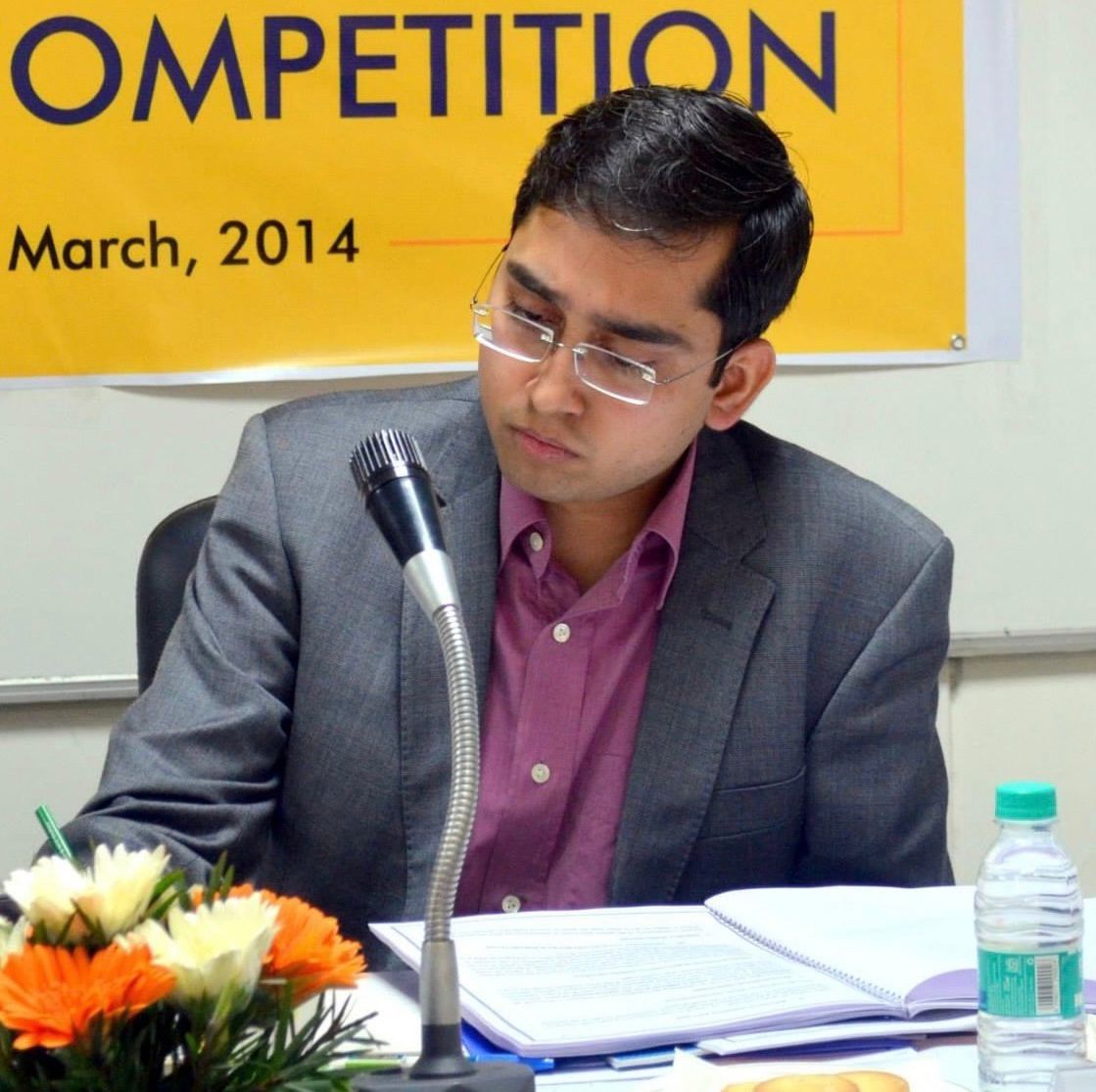
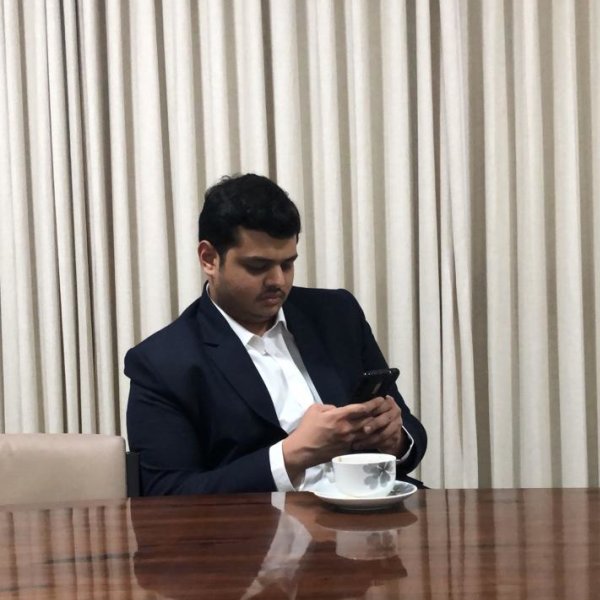
  • In Conversation With: Ananth Kini, Advocate practicing at the Supreme Court of India, with over 17 publications to his credit and stellar Academic records.

    In Conversation With: Ananth Kini, Advocate practicing at the Supreme Court of India, with over 17 publications to his credit and stellar Academic records.

    This interview has been published by Sonali ParasharOjuswi Sahay, and the SuperLawyer Team


    What motivated you to make a career in law? How would you describe your professional journey up until now?

    I would say that studying law was a natural choice for me, and I find nothing that is more interesting, captivating and easier for me than law. Having studied law for the last 8-9 years of my life, I can confidently say that choosing law as my career has been the best decision of my life to date and I have never found laws to be complicated as such but just pure common sense.

    If you believe in what you are doing, then you will find your work to be interesting; as it has been rightly said by Steve Jobs that ‘…Your work is going to fill a large part of your life, and the only way to be truly satisfied is to do what you believe is great work. And the only way to do great work is to love what you do. If you haven’t found it yet, keep looking….’

    As far as my professional journey is concerned, I would say that I had to work very hard to understand the nitty-gritty of the laws, court procedures, principles of legal drafting, the art of advocacy, the jurisdiction of courts/tribunals etc. One has to work hard initially to understand the laws but it gets easier with time once you know the basics. 

    You have excelled in your academics throughout your career and also were a rank holder in your LLB and Graduation. What would you say were the factors that helped you excel in academics, especially while pursuing law?

    I had more than 90% attendance in each semester of my college and rarely used to miss classes. I used to pay attention to whatever the professor was teaching and make notes. I never left anything to the last moment, a practice that I follow even today, and I used to study for all the exams well before the exam date. On the day before the exams, I only used to revise and think about how I could somehow improve my answers.

    I focused more on writing as many cases as I could and on correctly writing the provisions of the laws; all this was only possible because I revised multiple times before the exams. I was confident that I had learnt it and focused on keywords while reading anything new. I used to read many different books and xerox the relevant parts to prepare my answers.

    As this required a lot of effort and time, therefore I used to begin my preparation around one month before the first-semester exam and increased my hours of studying as the exams approached. Also, starting early gave me the advantage of clarifying my doubts to the concerned professor and I never left anything to luck; I always gave the exams by reading almost the entire syllabus, so that even if the question paper was difficult, I could answer them.

    I always focused on writing the answers supported by case laws, sections and notes of that teacher and never missed answering any of the questions in my exams during my college days; I used to allocate a specific time frame for answering each question and then used to move on to the next question on completion of the allotted time frame.

    Out of the wide spectrum of internships you did in college (Shardul Amarchand Mangaldas, NCRB, Ministry of law and Justice, Kochhar and Co etc), which one of them was the most enriching experience? What should be the three things one should keep in mind while choosing an Internship?

    My internships at the Chamber of Adv. Murari Tiwari Sir and Chamber of Adv. Rajesh Yadav Sir was the most enriching for me. 

    Murari Tiwari Sir and Tripurari Tiwari Sir are both very polite, helpful and friendly, and they used to make sure that all the interns in their office learned something new each day; I was given case files which I had to read, and after that, Sir used to ask me as to what I understood from the case and after that guide me as to the facts of the case and laws applicable thereof. Despite Murari Tiwari Sir and Tripurari Tiwari Sir being very busy with their work, they always kept some time aside each day for their interns. 

    My internship at the Chamber of Adv. Rajesh Yadav Sir was also very enriching. I learned a lot under his able guidance, and Sir used to teach me about the intricacies of court procedures. I was given some case files to read, which I later used to discuss with him. Sir had an excellent command over the facts of the case, and he used to tell me about the arguments of both sides in that case. During this internship, I visited the Hon’ble Delhi High Court for the very first time. Sir had extensive knowledge of the facts and the laws pleased in the case so much so that even without opening the file, he could remember all the details of the case and even the page number where it was mentioned! 

    On the aspect of what one should keep in mind while choosing an internship is concerned, I would say that it would depend on the career objective of that person. If one has not decided which area they want to join, one may intern at different places to get an idea. Also, I feel that if one has figured out what one wants to join after completing their LL. B then a long-term internship at a single place is more beneficial than multiple short internships at different locations, provided one enjoys their time and is learning at that internship.

    You hold expertise in various areas of practice like Civil Law, Criminal Law, Arbitration, Insolvency Law, Recovery matters etc. How would you describe your journey in the field of litigation so far? Please tell us – the good, bad and the ugly.

    Litigation requires one to read a lot and spend a lot of the time thinking as to what could be the possible arguments in the case and anticipate the arguments that the opposite party might advance and how to tackle them. 

    The good part in litigation is the encouragement and appreciation you get from the judges, seeing your name as a counsel in judgements/order sheets, and the fact that what one might argue may become the law of the land if agreed by the judge.

    The bad part would be the long hours one has to spend each day reading; there are so many documents that one has to read. Then after figuring out what the question of law is involved in the case, one has to read multiple judgments on that specific provision of law to find which cases laws support your case and which decisions are against your case and then think as to how to distinguish these decisions.

    I would say the ugly part is that travelling from one court to another to the office daily can be extremely tiring.

    You have 17 publications in various reputed journals. You also presented a paper on defamation at the Freedom of Speech and Expression Regional Conference organized by the Law Commission of India in 2016. Do ‘ideas pick you’ or do you have an extensive process of picking topics which you want to write about. Please take us through the whole process from finding an idea to publishing it in a reputed journal. How challenging is it?

    Legal writing is my hobby, and I find it a way to express myself on legal issues that have evoked my curiosity. Generally, I write on contemporary legal issues and those issues which would not lose their relevance over time, such as prison reforms and electoral reforms. I had written legal articles on these two topics some 4-5 years ago, and even today, they remain a contemporary topic for discussion.

    Before writing an article, it is first necessary to convince yourself as to why you want to write an article on that legal issue. For that, I used to read a little background about the same to ensure that it is indeed a good topic to write on. If I am sure that it is a good topic then I will read about it in detail. Usually, I choose those topics that are being discussed in the media/news so that the chances of their publication would also increase. I always substantiate whatever I would write through primary and secondary sources such as law commission reports, parliamentary committee reports, judges’ interviews, judgements on those points, legislations etc as it has been rightly said by Edwards Deming that ‘Without datayou’re just another person with an opinion’.

    If one wants the article to be published in a reputed journal. In that case, the article must be well researched and something that is not only a bit different from the existing literature but also, more importantly, it should make the reader ponder and think if what the author intends to say is unique, has credence and is indeed thought-provoking!

    At this young age, you have achieved so much, what do you think is in store for you in the future? How are you planning to use your skills and knowledge accumulated till now?

    I still have a long way to go and plenty of things that I want to achieve in my life. I always believe that life would be meaningless if we don’t achieve difficult things. To achieve anything worthwhile, hard work and planning are necessary. Achievements often come at the cost of sacrifices which do pinch a lot; therefore, one should allocate his/her time accordingly and focus on things that are more important to them and in line with their professional aims. I will focus my future on achieving my ambitions and plan accordingly.

    You were posted as a Young Professional (Legal) in the Ministry of Consumer Affairs, Food and Public Distribution, Government of India. Please share your experience in the job. How can one scale such an achievement?

    I had a brief stint at the Central Consumer Protection Authority (CCPA), which is currently a part of the Ministry of Consumer Affairs, GOI. I enjoyed my time over there and cherish those moments. I am extremely grateful to Ms Nidhi Khare Ma’am (Chief Commissioner, CCPA), Mr Anupam Mishra Sir (Commissioner, CCPA), Rout Sir and Jayashree Narayanan Ma’am for giving me this opportunity to work at the CCPA. 

    CCPA is a newly established regulatory body under section 10 of the Consumer Protection Act, 2019 (CPA) and has been established to protect the rights of consumers. Regulatory bodies are different from courts/tribunals and are equally important institutions in the administration of justice. I wanted to work there so as to learn about regulatory bodies and to get exposure to how the work culture of the government is different from that of the private sector.

    Finally, a word of advice for the lawyers and law graduates who are passionate about litigation & arbitration?

    I don’t think that right now I am at that stage in my life where I can advise lawyers or law graduates. I still have a long way to go. However, those who intend to join the field of litigation & arbitration must be ready to work hard and focus their time on learning the intricacies of the laws. In any given facts of a case, there can be various laws that could be applicable, so you must have a fair idea of the applicable substantive and procedural laws so that you can research if there has been any violation of some legal principles or judicial precedents that would help you to advance your case before the courts.

    For example, if there is a contractual dispute between two parties over goods purchased through an e-commerce site, then depending upon the facts, various laws could be applicable, such as the Contract Act, 1872, Sale of Goods Act, E-commerce rules, IT Act, 2000, CPC, IPC, CRPC, Evidence Act, Commercial Court Act, 2015 etc. Therefore, a holistic understanding of all the major laws is necessary while developing expertise in a few laws that one is most comfortable with.

    I am grateful to the ‘SuperLawyer’ for giving me this opportunity to share my experience and conclude by quoting an extract of a speech by Justice K. M. Joseph, Judge Supreme Court of India, at the convocation of the National University of Advanced Legal Studies, Kochi, which I consider to be very useful and practical advice in life, he said that ‘…Study the Court. When I joined the Bar, a senior counsel gave me advice which I thought was useful. He told me that the Court is like a zoo. There is the elephant, the horse, the deer and also the tiger and the lion. You cannot feed grass to the tiger as much as you would feed them to a deer..’


  • What does it take to become a partner? Sahil Narang, Partner at Khaitan & Co and AOR, Supreme Court shares his 8-year-long journey at Khaitan: from junior associate to a distinguished Partner.

    What does it take to become a partner? Sahil Narang, Partner at Khaitan & Co and AOR, Supreme Court shares his 8-year-long journey at Khaitan: from junior associate to a distinguished Partner.

    This interview has been published by Sonali Parashar and the SuperLawyer Team


    Let us begin with the most important question, did you always dream of becoming a lawyer or, did it happen by chance? Also, tell us about your journey.

    Before coming to what led me to become a lawyer- a little bit about me. I hail from Abohar, a small town, about 30 km from the India-Pakistan border, in the State of Punjab. My grandfather was a local politician and social worker, and my father was a lawyer practising at the city civil courts, Abohar who, quite often, also used to attend and appear before the District Courts at Ferozepur (later at Fazilka, a border town). So, I was exposed to the field of law at a very young age. 

    Since I grew up looking at my father, working diligently as a lawyer and collecting hundreds of books for his library every year, the curiosity towards law was imbibed in me by default. However, I had a huge interest in the field of science during my school days and wanted to become either a doctor or an engineer given the trend prevalent at that time.  I went on to study science in the 11th and 12th standard and gave competitive exams such as the IIT, AIEEE, etc. to get admission into engineering courses back then. I had an option to continue that pursuit and become an engineer, however, the innate affinity towards law imbibed within me from childhood, looking at the meticulous way my father used to practise law, pushed me to pursue the study of law. Therefore, rather than getting admission in some renowned engineering college, I enrolled in the B.A.(Hons.) program at DAV College, Chandigarh affiliated to the Panjab University, Chandigarh. I passed BA with a distinction in Political Science in 2005, post which I got selected in the three-year law course at one of the oldest institutions in the region, the Department of Laws, Chandigarh, my father’s alma mater.

    Since I was inclined to continue the study of law and give competitive examinations including the judicial services exam, I got admitted to the LL.M course at NALSAR University of Law, Hyderabad through CLAT. I was actively involved in research, pro bono work and co-curricular activities at the university during the LL.M course

    During my days at NALSAR, I was introduced to various opportunities in the field of law. I also got an opportunity to attend the Private International Law Course at the Hague Academy of International Law at, the Hague, the Netherlands in 2009. Eventually, I joined Khaitan & Co. and a decade later – here we are. 

    The present focus is on advising on regulatory issues, commercial litigation, and the representation of various clients from the entertainment and multiplex industry across India. If we draw a comparison between the global and Indian entertainment and multiplex industries, were you able to predict these advancements in the legal arena?  

    The advancement in the legal arena surrounding a sector depends upon the growth of that sector. I have been blessed to get exposure to and advise and represent clients in various sectors including in the entertainment and multiplex industry during my career. The Indian entertainment and multiplex industry caters to a very different demographic as compared to the western world. Although we receive some guidance from other countries when it comes to legal issues surrounding this sector. While there is a significant amount of autonomy and minimal regulation in western countries in the sphere of entertainment and cinemas, jurisprudence is still evolving in India. We still see heavy regulation by the government in these spheres and archaic laws which are dealing with these fields. The Indian cinema industry is faced with archaic laws which need to be updated given the fast-paced development in this area. The liberalisation of Indian cinemas and the recent shift to OTT has been a game-changer on how people consume entertainment in today’s world. The recent years have witnessed a massive influx of OTT giants such as Netflix and Amazon foraying into the Indian market. This has led to an increased reliance on Indian lawyers to assist them to find their way into the Indian space and steer clear from legal repercussions. The real challenge is for the regulation to catch up with the development of this sector.    

    You were named as one of the lawyers for Legal Era’s 40 under 40 list in the field of law for the year 2020, and you also served as the Co-Chair of Competition Law & Consumer Affairs Committee of PHDCCI for Presidential Year 2021-22. Congratulations on adding another feather to your cap. What is your next goal? Is there anything you’d like to tell us about?

    I had started with Khaitan & Co as an intern in the year 2009, got a PPO and became a Partner with the Dispute Resolution practice group, New Delhi in the year 2018. I have learnt a lot during this time. Currently, I lead a team of lawyers working on the dispute resolution side with a primary focus on commercial litigation and arbitration. The year 2020 was a very challenging year given the outbreak of the COVID-19 pandemic. It brought the best out of many of us. I was very lucky to have worked on a variety of matters despite the disruption in the legal sector because of the pandemic. It was because of the wide variety of work and the client’s recommendations that helped me get recognised in recent years. 

    However, I wish to be mindful that it’s a sea out there and there is still more to be achieved. I would want to expand my commercial litigation and arbitration practice, both domestic and international, and engage more in highly complex and challenging disputes. 

    Besides this, I would also like to contribute to the development of jurisprudence in various nuances of laws including beneficial legislations made for ease of trade and commerce.

    Having received so much from the legal fraternity, I would like to take out time to render legal advice to individuals and organisations that are unable to afford legal advice and/or cannot access legal aid. Various organisations are doing good work in this sphere. However, it is particularly overwhelming to see young law students very effectively running legal aid clinics in their colleges and effectively using social media to educate people and spread legal awareness. It would be a privilege to be associated with such benevolent activities.  

    At this juncture of my career, I would want to engage with law students and young lawyers to share the experiences and learnings, which I have received in my career to date. In fact, in furtherance of this endeavour, I have been actively participating in such webinars and would certainly like to keep that going. 

    I would conclude with a famous quote – ‘Big tasks are still out there and a lot of hard work yet to be done.

    You are involved in research and have authored some extensive research on a variety of topics. How has research work helped you stay updated with the academics as well as policy and legislative changes that we see occur from time to time?

    I think the most important tool in a lawyer’s toolbox is his / her ability to research, read and write. During my time at NALSAR University of Law, while pursuing the masters’ course, I realised that one of the best things one could invest in is books, be it academic or otherwise. This habit of reading will inculcate a life-long habit of curiosity and research.  

    This helped me immensely during my preparation for the coveted Advocate-on-record exam of the Supreme Court of India. Getting admitted is a major achievement as very few lawyers qualify in this annually held examination conducted by the Supreme Court of India.

    In addition, knowing and being abreast of the current position of law gives one confidence in dealing with and correctly advising a client.  

    Further, research methodologies would generally include comparatives analysis of legislation across jurisdictions and critique of legislation and policy prevalent in various jurisdictions. This would in turn give one perspective of laws of developed countries and what legislative changes our country may see. 

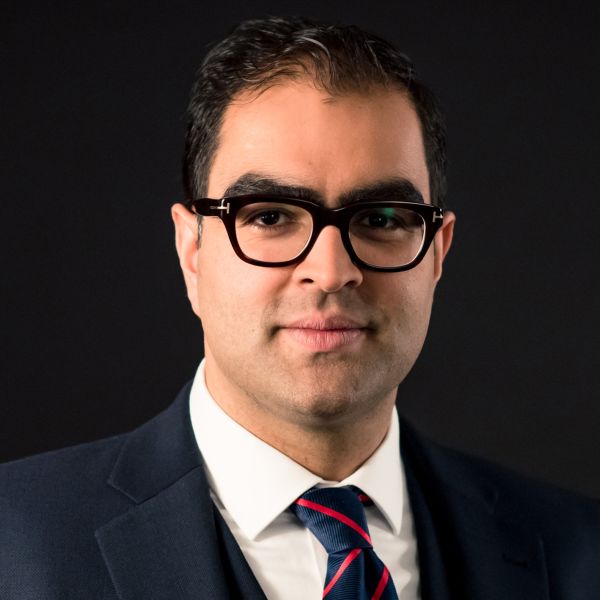
    Mr. Sahil Narang, Partner at Khaitan & Co.

    Can you give our readers a brief idea of what they need to prepare for if they want to climb the corporate ladder based on your experience representing international commercial arbitration in a variety of matters?

    There is no shortcut to hard work, perseverance, and commitment. I would add that in the initial years, a young lawyer must remain open to all kinds of work whether he/she chooses to join a law firm, a senior counsel or a chamber practice for his/her training. At a later stage, one may discover their interest in a particular field of law.  

    Further, for one to excel and climb the corporate ladder, it is important to be client-centric, innovative, detail-oriented, and prolific. These virtues will not only make one solution-oriented but also will give them an edge over other contemporaries.

    In the field of arbitration, it is important to refer to commentaries of various celebrated authors on arbitration and keep abreast of recent judgments by the courts.  

    What was the one learning experience throughout your entire career that you’d credit to have shaped your career and brought you to this point?

    My family, I would say has been my greatest motivator, and has shaped my career. Seeing my father practising law at the city civil courts, Abohar, working hard, day in and day out, motivated me at a very young age to work hard and excel in academics. Further, having roots in a very small town has made me grounded but at the same time meaningfully ambitious.

    Can you take us through a typical day in your life? Is it possible to carve out time for your other interests or hobbies given your hectic schedule as a renowned Partner at Khaitan & Co?

    In pre-covid times, most parts of my day were spent either in courts or in office. Substantial time used to be spent commuting from court to office or conferences and venues for arbitration. Travelling used to take a fair share of my time, however, with most courts and tribunals going virtual, I could save a lot of time. Consequently, efficiency increased. During covid times, my day is usually spent on reviewing drafts, attending conference calls with my colleagues in the team, clients, and senior counsel. I also make it a point to read the latest case laws of the Supreme Court and other courts on dispute resolution and arbitration. Even in my hectic schedule, I make it a point to take out time for my family. I love to read books on weekends. My favourite pastime since my college days has been to watch movies in multiplexes and the latest series on OTT platforms. I have recently picked up badminton as a sport and would also like to learn to play the piano soon.  

    What career advice do you have for our readers? In my opinion, to be successful in the field of law one must inculcate a habit of reading at a young age. One thing that has helped me in being thorough in my work is that I read every document in full, irrespective of any preconceived notions. I would advise law students to read, read and read everything you can get your hands on. To put this in perspective, my favourite quote is by Walt Disney- “There is more treasure in books than in all the pirate’s loot on Treasure Island.”


    GET IN TOUCH WITH SAHIL NARANG:

  • NIYATI AHUJA, ASSOCIATE AT STEPTOE & JOHNSON LLP, ON PURSUING LLM FROM UC BERKELEY SCHOOL OF LAW, HER INTEREST IN INTERNATIONAL ARBITRATION AND WORKING WITH AN AMERICAN LAW FIRM

    NIYATI AHUJA, ASSOCIATE AT STEPTOE & JOHNSON LLP, ON PURSUING LLM FROM UC BERKELEY SCHOOL OF LAW, HER INTEREST IN INTERNATIONAL ARBITRATION AND WORKING WITH AN AMERICAN LAW FIRM

    This interview has been published by Maaz Akhtar Hashmi and The SuperLawyer Team. The Interview was taken by Priyanka Cholera.


    You have an intriguing trajectory that we are excited to talk about. Did you envision this for yourself in the first year of law school?

    Thank you for inviting me. Indeed, it has been a very interesting journey so far and I hope that it continues to be. When I joined law school in 2012, I did not in any way anticipate that I would be working at a law firm in New York or moving to a new country altogether. I wanted to get an LL.M. degree to take advantage of the several practical opportunities available to understand the legal practice in foreign universities, which are still missing in Indian universities as their main focus remains on teaching the theory of law. I hadn’t decided at the time whether I would pursue my LL.M. in the United Kingdom, like most law students in India, or the United States, where job prospects after an LL.M. for Indian lawyers are considerably limited. With hard work and some luck, I was admitted into the University of California, Berkeley which is a great school, and my launching pad into a career in the United States. During my LL.M., in addition to my coursework, I did a part-time internship with the Office of the General Counsel at the Bay Area Rapid Transit. I truly cherish that internship as my first exposure to the workplace in the U.S. The journey has been surreal and has involved plenty of blood, sweat and tears. It also required ample time and perseverance to continue looking for a position that would entail work in the areas of law that I enjoy. Overall, the journey has been interesting, and I hope it stays that way!

    Let’s start from the beginning: why law out of all the career choices available? And how was your experience at Guru Gobind Singh Indraprastha University?

    I had wanted to become a lawyer ever since I was in ninth grade. It wasn’t an obvious choice, though, as everybody in my family is either a doctor or an engineer, and my father was in the army. However, the ability to use analytical reasoning, writing and oratory skills in a profession were factors that got me interested in the legal profession. I have participated in several debates and had been commended in school for my writing skills, which aided my decision to become a lawyer. Essentially, the profession indeed is a mixture of a lot of writing and speaking. When I started law school, I was very interested in venturing into and specializing in criminal law; however, I was advised by senior lawyers that it wasn’t the safest profession for women in India and that I should consider corporate law instead and that is what I did. Most of my internships during law school in India were in the field of corporate law and capital markets. 

    Regarding my experience at Guru Gobind Singh Indraprastha University, I would definitely say that the five years were very formative in my career development, especially in terms of thinking about legal issues. I participated in many Model United Nation conferences and Parliamentary Debates, which ultimately had a bearing on my choice of practice area.  I think the best part of being in law school is that the only responsibility is understanding the courses, getting good grades, interacting with other students and professors, and participating in co-curricular activities. I chose my university mainly for two reasons – first, it had an option to pursue a Bachelor of Business Administration integrated with the LL.B. and second, the class size was very small (30) for this course, which is a great way to get individual attention from professors.

    During your time in law school, you interned at different offices, including a senior advocate, a medical devices company, capital markets departments of two of the biggest firms (Luthra and Khaitan) etc. What value did these internships add?

    Every internship teaches you how to think and write like a lawyer. Even though an intern isn’t given huge responsibilities or assigned drafting an entire document, you get to witness and assist lawyers by researching specific points and producing early drafts. It becomes a part of the learning process. Amongst my several internships, I had the greatest learning experience when I interned with a Senior Advocate in the Delhi High Court who practices in Criminal Law and with the capital markets team of Khaitan & Co. as well as Luthra & Luthra Partners where I learnt a lot from a small team including a partner and a senior associate. The internships shaped me as a lawyer, and they essentially helped me learn how to think, research and write.

    However, the style of writing adopted by lawyers in India is very different from American or British lawyers. Therefore, I had to adapt my writing style to what is expected from an American lawyer. The LL.M. program and taking the New York bar were very important in my understanding and adaptation of writing an effective brief like an American lawyer. 

    In one of your interviews, you stated that while shortlisting schools for LL.M., you considered the quality of journals published by various law schools in America. And even during your time at Berkeley, you were a part of many renowned journals. Would you please share the thought process behind giving such importance to journals? How has being associated with these journals shaped you?

    That is correct, one of the many factors I considered while shortlisting schools to apply to was the quality of journals published by the law school. I was an associate editor for both the Berkeley Business Law Journal (BBLJ) and the Berkeley Technology Law Journal (BTLJ). Most law schools have good journals. However, some are more renowned than others, for instance, the Berkeley Technology Law Journal is one of the top journals in the U.S.  

    As a member of these journals, I was exposed to various interesting articles submitted for publication and participated in cite and source checking for these articles, as well as took part in several activities organized for the members. The activities provided access to various law firm organized events as well as to students pursuing their J.D. who had a different perspective on the law school experience as compared to international law students and insight into the American legal market. When you’re working for such journals, you get to read a lot of excellent literature that has been written, understand the editorial process, which is immensely helpful if you are interested in publishing articles later in your career.

    One of the most interesting observations we have noticed is that it was only after you started pursuing your LLM that you streamlined your work towards arbitration. Was there any particular experience/incident that inspired you to pursue a masters?

    First, regarding the focus on arbitration, it is correct that after my LL.M. I refocused on opportunities in the international arbitration field. However, my interest in the field was longstanding. During my third year in law school, one of the Model United Nation conferences I attended included a ‘Permanent Court of Arbitration’ committee and the case we were arguing was the famous Philip Morris v. Australia case. I found it very interesting how parties had the autonomy to choose the law applicable to their dispute, the seat of arbitration and the arbitrators deciding the dispute. I found the entire procedure really different, giving a lot of autonomy to the parties. That is how I got interested in arbitration. Once I started my LL.M., I opted for all courses related to international arbitration. Fortunately, my commercial arbitration professor was very patient and encouraging and his coursework genuinely reinvigorated my interest in international arbitration. 

    Second, I aimed at specializing in business laws during my LL.M. and opted for as many international law courses as I could. My LL.M. was never meant to focus on international arbitration alone and I am glad it didn’t since I have used various business law concepts in my international arbitration practice so far.

    Right after Berkeley, you attended the International Arbitration Academy in Paris, one of the most renowned institutions worldwide for studies on Arbitration. Could you share with our readers your experience at the Academy?

    It was an absolutely great experience. We were a class of around 80 students including young to mid-level practitioners sharing a common interest, international arbitration. The courses are taught by renowned practitioners from all over the world. To name a few, we had professors from the University of Paris 1 (Panthéon-Sorbonne), the University of Liège and Brussels, the University of Oslo, the University of Geneva, Dean of Swiss International Law School and Professor emerita of Private Law at the University of Basel/Switzerland.

    There were also workshops and seminars conducted by ​legal counsel from ICSID, Deputy Secretary-General and Principal Legal Counsel, Permanent Court of Arbitration, Secretary-General, ICC International Court of Arbitration, Deputy Secretary-General, ICC International Court of Arbitration, Secretary-General, Hong Kong International Arbitration Centre, as well as arbitration practitioners from Shearman Sterling.

    Not only did I get exposure to the teachings of the esteemed faculty, I also learnt about the difference in practices and experiences of the other students coming from approximately 30 countries. Overall, it was an excellent learning experience and networking opportunity. I made several cherished connections which I maintain to date.

    You have interned at various US law firms, like Alston & Bird, Busse Disputes. How have these experiences contributed to your growth? Do you think it would have been easier to land a role if you attained bachelors from a foreign university?

    I admit it would have been considerably easier to be employed in the U.S. had I pursued my Juris Doctor (J.D.) in the U.S. As a matter of fact, I did consider it, however, I had already completed my B.B.A. LL.B. and LL.M. degrees, so I didn’t really think it was an economical option. 

    It is difficult for international students/lawyers to break into the legal market in the U.S. as U.S. law firms generally hire from their summer associate cohort, and international profiles aren’t the usual suspects owing to the obvious lack of a conventional J.D. degree. However, difficult does not mean impossible, many LL.M. students who went the extra mile are now working in law firms in the U.S.

    I worked with Alston & Bird, New York for around eight months with a team of very competent and approachable lawyers. I also made some great professional connections which I maintain to date. I not only learnt how to draft legal memoranda, effectively conduct research in American and International law, and understand aspects of an arbitration proceeding and enforcement action. This was my first experience and exposure to US law firm culture which is different in many aspects from Indian law firms.

    When I went to Germany to intern at Busse Disputes, it was a country and culture that I did not know much about. It was my first experience with a boutique arbitration firm, and it was interesting to learn how a boutique firm functions. I also had the opportunity to understand an arbitration proceeding from the perspective of an arbitrator. The manner of working and assigning tasks is comparatively different from the U.S. I found that German firms are more formal and hierarchical whereas U.S. firms (or at least the ones I have worked with) are collegial and tend to give you as much responsibility as you are willing to take. 

    What were your key responsibilities as an Associate at Diamond McCarthy LLP? What are key firm culture differences in India and the US?

    As the only associate in the international arbitration practice group at Diamond McCarthy, I was entrusted with a unique level of responsibilities and autonomy on a range of complex arbitration and related litigation matters. I conducted legal research and drafted pleadings, witness statements, instructions to experts, document production requests and responses, and handled correspondence with opposing counsel and tribunals. I was also heavily involved in the business development efforts of our practice group. 

    I think it was a great learning experience since it led me to understand how all aspects of a case really works and how different components come together, as well as the requirement to consider external factors which impact a case. 

    With the passing years and stricter visa regulations, we understand that getting a job in the US with an LL.M. is not very easy. What did you do differently to penetrate the legal market, and is there any advice for people looking to enter the US legal market?

    There is this notion that visa regulations restrict international lawyers from getting employment. However, I think that is only partially true. Once you have proved your mettle, firms will gladly sponsor your visa. The greater barrier is the unconventional profiles that international lawyers bring to the table. If you look at tech companies, they hire immigrants (including Indian engineers) all the time and sponsor their visas. 

    I encourage people to not be disheartened owing to this preconceived notion regarding potential visa issues, and apply to as many jobs as you can with a cover letter and resume tailored to the position. 

    I quickly learned that U.S. law firms were not willing to hire me as an associate straight off the bat, so I started applying for trainee and internship positions. I also networked quite a fair share and tried to attend all available dispute resolution related events, even during my LL.M.

    As far as the financial side of things is concerned, I took a loan for my LL.M. An LL.M. is a huge financial investment, and I was determined to ensure that the investment was worth it by persevering and leaving no stone unturned. I will not deny that there were times when all I wanted to do was give up, take the easier route and apply to a position at an Indian law firm. At such times, my mother gave me the strength to keep at it and reminded me that there is always a light at the end of a tunnel.

    You were a gold medalist at Delhi State Inter- School Karate Competition. And even during your time at Berkley, you opted for a Yongmudo (Korean Martial Arts), Taekwondo, and Ballet course. Could you tell us more about these interests of yours?

    My father was in the army, and since I was a child, he always encouraged my sister and me and provided me with avenues to participate in physical activities like rock climbing, rappelling, skiing, basketball and Karate. 

    I moved to the U.S. for my LL.M. when I was 22 years old, I was learning about a new country, its legal market, and dealing with applying to internships and associate positions. At times I found myself overwhelmed by these things, and the Ballet course, Yongmudo, and Taekwondo classes were an effective way to cope with the stress and give myself a break from law school. An added advantage was that I made some good friends and met many people who I wouldn’t have had access to if I only spent my time in law school. I think overall it did wonders for my mental and physical health.

    The pandemic has been quite challenging both personally and professionally. What are your coping mechanisms? What would be your parting advice to students and lawyers who want to work in American law firms?

    The uncertainty combined with the devastating state of affairs during the peak of the Covid-19 pandemic affected everyone all over the world. Personally, there was and continues to be a lot of hard work which goes into coping with everything, and hobbies like gardening, reading books, and painting really helped me. But I won’t lie, there were days during the pandemic when I felt burnt out. That being said, it also made me acknowledge that mental health issues remain unspoken in our profession, making it even more important to reach out to others if things get overwhelming. 

    My advice for students and junior lawyers, especially during this pandemic, would be to take small steps towards your goals but keep moving. The small steps and plans that you layout seem achievable that way. I would suggest that they meet new people – virtually or if you are able to in-person, even if it makes you feel uncomfortable at first. Once you start, you will eventually enjoy interacting with people who share a mutual interest with you.  The best relationships I have fostered with colleagues are the ones that began organically and also making the effort to stay in touch with them. Be confident and express your interest if you are interested in a person’s practice and would like to learn more about it. You will be surprised at how many people respond and would like to help younger lawyers build a successful career. Lastly, I would just advise or rather preach something I do practice – never give up, your dreams might seem big right now, but believe in yourself and you will achieve what you set your mind to. It will not be easy, but it will be worth it, and eventually, everything will make sense. For the fear of sounding too much like Dr Seuss, I truly believe that in life, you can steer yourself in any direction you choose. I hope that does not sound too cliche, but I truly believe it. Last but not least, make sure you have fun in this journey even though it’s a difficult one. Take care of yourself and hone your skills continuously to become the best version of yourself.


    Get in touch with:

  • Akshay Ubale, Co-founder, Triumvir Law on starting his own law firm and a successful career in International arbitration

    Akshay Ubale, Co-founder, Triumvir Law on starting his own law firm and a successful career in International arbitration

    Akshay is a graduate of National Law School of India University, Bangalore and a co-founder of Triumvir Law. In this interview, he talks about the importance of internships and the grit and determination required to start your own law firm and making it sustain.

    After Founding, Triumvir Law in 2018 in Bangalore. Akshay took the plunge and moved back to Mumbai to start Triumvirs Law’s Mumbai office.

    HOW WOULD YOU LIKE TO INTRODUCE YOURSELF TO OUR READERS? PLEASE TELL US SOMETHING ABOUT YOUR PRE-COLLEGE LIFE?

     I was born and brought up in Mumbai. Most of my family were members of law enforcement, so discussions about law and politics were quite common around the house; I gravitated towards the law because I was comfortable with it. But it was not until much later that I found the reason for why I chose the law and it was simply because I enjoyed understanding the reasoning and tackling concerns of individuals in a structured manner. I think this where I get my affinity towards playing chess.


     WHAT FACTORS INFLUENCED YOUR DECISION TO SPECIALIZE IN INTERNATIONAL COMMERCIAL ARBITRATION AND CORPORATE LAW?

    When I first came to the National Law School of India University, Bangalore (NLSIU), I had come with the mindset of practising criminal law and all my initial law school activity led to that. It was not until the third-year internships that I had a proper look into the world of Commercial Arbitration. In particular, I enjoyed the sheer variety of disputes across practice areas that I had been exposed to, which allowed me to study multiple areas of law that I had not previously considered.

    I decided to pursue International Commercial Arbitration because I enjoyed the sheer difference in every case ranging from the terms and wording of contracts, the intricacies of the interactions between the parties and the resolution process in itself.


    WHAT MOTIVATED YOU TO START THE TRIUMVIR LAW? WHAT WERE THE CHALLENGES YOU FACED AND WHAT IS YET TO BE ACHIEVED?

    The idea of an independent practice was alluring since it allowed me to maintain a better balance between my work and personal life.

    But taking such a step within a year of graduating seemed risky at that time. The most fundamental reason that made me consider taking this step was the rapport that existed between the three Co-Founders (Anubhab Sarkar, Prathik Cheralathammanda and me) and our desire to carve our own path in the practice of International Arbitration.

    In addition to that, the different nature of practice areas that the three of us had come from (Corporate, Intellectual Property and Disputes) and the different types of mandates that it opened us up to handle was something exemplary, in my opinion.

    I feel, the biggest challenge in any independent practice is ensuring that you have a standing in different practice areas, as the first conversation with a client or a prospective client determines whether you have the mandate or not. Once you are able to maintain a dialogue and address the queries that the clients could come up with, most of the issues that arise can be tackled.

    With regards to what is to be achieved is something that I have not set in stone yet, what I shall continue doing is addressing the needs of our clients to the best of our abilities. In my opinion, as long as we keep on that path, the achievements will keep piling.


    WHAT ARE THE SERVICES PROVIDED BY THE FIRM AND HOW IT CATERS THE NEED OF CLIENTS?

     We focus on providing a client with the advice that would ensure the best market practices and their own market position without compromising on the strength of their legal claims. On multiple occasions, this has resulted in us resolving matters without having to put the client through a tedious dispute resolution process.

    The most prominent services that the firm has provided revolve around corporate and commercial advisory, dispute resolution (litigation and arbitration) as well as intellectual property. In addition to the above, we have worked on Investment Treaty Arbitrations, crypto-currencies, mergers and acquisitions, and climate change and forced migration.

    At present, a lot of companies want quality advice but are apprehensive in relation to the fees that would be billed by the Lawyers. By providing a wide variety of services under one roof it has helped us to not only cater to the needs of our clients (which include multiple start-ups as well as established Companies) but it has helped us to develop a suitable model for billing based on mutual understanding for our clients.

    We espouse an idea of a balance in the lives of the members of our team; the same is applicable for our clients as well. We believe that we should have a mandate because we will address the clients’ requirements in the fastest, most efficient and cost-effective way that is possible without any compromise and not solely for our competitive rates.

    HOW CAN A LAW STUDENT APPLY FOR INTERNSHIP AT TRIUMVIR LAW?

    A law student can directly apply for an internship by writing to anubhab.sarkar@triumvirlaw.com. But keeping in mind the nature of the work that we do it is advisable that students who have studied International Commercial arbitration and corporate laws apply to us.

    WHAT WOULD BE YOUR ADVICE TO LAW STUDENTS LOOKING FOR A CAREER IN INTERNATIONAL COMMERCIAL ARBITRATION?

    At the end of the day, Arbitration is a form of dispute resolution. I would advise students to intern in arbitration and litigation teams before making any final determination.

    Further, an arbitration attorney must be equipped to handle a variety of practice areas as the contract can pull you in a direction that you least expect it; hence do not close your options and intern in various practice areas solely for the exposure to different sectors.

    Finally, networking is crucial and it would assist in the formative years of practice, so attending conferences or joining the youth chapters of arbitral institutes would be a good first step.


    PLEASE SHARE WITH US THE UNIQUENESS OF SERVICES PROVIDED BY YOUR LAW FIRM.

    I believe that our philosophy of putting the clients’ needs first at all costs has assisted us in building a rapport based on absolute trust with our clients and that trust is something that I am particularly proud of. We believe in providing personalized services to the client and growing with them through their journey. This has enabled us to understand the client’s needs better and has thereby assisted us to provide quality advice in quick turnaround time.


    WHAT MILESTONES HAVE YOU ACHIEVED TILL NOW?

    We have been running Triumvir for over a year now during the tenure of which we have seen that multiple clients have referred their colleagues to us and that circle has been expanding throughout our tenure. It provides a certain satisfaction at the end of the day that we are doing something we can be proud of.

    This influx of demand also led us to open our Mumbai operations, which is roughly 7 months old now and stable.

    During this period, we are also extremely proud of the fact that we have been able to be a part of quite a few reported transactions and disputes.


    WHERE DO YOU SEE THE FIRM IN THE LONG RUN?

    A message that one of my seniors in practice told me is that setting up a target and a deadline for it, has a different effect on the team. Instead, focus on the task on hand and you will keep growing at a steadfast pace with a solid base.

    At present, we have a long term picture in our mind. However, we try and keep it in our sub-conscience. The next big step for us would be to start our New Delhi/Calcutta operations, which is a crucial step in developing Triumvir into a full-service national law firm.


    WHAT WOULD BE YOUR PARTING MESSAGE TO OUR READERS?

    Seize the day. There will never be a better day to start things nor a better one to follow what you desire. Find the people you would choose to be surrounded with and not settle for anything less.

    At the end of the day, all that is left is what you think of yourself. What others think or believe is frankly out of our control, so the best thing to do so is believing in you and launch into the deep.


  • Iram Majid, Advocate, Supreme Court of India, on career in arbitration and mediation and future of ADR in India

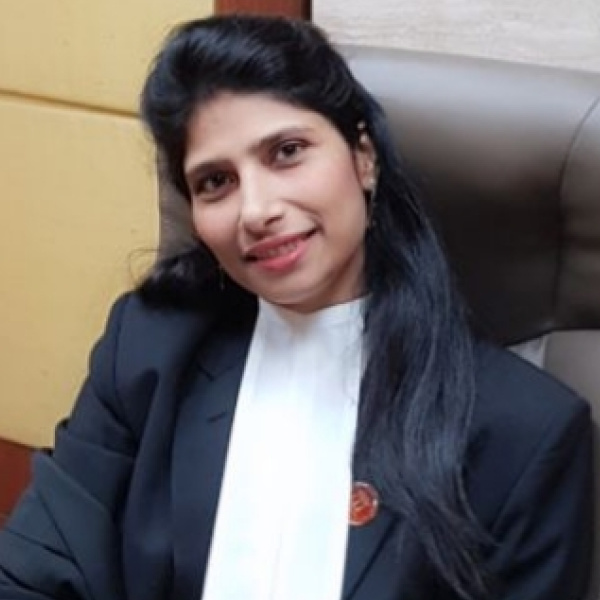
    Iram Majid, Advocate, Supreme Court of India, on career in arbitration and mediation and future of ADR in India

    Iram Majid is a lawyer, arbitrator, and mediator. She has more than 15 years of experience  in handling wide range of criminal, matrimonial, civil, commercial, banking and finance matters cases in the court as Advocate and outside the court as Mediator. She is also on the panel lawyer for Delhi Jal Board and DSIDC in Delhi High Court. She is a also qualified mediator, enlisted on the panel of Delhi High Court Mediation Centre. She is also the Regional Director of BIMS Bangladesh International Mediation society in India.

    Iram graduated from Aligarh Muslim University. She then went on to pursue her LL.M from Kurukshetra University, Kurukshetra.

    In this interview we speak to her about:

    • Being a successful arbitrator and meditator
    • Skills required to become an arbitrator and a meditator
    • Importance of extra circular activities in law student’s life
    • Significance of moots and their preparation


    HOW WOULD YOU INTRODUCE YOURSELF TO OUR READERS? DO YOU COME FROM A FAMILY OF LAWYERS?

    Every time I am to introduce myself I am thinking how to articulate and craft my self in words. Over the years I have struggled to take challenges towards achieving my goals. My strengths are my attitude that like to take challenges that I CAN do it , my way of thinking that I take both success and failure in a balanced manner.

    I am a practicing lawyer, Arbitrator and Mediator. I am on the panel of Delhi Jal Board, DSIDC, Delhi high court Legal services and mediator in Delhi High Court. I am first generation lawyer. I pursued BA, LL.B degree and thereafter LLM. My father is a service middle class bread earner at Aligarh, It is said that “Behind every successful man there is a women” but I my case there are two men behind my success “ my father “and my “husband” My strengths have driven me to meet unexpected challenges. I believe in myself and my hard work and I want perfection in everything.


    WHAT MOTIVATED YOU TO PURSUE LAW?

    I never wanted to be a lawyer if it had not been my father who had identified my strengths. I wanted to pursue economics but my father has seen some qualities in me and asked me to pursue law. I was having the fear to lose my friend circle my childhood friends and my area of interest was economics and it was very difficult to get admission in economic but I got the same. Under the influence of my father I agreed to give the entrance for BA- LL.B. I opted for economics but my father insisted that I pursue law. The father daughter resistance began with me going on a hunger strike and my father did not ask me for food. It’s after 2 days I agreed to what my father asked for and took admission in law and their came the change. My clinched to help people for which law provided me the necessary background and degree to reach out to people who need help and make a positive impact on a daily basis using my analytical skills.


    HOW WAS YOUR EXPERIENCE AT LAW SCHOOL? DID YOU PURSUE ANY EXTRACURRICULAR ACTIVITIES SUCH AS MOOTS, DEBATES, SPORTS ETC.? HOW DID THIS CONTRIBUTE TO YOUR HOLISTIC DEVELOPMENT? DO YOU THINK SUCH ACTIVITIES SHOULD BE MADE COMPULSORY FOR STUDENTS?

    So the story   after getting the admission in law is that , from the very first week I found law classes interesting. It was 1998 when it seemed to me that I had just about everything one could wish for a comfortable house, a career to pursue and a good family. I think it was my lack of understanding of law that could not comprehend what my father saw. After that day of revelation, my father gave way to feelings of sympathy. I no longer saw law as a burden but as a struggle for my ambition. But it wasn’t long before another feeling began to weigh heavily on my mind—fear. I feared that my life might be wasted too, that I would feel empty if I failed to do something meaningful. That fear and sense of urgency drove me to search for a meaning in my own life, being a merit scholarship holder and a presidential awardee. I saw that a lot of students participated in moot courts, activities such as political debates and volunteering to change society. It was something that I had already interest in and a direction was all I needed, where everyone is expected to “fit in” and conform to social norms. My participation in debate competition, symposium, self-composed poetry and on the academic side it was ADR and personal laws which were admired by the students and the faculty. My passion started to take a turn towards a direction that I had longed to be a part of. After all, to me, it seemed to be doing something meaningful. Nonetheless, I spent the first two years of college studying merely to meet people’s strong expectations for me to be successful. During those two years, I managed to get good grades and took advantage of internship opportunities, but never found joy or excitement in my studies. Instead, I was often visited by the fear that I was walking the same path that my father wanted me to walk. It was only, when I came across classes titled ADR and Personal family laws, which cared for Contemporary Moral Problems and Global Justice, that I finally found direction in my search for meaning in my life. In those classes, we read and discussed fascinating topics, such as which ethical principles we might use to redistribute the wealth of the globe, or how we could stop potential genocides and ethnic cleansing. It was a surprising and strange experience to observe myself changing. When I found myself fervently arguing for one method of global distribution over the other, and voluntarily visiting a professor’s office pursuing further questions, I wondered: “Where has this passion been hiding? What have I been doing all these years?” Studying law has guided me to find my own answer to the question, “What is a meaningful life?” I have realised that I am thirsty for intellectually stimulating experiences, and that I truly enjoy exploring possibilities for making positive changes in people’s lives. I have also realised, more importantly, that there is lots of work to be done in the world—work that sometimes involves facing the dark side of reality, but that somebody has to step up and do. When I read articles in newspapers about horrific living conditions “women” going through legal battles, I read them from a different perspective now. Instead of simply expressing pity, I look at the situations critically and think about what it would take to solve those issues. The fact that I have a genuine understanding of the social conditions, which convinces me that I can contribute to solving these problems more than others. I want to be able to produce tangible influences through my work, witness how these influences cause progress in people’s lives, and find meaning in my life through experiences. Ideas alone cannot achieve this. But with the law, it is possible. I see the law as a powerful framework through which ideas can be manifested and applied in the real world to address different problems utilising the practical power of the law. It is physically tiring, repetitive work, but am happy.


    WHAT WERE YOUR AREAS OF INTEREST IN LAW SCHOOL? HOW DID YOU CULTIVATE AND PURSUE SUCH INTERESTS?

    So What Else were my areas of interest in a law school and how did I cultivate and pursue them. Being good student, I was good in all the subjects and secured distinction in all the subject but my field of interest were ADR and personal laws. When I was exposed to the society and learned from people that they are upset with the judicial system and have no faith in judiciary as there is saying “justice delayed justice denied “.

    Networking and informational gathering was so effective for me that I started to spend time attending the workshops and read publications.

    I saw myself as a creative and non-confrontational person, doing work I loved. This is because the legal community is finally acknowledging a fact that many lawyers have known for some time—that we do not all want to be like Perry Mason. Although there are many lawyers quite satisfied with their choice of profession and I was not at all a law school student yearning to appear in court, work for a big firm, handle large or complex cases, spend the majority of working hours in offices, or even earn top money. Instead, I shelved my course and carved it as an opportunity to explore and pursue ADR and personal family laws with alternative options, both in and outside of the law. I took to further examine quality-of-life and work-style issues. I wanted to create work for myself the one that even if I did not love but took me closer to my goal or at least the work that I felt good about.

    My love for the law got me into its theoretical and practical application often. I found contentment working in research and writing for legal book publishers, research services, or even for law firms.

    I acquired Legal training which became very beneficial in the development of useful, transferable skills that are much in demand. Both legal education and legal work provided excellent training in analytical thinking, communication, writing, and persuasiveness—skills that I am using in many endeavours.

    The previously mentioned my abilities in poetry, writing, editing, interviewing, organising information, researching, and giving attention to detail eventually moved into a full-time position as my writings started to get published for reading.

    I judged moot courts in India and Hong kong as well I enjoyed confrontation and posturing necessary when judging and learnt the science of ombudsman now also popularly known as Mediation.

    My values motivated me and I easily focused on fields that permitted the full use of my skills, integration of values important to me and satisfaction of my interests.

    I identified several trade associations and newsletters available at most public libraries. Joined associations that were in my area of interest in order to meet people working in the prospective field. Professional publications, including those produced by bar association sections, provided insights into new practice areas or new fields. Bar section meetings and conventions created excellent opportunities to meet people who work in one of your targeted fields and provided a reality check for me.

    These people were useful to me for inside information on the realities of working in that field as well as leads.

    My choices were not limited by preference, imagination, and ambition due to which I started to achieve positive results in Counselling.


    HOW IMPORTANT DO YOU THINK MOOTING IS IN SHAPING ONE’S FUTURE CAREER IN LAW?

    Looking back at law school, It’s the mind-set that has a role play Instead. It’s a trial run for your future career. I Embraced it and got involved. I developed a great arsenal of skills that helped me at entering the future career.

    The best piece of suggestion I can give any law student is to really get involved in law school by joining organisations like moot courts and journals, doing pro-bono work, or participating in a clinic (or all of the above), which become important skills that lawyers use every day.

    Moot courts get you involved, the more important is managing your time. Imagine the time management skills you can develop if you are carrying a full course load and conducting a brief for Moot Court, and writing a note for your journal. But image how good at time management you will be by the time you graduate from law school. Then, when you start your career, and one partner is asking for a memo, another is asking you to review thousands of documents, and a third is asking you to write sections of a brief all at the same time, you will already know how to manage your time and get your work done.

    The work through Moot Court, an externship, or a clinic is not like taking an extra class throughout the semester. You will not be sitting in class learning a legal theory on what lawyers do on a day-to-day basis. You will be developing first-hand legal skills like research and writing or getting up on your feet and arguing – real-life lawyer skills. And then, when you are given your first research assignment, at your first job out of law school, you will be really prepared to dive right into the assignment because you already have those skills down pat.

    And then do not forget about all the people you will come in contact with by getting involved – all the other law students on the journal, your clinic manager, your externship supervisor, etc. All of those people become part of your network. Networking is about building contacts across the legal industry – a very valuable skill that you can begin developing right now with moot courts. Say “yes” to moot assignments you might not want to do. Once you start working on moot courts and you say “yes,” and continue to say “yes,” you will open yourself up to bigger and better opportunities. And learning to say “yes” begins in law school.

    I know that all of this is something you have probably heard a million times since law school orientation, but take it from me – these skills are so valuable to have. I truly believe that a lot of my success in my career comes from the skills I learned while I was in law school. For example, in my externship, I learned great research and writing skills because part of my position involved constantly drafting motions. In Moot Court, I learned how to think on my feet, and in my pro-bono work, I learned how to address a judge. All of these skills have made me into the lawyer I am today and have helped shape my career.


    HOW DID YOU LAND YOUR FIRST JOB? WHAT WAS THE NATURE OF YOUR WORK THERE? CAN YOU RECALL THE FIRST TIME YOU ARGUED A SIGNIFICANT MATTER? CAN YOU RECALL ANY MEMORABLE EXPERIENCES AS A FRESH YOUNG LAWYER IN THE LITIGATION PRACTICE?

    I came from Aligarh after completing my law BA.LL.B. On the recommendation of one of my senior of law faculty, I joined the law Chambers Ms Zubeda Begum, Delhi High court. The start of my career was in the hands of a learned and dynamic counsel. I learnt a lot from her not only in legal knowledge but other social aspects as well. She was additional standing counsel for Delhi Government at that time, so being in her office I got a chance to handle variety of matters and exposed to new world. I worked very hard and started arguing matters in court. I still remember when I went in court for a Passover in very high-stake civil appeal matter before Justice Dalvir Bhandari and Justice DK Jain, I was scared to appear and asking for a Passover, the court could call upon me to argue in return. It happened so and I was called upon when I said ‘My lords …”I’m a junior and I am instructed to take passover only”, but court asked me to argue the matter then I thought opportunities may come anytime and I took that as an opportunity and then I read from the file and argued and got the appeal admitted. That was the day when I was very happy but I was unaware that there are many more to come.

    My most unforgettable moment was when had only three years in practice and with my hard work, I got an appointment as sole Arbitrator, that day was a happiest day in my career and my happiness had no bounds. I came to know that my hard work is getting recognition. That was not the last but the beginning thereafter I started getting assignment from the courts like appointment as local commissioner and Arbitrator. I still remember that when in courts judges started calling me by my name that used to be   a proud moment for me as I’m started creating place for myself and started recognition as Iram Majid.  Every job and in this case law chambers and employer/seniors is different but typically it means any experience that is relevant. job working experience is more important for examples because a full-time job is trackable and confirmable as well as usually relevant if the job is similar or in the same field. The word “professional” comes to mind.
    DO YOU THINK THAT METHODS OF ALTERNATE DISPUTE RESOLUTION SUCH AS ARBITRATION ARE THE FUTURE OF DISPUTE RESOLUTION IN INDIA?

    Alternative Dispute Resolution (ADR) is a substitute to the conventional method of resolving disputes including civil, commercial, industrial and family etc. ADR uses neutral third party who helps the parties to communicate, discuss the differences and resolve the dispute. The Advantages of Alternative Dispute Resolution are manifold as its less time consuming ,cost effective ,informal party centred and party autonomous Its promotes co-operation, social order and reduces hostility..

    As 3.3 crores cases are pending in Indian courts in that case alternative dispute resolution will be the future .Importance of ADR in India is to deal with the situation of pendency of cases in courts of India, ADR is expected to play a significant role in India with its scientifically developed techniques. ADR provides various modes of settlement including, arbitration, conciliation, mediation, negotiation and lok Adalat. ADR’s roots stem from the Constitution of India. Arbitration is one of the modes of ADR. The most significant development in future will be emerging divide between procedures for resolving low value and high value. Institutional Arbitration will deal with large sized dispute. The institution will do new form of automation especially version of online dispute resolution (ODR)

    It is evident that arbitration has evolved over the years as the ideal tool for resolution of disputes that saves the courts time and largely instrumental in assisting the parties to resort to quick remedial measures. Every arbitration is based on insightful application of law and its evolution is proof of its significance in the actual proceedings. Thus, arbitration has emerged as the most preferred platform for quick resolution of disputes especially in the industrial and corporate realm.

    So, arbitration is not the alternative dispute resolution but according to me this should be the “Appropriate Dispute Resolution” because its party autonomous and party centred.


    TELL US WHAT GOT YOU INTO TRAINING LAWYERS AND LAW STUDENTS ABOUT MEDIATION IN THE FIRST PLACE.

    Some of the most successful people in the world mediate. I did my mediation training from Pepperdine university USA , I did Negotiation and Conflict Management Skill Certification from ADR ODR Dubi and IIAM kochi and with Delhi High Court Mediation Centre. I am faculty trainer in Bangladesh International Mediation society. Success has its attributes to the practice of meditation and that is why I got into training lawyers and law students about mediation. Moreover, I am not taking mediation as my part time profession what mostly lawyers do but mediation is my passion and that passion is the driven force to push me into training and this is the only way we can spread mediation awareness among the community and moreover for getting more people into mediation we need these kind of training programmes as well as orientation programmes.

    Mediation practice that has a long history in India. Lord Krishna, Guru Nanak Dev ji, Kalidas, Kabir and Mahatma Gandhi the list goes on. Its now developed into a science with time. Mediation the students can use in order to excel in their lives ordinarily.


    WHAT IS THE SKILL SET REQUIRED TO BECOME AN ARBITRATOR AND A MEDIATOR?

    Arbitration is probably the best-known form of alternative dispute resolution, and is a formal, binding process where the dispute is resolved by the decision of a nominated third party, the arbitrator. Becoming a Chartered Arbitrator is a rigorous process, involving a number of stages. In the UK, the Chartered Institute of Arbitrators trains and accredits practitioners. Skills/knowledge needed Arbitrators need to have knowledge of the laws of contract, tort and evidence and understand and be able to use the applicable procedural law one must be able to evaluate the arguments and evidence which seemingly supports conflicting points of view .

    Where disputes revolve around issues of law, lawyers often make the best arbitrators. However, where the dispute revolves around issues of fact, the parties may prefer to have an arbitrator who is skilled in the particular sector involved.

    As far as mediation is concern, mediation as ‘an attempt to bring about a peaceful settlement or compromise between disputants through a neutral party . A mediator is a trained, neutral third party who uses their skills to bring two sides in a dispute to a resolution, without resorting to litigation. Mediation is a science and an art. Although many mediation skills may be taught, the development of a skilled mediator requires experience in dealing with people in all conditions and under all circumstances. Although there are many intangibles in the definition of a “good” mediator, certain character traits are invaluable like facilitator, Active listener ,neutral, impartial . Since mediation is still a relatively new field, there are no statutory qualifications required to mediate at present. However, in order to gain work as a mediator, it would be necessary to have some form of accreditation from a body . Mediators are sometimes qualified solicitors or barristers but also come from a variety of backgrounds other than law such as architecture, human resources, counselling, social work, banking and accountancy. Some mediation is undertaken as voluntary work.

    Parties involved in a dispute requiring expertise in a specific area (such as construction) may decide that it is preferable to have a mediator with expert knowledge of that area, rather than a mediator with a legal background.

    INTERNATIONAL ARBITRATION OFTEN INVOLVES A COMPLEX INTERPLAY OF PUBLIC AND PRIVATE INTERNATIONAL LAW. CAN YOU ELABORATE ON THIS ASPECT FOR OUR READERS?

    The importance is to have a positive approach to international commercial arbitration as a dispute resolution process. I find there is anxiety in the mind of the users of international arbitration where their investments are at stake. There is a need to ensure that commercial disputes would be resolved by specialists, in a neutral forum. The costs are to be kept low with efficiency in procedures and disposal. International commercial arbitration system promotes international trade and investment by reducing the risk that potential commercial disputes that are determined by opposite party’s home courts. It’s this complex interplay of the laws that International Arbitration can eliminate by using the arm of public and private international laws. In the national law when ever and where ever required; with the will of the parties and rules of non-national institutions and international treaties and guidelines control the process. International arbitration is a mixture of public comparative law and private international law.

    The landmarks which helped in development of the modern law and the practise of international commercial arbitration are:

    “The Geneva Protocol of 1923 (the 1923 Geneva Protocol)

    The Geneva Convention of 1927 (the 1927 Geneva Convention).

    The New York Convention of 1958 (the New York Convention).

    The UNCITRAL Arbitration Rules (the UNCITRAL Rules) adopted by resolution of the General Assembly of the United Nations in December 1976.

    The UNCITRAL Model Law (the Model Law) adopted by the United Nations Commission on International Trade Law in June 1985.

    Revisions to the Model Law (the Revised Model Law) adopted in December 2006.

    The major institutions are

    International chamber of Commerce (ICC) Paris,

    American Arbitration Association (AAA), New York,

    London Court of International Arbitration (LCIA) London

    Swiss Arbitration Association (ASA)

    Kuala Lumpur Regional centre for Arbitration (KLRCA)

    The steady growth of international trade across the globe will definitely require ad hoc or international arbitration to have proper training for the arbitrators and counsel who conduct it both in the public and the private domain. The counsel to the arbitration proceedings needs to be chosen who specialise in international arbitration and have sound knowledge of the subject matter of the dispute and a person who can cater to the needs of the party with some regional and local law knowledge.

    YOU ARE A MEMBER OF ALL MAJOR ARBITRATION INSTITUTIONS. WHAT IS YOUR PREFERRED FORUM?

    I am a member of CIArb UK, (YSIAC), ICC YAF, Dubai International Arbitration Centre, AIAC Kualalampur and so on I am doing arbitration in Delhi High Court Arbitration Centre as well .  My preferred forum for Arbitration is Institutional Arbitrations and it is so because of the growth of the economy, trade and commerce. With diverse economy, investment into the Indian market by the foreign investors is the reason for institutional arbitration.

    Prestigious institutional arbitration association like the London Court of International Arbitration, The Permanent Court of Arbitration and the International Chamber of Commerce have opened Centres in India. It’s a positive sign because these institutes are very well-known and prestigious and wouldn’t have opened Centres in India if they did not see a potential growth in Institutional arbitration. Apart this CIArb not only gives accreditation but also trained in arbitration it is world wide renowned body.

    For youngster the forums like ICC , SIAC, CIArb provides the platform to learn and help in career development . As per new bill only accreditation will be mandatory to become an Arbitrator. If you wish to choose Arbitration as a career than please try to get associated with any forum and try to get accreditation with esteemed organisation as in coming days it will be mandatory. So, this is the right time to wake up and act without any delay.

    DO SOMETHING TODAY THAT YOUR FUTURE SELF THANK YOU FOR


    HOW DO YOU REMAIN UPDATED WITH ALL THE NEW DEVELOPMENTS IN THE FIELD OF INTERNATIONAL ARBITRATION AND MEDIATION?

    åI have identified several trade associations and newsletters of different institutions and societies. Joined associations that are in my area of interest in order to meet people working in the prospective field. Professional publications, including those produced by bar association sections s that I can get insights into new practice areas or new fields. Bar section meetings and conventions and workshops also are a creation of source and an excellent opportunity to meet people who work in one of your targeted fields and provide a reality check for me.

    Additionally, by joining organisations like moot courts and journals, doing pro-bono work, and participating in a clinic authored by the respective Bar Associations and Legal Societies. I am also on the editorial board of one of the most widely circulated e magazine of ADR in India i.e IIAM e – magazine that I think also a great help to get oneself updated.


    WHAT ADVICE DO YOU HAVE FOR OUR READERS WHO ARE PRIMARILY COLLEGE STUDENTS?

    BE FAITHFUL TO THAT WHICH EXIST WITHIN YOURSELF. The best piece of suggestion I can give any law student is to really get involved in law school by joining organisations like moot courts and journals, doing pro-bono work, or participating in a clinic (or all of the above), which become important skills that lawyers use every day.

    Work through Moot Court and develop first-hand legal skills like research and writing or getting up on your feet and arguing – real-life lawyer skills. Be really prepared to dive right into the assignment. Become part of a network as it helps building contacts across the legal industry. Say “yes” to moot assignments and learning to say “yes” begins in law school.

    KNOWING YOURSELF IS THE BEGINNING OF ALL WISDOM

    Apart this I want to give a piece of advice for healthy ad self-esteemed life because   most often when we people discuss success they do so in terms of careers. I encourage you to also   pay attention to a different kinds of success as well _ success in life , when we are young we do not quite see the distinction in between career success and success in life but the difference is significant and to achieve ultimate happiness one have to understand , it’s not like we cannot achieve both but we have to consider them both and be the successful person in your own version. Perseverance is definitely the key to success. Every once in a while, you will fail, and most of the time, the circumstances will be beyond your control. The key to overcoming this; is this DO NOT let your failures keep you down. compose yourself, dust the dirt off, take a deep breath and get back up on life saddle and keep going. failures are part of life if you don’t fail, you don’t learn. If   you don’t learn, you will never change. The world doesn’t care how many times you fall down, as long as it’s one fewer than the number of times you get back. so,

    • Know yourself
    • Understand what makes you feel great
    • Recognise things that get you down
    • Set goals to achieve what you want
    • Don’t afraid to ask for help
    • Stand up for your belief & values
    • Help someone
    • Take responsibility of your action
    • Be confident.

    So , act like there is no tomorrow because if you taking your goal for granted or then probably you will be too late

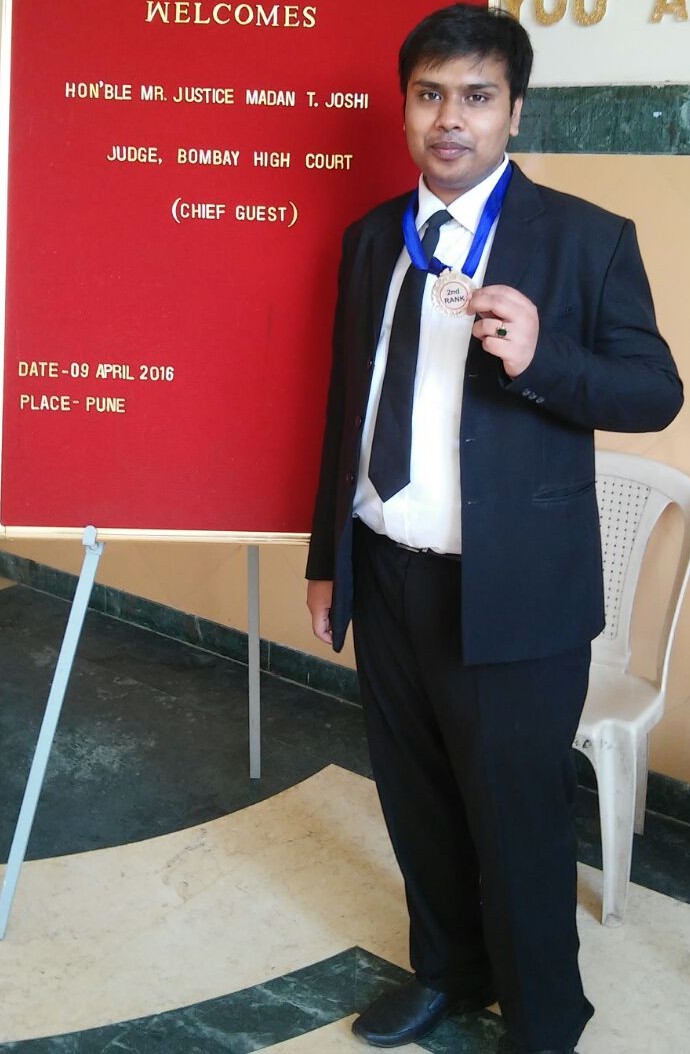
     

  • Advocate Maximus: sign up for the global Arb-Med competition

    Advocate Maximus: sign up for the global Arb-Med competition

    Advocate Maximus is a global platform for law eaglets to learn and compete at the biggest stage of Arbitration and Mediation. This legal cocktail (Arb-Med) has been spoken of as an exotic product for decades, but all the academics hasn’t really led to business. With exposure to some of the leading practitioners, a stage to test skills and recognition from the world’s best, we are confident #ArbMed will be the real fad.

    Advocate Maximus refers to a skilled and knowledgeable lawyer, who is as good a negotiator as she or he is a mooter. This competition is named after Advocate Ratan K Singh to recognise and honour his continuous contribution to the field of ADR. The logo is an eagle soaring in all its glory. Before the big flight, every law eaglet will have to first take the leap of faith as #ResolutionaryLawyers In this interview, we talk to Jonathan Rodrigues, Nisshant Laroia and Adv. Ratan K Singh who take us through the details of Arb-Med test, ‘Advocate Maximus’.


    WHAT IS ADVOCATE MAXIMUS?

    JONATHAN: Advocate Maximus is an Arb-Med test for law students across the globe, who fancy a career in non-conventional platforms of legal practice. It is scheduled from December 19-23, at New Delhi, the competition features Arbitration mooting sessions followed by the same competing lawyers attempting to negotiate the same dispute in a Mediation setting. The competition logo resembles a eaglet taking flight before soaring in the sky. The competition is dedicated to Advocate Ratan K Singh in recognition of his contribution and unconditional support to ADR in India.

    The PACT is collaborating with some of the biggest names in the field of dispute resolution, either as partners or supporters to Advocate Maximus. Some of these include (not limited to) SIAC, JAMS, AIAC, SIMI, CEDR, MBBI, HKIAC, MIARB, SCMA, YMI, AMATI, IIAM, etc. These collaborators have defined their roles, with the partners providing cash vouchers, discounts, books and internships as incentives for those who fare well at the competition. The final rounds of the competition will be broadcast on LawSikho.com for learning purpose and the winners will be featured on SuperLawyer.

    The inaugural and valedictory sessions of the competition will be held at India International Centre, New Delhi. The venues for the preliminary rounds, the social nights and the networking parties will be announced by the first week of October on the official website: www.thepact.in/advocate-maximus.


    IT’S A HUGE RISK ORGANISING SOMETHING INDEPENDENT OF LAW SCHOOL / UNIVERSITY REPRESENTATION. WHAT INSPIRED YOU AND WHY DO YOU THINK ITS NECESSARY?

    NISSHANT: I believe that every university should provide its students maximum exposure and opportunities for their personal learning, development and growth. Many students don’t have access to opportunities due to rigid university policies, politics in law school committees and inevitable red tapism.

    We have heard of instances where universities have had a moot court committee and an ADR cell but it is the moot court committee that had the jurisdiction of allocating the ADR competitions to students. To pick any Mediation or Negotiation competition, one has to go through the university intra moot court rounds. Moot court competitions and Mediation & Negotiation competitions are poles apart. The skills needed in both are completely different. Inspite of that, students who want to go for the big mediation competitions, couldn’t do so due to not having strong mooting skills.

    I am aware that one can’t go around every country pushing for change and that we must respect structures that are in place. But I am also a strong believer that if you feel strongly about something, try and initiate the change personally and hopefully, it will inspire others to join along. It’s time to skip the red tape and challenge yourself. The simple eligibility criterion for Advocate Maximus is – the participant has to be a law student and must have an exceptional mooting and negotiation profile.

    WHAT IS THE DRIVING FORCE BEHIND THE COMPETITION?

    JONATHAN: Created and conceptualised to highlight the role of the lawyer in the practice and promotion of out-of-court dispute resolution, Advocate Maximus aims to officially invite the lawyer community to shed their “suits” and “courts” and embrace dispute resolution. The role of the lawyer if often misunderstood and underrated in arbitration and mediation, when in reality, it’s the lawyers who determine and influence the approach of disputing parties. Whether commercial, community, personal or professional, disputes can be consensually resolved even if the parties initially chose an adversarial approach.

    The legal profession is experiencing huge tectonic shifts, where young lawyers are expected to be equipped with all round – adversarial and conciliatory – skills. There is no room for “I am a hardcore litigator, ADR is not my cup of tea”. Aware and empowered, clients today are more demanding and impatient in getting what they want. In a profession where, until now, the client has always come second, times are changing. A revolution is on the horizon and its looking for ‘Resolutionary’ Lawyers.


    WHAT IS THE VISION OF PACT?

    NISSHANT: Before being formally registered as The PACT, the idea of creating a collective of young professionals grew out of a courtroom horror where a 70-year-old old man was fighting a battle in court over a 30ft wall for 28 years. He sat on the last bench, while his lawyer walked in to court, got an adjournment, and walked out, without even glancing at him. That day, somewhere in the hearts of the cofounders, The PACT was conceived.

    The vision has remained the same – to support and encourage people from all walks of life to become effective users and ambassadors of dispute resolution; And to loop together a network of professionals in the field of consensual dispute resolution, and unite them to contribute to research, awareness and literature.

    WHAT DO ABBREVIATIONS FOR ADR & CDR STAND FOR IN SIMPLE WORDS?

    NISSHANT: ADR is an abbreviation often used to define a broad range of platforms and mechanisms that users may engage in to resolve disputes without going to court. We can go on about this, but for us at The PACT, ADR simply means Arbitration, as it is a process that is still adversarial, but is much more flexible and informal compared to a court room proceeding.

    We have been promoting mediation, negotiation and conciliation as ‘CDR’ – Consensual Dispute Resolution – mechanisms, as these platforms empower disputing parties to resolve the dispute by determining for themselves the ideal settlement. CDR mechanisms put the decision-making power in the hands of the parties. They promote direct dialogue between parties and thereby encourage them to try and understand the interests of the opposite party i.e. understanding not just what they are wanting but why they are wanting what they are wanting.


    WHAT IS THE IDEA OF ADR IN YOUNG LAWYERS?

    Adv. RATAN K SINGH: This generation has no patience to wait for justice, neither does it want to spend on court fees nor does it want to risk the loss of reputation or status. This generation wants a quick and effective fix to its problem and it wants it done discretely. This generation is fixated on being positive and it doesn’t mind giving in a little to get a little. The client is changing and the counsel needs a upgraded ammunition of knowledge and skills to deal with these trends.

    Advocate Maximus is a global platform for law eaglets to learn and compete at the biggest stage of arbitration and mediation. This legal cocktail has been spoken of as an exotic product for decades, but all the academics hasn’t really led to business. With exposure to some of the leading practitioners, a stage to test skills and recognition from the world’s best, we are confident Are-Med will finally be a reality.


    HOW CAN ONE APPLY FOR ADVOCATE MAXIMUS?

    JONATHAN: All details with regards to registration for the competition are up on the website – www.thepact.in/advocate-maximus This link has all information on team structure, competition rules, awards and the google form that needs to be filled to register. Interested teams may send in their team profile (combined or individual CVs) to advocatemaximus@thepact.in

    It is a team event. You can create your own team, putting together friends and peers from different law schools, based in different cities, countries, cultures. There is even an award for the most diverse team at the competition – The Dream Team Award.

    For the inaugural edition this December, being a law student (LLB / LLM) is a must. We plan to evolve into more wider and diverse competition in the following editions, inviting students from the business and political science background as well.


    HOW SHOULD STUDENTS PREPARE FOR ADVOCATE MAXIMUS COMPETITION?

    Adv RATAN K SINGH: Participants must firstly divide team roles according to their strengths. The Legal Associate must begin preparing the arbitration memo and assist the mooters in rehearsing their arguments. For those who don’t have specialised mooters and negotiators in the team, the counsels must begin practicing back-to-back arbitration and mediation sessions to get used to changing styles and approaches as counsels. Some teams may need to have different sets of coaches preparing them for the competition as they might seek advice from both arbitration and mediation lawyers. Shifting between the two diverse skill sets will be key to be declared winners at Advocate Maximus.


  • Ashok K. Gupta, Senior Advocate, Supreme Court of India, on the AOR exam, life in litigation and being on panel of union government

    Ashok K. Gupta, Senior Advocate, Supreme Court of India, on the AOR exam, life in litigation and being on panel of union government

    Ashok K. Gupta  graduated in B.A. (Hons. – Political Science) from University of Delhi in the year 1976.  Then he completed LL.B. from Campus Law Centre, University of Delhi in 1979.

    He enrolled as an Advocate with Bar Council of Delhi in January, 1981.  After practicing in District Court, Delhi for two years, shifted to Supreme Court & joined the chamber of Mr. P.H. Parekh, Advocate Supreme Court of India. He passed the Advocate-on-Record Examination conducted by Supreme Court of India in November, 1986.  And started his Independent Practice in 1987.

    He practices primarily before the Supreme Court, various High Courts like Jabalpur and Indore Benches of MP High Court, High Court of Odisha at Cuttack and Punjab & Haryana High Court, and before various statutory fora like National Consumer Disputes Redressal Commission (NCDRC), National Green Tribunal (NGT) & Appellate Tribunal for Electricity (APTEL) .

    He was appointed Counsel by Delhi High Court (to conduct its cases on the administrative side) before the Supreme Court in the year 2000. The he was appointed Senior Panel Counsel for UOI in Delhi High Court, in January 2001. He was designated as a Senior Advocate in April, 2012. He was the appointed by the supreme court as chairman of three-member committee under the Right to Education Act to report on compliance with various stipulations contained in the Right to Education Act in April, 2014. And also, other pro-bono committees.

    He is also the member of Supreme Court Bar Association, Delhi High Court Bar Association, Odisha High Court Bar Association, Madhya Pradesh High Court Bar Association and International Law Association. Life member of All India Women’s Education Fund Association and in that capacity was elected as member of the Governing Body of Lady Irwin College, University of Delhi during the Academic Year 1996-1997 and 1997-1998. Life member and Treasurer of Confederation of Indian Bar.

    In this interview, we talk to him about:

    • Being a first generation lawyer: college life, internships and interest in litigation;
    • Establishing his independent practice;
    • Cracking the Supreme Court Advocate on Record examination;
    • His wide range of practice encompassing various courts, tribunals and;
    • As Panel of Union Of India for Delhi High Court.


    HOW WOULD YOU LIKE TO INTRODUCE YOURSELF TO OUR READERS?

    I would like to be known as a quintessential Delhi-06 person, who loves his family, puts in honest, hard work, never ceases to learn and practice, and yet, enjoys all the good things of life: food of Old Delhi, and theatre at Mandi House in the evening, to name a few. This is my typical middle-class perception of myself.


    YOU ARE A FIRST GENERATION LAWYER. WHAT LED YOU CHOOSE LAW AFTER GRADUATION IN POLITICAL SCIENCE?

    Right, I am a first-generation lawyer. After my graduation in political science from Delhi University way back in the year 1976, I chose law not because it fascinated me; I chose law because I thought firstly, it would help me in my Civil Services examination, and shall be my second subject apart from political science. The other feeling was that, in case, I fail to make it to the Civil Services (as indeed, I did), I won’t be unemployable and could always do something as a professional lawyer. So, this was with a view to ensure that I don’t remain unemployed and/or unemployable.


    YOU STARTED YOUR CAREER WITH PRACTICE IN DISTRICT COURTS. HOW IMPORTANT IS IT FOR YOUNG LAWYERS TO KNOW BASIC DISTRICT COURT PRACTICE BEFORE MOVING TO THE HIGH COURT AND SUPREME COURT.

    It is correct that I started my career in district courts. Knowing that the nitty-gritty of practice in the Districts Courts is an absolute must for a young lawyer, I’m not suggesting that a lawyer should not aspire to become a High Court/ Supreme Court practitioner. All that I’m suggesting is that one should be fully familiar with the procedural parts of the legal practice, both on the criminal as well as the civil side. At the genesis of one’s career, it is your known circle of acquaintances who approach you, say, for a recovery suit, section 138 complaint, some accident or insurance case, matrimonial disputes and such matters which primarily emanate at the district court level. The ideal situation would be, of course, where one joins a chamber, which handles district court work, besides work in the constitutional courts.


    YOU JOINED THE CHAMBER OF SENIOR ADVOCATE PH PAREKH. PLEASE SHARE YOUR EXPERIENCE WORKING WITH HIM.

    Way back in the early eighties, the experience of working in my senior’s chamber was very fascinating and exhilarating. We were about a dozen junior colleagues at that time and it was not unusual for one junior to be doing two-three cases each day. The day would normally begin with a conference with a Senior Counsel like Mr. Fali Nariman, Mr. Sorabjee, Mr. Mridul or Mr. Tarkunde at around 8:30 A.M in the morning, court thereafter, after which we would be immediately heading towards office for drafting work and, again, the cause list would come around 6:30 P.M, whereupon our senior would allocate matters; the office of Senior Counsel would be informed and conferences fixed for next day morning. Then you head towards home around 9 PM and read the brief for the next day morning conference. But we had great fun; lot of outings and birthday celebrations, with legal conferences and seminars thrown-in between.


    HOW DID YOU DECIDE TO COMMENCE YOUR INDEPENDENT PRACTICE WITHIN A SHORT SPAN OF SIX YEARS AFTER GRADUATION?

    I decided to commence my independent practice once I realised that one cannot be somebody’s junior eternally. By the time I commenced practice, I had already passed my AOR examination and knew that one has to setup his own practice one day.


    WHAT WOULD BE YOUR ADVICE TO LAWYERS APPEARING FOR AOR EXAM NOW?

    I can really advise that a lawyer should thoroughly prepare with case law, latest judgements and equip himself with precise and concise drafting skills. One should know that on the account of the very heavy work load, the Supreme Court judges very much like and appreciate if the pleadings are to the point, not verbose and the point arising in the case is neatly stated. I keep emphasising and reinforcing to my juniors and briefing counsels: “don’t miss the forest for the trees”.


    WHAT ARE THE CHALLENGES IN STARTING INDEPENDENT PRACTICE?

    Challenges in starting independent practice are no different from starting any new venture in any new sphere of activity. But, then, if you put in sufficient quality work, you are bound to be noticed. You have to build up reputation for being an upright and a committed professional. Of course, all this would take time. Nothing good was ever achieved in a short time.


    YOU ALSO TAKE UP AND ARGUE ARBITRATION CASES. HOW IS PRACTICE IN ARBITRATION DIFFERENT FROM LITIGATION PRACTICE IN INDIA?

    I was first introduced to arbitration way back in the mid-eighties when I appeared alongside a noted junior counsel (now, a respectable Judge of the Supreme Court) in an arbitration proceeding pertaining to claims and counter-claims arising out of the 1982 Asian Games held in New Delhi. The Arbitral Tribunal was headed by Justice (Retd.) A.C. Gupta of the Supreme Court. He was a very quiet and taciturn arbitrator, unlike the majority of present-day arbitrators. For a successful arbitration practice, it is indispensable for one to know the basic essentials of handling suits, even though the technicalities of CPC and Evidence Act do not apply to arbitration proceedings. Surely, one must know about admission and denial of documents, framing of issues (not all arbitral tribunals frame issues), and the proof of documents in case of denial by other side, etc. Also, the art of cross-examination assumes a lot of significance and seriousness in an Arbitration proceeding. An arbitration claim is no different from a claim in a suit, except that the procedure is shorn of all the technicalities, and there is much less stress because of less pressure of time.


    YOU HAVE ALSO BEEN ON THE PANEL OF UNION OF INDIA FOR DELHI HIGH COURT. WHAT IS THE MODUS OPERANDI WORKING FOR THE CENTRAL GOVERNMENT?

    This was the first time ever that I worked for any government (Central/ State). I was, hitherto, primarily appearing for private clients and some PSUs. It was, initially, difficult for me to adjust to the role of a government lawyer, inasmuch you hardly receive timely instructions, proper records are not maintained, and most of the time you cut a sorry figure before the Court, not on the account of any lack of professional skill or competence on your part. That said, it is, indubitably, a matter of pride, prestige and honour for any lawyer to be empaneled as a government lawyer.


    WHAT ARE THE SKILLS REQUIRED FOR A LAWYER AIMING TO BE A SENIOR ADVOCATE IN HIS CAREER?

    First, one has to be a competent and honest lawyer and the other, one should totally abjure sharp practices as a lawyer. There have been several instances, where very skilful and competent lawyers were not given the designation of a Senior Advocate by the Court, on account of the perception of lack of ethics on the part of such lawyer. Now, of course, the Supreme Court in the judgement of ‘Ms.Indira Jaising vs. Supreme Court of India’ has laid down the entire procedure for designation of a lawyer as a Senior Advocate.


    BEING A LAWYER, IS IT DIFFICULT TO MAINTAIN WORK-LIFE BALANCE?

    Work-life balance is difficult but not impossible to achieve, just like in any other business or employment. Here the complexities are of a different nature, in the sense, that in the early years as a lawyer, money is hard to come by, hours are uncertain and stress is a little too much to handle. The reason being that the client is primarily concerned with the outcome of his case, not really concerned with your legal knowledge and the hard work put in by you. This does take its toll on one’s health and impacts work life balance.


    WHAT IS THE REQUIRED SKILL-SET OF BEING A SUCCESSFUL LAWYER?

    Being successful in the profession requires no set of different rules than the ones you require in other spheres of activities of life. It is talent, hard work and luck – an amalgamation of all the three.


    PLEASE LET US ABOUT YOUR MOST MEMORABLE CASES.

    I have appeared in hundreds of cases in my career as a lawyer spread over 38 years, as an instructing advocate in the early years of practice, and as a counsel thereafter, and a senior advocate in later part of life. A government-tender matter, wherein I had engaged and instructed Mr. S.S Ray, Sr. Adv. (now deceased) and Dr. Shankar Ghosh, Sr. Adv. to appear before the Jabalpur High Court in 1991-1992 stands out in my mind. The other case that I fondly remember of the nineties was a very complex trademark case before Justice Ajay Noth Roy of the Calcutta High Court against NALCO Chemicals, USA. I found Justice Roy to be an outstanding and brilliant judge, though the Supreme Court collegium, perhaps, thought otherwise. Among the arbitration matters, I have a proclivity towards my case, ‘National Aluminium Company vs. Pressteel & Fabrications Pvt. Ltd.’: (2004) 1 SCC 540, which paved the way for the Supreme Court to rule on the applicability of the 2015 Arbitration Amendment Act in ‘BCCI vs. Kochi Cricket Pvt. Ltd.’. In recent years, in the cases, ‘National Aluminium Company Ltd. vs. Ananta Kishore Rout’: (2014) 6 SCC 756, ‘Chairman-cum-MD vs. Bharat Chandra Behera’: (2013) 16 SCC 622 and ‘Kalinga Mining Corp. vs. UOI’: (2013) 5 SCC 252, I was able to persuade the Supreme Court to sustain my view point.


    HOW CAN JUNIOR WISHING TO WORK UNDER YOU GET IN TOUCH WITH YOU? WHAT QUALITIES WILL YOU LOOK FOR HIRING A JUNIOR?

    A junior wishing to work with me can directly approach me, no need for an intermediary. The only quality I look for in a junior is that he should be hardworking. I have always maintained and continue to maintain till this date, that a talented person might fail but a hardworking person never fails.


    WHAT WOULD BE YOUR WORD OF ADVICE TO YOUNG LAWYERS AND LAW STUDENTS AIMING TO MAKE CAREER IN LITIGATION?

    My advice to young lawyers would be no different than what I received in the early eighties, and it is: “work like a horse, live like a hermit”. Now, a word of unsolicited advice: I would very much like if young lawyers take to politics as well, even as they continue to practice law. There is such a dearth of good people- professionally employed people in Politics. This way you contribute to the well-being of the society, as also enhance your own prospect in the profession. The success achieved by the likes of P. Chidambaram, Arun Jaitley and Kapil Sibal is attributable, in part, to their being seen in politics.

  • Vivek Kapoor, International Disputes Lawyer, Stephenson Harwood on LLM from Northwestern University and a career in International arbitration 

    Vivek Kapoor, International Disputes Lawyer, Stephenson Harwood on LLM from Northwestern University and a career in International arbitration 

    Vivek Kapoor is an alumnus of Panjab University (Chandigarh) and Northwestern University (Chicago). He specializes in international commercial and investment treaty arbitration. He acts as counsel and advocate in international arbitrations conducted under the LCIA, ICC, SIAC, and UNCITRAL rules and ad-hoc arrangements, and arising from diverse industry sectors, particularly energy, mining and natural resources, infrastructure and construction, telecom and technology sectors.

    He advises and represents both private and state-owned entities from multiple jurisdictions in Asia, Europe, CIS, Africa, and Middle East in disputes governed by a variety of common and civil law regimes, and public international law.

    He also advises foreign investors on issues pertaining to investment protection notably under bilateral investment treaties and investor-state contracts, and the interaction between international law and domestic law in relation to international projects. He is recognized for his experience in post-award remedies, enforcement, jurisdictional challenges and conflict of laws issues.

    He has undertaken significant advocacy before international tribunals. He also has full rights of audience in the Indian courts, and has successfully represented private parties, both Indian and Fortune 500 multinational corporations, before the Supreme Court of India and the High Courts of various States in India.

    He is empanelled as an arbitrator with the International Centre for Alternative Dispute Resolution (working under the aegis of Ministry of Law & Justice, Government of India). He also serves on the editorial advisory board of LexisNexis Arbitration and the management committee of the Asia-Pacific Forum for International Arbitration.

    He also regularly speaks at various forums on diverse issues of international law and international arbitration and has published widely on this area of law.

    In this interview, he talks to us about:

    • LLM from Northwestern University (US)
    • On choosing specialisation
    • A career in international arbitration


    HOW WOULD YOU LIKE TO INTRODUCE YOURSELF TO OUR READERS?

    I am an International Disputes Lawyer based in London – an advocate (India) and a barrister (England & Wales). Well, that is my professional introduction; outside of the profession I am an adventurer, nomad at heart, an art aficionado, a two am friend – a social bandito!


    WHAT MOTIVATED YOU TO PURSUE A CAREER IN LAW AFTER DOING BACHELORS IN ARTS (ECONOMICS AND MATHEMATICS) FROM PANJAB UNIVERSITY?

    I come from a family with a strong tradition in law, law enforcement to be precise. I was intrigued by the profession right from a young age; my initial interaction with law being centered on its societal impact and importance. As I grew up the philosophy of law became an area of keen interest for me.

    Law was always on the cards. When I finished my schooling at St. Columba’s (Delhi) I wanted to broaden the horizons of my knowledge and develop a more mature worldview before I embarked on a degree that would form the basis of my career. Panjab University with its glorious history and rich tradition gave me a wonderful choice to pursue Economics and Mathematics simultaneously.


    PLEASE TELL US SOMETHING ABOUT YOUR LAW SCHOOL LIFE?

    Law school, both at Panjab University (India) and then Northwestern University (US), played a critical role in shaping my thought and disposition. I had the opportunity to read law under the guidance of some of the most celebrated professors in India and US. I interacted with some of the best minds in the profession – leading lawyers, judges, and politicians elected to public office.


    WHAT WAS YOUR MOTIVATION BEHIND DOING AN LLM ABROAD? HOW DID YOU CHOOSE TO SPECIALIZE IS INTERNATIONAL ARBITRATION?

    The motivation behind the LL.M. was to develop both a global perspective of law and practice and a skill based and practice-oriented understanding of law. Being admitted to one of the best universities in the world, Northwestern in Chicago, gave me the perfect opportunity.

    The focus of my LL.M. was broader than international arbitration. I completed 31 credits instead of the 20 credits that were required and completed by most. Though I completed my LL.M. when I was fairly young, I was already a litigator with experience of some very significant and complex cases. International arbitration was a natural progression.


     WHAT WOULD BE YOUR WORD OF ADVICE TO STUDENTS LOOKING FOR A CAREER IN INTERNATIONAL ARBITRATION?

    Don’t focus on the gloss; try to develop a sound understanding of law and the ability to work through a diverse set of factual matrices. Above all, try to attain as much practical, hands-on experience as possible.


    CAN YOU PLEASE TELL US ABOUT YOUR EXPERIENCE APPLYING FOR YOUR MASTER’S DEGREE? DO YOU BELIEVE IT IS MORE DIFFICULT FOR NON-NLU STUDENTS TO GET THROUGH INTO FOREIGN UNIVERSITIES?

    I am not a NLU student so I really can’t comment on whether they have it any easier. For me, it was a relatively straightforward process. In my view, the best way to deal with this process is to know what exactly you want out of the course and present your true and best self in the application. I don’t think the foreign universities show any preference towards NLU. They are more focused on the quality of candidates, what they bring on to the table, how they contribute to the brand and the values the university stand for.


    WHAT LED YOU TO CHOOSE TO STAY ABROAD AND NOT RETURN TO INDIA AFTER COMPLETING YOUR LLM? HOW DID YOU JOIN A REPUTED FOREIGN LAW FIRM AFTER YOUR MASTER’S COURSE?

    India has always been and continues to be a key focus for my work.

    In today’s day and age, a person’s postal address has ceased to be of great significance. Where you live no longer determines what work you do. Foreign law firms all over the world have many talented lawyers from India. For me, personally, it was not a deliberate decision. My objective is to do quality work and location is secondary to it.


    DO YOU BELIEVE THAT A MASTERS IS A MUST FOR LAWYERS SEEKING INTERNATIONAL EXPOSURE, AND JOINING A FOREIGN LAW FIRM?

    It is hard to make a definitive statement whether LL.M. is a must for foreign law firms. In my view, LL.M. is a matter of personal choice. Each person seeks something different from the course and therefore has different motivations to pursue a course.

    Any good law firm seeks candidates that in addition to a good academic record, exhibit a holistic personal development and an enthusiasm to learn and grow further.


    HOW IS THE WORK CULTURE ABROAD DIFFERENT FROM THE WORK CULTURE IN INDIA?

    In my view, the work culture of the legal profession both in India and abroad is broadly driven by the same set of values and focus on doing quality work which is intellectually stimulating.


    WHAT IS AN AVERAGE WORK-DAY AT STEPHENSON HARWOOD?

    This is perhaps one of the most interesting aspects of the life of a disputes lawyer – no two days are alike.


    DO YOU THINK THAT SINGAPORE IS GRADUALLY BECOMING THE HUB FOR ARBITRATION IN ASIA, ESPECIALLY FOR INDIAN ARBITRATIONS? WHAT ARE YOUR THOUGHTS ON THIS? WHAT ARE THE OPPORTUNITIES FOR INDIAN LAWYERS IN ARBITRATION?

    Undoubtedly, Singapore has become a hub for arbitrations in Asia. Having lived and worked there I have experienced this phenomenal growth. I continue to represent clients in Singapore-sited arbitrations and am impressed with the high level of innovation.

    As for India-related arbitrations, I think India has become a significant economic player in the global economy. As a consequence, all major international seats are seeing Indian arbitrations. And this is vastly increasing the opportunities available to Indian lawyers.


    WOULD YOU HAVE ANY PARTING WORDS OF ENCOURAGEMENT FOR OUR READERS WHO WOULD LIKE TO FOLLOW YOUR FOOTSTEPS?

    That’s a very generous question – I think I am still far from being a role model for anyone.

    My two cents – each day brings with itself new learnings and new experiences, what matters is how you imbibe them and grow!


  • Rahul Donde, Senior Associate, Lévy Kaufmann-Kohler on a career in International arbitration and being appointed arbitrator by ICC

    Rahul Donde, Senior Associate, Lévy Kaufmann-Kohler on a career in International arbitration and being appointed arbitrator by ICC

    Rahul Donde is an alumnus of GLC Mumbai and specializes in international commercial and investment arbitration. He acts as arbitrator, counsel, secretary, and assistant of the arbitral tribunal in international arbitration proceedings under both ad hoc (UNCITRAL, Swiss PILA, Indian Arbitration Act, 1996) and institutional arbitration rules (ICC, LCIA, ICSID, CEPANI).

    He has specific experience in disputes relating to utilities, natural resources (water, oil, gas, renewable energy) and joint venture/shareholder agreements in different jurisdictions. He has been involved in high-profile disputes arising under the NAFTA and BITs as well as under complex long-term contracts. He has specialization in energy law with focus on oil, gas and renewable energy.

    Prior to joining Lévy Kaufmann-Kohler in 2012, Rahul worked in the arbitration department of a large European firm. Before that, he was an associate for several years in the dispute resolution team of a major Indian law firm. Rahul has acted as counsel in numerous commercial disputes before arbitral tribunals and domestic courts in India and has specialized knowledge of the idiosyncrasies of dispute resolution in multiple jurisdictions.

    Rahul is the co-editor of the first-ever TDM Special on dispute resolution in India, and he is the country reporter for India for the IBA Report on Arbitrability under the New York Convention. He has been appointed to the Advisory Board of the Thailand Arbitration Center and the Center for Advanced Research in Dispute Settlement. He is a Steering Committee Member of the young arbitration practitioners groups of the Chartered Institute of Arbitrators and the Mumbai Center for International Arbitration. He is regularly invited to speak at conferences and conduct training programmes and workshops organized by UN organizations, the ICC World Business Institute, the Chartered Institute of Arbitrators, Young ICCA, the Asian Society of International Law and others. His publications cover topics of current interest in water, energy law and international arbitration

    In this interview, he talks to us about:

    • applying for LLM abroad
    • a career in international arbitration
    • being the youngest ever Indian arbitrator to be appointed by ICC


    HOW WOULD YOU LIKE TO INTRODUCE YOURSELF TO OUR READERS?

    As I am! Bookworm, technogeek, football and swimming enthusiast.


    PLEASE TELL US ABOUT YOUR TIME AT GLC MUMBAI.

    I thoroughly enjoyed my time at GLC. Lectures by Prof. Pithawalla, Prof. Daswani, and many others were particularly memorable. My seniors described GLC as a “buffet” early on, and I must say that I took full advantage of that. I was a member of a number of student committees – the Moot Court Association, the Debating Society, the Law Review Committee, Rotaract Club, and others, many of which I also had the pleasure of leading. I co-founded Students for the Promotion of International Law (SPIL), the first international law association in Mumbai and helped set up GLC’s computer research center. I am very happy that GLC has moved from strength to strength over the years.


    YOU HAVE PURSUED A LOT OF ADDITIONAL COURSES IN CYBER LAW, ADR, ETC. WOULD YOU RECOMMEND THESE COURSES TO LAW STUDENTS?

    I strongly recommend pursuing specialized courses to law students. Pursuing such courses exposes you to the finer details of a subject, so you can be sure that you are truly interested in it (without incurring the cost of an LL.M.!). For instance, my ADR and International Trade law courses led me to conclude that my interest lies in international dispute settlement. Besides, pursuing such courses could help to get admitted to an LL.M., and for getting scholarships.


    WOULD YOU SAY WORK EXPERIENCE BEFORE A MASTER’S DEGREE HAS AN ADDED ADVANTAGE?

    Definitely. Work experience allows for a better appreciation of the higher level of education dispensed at the LL.M. level. It also enables you to gain more from your classes: with the help of your professors, you can test how your instruction would apply to real-world situations rather than engaging in purely theoretical discussions. Besides, some universities value work experience for admissions to LL.M. programs.


    WHAT WAS YOUR MOTIVATION BEHIND DOING AN LL.M. ABROAD? HOW DID YOU CHOOSE TO SPECIALIZE IS INTERNATIONAL ARBITRATION?

    I always wanted to do an LL.M. abroad. Foremost, I wanted to experience different methods of instruction than what I was exposed to at GLC. I was also keen on doing project-work rather than simply writing annual exams. The idea of sharing thoughts and experiences with fellow students across the world (it’s a big world!), was all too enticing! I’m happy to say that my LL.M. experiences far exceeded my expectations.

    As for choosing international arbitration, I’ve always been a disputes lawyer, right from my very first internship in Mumbai. As I mentioned, I took courses in ADR and international trade law, and soon realized that international dispute settlement would be the ideal field for me to merge these subjects along with my interest in public international law.


    WHAT WOULD BE YOUR WORD OF ADVICE TO STUDENTS LOOKING FOR A CAREER IN INTERNATIONAL ARBITRATION?

    Beware! International arbitration is a particularly unique field as it attracts students from many different disciplines. Those intending to make a career in international arbitration should be prepared to go the extra mile to stand out from their peers. As I mentioned, I recommend pursuing specialised courses in international arbitration before pursuing an LL.M. degree in the field. Also, students should think of writing on the subject too – articles, blog posts and the like. Further, students should attend arbitration conferences – a great way to keep abreast of latest developments as well as connect with leading practitioners. While such conferences were rare (and expensive), we’re changing that now: an international conference I organized in Mumbai last year saw students attending in large numbers. Finally, students should think of offering to help senior practitioners in their ongoing projects or research. This not only helps increase awareness of “real” arbitration work but also helps create (valuable) relationships in the field, besides bolstering your resume of course! I work with several research assistants myself for my academic pursuits and hope that the experience is as educative and useful for them as it is for me.

    CAN YOU PLEASE TELL US ABOUT YOUR EXPERIENCE APPLYING FOR YOUR MASTER’S DEGREE? DO YOU BELIEVE IT IS MORE DIFFICULT FOR NON-NLU STUDENTS TO GET THROUGH INTO FOREIGN UNIVERSITIES?

    I completed my first LL.M. in 2011 – an LL.M. in Dispute Settlement offered jointly by the Graduate Institute, Geneva and the University of Geneva. I completed my second LL.M. via distance education this year – an LL.M. in Oil and Gas law from the Robert Gordon University, Aberdeen. Applying for my first LL.M. was quite challenging. I remember spending hours drafting and redrafting my Statement of Purpose (SoP). Organizing other documents was tough too – recommendation letters, transcripts etc., all while working full time. I would strongly recommend setting aside some time for making applications, it’s quite a job! And do spend time on your SoP; I can say from experience that it will be read, and the success of your application may well depend on it!

    I do not believe it is difficult for non-NLU students to get through foreign universities. Each law school has its own strengths and weaknesses, students have to maximise all available opportunities, and have good grades. From experience, I can say that while admissions committees do take into account an applicant’s university, the SoP, grades, co-curricular activities and the like carry far more weight.


    WHAT LED YOU TO CHOOSE TO STAY ABROAD AND NOT RETURN TO INDIA AFTER COMPLETING YOUR LL.M.? HOW DID YOU JOIN A REPUTED FOREIGN LAW FIRM AFTER YOUR MASTER’S COURSE?

    I always looked at an LL.M. as a two-part project – foreign education and foreign work experience. The latter was particularly important given that I chose to do an LL.M. in international dispute settlement – something that at the time was not very common in India. I choose to stay abroad now because I still have a lot to learn and a long way to go to become the global dispute resolution professional I aspire to be. Moreover, I enjoy my work in an exceptional environment that is intellectually stimulating and nurturing in equal measure. In any event, I travel back to India at least 3-4 times every year to meet clients, friends and organize arbitration events. In some senses, I never left!

    Joining a foreign law firm took some effort. Besides being actively contributing in class, I volunteered to work on small projects for my professors, which I did to the best of my abilities. Their recommendations, coupled with my work experience and grades, got me here. It also helped that I interned at a law firm while pursuing my LL.M. – 15-hour workdays for nearly six months, but well worth it in the end.


    DO YOU BELIEVE THAT A MASTERS IS A MUST FOR LAWYERS SEEKING INTERNATIONAL EXPOSURE, AND JOINING A FOREIGN LAW FIRM?

    I would say that some form of foreign education is useful for those seeking employment outside their home jurisdiction, as well as those seeking to have international exposure while remaining in their home jurisdiction. This could be a full-fledged LL.M. degree or any other program. There are so many unique programs out there these days that a targeted short course may be valued more than a generic LL.M.


    HOW IS THE WORK CULTURE ABROAD DIFFERENT FROM THE WORK CULTURE IN INDIA?

    I think we should be careful not to generalize the working culture in India and abroad. There are firms all across the spectrum everywhere. Dedication is required everywhere but perhaps not understood the same. Professionalism is rewarded here, not benchwarming. There is no requirement to spend long hours in the office unless there is a real need to do so. Another difference is personnel development. Foreign firms are more open to their associates engaging in career development activities. There seems to be some hesitation towards this in India.


    WHAT ARE YOUR ROLES AND RESPONSIBILITIES AT LÉVY KAUFMANN-KOHLER? WHAT IS THE AVERAGE WORK-DAY LIKE?

    Lévy Kaufmann-Kohler (LKK) specializes in international dispute resolution, particularly international commercial arbitration and investment arbitration. I’m happy to say that I play a role in all aspects of the arbitral process: I sit as arbitrator, act as counsel, and also act as secretary to arbitral tribunals.

    The average work-day varies tremendously depending on what work comes up. I could be issuing procedural orders in cases where I sit as arbitrator, drafting legal memos, and/or brainstorming strategies for use in current cases – anything goes. Its why I love my job! I also try to spend some time each day reading on current developments, not only on international arbitration – continuous training is important.


    WHAT IS THE SKILL SET REQUIRED TO BECOME AN ARBITRATOR?

    One needs a varied skill set to become an arbitrator. In my view, the most important skill is truly listening to what the disputing parties are saying. All too often one hears/reads what one wants and not what is said/written. It is equally important to be diligent – the devil is nearly always in the details! I could go on, but I find these to be the most important skills, common to the top arbitrators in the world.


    YOU HAVE BEEN THE YOUNGEST-EVER INDIAN TO BE APPOINTED BY THE ICC. PLEASE TELL US ABOUT YOUR JOURNEY FROM BEING A FRESHER TO BEING AN EXPERT IN ARBITRATION?

    A long journey, with a long way to go! Sitting in a classroom at GLC I never thought that I would one day work in Switzerland with the leading international arbitrators of the day. As I mentioned above, working hard and working well eventually pays off! I’ve received (and continue to receive) plenty of support and encouragement, especially at LKK, for which I am extremely grateful. Its been a tremendous learning experience so far, and the journey continues!


    WOULD YOU HAVE ANY PARTING WORDS OF ENCOURAGEMENT FOR OUR READERS WHO WOULD LIKE TO FOLLOW YOUR FOOTSTEPS?

    There are much bigger and better footsteps for others to follow!

    I would only say that nothing really replaces diligence and hard work. If you work hard and work well, results will follow. Also – and this is particularly relevant as I’ve often seen Indian students being intimidated in a foreign environment – don’t be afraid to step up. Just because something has not been thought of before doesn’t mean it can’t be done. And finally, always keep an eye out for opportunities – you never know what can happen!


  • Anubhab Sarkar, Co-founder, Triumvir Law on starting his own law firm and a successful career in International arbitration

    Anubhab Sarkar, Co-founder, Triumvir Law on starting his own law firm and a successful career in International arbitration

    Anubhab Sarkar graduated from KIIT, Bhubaneswar in 2015.  He is the co-founder of Triumvir law.  Anubhab has had the rare opportunity to work with Prof. Martin Hunter at Essex Court Chamber in London. He had also interned with Freshfields Bruckhaus Derringer. He keeps a keen interest in International Law and has also served as the president of the International Law Society at his university.

    Anubhab works extensively in practice areas of Corporate Commercial and Foreign Investment Laws. He has also been involved in corporate transactions focused on the technology industry including cross-border Mergers & Acquisitions.

    In this interview we speak to him about:

    • Starting his own firm ‘Triumvir law’
    • On choosing specialisation
    • A career in international arbitration


    HOW WOULD YOU LIKE TO INTRODUCE YOURSELF TO OUR READERS? PLEASE TELL US SOMETHING ABOUT YOUR PRE-COLLEGE LIFE?

    Thank you for having me for the interview. This is the second time I am interacting with SuperLawyer (however, I think there are miles to go for me to even come close to this tag.). During the course of this interview, I will try to convey to young colleagues and law students how to look at the profession.

    I am a Co-founder at Triumvir Law, a small boutique law firm having offices in Bangalore and Mumbai. We deal in General Corporate advisory/transactions, International Commercial Arbitration, International Law and Intellectual Property matters. Apart from being a lawyer, I am a sports aficionado, particularly football. I am also a trained Indian classical musician, I play the sarod and this helps me in abundance to distinguish work from my normal life. However, I follow all kinds of music and ‘Apple Music’ is the second most used research platform by me other than the legal ones. In a nutshell, I keep doing a lot of things to keep the excitement alive in life, for that matter, I have also featured in a Nescafe TV commercial as a musician.

    I went to school at St. Xavier’s Collegiate School in Calcutta. To be honest, while in school, I never thought I’d become a lawyer. I was a science student supposedly preparing for the engineering entrance exams secretly wishing to go study English honours. But as fate would have it, just like my mother, I joined the bandwagon of rights and duties and do’s and don’ts (i.e lawyer). While in school, I was always playing something, either my sarod or the ‘fool’. Nevertheless, the teachers and my friends at school always supported me in becoming who I am today.


    WHAT FACTORS INFLUENCED YOUR DECISION TO SPECIALISE IN INTERNATIONAL COMMERCIAL ARBITRATION AND CORPORATE LAW?

    By the end of the first year at law school, I had somehow made up my mind that whatever I pursued will have some semblance and application of International Law if not directly. In law school, I was quite blessed to have visiting faculties like Prof. Martin Hunter, Jan Paulsson, Marike Paulsson among other great intellectuals. Learning the basics of International Arbitration by way of live cases from these individuals was quite an experience. During these visiting lecture sessions, we used to have evidence hearing simulations based on real case situations.

    During my third year at law school, I got an offer to work with Prof. Martin Hunter as his Research Assistant at Essex Court Chambers, London. During my time in London, I also had the opportunity to intern with the International Arbitration team at Freshfields Bruckhaus Derringer. These experiences made me steadfast in pursuing a career in International Arbitration and Bilateral Invest Treaty arbitration.

    My tryst with the corporate law started from my internships in top-tier Indian law firms like Amarchand Mangaldas (now Shardul Amarchand Mangaldas), Trilegal, JSA (where I worked later in my career). During these internships, I gathered the basic nuances of corporate law and deal structuring. Additionally, during my employment at Cyril Amarchand Mangaldas, KLaw and JSA, I worked extensively on corporate transactions ranging from project finance to private equity. Having said that, it is always advisable to understand how commercial transactions work in order to be a good International Arbitration lawyer. About 70% of International Arbitration disputes arise from shareholders agreements and/or investment agreements.


    WHAT MOTIVATED YOU TO START THE TRIUMVIR LAW? WHAT WERE THE CHALLENGES YOU FACED AND WHAT IS YET TO BE ACHIEVED?

    After having worked for few of the premier law firms in India and abroad and having an understanding as to how the system works, I was convinced that it was time for me start on my own. I believe in my skill-sets i.e. to interact with clients, understand their problems and then deal with them in the best possible way.

    In addition to that, I met my partners at my last job and realised that we wanted the same things – to be part of the whole mechanism than segmented versions of one piece of work. The realisation that mental health is of peremptory importance and everything else follows hit us hard. Keeping our work ethos intact, my partners (Prathik Cheralathammanda and Akshay Ubale) and I started Triumvir Law.

    In India, especially in the law firms, the ‘peeling off’ culture is in abundance (relative opinion). We, at Triumvir Law, believe in maintaining an effective work-life balance yet not compromising on the work we do for our clients. This is based on clear communication (with client and team) and proper delegation of work. We live in a world wherein deadlines are the end all and be all of life. The key motto is to ‘have a peaceful night’s sleep’ which, let us agree, very miniscule people get in this profession. There might be a counter-argument to this that there is a price to be paid for everything. Yes, there is, but not at the cost of your health and sanity.


    PLEASE TELL US ABOUT YOUR FIRM TRIUMVIR LAW?

    Triumvir Law is a boutique law firm based in Bangalore and Mumbai.  We believe in hard work, honesty (to clients and ourselves) and integrity when catering to clients and their requirements. As millennials, we use technology, teamwork, organisational skills, uninhibited communication skills, proactiveness to take on complex legal problems — to deliver the best to our clients, whom we regard with utmost care and respect.

    Our team consists of dedicated individuals, with a wealth of experience in working with Magic Circle firms and chambers (London), Dutch and Singaporean law firms as well as Tier one Indian law firms. We are also in talks with bringing on board someone with an abundance of experience in International Commercial Arbitrations and presently working in one of the premier law firms in the country. We cater to a wide bevy of clients ranging from multinationals to Bangalore-based start-ups. Additionally, we are regularly instructed to consult and act as co-counsel to other firms and lawyers in their cases.


    WHAT ARE THE SERVICES PROVIDED BY THE FIRM AND HOW IT CATERS THE NEED OF CLIENTS?

    We provide a wide array of services in the fields of, to name a few, corporate and commercial laws, dispute resolution, intellectual property. Our main focus, however, remains international commercial arbitration (especially Bilateral Investment Treaty advisory). In addition to the above, we also work with start-ups, hand holding them, and advising in setting up their companies and business, while simultaneously identifying and advising on legal risks. Essentially, we work on various areas of law depending on the needs of our clients. We also a run a separate pro-bono research wing on climate change and forced migration. We believe that climate change is real and we as lawyers can help address the concerns that climate change brings to us. Based on this, we are gathering a task force from all walks of life in order to help us create a community to tackle climate change in all ways possible.

    Furthermore, we have a strong consultancy chain based out of the cities (including abroad) we don’t operate out of. That is, in the event, a client requires immediate legal advice in such a situation we are able to connect the client to another lawyer operating from that jurisdiction.

    As mentioned above, our work model includes a system wherein a draft going out goes through multiple levels of scrutiny. This ensures that the product going out to the client is sound in law and effective.


    HOW CAN A LAW STUDENT APPLY FOR INTERNSHIP AT TRIUMVIR LAW?

    A law student can directly apply for internships by writing to me at anubhab.sarkar@triumvirlaw.com. Based on the kind of work we do, it is advisable that students (third year and above) who are interested in international commercial arbitration, international law and corporate laws apply to us. We encourage students with the same wavelength to come work with us in order to understand the kind of work we do and how we do. At present, our day to day activities are extremely dynamic, and like-minded individuals who are willing ‘hustle’ and ‘be real’ are always welcome.


    WHAT WOULD BE YOUR ADVICE TO LAW STUDENTS LOOKING FOR A CAREER IN INTERNATIONAL COMMERCIAL ARBITRATION?

    Law students who are interested in International Commercial Arbitration must have a strong grasp of the procedural law. To that end, it is important for a student to visit court through one or two internships.

    In addition to the above, it is advisable to be abreast of various occurrences in the arbitration world (i.e. conferences, orders and scholarly writings). One should also become a member of the youth chapters of the arbitral institutions. These steps will help an individual create a steadfast start in their international arbitration career.


     WHAT MILESTONES HAVE YOU ACHIEVED TILL NOW?

    During the short span of our existence, we have been a part of quite a few important international transactions and disputes opposite premier law firms. We have also provided strategic advice to a large Indian conglomerate in relation to its claims against a developing Asian country under a Bilateral Investment Treaty. To be honest, the entire journey since our inception has been extremely overwhelming. To that end, the fact that our clients keep coming back to us in relation to any legal work they have is the real testament to the work we do.


    WHERE DO YOU SEE THE FIRM IN THE LONG RUN?

    At present, we have offices based out of Bombay and Bangalore. In about five years from now, I would like to venture into the Calcutta and New Delhi market. It is an absolute pleasure working with my Partners and we want to take it forward in the right direction as fast, steady and direct as possible. Where do you ask? “To the stars”.


    WHAT WOULD BE YOUR PARTING MESSAGE TO OUR READERS?

    What I want to share with the readers is essentially what I have lived my life by. Please dream. If you don’t, there is no point in living. Every day is a challenge; try making it a story to remember for the rest of your life. Lastly, laugh, cry and be kind to people because it is a scientific fact that gratitude reciprocates. Respect and believe in yourself, that way you will be able to respect others. To doubt your capabilities is a job for others, and your job is to show otherwise. Apart from that, there is no substitute for hard work. Godspeed.