Tag: Arbitration

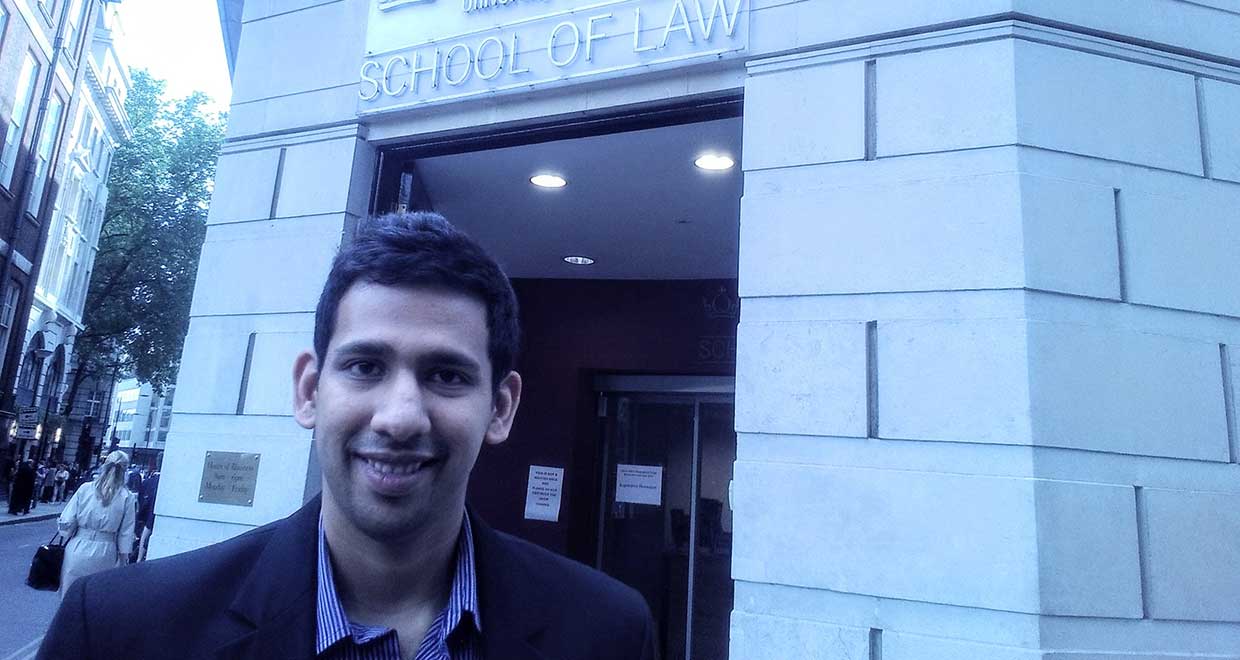
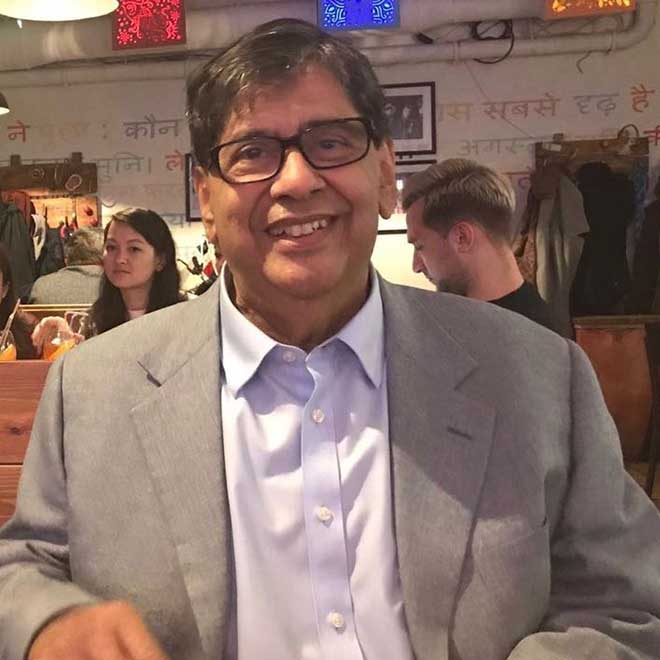
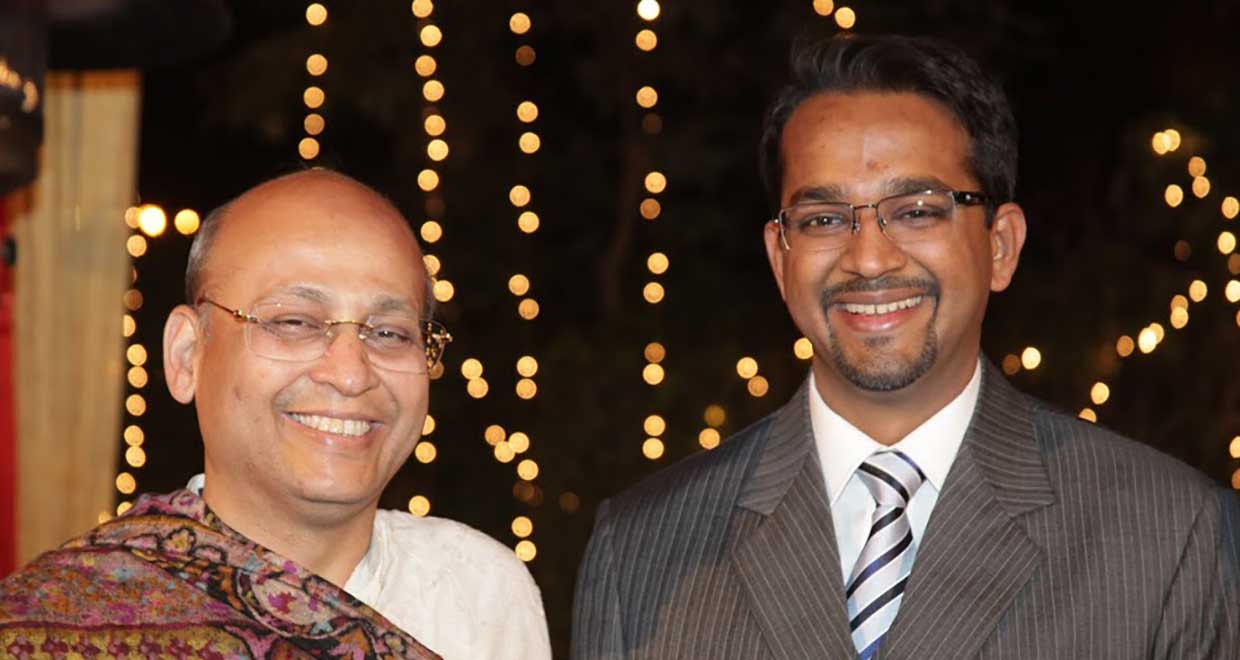
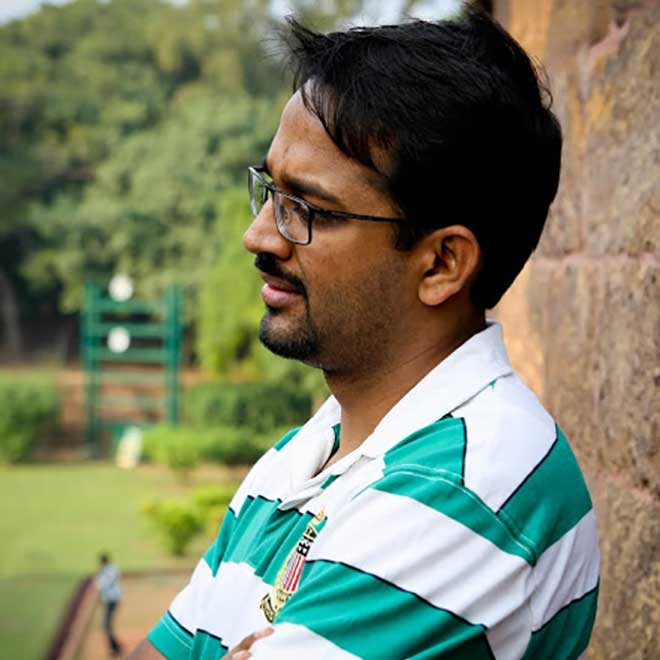
  • Jonathan Rodrigues, Co-Founder, PACT, on challenges of a start up, online mediation, and a career in ADR

    Jonathan Rodrigues, Co-Founder, PACT, on challenges of a start up, online mediation, and a career in ADR

    Jonathan Rodrigues graduated from VM Salgaoncar College of Law in 2016. He is the co-founder of the Peacekeeping and Conflict Resolution Team (PACT) which is focussed on training users of dispute resolution in Negotiation, Mediation and Conciliation skills.

    In this interview we talk to him about:

    • Career in ADR
    • Challenges faced in starting PACT
    • Online Mediation in India
    • Mediation as means of dispute resolution


    HOW WOULD YOU LIKE TO INTRODUCE YOURSELF TO OUR READERS?


    Not all Super Lawyers wear a cape!

    Some choose to take off their courts and suits,

    Facilitating dialogue and resolution.

     An ‘Ideator’ by heart, a nurtured writer, a wanderer by my restless nature, I am, today, a Mediator, by profession. I know I sound ridiculously ambitious, I know the profession is associated with obscurity, but it is my mission in life to create the scope for consensual dispute resolution, that someday, kids may not sound foolish and insane when they say, “When I grow up, I want to be a mediator”.


    WHAT MOTIVATED YOU TO PURSUE LAW AFTER PURSUING B.A. IN PSYCHOLOGY?

    After graduating in Psychology, I went on to pursue criminology and forensic science as a post-graduation interest. I hopped two different universities but failed to find scope in the subject I was attracted to. I discontinued my studies and headed back home to pursue my passion for writing as a journalist. While working with the Times of India, I thought I should give legal studies a chance – this was a consequence of many people telling me I need to find a forum for my argumentative nature. Being a lawyer happened as a result of boredom and experimentation, but I’m glad I took the step. I found my true passion in the midst of all those confusing case laws and endless bare acts. I have always wanted to work to bring people together, work with differences and complications, and I found I could do that in mediation.


    PLEASE TELL US ABOUT YOUR TIME AT VM SALGAOCAR COLLEGE OF LAW?

    My time in law college was a period of a major identity crisis. I am shamelessly proud to have cleared every exam, having worked the night shift as a journalist all through my law college days. I never wished to go to court so I kept asking myself why am I even pursuing my studies in this field? I didn’t like the courtroom jargon, formalities and the ridiculous amount of procedures that are needed to find “justice”. Litigation didn’t attract me then, and that hasn’t changed to date. I couldn’t fathom the idea of the adversarial system, where is no scope to bridge the communication gap or repair relationships. This disturbed me – no matter how much a lawyer prepares and argues a case, the verdict lies in the hands of a judge, and the disputing parties have no say in the outcome.

    Of course, not every case can be referred and resolved through mediation. Similarly, not every case needs to be referred and judged in court.

    Being respectful of the over 1 million advocates and judges who are part of the profession, I believe that “justice” is temporary and not guaranteed, whereas “peace” is permanent and secured. Justice is subjective, whereas peace is objective. I chose peace over justice, and that’s where I am right now. I discovered mediation in my final year of law studies and I am grateful to my principal, who supported me to explore mediation.

    Having successfully competed as a mediator and negotiator at the CDRC Vienna 2015 and ICC Paris 2016, respectively, I co-created Lex Infinitum at V M Salgaocar College of Law – which was a huge turning point with regards to my career choice. For me, Lex Infinitum wasn’t a one-time assignment for my CV, I took it rather personally. This effort had a wider picture – it was the beginning of an endeavour to make mediation a stable profession, not a closeted charitable exercise, run on the lines of arbitration, literally and figuratively. Until I discovered mediation, I read the bare acts for the sake of marks. For instance, I remember studying for my final semester IPR paper. Glancing through my notes, it dawned on me that mediation has tremendous scope in this field. Mediation gave me direction as a law student.


    PLEASE TELL US IN DETAIL WHAT IS PACT FOCUSSED ON? WHAT MOTIVATED YOU TO START THIS?

    The Peacekeeping and Conflict Resolution Team (The PACT) is a collective of trained and certified dispute resolution practitioners who are committed to nurturing this millennial generation with tact and skills in dealing with conflicting situations. The PACT was initially conceptualized by Gracious Timothy and I, in June 2016. As passionate ADR/CDR enthusiasts, who had explored dispute resolution as law students, we were itching to create a platform for dispute resolution to take root in this country. Honestly, we didn’t know what we wanted to achieve then, or how we were going to achieve our goals; but, we knew that as long as we were dreaming and waking up every morning with a zeal to chase those dreams, we would get there.

    Nisshant Laroia is now an integral part of The PACT and as a core team of three, we work closely with national and international ADR and CDR professionals to create awareness and train users and lawyers in the field of dispute resolution. Over the last 18-20 months, The PACT has so far reached out to over 3,000 students, across two dozen law and business schools, spread over 13 states, hosting Negotiation and Mediation Boot Camps. Be it the University of Kashmir in Srinagar, or NALSAR in Hyderabad, GNLU Ahmedabad or NLU Jodhpur, ILS Pune or GLC Mumbai, the response and feedback has been positively overwhelming, encouraging us to go beyond just coaching and mentoring, and set up ADR/CDR cells and clubs in some of these institutions we have reached out to. Besides being majorly involved in Lex Infinitum during its initial years, we have already co-created a new competition (‘Intercessionis’, at ILS Pune), that exclusively deals with community conflict mediation. More such events are in the pipeline for the new academic year.

    We are in the process of creating a unique event in Jammu and Kashmir, in association with University of Kashmir’s law department. The youth of Kashmir are eager and excited to be working with us on this initiative, which will premier in October/November 2018. Similarly, The PACT is brainstorming on something special for the North-eastern states of India for early 2019.

    PACT has also conceptualized the Global Academy for Advocacy in Dispute Resolution, which premiers in Goa from June 11-16, 2018. It is an initiative to endorse skilled mediation and arbitration lawyers, with separate coursework and trainers for both, mediation and arbitration. For more details on the curriculum, trainers, accreditation, venue, fees, etc.

    Please check click on the link below: (https://www.facebook.com/pg/thepactindia/photos/?tab=album&album_id=812635982261471)

    The PACT is focused on building these platforms that empower every woman and man to proudly call themselves followers and users of consensual forms of dispute resolution. Be it conferences, competitions, literature projects, mass media assignments, we are looking to reach out to every potential user across the globe and connect with like-minded individuals who can help us create spaces of dialogue in their regions.

    The PACT was conceptualized by the peaceful beaches in Goa, grew up in colourful parts of India and is now ready to take to the world.


    WHAT WERE THE CHALLENGES YOU FACED INITIALLY ON STARTING PACT AND WHAT IS YET TO BE ACHIEVED?

     I believe our toughest challenge to date has been to find the right mentors and guidance. We have been fortunate to have met many polished and experienced professionals in the field, who have generously shared their time and friendship. We owe them our deepest gratitude for helping us grow and develop as individuals and as a team. They stay connected with us as “Friends of PACT”.

    However, not every follower is a fan, right? We have encountered many senior persons from the legal fraternity scorn and mock our ideas and dreams, but this has only made us stronger and determined. We have heard people say to us, “Burst the bubble, mediation is never going to work in India” or “Stop fooling yourself, this can never be a profession”. For every pessimist, we have met 100 optimists and we choose to work with these positive vibes.

    Yes, we have made mistakes and we have fallen short on many occasions. We don’t regret it because we have taken the approach of “burning our fingers while we learn”. Every time we discover a new limitation, a failing, we accept it and work towards fixing it, immediately. Personally, this has been my favourite part of the journey.
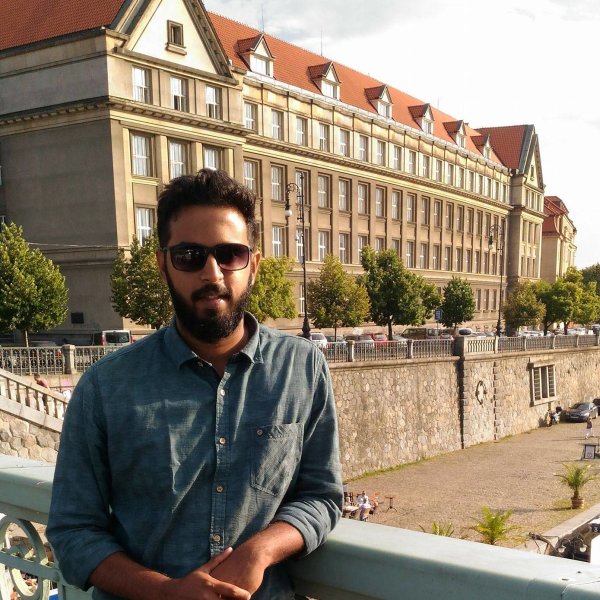
     

    DO YOU THINK THAT MEDIATION AS A MEANS OF DISPUTE RESOLUTION CAN BE SUCCESSFUL IN INDIA CONSIDERING MOST CASES FINALLY END UP IN COURTS?

    Yes, it can be successful, and it will be, soon. We need to ring in a few changes…

    Firstly, REBRAND ‘Mediation’ or for that matter, ‘Conciliation’ as a unique and different tool to dispute resolution. Stop, I repeat, stop clubbing it with arbitration or coin terms such as “other forms of ADR”. The iPhone grew as a brand, because it had its own identity, and it wasn’t marketed as “another phone in the store”. Arbitration is different, mediation is different. Both are unique and need to be treated differently. I am asking for (and we at PACT believe in this) a change in branding terminology, separate events and conferences, specific course/module/ curriculum for law students, the introduction of the concept in other study areas – arts, commerce, science, technology, sports, business, etc. Mediation cannot be looked to as a charitable option to “settle” and “compromise”. It has to be a commercially viable tool that encourages collaboration while maintaining a fine balance between interests and emotions.

    Secondly, LEGAL remedies with regards to a private Mediation settlement agreement need a revamp. The biggest fear that users have is “what happens if the other party dishonours the agreement?” The anxiety of running back to court to enforce “breach of contract” is more frustrating than going to court in the first place. Let’s keep it simple – A private mediation settlement agreement must have the same value as a conciliation settlement agreement – which is an award, treated as a decree of the court. Thus, someone who has been backbitten out of settlement agreement arising out of a private mediation has to simply seek enforcement of the “Mediation Settlement Award”.

    Before, I thought that the above could be achieved with a minor amendment to the Arbitration and Conciliation Act, but I am increasing of the belief that conciliation needs to be extracted from the Arbitration and Conciliation Act, and redrafted as a separate legislation, which also involves Mediation.

    Thirdly, INFRASTRUCTURE annexed to court premises is not something I subscribe to. State governments in India must invest in specially designed premises to create a separate setting for mediation. It may continue to remain court-referred mediation, but it must be away from the clutter and buzzing of the courtroom premises. A perfect example of this is the mediation centres started by Delhi Dispute Resolution Society. This will encourage full-time mediators and not professionals who dedicate their “after hours” time to the profession.


     WHAT WOULD BE YOUR ADVICE TO LAW STUDENTS LOOKING FOR A CAREER IN ADR?

    To those exploring a career in Mediation, I suggest getting yourself trained to be a skilled negotiator or mediator, or a skilled mediation advocate.

    Keep reading – There is a lot of literature online or you can check the Facebook group: PACT FAM – (https://www.facebook.com/groups/153574115135548/). This forum is managed by our student CDR ambassadors, Sandeep Bhalothia (JGLS) and Pallavi Gauri (NALSAR)

    Keep writing – If you want to write a simple article about mediation or dispute resolution, you may do so and send it to thepactindia@gmail.com. We will find you a platform and readers.

    Participate in competitions and conferences taking place in India and abroad. PACT is coming up with at least 3 new competitions in 2018-19, watch out for these announcements on the PACT page (https://www.facebook.com/thepactindia/)


    WHAT IS THE SKILL SET REQUIRED TO SUCCESSFULLY MEDIATE A DISPUTE?

    • Patience! – It’s not a skill as such, but it is the key that puts to test all your skills.
    • You need to have listening ear – go beyond being an active listener and be an empathic listener.
    • Don’t be afraid to compliment what you like, apologize when wrong, acknowledge what seems interesting, accept differences, competitively disagree, creatively brainstorm for mutually-satisfying solutions.


    WHAT IS YOUR ROLE AS MEDIATION CONSULTANT AT PRESOLV360?

    As an empanelled consultant, I assist Presolv360 – India’s first dispute management platform – in connecting with professionals and organisations in the field of dispute resolution and provide support for implementing established mediation practices.


    DO YOU THINK ONLINE MEDIATION CAN BE SUCCESSFULLY IMPLEMENTED IN INDIA?

    I was extremely sceptical of online dispute resolution and I still have my doubts, but this is the tech generation, so why not! This generation demands quick, accessible and tech-ridden supply of solutions to all its needs – be it food, clothing, gadgets, travel, etc. A little delay in delivery of any of these basics needs and you will have the youth shamming the service provider on every possible public forum on the internet. How, then, this generation remains indifferent and accommodating of the time-consuming court system?

    Cost effective, time efficient, comfortably casual, confidential settings, a process devoid of endless documentation, voluntary appointments, neutral facilitators and consensual settlements – it can’t get better for those who live digital lives.


    WHAT WOULD BE YOUR PARTING MESSAGE TO OUR READERS?

     I’m just an ordinary Goan boy who dared to dream beyond the familiar shores of comfort and challenged himself to explore a strange and currently non-existent career.

    Don’t be afraid to look at a career in law from a fresh perspective. If you like law as a subject and you have always wanted to be a lawyer helping people resolve disputes, and you don’t like the idea of arguing in court, there is no need to worry – you now have Mediation.

    Not all Super Lawyers wear a cape; some choose to take off their courts and suits, facilitating dialogue and resolution. As a lawyer, it has always been about your client’s interests; help them discover their true interests. You don’t have to be an adversarial lawyer; you can be a collaborative one. Don’t be afraid to be different. At the end of the day, advocate for your client’s interests, not yours!

     

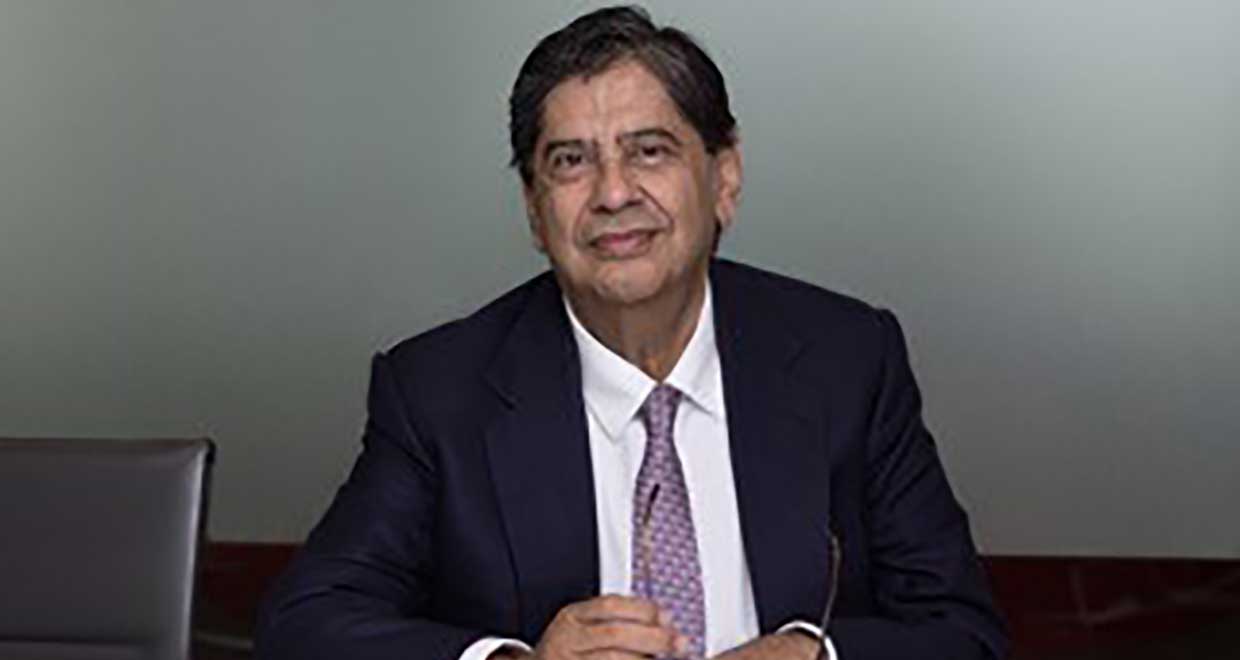
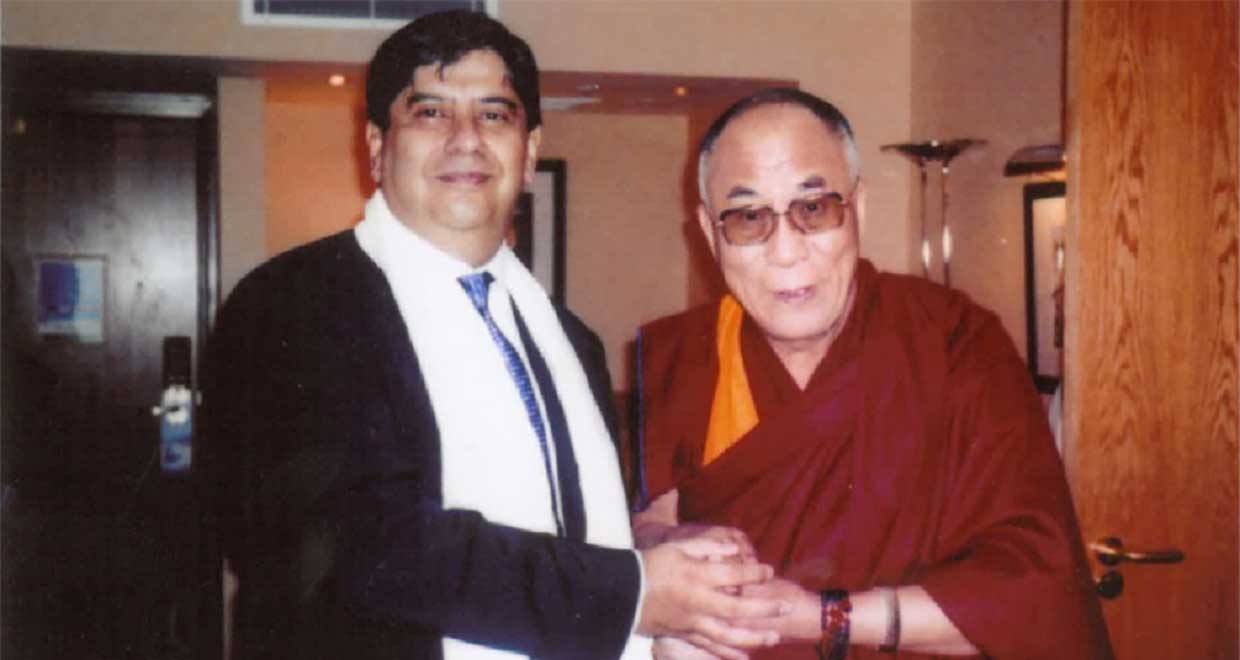
  • Thomas P. Valenti, Chicago based Attorney, shares his experience on a career in ADR

    Thomas P. Valenti, Chicago based Attorney, shares his experience on a career in ADR

    Tom Valenti is a Chicago based conflict resolution specialist offering mediation, arbitration, and facilitation services and training, globally.

    A certified mediator, Tom has conducted numerous mediations involving civil, commercial, interpersonal and workplace matters.  He has mediated and trained extensively, both nationally and internationally, in jurisdictions all over the world.

    Tom is a member of several Bar Associations, including the American, Chicago, Illinois and Indian Bar, and is a co-founder and former Board Member of Mediation Beyond Borders.

    A member of the Chartered Institute of Arbitrators, Tom Valenti is also an Arbitrator on the Public Panel at FINRA and is an approved Arbitrator and Mediator for several governmental and regulatory bodies, including the Circuit Court of Cook County, The National Arbitration Forum and is on the Advisory Board for The Association of Mediation Assessors, Trainers and Instructors.

    Extensively trained himself in all aspects of dispute resolution, Tom’s accreditations include Conflict Transformation Skills Training, focusing on Systems Dynamics, ABA International Family Mediation Training including Hague Convention Child Abduction cases, Circuit Cook County Annexed Arbitration and Mediation Training Programs. Tom also holds a Mediation Certification at The Institute for Conflict Management and is a Board Member and Trainer at The International Academy of Dispute Resolution.

    In this interview we talk to him about:

    • Skills of a good mediator
    • Lacunae in the Indian ADR system
    •  Making a career in ADR
    • Online arbitration in India


    HOW WOULD YOU LIKE TO INTRODUCE YOURSELF TO OUR READERS?

    I am an attorney, mediator, arbitrator, facilitator and trainer. I have been extensively trained in all aspects of Dispute Resolution. I am a former Board Member of Mediators Beyond Borders International (MBBI]. I have an interest in understanding the issues raised with cross-cultural disputes. I gave the Keynote Address on Interfa`ith and Multicultural Dialogue at the Dispute Resolution conference at the Ismaili Center, London, in May 2016. I organise and facilitate dialogues on multicultural issues. I believe that across time and cultures stories connect and can change people, and in that spirit, hosts Tenx9Chicago, a storytelling platform where true experiences are shared. My interests are enhanced by his work with The International Academy of Dispute Resolution (INADR), which is a charitable organisation set up to further the interest of mediation amongst law students globally. I have  judged and trained at numerous International legal, negotiation, arbitration, and mediation competitions. I have travelled to the UK, Dubai, India and Europe to train and teach courses in Negotiation, Mediation and Arbitration. I have been trained in Peer Mediation and have trained peer mediators. I have also acted as a consultant to “Online Peer Mediation Program” a platform for practising their peer mediation skills by participating in online peer mediation simulations with other students and their trainer

    I am also an organiser of the Global Youth Development Initiative, a mentoring program for international students.

    WHAT FACTORS LED YOU TO PURSUE A CAREER IN ADR?

    As a trial lawyer in Chicago, I always tried to maintain solid relationships with my adversaries. I was asked by my adversaries in the legal community in Chicago to mediate cases that they were working on. I found that I enjoyed the experience. After some time, I decided to get formally trained as a mediator. Eventually, I fully gave up litigating and now focus only on providing services as a neutral.

    WHAT IS THE SKILL SET TO BECOME A SUCCESSFUL MEDIATOR?

    Aside from the technical skills that we teach in mediation training, the most beneficial skill is to be a good listener, followed by having patience, being trustworthy and tactful.

    HOW IS MEDIATING A DISPUTE DIFFERENT FROM ARBITRATING A DISPUTE?

    In mediation, unless hired as an evaluative mediator, we do not recommend a solution or offer specific solutions. On the contrary, in arbitration that is the specific assignment undertaken.


    YOU ARE A MEMBER OF VARIOUS ARBITRATION AND MEDIATION ASSOCIATIONS ALL OVER THE GLOBE. HOW CAN ONE ACCOMPLISH THAT?

    Many of the associations are just fee-based memberships. However, to be on a “panel” or “board” you must demonstrate an expertise and skill level as well as some specific experience.

    YOU HAVE CONDUCTED ARBITRATIONS ALL AROUND THE WORLD. WHAT LACUNAE DO YOU FEEL IN ARBITRATIONS CONDUCTED IN INDIA? HOW CAN THE INDIAN SYSTEM IMPROVE?

    It is pretty well accepted that the Indian arbitration system needs to have some changes that result in expeditious hearings, prompt awards and a cost-efficient, fair process employed by the arbitrator. These are all teachable processes. It will come down to additional training, arbitral institutions, that create appropriate rules, arbitrators who will follow the rules and advocates and parties insisting on the fair application of all of this.


    IF I WANT TO BE A GREAT ARBITRATOR WHICH UNIVERSITY SHOULD I GO TO? WHICH COURSES WOULD YOU RECOMMEND?

    I am not sure any institution can create a great arbitrator. You need a sound legal background in commercial law, experience in arbitrating matters, and a fair temperament. Indian students have always been attracted to the Queen Mary & King’s in London, MIDS in Geneva is well respected, and any of the Ivy League law schools in the USA.


    CAN ONLINE ARBITRATION BE IMPLEMENTED TO A GOOD EXTENT IN INDIA? HOW?

    I am a fan of technology and believe that this offers the best opening for younger lawyers to take a foothold in a speciality. I do not think for long hearings that the entire process can be online, but there are many opportunities to use online tools for taking testimony, holding shorter pre- hearing matters and conferences.

    WHO ARE THE STALWARTS IN ARBITRATION THAT YOU FOLLOW?

    There are many excellent arbitrators. If forced to choose, and in the interest of gender equality I would suggest people track Gary Born and Jean Kalicki.

    HOW IMPORTANT IS LLM IF ONE WISHES TO PURSUE A CAREER IN ADR?

    In the USA, not at all because of our legal education system. In other countries where there is an abbreviated educational path to practicing law, comparatively, I think it has greater value.


    HOW CAN ANY STUDENT LOOKING TO PURSUE A CAREER IN ADR GET IN TOUCH WITH YOU AND ENROLL IN YOUR TRAINING CLASSES?

    I am very available, through the common social media channels, and can be reached by email at tpv@valentilaw.com


    HOW DO YOU KEEP YOURSELF UPDATED WITH THE LATEST ADR ISSUES, NEWS AND CASES?

    I am forever, on a daily basis, reading the latest news, case reports and journals. Also, I regularly attend legal seminars both in person and online. There is an endless supply of material for all of us to use to keep our skills intact and in pace with a rapidly growing part of the law.


    WHAT MESSAGE WOULD YOU LIKE TO SHARE WITH YOUNG LAWYERS AND LAW STUDENTS LOOKING FOR A CAREER IN ADR?

    I think you are on the proper path in pursuing studies in ADR. There is no doubt that these skills will benefit you in every area of law and in life as well. So take advantage of every opportunity to participate in moots and other competitions. Join ADR cells and encourage others to spread the awareness of ADR tools, not only in the legal profession but also in your communities. In a world that has made the cost of a dispute in terms of time and money unreachable to many, we as a legal community owe it to society to make justice more accessible, and ADR is one of the best ways to increase access to justice.


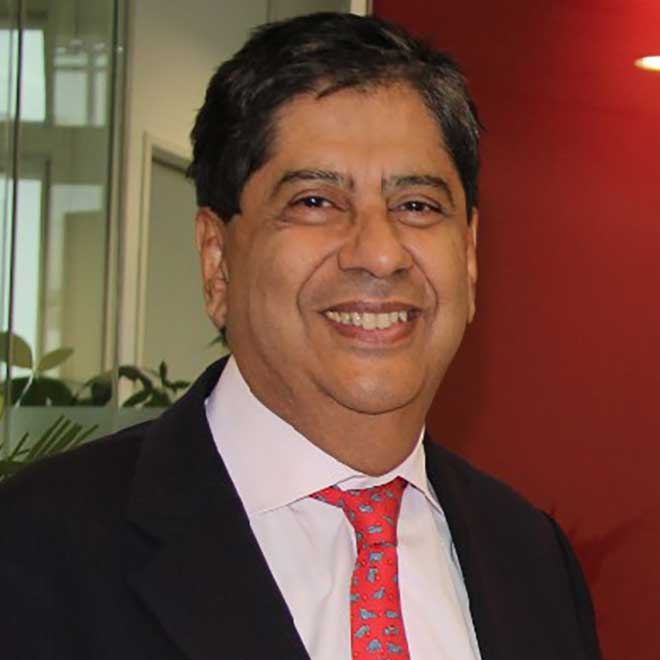
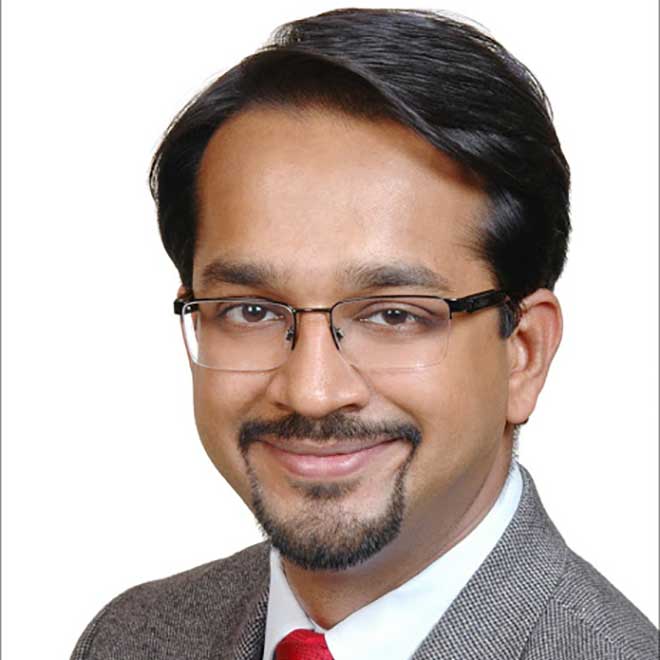
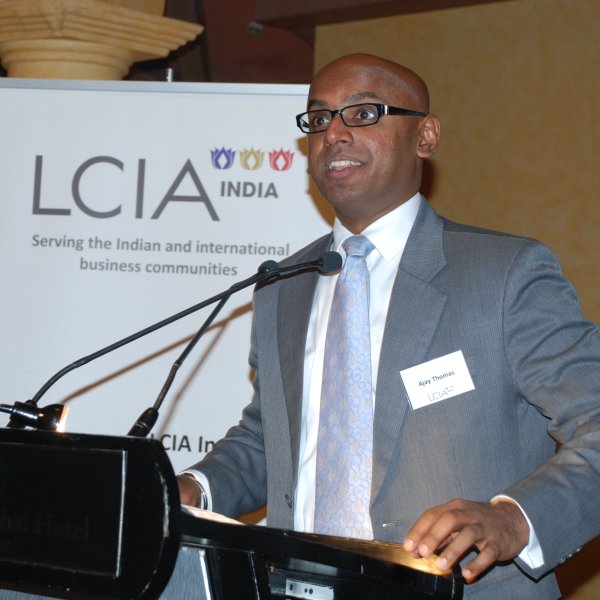
  • Ajay Thomas, Advocate and Arbitrator, on being a good arbitrator and career in International Commercial Arbitration

    Ajay Thomas, Advocate and Arbitrator, on being a good arbitrator and career in International Commercial Arbitration

    Ajay Thomas is an independent arbitrator and advocate based in New Delhi. He is also the Vice-Chair of the ICC’s India Arbitration Group.From 2009-2016, he was Director and Registrar with the Indian subsidiary of the London Court of International Arbitration (LCIA), and also a member of the LCIA India Board of Directors.He graduated from the University of Goa (LLB), and did his LLM from the National University of Singapore (NUS) .

    Prior to joining LCIA India, Ajay was Counsel with the Singapore International Arbitration Centre (SIAC). Ajay was also a member of the expert committee constituted by the Law Commission of India to assist in the preparation of its 246th Report (August 2014) on ‘Amendments to the Arbitration and Conciliation Act, 1996’.

    He is a guest faculty at the Indian Society of International Law (ISIL), New Delhi since 2009, where he teaches international commercial arbitration. Ajay is also Hong Kong 45’s (HK45) Regional Ambassador for India, in addition to serving as the Country Representative for the Asia-Pacific Forum for International Arbitration (AFIA).

    In this interview we speak to him about:

    • Importance of LLM for the career
    • His experience at NUS
    • His roles and responsibilities as the director and registrar of LCIA
    • Skills required for being a successful arbitrator


    HOW WOULD YOU LIKE TO INTRODUCE YOURSELF TO OUR READERS? PLEASE TELL US SOMETHING ABOUT YOUR CHILDHOOD AND PRE-COLLEGE LIFE?

    New Delhi-based independent arbitrator and advocate is what best explains my current professional status.

    Be that as it may, “a serial institutionaliser” is how many in Indian arbitration circles introduce me to their friends and acquaintances. Perhaps, because of the fact that over the past decade or so, I have had the unique distinction of working at four of the world’s leading arbitral institutions: Singapore International Arbitration Centre (SIAC), Singapore Chamber of Maritime Arbitration (SCMA), London Court of International Arbitration (LCIA), and now the International Chamber of Commerce (ICC) – where I have been appointed Vice Chairperson of the ICC’s India Arbitration Group. And, evangelising the cause of arbitration, especially institutional arbitration, has been a very integral part of my professional life.

    I was born in a land situated between the latitudes 14°53′54″ N and 15°40′00″ N and longitudes 73°40′33″ E and 74°20′13″ E, a land blessed with sandy beaches, swaying palms, and magnificent churches. My formative years were spent in the sleepy but charming village of Aldona. Life in those simpler times revolved around school (St Thomas Boys, and later St Britto), the playground which you shared with the neighbourhood water buffalos, and home which was conveniently just a hop, skip and jump away.

    Given my ability to appear at the wrong places at the worst possible times, I had a rather nasty reputation of being a “Jack-in-the box” in primary school, which thankfully evolved to a more respectable “Jack-of-all-trades” in high school. I wasn’t particularly brilliant in studies but was an avid quizzer and excelled in badminton, basketball and the throwing and jumping disciplines on the athletics field.


    WHAT PROMPTED YOU TO BECOME A LAWYER AND WHEN DID YOU THINK OF A CAREER IN INTERNATIONAL COMMERCIAL ARBITRATION?

    Post high school, I enrolled for a Bachelors programme in Commerce, followed it up with an LLB from the Salgaocar College of Law, pursuant to which I spent an eventful few years as a greenhorn litigator at the Bombay High Court.

    I became a lawyer by sheer accident. It was not a conscious well charted journey. Growing up, I was fascinated with being a police officer. Why a police officer? The lure of the khaki, the stars and the Ashoka on your epaulettes, and the bit of idealism left in me that made me think that I could make a difference. When that dream did not materialise, I decided to become a lawyer. But I was clear that I did not want to be a generalist and wanted to find a niche practice area that interested me. I zeroed in on maritime law, and I was extremely fortunate to be accepted as a junior at the Chambers of Senior Advocate S Venkiteswaran (Venki), regarded by many as the guru of maritime and admiralty laws in India.

    Again, it was sheer serendipity that led me to a career in international commercial arbitration. One of the elective courses that I had opted for at the LLM programme at NUS was international commercial arbitration, the teaching for which was led by Adjunct Professor Lawrence Boo, who in those days was the CEO and Deputy Chairman of the SIAC. It so happened that one day during class he mentioned that there was an opening for an India-qualified lawyer at the SIAC and urged the half-dozen Indian lawyers on the course to consider applying for the position. Given the compensation on offer, and the fact that I would be sailing away from maritime law into a totally different arena, I was initially quite hesitant. To cut a long story short, I finally applied and was offered the position subject to me successfully completing my LLM coursework requirements. The SIAC position was effectively my gateway to international commercial arbitration.


    YOU HAVE DONE POSTGRADUATE DIPLOMA COURSES IN ‘INTERNATIONAL LAW AND DIPLOMACY’ AND ‘SHIPPING MANAGEMENT’ HOW FAR HAVE THESE COURSES BEEN HELPFUL?

    My love for ships and the seas, coupled with the desire to specialise in a niche practice area, led me to pursue a “Post Graduate Diploma in Shipping Management”. This held me in very good stead when I started off practicing maritime law at Venki’s Chambers. The course gave me an excellent overview of the dynamics of the shipping industry, which I believe gave me an edge over my peers.

    The course in “International Law and Diplomacy” from the Indian Society of International Law (ISIL) helped me in preparing for the combined civil services exams, where I had opted for law as one of my optional subjects. At the end of the course, fortuitously, I discovered that I had topped the course and was awarded a gold medal, which came in very handy in securing an admission to the LLM programme at NUS.


    CAN YOU PLEASE TELL US ABOUT YOUR EXPERIENCE APPLYING FOR YOUR MASTER’S DEGREE? DO YOU BELIEVE IT IS MORE DIFFICULT FOR NON-NLU STUDENTS TO GET THROUGH INTO FOREIGN UNIVERSITIES?

    Ever since my LLB days, I always wanted to pursue a master’s degree. However, I realised that a couple of years in the profession would make my graduate studies more meaningful and purposeful, and not to mention, more money in the bank to fund my studies. Further, work experience helped me to clarify career objectives and gain invaluable hands-on experience in my area of interest.

    I do think that it takes a bit more effort for non-NLU students to successfully complete the application formalities. I was probably one of the very few students from my college to have applied for an LLM overseas, and consequently I did not have access to the usual advice and war stories from seniors.


    YOU PURSUED AN LLM AFTER HAVING SPENT ALMOST FIVE YEARS IN THE PROFESSION, A LITTLE LATE BY INDIAN STANDARDS. WHAT DO YOU THINK AN LLM DEGREE CAN DO FOR YOUR CAREER?

    An LLM programme in my opinion serves many purposes: for those who have spent some time in the profession, it’s a great way to slow down the pace of life, after the initial rigours and stresses; to look at life from a different perspective; it provides a wonderful opportunity to recharge one’s batteries; and most importantly, it acts as a refresher course to update one’s knowledge and aids in focusing on an area of specialisation.

    A LLM from a foreign university is always appealing to potential employers as it adds a bit of exoticism to your CV which employers love. The fact that you have studied abroad is also quite helpful when it comes to dealing with international clients.

    In my opinion, an LLM is a great option to young lawyers in search for a break from the monotony of a very demanding profession. It gives them some time to stop, ponder and take the right decision as to their future as lawyers. In the bargain, one gets to update one’s knowledge base, acquire new skills and get a hold on one’s life and career.


    WHAT PROMPTED YOU TO CHOOSE THE NATIONAL UNIVERSITY OF SINGAPORE (NUS) FOR YOUR LLM?

    An extremely distinguished faculty; an ambience replete with academic activity; an LLM programme which blended high quality, intensive course work with research; the numerous opportunities to interact with professionals from the legal profession and the commercial world; the hope that the extremely competitive environment at NUS would bring out the best in me, coupled with the fact that Singapore was rapidly emerging as a maritime and arbitration hub were factors that prompted me to choose NUS.

    Further, in those good old days, the fees at NUS and the cost of living in Singapore were relatively reasonable, these were additional but important factors that influenced my decision.


    PLEASE TELL US ABOUT YOUR EXPERIENCE AT NUS?

    The LLM coursework at NUS was extremely demanding, more so in my case, where I was getting back to academia after a very long time. There were hours spent in the library trying to cope with the numerous assignments, and preparation for next day’s classes; the nervous tension to meet deadlines; and copious amounts of Kopi O and Red Bull that were consumed to keep you going. And, now when I look back, I get the feeling that I strangely enjoyed it all.

    The facilities at the Faculty of Law at NUS were brilliant and state-of-the- art. Incidentally, the Faculty of Law along with the School of Public Policy had a bit of exclusivity to it, being located on a lovely secluded hill besides the Singapore Botanic Gardens, and miles away from the crowded main Kent Ridge campus.

    Singapore is also the perfect base to explore the Southeast Asian region. Given the travel bug in me, I took the opportunity of the month-long semester break to explore the region. I spent a few wonderful weeks backpacking through Malaysia, Thailand and Cambodia. It was an amazing journey of discovery!


    NUS IS WELL RENOWNED FOR ITS BRILLIANT FACULTY. HOW WAS YOUR EXPERIENCE WITH THE FACULTY?

    The faculty at NUS were a good mix of regional and international, full-time academics as well as adjuncts-who were usually practitioners from Singapore. I had the good fortune to learn from, and interact with, stalwarts such as Lawrence Boo (international commercial arbitration), Stephen Girvin (maritime law), M Sornarajah (international investment arbitration), and Francis Reynolds QC (admiralty law). I also fondly remember Lee Kiat Seng – who made it a point to treat the entire class to hot coffee, steaming paus (Chinese buns) and curry puffs, perhaps, in the hope that we would be more attentive at our early Saturday morning reinsurance class!


    WHAT WERE YOUR ROLES AND RESPONSIBILITIES AS THE DIRECTOR AND REGISTRAR OF LCIA, INDIA?

    By way of brief background, LCIA India was the established in 2009 as the first independent subsidiary of the London Court of International Arbitration (LCIA) outside of London. The institution aimed at providing a LCIA quality of case-administration services to Indian parties and also international parties doing business in and through India, at localised rates.

    As founding Registrar and Director, I was tasked with establishing the Secretariat in New Delhi, rolling out the India-specific arbitration rules, and popularising the LCIA India arbitration clause amongst end-users – which involved running an extensive and sustained outreach programme, comprising one-on-one meetings, presentations, workshops and conferences. It also fell on me to oversee the administration of cases that came to be referred to LCIA India.

    Being on the LCIA India Board of Directors gave me a great insight into policy making, strategy and planning. And, given that the institution was established as a private limited company, I also donned the hat of defacto General Counsel, ensuring that LCIA India complied with the laws of the land.

    I must say that it was truly a privilege to have been given the responsibility to establish and run an arbitral institution at a relatively young age (thirty two), which would not have been possible but for the unwavering support and guidance from Adrian Winstanley OBE and his hardworking colleagues at 70, Fleet Street.


    WHAT IS THE SKILL-SET REQUIRED FOR A PERSON TO BE A SUCCESSFUL ARBITRATOR?

     Strictly speaking there are no qualifications prescribed to be an arbitrator. In tune with the principle of party autonomy, disputing parties (to quote Professor Gary Born) have the broad freedom to choose dispute resolution mechanisms (and dispute resolvers) “short of authorising trial by battle or more doubtfully by a panel of three monkeys”.

    Be that as it may, I had the recent occasion to meet the Professor Martin Hunter, the author of Redfern and Hunter on International Commercial Arbitration. During the course of our pleasant conversation, over Sula and delicious Delhi kebabs, his advice to young lawyers was that one should never in the early stages of his/her career aspire to be an arbitrator, the emphasis should be to immerse oneself in the theory and practice of arbitration, and aim to be garner as much experience as possible as advocate in arbitration.

    I cannot but agree with Martin that there is nothing like solid work experience to lay the foundations for a future career path as arbitrator. And, whilst one goes about acquiring that broad depth of knowledge and experience, it would be useful to enroll for formal arbitrator accreditation courses such as the Pathways Programme offered by the Chartered Institute of Arbitrators (CIArb). Fellowship of CIArb is one of the minimum qualifications prescribed for formal empanelment as arbitrator with many of the leading international arbitral institutions.


    WHAT WOULD BE YOUR SUGGESTION FOR STUDENTS AIMING FOR A CAREER IN INTERNATIONAL ARBITRATION?

     Work hard, work smart, and tune in to the recent updates to the law and practice of arbitration. It is nice to have a plan, but be open to opportunities, which may not always be what you were hoping for. For all you know it, these opportunities might lead you to a new vista that you never knew existed. Finally, it would be extremely helpful to have an earthly mentor to guide you along the way. Bon voyage!


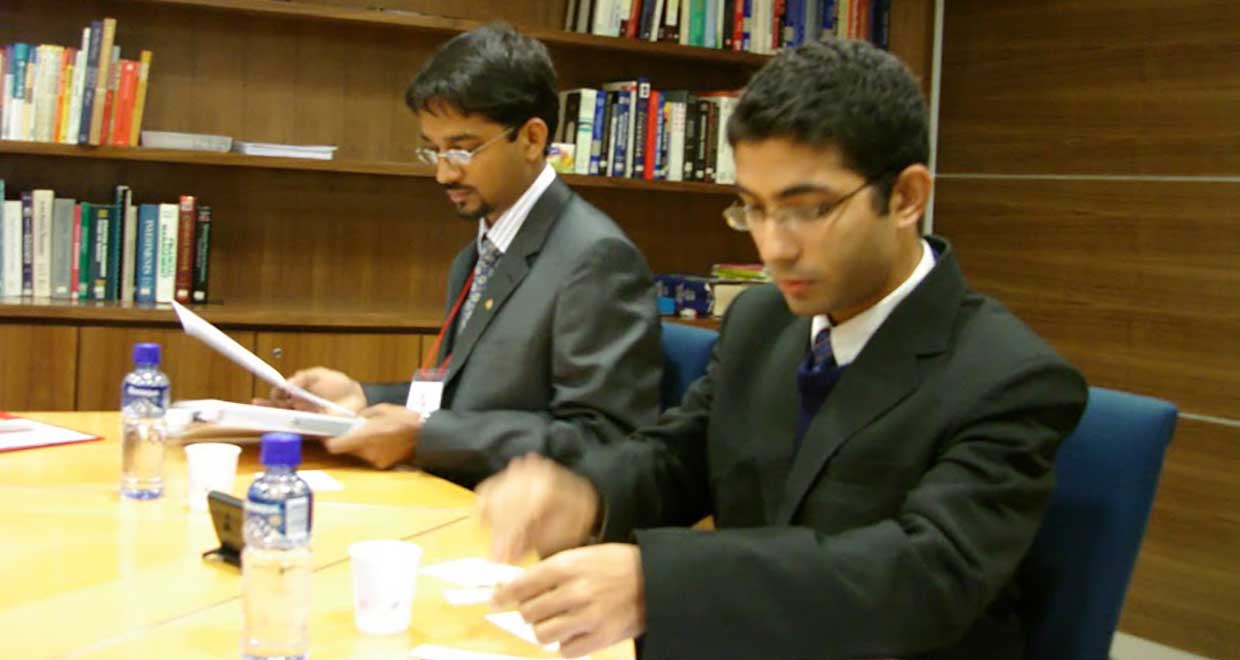
  • Ankit Rajgarhia, Senior Associate, Karanjawala & Co., shares his experience in dispute resolution

    Ankit Rajgarhia, Senior Associate, Karanjawala & Co., shares his experience in dispute resolution

    Ankit Rajgarhia graduated from Symbiosis Law School, Pune, in 2012. He joined Induslaw after his graduation and worked there for three years, he then moved to Karanjawala & Co.,New Delhi, where he works in the capacity of Senior Associate. His primary practice area is dispute resolution-litigation and arbitration.

    In this interview he talks about:

    • His experience at Symbiosis Law College
    • His experience in dispute resolution
    • Difference between working in a firm and with an independent counsel
    • His experience at Karanjawala & Co


    HOW WOULD YOU LIKE INTRODUCE YOURSELF TO OUR READERS WHO ARE MOSTLY LAW ASPIRANTS, LAW STUDENTS AND YOUNG LAWYERS.

    I’m currently associated with Karanjawala & Co., a leading litigation & dispute resolution law firm as a Senior Associate in the Civil and Commercial litigation, Arbitration and Disputes Resolution team, headed by Ms. Meghna Mishra- Partner.

    Prior to joining Karanjawala & Co., I worked under Mr. Amit Kumar, Managing Partner of Indus Law Associates & under Mr. Ranjit Kumar, Senior Advocate (former Solicitor General of India) assisting them in Hon’ble Supreme Court of India and Hon’ble High Court of Delhi. I have also authored articles on ‘Anti Dilution Protection’ and ‘LML-PIAGGIO dispute’ which got published on various online legal portals like JurisOnline.in, Legal Articles Directory, Lawyers Club India. My latest article on ‘Financial Creditor and Operational Creditor’ was published on the Viewpoint section of Bar and Bench.

    I got my B.A. LL.B degree from Symbiosis Law School, Pune in the year 2012 and have since then represented domestic and international clients in many complex commercial litigations and arbitrations.

    Apart from an active litigation practice I have been a cricket enthusiast representing Karanjawala & Co., Supreme Court Bar Association etc. in major cricket tournaments.


    TELL OUR READERS A BIT ABOUT YOUR CHILDHOOD AND PRE-COLLEGE LIFE AS WELL AS EDUCATIONAL BACKGROUND. DO YOU HAVE LAWYERS IN YOUR FAMILY WHO MOTIVATED YOU TO PURSUE A CAREER IN LEGAL FIELD?

    I was born and brought up in Patna. To be honest, I was predisposed to pursue Law since childhood. I hail from a family of lawyers including my grandfather, father and brother. My father was a Tax Lawyer and one of the youngest lawyer in Patna to become a Senior Advocate in his times. I have grown up spending most of my post-school hours in his office full of law books.

    Honestly, I was a very average student throughout my school and college life. However, I took deep interest in sports, debates and social events. Even though I wish I had put in more hours of hard work in studies, I am glad to have honed my skills of communication and networking, which have equal importance in the field of law.


    WHAT WERE YOUR AREAS OF INTEREST DURING YOUR GRADUATION? HOW DID YOU GO ABOUT DEVELOPING EXPERTISE AND KNOWLEDGE IN THESE AREAS?

    During my college days apart from academics I had the opportunity to intern at various organisations, to name a few such as Hon’ble Justice Pradeep Nandrajog, High Court of Delhi; Senior Advocate Jayant Bhushan, Supreme Court of India; Former Additional Solicitor General of India, Mr. Amarjit Singh Chandhiok, High Court of Delhi; Former Additional Solicitor General of India, Mr. P.P. Malhotra, Supreme Court of India; Jyoti Sagar Associates; NGO Pragya etc. While interning at these places the primary responsibilities were working on cases relating to Civil Law, Arbitration, Dispute Resolution, Criminal Law, Administrative Law, Constitution Law and Disputes relating to property apart from visits to Hon’ble Supreme Court of India, High Courts of various Jurisdiction and District Court of Delhi.

    These internship experiences not only groomed my practical legal knowledge but also motivated me towards litigation in India. While interning at above mentioned places I had the privilege to work along with Senior Advocates, Managing Partners and other legal personalities which not only taught me the art of drafting but also groomed my drafting and research skills. In my present employment I have realised that to excel in litigation you need to have a good foundation in drafting and court craft and not only be limited to good command in English language.

    An aspect of Law that has always been of interest to me is that, Law influences almost every facet of our life, and is constantly evolving to keep up with the dynamic changes to which we constantly try to adapt. In particular, I am always drawn towards Dispute Resolution mainly because it consists of constructive legal argument and an analogy of legal reasoning more often than in many other careers. I strongly believe in following one’s passion and a career in Law has always been my calling.


    YOU GRADUATED FROM SYMBIOSIS, LAW SCHOOL IN THE YEAR 2012. HOW WOULD YOU DESCRIBE YOUR EXPERIENCE AS A STUDENT ASPIRING TO BE A PROFESSIONAL THERE? HOW INSTRUMENTAL WAS SYMBIOSIS IN SHAPING UP YOUR LEGAL CAREER? TELL US ABOUT ORGANIZING AND CONCEPTUALISING AND PLANNING THE FIRST EVER SYMBIOSIS PUNE FEST (SYMBHAV IN THE YEAR 2008).

    My life at Symbiosis Law School, Pune was blissful not only in terms of academics but also extra-curricular activities. While I was a mediocre student at college, I also made it a point to focus on mooting, articles and extra-curricular activities such as sports or organising university level events.

    I would give my college full credit for expanding my mental horizon and for encouraging lateral thinking in me through free discussions and healthy debates in classrooms. Apart from having a great faculty structure in college, we have also had the honour of closely interacting with guest faculties such as Mr. Ram Jethmalani, Senior Advocate & HMJ Pradeep Nandrajog. I learnt that more than securing good marks in legal education, it is important to learn and stay updated about latest developments through interactions and discussions with peers and stalwarts in the field of law.

    I was fortunate to be part of organising committee of first ever Symbhav [Symbiosis First ever legal fest, 2008]. In the very first year of college, taking cue from the pattern of other major legal fest in the country, we conceptiualised the idea of Symbhav. My role was to spread awareness about Symbhav. Now in its 10th year, Symbhav is one of the major legal events across Indian Law Colleges. Now in its 10th year Symbhav continues to be a major legal event across Indian Law Colleges not limited to Law Students but other branches of stream in India.


    AS A MEMBER OF THE CIVIL AND COMMERCIAL LITIGATION, ARBITRATION AND DISPUTES RESOLUTION TEAM, TELL US ABOUT YOUR ROLE AND RESPONSIBILITY. WHAT IS A TYPICAL DAY LIKE?

    I had the privilege to join Civil and Commercial litigation, Arbitration and Disputes Resolution at Karanjawala and Company in the year 2015. Over the two years, I have carved out a niche practice for myself at Karanjawala and Company by providing clients with prompt legal assistance and delivering results. I credit my growth over the last two years to my boss and mentor, Ms. Meghna Mishra- Partner, who is a leading name in Dispute Resolution.

    I am an early starter. I have long travel hours between Gurugram (my home) and Delhi. I use this time to plan and coordinate court visits and client meetings. I strongly stand by my principle of doing thorough preparation before entering the the court. Latter part of the day is spent in briefing senior counsels, attending conferences with Senior Advocates, Advocates and General Counsels followed by preparation for upcoming matters including drafting and research. It is very important to stay up to date with the amended laws as well as recent Judgments passed by the Hon’ble Judges of different tribunals. This helps in carving out strategies for the upcoming matters and communicating the same to the clients. According to my father, majority cases are won by thoughtful and out of the box strategies.

    YOU JOINED KARANJAWALA & CO. IN 2015 AND WERE PROMOTED TO SENIOR ASSOCIATE IN 2017. WHAT LEAD TO THIS ALLEVIATION? HOW CAN ONE/ WHAT SHOULD ONE DO TO ACQUIRE THIS POSITION IN A SHORT SPAN OF TIME?

    I was elevated to the position of Senior Associate within two years of working in Karanajawala & Co. and overall of five years in legal practice. I have worked very hard at every step towards this position. Legal practice demands dedication, sincerity and perseverance. Moreover, building a strong foundation of the simplest of legal concepts has kept me on the right track. I have always made sure that the firm and the client are always on the same page and that the client gets full satisfaction from our services. At the same time, time management is quite crucial and I would credit my mother for imbibing this in me at a very early age.


    TELL US THE DIFFERENCE BETWEEN SMALL SCALE BRIEFS AND HIGH STAKE BRIEFS IN INDIA? WHAT IS THE INITIAL ART OF BRIEFING SENIOR COUNSELS?

    According to me no brief is small stake or high stake ; only the quantum mentioned in the brief is high or small. We enter the profession to learn each and every day and learning is a never ending process for lawyers. In the initial years of profession it is very important to work on all kinds of matters and briefs, to be able to learn from all aspects of Law. Having said that it is also very important to work in different Tribunal/District Courts/ High Courts to be familiar with different working culture of different forums.

    The initial art of briefing Senior Counsels is to be thoroughly prepared with the matter as if you have to argue in the court. It is also important to know the latest Judgments or case laws along with respective paragraph numbers, pertaining to the issues involved in your briefs. In order to optimise on the briefing time, it is important to have case note ready to enable you to give quick answers to the queries put forth by Senior Counsels. It is important to be aware of particular styles of working of different Senior Counsels (for example some would start with prayer of the brief and the others would start with brief facts of the case).

    While it is important to assist Senior Counsels through the matter, it is equally necessary to be able to put forth your suggestion with reasoned logic before the Senior Counsel. I personally feel that no reasonable suggestion given is a wrong suggestion.


    YOU HAVE PENNED DOWN QUITE A FEW ARTICLES PUBLISHED BY REPUTABLE WEBSITES IN THE LEGAL WORLD. HOW DO YOU FIND TIME TO WRITE? WERE YOU ALWAYS PASSIONATE ABOUT WRITING?

    Since my college days, more than class room studying I have been more driven towards the practical aspect of law, be it reading the Judgments thoroughly or penning down my opinions either for or against the Judgment. Soon after my third year of my college I started penning down my views in the form of Articles, some of which got published in leading legal websites and journals. Expressing my reasoned views helped me in having a clarity on my research studies.


    PRIOR TO JOINING THE KARANJAWALA, DESCRIBE YOUR TIME AT INDUSLAW. WHAT WAS YOUR WORK PROFILE?

    I was with IndusLaw for a valuable period of three years wherein Mr. Amit Kumar- Managing Partner was like a mentor to me. In Indus Mr. Kumar not only gave me an opportunity to draft for various clients but also gave me an opportunity to brief Senior Counsels as well as appear before different forums. The different things which I learnt at Indus are:

    • Learning professionalism
    • Experiencing Criticism
    • Determining your future
    • Building relationships

    At Indus under the guidance of Mr. Amit Kumar I worked for a number of prominent clients such as- CCIC, Medical Council of India, Pawan Hans, Handlooms And Handicrafts, Ranbaxy, Rail Land Development Authority. Mr. Kumar, not only helped me in drafting but also gave me opportunities to appear before various forums. I have appeared in matters before the Hon’ble Supreme Court of India, Hon’ble Delhi High Court, Hon’ble District Courts, Hon’ble Green Tribunal, Hon’ble Consumer Forum, Hon’ble DRT/DRAT, Hon’ble NCLT, Hon’ble BIFR/AAFIR And Labour Commission and Tribunals such as the National Company Law Tribunal, the National Company Law Appellate Tribunal, National Green Tribunal and Telecom Disputes Settlement and Appellate Tribunal.


    HOW WOULD YOU TELL OUR READERS ABOUT THE DIFFERENCE BETWEEN WORKING IN A FIRM AND WITH AN INDEPENDENT COUNSEL?

    Being an independent litigator or founder of a firm, in the bubble of the bar, is a pretty big deal. Most who start in litigation, often only on nominal remuneration (if any) doled out by well-paid senior lawyers, dream of the day they can finally set up their own shop.

    While it might seem to outsiders like all it may take to become a successful advocate is talent and passion, the skills required lie in the business realm more often than in legal.

    “There’s no way to study this rationally as a business. A business consultant would lose his mind trying to study what the independent (law) practice looks like. It makes no sense financially. It is a completely messy, uncertain area; no two people have anything going on which is alike,”. “(A business consultant) will ask, ‘Where’s the cash flow?’, and you’ll say, ‘Cash flow was there yesterday but then my clerk used it all up on photocopying.”

    Indeed, going independent is often less about business rationale than something more intangible.

    “It’s only about passion “If you love wearing black and white and if you love appearing in courts, you can start up from anything to go up to any level for appearing in courts. I can’t sit one day at home, I want to go to court every day.”

    Yet, despite the passion, not every independent litigator stays the course.


    LASTLY, WHAT BE YOUR MESSAGE TO OUR READERS WHO WANT TO CREATE A NICHE FOR THEMSELVES?

    • Plan before you act.
    • Read a lot but do not just read; understand the law as well and implement it accordingly.
    • There must be clarity in your thought process and the same must be reflected in your drafts and correspondence.
    • Be confident and professional in your approach!
    • Do not be shy or hesitant in seeking help from seniors when in need.
    • Be ready to fail, learn from failures and keep moving forward. If you lose a case, take it as an opportunity to learn and move on.
    • Hard work! [I am a firm believer that hard work pays one day and there is no substitute for hard work]
    • Lastly, Lawyers are made by the society, whatever a person is today is because of society therefore, one must give it back to the society [Always help others, in whatever way you can].
    • Take no short cuts in litigation. Progress to higher level could be slow, but remember to never jump steps.
    • Litigation demands confidence to be able to argue in front of the judge. So work on building confidence by interacting and networking.


  • Aditya Mehta, Senior Associate, IC Universal Legal, shares his insight on independent practice and litigation experience

    Aditya Mehta, Senior Associate, IC Universal Legal, shares his insight on independent practice and litigation experience

    Aditya Mehta graduated from Government Law College, Mumbai, in 2007.  Post graduation, he worked in the Chamber of Advocate Amar N Bhatt. He has more than ten years of work experience and is currently working as Senior Associate at IC Universal Legal, Ahmedabad.

    In this interview we talk to him about:

    • His experience in IC Universal Legal
    • Setting independent practice
    • His experience of a litigation lawyer at a firm


    HOW WAS YOUR EXPERIENCE AT GLC MUMBAI? WHAT ACTIVITIES WERE YOU INVOLVED IN APART FROM THE REGULAR ACADEMIC CURRICULUM?

    After my schooling, I decided to apply for a five year integrated law course from GLC Mumbai. GLC was my first choice as it has the distinction of being the oldest law college in Asia (est. in 1855) and has a rich heritage and pedigree.

    During my academic years at GLC, Mumbai, I was an active member of a Social Service League Committee, which undertook various projects, benefiting students, NGOs and the community at large, which was achieved by tie-ups with Government as well as Non-Profit Organisations. For first three years of my law school I was a part of this Committee, which in collaboration with a NGO helped under-trial prisoners, who were unable to retain services of a Lawyer, to help file their bail applications.

    Overall my experience at GLC helped me build a solid foundation for my future endeavours in the legal profession and I feel proud to be part of an institute that has a very strong and eminent alumnus.


    WHAT IS YOUR TAKE ON ACADEMICS? HOW IMPORTANT ARE GRADES IN LAW SCHOOL FOR AN ILLUSTRIOUS CAREER?

    Academics are really important to understand the principles on the basis on which laws are drafted and implemented. Good academic career may help to understand and implement various provisions of law in better way. However, to be very honest I personally feel that grades are not really as important as having a sound understanding of various subjects. I feel that grades are just a reference for your own evaluation.

    But the aforesaid also depends on what type of practice you choose to take up after your law school, as good grades may help you land a good job. However, for litigation, I personally feel that grades do not matter much, but a better understanding of law and its implementation helps in a longer run.

    Therefore if one intends to practice litigation, I recommend to have more of hands on experience along with academic knowledge, which can be only achieved by undertaking variety of work during internship and also by not neglecting what is being taught at the law school. I also think that actively participating in as many extra-curricular activities as one can will be like adding another feather on the hat.


    HOW FAR DID YOUR INTERNSHIPS DURING LAW SCHOOL HELP YOU IN YOUR CAREER AFTER YOUR GRADUATION? HOW WOULD YOU RECOMMEND THE PRESENT LAW STUDENTS PLAN THEIR INTERNSHIPS?

    Internships during law school are equally important as academics. It helped me immensely in selecting my area of interest. It gave me an insight on different aspects of law like Litigation/Non-litigation in Civil/Criminal/Corporate work. It provided an opportunity to understand the real-life scenario and hands on work experience.

    Speaking for myself, during my internship period, from second year in college till the fourth year, I interned at a couple of law firms in Mumbai, trying my hands on different subjects of law and by the end of internship, I realised that I was not the type of person who can manage to sit on his desk and exclusively do non-litigation work and that my real interest lies in appearing before a Judge or an Authority to defend/protect the interest of litigants. Therefore, for my final year in law school, I chose to intern under a Senior Advocate at the High Court of Gujarat.

    My decision to do an internship in the final year before the courts at Gujarat and not Mumbai, played a very important role in my career.  I would suggest all law students to get most out of their internship and work on as many diverse fields of law as possible and also do an internship in their home state/town, at least for a period of six months, in their choice of field to come to an informed decision in selecting their area of specialisation and place of practicing law after their law school.


    HOW WAS YOUR FIRST YEAR AFTER GRADUATION? WHAT DO YOU THINK WERE THE BIGGEST HURDLES AND CHALLENGES IN THE EARLY DAYS OF YOUR CAREER? HOW DID YOU DEAL WITH THEM?

    After graduating from Government Law College, Mumbai, I decided to return to Ahmedabad, to start practicing on the litigation side. I joined the Chambers of Advocate Amar N Bhatt, wherein I was allowed to take up my own personal cases for my clients since day one. During my tenure at his office, I represented his clients mainly in the Trial Courts and the Tribunal. I also assisted him in various cases in the High Court. During my initial days, I was always advised by my senior that every lawyer should start his practice from the Trail Court and also that he/she has to have experience of conducting a Trial including examination and cross examination of witnesses.

    I truly acknowledge the assistance received from my senior, which helped to build a strong/solid foundation for my career development/growth.

    Right after getting my license to practice, I was fortunate enough to get a chance to represent my very own first client before the Trail Court. I still remember drafting a written statement to be filed on behalf of my client before the Trial Court, I went through the final draft over and over before showing it to my senior for his assistance and inputs and it was at that time I was introduced to Order 8 Rule 2 to Rule 5 of the Code of Civil Procedure, 1908 (which I might have not given much importance during my academic years). Before that I had never paid much attention to such type of provisions. From that day, I understood the importance and requirement of reading.

    Later, as and when the volume of work/responsibilities grows, the challenge mainly rolls around managing the high volume of work across different courts and in order to manage in such situations, we need to thoroughly understand facts and details of each component of the case. We are also required to understand the technical details of different elements involved in each case and efficiently implement the correct measures in order to secure justice. It is at moment you realise the true meaning of ‘PRACTICING Law’.


    YOU HAD INDEPENDENT PRACTICE FOR OVER TEN YEARS. WHAT DIFFICULTIES DID YOU FACE TO SET UP YOUR OWN PRACTICE AND WHAT LED YOU TO JOIN A FIRM AFTER ESTABLISHING YOUR INDEPENDENT PRACTICE?

    From the day, I graduated from law school in 2007, till August 2013, I worked in the Chamber of Advocate Amar Bhatt, assisting and handling cases of his clients before different Forums. During that time, I had few of my own clients that I used to represent in various Judicial/Quasi-Judicial Proceedings. Over a period of time, somewhere about in the starting of year 2012, it so happened that my independent practice started picking up and it became difficult to effectively manage the workload of both my senior’s cases and my own independent practice. I remember, that for a year or so, I used to work on the cases of my senior from morning to evening and manage work of my own clients thereafter, till late in the night and during that period of time I made a decision to start my own office, which was started in around August 2013.

    When I started my own office, my senior gifted me a book on ‘Administrative Law’ signed by him and he quoted the following “When you mention a famous race horse, they always ask you ‘From which stable?’ The stable is important. When you name a lawyer who has done well, people will ask you ‘From which Chamber?’. The Chamber is important.”

    From that period, till I joined the Firm, I was the boss of my own office. It was at that time I realised the importance of having a senior/mentor by your side and that every small mistake you made, were filtered and corrected by him. It is only when you become captain of your own ship you tend to put in your best foot forward and try to muster all the knowledge and experience you gained over the past years and try to achieve the best possible result for your client, without the safety net which always was there when you use to work from a Chamber of a senior lawyer.

    My close friend and childhood buddy Aayush J Modi, who is a partner of the firm, started the Ahmedabad office in June 2015. We have known each other from 1st day of the school. Both of us attended the same law school as well. His area of practice mainly consisted of non-litigation work, IPR and immigration law. Sometime in October/November 2015, he asked me if I was interested in joining as a Senior Associate and heading the litigation department of the Ahmedabad office. I had no second thought and decided to join the office of IC Universal Legal (previously known as ‘Universal Legal’) and brought in to the firm my independent clientele and joined the firm from January 2016.

    My decision to leave my independent practice and to join a law firm was a no brainer. Firstly, in today’s world, with the growth of trade and businesses and with the increase in interstate/cross border trades, it was necessary to be present in more than one city or a state. IC Universal Legal has its presence pan India with having eight offices in seven states in India and also having an exclusive Affiliation with The Chugh LLP, which has five offices in the United States. Secondly, the clients being corporates or even individuals look for firms who can cater to all their legal requirements and can be their one stop solution. By joining the firm I got a chance to setup and head the entire litigation department for the Ahmedabad office, was somewhat like having my own independent practice under the umbrella of expertise and experience of the entire firm.


    AS A SENIOR ASSOCIATE IN IC UNIVERSAL LEGAL, WHAT IS THE WORK EXPERIENCE YOU HAVE GATHERED TILL NOW?

    With the name of the firm attached to my name, I felt more confident in taking up more variety of work and was able to further broaden my field of practice as after joining the firm, I got opportunities to work in collaboration with not only our offices in India but also got opportunities to work with The Chugh LLP, USA, that has an exclusive affiliation with our firm. The opportunity not only helped me provide efficient services to my clientele pan India but also in other countries.

    The years 2017-18 have also proved to be very fortunate for me as in the year 2017, I was accepted as a Member of Young MCIA (Mumbai Centre for International Arbitration) and in the year 2018, I was awarded as the “Arbitration Lawyer of the Year in India, 2018” by the International Advisory Experts and was also awarded as the “Leading Commercial Litigator of the Year, India 2018” by Acquisition International.


    PLEASE TELL US THE RECRUITMENT PROCESS AT YOUR FIRM? HOW DID YOUR APPOINTMENT TAKE PLACE?

    Any candidate, who desires to apply, may send in their resume by post or e-mail to the concerned Office, which they intend to join. Upon receipt of the resume and subject to vacancies in that particular office, a list of questionnaire is shared with the candidate. After reviewing the answers the candidate is then interviewed either in person or through video call. Once the candidate clears the interview, the resume and answers are reviewed by the Partner/s. And once that process is completed, the candidates are informed about their appointment.

    So far as my appointment is concerned, I also went through the same process as mentioned herein above.


    YOU HAVE A VERY DIVERSE AREA OF PRACTICE. HOW DO YOU KEEP YOURSELF UPDATED WITH ALL THE LEGAL DEVELOPMENTS IN THESE FIELDS?

    Since the day I started practicing, I had the privilege to represent my clients in various Judicial/Quasi-Judicial Authorities throughout India on various subject matters. In this profession and from whatever experience I have, I can surely say that no two cases are the same and that the facts and circumstances in every case are different.

    The challenge in having such a diverse area of practice is that you should be aware of all the legal developments happening every day. It is simple and can be done by allotting at least an hour everyday to go through all the legal portals, news websites and forums. The other most important and efficient way to stay updated is to discuss your doubts/queries with your colleagues or friends and sometimes indulge in discussions with them.

    In fact, after joining the firm, which has a wide variety of expertise, it sometimes became difficult when someone asks you queries altogether on a different subject of law that you have never dealt with in your career. To be very honest, I feel that litigants/clients/friends or family thinks that we being a lawyer must be aware of every law or every rules and regulations that exist, even if you practice IPR Laws, they think that you will know rules pertaining to traffic violation also.

    In order to meet a certain level of expectations, we have designed a concept called ‘Classroom Studies’ in our office, where every Friday evening one person has to educate the others on any subject in which he or she has an expertise and such session is followed by a Q&A session. By this way everyone, will be able to have at least basic knowledge on variety of subjects over a period of time.


    LASTLY, WHAT WOULD BE YOUR PARTING MESSAGE TO OUR READERS?

    I would like to share with you this quote:

    “If money is your hope for independence you will never have it. The only real security that a man will have in this world is a reserve of knowledge, experience, and ability” – Henry Ford.


  • Philip Teoh, Partner, Azmi & Associates, shares his insight on International Arbitration and his twenty eight years of experience

    Philip Teoh, Partner, Azmi & Associates, shares his insight on International Arbitration and his twenty eight years of experience

    Philip Teoh graduated in law from National University of Singapore, Singapore in 1989. Currently, he is the Partner at Azmi & Associates. He is also Arbitrator with the Asian International Arbitration Centre [ formerly Kuala Lumpur Regional Center for Arbitration] and has conducted arbitrations in Malaysia, Singapore and internationally as Arbitrator and Counsel.

    In this interview, he talks to us about:

    • How to acquire skills to become a great lawyer.
    • His role in legal academia.
    • His experience on different cases


    HOW WOULD YOU LIKE TO INTRODUCE YOURSELF TO OUR READERS? PLEASE TELL US SOMETHING ABOUT YOUR PRE-COLLEGE LIFE?

    I am a practicing lawyer and arbitrator with 28 years of experience. I am from Penang, Malaysia and come from the same school as Datuk Professor Sundra Rajoo the Director of the Asian International Arbitration Centre [formerly KLRCA] whom you previously interviewed. Both of us studied at the Penang Free School, probably the oldest English school in Southeast Asia founded in 1816. After Penang, I went to study A levels in Singapore under the ASEAN Scholarship in 1983 at Hwa Chong Junior College. Thereafter I studied law at the National University of Singapore and graduated in 1989. I enjoyed my school life, and made lifelong friends whom I am still in touch.


    HOW DID YOU GRAVITATE TOWARDS THE FIELD OF LAW?

    I have always been interested on how law regulates society and business. In many ways law shapes business and vice versa. I was particularly interested in international trade and shipping as the common driver.


    PLEASE GIVE US AN INSIGHT INTO YOUR ROLE IN ACADEMIA.

    My interest in writing and teaching was cultivated by writing assignments in law school and the positive feedback and reinforcement by my lecturers. I had the good fortune of being taught by excellent lecturers and tutors in the law school. The brilliant minds such as Professor Tan Yock Lin who made a subject such as conflict of laws become immediately relevant and useful . Till date, I find this to be my favourite subject and I use in my shipping and international cases often. My interest in this subject culminated in my writing Halsbury’s Laws of Malaysia on conflict of laws. I was also taught by the brilliant Professor Ellinger one of the sharpest legal minds, the great Professor FMB Reynolds, who came over from Oxford, who taught Shipping and Agency. I was impressed that Professor Reynolds and Professor Ellinger were writers of textbooks and they were also very good lecturers.

    We were also fortunate to have Professor Ho Peng Kee as a vice dean who went out of his way to help students. His words of encouragement helped me spur on and to eventually obtain a second class upper in my LLB.

    I have been speaking at industry conferences within and outside Malaysia for sometime. I have lectured at the University of Malaya Law Faculty Continuing Education Programmes and I am an Adjunct Lecturer at BAC, Malaysia’s largest law schools. I spoke in Pune last August in an International Arbitration Conference where I met many Indian Arbitration Practitioners. I look forward to further speaking engagements in India.

    More than fifteen years ago, I started the series of Practitioners Texts in Malaysia in shipping and related titles. These include the Annotated Merchant Shipping which covers the law regulating Merchant Shipping, Collision, Marine Pollution. Malaysian lawyers drafting Agreements use my precedents from the Forms and Precedents on Shipping. I also wrote the Halsbury’s key titles on Equity, Conflict of Laws, Shipping, Carriers [ Land Air and Sea]. Last year I wrote the Chapter on Carriage of Goods by Sea in the Malaysian Bullen & Leake Precedents of Pleadings. These books are used by Judges, Arbitrators and lawyers. I have seen some of the texts I have written cited in Reported Judgments.

    From time to time, I have been invited to contribute to Trade Publications on matters affecting industry.


    WHAT IS IMPORTANT IN INSTILLING CREATIVITY AND INNOVATION IN LAWYERS?

    Lawyers must embrace change and adapt. For instance, when I started practice, lawyers did not use internet and hardly any one used email. And this was in Singapore which then was more advanced than many other Asian countries. Now email, internet, law firm websites, blogs, social media are ubiquitous. Lawyers who don’t keep up, will be lumbering dinosaurs, who eventually will be obsolete. I profile my practice and run a 20,000+ network on LinkedIn. I find this useful as a substantial part of my work is international.

    For court lawyers, practice makes perfect. Every trial, application and appeal is a challenge, we need to be able to understand and be confident on our own abilities. I was fortunate to work under Mr Harry Elias at the beginning of my law practice and I saw how he took on Queens Counsel and opponents in court. I was also fortunate to have a work attachment in a Penang law firm, which firm engaged the late Karpal Singh, easily Malaysia’s foremost Constitutional Lawyer and Politician. These were invaluable mentors and experiences which spurred me on to continue with contentious work and it has been 28 years since. From the very beginning I also consciously maintained a non-contentious aspect of my practice and I have drafted many agreements for various clients. When the Malaysian Shipping Line started its LNG Fleet, I was involved in the beginning. I was the local Counsel for the Syndication of Lenders in the Puteri LNG six new buildings in the Japanese Yards around 2002.

    So you can see law is very wide and the hard working lawyer can find learning opportunities in every case, transaction and agreement. I make the junior lawyers work hard but they learn.

    Innovation and creativity can only be spurred by attitude. If the junior lawyer takes the attitude that he / she knows everything, pretty soon he / she will know nothing.


    HOW DO YOU KEEP YOURSELF UPDATED WITH THE LATEST ARBITRATION ISSUES, NEWS AND CASES?

    Internet, journals and in Malaysia, the Asian International Arbitration Centre have good and relevant talks and conferences, some of which I participated as speaker. I am in touch with many practitioners worldwide and we exchange ideas.


    WHAT QUALITIES DO YOU THINK HAVE HELPED YOU ACHIEVE YOUR CURRENT POSITION AND STATURE?

    It all started when I entered NUS and being grateful and happy to study there. And to accept I have no ‘current position and stature’. That way I know that I have to continue to improve and to learn. Students must realise that university is only four years but a career is a lifetime. And I enjoy my work, I enjoy the challenge of difficult cases.


    AS A PARTNER AT AZMI & ASSOCIATE, WHAT DOES A TYPICAL WORKDAY LOOK LIKE FOR YOU?

    If I have a trial, it will be straight to court and it will be the same for the whole duration of the trial. The whole day will be spent in court conducting the trial. As much as I prepare for the trial, I have long learned that it is important to adapt to what happens during the trial and be vigilant for opportunities. Some examples in the trials which I have conducted, eg. I cross examined the shipping agent who set out in his witness statement six bills of lading and asked him whether he had seen the documents he mentioned and explained in his statement, and was surprised he said no, not before trial. Another case, the chemist had detailed in four pages how carefully dangerous chemicals were packed, I asked him whether he was present during packing and he answered he could not remember. Apart from direct clients I also act for other law firms, so in these trials, I work with my instructing lawyers. I have written on the role of Counsel:

    https://www.linkedin.com/pulse/litigating-malaysian-courts-use-counsel-philip-teoh/

    This Wednesday was particularly rewarding as I argued an Admiralty Appeal in the Court of Appeal. There were decisions of the High Court which set aside ship arrests on wrong principles and one of these was a ship arrest I undertook. I appealed against this decision and the appeal was heard by the Court of Appeal. I was successful in arguing the appeal and this case is important as the Court of Appeal judgment will be binding and will set guidelines for parties undertaking ship arrests in the future. For more details, you can go to my LinkedIn posts:

    https://www.linkedin.com/feed/update/urn:li:activity:6389686362479661056/&

    https://www.linkedin.com/feed/update/urn:li:activity:6390524570524319744/

    The profession in Singapore and Malaysia is a fused one, so I am both Advocate and Solicitor. I also handle corporate and advisory work. If I don’t go to court, I will prepare for submissions in the office or draft agreements. From time to time I am visited by foreign lawyers who come to Malaysia for business visits. Many of these lawyers are my LinkedIn connections. My work day could also be to attend meetings with clients whether in my office or theirs.

    I try to make time to interact with the junior lawyers and interns who work and assist me. I have written on the role of the Senior lawyer as Mentor:

    https://www.linkedin.com/pulse/learning-law-mentors-perspective-philip-teoh/


    WHAT WOULD BE YOUR ADVICE TO YOUNG LAW STUDENTS AND LAWYERS AIMING TO BECOME ARBITRATORS IN FUTURE?

    Don’t waste the university years. What you study in university is crucially relevant even if it is not immediately obvious. Cultivate interest in subjects especially subjects Contract, Tort, Evidence. Be willing to learn everything.

    Interestingly many students approached me after my talk in Pune last August and asked how they can become arbitrators. I was taken aback as they wanted to become arbitrators without thinking of embarking into litigation.

    Arbitration like litigation is contentious / dispute resolution. Lawyers only become arbitrators if they can bring value or experience to the Dispute Resolution Process. This may take years before the lawyer can establish his reputation in court, be recognised and respected as court / Arbitration Counsel and only then can he become an arbitrator and obtain appointments.

    So I will tell the students, aim to be a great lawyer, become great advocates. The court skills are important to arbitration. Only then you can become a respected and popular litigators earning the respect of your opponents and eventually you will acquire a solid track record and reputation. Only then you will be ready to become an arbitrator; this may take decades but the diligent will achieve this.The arbitrator who does not go through this crucible will not be effective and will forever chase appointments.


    Link to some of his works are below:

    • Presenting your case in International Arbitration:

    https://www.linkedin.com/pulse/presenting-your-case-evidence-international-arbitration-philip-teoh/

    • Strategies on Managing Choice of Law along One Belt One Road:

    https://www.brinknews.com/asia/chinas-belt-and-road-initiative-managing-risks-and-disputes/

    • Speaking at AIAC Arbitration Conference

    https://www.linkedin.com/pulse/resolving-disputes-along-one-belt-road-philip-teoh/

    • Speaking in Pune last August

    https://www.linkedin.com/pulse/contemporary-issues-international-arbitration-philip-teoh/

    Philip Teoh’s LinkedIn profile :

    LinkedIn profile: https://www.linkedin.com/in/philipteoh


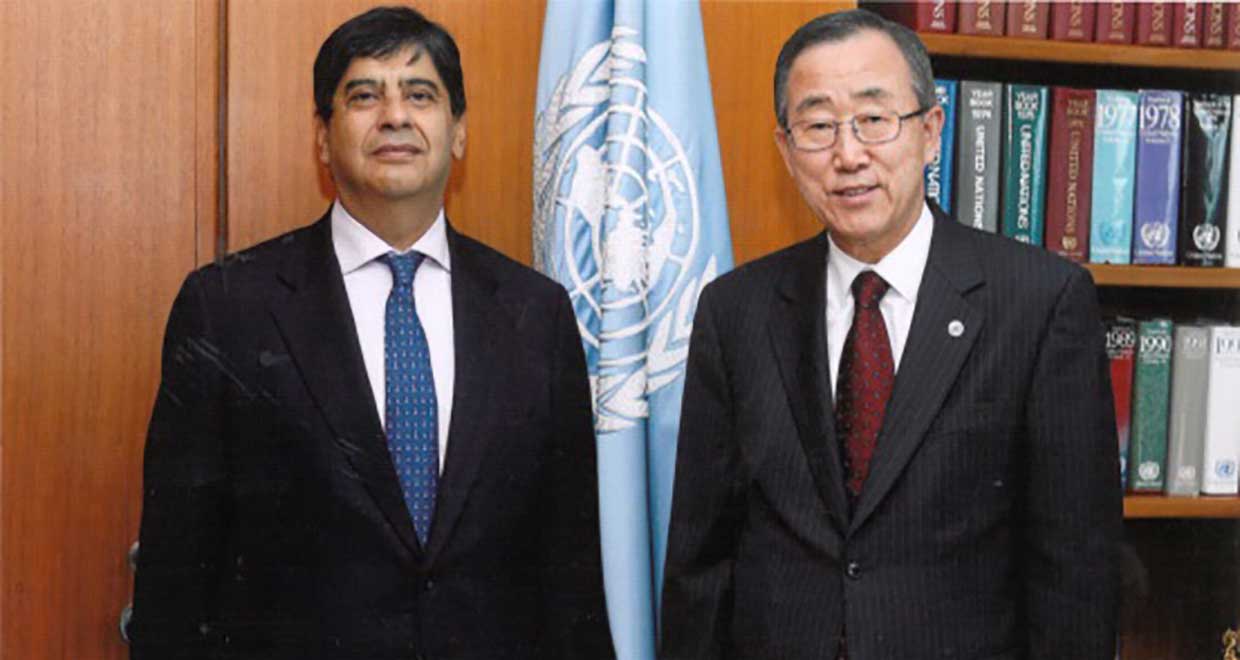
  • Sundra Rajoo, Director, KLRCA, and Managing Director, Sundra Rajoo Arbitration Chambers shares his insight on the arbitration world

    Sundra Rajoo, Director, KLRCA, and Managing Director, Sundra Rajoo Arbitration Chambers shares his insight on the arbitration world

    Datuk Professor Sundra Rajoo graduated in Law from University of London, England in 1994. Currently, he is the Director of the Kuala Lumpur Regional Centre for Arbitration (KLRCA). He has also been the President of the Chartered Institute of Arbitrators (CIArb) Global, which is the world-wide leader in training, accreditation and practice of alternative dispute resolution. Sundra is the Past President of the Asia Pacific Regional Arbitration Grouping (APRAG), a federation of  fourty arbitral institutions in the Asia Pacific region.

    A Chartered Arbitrator and an advocate and solicitor of the High Court of Malaya, Datuk Professor Sundra Rajoo is also a professional architect and registered Town Planner.

    In this interview, he talks to us about:

    • His illustrious practice in Malaysia.
    • How to acquire skills to become a great arbitrator.
    • Are grades really that important?
    • His role in legal academia.


     Tell us a bit about your childhood and pre-college life as well as educational background. Did you have lawyers in your family?

    I grew up in the state of Malacca and later moved up north to Penang. I attended the Francis Light and Penang Free School in Penang during my primary and secondary education. I then obtained my first honours degree in Housing, Building and Planning from University of Science Malaysia, Penang in 1979. Following that, I proceeded to Australia and obtained two professional degrees in Architecture and Town Planning, after which I pursued Law at University of London, England and obtained the Certificate in Legal Practice. I also hold a Master’s degree in Construction Law and Arbitration (With Merit) from Leeds Metropolitan University where I was the winner of the Annual Prize, North-East Branch, the Chartered Institute of Arbitrators, England; and a Master of Philosophy in Law from Manchester University which I completed as a Chevening Award holder.

    I was not surrounded by relatives who were lawyers but shared a close relationship with my father who often told me stories about my great grandfather who was a war hero during the Malayan Revolution period, sparking an interest in history and Law.


    How did you gravitate towards the field of law? Where did you study initially?

    Initially, I pursued my education in the areas of Housing, Building and Planning, and Architecture and Town Planning. I worked for the Central Bank of Malaysia as an Architect and Town Planner in Malaysia and Australia. I gained extensive experience and exposure in construction law. That coupled with my interest in law since I was a child motivated me to pursue my education further in Law.


    Were you a top scorer in your educational journey? How important are grades according to you?

    I fared were very well in the courses that I pursued, however, while grades are important, I do not necessarily believe that it is the most important aspect of education. In my opinion, what is most important is how one equips oneself with the ability to apply the knowledge gained in real-life situations.


    You were a writer, and have been published in various national journals. Do tell us, how you pursued your love for writing.

    Although I was a light-hearted and playful child, I picked up the habit of reading at this stage. Starting with books on war, my interest in reading continued to grow and expand – a habit that has certainly served me well over the years. This motivated me to pick up writing as I developed ideas, thoughts and opinions that I wanted to impart to others. When writing articles, it is important to understand who your readers are to ensure that the message you are trying to send across is conveyed clearly.


     Please give us an insight into your role in academia.

    (He is a visiting Professor at the Faculty of Built Environment, University of Technology Malaysia and Adjunct Professor at the Faculty of Law, University of Malaya.)

    From 2000 to 2003, I continued to lecture at local universities including in the Arbitration Law course offered in the Master of Laws (LL.M.) Programme at the Faculty of Law, University of Malaya. I have been a guest lecturer on arbitration at the Law Faculty, International Islamic University and on the Master’s in Contract Management at University of Technology. I was also an invited contributor to the MSc in Construction Law and Arbitration Programme offered jointly by National University of Singapore and King’s College, University of London in 2004.

    How do you instill creativity and innovation in your employees and in the work environment?

    I instill creativity and innovation in my employees by encouraging brainstorming sessions with them where we make observations and approach things from a new viewpoint, together.


    If I want to be a great arbitrator which university should I go to? Which courses would you recommend?

    Since arbitration is international, you ought to choose an institution that offers programmes of an international nature to ensure that you are remain relevant to as many countries as possible. The most renowned courses to pursue would be, traditionally, those by the Chartered Institute of Arbitrators however in light of changing times and how everybody is looking to the East (think ASEAN Economic Community, Belt Road Initiative, etc.) it would be wise to think Asian institutions such as KLRCA that offers the same.


    How do you keep yourself updated with the latest arbitration issues, news and cases?

    I keep myself abreast of latest developments in arbitration by news related to arbitration from an international front as well as attending conferences and talks on the same.


    Who are the stalwarts in arbitration that you follow?

    That would be the late KC Cheang, a former President of the Malaysian Institute of Architects. KC was well-regarded in the industry. He was skillful and knowledgeable. Everything he did personified professionalism and leadership.


    As the winner of the Cedric Barclay Prize by  the Chartered Institute of Arbitrators, share some tips to our readers.

    A love of reading, perseverance and the drive to succeed are the essentials.


    What qualities do you think have helped you achieve your current position and stature?

    Perseverance is definitely the key to success. Every once in a while, you will fail, and most of the time, the circumstances will be well beyond your control. The key to overcoming this; is this – DO NOT let your failures keep you down. Compose yourself, dust the dirt off, take a deep breath and get back up on life’s saddle and keep going. Failures are part of life. If you don’t fail, you don’t learn. If you don’t learn, you will never change. The world doesn’t care how many times you fall down, as long as it’s one fewer than the number of times you get back.


    What are the skills a law student should try to imbibe to successfully carve out a niche in the arbitration world?

    Analytical reasoning and logical reasoning – law students must learn how to process voluminous information, interpret them analytically, and structure their arguments and reasoning in a logical manner.

    Legal research – it is essential for law students to master the art of legal research especially in terms of legal authorities and citations.

    Technology – With the rise of software and applications used in legal work, it is now a must for students to be familiar with technology.

    Time management – a strong work ethic and the ability to carry out multiple tasks are important and for this, law students are required to manage time well.

    Communication – law students need to equip themselves with both written and oral communication skills in order to convey and gather information clearly.

  • Deepak Narayanan, LL.M. from Queen Mary University, member at Chartered Institute of Arbitrators, UK and on his journey as a legal practitioner

    Deepak Narayanan, LL.M. from Queen Mary University, member at Chartered Institute of Arbitrators, UK and on his journey as a legal practitioner

    Deepak Narayanan graduated in Law from Ambedkar Law College (well known in the past century as Madras Law College) in 2012. Throughout his college life he was an avid participant of extra co-curricular as he firmly believes that it plays a great role in shaping you as a professional. He went to on to pursue his LL.M. in Commercial and Corporate Law from Queen Mary University of London. Deepak regularly appears at the High Court of Madras, District Courts and several Tribunals in Chennai and his practice areas primarily include commercial, corporate, banking/finance and property Law.

    He also specialises in arbitration and represents clients as Counsel before arbitral tribunals and arbitration related court matters and holds the membership to the Chartered Institute of Arbitrators, UK

    In this interview, he talks to us about:

    • The culture at a Law college vs. non-Law college.
    • His experience of interning at various international arbitration centres.
    • The challenges faced by a legal practitioner.
    • How can students overcome the handicap of practical knowledge?


    How would you like to introduce yourself to our readers?

    I am a qualified lawyer from India and have experience in wide range of work with a particular focus on litigation and arbitration. I have a general service independent practice with a few lawyers in my team and I cater many major clients including individuals, firms and companies across India. I graduated from Ambedkar Law College, Chennai and hold an LL.M. from Queen Mary University of London.


    Tell us a bit about your practice areas and the challenges a legal practitioner faces?

    I regularly appear at the High Court of Madras, District Courts and several Tribunals in Chennai and my practice areas primarily include commercial, corporate, banking/finance and property law. I also specialise in arbitration and represent clients as Counsel before arbitral tribunals and arbitration related court matters. I am in the Panel of Advocates for Bank of India and appear for the Bank at Debt Recovery Tribunals on a regular basis.

    My non-contentious work involves drafting and vetting of commercial contracts for individuals and companies, catering builders and promoters in their real estate work, negotiations and providing legal opinions.

    Every legal practitioner faces unique and different challenges. The practice and procedure being widely diverse in different courts and tribunals, the main challenge is to quickly learn the intricacies to provide an effective solution to your client. Also allocating sufficient time in an already busy schedule to constantly update with new laws and judgements is another main challenge that I am sure any law practitioner faces.


    How did your interest gravitate towards Law?

    (Deepak completed his B.A. in Economics from Loyola College, Chennai before pursuing Law and is a State Level Badminton champion.)

    To be honest, I was predisposed to pursue Law since childhood and was inclined to have a go at a few premier National Law Schools in India by taking up the entrance exams. But being a State Level Badminton player, I was offered an admission at Loyola College through sports quota, a premiere institution in both academics and sports. I accordingly decided to finish my undergraduate degree in Economics first.

    I hail from a family of lawyers including my father and a desire to pursue Law never wavered during my three years at Loyola. An aspect of Law that has always been of interest to me is that, Law influences almost every facet of our life, and is constantly evolving to keep up with the dynamic changes to which we constantly try to adapt. In particular, I am always drawn towards Dispute Resolution mainly because it consists of constructive legal argument and an analogy of legal reasoning more often than in many other careers. I strongly believe in following one’s passion and a career in Law has always been my calling.


    What was life at Law college? How different was it from a non-Law college?

    Life at Law school was tangentially different from my under graduation in Economics. While my Bachelors in Economics equipped me with the foundation and basics in Economics (which I think is a great specialisation to have as a commercial lawyer), Law college gave me a real insight into the Law profession. It is extremely crucial to keep yourself academically inclined and garner as many experiences as possible out of your institution, which I was able to achieve through participating in moot courts coupled with the immense support of my faculty members.


    Did you partake in any extracurricular activities and how important were they in shaping you as a student?

    I was an avid moot court participant and was fortunate to have an excellent team, which I think is fundamental to perform in moots. In my second year, I won the Amity National Law School Moot Court Competition in Delhi on Public International Law. I received a special accolade from the former Hon’ble Chief Justice of Madras High Court, as it was a win for my college after many years. I also captained the badminton team and victorious at sports fests held at NLSIU, Bangalore and NLIU Bhopal.

    I am a strong believer that co-curricular are fundamental in shaping any student. While actual litigation is quite different from moot courts, the experiences I gained from moots have greatly benefited me in my practice.


    How was your experience participating in the Willem C. Vis International Commercial Arbitration Moot Court Competition in Vienna?

    (Deepak represented his college twice in the Vis Moot Court Competition.)

    Vis Moot ran through almost my entire academic year and it made me feel like it was part of my academic curriculum. Long work hours and sleepless nights are part of your routine preparation schedule. With arduous oral rounds on the one hand and networking with international students on the other, the entire week at Vienna was enriching and irreplaceable.

    I am also thankful to the Tamil Nadu government to have funded all our expenses on both the occasions that I participated at Vis Moot.


    What made you go for higher studies and what procedure did you follow for selecting your college?

    (Deepak completed his masters in Commercial and Corporate Law from Queen Mary, University of London.)

    I pursued my higher studies mainly to specialise in some of the finer areas of Law in which I had more of an inclination than the others. Since, I was greatly interested in arbitration; I applied to universities in the UK after thoroughly researching the facilities and opportunities that the universities provided. I was accepted by these universities and was even offered scholarship at the Southampton University, UK which is famous for Maritime Arbitration Law. In the end, I chose Queen Mary as it had the world renowned School of International Arbitration and luminaries in the field as professors such as Professor Loukas Mistelis and Professor Julian Lew.

    The year at Queen Mary was not ‘rigid in the Indian sense. While there were fewer modules when compared to an LL.M. in India and the classes were spaced out, and the amount of self-learning that had to be done on a day to day basis made the course intense and interesting.


    How was the exposure of interning at a lot of international arbitration centres?

    Internship experiences that readily come to my mind are Clyde & Co LLP (London) and at Singapore International Arbitration Centre (Singapore).

    After several rounds of rigorous interviews, I got selected to work in the international arbitration team of Clyde & Co, London office. Being one of the leading global law firms, I had a chance to work in some of their high stake matters including a dispute raised by Microsoft regarding breach of exclusivity clause and also a Middle East investment arbitration dispute. I got a practical insight into live the life of a solicitor at the firm and it was a treasurable experience.

    SIAC on the other hand was a completely different experience. I had an opportunity to witness what happens in an institutional arbitration from other side of the table, i.e., an institution. My work mainly resembled that of a Case Counsel of the Centre and I involved extensive research on international arbitration. I was also briefly involved in making recommendations to the SIAC Rules which were being amended at that point of time


    You are a member of the Chartered Institute of Arbitrators, UK. Please give us an insight into this.

    Chartered Institute of Arbitrators is a world renowned organisation which recognises expertise in ADR. Having specialised in commercial arbitration at Queen Mary and through the practical experience that I already possess in the field of arbitration, I was directly inducted at the Member grade (MCIArb) instead of the usual route of passing the necessary modules. As a practitioner, the qualification immensely helps me to showcase my expertise to my clients.


    Are you finding a change in your balance between work and life after starting practice at Madras High Court?

    Life as a practitioner always implies more of work and less of personal life and I diligently followed this tradition during my early years of practice. But after commencing my own practice, I have managed to cope up with the work load albeit the work pressure. I still put in long hours but producing immaculate work has become the key rather than putting mundane face time at office for hours together without getting much work done. This enables me to squeeze in a few games of badminton, marathons and triathlons, which help me maintain a balance.


    A lot of practice deals with procedural aspects of Law – something that is not emphasized on in Law schools. How can a student overcome this handicap?

    Yes this is completely true and moreover procedural aspects of Law does not just mean learning CPC and CrPC but also having an astute knowledge of working your way through ever so complicated registry and sections of Courts and Tribunals.

    Students can definitely overcome the difficulty by going an extra mile in their internships to learn the various procedural aspects. Instead of just doing research and taking down dictations, students can play more of an active role by shadowing office clerk in section and registry.


     As a concluding message, what would be your word of advice to our readers?

    It is essential to pursue a career/field that you like. Whatever is your chosen line, be it litigation or non-contentious work, do you see yourself doing your job day in and day out? If yes, you are in the right field and if no, you need to explore more interesting things.

    Also working extraordinary long hours is the new fashion in almost any career in Law. So make sure you do not burn out and try to have a healthy work-life balance

  • Sarosh Zaiwalla, Senior Partner, Zaiwalla & Co. Solicitors, on International Arbitration, working with His Holiness the Dalai Lama, and his diverse experience

    Sarosh Zaiwalla, Senior Partner, Zaiwalla & Co. Solicitors, on International Arbitration, working with His Holiness the Dalai Lama, and his diverse experience

    Sarosh Zaiwalla graduated from Government Law College in 1972. He founded Zaiwalla & Co. Solicitors in April 1982. He oversees all the activities relating to the firm, and also sits as an International Arbitrator. He is the Senior Partner of Zaiwalla & Co Solicitors which has been in the City of London for the past 35 years. His firm successfully acted for the Iranian private bank, Bank Mellat, both before the Supreme Court and the EU Court challenging the listing of bank under Iran Nuclear Sanctions. As a consequence of his firm’s success, Bank Mellat today have a claim of USD 4 billion before the English Court in respect of damages for losses caused because of unlawful listing. His firm were also the first firm which successfully challenged in the EU Court the listing of Iranian companies by EU Council. Zaiwalla & Co have acted for several Iranian companies including Bank Tejarat and Petropars.

    In this interview we speak to him about:

    • His illustrious career
    • Setting up practice in the UK
    • His experience with high profile cases

    Given that most of our readers are law students, how would you introduce yourself to them?

    I founded Zaiwalla & Co. Solicitors in London which is the first English Solicitors firm in the one square mile commercial and financial district in the city of London started by a solicitor born outside Europe. We have been in existence for 36 years and at our 30th anniversary reception in November 2012, the Chief Guest, Rt. Hon. Sir Dominic Grieves MP in his speech said that what my firm had achieved in the development of English law will be remembered even after 100 years. There are today 104 reported judgments in the English law reports where my firm had acted for one of the parties. A judgment is only reported in the law reports if it affects the development of law. We are today one of the leading firms in the field of International Arbitration.


    What motivated you to pursue a career in the legal field?

    As a young student in St. Xavier’s High School, Bombay, my career ambition was to join politics and become the Prime Minister of India so that I could change India and make it great again. My father was a solicitor who had qualified in London in 1925. He was the youngest member of his family and as the youngest member of my family, I was encouraged to qualify as a solicitor in London.


    What got you interested in the field of International Arbitration? 

    I did my Solicitors training in an English Solicitors firm called Stocken & Co. who were maritime lawyers and specialised in maritime arbitrations. This gave me the first exposure to international maritime Arbitrations. In those years a Solicitors training was not on a structured basis like it is now and one would start as an assistant to a Senior Solicitor, at first carrying his bags and making cups of tea for him and then later being trained on the job.


    Can you briefly describe your current role as an Arbitrator and an Advisor to clients involved in international arbitrations?

    As the world got smaller, international trade between businessmen from various countries grew. International businessmen want a neutral country to settle their disputes and would therefore opt for Arbitration in a neutral venue with a respectable legal infrastructure. This would normally be London where Arbitration in its modern form, was given birth to, over 300 years ago. In the City of London all the fixtures for ocean going vessels to carry cargo were agreed at the Baltic Exchange. The Baltic Exchange used to be the centre of all shipping chartering contracts all over the world. Whenever a dispute arose as to what was agreed between the brokers, the owners and the charterers, they would at the end of the day ask a senior respectable broker to determine the dispute over a cup of tea.

    This was the beginning of international Arbitration in London. International Arbitration has now grown in a sophisticated fashion and it is also a serious foreign exchange earner for the country where the seat of the Arbitration is located. This is because the seat has no other connection to the parties in the Arbitration who have chosen the seat of the Arbitration but the parties have to instruct for example, English Solicitors for London Arbitrations and also spend on experts, Barristers, hotels and other expenses. As a firm of Solicitors we have recently been consulted by the Russian Government in respect of a potential challenge to USD 50 billion Arbitration award against Russia by the International Arbitration Court in The Hague.

    As an Arbitrator, I recently sat for two weeks in Tel Aviv, Israel, as a Sole Arbitrator to decide a multi-million dollar dispute. I have also sat as an Arbitrator in Bombay with Sir Anthony Evans and Harish Salve to decide an international Arbitration dispute concerning a power plant in South India.


    International Arbitration often involves a complex interplay of public and private international law. Can you elaborate on this aspect for our readers?

    This is correct because in international Arbitrations there can be three countries which can play a part. For example, in a contract between say an Indian party and a United States party where the contract provides for disputes to be settled in London, Indian law, US law and English law could all have a part to play. Usually, if the contract provides for Arbitration in a neutral venue as the seat of the Arbitration, say London, then there is a presumption that the parties intend English law to apply to the contract. There was a case which I handled earlier for ISRO of India in respect of an Arbitration claim brought by McDonnell Douglas concerning Satellite inset 1B. The Arbitration provided for London as a seat of Arbitration but with the Indian Arbitration Act to apply. The English Court held that by this term, only the procedural aspect would apply to the Arbitration but on the main issues English law would apply. See Union of India v. McDonnell Douglas Corporation [1993] 2 Lloyd’s Rep. 48 In another shipping case, the contract was governed by English law with the seat of Arbitration being London, but the English High Court held that in construing its term in the contract, as the performance of the term was to be India, Indian law would apply. This was the case of a vessel called “Nestor” which is reported at [1987] 2 Lloyds Rep. 649. In both of these cases my firm had acted for the Indian parties.


    What are your views on the necessity of higher education? 

    Education, including higher education, instructs a student but life experiences educate a student. Higher education is of course of utmost importance because it readily opens doors for good employment or starting ones practice. Higher education is a certificate of competence and knowledge. I have however found that many Oxford and Cambridge educated lawyers were no match for a lawyer with good instincts and wisdom. My advice to your readers would be to go for opportunities available to pursue higher education, it can only do good.


    What was your first job out of law school?

    My first job out of law school was an evening job with the Hinduja brothers at their company Sangam Ltd. I had met GP and SP Hinduja when I was still training at Stocken & Co. and they asked me to join their employment. They had just moved from Tehran to London. I said I did not want to take a job and I wanted to have my own practice after I was enrolled as a Solicitor. So the Hinduja brothers offered me an evening job from 6:30pm – 9:30pm. I had an arrangement with Stocken & Co that if I travel for them overseas, Stocken & Co would bill the Hinduja brothers. This was a great opportunity for me because in one year I travelled 42 times to Geneva with the Hinduja brothers and their right hand Mr. Golikeri. I was part of the team which negotiated contract with top lawyers on the other side and although I was not qualified I acted as Hinduja brothers’ unqualified legal adviser, interpreter and negotiator.

    When I started on my own I was fortunate to be appointed as the Indian High Commission in London’s Solicitor. At that time the High Commissioner was Dr. Syed Mohammed who was himself an ex-English Barrister and he had been the Advocate General of Kerala and Minister of State for Law and Justice in Indira Gandhi’s Government. He was thrilled to see a young Parsee Indian starting a law firm in the City of London keeping his Indian surname.


    What motivated you to start Zaiwalla and Co. Solicitors?

    When I was working at Stockens I became friendly with Cedric Barclay who was an eminent and popular maritime Arbitrator. I got to know him and a few months before I was enrolled as a Solicitor, he invited me for a cup of tea at his office. In the course of our conversation over tea, he strongly advised me not to join the big English Solicitors firms. He said, “You are good and well liked, but if you join a large English maritime firm, the Senior Partner will take you for lunch once a year and say, “Good job, old boy”, but you will go no higher.” So he advised me strongly to start on my own. True to his word, when I started Zaiwalla & Co., he personally took me to the offices of big ship owners to introduce me and recommend me to them. Very soon I had a reasonably large Greek ship owning clientele.

    Surprisingly, when I started I did not face any major hurdles with the white professional population. They were somewhat surprised to see a brown face but they were more than encouraging. Appearing before the English Commercial Court Judges was a very favourable experience. The Judges would make sure that I was comfortable and go out of their way to ensure that they had fully understood my client’s case. In a way, I found myself sometimes in a more advantageous situation then the white contemporaries in Court. In due course the word went around and the client base started to build and within five or six years I had 23 lawyers working in my firm and at that stage Zaiwalla & Co. was mainly an international Arbitration firm doing maritime Arbitrations and litigation which was mainly for Indian Government cases in the English Court.


    You have represented major clients including governments. How have you developed and maintained a client base?

    It is hard work to maintain a client base. An essential ingredient for this purpose is to keep in constant contact with the client. What a client expects from a lawyer is integrity, competence and speed. I made sure that I provided all three of these to our clients.


    What are the qualities one needs to develop to become a successful arbitrator? 

    (Sarosh has been appointed as an Arbitrator in a number of multi- million dollar disputes.)

    An Arbitrators task is very different from the task of a lawyer. I have always been a creative lawyer and I believe in the principle that “law is for justice and not justice for law”. My firm and I have built up a reputation of being creative on issues of law. As a lawyer I can put forward a creative proposition of law to fit the facts and it would be for the Judge or the Arbitrator to decide whether there was any value in such a proposition. However, as an Arbitrator it is for me to make sure that I get it right and live up to the trust which the parties had placed in me to give a correct decision. There are times when I am one of the three members of the Arbitration Tribunal. In that case usually the Chairman who is the third Arbitrator prepares the first draft of the Tribunals award. Many times I have sat as a Sole Arbitrator for multi-million dollar disputes and such cases require a lot of thinking in arriving at my decision which is not very easy. The most important quality to be an Arbitrator is integrity and commercial common sense. An Arbitrator is a Judge who is appointed by the private party whereas a Judge is appointed by the state. Recently, there was a case in the UK Supreme Court (Hashwani v Jivraj) which my firm had handled where the issue was whether an Arbitrator is an employee of the parties. The English Court of Appeal said yes an Arbitrator is an employee of the parties but the UK Supreme Court reversed their decision and held that an Arbitrator is not an employee and he perform the same function as a Judge.


    Can you tell our readers about the nature of maritime disputes and how they are unique?

    A substantial part of the international trade of goods and commodities takes place by transporting of those goods by ocean going vessels. In the course of the voyage, often goods get damaged because of dampness in the vessels hold or seepage of sea water in the hold. The other types of dispute which generally arises relates to charter party disputes which includes demurrage disputes, bill of lading disputes, General Average and collision at sea disputes. I have had the privilege of handling all of these types of disputes. India’s first success in the House of Lords in a commercial case concerned the vessel called La Pintada. In this case the charterer was the President of India and he paid demurrage some two years late. The owners of the vessel commenced Arbitration claiming interest on a three month compounded rate basis arguing that they had lost the use of money by the delayed payment. The Arbitrator made an award of compound interest in onus favour. The High Court sent the award back to the Arbitrator for reconsideration on the basis that the award sought to make charterer an involuntary banker. The Arbitrator once again confirmed the award which he had previously made. When Indian Government challenged the award once again in the Commercial Court, the Court referred it straight to the Supreme Court for decision. The House of Lords unanimously decided in Indian Government’s favour. This was a test case because in those years of foreign exchange crisis, Indian Government always paid freight and demurrage late and if India had lost in the House of Lords, they would have had to have paid over £5 million in compound interest because other ship owners would then be claiming compound interest for late payment. Incidentally in this case, the Barrister my firm had instructed was Tony Blair who later on went on to become the Prime Minister of the UK. Please see 1983 1 Lloyds page 39.


    Can you give our readers some insight into the Tibet dispute as well as the efforts being undertaken to resolve it? 

    (Sarosh was appointed by His Holiness the Dalai Lama to mediate with the Chinese government in order to resolve the Tibet dispute.)

    I am a qualified CEDR (Centre for International Dispute Resolution) Mediator. For many years my firm acted for PRC Government in their international Arbitration cases. My firm had an office in Beijing for twelve years. We represented CNPC, CPECC, CPTDC and Min Metals in five major international Arbitrations. Chinese Embassy had heard about my firms successes for Indian Government and the then Chinese Ambassador in 1991 had a meeting with me and asked me to assist China to set up in China a legal system which could work internationally. The Embassy sponsored a trip for me to visit Beijing in December 1991. In 1994, I facilitated a second channel dialogue between 10 Downing Street and the central committee of Chinese communist party on misunderstanding which had arisen concerning the agreement to hand over Hong Kong to China. This was a successful dialogue. Thereafter, my relations with Chinese Government became very friendly and my firm got a lot of legal work from Chinese state corporations.

    A few years later, Mrs. Takla, the representative of Dalai Lama contacted me.  She told me that Dalai Lama was going to visit Glasgow very soon and he would like to meet me. Accordingly, a private meeting was arranged for me in Glasgow with Dalai Lama. I was told by Mrs Takla that Dalai Lama would like me to facilitate a second channel dialogue with China to resolve the dispute between him and China relating to Tibet as he would like to go back to his home, Tibet.

    I informed the Chinese Ambassador about the Dalai Lama’s request for a meeting and before meeting Dalai Lama I had a meeting with the Chinese Ambassador in London. The Ambassador put forward China’s position and told me that one of the things which concerned China was that Dalai Lama was writing forwards to books written where the author claimed that half of China was Tibet. It was a great pleasure and honour to meet Dalai Lama on a one to one basis. I found him to be very frank and honest. He told me that his intelligence had told him that I was one non-Chinese person in the West whom the PRC Government had complete trust and confidence. He sought my help for a second channel dialogue to resolve the Tibet issue.  I told him that China was concerned about his writing forwards to books which claimed half of China was Tibet. Dalai Lama’s response was that he had no option but to do this because his Tibetan people had lived in those parts of China for centuries and it was historically part of Tibet. In a moving gesture, Dalai Lama took my hand and put it on his heart and said, “I trust you”.

    After my meeting with Dalai Lama I had a meeting with the Chinese Ambassador and told him that it would be in China’s interest to resolve the issue with Dalai Lama as he was no longer claiming independence for Tibet. Furthermore , I was aware of the communist Chinas policy towards religion which was that religion was now being permitted provided it was not controlled from outside China. In Dalai Lama’s case, he would be involved in religion from Lahasa, the capital of Tibet which was now part of China. The Ambassador told me that he would communicate his discussion with me to China. A further meeting was arranged between me and the Chinese representative and I was told that the Dalai Lama’s brother had been invited to China for discussion and there was no need for a second channel to take place through me.


    Can you tell our readers about the process of framing arguments and the experience of arguing before the EU court?

    (Sarosh’s was the first firm to successfully challenge the listing of Iranian companies under Iranian Nuclear Sanctions before the EU court.)

    This is correct. Bank Mellat which was Iran’s largest private bank, had challenged the sanctions in the High Court and had lost. Thereafter, Bank Mellat appealed and the Court dismissed the appeal. Bank Mellat’s former Solicitors, Stephenson Harwood, had told Bank Mellat that there was little prospect of Bank Mellat getting leave to appeal from the Supreme Court. I was one of the Solicitors Bank Mellat met with a view to deciding who to instruct for their attempt to appeal to the Supreme Court. I had earlier acted in a major Arbitration for National Iranian Oil Company (NIOC) and had turned around what they had been advised was a hopeless defence in an Arbitration case and was successful for NIOC. So the legal director of NIOC had mentioned my name to Bank Mellat and recommended my firm. The rest is history, we were successful before nine out of the total twelve Judges of the UK Supreme Court. The Supreme Court held that the UK Government had acted unlawfully and irrationally to list Bank Mellat in the list of companies supporting Iran’s nuclear proliferation and to whom the sanctions would apply.

    The Supreme Court referred the matter to the High Court to calculate damages and Bank Mellat is currently pursuing a claim of USD 4 billion for damages in the UK Court for wrongful listing of Bank Mellat on the nuclear sanctions list. It was also the first time that the UK Supreme Court went into a closed, secret hearing on grounds of national security. The trial of this claim is fixed by the English Court for October 2018.


    You are a member of all major arbitration institutions. What is your preferred forum? 

    My preferred forum for international Arbitration is either London Court for International Arbitration (LCIA) or International Court of Arbitration of the International Chamber of Commerce, Paris (ICC). I was a member of the International Court of Arbitration for twelve years representing India. An equally efficient forum and possibly less expensive would be for parties to simply agree London as a seat of Arbitration as this would save the administrative costs of the institutions and the Arbitration would be under direct supervision of the English Court in case something goes wrong in the Arbitration.


    Do you think India has the potential to become a major arbitration hub? 

    Yes, India has great potential to become a major international Arbitration hub but India has a long way to go to achieve this goal. A small country like Singapore has within a few years built up a popular international Arbitration centre and there is no reason why India cannot do so. The international centres of Arbitrations are made by good reputation and law. Reputation is a question of perception. Arbitration in India today does not enjoy a good international reputation. There are rumours of corruption amongst the Arbitrators. I am sure this rumour is unlikely to be true but one must recognise that even one case of corruption poisons the reputation of the whole Arbitration culture in India. I have had many meetings with those who manage international Arbitration in India, including with Mr Arun Jaitley and at each of these meetings I have said that the risk of corruption in the international Arbitration in India cannot be eradicated by passing of law eradicated by self-regulation in the Arbitrators community and the legal profession. Another minus point for international Arbitration in India is the perceived monopoly appointment of retired Judges who then conduct the Arbitration as if it was Court proceedings with adjournments being granted for asking. The new Indian Arbitration Act has restricted Court intervention in the Arbitration process which is a good step forward for India.


    International Arbitration is considered a difficult field to break into. Can you describe your journey in becoming such an authority in this field? 

    This is correct. So far, the international Arbitrators community has been an elite circle where one supports the other with the consequence that a newcomer is not easily accepted unless he blends in by accepting to begin with a second class status. The selection of Arbitrator is an important task. He should be a person with good legal and commercial law experience. The task of a party appointed Arbitrator is not to favour his appointer but he has a duty to ensure that his appointer’s points are considered by the whole Tribunal at the time of making the decision. I have found that many times, Indian parties appoint retired Judges in the international Arbitration and they are indeed very clever but they are not able to communicate with the co-Arbitrators properly, who are normally from developed countries. Often, retired Indian Judges who are product of the British imperialist culture, have enormous egos about their status. Let me give one example.

    I was appointed by the Danish company Volund to be their nominated Arbitrator in the early 90’s. The Arbitration concerned construction of a power plant in Timarpur near Delhi whose fuel would be New Delhi waste. In other words, the power plant would be converting New Delhi waste into energy. The project was supported by Danish aid agency (DANIDA). After the power plant was constructed, it was found that New Delhi waste did not have sufficient calorific heat to be used as fuel for the power plant. India appointed Mr Pathak as their Arbitrator. He was a former Chief Justice of India and retired Judge of the international Court of Justice in The Hague. The third Arbitrator and the Chairman of the Tribunal was Lord McKenzie Stuart, a former Chief Justice of the European Court. He was appointed by the International Court of Arbitration.

    On the first day of the hearing I got a note passed to me by Chief Justice Pathak which said, “You have insulted me by sitting on the right of the Chairman, I am senior to you so I should be sitting on the right of the Chairman and you should be sitting on the left”. I immediately passed the note to the Chairman with a suggestion that he adjourns the hearing for five minutes so that I can change over. He sent the note back to me saying “stay where you are”. In England or in Europe in international Arbitrations it does not matter which side the Arbitrator sits. During the coffee break, Lord McKenzie Stuart told Chief Justice Pathak that it does not matter where the Arbitrator sits and he jokingly told Chief Justice Pathak, “Don’t be a fool”. The Chief Justice took offence to this and throughout the two weeks hearing he did not utter a word and did not speak with Lord McKenzie Stuart throughout the Arbitration reference thereafter.

    The way to break into the field of international Arbitration is to first attach with a law firm or an advocate who is already handling international Arbitrations and then attend international Arbitration conferences.


    Can you describe your work as a solicitor in England?

    A Solicitor in London prepares the case and instructs the Counsel to argue it before the Court. It is now also possible in commercial cases for Solicitors to appear in Court as Advocates, I have done so on many occasions. My firm and I are known for difficult cases where client comes to us after they have been told by the Magic Circle firms that their claim or case is very bad.

    Two examples of this are the international Arbitration award by International Arbitration Court in The Hague which made an award of USD 50 million against the Russian Federation in the Yukos shareholders claim. Russia came to me for an out of box approach for Russia challenging the award in the Dutch Court. Sometime before this, an Indian Government company PEC Limited had come to me and they had an award of USD 8 million against them. On the face of it they had no defence because they had participated in the Arbitration and also the appeal process of GAFTA Arbitration and had lost. I took the point that although English law applied in the contract, the contract was signed by the Director of PEC on behalf of PEC and whether he had authority to do so would be governed by Indian law. Under Indian law, for a Government contract there are rules and for a USD 25 million contract you require two Director’s signatures.

    PEC therefore through my firm argued that the Arbitration agreement was void because the contract was void. In the English Court on the question of Indian law we led the evidence of Mr. Soli Sorabjee, former Attorney General of India and the other side which was a Thailand company, Asia Golden Rise, led the evidence of Mr. Harish Salve. Both of these eminent jurists were cross examined in open Court and the Court preferred the evidence of Mr Sorabjee. This changed the prevalent law.

    The second example was the case of Indian Oil Corporation (IOC) v Coastal Bermuda where IOC had participated in the London Arbitration defending a huge claim of some USD 18 million. The Arbitrators decided against Indian Oil Corporation but one of the Arbitrators, Mr. Gordon Pollock QC, added a post-script to this decision suggesting that Indian Oil’s legal team was not competent and if the team had been competent, the result may well have been different. My firm did not act for IOC in the Arbitration but they came to me after all the big law firms and Queen’s Counsel had told IOC that they had no chance of challenging the award. My firm challenged the award on an innovative ground that the award could be enforced as a judgment of the English Court and for the English Court to enforce a judgment which was not based on the two legal analysis of the evidence would be against English public policy. The English Court accepted this and remitted the award back to the Arbitrators and in its judgment said, “Finality is good but justice is better”. Indian Oil Corporation v Coastal Bermuda [1990] 2 Lloyd’s Rep. 407.


    Where do you stand on the “two hat” debate over whether arbitrators should also act as counsel? 

    There is really no problem. When I am appointed as an Arbitrator, if there is a conflict I will not accept appointment. International Arbitration is a field with many important debates currently going on, with many suggesting reforms such as Bilateral Arbitration Treaty (Gary Born), regulating the ethical conduct of counsels (Swiss Arbitration Association, London Court of International Arbitration).


    Could you discuss the aforementioned suggestions and your take on them or any such significant debates?

    The most important reform which is required is the need of diversity in the clique of international Arbitrators. The current international Arbitrators must be prepared to accept competent Arbitrators in the circle of international Arbitrations. Statistics show that the present international institutions generally favour appointing white Arbitrators from developed countries. This needs to change.


    How do you remain updated with all the new developments in the field of international arbitration and mediation?

    There are at present many press and internet mediums which keeps me informed on all the new developments in the field of international Arbitration and Mediation.


    What advice do you have for our readers who are primarily college students?

    Always act with integrity and remember the legal profession is an honourable profession and honesty and fairness is the most important duty of a lawyer. The policy which I follow is that I can play with the law because the Judge is there to reject or accept my submissions on law but not under any circumstances play with the facts. If I find that the client has told me a lie in his instructions I would refuse to act for that client. I would not make up stories or allegations on behalf of a client simply to support the client’s case. This approach breads both character and increases credibility before Judges. The five mantras for law students, I would suggest, are:

    • Have a vision on where you want the business to go.
    • Have integrity and honest approach in the work you do.
    • Have courage to have an open mind and an out-of-box approach to progress the business.
    • Make the most of all that comes and the least of all that goes.
    • Forgive people for any wrongdoings against you, and leave it to the universe to deal with them.
  • Debesh Panda, Advocate-on-Record, Supreme Court of India, on mooting, internships, and arbitration

    Debesh Panda, Advocate-on-Record, Supreme Court of India, on mooting, internships, and arbitration

    Debesh graduated in law from NLSIU, in 2008. He is an Advocate on Record before the Supreme Court of India. He is also regularly engaged to appear before various High Courts and Tribunals. He specialises in Arbitration and his thesis at the Geneva Masters in International Dispute Settlement, focused on the intersection of the Arbitration regime in India with the standards prescribed under the New York Convention.

    In this interview we speak to him about:

    • His time at NLSIU
    • His passion for mooting
    • Studying in Geneva

    How would you like to introduce yourself to our readers?

    I’m a first generation lawyer, practising in New Delhi, after graduating in 2008. I’m originally from Bhubaneswar, Orissa. Although I primarily practise as an Advocate on Record before the Supreme Court of India, a significant part of my practice involves matters before various High Courts and Tribunals, both in Delhi and outside Delhi.


    Why did you choose to pursue a degree in law?

    I got done with school after 10th grade (we can opt to join Junior College in 11th grade in Orissa). I took up science and started preparing for IIT, since that is pretty much what everyone was doing and my family also wanted me to consider a career in science and engineering. A year later, I realised it was a mistake. I also did not want to take up my father’s profession (Chartered Accountancy) since I had seen it from my childhood and realised that I did not have the aptitude for it. That’s when I started looking around for options. One of my father’s dear friends, who is a leading practitioner of International Arbitration, was kind enough to spare time over his summer vacations and gave me a bird’s eye view of what he does as a profession. Deviling with him over basic concepts that vacation at Delhi piqued my interest in law, and that’s how I ended up applying to NLSIU.


    Give us a brief overview of your life at NLSIU. 

    Law school was truly a life changing experience. Credit must go to the ethos and the culture of education, which is largely peer based. NLS made me think, but within the microcosm of some extraordinary individuals who were always happy to give direction to such thinking. Like every academic campus, there was politics, but it was self-contained and self-tempered and not like what you see in many academic campuses these days. One reason for that could be that the community understands what it has taken to earn the tag and in order to retain that tag, one must keep achieving academically without letting political considerations predominate. The entire culture of NLS is built around the student community. Even the alumni are extremely well connected with each other. It has been my experience, for instance, when I was mooting on an unfamiliar area of law, that I could virtually close my eyes and approach any senior or alumni who had exposure to that area. It was amazing to see the kind of effort they put in to help me out. I don’t know how it works in other universities but I am happy to acknowledge that I owe a lot to NLSIU. Even now, I try and do whatever best I can, whenever someone from law school writes to me or calls me up for any help with mooting or any other activity. I am also in touch with some of the faculty, like Dr. Sairam Bhat. I try to contribute in whatever way possible towards the institution.

    What are the subjects that you took particular interest in, during your law school days? 

    I was not the most academically inclined when I was at law school. When I graduated, I did not even have a five point CGPA. The only lectures I thoroughly enjoyed were that of Professor U.R. Rai (Constitutional law) and Mrinal Satish (Criminal law), but that was more because of their perspectives rather than the subject itself. I actually loved mooting/advocacy, which is what drew me towards law in the first place. During the course of moot courts at law school, particularly the Vis East moot which I participated in during my fourth year, I developed an affinity towards Commercial law and International Arbitration. Although we crashed out in the Semi Finals on a razor thin margin, my partner Amarta Roy and I both received Honourable Mentions. Some of the arbitrators who heard us during the arguments fondly remembered us, as I discovered, when I went back a few years later as an Arbitrator. Two of them have remained in touch although it has been nearly ten years since we first met, and have also helped me throughout my professional career. So, compared to the subjects taught at law school, I would say mooting played a greater role in my career and the choices I made. 

    What activities, both academic and non-academic that you engaged in as a law student? 

    Anyone who knew me in law school would vouch for the fact that the only non-academic activity I engaged in was eating out! I would sincerely recommend it as a “necessary experience” if you are in Bangalore. It is an activity that drives me even today, although most joints at Delhi do not hold a candle to some of those old favourites at Bangalore! The only other memorable activity I remember was being a part of the Moot Court Society (with an amazing bunch of people like Mihir Naniwadekar, Preet Inder Singh and Shantanu Naravane) and co-founding the NLS International Arbitration Moot in 2008.


    What drew you towards arbitration, and dispute resolution in general?

    In my practice so far, I have not yet come across any two matters, which are exactly alike. That is what I enjoy about dispute resolution, there is always something new to work on everyday! I do not see myself becoming a practitioner who specialises in only one area of law because variety is the essence of my profession as a litigating lawyer. Sometimes, I think of cases as a jigsaw puzzle where all the pieces are missing and both sides invite the judges to paint the missing pieces and put the picture together from their points of view. That’s when you start realising that what the most successful practitioners of this art do – they have perfected the art of balancing out when being strategically technical with the law gets results, and when you must discard technicality and dive headlong into the matter to present a perspective that would meet the sense of justice of the Court. The law just ends up filling up the vacant slots in the process. As far as your question on arbitration goes, I guess it stems from a love for civil trial. A good trial is more a battle of the wits of the lawyers rather than their respective clients and is often, a pleasure to conduct. Unfortunately, given how overworked our trial courts are, it sometimes ends up not being very professionally satisfying. Arbitration lets you have your cake professionally as a trial lawyer and eat it too!

    What kind of internships did you engage in during your student years which you feel were invaluable to you in reaching your current position?

    I used internships at law school to get a sense what I did not want to do, rather than what I wanted to do. I started in Orissa High Court in my first year, where I felt pretty lost and did not get any clue of what was happening. The second year I worked at a firm in Delhi that specialised in Dispute Resolution and realised that I was not cut out to work in a firm. The third year I focused on criminal trial and decided that criminal defence in trial courts was sometimes too hardcore to be my cup of tea. There was also a time in between when I got tired of the law and on a whim, dabbled in investment banking. So I ended up doing a stint at Goldman Sachs, only to realise that I loved the law a lot more than investment banking! Fourth and fifth years, I interned at the Supreme Court and also with an excellent civil trial lawyer in the High Court (who is now a judge in the Delhi High Court). That’s when I realised I was right at home, and came back to Delhi after graduating.

    However, the most important stint before I started practicing independently would be the one at Senior Advocate Mr. A.K. Ganguli’s chamber, which was for nearly a year and a half. He truly made me slog it out and it was a steep learning curve during those eighteen odd months. An old school practitioner who doesn’t use computers much, he simply remembers everything off the top of his head! Citations, statutory provisions, a petition he drafted ten years back…it is amazing how everything is right on his fingertips, always. An incredibly hard taskmaster, he would leave no opportunity unturned to fine tune any petition or written submission, before presenting it in Court, even if it meant I had to figure out how to do the last minute research and keep everything ready for the hearing in Court at the eleventh hour. I will never forget the time he made me draft 41 versions of a review petition to be filed before the High Court at Chandigarh, till it came down to six pages from the original 22 page draft I had prepared. The High Court declined to review the judgement, but the reaction of the judges in the Supreme Court when the SLP came up for hearing was nothing short of memorable. I still remember the look on the faces of the judges when the matter was called for hearing. They just smiled in unison and said “NOTICE” and “STAY” before anyone uttered a word! Working with him taught me the importance of being fair to a Court, rather than being hard-nosed on facts and law and how that, by itself sometimes gives you greater leverage than all your preparation and research. During that time, many of the Advocates and law firms which used to engage him also started giving me drafting work as well as briefs as junior counsel. I also got a few opportunities to brief several leading senior counsels. That stint in his chamber is when I truly started learning the law and realised that Courts always know the judgements we research on and cite. The difference lies in the perspective with which these leading practitioners present that point, which is what makes all the difference when the judges have to form an opinion as to which way to lean.


    Tell us about your Geneva Masters experience and briefly describe your thesis.

    Frankly I would not have been able to do the Masters if it wasn’t for Amrita (my wife). After we got married, this is the very first thing she made me agree to, spoke to my professors at law school, got the letters of recommendations organised, and also persuaded Mr. Ganguli to recommend me. Having practiced for five years, I was pretty unsure whether to leave it all and head out for a year. Ultimately, Amrita and I both agreed that instead of an “academic” masters like Oxford or Cambridge, a masters like MIDS or Queen Mary was better suited for a practitioner like me who loved Arbitration. Many of my colleagues from the Vis East whom I asked for advice also concurred. Ultimately I ended up choosing MIDS because Professor Zachary Douglas, who is one of the leading practitioners and academics in the field of Investment treaty arbitration, had recently shifted there from Cambridge, and the courses he was offering like International law in Domestic Courts and State Contracts, focused on areas, which may be of utility to me during my practice in India in the long term.

    Geneva had a lot of useful takeaways for me as an Indian practitioner. My thesis dissected the numerous interventions by the Supreme Court of India in commercial arbitrations seated outside India over the years, and sought to demonstrate that this was largely attributable to unexplained oddities in the Indian statutory framework when compared to the text of the UNCITRAL Model Law and the New York Convention. Keeping in mind the White Industries case, I tried to demonstrate that such interventions may implicate treaty obligations and the Supreme Court of India, by declaring in BALCO that the law laid down by it would apply only to arbitration agreement executed after 16.09.2012, may just have left the door open for more investment treaty claims against India. My analysis was significantly influenced by what was taught by Van den Berg during his course on the New York Convention and what Professor Douglas taught during his courses on Arbitration and State Contracts. I think MIDS is a good option for Indian practitioners who are looking to take a break for a year and pick up a little more depth in subjects like Arbitration, Public International Law and WTO Laws.


    Which is the ideal time to do an L.L.M? Right after undergraduate studies, or after a few years of practice post undergraduate studies?

    It depends on what you want from the LLM. A lot of people prefer going to Oxford or Cambridge right after law school if they are getting a full scholarship because it allows them to finish their academic pursuits before they start working/ practising. Personally, I would not prefer to pursue an LLM simply because I happened to apply and got admitted with a full scholarship, unless I was sure that it was taking me forward in life. By the time I applied for an LLM, I had practiced for nearly five years and had a broad idea of the fact that I needed more depth in the subject of Arbitration if I was going to take up more work in that area. That is how I ended up choosing MIDS. So I guess its best to do an LLM whenever you are sure of what you want to do long term.


    Could you please offer a few words of motivation for those who’ve either never tried mooting or for those who’ve tried but have faced defeat, from your treasure trove of experience?

    (Debesh has co-founded the NLS International Arbitration Moot Court Competition, one of the most reputed arbitration moots in India.)

    Its not work going to waste. That’s for sure. I spent six months working on the Vis Moot and lost in the semis, but the research I did on pathological arbitration clauses helped me settle six arbitration claims against two of my clients (although they were all prior to the Enercon judgement!). The opposite party understood during the mediation that the entire arbitration would be a non-starter and even if they got an award, it may not survive proceedings under Section 34. In my second year at law school I had spent four months on a moot on the concept of repugnancy under the Constitution of India, which we also lost. That research gave me the clarity to draft a writ petition where we got a stay order on the first day itself in high court and relying on our order, several other assesses also got relief. I guess one of the reasons the Court was inclined to grant interim relief on day one because we formulated the proposition with a lot of precision and within the four corners of what we argued, it was difficult to see how the action of the State Government was not colourable. So if you take up mooting, please do not do it to add to your CV or to get a medal. Mooting is just another way of learning skills of deconstruction, problem solving and presentation. Also, I would encourage students to never underestimate writing a memorial. A good draft is a mirror to a clear mind and what I have learnt in my experience so far is that a well drafted petition can sometimes be more decisive of a matter rather who was engaged to lead the arguments at the hearing. The same goes for memorials in moot courts. Judges in moot courts and real life do take time and read the brief before coming to the hearing. Quite often, I have seen Courts not even let Petitioners counsel open their submissions if they have understood the point pleaded and the opposing counsel is straightaway asked to explain why the relief sought for, should not be granted. You get a clear first movers advantage there. Why should you lose such an opportunity?


    How many hours a day do you spend at work? 

    We have no fixed hours in our office. If you done for the day, you can leave even in the afternoon, and if you are not done, there is a bed available should you need to do an all nighter! Sometimes, a single matter can take hours to work on, if it involves complicated issues and on other days, we manage to turn in a lot of work and head out for dinner together in the evening. The only thing I regret is that the frequency of dinners has reduced in the last two years but I intend to work on it during this year.

    For instance, last year, while representing the Directorate General of Hydrocarbons before the Committee headed by Justice A.P. Shah (Retd.) in the Gas Migration disputes arising out of the Krishna Godavari Basin, I had less than two weeks till the final hearings to get up to speed on the matter after being instructed. It was one of the most challenging hearings in my life simply in terms of how factually and legally complicated the entire case was, leaving aside the fact that it was a totally new area of law for me and I had to also learn the science of Oil and Gas exploration overnight to appreciate the intricacies of the dispute. I virtually worked round the clock on that one single case for nearly a fortnight to formulate our strategy and submissions before the hearings commenced. It was truly gratifying to see all that preparation pay off when the Committee gave its report in August 2016, accepting the submissions we had made, in toto.

    Our office had a similar experience while defending a real estate developer before the National Consumer Disputes Redressal Commission in a class action under Section 12(1)(c) of the Consumer Disputes Act, 1986. Two of our interns did an excellent job of digging up  case law under Order 1, Rule 8 of the CPC which was pat on the point and helped us persuade the NCDRC that there was no scope for a “joint complaint” under Section 12(1)(c). That one matter took long hours, and many of us worked for days altogether researching. But the long hours paid off in the end.


    Is there any other suggestion you would like to give to our budding lawyers?

    Enjoy your work. If you don’t enjoy what you do, you will find it hard to give it your 100%. Also don’t expect any results overnight and don’t have unreal expectations. Take your time in identifying what you like. It is an incredibly human profession and a lot of it is built around one-on-one relationships and perceptions. Even judges learn to trust you only after they have heard you in a few matters, and feel that they can trust you to not mislead the court factually or legally. Enjoy the journey and don’t keep thinking of the destination only.


    Are there any other activities you are presently doing which are related to the law?

    There is a project being conducted by Centre for International Dispute Settlement, Geneva on how Bilateral Investment Treaties can be used as a tool for good governance, where I am working with Professors Zachary Douglas and Shalini Randeria. This is a long term project where we have been working comparing domestic legal systems in Mexico, Argentina, Czech Republic and India and seeing how the domestic system in each country is responding to changes in the Investment treaty regime. It is an exciting time to be doing this project since India has been dynamically changing its BIPA/BIPPA regime in the last two years and given India’s emerging international clout and reputation as a destination for Foreign Direct Investment, this research will be of considerable importance for other developing economies.