Tag: Arbitration

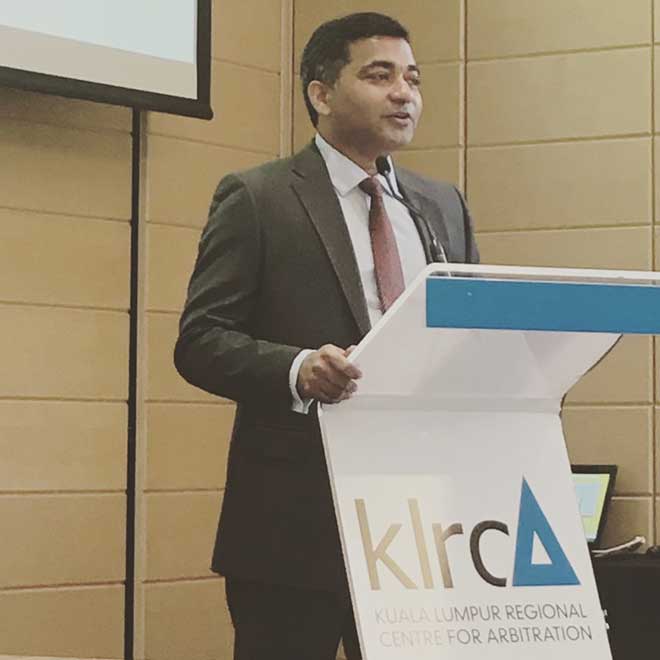
  • Krishnayan Sen, Partner, VERUS Advocates, on starting his own firm, and his experience in arbitration

    Krishnayan Sen, Partner, VERUS Advocates, on starting his own firm, and his experience in arbitration

    Krishnayan graduated from National University of Juridical Sciences, Kolkata in 2006. After graduating from the second batch of NUJS, Calcutta, he joined the chambers of Mr. V.R. Reddy, Senior Advocate and former Addl. Solicitor General of India at the Supreme Court of India. Thereafter, after the sudden and untimely demise of his father, he held the reigns of his father’s legal practice – Udayan Sen & Co., when he was 24 years of age. After a couple of years in Calcutta, and about eighteen months in a mid-sized firm at Mumbai, he started Verus in early 2011, along with a few spirited friends.

    From humble beginnings in 2011, Verus has grown to a mid-sized firm with five partners advising on both transactions and disputes. Verus was recognized as the Best New Law Firm by IBLJ in 2012, won the Deal of the Year (Disputes) in IBLJ Awards 2015; and has been recommended by IFLR in its Indian Firm Rankings for its banking & capital markets practices. Krish is also the recipient of the NaniPalkhivala Medal (2004) and G. Venkatasubramaniam Gold Medal (2005).

    His principal areas of practice include international arbitration, corporate-commercial disputes, litigation advisory and banking litigation. Krish is qualified as an Advocate-on-Record at the Supreme Court of India and has been the Standing/Nominated Counsels for statutory and government undertakings.

    In this interview we speak to him about:

    • His experience in arbitration
    • Starting his own firm
    • His plans for the future

    What prompted you to think of law as your career?

    I actually aspired to be a footballer; I was a decent forward at school-level tournaments. However, I quickly realized that my ambition far exceeded my talent to seriously consider it as a career option. So I went along with what most Bengali middle class families considered safe, and chose science in my senior secondary (Class XI-XII). I was an average student and didn’t have a particular interest or aptitude for Science subjects. In fact, in hindsight, I should have taken Arts. Around that time, my parents who were both lawyers, mentioned that I could consider law as a career option. But what really got me interested in law was when I started going through the law entrance exam books which my father would get from Delhi – I remember there used to be one from Universal’s. The section on logic and analytical reasoning appealed to me – may be because it didn’t involve much preparation, and seemed more of common sense. So I sat for the different law entrance exams and got through NUJS. Looking back, I think one great thing about my dad was that he never imposed himself on me to take up law. Somehow I didn’t feel the pressure of joining the profession, which many with legal backgrounds ordinarily face. My parents were quite happy, maybe more relieved, that I had cracked NUJS. Deep within, I knew I was terribly lucky to have somehow got through a national law school.
     

    What is the importance of a good mentor in the early years of practice

    A mentor shapes your character, both as a person and practitioner, and instills certain values, ethics and principles in you which would define you. The most important thing to have happened in my professional life was to have Mr. V.R. Reddy as a senior and mentor. He was a former Addl. Solicitor General of India, Advocate General of Andhra Pradesh and Chairman of Bar Council of India under whose Chairmanship the NLSIU, Bangalore was conceptualized and instituted. Like most juniors I tried picking up some of the skills and tools of my senior by observing him closely, hoping that some of his qualities would somehow rub off on me. He was more in the old-school mould with meticulous preparation and incredible hard-work, always fair to the court and opposing counsel, never misled the court, superb articulation of the main points and keeping his arguments brief and to the point. His attitude toward fees was, “We take fees for our briefs, but not briefs for our fees.” He would keep reminding me of the 5Ps – ‘prior preparation, prevents poor performance.’ But where I felt he was different from others, were his qualities of the heart. If I had to sum up my senior’s qualities in one word, I would say it is compassion. In February 2007, when my father was on his deathbed in a hospital in Calcutta, VRR, who didn’t know my father personally, flew down to Calcutta to see him at the hospital. My father, by then already sinking, softly thanked him for his kindness, to which VRR replied, “Wouldn’t Krish have done the same for me?” VRR’s love and affection towards his juniors was, and is, almost paternal. That’s what a good mentor does. He doesn’t see his junior merely as a resource or an asset in his firm or chamber who is there only to get his work done. He genuinely wishes well for his juniors and maintains the relationship and association long after the juniors have flown out of the nest. I realized that stark difference when I joined a law firm a few years later under a senior partner who was a good lawyer, but all mind. That’s the unfortunate truth at many firms; where juniors are only treated as resources and billing machines.


    What drove you to establish your own law firm, Verus?

    There were many factors behind starting Verus, but the most important urge was to create something new and fresh. I think many of us were quite disillusioned with some of the big law firms on both external parameters (like client service, partner accessibility, billing patterns, value chain) and internal parameters (like family run management style, treatment of associates& staff, happiness at work, salary structures). We felt an alternate model was not only possible but absolutely imperative. Why couldn’t we live and work in a state of mind which was fun, enjoyable and adventurous? And so we started in early 2011 from a small one-room office at Mumbai. Six years on, while we have grown to larger premises and added both lawyers and offices, it’s still very much a work-in-progress as we continue to experiment with entrepreneurship and delivering alternative service models. Clients have been very kind in taking this journey with us. I must mention here something that I should have said at the very outset, I could have never started Verus without the support of my wife, Atreyee. She was the breadwinner in the family and stood by me like a rock in those difficult years.

    The initial challenge in running the partnership was to understand how to do business between friends. But the dust settles after a while, once you understand the different working styles of each partner and learn to give each partner his or her operational space. What is also important is to learn to appreciate each other’s role in a partnership; since partners would ordinarily possess complementary strengths. I was fortunate to have incredibly supportive founding members in Dipankar, Rishad, Charles, Gandhar and the one we lost, Jay. The founding team and a group of passionate lawyers across our four offices form the backbone of the firm. Despite your best efforts, there would be setbacks, and you will need to learn from each of those setbacks, pick up the pieces and move forward.The most important challenge, however, is to ensure that at all times, the soul of the firm remains intact. The form of the firm, as in any other organization, may undergo change, the firm will grow; the leaders in the firm would also change; so may the nature of the work too. But the members of the firm must see to it that the spirit of autonomy, innovation, excellence, togetherness, forthrightness, transparency and joy on which the firm was built, brick-by-brick, always remains alive and unscathed. In the end, it is this soul of the firm that would define who we are.


    While hiring lawyers, what kind of skills do you look for in their CV?

    Actually, people in the firm often mock me for not looking at the CV at all. But that’s not entirely correct. I do look at the CV cursorily just to get a basic background of the candidate; but then form any impression of the candidate only at the time of the interview. Studying the CV too closely could often cloud your judgment on a candidate. I ordinarily look out for candidates who show some degree of independence and autonomy. I may ask a few legal questions during the interview, but ordinarily I try to assess if the person would be a good fit for Verus and what are the drivers for the candidate to join the firm. There have been times when I have been quite impressed with the lateral thinking of a candidate or his accomplishments in earlier assignments but I thought he or she would not be a good fit. Despite being a product of a national law school, I genuinely feel that law firms give way too much importance on national law school graduates and thereby do a disservice to non-national law school graduates, most of whom just do not get a level-playing field and opportunity to really come into their own.
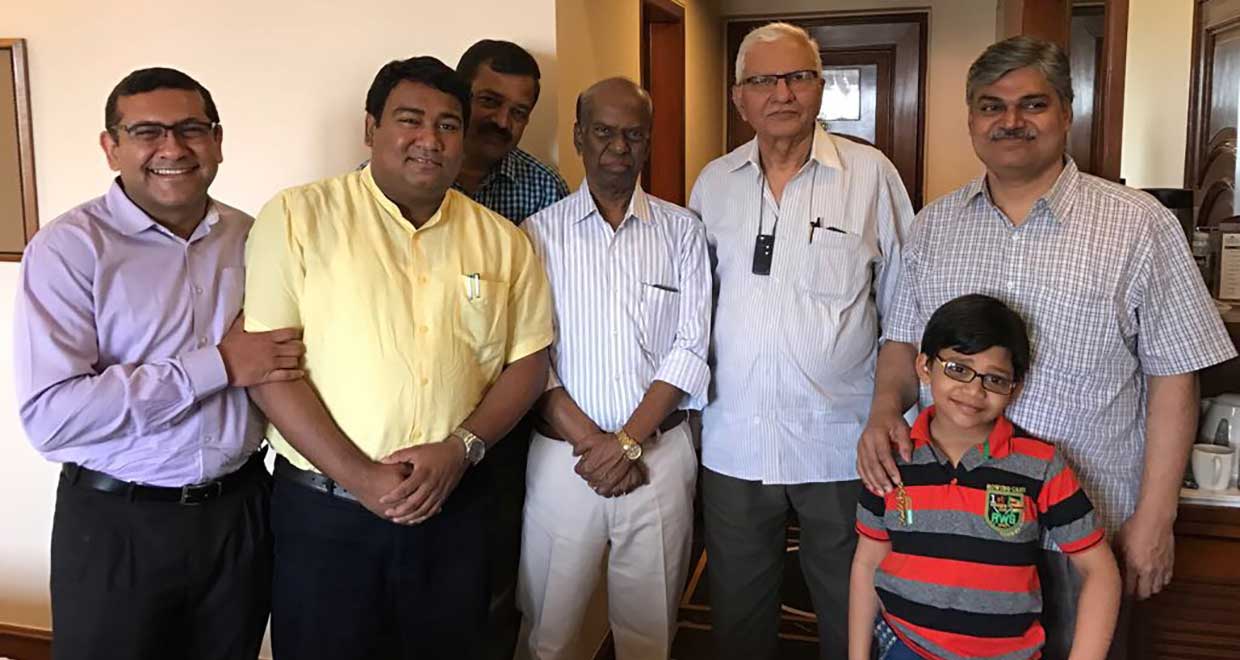
     

    The Government of India is planning to allow foreign law firms to enter into India. Do you think the Indian law firms will be confronting to fight with the tough competition foreign law firms entering into India?

    Entry of foreign law firms will be the great “wolf-wolf moment in the legal services space – every Government has given the threat but none have had the heart to execute it. Anyhow, if somehow foreign firms are permitted to eventually enter the Indian market, then my predictions are: (a) Bigger law firms will most likely decide to stay independent and compete with the foreign firms (pretty much like what we have seen in Singapore and Hong Kong), and it will be a battle for survival-of-the -fittest; (b) Mid-sized firms will have to decide whether to merge or enter a JV with the foreign firm; (c) There could be a consolidation of the big Indian law firms where two or three big firms may merge to form a domestic behemoth; (d) Smaller or boutique law firms who do not wish to merge with bigger firms will most likely carve out niche practice areas like IP, competition, tax; (e) Litigation firms would be mostly insulated from the entry of foreign law firms, except for those firms who are involved in only high-ticket litigation.  


    It is a general assumption that the fresher graduates have to struggle a lot during the initial years. What was your experience?

    I am afraid this is true. A beginner will basically need four things, which generally come in the following order: legal curiosity, hard work, legal intuition/temperament and some luck. Litigators need an additional trait, patience. A lawyer is like a skilled mechanic, he requires honing certain specific skill sets with a certain mindset. Whether you are a corporate lawyer or a litigator, both streams require learning certain fundamental skills which in legal parlance, we call learning the ropes of law. Struggle entails three things: first, learning the technical skills – researching, comprehending and analysing, strategizing, articulating, drafting, presenting, advocacy or negotiation skills etc; second, learning the soft interpersonal skills – interacting with clients, colleagues, understanding seniors, learning to work in a team, understanding and fitting into the work-place; lastly, and this is usually the tricky part, is to pick up the ethical principles which would guide the way you conduct yourself in the profession, the moral and ethical code you would like to follow. You pick this up from observing simple things like how conflicts and confidentiality are dealt with within the firm or chamber, how billing is done within the firm, whether proper risk disclosures are made to the client, whether your senior deliberately misleads the court or is unfair to the other side, and whether the firm or chamber indulges in corrupt and questionable practices.

    In terms of hard work, I used to put in about sixteen to eighteen hours a day, sometime more, in my first seven years, as did my peers. In my first five years, I had taken only two holidays, the first of which was for my honeymoon. While a lot of law is in the detail, what is important in the foundation years is, what I would call, to get a sense of the law. It’s a bit abstract to explain, but in essence you develop a sense of fairness and broadly develop a sense of what the law should be.


    What do you find admirable in present generation of lawyers compared to that of your generation?

    I think the present generation are much bolder and greater risk-takers. They tend to prefer the experience and are not solely driven by the money. My sense is that the next wave of innovation in legal services – the “Uber”moment –will come from the present and next generations.
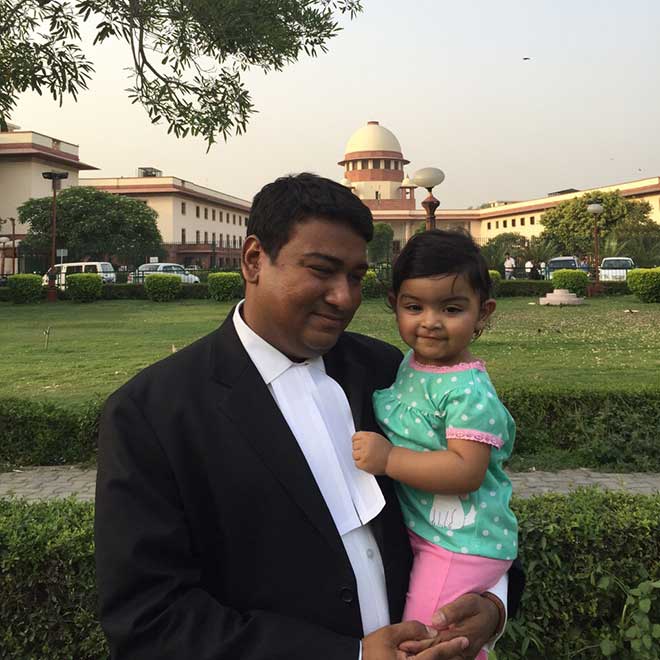
     

    Where do you see yourself five years from now?

    You know I would earlier make these projections for myself – five years, ten years. My original goal, when I graduated from law school, was to become a senior counsel by my late thirties. But with time, I have realized that life passes us by while we make grand plans for our future. Therefore, best is to live at the present. Personally, in five years, I do not foresee myself involved in any leadership or management role at Verus – which would pass on to the next generations. I would prefer acting on select matters and like to explore some of my other interests like reading, travelling and writing. Verus is also preparing for a major push on the artificial intelligence and technology front which could be quite disruptive in the legal services space. It’s still too early to speak more on it, but once we are through with the pilot phase, maybe we could share more insights on that.


    What would be your parting message to our readers?

    I would like to say two things: First, do not take your life in law too seriously people get so consumed in the rat race stressing on partner promotions, senior advocate designations, office politics etc., that they forget that life is quietly passing them by. Explore other things like books, sports, travel, gardening, enjoy things that make you happy like music, teaching, painting & crafts, gardening, cooking or some voluntary work; even simpler things like spending time with your kids, friends, family and pets which would broaden your worldview. I personally find reading and travel quite enriching and therapeutic. Secondly, it is my appeal to students and especially to law schools, please see that the students get a holistic exposure on the true potential of law. Most law schools today focus in making corporate legal robots. There is very little imagination. The search for the answer to the question, “why become a lawyer?” should take students to places where they observe from close quarters, the challenges that law is seeking to address, be it on global climate change, human rights violations in Africa, refugee problems of Europe, studying the civil rights movements or the trials of war crimes. Law students need to be sensitized to these topics, not merely in class rooms, but also by giving them real first-hand field experiences to enable them to take an informed choice on what kind of lawyer they wish to become in life. Unfortunately, I find that vital education, exposure and sensitization completely missing which is a great disservice and denial to the students. First and second year law students are so stressed on whether they will get an internship in BigLaw or not. Even simple gestures like doing a case study on a movie – like To Kill a Mocking Bird, The Bang Bang Club, A Few Good Men, Before the Flood, The Verdict, The Pianist –would evoke spontaneous discussion and debate amongst young minds and some of them may choose an alternative career path in law. But most law schools have developed a tunnel vision where the entire focus is in reporting how many PROs the graduating batch has received, what starting salaries their students have secured, how many law firms or corporates have come to their campus on Day Zero. I am a product of such a law school and am now also one of those recruiters, but my appeal to law students and law schools alike is to please explore all opportunities that law, as a discipline, has to offer – which goes much beyond a commercial law firm or a Supreme Court lawyer’s chamber – and only thereafter take an informed decision as to what would be most fulfilling and satisfying for you personally and professionally.
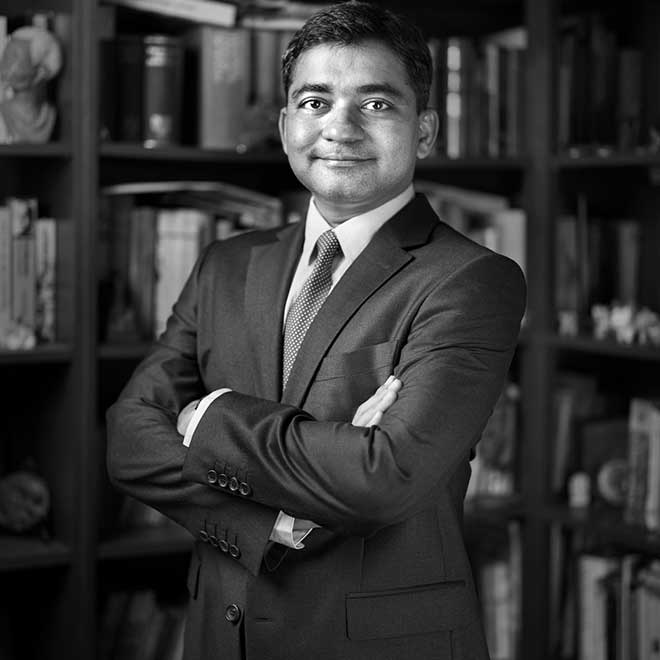
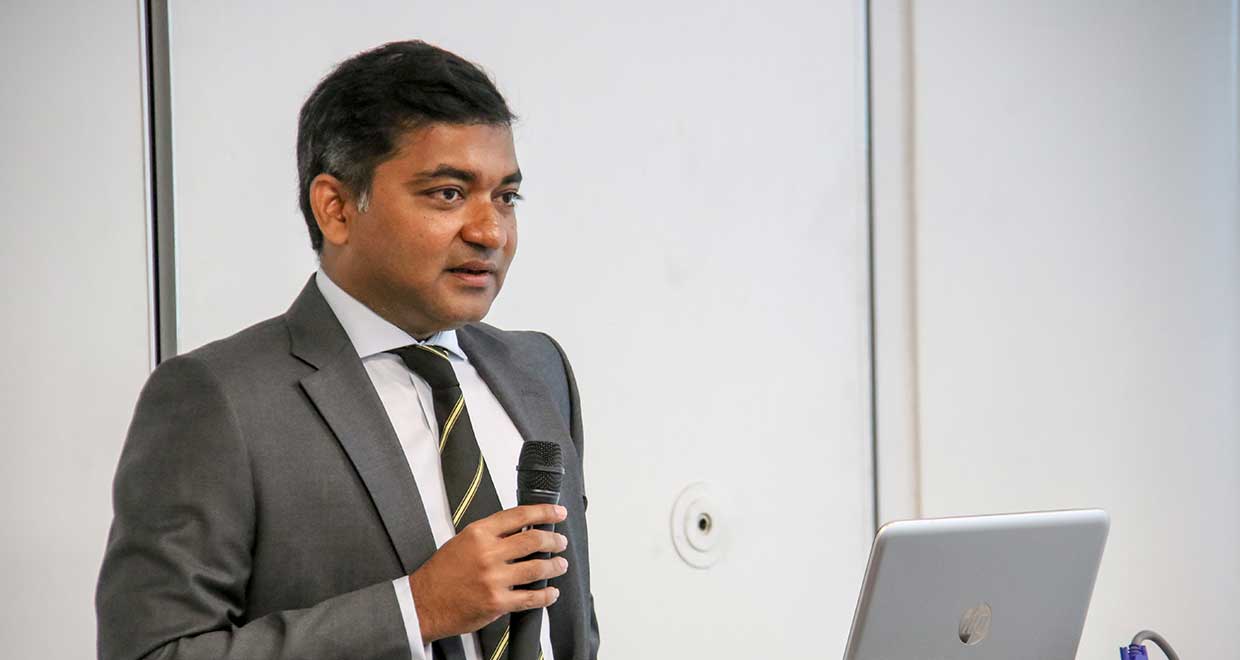
     

  • Thayananthan Baskaran, Partner, Zul Rafique & Partners, on ADR, and practice in Malaysia

    Thayananthan Baskaran, Partner, Zul Rafique & Partners, on ADR, and practice in Malaysia

    Thayananthan Baskaran graduated in law from King’s College, London, in 1998. Presently, is a Partner with Baskaran, Kuala Lumpur, and an associate member of Crown Office Chambers, London.

    Thaya’s primary area of practice is construction law. He drafts various building and engineering contracts, advises on disputes arising from such contracts and appears as Counsel to resolve these disputes.

    Thaya is a co-author of The Belt and Road Initiative: Legal Risks and Opportunities Facing Chinese Engineering Contractors Operating Overseas published by Kluwer Law International in 2019. Thaya is an editor of Construction Law International, the magazine of the International Bar Association’s International Construction Projects Committee. Thaya was also the President of the Society of Construction Law Malaysia (2016-2017).

    In this interview we speak to him about:

    • Practice in Malaysia
    • His experience in arbitration
    • His expertise in construction law

    How would you like to introduce yourself to our readers?

    I am an advocate and solicitor based in Kuala Lumpur with chambers in London.  My primary area of practice is construction law. I draft various building and engineering contracts, advise on disputes arising from such contracts and appear as Counsel to resolve these disputes.  I also sit as an adjudicator, arbitrator and mediator.


    Share with us some of your experiences as a student of law at King’s College, London.

    I read law at King’s College, London, almost twenty years ago.  I enjoyed studying criminal law and jurisprudence in College and particularly recall writing an essay on how rape should be regarded as a form of heinous assault or bodily injury.  I would like to have studied human rights law but was wary as there was no textbook on the subject at the time.  Apart from the College, I very much enjoyed my time in London.  London remains one of the great cities of the world, and I spent a lot of time at the bookshops, galleries and theatre.


    What advice would you give students about avoiding a decision paralysis?

    My advice would be to start practice after completing the bachelors degree and being called to the Bar.  Once you have started practice and decided on the area you would like to specialise in you can consider doing your masters in that area.  Practice is quite different from theory, so it is perhaps best to practise first before deciding to specialise in an area.


    Have you always been keen on a career in contract and ADR?

    When I started practice in 2000, the metro rail was being completed in Kuala Lumpur.  I was involved in advising on disputes arising from this project.  Like most construction lawyers, one project leads to another, and before you know it you have specialised in the area without actually having consciously decided to do so.

    The standard form construction contracts used in Malaysia and internationally provide for the resolution of disputes by arbitration.  So, from advising on these disputes, it was a natural progression to appearing as Counsel in arbitration.

    Later, I was appointed as an adjudicator, arbitrator or mediator to determine these types of disputes, as well as more general commercial disputes.


    What was your path to being empanelled on several prestigious arbitration centres like? 

    As mentioned above, my area of practice to some extent naturally led to my sitting as an adjudicator, arbitrator or mediator.  There are certain key persons who have encouraged me to pursue this.  Firstly, I must mention Datuk Professor Sundra Rajoo, the Director of the Kuala Lumpur Regional Centre for Arbitration, who encouraged me to sit for the Chartered Institute of Arbitrators examinations and be empanelled with the KLRCA.  Once I had become a Fellow of the Chartered Institute of Arbitrators, been empanelled with the KLRCA and sat as an arbitrator in Kuala Lumpur I was able to apply for and be accepted at various international arbitration centres.  I must also mention Dr Cyril Chern, a barrister at my chambers, Crown Office Chambers, and the author of Chern on Dispute Boards, who encouraged me to pursue contractual adjudication and was instrumental in having me elected a Fellow of the Dispute Board Federation Geneva, which led to my being on their Expert Panel.  

    It has always surprised me to some extent, from my experience as an arbitrator, that people, disputes and the basic principles of law are the same around the world.  Despite the apparent divide between the civil and common law traditions, I believe there is more in common in principle than there are differences.


    Could you please share with us some of the key nuances of good drafting and how rookie mistakes can be avoided?

    The key to drafting construction contracts is to firstly thoroughly understand the model that the client intends to use.  There are many models in the construction industry, such as conventional contracts, design and build contracts, design build operate contracts, and so on.  There are also the newer and more innovative models such as partnering and alliance type contracts.  Secondly, once the model has been understood, it is perhaps always best in the construction industry to start with a standard form contract that suits the selected model and the division of risks between the parties.  The standard form may then be amended to reflect the particular needs of the client.  These amendments should be of a minimally invasive nature so as to prevent affecting the structure of the standard form.


    What are the key attributes that one must develop in order to excel in the field of arbitration and mediation? 

    I would highly recommend doing the Diploma in International Commercial Arbitration offered by the Chartered Institute of Arbitrators.  This provides a solid theoretical basis for future practice.  In terms of practice, one should set aside sufficient time before the hearing to read the papers thoroughly, to enable clarification of matters during the hearing.  Most arbitrations are decided on the facts, which are, in turn, largely reflected in the documents.

    As to mediation, again it is best to start with some formal training.  I was trained at the Singapore Mediation Centre, which offers an excellent course in Asia.  Loong Seng Onn, the Executive Director of SMC, plays a leading role in the training, which provides an understanding of the skills required of a mediator.  These skills are quite different from those of an arbitrator.  Here, the key really is to keep an open mind and determine the common interests of the parties that will facilitate a settlement.  Once these interests are identified, from my experience, even if a settlement is not reached at the mediation it is likely to be achieved soon after.


    Having worked in Kuala Lumpur, Singapore and London, what are the cultural differences that you find in the legal environments of these countries? 

    There is more in common between us than there are differences.  English and the common law system are used in all these jurisdictions, which helps.  Having said that, there is always much to learn from other jurisdiction.  The skilful cross examination of barristers in England is a pleasure to attend and may be adapted in Kuala Lumpur.  The efficiency of solicitors in Singapore is well known and can serve us as a benchmark for practice.


    As a Partner at Zul Rafique & Partners, what does a typical work day look like for you?

    I’m afraid I don’t really have a typical work day, as my work is so varied.  It depends whether I’m in court or at an adjudication, arbitration or mediation or whether I’m in Kuala Lumpur or overseas.  Much of the pleasure of my practice is the varied nature of the work and the travel it involves.


    In your opinion, has Alternate Dispute Resolution fulfilled the role of administering speedy justice while ameliorating the heavy backlog of cases in the courts?

    Again, I’m sorry, or rather, I’m delighted to say that there are no backlogs in the courts in Malaysia after the reforms initiated by The Right Honourable Chief Justice of Malaysia Tun Zaki Tun Azmi.  Cases in the High Court are disposed of within six to nine months and appeals are disposed of within three months.  The challenge now is to justify arbitration to clients.  In international contracts, arbitration is more easily justified as the award may be enforced almost globally under the 1958 New York Convention.  In purely domestic contracts, arbitration is now justified more in terms of the expertise of the arbitrator, the confidentiality of the proceedings and the relative informality of arbitration, as compared to the courts.  However, domestic arbitration will have to keep up with the speed of the courts.  Parties will have to explore more innovative forms of arbitration such as, documents only arbitrations and chess clock hearings to reduce time and cost.  These innovations are becoming more common in practice.

    Apart from arbitration, statutory construction adjudication in Malaysia does have an advantage in terms of time and cost over court proceedings.  Generally, these adjudications only take three months and are determined solely on documents.  They have proved very popular.  However, the adjudication decisions are only temporarily binding.


    Could you tell us a little about your upcoming book? 

    My book is essentially a commentary on the Malaysian Arbitration Act 2005, which is based on the 1985 UNCITRAL Model Law on International Commercial Arbitration.  The commentary includes judgments by the courts of Malaysia on the Act as well as reports and analysis by the UNCITRAL.  Writing the book, while being in active practice, has involved managing my time I try to write every night after work.  I have a substantial library in my house, which I am able to refer to and work from.  Writing the book has been one of the greatest pleasures of my practice and I look forward to its publication later this year.


    What books, judgements that you have read, have played an integral role in shaping your legal philosophy as a lawyer?

    In terms of arbitration, I have very much enjoyed reading the works of Professor Emmanuel Gaillard, in particular the Legal Theory of International Arbitration.  Professor Gaillard’s ability to transform what is essentially a very dry subject into compelling reading is really incomparable.  

    In terms of judgments, the ground breaking and yet simple and lucid judgment of Lord Atkin in Donoghue v. Stevenson never fails to amaze me.  It should be read and reread in terms of how to be quietly revolutionary.


    How do you manage to maintain a work-life balance as a busy legal professional?

    I don’t attempt to maintain a balance, as I do not see a distinction.  I enjoy my work very much and do not, in that sense, see it as work.  The words of the Bhagavad Gita on duty come to mind in this regard:

    It is better to do thine own duty, however lacking in merit, than to do that of another, even though efficiently.  It is better to die doing one’s own duty, for to do the duty of another is fraught with danger.


    How do you keep yourself abreast with all the daily news, happenings and legal developments in the world?

    I read journals.  Recently, I have discovered that the Supreme Court of the United Kingdom has some important judgments read out and recorded.  These recordings are available on their website and have become my favourite ‘movies’.


    What advice would you like to give our readers, who are mostly law students and young lawyers?

    Enjoy your work, it will be much of your life.


    LAST UPDATE MADE ON 28.07.2021 BY ISAM KABIR  AND THE SUPER LAWYER TEAM


  • Shashank Garg, Partner, Advani & Co., on being a first generation lawyer, and his experience in litigation, arbitration, and commercial law

    Shashank Garg, Partner, Advani & Co., on being a first generation lawyer, and his experience in litigation, arbitration, and commercial law

    Shashank Garg is a graduate from Guru Gobind Singh Indraprastha University, batch of 2008. Since then, he has worked at Parag Tripathi Law Chambers, Accendo Law Partners, Advani & Co., among others. He has represented the state of UP as well as the central government before the Supreme Court of India. He then went on to pursue his Master’s degree from the University of Nottingham in 2008, with a focus on International Commercial Law.

    In this interview, we speak to him about:

    • Being a first generation lawyer
    • His experience in arbitration, litigation, and commercial law
    • His successful publications, and studying in the UK

    Please introduce yourself to our readers.

    I am an avid traveler by choice, and a commercial lawyer for nine years by profession.


    Were you always inclined towards law?

    I zeroed in on law after eliminating all other possible alternatives. My parents had given up on me after they noticed my general apathy towards anything that involved reading or writing. Funnily enough I ended up choosing law where both the things I hated as a kid became an indispensable part of the job. I am a first generation lawyer and frankly that is a blessing in many ways as you can carve out your own path without the pressure of any standards/expectations set out by your elders in the profession. I studied at USLLS (GGSIP University, Delhi) which gave us enormous exposure. The energy on campus was infectious, to say the least. Diverse internships, conferences, moots and other events that I was involved in helped me crystallize my interest towards litigation.


    How did you start your legal career?

    I was amongst the lucky few who got the opportunity to wear the robe for the first time at the Chambers of Mr. Harish Salve, where I was already an intern before graduating. I proceeded to do my masters in a few months thereafter but that short experience reinforced my liking for litigation. My masters was in International Commercial Laws from the University of Nottingham, U.K, which was my real introduction to the world of commercial law. However, on my return I joined the chambers of Mr. Parag Tripathi, Sr. Advocate, (then Additional Solicitor General of India) which meant dipping into to the deep ocean of litigation, since he was a government law officer. The chamber used to deal with more than twenty matters on admission days in the Supreme Court. Mr. Tripathi is a tough taskmaster but it was an overwhelming experience. I soon decided to set up an office with two friends (Apar & Animesh) and we founded Accendo Law Partners. We were inexperienced but had a lot patience and energy to make it work. I can’t say if it really worked the way we wanted it to but it was certainly a rewarding journey. We merged with Advani & Co. where our practice became more about hardcore commercial disputes. This meant less of court and more of arbitration but this was in no way any less exciting than litigation. I would say arbitration is a sophisticated version of litigation in terms of action; I now do a balanced mix of both.


    Tell us about your time in Nottingham.

    Going for masters was an impulsive decision that I thoroughly enjoyed. I made friends with new subjects; ones that I didn’t think were my cup of tea. I was taught Commercial Conflict of Laws by Prof. James Fawcett (author of Cheshire on Private International Law). He is a true legend of the subject. I did my dissertation under him and received distinction. This was my first exposure to world class learning. The faculty teaches so passionately that it motivates every student to perform better. We cannot deny the fact that most law schools in India lack such levels of commitment by faculty members; this is the first big difference you get when you choose to study abroad. Exposure to a foreign university is a great addition to your skill set, however it really depends on an individual how much he can make out of this one year. LL.M. from an Indian university is a great option too since it has been reduced to a year now and most National Law Schools offer very interesting and niche areas for masters programs. One needs to understand what a masters degree is to be able to make this informed choice. Students often take it as an extension of student life by a year but in reality it is deeper understanding of few subjects that you may want to take up as a career choice. I would strongly urge students to go for masters after three to four years into the profession, when they have found their area of interest. It’s always easier to do your masters in a subject that you are practising in then to come back and find a job in the subject area you did your masters in.


    Could you talk to us about the certificate courses you pursued?

    (Shashank went to Hague Academy for the summer course on private international law in 2009 on scholarship and then took up some more certificate courses internationally.)

    I applied to Hague academy while I was doing my masters in U.K and my letter of recommendation was written by Prof. James Fawcett. I feel that his LoR made the difference, Professors of his repute do not write LoRs often. I was informed by the academy that I have been awarded complete scholarship for the course which meant my course fee, my air travel and my stay in Netherlands was paid for by the academy. After coming back to India, I decided to take up new avenues to learn and hone my legal acumen. I attended Certificate Mediation training organized by ADR Group UK which made me a certified civil and commercial mediator, I also attended the 12th Arbitration Academy at University of Cologne, Germany. Even today I try and make a couple of academic trips in a year whether it is to judge an international moot or to speak at a law school. This keeps me connected to the academic world in many ways.

    What are your thoughts on arbitration in India?

    (Shashank is currently associated with various ADR bodies like IAF, PACT, KCIA and Arbitration Sub-committee of IBA.)

    Arbitration in India is the talk of the decade. Fortunately this decade has seen a lot of positive change. We have seen the amended law in arbitration which was brought to imbibe more confidence in the end users. However, with that noble thought our legislature proceeded in an over-zealous manner, thus creating a rather impractical scenario of arbitration instead. The Arbitration is here to stay and thus the courts and charming lawyers are finding innovative solutions to the problems being posed by amended law. Courts in India, especially New Delhi, have to be given their due credit in making arbitration stand tall and firm. We are also witnessing rapid growth of institutionalized arbitration in India, with most PSUs using ICC, SIAC or LCIA clauses in their commercial contracts with foreign parties. MCIA at Mumbai is certainly a fresh breath of air in this environment with world class facilities and some of the top people worldwide endorsing it to be the next big thing in the Asian region.

    Practise of arbitration is distinct from litigation. Unless you do arbitration the way it’s to be done, you wouldn’t notice the difference. Sadly, many civil lawyers doing arbitration have made CPC their Bible for all practical purposes, causing confusion of concepts amongst law students and young lawyers. The most important thing to keep in mind for practising Arbitration is the fact that it is a private justice delivery system with the backing of law.


    In your opinion, what skills have contributed the most to your success?

    I would not call my experience a lot but yes I had the good fortune of exposing myself to diverse fields, I authored a book titled Tourism Laws in India in 2013 for travelers to have a ready compendium of laws that they may need during their journey in India as a tourist. The second edition is likely to come this year by May. My other book on ADR is being published by Oxford University Press and should be out by July 2017. Moreover, I am working on another book which is being published by EBC on Criminal Investigation and prosecution. Recently I contributed to the LexisNexis publication on arbitration that was published for Niti Ayog. In my practice, other than commercial arbitration, I am doing criminal law, media and entertainment law and aviation law as well. Diversity comes from curiosity; I have been curious about my limits, interests, and capabilities, and in this process I have gained tremendous amount of confidence in dealing with my limitations.

    Being a first generation lawyer one should prepare for an adventure. If you go the traditional way, you are likely to give up soon as the charms and gifts of the legal profession take time to come by your side. Be self aware and work towards your shortcomings by accepting them and not by covering them up. Perseverance and commitment are the two key skills that should be learnt at an early stage in your career. As a lawyer, your communication is your identity, whether written or oral; be clear and crisp in that to create a strong impression. Simple steps such as reading the newspaper can help you develop awareness of issues around you giving you confidence to communicate in any setup. Use your time carefully when you intern as those are the places you can afford to make mistakes and create opportunities for yourself.


    Did you also engage in any extra-curricular activities as a student?

    As a student I focused on anything that was new and challenging, I would not call these activities extracurricular as such. Our law school was quite new and we were the third batch to come in, I decided to make a mark for the law school by organizing various events such as international moots, (Jessup, North India) and the Law Lecture series (lectures were delivered by: Justice R.C Lahoti then Chief Justice of India, Mr. KK Venugopal, Mr. Soli Sorabjee, Dr. L.M Singhvi, Mr. R.K Jain, Mr. Ram Jethmalani and Mr. Harish Salve). I really doubt if any law school in the country has had all these legends coming to speak at their campus. We did many such things with the help of great batch mates and highly reliable juniors. In fact, my student life at the law school was more outside the classroom than inside.  My current hobbies would include travelling and sleeping as much as I can – I hope I don’t have to change any of these in future also.


    Talk to us about your resume as it stands today.

    I have been a chamber junior at litigation chambers; I have been a partner at my own start-up followed by being a partner at a 30 year old arbitration specialist law firm and then being a partner at another more than 30 year old traditional commercial litigation law firm. The journey was exhilarating; each place had its own character and persona. Today I am wearing multiple hats and happily so–Partner-In Charge for Advani & Co. Delhi, Spl. Counsel for Delhi Development Authority, and Standing Counsel for State of Goa are some of my active roles.

    A resume/CV should not exceed two pages and in rare cases, three. For a fresher applying for a job or for a student applying for an internship their resume/CV is their face for the prospective employer and most decisions are taken by way of elimination. In other words given the heavy application load, HR of firms often look for mistakes in the resume to trash it so that only most serious and sincere students make it.

    As a tip, keep it clean and honest (removing achievements of school life and things that are unlikely to matter to your employer).You should be able to answer everything on your CV as the puffery used in CVs is often detected by the interviewer. No particular aspect can be considered more important than other as all of it would depend on where you are applying and what is your choice of practice area. As a matter of practise: academics, internships, publications, extracurricular would together form a complete CV.


    What do you think is the best way for students to prepare themselves for the professional world?

    The first step is realization; the sooner a student realizes that he has to step into the professional world after law school is over, the better it is. Many students realize this in the last semester and by then it gets too late to build a formidable CV. Also, during internships you should identify areas you don’t like instead of areas you like, this way you keep many options open by eliminating areas that are not your cup of tea. First two years will be intense and harsh and the same should be treated as training on a stipend to feel better about it. Your internships will give you a preview of what you are likely to see when you join an office. No work in office should be considered below your dignity–standing in queues, picking up files, photocopying, etc. are some of the usual tasks in the early years of the profession.

    I was prepared for it all but yes, it is never enough. You feel the pressure of deadlines like never before as these are real clients and real cases. Weekends and friends can suddenly become a myth and sleep is your only craving. But it all gets better with time and you start enjoying the pressure.


    Tell us a little about your internships.

    Being a first generation lawyer, internships were the first thing I focused on. I had no network or contacts to get into prestigious firms and chambers. So I decided to create opportunities instead of waiting for them. I interned with Sr. Advocates like Shanti Bhushan, Collin Gonsalves, Harish Salve, Iqbal Chagla, M.N Krishnamani and K.K Venugopal, and firms like AZB & Partners, Vaish & Associates, and Archilex Law Corporation in Singapore. I also interned at NHRC and Securities Appellate Tribunal, Mumbai. Each internship opened new avenues of opportunities. Since most of my internships were with senior counsels in Supreme Court I was sufficiently prepared for my role as a junior counsel or at least I thought so.

    There was so much to learn at each of these places, I learnt core professional values while getting exposed to the various nuances of legal world. It is difficult to spell out what I had learnt but I learnt an important lesson that winning the court is different and far more important than winning the client.


    Any last piece of advice for our young readers?

    There is no dearth of work in this profession but there still is cut throat competition. Getting insecure is the last thing you should do when you begin you career. Let your long term career goals chart out your short term career choices and not the other way round. If you get a chance to work at a good office which offers you comfort and mentoring both, do not be in a hurry to leave it for a fatter pay cheque.


  • Pradeep Jain, Managing Partner, Singhania & Co., Mumbai, on all about managing a full service firm

    Pradeep Jain, Managing Partner, Singhania & Co., Mumbai, on all about managing a full service firm

    Pradeep Jain qualified in law from Devi Ahilya Vishwavidyalaya in 2000. Thereafter, he joined Singhania & Co. in 2002 and was soon rewarded with partnership in 2004 for his excellent work in the Corporate Practice & Maritime Laws. He has played pivotal role in a number of big joint ventures and corporate takeovers. He is also regularly engaged by the Institute of Company Secretaries of India, New Delhi, to deliver lectures on various subjects related to law.

    Pradeep frequently advises clients on matters relating to the development and control regulations, policy and regulatory matters, compliances relating to Securities Exchange Board of India, Reserve Bank of India, Insurance Regulatory & Development Authority and Foreign Investment Promotion Board. He regularly advises vessel owners, charterers and P&I clubs on various maritime laws. Pradeep also represents his clients in international arbitrations under the Singapore International Arbitration Centre, Singapore Chamber of Maritime Arbitration and London Maritime Arbitrators Association. He is vastly renowned for his acumen in liasoning with the Foreign Investors Promotion Board (FIPB)/ Secretariat for Industrial Assistance (SIA) in the matters related to Transfer of Shares from Resident to Non-resident, foreign technical collaboration, liasoning with the Securities Exchange Board of India (SEBI) filing various form or Report in the matters related to Takeover, Mutual Fund, Assets Management Companies, Trusteeship, Custodian, Foreign Institutional Investors etc.

    In this interview Pradeep talks to us about:

    • His experiences working with Singhania & Co.
    • The importance of a mentor in a junior lawyer’s life, and important traits any law aspirant should cultivate
    • Networking and the legal profession, and
    • His valuable advice to all the young lawyers/students/aspirants out there.


    How would you like to introduce yourself to our readers?

    A lawyer by profession, I am the Managing Partner of the Mumbai office of Singhania & Co. I come from a family of businessmen; however, my fondness for academics led me to gathering multiple degrees in the fields of science, mathematics and law and finally pursue a career as a lawyer. I joined Singhania & Co. in the year 2002, and actively worked under the tutelage of Mr. D.C Singhania, the Founder of Singhania & Co. and a veteran lawyer widely recognised for his dexterity in the areas of litigation and arbitration. Thereafter, in a short span of 2 years I was promoted to Partnership and there has been no looking back ever since.


    Going back to your graduation days are there any anecdotes you would like to share?

    It was a very interesting journey. You would be surprised to know that I never wanted to be a lawyer, but my Mom was convinced I would be a litigating lawyer, as I would always grab opportunities to show case my oratory skills, and of course pick up arguments.

    I loved studying mathematics and science and wanted to pursue a course related to these subjects. So my first effort was to appear for medical examinations and be a doctor. Unfortunately, I couldn’t sit for the exams due to personal exigencies. Thereafter, I decided to not waste a year and ended up pursuing a degree in mathematics and went on to pursue my Masters in it.

    I didn’t want to stop studying so I undertook the company secretary course during which my mentor Mr. Sunil Jain, advised me to explore law as a profession.

    I took his advice and I have loved every moment of this profession!


    How do you recall the first few years after qualifying in law?

    I have always felt that I have been fortunate and lucky in a lot of scenarios in life. I have been lucky to get picked first, or noticed in a group, and this is what happened with me in Singhania.

    The first few years of my career were nothing short of absolute delight.

    My partner, Mr. Sameer Rastogi, whom I was assisting in the initial days of my career at Singhania in 2002, liked my research skills and ideas of solutions to client issues and legal opinions drafted by me. He ensured that I was a part of important client mandates. He never failed to mention my name in other offices which helped me work and interact with different offices of the Firm and definitely aided my quick promotion to Partnership in 2004.

    Everyday brought in new avenues to learn and grow. Luckily, I was part of a firm that pushes lawyers to get out of their comfort zone and handle matters with independence. We were not treated as “Associates” working for a monthly compensation; we were instead treated as active, thinking and performing individual professionals who have the capability of servicing clients with minimal supervision.


    Please tell us about the relevance of a mentor as a young lawyer, how did you find your mentor?

    Having a mentor in the formative years of your career is definitely important. When we enter a new professional field, especially the legal industry, we have certain ideas about the profession in our head, and it is easy to face disappointment if we do not have a guide to help us understand the profession. Mentoring helps individuals understand the practical aspects of law and provides necessary guidance to assist individuals in making rational career decisions.

    At the cost of repetition, I would say I was fortunate to have Mr. D. C Singhania as my mentor. I was extremely surprised at the humility of one of the most sought after lawyers in India and his down to earth personality. Besides honing my legal acumen, he has helped me understand the importance of the nobility of our profession. He encouraged each and every lawyer including interns to express their opinions on matters and be independent in handling matters. If you trace the history of our Firm, you will know that through his mentoring he has instilled the confidence in many lawyers who are now running their own firms or are successfully handling Partnership positions.

    I never thought that I would end up as a Managing Partner of a firm, however, as mentioned before, it was through the guidance of my mentor that I learned about my capabilities and my true potential as a lawyer. I was guided to take initiative and encouraged to shoulder both legal and managerial responsibilities leading me to where I am today.

    Even today, Singhania & Co. actively encourages all young lawyers to aim at being independent and self-sufficient. Our Firm follows an active policy of mentoring freshers and interns into confident professionals who possess the capability of sourcing and servicing their own clients.


    What role does academics play in the legal profession? Given that maritime law requires a lot of reading, how has it been in your case?

    It goes without saying that an affinity to read and keep yourself updated is mandatory in our profession. A student who is academically bright showcases this ability and therefore has a better chance in terms of placements.

    Having said that, academics is one of the many ingredients that make a good lawyer. One needs to be interesting enough for clients to notice you and that involves having great people skills. Being persuasive, having a flair for writing, ability to network and socialise professionally are some of the other key components that will give young lawyers an edge over the others.

    A popular lawyer is usually a person who is blunt, bold and can mesmerise the court or audience with his words.

    To have such qualities you must have knowledge of history, philosophy along with knowledge of statutes. The more you read more confident you are to interact with your clients and fellow professionals.

    I always tell students, juniors that when you are younger, you will get time to read. So please learn as much as possible because as you grow, no matter how much you are earning, you will not get time to read.


    You are noted as one of the leading maritime lawyers in India. Very few students focus on maritime laws during their formative years. Could you tell us more about maritime practice in India?

    Hahaha (blushing).

    Shipping laws require extensive reading and research. Moreover practice of maritime law is not restricted to one country and in most of maritime arbitrations we deal with, English laws are applicable and one must be aware of the laws, rulings and authorities to be fully prepared for arbitrations.


    Founded in 1969, Singhania & Co., has been one of the very few law firms to have maintained a steady practice for all these years. Tell us more about the firm and its heritage.

    Singhania & Co. as mentioned earlier was founded by Mr. D.C Singhania in 1969. Mr. D.C Singhania is a highly respected lawyer with over four decades of experience.

    He was very well aware of the industry and its potential. He also recognized the importance of treating the profession as a service and keep the clients interest at paramount. He always emphasized on delivering good service to the Client.

    Mr. D.C Singhania, was innovative in his approach and avoided a lot of stereotype functioning of firms back then. While the popular trend was to be recognized for practicing in a particular court, he went on to successfully argue in various forums and didn’t restrict himself just to the High Court or Supreme Court.

    This is also why world best lawyers associations like “Lex Mundi” and “Terralex” felt announced Singhania & Co as first Indian member law firm.

    Over the years our Firm has been in involved in various noted arbitrations such as Western Company of North America v ONGC, and Alsthom v Railway Board of India amongst others. Our Firm has represented over 1000 international client organizations with their matters in India or abroad including fortune 500 comp

    Currently, Singhania & Co. operates out of 10 offices including an office in London. In India we have offices in New Delhi, Mumbai, Hyderabad, Indore, Bangalore, Kolkata, Chennai, Ahmadabad

    The breadth of our practice includes Admiralty, Anti-Dumping, Aviation, Arbitration & Dispute Resolution, Banking, Securities and Financial Services, Corporate &; Commercial, Infrastructure, Intellectual Property, Joint Venture & Technology, Litigation, Mergers & Acquisitions, Technology Transfer, Project Financing, Capital Market, Private Equity and Fund, Securitization & Structured Finance and Taxation laws.


    Please tell us about your journey at Singhania & Co.?

    My journey in Singhania is as dramatic as my entry.

    Interestingly, I had to go the ICSI regional office and I ended up at the office of Singhania & Co. Once the seniors spoke to me and heard about my profile, they decided to take an interview and I was hired!

    Since then, it has been a wonderful journey. I have learned a lot about the profession and I guess I am still learning!


    We are very curious to find out how do you find time for yourself despite heading busy offices in Mumbai and Indore? What would be your tips to the young lawyers on time management?

    Haha. My friends never find me reading and my clients never see me executing works except on meetings. In fact I don’t take up my role as a Managing Partner as work.

    I like doing it and I treat it as fun and I end up having fun. I love the energy and rush involved in solving legal issues and that is why I never feel tired. I believe that if you enjoy your work and don’t take work as a task and then you will see that you are full of positive thoughts and energy.

    It is very simple. If we can sincerely work (with minimal or no distractions like calls/facebook/whatsapp etc.) for at least 8 hours a day, we can accomplish a lot more than we imagine. Being busy is dependent on how sincerely you manage your 24 hours. As a junior, my job was to be well equipped with my research and ensure that all deadlines are met. I therefore dedicated my time in office towards working and/or reading up in case I was free. That way, I would always have time for myself when I was back home. My role as a managing partner requires me to delegate and ensure that the work gets done. I also shoulder the responsibility to keep my clients and my team happy. I dedicate my time in office towards the same and still find time to pursue my interests.


    We have seen that many law students are faced with tough choice between attending classed and pursuing internships. What, according to you, should be the correct balance between academics and practical exposure?

    I would suggest students to take time out from their courses to intern as much as possible, as it provides a lot of practical experience and knowledge about the legal industry which cannot be learnt through books but at the same time they should not make life too serious and try to find ways to maximize once output in lesser time.


    Due to developments in technology and advancement of social media, networking and connecting across globe has become much easier. How have these developments affected the legal profession and the way in which lawyers have been working so far?

    Absolutely! Much has changed in terms of technology and for the better!

    It is much easier to network now than it was 15 years ago. It is easier to interact with a lawyer/firm you intend to work with even before you have met the Firm. It is much simpler to verify details about a particular firm/person now than it was a few years ago. That is how much technology has evolved.

    Networking sites allow lawyers to not just network but also freely exchange and share knowledge and insights on various laws and its impact.

    If used wisely, it is a very strong tool for a lawyer and can help us make our noble profession nobler but it has some draw back as well which should be fixed. I see young generations spend a lot of time distracting themselves on social media which eventually decreases their productivity and also sometimes explains unnecessary longer working hours!


    Finally, any word of advice for all the young and aspiring lawyers?

    Be bold, blunt and honest. Pursue power through your hard work, knowledge and never forget your responsibilities towards society.

    Self-evaluation helps you become a better professional and to excel when pitted against both contemporaries and seniors!

    Life is not a race but definitely a marathon so invest in yourself and in knowledge and not money in your early years.

  • Rajesh Singh, Legal Advisor, on pursuing a career as a Managing Partner of R&S Associates

    Rajesh Singh, Legal Advisor, on pursuing a career as a Managing Partner of R&S Associates

    Rajesh has more than 19 years of versatile and enriching international experience advising corporate clients, CEOs, management members, boards, and business heads. He has worked in the role of General Counsel (South Asia) at 3i Infotech, Associate General Counsel at Capgemini. He has been legal adviser at senior levels in various MNCs, SMEs, and SSIs. He has been instrumental and trusted adviser in various assignments dealing with M&As, NeGP(PPP), international arbitration, dispute resolutions, Private Equity, M&A integrations issues, Labour unrest and unions matters, various matters at Ministry/EOW/Custom/DRI/ Authority, Company formation and registration (Singapore, ME & other Asian countries), data protection/privacy laws, Antitrust/Competition laws, litigations and advisory services for his organization in association with Amarchand&Mangaldas, DLA Piper, DH Law, JayeshAshar, Somandy and Associates,  Little and Company and so on.

    In this interview he talks to us about:

    • His decision to pursue law.
    • His views on career choices.
    • His experience as a corporate lawyer.
    • His advice to go for higher studies.

    How would you introduce yourself, given that most of our readers are law students, law aspirants or professionals in the legal arena?

    For my fraternity, I am one of their fellowship members consistently learning to strike a differentiator when had to compete with each of you at any stage of my life. When it comes to consolidating my energy, effort, and experience, I would like to be called as an astute corporate lawyer with 2 decades of exposure to fortunate opportunities of some international experience. My consolidation of knowledge primarily came from legal-advisory exposures on various corporate and legal activities that governed various businesses, industry, and geography, for the sake of brevity coined as “LexAdvisory”. Today, individually gaining core expertise in all aspects of LexAdvisory is practically not possible for an individual, so it is important to have a team of experts to stand behind an individual under the umbrella of an international advisory firm, like mine RSAA GLocalLexAdvisory Group….remember this is just a beginning.

    You are a B.Com graduate from the University of Mumbai. How did you decide to pursue LL.B.?

    To be frank, in those days of my initial career, my intention was to be part of management hence had immediately done Diploma in Business Management from Indian Merchant Chambers. I had no path to have a career in law. My work, assignments, and some personal and organizational challenge compelled me to do law, further to add, my attitude to have control over the assignment. I found, major snag was legal issues and challenges surrounding the assignment, so completed my law with my employment…

    How well did your experience in Mumbai prepare you for a life of academic prestige and professional success?

    Now, at this stage, after meeting law aspirants from various parts of globe, including the rural, remote and less fluent English speaking areas, I believe being in Mumbai or any similar city will always be to your advantage as the exposure to real-life incidents, ready infra, and occasions of deliberations always going to be a rich experience. Major change in me happened when I started working for global MNCs, because the perspective of life, changes when you enter into a multi-cultural environment. It grooms you differently, by influencing your thoughts, communication, stature, and appearance. It gives a different outlook to yourself and imbibes things to see the world through glass of multi-cultural professional approach, knowledge composition, and personal attitude towards clients (including internal clients) and also “Altitude”, I coined a new personal feature because I felt a point of difference in opinion of astute lawyers of different country not due to legal knowledge but the point of reference from where they see the applicability and feasibility, due to our respective knowledge-peak heights achieved in our respective legal jurisdiction or cultural and environmental sphere each of us belong to; or society that we belong that either regarded smaller issues in one country as high while another country discarded it low, e.g., Data protection laws are different from different countries and seriousness varies accordingly.

    What were the influences on your decision to pursue MBA in Human Resources? Why didn’t you opt for MBA after graduation?

    I was holding all portfolios jointly in a corporate support function and to pursue  highest qualification in Human Resource would help me count as qualified all round. During those days, I was dealing with massive industrial and personnel issues which were unnecessarily chewing away my time. I felt I lacked in understanding issues of management and personnel and at many times could not authoritatively provide solutions to blue-coloured and white-coloured differences. My intention was to stand as an adviser to the management board to tackle all corporate and legal issues; personnel issues were bothering me. I could not stand differentiator in my personal view while convincing management with a workaround was not making me happy.

    What are your views on career choices other than mainstream corporate or litigation streams such as teaching, etc.?

    Today, the corporates have started eying on lawyers to move in the business stream and contribute to business growth and expansion due to their legal analysis, meticulous practice, and advisory skills, taking risk stands minimized at the decision level itself far away to reach this stage but the world is progressing towards the same. Alternately, every individual should get involved in other streams of a career like teaching, etc., may be after gathering some work experience at corporate, law firms and independent practice because that will help relating knowledge with reality and make teaching more attractive and attentive for law students. The legal field itself is so broad that there is no need to move outside the legal stream.

    You have been a corporate lawyer for most of your career. What prompted you to take up corporate law? Share with us any experience which helped you to shape your career choices.

    In my view, corporate lawyer enjoys the power to advise business heads and largely is in a position to influence a decision of management wherever legal and compliance issues are a concern. Surprisingly, amateur corporate counsel also gets an opportunity to advise business heads in most of the corporate structure due to our ability to understand the law better than them and also professional independence is given in our day to day activity. It is your personal inquests and quests that helps you to choose the legal area that you would like to specialize in. The majority of corporate work largely deals with contract drafting and managing litigation in most of the organizations. Few organizations do have an opportunity to go into IPR, M&A, IPO, Financial Arrangements, etc. I have been fortunate to get all of these opportunities at strategic and compliance level, making my knowledge-base versatile, penetrative and probing.

    What falls within the scope of your responsibility? Tell us about a typical work day.

    In addition to above, as managing partner of international law firm, typical work day goes on strategic and management decision to structure the organization, improve the quality of service, monitor the vision and mission, inculcate good practices, motivate the team to support clients and give spontaneous advice to management or CEOs or Managing Directors of the organizations identified as a core clients. In personal observation supervise crucial and critical litigation to get appropriate knowledge and experience to tackle proceedings legally and administratively.

    What is the most challenging or stressful part of being a Partner at one of the most successful law firms in the country? Is it easy to have a work-life balance?

    Obviously, stress is part of your life be as an associate or as a partner because success of a law firm depends on how your conduct is with your client?; what knowledge and experience that you can bring to the pleadings, drafting and arguments? Besides, the challenge of face value in the court, unheard urgencies, few seconds to decide your interim success or failure may discourage your client to count on you even if you have the best army to succeed in a long run. All set and done, if you love your work, you can enjoy the challenges and heal your frustration through your internal mingling and by a sip of tea/coffee or by breathing out the failure and breath in the next moment to move towards your next achievement. Many times, time does not permit you to enjoy your success or cry on your failure as the clock of cyclic success and failure is so much inconsistent that you cannot carry one emotion for long.  Work-life balance is not a myth; you can achieve if you can start your day early and follow a disciplined method to retrieve your information and knowledge.

    What kind of effort should a young associate put into work to get it appreciated? What distinguishes an associate from a partner when it comes to work?

    There is no limit or difference in the effort; your contribution decides your fate and success as an associate. More the partner relies on your work and effort; the less the partner will supervise the associate work. Almost everything is expected to be done by the Associate under guidance and supervision of Sr. Associates, Partner or Sr. Partner. Largely, the scope is drafting, analyzing facts, and research the relevance to withstand weakness and strengthen merits of your matter.

    How important would you say are business development skills at such higher roles in a corporate law firm?

    Knowing the business is very advantageous at any stage of your career, because as a corporate lawyer, the more you know your business higher is the chance of bringing an appropriate solutions or advice. The business heads or management appreciates such corporate lawyer who can bridge law and business on a platter in such a way that both corporate lawyers and business can understand their perceptions and perspective. Besides business skills, the corporate lawyer should also work towards improving its Interpersonal skills, simplified and crisp communication skills. Team Spirit plays a vital role in large. And complex assignments as a collaboration of work is crucial to complete the larger picture as expected by the management within an expected timelines and quality.

    When you hire lawyers under you, what specific skills and profile do you look for?

    Already covered above, to broadly mention, drafting, knowledge seeker, independent in thoughts, out of box thinker, ready to work with right attitude, have excellent and simplified method of communications, ability to demonstrate and express his thoughts in clean and clear way, negotiation skills, etc

    If I want to be a legal advisor how would I go?

    Every aspirant should identify and understand legal and statutory compliance of the industry that you are focussing on. Gather relevant knowledge, team of business and legal experts working on challenges of the Industry, and form part of a forum that can either influence industry legislation or influence legislators by your thoughts, suggestions, recommendation, and actions. Once you have initiated in the above manner, invest your time to peruse legislation affecting such industry and observe live court proceedings in this regard. Peruse case laws and FAQs available on the websites of court and authority (you can refer various other means to get case research materials), to understand regular challenges faced and dealt by that Industry. This kind of development will help you to mature your understanding in respect of business nuances, court’s perspective (Ratio decidendi of the decision taken by various courts or counter arguments placed by other pleaders to understand the strength of your pleadings) and market dynamics. Focus one industry at a time. Target another similar industry, which is logically a business extension of the industry you focused on e.g. ITeS to IT, BPO to LPO, IT to Software Technology then Mobile Technology. Similarly, the logical expansion, in the process of knowledge gathering, is to experience litigation through Business Contracts by way of handling disputes under Alternate Dispute Resolution (eg Arbitration or mediation forming part of Contract; you can further deep dive in this area covering domestic and international arena of every country your organization operates its business); further to add, Contracts, generally, branches out to various legislation or points out to foreign legislation by way of its terms and conditions, hence, review of such clauses should be analysed in the light of such legislation to assess the risk and recommend mitigation plan or compliances there under.

    What would be your advice to students who wish to go for higher studies?

    Industry or legal area focussed diplomas or courses will help recruiter acknowledge your intent to practice in particular industry and legal areas. In India, degree in law, master degree in business administration (if you intend to practice as an in-house corporate lawyer) or master degree in law for practice in court; and any other diploma or courses will always be an added advantage. The student should work during their studies to ensure that business and practical sense is developed while studying and most of the reading will settle in your mind as your wisdom or knowledge.

    What would be your message to our readers who are budding lawyers and law students?

    Budding Lawyers and Law Students should be sincere, hardworking, knowledge seeker, opportunist, aggressive in work and humble in approach and communication; ethical and professional in conduct and approach, good listener, preach what you practice, and finally should have ability to convey your thoughts. Never believe that what you lost after your sincere attempts are the last opportunity for your life.


  • Ridhi Kabra, Trainee, Shearman & Sterling, on experience in Arbitration and winning 19th Willem C. Vis

    Ridhi Kabra, Trainee, Shearman & Sterling, on experience in Arbitration and winning 19th Willem C. Vis

    Ridhi Kabra graduated from NALSAR, Hyderabad in the 2013 batch. She went on to pursue higher studies from University of Cambridge after being awarded the Commonwealth Shared Scholarship. Her thesis presentation there earned her the Nappert Prize in International Law at the McGill University in Montreal. She has had experience of working with the International Arbitration Team of Shearman & Sterling LLP in Paris. She has been awarded TAPP Scholarship to pursue PhD from Cambridge University, which she will be pursuing later this year.

    In this interview she talks about:

    1. Her experience at NALSAR, winning the 19th Willem C. Vis International Moot Court Competition;
    2. The application process, scholarships, etc. for admission at Cambridge; and
    3. Her experience in Arbitration and at Shearman & Sterling LLP


    Tell us a bit about yourself. What motivated you to choose law for a career?

    I was brought up in Calcutta. I went to school at Mahadevi Birla Girls’ Higher Secondary School. I was lucky to be schooled there, because in the 90s my school was probably the only school that afforded students the opportunity to excel at academics and extra-curricular activities. In school, I was involved in swimming, skating, gymnastics, dance, music and a host of other activities. My mother played a huge role in giving me a holistic learning experience as a child. Outside school hours I would go for my bharatnatyam, Hindustani classical music and art training. This level of exposure had a considerable impact on my life, it taught me that being good at academics was never enough.

    Looking back, I think the reason I chose law was because I did not want to pursue the more preferred options among students of Calcutta- engineering, medicine, chartered accountancy, business studies. Since, I found these options very conventional, I began reading up on different career options and chanced upon law. Law appealed to the logical side of me. Having no lawyer in the family, it was difficult to understand what legal education meant. So I decided to join Prime to prepare for the entrance exams. It was during my coaching at Prime that I met a few lawyers who ultimately influenced my decision to take up law as a career.


    ridhi-kabra-2

    Tell us about your college life at NALSAR. What all activities did you partake in?

    Since I had no concrete reason for taking up the study of law, I remember being quite lost in my 1st semester at NALSAR. I was part of the first batch of students to be admitted through the common law entrance exams (CLAT). To my good fortune, this meant that I was surrounded by exceptionally talented batchmates who helped me learn a lot.

    Since I do not come from a legal background, I started with a clean slate. NALSAR provided the perfect platform to explore different areas of law- so I went from being interested in intellectual property law in the first couple of years, to constitutional law and corporate law and then eventually to international law and international arbitration. For each of these areas of law I tried to develop my understanding better through a range of activities- internships, participation in various competitions, publications and the like.

    NALSAR gave me the foundation I was looking for. I credit NALSAR for giving me the opportunity to explore my area of interest, both within the classroom and outside. At NALSAR, I saw myself participating in both national and international moot court competitions, presenting papers at conferences and publishing research papers. The freedom to undertake these activities helped me develop me skills beyond what was taught in the classroom.


    You were one of the most exceptional students at NALSAR in your batch and have graduated 2nd in the batch with a few gold medals for being one of the batch toppers. Please give us a few actionable tips on managing higher grades.

    I think 5 years is a long time and it is very easy to lose sight of the bigger picture, therefore one must find reasons to stay motivated. I have always set goals/targets for myself, challenging yet attainable, and have worked towards achieving those goals.

    I have found it useful to pay attention in class. Listening to what professors have to say, irrespective of our own assessment of their teaching, and taking notes in class has worked for me. I have also found it useful to explore concepts in detail instead of learning by rote. In a field such as law, a little extra reading outside the class room can set the fundamentals in order and go a long way in developing a sound understanding of the law.

    Lastly, I cannot overemphasize the importance of organization and discipline. Having a planned schedule for the semester (or just for exam preparation), organized notes on each subject, etc. is half the battle won.

    Having said all of this, there is no set way to manage high grades and is an individual choice.


    You were a part of the team which won 19th Willem C. Vis International Moot Court Competition. What does it take to be a great mooter?

    I firmly believe that moot courts are a great way of learning in-depth about a particular area of law. Further, moot courts are a great way of developing one’s skills of applying the law to a fact situation. This is what drew me towards mooting in law school. From the 1st year itself, I began taking part in various national and international moot court competitions. I was fortunate to have wonderful seniors who were always willing to provide guidance. My moot court achievements are a direct reflection of the collective hard work, dedication and skills of the various teams I have worked with.

    Mooting being a team exercise, an individual is only as good as the team he/she works with. Since a moot court competition takes several months of preparation, it is important to have a good working relationship with your team members. The dynamics of the team reflect upon the preparation and performance at the competition. It is also important to start early and to start with the basics. For example: for the Willem C Vis Moot, we started our preparation 2 months before the moot problem was released. During this time, we focussed on strengthening our basics of the subject areas of the moot- arbitration and CISG. The team would take turns to discuss a particular topic, so that by the time the problem was released, we had our foundations in place and could delve into the issues that the problem raised. The process of cracking a problem aside, a good mooter is one who moots because he/she enjoys the process and is passionate about it; not because it adds some value to one’s CV.


    You have published a few papers in renowned journals and have won the Kachwaha essay competition twice in 2013 and 2014. How should one go about writing papers and getting the same published?

    Frankly, there is no fixed way to go about writing a paper. A research paper should address a recent legal development or a change that is desired in the legal system and present cogent reasons for the position being taken. A good paper/essay is one that has a clear structure in place, contextualizes the thesis, and then presents strong, well-reasoned arguments. I also believe in keeping the language simple, easy to read and follow. What is said about mooting applies to publications as well: you shouldn’t write and publish because it checks another box in your CV; you should write because you want to contribute to the debate.

    In order to get a paper published, prepare a shortlist of the journals/law reviews you want to approach. Each journal has their own requirement. Once you have modified your paper to meet this requirement, approach the editors of these journals/law reviews. The process is pretty simple, your paper is reviewed by the editors who then inform you if they are willing to publish your paper.


    Tell us how has moot court participations and paper publishing helped you in acquiring skills that are important for a successful legal career?

    As mentioned earlier, I have found moot courts to be the best way to explore and learn a particular area of law. Moreover, moots help develop various skills, ranging from academic to personal. Moots helped me learn how to apply the theory in practice, improve my legal drafting, build on the ability to work in a group and to handle competitive, high pressure situations. Moots have also taught me that presentation and perfection can leave a huge impact. Authoring papers has gone a long way in improving my legal drafting. It has also helped strengthen my research and analytical skills.


    After your graduation, you further went to the University of Cambridge to pursue your Masters. How did you apply for the University? What is the procedure to apply to the prestigious University?

    Application to the University of Cambridge is a two-step process. Application to the University has to be made by the middle of November via an online application form. The online application form consists of a range of questions that seek to assess your performance (both academic and otherwise) at the undergraduate level, your reasons to pursue an LLM and similar questions. The application has to be supported by 2-3 referees.

    Once the application form is submitted, the next step involves uploading all the relevant documents- transcripts, degrees, CV, etc. At the same time, the University approaches the referees requesting them to upload their recommendations.

    Offers of admission are made by the University around March-April.


    ridhi-kabra-3

    How did you opt for University of Cambridge? Which other Universities were on your shortlist?

    Given my interest in public international law, the University of Cambridge was an obvious choice. The list of international law courses offered by Cambridge is unparalleled and is supplemented by ad-hoc lectures and seminars by visiting academics and practitioners.

    The only other university I had applied to was the University of Oxford. Between the two, the choice was made based on funding. Since Cambridge offered me a full scholarship before Oxford, I chose to study at Cambridge.


    What are the top three things one should necessarily do in order to get successfully inducted as an LL.M. candidate?

    If I had to prepare a list of the three things that are most important, they would be the following-

    1. Consistent record of good academic performance– While Cambridge does not give undue importance to academic performance like the University of Oxford, candidates are still expected to have a consistent record of academic performance. This means, you must aim to be in the top 5-10% of your class.
    2. A well-rounded CV– The application form requires you to furnish details of your achievements, work experience, research projects undertaken and awards secured. This is to ensure that the selectors can undertake a holistic review of your achievements, instead of limiting themselves to your academic performance. It is therefore important for the application form to reflect that you have excelled outside the class room.
    3. Reasons to do an LL.M.– Your application should highlight the reasons you want to do an LL.M. For instance, I have always been interested in pursuing academia and that was reflected in my application.


    How was the academic schedule? Was there a lot of academic work? Tell us about the courses which you have undertaken during your LLM at Cambridge.

    The rigour of the academic schedule is based on personal choice. The classes are organized in the form of lectures and small group sessions. For each lecture, students are assigned readings; while for the small group sessions which focus on delving deeper into the subject matter, students have the option of submitting an essay. The Faculty does not believe in enforcing its rules on graduate students- the idea is to be responsible for your own work. What this means is that you’re free to sit through the lectures without reading or attend a small group session without submitting an essay. However, I found sitting through lectures and seminars without reading to be quite unproductive, and therefore sought to spend a few hours on my readings everyday. Students are expected to choose 4 subjects. Each subject has a 2-hour lecture every week. Small-group sessions for each subject are generally held once / twice a month.

    I chose a combination of commercial and international law courses- settlement of international disputes, law of restitution, competition law and corporate finance law. The idea was to study a combination of subjects I wanted to specialize in (international law) and subjects I did not get the chance to study at the undergraduate level (law of restitution, competition law).


    Given that you went to Cambridge on a scholarship, you must be having a fair idea about various scholarships; it would be great, if you could tell us about those to our readers intending to apply for scholarship.

    As a law student, the Commonwealth Scholarships are the most prestigious and widely available scholarships for Cambridge. There are 2 ways to secure a Commonwealth Scholarship- you are either nominated by your home country (India) or the University itself. For the former, application deadlines are generally around the first week on November; for the latter, the scholarship application is sent with the university application.

    Apart from the Commonwealth, each college at Cambridge has its own set of scholarships. It is best to conduct an online search on the ‘fees and funding’ page of the Cambridge website to get a sense of the scholarships available for the year of study, since some scholarships may not be available every year.

    The Cambridge Trust also offers a host of scholarships- either in conjunction with the Commonwealth Commission or in conjunction with a college. There are a few scholarships specifically available to Indians, and there are others open to all international students. The Cambridge Trust also provides part funding to students with a demonstrated financial need. Again, it is best to check the website of the Trust for updated information.

    Other than the above, there are a number of trusts in India that have also set up their own scholarships. The Inlaks Trust, the OCSI, the Ratan Tata Foundation, the Aga Khan Foundation, etc are some scholarships aimed at Indian students intending to study at any University outside India.


    You were awarded the Commonwealth Shared Scholarship for pursuing LLM at Cambridge University. Tell us about it.

    The application process is divided into two steps. As a first step, you must specify that you wish to be considered for the Commonwealth Scholarship in the application form to the University itself. The University application form requests every candidate to submit a 500 word essay to support their scholarship application.

    The University then creates a shortlist of the students who are to be considered by the Commonwealth Commission. Once the University informs you that you have been shortlisted, you are invited to complete the Commission’s application form. Since the Commonwealth looks for candidates interested in making a difference to their home county, the application form consists of questions that expect you to outline how your country would benefit from your education, etc.

    The Commission then decides on the merit of the applications and the successful candidates are informed towards the end of June.


    You did a thesis on settlement of international disputes under the supervision of Dr. Michael Waibel for your LLM course. How was the experience working under his supervision?

    Michael is an amazing supervisor. He understands that the thesis is the work of the student and therefore refrains from enforcing his own opinion. Instead, he debated each argument with me, playing the devil’s advocate sometimes, just so I could look at the issue holistically. He also challenged my thinking by presenting hypothetical situations to ensure that my work was forward-looking. Michael also doesn’t believe in spoon-feeding his students. It is the student’s prerogative to approach him, and decide how best to use the supervision time allotted.

    I also find Michael very approachable. No question is a stupid question for him. He is very patient and is always keen to provide guidance on various matters.


    Your thesis was awarded the Nappert Prize in International Law and you were invited to present your paper at McGill University in Montreal law. How did you go about achieving this?

    The Nappert Prize has been instituted by Sophie Nappert, along with the Faculty of Law at McGill University. I was informed of the prize by Michael, who suggested that I could send my thesis for the prize.

    After tweaking my thesis to meet the requirements of the prize, I sent my submission in May 2014. All submissions went through a three stage review. At the first stage, the essays were reviewed by Prof. Andrea Bjorklund of McGill University. The essays shortlisted by her were then sent to the jury which consisted of Professor George Bermann, Teresa Cheng, Professor Cordero-Moss, José Ricardo Feris, Meg Kinnear and Philippe Pinsolle. At the second stage, each essay was reviewed by 2 of the 6 jurors. To be shortlisted for the third stage, each essay had to be approved by both the jurors. Finally, the last stage involved the shortlisted essays being reviewed by all 6 jurors.

    I was informed that my essay was awarded the Nappert Prize in August 2014. As part of the prize, I was invited to present my essay at a symposium held by McGill University. The symposium was part of a conference on the Canada-EU Free Trade Agreement. Needless to say, I found the opportunity to present my work in front of some of the stalwarts of the field to be an enriching experience. In particular, I found their feedback on my work very useful.


    Do you think that the Indian law universities need a change to match up to the standards of foreign universities? What can be done in order to make NLUs more conducive for learning? How do you think Indian Universities may improve the education regime?

    I would be writing a short thesis here if I attempted to answer the above questions comprehensively. There is a lot that Indian universities can do to provide a healthy learning environment- by which I do not just mean improving the standard of teaching.

    I have said previously that the Indian education system lacks vision. Enough importance is not given to individual, original, analytical thinking. A lot of the blame for this falls on the lack of innovation among the faculty. A good example would be the answers expected in an Indian law school exam. Professors expect students to find the ‘right’ answer to a problem, failing to realize that, in most cases, the law may be open to multiple ‘right’ answers and it is the ability to identify these multiple interpretations that a professor should be marking. Analytical thinking is developed by mandating regular readings, introducing recent developments in the law into the classroom and encouraging students to submit written work on questions that they find interesting.

    Indian universities also need to invest in attracting talent towards academia. In the current system, academia is looked at as a last resort, for a host of reasons- the pay is not satisfactory, younger members of faculty are not allowed to teach their subject of choice, most institutions do not have access to some basic legal resources (books, online databases, etc.) and for a law graduate starting a career in academia, it could be a major obstacle to conducting research and producing good work.

    Also, foreign universities place a lot of importance on providing guidance to students. I have had law students asking me the “correct” way to structure a research paper, to work on cracking a moot court problem, to apply for internships etc. There is a lot to be learnt from the manner in which assistance is provided abroad- there are dedicated cells to assist with any and every problem that a law student may face, regular workshops to teach students how to conduct research or write a paper and a formal system of coaching for moot court activities, dedicated tutors and mentors to provide individual assistance, etc. This is a model that Indian universities would do well to emulate.


    You have worked with the International Arbitration Team of Shearman & Sterling LLP in Paris. What drove you to take up work in a law firm?

    The intention behind joining Shearman & Sterling was to gain some practical experience before starting my Ph.D. and shifting to academia. Almost everyone I spoke to during my LL.M. advised me to commence my Ph.D. only after I had gained some practical experience. I had applied to Shearman & Sterling while at Cambridge because Shearman has one of the biggest arbitration practices. The application process, which involves 2 rounds of interviews (the first by an associate and a counsel, and the second by a partner) took about 6 months.

    While at Shearman, I got to work on both commercial and investment arbitrations. Commercial arbitration is more experimental- there is more scope to strategize and innovate. Investment arbitration on the other hand, is slightly more rigid- the broad contours of the arguments are more standard. I was involved in various stages of an arbitration proceeding- from discussing the strategy, to drafting memos and claims, to filing. Such a wide range of exposure ensured that I understood the arbitration process thoroughly- something that I look forward to using in my Ph.D.


    What’s your take on work- life balance? How do you go about it?

    In a field such as ours, where work hours tend to get crazy, I think it’s very important to maintain a work-life balance. I think I learnt the art of balancing work and life while at Cambridge. If there’s one thing we Indians should learn from students abroad, it’s that. They know how to get the maximum out of a day.

    I don’t really have a standard formula. I generally believe in a disciplined life and try to keep a very comprehensive schedule of things that need to be done on any given day. As far as I can, I try not to compromise on anything.


    You are going to start your Ph.D at Cambridge later this year. What benefit can the arbitration practitioners derive out of doing Ph.D?

    Strictly speaking, arbitration practitioners (counsels) do not gain much from a Ph.D. Generally, law firms require lawyers with basic skill sets, i.e. lawyers who have an undergraduate degree, because most of the training is on the job.

    A Ph.D. is preferred by people looking to pursue a career in academia.


    You bagged TAPP scholarship and got a full scholarship to pursue Ph.D from Cambridge University. How did you get to know about it? What is the application and selection process? What is essential for one to succeed in his/her application? Please share details of the scholarship with us.

    The W.M. Tapp Scholarship is provided by Gonville and Caius College (G&C). A simple search on the University’s funding page is sufficient to identify the scholarships available. I chose to apply for the Tapp Scholarship because I was looking to have my education fully-funded and was not allowed to re-apply for the Commonwealth Scholarship.

    In order to apply for the Tapp Scholarship, you need to first select G&C as your preferred choice of college in the University’s admission form. This is because you need to be accepted by G&C to be eligible for the scholarship. The next step is to submit a specific application to G&C. For a doctoral degree in law, the research proposal has to be attached to the application form. The application has to be supported by two letters of recommendation, preferably by professors you have studied under/worked with. It is important to have at least one recommendation from a professor who taught you during the LL.M. course.

    The Tapp is a very prestigious scholarship for law students. The basic requirement to be awarded the scholarship is a 1st in your master’s degree (or its equivalent). For a doctoral degree, the area of research should be novel, you must have prior publications and a well-rounded CV. The references also go long a way in supporting your application.


    What would be your advice for the students planning to pursue higher studies?

    Follow your heart, do not let others influence your decision. Dream big and persevere to achieve those dreams, don’t be side-tracked by minor obstacles. There is a lot of help available, do not be afraid to ask.

    And, use your education to contribute to the (legal) community in whatever small way you can. We can truly make a difference if each one of us makes a small effort to improve the education system in India.


  • Trisha Mitra, Legal Trainee, Shearman & Sterling, on Masters in International Dispute Settlement from GIDS, Geneva and a career in Int’l Arbitration

    Trisha Mitra, Legal Trainee, Shearman & Sterling, on Masters in International Dispute Settlement from GIDS, Geneva and a career in Int’l Arbitration

    Trisha Mitra graduated as a lawyer in 2012 from the Symbiosis Law School, Pune. During her years of law school she participated in various events. She was awarded the Advocate S.K. Jain Scholarship for being the topper of B.A.,LL.B. from her batch.

    Prior to pursuing her Masters in International Dispute Settlement from Graduate Institute of International and Development Studies, she served as an associate at the ADR teams of Bharucha and Partners and Wadia Ghandy & Co.

    Soon after the completion of her masters she had the opportunity to work with Prof. Pierre Tercier and later joined Shearman and Sterling as a legal trainee in their International Arbitration team.

    In this interview we talk about –

    • Her years through law school and her growing interest in Arbitration.
    • Significance of Post Qualification Experience (PQE) before pursuing Masters.
    • Receiving Hans Wilsdorf Scholarship offered by the Swiss-based Hans Wilsdorf Foundation.
    • Studying Masters in International Dispute Settlement from Graduate Institute of International and Development Studies.
    • Working as a trainee in the International Arbitration group at Shearman & Sterling LLP
    • Working as Legal Assistant to Prof. Pierre Tercier


    What inclined you towards the field of legal education?

    Looking back, I believe my involvement in extra-curricular activities during school paved the way for choosing law as a career. I have always been an avid reader and that inspired my passion for writing and oration. In school, I actively participated in essay competitions, poetry competitions, debates, Model United Nations, extempores and just about any event that involved speaking and writing.

    When it came to a stage where I had to decide what degree I would pursue after school, my instinct was to choose a profession which has its core both these passions of mine, law. I do not have any lawyers in my family or close relations. However, I was extremely fortunate to have supportive parents who encouraged me to make this choice, despite the popular belief that law is not a profession meant for girls.


    How instrumental was Symbiosis Law School in shaping your legal career. Did you have interest in arbitration and dispute resolution while at law school?

    My time at Symbiosis Law School set the foundation for my legal career. I have always maintained that I was lucky to be in a law school that gave me the freedom to learn, develop skills and explore opportunities, both within and outside the classroom. I firmly belief that learning cannot be restricted to lessons in classrooms and my time at Symbiosis is reflective of that. At Symbiosis, I actively took part in both national and international Moot Court competitions, numerous Model United Nations, intra-law college sports tournaments, essay competitions and parliamentary debates. Further, my internships and interactions with practitioners and academics helped me gain an essential practical understanding of the law. Being awarded the Advocate S.K. Jain Scholarship for Topper of B.A.,LL.B. was a recognition of this fact.

    My interest in Alternate Dispute Resolution, and Arbitration specifically, began as a result of curiosity in the second year of my law school. Having heard about it from a friend, I decided to research further on it and found the concept extremely interesting and a practicable means of dispute resolution. The benefits of Alternate Dispute Resolution, i.e. speed, cost-effectiveness and expertise, appealed to my sense of how the system should be and I decided to gain as much experience and knowledge as I could in it. Therefore, I pursued a Diploma in Arbitration, Conciliation and Alternate Dispute Resolution offered by Symbiosis. Also, most of my internships after that were directed towards alternate dispute resolution. I interned with the arbitration and dispute resolution teams at Advani & Co., Kachwaha & Partners, Bharucha & Partners and this cemented my interest for arbitration.


    trisha-mitra-6

    Please tell us about your work profile at WG and Bharucha.

    (Trisha worked in the Dispute Resolution team of Bharucha and Partners and Wadia Ghandy & Co. before she decided to pursue Masters in International Dispute Settlement.)

    Working as an Associate at both Bharucha and Partners and Wadia Ghandy & Co. was an important stepping stone in my professional career. I was fortunate to have guidance and mentorship from the partners at both firms and a collegial set of colleagues, who made the transition from a student to a working professional smooth. At both firms, I was involved in high-stake commercial litigation cases and international and domestic arbitrations.


    According to you, is it better to pursue higher education right after graduation or after gaining some Post Qualification Experience?

    It depends on a lot of factors. Pursuing a Master or higher degree is usually a step towards a professional goal that a person envisages for himself. Thus, a decision to pursue it is best taken when the person is reasonably certain of his professional goals or at least what his/her next steps after the Masters will be.

    Many of the people who pursue an LL.M. already have work experience before taking up the course. Gaining prior work experience in the field of law for the person who wishes to pursue higher studies is advisable – that way the person can be sure that he/ she wants to continue working/studying in that field of law. Having said that, there are also several people who are sure of their areas of concentration and take up higher studies right after graduation, and have done well for themselves.


    trisha-mitra-5

    Apart from Graduate Institute, which other universities offer good arbitration courses? What made you choose MIDS over others?

    The interest among Universities to have a specialised programme dedicated to Arbitration is relative now but fast picking up. Most Universities offer one or two courses on Arbitration, which the student can combine with other courses during their LL.M. Some notable Universities that offer good arbitration courses are Columbia Law School, Queen Mary University of Law, Georgetown Law School, Stockholm University and recently Miami School of Law.

    The Masters in International Dispute Settlement (MIDS) offered jointly by the Graduate Institute and University of Geneva is quite unique in that sense. The entire programme is geared towards giving its student an exposure to various dispute resolution mechanisms, with a particular focus on International Arbitration. At the MIDS, courses are offered on both Public and Private International Law, and more specifically on WTO, ICJ, UNCLOS, Investment Arbitration, International Commercial Arbitration and Sports Arbitration. As regards International Arbitration, MIDS has specific courses on international arbitration in specific regions like United States, European Union, China, Latin America etc and also intensive courses on the different facets of arbitration like the Arbitration Agreement, New York Convention, Definition of Investment in Investment Arbitration etc. These courses are taught by well-known practitioners and academicians in those fields. For example, Professor Gabrielle Kaufmann-Kohler and Zachary Douglas took courses on commercial and investment arbitration, Professor Albert van den Berg took a course on New York Convention, Professor Jan Paulsson took a course on Investment Arbitration and Professor William Park on Arbitration in the United States. It truly was learning from the best!

    The well-designed programme as well as the location in Geneva, which is home to numerous international organizations, made the choice to take up the MIDS an appropriate one.


    Having been the recipient of the Hans Wilsdorf Scholarship and Ratan Tata Travel Grant, tell us more about scholarships for Indians at the MIDS?

    The Hans Wilsdorf Scholarship is an incredible opportunity offered by the Swiss-based Hans Wilsdorf Foundation to allow students pursue graduate courses at the Graduate Institute. It is a full scholarship and was an essential factor in my being able to pursue the MIDS. Similarly, the Ratan Tata Travel Grant is offered by the Sir Ratan Tata Trust to students travelling abroad for post-graduate or doctoral studies.

    The MIDS administration encourages applicants from all over the world, and every year a considerable percentage of the intake is from India. Professors have often chided that there is an “Indian mafia” at the MIDS! The Hans Wilsdorf Foundation offers quite a few scholarships to students admitted into the MIDS – in my year at the MIDS, an estimated 8-10 students had the Hans Wilsdorf Scholarship.

    Apart from this, students from India also have the option to apply to other scholarships, which are not necessarily MIDS-centric. For example, scholarships are offered by the Sir Ratan Tata Foundation, Aga Khan Foundation, Inlaks etc.


    trisha-mitra-4

    Tell us in detail about the academic programme at the MIDS. What differences did you find in the education systems of India and Geneva?

    To answer the last question first, the education systems in India and Geneva, and abroad generally, differ greatly.

    Pursuing an LL.M. abroad is an act of discipline and perseverance. For starters, the readings for each class were usually enormous, often going upto 500 pages for a single class of 5-6 hours. We were told that for one hour spent in class, there would be readings for atleast two-three hours. This is significantly different from the approach in Indian law schools. The classroom teaching style differs in that there is more learning through discussions and debates. The professors pay a lot of attention to the viewpoints of the students and give inputs from their experiences or jurisprudence to add to the discussion. To gain from this level of exchange, it was necessary to be thorough with the prescribed readings.

    MIDS, like other foreign LL.M.s, provides mentoring and assistance to its students to help them adjust and settle into the system. We had a set of amazing tutors who were always at hand to answer our queries and provide guidance whenever needed. The administration was extremely friendly and helpful and helped us with everything from visa to permit to choice of courses to career counselling.


    Do you think knowledge of European languages such as French or Spanish helps in areas related to Private or Public International law?

    Most definitely. In International Arbitration, a lot of the case-load originates from Latin America, Russia or Europe. Plus, some offices of even international firms have a huge French or Spanish population and prefer persons who speak those languages. Thus, fluency in one or more European languages is a huge advantage.


    After the MIDS, you joined WilmerHale in London as a legal intern in their International Arbitration team.  Tell our readers about the experience.

    Anyone who has ever studied or practiced arbitration knows Gary Born. The fact that he leads the International Arbitration practice at WilmerHale made the choice of firm easy for me.

    WilmerHale has a straightforward application process for its internship programme. Once the application makes it past the first round, there is an interview with the Internship Committee. Successful candidates are then invited to intern with them for three months.

    WilmerHale has a wide portfolio of International Arbitration and international law cases, including human rights cases. At any point of time, they are handling arbitrations seated around the world and are also pro bono representing victims of human right violations. The team at WilmerHale is young, energetic and welcoming. I was fortunate enough to assist with both their arbitrations and a human rights case in the African Court on Human and Peoples’ Rights.


    You have recently joined as a Trainee in the International Arbitration group at Shearman & Sterling LLP– Tell us about your experience.

    Shearman & Sterling is a well-renown practice in International Arbitration and is touted to have one of the best portfolios of cases, both in international commercial arbitration and investment arbitration. Their International Arbitration practice in Paris office is headed by Emmanuel Gaillard, a stalwart in the field.

    As a result, my experience so far has been extremely interesting and gratifying. I have been working on energy arbitrations and investment arbitrations and enjoying every bit of it. Of course, it requires a lot of hard work and long hours, but it is all completely worth it.

    The application process at Shearman & Sterling is quite comprehensive – once the application is selected, there are 2 rounds of interviews – the first one is usually taken by Associates along with a Counsel, and the second one is taken by a Partner.


    trisha-mitra-1

    You also served as Legal Assistant to Professor Pierre Tercier. Do you think it is better to work with an arbitrator rather than an ADR firm? Tell us your experience.

    I consider myself extremely lucky to have had the opportunity to work with Professor Pierre Tercier. Professor Tercier is considered one of the top arbitrators in the world and consequently, sits as arbitrator in some of the most interesting investment arbitrations and international commercial arbitrations.

    Working with an arbitrator is a different experience than working with a law firm. As Legal Assistant to Professor Tercier, I gained valuable insight into the functioning of an arbitral tribunal – a hitherto unknown process to me. As a counsel, it is one’s duty to assist the tribunal navigate the case and come to a decision. Watching a tribunal work is like peeking behind the curtains and learning how best to do this.

    I do not have a preference of working with an arbitrator over a counsel practice, or vice versa. Both involve equally interesting and exciting work and maybe at this stage of my career, I look forward to gaining more experience in both.


    Lastly, what would be your parting message for our readers?

    If you have a passion and do not mind facing a few challenges, you can get what you want. Also, do not hesitate to reach out to people you will be surprised how often they go out of their way to help you.

  • Neeraj Arora, Expert Investigator, Cyber Crimes, Delhi Police on building a career in Cyber Law

    Neeraj Arora, Expert Investigator, Cyber Crimes, Delhi Police on building a career in Cyber Law

    Neeraj Arora started working in the Delhi police as a sub-inspector in order to support his family, while studying B.Com. Thereafter he did his LL.B from Delhi University.

    After graduating and continuing work in the police force, he developed an interest in cyber crimes and law and took up a variety of certificate courses and diplomas in India and abroad to further his knowledge in the area. Eventually, he started up his own law firm, Hazen Legal Associates which specialises mainly in cyber law and offences.

    Presently, he is a designated Expert Investigator and he has investigated a large number of cases relating to E-mail related crimes, Web-Server/System/Wireless Network Hacking, BPO Data theft, Online Auctions Website Frauds, Obscenity, E-mails/SMS Spoofing, Phishing Frauds etc. for the Delhi Police. He serves as a guest faculty member and a guest lecturer of ISACA, NICFS, Indian Law Institute, Directorate of Enforcement, Indian Institute of Corporate Affairs and many other prominent institutions. He is also an Arbitrator for NSE, ICADR and MCX in online trading matters.

    In this interview we asked Neeraj to share:

    • His initial decisive moments during graduation
    • Being a part of the Delhi police and his work in the Cyber Crimes Cell
    • Doing a number of extra diplomas and certificate courses in Cyber Law and Digital Forensics
    • Being a Consultant for the World Bank
    • Being appointed as an Arbitrator of the National Stock Exchange
    • His experience of starting up his own law firm, Hazen Legal Associates


    Please introduce yourself to our readers and tell us a bit about your college life days. Did you have lawyers in your family?

    After doing my 12th, I started working and took my first job as an Accounts Assistant because my family circumstances required me to earn for my family. I joined B.Com (H) at the School of Correspondence Studies, Delhi University, while continuing my job. I also took up part-time writing work, filing of Income Tax/Sales Tax returns and tuitions to support my family. I am a first generation lawyer in my family.


    You are a Commerce (B.Com) Graduate and a Cost Accountant by qualification. What prompted you to make the transition to law?

    After completing B.Com, I joined ICWA as I intended to join the accountancy profession. Meanwhile, due to my financial troubles, [sociallocker]I joined the Delhi police as a Sub-Inspector. I also continued with ICWA and completed my final in 1996.


    You have pursued PG Diplomas in Arbitration and Drafting long after graduating in LL.B. What prompted you to take up these diplomas?

    I did my LL.B. from Delhi University in 2001 and pursued a PG Diploma in Arbitration & PG Diploma Drafting of Legislation, Treaties, International Agreement & Contracts from 2008 to 2010. I pursued the extra diplomas because the topic fascinated me as it upgrades existing skills and enables one to reach new heights in life as well as the legal profession. After resigning from the Delhi police in 2008, I decided to explore my career in Arbitration which is an upcoming and rewarding career. In 2008, I was appointed as an Arbitrator with the MCX Exchange and to augment my skill in the field of International Arbitration, I joined and completed these two part-time courses, PG Diploma in Arbitration, Drafting of Legislation, Treaties, International Agreement & Contracts.


    You have been practicing cyber law for almost eight years now. How did you become interested in cyber law?

    In 2005, I was transferred to the Cyber Crime Cell of Economic Offences Wing (EOW) of Delhi police and at the time I didn’t have much knowledge of computers. I treated the posting as a punishment, but took it up as a challenge as I foresaw huge potential in the area. I did a number of trainings on cyber offences from various police academies: CBI, CDTS and also did a Certificate Course in Computer Forensic from IP University, Cyber Crime Investigator Course from Asian School of Cyber Law, PG Diploma in Cyber Law from Indian Law Institute (ILI), Delhi, PG Diploma in Cyber Security from Asian School of Cyber Law and MBA (Information Technology) from Manipal University. Consequently, that is also how I became one of the prominent Investigators of the Cyber Crime Cell of the Delhi police.


    neeraj-arora-2

    You are associated with Delhi Police as a Cyber Lawyer & an Expert Cyber Crime Investigator. Please share few interesting experiences of your investigation with our readers and tell us more about these issues.

    On being equipped with knowledge on Information Technology, I got opportunities to investigate a large number of cases relating to E-mail related crimes, Web-Server/System/Wireless Network Hacking, BPO Data theft, Online Auctions Website Frauds, Obscenity, E-mails/SMS Spoofing, Phishing Frauds etc.

    In all the cases, I prepared the mirror images on the spot, collected relevant digital evidence, arrested a number of hackers, filed the charge-sheets in the court, etc. The investigation of cyber offences was quite challenging as there were no precedents, standard operating procedure and no one to guide us. I have collected the requisite information from the internet, various books and journals on digital forensics and by 2008, I was awarded the status of an expert cyber crime Investigator.


    You are a Certified Forensic Computer Expert and an empanelled member of IACIS for more than two years now. What is your job as an expert at IACIS? What kind of issues do you deal with?

    The IACIS (International Association of Computer Investigative Specialists) is the top most organization in the world which specializes in the field of computer forensics. The Certification, “Certified Forensic Computer Examiner” (CFCE) is one of the top most certification which is also recognized by the Forensic Specialities Board of U.S.

    In order to augment my skill and also to gain an in-depth knowledge, I joined the Certification and attended two weeks Hands on Training in Orlando, U.S. and after that I worked hard for another year and passed the six exams which involves analysis of mirror images to find out the Window, Internet and other Artifacts of the Crime.

    The Course was a big challenge as this is the only Certification which requires extracting the evidence without using Forensic Software. The only Software which can be used is Hex Editor and for doing one need to have good knowledge of FAT File System, NTFS etc. as the Data/Artifacts has to be extracted manually by finding the location of data from FAT/MFT Table.


    You have vast experience as an Investigating Officer of CBI, Cyber Crime cell and Economic Offences Wing of Delhi Police and you are also associated with Justice K. Venkataswami Commissioner of Enquiry (Tehelka) for more than a decade. Please share your experience.

    I joined the CBI as Inspector on Deputation and got the opportunity to investigate the huge and technically complex cases of Economic Offences going into hundreds of crores of rupees. My skill and knowledge in the field of Finance, being a Cost Accountant, enable me to investigate these cases and to book the fraudsters. As an Investigating Officer with Justice K. Venkataswami Commissioner of Enquiry (Tehelka), I got the opportunity to investigate the huge scam and I received an award for outstanding investigation in the said assignment.


    You have trained many professionals at Police Organisations, Indian Law Institute, CBI and also at IACIS. Please tell us about your training programme.

    The arena of cyber forensics comprises of three domains namely Computer Forensic, Network Forensic & Mobile Forensic. These domains are inter-connected and integrated in such a manner that the knowledge of three domains is required to handle the Digital Evidence. I have been continuously sharing my knowledge of these domains by way of training. The training I provide is an integration of Bit & Byte, Debit & Credit with investigation and procedural and substantive laws.


    neeraj-arora-3

    You have also delivered a couple of lectures on cyber law. How do you prepare yourself before any presentation or delivering any lecture? Please give some tips to our readers.

    My competence in integrating computer forensics with digital evidence, e-commerce, procedural/substantive laws gives me a unique edge in delivering training in the field of Cyber Crime/Cyber Law/Computer Forensic/Financial Forensic when it is connected to the ground realities of investigation, analysis and presentation in a court of law. I am able to provide a solution to the various gaps in the investigation, collection, analysis, presentation & cross-examination on the digital evidence and integrate it with the applicable principles of digital investigation, digital evidence, cyber laws and other procedural/substantive law.


    From your profile it can be seen that you have strong exposure, knowledge and specialization in Arbitration law. How did you gravitate towards this discipline?

    Arbitration is one of the upcoming fields which require skills of legal procedure, proceedings, appreciation of evidence and discovery. The academic domain, knowledge and experience plays a major role in acquiring these skills and since the entire world is moving to ADR for dispute resolution, this is the most growing field with opportunities increasing exponentially.


    As an Arbitrator and Mediator for NSE, ICADR and MCX what kind of disputes do you deal with? What is the normal time period of disposal of an arbitral proceeding?

    As an Arbitrator on various exchanges, I am adjudicating the disputes relating to the Online Share/Commodity Transactions between the Members of Exchanges (Brokers) and their clients.

    As a member of IGRC on various exchanges, I conduct conciliatory proceedings to resolve disputes relating to the online share/commodity transactions between the Members of Exchanges (Brokers) and their clients. This mechanism provides an opportunity to the litigant to resolve their dispute with the help of Conciliator/Mediator.

    The normal time period of disposal of such dispute is 3-6 months. The disputes are resolved by conducting the proceedings as per the bye-laws and exchanges and the procedure prescribed in Arbitration & Conciliation Act, 1996.


    You were also appointed as a Consultant of World Bank for four years. How did you get associated with the World Bank?

    I was appointed as a Consultant to the World Bank for analysing the contractual issues relating to the projects of World Bank.


    You have started your own firm – Hazen Legal Associates. What were the primary challenges you faced?

    I have started my own firm as the various skills in the field of law, finance & cyber offences gave me an edge. I got a lot of work in the field of criminal laws, cyber offences and consultancy relating to cyber offences. The only challenge was to bring together so many technical and legal aspects, which I did with the help of my colleagues and associates.


    What are the practice areas at Hazen Legal Associates? Do your firm emphasize more on cyber law than other areas of law?

    The main practice area is confined to criminal trials in the field of economic, cyber & anti-corruption cases. Due to heavy demand in the field of cyber law, we are now specializing in consultancy and compliance with cyber law as required by ISO 27001, storage/maintenance of digital evidence, handling cases relating to cyber crimes, cross- examination on digital evidence, handling of cyber security, etc.


    What is the application procedure for interns at HLA? What do you look for in a prospective applicant?

    We keep 3-4 interns at all times. The application procedure requires the applicant to send the detailed profile at on cyber.nk@gmail.com, we shall then follow it up by an interview. The skills required are knowledge of computer and research in the legal field. The networking and programming knowledge adds to the priority for the applicant.


    In spite of having so many involvements in various organizations apart from managing your own law firm, is it easy to have a work-life balance?

    It’s always a challenge but with the support of good colleagues and associates, one can maintain a work life balance.


    How should one go about starting his/her own cyber law practice in India? Please name a few institutes to study cyber law in India. How important are procedural laws in this discipline?

    A good knowledge of computers is a must. A Diploma in Computer Networking is required to understand the Cyber Offences and any further qualification in the field of Computer, Network or Mobile would add to the success of individual in this arena. There are various Institutes which provide courses like Indian Law Institute, NALSAR, IGNOU etc.

    Procedural laws have a very important aspect in Cyber Law, one should have knowledge of Criminal Procedure Code/Civil Procedure Code/Evidence Act. Without a good knowledge of these procedural laws, success in the field of cyber law cannot be achieved because the implementation would be only through these procedural laws.

    The other important aspect is that the Cyber Law caters to only 20% of the Cyber crimes whereas 80% of all Cyber crimes get covered under the IPC and other Laws.


    What would be your advice for aspiring cyber lawyers?

    The aspiring cyber lawyer should develop their skill in the field of procedural laws and Internet Technology at the same time. Later, these practitioners may not get the time/opportunity to develop skills and therefore, I recommend that aspiring legal practitioners should acquire maximum technical skills parallel with their L.L.B which would give them an edge later on.

    In the Europe, U.S., etc. most of the cyber lawyers have a background in technology like B.Tech etc. Now, integrated Course of B.Tech + L.L.B. (5 Years) have been introduced in various Universities/Colleges and pursing these courses would ensure the success in the field of cyber law. It can be said that candidates with such qualifications will dominate the cyber world in the near future.[/sociallocker]

  • Smrithi Ramesh on LL.M in ADR from Berkeley and arbitration work at KLRCA

    Smrithi Ramesh on LL.M in ADR from Berkeley and arbitration work at KLRCA

    Smrithi Ramesh graduated from The Tamil Nadu Dr. Ambedkar Law University, Chennai and thereafter went on to pursue an LL.M in Alternate Dispute Resolutions from the University of California, Berkeley. Currently with her assorted skills in arbitration, mediation and negotiations she has joined the Kuala Lumpur Regional Centre for Arbitration.

    She shares with us:

    • Her reasons behind pursuing LL.M
    • Faculty, facilities and course structure at Berkeley
    • Building a career in Alternate Dispute Resolutions
    • Overall journey as a law student and post-law-school career


    smrithi-ramesh-2

    What impressed upon you the idea to study law? Did you have lawyers among your relatives?

    I consider myself a first generation lawyer. Growing up, no one in my immediate family practiced law. However, I did grow up listening to stories about my great grand-father being a lawyer and that had an amazing impact on me. A healthy dose of books like To Kill A Mocking Bird and John Grisham only cemented that desire. All my varied extra curricular activities in school also revolved around my fondness for interpersonal interaction, rationalization and in advocating my beliefs to people. Hence, choosing to study law was a logical consequence of my upbringing.

    Once I started law school, while my reasons to love the law became different and more coherent, the desire to become a lawyer stayed the same.


    How do you recall your law school journey? Did you partake in moots and extra-curricular activities?

    Law school was more of an adventure than a journey. I studied in the School of Excellence in Law and hence access to Courts and work on an everyday basis was a huge advantage. The timing of my college made it conducive for me to intern every day for the 5 years. Luckily for me I joined this leading law firm in Chennai called BFS Legal. The Partners were very encouraging and made sure that I was exposed to all kinds of work. It was lucky for me that I found mentors in my bosses who not only taught me the law but also channelized my interests in the right direction. Being avid mooters themselves, they encouraged me to take part in moots. There began a long relationship between me and mooting. I spent 5 years during various moots.

    Extra curricular activities were a huge part of what moulded my personality.

    A big turning point in all this was when my team won the Henry Durant Memorial Moot Court Competition. We went on to win the Asian Rounds in Bangladesh and then were placed Semi-Finalists in the International Rounds. This was a first for my institution and for us personally too. The exposure we got there meeting students and lawyers all over the world was phenomenal and that also prompted us to do the Willem C Vis Arbitration Moot. It was her that I first developed my interest towards International Arbitration.

    Apart from this, I was also a part of the Moot Court Association of my college. In the final year of college I was made President of the Moot Court Association. I was part of the team that successfully conducted four National Moot Court competitions in one year. We managed to pull off a successful event on a shoestring budget. I believe these experiences were crucial in learning valuable skills that continue to help me everyday at work and outside. In the final year, I also interned with the Ministry of Corporate Affairs.


    How did your appointment at Vichar Partners (now JSA) take place? What all constituted your work profile?

    Vichar Partners was one of the few firms in Chennai that was doing great transactional work. Towards the end of law school, I had begun to take a great interest in Arbitration and also Transactional Law. I applied to Vichar and went through the interview process successfully. My work profile primarily consisted of handling Dispute Resolution cases including Arbitration. I was also able to work on a few deals and was also a part of the team that conducted due diligence. VICHAR partners gave me hands on learning on the various aspects of Corporate Law. They also had a lot of cases relating to arbitration and electricity law. It was very interesting for me to work on this as it was new and challenging. Although I was no stranger to courts, it was here that for the first time I got to represent in various forums including the High Courts, Electricity Tribunal etc. None of the books you read or lawyers you watch prepares you for the sheer thrill you get when you appear before a bench in real life.


    After your work experience at Vichar you joined Mundkur Law Partners. What prompted you to make this shift?

    The shift was primarily owing to my relocation to Bangalore for personal reasons. However, once I joined Mundkur Law Partners, it was almost like a second tenure at law school. All my working life, I have been blessed with amazing bosses and Mr. Mundkur was no exception. My stint at MLP saw my drafting and research skills undergo a sea change. High standards of perfection was the norm at MLP. My exposure at MLP included Corporate Law, Dispute Resolution, Education and Foreign Investment.

    By now I had more or less understood the importance of an LL.M to bolster my CV and help me carve out a niche.


    What was your motivation behind pursuing LL.M.? When did you finally decide that you need to do masters?

    I was first considering doing a Masters immediately after my experience with mooting at an International forum. It made me realize the importance of learning in a multi cultural environment. By the time I was in MLP, I had pretty much decided that to really equip myself, with the skills and knowledge required to further my career, an LL.M was mandatory. It was also essential for me to understand and learn for myself how the different spheres of law worked and functioned.


    How did you choose the university/college? How should one go about choosing a university?

    A lot of research went into the schools I had decided to apply to. The one key thing while choosing an LL.M. is to look at it for the point of view of equipping oneself rather than finding a job out of the country. It is good to do some background research on the faculty and programs offered in your area of interest. I was interested in New Venture Law, Investment and Arbitration. To me California and Berkeley were a perfect fit. I was taught by the best lawyers in Silicon Valley and the arbitration faculty at Berkeley was also great.

    I was very keen on a multi-cultural university. The key thing to identify for yourself before applying for an LL.M is to decide what exactly one wants out of the program. Once those goals are established, applying to schools becomes easy.


    Does Berkeley provide students with scholarships? Are there other institutions which provide scholarships? How difficult was studying abroad in terms of finding accommodation, finances and settling in?

    Berkeley does provide some scholarships. There are also many institutions that provide scholarship both inside and outside of India. People looking to apply for an LL.M should get their research in order as regards scholarship applications. Most times, there is a separate procedure for applying for these scholarships including writing essays. The deadlines for scholarships also vary. So it is good to have a schedule before one even starts to apply to colleges.

    For anyone going from India, living in the USA is an expensive proposition. More so, if it is California or New York. The cost of real estate is fairly high. However thanks to social networking, it is easy to connect with former students and your own future classmates. It’s good to take their advice regarding places to stay, when to look for places etc. Settling in is not just easy but also fun. You make so many wonderful friends from all over the world that the entire process becomes such a joy. The only key here is to go with the flow.


    smrithi-ramesh-3

    Did you undergo a rigorous academic schedule? How was that different from your under-graduate course?

    My academic schedule was radically different from what I was used to in my under graduate course. My under graduate course was more flexible and most of my learning came from actually working. However, at Berkeley the academic schedule is pretty rigorous with some courses having continuous assessment. One is expected to be prepared with the readings before one heads to class. To me the most important thing that stood out was how much importance was given to practical application of concepts. For people who are used to the Indian method of examination, it’s quite a challenge to adapt to the new system. I was never before exposed to the concepts of open book examinations etc. However by the second semester, it became standard practice. The exams and the learning train you to think about application than mere learning by rote.


    Prof. Alexander Coward’s mail inspired thousands of students all over the world. How was your experience with faculty?

    Prof. Alexander Coward’s mail is a wonderful example how Berkeley gives you the freedom to be what you want to be, whether you are a student or a faculty. The faculty is extremely intelligent and it was a sheer delight to be a part of some classes which was interactive and stimulating. Most of the faculty members are also versatile and have a great experience. For eg, my New Venture Finance class was taught by a doyen in the Silicon Valley. Listening to his personal insights just made the class more interesting, relatable and real.


    How is the faculty & academic schedule (your typical day) over at Berkeley? Is there time enough for non-academic pursuits?

    The academic schedule primarily depends on the courses you elect to opt at the beginning of the semester. Some people had classes spread out over a week and for some it was clustered on a few days. Very early on you quickly learn to compromise on sleep for the one year that you are there. This leaves you with enough and more time for non-academic pursuits.

    The classes offered also provide for great variety. I also had the opportunity to audit a few classes in the South Asian Studies Department as I was very interested in those subjects. This gave me the opportunity to meet and interact with stalwarts such as Asma Jehangir, Gurcharan Das, Ramachandra Guha etc. I took a class called Negotiations ( on Saturdays) and this was literally the best decision of my life. I also managed to take a class from the HAAS , the B school at Berkeley called Power and Politics in Organizations. These classes are meant to develop your skills. To say that they changed my life would be an under-statement. There are so many skills that you pick up that aid you in my day to day work as a lawyer. For eg, in Negotiations class, our final grade mostly constituted of a simulated negotiation that was recorded. This helped us analyze and dissect every aspect of the negotiation including body language, effectiveness of skills, strengths and weaknesses of the negotiation tactic etc.

    On the other hand, Berkeley is literally the epitome of fun. Non-academic pursuits are just as integral as academic pursuits. I can safely say that I spent equal amounts of time if not more just having fun and trying or doing the things I loved.


    How did you go about your journey of job-hunting after graduation? How did Kuala Lumpur Regional Centre for Arbitration happen?

    My job hunting process began as early as January. By then, I had decided to focus my entire energy on finding a job in Arbitration or Negotiations. I was warned very early on that to get a break in the field of International Arbitration is nearly impossible. I spoke to a friend and mentor, Abhinav Bhushan who is with the ICC, Paris. His insights and experiences proved extremely useful as it was he who directed me to the possibility of applying to International Institutions. I learnt from his experiences and difficulties faced when applying. I took his advice to heart and set out to write to Institutions from the very beginning of January.

    I was forewarned about the multiple rejections that come your way. Persistence is the key to job hunting in a market like this. It is also important that while making these contacts, you make an effort to stay in touch with them even if they cannot at that moment give you a job.The job hunting process was in itself a learning experience.


    What does your work profile as a Case Counsel at KLRCA consist of?

    The Kuala Lumpur Regional Centre for Arbitration (KLRCA) was established in 1978 under the auspices of the Asian-African Legal Consultative Organisation (AALCO).

    My job at KLRCA primarily consists of case management. This involves from the commencement of an arbitration until the Award is rendered. As an International Case Counsel, I am in charge of monitoring every stage of the proceedings assuring that every step complies with the procedural rules that parties have agreed on. The cases varies in nature of the dispute, type of arbitration and whether it is an international or domestic arbitration. Case management involves many stages of the dispute resolution process, not only arbitration but mediation and recently adjudication as well.

    Apart from this, KLRCA offers Case Counsels the opportunity to lead and be involved in developmental projects both in Malaysia and in the International arena. Developmentally, KLRCA is a young Arbitration Centre. As such there is much room to be creative and come up with proposals to improve our services in arbitration and as a dispute resolution service provider generally. Since the appointment of the current Director, Professor Datuk Sundra Rajoo, KLRCA has increased the number of Cases drastically and has revamped itself as a complete ADR solution provider. KLRCA’s other ongoing projects are in diverse fields including Sports, Medico-Legal, Investment Arbitration, Domain Name Dispute Resolution amongst others. This proves to be not just challenging but also an extraordinary learning experience.


    When did you realise your calling for Arbitration? What would you advice budding arbitration enthusiasts?

    Arbitration is much of a keen interest. It was also not a sudden realization but that something that happened over time. The decision was made easier as I had previously the opportunity to experience various fields of law. From the time I was an intern, I worked on Litigation, Corporate and Transactional Law. Experiencing this first hand made it easier for me to narrow down on what interested me the most. Berkeley and my experience with studying Arbitration was the culminating point of an interest that grew gradually. I strongly believe that the Law is one field which is constantly adapting. After Berkeley and KLRCA, I realized the importance of not just arbitration, but also the necessity to focus on Alternate Dispute Resolution as a field in itself.

    As advice, I would pretty much say the same thing to budding Arbitration enthusiats. It makes the world of a difference when you keep an open mind. I would also suggest that you keep yourself update on the constant developments in the field of Arbitration. Speaking to people who are in the field is a definite advantage and necessary even.


    How do you think your LL.M has benefitted you in your career prospects?

    My LL.M at Berkeley not only equipped me with the knowledge and skills required for a career in Alternate Dispute Resolution, but also opened my mind to avenues I did not know existed before. The Berkeley tag is a definite advantage and a welcome addition to my resume. The contacts that I made in Berkeley break across territories and has already come in handy in my career. I think an LL.M is essential for anyone interested in the field of International Arbitration and this was no different in my case too.

    More importantly, it has given me fresh perspective on everything including the law.


    What would be your parting message to our readers?

    While it is important to plan ahead and work towards a career of your choice, it is just as important to experience every moment of it. The people around you change you and teach you just as much as the curriculum does. It can be very easy to get caught up in this and forget the real reason behind why one chose the law. I am no one to give advice. However, everytime I find that the process overwhelms me, I remember what Atticus ( Finch) says in the book:

    “Delete the adjectives and you will have the facts.”

    It’s that simple.