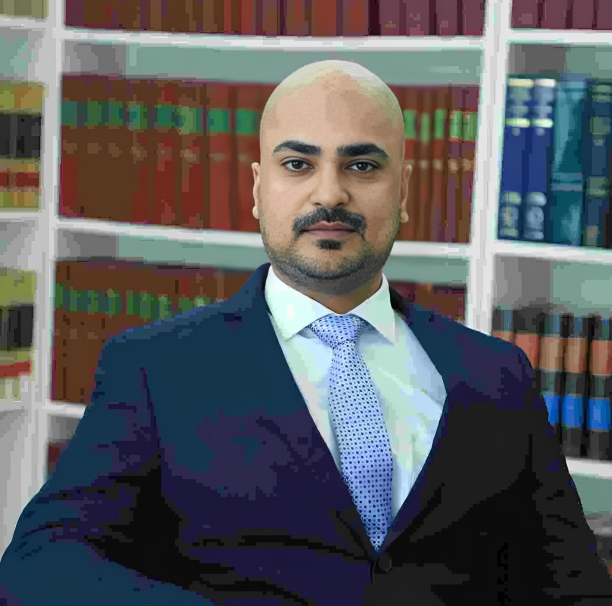
Tag: Commercial Lawyer

  • “To handle a wide range of cases effectively, a litigator must develop a robust set of core skills that transcend subject matter.” – Nishank Tyagi, Advocate on Record at Supreme Court of India.

    “To handle a wide range of cases effectively, a litigator must develop a robust set of core skills that transcend subject matter.” – Nishank Tyagi, Advocate on Record at Supreme Court of India.

    This interview has been published by Anshi Mudgal and The SuperLawyer Team

    Being an AOR today with nearly a decade of experience, what initially motivated you to pursue law as a career? Was there a defining factor that guided this decision?

    If I was to sum up my decision to opt for law, I would say that I was running away from engineering and landed up at law school. Law was not the obvious choice for me initially. I was a science student in school and my parents wanted me to prepare for competitive exams and pursue engineering as engineering was the obvious choice for all science students, however, very early on in 11th standard in school, I realized that it was not my cup of tea. I wanted more than just a simple 9 to 5 desk job. I wanted a career which would make me look forward to work everyday and also give me an opportunity to serve the society and that is how law, especially litigation became the obvious choice for me.

    In your early years, you worked with various lawyers and law firms. What were some of the experiences that laid the foundation for your practice, and how did you deepen your understanding of law during that period?

    I consider myself extremely fortunate to have worked with some of the greatest minds in the field of litigation very early on in my career. After completing law, my focus was to learn the complexities of litigation and understand the world of Trial Courts. I had initially joined the chamber of Mr. Ratan. Kumar Singh, Senior Advocate where I learned about arbitration and commercial litigation which was an enriching experience. Later, I joined BAV Partners where I got to work with Mr. Vibhor Garg, whom I deeply regard as he gave me ample opportunities to appear before various courts in Delhi. Mr. Garg encouraged me to argue matters independently and to cross examine witnesses whenever required which honestly laid down the foundation of the litigator that I am today. I also worked at a prestigious law firm like Dentons Link Legal where I saw the more organized and structured side of litigation and arbitration and handled some high-stake matters under the guidance of Mr. Atul Sharma and Mr. Ravi Varma who are both luminaries of the legal fraternity. 

    What challenges did you face being a first-generation lawyer?

    Just like any other profession, litigation also has its share of challenges and being a first-generation lawyer sometimes puts that extra burden on your shoulders, however, I am a firm believer that first generation lawyers should stay away from these negative debates of “insider-outsider”. Thinking too much on these lines will put you in a negative loop and divert your focus from important things. Rather than focusing on other people’s plate, one should put their head down and focus on improving core skills that a litigator requires. At the end of the day consistency and hard work can beat any kind of legacy.

    After almost five years in the legal industry, you took the step of establishing your own practice with Adel Legal. What inspired this decision, and what initial hurdles did you face in setting up your firm?

    From day one of me joining litigation, I was absolutely clear that someday I will set up my independent practice/firm. Though it always confused me as to what should be the timing of going independent and how much experience would be enough to go independent. Later, I realised that there is no straight jacket formula to this and everyone has their own circumstances. I knew that as I progressed in the world of law firms, both remuneration and responsibilities would increase but my risk-taking capacity would decrease. Hence, I thought the sooner the better for me and decided to take this calculated risk of going independent with just 5 years of experience.

    Having represented a wide range of clients, including banks, government entities, and foreign corporations before diverse judicial forums, what do you consider the most critical skills a litigator must develop to handle such varied cases effectively?

    To handle a wide range of cases effectively, a litigator must develop a robust set of core skills that transcend subject matter. Analytical & Strategic Thinking, Oral & Written Advocacy, Interpersonal & Negotiation Skills are important to name a few. A litigator must have a good sense of judgment and he must know when to push aggressively versus when to negotiate or settle. Also, litigation is adversarial and often high-stress. The ability to maintain focus, motivation, and composure through long, contentious cases is essential.

    With your experience in arbitrations under international institutions such as ICC, SIAC, and LCIA, how do you see the role of international arbitration evolving for Indian practitioners and clients in the coming years?

    I am extremely positive about the role of international arbitration evolving for Indian practitioners and clients in the coming years. Practitioners need to stay abreast of legislative reforms, institutional rules changes, and emerging jurisprudence. Indian parties are very active users of foreign arbitration institutions for international contracts. At the same time, there is increased demand for India‑seated or Indian institutions to handle international arbitrations, which reflects growing trust in domestic institutions. The Supreme Court and High Courts have increasingly issued pro‑arbitration judgments, pushing back against unnecessary judicial interference in arbitral awards, enforcing foreign awards.

    Having represented the Government of Delhi before the Delhi High Court, what has been one of the most challenging cases in your practice, and how did you approach and handle it?

    Handling Government litigation often involves chasing various departments, officials and civil servants for the required instructions, which is an additional challenge. I had recently worked on a case where government land worth hundreds of crores right in the heart of south Delhi had been encroached upon and even sale deeds were executed which were used to claim title over the said land leading to loss of revenue for government authorities. However, with the correct strategy and timely instructions, we were successfully able to defend the possession of the government authorities over the said land. 

    How has been your experience of working as Jail Visiting Advocate with the Delhi High Court Legal Services Committee?

    I got empanelled as a Jail Visiting Advocate with the Delhi High Court Legal Services Committee in the year 2022. I visit various jails in Delhi every week and interact with prisoners to know their grievances and ensure that they get the required legal help and adequate representation before the High Court of Delhi and Supreme Court of India. I file bail applications for under trial prisoners and file appeals on behalf of inmates who have been convicted by trial courts. I have closely experienced the working of jails and have tried to contribute in making lives better for the prisoners. Overall, it has been one of the most satisfying experiences of my career.

    What resources or methods do you rely on to stay updated with the latest legal developments, and what advice would you give to students aspiring to enter litigation? What habits should they build early in their careers?

    One doesn’t need subscriptions of any legal database or fancy website to stay updated on legal issues. The website of the Hon’ble Supreme Court and various High Courts are good enough to keep you updated about the latest judgments and legal trends. But one must develop the habit of reading.

    I consider myself a student of law and still learn from my mistakes, so I am not sure what advice I can offer but I can list down couple of mistakes I made in my career and would request my young friends joining litigation to avoid the same if possible:

    • Not doing enough internships with litigators and Judges.
    • Not networking enough from the very beginning.

    I learnt it the hard way but the above mistakes can be avoided. Be Patient: Litigation takes time to pay off.

    Becoming an AOR is a significant achievement. Could you share your journey towards this milestone and the responsibilities it brings to your role?

    The Supreme Court of India conducts the AOR examination every year and the syllabus and study material can be found on the Supreme Court’s website. Preparation for the AOR exam was a learning curve, however, since I had been in practice for many years, that experience along with a solid strategy helped me sail through in my first attempt. Becoming an AOR and representing clients before the Supreme Court of India is a matter of great pride for me, but it does come with its share of responsibilities. The Supreme Court Rules and various landmark judgments of the Apex Court define the duties and responsibilities of an Advocate on Record. The Supreme Court only recognises AORs for the purposes of filing and an AOR can be held accountable for anything filed under his name and signature. But the biggest perk is that you get to file cases and represent clients from all parts of the country before the highest court of the land.

    Balancing multiple responsibilities as an AOR and as the founder of your own firm can be demanding. How do you manage to strike a balance between professional commitments and personal life?

    This is one challenge almost all litigators face in their lives, however, with effective time management one can easily wrap up work in reasonable working hours. I personally believe in putting in effective working hours and leaving office by 7pm and encourage associates at our firm to do the same. Unfortunately, at a lot of law firms working till late hours has become the new trend. I personally do not support or encourage that working style. Even in high-pressure environments, one should try to maintain core working hours and stick to them. Dinners with family, workouts, or personal hobbies should be treated as non-negotiable meetings.

    Get in touch with Nishank Tyagi –

  • Global Perspective, Local Roots: Shaping Law, Leadership, and Impact – Yashasvi Tripathi, Corporate Associate at Davis Wright Tremaine LLP, United States.

    Global Perspective, Local Roots: Shaping Law, Leadership, and Impact – Yashasvi Tripathi, Corporate Associate at Davis Wright Tremaine LLP, United States.

    This interview has been published by Anshi Mudgal and The SuperLawyer Team

    As a dual qualified lawyer, we would love to start from the very beginning. How and when did you decide to pursue law, and how did you end up deciding that it was the right time to move on and do your LL.M. as well? We would love to understand your journey, challenges, and how you built your road to excellence.

    I’m from Benares. I did my schooling there, and my father has a business and is also very active in social work. Back then, when I was in school, he used to write letters to authorities on various legal issues, troubles, or policy changes he thought were required for businesses in India. I used to take an active interest in what he was writing, and sometimes he would ask me to draft those letters. I think that’s how writing and my early interface with law and business began at home.

    When I was faced with the question of what I wanted to do, looking back now, I find it quite funny. There were many doctors in my family, so the obvious choice seemed to be medicine. But when I said I wanted to be a doctor, everyone at home said, “Oh no, we already have too many doctors, you should become a civil servant.” So, I initially wanted to become a civil servant, and that’s why I went to National Law University, Delhi. I thought, in Delhi we have everything, all the coaching, and law was considered a great subject for IAS aspirants.

    But when I started studying law, even before entering college, while preparing for CLAT and AILET, I fell in love with it. I used to read The Indian Express and The Hindu daily in Benares. I joined online coaching with Career Launcher because law wasn’t a very well-known option there at that time. This was back in 2012, and now it feels like history. Those days of reading newspapers and following legal developments made me fall in love with law. I realized that after studying law you could do everything a civil servant or even a politician could do in public interest litigation, fighting for the rights of disadvantaged people, becoming a corporate lawyer, anything was possible. The sky was the limit. So, I decided I wanted to stick with law.

    You don’t necessarily have to be a public lawyer, or a corporate lawyer, or any one thing you can carve your own path. That’s when I firmly decided to become a lawyer. Initially, I thought I would practice in the Supreme Court of India. I never imagined I would go to the US. My frame of mind was always to practice in Indian courts.

    By God’s grace, I was selected for National Law University, Delhi, with an All India Rank of six, and I was the first person from Banaras to enter that institution. For a long time, I think I was the only one from my city there. My parents were very supportive, and Delhi gave me tremendous exposure. One thing I learned is that if you work hard, you will succeed.

    I had no legal background, and I didn’t know where I would end up after five years. So, I focused on exploring. I did about 21 or 22 internships in college, which was one of the highest numbers in my batch. I never went back to Banaras during vacations I stayed in Delhi and kept interning. I was not sure whether I wanted to go into the private sector, NGOs, or litigation, so I tried them all.

    Eventually, I realized that I am guided by two principles: hard work and being the best version of myself. When I thought about how to achieve that, I felt pursuing an LL.M. would help me grow further. I also felt my education was incomplete without it. So, after all the internships and hard work in college, I decided to pursue an LL.M. I wrote my SOPs, appeared for exams, and went through the application process, which eventually led me to New York University.

    But more importantly, I want law students, especially those from smaller cities, to know that anything is possible. I consider myself from Banaras, which back then was not a Prime Minister’s constituency or the sought-after city it has become today. I am happy to see its growth now, but at that time it was still considered a small city. I want students from such places to believe that if you work hard and your aim is excellence, you can reach wherever you put your mind to.

    From being in one of the top universities in India to one of the top universities in the world. So how was your journey and the transition? There must be a lot of difference between the academia of NLU Delhi and New York University School of Law. While you were pursuing, what did you do and how did you make sure that your hard work paid off in the US as well? And what was your challenge over there, or maybe whatever you felt was very different and how you approached it differently with all your diligence and hard work. We would love to hear that story as well so that students and learners can understand that for a person who has done 22 internships in NLU Delhi and ended up at NYU, she has made a name for herself. How have you done that?

    It should be near 22, 21, or 25. I’m not sure of the number now. You can check my LinkedIn and I’m not even sure if I put all of them there. But anyway, I would want current students or current law students to take the LL.M. not only as an academic pursuit, not only as an academic course. I want them to take it as a professional pursuit as well. Since it involves a lot of investment, I don’t want students to just go and study. Of course, those who can afford it and who have academic inclinations or want to pursue academia should, by all means, go and do that. But many students fail to understand that the LL.M. is also an opportunity to pursue professional opportunities, and for that they have gone to the US. So utilize the LL.M. for networking opportunities, for exposing yourself to different careers and career professionals.

    I don’t want current NLU students or any law students who are in their fifth year to think they will just study as much as they can in one year when they’re going to the US, London, or Singapore. They should have a balanced course, take the minimum number of credits required, and then start learning outside of college and the classroom as well.

    You have conferences every day. You meet professors, you go to law firms, attend their networking events, and learn what the profession really is. That is very important. This is something students should start thinking about when they are in their fifth year of law school.

    This is one takeaway that I had. And to answer your question, the difference between NYU and NLU Delhi was that at NYU, it’s a totally Socratic method of education. No one is going to check if you are studying or not. You have to guide your own education.

    You have to pick your own subjects, you have to guide your own education, and you are fully responsible for your future, like any adult. So I think an LL.M. or Master’s should be done by an adult who knows what he or she is doing, and what he or she wants to pursue. If you are not sure about that, I would say work a few years in India before going to NYU or doing any LL.M. for that matter. At NYU, I had amazing faculty members who were already great and accomplished professionals. Even in the classroom, we were getting both theoretical and practical knowledge, how you would actually do something in a law firm or in court. That’s what makes the LL.M. different. That’s why it is a Master’s.

    And again, landing a job in the US was very difficult. As Indian citizens, we have to get H-1B sponsorship.

    You have to qualify through a lottery, then you have to get H-1B sponsorship, and you have to qualify the bar exam. Again, if you want, I can elaborate on the subject of how to land a job in the US, but that itself is a different conversation.

     We’d love to understand that also because obviously the people or the students who would like to maybe see how they can plan it. Like you have explained that these are the processes, it’ll be very, very helpful if you can talk a little bit about this aspect as well. How to actually land a job, because that is another struggle. The first struggle is to reach there, and then the second struggle is to find a better job where you can stay and work as well.

    Sure. So when we are in LLM, first of all, we are outside of our shelter. We have to start managing our food, our household, and it’s a foreign country. You are away from your family. It’s new people, plus it’s the pressure of finding a job. It’s a lot of things. So I always tell students to prioritize their wellbeing.

    Give full hundred percent to your education because, at the end of the day, all employers are going to look at your transcript. So you should be very sure not to overburden yourself and not to take extra credits just for your academic satisfaction. Take those kinds of credits which will help you land jobs in the US.

    Like if I’m a corporate lawyer, if someone wants to be a corporate lawyer, they should take mergers and acquisitions, securities, business law, contracts drafting, subjects like this, which make you eligible to sit for the bar exam and which make you a good candidate for the law firms over there. First take only those kinds of subjects. This can be a very controversial thing that I’m saying, don’t do subjects for your academic interest, but to each its own.

    And if you have been there with a lot of financial difficulties and with a lot of struggles, you want to make sure that you get the best opportunity when you are out of that college. I speak with several students from India and all they want is a job in the US after doing LLM because they have put in that kind of resources to get selected for an LLM to go there.

    So I would say, manage your academics well. Don’t overburden yourself and do well in academics. Start networking outside of your law school, inside your law school, network with your law professors. And networking is a long process. Like everyone says, network, network, network. But what is it? First, I would say it’s a sport.

    The more you do, the better you become at it. And it’s going to be a two-way process. Like mentoring, you are going to be a mentee to someone, but again, just don’t be entitled to anyone, don’t just walk up and say, I need a job. You have to learn from their experiences.

    You have to invest time with them so that the people you are speaking with in the US, who you are networking with, should understand that this person is worthy of mentoring. Become mentees to some good professionals in the US. Learn from their experiences. Follow them, genuinely follow them, genuinely learn from them.

    And it’s a two-way street. Everyone knows when you’re speaking with them that you’re looking for a job. So at the end of the day, if they find an opportunity, they will let you know. And you have to keep talking to multiple people, reach out on LinkedIn, email people.

    That’s what I did and that’s how I got a job. And that’s how law students from India who have no connections or who don’t have a background in law, have to make their own connections and that’s how they land a job. But it’s all about hard work and perseverance. It’s not about how smart you are to get a job in the US, it’s about your perseverance and your hard work.

    While in the US, when you started your LLM and began working, you were also a Legal Research Analyst with Jethmalani & Nallaseth PLLC. After that, you were associated with Nishith Desai Associates as well, in the US itself. So how did you plan it? Why did you decide to join these institutions? And how did your internships or the kind of work profile you had in India help you understand the working environments of India and the US, because there is also a huge difference? Also, how did you adjust, and what kind of strategies did you follow to make sure you adapted well, and obviously worked as hard as you always do?

    I started my professional journey, I would say, in the US. I did all kinds of internships in India, but I never worked professionally there. I went directly for my master’s. But I worked with two institutions, as you named: Jethmalani & Nallaseth and Nishith Desai Associates, whose headquarters or main offices are in India. So I have worked with Indian institutions, I would say. And then I went to Dechert, which is a big law firm. After that, I went to Davis Wright Tremaine, which is also a big law firm.

    As you said, it’s different. But I always wanted to be a New York lawyer, a US attorney, and I was in New York, so I wanted to be a NY attorney when I was doing my LLM. As I told you initially, I have always been driven by hard work and by striving to be the best, at least persevering for the best where I am.

    When I was in LLM, I understood that being in the US and getting employed there is very difficult. You have to be hardworking, strong academically, good at networking only then can you land a job in the US. So that became a challenge for me, and whenever I’m faced with any challenge, I am motivated to tackle it.

    I had to come back to India after LLM, but I thought, “Oh no, this is very challenging. Only the best of the best, apparently, can do it.” But after these many years of experience, I can say it’s not about the best of the best, it’s about hard work and perseverance.

    Then I told my father, “Dad, why not pursue a few years of employment in the US? I want to get a job and then I’ll come back.” I felt my education in the US was not complete without a few years of professional experience. He said, “Okay, go.”

    Back then, I started looking for opportunities. As I said, I had no professional experience from India, so I went directly from NLU Delhi to NYU. So landing a job for me was very difficult. That’s why when I speak to current LLM students who have a few years of experience, I tell them, You are already at an advantageous position compared to what I was.

    I started with the first opportunity I got, which was an immigration law firm. It was not a corporate law firm. My employer was Mr. Anil Jethmalani at Jethmalani & Nallaseth. He still continues to be my mentor. He was very kind to give me my first job. He saw that I was genuine. I had interned, but had no professional experience. He sponsored my visa, and I started working there very diligently as an immigration attorney.

    We don’t have immigration practice in India, of course it is outsourced, but it’s not established there. I started working there, but I was always interested in corporate law. So I used to network, network, network. Before going to the office to do my job, which, you know, was paying my bills, I would go to different law firms, attend conferences, meet people, write to folks on LinkedIn, and request coffee chats or informational interviews. That’s how I moved to Nishith Desai Associates.

    Again, Mr. Vaibhav Parikh of Nishith Desai Associates, the head of the US offices, has been amazing and a great mentor. This was my first corporate law job. I didn’t have a corporate law background from India. I was interested in pursuing something else, but when I was exposed to different things, having done all my internships, met people, followed the news I gradually decided what I wanted to do next. I had no fixed plan initially.

    Then I decided I wanted to be a corporate lawyer, and I decided on this in New York. Some people plan it beforehand: they want to be a corporate lawyer, then do an LLM, then get the job. I decided this after finishing my LLM. Mr. Vaibhav Parikh saw potential in me, thankfully, and offered me my first corporate law job in New York. At Nishith Desai Associates, I also worked very diligently, and I hope they felt the same. I worked there for almost one and a half to two years.

    At Nishith Desai Associates, the work involved practicing Indian law. We were co-counsels with foreign law firms, doing work for US clients who wanted to have Indian operations. So essentially, we were practicing Indian law for US clients or US law firms. Having done my LLM in New York and cleared the bar exam, I wanted to be part of even bigger global law firms, working on more complex deals. That’s how I shifted to big law, to Dechert. This required a lot of networking and meeting people, and then I came to Davis Wright Tremaine, where I am currently.

    Here, I’m practicing US law as a US attorney, focusing on M&A. The clients I work for and the cases I handle are very complicated and high-profile, and I thoroughly enjoy working on them. It has been a very enriching and challenging journey so far.

    Moving from an Indian law firm to a US corporate law firm, which is one of the biggest over there, what was your way to transition? How did you make that transition so easily or with a challenge, with your hard work? Also, the kind of understanding of international jurisdictions is absolutely different when you are practicing in litigation or practicing corporate law in-office, in-house. What is your understanding about that? Also, what prompted you to decide on corporate law, and how have you managed so far?

    So I thought of corporate law and I decided on corporate law because it’s very dynamic and fast-moving, and I’m a person, sorry to say with less patience. So I want fast-moving things or fast results. Litigation takes many years, and the same applies to arbitration.

    I was interested in international arbitration as well, and I pursued a lot of courses in that. I have publications in those areas, but I saw that corporate law is dynamic and fast-moving. I would be counsel to businesses, which was my motivation to be a lawyer in the first place, having seen my father.

    I would be their go-to person. I would meet clients from the business community. It’s very fast-paced, dynamic, and logical. You have things in your control. You don’t have to stand in court for hours. You are not in front of any tribunals. If things are in your control and your co-counsel or your peer controls, I am working for my client, and the other law firms are working for their clients. I’m a very collaborative person as well. So we collaborate and give results like we collaborate to merge two companies, acquire, merge, sell, or spin off.

    I wanted to do business law. That’s how I decided to be a corporate lawyer. I’m happy about my choice of law. You can see the results of your hard work in real time, which is very satisfying.

    And how did I prepare for my roles in US firms? I would say there are a lot of similarities. Of course, the working culture is different. In Indian firms, it’s very hierarchical and fast-paced. In US firms, it’s also fast-paced, but there’s less hierarchy. Senior lawyers are actually invested in your development. That’s what I experienced in my law firms, Dechert and Davis Wright Tremaine. My seniors are heavily invested in my mentorship and learning, and that’s what I also pass on to my juniors. I get to learn a lot and also pass on that knowledge.

    It’s high-paced, with complicated cases. At Davis Wright Tremaine, we try to simplify solutions or innovate solutions for complicated problems. For example, something you could do with a 50-page SPA (Share Purchase Agreement) might be condensed to 20 pages. We try to be very efficient for our clients because they’re paying us by the hour. We try to be as efficient as possible and innovate where we can.

    So these are the differences between the two law firms, but again, to each their own. People can do whatever they want in different places, and I got to learn a lot from all of these experiences, for sure.

    What kind of qualities do you look for in candidates? Because that is also a very major part of preparation for any student. And not only qualities the way they act, the kind of etiquette that you see in them, how do you judge them? After all, an interview is just one day, but the person will be with you for a longer period of time.

    So what kind of checklist, or anything, can you share about what you observe while recruiting someone for such a big law firm?

    First of all, this is, again, a very controversial thing to say. I should feel comfortable in that person’s company. Our work hours can at times get very challenging. We have signings and closings; we are rushing, and sometimes it’s fine, but at other times it’s super stressful. So you want to work with a person who is collaborative, who is nice, who can handle tasks independently if I assign them. Of course, it varies depending on the candidate’s year, but being nice and hardworking is key.

    They should be able to take initiative. I should see from that candidate whether they are proactive and helpful, because we all work in teams, and you want people who support each other during stressful hours. Hardworking, collaborative, and nice.

    When you are interviewing with law firms like these, you are already smart. You can only get to these interviews if you are smart. So all the candidates are intelligent. The challenge is to find someone who fits our culture wherever you are. The culture I look for is collaborative, hardworking, independent, and responsible for someone who says “yes” when given responsibilities. These are the things I would look for.

    But again, this is something for law entrants to think about later. First, I would encourage them to have a spectacular CV, to be smart, and to be eligible to reach these places.

    Intern in a lot of places. If you are sure you want to do corporate law, do internships with top-notch law firms in India. Go there, do research associateships with professors during your LLM, and then go for these interviews.

    So at the very end, we would love to understand that with such a demanding professional life, the kind of commitments that you have for something you have worked so hard for, and now that you have reached that particular space, how are you planning to manage a healthy work-life balance along with being a new mom? How are you going to delegate your responsibilities, and how do you see that so far, both with your earlier life and now with being a new mom yourself? So what are your plans for times to come, and how have you managed it so far?

    So far, I think I have managed it well. Not perfectly, but at least I have reached where I am and have managed it fine. I would say strategy is key. You have to be a pre-planner and be strategic about what you’re planning.

    So far, every morning, I make my to-do list and try to prioritize things at the very beginning: what is urgent, what has to be done, what can be delegated to someone else, and what is something that has to be done by me. This is something I have to complete and submit to my seniors.

    Every morning, I do my to-do list and plan accordingly, and I make sure that I have some time for myself for walking, for the gym, or whatever. I do that in the evenings and then have dinner. But at times, you don’t get enough time, given how corporate jobs are. I think strategy, pre-planning, and thinking about the urgency of a matter of what is delegatable, non-delegatable, and what to do in the mornings is very important.

    But honestly, I’m a new mom now. I myself don’t know how I’m going to manage my motherhood, which I absolutely cherish, and I’m thankful to God for this blessing. I am just ending my maternity leave and have to rejoin my law firm job, which I really enjoy and love doing.

    So let’s see how I manage those. I’m sure in my law firm, I have a lot of mothers who are balancing work and family. At Davis Wright Tremaine, we have a very good support system and a strong group of working mothers who have been very kind with their advice. I’m sure I will learn from them. But this is something I should share with you in a few years down the line how I manage my work-life balance after being a new mom.

    Get in touch with Yashasvi Tripathi –

  • “As the legal counsel, we are frequently required to operate in grey zones. It is where legal advice moves beyond compliance to become strategic.” – Gurcaran S. Arora, Co-Managing Partner, Gurcaran Divya Law Offices.

    “As the legal counsel, we are frequently required to operate in grey zones. It is where legal advice moves beyond compliance to become strategic.” – Gurcaran S. Arora, Co-Managing Partner, Gurcaran Divya Law Offices.

    This interview has been published by Anshi Mudgal and The SuperLawyer Team

    From working with one of the biggest firms in the country to co-founding Gurcaran Divya Law Offices, what inspired your transition from a leading full-service firm to launching your own corporate law practice?

    To begin with, technically, I didn’t co-found the firm. What was originally founded in 1977 was J S Arora & Co, a local tax practice set up by my father in a small town in India. He remains the founding partner, and we continue to carry forward the history, values, and professional integrity that defined his practice. That legacy forms the foundation on which Gurcaran Divya Law Offices stands today.

    When I took over the managing seat in 2022, we rebranded the firm and focused on taking it to the next level, both in terms of geographical reach and the range of practice areas. We transitioned it from a local tax-centric setup into a boutique Corporate, M&A and Capital Markets law firm advising clients across industries and borders. In 2023, I was joined by my current co-managing partner, Divya Badlani, and together we now lead the firm.

    The real turning point for me came during a deal I worked on at a leading full-service firm. We were advising the investors, and on the other side was a passionate founder, building something of real value, but his lawyer lacked the expertise to fully understand or push back on the legal risks being placed on him. The deal closed, everyone moved on, and yet I couldn’t. There was something deeply unsettling about watching someone unknowingly give away more than they should have, simply because they didn’t have the right counsel in their corner.

    That experience stayed with me. It made me realise that India doesn’t just need more corporate lawyers, it needs more accessible, business-focused, high-quality legal advisors who can meet founders and businesses where they are, not just those operating in tier 1 firms for large institutional clients. That’s the gap I set out to fill.

    Having worked on numerous high-value cross-border M&A transactions, what have been some of the most challenging aspects of executing such deals within the Indian legal landscape?

    Let’s be honest, navigating the Indian regulatory landscape can be incredibly challenging. It is highly complex, with layers of central, state, and local laws that are often unorganised, outdated, or not readily accessible online. Approvals can take significant time, and there are usually multiple authorities and stakeholders involved, each with their own processes and expectations.

    What makes things even harder is the lack of clarity in several regulatory provisions. Many times, the law is ambiguous, and no formal clarification is issued by the regulators. In such situations, lawyers and dealmakers are left to take a considered view based on legal interpretation, precedent, and practical experience, often under tight timelines.

    Another challenge is the unpredictability of how different regulators or authorities might react to the same issue. A structure that works in one transaction may be flagged in another, even in the same sector. This requires not just legal acumen but also strategic foresight, strong communication with stakeholders, and a solutions-oriented approach.

    Yet, despite all of this, the satisfaction of successfully closing a complex cross border deal in India is unmatched. The legal landscape may be tough, but with the right planning, advice, and execution, it is navigable.

    Having worked extensively in regulatory compliance, especially for clients in dynamic sectors like fintech and renewable energy, what major sector-specific challenges do you frequently encounter?

    Both fintech and renewable energy are evolving faster than the regulatory frameworks meant to govern them. In fintech, the challenge lies in navigating a fragmented regulatory environment involving multiple authorities like the RBI, SEBI, and MeitY. The laws often lag behind innovation, forcing us to interpret legacy frameworks in new contexts.

    In renewable energy, the friction typically stems from federal complexity. Central policies may be progressive, but state-level execution, land laws, and tariff regimes are inconsistent and often unpredictable.

    Across both sectors, regulatory ambiguity is a constant. 

    As the legal counsel, we are frequently required to operate in grey zones and provide commercially grounded solutions where the law offers limited guidance. It is where legal advice moves beyond compliance to become strategic. 

    Given your expertise in capital markets and corporate governance, how do you foresee regulatory trends evolving for listed companies in India over the next few years?

    We are likely to see a steady shift toward greater transparency, accountability, and shareholder empowerment. SEBI has been consistently tightening corporate governance norms, be it around related party transactions, independent directors, or disclosure standards. That trajectory will only intensify as Indian markets continue to integrate with global benchmarks. The recent Jane Street case is a clear example of SEBI’s growing willingness to act decisively against market abuse, even involving global institutional players.

    Environmental, Social, and Governance (ESG) compliance is also set to become more structured and enforcement-driven, moving beyond voluntary reporting. At the same time, we can expect sharper scrutiny of promoter behaviour, board independence, and market conduct, especially in the wake of recent high-profile cases.

    Overall, the direction is clear: listed companies will need to move from a minimum compliance mindset to a culture of proactive governance. Those that lead on this front will be better positioned to attract long term capital and market credibility.

    As someone who has closely advised on FDI and SEBI regulations, what are some common misconceptions or pitfalls that foreign investors face when entering the Indian market?

    One common misconception is that India’s liberalised FDI policy means a deal can be closed quickly. While entry routes may be automatic in many sectors, the reality is that regulatory, procedural, and sectoral nuances often require detailed structuring and proactive compliance.

    Another pitfall is underestimating the role of state-specific laws and local business practices, which can significantly impact timelines, particularly in sectors like infrastructure, retail, and real estate.

    Foreign investors also occasionally assume that SEBI’s disclosure and takeover regulations mirror those of mature markets, but in practice, there are several India-specific requirements, especially around pricing guidelines, minimum public shareholding, and indirect acquisitions, that require careful navigation.

    Ultimately, success in India requires more than just legal compliance. It demands a strategic understanding of regulatory sensitivities, stakeholder expectations, and long-term alignment with Indian business realities.
    How has your legal education at Symbiosis Law School (Noida) shaped your professional journey, and what advice would you offer to law students aspiring to build a career in corporate practice?

    Oh, absolutely yes. My time at Symbiosis Law School (Noida) played a foundational role in shaping my career. One of the best aspects of the institution was its strong emphasis on internships. We were not only encouraged but marked on the quality of internships we pursued. In the final two years, that push became even more intense. The structure of long weekend classes gave us the flexibility to intern during the weekdays, which made a huge difference. I genuinely owe the start of my career to the opportunities I got to intern during law school.

    On the academic front, during our time, subjects like capital markets and transactional law were not deeply embedded in the core curriculum, although optional courses and guest lectures were available. From what I hear now, the curriculum has evolved meaningfully to include more practice-oriented subjects like M&A, securities law, and corporate structuring, which is a great development.

    My advice to law students aspiring to build a career in corporate practice is to structure their internships thoughtfully. Start your internships with boutique or mid-sized firms to build a solid foundation, then move to Tier 2 and Tier 1 firms as your skills mature. About two good internships at each level are enough to learn the ropes. Do not chase Tier 1 firms too early in your law school journey. Reserve them for your final years, when you’re ready to demonstrate what you’ve learned and convert the opportunity into a job. Always focus on quality; what matters is not just where you interned, but what you actually learned and delivered.

    What advice would you give to law students who are just starting out in their careers? What practices should they aim to inculcate early on, and what resources would you recommend to support their growth?
    The single most valuable investment a law student can make early on is in meaningful internships. Not just collecting them, but actually doing quality work, asking the right questions, and learning on the ground. What you take away from those experiences will shape your confidence, skills, and career direction far more than any textbook ever could.

    That said, conceptual clarity is equally important. A solid grasp of core legal principles and staying updated on legal and commercial developments gives depth to your practical work.

    One area that often gets overlooked is networking and personal branding. Your batchmates, seniors, and law school peers will become your professional ecosystem and, very often, your strongest sources of referrals and opportunities. Build those relationships with sincerity, they will serve you far beyond your law school years.

    Given the demands of a high-intensity legal career, how do you maintain a healthy work-life balance? Are there any personal interests or activities that help you unwind and recharge?

    My trick for balancing work and life? I married the firm’s future co-managing partner. 😀 

    Jokes aside, the legal profession is undeniably demanding, and striking a balance takes intention. For me, discipline is key. A structured schedule, clear boundaries, and conscious downtime help keep things in check, especially when there’s no ‘boss’ above you, but accountability still runs deep.

    One habit I’ve tried to inculcate is not setting unrealistic timelines for clients. It helps manage expectations and protects mental bandwidth. Having a partner who understands both the personal and professional pressures makes all the difference, and I’ve been very fortunate to have Divya by my side, keeping both life and law running smoothly.

    Get in touch with Gurcaran S. Arora –

  • “The idea of using legal knowledge to solve complex strategic problems and enable organizations to grow responsibly truly inspired me.” – Nitin Goyal, Senior Partner & Head- PAN India Litigation at NAKS & Associates.

    “The idea of using legal knowledge to solve complex strategic problems and enable organizations to grow responsibly truly inspired me.” – Nitin Goyal, Senior Partner & Head- PAN India Litigation at NAKS & Associates.

    This interview has been published by Anshi Mudgal and The SuperLawyer Team

    With over 15 years of experience in Corporate Law and Litigation Management, how have you observed the evolution of India’s corporate legal landscape, particularly with the emergence of tech-driven businesses?

    Thank you for the question. Over the past 15 years, I’ve witnessed a remarkable transformation in India’s corporate legal landscape.

    In the earlier years, the focus for most corporates was largely on traditional compliance — company law filings, ROC, SEBI regulations for listed entities, and occasional contract disputes. Litigation was also relatively straightforward, often revolving around shareholder disputes or debt recovery.

    However, with the emergence of tech-driven businesses — be it startups, e-commerce platforms, fintech, or now even Web3 and blockchain ventures — the ecosystem has evolved dramatically. We’re seeing much more dynamic areas of law now shaping up, such as data privacy, cyber security, intellectual property monetization, intermediary liabilities, and cross-border tax structuring.

    At the same time, the courts and regulatory bodies have also come a long way“. There’s been a sharper emphasis on codifying norms, like the introduction of the IBC, the data protection regime that’s taking shape, and robust SEBI frameworks for tech IPOs. The judiciary, too, has embraced digital filings, virtual hearings, and has shown more readiness to adapt to the business exigencies of tech companies.

    From a litigation management standpoint, disputes have become more complex — involving intricate shareholder agreements, IP enforcement, regulatory investigations, or even white-collar compliance matters. We now often have to advise clients not just on ‘law’, but also on risk mitigation strategies involving technology platforms and data footprints.

    In short, the evolution has been from a largely form-driven, compliance-heavy environment to a more nuanced, strategy-focused, tech-sensitive legal landscape. And as practitioners, we’ve had to upgrade continuously — whether it’s understanding how smart contracts work or guiding clients on digital evidence and cybersecurity incident responses.

    What initially inspired you to pursue a career in law and how has your background as a Company Secretary strengthened your legal practice particularly in the areas of corporate governance and compliance?

    Right from the initial stage of my career, I was drawn to how law shapes businesses and society. The idea of using legal knowledge to solve complex strategic problems and enable organizations to grow responsibly truly inspired me.

    My background as a Company Secretary has been a huge advantage. It has given me a deep, practical grounding in corporate governance, statutory compliance, and regulatory frameworks. So when I handle litigation or advisory matters, I don’t just look at them as disputes or transactions, but also ensure they align with sound governance and compliance practices.

    This dual perspective helps clients not only tackle immediate legal issues but also build stronger, compliant businesses in the long run.

    What inspired your involvement in POSH awareness, and how do you approach training with sensitivity and impact? Additionally, what are the major challenges you have to deal with while spreading awareness relating to POSH?

    I’ve always believed that a truly successful workplace is not just legally compliant, but also safe and respectful for everyone. That’s what inspired my involvement in POSH awareness. It’s an area where legal compliance directly shapes people’s everyday dignity and confidence at work.

    When I conduct POSH training, I approach them with a lot of empathy and practical examples. It’s important to go beyond the text of the law and address real scenarios, bust myths, and encourage open dialogue so participants genuinely understand the spirit behind the Act.

    One major challenge is overcoming the hesitation or awkwardness people often feel around this topic. Many fear it’s only about punishment or blame. So, I focus on normalizing conversations about respectful behavior, clarifying rights and responsibilities, and building trust — which ultimately help foster a healthier work culture.

    In your experience in handling Cybercrime and Intellectual Property disputes, what are some of the most critical risks businesses face today, and how can they establish strong preventive frameworks?

    From my experience with cybercrime and IP disputes, two of the biggest risks businesses face today are data breaches which can expose sensitive customer or trade data and infringement issues, especially with brands and digital content being copied or misused online.

    Cyber risks have grown with increased digitization, remote work, and online data space dependency. Similarly, with global markets and e-commerce, protecting trademarks, software, and proprietary content is now far more complex.

    To build a strong preventive framework, I always advise businesses to invest in robust data security policies, regular employee training on phishing and cyber security hygiene, and to have clear incident response plans. On the IP side, timely registrations, vigilant monitoring for infringements and well-drafted contracts covering ownership and licensing rights — are critical.

    In short, prevention is far more cost-effective than crisis management, whether it’s through internal audits, tech safeguards, or proactive IP protection.

    You’ve led several compliance audits and risk mitigation initiatives. What are some common legal oversights organizations tend to make that could lead to long-term liabilities?

    A few common oversights I’ve seen repeatedly are:

    • Lack of proper executed contracts or poor drafting which does not cover some very critical areas which often leads to litigation at later stage
    • Not updating statutory registers, policies, or board resolutions in line with evolving laws which creates gaps visible during due diligence.
    • Overlooking related party transactions and not maintaining proper documentation, this can lead to serious regulatory scrutiny.
    • Failing to robustly implement POSH or data privacy norms, treating them as formality rather than embedding them into workplace practices — this often surfaces later as litigation or reputational damage.

    Ultimately, many organizations focus heavily on firefighting current issues but don’t invest in building a strong compliance culture. That’s where long-term liabilities quietly accumulate. Through audits and risk reviews, my aim has been to identify these blind spots early, so they can plug gaps before they escalate into major exposures

    Reflecting on your early career experiences across various companies, which lessons or moments significantly shaped your legal perspective and continue to influence your practice today?

    In my early years working across different companies, one lesson that stayed with me is how critical it is to understand the business first, not just the law. I saw situations where technically perfect compliance still failed because it didn’t fit the commercial realities or missed the human aspect.

    Another defining moment was handling my first complex board dispute. It taught me that beyond statutes and contracts, corporate law is often about managing relationships, trust, and strategic communication.

    These experiences shaped my approach today: I try to be a solution-oriented advisor who aligns legal strategies with the client’s larger business goals, while always being mindful of governance and long-term risks

    As someone committed to both legal reform and social justice, what are your long-term aspirations for your firm and your role in the legal profession?

    My long-term vision is to build a practice that’s not just known for strong technical expertise, but also for driving meaningful impact whether that’s through shaping better compliance cultures in companies, supporting alternate dispute resolution to ease systemic burdens, or contributing to causes like workplace dignity through POSH awareness.

    For me personally, it’s also about mentoring the next generation of professionals, fostering an environment where ethical, business-focused, and socially conscious lawyering becomes the norm.

    Ultimately, I’d like our firm to be seen as a trusted partner that helps businesses grow responsibly while also championing legal reforms and social justice initiatives that make workplaces and markets fairer and more transparent

    Having established a firm that offers litigation support across the country, what were the key challenges in building such an extensive associate network? How do you manage the demands of leadership while maintaining personal well-being?

    • Building a pan-India associate network came with its own challenges ensuring consistency in quality across different jurisdictions, aligning varied local practices with our firm’s standards, and cultivating trust so associates truly function as an extended part of our team.
    • It required a lot of groundwork: clear processes, regular communication, and investing time in relationships beyond transactions.
    • As for balancing leadership demands with personal well-being, I’ve learned to prioritize delegation and build capable teams who take ownership. I also set aside time for short breaks and personal pursuits which actually makes me more effective and present when I’m back at work.
    • Ultimately, I see leadership not just as driving results, but creating an environment where both the team and I can grow sustainably.

    Get in touch with Nitin Goyal –

  • What an Engineering Mind Brings to the Legal World: Navigating Law in the U.S., EU & Beyond – Punit Gaur, Corporate Legal Advisor.

    What an Engineering Mind Brings to the Legal World: Navigating Law in the U.S., EU & Beyond – Punit Gaur, Corporate Legal Advisor.

    This interview has been published by Anshi Mudgal and The SuperLawyer Team

    What inspired your shift from an engineering background to a career in law? How has your technical foundation influenced your legal practice, particularly in areas like technology contracts or regulatory compliance?

    Since my B.tech college days I always believed in learning new things whenever possible.  So, I never considered it as a shift but saw it as upskilling myself through the field of law and with time utilizing my learning from both professional degrees to provide good quality services to my clients. Because of my tech foundation I built strong problem-solving skills, learned to look at something from multiple perspectives. Also, it helps me to bridge the legal and tech communication in a better manner. I am able to ask the right questions from clients to understand their requirements. This helps me to incorporate applicable clauses according to their situation.

    For example, while working with an Australia based software company on a data privacy policy, I noticed they struggled to explain their backend structure in legal terms. Because of my engineering background, I could quickly grasp what their system actually did—how they stored, transferred, and processed user data. I translated that into GDPR-compliant language for their policy. It made the process smoother, faster, and more accurate.

    In the early stages of your legal career, you worked with a range of national and international law firms. What were some formative experiences during this time that helped deepen your understanding of the law and shape your current practice?

    Since my internship days, I got to work in so many different areas of law and I always excitedly said yes! On the litigation side I have worked on a range of cases like cheque dishonour, land acquisition, land compensation cases, high stake arbitrations, industrial disputes, commercial suits, easement cases against Highway authorities, criminal matters, etc. on the Indian side. Also, I worked on employment law cases, probate cases, and personal injury cases in the USA.

    On the corporate law side I have worked on international M&A projects, due diligence work, real estate compliance in USA and India, SaaS contracts, etc.

    The immense experience and learnings that I have received from everyone I have interacted with regarding my work is exceptional. Some taught me how to formulate arguments before district court and how to do it differently before high court, from international clients/firms I understood how legal expectations differ globally, building habit of listening more of what clients want to say to gain clarity and build structure of our thought before we I start working on any legal project. This becomes very important if you have to deliver something that aligns with the client’s purpose.

    A good example that I can think of is about my recent project with a Florida based law firm for drafting employment handbooks. One key learning I took from that experience—and now apply in my own legal practice—is the importance of proactive legal layering. I began building handbooks with layered clauses—clearly identifying what applies universally, what’s state-specific, and where updates may be required as laws evolve. Now, whether I am drafting policies, contracts, or compliance documents, I adopt this layered structure. It not only ensures accuracy but helps clients easily understand and comply with their obligations based on where they operate. This approach also makes future updates more efficient and audit-readiness much stronger. 

    You currently advise businesses across diverse jurisdictions, including the USA, EU, Singapore, and Australia. What are some of the key legal and regulatory differences you encounter, and how do you effectively manage the complexities of cross-border compliance?

    Each jurisdiction has unique laws, cultural considerations, and enforcement mechanisms, requiring tailored strategies. Like in the US, employment is largely at-will but takes all kinds of discrimination very seriously and we have to add a detailed clause for it to cover all kinds of discrimination. 

    In the EU, GDPR is one of the strictest data protection regimes and requires through check in client’s operations to decide whether GDPR applies or not and then draft data protection policy accordingly.

    Singapore is known for its business-friendly environment but has strict anti-money laundering regulations.

    It’s always something new that comes up so you have to stay updated with the laws of the country your client is operating in. For this, I stay connected with local legal experts so I get timely updates and advice if needed for a case. For cross-border legal compliance work, it is better to perform risk assessments to prioritize high risk areas like data privacy in EU, anti-corruption in USA, anti-money laundering law in Singapore etc.

    What are some of the most common pitfalls legal professionals face when negotiating and drafting high-stakes agreements such as SaaS contracts, NDAs, and Master Service Agreements? What strategies do you use to mitigate these risks?

    SaaS, NDA, MSA, are critical to business operations governing IP, service delivery, confidentiality, liability, etc. Errors can lead to financial losses, legal disputes, operations disruptions.

    Pitfall 1: ambiguous terms. For example, not defining scope of services in MSA or not clarifying termination procedure. This can allow a party to avoid its obligations using the cover of ambiguous terms of contract.

    Pitfall 2: neglecting jurisdiction specific regulations such as GDPR in SaaS contracts, minimum wages as per region to be considered before drafting employment contract, which may lead to hefty fines and an invalid contract in some jurisdictions.

    Pitfall 3: not clarifying end goals/purpose of client for drafting this agreement. Client’s intention was to have an easy exit strategy but got stuck for years in litigation due to detailed and inflexible termination clauses. It is very important to understand a client’s business goals before you start drafting any legal document be it a petition or a MSA or any other contract.

    Pitfall 4: inadequate risk allocation- liability for data breaches in SaaS contract, indemnification clauses in MSA, if not specified can expose parties to unforeseen liabilities and long running litigation cases.

    Strategies to mitigate risks:

    1.    Clarity in drafting- using clear, simple and concise language, define the key terms explicitly. I also use schedules and appendices for technical details for SaaS contracts and MSAs.

    2.    Due diligence for regulatory compliance- a thorough due diligence before drafting any contract would be helpful in anticipating risks of non-compliance. Go through laws, rules, regulations, standing orders, or whatever is applicable for your scenario to avoid such risks.

    3.    Draft practical terms: understand the client’s goals and incorporate clauses according to it. For example, in some situations it requires detailed procedure for termination and in some a brief clause would work, you have to use your experience and instincts combined with client’s goals.

    4.    Balance risk allocation: use scenario planning to reduce probability of default by a party and anticipate risk like service failures and data breaches. Definitely have clear indemnification clauses applicable to the scenario. This can only be achieved when you get clarity on what are business goals and purpose to enter such agreements by client. 

    Having incorporated over 10 businesses in the U.S., how do you ensure compliance with federal, state, and local regulations throughout the entity formation process?

    Incorporating so many businesses in the USA has taught me that compliance with all 3 levels of regulations is critical. After I incorporated my first few companies, I prepared a checklist which I follow regularly.

    First and foremost is to understand why the client wants to incorporate in a specific state. Whether it is easy taxation, simple compliance, less fees, quick turnaround, etc.

    Second is to figure out which entity would be the best for the client. Whether an LLC or C-Corp or S-Corp. In some situations, clients are fixed on setting up a C-Corp when clearly it would be better for their business to be an LLC. Have a good discussion with the client so that you convey all relevant points and the client can make an informed decision.

    Do your due diligence once you have answers to 1 and 2nd question. This is important to figure out all compliance documents you might require before incorporating a company. Sometimes business purposes require additional permits or zoning approvals which become relevant to get before you start operating your business.

    Once we have answers to the above 3 questions then I get ready to focus on drafting documents required for the state of incorporation like Articles of incorporation, certificate of incorporation, BOIR (Beneficial ownership information report), EIN SS-4 form, etc.

    Once these documents are ready, we file them before the state either online or by sending them physically through mail or fax.

    Having dealt with various arbitration matters over the years, what do you believe are the advantages or disadvantages of arbitration to traditional court litigation and could you share one of the most interesting arbitrations matters you’ve dealt with?

    In my experience, arbitration offers significant advantages over traditional litigation, especially in commercial disputes. It is faster, more private and allows parties to choose arbitrators with subject matter expertise, this is invaluable in technical or high value matters.

    However, it has its own challenges. Cost can escalate with institutional arbitration; limited appeal rights mean poor awards can’t be easily challenged even if flawed. Another issue is cross border disputes, for example enforcement of a foreign award does become a legal battle of its own, which takes years to decide.

    One of the interesting cases I have dealt with was an arbitration worth 9 cr between a govt institution and a company. The main issue raised by the company was that the govt contracts having unilateral arbitration clauses are invalid. However, after we submitted our evidence and read the arbitration clause along with

    What advice would you give to young professionals aspiring to build a career in international law? Are there specific skills, habits, or resources you believe are crucial for staying current in such a dynamic field?

    For someone like me who has been interested in international legal work since college days, I would recommend giving 2-3 hours daily to build a strong foundation of law and legal work for a jurisdiction you are interested to work in by focusing on research, reading civil/criminal codes, legal templates, etc. There are numerous opportunities in this field, once you start researching and reading more about different areas of law, try finding areas which intrigues you the most like employment law, data privacy, patent law, etc. and then figure out what kind of work is to be done there.

    A lawyer interested in this field must build legal research skills, negotiation skills, strong hold on your focus law, have an open mind, problem solving nature, commercial awareness, be humble and adaptable to fast changing laws.

    If someone is interested to work in this field then certain critical habits are also required like being globally minded i.e., having cultural sensitivity and adaptability to diverse perspective, ready for life long learnings, be comfortable to working odd hours since countries like US, Europe are like 9-12 hours behind so having a quick turnaround time in such odd hours do give you the edge of connecting with right people at right time specially to build trust across geographies, have high ethical standards and respect professional codes of conduct, learn to respect time because it is highly valued in international community. Just an addition though not necessary is to learn French or Spanish if you are interested, it does help if you plan for Europe.

    Regarding resources, join international legal associations like IBA, ICC, YIAG, SIAC, etc. attend various virtual webinars for your topic of interest. You can also follow certain organizations WIPO, UNICTRAL, ILO, etc. because they have provided drafts of laws which most countries follow so there is uniformity and helps build your legal foundation which can be used globally.

    Understand the role of AI but don’t rely on it completely to spoon feed you everything. It will reduce your credibility in the market. It is a friend if you use it right and might become your biggest competitor in the coming future.

    All I can say is persevere and you will reach your goals to work with international clients and law firms.

     Working in a high-stakes, fast-paced legal environment can be demanding. How do you maintain your personal well-being, and what practices help you unwind and recharge outside of work?

    What I can say is having mental clarity about working long hours regularly on odd times and being prepared for it. Consider it as your one-person company, you are working for yourself so define how many hours you are willing to work in a week for your company and be disciplined with it. Though there are days you feel low, drained or lost. So, it is important to have 1-2 persons with positive vibes around you. I meditate regularly (try Silva Method) and try to do at least 3-4 workouts with 1 day focusing on lower back and upper body posture, because you will be sitting for long hours and it definitely helps. Sit with your family, have at least 1 meal together with everyone. Once a week I go to a temple for my spiritual peace and support.

    Other than that I like going on tour to different monuments in Delhi to learn its history and romanticize more with the city I belong to.

    Get in touch with Punit Gaur –

  • “For me, every case is equally challenging and personally memorable. Once you put your name to a matter, you inevitably invest a part of your professional identity in its outcome.” – Deepanjan Dutta, Advocate-on-Record at the Supreme Court of India.

    “For me, every case is equally challenging and personally memorable. Once you put your name to a matter, you inevitably invest a part of your professional identity in its outcome.” – Deepanjan Dutta, Advocate-on-Record at the Supreme Court of India.

    This interview has been published by Anshi Mudgal and The SuperLawyer Team

    Coming from a different academic background, what sparked your decision to pursue law as a career? How did your law school years shape your perspective on the legal profession?

    To be honest, I never intended to pursue a career in law. I come from a completely non-legal background. I’m a first-generation lawyer with no one in my family, even distantly, associated with the legal profession. When I moved from Assam to Delhi, it was with the goal of preparing for the UPSC examinations. However, my father, who always believed in the value of having a professional degree, strongly encouraged me to pursue law first. At his insistence, I enrolled in the Faculty of Law at Delhi University, while simultaneously preparing for UPSC.

    In the beginning, I had little understanding of how the legal system functioned or the vital role it played in shaping our democracy. That changed during my time in law school. As I started reading landmark judgments in our course materials, I began to understand the transformative role the judiciary had played in protecting rights, interpreting the Constitution, and ensuring accountability. For the first time, I saw how the law could be used to empower the weak and uphold justice against power.

    This intellectual shift deepened during my internships when I visited the Supreme Court of India and the High Court of Delhi. Watching senior advocates argue passionately on behalf of their clients was a defining moment for me. It became clear to me that as a lawyer, I could make a meaningful impact.

    That realisation shaped the course of my legal education. I decided early on to focus on litigation rather than corporate or in-house roles. Thus, throughout law school, I interned exclusively with practicing advocates and senior counsels to better understand the courtroom and the craft of advocacy. That foundation continues to guide my journey in the legal profession today.

    After years of working with several reputed law firms, what inspired you to set up your independent practice? How has the transition been, and in what ways have your prior experiences enriched your current approach to litigation?

    When I started out as a junior counsel, my senior, who primarily practiced before the High Court, assigned me matters before trial courts in Delhi. This early exposure to trial work which included arguing applications, conducting cross-examinations, and making final submissions proved invaluable. It allowed me to develop a strong foundation in procedural law. I learned how to adapt during cross-examinations, think on my feet, and refine strategy in real time. More importantly, it taught me how a case is built from the ground up, starting from when a client walks in with a set of facts and documents, to seeing it through to its conclusion.

    My trial court experience shaped the way I approach litigation, even later during my years at law firms. At the firms, I worked on complex, high-value disputes and was mentored by seasoned partners. I developed a better understanding of client management, commercial awareness, and the importance of structured preparation. The exposure to varied matters and corporate clients broadened my perspective and added discipline to my practice.

    As for my decision to start an independent practice, it felt like a natural progression. Most litigators, at some stage, aspire to have their own practice. Moreover, clearing the Advocate-on-Record examination served as an additional catalyst as it strengthened my resolve to build a practice in the Supreme Court alongside my existing work in other forums. The transition has been both challenging and fulfilling since it demands not just legal skill, but consistency, judgment, and the ability to run both the legal and operational aspects of practice. My prior experience has helped me maintain clarity, structure, and strategic thinking, qualities that I continue to rely on in my current practice.

    In the early stages of your career, you worked with various advocates and law firms. Could you share a few pivotal experiences that significantly influenced your legal thinking and helped expand your expertise across diverse domains?

    A range of matters across forums has shaped my legal thinking and approach to litigation. Working on construction and infrastructure arbitrations gave me hands-on experience in drafting pleadings, framing cross-examination strategies, and arguing before arbitral tribunals. These technically complex and document-heavy disputes helped me develop a structured, detail-oriented approach to fact-intensive cases.

    In arbitration-related litigation, I have drafted and argued petitions under Sections 9, 11, and 34 of the Arbitration and Conciliation Act, dealing with issues of procedural fairness, jurisdiction, and the scope of judicial review. I have also handled cross-border disputes involving foreign parties in infrastructure and shipping disputes, which required navigating enforcement, foreign law, and complex contractual structures.

    My broader civil and commercial work has included recovery suits, partition and specific performance claims, landlord–tenant disputes, defamation, banking, and insurance matters. All these experiences have enabled me to develop a forum-conscious, legally rigorous, and strategically adaptive litigation practice.

    You’ve represented both Indian and foreign clients in civil matters and commercial matters ranging from salary disputes to high-value recoveries. How do you bridge the differences between the international legal system and the Indian legal system while navigating such cases?

    In cross-border disputes involving foreign parties, it is important to ensure that the legal strategy is not only consistent with Indian procedural norms but also communicated in a manner that is clear, accessible, and contextually appropriate for clients unfamiliar with the Indian legal system. My central consideration in such matters is to meet domestic procedural requirements while also reflecting upon the broader commercial and contractual context from which the dispute arises. Foreign clients often approach Indian proceedings with assumptions shaped by how similar disputes are handled in their own jurisdictions, whether in terms of timelines, document disclosure, or court processes. It therefore becomes essential to bridge that gap by managing expectations and crafting a legal strategy that acknowledges those assumptions, while remaining firmly within the framework of Indian law.

    You’ve been part of both ad-hoc as well as institutional arbitrations. What do you believe are the main reasons institutional arbitration has not flourished in India as it has in other jurisdictions?

    Institutional arbitration in India hasn’t taken off as it has elsewhere largely because the ad hoc proceedings remain the default in commercial contracts. Many parties simply insert a bespoke arbitration clause, viewing that as more directly under their control and cost-effective. At the same time, there is limited awareness of institutional rules and best practices among contract-drafting teams. As a result, institutions seldom feature in the underlying agreements. Moreover, institutional arbitration has struggled to gain traction largely due to preferences for ad hoc proceedings, concerns around cost, and a historical lack of trust in domestic arbitral institutions. Many parties, particularly public sector bodies have opted for ad hoc mechanisms, believing them to be more flexible and cost-effective. 

    However, recognising these systemic hurdles, the Government in the Draft Arbitration and Conciliation (Amendment) Bill, 2024 has made an effort to strengthen institutional arbitration. The bill proposes clearer recognition of arbitral institutions, limits judicial interference during the pendency of proceedings, introduces enforceable emergency arbitrator provisions, and empowers institutions to manage certain procedural aspects that were previously routed through courts. These reforms are a step toward creating a more credible and self-sufficient arbitral ecosystem in India, but institutional arbitration will only become the norm when users, both private and public, begin to see these changes reflected in actual practice.

    With a practice spanning commercial litigation, matrimonial cases, and consumer disputes, what has been one of the most challenging or personally memorable cases you’ve worked on, and what made it stand out?

    For me, every case is equally challenging and personally memorable. Once you put your name to a matter, you inevitably invest a part of your professional identity in its outcome. Since I have to mention one, I would like to speak about the first case I was independently engaged in during the very first year of my practice. The client had filed a suit for recovery of damages against a courier company for the loss of machinery in transit. The advocate representing the client had, for some reasons, missed multiple hearings and by the time I was engaged, the court had already closed the plaintiff’s right to cross-examine the defendant’s witness and listed the matter for final arguments.

    At first, I considered filing an application to reopen the defendant’s evidence and recall the witness. However, upon examining the record, I figured out that nothing much was going to come out of the cross examination as the Defendant in his defence primarily relied upon a term at the back of the invoice which limited his liability to Rs. 100/-. Hence, I decided to proceed with final arguments as I had a strong case legally. The court ultimately decreed the matter in favour of my client, despite the defendant’s evidence remaining unrebutted. 

    You’ve worked with clients across sectors like infrastructure, pharmaceuticals, and technology. How do you keep pace with the constantly evolving regulatory landscape, and what tools or resources would you recommend to young legal professionals to stay informed and ahead of the curve?

    I primarily rely on Lexology for its daily sector-specific and jurisdiction-specific newsletters, while Mondaq offers in-depth insights into emerging regulatory trends across industries. For real-time updates on Indian law, I follow Bar & Bench and LiveLaw, which provide reliable coverage of all legal developments in the country. Young legal professionals may subscribe to these resources which are largely free and develop a routine of reading beyond their immediate areas of work. Over time, this habit not only sharpens legal awareness but also builds the contextual understanding needed to advise effectively in a fast-evolving legal landscape.

    Clearing the Advocate-on-Record (AOR) examination is a major milestone. What aspects of the AOR exam did you find most challenging, and what strategies did you use to prepare effectively for this prestigious qualification? Additionally, how has the AOR designation influenced your professional practice?

    The most challenging aspect of the AOR exam for me was managing the subjectivity and time pressure, particularly because I opted for the handwritten mode of the exam. Having worked on the laptops for so many years, I had lost the habit of writing for extended periods, and improving my writing speed became a real challenge. In terms of strategy, I began with the papers on leading cases and professional ethics, as these required substantive reading. I made notes, knowing I might not have time closer to the exam to revisit lengthy judgments and texts. This also helped me get back into the habit of writing regularly. For the papers on practice and procedure and drafting, prior experience in the Supreme Court was definitely helpful, as I was already familiar with the format of petitions and procedural nuances. I also relied on the Supreme Court Rules, 2013 and the Supreme Court handbook on practice and procedure for the preparation. Citing relevant case law in the practice and procedure paper also added value. For the drafting paper, I focused on solving previous years’ questions within the stipulated timelines to build both accuracy and speed.

    The AOR designation has long been regarded as a mark of credibility and respect within the legal community, and earning it has been both empowering and confidence-building. Since becoming an AOR, I’ve seen a shift not only in the nature of work I receive but also in who approaches me since my clients now include not just litigants, but also lawyers who are not AORs and seek assistance with filing and pursuing matters before the Supreme Court. The designation has added a level of professional trust that has meaningfully expanded both the scope and responsibility of my practice.

    Finally, what guidance would you offer to law students and aspiring litigators hoping to chart a path like yours? Is there a particular mindset, skill set, or approach you believe is essential in today’s dynamic legal environment?

    I find that today’s law students are far more informed and situationally aware than I was during my time in law school, which is truly encouraging. However, I also see many of them constantly under pressure, whether it’s the next moot, internship, or securing a PPO. While these things are important, I would urge them not to lose sight of the bigger picture. It’s equally important to enjoy the process, make memories, and meaningfully engage with the subjects taught in law school. 

    For aspiring litigators, I would add that law is a demanding field. If you don’t allow law to become a part of your life, you’ll always struggle to find the so-called work-life balance. Even the most celebrated senior advocates who have reached the very heights of success continue to work as hard, if not harder, than those just starting out. That says something about what this profession demands. Those who approach it purely as a source of income often find it difficult to sustain in the long run. I also believe that spending time in trial courts is invaluable as there is no better way to develop procedural clarity, practical judgment, and courtroom instinct. That is where a litigator truly understands how a case unfolds. Lastly, building relationships and nurturing a professional network is just as important since law is a people-centric profession, and the connections you make often shape the opportunities that come your way.

    Get in touch with Deepanjan Dutta –

  • “In data privacy one should have a clear understanding of GDPR and DPDP 2023, also one must keep in mind data privacy is not just theory its operational.” – Subham Sikdar, Principal Associate at U.S. & Co (Advocates & Solicitors)

    “In data privacy one should have a clear understanding of GDPR and DPDP 2023, also one must keep in mind data privacy is not just theory its operational.” – Subham Sikdar, Principal Associate at U.S. & Co (Advocates & Solicitors)

    This interview has been published by Anshi Mudgal and The SuperLawyer Team

    What initially drew you to the field of law? Was there a defining moment or experience that solidified your decision to pursue it as a career?                                                                                                

    They say ‘Blood is thicker than water’, well this proved true in my case and there were significant circumstances and events in my life that had drawn me towards the field of law. Later on, as a child as I grew up, I came to know my grandfather was also an advocate and somehow his stories and the cases he advocated motivated me to seek logic and reason in everything and life at large therefore making me question ‘Why?’ 

    My grandfather Late Nirad Behari Sikdar who passed law in 1942 from Calcutta University had a great influence on me but I didn’t have the good fortune to see him but I had heard his stories which made me realise and achieve my destiny later in life and pursue a career in law. I think not seeing him was something I wish I had but then I realised by carrying forward this noble profession, this way I could be a part of him and yet pave the legacy he had made. 

    As an advocate, he was a senior counsel who had done some impressive landmark cases of that era like against the North Frontier Railways in the year of 1966; as he was a hardcore civil practitioner. I slowly developed a passion and love for law as I tread on my journey, as each day I consider myself to be an apprentice learning and improving the craft of practising law.

    What motivated you to pursue an LL.M. in Corporate and Financial Law, and what drew you specifically to this area of specialization?

    Well, my internships and clerkships were all aligned towards general corporate practice in Corporate Teams of law firms and organisations because from the onset of my law school, I was much interested in commercial laws and corporate laws. Slowly, I developed a sweet spot for this niche area of law. 

    I think it is very important to discover and understand your path at an early stage because then you can focus and decide your stream line in the field of law and hence carve your practice area. As a law student and even till now I was always focused on academia and research because better research means better practice and vice -versa. My main objective to do an LLM was to focus on research and academia pertaining to my practice area that would enhance my analytical reasoning and articulation on general corporate and commercial laws. This is a myth that masters are done to have a hike on your payslip or promotion in your organisation. NO, it doesn’t work that way, masters are done simply to have a niche area of intellectual understanding and to develop an expertise of knowledge in a certain specific practice area for those who like to pursue it. 

    Once I had asked my law school senior in my final year, “Should we do a masters”, his blunt reply was “Yes if you are rich”, well both my masters programs, I had been offered scholarships for the tuition fees because of my precedent academic credentials and entrance exam score also for the second one I didn’t take it because I was working(had taken a sabbatical from the firm), also so that a student who really needed the financial support would get it, hence higher education is not always necessarily only for the rich I suppose. 

    This area of specialisation is very dynamic as the regulatory, compliance part of the practice keeps on evoluting throughout the world and the best part is that the application is not necessarily bounded by the jurisdiction and surpasses borders and becomes universal for the application part of the law at most times.

    In the early stages of your career working both in corporate roles and later with a law firm what key experiences helped hone your legal skills, and how did they contribute to building a strong foundation for your current practice?                                                                                                         

    Well, during my early years I remember that I was very curious, I wanted to solve problems, I asked ‘why’ till I was satisfied with the answer given. I always did my homework. I did more than what was asked for not because of my senior’s satisfaction but for the fact that I wanted to deliver. I remember asking myself “What can I give? ” and what I am bringing to the table. 

    I was punctual and I had an eagerness to learn. I think discipline played a strong foundation in building myself for the lawyer I am today but that doesn’t mean I don’t know how to have fun and a good time. Balance is the key and with the right momentum and a little bit of luck the world is your oyster. Just like a lot of lawyers when I worked at law firms, clients were my main focus. Also when I worked in-house, stakeholders were my primary focus. 

    There is a saying that if a good in-house counsel takes care of the stakeholders, then the stakeholders would take care of you. As a lawyer I think it is very important to build relationships and that’s exactly what I have done in most places I have worked till now.

    What prompted your transition from working in the corporate sector to practicing with U.S. & Co (Advocates & Solicitors)? How would you compare the roles and working environments of both settings, and what unique insights did each offer?

    After a certain point of time, I think change is inevitable, I took the jump trusting my instinct being the right time to do so. I think the best way to cater as an in-house lawyer is to understand the business because the organisation is your one client and your sole purpose is to make every effort to retain legal sanctity and regulatory legal compliance for the organization also to defend when necessary. Over here you dawn many hats but touch upon almost every available practice area but in a limited spectrum for your day-day work also you have to learn to efficiently manage your stakeholder and have good stakeholder management skills because they are not necessarily lawyers or have studied law but can be people from different verticals in the organisation. You have to be patient, diligent and research-oriented practitioner catering to your stakeholders.

     Whereas, in private practice every client possesses a new challenge and there is a need that you got to have the client’s best interest at all times and do what is possible in offering the best possible legal service. Now, it becomes challenging when stepping towards the senior roles in a law firm because you are not only supposed to cater to clients but also bring in business and have a book as a partner which would be mostly about business development in the firm. 

    Each role has its own appeal and sets of unique challenges as the seniority increases, the complexity increases and the role becomes proactively engaging in different ways for both in-house and law firm lawyers.

    As a Principal Associate handling a diverse portfolio of corporate clients across sectors such as IT, pharma, and infrastructure, you’ve led several high-value transactions, including mergers, acquisitions, and investor rounds. Could you share insights into a particularly complex or high-impact deal you’ve worked on and how you navigated them?

    One of the most challenging high value transactions was a cross-border acquisition in the technology space. The deal was a high value deal and our client was a mid-sized Indian technology company acquiring a European database company.

    Now there were some key challenges we needed to focus on the deal:

    • Regulatory Issues across Jurisdictions- We had to navigate both Indian regulatory requirements of FEMA, SEBI and RBI Approvals and EU compliances including GDPR. 
    • There was a heavy due diligence on the IP Risks done by the team.
    • We had to do Investor coordination, the transaction had multiple investors including PE funds and strategic investors with varying expectations. Aligning all the stakeholders required careful drafting of the SPA and waterfall structures.
    • For the cultural and operational integration, we closely worked with the client’s internal team and foreign external team for minimum disruption and retainment of key talent in the organisation. The deal closed after six months successfully resulting in a significant boost in our client’s global footprint.

    While dealing with matters relating to data privacy compliance under the DPDP Act, 2023, how do you balance legal innovation with compliance in today’s fast-evolving corporate regulatory landscape?

    Having an equilibrium in legal innovation with compliance under the DPDP Act, 2023 in India’s vigorously changing fast paced corporate regulatory environment requires a proactive strategic and multi-disciplinary approach. 

    It is very important to understand the spirit as well as the Letter of the Law. The DPDP Act emphasizes consent, purpose, limitation, data minimization, and accountability. It is very important to interpret the law holistically. To designate individual rights while enabling business innovation. Design should be made on the onset of privacy by design principles into products, services, and internal systems. 

    For better judicial interpretation regulatory landscapes e.g. India’s DPDP, EU GDPR, etc are mostly dynamic. It is very important in having a practical governance framework in place as a centralized privacy governance model. To conclude it should be understood that innovation and compliance are not mutually exclusive. In accordance with the DPDP Act, organisations should have a momentum towards an ethical innovation, to have solutions futuristic but privacy oriented. Thus, developing frameworks that are transparent, adaptable, user centric that supports the business which can promote in this evolving legal environment.

     What are some common legal pitfalls startups often encounter during early-stage funding rounds, and how did you proactively address or mitigate these while managing the legal aspects of a technology startup?

    Navigating startup early-stage funding rounds can be quite tricky and this may lead to derail progress or damage in the long run.

    Some common pitfalls for startups (Early-stage funding) are:

    • Wrong entity in corporate formation and structure
    • Incapability in protecting and securing IP Intellectual Property
    • Chaos on Cap Table
    • Non-compliance with Securities Laws
    • Improper Due Diligence
    • Ambiguous Drafted Founder’s Agreement
    • Violation of Employment Laws

    To manage these legal aspects, it is required to have an active startup focused mindset to set up the company properly and duly advise fundraising. There should be a clean obligation of IP, use safe templates and investor friendly terms, do equity management from issued founder stock. Commit to a structured well planned due diligence flagging risks. Also, last but not least there should be proper scrutiny for supportive compliance with corporate governance and employment law.

    What advice would you offer to law students and young professionals aiming to explore corporate law, particularly in areas like M&A, data privacy, and legal compliance? Are there any specific resources or approaches you’d recommend to help them stay ahead of the curve?

    I think for law students and young professionals it is very important to have sound knowledge because there needs to be a marriage between theory and practice, that’s where excellence happens. General awareness of recent deal structuring in the market and the tactics followed is always helpful; it helps us understand the latest trends in deal structuring M&A. Also, it’s very important to stay updated with the latest regulations and the statutory norms. 

    In data privacy one should have a clear understanding of GDPR and DPDP 2023 also one must keep in mind data privacy is not just theory its operational. It is cardinal to understand privacy and compliance are implemented in practice. One can get certified through CIPP/US, CIPP/E these are law focussed privacy certificates from IAPP.

    Legal Compliance goes beyond because it acts like a bridge between legal, operations and ethics. Nowadays, businesses try to build a strong legal and regulatory foundation by developing practical, business – facing skills in Anti-Corruption laws: FCPA, UK Bribery Act, AML/KYC in Banking and finance, Anti -Trust Laws (Competition), Environmental & Labor regulations, corporate governance & SEC rules also sometimes there are industry specific compliance. For law students and young law professionals it is also important to make tailor made internship choices from an early stage and take special attention to corporate law classes, white-collar crime, regulatory law or ethics.

    • For M&A some recommended reads are: Mergers & Acquisitions and Other Restructuring Activities by Donald DePamphilis, The Art of M&A by Stanley Foster Reed, Alexandra Lajoux and H. Peter Nesvold. It also is important to read industry reports Like the Financial Times, Bloomberg M&A News, Reuter Deals etc.
    • For Data Privacy I recommend EU Data Protection and the GDPR by Christopher Kuner, Privacy Law and Society by Anita Allen & Marc Rotenberg, comprehensive research can be done through Westlaw, LexisNexis and Bloomberg Law.
    • It is advisable to do some certificate courses as well on these practice areas which helps to stay ahead of the curve and also equips with the latest trends and focus of the industry at large.
    • Legal Compliance is something where one needs to keep abreast with the latest regulatory laws and focus on the industry trends that provide valuable market insights to delve much further to understand the concepts and safeguarding it. It is recommendable to take one or two internships in an in-house legal department of any good organization to gain a much more mature practical understanding.

    Balancing the demands of a legal career with personal life can be challenging. How do you maintain this balance, and what are your go-to ways to unwind or recharge outside of work?

    Yes, indeed it is challenging and always has been and would be. Well, maintaining a balance is difficult as it is all about managing workflow and if there is work then it has to be done with maintaining a certain standard, that’s all. I try not to work on a Sunday most times because Sundays, I try to keep for my family and myself.

    I try to rejuvenate from work by listening to all kinds of music under the sun and I myself play the piano since childhood for the last 24 years. Since my seventh grade I had been interested in Equestrian activities so I did learn In India and UK now also occasionally I go for pursuing this hobby at the Polo Club when I have the time.  I like to travel when I have the time and also, I do love driving, I take out time for going on long drives. Off late, I don’t get to read much outside law these days but I do like to read novels and autobiographies.

    Get in touch with Subham Sikdar –

  • “I believe the future will require lawyers who understand code, technologists who understand rights, and courts who can bridge both worlds.” – Nikhil Chawla, Founding Partner, Nikhil Chawla and Associates.

    “I believe the future will require lawyers who understand code, technologists who understand rights, and courts who can bridge both worlds.” – Nikhil Chawla, Founding Partner, Nikhil Chawla and Associates.

    This interview has been published by Anshi Mudgal and The SuperLawyer Team

    After completing your Bachelor’s in Technology in Electronics and Communication, you decided to pursue a career in law. What inspired this shift, and how has your technical background contributed to your legal career?

    While I was doing my undergraduate studies in Electronics and Communication Engineering, I developed a strong appreciation for structured problem-solving and analytical thinking. A pivotal moment came when I worked on a project involving video capturing and recognition technology for identifying letters and numbers on car plates. After dedicating significant time and effort to develop this innovation, I discovered that a subsequent batch had replicated my idea for their project. This sparked a deep curiosity in me on how I could protect my work and ensure exclusive rights over something I had created.

    This realization led me to explore the legal frameworks that govern innovation and ownership. While I thoroughly enjoyed the technical challenges of engineering, I found myself increasingly drawn to the interplay between technology, commerce, and human interaction—how ideas are protected, commercialized, and integrated into society. This marked the beginning of my journey into the field of law and specially, intellectual property law. I decided to pursue law, with a clear objective to practice IP law once I graduate.

    When I began my legal journey, I recognized a clear gap in the market—clients, much like myself in my engineering days, were increasingly seeking nuanced, technology-driven solutions to complex intellectual property challenges, particularly around ownership and innovation. In that moment, I knew I had found my calling.

    How did your L.L.M. at Boston University School of Law shape your perspective on Intellectual Property law, and how have the skills and experiences gained there influenced your approach to high-stakes International and domestic IP litigation and advisory?

    My LL.M. at Boston University School of Law was a transformative experience that significantly shaped my approach to Intellectual Property law. Beyond the rigorous academic curriculum, one of the most valuable takeaways was learning how to move beyond theoretical understanding and apply legal principles in a practical and commercial context. I had taken classes on trial court advocacy, legal writing, and related practical modules, the insights from which continue to guide my approach to legal practice even today.

    Having students from all over the world, not only helped me build lasting professional relationships which I continue to maintain to this day, but also fostered a global legal mindset that has helped me while advising or litigating matters involving international stakeholders.

    I strongly encourage those looking to specialize in a particular field of law to pursue a Master’s degree, as it offers both depth of knowledge and invaluable exposure to diverse legal perspectives.

    Having worked with various prominent IP law firms, what motivated you to transition to establishing your own practice, what were the hurdles that you faced while founding Nikhil Chawla and Associates?

    When I founded Nikhil Chawla and Associates, like with any new venture, the initial phase came with its share of challenges—building a client base, establishing credibility, and navigating the uncertainty that comes with stepping out independently. There were days where I found myself questioning my decision of starting on my own.

    During this time, I had the opportunity to interact with several senior advocates. One piece of advice from Swathi Sukumar, Senior Advocate, particularly stayed with me—she said, “you just have to show up at the office every day, the work will eventually come.” That simple yet profound advice became a guiding principle for me in the early days, reinforcing the importance of persistence, presence, and consistency in building a practice.

    6 months of feeling doubtful about everything and no sign of progress is the entry price that you have to pay before things start to move in the right direction. Having said that, with relentless hard work and unwavering dedication, you will find yourself moving in the right direction—without it, you risk getting lost in the vast sea of lawyers around you.

    As a dual-qualified lawyer and an AI enthusiast and Certified Information Privacy Professional, how do you see the intersection of AI, data protection, and privacy laws evolving in the near future?

    The intersection of AI, data protection, and privacy law has become, if not already, the most consequential area of legal and regulatory evolution in the modern era.

    With the enactment of the Digital Personal Data Protection Act, 2023, India has taken a foundational step toward codifying privacy rights and data protection obligations. However, the law still leaves several gaps when it comes to regulating AI-specific concerns such as algorithmic transparency, automated decision-making, and the right to explanation. In parallel, India is also formulating its National Strategy for Artificial Intelligence and has published ethical AI guidelines through NITI Aayog. These developments signal the government’s intent to promote responsible AI while safeguarding individual rights.

    All of us are already aware that AI has become omnipresent and part of our everyday lives. However, its widespread adoption also raises critical legal and ethical questions ranging from informed consent, purpose limitation, and data minimization to algorithmic accountability. In parallel, concerns around bias, discrimination, and automated profiling are becoming more pronounced. These issues are steadily making their way to the forefront of legal discourse, and our legal systems will soon be called upon to adjudicate upon this, drawing a clear Lakshman Rekha between what is permissible and what is not.

    Going forward, professionals with a grounding in both law and technology will be key to shaping this transition, ensuring that innovation does not come at the cost of civil liberties. I believe the future will require lawyers who understand code, technologists who understand rights, and courts who can bridge both worlds.

    Could you share your experience while representing a leading music label in a high-profile copyright infringement dispute against an internationally renowned hip-hop artist. How did you prepare for such a case and what were the key outcomes?

     When I started my private practice, the first case I was entrusted with involved handling a dispute against the renowned hip hop/rap artist Bohemia. I was representing a music company that had entered into an exclusive artist agreement with Bohemia, which he breached by collaborating with other parties in violation of the agreement’s terms.

    During our preparation for this case, we knew that seeking specific enforcement of personal service obligations was not permissible under the Specific Relief Act. However, we were able to identify a negative covenant in the agreement that prohibited him from collaborating with third-party labels during the term of the agreement. We also found legal precedents supporting the enforcement of such negative covenants in agreements involving personal qualifications.

    As a result, on the very first day, we secured an ad interim order restraining Bohemia from working with any third-party labels for the remainder of the agreement’s term. This interim injunction ultimately paved the way for an early settlement.

    After the settlement, Bohemia even released a track referencing the litigation. The success in the Bohemia matter opened the door for me to handle other high-profile media and entertainment disputes, including cases involving prominent artists such as Badshah and Satinder Sartaaj.

    What advice would you offer to young professionals aspiring to follow in your footsteps and build successful careers in intellectual property, technology law, and commercial litigation?

    Law is a profession that demands dedication and discipline, it is meant for those who truly love the law. Without that passion, it’s difficult to sustain the commitment the profession requires.

    Talking from my own experience, when I had started my legal career, I sometimes relied on shortcuts instead of diligently reading statutes and studying case law. Over time, I came to realize that true success in this profession requires depth, being thorough with the law and cultivating a strong understanding of legal principles. Unfortunately, I see many young professionals today falling into the same trap. What we truly need are students and professionals committed to rigorous legal study and a genuine passion for the craft of law.

    It is important to be working with a good mentor, someone who can guide, challenge, and shape you. Equally important is being at the right firm/advocate, where the work culture, values, and opportunities align with your long-term goals.

    Get in touch with Nikhil Chawla –

  • “When a brief comes your way, defend your client like a warrior: with full commitment, clarity, and confidence.” – Angad Baxi, Advocate on Record and Principal Associate at J. Sagar Associates.

    “When a brief comes your way, defend your client like a warrior: with full commitment, clarity, and confidence.” – Angad Baxi, Advocate on Record and Principal Associate at J. Sagar Associates.

    This interview has been published by Anshi Mudgal and The SuperLawyer Team

    Coming from an academic background in economics, what inspired you to pursue a career in law? Has your background in economics enhanced your ability to navigate complex commercial and transactional disputes?

    Looking back, I believe I was always meant to be a lawyer. I distinctly remember in Class 6, I wrote in my slam book that I wanted to be one, without fully understanding what it meant. One vivid memory is from a school session where we talked about our parents’ professions, and I was fascinated by a friend whose family included a prominent criminal counsel — I was hooked. My time at Modern School, Vasant Vihar, further shaped this instinct. I was drawn to history, public speaking, dramatics, and editorial work, all of which naturally nudged me toward law.

    However, as a first-generation lawyer with no immediate role models, I had to be practical. At that time, I had topped in economics and was equally passionate about history. I faced a real conundrum: pursue economics, follow history academically, or take the uncharted path into law.

    I chose to study Economics (Hons.) at Delhi University, knowing well that if law was truly my calling, I could always pursue the three-year law course later. That clarity helped me focus. Though I did well academically, I realized early on that economics was not my true passion. I enjoyed its rigour but not the heart of it. The day I graduated was the day I gave myself permission to fully pursue law.

    That said, I don’t regret my economics background — it has deeply shaped my approach to litigation. Understanding economic models, financial structures, and market behaviour enables me to unpack complex commercial disputes with greater insight. Whether it’s a shareholder conflict, contractual dispute, or regulatory challenge, my economics training helps me grasp the underlying commercial drivers, spot inconsistencies in financial narratives, think strategically and to ask “why” until something actually made sense. In high-stake litigation, clarity of thought and structured analysis make a tangible difference, and this analytical discipline has been a real asset throughout my career.

    Early in your career, you worked with a range of law firms and senior lawyers. What are some of the foundational experiences during that period that continue to shape your legal practice today?

    Early in my career, as a first-generation lawyer with a three-year law degree, I was acutely aware that I needed to make every internship count. I sought out diverse experiences, interning with Tier 1 and Tier 2 law firms, specialized litigation boutiques, corporate firms, and even spending time with trial court, High Court, and Supreme Court lawyers. This breadth gave me a panoramic view of the profession and helped me understand its many facets.

    My final internship was with Mr. Amarjit Singh Chandhiok, Senior Advocate, which eventually led to me joining his chamber. Many questioned my choice to work with a senior counsel straight out of law school, but I knew the value of the environment I was entering. Fali S. Nariman’s phrase resonates deeply with me: “When you mention a famous racehorse, the first question is always, ‘From which stable?’ The stable matters.” For me, Mr. Chandhiok’s chamber was that stable, the ideal place to hone one’s craft.

    Mr. Chandhiok is the quintessential mentor. His razor-sharp eye for detail, encyclopaedic knowledge of civil and commercial law, and unmatched clarity of thought set a high bar for anyone aspiring to excel in litigation. It was there I truly understood the critical importance of strategic thinking before stepping into court and the necessity of being impeccably prepared. The chamber handled a wide spectrum of complex cases—arbitrations, election petitions, shareholder disputes, guardianship matters, civil suits—each presenting unique challenges and learning opportunities.

    The work ethic instilled in that chamber remains with me. Often, the briefs would come only by late evening, requiring all-nighters to prepare comprehensive notes for Mr. Chandhiok’s arguments the next day. This rigorous training taught me the value of hard work, discipline, and an unwavering attention to detail. But beyond the technical skills, it was Mr. Chandhiok’s words of wisdom after every case, his humility, and relentless pursuit of excellence, that reminded me there is always more to learn and room to grow.

    Many successful lawyers speak warmly of their formative chambers, and I echo that sentiment. That environment shaped not just my legal skills but my approach to the profession and to clients, grounded in diligence, strategy, and integrity. It remains the foundation upon which I continue to build my practice today.

    What made you switch from a Senior Counsel’s chamber to a tier 1 law firm, JSA Advocates & Solicitors. What changes did you encounter making the shift from a senior counsel to a law firm. 

    I wanted to broaden my horizons and take on the role of a drafting and filing counsel, while engaging with a wider spectrum of complex commercial and transactional disputes. I first learned about a vacancy on Mr. Dheeraj Nair’s (Partner) team through my best friend who works at JSA. I had also seen Mr. Nair in action, strategizing thoughtfully and decisively alongside Mr. Chandhiok during a court hearing, which left a lasting impression on me.

    Having now worked alongside Mr. Nair for seven years, I can confidently say that I owe much of my professional growth and success to his exceptional mentorship. He is not only an outstanding lawyer with a deep strategic mind but also possesses exemplary client management skills. It was with him that I truly understood the importance of building long-term client relationships, something that requires not just hard work but countless sleepless nights until those eventual eureka moments arrive, and trust me, they always do. His ability to simplify complex problems, think several steps ahead, and communicate with clarity is truly inspiring. What stands out most is his commitment to nurturing young lawyers by instilling confidence and encouraging independent decision-making, qualities essential to growth in the formative years of a legal career.

    JSA is a visionary firm that genuinely values every lawyer’s contribution, fostering a culture of collaboration, continuous learning, and innovation. The firm’s forward-thinking approach and emphasis on teamwork create the ideal environment to develop as a well-rounded legal professional. At JSA, talent is recognized and nurtured, and I continue to learn and grow every day.

    Of course, working at a law firm involves a shift in perspective. You move to the other side of the spectrum, from pure advocacy to client interface, drafting, filing, conferencing, arguing in court, and even raising bills. You need to stay on top of all these aspects. Importantly, it is here that you truly appreciate the commercial side of law, the strategic thinking, client focus, and business realities that shape legal advice and advocacy.

    What made you give the prestigious Advocate-on-Record examination? As an Advocate-on-Record at the Supreme Court of India, how has this designation influenced your practice, particularly when appearing before the Supreme Court? What additional responsibilities does this role entail?

    My decision to pursue the Advocate-on-Record (AOR) examination was inspired by Mr. Dheeraj Nair, who is an AOR himself. His expertise and professionalism motivated me to deepen my engagement with Supreme Court practice. The AOR designation is a prestigious credential that signifies mastery over Supreme Court procedures, drafting, and advocacy.

    Being an AOR has significantly influenced my practice by enabling me to file and argue cases directly before the Supreme Court, enhancing my ability to manage cases end-to-end. It has sharpened my drafting skills, improved my understanding of complex procedural nuances, and instilled a greater sense of responsibility and ethics.

    Additionally, the role involves coordinating with multiple teams within the firm who seek to file cases before the Supreme Court, which helps expand one’s professional reputation. Being an AOR requires a comprehensive approach that balances client expectations, legal strategy, and court requirements. This designation has been instrumental in broadening my professional capabilities and strengthening my commitment to delivering high-quality advocacy at the highest judicial level.

    You’ve advised on a wide array of legal issues including shareholder disputes and commercial contracts. What is your approach?

    I have advised on a wide range of legal issues, with shareholder disputes being a key area of specialization. These disputes involve complex interpersonal dynamics, competing interests, and nuanced corporate governance challenges. Successfully resolving them requires a solid grasp of company law, contractual frameworks, and sharp negotiation and strategic skills.

    My approach combines meticulous fact-finding with anticipating opposing strategies, crafting compelling arguments, and managing sensitive negotiations. This combination of legal acumen and practical strategy enables me to help clients navigate these disputes toward effective and sustainable outcomes.

    With respect to gaming laws and regulatory compliance, how would you assess India’s legal framework in comparison to internationally accepted norms? What are the major compliance challenges businesses in this sector face?

    India’s legal framework for online gaming is evolving but remains fragmented compared to more cohesive international models. The 2023 amendments to the Information Technology Rules introduced self-regulatory bodies and defined permissible real-money games, but the overlap between central guidelines and varied state laws continues to create compliance uncertainty.

    Major challenges include regulatory ambiguity, inconsistent licensing processes, complex tax structures, and an aggressive enforcement climate. In contrast, many global jurisdictions offer streamlined, centralized regulation that promotes industry growth and investor confidence.

    To align with international standards, India needs a unified national policy that reconciles state and central regulations and provides long-term clarity. In this landscape, lawyers play a key role in helping businesses navigate legal risks, ensure compliance, structure operations, and engage effectively with regulators.

    You regularly advise foreign clients on Indian legal matters, especially in high-stakes, cross-jurisdictional transactions. How do you navigate the differences between the legal systems?

    Advising foreign clients on Indian legal matters, particularly in complex, cross-border transactions or disputes, requires more than just a knowledge of Indian law. It involves simplifying the law, explaining the procedural nuances, and often, the practical vagaries of the Indian legal system. A lawyer’s job in this context is not only to identify the risks but to provide clear, actionable solutions.

    Foreign clients and firms come to us for results, not just analysis. I make it a point to move beyond theoretical advice and focus on pragmatic, commercially viable strategies. Over time, I’ve built strong rapport with several international clients and counterparts, owing to my problem-solving approach and my ability to communicate local complexities with clarity and confidence. That balance between legal insight and practical execution is what truly makes cross-jurisdictional work successful.

    Given your work with India’s leading e-commerce platforms, what are the recurring legal challenges these platforms face regarding intermediary liability and content removal, especially amid changing digital regulations? How effective are current mechanisms in resolving these disputes?

    E-commerce platforms in India operate under increasing regulatory pressure, particularly concerning intermediary liability and content takedown obligations. While the IT Act provides a “safe harbour” to intermediaries, the practical enforcement of this protection remains inconsistent.

    Many courts across the country are still hesitant to extend timely protection under the safe harbour principle, which creates urgency in seeking relief. Given how time-sensitive these issues can be, I often find myself moving quickly between courts in different parts of the country to secure interim protections and maintain operational continuity for clients.

    A key challenge lies in navigating overlapping obligations, balancing compliance with evolving IT Rules, addressing takedown demands, and mitigating exposure to reputational and legal risks. Current mechanisms such as self-regulatory bodies and grievance redressal structures help to an extent but lack uniform enforcement and often do not provide swift remedies.

    From a strategic perspective, it is essential for intermediaries and e-commerce platforms to establish clear internal protocols, escalation frameworks, and litigation preparedness. As counsel, we do not just advise on what the law says, but help clients anticipate regulatory action, build proactive compliance systems, and craft legal strategies that ensure effective and timely results.

    Could you share your experience handling one of the most challenging cases you’ve come across? How do you approach such complex matters, from research to strategy and how do you manage the pressure in high-stakes situations?

    I cannot single out one particularly challenging case because my work spans a wide range of complex matters. I regularly handle commercial and contractual disputes, shareholder and joint venture conflicts, domestic and international arbitration, banking fraud, insolvency, white-collar crimes, gaming laws, regulatory compliance, and public law issues. Many of these cases require creative thinking and tailored strategies, which clients expect from us.

    I focus on extracting detailed information from my clients because as lawyers, we often find solutions or key documents that laypeople might miss. Asking questions, and then asking more, is essential. Clients appreciate this thoroughness over time. One important lesson I have learned from senior colleagues is the power of asking the right questions. An eye for detail makes all the difference.

    My approach starts with deep research and understanding of both legal and commercial aspects. I develop dispute resolution strategies that combine pre-litigation efforts with litigation or arbitration while always aligning with the client’s business goals. Managing pressure in high-stakes matters requires discipline, preparation, and staying calm under uncertainty. Working across courts, tribunals, and regulatory bodies, I rely on meticulous planning and teamwork to navigate complex situations and deliver effective results.

    This broad exposure has helped me develop a flexible mindset and problem-solving skills to meet clients’ needs even in the most challenging matters.

    With rapid developments in data privacy laws and digital regulation, how do you foresee the legal landscape in India evolving over the next few years? Are there any trends that businesses or legal professionals should be particularly mindful of?

    India’s data privacy and digital regulation landscape is evolving rapidly and is expected to become much more robust in the next few years. The upcoming comprehensive data protection law will impose stricter requirements on how businesses collect, process, and transfer personal data, emphasizing user consent, data security, and cross-border data flows. This will push Indian companies and foreign investors to enhance their compliance frameworks and technology safeguards.

    Regulators are likely to increase scrutiny, focusing on transparency, accountability, and enforcement against violations. Cybersecurity norms will also tighten, and there will be closer coordination between data privacy laws and sector-specific regulations like finance, healthcare, and telecom.

    As a lawyer advising clients in India, I focus on helping them understand these evolving rules in practical terms, not just the legal text. This means guiding them through data audits, compliance program design, and risk assessments, while also preparing them for potential regulatory investigations or breaches. 

    I work closely with clients to build proactive strategies that balance legal requirements with their business realities, helping them stay compliant while minimizing disruption. This client-centric, solution-driven approach is critical given how fast and complex the regulatory environment is becoming in India.

    Is there a guiding principle or professional motto that you’ve followed throughout your career? What  advice would you offer to young law graduates aspiring to build a career in litigation and dispute resolution?

    A guiding principle I’ve followed throughout my career is to be practical, business-friendly, and bold in representing my clients. While developing strong legal arguments are important, often the most effective solutions come from understanding the client’s commercial realities and crafting strategies that balance legal rigor with practical outcomes. When a brief comes your way, defend your client like a warrior — with full commitment, clarity, and confidence.

    Also, keep saying YES. Even when it feels daunting or you feel unprepared, step forward and volunteer. Some of the most defining moments in my journey came from saying yes to opportunities I wasn’t sure I was ready for.

    For young law graduates aspiring to build a career in litigation and dispute resolution, my advice is to develop not only your legal knowledge but also your ability to think strategically and communicate effectively. Be willing to ask the right questions, dig deep into facts, and understand the context behind every dispute. Litigation or Dispute Resolution is not just about winning arguments; it’s about delivering solutions that work in the real world. Stay bold, stay curious, and never lose sight of the client’s goals. Practicality and fearlessness will set you apart as a trusted advocate.

    You maintain a diverse and demanding practice appearing in courts, advising clients, contributing thought leadership, and more. How do you find balance between your professional obligations and personal life, and how do you manage stress in such a high-intensity career?

    There is no such thing as work-life balance in law—that’s the honest truth, and I wouldn’t want it any other way. A good lawyer never really stops working; clients’ legal challenges keep coming, and you’re constantly thinking through solutions and next steps. Trust me, all of us in this profession enjoy that challenge. 

    To manage stress, I try to make some time for reading non-fiction, playing pickleball, taking family vacations, and catching up with my non-lawyer friends to stay grounded and keep my “other” world alive. But I’d be lying if I said there is any perfect balance between work and life.

    Get in touch with Angad Baxi –

  • “What started as a passing interest grew into a true passion, and today, that commitment to justice is what drives my legal career.” – Ramandeep Bawa, Founder of RDB Associates.

    “What started as a passing interest grew into a true passion, and today, that commitment to justice is what drives my legal career.” – Ramandeep Bawa, Founder of RDB Associates.

    This interview has been published by Anshi Mudgal and The SuperLawyer Team

    What inspired you to pursue a career in law? Was there a defining moment or personal experience that influenced your decision to enter the legal field?

    I wasn’t always drawn to law. As a child, I was more interested in creative pursuits, exploring stories and ideas rather than legal principles. But over time, I found myself captivated by how law shapes society and protects individuals. One pivotal moment was when I witnessed a close family friend navigate a complex legal issue. Seeing how the right legal guidance could change someone’s life made me realize the profound impact of this field. That experience planted the seed of curiosity, and the more I learned, the more I saw law as not just a set of rules, but a way to advocate, solve problems, and create meaningful change. What started as a passing interest grew into a true passion, and today, that commitment to justice is what drives my legal career.

    Early in your career, what experiences significantly shaped your understanding of legal practice? Could you share any pivotal moments or cases that contributed to your growth as a trial lawyer?

    Early in my career, I was fortunate to be mentored by Senior Advocate Mr. Ajay Burman after graduating in 2011. Under his guidance, I learned the nuances of trial advocacy—everything from drafting precise pleadings to developing effective courtroom strategies. His mentorship provided an invaluable foundation, shaping my approach to legal practice and reinforcing the importance of meticulous preparation.

    When I started my independent practice in 2013, it was a turning point in my journey. Representing clients across district courts, High Courts, and tribunals across India sharpened my ability to handle diverse procedural complexities. Each case brought its own challenges, but those experiences pushed me to refine my skills and deepen my understanding of the Indian legal system. Whether it was navigating intricate statutory interpretations or advocating for clients in high-stakes matters, those years played a crucial role in shaping me as a trial lawyer.

    As Nelson Mandela once said, “I never lose. I either win or learn.” That philosophy has resonated throughout my career—every challenge, every case, and every setback has been an opportunity to grow and refine my craft. The lessons I’ve learned early on continue to guide me, shaping the way I approach advocacy and justice.”

    What led you to establish your own practice, RDB Associates? What vision drove this decision, and what challenges did you encounter during the process?

    The decision to start RDB Associates in 2022 wasn’t just a career move—it felt like the culmination of everything I’d learned and cared about as a lawyer. After years of working independently across different courts and states, I kept thinking, What if I could build a firm that doesn’t just handle cases but truly fights for people? I wanted a place where strategy and empathy weren’t buzzwords but the foundation of every case. That’s how RDB Associates was born—a team built to tackle tough legal battles while keeping clients’ voices at the center.

    Funny enough, the name “RDB” wasn’t part of some grand plan. Back in law school, friends and professors started calling me that as a nickname—almost like a joke! But over time, it stuck. By the time I started my practice, clients would say, “We’re going to RDB for help,” and I realized it had become part of my identity. When I launched the firm, using that name felt right—it carried the trust I’d earned and the scrappy, personal approach I’ve always believed in.

    One case early on shaped everything for me. A client came to me completely broken by a legal battle—they’d almost lost faith in the system. I remember sitting with them, hearing their story, and thinking, This is why I do what I do. We worked day and night, dissecting every angle, and when we won, it wasn’t just about the judgment. It was about watching them walk out of court with their heads held high again. That moment crystallized my philosophy: Law isn’t just about arguments in a courtroom; it’s about restoring people’s dignity.

    Building the firm hasn’t been easy. Finding the right team—people who genuinely care about clients as much as winning—took time. Scaling across states while staying true to our “human-first” approach? That’s still a daily balancing act. But every time we take on a tough case or hear a client say, “You made this feel possible,” I know we’re on the right track. For me, RDB Associates isn’t just a firm—it’s a promise to turn legal battles into stories of resilience, one client at a time.

    You’ve been at the forefront of medical ethics and healthcare litigation, especially during the COVID-19 crisis. Based on your experience, what legal reforms are essential to better safeguard the rights of patients and healthcare providers in future public health emergencies?

    During my time working on the front lines of the COVID-19 pandemic—advising hospitals, patients, and government agencies on everything from vaccine mandates to life-and-death resource allocation decisions—I saw firsthand how our legal frameworks struggled to keep pace with the chaos of a public health crisis. Those years weren’t just about interpreting policies; they were about sitting across from exhausted ICU directors wondering if they’d face lawsuits for triage decisions, or patients’ families begging for clarity on why loved ones couldn’t access treatments. Those experiences convinced me that we need fundamental reforms to protect both caregivers and communities when the next crisis hits. That’s the exact reason why I enrolled in the Postgraduate Diploma in Medical Law & Ethics (PGDMLE) at NLSIU Bangalore. I realized I couldn’t just rage at the system’s flaws; I needed the tools to rebuild it. Studying the ethics of triage protocols, patient autonomy, and distributive justice gave me language for the moral vertigo I’d witnessed. But it also hardened my resolve: we must do better next time.

    A few priorities stand out to me. First, we have to address the legal gray areas that left healthcare providers paralyzed by fear of liability. I’ll never forget a Zoom call with a rural hospital team who’d reused PPE against normal protocols because they had no other choice—they spent more time worrying about lawsuits than patient care. We need laws that shield providers acting in good faith during emergencies, so they can focus on saving lives, not second-guessing every choice.

    Second, patients deserve more than vague promises during crises. Early in the pandemic, I worked with families who couldn’t get straight answers about vaccine access or ventilator allocation. That confusion eroded trust. We need enforceable rights to transparency—clear, legislated standards for how hospitals communicate priorities and allocate scarce resources. It’s not just ethical; it’s practical. Trust is the currency of public health.

    Third, the pandemic exposed how rigid regulations can stifle rapid response. I saw hospitals delay adopting telehealth because reimbursement rules weren’t updated, or scramble to interpret conflicting state/federal guidelines. We need “emergency mode” compliance frameworks—agile, pre-authorized systems that let providers adapt quickly without drowning in bureaucracy.

    And finally, telemedicine isn’t going anywhere. But its legal foundation? That’s still catching up. I advised dozens of clinics on privacy and licensing hurdles when they pivoted to virtual care overnight. We need durable laws that secure telehealth’s role in equitable care, not just temporary pandemic fixes.

    These lessons didn’t come from textbooks—they came from late-night calls with nurses, tense meetings with regulators, and too many conversations with grieving families. If we want a healthcare system that’s both compassionate and resilient, we have to build these reforms into its DNA now. Because the next crisis isn’t a matter of if—it’s when.

    As technology continues to reshape the legal landscape, how do you foresee cyber law evolving in India over the next few years, particularly with advancements in AI, increasing concerns over data privacy, and the rise of digital defamation cases?

    When I think about the future of cyber law in India, I’m struck by how rapidly technology is outpacing our legal frameworks. We’re at a pivotal moment where innovation and regulation must collaborate to protect citizens while fostering growth. Let me share my perspective on the key areas shaping this evolution.

    The Rashmika Mandanna deepfake incident last year was a wake-up call for me. Seeing how easily AI can manipulate reality made me realize how unprepared our laws are. I’ve spent hours discussing with peers: Who’s liable when a deepfake ruins a reputation? The creator? The platform hosting it? Right now, it’s a gray area. I strongly believe India needs AI-specific laws—or amendments to the IT Act—that enforce transparency and hold both developers and distributors accountable. Without this, misinformation could erode trust in digital spaces altogether.

    The DPDP Act of 2023 was a milestone, but I’m not convinced it’s enough. Take the Aadhaar breaches—these aren’t just technical failures; they’re systemic risks. In my research, I’ve noticed smaller companies often lack robust compliance frameworks. We need stricter audits, sector-specific rules (like for healthcare or finance), and real consequences for breaches. Personally, I’d advocate for a public awareness campaign too. People deserve to know how their data is used—and how to fight back when it’s misused.

    Last month, a friend’s startup was nearly derailed by a viral false review. It reminded me how fragile reputations are online. While free speech is sacred, I’ve seen too many cases where social media platforms hide behind “neutrality” to avoid accountability. My take? We need specialized cyber tribunals to resolve defamation cases faster. And intermediaries should be legally nudged to act responsibly—maybe by mandating takedown mechanisms for verified slander.

    The Air India data breach shook me. It wasn’t just about stolen passports—it exposed how vulnerable critical infrastructure is. I’ve spoken to cybersecurity experts who stress that reactive measures won’t cut it. Proactive steps like mandatory audits for utilities, ethical hacking certifications, and cross-border collaboration are vital. Frankly, if we don’t treat cyberattacks as acts of war, we’re leaving the door open for chaos.

    The RBI’s cautious stance on crypto is understandable, but ambiguity breeds risk. I’ve met young investors who don’t realize their crypto gains could be taxable—or that scams have little legal recourse. We need clear laws on fraud prevention, taxation, and consumer rights. Blockchain itself isn’t the enemy; it’s the lack of rules. Let’s regulate smartly, not stifle innovation.

    To me, cyber law isn’t just about rules—it’s about building trust in a digital India. Yes, laws must evolve faster, but collaboration is key. Lawyers, technologists, and policymakers need to sit at the same table. If we get this right, India could become a global model for balancing innovation and justice. And honestly, that’s what excites me most about working in this field.

    Your fluency in Japanese is quite rare among Indian legal professionals. How has this cultural and linguistic proficiency influenced your work with Japanese clients and impacted your approach to international legal matters?

    Learning Japanese started as a quirky lockdown project—honestly, I never saw it becoming part of my legal career! While most people mastered Dalgona coffee recipes, banana bread recipes or binge-watched entire seasons of TV shows, I decided to shake things up—I learned Japanese. 

    Here’s the thing: speaking Japanese isn’t just about translating words. For Japanese clients in India, it’s about catching the quiet stuff—the pauses, the unspoken hesitations. In Japan, communication is layered. You don’t just say what you mean; there’s a dance to it. I remember one case where a corporate client kept avoiding direct answers in emails. When I switched to speaking Japanese in our meeting, their relief was instant. Suddenly, we weren’t just talking at each other—we were problem-solving together. That trust? You can’t Google Translate that.

    There’s a saying in Japanese: “Kotoba yori kimochi”—feelings matter more than words. I’ve seen this play out in messy cross-border disputes or even delicate family cases. Once, in a tech contract negotiation, a tiny phrasing mismatch in English drafts nearly blew up the deal. But because I could explain the legal nuances in Japanese, we untangled it over a 10-minute call. The client joked afterward, “You’re like a legal diplomat with a dictionary brain.”

    Sure, it’s fun to surprise people when I switch languages in meetings, but the real win is this: law isn’t just about arguments. It’s about making someone feel heard, especially when they’re far from home. Whether it’s a corporate fraud case or a criminal defense matter, speaking Japanese lets me bridge two worlds. I’m not just their lawyer—I’m someone who gets why a bow matters more than a handshake, or why silence sometimes speaks louder than a contract clause.

    Funny how life works, right? A lockdown hobby became the tool that lets me turn legal headaches into human connections. And honestly? That’s the part of my job I love most—not just winning cases, but making sure no one gets lost in translation.

    You’ve built strong collaborations with international law firms. How have these alliances strengthened your ability to manage cross-border disputes, and what are some of the key challenges in reconciling international legal standards with Indian practices?

    One of the most rewarding parts of my career has been working with international legal teams—especially those involving Japanese stakeholders in tech, healthcare, or fraud cases. My fluency in Japanese and understanding of cultural nuances aren’t just “skills on paper.” They’ve been lifelines in building trust and untangling disputes that span borders. Let me give you an example: early in my career, I worked on a cross-border corporate fraud case where a Japanese tech firm was navigating a joint venture dispute with an Indian partner. The legal stakes were high, but so were the cultural ones. Being able to draft documents in Japanese, interpret subtle cues in negotiations, and explain the “why” behind India’s regulatory frameworks helped bridge gaps that might’ve derailed the case.

    These collaborations have taught me that cross-border work isn’t just about knowing the law—it’s about weaving together perspectives. For instance, working with EU teams on healthcare compliance, I saw firsthand how GDPR’s strict data privacy rules clashed with India’s evolving digital health policies. By pulling insights from both sides, we crafted hybrid strategies that satisfied regulators in Brussels and Mumbai. It’s like being a legal translator—not just of language, but of intent.

    But let’s be real: harmonizing international standards with Indian practice isn’t a tidy process. I remember a case where a Japanese client insisted on arbitrating a dispute in Tokyo under Japanese law, while the Indian counterpart demanded litigation in Delhi. The tension wasn’t just about “choice of law”—it was about pride, precedent, and perception. We navigated it by framing arbitration in Singapore as a neutral middle ground, but getting there required hours of candid conversations about what each side truly feared losing.

    Procedural differences can be landmines too. Once, during discovery in a U.S.-India fraud case, I realized the American team’s aggressive document requests were seen as invasive by the Indian witnesses. We had to recalibrate—explaining the “why” behind U.S. discovery rules to our clients, while gently pushing the U.S. team to respect local discomfort with overly broad requests. It wasn’t in any textbook; it was about empathy as much as strategy.

    And enforcement? That’s where theory meets reality. I’ll never forget the scramble to enforce an arbitral award from London in an Indian court—only to hit roadblocks because of a missing stamp paper. It felt absurd in the moment, but it taught me to sweat the small stuff and see the bigger picture: global rulings mean nothing if you don’t understand local procedural quirks.

    At its core, this work is about more than legal frameworks. It’s about asking questions like: How does a Japanese CEO’s expectation of “consensus” align with India’s more hierarchical corporate culture? Or Why might a German tech firm balk at India’s approach to interim injunctions? Those human, cultural layers are what make cross-border work so messy—and so fascinating. Every case is a crash course in humility, creativity, and finding common ground when the rulebooks disagree.

    Your pro bono work reflects a strong commitment to legal inclusion and social justice. What fuels this dedication, and how do you envision the broader role of legal professionals in expanding access to justice for marginalized communities?

    Justice isn’t just my profession—it’s a responsibility that defines how I approach the law. While my resume may not explicitly list pro bono hours, my career has been shaped by a conviction that legal advocacy should never be a luxury. Early in my practice, I represented a single mother facing wrongful eviction. She hadn’t slept in days, terrified of losing her home, yet she hesitated to seek help because she assumed the system was ‘not for people like her.’ That moment crystallized for me how deeply fear and complexity alienate marginalized communities from the very institutions meant to protect them. Since then, I’ve anchored my work in dismantling those barriers.

    My commitment starts with direct action. I’ve prioritized cases where individuals, like that single mother, lack the resources to fight systemic inequities. Whether it’s negotiating with landlords, defending workers’ rights, or guiding survivors of domestic violence through restraining orders, I’ve learned that access is the first hurdle. Many never reach a courtroom because they don’t know their options. That’s why I partner with NGOs to host free legal clinics in underserved neighborhoods. At one clinic, a teenager asked me, ‘Can the police really do that?’ after facing harassment. We drafted a complaint together, but what stayed with me was his shock that he had rights. It’s not enough to represent people—we have to empower them.

    This is where legal literacy becomes transformative. I’ve spent weekends leading workshops in rural communities, breaking down laws into relatable terms. For example, explaining inheritance rights to women through stories instead of statutes, or using role-play to teach villagers how to file RTI requests. When people grasp their rights, they shift from feeling powerless to becoming advocates for themselves and their communities. Technology amplifies this. During the pandemic, I collaborated with a tech startup to create a chatbot that guides users through labor law disputes in regional languages. One textile worker used it to reclaim months of unpaid wages—proof that innovation can democratize justice.

    But individual efforts aren’t enough. The legal fraternity must confront systemic flaws. I’ve joined advocacy groups pushing for reforms like simplifying bail procedures for low-income defendants and expanding legal aid funding. Last year, I testified before a state committee about how archaic procedural rules delay justice for rape survivors. It’s frustrating work—progress is slow—but necessary. We can’t fix a broken system without challenging its foundations.

    Mentorship is equally critical. I volunteer at law schools to nurture students who see law as a tool for social change. One mentee, now a public interest lawyer, recently texted me after winning a landmark case for tribal land rights: ‘You showed me that justice isn’t just in textbooks.’ That’s the legacy I want—inspiring the next generation to prioritize ethics over billable hours.

    Ultimately, justice is about dignity. Dr. King’s words—‘Injustice anywhere is a threat to justice everywhere’—ring truer today. When a farmer can’t contest land grabs or a Dalit student faces caste-based harassment without recourse, it corrodes our collective faith in the system. My role, as I see it, is to bridge the gap between the law’s promise and its practice. That means showing up in courtrooms and communities, drafting policies and pamphlets, leveraging tech and tradition.

    Yes, the challenges are vast—underfunded legal aid, bureaucratic inertia, and a culture that equates legal success with corporate pay checks. But every small victory, whether it’s a client’s relieved smile or a law student’s spark of idealism, reminds me why this work matters. Justice isn’t abstract; it’s the assurance that the system sees you, hears you, and fights for you. And until that’s a reality for every Indian, I’ll keep pushing—case by case, reform by reform, heart by heart.

    As a current member of the Sentence Review Board for the Delhi Government, you help review clemency and early release cases. What are the major aspects you have to keep in mind while making such decisions?

    I, though not a member, while assisting the Sentence Review Board, have learned that every case is a mosaic of stories, laws, and emotions. Let me share a few moments that shaped my perspective.

    There was a case involving a young man, barely 21, who’d been incarcerated for a non-violent drug offense. His file showed a troubled past—no family, homelessness, and exploitation by a local gang. But over time, he’d transformed. He earned a high school diploma in prison, taught others to read, and even started a small vegetable garden in the prison yard. The warden shared how he’d mediate conflicts among inmates, calling him a ‘quiet peacemaker.’ When compiling his case, I made sure to highlight not just his clean disciplinary record, but the person he’d become. It wasn’t about excusing his crime—it was about asking, Has he earned a chance to prove himself outside these walls?

    Then there was the heart-wrenching case of a 65-year-old woman serving time for embezzlement. She’d been a single mother, desperate to fund her daughter’s cancer treatment. Her remorse was palpable in every interview. She’d spent her incarceration stitching clothes for orphanages and writing letters of apology to the victims. But what stayed with me was her daughter, now cancer-free, pleading for a chance to care for her aging mother. I remember sitting with her file late one evening, thinking about the weight of punishment versus redemption. How do you measure justice when regret is so profound?

    I also recall a case where victim impact steered the conversation. A man convicted of assault had exemplary conduct in prison—counseling peers, earning certifications—but the survivor, still battling PTSD, feared his release. There were no easy answers. I worked closely with social workers to ensure her voice was central in the report, even including her request for a restraining order. It reminded me that fairness isn’t just about the offender; it’s about holding space for those still healing.

    Collaboration is key. Once, a prison nurse flagged an inmate’s terminal illness—a man with months to live, too frail to pose any risk. His brother, a farmer in Punjab, wanted to take him home to spend his final days with family. The medical reports, the brother’s letters, and the quiet dignity of the prisoner’s acceptance of his fate… these details became the backbone of my recommendation. The Board approved his release, and I later heard he passed away surrounded by loved ones. It reinforced why we must never reduce people to their worst mistakes.

    These experiences taught me that clemency isn’t about leniency—it’s about listening deeply to the law, the evidence, and the human heart. My job is to ensure the Board sees the full picture: the tears behind the paperwork, the growth amid the grit, and the fragile hope of second chances.

    You regularly engage with academic institutions and legal forums. What core principle do you emphasize to aspiring lawyers that you feel is often overlooked in formal legal education? Additionally, what guidance would you offer to young professionals still finding their footing in the legal field?

    When I mentor young lawyers, I always start with this: The law isn’t just about books and courtrooms—it’s about the person sitting across from you. Early in my career, I represented a single mother fighting a wrongful eviction. She wasn’t just a “tenant” in a file; she was terrified of losing the home where her kids took their first steps. That case taught me something no textbook ever did: empathy isn’t soft—it’s strategic. You can’t fight for someone if you don’t see them.

    Here’s what I wish someone had told me when I was starting out:
    Stay curious, but stay grounded. The law changes faster than TikTok trends—today it’s AI regulation, tomorrow it’ll be space law! But don’t chase shiny things at the expense of fundamentals. I still rehearse courtroom procedures in my head like a nervous rookie. Why? Because last year, I won a case on a procedural technicality my opponent overlooked. Basics matter.

    Words are your secret weapon. Early on, I wrote briefs packed with Latin phrases, thinking it made me sound smart. Then a judge pulled me aside and said, “Counsel, I’ve got 50 cases today—make me care in one page.” Now I write like I’m explaining things to my grandma. Clarity beats complexity every time.

    Your reputation isn’t a LinkedIn badge—it’s your currency. Once, a client asked me to hide evidence. I walked away, even though it meant losing a paycheck. Two years later, that same client referred a friend, saying, “You’re the only lawyer I trust.” Integrity compounds.

    Find your people. I wouldn’t be here without my mentor, Justice Kapoor, who once told me over chai, “Law is 10% argument, 90% listening.” Surround yourself with folks who’ll call you out when your ego’s writing checks your skills can’t cash.

    And burnout isn’t a trophy. I learned this the hard way during a marathon corporate trial. By day three, I was running on vending machine coffee and hubris. When I fumbled a simple objection, the opposing counsel smirked, “Tired, RDB?” Now I treat rest like it’s part of the job—because it is.

    Winston Churchill once said, “Success is not final, failure is not fatal…” I’ve lived that. I’ve lost cases I should’ve won and won ones I had no business touching. But what sticks with me isn’t the verdicts—it’s the client who hugged me after reuniting with their child, or the retiree who whispered, “You gave me hope again.”

    At the end of the day, great lawyering isn’t about being the smartest in the room. It’s about being the one who notices—the trembling hands, the unasked question, the quiet victory hidden in a compromise. Master that, and you won’t just practice law. You’ll change lives.

    Get in touch with Ramandeep Bawa –