Tag: Commercial Lawyer

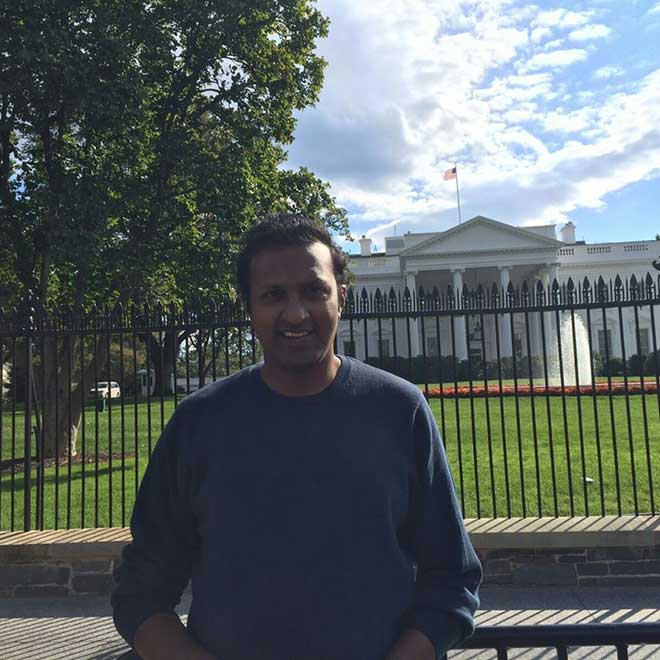
  • Nishant Choudhary shares his experience being the first Indian lawyer in Myanmar, being recognized as a top 40 EU Business leader and embracing change.

    Nishant Choudhary shares his experience being the first Indian lawyer in Myanmar, being recognized as a top 40 EU Business leader and embracing change.

    This interview has been published by Isam Kabir and The Super Lawyer Team. The Interview was taken by Priyanka Cholera.


    Nishant Chaudhary is a partner at DFDL and is also the co-chair of Euro-Cham Myanmar Legal Advocacy Group. Furthermore, he is a board member of the India Myanmar Chamber of Commerce. Mr Chaudhury completed his Masters in Legislative Law from George Washington University (Business & Finance Law) after his Bachelor’s from Symbiosis Law School, Pune. 

    1. You chose to be a lawyer when most people were inclined towards learning science or entrepreneurship. How did this journey happen? 

    I opted for law in 2001, when law as a career started to pick up. So, the law was not wholly an off-beat career. An uncle of mine gave me insights into the legal profession at a family gathering since he was a lawyer, and I thought it was not a bad idea. Initially, I was confused with respect to opting for law, however, gradually during my 5 years programme I started to appreciate the course and enjoy it. 

     2. Could you tell us a little about your time and experience studying at the prestigious George Washington University Law School? What encouraged you to do masters right in the middle of a full-fledged practice? 

     My experience in George Washington was good. Although I don’t want to make a comparative analysis, I hope that schools in India adopt a more practical education system than a theoretical approach. 

     I would generally not recommend taking a masters course right after one’s first degree because it clarifies the legal system and general interpretations. A certain sense develops after you have practised or worked in a law firm or corporate house. After my LLB, I focused on practising litigation civil, constitutional, criminal, and excise matters. While I was in Washington, I deviated from litigation and opted for business and finance laws. I realized that to further accelerate my career I had to diversify and which will likely be a career approach that will last longer. 

    3. Having studied at law schools in India and in the United States, what are some substantial differences in the pedagogical approach among schools in India and schools in the West? 

    I was a graduate of Symbiosis, Pune and the examinations were based on an academic standard. The practical intake was restricted to the fifth year. On the other hand, if you look at the American schools, they have a case-based education system and adopt a more practical way of teaching. Although, I believe now the New York curriculum in the law schools in India is moving towards that approach. 

     For example, In George Washington, there were mock trading sessions. During the anti-money laundering classes, we had a mock investigation session, basis on which we were asked to draft and an indictment. The course of teaching was very different and entertaining. Indian legal education system is very conventional, whereas the West has a more interactive way of teaching. But if education and entertainment go hand in hand, it tends to stay with you more comprehensively. 

    Moreover, the infrastructure is superior in American schools. The professors in reputed schools have several authoritative books to their names. My project finance teacher was a lawyer for OPIC, now known as Development Finance Corporation (DFC).  

    Another difference is the flexibility of choosing different and mix-matched subjects and the possibility of interlibrary access.   

    4. How was your experience before you moved into Banking and Finance Practice, i.e. as an Advocate at the Patna High Court and as a Counsel with Parekh & Co. (Advocates and Attorneys), where you worked on Competition law, Bankruptcy and Tax matters etc. Can you share a few experiences from that time? What is your take on specialization in the early years? 

    It is difficult to practice on the original side if you are unaware of the work at district levels. For young lawyers who will start practising litigation, it would be highly beneficial if they start practising in the District Court, or can even co-practice in both District court and High court at the same time.  

    Mr and Mrs Parekh, along with Mr Kumar and Mr Mohanty were very learned and great mentors. Unlike a regular law firm, Parekh & Co. had a very close-knit working culture. I assisted Mr and Mrs Parekh on the cement cartel matter and ADR, especially in infrastructure-related projects. In addition, I had the opportunity to walk into the chambers of prominent legal faces in India for case briefings, ranging from Mr Harish Salve and Mr Ashok Desai and other reputed lawyers. The experience was very enlightening. 

    5. How did the transition happen to be an In – house at a leading bank, and how did your time as a Senior Manager at ICICI Bank shape you into the Banking and Finance professional you are today? 

    I was a litigator while looking for a job in Banking and Finance. I had to undergo many difficulties in most of my interviews, although my prior experience was appreciated. I was deemed ineligible since I lacked transactional drafting experience. Furthermore, the recruiters provided that I would be a mismatch if given to work with junior associates. It is a misconception that earning a master’s will get you a job. It serves as an academic degree, not a professional degree. Someone suggested that an in-house role will be more appropriate for me, and from there, I could transact back to law firms. I applied for ICICI Bank and was interviewed by Ms Nitu Agarwal, who hired me.
    <p> 	<img decoding=
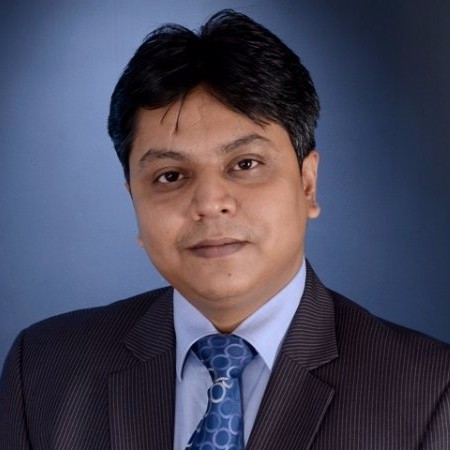
    Nishant Choudhary

    6. Towards the end of 2014, you made the shift to Myanmar. How did this new role come about in your professional journey? 

    In my professional journey, I kept looking for any opportunity in ASEAN, not particularly Myanmar, but suddenly Myanmar opened up in 2013 and was recognized as the future market. A new market fell from the sky, where everything had to be done from scratch. I wanted to work in ASEAN, which Myanmar was a part of. Therefore I decided to move. I had to undergo a fair share of struggle initially, but it is now as convenient as any other metropolitan city in India with its growth in the last seven years. 

    7.How was your experience of starting life afresh in a foreign country? Were there any challenges that you faced for being a qualified Indian lawyer in a foreign jurisdiction? 

    I was likely the first Indian lawyer to enter Myanmar after it opened up in 2013. It was a completely different culture. My workplace consisted of people from Myanmar, China, the USA, Australia, Italy, the Philippines, Vietnam, Japan, etc.  One aspect of working abroad is that you need to be culturally sensitive, especially towards the locals. For instance, Myanmar is not a template western country and has a robust culture that they take pride in. The sensitivity facilitates a better work experience in a multi-cultural environment. 

    8. You are a member of the Executive Committee at Indo Myanmar Chamber of Commerce and Co-Chair of the EuroCham Myanmar Legal Advocacy Group. Do you take it as your responsibility to make Myanmar more inclusive for foreign legal professionals, mainly Indians and put it on the map as well? 

    I have been in the EuroCham Myanmar Legal Advocacy Group as co-chair for a long time. I work towards advocacy for the EU business in Myanmar, alongside regulators, to make the business efficient. Similarly, I am a part of the India Myanmar Chamber of Commerce. Naturally, being an Indian, there is undoubtedly similar scope there. So, the idea here was to facilitate good business and at the same time not just as a part of India Myanmar Chamber of Commerce or EuroCham, even in general conferences or networking events or in public interactions, I have always highlighted the potentials of Myanmar, and that is because Myanmar deserves it. It has tremendous potential with 53 million people, with abundant natural resources across the country, one of the larger oil and gas deposits in Asia, located between two large Asian economies and the connection of these two large Asian economies to us here. I do take it upon myself to showcase Myanmar for what it is.

    9. Can you tell us a little about your role as a Partner with DFDL? What challenges or responsibilities do you shoulder? 

    DFDL is a great employer, but that also brings about the responsibility of working with DFDL. While working as a partner with DFDL is to gain business for the firm and for the execution part where I am supported by a team. There is a lot of management work where it is essential to harmonize how things are to be achieved. As at the same time, I am also the deputy managing director of the Myanmar Company, so I have a fair share of admin roles as well. Furthermore, I have a role in different chambers where I am not in any position per se but just a member. I am regularly a part of it as well. My role ranges from business development to working on the project, training of the team to the administration of a firm’s entity and then general business community interactions and responsibilities.   

    10. Your extensive practice experience working in Myanmar and India and working on significant financial transactions include the first and one of the largest onshore syndicate financings of Myanmar foreign banks branches and the licensing of one of these branches. Apart from case preparation, how do you keep the morale high for you and your team? 

    I enjoy a blend of things, like business development, because of its challenging nature and how it develops the confidence to deliver. But, at the same time, I enjoy working on a matter with the team, and I am fortunate to have an excellent team.  

      When one works as part of a team and leading it, where issues are discussed openly, the working is efficient. That way, it’s the team’s decision as to what they are going to prefer. I believe in active participation so that my team is aware that I am also working with them. I don’t believe in a hierarchical approach. I think that we are all in it together, yes there has to be a degree of mutual respect amongst people, but it should be more of a casual atmosphere and more of teamwork. I try to be a facilitator because I want to remove the hurdle that my team is facing on a given task to efficiently work forward. 

    11. You have received numerous accolades for your professional achievements, all of which are very well deserved and earned. Of particular note is Top 40 EU India Young Business Leader, 2019, by Europe India Centre for Business & Industry, which you received at the European Parliament, Brussels, Belgium. What do these milestones signify as a lawyer as well as an Indian? 

    These are primarily appreciation of one’s journey in a way that incentivizes the person. But they are also recognitions. For example, on the business or negotiation side of the market, a client will prefer somebody who has a commercial approach and is recognized to be a facilitator of business in the relevant market. Especially the India Europe Business Leader happened because of my involvement in EuroCham Myanmar and assistance of Indian Companies. It was an invitation from the Europe India Centre for Business & Industry (EICBI)  at the Europe India Business Leaders Conference 2019 held at the European Parliament in Brussels, where I was facilitated by Hon Caroline Nagtegaal, who then was the Member of European Parliament – Netherlands & Vice Chair- European Parliament delegation for relations with India. 

    12. When hiring young law graduates, what factors do you take to be non-negotiable?   

    There is no exact template or box for the procedure. Everybody has their journey. A harmonious working attitude is essential for being part of a team and being driven by the teamwork process. There has to be a balance where everybody should get their own space and at the same time be a part of the team. Therefore, attitude is primarily crucial because knowledge is endless. Consequently, I can’t expect a person to know everything under the sun. However, if the person is unaware of the answer to a question, he needs to own up to the fact that he is not aware and is willing to work towards it. Finally, one needs to take ownership of the work. The client doesn’t pay a lawyer to tell them what they can’t do, but to guide them on how they can do it.  

    13. Do you have any advice for young lawyers, law students, etc., who are trying to make a career in Myanmar, Vietnam, Laos, and other jurisdictions in the South East Asia region which are booming grounds for legal talent? 

    Southeast Asian countries are the market of the future. It is essential to keep reading about these markets and see how the business trend is moving. These locations are highly remunerative. The career path is faster compared to a bigger market due to less competition. But there are also challenges like language barriers and cultural elements.

    14. Finally, any parting words of advice for our ambitious readers? 

    It should be remembered that opportunity comes to everybody but not at the same time. Therefore, instead of being disheartened, one should work on their career goal and be focused. 

    GET IN TOUCH WITH NISHANT CHOUDHARY
  • Sameena Jahangir, Partner at Kochhar and Co, shares her experience of working on Deal, entrepreneurship and hard work is the best formula for success.

    Sameena Jahangir, Partner at Kochhar and Co, shares her experience of working on Deal, entrepreneurship and hard work is the best formula for success.

    This interview has been published by Isam Kabir and The Super Lawyer Team. The Interview was taken by Priyanka Cholera.


    1. There are various acclaimed roles credited to your name, be it a law firm partner, startup founder or mentor. Which of these resonate with you the most?

     I wear different hats, but my core function is to improve myself and learn throughout the journey. The identity of a lawyer resonates with me the most. Even if I had all the money in the world and the luxury of not working, I’d still want to practice law since it’s something that I am passionate about. Law has also allowed me to teach and mentor people. 

    2.What motivated you to pursue law as a career?

    I had strayed from the law after my 10th and pursued science for 2 years with a misconception that I would become a doctor, but I realised early on in my journey that it wasn’t my cup of tea. I was entirely consumed and fascinated by law from the very first day. I come from a family of lawyers. My mother worked for a brief period as a lawyer dealing with insurance and accidental tribunal matters. At the same time, my father was a criminal lawyer, because of which the conversations in the household always circled law. My brother is an academician and teaches corporate, securities and tax laws to professional students. l I discovered a new perspective on the law when I interned at Desai & Diwanji with senior partner Aslesha Gowarikar. 

    3.Could you share with us any experience of discrimination based on your gender or any other trait, if any? 

    There is a lot of bigotry that surrounds women. The way I dress, talk and or carry/groom myself is very westernised and modern. It’s not uncommon for women to be told that they have reached a position because of the way they talk,  look and dress. I have also faced discrimination where I was denied rental houses to reside in due to my religion. There is a lot of bias in society still very prevalent even in developed metro cities which a lot of people have to face on a daily basis, be it, religion, gender, colour or caste.   I firmly believe that playing the victim card doesn’t help anyone. One has to do their part and if there is anything wrong happening not only against you but even to someone else, stand up and speak that’s the only way we can see change. Just keep working and have the results back their merit.  

    Sameena Jahangir Partner at Kochhar and Co

    Partner at Kochhar and Co

    4.Post your LLB, and while acquiring your Company Secretary (CS) from ICSI, you were a full time Articled Associate at Desai & Diwanji. How did you manage your time for your education when your legal career was in its budding stage?

    I started my CS at an early stage. I had already started preparing for it when I was doing law. I allocated any free time towards studying for it. I did not believe in studying long hours. Instead, I indulged in quality studying. I had no social life then because I directed all my focus on studying. As a result, I was both a lawyer and CS. My corporate work helped me to understand CS subjects better. 

    5. In 2019, you co-authored a book called “GOODS AND SERVICE TAX: No masterpiece was ever created by a Lazy Artist.”. Please share with us a little about the writing process. 

    I teach income tax, and I’ve always wanted to publish a book. We’ve previously written textbooks for our students, but a book is a whole other ballgame. So when the legislation for GST was passed, my brother and I decided to publish a book on it after studying the nuances. The aim was to create a useful book for CA/CFA students as well as professionals who need to work on taxes.

    Sameena Jahangir Partner at Kochhar and Co

    6.How did Lex-Sign – e signing portal materialise in 2021? Was entrepreneurship always on the checklist? 

    I have always been zealous about entrepreneurship. When I became a lawyer and started working at Desai & Diwanji, I visited startup seminars on weekends. I loved the environment revolving around discussions of ideas and business. Entrepreneurs offer new-age solutions to the management of problems. During the pandemic, I noticed that most of my clients had problems regarding the execution of documents, procurement of stamp papers, access to documents stored in their offices when personal meetings were impossible.  With the shut down of the trains, access to the office became very difficult. The idea of Lex-Sign came to my mind where we offer to provide easy digitisation of documents so that work can go on seamlessly. It’s a digitally encrypted platform for online signing, digital signing, Aadhar number based signing and procurement of stamp paper from across the country. The confidentiality of the customers is valued and protected. We rolled out this new venture with this mindset, and we’ve gotten a positive response this far. 

    7.What inspired you to move towards a more tech-savvy culture? 

    As part of the WFH culture, we realised the importance of being tech-savvy and digitalised in all aspects of our life. Therefore, it is essential to move to an online platform even for documentation to utilise the force of digitalisation fully. Most of my clients were facing this issue; therefore, something needed to be done about it. As a corporate lawyer, I understood the intricacies of privacy and data privacy laws and hence Lex Sign became a one-stop solution for e documentation.

    8.What steps are you taking to ensure that the process is simplified for anyone who is not tech-friendly or adaptive?

    For Lex-Sign, we arranged for almost no human interface requirement to carry out documentation. If someone needed to execute a document, they can simply go on the LEx Sign portal, order a stamp paper, upload the pdf document and then sign it without needing someone to handhold them through the process. 

    9.A year after joining Kochar & Co. as a senior associate, you were elevated to partnership in the shortest time. How did this transition occur?

    In Kochar, I joined as a senior associate, and within four months, I became a principal associate there. During the pandemic in September 2020, I was made a partner. The journey was very fast-paced, and the firm felt the necessity for a change in my designation. The promotions may seem fast-paced but it is the result of the 11 years  I have put into my career. 

    Sameena Jahangir Partner at Kochhar and Co

    10.You were the core council of advisors for Fincity in their acquisition by MasterCard in 2020, which was part of “Deals of the Year’ by India Business Law Journal. Attending such matters must be different from your other projects. How did you prepare to tackle this mega-deal?

    I was very fortunate to be a part of this said deal which was into the Fintech space. Like most deals, it involved long hours of work and some days felt longer than the others but I always kept a solution-oriented mindset. As a team leader, the most important thing is to not push down the agony and stress on your team members or the lower verticals. The mere role of a mentor or leader is to take control of situations when things fall apart and to accept accountability while cheering everyone else for success. I always tell people to take needed breaks, not to get burn out. That’s the only way one can perform consistently in the long run.

    I believe that in the whole scheme of things, legal advice is merely one segment. One needs to understand the issue holistically from their client’s perspective without sticking to the only nuances of the legality involved but go beyond that into the commercial aspects as well.

    11.Jahangir Tutorials was founded by you, where the mission is to impart education for ambitious CS students. Your enterprise has also achieved considerable feats like your students securing AIR 1 AIR 2 and AIR 3 examinations. Jahangir Tutorials also has a youtube channel where you upload your lectures. Has Jahangir Tutorials evolved their pedagogical approach with time? How well-received and appreciated was the response to this endeavour? 

    At Jahangir Tutorials, subjects for the Company secretary exams are taught for all levels. In the Pre-pandemic period, physical classes were conducted, and anyone with access to it could join us. With the onset of Covid, a change was made to make Jahangir Tutorials accessible to everyone by uploading our lectures online on Youtube. We received a positive response and today we are the fastest-growing CS digital class in India. This is also because we value the time of others and keep our lectures crisp and apt. We received appreciation for our online videos from people all across India and how they helped them with their preparations for CS exams. Teaching is the most fulfilling job because you get a direct stake in creating the leaders of tomorrow. 

    12.Lastly, any words to the wise?

    In my professional journey, I have learnt that there is no substitute for hard work. There is no luck or coincidences but pure results of one’s merit. Don’t let go of the focus at any point. There is no shortcut to being rich either: it’s a simple swap of service for money. However, I always believe that the ultimate important quality to possess is to make sure you’re a better person than you were yesterday. You can be the best lawyer and know the best application of your knowledge, but if you’re not kind and lack empathy, you gain nothing at the end of the day. Speak well always and use your knowledge and communication to do good for others. 

    Get in touch with Sameena Jahangir

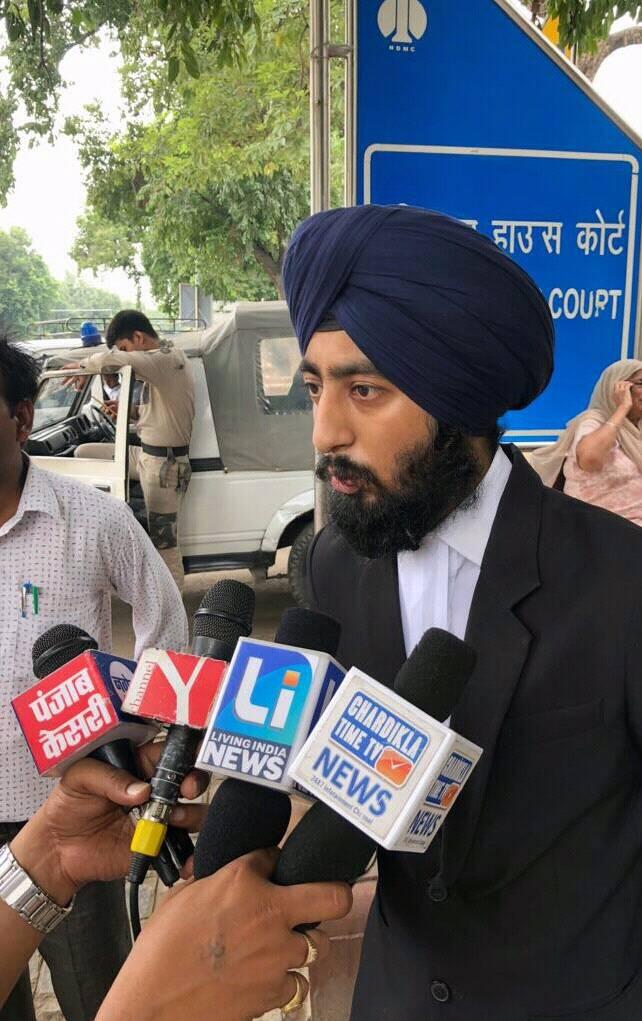
  • Harpreet Singh Hora shares his experience of being an engineer turned lawyer, student politics and changing fates through PILs.

    Harpreet Singh Hora shares his experience of being an engineer turned lawyer, student politics and changing fates through PILs.

    This interview has been published by Isam Kabir and The Super Lawyer Team. The Interview was taken by Priyanka Cholera.


    (1) Having pursued a Bachelor’s Degree in Computer Science from LPU, what motivated you to switch streams and pursue law at Delhi University?

    I passed CLAT in 2011 when I got in touch with the current LawSikho management team, which ran a CLATHacker platform back then. However, due to financial restraints and my family’s wish, I pursued Engineering instead and later opted for a three year LLB degree from Delhi University. As far as the reason is concerned, I have always been intrigued by the field of law. I believe that this is a dynamic profession that gives you excellent learning opportunities. Moreover, this profession accentuates your personality, and that’s what perpetually kept me devoted to it.

    (2) During your graduation from Delhi University, you worked as a quiz master at LPU. Later you’ve also provided your services on similar lines at DAV College and MMU Mullana, Ambala. You also occupied the Hot Seat opposite Amitabh Bachchan in Kaun Banega Crorepati, Season 9. What is it about quizzing that interests you so much?

    I was majorly introduced to the culture of quizzing during my school days and then continued it during my college days, both inter and intra college. I participated in a quiz competition organized with the Association of Indian Universities (AIU) in my engineering college, where students from different universities competed at the zonal and national levels. Eventually, I qualified for the nationals. After that, I began conducting quizzes for my hostel and my department in engineering, and from there, the students from other universities and colleges began inviting me to their institutions. So the journey from being a quizzer to a quiz master has been a fascinating one.

    I had been a hot seat contestant in KBC in 2017. It was one of the most memorable experiences in my life.

    Harpreet Singh Hora

    (3) How has your time at Delhi University shaped you as a person? You contested in the elections for the post of General Secretary as a youth leader. How did you happen to join politics?

    Everybody in Delhi University is interested in contesting elections, directly or indirectly, and I was no exception. When I first stepped into the law faculty, before I could see the board where the college’s name was written, I saw posters of students interested in contesting elections. And Delhi University elections were a big deal on the news channels. I discovered that the people in reputed higher political positions in Delhi are associated with student politics at Delhi University, which intrigued me. It was one of the best decisions I have taken because it ultimately helped me network and establish better connections with people active in the Political circles. The university seniors always said that the Delhi University elections teach you a lot, and I agree.  

    Contesting elections in law school, i.e., the University of Delhi law college, is one of the most challenging contests. The University features politics on two different levels, one on the college campus level where the political parties are not officially involved, and the other is at the university level, where parties directly back up the student organizations. In the faculty of law, the students participate at both levels in politics. Most of the faculty of law students are prior students of the Delhi University (during their graduation). They have already experienced student politics for three years at the base level, but it was alien. In my experience, the elections were indeed complex and demanding, but the challenges had taught me indispensable lessons. 

    (4) One thing that sets you apart from other first-gen lawyers is you have dived right into PIL work while most people chase settling and big clients. Was this a conscious choice?

    The issues I have generally dealt with and the case laws that are a part of my research primarily concern the aspects of prison reforms, social justice, and the 1984 Anti Sikh Genocide victims. However, that does not limit my work to PIL as I have my own Pan India practice in criminal law, service law, matrimonial law, and writing. Although, I have always believed that society needs improvement or the system requiring some restructuring. Thereby I have focused on petitions that deal with social justice or public interest. As far as we have noticed, young lawyers are generally more concerned about acquiring potential clients and earning their remuneration, and there is absolutely nothing wrong with it. In conclusion, the positive attribute of this profession is that one can directly contribute to the system’s development and align the same with their professional capabilities. 

    (5) You started your practice as an assistant to Zoheb Hussain, Senior Standing Counsel of Income Tax Department, Delhi High Court. What value did this experience add?

     Working under Zoheb Hussain has been an absolute pleasure. He is a hard-working man, and I am sure he will soon reach new heights in the industry! I did not have prior knowledge about tax law, and neither was I acquainted with commerce. However, the interview mainly focused on our personality and the type of lawyer we aspired to be, rather than focusing on whether we know about the subject. He aimed to make us more responsible as junior associates with a different approach. First, when we received a file from the client, from the receipt of that file to the disposal of the case, everything was responsible for one associate. Secondly, he also gave us the autonomy to monitor the whole case on a micro-level, which involved the responsibility to abide by the dates and timelines. 

    If a petition was drafted, he did not just make corrections and send it back to us; instead, he called us in his office, and he would begin live editing that petition in front of us. l After pointing out the mistakes, he gently; explained the format, the methods and everything that was to be taken care of. Thereby subconsciously, one starts picking up those habits; and would often refrain from repeating the same mistakes. I had noticed that once associates completed their tenure at his office, they had improved as lawyers.

    (6) A good mentor makes a good mentor. Do you also consciously choose to do that for your juniors or your interns, let them see your formatting and styling live in front of you and make sure that you also have the same aura or demeanour as your junior? What do you look for when you hire someone?

    I am still in the learning phase. I try to be with my colleagues. Eventually, all of us are learners. From a recruiter’s point of view, my primary focus during an interview is to know if the interviewee can understand the concepts. Secondly, I judge the knowledge of the candidates based on their CVs. I will not ask the interviewee a random question on constitutional law or criminal law. The academic score in those subjects does not matter to me. However, If the person has written a research paper, they would have to explain it. It also gives me the idea that the individual has learnt through that activity and was not a mere co-worker who got the name published in somebody else’s research.

    (7) You represented the NGO- Justice for Rights in the PIL seeking regulations, licensing, and guidelines on Internet platforms, including Netflix and Amazon Prime Video platforms. How is it like standing in front of the most prominent players in the game?

    As a young lawyer, these types of cases do come off as an opportunity for one to learn, and it hardly matters if a favourable judgment is received or not. The clients, back then, were students and could not find a resolution to the case. I felt that it was a thrilling matter and took this as a great learning opportunity. I was also curious to know about the possibility of any platform that broadcasts audiovisuals on your mobile phone or laptops and if one can go ahead without regulation. On the first day of the argument of this case, the judge had completely bashed me. I believe that it was my fault as a lawyer since I could not convey the point. The honourable bench remarked that if the Censor Board Certification did not have an issue, I did not have the authority to object. Then it struck me a gap between what I was trying to say and what the bench had understood. I then pointed out that they are not even supposed to carry a Censor board certificate. I even attached the RTI, where the ministry provided that they do not have specific regulations on that, and I had an intense exchange of argument with the judge. After this, the bench was half convinced. They had sought a reply from the ministry. Eventually, it came out from the ministry that this is a new phenomenon, and they do not have such regulations which they have asked for on these platforms. We fought the case and brought it to a logical end, but ultimately it got dismissed by the Delhi High Court.

    The students back then were in a dilemma about going behind for an SLP or not and questioned the chances of it succeeding. I believed it looked like a good case and that there was a probability of the conveyance of my point to the Supreme Court that wasn’t conveyed to the bench earlier. And fortunately, they decided to take the case forward. Ultimately, the Supreme Court was convinced to notice the case, and the SLP was admitted. So although the matter is still pending in the Supreme Court, there have been impacts.

    (8) You appeared on behalf of the Delhi Sikh Gurdwara Management Committee to secure the students’ right to the Sikh community to wear Articles of Faith- The Five Ks in the NEET examination. Can you tell us about that experience and case?

    The topics related to the case of these five articles of faith in Sikhism are inherently close to me because I have read in-depth about the history of Sikhs of securing their right to wear a turban starting from the Mughal’s era, to the time of the British Colonisation, to the post-independence phase. Any development of legislation in India, specifically in the respective regions, impacts the legislation in different parts of the world. Back in the 1970s, the right to wear a turban while riding a motorcycle was a major controversial issue in England’s Road Traffic Act. The right to wear a kara, the right to wear a kirpan has been most talked about in different countries and recently, like 10 or 15 days ago, there has been an unfortunate incident in New South Wales, Australia. They are now drawing on some legislation and guidelines on the right to wear kirpan by schools or college students. So this has been a topic that I believe still needs to be researched upon, to include more legislation concerning these topics. These are the grey areas that are often brushed aside. Indeed it was a great experience working on such a case. On the other hand, a phenomenal incident that occurred was that a favourable order was passed just three days before the exam, which eventually changed the fate of the course when I was representing the case for Sikh students.

    (9) You are also working for the up-gradation of facilities in jail and reforms in prison. Can you share the timeline of this journey and how close you are to achieving what you set out to achieve?

    I’ve started working for prison reform. That is a system I always believed needed to be looked into with profound research. But, unfortunately, even after 74 years of Independence, we still follow those archaic prison rules and manuals.

    The issue began when an inmate did not receive adequate physiotherapy facilities in the prison. This was followed by two other cases, where one concerned the assault on inmates and in the other, the fight was for all the inmates respectively. These petitions got clubbed, the local commissioner appointed by the Court took a survey of those prisons and suggested improvements in the petition. we even challenged the discrimination between prisoners’ facilities when the high-security ward prisoners had alleged discrimination in terms of facilities against the facilities provided to the general ward prisoners

    IN another case, an executive order was petitioned against, where the prisoners held under a particular act would not be allowed to conduct mulaqat (meeting) with anyone but their blood relation. The case is pending in the Delhi High Court. I believe there needs to be a great deal of improvement in the prison area. Ironically, if we do not take action right now, it may become a full-fledged practice area in the coming time.

    (10) In what ways has the ongoing pandemic affected your practice? Do you have any suggestions for maintaining one’s mental health, mainly due to the workload that comes with being a lawyer?

     The biggest challenge the young lawyers face is the hiring freeze by law chambers. With the decrease in workload, the chambers are cutting down associates instead of hiring new ones. As a result, many lawyers have relinquished their chambers or offices and have shifted back to their hometowns. They claim that there is hardly any inflow of new clients, and when necessary, the cases can be conducted through video conferencing. As for me, being a workaholic, the dip in the workload has indeed started affecting my mental health.

    Therefore, I would advise all my colleagues to adapt to new technology and the new methods the Court and the authorities are coming up with. I can claim with absolute surety that the technology in law is here to stay. I believe it should remain. Although video conference has its challenges, it has also opened up new doors of opportunities for young lawyers. Furthermore, we need to explore new ways to use this technology to improve our financial status and acquire more work. Presently we have witnessed clients being more inclined towards engaging lawyers who they believe can represent your entrust appropriately in the Court, irrespective of their experience in terms of practice in a number of years. 

    As for keeping oneself sane, it is advisable to use this time to learn the things one has always wished to know or pursue a hobby.

    (11) If given a chance, what would be one piece of advice you would give to first-gen lawyers and law students about beating the odds?

    My advice to everybody alike is to have a clear goal; The sooner you have clarity in what you want to do, the better. The second is to consider achieving that goal, and it would help if you had a good plan coupled with a realistic timeline. Never compare your success with somebody else’s. Some people have struggled in this covid period, and some rose high during this pandemic. Focus on your own goal, even if you think you are lagging. Each person has the time to rise and shine on one’s own accord.


    Reach out to Harpreet Singh Hora

  • Christopher S. Kumar, Legal Officer, Dr. Reddy’s Laboratories, on litigation, core commercial practice, and studying in London

    Christopher S. Kumar, Legal Officer, Dr. Reddy’s Laboratories, on litigation, core commercial practice, and studying in London

    Christopher S. Kumar graduated from Symbiosis Law College, batch of 2008. He went on to pursue his Master’s degree from Queen Mary University of London, specializing in banking and finance laws. He is currently the Legal Manger and Head of Legal for IPDO and Biologics business units in Dr. Reddy’s Laboratories Limited. As part of his job profile, he handles the world wide legal portfolio and advises on all legal issues from the perspective of the research and development (IPDO) and biosimilars (Biologics) business unit. Prior to Dr. Reddy’s, he was engaged in general commercial practice with Rajinder Narain and Co., the litigation department with PepsiCo, and as a trainee solicitor at a criminal solicitors firm of Lloyds PR Solicitors in the UK.

    In this interview we speak to him about:

    • Studying in London
    • Transitioning from litigation to core commercial practice
    • Heading IPDO and Biologics at Dr. Reddy’s Laboratories


    What motivated you to pursue law?

    I am very much a first generation lawyer, I never had any inclination of the legal profession before class IX in school. My parents are teachers in a school and we had a life where being entangled with the law was a big ‘no’, as you can well imagine in a middle class home. However, in class IX, I wrote one of those aptitude tests that are set up by career counselors in school, and law was the only option that the career counselor had in mind for me. That got me thinking, and since then, yes, I have worked towards that path, and especially after going through the rigor of writing the entrance tests at law schools, and background of applying precedents and general knowledge in law, I was hooked.


    Tell us a bit about your time as an undergraduate at Symbiosis Law School?

    First and foremost, my classmates and professors just made the whole environment apt and conducive for learning and experiencing new ideas. The friends you made in college and the professors who had a personalised approach to everyone was very helpful. When your torts professor knew everyone’s name and paid special attention to each member of your class, in a class of 160, that makes a huge difference. We also had to a lot of internships, not just because you were going to get a pre-placement offer, but because we had healthy competition in college, which brought out the best in everyone. These are just some instances which made Symbiosis a great place to be in for college. Obviously, it goes without saying that we had a whole lot of fun as well, just within the batch or with seniors and juniors, it was family away from your family.


    What are the factors that you considered while deciding to join your work place?

    We all passed out of college with certain expectations and aspirations. Most of my classmates had a tier 1 law firm as their prime objective after college. Unfortunately, I did not have a preferred stream of law even after passing out. There was never a doubt that law should be my career, but even in law, with the choices available it was still a hard choice to make, unless life made that choice for you, or you had the wisdom and foresight to think that well this is what I want to do and this is what I will be doing with the rest of my life. All I had in mind was that I have not completed my education as of now. Considering that, I consciously decided to practice different areas of law and gain experience in several areas before making my final assessment of what I wanted to do as my career. Therefore I started out with a legal offshore company, where I would get to experience UK law as well as gain insight on commercial laws in general. I found my calling for commercial law in that first stint. After my LLM I pursued other streams including litigation first as trainee solicitor with a UK criminal law firm and then with corporate litigation with PepsiCo. Rajinder Narain was next in line to experience general commercial laws and the Indian law firm environment. Lastly, and where I found that this is my preferred destination was Dr. Reddy’s which has along with law, the avenues of business and strategy very intricately woven into the profession. I have been here for a significant duration of time now, and I believe the in house counsel role is where I see myself for the foreseeable future.


    What prompted you to take up an LLM?

    Even when starting my first job, I was quite adamant that my education wasn’t complete after Symbiosis, and I always believed that everyone has to continue learning and educating themselves, in order to stay up to date with the market / business trends and just getting to know new concepts in law and otherwise. I pursued the LLM with this open mind, ready for any learning that I could get, and Queen Mary was an ideal location for the same. It was important to have a college mentor in this time to show you how much you can learn by the LLM experience and to give you a direction for learning. My professor, Angie Raymond (I believe she has now moved to the Indiana University since I left college) was an inspiration in this time, she inspired us to attend several lectures even if it was unconnected to the current course.  My course was International Banking and Finance laws, but that didn’t stop me from attending other classes even if it was only for the sake of listening to the professors and not getting any credits for the same. We used to attend classes by several professors including joint classes with Kings College and UCL. There were also guest lectures from experts from the industry area – banks and companies, and regulatory agencies like the Bank of England, which offered a huge array of learning.

    Another important reason to study abroad is to open your perspective and horizon. There are people studying with you from all over the world in a place like Queen Mary and one of the important lessons I learnt was for example, while a Chinese student may not agree with CISG, a US student may argue vehemently for it, and a Brazilian student will try and push his own national laws. They may have different perspectives and reasons why they came to that conclusion and this is important to you, as a on looking student to know what the difference is, it will teach you analyse your own perspective on the situation, and you will be able to provide your client the same different perspectives depending on what you learnt there at that very occasion. This is applicable in several situations especially dealing with international law and law in different jurisdictions, and this continues to help me in my current work place.


    Could you tell us about your transition from litigation (Lloyds PR and PepsiCo) to core corporate commercial work (Rajinder Narain & Co and Dr. Reddy’s Laboratories)?

    At the end of the day, the question here is what do you see yourself doing in your career; is it the thrill of standing in front of a judge and arguing your matter, or is it the equally exciting transactional work that is the backbone of a multi-million dollar deal. For some, the thrill and excitement in a courtroom is the basis for their endeavour, for me, the excitement was dealing, drafting and negotiating. At the end of the day both from a litigation and corporate commercial point of view you are trying to best protect your client and get the best deal for your client, but regardless of if you come into the picture at the beginning of the situation where you draft out the agreement or at a later stage where your are dealing with a dispute situation the deciding factor should be what makes your want to practise law more. That is something that every law student should think about before coming to a decision, and that is the same reason why I shifted from litigation to core corporate.


    What is your current role as the Legal Head of IPDO and Biologics at Dr. Reddy’s Laboratories like?

    In Dr. Reddy’s the business units I handle are a very intellectual property centric business. R&D and biosimilars both deal with high protection of IP, but as a generic pharmaceutical company, we are not entirely dealing with patents- it’s more know how and how to protect it, not only in India, but in over a 100 different jurisdictions all over the world, that forms the backbone to the business. Whether you out-license your technology to a third party for manufacture and  sale of the product in a different country or if a third party is developing some new method to manufacture a generic molecule for Dr Reddy’s, it is inherent, to always protect your IP through documentation. That IP will be intrinsic value for the company, and any sales of the product in any market will be based on your intrinsic value that you bring to the table. Apart from the usual business, there are other issues that as a huge pharmaceutical company you might also have to deal with, for example, securing electricity for your plants with a captive solar power plant, acquiring companies with technology that compliment your current portfolio, securing financing for different projects. So even though one might think that a pharma company would have only legal issues relating to pharmaceuticals, at most times that is not the case. As the business counsel I have to interact with several teams in the organisation and also deal with all the HR legal issues, litigation and Information Technology issues that complement the business.


    Did you have a mentor or guide during the formative years of your career? 

    I believe it is not only important, but also quite necessary to have mentors at different stages of your professional life. In college it was my professors, and seniors who had a huge say on what to learn and how to go about your career. At the work place, its someone who takes you under their wing and someone you can look upto, for inspiration and ideas. Luckily I have had mentors wherever I worked, especially my current General Counsel at Dr. Reddy’s – Suprio Dasgupta who has taught me a great deal. One life value he gave me as a business counsel, and he always keep saying this to me and other colleagues, is that one should ‘build your depth before you can build your width’ in your profession, and that is something I am abiding by, that I should get to know all the details of how my current business works before I pursue and undertake other challenges and projects. I think that will apply to all sorts of careers, especially if there are any young lawyers reading this.

    What advice would you like to give our readers, who are mostly students and young lawyers?

    Yes, one advise I would like to tell your readers is, it is okay not to know what you want from your profession at the start of your career. There is enough time for you to experiment and get to know what you really like doing. Many of my peers are now quitting the once sought after tier 1 law firm to do other things in life. It is something that will come with experience, but once you do get to know your purpose, you will thrive in it, and not only thrive but excel in it.

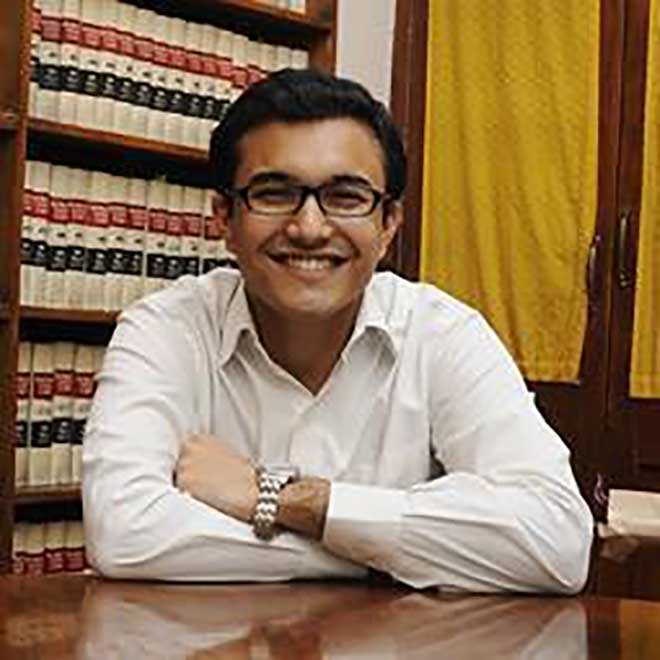
  • Siddharth Marwah, Associate, IndusLaw, on student politics, the art of writing, and his experience in commercial law

    Siddharth Marwah, Associate, IndusLaw, on student politics, the art of writing, and his experience in commercial law

    Siddharth Marwah is a graduate in law from Campus Law Centre, Delhi University, batch of 2015. He established the Legal Aid Cell in his college and was declared the best paralegal by DLSA. Since then he has been working with IndusLaw in their corporate-commercial team. His area of practice involves mergers and acquisitions, joint ventures, foreign investment and general corporate and commercial matters. During his time in law school, he was actively involved in the Delhi University student politics and legal aid and was awarded a 100% scholarship by the University of St.Thomas, Minnesota.

    In this interview he talks to us about:

    • Being convener of the Legal Aid Society in his college
    • His involvement in student politics
    • His many accomplishments as paralegal, writer, etc.


    How was life at Campus Law Centre?

    Life at CLC was a rollercoaster ride to me. From managing the scores to being the part of Student Union was fun and taught me various aspects of law and gave an insight into politics.

    How was your experience working as a paralegal?

    (DLSA awarded him as the best paralegal volunteer 2014 and he was also the Student Convener of the Legal Aid Cell at his college)

    Legal Aid in our country still needs a helping hand from the authorities to enhance the justice system. Being the student convener of the Legal Aid Cell, I helped establish the Legal Aid Clinic in our college. I was involved in organizing legal awareness drive in slums and informing people about their basic rights, organising legal aid camps and conducting PLV training sessions. Working as a paralegal made me question conventions that we had unquestioningly come to accept. DLSA, on seeing my zeal towards the work awarded me as the best Paralegal in 2014.


    Do you have plans now for an LL.M?

    I always had a plan to work for sometime in India before going for further studies. St. Thomas School of law awarded me a 100% scholarship to pursue LL.M but I chose to practise law in India first. My family supported my decision and IndusLaw provided me an opportunity to work with them as an associate in their corporate team. Yes, I do have plans to study further and I am seeking LL.M. oppurtunities in business and corporate laws.


    How does one go about the art of writing?

    (MONDAQ awarded his article on GST as the “Most popular article in India”.)

    Article writing requires in-depth research on the topic and one should use simple as well as classic vocabulary in order to make the article attractive and understandable even to a layman. Article writing plays an important role in improving your research skills and it adds stars to your CV if published.

    In what way do internships help a student?

    (Siddharth has interned with the likes of Trilegal, Luthra&Luthra, and Senior Advocate Mr. Amarjeet Singh Chandhiok in the past.)

    Internships are very important for a law student as they provide a practical exposure to the student and help him to analysis knowledge of books in real life. Working under Chandhiok sir was a thrilling experience and made me follow a concept of love what you do and do what do love. Internships play a vital role for a law student and one must try to get an exposure of all fields through internships in order to evaluate his interest before graduation.


    What does your work at IndusLaw entail?

    My area of work at Indus Law includes mergers and acquisitions, joint ventures, foreign investment, and general corporate and commercial matters. Working in a law firm is a great learning curve for me and I’m happy doing it. The main element in a law firm is its working environment and Indus in this aspect is the best place to work.


    Tell us about your tryst with student politics.

    (Siddharth served as the Vice president of Campus Law Centre Student’s Union 2013.)

    I always wanted to help students who face problems on entering an English institution from a vernacular background. The sole purpose in contesting elections was to uplift the conditions of students in the college and to provide various opportunities to strengthen the students interest. Student politics gave a lesson that one should be happy to help others in order to achieve the desired mark in politics.


    What would you like to say to the upcoming lawyers?

    Work in an area of your interest. Enjoy your days in college and study for good scores too. In the field of law, you can achieve success only by hard work and once you attain that position, sky is the limit for your prosperity and fame.