What motivated you to take law as a career and how has been the decision so far?
This has a fairly clichéd answer. My mother was keen that I study law, so I started preparing for the various law school exams. However, right from then I’ve loved the subject and am glad for having taken up law. I enjoy how logical the subject is, and helping families and enabling businesses feels deeply rewarding.
What are your views on AI or legal tech adoption, what restrictions will it have in the coming years?
Adopting tech is extremely important. We should all adopt it as early as possible. Tech helps you do the same things more efficiently, saving time, effort and resources. This frees up the professionals to spend more time thinking of more innovative solutions. India still is a developing democracy with many fields of laws at a nascent stage. Lawyers should be able to spend more time in assisting the legal sector mature and bring it at par with international standards. I don’t see tech being able to replace that yet.
Ma’am, do you think any road-maps help in a career like law, or like many you trust that things can happen by the flow itself?
Man proposes, God disposes. Although roadmaps have their limitations, one should definitely have one. However, be flexible enough to change the roadmap as and when required, especially in a dynamic market like ours. However, advising on a roadmap is difficult, as each individual has their own story and the roadmap would be different for all.
According to you Shruti, as a law student, where should the focus be on, the hard work on academics or smart work on networking and building a great skill-set?
Both, but I feel more on academics. Networking is also important but if you want to be a good lawyer, you have to pay attention to the reading and academics. Smart work and building a great skill-set is a given and not contrary to putting in hard work on academics. They go hand in hand.
“Unconventional careers in law will spoil your degree”, why has this misconception led many people far away from the legal industry revolution and how to excel oneself to reach heights?
I don’t know of this misconception to exist really. I see more and more people taking up ‘unconventional’ careers in law. We now have lawyers getting into the business of law firm management, law firm branding, specialised HR for law firms, and the like. In fact, this is quite an underdeveloped space in India still.
We hardly have any specialized firms that lend support to law firms in industry research in complex litigation’s, financial fraud research, and the like, which is much more developed in the west. I think we need many more professionals taking up “unconventional careers in law”.
When we talk about disputes, most of the time obviously both the parties commit the same number of mistakes, and both suffer as well, before even going for conflict resolution, don’t you think there is some way out before that?
I don’t think it’s obvious that both parties make the same number of mistakes, though you are right, that there will often be a grey area. I do feel that most parties try to settle a matter out of Court prior to coming to lawyers and opting for the legal route. However, this is not because they opt for institutional mediation or ADR, but because they want to avoid the long delays and heavy expenses involved in coming to Court. Most people come to lawyers as a last resort, unless it’s a matter of ego.
We already have pre-litigation mediation as a mandatory requirement for commercial litigation, which has quite honestly, been a farce.
In fact I feel it should be quite the opposite. Our legal system should inspire confidence in the citizens that they will get timely relief and do not feel compelled to settle because of lack of confidence in the legal system.
We read that you are a graphologist, what is it all about, is it something related to astrology?
Graphology is the study of handwriting analysis. Astrology, at the cost of oversimplification, is the study of the impact the position of the planets at the time of our birth have on our lives. Graphology and Astrology are not directly related. I have always been interested in the occult sciences and have recently started studying Vedic Astrology also. I want to understand on what basis astrologers, who have gained quite a reputation for themselves as being charlatans, make the predictions that they do.
Talking about work-life balance, there has been ample amount of discussion on health issues as a lawyer, what do you believe are the best practices to maintain the equilibrium?
I feel it is fairly difficult to maintain work-life balance at a fresher level. That is a stage when you really do need to burn the midnight oil. However, after a few years, it is not difficult to maintain work-life balance. I feel the elements you need incorporate in your life to maintain the equilibrium are
(1) Exercise,
(2) Spending time on a hobby,
(3) Meeting friends, and
(4) practicing some form of spirituality, perhaps meditation. I have maintained that practicing grounding activities of some sort are important and goes a long way in improving mental health. Meditation, journaling, light exercises, sound sleep (even if for lesser hours) help tremendously in mental health, and can be practiced even when you don’t really have work life balance.
Few advice for our young law professionals?
It is important for you to enjoy what you do. The profession is a marathon, not a sprint. I cannot over-emphasize the importance of reading. Whenever you are studying a branch or aspect of law, make your own notes. It will help you in future. Try to maintain your own database of caselaws from the start. Most importantly, don’t burn out.
What was your motivation behind choosing law as a career?
I decided to take up law as a career after my 10th boards. After interning with a fashion designer and at a couple of NGO’s and speaking to people who were working in various other fields, taking up law was a clear decision for me because I had decided that I wanted to help people by finding solutions to their legal problems. I wanted to contribute to society in a way I thought would be more effective.
I have always had a passion for writing and I have always had strong opinions and so choosing law as a career was a means to work towards achieving everything I was setting out to do including the person I wanted to become.
What were the challenges that you faced in the beginning of your career?
Like every other first generation lawyer, I felt I had been thrown into the deep end of the ocean at the beginning of my career. Although, one learns to read the law and apply oneself in different scenarios in a classroom setup, when you join practice, you are immediately transformed into a professional and are expected to apply your skills and assist your seniors with all aspects of a transaction, whether it is research, contract reviewing and drafting or speaking to clients and managing them.
The first year of practice can be a daunting experience for most lawyers, however, the initial years will also set the course for what is to come so I believe that hard work, passion, determination and the ability to push oneself and grow through the discomfort are key to ensuring a successful and meaningful career.
You started out as an intellectual property lawyer and then moved to corporate law. Can you tell us more about your role as an IP lawyer and how is it different from being a corporate lawyer?
My role as an IP lawyer involved advising clients across the globe on trademark and copyright-related laws in India. I handled IP portfolios of some of the leading FMCG companies in the world and handled all aspects of trade mark and copyright prosecution. My work involved conducting clearance searches, drafting replies to examination report, strategic development and management of trade mark and copyright portfolios and appearing before the trademarks registry. I switched to corporate law after almost two years in IP.
As a corporate lawyer I handle all aspects of general corporate advisory, commercial contracting, employment law advisory and contracting and investment transactions. I also regularly advise cloud communication companies on regulatory, policy and compliance’s issues. I believe my unique experience of intellectual property law and corporate law has helped me understand the legal requirements of a company when it comes to its business model in a holistic manner.
As someone who is passionate about writing on various topics, how important do you think legal writing is and what are the skills that one needs to have in order?
I have always had a flair for writing essays, poetry and screenplays throughout my school days. As lawyers, we are essentially thinkers and writers. As a young girl, I found that the best way for me to express my feelings was through writing. In law school, I had the opportunity to hone my writing skills and move up to writing articles on various legal topics that were of my interest. Research and writing was a way for me to delve deeper into subjects that interested me and to stay abreast with the latest developments in the legal field.
I had found the way for me, as a lawyer, to express my thoughts and opinions and this helped me find my confidence professionally.
According to you, briefly what is the right approach to drafting tech contracts and other critical documents?
As a lawyer working in the telecommunications and technology space, we have to learn and adapt to changing technologies and bridge the gap between legal and tech to provide solutions to our clients and help them mitigate their business risks.
From a contract drafting perspective, it is important to firstly understand the clients product and services and to ensure the clients compliance with the legal and regulatory framework surrounding its business model. It is important to have a strong understanding of the Information Technology Act, 2000 and rules including the data protections laws.
Having a strong grasp on the industry specific regulations is also a must. For example, for clients in the digital communications space, it is crucial to understand the implications of TRAI regulations such as the Telecom Commercial Communication Customer Preference Regulation (TCCCPR), 2018 on their business. It is important to incorporate appropriate clauses in the clients customer/user agreements to help mitigate any risks due to non-compliance with the such regulations. Having a good understanding of the clients licensing framework and business model is also necessary when advising in this space.
With content writing they say your drafting improves a lot, if you agree, would you suggest only writing on legal topics or any other niche as well?
I feel that one should write only if they are passionate about it. What started out as a personal outlet became a professional skill for me. That being said, being able to express your thoughts in a clear and concise manner is a skill which ultimately helps in professional pursuits in this industry.
As technology related startups including legal technology are evolving at a rapid pace, how must lawyers and law firms prepare themselves for doing different types of legal work?
This is an interesting time to be a lawyer and through our work at Cornellia Chambers we hope to disrupt the legal services industry through innovation under the guidance of our founder and mentor Ms. Pritika Kumar. Ever since the pandemic and offices becoming virtual and with the evolution of technology, everything and everyone has moved to the cloud and traditional law firms and systems are being challenged every day.
Such innovation in the industry will not only help organizations and the community of lawyers to become more efficient but will also help in improving the issue of lack of access to justice in our country through technological means.
Any few important tips for young law professionals?
Always be eager to learn, diligent and passionate about your work and never be afraid to fail.
Tell us what inclined you to pursue law as a profession?
Well there is no inspiring story here unfortunately. I did choose science as my study stream for my plus two boards, but that was because my parents initially wanted me to become a doctor. Law happened pretty accidentally actually! It was more like law chose me. My uncle, who is a lawyer at the Calcutta High Court, told me at that time of the emergence of the national law schools across the country and the bright, young graduates these institutions were producing and suggested I should try taking the exams for these law schools.
I only took the exam for WBNUJS, Kolkata (ours was the last batch who took individual law school exams instead of the CLAT) after preparing for about a month. The results came out about two weeks before the boards and I was very happy to find that I had gotten through. I decided that this was what I was going to pursue and make a career out of. And that is how it happened.
Do you have any mentors so far that helped you so far in this journey, and how far do you consider the role of mentors crucial in the industry?
Yes of course. You cannot grow as a professional in the legal industry (or for that matter any industry) without the help of your mentors. A good mentor will teach you so much especially as a litigating lawyer – the art of a good draft, how much to say and what not to say in Court, how to strategize a matter etc. Whatever little I am today I am because of some excellent mentors I have had in the industry.
Why does Corporate law attract so much attention? What makes it so unique?
Well it would be easy to say that it attracts the attention of young graduates because of the money on offer, but that would be a shallow perspective. If you do not like and enjoy what you do on a daily basis, you will not stick around or grow, no matter the money on offer. This is why you see attrition rates are so high in the bigger law firms. However, if you like what you do, then the sky is the limit. Speaking personally, as a Disputes lawyer, I love the challenges of my job day in and day out.
I have to keep our clients happy and they must feel comfortable to repose their trust in their high stakes, valuable matters in me. I have to advise them correctly, guide them down the right path, put every ounce of research and knowledge into these matters so that their chances of success are enhanced and they know that they are in safe hands – it is a challenge I am up for every day of the week.
How do you manage your time schedule on a daily basis and what drives you to be consistent?
I would not lie, law firm life can be pretty demanding – whether you are an A-1 level associate or a partner, every day brings its own challenges which consume most of your time. I have varied interests apart from law – I love reading fiction, watching sports especially football, spending time with my family and my dog. While most of my time is taken up by my work, I ensure that at the end of the day (no matter how late it is) I am taking an hour or two out to do these things I love – read a bit, maybe watch a film or a game of football, take the dog out for a walk, maybe go for a run or a long drive sometimes. It rejuvenates me and helps me face the next day with the same enthusiasm again.
What differences have you noticed in international arbitration and national arbitration, I mean what’s more challenging amongst both?
Both bring their own challenges to be honest. In an international arbitration, you are bound by the procedure of the institution under whose aegis the arbitration is happening – SIAC, ICC, LCIA etc. and the procedure is much more streamlined as opposed to domestic ad hoc arbitrations.
Also, in international arbitration’s you often have to work in close collaboration with foreign lawyers or law firms, and therefore seamless execution of the work can be a challenge as well as a learning experience at the same time. On the other hand, in domestic arbitration, especially ad hoc ones, arbitrators adopt their own procedures and therefore the same may be different from one arbitration to another, and you are constantly adapting as a lawyer to make the best case for your client.
However, arbitration in India has been developing at a fast rate, and amendments to the statute in 2015 and 2019 have ensured shortening of timelines and streamlining of overall procedure, and I believe the future of arbitration in India is very bright.
Do you believe that AI will lead to data breach and violation of privacy, if yes, how can it be mitigated?
I am not a data privacy lawyer and therefore I am ill-equipped to answer this question. My opinions on AI and data breach are based on what I have read in popular media, and I do not want to adopt a conspiratorial tone for your readers without in-depth familiarity with the issue myself.
Few tips for our readers that helped you as well in this journey?
First of all, you must decide what you want to do. Law firms are not be all and end all for a law graduate – there are a lot of career choices you can adopt – you can be a corporate lawyer, a litigating lawyer, an independent practitioner, an academic or venture into public policy.
Do not follow the herd- look into your heart and see what you really want. As I said before, if you are not finding what you are doing everyday exciting or challenging, there is no point doing it. Also, no matter which path you choose, there is only one mantra of success for all of them – read.
You have to read constantly as a lawyer, you have to keep updating yourself. Law evolves constantly, you can never be a good lawyer if you are not evolving with the law as well. That would be my two pennies for your readers.
The opinions and views expressed are that of the author and Optum, United Health Group bears no responsibility whatsoever. The thoughts shared are for general informational purposes and should not be construed as any official advisory.
Why did you choose law as a career, was it planned or all of a sudden you decided to be a lawyer?
I was a science student, who was coaching herself to be a doctor honestly, so I didn’t really know if law was something I would want to pursue.
It was definitely not a planned decision to begin with. It was at the middle of my 12th grade, when my fellow students started discussing about courtroom dramas and how they are being inclined towards pursuing law, I started reading and exploring the opportunities in legal field.
On a lighter note, it wouldn’t be wrong to even admit that I became attracted to courtroom dramas and the more glamorized view of law.
I started to then consider more seriously what I wanted the most in my career and think I wanted professional stability and financial security. I was also keen to follow a career path that allows me to leverage my communication skills and offers an avenue for continious learning and keeping myself updated with the latest in a field.
At the time it felt that the law provides both, so I imagined it would be an ideal career for me.
Then the more I read about it, I started to understand that being such a fascinating field it would offer nuanced challenges to resolve while demanding a variety of skills and this piqued my interest in the field law.
What were the challenges that you faced in the beginning of your career?
Learning about law in classrooms compared to real life application in time bound scenarios was the first challenge that I faced.
There were many days that I had to go back to refer to my internship days or leverage experience of my batch mates/seniors to draft an appropriate clause or provide the most effective advice. Initial days required a lot more hours being spent making the transition from academics to a law associate all the more challenging.
Apart from this, settling in a big city like Bombay was also a real challenge. Coming from a small town and then being in law schools’ protected environment, it was only now that I had to “go figure” for everything from renting a house, setting it up, making transport arrangements, at the same time putting the extra work in the first few months of your career. The trouble is, no one teaches you this part!
Mugdha, do you think that for a first-generation lawyer, the journey becomes a little difficult? Please explain the same wrt to your own experience.
Stepping into law school was a new world, where people who had families with multiple generations of lawyers talked fluently about topics I was making hard efforts to understand myself and that made me feel I had more catching up to do. I had to assess all opportunities independently with my own lens and learn concepts from scratch that some had been exposed to from childhood.
Looking back I feel now that the extra effort I had put in also created the appreciation that I hold for the field of law.
Being able to build an experience in M & A and VC deals, what according to you are the most important skills to have?
Within my limited experience of M&A and VC deals, I believe one of the most important skill is to see the bigger picture. You need to be able to get your head out of the documents to see that you are working the whole process from scratch to end and therefore must be able to build your opinion on the end goal and the manner in which you’d assist your client to achieve it.
This requires strong business awareness and equally strong legal and commercial understanding of the transaction.This in no sense should take away from the importance of paying attention to detail as the devil is always in those details!
Apart from this I believe, building a good relationship with both your client and also opposing counsels, help you navigate the negotiations better and sometimes even builds your own power of persuasion. While this may not be practical all the time, trying never hurts.
As someone who got a chance to work with big companies, was it a smooth sail for you?
I don’t think it was all rosy by any means. It did take some time and effort and a lot of of unlearning for ultimately learning some more. I worked towards moving from a law firm mindset and started to imbibe an in-house midset.
The in-house mindset I speak of is much more closer to business, stakeholder requirements and is also customer driven. In the beginning one of the challenges that I personally faced was balancing expectations as an in-house counsel, keeping the business needs ahead of the legal structures and nuances, yet being within the scope of law.
I’d say, I am still a work in progress.
India is witnessing amazing growth because of the startups, according to you Mugdha, what are the roles and responsibilities of a lawyer in dealing with start-ups?
In my opinion, you need to be more of a generalist in the real sense of the word. As a startup lawyer you must know a bit of everything as you advise startups throughout their lifecycle on a variety of issues, while all along living the risks and uncertainties associated with startups. This begins with setting up of their venture and related legal & regulatory compliance, which then moves to routine advisory for general corporate or commercial transactions undertaken on a regular basis.
The role of the startup lawyer doesn’t end here as now they will also assist the startups for raising capital from angels and VCs and help the startups sail through legal and business issues arising as it scales and grows its businesses.
Finally, also taking the full circle and reaching the finishing line is the most toughest, but perhaps also one of the more satisfying tasks of a startup lawyer who has seen the emergence and growth of the startup and is now able to help them sell the business or take the company public in an IPO.
Creating a work-life balance and focusing on mental health has been a challenge lately in this industry, but you manage it well, please tell our audience how?
I think I am far from managing it well, but I am now at a place where I constantly aim to strike that balance between work and personal life and try and give time to a lot of my dreams beyond just the law and my professional commitments. I now understand when to pause and enjoy life and when to get back to the rigorous work routine.
I am comfortable assessing how much work is too much work and to take a step back (including mentally), when needed.
I enjoy creating content when I get some time while I am travelling or just some happy stuff on Instagram. I unapologetically think that it is okay and so I am active on social media because I enjoy it.
While I understand, to some social media is trivial or toxic and to an extent it maybe is, but I think it is also a great tool to voice your opinion, teach, learn or for just any form of expression and I believe a part of my ‘work-life balance’ comes from being able to show who I am or where my heads at by simply expressing it. It is a very personal view though and to each their own!
For this I believe one sincerely has to put in efforts to create this space and the right kind of work place often accelerates that effort.
Apart from expression on social media platform, I love experimenting with food, both to cook and eat. I travel across continents just to experience the culture and I believe a part of that culture is their food. Once am back, for weeks I try to recreate food that I eat on my escapades and I enjoy reliving my travel stories through this.
I love to travel as it adds perspective to life and keeps me grounded too knowing that theres a huge World out there with variety of people and culture and we, as an individual, are such a small part of this whole story and there is so much to learn and know.
They say nowadays a lawyer must have that business acumen, do you believe this as well? If yes, briefly describe our audience about it.
Yes, definitely. The journey becomes smoother once you are able to amalgamate your legal knowledge with business acumen and are able to communicate effectively and efficiently with your stakeholders.
A lot of decision making is done by weighing and analyzing differentiated opinions and often conflicting priorities, that may even sometime require you to say “No”. As in-house counsel, one should learn to strike that balance.
In the rapidly growing and dynamic world, it becomes important to anticipate and understand how various factors such as geopolotical scenarios, changing landscapes of policies and increased focus on risk mitigation will impact both businesses and laws.
Lastly, few tips for our young law professionals?
For the young law professionals I have just a few tips from my own experiences and that is ;
‘Use this time to understand where you want to be in next 10 and 20 years of your career and start making those career choices early on, if possible’
These are the days of maximum learning but also maximum hardwork so put in that extra effort and it will take you a long way.
Having said that, don’t lose the sense of self and try and understand your own boundaries, that can help you create space for self-awareness and mental stability.
Why did you study law, was it planned or all of a sudden you decided to study law?
Well, I was always passionate about Law as a subject as from my childhood I was argumentative by nature be it with my parents or friends on any issue. I have always been putting myself in the shoes of others and think as to how I would handle the situation. It was crazy though, but I had lots of “If’s” and “But’s” in my responses.
Sometimes people didn’t have responses to the questions I posed and that kind of triggered me to study Law. My well-wishers also pushed me to consider the legal profession going by my nature of asking questions for almost every question.
Little did I know at that time that one also needs to have a solid mentor in the field to get that on ground experience and understand the practicality involved.
How did you divert from taking Law as a profession to get on to the corporate world. What were the challenges that you faced in the beginning of your career.
After my graduation I was at a juncture where I was to choose between Business Management and Law. I chose Law to fulfil my dream of being a lawyer though eventually I did my Business Management as well.
I wanted to practice Law but since I was going to be the 1st generation lawyer in my family, I did not have a great mentor in that field, and we were in Hyderabad then. With not very active social media at that time, it was difficult for me to access Law firms in Mumbai and Delhi where you know big Law Firms were present. That was a big disappointment. But I was happy that I possessed the legal knowledge that I desired. I then decided to move towards corporate world to get experience and eventually be an entrepreneur.
Since business also needs a practical exposure, I joined a Market Research co. so I can get the much-needed market exposure. What started as real world training, I went on doing extremely well and started climbing the corporate ladder swiftly. My very first job landed me in an MNC and climbing a corporate ladder at a faster pace made me to continue in that line. I quickly became the youngest Regional Manager handling South India in a span of 11 years getting promotions at an average of once every 2 years and that carried on till my last stint where I was heading Content Operations for Asia with offices in over 8 countries in yet another MNC.
Lack of Experience was a huge challenge in my first job I got into a company with no experience while my batch mates were all experienced. So, there was a huge difference in my understanding and behaviour versus my peers who were already exposed to corporate world. It took 2 years for me to understand the nuances of corporate culture and understand how it all works and then there was no looking back.
Though, I did have mentors in my corporate journey which really helped during this phase of my career.
Arun, do you think that for a first-generation lawyer, the journey becomes a little difficult? Please explain the same wrt to your own experience.
Ans: Yes, to a great extent. At least during my time when I completed my Law in 1998, one needed to have that solid mentor or a senior who could train you. Law being a profession where the clients would come to an accomplished lawyer having a very good reputation of winning cases as the issues are usually dealing with one’s life and death. Be it civil cases where you are fighting for hard earned properties versus a family law case or a criminal case where lives are involved. So, no one would like to try out a lawyer who has just completed Law with no major cases to boast of.
With almost no presence of social media at that time a lawyer’s profession was more physical in nature and one’s presence on the ground mattered a lot.
The other challenge was the profession where the junior is expected to learn on his/her own. The senior lawyer may not have that time to train you unless you are kin of the senior. So, for a first timer to establish in the legal profession poses a big challenge but I am glad to say that things are changing now with a lot of Law Firms sprouting and opportunities are thriving for the deserved.
It is also fascinating to see the newer generation of lawyers are well informed, tech savvy and deep rooted in their thoughts which matters a lot to be a good lawyer.
How would you describe your previous experiences in the legal content and editing process, there has been a lot going around since post-covid in this sector, how do you see it creating new opportunities for individuals?
Ans: India has been developing at an exponential pace with technology taking the lead. Thanks to the Central Government for pushing the Make in India and other tech initiatives. Though the legal content and editorial space is not untouched with this development but in my experience Covid has really given that boost in this area.
Law has always been a traditional profession with Printed material taking the top rack. Gone are the days where one use to do manual editing of legal content, this has transformed into people including authors doing online editing/content updates. This is a huge change. Imagine bills/legislations passed by parliament getting signed by the President and the same being available online in a matter of 24 hrs. This has taken out obsolescence of content which hitherto was being circulated in the form of print in the market.
The legal fraternity up till pre-covid was transforming at a rather slower pace. Covid has made this industry to re-think and adapt to technology which has changed the industry dynamics in a big way. From Legal Research to Content Sourcing to Content Enhancement to Online First, new strategies have sprung up in no time. AI based Analytical Solutions which are now available has played a huge role.
This has also opened opportunities for youngsters from being a Legal Researcher to play a role in digitization. Of course, the western markets in this area are far too advanced compared to India. There is still a lot which needs to be done in India and there is a huge potential for technology in this space.
Unfortunately, Indian Legal content is still quite unorganised and unstructured which poses a challenge to the tech cos to play in this area. Thanks to the recent and the upcoming Chief Justices of India who are well versed with technology and have been pushing hard to make courts paperless and make life simpler for the citizens.
I am glad to state here that the digital transformation has now caught up pace in the legal industry and we are running against time as people have seen the need and are getting metamorphosed.
The role of CEO/COO of any firm is challenging and full of hurdles, how do you manage your time and responsibilities for the same?
While the responsibilities of a CEO/COO in any organization is similar but what matters is in what kind of a business ecosystem are you in. A start-up COO has different challenges compared to a COO of a larger well-funded and established Organization where processes are time tested and you already have a history of trials and errors.
Again, the challenges varies when you are managing a multi country teams versus just single country/location teams. I am stating this with my experience where I have worked in MNC’s with multi nation presence to promoter driven companies. Handling Operations at the helm of these Organizations gave me very different learnings and experience.
Irrespective of the size, I think one of the biggest hurdles is managing people. People are like the fingers of your hand. Everyone is different. So, you need to nurture everyone to be at a particular level. With people coming from different back grounds and having different IQ levels, its not easy. One needs to be organized and take care of your employees which is the key. Organizations are made of employees.
I believe that everyone has the same 24 hrs, and one needs to accomplish all his/her duties, personal to professional in the same time so respecting time and utilizing it to the best is the key. I use my calendar quite effectively which ensures I do not carry a lot in my mind. Everything is jotted in my calendar from Private to Professional engagements.
On the responsibilities, I don’t think everyone is cut to do everything in life. We all have our strengths and weaknesses, so ensure the job is done by the person who is best in that area rather than trying to do something which you don’t have that kind of expertise – Effective delegation and setting a strong process is my mantra.
Trust and delegate and do what you are supposed to do. If everyone starts doing their own job that they are meant to do, you are bound to be successful. E.g., If a Sales guy gets into Operations, then who’s going to sell the product.
I go with a philosophy that if I do someone else’s job then who’s going to do my job? While helping, supporting, collaboration are different which goes without saying in any organization whether it’s a small start-up or a large organization.
How do you see digital transformation changing the way we deal with the legal industry?
There is a huge role for Digital Transformation to play in the Legal Industry. We are far too behind in this area compared to our western counterparts. Undoubtedly, we have come a long way in transforming ourselves from a paper-based economy to a digital.
A classic example being the currency transactions in India today stand at 40% digital mode. So, going digital is the buzz word and I think one good thing which happened due to Covid is that we have seen an electronic revolution in almost all areas and Legal is not untouched.
We have seen Legal tech companies investing a lot in making Content more digital, analytical and tech enabled through AI driven technologies. I won’t go longer than a decade where I see a huge foray of digitization in the Legal industry with courts going completely digital and we trying to cut down on time and efforts taken today in submitting those bunch of papers and getting them verified at several stages.
The current back log of cases which is hurting the basic rights of the citizens of getting justice on time can see a huge leap in the coming years.
How do you see the Primary Law in India shaping up in the coming years.
India is a large country and the biggest democracy in the world. We have by far the longest constitution in the world, so the laws are accordingly quite vast. We have close to 1300 Central Legislations which are referred from time to time.
Similarly, there are host of Cases pertaining to Supreme Court and High Courts. Both these are referred regularly in the current set of cases and used immensely in the courts and by the lawyers. Be it Cases or Legislations they all have precedence values hence its essential that we have all these Cases and Legislations handy.
All this can happen only through digitization and having effective analytical tools which can help a Lawyer quote relevant cases in the court and the corresponding Legislations and Provisions. Therefore, having an effective Primary Law content online is a need of the hour and I can see a lot of players today in the market competing to be no 1 in this space. Definitely, there is a huge potential in this area.
I foresee a lawyer walking into the court with a simple Tab and referring to relevant Legislations/Cases and the Judge verifying the same through his online terminal linked to the Master Registry. No more attachments of papers/cases/book portions etc. It’s going to make the system faster, accurate and efficient.
Being able to achieve so much at a young age, what motivates you in life and how do you manage stress in the legal industry?
I did have a very good run in the corporate world. I became the youngest Branch Head in the country and later became the youngest Regional Manager managing Operations for 4 southern states of India and then went on to manage 2 facilities with over 1000 FTEs with P&L responsibility and then managed Operations for Asian sub-continent in the Legal Content side.
Its been 27 years of corporate life which gave a completely different perspective to life and now I have ventured into my own Legal Services Co. which I am so happy to pursue where I am finally exploring my passion.
The motivation has been to always keep going ahead without looking back into the past. I believe whatever was to happen in the past is done, there is nothing much we can do about it, be it good or bad memories, just move on with the learnings.
I am also a staunch believer of destiny as I have come across stages in my life where I never wanted to do something, but the circumstances made me to take that decision which worked out very well for me. So, whatever happens it happens for our good and try moulding your plans accordingly rather than sulking about certain things which happened and was not designed by you.
Stress in today’s world has become a commoner in almost every profession. So, it all boils down to how do you take things the way they are coming to you. You want to keep thinking and worrying about the situation or move and work on those situations. I believe on the later one and apart from that I take help of my hobbies here.
I am a vivacious traveller both by road and going across the continents. Take frequent breaks and keep my mind off. Ensure the weekends are relaxed and am off work as I have experienced personally in my work life that it’s very important for a human to completely switch off your brain for some time, relax and energize it to be more productive. Else, the stress will exhaust you out and that’s not worth it.
Is AI and legal tech the future of the legal industry and do you think it is high time to adapt this transformation?
100%, if we don’t transform, we will become obsolete. Look at the developed nations in the same area AI, NLP, Bots, Automation and unless the content is Technology enabled, we will not be able to make use of the volumes of historical data we have in this industry, and this is an industry where precedence has so much of value.
Imagine a Judge passing on a judgement by looking at the past data, legislations and see which case and law are good law and which was an overruled case etc with a click of a button against referring to heaps of case papers. Analytics in the Legal space is the next in thing, and we need to quickly adapt to that else the law will keep getting complicated and due to the shear dynamism in the subject unless we have means to interpret tons of info. in split seconds, justice can’t be delivered on time.
Remember we are dealing with humans here, so we need to be accurate and faster in this area and that can be achieved only through embracing technology
Tell us something about your venture SARN Legal. What motivated you to start this and how does it work.
Well, SARN Legal is a Legal Services Company with a unique offering to our clients. Let me give a quick background before talking about our USP. I have known founders of start-ups across the industries from health care to IT, Construction, Publishing, Edu. Tech, Hospitality and even Law Firms.
During my discussions it came up that there is a need of Legal support while establishing an organization right from getting a co-founder’s agreement to drafting employee rules, appointment letters, contracts etc and after establishing the company, vetting client contracts, interpreting notices, legalities etc. and advising the founders on various legal matters. So, it had a long prone demand and the firms were depending on Law Firms and individual Lawyers to get these services. Since there is no fixed rate card for any of these services, I saw some of these start-ups have ended up paying huge sums to get these services.
This was a pain point where a recently established company would ideally like to spend their funds more diligently on improvising their products, innovation, and technology. Almost everyone felt they had to pay an exorbitant fee for these services and each one had paid different rates for similar services.
So, we came up with a unique value proposition of introducing a subscription modal for Legal Advisory services at a very affordable rate where one gets a 20 hrs of dedicated legal counsel’s time every month at a nominal cost who would help them in all legal advisory matters. Basically, handle all non-litigation work for an organization. Be available for the companies all through the month. This is the USP which was liked by many firms.
Apart from this there are host of other services (Automatic Contract Tracking, Content enhancement, Web scraping and Data mining, Legal Research, Provide dedicated Legal Resources on Contract, Publishing support to Authors etc) which can be handled by SARN Legal team who are well experienced and have worked in MNC’s in the past, so the teams understand and respect the clients time and one gets a swift response and an immediate attention.
Another huge area which got addressed was the non-responsiveness of Lawyers especially during the day when the client wants them the most. We promise of a quick response time of 2 hrs so someone in SARN Legal team is always working for the client.
With recession setting in, everyone is looking at cutting costs. With SARN’s highly skilled and experienced work force we also extend our support to existing Law Firms, Corporate legal teams to work for them as their extended teams, taking care of all their desk work. We also cater for Local and International Law Firms besides Corporates of all sizes where we provide all Para Legal Services at a rate which is at least 25% cheaper than their existing costs. We are getting a very good traction from these segments of the industry.
At the end, I am glad I was able to make use of my corporate experience together with my entrepreneurial thought process and am able to support MSME segment and Law Firms both at a domestic as well as international level.
What would be your advice for young people in this profession?
My advice to the youngsters in the Legal profession would be to firstly be passionate about what you are doing and stay updated with latest laws, cases, be informative about what’s happening not just around you but, in the country, and possibly across the Globe.
Very important, be tech savvy and transform your thought process to be more analytical and think differently as the industry we are all in is quite vibrant and there is no right or wrong answer for any situation.
Be prepared to face situations which you probably have not envisaged about and voice out your thoughts. Do not fear of people on what they may think about you. Lastly believe in yourself and do what you think is right as at the end of the day when you look back you need to answer yourself as to what you have done in the past.
You are measured by your success and not by what others perceive about you. Go out there and give your best, you will be successful.
Let’s start from the beginning – What prompted you to choose law? Was choosing law came naturally or it felt easy to adapt?
I was fascinated by the unique oratory prowess of lawyers and prestige and nobility they enjoy in the society.
What was your Law School journey like? Was Law School where you first tried a hand at writing?
Nigerian Law School is one of the most difficult law schools in the world. There are lot of materials to cover within a very short period of time. I started writing after my law school
Kindly brief us about your initial struggles in the beginning of your professional career.
It was difficult adapting to the practice aspect of the profession. I noticed a big gap in what we were taught and what is obtainable in practice. It was more like unlearning and re-learning. For instance, Faculties of law in Nigeria do not have any tech law related courses on the curricula, including law school. Anyone aspiring a career in Tech Law would either travel oversee or leverage online course platform to learn about it. I started off by taking courses on Coursera, Udemy, Future learn and the likes..
Tell us about your current role and how do you plan your day?
I practice as a Barrister and Solicitor. In my firm, I am a member of the litigation as well as commercial law team. In the transaction team, I advise on Capital Market, Mergers and Acquisitions, Data Protection, Financial Technology/ Blockchain, Intellectual Property and Start-ups Generally. I also do the litigation aspect of these areas. However, I am very intentional about building my career around Technology Law.
Why do you choose Technology Law over other sectors? What made you interested in that domain?
There is a paradigm shift towards digital economy. I once read a report that stated that 20% of the world economy is digital whereas the remaining 80% runs on digital platform. What this tells is that tech law is the present and the future and this is what prompted my interest in the area.
Do you think Technology sector and the opportunities in its legal side will continue to grow in the coming years? If yes, please explain it to us.
Yes, there is because there is a paradigm shift towards digital economy. I once read a report that stated that 20% of the world economy is digital whereas the remaining 80% runs on digital platform. Thus, many opportunities are expected to be created. Lawyers will have to advice on the Mergers and Acquisitions of Startups, Data protection issues, Digital taxation, Intellectual property, financial technology amongst others.
According to your experience, what specific observations one has to make while reviewing the commercial agreements and contracts that too according to the GDPR compliance?
It depends on the nature of the transaction and agreement. If it the transaction involves the procurement of the services of a data processor, then one should look out for clauses contained in Article 28(3) of GDPR that should guide the relationship between data controller and data processor.
What is “Data Colonisation”, please elaborate for our audience!
It is the appropriation users or customers data by either organisations, institutions or government bodies.
Any 6 best tips for our readers that worked well for you in legal?
Let’s start from the beginning – What prompted you to choose law? Was choosing law came naturally or it felt easy to adapt?
Actually, law was in my blood as my father was also from a legal background. When I opened my eyes, I started realizing the rules of justifying the difference between right and wrong and perhaps with the passing of time I started using it to justify my stand during childhood discussions. However, I was never willing to adopt legal practice as my profession because at point of time the legal profession was in very bad shape, especially in small cities. Since I was from science and mathematics background in my study, I always believed to identify and focus on the root cause and key points of any situation.
This was the time when new computer courses were being designed and attracting science graduates to search for their carrier in computer line which also attracted me. Thereafter when my father was about to retire from legal practice, he advised me to adopt the family profession and keeping in mind my interest in science, mathematics and computer he suggested me to add the skill of my interest in the legal field which will stand me at a different level of legal practice.
I think even my father has realized that the legal domain is about to knock on the doors of a new era, which will be very fascinating for me. Finally, I started working on legal procedures of hardcore legal practice during my law graduation and also started to do specialization courses in corporate and cyber laws.
How has been your experience dealing with International Clients on corporate matters, on what grounds do you differentiate between national and international clients? Are there any particular parameters? Also which one’s are easy to get?
My experience dealing with International Clients is really good and satisfactory. The expectations of international clients are always higher side which makes the work more challenging and interesting. It is always fascinating for me to work in a no-scope-of-error environment. Sometimes your International Clients are not much aware of Indian Laws, especially procedural law and explaining to them the step-by-step strategy and plan of action was really a new experience. The basic difference between a national and international client is their expectations, their thoughts towards existing laws, level of accuracy and perfection in work.
A national client understands the timeline of each step of litigation and on-ground difficulties whereas an international client does not have any idea about it and only expects a quick resolution. I personally believe that a strong strategy, through practical knowledge and preparation is necessary for handling the work of either a national or international client.
Do you think that participating in National MUN, National Parliamentary Debate or National Moot Court Competition helps in the legal field?
Yes, It is correct that participation in Moot Courts, legal debates Competition for law students is very important. I would suggest Law Students not run behind their senior advocates and feel satisfied by only marking their appearance in the Court’s order sheets. Young law graduates should not keep themselves limited to only getting adjournments and Passovers in Court proceedings. They should first try to understand and focus on procedural law.
Since most of the Law Firms and big offices of Advocates are handling a good number of cases and these law firms and advocates have their own mechanisms for such a big volume cases therefore the Fresher candidates should also understand such mechanisms.
The actual difficulty is such Law Firms and advocate offices are paying a handsome salary even to the freshers, therefore, all such law firms and advocates expect from a fresher law candidate to start working for them from day one which is not possible. Therefore, it is always advisable for Law Students to actively participate in Moot Court Competitions as much as they can.
Any special preparations that you suggest for lawyers looking to grow in the Banking & Finance sector as well as for corporate recoveries?
As we know the Banking and Finance sector is the backbone of any developing country and plays a remarkable role in the growth of the economy. The banking and finance sector has also grown remarkably in the last 20-25 years and supporting Indian Industries. There is a variety of work for advocates from the Banking and Finance industry like, Due to Diligence Report for issuing loans to individuals, Corporate Houses, Hotels, automobiles etc. Similarly, there is a variety of litigation for the recoveries, commercial disputes, interpretation of legal contracts, dishonour of cheques, litigation before DRTs & DRAT for recovery of loans etc.
I would suggest the young generation of legal professionals to have a good command over the new laws and regulations which are being introduced and good practical knowledge. There is a requirement of focusing on the Banking & Finance laws which are slightly different from other streams of Laws.
Similarly, if a law graduate wishes to be a specialized legal professional for corporate & commercial recoveries of Companies, firms etc then he/she must start focusing on the latest laws, Codes, regulations, case laws, interpretation of laws and procedures law of such recovery proceedings i.e. Insolvency Petitions, Domestic & International Arbitrations, recoveries under Commercial Court Act.
We assume that such expanded work requires smart people in the room. So are you a team player or is it a “one-man show”?
I strongly believe that this is a time of specialized professionals all over and there is a high demand for specialized legal professionals too. Since we regularly meet the General Counsels, Legal Heads and other legal professionals representing big corporate houses, multinational companies, PSUs etc and sometimes they have no hesitation to express their views that they are in contact with many legal professionals, partners of the law firms and renowned advocates offices and they are good to handle the routine work being assigned to them.
But when we have any legal issue which is either critical or high stack involve these legal professionals having a good communications skills and impressive way of discussion.
I personally feel that most of the legal professionals are investing their time & energy only in showing off, scheduling meetings and they are moving away from the very basic knowledge of the law which should ideally be their primary concern and because of this kind of approach clients are suffering even when they are ready to pay a handsome professional fee.
I personally believe and also follow that I must be updated with the latest laws, and trends which are being changed almost every next day. The old traditional laws are not capable to resolve the issues which are coming in the way of this third-largest economy of the world and these all laws are being replaced with the latest laws and regulations. Similarly, legal professionals must be enough smart, quick learners, well-updated, well-equipped with the latest tools & technology and specialized in corporate and commercial laws.
I remember there was a time when an MBBS doctor treated all kinds of patients but now the time has changed and now there is a specialized doctor for every kind of medical complication. In the same manner, there is a high demand for specialized legal professionals.
However, nobody can ignore the strength and importance of teamwork. I personally believe that with the help of teamwork we complete the work in a systematic and time bound manner as well as we provide an opportunity for our junior colleagues to learn under the supervision of specialized legal professionals. The pattern of teamwork also provides a high level of accuracy and perfection in the work as it is being checked at multilevel and finally by specialized legal professionals.
We all know you have dealt with a plethora of cases in your career, is there any special case that has affected you deeply as a person or which has changed your mindset towards the Corporate world?
Although there are many cases which are in my mind because of something special associated with them but still I remember in one of the cases our foreign client was facing two civil cases for directing them to supply the goods to their dealer where the dealership agreement had already expired and our client was being harassed to keep supply the goods even when there was no such agreement existed between them.
On top of it, a huge amount of money was due to the dealer and they were not ready to clear the long pending invoices of our client. Finally, on the one end, we vehemently contested the civil cases filed against our client and for the recovery of the amount we decided to approach the NCLT under The Insolvency & Bankruptcy Code. Finally, after great effort and with a quick and result-oriented approach, we got a favorable order from NCLT and Hon’ble Tribunal allowed our Insolvency Petition filed under section 9 of the Code.
Thereafter, we recovered the entire amount of pending invoices, withdrawal of false civil cases and 50% of the litigation expenses as settlement. From these cases, I understand that it is quite necessary for a Company to have a strong back of legal resources for doing business in a better environment.
Appearing before various law tribunals and forums needs extra effort, how do you plan your work to be super-efficient?
Since we also have a high volume of corporate & commercial litigation including, consumer litigation, civil recoveries, Domestic & International Arbitration, Recoveries under the Insolvency & Bankruptcy and the Commercial Court Act, Labour disputes and litigation across India therefore we have developed an automation system for performing the responsibility as per the seniority of the advocates of the firm.
Whenever a new advocate joins the firm first we identify his capability and level of experience and thereafter fit him in the system at the right place accordingly and give clear visibility about his/her current responsibilities as well as his future plan of action and goal so that the advocate keep performing his current responsibilities with keeping in mind in future goal and achievement in the firm.
We have a clear automation system of work therefore by investing less effort and time we all give our best and maximum output. Our work environment is unique which encourages each associate, senior associate, partner etc to work with a team spirit. Any matter is not being handled by a single either associate or partner of the Firm and a mutual team works on each matter.
There is clear demarcation on the roles of the firm members that’s why I myself look after a number of the high stack, profile and higher judicial form matters. As I discussed earlier, we have a very strong and automated system of communication which keep the concerned advocate updated and also reminds the right person for his actionable which turns ultimately into a maximum output even from my end.
Any advice for young legal professionals?
Actually, there was a time when advocates had very limited resources and society was not much developed and hardly there were two basic streams for legal practice: Civil and Criminal. But in the last 20-25 years India has opened its doors to foreign investors, traders & companies and there is a remarkable improvement in the Indian corporate society therefore a variety of new legal streams have been opened for lawyers. The new generation of advocates can not keep themselves limited to either one or two streams.
But at the same time, advocates can not achieve the specialisation in a day or two and the same will take its own time. Therefore every time when a new client comes with an issue of a new stream the advocate can not seek time for the examination of the issue and its related laws etc.
In order to counter such a situation, the young generation of advocates needs to develop legal reasoning and analytical skills according to the existing legal mechanism and framework.
The new generation of advocates also needs to start thinking like lawmakers so that they can understand and predict the redressal of the challenges which are arising in every new and developing sector of India. At the same time, I would also suggest that the young generation of advocates to have a specialisation in the field of their choice and do not hesitate to equip themselves with the latest technologies and tools [hardware/software] supported with artificial intelligence.
Where do you find the Indian Legal industry in the next 10 years?
The growth rate of Indian legal Industry is remarkable and the same is going towards a more consolidated format in the next 10 years. Many established industries like E-commerce, Banking & Finance, automobiles, Telecommunications & Internet etc and some new and developing industries like Electric Vehicles, renewable sources of energy, Energy storage devices and Virtual platform for the exchange of money is attracting foreign and internal investment which increases the chances of work for the legal industry.
Similarly, the enactment of new consumer laws, Data Protection Bills, and Capital regulatory Rules are going to widen the scope of legal support for the Companies and also create work for legal professionals.
The enactment of new laws is speeding up the disposal of corporate & commercial litigation which earlier used to be pending for a long and the same is encouraging foreign and internal investment in India. I believe in the coming decade specialized legal professionals will help to create an environment for the Companies, Banking & Financial Sector, MNC to work in an environment which is the basic requirement of any developing and under-developing industry and economy of the Country.
I am sure there will be a requirement of such legal professionals, law firms and legal offices which are well-equipped with the latest technology, Artificial intelligence, and Strong communications storage platforms. I would suggest to the young generation to keep themselves ready to work in a virtual environment and decrease their dependency on paper and physical meetings, seminars, workshops and court appearances.
I am sure we are going into an era when every associate of a Law Firm or big advocate office must have their own cloud-based mobile application for case management and these applications will reduce the role and assistance of clerks and artificial Intelligence shall perform said responsibilities in a very accurate and effective manner.
Did you always want to become a Lawyer or was it something that you decided in the later part of your school life? What other career options would you have considered, if not law?
As a child I was drawn to the elegancy of the legal profession. I didn’t know much back then other than the fact that I loved how they dressed and spoke with so much confidence. When I was in high school I became fascinated with Fashion Designing and decided I was going to be a fashion designer but being an African child, I really didn’t have that much freedom of choice. My father felt there was no future for fashion in my country.
In that day and age he was right. Since I had studied art subjects togather with Fashion science, it was now a matter of so what’s plan B. First I was thinking maybe Business Administration but since I needed to have at least 3 choices I selected law but I was sceptical about it.
So, being a lawyer was not my first choice but looking back and analyzing the kind of person I am, I now believe I was always meant to be a lawyer. So naturally this answers your second part of the question as well. If I wasn’t a lawyer I would have either been a Fashion Designer or a Professional Baker. In fact I owned a home baking business before relocating to Sweden and I still bake for my family and friends when they have special celebrations.
How smooth is it to be an in-house counsel? Or is it the other way round?
Well I would it has it’s challenges but if you are comparing it to being a litigation lawyer working in a law firm, I would say in-house is smooth. One thing I love about being an in-house counsel is that you get exposed to a more practical aspect of the corporate culture and that helps you a lot when advising clients. I noticed when I collaborated with our external panel of lawyer on some of our cases, it was a bit of a challenge explaining to the how the processes work in the organisation vis a vis what the law says.
There are skills I obtained working in-house that have helped me feel comfortable doing tasks that’s weren’t strickly related to legal.
Not many young female lawyers reach the height you achieved, what was the story behind your success? Were you the privileged child or had to dig in deep to quench the thirst?
I have not done much research in this area so I can’t really say whether there are many or few female lawyers that reach this level, but I one thing i know for sure is, there are more female lawyers working in house than in legal practice.
It takes boldness to be a litigation lawyer and I applaud all the ladies that chose that path. I wouldn’t consider myself privileged but some people might judge me as such because I did obtain my early education and high school education in Zimbabwe which at the time was considered to be the country with the best education in Africa.
Returning back home to Tanzania for my university education and even when I started working I did notice I had a bit of an advantage because of that experience. I was also very lucky to get my first job two weeks after my final university exam and it was in banking. That is why I never worked in a law firm.
What can be the real challenges while establishing a career in the field of law?
Law is very wide as you know. There are many branches of law and areas of practice. One of the challenges faced by many young lawyers is choosing an area of practice as well as whether to work in-house or in a law firm. It’s very important early on to decide your niche and start investing more in it. Trying to be a master of all is ending up being a master of none. When it comes to deciding where to work, it’s another challenge.
For most law graduates, the first that comes to mind is work in a Law firm, but they quickly realise how tough it is to make it in a firm. This brings confusion because throughout law school (at least where I come from) the lecturers prepare you for a career in a Law firm. But the world is different so you start struggling because you are not sure of where else you fit. We are rarely told of the option to work in-house. It took me a while to understand that I could have an in house career and still get my practising license.
What responsibilities do companies have under the GDPR?
Companies have a lot of responsibilities under the GDPR. I can’t go into details listing everything that a company need to comply with but it all comes down to accountability.
Accountability to itself, its employees, its customers, the general public and the territories in which they operate their businesses. Companies are held accountable under the law for how they govern personal data. So that means from the moment they collect it to the moment it’s destroyed and forgotten.
A company is responsible for making sure the data is secure both materially and physically, only those who need to access have access, it’s accessed and used for only the purposes for which it was obtained, It should never be kept for longer than is necessary and if it was be shared with other companies or sent to another country the proper security measure should be applied.
There is a lot that goes on behind the scenes than what I can describe here, but in a nutshell the above gives you an overview of what the GDPR requires.
As we know, metaverse, NFT’s all are on the rise, but how does it impact our privacy standards and other regulations?
Unfortunately I am not well versed on what is going on as far as Metaverse and NFT’s are concerned since that has not been my area of focus as yet, so I will refrain from assumptions. I can comment what I know in general. There is a lot that is going on with technology and it’s moving very and it’s quite unfortunate that laws will always be reactive because unfortunately laws are always enacted to solve a problem that has already occured.
Legislators will need to relook at our privacy laws and other legal instruments to make sure we uphold people’s right to privacy as these new inventions will have access to even more personal information that has potential to cause more damage than what we see today.
How has been your experience as a Co-Founder and Interim CEO of he Association of Privacy Lawyers in Africa (APLA)
APLA is still very young, we officially launched it end of September this year. There is a lot to be done. It’s hard to describe it, but I will try.
When Igxtelle who had the vision for APLA contacted me and mentioned that she believes that she and I would do great things together, I can tell you for sure APLA was nowhere near what I thought she meant. The vision of APLA is so huge that I am often scared even to try to imagine it, but I feel beyond blessed to be part of it’s inception, and now it’s establishment.
It’s also a huge challenge because nobody has walked this path before us. There are other associations but we all have our uniqueness so working on the organisational structure, setting up everything and managing a team where all of you are new to the tasks, is quite a challenge.
The good thing is I am not leading it alone. I am with all the other 6 founders supporting me step by step so I don’t feel that much pressure yet. I am excited about what the future holds for us and maybe on our 1 year anniversary I will have a different story to tell.
Would you like to give few advices to young legal professionals that worked well for you?
Believe in yourself and focus on your goal until you achieve it, as I always say consistency over perfection. Choose your niche and invest in it academically, professionaly and even in networking. Find a mentor and you can have more than one mentor actually.
Someone you know you can respect and you see where they are is where you would like to be. This cuts down your learning curve significantly.
You can have a mentor to guide your professionally and another to help you with your personal brand/profile. Never underestimate the power of continuous personal development. Whether you are employed, in between jobs or self employed always invest in perfecting your craft, attend networking events and learn from other people’s experiences.
Tell us about yourself – Why did you choose law? If not law, what other career options would you have considered?
Hi, I am Jagriti Sanghi. I am a law graduate of National University of Advanced Legal Studies, Kochi. I am a practising Advocate with 3 years of experience in court/tribunals litigation, dispute resolution and corporate advisory.
My practice areas include civil, criminal, consumer, family disputes, arbitration, mediation, insolvency and contractual matters. I regularly appear for cases in the courts of Telangana and as well as across India.
I have a passion in law, be it any subject. If someone asks me about my area of interest in law, I cannot possibly choose one.
This is because I just love the diversity of subjects from which one gathers immense knowledge. I believe that studying law is an art and it includes various aspects including but not limited to interpreting complex situations, breaking down laws, analyzing judgments, researching precedents, case management and writing simplified Articles/Blogs.
If not law, I would have chosen the path of becoming an Army Officer.
What are the best strategies that work for you while dealing with mediation cases? Tell our audience in detail please
So, mediation is quite different from the conventional adjudicatory process of courts. In mediation, there is complete party autonomy. The parties decide for themselves the outcome of the settlement/mediation process. Unlike court, mediation is not about winning and losing.
It is about reaching an amicable and sustainable solution. A court case takes years and years to be decided finally as parties can go for appeals, revision and so on. As a consequence, the parties expend lot of money, time, energy on it.
Since I know the peculiarities of litigation and court procedures, I always encourage my clients to go for mediation especially in family disputes.
The mediator’s duty is to assist the parties in charting out options and showing them the bigger picture after listening to the perspectives of both sides. The parties have to choose the best option for themselves in order to avoid the wasteful battle.
In a case, I urged the couple to go for mediation rather than jumping into long drawn contested case. The mediation worked as the couple settled their issues such as lump sum maintenance amount, custody of child, division of property amongst other things and filed for a mutual divorce with their consent terms.
There are no best strategies as such for mediation to work out. It is primarily about understanding human psychology and brainstorming viable options for the dispute to be settled peacefully between the parties.
How do you see the unconventional roles in law increasing?
My 10th Standard teacher suggested me not to choose law because she thought I would waste my talent in doing notary or basic clerical work in courts with no income. However, she didn’t know that a lawyer can don many roles.
A law graduate can become a Consultant, Paralegal, Human Resource manager, Jounalist, Faculty, Mediator, Contract Specialist, Insolvency Professional, Content Creators, Labour Relations Manager, Arbitrator and I am sure many more.
There are a variety of alternative career options for lawyers beyond the courts unlike past times.
Being an NLU student, what are the extra-curricular activities one must take advantage of? And do you believe that the law firms discriminate on the basis of NLU and Non-NLU?
At University, I used to often participate in moots, research papers, debates, paper presentation and negotiation/mediation competitions as that kept me engaged. These extra-curricular activities enabled me to think critically and opened my mind to new possibilities of research and legal thinking.
These activities should be opted by any law student irrespective of their University tag.
I have interned with many co-interns who were non-NLU students but were equally or in fact more capable and diligent. At least, the law firms I have interned with have not discriminated on the basis of NLU and Non-NLU tag. Their main focus was on the determination and hard work of the candidates.
How do you define “Thinking Legally”? Please elaborate for our audience.
Thinking legally is nothing but strategizing for my clients to come up with best and effective solutions within the confines of our legal system. It is also about learning to interpret and apply the law to a specific factual matrix of the case.
A lawyer has to approach a case from all angles, cull out material facts, avoid emotional entanglement, question everything, accept grey areas, comprehend the objective of laws, precedents and judicial opinions and anticipate the defense.
This trait comes with practice and experience and obviously cannot be mastered in a day. Thinking legally and differently is an ongoing process for any lawyer.
What was that one learning experience in your entire career trajectory that you’d credit to have shaped your career?
I helped a superannuated employee get a favorable order from the High Court of Telangana for his hard earned retirement benefits. It is when I realized that being an Advocate is truly a service to the public. I am devoted to coming up with best solutions for the interest of my clients.
Do you think that participating in National MUN, National Parliamentary Debate or National Moot Court Competition helps in real litigation or legal field?
Yes, definitely. Moot court competitions helped me in enhancing my oratory skills. It also instilled in me the confidence of drafting, researching and arguing legal points. The best part about moot court is that one has to prepare from both sides. That allows a law student to think critically on each and every point.
Because in real life, you can be approached by a client with a very weak side and you are supposed to do represent your client with the best possible arguments.
These competitions also help us to make friends with students from other Universities. These extracurricular activities enhance drafting, legal knowledge, research, command over the formal language, interpersonal skills, confidence and are always a great learning experience in a law student’s life before actually becoming a professional.
Lastly, is there any suggestion or advice that you’d like to give to our readers?
Do not ponder so much about your future, Have life goals and strive for it but always remember to enjoy it in the moment. Life is short and has many surprises for us.
Just make full use of the opportunities at your disposal in the present. This thought will help you to approach things differently. Good luck!
You have a background in science and were also an All India topper in Physics. How did you decide to choose law as a career? Was it a conscious decision?
I hail from the town of IITians, where a kid of 5th standard trying to decode a complex trigonometry equation is very common, but somebody by choice opting for “law” is still not so popular (it wasn’t at least 16 years back! Things have changed now). Modern physics has always thrilled me, and the atmosphere of the town was the perfect mix for this combo. Having said that, unfortunately I could not imagine my entire life trying to code-decode things or trying to unfold the laws of nature. Rather, I would do something closer or direct to the human side of this (literally).
Corporate law became an came as an option when the first time my dad bought me the prospectus of NLS Bangalore and told me about the concept of this “Harvward of the East”. It just clicked with me instantly, and I achieved the career I was destined to. got the career I was destined to.
You started your career as a Business Lawyer and have solid experience in the same. Can you explain to our readers what working in this area of practice entails? What are some of the choices you would suggest that young professionals should be making to excel at Business law?
To my mind, corporate law has always been one of the most popular choices for any law graduate. Whether it’sits M&A, PE-VC, business taxation or caps market, the offerings in this sector areis endless. Starting from a closely handled VC fund raise for a start up to a multi-billion dollar cross border acquisition, the scale and exposure is limitless here. The charm of closing a big-ticket deal is unmatchable, at the same time it demands a huge level of commitment and time from the practitioners.
Law school and internships provide quite a few opportunities to understand this flavour and to be prepared to an extent before you make a debut in this field. Choosing your honors and optional courses wisely (even if it is not a high scorer subject) and paying utmost attention to the final internships could be helpful for the aspirants.
You have worked with some of the country’s leading corporate lawyers, from AZB, Amarchand, JSA, and the like. Tell us about your journey – the good, the bad, and the ugly.
Every organization has its own charm and pros. I have been fortunate enough to work with some of the leading names in of the industry and receive the kind of mentorship I got from them. The best part of working with these leading names is the kind of exposure and confidence it inculcates in you right from the very beginning. helps in developing since your budding stage.
As far as work experience is considered, it depends upon the person you are working with. It really does not matter whether you are working with a top tier or mid-tier firm. For me, Vaish Associates, AZB and JSA all were all equally good and amazing in terms of level of exposure, mentorship and independence, at the given level of experience.
You have now shifted from a pure M&A, PE/VC transactional background to working as an in-house counsel handling various real estate office assets. How exciting and risky was this transition?
It was a tough switch. Coming from a hardcore transactional background, I had my share of concerns and questions before making this switch. Whereas I was confident about switching to an in-house role and experiencing e the field from the other side, I was not certain about the industry I would like to confine. E-Commerce, Pharmaceutical and Real Estate were my being the top options for sure because of their huge dependency on legal function.
It was, however, my stint with JSA when I got the opportunity to work with some of the leading RE giants and realized the kind of work and options they have. Working on the Prestige portfolio acquisition by Blackstone, was the turning point of my career and it made the choice very easy.
After specifying more than a year on this side of the table, I can certainly say that the exposure, diversity and challenges of working in a Real Estate sector and Fund business, is unimaginable. I was actually scared of to getting trapped in a monotonous in-house work culture, but the fact is actually quite opposite of this. Every day is a new challenge here and at times I miss the flat days of work curve in a law firm!
Could you take us through a typical day in your life? Is it possible to carve out time for your other interests or hobbies given your hectic schedule as an in-house counsel?
For me work-life balance is really very important and something I strongly stand for. As a corporate lawyer, we know our jobs and the stakes involved. When required none of us would shy away from giving all nighters or working on 20 deals at a time. But that should not be your routine. You need to have a balanced life and a healthy routine. I agree that there is no substitute for hard work, There is no substitute for hard work, I agree, but there is no substitute for you as well in your family. Giving time to your family, socializing when possible and taking out (whatever left) time for your personal hobbies is very important.
For me, yes, I still work for 12-15 hours minimum per day. But, whenever possible I try to spend time with family, spare some time to paint and get back to my canvas. , and I am dying to wait for the normal world to return so that I could travel again! I don’t want to compromise on any of these things.
You have written more than 40 articles and paper presentations in various reputed journals. How has writing contributed to your career? How important do you feel excelling at research and writing is for Law students? Any advice to them on publications?
Writing articles is a great way to learn and showcase your skills, provided it is on the relevant topics. Law is all about interpretation and drafting, and a good article certainly reflects these two skills of the author. To me, it is a passion- Writing on topics of grey interpretations, gaps in law and new exciting announcements by the authorities. Unfortunately, I do not have much time now. But whenever possible, it’s worth sparing some time for this.
You are always looking for new opportunities and don’t mind taking the plunge. What skills do you think you have that helped you to pull this off? How are you able to learn new skills this fast?
Stability is crucial, at the same time taking risks at times is equally important. As I said, I consider myself fortunate enough to learn from the great legal minds of the industry and with that kind of solid base, I never felt it difficult or even uneasy to pick up a new practice area, sector or a kind of organization. Moreover, it’s about continuous learning and reading, which as corporate lawyers I do not think we can skip at any moment or atin any stage of our career.
Finally, a word of advice for law students and graduates who want to have a successful career in corporate law.
My two cents on this..
(i) Internships are really very important. Take them seriously.
(ii) In the senior versus organization doubt, always choose the senior. No place is good or bad, it’s just the people you work with whowhich shapes the work culture of a place and ultimately your quality of life;
(iii) There is no substitute to hard work and long hours for a corporate lawyer. Try and invest these long hours rather than just spending those.
(iv) Initial 4-5 years’ experience is critical. Gain it. With a solid base, there is no limit in the corporate law world.
(v) Once you gain that position, do not shy away from taking risks or settle for anything unworthy!








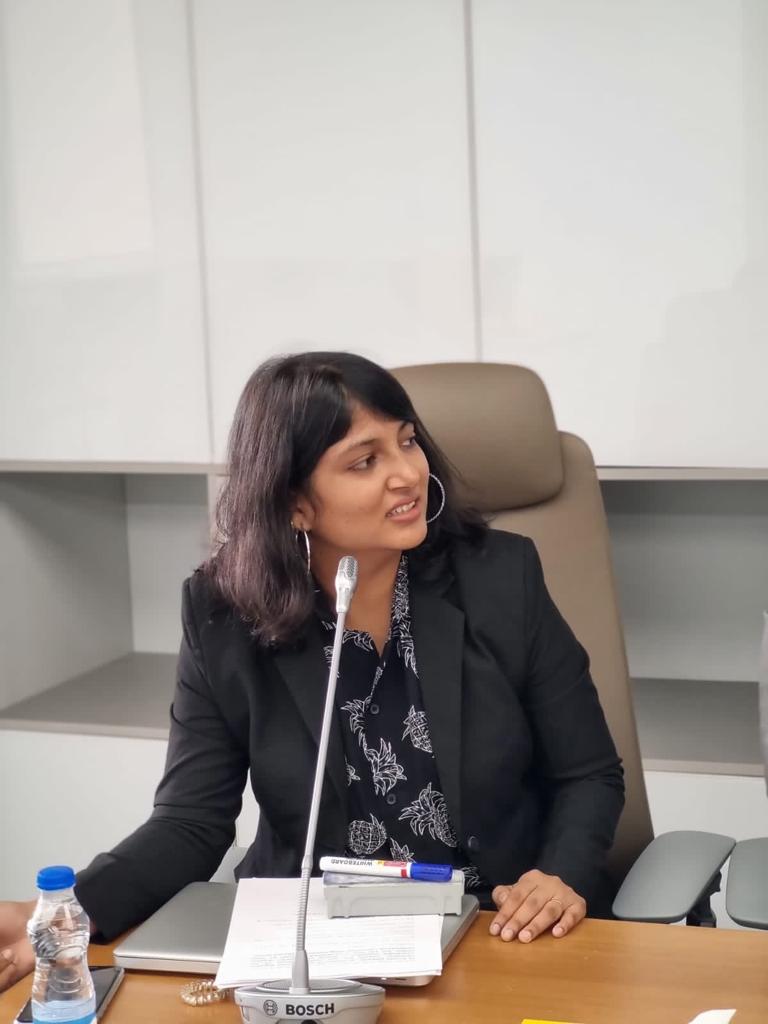



 Allow notifications