Tag: Corporate

  • In Conversation with: Prerna Bhushan, Privacy Specialist at Tietoevry | Young Privacy Professional, IAPP, Helsinki, Knowledge-net chapter

    In Conversation with: Prerna Bhushan, Privacy Specialist at Tietoevry | Young Privacy Professional, IAPP, Helsinki, Knowledge-net chapter

    This interview has been published by Prabhjot Singh, Priyanka Karwa and The SuperLawyer Team

    Is law something you were inclined to pursue, and why did you decide to pursue it?

    While growing up, I aspired to become a couple of things, but law never crossed my mind. Pursuing law was never part of my plan. While pursuing Commerce in senior secondary I had Business Studies as a subject wherein for the first time I came across partnership law. I found it quite interesting. After that, I went on to pursue B. Com where I had Company Law, tax laws, partnership laws as some of subjects.

    My interest in law increased but it was limited only to commercial aspects of law. After that I decided to pursue Bachelors in Law (LL.B).

    What was your Law School journey like?

    I pursued my LL.B from Campus Law centre, Faculty of law, (Law Fac) University of Delhi. It was a whole different world. There were students from all walks of life.

    From struggling to attend morning classes to exploring nearby food joints, from having most crucial legal discussions over tea to attending fests across DU, my college life at law faculty is very integral to what I am today.

    After my LL.B I pursued my LL.M from the Indian Law Institute. The culture at ILI was completely different from Law Fac. Multiple assignments, presentations, Wednesday seminars and daily class work kept me on my toes. It required a lot of hard work and smart work.

    I can proudly say that ILI has prepared to be calm in most stressful situations. I remember one of our professors would send a 100-150 pages article at 5:00 in the evening and we had to read it, analyse, and make comments for the early his morning classes.

    Little did I know how important a life skill he was teaching us. Today, when I have stressful work situations, I stay calm, and I have the confidence that I can do it within the limited time frame.

    I pursued my second master’s degree in International Business Law (IBL) from University of Helsinki (UH). The college culture was nothing like my previous educational institutions. However, when I got admission, it was the COVID period, and all my classes were held online. I had a 9-month-old when I started my LL.M at UH.

    It was a challenging phase, not getting enough sleep at night, waking up preparing meals and attending early morning classes. There were times when

    I would switch of Zoom camera during the lectures, feed my daughter during the class holding her head from one hand and making class notes from another. But the study culture in at DU and ILI had prepared me well enough to cover maximum syllabus in a short span, filter through huge study material and find important points and trained me well in writing answers. I participated in multiple events organised by the University and the Student Wing of Lawyer’s Union.

    Kindly brief us about your initial struggles in the beginning of your professional career.

    My career struggles are two folds, the first one was in India and the second in Finland. I am the first lawyer in my family. My parents were unsure of the choice of my career but have always been supportive even when they had practical doubts.

    The struggles for the pioneers of legal profession in a family are quite real, especially when you are a woman. However, I was fortunate that there were online platforms where job advertisements for junior positions were posted. I got the opportunity work with and learn from Supreme Court Lawyer Adv(DR.) A.K Gautam. Once you gain a bit of experience, learn your craft then the legal fraternity is open, and you can explore your professional options.

    When I moved to Finland, my Indian experience and education was not of much use while looking for a job. I could not even get a trainee position. It was a difficult and that made me take the decision of pursuing my second LL.M.

    While pursuing LL.M I realized that knowing the language was quintessential to legal roles. I saw Data Privacy as an area where I believed and assumed that most work would be done in English as Data flow is transnational. I developed an interest in the area as well.

    I found a trainee position after being rejected by almost 20 places. Good things take time; I found a trainee position in one of the biggest MNC in Finland and that experience helped my professional journey. However, it’s not that easy, I still feel the need to learn Finnish language as without it I am restricted in my career growth.

    If a contract is in local language, my merits are of limited use there. I also understood that as an immigrant I need to work way more than a local. Since I had charted my way into privacy, I decided to be part of International Association of Privacy Professionals (IAPP) and applied to be part of IAPP Helsinki Knowledge Net Chapter.

    I am a Young Privacy Professional (YPP) with the Helsinki Chapter. There is a lot more to be done and miles before I go to sleep.

    Tell us about your current role and how do you plan your day?

     I am a Privacy Specialist working with Tietoevry Finland. My job involves ensuring privacy and GDPR compliance withing the workstream I work. It involves reviewing commercial contracts, analysing the need for Data Processing Agreements, making impact assessments, and negotiating with clients in matter related to privacy. In short, I deal with the aftermath of Schrems 2 judgement.

    I am very structured in my approach. I like to have a clear idea of things I am supposed to do, and I prioritize my cases depending on deadlines, the billing from client etc. I have developed a system to do my work and I like documenting things for future review. My calendars are well maintained and are up to date. I reserve around 15 hours weekly for working alone, around 12 hours go into meetings and rest is for contingencies and writing mails. However, there is no rigid rule, and each day looks different depending upon the need of the hour.

    I like to maintain a balanced approach in my work life and personal life. My work hours begin around 7:30 in the morning and I like to end my day by 15-15:30 in the afternoon. I start early so that I can have the whole of evening to spend with my daughter. I reserve 1 hour after dinner to read about new legislations or cases coming in the privacy arena or anything that interests me.

    What’s your take on privacy regulations in India? We have seen many industries violating the rules during covid specifically in India, what improvements do you suggest?

    In India, Right to Privacy is an integral part of Right to Life and personal liberty under Art. 21 of the Constitution. It includes rights to erasure, right to be forgotten etc.

    However, a law strictly dealing with protection of personal data, ensuring proper compliance by companies processing personal data, and tackling the issues in modern digital world. is much needed. The Personal Data Bill 2019 has been withdrawn and as many as 80 changes were suggested in the Bill. Protecting personal data should be the prioritized specially when Data is the new Oil.

    The Bill has many lacunas, there were criticism from many well versed in the area. My suggestion would be to have a Bill that focuses on protecting Individual’s personal data with a balanced approach towards the controllers and processors.

    Do you think AI and Legal Tech can pose some challenges as well with a bunch of benefits in the legal industry? If yes, please share the same with our audience.

    Legal tech and AI are in their growing field, there is much that is unknown. There are developments in AI every day. Witnessing formation of a new law can be challenging and full of opportunities. There has been a surge in demand for tech lawyers, legal professionals specialized in privacy laws and cyber security. I believe professionally growth in AI and Legal tech offers an opportunity of employment and growth.

    Were there any specific roadmap or strategies that led you to success in law, or it was all unplanned right from the beginning.

    During my LL.M in IBL I opted for Information Law as a subject and that is when I decided to take more optional courses in the area of privacy. I also figured that in the privacy sphere most work will be done in English and not Finnish. And after I was sure about my career path, I planned my growth parameters, being part of IAPP was one of them.

    I felt that being an immigrant with no or little professional network, networking is what was needed, IAPP events provided an opportunity to network with other privacy professionals and their bulletin kept me aware of latest developments.

    I stepped out of comfort zone and reached out to alums of IBL course asked for their advice on how and where to apply, attended multiple mentorship programs, CV and cover letter writing sessions held by top consulting firms, lawyers working as in house legal counsel, privacy counsels and privacy specialists.

    I had to start from scratch all over again and this time it was more difficult as I was not in my country, I did not speak or understand the language spoken in the country I am residing.

    According to your experience, what specific observations one must make while reviewing the commercial agreements and contracts that too according to the GDPR compliance?

    The first thing you must see are the signing parties, if both are in EU, then check if the client has entities outside EU/EEA, what are the sub processors being used by the client to process your organisation’s personal data, what kind of data is being processed, why is the data being processed, what is the category of data subjects, is sensitive data being processed, are global cloud service providers involved, where are the data centres, what are the additional security measures listed.

    Once you have answer to these questions, see if there is transfer outside EU/EEA, then an SCC would be required except for adequate countries. Once it has been reviewed legally, ensure to collaborate with your privacy manger to check the privacy measures taken by the client.

    Lastly, as a woman in law, what would your advice be for the upcoming female legal professionals?

    There is nothing women cannot do; they might be restricted because of their circumstances but they surely can achieve anything the set their eyes on.

    Hard work pays off and from one woman to another, if I can do it, so can you!

    Ask for help and advice when needed and empowered women around you will guide and empower you!


    Get in touch with Prerna Bhushan-

  • In Conversation with: Savitha Kesav Jagadeesan, Senior Resident Partner at Kochhar & Co, Forbes India Legal Powerlist-Top 100 Lawyers ,Future Legal Leaders IBLJ ,Labour IP TMT Legal 500 ,Asia IP Leading IP Expert and WIPF Powerful Women in IP

    In Conversation with: Savitha Kesav Jagadeesan, Senior Resident Partner at Kochhar & Co, Forbes India Legal Powerlist-Top 100 Lawyers ,Future Legal Leaders IBLJ ,Labour IP TMT Legal 500 ,Asia IP Leading IP Expert and WIPF Powerful Women in IP

    This interview has been published by Prabhjot Singh, Priyanka Karwa and The SuperLawyer Team

    Let us begin with the most important question, did you always dream of becoming a lawyer or, did it  happen by chance?

    This is a proverbial question, I am a first generation lawyer and it was purely by chance. I guess destiny played a larger role than my desires. I had already thought my path through, I would complete my economic honors and would thereafter do my Masters in Business Administration, but fate had other ideas. My best friend was writing the entrance for national law school of India university and dragged me to write it with her.

    My idea to write it was purely to support her. I got in and thereafter my father pushed me to attend the interview as he had heard great things about the university and felt doing a professional course would hold me in better stead.

    Therefore I landed in Bangalore fell in love with the city. I passed my interview and was offered a place. It was at that time I looked at the curriculum which is trimester based with multiple subjects and all I could think was I definitely was not going to be bored. Plus the adventure of living on my own and all such factors pushed me to say yes. SO as you can see all the wrong reasons but it led me to the right direction and my calling and I can safely say I love the law, I love what I do, I did find my calling.

    Do you feel it is necessary to have a mentor/ guide to handhold a young lawyer in the beginning years of the profession? 

    Its not a necessity but it is definitely a bonus. Any form of mentorship and guidance in our earlier years does build perspective. When we pass out of our various universities what awaits a new way of life and of course a journey we must chart. However many of us feel quite lost and wonder if decisions made by us are the right ones and sometimes certain decisions does make us wonder “what if”….however when one has a mentor or a guide, the discussion or even somebody as a sounding board enables us to explore our ideas as well as provides us with new perspectives which gives a sense of direction.

    When I was co-leading the mentorship vertical of CII-IWN I saw the number of women professionals, entrepreneurs who derived great help from the program, mind you these ladies are all senior professionals, so if they can find the positive for having a mentor and guide think of how much help such a program would do for a budding lawyer.

    You have a great experience in labor law matters and IPR issues, what drew you to these fields?

    Interestingly IPR chose me rather than the other way round. Which started as a challenging task to clear some historical issues of a department led to me understanding picking up the law and the nuances surrounding it and thereafter I continued to pursue it.

    Labor was something I was naturally drawn to due to the complexity and vast nature of law. I enjoyed the thrashing out contractual issues to working around nuances of employer-employee litigation. Labor is an area that has all facets of law in action- compliance, contractual, specific legislation and litigation with a dollop of mediation and settlement. Therefore all these interesting facets kept me engaged and my interest in labor law grew,

    Is there any roadmap that a legal professional should follow in order to master it completely?

    Never think you have mastered the law….our profession is such we need to constantly learn, the day your desire to learn dies that day you can be assured your tryst with your professional growth also stops. Constant updating, readying, picking up new practices, learning from your peers makes one a better professional. Never fear to ask, we are human we have to accept that our mental capabilities are limited therefore whenever you advice always check before providing the advice and if you do not know learn to accept look it up and then respond with the correct advice.

    Even during the times when there was a complete lock down and there was Work from Home, there were still cases being discovered where sexual harassment was observed, what are the main reasons of these acts? And how can it be further improved?

    Sexual Harassment reached some of its highest rates because of use of the digital technology at work. The use of phones and laptops, and communication through whats app, telegram and social media enabled many to shed their inner inhibitions and routine demean-ours and exploit the ubiquitous nature of the virtual world and commit acts which the person might not do if in the physical world.

    This led many to cross lines and to use their virtual self to commit the very acts they might have desired to commit in the physical world but never attempted due to certain fears. Any manner of bringing down sexual violation of another individual can only happen at grassroots level, sensitization needs to take place at school levels and we need to bring up our children to respect one another then there might be some change…

    Other than that if we are to speak legally I would say greater enforcement of our laws.

    While we take proactive steps of bringing new laws and policies equally important is the need to see that the same has an eco- system that enables its implementation, an implementation, which will make the majority to think thirty times before attempting any act.

    How do you see the IT industry creating more developments in future and to what extent it can help the legal fraternity?

    AI and ML is the next big thing. Digitization is the new era, therefore legal fraternity will require to jump on board this new digital wave and such new technologies will definitely reduce time in execution of tasks, whether it is in research, contract or litigation.

    I thin even the present hybrid mode has enabled more time, flexibility and ability among our legal fraternity and this is just the beginning.

    Innovation will very soon bring on versatility and time to be juxtaposed enabling lawyers to actually do more than the present structure of advisory and litigation, am waiting for that change.

    How do you maintain a work-life balance in your profession and would you mind sharing an example of a typical working day?

    Time management and prioritization are my key tool. There are 24 hours in a day. I am not much of a sleeper, 5 hours is good number of hours for me to be refreshed therefore I work in cycles. My early morning 6 am goes towards reading my newspapers. 6-8 am thereafter is to get my boys to school . 8-9.30 am is more for breakfast and catching up on whats in store for the day.

    Mornings I mainly do meetings and networking, my legal work depending on the load I accomplish it through the day .

    Between 6-9 I am usually again with my families and depending upon my work load I tackle the work at night. I try to read or watch TV at least for 1 hur to unwind.

    Typically I try not to keep things for the next day except for transactions as it has its own course, but I also learn to listen to my body and if I cant do something I start fresh the next day. For me the aspect of balancing comes in because I don’t compartmentalize my time and I use every bit of my day to achieve both work and life.

    You’ve accomplished so much in your profession in such a short amount of time; however, given the nature of the legal profession, are you able to carve out time for your other interests or hobbies? 

    I love cooking and reading, travelling is another personal favorite and of course eating somehow I do try and find some time not as much as I would like to, but a Sunday I do try my hands at new things, something about baking calms my stress levels. In fact earlier on in my career every Sunday was dedicated to baking now its difficult, but once in a while do indulge in it.

    I think one must take some time out in order to avoid burn out, it can be something small or a specific week, but something for oneself if we try and do resentment towards extra work as well as situations are far less.

    What would be your parting message to our readers and the young budding lawyers?

    There is no substitute for hard work, but more importantly always remember that if we are good to others then life has a strange way for that all to come back and good things to happen. Therefore respect your peers, respect your juniors as much your seniors, always look towards new avenues and never fear from challenges. Entire life is about choices and our choices define our journey, therefore never regret your choices go with them appreciate them the good from the bad whatever it might be, you will then find things always have a way to work its upside to you. Wishing each one of your unique abundant journey.


    Get in touch with Savitha Kesav Jagadeesan-

  • In Conversation with: Ankita Srivastava, Founder at Gavel Speaks Inc and Head of Legal Department at Practice Party

    In Conversation with: Ankita Srivastava, Founder at Gavel Speaks Inc and Head of Legal Department at Practice Party

    This interview has been published by Prabhjot Singh, Priyanka Karwa and The SuperLawyer Team

    Is law something you are inclined to pursue, and why did you decide to pursue it?

    I was always interested in two subjects, law and psychology. It was always either of the two that I wanted to pursue but I had no interest in mathematics or theoretical science as much as I was interested in law. I decided to pursue law because I have always been inclined towards giving to people, have always been an active listener and loved reading since childhood. Just being in the library and going through different books gave me the most special and unique feeling. In those moments I knew that I didn’t want to be anything else but a lawyer. 

    Taking into consideration that you are a third generation lawyer, did you overcome any difficulties or was it a completely easy sail for you?

    It is a huge misconception that if you are a second or third generation lawyer then it’s easier for you. It’s definitely not because I still had to understand and figure out why I was doing law and how I wanted to make it in this cut throat profession.

    My father and grandfather have been into litigation but I never saw myself doing litigation. I started my internship journey with the National Commission for Women and my interest was initially in legal writing and research which led me to join the law chambers of an AOR at the Supreme Court of India. It’s an interesting story that I landed up at his office because of the quality of my work and networking in my first job. I never asked my family for any professional support.

    My choices have been very different from previous two generations and I have been building a network of my own which is now growing beyond Asia. I still don’t know any of my dad’s lawyer friends, never went out for meetings with him or had mutual connections. Seeing my previous generations being respected as a lawyer might have sparked the passion to be a lawyer, but I worked very hard on cultivating the discipline and vision to expand beyond what was already done. It is surprising that most of my dad’s professional network don’t even know that I am a lawyer even today. 

    What importance does legal writing hold in the industry right now and how can one excel in it? Please describe that for our audience

    I think legal writing is the backbone of the legal profession. Top lawyers around the world are known for their legal writing skills. These skills should be continuously developed through continuous reading and writing. Legal writing should be three things in my experience which is clear, concise and conscious. 

    Mentoring professionals in the industry is not an easy task for sure, how critical is that for anyone in the legal field specifically?

    I started mentoring students after I cleared the UGC NET exam and suddenly the pandemic happened. At that time I wanted to discover my hand at teaching and somehow mentoring happening by accident. While I was teaching students I saw that most students are highly capable to be great lawyers but they lack the right mentorship. I used to end up mentoring them more than teaching.

    This made me realize the gap that exists between getting into law school to getting your career established. Currently, I am mentoring a student based in Dubai who is in 2nd year of law school. She didn’t know why she was doing law and if she really wanted to be a lawyer or was just getting a degree. As her mentoring is going, she has discovered the subjects she likes, and has understood the path she wants to take in the legal career. I think we as a society, do undermine the value of expert guidance and how much time and energy it can save. 

    Emotional Intelligence is still a considerable soft skill to have in life, but the question here is, how can one implement that in a short span like you did?

    One just needs to have a humanistic approach towards practicing law. Whenever a client approaches me I make sure I make them feel understood and listen to their problem actively. The key is not to just show legal skills to clients but to walk a mile in their shoes and provide a legal resolution. My journey of working with clients from different continents have shown that despite different nationalities, each one is human and we as lawyers need to embrace the humanistic side of law. A little act of empathy towards the client goes a long way in building a strong professional relationship. 

    How did Lawsikho courses help you in the legal journey that too in the US and UAE?

    The consistent support from the LawSikho freelance team has been a treasure in my international legal career. I developed my Contract Drafting skills with the US Contract Drafting and Paralegal Course with LawSikho during the pandemic when I was emotionally exhausted given the covid outbreak like everyone else and I didn’t know how to further my legal career despite coming from top universities and clearing UGC NET exam. With classes at LawSikho and freelancing sessions each week, I dedicated myself to the process. Slowly I started gaining confidence in myself again which led me to work with clients across the USA, UK, UAE, Europe, Australia, Taiwan, among many other nations. 

    Struggles of corporate often go unsaid, kindly describe the initial hard moments you had and how one can overcome them significantly?

    Corporate world is highly competitive and fast-paced and it is not easy to stand out, especially if you want to work internationally.  I found myself working tirelessly among lawyers who were more and still are more experienced in their legal journey but the key has been to find out my unique skill set and hold my ground. You have to be your own friend in this process, have immense trust in yourself.

    I kept working on my contract drafting skills in different areas of law, I still do and it’s continuous work. I have spent sleepless nights just researching new areas of laws and made sure that each time any new client comes to me I raise my bar of providing the best services. It involves a lot of attention to detail, developing excellent communication with clients, and sometimes even making yourself available at odd hours and holidays. 

    Please tell us the idea behind Gavel Speaks?

    Gavel Speaks is a boutique law firm driven by emotional intelligence and empathy towards clients. It involves cross-border and intra-border transactional work among other areas of law including employment law, entertainment law, handling USA pro se cases, pre-litigation support, case management among other services. The aim is to  be that one legal friend for our client which they want to have in their circle to go to for advice simply because they can trust that advice. We want to change the way the world looks at lawyers and legal systems by humanizing the legal services. 

    Finally, with so many experiences that you have gathered so early on in your career, what would your advice be for the up and coming legal professionals?

    One major advice I give all my mentees and juniors is that choose law only because you want to and not because it sounds good or to earn a degree. It is one of the most noble professions and it demands honesty and immense hard work. Currently, the opportunities are opening up like never before in the legal profession with arenas like NFTs, Metaverse, Web 3.0 etc, it is time to explore your options.

    Don’t choose a path within law just because of its power or position, choose what you can devote life to and feel passionate about. To end with a quote here, “The law is a jealous mistress and requires long and constant courtship. It is not to be won by trifling favors, but by lavish homage.”


    Get in touch with Ankita Srivastava-

  • In Conversation with: Kaainat Pundir, Associate at Shardul Amarchand Managaldas & Co and Co-Founder at Sankalp (The Dispute Resolution Organisation)

    In Conversation with: Kaainat Pundir, Associate at Shardul Amarchand Managaldas & Co and Co-Founder at Sankalp (The Dispute Resolution Organisation)

    This interview has been published by Prabhjot Singh, Priyanka Karwa and The SuperLawyer Team

    It is said that the best moments happen when they are unplanned. How true do you find this axiom? Do you anyhow relate to it considering that you were a Science student and had never intended to take law as a career?

    Absolutely, I think my professional journey stands testimony to it – whether it be competing in my first moot competition (Alfred Deakin International Commercial Arbitration Moot) in my final year or bagging the Herbert Smith Freehills vacation scheme prior to that.

    My journey from Sanskriti School to Jindal Global Law School was similar. Having been brought up in a family, surrounded by professionals from the armed forces, engineering and medical background, law was never on my radar.

    After preparing for engineering entrances for three years, I realized I was not passionate towards the field, although I had secured multiple admissions in the field of engineering, commerce and mathematics.

    The decision to enroll into law school was guided by, first, taking a deep look within, and then being mentored by my educationist and career counsellor mother.

    The legacy of my grandfather, a practicing lawyer (alumni of CLC) prior to joining army under the emergency commission, and great grandfather, a leading criminal lawyer/magistrate turned politician (alumni of Law College, Lahore) were definite motivators. In hindsight, studying science until college helped me imbibe a scientific temperament to which I owe my analytical skills, attention to detail and general problem-solving approach.

    The curiosity of a science student drives my interest in the sociological and jurisprudential study of law and understanding the ‘why’ behind concepts.

    You happen to specialize in Mergers & Acquisitions, Investments, and Private Equity Transactions. Can you tell us a bit as to what prompted you towards this field of law? When did you realise that you wanted to specialize in M&A?

    It might surprise you to know that I undertook 16 internships during law school (which allowed me to understand almost all practice areas and work undertaken by corporate lawyers), apart from 2 TAships, 3 RAships and auditing specialized courses (taught by legal doyens like Prof. MP Singh, Sr Adv Ravi Sikri, Ms. Aparna Mehra). Further, being the editor for an interdisciplinary research blog and journal and being part of the college placement team throughout exposed me to a mix of work experience, course work and undertaking research in the field.

    What definitely interested me was the internship at CAM, where I assisted with due diligence and research for the mergers of public sector banks.

    My interest in corporate law grew while studying the Securities & Regulation elective course wherein we drafted a DRHP and I further found my area of specialization during the course on venture capital transactions, taught by Mr. Siddharth Nair, partner at SAM.

    Apart from this, I have actively participated in international mediation competitions which mostly have commercial and cross-jurisdictional disputes case studies – these have trained me to understand the interests of different parties and prepared me for client-facing work.

    Additionally, connecting and discussing with corporate lawyers from Europe and USA, regarding their work/transactions fueled my interest, and mentally prepared me for the hours which come with the job. 

    You also happen to have dealt with some high-profile transactions as well. Not many lawyers can achieve this feat so early on in their career, let alone women lawyers. What was the story behind your success? Did you have to face any kind of stereotypical struggles and if you did, how did you overcome them? 

    In my opinion true gender equity in the Indian scenario is still a long way off – whether it be the higher judiciary, appointment of senior advocates or partnerships at law firms. Having strong leaders who support women’s careers and provide equal opportunity to them contributes a lot to bringing more women into the profession. I feel I am truly blessed to have been mentored by brilliant lawyers, wherein AOR Manisha Karia offered me my first internship and placed her trust in a first-year law student, while Sr Adv Aishwarya Bhati, ASG of India, took special interest in building a strong conceptual foundation for me during my internship, they have been a huge guiding force in my career.

    As compared to litigation, law firms see a much higher female workforce participation. In most part, this is attributable to the strong leadership at law firms which have nurtured an equitable work environment for women to succeed. At SAM, it is Shardul Shroff Sir and Pallavi Shroff Ma’am. My own team, led by Ms. Puja Sondhi, is female-dominated across the echelons.

    The team provides exceptional exposure in terms of venture capital transactions to its associates, having advised on numerous investments into unicorns in the past years. This has allowed me to learn a great deal through various transactions and through the commitment of my seniors to pay particular attention to their juniors’ growth and learning through continuous training and feedback.

    You have made a name in the international ADR circuit for yourself which is quite a distinguished honor so early on and you are also a founder of a dispute resolution organization, Sankalp. Can you tell us about your journey and your organization?

    I trained as a civil and commercial mediator in my first year itself with ADR ODR International. The next year I took it upon myself to learn and improve my skills further by working with Dr. Claudia Winkler at The Negotiation Academy, Vienna for 2 years. During this time, I also participated in multiple national and international competitions including CDRC Vienna and ICC Paris. Over the years I have continued to mentor and still regularly train Indian and International teams both for national and international competitions. I feel privileged to have been invited to judge at international competitions (even as a young law student among a distinguished panel of judges at INADR Georgia and Transatlantic Negotiation Competition by Syracuse University and as a mentor for the maiden mediation training program in Sri Lanka).

    Through such opportunities and having participated in Global Negotiation Conference, I have built a network of friends and colleagues across borders who work in various capacities as political negotiators, corporate lawyers, mediators, et al. The positive support I received from the international community in my endeavors inspired me to expand this community to include more law students and young professionals from across borders to facilitate mentorship relationships with experienced professionals.

    Hence, Thomas John and I founded Sankalp – The Dispute Resolution Organization, which has already garnered support of many professionals and students alike across continents. We are earnestly working towards its growth and collaborating with businesses, institutions and organizations. Our aim is to make business processes more efficient and cost-effective through increased utilization of negotiation and third-party neutrals.

    You worked in Kailash Satyarthi’s organisation and accompanied in their training and child labour raids as well. What was your experience like during such work? And does pro bono work add value to a professional’s life?

    I interned with Bachpan Bachao Andolan in my second year wherein I closely worked with the team on the month-long training prior to the Bharat Yatra (a 35-day long march across the country to build unprecedented awareness on combating child sexual abuse and trafficking). It was truly enlightening to learn from the activists working on-ground across India and to understand the challenges they faced every day to bring about real change and thus secure a safe childhood for children. I also accompanied the team on a raid on sweatshops employing child labour.

    That experience of observing the actions of BBA’s raid team, the accompanying police officials, magistrate, the employers and the children, exposed me to a lot of life’s harsh realities and re-enforced in me the importance of easy access to education and opportunities for children. On days when I was highly tired after my work commitments taking out time to tutor children from lower-income backgrounds or spent weekends volunteering at the nearby children’s home, felt very much worth it.

    Over the years I have stayed connected with the work of the foundation. During the pandemic, I had the opportunity to volunteer with Kailash Satyarthi Children’s Foundation – working on their campaign against child sexual abuse and subsequently, assisted the Delhi Commission for Protection of Child Rights to conduct research relating to the status of children’s well-being and the access to learning resources and activities during the Covid-19 pandemic in government and municipal schools.

    This was utilized as policy inputs for designing effective interventions once schools reopened post the lockdowns.

    It is absolutely essential to do pro bono work – it keeps you motivated, gives one immense satisfaction of helping a person in need and keeps one engaged in the long run. This is also the advice that I have received from multiple senior lawyers and businesspersons. For me, apart from hobbies, education has been an important cause – may that be tutoring school children or coaching and mentoring college students or training professionals in negotiation skills.

    Was it a tough call for you to choose between LLM and job? What points one needs to consider while taking a call between these two options?

    I had first planned to apply for an LLM after receiving my HSF vacation scheme offer since they hire two years in advance as compared to Indian law firms. However, the HSF offer did not pan out as expected in light of the pandemic. Hence, at the time of my graduation, I was presented with the dilemma of moving to London to pursue my Masters or to start work with one of the best transactional law teams in the country.

    I had received offers from University College London and Queen Mary University, and also had the PPO from SAM. Upon weighing the pros and cons, gaining work experience at a tier-1 law firm with a team dealing with VC and PE transactions with exposure to a very active investment market as valuations skyrocketed, was the obvious answer.

    My work with the team has proven my choice to be correct. In college, I lacked sufficient clarity to choose a Masters specialization, and my main motivations to pursue a Masters were intellectual growth and access to a new jurisdiction. However, while working with the best corporate lawyers across jurisdictions, advising on upcoming yet niche areas of law and being part of numerous high-value deals has helped me streamline my professional interests and goals.  

    Our readers will be very much interested in knowing more about Vacation Schemes, the eligibility criteria and more crucial details about it.

    Vacation Scheme is equivalent to securing an assessment internship at a tier-1 law firm in India. UK based law firms have the vacation scheme route to land training contracts with them (which is required to gain qualifying work experience to qualify as a solicitor, however, that is changing with the new SQE regime). Certain top international law firms like Herbert Smith Freehills, Allen and Overy, Linklaters, etc. have India Internship programs wherein each year they invite applications from penultimate year Indian law students and offer vacation schemes to a handful of them selected through a highly competitive multi-stage shortlisting process.

    The process involves an online application and online test which qualifies candidates for a competency interview followed by an assessment centre. The specifics of the process may differ for each firm but are largely similar. There is no one size fits all approach to securing a vacation scheme offer. However, performing well academically, having a good CV including diverse experiences will certainly enhance your chances to succeed.

    There are also a lot of resources available online to prepare you for the process. Reaching out to candidates who have succeeded in the past is always a good idea (I would be happy to help out anyone who reaches that stage). Research well if you are planning to apply. Apart from that, the graduate recruitment teams at the firms are very responsive and helpful throughout the process, so feel free to contact them.

    What would be your parting message to our readers and the young budding lawyers? How can they mark their presence in the niche of venture capital transactions and cross-border M&A?

    Give yourself the time and space to explore your interests to find the area that truly excites you. The legal career is a long one and you should be pursuing what makes you excited to get out of bed each morning. More importantly, be unafraid to put in the hard work to make a name for yourself. The more you persevere in the initial years, the better your learning will be and you will be a better lawyer for it. One has to learn the art of networking both in India and abroad. It is absolutely essential and if you are doing it right, you will realise that most people in this profession are willing and happy to mentor juniors. A great example of such a person is my role model at Jindal, Professor C Raj Kumar despite his multifarious endeavors always finds time to motivate and mentor students.

    There are very few teams working in the niche area of VC. Speak to people, intern and find a team that does the kind of work you want to do, and also, provides a healthy work environment where your seniors motivate you to learn each day and to gain more exposure.

    It is a blessing to be doing the work you love and with the people who inspire you. Further, build mentorship relationships with your seniors to learn from their expertise and experience. For me having a mentor like Mr. Siddharth Nair and learning from my partners, Ms. Puja Sondhi, Mr. Aayush Kapoor and Ms. Manita Doshi, who have each built a name for themselves in the industry and go out of their way to teach me on a daily basis – has made all the difference.


    Get in touch with Kaainat Pundir-

  • In Conversation with: Ankita Shaw, Associate Solution Advisor at Deloitte

    In Conversation with: Ankita Shaw, Associate Solution Advisor at Deloitte

    This interview has been published by Prabhjot Singh, Priyanka Karwa and The SuperLawyer Team

    What was your motivation behind choosing law as a career?

    Having the knack since the early years to eliminate options I always knew what I never wanted to pursue rather than being crystal clear about what I wanted to pursue.  Law happened to me by chance and for me, it was never the means to achieve my goals. And honestly, I do not remember one specific isolated incident that motivated me to pursue law until I left political science honors after pursuing it for one year.

    In this one year, I participated in MUNs and studied different philosophers which led me to realize my interest in Constitution and International Relations and hence law happened.

    How important is it to get yourself into legal writing in this profession according to you, what other areas should one explore?

    Well, in my opinion, it is indeed very important to get oneself who is involved in the legal profession to indulge in legal writing. In the first place tell me, what is an article all about – is it merely a combination of words or a compilation of the already existing literature? The answer to this would be a big NO. Over time, as I have understood an article is your way to contribute to legal academia by using your own interpretational and analytical thoughts based on the grey area in the existing literature – something beyond what exists on google or for that matter of fact any other legal database.

    As a law student, one is engaged in writing right since the first year – the primary purpose for which is to inculcate the research aptitude and execute it in writing considering that this aptitude is one of the basic requirements even post the undergraduate years.

    Additionally, having publications in your name in esteemed and reputed journals surely makes a remarkable impact on your CV undoubtedly showcasing the extensive knowledge one has in a specific domain. However, at the end of the day, it is one’s sole discretion to either quote what already exists in the databases or make a significant contribution to legal academia by one’s name.

    Furthermore, other areas that one should explore during law school without an iota of doubt are mooting, internships, debates, paper presentations and attending conferences, and actively participating in societies and volunteering for events. I consider all of these activities to inculcate confidence in an individual while also building skills at the same time.

    The more one gets involved in these activities, the more skills and knowledge the person has and no other place is better to give it a shot if not law school. While I believe interest area surely lies in specific domains, without exploring each domain how does one get to conclude respective interest areas?

    Tell us about your journey in this profession in a nutshell!

    The five years that I spent at KIIT Law School, Bhubaneswar has in all been an amazing experience. I knew right from the first day of college that the journey for a first-generation lawyer is not a cakewalk and that to succeed in any area of law would require hard work and patience at the same time.

    Hence, during law school, I kept myself involved in balancing my academics with both extra-curricular and co-curricular activities. I have had the opportunity to represent my college in Moot Court Competitions winning laurels for the college.

    Additionally, I have participated in several conferences and have several decent publications in my name. Apart from academics, I also was quite an active member of different societies in college which led me to become the Convener of the Moot Court Society.

    I also was fortunate to share excellent relations with some of the professors at KIIT Law School who taught me valuable lessons for life beyond the black-and-white letters of the law. In retrospect, I think I made the best decision to join KIIT Law School which gave me ample opportunities to grow into the person I am today.

    On the personal front, I think my personality went through a massive change during the journey. Made a lot of friends, committed endless mistakes both at the professional and personal level – learned from them, failed ten times more than I succeeded – learned to get up again and again.

    Like we always say, hard work does not go to waste, each and everyone gets paid on time! but what were your strategies for achieving the goals you planned?

    I would first like to share a small anecdote before I answer this question. Right from Day 1 of my five-years law school, I started dedicating myself to writing research papers. However, it would not be until my third-year end that my first paper got published. Three years of rejections from endless places and I could not figure out the reasons for it not being accepted for publication. Between the journey of failing time and again and getting up an equal number of times, my first paper after years of hard work got published. To answer the question, I have learned it hard way that a CV of failures is ten times more than the two-page original successful CV.

    Hence, I never had planned any particular thing to achieve a certain goal, instead, I picked up things impromptu and would never give up on the said until it was done and achieved. The only strategy that I followed throughout my law school was to maintain hard work, and consistency and never say die even when the going gets tough! Additionally, I also believe that read, read and read no matter the upward or downward phase of life – because the knowledge and the experience that comes with reading are irreplaceable.

    You’ve written on the role of Artificial Intelligence in the Healthcare Sector, how do you think AI can change the way we deal with different industries, and what necessary dangers it can impose for us as well?

    Artificial Intelligence (AI) has penetrated almost every sphere of an individual’s life. Albeit, AI has the potential to transform every sector in an efficacious manner yet the ramifications it poses cannot be denied. Some of the ramifications in my limited knowledge are ethical issues, regulatory and compliance issues, legal issues, environmental and sustainability issues, and economic and socio-political issues only to mention a few.

    Given that each sub-topic has the potential of being expounded into a research paper or an article I limit myself to merely mentioning the categorical issues. In my opinion, before the implementation of AI at the core of each sector, the artificial literacy of the nation and the economic status of the nation is ought to be considered to prevent any sort of exacerbation of the gap between the two extreme ends of the economic status and hierarchy.

    Please tell us in brief about your current role!

    Usually, we are expected to start by 9.30 – 10 am wherein the first hours of the day generally go into attending meetings, responding to emails, and updating oneself on the task for the day. Primarily, the task involves reviewing documents and contracts for the clients, reading the case, and the judgments related to the task.

    What is your life mantra to work stress-free?

    Some of the mantras that I follow at a personal level to work stress-free is maintaining a balance between work life and personal life. I believe being with your family is equally important as your career. In this context, I more often than not take shelter in some close friends and family to calm down on any aspect of life.

    At the professional level, I tend not to compare myself with either friends or colleagues and not attach myself to the outcome of the work. At the same time, I also believe strongly in my hard work and ability to accomplish the goals I have set my eyes on.

    Any last piece of advice that you would like to give to the upcoming generation of professionals?

    My constant endeavor throughout this interview has been to share my own experiences with extreme frankness. And since I have just started, my limited knowledge and inexperience shall make the pieces of advice narratively limited and premature, nonetheless, some of my learnings that I would like to share are

    In the first place, in this journey that entails endless creativity and options to be explored, do not limit yourself and explore every kind of opportunity that one may have at hand. Secondly, as cliché as it may sound there is no substitute for hard work and I will not be either the last or first person to emphasize this. Along with Hard work, patience, sincerity, and perseverance are the basic requirement of an individual in any profession.

    Thirdly, never hesitate to ‘ask’ either for any sort of help or internships or recommendations, or any other thing that comes up to your mind. I’ve learned that ‘asking’ does not allow you to lose anything because you do not have a thing to lose instead it might as well work in your favor. Fourthly, read, read and read because this will help you eventually in your career.

    Lastly, being an avid follower of Swami Vivekananda, I suggest one have a ‘never say die’ attitude. This essentially helps in recuperating the failures and rising once again considering at times you will inevitably feel like giving up on everything because things failed to work on your chartered timelines but then don’t!


    Get in touch with Ankita Shaw-

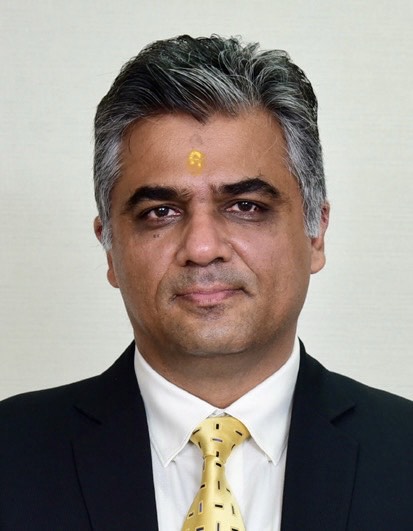
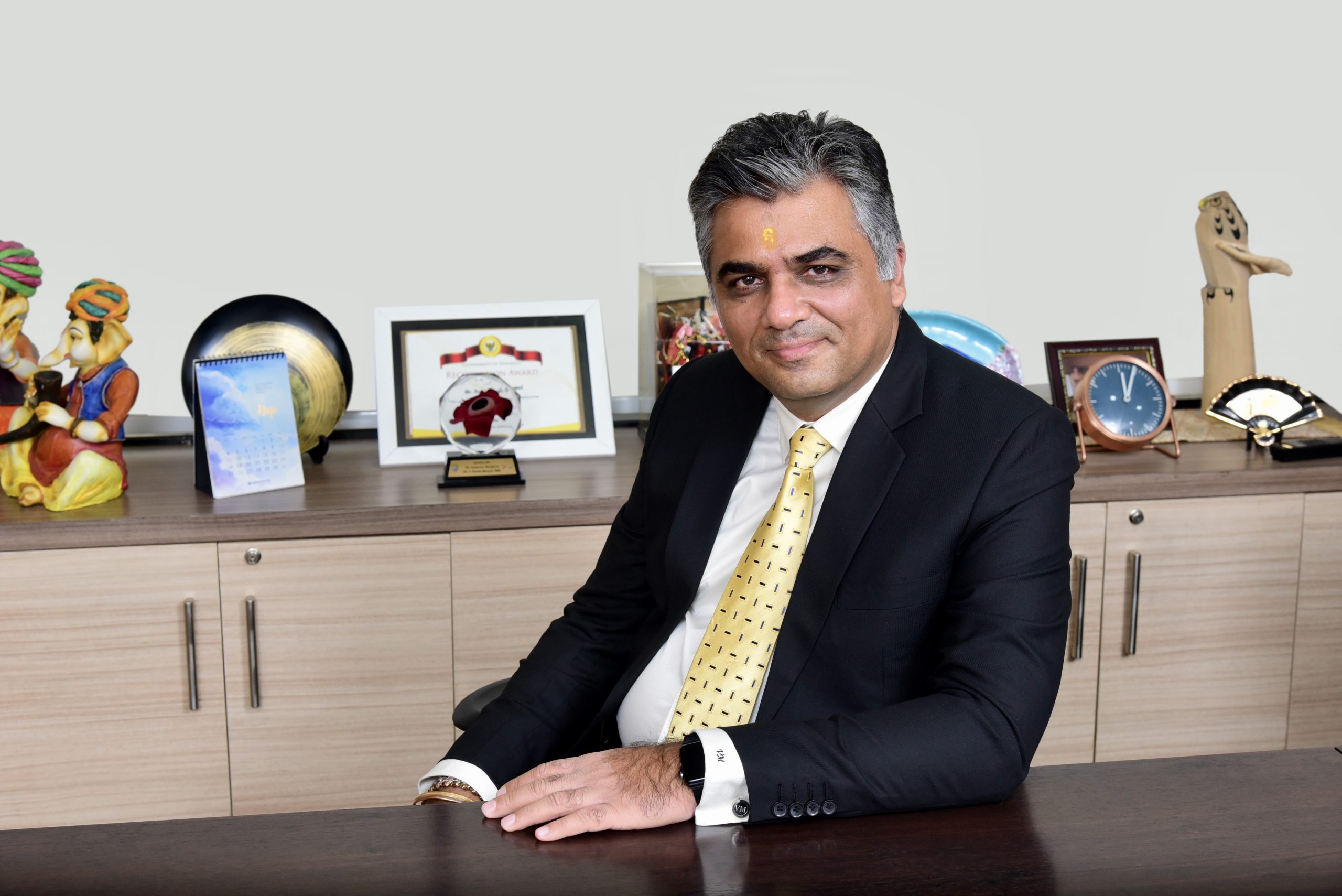
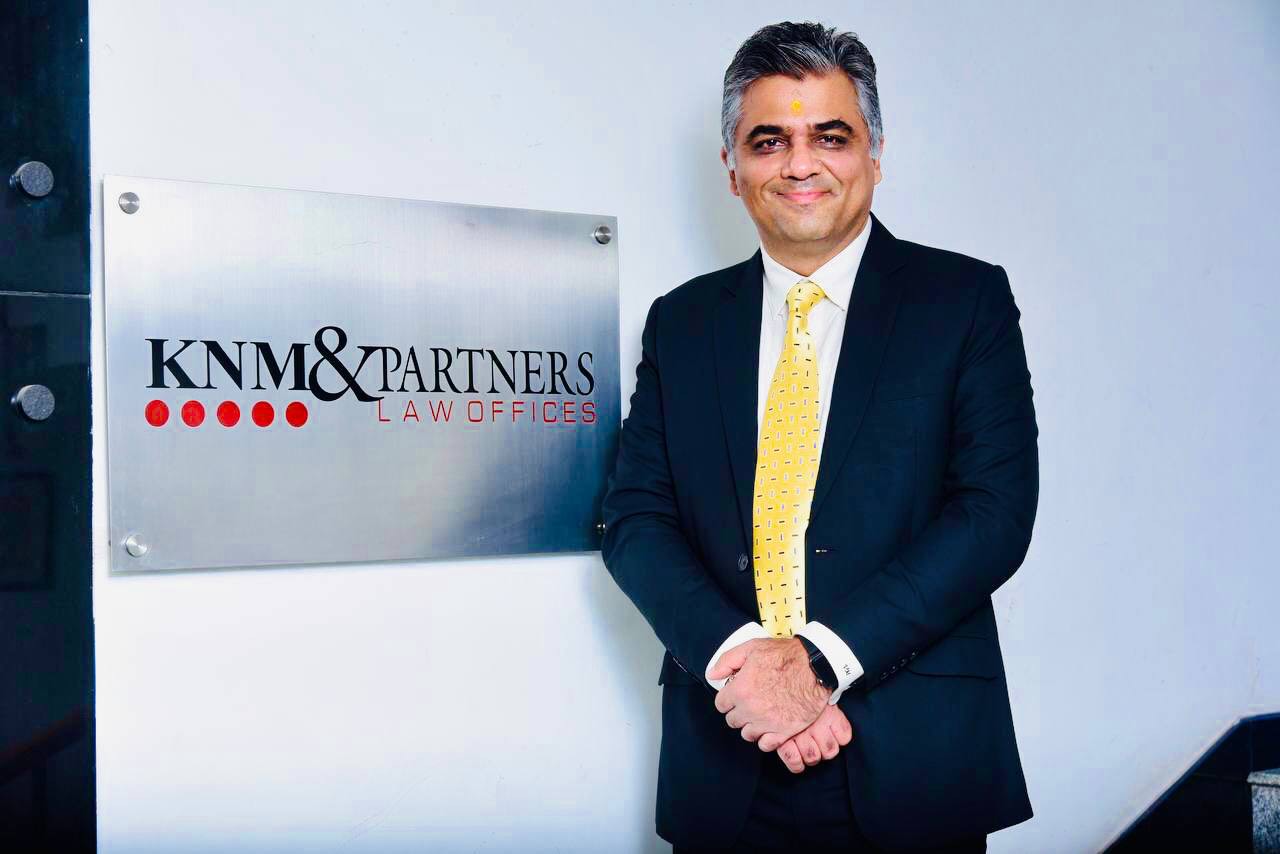
  • In Conversation with: Vipender Mann, Co-Founder & Senior Partner at KNM & Partners, Law Offices

    In Conversation with: Vipender Mann, Co-Founder & Senior Partner at KNM & Partners, Law Offices

    This interview has been published by Prabhjot Singh, Priyanka Karwa and The SuperLawyer Team

    Tell us about yourself-what motivated you to choose law as a career path.

    My roots are in the countryside and the farming community. My parents both worked for the government, so my family and I moved to the city of Karnal, Haryana where I attended school and eventually went to college, even though our hometown was only six kilometres away from our village. Due to our proximity to the village, we felt a strong sense of belonging to our heritage.

    When it comes to school and college, I’ve done about as well as average. However, my life experiences are quite varied. While in college, I joined the National Cadet Corps. (NCC). For my flight training, I went to the Karnal Aviation Club in Haryana, India. In Rajasthan, India, I assisted my brother in turning around a failing emery powder production facility.

    By riding around in a truck my brother owned, I got a taste of what it’s like to be a truck driver and learned about the ins and outs of the transportation industry and the difficulties truck drivers face.

    Due to my insatiable curiosity and desire to broaden my skill set, I decided to pursue a career in law school. In the field of law, you can expect to expand your knowledge every day. In 1998, I began practicing law in Delhi, India.

    Do you think being a Non-NLU student creates several obstacles in one’s professional life? If yes, how can one overcome that to build oneself in the industry?

    Whether we like it or not, branding plays a significant role in every aspect of our lives. A non-NLU student may find it more difficult to break into the legal profession, either by being hired by a prestigious firm or given a position in the chamber of a well-known senior advocate.

    However, that is only significant in the very early stages. These days, one can find many excellent job prospects among the many law firms and attorneys. Each law student, in my opinion, should make the most of his or her time in school by participating in as many internships as possible. It’s important that internships offer a wide range of experiences to their participants.

    The district court, the high court, the supreme court, the tribunals, the forensic laboratories, in-house departments, central/state govt. legal departments, pro bono/NGO etc. This variety will increase one’s horizons, education, and self-assurance.

    A lawyer ought to be well-rounded, with broad knowledge and deep expertise in specific areas. Experiences in the real world are the best teacher, and the more you gain from them, the more you can apply to your career. When someone needs legal advice, they automatically put their lawyer on a higher tier.

    Therefore, it is essential that he is well-versed in more than just the law. To put it another way, law students attending schools other than National Law Universities should focus on developing their own personal brands in order to compete with NLU.

    How has your experience been working with mid-sized firms and MNCs? What do you consider matters when it comes to having the right skill set for working with MNCs?

    Since multinationals usually only go to large law firms for complex legal matters, working with them can be challenging. It’s not that smaller or medium-sized businesses can’t handle legal matters; rather, they can point to their decision to hire a large law firm as proof that they did everything possible to secure a favourable outcome for the company in the event of a legal dispute.

    In-house attorneys I’ve worked with have trusted me with their personal lives, but they’re hesitant to refer me high-stakes cases because they don’t want to be held responsible if we lose. In spite of this, a law firm of medium size still has room for making a significant impact.

    Even though they may be outnumbered by larger firms in some practice areas, small and medium-sized law firms can stand out in their own right. As an example, we have been collaborating with a number of multinational corporations on a wide range of projects, from the mundane to the highly complex.

    M & A deals have boomed in these 2-3 years; what would be some of the challenges for legal professionals to deal with such transactions? And how do you cope with the same presently?

    In light of the rapid evolution of technology, it would be foolish to try to create everything in-house. An excellent illustration of the rapidity of change is what happened to Nokia when Android first appeared on the market. Recent years have seen a proliferation of merger and acquisition deals, as companies have realised that acquiring technological resources is the best way to maintain a competitive edge. The number of merger and acquisition deals will continue to rise in the years to come. To keep up with the rapid pace at which technology is advancing, legal professionals face a significant challenge in the current environment.

    You need to close the deal quickly because you can’t afford to miss out on this M&A opportunity. The opportunity cost of these M&A deals is high, so lawyers involved in them need to be well-versed in both the law and the business. 

    An attorney involved in such a deal will need to communicate with multiple parties, including those in upper management and business who have higher expectations than those of the legal team.

    They count on their attorney to provide them with business advice as well. Therefore, it is recommended that legal professionals also keep them updated on the commercial side of their clients’ interests.

    How far do you consider the role of LinkedIn in building a personal brand and great networks wrt the legal industry?

    If you know how to maximize LinkedIn’s potential, I think it’s a great platform for your business. The legal profession imposes many limitations on our ability to promote our services or to contact potential clients.

    In this case, you can use LinkedIn to meet people from all over the world. In addition, sharing your thoughts on any legal issue on LinkedIn is a great way to show off your knowledge and expertise in the field.

    I can’t promise you’ll see immediate results from your time spent on LinkedIn, but if you commit at least a little time each day to expanding your network there, you’ll soon begin to grasp the site’s value.

    Though, don’t be a spammer or ask for things like jobs or work directly. In other words, you have the option to ask for help. People are usually happy to offer assistance or advice, but it’s not a good idea to just blast them with your CV or a generic “Hi How are you?” Instead, you can ask for help or advice, and if you get a positive response, you can possibly move forward with your plan. You need to make sure you have a good profile and don’t treat it lightly. Without a profile at all is preferable to a sloppy one.

    Avoid combining your LinkedIn and other social media profiles. Don’t get too close to the subject or use personal language. You are welcome to share updates about your academic or professional pursuits, but please keep the personal details to yourself.

    What is your life mantra to work stress-free?

    Because of my extensive study of philosophy and spirituality, I am well-equipped to address many of the pressing concerns you may have about your life. The reason we experience stress is because we can never see more than a few steps ahead. For me, the study and practise of philosophy and spirituality facilitates this ability to look beyond when I am afforded a bird’s-eye view of a given situation.

    Thus relieving some of my stress. If we can look ahead and beyond, there will be no need to stress, and that is entirely up to our conditioning.

    I once worked with a client who, at 75 years old, still had a lot of pep in his step. We were tackling an extremely difficult problem that required us to put in long hours. When I inquired as to the source of his boundless vitality, he simply replied, “Stay stupid and drink lots of green tea.”

    Any last piece of advice that you would like to give to the upcoming generation of corporate professionals?

    I’ve also learned the hard way that you can’t give good legal advice to a client if you don’t try to put yourself in their shoes. The complicated legalese found in statutes need not be repeated in your legal advice. It is important that the legal advice you provide is clear, brief, and to the point. Be as specific as possible about what must be done, what must not be done, and what cannot be done. 

    Final thoughts: You are what you think, so think like an owner, act like an owner, and present yourself like an owner, and you will one day be an owner. 


    Get in touch with Vipender Mann-

  • In Conversation with: Arpit Guru, Partner at Legal Intel and Law Clerk to the Former CJI Hon’ble Justice Deepak Misra

    In Conversation with: Arpit Guru, Partner at Legal Intel and Law Clerk to the Former CJI Hon’ble Justice Deepak Misra

    This interview has been published by Prabhjot Singh, Priyanka Karwa and The SuperLawyer Team

    Tell us about yourself-what motivated you to choose law as a career path ?

    Studying law and making a career in it was not a matter of luck but a consciously thought and willfully made decision, which actualized the moment I entered law school. While the textbooks exposed me to a fascinating world of legal studies, the extracurricular activities and internships exposed me to the practical side of the law.

    Being from a law enforcement background I understood the law as powerful means to make a difference, that is the reason I went into the field of law.

    How tough was pursuing C.S. with additional professional degree like LL.B.?

    I pursued a full-time Post Graduate Diploma in Corporate Law and Management from Indian Law Institute, New Delhi. By doing that Diploma a person can get a certification to practice as a Company Secretary in India for companies having paid-up share capital of up to INR 5 cr. So, I did not do the traditional CS and finished my PG Diploma only after graduating from Law School.

    “Man with a silver spoon in his mouth” is what they say to a law student having a family with a law background. But in your case, it was somehow different as well, how far did it help you having some sort of legal background?

    It is difficult to establish yourself as a first-generation lawyer however with time your talent and caliber are tested. I would suggest having patience and keeping enhancing your network. You might not be paid well initially, however with time sky is the limit.

    Please tell us about one special case that helped you gain a great understanding of legal practice.

    Each case or situation in law teaches you something new. Law school might prepare you theoretically however it is different when you enter the real world. If I have to choose one situation or an experience I would say working as a Law Clerk Hon’ble Chief Justice of India (Hon’ble Justice Deepak Misra) has been the turning point in my career.

    Along with that, working in the field of litigation teaches you a lot which no textbook can do. My advice would be to just jump into the practice and will in no time be able to swim.

    As someone who is well versed in the areas of Real Estate and Arbitration, what sort of improvements are needed at the forefront in both the areas?

    Real Estate is quite rewarding however it is extremely complicated as the land record system of India still poses certain challenges. I would suggest any lawyer who wants to work in the field of real estate to practice before the office of the Tehsildar or Revenue Inspector and understand the nuance of this field.

    With regard to Arbitration, I feel laws have changed in favor of ADR and now it’s beneficial for lawyers to go for ADR rather than litigation as a mode for dispute resolution.

    What will be your parting words for our readers?

    If someone is pursuing litigation I would suggest giving your heart and soul to it. And trust me you will definitely be rewarded.


    Get in touch with Arpit Guru-

  • In Conversation with:- Cynthia Chepkemoi, Data Protection & Privacy Counsel at South-End Tech Ltd , Founding Leader at APLA (Association of Privacy Lawyers in Africa) and IGF Global Youth Ambassador 2022

    In Conversation with:- Cynthia Chepkemoi, Data Protection & Privacy Counsel at South-End Tech Ltd , Founding Leader at APLA (Association of Privacy Lawyers in Africa) and IGF Global Youth Ambassador 2022

    This interview has been published by Prabhjot Singh, Priyanka Karwa and The SuperLawyer Team

    Let us begin with the most important question, did you always dream of becoming a lawyer or, did it happen by chance?

    Yes, I dreamt of becoming a lawyer when I was 9 years old. What stir up this interest was the fact that I once went to court with my mum to collect a decree and in the process, we got into a court where the magistrate was delivering a judgment on a criminal matter and the decision of the court in that matter really got me thinking as the convict was handed a jail term of 15 years and a hefty fine.

    Following the pronouncement of the court decision, the convict became dramatic and started wailing in court that he was not guilty.

    As a young girl, I was struck by the turn of events and vowed to become a lawyer to learn more about how the criminal justice system works. As I grew older, I came to learn that the middle-aged man was wrongly sentenced due to forged and fabricated evidence presented to the court.


    Indeed knowledge is power and that education is the great equalizer. The middle-aged man was unrepresented as he could not afford a lawyer as he was a pauper and the state had not provided one to represent him.

    I chose law as a career as I have always believed that lawyers are justice emissaries and in part, to develop the skills that would allow me to speak truth to power, champion the underdog, and narrow the immense gap between what is and what ought to be.


    What is more, by making people’s lives a little easier, we achieve significance, creating legacies that transcend our own lifetimes. In my opinion, the law is not just a profession. In my sight, it is a medium through which I can serve my nation and people. Law is not just about rules and regulations. Law is also about rights, justice, and understanding human behavior and society. 

    Do you feel it is necessary to have a mentor/ guide to handhold a young lawyer in the beginning years of the profession?

    Yes, a mentor is a very important person in the legal field as they guide and advise on the practical aspects of the law. This varies from litigation practice before different courts and on different subjects, preparation of pleadings, contract drafting and review, file tracking and follow-up, and also client engagement.

    What are the eligibility requirements for becoming a Data Protection Counsel and what are the roles and responsibilities of a Data Protection Counsel?

    I believe one does not need to have a legal background to become a Data Protection Counsel. However, there are added advantages when one has a legal background since issues touching on privacy derive their basis from human rights. The basic requirements of being a Data Protection Counsel are having the skills and technical knowledge in performing the roles of a Data Protection practitioner.

    Some of the responsibilities include; advising clients on data protection and privacy laws, implementing data governance framework for data controllers and processors, drafting and reviewing privacy policies and the ancillary, training the management, board members, and staff on data protection.

    Please tell us about the Association of Privacy Lawyers in Africa(APLA) in detail!

    The Association of Privacy Lawyers in Africa is a non-profit association founded in 2022 with a mission to have a centralized effort towards defining, promoting, and improving the data privacy legal profession in all 54 countries in Africa. It is an invitation-only, selective, and limited membership association of the best African lawyers in data privacy and protection.

    The composition of the APLA is aggressively diverse, with recognition of deserving, experienced, and highly qualified lawyers across all practices relating to Data Privacy and Protection.

    What are the challenges in implementing the right policies and framework for data governance and compliance?

    One of the major challenges is that the law is always lagging behind innovation, hence it tends to be reactive rather than responsive. In that regard, the implementation and uptake of the policies cause a lot of friction due to a lack of awareness of the said policies.

    Also, some institutions expressed that they feel over-regulated and hence there is a lack of harmonization on the implementation of such policies as they overlap with internal processes.

    As someone inclined toward Legal Tech, how far do you agree that Legal Tech and AI will create more opportunities for lawyers in the coming years?

    AI is a fluid area to have a discussion on at the moment, especially in an African context. However, AI will immensely influence and change the practice of law in relation to the time taken to conclude certain tasks. For a tech-savvy lawyer, AI will impact the drafting of commercial agreements, smart contracts, pleadings, and even the general practice of law.

    How would you describe your career up till now? Where can we expect you in the upcoming years?

    As a woman in legal tech, the future is promising. This is due to its cross-cutting nature and intersectionality in a digital economy. In the coming years, with the knowledge and experience I have gained so far in data protection and cyber-security, I see myself running an International Legal Tech Corporate Consultancy.

    Would you like to give some advice to law students?

    Know your strengths! Know your craft! It’s either you are obsessed with it or you are out!


    Get in touch with Cynthia Chepkemoi-

  • In Conversation with: Deeksha Malik, Senior Associate (Employment Labour and Benefits) at Khaitan & Co and Founder (Editor) at IRCCL

    In Conversation with: Deeksha Malik, Senior Associate (Employment Labour and Benefits) at Khaitan & Co and Founder (Editor) at IRCCL

    This interview has been published by Prabhjot Singh, Priyanka Karwa and The SuperLawyer Team

    Let’s start from the beginning, what inspired you to pursue a career in law? And how would you describe your journey thus far?

    Frankly, I had no plan of becoming a lawyer. I was always more inclined to pursue civil services and had thought that the 5-year B.A.LL.B (Hons.) course would help me in my preparation for one of the toughest exams in the world. However, from my third year in law school, I was exposed to several important subjects in law including constitutional law, and it was then that I realised how interesting the legal practice can be. I always had an analytical mind and immense love for writing, and it dawned on me that my new-found interest in law generally coupled with my capabilities could help me make a good career in this field.

    About my journey thus far, well, it has been a roller-coaster ride. I always say this in interviews because when I joined Khaitan & Co, I was assigned to the capital markets practice where, over a period of time, I realised how mis-aligned my interests are vis-à-vis the said area of law, and while I was already struggling in terms of finding an interest in the subject, I did meet people who were not always kind to me; and yet, the same place introduced me to the subject which I now love the most, which is employment law.

    Khaitan & Co gave me a platform to thrive, not just within the firm but outside as well, as I explored my love for pro bono work, teaching (through guest lectures in law school), and writing (through my blog). I am very grateful for all I have been able to achieve through a fantastic support system at the workplace and beyond. My parents have been absolute gems in this journey.

    Receiving an offer from the University of Cambridge and turning it down to pursue practise has to be one of the most crucial choices you have made at the beginning of your career and making such a decision requires a great deal of confidence in oneself. What advice would you want to give out to the readers to help them make better decision early in their careers?

    I am not exaggerating when I say that choosing between my law firm life and a masters at the University of Cambridge has been nothing but a Sophie’s choice. I spent days and nights discussing my options with my parents and preparing a pros-and-cons list. However, what I have realised is that you can mark in your field only if you are true to yourself and understand yourself completely.

    I knew very well that I was considering masters in corporate specialism at the University of Cambridge only because everyone around me told me that I would be a fool to lose something this prestigious and exclusive, and I knew deep down that I wanted to explore employment law and make my niche in a subject that is still underrated as an area of practice. My parents told me to follow the latter and forget the world for a while, and I did exactly that.

    My advice to law students and those starting out as young professionals is to stick to what you really desire. Hear everything that others have to offer but listen to yourself.

    You happen to specialize in Employment Labour and Benefits practice group at Khaitan & Co. Can you tell us a bit as to what prompted you towards this field of law? When did you realize you wanted to work in the field of employment?

    I wish I had a more interesting story about this than what I am going to say just now. I never liked employment law as a law student, perhaps because we had a trimester system of examination back then and we were expected to explore the vastness of the subject in a span of three months. Then again, our seniors were securing placements at the corporate practice groups in Tier-1 law firms, and we were made to believe that this really is the be-all-and-end-all.

    When I was allotted capital markets as the area of practice at Khaitan & Co, I gave it a sincere try. However, while not intending to sound critical here, I do note that working in this subject area cannot be everyone’s cup of tea. The subject entails heavy transactional work, much of which could get repetitive over a period of time especially for a young professional.

    I did have an amazing time there learning about different deal processes, but I knew it was time for me to move on to a practice area where I could better use the kind of analytical capabilities that I always had. The human resources team at the firm then allotted the Employment Labour and Benefits practice to me quite randomly, and I have never looked back since. It was – like I mentioned earlier – the most random and unpredictable move and yet the best one I had till date.

    People-centered issues are often overlooked and undervalued. What, in your opinion, is lacking in addressing the issue of equal representation, given your specialization in employment-related issues?

    I can think of two reasons. Labour laws have not kept pace with changing times. The laws provide bare minimum standards of compliance for employers. If I may, the law on persons with disabilities directs a private-sector employer to frame an equal opportunity policy for employees with disabilities, but it does not lay down a more direct set of guidelines to ensure that such employees are reasonably accommodated at the workplace.

    Also, while there is an increasing realization of the importance of diversity and inclusion at the workplace, it is definitely an expensive affair. For example, the law on maternity benefits requires employers to set up their own creche facility for allowing women-employees to take care of their children in close proximity, but no flexibility is afforded in the form of arrangements with third-party day care centers, nor any financial support offered by the government for such critical compliance.

    Even if one convinces oneself about the business case for a diverse and inclusive workplace, these compliance requirements, in their rigid form, could get too technical and impractical to fulfill.

    Would you like to talk about the new opportunities in law for aspiring and budding lawyers? Especially in the aftermath of pandemic?

    I am not sure if there is any correlation with the COVID-19 pandemic, but a positive sight I have noticed lately is the growing realisation among young professionals is that there are many ways to become successful in the legal profession. More young professionals are willing to try in-house practice or niche practice areas within law firms (such as employment law, data privacy law, etc.).

    Some young professionals are also setting up career counselling / consultancy organisations (such as LLM Wizards) or doing business strategy / knowledge management / learning and development work within law firms. We are living in a world where there is a greater realization of following the heart and maintaining work-life balance to the extent we can in this otherwise demanding profession.  

    Is it possible to pave one’s own path and succeed in life without proper guidance? How would you like to motivate our readers to be more determined and enthusiastic?

    Yes, this is possible. As much as I am grateful to my alma mater for what I have achieved, I have also faced slightly unfair treatment from certain seniors who preferred mentoring my batchmates who appeared to be promising because of their affluence and background (there was actually a “metro” group in my batch that was guided by seniors even during intra moot court competitions!). I learnt to carve my niche in those situations.

    For instance, when I realised that some of the seemingly popular individuals in my batch were not inclined to collaborate with me for a moot court competition because I was not part of THE “metro” group, I started looking for competitions that did not require group participation.

    I won a couple of writing competitions in the process, honed my writing skills along the way, and then aimed at and got published by some of the leading international publications. I continued to focus on academics because this again was something that only required my hard work and dedication without any specific guidance from anyone. A good academic performance helped me secure good internships and even an acceptance from the University of Cambridge.   

    Point is, if you seek guidance but do not always get one, become your own counselor and develop a fighting spirit that does not get overwhelmed by unpleasant circumstances.

    What do you like to do in your spare time when you’re not at work? Do you have any interests or hobbies that you’d like to pursue?

    Oh yes. I love biking and I am also a trained classical dancer. I along with my team also run a blog called The Indian Review of Corporate and Commercial Laws, which has received an insane amount of love and following over the years.

    Finally, do you have any parting words of wisdom for our readers who are still trying to figure out their path?

    As I mentioned before, one should stay true to oneself. There is no single path to success, hence we must all stop drawing parallels with the journeys of people who have traveled through the career path before us. But before we decide to follow what our gut feeling suggests, we must ensure that we have all the resources available with us to make an informed choice.

    This is possible only when we reach out to experienced professionals through professional / alumni networks and strike a candid conversation.


    Get in touch with Deeksha Malik-

  • In Conversation with: Arunoday Ganguly, Founder & Director – Cygal Attorneys (An ADGM Law Firm), National Director-BNI and Founder – Cygal Systems (Social Impact Startup)

    In Conversation with: Arunoday Ganguly, Founder & Director – Cygal Attorneys (An ADGM Law Firm), National Director-BNI and Founder – Cygal Systems (Social Impact Startup)

    This interview has been published by Prabhjot Singh, Priyanka Karwa and The SuperLawyer Team

    First of all, we’d like to know what was your motivation behind making a career in law?

    When I was studying in High School, I used to get fascinated to see my uncle’s practice at Calcutta High Court. He was a Senior Counsel and his law chamber used to be very busy with Juniors, Stenographers, Law Clerks, Solicitors and their Clients. In those days, there were no online meetings or telephonic meetings. All Solicitors used to visit the Chamber with their clients for face-to-face meetings.

    When my uncle used to get favorable Court orders for the Clients & the Solicitors, I used to see the tears of joy and their gratitude towards my uncle. This aspired me to get into the field of law.

    You are the Founder and Director of Cygal Attorneys in UAE. What are the challenges you faced in this process and how is your experience managing a firm at your level?

    There are challenges in starting any new business including a law firm and more particularly when you want it to be licensed by one of the award-winning jurisdictions like ADGM (Abu Dhabi Global Market) www.adgm.com . One needs to work much harder and with more responsibility when laying the foundation of a law firm. Cygal Attorneys is licensed by ADGM as an English Law Firm for Arbitration and Legal Consultation. Our niche is to provide full legal support in cross border business and technology SMEs & startups.

    How far do you consider taking Pro-Bono cases and how it can benefit one in their professional lives?

    We believe in not publicizing ourselves in Pro-Bono cases. We do it discreetly without letting anyone know about it. We do not make our clients feel that it is a Pro-Bono case as we give equal importance to the case as we do in any other cases.

    Kindly tell us about the BNI network in detail and what opportunities it brings for professionals?

    Business Network International (BNI) has been present for 37 years (www.bni.com) in 77 countries across the world. It gives professionals like us a referral platform. As a part of my entrepreneurial effort, I am on the process of launching BNI in Bahrain where businesses, mainly startups and SMEs, could grow through the worldwide networking platform.

    What sort of preparations one needs to do for settling as a legal professional in the UAE?

    At least 4-5 years of prior legal experience either in practice or in-house would be very helpful before starting in UAE or for that matter anywhere in GCC. To start with, I would recommend joining a small to mid-size law firm or as an in-house legal counsel which would give more all-round exposure to law. I would also encourage law students or fresh graduates to do internship with UAE law firms if there’s any opportunity to do so.

    As a legal professional with such great achievements, what motivates you to push harder than yesterday? And what is the role of mentoring specifically in the legal industry?

    Practicing law like my uncle has always been my aspiration. Destiny had other plans and I had to take up service at a very initial stage of my legal career where I had the opportunity to work with the best brands in the world in the likes of TATAs, Citigroup, ICICI Bank, American Express.

    I have worked closely with many CXOs and I know their prism through which they look upon the lawyer and the legal industry. I see an opportunity of disruption in the legal industry, and this is what keeps me motivating to work harder on my current legal tech project which I am sure it sees the light of the day would change the way the lawyers are engaged today.

    Finally, a word of advice for the upcoming legal professionals?

    Upcoming legal professionals should confidently prepare themselves to be able to produce pragmatic legal solutions for businesses – they need to believe in themselves. In addition to the good understanding of law, a good grasp of business will be a boon.


    Get in touch with Arunoday Ganguly-