What motivated you to take law as a career and how has been the decision so far?
This has a fairly clichéd answer. My mother was keen that I study law, so I started preparing for the various law school exams. However, right from then I’ve loved the subject and am glad for having taken up law. I enjoy how logical the subject is, and helping families and enabling businesses feels deeply rewarding.
What are your views on AI or legal tech adoption, what restrictions will it have in the coming years?
Adopting tech is extremely important. We should all adopt it as early as possible. Tech helps you do the same things more efficiently, saving time, effort and resources. This frees up the professionals to spend more time thinking of more innovative solutions. India still is a developing democracy with many fields of laws at a nascent stage. Lawyers should be able to spend more time in assisting the legal sector mature and bring it at par with international standards. I don’t see tech being able to replace that yet.
Ma’am, do you think any road-maps help in a career like law, or like many you trust that things can happen by the flow itself?
Man proposes, God disposes. Although roadmaps have their limitations, one should definitely have one. However, be flexible enough to change the roadmap as and when required, especially in a dynamic market like ours. However, advising on a roadmap is difficult, as each individual has their own story and the roadmap would be different for all.
According to you Shruti, as a law student, where should the focus be on, the hard work on academics or smart work on networking and building a great skill-set?
Both, but I feel more on academics. Networking is also important but if you want to be a good lawyer, you have to pay attention to the reading and academics. Smart work and building a great skill-set is a given and not contrary to putting in hard work on academics. They go hand in hand.
“Unconventional careers in law will spoil your degree”, why has this misconception led many people far away from the legal industry revolution and how to excel oneself to reach heights?
I don’t know of this misconception to exist really. I see more and more people taking up ‘unconventional’ careers in law. We now have lawyers getting into the business of law firm management, law firm branding, specialised HR for law firms, and the like. In fact, this is quite an underdeveloped space in India still.
We hardly have any specialized firms that lend support to law firms in industry research in complex litigation’s, financial fraud research, and the like, which is much more developed in the west. I think we need many more professionals taking up “unconventional careers in law”.
When we talk about disputes, most of the time obviously both the parties commit the same number of mistakes, and both suffer as well, before even going for conflict resolution, don’t you think there is some way out before that?
I don’t think it’s obvious that both parties make the same number of mistakes, though you are right, that there will often be a grey area. I do feel that most parties try to settle a matter out of Court prior to coming to lawyers and opting for the legal route. However, this is not because they opt for institutional mediation or ADR, but because they want to avoid the long delays and heavy expenses involved in coming to Court. Most people come to lawyers as a last resort, unless it’s a matter of ego.
We already have pre-litigation mediation as a mandatory requirement for commercial litigation, which has quite honestly, been a farce.
In fact I feel it should be quite the opposite. Our legal system should inspire confidence in the citizens that they will get timely relief and do not feel compelled to settle because of lack of confidence in the legal system.
We read that you are a graphologist, what is it all about, is it something related to astrology?
Graphology is the study of handwriting analysis. Astrology, at the cost of oversimplification, is the study of the impact the position of the planets at the time of our birth have on our lives. Graphology and Astrology are not directly related. I have always been interested in the occult sciences and have recently started studying Vedic Astrology also. I want to understand on what basis astrologers, who have gained quite a reputation for themselves as being charlatans, make the predictions that they do.
Talking about work-life balance, there has been ample amount of discussion on health issues as a lawyer, what do you believe are the best practices to maintain the equilibrium?
I feel it is fairly difficult to maintain work-life balance at a fresher level. That is a stage when you really do need to burn the midnight oil. However, after a few years, it is not difficult to maintain work-life balance. I feel the elements you need incorporate in your life to maintain the equilibrium are
(1) Exercise,
(2) Spending time on a hobby,
(3) Meeting friends, and
(4) practicing some form of spirituality, perhaps meditation. I have maintained that practicing grounding activities of some sort are important and goes a long way in improving mental health. Meditation, journaling, light exercises, sound sleep (even if for lesser hours) help tremendously in mental health, and can be practiced even when you don’t really have work life balance.
Few advice for our young law professionals?
It is important for you to enjoy what you do. The profession is a marathon, not a sprint. I cannot over-emphasize the importance of reading. Whenever you are studying a branch or aspect of law, make your own notes. It will help you in future. Try to maintain your own database of caselaws from the start. Most importantly, don’t burn out.
Is law something you were inclined to pursue, and why did you decided to pursue it?
Initially law was not my first preference – it was medicine. Some proclivity caused by watching television shows such as Boston Legal etc gave birth to my legal career when I enrolled at the Faculty of Law Jamia Millia Islamia in a 5 year LLB Programme. Without slightest hesitation, I can now confirm that I was meant to be a lawyer. In other words, patients got lucky!
During my first few years of legal studies and mock trial competitions, I felt a sense of proclivity and interest in law as I thoroughly enjoyed the subject/discipline. On one occasion, I won an award at a Bar Council of India event and Mr R Venkatramani invited me to his office for a brief conversation. Sir as kind he is, inspired and encouraged me to join litigation. I never looked back.
After my LL.M at McGill University, Canada, I was selected to pursue my second masters at University of Oxford – which further powered my quest to pursue litigation – and this time rights centric. The profession has been equally financially rewarding in terms of both needs and wants. Litigation as I know it provides me with opportunities to learn and grow every day, moment. Every court room provides me with a vicarious experience – unlike anything else.
What is your current role? Could you walk us through how a normal day looks like in your life?
I am blessed and equally thrilled to have multiple roles. From representing Govt as a Standing Counsel/Special Counsel to Law Enforcement agencies, I have a private practice where I am represent clients before various court of records across India and primarily at Delhi.
A normal day for me usually entails visiting at least 2-3 forums, which would ordinarily start (depending on cause list) with High Court then Trial Courts/NCLT etc. or Supreme Court. It is a challenge managing dates as we endeavour to get an effective hearing as much as practicable and possible. Most of cause list management is intuitive and cannot be managed without an efficient (which I am lucky to have).
This follows with conferences with clients, seniors, law office management and that too with utmost punctuality when possible! At last, we finish our work, leave some for the day to come. Research and case laws – preparation for the matters listed on the following day/week is most important of all and given priority on daily basis.
What worked well for you doing a MSC in criminology and how in the beginning it created an interest for you?
For me MSC Criminology and Criminal justice meant a second masters. Then, I had just finished my LLM in Comparative law from McGill University, Canada. It is undeniable that my proclivity in criminal law was polished at Oxford – inasmuch it enabled me to really think critically of the underlying issues concerning administration of criminal justice in India. It helped me get a holistic understanding of both the victim and the accused.
The society as a tertiary victim. The fact that my entire cohort was representative of people from across the world helped me gain insight into other territorial jurisdictions. Some were judges, lawyers, social activists etc. while others were academics. Therefore, it gave me an opportunity to reflect on the entire process and which comes in very handy on day to day basis.
As a faculty for Delhi Police and other authorities, where do you see the gap to be filled while maintaining a sort of balance between Police and Courts?
As a Faculty at Delhi Police and other institutions, the most obvious gap is – translating theory to practice in terms of procedural fairness to due process before Courts. The situation exacerbates owing to excessive pendency and work load on Investigating Officers – who have multifarious roles such as attending courts, investigation, attending emergency calls etc. Despite this, the institutional legitimacy of law enforcement agencies are often put in doubt perhaps because of one or two remote incidents. The narrative (negative ones) often spread like a wild fire thereby putting the entire executive in the dock.
This needs to be reflected upon and worked upon as an entire society at large. The law enforcement agencies deserve due credit for managing as diverse of a society as ours, day in and day out and most importantly constructive criticism – aimed towards helping them improve. Apart from this, there needs to be a better coordination inter se judiciary and executive.
I personally feel, the investigating officers should be allowed to join virtually where possible so as to enable them to work on their files/ investigation while waiting for their turn at various Courts and should only show up in person in cases especially called upon by the Courts. We would also benefit from joint training programmes and programmes designed to overcome hierarchical gaps between the law enforcement agencies and that of the trial judiciary – who manages the major bit of fair trail rights of the accused and that of the victims.
How far do you consider the role of publications in a legal professional’s life?
The role of publications and academic discourse as a legal professional is one of the most important duties bestowed upon us. This is indispensable for two reasons,
(1) Our duty to disseminate what we learn on day to day basis
(2) Enable young counsels / new ones to learn from our vicarious experiences as much as possible. Publications or academic discourse is one of the most important platform for a legal debate and to discuss socio-legal issues. Through publications, we are provided with a platform that enables us in identifying situations of conflict of laws, pre-empt situations surrounding conflict of laws and allow suggestions for improvement.
Personally speaking, I have regularly published both scholarly work and have a book coming up on criminology. I personally feel that an academic heart is sine qua non for any legal practitioner be it this side or the other side of the bench.
Being able to accomplish so much in such a short period of time, what challenges did you face?
Well I don’t know if I have accomplished anything as of now. Accomplishment is a myth in our legal profession. The idea is to continue to thrive to learn in this knowledge based economy as I label it. The beauty of our profession is networking and making new friends so often than not. I am often astonished by unique approaches of our interns and young associates. The legal fraternity is changing for good.
What message/advice would you like to give to the upcoming generation of law and young people in general?
The message I would give to the upcoming generation is simple yet straight forward –
Focus on mental health. Stay away from unhealthy social media. Study in a multidisciplinary manner. Stay updated with global affairs and spend time with your loved ones in a quality way. Learn to separate personal and professional time –
This will enable you to procrastinate less. Best wishes to them all!
What was your motivation behind choosing law as a career?
I decided to take up law as a career after my 10th boards. After interning with a fashion designer and at a couple of NGO’s and speaking to people who were working in various other fields, taking up law was a clear decision for me because I had decided that I wanted to help people by finding solutions to their legal problems. I wanted to contribute to society in a way I thought would be more effective.
I have always had a passion for writing and I have always had strong opinions and so choosing law as a career was a means to work towards achieving everything I was setting out to do including the person I wanted to become.
What were the challenges that you faced in the beginning of your career?
Like every other first generation lawyer, I felt I had been thrown into the deep end of the ocean at the beginning of my career. Although, one learns to read the law and apply oneself in different scenarios in a classroom setup, when you join practice, you are immediately transformed into a professional and are expected to apply your skills and assist your seniors with all aspects of a transaction, whether it is research, contract reviewing and drafting or speaking to clients and managing them.
The first year of practice can be a daunting experience for most lawyers, however, the initial years will also set the course for what is to come so I believe that hard work, passion, determination and the ability to push oneself and grow through the discomfort are key to ensuring a successful and meaningful career.
You started out as an intellectual property lawyer and then moved to corporate law. Can you tell us more about your role as an IP lawyer and how is it different from being a corporate lawyer?
My role as an IP lawyer involved advising clients across the globe on trademark and copyright-related laws in India. I handled IP portfolios of some of the leading FMCG companies in the world and handled all aspects of trade mark and copyright prosecution. My work involved conducting clearance searches, drafting replies to examination report, strategic development and management of trade mark and copyright portfolios and appearing before the trademarks registry. I switched to corporate law after almost two years in IP.
As a corporate lawyer I handle all aspects of general corporate advisory, commercial contracting, employment law advisory and contracting and investment transactions. I also regularly advise cloud communication companies on regulatory, policy and compliance’s issues. I believe my unique experience of intellectual property law and corporate law has helped me understand the legal requirements of a company when it comes to its business model in a holistic manner.
As someone who is passionate about writing on various topics, how important do you think legal writing is and what are the skills that one needs to have in order?
I have always had a flair for writing essays, poetry and screenplays throughout my school days. As lawyers, we are essentially thinkers and writers. As a young girl, I found that the best way for me to express my feelings was through writing. In law school, I had the opportunity to hone my writing skills and move up to writing articles on various legal topics that were of my interest. Research and writing was a way for me to delve deeper into subjects that interested me and to stay abreast with the latest developments in the legal field.
I had found the way for me, as a lawyer, to express my thoughts and opinions and this helped me find my confidence professionally.
According to you, briefly what is the right approach to drafting tech contracts and other critical documents?
As a lawyer working in the telecommunications and technology space, we have to learn and adapt to changing technologies and bridge the gap between legal and tech to provide solutions to our clients and help them mitigate their business risks.
From a contract drafting perspective, it is important to firstly understand the clients product and services and to ensure the clients compliance with the legal and regulatory framework surrounding its business model. It is important to have a strong understanding of the Information Technology Act, 2000 and rules including the data protections laws.
Having a strong grasp on the industry specific regulations is also a must. For example, for clients in the digital communications space, it is crucial to understand the implications of TRAI regulations such as the Telecom Commercial Communication Customer Preference Regulation (TCCCPR), 2018 on their business. It is important to incorporate appropriate clauses in the clients customer/user agreements to help mitigate any risks due to non-compliance with the such regulations. Having a good understanding of the clients licensing framework and business model is also necessary when advising in this space.
With content writing they say your drafting improves a lot, if you agree, would you suggest only writing on legal topics or any other niche as well?
I feel that one should write only if they are passionate about it. What started out as a personal outlet became a professional skill for me. That being said, being able to express your thoughts in a clear and concise manner is a skill which ultimately helps in professional pursuits in this industry.
As technology related startups including legal technology are evolving at a rapid pace, how must lawyers and law firms prepare themselves for doing different types of legal work?
This is an interesting time to be a lawyer and through our work at Cornellia Chambers we hope to disrupt the legal services industry through innovation under the guidance of our founder and mentor Ms. Pritika Kumar. Ever since the pandemic and offices becoming virtual and with the evolution of technology, everything and everyone has moved to the cloud and traditional law firms and systems are being challenged every day.
Such innovation in the industry will not only help organizations and the community of lawyers to become more efficient but will also help in improving the issue of lack of access to justice in our country through technological means.
Any few important tips for young law professionals?
Always be eager to learn, diligent and passionate about your work and never be afraid to fail.
What was the main reason you chose law as a career?
Law was always an inspiring and challenging field for me. Given that I’m not coming from a family with legal background, hence I had no perception of the legal world and profession, my desire to study law derived from my pure curiosity to comprehend the world I belong to.
From a very early age, I was enchanted by the fact that societies and modern civilization are an artefact of law. Dictums that give concrete form to the greatest achievement of the mankind, civilization. A higher power that dictates, yet connects the word, rooted on common consensus.
What intrigued me more was that law is interwoven in our daily lives, molds our characters, perspectives, mentality and ultimately our being in a very subtle manner, without us even realizing it.
With two of my favourite books being “The Social Contract” (Rousseau) and “The Prince” (Machiavelli), I decided that I wanted to dive in what was the “connective tissue” of our social fabric, law. To explore how this dynamic arrangement moves, interacts and shapes.
Which are the forces affecting it, on which forces has an impact, its pulse during times of crisis. To my eye, law was a living, man-made algorithm, catching social needs, movements, shifts and being formed accordingly, to serve society. Sometimes successfully, sometimes not.
How has been the journey so far for you, what are the challenges and also that one breakthrough you’ll always remember?
Being a lawyer nowadays is a challenging yet intriguing task. From the very competitive and demanding legal environment that requires continuous efforts to the crisis that humanity goes through during the last years, be it the healthcare crisis, energy crisis, political and cross-border turmoil, lawyering feels like juggling.
Juggling among demanding clients, competitive colleagues, ongoing legislative reforms and amendments, of which you have to keep abreast, tight work schedules, long hours and a work-life balance that is difficult to maintain.
Nonetheless, in my opinion the major challenge is that the lawyer must act as a pivotal node. The pivotal node between the client’s needs and the legislative framework, assigned with the difficult task of harmonizing and bringing client’s demands in alignment with the law.
The crucial pitfall lurking in this venture is that a lawyer may be swept along by his/her plain legal background and come with rigid, obsolete positions, that don’t serve neither the client nor the scope of the law.
A lawyer shall implement a holistic, multidisciplinary approach. We all hear about the importance of expertise as a key-element to the provision of top-notch legal services, but what we don’t hear, is the “mutilating” effect that expertise may have to a lawyer’s mind and methods.
Apart from the in-depth knowledge of the relevant practice area, a lawyer shall have a strong business acumen and a genuine understanding of the other aspects of the case, with the economic one being the most prominent.
This is the most challenging part of our job. To study and be aware of every single molecule of the tree, without losing sight of the forest.
The truth is that I don’t have a cliché breakthrough to provide, like a victorious win on a very thorny court case or a client’s moving words that thrilled me and made me reconsider an issue. The breakthrough for me that marks a turning point in my career was a resounding realization I had, some years after joining the industry.
As a matter of fact, many lawyers are struggling with “imposter syndrome”, feeling inadequate and being overwhelmed by the hallucination that their colleagues/partners/clients know more and know better. Obviously, this is a very restraining belief.
Changing my viewpoint on that, made me redefine the way I was practicing law, unlocked me and freed me from limiting behavioral patterns. I like to put it as the Greek philosopher Socrates put it on his trial “I know that I know nothing”.
I would dare to say that this saying could not describe better the very tenor of the legal profession. Law is an indefinite piece of information, and it is impossible to be acquired. At the same time, practicing law requires a set of various skills, extending from expertise and in-depth knowledge to negotiation and soft skills, which are not feasible to be mastered at once. Lawyering is a perpetual journey towards personal growth.
By the time I reconciled with this fact, I gained the confidence and assurance that through hard work, study and perseverance, everything could be achieved. I started experiencing, once stressful situations with joy, vivid curiosity, and a feeling of certainty that I could successfully deliver the tasks assigned. I began facing adversities with chutzpah!
This new mentality was reflected in the quality of services I provided and helped me evolve and improve as a professional. By incorporating Socrates’ motto into my daily life, I took the extra leap and performed relieved by such burdens. It was liberating.
Katia, how do you see this E-Lawyering the legal industry, what particular steps you’ll suggest to people?
Covid-19 pandemic and its dire repercussions on a global scale revealed the need for modernization and digitalization on the legal sector. Markedly, law firms are obsolete entities, still stuck on outdated procedures and not being equipped with the appropriate mechanisms to keep track with the demands of an ever-changing global environment. The pandemic served as a wake-up call to the legal industry and summoned professionals of the sector to adjust to the new reality by adopting new methods and technologies.
E-Lawyering is futureproof. While the notion is encountered in the global literature for years now, it is the last couple of years during which we notice the word trending in articles and over the internet.
The greatest challenge – inherent in all pioneering ventures – is that people are not familiarized and they need time to learn and trust the new type of services. And the difficulty is even higher given that we talk about the lawyer – client relationship. A relationship fundamentally rooted in trust and reliability. Distancing from the old-fashioned “brick-and-mortar” law firm and the face-to-face appointments, the lawyer has to intensively work to eliminate the client’s reasonable fear of being scammed.
The good news is that information technology, when used wisely, can wipe out distrust, suspicion and distance. Nowadays, a lawyer possesses significant digital means in his/her toolkit. A toolkit that is underpinned by the fact that technological illiteracy has been almost eradicated. The modern clients seeking legal services are familiar with the use of technology, while a big bunch of them are tech-savvy people.
Moreover, there are advantages inextricably intertwined with e-Lawyering and the virtual legal practice in general. A virtual law firm has low overheads, thus being able to decrease the cost for the end – client, who can enjoy professional legal services at a lower expense. Furthermore, one of the key elements of e-Lawyering is decentralization. By embodying a decentralized business structure, a virtual law firm can cover greater territories, without having to be confined in one city or area.
The steps that I would suggest to professionals in the legal sector that wish to pursue e-Lawyering are:
Build a user-friendly and highly accessible platform / portal to help prospective clients reach you;
Showcase your expertise and practice areas with preciseness. Communicate the scope of your services with clarity. The notion of e-Lawyering and virtual law firm is already something fresh and new. You don’t want your prospective clients to be further frustrated;
Use a reliable law firm management software that will help your team sync and keep track of the cases’ progress. Communication among team members is pivotal;
In case you wish to go the extra mile, incorporate cloud-based legal technologies that will enhance the quality of your legal services;
Establish communication methods that can create a closer relationship with the client. You don’t want your client to consider your services impersonal. Human interaction is very important, in particular when we have to do with important legal cases;
Remember: It takes time for your work to strike a chord with the clients.
For the client who wavers whether he/she should proceed with e-Lawyering services or services provided by an old-school law firm, I suggest that he/she should go for the option that better fits his/her legal needs and personality. While virtual legal services do not fall short of the traditional ones, the client shall take all the precautions and implement due diligence to verify the reliability and trustworthiness of his/her e-Lawyers.
As someone experienced in Banking laws, what are the improvements that you suggest?
Well, the scope of banking law is very broad, from capital requirements and buffers as stipulated under the Basel regime to securitization, crypto-assets and fintech companies. There are multiple aspects where improvements may be suggested, but what presents particular interest is FinTech regulatory framework.
FinTech is, in and of itself, a thorny area, like every subject matter involving tech regulations. The exponential growth of FinTech companies during the last years has been a real challenge for EU regulators, who lag behind the evolutionary technologies. The difficulty increases further due to the multi-pronged legal aspects surrounding FinTech: data protection, cybersecurity, consumer protection, competition and financial requirements are only an indicative example. For the time being, FinTech firms are small. Although, they can rapidly scale up expanding their businesses in riskier clients or niches.
The fragmentation of the EU regulatory framework makes the landscape even more labyrinthine, while the current legislation lacks special provisions. A single legal framework designed to tackle the perils and hedge the risks entrenched in the FinTech industry would solve the ambiguity and uncertainty prevailing in the area.
Of course, such work requires the in-depth knowledge and understanding of FinTech entities by the regulators. An EU Regulatory Sandbox, albeit far-fetched, would provide enough wiggle room for controlled regulatory experimentation. The usefulness and benefits of a regulatory sandbox have been already reported by EU member states that have established and operate sandboxes. What’s more, EU regulatory bodies may introduce an ex ante regulatory system, where applicable, in order to prevent the risks embedded in the operation of FinTech firms.
What are the negative effects of tech-startups that you’ve come across lately, and how far have you been successful in tackling them?
Tech start-ups are a hot topic during the last years and regularly adorn article’s headlines. Their negative effects have been extensively reported ranging from data leak, hacking, lock-in effects and other vulnerabilities.
Nonetheless, I would like to focus on the challenges that a start-up lawyer encounters. One of the core problems with start-ups is that, while the idea or the product/service may worth, they lack structure and often present administrative problems.
A lawyer’s challenge is to sense the very nuances of their work and help the company build from scratch, methodically and step-by-step their identity and strategy, adopt internal policies which conform with the legislation in force, while at the same time, portray the firm’s core beliefs. Tackling these problems requires ongoing legal support, steadfast guidance and bespoke solutions that fit the company’s needs.
Moreover, tech start-ups demonstrate a higher degree of difficulty entailing from the specific nature of the service or the product they offer. The lawyer has to deeply comprehend the scope and the functionality of the services/product, so as to suggest the appropriate technical and organizational measures that shall be taken by the company to ensure full compliance.
Furthermore, data breaches and cyberattacks plague tech startups, which are confronted with the possibility to found themselves in the crosshairs of regulatory bodies, due to vulnerable or insufficient technical and organizational measures. The start-up ecosystem is prone to data leak and cyberattacks for several reasons, with the lack of the necessary resources and a constrained budget being one of them. In particular, tech start-ups either have to compromise cyber-security in the shrine of financial budgeting or demonstrate a negligible stance towards security measures, as a corollary of the growth mentality that characterizes them. In any case, it is the lawyer’s job to punctuate and clarify the importance of security measures to thwart data breaches and hacking incidents.
Do you think smart work takes over people who are engaged in doing only hard work in this industry?
During the last years, we hear more and more about how smart work outweighs hard work. Markedly, there is a shift from the old-school “hard work mentality” that had been deified throughout the years, being ascribed the role of the quintessence of success, towards a “smart work” one. And to a large extent, this shift may be attributed to the overnight success stories circulating on the media.
From my point of view, smart work and hard work are the two sides of the same coin. It is only through hard work that a person can identify and adopt a motus operandi incorporating efficiency and effectiveness. Smart work requires in-depth knowledge and a holistic approach that can only be acquired through long hours, devotion and unwavering focus. There is not a shortcut.
Besides, may the seed of analytical reasoning skills and a strong acumen exist in a person, but it shall be watered in order to bloom and exercised in order for the person to deliver tangible results. Smart work goes hand in hand with hard work.
Startups are leading like never before and so as LegalTech, how do you think LegalTech can create opportunities for lawyers?
We are navigating an era of digitalization and information technology that demands speed, resilience and flexibility. Sectors that cannot pace with this evolution are foredoomed to fail. Legal Tech emerges from the imperative need the legal sector to be revitalized. Admittedly, the vast majority of law firms around the world follow rigid and conservative methods and are usually reluctant or hesitant to adopt a new modus operandi.
Legal Tech is not just a vehicle or a supplementary tool, that helps lawyers to trace new opportunities. Legal Tech is a necessity. We are going through a shift in the tectonic plates of the legal environment, a shift that dictates the radical modernization of the legal profession. The old certitudes of the legal world will crumble sooner or later, and lawyers will have to adapt to the new conditions.
Some innovative law firms have already embraced Legal Tech and made it a part of their practice. It’s a matter of time Legal Tech to gain universal momentum and, as the theory of diffusion of the innovation suggests, lawyers will espouse the new practice and integrate it in their professional life.
Some of the perks that come with Legal Tech are automations. Lawyers will reap the fruits of automating administrative work, that can be proved tiresome and time-consuming, funneling their bandwidth into more productive and creative tasks.
In addition, data analysis softwares offer to lawyers the opportunity to map out their marketing strategy with precision, target specific group of clients and boost profitability.
Speaking of profitability, Legal Tech increases economies of scale, letting lawyers provide legal services more efficiently. This way, costs can be decreased, and earnings increased.
In closing, to make the advantages of Legal Tech more concrete, just picture documents piling on a desk. Now envisage a clean desk, empty of documents, tidy, with a computer or laptop on it. How stress relieving is that?
Lastly, some few advices for our young lawyers!
Stop sabotaging yourself and start taking risks!
You are not perfect, you will never be. Accept that and start working on improving yourself. Improve yourself not only by studying law and performing exquisitely in legal cases. Yes, your profession is a very important part of your life. But it is not the only one. The aspects of our life are like communicating vessels. Practice your skills in one aspect and you’ll see the gains sprawling over the others.
And by gains, I mean the traits, the mentality, the perceptions, the way of thinking you earn by devoting your time and focus on a particular thing.
By diversifying the aspects on which you are working, you are growing a more diversified skillset. And a multifaceted skillset means a multidimensional approach on legal matters.
Do not settle. Believe in something wholeheartedly and focus on accomplishing it. Set goals and look at them with an unwavering gaze. As Nelson Mandela said “It always seems impossible, until it is done”. Believe in you!
Tell us what inclined you to pursue law as a profession?
Well there is no inspiring story here unfortunately. I did choose science as my study stream for my plus two boards, but that was because my parents initially wanted me to become a doctor. Law happened pretty accidentally actually! It was more like law chose me. My uncle, who is a lawyer at the Calcutta High Court, told me at that time of the emergence of the national law schools across the country and the bright, young graduates these institutions were producing and suggested I should try taking the exams for these law schools.
I only took the exam for WBNUJS, Kolkata (ours was the last batch who took individual law school exams instead of the CLAT) after preparing for about a month. The results came out about two weeks before the boards and I was very happy to find that I had gotten through. I decided that this was what I was going to pursue and make a career out of. And that is how it happened.
Do you have any mentors so far that helped you so far in this journey, and how far do you consider the role of mentors crucial in the industry?
Yes of course. You cannot grow as a professional in the legal industry (or for that matter any industry) without the help of your mentors. A good mentor will teach you so much especially as a litigating lawyer – the art of a good draft, how much to say and what not to say in Court, how to strategize a matter etc. Whatever little I am today I am because of some excellent mentors I have had in the industry.
Why does Corporate law attract so much attention? What makes it so unique?
Well it would be easy to say that it attracts the attention of young graduates because of the money on offer, but that would be a shallow perspective. If you do not like and enjoy what you do on a daily basis, you will not stick around or grow, no matter the money on offer. This is why you see attrition rates are so high in the bigger law firms. However, if you like what you do, then the sky is the limit. Speaking personally, as a Disputes lawyer, I love the challenges of my job day in and day out.
I have to keep our clients happy and they must feel comfortable to repose their trust in their high stakes, valuable matters in me. I have to advise them correctly, guide them down the right path, put every ounce of research and knowledge into these matters so that their chances of success are enhanced and they know that they are in safe hands – it is a challenge I am up for every day of the week.
How do you manage your time schedule on a daily basis and what drives you to be consistent?
I would not lie, law firm life can be pretty demanding – whether you are an A-1 level associate or a partner, every day brings its own challenges which consume most of your time. I have varied interests apart from law – I love reading fiction, watching sports especially football, spending time with my family and my dog. While most of my time is taken up by my work, I ensure that at the end of the day (no matter how late it is) I am taking an hour or two out to do these things I love – read a bit, maybe watch a film or a game of football, take the dog out for a walk, maybe go for a run or a long drive sometimes. It rejuvenates me and helps me face the next day with the same enthusiasm again.
What differences have you noticed in international arbitration and national arbitration, I mean what’s more challenging amongst both?
Both bring their own challenges to be honest. In an international arbitration, you are bound by the procedure of the institution under whose aegis the arbitration is happening – SIAC, ICC, LCIA etc. and the procedure is much more streamlined as opposed to domestic ad hoc arbitrations.
Also, in international arbitration’s you often have to work in close collaboration with foreign lawyers or law firms, and therefore seamless execution of the work can be a challenge as well as a learning experience at the same time. On the other hand, in domestic arbitration, especially ad hoc ones, arbitrators adopt their own procedures and therefore the same may be different from one arbitration to another, and you are constantly adapting as a lawyer to make the best case for your client.
However, arbitration in India has been developing at a fast rate, and amendments to the statute in 2015 and 2019 have ensured shortening of timelines and streamlining of overall procedure, and I believe the future of arbitration in India is very bright.
Do you believe that AI will lead to data breach and violation of privacy, if yes, how can it be mitigated?
I am not a data privacy lawyer and therefore I am ill-equipped to answer this question. My opinions on AI and data breach are based on what I have read in popular media, and I do not want to adopt a conspiratorial tone for your readers without in-depth familiarity with the issue myself.
Few tips for our readers that helped you as well in this journey?
First of all, you must decide what you want to do. Law firms are not be all and end all for a law graduate – there are a lot of career choices you can adopt – you can be a corporate lawyer, a litigating lawyer, an independent practitioner, an academic or venture into public policy.
Do not follow the herd- look into your heart and see what you really want. As I said before, if you are not finding what you are doing everyday exciting or challenging, there is no point doing it. Also, no matter which path you choose, there is only one mantra of success for all of them – read.
You have to read constantly as a lawyer, you have to keep updating yourself. Law evolves constantly, you can never be a good lawyer if you are not evolving with the law as well. That would be my two pennies for your readers.
The opinions and views expressed are that of the author and Optum, United Health Group bears no responsibility whatsoever. The thoughts shared are for general informational purposes and should not be construed as any official advisory.
Why did you choose law as a career, was it planned or all of a sudden you decided to be a lawyer?
I was a science student, who was coaching herself to be a doctor honestly, so I didn’t really know if law was something I would want to pursue.
It was definitely not a planned decision to begin with. It was at the middle of my 12th grade, when my fellow students started discussing about courtroom dramas and how they are being inclined towards pursuing law, I started reading and exploring the opportunities in legal field.
On a lighter note, it wouldn’t be wrong to even admit that I became attracted to courtroom dramas and the more glamorized view of law.
I started to then consider more seriously what I wanted the most in my career and think I wanted professional stability and financial security. I was also keen to follow a career path that allows me to leverage my communication skills and offers an avenue for continious learning and keeping myself updated with the latest in a field.
At the time it felt that the law provides both, so I imagined it would be an ideal career for me.
Then the more I read about it, I started to understand that being such a fascinating field it would offer nuanced challenges to resolve while demanding a variety of skills and this piqued my interest in the field law.
What were the challenges that you faced in the beginning of your career?
Learning about law in classrooms compared to real life application in time bound scenarios was the first challenge that I faced.
There were many days that I had to go back to refer to my internship days or leverage experience of my batch mates/seniors to draft an appropriate clause or provide the most effective advice. Initial days required a lot more hours being spent making the transition from academics to a law associate all the more challenging.
Apart from this, settling in a big city like Bombay was also a real challenge. Coming from a small town and then being in law schools’ protected environment, it was only now that I had to “go figure” for everything from renting a house, setting it up, making transport arrangements, at the same time putting the extra work in the first few months of your career. The trouble is, no one teaches you this part!
Mugdha, do you think that for a first-generation lawyer, the journey becomes a little difficult? Please explain the same wrt to your own experience.
Stepping into law school was a new world, where people who had families with multiple generations of lawyers talked fluently about topics I was making hard efforts to understand myself and that made me feel I had more catching up to do. I had to assess all opportunities independently with my own lens and learn concepts from scratch that some had been exposed to from childhood.
Looking back I feel now that the extra effort I had put in also created the appreciation that I hold for the field of law.
Being able to build an experience in M & A and VC deals, what according to you are the most important skills to have?
Within my limited experience of M&A and VC deals, I believe one of the most important skill is to see the bigger picture. You need to be able to get your head out of the documents to see that you are working the whole process from scratch to end and therefore must be able to build your opinion on the end goal and the manner in which you’d assist your client to achieve it.
This requires strong business awareness and equally strong legal and commercial understanding of the transaction.This in no sense should take away from the importance of paying attention to detail as the devil is always in those details!
Apart from this I believe, building a good relationship with both your client and also opposing counsels, help you navigate the negotiations better and sometimes even builds your own power of persuasion. While this may not be practical all the time, trying never hurts.
As someone who got a chance to work with big companies, was it a smooth sail for you?
I don’t think it was all rosy by any means. It did take some time and effort and a lot of of unlearning for ultimately learning some more. I worked towards moving from a law firm mindset and started to imbibe an in-house midset.
The in-house mindset I speak of is much more closer to business, stakeholder requirements and is also customer driven. In the beginning one of the challenges that I personally faced was balancing expectations as an in-house counsel, keeping the business needs ahead of the legal structures and nuances, yet being within the scope of law.
I’d say, I am still a work in progress.
India is witnessing amazing growth because of the startups, according to you Mugdha, what are the roles and responsibilities of a lawyer in dealing with start-ups?
In my opinion, you need to be more of a generalist in the real sense of the word. As a startup lawyer you must know a bit of everything as you advise startups throughout their lifecycle on a variety of issues, while all along living the risks and uncertainties associated with startups. This begins with setting up of their venture and related legal & regulatory compliance, which then moves to routine advisory for general corporate or commercial transactions undertaken on a regular basis.
The role of the startup lawyer doesn’t end here as now they will also assist the startups for raising capital from angels and VCs and help the startups sail through legal and business issues arising as it scales and grows its businesses.
Finally, also taking the full circle and reaching the finishing line is the most toughest, but perhaps also one of the more satisfying tasks of a startup lawyer who has seen the emergence and growth of the startup and is now able to help them sell the business or take the company public in an IPO.
Creating a work-life balance and focusing on mental health has been a challenge lately in this industry, but you manage it well, please tell our audience how?
I think I am far from managing it well, but I am now at a place where I constantly aim to strike that balance between work and personal life and try and give time to a lot of my dreams beyond just the law and my professional commitments. I now understand when to pause and enjoy life and when to get back to the rigorous work routine.
I am comfortable assessing how much work is too much work and to take a step back (including mentally), when needed.
I enjoy creating content when I get some time while I am travelling or just some happy stuff on Instagram. I unapologetically think that it is okay and so I am active on social media because I enjoy it.
While I understand, to some social media is trivial or toxic and to an extent it maybe is, but I think it is also a great tool to voice your opinion, teach, learn or for just any form of expression and I believe a part of my ‘work-life balance’ comes from being able to show who I am or where my heads at by simply expressing it. It is a very personal view though and to each their own!
For this I believe one sincerely has to put in efforts to create this space and the right kind of work place often accelerates that effort.
Apart from expression on social media platform, I love experimenting with food, both to cook and eat. I travel across continents just to experience the culture and I believe a part of that culture is their food. Once am back, for weeks I try to recreate food that I eat on my escapades and I enjoy reliving my travel stories through this.
I love to travel as it adds perspective to life and keeps me grounded too knowing that theres a huge World out there with variety of people and culture and we, as an individual, are such a small part of this whole story and there is so much to learn and know.
They say nowadays a lawyer must have that business acumen, do you believe this as well? If yes, briefly describe our audience about it.
Yes, definitely. The journey becomes smoother once you are able to amalgamate your legal knowledge with business acumen and are able to communicate effectively and efficiently with your stakeholders.
A lot of decision making is done by weighing and analyzing differentiated opinions and often conflicting priorities, that may even sometime require you to say “No”. As in-house counsel, one should learn to strike that balance.
In the rapidly growing and dynamic world, it becomes important to anticipate and understand how various factors such as geopolotical scenarios, changing landscapes of policies and increased focus on risk mitigation will impact both businesses and laws.
Lastly, few tips for our young law professionals?
For the young law professionals I have just a few tips from my own experiences and that is ;
‘Use this time to understand where you want to be in next 10 and 20 years of your career and start making those career choices early on, if possible’
These are the days of maximum learning but also maximum hardwork so put in that extra effort and it will take you a long way.
Having said that, don’t lose the sense of self and try and understand your own boundaries, that can help you create space for self-awareness and mental stability.
Let’s start from the beginning – What prompted you to choose law? Was choosing law came naturally or it felt easy to adapt?
I was fascinated by the unique oratory prowess of lawyers and prestige and nobility they enjoy in the society.
What was your Law School journey like? Was Law School where you first tried a hand at writing?
Nigerian Law School is one of the most difficult law schools in the world. There are lot of materials to cover within a very short period of time. I started writing after my law school
Kindly brief us about your initial struggles in the beginning of your professional career.
It was difficult adapting to the practice aspect of the profession. I noticed a big gap in what we were taught and what is obtainable in practice. It was more like unlearning and re-learning. For instance, Faculties of law in Nigeria do not have any tech law related courses on the curricula, including law school. Anyone aspiring a career in Tech Law would either travel oversee or leverage online course platform to learn about it. I started off by taking courses on Coursera, Udemy, Future learn and the likes..
Tell us about your current role and how do you plan your day?
I practice as a Barrister and Solicitor. In my firm, I am a member of the litigation as well as commercial law team. In the transaction team, I advise on Capital Market, Mergers and Acquisitions, Data Protection, Financial Technology/ Blockchain, Intellectual Property and Start-ups Generally. I also do the litigation aspect of these areas. However, I am very intentional about building my career around Technology Law.
Why do you choose Technology Law over other sectors? What made you interested in that domain?
There is a paradigm shift towards digital economy. I once read a report that stated that 20% of the world economy is digital whereas the remaining 80% runs on digital platform. What this tells is that tech law is the present and the future and this is what prompted my interest in the area.
Do you think Technology sector and the opportunities in its legal side will continue to grow in the coming years? If yes, please explain it to us.
Yes, there is because there is a paradigm shift towards digital economy. I once read a report that stated that 20% of the world economy is digital whereas the remaining 80% runs on digital platform. Thus, many opportunities are expected to be created. Lawyers will have to advice on the Mergers and Acquisitions of Startups, Data protection issues, Digital taxation, Intellectual property, financial technology amongst others.
According to your experience, what specific observations one has to make while reviewing the commercial agreements and contracts that too according to the GDPR compliance?
It depends on the nature of the transaction and agreement. If it the transaction involves the procurement of the services of a data processor, then one should look out for clauses contained in Article 28(3) of GDPR that should guide the relationship between data controller and data processor.
What is “Data Colonisation”, please elaborate for our audience!
It is the appropriation users or customers data by either organisations, institutions or government bodies.
Any 6 best tips for our readers that worked well for you in legal?
Let’s start from the beginning – What prompted you to choose law? Was choosing law came naturally or it felt easy to adapt?
Actually, law was in my blood as my father was also from a legal background. When I opened my eyes, I started realizing the rules of justifying the difference between right and wrong and perhaps with the passing of time I started using it to justify my stand during childhood discussions. However, I was never willing to adopt legal practice as my profession because at point of time the legal profession was in very bad shape, especially in small cities. Since I was from science and mathematics background in my study, I always believed to identify and focus on the root cause and key points of any situation.
This was the time when new computer courses were being designed and attracting science graduates to search for their carrier in computer line which also attracted me. Thereafter when my father was about to retire from legal practice, he advised me to adopt the family profession and keeping in mind my interest in science, mathematics and computer he suggested me to add the skill of my interest in the legal field which will stand me at a different level of legal practice.
I think even my father has realized that the legal domain is about to knock on the doors of a new era, which will be very fascinating for me. Finally, I started working on legal procedures of hardcore legal practice during my law graduation and also started to do specialization courses in corporate and cyber laws.
How has been your experience dealing with International Clients on corporate matters, on what grounds do you differentiate between national and international clients? Are there any particular parameters? Also which one’s are easy to get?
My experience dealing with International Clients is really good and satisfactory. The expectations of international clients are always higher side which makes the work more challenging and interesting. It is always fascinating for me to work in a no-scope-of-error environment. Sometimes your International Clients are not much aware of Indian Laws, especially procedural law and explaining to them the step-by-step strategy and plan of action was really a new experience. The basic difference between a national and international client is their expectations, their thoughts towards existing laws, level of accuracy and perfection in work.
A national client understands the timeline of each step of litigation and on-ground difficulties whereas an international client does not have any idea about it and only expects a quick resolution. I personally believe that a strong strategy, through practical knowledge and preparation is necessary for handling the work of either a national or international client.
Do you think that participating in National MUN, National Parliamentary Debate or National Moot Court Competition helps in the legal field?
Yes, It is correct that participation in Moot Courts, legal debates Competition for law students is very important. I would suggest Law Students not run behind their senior advocates and feel satisfied by only marking their appearance in the Court’s order sheets. Young law graduates should not keep themselves limited to only getting adjournments and Passovers in Court proceedings. They should first try to understand and focus on procedural law.
Since most of the Law Firms and big offices of Advocates are handling a good number of cases and these law firms and advocates have their own mechanisms for such a big volume cases therefore the Fresher candidates should also understand such mechanisms.
The actual difficulty is such Law Firms and advocate offices are paying a handsome salary even to the freshers, therefore, all such law firms and advocates expect from a fresher law candidate to start working for them from day one which is not possible. Therefore, it is always advisable for Law Students to actively participate in Moot Court Competitions as much as they can.
Any special preparations that you suggest for lawyers looking to grow in the Banking & Finance sector as well as for corporate recoveries?
As we know the Banking and Finance sector is the backbone of any developing country and plays a remarkable role in the growth of the economy. The banking and finance sector has also grown remarkably in the last 20-25 years and supporting Indian Industries. There is a variety of work for advocates from the Banking and Finance industry like, Due to Diligence Report for issuing loans to individuals, Corporate Houses, Hotels, automobiles etc. Similarly, there is a variety of litigation for the recoveries, commercial disputes, interpretation of legal contracts, dishonour of cheques, litigation before DRTs & DRAT for recovery of loans etc.
I would suggest the young generation of legal professionals to have a good command over the new laws and regulations which are being introduced and good practical knowledge. There is a requirement of focusing on the Banking & Finance laws which are slightly different from other streams of Laws.
Similarly, if a law graduate wishes to be a specialized legal professional for corporate & commercial recoveries of Companies, firms etc then he/she must start focusing on the latest laws, Codes, regulations, case laws, interpretation of laws and procedures law of such recovery proceedings i.e. Insolvency Petitions, Domestic & International Arbitrations, recoveries under Commercial Court Act.
We assume that such expanded work requires smart people in the room. So are you a team player or is it a “one-man show”?
I strongly believe that this is a time of specialized professionals all over and there is a high demand for specialized legal professionals too. Since we regularly meet the General Counsels, Legal Heads and other legal professionals representing big corporate houses, multinational companies, PSUs etc and sometimes they have no hesitation to express their views that they are in contact with many legal professionals, partners of the law firms and renowned advocates offices and they are good to handle the routine work being assigned to them.
But when we have any legal issue which is either critical or high stack involve these legal professionals having a good communications skills and impressive way of discussion.
I personally feel that most of the legal professionals are investing their time & energy only in showing off, scheduling meetings and they are moving away from the very basic knowledge of the law which should ideally be their primary concern and because of this kind of approach clients are suffering even when they are ready to pay a handsome professional fee.
I personally believe and also follow that I must be updated with the latest laws, and trends which are being changed almost every next day. The old traditional laws are not capable to resolve the issues which are coming in the way of this third-largest economy of the world and these all laws are being replaced with the latest laws and regulations. Similarly, legal professionals must be enough smart, quick learners, well-updated, well-equipped with the latest tools & technology and specialized in corporate and commercial laws.
I remember there was a time when an MBBS doctor treated all kinds of patients but now the time has changed and now there is a specialized doctor for every kind of medical complication. In the same manner, there is a high demand for specialized legal professionals.
However, nobody can ignore the strength and importance of teamwork. I personally believe that with the help of teamwork we complete the work in a systematic and time bound manner as well as we provide an opportunity for our junior colleagues to learn under the supervision of specialized legal professionals. The pattern of teamwork also provides a high level of accuracy and perfection in the work as it is being checked at multilevel and finally by specialized legal professionals.
We all know you have dealt with a plethora of cases in your career, is there any special case that has affected you deeply as a person or which has changed your mindset towards the Corporate world?
Although there are many cases which are in my mind because of something special associated with them but still I remember in one of the cases our foreign client was facing two civil cases for directing them to supply the goods to their dealer where the dealership agreement had already expired and our client was being harassed to keep supply the goods even when there was no such agreement existed between them.
On top of it, a huge amount of money was due to the dealer and they were not ready to clear the long pending invoices of our client. Finally, on the one end, we vehemently contested the civil cases filed against our client and for the recovery of the amount we decided to approach the NCLT under The Insolvency & Bankruptcy Code. Finally, after great effort and with a quick and result-oriented approach, we got a favorable order from NCLT and Hon’ble Tribunal allowed our Insolvency Petition filed under section 9 of the Code.
Thereafter, we recovered the entire amount of pending invoices, withdrawal of false civil cases and 50% of the litigation expenses as settlement. From these cases, I understand that it is quite necessary for a Company to have a strong back of legal resources for doing business in a better environment.
Appearing before various law tribunals and forums needs extra effort, how do you plan your work to be super-efficient?
Since we also have a high volume of corporate & commercial litigation including, consumer litigation, civil recoveries, Domestic & International Arbitration, Recoveries under the Insolvency & Bankruptcy and the Commercial Court Act, Labour disputes and litigation across India therefore we have developed an automation system for performing the responsibility as per the seniority of the advocates of the firm.
Whenever a new advocate joins the firm first we identify his capability and level of experience and thereafter fit him in the system at the right place accordingly and give clear visibility about his/her current responsibilities as well as his future plan of action and goal so that the advocate keep performing his current responsibilities with keeping in mind in future goal and achievement in the firm.
We have a clear automation system of work therefore by investing less effort and time we all give our best and maximum output. Our work environment is unique which encourages each associate, senior associate, partner etc to work with a team spirit. Any matter is not being handled by a single either associate or partner of the Firm and a mutual team works on each matter.
There is clear demarcation on the roles of the firm members that’s why I myself look after a number of the high stack, profile and higher judicial form matters. As I discussed earlier, we have a very strong and automated system of communication which keep the concerned advocate updated and also reminds the right person for his actionable which turns ultimately into a maximum output even from my end.
Any advice for young legal professionals?
Actually, there was a time when advocates had very limited resources and society was not much developed and hardly there were two basic streams for legal practice: Civil and Criminal. But in the last 20-25 years India has opened its doors to foreign investors, traders & companies and there is a remarkable improvement in the Indian corporate society therefore a variety of new legal streams have been opened for lawyers. The new generation of advocates can not keep themselves limited to either one or two streams.
But at the same time, advocates can not achieve the specialisation in a day or two and the same will take its own time. Therefore every time when a new client comes with an issue of a new stream the advocate can not seek time for the examination of the issue and its related laws etc.
In order to counter such a situation, the young generation of advocates needs to develop legal reasoning and analytical skills according to the existing legal mechanism and framework.
The new generation of advocates also needs to start thinking like lawmakers so that they can understand and predict the redressal of the challenges which are arising in every new and developing sector of India. At the same time, I would also suggest that the young generation of advocates to have a specialisation in the field of their choice and do not hesitate to equip themselves with the latest technologies and tools [hardware/software] supported with artificial intelligence.
Where do you find the Indian Legal industry in the next 10 years?
The growth rate of Indian legal Industry is remarkable and the same is going towards a more consolidated format in the next 10 years. Many established industries like E-commerce, Banking & Finance, automobiles, Telecommunications & Internet etc and some new and developing industries like Electric Vehicles, renewable sources of energy, Energy storage devices and Virtual platform for the exchange of money is attracting foreign and internal investment which increases the chances of work for the legal industry.
Similarly, the enactment of new consumer laws, Data Protection Bills, and Capital regulatory Rules are going to widen the scope of legal support for the Companies and also create work for legal professionals.
The enactment of new laws is speeding up the disposal of corporate & commercial litigation which earlier used to be pending for a long and the same is encouraging foreign and internal investment in India. I believe in the coming decade specialized legal professionals will help to create an environment for the Companies, Banking & Financial Sector, MNC to work in an environment which is the basic requirement of any developing and under-developing industry and economy of the Country.
I am sure there will be a requirement of such legal professionals, law firms and legal offices which are well-equipped with the latest technology, Artificial intelligence, and Strong communications storage platforms. I would suggest to the young generation to keep themselves ready to work in a virtual environment and decrease their dependency on paper and physical meetings, seminars, workshops and court appearances.
I am sure we are going into an era when every associate of a Law Firm or big advocate office must have their own cloud-based mobile application for case management and these applications will reduce the role and assistance of clerks and artificial Intelligence shall perform said responsibilities in a very accurate and effective manner.
Did you always want to become a Lawyer or was it something that you decided in the later part of your school life? What other career options would you have considered, if not law?
As a child I was drawn to the elegancy of the legal profession. I didn’t know much back then other than the fact that I loved how they dressed and spoke with so much confidence. When I was in high school I became fascinated with Fashion Designing and decided I was going to be a fashion designer but being an African child, I really didn’t have that much freedom of choice. My father felt there was no future for fashion in my country.
In that day and age he was right. Since I had studied art subjects togather with Fashion science, it was now a matter of so what’s plan B. First I was thinking maybe Business Administration but since I needed to have at least 3 choices I selected law but I was sceptical about it.
So, being a lawyer was not my first choice but looking back and analyzing the kind of person I am, I now believe I was always meant to be a lawyer. So naturally this answers your second part of the question as well. If I wasn’t a lawyer I would have either been a Fashion Designer or a Professional Baker. In fact I owned a home baking business before relocating to Sweden and I still bake for my family and friends when they have special celebrations.
How smooth is it to be an in-house counsel? Or is it the other way round?
Well I would it has it’s challenges but if you are comparing it to being a litigation lawyer working in a law firm, I would say in-house is smooth. One thing I love about being an in-house counsel is that you get exposed to a more practical aspect of the corporate culture and that helps you a lot when advising clients. I noticed when I collaborated with our external panel of lawyer on some of our cases, it was a bit of a challenge explaining to the how the processes work in the organisation vis a vis what the law says.
There are skills I obtained working in-house that have helped me feel comfortable doing tasks that’s weren’t strickly related to legal.
Not many young female lawyers reach the height you achieved, what was the story behind your success? Were you the privileged child or had to dig in deep to quench the thirst?
I have not done much research in this area so I can’t really say whether there are many or few female lawyers that reach this level, but I one thing i know for sure is, there are more female lawyers working in house than in legal practice.
It takes boldness to be a litigation lawyer and I applaud all the ladies that chose that path. I wouldn’t consider myself privileged but some people might judge me as such because I did obtain my early education and high school education in Zimbabwe which at the time was considered to be the country with the best education in Africa.
Returning back home to Tanzania for my university education and even when I started working I did notice I had a bit of an advantage because of that experience. I was also very lucky to get my first job two weeks after my final university exam and it was in banking. That is why I never worked in a law firm.
What can be the real challenges while establishing a career in the field of law?
Law is very wide as you know. There are many branches of law and areas of practice. One of the challenges faced by many young lawyers is choosing an area of practice as well as whether to work in-house or in a law firm. It’s very important early on to decide your niche and start investing more in it. Trying to be a master of all is ending up being a master of none. When it comes to deciding where to work, it’s another challenge.
For most law graduates, the first that comes to mind is work in a Law firm, but they quickly realise how tough it is to make it in a firm. This brings confusion because throughout law school (at least where I come from) the lecturers prepare you for a career in a Law firm. But the world is different so you start struggling because you are not sure of where else you fit. We are rarely told of the option to work in-house. It took me a while to understand that I could have an in house career and still get my practising license.
What responsibilities do companies have under the GDPR?
Companies have a lot of responsibilities under the GDPR. I can’t go into details listing everything that a company need to comply with but it all comes down to accountability.
Accountability to itself, its employees, its customers, the general public and the territories in which they operate their businesses. Companies are held accountable under the law for how they govern personal data. So that means from the moment they collect it to the moment it’s destroyed and forgotten.
A company is responsible for making sure the data is secure both materially and physically, only those who need to access have access, it’s accessed and used for only the purposes for which it was obtained, It should never be kept for longer than is necessary and if it was be shared with other companies or sent to another country the proper security measure should be applied.
There is a lot that goes on behind the scenes than what I can describe here, but in a nutshell the above gives you an overview of what the GDPR requires.
As we know, metaverse, NFT’s all are on the rise, but how does it impact our privacy standards and other regulations?
Unfortunately I am not well versed on what is going on as far as Metaverse and NFT’s are concerned since that has not been my area of focus as yet, so I will refrain from assumptions. I can comment what I know in general. There is a lot that is going on with technology and it’s moving very and it’s quite unfortunate that laws will always be reactive because unfortunately laws are always enacted to solve a problem that has already occured.
Legislators will need to relook at our privacy laws and other legal instruments to make sure we uphold people’s right to privacy as these new inventions will have access to even more personal information that has potential to cause more damage than what we see today.
How has been your experience as a Co-Founder and Interim CEO of he Association of Privacy Lawyers in Africa (APLA)
APLA is still very young, we officially launched it end of September this year. There is a lot to be done. It’s hard to describe it, but I will try.
When Igxtelle who had the vision for APLA contacted me and mentioned that she believes that she and I would do great things together, I can tell you for sure APLA was nowhere near what I thought she meant. The vision of APLA is so huge that I am often scared even to try to imagine it, but I feel beyond blessed to be part of it’s inception, and now it’s establishment.
It’s also a huge challenge because nobody has walked this path before us. There are other associations but we all have our uniqueness so working on the organisational structure, setting up everything and managing a team where all of you are new to the tasks, is quite a challenge.
The good thing is I am not leading it alone. I am with all the other 6 founders supporting me step by step so I don’t feel that much pressure yet. I am excited about what the future holds for us and maybe on our 1 year anniversary I will have a different story to tell.
Would you like to give few advices to young legal professionals that worked well for you?
Believe in yourself and focus on your goal until you achieve it, as I always say consistency over perfection. Choose your niche and invest in it academically, professionaly and even in networking. Find a mentor and you can have more than one mentor actually.
Someone you know you can respect and you see where they are is where you would like to be. This cuts down your learning curve significantly.
You can have a mentor to guide your professionally and another to help you with your personal brand/profile. Never underestimate the power of continuous personal development. Whether you are employed, in between jobs or self employed always invest in perfecting your craft, attend networking events and learn from other people’s experiences.
Tell us about yourself – Why did you choose law? If not law, what other career options would you have considered?
Hi, I am Jagriti Sanghi. I am a law graduate of National University of Advanced Legal Studies, Kochi. I am a practising Advocate with 3 years of experience in court/tribunals litigation, dispute resolution and corporate advisory.
My practice areas include civil, criminal, consumer, family disputes, arbitration, mediation, insolvency and contractual matters. I regularly appear for cases in the courts of Telangana and as well as across India.
I have a passion in law, be it any subject. If someone asks me about my area of interest in law, I cannot possibly choose one.
This is because I just love the diversity of subjects from which one gathers immense knowledge. I believe that studying law is an art and it includes various aspects including but not limited to interpreting complex situations, breaking down laws, analyzing judgments, researching precedents, case management and writing simplified Articles/Blogs.
If not law, I would have chosen the path of becoming an Army Officer.
What are the best strategies that work for you while dealing with mediation cases? Tell our audience in detail please
So, mediation is quite different from the conventional adjudicatory process of courts. In mediation, there is complete party autonomy. The parties decide for themselves the outcome of the settlement/mediation process. Unlike court, mediation is not about winning and losing.
It is about reaching an amicable and sustainable solution. A court case takes years and years to be decided finally as parties can go for appeals, revision and so on. As a consequence, the parties expend lot of money, time, energy on it.
Since I know the peculiarities of litigation and court procedures, I always encourage my clients to go for mediation especially in family disputes.
The mediator’s duty is to assist the parties in charting out options and showing them the bigger picture after listening to the perspectives of both sides. The parties have to choose the best option for themselves in order to avoid the wasteful battle.
In a case, I urged the couple to go for mediation rather than jumping into long drawn contested case. The mediation worked as the couple settled their issues such as lump sum maintenance amount, custody of child, division of property amongst other things and filed for a mutual divorce with their consent terms.
There are no best strategies as such for mediation to work out. It is primarily about understanding human psychology and brainstorming viable options for the dispute to be settled peacefully between the parties.
How do you see the unconventional roles in law increasing?
My 10th Standard teacher suggested me not to choose law because she thought I would waste my talent in doing notary or basic clerical work in courts with no income. However, she didn’t know that a lawyer can don many roles.
A law graduate can become a Consultant, Paralegal, Human Resource manager, Jounalist, Faculty, Mediator, Contract Specialist, Insolvency Professional, Content Creators, Labour Relations Manager, Arbitrator and I am sure many more.
There are a variety of alternative career options for lawyers beyond the courts unlike past times.
Being an NLU student, what are the extra-curricular activities one must take advantage of? And do you believe that the law firms discriminate on the basis of NLU and Non-NLU?
At University, I used to often participate in moots, research papers, debates, paper presentation and negotiation/mediation competitions as that kept me engaged. These extra-curricular activities enabled me to think critically and opened my mind to new possibilities of research and legal thinking.
These activities should be opted by any law student irrespective of their University tag.
I have interned with many co-interns who were non-NLU students but were equally or in fact more capable and diligent. At least, the law firms I have interned with have not discriminated on the basis of NLU and Non-NLU tag. Their main focus was on the determination and hard work of the candidates.
How do you define “Thinking Legally”? Please elaborate for our audience.
Thinking legally is nothing but strategizing for my clients to come up with best and effective solutions within the confines of our legal system. It is also about learning to interpret and apply the law to a specific factual matrix of the case.
A lawyer has to approach a case from all angles, cull out material facts, avoid emotional entanglement, question everything, accept grey areas, comprehend the objective of laws, precedents and judicial opinions and anticipate the defense.
This trait comes with practice and experience and obviously cannot be mastered in a day. Thinking legally and differently is an ongoing process for any lawyer.
What was that one learning experience in your entire career trajectory that you’d credit to have shaped your career?
I helped a superannuated employee get a favorable order from the High Court of Telangana for his hard earned retirement benefits. It is when I realized that being an Advocate is truly a service to the public. I am devoted to coming up with best solutions for the interest of my clients.
Do you think that participating in National MUN, National Parliamentary Debate or National Moot Court Competition helps in real litigation or legal field?
Yes, definitely. Moot court competitions helped me in enhancing my oratory skills. It also instilled in me the confidence of drafting, researching and arguing legal points. The best part about moot court is that one has to prepare from both sides. That allows a law student to think critically on each and every point.
Because in real life, you can be approached by a client with a very weak side and you are supposed to do represent your client with the best possible arguments.
These competitions also help us to make friends with students from other Universities. These extracurricular activities enhance drafting, legal knowledge, research, command over the formal language, interpersonal skills, confidence and are always a great learning experience in a law student’s life before actually becoming a professional.
Lastly, is there any suggestion or advice that you’d like to give to our readers?
Do not ponder so much about your future, Have life goals and strive for it but always remember to enjoy it in the moment. Life is short and has many surprises for us.
Just make full use of the opportunities at your disposal in the present. This thought will help you to approach things differently. Good luck!






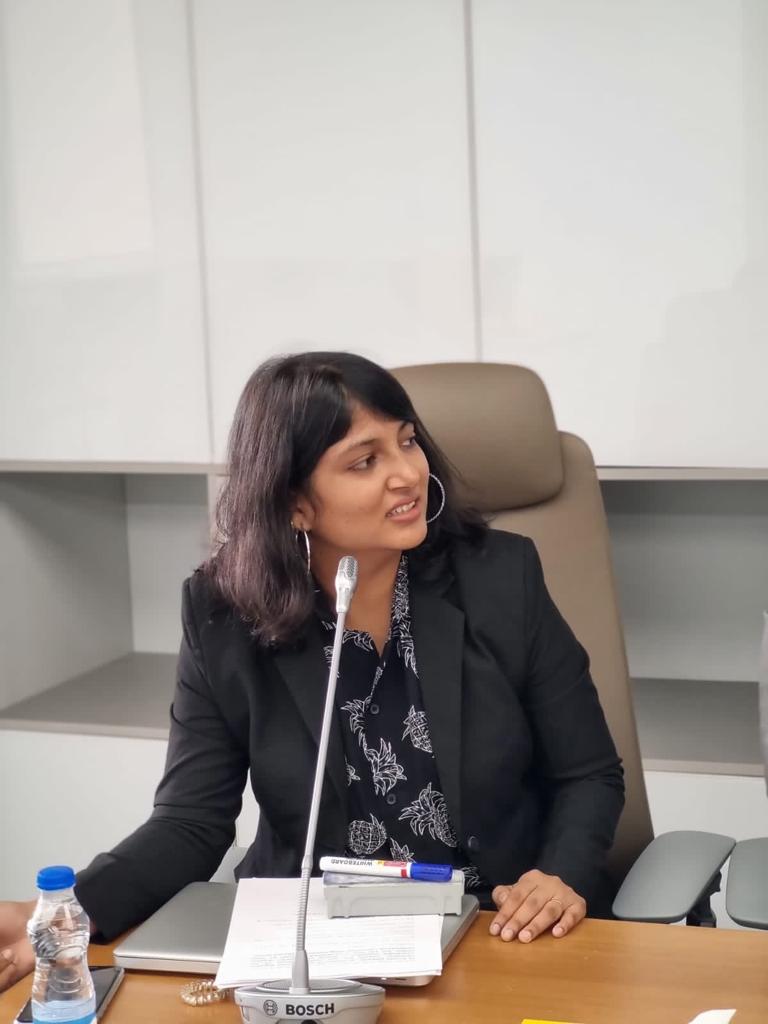


 Allow notifications