Tag: Counsel

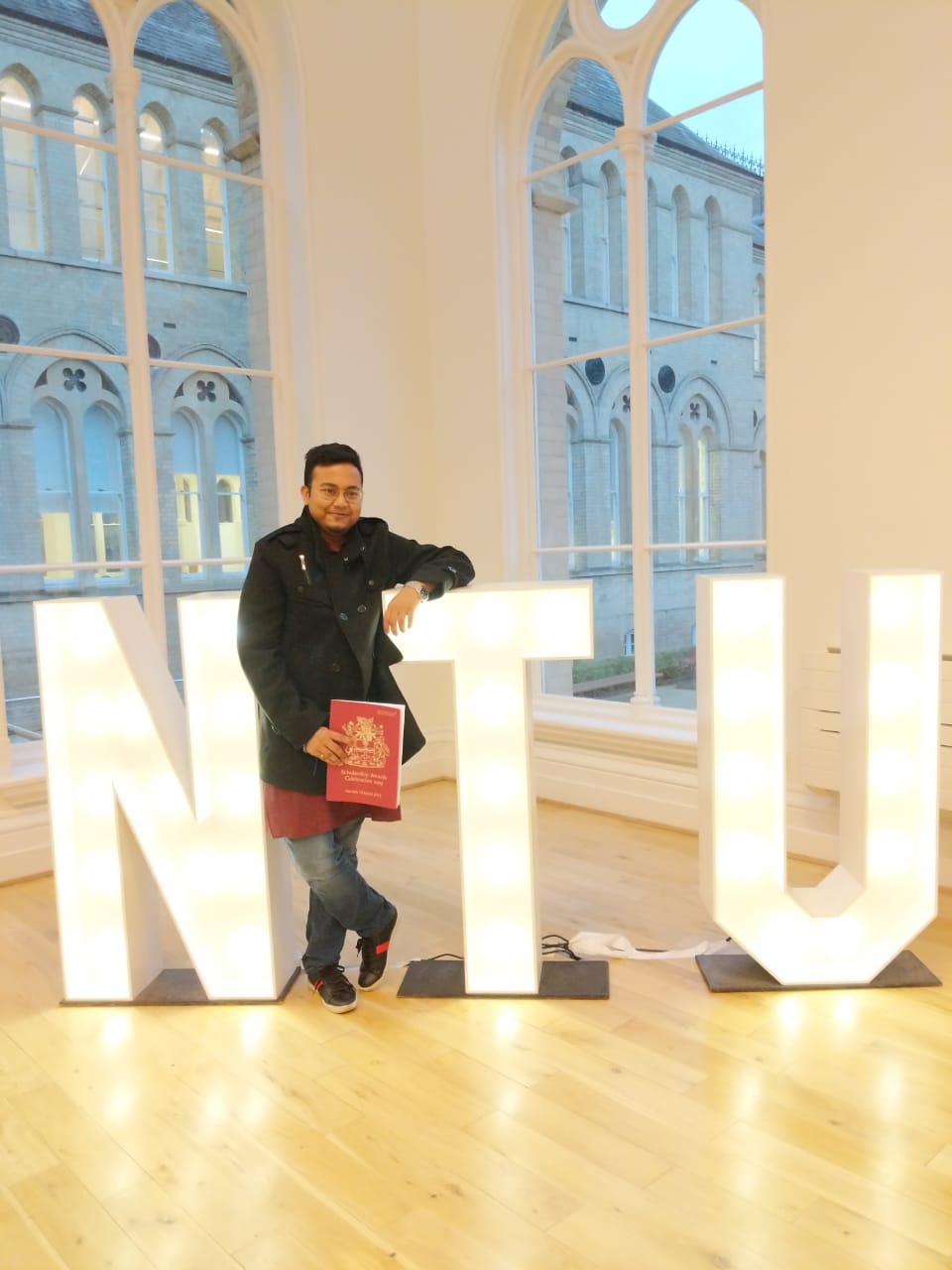
  • Ashirbad Nayak, Lecturer at JGLS Sonipat,In Conversation with SuperLawyer On Role of Co-Curricular Activities in Law School and Much More

    Ashirbad Nayak, Lecturer at JGLS Sonipat,In Conversation with SuperLawyer On Role of Co-Curricular Activities in Law School and Much More

    This interview has been published by Prabhjot Singh, Priyanka Karwa and The SuperLawyer Team

    How would you like to introduce yourself to our readers?

    Hi, I am Ashirbad, and I am currently a Lecturer at O P Jindal Global University. I love to paint and sketch. You would always find me humming to Sufi music or Eminem, there is no in between. I have a black belt in karate, I used to run 10Ks during my Masters, and most of my free time during the work week is spent watching Instagram reels about puppies, or NFL and UFC matches. And, when I have vacations, I backpack across remote but picturesque destinations.

    Why did you choose to pursue a degree in law after your Class 12 Boards?

    Didn’t really have much of a choice. I was a PCMB student during my 11th and 12th. It was not my cup of tea. I had a disastrous JEE and AIPMT. The only option that I had was CLAT. AIPMT ended on 3rd May, CLAT was on 10th May. I prepared what I could within that and showed up for the exam. Quite fortunately, things have been on a upward trajectory ever since.

    Tell us a little about your days in NLU Odisha?

    I had the time of my life in NLUO. When I joined there really were no campus placements, only a few batches had graduated, no one really gave us guys a shot. So, we as the students, had to build up a fair bit of the institution that it has become, ourselves. Beyond the professional or academic front, I met my closest friends there, I am very fortunate that the friends I had in first year of law school, are still my friends.

    I learnt karate from Akshay, who used to live in the room next to me. I learnt how to write papers from some of my seniors there. Vegadarshi taught me a lot about how to be a Speaker for a moot. More than anything, everyday was a laugh riot in the place. I wouldn’t trade those days for anything

    How did you narrow down on NLU Odisha specifically to pursue your undergraduate legal studies?

    Again, didn’t really have much of a choice. I got through to TNNLS in the third round of CLAT counselling. Two and a half months later, there was a vacancy at NLUO, I applied and got through. The first two months were ludicrously challenging. I was the last guy in, I had joined after the mid-sems had gotten over, I had no clue what to do. Fortunately, I persisted, and things worked themselves out. I often say that the greatest things in my life have happened to me by accident, CLAT, NLUO, my friends, St Catharine’s, and they have had the best impact on me.

    What were the activities, academic or otherwise, that you undertook in your law school days which in your opinion have shaped you and your career?

    Plenty of them. I had a finger in every pie. From college committees, to moots, to papers, conferences, academics, debates, MUNS, I was involved with everything. I am generally quite outgoing, and I made full use of whatever avenues NLUO offered. It went beyond just building a career, and the academic knowledge I gained from them.

    I have always prided on being able to don multiple hats at the same time and juggle multiple things successfully. They have proved to be quite beneficial in life, in general. I knew everyone on campus from the Vice Chancellor to the guards manning the gate.
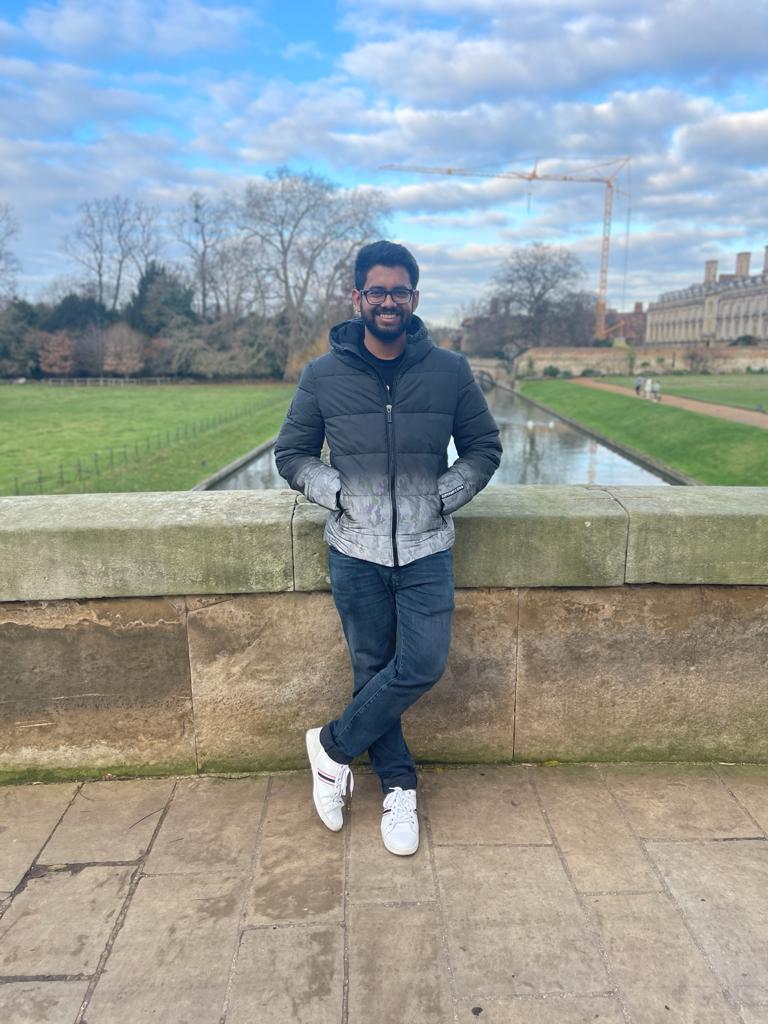
    Quite fortunately, they all got to know pretty well. That kind of connection is invaluable. It teaches you a lot about fostering and maintaining relationships with people from all walks of life and being a reliable person for them.

    I am particularly proud of the work that I did as the Co-Convenor the College’s Internship Committee, along with Mridul, my Convenor. We lead a team of 10 students, and in our time span, we broke the record of the number of internships that NLUO had ever obtained in a calendar year by a wide margin. We took the total from 4 in the previous year to 59 in our term.

    What kind of internships did you engage in during your undergraduate student years which you feel were invaluable to you in reaching your current position?

    I interned at mostly data protection and general corporate teams of law firms. The most significant of them would be the two stints I had at Khaitan & Co, Kolkata, in the Corp A team with Mr Supratim Chakraborty. I had a blast working with him. I learnt so much from him, Shourya Da, Risa, Pratik Sir and a whole host of other people. I have really good memories of my time there.

    You had been an all rounder in NLU Odisha, because of which you were bestowed with the ‘Shri Bichitrananda Mahanty Gold Medal’. How did you manage your academics, co-curricular and extra-curricular activities at the same time?

    I used every available minute that I had, and I was as efficient I could be. It was a constant drive to be the very best version of myself. I was always occupied with something or the other. And I enjoyed doing it. No one forced me to do those things, I have always been naturally inclined to set high goals and see if I can achieve them. Being engaged in so many things also kept me focused and on track. That and an aptitude to work hard. There is no substitute for the latter. In a way, it was preparation for the future, beyond the limitations of law school. That being said, it was not all work though, I made sure to have enough time to kick back and relax with my friends.

    You had been National Winner and Octa-Finalist of several Indian and International Moot Court Competition. Kindly share your experience as a successful mooter of NLU Odisha.

    I have only done two moots the Oxford Price Media Moot Court and NUJS HSF Moot Court. Quite fortunately I performed well in them both. Price Media 2018 was the first moot that I ever did, and I spent a year working on it. Within that time span, I did not pick up any other assignment or co-curricular activity. We managed to reach the Octa-Finals of the World Rounds and were also adjudged as the Runners-up of the South Asian Rounds. We were the first team from NLUO to qualify for the Worlds in that competition.

    The next year, I took part in HSF, and it was a month of pure sleeplessness. It had some of the most thrilling rounds I have ever been a part of, and we were adjudged as the Winners of the competition.

    Again, we were the first team from our college to win the competition. Of course, along the way for both the competitions we received a tremendous amount of support from friends, alumni and college resources. The only thing I had in mind while preparing for Price Media was to be the very best Speaker I could possibly be, I had always been a debater and never a moot court Speaker, so the transition had some growing pains.

    The secret sauce for success in a moot is to form a team with people you are comfortable working with. That, and a tremendous amount of hard work and sacrifice.

    You had an accomplished record of publishing at renowned journals from publishers like Thomson Reuters, Eastern Book Company, Wolters Kluwer and famous dailies like that of The Indian Express, The Daily Guardian, The Statesman, Deccan Herald, just to name a few. Kindly share your experience of writing papers and articles for the journals and dailies.

    I have always liked to write, so I expanded upon that in law school. I started off with nascent steps, publishing in online blogs and journals, until I garnered enough experience that I felt I could write for reputed publishers. Newspaper articles are always fun, as they are short, precise and reach a much larger audience.

    The books or articles that I have published with the aforementioned publishers, were based on strenuous academic research, structured in a manner that was scholarly to merit publication, but, at the same time engaging enough to keep the reader hooked. I co-authored several articles with my Registrar at NLUO, Professor (Dr) Yogesh Pratap Singh, and, it was always a joy to write with him.

    How important is it for the law students to write research papers while being at the law school?

    It is definitely helpful, but, there is no hard and fast requirement as such. I have often heard stuff like publishing one article in a journal is equivalent to taking part in a moot. That is simply not true. These activities teach you different skills, and a lot depends on the quality of the paper and the journal it is being published in, which is the same as the quality of a moot court and your position in the competition.

    A research paper would not only give you in-depth knowledge about the topic, but also streamline the manner in which you think and present your thoughts. A useful skill for a lawyer, for sure.

    You had been a student researcher of important projects of NLU Odisha, won accolades in debate competitions, youth parliaments and MUNs’. How relevant do you believe are those achievements in your success story, so far?

    Very relevant. I started off with MUNs. It laid the foundation for everything else that was to follow. As regards debates, I have been doing that since my childhood days. Debates taught me to think on my feet and marshal my arguments in a systematic and convincing manner. Debates also had a tremendous role to play in eliminating stage fright for me, and to be an engaging public speaker. My time

    Between the time of your graduation and your post-graduation, you had briefly worked in a renowned law firm at their Gurgaon office. Kindly share your experience of working there in the role in the intervening period between your LL.B. and LL.M.

    I was associated with the General Corporate team of JSA Gurgaon for the period between my undergraduate and my Masters. It was a great experience, and I learnt a lot about transactions. The responsibilities that you are entrusted with at the beginning are immense, and you have to adapt to the needs of the clients with alacrity. It was quite an enriching experience overall.

    What prompted you to opt for LL.M. from University of Cambridge within a year of completing your BA. LL.B. from a renowned National Law University?

    I always knew that I wanted to do a Masters, right from my first day of law school. And I was dead set on two places: Oxford and Cambridge. No other place ever held that charm for me. I wanted to study in a place which had history dating back to centuries, ensconced amongst picturesque medieval architecture and surrounded by the best minds in the world. Safe to say that I found that and much more at Cambridge.

    How relevant would you say higher studies are for a career in law, be it working in law firms / companies or pursuing an academic career?

    Its subjective. People do a LLM for various reasons. Some do it to satisfy their academic curiosity, others to transition into a foreign workforce, a few people I knew did a LLM as a break from their work. But, you do learn a lot during the year you spend studying for the program. Living in a different country, finding your feet amongst new friends and in a new culture teaches you a lot about yourself, and forces you to adapt to challenges. It opens your eyes to how people from different parts of the world live and the stories that they carry with them.

    For an academic career, a LLM is always a big bonus. For law firms, I cannot offer an adequate comment. At the very least, the year you spend for your LLM, if it is at a sufficiently good University, is a year in which you gain a lot of knowledge, so its always a win-win.

    What does the CV of a student seeking admission in a premier university offering an LL.M program have to look like? What are the factors you feel are looked into and what are the activities that the assessors regard favourably?

    At the top of the list are your marks. To get into Oxbridge or relatively similar places, you need a good enough batch rank and marks. There is no substitute for that. Apart from it, excellence in a particular field is very helpful.

    If your CV can demonstrate that you have a certain level of expertise in a particular area of law, you have worked on it extensively, and you are aiming to pursue your Masters in that particular area itself, it helps establish you as a strong candidate for the program. Apart from that, everyone’s CV is different. There is no hard and fast requirements as such.

    You had been the Co-President of MCR (Postgraduate student body) Committee at St Catharine’s College for the Academic Year 2021 – 2022. How was your experience of leading a student body, that too outside the country?

    It was incredible. I was admitted to St Catharine’s College at Cambridge and the college had elections for the position of the Co-President of the MCR Committee. I ran against a PhD candidate and was elected. As an Indian, being elected as the head of a British College was surreal keeping in mind the positions Indians had had in the British empire barely a hundred years ago or so.

    The weight of it all was not lost on me. It was a tremendous amount of responsibility though, almost like a full time job. But, it gave a great opportunity to meet people from different streams: medicine, the sciences, humanities, finance, business; and also to work with the college authorities, and help them all in whatever issues that they had. It was truly a humbling experience.

    You had been a gold medallist at NLU Odisha for Public International Law. Despite your command over the subject, what prompted you go for an LL.M. in Corporate Law?

    I always wanted to work in Data Protection inter-mixed with commercial law. So, most of my internships and activities were geared on that front. I loved studying PIL in NLUO, primarily because of my Professor, Ananya Ma’am, who made the entire subject extremely engrossing. The fact that I got a medal in the subject, gives me immense joy, but my career trajectory has always been centred around commercial and technology laws.

    Please share with our readers how did you narrow down on University of Cambridge for pursuing your LL.M. on Commercial Law along-with data-protection laws as your additional specialisation;

    I have mentioned briefly earlier about my desire to study at Oxbridge. Of the two, Cambridge became an obvious choice because of Professor David Erdos, who teaches the module of Law and Information at Cambridge. He also heads CIPIL, which has done some remarkable work on European Data Protection Law. I knew I wanted to study from him, so, it was quite easy for me to decide to opt for Cambridge.

    You went to Cambridge on full scholarship. You have been a recipient of three scholarships – Prathiba M Singh Cambridge Trust Scholarship (through Cambridge Trust), J N Tata Endowment for Higher Education of Indians Abroad (through TATA Trusts), Kemp-Gooderson Law Award and other Bursary funds (through St Catharine’s College, University of Cambridge). What is the secret of securing three prestigious scholarship at the same point of time for pursuing your LL.M.?

    All of these scholarships are merit-cum-means based, implying that they need a certain calibre of academic standard, and the candidate ought to be in need for financial resources to fund their LLM. I had one objective in mind upon conclusion of my undergraduate program, which was to not ask my family for any funding. And I have been quite fortunate to have achieved that through the cumulative financial commitments of these scholarships. There is no secret as such. Just know your area of law well, be confident, honest and straightforward in the interviews.

    Please share your experience of applying at University of Cambridge and for the scholarships, you had secured. Kindly share your experience of the application process for the LL.M. and the scholarships.

    It was a bit stressful. Balancing a firm job, along with applications is a tall order. I had prepared a table with the last dates for applications of various scholarships along with their required documents. That helped me keep things on track. I had also reached out to my referees well in advance, so, that helped in avoiding any last minute hiccups regarding letters of recommendation and as such.

    My one tip would be, research the Universities you want to get into well in advance, ensure that you have your transcripts and references prepared, and know yourself well for writing the statements of purpose.

    In the year 2022, just after completing your LL.M. from the University of Cambridge you have joined Jindal Global Law School, Sonipat as a Lecturer. What prompted you to take the plunge in the field of academics?

    A: I have always liked academia, being surrounded by young, bright minds. It is always good to give back to the next generation of students. When I was in Cambridge, Jindal came for recruitment, I applied and got through, and here I am. I am still at an early stage of my career, so, lets see where I end up in the next few years-academia, firm, an organisation, or somewhere else.

    Back in your student years, did you ever see yourself becoming an instructor at a prestigious law school, sometime in the future? What did it take to get here?

    Absolutely. In fact I used to teach my batchmates prior to every examination. The night before each exam, there would be an assembly of boys in the Boys Hostel in front of my room, and I would teach them whatever limited things I had read myself. These classes became known in NLUO as ‘Ashirbad classes’, and in fact in my final year, some of my batchmates put up a poster titled ‘Ashirbad Classes’ all around the campus. That was the foundation of my career in academia. So, I knew I had a future in academia for sure.

    Give us a brief capsule of the life of a lecturer in a prestigious law school.

    A: Its an engaging day, comprising of classes and research. It is an important responsibility to instruct students, so, you always have to be prepared for the classes. Apart from that it is always good to be in a University set up where things are quite organised and orderly.

    How is your experience of working with Jindal Global Law School’s legendary instructor, Professor. Arjya B. Majumdar?

    I have learnt so much from Professor Majumdar. He is pioneer of when it comes to teaching commercial law. I cannot describe accurately how much I have enjoyed working with him at Jindal. Apart from being a great educator, he is also an incredible guy. I have sought his advice on quite a few things, and they have always been eye-opening.

    How important are grades, in your opinion, for a student to be eligible for employment, be it in academia or in top tier law firms?

    Quite important. Never mess them up. Grades show one important thing- consistency. And that is an invaluable quality that every employer of institution looks for in a prospective candidate. So, be sure to keep them on track.

    If given an opportunity, what would you do differently in your career journey up to this point?

    Nothing. Not a single thing.

    Is there any other suggestion you would like to give to our budding lawyers?

    Do everything that you want to do. Set high dreams and demand the highest standards of excellence from yourself. There is nothing quite like regret, so make sure that when you look back on your life, you don’t have regrets about anything.

    And always remember these lines “Stick to the fight when you are hardest hit, it’s when things go wrong that you must not quit.”


    Get in touch with Ashirbad Nayak-
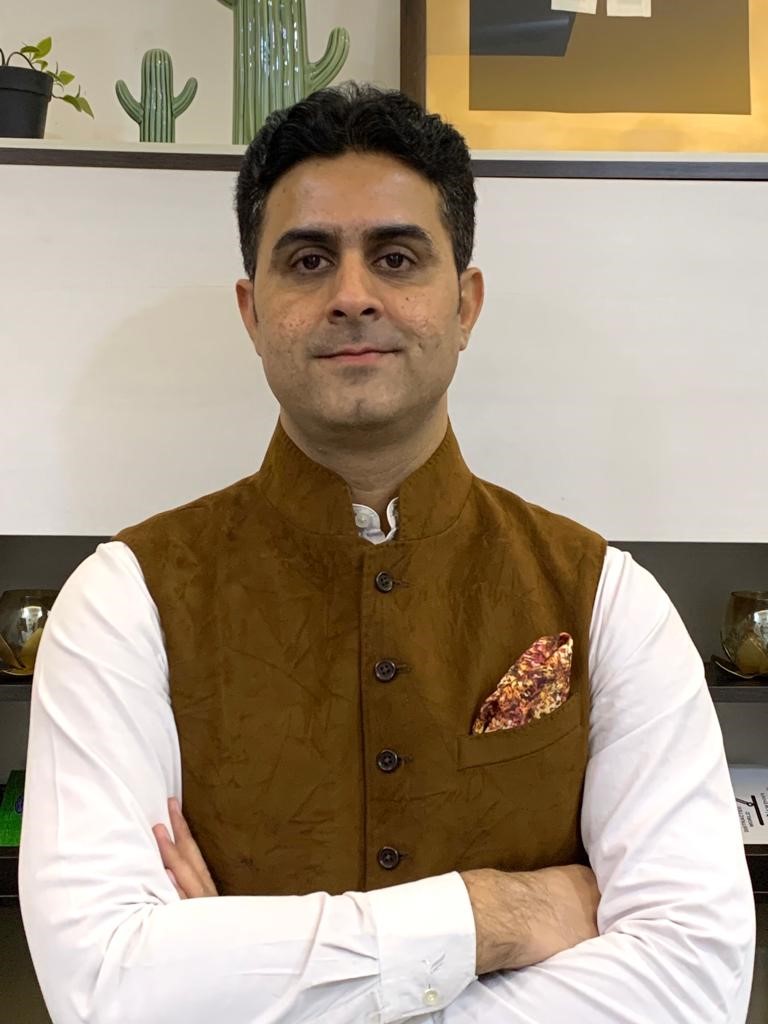
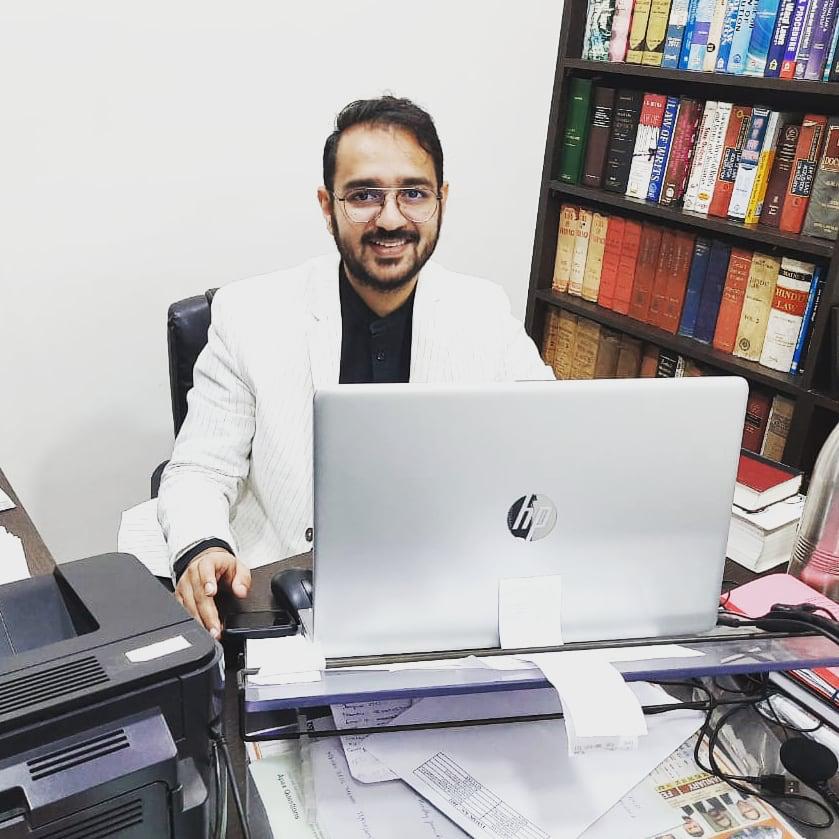
  • Zeeshan Ali Khan, Partner-IP Enforcement at Rahul Chaudhary & Partners In Conversation with SuperLawyer On IPR and Networking for First Generation Lawyers

    Zeeshan Ali Khan, Partner-IP Enforcement at Rahul Chaudhary & Partners In Conversation with SuperLawyer On IPR and Networking for First Generation Lawyers

    This interview has been published by Prabhjot Singh, Priyanka Karwa and The SuperLawyer Team

    Being a science student, and then choosing law, what was the idea behind?

    Though I was doing good in science, however somehow, I was not interested in pursuing a career in science and therefore, was looking for options. During this time, my family suggested me to go for a career in law and when I started preparing for entrance exams of different law schools (as we did not have CLAT back then) – it really fascinated me. I started reading about famous lawyers in India and also visited the lower Court in my city, the idea of wearing that collar band and arguing in Court used to give me goosebumps.

    At was during this time that I firmly took a call to make a career and practice law.

    How challenging has it been for you so far in the legal industry?

    It has been a very satisfactory journey so far. I was able to clear the entrance exam of two National Law Universities and two reputation private universities and decided to join HNLU, Raipur. I joined the third batch of HNLU, Raipur in 2004 and was fortunate to have been taught by some of the best faculties at the time. My five year stay at HNLU was both memorable and enlightening at the same time.

    The strict time lines to submit projects and moot court memorials gave me an early introduction of how the legal profession going to be and worked as a solid foundation for later part of my career.

    I joined an IP boutique firm ZuesIP immediately after completing my course and thereafter, my joined current firm Rahul Chaudhry & Partners in 2010.

    My firm and my mentor Mr. Rahul Chaudhry, the Managing Partner of the firm have immensely helped me become the professional I am today. I started as a junior associate in the firm and slowly learned the nuances of IP and law in general. I was designed as Partner – IP Enforcement in 2021 and handles IP Enforcement before the Courts in India, Domain Name as well as Custom Authorities.

    What created your interest in the IP sector? And how did you prepare yourself for everyday challenges in the same? 

    My initial interest in IPR started when we were taught IPR in the second and third years of our law course. The idea of knowing, protecting as well as helping the brands grow attracted me and I decided to intern with IP Firms to better understand the subject. I learned the intricacies of IP as a subject and practical aspects of implementing the same in day-to-day legal practice during these internships.

    Accordingly, I opted for IPR as my honours subject in the university and got a specialization in the same.

    Preparing myself to practice IPR was not a challenge for me as I had a keen interest in the subject. I used to go through all major IP judgments by the Courts to keep myself updated of the latest developments and still try to read as much as I can whenever the schedule permits.

    According to you, what networking strategies should be adopted by the first generation lawyers specifically in corporate?

    Being a first generation lawyer myself, I have never felt any difference in terms of treatment by law firms or corporates. If you have knowledge of the subject and good command over language – you are bound to be noticed. The age old saying that there is no substitute to hard work is absolutely correct. I am a strong supporter of making your work speaks for yourself. If you are getting reliefs for your clients and are being recommended for your work – the world will look for you.

    At the same time, I would suggest one to leverage technology, join industry groups in person or through various social media like LinkedIn and also offer educational resources. Give presentations and educational lectures in various industry gatherings as well as educational institutions.

    What are the most important qualities for an intellectual property lawyer?

    An IP lawyer needs to keep himself updated with latest judgments and industry practices. With the creation of IP Divisions in the Courts, IP has become even more niche practice. Going through PTC on a regular basis and keeping a track of prosecution practice is also very important. I always suggest that to be a successful IP lawyer, one should have a good command over prosecution side as the same forms the foundation of one’s IP practice.

    How a trade mark application is filed, the route it takes for registration and how to overcome the objections raised by the Administrative Authorities (like Trade Marks Registry) are all very important. A wrong advice to the client during prosecution and registration procedure can ruin all future prospects of protecting and enforcing the mark.

    Zeeshan, do these legal tech tools have helped litigants and corporates so far in preparation of different documents or filing and what in the future would be challenges for lawyers in dealing with such tools?

    The tech tools are indeed helpful and I see them playing a greater role in future. Along with saving time, the tools also minimise the chances of an error. Many corporates have started using them to keep a track of their matters pending in the Courts, checking the deadlines and even setting reminders to ensure that no deadlines are being missed. As we all know, deadlines play very important role in our profession.

    The time frame provided by the statues to file pleadings/documents before Courts as well as various administrative authorities are to be strictly followed, specially in IP prosecution. Hence, I believe the tech tools are going to be a game changer in future. With respect to the challenges, I believe the new generation of lawyers will not have any difficulty in handling these tools. I suggest even law schools should start preparing the students to use these tools during their course.

    As a partner of a law firm, how do you manage to balance the work-life aspect?

    Work-life balance is very important to ensure a long-term efficiency in work and a satisfaction in your personal life. My day usually starts at 9 am in the office and then few hours are spent in the Court as well. Being a partner, I also try spending sometime with my team members to interact and discuss work and the general life related aspects. However, one needs to prioritise the work and maintain a discipline during the working hours.

    I am a strong supporter of not carrying the work related stress to home and spend my away time playing with my daughter as well as working out. It is equally important to take care of your health and therefore, I have made it a routine to work out for atleast an hour every morning.

    The same not only helps me stay strong physically but also strengths my mind and helps me to prepare myself for the day.

    Lastly, any advice for our young law generation?

    Legal field requires continuous study and keeping yourself updated of the latest developments. So, it is very important to make an early habit of reading latest judgments as well as precedents. Young lawyers should also visit Courts and hear established legal practitioners argue the cases in Court.


    Get in touch with Zeeshan Ali Khan-

  • Subhrajit Chanda, Faculty of Law at Jindal Global Law School and Founder of Global Sports Policy, Review on Different Careers in Law

    Subhrajit Chanda, Faculty of Law at Jindal Global Law School and Founder of Global Sports Policy, Review on Different Careers in Law

    This interview has been published by Prabhjot Singh, Priyanka Karwa and The SuperLawyer Team

    What prompted you to choose legal studies, post your Class 12 Boards, when you had the option to study architecture in a reputed government college?

    Long story short, from the beginning itself I had been looking forward to doing something different in the governing system. I had also wanted to break the family’s custom of pursuing engineering studies, if you are being born as a boy. If one wants to work in the managing system, there are only two domains where you can start working from – while the first is Management, the other one is being law. And law is a kind of subject, which starts where management ends. Further, since inception of the universe, it has been governed by law. So, I chose law in order to fulfil my aspiration of doing things differently from the usual course. As I say, once you are a lawyer, you are not jack of all trade, but master of all trade.

    Having studied your undergraduate legal studies from Amity Law School, Jaipur, Rajasthan, what were the challenges faced by you?

    I think you need to first ask me why Amity Law School Jaipur. During my time, from the group of faculties, four of them were stalwarts in their subjects who happened to teach me during my course of five years of law school, helped and backed me a lot. Those were the faculties who knew their subject inside out and used to deliver lectures at global conferences on a daily basis. The faculties of the college made me interested about Amity Law School Jaipur.

    Being from a traditional Bengali family with humble sports background, who has got more knowledge about engineering and medical colleges, they had no knowledge about what 5-year professional law course or law school entails. For my family, every lawyer sits below a banyan tree with a typewriter, as are shown in the typical Bollywood movies. The circa was 2012, when internet penetration was very low, and information was not very easily accessible. Therefore, having no knowledge of CLAT, I relied on two things to choose my college.

    As I mentioned above, faculty was one of the reasons, the other being a little funny – it was the Indian Premier League. Amity was one of the sponsors of Mahendra Singh Dhoni and the use of the logo Amity University in his bat and the Rajasthan Royals team, intrigued me into joining the law school, to pursue my five years of legal studies. Additionally, myself being an avid sportsperson, the seemingly world class sporting facilities at Amity Jaipur made me more interested to join.

    After getting inside, there were lots of challenges. The timing of the library was one major concern. We used to have two libraries – one law school library and the other one was the central library.

    Central library used to operate from 9 AM to 8 PM. And the law school library timing was from 9 AM to 5 PM, which means resource was not easily accessible. If, one compares that to the libraries of one of the most reputed global law schools of the country with Institution of Eminence tag, where faculties have connections with many reputed organizations in backing their students, to pursue research and internship, Amity Law School Jaipur was nothing at that point of time.

    I still remember when I got my internship at IIFT (WTO Studies) and Indian Oil, it was the walk of a lonely road for me, with my shadow being the only companion. So, one may easily comprehend how tough my journey was.

    What prompted you to opt for pursuing Masters of Law in Energy Law from UPES, Dehradun?

    Well, while planning for doing my masters in India, I was not looking for Masters in Energy Law, it was International Trade Law which I was looking forward to specialize in. Being a sports-person, I always had a keen interest from the beginning in the domain of Sports Law and wanted to make it a strong base along with International Law.

    Unlike the European Universities, which offers much flexibility to its admitted students to study and research in only in the subjects chosen for the specialisation, most Indian Universities are very inflexible.


    In Indian LL.M.’s you start with some basic subjects like Legal Research Methodology and so on, and then later on towards the second half of your course, i.e., the second semester, you get your subject in which you want to pursue your masters. But this is where there was a tweak in the story.

    When I was about to start my final semester at UPES Dehradun, I was informed by the University authority abruptly, that since I am the only student who had opted for the subject, they cannot provide me the same, and I have got to choose between the Corporate Law, Cyber Law and Energy Law specialisation. Hearing this I had initially decided to leave the college.

    However in these testing times, my parents and two elderly professor were the ones who had supported and motivated me by suggesting that since you have spent six month, leaving the college without taking the degree, would lead to wasting of your time only. Per their advice, I continued my LL.M. in Energy Laws from UPES, with the aim of specialising in the niche domain of Energy law and that is how I got my masters in Energy Law, as there is a saying “Knowledge never goes in vain.”

    When I compare my experience as a student in Indian Universities, with that of where I am employed, I can realize how stark the difference is in between them, and this is the difference which makes all the difference in the students studying in them.

    Were you always bent on pursuing an academic career post completion of legal studies? How did you prepare yourself for the same?

    I had not always harboured in my mind for an academic career post completion of legal studies but yes at certain corner of my mind, I had wished myself to see as an instructor. We, Indians are always complaining toward the law society that Sports Law is a niche area and that we need to work on it to make it more mainstream.

    Many people also say that we need the future of the country in the Sports Law in India; but how if you asked, people will be saying it is tough to answer. Now if you look at the countries like United Kingdom, you will see how sports law is an important and developed subject, also even smaller countries like New Zealand, Croatia, Ghana etc. have a proper developed knowledge of sports and education related to it, with young lawyers supporting it.

    While doing this research, it made me realize that young and future lawyers are created, only if one can share the knowledge with the future of the country i.e. the “students”.

    The only way you can inspire the future and make the world a better place if you reach out to the students, and the only way a person may do so is by joining the academics.  Therefore, I joined the academic side, so we can have large number of budding lawyers. Further if you say that you want to join the academics, I will suggest one should love one particular subject and gives his full dedication to it by research and publishing.

    If someone is interested in an academic career in law, how would you advise the concerned professional to work towards that goal?

    Well, there is only one thing I will advise them – you need to dedicate yourself toward one particular subject as your major, then try to master it by researching and publishing as much as you can.

    You had been an avid sportsperson right from your school days, what prompted you to choose a career in sports law over and above a career as a sportsperson?

    To answer this in depth I will provide a little introduction to my family from which I belong. See, sports run in my veins.  My mom used to be a state-level cricket player and my father used to be a football referee. So one can say that I have seen sports as an activity very closely, and it has made me also attracted to sporting activity. I still remember that I used to practise cricket every weekend and football every weekday back in my childhood days.

    But later part of my life, I have concentrated on football only, in which I played for Sports Authority of India Eastern Region. But later on, an injury lead me to stop the practice, but as you know, once you dedicate your love towards sports, you cannot neglect it.

    So, I thought if you cannot practise the game on the field, why don’t you practise it differently, as a discipline. I still remember back in 2017/2018 Indian people were unaware about the subject of Sports Law.

    There were only very few people who knew about it. Even its in developing phase today, people still get confused with management and law. But sports law has always been active in India. Looking back as far as 4th Century BC, there was a script which has mentioned about the law of games, which in most likely a board game. I researched this topic within my own studies and became aware of how most people were not aware of the existence of sports law, even in today’s society.

    Nowadays, as sports law is undergoing its development phase, many new upcoming lawyers want to know about the subject. They complain about the lack of knowledge available as we don’t have that much faculty who have specialisation within the subject. So, I thought, why not take in charge without complaining like most others and start to develop future Sports Lawyers. As soon as I thought this, from that time onwards itself I tried to change my passion into an education degree, so I can create the structure and teach the same to my students.

    After this, everything falls in place, and I got an admission call from Nottingham Trent University with an International Scholarship. This in itself came after sacrifice of many nights’ sleep. However, I did the same for the sake of my country and other underprivileged students from around the world, who want to study this subject and can’t be due to family or monetary reason. 

    Furthermore, there is more to be done for Athletes in India. These individuals suffer a lot due to lack of proper legislation / regulations of sports of any kind. Not only that, the legal system in India still now needs more research as even the Supreme Court sometimes get confused about whether some organisation representing the country will be considered as State or not. There is also a question of whether National Olympic Community will be considered as a supreme governing body or not. So, I just want to dedicate myself as a bridge to fulfil the gaps in my legal and educational systems. This has led to my love of sports developing into a passion for Sports Law

    You had completed your Second Master in law (LL.M.) from the prestigious Nottingham Trent University, United Kingdom, with an International Scholarship. Please share your experience starting from application stage for the LL.M., to the scholarship application up to your experience of studying at Nottingham Trent University?

    Well, from the beginning it is a smooth running operation compared to many Indian traditional universities, and the university authority will always be in touch with you, for every point of your application to fill the scholarship form.

    Now moving toward education system, not only Nottingham Trent University, even all the British Universities has the open and flexible education system, where we can take any subject as elective subject with our law subject, and secondly in Nottingham Trent University particularly, you have one of the famous Sports Law Professor Simon Boyes, who is considered as one of the chief architect for the development of sports law in the world.

    Post your LL.M. from Nottingham, you had also briefly worked at one of the prominent Football Clubs in the English Premier League Circuit. Kindly share your experience of working in the same including the work you used to do in the same organisation.

    Well see life there is pretty fast and timely, so it was good experience with some commercial experience, but yes if you have habit of hard work and smart work mixer you will enjoy their work culture.

    You have undertaken multiple diplomas and certificate courses, more importantly, from the International Olympic Association (IOC Young Leader), FIFA, UEFA. How do you choose courses for the purpose of skill-development? 

    So there is a saying knowledge is like ocean, even if you try to conquer all, still you can’t, and if you say you have learned everything it means you are only dooming yourself. For me I chose the courses at first for the thirst of the knowledge and secondly according to my student’s need because at the end of the day you are the captain of your crew which are your students.

    Despite being someone involved in the development of sports law in India, you have handled assignments of teaching other law subjects at ease and is quite popular amongst your students. What is your secret in being a popular teacher amongst the students?

    Thank you for saying so, but I think every student have someone who is favourite to that individual, but if you ask me I will say I always motivate them, try to listen them, collaborate with them; sometime try to empathise with them and treat them with utmost respect as upcoming future buddy lawyers.

    Apart from being an Assistant Professor at Jindal Global Law School Sonipat, you are also the Assistant Director at Centre for Sports Law Business and Governance of the law school. Kindly share your experience of working in the same, so far.

    It’s a dream for me to work with one of my role model and one of mentor and guru Professor Shaun Star, and really like to work under his leadership as he has taught me many things, and once it was also my dream to learn under him but that is fulfilling in another way under his leadership.

    Apart from your role as a Professor, you seem to be a multi-tasker, as you handle multiple roles as an Editor, Author, Guest Lecturer, Editorial & Review Board Member. Kindly share your experience of working in multiple roles at the same point of time.

    All I want to say in one sentence I enjoy to work and love to dedicate my time to the subject and development of future generation which is students

    What is the recipe of your success in successful multi-tasking, which you believe law students of today should develop?

    My tips to all the budding sports lawyer are to first change your passion for sport into love and interest towards the subject as like, you do same with your girlfriend or boyfriend, because subjects are like girlfriend or boyfriend only. How can you be happy if you don’t have interest in her or him? It will lead to break up, but more you are interested in a girl or boy and give him or her time she or he deserves, will give you more love in return, so same is with the subject. You have to have a passion and drive for sports to engage within the study of sports law.

    The second and more important tips will be to be curious about every rule and the judgement you come across and think why it has been decided like this or it has been not done in the other way, the more you think more capable you become.

    From having been appointed as a visiting faculty of SLS Hyderabad, you have gone a long way on becoming the Indian to be appointed the Ambassador of ISDE Law Business School Spain, a visiting faculty at IIM Rohtak , Research Analyst at Nehginpao Kipgen Centre for Southeast Asian Studies and an Assistant Professor at the Jindal Global Law School.

    How do you find this journey in such a short span of time of a little over two years?

    Well, Actually in my mind there is a thinking that when I am in this field there are lots of senior faculties who are at first senior to you and secondly they have more experience than you. So, for making it there and to sit on the chair of this assembly, one needs to be humble and spend more of their time in practising as well as sleeping less, because firstly you need to fill the gaps. Additionally, you always need to be one step ahead of them.

    Amongst so many achievements in your life, what is that one failure that redefined who you are today?

    Well, there is nothing as such. Even if there is, I think I have forgot the same by this time. I always like myself happy and I don’t look at the past or think about the future as you know I live each day and each moment of present as the last day, as you know present is gift to us by time.

    Being avid sports personnel and being involved in the development of sports law in India, how effective do you think AI and Legal Tech can be in the meaningful development of the sports law in India?

    In the world of IoT and constant change, its always helpful, as it helps to get access to more research document and case list around the world so one does not have any more barrier in the education world.

    Lastly, before we end our interview, what piece of advice would you like to give to the law students of today?


    I will suggest them, before if you want to win this subject,  it’s advisable to first change your passion for subject into love and interest towards the subject, then try to be always humble never let it enter our head.

    Secondly always keep in mind law that it is a professional subject, so don’t mug it up without understanding the subject as you know mugging it up means you will be theoretically sounded and top for many, but in court it is always not the same thing, which is mentioned in the book, you need to be practically smart.


    Never think about the marks, try to think about grasping more and more into practical view.

    And at last I will say them all that, it is your life, try to decorate it on way and try to be honest and listen to heart always. You all are young and will be having competitor whom you treat as enemy, then feel yourself lucky for having enemy as you know that a clever person learn more from his enemy then a fool from his friend.

    If any problem comes, always keep in mind that problem is not the problem but problem is your attitude about the problem.


    Get in touch with Prof. Subhrajit Chanda-


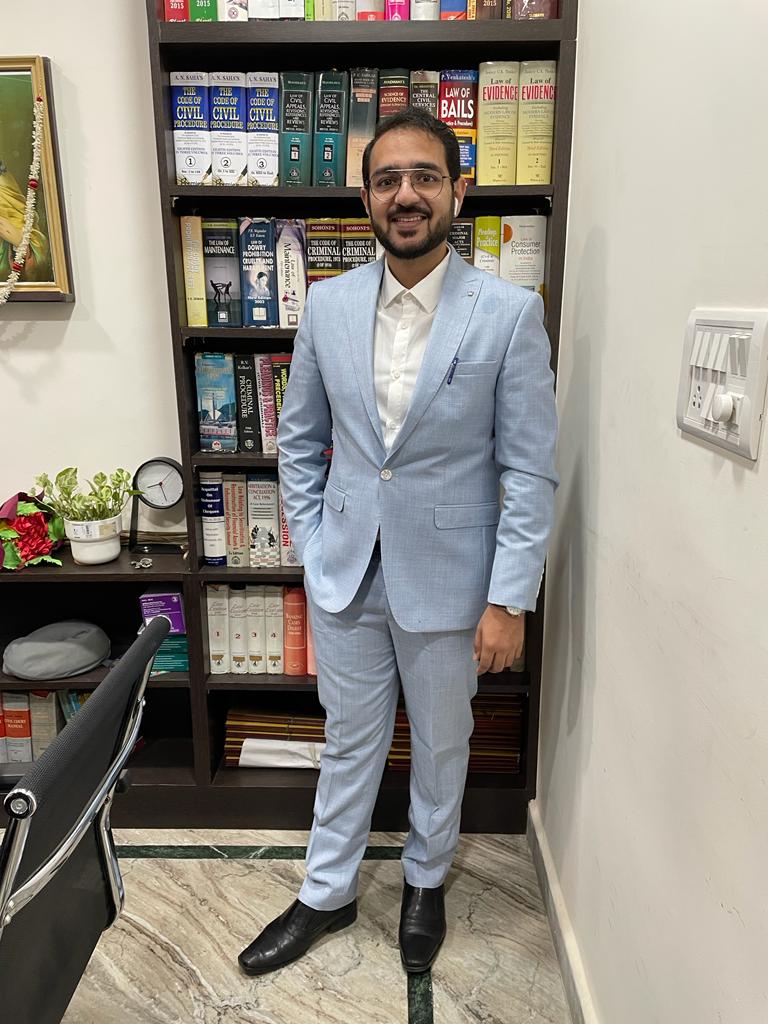
  • Manav Gecil Thomas, Partner at Thomas George and Associates Shares his Thoughts on Networking Strategies in Litigation and Role of Tech and AI in Legal Operations

    Manav Gecil Thomas, Partner at Thomas George and Associates Shares his Thoughts on Networking Strategies in Litigation and Role of Tech and AI in Legal Operations

    This interview has been published by Prabhjot Singh, Priyanka Karwa and The SuperLawyer Team

    What motivated you to take law as a career and how has been the decision so far?

    As all students, I was also confused during my school days as to which profession I should choose. Thereafter, my mom suggested me to take up law in lines of the profession of my father as he has already established a base. I did not qualify CLAT, however, I qualified for UPES, LAWCET and ILS Law College, Pune.

    Keeping the long standing reputation and I decided to join ILS Law College, Pune. All throughout my college life, I enjoyed participating in Moot Court competitions. After completing my law, I immediately joined my father’s law firm i.e., THOMAS GEORGE & ASSOCIATES. Thereafter, my mom was instrumental in insisting me to complete my LL.M.

    I did LL.M in Constitutional Law from O.U.P.G. College, Basheerbagh and secured a Gold Medal which was a lifetime dream come true. My father has been an amazing mentor as he not only trained me in drafting, filing procedures, clerical works but he also gave me the freedom to take up matters and handle them independently from day one …!

    My first appearance itself was arguing a final hearing before the then united Hon’ble Andhra Pradesh High Court of a Criminal Revision Case pertaining to 2008. Ever since then, I have never stopped and I hope to argue many more important cases in the years ahead of my life.

    Arguing the law and interpreting the law are two important facets of my litigation life which I will always cherish. So, though law happened by accident, I am happy to go the way it carries me. There is a unique unexplained sense of happiness that, I feel while arguing cases before different judicial and non-judicial fora throughout the country. With all the tremendous pressures that we as advocates undergo, it is only, that joy that I get, after arguing different kinds of matters that keeps me going ahead…!

    Your internship experiences are filled with reputed Advocates and Judges, was there any roadmap for the same or all did was in flow? How would you guide students in choosing internships?

    As a law student after participating in few moot court competitions, I was inclined towards litigation. My first internship was with my father and mentor who taught me the basic art of advocacy, that includes drafting, filing procedures etc.

    Thereafter, I went on to intern with Designated Senior Counsel Late Padmanabha Reddy where I was mesmerised to see sir argue different kinds of matters at length on his legs from 10:30 AM to 04:30 PM…! I would observe, sir argue most complex matters with utmost patience and he was always calm and composed, the most essential art I learnt. Subsequently, I interned with Adv. S. Niranjan Reddy now Designated Senior Counsel/ Member of Parliament, at whose offices I learnt corporate litigation and its nuances.

    Thereafter, I had the unique opportunity of working with Honourable Justice Kurian Joseph (Retired), Former Judge Hon’ble Supreme Court of India and while interning with his Lordship, I was able to understand what all goes in the minds of the judges post arguments since, I was also involved in the legal research that would assist judges in arriving at their decisions. I was able to see the judicial process closly that goes on after the arguments and before the judgement is pronounced.

    This experience has channelised my arguments in a slightly different manner and I am dedicated His Lordship for imparting this knowledge in me. Thereafter, I had a short stint with late Advocate Lily Thomas who had shown me no matter whatever hurdles and challenges life throws at us one must keep moving. Lastly, in my final year, I interned with Designated Senior Counsel & Hon’ble R. Basant sir Former Kerala High Court Judge. During this internship I received unique lessons of life & law, wherein I learnt how a mentor can treat his associates, juniors and interns with patience & care and at the same time learnt how hard work and dedication plays an important role in the life of an advocate. Students are not always sure as to what kind of an advocate they want to become after graduating, so it is always beneficial to intern at different places where there are variety of matters.

    Students should always start their internships with advocates who have a variety of trial court matters. In trial courts, students can learn about procedural laws, they can observe Cross Examinations and trial advocacy skills.

    Thereafter, students must intern with advocates practising in the High Courts and then the Supreme Court if possible. After this I would suggest students to intern with different corporate law firms. By the end of their internships, I would say with utmost surety, that, the students will be able to decide their career paths…!

    Manav, any specific reason for choosing litigation over corporate, what created your interest in that?

    I hope my answer to this question does not create any controversy amongst corporate law practitioners. I do not feel that I am made up for only drafting contracts or due diligence as I like to see the law in motion and that, only happens in the courts of law. In litigation, one see and meets different types of clients with different issues and in pursuing those issues one has to appear before different judicial and non-judicial fora and convince the Honourable Judges on unique points of laws and facts. Litigation requires a unique skill of being able to put forth your points with absolute clarity and conviction.

    For the same, one has to be well versed and well abreast with the laws and case laws. In corporate law, there are different nuances of law which are being explored on a day-to-day basis but none of the corporate lawyers are able to see their documents being interpreted in the courts of law. That is why, I choose litigation over corporate law.

    However, one must understand that even though I am a litigating lawyer, on a day-to-day basis, I am dealing with various aspects of corporate law which we cannot avoid being a lawyer. Thus, I believe that the so-called difference between a corporate lawyer and a litigating professional is a grey area which cannot be compartmentalised. So, I fix no label to myself….I leave it to the readers to categorise me as any lawyer they feel based on the work I execute.

    As lawyers, society depends on us in a lot of situations and pro-bono matters is one of them. How far do you resonate with this?

    Society depends on a number of aspects that keeps evolving and law is an important part of this evolving society. The changing needs of the society requires dynamic changes by the practitioners of law. In today’s world where everyone is in the rat race to earn, a lot of poor litigants suffer with inefficient representation as the fees that they can pay is less. I completely believe that in the background of the unique requirements of the society as of today, pro bono matters would definitely assist and help the people in need in a unique and effective manner.

    Many a times, I come across poor litigants who are not guided in the right direction due to which they faced unpleasant consequences. In this background all the us at THOMAS GEORGE AND ASSOCIATES believe in helping the really needy clients and when the situation demands we do take up pro bono matters. In criminal matters I observed that the people arrayed as accused in many matters do not have the necessary sources to finance their litigation expenses and tend to seek help from legal aid.

    Many a times, legal aid is not providing effective and efficient representation thereby rendering the whole purpose futile. Thus, professionals with experience taking up pro bono matters really helps the litigants in need.

    According to you, what networking strategies should be adopted by the first-generation lawyers specifically in litigation?

    The struggles of first-generation lawyers are untold in today’s world. There is no secret mantra that can be told as to the strategies that can be adopted, however, these are a few tools which may come handy in the years to come. Networking is a very important part of litigation which one will understand as they progress in their profession. One must always bear in mind that every person one meets in any walk of life can be one’s prospective client and thus one should interact with people and make them know that one is a practising lawyer.

    There is an apt example for the aforementioned statement of mine; once while I was in a club and while I was on the way to the washroom, I met an acquaintance of mine and in a casual conversation made him know that I am practising in Hyderabad. After a year I received a call by this acquaintance who had referred a very big company for coming on board as their retainer. So, one can land up with a client in any place.

    Keeping in touch with your alma mater and alumni will also help you in being referred matters from different states pertaining to your jurisdiction. Being active on social media can also help to a certain extent. Giving internships to students, is a way of giving back to the society and in return over the years to come, one will see the benefit from the same. Also, one must always remember that hard work pays off and the reason I say so, is your work must speak for yourself and that in turn would result in receiving the due benefits of networking.

    Please elaborate for us your current role

    I am currently the Name Partner at THOMAS GEORGE & ASSOCIATES, Hyderabad. The Managing and Founding Partner of the firm is my father, Advocate Thomas George and the Senior Partner is my mother. This being the background of my firm, the positions that we hold really does not matter for us internally. That being said, on a day-to-day basis I appear on various matters before various Judicial and Non-judicial fora throughout India with my base practice in Hyderabad.

    My entire day goes in arguing matters before different courts of law and in the evening, I spend my time in preparing for matters listed either on the immediate next day or for the days to come and also meet my clients. I supervise the administrative matters of the firm.

    I delegate matters to the juniors/associates at the firm, teach/assign work/cross check the drafts assigned to the Associates/Virtual/Non-virtual interns. I brief the Managing and Founding Partner and Senior Partner of the firm on matters that needs to be argued. I also help my Associates in practising their presentations before the courts scheduled for the next day, so that, they do not face any difficulty.

    So far we’ve seen employees being harassed at workplace wrt different situations, how well do you consider the role of employment laws in the same?

    It is always beneficial for employees to research about the firm where they seek employment before scheduling any interview. I also think it will be beneficial if one can speak to people who worked in the said place prior to joining. The role of employment laws is not very effective as, the internal committee for any kind of harassment consist of members of the same firm.

    Furthermore, if any employee raises a complaint and leaves the organisation the next organisation will always look at this employee with a speck in their eyes and thus there is a fear in employees from making any complaints whatsoever.

    How does AI play a significant role in helping lawyers and what are the consequences for the same?

    AI is already playing a significant role in lives of lawyers. As on today we can see AI’s tremendous use in research while comparing to our senior generation lawyers. The search engines have been extremely helpful in researching for case laws as well as to know overruled decisions, landmark decisions et cetera. Case management has become very simple with the help of various digital applications that provides the statuses of all the matters of the firm with the click of a button. Dictation and drafting have become 10 times easier than what it was with the usage of the software that types out whatever we dictate with almost 90% perfection.

    Another application that I have come across in the recent times is a scanner pen which can be used to copy paste contents from various hard copy of agreements/drafts into the word document. AI will always remain a tool in the hands of a lawyer but can never replace mankind especially lawyers, because, the brain used to interpret law in a unique manner is not AI but it is that unique skill of that lawyer. Furthermore, convincing a judge is done by advocates who present their matters in ways they deem fit which again cannot be substituted by AI. For people who disagree then mankind itself will be overtaken by AI.

    There are also applications that are being developed for taking queries from clients through chat boxes and these apps help in consolidating the client consultations to a certain extent. Such client consultations would in a way save the precious time of lawyers. However, how much ever technology advances, if it lacks  human touch in the works of a lawyer then I believe there will not be effective representation in those cases.

    Manav, we’ve been witnessing students shifting from litigation to corporate or most of the times they dont even take litigation as an option, what can be the reasons for the same?

    Personally, I would like to disagree. In the recent years I have seen many students in fact choosing litigation over corporate law firms. The ground reality is that, as on date, there are no vacancies in many chambers as they are already flooded with young students who have just graduated. However, students do prefer a comfortable and stable life with heavy packages which corporate law firms provide and that can be the only reason that students would prefer corporate law firms over litigation.

    Once litigating lawyers start paying their juniors at least the amounts that are required for the basic survival in the cities they practice, students will definitely choose litigation. What I have observed in corporate law firms is that due to tremendous burn outs over the period of time people shift back to litigation thereby losing their initial precious years of the experience. Students must understand that litigation is like an investment which grows manifolds.

    The life of a corporate lawyer or a judicial officer or a lecturer usually ends upon attaining the age of superannuation, however, the life of an advocate has no age limit and in a lighter note; when all your fellow colleagues are retiring, the practising lawyers start earning even more…!

    Lastly, any piece of advice for our young lawyers

    Repeating what you would have already heard from various stalwarts in the profession, I would like to say that there are no shortcuts to success.

    Hard work, dedication, diligence, perseverance, patience are the keystones to success. We must always remember that success cannot be achieved overnight but it requires tremendous hard work.

    Whenever, we see successful professionals, we only tend to see their achievements without knowing the amount of pain, sacrifices, compromise that they had to undergo to reach the place that they are at today.

    Having patience will definitely play a great role in reaching those heights of success that are channelled for you. One must always remember to maintain a work – life balance which everyone has been talking about in the recent times. One must take time off work, spend time with family and friends as well, which are very important.

    I always tell my hardworking interns not to forget to chill in life. All the best!!!


    Get in touch with Manav Gecil Thomas-

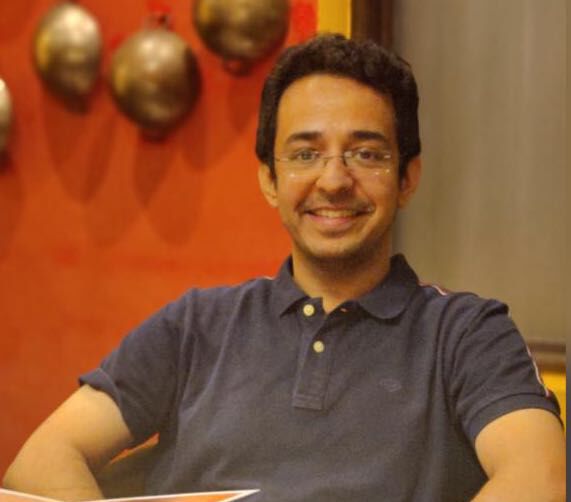
  • In Conversation with: Mantra Jha, Legal & Compliance Professional

    In Conversation with: Mantra Jha, Legal & Compliance Professional

    This interview has been published by Prabhjot Singh, Priyanka Karwa and The SuperLawyer Team

    ***Disclaimer***

    The opinions and views expressed are that of the author and bears no responsibility whatsoever. The thoughts shared are for general informational purposes and should not be construed as any official advisory.

    Was pursuing law planned or did it all happen by chance?

    Enrolling for a law degree has not happened accidently. It was an unplanned decision, but if I look back, it gives me jitters that what if the sudden decision has not been formulated.

    What can be some of the toughest considerations while someone from a non-legal background has to see before opting law as a career? –

    I feel opting law as career will help to build and to decide aim in life, setting up of goal, ready to endure the hardship in starting phase of the career, building interpersonal skills and financial stability till the career is stabilized.

    As the industry is going through massive changes right now and recent developments, can we expect new opportunities in the compliance sector? 

    Yes, with the increase of digitalization, cyber networking and easy cross border transactions, the role of compliance officer will go beyond the routine regulatory matters.  We also have to take in to the account that the way Regulators are penalizing companies for non-compliance, the cost of non-compliance would be more than the cost of compliance. There is a lot more efficiency coming into the system, as you note that all the regulators are evolving by adopting the latest technologies like artificial intelligence, machine learning, block chain processes to help improve their control/system.

    What all tasks have to be executed being a compliance specialist?

    Compliance Specialist are responsible for ensuring that all corporate processes and procedures comply with the law, and not only the law — a Compliance Specialist/Officer is also responsible for ensuring that company operations comply with internal standards too.

    When an inspection is bound to happen, one needs to be quite versed with the recent changes and happenings in the industry, how do you manage all that stuff Mantra?

    By not waiting for end  moments, a lawyer needs to be well versed with the new changes and amendments, they have to keep themselves updated constantly.

    Do you think the role of AI can further increase the compliance burden? 

    No, rather I feel that it will help to focus on strategy and mitigating the risk.  Software applications that integrate AI can increase the efficiency and effectiveness of regulatory compliance programs. AI is carving out a growing niche in regulatory compliance because AI and Machine Learning (ML) applications address common challenges and systematic issues that compliance officers face every day.

    So far we’ve seen lawyers not focusing on their mental health because of work pressure and tight deadlines. Please shed some light on this issue, any tips that can make the situation better? 

    Encountering stress is inevitable in the legal profession. But the way you handle it can make a big difference in how stress impacts your career, health, and emotional well-being.  You should mitigate your stress by opting these strategies: Keep stress in check, set goals, make time for loved ones, know your limits and draw boundaries.

    Lastly, any advice for our readers? – 

    These days there are multiple career options for the law graduates.

    You may opt to establish social justice / may opt to defend those who can’t protect themselves by being a practicing lawyer, in house consultants for corporates, financial corporations etc, some may fulfil their dream of working for a large international law firm and make a good money.

    In any case, lawyers have the unique privilege of upholding the rule of law and championing for the public good. In my view, every person should learn the basic law to understand their basic right.

    – Mantra Jha

    Get in touch with Mantra Jha-

  • In Conversation with: Atish Chakraborty, Legal Counsel at Mobile Premier League (MPL) and Visiting Faculty at Amity University (Kolkata)

    In Conversation with: Atish Chakraborty, Legal Counsel at Mobile Premier League (MPL) and Visiting Faculty at Amity University (Kolkata)

    This interview has been published by Prabhjot Singh, Priyanka Karwa and The SuperLawyer Team

    Atish, what motivated you or a bigger word, ‘inspired’ you to choose law as a career?

    My choice of law as a career was pretty accidental. During my senior-secondary school, the study of Sociology inspired me significantly towards pursuing a career in the Sociology of Development. However, eventually studying the same for a short stint made me realise perhaps law would be an area I would rather enjoy studying and I eventually enrolled at Amity Law School, Kolkata as a part of their founding batch to pursue B.A., LL.B. (Hons.) specialising in Intellectual Property Laws.

    What were some of the challenges that you were faced with in the beginning of your career, given you graduated in the year 2020?

    While at law school I had always aspired to be a litigator given the conditioning to which I grew up and had made up my mind to join a prominent practitioner in Calcutta. However, as goes the common saying “Man proposes and God disposes” and that is perhaps what I was even encountered with. But, eventually I was fortunate to find feet and my journey with Mobile Premier League (MPL) as their Legal Counsel although challenging and diametrically opposite to my plan began and thereafter there has been no looking back.

    I was fortunate to find an extremely supportive and encouraging team led by Mr. Dibyajyoti Mainak, Ms. Sreshtha Banerjee and Ms. Varsha Shivanagowda who have always been extremely supportive and encouraging which has gone a long way in helping me learn a lot and upskill myself thereby enabling me to contribute effectively to the organization.

    While India is witnessing a start-up revolution, as a lawyer working for a start-up, what are some of the most pressing challenges in terms of intellectual property that are required to be addressed?

    Yes, being a lawyer focussing on intellectual property related issues is challenging from the standpoint. Since business and its growth takes primacy in most start-ups issues such as those pertaining to safeguarding intellectual property are often kept at the back-burner or are only realised at later stages. Hence, we as an organization have always strived to be cognizant of this and have tried to remain proactive with our intellectual property portfolio and have taken active steps to ensure that our intellectual property is well guarded and ensured to seek adequate protection under the law by making timely filings, securing proprietorship over our usages.

    As an in-house counsel, what are the roles and responsibilities that you need to undertake on a day to day basis?

    My roles and responsibilities chiefly involve looking into the day to day contracts thereby ensuring business enablement as well as working towards the company’s IP portfolio, inter-alia, filing for new trademarks, copyrights, conducting IP assessments, assessment for new games and advising on potential patent applications. Apart from these, an in-house role always and especially in a set-up like ours allows you to explore newer arenas which is something that is extremely unique and challenging but goes a significantly long way in making you delve into different and nuanced areas which we would perhaps never explore in the general parlance.

    While you work as an in-house counsel, you are often expected to understand the business needs alongside the law. What is the roadmap that you follow in order to achieve clarity on how the business and the law interact with one another?

    As an in-house counsel, it is almost non-negotiable that you not only need to understand but also have clarity on the business and the product to ensure that you tender an advice that  ensures business enablement. In order to devise solutions that facilitate business, one needs to be solution oriented while at the same time ensure that the advice they tender is well within the ambit of the applicable law.

    Further, having a reliable business counterpart is almost quintessential to ensure that you are able to receive the required information that enables you to tie in the business with the applicable laws effectively. In this regard, I would personally credit my colleague Mr. Shobhit Malhotra who has played a humongous role in enabling me to not only understand the business side of things but also to pick brains whenever required.

    How do you manage the sensitive data/confidential information for a company? I mean as a legal counsel, what are the strategies for the same?

    We generally ensure adequate safeguards and ensure to sign Non-Disclosure Agreements before discussing any potential business opportunities which would result in divulging confidential information.

    Further, we ensure to keep a robust protection for any sensitive data/confidential information in every agreement and ensure that any such information that is shared is returned to us and if any information is retained by the counterparty remains subject to obligations that allows us to take action should there be any breach on their part in fulfilling their confidentiality obligations either during the subsistence of the agreement or upon such agreement coming to an end.

    As someone who has been actively involved in the domain of intellectual property law, how do you keep yourself informed about the recent developments in the same?

    While intellectual property law is an emerging area of law, I keep myself apprised about the recent developments by keeping a continuous watch on websites like SpicyIP, Bar and Bench, Live Law  and blogs by Eashan Ghosh, NUJS IPTLS etc.

    Lastly, a few sets of advice for our young law professionals?

    A degree in law is one of the best things that could happen to you.You should always remember that this degree is like the golden ticket to not just corporates or law firms which forms part of an usual choice owing to herd behaviour but also to classical options such as that of being a litigation lawyer as well as to emerging arenas like policy advisers, legal journalism as well as academia.

    Hence, you should go ahead with what you think you would enjoy doing.

    Lastly, and perhaps most importantly, never forget that as a lawyer you are always a student who should be open to learn new things and keep oneself updated, so always keep yourself updated and evolve and this will definitely hold you in good stead.

    – Atish Chakraborty

    Get in touch with Atish Chakraborty-

  • In Conversation with: Nishant Chaturvedi, Compliance Business Partner, R & D (India)

    In Conversation with: Nishant Chaturvedi, Compliance Business Partner, R & D (India)

    This interview has been published by Prabhjot Singh, Priyanka Karwa and The SuperLawyer Team

    Disclaimer- The views and opinions expressed in this Q-A discussion are those of the author and do not necessarily reflect the official policy or position of the company they work for.

    Would you like to tell our audience about what motivated you to choose law as a career?

    For me becoming a lawyer meant learning about negotiation and people management, two of the really important skills to succeed in life.

    Nishant, we all have our struggle stories to share, and I mean not struggle specifically but yeah the obstacles that one has to overcome, would you mind throwing light upon those?

    One obstacle rather a challenging situation that I faced in my last role as an in-house counsel in the current company was leading a global project that involved folks mostly from medical background basically non-lawyers and this was difficult because we all were responsible to ensure that research trials continue without any hiccups due to this transition.

    I had to make a lot of effort to understand the science behind trials , identify relevant stakeholders and also define a governance process without undermining my counterparts from medical team. This experience gave me lot of confidence to not only design & lead projects of global significance but also work across divisions and functions to achieve success.

    These compliance processes have been there since a long time, but a sudden increase was noticed post-covid, what do you think can be the reasons for it?

    COVID 19 created frankly a perfect storm of economic pressure and operational disruption…hackers infiltrating your network or attack against corporate data science or not using IT assets for its intended purpose/ cutting & pasting data from one application to another! In other words, pandemic created new risks that business might not have had to worry about before and impact is to an extent that these risks now exceed whatever controls you previously used.

    Today the need of the hour is develop a sustainable compliance framework- one that can track/measure new risks and in parallel test and document controls as necessary, and guide remediation efforts. Most importantly, business should make proactive efforts to integrate compliance into operations because many times business change their approach/strategy without involving compliance and this means existing internal controls no longer fit their original purpose.

    In post COVID 19 world this thought process is needed to stay ahead of competitors and ensuring compliance with policies.

    People say in-house counsel should also have a business acumen, maybe if we can call them an “All Rounder” here, what are your views on the same Nishant?

    We live in world that requires us to embrace and plan for change. Same goes for in-house counsel. The common perception was ‘legal is reactive and not proactive’. But now what I see is with time its the legal function that often bears the maximum burden of changes that companies go through…all this while coping with constant demands for greater efficiency/productivity and cost savings.

    The role of the in-house lawyer has evolved into new areas such as Govt. Affairs, Audit and Compliance reporting, CSR etc… this is more than just a change of job title, it’s an acknowledgment that your in-house counsel is part of C-suite. This also conveys the strategic nature of legal function and the contribution it makes to company’s growth.

    Nishant, do you think India has been following up sincerely with the GDPR regulations/privacy protocols or like me you are also of a view that it was violated during the covid times?

    Data is the new currency and it only makes sense for companies to invest in protecting their data. India in my view seems to be on right track as outlook towards privacy has changed considerably in privacy space and this is largely because of a collaborative approach by govt and private companies. However to continue with this momentum we need to invest heavily in technology and associated controls to meet privacy requirements faster.

    Not everyone has the ability to navigate through different regulations, but you do that so well, what are the strategies for the same that you apply constantly in your routine?

    Stay informed, attend online events to keep a tab regarding changes in regulations. Some online/in person conferences can really provide useful insights. Subscribe to blogs and newsletters. Join industry associations, its a great way to stay connected with changes in your field.

    How do you maintain the work-life balance Nishant?

    I actually like to term it as work-life integration because this will bring several aspects of work life such as work, family, well-being under same roof. I can choose to manage personal tasks during work hours and vice Versa. The biggest plus I see with this approach is flexibility eg. allowing me coordinate my schedule and responsibilities more productively.

    Let tips in my experience:

    a) Learn to say no- very important part of setting boundaries

    b) ask for flexibility- open conversation about your needs vs. your employer/team needs can lead to win-win scenario

    c) make space in your schedule for family time

    d) always remember your work and managers can wait but your friends/family and personal milestones will not.

    Nishant, being a mentor yourself, please give a few pieces of advice for our readers?

    Mentorship does not have to be a formal process but in our field it’s a crucial form of support for budding lawyers/law school students. Its important to recognise that a mentee places a lot of trust so a mentor should take out time of their schedule to help mentee develop and grow. But its equally important that mentee also assumes responsibility for learning because a mentor can only give you tools and guidance.

    Lastly recognize that the mentor maybe phenomenal but will have a limit to the knowledge and abilities, its important to not get upset or disappointed because your mentor cannot answer all questions but make the most of their time and knowledge in areas where they can.


    Get in touch with Nishant Chaturvedi-

  • In Conversation with: Aonghus Kelly, Executive Director of Irish Rule of Law International.

    In Conversation with: Aonghus Kelly, Executive Director of Irish Rule of Law International.

    This interview has been published by Prabhjot Singh, Priyanka Karwa and The SuperLawyer Team

    How do you see law as a career and what strategies can make the journey better when someone opts for law?

    I see it as an amazingly diverse and varied career that offers endless possibilities and opportunities. The law is one of the cornerstones of every human society for good or ill. I think pursuing a career in the type of law that interests you if at all possible is key. You will hopefully be working for many years so being enthusiastic and committed to that career will be much easier if you enjoy that area of law and are interested in it.

    Let’s not kid ourselves though, if we as lawyers don’t respect the rule of law then how can we expect others too. With the great rights we enjoy come great responsibilities.

    Being an international lawyer, how do you manage completing the tasks considering the fact that you should always be aware of the recent legal updates on the same?

    I think one has to be open to learning every single day as a lawyer, from your clients and your colleagues. There is always something new to learn and therefore grow and improve. This is particularly so in international law as you are often working with different contexts, legal systems, languages and cultures.

    The way you’ve handled critical cases is commendable, but then on the same hand, do you take the assistance of legal tech or some AI tools to manage laborious tasks in your litigation practice?

    The future of human society in general will be driven by developments in technology. The law is no different. We can already see the massive effect on the gathering of evidence that recent technologies have created. It also will be hugely important in the way we as humans deal with the effects of the climate emergency. Lawyers will have a key role in the massive improvements we need across the planet to move to sustainable methodologies that create a fairer, more just society.

    The Environmental, Social, and Governance (ESG) agenda that is an enormous part of legal practice today, and will only grow, also demands that we examine how technology can assist in dealing with the enormous challenges we face.

    It would be great if you can share a roadmap in terms of your career?

    I studied law after secondary school at University College Cork in Ireland. I later qualified as a barrister and solicitor in New Zealand while living there. I then qualified as a solicitor in Ireland and then completed a master’s degree in International Human Rights Law at the Irish Centre for Human Rights at the University of Galway while working a solicitor in the city.

    I then moved to the United Kingdom and worked on human rights cases there and was admitted as a solicitor in England & Wales. Following on from that I worked at the Prosecutor’s Office of Bosnia and Herzegovina in Sarajevo on mass atrocity cases from the war in that country.

    While in Sarajevo I completed a Diploma in Islamic Studies at Sarajevo University. I later moved to the Special Prosecution Office in Pristina in Kosovo where I worked on both organised crime and wars crimes cases.

    Having represented victims and worked in the prosecution I wanted to undertake some defence work. I moved to the Extraordinary Chambers in the Courts in Cambodia (ECCC) where I worked on the team defending IM Chaem and I was admitted as an attorney in that jurisdiction.

    After my time in Phnom Penh, I moved to Libya where I worked for the European Union on assisting our Libyan colleagues with work on their criminal justice system. Most recently I was Executive Director of Irish Rule Law International, and I have been admitted as a solicitor in Northern Ireland.

    I am presently undertaking a master’s degree in Sustainability Leadership at the University of Cambridge as well as working in my present post.

    How do you manage work-life balance?

    Badly I think many of my family and friends would say. But I think I am getting better, at least I hope so, but it is a struggle I must admit. Doing a master’s in Cambridge certainly demands that I move away from work and to my studies every day. I also like to play and watch sport so that helps a lot.

    Lastly some tips for our readers?

    Well, everyone has their own route, but I think the parting words of my mother before I left the car and started in boarding school when I was 12 are still key in my view. “Never look down on anyone, never think you are better than anyone, respect everyone you meet.”

    I am a great admirer of the Stoic philosophers also, so much to learn from them and from wise thinkers around the world from Rumi to the Buddha to Mandela to Iris Murdoch. Finally, happiness is perspective, as lawyers we are lucky to have the chance to change the world, work on being happy, it will help you achieve much more.


    Get in touch with Aonghus Kelly-

  • In Conversation with: Denis Sadovnikov, Data Protection Officer, Sberbank and External Expert, Consultant and Coach at Data Privacy Office Europe

    In Conversation with: Denis Sadovnikov, Data Protection Officer, Sberbank and External Expert, Consultant and Coach at Data Privacy Office Europe

    This interview has been published by Prabhjot Singh, Priyanka Karwa and The SuperLawyer Team

    Was pursuing law pre-planned for you or did it happen by chance?

    Legal profession was my deliberate choice. Since my childhood I have been passionate about my rights, rights of others, human rights, justice and the degree of compatibility of state’s legislation with law.    

    What were the struggles you faced in the beginning?

    I gained my first legal experience when I was a teenager. When I was sixteen I helped my parents in their litigations. It was arduous and disappointing sometimes. I saw incompetent judges, judges who neglected and perverted the law. And I saw plenty of pieces of legislation which were obviously outdated or unjust.

    My family was poor, that is why I started my legal education as military-police cadet (this option is completely paid by the state), this way demanded hard work not only to master the subjects but also to pursue some police duties.

    Additionally, I managed to participate in some legal scientific societies, conferences and provide vulnerable people with legal advice and help for free. During my study I got acquainted with ICRC activities and became true adherent of ICRC and IHL.

    When I graduated from the university, I gave up the career at the police service because the reality there was far from principles of rule of law and human rights priorities. Then it turned out that graduated professionals with the background of police universities are much less demanded on the market.

    That is why I had to develop, approve and demonstrate the highest level of legal professionality continuously. I tried to obtain advanced experience, pursue scientific researches and started working as lecturer in law.            

    According to you Denis, as a law student, where should the focus be on, the hard work on academics or smart work on networking and building a great skill-set?

    I think both elements are important. They complement each other. Networking helps you demonstrate your competence but you should actually have what to demonstrate.

    What are your views on AI or legal tech adoption, what restrictions will it have in the coming years?

    Every technology may be used for good and for evil, particularly, technologies which we currently embrace under AI umbrella term. These technologies are able to improve our life enormously but on the other hand they might affect human societies devastatingly.

    Particular concerns are connected to potential loss of human control, dehumanization of decision-making, surveillance, profiling and manipulation of will. Threats regarding to automation of weapon also should be stressed.

    AI needs regulation as well as we regulate nuclear energy. I believe that we should regulate such powerful technology both on international and domestic level in order to put human first and make technology serve people and uplift humans’ personality, not degrade it, prevent inflicting harm and misuse of AI systems.         

    Denis, you’ve been quite active as a Data Protection Officer since Feb 2022, what are the roles and responsibilities of the same?

    To cut a long story short, I’m responsible for development and maintaining Privacy Management System throughout AI lifecycle, including design stage, collecting data, forming dataset training of the model, its testing and deployment.

    On the one hand I should assess whether we are entitled to use particular data for development of particular model (indicate personal data, assess purposes of processing, define necessary amount of data, minimize data and processing operations, chose appropriate legal ground for processing, provide transparent communication with data subjects, weight up their reasonable expectations and the context of processing, define storage period and destruction mechanism as well as protective measures, etc.).

    On the other hand my role is to assess the possible impact of particular AI solution on data subjects’ rights and freedoms.

    DPO is both the advocate of data subject defending human rights as well as business assistant helping to find and implement solutions which are compliant with law and comfortable for users. Correlating these two points is crucial to implement Privacy by Design.

    Another significant thing is definition of applicable law and rationalizing legal requirements of different jurisdictions. It is also important to be familiar with world-best trends and approaches and be ready to implement them. Additionally, it is worth to be mentioned that DPO should make sure that all employees are aware of data protection issues and able to handle data in accordance with internal policies.

    That is why I spend huge amount of time educating and training our staff to communicate with people.       

    What are the strategies that may help someone to clear the certifications for CIPM, FIP, GDPR DPP and GDPR DPM?

    From my point of view, the best strategy is to combine theory and practice, to educate oneself continuously and try to implement all new knowledge in practice immediately. 

    Denis, can you please share the compliances for AI and legal tech in Russia?

    Russia is prominent by its IT professionals including the field of AI. Currently many small and medium companies are leaving Russia because of political instability, but leaders are in place. These are mainly two hugest companies: Sber (not only Sberbank, but the group of companies on the whole) and Yandex Group. Speaking about legal tech, I’d indicate such companies as Pravo.ru, Kept (former KPMG) Seamless (former CMS), Consultant, Garant and others.   

    As someone who is passionate about pursuing law in Russia, what are brownie points one need to always look out for?

    Russia is European country and belongs to European continental legal tradition. Russian legal system by its nature is an example of civil law jurisdiction based on Roman legal heritage. The composition of system and vast majority of legal institutions are derived from French ones, some from German.

    Influence of English law took place but was not significant. Robust French-fashion frame of law is spoil by some unreasonable derivations and poor enforcement and legal culture. Utmost positivism is a predominant way of thinking among practitioners.

    That is why it is useful to explore Russian law in the context of European jurisprudence, particularly, French.       

    Unfortunately, currently it is not the best time for jurisprudence in Russia. Legal system is not in well fit and it is continuing to be erased. Almost each new piece of legislation undermines coherence and predictability of legal order. It seems like Russian rulers are trying to follow all bad examples of Lon Fuller’s Rex.

    True sense and purposes of law are quite frequently perverted and misused during the application and enforcement. Independent judiciary does not exist. Truly speaking, the rule of law at all does not exist.

    We need a new generation of lawyers who could reinforce rule of law, priority of internationally recognised principles, universal human rights, predictability and coherence of legal system.   

    Lastly, any advice for our young legal professionals?

    Stick to your principles and aways remember that lawyer’s mission is to protect human rights and uphold rule of law and justice rather than merely apply legislation. You should be able to find law behind sophisticated and controversial language of legal texts.

    It is up to you to be creators rather than executors and improve your legal system and legal environment.

    -Denis Sadovnikov

    Get in touch with Denis Sadovnikov-

  • In Conversation with: Avneesh Chopra, Head (Legal) and Company Secretary at Valvoline Cummins Pvt Ltd (India)

    In Conversation with: Avneesh Chopra, Head (Legal) and Company Secretary at Valvoline Cummins Pvt Ltd (India)

    This interview has been published by Prabhjot Singh, Priyanka Karwa and The SuperLawyer Team

    Was doing law pre-planned or did you instantly make a decision to pursue law?

    Yes, doing law was pre-planned. My father who is also law graduate from Delhi University introduced me to the law and law books. We used to have a small library at home where I enjoyed reading the case laws on contracts, IPC etc.

    When I went to do B. Com (H), I was introduced to contracts law, sale of goods, partnership, and property laws, where the actual journey to understand the law started.  To further enhance my knowledge of law, I also decided to pursue the Company Secretary course which provided me more insight into finance and taxation, and the law governing the corporate entities.

    Having more than 2 decades of experience in the legal industry, what strategies keep you going in this profession?

    The strategy which keeps me going is that I always consider myself a student. As a student, I am open to new learnings, changes and challenges.

    As a law student, I developed the habit of observing and learning, before interpreting and applying. While working as an in-house lawyer, I realized that to have legal knowledge is not enough; hence, I worked myself to understand the other facets of the business, competition, industry, and kept myself updated on foreign economic and  regulatory environment, as well.

    During my career, I also faced a few up and downs which fortunately helped me develop a network of mentors, comprising individuals who have supported me during testing times.

    Do you think after doing CS, it’s an easy sail for every legal professional in the corporate world? We have heard opposing arguments though from some people!

    Nothing is easy in the corporate world if you are a legal professional. The Company Secretary Course will help you understand the way in which an organization operates and functions. If you wish to work in the Legal Team of a company, then the Company Secretary course is a good option as it is designed to give you knowledge in various subjects and areas which are beyond the law as well.

    The Company Secretary works as a link between the company and its board of directors, shareholders, government, and various regulatory authorities.

    Hence, they take up diverse roles in the management, taxation and finance departments of a company and help the company in all such areas. It is incorrect to say that Company Secretary course is an easy sail; it should be kept in mind that every professional in the corporate world must prove their worth and deliver results to move up the ladder.

    Avneesh as you are experienced in dealing with POSH cases, we have heard a lot about “Quid Pro Quo Harassment” and what are the punishments for the same?

    In Latin, “Quid-Pro-Quo” means “something for something”. Quid pro quo sexual harassment occurs when employment, pay, benefits, title, position or other opportunities for advancement or training, are conditioned upon the submission to unwelcome sexual advances.

    Quid-pro-quo is a serious offence. It is extremely important to be very clear and transparent in all businesses dealing with employees at the workplace. The punishment depends upon a case-to-case basis ranging from disciplinary action including a written apology, reprimand, warning, censure withholding of promotion/ pay raise/ increment, termination of employment, undergo counselling etc. In some matters, it could also lead to a criminal complaint against the perpetrator.

    Reg -Tech is helpful they say in doing compliance’s, how far do you believe this?

    Definitely, any tool and technology which reduces human efforts and intervention are going to help. In a digital environment featuring complex business structures with the change of law and regulations almost happening on daily basis, organizations require tools that will keep them up to date with the latest regulatory changes thereby minimizing the likelihood of human error.

    Reg-Tech can also provide increased confidence in meeting board agendas pertaining to issues such as transparency and proactive reporting of risks and compliance. This technology also allows companies to meet regulatory-driven data activities and support submissions to regulatory bodies in an accurate and consistent manner.

    However, before implementing and recommending Reg-Tech, we as lawyers need to learn about the technology, its architecture, data models, as well as algorithms.

    We also need to understand cross-functional teams for evaluating the risks, beyond the legal risk of using manual and automated processes, along with the legal risks related to any specific Reg-Tech product. Data protection and privacy remain the most important factors to consider when using Reg-Tech.

    As tech startups are growing like never before, do you think our data is protected and the level of secrecy is maintained?

    Data is growing faster than ever. Data secrecy and conditionality are prime concerns of General Counsels (GCs). The prevalence of cyber-attacks, frauds & crime and the emergence of new regulations like CERT guidelines are forcing boards and their GCs to work closely with the chief information security officer (CISO) to make decisions about how to protect the company against cyber-attacks, respond to data breaches as well as other attacks, while complying with applicable data protection laws.

    My personal experience suggests that many tech start-ups are not investing enough time & sources and are not incorporating privacy as the default.

    In recent times, we have seen the Government withdrawing the personal data protection (PDP) Bill after receiving concerns from Indian start-ups, which suggest that data localization requirements in the draft PDP Bill are too “compliance intensive” and could hamper the ease of doing business and stifle innovation.

    The same may be true, however data security and confidentially should be paramount and should be a part of the core DNA of any start-up or organization. The tech start-ups should consider data privacy as part of their core foundation before offering any products, services, and processing data, which will enable them to be future-ready. Further, it will bring transparency and trust among the users and customers.

    How do you see the corporate world serving more opportunities to individuals in the legal world?

    Multiple opportunities are available in the corporate world for individuals. The legal department as business partners must take ownership and support the overall success of a company.

    Depending on the nature and size of the business, in-house legal work has been rising in volume, especially in specific areas like environment & safety, data protection & privacy, competition law as well as other  regulatory & compliance work arising out of amendments and change in law, compliance breaches, intellectual property protection, M&A etc.

    Another reason for the increase in legal work is the growing attention to legal budget control and better risk management, whereby in-house lawyers’ must have more knowledge about the company as compared to external lawyers.

    At present, many lawyers are contributing to multiple facets of the organization such as corporate governance, contracts, litigation, compliances, ethics, investigation, internal control & audit, employment, data privacy as well as other security matters, corporate social responsibility, policy advocacy & liaison, taxation and finance.

    The key attribute for an individual to grow in the corporate world is that they should have commercial sense, be willing to learn, explore new opportunities and be ready to work outside their comfort zone.

    Any advice for our readers?

    To succeed as an in-house lawyer, you need to be proactive, flexible, find solutions and communicate them in a concise and simple manner. You must understand the business, the industry, collaborate more with other businesses, build trust, and relationships. One must also ensure the alignment of expectations and communicate them. It is also important to remain  a lifelong learner.

    In today’s dynamic environment, if you can think and act as entrepreneur, the same is going to help you immensely.


    Get in touch with Avneesh Chopra-