Tag: Counsel

  • Arnab Ghosh, Counsel, Beam Suntory, on in-house experience, practicing at Calcutta HC and teaching CLAT aspirants

    Arnab Ghosh, Counsel, Beam Suntory, on in-house experience, practicing at Calcutta HC and teaching CLAT aspirants

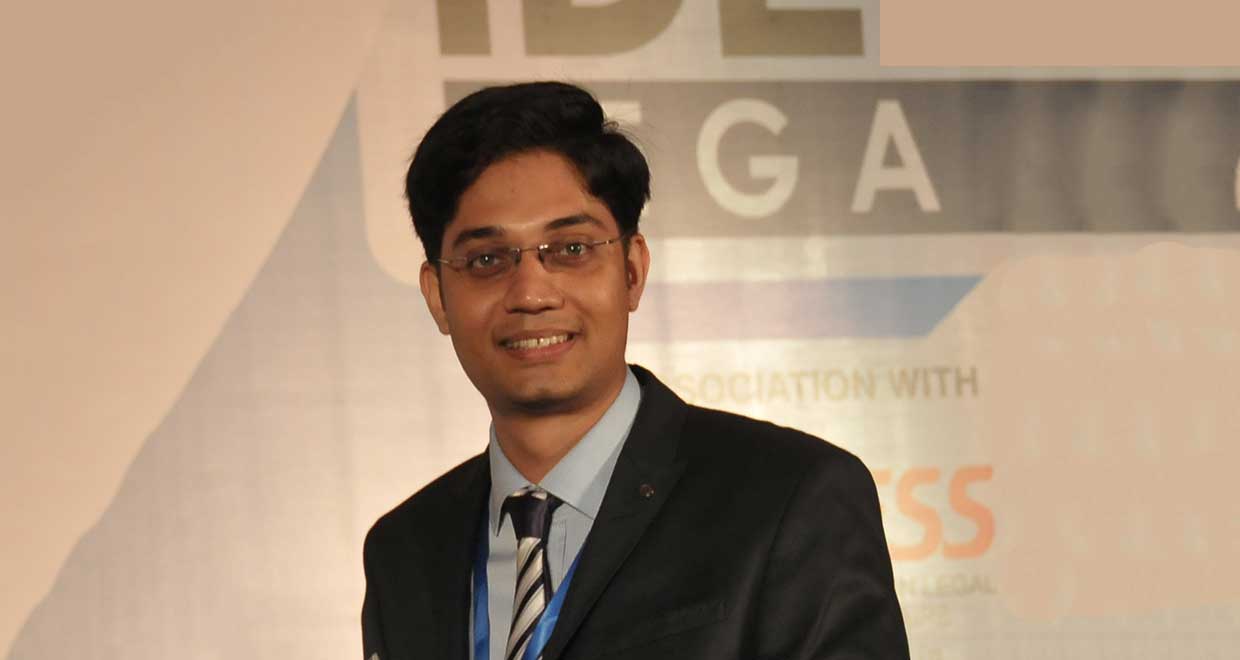
    Arnab Ghosh graduated from RGNUL, Punjab in the year 2013. An all-rounder, he has several accolades to his name in the field of mooting, editing, writing and sports. After working under a Supreme Court judge, Arnab took a detour and started teaching CLAT aspirants, inspiring them along the way and helping them find out whether they would be able to embrace the legal profession in the future.

    He has donned the hat of not just a teacher, but also a practicing advocate in the Calcutta High Court, and now, a legal in-house counsel for a company, Beam Suntory, Inc.

    In this interview, Arnab shares his experience about:

    • Teaching as a senior faculty member of a CLAT coaching center
    • Working under a Supreme Court judge and as practising advocateat the Calcutta High Court
    • Being the in-house counsel for a company


    What was your motivation to study law? Do you have any lawyers in your family?

    Law was actually an afterthought for me. I always had an inclination towards the social sciences and made up my mind about studying liberal arts abroad. However, coming from a stereotypical Bengali family, it seemed blasphemous to take up any other subjects apart from PCMB (Physics, Chemistry, Mathematics and Biology) for 12th standard board exams and I seemed destined for a degree in engineering.

    A friend told me about CLAT, which I managed to clear. It was only after landing up in National Law School did I realise that studying law was probably one of the best decisions I had taken. For this, I have to thank my parents who understood my aptitude better than the teenager I was at the time. My father is a lawyer himself. He decided to start practicing rather late in his life but his determination and tenacity to make up for lost time is remarkable.

    My first cousin is also a lawyer who is currently working with the WTO. We may not be a family with a “legal legacy” but I am hoping that will change in the coming generations.


    How did you prepare for CLAT? Did you take any coaching? How was your experience taking the exam the first time it was ever held?

    I never felt that there was an overwhelming need to take separate coaching for CLAT. The ISC curriculum and a general academic approach equipped me to tackle the GK, English and Math sections. I was obsessed with logic and had a thorough grounding in Logical Reasoning, especially in the realm of mathematics, for which I have to thank Sanjit, my math and physics tutor (he’ll hate the fact that I called him that) in classes 11 & 12. This moulded my intellect and approach and I realized that it helped me with CLAT as well. Given a set structure and pattern, I could draw logical conclusions. In order to prepare for the Legal Aptitude section, I solved model question papers and started using the tools of logic and reasoning to answer the questions. Initially, it wasn’t easy but having crafted the method myself, with time I became comfortable with the pattern and structure of the various entrance exams which were specific to the National Law Schools prior to the inception of CLAT.

    After the exam, I felt that CLAT was the most refreshing entrance exam that I had given, especially because it was sandwiched between the IIT-JEE, AIEEE and others of the same league. The first thing that struck me about CLAT is that first and foremost, one has to be diligent towards building their general knowledge, there are no short cuts to it, it can only be built over a period through sustained efforts. It’s ludicrous to even imagine that it’s possible to mug up all the yearbooks that are available in the market. The rest of the paper is actually based on aptitude (more often than not) and while people may improve over a period of time, the logical and “legal” bent of mind can only be honed and not created.

     

    arnab-ghosh-2

    You have interned with a few of the top law firms in India. How did you go about securing internships at these firms? How was your experience with them?

    Persistence. As a law student, I realized something quickly, my need was greater than the firms. Law firms, by and large, can do without interns. The onus was upon me to secure these internships. Initially, I was heavily dependent on the college and over the years, I made efforts to build a CV which would, at the very least, be looked at by the firms. However, one of my best internships was when I landed up at the firm, requested a partner to meet me and then convinced him to give me an internship. The trick is to be proactive and take out time to not only apply but also keep following up.


    How did you get an internship with a sitting Supreme Court Judge? How was the experience?

    I have to thank the Internship and Placement Committee of RGNUL for securing this internship. The setup of these internships is such that you get to work from the Judge’s house itself. Every evening, His Lordship took time out to talk to us and discuss certain aspects of litigation and court practice. He candidly shared his experiences for our benefit. As far as being able to list the things I learnt, first and foremost, it gives you a clear perspective on things from the other side of the Bench. Secondly, we had to brief His Lordship which entailed reading hundreds of files and various matters. Thirdly, His Lordship would discuss certain matters with us. As a student, that is the ultimate practical guide to litigation which no other internship can provide. You get to know the types of cases that are likely to get a favourable decision and the ones which don’t and the way judges think. Going forward, if litigation is the career path one wishes to adopt, an internship with a sitting SC Judge is invaluable.


    Are there any extra-curricular activities you participated in during your 5 years at RGNUL?

    I was an avid mooter and debater. In fact, mooting was a very big part of my college life. It started with the Willem C. Vis Moot, Vienna and ended with our team being runners up at the Juris Corp Corporate Law Moot, NLIU Bhopal. Even after graduating, I’ve been associated with the mooting activities in RGNUL, who had invited me to judge the Stetson Environmental Law Moot last year and the RGNUL Moot this year.

    Apart from these activities, I was an editor of the RGNUL’s monthly newspaper, “Carpe Diem”. I was also a part of the Internship and Placement Cell and took keen interest in organizing various events and activities for RGNUL.

    Apart from academic co-curricular activities, I was very interested in sporting activities, taking part in all the events held in college, especially cricket and football and was part of RGNUL’s football team.


    How was your experience teaching law school aspirants? What were the challenges you faced? What do you think legal aspirants need to be aware about before they become professionals?

    (Arnab taught as Senior Faculty at Career Launcher)

    In all honesty, I had applied to Career Launcher for a part time position. After the interviews, they were keen on me joining on a whole time basis and the job profile attracted me so I agreed to join them. By far, it was the most enriching and exciting engagement I’ve had. Dealing with students in classes 11 & 12, I took it upon myself to foster a sense of passion in them for studying law. A lot of people join the coaching with the incentive and hope to land top paying jobs and not many are well versed with the other aspects that the study of law has to offer. My focus was to make them understand that law, unlike other disciplines is not mechanical and can only be successfully pursued with a certain degree of fervor and passion, in other words, to get them to study law ‘for the right reasons’ and assuring them that if they do the basics right, money and its corollaries will follow.

    One of the most challenging parts was teaching the aspirants the basics of subjects like contracts, constitution and criminal law. I had to dig deep and find analogies from movies like The Dark Knight to get the attention of the students so that they could understand the nuances and basic principles. This, in turn, revived my love for law and also helped me sharpen my own understanding.

    However, one cause of mild alarm is that more and more students want to pursue law because it is a lucrative career option. This may be true but not many are ready for the challenges that come in the way. Not many understand the subjects or have an aptitude for it. There is a need to sensitize the students and make them aware of all the realities, especially the difficulties of the legal profession and also to provide counselling to ascertain their aptitude and find whether they are suited for law.

     

    arnab-ghosh-4

    What factors made you switch from teaching to practicing as a lawyer? How was your experience?

    (Arnab switched to practicing as a Solicitor in the Calcutta High Court after his stint at Career Launcher)

    After working with CL for 6 months, I realized that it wasn’t a long term career option and that I had more or less learned everything that the position had to offer. I enjoyed teaching thoroughly but I wanted to start teaching in colleges and universities. Thanks to a dear friend, RishabRaturi, I was able to work with the Center of International Trade and Economic Laws at Jindal Global Law School on a few projects. It made me realise that although a Masters degree is not essential, it is recommended and I decided that Career Launcher will not provide me the requisite work experience to pursue the same.

    Moreover, I had been advised to start working in my hometown in order to pursue a successful career in litigation. Coupled with other personal factors, it seemed like the right move at the time and it was a rewarding experience from which I learned a lot, not only about law but also about the things I can and can’t do in the profession.


    How is your present experience of working in a legal department of a corporate firm? What is your role in the firm?

    (Arnab is presently working as Legal and Secretarial Consultant at Beam Suntory, Inc. at their Gurgaon office)

    I am working in the legal department at Beam Suntory. 70-80% of my job involves drafting contracts and agreements, getting licenses and other requirements for running a liquor business in India and other compliance functions. All our day to day work is done in-house hence that widens the scope of this job immensely. We have to interact with various excise and other departments across the country, each being distinctly different from the other.

    The alcohol industry is heavily regulated with strict laws governing business and promotion activities. Almost all marketing and other promotions have to be approved by the legal department before being implemented by the company. One of our recent ventures has been to tie up with VH1 Supersonic through Jim Beam Music CDs (one of our brands), which is one of the biggest music festivals in India and which also happens to be a project I’m personally associated with. From the courts of Calcutta to the beaches of Goa, this indeed has been a fairytale transition.

    Hence, my role in Beam Suntory is primarily legal but it has a lot of scope for cross functional projects. Currently, I have been entrusted with taking a leading role in 3 such projects for the company which amalgamates legal and other functions. While working in a company, it is your skill set and talents that play a huge role along with the degree you hold.


    What are the challenges you face as an in-house counsel? How are they different from those you faced in court during your stint in Calcutta?

    One of the generic challenges, that one faces while working as an in-house counsel is the emphasis on coming up with solutions. It is imperative to understand that the biggest responsibility is enhancement and maintenance of the business. It is not enough to say that the law does or does not allow a certain activity. We have to find ways around in order that the business does not suffer. As an in-house counsel, my clients are the various departments within the company, such as IT, Operations, Sales & Marketing, HR, Finance, etc. It is important to understand these departments in order to render effective service.

    The alcohol industry adds its own set of challenges. Every state has its own set of laws and requirements since alcohol is an entry in the state list. Some states have a corporation market wherein we do business directly with government entities, some have a private market where we deal with retailers and some have mixed markets which means that we have to deal with multiple excise laws and policies. Alcohol is also regulated by the FSSAI, Legal Metrology, IPR, Companies Act and many other laws, all of which have to be complied with.

    Another challenge, probably the biggest that we face is that we are associated with an American company. Hence, we have to adhere to strict anti-corruption laws. Any lapse on our part can lead to irreparable consequences. No matter how pressing or urgent a matter is, we cannot take any short cuts or obtain favours (monetary or otherwise) from any private or public entities. We take pride in being a company with complete transparency. As an in-house counsel, it is my prime responsibility to ensure the same.

    The main difference between working in a Court and working as an in-house counsel is the sheer variety of laws that you have to deal with. In litigation, there is a certain degree of familiarity with the laws and procedures and exposure is limited to the courts. In a company, you have to deal with other companies, entities, business partners, associate companies (in case of group companies of an MNC), various government authorities, banks, law firms, lawyers, consultants, etc. We also have to coordinate and provide support to various departments within the company. There are more deliverables every day while working as an in-house counsel as compared to working in a Court.
     

    arnab-ghosh-3

    What are the skills that companies value the most in their in-house counsel? How does one go about the application process?

    Adaptability, business acumen, consistency, quick interpretation of laws, swift and effective problem solving skills, teamwork, and willingness to accept roles and duties beyond your job description, these are the most important qualities that an in-house counsel needs to have. First and foremost, you have to be very good as a lawyer. However, you should also possess the skills and willingness to discharge functions beyond your job description.

    A lot of companies advertise vacancies on various internet portals. One has to keep a track and be updated with that. In addition to that, one should try and intern with various companies. It helps if the college placement cell coordinates with major companies for securing placements and internships. The application process is not very different from any other job. Networking also plays a major role in securing positions as an in-house counsel.

    Taking up additional courses and getting additional qualifications such as being a Company Secretary is invaluable and I would sincerely advise every student desirous of working as an in-house counsel to get a CS degree at the very least.


    Is the work of an in-house counsel easier than that in a firm or in litigation? Is work-life balance an issue?

    At the risk of sounding like a boring diplomat, I would have to say that both the jobs have their own challenges and difficulties. The real question one needs to ask is whether they want to work in firms/litigation or in a company. One of the biggest peeves I had about litigation is that you had to stay in the Courts till about 4 in the evening and work only began at about 5. Sometimes, the days would get wasted without any cases coming up for hearing. Conversely, the work as an in-house counsel is more organized and structured. Also, the sheer variety of work ensures that it is not monotonous. Having said that, the thrill of arguing in a Court has its charm and appeal. As I said at the outset, there is nothing easy or difficult about law or anything for that matter, one has to put in a lot of effort into whatever they do.

    One of the best things about this job is the work-life balance. I get weekends off and the latest I’ve had to stay back in office was 8 p.m. We put our heads down and work hard from 9-6 but after that we are free birds. I get to take a swim morning and evening, party and cook on the weekends and even foster a dog. I don’t think any other job could have given me this much time and freedom.


    Would you have any parting words of encouragement for our readers who would like to follow your footsteps?

    Conventional wisdom says that you have to work hard and stick to whatever job or profession you take up. Hard work is absolutely essential. However, working hard for something that does not satisfy you is very counterproductive. At times it is essential to recognize that a certain job or role might not be suitable for you and at that juncture, one has to be bold and courageous enough to quit and move on. I was very lucky that I had the support of my family and friends, especially my parents. They stood by every decision I took.

    At times, I was rash and impulsive, but I was always true to myself. It is very important to be honest with yourself and do justice to your skills, interests and passions. Also, in the early stages of your career, the importance of a good senior/boss is incalculable. I have been very lucky to have Vandana Ma’am as my boss at Beam Suntory. Not only is she an excellent lawyer and boss but a great human being as well. It is imperative to not only find the right job but also the right mentor in the early stages of your career.

    To summarize, I’d say that it is very important to work hard and work towards a long term goal. However, it is also equally important to find a job which satisfies you, which makes you want to improve and give your 120% rather than constantly harbour thoughts of finding an opportunity to quit and switch jobs. Working with a lawyer, as a Senior Faculty, as a Solicitor, and now as an in-house counsel, I have been able to sample the various flavours the legal profession has to offer and in turn understand my skills and limitations better.

    Take as many risks as possible at the initial stages of your career and let your skills and interests, rather than degrees, specializations and marks, decide what is your perfect (or at least near perfect) job.

  • Sayali Phatak, Senior Vice President-Legal, Airtel, on work experience in Telecommunication Laws and the role of an In-House counsel

    Sayali Phatak, Senior Vice President-Legal, Airtel, on work experience in Telecommunication Laws and the role of an In-House counsel

    Sayali Phatak graduated in Political Science in 1988 from Lady Shriram College and thereafter qualified in law in 1991 from Delhi University. She joined JB Dadachanji & Co. soon after graduation and worked there for the next two years.

    In 1999, she joined the litigation team at Amarchand Mangaldas & Suresh A. Shroff & Co. (AMSAS as it was then called). Thereafter, she joined as a legal counsel at Airtel. Having joined and quit Accenture in between, Sayali is currently Senior Vice President-Legal at the Corporate office of the Bharti Group.

    In this interview, she talks about:

    • Her work experience at JB Dadachanji and AMSS,
    • Her work experience as a Senior Vice-President-Legal at the Bharti Corporate office,
    • The work profile and practice of an in-house lawyer.


    How would you introduce yourself in one line to our readers?

    I am a Senior Vice President-Legal at the Bharti Corporate office with experience as an in-house counsel of over 17 years. My main areas of practice include corporate litigation, transactions, and corporate advisory matters.

    I come from a family of lawyers and Law was a natural progression after my Political Science Honours from Lady Shriram College.


    Tell us about your time as a law student and your internship experiences in Delhi University.

    DU was fun and friends. There were many subjects over the period of three years. Contract law was of particular interest to me.

    We did not have any concept of compulsory internships and so I did not intern.


    Right after graduation, you joined JB Dadachanji and Co. Which practice areas did you deal with, in the years that you worked there?

    I worked at JBD for about two years from 1992 to 1994. I was in the litigation team, so most of my work included drafting, researching case law and briefing senior advocates.


    What was the experience in the firm like? What made you shift to Amarchand & Mangaldas & Suresh A Shroff & Co. in 1999?

    JBD was a great place and I am still in touch with my friends from then. They had a lot of good matters and we got very good exposure in drafting and briefing. While I was with JBD, I received an offer to join AMSAS as it was then. I joined AMSAS in 1999 after taking a break as my daughter was born in 1994. I initially worked part time there but later joined full-time.

    sayali-phatak-2


    What was your work experience like in Amarchand?

    At AMSAS, I was in the litigation team again. I got an opportunity to work in various fora, ranging from the Supreme Court, High Court, MRTP, DRT the consumer forum and the BIFR. It was a great learning ground and we worked with different clients and got an opportunity to learn drafting, preparing opinions, researching case laws all over again, and I had the opportunity to brief various senior counsel and occasionally appear in courts.


    After Amarchand, you joined the legal team of Bharti Airtel. What was the reason behind this shift, especially since you were working at a premier law firm?

    Working in a law firm helped me build a great grounding for me, but due to family reasons I shifted to in-house legal work where I felt it was less pressing.


    Tell us about a day in your life as a legal counsel. How different was the kind of work at Airtel from Amarchand?

    Being an in-house counsel has been very satisfying and challenging. The experience and learnings from JBD and AMSAS, especially in litigation, were very useful. As an in-house counsel one needs to understand the business requirement and accordingly advise the internal teams how to meet their business needs within the parameters of the law. Earlier in the law firms, I was doing mainly litigation but in-house changed to a mixed bag, of contracts, some fairly straightforward, some complicated ones and litigation.


    What attracted you to Telecommunication Law?

    Telecom is a very happening space. It has seen exponential growth and is meshed with technology to reach out to millions for a variety of issues through voice or data and thus touches all people in some manner or the other. Clearly it is fast paced and an exciting field, and this is exactly what got me interested to Telecommunications.


    Why did you shift to Accenture in 2007? How was the work experience different from Airtel?

    I got an opportunity to be the Lead Counsel for the India Domestic business for Accenture and so I took that up. It was my first experience with an MNC and it was a good learning to understand how to interact with teams across Asia Pacific, etc. and understand their processes.


    You thereafter moved back to Airtel.

    It’s always good to improve one’s skill sets. I got an opportunity to work at the Corporate Office of Bharti and worked on a lot of M&A transactions, bond issues and thus took this up.


    What is the nature of your work at Airtel presently? Is it true that work in-house is less stressing than at a firm?

    We at the corporate office do not have a lot of litigation which is mainly handled by the Airtel Team but I have been part of briefing sessions with some eminent senior counsel in some sensitive matters.

    The role of an in-house counsel has changed substantially over the last few years with many persons from law firms making the transition to in-house at various levels. As stated above the role of an in-house counsel is extremely challenging as we live with the business and have to take ownership of all matters, especially in organizations which are fast paced. Also briefing senior counsel is done for litigation matters but there is a lot of transactional and advisory work which happens internally. Further in litigation, a lot of strategizing is done in-house.


    Does working as a legal counsel get monotonous? How is it possible for one to keep experiencing new learning curves while working as a legal counsel?

    The role of an in-house counsel is far from monotonous for the reasons stated above. As regards experiencing new learning curves, as stated above, with a business which is fast paced and evolving one has no choice but to be ahead of the times and work with business to ensure that the business goes ahead.


    What would you advise law students who want to join in-house roles?

    My personal view is that young students must first do a few years of litigation and garner work experience with law firms. These would be extremely useful and would serve as an edge over others if one wishes to move in-house.

    Work as an in-house counsel requires collaborative and team effort. Each counsel is measured on how they are able to help the business achieve their objectives and thus all have to work with all teams in order to close the issue.

    Diligence, commercial insight, updated legal knowledge, attention to detail and good healthy relationships with internal customers is required if one wants to do well.


    What is your current work profile like? How do you balance work and personal life?

    I am currently leading a team of four colleagues and we provide full support to the Corporate office for all legal issues. Work life balance is something one has to achieve for oneself and there are spikes when there may be no weekends off, some with one day and some with both. If one finds one’s work exciting then all can be managed.


    What are your plans for the future?

    To continue what I am doing and learn new skill sets.


    What is the one advice you would like to give young law students?

    Law is an extremely versatile area and due to its far reach touching all aspects of life, it’s a great subject to study whether one wants to practice or teach or pursue other careers in environment, Human rights etc.

  • Nagarjun Matangi, Legal Counsel, Hewlett-Packard India, on the HP OGC programme and work experience

    Nagarjun Matangi, Legal Counsel, Hewlett-Packard India, on the HP OGC programme and work experience

    Nagarjun Matangi graduated in law from NLSIU, Bangalore in 2011. As a student he was the Recipient of Vice Chancellor’s Gold Medal for “Outstanding Personal Achievement” and he was also the Vice President of Student Bar Association in the year 2009-10.

    During his final year Hewlett-Packard (HP) had launched the Graduate Attorney Program in India and reached out to colleges – Nagarjun was among the two students who got selected from NLSIU (4 in total) as part their campus recruitment drive.

    Since then Nagarjun has been working at Hewlett-Packard as a legal counsellor. His role includes a combination of Commercial Transaction support plus providing support for General Legal matters.

    In this interview with Nagarjun we talk about:

    • His college years as a part of NLSIU
    • Planning his internships in his college years
    • Starting work as a legal counsellor of Hewlett-Packard
    • The HP India OGC Internship Program and the qualities they lookout for
    • The legal department at HP


    What made you gravitate towards the study of law at NLS? Was it planned or just a matter of chance?

    It was completely unplanned and was an interesting turn of events. I hail from Andhra Pradesh where the choice is usually limited between Engineering and Medicine and I had never been able to fully decide upon my choice of stream. I spent seven years in Sainik School Korukonda which was a feeder institution to the National Defence Academy, but was for some reason inclined to remain a civilian. I could never get over the confusion as I had managed to secure a seat in institutions meant for completely different streams – IIT, Architecture and Law.

    I chose Law primarily to overcome the stereotype of options that I observed around me and that turned out to be a truly rewarding choice of a lifetime.


    What were your areas of interest during your graduation? How did you go about developing expertise and knowledge in these areas?

    When you end up in law school by accident, you get excited and interested at everything that is introduced to you. I was very fascinated with Tax, Constitution and Family laws. However, what truly interested me were the Commercial Contracts and the difference that a crafty draftsman can make to the Contract. I used to try and pick up associated matters in my internship to understand how the Courts dealt with the interpretation of complex commercial clauses in a contract and I also used to select Seminar Courses that offer practical knowledge on these aspects. One would be surprised as to how much more this area of practice can offer beyond what is taught in classroom.


    What do you have to say about mooting at law school and legal writing for journals? Are these helpful even after the student graduates?

    I admit not having given much attention to either of these activities during law school; but it wasn’t something I had to regret. However, now that I am better informed, if I had an option to revisit my time as a law student, I would definitely make use of these options for they aid in developing essential skillsets at a very nascent stage. It would remain useful even after graduation.


    Did you plan out your internships throughout law school or did it all just happen by chance? What role did the placement committee play in securing internships?

    One of the pitfalls of accidentally ending up at law school, is that one would lack the requisite awareness about legal internships and how to plan them. Thanks to my seniors and friends at NLS, I could fill up this gap before it was far too late. This is also a reason why most of my internships were at trial and High Courts. While I did learn a great deal from my internships at these Courts, someone interested in a corporate profile would have prioritized and planned their internships a little differently.

    It is essential for the fresh students to be educated at the option generally available through formal sessions that can be organized by the student body itself. Else, it could be too late before the batch can have its Placement Committee set-up.

    Our Placement Committee played a great role in providing wider options and facilitating the selection process for these internships. Most students get introduced to formal In-house or law firm internships thru the Placement Committee.


    nagarjun-matangi-2

    You have been working at Hewlett-Packard as legal counsel since your graduation. How did your appointment take place? Please tell us about the recruitment process at Hewlett-Packard.

    HP was implementing the Graduate Attorney Program in India for the first time in 2011 and had reached out to NLS and a couple of other colleges for this selection. This program was part of the Talent Factory initiative of HP’s Office of the General Counsel (OGC) which focuses on Making Talent internally rather than Taking Talent from outside the organization. The selection process involved two rounds of interviews, one each with the then Country Counsel of HP India and also with the regional Deputy General Counsel who had come down from Singapore for this purpose. This program is a regular feature in HP US and was being introduced in India only on a pilot basis. However, there is certainly a lot of enthusiasm and positive vibe around it here and it should not be long before we reach out to the colleges in India for implementing round 2 of this program again here.

    That said, general recruitments at In-house legal teams, unlike law firms is strictly based on openings that may come up. It involves a combination of factors like the timing of the opening, the role and experience requirements sought for such opening, etc.


    Tell us what your typical work day is like. What is the role of an in-house counsel at Hewlett-Packard? What are your primary responsibilities?

    For most of us on HP’s Legal Team (OGC) in India, our role is a combination of Commercial Transaction Support plus providing support for General Legal matters. As part of transactional support, we are involved in drafting, reviewing and negotiating contracts concerning provision of various aspects of the Information Technology portfolio (services/software/hardware/cloud). This involves a lot of collaboration with the respective teams to understand the nature of IT solution being offered by HP, the risk associated, advising on mitigation strategies etc.

    A good amount of my day is spent in meetings of this nature with various stakeholders of the contracting/tendering process as well as those involved in offering the solution. These are essentially my internal clients. Contract negotiations are the part I keenly look forward to and one gets to learn a great deal from these negotiations.

    General legal matters include Data Privacy, Taxation (limited), Litigation Support, Commercial Disputes, Internal business advisory, Competition law etc. (new and interesting issues keep coming up for reference and the same may not fall into any particular bucket of practice). These cannot be further detailed.

    Being a large MNC with diverse operations, guidance is sought from the legal team on numerous legal matters associated with the day to day functioning. Litigations and Consumer matters also form part of the portfolio of the legal team at HP. In addition to the same the team also needs to proactively align the business with the changing regulatory requirements and provide trainings as well as prepare suitable policies to guide all employees.


    How is the legal department organized at HP?

    HP India OGC is primarily segregated into teams that support a particular Business Unit of the Company. Various portfolios of the IT sector as handled by the respective Business Units. At the same time, the teams are not segregated into water tight compartmentalized structures. For example, today I may be primarily supporting the Printing and Personal Systems division of the company, but I can always extend support to the transactions involving Software licensing. This helps us diversify our experience in all portfolios that the IT industry has to offer, especially since HP’s operations extend into all these portfolios.

    Other countries in our region (Asia-Pacific-Japan) have similar team structures and the entire region reports into the Deputy General Counsel for APJ. The DGCs of all regions across the world finally report into the General Counsel based at our HQ in Palo Alto.


    What is the basic difference that you see between a lawyer and an in-house counsel? What do you think is the biggest challenge for an in-house counsel?

    The basic differentiating factor lies in our association with our clientele and the purpose of such association. While a lawyer will put forth the existing position of law before the client, the role of an in-house counsel goes a mile beyond and is required to show the path of compliance with the ever changing dynamic laws and ensure it is in line with the ultimate business objectives.

    As in-house counsels, we need to be conscious of the fact that our business teams are our primary clients and instead of throwing fancy jargons or weighty case names, our responses should be simpler and more comprehensible to our clients who do not necessarily have a legal background. And when the response is a NO, we must be capable of showing the path of compliance to make it a YES. This is both a primary function as well as the biggest challenge to do well as an in-house counsel.

    Particularly, at HP, we are encouraged to focus on innovating upon the existing processes to make them Simpler and Better. It is a constant endeavour and a great linking factor of all attorneys that are part of the worldwide OGC team – to make it matter!


    nagarjun-matangi-3

    Tell us more about the HP India OGC Internship Program. How can one apply for an internship at HP? What qualities do they look for in an intern?

    Our internship program is yet another extended arm of our Talent Factory initiative. Very few would disagree when I say that most internships that we have experienced only use our existing skillset and one cannot always claim to have learnt a new skillset with which you can walk away upon completion of the internship.

    While designing our 4 week internship program we made a conscious effort to ensure that the intern is able to walk out with a completely new skillset acquired during the internship. We have created a detailed training-cum-working program where a lot of emphasis is laid on first training the intern around the work we do through a dedicated mentor assigned to each of the interns. Virtual classroom sessions are taken up by our attorneys from different locations on designated fields of our operation (IT Contracts, compliance programs, Privacy, IPR, Corporate, Consumer laws, etc.). Primary emphasis is laid in educating the interns of our contracting process, stakeholders involved, our preferred contractual positions and their rationale, etc.

    If it were left to me, I would term it nothing short of a seminar course on Applied IT Contracting!

    We currently have two slots each year – Jan/Feb and June/July; and we accommodate a maximum of two interns per slot. We reach out to select colleges thru their respective placement committees in order to carry out the application process.

    Applicants are evaluated on the basis of their – Covering Letters + CV followed by a Telephonic Interview (for shortlisted applicants) and their response to a sample query. At all stages, the applicants are assessed on their clarity of thought and simplicity of expression.


    Lastly, what would be your message to our readers who are mainly young lawyers and law students?

    Student life, especially to law students, offers certain learning opportunities which are available only when we are still a student. There is no way we can go back and catch that bus. So do ensure that you work out your priorities and avail them so as to have minimal regrets later on.

    To the young lawyers – it is always an added advantage if you are able to think beyond the black and white letters and are able to apply your own judgement. This will require an understanding of the commercial and business implications of your advice which can be acquired only with your conscious effort. A plain legalese advice is no advice if it cannot reap tangible benefits or cannot be understood by the client.

  • Rahul Bhattacharjee, Attorney – Middle East, Schlumberger, on the role of a Corporate Counsel in an MNC

    Rahul Bhattacharjee, Attorney – Middle East, Schlumberger, on the role of a Corporate Counsel in an MNC

    Rahul Bhattacharjee graduated from West Bengal National University of Juridical Sciences (WBNUJS) in the year 2005. He was then recruited by the Development Consultants – Kuljian Group, where he worked for two and a half years. He then moved onto be an in-house counsel with Khadim India Ltd., where he again worked for two and a half years. He then went on to join the Legal Counsel team of DSM India, however, after a short stint of seven months, he finally shifted to his current job with Schlumberger. After working at both the Delhi and Mumbai offices, with a PQE of ten years Rahul has been now promoted to the post of an Attorney – Middle East and works out of the Dubai office currently.

    In this interview, he tells students about:

    • The importance of the Cumulative Grade Points Average (CGPA)
    • Making career choices when opportunities arise
    • What the work of an in-house counsel is like
    • The advantages of joining an in-house counsel team


    How would you like to introduce yourself to our readers? Please share your academic and professional background.

    I would like to introduce myself as an in-house lawyer who views his role as a business enabler. I have always worked in-house in companies, and through my experience of just over a decade now, have realised that one’s understanding of the business and its operations is of the utmost importance. I completed my degree in law from NUJS in 2005, and was privileged to be a member of the first graduating batch from that institution. The followings questions would cover my career progression.


    Tell us a bit about your childhood, your hometown and your pre-graduate life as well.

    This one is a bit tricky!! My father was employed with the State Bank of India, and he had a transferable job. Hence, by the time I had finished my Standard VIII, I had studied in 4 different schools, having been through 5 transfers. Thereafter, in 1996. my parents took the tough call of settling the family in Kolkata without my father joining us; he ultimately got a transfer to Kolkata only in 2001-2002 (i.e. after I had joined NUJS). Hence, I cannot call any particular town my hometown. However, during the period up to 1996, I had spent the maximum time (9 years) in Bhagalpur, Bihar, and thereafter settled down in Kolkata and studied through Standard IX to XII in a school called Saifee Hall, situated on Park Lane, in the vicinity of Park Street. So currently, I call Kolkata my hometown.


    The career of a lawyer in India is still just a backup option for most students. What motivated you to choose law as a career?

    I think the choice of taking up law as a career came more vicariously to me. My elder brother had wished to study law from NLS (he had read about the institute in its early days, but unfortunately, could not prepare for, or take the test himself, for want of information. Would you believe that? Those were the days before the internet). I was luckier than my brother in that respect. His dream kind of passed on to me.

    I always had a knack for argumentative thinking, or so I’d like to believe. Though I have never been a very good public speaker, I did have a knack for clarity and precision in written communication, and so people who mattered, acknowledged me. Somehow, the engineering or medical professions did not appeal much to me. I was a decent student, not great. I did well in the subjects that I liked. Though I had taken up science in my ISC, I was convinced by then that I’d like to do law. The range of career choices that an education in law provides, also helped me in my decision.

    I took the entrance tests for NUJS and NLS, and honestly, without much preparation.  I guess I got lucky getting through NUJS!!


    rahul-bhattacharya-1

    Kindly acquaint us with your college life and your aspirations in college. What activities were you involved in, apart from the regular academic curriculum?

    Well, my indulgences in the first year in law school were anything but academic. I had a lot of fun with new found friends and freedom. That did take a hit on the CGPA, which did not quite mend dramatically over the next four years, though I did have fun and thoroughly enjoyed. I have no regrets, since I made the best of friends for life.

    It was second year onwards that I paid a little more attention to academics. I think I always did well in subjects that I liked, which typically were those which required more logical thinking and less mugging up. Invariably, the core arts papers were not my cup of tea. Outside the curriculum, I enjoyed research oriented work. I had worked on a couple of projects associated with two of NUJS schools – one involving a research for drafting of the Economic Offence Code (School of Criminal Justice & Administration),and another involving Farmers and Breeders Rights in relation to Valuation of IPR for HYV Seeds (School of Economic & Business Laws).

    I was also an active participant in the activities of the Legal Aid Society, and there I found that unlike my limitations in public speaking, I could act in front of an audience. I participated in some plays for social awareness as an actor.

    I also took keen interest in organising and student affairs. During my days in the University, through the years, I had served as a member of the first Mess Committee responsible for setup of a full-time mess in the hostel, as the Co-convenor of the Library Committee, and as the Secretary to the Student Juridical Association, the NUJS Students’ body.


    What kind of internships did you do while you were a student? Are there any remarkable experiences during your internships that shaped your career choices later?

    Interestingly, for a very long time, I had actively contemplated pursuing the career of a litigation lawyer or counsel. I did my internships with the Litigation division of one of the oldest law firms in Kolkata, named Sanderson & Morgans, and in the following years, in the Chambers of Mr. Krishnan Venugopal, (now) Senior Advocate and Mr. Abhrajit Mitra, Advocate. The internship at Sandersons’ was more a passive one, considering I had just finished one year in the university. However, I obtained some first-hand impression about court proceedings, and the procedures involved in litigation. My internships with Mr. Venugopal and Mr. Mitra were more intensive. I researched on issues involved in the highest level litigation at the Supreme Court, Tribunals and the High Courts. Researching on case laws and preparing notes for arguments gave me a real insight into the nuances that play a critical role in the adjudication of matters. These experiences have held me in good stead even in my career, though I eventually did not get into a litigation practice.


    How did you fare in your academics at NUJS? How was the academic pressure? Do you believe that excellent CGPA is the key to all success?

    As stated above, my first year’s exploits did not help my academic scores! I ended up with a CGPA which would have placed me somewhere in the middle of my class; all in all, I would like to believe that I was an average, or just above average student. I truly believe the CGPA has hardly any role to play in your professional life. However, I would like to make myself clear here – I do not mean academics have no role. You see, CGPA is not always reflective of one’s academic abilities. One should comprehend the core fundamentals, like the understanding of the legal framework of the country, the basics of laws of contracts or rather commercial laws, which are critical to your survival. When a fresh graduate starts working, no one expects him to know “the law”, but one needs to develop the skill to ask the right question and know where/how to find the answers. The CGPA can help on one front for sure though, that is creating opportunities at the beginning of your career. For the potential head hunters, this is one of the differentiating factors. A good CGPA does imply a student’s commitment, which everyone values.


    After graduation, you joined as their Legal Assistant Manager for the Kuljian Group. How did you secure your appointment? How would you describe your experience working there?

    I was interviewed by the Development Consultants – Kuljian Group through an off-campus placement conducted by the NUJS Recruitment Committee. I joined as an entry level lawyer (Executive – Legal) for the group reporting into the Executive Director – Corporate Affairs, who headed the function. It was a steep learning curve. At the beginning it was a slow supervised induction into the matters handled by the department, and thereafter, with experience I got into more independent responsibilities. During my stint there, I was exposed to the drafting and reviewing of a lot of commercial contracts, advising on new business initiatives and handling litigation. This was a foundation of sorts which gave me the perspective about the role of an in-house lawyer. During my tenure, I was promoted to the position of Assistant Manager – Legal.


    rahul-bhattacharya-3

    Thereafter, you left Kuljian Group and  joined Khadim India Ltd. as a Legal Manager. What prompted this switchover? How did the appointment take place? What comprised your work at Khadims?

    As much as I learned from my first job, there was a sense of stagnation in terms of the range of issues I was handling. There was, of course, the incentive of a monetary benefit associated with a change of job. Khadim’s is a well-known brand in the eastern part of India, and as a business, it is a very profitable and prominent organization. I secured an interview with Khadim’s through their HR function tracking my resume from a job site. The role was very interesting, and offered a mid-level seniority, where I’d have been expected to take responsibilities of actions of others in the team. For a person with about 2.5 years’ experience, this was a good challenge. The monetary terms suited me and I decided to take the plunge.

    The experience at Khadim’s was a really valuable one which shaped my career beyond the learning phase, and took it to the phase of being a performer. The role here was more integrated withthe business. I could see my work product shaping decision making, and that can give you an incomparable sense of satisfaction. I got a lot of exposure in commercial transactions, company law, property transactions, IPR, and capital markets, to name a few. I could also add value to the functioning of the team by contributing to the preparation of SOPs, and standardising commercial agreement templates.


    You thereafter left Khadims to start working at DSM India as their Legal Counsel. What prompted you to keep changing your job so frequently? What does DSM do and what was the nature of your work there?

    The two biggest motivators for job changes(and I believe this is largely universal),are one’s quest for increasing and developing one’s skillsets, and the chances to increase one’s remuneration (actual and potential). DSM was the first job I opted for outside my hometown Kolkata. DSM is a multi-national organization, and the role would potentiallyincrease my horizon as a professional to legal issues not yet encountered by me, and also provide me with an exposure to cross-border transactions.


    After having worked with DSM for 7 months, you joined Schlumberger– the world’s largest oilfield services company as their Senior Contracts Analyst. How did the switch from DSM take place? Did you get an offer or did you apply for Schlumberger?

    Honestly, I had not expected to leave DSM so soon, and if the opportunity with Schlumberger had not arisen, I might not have. I became aware of the opportunity through a classmate of mine from NUJS, who in turn had come to know of the same thorough someone he knew in Schlumberger. The factors that prompted me to apply for the job were the fact that Oil & Gas is by far one of the world’s largest and most profitable industry, where Schlumberger was a leader in its domain; Schlumberger is renowned across the globe as a truly multi-cultural organization which strives to give its deserving employees an international career, and most importantly, the role was a very focussed role of Contracts. I would like to explain the importance of the role in my deciding to switch job. Unlike many other organizations, Schlumberger has Contracts as an independent sub-function within the Legal Organization, which is focussed on reviewing and negotiating the contracts for the company. With a little over 5 years’ experience behind me, this role offered me a different level of professional expertise in the domain of commercial contracts and negotiation. The role also meant working very closely with the business, thus ensuring closer integration with the organizational goals. I started off in Gurgaon as a Senior Contracts Analyst, taking responsibility for contracts that the company had signed/negotiated with Clients based in the North and North-East of India.


    Before moving to Dubai this February, you have worked as a Geomarket Contracts Managerof India, Bangladesh & Sri Lanka at Schlumberger [Mumbai office] for more than one year. What are the responsibilities you were entrusted with during your stint at the Mumbai office?

    After a couple of years in the previous role, I was promoted to the position of Geomarket Contracts Manager, heading the function for the businesses in India, Bangladesh & Sri Lanka. In this role, I led a team of 6 contracts and bid resource persons with the core objective of minimising the operational liabilities and commercial risks for the company in its business contracts. My job involved reviewing tender and contracts terms along with my team, to highlight potential exposures, suggesting changes to those terms, and advising on and participating in negotiations on those terms along with the operations and business verticals.


    What led to the shift to Dubai office and this promotion?

    (After moving to Dubai office of Schlumberger, Rahul is working as an Attorney and providing legal support to operations in various countries across the Middle East region.)

    As I had mentioned above, Schlumberger as an organisation believes in providing opportunities for an international career to its employees. Based on my career preferences, performance and company’s business needs, I was offered this position.


    Our readers would like to know about your current work profile. Plus, what is a typical workday like at your office?

    The Attorney’s role is to support the Legal Counsels, who head the legal function in the respective business units, and to provide legal support and advice to the company’s management. Unlike the Contracts role, the Legal function cannot be defined by a boundary. My job involves advising the management on various issues on laws ranging from employment and immigration issues to corporate laws, advising on strategic contracts, advisising on IPR related business contract provisions, ensuring ethics compliance, supporting claims and defence of claims (litigation or arbitrations), and compliance with statutory regulations, and so on.


    Would you say that the work environment at Schlumberger is significantly different from other companies where you have worked?

    An emphatic yes!!

    Schlumberger is a truly multi-cultural organization with no favouritism on the basis of nationality, at any level of management whatsoever. It’s very usual for one to be working with a group of people having varying nationalities. As an organization, it is not hierarchical in the typical traditional sense, and everyone is given due respect for their individual roles, and also expected to take responsibility for his/her actions.


    You have over ten years of experience in Contract Drafting & Negotiation, Contractual Risk Management & Mitigation, General Legal Affairs, R&D, Liaison, Corporate Consulting etc. How would you describe your experience so far?

    Well, no matter what one does in his/her career, it is a never ending learning curve. What I have learnt over the years is that it is critical to be able to judge the business needs of an organization, and you cannot do that without understanding the business operation itself. So, it is essential that you are inquisitive enough to understand that. Further, with the in-house role, unlike as an external counsel (read law firm), you cannot stop at advising. The management expects you to participate in decision making, hence your advice is expected to be a firm one, with clear focus on probable consequences of an action taken by the company based on your advice.


    Many people believe that working as an in-house counsel affords more work-life balance and is less demanding. What is your take on this?

    I do not agree that the job requirements in an in-house role and that in a law firm necessitates such a distinction. From my experience, my work-life balance has been fair over the years. There have been occasions where I have had to burn the “midnight oil” for an issue but that is not as frequent as I hear it is in the laws firms in India. I understand the question comes from the perspective of a culture in the Indian law firms where there is an absolute indifference to an individual’s personal space, and often spending an abnormal amount of time in office is something one brags about. That, with all due respect, is neither professional nor healthy. If you look at the trend in the global sphere, the suggestion that you have made in the question, does not hold true. As professionals, you hold utmost importance to the organization that you work for, and your responsibilities and organizational needs at a given point of time determine the time you can take out for yourself and your family. If that balance is lop sided for extended periods of time, that implies inefficiency, personal or organizational, and has direct consequences on the productivity of an individual.


    Would you like to work for law firms anytime in future?

    That is something I have not given much thought. Come to think of it, that seems unlikely, owing to the fact that the role in a law firm would require some different skillsets and mindset, than those I have spent 10 years to acquire. Logically, I am a better fit at an in-house role, and that is where my experience would count more.


    Last but not the least, what would be your message for law students?

    Primarily, enjoy the experience and build relationships, this is probably your last chance to make friends for a lifetime. Develop the basics on the academic front, since if that helps to push your CGPA, that’s an added premium. Indulge in the co-curricular or extra-curricular activities that interests you, not what makes sense to stitch together a career. How your career will shape depends on a lot of variables that you cannot control, hence enjoying what you are good at will help you build your personalities more than anything. Choose your internships well, you will learn a lot more there than in your classes. Most of all, once you are in the professional world, there are no substitutes for hard work. Have the humility to learn, hunger to know, and drive to deliver.

  • Appanna Poonacha, Senior Manager – Legal, Ocwen Financial Corporation, on work experience at Manthan LPO and ISGN Bangalore

    Appanna Poonacha, Senior Manager – Legal, Ocwen Financial Corporation, on work experience at Manthan LPO and ISGN Bangalore

    Appanna Poonacha graduated in law from University Law College in 2006. Right after the completion of his graduation he joined Manthan Legal. After working at Manthan for almost six years, in 2012 he started working in ISGN, Bangalore. At present he is working as the Senior Manager – Legal of Ocwen Financial Corporation.

    In this interview we talk about –

    • His journey through years of law school.
    • His work experience at Manthal Legal and ISGN, Bangalore.
    • His role of work at Ocwen Financial Corp.
    • Pursing Masters in Business Laws (MBL) program from NLSIU, Bangalore.
    • Certificate courses on banking and financial services


    Please introduce yourself to our readers. Where did you grow up and complete your initial education? How did you decide to take up law?

    I am Appanna Poonacha. I am a Bangalore based corporate lawyer. I currently work with Ocwen Financial Corp. as a Senior Manager – Legal. In this role I am heading the company’s legal contracts functionality and oversee all commercial transactions at Ocwen’s India offices. I was born into a family of lawyers at Coorg, a place which is popular for its coffee, spices and picturesque landscape. I grew up watching my dad practicing law. I completed my schooling at Coorg and then pursued my Pre-University at St. Joseph’s Arts & Science College, Bangalore. I graduated in Law from University Law College in 2006.


    How was your law school experience? What activities were you involved in law school?

    Law school curriculum offers exposure to various subjects in law. This is the first step towards understanding each subject in depth. Moot courts and internships churn you towards the practical side of law practice. I actively participated in these activities which provided exposure to various challenges you come across as a lawyer. You also build skills related to leadership, teamwork and conflict management.


    rohit-appanna-2

    Upon graduating, you started working at Manthan Legal. What exactly does the company do, and what did your work profile involve?

    Soon after graduation, I got an opportunity to work with Manthan Legal, an LPO which then specialized in providing litigation services to law firms in the United States. Joining an LPO back then was like exploring a ‘road less travelled’. There weren’t many players in this field. Manthan gave a platform for me to work with attorneys in a global set up. This was my first stint in a corporate firm. Here I successfully managed revenue portfolios close to 1Million USD, leading a large team of attorneys catering to these law firm clientele. I was responsible for delivery operations, accounts’ management, client relationship management, business development and growth strategy of the BU.


    In 2012, you started working at ISGN, Bangalore. What did your work at ISGN consist of?

    After 6 years of working at Manthan, I got an opportunity to work with ISGN as an in house counsel. ISGN is a provider of mortgage technology and services for lenders, brokers and servicers in the US Mortgage industry. I was primarily responsible to oversee litigation & contracts for company’s regional office at Bangalore.


    Currently, you are Senior Manager at Ocwen Financial Corporation. What do your responsibilities include? What does an average day of work at Ocwen look like, for you?

    Ocwen is one of the largest providers of residential and commercial mortgage loan servicing, special servicing and asset management services in the United States. I am currently heading the Contracts team at Ocwen’s offshore facility in India. On a normal working day, my work involves liaising with internal teams, negotiations with clients and assisting the business with legal support in contracts.


    What do you look for in potential candidates while recruiting them? Please describe the management and HR policies that Ocwen follows?

    For me a potential candidate shall possess high values of work ethic, a drive to achieve and willingness to learn. Knowledge and skills are personal assets which qualifies an individual to grab opportunities. Ocwen is a workplace that believes in Customer Centric Quality, Inclusive Meritocracy, People, Integrity and Teamwork.


    Do you agree that law firm atmosphere is more competitive and challenging? Has your work been an exception to this notion?

    I would not buy that thought. Every profession has its own challenges. In today’s global environment, it is unfair to make comparisons.


    What are the essential requirements that a law student must fulfil in order to pursue a career in financial services? Do you think additional degrees like CA or CS help in this regard?

    Every day is a learning opportunity. There is no one success formula to be successful professional in any industry. Knowledge that you gain as a student, as a young professional will contribute towards personal/professional growth and success in your career. Additional knowledge and skills are always an added advantage.


    Has the Masters in Business Laws (MBL) program from NLSIU, Bangalore helped enhance your skills and abilities in a professional capacity?

    Absolutely! Knowledge in any form has no boundaries or limitation. I was privileged to get enrolled for MBL from NLSIU. It provided me access to some of the best legal academicians and resources of law in this country. The program itself was targeted to corporate professionals.


    How did completing a few certificate courses in banking and financial services help?

    Financial Industry at the United States is highly regulated. These certificate courses helped me to understand the various laws related to compliance in the day to day functioning of these corporations.


    Lastly, what is your plan for the future? What advice would you give law students wishing to pursue a career in financial services?

    My goal is to be a General Counsel of a large multi-national corporation. My sincere advice to law students is to utilize the various opportunities provided to them during their law school tenure, dedicate your time to gain knowledge and skillsets. Always aim for the sky!

  • Sindhu Shankar, Legal Counsel, Infosys, on law school experience at NLU Jodhpur and on work experience

    Sindhu Shankar, Legal Counsel, Infosys, on law school experience at NLU Jodhpur and on work experience

    Sindhu Shankar is a graduate from National Law University, Jodhpur (Batch of 2011). Thereafter she worked with Corporate advisory and Technology practice group of Poovayya & Co., Advocates & Solicitors for two years. Later, she switched to Infosys Ltd. as a Senior Associate Legal Counsel. Recently, she has been promoted to Legal Counsel there.

    In this interview she talks about:

    • Law school experience at NLUJ
    • Work experience at Poovayya & Co.
    • Work and internship procedure at Infosys

    How would you introduce yourself? Could you please share a little bit of what motivated you to pursue law as a career?

    I am an in-house legal counsel with an interest in new technology and related laws and policy. I am currently a Legal Counsel with Infosys Limited, and work with the team advising the Australia and New Zealand part of the company. I was previously with the corporate team of Poovayya & Co., and was part of the firm’s technology practice group. I am an alumnus of National Law University, Jodhpur.

    I harboured a love for literature, excelled at debating in school, and had an aptitude for reasoning and current affairs. Given these interests I was propelled in the general direction of law school.It was only much later that I discovered that law could be applied to my other passions like technology and innovation. The prospects of working on the challenges of new technology over the coming years and the developing legal landscape in the Asia-Pacific region motivated me to pursue a career in this field, with a focus on this region.

    Tell us about your college life at NLUJ. What all activities did you partake in? Please tell us about the manner in which you approached academics while in college.

    I really enjoyed laws relating to technology and innovation, and this served as the focus point from which I perceived other areas of law.I undertook a variety of interesting internships (including a criminal law and sessions court internship experience, the employment team of a public sector undertaking, corporate teams of law firms and my internship with Poovayya& Co.). I also participated and excelled in co-curricular activities relating to public international law. I was also involved in mooting, MUNs, debates, client counselling, and the works. My involvement in the Cultural Committee and the Committee for Protection of Environment largely contributed to my time at National Law University, Jodhpur. Heading various activities of the committees and setting the stage for the first edition of the NH65 cultural fest was very fulfilling and an important part of my college experience.

    What I cherish the most about having attended National Law University, Jodhpur is the sheer variety of opportunities that the college facilitated for us students. Being able to try different activities and explore different aspects of the law helped me learn from each of them, and figure out what I wanted to do (and more importantly, what I did not want to pursue).If law school is all about figuring out what you want to do, and finding a way to do it, I would say it worked out pretty well for me.

    What were your areas of interest during your graduation? How did you go about developing expertise and knowledge in these areas?

    I was drawn to public international law and diplomacy during my graduating year, but did not actively pursue mooting or MUNs in my first two years at law school. In fact I began mooting entirely by chance, and only because a speaker on an international moot team dropped out in the very last minute, and the spot was thrown open to the person topped a written test on public international law. My co-speaker on the team was a seasoned speaker, and with his guidance I started mooting. Preparing for international moot court competitions helped develop my interest in and knowledge of public international law. Health law, which was introduced as an experimental course for my batch, also caught my fancy and I would follow developments in legal aspects of health innovation. Participating in the WIPO panel at the Harvard Model United Nations in my final year, was a culmination of my two interests during graduation – health and technology laws, and public international law.

    I continue to be interested in public international law at an academic level, and judge moot court competitions including the India national rounds of Jessup, the GNLU International Moot Court Competition, and the Surana&Surana National Corporate Law Moot court competition.

    Did you find that your law school education had prepared you sufficiently for the many tasks you were required to execute during your internships and later at your job?

    My law school education equipped me with the ability to find anything I want to find as long as it exists, the ability to learn new things and apply them in a logical manner, and the ability to process a lot of information in a short amount of time and convey it in a simpler manner. I believe these skills were vital for the tasks I was required to execute during my internship and remain very relevant in my current role.

    Soon after graduation, you joined Poovayya& Co., Advocates & Solicitors as an Associate. How did your appointment take place? What worked for you in securing the job?

    I sought an internship with Poovayya&Co., in my final year, with an intent to work with their technology law practice group. During my internship, I found myself thoroughly enjoying the varied nature of work I was handling – from litigation relating to use of new technology to compliance advisory on innovative ideas, for all sorts of clients from multinational companies to baby start-ups. My one month internship was extended, and my internship culminated in a pre-placement with the firm. On graduating I joined the technology practice group of Poovayya& Co., at Bangalore.  I believe my prior interest in and awareness of new technology, appetite for related work and performance during the internship helped me achieving my goal in working for the firm, and the practice group within the firm.

    Generally the first year after graduation is the most defining time of a fresh law graduate. What would you suggest a fresh law graduate should do to hold spirit and utilise the opportunities available?

    If one has not already figured out what one wants to do during law school, the first year after graduation is the best time to cast your fortunes with the opportunity which appeals to you the most, and figure out whether you want to pursue it. While a good salary package is important, most fresh law graduates fail to account for the ‘opportunity factor’ of working in certain roles at certain organisations, which are otherwise less lucrative to start off with. I would suggest that fresh law graduates focus on the experience and learning they are going to gain in the first few years than give importance to the possible signing bonus that lands in their laps. Try everything, you never know what you might like or you might experience.

    You left Poovayya to join Infosys as Senior Associate Legal Counsel in 2013. What prompted you to make this choice and what made this shift possible?

    The chance to work with Infosys presented itself at an opportune time when it made sense for me to gain more hands-on experience in the areas of my interest, and start specializing in a particular area of technology laws. While working at Poovayya& Co. was a fabulous experience in terms of the variety of projects I got to work on and see through, and my learnings from the team I was working with, a role with an in-house team where I would have to look at law through the lens of business and risk profiles, presented a new set of challenges. It certainly helped that the Infosys legal team functions a lot like a firm, and has an established and good reputation in the IT business. It also helped that my mentors at Poovayya& Co. supported my decision to move to Infosys in light of my career interests, and encouraged me to explore the opportunity which was presenting itself.

    Recently, you’ve been promoted to Legal Counsel at Infosys. How did you go about achieving this?

    I work with the team advising the Australia and New Zealand part of the company. I believe working as a part of a close-knit team, working closely with senior team members who are stalwarts in their areas of specialization, and the learning opportunities that working with my senior colleagues have provided me with have furthered my personal and professional development. I also appreciate that at Infosys, I have the flexibility to work on my other areas of interest such as intellectual property and data privacy, and take on projects which interest me.

    We would love to hear about your work profile. What is a normal workday like? Being the Legal Counsel, what are your responsibilities?

    A normal work day would involve drafting/reviewing, negotiating and advising on all kinds of commercial contracts for Infosys’ business in the Australia and New Zealand geography. This would include working with my colleagues who handle other jurisdictions or advise other Infosys group companies, colleagues from other internal teams and business functions on various issues, and front-ending with Infosys’ clients on our transactions. Occasionally, I would also work with internal stakeholders on non-contractual commercial issues such as intellectual property, data privacy or internal policy rollouts. I also oversee the functioning of the Infosys Legal team’s internship program.

    What were the biggest hurdles and challenges in the first few months? How did you deal with them?

    Moving from a law firm to an in-house team, my biggest challenge was in understanding the business of the company and the industry as a whole. Working for a singlepoint client(Infosys) and multiple internal clients also meant there was a lot of history behind the strategy of the company, and that I had to update myself rather quickly on my understanding of the business. Talking to my colleagues and hands-on training on the job helped me deal with the challenges and familiarize myself with the circumstances of my role. The challenges of advising business in a geography I was not familiar with, and working with experienced colleagues in the region has been a massive academic, professional and cultural learning experience for me.

    What are the primary essentials of a corporate lawyer? How do you say a fresh graduate can work on building these skills?

    The essential skills of a corporate lawyer are the ability to acquire knowledge, the ability to act on the knowledge and communicate the same, maintaining a professional network and acting in a professional and ethical manner at all times. The first two are a matter of passion for the field, and a good understanding of the subject matter at hand. A professional network is a matter of time, and professional integrity, as C.S. Lewis puts it, is a matter of ‘doing the right thing even when nobody is looking.’

    What are the primary professional ethics you follow while at work? How do you deal with mistakes or errors?

    Infosys is powered by values based on client value, leadership by example, integrity and transparency, fairness, and excellence. My personal and professional ethics align with that of the company.

    Mistakes and errors are inevitable. I believe that as long as you own up to your mistake, alert those who need to be alerted and bring a solution to the table along with the problem, you can redeem yourself to some extent.

    What is the procedure to apply for an internship at Infosys? What should one do and how to contact them to apply for an internship? What are the qualities which they look for in one and his/her CV?

    The Infosys Legal Internship (ILI) program was initiated approximately ten years ago with the intention of enriching the law student community and bridging the gap between law colleges and corporate legal departments. In this process, the ILI program has reached out to more than 1000 candidates and shortlisted approximately 50 interns over this period.

    We at Infosys Legal are very keen to recognize budding talent and nurture such talent. However, we also are particular that any applications coming through should display uniqueness and a sense of individuality. We wish to remove commonly held myths that brand names and bulk internships or moot courts are the path to securing internships in big corporate legal teams. Our focus is to select those interns who have a passion for the law and using this passion wish to carve their own space in the legal fraternity. The ILI program offers our interns the opportunity to work with our legal functions across our group companies, on a variety of assignments

    Our internship process is relatively simple. Interested candidates may send their CVs to abhijit_poonja@edgeverve.com and sindhu_shankar01@infosys.com. Abhijit and I manage the India ILI program for the Infosys group. From the CVs received and on their respective merits we shortlist candidates for interviews. The shortlisted candidates are then interviewed by us, and this interview determines whether Infosys shall extend a time bound internship offer to the selected candidate. We usually entertain applications only 2-3 months before the candidate’s proposed internship period and as a process we usually select only 1-2 interns each month.

    What are the basic subjects which one should read and have understanding of before sitting for an interview?

    I would suggest gaining a good understanding of how the legal team of each company works, and figuring out where one fits in, in the team. In a vast ocean of opportunities, it helps to be in a role which fits you personally, aligns with your goals, and from where you are able to contribute to the team most effectively. The legal team at Infosys has lawyers with varied career paths and specializations. A few things I find are common characteristics among the people I work with at Infosys are the ability to learn, the ability to adapt with new learning, being a team player, and a strong work ethic.

    Is there any other tip you would like to give to our budding professionals?

    Internships provide an excellent opportunity to experience what it is like to work with different kinds of teams and clients, in different areas of law. I would suggest that law students explore the avenues available to them through internships, before beginning to specialize in a certain kind of legal practice. For budding professionals, it does good to know what you do not want to do, before figuring out and passionately pursuing what you want to do!

  • Priyanka Sinha, Legal Executive, Voltas, on law school and work experience as an in-house counsel

    Priyanka Sinha, Legal Executive, Voltas, on law school and work experience as an in-house counsel

    Priyanka Sinha graduated with a B.L.S.LL.B. degree from ILS Law College in 2013. As a law student she has been quite active and participated in many parliamentary debates, moot court competitions, MUNs and conferences. She has also won Best Speaker and Best Memorial awards in few of these competitions. She also has multiple publications to her name. She has been working with Voltas Ltd., as a Legal Executive since after her graduation. We have taken this opportunity to ask her about the several decisive moments in her career amongst other things including:

    • Importance of co-curricular activities and internships
    • Research papers
    • Recruitment and work at Voltas Ltd.


    How did you decide to study law? Did you have lawyers in your family?

    My decision to study law was quite impulsive to be honest. I had once heard my father say that these days law as a career is quite prospective. Still trying to figure out what he meant by that; but I would not regret the decision whatsoever.

    I am the 1st generation lawyer in my family. It depends on which stream of the profession you want to venture. As you can see, I am answering this interview without having any lawyers in my family; which I believe stands testament to the fact that you really do not need a family base if you wish to enter the corporate world. In the litigation sphere, I have heard it helps, although I do not have any personal account to share in that regard.


    How did you fare in your academics at ILS Law College, Pune? What are your thoughts on CGPA and co-curricular activities?

    I was always quite a research oriented student and I love to read. (Yes, the law books as well). So it would be fair to say that I was a decent performer in my college. A great CGPA certainly helps you to crack the seat for an interview, but to transform that to a job offer, it all depends on your understanding of the subject.

    If you are one of those stage frightened students, then these activities tend to push you out from your zone and challenge your limits. Otherwise, these activities certainly impart that extra perspective to add to your knowledge base and understanding of the legal industry as a whole.


    Having won best speaker at a few moots, what would be your one advice to budding mooters?

    Just be confident in whatever you wish to state before the judges. That is all that helps once you are inside the courtroom. Prior to that, I feel if you have done your research properly, it should not be much of a problem.


    priyanka-sinha-3

    Can you give us a few tips to ace the art of paper writing?

    During my internship days, if I did relevant research on any subject matter I used to pen down my thoughts. Even if not for publication, a write up on any subject matter helps you at any point of time.

    You have to be articulate and know the exact problem that your paper is trying to resolve. I always tried to provide a solution via my research papers. Doing a sporadic research and accumulating data isn’t what a great paper should contain. Infact a good piece of writing must contain a solution to an intricate problem.


    You have been working with Voltas Ltd., as a Legal Executive since after your graduation. Tell us a little about your work profile and the responsibilities you have been entrusted with.

    Being a Tata Group Company it has a distinct style of working and believes in recruiting people who have an appetite for learning.  As a prospective employee you can’t be choosy and must take up every opportunity that comes your way and in due course develop an interest and start working towards that.

    As an In house lawyer, I’m exposed to not only arbitration, general corporate & commercial law, Construction law, Engineering Contracts and policy matters but also substantial part of my work includes research and advisory.


    Can you tell us about a few of the most challenging problems you have faced thus far? How do you manage the workload and your personal life?

    As a fresher the biggest challenge that you face is to understand the commercial and technical aspects. It is easy to ignore the technical bit and restrict to the legality. However, it is necessary for a In-house commercial lawyer to understand the business methods with a lot of patience and bridge the gap between the growth of business and legal aspects.

    I’m equipped enough to prioritize my work and passion for dance (Kathak) and travelling.

    I believe it is not about the hours you spend at work rather it is all about willingness, enthusiasm and a right set of people around you.


    priyanka-sinha-2

    What do you think an intern should accomplish in the course of their internship to get a “callback”?

    Enthusiasm, eagerness to learn, diligence and punctuality-these are few of the essential traits that an intern must possess. For a call back, things may be different, but the aforesaid qualities generally are well appreciated by the superiors.


    What would be the one misconception you’d say you’d always held about real life legal work till the time you were an intern but changed once you started working as a lawyer?

    As an intern it was all about assisting somebody in drafting or carrying out research work but now as a lawyer it involves taking independent decision, work with minimal assistance and research coupled with advisory.


    If you could re-live your 5 years in Law school, is there something you would do differently? Where do you see yourself ten years down the line?

    No. I am quite content with the 5 years I had spent at my alma mater. I would love to go back and relive the same life again.

    I love the work that I am currently doing. I would definitely consider myself to be immensely lucky as I can boast of a job which satisfies me. Consequently, I would want to establish myself as a name in the world of Arbitration.


    Lastly, what would be your message for our readers?

    Just find meaning in whatever you do. Life is short, do not waste your time in something which you do not enjoy or feel content while doing it. As Steve Jobs once famously asked, “If today would have been your last day, would you have been doing what you are doing now?” If the answer is in the affirmative, well done, you are successful already.

    All the best!


  • Jitender Chawla, General Manager – Legal, Cinepolis, on litigation at District Court and work experience in corporate bodies like Moser Baer, PVR and Indiabulls

    Jitender Chawla, General Manager – Legal, Cinepolis, on litigation at District Court and work experience in corporate bodies like Moser Baer, PVR and Indiabulls

    Jitender Chawla is a graduate from Maharishi Dayanand University (Batch of 2000). Soon after graduation, he started practicing law at District Court, Rohtak for an one year before moving to Indiabulls Securities as an Assistant Manager-Legal. He has also worked as Team Member – Portfolio Administration at Cushman & Wakefield, as a Legal Officer at Moser Baer India Limited and Assistant Legal Manager at PVR Limited. Meanwhile, he managed to pursue an LL.M. from Maharishi Dayanand University and a diploma in IPR from Indian Institute of Law, New Delhi. Currently he works as a General Legal Manager at Cinepolis India Pvt. Ltd.

    In this interview he talks about:

    • Law school experience at MDU
    • Work experience at Cushman & Wakefield, Moser Baer and PVR
    • Induction and work at Cinepolis


    How would you like to introduce yourself? Tell us a bit about your childhood and pre-college life as well as educational background.

    I like to be viewed as a person of high values, discipline and integrity. It is always the attitude which is like an in-born quality; the skills are learnt throughout your life. I was an average student and more inclined towards playing football and other games. My father has to visit my school every quarter for assessment of my education on special call from the school principal.


    What impressed upon you the idea to study law?

    One of my father’s friends was a lawyer, who often visited our place when I was in 5th standard, and was living a luxurious lifestyle. Initially this was the reason which prompted me to study Law. Later during the school days I visited courts for some purposes, which strengthened my decision to study law as I felt that the law is an important, independent and one pillar of our democracy and its participation is highly appreciated in the society.


    You have done your graduation and post-graduation from Maharishi Dayanand University. How would you describe your experience?

    Studying law at MD University has given most cherished moments in my life, we have been mentored by great professors and seniors throughout our law course. Participation in debates on the on-going legal matters/media trials were always encouraged and were of my interest as well. Moreover, we learnt to be straightforward and have empathy towards people.


    jitender-chawla-2

    Soon after graduation, you started working at Indiabulls Securities as an Assistant Manager-Legal. How did your appointment take place?

    Prior to joining Indiabulls I was practicing law at District Court, Rohtak and was preparing for LLM. During this time one of my brother friend and my school alumni approached me with an offer to join this company. He encouraged me to join the corporate and to appear for the interview next day morning. The decision was tough and I decided to appear for the same and got selected by the then Managing Director to handle the litigation and other matters pertaining to the Company.


    What were the biggest hurdles and challenges in the first few months? How did you deal with them?

    Shifting from the practice to the corporate did take sometime to adjust. Earlier I was independent and was representing the clients in the court, however in the corporate there are many processes and reporting structure that you have to follow. For me it was flip side of the coin, now I was a client for other lawyers in the court. I had to do lot of briefing and review/vetting of the filings before the courts representing the company. Constant touch with the appointed lawyers gave me comfort that I am still part of the court procedures and learning new cases. But over a period of time the nature of business of the company defines your professional growth, which gets limited as compared to the vast experience one gets while practicing law as one gets exposure to all kind of matters.


    How did your appointment at Cushman & Wakefield take place?

    The opportunity to join C&W came from a family friend who was working as Senior HR Manager with the organization. The opening was to work on real estate portfolios of the clients of C&W. Hunger to learn more made me excited to join the organization. I had good experience on the Contracts management before I left the organisation.


    Thereafter you joined Moser Baer and later, switched over to PVR. How did that go?

    Experience of working at the district Court, Indiabulls and C&W gave me the confidence to handle the Real Estate contracts and litigations. I was having better understanding on the coordination required for handling/representing the Company matters. The requisition for Moserbaer had lot of similarity with my previous profile. Afterworking for two years with Moserbaer I joined PVR, which helped me strengthen and improve my skills on contractual matters.


    How important do you think that extra-curricular activities are to a law student? Did you take part in any extra-curricular activities during your law school days?

    During my college days, I was associated with “People for Animals”, an NGO. I made many good friends during this association with NGO. The mental peace one gets by working for the welfare of stray animals is very satisfying and further strengthens one’s ability to work with focused mind.


    Currently, you are working as General Manager – Legal at Cinepolis India Pvt. Ltd. What prompted you to make this choice and what made this shift possible?

    I was working in the entertainment industry for 3 years before I joined Cinepolis. It was a new entrant in the cinema exhibition industry and was looking for the professionals from the same industry. Then MD of the company called me to have a discussion with him. After the discussion with him I was impressed with their Idea, attitude and growth plan for the company. I was having a big opportunity to handle the legal department of the startup. It was exciting and challenging to join the company. I was 4th employee of the company when I joined 6 years back and today we have more than 1000 employees.


    How did your appointment as a General Manager of the Legal Team at Cinepolis India Pvt. Ltd. take place?

    It was a small startup and we were having a very small office. It was more like a family working towards a common cause. There was no formal HR that point of time and my appointment letter was given to me by then MD of the company. We were multitasking and working hours were long as we were working towards the success of the organization


    We would love to hear about your work profile. What is your workday like? Are there new challenges every day or did work fall into a predictable pattern?

    Today, I handle the legal department of the company. I support the management to strategies on the matter related to contractual obligations of the company. I have implemented the process to create the contractual obligations and to streamline the liaison process for the company.I oversee all the contracts, legal disputes and give legal training on the processes.


    What is the current scenario of studying corporate law as a career option in India? What are the key qualities one should posses for becoming a corporate lawyer?

    I see a lot of growth in the field of Law. As we know about the India growth story and huge investment happening in India, there is lot of potential for a law student in India. The three qualities that I would emphasise on are Integrity, commitment and Straightforwardness to be successful as a lawyer.


    What would be your message to law students?

    Keep it Simple.

    Positive attitude, empathy and focused approach. Someone has stated “If something is wrong, fix it if you can. But train yourself not to worry. Worry never fixes anything”.


  • Sairam Sanath Kumar, Legal Manager, Cognizant, on work experience as an in-house counsel at IT companies

    Sairam Sanath Kumar, Legal Manager, Cognizant, on work experience as an in-house counsel at IT companies

    Sairam Sanath Kumar belongs to the first batch of National University of Advanced Legal Studies, Kochi (Batch of 2007). During law school, apart from achieving excellence in other co-curricular activities he was an avid mooter also. He was a part of the winning team at the 17th Constitutional Law Moot Court competition in Kerala Law Academy in 2006. He has held numerous publications to his name.

    Soon after graduation, he did a post-graduate journalism course at the Asian College of Journalism in Chennai. He then worked in Delhi for CNN-IBN as a television journalist and then with Indian Express, where he covered the Delhi courts as a legal correspondent. Thereafter he joined Infosys as an Associate Legal Counsel and in May, 2012 he switched to Cognizant Technology Solutions as a Senior Legal Counsel. He currently works a Legal Manager there.


    How did you to decide to pursue law as a career?

    Frankly, I didn’t have law in mind initially. At school, I was keen on pursuing journalism. Law happened when several friends decided to sit for the entrance exam and I joined them. It was a last-minute jump. I don’t regret the decision.


    Tell us about your life at National University of Advanced Legal Studies (NUALS).

    I was part of the first batch of NUALS. Without much fanfare, we lit the ceremonial lamp on the first day and commenced classes. It was a small campus in the first few years. They later shifted to a sprawling, full-fledged campus in another part of Cochin. We were a bunch of 50 and quite happy that we didn’t have seniors to dictate us. We took the lead in everything – participating in and organizing moot courts, legal aid clinics, editing and publishing the law school journal, networking with eminent lawyers, arranging internships, extra-curricular, campus placements etc. It was a lot of effort and great fun. Of course, we were the proverbial ‘guinea pigs’ – the management did all their ‘experiments’ on us. Our batch and subsequent batches won several moot court competitions all over the country in the 5 years we were there. We were very buoyed by these, especially since we started off as underdogs.

    I was part of the winning team at the 17th Constitutional Law Moot Court competition in Kerala Law Academy in 2006. If I remember right, NUJS had won this moot 3 or 4 years on the trot. We ended their run in 2006. It was a huge morale-booster back then.

    I also took time off to write thesis papers. I got a few papers published in leading law journals such as All India Reporter, Criminal Law Journal, Cochin University Law Review etc. on topics affiliated to constitutional law and criminal law. I was also a student editor of NUALS Law Journal – we published the first edition in 2007 that carried long-form articles from law students, prominent lawyers and jurists.


    Looking back, how significant do you think your legal education was?

    Well, it was definitely significant to qualify as a lawyer! As a law student, I wasn’t decided on pursuing a career in any particular branch of law. Legal education was about toying with various options and subjects. I was, in fact, keen on legal journalism. I wanted to cover the courts and legal policy for a major national media house. I worked as a journalist for 2.5 years initially, before I took up an in-house counsel’s job.


    Soon after graduation, you joined Infosys as an Associate Legal Counsel. What landed you in this job?

    No, I did not join Infosys after graduation. I did a post-graduate journalism course at the Asian College of Journalism in Chennai for a year, right after law. I then worked in Delhi for CNN-IBN as a television journalist and then with Indian Express, where I covered the Delhi courts as a legal correspondent. Journalism in Delhi was exciting. I covered several newsworthy cases such as the 1984 Sikh riots, NitishKatara murder, Delhi terror blasts, Uphaar theatre tragedy, status of under-trials in Tihar jail, etc. I would visit courts, interact with senior advocates, activists and petitioners; break down legalese for a layman’s understanding. I was a journalist for around 2.5 years, and then moved to Bangalore. I got back to being a lawyer for personal reasons. I got to know that the Infosys legal team was looking for hires, applied, was interviewed by the General Counsel and got the job.


    Generally the first year after graduation is the most defining time for a law graduate. What would you suggest a fresh law graduate should do to garner the maximum from the market?

    It depends on what you’re interested in pursuing. I think it’s very important to give yourself the time and space to experiment if, after graduation, you’re still undecided on what to do and how to shape your career. The first year after graduation is probably the best time to zero in on a career path. If you’re the experimenting kind and looking for a full-time job with a firm or company, you may have to jump a couple of jobs early on. I would say, those jumps are crucial, provided you stabilise later. If, however, your first job works out well (which is quite rare), nothing better.


    You left Infosys to join Cognizant Technology Solutions as a Senior Legal Counsel in 2012. What prompted this choice and what made this shift possible?

    Cognizant attracted me because it is one of the fastest growing top-tier IT companies. I went through four or five rounds of interview and a written test before I was offered the job. It’s been a good journey so far.


    You were promoted to Manager – Legal from Senior Legal Counsel, in exactly a year at Cognizant. How did you go about achieving this?

    I was managing my portfolio independently from the start by catering to client requirements and ready to manage a team. I understand that triggered the decision to promote me.


    What is your work profile at Cognizant like?

    I am the lead counsel for all client-specific transactions and compliance for ASEAN and Greater China across verticals. I manage a team of 4 attorneys who directly report to me, spread over Chennai, Bangalore and China. I was earlier managing a team for Cognizant’s Global Alliances that drove to closure several strategic transactions for the company.


    sairam-sanath-kumar-2

    As a Manager, what are your responsibilities, and what’s a normal workday at Cognizant like?

    A ‘normal’ workday may not be very normal! It could involve anything from long-drawn negotiation sessions with clients/partners/third-party vendors to short-notice conference or video calls with business teams and other internal stakeholders, advising company’s executive management on risk mitigation, deal structuring, compliance, intellectual property, data protection, employment/HR matters, updates on laws and legal policy, etc.


    What are the toughest challenges in a job such as yours?

    Establishing a relationship with business teams based on mutual trust is integral. That takes time, effort and regular engagement with multiple stakeholders. Business/sales teams, including the senior management, need to be convinced that you’re the go-to lawyer for their business, that you can handle client and business pressures and be an equal partner to them. It takes effort to win them over. The vice-versa is true as well. A lawyer’s advice need not always go down well with his/her internal clients. There are bound to be differences of opinion. But it’s crucial to ‘disagree agreeably’. At the end of the day, you’re facilitating business, even if that entails naysaying.


    What, in your opinion, are the soft skills essential for a young lawyer to build a successful career?

    Excellent inter-personal skills, impeccable command over written and spoken English (or the concerned language of medium), managerial and team-building skills, and a right balance of affability and assertiveness.


    What, in your opinion, constitutes the most important part of professional ethics at work? How do you deal with mistakes or errors?

    It begins with taking complete responsibility for your work. As an in-house counsel, you’re answerable to the management and internal clients for your and your team’s advice and opinion. Every word spoken or written, every email counts, and is a potential building block for others to judge your integrity. Secondly, it’s a cardinal rule to treat your colleagues and team members in a fair and just manner.

    There would be serious introspection to do for a lawyer who makes mistakes of facts and blatant blunders. The reality is, there’s no room for mistakes or errors.


    sairam-sanath-kumar-3

    Please tell us more about the Lexcellence award.

    (Sairam received the Lexcellence Award in October, 2013 from the Legal Center of Excellence – Cognizant for outstanding performance, and the Young In-House Lawyer of the Year Award at the 7th Annual Legal Counsel & Congress Awards held in Mumbai in March, 2014.)

    I was nominated for both these awards by the General Counsel of Legal APAC at Cognizant, G.V. Anand Bhushan. Lexcellence Award is an annual award given to select in-house counsels in Cognizant, amongst more than seventy spread across India and Asia Pacific.

    The latter was at an event organised by IDEX Legal and Lex Witness (a magazine on legal and corporate affairs), to acknowledge excellence amongst in-house counsels and lawyers in India, cutting across industries and practise areas. The jury for this comprised of some of the top names in the profession in India. IDEX short-listed me as one of the final 3 contenders. I was announced the winner at the event.


    What would you suggest to someone who wishes to work with a company like Cognizant?

    Frankly, there’s no formula or template. Take it as it comes, give it your best.


    What would you suggest for a law student to stay ahead in today’s times?

    It’s definitely worth the effort for a law student to invest in much more than academics. A law course can offer diversity in terms of subjects and activities that that no workplace easily can. I think most students nowadays understand this.


    What are your views on the future of Indian legal education?

    With too many ‘national law schools’ in the country, the premium traditionally placed on students who graduate from these institutes isn’t as high as it used to be. By the same logic, a huge chunk of graduates nowadays is from national law schools. Most firms and companies who recruit fresh graduates do not/cannot differentiate on the basis of alma mater anymore. Legal education has democratized itself to a significant extent, and this phenomenon is here to stay.

  • Saugata Chakravarty, General Counsel, Siemens South Asia, on experience as lawfirmite  v. legal counsel

    Saugata Chakravarty, General Counsel, Siemens South Asia, on experience as lawfirmite v. legal counsel

    Saugata Chakravarty graduated from South Calcutta Law College, Calcutta University in 2001. Thereafter he went to pursue Masters from Cardiff University. He started his career as an Associate at Gagrats and co. where he worked for two years. He joined Siemens in 2007 as a Legal Manager and in February, 2013, he was promoted to the rank of General Counsel. He is currently working there as a General Counsel of South Asia cluster.

    In this interview, he talks about:

    • Law school experience at Calcutta and Cardiff University
    • Work experience at Gagrats
    • Induction at Siemens
    • Journey from Legal Manager to General Counsel


    Given that most of our readers are law students and young lawyers, how will you introduce yourself to them? What motivated you to choose law as a career?

    Firstly, since you mention that most of your readers are law students and young lawyers I would like to say to them I do not have many grey hairs myself – at least that’s how I like to feel! I am currently General Counsel of Siemens Ltd, South Asia cluster, but how I got here is quite interesting.

    Secondly, when I was considering which career to pursue while studying at the Kendriya Vidyalaya at Bilaspur the two professions which really fascinated and attracted me was medicine and law, since I felt I could really touch people’s lives in either field – and make a difference.  I finally opted for medicine and even took the medical entrance test, but didn’t get in. But that did not discourage me as I had my Plan B ready– and turned to Law.


    Tell us something about your college life? What all activities did you participate in?

    I studied Law at the South Calcutta Law College. It was a five-year course. However, the teaching hours were not so usual – 6:30am to 10:30am. So you had the rest of the day free! I utilised this time to go to the local courts – esp. the High Court. Besides the courts, I also was an active participant in various college events and also inter-college cultural events. Moot courts and college fests were important events where I spent lot of time networking.


    How important do you think that extra-curricular activities are to a law student?

    Extra-curricular activities are important for all students, not just law students! As I mentioned earlier I participated in many moots. I was also active in college affairs – and even became elected as General Secretary for two years. This position gave me my first experience in interface with management – since I as general secretary was representing the student body to the management of the college. This gave me my first exposure to working in a team and dealing with many diverse ideas and viewpoints.


    Do you believe that excellent CGPA is absolutely necessary for success?

    No, not at all. How you make the most of your scores is important. So many very successful people hardly had what could be termed excellent grades either in school or college – not only in law but other professions as well. So determination, drive and a go-getter attitude are very often the propellants for success. I would consider that a good CGPA is necessary – but not sufficient condition for success.


    When and how did you decide to pursue Masters? Was it a professional requirement or an endeavour out of academic interests?

    India was liberalising, the economy was being opened to foreign investment. In the emerging scenario I felt it was imperative to gain an in-depth understanding of global commerce and finance and when the opportunity presented itself I immediately opted to do a Masters in Commercial Law. While a Masters is not a professional requirement a person with a Masters would definitely have an edge over others, all other things being equal.


    You have done your LL.M. from Cardiff University. Can you please share your experience at Cardiff?

    It was a wonderful experience! The method of teaching was also quite different. Firstly, our course was taught by practising lawyers – which made a huge difference if you wanted to practice law. That was not so in India. The taught modules made you learn the subject as if you were going to apply that knowledge. So a thorough understanding of the content of the courses was very important.


    Looking back, how significant do you think that your legal education was? When did you happen to experience the learning curve?

    The learning curve continues – more so in a field like law. Legal education in India needs more practical emphasis.

    Many years ago, the Bar Council of India had come up with an apprentice system under a lawyer with more than a decade and half in the profession – 16 years to be exact. This unfortunately never saw the light of day, due to legal challenge mounted from various quarters and was ultimately struck down by the Supreme Court on some technical grounds.

    A couple of years ago, an All India Bar Exam was introduced for all lawyers passing out from various law schools – who had to take this exam in order to practice. I think this an excellent step in the right direction.


    Please tell us about your experience with regard to your first two years of work as an Associate at Gagrats & Co.

    When I joined Gagrats as an associate, it was the first time I was working in a big law firm. The two years I spend there was a very rapid learning experience in a very wide variety of commercial and corporate law. I closely worked with the partner – Jehangir and Rustom Gagrat. At that time the firm was undergoing a split – in fact had already undergone a split – and when I joined there was a fair amount of uncertainty (and excitement!). I took that challenge to continue and prove my worth.


    After two years of work at Gagrats, you joined Siemens as a Legal Manager. What led to this shift?

    Siemens got in touch with me as there was an opening available.  I readily accepted their job invitation and joined as a manager. The reason for this shift was that I wanted to experience working in-house in a large transnational corporation and I was quite curious  to know what happens to the opinions you give in law firms – how are they dealt with by the recipient of the advice. So in a sense I was crossing over to the other side and seeing it from their perspective.


    You currently work as a General Counsel – South Asia Cluster there. What qualities do you think helped you to achieve this status?

    Well, I guess ability to lead and get along with and pull together people from diverse backgrounds while at the same time interacting with management, and I guess my passion for my work! The main qualities I think would be helping advance the business goals of Siemens and in protecting the Company’s reputation for integrity and leading and developing a fairly large team when I was lead lawyer of a couple of business divisions.


    Many lawyers would say that the actual learning takes place in the years of practice. How far would you say it is true?

    There is a lot of truth in that. At the same time, you could start gaining the actual learning while still at law school if you spend your vacations and spare time in the courts or in the chambers of experienced lawyers or at law firms.


    What is a workday like for you?

    No day is like the previous day! And in large multi-national company’s legal department work never follows a settled pattern – despite various conscious attempts to standardise the work of in-house counsel. Challenges occur each day. And unlike a law firm your duty does not stop at the point of only giving advice – but also ensuring that it is followed!


    What kind of legal work is there?

    We get work encompassing diverse branches of law – which is different from our core areas of advising on projects and infrastructure.  Despite that, very little work is outsourced to external firms – other than actual litigation in the courts. We have quite a sophisticated system of selecting external firms.


    Would you say that there exists a difference in the working environment of a law firm and legal department of a company?

    Yes, and as already mentioned, giving advice is one part, discussing the same and implementing it with all stake holders is altogether a different kettle of fish!


    Would you say the opportunity a firm provides for a young lawyer is worth the trade off in building a reputation?

    All depends on a particular individual. People with entrepreneurial flair generally tend to strike out on their own. I find I enjoy working with challenges – both in workload and timelines. Building a reputation to gain success requires good, solid hard work and years of dedication – and many a times a stroke of luck. I don’t see any trade off – at least in the initial formative years. Since working in a firm or on your own – you are still on the lower rungs of the career ladder and what reputation you will garner will of course depend on how the initial years go.


    What are the primary essentials of a corporate lawyer? How do you say a fresh graduate can work on building these skills?

    Good domain expertise – knowing the law, solid analytical abilities, ability to communicate well and of course hard work!  A fresh graduate could look for a mentor….who could either proactively guide the young lawyer or the fresh graduate closely observes how the senior goes about with her/his work – and extract and internalise from observing. The latter is usually the case in learning the ropes since seniors rarely have the time to do individual mentoring, as they might be overseeing many other young employees or fresh recruits.


    How do you manage to strike a balance between your personal and professional life?

    The balance is still being perfected! Once I have struck that balance, I will let you know.


    How important would you say are business development skills at such higher roles?

    For law firms it is getting to be quite important. GCs are not only trusted business advisors but also business enablers. So we not only partner with Business, standing shoulder-to-shoulder, but are also business enablers – ensuring the business goals of the Company are reached by ensuring effective legal risk management utilising all the opportunities presented by law.


    What is your opinion on generalisation v. specialisation?

    There are good arguments for both. Of course if you specialise then you should take your specialist skills to a place where some use is made of it. Otherwise don’t bother – you can carry on fine being a generalist. You might be interested in knowing, I have set up a platform in Siemens legal department whereby people with expertise in a particular area of law can collaborate with others who can gain invaluably from such expertise and experience – expertise which they may not be aware was existing in the Legal department since most of us sit at diverse locations and do not meet very often in person. The name of this grouping is SMEG – Subject Matter Expert Group – and this is the first place to look for support in a specialised area of law.


    Is there anything you would like to have done differently?

    I feel I have done things differently and loved every moment of it….maybe in hindsight I could have done my Masters after I had gained a couple of years experience as a lawyer.


    Does Siemens Group take interns? What is the process for same?

    Yes we do. Your readers could contact our HR for the same. The job description for every opening is quite detailed – being good at your work is obviously a given. And then of course the usual other “must haves” like “soft skills”, etc. I also wish to let you know that once a person is recruited in Siemens legal department, the Company provides a myriad of opportunities for further career development. We have learning colloquiums, centres of excellence, leadership development centres, advanced management centres all aimed at grooming employees so that they realise their full potential.


    What would be your message to our readers who are budding lawyers and law students?

    Hard work focused sensibly and utilising all opportunities that come your way, no matter how slight, will always get you results and help you achieve your dreams! So please go for it!