Tag: Counsel

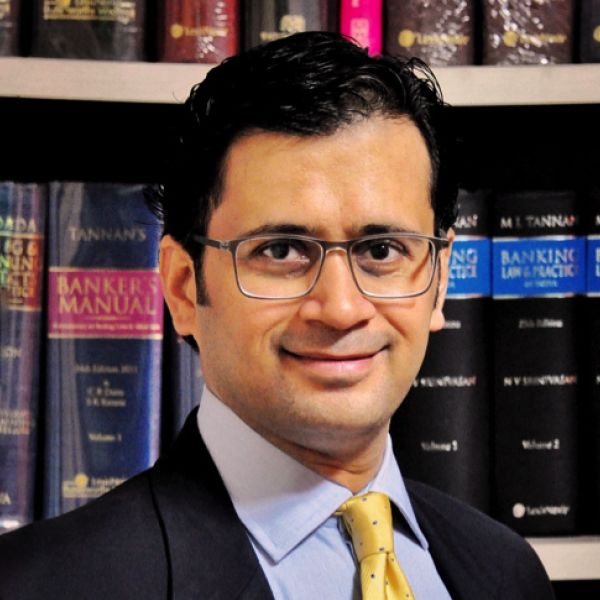
  • Aashhok Prohit on being a third-generation lawyer, winning a case against Queen’s Counsel and having faith in himself.

    Aashhok Prohit on being a third-generation lawyer, winning a case against Queen’s Counsel and having faith in himself.

    This interview has been published by Isam Kabir and The Super Lawyer team .

    1 How did you choose law? What were the key deciding factors for you?

    I am a third-generation lawyer; I have looked up to my grandfather and father for guidance and wisdom. My grandfather pursued LLM and was a Company Secretary (from the first batch of CS). My father was a Lawyer and Certified Internal Auditor. He was working as a Legal Consultant with many International Companies. He was actively involved in compliance and regulatory requirements of companies interested in setting up their offices overseas. 

    Looking at their vast experience and accompanying my father for his conferences, the law was a natural choice. My work ranged from making notes, helping him in drafting and referring to points discussed in the meeting. While observing their communication, I moulded my analytical thinking from a legal perspective, and I realized that then there is no surrogate for hard work and success.

    My father always asked and taught me to “Carve My Path”. Therefore my initiation into the field of law was an interesting journey in itself.

    Two individuals going through the same school and curriculum will come out equipped with different skill sets. Therefore the fundamental moulding gave me an objective view to analyze cases and set me apart from my other fellow students. This mindset prepared me to deal with anything that came my way. 

    2. Before venturing into law, you had been a science student and earned a degree in Chemistry. However, you also read law as well as pursued Masters in Finance. Can you tell us about the factors that influenced you to pursue these different pathways?

    After my 12th, I was offered to study in a UGC Sponsored program of Chemistry and Industrial Chemistry, a course customized to create entrepreneurs with a science background. This course enhanced my logical evaluation from a scientific and management perspective. 

    After my graduation, I visited an education fair for Universities based in the United Kingdom (UK), where I applied and was later offered a part-scholarship for doing a Masters in Banking and Finance from a prestigious University in the United Kingdom. 

    After completing my graduation and working in the field of Finance, I saw a vacuum in the compliance work being carried out in the legal department. My inner calling for law pulled me to apply for a conversion course into law, and I graduated in the field of law.

    3. Do you believe having foreign education is more glorified on merit than its due?

    I don’t believe that foreign education is glorified; it is the opportunities attached to it which makes it a more lucrative option for students. 

    The courses designed by the international universities require total commitment from the students. Therefore, it is often a requirement for students to stay on-campus during the term, especially when a student is pursuing a Masters degree program. In addition, there are many resources of databases made available to students to enhance their research. This practical based teaching methodology sets the foreign universities apart.

    In my humble view, there is a clear requirement for a more practical based teaching methodology in the Indian education system.
    4.For people who want to work in European and American countries, what would be your advice?

    Firstly the cultural difference in both countries is significant. People who intend to go and work there need to be prepared to adapt themselves to the work-life, work ethics and work culture of western countries. 

    It is often a culture shock for most Indian students and as there is a completely different work environment that makes them uncomfortable. 

    In my experience, the work demands immense commitment and requires a person to constantly update their skill sets to adhere to strict deadlines and deliver results. This is coupled with the pressure that the companies are hugely invested in the individual through their recruitment process.

    I suggest to all aspirants that they should be prepared to shun their comfortable living habits, something which they are used to in India with their family around them. 

    5. How did you decide upon practising litigation after being on the corporate side of work?

    While assisting my father in drafting and due diligence, I actively got involved in dispute resolutions. I realized the Bar was my calling and felt comfortable in making appearances before tribunals. I believed that I could argue as well or even better than some counsels I had witnessed.  

    The current legal system in India possesses provisions in the law that enable the litigants who are below the poverty line (BPL) free government legal aid. In addition, the advocates on the legal aid panels are experienced enough to assist the litigants through the trials. However, I feel that there is a lack of ProBono work, and the leading law firms should participate more proactively in Pro-Bono work. 

    6.You were also a Director at an NGO called Global Vision India Foundation, whose work taught the poor, providing food and education. How did this NGO become a part of your endeavours?

    Whilst pursuing my LLM in criminology, I interacted a lot with the then Head of Law Department of Mumbai University, Dr Ashok Yende Sir. He was a great mentor and a very committed person who wanted to contribute to society. He realized through my work that we shared similar ideologies. So I felt privileged when he asked me to be a part of his NGO and appointed me as the youngest director.

    7.You have fought a landmark case that allowed Asians, especially Indians, to apply for firms in London and the UK. Could you share any insightful details from this matter with our readers?

    To qualify as a solicitor, every law student had to get a training contract in a UK-based law firm. The application had to be submitted, and interviews were conducted two years before the training contract job. 

    Since I was not a British National or a European Economic Area (EEA) National, I was informed that it would be impossible for me to get a training contract. It was uncommon for law firms to recruit a non-EEA National.

    I shared my shock and surprise regarding the discriminatory policy of recruitment by all the law firms and especially the top leading law firm in the UK with my tutors. I explained how it was both essentially and morally wrong.

    Ironically, the country known as the ‘torch-bearer’ against racism was refusing jobs based on race. All the law firms I approached refused to take my case pro bono or professionally, as they felt the recruitment procedure being followed was as per the land law. 

    And no person had every filed such a case to challenge this discrimination policy of recruitment, as even after knowing that it existed they still could not prove it in court. Some experienced advocates from India who had gone to pursue their masters had also accepted this discriminating policy instead of fighting it. I only received negative feedback in regards to challenging the discrimination.

    Finally, I discussed the matter with my father and informed him that “I felt what I was proposing was correct, and therefore I was going to fight an uphill battle with all the leading law firms in the UK.” He was very pleased with my objective evaluation and I got all the moral support from my parents to take on all the law firms single-handedly. 

    I applied for a job in a law firm in the UK for a training contract, and as expected, my application was rejected due to the absence of a work permit. However, I still proceeded and filed the application form in the online application process.

    My application was immediately rejected within minutes of submitting it. Following this, I challenged the top ten 10 law firms in the UK court. 

    It was revealed that my application was graded because there was a court case against the law firm. Before that, all non-EEA National Applicants’ were segregated and automatically rejected. 

    I explained to the courts that it was the employer’s job to spend thousands of pounds in evaluating applicants to objectively prove to the UKBA ( The UK Border Agency) that a work permit should be granted.

    I successfully proved in court that the application and recruitment process must be based entirely on merit. However, that was only on paper. There was an underlying indirect racial discrimination process being followed by all the leading law firms who advised all the big companies to segregate all NON_EEA Applicants applications. 

    I single-handedly won the case as a student against the well known Queen’s Counsel (QC), who was instructed  by some of the leading solicitors and backed by law firms. I put forth my arguments against racial discrimination and how the law firms were misinterpreting the law. The Hon’ble Judge and the respected panellist at Bristol Employment Tribunal passed the judgment in my favour on account of my arguments.

    I successfully defended my victory in the Employment Appellate Tribunal (EAT), London as well. Afterwards, they could either go to the Court of Appeal (CA), London or House of Lords, the UK, which the Law Firms had no intention of pursuing.

    It was a major setback for them since a NON-EEA National Law Student single-handedly defeated them and put them back on the blackboard.

    This ruling has changed the entire recruitment process of UKBA and all the companies in all the fields in the UK.
    8. Why do you think this systemic racism and xenophobia existed, which gave preference to Caucasians and native residents over people of colour? 

    The UKBA believed that only the UK and EEA (European Economic Area) Nationals would be suitable candidates for the job and should be preferred irrespective of merit. 

    The application of a non-EEA National, irrespective of his merit, would only be considered after he has passed all these almost impenetrable hurdles. 

    Interestingly, they made Standard Operating Procedure (SOP) Guidelines for companies. Some law firm partners even authored books as a guideline to follow the recruitment process, which was unfortunately entirely based on their misinterpretation of discriminatory laws and policies.

    However, this position has changed post judgement of my case.

    9. In your portfolio, you have mentioned that ‘fortune favours the bold and prepared minds’, and it’s evident that you have taken many decisions in your career that required courage. What would be your advice to young professionals who are fearful of change?

    If you believe in something right and have done all your research, be prepared to take the right steps. Failure happens only when a person doesn’t try.

    No one will walk you to your destiny. Instead, you will have to cover the journey and create your destiny!

    I have never hesitated to explore and have always considered attending new courses with time. Don’t get carried away by looking at what others are doing. Work on your strengths. When I judge moot court competitions, I make it a point to test students outside their comfort zone, which brings the best out of them. I have built a reputation for testing students and keeping them on their toes, as I have always prepared myself before judging the competition as if I am participating in it. The students feel that they have fought and won the competition as if they have won an actual case in court. 

    It is important to identify your strengths and work on them. If you want to practice litigation, then don’t hesitate to work in the lower courts. I was walking the corridors of the High Court of Bombay, working on some media highlighted matters. However, when someone asked me how the matter eventually ended up in the High Court, I was unaware. So I decided to go and learn the basics of trial by observing trial courts, and it has been a learning experience. 

    Initially, I had a rule that I would never take up work for the money. I used to do it for bare minimum fees and at times free, but with the commitment similar to a well-paying client. These are the things that paid off as it was the experience and exposure I got to deal with matters, and the more favourable orders I got, the more my confidence increased. So the underlying principle is that a person should not hesitate to work.

    The best way to learn is to work in an uncomfortable environment. That teaches a person the most.

    10. How has the pandemic been for you? How have you dealt with it personally and professionally?

    It has been a testing time personally and professionally. However, the things that kept me going are adaptability and family support. 

    The lockdown let me search myself and gave me the time to read, brush up and update my legal knowledge. 

    There have been changes in how the hearings have been conducted in courts, and it has taught me that a person needs to be prepared to incorporate changes in their own life. 

    Most importantly, this lockdown has allowed me to spend more time with my family, especially my daughters. So it has been satisfying on a personal level. 

    11. What has been the biggest risk that has paid off for you or the biggest moment of learning for you in your entire career? 

    Fighting against the top law firms was the biggest risk in itself. If I failed, no law firm in the UK would employ me. 

    I remember that none of the law firms was prepared to take my case professionally or pro bono. However, I got the opportunity to prove them wrong and understand the true meaning of ‘Interpretation of law’. I had a nostalgic moment remembering what my respected late father advised me “Law is not taught in law schools or books of law, but it is a gift of the gap”. 

    12. Lastly, any parting advice to our readers who are exploring the legal field? 

    If you believe in something, work hard towards it and bring the change that you envision!

    Do not shy away from negativity and welcome constructive criticism. This is the only way of self-improvement and being the best version of yourself.

    I have noticed a trend among students being overwhelmed by those from higher-ranked law schools. I’ll suggest that if you have worked hard, have done your research, and then you should only be concerned about giving your best. 

    Never feel pressured and underestimate yourself. Always aim to give it your best. The outcome is not in your control, but the efforts are.

    Get in toutch with Aashhok Prohit

  • Satvik Varma, Litigation Counsel, on establishing Independent practice, studying LLM from Harvard Law School, and authoring a book

    Satvik Varma, Litigation Counsel, on establishing Independent practice, studying LLM from Harvard Law School, and authoring a book

    Satvik Varma is a Litigation Counsel and Corporate Attorney. Prior to setting up his private practice, Satvik was a partner at India’s premier law firm, (undivided) Amarchand Mangaldas and also served as the Vice-President and Counsel in the corporate law group at Lehman Brothers (2003-2005) headquarter in New York. Satvik started his career as a litigator (1998-2001) at the Supreme Court of India and the High Court of Delhi. While practicing in Courts, Satvik had the opportunity to participate in and argue various constitutional laws, insurance and family law related cases.

    Satvik holds a Bachelor of Arts (with Honours) in History and a Bachelor in Law (LL.B.) from the University of Delhi. He earned a Master of Law (LL.M.) from Harvard Law School, where he was a part of the South Asian Lawyers Association. He is dual qualified and licensed to practice in both India (1998) and the State of New York (2003).

    Satvik is a frequent speaker at various panels, seminars and workshops and is often featured on television debates for his views on legal matters. He writes regularly on corporate governance, legislative matters, economic and trade policy and current legal affairs for most of India’s leading business newspapers, magazines, and journals.

    In November 2017, Satvik released an anthology of his essay’s titled “Yes, I’m Opinionated” – “Musings of a Lawyer on Governance, Law and Policy” published by Lexis Nexis. The book has received advance praise from sitting judges of the Supreme Court of India and the Delhi High Court and leading Senior Counsel in India. 

    Satvik has a keen interest in global and regional affairs and serves on the advisory board of the Asia Society India Centre, a United States not-for-profit. He has been selected from amongst many as an Asia 21 Young Leader, where he actively engages with others from the Asia-Pacific to discuss issues of common interest to the region. He is also a member of the Young Indians, an initiative operating under the aegis of the Confederation of Indian Industry (CII), to help motivate the youth to shape the economic and social agenda of India. Recently, he was selected from a very large and diverse group of candidates as an Aspen India Leadership Fellow and is cohort of the Aspen Global Leadership Network.

    In this interview we speak to him about:

    • Challenges of setting up his independent firm
    • Experience of studying at Harvard Law School
    • Importance of Internship
    • Being a prolific writer and authoring several articles and now a book
    • Maintaining a work life balance


    HOW WOULD YOU LIKE TO INTRODUCE YOURSELF TO OUR READERS? PLEASE SHARE YOUR ACADEMIC AND PROFESSIONAL BACKGROUND

    I am a litigation counsel and corporate attorney based in New Delhi. My practice focusses mainly on corporate commercial litigations, shareholder and company disputes, breach of contract and specific performance disputes, competition law and telecom/satellite law related litigation and domestic and international arbitrations.

    I also regularly contribute to most leading Indian newspapers on topics related to law. Recently, I released a book- “Yes, I’m Opinionated” – Musings of a lawyer on Governance, Law & Policy. I am addicted to current affairs and a keen observer of politics.

    I graduated from Campus Law Centre, Delhi University in 1998 and immediately joined the chambers of Mr. Kailash Vasdev (currently Senior Advocate). In fact, I had been associated with Mr. Vasdev’s chambers for some time and had worked there through most of my LL.B. days. While at Mr. Vasdev’s chambers, I would often share notes with my brother who was working in the financial sector in London and would hear about M&A and Joint Ventures and Securities, all of which were topics I knew nothing about. So in 2001, I decided to make the transition from Litigation to Corporate law and joined, for a very brief period, Dua Associates in their Corporate Transactions/M&A team. Prior to joining Dua, I had already applied for an LL.M. overseas and went on to pursue my Master in Laws at Harvard Law School, graduating as the Class of 2002 or what was then termed as the 9/11 Class. This was because in the “normal” preceding years, of the 150 students that graduate HLS, well over a 100 students would get a job upon graduating. But in our batch only around 8 students got placements, in what was termed as the “foreign lawyers program”, for a brief stint in the States followed by them returning to their home country to work with the same firm. Regardless of not having secured employment I decided to write the New York State Bar Exam which, admittedly, was one of the most gruelling experiences of my life. Like most students, one enrolled for the BARBRI classes, which lasted through the day and then there was homework to be completed before the next day. On an average, preparing for the Bar was a 16-18 hour day and one was often reminded of the low pass percentage for first time takers. I was fortunate and blessed to have passed the Bar in the first attempt, but still didn’t have a job. In fact, in 2002, there were very few entry level positions available in New York and I didn’t even manage to secure a single interview in over seven months. I was adamant to work and live in New York and hence I persisted. I still remember a particular time when I was called to an interview and spent the day with the recruiter distributing flyers for an attorney who was contesting for a Selectman’s post (equivalent to municipal councillor) and those were the first $40 I earned in America. Eventually, I got lucky when the legal head of TCS, who I had been introduced to by a dear friend and had kept in touch with through the Indo-American Lawyers Association, referred me for a temporary lawyers position at the investment bank of Lehman Brothers that had just signed up an outsourcing agreement with TCS and Wipro. Like most Wall Street positions, I went through five rounds of interviews (the first I had had since graduating HLS seven months prior) and was eventually hired as a temporary lawyer for an eight week assignment. I was lucky that five weeks into my assignment, I was confirmed in the position and given the title of Vice-President Corporate Law at Lehman Brothers. Asides from the title, I was delighted to have a huge office on Park Avenue in New York and went on to work for Lehman for a few years before eventually returning to India.

    Upon my return, my former partner from Dua Associates had just moved to Amarchand Mangaldas (undivided) and proposed I join his team. I was slightly undecided at what to do as it was my initial desire to start my own litigation practice but eventually decided to join Amarchand as a Senior Associate in the M&A & Private Equity team. I eventually rose from amongst the ranks at Amarchand and was announced as Partner in 2010, at which time I decided to start my own private litigation practice. Many people thought I was foolish to be giving up such a lucrative position and the comfort of being under the umbrella of India’s premier law firm. But I was exhilarated with my decision to return to litigation practice and being back in Courts was something that excited me.

    Since 2010, I have been developing my practice as an arguing counsel in Courts and Tribunals all across India focussing primarily on corporate- commercial disputes, and I have to say that I have loved each and every day since setting up my own law chambers.


    HAVE YOU ALWAYS BEEN INCLINED TO A CAREER IN LAW? ARE YOU A FIRST GENERATION LAWYER?

    I am actually a fourth generation lawyer with many in the legal profession both from my mother’s and father’s side of the family. In fact, my paternal grandfather was amongst the first lawyers from Bihar to have relocated to the Supreme Court and was, what was then called, an “agent” of the Supreme Court of India. He was one of the 23 agents present at the inauguration of the Supreme Court of India on 28.01.1950. But there was never any pressure on me to pursue a career in law especially since my older brothers first degree is in law, but he’s always worked in the investment banking and finance sector. Consequently, while my interest to pursue law has been influenced by my family background, the real inclination stems from my compelling desire to work amongst people, to help “resolve” matters and to play a role in helping shape policy and the legal landscape in India. Now, after being admitted for almost 21 years I can say without a doubt that practising law is not just my profession, it’s something I’m extremely passionate about, it excites me and its something I greatly enjoy doing.


    TELL US A BIT ABOUT YOUR TIME STUDYING LAW AS AN UNDERGRADUATE STUDENT AT THE UNIVERSITY OF DELHI

     Having earned an Honours degree at Hindu College I was very familiar with North Campus and, in many ways, Campus Law Centre was an extension of that joyful experience of being at Delhi University. We had some excellent professors at CLC but really the emphasis was on the discussions outside classrooms and the interaction amongst the students. During my time pursuing an LL.B. there was no requirement for internships, however I had started attending Mr. Vasdev’s chambers from my second year and was, hence, able to comprehend the practical application of what was being taught at Law Faculty.


    WHAT WERE YOU AREAS OF INTEREST DURING YOUR LEGAL EDUCATION? HOW DID YOU DECIDE THE FIELD OF LAW THAT YOU WANTED TO SPECIALISE IN CAREER-WISE?

     The late 1990’s were when the period of liberalisation really accelerated and one was seeing more and more international businesses set-up in India. One was were constantly reading about trade and investment policy developing in the country. As a consequence, at Law Faculty, I was drawn towards Law of Contracts, Law of Torts, Constitutional Law and Criminal Law. My initial many years were spent primarily at the Supreme Court of India and hence my interest in Constitutional Law grew. But ultimately, given my professional experience of having worked both as a litigator and a corporate lawyer, I developed a great interest for corporate-commercial laws. I find this area of law challenging, exciting and forever developing, remoulding itself to the changing economic scenario in the world. It’s also the field where I am able to make meaningful contributions having worked on both ends of the spectrum.


    INTERNSHIPS PROVIDE STUDENTS WITH THEIR FIRST EXPOSURE TO THE PRACTICAL ASPECTS OF THE LEGAL PROFESSION. COULD YOU TELL US ABOUT THE INTERNSHIPS YOU TOOK UP, AND WHAT YOU LEARNT FROM THOSE EXPERIENCES?

     The curriculum at Law Faculty did not prescribe mandatory internship, hence one took up internships voluntarily. I had started working from my second year at Law Faculty, i.e. 1996, and one of my greatest takeaways from working at a chambers was the need for lawyers to have an attention for detail. In 1998, the Bar Council introduced the compulsory apprenticeship program for law graduates, which eventually got overturned. During that period I had the chance to hear senior members of the Bar present to the Constitution Bench and was fascinated by the practical examples which lawyers presented to juxtapose the law with its application. It has been my attempt to carry forward and apply both of these early experiences in everything I do.


    LAW GRADUATES ARE FACED WITH HAVING TO CHOOSE FROM SEVERAL CAREER OPTIONS AND THE CHOICE OF STUDYING FURTHER. WHAT ADVICE WOULD YOU GIVE STUDENTS IN AVOIDING A DECISION PARALYSIS?

     Many of the choices available to law graduates today didn’t exist 20 years ago, but it’s absolutely fascinating to see these young lawyers opt for different career paths, where their law degree can be used. For example, I recently met a lawyer with just a few years of experience who had joined a think-tank to work on policy papers. This was not an option when I had graduated, but it’s a great development and also a testament of how the core skills acquired while studying law are transferable skills and can be utilised across a variety of professions.

    Law graduates need to be patient, and not jump the gun to hastily back-pedal from any decision they may have taken if they don’t seem immediate results. The legal profession is more like a cricket test match, with two innings, and not a T20 game where one need to score on every ball. Take a decision and stick by it because too many changes reflect badly on your resume.


    PLEASE SHARE WITH US YOUR LLM EXPERIENCE AT HARVARD LAW SCHOOL. HOW WOULD YOU SAY YOUR PRIOR EXPERIENCE AS AN ADVOCATE AIDED YOU IN YOUR MASTER’S DEGREE?

     My experience at Harvard and then working on Wall Street has in many ways shaped my professional discipline, my work ethic and lawyering skills. Most good law schools today require at least two to three years of work experience before they will even consider your application and I believe that prior work experience in many ways will prepare you for a fairly rigorous and intensive 1 year Master’s program.

    Personally, I strongly urge all young lawyers to pursue an LL.M. and explore ways of studying overseas. Aside from the international exposure, and learning from experiences of those from across the world which adds to one’s overall personality development, the LL.M. program also exposes one to many areas of the law that one doesn’t study in India. For example at Harvard I took a course called Analytical Methods for Lawyers which included Game Theory, Statistics, Accounting and Decision Analysis in Contracting matters which I found fascinating. I also studied other topics I had no exposure to in India like Entertainment and Media law, Alternative Dispute Resolution methods and got an opportunity to study Negotiations from the Gurus of Negotiation Theory – William Ury, Roger Fisher, Bob Mnookin etc.


    WHAT ARE THE CHALLENGES THAT YOU FACED STUDYING AT ONE OF THE PREMIER UNIVERSITIES FOR LAW IN THE WORLD? HOW DID YOU KEEP UP WITH HARVARD’S ACADEMIC RIGOUR?

    While the academic schedule at Harvard, and for that matter in most LL.M. Programs, is quite intense, it’s also a lot of fun and at the end. What is paramount is what one wants to take away from the program. At Harvard for example, some of the greatest discussions took place outside of the classroom; at student events or informal discussions. As a place of learning Harvard encourages that, so one doesn’t really face any “challenges” in such a structured program. The program allows one to pursue other interests and activities across all Harvard campuses and that is a good way to balance the academic schedule along with the non-academic activities on campus.

    I would also like to share that while I was at Harvard Law School, my older brother was at Harvard Business School and if I remember correctly, we are the third or fourth set of brothers to have graduated Harvard University on the same day, at the same time but at different ceremonies. So on graduation days my mother was at my ceremony and my father attended my brother’s ceremony.

    HOW DID YOU COME TO TAKE UP A POSITION WITH LEHMAN BROTHERS? WHAT ARE THE MAIN TAKEAWAYS FOR YOU FROM THIS EXPERIENCE?

    As I mentioned above, my introduction to Lehman Brothers was made by the General Counsel of TCS Americas. It was the only interview I got after graduating from Harvard and I started as a temporary worker and was made Vice-President Corporate Law in five weeks of working with them. In this role, I was supporting the global procurements team on all their contracts and handled everything from negotiating the bank’s Bloomberg Data contract to the acquisition of Private Jets that were undertaken. I also worked very closely with the Benefits team and worked on re-negotiating the global health benefits and insurance program for 14,000 employees. My greatest take-away from working at Lehman was how to understand the business and commercial interest of your client, in this case the bank itself, and balance those interests with the law to make sure the deal goes through. I was also able to put to immediate use the negotiation skills I had acquired while at Harvard and see them bear results. That is something that has held me in great stead in all my client dealings.


    WHAT MOTIVATED YOU TO JOIN AMARCHAND MANGALDAS? COULD YOU TELL US ABOUT YOUR JOURNEY TO BECOMING A PARTNER AT ONE OF INDIA’S LEADING LAW FIRMS?

    Upon my return to India, my former partner from Dua Associates had joined Amarchand Mangaldas (undivided) and while I was keen to start my private practice, he asked me to join and it was an offer I found very tough to refuse. In retrospection I am thrilled to have accepted that offer as I learnt immensely from working at India’s premier law firm. Amarchand had a great brand value and I remember when I shared with my Harvard colleagues that I had joined Amarchand, almost everyone had heard of it in their home country. During the time at Amarchand, it was in the process of charting out its course for further growth and I really enjoyed being a part of the journey which eventually led to my selection as a Partner at the firm. This was an especially happy moment for me as I was one of the 19 Partners at the Delhi office. It would be my strong recommendation to junior lawyers to, at some stage, work at a large law firm to understand the mechanics of an Indian law firm and only post that experience decide their long term career goals.


    WHAT ARE THE CHALLENGES AND LEARNING OPPORTUNITIES THAT YOU ARE FACED WITH IN YOUR INDEPENDENT PRACTICE?

    Independent practice is an all in one process – you’re the originator of the work, the executor, the teacher and mentor, the researcher and sometimes also the office manager! But it’s a lot of fun and while I recognise that independent practice may not be for everyone, I would not trade independent practice for anything else. One of the most difficult things for me while returning to litigation and independent/private practice was to try to re-establish my brand, which one had to do from scratch. Amongst the best things about private practice is the freedom to do all kinds of different things and work across various practice areas, which one is not able to do while in the structured confines of a law firm. As a result, one is constantly evolving and learning something new every day which makes independent practice a lot less monotonous or repetitive.


    GIVEN THE DYNAMIC NATURE OF THE FIELD YOU PRACTICE IN, HOW DO YOU KEEP YOURSELF UPDATED ABOUT THE LATEST DEVELOPMENTS IN THE LAW?

     One of the best ways to stay updated about the latest developments in the law is through leading law journals and the various other online law portals which come up with an analysis and bring to one’s attention the developments in the law across the country. Given that I write almost every week and invariably choose topics outside of my area of work, I always learn through the process and make it a point to read the latest Court decisions. Despite the latest cases being available at the press of a button, I urge all young lawyers to maintain their personal case journal and update the same regularly.

    Additionally, the entire chamber eats lunch together on Saturdays and we have a rule where one of my Juniors is expected to have read up on a case and is required to share details of that with the others. We do this in a relaxed environment not to make it overly burdensome and keep it fun, yet not lose sight that it’s a work assignment.


    WHAT DOES A TYPICAL WORKING DAY LOOK LIKE FOR YOU?

    Most litigators and more so those in private practice work 7 days a week. Weekends tend to be the busiest as one is catching up on drafting, vetting drafts and settling pleadings. On most days I’m in office till past 10 pm. But the advantage of private practice is that post Court hours one is the master of one’s own schedule and can plan one’s day accordingly. So on most days, I would try to get back home to be with my Son during his dinner time and also try to eat with my wife and then come back to office to work late into the night.


    HOW DO YOU MANAGE YOUR TIME BETWEEN YOUR PROFESSIONAL AND PERSONAL INTERESTS? WHAT ARE YOUR INTERESTS OUTSIDE LAW?

     I’m extremely fond of art and fashion, love food and travel and greatly enjoy listening to new-age jazz and lounge music. There is often music playing in the office. I am also fond of photography and many photos taken by me adorn by chamber walls. I also have a great interest in theatre and drama having worked for many years at India’s leading professional theatre group. So if there’re any plays in town, I make it a point to try and see them. The good part is that in private practice one is able to manage one’s own schedule and create one’s own personal- professional work life balance. I equally urge all my Juniors to definitely engage in some sporting or other activity on a daily basis.


    WHAT WOULD BE YOUR PARTING MESSAGE TO OUR READERS WHO ARE PRIMARILY LAW STUDENTS AND YOUNG LAWYERS?

    Today, a law degree offers many alternative career options for law students. My parting message both to law students and young lawyers is – Choose wisely, the career path you’d like to pursue, but then follow it with dogmatic determination. Follow your dreams, chase your heart and be passionate about your work doing it with utmost honestly and all sincerity. Don’t draw comparison with your peers or classmates and don’t jump-ship just because you feel your friend is ‘doing better’ or is ahead. Once you’ve chosen a path, give it lots of time and all your energies. The practice of law, whether at a law firm or as a litigator requires one to put in a lot of hard work and long hours. One must have the mental strength and resolve to deal with 14-16 hours days. Even if they don’t produce immediate results, its like making a deposit in a bank, all those hours will eventually yield results. As a U.S. Supreme Court Judge said “The law is a jealous mistress and requires a long and constant courtship. It is not to be won by trifling favors, but by lavish homage.” But above all, , remember to have fun along the way, its not always the destination, but also the journey that matters.

  • Kunal Endait, Head Litigation & IP, Mintkart India, on career in media law, and experience as an in-house counsel

    Kunal Endait, Head Litigation & IP, Mintkart India, on career in media law, and experience as an in-house counsel

    Kunal Endait completed his graduation from ILS Law College, Pune. He then went on to pursue his LL.M from NLSIU. He is currently in-house counsel (Head Litigation & IP) at Mintkart India Pvt Ltd (formerly EBay India and a Flipkart group company). He has over ten years of professional experience and has experience of working in media and newspapers industry. He is skilled in litigation, negotiation, and transactions along with corporate advisory. He shares his experience as a lawyer, in house counsel and a writer.

    In this interview, we speak to him about:

    • Roles and responsibilities as chief manager-legal at Bennett, Coleman & co. Ltd
    • Experience as an in-house counsel at various organisations
    • Choosing a career in media law
    • Importance of writing research papers.


    HOW WOULD YOU LIKE TO INTRODUCE YOURSELF TO OUR READERS?

    A lawyer, born and brought up in a lawyer’s family. I did my graduation in law from ILS and post-graduation from NLSIU. Law comes to me as heredity and I always knew right from the beginning that I wanted to become a lawyer as I had observed my father’s efforts, dedication, knowledge and respect he commended by his popularity as a successful advocate, which were sufficient considerations for me to decide my career path at the very threshold. Frankly, I never thought of any other conventional courses and my goal was fixed right from the beginning.


    PLEASE TELL YOU SOMETHING ABOUT YOUR COLLEGE LIFE? HOW INSTRUMENTAL HAS YOUR COLLEGE BEEN SHAPING YOUR CAREER?

    While I always wanted to opt for law, my parents had a fair expectation that I should make all endeavours to secure my candidature in premium law institutes. To my luck, I secured my seat in one of the best institutes, ILS, Pune. Let me also be candid here, coming from then under developed part of the country and that too from vernacular medium (I belong to Dhule district, Maharashtra), I was skeptical if I would be able to continue with ILS, but then I interacted with my faculty, who all guided me throughout my law curriculum and also made some of my best lifetime friends, who all have always supported me throughout my journey. I was a sport rather cricket follower and would often participate in the various intercollege/university tournaments and that also added to my confidence. Internet and other online resources were yet impact the market then, hence I could spend quality time with books and library of my college. ILS has one of the best law books collection and luckily, I was benefitted. I was not much of bookish person, but always loved reading legal texts, if not literature. I would also like to mention my professors Shri. Deshmukh, Shri. Jaybhay, Bhadbhade Madam, Bhatia madam, who are all known to be the best and they indeed added a lot to my life as their student.


    WHAT MOTIVATED YOU TO GO FOR A MASTERS PROGRAMME?

    It was my father, who suggested that I should contemplate taking up further studies. I was looking at multiple options at that time, including civil services, foreign studies and assignments, however, I found my father’s suggestion quite convincing, though he insisted that I should make efforts to take up my masters in the premium law school. Around the same time I came across NLSIU masters program advertisement in newspaper and I applied for their entrance test. I did not have much of time to prepare for entrance exams, however, my final year of LL.B studies helped me and I got through the entrance test and that’s how I got into NLSIU. I must acknowledge contribution of my professors Prof. Viaykumar, Prof. M K Ramesh, Prof. Devidas, Prof. Ajjappa and others for their kind guidance.


    PLEASE TELL US ABOUT YOUR TIME AT LAWYER’S COLLECTIVE. WHAT LED YOU TO SHIFT TO AN IN-HOUSE ROLE AFTER WORKING IN LITIGATION?

    I owe Lawyer’s Collective as it taught me extensively post academic life and helped me grow as a professional. When I was about to submit my dissertation for my masters, Lawyers Collective happened. I joined them with their HIV/AIDS unit as Legal Officer and was looking into litigation matters for their clients. HIV/AIDS Unit was providing pro bono legal support to the deprived and discriminated people. This came across as the best opportunity I could have asked for. I got to handle plethora of matters involving constitutional issues, writs, criminal issues, civil and property related disputes etc. Nevertheless, the best part was to work directly with Mr. Anand Grover (Sr. Counsel), who was heading the team and the guiding force behind the strategy we would devise to contest matters for our clients then. Gradually, I started handling firm’s matters and that’s when I received extensive exposure to constitution and writ side issues. Mr. Grover is very particular and would often make us read common law judgements, because of which the team also received exposure to common law authorities. Lawyers Collective offered me an opportunity to work on the projects involving property and inheritance rights of women in Indian sub-continent. I visited Sri Lanka and Bangladesh sometimes around 2008, met lawyers, NGOs, Human rights activists etc and that added immense value to me not only as a lawyer but as human too. Working with Mr. Anand Grover as an honour. I would like to also acknowledge contribution of my then Manager, Mr. Vijay Hiremath, who also guided and supported me throughout my stint, he is a successful counsel and continues to guide me even now.


    YOU HAVE DIVERSE EXPERIENCE AS IN-HOUSE COUNSEL AT VARIOUS ORGANISATIONS. WHAT IS THE NATURE OF WORK OF AN IN-HOUSE COUNSEL?

    I feel in-house lawyer cannot really summarise his/her work in a short one page write up. It is always the variety of issues that the in-house counsel needs to address to on a regular basis. Mind you, unlike other sectors, in-house legal team needs to be on its toes as any issue impacting your employer’s interest would have to first run past through the legal team and therefore opinions and advises are required to be issued with real rapid pace, that too ensuring correctness in the advice.

    In my small span of in-house I have handled litigation (civil, criminal, consumer, IP, constitutional etc.), contracts, corporate advisory, notices (private, law enforcement), HR related issues, business transfers along with variety other.

    WHAT WOULD BE YOUR WORD OF ADVICE TO STUDENTS INTERESTED IN MEDIA LAW?

    Being a media lawyer is a responsibility, not only towards your organisation but society at large. Your advice would have bearing on your reader/viewer’s right to know, a fundamental right that enables every individual to have access of every affair that is taking place around him/her in the society and country. Importantly, working into media sector is almost 24/7 assignment and you must always act proactively. Media law is a key sector and those who wish to choose this as their career must bear in their mind that the constitution of India is extremely instrumental in this field along with media and broadcast, press laws. I have enjoyed my time with multiple media entities and I am extremely proud of that. As an in-house, one should indeed explore media opportunity, I feel.


    AS CHIEF MANAGER-LEGAL AT BENNETT, COLEMAN & CO. LTD WHAT WERE YOUR ROLES AND RESPONSIBILITIES?

    I was a team member of their litigation portfolio for the western region of India. Simultaneously was responsible for corporate advisory, property related issues, checking legal compliance, engagement with law enforcement agencies, variety of contracts and the most importantly working with Mr. Amit Rai directly under his guidance. I would like to mention Mr. Rai especially as he is my Guru, who has taught me extensively on the media laws, apart from being a great professional, he’s extremely caring boss and you have a lot to learn from him, particularly his leadership skills and his in-depth hold on law subjects and related issues. It was a fulfilling experience working under Mr. Rai’s leadership at Bennett, Coleman & Co. Ltd.


    IF ANY STUDENT WISHES TO INTERN WITH BENNETT, COLEMAN & co. Ltd WHAT IS THE PROCEDURE FOR APPLICATION?

    Bennett, Coleman & Co. Ltd has its own legal department and the students may approach the team through HR department, who will guide them in a better manner.


    YOU HAVE RECENTLY MOVED TO MINTKART INDIA PVT LTD (FORMERLY EBAY INDIA AND A FLIPKART GROUP COMPANY) AS IN-HOUSE COUNSEL (HEAD LITIGATION & IP). WHAT FACTORS INFLUENCED YOU TO MOVE TO EBAY?

    I think e-commerce is a fast paced sector and would present multiple legal challenges, opportunities for learning as well value addition for a lawyer. It is a privilege to be associated with the market leader, Flipkart, particularly when I will have an opportunity to explore global scenarios through the platform. It is also interesting to work closely with the team in the wake of recent takeover of Flipkart by Walmart.


    HOW CAN A LAW STUDENT APPLY FOR INTERNSHIP AT THE LEGAL DEPARTMENT OF MINTKART INDIA?

    I would advise students to get in touch with HR team of the company and they will guide you through the process.


    YOU HAVE AUTHORED NUMEROUS RESEARCH PAPERS. WHAT SHOULD BE THE APPROACH OF A STUDENT WHILE TAKING UP THE TASK OF AUTHORING A RESEARCH PAPER. WHAT ADVICE WOULD YOU GIVE TO LAW STUDENTS TO IMPROVE THEIR LEGAL WRITING SKILLS?

    I firmly believe, the research papers/thesis cannot be carried out based on hear say or for that matter using internet resources. Most of my research papers were based on empirical research and experiences. For instance, I had authored a research paper on the plight of refugees and legal remedies for them, and for the said project, I had spent 3 days in a refugee camp and interacted closely with the victims and aggrieved people. Getting firsthand knowledge is extremely crucial and one must not rely solely on the third party data. I had implemented similar methodology during my visits to Sri Lanka and Bangladesh.


    YOU HAVE THE EXPERIENCE OF BOTH LITIGATION AS WELL AS IN-HOUSE ROLES. PLEASE TELL US ABOUT THE DIFFERENCE IN BOTH FIELDS. WHAT FACTORS SHOULD A YOUNG LAWYER/LAW STUDENT KEEP IN MIND BEFORE DECIDING WHICH FIELD TO CHOOSE?

    I feel there isn’t much difference, its just that the terminologies very from external clients to internal clients/stakeholders. While I have worked as a practicing counsel as well, in-house has little difference that you must have all round industry knowledge and that yours advises require should be self-sufficient. By that I mean to say that in-house counsel’s advice should be extremely helpful for your external counsels that they merely have to argue the matter based on the in-house advice. Both complement each other.


    WHAT WOULD BE YOUR PARTING MESSAGE TO OUR READERS WHO ARE PRIMARILY LAW STUDENTS AND YOUNG LAWYERS?

    Go for it. Law is a sector, which does not only offer you monitory growth, but will also offer you feeling of adding values to society at large as the core purpose of legal system in our country has this basis. Time is changing, law is no longer what it was, we have ample opportunities, please join the league.


  • Anupam Tripathi, Managing Partner, The Practice, on starting independent practice and working as Senior Standing Counsel with IT Department

    Anupam Tripathi, Managing Partner, The Practice, on starting independent practice and working as Senior Standing Counsel with IT Department

    Anupam Tripathi graduated from ILS Law College, Pune, in 2004. After successful stints as Senior Standing Counsel for the Income Tax Department, he founded his own firm, ‘The Practice’.  He is also the managing trustee of an NGO called ‘Fight For Animal Rights’.

    In this interview we speak to him about:

    • Experience working as Senior Standing Counsel for the Income Tax Department, Ministry Of Finance in Delhi High Court
    • Starting his own firm “The Practice”.
    • Current scenario of direct tax law as a career option in india


    HOW WOULD YOU LIKE TO INTRODUCE YOURSELF TO OUR READERS?

    I am a lawyer in the Supreme Court, a social worker and animal rights activist. I am the founder and the managing partner of an east Delhi based law firm called ‘The  Practice’. I am also the founder and managing trustee of an NGO called ‘Fight For Animal Rights’, India.


    WHAT FACTORS INFLUENCED YOU TO CHOOSE LAW AS A CAREER? WHY DID YOU CHOOSE ILS LAW COLLEGE FOR PURSUING LAW?

    I look at law as a means to bring about a social change in the society and in the country. By change I mean progress. My grandfather was a very successful trial lawyer in post-independent India before he was elevated as Judge, Allahabad High Court in the mid 1960s. To a great extent, I was inspired by him and more so by his personality and larger than life character to take up law as a profession. Late Nani Palkhivala has been an inspiration too, along with contemporary greats like Harish Salve and Ram Jethmalani. From very early days, while I was still in school what stood out to me always was that most great men who had achieved some remarkable feats were practicing lawyers (Mahatma Gandhi, Nelson Mandela, my maternal grandfather, Late Kedar Pandey who was two time Chief Minister of Bihar and Railway Minister of India in Indira Gandhi’s cabinet in mid 70s to the early 80s was also a lawyer by profession). All these great men were lawyers. Today, you can add the likes of Barack Obama, former President of USA and our own President of India Shri Ram Nath Kovind are also lawyers by profession.

    I was very clear that I wanted to practice law, i.e., get into litigation and for this reason ILS Law stood out for me as even back in 1999, when I took admission into ILS Law College, it had a reputation and a track record for being a stand out performer in moot court competitions on the National stage and a college where moots were taken very seriously, add to that the August faculty we had at the time- this the choice was obvious. I was privileged and honoured to spend five wonderful years in ILS Law College which trained me to be the lawyer that I have become today. In 2004, when I graduated from ILS, my college was ranked the Number one Law College in the country ahead of National Law School of India University Bangalore that was our arch-rival. In that year (2003-2004), we had won eleven out of the thirteen National Moot Court competitions in the country standing true to the reputation of the ILS Law College. I was privileged to have contributed to these National Moots by winning the Stetson National Environmental Moot Court Competition at the time. I later represented India in the World event of this competition at Stetson Florida, USA, and won a scholarship in the process for an LLM and was later facilitated with a Gold medal by then Chief Minister of Maharashtra Late Sh. Vilas Rao Deshmukh at ILS, Law College and nominated for best student award for outstanding performance in Moot Courts.


    HOW WAS YOUR EXPERIENCE WORKING AS SENIOR STANDING COUNSEL FOR THE INCOME TAX DEPARTMENT, MINISTRY OF FINANCE IN DELHI HIGH COURT? CAN YOU SHARE ANY MEMORABLE OR INTERESTING EXPERIENCES IN YOUR STINT AS A SENIOR STANDING COUNSEL?

    I was privileged to be appointed as a senior standing counsel in the Delhi High Court on behalf of the Income Tax Department, Ministry of Finance, Government of India in the year 2010- 2013. At the time of my appointment which was after the assent and approval by the President of India in August 2010, I was only 29.5 years at the time (and subject to correction) I was supposedly the youngest senior standing counsel for the Central Government at the time in the country (I am told that the previous youngest senior standing counsel stood at 32.5 years). In my initial three months of appointment, I found myself to be struggling to cope up and match the requirements and rigours of the job and the pressures that you face being in that important position. Contesting, arguing with and facing in the court the likes of top tax moguls like Ajay Vohra, S. Ganesh, C.S. Aggarwal, H. Syali, Rakesh Gupta, K. Sampath, Mrs. Kapila Satyan Sethi, Rakesh Aggarwal was not easy to begin with. But I worked very very hard and in less than three months I had found my feet on the job and was now regularly matching these tax moguls argument by argument and submission by submission and having beaten all of them in several matters. I shared an excellent rapport with all my colleagues at Bar some of whom were 30 years my senior and I was also privileged to have developed an excellent standing before the Hon’ble High Court judges in the tax bench I was appealing before. Most these judges today are sitting judges of the Hon’ble Supreme Court today.

    My overall experience as a senior standing counsel was excellent having given me an opportunity to have made more than 1500 appearances in Delhi High Court at the time with more than 100 reported judgments to my name in a short span of three years. It was a great boost to my legal career.


    WHY DID YOU GO INDEPENDENT AFTER WORKING WITH BIG LAW FIRMS?

    I was very clear from early days at law school that after graduating, I wanted to train for not more than two years maximum before branching out my own private practice. I was fortunate to have reached this zone and space where I felt that I could venture into private practice within a year and few months of graduating law. Thus, after briefly working for law firms like AZB & Partners (my first employer) to Associate Law Advisors to later training with Mr. Vikram Kapoor Advocate, I founded ‘The Practice’ on August 5th, 2005 and have been practicing privately since.


    WHAT IS YOUR OPINION ABOUT THE WORK ENVIRONMENT AT BIG LAW FIRMS?

    It would be wrong of me to comment on the work environment in big firms that I have not personally worked with. I can only speak of my experience with the two big law firms I have worked with personally and would hence restrict my comments to my limited experience with them. At AZB & Partners, I was working on the corporate/ transactional side and found the atmosphere for a fresh graduate in law a to be very cold and unwelcoming. I also found that in a big firm like AZB & Partners, there were times when the right hand didn’t know what the left hand was doing. I also found an over emphasis on billing and bottom lines as opposed to winning cases and providing good representation and legal services to clients.

    To sum up, I would describe AZB & Partners at the time (2004) to be a great body, missing a heart & soul with its mind all over the place. But I must admit I have the highest regard for Ajay Bahl and Zia Modi both of whom are genius in their respective fields. Raman Sharma and Nanju Ganpathy are good and kind people too in their  setup. My experience at Associate Law Advisors was lovely. Working on the litigation side here was perhaps helpful as I was in my comfort zone here. Good people, great leadership and friendly colleagues of course helped. Mr OP Bharadwaj and Lira Goswami were wonderful bosses and people to work with and learn from.


    WHAT IS THE CURRENT SCENARIO OF STUDYING DIRECT TAX LAW AS A CAREER OPTION IN INDIA?


    I would advice law students to study direct taxes especially income tax law and think of it as a career option on the corporate/ transactional side where there is huge scope both with the big four accountancy firms as well as with corporate law firms all across India. However on the litigation side (bear in mind my specialty is tax litigation) there is narrower scope and a lot of competition you have to deal with. For example, in the Delhi High Court there is a handful of 8-12 tax lawyers who dominate and have all the cases with them. In the Supreme Court, there is again a handful of 5-8 senior advocates who specialise in tax litigation and dominate. Thus, be mindful of this competition and almost cartel/monopoly that exists which is not easy to breach, no matter how good your standing and ability in tax litigation may be.


    HOW DO YOU SAY ONE CAN GAIN EXPERTISE IN TAX LAW? WHAT DOES IT TAKE TO BE A GOOD TAX LAWYER? IS THE WORK SIGNIFICANTLY DIFFERENT FROM OTHER TRANSACTIONAL LAWYERS?

    Tax law is an extremely technical and specialised field. Simply putting, its tough unlike most of other legal practice areas. The thing about tax law is that either you get it or you won’t. Period!  Once you have got the hang of it, you would begin enjoying and improving at it every day. Being an extremely specialised field, you will also find that the work you do as a tax lawyer would neither be understood by 90% of your colleagues, even judges of High Court and Supreme Court in matters of taxation are few, who understand the field, specialise in it and have command over it. Like every other field, tax litigation too requires hard work and perseverance and a lot of reading and staying up to date with the latest case laws, etc. You can have all the flair as an arguing counsel, but if you are not technically sound with tax, you would struggle.


    YOU FOUNDED A LAW FIRM THAT IS DOING VERY WELL TODAY. WHAT CHALLENGES DO YOU THINK SOMEONE WHO WISHES TO START A FIRM OR INDEPENDENT PRACTICE IS LIKELY TO FACE? WHAT WOULD YOU ADVISE THEM TO DO TO MITIGATE SUCH CIRCUMSTANCES?

    When I started my firm, I had left a salaried job of an associate where I was earning 22,000 per month at that time. My first month turnover in August end of 2005 of my private practice was 3,500 Rupees odd. All my near and dear ones including my own family were doubting and wondering how will I survive and whether I would make it because I had started from scratch. My father was not a lawyer, I had not inherited anyone’s practice or clientele and hence my future seemed gloomy to them. Within a year of private practice, I was touching a turnover of six lakhs per annum i.e. 50,000 per month and from that modest beginning I have come a long way today where when it comes to Income tax litigation, Public Interest litigation, Consumer litigation and Divorce cases litigation – my name and the name of ‘The Practice’ stands out. The money has been good too, but I like to be modest about such things.

    To be brutally honest, I survived and succeeded because I had ability, perseverance and worked very hard. I would advice youngsters to get into private practice only if they are inheriting clientele and private practice of their father or they don’t just think but actually have the kind of ability, grit, determination and perseverance along with a well-worked out marketing and business plan to succeed, or else they will struggle or in fact fail. Youngsters should stick to jobs, unless they have the above, or at least wait for seven to ten years before setting up their private practice.


    WHAT IS YOUR VIEW ON THE ADEQUACY OF ANIMAL PROTECTION LAW IN INDIA?

    The animal protection laws in India are to a very long extent adequate; however their lack of implementation is a serious issue. India, in fact has one of the best animal laws in the World barring the exception of 50 Rupees fine for the first offence of killing a stray dog. Almost all animal laws in India are near perfect. It’s their implementation that’s missing and is key.


    HOW CAN A LAW STUDENT APPLY FOR AN INTERNSHIP AT YOUR FIRM? IF THERE IS SOMEONE WHO WANTS YOUR GUIDANCE, WHAT SHOULD HE/SHE DO?

    Email me at anupamtrip@gmail.com to apply for an internship at my firm or to work as a volunteer for my NGO i.e.Fight For Animal Rights, India after sending your application wait for a revert back from me. If you hear from me in upto two weeks or so, consider yourself selected. If you don’t hear from me, then move on. No amount of email reminders and telephone calls will help your prospect. My firm and NGO has one of the most popular and vibrant internship program not only in New Delhi but in India. I have trained and mentored more than 1000 law students in the last fourteen years and my firm provides internship opportunities to 100-150 interns every year from leading law schools all across the country, there is competition and vacancy issues, so one has to be mindful of this.


    WHEN YOU HIRE JUNIOR IN YOUR FIRM ‘THE PRACTICE’, WHAT QUALITIES DO YOU LOOK FOR?

    I look for six to seven traits in every junior or for that matter in any person who is or shall be ever associated with me in whatever capacity – 1.Ability, 2.Integrity, 3.Energy, 4.Great sense of timing with situational and personnel awareness, 5.Ability to make work fun as purchasable a commodity as sugar & coffee, 6.dependability and 7.Loyalty. Unless, you have these seven traits in you, you may be a genius and may become the future Prime Minister or President of the country but sorry you don’t have a future with me.


    WHAT WOULD BE YOUR WORD OF ADVICE TO LAW STUDENTS WHO ARE ASPIRING TO LITIGATE JUST AFTER GRADUATION?

    My answer is Legal advocacy or “Vakalat” is  about litigation, litigation and only litigation. A real lawyer is one who goes to court, argues his cases, fights for justice for his clients and for larger public good and wins. Everybody else is a law graduate with a Bar license or a corporate suit with a fat salary,  may be a fancy car on EMIs who can’t secure his own bail when in trouble. In other words, graduate and get into litigation, work very hard, and do well. I wish you my kind of struggle, success, satisfaction and happiness!


  • Mohammad Manauar, Senior Manager-Legal, SMS Group, shares his roles and responsibilities as In-house Counsel

    Mohammad Manauar, Senior Manager-Legal, SMS Group, shares his roles and responsibilities as In-house Counsel

    Mohammad Manauar graduated from Aligarh Muslim University, Aligarh, in 2008. He currently works with SMS Group and handles corporate legal team of India. He has eight years of work experience and has worked as a practising lawyer as well as an in-house counsel with organisations like Thomas Reuters, Infosys BPO Ltd and Sirion Labs Private Limited.

    In this interview, he talks to us about:

    • His role and responsibilities as Senior Manager – Legal in SMS Group
    • The reason behind giving up litigation practice and accepting an in-house legal counsel role.
    • His college life at Aligarh Muslim University


    HOW WOULD YOU LIKE TO INTRODUCE YOURSELF TO OUR READERS? PLEASE TELL US SOMETHING ABOUT YOUR PRE-COLLEGE LIFE?

    My name is Mohammad Manauar, a small town boy with big dreams from Darbhanga, Bihar. The linguistic heritage and nuances of indigenous art and craft nurtured in me curiosity from the very inception and the zeal to pursue knowledge led me to my unending journey of deciphering new avenues of legal development.


    HOW WAS YOUR EXPERIENCE AT LAW SCHOOL? ARE THERE ANY MEMORABLE MOMENTS THAT YOU WOULD LIKE TO SHARE?

    Like I said I belong to a small town in Bihar, and hailing from a small town has its own advantages and disadvantages. The biggest advantage is zero expectations from your family and faculty, while the greatest disadvantage is about this great expectation of proving your caliber beyond reasonable doubt. My initial year at law school was all about making a mark among the big shots and stealing spotlight by my hard labor, wit and humor.

    Days in Aligarh University were golden days. It’s a central university with around 30,000 enrolled students and more than 16,000 used to reside in hostels, wherein students from different streams and courses lived together, so that gave me a very diverse perspective of things. The more you interact with people from different fields and areas, the more your mind opens to diverse views.

    I was very much active in student politics after my third year and was Senior Proctorial Monitor (SPM) at AMU in 2008-09. This is the highest administrative student post, which means the head of 30,000 students. Apart from this I was also Senior Hall of Dr. B. R. Ambedkar Hall, which is exclusive boy’s hostel for the law students.


    WHAT MOTIVATED YOU TO GO FOR A MASTER’S PROGRAMME? WHAT FACTORS INFLUENCED YOUR DECISION TO SPECIALISE IN CRIMINAL LAW?

    The inner zeal to pursue and acquire knowledge motivated rather compelled me to pursue master’s programme. There were multiple factors that influenced my decision to specialise in criminal law, but to name a few were continuous reading of crime fictions during college days and young man’s desire to change the state of country’s not so good criminal justice system.


    YOU COMPLETED YOUR LLM FROM ALIGARH MUSLIM UNIVERSITY. WHAT WAS THE CURRICULUM LIKE AT ALIGARH MUSLIM UNIVERSITY? WHAT FACTORS LED YOU TO CHOOSE LLM FROM INDIA RATHER THAN LLM ABROAD?

    The Faculty of Law, Aligarh Muslim University holds the honour of being the flag bearer of five years integrated graduation course in law. Further, it is also one of the top five premier research institutes in legal education. In 1960, the Department of Law became a full-fledged faculty.

    The Department of Law of Aligarh Muslim University is one of the oldest departments in India. The teaching of law in AMU was introduced in the year 1883. Sir Syed Ahmad Khan, the founder was greatly impressed by the programme of legal education in British Universities. So he was very keen to have legal education on that pattern in AMU also.

    There are several legal luminaries passed from AMU like, Prof. N.R. Madhava Menon considered by many as the father of modern legal education in India passed the master’s degree in law (LLM) from AMU and had the distinction of being first PhD holder of Faculty of Law, Aligarh Muslim University. He is the founder Director of the National Law School of India University (NLSIU) and the National Judicial Academy, Bhopal and the founder Vice Chancellor of the West Bengal National University of Juridical Sciences (NUJS).

    Even Prof. Tahir Mahmood an Indian legal scholar and author of a large number of books frequently cited in the judgments of the Supreme Court of India and High Courts. He also did is LLM from Aligarh Muslim University.

    The curriculum in LLM is detailed; research oriented and depends upon specialisation. Master’s degree provides you the depth of understanding of the subject. The specialisations are in Business laws, Constitutional Law, Environmental Law, Criminal Law, IPR, Muslim Law etc.

    I got chance to learn Constitutional law from Prof. (Dr) Faizan Mustafa, who is the presently Vice-Chancellor of NALSAR University, Hyderabad and criminal law from Dr. Shakeel Ahmad who was almost like my guardian angel. In fact the entire faculty was very supportive and appreciative.

    As I have already shared, being a student leader I was juggling between books and problem of the students. This helped me a lot in understanding and making very good rapport with people to interact or have a business. And till today it is helping me in my corporate job where I meet so many people every day.

    The course fee and indigenous restrictions as to practice and academic pursuits led me to pursue LLM from India rather than abroad.


    YOU DID LITIGATION FOR INITIAL YEARS AND LATER SWITCHED TO IN-HOUSE COUNSEL ROLES? WHAT LED YOU TO CHANGE FROM LITIGATION TO IN-HOUSE COUNSEL? WHAT IS THE ROLE OF AN IN-HOUSE COUNSEL GENERALLY?

    The struggle of making a mark being a first generation lawyer and acute family pressure to earn money and share responsibilities made me switch from litigation to in-house counsel roles.

    With the laws and regulatory compliances becoming more complex, companies face various risks and challenges. The in-house legal is required to understand the risks and issues involved in a decision from a legal stand point and further communicate it to the management. This will enable the management to make informed choices and decisions within the acceptable risk profile.

    There are inherent cost savings, since one is not paying external counsel at an hourly rate. In-house counsel works exclusively for the business employing them, rather than for a third party with a number of different clients. In-house counsel have the added advantage of being familiar with the business employing them, they already know the company’s working environment, its principles and its general ethos. As employees of the business, they will also have the best interests of that company at heart, which may not be the case for external counsel.


    DO YOU TAKE INTERNS IN LEGAL DEPARTMENT AT SMS GROUP? WHAT IS THE PROCEDURE OF APPLICATION FOR INTERNSHIP?

    As of now, the in house legal team sits in Germany. We are on the verge of expansion in India. I am the first one hired for India corporate legal team. As the team will expand in couple of months, we will start hiring law interns.


    AS SENIOR MANAGER-LEGAL WITH SMS GROUP, GURGAON, WHAT ARE YOUR ROLES AND RESPONSIBILITIES?

     As Senior Manager – Legal with SMS Group, Gurgaon, I am handling overall legal affairs of the SMS India Pvt. Ltd.

    • Contract Management- Independently handling the complete closure of the contract post receipt of the requirement by the concerned dept. through vetting, drafting and negotiation (both international & domestic contracts).
    • Negotiation in direct covering both commercial and legal aspects of EPC Contracts, tenders, bidding, sub-contractor agreements, commercial and procurement contract, government projects, POs.
    • Tender preparation and negotiation reviews and comments on commercial and technical tender terms and requirements, and the overall execution strategy taking into account risk, scope, and schedule as per internal company standards. Highlighting changes and deviations.
    • Assist project team in resolving contractor disputes, claims, and performance issues.
    • Ensure adherence to the contracting plan, document and obtain prior approval of exceptions.
    • Handling lawsuits of the company
    • Advising to group HR head on legal issues concerning employees (Present and Past) and any other HR/labour law issues as per requirement.
    • Other legal issues as and when required


    WHAT WOULD BE YOUR MESSAGE FOR YOUNG LAWYERS AND LAW STUDENTS?

    Never underestimate the power of diligent effort and hard labor. Never bow down to challenges as facing it will bring the best out of you. Never settle with time and keep on climbing the ladders of knowledge and expertise because we lawyers are like old foxes as we reap gold with grey hairs.


  • Vasundhara Shrivastava, Legal Counsel, Cisco Systems on work experience as a Counsel in the Technology Industry

    Vasundhara Shrivastava, Legal Counsel, Cisco Systems on work experience as a Counsel in the Technology Industry

    Vasundhara Shrivastava graduated in Law from University of Bangalore in 2010. Having received a Gold Medal in Jurisprudence and being ranked 4th in B.A. Law Examination (among ~ 4000 students), Vasundhara joined IBM India on graduation where she continued till September 2015. Vasundhara has mainly worked on technology matters concerning IT Outsourcing, Cloud Services, Arbitration, Trust & Compliance and Environmental Law during her tenure at IBM. She has thereafter moved on to join Cisco Systems, where she is currently the Legal Counsel for India and SAARC region.

    In this interview Vasundhara answers to Rounak Biswas of SLS Pune the questions posed by Shafina Salahuddin of Calcutta University.


    What made you choose Law as your profession? Is there anyone else in your family who works in the legal field?

    I belong to a family of writers and freedom fighters. My father is an activist-writer and his writing focus on bringing out the pain of people who were forced to migrate in order to escape the misery of lawlessness. Thanks to him, the family dining table was a democratic platform accessible to the young ones in the family. It respected and protected our freedom of speech, and actively sought participation in decision making about issues that mattered to me. Reading and writing was always on top of the mind. It made me aware of various socio-political issues of that period. The constant debates in our home made me realize that the root cause of any trouble was the rampant lawlessness and the sole sustainable solution was law and order – interestingly, both were effects of governance and policies. I wanted to understand this better. Being a science student who loved mathematics, I was attracted to engineering as a profession.  It took me a bit of swerving and swaying but I soon followed my heart and decided to pursue law as my undergraduate major at the University of Bangalore, Karnataka.


    Which activities did you partake in? Please tell us about the manner in which you approached academics while in college.

    During college, while I focused on acing academics, I also leaned towards writing as my medium of expression. I went ahead and started publishing my articles and opinions on a range of issues from sexual harassment, role of media in democracy, child labour and women reservation bill to pharmaceutical patents – any issue that I felt deserved intervention and thought exercise from the angle of law and governance. Some of these were published by various law school journals, some were award winning essays and some won accolades from national and international organizations and in the process, my belief in law as a profession to bring about change strengthened. Academics was a keen interest for me but I was acutely aware to keep it related to the practical application. So I strived to developed an empirical and simple approach as opposed to the general notion of pedantic and intimidating legal language. During university exams, I questioned the conventional methods of answering. I believed that lengthy history answers could be reduced to simplified bullets and Sociology could be as objective as Physics. And I would say that my quest for being innovative in academics was well received! But I was aware that a smooth transition from a law student to a professional lawyer needed that extra push. First year onwards, I had begun to intern with various law firms and worked pro-bono for a few NGOs in Bangalore.  Essentially, I tried to push the boundaries of academics’ experience by designing it to match my passions and interests.


    What were your areas of interest during your graduation? How did you go about developing expertise and knowledge in these areas?

    I found laws related to media and technology particularly interesting. One was surrounded by real time legal and social issues in these areas. Social media was beginning to boom and technology was entering our lives like never before. The legal implications of such generation altering changes made me curious. To develop expertise and knowledge, I read whatever I could get my hands on and wrote passionately about such issues. My published essays touched upon issues ranging from Tsunami, Jyllands-Posten Muhammad cartoons controversy and the need for reforms in privacy laws to questions such as whether Novartis could patent Gleevac in India.


    What kind of internships did you do during your law school days?

    I did internships at various law firms in New Delhi (Trilegal) and Bangalore (Trilegal, ALMT Legal, Holla & Holla). These firms have a wide range of practice areas and this gave me an opportunity to work on telecom laws, patent laws, litigation, drafting, research etc. Internships were a great learning experience. It was less about knowing the right answers and more about pursuing the right way to derive answers to the unknown. I also worked pro-bono for some NGOs in Bangalore and these were long term associations. I was sensitized to matters of day to day importance, particularly related to women and children. These NGOs focused on children’s right to a quality education and happy childhood, women battling domestic violence and dowry. I conducted surveys and prepared projects suggesting alternative opportunities for children whose calling was not traditional but vocational schools.


    Did you find that your law school education had prepared you sufficiently for the many tasks you were required to execute during your internships and later at your job?

    Significantly but partially. During my undergraduate years, I often found myself questioning the niceties of legal language and its practical application at work. Our university education curriculum stresses on good academic record with limited focus on arranging internship opportunities for students in an organized manner. Being in Bangalore, the technology destination of India and home to thousands of start-ups, there was neither a better place nor a better time to pursue a career in technology laws. By third year, I had decided to work for technology driven companies as an in-house lawyer. So, I would say that college education was successful in helping me choose the course of my career as a lawyer. However, the details of the job were learnt on the job. I have worked from IBM and two years ago, I moved to Cisco. On-the-job learning has not stopped. There is no other way than to learn every day.


    You are associated with Mahila Dakshata Samiti (Pro-bono legal aid to women victims of domestic violence). How important do you think pro bono service is?

    One can’t stress enough on the need for pro-bono work, particularly for lawyers. While I believe that lawyers can provide genuinely the much needed help, the relationship is symbiotic. The amount of learning that happens through pro-bono work is phenomenal. It is an excellent way to give back to one’s community, it also provides a great means to develop one’s skills. We have to consciously block time on our hands for a wider range of pro bono and charitable work which is tangible and beyond our traditional work. To say the least, making a difference in someone else’s life will make you feel happier. Fortunately, all employers I have worked with encourage their employees in this area by running numerous campaigns and programs. They have tied up with various NGOs working in the field of housing and shelter, disability, education, hunger etc. where employees can work pro bono and make a difference.


    You’ve been a Professional Mentor for IDIA Scholars. How can interested students volunteer?

    IDIA has a Professional Mentorship Program for those who are interested in being a mentor to an IDIA scholar. When I wanted to be a part of this program, I got in touch with a friend who was working for IDIA. For those interested in volunteering as a mentor, it is important that he/she approaches this mentorship program in a structured manner to ensure that the experience is meaningful for both mentor and the mentee. Interested students can write to info@idialaw.com for details.


    You have published quite a few articles on social problems and were felicitated by the Governor of Karnataka for an essay on Child Labor recognized by ILO. How do you find time in the midst of your busy schedule?

    I enjoyed writing on issues which I believed, needed progressive laws. During college, I did not have to find time for it, rather it was what kept me busy. Recognition from the state government and organizations such as ILO was encouraging and at the same time, made me aware of the need to have a better understanding of my socio-economic surroundings.


    You are the Lead counsel for Channel Partners, Services and Commercial segment, India & SAARC. What are the roles and responsibilities?

    Cisco’s business model in India (and globally) is to serve its customers through its extensive world-class channel partner program, which means we sell our products and services primarily through channel partners. I handle legal and contractual issues associated with Cisco’s distributors, systems integrators and indirect channel partners. In the services and commercial segment, I advise our internal clients on the scope of our products and advanced services offerings (mainly network consulting and optimization), negotiate distributor and service agreements, apply commercial insight to deals and contractual structures in concert with other functions such as finance and service delivery, at all times aiming to provide legal advice that proactively enables business and at the same time helps to minimizes legal risk. Of course, there is always focus on ensuring adherence to internal policies and compliance requirements as well as critical aspects of anti-trust laws and anti-corruption that relate to our business model, channel partner and customer dealings.


    You were awarded the Prof. V.B. Coutinho Gold Medal for excellence in Jurisprudence. What is the mantra as most of the students have a tough time with it?

    I had heard enough and more about how difficult Jurisprudence was as a subject. Right in the beginning, I chose Salmond’s legal classic on jurisprudence and adopted an objective and inter-disciplinary approach to explain legal principles. While the classic legal language of jurisprudence could have intimidated me, a simpler and logical solution came to my rescue. Using Venn diagram instead of lengthy sentences to explain the concept of ‘joint and several liabilities’ in Jurisprudence was one such instance where being innovative and creative with concepts was appreciated by the evaluators. I was awarded Prof. V.B. Coutinho Gold Medal for the highest score in Jurisprudence in Bangalore University. These achievements gave me further hope regarding the possibility of innovation in law.


    You were Deployed on a prestigious IBM Corporate Service Corps (Aug – Sep, 2014). Please share your experience with our readers.

    (Top 500 global IBM leaders are deployed to address a high-priority social issue as a part of leadership development and CSR activity through a rigorous selection process)

    In 2013, with three years into my professional career, I was selected for IBM Corporate Service Corps Assignment. As IBM’s flagship CSR program (modeled on the US Peace Corps), CSC deploys top 500 global IBM leaders to address a high-priority social issue. I was one of the youngest member in IBM India to be selected for this program. In 2014, for two months, I was deployed in Taiyuan, China. It was a life-changing experience of community service coupled with leadership development with a team of ten employees selected from several departments of IBM across the globe. I braced myself to be tested on cultural awareness by this multi-cultural broth. Our client, the Department of Civil Affairs, Taiyuan was looking for coherent strategies to revamp its Community Centres. I focused on the elderly population of Taiyuan – old ‘empty nesters’ who would rather live on their own than go for professional nursing and care. I conducted surveys and interviews of the ageing population, and four weeks later our team had converged their stories into a summarized narrative, which was presented as our recommendations to the government. Sensitivity to cultural norms and enhanced inter-personal skills made it a well-rounded personal and professional journey.


    Previously, you were an Attorney at IBM India, what kind of work were you tasked with? What was a normal work day in your life like?

    I joined IBM in 2010, right after college. Honestly, it was a little overwhelming to be selected as an Attorney in a company known to have shaped a century! First few months at IBM were about training and education sessions. Later, almost seventy percent of my work was handling technology transactions with government and private customers which included negotiations and transactional advice. Rest of the pie was an interesting mix of issues around real estate matters, environmental laws, business partners and ad hoc general legal advice. I was with IBM at a very interesting time when the IT industry was witnessing the transition from traditional offerings to trending industry concepts like cloud computing, big data and Analytics. A significant time and effort was towards adapting to these changes through constant learning. Needless to say, I was fortunate to work in one of the best legal departments with brilliant lawyers and managers who had a significant role to play in honing my skills as a professional.


    We thank you for agreeing to this interview. As a concluding message, what would be your word of advice to our readers?

    Thank you SuperLawyer for this opportunity. It is a great medium to connect with the members of our fraternity. And this is rather a concluding thought that I would like to share with the readers – from being an outsourcing destination, we are now the third biggest start-up ecosystem in the world. For our country to sustain its technology driven growth, as technology lawyers, we must constantly upgrade our skills to support this transition. We cannot be lawyers in the traditional sense. We are expected to be business enablers, aware of the market trends, always learning on the job!


  • Manushree Kaushik, Consultant, In-House Practice, Vahura shares her insight on the field of legal recruitment

    Manushree Kaushik, Consultant, In-House Practice, Vahura shares her insight on the field of legal recruitment

    Manushree Kaushik graduated in Law from Amity Law School, New Delhi in 2012. She had never thought of being a lawyer or a recruiter but being successful was her ultimate motto. Gaining diverse experience by interning at varied firms, soon after graduation she started working for Dua Associates, premier full-service law firm for a period of almost three years.

    Wanting to utilize her legal education and experience and at the same time to do something different, Manushree stumbled upon the field of legal recruitment. Since 2016, she has been associated with Vahura as a Consultant with the In-House practice group. She primarily focuses on hiring for corporates across sectors from junior level hires through to mid-level management on a pan India level. She firmly believes “Recruitment is not just about hiring talent; it is about finding and hiring the best qualified candidate in a timely and cost-effective manner.”


    In this interview, she talks to us about:

    • Her decision to switch from corporate law to legal recruitment.
    • Her intensive internships with some great dignitaries.
    • The difference she’s found difference between NLU and Non-NLU students?
    • And the skills she looks out for during the recruitment process.

    How would you like to introduce yourself to the readers?

    I am a lawyer by qualification and a recruiter by profession. I am a part of Vahura’s In-House Practice group. Currently, I am in a recruiting role wherein I focus on junior to mid-level hiring across sectors.

    I did not grow up thinking or dreaming of being a lawyer or a recruiter, I just dreamt of being successful. I had no lawyer in my family or even in my extended circle of friends but Law as a profession sounded fancy to a seventeen year old and so I was intrigued. I did a bit of research, got through law school and here I am. The journey has been wonderful and I am glad I chose this as a career. It’s only now that I realize that this education and all these experiences have made me a better person, the study of Law changes the perspective of how you look at people and situations around you.


    What is your take on internships?

    Internships are the best part of the entire experience. Law school will teach us theory and maybe to some extent practical (via Moot Courts) but the real world of practice is very different and you can only experience it when you are in that atmosphere. Watching a Senior Advocate being briefed inside his chambers, the relentless chatter at a law firm, happy lawyers, stressed lawyers, lawyers arguing in a court room while the judge is trying to keep calm, all these things cannot be witnessed at a law school.

    I think the primary motive of an intern should be to observe and learn as this will give you a platform to base your expectations on. Enjoy your internship and you will be able to make the most of it.

    I wanted to gain varied experiences,  I have interned with independent practitioners, law firms and public bodies and each internship was different than the other. Although I thoroughly enjoyed all my internships, the most enriching one was the first one. It was the first time that I was seeing and hearing the royalties of the Indian legal fraternity, it was informative but also thrilling and exciting to witness these dignitaries live in action.


    Describe your experience of interning in the office of Mr. Parag Tripathi, Additional Solicitor General, Supreme Court of India and also with Mr. Gopal Subramaniam, Solicitor General, Supreme Court of India.

    I have had the opportunity to intern in the office of dignitaries like Mr. Parag Tripathi and Mr. Gopal Subramaniam.

    I had just cleared my first year exams and in the vacations that followed, I was interning with Mr. Subramaniam. We were two first years in that batch of interns and needless to say, both of us were extremely overwhelmed. I was told by another senior that I was at the right place but my timing was wrong. I was too young to learn something from the office of a Senior Advocate, and I might not have learnt a lot about the Law but I definitely learnt something about being a good lawyer.

    Similar was the experience at Mr. Tripathi’s office. I was three internships old when I interned with him and his office consisted of a very friendly team and that stems from the fact that Mr. Tripathi himself is a very friendly person. He devoted individual time to all the interns and would make us feel important and involved.


    How were the first few years after your graduation?

    I joined the Gurgaon office of Dua Associates right after graduating from college. I spent almost 3 years at the firm and that is when I truly realized what being a lawyer is all about. I was an excited fresher, who was willing to take on any responsibility and my focus has always been on delivering results. For the initial few months, I was doing a lot of research work. I was surrounded by a lot of people who wanted nothing but the best for me and this included my team members at Dua. The partners and the managers were all very supportive; they invested their time and energy into my training. It built a strong foundation for me and that experience has helped me a lot in shaping up my career.

    The law school experience was limited in the sense that we did learn a lot about the Law but not so much about the real world practice of law. The internships did help to some extent but they are not even close to the real thing. I was only able to make the most of my education and training, after I started working full time as a lawyer.


    What made you switch from corporate law to the field of legal recruitment?

    (Manushree worked as a corporate lawyer with Dua Associates for three years.)

    It was in 2016 that I decided to take a sabbatical for a few months. I wanted to explore the possible options available to a law graduate.  Moving to another law firm was an obvious choice but somehow I was not fully convinced to do so. I also made attempts at a few in-house opportunities and during this entire process I was being approached by multiple recruiters. I enjoyed my interactions with them so much that I befriended a few. I started to learn about the recruitment industry and I was really intrigued by the profile of a recruiter. It was fascinating and risky at the same time. I wanted to utilize my legal education and experience and at the same time wanted to do something different. And recruiting lawyers gives me the perfect balance of both.


    As a consultant with the In-House practice group at Vahura, tell us your work profile.

    At present, I focus on junior to mid- level hiring across companies. Our client base is spread across the country and hence we get to work with clients on a pan-India basis.

    Unlike most search firms, we have a unique network within the legal and governance fraternity which allows us to access the best passive talent not visible to most.

    My role includes analysing the requirements of a job, attracting professionals to that job, screening and selecting candidates and helping them integrate to the organization. Coming from a legal background, it is easier to comprehend the needs of the clients in this industry and this enables me to provide them with the right kind of talented professionals. Recruitment is not just about hiring talent, it is about finding and hiring the best qualified candidate in a timely and cost-effective manner.


    Being in the legal recruitment domain, have you found any difference between NLU and non-NLU students?

    The NLUs have a very different way of imparting education and training to its students. They have very strict qualifying criteria, and the environment is highly competitive. Also, the infrastructure and other facilities provided to the students are better than other law schools. And the most important factor are the placements, NLUs are the preferred choice when it comes to placement with premier law firms and corporates.

    However, a student’s future as a lawyer cannot solely be decided by the law school. Stay focused on becoming a good lawyer and success will follow.


    What are the skills that you look for while filtering during the recruitment process?

    Usually, it is the resume that creates the first impression. A well drafted and concise resume is the first sign of a promising candidate. And you must know your profile by heart. Everything that you have claimed to do, you should have done it. No lying on the resume.

    Another key factor is the confidence. It is very important to be confident in your interviews. Only if you have faith in yourself, will the interviewer have faith in you. Also, make sure that you are able to communicate your expectations clearly. Do not sell yourself short and do not over commit.

    Students should work on building these skills and with the right amount of dedication and hard work; they will be successful in securing a position in the industry.


    What would be your parting message to the budding lawyers?

    Be true to yourself. Do not leave any stone unturned in the journey to achieving your goals. Set a target for yourself and keep going till you hit it.

  • Harish Nambiar, Vice President-Legal, Syntel, on working in the Information Technology and Services Industry

    Harish Nambiar, Vice President-Legal, Syntel, on working in the Information Technology and Services Industry

    Harish Nambiar graduated in Law from JSS Law College, Mysore in 1997. Harish has been exposed to seventeen years of comprehensive experience in the areas of: Legal Strategic Planning, Management, Consulting Compliance, Drafting & Vetting, Litigation, etc. He joined Syntel as General Manager – Legal and was promoted to Vice President in 2014. His role also includes managing the ethics and whistle-blower policies of Syntel.

    Harish likes to be a practical and proactive lawyer with an inclination towards understanding relevant laws and underlying jurisprudence.

    In this interview, he gives us his insights to:

    • Being a first generation lawyer.
    • Constructively utilizing time at law school.
    • His areas of expertise and how did he go about developing them?
    • His important message to young law graduates.


    How would you like introduce yourself to our readers?

    I am Vice President – Legal at Syntel, a global IT multinational corporation. As a lawyer, I have always been an in-house counsel, starting from my first corporate assignment with a large IT company in 2000. I have worked in IT companies and insurance companies. Of my total seventeen to eighteen years in corporate assignments, I have been in senior leadership position (AVP and above) for about twelve years. I am interested in Law related to contracts, property, employment, crimes, IPR, and anti-harassment. However, as an in-house counsel, there is really no limitation on what kind of matters may come up and what range of Laws will have to be applied. On personal side, I am very passionate about environment protection and planting trees. I like driving and comedy movies. I am an avid reader and like reading anything that is available on Indian history – I have a collection of books. I also like to be associated with causes that support destitute children and underprivileged women.


    Tell our readers a bit about your childhood and pre-college life as well as educational background.

    Most of my childhood was spent in Mysuru, then known as Mysore. It is a beautiful place. I went to the St. Joseph’s School at Jayalakshmipuram in Mysore, Junior college was done in SBRR Mahajana Junior College, and I completed B.A, LL.B from JSS Law College (which was at that time affiliated to the University of Mysore). Overall, I used to do well in studies. Law school was particularly good. JSS Law College was one of the best things that happened in my life. I had very good teachers and I am in touch with all of them, even today.

    Childhood memories revolve around railway equipment and associated stuff as my father was an officer in the Indian Railways and we used to stay in residential quarters within the railway housing colonies. I am a first generation lawyer and there were no lawyers before me in the family.


    What inclined you towards the field of legal education?

    I decided to pursue law a career probably when I was in the seventh or eighth standard of school and the trigger was Mr. Shatrughan Sinha. While watching him play a powerful lawyer in one of his movies, something clicked within me saying “I too need to become that.” While that may seem like a melodramatic reason, I think it also had to do with something in me that made me like complicated sentences, legal references and the like from a very young age – like fourteen or fifteen years. Since there was no family precedent, I had to convince my parents to let me do this, and they agreed, and that was the beginning. It was all set and sealed by the time I was entering my tenth standard of school.

    I started reading law books right from those days, and I completed reading treatises on the Indian Penal Code and Central Motor Vehicles Act when I was in 12th, and I was probably the only one who had ever touched these books before entering the law school.

    At law school, I always tried to do more than was required. I would keep Cox or Modi on Medical Jurisprudence and Toxicology open for reference while reading Ratanlal & Dhirajlal on IPC or Indian Evidence Act. I had Gaur’s Firearms and Forensic Ballistics while learning about the Indian Arms Act and Indian Evidence Act. This approach helped me understand the topics better. I had a very good academic record at law school.


    You’ve been a professional lawyer with more than seventeen years of extensive experience. How did you go about developing your expertise?

    Some of these items cannot be ‘taught’ in the classical sense. It needs to be picked up along the way. My formula was to overlay the theoretical and technical knowledge imparted during law school into the manner and methods which my seniors in the office were employing to handle a situation. Then, I would top it with my own common sense and arrive at a solution.

    One of the most important things that I used to do was ask questions to my seniors and air my opinions freely, so that each time, I was taking one step towards perfecting the solution I had arrived at. I also had the ability to say ‘no’ to something that I believed was not possible to do.

    I strongly believe that a lawyer with a sound and strong knowledge of the technical aspect of law and the jurisprudence can provide a solution to most issues. The fact that I was on the right track manifested itself when I started the heading the Legal Department at a major insurance company with between five and six years of professional experience. I was able to replicate this at another insurance company with eight years under my belt.

    It is all about knowing how much you actually know, bridging the gap, using common sense, asking questions and being bold enough to take the plunge. Most importantly, while taking the plunge, be mindful of the fact that you can fail too – but that failure should not be taken negatively and should be used as tool to avoid repeating the same mistake.


    What is a day at work like? What is the most challenging or stressful part?

    I enjoy what I do, so no workday is more stressful or difficult than any other day. I don’t say that every day is a cakewalk, but since I enjoy what I do, it is quite pleasant most of the time. I start early and segment the day into various buckets, which helps me manage my time better. I haven’t really faced any work life balance issues as such, as I am able to manage the time properly. Syntel, in particular is a great place to work and quite understands on the work life balance part – I have been here for more than seven years and it has never happened that my personal life was compromised because of my professional life. On home front, my family understands the several demands that apply on my time. My wife Rashmi and my ten years old daughter Nandana are very supportive of my professional commitments and leave me to my own devices on work related matters. They are a great source of strength and inspiration. Unless there is an absolute emergency, or I am travelling, weekends are always reserved for the family. On a daily basis, I keep an hour for myself which is the time that I use to recharge myself. That hour could be spent doing nothing, or it could be used for reading, or tending to the plants at home. I also spend part of my weekend with my parents generally discussing on any topic that we find amusing or interesting.


    You joined Syntel as GM in 2010 and were later promoted to VP. Please walk us through your work profile.

    Broadly, my work profile is to manage all legal affairs of the company, wherever we operate. This includes contracts, litigation, compliance, corporate law matters, employee conduct etc. Additionally, most organisations bundle the whistle-blower policy and related matters like employee conduct into the Legal Department. While these are strictly not ‘legal matters’, at senior levels within the Legal Departments, these matters also come your way. I have been handling such things for more than twelve or thirteen years now.


    What was role did you play at your first corporate assignment?

    My role at my first corporate assignment was largely on contracts – both buy-side as well as sell-side. Certain items of compliance and IPR were included, as well as part of one M&A. But those few years taught me a lot, because at that time, it was a small team and I had to adapt fast and become independent.


     How do you manage your diverse range?

    (Harish handles statutory compliances and other works like drafting and vetting of contracts and liaison with external agencies on legal issues.)

    As I said earlier, it is the willingness and eagerness to learn that will help one gain the ability to master a wide range of duties. I am a perpetual learner and seek out new challenges. Once you make learning a habit, range is not an issue.

    As a concluding message, what would be your suggestions to law students/young lawyers?

    Stay focussed on the goals you have set for yourself. Most law students that I have met believe that they are already lawyers within their first year of law school, and tend to fall into the trap of unwanted distractions that comes with it. Avoid that trap at all costs – you are a formal student till you graduate, so use that time to study. The fundamental job of a student is to study and acquire knowledge. Bear in mind that you can ask any question till you graduate, but the ability to ask certain questions is reduced after graduation, and that reduction keeps increasing with each passing year since graduation. No client is going to be impressed if you must research a basic legal question.

    Once you graduate, use the first five to six years of your career to gather as much knowledge as possible on practical aspects, without losing the technical side of the matter. Unlearn and relearn if need be. At the end of this period, assess yourself and determine if you have become a better lawyer — one that can recite the law, propose a solution to a problem, and have the wisdom to realize when no legal solution exists. Never compromise on the technical knowledge and keep the basics strong. Always remember that the most complicated techno-legal agreement on space technology collaboration also needs to pass the basic test of ‘consideration’ or ‘capacity of parties’ to be held enforceable as a contract under law, as much as the agreement on buying sugar from a neighbourhood grocer also need to pass the same test to be held enforceable under Law. Basic principles are divine – they cannot be forgotten or violated at any stage.

    Simply put, never compromise your professional integrity. Don’t manipulate the Law or your clients, base the legal opinion of the principles of Law, don’t use your knowledge of Law to gain an unfair advantage over your clients, and most importantly, have the courage to say ‘no’ when something is not legally possible to do.

    A combination of professional integrity, technical knowledge, common sense and the ability to propose solutions to your client’s problems is what will set you apart from others.

  • Anghrija Chakraborty, Senior Manager-Global Risk and Compliance, Aricent Technologies, on how to deal with academics, internships and work

    Anghrija Chakraborty, Senior Manager-Global Risk and Compliance, Aricent Technologies, on how to deal with academics, internships and work

    Anghrija Chakraborty, graduated in Law from Campus Law Centre, University of Delhi in 2008. Coming from a family of doctors and engineers, her fascination for the working of the wheels of justice motivated her to pursue a career in the legal industry. She firmly believes that if work is done smartly, you can still find time for “Netflixing”- her major stress buster.

    Anghrija joined Aricent as a Manager in June 2015 and was promoted to Senior Manager in July 2016. Her chief duties are planning, implementing and monitoring all corporate compliance programs. Co-ordination of compliance audit activities and communication of expectations and reporting results are the key functions of her position.

    In this interview, she gives us an insight into:

    • Tricks to approach academics without having a mental breakdown.
    • How to make the most out of internships?
    • Importance of work ethics.
    • Indispensable message to the budding lawyers.


    How would you like to introduce yourself to our readers?

    I’m a legal and statutory compliance specialist. Occasional writer. Dreamer. Thinker. Random lover of all things breakfast-y. Total snark with a heart of mashed potatoes. Bad photographer. Charmingly neurotic. An absolute, but barely controlled, legal research junkie.


    What prompted you to study Law after completing your English Honours from Miranda House, University of Delhi?

    I had always been interested in the dictates of justice, and I genuinely found Law fascinating. Therefore, it was easy-peasy. Of course, there were several other reasons – (i) I could represent myself in court if push came to a shove; (ii) because movies and TV series gave me no choice (read, Ally McBeal, The Practice, etc.); and (iii) because I wanted my grandparents to have something nice to tell their friends.


    Which activities did you partake in and how did you approach academics while in college?

    Law school, I believe, is akin to cooking for the first time. You have absolutely no idea what you are doing, and it is a bit of a mess. But just like cooking, you get better at it with time. During my time at law school, I learned a few things that helped me sail through.

    Make one page summaries every week.

    One of my professors at college once said that a good lawyer can explain their case in  one sentence. I say a good law student can explain their lectures on one page. A one-page summary will force you to do three things: (i) re-read your notes over the week (ii) think about the important details; and (iii) rewrite your notes in a simplified form.

    Use colour (lots and lots of them).

    When you make a one-page summary, or your notes, use colour. It helps you find key words easily, and also distinguish between different topics. Not to mention, it is easy on the eye and a colourful way of immersing your desk with law notes.

    Keep a balance.

    Burning out from studying too much and cramming because of studying too little are two things that one should avoid. In both instances, you can study for so long before you start hitting diminishing returns and your brain begins to sizzle. Law school has taught me that a ten-minute break every hour is a good rule of thumb to stick to.

    Test yourself (can I explain this to a friend?).

    If you can explain why positivism is at odds with naturalism to a friend, then you can do it in an exam. Why this works? – (i) You must know the content to explain it; (ii) You must explain it so that it makes sense. Two important skills in any law exam.

    Be friends with a ruthless proof-reader.

    What you want is someone who will destroy your essay/assignment if it is awful rather than calling it “scholarly and erudite.” Here is a suggestion – either print your assignment or read it out loud. That is the best way to avoid being ½ marks off an A.

    Be friends with a law school senior.

    This is important. A friend who understands the struggle, and who is also able to give you assessment advice is something money cannot buy. Taking the initiative when the opportunity comes up and being genuine would be my two cents when it comes to befriending a law school senior.

    At law school, apart from the regular academic coursework, I found myself in the library, reading up, or volunteering with blind students at the Braille Institute Library next door, or helping set up meetings and events organized by the Gender Justice Society.


    What were your areas of interest during your graduation and how did you go about developing expertise in them?

    To be honest, I did not have a favourite subject or area during law school. I remember that legal research on various topics interested me. Therefore, I read a lot, and then worked on my research skills. After law school, in my different jobs, I worked at strengthening my research skills, and continued reading a lot, leading to my eventual interest in data privacy, anti-corruption, anti-trust, ethics, etc.


    How is internship helpful for a law student and what kind of internships did you do during your law school days?

    I remember my first days in law school. I had this air of confidence, quite like Harvey Specter. I had good grades in college, and I had made it to law school. I felt extremely proud of myself. That was until I started talking to my peers and seniors. One had already worked at the Attorney General’s office. One had already nabbed an internship at a top tier law firm. I remember wondering in second year if I should just drop out of law school and take up something less daunting, like, nuclear physics or rocket science. After all, how could I compete with these people when I had no legal or internship experience? I really thought that evil HR managers would just show me the door. But this is not what happened/happens.

    I figured later that most legal workplaces are on the lookout for people who can think on their feet, can interact well with clients, and are not afraid of hard work. And these are skills that are not contingent on you having done an internship or not.

    In fact, there are several non-law things that you can do, which will count as good experience when you apply for a highly coveted legal job:

    You could get involved in campus life – join the law society, become a student ambassador, join a volunteer program, become a mentor or a research assistant for your professor.

    You could volunteer at charities – find a cause you are passionate about and start devoting time in helping those who need help. It shows that you are compassionate and have varied interests. Also, this would make you stand out in law firms that do pro-bono work, or companies that have good corporate social responsibility functions.

    You could organize a successful college event – may be a fundraising one. Such events are fun, and they showcase your management and leadership skills too. They also demonstrate that you work well under pressure and can meet deadlines. These are skills that all employers look for.

    You must remember that work experience is not just about having an impressive resume; it is also about personal development.

    Personally, I pursued a post-grad diploma in Human Rights Law, International Humanitarian Law, and International Refugee Law, organized various events under the auspices of the Gender Justice Society, volunteered at the local orphanage, pet shelter, and the Braille Institute Library.


    Did your law school education prepare you for the many tasks required to execute during your internships and later at your job?

    Okay, let’s ponder over this.

    When I graduated from law school, as part of my usual delayed process of unpacking significant life moments, I began to consider what I had achieved/learned. It was actually not the first time I had to ponder this question. I was the one in a family of doctors and management graduates and engineers that bucked the trend and made the decision to study Arts and Law. I would occasionally be asked, what is it that I learned? My answer was that I learned to read and write really well.

    Jokes apart, it is hard to explain what you learned at law school. I did not learn how to design a building or cure a disease. I learned how to navigate the many invisible lines in the sand that made up the accepted rules and behaviours in society.

    Law school helped me to apply the scientific method, in that you ask a question, carry out research, construct a hypothesis, test the hypothesis and draw conclusions based on the results. Law is a product of this same process – however, in core law subjects we consider this process in reverse. We start with the legal rule, read the cases that have tested it, then perhaps the jurisprudence and policy that explain the academic and research perspective of the rule, and, lastly, the social wrong or problem which posed the question in the first place.

    Also, you learn to differentiate between a fact and an opinion, and then between a conclusion and an assumption. This makes us discerning and compelling. It also gives us the skills to contemplate the vast ocean of media that drowns us day to day. The rules of admissibility and evidence are not only useful in the courtroom, the habitual cognitive practice of considering “hearsay”, relevance” and “fact over opinion” when gathering our thoughts allows us to be more concise, effective and persuasive communicators. Conversely, it also equips us with the ability to think critically when we are being communicated to.

    As law students, we learn not to think in isolation and write manifestos and treatises fit only for academia. We are on the ground, thinking and contributing to very real discussions and responding to very real problems.


    As a member of the ISIL delegation to the WFUNA Asia-Pacific Model United Nations Conference, in Delhi (in 2006), share your experience.

    This MUN Conference was organized in 2006, and it was a lot of fun. So, let me tell you the story. As a kid, I was extremely fascinated by what went on in the United Nations – the Security Council meetings’ snapshots on the news, etc. In fact, there was a time when I actually dreamed of being the Secretary General of the United Nations. Well, I digress. So, when this opportunity came up, I just grabbed it. Not only did it provide me with a platform to discuss global socio-economic issues, and get a mind-share from individuals around the world, but it also gave me lifelong friends in the team-members that I worked with. Basically, you meet new people, you go to new places. You get over your fears of facing the public. You become acquainted with global issues. You learn diplomacy and negotiation skills. You can enhance leadership skills. You can also leverage the MUN experience and network to get into college or find jobs.


    How difficult would you say it is changing workplaces and creating a comfort zone all over again?

    (Previously, she has worked as Manager at GRC, Risk Assurance – PricewaterhouseCoopers India and Manager, Engagements, Corporate & Compliance Solutions, Pangea3 – A Thomson Reuters Company.)

    Honestly, I had no issues. Both companies really invest in their people, and juniors usually get fantastic training, and more importantly, a lot of one on one time with seniors, learning from their experience. Also, in both these companies, everywhere you look across, there are bright, talented people and whenever you need help or you have a question, there is a rush of people wanting to help. To have that sort of knowledge and experience essentially at your fingertips is phenomenal.


    You joined Aricent as a Manager in June 2015, and were promoted to Senior Manager in July 2016. What contributed to this shift?

    Before Aricent, my job was mostly legal and regulatory research and writing. Compliance was a much smaller element. Also, I was more of a consultant, and therefore, I was not really at the trenches, my sleeves all rolled up. Therefore, I knew I wanted a change.

    My job at Aricent requires me to formulate, implement and monitor corporate policies and processes relating to compliance, to train employees on compliance, and to monitor subsequent company and employee behaviour. Further, it has helped me develop a skillset comprising of project and business management, relationship development, strategic understanding and more enhanced communication skills.


    Are there new challenges every day or did work fall into a predictable pattern?

    My initiation into work-life was swift. I learned e-discovery within a week. By month end, I was a Westlaw pro. I was doing contract reviews in a year. By the end of my first two years, I had presented to client teams on misleading and deceptive advertising and other regulations.

    As a legal and statutory compliance specialist for a multinational corporation, I can be involved in advice and transactions running anywhere from data privacy to anti-corruption, anti-trust, labour compliance, supply chain compliance, and everywhere in between. I like to compare it to an exotic smorgasbord – I have a tasty pick of matters from the US, the EU, and rest of the world. The variety and constant challenges in new areas of the law are what I thrive on. In house lawyers and compliance specialists also get to flex outside of the law, and may assist in company secretarial duties and initiatives to cut costs or time to access legal services. I like to call it “cheerleading efficiency.”

    Of course, this all sounds pretty peachy. It isn’t always like that. Sometimes I work long hours. However, the flexibility is good. As I am an early riser, I am in office quite early, and can leave with a little daylight left to satisfy me. Calls with the US are either early in the morning, or early in the evening, and Europe comes after lunch. There is plenty of time for mind-calming yoga (or vegging on the couch for a Netflix marathon) in the early evenings.

    I have not seen many cons so far. I have gained invaluable experience with stakeholders at all levels of a business. I have learned that “no” is not an option (alternative solutions are always welcome though). And, there is access to a never-ending supply of varied legal matters and projects.


    Having a lot of publications to your name; how do you manage to find time to write besides your various engagements?

    I have always enjoyed writing. I will usually find time to write for about half an hour or an hour in a day. If not, then I blog. You won’t believe this but there is a reason why I love my job – it requires me to draft policies and processes all the time. Also, you won’t ever “find” time; you must “make” time.


    What is your approach to that maintaining a work-life balance?

    Well, honestly, the hours are quite daunting, and well, you cannot always avoid them. However, there are a few things that will help you get through the day like a pro:

    Turn off the notifications on your phone and minimise distractions. This helps you to focus and finish your work timely.

    Take breaks – they clear your mind so you can focus on the tasks at hand.

    Create checklists of things to do, and prioritize.

    The most important thing is to de-stress at work. What I do:

    I pick up a colouring book and colour my stress away.

    I go for a short walk – it clears the clutter in my mind.

    I catch up with my colleagues, or make a short call to a friend.

    I watch animal videos – they are short. Additionally, cute videos of corgi butts, pandas with no spatial awareness, fluff balls running around, and cats who knock glasses off tables always de-stress me.

    Like I said before, you have to “make” time. If you can manage your time well, you will have enough time to “Netflix” your way through the evening, or do whatever you like.


    What do you want to say to the next generation lawyers on the growing areas of Law where he/she can focus?

    Honestly, there are just so many options now. All I would like to say here is that you should relax and not worry so much about what others are doing. There is a lot of pressure on later year law students (and much of it is self-inflicted) to have a clear career plan after graduation. In reality, nothing could be farther from the truth. The best piece of advice anyone has ever given me was to stop worrying about the future because “there is not one right way to go through life.”

    Ignore what everyone makes you think you should achieve in your career/life by forging a unique path. I actually took a year’s break during law school, before I finally completed. In that period I did not lose pace with my peers, nor did I have challenges in starting again where I left off or while starting my career, but I did gain the world.

  • Chakradhar Varadarajan, Head-Corporate Legal in Godrej, roles and responsibilities as In-house Counsel

    Chakradhar Varadarajan, Head-Corporate Legal in Godrej, roles and responsibilities as In-house Counsel

    Chakradhar Varadarajan holds a Bachelor of Law degree from the first batch of five-year law course (1983-’88) from the Government Law College affiliated to Bharathiar University, Coimbatore, Tamil Nadu, India. He is the Head-Corporate Legal in Godrej Industries Limited (GIL). He is also the authorised signatory for Godrej Consumer Products Limited (GCPL) and Nature’s Basket Limited (NBL).

    Chakradhar’s current role is to add value to the businesses as a trusted advisor, shape up and maintain a client-focused in-house legal team. His work areas engage him to manage and advice on risk analysis and mitigation including M&A, indirect taxation, brand protection enforcement, business advisory, compliance and regulatory aspects.

    In this interview, he speaks to us about:

    • His decision to choose a five-year law course at a very nascent stage of Indian legal education
    • The culture back in his college days.
    • His role and responsibilities as Head-Corporate Legal in Godrej Industries Limited (GIL).
    • The reason behind giving up litigation practice and accepting an in-house legal counsel role.


    How would you like to introduce yourself to our readers?

    I am a student. I continue to learn every day.


    What prompted you to choose a five-year law course?

    (The five-year law course was newly introduced at that time.)

    Most of my junior college buddies were focussed on graduating as either engineers or as doctors. A new engineering college was set up in our town back then and also a renowned Government medical college. Probably this contributed to many of them opting to becoming engineers or doctors.

    My upbringing in a middle class family of a State Government employee (my father) and the situation of two of my elder siblings already aiming then to become doctors made me think differently.

    Living in Kurnool town surrounded by an agrarian economy in a drought-prone region of the undivided Andhra Pradesh, I was more influenced by the agenda and focus set for social and industrial development by Telugu Desam, CPI & CPM.  I was keen to talk about the growth of industry & commerce in the region. Kurnool, Anantapur, Nandyal, Tirupati in particular started looking out for industrial and educational renaissance.

    Rayalaseema Paper Mills had just started production in those days, granite export industry was slowly picking up, Tungabhadra Industries Limited was producing vegetable oil products including Vanaspati locally and APIIDC was taking steps to create industrial parks.  Amidst such socio-political-industrial climate, the travel of my thoughts took direction of further studies in commerce and law.

    Had it not been for Justice Chandrachud (Retd) starting a five-year law course in the 4 law colleges of Tamil Nadu (Chennai, Trichy, Madurai & Coimbatore) during mid-1983, preceded by a newspaper advertisement issued by the Directorate of Legal Education, Tamil Nadu, I probably would have turned a commerce graduate in Venkateshwara University and opt for a 3 year law degree in Anantapur or Hyderabad.


    How was the culture back in your college days (1983-’88)?

    I joined five-year law in Coimbatore, a city that was fairly well industrialised in 1983 with many textile machinery manufacturing units & spinning mills (serving as the back office for the Mumbai mills).

    No other State (including Andhra Pradesh) started any such course in law by then and National Law Schools were not even established. The experience of being soaked in a completely different and industrially vibrant atmosphere as well as being in an educational hub of Tamil Nadu planted bigger dream of managing and leading legal services for companies, early in life.

    Our college being a Government Law College, resources for us were limited so, the students of 3 year law batch & five-year law batch both used to attend college in the same premises in morning and afternoon sessions respectively.

    India’s gender diversity efforts & girl child education were getting evident in the early ‘80s itself basis the statistics that in our own law class.  We were a total of 78 students of which 18 were girls.  Some of them are doing well now in the profession and practising law in courts today.

    Our five-year law curriculum being new, some of the books prescribed for study were not available in stores or our own college library, so we undertook visits to State and/or District libraries in different cities to gather material to study and used to share notes with other classmates.

    With no internet and Google, no online research tools, preparing for inter-collegiate debates, competitions or moots was a group activity with a lot of excitement peppered with visits to other educational institutions as well as local courts in search of willing seniors who could guide us regarding various topics.

    Our professors treated us more lovingly as we were seen as fresh and young buds who were enthusiastic to listen, be more regular to attend lectures and moots.

    Our initial law college studies also involved the experience of receiving guest lectures from professors of other colleges teaching liberal arts (Political Science, Sociology & Economics, History of India & developments leading to Constitution) as our 1st 2 years curriculum was mostly related to these subjects, apart from English, Logic & Reasoning, and Legal Writing in Tamil.


    How did you overcome your initial jitters in a courtroom full of experienced lawyers and judges?

    (He holds the distinction of being the first ever five-year law graduate to be enrolled as an Advocate in 1988 with the Bar Council of Andhra Pradesh, Hyderabad.)

    Preparing for the day of enrolment, wearing that black coat, tying up the white bands around neck and entering the High Court of A.P in Hyderabad with a gown on the shoulders had been a ‘dream come true’ (which actually was not so financially, as I experienced later in courts for about two and a half years but I had to go through that phase as part of the process).

    Joining a chosen senior’s office (after closely following up as to whom to join) and then getting paid Rs.750/-, a princely sum back then at the end of the first month (when no other senior counsel generally paid money to any junior) is a cherished high. A High Court judge and a District Court judge encouraging me to argue the senior’s brief and guiding me while I put across a defence. Such experiences probably are rare now due to paucity of time in courts today. The attention and time the judges gave for testing the skills of juniors like me, to observe and correct the preparedness was also a blessed high. When a District Judge advised me stoutly across the bench in an open court stating professional ethics demand that an Advocate should not visit a complainant’s home and talk of settlement on behalf of the client who engaged him was a low and as well as a learning moment.


    What lead you to give up litigation practice for accepting in-house legal counsel role?

    Prior to fully involving in active court practice, I attended a corporate internship in Hyderabad, a first for me in a reputed corporate group in Hyderabad. Almost 2 years later, I was blessed with an enquiry from them as to my interest in a vacant position of ‘Law Officer’. Based on the evaluation of my socio-economic background coupled with my own need for a stable income and a big dream of going in-house, I said yes to such an opportunity.  I consider myself lucky too that my joining as in-house counsel coincided with onset of liberalisation in 1991.  On personal front, the contributing factor to be unwavering in continuing to being in-house counsel was the loss of my mother a year later and then marital responsibility. There was no looking back after I joined in-house, though I did have a fair share of mirage of reflections to see myself as a practising Advocate to which I did not yield to!


    How are internships helpful for a law student? How was the scenario back in your days?

    Internship in an Advocate’s office and attending the courts were part of planned curriculum for our five-year law study.

    Our internship was for the entire five years of study. We would start by 8.30am in the morning in our assigned law office, work there first and move into Court and be present there until 1.00pm and later on, reach our Advocate’s office again by 5.00pm and remain there until 8.30pm. Such hours of internships for learning were possible since our classroom lectures were between 1.30pm to 5.30pm.

    The curriculum made it mandatory for us to attend a senior Advocate’s office, learn drafting,  observe client guidance by the senior as well as work of the court clerks, do case law research, know professional etiquette and ethics, observe and learn court decorum.  At the end of the year, we had to submit a project paper over the aspects learnt in our internship.  All our learning during such internship was assessed for marks as our internals by our college.

    I am happy that now, apart from internships in law firms, students of law also have the benefit of focussing on gaining knowledge through internships in corporates. Such internships are no doubt preparing the law students to be much more agile, employable and professional and learn a lot about crucial transactional non-litigation work which is a large share of corporate in-house roles.


    Currently, you are the Head-Corporate Legal in Godrej Industries Limited (GIL). What are your roles and responsibilities?

    Our team in Godrej Corporate Legal has about 11 in-house counsel and 2 paralegals. The team has 4 sub-function group heads. Sub-function head managers are there for (i) Contracts, M&A and business/category advisory; (ii) Brand Protection/IPR, category advisory & International business; (iii) Indirect taxes management and (iv) Litigation management.

    My role as strategic function business partner is to provide in-house legal services for the Consumer Goods, Chemicals, Retailing and Corporate HO. The role also partners with Godrej’s M&A team initiatives for inorganic growth of the consumer goods business in Indonesia, in Africa for about 14 countries, the USA, Chile & Argentina.

    An average work-day in Godrej is ‘a day to look forward to’ since the consumer goods, the most dynamic amongst all, sets up an agenda of good amount of in-house legal service activity both for India as well as overseas. At the same time, the work-life balance afforded to the employees by Godrej are of world-class standards offering us flexible working hours (core hours being defined as 10.30am to 5.00pm), well laid out policy on gender diversity and inclusion, a ‘work from home’ facility when required and approval for sick leave without a limit when such a situation arises.

    Godrej’s philosophy of human resource assessment relies on 3 key pillars (Leading Self, Leading Others, and Leading Business).Further, ‘the Godrej way’ makes it important to constantly remind myself about ‘Godrej way and the Purpose/Objective’, the importance of ‘Trust’, the characteristic to ‘Be Bold’, to undertake the best effort and ‘Create Delight’ for your customers and therefore ‘Own it’ to deliver, and simultaneously ‘Be Humble’ and ‘Show Respect’ to people as much as you expect from them.


    What are the qualities which Godrej looks for in one’s CV while applying for internship?

    GIL offers law students internships and the intake is limited to 2 students per annum at present.  The applications for such internships are received processed by our Corporate HR based on prior assessment and notification of such intern needs by the heads of the sub-function groups.

    Criteria in Godrej for assessment of any candidate’s CV are (i) individual’s Initiative, (ii) hunger to learn & improve, (iii) emotional and social awareness and (iv)positive mind-set for collaboration’.


    You were bestowed with “India’s finest in-house counsel” in 2016 .What is the success mantra?

    (This recognition is given by the Indian Corporate Counsel Association & the Ministry of Commerce.)

    Any bright young lawyer who is able to practise the following principles will definitely taste success and will himself amongst ‘successful in-house counsel in India’ :

    1) Believe in yourself; 2) Be humble to learn every day; 3) Be respectful of others; 4) Have patience to practise and persevere and (5) Accept to kiss & hug any change.