Tag: Counsel

  • In Conversation with:- Divyashree Suri, Founder and Managing Editor at WTO-Boutery: Talk Global Trade and Associate at Economic Laws Practice (ELP)

    In Conversation with:- Divyashree Suri, Founder and Managing Editor at WTO-Boutery: Talk Global Trade and Associate at Economic Laws Practice (ELP)

    This interview has been published by Prabhjot Singh, Priyanka Karwa and The SuperLawyer Team

    What does being an International Trade Lawyer in India entail?

    Broadly speaking, being an international trade lawyer in India consists of representing interested parties (including governments) in trade remedy investigation in and outside India, advising clients on Indian and foreign trade policies and taxation regimes, dispute settlement at local forums as well as international forums such as the World Trade Organization, and advising governments on the formulation of trade policy, including negotiations of free trade agreements. 

    This makes the subject an interdisciplinary one, and you end up wearing several hats on the same day. You are a lawyer for all intents and purposes, but you also need to:

    (i) be proficient with accountancy to be able to understand core business-costing concepts which are indispensable in trade remedy investigations,

    (ii) have sound knowledge of economic concepts and principles,

    (iii) be up to date with all foreign affairs and understand how global politics drives international trade, (iv) have a technical understanding of the products and services being traded. Needless to say, one needs the skills to research foreign laws and their practical implications extensively.

    What are some of your takeaways from appearing before a WTO panel at such an early stage of your career?

    First and foremost, working on a WTO dispute is, in and of itself, a dream come true. It is a splendid mix of public international law, international trade law, and domestic law. Moreover, I was fortunate enough to have worked on the dispute with an enormously supportive and motivated team – from top to bottom, which allowed me to have an enriching experience.

    The oral hearings in a WTO proceeding, also known as ‘substantive meetings’, are structured to allow the Panel to fully understand the domestic law or the measure at issue and also the manner in which such measure allegedly violates WTO law. The representatives of both parties are required to deliver an opening statement at the beginning of the meetings, wherein the key issues are summarily argued. Following this, the Panel poses certain questions to each party to understand the issues at hand better. Parties are permitted to comment on each other’s responses, and the meetings close with representatives delivering a closing statement.

    This makes for an interesting round of argumentation, which involves dialogue with representatives of the government of another country. Typically, parties to a dispute are important trading partners. This requires the lawyers to be well-versed with the required laws and adopt a line of argumentation that is delicate and in line with the country’s strategic interests. After all, diplomacy lies at the root of all trade relations. Being exposed to the various considerations which go into WTO dispute settlement at such an early stage of my career has helped me better understand trade policy. 

    What can be the real challenges while establishing a career in the field of International Trade Law?

    I speak strictly from the perspective of working in international trade at a law firm. International trade law is a niche area of law, and very few law firms specialize in the subject. Therefore, finding an open flow of internships and job opportunities in the market may be difficult.

    Describe an interesting matter you’ve worked on recently.

    Sustainable trade is finally becoming the talk of the town (well, the globe), and we are excited about it! Our team is doing a lot of work around trade and climate, labour, e-commerce, data, gender, and food security. Recently, we have worked extensively on carbon border adjustment mechanisms and other measures which help countries align their sustainability goals with trade.

    There are various considerations which go into formulating and implementing such instruments, and it is an interesting shift to witness.

    What personal qualities are beneficial to have as an international trade lawyer?

    As I mentioned, an international trade lawyer must wear several hats on any given workday. Being a jack of all trades makes you a master of international trade (no, having a corny sense of humour is not a prerequisite). I would go as far as to say that having an interest in foreign affairs and international relations is pivotal to the profession.

    As is the case for any lawyer, empathetic communication skills are extremely helpful. Our profession requires us to be in touch with various stakeholders – private clients, external counsels from different jurisdictions, government officials and agencies, trade bodies, etc. Interaction with each stakeholder requires us to be good listeners and have clarity in thought and speech.

    Would you like to give any career/life tips to the reader aspiring to be an international trade lawyer?

    I would recommend reading (or consuming content in whatever form is most palpable) as much as one can about international trade and its intersection with international affairs, economics, taxation, and most importantly, with day-to-day life. I find newspapers and news articles to be a great starting point to remain informed.

    I also recommend subscribing to this excellent newsletter named International Intrigue, which gives its readers bite-sized information every day of the week about what’s happening around the globe.

    How did you develop an interest in trade law? How did you ultimately decide to pursue it as a career?

    I was first exposed to international trade law in my fourth year of law school as a mandatory course. I was intrigued by the subject, and wanted to explore the practicalities of practising a subject like this in India. I interned with international trade law teams, and was enamoured by what the subject had to offer. It brought together my love for accountancy, economics, international relations and law – what could be better?

    As I interned with trade law teams and consumed content relating to the international trade, I was convinced about specializing in the subject. There were concerns about specializing in a niche area of law early in my career, but it was a risk I was happy to take. Now after a few years in the profession, I am glad I did!

    What drove you to start your international trade law blog? How do you think it has helped your career?

    I have often heard law students being intimidated by international trade, given the technical nature of the subject. I believe that international trade is a fascinating subject and should be more accessible for those who want to learn. The team at WTO-Boutery: Talk Global Trade attempts to make trade law updates and concepts more consumable with the help of simple language, tables, flow charts and graphics.

    Through my blog, I remain updated with the recent developments in international trade. In particular, simplifying these updates and concepts helps me revisit my core understanding of the subject and look at it from a different perspective each time.


    Get in touch with Divyashree Suri-

  • In Conversation with: Chirag Madan, Managing Partner at MS Law Chambers, Standing Counsel for High Court of Delhi and Panel Counsel for Supreme Court of India

    In Conversation with: Chirag Madan, Managing Partner at MS Law Chambers, Standing Counsel for High Court of Delhi and Panel Counsel for Supreme Court of India

    This interview has been published by Prabhjot Singh, Priyanka Karwa and The SuperLawyer Team

    Tell us about yourself-what motivated you to choose law as a career path.

    Well I was born and bought up in Delhi and did my schooling from Springdales School, Dhaula Kuan. I belong to a business family and there was no connection with law or even courts. But  since my childhood I was somehow intrigued towards the profession of law, it always fascinated me. I always wanted to be a lawyer, however, after my class 10th Board exams I opted for the Science stream under peer pressure, since I was  more interested in the field of law after my 12th Board exams I decided to pursue law.

    Since at the last moment I decided to pursue law most of the law school applications were closed and I only filled up one application and fortunately got through the same. The journey towards becoming a first generation lawyer is scary but I just followed my instinct and fortunately my family supported me .

    How hard was it for you as a non-national law school graduate to begin your career after graduating, and what would you tell future law graduates who feel discouraged not having graduated from a major law college?

    At the time when I graduated in the year 2013, unfortunately it was difficult for a non- national law school graduate to find a job amongst the top chambers or law firms. Though this question makes me feel a little old, today I don’t feel there is much of a difference.  There are many new private universities with good faculties, tremendous opportunities to the students for placement, exposure and guidance.

    Students should not  be discouraged if they don’t make it to any Major Law School .“It is not the end of the world”. However, nothing can replace one’s hard work and persistence. If one wants to be successful they will find a way and law school should not be an excuse. Most of the top litigation lawyers are from non- national law schools.

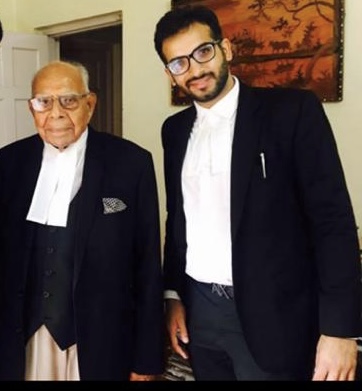
    How did you get the opportunity to work with big names in the legal industry such as Mr Ram Jethmalani, Mr. Mahesh Jethmalani and Mr Sidharth Luthra?

    Fortune favours the brave. I never thought that I would ever even remotely be associated with such doyens of the Bar. Having grown up listening to the anecdotes of  and having read about the exceptionally prominent lawyers of our country like Ram Sir, Mr. Jamshed B Kanga, Mr. Nani Palkhivala, Mr. Fali S Nariman et all, it was genuinely a dream come true  moment for me when Ram Sir found me apt for his chamber and decided to mentor me.

    It gives a first generation lawyer tremendous degree of confidence, faith, ambition and determination when someone of like Ram Sir shows his unrestrained faith.

    The sense of responsibility to constantly strive against all odds is empowered when senior members of the Bar place their trust  in a first generation lawyer like me.

    During the early  stages of my  professional grooming, I have been extremely fortunate to have had the opportunity to work under the aegis and expertise of someone like Mahesh Sir. It was under his constant vigil that my professional and legal acumen was polished to be at par with the industry standards.

    Later on It was Sidharth Sir who benevolent enough to grant me an opportunity to further polish and refine my skill sets as legal professional under his wings. I could not be  any further  grateful towards my fate for having been subjected to an absolutely strict and disciplined threshold of professional parameters under Sidharth Sir.

    Even now whenever I am faced with any professional or personal dilemma his availability and guidance is one priceless asset  which is strong support system for me.

    You had great mentors throughout. How do you carry the legacy to support the young lawyers?

    This is actually a very tough question . As a first generation lawyer or even otherwise every young lawyer needs constant mentoring and I have been fortunate enough to have worked under the supervision of few of the legends  in  the legal profession.

    All of them are a great source of  inspiration for me . I ensure that I try to carry forward  their teachings  and ways of working not only in my office but also share the same fervor with my colleagues and friends. You never know what might  make the difference in the others’ life.

    What has your experience been like being a Panel Lawyer with Delhi Police, Delhi Government, MCD and Delhi Sikh Gurudwara Committee?

    I feel fortunate to have  gotten the opportunity to work on such panels. It has been a wonderful  learning experience. It gives you both recognition and exposure in the courts. The government is in fact the biggest litigant in the country and hence  one gets a lot of presence  in court in terms of volume.

    Panels also helps one  to understand the working of the government/ prosecution; Which can be of great use when you are a counsel  in matters against the government . It helps you to  build better strategies and also apply your mind differently and become a better lawyer.

    You are a Partner at MS Law Chambers and a panel Lawyer on various commissions and committees. How do you manage the work-life pressure?

    Every line of work demands some sacrifice but in a lawyer’s life most of the time is spent doing work and one’s relationship with family and friends often suffers. The workload coupled with extensive hours makes forming and maintaining relationships quite cumbersome.

    Be it a trial strategy, a bail or a cross-examination, one has to put long hours  preparing for the same. If one doesn’t totally dedicate herself/himself in this tangent of the profession then this not the right career path.

    You’ve accomplished so much in your profession in such a short amount of time; However, given the nature of the legal profession, are you able to carve out time for your other interests or hobbies?

    I think you are being too modest, I am still in the early stages of my career and there is so – much more to achieve.

    Well to be honest, in order to gain something you need to lose something. There are times when you need to give up things in order to achieve your goal but once you start settling down and learn how to manage your time, you do get time for your hobbies or interests.

    I would urge everyone to engage in some daily activates or sports.  Being mentally, physically and emotionally stable is of paramount importance to ensure functioning at optimum  levels in this profession.

    What suggestions would you like to offer to our young lawyers, law students and law graduates?

    With whatever  little experience I have, firstly I would point out that litigation is interesting but very challenging during  the  initial stages. The first few initial years are more of  learning and less of  earning. For a litigation lawyer it is very important to be patient, hardworking and dedicated towards work.  Please remember that success can be delayed but not denied to the one who is deserving . Students should start interning across  different branches of law and make it a habit to study the latest judgments and books including non-legal ones.

    They should always start their career on the original side/ trial courts as it equips you with the essential and requisite fundamentals of the profession and quoting former Justice Vazifdar, “Only a trial court lawyer is a complete lawyer. A trial court lawyer is an artist, while an appeal court lawyer is an art critic.”


    Get in touch with Chirag Madan-

  • In Conversation with: Bhagyashree Pancholy, CoFounder at Avyana GmbH, Metalawyers India, Web3 Law and AI Law Specialist

    In Conversation with: Bhagyashree Pancholy, CoFounder at Avyana GmbH, Metalawyers India, Web3 Law and AI Law Specialist

    This interview has been published by Prabhjot Singh, Priyanka Karwa and The SuperLawyer Team

    Did you always want to become a Lawyer or was it something that you decided in the later part of your school life? What other career options would you have considered, if not particularly law?

    No, I had never wanted to become a lawyer, in fact, my dream was to become an astronaut after watching I dream of Genie as a child. But after graduating with Geography Honours from Miranda House, Delhi University, I filled Law faculty form, sat for the entrance exam, and cleared it. Since it was the first exam I cleared after graduation, and did not want to study anymore during the summer breaks, I just decided to join Campus Law Centre.

    I would have been an environmentalist or a vet if not for a lawyer.

    What can be the real challenges while establishing a career in the field of law?

    There could be many, but I will restrict myself to the two I experienced and get asked about a lot:

    (1) godfather or having mentors/family members in the legal field,

    (2) how can I work remotely or cross border as a lawyer.

    Definitely, in litigation, having a family member or a mentor that supports a novice lawyer helps. But let us come to the second challenge of working remotely and across borders.

    Covid changed the way the world worked and it pushed the Indian judiciary to adopt the technology. Many advocates pleaded from the comfort of their houses by using video communication platforms and many more parties to the lawsuit were given an opportunity to hear their cases in person.

    As COVID restrictions loosened up, many lawyers went back to the old way and yet many new ones want to work remotely. And some, also cross borders.

    What many lawyers do not understand is that with globalization and emerging technology, lawyers will have to be border-less.

    New tech and associated legal areas like data protection, privacy, web 3, cryptocurrency etc. are border-less and the system will have to move from litigation in a specific country to alternate dispute mechanisms like arbitration or mediation. 

    New lawyers will not have to appear in front of a district judge every day, they will be assisting legal counsels and judges outside of India and will need to know many other laws apart from Indian laws.

    This can be challenging as now lawyers will literally be competing with lawyers globally

    Where individuals are still struggling learning about GDPR and data protection, you had a control on it way more earlier, what was your preparation for the same and how professionals can take charge on such critical laws?

    I actually started working in data and privacy when GDPR didn’t exist and many were not aware of this right of theirs.

    At my first place of work in 2012, which was a tech/SaaS company that hosted websites globally, I was introduced to user privacy. The lack of laws and fewer judicial precedents meant every builder had their own way of assigning roles and responsibilities when it came to data privacy.

    The strict segregation of controller and processor came much later when GDPR came into effect, but back then, we were responsible for assigning such roles and interpreting local IT laws in a way that protected the rights of both, user and builder, across jurisdictions. 

    My seniors in the legal team were my guides who had a rich experience in such fields with big companies like Intel, Microsoft, and Google who taught me everything I know about data protection and privacy policies. 

    Even after GDPR came into effect, we did not have to re-do a lot, as GDPR is more about regulation than prohibition (many users believe that under GDPR, companies are prohibited from storing and processing their data which is incorrect).

    I am seeing a repeat of 2012 now in web3 and AI space. The laws are currently non-existed and are being drafted, and each user is interpreting and applying local laws to the best of their knowledge. 

    I would suggest the upcoming legal minds not focus on a lot of courses, but gain knowledge of such laws by experience. I never sat for any data protection and privacy exam, have no certification in this, and yet I know these laws because I learned from working in these sectors.

    Congratulations on being listed as Remote Influencer and Women Lawyer in the Legal Technology Sector, how would you describe your role as a leading lawyer in the technology sector?

    Not easy, in short. Tech is a male-dominated world and when I attend business meetings as a co-founder of my company that researches in the field of Artificial Intelligence, I do get an occasional look.

    Again, I started working remotely in 2012 for many personal reasons and it was very, very tough to break into the industry. Lawyers working remotely was unheard of, and to be in the tech sector, even a lawyer needed to understand the basics of it.

    After working hard for ten years, I am now in a much more comfortable situation where I work on new technology, overseas labour compliance, artificial intelligence and law, remote work and law, and lecture at universities.

    Though it may appear as if I have settled, I can assure you that every month, I end up reading and learning about new tech, digging some judgments on them, and interpreting laws (even though I don’t speak many European languages or am qualified to practice there.

    I have interpreted German, French, Swedish, Swiss, Australian, Canadian, etc laws for my clients in the tech industry or as my role as the GC at Lano Software GmbH), aiding courts and litigators in lawsuits around web3 and AI law across the globe and going back to studying some more.

    At my first workplace, I ended up learning PHP as it was needed for me to understand the tech before writing user rights documentation for it. Now, for my company, I am learning Python to be able to understand our projects, write accurate legal documents for the products and aid my co-founders.

    What are the challenges that HR’s in their work life face with emerging technologies like Meta Verse and Web 3? And how can they overcome those?

    Let us first understand that when employees work in metaverse or any other virtual platform, it is deemed to be a workplace. Employment and workplace health and safety laws will be applicable in these workplaces as well.

    In 2 years since I have been working in this tech, I have seen the following challenges that HRs have faced and I was consulted:

    1. Establishing the identities of avatars that employees use in the metaverse

    2. Checking if the employees are using a VPN or not

    3. VR headsets that are available in the market are bulky and may cause temporary disorientation, watery eyes, headaches, or other nerve-related issues if used for longer periods of time. Injuries from the usage of VR headsets may amount to workplace injuries for which employers will be liable.

    4. Cases of cyberbullying, harassment, or discrimination in the virtual workplace will also be the liability of the employers.

    5. HRs will need to remember that employment contracts signed in the metaverse may not be legally binding, hence, such contracts should be signed as per the local laws in the non-virtual world.
    6. Salaries, remittances, perks, and benefits to the employees must be done in legal tenders only. There is a trend of accepting crypto payments as salaries or to contractors for their services rendered, which is illegal. However, there are a few apps that facilitate this and can be used as they deduct the mandatory taxes from the gross amount, turn the net amount into cryptocurrency and transfer it to the beneficiary.

    What HRs can do to overcome such issues:

    1. Draft workplace policies that take into account the metaverse workplace.
    2. Include cyber bullying, online harassment, discrimination and other forms of online safety norms in the company policies

    3. Prohibit the use of VPNs by employees

    4. Maintain and update a list of avatars that employees use and ensure that they are not copyrighted and are available for commercial and non-commercial use 

    5. Draft an extensive and clear-cut workplace safety policy

    6. Conduct company-wide training for the usage and code of conduct of the VR workplace

    7. Set salaries and compensation expectations right. Will these be made in cryptocurrencies, if yes, how and if no, why should be mentioned in the employment contracts.

    8. Draft a VR workplace policy, in addition to the regular workplace policy, that should contain all the issues related to VR.

    You have a decade of experience in dealing with employment laws, at a similar pace, how crucial is it for the employees to strike a balance between work-life balance and are there any laws that we should be aware of significantly?

    Since I work for a German company, I can tell you that the laws in the EU are very strict and employee-friendly. As per German laws, I cannot be disturbed during my non-working hours and cannot work overtime, unless mutually consented.

    In India, the concept of work-life balance is unheard of at many companies. Toxic work culture, unnecessary work pressure, office politics and favoritism, and lack of knowledge of the employee’s part of their rights are duties are major challenges.

    I have to admit that these challenges also exist in the EU, but there are regulations that prohibit employers from doing certain actions that result in a toxic workplace environment.

    The laws also exist in India, but the question is always of implementation and the lengthy process of getting justice. Labour courts in India are slow and definitely have a lot of work, but then employers do manage to get out with little to no repercussions. 

    The HRs and the in-house legal team at companies should continuously educate the employees about their rights so that friction is easily mitigated.

    In the EU, employees enjoy protection to a very large extent and the onus is on the employer for many issues, thereby, making it easier for the employee who has been wronged to get justice.

    One must always remember, you are replaceable at the workplace, but not at home.

    Will AI be the future of law?

    Legal tech is to a lawyer what a tractor is to a farmer. A recent report I read mentioned that AI was more accurate at reviewing a contract than a team of very experienced lawyers (96% to 81%). And then there was a very interesting discussion on if AI will replace lawyers.

    Having worked in deep AI for a little less than three years now, I can tell you that legal tech powered by AI will be a boon and not a bane.

    Currently, AI is not 100% accurate and there will always be a need for a human to counter-review as AI has its own limitations. AI will be an aide and not the controller.

    In a few courts in the Netherlands, for a test project, AI was also deployed to aid the judges in delivering judgments, researching case laws, and suggesting legal theories which actually helped the judges a lot. 

    Of course, lawyers in the future will intervene to eliminate AI bias and that I think will be a major game changer, combining the accuracy of AI along with the rationality of humans.

    Can an Advocate be soft-spoken yet established; what do you think about how the legal profession takes this quality?

    Yes, absolutely. It is very wrong for people to think that a loud or aggressive individual will be a good lawyer. To be a good lawyer, one needs to have sound reasoning, analysis, logic, and effective communication skills along with strong professional skills and ethics. 


    Get in touch with Bhagyashree Pancholy-

  • In Conversation with: Paul J. Campson, Managing Partner at Campson & Campson, Personal Injury Attorney and Seasoned Litigator

    In Conversation with: Paul J. Campson, Managing Partner at Campson & Campson, Personal Injury Attorney and Seasoned Litigator

    This interview has been published by Prabhjot Singh, Priyanka Karwa and The SuperLawyer Team

    How would you describe your job and yourself to a 10 year old?

    I am a lawyer who helps people who were hurt in an accident get money for their pain.

    Paul, as we read about you, being a member of the carpenters’ union (United Brotherhood of Carpenters) , how did it help you in your law career?

    Being a member of the Carpenter’s Union taught me the value of hard work and the importance of an education. Being a carpenter is a physically challenging occupation and often very dangerous, so the importance of following rules, particularly safety rules, is very important.

    Appearing before various law tribunals and forums needs extra effort, how do you plan your work to be super-efficient? 

    Planning is the secret ingredient to success and efficiency. Even if I handle a case many times, I always write an outline and emphasize the points I need to make.

    This keeps me focused because it is very easy to become distracted and be thrown off track by a smart adversary, so thinking how I might lose a case is the best preparation for victory.

    You have been actively taking up Pro-Bono cases and have done a lot of free service in your career trajectory? How important is it for Law Students and professionals to take up Pro-Bono cases and help the needy? 

    Pro-Bono cases are very rewarding. Volunteering time and expertise to those who cannot afford top legal representation is the hallmark of our justice system.

    Pro bono cases provide attorneys with the chance to work with other lawyers in their firms who they would not otherwise know, as well as practice in areas outside of their day-to-day work. This fosters collaboration and increases future cross-firm prospects. It also assists attorneys in forming networks with other lawyers who work for legal assistance foundations. Networking leads to business development, which helps the firm as well.

    As we all are aware of the 9/11 incident, how was your experience wrt getting justice for the victims? Please elaborate it

    9/11 was a very difficult time for the entire nation. Being able to represent victims pro-bono was very special. At the time, no one understood the long term health ramifications connected to 9/11.

    To delve into the medical records of these victims and come up with creative ideas to get them the maximum compensation, was a stand out moment in my legal career.

    How hard is the bar exam to be passed in New York and how can one prepare with a well curated road map?

    The NY State Bar Exam is one of the hardest in the country. To pass it, you have to prepare for it as a full time job. Get on a schedule, study 9-5 and take lunch everyday at the same time, just like a job.

    Again, preparation is the key to passing the bar. Do the hard work in the morning and the rest of the day will fall into place.

    Lastly Paul, what tips are you likely to give to students willing to practice as a Personal Injury lawyer in the US?

    Personal injury is a very competitive field. tell everyone you meet and family and friends that you are a personal injury lawyer. To be successful you need cases. A great trial lawyer is useless without cases to try. 


    Get in touch with Paul J. Campson-

  • In Conversation with: Rashmita Roy Chowdhury, Commercial Disputes Solicitor at Womble Bond Dickinson (UK) LLP,  Dual Qualified (India and England & Wales)

    In Conversation with: Rashmita Roy Chowdhury, Commercial Disputes Solicitor at Womble Bond Dickinson (UK) LLP, Dual Qualified (India and England & Wales)

    This interview has been published by Prabhjot Singh, Priyanka Karwa and The SuperLawyer Team

    Let us begin with the most important question, did you always dream of becoming a lawyer or, did it  happen by chance?

    First of all, I would like to thank the team for featuring me in this editorial. I think it is so important for other people reading this editorial to understand that they are not alone in this journey and that many other people have either gone through or are going through similar journeys.

    To answer your question in short – No. I come from a family full of doctors and wanted to be one myself till my ICSE. However, during my ICSE preparation I realised that I was not interested in Physics and Chemistry at all and to be honest Maths wasn’t my strongest suit.

    This led to me choosing Humanities (Arts stream) in grade 11 and 12. However, the desire to become a lawyer all started when I was exposed to and witnessed the difficulties shared by the underprivileged through the woman who was employed to be my caregiver since birth. 

    In today’s world, it is clear that legal professionals can significantly help mobilize otherwise muted populations by representing their cases, providing them with the knowledge of the welfare schemes they are entitled to and help them receive the same. While I was India, I always tried to provide free legal advice and draft pleadings pro bono for them.

    This was my little way of giving back to the community.

    Students often go numb about LL.M options from abroad,  is it really worth it? Are most of the students able to leverage such opportunities, of you were an exception?

    There are two essential questions to answer here:

    (i) Whether it is important or relevant to pursue an LL.M at all?

    (ii) Whether one needs to pursue an LL.M abroad and whether they are able to leverage such opportunities?

    It is not a strait jacket formula that fits all. Deciding to pursue an LL.M takes months maybe years of planning. Many students decide to pursue their LL.M right after their undergraduate degree. This might work for many students if they are certain that they want to practice a niche area of the law or they want to finish their LL.M before they start their professional career.

    However, in my case I was sure I wanted to pursue litigation but I decided to gain some practical experience before deciding what I wanted to specialize in.

    It took me a whole year to plan my colleges and decide what I wanted to pursue. I decided to pursue my LL.M after three years of working and I cannot express how grateful I am for that exposure. It not only allowed me to take my time to choose the LL.M I wanted to pursue but also helped me gain more in terms of how I would be able to utilise that knowledge practically.

    The second question of whether to pursue an LL.M abroad is also a very personal choice. However, one should never make the mistake of incurring huge debts just to pursue an LL.M abroad in the hope of getting a job right after their LL.M.  

    An LL.M is not a gateway or the answer for securing a job abroad. It is only a platform that helps you network and provides you with a truly multicultural cohort for cross-learning. Furthermore, I am no exception to securing a job in the UK after my LL.M.

    There are a lot of opportunities provided by the college and London as a city. But to ensure one makes the most of their LL.M abroad, they should be willing to think out of the box and network as much as possible.

    Can you give our readers a brief idea of what they need to prepare for if they want to climb the corporate ladder based on your experience representing international commercial arbitration in a variety of matters?

    They say preparation is key. However, in my experience I thought being persistent and consistent was the key to success. Cases will differ and you will be faced with multiple obstacles in your career some bigger than others but if you are consistent in learning from your mistakes and persistent in overcoming them, then, no matter what, you will always end up succeeding. 

    The other thing which is extremely important is inculcating the habit of asking questions. As junior lawyers, we tend to be shy of asking questions thinking we may come across as being less bright or not equipped enough to execute the task. Most often I have found that no matter how banal the question is it has helped me understand the task better and in return provide a better outcome of the task given to me.

    What was the one learning experience throughout your entire career that you’d credit to have shaped your career and brought you to this point?

    I do not think I can pinpoint one learning experience, but I guess always being curious has helped shape my career a lot. I am a curious person in general and I guess that always leads to asking all the when’s, how’s and what’s in the world. This inadvertently helps you broaden your horizon not just in the legal field but also your surroundings. Being aware of your surroundings allows you to be abreast of the worldly affairs which in turn helps you to hold a better conversation with any given person.

    Whether it be with the client or your own team. It is also key in networking. Basically, what I am trying to say is that it is all a chain reaction and curiosity has definitely been my guiding factor.

    How tough is to qualify the bars for enrolling as a solicitor? And what can be the right methodology or road map for the same?

    First let me mention that there is no right or wrong way to qualify as a Solicitor. Some foreign lawyers take years to finish while some complete it within a year. It really depends on that individual’s capacity to study and understand the study material. No two people can have the exact same bandwidth. Therefore, I will explain what worked for me. I qualified as a Solicitor through the Qualified Lawyer Transfer Scheme (QLTS) which has now been replaced by the Solicitors Qualifying exam (SQE).

    I feel both the systems test the same practical and theoretical knowledge, but the two main differences are that the SQE is universal i.e. it applies to UK as well as foreign lawyers and that it requires 2 years qualifying work experience.

    For my case, the first part of the QLTS was multiple choice questions and I had to study 11 modules to name a few Constitutional Law & Judicial Review, Professional Conduct & Solicitors’  Accounts, Financial Services, Money Laundering & Taxation, Property Law, Contract Law, Torts, Criminal Law etc. I studied for 6 months, two hours after work and 4-5 hours over the weekend.

    For the second part of the exam, which is more hands on as it includes advocacy, client interviewing, legal drafting, research  and writing, I studied for three months 2-3 hours after work and 6-7 hours over the weekend. It is important to mention that there are great service providers to help you prepare for the exam and boost your confidence.

    Having said that, I just wanted to highlight that it really takes commitment to complete this exam. It challenged me multiple times and it is a very tedious process. However, it is also one of the few foreign qualifying exams that do not require you to first pursue a legal degree in the country to be eligible to take the exam. 

    At last, I would mention that one can get all the opinions and advice from other people who have taken the exam but don’t compare yourself to them. Make yourself a road map if you do wish to pursue it.

    Are there any preparations prior to pursuing LL.M from the UK and how students can make themselves ready for the same?

    As I have mentioned earlier that pursuing an LL.M should be a personal and planned decision. There are many factors in play before you take the decision. A few questions you should ask yourself before making that decision are:

    Why are you really pursuing the LL.M?

    Are you sure you want to pursue that specialisation?

    Are you ready to pursue more academia in the UK?

    Will it help you professionally to achieve your goals?

    Will you be able to utilise the benefits of an LL.M in your career?

    Having asked few of these questions and many other that you may alternatively have, make a planned choice to pursue an LL.M. Now if you are absolutely sure about the LL.M, the next thing you need to chalk out is the niche area of law and the colleges that offer that specific LL.M.

    There will be multiple colleges offering the LL.M you want to pursue therefore, your next step should be to check the modules offered and the professors teaching them. There are well-known professors in many colleges therefore, I would say choose the course that is tailor fit for you. Having the ability to mix and match the modules you think will help you grow is a big advantage. Always re-check whether the modules are being taught the year you are planning to join as sometimes the modules do not run for a few years. After having made that choice, go and have the best year of your life.

    Finally, would you mind offering some advice to our readers?

    I do not think I am that far experienced in my career to give great advice. However, I can definitely help you with the do’s and don’ts so that you do not make the same mistakes I did. I graduated from a non-national law school and I always thought that was my biggest disadvantage and I allowed it to make the decisions for me. If someone told me earlier that I would be dual qualified and practicing law in the UK, I would laugh at that person.

    But here I am! Therefore, I think most often than not our thoughts are the main impediments in our path of success.

    We tend to see the smaller picture and cannot sometimes fathom the idea of what or how our life can change. So always think you can achieve whatever you set your mind to.

    I would like to end by saying practice:

    • Resilience – No matter how many rejections you receive, always learn to pick yourself up and fight back. Rejection is a part and parcel of this journey and it allows you to recognise and rectify the mistakes you have made previously.
    • Patience – You will need lots and lots of it. Ensure you do your bit to the best of your abilities and be patient for the rewards to follow. Don’t worry, they will come to you.
    • Kindness – Always make sure you are kind to others and help anyone you can in the process. Kindness goes a long way and you will never know how much your kind words will help another person.

    In the end,  we are all part of a long game and the only thing that truly matters is the journey.

  • In Conversation with: Neeraj Vyas, Principal Associate at Samvad Partners specialized in M&A and PE/VC Transactions

    In Conversation with: Neeraj Vyas, Principal Associate at Samvad Partners specialized in M&A and PE/VC Transactions

    This interview has been published by Prabhjot Singh, Priyanka Karwa and The SuperLawyer Team

    Let us start from the beginning, what drove you to choose law? What other career options would you have considered, if not law?

    A legal career happened to me by chance. I had not thought about becoming a lawyer till the time I passed the 12th standard. During that time, CLAT had just started and it seemed interesting to me as I didn’t want to go for a conventional job.

    I come from a non-lawyer family but my parents supported me fully in my decision and hence, I ended up where I am today. If not for the law, I might have tried my hand at being a chartered accountant.

    From Bangalore to Mumbai to Hyderabad, how do you adjust with this Job Relocation and did it work well for you in the legal journey? Please tell our audience in brief!

    All these locations are hubs of law firms and there is a big legal fraternity in all these places. I don’t think I faced any professional issues due to these relocations. I have been fortunate enough to be surrounded by awesome colleagues and friends who always made my life easier. More than different cities, I think the place of work determines your legal journey.

    Initially, I was in ICICI Bank as an in-house counsel, and later on, I moved to law firms (Samvad Partners and Indus Law), this has helped me in getting great exposure to different kind of work style, work expectations etc. The learning at these places have helped me immensely in moving forward.

    Recently a huge bunch of cases in Mergers and other related deals were shared, do you think this area will keep on growing while creating opportunities for lawyers as well?

    India is a huge market and that’s why we are seeing an increase in investments in India. This is just a start, the market is going to expand further in the years to come and therefore, we will see a lot more M&A deals, PE/VC deals, etc.

    At present, I don’t think, students in India are taught enough about M&A or PE/VC investments and therefore, my advice to all the students would be to read up more about this area or do certification courses in this aspect, especially, if they are interested in a corporate law career.

    Can you tell us a bit about your current role and responsibilities as a M & A and PE/VC lawyer

    As a transactional lawyer who works quite a bit on M&A and PE/VC transactions, my job is to ensure that the deal is successfully concluded while keeping the interest of my client in mind.

    Being a senior team member, it is my job to draft, negotiate, and review the transaction documents on behalf of my client and also oversee my team’s work.

    Before you moved into Samvad again, you worked at Indus Law as well, kindly tell our audience about your experience at both these places.

    Samvad Partners is like a home to me. I have spent almost 5 years with the firm in aggregate and I think it is one of the best firms in the market to work at. A lot of my professional growth is because of the amazing partners and seniors that I have worked with during these years at Samvad Partners.

    Indus Law, Bangalore was a good learning experience. Even though most of my time at Indus Law was during Covid and we worked from home most of the time, I met some hard-working and driven colleagues who made my whole experience enriching.

    It is said that getting a mentor is the first step towards attaining success. How true do you think the saying is? Do you think a mentor plays a crucial role in the growth of a person? What type of mentor would you suggest for a law student?

    Absolutely. A good mentor can make a huge difference in your career. I have been fortunate enough to have some amazing mentors during my professional career who took out time from their busy schedules to advise me whenever I needed their advice. I have had mentors who guided me on specific tasks and also taught me skills that have helped me a lot. A good mentor helps you in achieving your career goals by guiding you correctly.

    What are your views on the work life balance and mental health issues that off late lawyers have been raising?

    A good mentor will always give you honest feedback and thereby help you in improving yourself.

    I think it is high time that we, as an industry, start taking cognisance of the mental health issues that lawyers are facing. There is a great scope in our industry for improvement of work life balance.

    As more and more lawyers are speaking about these issues, we can see lot of firms taking note of these issues and undertaking actions to improve the situation for its lawyers. In my opinion, that’s a good start but we still have a long way to go.

    What would be your parting message to our young readers?

    Use your time during your internships wisely. Try and figure out what areas of law you like and you don’t like. It will help you in carving your career path.


    Get in touch with Neeraj Vyas-

  • In Conversation with: Ryan Mendonca – A startup legal counsel who left his job at a tech startup to start an innovative concept of being Your Virtual Legal Counsel, under his Virtual Law Firm

    In Conversation with: Ryan Mendonca – A startup legal counsel who left his job at a tech startup to start an innovative concept of being Your Virtual Legal Counsel, under his Virtual Law Firm

    This interview has been published by Prabhjot Singh, Priyanka Karwa and The SuperLawyer Team

    Tell us about yourself-what motivated you to choose law as a career path?

    I was interested in law early on in my childhood as would watch legal dramas like “Boston Legal”, “Law & Order” and ofcourse my all-time favourite legal show “Suits”. What interested me was how the lawyers helped their clients, fought for them in & out of court and delivered justice in some way shape or form.

    Its ironic how back then I saw these lawyers as superheroes and fast-forward a decade or so, and I am being interviewed as a Super Lawyer, its funny how life comes full-circle.

    However, besides the legal dramas, I also realised, very early on, that there were laws for everything and at every milestone in one’s life, right from birth certificates, to school rules, to employment law once you start a job, to corporate law if and when you start a business, to when you get married and buy a house, until you’re “dead and gone” or “6 feet under”.

    The Law is interwoven into the fabric of life and I felt that learning the law and my knowledge in the legal domain would give me that edge in life and would always be advantageous.

    Ryan, you worked as a remote lawyer during covid, how was that experience and what type of difficulties did you faced?

    Yes, I did work remotely in Dubai, as an in-house counsel for a high-powered, VC-backed Indian based startup, it was an eye-opening experience to say the least, whilst it was one of the most testing and unsure time for me, career-wise, mentally and physically. It was not easy doing and getting what I needed to get done.

    I do feel that it was an absolute privilege and once-in-a-lifetime experience to be the Sole Legal Counsel, setting up the legal operations, running it for a good 6 months, and then shutting it all down post-lock-down.

    On the bright side it did give me the confidence to open my own shop and accelerated my career into the natural progression of being a lawyer and starting my own virtual law firm, in this new-remote-friendly world we live in.

    What was and is the main USP behind your firm “YVLC”, and how do you manage your work since you have clients with different time zones? Do you believe the remote work model is going to stay in the future?

    Offering the service of an experienced in-house legal counsel on a fractional basis for multiple startups allowed startups to operate with the mental freedom that their legal is being taken care off, this was YVLC’s USP starting out.

    Now that we are on-boarding multiple Virtual Legal Counsels who are subject matter experts in their respective tech niche, such as E-commerce, Food-tech, Blockchain, Ed-tech and Prop-tech, we are creating a “Justice League” (pun intended) of Super Lawyers that will advise clients in their field of tech with relative ease and offer a more specialized legal advisory.

    All while being fully-remote, fully-autonomous and with the necessary tech infrastructure in place to do what we legal counsels do best. Provide legal solutions that are commercially viable.

    What is the biggest hurdle most attorneys face in bringing in new business at present times?

    This is a tough question for me to answer as I dont feel there’s just one main challenge, it is a mix of the following in no particular order and may not apply to all attorneys: Building a strong online presence, having a healthy pipeline of new client meetings, being very personable and impressive to new clients such that they close with you, pricing their services or hourly rates and lastly doing all of this successfully through a screen or on audio only meetings or at times without even speaking to the client at all.

    What’s the biggest threat to a solo or small law firm’s survival over the next 10 years? What should they be doing now to prepare?

    Investing in Tech, Building a Brand, Not getting caught up in the day to day wins and losses and instead having a long term goal, vision and plan to make it a reality. Most solo lawyers or small law firms start for the sake of starting and making something for their own selfish intentions of having a bigger slice of the pie or more like having their cake and eating it too.

    What are your future plans with YVLC academy and how can professionals be benefited with this initiative?

    We are planning to provide legal professionals the tools and teach them the tricks of the trade of how to be a solo digital lawyer. We want to help them reach their potential and achieve their goals no matter how small or gargantuan they may be.

    We want to empower lawyers and give them the tech infrastructure, a starting platform and the motivation and inspiration to have a successful legal career.

    Law students often get confused between these big tech platforms such as Fintech, agritech and other startups, what advice would you give to them for having a better sense of clarity wrt same?

    Read about them from credible sources, watch interesting you tube videos, listen to popular niche tech startup podcasts and last but not least work in those tech spaces that interest them and that they want to learn more about. There is no better way to learn something than by doing it.


    Get in touch with Ryan Mendonca

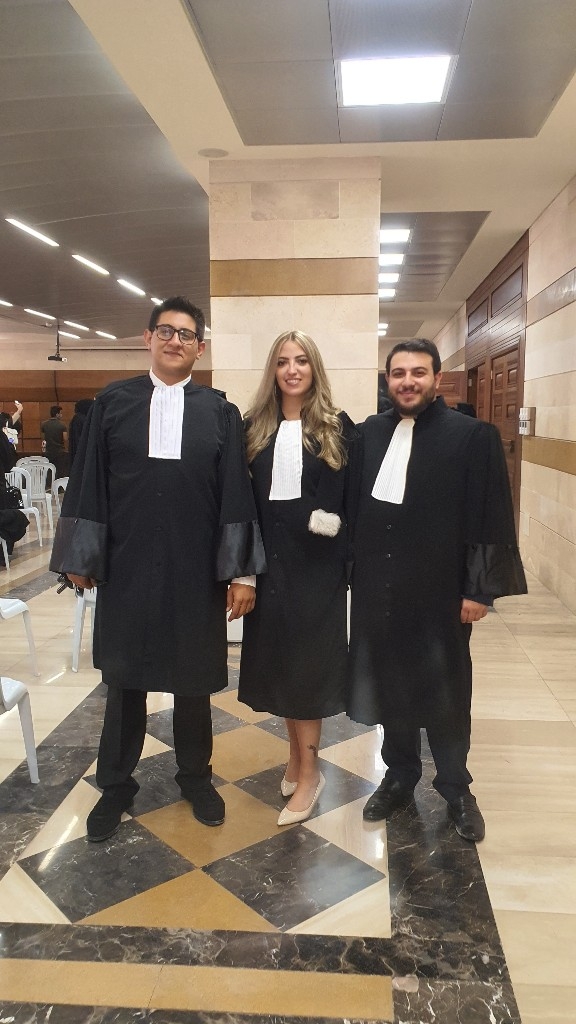
  • In Conversation with: Jessica Zakhour, Legal Counsel at Roger Najjar Law Firm and Member at United Nations Association of Lebanon

    In Conversation with: Jessica Zakhour, Legal Counsel at Roger Najjar Law Firm and Member at United Nations Association of Lebanon

    This interview has been published by Prabhjot Singh, Priyanka Karwa and The SuperLawyer Team

    Could you please share with us about your inclination towards law, when you were passionate about literature, how did you decide to make a career out of law?

    As I was growing up, discovering myself and watched my personality develop, and being an empathetic person in a world full of injustices, I found out at a very early age that Law was and still is an excellent match for my personality and strengths.

    I have a great memory, excellent communication and argumentation skills, I am also extremely ambitious, I tend to strive to always get what I want and have a strong moral codex; all of which I believe to be a good combination for any lawyer.

    I am an ecumenical abuser and enjoy talking to people, especially from the Tech world, and what made me decide to make a career out of law, besides my personality and passion for the law, is that I strongly believe in what was said by the Human Rights Watch in 2016 : “The same rights that people have offline must also be protected online”. That is why I am specializing in Cyber Law and Cybercrimes.

    How did you envision your career while you were at law school and how did that turn out?

    Every Law student strives of becoming partner at a top firm, daydreams about saving the world, thinks that the practice of law is all about nice suits and good office views. That is exactly how I had envisioned it when I was a law student.

    It turned out to be quite disappointing and yet fulfilling at the same time: The world cannot be saved in a day, month, or year. The most basic human rights are being violated right before our eyes and the journey to change the world into what we believe in and want to fight for is a long way ahead.

    But, the journey to getting there is the most fulfilling. I surely worked hard, but clearly had not foreseen to be filling big seats at such a young age and having many accomplishments.

    That means I am where I need to be, and that I am each and every time one step closer to reaching what I am fighting for and what I believe in ever since I was “that” law student back then. 

    You are a young generation lawyer, you must have enjoyed your graduation. Would you like to share any “funny-legal” memories of student life?

    Law school passed on by pretty quickly. I did a lot of studying, made lifelong friends, and have innumerous fond memories.

    But my funniest-legal memories would be in practice, at court hearings I would say: The best one that comes to mind was when I was at a hearing as an appointed lawyer and the plaintiff’s counsel had asked a witness the following question “What is your relationship with the defendant?” to which the witness answered “he is my son” and then counsel asked “was he your son on August 8th, 2018?” – The entire courtroom burst out laughing.

    How crucial it is for a legal professional to learn different languages, does it really help in one’s professional growth?

    Oh, I think it is extremely crucial for a legal professional to learn different languages, especially for the ones who want to become consultants on an international level.

    Attorneys who only choose litigation do not see learning different languages as a must.

    But in my personal opinion, whether in the legal profession or not, I think languages are extremely important to one’s self growth, because with languages, you are at home anywhere.

    A different language is a different vision of life, it’s another way of thinking, it’s another sign of bravery and it is also another way of helping people.

    What differences do you see practicing in Lebanon as compared to Brazil? Is it an easy sail or more of a challenging role?

    There are a lot of differences between practicing in Lebanon and in Brazil. For instance, Brazil is a federal country, and Lebanon is a unitary multiparty republic with a parliamentary system of government.  

    Lebanon is a mixed legal system based on a combination of civil law, Islamic, Ottoman legal principles, and the Lebanese Legislature, highly inspired by the French civil law, as where Brazil is based on civil law “sprinkled” with common law.

    Lebanon is a confessional country, which a lot of laws are highly based on confessionalism, whereas Brazil isn’t.

    When the rules of law are different, the practice of law reflects on that too.

    What are the main functions of the United Nations Association in Lebanon? 

    The main functions of the United Nations Associations in Lebanon are first and foremost, collaborating with the UN and its agencies to achieve their goals, producing activities and studies that relate to the code of the UN, working to help achieving international peace and understanding on the basis of justice, equality and respect of human rights, cooperating with other NGOs for economical and social progress.

    Since members of UNA of Lebanon share the same aims and principles of the UN charter and work on fulfilling them; they cooperate with UN agencies and organizations and with other NGOs that share the same goals to spread their beliefs.

    As cybercrimes are on a rapid increase, what steps do you think are considerable to control them?

    They say that sometimes the answer to a question is right in front of you. And that is what I believe applies to cybercrimes.

    The answer to that question is based on some of the most basic steps that need to be taken: Collecting data, spreading awareness, promoting cyber peace and implementing laws, especially in matters of collaboration between states.

    Last, what piece of advice would you like to give to our young legal commanders? 

    The most important career advice to young legal commanders is to take risks. At this point, the old model – joining the firm, sticking to it for seven years, making partner, then working there until you die- has to be essentially gone for most graduates. Your career as a lawyer can go a million different ways. The only way you’re going to find true happiness and fulfillment is to take chances and pivot when necessary.

    You may start your legal career as a prosecutor, then decide that you really enjoy child support enforcement cases and pivot to family law.

    Or you may start as a litigator and realize that you really prefer deal making and would rather get involved with transactional work.

    Or maybe, you will create the next great legal startup. Give yourself time, don’t be afraid to take risks, and most importantly, enjoy the ride !


    Get in touch with Jessica Zakhour-

  • In Conversation with: Adv. Ripple Hamza, Founder and Legal Consultant at Confrere Global Legale and an Empanelled Arbitrator at Thailand Arbitration Center (THAC)

    In Conversation with: Adv. Ripple Hamza, Founder and Legal Consultant at Confrere Global Legale and an Empanelled Arbitrator at Thailand Arbitration Center (THAC)

    This interview has been published by Prabhjot Singh, Priyanka Karwa and The SuperLawyer Team

    Could you please share with us about your inclination towards law,  what inspired you to work in the corporate sector?

    As a young student I was inclined to become a corporate lawyer as I had seen my father who worked in a shipping company in Dubai speak about the role of lawyers in Maritime law and trade .

    The company he worked for was having a number container ships which were often having advice and legal intervention from Lawyers . 

    I believed lawyers as heads of nation did more than just a politician everywhere in the world .

    The lawyers who turned to politicians have been remembered by majority of the people in the world for their productive good deeds and have changed the world a lot . 

    Your experiences are diverse in many aspects, but what creates curiosity in our minds right now is “Maritime Law”, kindly explain this niche for our audience

    Maritime law is a very important law with regards to the trade of the world . The majority of cargo movement happens through the sea . Nations have changed their faces and development happened to a great extent with Maritime law and logistics. 

    There are more ships at sea than all the ships in ports carrying various products for all the countries . 

    Maritime law has played a major part in avoidance of conflicts and delays of good transit around the world . 

    We assume that such expanded work requires smart people in the room. So are you a team player or is it a “one-man show”?  

    I have a good team to back me up with my juniors and associates from different countries .

    They are people of high learning capacity and quick in finding solutions .

    Confrere Global Legale was made with integration of most of them so that an international association would make things happen quicker.

    The core team of CGL are people of good research and learning in their fields of legal practice . 

    Most often dealing with different countries comes with its own challenges and unavoidable hurdles. How do you manage that and what has been your game plan so far?

    We have the best influential and informative lawyers to support and joint venture with us where ever we practice law beyond the boundaries of our nation.

    Their capacities, knowledge and influence with various departments and organisations have helped us get into solutions without delays.

    Your profile takes us to the next interesting angle, being an investor in startups, how do you see these startups scaling employment opportunities for law students ahead?

    The startups create innovations and employment opportunities. Lawyers who are innovative and fast in  adaptive technologies have an advantage over others in advising these startups ans taking them ahead . 

    Young lawyer are more adaptive to technologies and becoming legal advisers to such innovative startups. 

    What thin lines you observed between Indian laws and European law dealing with different transactions?

    European law is more modernized and technologically adaptive to users as for trade and diplomacy . Indian laws have a lot to be changed and we are on the changing phase with many of them .

    The present laws brought out are a fine example of our changing phase in legislative enactments to suit our needs on par with the rest of the world . 

    Young law professionals still often choose hard work over smart work, what do you think about this aspect? How can this be changed?

    Today the legal world needs smart work more than the hard work . So young lawyer who are doing the smart work gain a lot in comparison with those who do the hard work . 

    Smart work can also be called effective work . This is needed to take trade ahead into greater heights for an example . 

    The recent CEPA signed between UAE and India is a fine example for it .

    The hard work of making it is over but to get its benefits to people of trade, smart work of knowledge spreading and practical usage needs to be done which is yet to be done .

    So hard work alone will not suffice today smart work plays a major role for young lawyers especially in trade law . 


    Get in touch with Adv. Ripple Hamza-

    RELATED ITEMS: COUNSELFEATURED INSIGHTSFOUNDERLAW FIRMLAWYER,  

  • In Conversation with Vikrant Parashurami- A Hotel Management grad who went on to pursue Law, and now heads his own Law Firm, P Legal – Parashurami Legal

    In Conversation with Vikrant Parashurami- A Hotel Management grad who went on to pursue Law, and now heads his own Law Firm, P Legal – Parashurami Legal

    This interview has been published by Ojuswi Sahay, Sonali Parashar and the SuperLawyer Team


    What prompted you to pursue a career in Law after graduating in Science from the Institute of Hotel Management, Catering Technology and Applied Nutrition, Mumbai? 

    I wanted to study further after Hotel Management and my preferred course was Law. Also, having both parents in the Legal field further prompted and pushed me to take law as my preferred choice of stream. Having Hotel Management as a previous qualification, the plan was and still is to take up work involving the two core fields of my education i.e. the legal issue relating to the Hotel and Hospitality Industry.

    Was there any specific reason to pursue a Diploma in Modern Applied Psychology after completing Diplomas in Corporate Law, Intellectual Property Law, Cyber Law and a Post Graduate Degree in Alternative Dispute Resolution? 

    Certainly, there was a specific thought process and reason for pursuing and studying Modern Applied Psychology. The Diploma in Modern Applied Psychology involved the science of human behaviour and how to apply it to everyday life and that is an essential and inseparable part of the Legal field, especially the Litigation part of it. A study of this aspect would certainly help in practice (litigation) hence the course was taken up and completed. 

    Do you enjoy training young minds? Do you believe one can always teach and learn at the same time? Would you like to share any skills or habits that you inculcated after having years of experience in teaching?

    I absolutely love interacting with young minds and students and I started teaching right after my graduation in Hotel Management. My first class of students comprised of students from my graduate college i.e. IHM Mumbai. I am a staunch believer that one tends to learn continuously while one teaches and interacts with students.

    I have taught students of the 3 and 5 years law courses and the students in 3 years course are generally from a very broad age group and interacting with such a broad age group always gives you different perspectives about law and life in general. Teaching law students has definitely taught me to be more patient, be more open to different perspectives and be open to the idea that you might not always know everything and that there is always something to learn from everyone. 

    How can a young lawyer step into international practice? Do you think working with foreign firms propels career growth?

    Personally, I got an opportunity to work with an attorney practising with a U K based law firm because one of my professors thought I would be a good fit for the work and that professor was in fact supposed to undertake that work, but due to some prior commitments on the part of that professor, I got an opportunity to work with that Attorney and learn.

    So from my personal experience, I would say that you just have to do your best whenever you get opportunities and make sure you interact with as many people as you can during and after your law graduation or for that matter any course that you take up. Working with a foreign firm certainly gives you great exposure and that certainly helps in getting you prepared for better opportunities that come your way in your career.

    You happen to be empanelled with various Insurance Companies, online platforms, and also BMC. Can you tell us a bit about your role and which role do you enjoy the most and why?

    I am empanelled with various companies including Insurance Companies as their panel advocate. I am empanelled as a dispute resolution professional with online platforms and I am empanelled as a counsel with the Municipal Corporation of Greater Mumbai commonly known as BMC.

    As a panel advocate for insurance companies, I am required to protect their interests before Courts and Tribunals. As a Dispute Resolution Professional, I am required to be an Arbitrator, Mediator or conciliator in disputes that the parties submit to these online platforms for resolution. As a counsel for MCGM or BMC, I have the responsibility of representing the MCGM/BMC before various courts as a Counsel and arguing cases on behalf of the MCGM/BMC. 

    Very frankly I enjoy all the roles and the responsibility that comes with each as all different roles involve dealing with issues under different laws and I prefer working on a variety of laws and issues. As a member of the legal fraternity and as an advocate  I believe it is our duty to give back to the society as much as we can and by taking up different roles and by dealing with issues under a wide range of laws I feel I am getting better equipped to do my part to the best of my capabilities.

    Would you like to share your experience as a member of the Managing Committee of the Advocates Association of Western India (AAWI)? What are the eligibility criteria for this role?

    As a member of the Managing Committee of the Advocates Association of Western India, I have been able to interact with advocates practising at the Bombay High Court, especially on the Appellate Side and have been able to be a part of the committee that is supposed to be the voice for the advocates and take up their issues with the Bar Council of Maharashtra and Goa and with the High Court Association. This has also helped me in understanding another aspect of being a part of the legal fraternity that requires dealing with issues faced by the legal fraternity and resolving them.

    You also happen to be heading your legal firm by the name of P LEGAL – PARASHURAMI LEGAL since October 2019. Can you tell us a bit about your law firm? And, what is the life of a Founder of a reputed law firm and a renowned lawyer like?

    I have been practising since 2012 and have started my law firm by the name P LEGAL – PARASHURAMI LEGAL in 2019. The motto of the firm is to provide Practical, Practicable and Pragmatic legal solutions (If you take a closer look at the logo of the firm, the P in the logo has 3 lines which indicates 3 P’s which in turn stand for Practical, Practicable and Pragmatic in addition to representing my surname).

    As a firm, we take up a variety of work which includes consulting as well as litigation and we represent a variety of clientele in their legal issues and disputes. As a Law firm, it is our endeavour to expand our scope of work and take up varied work in a variety of streams in Litigation as well as non-litigation, while providing legal solutions to our clients. 

    As a firm, we also try to provide law college students opportunities to get practical experience while interning with us. 

    Coming to the aspect of being the founder of a reputed law firm and renowned lawyer, I would only say that there is a long way to go and there is a lot more work that remains to be done as the Legal field is dynamic in nature, there is always scope to do more and learn more and get better every time. 

    Also, being associated with an organisation that is recognised for doing good work and being a professional who is getting recognition for good and genuine work, only adds to the responsibility and makes me strive harder to do better work. While striving to do better you only realise that there is a lot that can be done in the field in general and for society and this entire process is most certainly a humbling experience. 

    At last, would you like to give any parting advice to the young lawyers out there as to how can they practice litigation considering the current era of digitalisation? 

    The advice I would like to give to all the young lawyers, from my personal experience, is that as lawyers we should never shy away from any sort of work that comes our way and that as lawyers we should push our limits and expand our horizons. 

    As I have earlier mentioned, the legal field is dynamic in nature and as such, every advocate gets hands-on experience in dealing with the ever-changing environment in litigation and therefore is well equipped with dealing with new things. Digitisation, I feel, is one such change which every advocate should and can adopt and adapt to and moving forward, that is going to be the way all work would be undertaken. 

    For lawyers who have recently started their practice or would be starting their practice soon, they are better placed according to me as they get an opportunity to digitise all their records right from the very beginning and that would certainly work to their advantage. 

    To wrap it up, I would like to wish all the young lawyers and budding advocates and mention the two lines or sayings that have always helped me and that would certainly help many budding lawyers in practice: 

    Work hard in silence, let your success make the noise & Never say never.


    Get in touch with Vikrant Parashurami –