The field of law is intellectually stimulating but undoubtedly comes with its own set of challenges. What initially inspired you to pursue a career in law, and what continues to drive your passion for this profession?
During my school days, even though I was a backbencher, I was deeply committed to my studies and consistently ranked among the top five students. In 12th grade, my sole focus was to score well in the board exams. At that stage, I didn’t have the right exposure or mentorship to guide me through structured career entrances like CLAT, so I missed that opportunity. But in hindsight, I believe everything unfolded as it was meant to.
My journey into law began soon after, and it felt like a natural progression. What initially inspired me was the intellectual challenge the field presents—law requires critical thinking, structured reasoning, and a constant engagement with real-world issues. I was drawn to its power to bring order, resolve disputes, and protect rights.
What keeps me passionate today is how dynamic and impactful the profession is. No two matters are ever the same. Whether I’m drafting arguments, interpreting statutes, or strategizing for a client, there’s always something new to learn and contribute. The sense of purpose that comes from knowing my work can help individuals, shape policies, or uphold justice is incredibly fulfilling. Law constantly challenges me to grow, not just as a professional but as a person. That’s what keeps me inspired every single day.
After completing your law degree, what motivated you to pursue a Master’s in Corporate and Business Law from Gujarat National Law University? Why did you choose this particular specialization and institution?
Before pursuing my Master’s, my journey as a first-generation lawyer was rooted in curiosity and a hunger to learn through experience. With no mentors in the field, I gravitated naturally toward litigation. My first internship was under Hon’ble Mr. Justice Aniruddha P. Mayee, who was then an Advocate-on-Record at the Supreme Court and is now a sitting judge of the Gujarat High Court. Observing his sharp advocacy and structured thinking left a lasting impression on me. It was there I discovered the energy and depth of courtroom practice, and I knew litigation was my path.
Being a hands-on learner, I expressed a desire to continue training under him. He encouraged me to first build a strong foundation at the trial court level, and referred me to a boutique litigation firm in Jangpura. For nearly three years, I balanced my law school schedule with intensive training at the firm, gaining invaluable exposure to real-world practice.
Later, I decided to pursue a Master’s in Corporate and Business Law from Gujarat National Law University. Having missed the NLU experience earlier, I was determined to learn in that ecosystem. GNLU’s academic rigor and national stature gave me the perfect platform to complement my practical litigation background with a solid corporate legal framework.
In the early stages of your legal career, what were some formative experiences that deepened your understanding of the law? How significant do you believe was the role of mentors or seniors during this phase?
In the early stages of my legal career, what truly deepened my understanding of the law was being exposed to its ground-level application. Working closely at the trial court level, I learned that law is not just about theory or interpretation; it is about people, timing, and precision. I saw firsthand how a strong cross-examination or a well-crafted written submission could influence the outcome of a case. This practical immersion gave me a sense of how justice is pursued step by step.
One particularly formative experience was learning to draft under tight deadlines in live matters. I understood the value of clarity, accuracy, and urgency. No classroom could have replicated that intensity.
Mentors played a critical role during this time. Their guidance was not limited to legal advice; they taught me how to carry myself in court, how to listen, when to push, and when to hold back. Their trust in giving me real responsibilities early on helped build my confidence. Being corrected in real time and then being encouraged to do better was more valuable than any textbook. These early lessons laid the foundation not just for my knowledge of law but for how I practice and perceive it to this day.
You have represented constitutional writ petitions involving sensitive issues, such as the rights of transgender and sexual minority prisoners. What inspired you to take on such complex matters? How do you approach the legal, ethical, and emotional dimensions of cases that receive widespread media attention?
Yes, I’ve always been deeply driven by causes rooted in social justice and constitutional values. My journey into such complex and sensitive matters began in 2020, when I filed a PIL in my own name before the Delhi High Court, seeking protection of attorney-client privilege in virtual communications during the COVID-19 pandemic. The court issued directions to the Bar Council of India, following which the BCI requested the government to specify secure apps for confidential communications. That experience showed me how a focused legal intervention can protect fundamental rights, even in emerging digital contexts.
Shortly after, I was approached by a legal correspondent who brought to my attention a disturbing gap, the complete absence of data regarding transgender in the NCRB’s prison statistics. This struck a chord with me. I filed another PIL arguing that in a system where transgender persons are neither acknowledged on paper nor provided with basic facilities in jails, their dignity and identity are systematically denied. I sought urgent judicial intervention to include “third gender” as a separate category in national prison statistics.
The Hon’ble Court took serious note, and the Union Government committed to including transgender persons in future jail data reporting.
Cases like these require more than legal knowledge, they demand empathy, courage, and a strong ethical compass. I approach such matters with humility and responsibility, knowing that they affect real lives and attract public scrutiny. My role is not only to argue persuasively but to uphold the dignity of those whose voices often go unheard. Media attention never distracts me, it reminds me of the greater duty I carry as a lawyer committed to constitutional values and human dignity.
After working with various Advocates-on-Record and Senior Advocates, what led you to establish your own independent practice? What were some of the initial hurdles you encountered, and how did you navigate those challenges?
I was fortunate to work under some of the finest legal minds in the profession, who not only sharpened my understanding of the law but also instilled in me the discipline, ethics, and confidence essential for courtroom practice. The exposure I received, whether through detailed research, complex drafting, or closely observing strategic litigation, made me realize the kind of advocate I aspired to become.
Eventually, I felt the urge to take ownership of my own matters and arguments. I believed that building an independent practice would allow me to grow beyond execution and step into strategic thinking, decision-making, and direct client advocacy. It was not an easy transition.
One of the biggest hurdles was earning the trust of clients without the backing of a senior’s name. I had to prove my capability in every brief and every appearance. There were also financial uncertainties and administrative pressures that come with running your own practice. But I overcame them through consistency, networking, and staying deeply committed to every matter I took up, big or small.
The challenges were many, but the sense of professional growth and personal fulfillment that comes with independence has made the journey deeply rewarding.
As an AOR you represent both private and government clients, particularly in matters under the Electricity Act. What are some recurring legal or procedural challenges you face in this domain?
As destiny would have it, my exposure to electricity and regulatory law began early in my career at one of the offices I worked in, where I had the opportunity to assist on matters for a panel representing electricity distribution companies before the Delhi High Court. That experience sparked a genuine interest in the regulatory framework under the Electricity Act. I gradually took on more responsibilities, working closely on drafting, strategy, and regulatory filings. Recognizing my growing familiarity and aptitude for the subject, the panel encouraged me to formally associate and handle matters independently. That marked the beginning of my journey in this specialized field.
Electricity law is a unique blend of legal, technical, and regulatory dimensions. One recurring challenge is navigating the procedural overlaps between forums such as the State Commissions, the Central Electricity Regulatory Commission, and Appellate Tribunal. Each has its own timelines, jurisdictional nuances, and compliance obligations. Another frequent hurdle is the technical complexity of issues, including tariff computations, grid code compliance, and power purchase agreements, which often require a detailed understanding of engineering and finance concepts.
To overcome this, I make it a point to engage regularly with technical experts and stay updated on evolving regulatory guidelines and judicial precedents. Whether I represent government utilities or private players, I approach each matter by balancing legal strategy with technical clarity. This intersectional understanding is what helps deliver real value to clients in this challenging yet intellectually rewarding area of law.
What has been one of the most challenging cases you’ve handled so far? Could you share insights into how you prepared for it and managed its complexities?
There have been several challenging cases in my journey, and each one, whether a high-stakes regulatory dispute or a sensitive constitutional matter, has tested my legal acumen in different ways. What I’ve learned is that no case is “simple” once you delve into its details. Every matter demands thorough preparation, a clear strategy, and a deep understanding of both law and facts.
I approach complex cases by breaking them down systematically, starting with exhaustive legal research, understanding procedural nuances, and aligning the facts with the most persuasive legal framework. Often, the real challenge lies in navigating unpredictability, whether it is evolving judicial trends, stakeholder expectations, or tight timelines.
Support from peers and mentors, along with constant self-discipline, has been critical. I believe the ability to remain calm under pressure, think logically, and communicate clearly both inside and outside court is what ultimately helps turn legal complexities into opportunities for impactful advocacy.
What advice would you offer to young lawyers starting their careers? Are there specific habits, mindsets, or resources that played a key role in shaping your professional journey?
My advice to young lawyers, especially those stepping into litigation, is to embrace patience and perseverance. This profession doesn’t offer immediate rewards but it promises lasting growth for those who are committed. In the early years, it’s easy to feel disheartened when you see peers in other fields earning more or progressing faster. But law, particularly litigation, is a long game. The knowledge, credibility, and client trust you build over time compound into something far more meaningful than just a paycheck.
One habit that shaped my journey was showing up consistently, even when the work felt repetitive or unrewarded. Staying curious, reading beyond case files, and learning from seniors helped me sharpen both my understanding of the law and the courtroom. I also found it crucial to remain humble. This field rewards those who are open to learning every day.
Litigation tests your character before it builds your career. But if you remain focused, disciplined, and honest in your work, the profession will eventually give you more than you imagined. There’s no shortcut, only the steady climb. And that’s what makes every milestone worth it.
Being an AOR and balancing a demanding legal practice with personal life can be challenging. How do you manage your professional responsibilities while also making time for yourself? What do you do to unwind and stay focused?
Balancing a demanding legal practice as an Advocate-on-Record with personal life certainly has its challenges, but I’ve come to believe that balance isn’t about doing everything; it’s about doing what truly matters with focus and intention. I’ve learned to manage my schedule by prioritizing what needs my attention most and creating small pockets of time for myself, no matter how busy the day is.
To unwind, I rely on simple but grounding routines: spending time with loved ones, going for long walks, and staying physically active. I also make it a point to disconnect from screens and step away from work conversations when I’m off duty. That break, however brief, allows me to return to work sharper and more focused.
For me, it’s not about achieving a perfect work-life balance every day, but about being present in whatever I’m doing, whether I’m in court or at the dinner table. That mindset keeps me centered. Over time, I’ve realized that sustaining a successful legal career isn’t just about how hard you work; it’s also about how well you care for your own well-being along the way.
Sir we’ll start with a very prominent question of why and when you decided to do law after UPSC examinations, and what were the decisive moments that may have led you to choose law instead of what you were doing already. What ways do you think that all that experience that you garnered over the years influenced your approach towards the legal profession?
The reason for me, for doing law after I was not able to qualify for UPSC, the main motive for even preparation for the UPSC was to serve the nation or serve the people of the country, and law is another field where in other ways we are able to serve the society, serve the people, either appearing on behalf of the defense side or on behalf of the prosecution side.
Basically, we’re there to help the society. If any person is involved in any legal trouble, they approach the lawyer. In that way, we are helping the people. The purpose and the objective for doing law was only for to help the people at the grassroot level.
“Sir, how did you cope mentally when your UPSC plans didn’t work out, and what motivated you to continue serving society? Could you also share some key challenges and successes that made a real impact on both the people and your own life?”
I completed my law in the year 2011 and then thereafter from 2011 to 2021, I was mainly a defense counsel on the criminal side of the bar. I was defending the accused persons in cases of Delhi Police, CBI and ED. So, in that way while I was representing the people I also came to know the challenges that the prosecution faces, what type of legal requirements are there to even build up for fool proof cases is the first one.
So, in that context, the first thing that I came to understand that the nuances of the criminal practice are very demanding and it requires one to go into the nitty-gritties and to get into the details on each and every aspect of the case. The second thing that I have experienced so far is that people are going through so much pain, so what I was trying to do so far was to actually help those people in a proper manner to the best of my capability, and that’s how the journey started first.
Since 2011 to 2015, I was an associate with my Senior Rajesh Anand and I have learned lot from him about the nuances of the criminal law.
2015 onwards, I started as an independent practitioner and I will say my first big case as an independent lawyer was the Coal Scam case wherein, I represented one of the Sitting Director, Mines, Jharkhand Government. I was also one of the youngest lawyers amongst those who were representing the other co-accused in the same case and that case was the first in all of the coal scam cases that came to be registered so forth. So that’s how my journey as an independent lawyer started.
Prior to that as well when I was working with my Senior Rajesh Anand, I got the opportunity to work in some very good cases, one of those cases was the TWG scam, Commonwealth game scam. So that was my first case, I will say, where I got an opportunity to represent the accused in which the CBI was the prosecuting agency and I would say the bulkiest cases in terms of the volumes of the documents, in terms of the volumes of the accused and in terms of the magnitude of the case.
So that’s how my journey started, and even before that, with my Senior Rajesh Rana, I also got an opportunity to learn from him the nuances of the cross-examination, which I will say is the root thing or the most important thing for any criminal lawyer to understand. The problem is that sometimes there are people who don’t want to get the trial experience.
However, in my individual opinion, cross examination is the most important aspect for any criminal lawyer, and that is the evidence on which the superior courts whether it be magistrate trial, session court trial, the Honourable High court or the Honourable Supreme court finally decides at the stage of the appeal, either filed by the accused person by the state. Therefore, the most important thing for the purpose of any criminal trial is the recording of the evidence, either by the prosecution or the cross-examination. So, for a defense counsel to learn the art of the cross-examination is the most important thing, and for that, I give my all thanks my Senior Mr. Rajesh Anand.
There was a time when I was doing most of the MCOCA case for the defence side that being from 2015 to 2021.
Thereafter, I got an opportunity to represent the Delhi police in one of the case, State Vs. Sukesh Chadrashekhar, where the accused persons were booked under MCOCA and I was approached by the Delhi Police to represent them as a Special Public Prosecutor.
So that’s how my journey started, being a special public prosecutor to represent the Delhi Police. Thereafter, I represented Delhi Police in a number of cases as a special public prosecutor, the Parliament security breach case being another one. I am also representing the Delhi Police in Norco terrorism cases. Primarily I’m representing Delhi police in cases where MCOCA has been involved against a number of the organized crimes syndicate.
I’m also representing the Delhi Police in another peculiar case with the Khalistan front angle, where local terrorist and local gangster along with some of the gangsters sitting abroad who have formed a nexus and were indulged in terrorist activities within the territory of India.
So effectively I’m representing Delhi Police in multiple cases as a Special Public Prosecutor and I’m trying to give my level best.
Sir, given the intense nature of the cases you’ve handled, how have they impacted your understanding of human psychology, and how do you protect your own mental and moral well-being while staying professionally involved?
The problem with being an advocate is the work-life balance, and I totally agree with that. There is no hesitation in accepting that. I totally agree with the fact that we as lawyers are able to devote very less time to our family from what is required. Every profession has its own demands. Every profession has its own pros and cons, but once I chose this field, my priority has always been the work along with the life aspects.
And yes, at times one thing takes a toll on the another, but it shouldn’t be so on the cost of another thing. Secondly thing regarding maintaining, yes, we hardly get time to sleep. I will totally agree with that, but yes, we need to be physically and mentally fit. And the most important thing is the presence of mind, particularly in the court room, because sometimes a query comes from the honourable court on a specific aspect and if we are not able to keep ourself physically and mentally fit, there can be a situation where we will not be able to respond properly, and the ability to respond to such queries comes from the aspect that how much you are prepared with your file.
My understanding about the criminal law is that every time when you go through the file, you learn a new thing. Because see, there is always everything in the file. I will say that is, in my opinion, either you appear on behalf of the state or either you appear for the defense, file is everything, and reading the file is the most important thing.
The number of the times you read the file, your orientation or your perspective or you’re understanding about the file changes at instances because maybe there can be an occasion at times you miss certain very important things on the facts of the case. I was doing a drug-trap case, anti-corruption ban, Delhi police case and I was representing one of the accused who was caught red handed, there was also the recording of the entire trap, so for the first time when I read the file, I was unable to gather as to how or in what manner I’m going to represent the accused because being a criminal lawyer we also need to strategize our cases.
But yes, after going through the file again and again and again and again, finally I got some legal aspect on the ground of which finally I got the video of the trap inadmissible before the honourable court in terms of the evidence.
I will say my understanding about the reading of the file, my understanding about how to approach the case, and in my opinion, that’s how I tackle the file can be one, but I am also open to my associates because, I need to be receptive with their opinion as well because I am not the person who can say that knows everything.
Maybe my associate who is less experienced than me in terms of the years in practice, can also have a brilliant idea. He can have a different understanding about the same subject matter in a, which is more helpful to me. So, in that way, we basically go through the file, all the associates, to whom the specific files are marked are open to share their own opinions, ideas, or their understanding about the file. I am ready to share my opinion, ideas with them as well.
Thereafter, finally we come to the conclusion or strategize how to approach any of the cases. So that’s how I approach any of the case. The same approach is applicable even when I am appearing as a special public prosecutor in any of the cases.
Any case is dependent upon two things. The first thing is that the fact, facts cannot be changed. But the law is not dependent upon the fact, however the fact is dependent upon the law. Therefore, we have to approach or search for an appropriate law on that subject matter and as and when the situation arises.
In 2015, you represented an accused in a high-profile coal scam case as the youngest lawyer on record. How did you strategize to stand out among senior advocates, and what key lessons or experiences did you take away from securing your client’s acquittal?
In 2015, I was representing a client in the name of Vipin Bihari, who happened to be at that point of time, the sitting Director of mines and mineral department, government of Jharkhand, so in that case, I was one of the youngest lawyers of all the counsels who were representing the different accused, and that case was basically registered by the CBI.
So, for me, the best way to understand the case was from the perspective of the client and I would say that I was quite blessed that my client was also very, very keen to share the nuances of his case.
Since he was also a learned person. He has also worked in various departments on behalf of the government of Jharkhand and for the entire 2 years – 2015-2017, I worked almost on every Sunday also. I can say that, because my client used to come from Ranchi to Delhi, so he used to come on Saturday. Then on the entire Sunday, we used to basically discuss about the case and prepare about the strategies and I will also say that the co-operation from the honourable court was also immense. I’m very thankful to the honourable court and also to the presiding officer at that point of time for giving me the confidence to represent such type of case. And I’m quite thankful to you and my way to approach the case was, again, read the file repeatedly because everything is in the file, either for the prosecution side or from the defence side.
We need to have a command on our file. There is no other way to approaching any file, and if you have a command over your file, you are always one step ahead with your opposition. That is my way to approach the case.
Sir, it’s eye-opening to hear how deeply you engage with case files something many overlook today. You’ve handled landmark cases like the Unnao rape, Commonwealth scam, and the parliamentary breach. How did you manage such high-profile and sensitive matters simultaneously? Specifically, for the Unnao case, what key factors guided your approach? Could you share an example of a major challenge you faced while maintaining confidentiality and ensuring justice?
When I started appearing on the Unnao Case, the biggest challenge facing was the time management, first thing. The reason for that is that the Honourable Supreme Court had basically passed an order to complete the trial within a timebound manner. So what we were basically doing, when we were there in the court, cross-examining the witness at some time, even at 7 to 8:00 AM till the night also. That case started from September, 2019, and finally the judgment came in the month of March, 2020.
The Unno rape incident follows 5 cases. Just for your knowledge. One case is the rape case. One case is the death of the father of the prosecutrix. One case is where the police personnel were charge sheeted for falsely implicating the father of the prosecutrix. Another case is the gang rape case, which was the fourth case. And the fifth case was regarding one accident case, which basically triggered the transfer of all of the cases, bunch of the cases from the state of UP to the city of Delhi. So, I was representing in the murder of the father of the prosecutrix case.
And in that case, I was representing the Investigating Officer of that case who was basically charge sheeted by the CBI for falsely implicating the father of the prosecutor. I will say it was one of the most challenging cases of my career being a defence counsel, where on a daily basis. In the evening, at around 7 or 8:00 PM we would come to know that these are the two or three witnesses who were summoned for the next day. So again, from the Tis hazari court, we have to rush to our office. At that point of time, my office was in a defence colony, so we had to rush to my office and thereafter, again, entire midnight burning of the oil.
Because only in the late evening we would come to know that these are the three witnesses, who have been called for the next date for the purpose of the deposition of the witnesses. And within that period of time, we had to prepare. We had to go through the statements recorded under 161 CRPC or 164 CRPC, and further prepare for the purpose of the cross-examination.
But yes, that gave me a very good sense of the satisfaction, though there was a conviction against my client, I will also say that, but it was one of the most challenging and it also helped me to learn how to tackle the situation where there is extreme urgency, where there is extreme level of involvement required.
I can say I got a lot of help at that point of time, from all of my associates, from my family members also to that extent I’m thankful to all.
Sir, you mentioned how deeply these cases impact an attorney’s psyche. Your shift from defense to becoming a Special Public Prosecutor for Delhi Police was a major turning point. What inspired this transition, and how did you adapt to the change in role? How different was your approach when handling cases from the prosecution side? What was going through your mind during this shift, especially after years of defending clients?
I’ll say that was the biggest challenge for me when I moved from the defence side to the prosecution side, because all of a sudden, I was defending a client on a legal aspect. Thereafter I had to oppose the same purpose, but standing on a different side on the same legal aspect, so that was a very good challenge for me.
But what attracted me or what I will say pushed me that there is a, in my opinion, a very good sense of satisfaction. When you represent the state and the state is imposing a faith on you, and the duty and the responsibility on your shoulder is increased by many more, because you are there to basically represent a state in those cases where the government has imposed faith on you, despite being the availability of the regular prosecutor, so my job was to work much more harder and to go represent the state to the best of my capability.
Being a special public prosecutor, there is only a single person who represents the state, but in the same case, there are 10 accused, 11 accused, 5 accused, and for every accused, there are different counsels. So, I had to basically, legally counter all the multiple counsels for those accused persons just for example, there is a case, my first case of Sukesh Chandrashekhar, presently, in which there are 22 accused, so 22 accused are represented by the different counsels.
So, at the same time I have to, counter those 22 legal opinions or legal arguments, which are advanced by those people in the court. So that requires more preparation, more going into the depth of the issue.
Sir, you transitioned from conventional criminal cases to complex ones under UAPA and NDPS Acts. What drove this shift, and how did your thought process evolve with such uniquely challenging laws? These cases are quite different in structure and sensitivity how did you approach them? Could you share some of the specific challenges you faced? And how did you manage handling such high-stakes matters?
By representing the state as a special public prosecutor, it is my duty to help the state in the best of my capability, that’s the first thing. Whenever I get appointed, in any case, the first thing that I do is have a meeting with the investigating officer. Understand the case firstly from their perspective, thereafter understand the case from my perspective.
Thereafter we strategize as to how to represent that evidence before the honourable court
Due to this, at some point during the trial the defense council can take benefit of instances where the evidence was not placed properly before the court. So, the first step is to help the investigating officer prepare the case, to the best of their capability.
Every special act has a different procedures and requirement, for example, requirement under the MCOCA is different, requirement under the UAPA different and the requirement under the NDPS Act is also different.
So, the understanding of the subject matter of special cases in which I am doing, it’s my first duty to understand the subject matter.
Thereafter, I will only be in the position to help the state or to represent the state in the best of my capability. That is my way to approach any case to date.
So, sir throughout your career you have demonstrated a different kind of commitment towards justice. An impressive understanding of complexities is also involved in the kind of high-profile cases that you have gone through. After these many years of handling such intricate and emotionally challenging cases.How have you kept your motivation and passion for criminal law, not only alive, but moving forward as well?
First of all, I will say that the first day when I entered into this field, I’ll say that I was blessed that I joined that office where most of the cases were pertaining to the criminal law.
And since that day, I developed a keen interest in the criminal law. And till date, I have never felt as to why I am practicing the criminal law. In my opinion, criminal law is the most challenging, and there is always something more because understanding of the criminal law attracts me. To understand the nuances of the criminal law further motivates me. The best thing with criminal law is that there is no two cases are ever similar to each other. Every case has an independent, different fact, which not at all has any bearing on another case.
That is why in the beginning, I stated to first have command over the fact and thereafter upon the law. Legal aspects, judgements are going to help you, but if you don’t have control over the facts of the case, then the judgements are not going help you. So, understanding the facts of the case, understanding the subject matter is the most important thing for me.
There is an inquisitiveness which motivates me to read the file, to go through the judgment passed on a day-to-day basis by the Honourable Supreme Court and the Honourable High Courts and the same attracts me. It cannot be expressed in words, but yes, something’s there.
Sir, having seen both defense and prosecution sides, I’ve noticed how deeply criminal cases affect one’s psyche. With cases involving serious mens rea and disturbing circumstances, how do you mentally stay strong and not let fear or negativity from such cases affect your daily life? You play a key role in protecting society where does that inner grit come from? Also, with your experience in high-profile cases like Unnao and white-collar crimes, have you ever thought about writing a book exploring the psychology behind such crimes?
Book will come when it has to. But yes, something is definitely in the pipeline. The second thing, I only get attached to the file. I am least bothered about names of the people which are mentioned in the file, and that is the foremost thing I need to do because if I start getting affected by the names of the accused, either on the defence side, and specifically on the prosecution side, then I would not be representing the state or defending any accused. Because I am there to represent the state according to how case has been filed, I need to be totally disassociated and detached.
I am not even expected to know why they have committed crime. I believe that if the crime has been committed then, justice should be delivered to people. The thing is that my duty is to represent the state as per requirement of present legal system. For me, any accused is only X, Y, Z, nothing beyond that. So, this is how I get myself psychologically disassociated with any of the accused persons.
Your academic journey has clearly provided a strong foundation for your legal career. Could you kindly share how these early academic experiences influenced your decision to pursue law, and what valuable lessons you gained during that time?
From a very early age, I was fortunate to be surrounded by the world of law. My father, Mr. R.K. Wadhwa, a practicing lawyer, served as a constant source of inspiration and familiarity with the legal system. Law, in that sense, didn’t come to me as a sudden career decision, it seeped into my life gradually. The exposure at home planted the seed, even though, at one point, I had briefly considered exploring a different path.
Thereafter during my days in Modern School, where I made a somewhat unconventional choice to pursue Humanities, at a time when the stream was often misunderstood or even looked down upon. But I had no inclination toward Physics, Chemistry, or Math. I was genuinely drawn to subjects like Political Science and Psychology, which resonated with my interests. It was during this period that my interest in law was truly solidified. My School also offered an intellectual environment. Being surrounded by accomplished alumni, including legal luminaries, only deepened my resolve.
My journey continued at Amity Law School, which was still in its formative years, I belonged to the fifth batch. The atmosphere was dynamic; our seniors had built the foundation for various extracurricular societies, and soon, the baton was passed to us. I was deeply involved in debates, and with encouragement from peers and mentors, I went on to found the Amity Law School Debating Society. My passion for expression and the performing arts led me to also co-found the Music and Theatre Society and become part of the Cultural Society. I actively participated in national-level moot court competitions, and led contingents representing ALS at institutions like NALSAR, BITS Pilani, and Symbiosis Pune.
I also realised that sometimes it’s not the ‘Big Wins’; But, the small victories that matter. Around my Fourth year, Amity didn’t have its own logo at the time—it functioned under the larger Amity University banner. But that lack of identity stirred something in me. I wanted ALS to have its own unique presence. With support from then-Director Maj. General Nilendra Kumar, I conceptualized and designed the official logo for ALS.
Having gained valuable experience through various internships and legal research positions in the early stages of your career. Would you be able to share some of the most impactful or memorable experiences from that period and how they helped shape your understanding of the law?
Internships were where theory met reality for me. I had the chance to intern with a wide variety of legal offices, law firms, individual practitioners, and chambers. Each setting brought with it a unique learning curve, and I quickly realized that no amount of classroom education could substitute for the practical experience of being in court. In courts, you’re constantly thinking on your feet. You’re taught to use every resource at your disposal—even when you walk into a courtroom with seemingly nothing. The unpredictability trains you to stay alert, adaptable, and resourceful.
After graduating, I spent some time working with my father in the trial courts. It was a hands-on experience that introduced me to the ground realities. My father had a purely criminal practice, he was mostly briefed from the defence side to conduct cross-examinations which in a way, gave me deep insights into trial work and how a criminal case is methodically built. It was an education like no other. He used to tell me “Agar aap vakalat ko 2 din chhodoge to wo aapko 4 din peeche karegi.” —if you step away from law for two days, it will set you back by four. And I felt the truth of that every time I missed a day in court. Sometimes, even when you might not have a matter of your own, you still have to come to court even if you spend the day just sitting in the court library or listening to arguments in someone else’s matter; that can at times teach you more than a lecture ever could.
Soon after, I began assisting Mr. Sudhir Nandrajog in the High Court. He had this saying that stuck with me: “If you’re good at law, you hammer the law. If you’re good at facts, you hammer the facts. If you’re good at neither, you hammer the table.” It was humorous on the surface, but layered with insight. The latter is one of the most important characteristics to have in a lawyer, where you put forward your submissions to the Court knowing you might not be very strong either on the facts or on the law. This is where your oratory skills and imaginations are used the most.
The early years are all about being a sponge. You absorb everything, from your seniors, your peers, your juniors, and even opposing counsel. Every moment in court, even the bad one’s like every heated exchange, every procedural hiccup prepares you for tomorrow. At times you might just be learning what not to do the next time around. Whether you’re waiting for your matter to be called or spending time in the Bar Room listening to seasoned lawyers dissect a point of law—it’s all part of your training.
Having worked alongside numerous esteemed Advocates and Senior Advocates, what inspired you to establish your own practice? If you don’t mind sharing, were there any particular challenges you faced when setting up your own firm in the initial stages?
Although I had worked with seniors in the field for some time including my Father, I still had the urge to carve out something of my own. I wanted to build my own practice that reflected my ideals and my name.
Of course, it wasn’t easy. The initial phase was lean, money was tight, clients were few, and everything had to be managed singlehandedly. I didn’t have a team, or even support staff. No clerk, no office boy. I was everything rolled into one; I was managing the files, doing the drafting, attending court, and at times, even cleaning out my office. But that struggle, in hindsight, is what keeps you grounded and makes you realise your worth. Despite those strenuous years, I would not trade it for anything. Having your own practice comes with a sense of freedom which would give me the space to shape my identity as a lawyer.
Twelve years on, I still consider myself a student of the profession. Every single day teaches you something new. What I’ve come to realize is that a litigation office is a lot like a household. While you might think of yourself as the head of the family, it’s the clerk who keeps the house running (who actually governs everything and makes you feel the void if on leave), It’s the seniors who offer perspective and grounding, and Your colleagues (the infamous Juniors, as people call them in this profession); they help you out the most when you’re in an uncomfortable situation before a Judge and teach you things which even a senior can’t teach you. These lessons, some learnt the hard way, have formed the cornerstone of my independent practice. And even with all the unpredictability, I wouldn’t trade this journey for anything.
Your involvement in pro bono work across a variety of legal sectors is truly commendable. What motivates you to take on such cases, and if you would be willing, could you share a specific instance where your pro bono work made a significant difference in someone’s life?
Pro bono work has always held a deeply personal significance for me. I believe that if the legal profession has given you the privilege of a voice in a courtroom, the least you can do is use it for those who cannot afford to be heard. Every human doesn’t come with resources, but everyone needs to be represented; and I do believe that having some degree of privilege, it is our bounden duty to represent their side of the stories and some of those stories stay with you forever.
The least a lawyer can do is give back to the society; because every client/ litigant who is seeking legal assistance cannot afford to spend heavily on counsel. I’ve learned from my seniors that no brief should be refused on the grounds of scale or fee. No matter is too small, and every litigant deserves a chance. That ethos continues to guide my practice.
One such case was that of a man, whose young son, about 21-year-old boy, working as a young air conditioning technician for DTC Buses, was brutally murdered in broad daylight. The father, who was a rickshaw driver, and his wife, had been running from one police station to another, and despite the gravity of the crime, no FIR had been registered. They were absolutely desolate and hopeless and not in a position to afford any legal representation. They came to me through a Local Help who knew me as somebody who would be willing to help them. I wanted to help them in whatever way I could extend. You can’t take empathy out of this profession.
Another matter that stands out was a case involving slum demolition. Entire families approached me, numbers running into 100s; their homes, slums were to be demolished overnight and entire families were to be displaced, without notice or recourse. My entire Team sat through the Night and we got relief the next day. The gratitude and blessings that those people felt is something that reminded me why I did and what I did in the first place. These were more than just legal battles; Situations like these reaffirmed my belief that the law must be a tool for justice, not just procedure.
With your extensive experience working with high-profile clients and handling numerous reported judgments, could you share a particularly interesting or noteworthy case that has had a lasting impact on you professionally?
One of the most impactful cases I handled came just a year and a half into my legal practice. A senior lawyer referred the matter to me, since the client was in an urgent and vulnerable situation. It involved a French national, residing in the UK, who had been in a live-in relationship with an Indian man. They had a child together, and by mutual agreement, the child would visit the Father’s family in India for short periods. However, during one such visit, the father refused to let the child return. The mother, distraught and left with no recourse, flew to Delhi to seek legal assistance. That’s when I was brought on board.
I had never handled a Habeas Corpus petition before, but we knew we had to act quickly. We spent the night researching and drafting the petition. We mentioned the matter urgently the next day. The father eventually appeared before the court, bringing the child with him. One of our other prayers was seeking the custody of the Child for the mother, but the court was initially hesitant, as the scope of habeas corpus petitions is generally limited. However, we showed precedents which recognized that in exceptional circumstances, custody could be addressed within Habeas proceedings.
The court, after hearing our arguments, showed indulgence in the facts; The court also intervened to ensure the mother’s visa extension was considered on priority, so that she could stay in India and contest the proceedings. Within just two to three hearings, the matter was settled in our favour, and the child was allowed to return to the UK with the mother.
The matter gave me immense confidence and encouragement; I realised that there was no substitute for research and preparedness. It was our research that had come to the aid of our client. The emotional weight of that case was also immense, not just for the parties involved, but for me as well.
There have been moments in my career when I was confident of my case, of the facts, of the law and still lost. And then there have been matters where I thought I was fighting a losing cause, only to have gotten a good order. I have learnt something fundamental through all this; sometimes, your job isn’t just to win; it’s to show up, speak up, and stand firm, even when the outcome seems uncertain. You may be fighting an uphill battle, but your presence and persistence can make all the difference. These experiences have been humbling and invaluable. They’ve taught me to never take anything for granted in this profession.
As a Panel Counsel for the Delhi High Court Legal Services Committee, you’ve made meaningful contributions to welfare initiatives, especially for foreign national prisoners. What led you to focus on this area, and what unique challenges do foreign prisoners face in India? Could you share any insights from a recent case or initiative in this field?
My time with the Delhi High Court Legal Services Committee has taught me many important lessons and given me an opportunity to work for many causes. One case that stood out involved a convict who had suffered a life-altering accident while working inside a jail-run paper factory. He lost three fingers due to the lack of safety protocols. Prior to my involvement, multiple writ petitions had been filed on his behalf, but no concrete outcome was achieved. When the matter finally came to me, we argued that while prisoners may not be treated at par with civilian workmen under certain compensation laws, they still possess fundamental and civil rights. If an injury occurs while working inside prison premises, there is a duty on the State to ensure compensation and adequate medical care. The Court was kind to accept our submissions and framed guidelines for compensating prisoners who suffer such injuries. In my opinion it was a small but significant step toward justice behind bars. That case was a reminder that dignity and rights do not stop at the prison gate.
Some causes find you before you go looking for them. My work with foreign national prisoners began that way, through my role as a Part of the Delhi High Court Legal Services Committee, I came across cases involving foreign national Prisoners, many of whom faced long incarcerations and still faced uncertainty about their dates of deportation. These individuals faced a unique and often overlooked set of challenges. Most had no local support, no financial means, no access to translators, and in many cases, no consular assistance. Something as basic as arranging for a surety or providing a permanent Indian address became insurmountable obstacles to their release. The legal system, while well intentioned, can become an alien labyrinth when you’re navigating it in a foreign land with no resources or familiarity. Justice cannot be selective. It cannot favour those with access and leave behind those without. If our system is to remain just and equitable, we must ensure that everyone, regardless of nationality or status, is afforded due process and humane treatment.
During my time as DHCLSC, I also had the opportunity to visit the FRRO, we witnessed the Overcrowding in the centre, and saw the deplorable state of affairs, where some foreign nationals are there for more than 6 months, and some for many years altogether, which in my opinion should absolutely not be the scenario. We came across multiple facets that in our opinion require interventions and corrections. In our role, we even made a report and we submitted the same to the DHCLSC.
Your dedication to social causes, including fundraising and various welfare activities, is truly admirable. What inspires you to invest time and energy into these causes, and how do you manage to balance your professional commitments, social work, and personal life?
Giving back has never felt like an obligation; it’s always felt like a natural extension of my work. A large part of that comes from my upbringing. My father was also active in bar politics. I had never seen him turn his back on a cause, on a fellow lawyer in need of aiding the causes he believed in.
That influence shaped my own sense of responsibility. In my limited capacity I have tried to aid causes I could contribute for; from assisting fellow lawyers in need during Covid crisis or organising Blood Donation Camps and contributing to other initiatives. For me, legal work and social work are not separate silos—they’re deeply intertwined.
Of course, balancing your personal lives and litigation isn’t always easy. The days are long, and the stress of litigation can be unrelenting. But having a strong, dependable team makes all the difference. My office operates like a family. In jest, but also in truth, I often say, your clerk is like your spouse, and your colleagues are your children. Everyone has a role, everyone supports the other, and somehow, the whole house runs.
Time management and alignment of values are essential. When you genuinely care about what you’re doing, the work, even the long hours, starts to feel purposeful. And that purpose sustains you. You don’t just show up to win cases, you show up to make a difference.
Social commitments don’t compete with my professional life, they enrich it. In my opinion, this profession requires you to be social, connecting with people is necessary to growing in the profession.
With your wealth of experience across diverse legal fields, you are uniquely positioned to offer guidance to aspiring legal professionals. What advice would you offer to law students and young lawyers who wish to pursue a career in litigation? Are there any resources or approaches that you believe are essential for success in today’s legal environment?
Litigation is not for the faint-hearted. It tests your patience, your resilience, often all at once. You will walk into court with a well-prepared brief and walk out feeling like you know nothing. You will lose cases you believed were great and win cases you had given up on. It humbles you. And it should. Be prepared to consult everyone—your seniors, your peers, even your juniors. I’ve learned valuable lessons from colleagues younger than me, simply because they were looking at the problem from a fresh angle. Don’t let ego get in the way of learning. This field rewards humility far more than bravado.
There will be days when you feel lost, when a judge pulls you up harshly, when you’ve stayed up preparing and things still don’t go your way. That’s okay. As a lawyer, your duty is that of a messenger between the client and the bench. Your role isn’t to take matters personally, but to do justice to the brief entrusted to you, to the best of your ability and conscience. You’re a professional messenger between your client and the bench. You have a responsibility of not upsetting either of the Two.
The courtroom has also taught me to never underestimate the importance of humility. No court is too big and no matter is too small (I guess that’s what they say). It’s a bounden duty of any court to treat all matters at an equal pedestal. We, as officers of the court, our submissions should always be respectful, well-prepared, and mindful of the board of the court. If you’re concise, clear, and courteous, even the busiest bench will give you a fair hearing, every court/judge will have indulgence in your case.
I have learnt an invaluable lesson: litigation is never a race amongst individuals or a sprint—it’s a marathon. Each lawyer begins from a different starting point. It’s a field that will exhaust you, test your patience. Reaching every milestone would again make you realise that you’re still far away from the end point. You just have to keep at it.
As technology continues to evolve, its impact on the legal sector, particularly in criminal law, is becoming increasingly significant. How do you see the future of law unfolding in this regard? In your view, how are courts and the legal system adapting to these changes, and what potential challenges or opportunities do you foresee as a result?
I remember observing how things worked during my father’s time—everything was handwritten, typewriters clacked away in the background, and court files were carried in bundles tied with redband. The charm of old-school advocacy still lingers, but there’s no denying that the tools of the trade have transformed. Today, virtual hearings, e-filings, digital courtrooms, online legal research, and case tracking platforms have become the norm. The pandemic accelerated this shift, making digital competence a necessity rather than a choice. For many of us, adapting to this new normal was challenging, but also eye-opening.
Courts are adapting. Judges are becoming more comfortable with hybrid systems. Filing and listing procedures are becoming more streamlined. But as we digitize, we must also confront the digital divide. A significant portion of the bar, especially in district courts, continues to struggle with basic connectivity, lack of infrastructure, and limited digital literacy. For justice to remain accessible, we cannot allow technology to become a gatekeeper. It must be an enabler.
A fair and inclusive legal system cannot only serve those fluent in English, comfortable with apps, or having high-speed internet. The evolution of legal practice must be sensitive to those left behind. We need infrastructural support, training initiatives, and perhaps most importantly, the will to ensure that no lawyer or litigant is excluded simply because they don’t have access to a screen.
With almost a decade of experience and an established practice today, what initially inspired you to pursue a career in law? Was becoming a lawyer always part of your plan, or did you come to it gradually over time?
I decided to pursue law relatively early in life because I always felt a deep desire to do something meaningful for the society at large and to create a real impact. I grew up witnessing my mother devoting 16 to 18 hours of her day in public service. I would wake up every morning to find our drawing room full of people who had come to discuss their concerns and problems. Watching her tirelessly listen to them and help them find a way forward left a profound impression on me. It taught me the value of empathy, responsibility and standing up for others.
Although I am a first-generation lawyer and had no direct access to the legal world, I was fortunate to interact with some of the finest lawyers in the country. I was always in awe of their distinct personalities and eloquence, their command over the law, awareness of the social issues and the sheer force of conviction with which they carried themselves. Their work inspired me and somewhere deep within, I knew this was the path I wanted to pursue.
But perhaps what sealed my destiny was my Nanaji, who always dreamed of seeing me as a practicing lawyer. He was a great admirer of Sh. Nani Palkhivala, and he often spoke of his brilliance, his courtroom charisma and the respect he commanded. That admiration became a seed that grew within me. It aspired me to follow in the footsteps of those who use the law not just as a profession but as a powerful instrument of change.
After completing your law degree, you pursued a Master of Laws (LLM) at the University of California, Los Angeles, specializing in Entertainment, Media, and Intellectual Property Law, along with Pretrial Criminal Litigation. What motivated you to choose UCLA and these specific specializations? How did your education there differ from legal education in India, and were there any challenges you faced during the application process?
I chose to pursue Intellectual Property and Entertainment Laws for my master’s because these areas of law have an increasing global importance and have a universal character, often protected and harmonized through mutually signed international treaties. Its global relevance and increasing demand particularly appealed to me.
I chose Criminal Pretrial Advocacy as my minor because I have always been deeply interested in understanding the criminal justice systems across different jurisdictions. It gave me an insight to the jury system followed in the US and for our assignments, I also got a chance to visit the LA County Superior Court to witness trials of the ongoing cases.
As for my choice of UCLA School of Law, the decision was significantly influenced by the advice of my Guru, Hon’ble Justice A.K. Sikri. He guided me to prioritize the strength of the faculty of an institution. UCLA offered exactly that – an exceptional faculty with real world experience, especially in the fields of IP and Entertainment Laws. Being located in the heart of Hollywood, UCLA provides unparalleled access to professors who have worked with major studios and production houses, offering a practical and industry-oriented education. It also offered unique networking and internship opportunities.
In terms of education, there was a significant difference from India. I felt that the curriculum and teaching at UCLA emphasised more on critical thinking, in depth research and practical application than the rigid curriculum followed in India. The lectures at UCLA were more interactive with active participation of the students, critical analysis and continuous assessment through assignments, mock trials and presentations. Also, the strictness towards plagiarism is something which I feel needs to get implemented in our Indian education system.
The early stages of a lawyer’s career often shape one’s understanding of the law. Looking back at your journey, whether as a legal researcher/ law clerk under Justice A.K. Sikri at the Supreme Court of India or as a Legal Associate at Shakti Vahini NGO, what are some of the pivotal experiences that helped form the foundation of your legal career?
I feel blessed and honoured to have worked under Justice A.K. Sikri as his law clerk/ legal researcher. The experience was not just professionally enriching, but deeply transformative on a personal level as well. Other than the fact that I got to work on some of the most sensitive and high profile cases at the time, I learnt a lot about being humble in life and honest towards your work. Justice Sikri carries a rare blend of deep legal wisdom and an open inquisitive mind. Despite his towering stature in the legal field, his extremely hectic and intense work schedule, he was always approachable and would often encourage a discussion and be open to an independent thought. He fostered an environment where I felt valued and confident even though I was fresh out of law school. I truly believe that my time working as a judicial clerk under Justice Sikri was the perfect start to my legal journey – a rare combination of rigorous legal work, inspiring mentorship and invaluable interactions. My time working under him really helped me boost my confidence and learn the most important lessons of life – work hard and be humble.
As I said, I always wanted to serve the society and make an impact, Shakti Vahini helped me to achieve that and the experience I got was profoundly transformative. Shakti Vahini is working towards strengthening women and child rights in India. During my tenure working at Shakti Vahini, I got an opportunity to work on several cases involving minors who were trafficked in Delhi from all parts of the country and exploited for prostitution, child labour and child marriages. I provided legal assistance and representation to these victims once they were rescued and also got an opportunity to be a part of various rescue operations, their counselling sessions and rehabilitation process. I also engaged in legal research and authored papers assessing the shortcomings in our legal system and proposed reforms aimed at making the justice system more efficient, accessible and sensitive to the needs of these minor victims who are extremely vulnerable. I had just returned from the US after completing my masters when I decided to commit my time to pro bono work and got this opportunity. This was a real eye-opener. It reshaped my perspective and exposed me firsthand to the disturbing realities faced by society’s most vulnerable, deepening my commitment to justice and reform.
During your time as a Senior Associate at Rajiv Mohan Law Offices, you were involved in high-profile criminal cases. Could you share some of the most challenging aspects of handling one such complex case, particularly with respect to the legal intricacies of laws such as the IPC, NDPS Act, PC Act and PMLA?
During my time working under Sh. Rajiv Mohan, I received hands-on training in the nuances of criminal trial practice which included right from preparing for bails, arguments on charge to crafting effective cross-examinations and strategically developing a defence throughout the course of a trial. I also got an opportunity to work on appeals in several high profile cases where the accused were convicted of most heinous offences. His meticulous approach to each stage of a criminal case gave me an invaluable foundation in trial advocacy. One of the most enriching aspects of this experience was the open discussions and brainstorming sessions every evening. The evenings before witness examinations were spent drafting and refining questions often dictated by him with great precision and purpose. It was during these sessions that I truly grasped the art of cross-examination. He often emphasized: “Always know what not to put to a witness.” That single line has stayed with me and shaped the way I think about courtroom strategy. His deep knowledge of medical jurisprudence added another layer to the learning. As a former Senior Special Prosecutor, he brought with him a rare insight into how the prosecution builds its case which helped me learn how to analyze a case not just as a defence lawyer, but from the perspective of the State as well. This dual perspective greatly sharpened my analytical abilities. Mr. Rajiv Mohan also mentored me in navigating cases involving special statutes and complex areas like bail under NDPS Act for commercial quantity or under PMLA, helping me understand how to overcome the stringent twin conditions laid down under Section 37 and 45 respectively. Additionally, as the jurisprudence around the PMLA was evolving at the time, he explained the developing bail laws and the strategic nuances involved in those cases.
Among all the cases, it was the murder trials or appeals that intrigued me the most. Observing and participating in the cross-examination of eye witnesses, medical and forensic experts, and investigating officers gave me a deep appreciation of how facts, law and courtroom psychology converge in a trial.The four years that I spent working under Mr. Rajiv Mohan taught me that in the courtroom, it is not just about law, it is about human behaviour, precision and above all, preparation.
Would also like to mention and thank Mr. Abhimanyu Kampani for playing a pivotal role and trusting in me.
Having worked with various legal entities, what ultimately drove you to establish your own legal practice? What challenges did you face when starting out, and how did you overcome them?
Starting my independent legal practice was undoubtedly one of the toughest decisions I have made in my professional journey. In the legal field, there is no clear benchmark that tells you when the “right time” to branch out on your own has arrived. I feel in our profession the decision is highly personal and often requires you to look inward, trust your instincts and take a leap of faith.
For me, the decision came after a lot of careful thought and self-assessment. I was fortunate to have built a decent clientele base and had secured a couple of clients on retainer basis, which provided a much-needed cushion of financial stability. This base was extremely important because it gave me the confidence that I would not be starting from absolute scratch as I had work that could sustain me as I navigated the uncertainties of independent practice.
That being said, the journey has not been without its hardships. There were times when I was appearing only two-three times a week in contrast to two-three times a day while I was working with Mr. Rajiv Mohan. There were moments of real struggle and self doubt. However, I have come to realise that the only way forward is to believe in yourself, stay honest and work hard.
I firmly believe that the support of one’s family, particularly that of my mother and my wife has been absolutely crucial. Their unwavering encouragement, emotional support and constant belief in my abilities have provided me with the confidence and clarity needed to pursue this challenging path. Their presence has not only been a source of personal reassurance but has also allowed me to remain focused and resilient at times of professional uncertainties.
Another major factor that encouraged me to take this step was my appointment as a Legal Aid Counsel on the Sessions Court panel with Delhi State Legal Services Authority (DSLSA). I genuinely feel that this appointment was a game changer. Not only did it allow me to gain access to a wide variety of cases including many heinous and high-stakes matters but it also gave me the invaluable opportunity to serve those who truly needed help but lacked the resources to hire legal representation. Representing underprivileged litigants added a new dimension to my practice and brought a deep sense of purpose to my work.
Looking back, I realize that starting my independent practice was not just a professional move but it was a test of belief in myself. At some point, you have to back yourself, trust in the foundation you have built and have the courage to step into the unknown. It hasn’t been easy but it has been deeply rewarding.
In cases involving the Prevention of Children from Sexual Offences Act (POCSO), what are some of the most significant challenges you’ve encountered while addressing the complex legal aspects of such sensitive cases?
Defending a POCSO (Protection of Children from Sexual Offences) case is extremely challenging and demands high emotional quotient. One of the primary reasons is the statutory reverse burden of proof under Section 29 of the POCSO Act. This provision presumes the guilt of the accused once certain foundational facts are established, thereby shifting the burden onto the defence to disprove the allegations. This is a significant departure from the general principle of criminal law where the burden of proof always lies on the prosecution to prove the guilt beyond resoluble doubt. As a defence lawyer, this reversal requires you to strategize your case very differently which means every piece of evidence, every inconsistency and every contradiction must be highlighted with utmost precision.
Moreover, POCSO cases involve victims who are minors and that brings its own set of sensitivities and responsibilities. Cross-examining a child witness is one of the most delicate tasks a lawyer can undertake. Unlike regular cross-examinations where a more aggressive or confrontational approach may be employed to test the credibility of a witness, here, you have to strike a fine balance. You must be extremely respectful and gentle in your demeanour while still being assertive enough to bring out inconsistencies, contradictions or improbabilities in the testimony. It requires a heightened level of alertness which means that you need to listen very carefully to the nuances of the child’s statements, their body language and the overall circumstances under which they are testifying. Further, courts are also far more protective of minor witnesses, and rightly so. Thus, every question must be carefully framed, keeping in mind the emotional and psychological vulnerabilities of the child. Working on such cases requires not just sharp legal skills but also a great deal of emotional intelligence, patience and empathy.
As Senior Panel Counsel for the Union of India, you’ve represented various ministries before the Delhi High Court in several legal proceedings. What are some of the most complex legal issues you’ve faced in this role, and how do you manage the intricacies of government representation?
My appointment as a Senior Panel Counsel is a relatively recent and significant development in my career. It also marks my formal debut into civil litigation. Most of the matters I handle in this role are service-related cases i.e. disputes pertaining to appointments, promotions, transfers, disciplinary actions, pensionary benefits and other service related disputes involving government employees.
Engaging in civil litigation, particularly service matters, brings with it a whole new dimension of legal practice. These cases require a deep understanding not only of legal principles but also of administrative procedures, departmental rules and government policies. Preparing for these matters involves careful scrutiny of service records, government orders, circulars and applicable service rules. Every case demands a meticulous approach. What makes this responsibility even more serious is that, as a Senior Panel Counsel, I am representing the Government of India and hence it carries immense responsibility and expectation. Every appearance, every submission and every argument must reflect the highest degree of professionalism, preparedness and integrity because it is the sovereign that you are representing. You are expected to defend the government’s actions wherever they are legally sustainable and also to fairly advise when a case ought to be conceded or settled in the interest of justice.
One of the unique aspects of this engagement is the presence of departmental officials from the concerned Ministry or Department who are often present to assist during the preparation and hearings. Their assistance is invaluable as they provide important background information, factual clarifications and access to departmental records which might otherwise be difficult to obtain in regular litigation. At the same time, as counsel, I have to exercise independent judgment in assessing the strength of the case, guiding the officials and ensuring that the position taken before the court is legally tenable. This new role has been both challenging and exciting.
With your background you’re committed to serving the people of India in alignment with the principle of ‘Satyameva Jayate.’ How do these values influence your approach to legal advocacy? Additionally, what advice would you give to aspiring young lawyers who hope to achieve similar success in the legal field?
In a profession where the pressures are immense and the temptations to take shortcuts can be strong, staying true to the pursuit of truth ensures not only professional integrity but also personal satisfaction and long-term success. Hence, my belief in the principle of “Satyamev Jayate” (which translates to “Truth Alone Triumphs”). It is the very foundation upon which I approach every case, every client interaction and every argument in court.
To all young and aspiring lawyers, my sincere advice is simple yet uncompromising: there are no shortcuts in this profession. Legal practice demands a tremendous amount of patience, perseverance and hard work. Knowledge, reputation and success are built slowly, case by case, argument by argument.
Be humble, Be honest and work hard.
With your demanding professional commitments, how do you maintain a healthy work-life balance and prioritize your personal well-being while managing such a wide range of responsibilities?
Maintaining a healthy work-life balance is something that is crucial, especially in a profession as demanding as law, where we have frequent long work hours and constant deadlines. It is essential to understand that while dedication to your work is important, your well-being is the foundation that supports everything else including your performance, your relationships and your long-term success.
To be honest, at this point in my career, I have not been able to maintain the kind of balance I would ideally want. Building an independent practice, handling sensitive matters and representing clients to the best of my ability have often meant that personal time, fitness and mental relaxation have taken a back seat. However, with time and experience, I have realized that burnout is real, and without consciously making space for your own health both physical and mental it becomes difficult to sustain the level of excellence we all aspire to achieve. I am now committed to prioritizing myself and my well-being more consciously which means setting clearer boundaries. I recognize that nurturing my health is not just good for me but also essential for the quality of work I deliver.
What initially inspired you to pursue a career in law, and were there any specific events or formative experiences that shaped your decision to embark on this journey? Reflecting on your law school years, how did your education influence your understanding of the law, and how did it help you develop a foundational approach to legal practice?
Even though I was in the science stream, I was never drawn to any of the subjects. I saw myself getting intrigued with current affairs and news in the public domain. In school, I used to take part in Youth Parliament competitions where we used to debate laws which lay the foundation for me to study law. I also always found myself to be an advocate for rights of people from a young age. I also saw myself getting drawn to opportunities of public speaking. Law as a profession sat in the middle of all my interest areas, hence it became an obvious choice for me.
I went to O.P. Jindal Global University gave me immense exposure that shaped my world view and opinions. Unlike someone who always wanted to find a reason to stay out of the classroom in School, I mostly stayed in the library or classroom in law school. We had a vast and impressive library and an endless scope for learning which I made good use of. I took every opportunity to expand my horizons so I even took a summer course to study at University of Oxford on international human rights which gave me an opportunity to learn from people across the world their outlook towards human rights and how differently in India we perceive the same rights given our socio-economic background. These experiences helped shape my thinking and become more adaptable and accommodative. I chose my internships and moot court competitions according to the subjects I had studied so that I could get into more depth about those subjects. Soon into law school I realised I wanted to get into litigation and I wanted to be in Court arguing matters regularly so I chose to intern with different offices that were active in High Court as well as trial courts. I took electives and courses that would assist me in areas of constitutional, criminal and civil law, all of which were litigation intensive spheres. The things I learnt in these courses are still relevant in the work that I do and being diligent during law school years has proven to be one of my greatest allies in my professional career.
Beginning your career as an Associate at the Chambers of Advocate Ankur Sood must have been pivotal experience in your professional journey. Could you share some of the most valuable lessons and experiences you gained during this early phase, and how did you navigate the challenges of building your reputation as a young lawyer amidst the fast-paced world of legal practice?
They were most certainly the most transformative years for me as a lawyer. As I always dreamt of having an office of my own, the first valuable lesson I got was the importance of having good professional ethics and organisational skills. I saw my seniors being applauded by clients as well as colleagues for their remarkable abilities to manage an office. The second valuable lesson I got was the importance of having a simple yet impressive legal draft. Easy and well organised drafts always strike a chord with the clients and are designed to make law and justice easily accessible which is a vital legal right of the people. The third valuable lesson I got was that there was no alternate to being well-researched and well-read before appearing in Court. I remember I was once asked in the High Court to argue a matter on my own, barely one month into practice while I was only expecting to take a Passover for my senior. However, being put on the spot and made to argue gave me a massive confidence boost and I never looked back because I learnt that it was only upon me to build my own reputation in the fraternity and that nothing would spread word of mouth faster than my own abilities in the Court. Being a young first generation lawyer is not easy, therefore, I grabbed every opportunity to develop a new relation or a new client because I had the confidence in my ability to do justice to my client. No doubt I faltered at times but I was a quick learner and I did not let any shortcomings ever bog me down. I did not shy away from doing cases that did not pay at all or paid very less as long as they were matters of areas of law that I found interesting and had the confidence to deliver in. The profession requires unrelenting hard work and long hours which I was willing to put in because I saw every hour being put in the work as being a way to hone my skill. We are always learning to be more convincing in court which is a place where we stand alone to represent our own craft. I started my independent office just before COVID-19 struck, however that period came as a blessing in disguise for me as I started appearing in different courts all over the country thanks to the VC facility. Good luck and hard work have both paid off in my case.
Transitioning from a focus on civil law to specializing in criminal litigation presents a significant shift in approach and skillset. How did this shift refine your abilities in handling complex criminal cases, particularly high-stakes matters like those related to murder, theft, and the Prevention of Money Laundering Act? Can you describe a particularly challenging case that you came across on the criminal side?
The most important skills in either area of law are your ability to be diligent with the facts and preparedness with the latest law on the subject. I feel as a lawyer you are anyway taught to wear different hats at different times so you automatically learn to have different approaches to any given situation. Dealing more with criminal cases taught me the value of being brief and direct, something that is lost in the pleadings of civil cases. It can be challenging to move from the civil and commercial side to the criminal side because of the habits developed in civil law to be as detailed and explanatory as possible. For instance, in civil law, you cannot lead evidence beyond your pleadings, so one tends to expand and leave room for directing the case in a particular direction. But largely, both parties are aware about the broad ambit of the case of either party. There is no such concept in criminal law, nor is there scope for filing pleadings at trial. You uncover a criminal case like a plucking petals from a flower, i.e. you keep on opening up your case one layer at a time to check which strategy is giving you the best result. Whether you are prosecuting or defending, it is very important to not delve into detailed merits of the case in the early stages of a criminal case so as to avoid giving away your strategy.
I don’t believe in calling any matter having a higher stake than the other because every client comes to you with the hope that you are their last hope. As a nation, we are not very litigation friendly and my experience is that in most cases people come to lawyers when they have no more avenues in front of them. As a litigating lawyer, every day in court is a day involving high stakes because the orders passed on a daily basis form a basis for the final judgment that you are expecting in the case.
One particularly challenging case that I have seen on the criminal side is one which I am currently handling. This case involves an alleged GST fraud where the accused is alleged to have prepared forged documents for creation of fake GST registrations in order to pocket large sums of money thereby causing losses of many crores to several persons whose GST details have been allegedly forged. The defence of this person rests on proving that it is not his usage of the laptops that has caused any of the fake GST registrations but rather it is the act of a different person who has impersonated or gained illegal access to my client’s laptop to create the fake registrations. An offence of this nature would be covered under Section 467 IPC which contains a punishment of life imprisonment and therefore becomes an extremely crucial matter that involves knowing technical know-how and the interplay of law and technology.
After gaining invaluable experience working with prominent legal minds, what inspired you to establish your own practice? What were some of the key obstacles you encountered while setting up your independent practice, and how did you overcome them to build a sustainable and successful legal career?
I think almost everyone enters the field of chamber litigation with a dream to run their own office and I was no different. I was lucky to have an amazing set of mentors who gave me the confidence in a short span of 3 years to venture out independently. While there is no right formula to this, I had two critical factors in mind while starting my own office. The first was confirming with myself whether I knew what advice to give to a client who came to me with any kind of legal query. It required knowing what next steps were to be taken in any kind of litigation in order to strategize for the client. This confidence I had got because of a wide variety of cases that I had dealt with before different fora in a span of three years and I had already seen many cases go from the first date till the date of judgment so I was sufficiently abreast with what was required at each stage. I did not feel the need for any more handholding in terms of what lay next in any kind of litigation.
The second was the frequency of my appearances in court. I did not want to start my own practice and spend the majority of my days at home or in the office. When I saw that I had sufficient work that would require me to give more importance to it than I could give to my senior’s office, I thought it fit to move on. From the first month of when I went independent, I had 15 appearances in a month in different courts which I thought was a decent tally to be on my own.
Key obstacles that I faced were the anxiety of finding more work and building connections. For first generation lawyers, finding work is often tough. I was not in the habit of going out to network and find work. Luckily work flowed in at a decent pace for me as word of mouth spread and many law school friends of mine from other states reposed great faith in me to pursue litigation for their clients in Delhi. In the initial phase, the pace of growth was slow and the outbreak of COVID-19 proved to be a period that required a lot more hard work to be able to sustain a practice. During COVID-19, I spent the first six months gorging on legal commentaries and SCC Online in order to expand my knowledge base. To cut costs, I used to manage the filings by myself and did not keep a clerk until it became essential for me to hire someone. I made many judgment compilations on key legal points that are of great help till today.
When handling complex criminal cases, especially those involving multi-jurisdictional issues, what strategies do you employ to navigate the legal intricacies of different courts and jurisdictions?
Different courts and jurisdictions often mean that the rules of procedure as well as general practices of courts and investigating agencies differ. We have in our country several different wings of investigating agencies and all of them have entirely separate rules of functioning. Scandinavian legal theorists propounded that the life of law is not logic but experience. This is best exemplified when one is faced with multi-jurisdictional issues. Different jurisdictions bring with them challenges and frameworks that are prevalent only within that jurisdiction and the best way to deal with them is to fit in your case within that framework. Every Court has its own procedures, customs and practices. It has to be seen whether any party is indulging in forum shopping in order to invoke different jurisdictions to suit one set of procedures or practices.
I am currently dealing with a matter that spans across three states with multiple investigating agencies involved. At the outset, it is always important to look at whether the case is even maintainable under multiple jurisdictions. It is then important to check for overlaps and conflicts in the different jurisdictions and see if they can help in identifying loopholes found during different investigations. For instance, I am handling a case where statements given by one witness to different investigating agencies are contrary to each other fundamentally and a comprehensive reading of the same would allow us to safeguard our client from prosecution in both jurisdictions.
In litigation, every step that you take becomes a matter of public record and it is very difficult to hide missteps taken along the way. Therefore, it becomes very crucial to be fully aware about the expected reliefs in any given jurisdiction and to file appropriate pleadings in order to minimise the risks of unfavourable outcomes.
Given your extensive experience across a wide spectrum of judicial and quasi-judicial forums from the Supreme Court to specialized tribunals, how do you craft your litigation strategy specifically for RERA matters? In your view, what distinguishes real estate litigation under RERA from traditional civil or commercial disputes?
RERA disputes come in various forms, i.e. judicial as well as administrative. These proceedings are largely summary in nature, i.e. there are no trials or leading of evidence or cross examination etc. in the traditional sense. Real estate litigation can be very complex because it requires a specific expertise in knowing local land laws, environmental laws, understanding of developmental contracts, builder buyer agreements and also understanding the interplay between government departments and private entities. Since it is a fairly recent legislation, there are several areas of law that remain unexplored and it allows for more room to have fundamental jurisprudential arguments.
For instance, I am currently working on a dispute that involves a developer who has abandoned a project and is looking to develop a different project on the same land by seeking new investments. Several key issues arise in this case, such as (a) whether a developer which has failed to deliver a project should at all be allowed to migrate to a different project on the same parcel of land. If yes, what sort of limitations can be placed on the developer for the second phase of development. If no, what happens to the parcel of land and how does one take a project towards deregistration; (b) whether a developer can be allowed to migrate to a different project on the same parcel of land without first satisfying the claims of its original allottees/buyers. It is also interesting to see how and before which forum these questions can be decided. I would put these cases in the hard category of cases because they require a very in depth analysis of RERA and its objectives and its interplay with other laws because often the plain language of the legislation does not provide all answers.
One very key factor that is always in mind is that RERA was not only enacted for the purposes of solving real estate litigation, but also for the enhancement of the real estate sector in this country which I feel plays a vital role in strategizing how to go about resolving a dispute. We are often faced with questions that pertain to public policy and socio economic reform. Sometimes, apparent and evident contractual remedies may not be the correct remedies under RERA and therefore our pleadings and arguments are designed in a manner to suit the objectives of RERA Act.
However, I must add that due to the proceedings being summary in nature, these disputes are usually faster to resolve than traditional civil and commercial suits. So one strategy always is to simplify pleadings and make concise arguments. Earlier, RERA orders were executed through different authorities that was leading to long delays but RERA has recently been given the power to execute its own orders which can often turn out to be a challenge and therefore we are constantly finding ways to shorten the execution proceedings to ensure speedier justice to the people who have secured orders in their favour.
What has consistently inspired you to pursue a career in law, especially given the high-pressure demands of litigation? How do you maintain a healthy balance between your professional responsibilities and personal well-being, ensuring sustained performance without burnout?
There is no greater satisfaction than a good day in Court. When you see the hours of toiling while doing research, making drafts and constructing arguments in the office yielding results, the adrenaline rush of a favourable outcome, however small or big it may be, is what keeps me consistently inspired. I also find that litigation allows one to wear so many hats in a day and puts lawyers in a unique position to understand different walks of life and allows us to have key insights into other professions. For example, doing medical negligence cases allows lawyers to not only learn the legal standards of medical negligence but also widens our horizons to understand hospital procedures. A simple cheque bounce dispute could make one get into understanding the internal workings of corporations etc. which I feel is rarely available to people in any other profession. The high pressure of litigation is therefore well-compensated by the diverse set of skills/knowledge that one learns on the job.
In a profession such as litigation, you have to learn to accept unpredictability. A seemingly jam-packed day often turns out to be completely free and vice versa. It is therefore important to find moments every now and then to do activities that lower down stress levels and ensure sustainable working models. I ensure personal well being by remaining physically active by playing a sport or regular exercise. I also like to meet my travel goals to help with the exhaustion of a high pressure job. It would be a good idea to not give up on pursuing hobbies and to take out time for them as and when the opportunity is available instead of waiting for a weekend to clear the schedule up. Lastly, in order to avoid a burnout it is essential to ensure that there is no conflict or doubt in your mind about practising law.
With your diverse and accomplished legal journey, what guidance would you offer to aspiring legal professionals? Are there particular strategies, learning resources, or a roadmap you would recommend for law students and young lawyers who aspire to excel in litigation or corporate advisory practice?
It is very important for young lawyers and law students to enter the field of litigation. I especially feel that more female law students must strive to enter the field of litigation as it will go a long way to break gender based barriers. I personally feel that there is room for female lawyers to enter the field of criminal litigation to ensure more gender sensitive dealing of criminal matters. So, I would really encourage young lawyers to come to Court and join litigation. However, this encouragement comes with certain disclaimers. First and foremost, I would advise every young legal professional to be sure of their key skills and capabilities because litigation and corporate advisories require a completely different set of skills to finesse. There is no substitute for a voracious appetite for studying and reading in litigation because it is very important to remain up to date with latest developments in the law and also having the skill to place the developments in the historical context of how the law has been shaped over the years. Lawyers are bombarded with information and documents day in day out and they are expected to be abreast of all developments and therefore presence of mind with a willingness to grasp more is a sine qua non for every litigator.
The second skill is learning professional etiquettes which is helpful not only at the bar but also with the clients. As the legal profession is a noble one, it is very important to uphold the highest sense of loyalty to clients as well as the Courts and know that short cuts and convenience must never take precedence. This is extremely important to uphold the dignity of the profession. Lawyers must protect this dignity through their conduct at all times.
The third advice would be to remain inquisitive. It is very important for a legal professional to understand the meaning, scope and applicability of any legal problem before him or her. This curiosity and inquisitive nature will allow room for creative uses of the law which is extremely important especially now that the world is transforming and artificial intelligence is percolating all walks of life.
Sir, your legal career spans a diverse array of practice areas, including criminal and civil litigation, writ petitions, and domestic arbitrations. Reflecting on your journey, what initially inspired you to pursue law as a career, and how did you cultivate expertise in such varied areas of law?
Looking back, my journey into law wasn’t driven by a single “aha” moment, but by a gradual and irresistible fascination towards it. What first drew my attention was my fascination with going to courts. There was something about the atmosphere, the energy and the way arguments unfolded, that captivated me from the start. Watching advocates argue complex matters with clarity and conviction inspired me to be part of this legal world. This fascination soon turned into a deeper interest towards law. What truly sealed it for me, though, was participating in several moot courts during law college. That’s where I for the first time experienced the thrill of legal research, strategy, and structured argument. Mooting gave me that rush, which made the law feel alive. It sparked a passion that’s been hard to resist ever since.
One of the most valuable lessons I picked up early on was learning to argue a case from both sides. It not only strengthens your understanding of the law but teaches you empathy, critical thinking, and the ability to anticipate and respond. These skills are crucial in any type of litigation be it civil, criminal or arbitration.
As for cultivating expertise across varied practice areas, there’s no shortcut. For me it’s been a deliberate process deeply rooted in constant reading and curiosity. I ensure that I not only read statutes and judgements but also apply those laws to hypothetical scenarios. It’s my way of pressure-testing the law and developing a deeper, more intuitive grasp of it. It sharpens interpretation, builds a nuanced understanding of law and prepares me to handle diverse cases with confidence. It also keeps me in a constant zone of learning, which is essential because the law is always evolving.
Can you share your journey from law school to the early years of practice? What challenges did you encounter when starting out in the legal profession, and how did you navigate those obstacles to establish yourself in your practice areas?
My journey from law college to the profession has been shaped by discipline, resilience, and a relentless desire to carve my own space in the legal world. Being a first generation lawyer, I come from a background where nothing was handed on a silver platter and from day one, I knew I had to work harder than most if I wanted to make it in the legal world and the journey still continues.
While studying law in college, I worked part time as a Karate instructor, juggling classes, internships and training. Balancing all this meant my days often started well before sunrise and ended well past midnight, but the discipline taught me how to manage time, stay grounded and never lose sight of my goals.
Before I formally entered the profession, I had already completed approximately three years of internships with a litigator because I wanted to be as ready as possible when the first opportunity came, and it eventually did, I was selected at Solomon & Co., a place that has shaped me significantly and allowed me to grow in arbitration, civil and criminal litigation. The principle which I followed as a student and an intern continued at the firm as well which was to never say no to any work. Even when a task or assignment felt beyond my comfort zone, I saw it as a chance to grow.
What I have learned is that success in law doesn’t come easy and certainly doesn’t come from shortcuts, it comes from showing up everyday, putting in the work and being willing to learn, unlearn and grow. I still carry the same hunger today, and I believe that as long as that fire burns, the journey will remain exciting.
Your career at Solomon & Co. has been marked by impressive growth, from Associate to Senior Associate, and now Associate Partner. What were the key milestones, accomplishments, or lessons that have contributed to your rise within the firm? How do you view your current role as an Associate Partner in shaping your long-term goals and aspirations within the firm?
My journey at Solomon & Co. has been defined by consistent growth, strong mentorship of my seniors and a deep-rooted passion for dispute resolution. From joining as an Associate to now working as an Associate Partner, every step has brought with it new challenges, learnings and opportunities that shaped me both professionally and personally.
Some of the key milestones in this journey include handling high stakes litigation, managing and nurturing a diverse team, and successfully building and maintaining client relationships. Each role I have taken on has reinforced the value of strategic thinking, clear communication and adaptability. These skills are fundamental for navigating the dynamic world of dispute resolution.
As an Associate Partner, my focus has expanded to including mentoring junior team members, broadening our practice areas, and actively participating in business development initiatives. It’s a role that demands not just legal acumen but also vision, patience and leadership and the same also aligns perfectly with my long-term goal of contributing meaningfully to the firm’s legacy, while continuously evolving into a well – rounded leader.
I am especially grateful for the trust and responsibility placed in me by Solomon & Co. and particularly by Mr. Aaron Solomon, our Managing Partner and other Partners at Solomon & Co with whom I have worked, their mentorship and support have played a pivotal role in my growth. The learnings and trust reposed by the firm helps me and continues to motivate me while raising the standards of work in my team and across practice areas ensuring the best possible client service.
The road ahead is exciting, and I look forward to continuing to grow with Solomon & Co. while making a lasting impact in the field of litigation and dispute resolution.
With your extensive experience in domestic arbitration, what do you consider to be the key elements for a successful arbitration process in India? How do you prepare for an arbitration hearing, and what are some common misconceptions clients have about arbitration that you make sure to clarify for them?
With the evolution of arbitration law and practice in India, a successful domestic arbitration hinges on a few key elements.
First and foremost, clarity in the arbitration agreement is essential. Many disputes begin with ambiguities in the arbitration clause itself, be it the seat, governing law, or the process for appointment of arbitrators. A well drafted arbitration clause reduces the scope for preliminary procedural challenges and delay.
Secondly, efficiency and preparedness are critical. Unlike court proceedings, arbitration gives parties greater control over timelines and procedure. To make the most of this, it’s important to have a focused strategy right from the statement of claim/defence stage, with clearly defined issues, timelines, and a vision of how the matter should proceed. When I prepare for an arbitration hearing, I focus not just on the legal merits but also on the narrative as to how to present a case in a concise and persuasive manner. Understanding the tribunal’s style and anticipating procedural objections or evidentiary challenges are all part of the preparation. Arbitration is often document – heavy, so organizing the record meticulously and preparing a tight chronology helps the tribunal follow the case seamlessly.
As for client expectations, one common misconception is that arbitration is always faster and cheaper than litigation. While it often is, especially when managed well, that’s not universally true. I also find that clients sometimes think arbitration is informal or less serious whereas in reality, it can be just as rigorous and adversarial, especially in complex commercial matters.
Another myth is that the arbitrator will find a middle ground to resolve the dispute. I always clarify that arbitrators are bound by law and evidence, and their role is adjudicatory, not conciliatory. Ultimately, the goal is to demystify the process for clients, set realistic expectations, and execute the strategy with precision and integrity.
You regularly appear before various judicial and quasi-judicial forums, including Magistrate Courts and the Bombay High Court. How do you adapt your legal strategies to suit the procedural differences in these distinct forums?
Each forum whether it is the Magistrate’s Court or a quasi-judicial tribunal, or the Bombay High Court has its own procedural framework, pace, and expectations. Adapting legal strategy to suit these differences is not just important but also essential for effective advocacy. In Magistrate Courts, proceedings tend to be more procedural, and form driven. The focus is often on compliance with statutory timelines, procedural filings, and the careful presentation of evidence especially in criminal complaints or cases under the Negotiable Instruments Act. Here, precision in pleadings, attention to procedural nuances, and consistent follow-up are key. Oral arguments are usually brief and factual, and the focus is on moving the matter through its procedural stages efficiently.
In contrast, when appearing before the Bombay High Court, especially on the original side, the approach is significantly different. Matters here involve a broader canvas such as complex commercial disputes, writs, appeals etc., requiring deeper legal analysis, structured submissions, and often layered case law support. Strategy here includes anticipating judicial thinking, being well-versed with recent precedents, and presenting arguments with clarity and brevity to match the Court’s time constraints.
At the core of my approach is a simple principle: form must follow function. Strategy is tailored not only to the forum, but also the nature of relief sought, the urgency involved and the profile of the adjudicator. One size never fits all.
As an experienced litigator who frequently handles high-profile cases, could you share a particularly complex or high-stakes litigation that you’ve managed? What were the main challenges involved, and how did you craft a successful strategy for your client?
One of the more complex matters I have handled involved representing a landowner, where we are defending a Suit and connected litigation concerning a large-scale redevelopment project in Mumbai. The dispute revolves around the ownership of land and other issues.
The main challenge lay in the multi – forum nature of the dispute: while the core issue is being adjudicated by the Suit Court, there are parallel proceedings before Magistrate’s Court, Deputy Registrar of Co-operative Societies, Land Revenue Officers etc.
Given the commercial and reputational stakes, the pressure to act swiftly and strategically was high. My approach was to first disentangle the overlapping legal issues and create a unified litigation roadmap. I worked closely with the client to identify his core priorities, staying adverse enforcement actions etc.
We focused on defending the grant of ad-interim reliefs from the High Court, which set the tone of the rest of the proceedings. What is important is a mix of legal precision and tactical patience. We avoided combative stance where unnecessary and instead leveraged procedural opportunities to bring the other side to the table for Mediation.
Cases like this reaffirm that high stakes litigation isn’t about winning, its about knowing when to push and when to pause.
With your wealth of experience across multiple areas of law, you are in a unique position to guide aspiring legal professionals. What advice would you offer to law students and young lawyers, particularly those looking to build a successful career in dispute resolution? Are there any key skills, resources, or strategies that you believe are essential for success in this field?
Dispute resolution is a deeply rewarding field, but it demands patience, precision, and perseverance. For law students and young lawyers aspiring to build a career in this area, my first piece of advice would be: embrace the grind. Litigation is not about instant gratification, it’s a slow build, where every draft, every appearance, every client interaction contributes to your growth.
Foundational skills like legal research, drafting, and court etiquette are non-negotiable. The ability to think analytically, anticipating judicial thinking, communicate clearly, and adapt to different forums is what makes a good Advocate. Early on, focus on understanding procedural law, it’s the spine of litigation. You may know the law, but if you don’t know how to apply it procedurally, you’re at a disadvantage.
I also encourage young professionals to observe courtroom proceedings, even when they’re not arguing. There’s no better classroom than a courtroom. Watch how seasoned counsel frame their submissions, how judges respond, and how strategies shift in real time. Over time, this exposure will shape your own courtroom style.
In terms of resources, commentaries, live cases, and judgments are vital but so are podcasts, lectures, and articles that give you practical insights. Law is no longer just about black-letter rules; it’s about staying curious, current, and commercially aware.
One underrated skill is client management. Understanding your client’s priorities, maintaining transparency, and managing expectations are as important as your legal strategy. After all, dispute resolution isn’t just about fighting, it’s about solving.
Finally, build your credibility. That comes from consistency, honesty, and being dependable not just with seniors or clients, but with your team as well. Reputation in this field is earned slowly. If you’re willing to put in the hours, keep learning, and stay grounded, dispute resolution offers you a career of intellectual challenge and professional impact.
Achieving a work-life balance in a demanding profession like law can be challenging. Given the pressures of high-stakes litigation and various professional commitments, how have you managed to maintain a balance between your career and personal life?
Work – life balance in the legal profession is a constant work in progress, especially in litigation, where the unpredictability of court dates, client emergencies and deadlines often spill over into personal time. I haven’t cracked it yet, but over the years, I have learned to manage the chaos.
What has helped me the most is being fully present wherever I am. When I’m in court or working on a case, I give it my undivided attention. But once I step away from that space, I consciously switch off, even if it’s just for a short walk, dinner date or watching one episode of a show on any OTT platform. Those moments of disconnection actually recharge me and help me return to work with better focus.
I have also learned the value of prioritizing ruthlessly. Delegation, trusting my team and setting realistic expectations have been key to avoiding burnout. Spending time with loved ones, traveling when possible and pursuing personal interest keeps me grounded. They are essential for mental clarity and long – term sustainability in a profession that can be all consuming.
Most importantly, I have realised that the balance isn’t about spending equal time, its about being aligned with what matters most in each moment. Some weeks will tilt towards work and others towards personal time. As long as I don’t lose sight of the people and passions outside the profession, it all evens out in the long run.
With over a decade of experience in law, what initially drew you to this profession? Was it a deliberate choice from the beginning, or did it develop more organically over time? Also, how would you describe your time at National University of Juridical Sciences (NUJS – Kolkata)?
My path to law was a blend of intent and organic evolution, deeply influenced by the strong women in my family. Coming from a lineage where resilience and empowerment were ingrained, I grew up watching my great-grandmother, my grandmother—a dedicated nurse—and my mother, a high school teacher in a small village, fight for their rights and carve their own identities in society. Their strength and determination shaped my worldview and instilled in me the belief that women must assert themselves in every sphere, especially in professions where they are often underestimated.
From an early age, I was acutely aware of how society tends to give less importance to women’s ambitions and careers. However, my parents always encouraged me to be bold, firm in my convictions, and unwavering in integrity. Their teachings laid the foundation for my passion for advocacy—standing up for what is right and ensuring that justice is accessible to those who need it the most.
Growing up in a small town, I had no prior knowledge of NUJS. It was through a newspaper article that I first came across the institution. At that time, access to the internet was limited, and mobile phones were not commonplace. Intrigued, I wrote a letter to a Bengali newspaper seeking more information about NUJS and its law program. After reading about the college and understanding its potential, I became determined to pursue law after my 12th grade. I took the entrance exam, and to my surprise, I got selected—something I discovered only seven days after the results were published.
However, cracking NUJS was only the first challenge. As a student from a Bengali-medium background, adapting to the rigorous academic environment was daunting. The initial years were particularly tough, but the faculty at NUJS was incredibly supportive, helping me overcome my fears and language barriers. Despite these challenges, I never let adversity deter me. I used every opportunity to gain practical exposure, completing a dozen of internships across India during the entire law course. These experiences not only deepened my legal understanding but also prepared me for the real-world dynamics of the profession.
NUJS was truly a transformative experience. It provided the academic rigor and practical training that shaped my legal acumen. Surrounded by some of the brightest minds in the country, I learned to think critically, challenge the status quo, and embrace the complexities of the law. Watching legal dramas like Boston Legal during my time there further reinforced my passion for litigation, making me realize how powerful the law can be in shaping lives and businesses.
The friendships and professional relationships I built during my time at NUJS continue to influence my career today. It was here that I developed the resilience and strategic thinking that ultimately led me to establish my own law firm “Lex Meliora”—a decision driven by my unwavering belief in justice and my desire to make a tangible impact in the legal landscape.
During the early stages of your career, what experiences stood out as pivotal in shaping your skills and steering you towards success?
The early years of my career were a whirlwind of challenges and learning opportunities. One of the most pivotal experiences was working on high-stakes corporate transactions where I had to balance legal precision with business strategy. Drafting airtight contracts, negotiating deals, and handling litigation matters—all under immense pressure—taught me resilience and the importance of meticulous preparation.
Another defining moment was navigating complex intellectual property disputes for multinational companies, where I saw first hand how the right legal strategy could protect innovation and brand value. These experiences solidified my expertise in corporate and IP law while reinforcing my drive to make a tangible impact.
What motivated your shift from working in law firms and practicing with advocates to the corporate sector? How did you find the cultural differences between these environments, and how did you navigate them?
My shift from traditional litigation and law firms to the corporate sector was driven by a deeper aspiration—I didn’t just want to be a legal advisor; I wanted to be a strategic partner in decision-making. The corporate sector offered an opportunity to work at the intersection of law and business, where legal frameworks could be leveraged not just for compliance but as tools for growth, brand protection, and innovation.
During my tenure at Hindustan Unilever Limited (HUL), I was primarily responsible for handling litigation related to intellectual property (IP) infringement and brand protection. This role reinforced how critical it is for companies to safeguard their brand reputation and enforce a zero-tolerance policy against infringers. At HUL, we adopted proactive legal strategies to mitigate risks, taking swift action against counterfeiters and unauthorized use of trademarks. I learned firsthand how legal mechanisms, when effectively utilized, could become a powerful shield against market threats and strengthen brand value in a competitive landscape.
Later, my experience at Flipkart deepened my understanding of the complexities of e-commerce operations and digital brand protection. With a vast marketplace involving thousands of brands and independent sellers, ensuring brand integrity in a rapidly evolving digital ecosystem was both a challenge and a priority. As part of the legal team, we designed and implemented strategic frameworks to detect and eliminate IP infringements while balancing the interests of both brands and marketplace sellers. The role required not just legal expertise but also cross-functional collaboration, working closely with policy teams, product managers, and enforcement agencies to create sustainable and scalable solutions.
The transition from law firms to in-house roles also came with a significant cultural shift. Law firms operate in a high-pressure, client-driven environment, where success is often measured by billable hours and case wins. In contrast, the corporate world focuses on long-term risk mitigation, compliance, and internal stakeholder alignment. Adapting to this environment required a shift in mindset—I moved from purely legal problem-solving to a solution-oriented, business-driven approach. Understanding the company’s commercial objectives became just as crucial as legal precision, and my role evolved to ensure that legal strategies aligned seamlessly with business goals.
This journey not only broadened my perspective on how businesses function but also solidified my expertise in brand protection, IP enforcement, and regulatory compliance in both traditional and digital marketplaces. It ultimately paved the way for me to return to litigation—this time as the founder of my own firm, where I could blend my corporate experience with my passion for advocacy, ensuring that businesses, innovators, and brand owners receive strong, strategic legal representation in an ever-evolving legal landscape.
In your experience working with data privacy and security issues in the Software as a Service (SaaS) sector, how do you incorporate emerging data protection laws like GDPR, CCPA, and the DPDP Act 2023 into your policy development strategies, and what measures do you take to ensure compliance and manage potential legal risks?
Data privacy and security in SaaS are evolving landscapes, and compliance isn’t just about ticking legal boxes—it’s about building trust. My approach to integrating GDPR, CCPA, and the DPDP Act 2023 into policy development involves:
Proactive Compliance Frameworks – Instead of reactive measures, I focus on embedding privacy by design into SaaS products from the outset.
Risk-Based Approach – Conducting Data Protection Impact Assessments (DPIAs) to identify potential risks early.
Cross-Border Data Strategies – Given the global nature of SaaS, I ensure that data transfer mechanisms (such as SCCs and BCRs) align with international regulations.
Employee & Stakeholder Training – Compliance is as strong as the people implementing it. Regular training ensures that teams understand the nuances of these laws.
Incident Response & Risk Mitigation – Establishing strong breach notification protocols and working closely with cybersecurity teams to minimize risks.
The future of SaaS compliance lies in anticipation, not reaction. Laws like GDPR, CCPA, and DPDP Act 2023 are not static; they evolve with technology. I ensure my clients remain ahead of the curve by integrating AI-driven compliance, robust incident response, and adaptive policy frameworks, making data privacy a business enabler rather than just a regulatory hurdle.
As a strategic IP advisor, what were some of the key challenges you encountered in balancing robust IP compliance with the rapid growth of e-commerce and digital platforms?
As I was associated with one of the giant E-commerce Platform in India and was responsible for IP infringement domain charter, I realized the biggest challenge ine-commerce and digital platforms is striking a balance between innovation and regulatory compliance. The rapid growth of online marketplaces has introduced complex legal risks, requiring a multi-layered approachtoconsumer protection, intellectual property enforcement, fraud prevention, and regulatory adherence. Over the years, I have worked extensively in structuring legal frameworks to safeguard brands, consumers, and businesses operating within these platforms.
The biggest challenge in e-commerce IP compliance is balancing innovation with regulatory enforcement. The rapid growth of digital platforms has led to increased risks of counterfeit sales, trademark violations, deceptive advertising, and fraud. My approach focused on:
1. Proactive IP Enforcement – Implemented AI-driven brand protection tools, automated takedown mechanisms, and legal action against repeat offenders.
2. Robust Contractual Safeguards – Strengthened vendor agreements, advertising contracts, and platform policies to ensure compliance and minimize disputes.
3. Enhanced Seller Verification & Monitoring – Developed multi-step verification, KYC protocols, and fraud detection frameworks to prevent unauthorized listings and financial fraud.
4. Regulatory Compliance & Consumer Protection – Ensured adherence to global advertising laws, GST regulations, and e-commerce policies to prevent misleading claims and legal liabilities.
5. Strategic Collaboration & Adaptation– Worked with law enforcement, regulatory bodies, and internal teams to continuously update compliance frameworks in response to evolving threats.
By integrating technology-driven enforcement, strong legal frameworks, and collaborative strategies, I helped create a secure, compliant ecosystem that protects brands, consumers, and platform integrity.
By taking a multi-dimensional legal approach, e-commerce platforms can foster innovation while ensuring a secure and compliant ecosystem—one that safeguards consumers, protects brands, and maintains trust in the digital marketplace.
Staying ahead of these challenges meant continuously updating legal strategies to match evolving technologies and regulations. The approach needs to be proactive and collaboration with all the stakeholders are important to tackle such risk. Seller digital agreement, warning, verification, monitoring listings are highly crucial to maintain an integrated platform.
After gaining extensive experience with top legal firms, what inspired you to start your own practice? What were some of the biggest challenges you encountered in the early stages, and how did you overcome them?
After years in top legal firms, I realized that true fulfilment lay in autonomy, impact, and purpose. While the experience was invaluable, the constraints of bureaucracy, internal politics, and a misalignment with my values pushed me to take a bold step—starting my own practice. I wanted the freedom to advocate for justice without compromise and create a legal environment where integrity and excellence thrived.
However, the journey was not without challenges. Establishing credibility, managing finances, navigating litigation unpredictability, and gaining client trust were initial hurdles. With persistence, strategic networking, and a strong support system—my husband, Sandip Chakraborty, and best friend, Valerie Kithan, who are partner the firm with me—we built a practice grounded in trust, expertise, and client-first advocacy.
Looking back, stepping away from a toxic work culture was the best decision. It allowed me to reclaim my professional integrity and build something meaningful. Today, our firm stands as proof that when passion and courage align, they create something truly unstoppable.
As digital technologies advance, how do you foresee the intersection of Intellectual Property (IP) and Cyber Law influencing the future of data protection, online privacy, and digital rights enforcement?
As digital technologies advance, the intersection of Intellectual Property and Cyber Law is becoming one of the most dynamic areas of legal evolution. The increasing digitization of content, the rise of artificial intelligence, and the proliferation of cyber threats are forcing regulators, businesses, and individuals to rethink the legal frameworks governing ownership, privacy, and enforcement in the digital age. The rapid growth of AI, digital content, and cyber threats necessitates proactive legal frameworks to balance innovation with enforcement particularly in data protection, online privacy, and digital rights enforcement.
I believe there are a few key trends shaping the future:
Stronger IP Enforcement Against AI-Generated & Pirated Content
AI is accelerating content creation but also increasing digital piracy and misuse.
Companies will face increased liability for data breaches and cross-border cyber enforcement.
User-Centric Privacy & Digital Rights
Laws will give individuals more control over their digital footprints and personal data.
Emerging disputes over algorithmic bias, data monetization, and digital IP ownership (e.g., NFTs).
The future of IP and Cyber Law will be defined by a delicate balance between technological innovation and legal safeguards. The harmonization of global regulations, advancements in AI-driven enforcement mechanisms, and the proactive role of digital platforms will be critical in shaping a fair, transparent, and secure digital ecosystem. The challenge for legal professionals will be to stay ahead of emerging risks while ensuring that laws evolve in tandem with technological advancements.
Reflecting on your career, what project or initiative stands out as the most fulfilling?
I have had the privilege of working on multiple projects and initiatives, but one of the most fulfilling and high-impactexperiences was leading a complex cross-border IP litigation. This case involved securing brand rights across multiple jurisdictions, navigating intricate international IP laws, and addressing challenges posed by varying enforcement mechanisms. The litigation was particularly demanding, requiring strategic legal interventions, coordination with global legal teams, and in-depth jurisdictional analysis. However, the successful outcome not only protected the company’s innovation and market presence but also set a precedent for future IP disputes, reinforcing stronger brand protection strategies in the digital economy.
One of the most impactful and rewarding aspects of my career has been developing Digital Brand Protection Mechanisms, particularly leading a dedicated Brand Coalition Program for an e-commerce platform. This initiative was instrumental in safeguarding brands against unfair competition, counterfeit products, and trademark infringement, ensuring that intellectual property rights were upheld in the digital marketplace.
Moreover, collaborating with customs authorities, enforcement agencies, and the Directorate of Revenue Intelligence (DRI), I actively participated as a Speaker in conducting awareness programs to combat IP infringement. These initiatives not only empowered enforcement officials but also educated students and consumers on the risks of counterfeit goods, helping them make informed choices and avoid fraudulent products.
Beyond IP enforcement, I have also engaged in legal awareness programs in the healthcare industry, focusing on critical laws related to women and child protection. As a speaker at various industry forums, I have addressed key legal frameworks such as the Protection of Women from Sexual Harassment (POSH) Act, 2013, Protection of Children from Sexual Offences (POCSO) Act, 2012, and Medical Examination Guidelines under the Criminal Law (Amendment) Act, 2013. These sessions aimed at equipping healthcare professionals, including doctors and nurses, with the necessary legal knowledge to handle cases of sexual abuse and victim examination sensitively and in compliance with legal protocols. The intersection of law, business ethics, and social responsibility has been at the core of my work, making these experiences deeply fulfilling and reinforcing my commitment to legal advocacy and reform.
What advice would you offer to aspiring lawyers aiming to impact multiple areas of law like IP and Cyber Law?
For aspiring lawyers looking to make a meaningful impact in Intellectual Property and Cyber Law, my key advice would be to cultivate a mindset of continuous learning and adaptability. The legal landscape is constantly evolving, especially in the digital age, where technological advancements challenge traditional legal frameworks. Staying curious and informed about emerging trends—whether in AI-driven copyright issues, digital piracy, or evolving data protection laws—is essential for staying ahead in these dynamic fields.
Astrong foundation in technology is crucial for IP and Cyber Law practitioners. Understanding how blockchain, AI, and digital platforms operate enables lawyers to provide practical, forward-thinking legal solutions. The intersection of law and technology demands not just legal expertise but also technical awareness to navigate issues such as data security breaches, algorithmic bias, and digital rights enforcement.
Strategic networking is another powerful tool. Engaging with tech entrepreneurs, cybersecurity experts, and legal professionals opens doors to new opportunities and insights. Attending industry conferences, contributing to legal discussions, and collaborating on interdisciplinary projects can expand one’s professional influence and expertise.
Finally, adaptability is key. The most effective lawyers are those who not only understand the law but know how to applyit in real-world, business-driven scenarios. Whether it’s structuring IP licensing agreements, tackling e-commerce infringements, or shaping regulatory policies, being able to anticipate challenges and craft innovative legal strategies sets apart exceptional legal professionals in these fields.
Given the demanding nature of your profession, how do you maintain a healthy work-life balance?
Maintaining a healthy work-life balance in the legal profession is not about rigidly dividing time but about mindfully integrating work with personal well-being. I have learned that setting boundaries, prioritizing effectively, and embracing flexibility are key. Litigation and corporate advisory can be all-consuming, but I ensure that I carve out time for what truly matters—family, personal growth, and mental well-being. My husband, Sandip, and my best friend, Valerie, who co-founded the firm with me, have been my strongest pillars, reinforcing the importance of having a support system that shares your vision. I also believe in delegation and building a strong, self-sufficient team, which allows me to focus on high-impact work without burnout. Unwinding with books, traveling, and pursuing creative interests keeps me energized, and I make a conscious effort to disconnect from work when needed. Ultimately, balance is not about working less but about working smarter, knowing when to push forward and when to pause, ensuring that passion never turns into exhaustion.
How and why you decided to pursue law or make law your career. But along with that, when did you decide to get into civil and constitutional matters? What was your system and what kind of challenges did you face even before doing all this?
The most important thing is that law was never in my mind in my initial days of studies. I wanted to be a doctor. And yes, it is true that I am a second generation lawyer. So, my father remained a very noted criminal lawyer in Allahabad High Court. And then he got elevated to the bench. He remained a judge of Allahabad High Court. And after that he retired as a judge of Allahabad High Court. He became the law commission’s chairman, etc. And now he’s practicing as a senior advocate. So law was never intended. As it happens with many of us. So yes, but law is something, which I believe, which if I had not taken it as a career, then I would not have thrived this much. And I personally feel that law is the only thing which is meant for me. With the efflux of time, you always feel that you can do this, you can do that, but then I personally feel that law is the only one trait where you can achieve anything and everything. That’s one. Secondly, there is no monotony involved in this profession. Every day is a new day. And, every day is a new challenge. Every day is a new case. Every day you get to fight with your friends, your loved ones, your very close ones. And one more thing which is very important is that while we call it practice. It is something that nobody’s perfect. And, even my senior, Mr. SP Gupta used to say that we call it practice for the reasons that we practice it daily. And therefore, nobody’s perfect, even if you falter, if you fail, if you do not deliver properly, then there will be a new day, there will be another day, which is coming and you will succeed. So practice daily and practice with perseverance, practice with utmost devotion, you will succeed. I’m sure about it. So the second thing that you asked was the first hand experience of being a lawyer. So being a lawyer, I told you, this is the best trait one can enter. And for a new lawyer, it is important that in the initial days, he should invest maximum of his time in studies. Apart from preparing cases and preparing your briefs for the seniors and working with them. Doesn’t mean that everything has to be done by the senior. And one should not think that if I’m the last man sitting at the bench in the conference room, or maybe the last man standing in the courtroom along with the team, then my efforts will go unrecognized, nothing. If you’re working, you’re working hard, you will be recognized, your seniors, your immediate colleagues, and even judges. And there’s one more thing which I always remember of my beloved senior. He always used to tell me that when you enter the courtroom, do not try to impress the judge. Try to impress the seniors who are sitting in the courtroom. Because they will be the mouthpiece of yours. They will be talking about you in a thousand places. That this lawyer is doing good, this young lawyer has got good intent of law, etc. So, I personally feel, I develop my practice in this way only, that I never intend to impress upon a judge. My intent was to impress upon my colleagues. My senior advocates, my seniors, immediate seniors who are sitting in the courtroom and whenever I enter the courtroom, they always tell me that if he’s coming, he would be stating the correct facts. He would be placing everything with utmost clarity and without there being any form of deviation from the ethics and the principles which are norms set by our customary ethics and practices. So that’s important. One more thing which is very important, my senior always told me, a lawyer wins a case at his table and he loses the case at his table. It is not in the courtroom. The courtroom is meant for deliveries of your preparation. So to the young lawyers who are all joining the profession of law, it is important that they should try to invest more time on their table, whatever form of table they have, whatever form of chamber they have, big, small, whatever. If you invest your time on the case, preparing it and preparing it thoroughly. You’ll definitely win. You’ll definitely succeed.
Sir, we’ll continue with the aspect of your beloved senior, Mr. SP Gupta, former Advocate General of Uttar Pradesh, who has influenced your lawyering system. He provided you with a platform to grow and helped you shape your mindset on how to work. If you don’t mind, could you discuss some of the most important, challenging, or rewarding cases you handled under his mentorship, and the lessons you took away from those experiences?
See, when I joined Mr. SP Gupta, he was already at the pinnacle of everything. He was at the top of his field. So, when I joined him, I was extremely happy because it felt like a dream come true. I was joining someone whom I had read about in books. I believe the first case law I read during my law college days was Kesavananda Bharati and SP Gupta vs. Union of India. So, to join him, someone you’ve read about in books, was a much bigger thing for me.
When I joined Mr. SP Gupta, he was already a top-notch lawyer. He had previously served as the Advocate General twice in Uttar Pradesh, and when I joined him, he had just completed his tenure as Advocate General. When I joined him and almost left his chamber, that was when he became Advocate General again. From Mr. SP Gupta, we learned everything. Whatever my practice is, wherever I stand today, it’s all because of my senior. He taught us everything, right from the basics.
One thing I always remember about him is that he was very fond of everything in life, but he invested maximum time in reading books, journals, and other things. When I joined Mr. SP Gupta, he asked me one question that I still remember. He asked, “Do you read novels?” I said, “Yes, sometimes, not regularly, but often.” He then asked, “When do you read them?” I replied, “Usually in the evenings, or just before going to bed.” He said, “I want to see what kind of novels you read.”
I thought my senior was interested in my taste in reading, so I gave him extra books—ones that were not even related to me or the genre I typically read. I thought I would show him that I had a wide range of books. The very next day, I was very curious, and I asked him about the books. He said, “They’re in the store.” I asked, “What do you mean by the store?” He replied, “Those books will remain in the store, and they will not be given back to you.” I was surprised and asked why.
He said, “Instead of reading novels or fiction, you should keep a legal journal, a law journal—whether it’s weekly or monthly—by your bedside. Before you go to bed, you should read it daily.” I asked, “What kind of judgments should I read?” He replied, “Beggars are not choosers. You’re a beggar, you don’t have anything in your pocket. So, collect everything with both your hands and leave nothing behind. Start from page one and read through to the last page of the journal. Read it like a novel. For you, everything—the fiction, the thriller, the romance—everything is in that law journal.”
He recommended keeping two journals and reading them daily. Even if I don’t intend to practice in a particular field, like tax or company law, I should read it. His point was that reading was for preparedness, not necessarily for immediate specialization. It helps in learning how judges write, how law evolves, and eventually, one day, you’ll get a case related to something you have read before.
I followed this advice for a significant portion of my career. Though nowadays I don’t do this as much, given the online updates from sources like Live Law, Bar and Bench, and others, I still believe it’s a valuable practice. I would always recommend young lawyers to follow this approach. It helps them understand how things work in the courts and gives them insight into the functioning of the judiciary.
Another lesson I received from my senior was about the analogy of a grocery store. He always said that a lawyer’s chamber is like a grocery store. There are two types of grocery stores. One carries only a limited selection, while the other is a bigger store with a variety of options. If a customer asks for a chocolate in the first store, the reply would be, “Yes, we have a chocolate, take it.” In the second store, when the customer asks, “Do you have a chocolate?” the reply would be, “We have five brands of chocolate, and each brand comes with ten different flavors. Which one do you want?”
He asked, “Who would you choose?” The point was clear: preparedness is key. When a client comes to you and asks for something, you should have it ready to offer. A lawyer’s chamber should be like a well-stocked grocery store where you can offer solutions immediately.
He also emphasized that a lawyer should always be prepared. When a client asks for something, they shouldn’t be told, “Let me check if I have that.” Instead, you should be able to say, “Yes, I have it.” Preparedness is what clients look for, and it’s what makes you stand out.
These lessons—hard work and preparedness—have stayed with me. Mr. SP Gupta always told me that specialization comes after years of practice, after you’ve invested ten or twenty years into your career. Before that, the key is to be well-prepared in every field. Whether it’s tax, criminal law, or constitutional law—be prepared for anything that comes your way.
You were with your senior for quite some time and you decided to start your own law firm at a very early stage of your career. How did that happen? And what actually were your plans, or rather, what are your plans for moving forward, and the things that you are seeing nowadays?
In the legal profession, so many things have changed drastically, especially after COVID hit us. The kind of practice that you may have seen earlier and the kind of practice we now have – where do you see the legal practice going? And how have you equipped yourself with the new practice that has come up, especially the online aspect? Sure! Here’s the rephrased version without changing the meaning of the text:
Let’s start with the online aspect. After the COVID pandemic, we’ve entered a new normal, which includes the way we interact now. This is the new normal, and we all need to be prepared for it. As I mentioned earlier, technology has greatly evolved. While I still subscribe to journals and continue to read them, we’ve also shifted to digital means of gathering all types of information.
With this shift, it’s crucial to be clear about one thing: if you don’t keep up with technological advancements, you’ll become obsolete. You must adapt to these changes. That’s one point. Secondly, with the development of AI, there are many challenges. People see it as a helpful assistant, but I believe constant supervision is necessary. One should never rely entirely on AI because, at the end of the day, it remains artificial, while original thought should remain original. That being said, I strongly recommend that as technology changes, and as the ways and means of obtaining information evolve, you must stay in tune with these developments and remain aligned with them.
Regarding Mr. Gupta’s role in the development of my practice after I made the shift, I worked with him, interned with him, and then joined his chamber. I continued working with him until one day in 2012 when he was appointed as the Advocate General of Uttar Pradesh for the second time. It was his decision, not mine, because when you refer to someone as a senior, you must trust their judgment entirely. It’s their decision when the time is right for you to start your independent practice.
So, when he received this prestigious appointment, he called me and asked to discuss something with me. I went to his chamber, and he said, “Shivam, I think it’s time for you to start your independent practice.” At that time, I wasn’t very sure, because when you’re working with a senior, you have a shield. But when you start independently, that shield is gone, and you are accountable for everything. You’re responsible for everything that happens in your chamber. This was one of the challenges I faced after leaving Mr. SP Gupta’s chamber because once you’re independent, every decision, every case, and every outcome falls on your shoulders.
There are good days, but there are also bad ones. In the beginning, it’s hard to know when you’ll land in a good spot or a bad spot. But, as I said, it was his decision, and he believed I could develop into a good lawyer over the next ten years. So, I started my practice independently. Of course, there were benefits, like getting referrals and support, but ultimately it’s your responsibility to maintain and grow your practice. You might get nominated and appointed as a lawyer for any big firm, corporation, or entity, but that company or entity won’t retain you if you don’t perform well.
My senior recognized my potential and encouraged me to focus on the civil side of law. At that time, my father, who was a judge at Allahabad High Court, had restricted me and my brother from practicing criminal law. He had issued a strict instruction that we should not be seen on the criminal side of the Allahabad High Court, which was split into two blocks: one for civil matters and one for criminal matters. His reasoning was that if we were seen in the criminal side, we wouldn’t be allowed to continue in the chamber.
So, one of the reasons my senior recommended that I start my independent practice, particularly on the civil side, was because of my father’s directive. He believed that if I could establish myself in civil law, I could eventually practice on the criminal side too, though I’m not undermining the criminal side. Having experience in civil law gives you a better understanding of how things work, which can be helpful when dealing with criminal matters. I tried my hand at criminal law as well, but my main area of expertise has always been civil law, and I enjoy practicing in this area.
That’s how it happened. My senior’s recommendation was crucial in guiding my decision. As for the development of a law firm, my senior had once suggested that I move to Delhi to start practicing in the Supreme Court while my brother would continue in Allahabad. But this plan didn’t work out. My brother chose to move to the Supreme Court, and I stayed in Allahabad, but we decided to start a small law firm. My brother took charge of that, and the firm has been growing ever since.
Developing a law firm or a chamber is all connected to your practice. It’s about conceiving ideas and adapting to the evolving landscape. But I would say that having an independently established practice can sometimes be more rewarding than having a law firm. The growth of your practice depends on how you nurture it, and a solo practice can often be more fulfilling than being part of a larger law firm.
You’ve dealt with a versatile range of cases, which is not easy for anyone. You’ve ventured into many different, complex matters. How have you navigated through all of this, especially keeping in mind that you not only have to understand these cases but also help your clients understand what you’re doing? There must be some impactful cases that have shaped your career and changed your approach. Could you share a couple of such impactful cases?
As I mentioned earlier, when I started my practice independently, I was appointed by one of the most prestigious corporations in the state, the New Okhla Industrial Development Authority (NOIDA). At that time, I was appointed as the standing counsel for NOIDA. In addition to NOIDA, I was also appointed for the Ghaziabad Development Authority, UP Power Corporation, and Kanpur Development Authority, along with several other corporations. However, NOIDA was the one corporation that was facing the highest number of litigations. If you recall, there was a significant full bench decision in the case of Gajraj Singh, which I was part of—not as the standing counsel for NOIDA, but as a respondent represented by my senior, where I was assisting him.
The Gajraj decision had a significant impact in the Allahabad High Court and essentially changed land acquisition litigation there. It was the biggest decision, and over 1000 cases were decided in that batch of petitions. As a standing counsel, the benefit you get is the variety of cases you handle, and you must manage and address everything yourself. As my senior always told me, if you work hard and focus on your table, you will succeed in every matter. I took this advice to heart and kept it simple. I always advise my juniors and colleagues that when you start something new in your career or practice, you should start from scratch.
Starting from scratch means buying a bare act, reading it, and understanding the content. From the bare act, you will get at least a basic idea of what you are working with. The next step is understanding the client’s case, followed by thorough research. I followed the same approach without any shortcuts to navigating complex issues—there’s no magic rule, just basics and whatever has been taught to you before. Additionally, I’ve worked on significant cases, including land acquisition cases and election petitions, representing top politicians in the state.
One case that stands out for me involved caste certificates being issued from outside the state to employees of NOIDA who had been working for 10, 15, or even 20 years. With changes in the corporation’s hierarchy, these certificates were questioned, and it was decided that these certificates, issued against the Supreme Court’s full bench decision (in the caste census case), would not be valid. NOIDA decided to terminate the services of 10 to 20 employees based on this issue. This matter went before a single judge at Allahabad High Court, with Honorable Mr. Justice AP Shahi presiding.
When I first appeared before the court, I believed the case was straightforward due to the Supreme Court’s ruling, but the Hon’ble judge was very cautious. He noted how harsh it seemed to question the caste certificates of employees who had worked for 15 years. I explained that it was an issue of legality, and the actions taken were correct. However, the court asked me to assist in finding a fair solution. After researching, I found that there was only one judgment related to the issue, given by the Goa bench of the Bombay High Court. The court ultimately used this judgment to rule against NOIDA, saying the caste certificate issue didn’t apply here, as the employees had valid connections to Uttar Pradesh.
Although I lost the case, the judgment had a significant impact on my career. The court appreciated my fairness, human approach, and my role as an officer of the court. The judgment, which was 14 to 16 pages long, devoted 8 to 9 pages to my arguments, which was a great acknowledgment. Even though I didn’t win, I believe I worked harder than anyone else, and I felt I had supported the cause of justice. As a lawyer, representing a respondent doesn’t always mean you should aim to dismiss the petition; instead, you should focus on achieving justice in whatever form it comes.
Another significant case I worked on involved an election petition. It was my first time being involved in such a matter, and it was an eye-opener about how civil trials and election petitions function. Unlike writ petitions, election petitions require careful consideration of the client’s version, defense, evidence, and procedural details. This case helped me understand the intricacies of civil law and the trial process, especially how evidence is presented and applied. This experience was incredibly important for my career.
Moreover, land acquisition cases have been a major part of my practice, especially due to my work with corporations. I became quite proficient in land acquisition law, especially with the advent of the Right to Fair Compensation and Transparency in Land Acquisition, Rehabilitation, and Resettlement Act, 2013. I was one of the first lawyers to argue the applicability of section 24(2) of the 2013 Act, which had been widely debated. My argument was that the use of “and” or “or” in this context should be understood properly. This argument was later accepted by the Supreme Court of India in the Indore Development Authority’s case. I consider this one of my key contributions to land acquisition law.
In summary, I’ve had extensive experience with land acquisition cases, election petitions, and several other types of civil matters, each leaving a significant impact on my career. And as I always tell my juniors, if you want to become an expert, start with the basics and work your way up from the bare act.
Does this sense of social responsibility extend to your pro bono work? You also serve as a counsel for the High Court Legal Services Authority. How important do you think legal aid is in ensuring justice is accessible, particularly for those who can’t afford legal representation? In today’s world, balancing such a demanding legal practice with pro bono work must be challenging. How do you manage both? The idea of pro bono work has always stayed with me, and I consider it something of an inheritance. My father also practiced pro bono work, and it was something we always did as part of our routine. If someone couldn’t afford our fees, we would still offer help without charge. I became associated with the High Court Legal Services Authority because a close friend of mine recommended it. He pointed out that while the District Legal Services Authority often doesn’t attract top-tier lawyers, the High Court and Supreme Court Legal Services Authorities have much better opportunities for those willing to help.
I’ve always believed that if you’re already doing a lot of pro bono work, there’s no need for anything extra. You’re already in your chamber daily, going to court, doing your job — it’s all part of your practice. Pro bono work provides internal satisfaction, knowing you’re contributing to society.
Additionally, I noticed that the panels of lawyers in pro bono cases often didn’t include top lawyers with good practices, so I thought I should break that barrier and get involved. I wanted others to see that a well-established lawyer could also participate and provide quality assistance. I’m glad that I took this step, as the High Court Legal Services Authority gives me a lot of cases — including jail appeals, writ petitions, and others — where my involvement is needed. When you do this work, it always feels good, and for me, if you’re a lawyer earning well, a portion of your practice should be dedicated to pro bono work.
You don’t necessarily need to be part of the High Court or Supreme Court Legal Services Authority to do pro bono work; any legal services panel or even independent work can be done on your own. I’ve always done this. If someone approaches me and tells me they can’t afford my fee, I’m happy to offer free assistance. It doesn’t matter to me because, as my father always used to say, “You’re not taking anything from them. You’re doing your work, and if you help others, perhaps God will remember you and bring more clients your way.”
This is something that happened to me once. A client I helped for free, who couldn’t pay my fees, later sent me ten cases with significant fee margins. You never know who you might help, and sometimes it comes back to you in ways you wouldn’t expect. Helping others in pro bono work doesn’t need special arrangements or recognition — it’s not something you need to broadcast. It’s a personal commitment, something you do for the right reasons, and it should be kept to yourself. That’s how I’ve always approached it.
You’ve also built a dedicated team of associates. What do you look for when selecting these associates, and how do you ensure that the culture of your firm remains intact while nurturing young legal professionals?
Personally, I believe that everything I’ve received from my senior, I should pass on to the younger generation. That’s one of my core beliefs. I interact with them and maintain a friendly relationship, but I also follow certain principles in my chamber. One such principle is that I don’t save their phone numbers unless they truly earn it. I tell every junior that you need to do so much that I should feel compelled to call you, to search for your number and reach out to you. This approach works well with the young lawyers who join my chamber. They all want to be on their senior’s “fast dial” list.
I also look for young lawyers who have the right passion and drive. I don’t ask about their law degrees or grades in exams. That’s not what matters to me. I conduct a simple interview, and if I sense genuine passion for the profession, they are with me. If you’re not pursuing the profession with the passion it requires, then you’re not with me. I’m a tough taskmaster, and I do scold my juniors when needed. They’re sometimes afraid of me because they know if they make a mistake, I will be very strict with them. But despite this, I remain friendly and approachable.
When I sit with my juniors, I do so with the clear intent of sharing everything I’ve learned, everything I’ve earned from my seniors. One thing I always try to instill in them is the importance of understanding concepts. I discourage rattofying. Even when reading books, statutes, or judgments, especially the CPC or the CRPC, I stress understanding the concepts behind them. I use the example of the CPC to explain that it’s organized in a particular manner, and you need to understand that structure. For instance, if someone were to ask where the written statement comes in the order of the CPC, and they said it was order one, I would expect them to immediately correct it, as it doesn’t belong there.
I encourage them to think conceptually, as I believe that if your concepts are clear, you will be able to understand everything. There’s no need to memorize everything in detail, especially since the bar exam is now an open-book exam, which is the right approach. You should know where to find the information, and that comes from having clear concepts.
I believe I have a great team of about 10 associates, five of whom are highly effective and work closely with me. I provide them with a lot of work and insights into how things should be done, and I think they’re doing well. I’m always available for my juniors, even if they’re not in my chamber. If you come across me and have a question or need help, I’m always ready to offer suggestions and any assistance they need.
The way you approach the mentoring process, it’s clear that your juniors not only learn from you professionally, but also grow personally. Speaking of personal growth, I’d like to touch on something increasingly important — mental health. Given the immense pressures of the legal profession, how do you maintain your mental well-being, and how do you ensure that your team is also taking care of their mental health?
As I mentioned earlier, I always try to maintain a friendly relationship with my team. I approach them like an elder brother and strive to remain insightful and supportive. While professional matters are important, I also believe in fostering personal connections whenever possible. When there’s time or space, I enjoy taking them out to restaurants or other places to help them relax and bond in a more friendly, informal setting. It’s important for them to feel good and maintain a positive state of mind.
Additionally, there’s a principle that my senior taught me, and I’ve followed it throughout my career. My senior never worked on Fridays, and I’ve adopted the same tradition. For the past 16 years, I haven’t worked on Fridays, with only a few exceptions, which I try to avoid. I prefer to handle most of my work on Saturdays, from morning to evening, so that my evenings are free to spend quality time with my family—my kids and my wife. This practice also helps clear my mind because, without time for yourself, constant work can negatively affect your mental well-being.
As you rightly pointed out, the post-COVID era has introduced many new challenges, and it’s crucial to prioritize your health. For any junior, if you’re not feeling well—whether physically or mentally—it’s important to speak up. In our profession, especially as a lawyer, you must be vocal. If you’re not able to speak up for yourself, how can you speak for your clients? If your senior isn’t interacting with you or isn’t providing the support you need, don’t hesitate to formally express it. It’s important to be open about your concerns.
Similarly, if your senior is friendly and approachable, always make sure to communicate your feelings. For your own mental health, whenever you’re finishing up for the day and leaving your chamber, avoid talking about work or courtroom gossip. Instead, focus on conversations that bring you joy and positivity—anything that lifts your spirits. This helps maintain a healthy balance.
It’s a difficult profession, and without proper mental health care, it becomes even harder to thrive.
Thank you, sir, for sharing these insights so openly. It’s not easy to talk about mental health, as many often dismiss it. But you’ve been very transparent about it. Yes, it’s crucial. I personally believe that 80 percent of lawyers in this country are under immense pressure. The workload can be overwhelming and mentally taxing, more so than other professions. It creates a lot of stress and trauma, and it’s not easy to handle. You need to be quick, clear, agile, and constantly prepared. This profession demands a lot from you.
If your mental health is compromised, it becomes very difficult to survive. Mental health encompasses physical health, emotional well-being, and happiness. If you’re thriving but are constantly unhappy, there’s no point in simply doing well if you’re not at peace. Even seniors should emphasize the importance of mental health. I always encourage my juniors to share any issues they may be facing. I ask them, “What’s going on? Why don’t you seem okay today?” It’s important to check in with each other.
You completed your law degree in 2015. Was pursuing a career in law something you had always planned, or did it develop as an interest over time? What early experiences solidified your decision to pursue a legal career?
Interest towards law developed during secondary school when we were introduced to Political Science where we studied about the Constitution and rights. Since then I have had a keen interest in law. Although at that stage we lacked information regarding different laws viz. civil laws, criminal laws however I wanted to dig more into the subject and gain knowledge beyond the syllabus. I opted for science in my high school but It was only after high school, I decided to pursue law as a career.
Regarding experiences that solidified my decision to pursue law as a career would more be attributable to the fact that back in late 2000s, engineering was getting very popular and engineering was the most common career choice. I did not want to pursue engineering and pursuing law as a career made me stand out from the general inclination towards engineering. Moreover it was more of a practical decision to choose law as I believed that engineering as a career had reached its saturation.
In the early stages of your career, you worked as a legal executive. How did this experience shape your understanding of the law, and in what ways did it contribute to your professional growth and career trajectory?
I joined Sand Legal Services Pvt Limited and we provided compliance services to our clients. The scope of work was client oriented where in we had to navigate through the business of the client and understand what statutory compliances are to be observed by the client so as to avoid any penal repercussions upon the client. At Sand Legal Services, I understood the importance of due diligence and compliance for the smooth functioning of any business. At Sand Legal, I had the first experience of catering to the needs of client myself being a lawyer. Since the stakes were high, any omission could not be afforded and an eye for detail developed. At Sand Legal, other developments also happened viz improvement in communication skills which is an essential part in modern advocacy especially when you are dealing with corporate clients. At Sand Legal as part of job, I read bare acts such as Factories Act, Shops and Establishment Act, Legal Metrology Act, Payment of Wages Act etc line by line and their corresponding state rules. A habit of reading bare acts and applying the law into the realm is what I would say was a take away from Sand Legal.
I would say my first job at Sand Legal gave me a first hand experience in the field of law and I was fortunate that my superiors were present to correct my mistakes but eventually I learned that mistakes while dealing with law are costly which was handy in my future roles.
After working in an in-house legal capacity, you transitioned to litigation with a law firm. What motivated this shift, and what cultural differences did you observe between working in-house versus within a law firm environment?
I had gained two years of experience in due diligence and compliance at sand legal, although for a subject which is so vast, two years of experience is negligible. However while working at Sand legal, I had made up my mind that it would be better for me to build a career around litigation.
It would not be possible for me to effectively differentiate my experiences at Sand Legal and in a Law firm dealing in litigation. Even at Sand Legal, the role was not purely in-house but more of client-oriented which is as of any law firm. The striking difference is only that in a Law Firm, focus shifted on litigation, rather than due diligence and compliance. The Setup at law firm and Sand Legal was in principle alike. Both the organisation endeavoured towards client services. On one hand where Sand Legal attempted due diligence and compliance which play a key role in avoiding litigation, at law firm litigations were handled. The stakes are much higher in litigation as litigation is the last resort, I would say and therefore the advocates are in a better position to command the strategy and path for safe exit of the client from the legal conundrum.
After gaining valuable experience with several legal entities, you chose to establish your own practice. What inspired you to take this step, and did you face any significant challenges when founding KPNJ LEGAL?
Starting my own practice had been my objective since the beginning of my career. It was important that I train myself under able guidance so to begin my law firm KPNJ Legal.
There were difficulties initially and continue even today. For any person who wishes to start his own setup in any profession or business, finance is the biggest concern. A profession like law may not need a high capital investment as compared to any other profession, however for a young advocate who wishes to setup his own office, he/ she must bear in mind that he may continue bearing expenses towards his office rent, juniors without any inflow of money and that may last for months until you land clients who graciously pay. Another challenge is that landing clients should be regular because you have to maintain an office.
The role and focus of a litigator shifts from only being a student of the law to different other roles viz he has to work towards networking so that clients keep coming and secondly he steps into managerial shoes where he has to manage affairs of his office, the deputation of his juniors, clerks in various courts etc. These challenges do not end with time but keep on growing with time if you are on the right track and if you have a growing practice.
How do you approach civil litigation cases, especially those involving recovery, damages, and rent control issues? Could you share some of the most notable challenges you’ve faced while handling injunction and declaration suits?
First thing first, in any case involving civil, criminal or any other sort of litigation is that I have to get my facts right. By the phrase get my facts right, I mean that I should understand the unfolding of events in chronological order. If only I understood the facts, I would be able to contemplate the relief that I desire from the courts. Facts and relief are the backbone of draft in civil litigation. Knowledge of law plays along in the process of drafting. Questions such as whether I have taken adequate measures to curve out the cause of action, court fees, limitation, jurisdiction and whether the relief I am seeking is tenable in law are to be addressed and envisaged in the draft itself. The challenge is that your case should not be dismissed for any of the aforesaid reasons.
Regarding injunction and declaration, I would narrate a very recent case which is still ongoing in a civil court in Delhi. Some person whose application for interim restraint was dismissed approached me and I was given the brief to file an appeal for the same. The trial court had observed that the possession of the person over property qua which restrainment order was sought is not prima facie clear. Our ground of appeal was that the trial court erred in observing that the possession was not clear. Ultimately the order of the trial court was overturned and interim stay was granted. Now in this case, the trial court has come up with another issue that is in regard to its jurisdiction. Since the reliefs are constrained to injunction and declaration and fixed court fees have been paid, the trial court has questioned us regarding the value of suit for the purpose of jurisdiction. When it comes to recovery cases, damages, rent control where a certain liquidated amount is in play, the jurisdiction of courts become very clear but with the case in hand which seeks injunction and declaration, the value of the suit for the purpose of jurisdiction is to be satisfied to the court.
In your arbitration practice, particularly with cases before DIAC, what common issues do you address, and what strategies do you employ to ensure successful resolutions for your clients?
DIAC has a large panel of wonderful arbitrators who are competent enough to understand the complex nature of commercial transactions and adjudicate upon it. The Infrastructure at DIAC is again State of the art. The deputy counsels are prompt. The information system regarding dates and orders are also functional. Overall the dispute resolution experience at DIAC is wonderful.
However a major issue which I believe at DIAC is its fee structure which I would say is on a higher side. When there is a dispute between two corporate giants, they have budgets to pay the DIAC fees but on the other hand proprietorship firms,
MSMEs who prefer Arbitration outside the scope of MSME Samadhan, individuals, and small businesses may find it difficult to pay the fees at DIAC. No wonder to maintain a world class centre such as DIAC, enormous money has to be spent, but then again the purpose of ADR which should be quick and cost effective resolution is being defeated.
The other major issue is that there is no effective way to compel the Defendants to pay the DIAC fees. In case defendants do not pay his part of fees, the claimant is burdened to pay the same to keep his case going. Later the claimant can execute the decree and recover the fees but the fact that a person already in distress has to pay for the cost of another party seems unfair.
Sadly no strategy can be adopted to overcome this situation. However, since you ask, I would narrate a recent incident at DIAC where the claimant had approached DIAC and I, being from the defendant side, appeared before the DIAC. Settlement was reached between the parties and the arbitrator was informed of it. The Arbitrator ordered that a claim petition should be filed and accordingly consent decree was to be passed. The claim petition had to be invited to ascertain the DIAC fees. The Claim petition was filed, the DIAC fees was ordered to be paid but subsequently now the claimant has stopped appearing before the DIAC. The matter is still pending. It would be interesting to see what methods are adopted to recover the fees.
As global compliance becomes increasingly important, how do you ensure compliance with international legal standards? Could you share an example where global compliance considerations had a significant impact on a case or transaction?
Global Compliance has several verticals viz ESG Standards, Whistleblower policy, privacy policy, anti-corruption and bribery policy etc. A corporate should ensure that he has a functional and well documented policy for all the above. It should be ensured that the policies are strongly implemented. As an advisor, my duty is to keep my clients updated of the changes/ updates in the compliance sector. Framing of policy is a one time thing but keeping the policy updated is a continuous practice wherein my role becomes significant. Ensuring that the policies are implemented in letter and spirit is also a continuous process. Compliance audit is an effective way to ensure compliance.
In practical scenarios, a balance has to be drawn between companies’ operation and growth that sometimes may not align with ESG standards.
Balancing a demanding career and leadership responsibilities is challenging. How do you personally maintain work-life balance? Additionally, what steps do you take to foster a healthy work-life balance within your team, while still driving professional success?
It’s true that leadership responsibilities shift focus from the core nature of work that is to study and practice law. The focus shifts rather to team members performing well but it has a positive aspect. We are as good as our team. A well groomed team makes things simple.
To me personally work life balance has never been an issue. Time management and plans made well in advance avoid chaos at the last moment. Yes there are times when an unplanned meeting comes up or an exigency erupts, court hearings elongate etc and then I need to prioritize things which may be difficult sometimes
The same goes with team members. However a strong team keeps things moving despite challenges and individual absences. I believe that work is a part of life and one should not draw rigid boundaries between them. If there is an exigency during the office hours, I would not see the pending works and the same goes the other way that if there is midnight call at work of importance, I should attend to it.
However such situations are rare and with efficiency, time management and planning one may need not to bother about work life balance.
What advice would you offer to aspiring lawyers looking to make a meaningful impact in diverse areas of law, as you have? Are there any resources or strategies you would recommend for staying current with the constantly evolving legal landscape?
I am still a young and aspiring lawyer, I would say. But yes, few things have worked for me which I can share. First of all, study. Not only the brief we have at hand but also some articles, some judgement, legal news etc which are published. Read Judgments. That would clarify the concept of law, increase your vocabulary and enhance your language which will help in drafting. When it comes to artistic literature, there is a popular saying that if you read one thousand lines, you would be able to write ten lines. Same goes with the profession, If you read, then only you can draft, either it be a contract or petition.
Live law and Bar and Bench are great platforms to know and remain updated with things happening in Indian Courts.
What initially motivated you to pursue a career in law? Specifically, what led you to explore multiple areas such as service, civil, consumer, and criminal law?
Initially, becoming a lawyer was not my first choice. I had always aspired to be an Army officer, and even as I was filling out my forms for law school, I was actively preparing for the CDS exam. However, I was selected for a law college before I could pursue that path. Coming from a family with a background in civil servants, I have always been inclined towards securing a position in a government organization. My decision to pursue law was a significant and transformative one, both for me and my family. During my preparation for law school entrance, as I delved into the Indian Constitution, I found myself deeply connected to the evolution of the country post-1947. It sparked a strong sense of purpose in me, and I realized how impactful law can be in shaping the future of our nation.
Coming from Chandigarh, a tier-2 city, I have come to realize that while the opportunities in corporate law and other specialized fields may be more limited here, it offers a unique and valuable chance to engage deeply with various areas of law, such as service, civil, and consumer law. This environment allows for a more profound understanding of the legal system. In my perspective, anyone looking to start their practice in law should begin by working with district courts and revenue authorities, as they represent the very foundation of our judicial system. Engaging with these entities not only offers a closer connection to the pulse of our legal framework but also provides essential experience in understanding how justice is administered at the grassroots level, which ultimately shapes the broader legal landscape.
Reflecting on the early stages of your career, could you share some pivotal lessons or experiences that had a significant impact on your legal understanding and contributed to your professional development?
As I mentioned earlier, I began my practice at the district courts, where my legal journey immersed me in the dynamic world of courtroom proceedings. One of the most crucial aspects that shaped my legal understanding was the art of cross-examination. This stage of the trial process has always fascinated me, as it offers profound insights into human psychology, behavior under pressure, and the intricacies of how individuals navigate high-stakes situations. Conducting cross-examinations on my own provided me with invaluable lessons, not only honing my legal skills but also deepening my understanding of the human condition.
What concerns me, however, is that the art of cross-examination seems to be gradually fading. I believe this shift is partly due to the growing trend among young advocates to pursue careers in corporate law or other specialized forums, which often overlook the significance of this crucial skill. In my view, cross-examination is not merely a legal tactic but a philosophical exercise in understanding the complexities of truth, human behavior, and the pursuit of justice.
As a panel advocate for several Government organizations, how do you approach case strategy, particularly in complex matters like land acquisition and service-related disputes?
In complex matters such as land acquisition and service-related disputes, it is crucial to have a deep understanding not only of the law itself but also of its origins, scope, and underlying objectives. When you truly grasp the scope and purpose of a legal issue, it becomes easier to make informed decisions and strategically approach the matter at hand. Without this foundational understanding — without knowing why a particular law or rule was established and what its purpose is — it becomes much harder to navigate the complexities of the case. In my view, the answers to such intricate legal matters often lie in the origins of the law itself, as understanding its roots provides the clarity needed to address the issue effectively.
From your experience, what are some of the most challenging constitutional or statutory issues you’ve faced in your legal practice? How do you address such challenges in litigation?
One of the most challenging constitutional or statutory issues I’ve encountered arises when the remedy does not lie with ordinary courts, and we are compelled to approach the High Court or the Supreme Court directly through writ jurisdiction. In such cases, the High Court often has a broader scope when it comes to constitutional remedies compared to the Supreme Court. The difficulty in these situations lies in the fact that essential elements of the trial process, such as cross-examinations and intent, are often bypassed when we directly approach these higher courts.
Addressing these challenges requires a nuanced approach to drafting. I personally prefer to draft my writ petitions in an argumentative style. While many lawyers may not adopt this approach, I believe that when the only available remedy is through the High Court, one must put in their utmost effort. The court often relies heavily on the written submissions, and so the quality of the written material becomes paramount. While oral arguments are certainly important, it is the written presentation that shapes the outcome of the case.
In my view, it’s not enough to merely present questions to the court; it’s essential to provide potential solutions and alternative options for addressing the issue at hand. This, to me, represents one of the biggest challenges we face in legal practice – preparing a case that doesn’t just question the law but offers thoughtful, well-grounded answers to the court, thereby advancing the resolution of the matter.
How do you interpret Section 85G of the ESIC Act, and what are the key legal challenges you encounter when handling disputes under this provision?
Section 85G of the Employees’ State Insurance Corporation (ESIC) Act holds significant importance in addressing the enforcement of provisions under the Act, particularly when it comes to ensuring compliance with the obligations outlined for employers and employees in relation to the ESIC. This provision empowers the Corporation to impose penalties for non-compliance, making it a critical tool for ensuring that the objectives of the Act are met—namely, the provision of social security and health benefits to employees in the event of sickness, maternity, disability, and death.
The key legal challenge I often encounter when handling disputes under Section 85G is interpreting the balance between punitive measures and the broader purpose of the ESIC Act, which is rooted in providing social protection to the workforce. The difficulty lies in assessing whether the penalty provisions, as enforced under this section, are being applied proportionately, keeping in mind the primary objective of promoting welfare and not merely punishing non-compliance. Often, issues arise surrounding the applicability of penalties, the scope of employer responsibilities, and the extent to which employees’ rights are being upheld.
In interpreting Section 85G, it’s essential to understand the foundational purpose of the ESIC Act: to ensure that employees have access to medical care and financial security, particularly in times of distress. If we focus solely on punitive measures without aligning them with the object of welfare, we risk undermining the core philosophy of the Act, which is to act as a safeguard for the labor force.
The challenge, therefore, is not only to navigate the technicalities of the law but also to approach it with a broader understanding of its ethical and social purpose. In disputes under Section 85G, I believe that the resolution should always aim to ensure that the spirit of the Act—social welfare and protection for employees—remains intact, even as we address compliance and enforcement issues. In this way, the legal process becomes a means not just of legal correction, but of fostering a more just and supportive system for workers.
In your capacity as empanelled counsel for Government Organisations, overseeing more than 100 land acquisition cases in Mohali, could you discuss a particularly complex case and the approach you took to ensure a fair resolution of the legal challenges involved?
As an empanelled counsel for various Government Organizations, I have had the privilege of overseeing a wide range of land acquisition cases, including over 100 cases in Mohali. Land acquisition cases, by nature, are often intricate due to the interplay between legal rights, public interest, and the social impact on the affected individuals.
One particularly complex case that stands out involved a dispute over the compensation and rehabilitation provisions for landowners whose land was acquired for a public infrastructure project. The case was challenging not only due to the legal technicalities involved but also because of the deep emotional and economic impact on the affected parties. In such cases, the legal process isn’t just about determining compensation—it’s about balancing public interest with the rights and welfare of individuals.
My approach in this case was twofold: firstly, to ensure a thorough and comprehensive understanding of the legal framework governing land acquisition, including the constitutional principles of fairness and just compensation. This required an in-depth review of the relevant statutes and precedents, as well as the specific nuances of the land acquisition process in Mohali.
Secondly, I sought to address the human element of the case by engaging with the affected parties in a constructive manner. I believe that the resolution of such disputes must go beyond the rigid application of law; it must take into account the broader social impact. To this end, I emphasized the importance of fair compensation, not just in terms of monetary value but also in ensuring proper rehabilitation and resettlement for those affected.
Throughout the legal proceedings, my primary focus was on ensuring that the rights of the landowners were protected while also upholding the public interest. By presenting well-reasoned arguments, addressing both legal and human considerations, and seeking a fair resolution for all stakeholders involved, I was able to guide the case towards a resolution that was just, equitable, and aligned with the broader goals of the land acquisition process.
Philosophically, I view land acquisition not merely as a legal transaction but as a fundamental issue of justice—how we balance the need for public infrastructure and development with the rights of individuals who are directly affected. In this sense, my approach has always been to ensure that the law serves its true purpose: not just to resolve disputes, but to advance fairness and social welfare in a way that respects the dignity and rights of every individual.
What are the primary challenges the Legal Services Authority (LSA) faces in managing the high volume of cases it handles?
The Legal Services Authority (LSA) faces significant challenges in managing the high volume of cases, primarily due to limited resources and a backlog that can delay timely resolution. Another challenge is ensuring equitable access to legal aid, as many individuals remain unaware of their eligibility. Additionally, the allocation of cases to qualified advocates and maintaining the quality of representation amid the large case load can be difficult.
Philosophically, the core challenge lies in balancing the ideals of justice and equity with the practical constraints of the system. The LSA must continue evolving, utilizing technology and increasing awareness to ensure that the principle of equal access to justice is upheld, even when faced with resource limitations.
Given your demanding professional commitments, how do you maintain a healthy work-life balance and ensure your personal well-being while managing your extensive responsibilities?
Maintaining a healthy work-life balance, especially with the demanding nature of my professional commitments, is undoubtedly a challenge. However, I believe that a balanced life is not just essential for personal well-being but also for professional effectiveness. I approach this balance by prioritizing time management and setting clear boundaries between work and personal life.
I make it a point to allocate specific time for relaxation and activities that nourish both my body and mind, such as exercise, reading, and spending quality time with loved ones. These moments of rest allow me to recharge and maintain the focus and energy needed for my legal work.
Philosophically, I believe that a well-balanced life is essential to maintaining clarity in decision-making and ensuring that I approach each case with the full depth of attention and care it requires. If we are to serve others through our work, we must first take care of ourselves, as only a well-nourished mind and body can truly contribute to the well-being of others. By maintaining this balance, I am able to bring a more focused, compassionate, and strategic approach to my professional responsibilities.
How do you define law, and what do you believe is its fundamental role in society? Additionally, which subject you liked the most while studying law? And why?
Before attempting to answer what is perhaps one of the most profound questions pondered by leading legal theorists for centuries, I’d like to approach it in simpler terms. Law, in my view, can be understood in two dimensions: descriptive and normative. Descriptive law refers to how the law is—it encompasses the characteristics, structures, and functions of legal systems as they exist in practice. It’s the study of law in its current form, outlining how it governs society, resolves disputes, and maintains order.
Normative law, on the other hand, concerns how the law should be. It’s rooted in ethical principles, moral reasoning, and the vision of how law ought to evolve to meet the needs of justice and fairness. In essence, it addresses the ideals, the aspirations that guide legal reform and transformation.
Both aspects—descriptive and normative—exist simultaneously within the concept of law. This duality is what many of our great legal theorists have grappled with over time, saying: “This is what law is like, and this is how we ought to regard it.” It is in understanding this tension between what the law is and what it should be that we begin to appreciate the deeper philosophical nature of law.
Law is not merely a static set of rules, but a living framework that both describes societal structures and, through normative claims, aspires to shape them in accordance with principles of justice, equity, and the common good. In my view, it is this interplay between the descriptive reality and the normative ideal that gives law its power and its purpose in human society.
With regards to the second part of the question, during my law studies, I found Jurisprudence to be the most fascinating subject, as it goes beyond rules and procedures to explore the philosophy of law. It raises essential questions like “What is justice?” and “How should law reflect societal values?” What I find compelling about Jurisprudence is its ability to connect legal theory with real-world practice, making law a dynamic framework that shapes and reflects our social, moral, and cultural beliefs. It encourages critical reflection on the deeper purpose of law, emphasizing its role in ensuring fairness, equity, and justice. For me, Jurisprudence reaffirms that law is not just a set of rules but a tool for building a just society.
What in your opinion are effective ways that can reduce the pendency of courts?
As a lawyer who has had the privilege of engaging with all levels of the judicial system, from district courts to the Supreme Court, I have had firsthand experience of how the system operates and where the challenges lie. One of the most pressing issues I have observed in reducing the pendency of cases is the need for stronger support at the grassroots level, particularly at the district court level. The vast majority of cases affecting ordinary citizens begin at this stage, and unfortunately, we often see a shortage of well-trained, efficient lawyers at this level.
The issue of infrastructure is another significant challenge. While higher courts may be more equipped, the district courts often lack the resources to handle the volume of cases effectively. This disparity in infrastructure and legal expertise at the grassroots level contributes to delays and inefficiencies in the system.
We often celebrate the ‘brain drain’ when Indians excel globally in fields such as technology and science, but unfortunately, we are witnessing a similar trend in the legal profession. Many skilled lawyers are leaving the traditional legal practice in Favor of corporate careers, leading to a shortage of competent legal professionals at the district court level. If we are to reduce the pendency of cases, it is essential that we invest in building a strong legal foundation at this level by attracting and retaining talented lawyers to serve in district courts.
Additionally, the introduction of more efficient case management systems, digitization, and the expansion of legal aid services can help alleviate the backlog. A holistic approach that includes better infrastructure, legal support, and technological solutions can create a more efficient and accessible judicial system.
I believe that the judicial system must serve the people at every level, not just in the higher courts. By focusing on improving the quality of legal representation and the infrastructure at the district court level, we can ensure that justice is not delayed or denied, and that the system becomes more responsive to the needs of the common people.
For aspiring lawyers or young professionals aiming to build a career in multiple areas of law, what advice would you offer? Are there any particular resources or strategies you recommend to help them stay current with evolving legal trends?Could you also share the most recent book you have read?
Being in the early stages of my career, I believe it’s crucial for aspiring lawyers or young professionals to establish a strong foundation by reaching the court regularly and engaging with real-world cases. The prime duty of every lawyer is to be present in the courtroom, attend hearings, and ensure they are always up-to-date with the most recent orders passed by the honourable court. Once you prioritize your work in this way—by staying punctual and attentive to the finer details of each case—you will find the work becomes more manageable, and your chances of success naturally increase. This consistent engagement with the court not only hones your practical skills but also fosters a deeper understanding of legal processes and the nuances of each case.
In addition to courtroom experience, it’s vital to stay current with evolving legal trends. I recommend that aspiring lawyers read widely—both legal journals and case law—to stay informed about new developments in law. Participating in legal seminars, webinars, and discussions with experienced professionals also offers valuable insights into emerging trends and shifts in legal practice. More importantly, I believe the pursuit of continuous learning should be a philosophy that guides one’s career. The law is dynamic, and as lawyers, we must remain adaptable and open to new perspectives and ideas.
In terms of resources, I would suggest exploring both traditional texts and newer platforms, such as online legal databases, that provide real-time case law updates. Platforms like Manupatra, SCC Online, and legal blogs can be invaluable in staying on top of legislative changes and judicial interpretations. Above all, my advice would be to approach your career with a balance of practical engagement and intellectual curiosity—viewing the law not only as a profession but as an ongoing journey of learning and growth.
The most recent book I’ve read is Leviathan by Thomas Hobbes. In this influential work, Hobbes explores the nature of human existence, governance, and law. He argues that without a central authority, life would be chaotic and brutal. To avoid this, individuals must give up certain freedoms to a sovereign authority in exchange for security and order, forming the foundation of the “social contract.” Hobbes’ ideas not only shape political theory but also raise fundamental questions about authority, power, and justice. His reflections on law highlight its role in maintaining social structure and preventing anarchy, offering timeless insights into the balance between individual freedom and societal order.





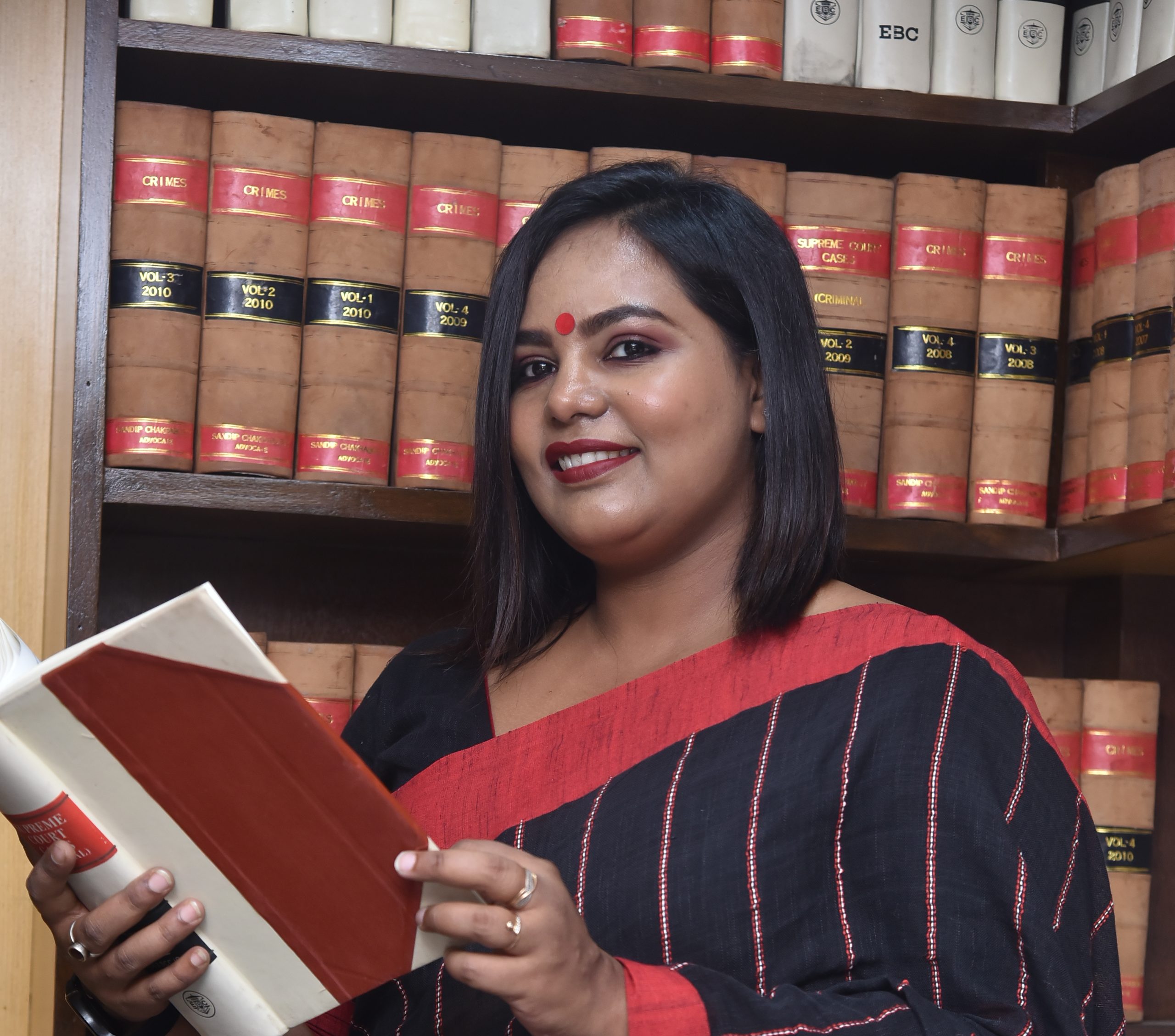








 Allow notifications