With your broad experience as an AOR in the legal field, what first inspired you to pursue a career in law, and what continues to ignite your passion for it today?
The law was not my first love, but like all great romances, it found me when I least expected it. Growing up in a small town, I saw justice as a distant grand ideal, often out of reach for those who needed it the most. At a very young age, I was able to observe and acknowledge the invisible establishments that do not allow equality to breed in society. What keeps me drawn to this profession is how justice is truly poetic, not just in its finality but also in the journey that it takes to get there. Justice, like a perfect poem, is not merely written but felt, its weight resting in the space between reason and longing. I grew into the law much like one grows into the rhythm of an unfamiliar but haunting melody. It wasn’t love at first sight, but somewhere between its Shakespearean tragedies and Wildean wit, I found my art, one that demands precision, patience and the perfect closing.
After completing your law degree, you went on to pursue a Master of Laws in Advanced Studies in Public International Law, specializing in International Criminal Law, at Leiden University. What led you to choose this specific university and specialization? Could you share some highlights from that experience with our readers?
Leiden University has a rich history in international law, and its faculty includes some of the most distinguished names in the field. My decision to specialize in International Criminal Law stemmed from my deep interest in justice beyond national borders. I developed a keen interest in the evolution of this specialised field of law that addresses mass atrocities, often referred to as “crimes of crimes”. Leiden University was therefore, the only University where I had applied for my Masters as it also offers an insight into the practical aspects of international criminal law in action aided by its proximity to most of the international criminal tribunals. One of the highlights of my time there was studying under Prof. William Schabas and Prof. Carsten Stahn who was also my thesis supervisor. The experience not only deepened my understanding of legal principles but also broadened my world view on justice and accountability.
Early in your career, you had the opportunity to intern in various insightful environments, domestic and international. Could you reflect on some of the most memorable experiences from these internships and jobs that helped shape your understanding of the law? Are there any key lessons from that time that have stayed with you?
Early in my career, I was fortunate to intern in diverse and intellectually stimulating environments, both in India and internationally, each shaping my understanding of the law in unique ways. Working with Mr. J.N. Mathur, Senior Advocate and then Additional Advocate General of Uttar Pradesh, exposed me to the complexities of constitutional and administrative law, while my time with Ms. Indu Malhotra, Senior Advocate at the time and who later became a Judge of the Supreme Court of India, deepened my grasp of arbitration and commercial litigation. Under the guidance of Late Mr. Pawan Sharma, erstwhile Standing Counsel (Criminal) for the State of NCT, Delhi, as well as under the guidance of Ms. Manisha Bhandari, I developed an understanding of criminal law, both at the trial and appellate stages. Beyond the courtroom experiences, I had the rare privilege of being awarded the Spic Macay Scholarship that led me to working with the Tibetan Government in Exile in Dharamshala, where I engaged with human rights and international law issues and had the profound honor of meeting His Holiness The Dalai Lama. This was also a unique and humbling experience as I stayed with the monks in H.H. The Dalai Lama’s monastery in Dharamshala during my tenure there.
Perhaps one of the most defining experiences of my early career was my time at the Office of the Prosecutor at the United Nations Special Tribunal for Lebanon, where I had the invaluable opportunity to contribute during a pivotal moment – the commencement of the Ayyash Trial. Being witness to the transition from the pre-trial stage to the trial stage and participating in the first day of the trial was an extraordinary learning experience, offering firsthand exposure to international criminal proceedings. These experiences collectively shaped my legal perspective, reinforcing the importance of meticulous preparation, intellectual curiosity, and a commitment to justice.
Over the years, you’ve represented clients in landmark cases like the Nithari Killings and the IPL spot-fixing case. What were some of the distinct challenges these cases presented, and how did you approach them from a legal perspective?
Working on cases like the Nithari Killings case and the IPL spot-fixing case reinforced a fundamental truth for me – that there are no shortcuts to thorough preparation. I first worked on the Nithari Killings case as an intern at the office of Ms. Manisha Bhandari, who was representing Mr. Moninder Singh Pandher, and over the years, I progressed from being an intern on his case to representing Mr. Pandher as an Advocate on Record in the Supreme Court of India. This case has been a continuous source of learning, and I was fortunate to be led and guided by Mr. R.S. Sodhi, Senior Advocate, Ms. Manisha Bhandari, and Mr. Omkar Shrivastava, who not only allowed me to be part of their defense team but also taught me how to navigate a high-intensity, high-stakes matter. One of the greatest challenges in this case was the media and public’s tendency to arrive at unfounded conclusions long before the courts rendered their verdicts. Managing the crumbling spirits of a client who had spent years in jail, awaiting justice, was another formidable challenge. Jail visits during such a prolonged litigation are emotionally taxing, as one cannot help but feel for the client who loses hope with each passing day. The slow churn of justice, especially in death sentence cases, is a heavy burden. Each passing year is not just time lost but a test of endurance, where hope flickers like a candle in the wind, struggling to stay alight.
You’ve been deeply committed to pro bono work, advocating for marginalized communities. What motivates you to focus on these vulnerable groups, and how do you manage balancing this crucial work with high-profile criminal cases?
Justice, to me, is not just about legal arguments or courtroom victories. It is about who gets to be heard. Too often, the most vulnerable are the least represented. Their stories are lost in a system that moves too fast for those without power. My pro bono work is driven by a simple belief that access to justice should not depend on privilege. Balancing this with high-profile cases is not a challenge but a responsibility. The law is at its best when it serves everyone, not just those who can afford it. And if I have the skills and opportunity to make that balance possible, then that is exactly what I must do.
Criminal law is a constantly shifting field. How do you stay updated on recent developments and emerging trends, particularly in cases related to white-collar crimes or cybercrimes?
The law is a living, breathing entity, constantly evolving to meet the demands of an ever-changing world, and to stay ahead in the dynamic realm of criminal law, especially in areas like white-collar crimes and cybercrimes, one must embrace learning not just as a practice but as a discipline of vigilance. It is not enough to master how the law may be used. One must also understand how it is misused, manipulated, and twisted to serve those who seek to undermine justice. For instance, in cases involving unscrupulous elements, such as the land mafia, the challenge is not merely legal but systemic, as the police machinery is too often found to be not just complicit but, at times, an extension of the very forces the law is meant to curb. To be effective, one must stay immersed in legislative developments, judicial pronouncements, and global trends, ensuring that the law is wielded as a scalpel against injustice rather than a shield for those who corrupt it.
Passing the Advocate-on-Record (AOR) exam is no small feat. What aspects of the exam did you find the most challenging, and what strategies or preparations helped you succeed in this prestigious exam?
The AOR exam is an arduous test, demanding not only a deep reservoir of legal knowledge but also the ability to think critically and apply the law with precision. Its true challenge lies in the depth of one’s understanding of the principles laid down by the Supreme Court. There is no room for superficiality. My approach was rooted in disciplined reading, where I meticulously analyzed leading judgments, unraveling their nuances to grasp the core principles. Drafting, however, is a skill honed over time and refined through constant practice. Some of the most valuable lessons in Supreme Court drafting come not just from the theoretical understanding of the structure of a draft, but from the process of eliminating and curing defects, ensuring that files are cleared for listing by the registry. Ultimately, success in this exam is not just about intellect, but about practice, perseverance, and the invaluable experience gained along the way.
Outside of law, you’re passionate about poetry, music, and surfing. How do these creative pursuits influence your personal development and help you maintain a balance in managing the demanding nature of your legal profession?
Poetry, for me, is a way of making sense of the world. It is where I find my voice beyond the courtroom, where I explore life not through statutes but through metaphor and rhythm. Law, much like poetry, allows for interpretation in the face of ambiguity.
Music is another language by itself. As a DJ, I know that a well-placed beat can shift an entire room’s energy, just as the right argument, delivered at the right moment, can turn the tide of a case. Mixing music is an art of timing, of intuition, of knowing when to hold back and when to let go. It is a lesson that applies just as much to advocacy.
And then there’s surfing. The ocean is the greatest teacher of all. It humbles you. No matter how skilled you are, the waves have the final say. It teaches patience, resilience, and the art of surrender. You can’t fight the sea. You learn to move with it and to respect its rhythm. In many ways, law is the same. You don’t control justice, but you learn to navigate its currents, to read its shifting tides, to time your movements with precision. Each of these pursuits ground me and add balance to what happens to be a highly stressful profession.
What advice would you offer to young law students or aspiring lawyers, particularly those interested in criminal litigation, who are hoping to follow a path similar to yours?
Be relentless in your pursuit of knowledge, but never lose sight of the people behind the cases. Litigation is not just about statutes and precedents, it is also about understanding human behavior, motivations and social realities. Read voraciously, observe experienced lawyers in court, and take on challenging cases even when they seem daunting. Most importantly, swear by the thumb rule – “when in doubt, ask.” One must not hesitate to seek guidance when in need of it.
You have a varied educational background, beginning with a B.A. from Delhi University and later pursuing a law degree at Law College Dehradun. What prompted you to transition to a career in law?
My journey from Delhi University to Law College Dehradun was driven by a deep-seated desire to make a meaningful impact on society. While pursuing my B.A., I was captivated by the dynamics of governance, human rights, and justice systems. Law became the natural path to combine my academic interests with my aspiration to serve. It’s a profession that allows you to challenge societal injustices while empowering others—a responsibility I have always embraced with great passion.
You have worked as an Advocate and Legal Researcher in various courts in Delhi and Haryana, as well as with the Human Rights Commission, Tribunals, and Consumer Forums during your initial years of practice. What were the key learning experiences that shaped your career?
Those early years were transformative. Working across courts, commissions, and tribunals taught me the power of resilience, precision, and empathy in legal practice. I learned that every case, no matter how small, represents a life impacted by law. From drafting intricate arguments to navigating complex human rights cases, each experience honed my ability to analyze issues critically and offer pragmatic solutions. These formative years also reinforced my commitment to justice as more than a principle—it became my purpose.
You served as the Court Manager and CPIO at the National Green Tribunal (NGT) for six years. Could you share with our readers how you obtained that role and what your experiences were like working for a government organisation like the NGT?
My role at the NGT was a significant milestone. I was selected based on my judicial experience and my proficiency in legal administration. At the NGT, I had the privilege of streamlining court operations, managing Right to Information (RTI) requests, and contributing to the Tribunal’s mission of ensuring environmental justice. Working in a government organization taught me the value of efficiency, collaboration, and innovation in addressing urgent environmental issues. It was a rare opportunity to be at the intersection of law, governance, and sustainability.
With 14 years of diverse experience across various fields, you have also worked as a Teaching Associate (Law) at LBSNAA in Mussoorie, Uttarakhand. What inspired you to pursue a career in academia, and do you have plans to return to teaching in the future?
Academia is where knowledge meets inspiration. My tenure at LBSNAA allowed me to shape the legal perspective of future civil servants, which was immensely rewarding. Teaching is a two-way process—you give, but you also learn. It inspired me to think deeply about the evolution of law and its practical application. While my current focus is legal practice, I remain passionate about academia and hope to return to teaching, as empowering young minds is one of the most impactful ways to contribute to society.
Could you share your preparation strategies that helped you crack the Rajasthan Judicial Services Exam and become a Civil Judge and Metropolitan Magistrate?
Success in judicial services exams is not about rote memorization but mastering the art of analysis. I approached my preparation with a structured plan, focusing on understanding core legal concepts, landmark judgments, and procedural nuances. Consistent revisions, daily answer writing, and solving previous years’ papers were my pillars of preparation. I also cultivated a habit of staying updated with contemporary legal developments, as awareness of real-world issues is crucial for anyone aspiring to the judiciary.
Serving as a Judicial Officer in the Rajasthan Judicial Services must have been a challenging role, dealing with various court-related matters. What was the most challenging experience in that position of authority that you’d like to share with our readers?
One of the most profound challenges I faced was adjudicating emotionally charged family disputes. These cases are not just about applying laws; they require a delicate balance of empathy, fairness, and legal reasoning. As a Judicial Officer, every decision carries immense weight, impacting lives and shaping perceptions of justice. Those moments taught me the true meaning of responsibility and the need to approach every case with integrity and compassion.
After working as a Judicial Officer for three years, what led you to leave the Judicial Services to establish your own practice at the Supreme Court, handling civil, criminal, and service matters?
My transition from the judiciary to independent practice was guided by a desire to explore broader legal challenges and contribute to precedent-setting cases. The judiciary taught me the importance of impartiality and due process, which I now bring to my practice at the Supreme Court. Handling civil, criminal, and service matters allows me to address complex legal issues while advocating for justice on behalf of individuals and institutions alike. This shift has been deeply fulfilling, as it allows me to combine my judicial insights with advocacy.
What advice would you give to young aspirants who wish to pursue a successful career in law and Judicial Services?
To all aspiring lawyers and judicial officers: Stay curious, stay committed, and never lose sight of your purpose. Master the fundamentals of law, but also nurture qualities like resilience, empathy, and adaptability. For judicial aspirants, focus on clarity of concepts, regular practice, and an unwavering belief in yourself. Remember, this profession demands hard work, but it also offers unparalleled opportunities to make a difference. Always strive to serve justice with integrity, and success will follow.
With over a decade of extensive practice, what initially inspired you to pursue a career in law and what factors led you to choose this profession?
My father, Mr. Rameshwar Totala, who is practising at Bombay High Court since 1985, inspired me to pursue a career in law. Since my childhood, I have seen this profession very closely. Since my school days, I accompanied my father and his juniors to courts and spent evening time at his office, so choosing this career came very naturally to me.
What was your area of specialization during your LLM at Bharti Vidyapeeth University, Pune, and what motivated you to choose that particular field of study?
During my LLM at Bharti Vidyapeeth University in Pune, I specialized in Corporate Law. I recognized that expertise in Corporate and Commercial Law would not only enhance my professional capabilities but also allow me to assist clients effectively in navigating complex commercial disputes, making it a strategic choice for my career development especially when you are practising at the financial capital of the country, Mumbai.
Following law school at ILS Law College, Pune, you interned and worked with several prominent advocates and law firms. Could you describe your formative years and the key lessons and experiences that influenced your career path?
My formative years at Law School included internships with esteemed advocates such as Shri Harish Salve, Senior Advocate, Supreme Court of India and Shri Vineet Naik, Senior Advocate, Bombay High Court. I also got an opportunity to intern in my final semester at Lakshmikumaran & Shridharan firm, Delhi, which specialises in indirect taxation. I also actively participated in moot court competitions and got the opportunity to represent ILS Law College both nationally and internationally. I was also an active participant in cultural events during college in drama and music, which also helped me connect with students from 1st year to 5th year and I am proud that I have friends today from college, not only my batch but throughout all the batches of 2005 to 2010. All these experiences were instrumental in opening a new horizon for me in the legal profession. Working closely with the best professionals in the world allowed me to gain practical insights into various legal strategies and the nuances of litigation, which have been invaluable throughout my career. I have been in touch with all seniors and colleagues whom I met during my internship even today, who helped and guided me during my formative years and I take it as my responsibility to pass on the same learnings, tips and methods to the interns and juniors who intern and work at our chambers.
You’ve been an independent counsel for almost a decade and what challenges did you face during this transition after you switched from a law firm?
My journey from working as a Legal Associate at Vidhii Partners, Mumbai after ILS Law College from 2010 to 2011, then working as a Junior Counsel with Shri Chetan Kapadia, Senior Advocate, Bombay High Court from 2011 to 2017, and then to an Independent Counsel at RT LEGAL chambers since then has been both demanding and deeply fulfilling and I am eternally grateful to my seniors, because of whom, I am able to litigate effectively in courts and tribunals across the globe. I was always sure since beginning that I wanted to be a litigating lawyer and be in the Courtroom throughout my Career. I was fortunate to work at Vidhii Partners after college, where I got the exposure to work at every possible court and tribunal at Mumbai thereby understanding the procedural niceties and the said experience helped me throughout my career till today.
Given your extensive experience in arbitration, how do you prepare for representing clients in arbitral tribunals, particularly in international commercial and contractual disputes?
Preparing for representation in arbitral tribunals involves comprehensive case analysis and strategic planning. Our aim is to have the client bring us all the minute details, which may be either in the form of documentary evidence or oral evidence and then we try to understand the factual scenario after keeping ourselves in the shoes of our client. This fact discovery exercise with the client, prior to initiation of legal proceedings is very important, to avoid any surprises from the other side during the course of trial. In the evolving global landscape, arbitration throughout the globe has become the “new normal” for resolution of disputes and I try and keep myself updated with the best international practices in order to effectively represent my clients. Also, my first effort is to try and convince the client to mediate, if that is an option in the given facts and circumstances. In the last 24 months, despite initiation of Arbitral Proceedings in multiple cases, we have been able to effectively settle half a dozen cases through mediation for our clients to their utmost satisfaction. Out of court settlement brings respite to the client and reduces the litigation at all future stages, thereby saving the burden on our judicial system which is already reeling under the pressure of pendency.
What do you consider to be the primary challenges companies face when dealing with Insolvency petitions and liquidation matters, and how do you assist them?
I have represented and advised several companies in Insolvency and Liquidation matters. The primary challenge faced by the companies, who find themselves in such a position, is lack of legal awareness. I assist these companies by providing tailored legal advice which helps them navigate their rights and obligations under the law so that further damage could be controlled and if required, options for restructuring or liquidation of such companies while ensuring compliance with relevant regulations could also be worked out. I have been fortunate enough to have worked on several large insolvency cases which the country has witnessed since 2017.
What advice would you offer to law students aspiring to build a successful career like yours? Are there any resources or tools you regularly refer to while navigating the legal profession?
For law students aspiring to build successful careers, I recommend seeking diverse experiences through internships and actively networking within the legal community. They should explore different areas of practice in Law before choosing a niche area of practice. Engaging with mentors can provide invaluable guidance. Staying updated on legal developments through journals, books, online resources is also crucial for continuous professional growth. The field of law is vast and offers numerous opportunities. Through internships, students can explore and determine their preferred career paths, whether it be litigation, corporate law, serving as In-House legal Counsel, being a part of Judiciary or pursuing a career in academia. Last but not the least, litigation is a marathon race, in which you will succeed only if you stick around. After COVID, Virtual hearings are the new normal and most of the courts have also begun to live stream the proceedings. It is a great opportunity for the law students and lawyers to regularly witness these proceedings virtually in the comfort of your home/office and follow the cases, which are of national importance or involve an interesting question of law.
With the demanding nature of your career and responsibilities, how do you manage to unwind and maintain a healthy work-life balance? What strategies or activities help you cope with stress and stay focused?
Our work often demands frequent travel to different cities for court hearings, client meetings, or case preparations. Amidst the relentless pace of this profession, I strive to carve out moments to unwind. Music, one of my cherished hobbies, becomes a sanctuary where I can momentarily escape the pressures of legal battles. It allows me to slow down, regain my composure, and reconnect with myself and approach my responsibilities with renewed focus and energy. If I would not have been a lawyer, I surely would have been in the music profession.
You are an accomplished lawyer and you are practicing in both of the countries. How did you build this particular process for yourself, that you studied in India and then moved to Ontario, Canada and built a law practice over there?
I studied law from Panjab University, the five-year law department UILS, and once I finished, I moved to Delhi to study for competitive exams for some time. I stayed there in Delhi then after that I started practicing in Patiala district court in Punjab. I practiced there for more than a year and my parents live in Chandigarh. I am from Chandigarh, but I used to work in Patiala because I got an opportunity to work under a very good, very senior lawyer there. And I used to do civil litigation there in Patiala because my inclination was towards civil litigation.
Then one of my friends told me that there’s this program, you can go to Canada, you can become a permanent resident directly based on points, so I calculated my points. I was eligible and I applied for the permanent residency and I became a PR. I moved to Canada in 2019. And, after a few months, I was lucky enough to get a job in a criminal law firm in Canada. I started working there as a legal assistant and then slowly and steadily I cleared my NCA exam. For any person who wants to become a lawyer in Canada and who has not done law from Canada, the first step is to do the NCA exams. There are five, six exams. Basically, those are equivalency exams. Once you clear them and then you enroll yourself in the lawyer licensing process.
In the lawyer licensing process, you have to do three things. You have to clear the barrister exam, the solicitor exam, because in Canada, lawyers are called barristers and solicitors. We can practice as both barristers and solicitors the way we like and also complete a 10-month internship period with a lawyer, which is called an articling. So, I did all of that. Once I cleared my bar exams, I started working in the same firm as an articling student. And once I completed my articling, I was called to the bar in Ontario in February, 2022. the day I got called to the bar, the next day I opened my own practice, I started practicing on my own.
And I think I got called to the bar on February 26th, and I registered my firm on February 27th. And I used to do immigration law and criminal defense law in the beginning. I did immigration for a couple of months, but my focus, my interest, my inclination was towards criminal defense law, because I was lucky enough to get a mentor here in Canada as well. He’s a very senior criminal lawyer practicing for more than 40 years in Canada, only criminal law, and I got to learn the ropes of criminal law from him. My inclination was to practice criminal law in Canada. I stopped taking immigration files after a couple of months. After that, I’ve solely focused my practice on criminal defense law. And primarily I’m based in the GTA, which is the greater Toronto area, but I practice all over Ontario. I appear in all courts in Ontario and I deal with every kind of criminal case that exists in Canada.
How has your career in law or rather your decision to do law been instrumental in giving you this much confidence? You of course do a law degree to practice, but still confidence comes from many other sources as well. How have you done that for yourself?
I think mainly, especially in the legal field, your first mentor matters a lot. If you get a good mentor in the beginning, because invariably you become like them. When you start practicing, you pick up the traits of your first mentor you have. Your temperament becomes like them, you, your ethics, everything you copy from them, basically.
Because that’s your starting point. Unless your father is a lawyer, you have a family of lawyers, then that’s different. But if you’re a first-generation lawyer, your mentor is everything for you, in the beginning. I was lucky enough to get a very good mentor in India as well, in Patiala. And then I was very lucky to have a mentor here in Canada.
Who treated me like his son. He was the managing partner of the firm. They have 12 offices in Ontario. It’s a very big criminal law firm. I used to be with him all the time. Before COVID, we used to go to all courts in Ontario in person, every day. We used to devise a route in such a way, if I give you an example, an Indian example, you’re practicing in Patiala and you have a few court appearances on Monday, then we will devise a route in such a way that we will do Patiala, we will do Ropar, we will do Ludhiana and we can go to Hisharpur next. So, in that way. One day we are going in the other direction towards Delhi, one day we are going in the other direction. So, we used to cover all of Ontario in one week before COVID. But after COVID, everything started happening virtually. Now we do court appearances virtually. We’re doing this interview virtually.
Everything is virtual now and which is convenient for us as well because today also, I have a court date in Brampton, and I have a court date in a city which is 100 kilometers away, I have a court date in a city which is 200 kilometers away in the other direction. So, just because of these virtual appearances and zoom and everything, I would say it’s better for the justice system because we’re able to defend clients, access to justice is readily available now. And it is less expensive for clients as well because traveling costs and everything used to add up. So, I would say, getting a good mentor is crucial. I think he trained me in a way that after about two years of working with him, I was confident enough that I can start my own practice and I can do criminal law.
As you were discussing how you transitioned from India to Canada, is there any checklist that you could share with us and our learners? How did you do it in a stepwise manner? If that’s possible.
I would say there is only one way and it is not easy. I mean, the legal field is already competitive. Whether it’s India, Canada, US or England, wherever, the legal field is a competitive field. And if you’re changing countries, you’ve done law from another country, and you’re going to practice in another country, you have to learn their system, learn law, learn the procedure, learn everything that is there to learn.
And people are new, they won’t give you a chance very easily because you’re not a lawyer who’s done law from their country, you’re a foreign trained lawyer. Initially it is not easy. You have to be mentally tough; I would say it was easier because of the support of my parents. I moved to Canada.
I’m the only son and they were very supportive of my move to Canada. And initially, I would just say, anybody who comes to Canada. I would like to talk about Canada because I’m here. I can’t say about other countries. Don’t go astray. Don’t go into other areas. Stick to the legal field. People start driving, for example, trucks, taxis, and work in restaurants. Anybody who is not able to make ends meet, that’s a different scenario for them. But if you can afford, stick to the legal field, clear your exams as soon as possible, and then try to find a good mentor and find a good job. Getting the first job in the legal area, in the legal field is, I would say, one of the toughest things.
Once you get your first job in Canada, then you start building experience, you start learning things, you get the required skills that you need for your second job or to further your career in law. I would say getting the first job is crucial, and getting it as soon as possible is even more crucial because if you don’t get the first job in time, a few months pass. It is very difficult to survive in Canada without a job or without a proper job. That is why people tend to go to other areas to just survive which is okay given everybody’s circumstances, but if you can stick to the legal field, clear your exams, get your first job and it is also important to get a job where the mentor is good. Because the first job is not about money, it is all about learning. So, if you can get a job, get in that door, work for six months, learn something out of it, then getting a second job would be very easy for you. People start expecting money in the beginning. If the minimum wage is this, I should be getting this but that’s, I would say, especially in the legal field That’s not how it works.
Not everybody wants to pay. Not everybody wants to pay you well. So, if you are very lucky if you find an employer who’s paying you well or who’s treating you well, to get a first job, doing volunteer work is the best way and quickest way to get your job. Don’t worry about money if you work for them for one or two months. They like you; they like your skills, they like the hard work you put in and your mentor is good. They will definitely start paying you. Nobody wants to have a person who’s a hard-working person and nobody wants to have them work for free. Once you show them that you were really worth something, money will follow.
As a criminal defense lawyer, what has been one of the most or some of the most challenging cases that you may have handled, if it is possible for you to share any particular case or the outcome of that particular case, which has actually significantly influenced your approach towards criminal law?
I have handled a variety of cases, but the difficulty I think is in the client. Law is the same. If there is a case which pertains to an area of criminal law, which I’m not very familiar with. I can read up, I have books, there are so many resources, judgments, everything.
You can learn those things. I think it depends on the client. Sometimes clients are difficult. For example, now primarily, most of my clients are immigrants. They come from South Asian backgrounds, Indians, Pakistanis, Afghanis, Iranian, Middle Eastern people, Southwest Asian people, Southeast Asian people, Filipinos, all of those. So mostly immigrants, plus local people. The majority of my practice consists of immigrants. Immigrants come from countries where there is corruption, where you know you can manage things in your own way. They come with this expectation to Canada that if they get charged with a criminal offense. They will hire a lawyer and the lawyer will do some magic and the lawyer can get them out of it. In some cases, it’s possible.
It’s not possible and the main difference between Indian and Canadian legal systems, especially in criminal law is we do plea bargaining a lot. In India there is provision in the CRPC for plea bargaining, but it’s not done very often In Canada, most cases resolve by getting a plea bargain. I would say 20, 25 percent cases go to trial. In Canada, if the evidence is against you, the crown, we call prosecutors crown attorneys here because Canada is a constitutional democracy. So the crown attorneys have enough evidence against you, they think they will be able to prove the case against you, then there is no other way out. You cannot bribe the crown attorney.
You cannot bribe the judge and neither the police. But I think people come with an expectation that our lawyer will manage everything. They will just get us out of everything. Unscratched. So, I think managing people’s expectations is most difficult. Because if you tell your client in the beginning just to get retained that, okay, your case is very easy.
I will do this and this, I will do wonders in your case. Then you’ve created such expectations that once you also know that those are not true because when the case ends, your client is bound to be dissatisfied with you. They are bound to be unhappy with you because you gave them expectations which are not real. So, managing the client’s expectations. It’s not true for immigrants only. It’s true for everyone, but I’ve seen a tendency of immigrants who think like this. They’re more in number. I would say that is the most difficult task. If you manage your client’s expectations appropriately, I think there’s nothing to worry about.
And now there comes this issue of credibility as well. As a new lawyer. If I start telling my clients, okay, these are the pros, these are the cons. This can be done. This cannot be done. They will most probably go to another lawyer who gives them better expectations or who promises better things.
In the beginning, it is very difficult to manage expectations and on the same hand get yourself retained. But as you, your practice grows older you get credibility. People start trusting you, they believe what you say and they trust you. Now it is easier for me at this stage. Whatever I tell my clients they trust me, they believe me. But in the beginning, it was very difficult. When you tell clients that this cannot be done, they will go to another person who promises better things. Now you have to promise also and you have to execute your plan and get what you promised.
As you were mentioning during your answer about the difference between the way we practice law in India and the way you practice law in Canada, you are a dual license lawyer, with your experiences in both of the countries. How have you seen the difference between the legal system and the kind of function it has in each country? Is there any particular reason for you to choose especially criminal law practice? And also, what are the particular differences between these two jurisdictions? As you mentioned, Canada is a constitutional law country.
I think I chose criminal law by chance, because in India I was practicing civil litigation. When I came to Canada, I got my first job in a criminal law firm. I learned criminal law. I got experience. I developed the skillset for a criminal defense lawyer. That is why I got into criminal law. I wouldn’t say it was planned. It was just by chance. But there are differences also in Indian and Canadian legal systems.
There are similarities as well. I would say, in India, we have a very good legal system as in Canada, but I think the difference is in the implementation. Police have all the powers, but police cannot implement their powers, execute their powers. due to various reasons. Similarly, when the case goes to the court, the prosecutors, judges have lots of powers, but the implementation, especially the delay. Justice delayed is always justice denied.
I would say the main problem in Indian courts is the delay. In Canada, there’s a Supreme Court judgment that you have to finish a criminal case in 18 months. If it’s not finished in 18 months and the delay is unreasonable, the court will withdraw your charges. They will throw the case out of the court and your charges will be stayed or withdrawn. So, this is how serious they are with regards to timelines. A criminal case gets finished in one and a half years to two years. That’s the maximum. On an average, a criminal case gets finished, I would say six, seven months, eight months. When you get justice in time, justice seems to have been done.
But when you don’t get justice for years, even if justice gets done in the end, I don’t think it’s of any use to the person who’s been fighting for justice for so many years. Second thing is I found a lot of difference in sentencing and how people are sentenced. For example, you are found guilty of any offense or you plead guilty to something and then a sentencing hearing is scheduled.
Before the sentencing hearing, we provide all the information about our client’s background to the judge, including any counseling that they’ve done, any background reference letters, any immigration consequences they may have, a lot of different things depending on the charges and the situation. And when the sentence hearing takes place, the prosecutor, the crown attorney, they tell the judge what sentence they are asking for and the reasons for the sentence. Then it’s our turn, we make our submissions, and when the judge sentences the person, they talk to the person, they tell them that we are imposing this sentence on you.
These were the aggravating factors that I considered. These were the mitigating factors that I considered. And this is the reason that I’m imposing this sentence on you, and this is what you have to do. They take their time, they take half an hour, one hour, two hours, to explain everything to the person so that that person knows why this sentence was imposed on me, what were the things that were against me, what were the things that were in my support. And the result is that the person is usually satisfied with the result, with the sentence and they have faith in the criminal justice system. They don’t think that the sentence is arbitrary or they don’t think that the judge was biased or they just imposed a sentence which was not appropriate in the circumstances. So this process taking time to explain things to the person I think has a great impact on that person and that person usually doesn’t come before the court again. They’re usually done because the main sentencing principle in Canada usually is rehabilitation.
You have to give a sentence in a way so that the sentence should not be too harsh, that the person goes to jail and becomes a criminal in jail. Otherwise, he’s not a criminal. And the sentence should not be too lenient so that the person thinks, okay, I can get away with everything. The sentence should be balanced enough to take care of all the sentencing principles. I would say sentencing in Canada is very thorough and is very important and everybody gives it importance.
You have also mentioned about your passion of spreading awareness related to law, especially not only criminal law, but obviously about these kinds of differences as well. What kind of advice would you like to give to the young and aspiring lawyers who are actually dreaming to become international practitioners like you?
I think the way to success in the legal profession is the same in every country. It doesn’t matter if you’re in Canada, India, US, wherever. Initially, you have to focus on learning. Don’t focus on money. Focus on developing your skill set for the initial four or five years or less or more depending on your circumstances.
Money will follow after that. If you start focusing on money, focusing on glamour, focusing on other things in the beginning, your practice may not go in the direction that you want it to go to. But if you focus on learning, getting a good mentor, I think nothing beats it. Nothing beats hard work. There is no shortcut to anything.
You have to be uncomfortable; you have to go out of your comfort zone. If you don’t become uncomfortable, if you don’t take risks, smaller risk or big, you don’t have to take a very big risk initially, it’s all about smaller risks that you take on a daily basis. Taking up a case, which you don’t know much about, then researching and finding out everything about it and going to court, speaking in a court which is packed with lawyers, people on Zoom, judges listening to you, your client is listening to you. The other party is listening to you. Sometimes you become weak in your legs, sometimes you start shaking, you are very nervous, but you cannot show that to the judge. You cannot show that to the crown.
You cannot show that to other lawyers, your client, anybody else. I think hard work, research, and preparation is the only, only, and only way to get success in the legal profession. Without preparation or hard work, if you don’t know your file, you’ll make a laughing stock of yourself in court. I would just say that.
When you started Jaslegals, which now operates across five office locations in the Greater Toronto area itself, can you tell us more about your vision for the firm and how you effectively manage the operations and maintain a consistent workflow across these multiple locations?
First of all, most things happen virtually. That helps. Because we’re able to do everything virtually sitting in one place because Ontario, I think it’s larger than Punjab, Haryana and Rajasthan combined or even larger. It is impossible to go everywhere physically.
I have five different offices in different locations in the greater Toronto area. My main office is in Mississauga. I am based in Mississauga, but I go to my other offices by appointment. If somebody wants to meet me in Waterloo, Toronto, Scarborough, Hamilton, I go there by appointment. Now, I have a team working for me.
I have my office managers, legal assistants working for me. My wife is a big support. She’s been working with me since day one. She handles the firm’s marketing and social media aspect of the firm and every kind of marketing. She does everything. She’s made the logo. She’s made the website She’s made our flyers everything that she does.
I don’t know anything about those things so without her that site wouldn’t have been possible and yes, we have five locations and usually we do things virtually, but if somebody, if the client insists that I meet them in person in a different city, then I go wherever they need me to come.
But yes, we have a system. We have employees working for us. We have streamlined everything. And recently, I posted an ad for a lawyer. I wanted to hire a lawyer. I finalized somebody, our team is growing. And my vision is for the firm to practice criminal law across Canada, to open up offices in different provinces of Canada and just focus on criminal law and just focus on imparting knowledge about criminal law because like I told you mostly my clients are immigrants and immigrants do not know about criminal law. Everybody in Canada knows about real estate law or immigration law because they’ve been through that process. But criminal law impacts them on a daily basis and the consequences of getting into trouble with criminal law are deputation, jail term, getting a criminal record, which are very serious.
You lose your job, lose your family, lose the country. I thought when I started that it’s very important for people to know about criminal law so that they don’t get into trouble with criminal law unintentionally. So that is my goal and I’m very active on social media. I make videos in English and Punjabi, which is my mother tongue, so that people understand what criminal law is and how to stay out of trouble with criminal law.
We would love to understand how you balance between your personal and professional commitments as both of you are working professionals and also the kind of professional demands that you have because of the five locations. How soon do you see yourself being spread all over Canada?
I would say, first of all, I try to balance my personal and professional life. Spending time with my family is very important to me. We have a dog as well. We don’t have a child, but we have a dog which is like our child.
I make sure that I’m home from the office about four o’clock, which is my dog’s dog park time. He’s waiting for me to take him. Then we spend about two hours together, my wife and our dog, we go on hikes, we go to the dog park. I’m usually not available between four to six. So, my assistants or my associates, they answer my phone calls and everything. Then I resume work. Because I get phone calls a lot. I get phone calls 24×7. People get stuck. People keep getting arrested. People have troubles late at night. I’m always on the phone. I resume my work after that, but I make it a point to come home in time so that we’re able to spend our evenings together.
And my wife and I have no issues spending time together because we are always together. We go to the office together. We are at home together in the evening also. We try to cook and stay together. We like staying in. We don’t like going out that much because of your dog also. And because it’s just what we prefer. I think balancing is no problem. And I stress on it a lot because my parents, my mother especially used to emphasize the importance of balancing different things in life. She used to say, don’t do anything extreme, balance everything. If you balance everything, that’s better in the long run.
I would like to ask you about the kind of issues that are coming up with not only lawyers, but other professions also related to mental health. What are your views about that as you are so keen on spreading awareness about criminal law in immigrants. So how do you see that one can actually go ahead and try and help these kinds of issues or address these issues at least because these have become very evident right after COVID as well?
Absolutely, I would say the legal profession is a tough profession and especially criminal law because when a person gets charged with a criminal offense, they come to you with their problem. They are in trouble. They are panicking. If you are dedicated to your practice. Over time, you start thinking that your client’s problems are your problems.
You treat their problems as your own because they tell you, their problems. They tell you everything about their life. You know, everything about their life, their challenges, if they have any money problems, if they have any family problems, partner problems, anything else. So eventually when people are telling you their problems, 24/7, you start thinking that their problems are your problems and you start taking the stress of their problems. It happened to me as well. I used to get stressed a lot. I used to get anxious sometimes in the mornings when I wake up.
But I identified this and I told myself that I will not let troubles of my clients take the better of me. It is okay till a point to understand their problems, but to take on their problems as your own is, I would say a negative thing, which I’ve learned very recently. I would say at the end. You’re just doing your job. You’re a professional. You’re being paid to do your job, do your job properly. If you’re not doing your job properly, sometimes then you get stressed because you’re not putting in the work in the file that the file demands. Sometimes you are not looking after your clients’ demands, but if you are doing your job properly, I think you should not be stressed about the outcome because you are not the judge, you are not God, you are not anybody else. You are just an advocate for your client. If you advocate for your client to the best of your ability, I think there’s nothing to worry about. Result doesn’t matter. Even if the result is not what you expected I think the client will be happy with you because you put in a lot of hard work and it will show to the client. I think balancing your life and separating your professional problems or professional demands from your personal life is very important, especially in criminal law.
I would say this kind of stress real estate lawyers do not experience, immigration lawyers do not experience, or may not experience to the level, because my client, if I don’t do a good job, that person can be in jail for years. That person will get a criminal record. That person will lose his job. And if that person is not a Canadian citizen, they will also be deported. Sometimes they have their family, their kids here. And if the husband gets deported or the wife gets deported, it can break up their family. I think it takes time to learn all those things. That doesn’t come on day one. But as you grow, as you get more experienced, you tend to learn how to separate these things.
With over 14 years of experience, do you consider law to be a planned choice for you? What was your motivation to pursue this field?
It was certainly not the case in the beginning. Back in the early 2000s as students of a government school, we didn’t know any better than doing engineering. However, once I started giving the entrance examinations, I realised that I’ll not make it into the elite government institutions, and I felt it would be a waste of time, money, and effort to graduate from a mediocre university. Around this time, a friend mentioned he was taking law entrance exams, which was news to me—I hadn’t known that law colleges had entrance exams! This was pre-CLAT, so each university had its own exam, and deadlines for many had already passed. Among the remaining options, I was waitlisted at a National Law University, which led me to consider alternatives. By this time I became really passionate about Law, Polity and Jurisprudence. I got an admission in DES Law College, Pune and loved it so much that I did not even try elsewhere. Rest, as they say, is history.
With more than a decade of experience across different sectors, what inspired you to focus on mediation as an additional vertical in your office? Could you share a specific example from your mediation practice where you successfully navigated a particularly challenging dispute?
Mediation is a relatively new vertical in my chambers. I was selected for mediation training by Samadhan – the Delhi High Court Mediation and Conciliation Centre in 2019 but only qualified in 2022. No, I did not flunk! The pandemic years delayed the process.
My interest in mediation grew as I witnessed how timely intervention by expert mediators resolved issues without prolonged litigation. If you follow the news, mediators are being appointed in various disputes including between governments.
There are many complex mediations and each brings its own unique challenges. Family disputes are often emotionally charged, while corporate disputes tend to involve parties digging their heels in and refusing to change their positions. However, most rewarding mediation for me was one where I got the matter settled between a Music Company and a Government Department. Government officials are often reluctant to settle, fearing accusations of corruption. Navigating this case was challenging due to the power imbalance between the parties, but through structured dialogue over multiple sessions, we managed to salvage the relationship and reach a mutually beneficial agreement.
During your early years of practice alongside senior advocates, what key lessons did you learn that significantly shaped your legal career?
My first office taught me the importance of efficiency and understanding all aspects of practice. In a boutique law firm, it is easy to be inundated with work and get burned out. from drafting to filing, handling registry objections, getting matters listed, and even standing in for seniors. This experience made me self-sufficient quite early on in my career.
My second office is where I actually felt mentored. Just like me, my senior was also a first generation advocate. When I asked him about which specialisation or field of law should I concentrate on, he told me to “Just be an Advocate” and the clients will determine what they want to engage you for. Working with a senior advocate taught me the art of strategy and patience. Observing his approach to complex cases, I learned that thorough preparation and clear communication are crucial. These early experiences instilled a respect for detail, discipline, and the importance of upholding integrity in advocacy.
You also undertake legal-aid activities. How has your experience with the Delhi High Court Legal Services Committee influenced your perspective on access to justice for marginalised communities?
It has been a rich and rewarding experience. My work with the Delhi High Court Legal Services Committee reinforced my desire for inclusive access to justice. Through this role, I’ve seen firsthand the hurdles that marginalized individuals face. The idea is to ensure that legal aid to the poor is not poor legal aid. Recognizing that equitable access to legal assistance is essential for a fair justice system has deepened my commitment to pro bono work.
Having argued various landmark cases and the most recent of them being Balaji Exim v. Commissioner, CGST reported in 2023 (73) G.S.T.L. 350 (Del.). Can you share a few insights with us regarding the key legal principles involved in your approach to the case?
I don’t think one can plan to get any landmark case. In each case, one should keep an open mind and look at the issue thoroughly from all angles. In Balaji Exim, a critical point was upholding procedural fairness in GST adjudication. The department was implementing a constricted reading of the law in case of Input Tax Credit by denying the recipient benefit because of an ongoing investigation against the supplier. We argued that suspicion cannot be a ground for denial of credit. The court agreed and observed that the accusation of availing fake credit by the supplier could not be a ground for rejecting the petitioner’s refund application of ITC unless it is proved that the petitioner has not received the delivery of goods or had not paid for them. Our approach aimed to balance statutory interpretation with principles that prevent arbitrary power.
After working with various Law Offices for 4 years you established your own practice. What motivated this transition and what were the initial challenges that you faced?
There’s never a perfect time to go independent; it’s a leap of faith. As long as one is learning and growing, it’s natural to stay associated with an office. However, at some point of time, we must ask ourselves the hard question. Do you wish to climb the corporate ladder of a firm or fly solo? I was very clear that I enjoy being the counsel the most and that is the most important thing for me. It helped that my senior allowed me to take up my own matters so the transition was not so sudden.
I started my chambers with a total of 3 good clients. So the initial challenge was to get more clients and make enough money to sustain the people who have decided to be part of your whimsical dream. I spent all my savings on setting up the office and it would have been very easy to call it quits. Fortunately, the staff was cooperative and clients also spread word of mouth. After some years, the next set of challenges emerge which is hiring the right people and putting processes in place so your ability to do everything on your own does not become an inefficient obsession.
How do you stay updated on the evolving dynamics of Indirect Tax Laws, such as GST, Customs, Central Excise, Service Tax, FEMA, Foreign Trade Policy, Anti-Dumping Duty, and related regulations, particularly from an international perspective?
Indirect tax is just like any other field of law that requires you to go through recent decisions, amendments and government notifications. The only issue is that these are far more frequent when compared with the traditional fields. Therefore, staying updated involves a multi-pronged approach—regularly reviewing amendments, studying landmark judgments, attending seminars, and engaging with professional networks globally. The practicing advocates of CESTAT also have a very helpful WhatsApp group for new developments in the field. Additionally, I try to follow developments in international politics, as these often influence policies domestically.
As the founder of your law chambers, how do you ensure effective communication workflow while balancing it with your personal life?
I prioritize streamlined communication within my chambers by implementing clear protocols and encouraging teamwork. I avoid micro-management as it is very frustrating and time consuming. Instead, I delegate and only follow up on specified deadlines. Since we are a small team, everyone is comfortable directly approaching me in case of an issue they are not able to resolve themselves. On a personal level, I allocate time for family and personal well-being, which helps me stay balanced and focused. Unfortunately, through all this, sleep sometimes is a casualty but I am actively trying to remedy that.
You frequently visit various law colleges and universities for guest lectures and chairing various competitions. What advice do you give to the younger generation who wish to achieve excellence in the field of law?
To quote a Louis Armstrong song, “They’ll learn much more than I have ever known”. It is hard to give advice to the younger generation who already have vast knowledge and exposure. But since you have asked for it, my advice is to cultivate perseverance, curiosity, and ethical integrity. Law is demanding and requires continuous learning. Be open to mentorship, value hard work, and, most importantly, understand that building a reputable practice takes persistent dedication over time.
You have an impressive journey- starting from your early days as counsel for Evergreen International Limited – Furniture Export industry to your current role at Signify Innovations India Limited (Formerly Philips Lighting India Limited) What were some pivotal moments that shaped your professional path?
“First of all, thank you for the opportunity to share my journey. My professional path began long before I became a qualified lawyer and CS. While studying, I worked at a securities advisory firm and later at a consulting firm, engaging in a diverse range of tasks. I’ve always had a passion for innovation, hard work, growth, and learning. From my early struggles, I learned the importance of working hard and putting your heart and mind into whatever task comes your way, without worrying about money, job titles, or other benefits.
There were several pivotal moments in my career. The first was in early 2003 when I worked at a manufacturing plant in Himachal Pradesh. This experience exposed me to various challenges and opportunities in a manufacturing setup, where I dealt with a wide range of legal and financial issues. I remember working on the shop floor for two weeks during a workers’ strike. This experience provided a solid foundation for my career, as working in a manufacturing plant requires a highly disciplined, structured, and efficient environment, which is also very demanding. My then-CEO advised me to take at least one round of the entire production process every day to learn about plant functioning, a piece of advice I cherish to this day. This taught me the concept of ‘Management by walking around.’ Since the company was also listed, I learned the value of having robust processes and systems to ensure compliance.
During that time, I was inspired by my CEO to read ‘The Goal’ by Goldratt, which introduced me to the theory of constraints and how addressing bottlenecks can increase overall efficiency and help achieve business goals. This gave me a much better understanding of the production process.
The second transformative point was when I had the opportunity to work at OSRAM, a German company. There, I was finally able to demonstrate my potential and expertise in various areas of legal, compliance, and governance. OSRAM was part of Siemens then, and I was part of the Siemens India compliance team, working on establishing the initial compliance program in India. I am grateful to have been part of the India compliance team at that time, which gave me a solid foundation in the compliance domain. I also worked on several complex litigations and M&A transactions.
My last significant change was moving to Philips Lighting in 2016, which was transformative in every sense. Philips Lighting (now Signify) is the world leader in lighting and the largest lighting company in India. Here, I have had the opportunity to work on groundbreaking deals and transactions, making a real difference in helping the business achieve its strategic goals in line with the #BrighterLivesBetterWorld brand vision.”
What do you love most about your current role at Signify? What are some unique legal challenges you face in the lighting products and services industry?
“At Signify, the company values its people, and I am proud to be part of such an innovative and energetic team. In my current role, I lead the Legal, Compliance, and Governance function for the Greater India and Pacific region. I love my position as General Counsel and Company Secretary because each day brings new challenges that allow me to showcase my expertise and skills, ultimately benefiting the company.
I handle a wide range of topics daily. For instance, last week, I advised on potential sales deals in systems and services for India and the Pacific, which involved contract reviews and risk mitigation. I also dealt with high-stakes criminal litigations, arbitration matters, commercial disputes, and compliance advisories on anti-corruption practices. Additionally, I structured an incentive program, managed a board meeting and a shareholders meeting, finalized the annual report with the board of directors’ agenda, worked on potential corporate transactions, and advised on compliance investigations with our regional team and global experts. I also conducted training for the Pacific region on anti-corruption, anti-trust, privacy, conflict of interest, and other compliance topics, and provided advice on deal structuring, corporate law matters, and other legal and integrity issues.
Each day presents a new opportunity to work on diverse issues and demonstrate how law shapes key decisions within the organization.”
Did you always want to become a lawyer? What made you choose law as a profession?
“I became a lawyer quite by chance, as my career path evolved serendipitously. Initially, I was drawn to the finance sector and aimed to combine my CS qualification with a CFO role. However, over time, my skills and interests shifted more towards law and compliance, leading me to focus on this area. In the end, I’m glad I chose law as my profession. Lawyers make a unique contribution to corporate life, earning respect as professionals and influencing the company’s strategic priorities while upholding ethics and integrity in all decisions.”
With over two decades of experience in the legal field, what major shifts have you observed in corporate legal practices, especially in compliance and contract drafting? What has been the role of technology in advancing these changes?
“I believe the core principles for a lawyer remain unchanged: providing quality and timely advice without fear or favor. However, the legal profession is now much more recognized for its contribution and value to business decision-making compared to two decades ago.
I also observe a significant shift towards digitalization in areas such as contract management, compliance approvals, and the automation and digitization of board and shareholder meetings. AI is increasingly being used to support counsels with research, drafting, presentations, and memos for any jurisdiction worldwide, as well as handling routine advice through bots.
The successful General Counsel of the future will be one who leverages AI to drive efficiency and automation while balancing the use of digital tools with sound judgment and experience. Technology cannot replace the nuanced judgment that comes from years of experience, especially in complex legal matters such as litigation, contract negotiation, legal advisory, and other areas where the law is not black and white.”
You have been honoured and recognized for your efforts across prestigious platforms like Global Legal 500 Power List, Indian Bar Association, BW Legal world etc. how have they impacted the way you and your approach to work?
“These recognitions are a testament to the opportunities provided by the companies I have worked for and to my team who have been part of this journey. They humble me and inspire me to strive for excellence in everything I do, alongside our dynamic team at Signify. They also place a responsibility on me to mentor my team and other colleagues within the fraternity, sharing the insights and learnings I have gathered over my 22-year professional journey.”
Can you share a personal development or mentorship experience that significantly impacted your career trajectory?
“I was influenced by many people over the years. I would call it silent mentoring, as there was no formal mentorship, but I learned a great deal through observation, intense reading, and practice. At various stages of my career, I had the privilege to learn from my supervisors and they had a transformative influence on my development and career, such as the CEO and CFO of Cosmo Films at that time ( on importance of processes/ governance/ diligence), the CEO of Cosmo Ferrites( importance of knowing the manufacturing process), and later the CFO and legal colleagues of OSRAM all over the world( gathered solid foundation on compliance, litigations, contractual matters, and overall development). At Signify, I have learned immensely from all the India CEOs, my global legal colleagues, and my team members
I also learnt a lot from diverse books I read over the years- whether on history, biographies, leadership, self- development, and even on fiction. Each book shaped my thoughts and I gained from the experience.
I greatly valued the training programs by the Siemens Compliance team and OSRAM over the years, which provided a strong foundation in core compliance topics. Additionally, a leadership program by Signify in partnership with Harvard Business School was highly beneficial.”
You pursued various qualifications in law – including Masters in Business laws, Criminology, apart from LLB and Company Secretaryship (CS). What makes you keep learning even at this settled stage in your career?
I always consider myself a “student of law.” The field of law is ever-evolving, with continuous developments requiring constant learning in new areas of legal changes, judicial precedents, innovative problem-solving methods, and understanding emerging challenges. Staying relevant necessitates being on our toes. Throughout my career, I’ve identified and bridged learning and skill gaps by enrolling in various courses. My most recent course in criminology was driven by the rise in white-collar crimes and the trend of converting civil matters to criminal cases. More importantly, I developed a deep interest in this area of law.
I continue to broaden my knowledge in emerging legal fields, particularly digital law, AI, and the criminal justice system. I have a keen interest in constitutional law, not only in India but also in other countries like the US. I enjoy reading works by various authors such as Austin, the late Fali Nariman, Gautam Bhatia, and Rohan Alva. In the future, I hope to extensively study the constituent assembly debates that shaped our Constitution.
Given your extensive involvement in various legal and academic roles, how do you manage to balance your professional responsibilities with personal life? What strategies do you employ to maintain this equilibrium?
The life of a lawyer can be quite stressful at times, with each decision having a significant impact on the company and its employees. The reputation of the company and the liberty of its employees can be at stake. Our job often requires long hours and even working on weekends, especially during crises. However, I don’t view this as an encroachment on my personal time, as my primary duty as a lawyer is to protect the company and its employees, even if it means going above and beyond.
With over two decades of experience, I have developed an intuitive sense of which areas require more of my attention, allowing me to balance my work accordingly. As we are a lean department with a lot to do, I try not to work late into the evening and focus on personal interests unless something critical arises.
I maintain a disciplined morning routine, incorporating daily runs, walks, yoga, and meditation. I also make time for daily reading on diverse topics before ending my day. This practice enriches my experience with different thoughts, areas, and philosophies.
I believe in the following shloka from the Bhagavad Gita (2.48): “Perform your duty equipoised, O Arjuna, abandoning all attachment to success or failure. Such equanimity is called yoga.”
What advice would you give to young legal professionals aspiring to excel in corporate law, especially in areas like compliance management and dispute resolution? Also, How does Signify support young learners in gaining practical experience?
My advice to young lawyers is to ensure you understand the basics of law and gain an in-depth understanding of its principles and practices. Once you have a solid foundation, applying the law in diverse situations becomes easier. Areas like compliance management require a deep knowledge of legal nuances, so building a strong foundation is crucial. For dispute resolution, working with a dispute lawyer for a few years helps build a strong base in court procedures, practical issues, and quick thinking.
In recent years, I have been deeply moved by the teachings of Lord Krishna, particularly this verse from the Bhagavad Gita: “कर्मण्येवाधिकारस्ते मा फलेषु कदाचन । मा कर्मफलहेतुर्भूर्मा ते सङ्गोऽस्त्वकर्मणि” (“You have a right to perform your prescribed duty, but you are not entitled to the fruits of action. Never consider yourself the cause of the results of your activities, and never be attached to not doing your duty”).
A key skill for a lawyer is judgment, which can only come from experience and working on difficult and diverse matters. Judgment takes time to develop and cannot be achieved through shortcuts; young lawyers need to nurture this skill to see it blossom in future years.
At Signify, we have a robust culture that encourages our young lawyers to learn on the job, take initiative, learn from others, and have the flexibility to shape their careers. There is no hierarchy in our company, and any employee is free to reach out to top management for support or guidance, who are always willing to help. We encourage risk-taking, active collaboration, speaking up, and most importantly, always taking initiatives. I have had the privilege of learning from both senior management in business and legal.
Could you share what inspired you to pursue a career in law, and how your journey has evolved from your early days at Campus Law Center, Delhi University, to becoming an Advocate-On-Record at the Supreme Court?
In a way, I am an accidental lawyer as after my graduation in 2009 with B.Com (Hons.) course from Zakir Husain Delhi College(erstwhile Zakir Husain College), Delhi University I was preparing for CAT and other MBA entrance exams along with Combined Defence Services examination. I cleared my Combined Defence Services examination and went to 14 SSB (Service Selection Board) Allahabad around March 2010. Unfortunately, I could not clear the Service Selection Board interview and later joined Aon Hewitt (erstwhile Hewitt Associates) as a Research Associate. In the meantime, I had cleared the Faculty Of Law, Delhi University entrance exam and got a decent rank so I took up the 3-year LLB course at Campus Law Centre.
During my days at Campus Law Centre, I took part in many Moot Court Competitions all over India and debates within the college itself. The atmosphere in Campus Law Centre is different as compared to other Law Schools’ be it National Law Universities or any other Law School. The vibe of studying at Delhi University, especially on North Campus and the exposure which one gets there develops the personality of an individual holistically. My internship stints in different offices after classes also helped me in making my decision towards taking up litigation as a career.
After my graduation in 2013, I was working as a Law Clerk with HMJ. (Retd.) Shiva Kirti Singh in Hon’ble Supreme Court and later on in many different offices such as Suri & Co., Luthra & Luthra Law Offices India (erstwhile L&L Partners), Chambers of Sr. Adv. Ajay Verma, C&C Associates, M/s. Dev Bhumi Cold Chain Pvt. Ltd. before going fully independent. All these offices helped me in becoming a better individual in my professional career and maybe in life as well. The exposure of dealing with different kinds of people and different complex situations has its advantages & disadvantages which one tries to navigate.
I had the opportunity to clear my Advocate-On-Record exam on my second attempt and got the result around April 2023. I think for establishing one’s career in litigation in the Supreme Court although it is not mandatory becoming an Advocate-On-Record does help as a stepping stone.
You are currently enrolled in the Professional Final Level of the Company Secretary course. What motivated you to pursue this course at this stage of your career? Do you see it as a strategic move for future growth in your field, or do you have any new plans or directions you aim to explore with this qualification?
I think this course will help as an add-on if one still pursues law as a career. I did B.Com (Hons.) before doing law so I found taking up another course such as Company Secretary as an advantage. But mind you this course does take up quite some time & energy in preparations, even though I am a bit held up in the Professional Final Level for quite some time. But it is also my opinion that the benefits after clearing this course are quite immense in commercial client buildups for individual practitioners specifically related to NCLT & NCLAT matters and even for those who want to join Commercial Legal Practice of Law Firms or Corporate In-House jobs.
It is also a reality that at the end of the day one might have 2-3 or 7-8 academic/educational course degrees, but if one does not know how to use them practically, then it does not make much of a difference in a practical professional career.
As an Advocate-On-Record at the Supreme Court, could you describe the unique responsibilities and challenges associated with this role compared to other legal positions you have held?
As an Advocate-On-Record, one must be mindful of the Special Leave Petitions or other drafts drafted and filed in Hon’ble Supreme Court, since the language is explicitly read and re-read by Judges and Counsels in open Court. Anything that is seen as amateurish or even bordering contempt of court can have serious repercussions for the Advocate-On-Record on whose name the document has been filed. The strictness of the Hon’ble Supreme Court is also legitimate since there is no appellate court as per se after the Hon’ble Supreme Court.
The stakes are high being an Advocate-On-Record due to the responsibility being attached with cases in Court, hence that will be a big difference as compared to other positions held in my legal career.
Could you share some insights or memorable experiences from the high-profile cases you have handled, such as those involving the Delhi Development Authority (DDA) or the Airport Authority of India?
With DDA, most cases were general land acquisitions in the manner of Writ Petitions in the High Court or Arbitrations related to the 2010 Commonwealth Games; henceforth, they were property law or commercial and arbitration-related.
However, there was one case while appearing for a private party against the Municipal Corporation of Delhi wherein a commercial establishment was sealed which was against the Hon’ble Delhi High Court order. I was working at C&C Associates at that time and we had to apply with regard to the same in the High Court, got it mentioned and then listed so that it can be heard as soon as possible. We argued in the evening and got a favourable order around 5:30-6 P.M. The efforts and the result of doing everything on almost the same day made this case special.
While looking after litigation matters at M/s. Dev Bhumi Cold Chain Pvt. Ltd. I had the opportunity to look after a case filed through a local Counsel in the United States Of America in the state of Washington, which required me to see witness depositions in a Court there till 2-4 A.M. in the night (Indian Standard Time) about 3-4 time and mediation attempt between parties couple of times, also had the opportunity to prep up an Indian witness being deposed in the Court in United States. I must add that based on my experience just like most Indian Courts are not as depicted in Indian movies, similarly courts in the United States are not as depicted in their movies (may I mention A Few Good Men!).
Another case was in Sikkim High Court wherein I flew to Gangtok to argue and get a stay order for the client. We had to file a Special Leave Petition in the Supreme Court to get the stay application heard in Sikkim High Court I think during winter vacation time. The climate terrain in that part of the region during winter is very cold, hence matter of preparation and getting a favourable order in an environment which one is not used to had its charm. I must add that North-East India is extremely beautiful and if one can then one should see the natural scenery there.
What has your experience been like as a Group ‘A’ Panel Counsel for the Central Government, and how do you balance this role with your private practice?
Being a Group ‘A’ Central Govt. Counsel in the Hon’ble Supreme Court is a mixed bag, from criminal to tax to service matters all kinds of cases come up. The work quality gives great exposure and managing it with private practice is not that big a task if one gets used to handling it quickly & efficiently.
You have significant experience in arbitration and mediation. What are the key skills a lawyer needs to succeed in these areas, and how do you prepare for arbitration proceedings?
I don’t know if I have significant experience in this field as it’s quite broad, but I can say that the preparation for cases in this area should be thorough since commercial arbitration matters have a lot at stake in terms of commercial repercussions. One should know the relevant provisions of law and the procedure before the appointment of an Arbitrator and after the appointment of an Arbitrator.
In Mediation proceedings, if parties are willing to settle the issues at hand, then all endeavours should be utilized to do so. Otherwise, prolonged litigation is in the interest of no one in the long run as compared to speedy disposal of a case at hand.
You have authored articles and a book on legal topics. How important do you think it is for practising lawyers to contribute to academic discourse, and what impact does it have on their practice?
I have written two books one on Patna High Court and its judgments and the other one on my Grandfather Late Shri Lalit Narayan Mishra (Former Railways Minister). I believe writing is a flare that helps in augmenting the drafting skills of a lawyer. I also contribute articles for The Daily Guardian, so I’ll encourage writing articles as a scope as well.
A practising lawyer should try to contribute to the academic discourse as a Guest Faculty or through any other medium as long as it does not affect the professional practice of the lawyer.
As someone with a highly demanding career, how do you manage to maintain a work-life balance, and what advice do you have for young lawyers struggling with this aspect?
In my opinion, work-life balance goes for a toss whether you are an Independent Practitioner or working in a Chambers/Law Firm/In-House Corporate Office. The reason for the same is competition in the market especially when it’s difficult getting clientele for your practice or job in someone’s office.
Time management is quintessential in such situations. Although time management is still a work-in-progress for me, those who can handle time durations for work and family along with extracurricular activities such as theatre or sports can still have a decent work-life balance.
Based on your extensive experience, what advice would you give to young legal professionals who are just starting their careers, particularly in the areas of civil and commercial law?
My advice to someone would be to do your best, so you don’t have too many regrets later. Those who are young in the profession should work on what they can do rather than thinking of something which might not be in their control for example applying for as much legal empanelment work as possible rather than waiting for work to come.
It’s a tough field where different types of people will come across in the profession, some as friends some may be something else. Always remember to value yourself no matter what the situation is while avoiding the fine line between self-confidence and arrogance.
The client whether an individual or a corporate house will be posting faith in you as a lawyer, so avoid letting someone down. Be ethical, since shortcuts and cutting corners will lead someone nowhere in the long run.
Any newcomer in the field should read the file at hand a lot and should be well-versed with the facts of the case while being updated with the recent judgments on the moot question in the matter. If opportunity is there then one should enjoy the process of arguing before the judge, whether District Court or Supreme Court to the best of one’s ability; the next client/the next opportunity could very well be watching the proceedings.
I also believe that the difference between first-generation and second/third-generation lawyers is in the first few years of the profession, it all gets levelled out based on the hard work and personal networking skills of the individual. There are enough first-generation lawyers in the field who are role models for many.
What inspired you to pursue a career in law, and how did your journey begin at the National Law Institute University, Bhopal?
I was always inspired by a desire to make a difference, always had an interest in justice and fairness, and a passion for resolving issues. It either had to be civil services or advocacy for me! Starting law school at NLIU Bhopal was an exciting experience. I was all set to tackle law and life. However, initially, it is like being hit by a whirlwind of confusion, trying to get a hang of things. Eventually, you get used to the law school life, make friends, and, ironic as it sounds, they end up becoming your partners in crime! By the end of your time at NLIU, you’ll emerge not only as a legal professional but also as a treasure trove of memorable experiences and friendships that will last a lifetime.
When you first began your career in litigation, what were some of the key challenges you faced, and how did you overcome them? Additionally, how has your approach to handling complex litigation evolved over the years, given your extensive experience across various legal domains?
In the early stages of my litigation career, one of the main challenges was adapting to the high-pressure environment of court proceedings and developing the ability to think quickly and strategically. Building my reputation and gaining trust in such a competitive field also took time and effort. I focused on learning procedural law, improving my courtroom skills, and seeking advice from my seniors and other experienced lawyers. Taking on smaller cases helped me build confidence and experience. Over the years, my approach to handling complex cases has become more strategic. With more experience, I now focus on aligning legal strategies with my client’s long-term goals, managing teams effectively, and navigating the complexities of challenging cases. My methods have evolved to be more thoughtful and aimed at achieving the best possible outcomes.
Working with prominent figures like Mr. Sumeet Pushkarna and Ms. Jyoti Mendiratta must have been enriching. What were some key learnings from these experiences?
Working with Mr. Sumeet Pushkarna and Ms. Jyoti Mendiratta was an incredible experience. These experiences were both, the founding and the building stones of my career in litigation. From Mr. Pushkarna, I learnt the importance of time and developed the ability to multitask. Working with him inculcated a sense of discipline and punctuality, which has helped me immensely in my professional life. Ms. Mendiratta, on the other hand, taught me the value of empathy and understanding in legal practice. She showed me how important it is to truly listen to clients and understand their concerns. Both of them emphasized the importance of maintaining integrity and professionalism in all aspects of the job. These lessons have been invaluable for me.
You handle a diverse range of cases, from civil and criminal matters to arbitration and consumer disputes. How do you manage such a broad spectrum, and what are the challenges and rewards of this diversity?
Juggling such a variety of cases is like running a legal marathon! It keeps my mind constantly engaged, and my days are anything but boring. The key is to stay organized and to keep learning. I make it a point to stay updated with the latest laws and rely on my network and colleagues for advice when things get challenging. The main challenge is balancing the demands of each type of case. Criminal cases can be quite urgent and intense, while arbitration involves more strategic thinking and patience. Despite the challenges, diversity is ultimately rewarding. It keeps me on my toes and allows me to help a wide range of clients, which I find not only satisfying but also fun. Each case teaches me something new and contributes to my growth as a lawyer.
Could you discuss a few notable cases you have worked on, particularly those involving public interest litigations or significant legal challenges?
One notable experience that stands out for me in my litigation career was my first-ever arbitration case, handed over to me by my senior. It was a complex dispute, and I had the opportunity to handle it from start to finish. The arbitration award was in our favor, which was a significant win for our client. What made this case particularly memorable was the recognition I received not just from the arbitrator but also from the opposing counsel, who appreciated my work.
What advice would you give to young lawyers entering the profession today? What key skills and attributes should they focus on developing?
My advice to young lawyers in a single line would be: Brace yourselves for a wild ride and keep a sense of humour handy. Jokes apart, I would advise young lawyers to never stop learning. The legal field is constantly evolving, so stay curious and keep up with the latest developments. Networking is crucial, too. Build relationships with colleagues and mentors, they’ll be invaluable throughout your career. Additionally, I would advise them to work on their communication and to be respectful, empathetic and resilient. The legal profession can be demanding and unpredictable and it is important to be able to bounce back from setbacks. Finally, keep your passion alive.
Outside of law, what are your personal interests or hobbies? How do these activities help you maintain a work-life balance?
Maintaining a work-life balance is of immense importance to me. I try not to bring my work back home and have a personal life beyond it. I usually turn to music and movies to unwind and enjoy catching up with my friends and family after work. These things help me maintain a work-life balance by providing a healthy distraction and keeping me refreshed. They remind me that there’s more to life than just work, which is essential for staying motivated and avoiding burnout.
Can you share your experiences with pro bono work? How do you choose the causes you support, and what impact do you hope to make through these efforts?
There’s something remarkably fulfilling about being able to help and give back to society. I would like to think that I try to do it to the best of my capabilities, not only legally but otherwise as well. I typically choose causes that resonate with me or where I feel I can make a positive difference, even if it’s small.
You have the unique experience of practicing in various courts, from District Courts to the High Court and the Supreme Court of India. How do the experience and approach differ when handling cases in these different judicial environments, and what insights can you share about the nuances of working at each level?
Practicing in various courts and fora has shown me just how varied the legal process can be at each level and how each level has its own approaches and challenges. It makes you understand the importance of learning both the procedural aspects and the strategic elements of legal practice. In District Courts, the focus is on gathering facts and building the groundwork of a case. In High Courts, you need to be able to present clear and persuasive arguments and dive deep into legal principles. At the Supreme Court, the focus shifts to bigger legal questions. Practicing at each level has taught me to be adaptable and helped me grow as a lawyer.
As an experienced advocate, how do you mentor junior lawyers and interns in your chamber? What are the key lessons you emphasize to them?
Mentoring junior lawyers and interns is as rewarding as it is demanding. It involves guiding them through the practicalities of legal practice, fostering their professional development, and instilling core values. I’m anyway more of a friendly colleague than a tough taskmaster to them. I give complete freedom to my junior associates to take up independent work. Allowing independence while maintaining a supportive framework helps junior lawyers and interns develop essential skills and confidence, preparing them for more significant responsibilities in their careers.
Hello and welcome, everyone! The SuperLawyer’s team is excited to bring you yet another insightful session today. If you are seeking inspiration through diversification and unwavering dedication, look no further—today’s guest embodies both.
We are honored to welcome Advocate Pinak Mitra, a respected figure in the legal community.
For those joining us today, let me briefly introduce our esteemed guest. Advocate Mitra is a distinguished lawyer at the High Court of Calcutta, serving as Counsel for the State of West Bengal. He is a distinguished Member of the International Council of Jurists and a National Board Member of the Indian Lawyers Association—yet this is just the beginning of his impressive journey.
With a dynamic practice spanning criminal law, constitutional law, consumer law, medico-legal issues, family law, and matrimonial disputes, Advocate Mitra’s legal expertise is truly vast. He continually upskills himself, delving into intellectual property law, and navigating the intricacies of economic offenses.
We are thrilled to have you with us today, sir. Thank you for graciously accepting our invitation and joining us to share your knowledge. Welcome, Advocate Mitra!
Thank you so much, Akash.
Sir, let’s begin with a topic that resonates with many young lawyers. Litigation, as we know, is a challenging path, and it can feel overwhelming, especially for those just starting out.
Given your remarkable achievements in this field, could you share with us how you navigated this journey and what drew you to pursue a career in litigation? We would love to hear about your experiences and the key insights that shaped your path
Actually, for me, law was never my first choice. I wanted to study medicine and become a doctor. Law was my second option. The reason I chose between medicine and law was that I wanted to be a professional and not have a job where I worked under an employer. I didn’t want to be just another employee. That’s precisely why medicine and law were my two options. After failing to crack the medical exams, I shifted my focus to law.
I managed to get into law, took the entrance exams—though without much preparation—and got into the Department of Law at the University of Calcutta for a five-year BA LLB course. Initially, it was very boring because we had several papers related to humanities, and I came from a science background. The first and second years were especially dull since we didn’t have semester exams at that time in Calcutta University. But once we started with the law subjects, things slowly became more interesting.
After graduating and joining court, I realized the stark contrast between what I had heard, seen on TV, and the reality. It’s very different from the common notion that lawyers are flashy people earning truckloads of money. The reality is that it’s a tough nut to crack, especially in the initial years, where you need a lot of resilience to sustain yourself.
I’ve seen many of my batchmates join court after graduating from law school, but within two or three years, their initial energy fizzles out. The struggle is real, especially when you see friends from other fields, like engineering or MBA, earning decent salaries, enjoying job security, buying cars, and investing. Meanwhile, someone who studied law and joined litigation finds it incredibly difficult, not just to sustain themselves, but even to ask family members for basic expenses to travel to court.
It’s quite embarrassing to ask for small amounts of money just to sustain yourself when you’re 24 or 25 years old and should ideally be independent. And when you see your friends with steady salaries, negativity can easily creep in. It’s challenging not to get depressed or bogged down by these realities and to just keep going. This is why some people, despite their potential, eventually give up or lose the patience to hang on after a few years. That’s the biggest challenge anyone entering litigation has to face.
Thank you, sir. Your insights are truly grounded in the practical realities that many face at the start of their careers. I believe the motivational mantra you shared at the beginning of this interview—to persist, remain resilient, and stay dedicated—will resonate deeply with everyone listening today.
Now, moving on to the next question: Your career has spanned the judicial hierarchy, from the trial courts to the High Court and eventually to the Supreme Court. Could you share with us your journey through these stages? Any memorable experiences, key moments, or valuable insights you’d like to pass on from your progression through these courts?
Yes, so I’ll tell you. During my five-year tenure in law school, I only did two internships. The first was as a judicial intern under a Supreme Court judge, and the second was in a trial court for three months. I didn’t have the chance to intern in the high court. There was a stark contrast between my experiences in the Supreme Court and the trial court.
I really enjoyed my time at the Supreme Court, watching the stalwarts of law argue, and I learned a great deal from them. On the other hand, when I returned to the trial court, especially in West Bengal, I found it very difficult to understand what was happening. What I was reading in my books didn’t seem to align with the reality of the trial court. There wasn’t much synchronization between the two. I’ve even heard judicial officers mention that each trial court seems to have its own separate procedures, which, as a law student, was quite shocking for me to hear and witness.
Now, that’s one side of the story. As far as the High Court and the Supreme Court go, particularly the Calcutta High Court, the standard there is exceptionally high and has been maintained over the years. Bengalis, as a community, are very academic in nature, which leads them to always engage in legal discussions and have a deep understanding of the nuances of law, both in letter and spirit.
In my opinion, if you’re practicing in the Calcutta High Court, dealing with complex legal issues or arguing a matter in the Supreme Court becomes relatively easier because of the high standards upheld here.
Now, coming back to the trial courts—without any offense, I have to say there are some brilliant trial court advocates in our state and across India. However, the problem is that their work often goes unrecognized because the judgments from trial courts are rarely reported. Even though they sometimes do a fantastic job, trial court lawyers don’t receive the recognition they deserve.
That’s another side of the story. The second aspect is that a law student or candidate must decide early on which area of practice they want to pursue. For example, if someone is interested in constitutional law, then the trial court is not an option, and they must focus on building their practice in the High Court or the Supreme Court.
On the other hand, if someone is passionate about trial court work, including examination and cross-examination, they should focus on trial courts or the original side of the High Court, where suits are filed and heard. So, it all depends on personal preference. One should first choose their area of practice and then make a decision accordingly. Also, gaining some internship experience in both trial courts and high courts is crucial to understand if they like the setup and environment because, ultimately, after graduation, they need to blend into that environment and become part of it.
In order to make an informed decision, it’s important to get a heads-up about these things beforehand. Otherwise, one might spend three or four years practicing in the High Court only to later realize they prefer trial court work. In such cases, they could end up losing two or three years of their practical life, even though they would have gained valuable experience.
That’s the problem. Experience-wise, they would certainly benefit, but in terms of establishing their own practice, they might lose those crucial years.
Sir, how was your experience when you first argued, represented, or took on a matter in the Supreme Court? Could you share what it was like transitioning from the state level to the Supreme Court?
During my internship at the Supreme Court, I had the unique opportunity to see a side of the Court that most lawyers don’t—working behind the scenes with a Supreme Court judge. This was especially insightful before the miscellaneous days, which are Mondays and Fridays. I saw firsthand how the research is done, and I gained an understanding of the level of preparation and efficiency involved when judges handle SLPs (Special Leave Petitions).
Usually, these hearings last just a few seconds, and at that time, we had to prepare a short note outlining the legal point involved so that the judge could quickly frame his mind. Everything moves very fast, and this experience was incredibly valuable during my internship.
The second significant experience was when I joined the bar at the High Court. At that time, the Criminal Motion Bench was headed by Justice Bagchi for a considerable period, and he was extremely fast. We had to be quick and precise in presenting ourselves, and that definitely helped me when preparing for SLP admissions as well. The way Justice Bagchi conducted motion admission hearings at the Calcutta High Court was very similar to how the Supreme Court handles SLP admissions.
This experience proved invaluable. You must know your brief inside out because you won’t have time to fumble through papers during the hearing. Even in a heavy matter, you might only get one minute to present, and there are always super seniors in the field of law arguing.
As a young lawyer, it’s particularly challenging to get an audience with a Supreme Court judge. You have to make an impact right away, like hitting a six on the first ball. That’s my approach to it.
Thank you so much, sir, for sharing these insights. This discussion feels like a technical workshop with all the nuances you’re imparting. I’m certain that individuals in independent litigation practice who aspire to reach the highest levels will greatly benefit from the wealth of experience you’ve brought to this session today.
Sir, your experience extends beyond India, encompassing both local and global perspectives. If your awe-inspiring trajectory were to be anchored in specific professional virtues, what would those virtues be? And would you be willing to share them with junior professionals?
When it comes to professional virtues, I would highlight three key qualities. First is discipline. There is no substitute for discipline; you need to maintain a fixed routine and adhere to it. This principle applies across all fields—law, politics, Bollywood, and beyond. Successful individuals, regardless of their profession, follow a rigorous and disciplined lifestyle.
The second quality is hard work, coupled with staying updated. Hard work is crucial, and it includes keeping abreast of developments in your field. Nowadays, we don’t wait for a Supreme Court bound volume to arrive; updates are provided through various websites and legal articles. Supreme Court decisions are reported within the same day. Embracing technology and staying informed is essential; otherwise, you risk being outpaced by your opponents if you aren’t up-to-date.
The third quality is the ability to build good public relations skills. In the legal field, especially as a lawyer, connecting with people socially is vital. Initially, clients may come through your relatives, friends, or referrals from teachers. Your network grows over time through these connections. Just as in medicine, where a patient’s choice of doctor is influenced by reputation and referrals, the same holds true for law. Effective social skills help in client acquisition, which in turn drives your success.
To summarize, discipline, hard work, and strong interpersonal skills are interconnected. Discipline ensures you stick to your routine, even on slow days. Hard work involves both effort and staying updated. Building social connections helps in gaining clients, which requires continued hard work. Each quality supports and enhances the others, creating a successful professional path.
Given that you have continually upskilled yourself through various courses and degrees, and considering the current legal landscape with its transformative changes across sectors, what are your thoughts on the legal and technological upskilling of lawyers? How should they adapt to these changes, and how significant is this process within the legal profession?
Regarding the integration of technology into the legal field, I believe it is no longer a choice but a necessity. Whether we like it or not, we have to adapt.
For instance, I recently visited the Supreme Court, which has nearly gone completely paperless. In contrast, the Calcutta High Court still relies heavily on paper and bulky briefs. During my recent appearance at the Supreme Court, my advocate on record provided me with a digital copy of the SLP. Even though I have a tablet and a MacBook, I am accustomed to holding a physical brief. Nonetheless, I tried to go paperless and use the digital copy.
It’s a matter of habit; initially, it was a bit challenging. I can only imagine the difficulties faced by senior members of the bar, who have been trained to handle physical books and documents. Personally, I still prefer having an SCC (Supreme Court Cases) in hand rather than reading judgments on a screen. It may be easier on the eyes, but we must embrace technology.
Furthermore, technology helps us stay updated. Without it, we would miss out on current developments. For a lawyer to grow and evolve, accepting technology is essential.
During the COVID-19 pandemic, courts adopted a hybrid model of physical and virtual hearings. After the pandemic, some high courts moved away from this model, but the Supreme Court mandated that hybrid hearings continue. This has been beneficial, though there is still some resistance to accepting virtual appearances. However, technology allows lawyers who are unwell or cannot afford junior lawyers to participate virtually and seek adjournments without harming their clients.
Technology has also improved court processes. Orders are now uploaded to the high court servers and e-courts, eliminating the need for certified copies. Additionally, we can now view which cases are being heard in which courtrooms via our phones, which was not possible in the past. This advancement saves time and effort compared to earlier practices where one had to physically check courtrooms or rely on clerks.
Another significant benefit of virtual hearings is that clients can observe their representation and proceedings. This transparency helps address issues where clients have been misled about hiring senior advocates or other concerns. Clients can now view hearings and understand the proceedings better.
In summary, technology is crucial in the legal field today, and there is no way to proceed without it in the current age.
Sir, what is the constant drive or motivating force that sustains you in your profession? Is there a particular philosophy or mantra that you believe in?
I have been quite inspired by the story of Mr. Ram Jethmalani. He has been a guiding force for me. During my internship days, I saw him argue a case in the Supreme Court on the principles of bail, and I was awestruck by his aura. After that, I read about him—his struggles and his journey as a lawyer—and I was fascinated by how he transformed himself.
Outside the realm of law, I would also say I have been inspired by the journey of Mr. Shah Rukh Khan. He has been a role model for me, not just as an actor but as a personality as well. His journey is incredible. These people have had a profound impact on my journey as a lawyer. They have motivated me, especially when I see how they faced failures and bounced back.
If you look at the trajectory of any successful person, they go through ups and downs. Even Mr. Amitabh Bachchan, the legend of Bollywood, experienced highs and lows, and his transformation later in life is remarkable. Figures like these—successful individuals in their respective fields—should serve as a motivation for others. Whether it’s sports, Bollywood, film, politics, or the legal field, their journeys and the challenges they faced can guide and inspire aspiring individuals.
Their stories have been a tremendous source of inspiration for me and have helped me in my own journey.
On that note, sir, a demanding profession like law can certainly take a toll on mental health. How do you manage the pressure of work while maintaining your personal space? Are there any hobbies, interests, or general routines you follow to strike a balance that you’d like to share?
Yes, law is very taxing. It is extremely demanding on our mental health as well, because it takes at least 14 to 15 hours of our daily life. Apart from that, you need time for your daily activities—sleep, rest, and spending time with your family. Unfortunately, if you’re in the field of law, especially as a litigating lawyer, you don’t get much time with your family. That is one of the hardest parts. You don’t get time to hang out with friends either.
Initially, you might, but as you become busier, the profession consumes a lot of your time, so you won’t be able to do that. Sometimes it becomes overwhelming. You might feel like taking an evening off to watch a movie or go out with friends or family, but then you remember you have cases the next day and need to study. You’re forced to study, and it can become very difficult and, at times, even depressing. I wouldn’t say it doesn’t. That’s one aspect—if you’re busy.
The other aspect is if you don’t have work, which many lawyers experienced during COVID. The pandemic was a huge eye-opener for everybody. Most courts weren’t functioning properly at first, though they eventually moved to a hybrid model and virtual hearings. But initially, it wasn’t like that.
So, for almost two years, many lawyers didn’t have work. At that time, it was very depressing and mentally challenging for lawyers to sustain themselves and take care of their families. Our profession is already very uncertain. I might have a very busy week now, and the next week, I could be completely without work.
During that free time, how you channel your thoughts is very important. It takes a huge mental toll on every serious lawyer because the insecurity looms large. As for me, I used to enjoy reading as a hobby. But after joining litigation, the profession has taken that hobby away from me. Now, in my free time, I hardly read books because I’m already reading so much during the day. So instead, I’ve taken to watching a lot of content on OTT platforms, which I enjoy.
Another principle I’ve maintained during my 10 years of practice is not going to court during the vacations. Many people work through the vacations, but I’ve made it a point not to work during the three vacations we have in Calcutta. For the good part of that time, I spend it with my family.
I love traveling a lot, so whenever I get the opportunity, I leave the city and go somewhere to spend some time. Traveling helps keep me refreshed. We have such an amazing country with so much to offer, and I love exploring the length and breadth of it. So, that’s how I unwind.
Since you’ve been involved in various editorial and pedagogical activities, where you’ve interacted with both students and practitioners, how do you think this involvement has enhanced your legal acumen and expertise? Additionally, how much do you enjoy these activities alongside your primary role in litigation?
Yes, actually, I would say it is very helpful, even for the growth of an individual as a lawyer. Let me share an anecdote: during my early years of practice, and even more recently during the COVID period, I used to mentor some law students, including my interns. Apart from them interning with me, I would teach them about the practical aspects of the legal field and different statutes that aren’t covered in their syllabus.
I also gave them basic insights into how cases are filed, conducted, and so on. In addition, I was involved in editing journals for CHN at one point in time. This experience was helpful in two main ways. Firstly, for the purpose of editing, I had to go through judgments passed by various courts. In the process of reading those judgments, I was constantly updating myself as a lawyer.
Secondly, reading judgments for editing purposes allowed me to cover a lot of material in a short span of time. This not only increased my reading speed but also improved my ability to quickly identify the key portions of a judgment.
Thirdly, dealing with different aspects of law—whether with law students or fellow lawyers—helped me revise what I had learned earlier, either during law school or later in practice. For example, while I may have studied the Domestic Violence Act or the Negotiable Instruments Act thoroughly during my college days, in practice, we mostly focus on a few sections like Sections 138 to 143, 143A of the NI Act. However, when discussing the entire statute with a student or fellow lawyer, it forces you to revisit and refresh your knowledge of the full text.
In a way, by teaching others, you’re also learning and revising. This helps to reinforce your understanding of the law and ensures you don’t forget important sections. So, it definitely aids in personal growth and keeps you sharp as a lawyer.
Thank you, sir. As a concluding note, could you please share your long-term plans, particularly in light of your impressive involvement with various professional legal groups and associations? What are your long-term goals?
This is a very difficult question for me to answer. In terms of long-term plans, as an individual, I aim to advocate for the cause of law to a certain extent. I also plan to author a few books in the field of law, which I will likely begin working on soon. These books will offer a more practical insight into certain aspects of law, focusing on topics that I choose. The goal is for these books to be beneficial not only for law students but also for legal practitioners.
There are numerous books on various legal topics available in the market, but I’ve observed that some of them exist just for the sake of being there. They don’t provide a proper or meaningful insight into the areas of law they cover. That’s one side of it. On the other hand, I have a long-term plan to establish a legal institute that imparts practical legal training to students.
When or how this institute will materialize, I can’t say. It may never happen, or it could happen in the near future, but I believe it’s very important. Many people who enter law school are not from legal backgrounds, and the five years of legal education often don’t provide sufficient practical knowledge. That’s my perspective on that.
Additionally, many law colleges today focus on ensuring students complete a set number of internships, but it doesn’t necessarily mean that students are learning anything valuable during those internships. It has become more of a target-oriented task—complete the internship, get the certificate, and move on.
However, in reality, interns who come to courts or law offices aren’t truly learning much. I regularly have interns at my law office, and it’s a practice in my office to interact with them after a week or so. I make sure to ask for their feedback on their previous internships—whether it was in someone else’s chamber or a law firm—and also about what they have learned while working with me. If they come here, they should leave with something productive that will help them in their careers.
These are the aspects I want to focus on as part of my long-term plans in the field of law. So, let’s see where this journey takes me.
A very big thanks from the entire team of SuperLawyer. Thank you so much.
Thank you, Akash, for having me. It was truly a pleasure to discuss various aspects of our day-to-day professional lives and to share a glimpse into how I maintain balance in my personal life as well. I’m confident that young lawyers will find value in this, as it will help them gain a better understanding of the practical realities in the legal field. Thank you once again for having me.
More than a decade into your legal career, it must feel like a time lapse to reflect on how it was when you started versus how it is now. How has the experience changed?
There has been a significant shift in the entire concept and perception of legal practice. In India, the legal profession has always been regarded as a noble one, and it has grown rapidly over the past 50 years to become the world’s largest branch of the profession.
When I started, legal practice was not as professionalized as it is today. Now, it is managed like a business, with considerable emphasis on marketing one’s profession through online platforms.
We relied heavily on books, working tirelessly to gain legal knowledge and searching for judgments. Hours were spent just browsing through voluminous texts. However, with the advent of the Internet, there is now greater access to information related to legal practice. All information is just a fingertip away. Nowadays, young professionals have everything at their disposal—from information to apex court judgments and even guidance on how to draft an application. Everything is handed to them on a platter, ready to be served and consumed. Additionally, there has been a growing preference among young graduates to join law firms, which was not a common choice earlier.
Litigation is often very stressful, and managing both professional and personal life must be challenging. Could you please share some tips on balancing both for success?
Litigation is a very time-consuming venture. It demands a significant investment of our time, involving intensive study, research, and hours spent going through documents and drafting applications. Presence of mind is crucial while drafting or making a submission before the court, as even a minor mistake can cause significant harm to our clients. Legal practice is serious business and should not be taken lightly, which leaves us with very little personal time. However, it’s essential to recognize that our mental and physical well-being is equally important. Success in our professional lives is intertwined with our personal lives. A healthy mind and body are vital for a successful career, so we must take adequate care of ourselves. Sufficient sleep and healthy eating habits are essential as well.
Having practiced at both the trial court and high court levels, what differences in work culture have you observed?
The High Court is the highest judiciary in the state. It is the apex court, and all other courts are subordinate to it. The High courts are Courts of Record, and their decisions can be used by subordinate courts as references when delivering judgments. The High Court decisions are binding on all lower courts within the state over which it has jurisdiction.
A trial court, on the other hand, is a court of original jurisdiction where trials take place. Appeals from the decisions of trial courts are usually heard by higher courts with the power of appellate review.
Unfortunately, there has been a noticeable decline in the work culture at all levels of the judiciary in recent years. There are prolonged delays in court proceedings, despite the constitutional guarantee of an expeditious trial under Article 21 of the Constitution of India, which aims to provide relief as quickly as possible to aggrieved persons.
You’ve recently been involved with some environmental concerns. How do you take climate responsibility at the individual level, if you could highlight your efforts?
We are all aware of global warming—a gradual increase in the Earth’s temperature, primarily due to increased levels of carbon dioxide, CFCs, and other pollutants. Various factors contribute to global warming, including deforestation, excessive use of vehicles, air conditioners, refrigerators, and industrialization.
Deforestation is a significant cause of global warming, and the resulting imbalance in the ecosystem leads to droughts and floods.
At present, I am dealing with issues related to rampant, unscientific, and life-threatening illegal mining and stone quarrying activities in certain parts of the Birbhum district in West Bengal. These operations involve activities such as drilling, blasting with heavy explosives, excavation, loading, transporting, crushing, and size separation, all conducted without adequate safety measures. Crushers are being operated without any licenses or permits from the appropriate authorities. The hills have been reduced to half their height. The entire atmosphere is covered in dust, endangering the health and lives of the local population, and threatening to disrupt the ecosystem in the future. Although the Honorable National Green Tribunal, Eastern Zone Bench, Kolkata, has passed an order to immediately halt these illegal operations, the mining and quarrying activities continue in utter disregard of the court’s order. This is a matter of great concern for me.
Recently, the entire criminal justice system received an overhaul with the new criminal codes. We would love to hear your take on this.
Yes, the Indian Parliament recently passed three new criminal laws: The Bharatiya Nyaya Sanhita (BNS), The Bharatiya Nagarik Suraksha Sanhita (BNSS), and The Bharatiya Sakshya Adhiniyam (BSA).
These new laws came into effect on July 1st, 2024, and are set to replace the existing Indian Penal Code (IPC), The Criminal Procedure Code (CrPC), and the Indian Evidence Act, respectively.
The Bharatiya Nyaya Sanhita (BNS) replaces the Indian Penal Code. It introduces several new offenses, such as Clause 69, which penalizes sexual intercourse conducted under deceitful means, such as false promises of promotion or employment, marrying after concealing one’s identity, or through other forms of inducement.
Another significant change is the recognition of murder on grounds of caste, community, or race as a distinct offense, as per Clause 103 of the BNS. There are also provisions related to terrorism and organized crime, as mentioned in Clause 111(1) of the BNS. Additionally, Clause 304(1) of the BNS introduces and defines a new term: “Snatching.”
Similarly, The Bharatiya Nagarik Suraksha Sanhita replaces the Code of Criminal Procedure of 1973. It mandates forensic investigation for offenses punishable by imprisonment of seven years or more and allows the production of electronic communications as evidence during investigations, trials, or inquiries.
The Bharatiya Sakshya Adhiniyam (BSA) permits the introduction of electronic and digital records. To provide better protection and transparency in the investigation of rape cases, the law allows for oral evidence to be taken electronically and recorded via audio-video.
We often overlook client management. How important is it in individual practice, and how can one learn this skill?
The legal profession is a noble one, introduced to assist those aggrieved by serious issues such as threats to their safety or dispossession of their properties. We must always take our clients’ problems seriously and strive to achieve justice for them through appropriate legal proceedings, arbitration, and other means.
You have been involved in both litigation and arbitration. How do you perceive the recent trend towards strengthening ADR (Alternative Dispute Resolution) in the country?
The legal framework for resolving disputes through Alternative Dispute Resolution is provided under Section 89 of the Civil Procedure Code, 1908. This section recognizes arbitration, conciliation, mediation, and judicial settlement, including settlement through Lok Adalat.
For me, providing legal relief to my clients as expeditiously as possible is of utmost importance. The overall delay in legal proceedings can frustrate the timely delivery of justice. Resolving issues through mediation, arbitration, and judicial settlement is less time-consuming and offers an alternative channel of relief.
How do you stay connected with your interns and students? Any tips for youngsters in this profession?
My interns and students are like my own children. I feel a deep responsibility toward them and connect with them on a personal level. I remember my first days in court—the newness, the lack of practical experience, the uncertainties. It was all so alien to me. These memories help me understand the confusion and challenges my interns and students may face. I strive to be understanding and compassionate, going out of my way to make them feel at ease and impart whatever knowledge I have gained over the years.
My advice to youngsters is to remain positive, patient, hardworking, and dedicated to their profession. They should also uphold strong principles in both their professional and personal lives.
Can you share a motivational book or film, or a philosophy that keeps you going?
I believe that my life is a book in itself, filled with experiences—the ups and downs I’ve faced, a deeper understanding of human nature, and the maturity I’ve gained over the years. Observing people and their behavior, especially how their approaches change with circumstances, has provided me with valuable insights. I am writing about my experiences and the lessons I’ve learned during my journey in the legal profession over the past decade.
It may sound a bit introspective, but when I reflect on the incredible experiences I’ve had—from my childhood to becoming the person I am today, a woman with maturity and integrity—I can humbly say that I am my inspiration.
The legal domain is undergoing transformative changes, and lawyers need regular upskilling. How do you keep yourself updated with this tide of change?
The legal profession in India has evolved significantly over the centuries. Since independence, the Advocates Act of 1961 has brought about substantial reforms, contributing to the effective administration of justice in society. The profession has become more globalized, with numerous amendments to the laws of our country. Therefore we as lawyers, must stay actively updated with these changes through both offline and online studies of the latest laws and judgments.



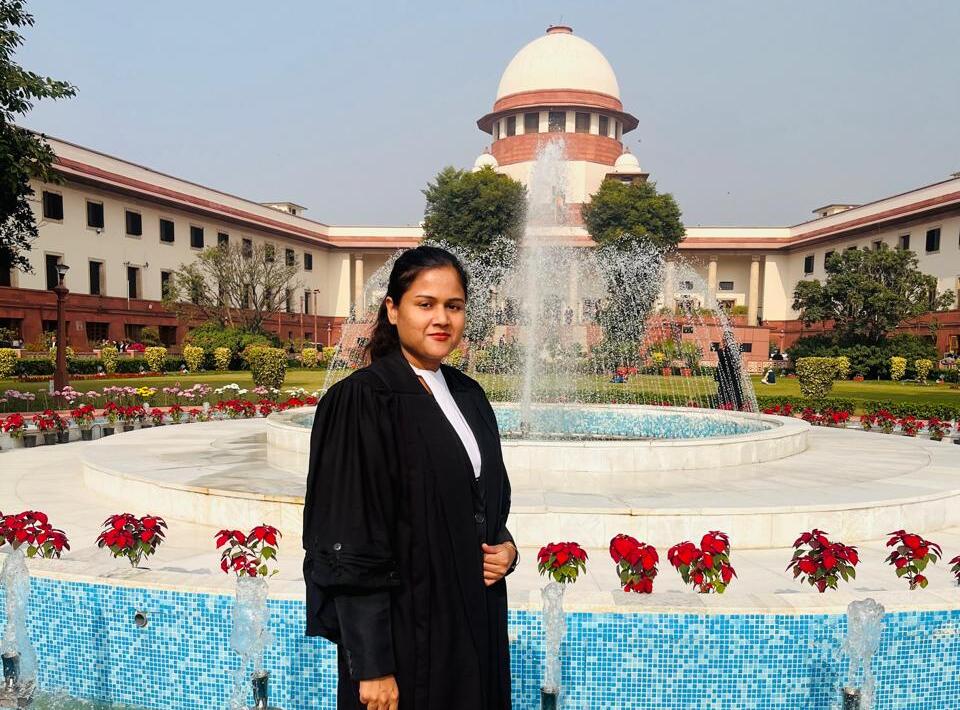
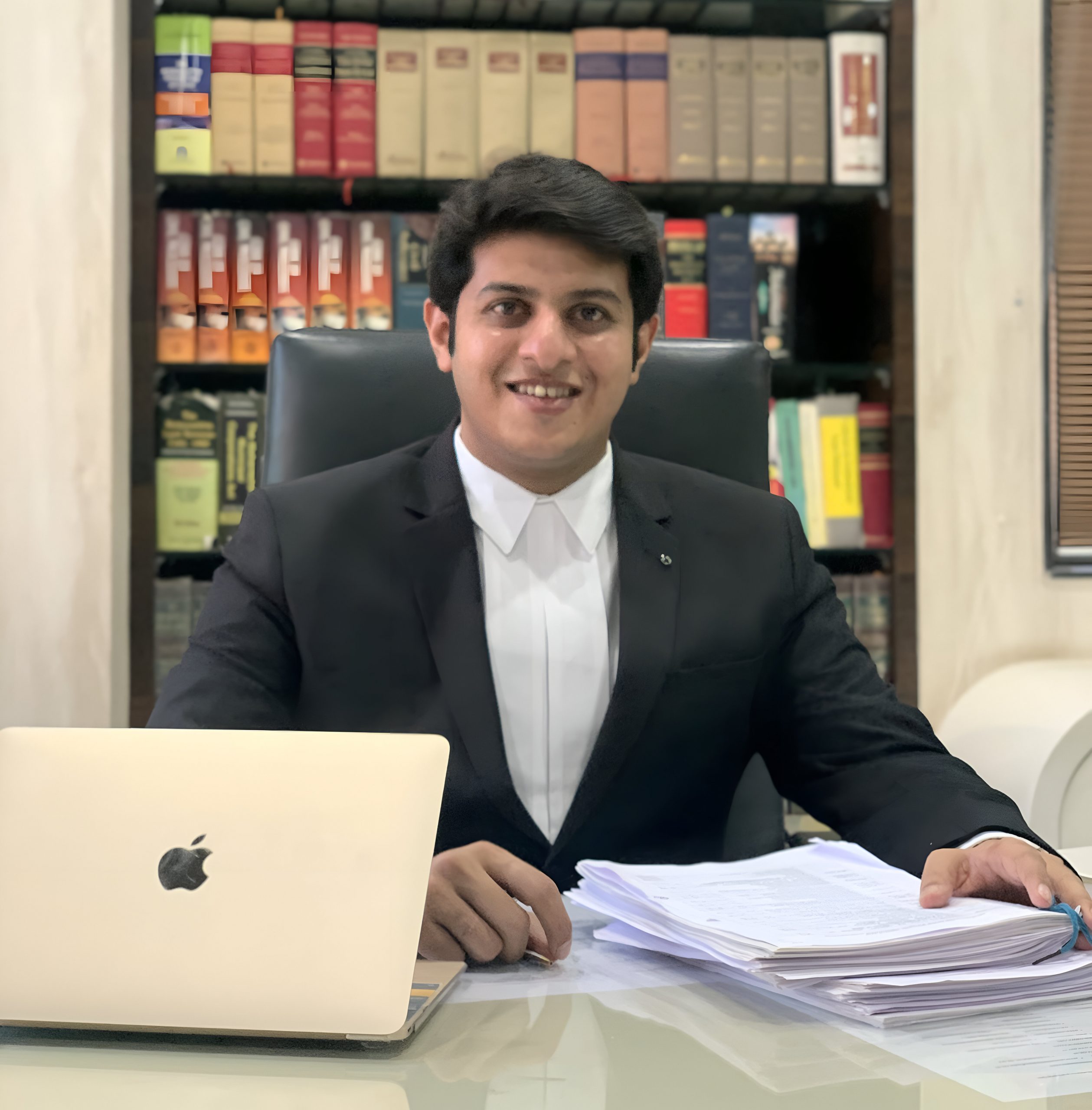



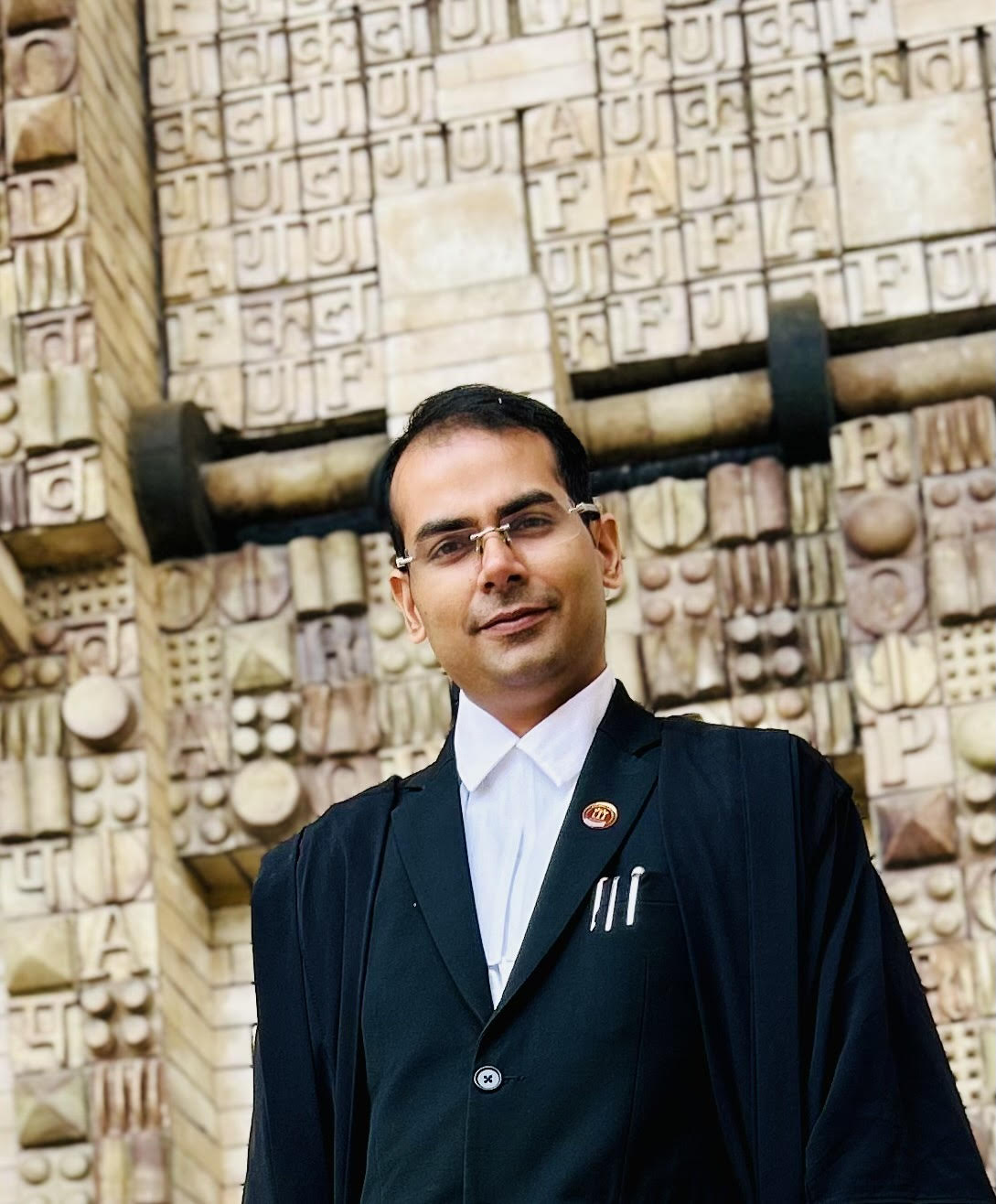


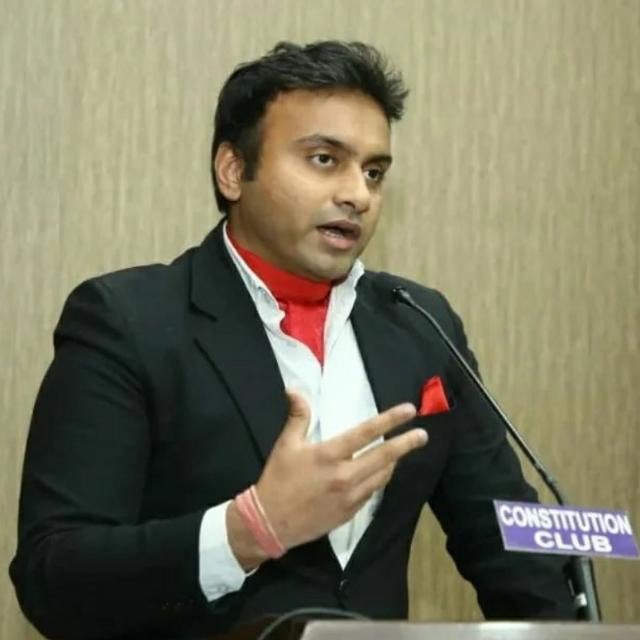






 Allow notifications