Tag: DU

  • Shabnam Khan, Head – Trademark, Lall Lahiri and Salhotra, on a career in Intellectual Property Rights

    Shabnam Khan, Head – Trademark, Lall Lahiri and Salhotra, on a career in Intellectual Property Rights

    Shabnam Khan graduated in English Hons. before deciding to pursue law at Delhi University. She graduated in law from Delhi University in 2003. Her journey as an IPR professional started when she joined Evalueserve.com Pvt. Ltd. as an Associate. Thereafter, she joined Lall Lahiri and Salhotra as a Senior Associate in 2007. She was subsequently promoted to Head – Trademark Applications in 2013. In this interview she talks about:

    • Specializing in IPR Laws
    • Working at one of the foremost IPR Firms
    • Being Head – Trademark Applications at Lall Lahiri and Salhotra


    What brought you into studying law? Was it planned?

    I had always been captivated by the legal fraternity and the zeal with which they pursue the path of providing justice for their clients. Honestly, the biggest push came after I saw few movies such as “A Few Good Men”, “The Accused” and “A Civil Action” which brought me to realize that this profession had the power to change people’s lives. With that thought during my last year of English Hons. I decided that if there was a career which I wanted to pursue it had to be in the legal domain and thereafter once I started with my course work there was no looking back. The entire subject was and is still captivating.


    Please tell us a little about your law school days at the Delhi University? How were you at academics?

    The entire course was so gripping that it was difficult to miss a single day at college. The biggest positive of the Delhi Law University is the excellent professors and their teaching methodology. The sessions were interactive, lively and always buzzing with arguments and counter arguments on various topics. I was also elected as the student counsellor during my time at the college. I would rate myself as a hard working student who participated in various college activities while securing very good grades in a few semesters.


    You have specialized in IP law. What made you interested in the same? How do you say one can gain expertise in IP Law? What does it take to be a good IP lawyer?

    The journey to being a IP professional started when I joined Evalueserve.com Pvt. Ltd. where I was required to work with legal attorneys who handled various activities related to IP matters. I received tremendous guidance from attorneys from across the globe, especially those who were involved with USPTO (US Trademark and Patents Office). I was thereafter trained in patent writing and filing matters. This is when I developed an irrevocable interest in the subject. The expertise in the subject comes with the right guidance, practise and continuous dealing with matters related to the subject. To be a good IP lawyer requires one to have broad understanding of various industries, business nuances so that you can suggest creative and out of the box solutions to the clients for their legal matters.


    You started your career at Evalueserve.com Pvt. Ltd. as an Associate. How did you secure your appointment? How would you describe your experience working there? What kind of challenges did you face during this job?

    I started as an Associate handling the legal part of the patent filings for the IP department of Evalueserve. That was my first step in the world of IP. I got a lot of guidance from my seniors, went through patent drafting training and learnt quite a lot about what patents are all about and how any invention is required to be protected and secured in the best possible manner. Challenges were numerous, IP was new, and the domain was technical which required me to have conversations in different time zones with IP Attorneys in the US and across the globe. The job entailed that I was always abreast with the latest happenings and was always a step ahead of the deadlines as there was no room for errors. I developed various skills to manage things and made sure nothing falls through the cracks.


    Thereafter, you joined Lall Lahiri and Salhotra as a Senior Associate in 2007 and became Head – Trademark Applications in 2013. For a law student it’s very difficult to think about becoming a Head in just six years of joining work. What would you say helped you succeed?

    Joining Lall Lahiri and Salhotra came after a stint of over three years of dealing with Patents. Since I did not have a technical background, I found myself being limited to looking at the legal part of Patents which at that point in time did not have considerable opportunities. As I was interested in Intellectual Property, I wanted to look into other aspects of IP as well. The trademarks division of LLS gave me the much needed exposure and opportunities to grow. The seniors and partners were very educative and supportive towards me since trademarks was an uncharted territory. I learnt, made a few mistakes, but always pushed constantly by learning and guidance provided by my seniors. The process of learning and growing never ceases at LLS, therefore it was after years of working there that I was bestowed upon with the responsibility of heading the department. The openness to accept challenges, hard work and eagerness to learn helped me join the ranks of being the Head of the department.


    What kind of effort should a young associate put in to work to be appreciated? What distinguishes an associate from a partner when it comes to work?

    A young associate should be all about learning and gaining knowledge of their domains. Reading and keeping yourself abreast of any developments happening in the field are a must. Hence, it is a must for the associate to focus on his professional path of enrichment as these initial years will differentiate him from others in the future. An associate, in the initial years of their induction should always have an attitude of being a go-getter, ready to accept challenges and should be able to think out of the box. Every matter will enrich the associate with greater depth of knowledge and equip him in handling various matters in the future.


    shabnam-khan-2

    What does a Head at a Law Firm like Lall Lahiri and Salhotra do? What falls within the scope of your responsibility? Tell us about a typical work day.

    The work of a Head of department entails a large number of activities and cannot be categorized into specific key responsibility areas. However, some of the key tasks include – speaking with clients on active and fresh mandates, understanding their legal problems and suggesting actionable solutions, managing deadlines, resource & project planning amongst various other tasks.

    A typical day starts with reading the emails received from the clients, prioritizing what needs to be done, what needs to go out to the clients on that day and what needs to be started to be able to meet the future deadlines. Advising clients, providing them with your opinions both from a legal and a commercial perspective, recommending the best ways forward and assisting them in achieving the same are the highlights of a typical day.


    How is the work culture at Lall Lahiri and Salhotra? If an associate commits a mistake or an error what course of action do you follow?

    Work culture at LLS is very cohesive. It has great learning environment for everyone, be it an associate or a senior person. There are no limits to work and you can grow as much as you want, of course with the right abilities and attitude. The firm promotes in people thinking out of the box, finding solutions and hence in the process, mistakes are expected from juniors. However, it is also expected that with the right guidance from the seniors he/she is able to amend and learn from the same.


    What are the other areas of study which you think that a law student wanting to excel as a professional in the field of IP should be proficient in?

    In case you want to excel in IP, certain other related fields of law also come into the picture. Associated areas of law include corporate law, criminal law and law related to other aspects of IP such as copyrights and Patents. An expertise is not desired, but working knowledge of these fields will assist and help you rise above the rest.


    What changes has being the Head – Trademark Applications brought into your life, do you ever feel that there is an excess of work load on you? How do you manage to strike a balance between your personal and professional life?

    Work never stops, the interesting bits of queries received from the clients keeps you going and exploring more. Work can and never should be treated as a burden but as a challenge, the more you have, greater the chances that you will become a better and refined professional. As no two assignments are the same, it helps a person in exploring uncharted territories and subject matters resulting in understanding the applicability of law in greater detail.


    The trend now is to gather various internship experiences at different places. Was the scenario the same while you were pursuing law? How are internships helpful for a law student?

    While I was pursuing law, the concept of gathering internships was in the nascent stage. At the most, students would get attached to someone they know or their family knew or start as assisting lawyers in various courts. While ensuring you intern with good and varied law firms is a necessity of the current time, however, an intern should be thoughtful of not overdoing the same. It is advisable to spend time in a few law firms than a large number of law firms as it would leave the intern confused and not being able to understand any subject in detail. The same is crucial in making future career decisions.


    What are the qualities which Lall Lahiri and Salhotra look for in one and his/her CV?

    The firm hires interns, however, the selection process is stringent and thus only a few make it through the selection process. It is important for the intern to exhibit qualities such as – knowledge of current happenings in the IP world, understanding on key/ famous IP litigations, attitude, openness to learn and the desire to go extra mile, proficiency in spoken and written English, etc.


    What do you feel makes an intern stand out and is very important for him to do to have a chance of getting a call back or even a PPO?

    As I said earlier, it is about your attitude and willingness to learn. A lot depends on how fast you pick up things, and deliver results in a limited time.


    What would be your message to our readers who are budding lawyers and law students?

    Have the right attitude and never think any work is small, give your 100% to whatever you do. This will take you high on the ladder where all you can see is success.

  • Ruhi Paul, Associate Professor, NLU Delhi on teaching, academics, research acumen and legal education

    Ruhi Paul, Associate Professor, NLU Delhi on teaching, academics, research acumen and legal education

    Ruhi Paul studied law at Delhi University and graduated in 1999. She practised for four years before choosing to enter the world of academia. She also holds a Master Degree offered by Guru Nanak Dev University and Ph.D. (Mediation law) from NALSAR University of Law, Hyderabad. She has worked as an Assistant Professor at Department of Law, Guru Nanak Dev University, NALSAR and NLU, Delhi. Presently, she teaches Civil Procedure, Law of Limitation and ADR at National Law University, Delhi as an Associate Professor. She was also involved in a training programme on Civil Procedure & Arbitration Laws for Controller Generals of Indian Defence Accounts Services.

    In this interview she talks about:

    • Teaching at National Law University, Delhi
    • Tips on excelling in academics
    • Accessibility and uniformity in NLUs


    How did you decide to opt for the field of law?

    As any other young enthusiastic girl, I wanted to join the field of law to help the masses to get justice. I was very fascinated by the idea that simply studying law is empowering in itself as we get to know of our rights and duties.


    Do you feel that the legal profession has significantly changed from the time when you decided to study law?

    Yes, the legal profession has changed for better. The base of any profession is research and research has become so easy with all the online resources available now. However, sometimes I miss the long periods we used to spend in the libraries.


    You studied law at Delhi University. Which areas of the law fascinated you the most as a law student?

    As a student, I was fascinated by Jurisprudence, Constitutional Law, International Law and Criminal Law. The best strategies according to me was listening very carefully to the lectures in the class, making very good books as base books for the subject and reading the related case laws very minutely.


    Your Ph.D. thesis was on mediation law. Why did you choose mediation law in particular? What factors should a legal academic consider while choosing an area of specialization apart from personal interest?

    I chose mediation as I had developed an interest in Alternative Methods of Dispute Resolution (ADR) well before I decided the topic for my Ph.D. thesis. I was teaching ADR at NALSAR University of Law, Hyderabad and I was fascinated by the idea that some disputes can be resolved in ways other than through courts using amicable methods which have the potential of improving human relations apart from resolving disputes. I also realised that Mediation is one such method which is not being researched and used in India as much it is used and researched upon in foreign Jurisdictions. So I decided to do research in Mediation and how it is being administered in India through courts. My Ph.D. is the first Ph.D. on mediation in India.

    A researcher should consider how his/her research can supplement the knowledge about the topic and how relevant the topic is in the contemporary times.


    You currently work as an Associate Professor of Law at National Law University, Delhi. What prompted you to choose teaching as a career?

    I had a short stint of four years at the Bar before I switched over to academics and pursued higher studies. While I was practising, I felt that I could be more productive if I joined teaching. As in teaching I can help a larger section of society through equipping young students with not only legal acumen but also lots of other life skills like positive thinking, taking responsibilities, team work, sensitivity towards others, leadership qualities, time management, stress management, etc. I feel that these qualities can help a law student to not only become a successful professional but a responsible citizen of India. This can automatically improve not only the Bench and Bar but the entire society.


    Tell us about your teaching methodology. Do you encourage students to take notes or do you engage your students in active class participation?

    I practise an interactive teaching methodology. I do not encourage students to take notes. I want a class which is alive and participative. I never mind my students asking questions. In fact, I feel motivated to teach a class which is fully prepared for the topic beforehand or the students who generally have an inquisitive bent of mind.

    Teaching is something which gives me lot of satisfaction at the end of the day as it is a learning process for me as well. I have to keep myself updated to face the students.


    What subjects are you currently teaching? What are your current research interests? Have you involved your students in your research?

    Currently I am teaching Civil Procedure, Law of Limitation and ADR. My practice at the Bar has really helped me in my teaching of procedural subjects. My current research interest is to delve deeper into the field of mediation. I am planning to write something like Jurisprudence of Procedural Laws to make the learning of procedural subjects interesting for students. Presently, students find it very hard to concentrate in procedural subjects as they try to learn it like any theory subject. I try different interesting ways to teach procedural laws and try to give practical based research projects so that students gets a deeper understanding of procedural laws. Yes, I have involved students in my research and it was a great combined learning experience for all of us.


    Do you think students should treat their professors like friends, or is it necessary to maintain a disciplined environment to create a good classroom environment?

    I think some bit of discipline is always necessary for anything that we do in life. I feel that in the classroom there should be a disciplined environment for a serious learning experience for both the teacher and the taught. Outside the classroom, the Professors should be friendly so that the students can approach them for discussing their study related and other problems. I think that we teachers have a larger role to play in the lives of our students and so we have to playing different roles like that of a strict teacher, parent, friend, guide, mentor, etc.


    Could you give our young readers certain tips on excelling in academics? As a teacher what tips do you give to your students for proper understanding of a subject?

    As a student, I used to make it a point to listen very carefully to whatever was taught in the classes. I think students should read the law (bare Acts, etc) very minutely to understand what the legislator is trying to say and why a particular law is being made. Reading cases related to the subject is also very helpful in understanding how the law is applied to real life situations. Most importantly, students should be very sensitive to what is happening in their surroundings as the understanding and application of law becomes very simple if one has lots of real life experiences.

    I strongly suggest students not to go for cramming or following any other short cuts just to pass in exams. Students should understand that they have a very important role to play in building up of the future generation and so they should choose wisely what they want to do in life and do it vey sincerely.


    You were involved in the training programme on Civil Procedure & Arbitration Laws for Controller Generals of Indian Defence Accounts Services. What were the most intellectually stimulating aspects of this experience?

    The most stimulating aspects of this experience is the fact that I have to offer sessions to people who most of the times are very senior officials and experts in their field. To offer orientations in Legal subjects, one requires a totally different type of methodology than teaching young law students. I really enjoy the practical application based questions from the trainees. I also like the fact that I need to design the course according to the need of the trainees who might not be having any legal background but who require an understanding of these areas of law in their work field.


    When would you say a legal academician is ready to start writing books? Any time management tip for budding legal academicians?

    Research is very essential for academics and it is a continuous process. I think there is no hard and fast rule as to what the right time is for an academician to start writing a book. Whenever an academician thinks s/he has acquired sufficient understanding of a topic/phenomenon/ process, both practically and theoretically, and his/her research will add something to the already existing literature on the topic, s/he can start writing a book. An academician can also refine his/her research while writing the book and so it is perfectly fine if s/he is digressing from the original research plan.

    We always can find time to do what we really want to do in life so I think there is no problem of finding out time for research or for any other work from our regular schedule. I sincerely believe in the saying, “When there is a will, there is a way”.

    For budding legal academicians, I want to say firstly, that they should enjoy life because life is a gift from God that we get only once. Secondly, when they work/ study/research than also they should do that with the same zeal and enjoyment. Your work will give you respect, authority, fame, livelihood and satisfaction.


    A common perception in the student community is that the curriculum in most NLUs is outdated and does not equip the students with the skills that they need to solve real life problems. What are your thoughts about this perception?

    I, humbly, don’t subscribe to this view. All the law schools follow a very flexible approach to curriculum design. The faculty is given a lot of space to design courses and are encouraged to keep updating the syllabi with the changes in the law. Apart from the basic courses, law schools have clinic courses which help a student to understand ADR mechanisms, drafting of pleadings and conveyancing, application of law in courts/tribunals, etc. Law schools also have extensive internship programs to enable students to have an experience of working with various organisations. In NLU, Delhi, we have library internships for first year students, NGO intersnships for second year students, Trial advocacy for third year students, appellate courts internship for fourth year and fifth year students. Law schools also have research centres which provide a forum for the students to get involved in various research projects, most of which are empirical in nature. In NLU, Delhi, presently, students are involved in the Clinic on death row prisoners, legal aid work, construction workers, gender issues, etc.


    Another concern that is often raised is that the NLUs are beyond the reach of hardworking students who lack the economic resources to study in these prestigious institutions. What steps should be taken foster more equality in the NLUs?

    At NLU, Delhi, we offer scholarships to students who lack economic resources. Sometimes, full fee waiver is also granted, if the circumstances require it. Various legal and other institutions can also have schemes of sponsoring the student’s studies. Initiatives like IDIA are good and should be extended to all institutions.

    The students who lack economic resources can also be allowed to do part time work in the libraries, etc to earn their pocket money while they stay in the law school.


    NLUs in India have often been described as islands of excellence amidst a sea of mediocrity. What steps should be taken to usher in greater uniformity in the quality of legal education in the country?

    I think the law schools and the Law universities and colleges should start working together. By working together, uniformity can be brought in legal education. There can be arrangements for exchange of faculty, certificate courses can be offered to students in law schools on subjects of their choice, law schools can have trainings for teachers in course designing and teaching methodology, etc. NLU, Delhi has Academy for Law Teachers which conducts training and workshops on regular basis. Joint research programs can be initiated.


    Any important things which law school didn’t teach you but ‘teaching’ did?

    Teaching has taught me lot of patience, the ability to see things from a wider perspective and self-control. Teaching has taught me to be a student of law for the rest of my life.


    Lastly, what would be your message to people who want to take up a career in teaching?

    Teaching has always been a very respectable profession. Teaching as a career is highly satisfying. Now a days, even the financial aspect is not a concern if you want to join teaching. It is a field which will help you to learn throughout your life by keeping you involved with bright, young and enthusiastic people. Teaching gives you the power to shape the future generation and with it comes the high responsibility to do this with great care and concern for the values of the society, the nation and the world as a whole.


  • Raghavan Ramabadran, Partner, Service Tax & VAT matters, Lakshmikumaran & Sridharan, on being a Chartered Accountant and Lawyer

    Raghavan Ramabadran, Partner, Service Tax & VAT matters, Lakshmikumaran & Sridharan, on being a Chartered Accountant and Lawyer

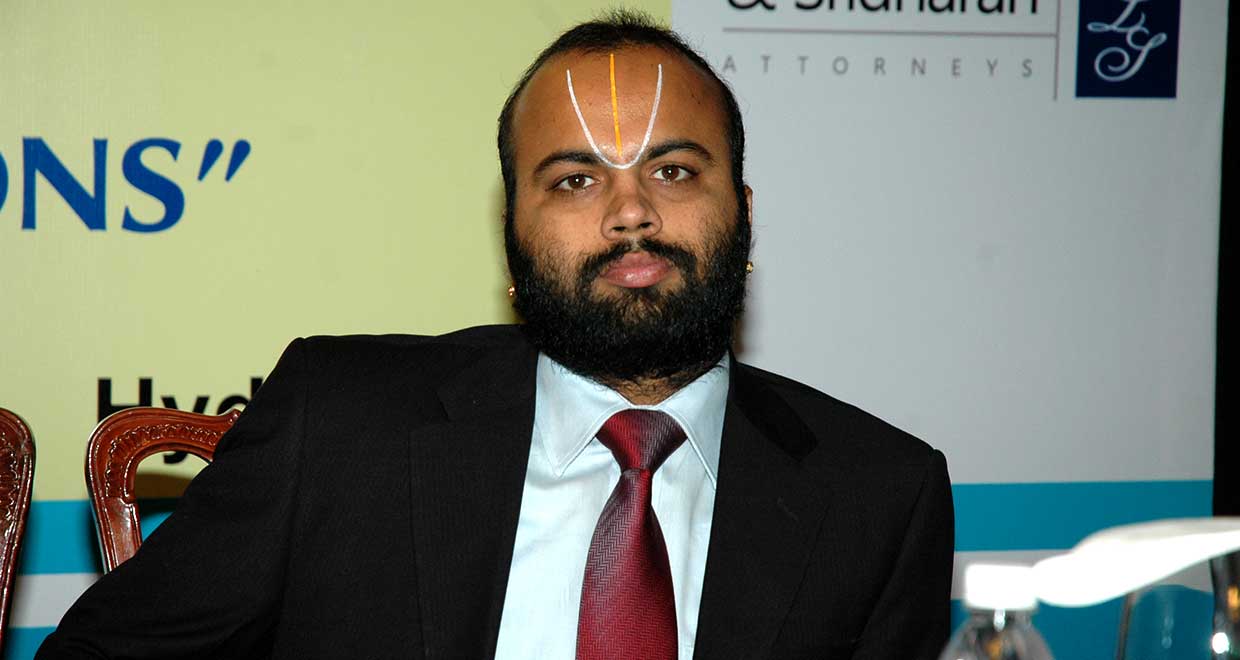
    Mr. Raghavan Ramabadran is a Partner at Lakshmikumaran & Sridharan. He currently heads the Service Tax and VAT practice of the Chennai and Hyderabad branches of LKS. He pursued a C.A. degree while simultaneously pursuing a B.Com course from Vivekananda College. His interest in taxation led him to join LKS after qualifying as a C.A. He further pursued a law degree from Law Centre II of Faculty of Law, Delhi University (“LCII”) while working at LKS itself.

    In this interview he talks about:

    • The LL.B and C.A. combination
    • Pursuing a law degree while working
    • Work of a Partner of Lakshmikumaran & Sridharan


    Where did you grow up and attend school? How did you decide to pursue C.A.? Please tell us a bit about yourself.

    I did my schooling in Chennai. I belong to a family full of Sanskrit scholars. In fact, my grandfather is a President’s awardee for excellence in Sanskrit. As a kid I was taught Sanskrit and Vedas. I had in fact completed my Vedic education by the time I finished my XII standard. Though I was always good in Mathematics, Science was not a subject which interested me and hence I chose to pursue a career in accountancy and enrolled myself in the C.A. course while simultaneously pursuing my B. Com course from Vivekananda College. I was always interested in taxes and once I completed my C.A. course, I applied to L&S. After joining L&S I realised how important it is to learn law to fully understand and work in taxes. Mr. Lakshmikumaran and Mr. Sridharan were very kind to me and took me to the Delhi Office for better exposure which also enabled me to attend the evening law course in Delhi University.


    After qualifying as a C.A., you joined Lakshmikumaran & Sridharan. How did you decide to join a law firm instead of practicing as a C.A.?

    As I said, I was always interested in taxes and one of my friends (who is also a C.A.) had already joined L&S. So I knew it was a great firm doing excellent service in the field of taxes. Hence, the choice was easy. I had applied to the firm. I was interviewed by Mr. Lakshmikumaran. The interview happened over several rounds and I was also asked to present a paper on Transfer pricing and the GATT Valuation Code.

    The firm already had the practice of hiring non-lawyers and therefore I was not an exception. Mr. Lakshmikumaran encouraged me to do law and explained to me how the scope of a C.A. is restricted as he cannot practise in High Courts.

    I realised that though a C.A. can render excellent advice, it is ultimately a lawyer whom he has to engage to sustain his advice before a court of law.


    What did your work profile at LKS consist of, before you were a lawyer?

    I was doing a lot of drafting which includes opinions, replies, appeals, writs, SLPs, etc. I used to do research and brief seniors in matters. Study sessions are a part of L&S culture and I was a regular in attending those. I was initially absorbed in the Customs team of L&S. Later when L&S started its practice in VAT, I was moved to the VAT Team. I was working in the VAT team till I became a lawyer.


    Tell us about your law school experience.

    When I look back at my years at LC-II, they were perhaps some of the best years of my life where I came across many intelligent and dynamic batchmates. The professors were very engaging and the curriculum was rigorous and very demanding. Everyday offered a new perspective on one’s approach to appreciating the law. Whatever I say about LC-II and its quality of education and the faculty, will be very little as its reputation speaks for itself.

    Perhaps, it would be interesting to mention here that the courses taught at law school helped me at the workplace too. At the time when the seminal BSNL case was being argued at the Supreme Court, in which L&S was substantially invested, I could appreciate and contribute to the table some of the finer aspects concerning the constitutionality of the provisions that were being debated upon.


    Is there anything you would like to have done differently?

    There is nothing that I would have liked to do differently. Looking back, I think what matters the most is how you allow the experience to enrich you and not overwhelm you. The sheer diversity of the people you meet and the insights you develop on life allow you to become a more practical individual, in a manner of speaking.


    raghavan-ramabadran-1

    How did you manage to eke out time for a regular three-year LL.B from LC-II while working at LKS? Please share with us.

    If you don’t have time in the day, steal it from night. Needless to say, switching back and forth from office to college was a demanding affair indeed. The tight schedule would otherwise be a strain on a normal individual. But maybe, it was the hunger for experience and knowledge that kept me going those years.

    The daily schedule involved coming in to the office by 7:50 A.M. From 8 A.M.-10 A.M. I would attend sales tax study sessions chaired by Mr. Sridharan himself. This was a ritual I stuck to for one and a half years, and it paid off greatly. Regular work would follow this until evening when I would scamper off to college and again head back to office to take care of pending work. Many a times, in fact most often, I would sleepover at the office lobby. Suffice  to say, this was occasionally tiring but never did I feel flushed or demotivated.


    You have more than a decade of experience in handling litigation relating to Service Tax, VAT and other areas of indirect taxes before various forums. What were the differences in your experience as a CA and as a lawyer?

    Completely different. As a lawyer, you can rely on yourself to sustain your interpretation. For a CA, there would be a two-step process to take a legal point across, one to the arguing counsel and the final one to the judge. Whereas for a lawyer, there is only one level to convince, the judge and not the arguing counsel.

    As a C.A., our exposure to law was oriented to the extent of appreciating the application of the law. However, being a lawyer one can delve into the correctness, spirit of the law and formulate its ethics and justifiability. As a C.A., we could hardly acknowledge the fine line of difference between a rule and provision. While studying law, the questioning spirit came alive.


    Currently, you head the Service Tax & VAT practice of the Chennai and Hyderabad branches of LKS. What are the best and worst parts of being a partner at one of the most successful tax law firms in the country?

    The best part easily is the bench strength at the firm. A multitude of good clients, refined nature of the tasks, variety in the kind of deliverables, priority on ethics are some of the traits that would easily attract anyone to the firm. The knowledge chest that L&S has is in its people, be it in excise law or patent prosecution. Other than this, the resources in the form of a heavily standardized information technology system, books, journals, credible physical infrastructure offers one an experience worth its weight in gold.

    The challenging part, and definitely not the worst part, is that the benchmark is very high. There are a lot of expectations to be met. Arguably though, this is something that is expected with the responsibility of being a partner at a leading law firm.

    Pondering over mystical questions like “work life balance” takes a back seat as these are questions that I do not find myself philosophically qualified to answer. Other than this, there are always the clients who keep calling at unexpected hours, which is why I am always nervous whenever my phone battery runs out, lest I miss out on an important call. The work profile for a partner is expectedly very demanding as one has to always stay sharp and alert. But all of this being said, we relished it and continue to do so.


    raghavan-ramabadran-3

    What is a workday like for you? Has work settled into a predictable pattern or are there new challenges every day?

    For a litigating lawyer, I can say that being officers of the court, we are at the mercy and behest of the court. There is no method to this madness, Ha Ha!

    On a serious note, it is always unpredictable. Appointments given to clients during the evening materialize, but where I commit to a meeting during the daytime thinking I may be able to fend some time for it, such is never the case, Add to this the usual rigours of urgent briefs, shuttling between various courts. They tend to take a toll on the body at times.

    The highlight is that being in L&S, repeat matters don’t come. The scope and dimensions of the work is new and it is a treat to get one’s hands on them. Challenging matters are a staple affair and therefore it would be fair to say that there is a negligible chance of having a predictable pattern in terms of work coming in.


    How important would you say are business development skills at such higher roles in a corporate law firm?

    Very crucial. Clients always have alternatives.


    What do you and other partners at LKS measure success by? What must interns and attorneys at LKS do in order to get noticed and/or promoted?

    Show spark. Season that with clarity of thought. L&S encourages an open-door policy and there is complete freedom to speak and express one’s views. The only touchstone that someone’s worth is judged by is sheer merit and hard work. We don’t expect interns and fresher attorneys to be ready for the work profile that comes with working at L&S. Which is why we lay emphasis on training in our daily class-room lectures. We encourage interns and juniors to bring fresh and novel thinking to the table. With commitment and analytical skills to show for it, success can definitely be achieved.


    What advice would you give to law students who wish to pursue C.A. or, alternatively, C.A. students who wish to pursue law?

    While you focus on your areas of interest, make sure you pass all the subjects. Ha Ha!

    What I meant to say is that if you intend to be a lawyer in the future, pursue those subjects in CA in which you plan to make a living in. C.A. background for becoming a lawyer is very useful. Accounting knowledge and commercial understanding of the transaction are traits that come in very handy in both transactional practice and tax litigation. My view is that such an academic profile is a potent combination, especially when it comes to leaving a mark in the realm of commercial laws.


    Lastly, what would be your advice to law students and young lawyers reading this interview?

    What you learn as a student stays in your mind forever. It is important as a student to try and understand the basics of every subject. With experience, we realize that no law is difficult if our basics are strong. Great lawyers are those whose basics are phenomenal and they never commit mistakes in basics. Rather they win complicated cases with basics.

  • Neeraj Arora, Expert Investigator, Cyber Crimes, Delhi Police on building a career in Cyber Law

    Neeraj Arora, Expert Investigator, Cyber Crimes, Delhi Police on building a career in Cyber Law

    Neeraj Arora started working in the Delhi police as a sub-inspector in order to support his family, while studying B.Com. Thereafter he did his LL.B from Delhi University.

    After graduating and continuing work in the police force, he developed an interest in cyber crimes and law and took up a variety of certificate courses and diplomas in India and abroad to further his knowledge in the area. Eventually, he started up his own law firm, Hazen Legal Associates which specialises mainly in cyber law and offences.

    Presently, he is a designated Expert Investigator and he has investigated a large number of cases relating to E-mail related crimes, Web-Server/System/Wireless Network Hacking, BPO Data theft, Online Auctions Website Frauds, Obscenity, E-mails/SMS Spoofing, Phishing Frauds etc. for the Delhi Police. He serves as a guest faculty member and a guest lecturer of ISACA, NICFS, Indian Law Institute, Directorate of Enforcement, Indian Institute of Corporate Affairs and many other prominent institutions. He is also an Arbitrator for NSE, ICADR and MCX in online trading matters.

    In this interview we asked Neeraj to share:

    • His initial decisive moments during graduation
    • Being a part of the Delhi police and his work in the Cyber Crimes Cell
    • Doing a number of extra diplomas and certificate courses in Cyber Law and Digital Forensics
    • Being a Consultant for the World Bank
    • Being appointed as an Arbitrator of the National Stock Exchange
    • His experience of starting up his own law firm, Hazen Legal Associates


    Please introduce yourself to our readers and tell us a bit about your college life days. Did you have lawyers in your family?

    After doing my 12th, I started working and took my first job as an Accounts Assistant because my family circumstances required me to earn for my family. I joined B.Com (H) at the School of Correspondence Studies, Delhi University, while continuing my job. I also took up part-time writing work, filing of Income Tax/Sales Tax returns and tuitions to support my family. I am a first generation lawyer in my family.


    You are a Commerce (B.Com) Graduate and a Cost Accountant by qualification. What prompted you to make the transition to law?

    After completing B.Com, I joined ICWA as I intended to join the accountancy profession. Meanwhile, due to my financial troubles, [sociallocker]I joined the Delhi police as a Sub-Inspector. I also continued with ICWA and completed my final in 1996.


    You have pursued PG Diplomas in Arbitration and Drafting long after graduating in LL.B. What prompted you to take up these diplomas?

    I did my LL.B. from Delhi University in 2001 and pursued a PG Diploma in Arbitration & PG Diploma Drafting of Legislation, Treaties, International Agreement & Contracts from 2008 to 2010. I pursued the extra diplomas because the topic fascinated me as it upgrades existing skills and enables one to reach new heights in life as well as the legal profession. After resigning from the Delhi police in 2008, I decided to explore my career in Arbitration which is an upcoming and rewarding career. In 2008, I was appointed as an Arbitrator with the MCX Exchange and to augment my skill in the field of International Arbitration, I joined and completed these two part-time courses, PG Diploma in Arbitration, Drafting of Legislation, Treaties, International Agreement & Contracts.


    You have been practicing cyber law for almost eight years now. How did you become interested in cyber law?

    In 2005, I was transferred to the Cyber Crime Cell of Economic Offences Wing (EOW) of Delhi police and at the time I didn’t have much knowledge of computers. I treated the posting as a punishment, but took it up as a challenge as I foresaw huge potential in the area. I did a number of trainings on cyber offences from various police academies: CBI, CDTS and also did a Certificate Course in Computer Forensic from IP University, Cyber Crime Investigator Course from Asian School of Cyber Law, PG Diploma in Cyber Law from Indian Law Institute (ILI), Delhi, PG Diploma in Cyber Security from Asian School of Cyber Law and MBA (Information Technology) from Manipal University. Consequently, that is also how I became one of the prominent Investigators of the Cyber Crime Cell of the Delhi police.


    neeraj-arora-2

    You are associated with Delhi Police as a Cyber Lawyer & an Expert Cyber Crime Investigator. Please share few interesting experiences of your investigation with our readers and tell us more about these issues.

    On being equipped with knowledge on Information Technology, I got opportunities to investigate a large number of cases relating to E-mail related crimes, Web-Server/System/Wireless Network Hacking, BPO Data theft, Online Auctions Website Frauds, Obscenity, E-mails/SMS Spoofing, Phishing Frauds etc.

    In all the cases, I prepared the mirror images on the spot, collected relevant digital evidence, arrested a number of hackers, filed the charge-sheets in the court, etc. The investigation of cyber offences was quite challenging as there were no precedents, standard operating procedure and no one to guide us. I have collected the requisite information from the internet, various books and journals on digital forensics and by 2008, I was awarded the status of an expert cyber crime Investigator.


    You are a Certified Forensic Computer Expert and an empanelled member of IACIS for more than two years now. What is your job as an expert at IACIS? What kind of issues do you deal with?

    The IACIS (International Association of Computer Investigative Specialists) is the top most organization in the world which specializes in the field of computer forensics. The Certification, “Certified Forensic Computer Examiner” (CFCE) is one of the top most certification which is also recognized by the Forensic Specialities Board of U.S.

    In order to augment my skill and also to gain an in-depth knowledge, I joined the Certification and attended two weeks Hands on Training in Orlando, U.S. and after that I worked hard for another year and passed the six exams which involves analysis of mirror images to find out the Window, Internet and other Artifacts of the Crime.

    The Course was a big challenge as this is the only Certification which requires extracting the evidence without using Forensic Software. The only Software which can be used is Hex Editor and for doing one need to have good knowledge of FAT File System, NTFS etc. as the Data/Artifacts has to be extracted manually by finding the location of data from FAT/MFT Table.


    You have vast experience as an Investigating Officer of CBI, Cyber Crime cell and Economic Offences Wing of Delhi Police and you are also associated with Justice K. Venkataswami Commissioner of Enquiry (Tehelka) for more than a decade. Please share your experience.

    I joined the CBI as Inspector on Deputation and got the opportunity to investigate the huge and technically complex cases of Economic Offences going into hundreds of crores of rupees. My skill and knowledge in the field of Finance, being a Cost Accountant, enable me to investigate these cases and to book the fraudsters. As an Investigating Officer with Justice K. Venkataswami Commissioner of Enquiry (Tehelka), I got the opportunity to investigate the huge scam and I received an award for outstanding investigation in the said assignment.


    You have trained many professionals at Police Organisations, Indian Law Institute, CBI and also at IACIS. Please tell us about your training programme.

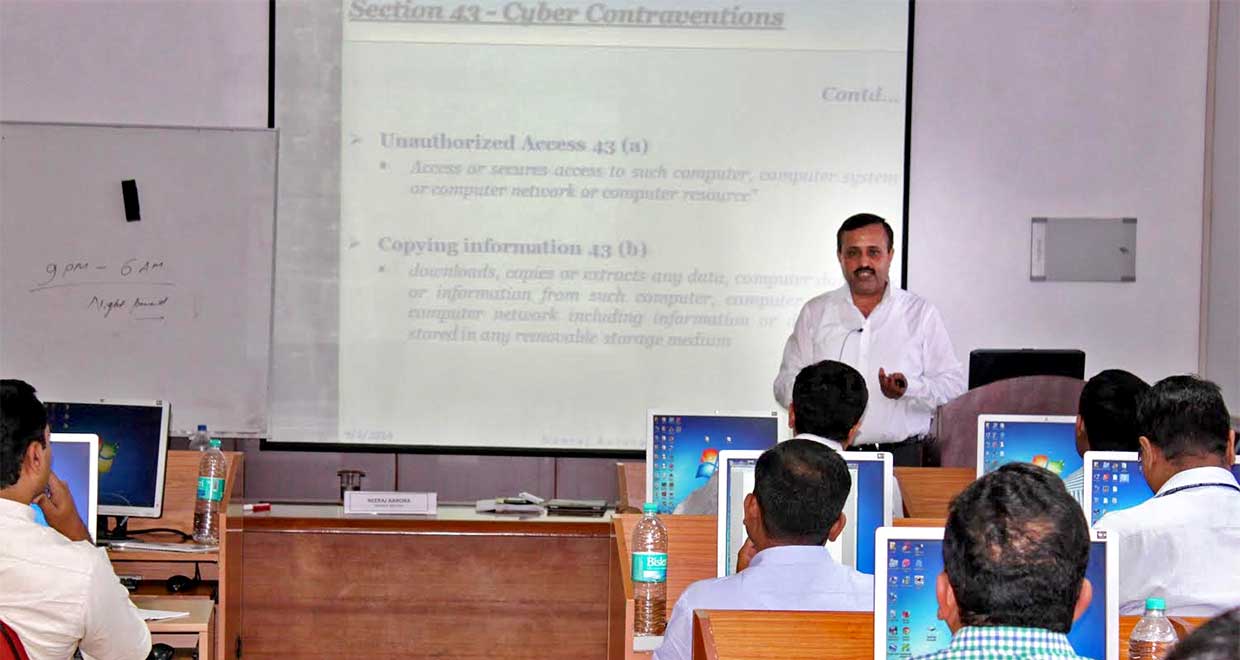
    The arena of cyber forensics comprises of three domains namely Computer Forensic, Network Forensic & Mobile Forensic. These domains are inter-connected and integrated in such a manner that the knowledge of three domains is required to handle the Digital Evidence. I have been continuously sharing my knowledge of these domains by way of training. The training I provide is an integration of Bit & Byte, Debit & Credit with investigation and procedural and substantive laws.


    neeraj-arora-3

    You have also delivered a couple of lectures on cyber law. How do you prepare yourself before any presentation or delivering any lecture? Please give some tips to our readers.

    My competence in integrating computer forensics with digital evidence, e-commerce, procedural/substantive laws gives me a unique edge in delivering training in the field of Cyber Crime/Cyber Law/Computer Forensic/Financial Forensic when it is connected to the ground realities of investigation, analysis and presentation in a court of law. I am able to provide a solution to the various gaps in the investigation, collection, analysis, presentation & cross-examination on the digital evidence and integrate it with the applicable principles of digital investigation, digital evidence, cyber laws and other procedural/substantive law.


    From your profile it can be seen that you have strong exposure, knowledge and specialization in Arbitration law. How did you gravitate towards this discipline?

    Arbitration is one of the upcoming fields which require skills of legal procedure, proceedings, appreciation of evidence and discovery. The academic domain, knowledge and experience plays a major role in acquiring these skills and since the entire world is moving to ADR for dispute resolution, this is the most growing field with opportunities increasing exponentially.


    As an Arbitrator and Mediator for NSE, ICADR and MCX what kind of disputes do you deal with? What is the normal time period of disposal of an arbitral proceeding?

    As an Arbitrator on various exchanges, I am adjudicating the disputes relating to the Online Share/Commodity Transactions between the Members of Exchanges (Brokers) and their clients.

    As a member of IGRC on various exchanges, I conduct conciliatory proceedings to resolve disputes relating to the online share/commodity transactions between the Members of Exchanges (Brokers) and their clients. This mechanism provides an opportunity to the litigant to resolve their dispute with the help of Conciliator/Mediator.

    The normal time period of disposal of such dispute is 3-6 months. The disputes are resolved by conducting the proceedings as per the bye-laws and exchanges and the procedure prescribed in Arbitration & Conciliation Act, 1996.


    You were also appointed as a Consultant of World Bank for four years. How did you get associated with the World Bank?

    I was appointed as a Consultant to the World Bank for analysing the contractual issues relating to the projects of World Bank.


    You have started your own firm – Hazen Legal Associates. What were the primary challenges you faced?

    I have started my own firm as the various skills in the field of law, finance & cyber offences gave me an edge. I got a lot of work in the field of criminal laws, cyber offences and consultancy relating to cyber offences. The only challenge was to bring together so many technical and legal aspects, which I did with the help of my colleagues and associates.


    What are the practice areas at Hazen Legal Associates? Do your firm emphasize more on cyber law than other areas of law?

    The main practice area is confined to criminal trials in the field of economic, cyber & anti-corruption cases. Due to heavy demand in the field of cyber law, we are now specializing in consultancy and compliance with cyber law as required by ISO 27001, storage/maintenance of digital evidence, handling cases relating to cyber crimes, cross- examination on digital evidence, handling of cyber security, etc.


    What is the application procedure for interns at HLA? What do you look for in a prospective applicant?

    We keep 3-4 interns at all times. The application procedure requires the applicant to send the detailed profile at on cyber.nk@gmail.com, we shall then follow it up by an interview. The skills required are knowledge of computer and research in the legal field. The networking and programming knowledge adds to the priority for the applicant.


    In spite of having so many involvements in various organizations apart from managing your own law firm, is it easy to have a work-life balance?

    It’s always a challenge but with the support of good colleagues and associates, one can maintain a work life balance.


    How should one go about starting his/her own cyber law practice in India? Please name a few institutes to study cyber law in India. How important are procedural laws in this discipline?

    A good knowledge of computers is a must. A Diploma in Computer Networking is required to understand the Cyber Offences and any further qualification in the field of Computer, Network or Mobile would add to the success of individual in this arena. There are various Institutes which provide courses like Indian Law Institute, NALSAR, IGNOU etc.

    Procedural laws have a very important aspect in Cyber Law, one should have knowledge of Criminal Procedure Code/Civil Procedure Code/Evidence Act. Without a good knowledge of these procedural laws, success in the field of cyber law cannot be achieved because the implementation would be only through these procedural laws.

    The other important aspect is that the Cyber Law caters to only 20% of the Cyber crimes whereas 80% of all Cyber crimes get covered under the IPC and other Laws.


    What would be your advice for aspiring cyber lawyers?

    The aspiring cyber lawyer should develop their skill in the field of procedural laws and Internet Technology at the same time. Later, these practitioners may not get the time/opportunity to develop skills and therefore, I recommend that aspiring legal practitioners should acquire maximum technical skills parallel with their L.L.B which would give them an edge later on.

    In the Europe, U.S., etc. most of the cyber lawyers have a background in technology like B.Tech etc. Now, integrated Course of B.Tech + L.L.B. (5 Years) have been introduced in various Universities/Colleges and pursing these courses would ensure the success in the field of cyber law. It can be said that candidates with such qualifications will dominate the cyber world in the near future.[/sociallocker]

  • Prabhash Ranjan, Assistant Professor, on a career in Academics and Research and the Indian Education regime

    Prabhash Ranjan, Assistant Professor, on a career in Academics and Research and the Indian Education regime

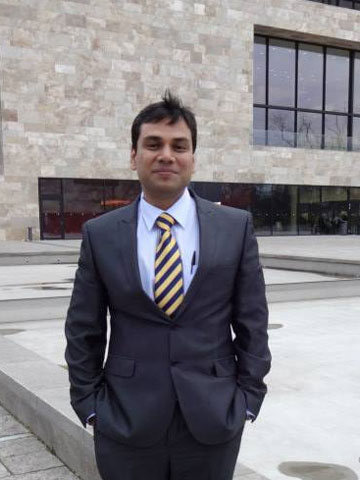
    prabhash-ranjan-2Dr. Prabhash Ranjan graduated as a lawyer from University of Delhi in 2003. Thereafter, he went for higher studies to SOAS, University College, London. Later, he received his Ph.D from King’s College, London. He worked as a consultant to Oxfam, taught at NUJS, Kolkata and NLU, Jodhpur and presently he is an Assistant Professor at South Asian University.

    Being a person of great insight into Academics, we asked him about:

    • Studying Law from Delhi University
    • Pursuing LL.M and Ph.D from reputed universities in London on scholarships
    • Experience as a consultant at Oxfam and as a professor at NUJS and NLUJ
    • Necessary changes in the Indian Education Regime


    How would you like to introduce yourself?

    I am an academic lawyer who teaches and publishes in the area of International Investment law and World Trade law. I hold bachelor degrees in Economics and Law from University of Delhi. For my LL.M, I read at School of Oriental and African Studies (SOAS) and University College London as a Chevening scholar. I hold a Ph.D. in Law from King’s College, London. I was born in Chandigarh and grew up in different cities like Bhubaneswar and Delhi. In my school life, I took part and won prizes in many debate competitions and other extra-curricular activities. As a kid, I aspired to become a medical doctor. I was very fascinated with the idea of having Dr. appended to my name. However, I gave up on this ambition once I realised that one has to be good in Biology to become a medical doctor! However, today I am happy that I have been able to fulfil my cherished dream of having Dr. appended to my name by earning a Ph.D.! In my school days, I greatly enjoyed studying Mathematics and also History (especially Modern History) and Political Science (Civics). Unfortunately, I couldn’t study History and Political Science after class 10th as I opted for Science stream. In those days, as a de facto rule, every good student was expected to study Science after class 10th! I am the first academician in my family. However, I come from a family, which has deep interest in academics and writing. My father earned his Ph.D. from University of Leipzig, Germany (then Karl Marx University in East Germany) in Veterinary sciences. My brother, a senior Army Officer is a very avid reader and is currently researching on naxalism as a Fellow at the ‘Centre for Land Warfare Studies’ (CLAWS). My grandfather, a freedom-fighter who went to jail several times during India’s freedom struggle from British colonial rule, was a prolific reader and writer in both English and Hindi and contributed articles to many English and Hindi newspapers.


    What motivated the switch from Economics to Law?

    (After doing his B.A. (Bachelor of Arts) with Honours in Economics, Prabhash pursued LL.B. from Campus Law Centre, Faculty of Law.)

    While pursuing Economics (Hons.), I had made up my mind that I would pursue Master’s in Economics and probably pursue a career as a professional economist. However, my father urged me to write the entrance examination of Faculty of Law, Delhi University. So, in many ways, the credit for me becoming a lawyer goes to my father.


    Tell us about your college life.

    My undergraduate college life of six years at Delhi University was quite exciting. I used to travel almost twenty kilometres everyday in Delhi University Special buses (old DTC buses popularly known as U Specials) from South Delhi to North Campus of DU in North Delhi. North campus of DU is a great place to study. It has leading colleges of India and various faculties and postgraduate departments providing a unique opportunity to mix and interact with students from different backgrounds. It also provided an opportunity to take part in a wide range of academic and cultural activities. Being part of DU Law Faculty was a terrific feeling for two reasons. First, I was delighted about the fact that I inherited a great legacy of legal scholarship of scholars like Upendra Baxi, P K Tripathi, Lotika Sarkar, M P Singh to name a few. Second, it was a proud feeling to be part of an institution that has produced many eminent academicians, numerous Supreme Court and High Court Judges, many Attorney and Solicitor Generals, leading advocates and attorneys and national leaders. At the Law faculty, I was lucky to be taught by outstanding scholars like Prof. M. P. Singh, Prof. B. B. Pande, Prof. P N Singh and Dr. Kamala Sankaran. Apart from academics, I took part in debate and paper presentation competitions and won a few prizes. My college life was very different from the lives of students I have taught both at NUJS and NLU Jodhpur, primarily because I was a day-scholar and my students were hostellers.


    After LL.B., you pursued a joint LL.M. from School of Oriental and African Studies (SOAS) and University College, London (UCL) as a British Chevening scholar. How was this course?

    Pursuing LL.M at SOAS and UCL was a terrific experience and perhaps one of the best things that happened to me. And winning the coveted Chevening scholarship for my LL.M was indeed a great thing. I opted for the following courses in my LL.M – World Trade Law; International Investment Law; IPR and Development; EC Competition Law; and wrote a 15,000-word dissertation on Indian Bilateral Investment Treaties (BITs). One of the best parts of the LL.M programme was to be taught by leading academics of international stature, from both SOAS and UCL, like Professor Peter Muchlinksi, Professor Joanne Scott, Professor Valentine Korah and Professor Philippe Cullet. For the first time in my life, I was exposed to a totally different pedagogy and method of teaching. Students were expected to read and come to the class. The lecture itself used to be more like a seminar with students and the professor debating on many issues. Further, there was less focus on classroom teaching as such with just one two-hour lecture for every course per week. Rest of the time, students were expected to read on their own some 100 to 200 odd pages per subject for the next week’s class. Reading lists were very carefully and meticulously prepared. I had access to an excellent library and all the major legal databases – something that was missing during my LLB studies at DU. I greatly enjoyed this system, which encouraged me and gave me ample space and time to do my own research, reading and writing. I worked very hard and earned a Distinction in my LL.M and published my dissertation and other course essays in leading international journals. Today, when I look back, I can easily say that my LL.M-year at London was perhaps the most productive year of my life. I simply couldn’t have gained all this by pursuing an LL.M in India.


    Tell us about your experience as research assistant to Prof. Valentine Korah, Emeritus Professor of Competition Law at UCL for her book on EC Competition Law.

    Professor Korah of UCL taught me Competition Law. She was very happy with my performance in the class and thus offered me to be her research assistant for her textbook on EC Competition Law published by Hart Publishers, which she was updating. Though I had never worked in the area of competition law, I readily said yes because it was an offer made by someone who is an authority in competition law not just in UK and Europe but globally. My stint as her research assistant was immensely useful as it gave me an opportunity, not just to earn a few extra pounds, but also to learn a great deal abou t competition law. I would encourage students to readily grab such opportunities of research assistantship, which not only helps one learn the subject but also helps a great deal in strengthening research skills. I always offer such opportunities to my students, as far as possible, whenever I am doing a paper or involved in a research project.


    How was the experience at Oxfam, Great Britain in India as a Research Officer?

    It was a great experience. Oxfam GB is a global brand with established reputation in the development sector. In 2004-05, they had started a new project on trade and development in South Asia. I was selected to work in this project. My job profile included conducting policy research and advocacy on international trade law issues affecting South Asia. One of the most exciting things at Oxfam was to develop and implement new ideas and work with some amazing bunch of individuals who have left a lasting impression on me. In particular, I would like to mention two of my ex colleagues and dear friends – Biplove Choudhary and Robin Koshy – extremely talented individuals from whom I learnt a great deal.


    When did you decide to pursue International Investment Law and Trade Law as a career option?

    The choice to work in the area of international trade, in many ways, was made in the final year of my LLB in 2003, when I interned at a research and advocacy based-NGO called Gene Campaign. As part of my internship, I worked on the TRIPS agreement and the Agreement on Agriculture of the WTO. I thoroughly enjoyed my work because it gave me an opportunity to put to good use not just my training as a lawyer but also my knowledge and skills in economics. It made me realise that a career as a researcher in international trade law is something that I will definitely enjoy. During my internship, I learnt about an organisation called Consumer Unity and Trust Society (CUTS) – an Indian international NGO headquartered in Jaipur, which has done extensive work on international trade. During the course of my final semester LLB examinations, I applied to CUTS and was selected to work as a Legal Researcher on international trade. This was my first job. CUTS proved to be a great training ground to learn many things about international trade and WTO and also about professional life in general. It further cemented my interest and resolve to work in the area of international trade. There has been no looking back since then. As regards investment, I picked it up much later – during the course of my LL.M. While working on international trade, I realised that one also needs sound knowledge of foreign investment laws and thus the motivation to study international investment law.


    In 2009, you were awarded President’s Graduate Fellowship by National University of Singapore. Why did you decide to decline it?

    This fellowship was part of the Ph.D programme at National University of Singapore (NUS). It is quite prestigious and I was tempted to take it. However, I also had very good Ph.D scholarship offers from UK Universities and I finally decided to accept the Ph.D. scholarship offer of King’s College London. Always wanted to go back to London – a city that I am very fond of – for my doctoral studies!


    Why did you decide to take up teaching as your career option, despite the fact that other opportunities would have been more lucrative?

    Yes, sadly that’s true. Being an academic is not as lucrative as pursuing a career in a corporate law firm or even practising law in higher judiciary, though a good academic can earn extra bucks through research consultancies and grants! I was earning much more at Oxfam GB without an LL.M than what I earned at NUJS (my first fulltime academic job) with an LL.M. It is very important to make the teaching profession lucrative to attract the best talent for the job. Temperamentally, I always considered myself more suited to a job that required reading, thinking, writing, and talking about my research. I was somehow never very comfortable with the idea of working in a corporate law firm or practising in courts or becoming a civil servant! (my parents were quite keen that I should write the civil services exam, which I never did, and become a civil servant!). I started my career as a full-time legal researcher and worked as a researcher for more than three years before deciding to pursue LL.M. My career as a full-time researcher was immensely satisfying and rewarding as it gave me an opportunity to read and research on a wide range of topics on international trade law. However, the research agenda was determined by the institution and not by me. Also, I didn’t get much opportunity to talk about my research or subjects in trade law that I enjoyed reading and researching. Thus, I thought that a full-time academic career will give me both the opportunities – to talk about my research (i.e. teach), which I enjoy a lot; and to set my own research agenda and do research. It is for this reason that I decided to pursue fulltime academic career after my LL.M. Today, when I look back, I can say with full confidence that I took a correct decision to pursue an academic career. I am very happy and satisfied with my academic career that gives me opportunities to teach young bright minds (now not just from India but from whole of South Asia), research and write on issues that I am passionate about, and also travel the world! God has been kind! Teaching and researching with the objective to generate new knowledge and contribute to numerous policy and academic debates is indeed very very satisfying and fulfilling.


    How was your experience of teaching at NUJS, Kolkata and NLU Jodhpur?

    NUJS was my first full-time academic job. It was a fantastic experience with challenges and enormous learning opportunities. At NUJS, I worked under a dynamic leader – Professor M P Singh – who introduced many reforms and bold experiments ranging from changes in the curriculum to changes in examination and evaluation pattern in order to make the system academically more robust. He also went out of his way, to appoint bright young faculty like Shamnad Basheer, Pritam Baruah, Saurabh Bhataacharjee and Daniel Mathew. This made a huge impact on the academic culture of NUJS and also positively affected the lives of students. Clearly, Professor Singh’s tenure at NUJS will go down in history of NLUs as a path-breaking phase. I got an opportunity to teach very bright students at NUJS – I learnt more from them than what they learnt from me! I worked at NLU Jodhpur (NLUJ) for only about 16 months. I shall remain grateful to Justice Mathur for giving me the opportunity to teach at NLUJ. Like NUJS, I greatly enjoyed teaching at NLUJ as well. NLUJ also has very bright students. However, I was not very happy with the service conditions at these law schools. Another major problem was huge teaching and evaluation load particularly at NLUJ. At NUJS, the academic reforms initiated by Professor Singh had brought down the teaching and evaluation load from unreasonably high levels at the time of my joining. This was done with the objective to give more time and space to faculty to read, write and publish. However, at NLUJ, I taught 16 hours a week and corrected scripts of some 120 students six times over in a semester (which makes it evaluating 720 scripts in four months). This was totally insane! With so much of quantity of work, quality of work got affected. At NLUJ, I often tried to argue for reducing the ‘quantity’ of teaching, focus more on ‘quality’ of teaching and give more time and space to faculty and students to think, read and write. However, I wasn’t very successful in persuading my seniors. Also, such enormous teaching and evaluation load meant, very little time was available for research and publishing. This forced me to work long hours on weekdays and also work on Saturdays, Sundays and other holidays to publish my papers, which became quite stressful in the end. Eventually, this forced me to look for opportunities outside the NLU system where there was a better balance between teaching and research, and also better service conditions. Thus, I landed at South Asian University. However, I feel very satisfied that despite such heavy teaching and evaluation load, I was able to publish my papers. I am happy that I never allowed the researcher in me to take a back seat despite no institutional motivation to research and publish. In such situations, one has to be self-motivated and internally driven. Also, recognition by the academic community at large motivated me, and continues to do so, to publish in leading international journals.


    Do you think that the Indian law universities need a change to match up to the standards of foreign universities?

    Indian law universities and law departments or faculties have to do a lot of catching up if they wish to meet the standards of foreign universities. First and foremost we need to de-bureaucratise our universities. By de-bureaucratisation, I mean two things – first, excessive and undue interference of regulatory bodies like the UGC, MHRD, BCI etc needs to end. Universities should be given complete autonomy within a broader accountability framework. Second, the bureaucratic mind-set that pervades our Universities needs to change. I have seen many older academicians behave in a deeply bureaucratic, feudal and hierarchy-oriented manner, often considering academic institutions as their personal fiefdoms. This bureaucratic and feudal mind-set has to change if we wish to compete with the best in the world. Currently, Indian legal academia is largely an ocean of institutionalised mediocrity where mediocre people, barring some exceptions, are appointed, nurtured, rewarded and promoted. While NLUs and some other prestigious law departments at traditional universities like Delhi and Bombay have been successful in attracting bright students to study law, it cannot be said about the teaching community. To break this institutionalised mediocrity;there is an urgent need to attract bright and competent lawyers to teaching. There are many law graduates from NLUs and other Universities who went abroad for L.L.M. and Ph.D. and are pursuing academic careers abroad. They are doing very well in their careers and have made a name for themselves in their respective areas of law. Imagine the impact on Indian legal education, if all these people were to return and teach at Indian law schools! Our law schools have failed in creating right conditions to attract these talented people. For this, a number of reforms are needed. As mentioned above, teaching profession should be made more lucrative. I don’t buy the argument that if you wish to earn money you should not pursue a career in academics. Why should one be forced to make a choice between earning money and pursuing academics? Why are earning money and becoming an academician considered mutually exclusive? I fully realise that salaries in Universities can never be as high as salaries in the corporate sector because the nature of the two sectors are very different. However, it is certainly possible to make it better than what it is right now especially at the entry level i.e. at the level of Assistant Professor. However, giving monetary incentives is just one part of the solution. Another key aspect is to create an atmosphere where young and bright lawyers feel motivated to join academics and after joining, feel motivated to achieve greater heights. For this, it is important to treat faculty, especially younger faculty with respect and honour – which means they should be involved in the process of institution building and decision making, should be given academic freedom to design their courses, research goals and other work plans, and should feel emboldened to freely speak-out and comment on any University policy at appropriate forums. Unfortunately, I have seen younger faculty often being treated in a very feudal-like manner, where they feel intimidated to even speak-out their mind. I have often seen that subjects allotted to young faculty members are randomly changed without discussions or consultations. They are over-burdened with teaching and mundane administrative responsibilities. All this demotivates a younger faculty member to work hard and leads to a loss of sense of belonging to the institution, which could prove detrimental to the institution in the long run. The need is to mentor younger faculty so that they can blossom into outstanding teachers and researchers. They should be encouraged to publish, for which ample time, space and resources should be made available. There is a crying need to provide good working conditions to faculty members like modern and independent offices to work, with the best possible infrastructure and other amenities for recreation; a dedicated personalised research fund for academic travel, buying books and other academic expenses; world class research infrastructure and library and many other such things. Also, there is a need to create an academic atmosphere where there is free exchange of ideas and knowledge unhindered by superficial boundaries of hierarchy and seniority. More specifically for NLUs, there is a need to give up this mad obsession with round-the-clock teaching and evaluation. To foster learning, students should be encouraged to think and read widely and deeply, which is possible only if there is a reduction in number of classes and tests, which have become counterproductive. A very important function of a University is to generate knowledge, which means researching and publishing. NLUs are oblivious to this part of their social responsibility. It is high time that NLUs give emphasis to academic publishing along with teaching and make it mandatory for faculty members to publish at least one paper in a leading peer-reviewed journal in a year.


    What was your doctoral thesis about?

    (Prabhash bagged King’s College London School of Law, Doctoral Scholarship and completed your Ph.D from King’s College, London.)

    Yes, a scholarship was a must to pursue a Ph.D. and I got an excellent offer from King’s. My Ph.D thesis was on ‘India’s Bilateral Investment Treaties and India’s Regulatory Power as a Host Nation’. Those who wish to pursue an academic career generally prefer Ph.D. However, in the west, I have seen many people pursuing a career as a law practitioner after a Ph.D. This trend is yet to catch up in India. I am not quite sure about the benefits that a practitioner can derive out of doing a Ph.D. – perhaps strengthened research and analytical skills.


    Also, can a law student assist researchers/academicians on research projects?

    (Prabhash has been awarded a number of research grants/projects and consultancy assignments from various Government Ministries, United Nations (UN) agencies like UNDP and UN-ESCAP and FICCI as well.)

    All these research grants and consultancy projects have happened because of my research work and publications. People/Organisations have found my research work interesting and useful and thus have offered me research grants and consultancy projects. All of these grants and consultancies have been in the field of investment law and trade law. Yes, law students can help/assist academicians in such projects. As mentioned above, I have always tried to give opportunities to my students in such research projects.


    What role do publications play in the life of an academician, especially someone who holds a keen interest in International Law?

    (Prabhash has published in many renowned international Law journals and also in edited collections published by prestigious publishers like OUP, Routledge and Hart.)

    As already mentioned, publications are the soul of an academician’s life working in any field of law not just international law. An academic who simply teaches and does not publish is like a body with a heart but without a soul. In India, unfortunately, many people think that publishing is personal work of an academician and not part of his/her institutional responsibility. I have seen such mind-sets in many places especially in NLUs. Nothing can be more appalling than this. People who say or think like this do not understand the purpose of academics. Undoubtedly, a very important purpose of academics is to teach young students (i.e. reproduction and sharing of knowledge). However, this is just one part. An equally important purpose is to publish (i.e. to produce knowledge and contribute to the existing body of knowledge). If no new knowledge is produced what will one share with students? Also, if India has to make a mark on the global academic map, our Universities have to develop and encourage a culture of publishing. We have to strike a balance between teaching and research, which is currently tilted far too much towards teaching. May I just add that the word ‘publications’ alone might be little misleading in the Indian context. We need to distinguish between ‘good’ publications and ‘bad’ publications. We need to discourage the practice of publishing for the sake of publishing in the form of badly written books, badly edited and non peer-reviewed journals etc. The Indian legal academic market is flooded with many such bad books and bad journals, which have not passed any academic quality tests.


    A law student tries to focus on the element of ‘quantity’ and not ‘quality’? What are your views on this?

    To be honest, I would not expect a student to publish papers. If a student publishes, very well! However, as already mentioned the focus should be on the ‘quality’ of writing and not on ‘quantity’. One or two good quality publications are far better than having ten sub-standard publications.


    Do you feel that we have an adequate Investment Treaty Law regime in place in India?

    I started working on BITs when it was not fashionable in India – these days it has become fashionable primarily because of so many BIT notices that have been issued to the Indian government. We do not have a robust BIT framework or policy. Our policy has always been reactionary.


    Lastly, what would be your message to our readers who are mainly young lawyers and law students?

    Study what you enjoy studying without worrying about so-called future prospects. Don’t choose your subjects because someone has told you that a particular subject has lot of scope. I can say from personal experience that every subject has lot of scope provided you study it well. Remember that the bottom is always very crowded, but there’s always room at the top! Also, determination, passion and commitment are keys to success and not intelligence, as many would like you to believe. Have fire in your belly, be clear in your mind about your goal, be determined and passionate about what you wish to do, work hard, and you will soon see yourself achieving your goals. There are no shortcuts to success!