Tag: DU

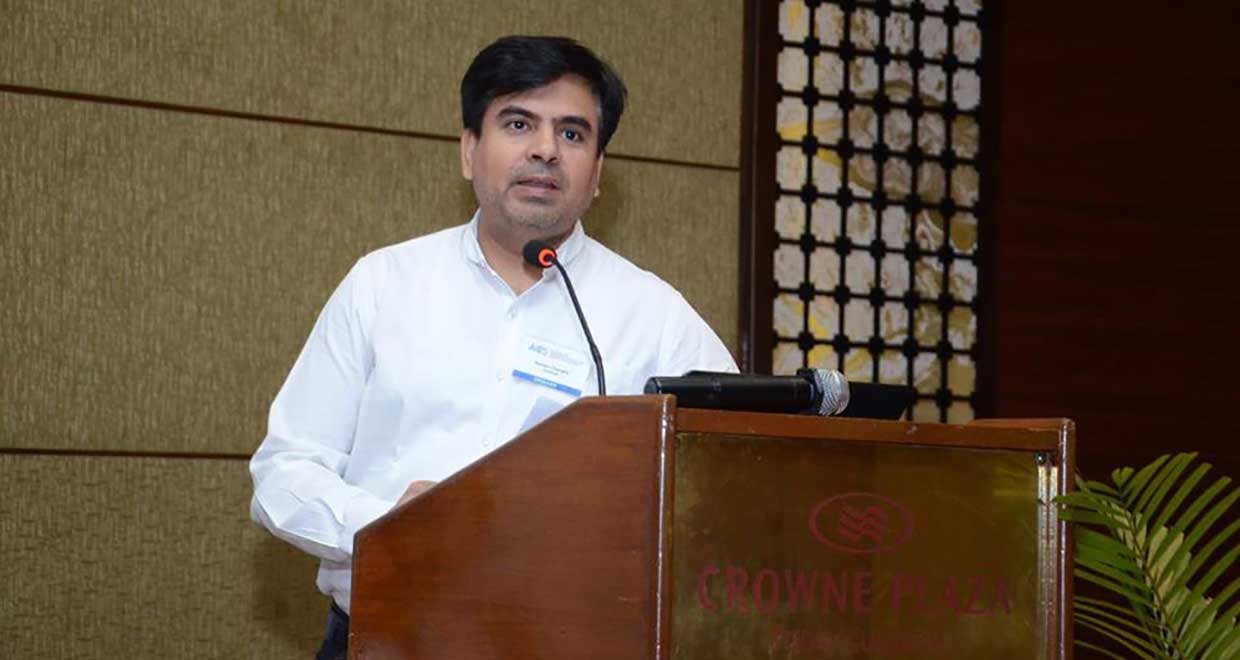
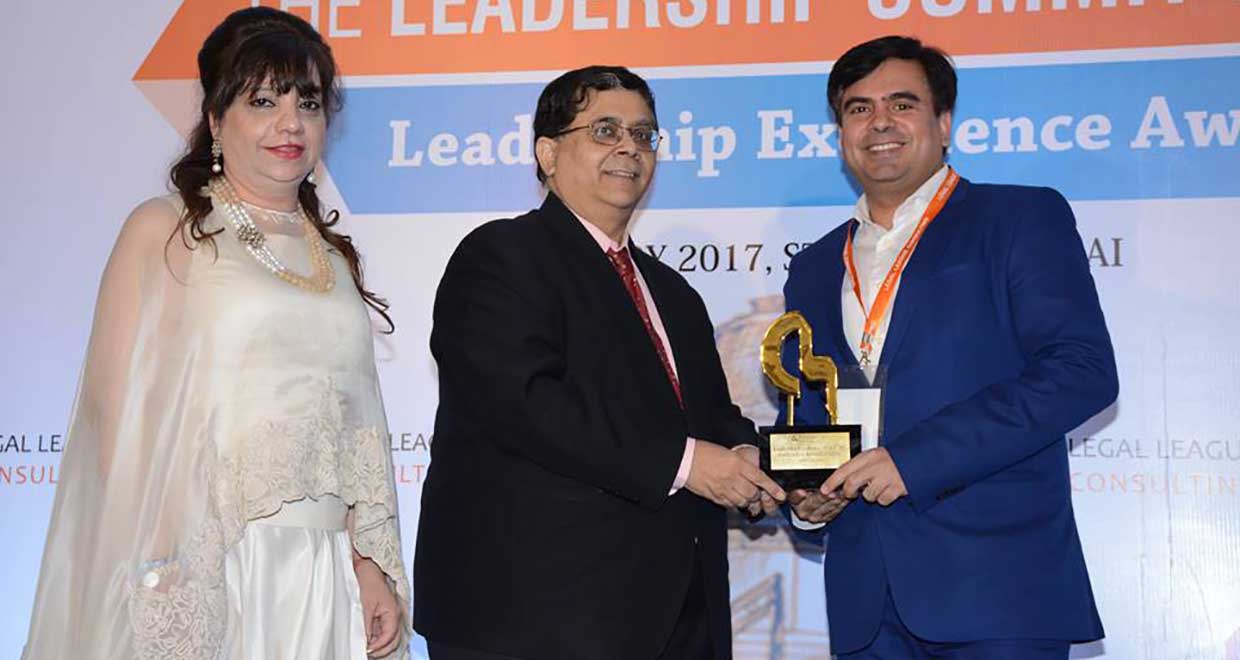
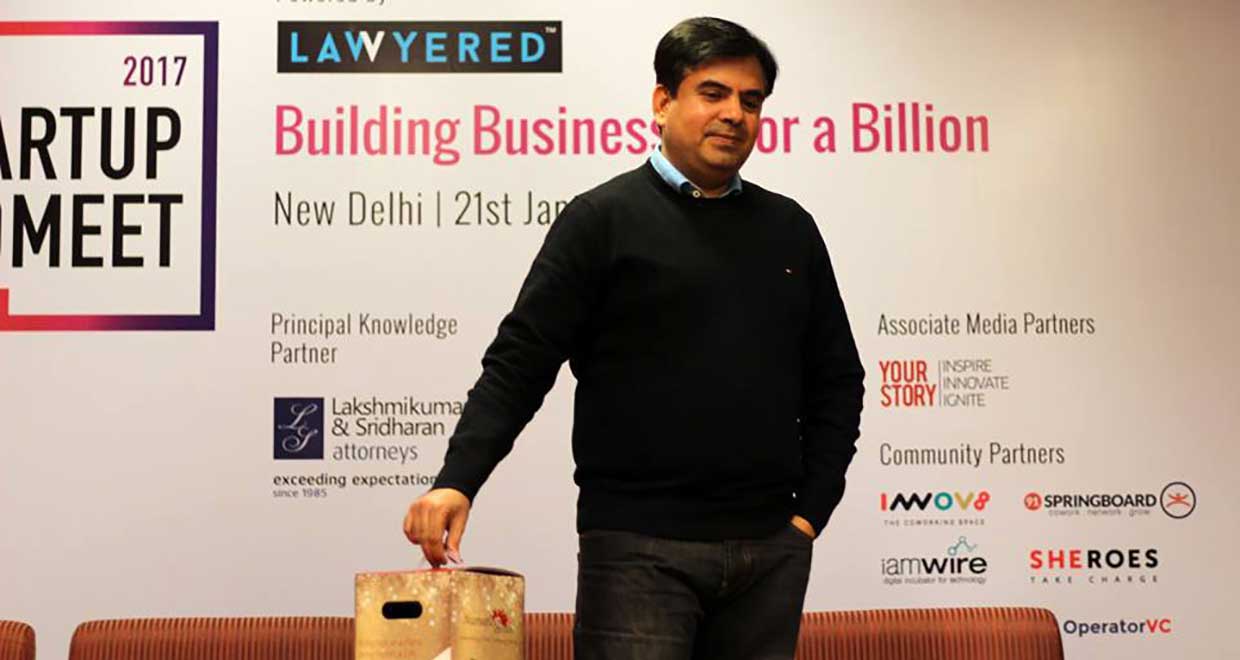
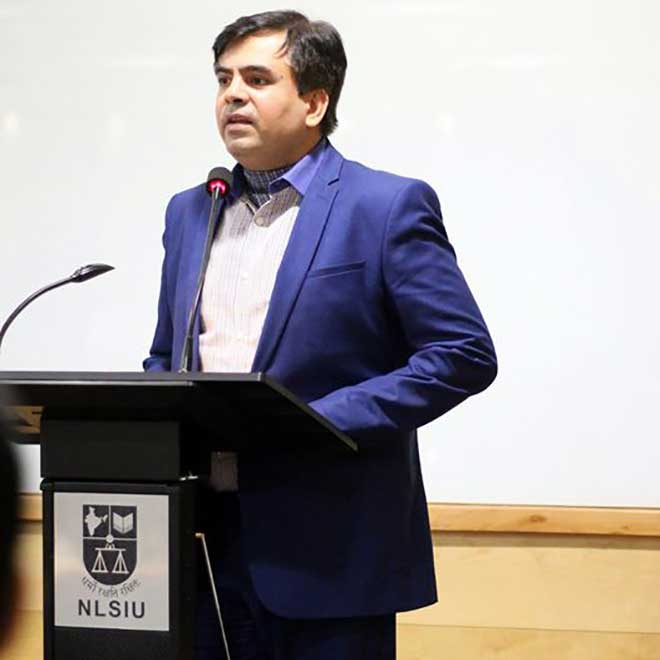
  • Gaurav Vutts, Regional Legal Manager, Hindustan Unilever Limited, on being In-House Counsel, his time at law school, and his diverse experience

    Gaurav Vutts, Regional Legal Manager, Hindustan Unilever Limited, on being In-House Counsel, his time at law school, and his diverse experience

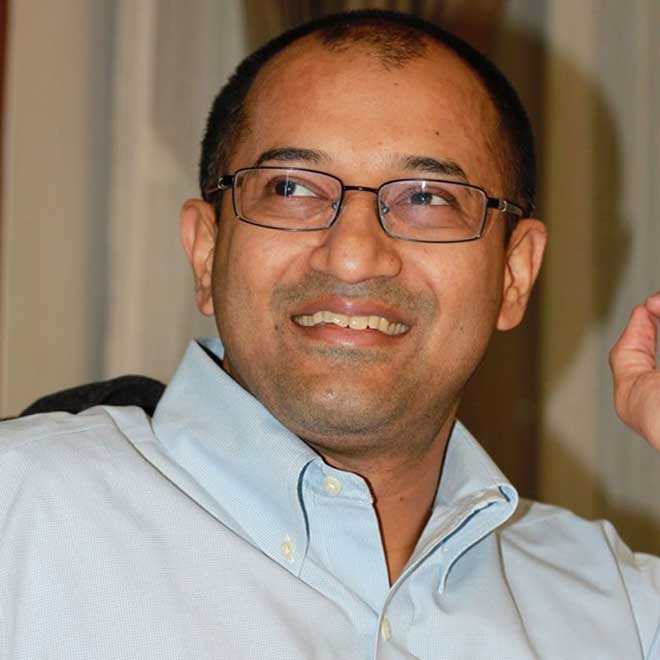
    Gaurav Vutts graduated in law from Delhi University, batch of 2003. Gaurav is presently working as Regional Legal Manager at Hindustan Unilever Limited and leads the East Region since January 2016. His in house experience includes Intellectual Property litigation, Brand Protection, Regulatory Compliances and leading the East Region as Regional Legal Manager. He has also previously worked as Criminal Lawyer specializing in Criminal Corporate advisory, appearing before Apex Court, High Court and Trial Courts. He had joined Hindustan Unilever Limited in Year 2011, supporting the Supply chain Legal, Reality and eventually led the subsidiary company Lakme Lever Private Limited and specialized in Franchising related advisory, IPR and Regulatory compliances.

    In this interview, we speak to him about:

    • His early life from Poultry Farmer to Lawyer to In house Counsel
    • His role at HUL
    • His experience in Criminal Law, IPR and related regulatory compliances


    Tell us a little about your early days, schooling and graduation.

    Since my father was a defence officer I studied in KV School all my life. There I interacted with people from every walk of life. Post schooling I joined the Maharajas College, Jaipur and passed out with BSC. After my graduation I appeared for UPSC and RPSC exams and spent considerable time reading about history of India, Economics, Geography, Public Administration. To fend myself I also was running small scale business of poultry farm at Jaipur where I had approximate 10,000 birds. Here I labored hard in the farm not only feeding birds but planting trees in the farm, plating green grass and doing masonry. I was involved in doing all the kinds of labour which a common man does, like building roads, making concrete walls, making the sheds for poultry farm. It is these tenets of life which made me think that I must read and practise law. My younger brother was instrumental in making a lawyer from a poultry farmer.


    Tell us a little about your days in law school.

    The days in law school (in Delhi) gave me hands-on experience and exposure to diversity in culture, inclusiveness, collaboration and leadership. For our livelihood, we had to fend for ourselves including arranging for accommodation. During the law faculty days I stayed at Air Force Hostel located at Subroto Park New Delhi. It was a tremendous time where in the afternoon I use to attend the Law faculty and at night I used to work with GE Capital Services Limited as Process Associate located at Gurgaon. It was a dream time where I used to work twenty hours a day. Nine hours I used to work at the call center, the sleep for four hours in the morning, then attend classes in the afternoon. Apart from this, I also interned with Mr. Som Mandal, Fox Mandal and Co., Mr. Rajan Narain at Global Legal Associates. It’s here that I started to see the Supreme Court, High Court, Trial Court and Labour Law Tribunals. I used to sit through conferences with clients and lawyers and assist in marking pages, taking out case laws and even typing plaints, petitions, delivering briefs to courts, attending the courts and monitoring the court room board for item numbers.


    How important are grades, in your opinion?

    For me, grades are not important at all. What matters is hard work and honesty towards reading the law and understanding the subject.

    What subjects did you take particular interest in during your law school days?

    As a law student, Jurisprudence, Criminal Law, Constitution, Contracts, Arbitration and Procedural Codes fascinated me. I feel these subjects form the basis of a lawyer’s spirit. These form the first principles.


    Who was your mentor, or main source of inspiration who motivated you all along the way?

    Personally speaking, I had many mentors. I will just name them. During my law college days I attended the Raj Anand Moot Court as my younger brother Vaibhav Vutts was interning under Mr. Pravin Anand. I was impressed to see Mr. Arun Jaitley and Mr. Pravin Anand. I was in literal awe to see them. Later I became a member of the law faculty body called Students for the Promotion on International Law and further got a chance to meet these mentors. In law firms I was mentored by Mr. Raian Karanjawala who is again one of my greatest mentors till today. I also got to work with Mr. Siddharth Luthra, Senior Advocate, as briefing counsel and briefed him in countless criminal matters. I spent nights in his chamber to study law and give the ideal summary of the case to him in morning. Till today I am mentored by him. Apart from this I have had many individuals who have inspired me over the years like Mr. Gopal Subramanium, Senior Advocate; my father, Wing Commander Sunil Kumar Lal, ex-Indian Air Force Pilot; my younger brother Vaibhav Vutts, Advocate, who runs a law firm called Vutts & Associates; my wife Priyanka Vutts, among others, are true inspirational people to me. I was truly inspired by many great senior advocates during my briefing days and travelling with them outstation for cases with Mr. KTS Tulsi, Mr. Harish Salve, Late Mr. GS Sanghi, Mr. Ram Jethmalani.  In fact, I find inspiration even from my litigating lawyers located at every nook and corner of India stretching from South to North, East to west. They give me unquantifiable passion to read and lead.


    What kind of internships did you engage in during your student years?

    It is very important that a law student interns with lawyers. It makes his foundation strong. I interned with Fox Mandal and Co. and Global Legal Associates managed by Mr. Rajan Narain. It is here where I got true vibes of litigation. I was truly lucky to undertake an internship in these places.


    How did you develop this keen interest in criminal law and in legal advisory?

    I always had the real time craving to know the basics of all sects of law. Be it Contracts, Constitution, Jurisprudence, Legislative Drafting, Criminal law, Procedural law, etc. The constitution is the mother of all laws. It is the founding spirit for any legislation. All enactments flow out of it and merge in it. During my internship days and practice days I saw the sense of humanity in resolving criminal cases, making an innocent person get his rights in a court of law, a stimulating subject which is par excellence when it comes to human conscience, irrespective of money you make. This is a true humanitarian service, I believe. The good reading of Constitution of India made me realize how intricate criminal law is and it enchanted me more and more. Once I joined Mr. Karanjawala’s office, fate gave me a pillar to handle criminal law as he allocated the criminal department to me with a few senior lawyers in the firm. I appeared in all criminal law forums located across India and the turn-around was that in three nights, I appeared from Trial Court, to High Court and then to Supreme Court. I also learnt that IPR rights can be protected under the realm of law of crimes. In my in-house advisory I still lead when it comes to cracking my numbers in litigation and resolving intricate litigations under me.


    Please give our readers some insights on the leading Indian firms dealing in Criminal Law, IPR Law, and your recommendations for where and how to secure internships.

    There are quite a number of top quality criminal law firms dealing in corporate liabilities like Amarchand, AZB, Karanjawala and Co.


    Tell us about your work experience at Hindustan Unilever Limited as Regional Legal Manager and at Lakme Lever Private Limited.

    At the starting of 2011 I joined HUL as Assistant Manager-Legal, assisting the Supply Chain, Real Estate. It was a great learning curve for me. Here I learnt what leadership is and how important is governance. I got to work on some mega realty projects for the company and prepare legal documentation for the same in advisory with law firm. It’s here that my talent to align with lawyers played a great success and yielded dividends to the company. I got to work on heavy stake matters and stood victorious in them. After a brief stint, I worked with Lakme Lever Private Limited as legal Head. From deputing a young dynamic team, advising the business from part A to Z on nuances of law, and setting up the legal process, it was an amazing journey for me. I got to work with a real talented team there. I was thereafter given the eastern region of the company and it is here that I got to work on mega projects, deliver advisory to business and governance. It is one of the most rewarding experiences I have had so far intellectually as in house counsel. Seven years of legal practice and close to seven years of in house practice has made me a full-fledged legal personality now with fair knowledge to address any kind of legal issue/ advisory. Needless to state, you will still remain a student of law till the end.


    What general advice would you give our readers who aspire to stay at the top of their legal game?

    My view is very simple. Read more, research more, read the complete case laws and relevant enactments, work hard and be meticulous to facts of the case. Don’t draw inferences to attract immediate audiences to market yourselves by just reading some tit bits of legal provisions and gain part time popularity which may stand to your victory for few years but you will miserably fail to mentor young people, and not grow. Read the essence, pith and substance of law. This will make you a true lawyer and legal expert and a true mentor for people seeing you. The profession of law requires real time hard work and patience. Until the person does not do above aspects, he rusts gradually and fades away. Money will come as it’s a byproduct of excellence but for a lawyer the most essential building block is to mentor his immediate juniors too.


  • Deepak Singh, Associate Partner, Lexorbis Intellectual Property Attorneys, on Patent Law, and his experience

    Deepak Singh, Associate Partner, Lexorbis Intellectual Property Attorneys, on Patent Law, and his experience

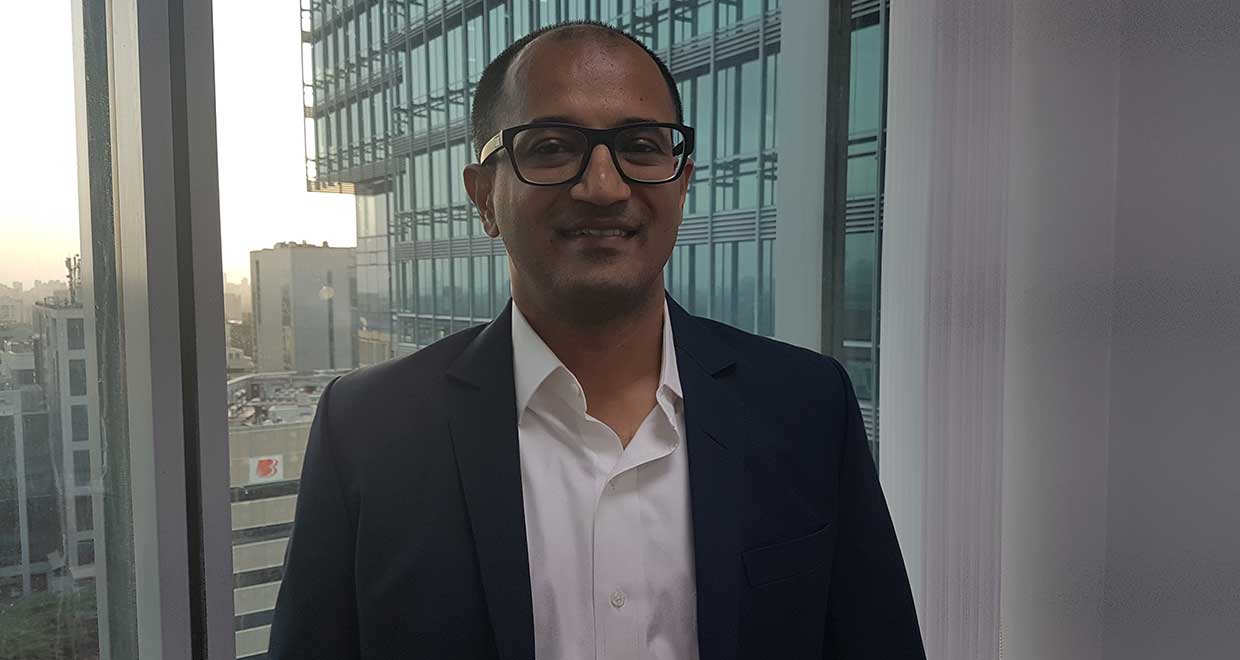
    Deepak Singh graduated in law from University of Delhi, batch of 2015. Prior to that, he held a degree in Engineering from Maharshi Dayanand University. After a successful stint at LakshmiKumaran and Sridharan, and short span at Khurana and Khurana, and at IIPRD Consulting, he’s currently Associate Partner at Lexorbis. Deepak specialises in Patents, with an expertise in Software, Networking, and Telecommunications. He is actively involved in identifying inventions, drafting patent applications, performing Infringement analysis, drafting responses to office actions for Indian and foreign applications in the field of software, mechanical, medical robotics, bio-medical, robotic processes, medical devices, electrical, electronics, and automobiles.


    In this interview, we speak to him about:

    • His major shift from engineering to the IPR sector.
    • His role at Lexorbis.
    • His gainful experience in IPR.
    • The importance of mentors in the legal fraternity.


    How has your  degree in Engineering been useful in your work as a lawyer?

    During my school days, I wanted to become an Engineer like my father and never planned of becoming an Advocate. I got my engineering degree in computer science in 2006. Being a mediocre student, I decided to take up any engineering job and started my career in software domain.

    While working in the software domain, I got a call for a Patent Analyst profile from an HR of Anindus Consultants (Formerly known as Bluefile IP Services). Anindus Consultants was a subsidiary of Lakshmikumaran & Shridharan Attorneys. Following that, I was hired in 2007 as one of the first employees in the prosecution team of the IPR division. I  started my IPR career with drafting responses to US and EP office actions. I also got an opportunity to work for a US Attorney on analysing a patent portfolio for identifying potential patent infringers, preparing infringement charts, preparing invalidity contention charts, preparing response to invalidity contention charts, performing market analysis, and computing financial damages due to patent infringement by an infringing party.

    After four successful years with Anindus Consultants, I was shifted to the main firm Lakshmikumaran & Shridharan Attorneys. While working with the law firm, I felt a need of becoming an Advocate and therefore I joined the regular evening batch of the Law Faculty, University of Delhi. After three hard years, I completed my Law Graduation, which I had never planned for in my early days of career. There is no direct connection between engineering and legal graduation; but a job profile in Intellectual Property Rights, requires both technical as well as legal knowledge. Following my Law Graduation, I have also cleared a Patent Agent Exam and now I am an Engineer, an Advocate, and a Patent Agent. Thus, I am now a complete Intellectual Property Professional. As one can see, nothing was planned, everything kept on rolling from one strength to another.


    How has the transition been moving from the STEM discipline to legal studies?

    Like I have mentioned earlier, nothing was planned, everything kept on rolling. But yes, I started my career in the STEM discipline and then moved to legal the fraternity. In the initial days, I would think on a regular basis that whether I had taken a right step or not. But, as you can see that it proved out to be the best for me. I will not shy away from saying that STEM and legal world are totally different, but when you accept something from your heart, there is little to worry about. And as rightly said by someone “Nothing even becomes real till it is experienced”.

    What were the different activities that you took up at law school?

    I had attended the evening classes at Law Faculty, University of Delhi. I would join the class after the entire day at office for 10 long hours. But still, I managed to participate in a few sports events and annual day programs, apart from attending the moot court as a spectator. I really wanted to take a part in moot court, but my official responsibilities never allowed me to take another extra step beyond attending the classes.


    Did you always aspire to work in IP law?

    Well, I never even aspired to become a lawyer. But I joined the Law Fraternity either by chance or by luck. Year 2007 was a period of world job recession and even the right candidates were not getting right job. I am very thankful to God that I met right people at right places in that year. Whatever I am today is because of the friends and professionals I met in the year 2007. Becoming an IP Professional was never on my wish list but you never know what God had already decided for you.


    In a few years you got promoted from Associate to Principal Associate at L&S, which is one of the most reputed law firms in India. Please tell us a bit about it.

    The qualities and competencies vary from one professional to another. There is no formula to success. Some takes easier path, and other take longer ones. But, what matters in the end is whether you are successful or not.

    According to me, one has to have fair communication skills to deal with inventors, applicants, clients, and even the officers sitting in the patent offices. One need not to be excellent or exceptionally well versed with the in-depth knowledge of the developing technologies, but has to have good basic knowledge of the subject matter. In addition to that, as and when a professional career rises, one has to keep his legal knowledge updated from one level to another. So, basically, when you a make a distinction between an Engineer and a Lawyer, you will see that Engineer requires to have a good rather strong basic knowledge about his/her engineering domain, but the lawyer has to keep on updating his knowledge on day to day basis. He has read latest case laws or judgements to compete in the Legal Fraternity, which is not the case with Engineer.

    But, yes, I enjoyed with working with L&S. And  currently I am not a part of L&S but working as Associate Partner at Lexorbis Intellectual Property Attorneys.

    Having mentored a lot of interns what would be your advice to those seeking internships at law firms like yours?

    The qualities required for internship varies from one firm to another. There is no sure shot formula. But yes, I would recommend that an aspirant can connect socially with one or more seniors over the social network to secure the internship program. Otherwise, each firm has their own rules and guidelines to select the interns for the internship.


    What is your stance on India’s present standard of protection for software?

    The Patent Office has released new revised Guidelines for Examination of Computer Related inventions (CRIs) in June 2017. These Guidelines are modified version of the Guidelines published in February 2016, last year.

    I would not like to go into details but would like to let the inventors or investors know that the new Guidelines are definitely a step forward in positive direction and are in line with foreign jurisdiction practices. That is, with the new Guidelines, the success ratio for grant of patent related to software will now increase.


    What do you do and how do you do it?

    I have recently joined Lexorbis. But, when I was at Lakshmikumaran and Sridharan Attorneys followed by Khurana and Khurana, I managed some of the largest client accounts at both the firms. I oversaw end-to-end client engagement, delivery and operations management, and resource management. The responsibilities also include interfacing with other organizational functions including management of paralegal operations in addition to technical part of the job.

    My responsibilities as Principal Associate followed by Associate Partner include managing a fast-growing group, defining processes, ensuring quality, maintaining client relations, and helping the new paralegal team of IPR Engineering to understand the various requirements of the Indian Patent Laws.

    Within the technical team, I was responsible for mentoring fellow associates, determining and ensuring revenue targets, and creating new workflow processes. The responsibilities further include identifying training requirements of team members, understanding their personal goals, and mentoring them to achieve their personal and professional objectives.

    At, Lexorbis, I would be involved in managing Foreign Law Firms and Clients, Strategic Planning, Operations Management, Business Process Transformation, Managing Budgets and P&Ls, Board Reporting, Client Engagement, Thought Leadership, and Managing Patents operations. I would also focus on removing bottlenecks, work in cross-functional teams to get things done in expected turnaround time, and attain scalability to create value for Lexorbis and its clients.


    What steps did you take to land in your present job?

    Currently, I am working as the Associate Partner with Lexorbis. Previously, I was working in Patents Division of Khurana & Khurana, IIPRD Consulting, and Lakshmikumaran & Sridharan. While landing on the present job. I have attained a Law degree and a Patent Agent Certificate.

    However, obtaining multiple degrees was not the only means to land in my present job. But most importantly, my 10 years of experience of working with Indian and Foreign clients on projects including patent drafting, patent prosecution, FTO, infringement analysis, patent searches, invalidation searches, litigation support, and attending hearings at Indian Patent Office and Indian Intellectual Property Appellate Board (IPAB).


    What are the most challenging aspects of being an IP lawyer?

    There are a number of challenges in this career. One major challenge is that majorly an IPR section or IPR job opportunities prevail in law firms. In law firms, there is a culture of sitting late in office and leaving after set time period. So, this in return offsets the work life balance.


    What final piece of advice would you like to pass on to our readers?

    A student aspiring to become an IPR professional needs to complete his/her law degree after a graduation in science. Also, everyone should visit a career counsellor at least once to choose his/her career and to sort out what they want to be. A career counsellor’s job is to assist or guide a student to figure out what they want to be.

  • Shalini Saxena, Lead Legal Counsel, GE Renewable Energy, on being General Counsel, and her diverse experience

    Shalini Saxena, Lead Legal Counsel, GE Renewable Energy, on being General Counsel, and her diverse experience

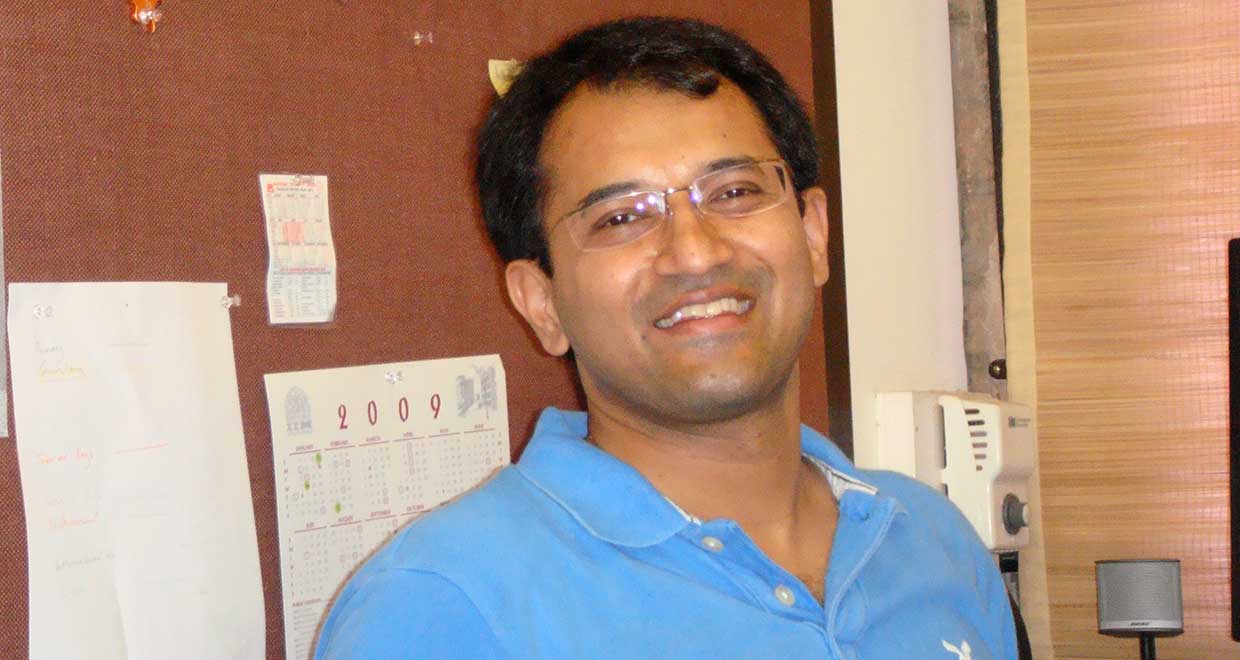
    Shalini graduated in law from Delhi University in 2000. She started her career at General Electronics. After successful stints at Ibibo Web and Kundra & Bansal, she came back to GE, where she is currently Senior Counsel. Her role entails managing and supervising all aspects of the legal function for the Asia region (India, Bangladesh, Sri Lanka, Nepal, Bhutan and Maldives). Shalini is also currently pursuing her Ph.D in law.

    In this interview we speak to her about:

    • Her time as a student
    • Her role at General Electronics
    • Her diverse experience

    Given that most of our readers are law students, how would you introduce yourself to them?

    For as long as I remember I have wanted to be a lawyer. Not because as most think I argue a lot, but because the grey area of interpretation always appealed to me.


    Do you come from a family of lawyers?

    My dad did complete his first year in law school, before dropping out. He was in a sense, therefore, the first person to pursue the legal profession in our family.


    Can you share some memorable experiences from you time at law school?

    Law campus was great fun. The drive of 80% of that class of IAS exams. City kids take so much as due to them but these students teach you to appreciate and leverage each step. I did the usual moot courts and debates on non legal topics. But desire to understand my subject and not just pass my exams taught me discipline and focus.


    What were you areas of interest in law school?

    Definitely not arguing. Like I said, I always wanted to be a lawyer and the desire was to understand my subject.


    What motivated you to pursue higher education?

    Rule of the game for a lawyer is to keep yourself abreast of changes and that in this profession comes with reading, reading, and more reading. Can be anything, national/international, journals, judgments, newspapers, research material. Knowledge, if goes deep, is great. Higher education is just one way of keeping at it. When I did my LLM, it was to discipline studying and researching.  It also shows well on your profile, many people are appreciative of candidates that have academic depth. so my advice is to go some what deep into your subject it’ll help in more than one way


    What was your first job out of law school?

    My first legal job was as an intern with a Supreme Court senior. I got it by reference but it taught me my greatest lesson – to learn that you have to start at the bottom of the steps.

    Can you tell us about the responsibilities of a Partner and your work profile?

    I actually started my career as an Associate with this law firm and it was when I returned after ten odd years of working as a corporate lawyer that I became a partner. Let me tell you it’s no fun being Partner, it’s a very responsible position, you need to be accountable to your assignments and to making profits for the firm. Many salaries including your own depend on you. The firm dabbled  at a lot of aspects of law and I was jack of many. But soon commercial contracts became my core.


    How did you secure an appointment with General Electric?

    It was after my deputation at Electrolux that the idea of being a company lawyer appealed. GE was luck, they were looking and the word passed on. The GE office was across the street from Electrolux, one afternoon I walked over for a meeting and in the next two hours I got the job.  I worked for over four years at GE Money, quit, worked outside  of India for over five years, and then came back to GE.

    GE is in my DNA. I love this company. I joined as a risk attorney for a business vertical– a position that is not that of a lawyer – it does risk analsyis of deals, tenders, contracts, countries, etc. In fact, there was another lawyer on the job and we both worked together. A year later I got the job of both the lawyer and risk attorney and my portfolio expanded to be the legal counsel for GE power and water, which was five business verticals.

    A lawyer at GE has a seat of the table with business. We are not legal counsels, we are business counsels. As business enablers we work from identifying risk to mitigating them to negotiation for contracts to ensuring completion. Add to this, driving integrity and compliance in the company.


    How do you deal with transnational legal challenges?

    MNCs in today’s commercial world have many regulators. There are many guidelines that need to be adhered to. Complex business environments just add to the situation.  As lawyers, we are aware of the judicial process and workings thereof. They have improved but there is still scope for more. As a company with pan India varied operations our biggest challenge is to work in a legally compliant manner. As a global company we have business operations across the world. For e.g. there will be 300+ lawyers in GE across the world. Knowledge sharing and team work b/w these 300 odd lawyers helps address challenges even when they cross borders and go international.


    You were also the general counsel at Ibibo. How did you secure this position?

    This is the position I went to when I left GE money, my first stint at GE. When I joined Ibibo it was a start up but had gone off ground. It still needed a lot of processes and policies to be set up and implemented.

    While my day job was to support Ibibo as a company operating as a platform, the parent MIH was a strategic investor in start ups, new ventures, like an angel investor. Mergers/acquisition/investment were the other big things I worked on, not just for India but Asia.


    Can you tell our readers about the general nature of work and responsibilities of a general counsel?

    As a General Counsel you will definitely be responsible for a business. You may be leader for a team. Your job will vary- admin stuff, HR support, contracts, strategic discussion. All these are related to business targets and development. The other key job a GC has is to invest in his/her team and enable them to learn and develop along with the business. A GC needs to be competent at his/her job but also have the ability to build a team that fills the gap in knowledge or attitude that a team needs to be successful. Accountability and integrity are other important aspects of any leader including a GC.


    What made you decide to take the path of being a general counsel as opposed to working in a law office?

    I’m a better negotiator than a litigator. The best way to progress is to know your strength and weakness. A litigator works at a very limited and high level manner on lets say a contract- for e.g. breach by a party of contract terms. An in-house counsel works from the inception of the idea to creation of the contract and then navigates dispute and supports the external lawyer with litigation.  My day is ‘walk my job’ – I’m in early to my workplace so the first couple of hours I clear up my inbox and do all my tough tasks of the day, eat the frog!!

    I then go through projects I support, meetings, calls, updates, trainings. Add to my list of to-dos for the rest of the day/week. Most importantly I talk to my team, business and other functions / catch up with colleagues for coffee. I need to have fun on my job.


    What are your views on corporate social responsibility?

    I’m a huge believer in CSR, but may not be the CSR that companies do. That being said, I see many companies do great CSR activities which do more than tick the box. They help the disprivileged, give back to society. Teaching students/allowing internship programs / slum courts, etc. are all great ways of giving back in this profession.


    How do you remain updated with all the new developments in your fields of interest and practice?


    Read, read, and then read some more. Once a month I try to get my hands around any significant judgment passed. Newsletters created by law firms is another great way to being updated. We are on the mailing list for few. On some important portals I have set some word triggers. Any article that picks these words will find its way to my inbox.


    What advice do you have for our readers who are primarily college students?

    Start as a litigating lawyer, the grounding that procedure of court imbibes is unparalleled.  Inculcate and practice reading and researching. do try an in-house position – one should not write off anything without having practiced it.


  • Jyoti Singh, Legal Consultant, Ministry of External Affairs, on working for the GoI, and her teaching experience

    Jyoti Singh, Legal Consultant, Ministry of External Affairs, on working for the GoI, and her teaching experience

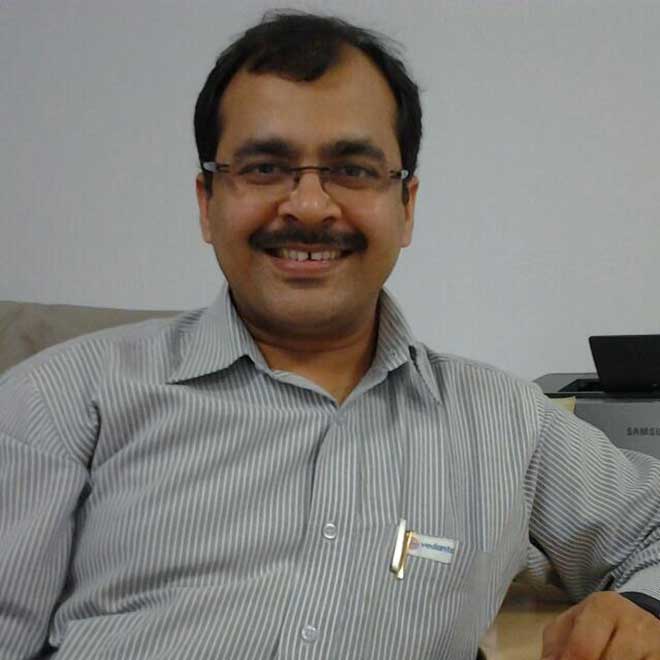
    Jyoti graduated in law from University of Delhi in 2009. She subsequently went on to earn her LL.M in 2011. She has been working with the Legal & Treaties Division of the Ministry of External Affairs as a Consultant. She is also visiting faculty in University of Delhi and Indian Society of International Law, apart from other Law Schools. In her capacity, she handles the drafting and up-loading of the Treaties on MEA website. She vets the Agreements/Treaties /MoUs signed between the Govt. of India with other countries as well as advice on the court cases coming to the division. Apart from attending Inter ministerial meetings, she also goes to courts to brief the government counsels.

    In this interview we speak to her about:

    • Her internship experience
    • Working for the Ministry of External Affairs
    • Her passion for academia

    What motivated you to pursue a career in law?

    Honestly, I was not particularly keen on pursuing law, as I hail from a family of bureaucrats and doctors. Having said that, I would like to add that once I chose law, I started enjoying the subject thoroughly, as no other field is as dynamic or has such an impetus to excel. In today’s globalized world, the knowledge of law has become more of a requirement than a career choice, and I personally feel that it truly empowers and enriches every individual to deal with any travesty.


    Did you pursue extracurricular activities such as moots and debates in law school? 

    Yes, I was part of debates and extracurricular activities during my budding years. I was also a part of the core committee which organized international conferences in my college. It is necessary as well as interesting for students to excel either in research or debate or any other extracurricular activity apart from studies, if you are in the initial phase of your law school. Law is all about how confident one is to present oneself and make a niche.


    Tell us about your internships. 

    I did my internship at the National Commission for Women along with a few prominent law firms. Internships are very important in assessing your interest in the relevant area. When you intern, you get to know about the practical aspects of your subject, whereas classrooms cover only the the theoretical aspects. Therefore, the right kind of internship makes each student distinctive among their peer group.  Internships provide first-hand experience in the legal profession and a close look at the day-to-day responsibilities that come with being a lawyer.

    Simultaneously the students will gain an insight into what type of law they would want to—or not want to—pursue after graduation from law school. Someone might think about becoming a criminal lawyer, but then intern for a corporate law firm and realize that is what they would prefer to practice instead.

    Interest in the subject, exposure, kind of work given to interns, etc. should be kept in mind while applying for internships. I feel that students should get as much exposure as they can while doing their LL.B. course.


    Have you ever felt the NLU and non- NLU divide? Do you think it is a consideration for employers?

    Absolutely not. When you are capable of proving your worth, I don’t think the NLU, non-NLU divide can prove to be a hindrance. In the end, what the employers want is the maximum output from their employees and not a prominent law school name in their credentials. It therefore is a myth and not a reality.


    What are your areas of interest? How did you discover and pursue them?

    My area of interest primarily has been International Law and Constitutional Law along with Commercial Laws. I have been very focused since my childhood on the latest developments at the national as well as at international level. Reading newspapers and magazines and co-relating them to the contemporary development gave me an unparalleled insight and I traced my interest in International Law during those years of my life.  It was kind of fascinating to read about how the legal system works globally. My interest in Constitution was always there which got a boost in my second year of law. DU Law Faculty stresses on case study mechanism and reading all the historical and land mark cases of Constitution somehow cleared my understanding and developed my fascination towards Constitution of India and Constitutional Law.


    What was the motivation behind pursuing an LLM? 

    LL.M. gives an altogether different perspective to law students. You tend to be specific and more research oriented when you do your Masters. You also get to have many more career options when you do your Masters including academics. This world is becoming increasingly competitive and complex and it is always better to have a specialization along with a better understanding and doing LL.M. gives you that platform.


    How did you secure a position with the Ministry of External Affairs?

    I joined the MEA because of my specialization in International Law. If students wish to join the MEA they should sharpen up their International Law skills and should do more and more internships in International Organizations along with attending summer courses in international law.


    What is your work profile in the capacity as a consultant for the MEA?

    We work on International Law related issues. It involves vigorous research on Treaties and Agreements and its negotiation. Apart from that few domestic law related issues also see the thrust of Legal Division of MEA and overall the experience is great.


    What are the skills one needs to develop in order to work with the MEA?

    One should be energetic, have a far sighted insight into all the aspects of International Law, and be outspoken. Having said that, one should be ready to slog as there is no short cut to success in any field.


    What inspired you to pursue academia?

    Teaching is intellectually stimulating. You read and study in order to make others read. Isn’t it interesting enough? Also when I teach I get to interact with younger lot of students who are always inquisitive and keep throwing a volley of questions, enriching their teachers in turn. I have taught at Delhi University Law Faculty, my Alma matter, apart from the Indian Society of International Law as a visiting faculty.


    How can our readers stay updated about India’s diplomatic ties and relations with other countries? 

    India and its international relations are in the limelight of late. The Ministry of External Affairs is the Government agency responsible for update of the foreign relation between India and other foreign countries. Anyone who has interest in diplomacy should keep themselves abreast by regularly visiting the website of MEA. Also, there are many magazines and newspapers which cover the diplomatic relationships widely.


    What challenges have you faced in building up your career as it stands today?

    Like every other student grappling in the final stage of his studies, I was also very apprehensive of the uncertainties of the field I chose for myself. However, law is a field which never disappoints. There is ample scope for every individual to shine. There are always teething troubles but they can be overcome with sheer determination and will.


    What advice do you have for our readers who are primarily college students?

    My advice to all the burgeoning lawyers is that give your best at the college level as this is where you get a foundation for your upcoming years. Stay positive, work hard, and never mislay your passion while making a career in law. All the best.


  • Shellen Bajaj, Partner, A&A Law, on the Indian legal education regime, mooting, and his diverse experience

    Shellen Bajaj, Partner, A&A Law, on the Indian legal education regime, mooting, and his diverse experience

    Shellen Bajaj graduated in law from Campus Law Center, Delhi University, in 1992. After successful stints with Times Internet Limited (The digital venture of Times of India Group), and Emaar MGF Land Limited (EMGF), he is currently Partner at  A & A Law. He has an experience of over two decades in handling corporate matters, including corporate advisory on infrastructure regulation and compliances, and real estate, which also includes performing due diligence and title search of the properties for client assistance and knowledge.

    In this interview we speak to him about:

    • The legal regime back in his day
    • His time in Delhi University
    • His diverse experience

    How would you like to introduce yourself to our readers?

    As a first generation lawyer and being from a business family, I barely had any clarity on the path to success in the legal sphere. One thing which I was clear on, however, was that I had no inclination to join my family business.

    As soon as I passed out from Campus Law Center, Delhi, I joined the Delhi High Court, where I got associated with Mr. Adarsh Dial Sr. Adv. who happened to be an old family friend. Mr. Dial was on the panel of a couple of PSUs and various banks. I got initiated into litigation and actively litigated for ten years. I have always taken life head on and have treated challenges as opportunities. I feel whatever has to be done should be done without any postponement.

    I am a hardcore positivist and feel everything which one conceives is achievable, notwithstanding the hardships one finds on the way to success. Given my attitude towards life I got a chance to get into a corporate job, after ten years of active litigation, as I saw an opportunity to see law from the business perspective. Due to my family background I never felt that I could or would ever sustain in a ‘job’ environment, but I well managed it for over ten years as head of legal for various companies. I personally feel that if one is open and hardworking, the doors to success are always open. Restrictions are always in the mind.

    Having tried both the fields i.e Litigation and Corporate I feel litigation has no glass ceiling and am therefore back into active practices as a Partner in A & A Law. I have traversed and actually enjoyed both to the fullest.
     

    Tell us the best and worst things about your law school experience.

    My initiation to the Campus Law Centre (CLC) was not because I had any preconceived notions to take up law practice as my main vocation, but merely to stay in the campus three more years in order to avoid my family business. It was while studying law, that I realised that it made a great subject as there is no sphere of life which is untouched by the vast and ever increasing expanse.

    During my time at the faculty of law we had some incredible professors teaching us. Noteworthy ones being Prof. Upendra Baxi, Prof. Dr. M.C. Sharma, Dr. Nomita Aggarwal, Mr. T.D. Sethi, Mr. K.B. Rohatgi to name a few.

    Life in the law faculty was pretty easy during those days. We did not bother much about attendance, internships, moots, etc., which now have become major issues, especially with the five year courses. So much so that the students are being debarred from taking their exams in case they are short on attendance and internships have become a part and parcel of the curriculum. However, the five year courses these days, though strenuous and nerve wracking at times, help students to find their focus sooner and provide more exposure. The importance attributed to internships these days also is an important aspect of today’s legal education.

    The best experiences at CLC would include the time spent with friends, teachers, understanding law and its application, as also the regular ideation sessions with peers and mentors, which eventually came in handy in the creation and development of multiple businesses.

    I do feel that my time at the Faculty of Law would have academically been more fulfilling had the college itself taken the course more seriously, and that is something I still feel about the institution, specially after talking to DU students who are currently pursuing law or are done with their course.


    What are the subjects that you took particular interest in, during your law school days?

    Law interested me right from the start. As a law student one begins to appreciate the vastness of the corpus of laws that lawyers deal with in the course of their regular business. With this understanding also came the realisation that not everything can be rote learnt and that it is important for a law student to understand the essence of the law and to know how the law needs to be referred to and applied in the given circumstance.

    That being said, there are, of course, certain subjects that require more effort and that form the basis of a lawyer’s day to day functioning. Subjects like Constitutional law, CPC, CrPC, Law of contract, etc. were the ones that I paid greater attention to because of this reason. These were the ones that then became my favourites, not by chance, but almost by design.

    One thing which I realised later and keep telling youngsters, is that nothing which one does is irrelevant, however immaterial it might seem at that given point in time. Everything adds up to one’s overall experience and the learning never fails you. So give everything and every subject your hundred percent at the present moment and it is sure to bring you results at the most opportune moment.


    How important is mooting, in the life of a law student?

    I got my law degree back in 1992. That was a time when law was an entirely different ball game, not in terms of its content, not so much in the way that lawyers practised it, but more in terms of the way students approached it. In our minds, it wasn’t as competitive, it wasn’t as rigorous as it is now and we could still have it easy at least while we were in law school. During our times there were no entrance exams for the law course, there weren’t any for getting enrolled into the bar either.

    For us, actual rigours of the profession began only after college was over; that was more or less the perception that we were operating with. I don’t mean to sound like I was an aimless student then, but really, that was the kind of environment in which we became lawyers, because that was a time when the ‘smarter’, more ‘intelligent’ students of the lot were either pursuing engineering, medicine, etc. In short, everything that was far removed from the ‘arts’ stream as it was commonly referred to back in the day.

    Law, for students now, is a far more serious course than it was for us. Law schools are simmering with competition as more and more young minds gravitate towards careers in law. In such an environment I feel mooting is of utmost importance. Not only does it provide students with a break from class room learning, but it also gives them opportunities to learn and grow.

    That mooting doesn’t serve the purpose, according to me, is a myth. There are students who feel that it doesn’t accurately portray how courts work. That may be partially true, however, the pros of mooting in my view outweigh the cons by a substantial margin. It develops in students the essential skills of researching, developing innovative lines of argument in consonance with the law, drafting and withstanding the questioning of seasoned and learned judges, which they are bound to face in their future, no matter what line they eventually tend to tow. Mooting skills go a long way in transforming these students into effective lawyers. So yes, mooting in my view is an irreplaceable part of one’s experience as a law student, I’ve always encouraged students, including my son, to actively participate in them. I believe it does make a distinct difference.
     

    What are your areas of specialisation and how did you go about choosing these fields?

    I started out in the High Court here in Delhi and have dealt with all kinds of cases which came my way. The only choice during those days was not to accept the brief being offered, which I never refused. Every case provides loads of learning if dealt with properly.
    In 2002, as luck could have it, I got the opportunity to work as an in-house counsel for Benett Coleman and Company Ltd., for their internet division, Times Internet Limited. I took it as a challenge as I have never feared trying out new things. I joined the group as a legal manager and set up the entire legal team. I learned about the internet and the possibilities it could offer on the go. I also got great exposure in print media, radio, television and even in outdoor domains. We worked extensively for variety of businesses such as ad sales, travel, ticketing, hospitality, inventory sales, online auctions, telecom etc. as well as legally documented various new businesses. One of the major challenges was to offer a ‘game of chance’ for the public, equivalent to gambling in legal terms, through SMS and the internet. Being online exposed the said business to being present pan India at once. I realised that being the part of a business one needed a change in the perspective and effectively facilitate the way to do business, while ensuring that nothing illegal was done or caused.

    It was a formidable experience working with the corporates and gave me quiet an insight into the dos and don’ts of handling the legality of the business from the front, including managing the compliances, IPRs and other legalese. While in Times, I provided the documentation for the Indiatimes.com website, including the privacy policies, terms and conditions for the entire business paradigm for the main website as well as various other sub domains under the Indiatimes brand which were not there before I had joined. I got to interact with the likes of Google, Yahoo, Amadeus etc., the leaders in their respective domains. Another feat was to create legal templates for the ease of business, which not only saved time and effort but also provided a comprehensive ballpark for the proper conduct of the business.

    I was always connected to the litigation side, even as an in-house counsel. I obtained multiple stay orders from the Delhi High Court including staying operations of even international websites who were masquerading themselves as being a part of the Times group, by flouting / stalking on the IPRs of the organisation. I was soon promoted as the Vice President of the company. I was associated to the Times Group for over seven years and post leaving times, I joined EmaarMGF where I dealt with legal nuances of PPPs pertaining to SEZs, including residential housings, and golf courses. I also dealt with EPC, CFA contracts, arbitrations, etc. I also worked with Monnet Ispat and Energy Ltd. The Hon’ble Supreme Court cancelled the mines of the private sector and there were subsequent changes in the laws pertaining to the mining sector which brought in the new phase of e-auctioning. Those were eventful times for the mining sector as the cancellation marked the change in the entire paradigm of legal implications.

    By this time I was more or less done with my SWOT analysis and thought of returning to my second home, i.e. litigation, as I found it to be better suited to my lifestyle and I needed greater independence at work. One of my dear friends Mr. Sanjay Aggarwal, whom I had known from CLC days and had a great understanding with, had started a law firm by the name of A & A Law. He offered me to join him as a partner in this firm and the rest is history. The areas of my specialization today are consultancy in the fields of corporate transactional documentation, hospitality, EPC contracting, IPRs, property related documentation and of course litigation.


    At what stage in one’s law school life must one pick a specialisation?

    As soon as one understands their areas of interest, one must choose his or her areas of specialization.
    However, there are various considerations that go into choosing specialisations based upon the areas of interest, his/her skill set, prospects of material gain, etc. Some students tend to favour areas of law which are still developing in comparison to others, the niche areas so to say, and I feel there has been no better time than now to scout for opportunities in these ever expanding new legal arenas where law tries to regulate unprecedented behaviours, transactions, technologies, so on and so forth.

    I do feel, however, that the choice of a specialisation must rest more on interest than on any other consideration, because more often than not, in a field such as law, it is easy to lose interest and motivation, given the overtly academic nature of our business which needs motivated and driven individuals if they are to act as the machinery that transforms the law.

    So, my advice will be that students follow their interests and chose a specialisation that they feel can continue to interest them and motivate them to work years after they’ve chosen it. I feel skill without interest is akin to a rocket fitted with a car’s engine, it leads to wastage of potential. On the other hand, interest without skill leads to skill development, thereby transforming the car into a rocket.

    I’m glad about the fact that in recent times, interning for a specified duration of time has been made mandatory in law courses, it equips students to make better informed choices about what areas they want to specialise in.
     

    How important are grades, in your opinion?

    This is something I feel very strongly about. Of course, having a son in his fourth year of law gives me greater insight into this topic. Ask any student pursuing a master’s degree in law, and the answer without a shade of doubt will be yes. For LLM aspirants, especially the ones who wish to do it from colleges and universities abroad, it is a rat race, they need to score and they need to score higher than the people they are competing with because grades are a major objective criterion on which their applications will be accepted or rejected. I’m not implying that grades alone will land them colleges, but they do play a substantial part.

    As far as litigation is concerned, fortunately, it is a field where only performance matters. No judge will dismiss a good argument simply because the lawyer making it did not have satisfactory grades in college. It may, however, impact an individual’s employability, both in corporate jobs and in litigation, though that isn’t necessary. On the employability front, I feel we owe a duty of care to young lawyers who are freshly out of law schools to refrain from judging them solely on their grades or overplaying the importance of grades while judging them. The approach has to be subjective as far as possible because intelligence or potential doesn’t necessarily translate into marks.

    In light of whatever I have stated here, there can be no definite answer to “how important are grades”. This is a question that can only be answered within a certain context, so grades hold variable importance in my view.

    The Indian legal education system is conducive to learning, though partially, and only for some students. The Bar Council of India governs the Indian legal education system, or at least practises oversight, stipulating basic attendance norms, laying down the subjects which are necessary to be taught etc. The real problem lies with the implementation of these policies and stipulations. Universities and colleges are given considerable autonomy in deciding how to test students and how to teach. In fact, these colleges, at least in practice, are free to implement the attendance policies of the Bar Council as they please which results in a wide disparity in the way question papers are set in different universities, how subjects are taught and how attendance concessions are granted. In some colleges there is emphasis on application based learning which is undoubtedly the best way to teach and understand the law, in some institutions teaching is merely a matter of making students rote learn bare acts. Likewise, the evaluation of a student’s prowess is also far from uniform, with some institutions setting purely theory based question papers and others asking application based questions.

    What is most disturbing is the amount of autonomy that these institutions have in administering attendance norms. It may not exist on paper, but it does exist in practice. I am an alumnus of the CLC, and do not believe that it is controversial anymore to say that strictness regarding attendance, at least in DU, is mild and the status quo remains maintained till date. On the other hand there are pending matters in courts regarding students getting debarred from appearing for examinations and being made to repeat entire academic years for paucity of attendance. There was recently an incident where a student committed suicide for the same reason and this is serious, it is a serious problem that is plaguing our education system. Norms are created to ensure that there is uniformity, there is no abuse of process, then how is it that institutions are allowed to act in such an arbitrary fashion?

    There are colleges which refuse to grant attendance concessions for activities like mooting as well, which require time and which the Bar Council prescribes as essential to any legal course and then there are institutions granting up to 30 percent attendance concessions for the same. There are innumerable cases where medical certificates have been refused and students have been made to repeat years for valid illnesses. There are even institutes that lack students grievance redressal forums which I feel are a basic right of every student. I could give endless examples of such disparities which can potentially go on to unduly harm students, but I doubt any reader will have that kind of time or patience.

    I do not support an unnecessarily strict and insensitive implementation of the 75% attendance rule, I know of no lawyer who has made a mark in our profession simply because he or she attended 75% of their lectures. Lawyers are made of more than an attendance percentage. I feel, if an eighteen year old has the right to choose who governs our country, I feel he or she must also have to right to decide whether they wish to attend a lecture, to intern, or moot. I’m not suggesting that this be an absolute right, I am merely suggesting that an implementation of this rule to the prejudice of a student cannot be justified, morally or academically.

    In conclusion, I feel that our legal education system is conducive to learning but only for some and it can be made so for all if there is better implementation and oversight of the policies laid down by the Bar. There needs to be a check on the way institutions behave and there is a need for the legal fraternity to understand that a student, struggling to maintain his/her grades, while trying to build a presentable CV while fighting to prevent possibly debarment for not meeting the 75% threshold in most cases has neither time nor means to move court against his/her own college or university. Therefore, there needs to be a mechanism to keep a check on educational institutions and a legally protected right to students grievance redressal.


    What, in your opinion, are viable options for a law graduate to consider on completion of his/her undergraduate course?

    Options in life are only as viable as you make them. The viability of post graduation options depends on the personal liking. Getting into litigation or working for Corporates, Indian or MNCs are both favourable.

    However, the interest an individual has in a certain subject is paramount. It is important for an individual to analyse the pros and cons of either field. The main difference being that the returns as an in house counsel start to come in the day one joins the organisation, including compulsive savings which form a part of one’s remuneration, whereas litigation takes a few years of gestation. There are various aspects to litigation as there are various advocates taking their pick from the vast paraphernalia leading to the management of the entire process from pre-legal notice to post execution of the decree. For example, in case the individual wishes to concern himself more with drafting/research work and not so much with appearing before the court, one may join a law firm and get to work as a team to reach the final objective in a matter. On the other hand, if one likes arguing matters one needs to practice that craft. Again, it depends on the individual to choose relevant areas in both.


    Is there any other suggestion you would like to give to our budding lawyers?

    Of course, for any student reading this, specially anyone who may have skipped a few of my answers, my suggestion is, do read all of them, you’d find a lot of suggestive content to help you along your chosen path.

  • Yamini Malhotra, Legal and Compliance Recruitment Consultant, Aquis Search, on IPR, and her diverse experience

    Yamini Malhotra, Legal and Compliance Recruitment Consultant, Aquis Search, on IPR, and her diverse experience

    Yamini graduated from the Faculty of Law, University of Delhi and cleared the AIBE in 2012. Prior to that, she held a degree in Sociology from Jesus & Mary College, University of Delhi in 2008. Having a keen interest in IPR and litigation, she started her legal career at Anand & Anand and later moved on to work at Global Legal Associates and Lall Lahiri & Salhotra. She then moved to Aquis Search as a Legal and Compliance Recruitment Consultant. 

    In this interview we speak to her about:

    • Her time in Delhi University
    • Being a legal recruiter
    • Her experience in IPR

    Tell us more about your law school days at Delhi University.

    I read law from the University of Delhi while working at S&P Global, and hence, had to juggle between multiple responsibilities during my day. This was not only challenging but very enriching as well since it taught me how to multitask and excel towards something I always aspired to become. The most interesting part of my law school days was the fact that my class had individuals aged between 21 and 60 years and came from diverse professional backgrounds such as civil services, journalism, finance, etc.

    The course was structured in a way that instead of theory, it focused on discussions around case studies. This was one of the differentiating factors that made the classes exciting and thought provoking instead of being mundane and boring. The moot sessions provided practice in developing relative arguments and brought together viewpoints from different individuals, which was crucial for a beginner like me.


    Who was your mentor who motivated you all along the way?

    My grandfather who was a civil servant had a keen interest in law. During my initial years, he always motivated me to study the subject. I come from a family where girls are encouraged to venture into professions of their choice and that has always kept me going. I have had my share of failures and each of them has taught me to work harder and be more focused towards my goal.


    Tell us more about the nature of work you had undertaken as a Research Associate at S&P Capital IQ.

    S&P Global is one of the top most financial data providers, which through its technology and people turns raw data into actionable insights. During my stint there, I was responsible for extensive research and compiling of data related to professionals and linking them to the relevant data fields to ensure a robust and enhanced database. One year into the role, I also took up the responsibility of developing training plans and mentoring the new employees to ensure their smooth transition in the company. My core responsibilities also included quality checks to ensure correct representation of data on the platform and conducting feedback sessions with the team members to resolve guideline related disputes and queries.


    When and Why did you decide to join Anand and Anand? 

    Since I had a keen interest in IP, Anand and Anand was an obvious choice.  I spoke to my IP professor, who had suggested that I apply to Anand and Anand. Once I had done my research and had a general sense of the firm, it was all a matter of applying and interviewing with the firm. Luckily, Mr. Safir Anand liked my previous experience of research at S&P Capital IQ and took me in.

    Being the biggest IP firm in the country, it provided me with an opportunity to work on some cutting-edge matters for high profile clients. My work primarily included IP prosecution and advertising law. Additionally, I was involved in writing various articles for the firm.


    What do leading firms that specialize in IPR such as Anand and Anand look for in prospective candidates for internships, retainerships or recruitment?

    The firm invests a lot of time in choosing the right candidate. They look for candidates who will be with them for long term. Based on my experience at the firm, they take into consideration the following factors (not an exhaustive list)-

    1. A strong educational background
    2. Ability to work hard
    3. Team player
    4. Good communication skills
    5. Strong on technical knowledge
    6. Being creative as well is not a bad idea at all


    Tell us more about your experience with Global Legal Associates and Lall Lahiri and Salhotra. 

    While Anand and Anand was a great place to learn, your role tends to get highly specific and specialized. I personally felt that it was too early for me to specialize in one part of IP.  I moved on to joining Global Legal Associates as part of their Dispute Resolution team.  At GLA, I worked under the able guidance of Mr. Ravinder Narain and Mr. Rajan Narain. I represented the firm’s clients across fora, which involved appearing and arguing matters before Courts and Tribunals, research, drafting and drawing up pleadings, submissions, notices, briefing and assisting Senior Counsel and research.

    At LLS, I had the pleasure of working on some ground breaking IP work under the guidance of Mrs. Anuradha Salhotra and sharpened my skills in cease and desist notices, responses and litigation.


    Why did you choose to venture out to the business side of law and take up a job with Aquis Search? 

    Having such diversity in my profile, I feel I found my niche in the legal recruitment business. Aquis happened, when I met Rishabh Chopra-Head of India at Aquis Search. Rishabh inspired me to join Aquis and then I knew I wanted to be a part of Aquis Search’s journey.

    Aquis Search is a premier international corporate governance executive search firm headquartered in Hong Kong and having offices in Beijing, Delhi, Hong Kong, London, Mumbai, Shanghai, Singapore and Taipei. At Aquis, I work closely with law firms and corporations in India and the Middle-East to fulfill their legal and compliance recruitment needs and providing them with quality candidates at junior and mid level.  I also support the India team on senior level searches.


    Any suggestion you would like to give to our budding lawyers?

    You should have the right kind of attitude towards the legal profession. It’s always advisable to have novelty and be innovative to develop a personality of a true legal professional. One should be determined, patient and remember that there is no alternative to hard work. You should never be disappointed, as failure is an integral key to success. All the best!


  • Ashish Chandra, Former Group General Counsel and Head of Tax, Snapdeal, on being a Company Secretary, and Corporate Lawyer

    Ashish Chandra, Former Group General Counsel and Head of Tax, Snapdeal, on being a Company Secretary, and Corporate Lawyer

    Ashish Chandra graduated in law from Delhi University, batch of 2001. His area of expertise includes eCommerce, mobile payment, telecom, media and technology. Ashish is a qualified Company Secretary and a law graduate from Delhi University. Ashish holds specialized diploma in Cyber (Information Technology) Laws from Indian Law Institute, Delhi and a diploma in Intellectual Property Laws from National Law School, Bangalore.

    In this interview we speak to him about:

    • Being a Company Secretary
    • His experience in the E-commerce sector
    • His role at Snapdeal

    How would you like to introduce yourself to our readers?

    Legal buddy for millennials and a perpetual student of law.


    What motivated you to pursue law?

    Becoming a lawyer was not my career goal during high school. Most of my family members are from medical or engineering backgrounds. Being average in science, I decided to pursue commerce. I started my professional education through the Company Secretary course and thereafter law was the obvious choice. While I was graduating as lawyer in 2000, I saw a huge opportunity in technology and internet related laws and I complemented my basic law education with further specialization in technology, internet and IP laws.


    Tell us a little about your days in law school.

    I graduated from Law Centre II at Delhi University’s South Campus while undergoing my CS internship and thereafter, a day job. For me, studying law was more practical than academic as I was working in a corporate, so I could clearly relate legal principles into real corporate and personal life. Through this I developed a skill which I term it as LAWBI i.e. Legal Acumen With Business Intelligence. Studying law was also detoxing after a day long hard work.


    What are your areas of specialisation, and when/how did you go about choosing these?

    I was graduating as a lawyer and a company secretary in 2000 and took the decision to build my career in corporate, technology, internet and IP laws. The professional journey thereafter has been satisfying. The choice you make should provide a combination of both professional and financial satisfaction. The other important aspect is to have an open mind and ability to change choices depending upon the business and personal circumstances.


    How were the first few years after your graduation?

    I have always been an in-house counsel. I saw implementation of law in business and commerce during my law school days. Law school did strengthen my academic roots, but it’s the day-to-day grind and time-to-time taking of risk that provided me the ability to practise law more effectively and meaningfully. This also prepared me to take up critical business roles in my most recent stint.


    What kind of internships did you undertake during your student years?

    I was interning in my company secretary course during my law school days. I would advise students and freshers to choose a place that provides ability to put law into real-life practice, and gives you opportunity to dirty your hands. Internship is the best period to learn the basics of working smart.


    When did you decide to complete the Company Secretary course and when did you clear the qualification examinations?

    I started my company secretary course right after my commerce graduation at Delhi University. I cleared all my CS examination within two years after my commerce graduation. I started my law graduation after completion of CS exams. I did not want to sail in two boats and wanted to focus on one thing at a time, and also enjoy the life.


    What are the benefits that come with combining a CS qualification with an LL.B?

    A combination of CS and LL.B. gives you better understanding and appreciation of corporate and commercial laws. It benefits in all aspects of profession for eg: as an in-house counsel, working for a corporate law firm, or corporate litigation and white collar crime law.


    Is it cumbersome to complete both side by side?

    I don’t think so as both complement each other.


    From your vast experience in the corporate sector, would you recommend this environment for fresh graduates?

    (Ashish has worked with several corporate giants such as eBay India and Reliance Industries Ltd. in the past, before joining Snapdeal.)

    Well, it’s not whether you start your career in a corporate or you start your career in a law firm or under an independent lawyer. The most important part is what work you do and with whom during the initial part of your career. You need to work at a place which is growing very fast, and where there are more things to do than there are people to do them. During the initial years, you should in-fact do some part of paralegal work including learn the art of properly stapling the papers, quickly taking photo-copies, learning fast typing and taking quick notes.


    What does a regular working day look like for you, as Group General Counsel & Head of Taxation of Snapdeal.com?

    When I was the Group GC and Head of Tax, most part of my day used to go in managing my team (internal and external counsels), my peers and my CXOs. Managing people and getting everyone aligned for a common goal in a reasonably safe and stable legal and regulatory environment is the key aspect of any GC. As a GC, you need to evangelize your company’s business, its opportunities and challenges to the external world including industry bodies, government organizations and law enforcement.


    If given an opportunity, what would you do differently in your career journey up to this point?

    I regret not working under a good litigator during the early stage of my career. As a rounded lawyer (even in-house), your job is not completed unless you know court processes and how your contracts and advises be argued before a judge or decided by a judge. Never stop updating yourself in your subject matter, always take a global perspective in your legal research, be a patient listener (adopt 80:20 rule i.e. 80% time in listening and 20% time in relevant speaking), and a great orator with good voice modulation and body gestures.


    Is there any other suggestion you would like to give to our budding lawyers?

    There cannot be a better time to be a lawyer. Analyse your areas of interests and strength, and give your 100%. Lastly, give back to society in whatever form whether time, knowledge, wisdom o wealth. Most importantly, laugh out loud on lawyers’ jokes!

  • Sandeep Parekh, Founder-Managing Partner, Finsec Law Advisors, on Securities, working with Harish Salve, and academia

    Sandeep Parekh, Founder-Managing Partner, Finsec Law Advisors, on Securities, working with Harish Salve, and academia

    Sandeep Parekh graduated in law from Delhi University in 1995. He then went on to pursue his Masters in Securities and Financial Regulation in 1997. Since then, he has served as International Associate at Wilmer, Cutler & Pickering, Associate Advocate at Wadia Ghandy & Co., Partner, Securities and Financial Practice Group at P.H. Parekh & Co., and Executive Director at SEBI. He is also visiting faculty at IIM-A. He is currently Founder cum Managing Partner at Finsec Law Advisors.

    In this interview we speak to him about:

    • Starting his own firm
    • His experience in Securities Law
    • His passion for teaching

    How would you like to introduce yourself to our readers?

    I would introduce myself as a securities lawyer who specialised early in my life. My advice to students has always been to focus on education and build a strong foundation, rather than building on experience early in life. You literally have a lifetime to build on experience. But there is limited time for foundational study and really deep research. As a professional there is little time available for doing either and the foundation of basic legal building blocks and deeper research stay with you for a lifetime. Finally, the early work helps in daily work. If one were to tell a client that you don’t know what a contingent contract is, but will look it up, you are unlikely to win the client’s confidence. The advice is even more important for people who turn specialists, as later exposure to constitutional, contract, transfer of property and other basic laws becomes limited.


    Is there any specific anecdote that means a lot to you, which you would like to share with our readers?

    My law school days in DU were intense. I was working nearly full time with Mr. Harish Salve from the day I joined law school. I would start the day early, to be in time for a little research before the first conference would start at 8 AM. I am certain I was of little or no use to Mr. Salve for a long period of time, but I learned a lot reading cases for Monday and Friday SLP days at the Supreme Court. There was a lot of fundamental research we did at his chambers and we relied on the best books on the subject. This ensured that even in law school I always relied on quality primary, secondary and tertiary sources of information, rather than the shortcuts available to pass exams. Our law school, popularly known as LC-II was an evening course of Delhi University, though as a full time course it had the same contact hours as the day course and classes were taken seriously by both faculty and students. What was unusual was the class age. It was close to 40. Many mid to senior level bureaucrats and police officers were part of the class.

    A fun anecdote relates to a case where Mr. Salve had a prior commitment, but another case went on longer than expected. The briefing lawyer was not ready with the matter as his junior who was familiar with the matter was also stuck in another court. As it happened, I had made detailed notes on the content and research and I fed the advocate the argument virtually line by line. It was intimidating as I was not supposed to sit on the front seats with my black student tie, rather than a gown and a band. But the high was that we won that trademark case and the ruling was even covered in the papers a few days later.


    What were the activities, academic or otherwise, that you undertook in your law school days which in your opinion have shaped you and your career?

    The nature of the school meant that the only other activity I did outside of coursework, which I attended to religiously, was moot courts. I was competent primarily because I was doing this in real life ten hours a day seven days a week. Researching, drafting and of course observing the best counsels of the country argue before the highest court of India. I would sometimes spend a few hours on weekends rock climbing before or after work at an Indian Mountaineering Foundation site in Dhaula Kuan, close to Mr. Salve’s office.


    Who was your mentor, or main source of inspiration who motivated you all along the way?

    I have had three mentors, one I described above, Mr. Salve. The other was Mr. Arthur Mathews, who was a partner at Wilmer, Cutler and Pickering and taught me a course at Georgetown law. He was also responsible for getting me a position at his firm as an international attorney and then even though I didn’t work with him at Wilmer, he treated me as family and took me out for a baseball game with his family. The last was of course Mr. Damodaran of SEBI, who took me in at a senior position at SEBI at a young age and mentored me. He continues to be a source of support to me and is a great sounding board as well. I must also mention my partner at Wilmer, Brandon Becker, who was a former director at the SEC and a force to reckon with in market regulations. My partner at Wadia Ghandy, Nihar Mody, was also a great person to learn from.


    Would you say higher studies are relevant for a career in law?

    This is a tricky question and I assume the answer would differ from person to person. The main reason for me undertaking this particular course was the specialised learning I would get. My LL.M. was in securities and financial regulations and I practically didn’t attend any non-securities course. The other major reason why people undertake an LL.M. is job opportunities. This is true both in India and abroad. So I would say, to each his own, if a degree opens up educational avenues not otherwise available, one should pursue higher studies. Similarly, if a degree opens jobs, one should use it to open that market, though both domestically and internationally, it has limited use for that purpose. Often it is both reasons. The advantage of a foreign education is that it opens global doors to both education and to jobs, though is quite expensive by comparison.


    What does the CV of a student seeking admission in a premier university offering an LL.M. program have to look like?

    I was a part of the admissions committee at Georgetown Law and thus got substantial exposure to this, having reviewed hundreds of applications. The criteria run into objective and subjective ones. In the objective ones are grades, publications and any public positions held at the college or law college. Subjective ones are those which can easily be padded and inflated and are therefore of a lesser value in an international evaluator’s mind. But a skilled student would back it up with evidence and make this also a strong suite. Say a passion for right to information backed by papers and actual usage for public good would help a student’s cause immensely. Usually some inflation of your background is tolerated, but lying is not. To say you topped the university when you did not, would pollute the believability of the rest of your application.

    An LL.M. abroad would be best after at least a year or two of practice because many areas of procedure and evidence which are best understood in court or in corporate practice make LL.M. courses easier to grasp. Experience is also very useful in case you choose to appear for the New York or California bars.


    What was the experience of working with Mr. Harish Salve like?

    I think Harish Salve is just an incredible force of nature in terms of intellectual firepower. His brilliance is matched by his hard work, I recall he would wake up around 5  5:30 AM and read and research thoroughly before a conference. As a result many of his conferences lasted seconds rather than minutes or hours. He urged me to read Seervai and Palkhivala from cover to cover and often course corrected me when I went off course.

    Can you tell us about your tryst with academia?

    I have been teaching at IIM-A for the past sixteen years as a visiting faculty and have tremendously enjoyed teaching all these years. After SEBI, I had joined as a full time faculty because of my rather sensitive job at SEBI as head of legal affairs and enforcement. The chance of conflict was very high if I had started practicing immediately after my regulatory role and there was also a chance of inadvertent conflict since my signature would be on thousands of files. At IIM-A however, I did many interesting consulting tasks like being a plaintiff’s lawyer at New York courts in the infamous Satyam matter.

    What or who motivated you to take the leap of faith and start Finsec Law Advisors?

    There seemed few good options in terms of a professional set up in top Indian law firms with the legacy issues which we are all aware of. Instead of joining a mid-tier firm, I thought of starting a small, high quality top tier law firm. We continue to have a quality focus and have no growth plans or plans to diversify into other areas. We dominate the securities regulatory domain and would like to believe we have no competitors in the field in which we operate. We believe in spending a quarter of our time on public policy and intellectual pursuits. Our firm has three books to its credit in the past few years, we run newsletters, monthly dialogue series, an annual roundtable, we routinely respond to regulatory comment papers. Our advice has been sought formally and informally by several regulators and parliamentary committees. I sit on most industry committees relating to financial markets viz. CII, Ficci, Assocham BCCI, IMC etc. These pursuits make our task interesting and worthwhile. Work without a purpose becomes uninteresting after a few years. What we don’t do is lobbying for clients and what we respond to is based on our consistent belief in a better regulatory environment for the country. There is indeed substantial regulatory cholesterol which needs to be reduced. Knowing it exists is the first step in addressing it.


    Where do you see yourself ten years from now?

    We don’t have growth targets, we do expect to maintain the same quality as we currently have. We would like to expand into other areas of financial regulatory work where we currently don’t operate. However, we never expect to become a full service law firm as we would rather be the best in what we do instead of being above average in many areas. Interestingly, we are referred a large part of our work from other law firms and also the big four accounting firms.


    What is your message to our readers?

    Focus on your education, build your foundation, rely on the best commentary on any subject (including my book!) and read it cover to cover where foundational. You will never have that luxury when you start practicing. Lot of your success will be a result of pure luck, of standing at the right place at the right time. But if you aren’t prepared when the good wind blows, you can’t blame ill luck later. So prepare to let the wind push your back and stand in ready position on the concourse. Work hard in the first two decades of your career and take a path less beaten, even if it is not the most lucrative financially. If work is work, then you will not last long in your current job. Make it fun, fulfilling and bring a purpose to improve the world in whatever small way possible.


  • Rajiv Choubey, General Counsel, HCL Infosystems, on the Indian legal regime, Corporate Law, and his experience

    Rajiv Choubey, General Counsel, HCL Infosystems, on the Indian legal regime, Corporate Law, and his experience

    Rajiv Choubey graduated in law from Faculty of Law, University of Delhi, in 1999. He is also a certified Company Secretary. He then went on to pursue his LLM from Kurukshetra University in 2014. Rajiv is an in-house corporate counsel working for the last twenty years in the field of Corporate Laws (having handled M&A, JVs FDI Policy, Foreign Trade Policy, in bound & out bound, Securities Laws, Corporate Governance), Commercial Laws, International Trade Laws, Environment related laws, Electricity related issues, Industrial & Labour Laws, Economic laws-Excise, Service Tax, Customs and Foreign Trade Policy.

    In this interview we speak to him about:

    • His diverse experience
    • Corporate Law
    • Pursuing an LLM in India

    What motivated you to pursue law?

    I was born and brought up in Asansol in West Bengal. Honestly, as a kid I wanted to pursue sports and become a footballer. However, that remained an unfulfilled dream since sports wasn’t encouraged or taken seriously back then. I pursued commerce, which was another happy accident. I like commerce as a subject, which exposed me to economics and I developed a liking for the subject. While pursuing B.Com at University of Allahabad, I was introduced to Law of Contract as part of Business Law. A lot of credit goes to our teacher, Prof. Arun Garg, who taught “Contract Act” with a lot of passion and interest. He taught packed classrooms and his students admired him so much, that sometimes we stood at the back of the classroom for lack of space, just to hear his lectures.


    Tell us a little about your days in law school.

    The best part of the DU law curriculum is that it is based on case studies. The moment you get admission, as part of admission process they hand over a booklet of case studies. Initially, I could not understand, what kind of booklet is this? Then I understood the system of study, the method of citation. It created immense interest in me and it changed the entire approach to study law. The best way to study and understand law is the case based approach. It was completely different from the Business Law we studied during our graduation day.


    What were the activities, academic or otherwise, that you undertook in your law school days which in your opinion have shaped you and your career?

    When I did law, the number of activities were much less when compared to the present day. Further since I was also pursuing CS at the same time, I could not participate in many of extra-curricular activities.


    Who was your mentor, or main source of inspiration who motivated you all along the way?

    My teacher at Allahabad University Mr. Arun Garg and former boss Mr.Vinay Shukla (who himself is LLB and CS) and Mr.Vikas Goel (who is CA) always motivated and were sources of inspiration.

    While working with Vedanta, Chairman Mr. Anil Agarwal and Vice-Chairman Mr. Navin Agarwal were great sources of inspiration. In one of my key matters, our Chairman made us believe that we can achieve something which we thought was impossible.  I had the opportunity to work with lots of colleagues at Vedanta and it was fantastic to work with them and handle some of key environmental issues and coming out successful. My current Group CFO, Mr. S.G. Murali is a great source of inspiration, as he leads by example. I am greatly privileged to work with some of great minds.


    Are L.L.Ms absolutely necessary for a career in law?

    I do not think so. At the same it is good if one can pursue the same from any foreign university, with specialisation in any particular area (say Competition law, IPR, M&A, etc.) which one ultimately desires to pursue. If someone wants to go into academics, LLM is a must.


    What should one expect out of an L.L.M program, if they opt to pursue one?

    I have expressed my views that LLM should be with the sole intention of obtaining specialisation in any particular area. One should always do the cost/purpose – benefit analysis before pursuing any further studies. Doing LLM from a foreign university also provides the global perspective and outlook, which is essential in today’s world, where one may be required to handle clients across the globe.


    Why are students only considering universities abroad for an LLM?

    There are good universities in India such as NLS, Bangalore, NALSAR, Delhi University and other National Law Schools. I think one of the reasons students go abroad is because the LLM there is only a year long. Now, even Indian Universities have switched to a one-year curriculum. However, the key reasons for pursuing LLM in foreign universities is that you get specialisation in one particular area, which one would like to pursue. Further, it provides you a global perspective, experience and access to some of best faculties.

    One the issue of Indian legal education system (on LLM Curriculum), I feel Indian Universities need to upgrade their curriculum and focus on specialisation. Currently, it is more inclined towards an academic perspective. Universities can have two branches of LLM, one LLM (Specialisation) and the other LLM (Academic), the former being more inclined towards practice areas and other more inclined towards research and academics.


    Which is the ideal time to do an L.L.M?

    I am personally of the view that one should pursue LLM after at least five years of practice, when you feel the need to specialize in a particular area. The initial years of practice will provide clarity in terms of areas of interests, in which one would like specialise. It is like doing MBA after initial years of experience as post work-experience, one can appreciate various facets of management and can link it with their experience.  Ultimately, it is an individual choice as many people find it difficult to pursue LLM once they start working.


    From your experience, would you recommend the corporate environment for fresh graduates?

    (Rajiv has worked with several corporate giants such as Vedanta Ltd. and Maruti Suzuki before joining HCL Infosystems Ltd.)

    Career is an individual choice. It also depends what is one liking, strengths. When I started my career, there was no concept of in-house legal counsel and only few MNCs like Hindustan Lever had strong in-house counsels. The role of in-house counsel in other companies was limited to attending courts on behalf of the company. However, the scenario today has completely changed post the 1991 Liberalisation policy. It took almost ten to fifteen years for the role of in-house counsels to shape up and take prominence. India today is an open economy but at the same time has a strong regulatory regime. Today, the exposure of corporates on some of key regulatory issues being faced in the telecom, coal, power, mining and other sectors has increased the scope and role of in-house counsels. I have been a witness to some key environment and mining issues and without the contribution of the in-house counsel/ legal department, it would have been difficult to successfully win the battle in court and clear the regulatory hurdles. Hence the in-house counsels used to ride pillion earlier, but now, they are at the helm of all corporate affairs. Be it advising on contracting, dispute resolution, M&A, structuring transactions, advisory, regulatory issues, or compliance, in-house counsels are playing a major role. Their role is comparable to what the HR Department used to do several years ago. Today HR has moved away from the traditional personnel and administration to more organizational development, strategic utilization of employees to serve business goals, talent management and development. Similarly, in-house counsel is to work closely with the business in terms of advising them on key issues and resolving the same to meet the business objectives and plans of the organisation.

    Fresh graduates can look at working in-house as it offers you a variety of roles and is not limited to only doing a routine job. HCL offers opportunities in all facets of law, contracting, advisory, litigation. The Legal Department is mid-sized law firm, which deals with multiple customers and meets their expectations every day.  Since we are dealing with variety of issues, it is a real challenge in terms of delivery and at the same time upgrade ourselves with the latest of what is happening in law as well as in the industry.


    What does a regular working day look like for you, as General Counsel of HCL Infosystems Ltd?

    Prior to taking over as General Counsel of HCL Infosystems Ltd. in June last year, my entire experience was in the manufacturing sector. HCL being into distribution, services and system integration, the issues are completely different. The business model is different, the issues are different. Every day, we have different issues to handle. Since we participate in various bids/ tenders, we receive numerous requests for vetting from the business for RFQs/ RPFs other contracts with Business Partners/ Vendors/ Channel Partners. As I stated, we are in multiple businesses – distribution, services, learning, system integration, financial inclusions; every day is full of action. Apart for advisory, we also have to attend to the pre-litigation advise and strategize in all litigation matters, brief counsels etc. There is no time for the team to relax as it very action packed.

    My previous organisation was into commodities/ natural resources, where issues were different. In HCL since you are essentially providing different services, as the in-house legal department, we are involved in advising the business in contracting, risk analysis/ mapping. Further, since in our business of providing services, they are always issues of recovery of money, which leads to multiple litigations, arbitrations. The in-house team also advises on many pre-litigation issues, which may be potential litigation issues. However, due to the intervention of the legal department, we are able to recover dues. I have felt that people in sales/ marketing and the delivery team are reluctant to take issues with the customer, even where we have delivered. Sometimes issues also arise with respect to understanding the contract obligations to issue such as drafting and put the perspective to clients/ customers. To bridge the gap, we have started an initiative called ‘Legal for Non-Legal’ where we will conduct workshops to improve the understanding of basic facets of law so that they can front face the issues in a better way and take care of the organisation interest. I have a big team of more than fifteen lawyers. Some of the lawyers have joined us at different level with two to eight years of practice. While they are good at general understanding of law, it is always better to improve their understanding or other facets of corporate laws. I have started internal workshop for my team for knowledge sharing called ‘Episteme’ where we discuss various changes/ developments in law, landmark judgments. One recent example is to update my team on the ‘Insolvency & Bankruptcy Code’ (IBC), which I felt was very necessary. There is no much to do and very less time.


    If given an opportunity, what would you do differently in your career journey up to this point?

    I could have practised at the Bar as I am the outgoing type. I love to take challenges, meet people and present my point of view. Further, when you are practising at the bar, apart from your practice and service to clients, you can also help people who cannot afford to engage a lawyer. Of course, there is still time and I can still purse the same.

    A student should purse that career option, which he thinks he will be good at and which excites and interests him or her. Once should never try to emulate, seeing the success of others. Further, there is so short cut to success and one has to go through the rigour which is required to prepare oneself to be in a position to advise someone and to deliver to the satisfaction of the client.


    Is there any other suggestion you would like to give to our budding lawyers?

    When we pursued law, it was a profession where there was lots of struggle and there was lack of guidance. Being a first generation lawyer, there was no one to guide me. Initially I wanted to practice at the bar but people discouraged me saying it is very difficult. Because of my dual qualification of Law and CS, people advised me to join corporate, saying it is financially rewarding. I still feel that I should have practised at the bar.

    My suggestion to young lawyers is to pursue their dreams – i.e., if they like litigation, they should follow the same and should not swayed by financial aspects. At the same time, if one likes advisory/ solicitor job, they should join a law firm, which has its own challenges. If one wishes to start their own firm, they should take the plunge early, may be after five years of experience. One needs self-belief and determination to start on their own. Today law as a profession is very rewarding and if one remains focused and willing to put in hard work, success is just a matter of time.

    Young lawyers should be tech savvy as today technology is being used big time in law and hence traditional approach needs to be married with new tools being used to deliver to the satisfaction of clients. One more word of advice to young lawyers is that, today’s world is an era of specialisation. While one needs to have a decent understanding of various facets of law, only those who specialize and develop expertise will survive and be valued.


  • Ameeta Duggal, Partner, DGS Associates, on studying at York, working at AMS, and starting her own firm

    Ameeta Duggal, Partner, DGS Associates, on studying at York, working at AMS, and starting her own firm

    Ameeta Duggal graduated in law from Campus Law Center, Delhi University, in 1991. She started her career with Mr. Ashwini Kumar, former Minister of Law and currently the special envoy to Japan. She then worked briefly with Amarchand Mangaldas Shroff before joining Associated Law Advisers. Ameeta was awarded a British Chevening Scholarship by the Foreign and Commonwealth Office to study at the College of Law, York from 1996 – 1997. Thereafter she worked briefly in the London office of Clifford Chance, one of the world’s largest law firms before returning to India. Ameeta founded DGS Associates in 2004.

    In this interview we speak to her about:

    • The legal industry in the ’90s
    • Working at AMS
    • Winning the British Chevening Scholarship by the Foreign and Commonwealth Office

    How would you like to introduce yourself to our readers?

    I am a somewhat unconventional lawyer who has always tread the unchartered path. There has been no planning that has gone into charting my professional growth. This has helped me in exploring various areas of law, which may have been lost to me had I proceeded with a predeteremined growth trajectory. I do not believe in compartmentalising my practice areas and have tried to explore various aspects of law. I started my professional career as a pure litigator and have continued to keep litigation as one of my practice areas irrespective of the fact that over the years I have moved to a completely different line of practice, being my trade laws practice, which I started in 2008. I believe that my strength lies in drafting and negotiations rather than arguing in Court. While I am immensely passionate about my work, I ensure that it never deprives me of my love for travel so I strive to make my work complement my travels to the greatest extent possible.


    Tell us a little about your days in law school.

    I studied law from the Faculty of Law, Campus Law Centre, Delhi between 1989 and 1991. In those days, Law was a residual career option since majority of the law students were writing their Civil Services exams. There were just a handful of us who were there to pursue law as a career option. The others just wanted to have a Plan B should they fail to clear the Civil Services exam or such other options.

    Having come from an all girls’ college, Lady Shri Ram, life in he Delhi University campus was an experience with a varied mix of students. One of the incidents that has, however, stayed with me is from a class in Negotiable Instruments. In my first semester, one of our Professors had asked us a question pertaining to the bouncing of a cheque and I remember getting up and saying that “my common sense tells me…” The professor told me something that I have never forgotten. He said that we must always remember that law is not about “common sense” but what is provided in the statute. Over the years, I have often been reminded of this saying and how true it holds.


    What are your areas of specialisation in law? 

    Specialisation in a given field of law is a fairly recent practice in Law. During our days at the Law Faculty we neither specialised in any specific area nor were we required to intern. Those who belonged to a family of lawyers may have spent time interning. But the rest of us had not seen a lawyers’ chamber till the time we started to looking for work. Accordingly, there were no areas of specialisation but we had areas of interest. I was always interested in contractual and corporate laws. We, however, did not have the option of International trade laws as a subject.

    I personally do not conform to specialisations. I have always been open to assisting a client with all areas of law. The only distinction I draw is between civil and criminal laws and I have stayed away from criminal law in all my years of practicing law. Other than that I have worked on varied assignments, including environmental audits, project financing, mergers & acquisitions, International commercial arbitrations and litigation (both as a Government and private counsel). It is only recently, that I have started focusing more on International trade and mergers & acquisition as my preferred areas of work.

    While on the issue of specialisation, I would like to share one of my experiences at Clifford Chance when I was working with them briefly. One morning we received a fax from a client with some four to five questions, including queries on tax and securitisation. The fax was shared across three floors depending on the areas of  law involved. This was in my initial week at Clifford Chance. Having worked in India for a few years by then I was somewhat surprised since in those days, a client query like that would have come to our table in India and we would have responded to all of them, more like a single window clearance. In my opinion, it is more comforting for a client to go to a single person for advice rather than being sent from one team to the other.


    How were the first few years after your graduation? 

    Unlike today, when students spend considerable time interning and gaining practical experience, for us studying Law was essentially an academic exercise, which guided us through the legal fundamentals and taught us what and how to look for the answer to a query received from a client. However, what we learnt at the law faculty was far removed from the real world practice. Objectively speaking we cannot be taught how to be a lawyer sitting in a classroom. Legal practice can only be learnt standing in a courtroom, sitting in a board room negotiating across the table or sitting across a Government authority proposing policy changes.

    This is where I owe a lot to the chambers of Dr. Ashwani Kumar (including my gown, which traditionally is presented by one’s senior) with whom I worked for almost a year. We used to be paid pittance in those days but the experience we gained was immense. Dr. Kumar was in those days a standing counsel for the Delhi Electricity Supply Undertaking (DESU), one of the biggest litigators in the Delhi High Court. On any given day we had at least ten to twelve cases listed in the High Court and we had no option but to start arguing from the very first day. Credit is also due to the judges who encouraged freshers to seize the opportunity and argue rather than seek an adjournment on the ground that the senior lawyer was unavailable. I have had a very special hearing before a Division Bench of Justice B.N. Kirpal (former Chief Justice of India) and Justice Sunanda Bhandare, who coaxed me into arguing a petition in the very first month of having joined Dr. Kumar; guiding me through the arguments and eventually dismissing the petition in my favour. Those were days filled with excitement and exhaustion but the thrill of getting a good order from the High Court was priceless. I learnt to be a lawyer overnight.


    Tell us about working at a Tier-I firm such as Amarchand Mangaldas Shroff.

    Amarchand Mangaldas Shroff is  undoubtedly a sought after firm now and also in those days when it was not so huge. I had the privilege of working directly with Pallavi Shroff and her team, I realised in my first few days there that I was not meant to work in a big law firm. I tendered my resignation within weeks of my joining that firm to move to a start up firm, Associated Law Advisers (ALA), which was still getting established in terms of office space. I spent almost eleven years with ALA and left only to start my own law firm.

    ALA is where I grew as a lawyer. We started as a small team of four lawyers (two partners and two associates). Each one of us supported the other and we learnt to do everything on our own – from filing to researching to drafting to appearing in courts and before arbitrators and to do large sized acquisitions, legal and environmental due diligences. My first acquisition was when Whirlpool acquired Kelvinator. I learnt as we moved through the acquisition and all credit goes to my partners, Mr. O.P. Bhardwaj and Ms. Lira Goswami, who never hesitated in giving us complete charge of a client file while keeping a broad check on the deliverables. I owe my growth as a lawyer to my years in ALA.


    Tell us about winning the British Chevening Scholarship by the Foreign Commonwealth Office.

    Applying for the British Chevening Scholarship was almost an accident. My then senior partner, Lira Goswami, mentioned the scholarship while we were waiting for our matter. From Court I went to the British Council to collect the form only to learn that I had just a day to submit it. Of course, I never expected to be selected but I did get an interview call. The interview panel comprised two faculty members of the college of law, York, a senior counsel from India and a representative of the Foreign Commonwealth Office. The counsel posed some direct questions on the various provisions of the Companies Act. After having fielded a few questions I remember telling him that as a lawyer I am aware which legislation I need to check but I was not aware of each and every provision of the Companies Act. The intent was not to be rude but it was an irrational expectation for a young lawyer to be familiar with more than 500 provisions of the Companies Act. I do believe that this response got me the scholarship.  


    How was your experience at College of Law, York?

    We were a group of twelve lawyers from all over India who were sent to the College of Law, York. Most of us were travelling outside India for the very first time and we were indeed an excited bunch of young lawyers who landed in York. The course was very thoughtfully conceived with an amazing faculty. We forged new friendships, not only within the group but with other law students at the College and with our faculty. The friendships have continued and we also continue to be referral partners for each other.

    What made our days at the College of law most memorable and fun filled is the fact that we were all practicing law already and had the security of having a job waiting for us back home. That sense of security eased the pressures and made the entire programme a huge learning experience. We got an opportunity to work with some of the biggest law firms in London.


    Which is the ideal time to do an L.L.M?

    From my personal experience,  I would recommend pursuing LL.M. only after having gained some work experience. I believe a LL.M. programme will be far more beneficial and focused if pursued after a few years of practice.


    Please elaborate on your work experience at Clifford Chance.

    The scholarship offered by the Foreign Commonwealth Office comprised two sections. First was a programme at the College of Law, York and second was a work stint at the law firms selected and allotted by them. I was sent to Clifford Chance as part of that programme. Working in a huge law firm like Clifford Chance, which at that time was the biggest law firm globally, was an experience in itself. It gave me the confidence to be able to stand on my own in the midst of an ocean of lawyers. Although I was offered a role in the firm, I longed to return to ALA and declined the offer. I have not regretted my decision ever as I do not think I would have evolved into a risk taking lawyer that I am today if I had worked in the secure confines of a large law firm as opposed to a small boutique firm like ALA.


    What or who motivated you to take the leap of faith to found your own law firm?

    DGS Associates owes its existence to ALA and the work culture that we imbibed there. The sense of self sufficiency and independence instilled by Mr. Bhardwaj and Lira gave me the courage to move out and start my own firm. Having worked with ALA since the days when the ALA office was being first set up, I was already familiar with the grind that setting up of a law office entailed. However, the thrill of starting one’s own practice is unparalleled.  

    Although I moved out of ALA with another lawyer there, Niti Sudhakar, we never really severed our ties with ALA. This was easy since we did not try and leave with any existing client of ALA. We moved out without any announcements and started afresh. Admittedly, those were challenging times as we had no continuing client. However, our friendship gave each of us the strength to persevere and that friendship continues to be the central pillar on which DGS stands even today.


    With regard to DGS Associates, what is your vision for the firm?

    At DGS, we pride ourselves for being completely relationship driven, be it with our staff, colleagues or clients. We are a small firm with a very congenial atmosphere. We would want to continue with that. We see ourselves as a well entrenched boutique law firm where the client comes never to leave. Our clients treat us as part of their management and we are happy to be in that space. We work with huge corporates as well as mid to small sized companies and individuals. We promote start ups and have always advised them basis the understanding that if they ever get funding they will pay our legal fees. The virtues of strict timelines and economies are deeply entrenched in our work culture and we never miss our deadlines. DGS has a very different work culture where associates are expected to act responsibly and independently. The stress is on timely delivery and quality output rather than the number of hours that they put in at work.


    Give us a brief capsule of the life of a partner and your average working day experience.

    True to the spirit of DGS, we try and maintain a balance between our work and personal lives. While we are at work, the office functions almost like a library with very focused work but we try and shut office in good time so that we all can head back home to spend time with our families. Without compromising on our work commitments, the partners also ensure time out together. Increasingly, there is lesser time available with our travel and work commitments but we always make an effort to optimise our time off. The firm has a policy of all lawyers lunching together so as to be able to get to know each other at a personal level.


    Is there any other suggestion you would like to give to our budding lawyers?

    I can only say that as budding lawyers give your profession all you have as this is the time when you have the energy and enthusiasm to focus entirely on work. Be open to doing all kinds of work at your work place. It gives you a better appreciation of the work that is happening around you. Most importantly, I always encourage budding lawyers to gain some experience in litigation since you cannot be a complete lawyer  without knowing how your judicial system works and how the judges think when dealing with a given dispute.