Tag: DU

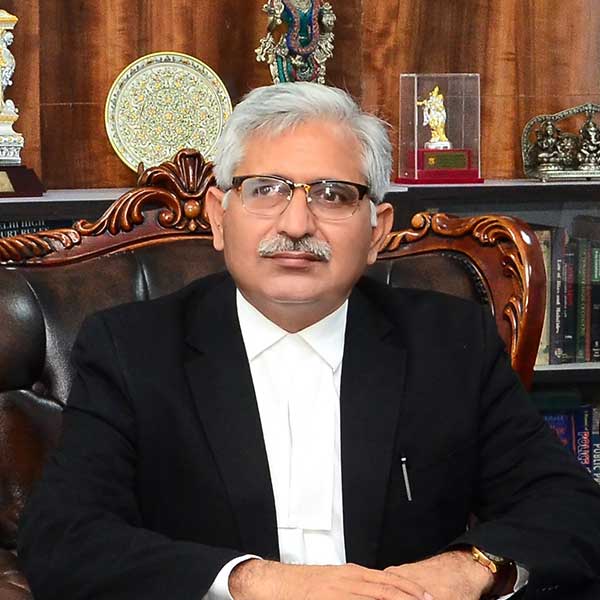
  • Being self-employed and creating job opportunities for others is very fulfilling and exhilarating at the same time- Abhishek Gupta, Advocate, Supreme Court of India & Delhi High Court

    Being self-employed and creating job opportunities for others is very fulfilling and exhilarating at the same time- Abhishek Gupta, Advocate, Supreme Court of India & Delhi High Court

    This interview has been published by  Priyanka Karwa and The SuperLawyer Team

    Can you share with us the pivotal moments and motivations that led you to pursue a career in law, from your academic achievements to your early experiences in the legal field?

    Being born into a lawyer’s family, it was more likely that I would end up being a lawyer. However, apart from occasionally taking dictation from my father for his court matters, my exposure to law and litigation was quite limited. I was more inclined towards mathematics in school, which led me to pursue B.Com (Hons.) from Delhi University. My interest in law only piqued towards the fag end of my graduation when my interest in accountancy slightly waned. That is when I decided to join Campus Law Centre, Faculty of Law, Delhi University and study law. I truly embraced law only when I joined Luthra & Luthra Law offices after my graduation, where I got an opportunity to work on several high-profile disputes, connect with some of the brightest minds and occasionally enjoy five-star luxuries. Gradually, in the course of my journey, I have realised that a career in law apart from being a very effective vehicle for service to society, is equally remunerative and rewarding, and offers enough space and time to pursue other intellectual hobbies and interests as well. In hindsight, I feel I made the right decision to pursue a career in law as I could have never done a 9 to 5 job, or a regular government job. Being self-employed and creating job opportunities for others is very fulfilling and exhilarating at the same time.

     You started your career at Luthra & Luthra Law Offices and then transitioned to independent practice. What were the key lessons you learned during your initial years in the legal industry, and how did it shape your decision to go independent?

    Nearly a year that I worked with Luthra & Luthra was very rewarding and has stood me in good stead during all these years. It was there that I learnt to burn the proverbial midnight oil. On several occasions, after working the whole night, it would only be in the wee hours of the morning that I would come back home. Seeing the hierarchy of lawyers there classified as associates, senior associates etc., I realised that one cannot be in a secure environment for too long and the real challenge in law is to start independent practice. My father being a designated Senior Advocate also played a significant role in this decision. But he made it quite clear to me that your pedigree can only last you as long as you are able to satiate your clients and deliver results. Fortunately, quite early in my legal career, I understood that there are 100 lawyers pursuing 10 clients and that there is going to be stiff competition. And it is only sheer hard work that sets you apart from others. It also taught me to accept both good and bad with equanimity.

     As an independent practitioner, you’ve worked on a wide range of cases, including arbitration, complex contract litigation, and various other areas of law. Can you share one particularly challenging case that tested your skills and knowledge and what you learned from that experience?

    While there are many such cases and each case teaches you something new, I have a predilection towards my first case as an independent practitioner where I appeared before the Saket District Court and successfully argued a domestic violence matter filed against my client. I remember how I had gone fully armoured with three sets of case law and written notes of arguments and the other lawyers in the courtroom were quite astonished to see this level of preparation for an admission hearing, but that preparation kept me afloat and served me well. I was also commended by the learned Judge for my arguments who took me for a seasoned counsel. This experience taught me that no amount of preparation is too much and one should be fully conversant with the facts of the case supplemented by knowledge of the latest precedents on the subject. I cannot help but mention one of my first arbitrations in a tender matter for a PSU, which was one of the most fulfilling experiences in terms of the knowledge and skills that I acquired. More importantly, that case instilled a lot of self-belief and confidence in me. Another case close to my heart is one before the Orissa High Court where I resisted a petition for termination of the mandate of an arbitrator. I had to really think on my feet for that matter and pull a rabbit out of my hat. It is also true that every time you read a brief, you see a different angle to it and learn something new. Therefore, it is very important to read and re-read your brief.

    Your involvement in the ‘ONGC vs. Afcons Gunanusa JV’ case was significant. Could you elaborate on the key aspects of this case and how it influenced your expertise in arbitration and the interpretation of the Arbitration & Conciliation Act, 1996?

    The ‘ONGC vs. Afcons Gunanusa JV’ case was the consequence of looming uncertainty and opacity about the fixation of arbitration fees in ad hoc arbitrations in India. Though the Supreme Court in ‘NHAI vs. Gayatri Jhansi’ had upheld the agreement between the parties on arbitration fees as binding, no party dared to cross Lakshman Rekha of suggesting an appropriate fee to the Arbitrators. The Supreme Court finally laid rest to the fee conundrum in ONGC Afcons case and passed necessary directions on determination of arbitration fees; It particularly held that the Arbitral Tribunal does not have power to fix its own fees unilaterally and that the fees must be fixed at the inception of the proceedings to avoid unnecessary litigation and conflicts at later stage. This was truly a watershed case for me in many ways. The learning and lessons from assisting the then Attorney General for India, Mr. K.K. Venugopal, are for a lifetime; the opportunity of appearing before a Bench headed by the present Chief Justice of India and consisting of two future Chief Justices of India so early in my career; the satisfaction from intensive study, research and drafting and the sheer delight of participating in a landmark case is quite overwhelming. It taught me the single most important lesson- that a lawyer never ceases to be a student and it is essential to keep educating and updating oneself. More than the expertise in arbitration, it showed me how to develop command and competence in any branch of law. 

    You mentioned your academic background in commerce, which provides you with the ability to decipher complex financial statements and transactions. How has this background been beneficial in your legal career, especially in cases involving financial matters?

    I honestly believe that background in commerce is helpful particularly when you are handling heavy stake arbitration matters. In any commercial dispute, there are two important aspects to the case: firstly, the party who is in breach and secondly, the measure of damages. It is the latter aspect, when you go into the proof and quantification of damages, i.e. financial claims, interest on capital, vouchers, ledger accounts, balance sheets, auditor’s report running into thousands of pages, that the knowledge of commerce comes in handy. I know quite a few brilliant lawyers who are not able to decipher basic P&L Account statements. I therefore recommend everyone to take a crash course in commerce, even if one has not pursued it at graduation level.

    You’ve authored articles on a wide range of legal subjects. Could you share one article that you are particularly proud of and explain why it’s relevant in the legal landscape today?

    Honestly, at the school level or college level, I never had any occasion or inclination to write any article. In fact, it was a very dear friend of my father-a retired bureaucrat, who motivated me to write even before I became a lawyer. He was editing a magazine in the early 2010s and gave me a platform to publish my articles. But out of the 25-30 articles that I have authored so far, it is very difficult to pinpoint one, yet I will pick my article ‘Suo motu cognizance: A panacea or a predicament?’ that was published in ‘Bar and Bench’ during the first wave of Covid. I honestly believe that this article continues to be relevant even today and ought to kindle more debate and discourse. I had received a great deal of appreciation for that piece of writing from many retired judges, senior counsels and colleagues.

     Your experience involves working with various PSUs and handling different areas of law. How do you balance the diverse needs and legal challenges posed by your clients in the public sector, and what strategies do you employ to provide tailored solutions?

    Dealing with PSU clients, as a matter of fact, is much more challenging than dealing with a private client and there are several reasons for this. In a PSU, there are various departments, namely marketing, finance, contract & procurement, HR etc. headed by a particular officer. At times, they are working at cross purposes unknown to them. If a dispute erupts against a contractor, all departments are interacting with the contractor speaking in different voices and tones; The process of harmonisation becomes a challenge. There is a vigilance angle in every case; you have to be doubly cautious while drafting pleadings for them. Unlike a private company, RTI applies to PSUs, any suppression or misstatement can land you in a soup. Remuneration is also meagre compared to private clients, but yet it is a delight to appear for PSUs because by and large the officers are upright, sincere and very well-educated and committed as well, although public perception is somewhat different.

    Finally, what advice would you give to fresh law graduates who are just starting their careers in law? What skills and approaches do you believe are crucial for success in the legal profession, particularly in the context of your areas of expertise?

    All that I would wish to say is that there is no substitute for hard work. I also maintain that a brilliant person may fail, but a hard working one can never fail. Proficiency in written and spoken English cannot be overemphasized. Of course, honesty and integrity are an absolute must, particularly when dealing with PSU clients. In a way, the legal profession requires no different skills than you would need in any other profession. It is hard work and honesty, coupled with a little bit of luck and maintaining level headedness and an affable demeanour throughout that will succeed.

    Get in touch with Abhishek Gupta-

  • Initially, when we all start our careers, we are very head strong – want to prove our point and in the bargain rationalising becomes difficult, Pallavi Puri, Partner at DMD Advocates

    Initially, when we all start our careers, we are very head strong – want to prove our point and in the bargain rationalising becomes difficult, Pallavi Puri, Partner at DMD Advocates

    This interview has been published by  Priyanka Karwa and The SuperLawyer Team

    Ma’am, please share with us how you first became interested in the field of law, and what inspired you to pursue it as a career?

    I am a first-generation lawyer. So technically, there was no godfather figure to guide me or who I could look up to. Infact, I didn’t even have anyone in the legal fraternity in my immediate circle of friends and family. Law happened to me by fluke. I was pursuing Political Science (H) from Gargi (the course had a fair bit around constitution, international relations and jurisprudence) and during the final year, while all my colleagues were certain of their career path, I was so lost. I remember this friend of mine so kicked about pursuing law and sitting for entrances. Her enthusiasm, her passion, I think, in hindsight, inspired me to give it a shot. I just came home one fine day and told my parents I want to pursue LLB.  I sat for the entrance exams at Jamia and Delhi University and as luck would have it – cleared both. Picked campus law centre at Delhi University and rest is history.  

    You have over 18 years of experience in M&A, private equity investments, and general corporate commercial law. What drew you to specialize in these areas within the legal field?

    I probably chose corporate law over litigation because it offered economic/ financial stability very early in my career. Also, I was never inclined towards constitutional law, criminal law, evidence et al. Having said that, during my internships I did embark on a journey that involved exposure to various facets of law including litigation. But it was the corporate internships that always left a mark. The fast-paced transactions, intense negotiations, intricacies of corporate law gave me an adrenaline rush. The opportunity to work closely with some great minds, aspiring to be like them – their commitment to clients, challenges faced on each transaction, in-depth strategic considerations appealed to me greatly. By the final year of LLB I had pretty much zeroed in on corporate law and was lucky enough to break through with Trilegal.  

    You’ve represented both domestic and multinational companies in cross-border transactions. Could you tell us about a particularly challenging or memorable transaction that stands out in your career?

    Each and every transaction that I have worked on till date has taught me something new which has played a role in my growth curve and developing my personality. 

    But I guess the very first transaction I did at the start of my professional career left an imprint – this was a joint venture between a USA conglomerate and a major Indian textile manufacturer with the objective to undertake, wholesale trading, designing, marketing, distributing, importing and exporting of branded apparel and related accessories in India. We were representing the overseas entity and it was their very first investment/ venture in India. Law around foreign investment and in particular the trading sector was still evolving. There were a lot of regulatory issues around structuring, approval requirements, company law issues. It was all so overwhelming. And to top it being new in the profession the zeal to take it heads on and impress your boss! Fortunately, or unfortunately, I had a tough boss- but with his guidance, I was able to grasp onto stuff fast and then one fine day he walked up to my workstation and said that I will have to go for negotiations on the matter to Bangalore alone. I did not know what hit me at that time- I completely blanked out. Just the thought of sharing space with the GC, counterparty and its advisors was scary. But somewhere I was thrilled too– I had earned his confidence in a short span. The negotiations stretched for almost a week, besides legal issues the exposure to commercial/ business issues was great. Honestly, not everyone gets this kind of exposure at such an early stage. We signed and closed in record time. This was the most remarkable experience ever! And reaffirmed my passion for corporate law.

    Before joining DMD Advocates, you worked with prestigious firms like Trilegal, AZB, and JSA. How did these experiences shape your legal career and the way you approach your work today?

    Each of the firms I have been with has helped me grow as a professional. Trilegal was the first. When you are just out of law school what really helps is finding the right mentor and platform to realise your potential. Trilegal offered both. Working with one of the founders from the start, getting that first-hand experience and exposure is rare. My stint at Trilegal laid the foundation of my knowledge of law. All the seniors I worked with at Trilegal were extremely helpful but there was no nepotism. We all learnt it the hard way and I think that’s the best way! AZB was no different – challenging work, high stake transactions, excellent exposure, no spoon feeding and an amazing boss. I think these initial 5-6 years shaped most of me. JSA – my longest stint, offered the platform required to excel and develop the required skill set. 

    One of your notable deals was advising Prestige Estates Projects Limited on the sale of a $1.5 billion real estate portfolio to Blackstone. Can you share some insights into the complexities of that transaction and how you navigated them?

    Due to confidentiality reasons I can’t divulge much, all I can say it was one of the largest real estate portfolio transactions ever done in the country, both in terms of number of assets and deal value. It was quite a complex deal in terms of structuring, kinds of instruments that were issued, and ensuring foreign direct investment and corporate law compliances. CCI approvals were obtained, hold backs structured around NCLT approvals etc. The transaction lasted over a year and the deal size was approx. USD 1.5 billion

    In your career, you’ve advised a diverse range of companies, from online exam preparation platforms to hospitality chains. How do you approach legal challenges in different industry sectors, and what skills do you find most valuable for adapting to various clients’ needs?

    Advising clients can be very challenging as there is a lot at stake when you are working on transactions. Like I mentioned earlier, each mandate I worked on taught me something new and different. Even if you do repeat transactions, they come with their own set of nuances. Managing expectations, value add, in depth knowledge of the subject, bringing on the table that expertise and maturity are some of the key skills required. 

    Initially, when we all start our careers, we are very head strong – want to prove our point and in the bargain rationalising becomes difficult. One thing I have learnt over the years is to keep your calm during negotiations- don’t let things get out of control. I know it’s easier said than done- but it is important to get this sorted in initial stages of growth, else it can become a roadblock.

    Know when to stop speaking, be patient and focus on your growth. 

    Like the famous saying goes “It is better to be unique than the best. Because, being the best makes you the number one, but being unique makes you the only one.”  

    As a final question, what advice would you like to give to fresh graduates or young professionals entering the legal field today? What qualities or strategies should they focus on to succeed and make a positive impact?

    There is enough of this advice out there. I would just say stay focused on GROWTH: 

    G- Gain practical experience;

    R- Resilience is the key;

    O- Objective approach at all times;

    W- Wisdom plays an important role;

    T- Teamwork and time management will take you a long way;

    H- Happiness is a choice, make the right one.

    Get in touch with Pallavi Puri-

  • I believe, the practice of law is very deep rooted with our society and social leanings and learnings- Adeel Ahmed, Advocate-On-Record at Supreme Court of India

    I believe, the practice of law is very deep rooted with our society and social leanings and learnings- Adeel Ahmed, Advocate-On-Record at Supreme Court of India

    This interview has been published by  Priyanka Karwa and The SuperLawyer Team

    Can you share with us how you became interested in pursuing a career in law and what motivated you to specialize in litigation?

    From my childhood itself, i have looked up to lawyers and the way they represent the destitute and the needy. that they are the Voice for the Voiceless, and it always intrigued me to see the process of Justice being administered in various Courts of law. I was always interested in various aspects of Law, and later on, during my studies of Political Sciences and law, i became more passionate about the same. 

    As a qualified lawyer and legal practitioner, you’ve had the opportunity to represent litigants in various courts and tribunals, including the Supreme Court of India. Could you tell us about one of your most challenging or significant cases and the impact it had?

    Every case is a challenge and is a frontier to test new boundaries and arenas of law. But some of the most perplexing of  cases have been the Public Interest Litigations with which I have been involved on ‘hate-speech’, CAA-NRC, Foreigners detention Laws, Conversion cases, Hijab ban, et al. These have been cases where not only the matter is to be handled inside Court, but also the challenge lies in containing various aspects of the case, outside the Court as well, in that dealing with public anxiety and conscience has definitely been a most daunting and uphill task

    Your expertise spans across a wide range of legal areas, such as corporate and commercial matters, taxation, real estate, family laws, women’s rights, intellectual property, and more. How do you manage to stay updated and proficient in such diverse fields?

    I’ve been an avid reader, and I try to stay updated with various legal events. Not only do Journal and Reports provide you various insights, but the fact that they are available on a digital platform, makes it easier to learn the nuances of the trade. Moreover, if your a patient listener, many a times, it’s the Client which gives you keen insight into the case.

    In addition to your litigation practice, you also work as a legal consultant to the Indian Statistical Institute, Delhi Center. Could you share some insights into your role and the type of legal issues you handle in that capacity?

    It’s been a privilege being associated with  Indian Statistical Institute, Delhi Center. It has led to a more fulfilling experience in terms of diverse kinds of legal problems with which the Institute has had to grapple with including for that matter it being an Institute of academic importance. Vetting Contracts involving international grants and funding can be a tricky piece of legal advice where you do not want the Institute to suffer, and at the same time, maintain an amiable atmosphere for academicians and staff.

    You have been empanelled with various state governments and government bodies, including the State of West Bengal and the High Court of West Bengal. How did you establish these professional relationships, and what are some key responsibilities that come with being empanelled?

    I have had the fortune of being associated with a Chamber cum office of the Late G.S. Chatterjee, and subsequently, Mr. Raja Chatterjee, who’ve been always represented and worked with and for these and other numerous States, and Bodies thereunder. It is indeed challenging to defend Government Policy, and stance, particularly, like that of West Bengal, which could be at a difference with the Center. But then such is the beauty of the Federation that we are, and such are the peculiar workings of the great Nation that we are part of.

    As a representative for public sector units (PSUs) like GAIL and NAFED, you have experience in arbitration matters and representing clients before specialized bodies like the Debt Recovery Tribunal (DRT) and the Debt Recovery Appellate Tribunal (DRAT). Could you discuss some of the unique challenges and strategies involved in these types of cases?

    The DRT and DRAT are the protectorate of “public money”. And if you are a defaulter the noose tightens. But yes, if you can explore alternative ways to resolve disputes, and be creative in seeking redressals, both sides stand to gain. 

    Apart from your professional work, you have also dedicated your time to social causes and volunteered for various social organizations. How do you balance your legal practice with your commitment to these important causes, and how do they complement each other?

    I believe, the practice of law is very deep rooted with our society and social leanings and learnings. During my college days, I was a peer-ed with NAZ Foundation, and was trained as an educator to educate fellow friends and students on HIV and AIDS. By being associated with such concerns, it has given my practice a social side which helps me better understand various social issues and their implications.  

    Finally, based on your vast experience and knowledge, what advice would you give to fresh law graduates who are about to embark on their legal careers? Are there any particular skills or areas of focus you would recommend they develop to succeed in the field?

    Keep your Mind Open ! You probably learned something today, but that doesn’t mean you cannot learn better, or rather unlearn tomorrow. Decide if possible which area of law you wish to pursue, and then start taking measures to achieve that by equipping yourself with the skills required. It’s these ripples which cause waves later on ! 

    Get in touch with Adeel Ahmed-

  • The practitioner must give a candid and honest opinion to the best of his ability and also let the client know the probable results of anticipated or ongoing Litigation- Rahul Krishna, Advocate on Record at Supreme Court of India

    The practitioner must give a candid and honest opinion to the best of his ability and also let the client know the probable results of anticipated or ongoing Litigation- Rahul Krishna, Advocate on Record at Supreme Court of India

    This interview has been published by  Priyanka Karwa and The SuperLawyer Team

    Can you tell us about your journey and how you ended up practicing law, particularly in the areas of indirect tax cases, company law, intellectual property rights, and the Anti-Money Laundering Act?

    I gravitated towards law as a career because I felt practicing law gives you an opportunity to articulate yourself and is an intellectual challenge. Our professors back in college (Faculty of Law, Delhi University), while taking lectures and discussing case laws, would often take us to the stories of courtroom duels. Being a First Generation lawyer, I had very little exposure to the field of law. However, hearing about the Legal Luminaries and their art of advocacy fascinated me a lot. While pursuing LL.B from Law Faculty at Delhi University, the stories of its stalwart alumni further pushed me towards Litigation. I guess that’s how I ended up practicing law after my LL.B. Being a legal practitioner, in the initial years of your practice may not be monetarily rewarding, but as that is taken care of as you grow in practice, additionally, the social recognition that comes with experience is a reward in itself.

    The chamber I joined after graduation majorly had matters pertaining to Indirect Taxes and Financial Crimes. What attracted me the most about tax Statutes is that it touches practically everything and their dynamic nature. Benjamin Franklin famously said, “In this world, nothing can be said to be certain except death and taxes.”  Since Tax touches almost everything and everyone, Tax law is equally important for individuals, small businesses, MSMEs, or big enterprises. That widens the scope of practitioners of Tax law to practice before different forums for a variety of clients.

    Much is the same for corporate law, IPR, and Anti Money laundering. India, post-liberalization, has witnessed massive growth. The growing economy and greater integration with the world economy have necessitated laws to be in sync with international standards. Thus we have seen overhauls in Company law, Competition laws, the introduction of stringent Anti Money Laundering guidelines for financial/reporting entities, and an overhaul of IPR laws such as copyright, Patents, etc. Such changes have also created the need for specialist legal counsel. 

    You have extensive experience practicing before judicial and quasi-judicial authorities. Could you share some notable cases or experiences that have shaped your career as an advocate?

    The last quarter decade has seen tremendous growth in the role of Administrative Law and Quasi-judicial bodies. The Tribunalisation has opened a great many avenues for legal practitioners. Soon after I joined the Profession, I started in tribunals and before the administrative adjudicating authorities. In Tribunals, we have both Judicial Members (who are mostly Retired judges or legal practitioners) and Technical Members (those retired from Governmental departments and are no longer attached to the Government). The challenge before the Departmental adjudicating authority is that they are the serving officers of the Department itself. This raises the issue of Official Bias, which appears to be one of the biggest challenges in the adjudication process. In one of my cases, objections were raised by the Governmental Audit department with respect to the benefit of duty exemption on manufactured goods. The client had availed the said exemption, which was based on the Department’s own Notification. At the pre-Show Cause Notice Consultation stage, we furnished the authorities, precedents, and genesis of the exemption notification and the concerned law. Despite having precedents in our favor, our contentions were dismissed, and the Department went on to issue the SCN. The Original adjudicating Authority also held against us, confirming the demand. However, in a concise judgment, the Tribunal upheld our contentions and ruled in our favor. The entire process took a little over five years. That not only increased the cost of business for the client but also blocked a part of his working capital. 

    The case being adjudicated by the serving officers is a phenomenon not unique to the law related to Taxation but also pervades other statutes. Take, for example, “The Prevention of Money Laundering Act 2002 (PMLA)”; the Director of the Financial Intelligence Unit- India has the power to issue the Show Cause Notice to the Reporting entities. The Director heads the investigation and adjudicates the SCN, which is the culmination of his own investigation. The cardinal principle that no one should be a judge in his own case goes for a toss. Even in the new Goods and Service Tax Act (GST Act), as in the erstwhile Central Excise Act, the adjudication proceeding is carried by the departmental officers depending upon monetary limits, and they discharge functions in the capacity of quasi-judicial officers.

    Therefore, in the context of administrative adjudication, client counselling assumes great importance. The practitioner must give a candid and honest opinion to the best of his ability and also let the client know the probable results of anticipated or ongoing Litigation. This may help the client to decide the future course of action and be prepared for any adverse situation.

    As an Advocate on Record before the Supreme Court of India, what are the key responsibilities and challenges you face in this role?

    Practicing before the Apex court of a country is a matter of great honor and pride. But practitioners have to be mindful of the fact that they are pleading and arguing before, and sometimes against, some of the best legal minds in the country. Therefore once a year, the Supreme Court conducts an examination before enrolling an Advocate as an AOR. The examination, in addition to testing the legal understanding of the candidate, also ensures that the candidate is well-versed with the Court’s rules, practices, and procedures. But for me, the most significant duty of an advocate on record is Professional Ethics. The Apex court has frowned and has shown its discontentment with AORs who just lent their names to the pleadings without studying and verifying the same. Recently the Hon’ble Court raised concern over the indiscipline of AoRs who had filed pleadings in which derogatory remark was made about a High Court judge. Since an AOR is accountable for pleadings filed in the Apex court, he is expected to perform all due diligence. I, for example, make sure that I read every word of the draft and that the pleadings are concise and to the point. The synopsis filed along with pleadings should never be extravagant or too voluminous. Using simple language and sequential structuring of the facts and law are the main pillars of good drafting. One has to be mindful that in Fresh matters before the Supreme Court, 90 percent of the chances of getting notice issued are based on the pleadings alone. 

    Intellectual Property Rights seem to be an area of particular interest for you. How did your interest in this field develop, and how do you assist your clients in securing their intellectual property rights?

    IPR has attracted me since the days of my college. The fact that something as trivial as a Pen, an object of our daily usage, has an IP history going back more than 100 years is truly astonishing. The case laws we studied during our college days, exposed me to the novel arguments raised in the context of IPR, which were very unlike those raised in other traditional subjects.

    In fact, the first case I handled independently before the Delhi High Court dealt with the issue of Trademark infringement concerning the exhaustion of rights in parallel import cases. While researching the case, I went through several journals and articles. I specifically remember the one article written by Late Prof Shamnad Basheer, in which he examined the ambiguities in the law regarding the exhaustion of rights and Trademark infringement. These articles and case laws helped me realize the potential of issues concerning Intellectual Property Rights. Another aspect of intellectual Property that attracted me the most was the ethical aspect. The balancing of monopolistic rights and free and fair use of Intellectual Property in the face of rapid technological development is another area to watch out for.

    As for my clients, especially start-ups and freelancers, my first line of questioning is about the protection of their Intellectual Property. There are many reasons why it should be done. A simple Google search will give you a number of reasons for protecting your IP rights. 

    You mentioned your dissertation coursework on “Sports and its Interaction with the Antitrust Law.” Can you elaborate on this topic and explain the connection between sports and antitrust law?

    The origin of sports was exclusively a social phenomenon. With the increasing dominance of economics in the sporting arena, conflict with the law was only natural. One such apparent conflict we have seen the world over is the conflict between sports and antitrust laws.

    Take, for example, Sporting Bodies/Federations. We have the ruling from the Competition Commission of India that the Sporting federations are Dominant entities in terms of Section 4 of the Competition Act, 2002. Therefore the question that comes to mind is whether the restrictions or the interference with the right of staff and players to carry on their Profession will amount to ‘Abuse of their dominant position.’ 

    Since these federations enjoy power under the pyramid structure of sports governance, it gives a practical monopoly to them. However, these sports federations are unique in the sense that they are the sole players in the market and have no competition from any other quarter. One of my arguments was the concept of ‘Position of strength’ as envisaged in the definition; will it necessarily need to have another existing competitor in the market, or is it sufficient to cover a single entity in the market?

    There are other hosts of issues such as broadcasting and merchandising rights, ownership and acquisition of player’s contracts by franchises, illegal cartel behavior and collusion between sporting Franchises, anti-bidding behavior between the sporting clubs, etc. 

    We have authorities from foreign jurisdictions concerning anti-competitive practices in sports, which are almost close to 100 years old. The Competition Commission of India has also caught up with the anti-competitive activities in Sports, but there is a host of issues with sports that we may see ripening into dispute in times to come. 

    Apart from your professional endeavors, you also mentioned your interest in sports. How has your involvement in sports influenced your career as an advocate, and what lessons have you learned from it?

    I am a sports enthusiast. I like spending time on the field playing sports. I have played cricket for my school and college teams. Over the period of time as a practicing advocate, I have realized the importance of fitness and a sports-ready mind. Starting point for any good practitioner of law, like any other profession, has to be a fit mental and physical setup. Sports bring a sense of discipline, instill perseverance and resilience in a person, and teach about dealing with uncertainties in life. To that extent, sports resemble the Profession of advocacy where irrespective of the intensive preparation, on a given day; it may or may not work out for you. Even if a day doesn’t work for you, given you have a good mental and physical setup, it’s relatively easier to bounce back and be better prepared next time. 

    Could you share some insights into your role as a partner at LexAlly Advisory LLP? What motivated you to establish the firm, and what kind of Litigation and consultancy support do you provide to your clients?

    We co-founded LexAlly Advisory LLP in 2015 with a vision to bring within its umbrella both the Litigation and the Advisory/consultancy part. The law firm was essentially set up, realizing the fact that it gives me more freedom and control over my working ecosystem. We started modestly and are trying to find our way. But it gives me immense satisfaction that besides the litigation work, we have been able to advise our clients in their day-to-day legal matters. What gives us greater satisfaction is the fact of dealing with new-age entrepreneurs who are coming out with all kinds of novel issues in their business. In a short period of time, we have advised our clients on issues such as business transfer/slump sale agreements, Taxation, IPR protection, general contract management, privacy policy, etc. With a rapidly changing legal landscape, we also try to keep ourselves updated with respect to the newer business models and potential legal complications with such business models. There may be challenges of great proportion running your own shop, but it also gives you that extra independence and flexibility to deal with any legal problem, and the satisfaction that comes after a good job is a reward in itself.

    As someone with experience in providing legal consultancy to business corporations and start-ups, what are some common legal compliance issues that companies face, and how do you assist them in navigating these challenges?

    Issues with the start-ups are basically domain related. For example, an App developer may face the issues of privacy policy and data protection. Another issue may be with respect to managing the IPRs related to the source code and object code of its application. And it’s a possibility that the owner of the App or IT Programme may not be the original author of such codes. Similarly, those working on disruptive technologies may need assistance in dealing with a host of issues such as IPR, Competition law, etc. The traditional business models need assistance with respect to advisory on issues of Taxation, dealing with administrative authorities, compliances under Company law, etc. Our primary goal is to guide them, provide consultancy to such entities or individuals, and avoid possible conflicts. 

    Having practiced law for over a decade, what advice would you give to fresh graduates who are considering a career in the legal Profession? What key lessons have you learned throughout your journey that you believe would be valuable for them to know?

    Over time, I have realized that the work of a legal professional requires an analytical and objective thought process. It doesn’t matter whether he/she is working as a corporate counsel, working in a law firm, or having an independent practice. For those wanting to enter the arena of Litigation, patience and perseverance are the most essential tools. Withstanding criticism and maintaining the dignity of the Court is essential. For any new entrant in the Profession of advocacy, it is also essential to listen to those who have years of experience. I recall an interesting precept that I received early in my career. While I was arguing a case, the opposite counsel started interjecting me in a loud and unsavoury tone. Naturally, I got agitated and wandered off from the line of my argument. When the matter got over, a senior Bar member sitting in the courtroom very briefly counselled me, asking me to control my reactions, maintain composure, and give due respect to the Bench. These virtues are non-negotiable for advocates. The decorum of the Court must never be disturbed. That left an indelible mark on me. 

    A legal Practitioner shall always have the insight to learn and unlearn. There will come many occasions for a practicing advocate who might not get direct counselling or words of wisdom, but just by observing the legal ecosystem and watching court proceedings,  one can learn so much. In the world of advocacy, experience is the best teacher.

    Is there anything else you would like to share with our audience, or any final thoughts or advice you would like to leave them with?

    My only advice to young advocates wanting to make a career in law is to always be thoroughly prepared. Only enter any courtroom or client counselling with thorough preparation of facts and law. Becoming a law expert may just not be enough, but keeping oneself updated with General Knowledge and current affairs is also important, as it goes a long way in developing the intellectual understanding of a legal practitioner.

    Get in touch with Rahul Krishna-

  • I have learnt the three important cardinal principles behind the making of a good advocate- knowledge,  perseverance and discipline- SS Ahluwalia, Managing Partner-Chambers of SS Ahluwalia

    I have learnt the three important cardinal principles behind the making of a good advocate- knowledge, perseverance and discipline- SS Ahluwalia, Managing Partner-Chambers of SS Ahluwalia

    This interview has been published by  Priyanka Karwa and The SuperLawyer Team

    Can you tell us about your journey and how you ended up pursuing a career in law? What inspired you to choose this profession?

    I belong to the family of lawyers. I am a third generation lawyer. My grandfather Sardar Kuldeep Singh started his practice from Lahore High Court and after 1947 he continued the practice in India. Thereafter my father Mr APS Ahluwalia Sr. advocate started his practice in 1971. Our chamber is almost a hundred years old in the legal profession. In order to continue the legacy I chose to be a lawyer. I qualified LLB in 2004; and after qualifying LLM from Cardiff University, United Kingdom in international corporate laws, I joined JSA in the team of general corporates and capital markets. I did many private equity transactions and IPOs during my three years experience at JSA. But my love for litigation had never ended. I always used to see the working of litigation lawyers at Ahluwalia Chambers that always fascinated me. Someday I had to make a decision to join my family office, to continue and pursue the legacy left behind by my grandfather. So I joined my father’s chamber known as Ahluwalia Chambers. 

    You have extensive experience in various areas of law, including commercial arbitration, corporate commercial and contract law, media-entertainment, property & succession laws, banking and recovery laws, fraud and white-collar crime laws, and constitutional disputes. How did you develop such diverse expertise, and what attracted you to these specific practice areas?

    I have almost 19 years of experience at the bar. As a lawyer, I have always learnt that one should never try to focus on a particular subject in the initial stages of practice. With the advantage of joining a family chamber I tried working on every case as and when it was required and it is required. According to me a lawyer is always a student of law who has to learn from everyday experience in the court. Having said that, the lawyer has to look for the opportunity to appear in as many legal issues which helps him build his practice and experience at the Bar. It is this experience by working on various legal issues the judicial mind starts working which is also the building of the court craft.

    Throughout your career, you have represented clients in the Hon’ble Supreme Court of India, Delhi High Court, and various tribunals and appellate authorities. Can you share some notable cases or achievements that you are particularly proud of?

    According to me every brief on the Advocate’s table is important. But at times there are certain cases which are labelled as landmark judgements. This experience is always in the career every practising advocate. This also helps in building a in him/her a true lawyer and a confident practitioner. Some of my noted judgements in which I had been able to get legal points establish as precedents such as Arun & ors. Vs State, NHPC vs. Patel L&T JV, Brig.Dhir vs. Parsvnath Developers Ltd, Aroon Purie vs. OP Bhola & Ors. ; IFCI vs Ceylon Biscuits, Sunil Sikri vs GHPS & Ors., Hargovind vs. State; And few more. But I think that every case has always been very important to me and I always try to put the best of my abilities. As an advocate, I am first officer of the court to assist the court for adjudicating the dispute. It is my duty that I do put the case before the court to achieve the success for my client. We can’t be emotional to any brief. To get the justice, an advocate is duty-bound to his client to do justice with his brief.

    You have represented a wide range of clients, including statutory bodies, PSUs, private limited companies, and infrastructure companies. How do you approach representing different types of clients with varying legal needs and challenges?

    Chamber practice is very different from the corporate firm practice. As a litigation lawyer. We don’t approach the client. The clients look for the lawyers suitable to them in the market as per their requirement. I also believe that good work is always recognised in the commercial world. There is always space for everyone but abilities are to be shown. Under the Advocates Act we have many restrictions. Primarily we cannot advertise ourselves so the only way to make yourself recognised in such a huge competitive world is to perform to the best of your abilities and the client will definitely follow. To some extent, networking and word of mouth by friends and existing clients also helps in building up the client base.

    As an advocate, you have been involved in high-stakes disputes involving substantial sums of money. Could you share some insights into handling such complex cases and the unique challenges they present?

    Every case has unique facts and legal issues involved. Not only that every case has its own line of action irrespective of the stakes involved. The sum of money doesn’t matter, what matters is the resolution to the problem. So as an advocate we have to get into the complexity of every dispute with the existing precedents. Without the application of proper law, it is not possible to convince the court. The most difficult challenge arises when the opposite lawyer is a senior advocate. Although it’s a learning experience, at the same time, it becomes more challenging to contest against someone who is designated by the court as a judicial expert. Nevertheless, such challenges help in making you a hard-working and laborious lawyer.

    Apart from your litigation practice, you also have experience in legal drafting and have several reported judgments to your name. How do you balance the different aspects of your legal practice, and what skills are essential for success in both litigation and legal drafting?

    A good drafting skill is inevitable for an advocate. Until and unless he/she doesn’t have the skill of putting the case properly in the pleadings, it is not possible for an advocate to put it before the court. Drafting and arguing are related to each other. Both the skills are learnt with the experience. There is no automatic or quick route to it. While preparing the case always remember to refer to the statutory provisions and the settled law. It is very important that a lawyer should be very conscious about each and every fact before preparing the pleadings. At the same time, this experience also helps in drafting, legal opinions, contracts and other legal documents. 

    You have been recognized for your professionalism, ethics, and pragmatic legal advice. Can you share some strategies or principles that guide your approach to client representation and legal advocacy?

    I think it is discipline. I have inculcated discipline while looking at my father; and the ethics he follows in the profession. It is very important that we always follow our respected seniors at the bar. They are the real mentors for the budding lawyers. Their experience guides us to become a good lawyer as well as the officer of the court. It is from that experience, I have learnt that I should always be honest to the client. False promises are always dangerous. Be true to your brief and guide the client within the legal perspective.

    Being appointed as amicus curae by the Hon’ble High Court of Delhi and serving as Standing Counsel for Delhi High Court Services Legal Aid Committee, you have been involved in civil and criminal cases from a broader perspective. How has this experience shaped your understanding of the legal system and the role of advocacy in promoting justice?

    It is very important as an advocate to serve the society. India is a huge country with various kinds of people in Indian society. As the litigation has become expensive. At times it is difficult for everyone to afford lawyers, especially good lawyers. The legal aid provides legal services at free of cost to the citizens who are not able to afford litigation. While working as a legal aid lawyer, it made me realise the sufferings of the needy. I also got the opportunity to appear in a variety of issues before the Hon’ble High Court. It is the true experience, where you put forth the case without any financial interest and that’s the passion needed in you to provide the best of the output. It gives immense satisfaction and of course the appreciation of the court. 

    As an advocate, it is an honour to be appointed as amicus curae. It is an opportunity for assisting the court as its friend. Any kind of assistance given by the lawyer is always appreciated by the court. So it is important to give the best as Amicus. 

    Given your vast experience and knowledge in the legal field, what advice would you give to fresh law graduates who are just starting their careers? What key lessons or principles should they keep in mind as they embark on their professional journey?

    I have learnt the three important cardinal principles behind the making of a good advocate- knowledge,  perseverance and discipline. Success in the legal profession is not overnight. My father always says that the youth of the lawyer is lost on the table. Spend maximum time reading the latest judgements, and update your knowledge. Always prepare the brief well in advance. While entering the court, a lawyer should always be ready with brief. Avoid seeking adjournment because every hearing is an opportunity. Always sit in the courtrooms and attend the court proceedings attentively. 

    Lawyer needs to have patience in order to establish himself as a litigation lawyer. This might lead to difficult days as well but the passion and sincerity towards the establishment of practice is the only driving factor for a lawyer. It is important that young lawyers should encash every opportunity and should not refuse any brief for the sake of fee.       

    It is important that a lawyer is socially strong. From the very first day while entering the profession Start working to Develop your goodwill amongst the members of the bar. Young lawyers should be respectful to the seniors and the court because one day you will also become a senior member of the bar.

    Lastly, with your involvement in legal conferences and your contributions to various media publications, could you share some insights into the importance of staying engaged with the legal community and sharing knowledge with a broader audience?

    Indeed, it’s a wonderful experience to share knowledge at conferences, not only that by listening to other speakers we also gain knowledge. Legal conferences also help you be introduced to potential clients. It also helps in building your social network. The client building process is very gradual- out of sight is out of mind. So it is necessary that an advocate continues to show his existence by way of writing articles or attending legal conferences as and when the opportunity is given.

    Get in touch with Sukhamrinder P. Singh Ahluwalia-

  • Prasenjit Keswani, Advocate, on establishing independent practice and his diverse experience

    Prasenjit Keswani, Advocate, on establishing independent practice and his diverse experience

    Prasenjit Keswani graduated from Campus Law Centre, University of Delhi, in 1999. With over eighteen years of experience in litigation, he has handled a variety of matters in different forums including the Supreme Court, Delhi High Court, National Green Tribunal and National Consumer Disputes Redressal Commission.

    In this interview we speak to him about:

    • His early years as lawyer in litigation practice
    • His experience in various courts
    • Building independent practice


    HOW WOULD YOU LIKE TO INTRODUCE YOURSELF TO OUR READERS?

    I am a lawyer with eighteen years of experience practicing before the Supreme Court of India, Delhi High Court, NGT and NCDRC. I have my own practice which includes work from direct clients as well as briefing from law firms and individual lawyers.


    WHAT MOTIVATED YOU TO PURSUE A CAREER IN LAW AFTER DOING BACHELORS IN BUSINESS STUDIES FROM DELHI UNIVERSITY?

    BBS was a unique course by the Delhi University offering Bachelors degree in Business Administration. We had various subjects relating to Business Laws, which included subjects like Contract Act, Companies Act and regulatory compliances. This got me interested in law.


    HOW WAS YOUR EXPERIENCE AT CAMPUS LAW CENTRE , DELHI UNIVERSITY?

    Campus Law Centre had a good course structure and some of the professors were prominent personalities in their field and hence attending their classes was a great learning experience. Also, it was a lot of fun being in North Campus.


    WHAT ARE YOUR AREAS OF INTEREST?

    My areas of interest are constitutional law, commercial laws and alternative dispute resolution.


    HOW DID YOU DECIDE TO CHOOSE LITIGATION OVER TAKING UP A CORPORATE JOB? HOW WERE YOUR EARLY YEARS AS A LAWYER?

    In 1998, I joined a law firm AP& J Chambers as an intern. In fact my intent was to work as a corporate lawyer. The firm also had Supreme Court litigation and I started attending Court, which got me interested in litigation and immediately after graduating in 1999 I joined APJ and started working on the litigation side. I worked in AP & J Chambers till 2003. There was lot of independence and it was a happy work place. Handling matters independently was tremendous learning experience and I got opportunities to appear on my own in firm matters. I was quite fortunate to have good mentors at the initial stage of my career Mr. Joseph Pookkatt and Mr. Prashant Kumar, Partners of APJ and thereafter my senior Justice Uday Lalit.


    YOU WORKED UNDER THE GUIDANCE OF JUSTICE U.U. LALIT IN THE EARLY YEARS OF YOUR CAREER. HOW WAS THE EXPERIENCE OF WORKING WITH HIM?

    It was a tremendous learning experience. He was very interactive and he would discuss with his juniors at length, the different facets of law. While in his chamber one got to understand how to approach a brief and understand the finer aspects of law. It was an intellectually enlightening experience. In his chamber we would get diverse and important matters, which gave us excellent exposure. I worked with him for seven years before starting my own practice.


    HOW IMPORTANT IS IT TO HAVE A MENTOR FOR A YOUNG LAWYER IN THE EARLY YEARS OF THE PROFESSION?

    It is very important to get a good mentor more so when one does not have a background in the legal profession, like I didn’t have. I got very good mentoring from my seniors. In the early stage of ones profession it is important for young lawyer to get the self-confidence and self-assurance, which a good mentor can give his juniors. It is also important to develop the skill set in the legal profession as also the right value system.


    WHAT WERE THE STRUGGLES THAT YOU FACED IN BUILDING YOUR INDEPENDENT PRACTICE?

    Any lawyer would tell you that there are no shortcuts to success or developing a practice. Coming into the profession without a background was a struggle to get cases. I was lucky that my sister Advocate Avantika Keswani was two years senior to me in the profession working with Karanjawala & Co., so I was able to get acquainted with the profession because of her and I got my first internship because of the ground work she had laid down in the profession.

    It took me two years to get my first independent Supreme Court case but by then I had international commercial arbitration that helped me tide over the struggles of the initial years.

    If you stay sincere, people start coming to you with cases and lawyers from the High Court start giving you cases, which is very important for Supreme Court practice. At no stage in the profession there is any scope for laxity.


    WHEN YOU HIRE A JUNIOR, WHAT QUALITIES DO YOU LOOK FOR?

    As I said sincerity is the most important factor in the profession and any lawyer who is sincere and dedicated and takes pride in his work as a professional is bound to do well. So, these are the qualities that I look for in a junior.


    HOW IMPORTANT ARE INTERNSHIPS FOR A LAW STUDENT ?

    I think an internship is very important as it exposes a law student to the manner in which the profession works and it also helps him or her to identify their area of interest. Further, in an internship I assign work to the interns so that they can also develop practical skill set like drafting, researching which is usually not covered in the legal curriculum.


    THERE IS A LOT OF DISCUSSION ABOUT NATIONAL LAW SCHOOLS AND TRADITIONAL LAW SCHOOLS. WHAT’S YOUR TAKE ON IT?

    National Law Schools have definitely brought about a lot of professionalism in the manner law education is imparted. However, even the traditional law schools like ILS Pune, GLC Mumbai etc., have always had a good environment and we see their students doing very well. Ultimately, I think it depends on the student on how to take benefit from his curriculum and teachers to learn and develop as a lawyer.


    PLEASE TELL US ABOUT ONE MATTER THAT YOU HAVE WORKED ON THAT HAS LEFT A LASTING IMPACT.

    An important case in my career was the Indian Hotel & Restaurant Association Vs. State of Maharashtra case also known as the Bombay Dance Bar case. This case allowed me to apply the principles of constitutional law to a fact situation, like right to livelihood and privacy embodied in Article 14, 21 and 19(1)(g) of the Constitution. Apart from being a prominent case, it was also a good learning experience.

    Another case, which was an important milestone in my career, is V. Subramaniam Vs. State of Maharashtra where I argued before the Supreme Court and got Section 69 (2A) of the Partnership Act as applicable in Maharashtra declared as unconstitutional.


    WHAT WOULD BE YOUR WORD OF ADVICE TO LAW STUDENTS WHO ARE ASPIRING TO LITIGATE AFTER GRADUATION?

    My advice would be to work with sincerity and to have an attitude to learn and develop your skill set as a lawyer. Money is important but initially the approach should be to learn and give your best to every task or case that you are working on.


  • Aakash Sharma, 5th Rank, UP Judicial Services-2016 shares tips and tricks to get a sweet taste of victory

    Aakash Sharma, 5th Rank, UP Judicial Services-2016 shares tips and tricks to get a sweet taste of victory

    Aakash Sharma completed his LL.B. in the year 2014 at Campus Law Centre, Faculty of Law, Delhi University. He went on to pursue an LL.M at National Law University, Delhi in 2015. After qualifying the UGC-NET exam, he taught Law as an Assistant Professor at Lloyd Law College for a year.

    Not lured by the fancy corporate jobs, Aakash got fascinated with the working of the judiciary as a judge is an independent arbiter upon the matter before him and does not have to take sides unlike a lawyer. Hence, to conquer his dream he started with the preparations from scratch without any coaching. He qualified for the UP Judicial Services – 2016 examination with 5th Rank.


    In this interview, he gives us great insights to:

    • The ideal time to start preparing for the Judicial Services exam.
    • His strategy for tackling and remembering the different provisions of Law.
    • Tips for facing the nerve-wracking interview.
    • And his motivational message to the aspirants.

    How would you like to introduce yourself to our readers?

    First of all, thank you for giving me this opportunity to connect with your readers. I did my Law from Campus Law Centre, University of Delhi in the year 2014. Subsequently, I completed an LL.M. from National Law University, Delhi in 2015 and also qualified the UGC-NET Examination the same year. I taught Law for a year, but destiny had something else in store. I was selected in the UP Judicial Services Examination 2016, commonly known as PCS-J.


    How did you gravitate towards Law?

    (Aakash completed his B.A. (Hons.) in Political Science from Kirori Mal College, University of Delhi in the year 2011.)

    I have often wondered what prompted me to take up Law. It now seems to me that the decision of taking up Law after pursuing graduation in Political Science was utterly providence. While subconsciously, I used to find Law and legal process intriguing as a child. But unbeknownst to me, I have somehow drifted to it. Law is a fascinating discipline because it is so dynamic. Every day is an exciting day in law. The credit really goes to my teachers. Prof. Rajiv Khanna, Prof. Usha Tandon and Prof. Raman Mittal at Delhi University; and Prof. Mrinal Satish, Prof. B B Pandey and Prof. M.P. Singh at NLU Delhi. These teachers made Law interesting and turned my initial intrigue for Law into endearment.


    Did you focus only on academics in college life?

    I maintained a healthy balance between co-curricular activities and academics. I was designated the Student Convener of the Seminar & Discussion Society after winning the college debating competition at Campus Law Centre. I used to organize weekly discussions on bills, legislations and judgments. The real secret of excelling in academics is a deadly mix of self-discipline, being attentive in class, making your own notes, reading the best authors, mastering the bare acts and leading judgments, and avoiding cheap guide-books and coaching institutes like the plague.


    What made you choose to serve the Judiciary; did you not get tempted by the fancy corporate jobs?

    Every facet of Law is enjoyable. I chose judicial services because a judge is an independent arbiter upon the matter before him. He need not take sides like a lawyer. I found this especially attractive about judicial services. As far as corporate job is concerned, I got a taste of corporate practice during my internship days and found that it was not my calling.


    Do you think an LL.M. candidate gets leverage to the rest appearing for the Judicial Services?

    Yes, having an LL.M. is definitely advantageous. LL.M. at NLU Delhi is a very rigorous and advanced degree wherein you not only learn the Law, but you critically assess and deeply scrutinize it. This deconstruction of Law is not done as thoroughly in LL.B. As far as leverage over other aspirants is concerned, LL.M. will make you “think” about Laws and not just “know” the Laws; it will improve your writing skills and make you cognizant of legal theory and philosophy. Therefore, an LL.M. candidate has better grasp on the subject over the rest appearing in Judicial Services.


    When should a person ideally start preparing for the Judicial Services exam?

    Nobody can really be very confident that he/she will positively succeed in an exam where the success ratio is 1:200 or a mere 0.005% so I was simultaneously working as an Assistant Professor to have a steady income and a stable back-up if my efforts don’t bear fruition. I did not take coaching. I made my own notes from scratch. It was a painstaking job. Preparation for judicial services can informally start from the law school itself once the candidate has diligently read all the landmark cases in the various subjects. One should also cultivate a rational and reasonable world view and should be able to have independent opinions which are free from any bias. This exam requires utmost dedication from the candidate. It requires at least 1-2 years of dedicated preparation if you are starting from scratch. On the other hand, if you were paying attention in college itself and actually studied from cases and bare acts and not guidebooks, you can clear the exam with 6 months of preparation also.


    How many hours did you devote towards the Judicial Services in terms of your preparation on a daily basis?

    My agenda every day was to stick to a plan of about 2 hours for General Knowledge including the newspaper, 1 hour for Language and Essay, and 4-5 hours for Law. I tried to stick to this schedule the best I could. I revised each and every topic in every law subject at least 5 times before the Mains exam. The result of this kind of meticulousness in preparation was that during Mains I faced no problem at all in answer writing, while other candidates complained of lengthiness of some papers.


    What was your study pattern, the mode of study (online, offline, etc.)?

    My study pattern was well spread out across the day with regular breaks to keep the mind fresh. I referred to Ratanlal for Indian Penal Code, Kelkar for Cr.PC, Takwani for CPC, Avtar Singh for Contracts and Specific Relief and MP Singh for Constitutional Law. For Preliminary Exam, I solved a lot of MCQs and referred to bare acts simultaneously. For Mains Exam, I made notes for all subjects, solved all the previous year’s question papers, pasted the syllabus in my room and consulted it regularly to keep a tab on my preparation. For Interview, I revised the mains exam law syllabus, made notes for general knowledge, and practiced answering questions that are most likely to be asked.


    How did you prepare for the General Knowledge section?

    I read the Indian Express newspaper every day. For static GK I referred to Lucent, Bipin Chandra and Arihant. For current GK I referred to Pratiyogita Darpan, and used online resources from Vision IAS and GK Today.


    Any specific strategy for dealing with the various case laws?

    The approach to remembering the sections is to consult the bare acts again and again while studying law. There is really no other way to remember provisions. For case laws, one should prepare their own subject-wise list of leading cases and their ratio decidendi. This list will aid in last minute revision and one can regularly update it with new rulings. The exam will exhaust you. But it is important that you keep fighting as if your life depends upon it.


    Tell us about your interview.

    My interview lasted 25-30 minutes. I was asked about 25 questions. 2-3 questions about my personal background to break the ice. Followed by 2 questions from current affairs. And about 20 questions from Law. Interview preparation basically comprised of revising all the Law subjects and having an opinion on each and every Law issue I would encounter. The interviewing panel comprised of the UPPSC Chairman, High Court Judge, and two Law professors.

    I was first asked about my background, my education, and what I did and do presently.

    From GK I was asked to explain the rationale behind Demonetization with its pros and cons, and to tell them whether the policy had been successful or not.

    From Law, I was asked:

    • What is a Thug as per IPC?
    • Jurisprudence for unconstitutionality of s. 303 of IPC?
    • Difference between culpable homicide and murder?
    • Definition of consideration in ICA, followed by a problem based question upon it.
    • Elements of Contract and the distinction between Agreement and Contract.
    • The particular section in the Contract Act which defines what a Contract along with is its ingredients.
    • What is the definition of evidence?
    • Whether you can convict someone solely based on circumstantial evidence, the jurisprudence behind it, and the section which makes circumstantial evidence relevant?
    • What are the alternatives available if the police do not register an FIR?
    • Describe in detail the procedure of recording a complaint under section 200, and how you will proceed further with the procedure after it is recorded?
    • How many witnesses must be present along with the Complainant for recording the complaint?
    • Describe an abuse of legal process and explain it by giving an example, also state the remedy available to counter it.
    • Which section and order of the CPC prescribe for the mechanism of ADR?
    • What are the different kinds of ADR, and my comment whether they are desirable?

    Be humble and polite in the interview. Do not show off. Accept your mistake there and then. If the member tries to interrogate you further, do not get defensive and hesitant. Answer respectfully and give to the point answers. The interviewers comprise of experienced persons so do not even think of misleading them.


    Selected for the Judicial Clerkship/Law Researcher at Supreme Court of India in 2015; please share an insight to it.

    Judicial Clerkship comprises of an entrance examination followed by a personal interview with the Chief Justice of India himself! The entrance examination is quite competitive and comprises of English and all the Law Subjects. Students in the merit list are called to appear for a personal interview at the Supreme Court. I was interviewed by Hon’ble Chief Justice T.S. Thakur and Hon’ble Justice Anil R. Dave. It was a memorable experience.


    What would be your tips to those aspirants who are preparing for this exam?

    You have to produce the result of your selection yourself. So don’t count too much on coaching institutes. Judicial Services Examination is not a piece of cake. The competition is immense, so halfhearted attempts can never work. Only the most sincere effort gets rewarded. And once you achieve success, there is nothing sweeter in the world.

  • Harsh Sharma, Ex-Member, Special Committee, Bar Council of Delhi, Founder, Prosoll Law Inc on his glorious thirty years in the legal fraternity

    Harsh Sharma, Ex-Member, Special Committee, Bar Council of Delhi, Founder, Prosoll Law Inc on his glorious thirty years in the legal fraternity

    Harsh Sharma, a celebrated name in the legal fraternity graduated in Law from Delhi University in 1987. Hailing from a business community, he developed a fascination for litigation. He is the current Standing Counsel for Bar Council of India since 2014. He represents matters in the Supreme Court of India, Delhi High Court and District Courts of Delhi.

    With aim and vision of great vertical extent, he decided to set up his own practice under the name “Prosoll Law Inc.” a leading law firm with an objective to render the best legal service to society with the highest standard of professional and moral ethical standards.Possessing immense knowledge and experience in various streams of law but Mr. Sharma regards each day as class of new learning being a student of Law.

        “Patience, Perseverance and Constant Study is Basic three Essentials to be a Good Lawyer!” -Harsh K. Sharma

    In this interview, he talks to us about:

    • The relaxed environment of Delhi University back in the ‘80s.
    • How importance does he assign to mentorship in litigation?
    • Some of his high profile cases.
    • His glorified experience of being in the legal fraternity for over thirty years.

    What motivated you take up legal studies? Is there any specific moment that you can recall?

    (Mr. Sharma completing his B.Sc. (Hons.) in Botany from Hansraj College, Delhi University in the 1983.)

    After completing my B.Sc. (Hons.) Botany from Hansraj College, Delhi University, I joined my father’s business of automobile spare parts for full one year. At that time, my father’s firm was the sole distributor for the entire country of a particular branch of automobile spare parts, used by most of the motorcycles, mopeds prevalent at that time as original equipment.

    Yet, now it seems that my destiny was different and was all together away from my dream of thoughts. One of my distant maternal uncle, who unfortunately is no more with us, was a lawyer and was a member of D.A.V. College Managing Trust. He impressed upon my parents to disassociate me from my family business and let me join and pursue LL.B. course from Delhi University. One of my friends from Hansraj College was also planning to join Law course, he only brought the application form for me to apply to Campus Law Centre for LL.B. course and as the luck would have had it, I became a law student but still I did not leave my family business. I used to go to Campus Law Centre in the morning and after completing my classes I used to get engaged in my business activities as usual.

    So far as I remember that in business community, particularly the automobile spare parts industry, legal profession was not considered as distinguished as any other profession. The general impression was that lawyers charge exorbitant fees for the cases pertaining to sales tax & income tax assessment, particularly on the pretext of bribing the corresponding assessing authority.

    Coming from such business community, I was reluctant to become a tax lawyer. After completion of my Law course, I opted for litigation.

    So here I am, litigating from the past 30 years or more, practicing mostly on the cases relating to Prevention of Corruption Act, Prevention of Money Laundering Act and other Economic Offences.


    How was the environment in Delhi University in the early ‘80s?

    Environment in the Delhi University in the early ’80s was extremely relaxed. To be honest, I purchased almost one book on each of the subject, from a vendor selling books at the Campus Law Centre Complex itself on the very first day of my studies in Campus Law Centre. After I had paid him the money for the books he asked me to purchase few more books and he handed over me one of those books. That book was merely containing questions and answers. I asked him about the said book. He responded that it is called “Dukki”. Each book is a key of a particular subject and if I study only the contents of the said book, I can not only clear the exams but may get distinction too. Though I was sceptical, but I bought them. Please remember these all event happened on the first day of my LL.B. 1st Year, 1st Class. In class I found that none of the fellow students were carrying anything. In my first lecture, probably it was given by Dr. K. Madhav Menon, he informed us that we will be getting cyclostyle assignment/case law free of cost from a place near the canteen and we have to study only such case laws and the course of the corresponding subject would be complete.

    No co-curricular activities or Annual Festival were conducted back then and majority of the law students were I.A.S. aspirants, having law as an alternative subject for their exam. People used to be extremely relaxed and no culture of compulsory attendance.


    How do you recall your first hearing at court? What was the attitude of judges towards litigants and advocates and would you say it has changed over the years?

    I remember it was the month of June, 1987. I joined the chamber of one of my friends’ father in the Hon’ble Supreme Court. He was Advocate on Record. By that time, I had also completed a course in Forensic Science, so casually I asked him as to how the same can be utilized by me, in my profession. He jokingly asked me to join the trial courts as the field of Forensic Science has some utility in the trial court only. That motivated me to explore the trial courts. Apart from appearing before the Hon’ble Supreme Court for a short period of four months, I used to hear the arguments addressed at bar. Slowly I realized that it would be better if I switched over to trial courts for the initial stage.

    My first day at the trial court was in the court of Mr. Jaspal Singh (the then Special Judge, Tis Hazari Courts, Delhi). I appeared as junior to one of the lawyer, representing a Magistrate (under suspension), who was facing charges of accepting bribe, at his house, from the complainant. As per normal routine, the court staff called out the name of the said Magistrate who was facing trial to make him appear before the court. Mr. Jaspal Singh (who later retired as a Judge of the Delhi High Court), reprimanded the said court staff in open court by asking as to whether he does not recognize the said Judicial Officer. He further asked him as to why he did not simply go to the said Judicial Officer and requested him to come forward. He then categorically told all his court staff that the said person is still a Judicial Officer and deserves full respect as Judicial Officer till the time the case has been concluded.

    This experience is still a lasting experience for me, as I am representing a large number of senior politicians, bureaucrats, senior government officials and a number of business tycoons. I still advise every lawyer who works with me, in those cases, that it is the misfortune of the litigants that they are facing trial but we should not anyhow show disrespect to them on any account. They are innocent till they are held guilty. I believe that this attitude of judges towards litigants, which I learnt on the first hearing in the court, is slowly weeding away.


    What importance would you assign to mentorship in litigation and who was your mentor?


    After completing my LL.B. from Campus Law Centre, when I joined courts, the concept of mentor was not in existence. One had to merely join an advocate and he was expected to work for him, as his junior normally without any reciprocal emoluments. I originally joined an Advocate on Record in Hon’ble Supreme Court. Being Advocate on Record, his work was primarily confined to drafting and filing SLPs and other misc. petitions in Hon’ble Supreme Court. Thus, I got chance to learn drafting of SLPs.

    I distinctly remember that while drafting an SLP, challenging an order of conviction by Allahabad High Court, I suggested one of the grounds to the A.O.R., with whom I was working, which was in relation to challenging the Ballistic Experts’ Opinion and his deposition. The reason for suggesting the said ground was that apart from completing my Law course, I had also undertaken a course in Forensic Science from Anthropology Department of Delhi University. I was rebuked and I was told that in case I intend to use my Forensic Science Knowledge, I should switch to Trial Courts. Tis Hazari Courts was the largest court in Delhi and the second court was Patiala House Courts. After this particular instance, I joined a lawyer who was having a few cases of Prevention of Corruption Act at the Tis Hazari Courts.

    As the luck would have had it, in January, 1988, Ms. Kiran Bedi, IPS (as she was then DCP/North Zone) ordered the arrest of Sh. Rajesh Agnihotri, (a lawyer practicing in Tis Hazari Courts), paraded in handcuffs, in Tis Hazari Courts at the office of DCP/North Zone. This led to a large protest by the Lawyers, asserting that Sh. Rajesh Agnihotri had been framed. Ms. Kiran Bedi, directed the lathi charge on protesting lawyers and this led to injuries to multiple lawyers. This strike of the lawyers continued for two months and it ended only when the Hon’ble Delhi High Court appointed a two judges commission, to probe the said incident. Justice D.P. Wadhwa Committee found that arrest of Sh. Rajesh Agnihotri, was justified but his handcuffing was illegal and the lathi charge on lawyers was also indiscriminate and unjustified. The report of the committee also observed that Ms. Bedi had connived with a Municipal Counsellor in organizing transporting a mob to Tis Hazari which indulged in violence against the lawyers.

    However, these two months were a blessing in disguise for me on two accounts. The first is I got my Tis Hazari Courts’ Chamber constructed and second is that I started my independent practice. Therefore, from my experience having a mentor or not having a mentor do not count, for any personal or professional development. One has to work hard, keep his knowledge of Law up-to-date and more one learns more successful he becomes.


    You established your own practice “Prosoll Law Inc.” in 1987; what are its core areas of practice?

    The idea behind establishing “Prosoll Law Inc.” was to provide ‘Pro Legal solutions’ to my clients. I believe in effective legal representation, in a cost effective manner which begins with understanding our clients’ quandary.

    Prosoll Law has grown as a team possessing high standards with deep expertise in the field of law. Team Prosoll focuses primarily on quality, ethics and promptness in handling legal disputes and to provide effective professional services.

    In January 1988, I got my first case under Prevention of Corruption Act and it was followed by particular other briefs which included petitions under Delhi Rent Control Act, Summary Suits under Order XXXVII CPC, Probate Petitions, Company Winding-up Petition, Trade Mark Registration and Litigations etc. However, in the year 1995, I was having more than 50 Trap Cases, both registered by CBI and the Anti-Corruption Department of Delhi Government. Somehow, thereafter I started focusing only on the cases originating from Prevention of Corruption Act, both under Old i.e. 1947 Act & New 1988 Act and since then, my area of interest are economic offences rooting from Prevention of Corruption Act and allied matters. However, I take deep interest in the matters pertaining to Constitutional Law.

    Prosoll Law Inc. comprising of enthusiastic advocates having expertise in different fields of Law, handles a gamut of cases pertaining to several substantive laws like conventional crimes, Information Technology Act, the Society Registration Act, Civil Procedure Code, Special Relief Act, Patent and Trade Mark Infringement Cases, Matrimonial Cases etc.


    How many years of practice are required to build a firm clientele?

    (Mr. Sharma has been handling a gamut of clients ranging from bureaucrats / high ranking officials of various government/non-government departments/former judges to politicians and private persons.)

    There is no hard and fast rule, whereby one can assume or assign a definitive period of practice which could be said is required to build a firm’s clientele. As a matter of fact, which is my experience also that one has to constantly endeavour new means to deliver the relief to the client. Of course, these means must originate from respective statutory provisions.

    To illustrate, I wish to reproduce a very scantly used provisions of Criminal Procedure Code, 1973, which by its plain reading makes it clear that when in a Criminal Trial a judgement of conviction is passed to which fine is part of the sentence, the fine is not to be paid till the time appeal is filed or the prescribed period of filing the appeal had expired. This provision also specifies that once an appeal is filed, where fine is a part of the sentence, no such fine is to be paid till the appeal is finally disposed off.

    The corresponding provision of Cr.P.C. 1973 is as follows:-

    1. Order to pay compensation.

    (1)  When a Court imposes a sentence of fine or a sentence (including a sentence of death) of which fine forms a part, the Court may, when passing judgment, order the whole or any part of the fine recovered to be applied-

    (a) in defraying the expenses properly incurred in the prosecution;

    (b) in the payment to any person of compensation for any loss or injury caused by the offence, when compensation is, in the opinion of the Court, recoverable by such person in a Civil Court;

    (c) when any person is convicted of any offence for having caused the death of another person or of having abetted the commission of such an offence, in paying compensation to the persons who are, under the Fatal Accidents Act, 1855 (13 of 1855), entitled to recover damages from the person sentenced for the loss resulting to them from such death;

    (d) when any person is convicted of any offence which includes theft, criminal misappropriation, criminal breach of trust, or cheating, or of having dishonestly received or retained, or of having voluntarily assisted in disposing of, stolen property knowing or having reason to believe the same to be stolen, in compensating any bona fide purchaser of such property for the loss of the same if such property is restored to the possession of the person entitled thereto.

    (2)  If the fine is imposed in a case which is subject to appeal, no such payment shall be made before the period allowed for presenting the appeal has elapsed, or, if an appeal be presented, before the decision of the appeal.

    (3)  When a Court imposes a sentence, of which fine does not form a part, the Court may, when passing judgment, order the accused person to pay, by way of compensation, such amount as may be specified in the order to the person who has suffered any loss or injury by reason of the act for which the accused person has been so sentenced.

    (4)  An order under this section may also be made by an Appellate Court or by the High Court or Court of Session when exercising its powers of revision.

    (5)  At the time of awarding compensation in any subsequent civil suit relating to the same matter, the Court shall take into account any sum paid or recovered as compensation under this section.

    Though I am repeating myself, but in order to bring clarity on the subject answer, I wish to add that a large number of statutory provisions are never agitated upon by us in order to seek relief for the benefit of our clients.

    Thus, I conclude that such measures and constant research to find the exact provision of law or the corresponding case Law, enabling us to seek relief is the only means which a firm needs to build its clientele.


    Please share some of your experiences.

    (Mr. Sharma has been a part of some high profile cases like- The Railway Bribery Scam, the Coal Gate Scam, the Micromax Bribery Case and a lot more.)

    Everyone, whosoever is dealing with such cases or any case for that matter, must read each word of the charge sheet filed by CBI/Prosecution. It is the charge sheet from where the defence would originate. For the purpose of developing strategic defence in any Civil or Criminal Case, the contents of the pleadings of the opposite party, will provide the exact defence required to break the case.

    Illustratively, if a case is based upon Surveillance having been mounted by the CBI/Prosecution as is the case of Railway Bribery Scam or Micromax Bribery Scam one must know delicacies of Electronic /Digital Evidence. One must understand, the Information Technology Act, Section 65-A & B of Indian Evidence Act. The method by way of which, Primary or Secondary Evidence, pertaining to Electronic /Digital Evidence is firstly admissible and secondly it is impeachable.

    Similarly, analysing the Coal Gate Scam, since it involves multitude of institutions like PM Office, Ministry of Coal, Ministry of Steel, Ministry of Power & other Allied Ministries, State Government, Institution of State Government like Department of Industries, Mines of States and apart from them certain corporate houses or individuals to whom it is alleged that allocation of Coal Blocks have taken place, after hatching a conspiracy to do so. It is my belief that in one of the charge sheet filed by the CBI/Prosecuting Agency, no tangible evidence had been brought on record by them, reflecting either meeting of mind amongst the persons working in multiple institutions referred before or a common thread, detailing that work of the corresponding persons working in the different institutions, had a common object. Though there are multiple order of conviction in Coal Gate Cases but on the other hand is the 2G Spectrum Case and the judgment therein had categorically reflected that the element reflecting common object amongst multiple persons, institutions was not in existence.

    Therefore, I intend to highlight that for any given case, the defence lies within the pleadings of the other party, and the attempt which is required to be made is as to how that weak spot in the case of the opposite party is to be found and then exploited.


    What are the skills that you look for when you hire juniors under you?

    Sharpness in responses, eagerness to explore the unexplored field of Law, good command over English (both spoken and drafting). Always an honest attempt to communicate one’s thoughts to the other person coupled with patience and perseverance are the only qualities which I wish to find in any lawyer who comes to me, to become my colleague. I personally do not want to call anybody as “Junior”. My reasoning is that they might be “Junior” to me by age but everyone has equal capacity to imagine, to explore the unexplored and most importantly fresh lawyers always bring fresh ideas.

    The skills which I have highlighted above are to be developed by a person on their own. These are no mathematical equations, which one can provide to another. It is the function of the brain, which will only start functioning when a person puts his brain to work. So, development of skill in legal profession cannot be guided, it is self-development process and that is exactly how I did it.


    As a Member of the Special Committee of the Bar Council of Delhi, what were your roles and responsibilities?

    I remained a Member of Special Committee of Bar Council of Delhi for a short period. We as Member of Special Committee were expected to discharge all the functions of Bar Council of Delhi which included Enrolment of fresh lawyers, looking after Disciplinary Proceedings and to discharge all the functions which Bar Council of India had assigned to the Special Committee.


    How would you describe your experience of over thirty years in the legal fraternity?

    “Satisfying” is the only word, which can describe my experience in the legal profession. If I look back and analyse these thirty years, as a lawyer, I find it really surprising that a person, having no prior experience of the field of litigation, has not only survived in this competitive field but is presently discharging all the duties of a Defence Counsel for a large number of politicians, bureaucrats/high ranking officials, former judges, large corporate entities etc.

    Please provide us insights to your daily schedule. What is a typical work day like?

    Being an advocate, dealing with a handful of cases before different forums, my daily schedule is segregated in a manner whereby I intend to utilize the time in most efficient way.

    Any typical day for me starts at 9.00 AM, when I start for the courts. The work schedule at the court normally ends at 4.30 PM, thereafter I start for my office, wherein I prepare for my upcoming cases and attend conferences between 5.00 PM to 8.30 or 9.00 PM.

    In case, the case is fixed for Miscellaneous Proceedings before the trial court, I normally request any of my colleague advocates to appear, appraise and assist the court appropriately. However, if a case is fixed for evidence, either for examination in chief or for cross examination, then I personally attend it as a priority matter. However, the Stage of Arguments, be it Miscellaneous or Final, are normally taken by the Court at the end of the Board. Thus, I plan my schedule accordingly, so that all miscellaneous work, evidence are diligently catered to in advance and I am available for rendering appropriate assistance to the Court for and on behalf of my client.

    However, for proceedings in Superior Courts, I normally organize my time as per the cause list of the respective court in such a manner that my Trial Court work do not suffer and neither my case pending before the Superior Courts.

    Fortunately, in the present scenario of Artificial Intelligence and other electronic facilities, the time spent by me commuting in my car, i.e. heading to court complex, or commuting amongst different court Premises or while reaching back home, is utilized by me for research purposes, which I do on my I-Pad, with the help of internet facilities.

    As a concluding message, what would be your advice to budding lawyers?

    Please be prepared to work hard, which include research on various Statutory Provisions and the interpretation thereof, as is pronounced by various Superior Courts. Be courteous not only to your client or to the judges, but also to the court staff and all your colleagues so that a feeling of an extended family is established amongst you and all the persons with whom you interact while discharging your responsibilities as a lawyer. Please do not run for money at the very start of your career, as it is bound to come to you automatically once you establish your own identity and character in legal fraternity.

  • Anghrija Chakraborty, Senior Manager-Global Risk and Compliance, Aricent Technologies, on how to deal with academics, internships and work

    Anghrija Chakraborty, Senior Manager-Global Risk and Compliance, Aricent Technologies, on how to deal with academics, internships and work

    Anghrija Chakraborty, graduated in Law from Campus Law Centre, University of Delhi in 2008. Coming from a family of doctors and engineers, her fascination for the working of the wheels of justice motivated her to pursue a career in the legal industry. She firmly believes that if work is done smartly, you can still find time for “Netflixing”- her major stress buster.

    Anghrija joined Aricent as a Manager in June 2015 and was promoted to Senior Manager in July 2016. Her chief duties are planning, implementing and monitoring all corporate compliance programs. Co-ordination of compliance audit activities and communication of expectations and reporting results are the key functions of her position.

    In this interview, she gives us an insight into:

    • Tricks to approach academics without having a mental breakdown.
    • How to make the most out of internships?
    • Importance of work ethics.
    • Indispensable message to the budding lawyers.


    How would you like to introduce yourself to our readers?

    I’m a legal and statutory compliance specialist. Occasional writer. Dreamer. Thinker. Random lover of all things breakfast-y. Total snark with a heart of mashed potatoes. Bad photographer. Charmingly neurotic. An absolute, but barely controlled, legal research junkie.


    What prompted you to study Law after completing your English Honours from Miranda House, University of Delhi?

    I had always been interested in the dictates of justice, and I genuinely found Law fascinating. Therefore, it was easy-peasy. Of course, there were several other reasons – (i) I could represent myself in court if push came to a shove; (ii) because movies and TV series gave me no choice (read, Ally McBeal, The Practice, etc.); and (iii) because I wanted my grandparents to have something nice to tell their friends.


    Which activities did you partake in and how did you approach academics while in college?

    Law school, I believe, is akin to cooking for the first time. You have absolutely no idea what you are doing, and it is a bit of a mess. But just like cooking, you get better at it with time. During my time at law school, I learned a few things that helped me sail through.

    Make one page summaries every week.

    One of my professors at college once said that a good lawyer can explain their case in  one sentence. I say a good law student can explain their lectures on one page. A one-page summary will force you to do three things: (i) re-read your notes over the week (ii) think about the important details; and (iii) rewrite your notes in a simplified form.

    Use colour (lots and lots of them).

    When you make a one-page summary, or your notes, use colour. It helps you find key words easily, and also distinguish between different topics. Not to mention, it is easy on the eye and a colourful way of immersing your desk with law notes.

    Keep a balance.

    Burning out from studying too much and cramming because of studying too little are two things that one should avoid. In both instances, you can study for so long before you start hitting diminishing returns and your brain begins to sizzle. Law school has taught me that a ten-minute break every hour is a good rule of thumb to stick to.

    Test yourself (can I explain this to a friend?).

    If you can explain why positivism is at odds with naturalism to a friend, then you can do it in an exam. Why this works? – (i) You must know the content to explain it; (ii) You must explain it so that it makes sense. Two important skills in any law exam.

    Be friends with a ruthless proof-reader.

    What you want is someone who will destroy your essay/assignment if it is awful rather than calling it “scholarly and erudite.” Here is a suggestion – either print your assignment or read it out loud. That is the best way to avoid being ½ marks off an A.

    Be friends with a law school senior.

    This is important. A friend who understands the struggle, and who is also able to give you assessment advice is something money cannot buy. Taking the initiative when the opportunity comes up and being genuine would be my two cents when it comes to befriending a law school senior.

    At law school, apart from the regular academic coursework, I found myself in the library, reading up, or volunteering with blind students at the Braille Institute Library next door, or helping set up meetings and events organized by the Gender Justice Society.


    What were your areas of interest during your graduation and how did you go about developing expertise in them?

    To be honest, I did not have a favourite subject or area during law school. I remember that legal research on various topics interested me. Therefore, I read a lot, and then worked on my research skills. After law school, in my different jobs, I worked at strengthening my research skills, and continued reading a lot, leading to my eventual interest in data privacy, anti-corruption, anti-trust, ethics, etc.


    How is internship helpful for a law student and what kind of internships did you do during your law school days?

    I remember my first days in law school. I had this air of confidence, quite like Harvey Specter. I had good grades in college, and I had made it to law school. I felt extremely proud of myself. That was until I started talking to my peers and seniors. One had already worked at the Attorney General’s office. One had already nabbed an internship at a top tier law firm. I remember wondering in second year if I should just drop out of law school and take up something less daunting, like, nuclear physics or rocket science. After all, how could I compete with these people when I had no legal or internship experience? I really thought that evil HR managers would just show me the door. But this is not what happened/happens.

    I figured later that most legal workplaces are on the lookout for people who can think on their feet, can interact well with clients, and are not afraid of hard work. And these are skills that are not contingent on you having done an internship or not.

    In fact, there are several non-law things that you can do, which will count as good experience when you apply for a highly coveted legal job:

    You could get involved in campus life – join the law society, become a student ambassador, join a volunteer program, become a mentor or a research assistant for your professor.

    You could volunteer at charities – find a cause you are passionate about and start devoting time in helping those who need help. It shows that you are compassionate and have varied interests. Also, this would make you stand out in law firms that do pro-bono work, or companies that have good corporate social responsibility functions.

    You could organize a successful college event – may be a fundraising one. Such events are fun, and they showcase your management and leadership skills too. They also demonstrate that you work well under pressure and can meet deadlines. These are skills that all employers look for.

    You must remember that work experience is not just about having an impressive resume; it is also about personal development.

    Personally, I pursued a post-grad diploma in Human Rights Law, International Humanitarian Law, and International Refugee Law, organized various events under the auspices of the Gender Justice Society, volunteered at the local orphanage, pet shelter, and the Braille Institute Library.


    Did your law school education prepare you for the many tasks required to execute during your internships and later at your job?

    Okay, let’s ponder over this.

    When I graduated from law school, as part of my usual delayed process of unpacking significant life moments, I began to consider what I had achieved/learned. It was actually not the first time I had to ponder this question. I was the one in a family of doctors and management graduates and engineers that bucked the trend and made the decision to study Arts and Law. I would occasionally be asked, what is it that I learned? My answer was that I learned to read and write really well.

    Jokes apart, it is hard to explain what you learned at law school. I did not learn how to design a building or cure a disease. I learned how to navigate the many invisible lines in the sand that made up the accepted rules and behaviours in society.

    Law school helped me to apply the scientific method, in that you ask a question, carry out research, construct a hypothesis, test the hypothesis and draw conclusions based on the results. Law is a product of this same process – however, in core law subjects we consider this process in reverse. We start with the legal rule, read the cases that have tested it, then perhaps the jurisprudence and policy that explain the academic and research perspective of the rule, and, lastly, the social wrong or problem which posed the question in the first place.

    Also, you learn to differentiate between a fact and an opinion, and then between a conclusion and an assumption. This makes us discerning and compelling. It also gives us the skills to contemplate the vast ocean of media that drowns us day to day. The rules of admissibility and evidence are not only useful in the courtroom, the habitual cognitive practice of considering “hearsay”, relevance” and “fact over opinion” when gathering our thoughts allows us to be more concise, effective and persuasive communicators. Conversely, it also equips us with the ability to think critically when we are being communicated to.

    As law students, we learn not to think in isolation and write manifestos and treatises fit only for academia. We are on the ground, thinking and contributing to very real discussions and responding to very real problems.


    As a member of the ISIL delegation to the WFUNA Asia-Pacific Model United Nations Conference, in Delhi (in 2006), share your experience.

    This MUN Conference was organized in 2006, and it was a lot of fun. So, let me tell you the story. As a kid, I was extremely fascinated by what went on in the United Nations – the Security Council meetings’ snapshots on the news, etc. In fact, there was a time when I actually dreamed of being the Secretary General of the United Nations. Well, I digress. So, when this opportunity came up, I just grabbed it. Not only did it provide me with a platform to discuss global socio-economic issues, and get a mind-share from individuals around the world, but it also gave me lifelong friends in the team-members that I worked with. Basically, you meet new people, you go to new places. You get over your fears of facing the public. You become acquainted with global issues. You learn diplomacy and negotiation skills. You can enhance leadership skills. You can also leverage the MUN experience and network to get into college or find jobs.


    How difficult would you say it is changing workplaces and creating a comfort zone all over again?

    (Previously, she has worked as Manager at GRC, Risk Assurance – PricewaterhouseCoopers India and Manager, Engagements, Corporate & Compliance Solutions, Pangea3 – A Thomson Reuters Company.)

    Honestly, I had no issues. Both companies really invest in their people, and juniors usually get fantastic training, and more importantly, a lot of one on one time with seniors, learning from their experience. Also, in both these companies, everywhere you look across, there are bright, talented people and whenever you need help or you have a question, there is a rush of people wanting to help. To have that sort of knowledge and experience essentially at your fingertips is phenomenal.


    You joined Aricent as a Manager in June 2015, and were promoted to Senior Manager in July 2016. What contributed to this shift?

    Before Aricent, my job was mostly legal and regulatory research and writing. Compliance was a much smaller element. Also, I was more of a consultant, and therefore, I was not really at the trenches, my sleeves all rolled up. Therefore, I knew I wanted a change.

    My job at Aricent requires me to formulate, implement and monitor corporate policies and processes relating to compliance, to train employees on compliance, and to monitor subsequent company and employee behaviour. Further, it has helped me develop a skillset comprising of project and business management, relationship development, strategic understanding and more enhanced communication skills.


    Are there new challenges every day or did work fall into a predictable pattern?

    My initiation into work-life was swift. I learned e-discovery within a week. By month end, I was a Westlaw pro. I was doing contract reviews in a year. By the end of my first two years, I had presented to client teams on misleading and deceptive advertising and other regulations.

    As a legal and statutory compliance specialist for a multinational corporation, I can be involved in advice and transactions running anywhere from data privacy to anti-corruption, anti-trust, labour compliance, supply chain compliance, and everywhere in between. I like to compare it to an exotic smorgasbord – I have a tasty pick of matters from the US, the EU, and rest of the world. The variety and constant challenges in new areas of the law are what I thrive on. In house lawyers and compliance specialists also get to flex outside of the law, and may assist in company secretarial duties and initiatives to cut costs or time to access legal services. I like to call it “cheerleading efficiency.”

    Of course, this all sounds pretty peachy. It isn’t always like that. Sometimes I work long hours. However, the flexibility is good. As I am an early riser, I am in office quite early, and can leave with a little daylight left to satisfy me. Calls with the US are either early in the morning, or early in the evening, and Europe comes after lunch. There is plenty of time for mind-calming yoga (or vegging on the couch for a Netflix marathon) in the early evenings.

    I have not seen many cons so far. I have gained invaluable experience with stakeholders at all levels of a business. I have learned that “no” is not an option (alternative solutions are always welcome though). And, there is access to a never-ending supply of varied legal matters and projects.


    Having a lot of publications to your name; how do you manage to find time to write besides your various engagements?

    I have always enjoyed writing. I will usually find time to write for about half an hour or an hour in a day. If not, then I blog. You won’t believe this but there is a reason why I love my job – it requires me to draft policies and processes all the time. Also, you won’t ever “find” time; you must “make” time.


    What is your approach to that maintaining a work-life balance?

    Well, honestly, the hours are quite daunting, and well, you cannot always avoid them. However, there are a few things that will help you get through the day like a pro:

    Turn off the notifications on your phone and minimise distractions. This helps you to focus and finish your work timely.

    Take breaks – they clear your mind so you can focus on the tasks at hand.

    Create checklists of things to do, and prioritize.

    The most important thing is to de-stress at work. What I do:

    I pick up a colouring book and colour my stress away.

    I go for a short walk – it clears the clutter in my mind.

    I catch up with my colleagues, or make a short call to a friend.

    I watch animal videos – they are short. Additionally, cute videos of corgi butts, pandas with no spatial awareness, fluff balls running around, and cats who knock glasses off tables always de-stress me.

    Like I said before, you have to “make” time. If you can manage your time well, you will have enough time to “Netflix” your way through the evening, or do whatever you like.


    What do you want to say to the next generation lawyers on the growing areas of Law where he/she can focus?

    Honestly, there are just so many options now. All I would like to say here is that you should relax and not worry so much about what others are doing. There is a lot of pressure on later year law students (and much of it is self-inflicted) to have a clear career plan after graduation. In reality, nothing could be farther from the truth. The best piece of advice anyone has ever given me was to stop worrying about the future because “there is not one right way to go through life.”

    Ignore what everyone makes you think you should achieve in your career/life by forging a unique path. I actually took a year’s break during law school, before I finally completed. In that period I did not lose pace with my peers, nor did I have challenges in starting again where I left off or while starting my career, but I did gain the world.

  • Kanisshka Tyagi, Partner, Legum Amicuss and practice in Private Equity and Cross Border Transactions

    Kanisshka Tyagi, Partner, Legum Amicuss and practice in Private Equity and Cross Border Transactions

    Kanisshka Tyagi graduated from Campus Law Center, Delhi University in 2007 and joined a Delhi based corporate and commercial law firm, where she got extensive exposure in real estate sector and other general corporate and commercial work. She subsequently worked with leading corporate and commercial law firms in New Delhi (NCR Region) and got the opportunity to expand her practice base to include insolvency, private equity and regularly advised on cross border investment transactions amongst other practice areas.

    She is currently heading commercial practice at Legum Amicuss, a young dynamic law firm having offices at New Delhi and Dubai, UAE. Her personal interest lies in structuring of new businesses/start-ups with a holistic approach.


    In this interview, we speak to her about:

    • Her specialisation in private equity transactions and corporate/commercial litigation.
    • Her role at Legum Amicuss.
    • The importance of gaining practical exposure in maximum areas.
    • Her experience in legal writing and publications.
    • Co-founding the startup WorkPlace.


    How would you like to introduce yourself to our readers?

    I’m a lawyer with an experience of ten years and am still trying to learn law and the tricks of the trade.


    Tell us about your days in law school.

    I did my graduation in law from Delhi University, which is a three years law program. As a law student while my grades were decent but I was not a very serious student. Law college taught me a lot about law and life. I still remember how Prof (Dr.) B B Pandey used to teach us law in a very different way. His classes were really popular and students actually wanted to attend his lectures. He would weave law with some common life situation so that it would become comprehendible to students of every calibre. I still remember the way he taught us Section 25 of the Evidence Act. He narrated a Shahrukh Khan dialogue from the movie Pardes which was something like “Those who want to know the truth do not come with pistol and hatred in their hearts”( Joh sach sunna chahte hai … woh apni jeb mein pistol aur dil mein nafrat lekar nahi aate). He told this movie dialogue to us to bring home the point that any confession to a police officer by an accused cannot be proved against the accused because police officers carry weapons and whatever an accused may state before him may be out of fear. In such a simple way he not only taught us Section 25 but also that law can be learned not just by reading text books but by applying it to practical situations.


    What were the activities that you undertook in your law school days which have shaped you and your career?

    In our college, there was a lot of emphasis on understanding the legal concepts through leading judicial precedents and that is something which is very important for a lawyer. You not only need to be well conversant with the legislative provision but also need to understand it’s judicial interpretation. Also a habit of reading is certainly an essential tool for lawyers.


    What are your areas of specialisation in law?

    I specialise in private equity transactions and corporate/commercial litigation. During my law school days I certainly had an inclination towards corporate laws and I always wanted to be a corporate lawyer. However, it is important in this age of super specialisation to know what are the areas where you see yourself eventually working but at the same it is very important to explore all the areas because many a time you just think that you would not enjoy a particular area of law but you may end up having great time while working on a problem under that area of law. So the aim should be to make full use of college time and read, write and gain practical exposure in maximum areas.


    How were the first few years after your graduation? Would you say law school prepared you for the real world practice of law?

    (Please feel free to discuss where you had started off your career and your journey up to this point.)

    Well, your student life differs from your professional life by leaps and bounds and no college can make you hundred per cent job ready, irrespective of the practical exposure the college offers. The hands on training that you receive while working is critical and college is like your ticket to entry to the real world. Law school is like a mentor who shows you the way but it’s you who has to tread that way. Throughout my professional life I have learned a lot from all my seniors specially Mr. Hemant Batra, Founder, Kaden Boriss. I’m lucky that he mentored me. I owe a lot to my mentors.


    Give us a brief capsule of your role at Legum Amicuss.

    I was a partner at Kaden Boriss when Legum Amicuss was founded by my friends who asked me to join Legum Amicuss. However, I was a newly inducted partner and I didn’t want to lose the opportunity of honing my skills at partner level at a well-established global firm. Few years later when I thought the time is right to be on my own, I joined Legum Amicuss. We are a small firm which is growing every day. So our responsibility is to work, gain knowledge, stay current, network, bring clients and lots more. We face lot of challenges as a firm in this competitive environment, however we are happy with whatever we have achieved.


    Tell us a bit about WorkPlace, which you had co-founded last year.

    Start-up is the trendy word these days. We as a firm wanted to get into the start-up sector and with that aim we decided to venture into this space. WorkPlace is a serviced co-working office space and it did help us to get introduced to a lot of start-ups but this sector is very difficult, they are very different from your usual corporate clients, be it in terms of expectations or willingness to pay. WorkPlace is moving gradually and doing well.


    Do you believe that the Indian legal education system is conducive to actual learning?

    Grades are important but your successful career does not depend on grades. I remember speaking on exactly the same subject at one of the conferences. I would repeat what I discussed there; These days educational institutes are doing a great job in giving maximum practical exposure to students. However, what I feel is that this system is very unfair to students, they intern for a month or sometimes for fewer days and by the time they get to understand the systems at their workplace their internship period gets over. Somehow we need to have longer periods of internship probably after every semester. Also, if we can have a system where they are allowed to assist judges and judicial staff during their college days that will help them a lot in learning the practical aspects of practice. That will give them an opportunity to observe a wider variety of matters.


    Being an avid writer and having publications to your name how do you choose your topics and subjects?

    If you want to be noticed then you have to choose topics and subjects which are relevant in present time and legal world moves at a fast pace so what was relevant a month back may not be relevant now. This basically means you have to read a lot and then choose the topics which are relevant in today’s time.


    If given an opportunity, what would you do differently in your career journey up to this point?

    Nothing. I worked hard at every stage of my professional life and more importantly I worked with lot of integrity and honesty. The one thing that youngsters need to change is their attitude towards work. Don’t just be in a rush to complete your work, give your heart and soul and treat it as if the client depends only on you and not the firm. By putting in your hundred per cent you are helping your own cause. This way you will learn faster and will be able to move up the career ladder faster.


    Is there any other suggestion you would have for budding lawyers?

    Well everybody’s journey is different and throws unique challenges. However, what I can tell budding lawyers is that try and explore all the options during your college days so that by end of it you know what interests you the most. Don’t have pre-conceived prejudices while exploring, just go all out with a clean slate.