Tag: Founder

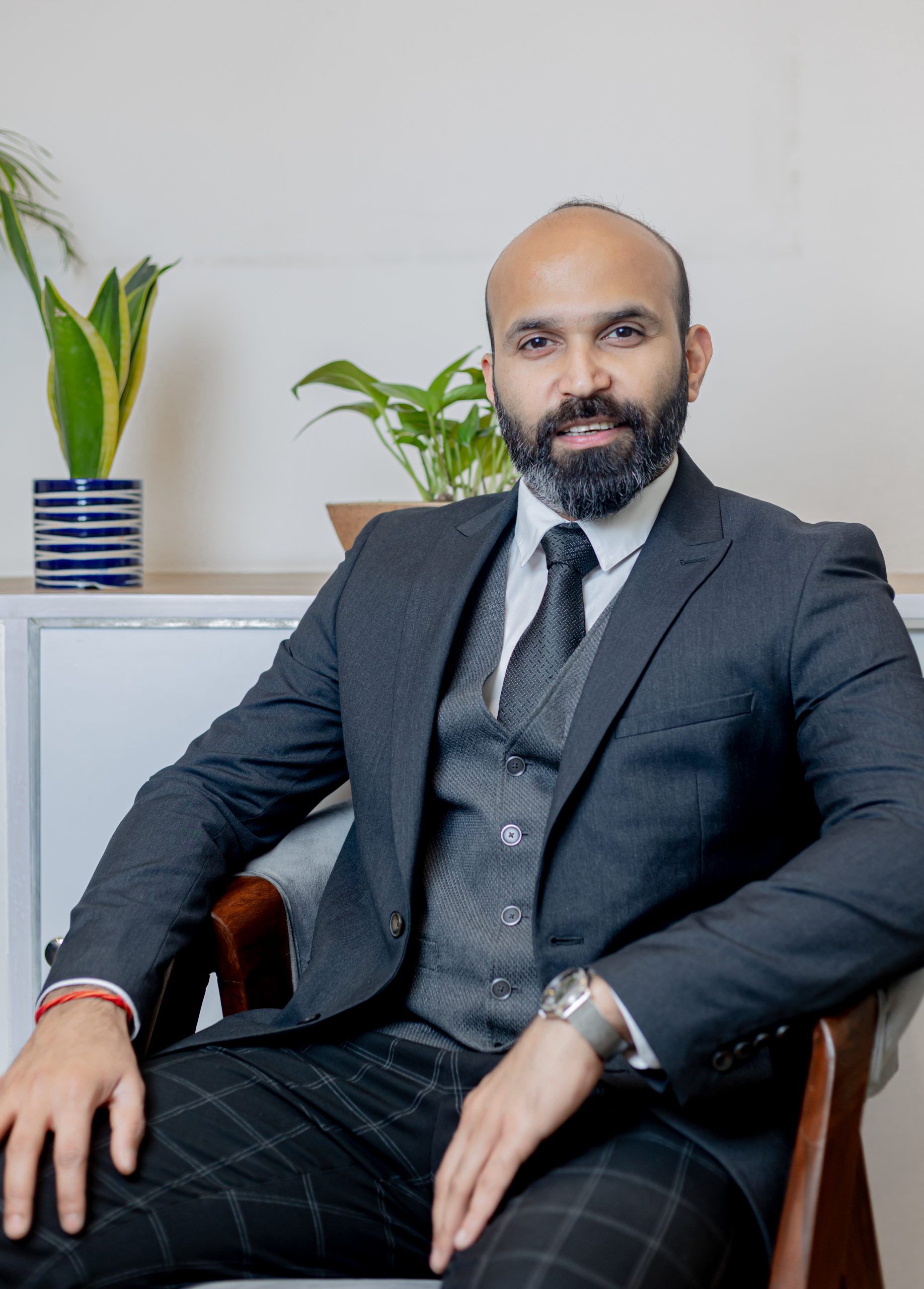
  • I’ve always been fascinated by the legal profession and the way it shapes society- Marinos Cleanthous, IP Attorney (EU) – Founder of IP CYPRUS – Appointed Member by the Cyprus Government of the Cyprus IP Committee

    I’ve always been fascinated by the legal profession and the way it shapes society- Marinos Cleanthous, IP Attorney (EU) – Founder of IP CYPRUS – Appointed Member by the Cyprus Government of the Cyprus IP Committee

    This interview has been published by Priyanka Karwa and The SuperLawyer Team

    Sir, can you share with our readers what specifically inspired you to take up a career in law? How did you drill down among various fields of law and chose IP as your area of expertise?

    I’ve always been fascinated by the legal profession and the way it shapes society. What drew me to law specifically was the opportunity to help people and make a positive impact in their lives. I was initially attracted to the idea of becoming a litigator, but as I learned more about the different areas of law, I became particularly interested in intellectual property (IP).

    I found IP to be a compelling area of law because it involves the protection and enforcement of intangible assets like ideas, inventions, and creative works. As someone who has always been interested in technology and innovation, IP law presented an opportunity to work with cutting-edge companies and help them safeguard their intellectual property rights.

    To drill down further and choose IP as my area of expertise, I began researching and speaking with professionals in the field. I was particularly drawn to the complexity of the subject matter and the constant evolution of technology and the law. It’s a field that requires a deep understanding of both legal principles and scientific concepts, which appealed to my analytical and problem-solving skills.

    Overall, I believe that a career in IP law is incredibly rewarding and allows me to combine my passion for technology with my desire to help others.

    What steps did you take when you were back at law school to become the successful IP attorney, you are now? Tell you us briefly about your career path.

    When I was in law school, I focused on courses that were relevant to IP law, such as patents, trademarks, copyrights, and trade secrets. I also sought out internships and clerkships with law firms that specialized in IP law to gain practical experience and exposure to the field.

    After graduation, I joined a law firm as an associate and worked on a wide range of IP matters, including EU and Cyprus trademark and designs cases. I learned a great deal from my colleagues and gained valuable experience in managing client relationships and  drafting legal documents.

    Over time, I developed a reputation in the IP community and began to receive more complex and high-profile cases. As my career progressed, I also became involved in teaching and mentoring younger attorneys interested in IP law. I have lectured at Nicosia University Law School and industry events, and have served as a mentor to several young lawyers starting their careers in this field.

    Looking back, I believe that if you want to be a successful  IP attorney you need to combine hard work, dedication, and a willingness to learn and grow. I never stopped seeking out new challenges or opportunities to expand my knowledge and skills.

    How important do you think IP strategizing is for start-up companies? Most start-ups are not high on investments, therefore what are must-dos for start-up companies from an IP perspective?

    Intellectual Property (IP) strategizing is crucial for start-up companies, regardless of their size and investment capacity. Protecting their ideas, inventions, and brand is essential for their long-term success and competitiveness in the market.

    Here are some must-dos for start-up companies from an IP perspective:

    Conduct a thorough IP search: Before starting any IP filings, it is important to conduct a thorough search to ensure that your idea/invention/brand is not already patented or trademarked. This will help you avoid any potential infringement issues and unnecessary expenses.

    File for patents and trademarks: Once you have established that your idea/invention/brand is unique, it is important to file for patents and trademarks to protect your IP. This will help prevent others from copying, using or selling your invention/brand without your permission.

    Draft non-disclosure agreements (NDAs): NDAs can protect your confidential information and prevent others from stealing or copying your idea/invention/brand. It is important to ensure that anyone you share your idea/invention/brand with signs an NDA before doing so.

    Build an IP portfolio: As your start-up grows, it is important to continue to build your IP portfolio. This will not only help protect your existing IP but also enable you to develop and protect new ideas/inventions/brands as your business evolves.

    Monitor your competitors: It is important to monitor your competitors to ensure that they are not infringing on your IP rights. If you suspect infringement, it is important to take prompt action to protect your IP.

    In conclusion, IP strategizing is a critical component of any start-up company’s success. By taking the necessary steps to protect their ideas, inventions, and brands, start-ups can increase their chances of long-term success in the market.

    Sir, despite your busy schedule as an IP attorney, you are an eminent multi-tasker. You have been listed as the “leading individual” in the field of IP law in Cyprus (LEGAL 500) and you have also acted as the Intellectual Property and Creativity Mentor in many Cypriot Institutions. Can you tell our readers how to go a mile ahead and contribute to the legal fraternity?

    Thank you for your kind words. Indeed, as an IP attorney, I have been fortunate to be recognized as a leading individual in the field of IP law in Cyprus. And I am also grateful for the opportunities I have had to serve as an Intellectual Property and Creativity Mentor in various Cypriot institutions.

    When it comes to contributing to the legal fraternity, my advice would be to focus on two key areas: expertise and community involvement.

    Firstly, it is essential to strive for excellence in your area of expertise. This means investing time and effort to develop a deep understanding of the law and its practical application. It also means staying up-to-date with the latest developments in your field, such as new legislation, case law, and industry trends.

    Secondly, it is equally important to be involved in your local legal community. This can involve participating in professional organizations, attending conferences and seminars, and volunteering your time and expertise to support legal aid programs and other initiatives that benefit the wider community.

    By combining these two areas, you can not only advance your own career but also make a meaningful contribution to the legal fraternity. I believe that we all have a responsibility to use our skills and expertise to give back to society and help build a better future for all.

    You are a member of several active Intellectual Property Organizations, like INTA (International Trademark Association), PTMG (Pharmaceutical Trademarks Group), AIPPI (International Association for the Protection of Intellectual Property), and Silicon Valley IP Law Association. How do you think active participation in these forums helps IP professionals to enhance their careers?

    Active participation in those Organizations can be incredibly beneficial for IP professionals in many ways. Here are a few reasons why:

    Professional Development: These organizations offer numerous opportunities for IP professionals to enhance their knowledge and skills through various workshops, seminars, conferences, and training programs. Such events provide insights into the latest developments and trends in IP law, which can help professionals stay up-to-date with the ever-changing legal landscape.

    Networking: Participating in these forums offers a great opportunity for IP professionals to network with peers, clients, and experts in their respective fields. Such connections can lead to potential business opportunities, new clients, and even job offers.

    Exposure: By participating in these organizations, IP professionals can gain exposure to the international community, which can help expand their reach and potentially lead to global opportunities.

    Professional Recognition: Active participation in such organizations can help IP professionals establish themselves as thought leaders in their respective fields. By sharing their expertise and contributing to discussions, they can gain recognition and respect from their peers and potential clients.

    Access to Resources: These organizations offer access to a vast range of resources like legal databases, research papers, and other tools that can help professionals stay informed and efficient

    Sir, in your opinion, how do you think AI like ChatGpt would impact one’s IP rights?

    AI is increasingly being used in various industries to improve productivity, efficiency, and accuracy. While AI can undoubtedly contribute to innovation, there is also a concern that it may lead to a potential lack of creativity. For example, AI-generated content may lack the nuance and uniqueness that human-generated content can bring.

    Regarding IP rights, AI-generated content and inventions can still be protected under current patent, trademark, and copyright laws. However, the question of who owns the IP rights for AI-generated works can be more complex. Typically, the person or entity who creates the AI or employs the AI would hold the IP rights. However, there are situations where AI may generate an invention without human intervention, and in those cases, the AI may be considered the inventor.

    Despite the potential challenges, AI has the potential to create new patents and IP rights that were not previously possible. For example, AI algorithms can identify patterns and correlations that humans may not recognize, leading to new inventions and innovations.

    In conclusion, the impact of AI on IP rights is a complex issue that will require ongoing attention and analysis as AI continues to advance. Nonetheless, it is clear that AI has the potential to both enhance and disrupt the current IP landscape.

    Sir, what would be your advice for young law graduates who intend to set their career in IP Practice?

    Firstly, I would suggest that you keep yourself updated on the latest technological advancements as technology plays a crucial role in IP practice. With the rise of Artificial Intelligence, Blockchain, and other emerging technologies, it is essential to stay up-to-date with the latest developments in these areas. This knowledge will help you better understand the legal and practical aspects of IP protection and enforcement.

    Secondly, networking is crucial for building a successful career in IP practice. Attend conferences, seminars, and workshops to connect with other professionals in the field. Build a professional network, seek out mentors, and engage in discussions with experts to stay updated on the latest industry trends and legal developments.

      Get in touch with Marinos Cleanthous-

  • Adv. Lalit Suryavansi, Principal Associate at Khurana & Khurana, Advocates and IP Attorneys In Conversation With SuperLawyer On Dealing With IPR & New Opportunities In Legal Profession

    Adv. Lalit Suryavansi, Principal Associate at Khurana & Khurana, Advocates and IP Attorneys In Conversation With SuperLawyer On Dealing With IPR & New Opportunities In Legal Profession

    This interview has been published by Prabhjot Singh, Priyanka Karwa and The SuperLawyer Team

    Being a science student, and then choosing law, what was the idea behind?

    Great Question. Though I am used to this question and answering this question every other day. Actually, this science and law cocktail was not planned. In fact, Law was something I never imagined I would be pursuing. I did my graduation and post-graduation in technological streams and happily started working as an Engineer. Barring a few things, I was satiate with my carrier.

    As destiny had other plans for me, one fine day, I felt something is not right about my job and the kind of work I was doing back then. I started looking for other options and got to know about Intellectual Property Rights and prior art searching. The domain looked different and exciting, so I decided to switch my path and get into Intellectual Property. So, this is how I get into Legal domain, and in this journey, I qualified the Patent Agent examination. Later, I felt like having formal qualification in law, which led me to pursue LL.B.

    Please enlighten our audience about the initial struggles in your career and how you managed to overcome them?

    I’d rather start with initial anxieties. As I started my career as an RF engineer, and I was letting go my 3-4 years of job experience for something new called Intellectual Property, which, at that point in time, people thought to be some sort of real-estate business related endeavour, I had lot of disquiet in my mind, and I was in dilemma about the decision I was going to make.

    Plus, the baggage of what people would say if I failed. But my heart had already accepted it, so it pushed to me to make a bold decision and take that plunge, which I did, and I am elated to say that I made the right decision at that point.

    Of course, there were struggles, but I was very passionate about what I was doing and loved it so much that struggles never felt struggles, they felt like challenges, for which I was determined to go any lengths.

    What are the most important considerations to keep in mind when dealing with IPR and registering patent issues?

    Over the years, I have realized that inventors are mostly concerned about the outcome, i.e., the grant of a patent, not about the events that come along the way of patent grant. I have experienced that most inventors, if not all, are interested in getting their patent granted, and they are either ignorant about the very-very important milestones that starts with patent application filing and end with patent grant/refusal.

    Let me give you a little more perspective, I believe prior art searching to be the most important thing in the patent proceedings, but inventors hardly show any enthusiasm to get it done. And those who consider prior art searching, they fail to understand why a prior art search is done at all, how it can contribute in shaping his/her patent application. Similarly, patent application or claims drafting is merely considered to be the patent agent job. Of course, it is as you are paying him/her, but I’d like advise that please do not recklessly depend on your Patent Agent and be actively involved in the events/proceedings—-Afterall inventions are inventors’ child, not Agents’.

    My intention is to make the inventors more inquisitive and interactive so that they know what is actually being done by their patent attorney, how the attorney is giving shape to claims, application, arguments, etc.

    IPR and other corporate sectors are evolving like never before, would you like to throw some light on the same? And according to you Lalit, what exciting opportunities it can create for our young lawyers?

    With government initiatives such as “Make in India”, “Self-reliant India”, push for innovations, and programmes like “Start-up India”, protection of innovations is seen as a necessity to compete in the market. With this patenting activities has increased many folds, and patent filing in India is rising at an unprecedented rate.

    As per the Economic Survey 2021-22, the number of patents filed in India has gone up from 39,400 in 2010-11 to 58,502 in 2020-21 and the patents granted in India have gone up from 7,509 to 28,391 during the same time. With so many numbers of patent filings, Patent Prosecution is rising, so is the Patent Litigation. Therefore, one can easily infer the prospects for young professionals.

    Lalit, as per your experience in the legal field, how do you see the legal industry coming up with new concepts and creating exciting opportunities?

    With the constant push for digitization, arrival of faster telecommunication technologies like 4G/5G, invent of communication platforms such as Zoom, Teams, etc., alike every other domain, Legal industry is also witnessing rapid transformation.

    Everyone is now aware how virtual courts have started, how virtual hearings has transformed the way hearings were taken. If I specifically talk about the Indian Patent paradigm, Indian Patent Office (IPO) too has segued from offline system to online system. With conversion of physical hearings into into virtual-call-based hearings, paperless patent application filings, mandatory online filings for Patent Agents, and many other such initiatives, IPO has put in place a lot of new concepts/systems. So, newer opportunities are coming along, we just need the right approach and right temperament to grab said opportunities.

    • What can be some of the toughest considerations while someone from a non-legal background has to see before opting law as a career?

    For someone from a non-legal background, the toughest consideration would be the time window for success. To make a mark in this industry, one must possess the tenacity to climb every rung of the ladder that leads to the success. As they say, there is no shortcut to be successful—legal domain is no different or alien to this saying.

    • Lalit, what is a typical day like for you?

    Well, a typical day is typically typical for me. I get up around 6 AM. Do my daily chores by 8 AM and leave for office by 8.30 AM. Commute to office, reach there by 9.30 AM, and get lost in the pool of matters waiting my arrival. Leave office at 6.30 PM, reach home around 8.30 PM where my son and my daughter (twins) remain armoured to welcome me with the showers of anecdotes, complaints, happenings, and everything in between from their typical day.

    • Could you highlight some of your success habits that enable you to meet your goal?

    ‘Never say no attitude’ and ‘to remain grounded’ at all the times are some of the attributes which I think play pivotal roles in anybody’s success.

    Lastly, what advice would you give to someone starting out?

    Keep your mind, eyes, and ears open for anyone and everyone—you never know who might give you the piece of information that can change your life forever. One more thing, everything progresses at its own pace, so never feel frustrated/agitated if something is not happening at your whims/desires—time and destiny will certainly make it happen for you if you are honest and keen about it.

  • Prateek Lakra, Founding Partner at Clergy & Wisemen, In a Discussion With SuperLawyer On Legal Management & Increasing Opportunities In Same

    Prateek Lakra, Founding Partner at Clergy & Wisemen, In a Discussion With SuperLawyer On Legal Management & Increasing Opportunities In Same

    This interview has been published by Prabhjot Singh, Priyanka Karwa and The SuperLawyer Team

    What was your motivation behind choosing law as a career?

    Growing up in a family of doctors, I was surrounded by medical professionals and it was expected that I would follow in their footsteps by pursuing a career in medicine. However, as I progressed through my education, I began to have doubts about whether that was the right path for me. In my ninth grade, I developed the habit of reading the newspaper and became interested in the impact of law on our daily lives by reading articles and editorials. Additionally, I have always been drawn to challenges and the idea of making a name for myself in a unique field.

    By the end of my tenth grade, I had made the decision to pursue a career in law, despite the surprise of those around me. I chose commerce instead of biology and started my Law School preparations. Fortunately, my parents were incredibly supportive of my choice to study commerce after completing tenth grade and pursuing Law as a career.

    What were the challenges that you faced in the beginning of your career?

    The legal industry is known to be challenging and dynamic, especially for first-generation lawyers who are just starting out. When you embark on a career in law, you often have to start from scratch, building your own law firm, acquiring clients, and establishing your practice and reputation. After completing my LLM from the United Nations Interregional Crime and Justice Research Institute, I partnered with Avi Kalra to start our own law firm. While we faced many challenges in the beginning, a few stood out as particularly difficult.

    One of these challenges was that, at 24 years old, many potential clients saw me as too young to handle their cases or offer sound legal advice. I had to work hard to prove myself and earn their trust, often competing with more experienced lawyers in the industry. Another major challenge was financial. In the early days of our law firm, we had to cover our running costs and basic expenses while also trying to sustain our business. The second wave of the COVID-19 pandemic made this especially difficult, I was sleeping in the office, I could not afford a place to live and I had to choose between keeping the office or getting a place to live.

    Prateek, do you think that for a first-generation lawyer, the journey becomes a little difficult? Please explain the same wrt to your own experience.

    Absolutely, I feel that the journey becomes a little difficult for first-generation lawyers as there are lot of factors to it. Starting with your law school days, being a first generation lawyer you’re clueless as what specialization to pursue that would be best suited for you or with finding right Internships and it becomes a difficult process to apply for Internships with reference at all. Secondly, if you plan to start your own law firm/ law practice you’re all alone out there, you have start from ground zero, you have no cases, no references, no identity of your own.

    Thirdly, ‘the doubt’, since you’re the first in your family, ‘the doubt’ to work security, sustainability and expansion is always there and there’s no going back but I think being a first generation lawyer out there might be difficult process but it gives you a lifelong learning and a sense of achievement that cannot be compared to anything.

    Nowadays, people don’t have that zeal to pursue a career in litigation, what can be the reason for that apart from job security in corporate?

    When I conduct job or internship interviews, I often ask candidates if they are interested in joining the litigation or corporate team at the firm. More often than not, the answer is the corporate team. There are several factors that can influence a candidate’s decision to pursue corporate rather than litigation. One reason is that litigation can be like going to war, and one must be prepared for any situation.

    Additionally, the practical knowledge gained through litigation is significant, but it can also be a struggle. The lack of efficient judicial infrastructure, such as outdated buildings and complicated case filing processes, can be a deterrent. Additionally, the practice of law can vary significantly from one district to another, making it difficult to navigate, for example in Delhi courts the matters are called according to the list but if you go to the Gurgaon court the list is not followed and your matter is taken up as you approach the court. Furthermore, when litigating, the burden of representation falls entirely on the shoulders of the attorney, who must ultimately represent their client in court. It is no small feat. Additionally, it is important to consider that the salaries in litigation may be lower in comparison to the amount of work and energy required. It is a demanding field that requires a significant investment of time and effort.

    Prateek, What was it that kept you awake in your pursuit of success, eventually leading to you being the founder of Clergy & Wisemen?

    The concept for ‘Clergy & Wisemen’ was first formulated during my third year of law school, when Avi and I won our first National Trial Moot Court Competition. However, it wasn’t until after the first wave of the COVID-19 pandemic that we decided to officially establish the law firm. We recognized that starting a successful law firm required careful planning and preparation, and so we took a break after law school to further understand the Industry and gather the necessary skills and knowledge.

    During this time, I pursued a master’s degree at the United Nations and continued to meet new people and learn as much as possible about starting a law firm. The idea for ‘Clergy & Wisemen’ evolved and was refined through constant learning and experimentation. Even after starting the firm, we faced challenges, particularly during the second wave of COVID-19 when business was slow. However, we remained committed to our goals and continued to read, learn, and develop our legal processes in order to succeed.

    Starting a law firm at the age of 24 with no clients was a risky endeavour, and many people did not believe in our idea. However, we were determined and clear about our goals, and we consistently worked towards achieving them. Despite the challenges and doubts, we were committed to making our vision a reality. It is important to be consistent and persistent, and to always strive to overcome any obstacles that may come your way.

    Among all the specialisations, i.e., legal management, compliance, advisory and litigation, which area of law is the most interesting to you and why?

    I would say Legal Management. Legal management involves managing the legal affairs of a corporate or startup entity. This includes ensuring compliance with all laws and regulations related to contracts, taxation, licenses, and more. At ‘Clergy & Wisemen,’ we provide legal management services to a variety of companies, including protecting and regulating their intellectual property, managing the contract life cycle, and handling compliance requirements. Working in the field of legal management is constantly challenging and rewarding, as there is always something new to learn. It is important to stay up-to-date with laws, regulations, and notifications, which can be particularly challenging in areas with regularly updated laws or numerous notifications, such as with the Goods and Services Tax. Additionally, legal management often involves managing litigation, providing a well-rounded experience that encompasses both the corporate and litigation aspects of law.

    Prateek, how do you see the legal management sector increasing more opportunities for lawyers in coming times?

    The demand for legal management services has increased in recent years with the rise of startups, as these companies and corporations aim to avoid costly disputes and litigation. Legal management ensures compliance with all relevant laws and regulations, providing a cost-effective solution for these businesses. Companies with large operations may also choose to hire in-house legal managers to handle their legal affairs. If you enjoy working with various disciplines of law, legal management is a rewarding field to consider.

    How do you push through your worst times?

    Starting my own law firm has been filled with ups and downs, and there are still many challenges ahead. There have been times when I have questioned myself and doubted my abilities, and it can be easy to feel consumed by these negative emotions. To get through these difficult times, I try to maintain consistency in my work and personal pursuits and focus on activities that contribute to my own growth and the growth of the firm. It is important to prioritize one’s emotional well-being, no matter what the circumstances may be. Ultimately, the key to navigating challenges is to work smart, stay consistent, and keep moving towards your goals while also taking care of your physical and mental health.

    Talking about work-life balance, there has been ample amount of discussion on health   issues as a lawyer, what do you believe are the best practices to maintain the equilibrium? 

    Maintaining balance in life is crucial, and achieving a healthy work-life balance is essential for both personal well-being and business growth. While building ‘Clergy & Wisemen,’ I lost sight of this balance and found myself working excessively long hours, leading to negative impacts on my physical and mental health and personal relationships. Recognizing the importance of balance, I made changes to my lifestyle, including waking up early, exercising, and prioritizing time for friends and family.

    These efforts have had a significant impact on my overall well-being and productivity. I also try to be mindful of the number of hours we work at the firm, although there are occasionally times when additional hours are necessary. Regardless of the demands of work, I make it a priority to prioritize my physical and mental health by waking up early, staying active, and spending quality time with loved ones. This simple habit of waking up early has made a dramatic difference in my life and I highly recommend it to others. It helps to make the days feel longer and the mind feel clearer, leaving you full of energy.

    Few advice for our young law professionals?

    Know your goal;

    Work smart, not hard;

    Be consistent;

    Health is always first and

    Do what you love.

    – PRATEEK LAKRA

    Get in touch with Prateek Lakra-

  • Avi Kalra, Founding Partner at Clergy and Wisemen In Conversation With SuperLawyer On Startups, Arbitration and Much More Interesting Aspects

    Avi Kalra, Founding Partner at Clergy and Wisemen In Conversation With SuperLawyer On Startups, Arbitration and Much More Interesting Aspects

    This interview has been published by Prabhjot Singh, Priyanka Karwa and The SuperLawyer Team

    Was pursuing law planned for you or it all happened in a flow? Kindly share with our readers.

    Well to start with, I am a first-generation lawyer, and to be very honest law was never a career option for me until the 10th Grade, I had planned to either join my father’s business or start something of my own. However, it all changed in the year 2012, when my father was involved in a car accident, in which one bike hit his car and the pillion rider died on the spot.

    After this, it was the first time that I ever visited the Local District Court of my city. During court visits, I was highly influenced by the impact the lawyers could have over their clients. Soon after, I developed interest in Criminal Law and the same grew over me and made my belief indeed stronger. So today, I can proudly say that being in the legal fraternity was a well thought decision and didn’t happen by chance.

    What do you think, which specific advice has helped you come thus far in law? What is that one motivation that keeps you going in life?

    The advice that has helped me come this far is that if you roll up your sleeves and decide to do something, nothing in this world is impossible. Everything is doable, you just need to have the courage.

    Frankly speaking, I never participated in any public speaking event in high school and had stage fear. Now came the time in Law School, when I realized the importance of Moot Courts but the continuous insecurity of never being a good public speaker or having no prior experience kept acting as a barrier.

    It was only in the third year when I got the opportunity to participate in the Intra Mock Trial, where although in my opinion, my public speaking was not up to the mark, however, this opportunity gave me a sense of understanding that it was these mental barriers which were stopping me to do something. Since then, I have worked upon my oratory skills, and have never said no to such an event, which has helped me tremendously in becoming a better orator and Advocate.

    Speaking about Motivation, after winning the National Mock Trial Competition in 2017, me and Prateek Lakra made a goal to start our own law firm after completing 3 years at the Bar. In 2021, we started Clergy & Wisemen, and since then there has been no looking back, and taking our Law Firm to the level of top law firms in India is the motivation that keeps me going.

    Could you brief a case you were led on that substantially broadened your knowledge of the legal field?

    From what I have learned while practicing law is that law is nothing but common sense, one should just have the vision to see the answers. It is an art that is learned through experience and wisdom. During the initial years of practice, the most crucial part is to understand the implementation of what we study in the Law School.

    It was in 2019, when a Fraud had been committed by a person, which was worth crores. In the same case, my client was duped for a handsome amount. Initially, we filed a Suit for Specific Performance against one of the properties of the Accused before the Delhi High Court, however, it came to our knowledge that the Accused had created multiple third-party rights over the property, therefore, we also had to move before DRT, since the bank had started proceedings against the accused. Also, there were claims from various entities, due to which there were multiple suits and cross impleadments.

    Parallelly, proceedings under the 156(3) Cr.P.C. were also instituted against the accused, wherein we got favourable order and an F.I.R. was also registered with the Economic Offences Wing (EOW), Delhi Police.

    These proceedings helped me understood various remedies that a person has under both the Civil & Criminal Laws in India and how the Courts and Tribunals function.

    Among all the specialisation, i.e., Administration law, RERA, Taxation, Corporate law and Arbitration, which area of law is the most interesting to you and why?

    I would say that Corporate Law, since Corporate Law can itself be classified into various other sub-specializations, and due to the recent increase of Startups in India, Corporate Law has opened up various opportunities for Young Lawyers.

    Now, with Startups the issue that usually comes up is that they cannot afford Big Law Firms, and it is where young lawyers can step in.

    Further, in Corporate Law, a Lawyer has to get into the shoes of the Founders so as to protect their interests while making agreements such as the Shareholders and Founders Agreement, so that in case the Company goes for funding or dilutes its equity, the founders don’t lose the control over their own company. Moreover, issues like dispute resolution between founders also has to be carefully drafted. With contracts, it is necessary that the Liabilities are limited, indemnification clauses are watertight, and in the case of Intellectual Property, the rights are carefully defined. I can go on with such examples, such is the nature of Corporate Law.

    What would you do if you had taken on a case that went against your values? Any prior experience you could relate with?

    I take cases as per my conscience; however, I am a firm believer in the fact that a person is innocent until proven guilty.

    Yes, there have been certain cases where I had to self-introspect whether I was doing the right thing, however, I tend to keep my personal opinions and professional life apart. As the great Mr. Ram Jethmalanai once said: “A lawyer who refuses to defend a person on the grounds that people believe him to be guilty is himself guilty of professional misconduct.”

    How do you maintain the work-life balance Avi?

    As a Lawyer, I feel that law is that field where once you are at the initial stage you need to spend more hours, drafting, researching, and navigating through documents, but as you practice more and more it gets easier to locate the crux of the case and you exactly know where to hit the nail, so spend in your initial years, it will reap well. Also, law is just like investing, the more you invest in your legal skills right now, the more returns in the later years.

    Personally, for me, what has helped me maintain my sanity with this schedule is waking up early in the day, and having some time to myself before the whole show at the law firm begins. I believe that one must do something that is good for his/her soul once a week. It’s okay to take a break, but you should know when the break ends. The work should not suffer, make yourself that efficient.

    What strategies do you use to ensure that your clients receive the best possible?

    There is no secret sauce to ensure the best possible results. Each case has to be seen in its own strategic manner.

    In my previous experience be it working at chambers of a lawyer or law firms, one thing I saw was that although the Clients were getting reliefs in their cases, however, they were not satisfied by the management. For example, the client would not know what is going around in the case, sometimes they won’t know what is next date, no regular updates, so on and so forth.

    After starting Clergy & Wisemen, we not only ensured that our clients get the best legal services but also focused on the management of the Law Firm, be it the regular updates of their cases, addressing their doubts, having dynamic meeting slots, taking regular follow ups about our services, etc.

    Now with Corporate Clients, we have come out with certain services such as Contract Lifecycle Management (CLM), Legal Manager, which have substantially increased the effectiveness and efficiency of the services provided by us. Recently, we have tied up with certain AI companies, which help us in the drafting of contracts, although each contract is reviewed by either an Associate or Partner at the Law firm, but it has helped us in reducing the TAT and Cost.

    What challenges have you faced as in bank matters with DRT, DRAT, NCLT & NCLAT?

    DRT and NCLT, alongwith their appellate tribunals, were made so that the burden over the courts is reduced and the cases can be fast tracked. Although, the burden over the courts have been substantially decreased, but I would not agree with the fact that the matters have been fast tracked.

    Since, due to a smaller number of benches, the matters usually take a substantial time to be adjudicated, wherein the sitting benches are not able even finish half of the cause list, and requests such as to list the matter at the top of cause list have to be mentioned.

    Moreover, these tribunals are not on par with the High Courts, be it the adjudication process, or the working of the registry.

    Therefore, I believe that the number of Benches in the Tribunals should be increased and only in the rare cases the timeline mentioned under the Code shall be extended.

    Lastly Avi, any advice for our young legal professionals?

    My advise to the young legal professionals would be that they should always be updated with what is going around in the Legal Sector, this would not only help them in increasing their knowledge, but also to strike out a conversation at a relevant place and time, and trust me this helps significantly.

    The other would be that they should understand that whatever service you are giving should be a valuable addition to the client and it must solve their problem, taking care of these would definitely help a professional building up his name, since the person would not only happily pay his/her fees to you, but also would recommend you to others.   

    Lastly, in case someone is planning to start his own practise, then rather than just possessing the legal skills, one must also have the skills of a sales person, it might sound a little different, but Law is a Business until you get a client, one might be a very good lawyer and possess good skills, but till the time he has got no client, those skills would be worth nothing. Therefore, it is advisable that you must know to sell whatever skills and knowledge you possess. 

    All the best!


    Get in touch with Avi Kalra-

  • In Conversation with: Abhishek Yadav, Founder at AY Associates, High Courts & Supreme Court of India || Advocate & Legal Consultant

    In Conversation with: Abhishek Yadav, Founder at AY Associates, High Courts & Supreme Court of India || Advocate & Legal Consultant

    This interview has been published by Prabhjot Singh, Priyanka Karwa and The SuperLawyer Team

    Would you like to tell our audience about what motivated you to choose law as a career?

    Growing up in a small city in Agra, I didn’t think of becoming a lawyer. My father, being an engineer himself, motivated me to take up science in 10+2. However, as soon as school got over, I knew that a career in science is not what I was looking for. I opted to study business administration in my graduation, for which I moved to Delhi. It was in my time in Delhi when I was introduced to the legal profession through friends and acquaintances. On one occasion, I got the opportunity to accompany a friend of mine to the Delhi High Court for one of her personal matters. That was my first tryst with the legal system, but that was enough for me to make up my mind that I wanted to pursue litigation as a career. The next step for me was to start my study of law and get a law degree. I worked hard on my entrance exam and sat for the University of Delhi, Faculty of Law, and started my legal journey as a student of the esteemed Campus Law Centre.

    Looking back now, I understand that my sole motivation to become a lawyer was to do work which has the potential of having a long lasting impact on people’s lives and for me, that is what the legal profession is all about.

    Abhishek, we all have our struggle stories to share and I mean not struggle specifically but yeah, the obstacles that one has to overcome, would you mind throwing light upon those?

    I love the word ‘struggle’ and perceive it as a very positive term. In fact, everyone is struggling in their own way, even lawyers – some are struggling to get new clients, some for favourable orders, the struggle is continuous. In my opinion though, the ability to deal with struggle with a positive outlook is what makes one a better lawyer than their contemporaries.

    Post my graduation in law, when I got enrolled at the bar, I was struggling to get a job, get a good job profile, better work and then some more work. Three years into the profession, I made my peace with the struggles and obstacles, and that’s when I actually started growing as a lawyer. From carrying heavy files and running between courtrooms to sending my profile to “A tier” law firms and conglomerates (for more work), I have done it all. Looking back now, I genuinely cherish those days. At same time, I realise that the struggle will never be over. You just have to start learning to enjoy it as a part and parcel of the profession you have chosen.

    According to you, what networking strategies should be adopted by the first-generation lawyers specifically in litigation?

    Since the beginning, I have treated everyone around me as a potential client. Like doctors, everyone needs a lawyer (however much they may not want it!). In a world driven by social media, the first step for me was to be connected with friends, colleagues and peers through whatever platforms I could exploit. That would be my advice –  use your primary network to build yourself from ground up.

    Another very important thing is to speak and write about your work, be it failures or success, or even the constant struggles of a young lawyer like myself. That being said, I do not think there is a straight-jacket formula for networking. As important as networking is, it is complimented by word of mouth. Just focus on good work and people will come to you.

    How has been your experience so far dealing with cases wrt NDPS matters and Consumer rights? Would you recommend this niche to young legal professionals, and if yes, why?

    Honestly, I have done many more consumer cases as compared to NDPS matters. At the beginning of my own practice, I argued a bunch of consumer cases. The favourable orders that I got in some of those cases gave my career the boost it needed at the initial stage.

    They also helped me become more confident as a lawyer. Coming to the question of building a practice around this niche area is concerned, I believe there is a lot of scope in both of these fields. After the introduction of the new Consumer Protection Act 2019, the work has really gone up, especially in light of the amendment in the jurisdiction aspect of the new law which, being pro-consumers, has given them a lot of confidence. Despite Courts laying down settled principles of law in almost all aspects of consumer cases, I believe there is more to come. If you can think out of the box, consumer law is a niche I would highly recommend.

    As of now, my team and I, at my firm AY Associates, are focusing primarily on corporate advisory, financial frauds, alternate dispute resolution and litigation.

    Abhishek, do these legal tech tools have helped litigants and corporates so far in preparation of different documents or filing and what in the future would be challenges for lawyers in dealing with such tools?

    Very interesting question- In my personal opinion, technology and legal tools based on these technologies have truly helped litigants and corporates to understand the procedural as well substantive laws very well. Smart contracts are a thing now and so many corporates are opting for such options, especially in this world of Artificial Intelligence. To this end, many start-ups have cropped-up in the market selling AI-driven software for end-to-end contract automation and this is only the beginning, in my opinion.

    To answer the second part of your question – I believe these tools have the potential to act as a helping hand for lawyers, especially with contracts and corporate advisory. That being said, I do believe that machines/AIs can never outsmart a human being.

    India is going through a massive start-up revolution, to what extent the work of lawyer will increase and any special skills that can help in this sail?

    Indeed, India is growing immensely with respect to start-ups. In terms of legal work, we at AY Associates are currently handling accounts of various start-ups regularly wherein we are working on

    1. Advising them on fund raising,

    2. Drafting of complex agreements, and

    3. Litigation. With this growing economy of start-ups, the work of a lawyer is only going to grow in future. And considering that majority of start-ups are conscious of their funding and finances, a large number of them are opting for young boutique firms like ours, which offers them the same standard of work as that of top law firms but at a fairly reasonable price.

    Start-ups at their initial stages are often looking for a one-stop solution for all their legal issues and that’s a niche in itself. That’s where you have to really work upon – provide solutions to all their legal and quasi-legal problems.

    While dealing with start-ups, lawyers should endeavour to be aware of all major aspects of the business of the company. This includes not just law, which of course is primary, but everything around the business the potential star- up client may be dealing with. As a lawyer, it is imperative for one to understand that small business owners know their business and not law, and therefore a good practice would be for the lawyers to proactively advise the clients on every aspect of their business. Do that and then even the sky is not the limit.

    During my initial days, I was advised by one senior colleague of mine that “before entering a meeting with a start-up client, ensure that you read extensively and thoroughly about their business. You should know more about their business than them. It will raise the client’s confidence in you and I assure you the mandate shall be yours”. I would like to pass on the same words of wisdom to others who are starting out.

    “Pro-Bono matters don’t really benefit you in the short or long run”, how true is this phrase? 

    If you ask me, I would say – “Pro-Bono matters really benefit you both in the short AND long run”

    I started out as a PIL lawyer where there were negligible commercials involved, but there was a brief, a cause, and an opportunity to argue matters before the CJI bench in the Supreme Court of India! I consider myself fortunate that in just the first year of my getting into the profession, I was getting to argue a writ in the “temple of law”. It was the best feeling ever. Being a first-generation lawyer, that experience gave me a lot of confidence and inspired me to do more. At the sunrise of my career, I quickly realised it’s better to be a lawyer with briefs but less money than being a briefless lawyer.

    Exposures like these in the initial days are rare and one should never shy away from grabbing such opportunities. It helps you understand the art of law, gives you immense confidence (much needed in the legal profession) and helps you grow your name as well. Even now, I continue to do pro bono matters before the Supreme Court and the High Court of Delhi, because I believe that I have the potential to bring some positive change in the relevant section of the society.  

    As a founder of a law firm, how do you manage to balance the work-life aspect?

    When I am at work, I don’t feel that I am at “work”. I being a lawyer has been a part of my life for the past decade, and that is reflected in my personality as well now. I love to wake up in the morning and go out and do my thing. Obviously, some days are less exciting than the others, but that’s part of the game, isn’t it?

    Secondly, as a founder of a boutique law firm, my primary focus has been to build a great team of lawyers who understand their roles well. We are still a work in progress (aren’t we all?), but I have immense faith in the team that I am building. After all, teamwork makes the dream work.

    On some extremely hard days, I fall back upon sports and music, both tied for the position of my second love. In their own way, each of these help me sail smoothly through rainy day.

    Lastly, any advice for our young law generation?

    Do what you do with utmost sincerity and conviction. Patience is the key in this profession and if you wish to make it big, please don’t forget to tie your laces properly so that you can run that extra mile.

    -Abhishek Yadav


    Get in touch with Abhishek Yadav-

  • In Conversation with: C. Arun Kumar Reddy, Co-Founder & COO at SARN Legal

    In Conversation with: C. Arun Kumar Reddy, Co-Founder & COO at SARN Legal

    This interview has been published by Prabhjot Singh, Priyanka Karwa and The SuperLawyer Team

    Why did you study law, was it planned or all of a sudden you decided to study law?

    Well, I was always passionate about Law as a subject as from my childhood I was argumentative by nature be it with my parents or friends on any issue. I have always been putting myself in the shoes of others and think as to how I would handle the situation. It was crazy though, but I had lots of “If’s” and “But’s” in my responses.

    Sometimes people didn’t have responses to the questions I posed and that kind of triggered me to study Law. My well-wishers also pushed me to consider the legal profession going by my nature of asking questions for almost every question.

    Little did I know at that time that one also needs to have a solid mentor in the field to get that on ground experience and understand the practicality involved.

    How did you divert from taking Law as a profession to get on to the corporate world. What were the challenges that you faced in the beginning of your career.

    After my graduation I was at a juncture where I was to choose between Business Management and Law. I chose Law to fulfil my dream of being a lawyer though eventually I did my Business Management as well.

    I wanted to practice Law but since I was going to be the 1st generation lawyer in my family, I did not have a great mentor in that field, and we were in Hyderabad then. With not very active social media at that time, it was difficult for me to access Law firms in Mumbai and Delhi where you know big Law Firms were present. That was a big disappointment. But I was happy that I possessed the legal knowledge that I desired. I then decided to move towards corporate world to get experience and eventually be an entrepreneur.

    Since business also needs a practical exposure, I joined a Market Research co. so I can get the much-needed market exposure. What started as real world training, I went on doing extremely well and started climbing the corporate ladder swiftly. My very first job landed me in an MNC and climbing a corporate ladder at a faster pace made me to continue in that line. I quickly became the youngest Regional Manager handling South India in a span of 11 years getting promotions at an average of once every 2 years and that carried on till my last stint where I was heading Content Operations for Asia with offices in over 8 countries in yet another MNC.

    Lack of Experience was a huge challenge in my first job I got into a company with no experience while my batch mates were all experienced. So, there was a huge difference in my understanding and behaviour versus my peers who were already exposed to corporate world. It took 2 years for me to understand the nuances of corporate culture and understand how it all works and then there was no looking back.

    Though, I did have mentors in my corporate journey which really helped during this phase of my career.     

    Arun, do you think that for a first-generation lawyer, the journey becomes a little difficult? Please explain the same wrt to your own experience.

    Ans: Yes, to a great extent. At least during my time when I completed my Law in 1998, one needed to have that solid mentor or a senior who could train you. Law being a profession where the clients would come to an accomplished lawyer having a very good reputation of winning cases as the issues are usually dealing with one’s life and death. Be it civil cases where you are fighting for hard earned properties versus a family law case or a criminal case where lives are involved. So, no one would like to try out a lawyer who has just completed Law with no major cases to boast of.

    With almost no presence of social media at that time a lawyer’s profession was more physical in nature and one’s presence on the ground mattered a lot.

    The other challenge was the profession where the junior is expected to learn on his/her own. The senior lawyer may not have that time to train you unless you are kin of the senior. So, for a first timer to establish in the legal profession poses a big challenge but I am glad to say that things are changing now with a lot of Law Firms sprouting and opportunities are thriving for the deserved.

    It is also fascinating to see the newer generation of lawyers are well informed, tech savvy and deep rooted in their thoughts which matters a lot to be a good lawyer.

    How would you describe your previous experiences in the legal content and editing process, there has been a lot going around since post-covid in this sector, how do you see it creating new opportunities for individuals?

    Ans: India has been developing at an exponential pace with technology taking the lead. Thanks to the Central Government for pushing the Make in India and other tech initiatives. Though the legal content and editorial space is not untouched with this development but in my experience Covid has really given that boost in this area.

    Law has always been a traditional profession with Printed material taking the top rack. Gone are the days where one use to do manual editing of legal content, this has transformed into people including authors doing online editing/content updates. This is a huge change. Imagine bills/legislations passed by parliament getting signed by the President and the same being available online in a matter of 24 hrs. This has taken out obsolescence of content which hitherto was being circulated in the form of print in the market.

    The legal fraternity up till pre-covid was transforming at a rather slower pace. Covid has made this industry to re-think and adapt to technology which has changed the industry dynamics in a big way. From Legal Research to Content Sourcing to Content Enhancement to Online First, new strategies have sprung up in no time. AI based Analytical Solutions which are now available has played a huge role.

    This has also opened opportunities for youngsters from being a Legal Researcher to play a role in digitization. Of course, the western markets in this area are far too advanced compared to India. There is still a lot which needs to be done in India and there is a huge potential for technology in this space.

    Unfortunately, Indian Legal content is still quite unorganised and unstructured which poses a challenge to the tech cos to play in this area. Thanks to the recent and the upcoming Chief Justices of India who are well versed with technology and have been pushing hard to make courts paperless and make life simpler for the citizens.

    I am glad to state here that the digital transformation has now caught up pace in the legal industry and we are running against time as people have seen the need and are getting metamorphosed.

    The role of CEO/COO of any firm is challenging and full of hurdles, how do you manage your time and responsibilities for the same?

    While the responsibilities of a CEO/COO in any organization is similar but what matters is in what kind of a business ecosystem are you in. A start-up COO has different challenges compared to a COO of a larger well-funded and established Organization where processes are time tested and you already have a history of trials and errors.

    Again, the challenges varies when you are managing a multi country teams versus just single country/location teams. I am stating this with my experience where I have worked in MNC’s with multi nation presence to promoter driven companies. Handling Operations at the helm of these Organizations gave me very different learnings and experience.

    Irrespective of the size, I think one of the biggest hurdles is managing people. People are like the fingers of your hand. Everyone is different. So, you need to nurture everyone to be at a particular level. With people coming from different back grounds and having different IQ levels, its not easy. One needs to be organized and take care of your employees which is the key. Organizations are made of employees.

    I believe that everyone has the same 24 hrs, and one needs to accomplish all his/her duties, personal to professional in the same time so respecting time and utilizing it to the best is the key. I use my calendar quite effectively which ensures I do not carry a lot in my mind. Everything is jotted in my calendar from Private to Professional engagements.

    On the responsibilities, I don’t think everyone is cut to do everything in life. We all have our strengths and weaknesses, so ensure the job is done by the person who is best in that area rather than trying to do something which you don’t have that kind of expertise – Effective delegation and setting a strong process is my mantra.

    Trust and delegate and do what you are supposed to do. If everyone starts doing their own job that they are meant to do, you are bound to be successful. E.g., If a Sales guy gets into Operations, then who’s going to sell the product.

    I go with a philosophy that if I do someone else’s job then who’s going to do my job? While helping, supporting, collaboration are different which goes without saying in any organization whether it’s a small start-up or a large organization.

    How do you see digital transformation changing the way we deal with the legal industry?

    There is a huge role for Digital Transformation to play in the Legal Industry. We are far too behind in this area compared to our western counterparts. Undoubtedly, we have come a long way in transforming ourselves from a paper-based economy to a digital.

    A classic example being the currency transactions in India today stand at 40% digital mode. So, going digital is the buzz word and I think one good thing which happened due to Covid is that we have seen an electronic revolution in almost all areas and Legal is not untouched.

    We have seen Legal tech companies investing a lot in making Content more digital, analytical and tech enabled through AI driven technologies. I won’t go longer than a decade where I see a huge foray of digitization in the Legal industry with courts going completely digital and we trying to cut down on time and efforts taken today in submitting those bunch of papers and getting them verified at several stages.

    The current back log of cases which is hurting the basic rights of the citizens of getting justice on time can see a huge leap in the coming years.

    How do you see the Primary Law in India shaping up in the coming years.

    India is a large country and the biggest democracy in the world. We have by far the longest constitution in the world, so the laws are accordingly quite vast. We have close to 1300 Central Legislations which are referred from time to time.

    Similarly, there are host of Cases pertaining to Supreme Court and High Courts. Both these are referred regularly in the current set of cases and used immensely in the courts and by the lawyers. Be it Cases or Legislations they all have precedence values hence its essential that we have all these Cases and Legislations handy.

    All this can happen only through digitization and having effective analytical tools which can help a Lawyer quote relevant cases in the court and the corresponding Legislations and Provisions. Therefore, having an effective Primary Law content online is a need of the hour and I can see a lot of players today in the market competing to be no 1 in this space. Definitely, there is a huge potential in this area.

    I foresee a lawyer walking into the court with a simple Tab and referring to relevant Legislations/Cases and the Judge verifying the same through his online terminal linked to the Master Registry. No more attachments of papers/cases/book portions etc. It’s going to make the system faster, accurate and efficient.

    Being able to achieve so much at a young age, what motivates you in life and how do you manage stress in the legal industry?

    I did have a very good run in the corporate world. I became the youngest Branch Head in the country and later became the youngest Regional Manager managing Operations for 4 southern states of India and then went on to manage 2 facilities with over 1000 FTEs with P&L responsibility and then managed Operations for Asian sub-continent in the Legal Content side.

    Its been 27 years of corporate life which gave a completely different perspective to life and now I have ventured into my own Legal Services Co. which I am so happy to pursue where I am finally exploring my passion.

    The motivation has been to always keep going ahead without looking back into the past. I believe whatever was to happen in the past is done, there is nothing much we can do about it, be it good or bad memories, just move on with the learnings.

    I am also a staunch believer of destiny as I have come across stages in my life where I never wanted to do something, but the circumstances made me to take that decision which worked out very well for me. So, whatever happens it happens for our good and try moulding your plans accordingly rather than sulking about certain things which happened and was not designed by you.

    Stress in today’s world has become a commoner in almost every profession. So, it all boils down to how do you take things the way they are coming to you. You want to keep thinking and worrying about the situation or move and work on those situations. I believe on the later one and apart from that I take help of my hobbies here.

    I am a vivacious traveller both by road and going across the continents. Take frequent breaks and keep my mind off. Ensure the weekends are relaxed and am off work as I have experienced personally in my work life that it’s very important for a human to completely switch off your brain for some time, relax and energize it to be more productive. Else, the stress will exhaust you out and that’s not worth it.  

    Is AI and legal tech the future of the legal industry and do you think it is high time to adapt this transformation?

    100%, if we don’t transform, we will become obsolete. Look at the developed nations in the same area AI, NLP, Bots, Automation and unless the content is Technology enabled, we will not be able to make use of the volumes of historical data we have in this industry, and this is an industry where precedence has so much of value.

    Imagine a Judge passing on a judgement by looking at the past data, legislations and see which case and law are good law and which was an overruled case etc with a click of a button against referring to heaps of case papers. Analytics in the Legal space is the next in thing, and we need to quickly adapt to that else the law will keep getting complicated and due to the shear dynamism in the subject unless we have means to interpret tons of info. in split seconds, justice can’t be delivered on time.

    Remember we are dealing with humans here, so we need to be accurate and faster in this area and that can be achieved only through embracing technology

    Tell us something about your venture SARN Legal. What motivated you to start this and how does it work.

    Well, SARN Legal is a Legal Services Company with a unique offering to our clients. Let me give a quick background before talking about our USP. I have known founders of start-ups across the industries from health care to IT, Construction, Publishing, Edu. Tech, Hospitality and even Law Firms.

    During my discussions it came up that there is a need of Legal support while establishing an organization right from getting a co-founder’s agreement to drafting employee rules, appointment letters, contracts etc and after establishing the company, vetting client contracts, interpreting notices, legalities etc. and advising the founders on various legal matters. So, it had a long prone demand and the firms were depending on Law Firms and individual Lawyers to get these services. Since there is no fixed rate card for any of these services, I saw some of these start-ups have ended up paying huge sums to get these services.

    This was a pain point where a recently established company would ideally like to spend their funds more diligently on improvising their products, innovation, and technology. Almost everyone felt they had to pay an exorbitant fee for these services and each one had paid different rates for similar services.  

    So, we came up with a unique value proposition of introducing a subscription modal for Legal Advisory services at a very affordable rate where one gets a 20 hrs of dedicated legal counsel’s time every month at a nominal cost who would help them in all legal advisory matters. Basically, handle all non-litigation work for an organization. Be available for the companies all through the month. This is the USP which was liked by many firms.

    Apart from this there are host of other services (Automatic Contract Tracking, Content enhancement, Web scraping and Data mining, Legal Research, Provide dedicated Legal Resources on Contract, Publishing support to Authors etc) which can be handled by SARN Legal team who are well experienced and have worked in MNC’s in the past, so the teams understand and respect the clients time and one gets a swift response and an immediate attention.

    Another huge area which got addressed was the non-responsiveness of Lawyers especially during the day when the client wants them the most. We promise of a quick response time of 2 hrs so someone in SARN Legal team is always working for the client.

    With recession setting in, everyone is looking at cutting costs. With SARN’s highly skilled and experienced work force we also extend our support to existing Law Firms, Corporate legal teams to work for them as their extended teams, taking care of all their desk work. We also cater for Local and International Law Firms besides Corporates of all sizes where we provide all Para Legal Services at a rate which is at least 25% cheaper than their existing costs. We are getting a very good traction from these segments of the industry.

    At the end, I am glad I was able to make use of my corporate experience together with my entrepreneurial thought process and am able to support MSME segment and Law Firms both at a domestic as well as international level.

    What would be your advice for young people in this profession?

    My advice to the youngsters in the Legal profession would be to firstly be passionate about what you are doing and stay updated with latest laws, cases, be informative about what’s happening not just around you but, in the country, and possibly across the Globe.

    Very important, be tech savvy and transform your thought process to be more analytical and think differently as the industry we are all in is quite vibrant and there is no right or wrong answer for any situation.

    Be prepared to face situations which you probably have not envisaged about and voice out your thoughts. Do not fear of people on what they may think about you. Lastly believe in yourself and do what you think is right as at the end of the day when you look back you need to answer yourself as to what you have done in the past.

    You are measured by your success and not by what others perceive about you. Go out there and give your best, you will be successful.

                                                                            *********


    Get in touch with C. Arun Kumar Reddy-

  • In Conversation with: Josephina Nshunju, Founding Leader & CEO – Association of Privacy Lawyers in Africa and Data Data Privacy Analyst (CIPP/E) at Kazient Privacy Experts

    In Conversation with: Josephina Nshunju, Founding Leader & CEO – Association of Privacy Lawyers in Africa and Data Data Privacy Analyst (CIPP/E) at Kazient Privacy Experts

    This interview has been published by Prabhjot Singh, Priyanka Karwa and The SuperLawyer Team

    Did you always want to become a Lawyer or was it something that you decided in the later part of your school life? What other career options would you have considered, if not law?

    As a child I was drawn to the elegancy of the legal profession. I didn’t know much back then other than the fact that I loved how they dressed and spoke with so much confidence. When I was in high school I became fascinated with Fashion Designing and decided I was going to be a fashion designer but being an African child, I really didn’t have that much freedom of choice. My father felt there was no future for fashion in my country.

    In that day and age he was right. Since I had studied art subjects togather with Fashion science, it was now a matter of so what’s plan B. First I was thinking maybe Business Administration but since I needed to have at least 3 choices I selected law but I was sceptical about it.

    So, being a lawyer was not my first choice but looking back and analyzing the kind of person I am,  I now believe I was always meant to be a lawyer. So naturally this answers your second part of the question as well. If I wasn’t a lawyer I would have either been a Fashion Designer or a Professional Baker. In fact I owned a home baking business before relocating to Sweden and I still bake for my family and friends when they have special celebrations.

    How smooth is it to be an in-house counsel? Or is it the other way round? 

    Well I would it has it’s challenges but if you are comparing it to being a litigation lawyer working in a law firm, I would say in-house is smooth. One thing I love about being an in-house counsel is that you get exposed to a more practical aspect of the corporate culture and that helps you a lot when advising clients. I noticed when I collaborated with our external panel of lawyer on some of our cases, it was a bit of a challenge explaining to the how the processes work in the organisation vis a vis what the law says.

    There are skills I obtained working in-house that have helped me feel comfortable doing tasks that’s weren’t strickly related to legal.

    Not many young female lawyers reach the height you achieved, what was the story behind your success? Were you the privileged child or had to dig in deep to quench the thirst? 

    I have not done much research in this area so I can’t really say whether there are many or few female lawyers that reach this level, but I one thing i know for sure is, there are more female lawyers working in house than in legal practice.

    It takes boldness to be a litigation lawyer and I applaud all the ladies that chose that path. I wouldn’t consider myself privileged but some people might judge me as such because I did obtain my early education and high school education in Zimbabwe which at the time was considered to be the country with the best education in Africa.

    Returning back home to Tanzania for my university education and even when I started working I did notice I had a bit of an advantage because of that experience. I was also very lucky to get my first job two weeks after my final university exam and it was in banking. That is why I never worked in a law firm.

    What can be the real challenges while establishing a career in the field of law?

    Law is very wide as you know. There are many branches of law and areas of practice. One of the challenges faced by many young lawyers is choosing an area of practice as well as whether to work in-house or in a law firm. It’s very important early on to decide your niche and start investing more in it. Trying to be a master of all is ending up being a master of none. When it comes to deciding where to work, it’s another challenge.

    For most law graduates, the first that comes to mind is work in a Law firm, but they quickly realise how tough it is to make it in a firm. This brings confusion because throughout law school (at least where I come from) the lecturers prepare you for a career in a Law firm. But the world is different so you start struggling because you are not sure of where else you fit. We are rarely told of the option to work in-house. It took me a while to understand that I could have an in house career and still get my practising license.

    What responsibilities do companies have under the GDPR?

    Companies have a lot of responsibilities under the GDPR. I can’t go into details listing everything that a company need to comply with but it all comes down to accountability.

    Accountability to itself, its employees, its customers, the general public and the territories in which they operate their businesses. Companies are held accountable under the law for how they govern personal data. So that means from the moment they collect it to the moment it’s destroyed and forgotten.

    A company is responsible for making sure the data is secure both materially and physically, only those who need to access have access, it’s accessed and used for only the purposes for which it was obtained, It should never be kept for longer than is necessary and if it was be shared with other companies or sent to another country the proper security measure should be applied.

    There is a lot that goes on behind the scenes than what I can describe here, but in a nutshell the above gives you an overview of what the GDPR requires.

    As we know, metaverse, NFT’s all are on the rise, but how does it impact our privacy standards and other regulations?

    Unfortunately I am not well versed on what is going on as far as Metaverse and NFT’s are concerned since that has not been my area of focus as yet, so I will refrain from assumptions. I can comment what I know in general. There is a lot that is going on with technology and it’s moving very and it’s quite unfortunate that laws will always be reactive because unfortunately laws are always enacted to solve a problem that has already occured.

    Legislators will need to relook at our privacy laws and other legal instruments to make sure we uphold people’s right to privacy as these new inventions will have access to even more personal information that has potential to cause more damage than what we see today.

    How has been your experience as a Co-Founder and Interim CEO of he Association of Privacy Lawyers in Africa (APLA)

    APLA is still very young, we officially launched it end of September this year. There is a lot to be done. It’s hard to describe it, but I will try.

    When Igxtelle who had the vision for APLA contacted me and mentioned that she believes that she and I would do great things together, I can tell you for sure APLA was nowhere near what I thought she meant. The vision of APLA is so huge that I am often scared even to try to imagine it, but I feel beyond blessed to be part of it’s inception, and now it’s establishment.

    It’s also a huge challenge because nobody has walked this path before us. There are other associations but we all have our uniqueness so working on the organisational structure, setting up everything and managing a team where all of you are new to the tasks, is quite a challenge.

    The good thing is I am not leading it alone. I am with all the other 6 founders supporting me step by step so I don’t feel that much pressure yet. I am excited about what the future holds for us and maybe on our 1 year anniversary I will have a different story to tell.

    Would you like to give few advices to young legal professionals that worked well for you?

    Believe in yourself and focus on your goal until you achieve it, as I always say consistency over perfection. Choose your niche and invest in it academically, professionaly and even in networking. Find a mentor and you can have more than one mentor actually.

    Someone you know you can respect and you see where they are is where you would like to be. This cuts down your learning curve significantly.

    You can have a mentor to guide your professionally and another to help you with your personal brand/profile. Never underestimate the power of continuous personal development. Whether you are employed, in between jobs or self employed always invest in perfecting your craft, attend networking events and learn from other people’s experiences.


    Get in touch with Josephina Nshunju-

  • In Conversation with: Ankita Srivastava, Founder at Gavel Speaks Inc and Head of Legal Department at Practice Party

    In Conversation with: Ankita Srivastava, Founder at Gavel Speaks Inc and Head of Legal Department at Practice Party

    This interview has been published by Prabhjot Singh, Priyanka Karwa and The SuperLawyer Team

    Is law something you are inclined to pursue, and why did you decide to pursue it?

    I was always interested in two subjects, law and psychology. It was always either of the two that I wanted to pursue but I had no interest in mathematics or theoretical science as much as I was interested in law. I decided to pursue law because I have always been inclined towards giving to people, have always been an active listener and loved reading since childhood. Just being in the library and going through different books gave me the most special and unique feeling. In those moments I knew that I didn’t want to be anything else but a lawyer. 

    Taking into consideration that you are a third generation lawyer, did you overcome any difficulties or was it a completely easy sail for you?

    It is a huge misconception that if you are a second or third generation lawyer then it’s easier for you. It’s definitely not because I still had to understand and figure out why I was doing law and how I wanted to make it in this cut throat profession.

    My father and grandfather have been into litigation but I never saw myself doing litigation. I started my internship journey with the National Commission for Women and my interest was initially in legal writing and research which led me to join the law chambers of an AOR at the Supreme Court of India. It’s an interesting story that I landed up at his office because of the quality of my work and networking in my first job. I never asked my family for any professional support.

    My choices have been very different from previous two generations and I have been building a network of my own which is now growing beyond Asia. I still don’t know any of my dad’s lawyer friends, never went out for meetings with him or had mutual connections. Seeing my previous generations being respected as a lawyer might have sparked the passion to be a lawyer, but I worked very hard on cultivating the discipline and vision to expand beyond what was already done. It is surprising that most of my dad’s professional network don’t even know that I am a lawyer even today. 

    What importance does legal writing hold in the industry right now and how can one excel in it? Please describe that for our audience

    I think legal writing is the backbone of the legal profession. Top lawyers around the world are known for their legal writing skills. These skills should be continuously developed through continuous reading and writing. Legal writing should be three things in my experience which is clear, concise and conscious. 

    Mentoring professionals in the industry is not an easy task for sure, how critical is that for anyone in the legal field specifically?

    I started mentoring students after I cleared the UGC NET exam and suddenly the pandemic happened. At that time I wanted to discover my hand at teaching and somehow mentoring happening by accident. While I was teaching students I saw that most students are highly capable to be great lawyers but they lack the right mentorship. I used to end up mentoring them more than teaching.

    This made me realize the gap that exists between getting into law school to getting your career established. Currently, I am mentoring a student based in Dubai who is in 2nd year of law school. She didn’t know why she was doing law and if she really wanted to be a lawyer or was just getting a degree. As her mentoring is going, she has discovered the subjects she likes, and has understood the path she wants to take in the legal career. I think we as a society, do undermine the value of expert guidance and how much time and energy it can save. 

    Emotional Intelligence is still a considerable soft skill to have in life, but the question here is, how can one implement that in a short span like you did?

    One just needs to have a humanistic approach towards practicing law. Whenever a client approaches me I make sure I make them feel understood and listen to their problem actively. The key is not to just show legal skills to clients but to walk a mile in their shoes and provide a legal resolution. My journey of working with clients from different continents have shown that despite different nationalities, each one is human and we as lawyers need to embrace the humanistic side of law. A little act of empathy towards the client goes a long way in building a strong professional relationship. 

    How did Lawsikho courses help you in the legal journey that too in the US and UAE?

    The consistent support from the LawSikho freelance team has been a treasure in my international legal career. I developed my Contract Drafting skills with the US Contract Drafting and Paralegal Course with LawSikho during the pandemic when I was emotionally exhausted given the covid outbreak like everyone else and I didn’t know how to further my legal career despite coming from top universities and clearing UGC NET exam. With classes at LawSikho and freelancing sessions each week, I dedicated myself to the process. Slowly I started gaining confidence in myself again which led me to work with clients across the USA, UK, UAE, Europe, Australia, Taiwan, among many other nations. 

    Struggles of corporate often go unsaid, kindly describe the initial hard moments you had and how one can overcome them significantly?

    Corporate world is highly competitive and fast-paced and it is not easy to stand out, especially if you want to work internationally.  I found myself working tirelessly among lawyers who were more and still are more experienced in their legal journey but the key has been to find out my unique skill set and hold my ground. You have to be your own friend in this process, have immense trust in yourself.

    I kept working on my contract drafting skills in different areas of law, I still do and it’s continuous work. I have spent sleepless nights just researching new areas of laws and made sure that each time any new client comes to me I raise my bar of providing the best services. It involves a lot of attention to detail, developing excellent communication with clients, and sometimes even making yourself available at odd hours and holidays. 

    Please tell us the idea behind Gavel Speaks?

    Gavel Speaks is a boutique law firm driven by emotional intelligence and empathy towards clients. It involves cross-border and intra-border transactional work among other areas of law including employment law, entertainment law, handling USA pro se cases, pre-litigation support, case management among other services. The aim is to  be that one legal friend for our client which they want to have in their circle to go to for advice simply because they can trust that advice. We want to change the way the world looks at lawyers and legal systems by humanizing the legal services. 

    Finally, with so many experiences that you have gathered so early on in your career, what would your advice be for the up and coming legal professionals?

    One major advice I give all my mentees and juniors is that choose law only because you want to and not because it sounds good or to earn a degree. It is one of the most noble professions and it demands honesty and immense hard work. Currently, the opportunities are opening up like never before in the legal profession with arenas like NFTs, Metaverse, Web 3.0 etc, it is time to explore your options.

    Don’t choose a path within law just because of its power or position, choose what you can devote life to and feel passionate about. To end with a quote here, “The law is a jealous mistress and requires long and constant courtship. It is not to be won by trifling favors, but by lavish homage.”


    Get in touch with Ankita Srivastava-

  • In Conversation with:- Cynthia Chepkemoi, Data Protection & Privacy Counsel at South-End Tech Ltd , Founding Leader at APLA (Association of Privacy Lawyers in Africa) and IGF Global Youth Ambassador 2022

    In Conversation with:- Cynthia Chepkemoi, Data Protection & Privacy Counsel at South-End Tech Ltd , Founding Leader at APLA (Association of Privacy Lawyers in Africa) and IGF Global Youth Ambassador 2022

    This interview has been published by Prabhjot Singh, Priyanka Karwa and The SuperLawyer Team

    Let us begin with the most important question, did you always dream of becoming a lawyer or, did it happen by chance?

    Yes, I dreamt of becoming a lawyer when I was 9 years old. What stir up this interest was the fact that I once went to court with my mum to collect a decree and in the process, we got into a court where the magistrate was delivering a judgment on a criminal matter and the decision of the court in that matter really got me thinking as the convict was handed a jail term of 15 years and a hefty fine.

    Following the pronouncement of the court decision, the convict became dramatic and started wailing in court that he was not guilty.

    As a young girl, I was struck by the turn of events and vowed to become a lawyer to learn more about how the criminal justice system works. As I grew older, I came to learn that the middle-aged man was wrongly sentenced due to forged and fabricated evidence presented to the court.


    Indeed knowledge is power and that education is the great equalizer. The middle-aged man was unrepresented as he could not afford a lawyer as he was a pauper and the state had not provided one to represent him.

    I chose law as a career as I have always believed that lawyers are justice emissaries and in part, to develop the skills that would allow me to speak truth to power, champion the underdog, and narrow the immense gap between what is and what ought to be.


    What is more, by making people’s lives a little easier, we achieve significance, creating legacies that transcend our own lifetimes. In my opinion, the law is not just a profession. In my sight, it is a medium through which I can serve my nation and people. Law is not just about rules and regulations. Law is also about rights, justice, and understanding human behavior and society. 

    Do you feel it is necessary to have a mentor/ guide to handhold a young lawyer in the beginning years of the profession?

    Yes, a mentor is a very important person in the legal field as they guide and advise on the practical aspects of the law. This varies from litigation practice before different courts and on different subjects, preparation of pleadings, contract drafting and review, file tracking and follow-up, and also client engagement.

    What are the eligibility requirements for becoming a Data Protection Counsel and what are the roles and responsibilities of a Data Protection Counsel?

    I believe one does not need to have a legal background to become a Data Protection Counsel. However, there are added advantages when one has a legal background since issues touching on privacy derive their basis from human rights. The basic requirements of being a Data Protection Counsel are having the skills and technical knowledge in performing the roles of a Data Protection practitioner.

    Some of the responsibilities include; advising clients on data protection and privacy laws, implementing data governance framework for data controllers and processors, drafting and reviewing privacy policies and the ancillary, training the management, board members, and staff on data protection.

    Please tell us about the Association of Privacy Lawyers in Africa(APLA) in detail!

    The Association of Privacy Lawyers in Africa is a non-profit association founded in 2022 with a mission to have a centralized effort towards defining, promoting, and improving the data privacy legal profession in all 54 countries in Africa. It is an invitation-only, selective, and limited membership association of the best African lawyers in data privacy and protection.

    The composition of the APLA is aggressively diverse, with recognition of deserving, experienced, and highly qualified lawyers across all practices relating to Data Privacy and Protection.

    What are the challenges in implementing the right policies and framework for data governance and compliance?

    One of the major challenges is that the law is always lagging behind innovation, hence it tends to be reactive rather than responsive. In that regard, the implementation and uptake of the policies cause a lot of friction due to a lack of awareness of the said policies.

    Also, some institutions expressed that they feel over-regulated and hence there is a lack of harmonization on the implementation of such policies as they overlap with internal processes.

    As someone inclined toward Legal Tech, how far do you agree that Legal Tech and AI will create more opportunities for lawyers in the coming years?

    AI is a fluid area to have a discussion on at the moment, especially in an African context. However, AI will immensely influence and change the practice of law in relation to the time taken to conclude certain tasks. For a tech-savvy lawyer, AI will impact the drafting of commercial agreements, smart contracts, pleadings, and even the general practice of law.

    How would you describe your career up till now? Where can we expect you in the upcoming years?

    As a woman in legal tech, the future is promising. This is due to its cross-cutting nature and intersectionality in a digital economy. In the coming years, with the knowledge and experience I have gained so far in data protection and cyber-security, I see myself running an International Legal Tech Corporate Consultancy.

    Would you like to give some advice to law students?

    Know your strengths! Know your craft! It’s either you are obsessed with it or you are out!


    Get in touch with Cynthia Chepkemoi-

  • In Conversation with: Arunoday Ganguly, Founder & Director – Cygal Attorneys (An ADGM Law Firm), National Director-BNI and Founder – Cygal Systems (Social Impact Startup)

    In Conversation with: Arunoday Ganguly, Founder & Director – Cygal Attorneys (An ADGM Law Firm), National Director-BNI and Founder – Cygal Systems (Social Impact Startup)

    This interview has been published by Prabhjot Singh, Priyanka Karwa and The SuperLawyer Team

    First of all, we’d like to know what was your motivation behind making a career in law?

    When I was studying in High School, I used to get fascinated to see my uncle’s practice at Calcutta High Court. He was a Senior Counsel and his law chamber used to be very busy with Juniors, Stenographers, Law Clerks, Solicitors and their Clients. In those days, there were no online meetings or telephonic meetings. All Solicitors used to visit the Chamber with their clients for face-to-face meetings.

    When my uncle used to get favorable Court orders for the Clients & the Solicitors, I used to see the tears of joy and their gratitude towards my uncle. This aspired me to get into the field of law.

    You are the Founder and Director of Cygal Attorneys in UAE. What are the challenges you faced in this process and how is your experience managing a firm at your level?

    There are challenges in starting any new business including a law firm and more particularly when you want it to be licensed by one of the award-winning jurisdictions like ADGM (Abu Dhabi Global Market) www.adgm.com . One needs to work much harder and with more responsibility when laying the foundation of a law firm. Cygal Attorneys is licensed by ADGM as an English Law Firm for Arbitration and Legal Consultation. Our niche is to provide full legal support in cross border business and technology SMEs & startups.

    How far do you consider taking Pro-Bono cases and how it can benefit one in their professional lives?

    We believe in not publicizing ourselves in Pro-Bono cases. We do it discreetly without letting anyone know about it. We do not make our clients feel that it is a Pro-Bono case as we give equal importance to the case as we do in any other cases.

    Kindly tell us about the BNI network in detail and what opportunities it brings for professionals?

    Business Network International (BNI) has been present for 37 years (www.bni.com) in 77 countries across the world. It gives professionals like us a referral platform. As a part of my entrepreneurial effort, I am on the process of launching BNI in Bahrain where businesses, mainly startups and SMEs, could grow through the worldwide networking platform.

    What sort of preparations one needs to do for settling as a legal professional in the UAE?

    At least 4-5 years of prior legal experience either in practice or in-house would be very helpful before starting in UAE or for that matter anywhere in GCC. To start with, I would recommend joining a small to mid-size law firm or as an in-house legal counsel which would give more all-round exposure to law. I would also encourage law students or fresh graduates to do internship with UAE law firms if there’s any opportunity to do so.

    As a legal professional with such great achievements, what motivates you to push harder than yesterday? And what is the role of mentoring specifically in the legal industry?

    Practicing law like my uncle has always been my aspiration. Destiny had other plans and I had to take up service at a very initial stage of my legal career where I had the opportunity to work with the best brands in the world in the likes of TATAs, Citigroup, ICICI Bank, American Express.

    I have worked closely with many CXOs and I know their prism through which they look upon the lawyer and the legal industry. I see an opportunity of disruption in the legal industry, and this is what keeps me motivating to work harder on my current legal tech project which I am sure it sees the light of the day would change the way the lawyers are engaged today.

    Finally, a word of advice for the upcoming legal professionals?

    Upcoming legal professionals should confidently prepare themselves to be able to produce pragmatic legal solutions for businesses – they need to believe in themselves. In addition to the good understanding of law, a good grasp of business will be a boon.


    Get in touch with Arunoday Ganguly-