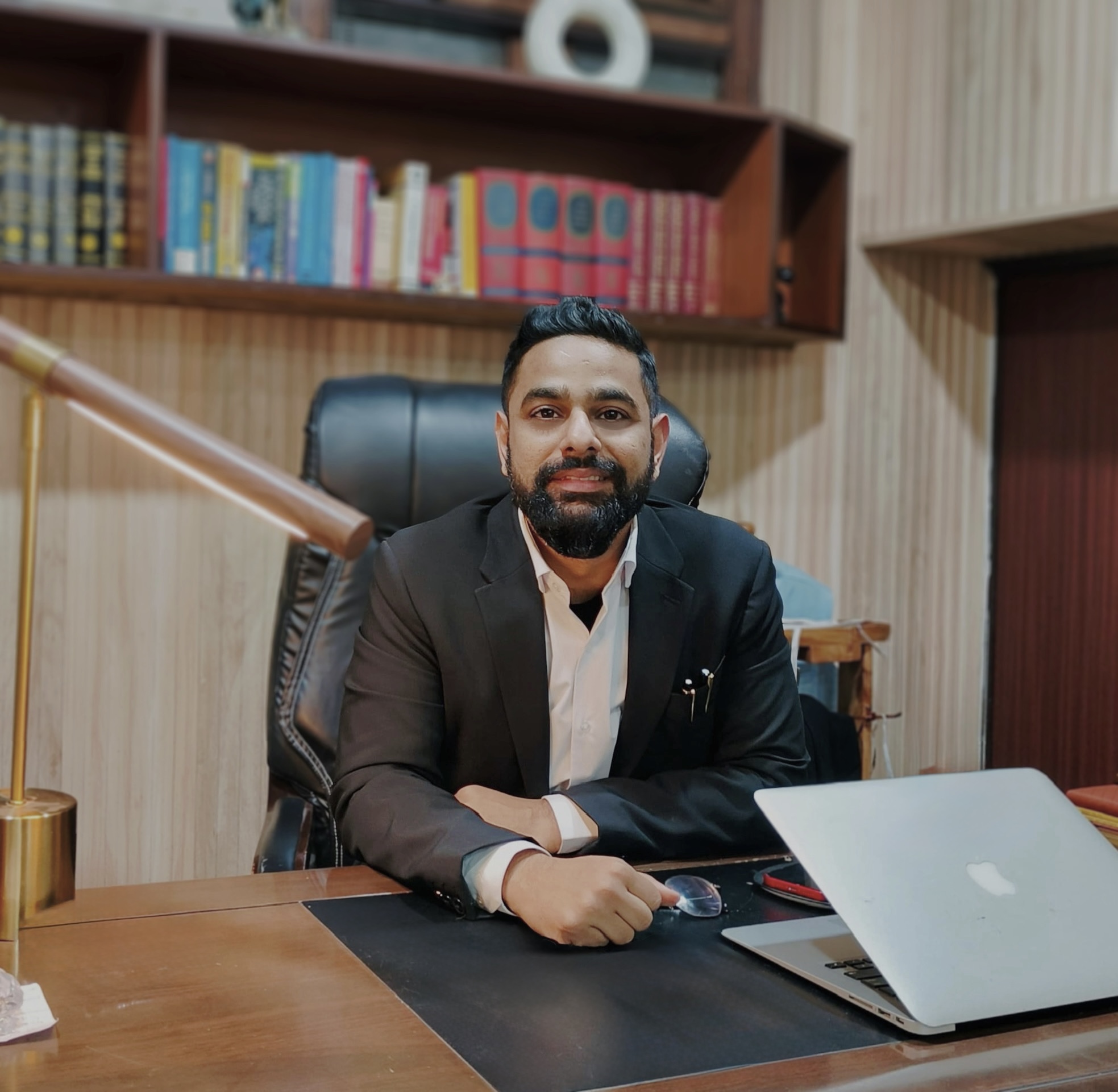
Tag: IPR

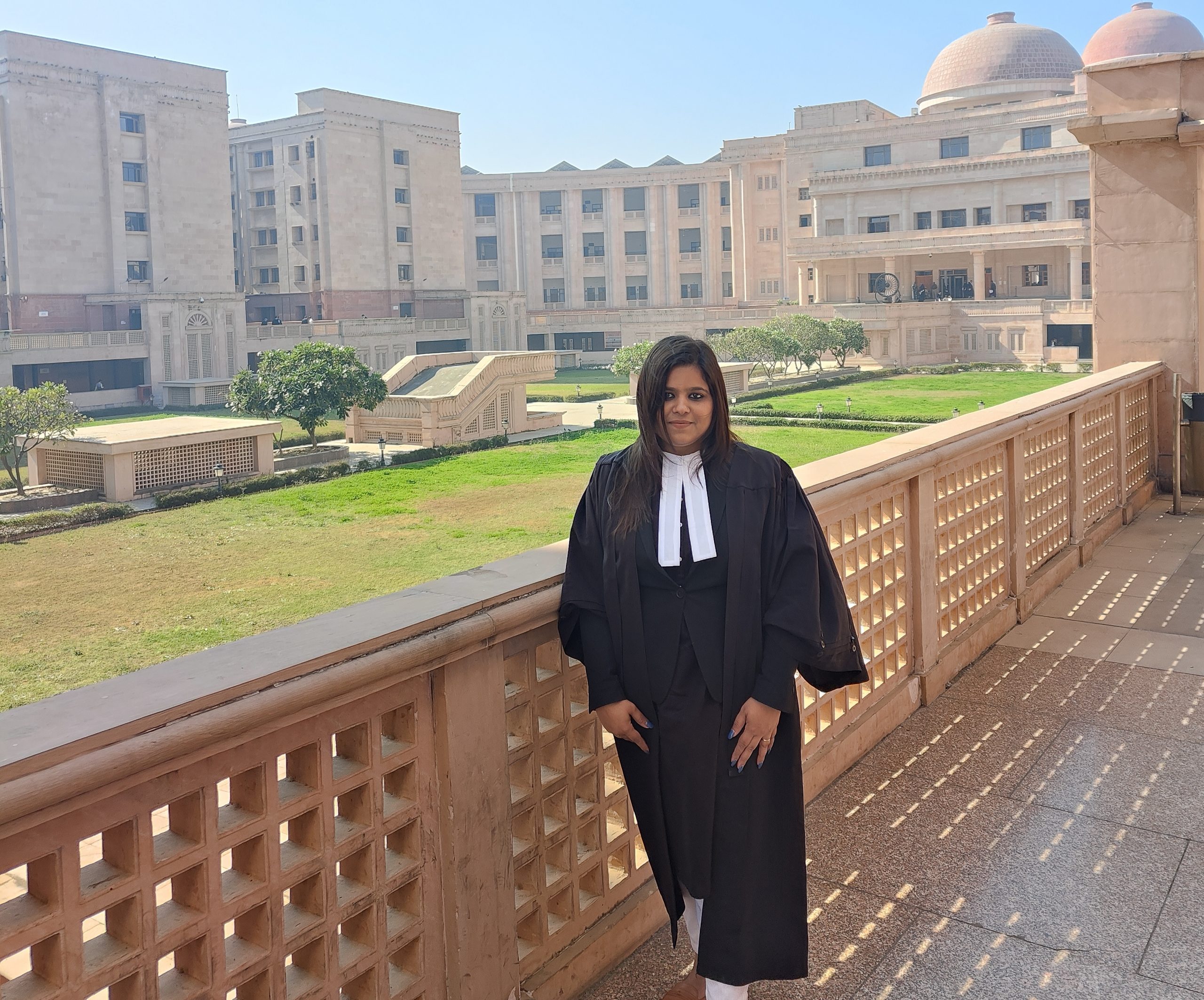
  • “It must be understood that true inclusion lies in recognising difference, not ignoring it, and creating conditions that enable success on equal terms.” – Karan Kamra, Intellectual Property Lawyer.

    “It must be understood that true inclusion lies in recognising difference, not ignoring it, and creating conditions that enable success on equal terms.” – Karan Kamra, Intellectual Property Lawyer.

    This interview has been published by Anshi Mudgal and The SuperLawyer Team

    Your journey from Dhanbad to where you stand today is truly inspiring. How have your personal experiences and academic background in Political Science shaped your decision to pursue law, and how have they influenced your strong legal journey and commitment to the profession?

    I’m a first-generation lawyer, born into a family deeply rooted in the pharmaceutical business, a world far removed from the courts and statutes that now define my everyday life. Growing up with cerebral palsy in a small town like Dhanbad, I often felt the need to prove myself – to be seen, to be heard, and to be taken seriously. For me, the black coat was more than a symbol of the legal profession, it  signified  a  possibility – that merit could speak louder than mobility and that confidence and conviction could override any preconceived notions about ability. 

    I came to Delhi and pursued Political Science. The discipline deepened my understanding of the Constitution, legal systems, and power structures. It eventually led me to Campus Law Centre, Faculty of Law where I discovered my calling in Intellectual Property law. 

    My personal experience instilled in me a deep sense of resilience, to persist, adapt, and advocate in a world not always built for difference.  At the same time, my academic grounding in Political Science gave me a strong structural lens helping me understand laws and  their intricate interplay with legal systems and institutions.  

    This foundation, combined with lived experience, has shaped not just how I view the law but how I approach Intellectual Property, with empathy for creators and right holders,  strategic thinking for brand protection, and a deep sense of purpose in safeguarding invention.  

    In the early phase of your career, you worked  in a full-service law firm and an independent  general practitioner. What motivated your transition into intellectual property law, and how did those foundational years shape your current approach to IP practice? 

    In the early phase of my career, working with a full-service law firm and an independent  general practitioner exposed me to the breadth and intensity of legal practice – from civil suits to commercial disputes. It was a rigorous training ground that honed my advocacy, research, and drafting skills. 

    I began noticing how deeply brands, trademarks,  domain names, content, and technology were getting intertwined with legal disputes. I was drawn to the unique intersection of law, commerce, and creativity that intellectual property law offered. The shift to IP felt organic—it allowed me to work not just reactively in disputes, but also proactively with creators, individuals and businesses to safeguard what they were building. 

    Those foundational litigation years instilled in me a detail-oriented, strategic mindset. They taught me how to anticipate risks, think like a litigator even in advisory work, and approach IP not in isolation, but in its commercial and legal context. 

    You’ve represented clients in domain name disputes before WIPO and INDRP. Could you walk us through your experience in this space? What are some of the key legal and strategic challenges entities commonly face in such matters? 

    The legal framework under both WIPO’s UDRP and India’s INDRP is robust but exacting, placing the onus on the Complainant to establish three core elements: (1) that the domain is identical or confusingly similar to a trademark in which it has rights, (2) that the registrant lacks legitimate interests in the domain, and (3) that the domain has been registered and is being used in bad faith. While WIPO offers quicker, globally recognized redress—typically resolving disputes within 60–75 days—INDRP is key for .in domain disputes and may take 3–6 months or more due to procedural flexibilities and single-arbitrator handling under NIXI.

    Success before both forums relies heavily on the Complainant’s ability to present comprehensive evidence, including proof of trademark rights, prior and continuous use, and supporting documentation like screenshots of misuse, WHOIS records, archived web content, and prior communications. This evidence must clearly align with the legal criteria, particularly to demonstrate the registrant’s bad faith and lack of legitimate interest. The process is evidence-driven and leaves little room for error.

    One of the significant challenges is that infringers often hide behind privacy services or proxy registrations, making it harder to trace the true registrant. WIPO has mechanisms in place to request unmasking, usually coordinated with the registrar, though it’s not guaranteed. INDRP poses more hurdles due to NIXI’s limited procedural transparency and lack of early disclosure protocols. In such cases, complainants must rely on circumstantial and digital forensics—such as WHOIS history, DNS and IP data, website metadata, and linkages across abusive registrations—to build a strong, inferential case.

    While dealing with software piracy and advising software firms, what major trends and challenges have you observed globally? How do you think India’s legal and enforcement mechanisms compare with international frameworks in addressing piracy?

    Software piracy today has evolved into a highly complex and dynamic threat, fuelled by digital proliferation and the increasing sophistication of infringers. We’ve seen a decisive shift from physical duplication to digital piracy, with unauthorized downloads, license key sharing, and hacked installations spreading through torrent sites, web platforms, and even on social media and e-commerce portals. A major trend is the rise of ‘cracked’ enterprise solutions being sold at a fraction of their actual price, often through resellers masquerading as legitimate vendors. In the SaaS ecosystem, misuse takes subtler forms – such as license overuse, unauthorized API calls, credential stuffing, and cloning of proprietary software models.

    From a comparative lens, India’s enforcement mechanisms have strengthened in recent years. Courts have become more proactive in granting Anton Piller orders, John Doe orders, and dynamic injunctions to block rogue websites. The IT Act and Rules coupled with the Copyright Act, provides a statutory framework for enforcement, and cybercrime units in metro cities are increasingly equipped to tackle software piracy, especially in B2B settings.

    However, when compared with jurisdictions like the U.S., EU, or even Singapore, India still lags in certain areas- particularly in digital forensics, quick takedown protocols and cross-border enforcement cooperation. Lack of digital IP expertise in certain enforcement bodies and different judicial approaches to damages also pose challenges.

    To combat this, software companies must take a multi-pronged strategy: strong, enforceable EULAs with audit rights; proactive license tracking using Software Asset Management (SAM) tools; deployment of digital watermarking and DRM technologies; and active online surveillance of infringing platforms. Legal action must often be supported by pre-suit investigations to establish unauthorized use, followed by civil enforcement and, where appropriate, criminal prosecution. 

    The most effective anti-piracy efforts globally involve a mix of litigation, technology, partnerships with enforcement agencies, and user education, something India is slowly but surely aligning itself. 

    You’ve also championed client interests during mediations at the Delhi High Court Mediation Centre. In your view, how effective is mediation in resolving complex IP disputes, and what role does it play in balancing commercial and legal interests?

    Mediation, especially in the context of IP disputes, can be a remarkably effective tool when approached with the right mindset. At the Delhi High Court Mediation Centre, I’ve seen firsthand how it creates space for parties to move beyond rigid legal positions and engage in commercially meaningful dialogue. Unlike litigation, which is often adversarial and time-consuming, mediation allows for tailored, confidential, and business-sensitive solutions, making it particularly valuable in high-stakes IP matters. 

    In disputes involving brand reputation, time-to-market pressures or ongoing commercial relationships, mediation offers the flexibility to craft outcomes that litigation may not be equipped to provide, such as licensing arrangements, joint ventures, or mutually acceptable phased withdrawals. Pre-suit mediation, in particular, has emerged as a powerful tool to resolve conflicts early, avoid escalation, and maintain goodwill – saving time, cost, and reputational strain.

    Ultimately, mediation helps balance legal rights with commercial realities. It empowers clients to co-create outcomes that serve both legal and business interests. In an IP landscape shaped by innovation and speed, mediation is increasingly becoming a strategic first step—particularly effective in resolving disputes early and efficiently, with the exception of aggravated cases of infringement or passing off that merit litigation.

    Having advised multinational clients in sectors such as automotive, pharmaceuticals, e-commerce, and hospitality, what unique IP challenges have you seen in the automotive sector? What preventive strategies would you recommend to avoid trademark issues early on?

    The automotive sector in India faces distinct IP challenges due to its vast supply chain, aggressive branding strategies, and a rapidly growing aftermarket ecosystem.  Trademark infringement today extends beyond core brand names and registered marks to include sub-brands, model names, variant tags, and even alphanumeric identifiers. Infringers, particularly in the spare parts and accessories markets, routinely misuse these marks to falsely suggest association or compatibility to original vehicle manufacturers (the rightful IP holders). This not only dilutes brand equity but also risks consumer deception and safety, especially when counterfeit or substandard parts and accessories are involved. 

    A common defence invoked by unauthorised sellers is Section 30(2)(d) of the Trade Marks Act, which allows the use of a registered mark to indicate the intended purpose of a product or service (e.g., “compatible with Brand X”). However, this defence is not absolute. The protection under the provision ceases to apply where the use is not in accordance with honest industrial or commercial practices, or where it takes unfair advantage of  or is detrimental to the distinctive character or repute of the mark. In the automotive space, this line is often crossed when infringers stylise logos, mimic trade dress, or market counterfeit parts under the guise of compatibility.

    Design infringement is another major concern, especially with regard to spare parts like headlights, grills, mirrors, and alloy wheels. Many of these are reverse-engineered and sold in the grey market without authorization, undermining both brand value and consumer safety. Companies often fail to register industrial designs or delay doing so, weakening their enforcement stance in cases of replication by third-party manufacturer.

    To address this, companies must actively monitor and enforce rights not just in their principal marks but also in model-specific and component-related branding, which are often more vulnerable. Registering sub-brands and variant names in relevant classes, including digital and retail categories, is key. Furthermore, legal notices and litigation should specifically challenge bad-faith use that exceeds the scope of Section 30(2) (d) focusing on consumer confusion, deceptive marketing, and reputational harm. 

    On the design front, preventive strategies include timely registration of industrial designs for high-risk components such as headlights, mirrors, grilles, and alloy wheels, especially those with distinctive visual appeal likely to be replicated. Companies should conduct regular design audits, embed subtle identifiers to support enforcement, and use border enforcement mechanisms to block infringing imports. Where misuse persists, design infringement lawsuits under the Designs Act, 2000—seeking injunctions, damages, and delivery of infringing goods—are vital tools to deter copycats and affirm rights. Combined with trademark enforcement, these steps help safeguard brand equity and product integrity across the automotive ecosystem.

    You’ve often mentored and guided younger professionals. What advice would you offer to law students or litigators looking to shift to IP law, and what resources or habits can help them stay competitive and updated in this fast-evolving domain

    For law students or litigators looking to transition into IP law, my first piece of advice would be: ‘cultivate curiosity’. It is important to ground yourself in the fundamentals—copyrights, trademarks, patents, and designs but it is equally imperative to go beyond textbooks. Following case law developments and tracking decisions of various courts, as well as international bodies like WIPO and dispute resolution platforms like INDRP, is essential. These decisions not only reflect how the law is being interpreted in real time but also reveal emerging trends, judicial attitudes, and strategic nuances that shape IP enforcement and protection.

    Using legal search engines like Manupatra and Westlaw, staying tuned into online news portals such as Live Law and Bar & Bench, and regularly reading blogs like SpicyIP and IPKat are excellent ways to stay updated. Newsletters, national and international legal magazines and webinars (hosted by bar associations or IP firms) also offer timely insights into evolving jurisprudence and policy shifts.  

    I would recommend interning with or working alongside seasoned practitioners. Many young professionals grow the most by observing and absorbing. Simply being in the room with experienced lawyers, watching how they interpret statutes, craft arguments and strategy and navigate court dynamics can shape your legal thinking in ways that are both subtle and lasting. Know the procedure as regards court filings and court practice. Most importantly, stay open to learning and listening whether from seniors, peers, or juniors. The humility will keep you sharp and grounded. 

    Balancing demanding professional responsibilities with personal well-being is no small feat. How do you manage this balance, and what practices or mindset have helped you stay grounded over the years? 

    Balancing the intensity of legal practice with personal well-being has been one of the most challenging and ongoing lessons of my career. In the early years, it was easy to get swept up in the long hours and high-pressure deadlines and the constant push to prove myself. But over time, I’ve come to realize that sustainability in this profession requires more than endurance, it needs intentionality, boundaries and deliberate pauses. 

    Balance comes from prioritizing high-impact tasks and pressing deadlines, while simultaneously planning a clear roadmap for research, preparation, and argument execution in other matters. This structured approach ensures that urgent work is handled efficiently without losing sight of long-term responsibilities, helping me stay steady, focused, and prepared across all fronts. 

    Spending time with family and friends, engaging in conversations beyond law, and learning to disconnect have become vital. Music, movies, and books are more than just breaks, they’re essential tools to break monotony, spark creativity, and keep me grounded.

    From being mentored by senior lawyers to independently handling high-stakes litigation, your journey has been marked by growth and learning. What are some of the most valuable lessons you’ve carried forward, especially when it comes to leadership and courtroom advocacy?

    Every journey has its highs and lows, and mine has been no exception. I did make my share of mistakes in the early years – be it in court, professional interactions, or even client handling. Each misstep became a valuable lesson. I learnt to face embarrassment, accept feedback, and grow from it. One of the most important lessons was to remain both tenacious in facing challenges and malleable enough to learn from seniors and peers—an essential balance not just at the start, but throughout one’s legal career.

    I’m deeply grateful for the mentorship I received, especially from Mr. Achuthan Shreekumar, Mr. Saif Khan and Ms. Binny Kalra in my early years. They taught me to take full ownership of my work, to be meticulous in my preparation, and to argue with clarity, conviction, and courage. These values continue to guide me through complex matters and high-pressure situations in court with balance and self-belief. 

    Observing some of the finest legal minds during my legal career has been my privilege. It has helped me absorb the nuances of court craft, statutory interpretation, and legal strategy, often through a quiet process of osmosis.

    Equally important have been the lessons in procedural rigour, understanding filings, registry practices, court processes, and client coordination. Perhaps most importantly, I’ve learned to listen, whether to seniors, peers, or juniors. Staying open and receptive has I’ve imbibed the importance of discipline, resilience, ethics, and a commitment to timeline – qualities that help build a legal culture that respects creativity, integrity, and innovation.  

    As a lawyer with cerebral palsy, you’ve spoken powerfully about inclusion and structural challenges. What changes would you like to see in the legal industry to make it more accessible, and how can organizations move from intent to implementation on this aspect?

    Navigating the legal profession as a differently-abled lawyer has been a mixed journey. I’ve been fortunate to encounter mentors and colleagues who valued my credentials and potential over visible physical limitations. Despite the same, I’ve also faced scepticism—about whether I could handle the physical demands of litigation or keep pace in a high-pressure environment. These misconceptions stem from deeper social conditioning around disability and competence. The only real way to counter them is through consistent performance, meaningful outcomes, and quiet persistence.

    Over time, I’ve realised the issue isn’t about access to opportunity. Many firms today are open to hiring professionals with disabilities, especially as diversity becomes a core organisational value. The real challenge lies in organisations being  truly disability-cognizant beyond the point of entry. 

    Genuine inclusion means going beyond symbolic representation—it requires accessible infrastructure, assistive tech and software apps, flexible work schedules. Most importantly, more organisations need to invest in inclusive training across teams and levels and to build  a culture rooted in empathy, understanding, and intentional dialogue. Equally important is addressing ‘disability blindness’—the expectation that disabled professionals meet identical performance standards without acknowledging their physical limitation or the systemic barriers they navigate. It must be understood that true inclusion lies in recognising difference, not ignoring it and creating conditions that enable success on equal terms. 

    Looking ahead, how do you see IP law evolving over the next decade, especially with the rise of AI-generated content, deepfakes, and non-traditional trademarks? What key reforms or innovations do you think are essential to future-proof the IP framework?

    Over the next decade, IP law in India will be under mounting pressure to modernise in response to rapid technological advances. AI generated content fundamentally challenges the traditional copyright framework, which is centred on human authorship and originality. As machines autonomously create literary, artistic, and musical works, existing laws struggle to define ownership, liability, and infringement. To address this, regulatory clarity is essential either through specific amendments to the Copyright Act or by introducing sui generis protections tailored to AI generated  and machine generated content. 

    To address deepfake misuse, India’s IP regime must strengthen personality rights to prevent unauthorized digital cloning of a person’s image, voice, or likeness, especially for commercial use. There must be an expansion of the scope of ‘misrepresentation’ under  trademark and passing-off laws to cover deepfake endorsements or AI-generated impersonations that mislead consumers or dilutes brand identity. 

    Additionally, there must  be  an introduction of mandatory disclosure or watermarking requirements for AI-generated or manipulated content, especially on social media or commercial platforms, to ensure transparency and traceability. Lastly, there is a need of faster takedown mechanisms and intermediary liability guidelines tailored to AI and deepfake content under IP enforcement rules, empowering right holders to act swiftly.

    Trademark law must evolve to protect non-traditional marks like sound, scent, motion, and holograms. With businesses increasingly operating in digital-first or virtual environments, including the metaverse,  the law must address how trademarks function when use is no longer confined to physical goods or services. This will require not only legislative amendments but also updated examination guidelines, jurisprudence, and technological competence within the Trademark Registry and Judiciary. 

    Get in touch with Karan Kamra –

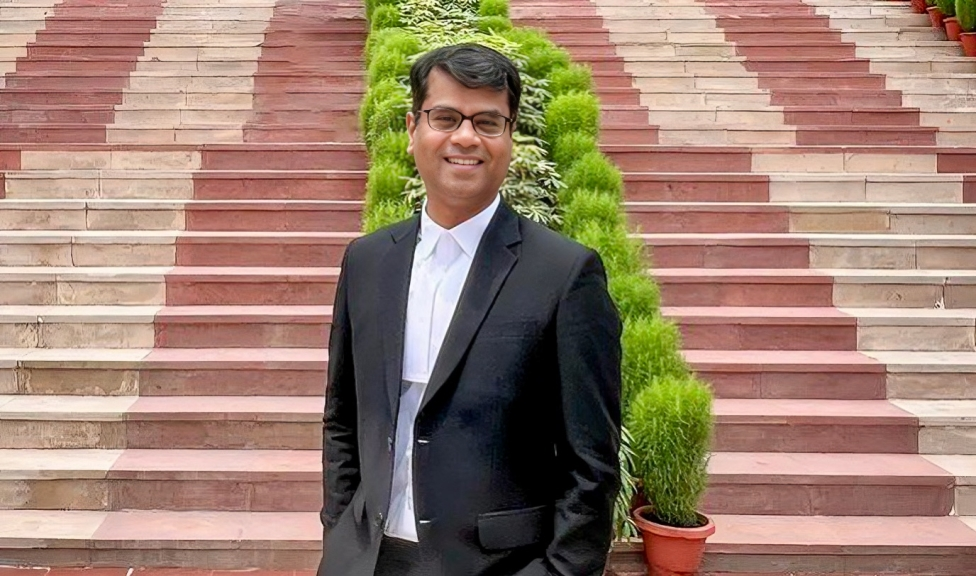
  • “The legal world is smaller than it seems, and your name carries weight even when you’re not in the room.” – Meenal Duggal, Founder of Meenal Duggal Law Offices.

    “The legal world is smaller than it seems, and your name carries weight even when you’re not in the room.” – Meenal Duggal, Founder of Meenal Duggal Law Offices.

    This interview has been published by Anshi Mudgal and The SuperLawyer Team

    You’ve worked across diverse areas of law. Which ones have you found most intellectually stimulating, and how do you stay updated with developments?

    I’ve had the opportunity to work across a wide spectrum of legal matters, and each area has contributed uniquely to my growth as a litigator. However, I find economic offences and corporate litigation particularly stimulating. These fields are intellectually rigorous—they demand deep strategic planning, constant engagement with evolving jurisprudence, and the ability to navigate complex factual and legal matrices. They keep you on your toes because no two cases are ever truly alike. At the same time, handling matrimonial disputes and IPR matters has been deeply fulfilling, as these areas bring me face-to-face with the human, emotional, and creative dimensions of law.

    To stay current, I treat learning as a non-negotiable part of my routine. I regularly follow recent judgments, legislative updates, and expert commentaries. I attend bar association seminars, workshops, and informal discussions with peers and seniors. In this profession, the law is a living organism—it evolves constantly, and staying attuned to its rhythm is essential.

    In the early stages of your career, what were some of the key skills or insights you gained while assisting senior counsel on these high-stakes cases?

    Starting my legal journey with matters involving serious criminal offences—ranging from economic frauds to murder trials—was a transformative experience. These cases taught me the irreplaceable value of clarity, precision, and presence of mind. Every word matters, every fact must be double-checked, and your ability to stay composed under pressure can be the difference between success and failure in court.

    Assisting senior advocates during those formative years gave me a masterclass in legal strategy. I learned how to dissect a case, anticipate counterarguments, and build a narrative that is both factually robust and legally sound. Most importantly, I absorbed the discipline of courtroom conduct—how to be persuasive without being aggressive, how to command attention while respecting the court. These early lessons still guide me every time I step into a courtroom.

    You’ve handled a broad spectrum of civil and criminal matters, particularly matrimonial disputes which have a high emotional quotient. How do you craft a legal strategy that balances the emotional complexity with the legal rigor these cases demand?

    Matrimonial litigation is unlike any other—it’s not just about statutes and precedents but about people, emotions, relationships, and often, pain. As a lawyer, I believe our role here extends beyond legal representation—we’re also emotional anchors during what can be one of the most vulnerable periods of a client’s life.

    I begin by listening deeply and without judgment. It’s important to understand not just the legal facts, but the emotional currents underlying the conflict. From there, I work to create a strategy that is empathetic yet firm—one that protects my client’s rights while also guiding them toward resolution, not escalation. Wherever possible, I advocate for amicable settlements, particularly where children or long-term emotional repercussions are involved. At the same time, I stand resolute when legal intervention is necessary. It’s a delicate balance—but one that can lead to outcomes that are both just and healing.

    You’ve credited your experience with Mr. Viraj R. Datar as foundational. Could you tell us more about that influence?

    Working under the mentorship of Mr. Viraj R. Datar at the Delhi High Court was one of the most formative chapters of my career. It was in his chamber that I first witnessed what it truly means to practice law with purpose. He wasn’t just a brilliant legal mind—he was deeply ethical, humane, and committed to justice in its truest sense.

    From him, I learned that legal practice is not merely a profession—it’s a service. He taught me the importance of integrity, thorough preparation, and above all, empathy. His approach was never transactional; he cared about the impact of every case on the people involved. Those values left a lasting imprint on me. To this day, I try to uphold those same principles in my independent practice—doing my best not just to win cases, but to ensure fairness, compassion, and dignity are never compromised.

    Starting your independent practice in 2020 must have come with its own set of challenges and opportunities. What inspired you to take that step, and how did you navigate the early phase of building your clientele and case portfolio?

    Starting my independent practice in 2020 was a leap of faith—but one rooted in conviction. After years of chamber work and rich mentorship, I felt ready to take ownership of my legal path and build a practice that reflected my values. I wanted to be more hands-on with clients, more accountable for outcomes, and freer to choose matters that aligned with my sense of purpose.

    The timing, however, was far from ideal—courts were functioning in a limited capacity due to the pandemic, and the entire legal system was undergoing a digital transformation. But adversity became my teacher. I focused on being highly accessible, responsive, and consistent in my work. I relied heavily on referrals, built a network through online legal forums, and made it a point to stay visible within the legal community. Slowly but steadily, the practice grew. Each case taught me something new—not just about the law, but about resilience, adaptability, and faith in one’s own journey.

     You’ve represented several corporate entities, including private limited companies and firms. What are some recurring legal challenges you’ve noticed in business litigation and how do you think they can be avoided at an initial stage?

    One of the most recurring issues I see in business litigation is the prevalence of poorly drafted agreements. Many of the disputes that land in court could have been prevented with a little more legal foresight. Vague clauses, inconsistent terms, and the absence of dispute resolution mechanisms often create avoidable friction between parties.

    Another major challenge is the lack of organized documentation and communication records. In today’s fast-paced commercial environment, businesses sometimes neglect formalities—which leads to evidentiary gaps when disputes arise. My advice to businesses is simple: invest early in sound legal structuring, contracts, and compliance. Preventive legal care is much more cost-effective than reactive litigation.

    Managing a diverse litigation portfolio is demanding. How do you maintain consistency and balance?

    Indeed, litigation can be all-consuming. But over time, I’ve realized that consistency stems from mindful planning and being fully present in each task. I rely heavily on structured routines—prioritizing my week based on urgency, court appearances, and client needs. I carve out time for drafting, case review, and quiet research without distractions.

    Outside of work, I make a conscious effort to reconnect with my roots—be it through time with family, spiritual reading, or simply being in silence. These little rituals ground me and allow me to show up with focus and clarity. I also try to maintain strong professional boundaries, where possible, to avoid burnout. It’s still a work in progress, but I’ve learned that sustainable success comes not from doing everything at once, but from doing each thing with presence and purpose.

    Having worked in reputed chambers and now leading your own firm, what advice would you offer to young lawyers who aspire to develop a well-rounded litigation career spanning multiple areas of law?

    My advice would be: begin with curiosity and carry it with commitment. Don’t pigeonhole yourself too early—explore various domains of law, because each one strengthens a different muscle. Seek out mentors who challenge you to think deeper and work harder. Watch court proceedings, learn how judges think, and observe how experienced lawyers argue—that exposure is invaluable. 

    Focus on building your core skills—research, drafting, procedural clarity, and client interaction. But more than anything else, build your reputation—for reliability, professionalism, and ethics. The legal world is smaller than it seems, and your name carries weight even when you’re not in the room. A well-rounded career doesn’t happen overnight—it’s built over years, with patience, self-discipline, and a genuine love for the law.

    What initially drew you to law, and how did your education shape your decision to pursue litigation?

    What drew me to law was its power to resolve real-world conflicts through reasoning, dialogue, and structured thinking. I was always fascinated by how law could bring order to chaos, how a well-argued case could lead to justice, and how legal tools could be used to empower the voiceless.

    My education laid the foundation for this journey. Moot courts, legal research assignments, and internships gave me a taste of courtroom dynamics early on. I found myself naturally drawn to litigation—it challenged my intellect, honed my articulation, and gave me a platform to engage with real people and their stories. From there, building my own practice felt like the most organic next step—a space where I could not only argue cases but shape my path on my own terms, in a way that resonated with my values and aspirations.

    Get in touch with Meenal Duggal –

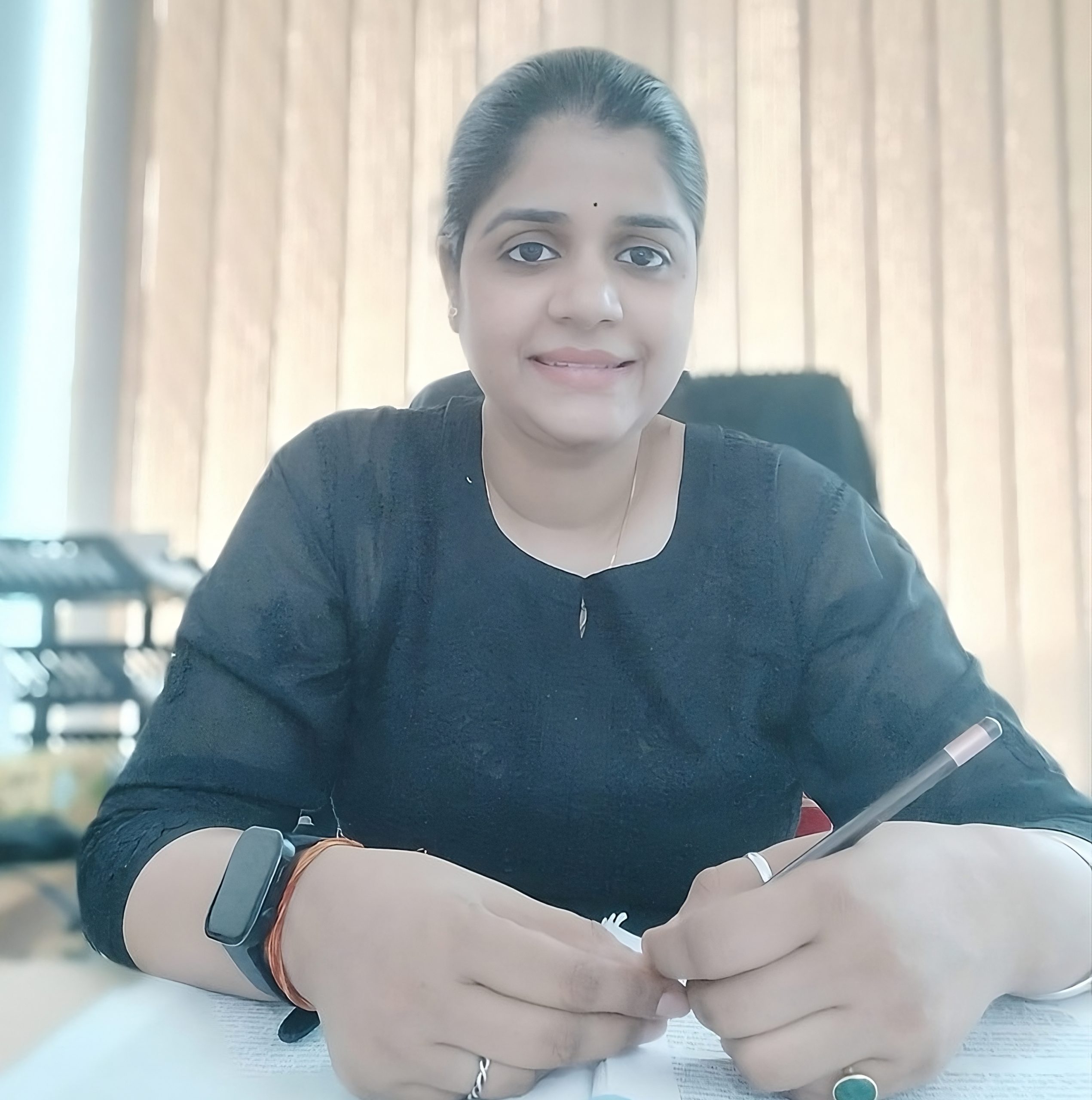
  • “That habit of consciously engaging with the law, not just reacting to it, helps me filter noise from relevance.” – Arrpita K Bhatt, Media and Entertainment Lawyer.

    “That habit of consciously engaging with the law, not just reacting to it, helps me filter noise from relevance.” – Arrpita K Bhatt, Media and Entertainment Lawyer.

    This interview has been published by Anshi Mudgal and The SuperLawyer Team

    Coming from a commerce background, what inspired you to pursue a career in law? In what ways has your academic foundation in commerce complemented your legal journey, particularly in corporate or commercial legal matters?

    While I began my journey in commerce, my deeper purpose was always rooted in empowerment—especially through education. I saw law as a transformative tool, not just to resolve disputes but to elevate people’s understanding of their own rights. That vision pushed me to transition into the legal field.

    During my B.Com, I worked as an Internal Stock Auditor and Stock Researcher. That experience grounded me in the practical workings of the corporate world—from compliance intricacies to financial accountability. It didn’t just teach me numbers; it taught me how businesses breathe. So when I entered law, especially corporate and commercial law, I wasn’t looking at statutes in isolation—I understood the business realities behind them. This dual perspective has helped me serve clients with both strategic insight and legal precision.
    At every step, law has enabled me to blend purpose with profession—using my legal acumen to educate, empower, and break barriers, whether it’s through my professional practice or through initiatives like BLU. 

    How was your experience pursuing an LL.M. in Intellectual Property Rights and Information Technology? What drew you to this specialization over others, and how has it shaped your perspective on law and innovation?

    Growing up as a millennial, I witnessed the Internet evolve from dial-up modems to streaming platforms, memes, and digital marketplaces. That transformation fascinated me. I was always curious about how technology shaped communication, expression, and even identity. At the same time, I was a budding writer—scribbling short stories, blogging, and researching how books get published. That’s when I stumbled upon the concept of Intellectual Property. It felt like unlocking a new superpower—realizing that ideas, like inventions or writings, had legal lives of their own.
    Back when I was in law school, IP wasn’t yet the buzzword it is today. But I could see its future relevance—how creativity and innovation would increasingly become the currency of our generation. That foresight, combined with my natural curiosity for tech and content, made IPR and IT Law a very intuitive choice for my LL.M.
    Pursuing this specialization gave me a profound appreciation of the balance between innovation and regulation. It shaped my ability to not only advise creators and tech companies but also advocate for ethical, accessible, and inclusive innovation. Today, whether I’m working on a deal, mentoring students through BLU, or speaking on digital rights, my perspective is shaped by that early blend of passion, foresight, and learning.

    In the early phase of your career, you were drawn to academics. What were some of the key experiences during that time that deepened your understanding of law and the subjects you taught? What eventually motivated your transition from academia to law firm practice?

    I’ve always had the heart of an academician. Even while pursuing my Master’s, I found myself teaching, mentoring, and constantly questioning the “why” behind every legal principle. That dual role—as both a student and a lecturer—helped me look at law from both sides of the lens: as a learner and a guide.

    Among all the subjects I engaged with, Contract Law left a lasting imprint. It’s one of those timeless areas of law—centuries old yet constantly evolving. No matter how advanced technology becomes or how industries pivot, contracts remain the language through which businesses and individuals build trust. Teaching contracts made me realize how theory and practice often diverge, and that’s when the spark was lit—I wanted to experience how these doctrines come alive in boardrooms, negotiations, and deal-making.
    That desire to move beyond the black-letter law and engage with the real-world intricacies of business is what eventually drew me to law firm practice. I wanted to see how contracts function under pressure, in dynamic sectors, across jurisdictions—and how I, as a lawyer, could bring both legal integrity and commercial sensibility to the table.
    Even today, that academic lens hasn’t left me. Whether through social work or mentorship, I continue to teach—but now with the added richness of my experience and applied insight.

    Transitioning to an in-house counsel role marks a significant shift in a legal career. You’ve worked with some of the biggest names in the media and entertainment sector. How have these roles differed from one another, and could you share one of the most challenging cases you encountered along the way?

    Having worked both at a law firm and as in-house counsel, I’ve come to realize that the shift isn’t so much about a change in career—it’s a shift in perspective. In a firm, you operate as a specialist—often brought in to solve a specific legal problem. But as an in-house counsel, you’re a strategic partner. The role demands that you understand the pulse of the business, anticipate risks before they arise, and offer solutions that don’t just check the legal box, but help the business move forward with confidence.
    What’s unique about the media and entertainment sector is that it may appear as one unified industry, but it’s actually a convergence of many touchpoints—IP, contracts, advertising laws, digital platforms, privacy, broadcasting compliance, and more. Each company I’ve worked with has had its own rhythm—some with a strong content-first approach, others more tech-driven or distribution-led. Understanding the nuance of each business model has been essential, because legal advice isn’t one-size-fits-all; it needs to be context-aware and commercially sound.
    As an in-house lawyer, I see my role as that of an enabler—ensuring the legal function supports innovation, protects creative vision, and helps the business build sustainable value while staying compliant. That blend of law and business strategy is what makes this role both challenging and deeply fulfilling.

    As in-house counsel, how do you navigate the ever-evolving legal landscape especially with regard to content licensing, intellectual property, and digital media regulation in a fast-paced, highly regulated industry?

    Law, by its very nature, is in a constant state of evolution. Even as we speak, it’s shifting—adapting to new technologies, redefining old principles, and responding to societal and business needs. As a legal professional, evolving alongside it isn’t optional—it’s essential.
    In an industry like media and digital content, where disruption is the norm, my approach has been to be informed. I don’t believe in simply forwarding the latest update or echoing headlines. For me, it’s about pausing, reading deeply and asking—what does this mean for our business?
    That habit of consciously engaging with the law, not just reacting to it, helps me filter noise from relevance. It ensures that when I advise on licensing structures, IP risks, or platform regulations, the counsel is not only current but also considered. The joy is in doing the work, not just knowing the jargon.

    Ultimately, being an in-house counsel is about bridging change with clarity—guiding your team through uncertainty, while staying rooted in both principle and practicality.
    
    Your expertise spans IPR, media, and technology laws, with a focused interest in data privacy. In your view, what steps can India take to strengthen its data protection regime and bring it closer in alignment with global frameworks such as the GDPR?

    India’s journey toward a comprehensive data protection framework is both necessary and timely. As the world’s largest democracy with a rapidly digitizing population, our approach must be inclusive, scalable, and rooted in our constitutional values.
    Frameworks like the GDPR have certainly set global benchmarks, and there is much we can be inspired by—particularly in areas like user consent, accountability, and transparency. But our legal and societal landscape is distinct, and that calls for a framework that is uniquely Indian in its design and delivery.
    One key difference lies in the scope of government exemptions. Our law, in its current form, allows certain leeways for the State in matters of data processing. While this reflects the need for governance flexibility, it also places a greater onus on transparent implementation and robust oversight. As citizens, we must remain aware of our rights and engage in the legal process, so the law can evolve to reflect the democratic ideals it’s built upon.
    Ultimately, the goal isn’t to replicate GDPR—it’s to build a framework that works for India, encourages digital trust, and empowers every citizen in this data-driven age. And I believe we are well on our way to achieving that.

    As an author and a mentor deeply engaged with the next generation of legal minds, what gaps do you observe in contemporary legal education? How does your initiative, Basic Law Understanding(BLU), aim to bridge the gap between academic theory and practical legal application?

    We often say that the next generation is tech-driven—and that’s a wonderful strength. But in a world shaped by AI and automation, we need to ensure that not just GenAI is well-trained, but also that Gen Next of professionals are trained to think independently, apply critical reasoning beyond just algorithms.

    BLU is not just a knowledge exchange—it’s a purpose-driven initiative to empower. It is designed for the masses—to bridge the gap not only between classroom and courtroom, but between citizens and their rights. Whether it’s a student understanding broadcasting rights or a citizen decoding consumer rights. The aim is to be ‘Aware’. 

    Having actively contributed to grassroots activism, corporate legal affairs, academic publishing, and mentoring while also leading social initiatives, how do you maintain a balance between your professional responsibilities and personal well-being?

    For me, the idea isn’t to chase balance—it’s to create blend. I don’t see my life as separate compartments of “work,” “passion,” and “personal time.” Instead, I try to design my day—and my purpose—in a way that all these facets flow into one another. But at the core of it all is one intention: to use law as a tool to empower.

    This blend helps me stay connected to what I do and why I do it. I’ve learned that personal well-being doesn’t come from disconnecting from work—it comes from doing work that is aligned with your values, surrounded by people who believe in impact over optics.
    Of course, I have my “DND” moments too—where I switch off, read something that has nothing to do with the law, or spend time with the people who keep me grounded. But I don’t put pressure on myself to perform a balance like a checklist. Instead, I remind myself: if what you do fuels you, then you’re already living in alignment.
    Whether it’s Gen Z finding their calling or seasoned professionals reinventing their role, I believe the future of law lies where empathy, and empowerment coexist naturally.

    What advice would you give to aspiring lawyers at the beginning of their careers? Are there any key habits, mindsets, or resources that you found particularly helpful in shaping your own path in law?

    My biggest advice? It’s that idiom

    “Jack of all trades, master of none, but better than being stuck mastering just one.”

    Law is a vast and layered field, and the more you expose yourself to its different shades—be it contracts, litigation, dispute resolution —the clearer your own voice and direction will become.

    In the early years, don’t rush to define your niche. Explore, assist, volunteer, write, question. “The legal profession isn’t a linear path—it’s more like a mosaic. Each experience, even the smallest one, adds depth to your understanding.” It’s okay to not have all the answers at the start—curiosity will take you further than certainty ever can.

    What helped me most was following what intrigued me. 

    And finally, stay rooted in empathy and purpose. Read beyond the law, fuel your hobbies. Listen to voices outside your echo chamber. Do something that connects you to yourself the most. 

    Your journey is your own, so don’t fear the unconventional. Walk it with awareness, and you’ll find not just success, but meaning.

    *All views and responses mentioned here are personal.*

    Get in touch with Arrpita K Bhatt –

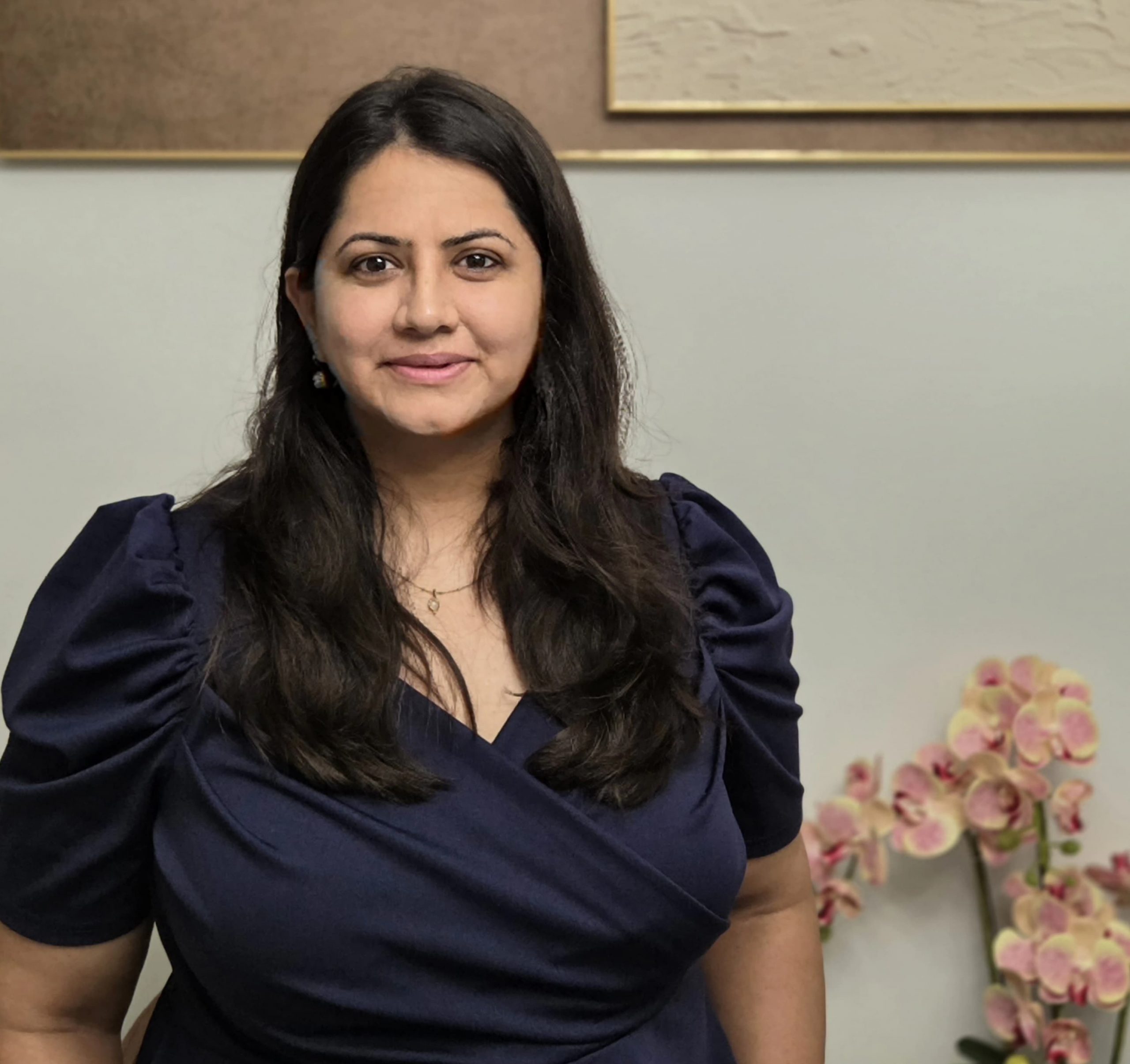
  • “Above all, maintaining integrity, doing the right thing even when no one is watching, has been a guiding value.” – Rahul Gupta, Advocate-on-Record at Supreme Court of India and Founding Partner at Maximus Legal.

    “Above all, maintaining integrity, doing the right thing even when no one is watching, has been a guiding value.” – Rahul Gupta, Advocate-on-Record at Supreme Court of India and Founding Partner at Maximus Legal.

    This interview has been published by Anshi Mudgal and The SuperLawyer Team

    Your academic trajectory from B.Com (Hons.) to Law, Company Secretaryship, and an  M.Com reflects a strong interdisciplinary foundation. What inspired you to pursue both law  and the CS qualification simultaneously, and in what ways has this combination given you  an edge in advising clients on matters of corporate governance, regulatory compliance, and  financial structuring? 

    From the very beginning, I was drawn to the intersection of law, commerce, and corporate  governance. Pursuing Company Secretaryship alongside my legal studies was a conscious decision as it allowed me to build a foundation that wasn’t just legally sound, but also rooted in financial  and regulatory nuances. This interdisciplinary approach has been extremely helpful, especially in  matters involving corporate litigation, insolvency, and compliance. Clients often benefit when legal advice is well-integrated with an understanding of statutory filings, boardroom dynamics, and financial frameworks. I’ve also noticed that having both an LLB and CS qualification adds to  my credibility in the eyes of clients. They feel more assured that their legal matters are being  handled with a broader understanding of business and compliance. 

    During your time with Advocate-on-Record Abhinav Shrivastava, you worked on several  significant matters, including cases involving medical negligence, public infrastructure, and  high-stakes regulatory disputes. Which of these experiences had the greatest influence on  your legal mindset or courtroom confidence, and why? 

    Each case taught me something unique, but one that stands out was the medical negligence matter  which ultimately led the Delhi High Court to direct the Medical Council of India to frame  sentencing guidelines against doctors. The case was layered with complex medical facts and  touched deeply on issues of public interest and human emotion. Working under the guidance of  Mr. Abhinav Shrivastava in this matter was instrumental. He gave me the opportunity to argue before  the Supreme Court in the very first year of practise. His clarity of thought, meticulous approach to  drafting, and strategic vision shaped how I began to understand litigation at a deeper level. Observing how he navigated the matter and collaborated with senior counsel not only sharpened my legal thinking but also instilled in me the confidence and discipline required in court, something  no textbook alone can provide. 

    You also contributed to the due diligence process for a major international brand like  Burger King. How did this corporate compliance role differ from your litigation work, and  what insights did you gain into global business operations and cross-border regulatory  frameworks through that engagement? 

    That engagement was eye-opening. While litigation often focuses on resolving disputes, due  diligence work is more about anticipating and mitigating future risks. Working at Burger King  allowed me to see the meticulous backend of corporate transactions: compliance checks, property  evaluations, and regulatory assessments. It gave me a global perspective on how multinationals  approach legal risk and localization, which I now carry into advising Indian startups.

    Since embarking on your independent practice and founding Maximus Legal , you’ve  handled a wide variety of matters before bodies like the NGT, NCLT, and the Supreme  Court. What have been the most significant challenges and turning points during this  journey? What initially motivated you to take the leap and establish your own firm? 

    Starting my own firm was less about ambition and more about purpose. I wanted to build a practice  rooted in accessibility, integrity, and multidimensional legal service. The biggest challenge was  transitioning from being an associate to becoming a first point of contact for clients. The turning  point came when I successfully argued for a client in a habeas corpus matter involving child custody, a deeply sensitive issue that reaffirmed my decision to take this path. Founding Maximus Legal has allowed me to offer end-to-end solutions across practice areas, with a team that shares  this commitment.

    Your experience spans a wide legal spectrum from consumer protection and matrimonial  cases to environmental litigation and complex insolvency proceedings. Could you share one  particularly challenging case that tested your legal acumen or professional resilience? 

    One of the most challenging cases was representing a group of industries before the NGT, Principal Bench regarding the air quality of my hometown Mandi Gobindgarh, Punjab. Balancing  environmental concerns with the economic realities of industrial stakeholders required not just  legal knowledge, but nuanced negotiation and strategy. The matter demanded extensive  groundwork, collaboration with technical experts, and the ability to argue for sustainable solutions.  It was a test of endurance, but also of finding balance in public interest litigation. 

    Having facilitated over 50 trademark and 25 copyright registrations including  international filings you’ve built a solid IP practice. In your experience, what are the most  common hurdles startups and individuals face during the IP registration process, and how  can these be effectively addressed from a legal strategy perspective? 

    Many startups underestimate the value of early IP protection. The most common hurdles include  inadequate documentation, lack of awareness about global classifications, and conflicts with  existing trademarks. I believe the solution lies in proactive education. At Maximus Legal, we guide  clients from day one, not just in registration, but in building an enforceable brand identity.  International filings also require understanding treaty frameworks like the Madrid Protocol, which many startups overlook. Strategic foresight, coupled with clear documentation, can save  significant time and costs down the line. 

    Now leading your litigation practice and having cleared the Advocate-on-Record exam,  what guidance would you offer to young lawyers hoping to build a career path similar to 

    yours? What specific skills, values, or tools have proven vital to your growth and long-term  success? 

    The most valuable skill is consistency, whether in drafting, client communication, or court  appearances. Young lawyers often look for shortcuts, but the law rewards diligence and depth. I  would also stress the importance of mentorship, both formal and informal. Working under  experienced professionals taught me discipline and nuance. Tools like legal research databases,  structured daily schedules, and clear documentation habits have helped me immensely. Above all,  maintaining integrity, doing the right thing even when no one is watching, has been a guiding  value. 

    Could you walk us through your experience of preparing for and clearing the Advocate on-Record examination? How has achieving AOR status influenced your professional  standing and the scope of your legal practice? 

    Preparing for the AOR exam was rigorous. It required not just legal knowledge but also the ability  to think practically under pressure. I had to revisit core procedural law, refine my drafting, and  understand the unique ethos of Supreme Court practice. Clearing the exam has been a milestone.  It has enhanced client trust and opened doors to file directly before the apex court. Interestingly, I’ve noticed that people look at you a little differently when they hear you’re an Advocate-on-Record, it carries a sense of credibility and seriousness in the legal community. More than  anything, it’s a personal reminder that persistence and preparation truly pay off. 

    High-stakes litigation is often intense and time-consuming. How do you maintain balance  between the demands of your profession and your personal life? Has your approach to well being, stress management, or time allocation evolved throughout your career? 

    Yes, it has evolved a lot. In the early days, I was constantly on edge, running from court to office  and barely taking time off. Over time, I realized that burnout doesn’t serve anyone. I now prioritize  structured schedules, take short breaks, and occasionally unplug completely to reset. Being in court  almost every day is demanding, but creating boundaries and nurturing personal interests, like travel  or spending time with family, keeps me grounded. 

    Get in touch with Rahul Gupta –

  • “It is one of the privileges of being a litigation counsel to have the opportunity to contribute directly to the evolution of the law through arguments addressed in court.” – Kumar Sudeep, Founder & Principal at Chambers of Kumar Sudeep.

    “It is one of the privileges of being a litigation counsel to have the opportunity to contribute directly to the evolution of the law through arguments addressed in court.” – Kumar Sudeep, Founder & Principal at Chambers of Kumar Sudeep.

    This interview has been published by Anshi Mudgal and The SuperLawyer Team

    Sir, your journey is truly inspiring. After completing a B.Tech in Computer Science & Engineering, you made a noteworthy shift to the field of law. What inspired this transition? 

    I finished schooling from Delhi Public School, R.K. Puram in 1999. At that point I had an offer for a B-Tech degree in Computer Science & Engineering from GGSIP University in New Delhi. Not being very clear about where I wanted to be in the long term, I decided to take up the offer and figure things out with work and life experience. Various opportunities came my way after graduation of which the most noteworthy was a startup called Montalvo Systems with offices in Bengaluru and Silicon Valley, California. This company was acquired by SUN Microsystems in 2008. The feeling of being a bird of passage in engineering came to a head for me at that point in time. I was not feeling very keen on repeating the technology cycle all over again. I joined Nvidia in Bengaluru and while working there started thinking from first principles about a long-term career best suited to my interests and inclinations. This process culminated in my returning to Delhi and joining Campus Law Centre, Delhi University for an LLB degree.  

    In school I rather enjoyed languages and the acts of reading, writing, and argumentation. It was a delightful and easy-going kind of engagement with the use of language; and  it never occurred to me that it could be the basis for any full-fledged career. It was like breathing. It is only after work experience and self-examination that I let these instincts guide me to law as my long-term career. The peace of mind that comes from working alongside, and not too far away from your natural inclinations, is priceless and an abundant source of mental energy. 

    How has your engineering background continued to inform or benefit your legal practice? How has your technical education influenced the way you approach complex cases before the Intellectual Property Division and Commercial Courts of the Delhi High Court?

    A technical degree in a subject like Computer Science or Electronics can enable one to appreciate and analyze a technical system in its entirety: from the top-level algorithm, to the software that implements the algorithm, through the hardware that executes the software, down to the circuits which constitute the hardware, and even the underlying semiconductor materials on which the circuits are etched.

    As a lawyer one can then pause at the required depth in this chain, depending upon the requirements of the case at hand, and synthesize and elucidate the matter in appropriate legal terms to assist the court in reaching a decision. Ultimately technology lawyering is a synthesis of the science of understanding and the art of communicating.

    Further, the general analytical rigour typically imbibed in the study of engineering and technology also seems to carry over naturally to law where precise and accurate analysis of legal and factual propositions is of value. 

    In the initial stages of your legal career, you must have encountered a variety of formative experiences. Could you share a few experiences that deepened your understanding of the law and shaped your approach?

    After LLB., I had the opportunity to work in the chambers of a very experienced and encouraging lawyer at the Tis Hazari courts. Thereafter I joined a law firm and came to the High Court of Delhi and practised primarily in IPR and media law related matters. In 2017 I moved out from the firm and helped set up a new law firm with some of my friends and colleagues from Bengaluru and Chennai —this was the genesis of my Supreme Court practice. I was appointed an Advocate-on-Record by the Supreme Court in 2020. Presently I work as an independent chamber counsel engaged by clients, lawyers, and law firms for their matters at the Supreme Court, High Court of Delhi, and the NCLT/NCLAT.

    Working in the trial courts as a fresh graduate, I recall, gave a feeling of both empowerment and emancipation: empowerment in terms of getting hands-on experience in practice, and emancipation in terms of a mindset shift that with due effort one could learn and practise any branch of the law in any forum available. I therefore usually recommend experiencing the trial courts to law students and lawyers starting out in the profession.

    Another formative experience was listening to other matters being argued in court while I waited for my own matter to be called. This was an easily accessible and enriching source of learning, and it improved my approach to the drafting of pleadings (it was sobering to see experienced lawyers sometimes being put on the spot by the judge for not having impleaded necessary parties, or not having pleaded the cause of action properly, jurisdiction etc.). It also taught me about speaking more, speaking less, and speaking to the point in court.  I still like to listen to the back-and-forth between the bench and the bar while waiting for my matters. 

    What motivated you to take the leap and establish your own legal practice? What were some of the significant challenges you encountered while building your Supreme Court practice, and how did your long-term vision help you navigate the journey particularly leading up to becoming an Advocate-on-Record?

    It was clear to me during LLB. that I wanted to have an independent chamber practice in due course. I was fortunate in getting the work experience and the work opportunities (which sometimes came through sheer happenstance) that enabled me to eventually graduate, as it were, into chamber practice. 

    It also helps to keep in touch with colleagues from the various High Courts who may call upon one for assistance with their appeals to the Supreme Court. Practising in New Delhi provides one the opportunity of being of service to lawyer colleagues from across the country.

    As a salutary reminder of the role of time and chance, along with human effort, I have this quote from Ecclesiastes written in my personal notebook of quotations:

     “I returned, and saw under the sun, that the race is not to the swift, nor the battle to the strong, neither yet bread to the wise, nor yet riches to men of understanding, nor yet favour to men of skill; but time and chance happeneth to them all.” 

    On a lighter note, some practice of writing with pen on paper helps in surviving the Advocate-on-Record examination. I had numb fingers by the end of each three-hours long paper!

     Which are some of the areas of law where you have had an opportunity to make a contribution to the evolution of jurisprudence through the matters you have handled so far?

    My practice has been primarily in commercial litigation, involving: appeals to the Supreme Court from the various High Courts; suits and petitions before the IP Division and the Commercial division of the High Court of Delhi; IBC and Company law matters before the NCLT/NCLAT (New Delhi).

    Accordingly, some of the reported judgements that come to mind also pertain to these areas of law.

    The High Court of Delhi decided a trademark matter where interpretation of the prior-use defence under S.34 of the Trade Marks Act, 1999 was at issue. The court explained the operation of S.34 and laid down elaborate tests for the applicability of the section in trademark disputes.

    In another commercial suit, the High Court of Delhi elaborated the law on the intersection of a counter-claim under the Civil Procedure Code, 1908 with the provision for moratorium under S.14 of the  Insolvency & Bankruptcy Code, 2016. 

    The Supreme Court in an appeal from NCLAT, New Delhi under the Insolvency & Bankruptcy Code, 2016 clarified the law that when a large number of invoices are unpaid by the corporate-debtor, and some of these invoices are older than three years, then the whole claim under S.9 cannot be dismissed as time-barred so long as the invoices that are within limitation together constitute the threshold amount for initiating insolvency resolution.

    A matter, somewhat atypical to my usual practice, was recently decided by the Supreme Court. The matter pertained to retrospective appointment of candidates as medical officers in the State of Karnataka. The court dismissed the appeal filed by the State of Karnataka against such retrospective appointments. I had the opportunity to address arguments as Advocate-on-Record and lead counsel for the respondent.

    There are various ongoing matters where interesting points of law are at issue, and where I am looking forward to the eventual pronouncements. It is one of the privileges of being a litigation counsel to have the opportunity to contribute directly to the evolution of the law through arguments addressed in court.

    What advice would you offer to budding lawyers, especially those looking to transition into the legal field from other professions? Are there specific resources or skills you would recommend they focus on to successfully make this shift?

    Law has traditionally been open to and accepting of graduates from many fields through the three-year LLB. courses. This is reflective of the importance that the field of law has placed upon different streams of knowledge and experience.

     It was only after the introduction of five-year integrated LLB. degrees that interested students had the opportunity to join a law college directly after school. I understand that one of the most reputable of such colleges offering five-year courses now also offers a three-year LLB. course open to graduates from various fields. This seems to me to mark the coming of a full circle in legal education. 

    The decision to transition into law ultimately is a personal decision driven by the individual’s aspirations and motivations. A thorough self-examination is necessary to determine these motivations and aspirations. As the Oracle of Delphi says: Know Thyself.

    In terms of studying the law and then practising it, I only remind the interested of the three-step classical formula which, in my subjective opinion, leads to good outcomes: 1) attentive reading, 2) careful reasoning, and 3) lucid communication —both written and oral.

    Litigation can be mentally and emotionally taxing. How has your long-standing involvement in martial arts, particularly its focus on discipline and mental resilience, helped you maintain balance, composure, and clarity under pressure in your professional life?

    I have trained actively and intensively in the martial arts from the age of eight. I hold a black-belt in Karate, and used to teach pro bono in self-defence workshops during halcyon undergraduate days, and also later, when finding free time used to be easier. More than delivering blows it is a particular kind of mental resilience that comes from the practice of martial arts that I encourage people to explore. I have personally found it beneficial in many aspects of life.

    Sports generally seem to have a good effect on building discipline and mental resilience. Hobbies too are a great source of engagement, entertainment, and the occasional succour when circumstances may seem too much. In due course everything passes, and it is largely about staying busy and positive in the meantime! 

    Get in touch with Kumar Sudeep –

  • “The legal profession has allowed me to channel my strengths and values into a career that is both challenging and rewarding.” – Prachi Gupta, Founding Partner at P.A.M.S. LEGAL.

    “The legal profession has allowed me to channel my strengths and values into a career that is both challenging and rewarding.” – Prachi Gupta, Founding Partner at P.A.M.S. LEGAL.

    This interview has been published by Anshi Mudgal and The SuperLawyer Team

    With over a decade of experience in the legal field, what initially inspired you to pursue law as a profession? What were the key factors that influenced your decision to enter this career path?

    From a young age, I found myself deeply intrigued by the concepts of justice and fairness. The initial spark that inspired me to pursue law came from observing how the law could be a powerful tool to bring about positive change and ensure that everyone’s voice is heard. I remember watching courtroom dramas in old Hindi movies and reading about the interesting cases that shaped history. These moments left a lasting impression on me and fuelled my desire to become a part of that world.

    Several key factors guided my decision to enter the legal field:

    Growing up, I always felt a strong sense of justice and a desire to stand up for others. The thought of helping individuals navigate the complexities of the legal system and fight for their rights was incredibly motivating.

    Law offers a unique blend of intellectual rigour and continuous learning. I was drawn to the challenge of analyzing complex issues, crafting persuasive arguments, and staying updated with ever-evolving legal precedents. The idea of using my analytical skills to solve real-world problems was both exciting and fulfilling.

    At the core of my decision was a genuine desire to make a positive impact on society. Whether through litigation, policy-making, or community outreach, I wanted to contribute to creating a fairer and more just world. The ability to influence meaningful change and help those in need was a driving force behind my career choice.

    Throughout my journey, I was fortunate to have mentors and role models who embodied the values I aspired to uphold. Their dedication, integrity, and unwavering commitment to justice inspired me to follow in their footsteps. Their guidance and encouragement played a pivotal role in shaping my path.

    Ultimately, my decision to pursue law was a combination of personal passion, intellectual curiosity, and a heartfelt commitment to making a difference. The legal profession has allowed me to channel my strengths and values into a career that is both challenging and rewarding.

    During the early stages of your career, you had the opportunity to work with several esteemed advocates and law firms. What were some of the most formative experiences from this time that shaped your practice, and are there any particular moments or lessons that continue to inspire you today?

    Working with esteemed advocates and prominent law offices in the early stages of my career was an incredible learning experience that profoundly shaped my practice. One of the most formative experiences was my time at Anand & Associates, where I had the privilege to work on very interesting cases under the guidance of Mr. Sanjeev Anand, Senior Advocate and Mrs. Kajal Chandra, Advocate. Such experiences taught me the importance of meticulous preparation and attention to detail. Watching seasoned advocates dissect complex legal issues and craft compelling arguments was truly inspiring.

    Another pivotal moment was when I collaborated with Mr. Narendera M. Sharma, Advocate, a renowned figure in International Commercial Arbitration Laws. His mentorship and guidance were invaluable. He instilled in me the significance of ethical conduct and the need to uphold the principles of justice at all times. He often reminded me that behind every legal matter lies a person with real emotions and struggles, and it is our duty to represent them with compassion and integrity.

    Additionally, working with a diverse group of talented individuals, each bringing their unique perspectives and expertise, reinforced the idea that the best solutions are often the result of collective effort. This experience taught me the value of effective communication, mutual respect, and the power of a united team.

    Overall, these experiences have instilled in me the values of diligence, empathy, teamwork, and a steadfast commitment to justice. They continue to inspire and guide my practice, reminding me of the profound responsibility and privilege it is to be a legal professional.

    After gaining experience with various law firms and professionals, you chose to establish your own practice. What motivated you to take this step, and what were some of the key challenges you faced in building P.A.M.S. Legal?

    The decision to establish my own practice, P.A.M.S. Legal, was driven by a combination of personal ambition, professional growth, and a desire to create a firm that aligns with the values and vision of my other Partners of the Firm. After gaining valuable experience with various law firms and working alongside esteemed professionals, I felt a strong pull towards building something of my own—a place where I could fully integrate my principles, creativity, and client-centric approach. Key challenges included managing resources, establishing a reputation, handling administrative tasks, and attracting top talent. Despite these obstacles, building P.A.M.S. Legal has been incredibly rewarding and fulfilling.

    Given the diversity of cases you handle, including partition suits, trademark infringement, and contractual disputes, what are the critical issues you come across while handling cases related to trademark infringement?

    Handling trademark infringement cases involves several critical issues, including proving that the defendant’s use of the mark causes consumer confusion, ensuring the trademark is legally valid and registered, and gathering sufficient evidence of infringement. Defenses such as fair and bonafide use and prior use must be addressed, and it is essential to calculate and prove damages while seeking appropriate remedies. Navigating jurisdictional complexities and effectively enforcing trademark rights across various regions also pose significant challenges. These issues require a comprehensive and strategic approach to protect and uphold trademark rights effectively.

    In matters concerning oppression, mismanagement, and creditors’ winding-up procedures before the National Company Law Tribunal (NCLT), how do you approach these cases? Could you also share some of the more complex challenges you’ve encountered in Insolvency and Bankruptcy proceedings?

    When handling cases of oppression, mismanagement, and creditors’ winding-up procedures before the National Company Law Tribunal (NCLT), my approach is systematic and client-focused. I begin with a thorough analysis of the company’s financial health and gather detailed evidence to support claims. Crafting a robust legal strategy and ensuring clear communication with clients are essential steps. Effective negotiation and mediation skills are crucial to navigating these complex matters and achieving favourable outcomes.

    In Insolvency and Bankruptcy proceedings, we often encounter complex challenges such as accurate asset valuation, managing competing creditor claims, uncovering fraud and misconduct, and balancing the interests of various stakeholders. These challenges require a blend of legal expertise, strategic planning, and effective communication to navigate successfully.

    Could you share insights from some of the more intricate arbitration cases you have worked on, particularly those involving international or institutional arbitration? How do you manage challenges such as the enforcement of foreign arbitral awards? Additionally, as a trained mediator, what do you see as the future of Alternative Dispute Resolution (ADR) in India?

    Arbitration cases, especially those involving international or institutional arbitration, often present complexities such as jurisdiction issues, choice of law, and language barriers. Institutional arbitration requires adherence to specific rules and the careful selection of arbitrators, which can significantly influence outcomes. The enforcement of foreign arbitral awards is facilitated by the New York Convention, yet challenges persist with local court procedures and public policy considerations. 

    As a trained mediator, I envision a bright future for Alternative Dispute Resolution (ADR) in India. ADR methods, including mediation and arbitration, are gaining momentum due to the overburdened judiciary and the growing demand for quicker, cost-effective dispute resolution. In India, the growing popularity of ADR methods is driven by an overburdened judiciary and government initiatives aimed at promoting quicker, cost-effective dispute resolution. The future of ADR in India appears promising, with an increasing number of trained mediators and arbitrators and a focus on developing a more efficient and effective dispute resolution ecosystem. Government initiatives and legislative reforms are promoting ADR, with the Arbitration and Conciliation Act, 1996 (with recent amendments) and the Mediation Act, 2023, being a notable example.  

    Looking ahead, I foresee an increase in the number of trained mediators and arbitrators, which will enhance the efficiency and effectiveness of ADR processes. As ADR becomes more ingrained in the legal culture, it will provide parties with more amicable solutions and reduce the litigation backlog. Overall, the future of ADR in India is promising, with continued growth and improvement in the ADR ecosystem.

    What resources, tools, or methods do you use to stay informed about the latest developments in Intellectual Property Law, as well as in other areas such as civil and consumer law?

    To stay updated on Intellectual Property Law, civil law, and consumer law, I use:

    Legal Databases: Westlaw, LexisNexis, SCC Online, Manupatra, Casemine.

    Online Platforms: Bar & Bench, LiveLaw, SCC Online.

    Professional Networks: INTA, Bar Council of India.

    Government Websites: For legislative updates.

    Continuing Legal Education (CLE): Workshops, seminars.

    Social Media: Following legal experts and blogs.

    For law students or young professionals looking to specialize in Intellectual Property Law, what advice would you offer? What skills and qualities do you consider essential for success in this field?

    For law students or young professionals looking to specialize in Intellectual Property Law, I recommend building a solid foundation through relevant courses and practical experience, staying updated on legal developments, and engaging in professional networks. Essential skills include attention to detail, analytical thinking, research proficiency, strong communication, problem-solving abilities, technical knowledge (especially for patents), negotiation skills, and maintaining high ethical standards. These qualities will help you excel in the dynamic field of IP law.

    Get in touch with Prachi Gupta –

  • “To protect intellectual property in businesses, companies should adopt a proactive IP strategy that includes identifying the IP in various products, securing protection through timely registration of patents, trademarks, copyrights, and designs early on.” – Geetanjali Visvanathan, Partner at Ira Law.

    “To protect intellectual property in businesses, companies should adopt a proactive IP strategy that includes identifying the IP in various products, securing protection through timely registration of patents, trademarks, copyrights, and designs early on.” – Geetanjali Visvanathan, Partner at Ira Law.

    This interview has been published by Anshi Mudgal and The SuperLawyer Team

    With nearly 16 years of distinguished experience in the legal field, what initially motivated you to pursue a career in law? Which aspects of the profession have resonated with you the most, and how did your time in law school contribute to shaping your legal journey?

    My taking up law as a career path was unexpected, considering that I had taken up science in 12th standard. While preparing for various entrance examinations, I was introduced to a book on law by my dad. The questions there sparked my curiosity, and I loved how everything was reason and logic based, which prompted me to pursue law.

    Law School provided a crucial foundation. I participated in moot courts during my college days, where I discovered the excitement of building a case, researching legal propositions, advocating and thinking from either side, and arguing the case before judges, which is ultimately what shaped my choices after law school. 

    Having completed your LL.M. at New York University with a focus on Competition, Innovation, and Information Law, what factors influenced your decision to choose this particular program and university? How has your experience at NYU shaped your career, and how has this advanced degree contributed to your professional growth?

    Having started my career in a top tier Intellectual Property Law firm, I always wanted to pursue an LL.M. in the same field. As NYU was offering an integrated course covering these subjects, I knew that was the right course for me given the new legal challenges that we face in the ecosystem of rapidly changing technologies. 

    My experience at NYU was extremely rewarding as it afforded me the opportunity to engage with lawyers from diverse backgrounds and jurisdictions. 

    At the outset of your career, you worked with a renowned firm. What were the key experiences during this time that significantly enhanced your understanding of the law, and how did these early experiences help shape your career trajectory? 

    I was fortunate to have had a diverse portfolio of matters early in my career which provided me with better and practical understanding of the various IP laws. Each case I worked on and every mistake I made were valuable learning experiences that contributed to my growth.

    I vividly remember my first case, which centered around infringement of an iconic and classic Bollywood film. Attention to detail in the documents proved pivotal in securing a favorable order for us – a learning that I have carried along till date. Similarly, each day in court is a new experience, which has helped me grow, and continues to teach me something new every single day. 

    With your extensive experience in negotiating and drafting music licensing agreements, how do you approach negotiations with international platforms such as Spotify, Apple Music, and TikTok? What challenges do varying jurisdictions present in these types of negotiations, and how do you navigate them?

    My approach to any negotiation, not just for music agreements, is to understand the four key elements of the deal and of the partners involved i.e. Who, What, Why, and How.

    First, identifying the ‘Who’ involves studying the counterparties and their role in the negotiation. For music licensing, this could be a music publisher, record label, or tech platform, each approaches a negotiation differently. 

    Next, understanding ‘What’ entails grasping the underlying technology or platform, including what the usage of music is like and what are the business needs and objectives of my client.

    The ‘Why’ pertains to why and for what purpose the legal rights are needed, such as copyright, mechanical rights, or sync or publishing licenses.

    Lastly, recognizing ‘How’ involves aligning the deal with your client’s business needs and objectives.

    By comprehensively addressing these factors, I have been able to navigate the complexities of music licensing negotiations.

    As a legal advisor to major media and entertainment clients like T-Series, how do you balance intellectual property protection with the evolving legal landscape surrounding IP in the entertainment sector?

    As outside counsel, it’s essential to align my thinking with the client’s objectives while ensuring compliance with the law. Technology is dynamic and constantly evolving and hence, the only solution is to deliver innovative, out-of-the-box solutions that bridge the gap between intellectual property law and the business needs of a client.

    Given your substantial expertise in advising clients on privacy and information technology laws, how do you evaluate the impact of India’s rapidly expanding digital economy on privacy regulations and intermediary liability issues?

    India’s growing digital economy presents both exciting opportunities and significant challenges in the areas of privacy and intermediary liability. As the country moves toward greater digitization, the sheer volume of personal data being generated and processed has increased multifold. This growth puts more pressure on privacy regulations to ensure that individuals’ personal information is adequately protected from misuse. There is also a greater need to ensure effective regulation in relation to collection, storage and sharing of personal information by various entities. The Digital Personal Data Protection Act, 2023 addresses some of these concerns on paper but only time will tell how the Act protects personal data.

    Regarding intermediary liability, digital platforms like social media, e-commerce, and content-sharing services face greater scrutiny nowadays on their role in regulating user-generated content. India’s digital economy requires privacy laws that are flexible and proactive, as well as clear guidelines on intermediary liability to ensure that platforms operate responsibly while fostering growth in the digital sector.

    With your experience in managing and leading teams of lawyers, what do you believe are the most essential qualities for driving strategic decision-making in complex legal matters, particularly those involving emerging technologies and cross-border negotiations? 

    The most essential qualities are a solid grounding in legal fundamentals, staying current with evolving laws and technologies, the ability to distill relevant facts from complexity, and strong teamwork and communication skills to align all stakeholders effectively.

    What advice would you offer to law students aspiring to build a career like yours, particularly in the fields of intellectual property and data protection? What skills or qualities do you consider crucial for success in these areas, and how can aspiring legal professionals best prepare for this path?

    My advice is to know the ABCs of the law you intend to practice. Don’t be afraid to make mistakes—just make sure you learn from them. Stay curious, not just about changes in Indian law but also global developments and never hesitate to ask questions. Attention to detail and analytical thinking are key. No one is perfect, but if you can harness these skills with consistency and a willingness to grow, you’ll be well on your way.

    Drawing from your extensive experience in resolving high-stakes litigation, what intellectual property strategies would you recommend to businesses particularly in the technology sector seeking to protect their IP while navigating the complex legal landscape in India?

    To protect intellectual property in businesses, companies should adopt a proactive IP strategy that includes identifying the IP in various products, securing protection through timely registration of patents, trademarks, copyrights, and designs early on. Having regular IP audits and clear licensing policies and systems in place and lastly, monitoring infringement including initiating swift enforcement actions. 

    Get in touch with Geetanjali Visvanathan –

  • “From the standpoint of honing your skill-sets as a lawyer, be a voracious reader, aim at polishing your legal language, keep pace with latest developments, take the study of jurisprudence and statutory interpretation seriously.” – Apoorva Thakur, Partner at MKA Legal Law Offices.

    “From the standpoint of honing your skill-sets as a lawyer, be a voracious reader, aim at polishing your legal language, keep pace with latest developments, take the study of jurisprudence and statutory interpretation seriously.” – Apoorva Thakur, Partner at MKA Legal Law Offices.

    This interview has been published by Anshi Mudgal and The SuperLawyer Team

    Law is often regarded as both intellectually stimulating and socially impactful. What inspired you to pursue a legal career, and was there a pivotal moment or personal experience that influenced this decision?

    The term, ‘Advocate’, unlike a lawyer or law graduate, always used to amuse me since it’s all about championing causes. While growing up, I was almost always appreciated for my ‘gift of gab’, innovative thinking, problem-solving abilities, and my flair for writing. 

    Additionally, my role models and famous personalities about whom I liked to read, namely Dr. BR Ambedkar, Chittaranjan Das, Robin Sharma, Abraham Lincoln, Fali Nariman, etc. were all lawyers.

    On a lighter note, my love for Hindi movies with exaggerated and over-dramatized courtroom-scenes might have subconsciously sown the seeds of embarking on the path of rendering legal services and making a difference to the infamous “taareekh-pe-taarekh” system. 

    After completing your master’s degree, you embarked on an academic career.  What motivated you to take this path, and what valuable learning experiences did you gain during that time?

    My intellectual curiosity got me bitten by the ‘research-bug’, which motivated me to share with aspiring lawyers my learning-takeaways and enthusiasm for new knowledge in this dynamic domain of law. 

    It is pure delight to witness my students get empowered and blossom into successful legal professionals, Magistrates, etc. and receive heartfelt messages from them on Teachers’ Day and invites to their weddings. No fee can match that feeling of joy.

    My brief teaching-stints at CLC (DU), HILSR (Jamia Hamdard), MAIMS (GGSIPU), and NorthCap University gifted me with diverse exposure, pan-India network, and the golden chance to positively impact young and bright minds.  

    Your background as an Assistant Professor and NET-qualified academic in law is impressive. How did you blend your teaching methods with real-world legal practice, and how did your students benefit from your diverse experience in litigation, consulting, and working with corporate and government organizations?

    Creative interpretations of law, interactive case study-discussions, narration of courtroom-anecdotes and real-life client-handling experiences made my sessions interesting, I was told. 

    Guest interactions and internship opportunities with those in my circle, event-sponsoring through my firm, etc. were additional benefits for the students.  

    I have been blessed to have had responsive seekers as my mentees, most of whom resonated with my passion for breaking barriers as a first-generation lawyer, being unapologetically self-made, and experimenting with research on law in multidisciplinary shades.      

    Could you give an overview of the role and contributions of a Resource Person working with various MNCs, organizations, and NGOs? 

    Mainly, the common thread comprises assisting them with navigation through legal complexities in their daily workings, observance of relevant compliances, urgent legal support, policy-making and risk-management strategies.  

    With a client base that includes MNCs, MSMEs, and educational institutions, how do you approach legal consulting for large corporations versus smaller businesses? What unique challenges do you face when working with startups compared to established companies, and how do you tackle those?

    The focus changes, and approach to legal problems also gets affected thereby. 

    It is my observation and experience that startups and smaller businesses focus more on short-term productivity and long-term rapid growth, while larger establishments aim at steady and consistent momentum. The former may be achieved through innovative and tailormade solutions that are cost-effective and sector-specific, while the latter require transaction advisory, stable plans for dispute-resolution, calculated policy-modifications to suit changing times or industry trends or amendments in regulations/laws.

    Could you share your perspective on the role of mediation in dispute-resolution in India, and how its dynamics have evolved over the years? Additionally, how has technology contributed to simplifying the proceedings?

    From our age-old panchayat system to the popular ‘Lok Adaalats’, and from the mandatory pre-litigation mediation under the Commercial Courts Act of 2015 to the recently passed Mediation Act of 2023, this simple-yet-effective out-of-court settlement technique of dispute-resolution has witnessed an evolving landscape in India and is here to stay with a promising future. 

    I personally feel that it offers an expeditious means to reach amicable and self-binding solutions to legal problems.    

    With technological progress nowadays, ODR (online dispute-resolution) through SAMA, AGAMI, and other such portals is the pleasant reality to experience the magic of mediation sitting anywhere in India.

    As a partner at MKA Legal and the head of LAWGYSTIX Foundation, what is your approach and vision for your legal practice? What has been one of the most challenging cases you have dealt with so far, and how did you manage it?

    Bridging gaps between the industry and academia, and awakening students of law to their ‘social engineer’ Advocate self has been my vision for enjoying a ‘rule of law’ based society around us. 

    A holistic, multi-disciplinary, ethical and humanistic approach has always worked wonders for me and kept me grounded.

    Though all matters present unique challenges, I personally cherish the one through which I learnt nuances about powers of the Trial Court hearing Criminal Revision. It wasn’t a cake-walk to get a 1100+ day-limitation condoned in the interest of justice, and to get the charge successfully modified in a murky cross-case involving factual elements of modesty-outrage and attempt to murder. Working on cases related to men’s rights in false complaints under the PoSH law, or intriguing IPR advisory have also been full of learning.

    Client probing, issue analysis, brief preparation, witness examination (if the matter is at trial level), applying knowledge of human psychology, engaging in avid research etc. enable us to effectively assist Courts in delivering justice while helping oneself evolve as a practising counsel. 

    I am deeply indebted towards my mentors in chamber litigation, namely Late Sh. LK Upadhyay, Senior Advocates Gopal Subramaniam, Priya Hingorani, and Anil Sapra who have all nurtured and guided me in their special ways. 

    You’re not only a successful legal professional but also an image consultant, soft skills educator, and energy healer, among other roles. What strategies have you used to maintain a healthy work-life balance? What advice would you give to others trying to balance career aspirations with personal responsibilities?

    Donning multiple hats keeps me on my toes, and the various things I do help me get my ‘battery-recharge’ when needed. 

    Though the Indian law prescribes certain boundaries for licensed Advocates, I have experienced that all domains of knowledge have the ability to fuse into one another, provided we know how to use the integrated version. 

    Following the Hindu way of life and being a practitioner of Nichiren Buddhism, I surrender to cosmic plans for my own inherent wisdom and infinite potential to unleash when necessary. So, no specific strategies.

    On the personal front, my parents are my biggest strength, with my mentors being my compass, friends being my biggest cheerleaders, and marriage being a great teacher.

    Live in constant gratitude, and learn from everyone and everything. There might be crooked turns and deep pits on your way, but see dreams, set your goals, have a vision, wake up to your unique mission every morning, maintain a loving heart, work for others’ growth alongside your own, and keep moving ahead. 

    Once your work becomes your real fuel, your spiritual engine will keep you motivated and wisely guided towards healthy habits and holistic approach towards life.

    With your extensive experience across various areas of practice and academia, what advice would you offer to students aspiring to build a career like yours? Additionally, could you recommend some resources to help them stay informed about the latest legal trends?

    From the standpoint of honing your skill-sets as a lawyer, be a voracious reader, aim at polishing your legal language, keep pace with latest developments, take the study of jurisprudence and statutory interpretation seriously. 

    Rest, from a macro perspective, I would only suggest- focus on the soul’s progress, and the rest will smoothly follow. And trust the divine to unravel your life purpose, since whatever happens, happens for the best.

    As regards resources, the Universe has no dearth of those. However, as they say that, “Beauty lies in the eyes of the beholder”, be a life-long learner and coachable mentee whose appetite is not restricted to judgments, news, interviews, amendments, debates, conferences, publications, social media content, MOOCs, etc. 

    Use your superpowers wisely, and the world will be your playground. Always remember that life is precious, and good karma is the eternal, indestructible currency.

    Get in touch with Apoorva Thakur –

  • “It was not just the big-ticket cases that defined my journey—it was the groundwork, the nuts and bolts of practice and procedure, that shaped me.” – Nakul Gandhi, Founding Partner at NG Law Chambers.

    “It was not just the big-ticket cases that defined my journey—it was the groundwork, the nuts and bolts of practice and procedure, that shaped me.” – Nakul Gandhi, Founding Partner at NG Law Chambers.

    This interview has been published by Anshi Mudgal and The SuperLawyer Team

    Considering your background and early life experiences, how did those factors shape your understanding of the role of law in society and what made you eventually decide to pursue a career in law? Was there a specific event, experience, or person that influenced your decision to enter the legal profession?

    I was the quintessential mischievous kid—the kind who was always on a teacher’s radar for all the wrong reasons. Academically, I was average, but I had a natural flair for connecting with people and forming relationships. I credit my family for seeing beyond the chaos and recognizing that my energy could be channelled into something meaningful and encouraged me to pursue law.

    Coming from a business family with no legal background, I became a first-generation lawyer—a leap into the unknown. Stepping into the legal profession felt like finding the missing piece of a puzzle. The law, with its vast landscape and limitless opportunities for growth, resonated with me. It wasn’t just a career; it became a calling. Law, with its endless possibilities and avenues for growth, gave me hope that I could use my abilities to carve a small space for myself in this landscape.

    During the initial phase of your career, you handled disputes for major corporate clients. Could you share some of the formative experiences that enhanced your understanding of the law and helped you to enhance your career trajectory?

    I was fortunate enough to have worked with reputed litigation law firms throughout and have a diverse start in my career, experiencing the depths of civil, criminal, and commercial law. However, I sincerely believe that it was not just the big-ticket cases or influential clients that defined my journey—it was the groundwork, the nuts and bolts of practice and procedure, that shaped me.

    I made it a point to immerse myself in the procedural workings of courts and tribunals—not just in Delhi but across other states too. This hands-on exposure is my strength, and has added layers to my understanding of legal practice.

    A standout highlight of my journey has been regularly briefing some of the most prominent senior counsels across India on a variety of disputes. This experience led me to develop a deeper understanding of law, sharpened my skills and gave me the confidence to handle complex challenges with ease.

    One of the greatest blessings in my journey was working under bosses who were absolute masters of their craft. They set the bar high and demanded nothing less than excellence. Their mentorship wasn’t just about honing my legal acumen—it was about instilling discipline and a drive for excellence. That rigorous training has been the cornerstone of the lawyer I am today.

    After gaining valuable experience across different law firms and practice areas, what inspired you to take the leap and start your own law firm? What were some of the key challenges you encountered during the process of establishing your firm, and how did you overcome them?

    I always knew I had the skills and drive to start and manage my own law firm. While my career trajectory was steady and promising in my previous roles, the entrepreneurial itch was impossible to ignore. It was not just about ambition—it was about carving out my own space and building something from the ground up. So, when the moment felt right, I took the leap of faith.

    Starting out, the biggest challenge was managing expectations—both my own and those around me—and embracing the inherent uncertainty of going independent. The move from the steady comfort of a law firm job to the uncertainty of running my own practice was both challenging and exciting.

    I knew the key to survival and growth lay in two things: generating work and delivering results. So, I channeled all my energies into building trust with clients in the smallest of assignments, ensuring every case I handled spoke for itself and turning every challenge into an opportunity to prove myself. As someone from outside Delhi with a non-legal background, establishing a full-service law firm here, has been a proud achievement for me. The desire to excel as an outsider fuels my determination even further.

    You represent several prominent social media influencers, helping them navigate the legal complexities of the digital age. Could you share how the legal landscape for content creators has evolved, and how you support influencers in managing legal risks?

    Social media influencers are the celebrities of the digital age, and the legal landscape around them is evolving rapidly—touching everything from IT and IP laws to even fundamental rights. With their massive follower base, influencers have a unique power to shape public opinion, making their actions resonate far beyond their screens.

    My role is to help them navigate this complex terrain by ensuring they understand their rights, responsibilities and laws governing their space. The challenge lies in balancing freedom of speech with the legal and ethical boundaries of content creation. As online content becomes more unfiltered, conflicts are inevitable, and managing them goes beyond simply applying the law. I advise them on content and how to strike the right balance—protecting the integrity of their content while ensuring it doesn’t cross legal boundaries. In disputes, the focus shifts to safeguarding their fundamental right to free speech and the right of the public to have access to different perspectives.

    One of your notable cases involved defending a prominent youtuber against Dabur India Limited’s allegations related to a video critiquing. Could you elaborate on the approach towards this case and how you balanced freedom of expression with addressing the company’s concerns?

    This case highlighted the delicate balance between a content creator’s freedom of speech and the rights of others. For me, it was crucial to ensure that the YouTuber’s right to free expression wasn’t compromised. I was fortunate to work with a client who was not just willing but determined to fight for this right, recognizing its larger significance for creators and his audience.

    At the same time, I understood the importance of avoiding unnecessary litigation that could drain resources and prolong conflict—something neither the YouTuber nor the company wanted. The natural and necessary path was to pursue an amicable resolution.

    My focus was on preserving the educational value of the YouTuber’s video, which provided important insights on food and health to the public. After multiple rounds of rigorous negotiation from both sides, to achieve a settlement, we agreed to remove a few minor portions of the video that were the subject of the company’s IP disparagement claims, without prejudice to our client’s right to free speech. These changes did not affect the video’s core message or structure, allowing us to protect both the creator’s voice and the broader value of the content for society. This proposition was also acceptable to the Company, which led to a win-win situation for both sides.

    You have advised and represented clients in high-profile criminal cases, such as the CBI chargesheet concerning a PSU tender scam. What are the critical factors you focus on when advising clients in such complex criminal matters, and how do you approach preparing for these high-stakes cases?

    In criminal cases, even when companies stand accused, it’s the individuals who bear the weight, as the corporate veil often falls to reveal the human cost. The stakes couldn’t be higher, and this pressure is unlike anything else.

    My first priority is to extract every minute detail from the client about the case—no matter how trivial it may seem. In criminal law, even the smallest piece of information could turn out to be a smoking gun or a declaration of innocence.

    I also believe that it is equally important to manage expectations and give the client a realistic picture of the situation. Trust between client and counsel takes on a whole new level of significance in criminal matters. It’s not just about building a defense—it’s about standing calm and firm in the face of uncertainty, ensuring that every decision is informed and strategic. 

    A senior counsel once gave me advice I hold as gospel: to ensure the best defense, preparation must begin on day one. You should envision how the story ends for your client and craft the entire trial strategy around that vision.

    What advice would you give to aspiring lawyers who wish to follow a career path like yours? Additionally, could you recommend any resources that help them stay informed about the latest developments and trends in the legal field?

    Always see yourself as a student of law, not a master of law. The law evolves with society, and staying curious and adaptable is key. It’s just as crucial to understand your client’s needs as it is to understand the intricacies of a legal case. True innovation in legal practice comes when you bridge the gap between business realities and business laws. Equally, knowing how to connect with a judge’s perspective is vital. Sometimes, a case is not won by citing more precedents but by presenting solutions that create a win-win outcome.

    Another important skill worth developing is the art of networking—it’s all about fostering meaningful relationships that can provide fresh perspectives and open doors to many opportunities.

    For aspiring lawyers, staying updated and informed is easier than ever. Social media, news outlets and online legal platforms provide relevant updates on legal trends, making it simple to stay current. It is imperative to keep a close eye on these developments because a solid understanding of the world around you is essential—not just to stay updated but to offer sound advice to your clients.

    With your career balancing both high-profile legal work and professional responsibilities, how do you manage your work-life balance? What strategies or practices help you maintain personal growth and stay motivated to excel in such a demanding and fast-paced field?

    Speaking candidly, in our field—especially for independent practitioners—work-life balance often feels like a distant dream. However, with increasing awareness about its value, it’s worth making an effort to incorporate it, even in small ways. I personally am health conscious; I make it a point to monitor what I eat and stay consistent with my workouts to an extent, which keeps me disciplined and supports the demands of my rigorous professional life. During the court vacations, I like to travel. I also have a close-knit group of friends I regularly meet and spend time with. 

    Get in touch with Nakul Gandhi –

  • “Staying abreast of evolving legal precedents and regulatory trends is critical, as courts and policymakers continue to shape this dynamic field.” – Anushree Rauta, Equity Partner (Head of Media & Entertainment practice) at ANM Global.

    “Staying abreast of evolving legal precedents and regulatory trends is critical, as courts and policymakers continue to shape this dynamic field.” – Anushree Rauta, Equity Partner (Head of Media & Entertainment practice) at ANM Global.

    This interview has been published by Anshi Mudgal and The SuperLawyer Team

    Given your career spanning over a decade, did you initially view law as a predetermined path for you, or were there specific factors that influenced your decision to pursue it?

    Growing up on the campus of Pune University, I was surrounded by an unspoken expectation to pursue a conventional career in science. I followed the script, diving into science during my 12th grade, with engineering or medicine as my presumed destinations. But somewhere along the way, I realized the script wasn’t written for me (largely thanks to a rocky relationship with Mathematics).

    The turning point came when my mother, who has dedicated her life to social and environmental causes through her NGO, National Women’s Organization, suggested I meet the iconic environmental advocate Shri. M.C. Mehta. His passion for using law as a tool for change sparked an idea that law could be a path to make a meaningful impact, an idea that had not even crossed my mind before. Encouraged by my mother, I applied to ILS Law College in Pune, more as an experiment than a commitment.

    What unfolded was far beyond what I had anticipated. Law, as I discovered, wasn’t just a career, it was a way of thinking, a discipline that pushed me to question, analyze, and create solutions. While I initially leaned toward environmental law, an introduction to Intellectual Property Rights during my 3rd year in college shifted my focus entirely. I found myself captivated by the intricacies of IP law, and as media and entertainment law emerged as a distinct field, it felt like an organic extension of my interests.

    In retrospect, my journey into law wasn’t about finding a career, it was about discovering a passion I didn’t know I had. What began as a casual detour became the foundation of a profession that allows me to blend creativity with structure and create impact in ways I hadn’t imagined. It’s proof that sometimes, the paths we don’t plan for lead to the most fulfilling destinations.

    You began your career at an established Media & Entertainment law firm in India. Could you share how your initial experiences shaped your understanding of the intricacies of this specialized field of law, and how did your role evolve your understanding and experience?

    Law school gave me a solid foundation in the theoretical aspects of Intellectual Property Rights, but it was not until I stepped into the real world that I began to truly understand the nuanced and dynamic nature of Media & Entertainment law. My early years were nothing short of transformative. I had the opportunity to be involved in pathbreaking litigations, which tested my ability to apply theory to complex, real-world scenarios.

    One of the defining experiences was being part of policy-level discussions surrounding the landmark Copyright Amendment Bill introduced in 2010, coincidentally the year I graduated. These discussions offered a rare glimpse into how laws are shaped, debated, and implemented, a perspective few young lawyers get to witness so early in their careers.

    I also worked on a variety of transactions, from structuring film projects, complex agreements, to drafting opinions, conducting due diligence, and crafting advisory notes. Each assignment added a new layer of understanding and taught me to navigate the intersection of creativity, business, and compliance that defines this field.

    I remain grateful for the early exposure I received to the many facets of Media & Entertainment law, which set the foundation for my practice today.

    You played a pivotal role in the landmark statutory licensing case on radio royalties. Could you share your experience of being part of such a significant decision, and your thoughts on the abolishment of the IPAB and its implications for the resolution of IP matters in commercial courts?

    Representing Tips Industries Limited and international organizations like SESAC (USA) and SUISA (Switzerland) during the radio statutory licensing matter before the IPAB was an incredible professional milestone. The case, conducted entirely via video conferencing amidst the pandemic, spanned over a month-long virtual hearing and culminated on December 31, 2020. This high-stakes, time-bound hearing saw 10 radio broadcasters seeking statutory licenses to fix royalties for sound recordings broadcast through radio.

    The IPAB’s decision was groundbreaking, overhauling the prevailing royalty model and establishing new precedents that reshaped the calculation of radio royalties across India. It was an unparalleled learning experience to witness and contribute to such a transformative legal development.

    However, the abolishment of the IPAB has disrupted the framework of statutory licensing and several other matters, which was designed to be a time-bound process. With IP matters now before overburdened commercial courts, delays have become the norm, undermining the efficiency and predictability that statutory licensing aimed to ensure. 

    In the “Trial by Fire” case, you successfully defended Endemol India in a lawsuit involving defamation and privacy claims. Could you describe the key legal arguments you made to prevent the release of the web series from being delayed or obstructed?

    In the “Trial by Fire” case, where our firm successfully defended Endemol India against defamation and privacy claims brought by Sushil Ansal, the primary legal arguments revolved around balancing the plaintiff’s rights with the defendant’s right to free speech and expression enshrined under Article 19(1)(a) of the Indian Constitution. The court was persuaded by the following key arguments:

    Public Domain Information: The web series was inspired by a book published in 2016, which was based on public records and widely circulated events related to the Uphaar tragedy. The plaintiff had not sought any injunctive relief against the book for several years, demonstrating acquiescence and diminishing the basis for an urgent injunction against the series.

    Freedom of Expression and Public Interest: The series reflected the experiences and perceptions of the victims’ families, who have the right to narrate their anguish and systemic failures. The court recognized that preventing its release would stifle public debate and discussion about a tragedy that had been in the public domain for over 25 years.

    High Threshold for Pre-Publication Injunctions: The court reiterated the principle that pre-publication injunctions are granted only in exceptional circumstances. The plaintiff failed to demonstrate that the series was manifestly defamatory or malicious. The disclaimer in the series, clarifying it as a fictionalized account inspired by true events, further bolstered the defense.

    Delay and Lack of Good Faith: The plaintiff approached the court at the last minute, despite the series’ production being publicized years earlier. This lack of prompt action undermined the claim for equitable relief.

    These arguments collectively established that the plaintiff’s apprehensions of reputational harm did not outweigh the broader public interest in ensuring free expression and access to information on matters of significant public concern.

    Content regulation for OTT platforms is a rapidly evolving area of law. What are some of the most pressing legal challenges that OTT platforms face today, and how do you guide your clients through these regulatory issues?

    Content regulation for OTT platforms is a rapidly evolving area of law, where platforms face a delicate balancing act between creative freedom and regulatory compliance. The IT Rules, 2021, play a significant role in shaping this landscape, emphasizing a three-tier grievance redressal mechanism and requiring platforms to adopt self-regulatory measures for content classification and viewer discretion. The importance of self-regulation cannot be overstated, as it empowers platforms to address potential concerns while avoiding excessive external interference. However, challenges such as defamation, obscenity claims, claims in relation to hurting religious sentiments or claims due to other socio-political sensitivities and the need to navigate jurisdictional complexities across borders add layers of complexity. In guiding clients, we prioritize setting up robust compliance mechanisms, pro-active script vetting during development stage/ content vetting during production and aligning with industry standards to mitigate risks. Staying abreast of evolving legal precedents and regulatory trends is critical, as courts and policymakers continue to shape this dynamic field. Our focus remains on helping clients adapt to these changes while safeguarding their creative integrity and commercial objectives.

    Your work as a trustee for the National Women’s Organization and your involvement in the Save Ganga Movement showcase your commitment to social causes. How do you balance these responsibilities with your demanding legal career?

    Balancing a demanding legal career with social responsibilities is undoubtedly challenging, but I believe it’s a matter of purpose and priorities. My work as a trustee for the National Women’s Organization and my involvement in the Save Ganga Movement stem from a deep conviction that we all have a duty to give back to society. While my legal career demands significant time and focus, these causes remind me of the broader impact we can have beyond our professional lives. I approach this balance by integrating my passion for social change into my daily life, leveraging my legal expertise to contribute meaningfully to these initiatives. It’s not about managing time as much as aligning values, when you believe in the importance of giving back, you find the energy and commitment to make it happen. Ultimately, the fulfillment I derive from these efforts enriches my professional work, creating a symbiotic relationship between the two.

    You founded IPRMENTLAW, which aims at spreading legal awareness relating to the changing dynamics in the IPR and Media and Entertainment field. What inspired you to create this knowledge-sharing platform, and what impact has it had on the legal community?

    Knowledge sharing is a value I hold very close to my heart, and it was the driving force behind the creation of IPRMENTLAW. When I started practicing in the intellectual property and media and entertainment fields, I noticed a significant gap- there wasn’t a dedicated, open-access forum for updates, insights, and discussions specific to these areas. I wanted to bridge that gap and create a platform where legal knowledge could be shared freely and accessibly, not just within the legal fraternity but also with creators, businesses, and students who engage with these fields.

    IPRMENTLAW was conceived as a blog to foster dialogue and keep critical issues alive through debate and discussion, similar to the impact platforms like Spicy IP have had. Over the years, I’ve been fortunate to have a group of young lawyers join me in contributing to the platform, bringing fresh perspectives and enthusiasm to the initiative. Together, we’ve built a resource that has become a go-to space for updates, opinions, and legal developments in IP and media law.

    The impact has been humbling. It has sparked meaningful discussions within the legal community, encouraged critical thinking, and provided practical insights for practitioners and stakeholders and most importantly inculcated a habit of staying updated and informed about the latest legal happenings in the realm of IP, media and entertainment laws. By making it a non-profit open-access platform, we’ve ensured that knowledge isn’t confined to a select few but is available to anyone seeking to learn and engage. For me, this initiative is more than a professional endeavor, it’s a small step towards democratizing legal knowledge and fostering a culture of informed dialogue.

    With your extensive background and experience, what advice would you offer to budding lawyers who wish to have a successful career in IPR and Media and Entertainment Industry?

    My advice to budding lawyers aiming for a successful career in IPR and the Media and Entertainment industry boils down to one key principle: there is no substitute for hard work. In a field as dynamic as law, particularly in niche areas like IPR and media, the hustle and hunger to learn must never stop. While every generation benefits from advancements in technology that make knowledge more accessible and work more efficient, success in the legal profession still requires steadfast commitment and effort.

    A common observation about Gen Z is their inclination towards balancing priorities, which is undoubtedly important. However, it is crucial to remember that prioritizing knowledge and consistently honing your craft is non-negotiable in this field. Opportunities in law are not handed out, they are earned through diligence, resilience, and an insatiable curiosity to learn. The legal profession demands 100% dedication, irrespective of how sophisticated technology becomes to aid you.

    For budding lawyers, I would emphasize focusing on gaining knowledge and building expertise. Read voraciously, stay updated on developments in your area of law, and don’t shy away from putting in long hours when needed. The money, recognition, and work-life balance you aspire for will follow once you’ve laid a strong foundation through your hard work. This profession rewards those who are relentless in their pursuit of excellence, and if you bring that mindset, success will inevitably come your way.

    Managing a demanding legal career can be challenging. How do you balance your professional responsibilities with personal life, and what strategies do you employ to maintain that balance?

    When you truly love what you do, work never feels like a burden. I consider myself to be blessed to engage in work that I’m incredibly excited about making every day of my life even if it’s difficult, quite worthwhile. But in the same manner, I do think it is important to make sure you set aside time for yourself in your personal life. Balance isn’t about giving equal time to everything; it’s about prioritizing what matters most in each moment. I try to set boundaries where possible and carve out moments for myself, whether it’s through travel, or just downtime to recharge. It’s also important to acknowledge that there will be times when work takes precedence, and that’s okay, as long as one tries to balance the focus and does not forget the aspects of their life that are personal.

    Get in touch with Anushree Rauta –