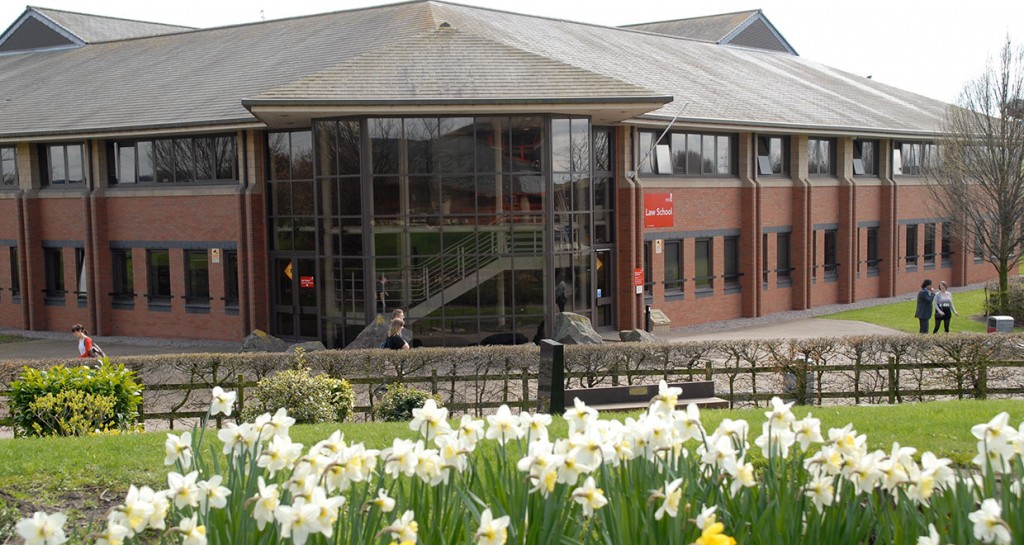
Tag: LL.M

Abroad LL.M., Foreign University LL.M, Law school, study abroad, master of laws,

  • Vibha Mane, Founder, Law Matters on experience in research work at JGLS and TISS and LL.M from Univ of Glasgow

    Vibha Mane, Founder, Law Matters on experience in research work at JGLS and TISS and LL.M from Univ of Glasgow

    Vibha Mane is a 2006 graduate of Symbiosis Law College, Pune and did a Diploma in Alternative Dispute Resolution from the Asian School of Cyber Law. Thereafter in 2008, she earned a Master’s Degree in International Commercial Law from the University of Glasgow, United Kingdom. She worked for a while as a Research Manager at Rainmaker and then as a Legal Assistant at IC Legal, Advocates and Solicitors. She also worked as a Senior Research Associate at Jindal Global Law School and as a Research Officer at TISS. At present, she is the Director at Law Matters, a company that she founded.

    In this interview she explains to us:

    • Suggestions on engaging in extra and co-curricular activities during law school and how to plan internships
    • Her various job experiences
    • Setting up and working at Law Matters
    • Studying at the University of Glasgow


    How would you like to introduce yourself to our readers?

    I am the Founder & Director of Law Matters LLP based out of Mumbai. Some other terms that are often used to describe me are- a teacher, trainer, researcher, writer, lawyer who doesn’t practise and an entrepreneur by chance!


    Why by chance?

    In ten years of work experience, I tried litigation, law firms, and the state electricity commission. I also worked as a content creator, trainer, teacher and researcher. Of all these experiences, I could relate to academia as my core field of work. I had the opportunity to work with some big educational institutes like Jindal Global Law School and Tata Institute of Social Sciences. These work profiles allowed me to understand my career strengths – content, research and teaching/ training. I realised, my work has a broad spectrum and I could freelance. So, in 2014 Law Matters was emerging as an idea and honestly, it was my husband who encouraged me to think big and take the bold step of setting up Law Matters. I had my inhibitions about this whole ‘starting up on your own’ concept! But it was worth taking a chance.

    Together, we spent a year studying market trends in the legal field, met many principals and vice chancellors, gathered their feedback on lacunae in legal education and Law Matters was conceptualised by February 2015!


    Tell us more about Law Matters.

    We have four faculties- content, training, policy analysis and social projects. We create various courses for law schools and even management schools. We train law students on career options in law, career combinations with law, research methodology, effective communication and writing, soft skills, resume crafting, mock interviews and a lot more. We assist law schools with course content assessment, students’ calibre tests, organising seminars, getting their students job ready etc. Our team also undertakes policy analysis on various topics and we have some interesting social projects lined up. While the first two faculties generate income for us to sustain, the other two faculties are more out of interest for these causes. Law Matters believes that a healthy legal change equals a better social tomorrow and hence these initiatives.


    So how has it been for Law Matters? What challenges did you face?

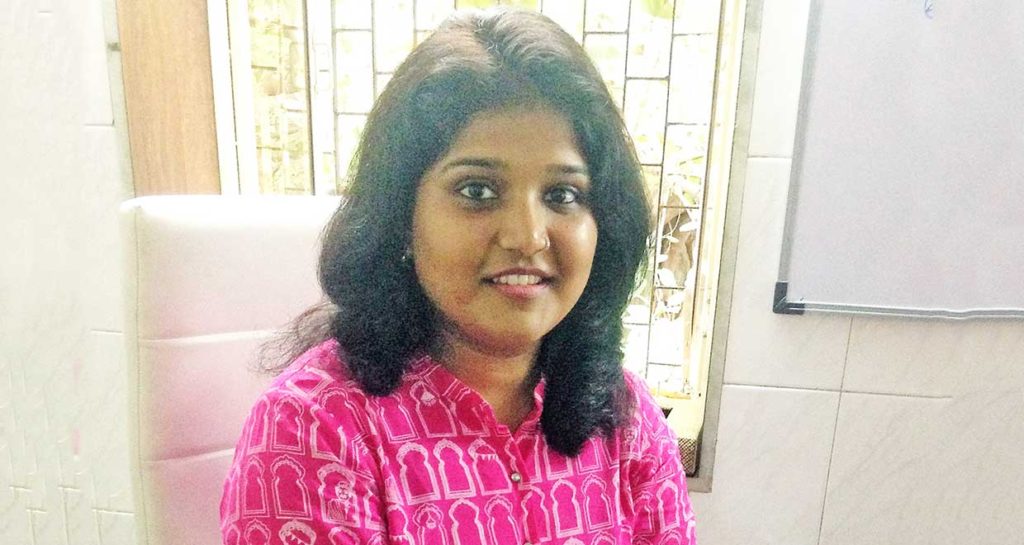
    vibha-mane-3We are already a year old and are perceived as a finishing school for lawyers. In the first year we did more of training in Pune, Delhi and Satara but this year we are being approached a lot for content from Bangalore, Haryana and Delhi. I am very happy with our progress and particularly with this shift in demand. My biggest challenge has been to make law schools understand that we need to change our traditional methods of teaching law. A mere ‘Drafting, Pleading and Conveyancing’ (DPC) class doesn’t equip them with the skills they need to be ‘employment ready.’We need new and practical courses for law students.The standard courses that one takes through three or five year courses are redundant. Today’s students are always on the lookout for some diploma / certificate courses on upbeat topics. So why not provide them with those? Quality content is critical if we want them to stay up-to-date with changing trends and acquire skills for a good caree start.


    What would you like to share with us about your college time and the impact it had on your views of law?

    My views on law were very dramatic. My family has many lawyers and I was always in awe with their work and reputation.  As a child I gathered soon that lawyers, like police are quite important people! So studying law was natural for me. I had thought, I will get a law degree and then practice in courts, as is the family trend.

    Five years at Symbiosis Law School, Pune made me realise that being a lawyer was quite a task. What I loved most was the pattern of logic and reason that law holds. This makes it so interesting. The course was vast, yes! But thankfully, studying law didn’t seem tough.


    While there, what co-curricular or extra-curricular activities did you indulge in? How did you plan your internships? How did the same affect your overall take away from law school?

    I enjoyed legal-aid workshops and street plays on socio-legal issues. Honestly, I was not much involved in moot courts and elocutions at law school. This is one aspect that is often considered important on a fresher’s resume. Though, its absence never affected my career, it is one of those college things, I still regret not having done. I think, participating in such activities gives a boost to your confidence, it is through these activities that you can actually practice some research and presentation skills.  It also aids in improving your rapport among the social circle.

    About internships; no one ever recommended that I should intern with law firms or corporate houses. I toiled in district courts and the Bombay High Court learning procedural laws. During this time, I got a reality check- law is not as fancy as it seems in cinema! So, unfortunately, my internships lacked planning. This I often see as my career drawback. Learning from my own experience, I suggest that students should get a variety of internships at companies, law firms, NGOs and even start-ups, as they offer a hands-on learning base.
     

    vibha-mane-2

    What motivated you to pursue an LL.M in Glasgow after graduation?

    I saw this coming!!! You see, my career wasn’t working the way I saw it – in courts. Post degree, I again tried to give litigation a chance in the Bombay High Court but I wasn’t enjoying it. The clueless, ignorant and vulnerable crowd at courts made it even less interesting. I felt I just can’t be practicing law. This self-realisation was scary and difficult to deal with. I obviously wanted more time to think about my options. The senior lawyer I was working with; Advocate Deepa Chavhan, suggested that I do an LLM and appear for QLTS (solicitors’ exams). At that time, I wasn’t sure what it means to be a solicitor but the prospects looked promising. Thus, I began applying for UK universities for Masters in Law. I was happy to get through to the University of Glasgow. Ranked in the top 1% of world universities, it is considered the university of world changers– Adam Smith, James Watt, seven Nobel Laureates and a rich heritage of over 560 years. Besides, I was fascinated with Scotland!


    How did the degree change your perspective on legal practice and development within the country?

    I am truly grateful for the exposure I got while doing a Masters in Law. Within the first few months, I realised I wasn’t equipped or trained to do systematic research, my writing lacked clarity and did not justify the research methodology I had used, and my critical analysis had to be a lot stronger and supportive of my arguments. This was the case with many Indian students studying law there. We weren’t taught these things. We weren’t groomed to be researchers and effective writers. I had to unlearn to write volumes about a topic, instead I struggled to put my point across crisply, in one or two lines. Funny but true!  I also realised that soft skills are a very crucial part of a lawyer’s personality and practice, and Indian law schools were missing the point completely. Our law schools have begun focusing on these issues only recently.


    Your work with Rainmaker stressed on content creation and streamlining legal research skills and techniques. What sort of a gap did you believe existed in the ability of trainees?

    Rainmaker offered great intellectual freedom. The team was committed to bring in a much needed change in the legal field- teaching, training and talent management.  This job helped me execute all that I had learnt during my Masters’ degree. I enjoyed creating content on varied legal topics and training was equally fascinating. Initially I was sceptical about training law students only a few years younger than me and law professionals quite older than me! But most of these trainees – young and old, acknowledged the fact that I knew things they wished to learn, this made my task easy. The biggest gap however, was of virtual intelligence! Being able to type a word document, or writing emails, or having LinkedIn accounts doesn’t mean we are virtually intelligent and technologically effective. There are a zillion little things to make a lawyer’s work look more professional, serious and authentic. So yes, there is still a huge scope for improvement there.


    At the prestigious Jindal Global Law School, what were the finer points of your research projects? What did the process of publishing your work from there entail?

    My year and a half at JGLS was loaded with research on topics like election laws, police reforms, prison industry, laws relating to women, inter-relations between law, society and cinema; right to religious freedom, torts, ragging and a lot more. Some work was published as articles, some as reports. During this time, I also worked as the Managing Editor of the Jindal Global Law Review, for the September 2010 issue. This responsibility proved to be a good opportunity to learn the intricate process of making a piece publishable. It really takes practice to go over the same piece again and again and to fix faults each time. And it is so good to see law students taking keen interest in publishing their work in various law journals. We as teachers and trainers, must encourage them to publish more.


    From your experience of teaching, what would you like to say about the newer generations of law students?

    There are quite a few things I like about this generation of law students- they are open to new ideas, they like mixing law with literature, poetry, documentaries, designs, humour and more. A curious class makes the teacher bring in something new to the desk, always! Plus, these students are aggressive about their career growth. They are sure of their choices. However, they dedicate all their five years towards building one particular resume that supports only their liking, not their ability! And see, this is also something that I have done myself. So, I know what it leads to.

    During our career counselling sessions, we often handle a lot of confusion. For instance, “Can I do CS even if I am weak in my accounts?” The question is how you see CS complimenting law and future prospects. Or something like, “I want to study for a Master’s degree but I am not sure whether to pursue an LLM or MBA.” Again, the answer to this question depends on why you think you need a Master’s degree in the first place and which areas do you want to work on.

    Another prominent trait of this generation is that these kids are setting very high standards for themselves at the very beginning of their career. This quite often leads to disappointment. They usually fail to do a reality check.


    Would you say their education varies from your own experience in college? If so, how?

    Oh yes, certainly! The exposure that law schools offer to their students has tremendously increased. Of course, even we had industry experts teach us. We had active placement cells too, but the law schools were few then. Now private universities are offering world class facilities, state of the art infrastructure, and global faculty! Ten years ago, many practicing lawyers acted as visiting faculty for several law schools. Only a few teachers were committed to teaching law the way it should be taught! No one taught us howto use LexisNexis, Hein Online, Westlaw, JSTOR etc. We learnt these things on job. These days, more or less all law school libraries offer free access to these databases.Besides, earlier; for moot courts, students prepared themselves. Now law schools put up a whole team of industry experts to make students ‘moot ready’ and that’s great, isn’t it?


    Law, Development, and Social Change was the core focus of your work with the Tata Institute of Social Sciences, (TISS) Mumbai. What would you like to tell us about the need and aspirations of the same?

    Every institute has its own unique agenda. Social commitment was an integral part of the proposed LLM course for TISS. So while creating content I had to make a course that evolved around poverty, religion, gender justice, vulnerable groups, alternate advocacy, economic law and development, legal reforms and court and case management. As a lawyer, knowledge of these subjects is indeed crucial but interest in these topics cannot be forced, you have to be passionate about it.

    An emotional quotient is important for lawyers but the levels may vary for everyone. When one has flourishing options to consider from property, real estate, maritime, space, sports, media, arbitration, etc. one tends to favour these topics over the social reform aspects of law. Having said that, I am, by no means, generalising the choices. We still have a good number of law students extremely keen on topics like refugee laws, immigration issues, torture, armed forces’ powers, animal rights, peace treaties, child rights, LGBT and so on.


    From an aspiring SuperLawyer to the Founder of Law Matters LLP, how does the specific skill development you envision set someone apart from the current crop?

    With Law Matters, I and my team are attempting to bring in the desired change in current legal educational environment through new content and innovative teaching techniques. The skills that we envision all lawyers to acquire are very crucial. It is his research and writing ability that helps a lawyer win his bread. Research allows you to get to the details, and writing teaches you to value the information. Most of these professionals and students alike, realise that we are assisting them with acquiring important skills that aren’t taught elsewhere. Basics like how to effectively draft a document, how to use search engines for accurate legal research, what search terms to use -when and where, how to break an issue to reach the most convincing argument, what other technological tools a lawyer can benefit from etc.are gaining popularity and acceptance.


    Finally, do you have any other advice for our readers, most of whom are college students?

    I would strongly recommend they take soft skills seriously. They should focus on developing a good resume from the very beginning. Reading for class and beyond class material is one good habit that they should try to inculcate. Also, a clean and responsible virtual presence adds a lot of credibility to your personality.  Lastly, your years at law school are equally important as your internships. So, don’t get so busy learning the tricks of the trade that you forget to learn the trade.


     

  • Lawrence Liang, Human Rights Activist, on academic legal research and co-founding Alternative Law Forum

    Lawrence Liang, Human Rights Activist, on academic legal research and co-founding Alternative Law Forum

    Lawrence Liang graduated from National Law School of India University, Bangalore in 1998 and has been the co-founder of Alternative Law Forum. He is based out of Bangalore, and is widely known across the legal fraternity for his campaigns on issues of public concern, especially on conflicts of Intellectual Property and medical accessibility.

    Soon after his graduation he received the Chevening Scholarship and did a Masters in Law and Development from the University of Warwick. He holds a Ph.D in Film Studies  from Jawaharlal Nehru University and a Post-graduate Diploma in Cultural Theory from Centre for Study of Culture and Society, Bangalore. Over the course of his career he has immersed himself in human right issues, media law and legal writing. He is currently a visiting faculty fellow at Yale.
    In this interview he talks to us about:

    • His time at NLSIU and Warwick and his educational qualifications
    • His various experiences as a Fullbright Scholar, Henry Hart Visiting Faculty Fellow, and the Hughes Visiting Scholar.
    • Alternative Law Forum
    • His work with iCommons, the Sarai Institute and Public Access Digital Media Archive (Pad.ma) and Indiancine.ma.
    • How he combined media and law
    • His experience as a member of the Drafting Committee of the Colombo Declaration on Free Speech and Media in 2008
    • His views on human rights advocacy


    What could be a short introduction of yourself?

    Hi, my name is Lawrence Liang and I am a legal researcher and writer based in Bangalore. I was one of the co-founders of the Alternative Law Forum, a collective of lawyers working on public interest issues and I have been involved with ALF for around 15 years. I left ALF in 2015 and I am currently a visiting faculty fellow  at Yale.


    You received an English Honours in English Literature from St. Joseph’s College, Bangalore before graduating with a law degree from NLSIU. What prompted the choice to study law?

    An early fascination with law – possibly prompted by popular culture – drew me towards law, but more than a clear idea of wanting to do law, I was clear that I had no inclination towards the sciences and at that point of time pursuing my first love – literature – didn’t seem like a feasible career option. Also it was the time that the National law school had just been set up and we started encountering a number of the NLS students in the quizzing and debating circuit and they seemed like some of the brightest people we had met. On inquiring further we figured that the law school was an an incredible experiment to revamp legal education and appeared to be the most exciting place that one could be in. My English Honours was actually alongside my time at law school. This was at St. Josephs’ where the department used to offer English Honors programs open to all, and in many ways doing this alongside the law shaped many of my subsequent interests in inter disciplinary studies, and in law and literature. While we we were studying subjects like copyright in law school, we were also being exposed to critical theory at Josephs, and one could start seeing the connections between ideas of authorship which were so central to copyright but being differently interrogated by thinkers like Michel Foucault and Roland Barthes. It convinced me of the need to have a wider approach to the law than just legal formalism.


    What work did your masters in Law and Development involve in Warwick?

    The Law in development program was attractive to those of us interested in a critical perspective mainly because Prof. Upendra Baxi taught there, and his scholarship had been very important to us. Warwick has a wonderful history of a engagement with law from a global south perspective and while there, my main learning was to develop a sharp ideological understanding of law and political economy especially in the way that it impacted questions of justice.


    As a recipient of the British Chevening Scholarship, what opportunities did that open up for you? Was there a process for application for the scholarship?

    The Chevening scholarship was literally the only way I could have afforded doing a Masters in the UK and we were lucky at that time that they had two scholarships for people interested in law and development. There was an application and interview process and the interview was a bit of a disaster, so I was rather lucky that I actually managed to get the scholarship. My time at Warwick helped shape an interest in activist lawyering and I started thinking about the need to set up a space after returning. I also took the opportunity to do courses that allowed me to dive into the continental philosophical tradition which significantly shaped my intellectual and political outlook.


    You were the Best Outgoing Student at Warwick! What activities did you engage in there besides academics?

    It is amazing that I got any work done there actually considering it was also a year of being passionately in love. But since cross border romances are best conducted under the shadows of culture I managed to watch many art house films and plays which I did not get to see in India, and the summer was one long cricket match rudely interrupted with thesis and course work breaks.


    You have a Ph.D from the Jawaharlal Nehru University Film Studies Dept. and a PG Diploma in Cultural Theory from Centre for study of Culture and Society as well. How did you come to cultural studies? Did it have an impact on your approach to law?

    Strangely enough while I turned to cultural studies and film studies from a boredom with law, they also enabled me to return to the law with renewed interest, but with a slightly modified perspective. My interest in cultural theory allowed me to read the law not merely from within its internal logic of rules and norms, but through a symbolic register where one could read law as culture. In recent times it is the discipline of anthropology which has been most exciting for me and the work of legal anthropologists like Pratiksha Baxi, Annelise Riles, Perveez Mody in domains as varied as rape law, international finance and the Special Marriages Act have been very exciting and inspiring for anyone interested in the workings of the law both in theory and practice.


    As a Fullbright Visiting Scholar in Columbia University at the Anthropology Department, what did your work entail?

    My time at Columebia offered me a chance to finish work on my doctoral thesis, and being at the anthropology department was to be a part of a fantastic intellectual community which allowed me to interact with many people whose work I have admired over the years. Brian Larkin who has worked on an ethnography of media piracy is a kindred spirit and he was my host while I was there. In some ways anthropology has emerged as the intellectual refuge for many disciplines and the number of law graduates who have becomes anthropologists is a good indication of what a fertile field it is especially in a country with as complex a legal system as India where numerous legal traditions and temporalities coexist and collide with each other.


    Now you are the Henry Hart Visiting Faculty Fellow, at Yale Univ. for the academic year 2016-17. What do you focus your teaching on?

    I am teaching two courses, one is a cinema course where I look at the social life of cinema in India moving beyond the cinematic text to focus on spatial and technological histories, fan clubs, labour histories etc. The second course I am teaching is on the Trial and its public effects in India where I look at key trials that captured the public imagination in India in the colonial and postcolonial context. I move between cases like the Tilak trial, the INA trials to the Nanavati case and the Arushi trial as a way of looking at the public life of law in India, and the way that trial becomes a critical event that recalibrates ideas of politics and public morality. It also becomes a story about the intersection between law and media since these very public trials become a theatre of justice constantly mediated by different technologies of mass media and legal trials become an effective site for the staging of dramaturgies of justice.


    As the Hughes Visiting Scholar, Centre for South Asian Studies, University of Michigan University in 2014, were there any interesting conclusions to your work then, that you could share?

    Michigan was a brief stint in which I got to test out some of the ideas that I had been working on at the time especially on ideas of forensic imagination and the rise of forensics in legal process. I was interested at that time in the idea of the doctored image, narco analysis etc and my friend Joyojeet Pal who teaches at Michigan is also interested in information politics so there was a superb synergy. I was there just after the Polar Vortex which meant that the extreme cold ensured that you just lock yourself up and do your work without any distraction. Ann Arbor represents the best and worst that a life in ideas could represent- the Ivory tower you are confined in because it is just too snowy to step outside but where you keep warm in good intellectual company.


    You were a Co-founder of ALF. How did the idea develop to start that?

    lawrence-liang-2ALF was both the result of many years of conversations with friends as well as strangers who were as excited about the possibility of the experiment. Most of us had done some time with human rights lawyers or organizations, and while we were inspired by the legacy of critical lawyering India, we also felt the lack of a space that brought together litigation, activism and academic research. ALF was born out of a belief that there was a need to bring together these in a way that broke the barrier between theory and practice, and to a certain extent we were successful even if this was not without its attendant difficulties. The temporal nature of litigation and activism is always about the immediate and the urgent while research has a longer durée, and sometimes these can be in conflict with each other. But at ALF I was lucky to be in the company of extremely passionate and committed people, and I learnt that one’s political stances are not just learnt from the outside world but equally in these small experiments at collective living and working. To believe in an abstract idea of the right to equality is one thing, to actualize it in your practice is much more difficult, but in trying to do so you learn more about the abstract value as well.


    What work does ALF focus on? Is there a unique work culture that volunteers or employees are expected to adhere to or anything in particular that is expected from them?

    ALF works in a variety of areas from access to the criminal justice system, the politics of intellectual property, sexuality, labour etc. From the start we were committed to the idea of a non hierarchical workspace which was organized on the basis of collective responsibility- again much easier in principle than in practice- but I think an informal ethos and a respect for each other’s work is what attracted people towards ALF. Given the relatively modest salaries that we were offering, what made ALF attractive for many people was that it offered a vibrant intellectual and political environment, a collegial space underwritten by friendship and the chance to do work which you could see had some impact at least  on the lives of people.


    What impact has working at ALF had on your life outlook?

    This one will probably need more space than I have, but one simple one is a recognition that while the law is often a leaky umbrella, often it is the only one we have. And the real challenge of an ideological critique of the law is not to disavow it, but to deploy as effectively as possible using its own logic to work for those whom it normally works against. Apart from the professional side, it has shown me via the words of Neil Gaiman that inside everyone are strange and surprising universes and to work together is to be invited to universes that one would not normally be a part of.


    Tell us a bit about the Public Access Digital Media Archive (Pad.ma) and Indiancine.ma.

    Pad.ma is an online archive of video and documentary footage. It seeks to create a visual archive of densely annotated clips and Indiancine.ma tries to do the same for Indian films. These are collaborations with a fantastic group in Berlin, Pirate Cinema and Camp in Mumbai. They arise from a simultaneous interest in visual culture as well as in the radical potential of open access.


    You have shown remarkable commitment to a variety of causes over the years. What are the major causes you espouse? Did you always know what issues you wanted to work on or did that happen with time?

    While one always has a vague sense of values that one is committed to, the commitment to specific issues often arises from a particular context. For instance while I was generally interested in media laws, it was through the process of working with Vikalp (A group of documentary film makers who came together to fight censorship) that you are then forced to dive into and in some sense try and master a particular field. Similarly with issues of access to knowledge, the specific context of the DU photocopy case both confirms the importance of a politics of knowledge even as it refines the political stance you had through the technical prism of law. To be simultaneously committed to things you believe in even as you remain open to contingent forces that change or alter your politics is both exhilarating and inspiring. There is a lovely saying that revolutions should be born out of joy not sorrow, and I think we often derive out vitality from the energy of those we see around us, who in the face of extreme injustice are still defiantly hopeful for a better world.


    Tell us how you have managed to combine media and law?

    We live in a mediatized world where it is difficult to imagine any aspect of our lives which are not touched by media. From cinema to the internet, media occupies and shapes our consciousness, so it no coincidence that the world of law becomes crucially enmeshed with that of media. In a narrow sense that would mean the regulation of media, but in a broader sense it also means the transformation of law itself where law also becomes mediatized. The emergence of sting operations, the prevalence of trial by media are crucially media effects even as they are legal events, and to think of the contemporary is to think of media. Ravi Sundaram whose work has been very influential for me has a book which theorizes India ‘after media’ and in a sense he posits that everything changes after media and as a legal scholar you are bound to account for what that means in the legal world.


    What is you role in iCommons? What do you strive to achieve there?

    The Creative commons movement was a very important moment that showed us the possibility of what an alternative imaginary to the closed world of copyright could be. It expressed a philosophy of sharing and the creative potential of it contrasted with the diminishing of the public domain by strong IP regimes. It was also beset by its own limitations being enshrined within the idea of liberal legality, and for someone coming from India, where you could see the democratizing potential of illicit practices such as piracy, my own role was to contextualize what something like the CC movement meant in the global south, but also to nuance the debate with an understanding of the social and cultural worlds of knowledge sharing beyond the law.


    What work have you done in collaboration with Sarai?

    Sarai was one of the most exciting and important media and cultural spaces that emerged in early 2000’s which opened up all kinds of possibilities in the public discourse around art, media and urban space. It was set up jointly by the Raqs media collective and faculty members of CSDS and they supported the most cutting edge work in theory and practice for many years. The range of fellowships they offered, the legacy of the work they supported (from artists to graphic novelists) has been phenomenal. I started collaborating with Sarai in 2002, and it was a combination of boldness and generosity on their part which also helped ALF in its formative years. They saw a bunch of passionate and smart lawyers who wanted to try something new and supported us (intellectually and financially) helping us set our foundations. In 2005 we organized a global conference on intellectual property called Contested Commons and Trespassing Publics which I think made a significant impact on the global discourse on IP. We also co organized an event called World Information City that brought together artists and theorists thinking about idea and politics knowledge era as they played out in the lives of cities. My conversations with Jeebesh Bagchi, Ravi Sundaram, Ravi Vasudevan, Shuddhabrata Sengupta and others opened up ways of thinking from the diverse worlds of art, cinema and technology. Sarai, I think, allowed for us to see the various expressive forms that thought can take, and the traditional academic form of scholarship was both something they showed the limits of even by pushing the boundaries of how scholarship could be creatively and energetically expanded.


    You have several publications to your credit! How do you choose when to write about what? Do you think research and publishing is very important for a law student?

    Sometimes you choose to write because you are following an intuition, a curiosity and an intellectual itch. Other times a specific areas chooses you by virtue of its immediacy. At any rate for academics to write is to think and even though the act of writing is often a painful process every once in a while in the midst of writing you realize you are expressing thoughts you didn’t even know you had. So yes writing is crucial for law students, and I am grateful for the endless projects that we had to do as law school. I don’t think law school really teaches you law, what it does teach you is how to think about the law, how to forage for research material and how to put together an argument. What I do think is important is to fight the very real possibilities of writing becoming a painful drudgery (often the case with academic writing) and to experiment with different forms which retain the joyfulness of writing. For me writing in a range of forums from art journals, newspapers and academic spaces has been the key to maintaining my sanity since the joy of writing can easily be assassinated by footnotes. But more than a writer I think of myself as a reader, and writing for me is often is an excuse to make sense of what I am reading and to have imaginary conversations.


    Please tell us about your experience as a Member of the Drafting Committee of the Colombo Declaration on Free Speech and Media in 2008?

    This was a considerably difficult period in Sri Lanka, the civil war was at its peak and one of the immediate casualties was free speech. Journalists and editors were being targeted – often killed by the state as well as the LTTE. It was humbling to learn of the incredibly difficult circumstances under which journalists were doing their work and as members of the drafting committee we were privy to a remarkable set of testimonies. It reminded me of Foucault’s idea of parhessia- an idea that preceded the idea of free speech and referred to fearless speech- reminding us of the high stakes involved in speaking truth to power, and the small role that lawyers can play in nurturing a safe home of fearless speech. The experience really shaped my understanding of free speech laws in India and to appreciate the relatively good jurisprudence that exists on free speech in India. All the more crucial in these days when sedition charges are thrown about like cheap change and when shrill blood hungry media anchors become the greatest dangers to free speech.


    What changes do you hope to see in human rights advocacy in India over the next decade?

    With the mushrooming of law schools all over India, I hope that we in addition to producing lawyers for law firms, we also produce a generation of lawyers who continue a critical tradition. The law students I meet today are remarkably bright- certainly smarter than we were- they are born digital and command an enviable ease with all kinds of online research skills, and what would be fantastic is to have more lawyers who are able to engage with human rights issues not just in a generic sense of political empathy, but to deploy their legal skills in understanding and critiquing mainstream areas of law. What the human rights movement needs are more lawyers who know corporate law, insurance, taxation etc. In other words we need lawyers who understand the belly of the beast but also understand that the beast preys upon those who are most vulnerable and to be an effective human rights lawyer means internalizing Part 3 of the constitution, but also understanding how corporate governance can affect the same Part 3.


  • Aditya Swarup, Assistant Professor, Jindal Global Law School on being a Rhodes Scholar, and pursuing BCL & M.Phil from Oxford

    Aditya Swarup, Assistant Professor, Jindal Global Law School on being a Rhodes Scholar, and pursuing BCL & M.Phil from Oxford

    Aditya Swarup graduated in law from the  National Academy of Legal Studies and Research University in 2010. He was also awarded the Rhodes’ Scholarship the same year, after which, he obtained his Bachelor of Civil Laws degree from the University of Oxford in 2011. He then went on to do his Masters’ degree in Philosophy from University of Oxford in 2012. During his time at Oxford, he focused on various courses such as Restitution, Civil Procedure and Comparative Public Law.

    After practicing law for a few years, he took a break to focus on his research and teaching. He is currently working as an Assistant Professor at the prestigious Jindal Global Law School and is serving as the Assistant Director of the International Institute of Higher Education and Capacity Building.

    In this interview, Aditya talks about: –

    • What made him pursue a legal career;
    • His interests and areas of focus;
    • His journey towards becoming a Rhodes’ Scholar;
    • His views on the Indian Judicial System; and
    • What a student must have, aside from academics in order to have a successful legal career.


    How would you like to introduce yourself to our readers?

    I am Aditya Swarup, currently an Associate Professor at Jindal Global Law School. Before joining academia, I used to work as an associate at a solicitor’s firm in Mumbai, practising primarily in the Bombay High Court and the Supreme Court.

    What led you to enter the legal profession?

    During my 12th standard, I cleared the UPSC-NDA exam and SSB interview and was slated to join National Defence Academy, Khadakvasla with the prospect of joining the Indian Airforce thereafter. However, after a lot of thinking, I decided not to join the Airforce. At the same time, given that I had secured only 59.8% in my class 12 exams, I was denied admission by most of the good colleges. Law happened to be one of the disciplines where your 12th standard marks didn’t matter and all one had to do was to clear an entrance exam. Accordingly, I took a year off and prepared for the law entrance exams for various law colleges (we didn’t have CLAT then) and got through NALSAR.


    Would you like to share with the readers any particular instances during your time spent at NALSAR, which helped shape your views about the law?

    aditya-swarup-3In or around November, 2008, I had the good fortune of interning with Mr. Tehmtan Andhyarujina, former Solicitor General of India. At the time, he was arguing Selvi v. State, a case concerning the constitutionality of narco analysis before the Supreme Court of India. He had only one junior and involved me extensively in the case. I think preparing for the final arguments in that matter, that went on for two whole weeks, has been one of the best experiences in my life. At the end of my internship, Mr. Andhyarujina gave me the most inspirational talk about litigation and Jamshedji Kanga’s chamber and presented me with a copy of Prashant Bhushan’s book “The case that shook India”, a factual account of Indira Gandhi v. Raj Narain. The book also had a transcript of the Keshavananda Bharti review. It is then that I decided to pursue a career in litigation and Mr. Andhyarujina has helped me ever since.


    What are your primary interests in the legal profession? Why?

    During my formative years at law school and immediately after, I used to be quite interested in human rights advocacy. To this end, I used to pursue a lot of work in Chattisgarh and other conflicted regions. After my B.C.L, I took a keen interest in commercial law. I was intrigued by common law decisions on contracts, restitution and civil procedure and the manner in which each statement by a Judge in his judgment impacts the law. I have pursued an interest in commercial law ever since.


    During your time at NALSAR, what extra–curricular and co–curricular activities, if any, did you participate in? How do you think these activities affected your take away from law school?

    Unlike most students during their time at law school, I did not participate in many moots while at NALSAR. In fact, I participated in just one moot, i.e. the Raj Anand Intellectual Property Moot and incidentally, won the best speaker award there. I also debated just once, that too in my final year. However, I spent most of my time writing papers and in research. I feel this interest allowed me to attempt to critique the law beyond what is given in the text book. In fact, the publications have also immensely helped me with my scholarship and post graduate courses.


    You wrote your M.Phil dissertation on “Interim Injunctions and Judicial Delays in India”, discussing injunction hearings taking the role of mini – trials in India. Can you tell us something about it?

    aditya-swarup-1One of the most significant and engaging aspects of a civil suit is the granting of an interlocutory injunction pending the final decision in the matter. The grant of such an injunction is, in theory, purely provisional in nature, with the objective of maintaining status quo, and in the hope that a party doesn’t suffer from irreparable harm. However, in most circumstances, such injunctions are maintained for the entire length of the suit, the length of the suit then itself being a critical issue. A final determination of a civil suit in India can take anyway upwards of 7 years. This poses a peculiar predicament to the Indian legal system in the sense that though an interim measure is merely meant to be provisional, since it lasts the length of the suit, it achieves a sort of finality- an unintended and inevitable consequence. Considering the predicament that currently plagues the Indian judicial system, i.e., an insurmountable backlog of over 300,000 cases, interim injunctions, instead of serving its purpose now merely serve as a clog in the judicial system.

    In light of the above, I studied the relationship between judicial backlog and interim injunctions, culminating in a phenomenon that has acquired the term ‘mini-trials’- where the court conducts a thorough examination of the merits of the case at the interim stage so as to dispose the matter. A similar situation existed in England in the 1960’s and 70s, and I sought to examine the lessons learnt from that experience and  the viability and desirability of mini trials in tackling judicial backlog in India. As part of my research, I studied every reported case on interim injunctions in India.  


    What is your opinion of the current proposals to reduce judicial backlog? From which country/countries should India draw inspiration to solve this issue? Why?

    I believe that the solution to reducing case pendency is not to merely increase the number of judges but to bring about structural changes in the system. Unfortunately, most authorities, including the Law Commission, and lawyers stress on increasing the number of courts and judges to reduce case pendency.

    We should be mindful and borrow from the American experience. A series of suggestions were made in 1959 in the United States to address the increasing case load. The reforms that made their way out of these suggestions were primarily aimed at increasing the number of courts and judicial officers. The result however, was contrary to what was expected. The records showed that the caseload actually increased subsequent to the implementation of the reforms. This consequence has been explained by the renowned American Judge Richard Posner who rightly argued in a landmark paper that “reforms” increasing the number of judges and courts would only have an ad hoc effect. While being initially effective, in the long run, realising the efficacy of the legal system, it would merely result in more litigation. To buttress his argument – he drew upon a rather unusual analogy – while initially a new highway would serve the purpose of easing out traffic, road conditions would in fact induce people who had previously used other modes of transportation, to switch to driving. This would only result in leading to greater congestion. In this light, merely increasing the number of judges or courts is not going to be enough to tackle the predicament plaguing India’s judicial system – one must also address institutional changes and the culture of litigation prevalent in the country.

    The measures to reduce judicial backlog should also include the introduction of information and communication technology (ICT) support systems, developing online procedures for the filing of documents, notification of court dates, periodic reminders for submission of documents, service of documents via email and the like with an aim to have time bound litigation. A judge ought to decide cases and not allot dates. It is also important that we implement the procedure of costs following the event as provided in the CPC.


    In the year 2010, you were awarded the “Rhodes Scholarship”. How much does one have to achieve in order to be awarded such an esteemed scholarship? How did the scholarship benefit your professional career?

    The Rhodes Scholarship, unlike other scholarships, looks at the all round achievements of the individual based on criteria of academics, co-curriculars, leadership, social services and sports. In this sense, I believe that the Rhodes Scholarship is not just a scholarship to study in Oxford but a process and an experience. A process, in the sense that the very process of applying for the scholarship and meeting the various criteria helps one reflect on their life and achievements. An experience, because once you join Oxford, you are amidst a community of highly qualified achievers and even interacting with them is inspirational. I made some great friends amongst the other scholars. As regards my professional career, very few people in India and more particularly, the Bombay High Court were aware that I got the Rhodes so it didn’t matter.


    What is the primary purpose of the site, Something About the Law?

    (Aditya is currently the owner and author of the website, Something About the Law)

    Something About the Law was a blog that was started by my classmate Arun Mohan and myself while at law school. We used to write on various public policy and social issues from time to time. The idea of the blog was not merely to spread awareness about certain legal issues but also to individually hone our respective writing skills. To this end, I think the blog greatly helped me critically analyse various legal issues. During our penultimate year at law school, we started the Socio-Legal debates – the idea being that we would get distinguished speakers to fly down to NALSAR and debate with each other on issues with the entire debate being streamed online. We secured sponsors for the events and enjoyed packed audiences.


    Many a people in the legal practice are awestruck when they look at your long list of publications. Do you have any advice for any of our readers who might be interested in having their research papers and articles published?

    Haha. I am quite perturbed by the fact that students rarely read full cases or books now a days. If any research needs to be done, one instantly looks at online databases rather than open an authority on the subject and read the entire chapter. In fact, I myself used to do this while at law school till I was told by senior lawyers and well-wishers to read full cases (not just paragraphs or head notes). The utility of opening a book and reading all that is written about an issue, including its theoretical underpinnings also acts as a revision and strengthens the foundations of the reader. On the other hand, merely searching for a point of law online lacks these aspects.

    I believe this practice continues to help me in my research and understanding of the law and I would advise the readers to develop this habit, irrespective of whether they are interested in research and publications.


    You have recently taken a break from practicing law to teach and pursue research. What made you take this break? What are you currently focusing your research on? What are your views on the topic?

    I’ve taken a break primarily to strengthen my own foundations in commercial law, primarily contracts and commercial remedies. I am currently researching on the area of commercial remedies, i.e. injunctions, damages for breach of contracts, specific performance and trust based remedies (a largely ignored subject in India). One of the projects I’ve undertaken is to chart out a theory of damages in India. I’ve also taken a “break” to see if academia is my calling.


    Would you like to share any views on the state of legal education in India?

    There are a few disturbing aspects about the state of legal education and the profession in the country. Each of these stem from the fact that the legal profession in India is largely unorganised.

    First, it is quite tragic that even though we have only about 15 National Law Schools and about 5 other good legal institutions (20 in total), we cannot get adequate faculty to teach in these law schools. I was quite disturbed to read online that students at HNLU Raipur and NLU Assam were constrained to protest because they didn’t have adequate faculty or facilities. What was even more disturbing is the report that students at NLU Ranchi were asked to write their end-semester exams without being taught the subject. This points to an alarming trend in legal education.

    Second, and on a related note, not much is being done to attract talent into academia. A lot of students from national law schools are now pursuing LLMs, M.Phils and Ph.Ds. In fact, as of today, about 35 people from my batch of NALSAR itself have completed their Masters from reputable institutions. However, there is hardly any incentive, monetary or otherwise, for many of these students/alumni to get into academia. If one spends lakhs on their Masters, it is likely that they would need a job that can help pay off the loan. It should not then be expected that such person will join an institution that pays little.

    Third, despite graduating from most of these law schools, it is hard for the students to get jobs. This stems from the fact that the legal sector in India is largely unorganised and it is still hard to make it within the system if you don’t have any support/backing. Any organisation only exists in the law firms where one can be said (though some believe it exists here too) to be recruited on the basis of their competence. However, the supply of graduates from the national law schools and other reputable institutions largely overshadows the demand at the law firms.

    I believe that one of the advantages of a law degree is that there are many career options available to a lawyer after graduation. One may consider a career in litigation, law firms, corporates, human rights, the NGO sector, public policy, UPSC, the UN, journalism and the like. Legal institutions must capitalise on these advantages and help students diversify their career options after law school. At the same time, institutions like the Bar Council of India must strive to organise the profession in such a way that one isn’t disadvantaged because he or she doesn’t have a mentor or any backing in the profession.


    Finally, what is your message for our readers, most of whom are college students?

    The law school curriculum is structured in a way that exposes the student to many facets of the law. However, one notices that the moment a student joins law school, he or she is focused on joining a corporate firm, UPSC or the like. While it is good to be ambitious and have a plan, the student must not shut out his or her options. It is beneficial to be exposed to different areas of the law and then make a decision on what line to pursue. Students must also pursue research.

  • Vishavjeet Chaudhary, Assistant Professor, Jindal Global Law School and Barrister (Inner Temple) on LL.M from Cambridge and academic research

    Vishavjeet Chaudhary, Assistant Professor, Jindal Global Law School and Barrister (Inner Temple) on LL.M from Cambridge and academic research

    Vishavjeet Chaudhary graduated in law from University of Kent, Canterbury in 2011 and was called to the Bar in 2012. He went on to complete his Masters’ degree from University of Cambridge in 2013. During his time there, he pursued Criminal Justice, Philosophy of Criminal Law, History of Civil and Criminal Law, and Jurisprudence. Aside from his legal career, he is interested in Human Rights and their protection, poverty alleviation, Social Services, and Economic Empowerment.

    He is a Barrister (Inner Temple) and is currently working as an Assistant Professor at O.P. Jindal Global University’s Jindal Global Law School where he is also the Assistant Director of the Centre for Penology, Criminal Justice and Police Studies.

    In this interview, Vishavjeet talks about: –

    • What made him pursue a legal career;
    • His experience while studying in the UK;
    • His focus on pro-bono and Human Rights related work;
    • The importance of Public Speaking; and
    • The difference between the UK and India with respect to legal systems.


    How would you like to introduce yourself to our readers?

    I am a Barrister, currently working as an Assistant Professor. My areas of interest are criminal law, constitutional law and human rights. I am also a very keen traveller, horse rider and agriculturist!


    What made you get into the legal practice?

    I knew that I wanted to be a lawyer when I was five years old! It partly ran in the family but my decision was not influenced by that in the slightest.  Other than the odd (I have been into full time agriculture for some time!), this resolve has been unwavering. I think one can make a genuine difference in this profession as law is something that touches everyone’s life in one way or the other. Second, this profession allows me to pursue my interests- intellectual endeavours, public speaking and interacting with a wide variety of people. Third, the independence of this area really attracted me.


    vishavjeet-chaudhary-2

    What inspired you to pursue your LL.M at University of Cambridge?

    I chose my undergraduate university based on how liberal it was. The university allowed for tremendously wide multidisciplinary studies. A lot of my tutors there very kindly encouraged me to pursue Masters in Cambridge to gain deeper understanding of the law. Most of my courses were either in jurisprudence, history or crime.

    What made you focus primarily on Criminal Law?

    I find criminal law fascinating- this is an area where all facets of human social interaction are at play. It is also an area that studies the depths of human emotions- passions, insecurities (no pun), deceit and weakness. Human Rights play a pivotal role as well. As I was interested in all these areas, I focused on criminal law.


    While at University, what co-curricular and extra-curricular activities, if any, did you partake in?

    I gave everything a shot – from debating and mooting to Polo and American Football!


    How did they benefit your performance at University, academic or otherwise?

    Intellectual activities like debating helped me in organising my thoughts, developing public speaking skills and communicating my point in a clear and persuasive manner. Sports and other activities helped me in relaxing and letting off steam. Both were also great ways to socialise and get a well-rounded education.


    What does your work for the Centre for Penology, Criminal Justice and Police Studies entail? What purpose does this Centre serve?

    (Vishavjeet is currently serving as the Assistant Director of the Centre for Penology, Criminal Justice and Police Studies at the prestigious Jindal Global Law School)

    The CPCJPS offers cutting edge inter-disciplinary research in the areas such as victim protection, reparation, juvenile justice, police reforms, technically sound training in human rights complaint law enforcement and investigation. Our aim is to encourage dialogue between different players of the criminal justice system to contribute to this area.


    vishavjeet-chaudhary-1

    What made you get interested in Human RIghts? What is the importance of pro-bono work?

    (Vishavjeet has shown keen interest in protection of Human Rights, Social Services and pro-bono work since his University days)

    I feel a big part of human life is to help. I do not say there is anything heroic about that- someone has to do it! I also find it intensely satisfying and enriching to be able to make a difference. There are few things half as rewarding as putting your knowledge to good use for betterment, no matter how small the change!


    How is the role of a Barrister any different from that of an advocate in Indian Courts?

    I was called to the Bar by the Inner Temple. England and Wales have a dual system- a distinction between Barristers and Solicitors. To crudely put it and to crunch centuries of history – Barristers do more advocacy and solicitors do more paper-work, conveyancing, etc.


    What inspirations can the Indian justice system draw from that followed in UK?

    vishavjeet-chaudhary-3Our Justice System is excellent considering everyday challenges. We do however need to urgently address issues like delays, transparency and the occasional malpractice if the system is to enjoy legitimacy and authority. All sections- judges, lawyers, the civil society- all of us need to put our heads together and work out solutions that are sustainable.


    How important are activities like Public Speaking and Debating for a law student?

    (During his time at Kent, Vishavjeet was the Vice – President and the Co- Founder of the Kent Debating Society. Further, he was a member of the Speakers’ Committee at Cambridge and has always stressed on the importance of public speaking)

    Exceptionally important I think. The perception is that if you do not want to get into litigation, you do not necessarily need to train as a public speaker. Public speaking regardless helps in developing wit, confidence, succinctness, persuasive knack and the ability to think on your feet. I feel that these are essential skills for a lawyer, irrespective of the area of practice. There certainly are other ways to develop these, but public speaking is definitely one of the best!


    What got you interested in interdisciplinary studies with respect to law? How do you intend on connecting the various disciplines?

    (One of Vishavjeet’s primary interests is appreciating law as an interdisciplinary subject by relating it to other disciplines like Philosphy, Literature and History)

    I feel we should not approach law as an overly technical subject. Borrowing from other areas  like literature and philosophy helps tremendously in broadening horizons and innovating. It is great to break the drudgery sometimes as well!


    From your experience of teaching, what would you like to say about the newer generations of law students? How would you say their education and way of life differs from yours as a student?

    The similarities are striking! Students today have more access (and more distractions) depending on how you use the internet, ‘applications’ and the like. I also feel they make more calculated and informed choices now.


    Finally, what would be your message to our readers?

    Please ensure you are making the best of each day right from day one. Time flies in college! Do talk to as many people as you possibly can, try as many new things as you can and have fun! Learn the basics of law and principles behind it to create strong foundations. Some degree of stress is inevitable, but do not overly stress and remember to enjoy college life! Good luck!

  • Divyakant Lahoti, Advocate on Record, on quitting law firm and setting up independent practice

    Divyakant Lahoti, Advocate on Record, on quitting law firm and setting up independent practice

    Divyakant Lahoti graduated from University School of Law and Legal Studies (GGS Indraprastha University, Delhi) in the year 2008. At present he is a third generation lawyer, an Advocate on Record, a dedicated and driven lawyer with an LL.M. qualification in International Commercial Law earned at King’s College London and experience within a wide range of settings.

    In this interview he talks to us about:

    • His experience working with Justice R.C. Lahoti, Former Chief justice of India.
    • The procedure to apply in King’s College, London.
    • Why he specialized in International Commercial Law and IPR.
    • The biggest hurdles in his early days of independent practice.


    How would you like to introduce yourself to our readers?

    I am a third generation lawyer and an Advocate on Record. Since my childhood I was sure that there is no other enterprising and satisfying career option than law. From the early days of my childhood, my career aspiration was to become a true lawyer having a sound knowledge of socio-legal disciplines and related proficiencies so as to make a positive impact on society by taking up a responsible position in the legal practise. My father Justice K. K. Lahoti’s hard work yet smooth-sailing lifestyle as an advocate and then as a High Court Judge appealed to my childhood dreams. My perspective on life changed when I closely observed my father work as an advocate in his office attached to our house. I could closely observe an advocate’s profession and his life. What drew me to this profession was the respect one earns and the satisfaction one derives from advising his clients and securing them justice. Both as an advocate and later as a judge, in my father I saw live-in-action honesty, integrity and devotion to duty, giving me an opportunity to imbibe these rare qualities.

    My entrance into this profession began after pursuing 5-year LL.B. (Honors) from my alma mater University School of Law and Legal Studies (GGS Indraprastha University, Delhi) in the year 2008. My quench for specialised legal knowledge persuaded me to attain an LL.M. from King’s College London, one of the top universities in the World.


    How did you go about your application to King’s College London (KCL)? How different was the study environment in that university?

    In a fiercely competitive environment, the only thing which looks simple is the procedure to apply. You need only three things at that time – an IELTS (International English Language Testing System) Score of 7.5 and above out of 9, a Statement of Purpose (SOP) and Curriculum Vitae (CV) along with the Application Form. However, each of them requires days, if not months, of preparation and persistence –to revise, review and refresh.  IELTS is easy to crack for those who are fluent in English and had English as a medium of instruction in their school and/or college. A few days of preparation is good enough to score the benchmark. The problem lies in drafting, structuring, tailoring and reviewing the SOP and CV. The entire labour lies in presenting a SOP and CV that can stand out and catch the eye of the University who is screening thousands of such equally good and well written SOPs and CVs. However, the procedure keeps on evolving and students are advised to read the updated procedure and policy before applying to the law school.

    One can choose a particular area of expertise which is taught by leading practitioner(s) in that field. The advantage of being taught by such Professors/Practitioners, who are considered authorities in their fields of law, is to provide the student with root information along with innovative and problem solving methods with a focus on a comparative and international outlook.

    At King’s College, the LL.M program offers a wide range of modules that enables the student to grasp a thorough knowledge of the increasingly important areas of law and their concepts and application. King’s College London is a place which is inspired and instructions are imparted by leading experts and the student receives outstanding cultural, research and career opportunities in the very heart of London.


    Which one would you say is better – LL.M from abroad or from India?

    Well, that’s a matter of personal choice coupled with the budget of the student. One of the key reasons for me to pursue LL.M. abroad was its duration of one year. Now, many leading Colleges in India are offering LL.M. programmes of one year. Since this duration gap is bridged, the second question that comes to mind is the quality of education and the expenses for pursuing such a course from India or abroad. Undoubtedly, going abroad is more expensive because of the high College Fee, rent for accommodation and living expenses. The student needs to choose the university wisely depending on multiple factors like the area of specialisation, the professors imparting the specialised knowledge, the university ranking and job prospects after completing the course.

    I personally believe that any College, which has an intellectually rich faculty, a formative environment and rigorous campus discipline on one hand and is collaborative on the other, together with the student’s passion and commitment, is an ideal recipe for success and accomplishment. A graduate from a mediocre college may shine and reach the pinnacle of his profession while a student from a leading college may find it tough to earn even a comfortable living. It all depends on how the student capitalises on the given opportunities during the course and develops himself as a professional. Of course, learning in a good educational institution and from good faculty do have their impact.


    Please share your experience working with Justice R.C. Lahoti, Former Chief Justice of India.

    Learning from, and working with, a living legend is a dream come true. I had the golden opportunity to work with him, on various arbitration and opinion matters, after his retirement as the Chief Justice of India. I have not only learnt the art of advocacy but also lessons of life from him. Success in your profession gives name and power but the qualities of character give a good name and reputation. A gentleman professional is respected and remembered. Such success can be reached by different paths but not by changing paths along the way. According to him, reading spiritual, motivational, inspirational books and biographies/autobiographies is an essential source to augment the knowledge and improvise one’s own personality.

    As a student and then in the early years of my professional career, I had the opportunity of living with Justice Lahoti as a family member. I have closely watched his routine and working style. Working and reading are his passion. He reads a lot, both literature and law. He is an early riser. From the morning till late in the evening, he is busy studying, preparing for arbitration matters which are coming up, dictating orders and awards, and checking and reviewing the dictation well before circulating the same to fellow arbitrators and parties. He has earned recognition for his oration. His speeches and social lectures, cultural and educational event are also prepared by him in advance. The lessons which I have learnt from him are: (1) work is worship; (2) it is never too late to learn; and (3) if you have accepted an assignment, put your heart into it; never compromise on anything less than the best.


    What are the basics of a legal notice and how can one learn to draft one?

    A Legal Notice is the first step to set the civil justice system into motion. Drafting a legal notice is an art and needs the same skill as drafting a suit. It demands legal knowledge, expertise and experience. You need to understand the entire factual background, evidence in hand, the need of the client and the law(s) involved. Once this preparation is done, then the lawyer must proceed to draft the legal notice. A notice is a way which lays down the foundation for future attacks or defence. The tenor and tone of the notice should be proper – not too aggressive. A properly drafted Legal Notice or its reply can avoid litigation or the same could help the parties settle the matter through mediation at a pre-litigation stage or can assist the court in adjudicating the matter. On this subject, one of the must-have books for every lawyer is Mogha’s Law of Pleadings in India.


    How did you decide to specialize in International Commercial Law and IPR?

    In this growing economy, it is indispensable to keep abreast with latest developments in  financial and commercial law to deal with the changing market conditions. Needless to say, to practice law in the corporate and commercial markets today demands niche and specialist knowledge, robust common sense, analytical and problem solving skills with the ability to deliver pragmatic solutions to the clients. Moreover, LL.M. in International Commercial Law provides an impetus for developing the ability to understand, analyse, and solve complex and unprecedented problems. In a corporate and commercial environment, a close proximity with leading legal systems is sine qua non which can be gained by pursuing specialisation course(s). Specialization in IPR was out of sheer interest. I was awarded the Microsoft IPR Scholarship during my graduation for authoring an article on copyrights. Thereafter, I studied an Advance Course on Copyrights and Trademarks from the World Intellectual Property Rights Organisation (WIPO). Pursuant thereto, WIPO had offered me a full scholarship to pursue a 2-year course in Specialisation in IPR from the University of South Africa (UNISA) and WIPO which I completed in the year 2011.

    The knowledge gathered from these specialised courses is immensely helpful in advising clients, and drafting commercial contracts.


    Describe your experience at Luthra&Luthra Law Offices. What led you to shift from the corporate sector to Independent law practice?

    Luthra and Luthra had provided me with an action packed litigation experience, be it 2G or Defence Scam, from heavy stake commercial arbitrations to high profile telecom litigation. Under the able guidance of Mr.Rajeev Luthra, Mr.H.S. ‘Bobby’ Chandhoke, Mr. Siddhartha Datta and Mr. Manu Yadav, I sailed smoothly through the pressures of strenuous and complex litigation. Irrespective of such work pressure, the environment in the firm was always conducive, cordial and friendly. I have made many friends for life at this place and learnt many lessons of professionalism and client interaction. Indeed, it is a Tier 1 Law Firm which values the work and sincerity of its members and also feels concerned for their life and career.

    The Firm gives you the necessary skills and experience to commence an independent legal practise. However, what you would require is to hone your entrepreneurship capabilities. It was a well thought of decision to switch from a leading Law Firm to open up your own firm, though it is a life changing event as it comes with much heavier responsibilities which are all on your shoulders. One of the major advantages of going independent is that there are more opportunities to appear and argue the matters yourself before the Court/Tribunal and make yourself a brand. Such an opportunity is rare in leading law firms where there is a tendency to engage senior advocates even for simple issue(s).  Moreover, in an independent practise, you tend to handle more clients simultaneously unlike in a firm where you would be assigned limited matters/clients. Undoubtedly, there is more flexibility in an independent practise as compared to working in a firm. You are the master of your own time and have the choice of choosing the matters to involve yourself. However, in the initial years of practice, you tend to do whatever comes your way to sustain a living. Once you are established, then you have an option to do or refuse to do certain matters or develop a specialised area of practice.


    divyakant-lahoti-1

    What do you think are the biggest hurdles and challenges in the early days of independent practice?

    One of the biggest hurdles, in setting up your own independent practice, is to have an office, with the amenities and library, preferably near the Court Complex. The purpose of having an office close to the court would be to ensure that you reach the court on time and travel time is minimised so that you can use that time in more productive and meaningful work. The next step is to pitch yourself by informing your friends, acquaintances and your professional colleagues that you have started your own independent practice and your services are now available for private clients. Then, hiring a suitable clerk who has reasonable knowledge of court procedures and filings.

    Establishing your own brand, among the clients and court-rooms, is the foremost real task. An independent practice encompasses not only getting new clients but also retaining them and recover your outstanding fees from them. It is a challenge in itself. A lot of productive time is wasted in recovering the professional fee which is also important or else, your labour is wasted. Another hurdle is running around different courts and forums for the matters listed on the same day. To overcome this hurdle, the only possible solution is to engage competent junior lawyer(s) who are willing to prepare and argue the matter, if the need arises, before the court.


    What would be your message to our readers?

    There are ample opportunities for every lawyer and youngster who should strive for such opportunities and excel. The profession offers humongous prospects for those who are willing to sacrifice their comfort and leave their complacency to make their mark in this field. Due to the changing economy, the chances of young lawyers are enhanced as new chambers are being opened up or existing chambers are merging resulting in larger clientele, bigger premises and pooling of resources such as libraries. These chambers are looking for enterprising younger lawyers who can whole-heartedly devote their expertise and time for productive, qualitative and quantitative work.

    However, youngsters are advised to do their research on such chambers/firms, make enquiry into the status of the lawyers/partners of the chamber/firm and the kind and amount of work they are handling. Some of these chambers may not offer good prospects. For those who are looking forward to litigation practise, it is indispensable for them to join such chambers which have matters regularly before the courts/tribunals so that they can gain experience in court crafts and the art of advocacy from their seniors apart from learning necessary drafting knowledge, the art of cross-examination and the art of addressing judges.

    After choosing the right chamber/firm, the next step is to enhance the ability to communicate.  The objective is to make the Judge understand the case. Youngsters should practice speaking up clearly with modulation. Simultaneously, they should also be able to present the case to the Court/Forum lucidly and with brevity in a humble way, eschewing irrelevant facts and irrelevant arguments.  Undoubtedly, courtesy towards the Judge and court manners, including wearing clean and presentable robes, are of paramount significance.

  • Manisha Chaudhary, Managing Partner, UKCA & Partners, on leading a law firm and Masters from Cornell

    Manisha Chaudhary, Managing Partner, UKCA & Partners, on leading a law firm and Masters from Cornell

    Manisha Chaudhary graduated in law from Amity Law School, Noida. She went on to pursue her LL.M. from Cornell Law School, focusing on corporate laws. She is now the Managing Partner at UKCA and Partners (formerly UKCA Law Chambers).

    In this interview, Manisha discusses:

    • Her childhood experiences that pushed her towards choosing law as a career.
    • Her considerations while choosing the best university to do an LL.M.
    • The methodology she uses to research and write articles
    • Her views on the legal education system in India


    How would you like to introduce yourself to our readers?

    I am presently the Managing Partner at UKCA and Partners (formerly UKCA Law Chambers), a law firm founded in the year 1986 by my father, Mr. U. K. Chaudhary, an eminent Senior Advocate. He had to disassociate from the firm when he was designated as a senior and the firm passed on to his juniors.


    Tell us about your childhood and pre-college life. Was it always your dream to be in legal profession?

    The first question I usually get asked when I meet someone is “So, when did you decide to be a lawyer?” And honestly, my answer usually is “Ummm, I was born to be one!”

    My parents had always encouraged my brother and I to follow our dreams (even if we fell flat on our faces, they were always there to support us). My parents thought that I would take up medicine as a profession, and as a matter of chance I was great at all the science subjects. However, during school, I took keen interest in debating, dramatics, creative writing, the book club, and such related co-curricular activities, which I assumed would help me expand my intellectual abilities. I am sure if Philosophy was a subject in high school, I would have been the first to enrol.  For me, it has always been about gathering information and being fully informed on various subjects, even if it may be of no concern in my life or to me. My closest friends call me Ms. FYI – For your Information! As a child, I would have my parents sign illegible handwritten contracts to make sure I get paid in cash or kind for the chores I had done (which were often repudiated by my mother!). I would sit in my father’s office for hours reading law books at random, which at the time made no coherent sense to me; sibling disputes were handled in the High Court of Mother and I would put across detailed arguments on how I had been wronged and have my brother pay compensation. So far as I remember, I would bolt to our front gate to get the High Court ‘Cause List’ to find my father’s name, read his files and point out the grammatical mistakes (concepts of legal English were lost on me) and organise the office files and Bare Acts. I would strut into his office and take dictation from his juniors and then type it out for them, which they sportingly let me do.

    I truly believe that the inclinations towards the right subjects, an inquisitive attitude towards life, and the constant need to learn and try new things, are inherent qualities of every lawyer and the very fact that I declared myself to be a future ‘financial’ lawyer to all my near and dear ones in the 8th grade did it in for me.


    What led you to choose legal profession?

    Whenever someone sought advice from my parents whether one should pursue a career in law, they would categorically say the following:

    1. The profession requires hard work, dedication and perseverance.
    2. You will have to constantly read, study, and keep yourself up-to-date for the rest of your life.
    3. You may have to give work priority over family and friends, and finding a balance will be a challenge every day.
    4. You will always be busy and rushing everywhere.
    5. There is no retirement.

    After hearing this, I was instantly hooked.


    Tell us about your experience in Amity law School. What all curricular and extra-curricular activities did you participate in?

    Amity Law School, Noida was in its infancy when I joined. There were not many rules and regulations which barred us from enjoying the ‘Delhi University’ style college life. However, within a year or so, everything settled down and Amity became like any other law school, with the added advantage of foreign educated faculty and international level infrastructure. Amity was and is notorious for being elitist and grandiose but lacking in terms of quality education. However, I beg to differ. Amity is much more than scoring marks, preparing for moots and planning to be an associate in a big law firm. It is a wholesome college experience. Since it is one huge campus for all departments, there are many inter-departmental competitions, festivals, sports meets etc. that gives a young student the opportunity to not only learn their subjects but also learn from other streams. While at Amity, I actively participated in intra-class debates, inter-college competitions, essay competitions, a few national level moots, went on court visits, helped organise events etc. I even participated in cricket and volleyball matches! Since every class at Amity was more or less a group discussion, staying on top of the subject was important. Amity truly teaches you how to survive in a cutthroat world and to bring your ‘A game’ at all times.


    You hold a masters degree in law from the prestigious Ivy League school Cornell University. How well did your experiences there prepare you for your current responsibilities?

    I aspired to apply only to Ivy League institutions and hence all my efforts in law school and at work were to make sure to have the minimum requirements of marks, moot competitions, publications, work experience, court appearances and professional growth. I worked fulltime for two years because I wanted to have at least a basic knowledge of corporate laws before specialising in the subjects that I accordingly elected. I know that many people prefer to apply for their masters right out of law school, and do exceedingly well. However, I differ on this approach. I believe it is important to gain some work experience prior to applying as it helps you determine what field of law you would like to specialise in. Most of my classmates had previously worked as lawyers or paralegals and it gave me the opportunity to learn from them.

    Cornell is known to be a relatively easy Ivy to get admission into but the most difficult to graduate from. The courses are multi-dimensional and challenging. All the subjects I pursed at Cornell were specialised topics, and were taught by professionals from New York City and seasoned professors. To truly learn, it is important to not just sit in class and take notes, but to actively engage with the professors and lecturers and to pick their brains.  I sincerely think that I would not have been able to truly extract the essence of the courses, if I had no previous work experience in the same field.

    Having experience gave me the ability to compare what I know to what I was learning and hence I could discuss with other students and professors how to grow professionally and overcome the challenges faced at work. The exchange was mutual ofcourse, because I was able to help my classmates understand the Indian legal system and clarify many of their doubts as well. While at Cornell, I gave a lecture on the Indian Constitution and had students and professors attend the same. It was a feeling of humble pride and an ecstatic high. Cornell does not grade its LL.M. students but rather offers “comments” such as Unsatisfactory (meaning that you have to take the course again), Satisfactory, Honours and High Honours. They believe that since master’s students are scholars they cannot be judged, as there is no “right” or “wrong” interpretation of law. This experience of formulating an opinion on a subject of law and having the same appreciated, even if no one agrees with it, genuinely gives one a tremendous sense of achievement.


    How should one assess their LL.M. program? What are the key factors to be kept in mind while applying for LL.M. in different universities?

    First, an LL.M. program or college should not be solely evaluated on the rankings given by various news agencies. The statistics are based on a variety of factors, which can be highly manipulated and hence are not the best tool for assessment. Second, it is important to speak to Alumni, who can guide you and offer you the best advice regarding the school and the course. Third, do a comparison of colleges on factors which are important to you. For example, Yale is an excellent law school but I did not think it was a good fit for me because it is more academically inclined and I wished for a college which is more inclined towards the industry. Fourth, consider your long-term goals. Before choosing your college of choice, you need to establish the reasons why you wish to pursue an LL.M., how it will help you achieve your career goals, what are its post qualification prospects, etc. Fifth, thoroughly research the faculty, the class size, internal policies regarding LL.M. students, how courses are allotted etc. Cornell and Yale have an average of 80 persons per LL.M. batch whereas NYU has an average of 400, hence the classes you wish to take may not be available to you. You can best assess an LL.M. course by reading up on it and speaking to the Alumni, who are more than willing to help. Do not be afraid to ask questions, even if they seem condescending, after all, you are spending a huge amount of resources on an LL.M. degree. To apply for an LL.M. course keep the following “Cs” in mind:

    1. Cost– it is very important because an LL.M. does not guarantee you a dream job, and hence it is important to have your funding in place. In case you plan to take loans, then a plan to clear your debts is important.
    2. Course– do a thorough analysis of the subjects offered and whether they are in sync with what you would want to specialise in and the future prospects of the same.
    3. Country– United States of America and the United Kingdom are not the only two countries, which are popular for LL.M. courses. Many students choose to go to Continental Europe or the Middle East to truly expand their horizons in their chosen field of law.

    Once you have these three figured out, the rest is easy. It will all fall in place once you get there and you will make lifelong memories.


    Presently you are Managing Partner at UKCA. What falls within the scope of your responsibility?

    Being a Managing Partner of a firm that is constantly growing is full of challenges. We have a very simple internal structure and I am thankful to each of my employees, associates, and partners for helping me execute my vision for the firm. My foremost responsibility is to consolidate the interests of everyone in the firm and make a comprehensive plan for implementation. Being a Managing Partner also puts me in the shoes of a business owner and hence I make monthly goals for my formidable team to work on. Meeting new clients and promoting the firm is my second responsibility and one that I am constantly learning and improving on. My third responsibility is to oversee finances, appraisals and compliances of the firm. I am also involved in administrative aspects of the firm and look into procurements, subscriptions, memberships, disputes etc. However, my most vital responsibility is to each of my clients and hence every document which goes out of my firm is vetted and finalised by me. Though I can blindly trust my principal associates and partners to settle every document, I believe it also my duty to be personally involved in every matter and be available to clients with full attention to details of their transactions and litigations. I attend most court hearings and am always present on deal closings to assist my clients and my associates and partners.


    While hiring new lawyers what kind of skills you look for in their CV.

    The portion of any CV that I disregard is what law school the student is from. It is in my experience the worst measure of how good a lawyer is. The skills I am most interested in are work experience and drafting-research. No law firm is looking to hire first year associates for arguments in courts or lead negotiations and close deals. When hiring fresh law graduates, I want to see their results in moot court competition, creative writing skills and their personalities, whether they will be good fit for the firm and whether they have what it takes to survive long hours and hard work. The next portion to get my attention is usually grades as that can be a decent marker of your basic knowledge and learning skills. I then focus on languages and diversity the person may bring to the firm. If you pass these three criteria, you will be invited for an interview. A job at my law firm depends on the interview with the partners and other assignments which we will ask you to undertake.


    You hold certificate in Corporate Law and Governance from the renowned London School of Economics and Political Science, United Kingdom. How far are these certificate courses helpful? Tell us about the experience.

    Certificate courses, if used as a tool for continuing education, can be of great significance in the field of law one specialises in. Certified courses abroad can be in the form of summer school or standalone courses depending on what time of the year you apply. It is a great learning experience apart from being a mini vacation where you make new friends from various countries and different walks of life. In my LSE class, we had finance graduates, lawyers, CEOs, directors of companies, accountants, economists etc. The class was engaging and helped us get a sneak peak of problems faced by professionals in many countries and how we could learn from each other’s experiences. Certificate courses as a supplement to further your knowledge are a great tool and I would suggest a refresher ever so often, whether in India or abroad.


    You are an avid writer and have published various articles. How would you advise students to go about their careers with respect to research and writing, publishing grade academic papers?

    I consider publications to be an integral part of a student’s education and a lawyer’s career. Be it writing books, articles, presentations, or even comments on various blogs; it helps hone their research and writing skills. Every student or young lawyer should follow a systematic approach in their own way to writing articles, which will help to get the articles published. Also try to collaborate with seniors or other co-authors to write books, columns, blogs etc. The more publications you have, the greater the impression that you have what it takes to be a scholar or an expert. All colleges prefer students who have published work as it helps them gauge a person’s intellect to a certain level.

    I have written many articles (published and otherwise), prepared presentations for clients, prepared lectures to deliver at seminars for both myself and my father, and I have a very specific, stepwise approach to them all. I have to confess that I am truly a Google junkie. My first step is to ‘Google’ all the information on a subject and read as much as I can, both positive and negative comments, articles etc. to thoroughly understand a topic. The next step in my research is usually news articles available on the internet, and then I move on to articles and presentations by other professionals. All this helps me in getting a general idea of the topic. From here starts the actual process of research. I then peruse the Bare Acts on the subject to interpret the legislative intent and form my own views and opinion on the sections. Next I read the amendments, rules, circulars, and notifications etc. to make sure that nothing important has been overlooked. I also look up any proposed amendments, which may further help me understand the true intent of the law. I then go on to debate every point with my father. I am lucky to have an expert on corporate laws right at home and since it’s my chosen field of practice, I fully exploit every opportunity, though sometimes I am shown the door! Once I have decided on what my hypothesis on a certain subject is, I go on to read scholarly articles, both Indian and international, to understand how I may or may not differ from others. I also research case laws, which may be applicable or made applicable on my hypothesis of a certain subject. My research is usually complete at this stage and now begins the difficult part to put together all the research into a written form. Once I have written an article, I go through it repeatedly to make sure that there is a gradual flow of information and that is no diversion from the main issue at hand. Before submission, I do a plagiarism check, which points out any flaws my article may have. A few points to be kept it mind before submission are– always source you articles, try to be as original as possible, use precedents and do a proper edit for spellings and grammar.


    You have been regular guest lecturer at various law schools. How is the curriculum of a foreign law school different from an Indian one? What changes, if any, would you like to see in Indian legal curriculum?

    It saddens me to say that the Indian curriculum for law schools is very dated and impractical for today’s legal profession. The curriculum has been the same for the last few decades with minor changes and focuses mostly on the theoretical aspects of law, majority of which is not relevant for practice. Though some changes have been introduced such as moot courts, projects, and internships, there is still a vast scope for improvement. The quality of the profession is greatly affected due to lack of quality education. I believe we need a complete overhaul of the subjects being taught at law schools. I also believe that teachers, lecturers and professors have to conduct more clinics to teach students the art of presenting arguments, negotiations, trial advocacy, deal closing, preparing transactional documents etc. This will prepare the students for the profession and greatly improve the quality of lawyers.

    The curriculum at foreign law schools is also theoretical but is limited to only a few subjects. What I admire most about foreign law schools is the focus they have on how to make a student an asset for the profession. They make sure that a student who has graduated knows the profession and only has to start polishing themselves to become an expert. In India the approach is to push you into the profession and have you learn on the job, which is not beneficial for every student. I know so many young lawyers who give up litigation or transactional practice because they cannot deliver the quality of work their seniors expect of them. There is tremendous scope for students to elect subjects, which specialise in a certain area of law, such as laws for technology start-ups, laws for ethical hacking, laws for crowd funding, documentation for leveraged buyouts, preparing IPO documentation, investment banking etc. Such subjects need to be taught to give Indian students a level playing field with their counterparts abroad. We should also encourage inter-disciplinary courses where law students along with management students, bankers, engineering students or business students come together to solve complex transactional issues and learn to work on deals which will require understanding and cooperation between different professions. The Indian legal education system needs a more robust, dynamic and diverse curriculum to be of any use to new age lawyers or else we will be left far behind our global counterparts.


    You have also been providing pro bono services to social enterprises and start-ups. What is the source of motivation?

    I have been inclined to work towards certain causes relating to the environment, women and children, which have been close to my heart since high school. I provide free legal aid to social enterprises and start-ups that are working in the same field. If I am not able to help, I connect them with my friends who may be able to do so. I sincerely believe that our country has every resource to become a great nation. However, we lack the collective will to do anything about it. The motivation is to make a difference to the society in order to make it better for us all. Social enterprises and many start-ups, including NGOs are working day in and day out to help those who are less fortunate and I wish to be of some help, to the best of my abilities, in their struggle. If I can help them save legal costs, which could sponsor another tube well, or educate a young child, then why not!


    What would be your advice to our budding lawyers?

    I have some very simple advice:

    1. Research like your life depends on it. Do not open your mouth unless you have research to back up you arguments or legal opinion. Try to be informed and updated on a daily basis.
    2. Draft, re-draft and then re-draft again, thinking about each possible consequence of every sentence that you have written. Think not only from your client’s perspective but also from that of the opposition. Be honest and fair to the courts. Do not suppress any document or information.
    3. Be organised at all times. Deadlines have been given for a reason and priorities have to be set.
    4. Do not be disrespectful to juniors, seniors, judges, staff, etc. Maintain decorum in court and in office. Do not get personal, and lay yourself open to perennial criticism.
    5. Be ethical. No client or their money, position, or fame is more important than your allegiance to the profession.
    6. Be loyal to your employer and your clients who took a risk with you and give them your best at all times. However, you deserve to be treated with respect and do not let anyone make you believe otherwise.
    7. Try to learn from your seniors without disturbing them. Keep your ears and eyes open and you will pick up on many tricks of the trade.
    8. Do not try to be Ms. or Mr. Know-It-All. Even seniors with 40 years of experience do not know it all! Do what you are good at and strive to be better with each day.
    9. Bunker down, and do not be afraid to work late nights and long hours. You will reap benefits of your hard work.
    10. Enjoy being a lawyer, and take it as your life’s passion not as a bread earner, It is an admired profession but if you do not love it, leave now else you will always be miserable.
  • Anurag Parihar, Founder and Chief Executive officer, on providing an online e-learning platform for lawyers

    Anurag Parihar, Founder and Chief Executive officer, on providing an online e-learning platform for lawyers

    Anurag Parihar graduated from MATS University in 2014. At present, he is the founder and chief executive officer of Rostrumlegal.com. RostrumLegal.Com is an online e-learning platform for lawyers, law students and anyone who wants to learn law. The company operates with a vision to deliver professional legal education to millions of people from around the world at affordable costs.

    In this interview he talks to us about:

    • Biggest challenges to start a business.
    • How to protect a great idea.
    • How to obtain a domain name.
    • Online courses helpful in starting a business.

    What are the biggest challenges to starting a business?

    I think taking the first step is the biggest challenge. I always say this to people that every tom, dick or harry in this world has one or two business ideas which can be worth millions of dollars but no one dares to materialise those ideas. I think each one of us have experienced that moment in life when, after hearing a news about some cool startup, we say that “I had a similar business idea, I should have given it a try…” Taking the first step is a real big deal in starting any kind of business.

    There are lot of other things, like commitment towards studies or the job, and pressure from family and friends, which prevent us from taking risks. If you think that your idea can create an impact in changing the way people live their lives, you should definitely give it a try.

    How can I protect my great idea?

    It might sound a bit hilarious but from my personal experience both as a law student and an entrepreneur I would say that ideas are the only form of intellectual property which cannot be afforded any legal protection. Also, you cannot sue anyone or claim a compensation for stealing your ‘great idea’. In fact, stopping someone from pursuing the same kind of business as yours can prove to be unlawful and anti-competitive.

    If you have a great business idea in mind and you have fully convinced yourself to start your journey to become the next Steve Jobs or Elon Musk of the industry, it would be a very good thing to share and discuss your idea with as many people as you can to take positive inputs to start. A suggestion from an unknown fellow passenger in a local train can also prove to be helpful in realising your billion-dollar dream!

    Once you have started or when you are already in the business, you can utilise a lot of legal routes to protect the things which are important to your business. Those things can be your logo, the name of your business, software codes, designs or your secret fried chicken masala (it’s better not to spill such secret)!

    How can I obtain the domain name I want?

    I think choosing the right domain name for starting a website or a blog is really important to create a good online presence. Domain names can be very crucial if the business is targeting online users. To choose a domain name one should keep in mind that it should be a unique web address. Also, at the same point of time it should be very general to the industry you are doing your business in. Following this suggestion can help businesses or blogs to get organic traffic from search engines. This can be really helpful in contributing towards the growth of the business especially in early days. The perfect example for such type of domains can be housing.com or conferencealerts.com.

    There are a lot of websites which sell domains and provide other web hosting services. It is advised to go with a big brand and since these service providers sometimes offer great deal on domains and hosting packages, one should do a proper research before buying to crack the best deal. Also, it should be noted that setting up an ecommerce store or a blog is very easy, there are several articles available on the web which can help you in learning to do so.

    How much should I capitalize my business with at the beginning?

    The amount of investment needed while starting the business completely depends on the type of business. Some types of businesses can be started at the cost of very small or zero investment. A YouTube channel or a Facebook page sharing funny posts to make people laugh can be turned into a profitable business, the cost of starting such things is practically nothing. A small e-commerce website or a blog, publishing articles on topics like 10 things to not, can be started at a cost of less than 5000 Rupees.

    On the other hand, there are lot of capital intensive businesses, like a restraint or a manufacturing company, which can require a lot of investment at the beginning itself. A business can be started either with no money or with a lot of investment but it is very important to plan the budget and the source of income for a long run to manage some of necessary spending in future.

    Where can I get money for my business?

    Investment is a very important ingredient for growth or expansion of a business. There are a lot of options available for entrepreneurs to raise funds. Some of the important sources include an angel funding, or a funding from a venture capital fund. Two of these are can be simply differentiated by the amount of money they invest in your start up. The former is an investing company often managed by few people known as angel investors who invest significantly less amount of money when compared to venture capital funds which are usually giant corporations managing a huge pool of money. There are lot of schemes run by government and various public and private sector banks which offer collateral free loans to small and medium scale companies on a lucrative interest rates.

    There are other creative options to raise money like crowd funding where a startup can raise money from general public by simply posting their business plan on crowdfunding website and offering exclusive launch benefits to the investors. There are a lot of competitions which select infant startups and provide them with mentorship and a small amount of initial funding. There are a lot of startup incubators which look for promising early stage startups.

    The amount of money available as compared to the requirement of startups is very less. Only one in a 100 startup is able to attract investors to provide funding. Not only the business idea, but a lot of factors contribute in making a startup attractive to the investors. And, last but not the least, the revenue generated by the business is also an important source of funding.

    How should equity be divided among co-founders of a startup?

    I think that this is the toughest question in the interview and also one of the most confusing decision an entrepreneur has to take in his life.The equity can be divided by looking into various factors like the type of responsibilities each founder has. Such responsibilities can include the development of the product, investing initial capital, formulating and refining the business idea, marketing, business development etc. Sometimes it is good to take advice from a third party who is close to all the founders, knows the business and is not interested in the business of the company.

    It is also important for the founders to enter into a founder’s agreement which decides the share of equity each founder gets and also enlists the responsibility of each of the founders. The agreement should also accommodate plans to include team members and investors who will join the company in future. There a lot of articles, blog posts and tutorial videos which can be referred to gain a clear understanding on this area.

    What online resources are helpful for learning more about starting a business?

    Several types of free resources are available, both online and offline, to learn about the ways of doing business. Just ask google if you are stuck on something and you will surely find the solution to your problem.

    There are a lot of websites like Forbes, Tech Crunch and Entrepreneur who publish a lot of articles on important issues. Also, there are lot You Tube channels who publish videos to help entrepreneur. I would recommend following ‘Google for Entrepreneurs’. It is also advised to know about the life of entrepreneurs and other type of leaders. One can also watch movies and read books to get inspired!

    I would recommend people to watch my latest favourite movies ‘Steve Jobs’ (2015) and ‘The Big Shorts’ (2015). Also,If you are looking for a step by step guide to start a business, you can read ‘The 100 Dollar Startup’ by Chris Guillebeau.

  • Yashasvi Nain, Hans Wilsdorf Scholar at Geneva Academy, on working in International Humanitarian Law and Human Rights

    Yashasvi Nain, Hans Wilsdorf Scholar at Geneva Academy, on working in International Humanitarian Law and Human Rights

    Yashasvi Nain graduated from the Rajiv Gandhi National University of Law, Punjab in 2013 and went on to do an LL.M from the Geneva Academy of International Humanitarian Law & Human Rights. He is also a recipient of the Hans Wilsdorf scholarship and has worked extensively with the UN on various projects and in different capacities. Currently he is working on a UNHCR project to do with statelessness and a few other projects still in their developing stages. In this interview he talks to us about:

    • Choosing Human Rights as an area of specialization
    • His various internships and experiences ranging from working at the Supreme Court to AALCO to the UN
    • His time at the Geneva Academy and how he received the Hans Wilsdorf scholarship
    • Working at the Universal Centre of Human Rights (London), the UNHCR and the UNHRC
    • Advice for readers contemplating commencing a career in the UN


    Please introduce yourself to our readers. Which factors do you believe shaped your decision to pursue law?

    I belong to Jaipur, Rajasthan. I am a lawyer, specializing in the field of public international law.

    Like any other city in India, in Jaipur, one can start early on their chosen field, which is mostly medicine or engineering. So, I started preparing for medico entrance examinations. I agree I was doing that half-heartedly, but then, my father who is an advocate told me about CLAT and related avenues. Out of all of them, I found that Human Rights requires much work to be done by a lawyer. I have always wanted to spread awareness about these basic rights in society and this was the prime reason why I chose law.

    Eventually, I did my B.A., LL. B (Hons.) from Rajiv Gandhi National University of Law, Punjab. That was followed by LL.M from the Geneva Academy of International Humanitarian Law & Human Rights which is a joint center of the Graduate Institute and University of Geneva.

    Currently I am working on a UNHCR project which deals with the issue of statelessness.


    You have had some very unconventional internships through your law school years with prestigious organizations. Could you share your experiences there?

    Well, after doing internship with law firms in the first two years of law school, I realized that this is not the kind of work I would like to do in long run. In fact, I enjoyed working in my dad’s office during vacations, more. It is about what you find challenging as a budding lawyer and pursuing that when you intern. That’s why I opted for options other than a law firm.

    I worked as a law trainee to a Supreme Court judge. I got this traineeship though my university. It was the first time I got to learn from the other side of the bar i.e. from the bench. The work was good – mostly attending court proceedings, preparing the briefs for the Hon’ble Judge. It was nice sometimes to have discussions with the Judge and to get to know his point of view.

    I also worked with ICRC and it was a great experience. This was the place where I actually got the first taste of working in an international organization. Especially with a multinational and a multi-cultural team. It was really fun, and I learned a lot, and it influenced my career. I was given independence to do my assigned work and was even appreciated by the supervisor at every good task. The feedback at such organizations is prompt and you learn so much. As an intern, I realized how positive you feel when you get appreciated and acknowledged for your work. It encourages you at the right stage of your life and you get the confidence to take on bigger tasks.

    I also interned with AALCO, which was also an International organization. Here, I got the chance to attend various international seminars and conferences organized by AALCO. It was very useful from the knowledge point of view and I actually got to know various national and international law issues in depth. After that I researched with various scholars, Embassies and International organizations.

    All these internships and work experiences helped me stay comfortable while working with OHCHR at Geneva. Though I was impressed by the work culture there. From juniors, to the most senior person there, all work like a team if they are working on a project. It has a very wide variety of work like declaration drafting, followed by negotiations and being a part of the working groups.


    When did you decide to create for yourself a career in Human Rights law?

    As I said, my father was the first person to counsel me about the role law can play in realizing the most basic rights in society.  And during college as well, I was always fascinated by Public International Law and not just Human Rights specifically. My friends Rishab and Arnab shared this view. I remember we asked the authorities so much to start an international law specialization group in my University, because we didn’t get a sufficient number of students to start the specialization.

    During my 4th year of law school I chose to intern with ICRC. I loved the work and that motivated me more, to work in International Humanitarian Law. After that I got chances to work on International Criminal Law, Peacekeeping Operations, International Refugee Law, Internally Displaced Persons, migration in International Humanitarian Law and Human Rights Law, in various capacities.

    My future internships were directed towards specializing in international law thereon. During my final year of law I got an offer letter for an LLM course from Geneva Academy (known for its LLM in IHL & Human Rights) and MIDS (known for its LLM in dispute settlement). It was a tough call but I ended up accepting Geneva Academy’s offer. All my experiences during my internships, whether they were related to work culture or the kind of work, helped me make up my mind to pursue international law.

    At this stage as well as earlier, I do what I like doing the most and am not swayed by any other factors whether economic returns or what others are doing. This is the sole motto that gives me work satisfaction.


    Can you tell us about Human Dignity International?

    I give the entire credit to Late Prof. (Dr.) S.R.S. Bedi. Under his guidance RGNUL started a specialization in international law. Unfortunately he passed away some time before my graduation, but in order to continue his vision and idea of human dignity, I started this organization. It mainly focuses on research in the field of international law and on letting students know about the importance of international law. This is done by giving them opportunities through various research projects. I also got good inputs on this one, by many professors and international law experts around the world, who agreed to be part of it in various capacities.


    What shaped your decision to create a career in Human Rights? How did you go about the application process?

    (Yashasvi went on to pursue an LL.M in International Humanitarian Law and Human Rights from the prestigious Geneva Academy of International Humanitarian Law & Human Rights, Geneva.)

    As I mentioned earlier, I interned in various capacities in order to find out where my actual interest lay.  I was not quite attracted to the work in law firms. I wanted a multi- faceted work front which dealt with international law.

    I started working on my application almost a year before graduation. It is very crucial that you write a good application and get recommendations from persons who know you and your work potential. I appreciate my friends who reviewed my SOPs and helped me replicate what I actually felt. Both these factors go into any good application. In general the application process for Geneva Academy is not very technical. There is no application fee. You have to do everything online. You need your transcripts, recommendation letters, SOP and a motivation letter. Another thing which, makes the application process strict is that you need to choose if you want to apply with a scholarship or without a scholarship. If you chose the former then you will not be eligible for the latter. So you really have to make up your mind.


    Please enlighten us on how to get a full scholarship like you did from the Hans- Wilsdorf foundation.

    Well that was something I never expected in my life. I got the offer letter on the night of my farewell when I returned to the hostel. When I saw the email, I couldn’t believe it. I asked my friends who were standing next to me to confirm so that I could actually believe it was true. For the Hans-Wilsdorf scholarship, applications are considered in their entirety, including transcripts, extracurricular and voluntary activities, work experience, personal background, letters of recommendation, the personal statement and language skills. Through individual considerations, the Admission Committee seeks not only to identify individual characteristics that are important to academic success in the programme, but also other qualities that promote diversity and excellence in the student body.

    I personally think there are three things which play an important role in getting a scholarship offer. First, academics and your efforts (through internships, publications) to pursue your interest, that is in the area where you are planning to apply for your LL.M. Second, your statement of purpose (SOP) that shows what is the real motivation behind your application. Third, extracurricular activities, that is you have to show that you are not just good in academics but do have an overall personality, you can highlight your leadership qualities, sports achievements, or if you have achieved something while pursuing your hobbies.


    What are the ways your year at the Geneva Academy has helped you?

    I would say Geneva Academy as well as the city of Geneva itself helped me a lot in developing professionalism. Let me first tell you about the Academy. The first year at the Academy was extremely stressful though it helped me to understand the basics of various international law subjects not just in theory but also in practice. The Academy prepares you to work in all international organizations, and international courts and tribunals …etc. (for instance, in exams they give you a role of prosecutor or defense lawyer and ask you to give legal arguments). Practical and professionalizing activities in leading international agencies make the course more intense. The faculty at the Academy is the best in their field. It was a good experience to be taught by  professors whose books I used to refer to during moot courts.

    On the other hand Geneva also helped me a lot to improve my interpersonal skills. It’s an amazing city with the UN and international organizations, with easy access to them. Year round there are seminars, talks and conferences organized by various UN Missions or Organizations. This also helped me to stay up to date with contemporary issues.


    yashasvi-nain-2

    You are also a Fellow at the Universal Centre of Human Rights (London). Please describe your role there and how the experience is for you.

    It’s more academic but I like it because it helps me to stay connected to the contemporary issues of international law around the world. Fellows are supposed to be reviewing existing literature and prepare a monograph discussing the major problems and possible solutions to the problem.


    You worked at the Office of the UN High Commissioner for Human Rights, Geneva. Please describe to us your role there. How did you get placed?

    I would say Geneva Academy played a major role by equipping me with a strong master and by providing a platform to meet people. I was guided by my professor to work with OHCHR. OHCHR gave me so many opportunities to learn and work on various issues ranging from migrant smuggling and health and Human Rights to early warning indicators. It also gave me an opportunity to work as a member of the Secretariat responsible for organizing open-ended intergovernmental working group (OEIGWG) transnational corporations, business and Human Rights. Also members of the Secretariat organized the2nd OEWG on the draft declaration on the rights of peasants. Other tasks ranged from preparing the final note of the panel on the rights of persons with disabilities in the Human Rights Council 28thSession; preparing background papers for various initiatives and mandates of OHCHR and preparing the report to be submitted to the General Assembly on cultural diversity.


    It is considered extremely difficult to get into the UN. What are the ways to ensure one stands out and gets noticed?

    Definitely! It is crazy competition out there. Especially for us Indians in the sense that I have observed that Indian students have a great CV but it’s very difficult to break the ice because of the lack of approach.

    I think the easier way is to get close to the system, usually by way of doing an LLM or PhD or by doing an internship with them. Once you get in touch with some employees there, then at least you might get exact advice on where to search for openings and gather requisite skills for those. They are very forthcoming in guiding their internees.

    I would like to highlight that since Geneva or New York are expensive cities and most of the UN internships are unpaid, students are not motivated to apply for those internships. But I am telling you there are many positions which are paid, just need to do little bit of research on what suits you best.

    Another hurdle for us is the language barrier. If I talk about Geneva they prefer French along with the English language. So I suggest learning French or Spanish – you need not be proficient, but it will be a deciding factor in cracking the entry to the UN.


    How was your experience with the field research on UNHCR’s project? How is it different than the work at headquarters?

    I was always told by my mentors as well supervisors at the UN that you should never work at headquarters at the beginning stage, it’s always better to get field experience which will actually help in the future and with growth in your career.

    I personally felt the difference during UN conferences and discussions, where opinions or points raised by officers present in the field are so much more practical. So when I got a chance to work on field work, I was quite excited about it.

    It’s a totally different experience, where you go and do ground work and talk to grass root level organizations and with the stateless refugees themselves. It gives you a feeling that you are actually doing something meaningful. It was a great learning experience of how day to day bureaucracy and government works. At the same time it’s challenging also because many a times people don’t want to share their views and information.


    What do you have planned in the future?

    International law is a vast field with infinite opportunities but at the same time you can’t plan it. However, research projects are my constant engagement. I have some enterprises that are in the pipeline, on which we have been working for quite a time now. I can only talk about them once they are floated.


    How has Human Rights law evolved over the past few decades? Where do you see its significance in the future?

    Human rights were always the most basic rights. But in terms of decadal growth, there has been progress on giving them a legal form and building up mechanisms for better enforcement. We have witnessed in the last few years that the judiciary world over has widened the scope and ambit of Human Rights protection. LGBT rights, right to privacy, limitation to the use of force against civilians, right to land, housing, education etc. are now a reality.

    Unlike old times Human Rights are no more just soft laws. Human rights treaties and customary law are as ‘hard’ as any other law.  Though there is an evolution of challenges at the same time in societies going through transition phases. We see, the right to life being viciously violated in Syria. And even now, the right to food, education, health care and adequate housing are yet to be safeguarded.


    What would you say to some of our readers who contemplate making a career in the field of Human Rights?

    I would say that it is an adventure in itself. You know where you start but you don’t know where you will end. You meet a lot of interesting people, and get opportunities to travel around the world. But you need to have a deep conviction that what you are doing is the right thing. On my journey till now I have met some amazing people who work for humanity and are passionate about their work.

    The downside is, you might not get a high salary in the beginning (you might end up doing an unpaid internship while your mates are getting paid internships in law firms. I am sure that will demotivate you at times!!) You also might get short missions, so if you want to settle down in a place you like, it is a bit difficult.

    I would say just write to people who are in the field. Write a random email – you have nothing to lose. Ask them for guidance. Clear your doubts and march forward.  I believe in the inspiring words of one of my mentors who is in the foreign services – “Just dream, the rest will come at its own pace; you are a movie observer and your job is to enjoy the show”.

  • Aahna Mehrotra, Head, Sports Law, TMT Law Practice, on LL.M in sports law from UCLA & ISDE and experience as a sports lawyer

    Aahna Mehrotra, Head, Sports Law, TMT Law Practice, on LL.M in sports law from UCLA & ISDE and experience as a sports lawyer

    Aahna Mehrotra, the head of Sports Law at TMT Law Practice, is a member of the Delhi High Court Bar Association, International Association of Sports Law, and the ASSOCHAM Sports Council.

    After graduating from ILS, Pune in 2011, she has attended various prestigious institutions for varying academic laurels from an LL.M in Entertainment, Intellectual Property and Sports Law from UCLA School of Law to a Master’s Degree in Sports Law from ISDE (Instituto Superior de Derecho y Economia), where she received the Economist & Jurist Scholarship for her practical experience and academic qualifications.

    Her many distinguished achievements include having been chosen / selected to represent the country as a part of the National Women’s Under 19 Cricket team and her involvement in multiple sports at the state level.

    Academically, she has also co-authored “Law and Sports in India”, the second edition. A work dealing with the position of sports within the constitutional framework and recent events such as the IPL probe report, doping controversies, etc.

    In this interview, Aahna talks about;

    • What influences led her to pursue law as a career
    • Her interests beyond the legal sphere and the impact they had
    • The value addition of higher studies in niche areas of the Law
    • The charm of quotes and simple expression


    How would you like to introduce yourself to our readers?

    Lawyer by choice…Writer by chance… Sports enthusiast… Stricken by wanderlust.


    Tell us about your life before you joined law school. What made you gravitate towards law?

    When I was young, my grandfather quoted John Lennon to me: “When I was five years old, my mother always told me that happiness was the key to life. When I went to school, they asked me what I wanted to be when I grew up. I wrote down ‘happy’. They told me I didn’t understand the assignment, and I told them they didn’t understand life.”

    Seeking happiness and fulfilment in every moment I live is amongst the greatest lessons I learnt from my grandfather. He held a law degree but started his career as a sports journalist, going on to become the director of the National Herald. He then moved into the arena of politics and social causes. Wearing the mantle of a trade union leader, he sought happiness in devoting himself to the cause of improving worker benefits. I particularly remember watching him return home on the shoulders of a jubilant crowd after his success in obtaining a favourable judgment in a case involving illegal termination of employment of 300 men. Young as I was, I realised how empowering it is to know the law.

    Perhaps that’s what drew me, at school, to his dual interests: sports and journalism. I was the editor of the School Annual Magazine – resurrecting it from a two-year oblivion and also pioneered the first School Newsletter, that then became a regular feature. I was appointed Captain of the School Cricket team at a time when the school coach had gone on leave. Coaching taught me patience. I learnt that people grow with praise, that critique works only in an environment of trust and emotional security, and that the joy of seeing others grow and score through the training I had given them was a victory sweeter than my own achievements at the wicket. Not only did I lead my school team to victory, but I was also appointed as the captain of the first ever All India Girls’ School Cricket Team and went on to being selected to play for the India Under-19 Cricket Team. My time at school culminated in a very special moment when I was awarded the trophy for ‘Selfless Service and Helpfulness’.

    Having completed high school, while cricket and writing seemed worthy allies, I made a choice to pursue my dream of becoming a lawyer.


    How was your ILS Law College, Pune experience?

    Having lived in a boarding school for 6 years, I was tired of living the hostel life. Therefore it was a personal choice to go to ILS over a National Law School and I have no regrets over my decision to date.

    At ILS, unlike national law schools, there wasn’t a routine time table that lasted from 9 to 5 or a road map to the kind of internships one must pursue. We were done at school by 11 a.m. on most days and had the choice to then plan our day in whatever manner we pleased, also our holidays which were fairly longer compared to national law schools. Several chose to do internships both during college days and in holidays, others spent time perfecting their skills at Moot Court competitions, I on the other hand spent my time learning about Sports Law, pursuing summer school programs and doing internships both in India and abroad.

    At ILS, no two students at the end of their 5 years, turn out to be exactly the same, which I feel is the case with National Law Schools, where most students do the same kind of internships, and therefore the competition on day zero is much harder. Studying at a National Law School has its own brand value and pros, while studying at ILS makes you more independent and responsible in terms of your choices.


    What were your areas of interest in the law? Did you engage in extra-curricular activities while in college?

    My areas of interest had always been intellectual property, entertainment, media and sports laws which sprung from the kind of activities I was involved in back in school.

    In the first year of law school, I remember walking up to my college university representative responsible for organizing the ‘Legalease’, the annual ILS Festival, and requesting for a spot in our ‘class’ (section rather) cricket team. “I hope you know they would be playing with a leather ball!”, he exclaimed. My immediate response “I was chosen to play on the India under-19 cricket team” amused him a little further. He didn’t give me a chance to play on the boys’ team but he did, in all fairness, organize a cricket match for the girls as a part of Legalease, 2006. I also played a little bit of throw ball and volley ball as and when the opportunity arose.

    Apart from playing sport, I participated in the Harvard Model United Nations and pursued a couple of diploma courses.


    What internships and voluntary practical training did you take while in law school and during your LL.M years? What value addition did they provide?

    Like all other law school students, I experimented with a whole bunch of internships. I worked at an NGO, at the Hon’ble Delhi High Court, with Mr. Mukul Rohatgi at the Hon’ble Supreme Court of India, with a barrister specializing in criminal law in London and also at a law firm in Delhi during my first 3 years of law school.

    I learnt a lot during my law firm internship, as I was given the opportunity to interact with some clients, prepare my first cease and desist notice for a trademark infringement, work on matters involving sports persons, and realised that it was what I enjoyed most and not litigation. It also helped to further develop my interest in intellectual property and related areas. I then just stuck with law firm internships and interned at TMT Law Practice twice, after which they made me a pre-placement offer. It always helps to get a job offer, if you go back to an office for a second time to intern, as they are able to gauge your ability and progress better. Also, I chose to intern at a boutique law firm so that I could make a more marked and personal contribution during my internships, instead of being lost at a large law firm.


    You pursued an LL.M from UCLA in entertainment, IP and Sports Law. Tell us about the LL.M course you took, how did you apply for it and what was life at UCLA like?

    An LL.M application is all about your Statement of Purpose (SOP) and they give little weightage to your grades or C.V., is what I learnt from personal experience.

    I applied for an LL.M while in law school to about 8 law schools in the States. It was a decision taken overnight and I did not think the SOPs through. Having been a creative writer in school, I took it all for granted and drafted my SOPs in one night and sent in my applications in December 2010. I was rejected by all 8 law schools.

    I pondered over the rejection, re-read my SOPs, and realised that they made no sense as they were a bunch of disconnected paras put together to comply with the word limit. I took the same drafts, and re-worked the structuring and choice of words and then re-applied in October, 2011. By the summer of 2012, I was spoilt for choice with an admission to all 8 law schools, some even willing to offer me scholarships.

    I had an admission to Duke University, a T-14 law school, and had even paid up the advance to block a seat and done my visa formalities when I heard from UCLA. It was the toughest decision to make, a ‘T-14 Law School’ versus the top school for entertainment law. I tried to choose the best of both worlds. While I chose to disregard the overall rankings and went with the rankings for subjects of my interest and gave importance to professors like Nimmer in picking UCLA for an LL.M., I pursued a summer school course with Duke Law School, a program run by them at the University of Geneva which gives you the opportunity to do up to 6 credits of course work. I studied sports law at the summer school offered by Duke, and then joined UCLA for my LL.M.

    UCLA gives you the opportunity to do 4 credits worth of practical training as a part of their LL.M. This, in my opinion, is what sets UCLA apart from other law schools and gives its students an edge over the others. Once made aware of this opportunity, I sat for campus placements and secured an internship at Warner Bros. Intellectual Property Dept. If there was the slightest doubt in my head about having left Duke for UCLA, I knew at that point for sure, that UCLA had been the best decision I made.

    As far as leisure activities go, all law schools in the States have a concept called the ‘Bar Review’. It has nothing to do with the American Bar Association, it is a concept wherein on every Thursday night you go review / check out a bar / club in town for drinks. Los Angeles being famous for its night life, I don’t remember ever having to repeat a bar.


    How did your interest in these fields develop?

    I constantly missed playing regular cricket through my years at law school. There weren’t too many opportunities available in Pune for women. In fact, I momentarily contemplated moving to GLC as Mumbai had a lot more to offer in terms of women’s cricket. In fact, women’s cricket only came under the auspices of BCCI in 2006, the year I had left playing cricket and started law school. My juniors from school often called and narrated stories of their experiences at Ranji, from a time when we would fund our own travel to them finally being paid Rs. 5000/- for a match. I felt really happy for them and I knew then that true happiness for me lay in uniting both my vocation (law) and passion (sports and writing). While I had lost my touch on the field due to lack of practice, I made a conscious decision to specialize in Intellectual Property and related fields like Entertainment, Media and Sports Law and in some way remain connected to Sport.

    As a writer, of course, you must always be well-versed with copyright law. I always enjoyed music, it was my only other stress buster apart from sport, so I studied Music Laws at UCLA, apart from entertainment, intellectual property and sports laws. I learnt about the dying music industry and the effects of piracy. In fact, the Intellectual Property heads at Warner Bros. even gave me the opportunity to work at the Anti-Piracy dept. for a few days, which has led to me not downloading a single song or movie illegally in the last 3 years.

    So my interest in the kind of law I practice has pretty much sprung from my hobbies and that’s why I love what I do for a living.


    Could you explain to our readers the interrelation between entertainment, IP and Sports Law?

    What is sports law? It, apart from sports specific laws like anti-doping laws and sport specific regulations, involves all laws that effect a sports person or sports league – be it contract law, labour law or intellectual property for that matter. You cannot take away from sports leagues and sports persons trademark rights, brand value, broadcasting rights and other rights like that of privacy and publicity. For any sports league to be a success, you must get into a broadcasting rights deal with the right network provider, have some good sponsorships on board, have the player assign their image rights to the league and team owners and prevent any form of trademark infringement to protect the brand from getting diluted. Players today are filing for trademarks like the ‘eleven of hearts’ by Gareth Bale or the ‘Lightning Bolt’ pose by Usain Bolt. So sports, intellectual property and entertainment are entwined fields and there exists a constant overlap.


    aahna-mehrotra-3

    What is an executive LL.M and what motivated the decision to pursue one on Sports Law Instituto Superior de Derecho y Economia? Tell us about the experience and what you learnt from it.

    An executive LL.M. is a Master’s program which is pursued as a distance learning course by professionals and does not require you to be present in the same city through the year.

    While I gained a fair amount in areas related to intellectual property from my year at UCLA, unfortunately I did not learn as much about Sports that are relevant to the Indian market. Therefore, I decided to pursue a second LL.M from a school in Europe.

    ISDE gave me the opportunity to interact with some of the best sports lawyers in the world in the form of professors as well as network with sports lawyers from all over the globe in the form of classmates. Sports being an international activity and with the advent of so many leagues in India, more often than not, one lands up with matters that involve athletes from other countries, so it is always advantageous to have a rapport with attorneys in other countries.


    You have taken your interest in the field to the next level by assisting Justice Mukul Mudgal in jointly writing the second edition of the book ‘Law and Sports in India’. Tell us about your experience of working with him on the book.

    Justice Mudgal is by far one of the kindest human beings I have come in contact with in the legal profession. He is forever happy to see those working under him grow and provides constant support in any endeavour you choose to pursue.

    aahna-mehrotra-2Since I did not work on the first edition, it wasn’t easy to immediately start drafting or adopt someone else’s style of writing but Justice Mudgal was patient through the process. At the same time, as most of the developments in Sports law in India have only taken place in the last 5 years, it was as good as writing a new book.

    I worked with him on drafting 8 chapters of the book. These were (i) an overview of the sports scenario today, (ii) gender discrimination, (iii) anti-doping, (iv) sports as a business, (v) labour laws, (vi) violence in sports, (vii) sports dispute resolution and (viii) grey areas. I had a huge support system in the interns who researched untiringly on some of the most unheard of issues related to the sporting scenario in India. I learnt so much from them as well, like I didn’t know there was a concept called flip-throw that existed or that a suggestion to bring an orange card into play was being made in the football arena. I learnt so much about the intricacies of sports law as we drafted chapter after chapter.

    With an LL.M in progress, pressure from the publisher to adhere to the timeline and sometimes technology betraying me with an entire chapter getting wiped out just when I was done drafting it, I often did 5 a.m. mornings and eagerly looked forward to the day we would be done drafting. The end result was worth it all. It has been a privilege to work with Justice Mudgal, who feels so strongly about eradicating the malpractices in the sports industry in India, and a great honour to have worked on what has been termed as a ‘monumental work’ and an ‘encyclopaedia’ by Mr. Soli Sorabjee.


    Which new areas can one expect to explore in Sports Law, apart from player contracts, anti-doping or sponsorship related work? Why is this an area of law more people can choose to specialize in?

    With the advent of several leagues, many international athletes are now looking at the Indian market as an avenue so there is a lot of player transfer related work, especially in football. Apart from that, with image rights becoming a popular concept world-wide, a lot of Indian players are looking to protect their rights relating to both privacy and publicity. Scandals like match-fixing give you the opportunity to work on matters that may fall under criminal law. Things like gender-discrimination and the increase in punishment under the new anti-doping code have given rise to human rights and constitutional issues in sports. A lot of broadcasters are looking to either terminate existing contracts due to the leagues not doing well or vice versa – league owners that feel that they have not made the right choice in terms of broadcasters are looking to terminate their contracts and sign new agreements. Taxation issues and labour laws too are areas that have growing issues related to sports. More and more sports management companies seem to want to hire specialists in sports law to form an integral part of their team. As the sports industry in India continues to grow, so do the issues relating to the field, and so does the legal work.


    A lot of sports leagues are mushrooming in India at the moment. What legal challenges do they face and how viable are these leagues in the long run?

    (Aahna was involved in the Player Transfer Transactions of the Indian Super League and have also been involved at various levels with the Indian Badminton League and the Indian Table Tennis League.)

    Along with Mr. Kaushik Moitra, (Partner, TMT Law Practice) the Indian Badminton League in 2013, was the first sports league I worked on. The league failed due to several reasons like mismanagement at venues, lack of staff, the appointed media agency not being proactive, VIPs demanding free tickets and special treatment, state associations not cooperating with the national associations, travel and accommodation being impractical, no itemised budget and being unprofessionalism on the whole. These are some of the most common challenges that are faced at the time of running a league, especially the first season, so all league owners must learn from the IBL 2013 and not make similar mistakes.

    As for viability, it is something that can only be determined in due course of time. The Masters Champions League held in Dubai recently failed to pick up numbers in its first season even though the concept looks very promising. The MCL organizers are hoping that the current cricketers will look at it as an avenue post retirement, so when a Dhoni joins the league on retirement, automatically the numbers will go up, however this again is mere speculation and the question is whether or not they can sustain the league until a Dhoni joins. The Kabaddi League on the other hand did unexpectedly well in the very first season, the ISL picked up a lot of momentum in the second season, so there is no fixed formula for the success of a league.


    You were an integral part of Ludus Legal, one half of which has now been absorbed by TMT Law Practice. What does the shift mean for you and how does such a shift impact the clients?

    It has always been a very enriching experience to be working under Mr. Abhishek Malhotra (Managing Partner, TMT Law Practice). He is someone who has constantly encouraged me to pursue my academic interests apart from doing just legal work for my clients. In fact I remember when I started out with TMT Law Practice, immediately after law school, we had a concept of internal presentation of papers. Every alternate Saturday, an associate would present a paper on a new topic and we would then sit and discuss the issue. It always helped in learning something, increasing our industry knowledge and growing as a lawyer and that is why I was more than willing to join them back, when the opportunity arose.

    Like I said above, it is very hard for sports to survive without intellectual property and related areas. TMT Law Practice is a boutique Technology, Media and Telecommunication law firm which can better cater to the needs of a client. The clients only benefit from this shift, as they now have a full service law firm that caters not only to their sports law needs but also offers to them specialists in the intellectual property and media industry. At Ludus, we would often use the services of TMT Law Practice, to file Trademarks for our clients and use Mr. Anish Dayal and Mr. Nitin Mishra as counsels to argue our litigation matters. Now it can all be done hassle free under one roof.


    Tell us about the kind of work profile you handle every day. What are the challenges you face and what do you like most about the job.

    On a daily basis, I handle a whole lot of agreements covering different aspects of sports law. I often participate in negotiations between league owners and sports bodies or players and league owners.

    However, what is really challenging is when an athlete comes to me for help in a doping case. On most occasions, the consumption of the banned substance is inadvertent, as the athletes come from humble backgrounds and have not been educated about how a banned substance may enter their body. They start training at an extremely young age hoping to make it to the commonwealth games or Olympics one day and maybe win that one medal, which will not only make the entire country proud but also give them a source of livelihood but just when they are about to make it, they get caught for a doping charge against them. With the new code having increased the punishment to four years, which is as good as resulting in the end of an athlete’s career, there is a lot of pressure to have the punishment of an athlete reduced. You sometimes succeed and you feel on top of the world but there are occasions you fail to get a reduction in the punishment which then tends to take a toll on you as you feel responsible for a sports person’s career coming to an end.


    Finally, what would be your parting advice to our readers?

    “Twenty years from now you will be more disappointed by the things you didn’t do than by the ones you did do. So throw off the bowlines. Sail away from the safe harbor. Catch the trade winds in your sails. Explore. Dream. Discover.”- Mark Twain

    Trust your gut, don’t be a part of the rat-race and its okay to sometimes not go by the book.

  • Matthew Sadler, Academic, Business and Commercial laws, Staffordshire University on career opportunities and higher studies

    Matthew Sadler, Academic, Business and Commercial laws, Staffordshire University on career opportunities and higher studies

    Matthew Sadler is an academic from the UK-based Staffordshire University’s Law School and a specialist in Business and Commercial Law with a focus on the Law of Obligations, namely Contract Law & Problem Solving and Tort Law & Civil Liabilities. After having garnered experience in commercial roles early in the domain of domestic ceramics manufacturing, import and export; industrial recruitment and head hunting he chose to pursue an LL.B from Staffordshire University itself and qualified in 2013. He is currently pursuing a PhD from the university.

    In this interview he talks about:

    • The course curriculum and other information about Staffordshire University
    • What led him to study law after experiencing practical business and commercial issues
    • Academics and pursuing higher studies
    • Career opportunities in business and commercial laws.


    How would you introduce yourself to our readers?

    I am Matthew Sadler, Lecturer in Business and Commercial Law at Staffordshire University.


    What incidents, influences or interests prompted you to think of law as a career? If not law, what other options would you have considered for a career?

    Having worked in a variety of commercial roles in my early career including domestic ceramics manufacturing, import and export; industrial recruitment and head hunting; business start up including a commercial aviation company in the Caribbean as well as general Management Consultancy for the hospitality sector I realised how influential on every day practices the law is and how little regard to its importance is often given by business professionals. I wanted to create knowledge for myself so that I could be a more effective businessman.


    To what incident, experience, or influence would you attribute love for Business and Commercial Law?

    After 18 years of experience in a variety of fields, I found law to be a unique impactor on business. I decided to return to education to increase my knowledge, understanding and awareness and pursue a career within academia so I could impart my experiential learning to future business innovators.


     What helped you shape your current professional profile within the field?

    My previous commercial experience shaped my legal knowledge and allowed me to focus on certain commercial law specialisms including Employment (Labour) Law.


    What would you like to tell us about your experience in competitive commercial environments after leaving school?

    Commercial activity is not dissimilar to the law in that it is dynamic and constantly changing and adapting to societal trends. My legal research focuses on the relationship interactions within commercial activity from a legal perspective. This includes power dynamics and socio-legal theory relating to communication within commercial enterprise. This is a reflection of my previous business experience which has heavily influenced my legal research and study. Therefore with a reflective analysis I can look back and see that intra-communication activity is the key to successful business and it is when this breaks down that legal consequences often arise.


    How did the same impact your career path?

    My previous business experience has heavily influenced my legal research and study.


    What perception of the law and the legal system did you have before going in for an LLB and how did the same change through and after your graduation?

    I thought of the law as a twin system in that there were legal professionals that focused on large corporate cases and then smaller firms specialising in individual family or land disputes. This was a huge misconception as I have come to realise that the law infiltrates all aspects of daily life and the legal profession are not merely catalysts to allow conflict to flourish in the courts but are facilitators to allow for dispute resolution for the benefit of all parties.


    What drove you to pursue masters after completing an LLB? Why the higher education over joining a law firm or a legal practise?

    I wanted to increase my knowledge and awareness of the interaction of the law with sociological factors. Does the law influence and guide societal change or is the reverse the case? I had realised I had a passion for research and decided to alter my career plans and remain in academia.


    What made you decide to teach law rather than practise it?

    Teaching law allows me to indulge in my passion for research. Whilst learning new themes and concepts for myself I am able to share this knowledge with my students. Research informed teaching is of paramount importance for academics as we seek to shape the minds of the next generation of legal practitioners.


    Given the chance to re-do the same, would you still choose to teach rather than practise?

    I think if I had the chance to relive my life I might have decided to study law at an earlier age and would most likely have entered professional practice. That being said I also think it is highly likely I would have wanted to share my professional experience with students and would have also entered academia at some stage.


    Further, what prompted the PhD in Employment and Equality law?

    Doctoral studies allow an individual to pursue a niche and specific area of research that ignites a passion in them. Whilst I was working within the professional employment field as a recruiter and head hunter I realised how defective certain practices were and that in some fields there is persistent discrimination and breaches of equality ethos. I wanted to investigate the power relations between employer and employee with respect to pro-activity in relation to anti-discrimination legislation and practice.


    What are your views on the relationship between progressively higher education and their correlating impacts on placements within and beyond the legal sector?

    In the United Kingdom there is huge competition for students who are planning to enter the profession. A reflection of this is that Universities need to prepare students for the world of work with practical skills as well as legal knowledge. We encourage our students to find placements early in the academic career to allow them to foster relationships with potential employers and training providers. This is a central ethos of our legal education at Staffordshire University.


    staffordshire-law

    What has your teaching experience been like so far and how would you sell the idea of academia over practise to your students?

    Academic is not for everyone. You need to possess administrative skills, sales skills, empathy characteristics, patience, determination, flexibility and above all a thirst for knowledge. However it is an extremely rewarding career that allows people to progress their knowledge through research whilst educating bright minds.


    How would you advise law students today to approach a career in academia?

    Study hard and remember that nothing worth having comes without some hard work. Aim to be the best informed in your area of interest. Do not study a course or subject because you think you should. You need to follow your passion for a subject area as you are more likely to succeed. Also it is a marathon and not a sprint. It takes time and patience but with perseverance you will succeed.


    What are the advantages of studying law at the Staffordshire University?

    Staffordshire University has a dedicated team of academic professionals that possess excellent teaching skills coupled with real word practitioner experience. We encourage reflective learning techniques coupled with practical and problem based learning in order that students can apply their legal knowledge to real life scenarios. We have a purpose built Law School that is fully integrated into campus life and we boast an impressive Law Library, Moot Court and Legal Advice Clinic. The Legal Advice Clinic, which students can become involved with from their second year of study, allows students to develop work-ready skills which are valued by employers.


    What measures are you taking to ensure that Indian students opting to take up a law course at Staffordshire University can utilise their knowledge in India?

    At Staffordshire University we integrate practical skills with technical and factual legal education throughout our programs of study. All our law courses provide students with the capabilities to apply their legal knowledge and understanding to real world scenarios with practical problem solving skills required by the legal profession. These skills and attributes are relevant in any jurisdiction and will enhance a graduate’s employability in order to attain their career goals.


    Tell us something about School’s new LLM programmes in Human Resource Management and Employment as well as Family Law and Society. Also is there any option of distance learning?

    Both our new programs incorporate business and commercial awareness, socio-legal application, critical analysis of current professional practice alongside intra-disciplinary approaches to legal study. At Staffordshire University we are aware of the importance of Global Citizenship and have tailored our study programs to reflect our desire to encourage student diversity. Consequently we have study options that incorporate attended sessions in the UK alongside electronic engagement that can be conducted from anywhere in the world. We offer Distance Learning options in LLM International Sports Law as well as in International Business Law.


    How do you compare the academic curriculum of law schools in India with that of the United Kingdom’s? Would you suggest any change which is needed to be brought to reform the legal education in India?

    The academic curriculum in India and the United Kingdom is not dissimilar. We have legal systems based upon comparative principles and so the teaching of subject matter is very much aligned. Both countries teach the foundational principles of law such as constitutional law, law of contract, law of torts etc. but will inevitably have niche areas of law that are reflected in their nation’s activities. One such example is a prevalence of opportunity to study Space Law in India which is not a common subject in the UK.


    Tell us something about Staffordshire University Legal Advice Clinic (SULAC).

    Our Legal Advice Clinic allows students to apply their legal skills and attributes within an actual legal practice. We offer pro bono services within the field of civil litigation to the general public as well as students and University staff. The clinic allows students opportunities to help the public with legal issues, such as contract disputes, housing issues and contested wills and probate. Though the work is supervised by a qualified solicitor, it’s the Law School students who prepare the letters of advice. So, students gain authentic learning experiences whilst at University. Students can also utilise their practical experience as part of the Legal Advice Centre module and earn academic credit.


    The career opportunities in Business and Commercial Law

    Students who have studied for a Bachelor’s Degree in Law where exposure to the legal regulations of Business and Commercial activity have a unique opportunity for their career development. They will have gained valuable insight into the commercial world and be able to apply their skills and attributes to the real world. In short, students have the option of progressing on to a career within the legal profession or to pursue a career, for example, within the corporate business or finance sector.

    Many of our alumni are highly successful individuals within entrepreneurial business enterprises. Others work within a variety of law related jobs including the Courts Service, Human Resource Management, Customs and Excise, Accounting and Insolvency Practice, Company Managers, Law Enforcement and the Civil Service.


    What would your parting advice be to our readers?

    Never think of the law as a dormant discipline sitting in dusty textbooks on a shelf in an unvisited library. Law is dynamic, exciting and ever changing and exposure to its multifaceted characteristics provides exciting opportunities for study and career development.