Tag: LL.M

Abroad LL.M., Foreign University LL.M, Law school, study abroad, master of laws,

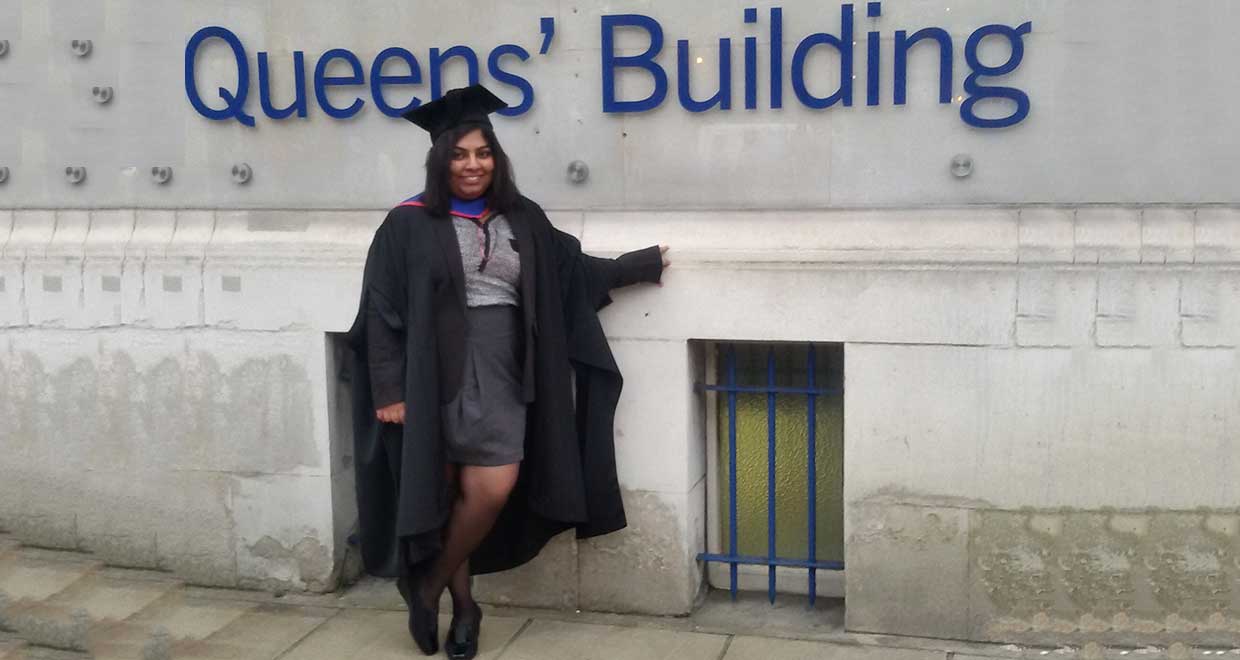
  • Amrapali Satpathy on studying LL.M from Cornell University, being a Summer Associate at Clifford Chance and experience in litigation

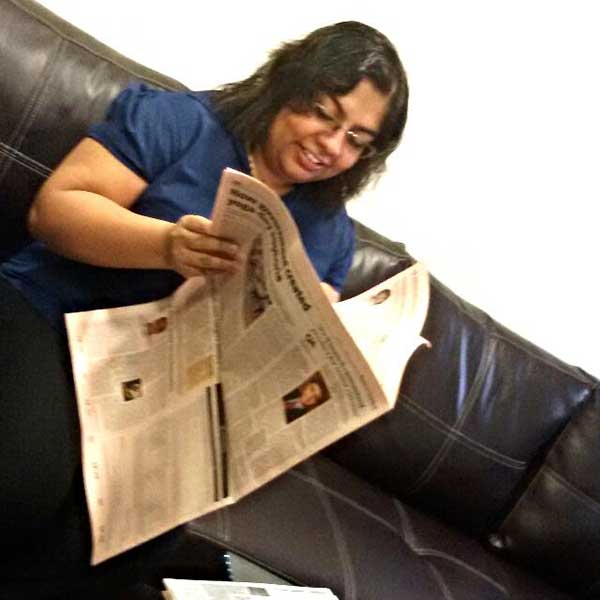
    Amrapali Satpathy on studying LL.M from Cornell University, being a Summer Associate at Clifford Chance and experience in litigation

    Amrapali Satpathy graduated from Delhi University with an LL.B degree before practising at the Supreme Court. She was awarded with the “Scroll of Honour” for “Promising New Advocate of the Year” by the Hon’ble President of India at the International Conference of Jurists. She then worked at United Lex, Gurgaon, followed by the Law Offices of Ireneo A Reus, Los Angeles and Clifford Chance LLP, New York. She is currently studying for her LL.M from Cornell University.

    In this interview she talks about:

    • Studying law at Delhi University.
    • Being a Senior Associate at CPA Global.
    • LL.M from Cornell University.


    How would you like to introduce yourself? Tell us a bit about your childhood and pre-college life as well as educational background.

    I am a simple girl who believes in traditional values while possessing a modern outlook. I am from Cuttack, Odisha. As a child I travelled quite a bit, and got to visit a lot of countries since my father is a Merchant Navy Captain. Travelling all over the world from such an early age helped me to develop a very wide and tolerant perspective about life and people in general.

    During the course of such travels I also made many friends globally and understood different cultures and way of life. At the same time my values as imparted by my parents, helped me to be very grounded and from a very early age I learnt to take deep pride in the diversity and magnitude of our Indian culture and traditions while respecting every other culture in the world. Part of my primary schooling was in Singapore from the Siglap Education Centre. When I was seven, we shifted back to Bhubaneswar, Odisha where I completed my higher secondary studies and was the state topper.

    Later my family shifted to Delhi. My inherent love for English made me complete my higher studies in English Literature with Honors and distinction and my childhood desire to be a lawyer made me study LL.B, which I passed with good grades and high merit. Currently I am completing my Masters in Laws (LL.M) from Cornell University in New York, USA.


    How did your interest gravitate towards law?

    My family has always encouraged me to be a lawyer. Two of my uncles are lawyers, and so was my grandfather. Books have always been my greatest influence after my parents. The subject of law and imparting justice has always fascinated me through my readings of various books on the subject. As a child I was absolutely caught up with Sherlock Holmes, Hercule Poirot, and Perry Mason while as a teenager I enjoyed reading Catherine Barnard’s ‘What About Law’ and Amartya Sen’s ‘The Idea of Justice’. Back then I perceived the law as an indestructible, infallible weapon which had the power of liberating the society from all kinds of misdeeds. Although as a teenager I did get a little cynical about the judicial system, nevertheless I always had this belief, which was strengthened as an adult, that no matter what, the law when used by the right people in the right manner has tremendous potential to bring forth the right result and guide society in the right direction. I could join my father’s business, I could be an astronaut, an actress, a model, an engineer etc. In short I could do anything and be anybody. But if there was any profession which allowed me to be in control of my life and at the same time possess the power to help people and society, it was the legal profession. As a lawyer I could have the freedom of interpreting the law in the manner I wanted and then implement it for the betterment of society. And that’s the very reason why I chose this profession.


    You have completed your law graduation from Delhi University. Tell us about your law school experience and the co-curricular activities you took part in?

    Studying law at Delhi University was one of the best and most memorable experiences of my life. More than anything else, it brought me in contact with people from extremely diverse ages, economic backgrounds and social beliefs. One of my classmates at the Faculty of Law was a 69 year old gentleman who was a doctor by profession, but wanted to study and understand the Indian law since he was going through some property dispute with his brothers. Then there was this lady who was a teacher at a primary school but wanted to study law so as to get a better paying job as a lawyer in order to support her family, who were entirely dependent on her. My educational experience at Delhi University was truly an eye opener for me, in the sense that I got to see and understand different people, all belonging to the Indian society yet each was so different from the other.  Their differences added colour and variety to the atmosphere at Delhi University, which I don’t think can be found at any other educational campus. I was the convenor for the legal aid society and also headed the dramatic club. Both these roles were extremely enriching. As the convenor of the legal aid society I arranged legal aid camps for the slum dwellers at Yamuna Pushta and as the head of the dramatic society I arranged street plays addressing sensitive, yet less talked about issues in our society like female infanticide, domestic violence and incest. I love debating and was in charge of the debating society for some time where I participated in and arranged college and inter-college debate competitions.


    What skills did you get to hone as the Secretary of the Student’s Debating Association and Dramatic Society and also as a   Convener of the Legal Aid Society?

    More than anything else my involvement in these societies made me a people’s person and a team player. Today these are the two skills which have helped me forge lasting friendships and be a good listener while being able to work effectively as a lawyer amongst different kinds of people.


    After your graduation, you worked in the Supreme Court. What has been your perspective of litigation in India? Have you found in overrated in any way?

    Sadly the field of litigation in India is quite gender biased and dynasty based. Gender biased in the sense that even today while the courts give judgments for empowering women, yet the very same lawyers at these courts look down on practising female advocates and belittle their talent and knowledge. Unless you are a woman belonging to a very reputed legal based family, it is almost extremely difficult to make a decent entry into the field of litigation. Which reminds me of the admiration, adulation and work opportunities which are bestowed on some freshers, only because of their connection to such reputed legal families, while there are lawyers who slog away their entire life finding clients willing to pay them a decent amount in exchange for their services. Still, I don’t think litigation is an overrated career option. There are always exceptions to the rule and I also firmly believe in hard work paying off sooner or later. Like I said earlier that no matter what, the law when used by the right people in the right manner has the tremendous potential to bring forth the right result and guide society in the right direction. What matters is that the right people should not give up.


    Please tell us about your experience with regard to your first few sessions in court. Has it become more difficult for a fresher to achieve success?

    There is an immense sense of responsibility, pride and self satisfaction when you are standing in front of a judge to a packed courtroom and fighting for your client’s rights. In the current scenario, yes it is definitely becoming more and more difficult for freshers to achieve immediate success in this field, unless you are extremely well connected. However, hard work, patience and perseverance coupled with ambition always bears fruition in the long run, if not immediately.


    What was the role of a mentor in your case? How important do you think a mentor is in the field of litigation?

    Frankly, I had no mentor, except my parents who have always been my greatest source of motivation and support. Since I had no mentor, I personally cannot speak about it, since I personally don’t know about it. But yes, speaking pragmatically, a good word of recommendation always helps in advancing your career in any field and the field of litigation is no exception to this rule. But then again, if you are talented, ambitious and hard working you can still make a mark without any mentor.


    What motivated you to leave your litigation practice and join United Lex an LPO?

    Although my family is extremely well connected both politically and many of my family members hold reputed positions in the legal field, yet my parents were absolutely clear from the day I joined the legal profession, that no matter what, they would never ask any of their connections for any professional assistance for my career. I agreed with my parents and respected them for this decision. At the same time it was extremely difficult for me to get interesting cases in order to further my career, because without having anybody to vouch for my credentials it was extremely difficult to get important cases. Also, truthfully speaking I was getting bored with the simple quality of the cases I was asked to deal with, while my seniors took charge of the more challenging ones. It was at this point that I got an offer from United Lex asking me to join their corporate department and provide legal services to their overseas client British Telecom. Apart from being extremely interesting, the job profile was something which I had not done before. Hence I took the bait and joined United Lex as Associate for Contract Management.


    You have worked for one year at United Lex. What had contributed towards this appointment? Tell us about your work profile at United Lex.

    LPOs have a very tight budget which depends entirely on their international/national clients. Depending on this budget LPOs determine the salaries of their employees. That’s one of the reasons why LPOs rank number one in hiring freshers because then they do not have to pay these freshers higher salaries. Since I was in the litigation field and had no corporate experience, I was treated as a fresher by United Lex and my remuneration was paid according to the industry standards of a fresher. At the same time I had the knowledge and confidence required for this role and that contributed towards my appointment.

    Working at United Lex was a very good experience. As an Associate of Contract Management, my responsibilities encompassed handling the entire contract lifecycle management process which included reviewing of complex agreements, and drafting and negotiating a wide variety of agreements ranging from NDAs, MSAs, Procurement Agreements, Framework Agreements, Software License Agreements, etc. each of which were unique in their structure and level of complexity. The work experience at United Lex was very dynamic and interesting.


    After United Lex, you went on to the University of California, Los Angeles (Los Angeles, California, U.S.A.)  as a  Visiting Scholar. How did you get appointed at University of California as a visiting scholar? What was your role and what are the responsibilities you were entrusted as a visiting scholar?

    As a legal counsel for my father’s business venture, I had to travel a lot to Los Angeles where one of our clients had their offices. While there, one of my relatives told me about UCLA’s course for visiting scholars. Since I had to be there for many months at a time, I decided to look this up online and later visited the campus. The course was fast paced and quite interesting. It would add value to my Resume apart from increasing my knowledge. There were no formal certifications as such, except a transcript of all the subjects which I studied there. Since I was not getting any formal certification, yet I was taking classes with the LL.M and JD students and I was also giving the exams, my designation was that of a Visiting Scholar. UCLA comes up with these exchange programmes and summer courses which are really good because you get to learn about international law without getting hassled about degrees and certificates. Since I was in Los Angeles primarily as legal counsel for my father’s organization, I really didn’t have too much time to take on added responsibilities at UCLA. It was mostly work, study and seeing the lovely places in Los Angeles. It was a cool experience and Los Angeles was a beautiful place.

     

    amrapali-sathpathy-3

    You have also worked at the Law Offices of Ireneo A Reus (Los Angeles, USA) as a paralegal for four months. How did you apply? What did your work profile consist of?

    While at Los Angeles, I thought it would be a good idea to work for an international law firm and get an idea how the legal process works in the US. I looked up for any vacancies at law firms in Los Angeles through online U.S. employment portals and came across this opportunity at the Law Offices of Ireneo A Reus. I applied online and was selected after being interviewed. My work profile involved mostly researching on core  legal issues and assisting the senior attorneys with drafting and vetting of complex legal contracts, conducting comparison, risk analysis, and due diligence of complex contracts.


    What does being a Paralegal mean? How different is it from being an Associate at a law firm?

    Paralegals are not allowed to offer legal services directly to the public on their own and must perform their legal work under the supervision of a senior associate. Usually lawyers who work in a foreign country are initially hired as paralegals because they do not have the requisite knowledge and understanding of that country’s law and legal process. Hence they are not permitted to give legal counselling or take up cases in courts for the clients. Where an associate is expected to deal with the entire legal process at an organization, from counselling clients, to going to courts and drafting contracts and negotiating, a paralegal’s work is only limited to giving assistance to the associates on various legal issues.


    Thereafter, you have also worked as a Summer Associate at Clifford Chance LLP (New York, USA). What does Summer Associate mean? How is this position valuable to a law student?

    A summer associate is just another synonym for an intern in the US. As a designation, a summer associate of course sounds cooler than an intern. Summer associates are current law students who are interning at a law firm or organization for the summer. Summer associates have not passed the bar exam and are not lawyers. This position holds the same value as that of an intern. It’s not a job guarantee but if you are interning at a reputed law firm or organization, the brand name looks great on the Resume and can attract prospective employers into calling you for an interview. Also if you have worked really diligently you can even get hired by the same firm for which you interned, provided of course there is a current vacancy, which is usually rare because the attrition rate at such reputed firms is very low.


    Also, please brief us about your work profile as a Summer Associate at Clifford Chance LLP.

    My job profile as a Summer Associate with Clifford Chance LLP involved assisting the senior attorneys on structured debt including CLOs, securitization, small balance commercial mortgages, RMBS and covered bonds.


    Meanwhile, you were also associated with Amrapali Exports Pvt. Ltd. [your father’s startup venture], as a Legal Counsel. What does Amrapali Exports do? Tell us about the nature of work you were entrusted with therein.

    Amrapali Exports provides legal solutions to a Singapore based corporation. My responsibilities included managing multiple client environments and various accounts as Legal Counsel for my father’s startup venture. I dealt with prospective clients by interacting with the key sponsors in various multinational companies and drafted corporate and commercial agreements. I also extensively advised on post execution enforcement issues, exit options under joint venture agreements, compliances under the companies’ law and FDI regulations.


    After serving at your father’s startup venture, you have joined CPA Global as a Senior Associate. Please walk us through your appointment procedure and interviews. Also, tell us about your work profile at CPA Global.

    The HR Manager at CPA Global contacted me after going through my work profile on a leading online Indian employment portal. They briefed me about the job description which involved giving legal solutions to a leading overseas metal and mining corporation. The work was challenging and interesting. Also since my father’s startup venture was doing really good, I was interested in seeking further challenging opportunities with global organizations so as to further increase and enhance my knowledge. I was selected after the requisite number of interview rounds. My responsibilities included contract drafting and database maintenance, contract review and redlining, contract template creation and revision, contract negotiation and approval support.


    Were you doubtful before joining Cornell University? Why did you prefer Masters over your job?

    I have been interested in a Master’s degree in Law ever since I was studying for my LL.B degree at Delhi University. It has been on my mind for the longest possible time but somehow the time was never right. I didn’t simply want an LL.M degree to adorn my already quite impressive repertoire. My desire for pursuing an LL.M degree was to further complement my existing knowledge with an understanding of how to implement my knowledge on an international platform. For that, I obviously needed to gain practical work experience as a lawyer. That was the reason I waited for a few years and got the necessary experience before venturing out to get the much coveted LL.M degree. A Master’s degree in Law, from a reputed university can do wonders to your career prospects, provided you know how to use the knowledge you have gained in order to further your career by putting yourself at par with other globally acclaimed lawyers at an international level.


    How did you choose Cornell University over others? How did you go about choosing a university?

    Cornell University is an Ivy League University which is one of a kind just as Harvard, Colombia, Upenn, Princeton and Brown Universities. My criteria for choosing which universities to apply at was primarily based on the institution’s intrinsic reputation, online reviews and from what my seniors who had completed their LL.M abroad, told me. I was selected at the London School of Economics, the National University of Singapore, both Colombia University and University of Pensylvania. However, I chose Cornell because of its reputation for conducting an extremely limited, unbiased and exclusive selection process based entirely on a student’s merit and intelligence. I was also quite keen to study at Cornell, because of its reputation of offering interesting legal courses coupled with the freedom to choose the subjects depending on a student’s individual interests. Cornell also has some of the world’s best teachers in the field of law. Luckily due to my incessant hoping, the blessings of my parents and God’s grace, Cornell selected me and I was offered a place in its prestigious LL.M degree.


    How did you go about writing your SOP? Are there any key factors which one should keep in mind before writing the SOP?

    While writing my SOP, I stayed clear of artificiality and repetitiveness. I was honest to myself and tried to convey my career goals and my interests as lucidly as I could. SOP is giving the other person an insight into your career goals, your interests and motivations and most importantly an insight into the kind of person you are. It’s important to be true to yourself and your goals while writing an SOP. The same should be conveyed in a simple yet dynamic choice of vocabulary. Simplicity of language is one of the key factors while writing an SOP.


    How about recommendation letters? Who all recommended you to pursue LL.M?

    Recommendation letters are an essential requirement while applying to universities abroad. My teachers at Delhi University very kindly recommended me for my application to the LL.M degree course abroad.


    What is your topic of research for LL.M? Why did you choose that subject for research?

    I chose two major topics for my research dissertation while studying for my LL.M degree. Both were original research papers for which I was awarded High Honors and was applauded by my teachers at Cornell University. My first topic of research was on the ‘Global Financial Crisis of 2008 and its effect on Legal Process Outsourcing.’ Though a lot of research has been conducted on the reasons behind the financial crisis of 2008 and its aftermath, yet I found that there was no satisfactory research which explained the connection between the financial crisis and the growth of the LPO industry. My second topic of research was ‘Seeking A Permanent Solution to the Rohingya Crisis.’ The Rohingya are a stateless population belonging to the Northern Rakhine State (formerly Arakan State), who are amongst Burma’s ethnic, linguistic and religious minority groups. The Burmese government has consistently denied this community citizenship status. Their exceptionally harsh treatment by the Burmese authorities and their condition as a persecuted minority has been a topic of international discussion. What amazed me was the fact that this issue had been so prolonged and without any solution still. I gradually conducted a lot of individual research on this issue. Apart from helping out with various non-profit organizations working for these refugees, I also ensured that I took active interest in letting the general public know about this problem. My inherent interest in international law and human rights has ensured my continuing interest in this cause.


    Please tell us a little about your academic schedule and the general experience of studying abroad? How different do you think it is from the pedagogy that Indian Universities follow?

    The academic schedule at Cornell University is very well charted out, giving the students enough time to conduct self study and participate in various scholastic as well as extra-curricular activities. Depending on what subjects you take your classes can start as early as 8:45 in the morning and end at 10 in the night. Since students are not encouraged to take more than 13 credits per semester, most students have an easy schedule. I personally had 18 credits for one semester, but due to the amazingly co-ordinated manner in which the classes were scheduled, I found that I still had ample time on my hands to do as I pleased. Indian Universities put a lot of value on study by rote method, which is not the case at Cornell. At Cornell rather than remembering cases and citing important legal judgments, we were expected to give our own personal opinion on whatever we studied. That opened up a lot of opportunity for thinking as a lawyer while still preparing as a student. Also before each class, we had assigned readings to do so that we would be able to get what the teachers are saying in class. The teachers, as a rule do not teach from the book. Rather, they have a Socratic manner of imparting education, whereby each student is called and asked for an opinion on the topic assigned for that particular day.


    Does Cornell University provide students with scholarships? Are there any other institutions, which provide scholarships?

    Cornell University does provide financial aid to deserving candidates. I am not so sure about scholarships though. Usually educational institutes abroad do not provide scholarships, but there may be exceptions. Instead, they give financial aid as and if required by an applicant. For this the applicant needs to show proof of requirement for the financial aid.


    You are about to finish your LL.M from Cornell University this year. So, what next?

    I am planning to take the New York State Bar exam soon. In the mean while, I do have a few job offers, two of which are from reputed software companies in India for the position of Legal Counsel, one is from a leading law firm in Singapore, and two are from real estate companies in the US. I also have a job offer from a newspaper publication in the UK, but for that I need to take a few exams in order to be eligible to practise law in the UK, and I am not too keen on that. And yes, I have an offer from Google but the position is based out of Tel Aviv, Israel. Depending on the circumstances and the remuneration offered, I shall make a decision soon.


    What led to your academic and professional achievements?

    (Amrapali was awarded “Scroll of Honor” for “Promising New Advocate of the Year” by the Hon’ble President of India, at the International Conference of Jurists while pursuing her graduation from Delhi University. She was also awarded High Honors for writing original research papers on “Global Financial Crisis of 2008 and its effect on Legal Process Outsourcing” and “Seeking A Permanent Solution to the Rohingya Crisis” at Cornell University.)

    My academic and professional records have been flawless. I have always been an exceptionally bright student scoring good marks throughout my academic career. As a lawyer I have always given my best to all my legal assignments. During the course of my education at Delhi University and my then ongoing internship at the Supreme Court of India, my name was recommended for the “Scroll of Honor” by my teachers at Delhi University and my seniors at the Supreme Court of India. As for being awarded High Honors for my research papers at Cornell, both my papers were original in their subject matter and analysis, apart from discussing issues of international relevance.


    Could you enlighten us, in brief, about your role at Arakan Project  and  Samarpan Foundation as a part of your Volunteering activity beside your  professional life.

    As a volunteer for the Arakan Project, I mostly worked towards ensuring that the Rohingya refugees in India were being given a decent lifestyle with access to health and education facilities. While volunteering at the Samarpan Foundation, I worked towards giving proper legal aid to the erstwhile refugees at Yamuna Pushta.


    Where do you see yourself five years from now?

    Five years from now I see myself having started my own law firm or legal consultancy. That’s a dream which I hope I can achieve. Let’s see.


    Lastly, what would be your parting message for our readers?

    No matter which ever profession you are or choose to be in, make sure you enjoy what you do. If you love your work, 60% of the battle is won. The rest 40% depends on your hard work, patience and passion. And of course as in everything in life, 1% depends on God’s grace or luck, but this 1% can actually go towards making or breaking your career. You will see the signs. If in spite of giving all your hard work and dedication, you are still not reaching that desired point in your career then maybe it’s time to do some serious thinking and perhaps make a career switch. It’s never too late for that. On another note you will meet a lot of people. People will try to pull you down and there will also be people who will encourage you. My advice is to greet all kinds of people with a smile on your face and to always be cordial to everybody. Be dignified at all times and never ever compromise on your ideals. Keep your calm in the face of all odds and don’t let failure touch your heart or success go to your head. All the best.

  • Bijetri Roy, Associate, Banking and Finance, Orbit Law Services, on LL.M from Queen Mary and studying law at Calcutta University

    Bijetri Roy, Associate, Banking and Finance, Orbit Law Services, on LL.M from Queen Mary and studying law at Calcutta University

    Bijetri Roy graduated from Department of Law, Calcutta University with B.A. LL.B (Hons.) in 2013. During her law school days, she wrote more than eight research papers. After graduation, she pursued an LL.M from Queen Mary, University of London, where she was also a member of the Editorial Board of the Queen Mary Law Journal. She currently specializes in banking and finance laws among others at Orbit Law Services, Mumbai. In this interview he talks about:

    • Studying at Department of Law, Calcutta University with B.A. LL.B (Hons.).
    • Application, SOP and Recommendation Letter for Queen Mary, University of London.
    • Recruitment and work at Orbit Law Services, Mumbai.


    Given that most of our readers are law students and young lawyers, how will you introduce yourself to them? What motivated you to choose law as a career?

    I am Bijetri Roy, a Bengali by birth, brought up in the royal Awadh city of Nawabs, Lucknow. My father has a transferable job and I have had the opportunity of staying at many beautiful places (most of them being famous for their food and culture!). London became my home away from home in just a year. I currently live with my parents in Mumbai and I am working as a Banking and Finance Lawyer at Orbit Law Services.

    I am the first lawyer in my family, belonging to a household of a banker and economist father and an English teacher mother. I started reading Perry Mason at the age of 12 and the sleuth-attorney influenced my young mind to take up law. Law became my first choice and my parents encouraged me to take it up seriously. I completed my ISC in 2008 and took the Calcutta University entrance examination in May 2008, secured a good rank and enrolled at the Department of Law.


    Tell us about your law school experience at Calcutta University. Share some highlights from your college days that shaped you as a lawyer.

    Though a lot of people warned me against studying law at a traditional university instead of an “elite NLU”, I decided to take my call on the matter, and it was the best decision of my life to enrol at a simple law school. I agree we didn’t have the “right” infrastructure, no placement cell and too many people cramped in each batch (we were 200 people in the 2008-13 batch), but despite these issues, the five years at the law school gave me the some of the best days of my life. Classes were irregular at times, but interesting and regular lectures by Prof. S.S. Chatterji (IPC, Contracts) and Dr. J.K. Das (Constitutional Law, Human Rights Law) made me forget the drawbacks of the college. The high point of my law school days was getting selected for Honours after 2nd year (my average of 3rd to 5th year shot up to a good first class). The selection was purely on merit basis and there were only 50 seats for honours in a batch of 200. Getting to study a wide variety of subjects ranging from Law and Child, Criminology and Gender Justice to Law and Public Servants and Legislative Drafting was an enriching experience for me.


    What do you feel about the perception that students of certain ‘elite’ NLU’s have a much easier time in kick-starting their career as compared to law students from other colleges? Is this true at all?

    I would not like to comment much on this because it is quite a subjective perception. Though a certain “class” of students easily get internships and jobs at the top firms and organisations (as per hearsay – I don’t know many people from the NLUs so I am not sure about it), it is ultimately merit, basic foundation and most importantly, interest in that area of practice that matters. But yes, if one goes by the current market trends, top tier firms and big companies prefer to hire the “elite” ones! But then again, trends are never constant, right?


    Are you still involved in research and writing papers? Which are the latest ones you have submitted and where?

    Till now, the count is over 12. Last month I submitted a research paper titled “Financial Inclusion in India: Policy Framework for Inclusive Growth” for a forthcoming conference at IIM-Bangalore. This month I submitted an abstract for my research paper titled “Corporate Governance and Investor Protection – Importance of Legal Audit” for the India Finance Conference to be held at IIM-Calcutta.

    I have presented more than 8 papers during my BA-LLB days including at conferences at the top NLUs like NLIU Bhopal and NALSAR Hyderabad. Recently, I presented 2 papers, one at ILS Pune at the National Conference on Revisiting Freedom of Religion and Personal Laws from Liberty and Equality Perspectives and the other one at the International Conference of Jurists and Writers which was held in Mumbai.


    bijetri-roy-1

    What was your motivation behind pursuing LL.M. right after your under-grad? How did you finally decide that you need to do masters?

    During my 3rd year, I decided I wanted to do my masters in law immediately after my undergrad. I took this decision because I did not want to have any gap in my academics and once you take up a job, it is very tough to take a break and pursue higher studies.


    How did you choose Queen Mary, University of London over others? How did you go about choosing a university?

    I applied to Queen Mary, University of London based on its rank in UK for law (when I went there in 2013, it was among the top 10, currently it is ranked number 3 in UK right after Cambridge and Oxford, and number 1 in London – The Guardian 2014-15, 2015-16 rankings for law). I had decided from day 1 that if I study in UK, it has to be in London University. By the time my 4th year results were out, I had offers from Queen Mary, Westminster University, Birkbeck School of Law under London University and Brunel University (these were the only places I had applied to – I was lucky enough to bag offers, including an unconditional offer from Westminster University even before getting my final BA-LLB result!). I had my dream come true moment when I got an unconditional offer from the place of my choice – Queen Mary.


    How did you go about writing your SOP? Are there any key factors which one should keep in mind before writing the SOP?

    SOP (Statement of Purpose) is nothing but an essay about yourself. I used the first paragraph to talk about myself in general, then moved on to my academic achievements and extra-curricular activities. Next I laid emphasis on why I wished to study LLM, why UK, why London and why Queen Mary. I used the last paragraph to talk about my career goals (try to be as honest as possible; do not inflate your goals while writing the SOP).


    Please tell us about your recommendation letters.

    While most colleges ask for 2 recommendation letters, Queen Mary is flexible with it. I was able to manage only 1 letter during my application process and that did not hinder my offer from Queen Mary in any way. A professor wrote my recommendation letter.


    Tell us about your LL.M year at Queen Mary, London. How did this influence your career?

    My experience at QMUL was the best I could have ever dreamt of. Professors are very approachable because they do not follow the age old notion of differentiating teacher from students.  During my study, I had the opportunity of regular interaction with world class professors like Dr. Rafael Leal Arcas,  Dr. Alexandros Ntovas, Dr. Gomula (a visiting professor from Cambridge), Prof.Spyros,  Prof. Anne Flanagan to name a few.

    My specialisation was public international law. Queen Mary offers a wide range of modules to choose from. I took up modules which mainly belonged to other specialisations. I studied International Economic Law, International Law of the Sea and Climate Change Law and Policy. Apart from academics, a lot of emphasis was laid on overall development; I was suddenly all over the place, working as a Media and Communications Coordinator for the QMUL School of Law, attending meetings and sharing ideas (and pizzas!) with the academic and non-academic staff as a member of the Student-Staff Liaison Committee, as a postgrad member of the QM Law Journal to name a few.

    Classes were 2 hours thrice a week, so I got the opportunity of exploring the beautiful city of London and places around London. When I wasn’t exploring places (and trying out different cuisines!), I spent my time at the Institute of Advanced Legal Studies (IALS) Library and the QMUL Mile End campus.


    What was your topic of research for LL.M? Why did you choose that subject for research?

    I did my dissertation on the topic “Trade Liberalization and the Poor – a policy framework with special emphasis on India”. I chose this topic because it gave me the chance of researching beyond the syllabus of WTO in the Economic Law module. I had the opportunity of doing my dissertation under Professor (QC) Geraldine Van Bueren. . I scored pretty well in it too!


    bijetri-roy-3

    How difficult was studying abroad in terms of finding accommodation, finances and settling in?

    I was lucky enough to get a food inclusive accommodation at the London University intercollegiate halls (Hughes Parry) just a few blocks away from Kings Cross station. I am not very fond of shopping so I saved almost all the money I had taken with me (the only things I spent on were text books, boots, eating out and for my trips to places within and outside London).


    How was your experience as a member of the Editorial Board of the Queen Mary Law Journal?

    As a member of the Editorial Board of the Queen Mary Law Journal, I was able to get a clear idea of how papers are peer reviewed and selected. I had the opportunity of reading some of the best research papers and articles by masters and PhD level students from different countries and various universities.


    After returning to India, you started working at Orbit Law Services as an Associate. How did you go about bagging this job?

    I was looking for boutique law firms specialising in banking and finance and came across the website of Orbit Law Services. I applied by sending a cover email and my CV, and I got a call from the partner within 3 days (this was like an indication from Lord Ganesha that I was almost in there!). I was called for an interview which was conducted by 4 partners, and after a day I was informed about my selection. The selection process is very transparent. The firm prefers to give opportunity to graduates from traditional universities over NLUs.


    Tell us about your current work profile and why did you choose to work with Orbit Law Services?

    I am an Associate at Orbit Law Services, Mumbai. I always wanted to join a boutique law firm which specialises in Banking and Finance laws, and for me this is the best place to start and grow professionally.


    What are your main practice areas?

    My main practice areas are Banking laws, Project Finance, Infrastructure,Power projects, Energy projects, Corporate and legal due diligence (I recently conducted a 3-days legal audit at an asset reconstruction company in Mumbai on behalf of my law firm).


    bijetri-roy-4

    How is your experience so far? What is your workday like? Are there new challenges every day or did work fall into a predictable pattern?

    The best thing about Orbit is the fact that Partners personally guide me. All 5 partners have decades of experience and have been associated with well-known banks and big corporate houses.

    Apart from the usual “lawyer” work, I am involved in business development and knowledge enhancement work as well. So along with learning the core work areas, I am also learning overall entrepreneurial management. Due to the encouragement of the partners, I have been able to whet my research and writing skills further (I regularly write articles for our firm’s internal news circulation and discussions with everyone during lunch time).

    Every day is a new day in terms of work; I get the opportunity of learning new things on a daily basis, whether through core legal matters and assignments which come my way from clients (mostly big banks, NBFCs and authorities etc.) or through research suggestions by partners for my personal development.


    What are your future plans? Where do you see your career in the next 5 years?

    I plan to continue here at Orbit for the next 4-5 years. I see myself as an expert (and maybe a Senior Associate by then!) in Banking and Finance laws by the time I am 30!


    Lastly, any suggestions for aspiring first generation lawyers like yourself?

    Take up law only if you want to, not because your peers or seniors have taken up law! Law is a vast ocean, and whatever is taught during undergrads is merely a few drops! Choose your law school wisely. During your undergrads, attend at least 2 to 3 conferences and present papers, the claps that you get from the audience comprising professors and stalwarts will be like a boost for your confidence. Even for your postgrads, choose the course, institution and country (in case you wish to study abroad) wisely, don’t hurry with your selection.

    All the best to all the readers, and thank you Super Lawyer!

  • Pratyush Nath Upreti, Advanced Masters, (LL.M) Intellectual Property Law & Knowledge Management at Maastricht University, on pro-bono work and the KIIT Law School experience

    Pratyush Nath Upreti, Advanced Masters, (LL.M) Intellectual Property Law & Knowledge Management at Maastricht University, on pro-bono work and the KIIT Law School experience

    Pratyush studied law from KIIT Law School, Bhuvaneshwar, he graduated in 2013. Being a citizen of Nepal, he chose India to pursue B.Sc. LLB. After the successful completion of his bachelors, he is pursuing Advance Masters (LLM) in Intellectual Property Law & Knowledge Management from Maastricht University, Netherlands on a scholarship. He had interned extensively through the years of law school and published nearly 30 articles in The Kathmandu Post. In this exclusive conversation with Pratyush, we talk about:

    • Education and experience at KIIT Law School.
    • Selecting the appropriate publishing companies for his journals.
    • Interning at Asian Network for Free Elections (ANFREL), Bangkok,
    • Being a Member of New IP Lawyer’s, a wing of School of Law and its research centre called SCule (Science,Culture and the Law) under the University of Exeter, United Kingdom.
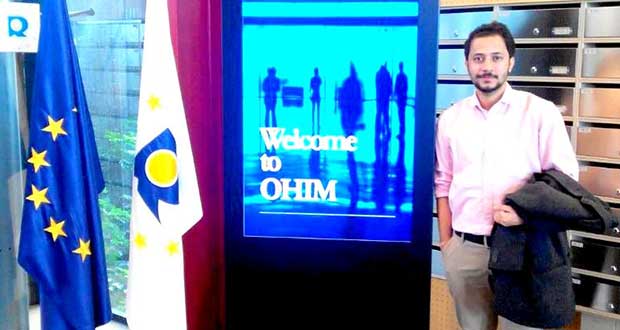
    • Undergoing exchange programmes at The Office for Harmonization in the Internal Market of European Union (OHIM), Spain
    • Pursuing LLM in Intellectual Property Law and Knowledge Managment from Maastricht University, Netherlands.


    Tell us a bit about your pre-college life. How did you choose to study law that too in India? Did you have lawyers in your family?

    I come from the Biratnagar, city of influential leaders in Nepalese politics. Being the youngest child of my parents, I began the journey of my student life by following my elder sister’s footsteps to one of the most prestigious schools of the city. In school, my inquisitive mind as a young student ran into almost all nooks and corners of the colorful life. I was not a great student but lived my life into the realm of education.

    When I finished my intermediary, civil war in the form of a Maoist insurgency ended with the signing of the comprehensive peace agreement and formation of a Constituent Assembly. Nepal was in transitional phase(still in transitional phase), we were taking the first step towards building a constitutional democracy. During the phase, many friends opted to go abroad for higher studies which were never an option for me.

    When I decided to peruse law there were very limited option in Nepal. Moreover, India is also not far away from Nepal, it was a convenient option. I was also attracted by the unique integration of law and science. So, I decided to join the B.Sc.LLB(Hons) stream in KIIT Law school, a newly born law school with a colourful dream, like that of mine of marking a mark of its own in the highly competitive legal arena.

    Yes, I belong from a legal background, my father is a senior advocate practicing in Nepal and my grandfather served as a Judge of Nepal. I think I represent the third generation of lawyers in my family.


    While in KIIT Law School you selected B.Sc. LL.B as your stream. What would be your advice to law aspirants about choosing a stream? Did it give you an edge over B.A. LL.B graduates? Does it have a long lasting effect?

    In recent years, legal education has rapidly changed. The unique integration of law and science is an attractive career option. The law and science offer plenty of opportunity in the sector of forensic science and Intellectual property law. During my short working experience, I have felt that there are high demands for lawyers with scientific/technological backgrounds. Anyone interested in B.Sc.LL.B should keep in mind the course structure of the college offering the course. Make sure they have good science faculty and if you are interested in taking biotechnology as a major then well-equipped laboratory is important. I was the first batch of B.Sc.LL.B(Hons) course in my college, but I had some laboratory works. Fortunately, My university had separate well-equipped Biotechnology faculty which was an additional advantage for me. Since, there is not much of crowd of lawyers with knowledge of both the field, a B.Sc.LL.B(Hons) graduates do have an advantage from a job perspective.


    pratyush-upreti-1

    If I were a young law student who never wrote an article, how would you advise me to get started given that you yourself wrote a lot?

    To be honest, I never pre-planned to write an article. Most of my articles are the outcome of my project which I did during law school or internship. Choosing a topic which is contemporary is important for publishing an article. I suggest law student to identify contemporary legal issues and continue as a project for the course. If you do your research honestly, then certainly you will end up publishing.


    How would you select a specific journal and approach them for publication? What are the things you look for in a journal before sending them your article for publication? Can you tell us the steps involved in researching and structuring an academic paper?

    Selecting a Journal is not easy, there are two important things, which I look before sending an article. Firstly, the journal timeline for a review process. When you research honestly, you get ambitious about the project and really want to publish in good Journal. But sometimes, a long review process of the journal is really frustrating. There were few Journals who replied me after a 15 months. It was really painful! But as a student you should never be discouraged by rejection or late replies. Before sending your article, it is important to know about the Journal well( just email and ask about timeline for review). Secondly, I see the focus area of a journalif your topic matches those area’s or related contemporary issues than your acceptance chances are really high.

    There are generally accepted ways of researching and structuring the paper. For me research is important, I try to gather as much of information from various sources like books, Journal, reports, internet etc. Once I gathered information, I tried to find contemporary issues/problem involved and put my thoughts in a logical way and roughly draft a research outline which will help not to divert from focus area. For any writing may be a newspaper or academic journal structuring is important. Your writing must reflect you thoughts and every section need to clearly link. Mostly importantly for academic writing reference/bibliography/footnote is very important. Generally, accepted standard structure includes Abstract, Introduction, research question, discussion (arguments advanced), conclusion/recommendation and bibliography.


    How did you plan your internships and how did you go about applying for these internships?

    (Pratyush has interned quite extensively through his 5 years at law school. Some noteworthy mentions are Anand and Anand; Asian Network for Free Elections (ANFREL), Bangkok, Thailand; Singh & Associates, Advocates and Solicitors; Sycip Salazar Hernandez & Gatmaitan Attorney At-Law, Philippines; The Ministry of Home Affairs, Parliamentary Affairs, Constituent Assembly and Culture, New Delhi, India; Enviro Legal Defense Firm, New Delhi, India and other places as well.)

    Early planning is very important to secure a good internship. Mostly, I planned my internship at least a 6-8 months before. This is important because, you can never depend on one organization or law firm. You need to file a several application. The application process depends completely on the institute which you intend to apply. Most of the organizations where I interned had similar recruitment pattern, I just applied online with a short cover letter and resume.


    What kind of work did you typically find yourself doing as an intern? Did your experiences vary significantly with the internships?

    I had a diverse internship experience. My task and workload as intern completely depend upon where I was interning. In law firms, I had long working hours and mostly I ended up doing a lot of draftings, research on several issues and assisted litigation team. Some of the research which I did in the law firm was published in law firms in-house Journals. On the other hand, in an organization you mostly do research work, they will make you involved in the ongoing project. During my school, I was fortunate to do two international internships. First, at Sycip Salazar Hernandez & Gatmaitan Attorney-At-Law, one of the biggest law firms in Philippines where I was involved in commercial and Intellectual property division. I mostly assisted the team with the prosecution of trademark, patent registration, review of technology transfer arrangement, franchise and distributorship agreement etc. Second, at ANFREL, I researched on several electoral issues and assisted drafting team of ‘Bangkok Declaration of Free & Fair Elections’. During my stay, I also got an opportunity to observe the election. It was a great learning experience.


    What comprised your work profile as a Legal Researcher at the “Forum for Protection of Public Interest (Pro-Public)”? Please share with our readers.

    Forum for Protection of Public Interest (Pro-Public) is one of the reputed organization in Nepal. It has a long history of contribution to socio-legal development in Nepal. Pro-public gives an opportunity a law student to voluntarily associate with the organization in different capacities. I was fortunate enough to associate myself with the organization during law school.

    During my undergraduate, I had an experience of research work. At law school, I worked as research assistant in University Grant Commission (UGC) main project titled “ Use of Forensic Science in Criminal Justice System: A futuristic Project”. Similarly, I did some research work for Cobalt Business Counsel Professional Corporation, Ontario, Canada for few months. Furthermore, my research internship with Enviro Legal Defense Foundation, Nepal Law Commission, and The Ministry of Home Affairs, Parliamentary Affairs, Constituent Assembly and Culture, was largely based on legal issued related to Nepal. Maybe this gave me an edge than other candidates during the recruitment process.


    Thereafter, you have joined Asian Network for Free & Fair Elections (ANFREL) as their Legal /Liaison Officer. Do you think, it became easier to get appointed because you have interned earlier at ANFREL?

    I don’t think so, internship experience helped me to get the position at ANFREL. ANFREL is a professional organization, they have transparent and heavy recruitment process. I came to know about the vacancy through a Newspaper. I did go through a screening process and had a very long interview by ANFREL Secretariat. Luckily, I got through the interview.


    pratyush-upreti-3

    What kind of work does ANFREL do? Please brief us about the nature of work and responsibilities you were entrusted at ANFREL.

    The Asian Network for Free Elections (ANFREL) was established in 1997, as Asia’s first regional network of civil society organizations focused on elections and election monitoring. It strives to promote and support democratization at national and regional levels in Asia. Since it was founded, it has served towards strengthening the democratization of countries such as Sri Lanka, Nepal, Thailand, Malaysia, Cambodia, Pakistan, Bangladesh, East Timor and Indonesia.It is one of the most trusted and reliable International Election Observation Group globally. They mostly focus on three area: (i) Election observation (ii) capacity building (iii) campaigns and advocacy.As Legal/Liaison Officer, I was involved in providing legal assistance to the ANFREL Election Management/Observer team. During my tenure, I reviewed national electoral law and assisted the ANFREL team in making Observation manual and reports. In addition, I was also involved in organizing and co-ordinating meeting with several stakeholder, civil societies, and politicians and also observed Constituent Assembly Election. I must say, I had a wonderful experience working with ANFREL. They have great working culture and ethics.


    Right after ANFREL, you went for LL.M. Why did you decide to go for higher studies?

    Initially, I wanted go right after my graduation but later decided to take a break of a year. There is no reason as such, I always wanted to continue my studies and then focus in practice.

    How did you go about choosing which college to go to for your LL.M. and did you ever consider Indian colleges? Was it the course or the university which mattered for you?

    I was very clear that I want to do LLM in Intellectual Property Law from abroad. Since, I have spent five years at law school in India so I didn’t want to have similar quality of education. So, never considered Indian colleges. The First thing I did was listing of colleges which offer LLM in intellectual property Law. I applied to three universities; School of Law University of New Hampshire (formerly known as the Franklin Pierce Centre of Intellectual Property) USA, Queen Mary University of London, UK and Maastricht University. I was accepted in all three. I got the scholarship from Franklin Pierce and Maastricht University and opted later.


    Tell us about your LL.M year at The Maastricht University, The Netherlands which you are currently pursuing.

    I am doing Advanced Master in Intellectual Property Law and Knowledge Management. It is a unique master program for lawyers, non-lawyers, and those with a degree in science of technology. It is popularly known as IPKM. The Advanced Masters IPKM are fully accredited by the Accreditation Organization of the Netherlands and Flanders (NVAO). The IPKM MSc is furthermore accredited by the European Patent office (EPO) for EQE remission. In addition, IPKM is a member of the European Intellectual Property Institutes Network (EIPIN) and a founding member of the Pan-European Seal Professional Traineeship Programme.

    Maastricht University is known for the problem-based learning environment where students are personally responsible for their academic education. The IPKM is taught in a very closed group, where the student analyzes the problems through discussions, exchange knowledge. The programme is taught in socratic teaching, often using real-life cases, mock trials and assignment (mind it, it’s not a piece of cake, it will dig you into the subject matter which we need to submit before class). The tasks are further discussed and analyzed along with lectures during class. Basically, it was fun working within a diverse class, amazing study visit. To conclude, IPKM provides a lot of opportunity for learning and networking. If you want to excel in Intellectual property, IPKM is the right choice! Go for it!!


    How difficult was studying abroad in terms of finding accommodation, finances and settling in? Are there any scholarships for studying at the Maastricht University?

    Not at all! Particularly, at Maastricht we have a very friendly student service center (SCC) which helps the international student in finding accommodation if needed. I didn’t have a problem as such, I found accommodation through online. There are facebook pages which provide information on accommodation, and most of them are very reliable. Maastricht University do provide Scholarships for International Students which are available on University Official website. I was lucky enough to get a UM High Potential Student Scholarship, which really made my life easy.


    How is the faculty & academic schedule (your typical day) at Maastricht? Given your experiences how would you pit Indian students with their foreign contemporaries?

    The faculty staff in the IPKM are very diverse and immensely supportive. It includes professor and practitioner from different jurisdictions, most notably Europe, Asia, and the United States of America. We had a very intense module on US Copyright Law taught by Professor Edward Lee, Director of the Program in Intellectual Property Law, Chicago-Kent College of Law, United States. Similarly, some of module was taught by Professor of Queen mary University, the University of Nottingham, and few class were taken by European Patent attorney etc. In addition, we have series of IPKM expert lectures by practitioner’s which enlighten us on contemporary IP issues. My day starts with waking up, and riding to the library, preparing for classes and assignments. There is always a number of readings for class, which are expected to be discussed in class. Generally, I return very late from the library in fact library is my sanctuary) and then I have to try and cook which I really hate.


    Was there time enough for non academic pursuits at Maastricht? How did you find the study-life balance to be?

    Not really! IPKM is very hectic!! (That’s what you expect from competitive course) we get few days off in Christmas. But Maastricht is a beautiful place, there are several things to do besides academic. On balancing study-life, I am the right person to answer that, I always struggle.

    Tell us about the course structure of an Advanced Master (LLM) Intellectual Property Law & Knowledge Management at Maastricht University.

    The Advanced Masters in Intellectual Property Law and Knowledge Management (IPKM ) offered at Maastricht University Faculty of Law are designed to train graduates to work as legal practitioners or management in knowledge-intensive industries and research institutes. The IPKM offers two distinct degrees:

    (1) A LLM degree focusing on comparative IP litigation and/or entrepreneurship, valorization and IP management

    (2) A MSc degree for graduates of science and technology aspiring to become IP specialists, knowledge managers, or patent attorneys.

    The IPKM course is designed in three main pillars

    (1) the common course for both LLM and MSc student are taught together

    (2) mandatory course for both LLM

    (3) mandatory MSc track.

    Some of the intensive modules offered is Intellectual Property in USA and Asia, patent drafting, IP enforcement, Intellectual Property & Life science among others.

    For more information, you can visit

    (http://www.maastrichtuniversity.nl/web/Faculties/FL/AdvancedMasterInIntellectualPropertyLaw).


    How did you benefit from the different programmes you took up after admission to IPKM?

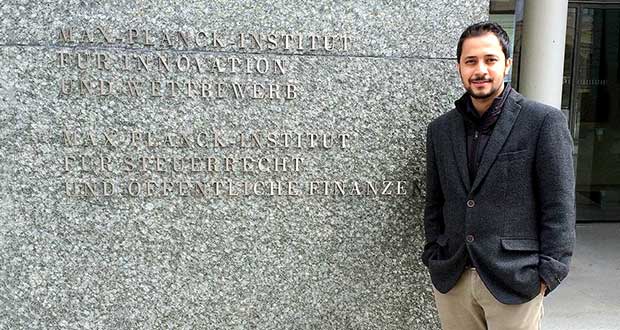
    (Pratyush underwent a couple of training and exchange programmes after he had secured admission at Maastricht University, some of which are Module on Community Trademark at The Office for Harmonization in the Internal Market of European Union (OHIM), Spain; Study visit at European Patent Office, Hague, Netherlands; Attending Congress of European Intellectual Property Institute Network (EIPIN) organized at Maastricht University and Max Planck Institute for Innovation and Competition.)

    IPKM as well designed course which aims to provide plenty of learning opportunities for the student. I had one module in University of Alicante in The Office for Harmonization in the Internal Market of European Union (OHIM), Spain, it was a great experience. The modules were taught by European trademark/design examiner and practitioners. Similarly, Congress of European Intellectual Property Institute Network (EIPIN) held at Maastricht and Max Planck Institute for Innovation and Competition/European Patent Office were two days intense discussion on contemporary Issues of Intellectual property Laws. In both, the event sessions were addressed by scholars from Europe and The United States. Personally, I really enjoyed these events, you get to know emerging issues in IP Law and also an opportunity for networking.


    Please share a few words about you being Member of New IP Lawyer’s, a wing of School of Law and its research centre called SCule (Science,Culture and the Law) under the University of Exeter, United Kingdom.

    New IP Lawyer’s is a network of young academic and practitioner in IPR. It is the initiative of Ph.D. student at the University of Exeter and have network representative at the University of Oxford. The network aims to encourage and facilitate discussion of the issues related to IP law both by lawyers and non-lawyers. Recently, the network successfully held the first annual conference: who owns the Arts and Sciences? At the University of Exeter where renowned academic like Professor Lionel Bently(University of Cambridge), Professor Charlotte Waelde among others were key speakers. The Newtork is relatively new, in a very less time it has received overwhelming support. New IP Lawyer’s is also aiming to organise seminar series and several academic event. Stayed tuned at http://newiplawyers.wix.com/newiplawyers


    Is writing is your hobby? How do you manage to write for newspaper on various issues beside your LL.M studies and other engagements?

    (Pratyush has published approximately 30 newspaper articles till date at The Kathmandu Post& among others, on various issues.)

    I enjoy writing it connects me with readers. I never took writing as a hobby, I started writing during my undergraduate. When I was studying in India, I always wanted to involve in socio-legal issues and give my opinion on such matters. The newspaper was the perfect forum to share my thoughts and involved in several issues happening in Nepal. After law school, I continued writing and still I regularly contribute on socio-legal/political issues in Nepal. It makes me happy when readers send feedback or point of disagreement on issues and it also helps to improve writing. I never take writing as a burden, whenever we come across interesting issues we always have an opinion, just that I gather my thoughts and write. Most important, writing gives me a lot of pleasure; I feel a sense of freedom.


    What is your responsibility as a student member of Maastricht University for European Intellectual Property Institutes Network (EIPIN).

    IPKM is a member of the European Intellectual Property Institutes Network (EIPIN). Every year few students are selected to represent as a student member of EIPIN where we get the opportunity to attend EIPIN congress and participate in the group projects. I was assigned with team project which consists of five student from Queen Mary Intellectual Property Research Institute(University of London), Munich Intellectual Property Law Center (MIPLC), Centre for International Intellectual Property (CEIPI) University of Strasbourg, Magister Lvcentinvs (University of Alicante). My team has already submitted our research project titled “Permitting Transformative Use and Copyright Law: The Case of Parody as Innovation” to EIPIN committee. It had a great time working together with fellow students.


    What are your future plans? How do you plan to use the experience and the knowledge gathered at Maastricht?

    I successfully defended my thesis, just winding up my course at Maastricht. Most probably I will be returning home in August, and practice litigation. Although, Intellectual Property regime is not very well developed back home which makes it more challenging to take IP as a career but again it give an opportunity to participate in the process to develop the field. The experience and knowledge gathered at Maastricht surely have given me in-depth knowledge about global IP practice which will surely help in instituting policy reform in Nepal.


    And any word of advice for all the young law students out there?

    Learn, question and make the most out of the law school. Make sure you enjoy your student life as well. Good luck!


  • Varun Pathak, Manager, DSK Legal, on Law School experience at GGSIU & LSE, and varied work experience at Law firms and Litigation

    Varun Pathak, Manager, DSK Legal, on Law School experience at GGSIU & LSE, and varied work experience at Law firms and Litigation

    Varun Pathak graduated from Guru Gobind Singh Indraprastha University in 2007. Thereafter he went to pursue Masters in Corporate Commercial Laws from London School of Economics and Political Science. Soon after returning to India, he joined Krishnamurthy & Co. as an Associate and later switched to the office of Amarjit Singh Chandhiok. He has also worked at Paras Kuhad and Associates as an Associate before joining DSK Legal as a Senior Associate in March 2011. Currently he works as a Manager there.

    In this interview he talks about

    • Law school experience at GGSIU and LSE
    • Work experience in litigation and law firm
    • Journey from Senior Associate to Manager at DSK


    Could you please introduce yourself, professionally and academically, to our readers, who are mostly law students and young lawyers?

    I am a Litigator and am happy to be one. I started off being a corporate lawyer but soon realised that my heart lay elsewhere. I loved the hustle and bustle of litigation which I had experienced during my internships. The thrill of arguing in courts regularly is what drives me every day and I love what I am doing. I am presently retained by DSK Legal, Delhi. The majority of work that I am presently handling deals with regulatory and court matters in the infrastructure sector, commercial contractual disputes, arbitration and some constitutional matters.

    I read law at Amity Law School, GGSIPU and thereafter completed my Master of Laws from London School of Economics and Political Science. Academically I have been a merit student and had a 2:1 grade both in my undergrad and graduate degree. I have participated in my share of moot courts, sports and other extra-curricular activities in my student career. They are all important but the most important aspect, which I realised after starting practice, was the importance of reading law regularly. There is no replacement for hard work. Other than legal reading one should also read material from other areas, whatever stimulates one’s brain. A good reading portfolio is an advantage to any aspiring lawyer. Developing reading skills is one of the most (if not the most) important attribute for a Litigator.


    What motivated you to gravitate towards law, as a discipline and a career? Tell us about your induction in GGSIU?

    My foray into the legal field was actually a combination of some serendipitous circumstances and some deductive reasoning. I was very clear in my mind what I did not want to do. So I eliminated what I did not want to do and then narrowed down my choices to a few fields which I thought I would enjoy. So law was one of the options that I foresaw along with a few other career options and as destiny would have it, the cogs feel in place and I joined Amity Law School, GGSIPU. I wanted to be in Delhi so GGSIPU was an obvious choice and arguably Amity Law School was the better institute amongst the constituents and therefore, I chose Amity Law School.


    How was your experience during your five years at GGSIU?

    My time at Amity Law School was a learning experience. Most of my class mates were very competent and there was a sense of positive competition which was very inspiring. Actually we were the fourth batch and had good seniors who used to guide and mentor us regularly. Most of my seniors and batch mates are doing well for themselves and are making a name in the profession. One of the most important experiences in my five years was the sense of camaraderie with my colleagues and batch mates which we all have carried into our professional careers.


    Soon after completing graduation, you went to pursue Masters in Corporate Commercial Laws from London School of Economics and Political Science. How did you decide to go for higher studies?

    Many of our seniors had pursued masters abroad, so their experiences were definitely a factor. I decided to pursue my masters because I wanted global academic exposure and wanted to interact and learn new approaches to dealing with complex issues. My participation in the Stetson International Moot Court at Florida had given me a flavour of the western approach so I decided to enhance my skills by pursuing masters at LSE.


    What should one do differently in college if he wants to pursue higher studies after graduation? Would you suggest having a brief work experience before applying for LL.M?

    In hindsight I would say that there are many things which can be done to improve your chances of pursuing masters at a premier institute. Firstly, one should start preparing for the application from the first year itself by building a varied repertoire of skills. Mooting and internships definitely help however, it is important to be focussed in your approach and it is better to apply to a handful of institutes after narrowing down your areas of interest than making frantic mass applications at the end of the fourth year. Further, please choose the professors of your intended course and do some research before you make that final application.

    With respect to prior work experience it is actually a personal decision for the individual concerned. Some institutes prefer work experience and definitely some work experience will provide you with some good perspective. However, I wanted to be done with my studies before I started practice so went for my masters immediately after my LLB.


    Please tell us about your time at LSE. Please share with our readers, the details about the academic pressure, faculty and campus life.

    LSE was a very good experience. The approach to academics was very different than what we are brought up on. The focus is on analysis and individual application of mind and reasoning. The faculty was some of the best in the world and professors were international authorities in their respective fields. My course in corporate commercial law was one of the best in the world. It was a very intense course with a lot of reading material. Being from a common law country it was not very difficult to adapt to the UK education system however, there were many things that I had to unlearn which I had picked up in our education system.

    My time at LSE was fun and I was part of the students’ body for our LL.M class. I also represented LSE in Willem C. Vis Arbitration Moot at Vienna. In fact, I also used to write for one of the students’ newspaper at LSE.

    All in all LSE was a great experience and taught me many things about myself.It helped me grow both as an individual and also as lawyer.


    What kind of responsibilities you were entrusted with at your workplaces after coming to India? How did you prefer litigation over law firm?

    (After coming back to India, Varun joined Krishnamurthy & Co as an Associate and later switched to Offices of Amarjit Singh Chandhiok as a Junior Associate.)

    I joined Klaw’s Mumbai office and started my practice under the watchful guidance of Naina Krishnamurthy and Shwetambari Rao. Both of them were great leaders in their own light and taught me a lot. However, my true love was litigation and therefore, I moved back to Delhi and started with Mr. Amarjit Singh Chandhiok. Mr. Chandhiok is an institution in himself and at his office I learnt my basics which haveheld me in good stead till date.

    At Klaw, I was reporting to Naina directly. Naina was the Managing Partner. The Mumbai office had just been started so I was responsible for dealing with clients and execution of work under Naina’s and Shweta’s guidance.

    At Mr. Chandhiok’s office I was responsible for assisting him in arguing briefs, preparation of notes, research, et cetera.

    Both the roles were completely different. At Klaw I was a corporate attorney whereas with Mr. Chandhiok I was a Junior Counsel. Since Mr. Chandhiok was a designated Senior Counsel and subsequently Additional Solicitor General of India my job was to assist him in arguing matters in the Court.


    Later you switched to Paras Kuhad & Associates, Advocates and worked there as an Associate for one year. What led to this shift?

    Paras Kuhad & Associates was where I started working as an Associate in a litigation team. I was reporting to Mr. Ravi Prakash there. I moved to DSK Legal along with Mr. Ravi Prakash in 2011.

    The overall experience was good and under Mr. Prakash’s guidance I started handling matters independently and started arguing regularly in various forums.


    Thereafter you joined DSK Legal as a Senior Associate and currently work as a Manager there? How did your appointment take place? How did the promotion happen?

    I had moved with Mr. Prakash in 2011 to DSK Legal. I have been with DSK Legal for more than four years and with Mr. Prakash for more than five years. I have grown as a lawyer and am happy where I am at currently. The designation of Manager was more a consequence than anything else. It was recognition of the fact that I was handling matters independently.


    What does a Manager at a Law Firm like DSK Legal do? What falls within the scope of your responsibility? Tell us about a typical work day.

    The role and responsibility of a Manager is to handle matters independently and assist the Partner whenever required. The role also involves some amount of mentoring and supervising the work of senior associates and associates.

    My typical work day involves going to Court and arguing a matter, meeting clients, drafting, reviewing the work of my juniors and sometimes briefing senior counsels.


    What is the most challenging or stressful part of being a Manager at one of the most successful law firms in the country?

    The stressful part is management part where administratively things have to be taken care off. However, in a firm structure certain things are necessary and have to be followed.

    As a Litigator one has to work very hard because the gestation period is longer. I enjoy what I do and am able to make time for the things that are necessary and important.


    varun-pathak-2

    What kind of effort should a young associate put in to work to get it appreciated?

    For me the willingness to work hard is very important.


    How important would you say are business development skills at such higher roles in a corporate law firm?

    Business development skills are obviously important. We are a service industry and therefore, client satisfaction is of paramount importance. Business development is a necessary evil, one which must be nurtured and developed for continued existence.


    What do you feel makes an intern stand out and is very important for him to do to have a chance of getting a call back or even a PPO?

    Interns should try and shoulder more responsibility and try and execute assignments in the same manner like an Associate. Hard work and perseverance definitely get noticed.


    Do you feel that higher education helps a person to have a successful legal career?

    Higher studies provide you with a good perspective. It may or may not result in a successful career. That depends on your drive and motivation. My advice would be that study only if you want to and not because everyone else if doing it. The same is applicable with anything else.


    What would be your message to our readers who are budding lawyers and law students?

    Work hard and remember that genius is 1% inspiration and 99% perspiration. There is no substitute for hard work. Tiredness is only a state of mind.

    Also please read the bare provisions of the relevant law every single time you work on a matter. Please apply yourself independently and do not follow people blindly, even if that person is your superior. After all the right to make a mistake and be stupid is everyone’s prerogative and Article 14 applies there as well.

  • Abhilasha Nautiyal, Senior Associate, IPR and Competition Law, Anand & Anand, on LL.M from Harvard and job experience

    Abhilasha Nautiyal, Senior Associate, IPR and Competition Law, Anand & Anand, on LL.M from Harvard and job experience

    Abhilasha Nautiyal graduated from Army Institute of Law, Mohali in 2010. While in law school, during her internship at Anand and Anand, she was offered a job which she accepted and started working there after graduation. Thereafter she went to pursue Masters from Harvard Law School. After coming back to India, she again joined Anand and Anand but this time as a Senior Associate. Currently she practices IP and Competition Law at Anand and Anand.

    In this interview, she talks about:

    • Law school experience at AIL
    • LL.M from Harvard
    • Career in Intellectual Property law
    • Work at Anand and Anand


    Tell us about your profile and how did you decide to study law?

    I work with Anand and Anand and practice IP and competition law.

    Law was a fortuitous choice, and going to AIL was also a matter of chance – I was preparing for med school when a friend introduced me to the idea of going to law school. Being from an army background, Army Institute of Law seemed like a law school I could realistically get into.


    What has been your experience on the NLU and Non-NLU divide?

    Yes, there is some truth in that. Luckily for me, I interned and now work at a firm that doesn’t differentiate amongst its resources on an NLU/Non-NLU divide.


    After graduating from AIL, you joined Anand and Anand as an Associate. How did the appointment take place?

    I was offered a job at Anand and Anand during an internship. As an associate, I assisted senior members of the litigation team. The learning curve of a litigating lawyer is steep and there is of course a lot to catch up with in terms of what the law is and how the legal machinery actually functions as opposed to what one thinks of the legal system in law school.


    How would you describe your experience while studying Masters from Harvard Law School?

    I always wanted to have a more fulfilling academic experience, hence an LL.M. I have come across people in the profession who feel that an LL.M. has very limited value for a litigating lawyer. In my experience, the LL.M. year opened my mind to diverse ideas, which I believe is a great ‘value addition’ for a lawyer irrespective of the field of law he or she is practicing. The LL.M. year is not just about academics but is a great opportunity for personal growth.


    After coming back from Harvard you were offered the position of a Senior Associate at Anand and Anand. How would you say the LL.M affected your career?

    There are several factors involved in the process – time at the firm and ability to handle individual responsibility are examples of criteria the firm may look at. I was directly offered the rank of Senior Associate after my LL.M from Harvard.

    An LL.M., at the very least, does refine ones thinking, which is a great boost. My responsibilities at Anand and Anand have increased over the years. One must bear in mind that foreign education comes at the price and must be prepared to make such an investment.


    Tell us a bit about work culture at Anand and Anand and the life of a Senior Associate.

    I am happy to be working with people who are as passionate, if not more, about the law. We enjoy our work and team work is our strength. I handle matters in consultation with the partners. My responsibilities include handling day to day requirements of clients, advisory work, appearances in court and taking forward the competition law practice of the firm.


    abhilasha-nautiyal-2

    How did you build up your expertise in IPR? Tell us about your work experience.

    I learnt a lot during internships and on the job. Like I said before, there is a huge gap between what we study in law school and how we actually practice law. It is important to bridge that gap – a headstart in college by focusing on quality internships is very important. The role of an IP lawyer may involve several facets like transactional work, consultancy, prosecution or litigation. The key is to do your job and to do it well. Attention to detail is a quality that can help one go a long way in this profession.

    I most enjoy working on matters at the cusp of IP and competition law. This includes FRAND and compulsory licensing problems. At the risk of sounding clichéd, I feel there is no substitute for hard work (and good strategy!)

    If you are passionate about IP, life will be much simpler as an IP lawyer.

    Mistakes happen – it’s fine as long as you learn and move on. As I have learnt over the years, it important to try because most mistakes can be corrected.


    How are internships helpful for a law student? What are the other options available for someone interested in IP?

    Internships are a must. Diligence is well appreciated during internships.

    It’s always helpful to have an idea of the relevant substantive and procedural law. General awareness of burning issues in your field of interest will help.

    Working with start ups, or having your own legal start up, may be a lucrative option in some cases. Alternatively, teaching, clerking with courts, or working for a government agency are other options to explore.


    abhilasha-nautiyal-3

    How do you maintain your work-life balance?

    This is a tough one. My husband is also a lawyer so both of us work long hours. The trick is to take benefit of any break, long or short, that comes our way.

  • Jitender Chawla, General Manager – Legal, Cinepolis, on litigation at District Court and work experience in corporate bodies like Moser Baer, PVR and Indiabulls

    Jitender Chawla, General Manager – Legal, Cinepolis, on litigation at District Court and work experience in corporate bodies like Moser Baer, PVR and Indiabulls

    Jitender Chawla is a graduate from Maharishi Dayanand University (Batch of 2000). Soon after graduation, he started practicing law at District Court, Rohtak for an one year before moving to Indiabulls Securities as an Assistant Manager-Legal. He has also worked as Team Member – Portfolio Administration at Cushman & Wakefield, as a Legal Officer at Moser Baer India Limited and Assistant Legal Manager at PVR Limited. Meanwhile, he managed to pursue an LL.M. from Maharishi Dayanand University and a diploma in IPR from Indian Institute of Law, New Delhi. Currently he works as a General Legal Manager at Cinepolis India Pvt. Ltd.

    In this interview he talks about:

    • Law school experience at MDU
    • Work experience at Cushman & Wakefield, Moser Baer and PVR
    • Induction and work at Cinepolis


    How would you like to introduce yourself? Tell us a bit about your childhood and pre-college life as well as educational background.

    I like to be viewed as a person of high values, discipline and integrity. It is always the attitude which is like an in-born quality; the skills are learnt throughout your life. I was an average student and more inclined towards playing football and other games. My father has to visit my school every quarter for assessment of my education on special call from the school principal.


    What impressed upon you the idea to study law?

    One of my father’s friends was a lawyer, who often visited our place when I was in 5th standard, and was living a luxurious lifestyle. Initially this was the reason which prompted me to study Law. Later during the school days I visited courts for some purposes, which strengthened my decision to study law as I felt that the law is an important, independent and one pillar of our democracy and its participation is highly appreciated in the society.


    You have done your graduation and post-graduation from Maharishi Dayanand University. How would you describe your experience?

    Studying law at MD University has given most cherished moments in my life, we have been mentored by great professors and seniors throughout our law course. Participation in debates on the on-going legal matters/media trials were always encouraged and were of my interest as well. Moreover, we learnt to be straightforward and have empathy towards people.


    jitender-chawla-2

    Soon after graduation, you started working at Indiabulls Securities as an Assistant Manager-Legal. How did your appointment take place?

    Prior to joining Indiabulls I was practicing law at District Court, Rohtak and was preparing for LLM. During this time one of my brother friend and my school alumni approached me with an offer to join this company. He encouraged me to join the corporate and to appear for the interview next day morning. The decision was tough and I decided to appear for the same and got selected by the then Managing Director to handle the litigation and other matters pertaining to the Company.


    What were the biggest hurdles and challenges in the first few months? How did you deal with them?

    Shifting from the practice to the corporate did take sometime to adjust. Earlier I was independent and was representing the clients in the court, however in the corporate there are many processes and reporting structure that you have to follow. For me it was flip side of the coin, now I was a client for other lawyers in the court. I had to do lot of briefing and review/vetting of the filings before the courts representing the company. Constant touch with the appointed lawyers gave me comfort that I am still part of the court procedures and learning new cases. But over a period of time the nature of business of the company defines your professional growth, which gets limited as compared to the vast experience one gets while practicing law as one gets exposure to all kind of matters.


    How did your appointment at Cushman & Wakefield take place?

    The opportunity to join C&W came from a family friend who was working as Senior HR Manager with the organization. The opening was to work on real estate portfolios of the clients of C&W. Hunger to learn more made me excited to join the organization. I had good experience on the Contracts management before I left the organisation.


    Thereafter you joined Moser Baer and later, switched over to PVR. How did that go?

    Experience of working at the district Court, Indiabulls and C&W gave me the confidence to handle the Real Estate contracts and litigations. I was having better understanding on the coordination required for handling/representing the Company matters. The requisition for Moserbaer had lot of similarity with my previous profile. Afterworking for two years with Moserbaer I joined PVR, which helped me strengthen and improve my skills on contractual matters.


    How important do you think that extra-curricular activities are to a law student? Did you take part in any extra-curricular activities during your law school days?

    During my college days, I was associated with “People for Animals”, an NGO. I made many good friends during this association with NGO. The mental peace one gets by working for the welfare of stray animals is very satisfying and further strengthens one’s ability to work with focused mind.


    Currently, you are working as General Manager – Legal at Cinepolis India Pvt. Ltd. What prompted you to make this choice and what made this shift possible?

    I was working in the entertainment industry for 3 years before I joined Cinepolis. It was a new entrant in the cinema exhibition industry and was looking for the professionals from the same industry. Then MD of the company called me to have a discussion with him. After the discussion with him I was impressed with their Idea, attitude and growth plan for the company. I was having a big opportunity to handle the legal department of the startup. It was exciting and challenging to join the company. I was 4th employee of the company when I joined 6 years back and today we have more than 1000 employees.


    How did your appointment as a General Manager of the Legal Team at Cinepolis India Pvt. Ltd. take place?

    It was a small startup and we were having a very small office. It was more like a family working towards a common cause. There was no formal HR that point of time and my appointment letter was given to me by then MD of the company. We were multitasking and working hours were long as we were working towards the success of the organization


    We would love to hear about your work profile. What is your workday like? Are there new challenges every day or did work fall into a predictable pattern?

    Today, I handle the legal department of the company. I support the management to strategies on the matter related to contractual obligations of the company. I have implemented the process to create the contractual obligations and to streamline the liaison process for the company.I oversee all the contracts, legal disputes and give legal training on the processes.


    What is the current scenario of studying corporate law as a career option in India? What are the key qualities one should posses for becoming a corporate lawyer?

    I see a lot of growth in the field of Law. As we know about the India growth story and huge investment happening in India, there is lot of potential for a law student in India. The three qualities that I would emphasise on are Integrity, commitment and Straightforwardness to be successful as a lawyer.


    What would be your message to law students?

    Keep it Simple.

    Positive attitude, empathy and focused approach. Someone has stated “If something is wrong, fix it if you can. But train yourself not to worry. Worry never fixes anything”.


  • Taniya Malik, Ph.D Scholar, Delhi University, on experience of working at IPR Firm Lall, Lahiri & Salhotra, and teaching at ITM Law School

    Taniya Malik, Ph.D Scholar, Delhi University, on experience of working at IPR Firm Lall, Lahiri & Salhotra, and teaching at ITM Law School

    Taniya Malik graduated in law from CLC, DU in 2009. She is an avid researcher and academician in the field of law. She graduated from Lady Shree Ram College before she decided to join CLC, DU to pursue law.

    After her graduation she worked at Lall Lahiri and Salhotra (“LLS”), one of the most prominent IP firms in India for an year. Thereafter she decided to pursue Masters and therefore joined DU again. With Masters, she managed to clear UGC-NET examination. She also had the opportunity to work as an Assistant Professor at ITM Law School before she joined DU where she is currently pursuing Ph.D. in Water Security in India.

    In this interview she talks about:

    • Law school experience at DU
    • Work experience at LLS and ITM Law School
    • Clearing UGC-NET
    • Pursuing Ph.D. in Water Security in India


    Given that most of our readers are law students and young lawyers, how will you introduce yourself to them?

    I am an avid researcher and academician in the field of law. Currently I am pursuing Ph.D. on Water Security in India from Faculty of Law, University of Delhi. Besides this I have taught law subjects at the Faculty of Law, University of Delhi and ITM University, Gurgaon.


    How did you gravitate towards Law? Tell us about your college life at CLC, DU. What all activities did you partake in?

    Honestly, Law was a backup option. In fact after I finished with my graduation at LSR, DU, I was still quite confused as to my future plans. I had zeroed on Law but I was still figuring out things and buying more time to make up final plans. But initial few classes at CLC made me realize that somehow through all this confusion, I had found my true calling. Since those days, I have never had a second thought about my profession.

    Studying at CLC in itself was an eye opening experience. I had just graduated from LSR, a girls’ college and till then I had been accustomed to a much protected environment. CLC changed all that and made me see some hard realities face to face. I got a chance to interact with people from very diverse backgrounds but most importantly I think it was the study of law that brought about a lot of change in my personality. I started becoming more upfront and confident. As far as activities at law school were concerned, I used to participate in various subject specific discussion committees. I also regularly used to attend talks and seminars held at CLC and was an active member of the Placement Committee. I was also got opportunities to work as research associate under few of my professors at CLC.


    Soon after graduation, you started working at Lall, Lahiri and Salhotra as an Associate. How did your appointment take place? What kind of responsibilities you were entrusted with?

    Immediately after completion of my LL.B., I got an excellent opportunity to work as Legal Associate at LLS (Lall, Lahiri & Salhotra), a Gurgaon based IPR law firm. It was a regular appointment wherein I had sent across my CV and sat through few interview rounds. I worked in the Trademarks Prosecution department of LLS wherein I was involved with the filing for registering of trademarks applications and attending hearings at Trademarks Registry, New Delhi. It was definitely a good experience for a beginner in the field of IPR


    After having worked at LLS for almost one year, you joined Faculty of Law, Delhi University to pursue LL.M. What made you to prefer Masters over job? Did you consider going abroad?

    While spending one year at LLS, I had developed a lot of fascination for higher studies in Law as I constantly used to feel that my studies in law were still incomplete. I discussed it with my parents and they also encouraged me to pursue LL.M. Additionally I wanted to explore judicial services as a career option and for these purposes I decided to undertake full time study of Law. As far as pursuing LL.M from foreign universities is concerned, the thought didn’t inspire me much in those days and infact I didn’t try any university abroad. I was happy with pursuing my LL.M from DU.


    Tell us about the course structure and specialization of Master of Laws at CLC, DU? What was your topic of dissertation for LL.M?

    LL.M at DU is a full time, two year course and the subjects of specialization can be chosen by the candidate himself. My subjects of specialization centred on Constitutional Law and International Law. My LL.M dissertation topic was on the legal regulation of Money Laundering in India. The controversy respecting Black Money was current in those days and this encouraged me to take up a detailed study on this subject.


    You have publications in various renowned journals. How should one go about writing papers and getting the same published?

    So far as publications are concerned, I would suggest that the authors must pick up topics that are current. I think that gives a better success rate in publications. Also I would suggest that the authors must attempt empirical study on legal topics as opposed to a doctrinal one. An empirical study of legal issues is more precise and provides more credibility to the research.


    How did publishing affect your legal career? Apart from academia, does it help one to secure jobs at all?

    Publications are of tremendous importance so far as academics is concerned. Infact one excellent research article has the potential to shape your entire career in academics. Apart from academia, although prima facie it seems that publications are not of much importance, but in fact they do. If legal professional wants to stand out in his field, then he must write on his area of expertise. Writing in itself is a profound activity and many of your own concepts about a particular legal topic will become clear once you start writing about it.


    You have also qualified UGC NET Exam. Could you please tell our reader about the exam and how did you prepare for it?

    UGC NET exam is a national level eligibility test for college level teachers, which is conducted by UGC twice a year. To secure a regular appointment at University level for the role of Assistant Professor, every candidate must clear the NET exam of the concerned subject. Fortunately I did not have to prepare specifically for NET as the syllabus comprised of all the subjects of law that I had already studied in LL.B and LL.M. I basically revised all these subjects two months before the exam and by God’s grace I was successful.


    taniya-malik-3

    You also had the opportunity to work as an Assistant Professor at ITM University, Gurgaon and at Faculty of Law, Delhi University. How did your appointment take place? Please describe your experience?

    My appointment at ITM University as Assistant Professor was a regular appointment. There was an advertisement by the University and I applied. It was followed by few rounds of interviews before the final selection. I was asked to teach Constitutional Law to the students of third and fourth years. Since it was my first teaching assignment, so I found it a bit challenging but in totality it was a great learning experience for me. Whenever my classes went exceptionally well, I always felt so calm and satisfied and that feeling can have no other parallel in the world. My stay at ITM University was followed by another teaching assignment at Faculty of Law, University of Delhi. I taught the subject of Wealth Tax at Law Centre – I. This in itself was a very overwhelming experience for me initially as I was teaching at the same University where I passed out from. I always used to put myself in the shoes of my students. In retrospect, I think I understood by students at DU better but may be this feeling is just psychological.


    Tell us about your teaching methodology? What subjects did you teach there?

    So far as teaching methodology is concerned, I try my best to keep the concepts of law simple for my students. I always preferred my classes to be interactive rather than a mere lecture discourse. Also I have always paid a lot of stress in case law analysis because that is what ultimately consolidates students’ understanding. So far I have had the opportunity to teach Constitutional Law and Wealth Tax.


    What made you to pursue Ph.D.? What is your topic of research for Ph.D.? What was your motivation behind the selection of that topic?

    When I cleared my UGC NET, I was simultaneously awarded a Junior Research Fellowship by UGC to pursue Ph.D. in Law. I realized it was a golden opportunity for me to solely dedicate myself for research in law in my decided field. Ph.D. today is essential if you wish to thrive in academics. Additionally, I was lucky enough to obtain my registration in Ph.D. at Delhi University in my area of interest i.e. Water Law. Water is basic for human survival, yet so far as India’s water resource management is concerned; we still have a lot of legal and policy gaps. Groundwater overexploitation, among other factors and the threat posed by climate change in near future will seriously endanger India’s Water Security. My research is an attempt to identify these legal issues and suggest proper remedies so that India’s water future is secure.


    taniya-malik-2

    Going forward, how do you expect the Ph.D. experience to influence your career?

    I obviously wish to be an accomplished academician and researcher in the field of law. I hope that through my Ph.D. thesis, I am constructively able to contribute so far as the understanding of water law in India is concerned. Further I hope that I come across some good opportunities where I can work with accomplished individuals and organizations in this field. I hope that this Ph.D. thesis will place me amongst the good researchers in the field of Water Law.


    What would be your message to law students reading this interview?

    To all the students of law, I wish, first of all, to congratulate them for the career path they have chosen. You are the leaders of tomorrow and within yourselves lie the potentials to positively impact this country in a way that no other profession can.

    Studying law in itself is a very empowering experience and please make most of it. Now unlike other professions, law has a higher gestation period and it will take you sometime to realize your true interest. So in the process, have patience and don’t get disheartened. Success will surely come with hard work and perseverance. Another important thing is to keep yourself updated and acquire excellent communication skills, as this field is very competitive if you wish to carve a niche for yourselves. Further if the circumstances are favourable, do go for higher studies in law. Although LL.B is sufficient to do well in this field but higher studies in law will open up your mental faculties and give you an very analytical and holistic approach towards law. I wish you all the best.

  • Vinitha Johnson, Assistant Policy Analyst, CUTS International, on LL.M from WTI in International Law and Economics

    Vinitha Johnson, Assistant Policy Analyst, CUTS International, on LL.M from WTI in International Law and Economics

    Vinitha Johnson graduated from National Law University, Jodhpur in 2011. She worked for two years as an Assistant Policy Analyst at CUTS International, Jaipur. Prior to that, she interned exclusively in law firms. She then decided to pursue Masters in International Law and Economics from World Trade Institute, University of Bern, Switzerland. In this interview she talks about:

    • Working at CUTS International as an Assistant Policy Analyst
    • Masters in International Law and Economics at WTI
    • Tips on SOP, Recommendation letters and scholarships


    Most of our readers are law students and young lawyers. How will you introduce yourself to them?

    I graduated from the National Law University, Jodhpur, India in 2011, after which I spent two years working at CUTS International, a non-governmental organization engaged in economic policy formulation. Prior to that, I worked, and extensively interned in law firms in commercial law, private equity and international trade.


    How did you gravitate towards law? How would you describe your time at NLU, Jodhpur?

    Very little aptitude for math, and a huge fetish for drama. My time at NLU, Jodhpur was very well-spent. I genuinely started enjoying research during my fourth and fifth year in NLU Jodhpur.


    How is your work profile at CUTS International, Jaipur as an Assistant Policy Analyst?

    My work experience in CUTS was life-changing! I was engaged in developing domestic and international economic policy, providing negotiation assistance, and being engaged in providing of capacity-building programs. I worked closely with economists, statisticians and people with different skill sets.

    An economist who is well read, who can play with excel, and who can model, is a force to reckon with, and is most likely to actually propose a solution to a policy problem! They have incredibly brilliant minds, and I was constantly inspired by the people I worked with.

    We worked on a  project which evaluated the impact of India’s trade policy instruments on poverty alleviation – it changed the way I looked at research was one, and I made some of my best friends while working with my team mates on that project. I vividly remember being stranded (quite happily) in the Pulwama district in Kashmir, which produces the highest quality Saffron in the world after interviewing scientists who were working on preserving the brand value of Saffron from Kashmir..

    I realised that producing academic journal articles are a very, very long way from actually inducing change, and I would have to change who I was as a person, and massively expand my skill-set, before I even begun scratching the surface of “making a difference”.


    You have numerous publications in various renowned journals. How should one go about writing papers and getting the same published?

    Journals have provided me with a lot of critical feedback about conceptualising my ideas, and improving my writing skills – I know I have a long way to go! From my experience, journals value a badly-written paper with an original idea more than they value a well-written paper which regurgitates what other people have said.

    Don’t publish simply because it is a fad in academia. Aim to provide an input to policy-making. It is easy to come up with innovative ideas when you step out of your comfort zone and attempt interdisciplinary research.

    Ideally, you should get published when you add value to a policy debate. Once you have something to say, you should find a way to say it. Try various forums – international journals, newspaper op-eds, blogs, videos, infographics and tweeting! The surest way to add value in social sciences is by collecting primary data – however, that is not always feasible. So the next thing is to identify a trend which is changing, and analytically discuss what implications this could have – should legal instruments regulating the trend be modified? Should new institutions be put in place?


    vinitha-johnson-2

    How did you prefer Masters at WTI over your job?

    (After having worked at CUTS for almost two year, you joined World Trade Institute, University of Bern, Switzerland to pursue Masters in International Law and Economics.)

    I wanted to study in the World Trade Institute since I was in the fourth year of college. I was advised to obtain significant work experience prior to pursuing a Master’s degree. In any case, I enjoyed work at CUTS so much that I delayed applying for a Master’s degree during my first year there.


    How did you choose WTI over others? How did you go about choosing a university?

    I had applied to universities which offered a specialisation in economic policy formulation. I was offered the Emile Boutmy Scholarship by Sciences Po, but I chose to pursue the specialisation at WTI. The WTI is excellent for building a career in trade as it combines excellent faculty and a very supportive alumni network.


    How did you go about writing your SOP? Are there any key factors which one should keep in mind before writing the SOP?

    Applying for a course in the US and one in the EU may require slightly different approaches – while the US might value a very emotively drafted SOP, the EU values facts which are well contextualised.

    While writing the SOP, focus on coherence and adding depth to the specific points that you put forth. After identifying three traits which distinguish you from other candidates (could be moots, publications, work experience, leadership), coordinate your CV, your SOP and your letters of recommendation, so that these documents reiterate and triangulate these three main traits, in three different voices, in a cohesive narrative. Further, identify three distinctive facets about the university you are going to, and match them to how you intend to develop your three distinctive traits.

    The strategy is this: the CV lists facts and achievements, the SOP describes your motivation behind those achievements, and your recommender is the voice of a senior person with more credibility than you, who validates your achievements, and further comments on your character traits.


    How about recommendation letters?

    I found dealing with recommendation letters to be the most challenging part of completing my application. This is my honest suggestion for anyone applying for education abroad.

    Building relationships with people is integral to building your career, and it is not always the same as schmoozing. There are two types of people – powerful people, and people who like you – these two subsets may, or may not overlap.

    Have SIX recommenders in place – it will save you a lot of stress around the application deadline. These should be a mixture of senior, mid-career, junior professionals and faculty members. You should be friends with some of them, especially the young professionals, because they are the people who will step in when you are crying hours before your deadline when the other recommenders disappear.

    Have four/five drafts of a recommendation for yourself in your application folder. Do all the work for them. Make it as painless as possible. If you are asked to write a draft, contextualise your work experience, and let your recommender comment on your abilities.


    Why did you choose International Law and Economics for research?

    Frankly, early on in law school, the only professor who thought I had it in me to be exceptional, administered Trade and Investment law. So I blindly chose Trade law for research. I have not regretted it ever since.

    I moved into trade policy formulation very early in my career, and it was even more exciting than trade law. You wake up in the morning knowing the problems you are working on are quite real, there are real stakeholders – farmers and artisans involved, and you are pretty damn fortunate to even sample work which has the potential to be highly impactful. I sometimes feel I would do it all my life for minimum wage if I had to (this attitude of mine definitely infuriates the stakeholders in my life)!


    Please tell us a little about your academic schedules and the general experience of studying abroad.

    The WTI has structured a very intensive ten-month program where you study one subject in considerable depth in one week. A subject-matter expert flies in for the week, and highlights what we should know as future practitioners.

    If one studies the subject before classes commence, and then interacts with the faculty members with a slightly elevated level understanding, you really do gain a lot, because these faculty members are either negotiators, or WTO dispute settlement lawyers or economists who develop international economic policy.


    Does WTI provide students with scholarships? Are there any other institutions, which provide scholarships?

    Yes, the WTI does provide students with scholarships, as does SECO. If you are keen on applying to the WTI, you will be pleased to know that the University of Bern offers a Master’s scholarship with a much earlier deadline in the month of November.


    How is your experience so far? Tell us about the faculty and facilities. Anything memorable that is stuck in your mind?

    WTI has an amazing network of alumni and faculty members, and they are genuinely committed to helping you build your career. A few weeks back, I requested the Director of my Program if she could advise me on how to start a social entrepreneurship venture. She discussed my ideas with me, and proceeded to put in touch with very important people in international organisations, who could help me develop my ideas. The WTI then assigned me a mentor, who had worked with the Indian government, and was involved in social entrepreneurship ventures. I feel very humbled, and I am very grateful.


    Where do you see yourself five years from now?

    So, five years from now… Living in a tree-house (with hi-speed internet connectivity, no reptiles), managing a development consultancy that is well-regarded by the researcher community and policy practitioners, coming up with innovative research products and solutions geared at enhancing export revenue for farmers and artisans. It would be ideal if the consultancy could conceptualise real solutions, tap into well-constructed networks in industry and government, and effectively organise agricultural and artisanal lobbies. It would be even better if we could call government officials (have them answer the phone and reply to emails?!), and discuss the feasibility of possible policy options with them…  Yes, that would be good.


    Lastly, what would be your parting message for our readers?

    Do not play safe in the first three years of your career. Start with a small law firm, or think-tank which will let you do all the work – don’t worry about the money at that stage. I would highly recommend working on assignments which “you are too young” to be involved with, so you are forced to grapple with lots of new things to learn, and so the learning curve is incredibly steep.

    Ideally, you should be gasping for air as you work on new, exciting assignments. Don’t confuse “gasping for air” with mindless, bulky assignments which are repetitive, and which possibly drain you. It is not the same thing.

    If you want to work in policy-making, learn the wonders of Excel!

    If you want to start a venture of your own at some point, learn to code, or make friends with people who know how to code 🙂

    Be very honest with yourself about what motivates you. Is it money, stability, status, recognition, or an opportunity to be part of something bigger than yourself? What your peers around you want may not always be what you want/need, and running with the crowd does is not the safest option.


  • Naina Pachnanda, Junior to Additional Solicitor General, P. S. Patwalia, on work experience in litigation and LL.M application to UCL

    Naina Pachnanda, Junior to Additional Solicitor General, P. S. Patwalia, on work experience in litigation and LL.M application to UCL

    Naina Pachnanda graduated from NUJS in 2014. Her internship experiences with Hon’ble Mr. Justice Rajiv Sahai Endlaw, Mr.Sidharth Luthra and Luthra & Luthra Law Offices, were most instrumental in strengthening her interest in litigation. At present she is working with an Additional Solicitor General in Supreme Court of India, Mr. P. S. Patwalia. Her LL.M application to University College of London was duly accepted, but she chose to not go for it at the moment and instead garner more work experience.

    In this interview we talk about –

    • She graduated from WBNUJS and her internship experiences from various places in India.
    • Working as an Associate Editor of Indian Law Journal.
    • Declining an LL.M opportunity from University College of London.
    • Working with Mr. P.S. Patwalia, an Additional Solicitor General of Supreme Court of India.


    How would you introduce yourself to our readers who are mainly young and enthusiastic lawyers?

    I completed my law from the National University of Juridical Sciences (NUJS), Kolkata, (2009-2014). Having graduated only last year, I have the same aims and aspirations as all of you and I to strive to do better always and every time. Having developed an interest in litigation over the past five years, I am now practising under a Senior Advocate, Mr. P.S. Patwalia, who is currently an Additional Solicitor General in the Supreme Court of India.


    How would you describe your pre-college life as well as educational background? Do you have lawyers in your family who motivated you to pursue a career in law?

    Being an IPS Officer’s daughter, I had the opportunity to visit several cities and be educated in different schools during my childhood. I ultimately completed my schooling from Delhi Public School, R.K.Puram, where I had a very balanced student life, with the right proportion of studies and sports. During my childhood, I had the opportunity to represent my respective schools in squash, tennis, swimming and basketball. This apart I spent a great deal of my time playing the piano and gave examinations of the Associated Boards of the Royal School of Music, London.

    As far as my decision to choose law as a career is concerned, my father, who is a lawyer by profession, and used to practise as an advocate in the Punjab & Haryana High Court, and my brother, who is currently a practising advocate at the Supreme Court of India, have been my inspiration behind having chosen this profession.


    What inclined you towards the field of legal education? Do you reckon any specific incident that made you choose law as a career?

    My brother was a law student, at the Gujarat National Law University (GNLU), at the time when I decided to sit for the Common Law Admission Test. I was greatly enchanted by the moot court competitions and conferences that he would tell me about during his stay at law school. I was also inspired by discussions with my father who used to be a lawyer at one time. Being in the police, he used to discuss various issues regarding trials and investigations and the criminal justice system, which imbibed my interest in criminal law, from the time when I was in school.


    Tell us about your law school life, how instrumental was NUJS in shaping up your legal career? How well do you think your education at NUJS prepared you for real world practice of law?

    I owe the person I am today, entirely to NUJS. I went in as a young girl and five years hence I came out as a strong, independent and learned woman. Today when people ask me whether to choose between a national law school and a private institution for law, I always advise them to choose a national law school, because, if given an opportunity, being in a national law school has its own charm. The competition between the students is very motivating and inspires one to do better and work to one’s fullest capacity. The kind of hard work I put in at NUJS, be it in terms of preparing for exams, or even researching for projects and tutorials, has always taught me something different. Moreover, interactions with professors, some of whom have also been educated from the best universities in the world, and other legal luminaries who visited NUJS for guest lectures and workshops, also widened my horizon about legal education. Being at NUJS has not only groomed me to be more confident but has also instilled a sense of responsibility and perseverance in me.


    Tell us about your internships in law firms across India, at the High Court of Delhi and the Supreme Court. How would you recommend students to go about choosing their internships?

    My first internship was an NGO based internship, at the Human Rights Law Network (HRLN), under Mr. Colin Gonsalves. I got a chance here, to impart free legal advice to the poor and the underprivileged. This made me embark on the IDIA project (Increasing Diversity by Increasing Legal Access) as an active member, during my latter years at NUJS.

    Thereafter, I interned with Dua Associates, a premiere law firm in India, where I researched on issues relating to anti terrorism laws, due to my interest in the field of human rights that developed during my earlier internship at HRLN.

    Discussions with my father, over trials and investigations regarding the criminal justice system, increased my interest in criminal law. This interest developed further when I interned under Mr. Sidharth Luthra ( Senior Advocate, Supreme Court of India), wherein I had the privilege of assisting him in the curative petition that was filed by the Central Bureau of Investigation in the famous Bhopal Gas Tragedy Case of 1984 which is, to date, regarded as the world’s worst industrial disaster. I not only received a feeling of self satisfaction when the judgment was declared in our favour, but there was also a sense of achievement of having been a part of the proceedings of such a landmark case.

    I also keenly observed the art of court craft by witnessing various trial court proceedings and the cross examination of some of the witnesses in the famous 2G Spectrum case, where there was allocation of 2G Spectrum by the Government to various telecom providers; during my internship with Luthra & Luthra Law Offices, another premiere law firm in India. My brief stint with Amarchand Mangaldas & Suresh A Shroff & Co., gave me an exposure to arbitration, where I assisted them in matters involving commercial arbitration. Subsequently, I interned with Hon’ble Mr. Justice Rajiv Sahai Endlaw of the Delhi High Court. This internship provided me with an invaluable insight into judicial decision-making, which enabled me to enhance my research and oratory skills which are essential for a litigating lawyer.

    In fact, my internship experiences with Hon’ble Mr. Justice Rajiv Sahai Endlaw, Mr.Sidharth Luthra and Luthra & Luthra Law Offices, were most instrumental in strengthening my interest in litigation.

    In my opinion, law students should utilise their internships to endure different areas of law, which will make them aware of the particular field of law they are interested in; and ultimately lead them to pursue their goals.


    naina-pachnanda-1

    You have presented papers at various law conferences and authored articles in several publications. Please share with our readers your experience.

    Right from my first year of law school, I assisted my brother Vikrant Pachnanda, in editing articles and interviewing various legal academicians and lawyers, for the India Law Journal (ILJ), a global law journal, which was started by him, while he was a second year law student at GNLU. This imbibed in me a sense of knowledge about article writing, which is essential for a student, in any field. It also taught me how to examine legal issues and how to edit the lengthiest and most complex legal articles. This further enhanced my skills of writing and editing papers for publication and presentation at various conferences. Editing, writing and presenting papers instilled a great amount of confidence in me and improved my research and public speaking skills, which are very important for any and every law student.

    My suggestion is that law students should make full and appropriate use of their time at law school, in terms of getting involved in writing articles for publication; essay writing competitions; paper presentations and other activities that will not only help them be proficient in their ability to research meticulously on various case laws and current legal issues, but also help them to be fluent and confident in speechmaking.


    Please tell us a bit about India Law Journal. What are the basic constituents of an issue? Which skills do you get to hone being an Associate Editor of such a journal?

    I am an Associate Editor of India Law Journal (ILJ) which is a global law journal (www.indialawjournal.com) and provides a forum for generating a cross current of ideas on emerging topical issues. India Law Journal features articles and interviews of several leading lawyers and academicians in the legal fraternity from different parts of the world and finds its place in several law libraries such as the Peace Palace Library at the International Court of Justice and the Indian Society of International Law. India Law Journal has also partnered with international organizations such as the American Bar Association, Kluwer Law International and Lexis Nexis, amongst others as a Media Partner in many international law conferences. Serving as an Associate Editor of India Law Journal has provided me with the opportunity to research on various current issues while editing articles, writing book reviews for the journal, analyzing legal issues and interviewing legal luminaries.


    naina-pachnanda-3

    Please share with us your work experience with Mr. Paramjit Patwalia. What are the skills you bank upon at work?

    I am very fortunate to be working under Mr. Paramjit Singh Patwalia. He is a very good senior to work under as he encourages his juniors to learn and perform to their fullest. He also guides us and instils in us, the desire to learn, improve and excel. The research and oratory skills that I gathered through my five years at NUJS including various internships, paper presentations and paper publications, have extensively helped me assist him in researching on various case laws and briefing him on several propositions of law.


    What do you think clicked in your favour for your application at UCL?

    (Naina had applied for admission to University College of London. She chose not to pursue her LL.M thereaftr even when her application was successfully accepted.)

    Apart from academics, I was involved in a lot of extra circular activities during law school, such as writing papers for publication, presenting papers at legal conferences; editing articles, book reviews and interviewing legal luminaries for the India Law Journal (ILJ).

    I was also involved in the IDIA project during law school, wherein I mentored Ms. Karthika Annamalai, through her first two years, in her academic work and overall well being. Furthermore, I represented NUJS in tennis at our sports festival, Invicta. Thus, I would say, this balance of academics and extracurricular activities during law school, coupled with my internships, worked in my favour, to secure admission at UCL.

    As far as applying for admission is concerned, in my opinion, it is important to first decide on the subjects that you wish to further delve into after law school and short list universities across the globe, in accordance with the same. Thereafter, it is essential to meticulously read all guidelines and information regarding the course modules that you wish to study, in the shortlisted universities, on their respective websites. After reading this thoroughly, write your statement of purpose on the basis of this information coupled with the particulars provided in your cv, i.e. your academic and non academic achievements. It is further imperative to maintain a good rapport with college professors, have insightful discussions with them and seek their help regarding the letters of recommendation. Getting all the documents from law school, as per the requirement of the universities is the next step. I admit, applying for LL.M, is a strenuous procedure, and requires a lot of patience and hard work but where there is a will, there is a way, and the ultimate result will be worth the time and effort put in.


    Do you have any plans to pursue higher education in the future? What are your future plans?

    It was always my desire to pursue higher studies, straight after law school. Therefore, I applied to a few universities in the United Kingdom and secured admission in University College London (UCL) for an LL.M for the academic year 2014 to 2015. Despite UCL being a highly reputed university, I decided to garner sufficient work experience before pursuing my LL.M degree in order to make the most of it in terms of being an enriching and intellectually stimulating experience. I am happy with my decision as I have not only gained a vast amount of knowledge and expertise, in the last couple of months but have also begun to grasp the understanding of the practical aspect of law, which is imperative for a litigating lawyer.


    Is there any message you would like to share with our readers?

    It is important to pinpoint the field of law that you are interested in. It could be corporate law, litigation or even academics or law and policy making. No matter which field you pursue, it is necessary to work hard since there is no substitute to hard work. One should also give back to society by helping the poor and needy by engaging in pro bono work.


  • Varun Kalsi, Manager, Dua Associates, on LL.M in corporate law from NYU and work experience in General Corporate

    Varun Kalsi, Manager, Dua Associates, on LL.M in corporate law from NYU and work experience in General Corporate

    Varun Kalsi graduated in law from Amity Law School in 2007. After which he went on to pursue an LL.M. in Corporate Laws from New York University. At present Varun works as a Manager at Dua Associates.

    In this interview we talk about:

    • His journey as a law student from Amity Law School
    • Studying LL.M from New York University and how it influenced his career
    • Working at Dua Associates.
    • How to gain expertise in corporate law


    What brought you into studying law as your profession?

    I’d say both but more of planning. Like most lawyers though I am good with my numbers, Mathematics was not my favourite subject. Back in 2002, the options were, therefore, pretty much limited to hotel management, media or law. Personally, I chose law since it seemed to me to be a more empowering medium that turned you into a professional, and is one where people hold you in great esteem, either out of admiration or fear or both!


    How did you fare in academics at Amity? Would you say a great CGPA is a necessity to kickstart a good career in the legal profession?

    I’d say I was amongst the bright ones in my batch with nice and healthy grades throughout my 5 years at law school and would also, like to add that, in my opinion, my batch was probably the best our law school had seen, in so far as academics and extra-curricular activities were concerned. There was immense competition even amongst friends but all in good spirit, which, in fact, led us to achieve much more than we would have done otherwise.

    Considering that a fresh law graduate will not have great work experience (other than legal internships/clerkship), a potential recruiter’s primary focus would be on the candidate’s academic performance (grades and other achievements) whilst at law school. However, even if one’s CGPA is not the best, he/she may be hired by a recruiter on the basis of the candidate’s overall personality, the recruiter’s immediate requirements and the way he/she conduct himself/herself in an interview.


    What skills did you get to hone as the Executive Member, Amity Law School Moot Court Society?

    Acquiring organisational skills, inter-alia, was a great advantage of being an integral part of the Moot Court Society and we were nicely tested every time our college hosted the annual Moot Court Competition. Also, the exposure to other teams in terms of their manner of preparation and the way they prepared for the competition was always something one could learn and imbibe.


    What is your advice to budding mooters?

    (Varun has participated in various moot court competitions like Stetson International Environmental Law Moot Court Competition, Surana & Surana Corporate Law Moot Court Competition and Amity National Arbitration Moot Court competition.)

    The first time you think about it, it might be difficult and you may put it on the backburner but my suggestion would be to push yourself to participate in a Moot Court competition, just for the sake of the experience. If I was never “pushed/encouraged” by my friend/batchmate- Apar Gupta, I am certain I would not even done half of what I eventually achieved. The idea is to get in there and get a feel of things as you’d never know whether you like it or not until you try it. By the aforesaid, I don’t mean that it is mandatory but I’d highly recommend that you at least give it a try, once. Perhaps, it is instrumental in your decision as to the path you’d eventually choose in your legal career, i.e. being a litigator or a corporate lawyer.


    What kind of internships did you do in your law school? Did you have institutional support for procurement of internships?

    I actually did a variety of internships right from with a High Court lawyer, an Advocate-on-record, few law firms (Corporate and IPR) and so on. For me, internships were always an avenue that could help me make that difficult decision- what kind of practice would I relish as a lawyer?

    There was minimal institutional support available for procurement of internships.


    varun-kalsi-2

    Do you think being from a non-NLU has ever proved to be a hindrance for you? What has been your experience?

    I think it depends on the organisation as to what it values more- the individual student’s calibre or his/her institution itself. To be fair to the students there are indeed organisations that openly practice such “discrimination” but then that’s not the case with the others. Also, one has to bear in mind that the institution will always play a key role for any fresh law graduate as a recruiter may view his/her abilities from the fact that the student is a product of that particular institution. I am sure such issues are also faced by MBAs who are not from ISB or IIMs but then there are always other options.


    Many lawyers say that the first year after graduation is the most difficult year for young lawyers. How did you learn the ropes and what were the biggest challenges you faced?

    Well, isn’t that true for all professionals? I firmly believe that all professionals are valued in terms of their experience and expertise, which can only be learnt the hard way, i.e. one has to go through the whole process or loosely speaking, the grind. My first year was challenging too especially since my senior was an experienced and seasoned lawyer who would not accept anything less than perfect but was always available to answer my questions and discuss legal issues with me. I would ensure (and still do) that I do not repeat any of my mistakes and strive to improve my drafts/opinions basis the hands-on knowledge and on-the-job experience that I’ve acquired while at work.


    Right after graduating, you went on to pursue LL.M from New York University School of Law. Why did you decide to go for higher studies?

    After doing different kinds of internships I was inclined towards being a corporate lawyer and therefore, felt that it would be great if I could improve upon my knowledge of Corporation laws with an international perspective to it. I’d say that I was extremely fortunate to get through NYU as its faculty, especially for courses like Corporation law and M&A, is par excellence and added a new dimension to the way I perceived the corporate law practice.


    Tell us something about your LL.M year at New York University School of Law. How did this influence your career?

    Not only did this year add to my legal acumen it also brought me in touch with a bunch of talented individuals who had come there from all across the globe. Also, it helped me evolve as an individual and in the process I even learnt few new things about myself. The NYU stint brought more clarity to my thought process in so far as concerns the sub-practice areas within the corporate law practice and helped me forge certain lifetime relationships, which influenced my career greatly.


    Do you think it makes sense to students to go overseas to study law when they want to work/practice in India?

    It’s a personal choice. For instance, for me it was a better and sounder understanding of Corporation laws with an international twist and then the thought of working abroad for a few years. I was able to achieve only the former. Therefore, it totally depends on the individual’s goal. Studying overseas is no guarantee that you will get a chance to work there too, therefore, if the ultimate goal is to work abroad it may not be the best route. It is pertinent to note that there are individuals who had been practicing in India and now are with law firms abroad and vice-versa. Thus, there is no direct co-relation between studying abroad and practicing in India.


    Tell us about the nature of work you are entrusted with and what’s a typical day like?

    There is no typical day for a lawyer like me as my practice areas are wide in nature being general corporate/commercial advisory and Real Estate. There are days when you are swamped with work and do not know when night falls and then there are some when you have some breathing space. Having said that, I am always on something all the time whether it is execution of work for clients or business development activity as ultimately I have to justify my cost to my firm.


    How do you say one can gain expertise in corporate law? What does it take to be a good corporate lawyer?

    (Varun’s key practice areas are General Corporate laws including Defence and Foreign Exchange Regulations and  he is also engaged in major Real Estate Transactions.)

    My recommendation would be to firstly, get the basics right. The fundamentals of the Company’s Act (as amended) and the Contract Act should be clear as these, inter-alia, are the main statutes that govern corporate transactions and are followed by other laws and regulations depending upon the nature of a transaction. Also, it would be a good idea to follow deals such as acquisitions and mergers through news items and trying to understand the drivers and mechanics to these deals as much as possible.


    How do you keep yourself abreast with latest industry news and trends?

    Nowadays, there are several options available such as news items, legal websites and other resources that provide me with the latest legal developments and happenings in India and around the world. Another prominent resource is keeping in touch with your colleagues working with you and otherwise.


    How do you maintain a work-life balance? Are there any specific time management tips you would like to share?

    The best tip is always to finish your work as soon as possible and not sit on it till the penultimate moment. This way, one may have an opportunity to have some free time to indulge in other activities. Having said that, it totally depends on the volume of work and how you manage it that eventually determines your work-life balance.


    When you lawyers are hired, what kind of skills and profile are looked for?

    The legal fraternity hires on need basis, i.e. in proportion to their requirements and intended revenue and other projections. For freshers, while recruiting things that matter are the institution, candidate’s academic performance and the overall personality of a candidate in order to determine his/her suitability to the job and the possibility of his/her adaptability to the work environment and the team, which he/she shall join. For working lawyers, it’s their grip of their practice areas, legal acumen, business development skills, work ethics and his/her suitability to the job and the possibility of his/her adaptability to the work environment and the team, which he/she shall join.


    You must have guided several interns. How would you say that an intern can generate a positive feedback in the limited time they have?

    There is only one way- ‘do as much work as you possibly can’ as only this will give you the necessary exposure. There can be times when you are not called upon for a few days to do an assignment but that should not deter you from going to different lawyers within the firm and politely asking if they could do with some assistance. Also, the other key is to carefully listen and note down the instructions given for an assignment. This will ensure that your research work is on track and if the lawyer is pleased with your work, he/she will give you more work or you may even stand a chance of an offer from the organisation in some cases.


    You recently got promoted from an Associate to Manager. Which skills would you say contributed towards this promotion?

    The Manager designation is one step away from becoming a Partner and in that context, it is a crucial career milestone. It brings with itself lot more responsibility and commitment both in terms of work and business development activities, which need to be met.

    It’s been a while since I have been with Dua Associates, right from being an Associate to a Senior Associate and now, a Manager. I think a nice mix of some hard work, sincerity, interpersonal relationships with colleagues and good fortune are the reasons. I firmly believe that if one is consistently putting in the efforts he/she will get the necessary recognition, which may be sooner for some and perhaps, a little later for the others but it will come.


    What would be your parting message to our readers?

    It is important to enjoy whatever you are doing so choose your path accordingly. If you enjoy your work, you will deliver and succeed in your endeavours. Do not fret about success as it will follow your hard work with a mix of some good fortune, of course!