Tag: LL.M

Abroad LL.M., Foreign University LL.M, Law school, study abroad, master of laws,

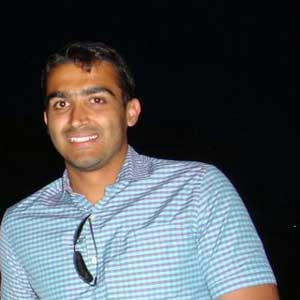
  • Anirudh Rao, Legal Counsel, Infosys London, on LL.M from GWU and job at the World Bank

    Anirudh Rao, Legal Counsel, Infosys London, on LL.M from GWU and job at the World Bank

    Anirudh Rao is a London-based Legal Counsel for Infosys Limited. He graduated from University Law College, Bangalore in 2009. Thereafter he pursued an LL.M from The George Washington University Law School, Washington, DC. He joined the World Bank Group as an Associate before shifting to his current job. In this interview he talks about:

    • LL.M from George Washington University
    • Tips on SoP, scholarships, interviews with foreign law firms/companies
    • Working at World Bank Group and Infosys, London


    Our readers are mostly lawyers and law students, how would you introduce yourself?

    I am Anirudh Rao, a London based Legal Counsel for Infosys Limited. Prior to joining Infosys, I worked for the World Bank Group as an Associate in Washington, DC. I graduated from The George Washington University Law School, Washington, DC in 2010 and University Law College, Bangalore University in 2009.


    What motivated you to gravitate towards law, as a discipline and a career?

    I was keen on doing something that involved the right mix of problem-solving, analysis and creative thinking. Although it did flutter the dovecotes, the one thing I knew for sure was that I did not want to touch math with a bargepole! Having been driven towards humanities from my high school years, pursuing a degree in law therefore seemed to be a natural progression as a career choice for me.


    Please tell us about your time at University Law College. What experiences during these five years would you think particularly helped you shape as a law professional?

    I attended University Law College (ULC) from 2004 to 2009. One of the key advantages I felt about attending ULC was that it allowed me adequate time to participate in moot court competitions, contribute to law journals and gain practical knowledge through internships. At the end of each semester during the course of my degree I interned at both law firms and companies, and during the year I was able to leverage my research skills to write papers that eventually got published in both print and online law journals. It was these experiences that helped bring a lot of perspective in to what I wanted to do as well as shape my career as a lawyer.


    What was the decisive factor that prompted you to choose George Washington University Law School from the plethora of options available? Did you always have higher studies in your mind? If not, what motivated you to go in for the same?

    I always wanted to be able to savour the experience of being an integral part of a multi-cultural, ethnic and linguistic class of creative and persevering minds from around the world sharing more than just the need for scholarly advancement.

    Washington, DC being the seat of power of the US government and major international organisations is also a cosmopolitan center for international commerce and business. I felt being in DC and attending GWU located in the heart of DC would put me at a distinct advantage to expand my professional network. I was also awarded the Thomas Buergenthal Scholarship on the basis of academic merit which covered my tuition for a semester.
     

    anirudh-rao-2

    Would you suggest having a brief work experience before applying for LL.M.?

    I had no work experience when I went to pursue an LL.M. Personally, I have no regrets looking back at my decision because it did not impede my career progression. However, I also recognise that having some work experience certainly helps in building perspective on taking a decision regarding the preferred area of study and shaping one’s career path.


    How did you structure your SoP? Please share some tips for a successful application. What according to you is a good profile for securing scholarships & funding?

    I don’t think I was alone in writing the first draft of my SoP and feeling like I got it wrong. A law school receives hundreds of applications and the evaluators are tasked with the arduous responsibility of reading all of them. What one needs to avoid is stating the obvious, being extraneous or generally lacklustre. A strong opening paragraph will keep the evaluator’s interest to read the rest of the SoP with a positive mindset.

    With regards to scholarships and funding, I feel that having the right mix of consistent academic performance with moot court achievements, publications and internship experience will be able to propel applications further. Highly ranked universities look for more of well rounded CVs; highlighting any outstanding sporting achievements, social volunteering and/or any other stellar achievements goes a long way in securing coveted seats and hopefully scholarships to go with it.


    Please tell us about your time at GWU. Was it difficult for you to adjust to a US based education system? What differences did you find in the educations system of India and US?

    GWU Law School was a fantastic experience. The faculty ranged from a former judge in the International Court of Justice, a former Register of Copyrights to subject matter experts who have testified before the US Congress. My campus life ranged from attending socials, intramural and intercollegiate sports, live music concerts and town hall meetings. My fellow students were from 30+ different countries around the globe; people ranging from former judges to a South Korean guard who previously manned the De-Militarized Zone between the two Koreas. It was a perfect opportunity to make lasting friendships in the legal fraternity across the globe.

    The LL.M program at GW is designed to allow international students to settle into the US learning system through specific coursework and breakout sessions; as such, it was not difficult to adapt to the changed circumstances. I was also fortunate to have great professor-mentors.

    Education systems in India and US are as different as chalk and cheese. As one would expect, classes were interactive rather than lecture based which meant one would have to go prepared to class. The culmination of the course at the end of the semester did not always end up in taking a routine exam to regurgitate what one had memorised through the past months. We had a repertoire of assessments including presentations, research paper submissions and theses. Students were also graded on the quality of interactions in class through the semester.


    How did your induction into the World Bank Group as an Associate take place? Were there any interviews or selection processes?

    The World Bank is located next to GWU Law School in Washington, DC. In fact, I took classes where I would look out the window and dream about crossing the street and working there after graduating! The US economy hadn’t fully recovered from the recession in 2010, jobs were few and far between; being based in DC certainly played a major role in securing a job at the World Bank. I would show up at World Bank hosted events and spent considerable time and effort networking with officials and engaging in conversation about their work while expressing my willingness to collaborate with them in their projects.

    Initially I was offered a short term contract. I continued to network which eventually led me to the Head of Operations and Business Strategy at the Global Environment Facility (GEF) who requested me to apply for an advertised posting through the World Bank’s job portal. Few weeks later I was called for a formal interview that was lead by a panel of four. I was asked questions about my background, competencies and how I would be a fit to the role. I came out feeling positive about my answers, a few days later, I got an email from then offering me a full-time staff position. My time there was exceptional, one experience that stands out for me was a project mission to Liberia and travelling across the country to pristine Lake Piso along the border with Sierra Leone to oversee a land degradation project.


    Currently you work as a Legal Counsel at Infosys, London, UK. Which events led to your induction into Infosys, London? How did your appointment take place?

    I was introduced to the then General Counsel of Infosys, through a friend, whom I later met at a World Bank hosted event in Washington, DC. I was looking to transition to the private sector and we discussed briefly about my interest in a contracts and commercial transactional role that Infosys was looking to fill. I wanted to have the benefit of a multi-jurisdictional profile and felt that crossing the Atlantic over to London would exemplify a vibrant work experience. After a round of interviews in Bangalore and working there for a year, London has been home to me and I am thoroughly enjoying it.


    What does your current work profile at Infosys consists of? What is a typical workday like? Are there new challenges everyday or has work settled into a predictable pattern?

    My profile is that of a commercial transactions counsel with a responsibility to lead negotiations, draft and review contracts for the provision of IT services and deliverables. I work with a vast array of customers both in the UK and in continental Europe across industries including but not limited to finance, retail, energy and utilities and manufacturing.

    A typical work day includes liaising with internal teams, negotiations with clients and assisting the business with both contracts and compliance related legal support.

    Everyday brings with it a new set of challenges and that is the way it should be to keep oneself intellectually stimulated.


    Tell us a bit about work culture in UK. Would you say that there exists a difference in the working environment of UK and USA?

    Both the UK and the US in general are very accepting and cosmopolitan societies to expatriates. I felt that differences between the UK and US’s working culture revolves around communication styles, sense of humour and emotional expressiveness. Especially while working in a client facing role as a lawyer where one gets the opportunity to work with people across cultures, I think it is critical to pay attention to one’s surroundings and take ample time to reflect on other people’s behaviour as well as one’s own.


    Can you give us advice on applications and interviews, especially with foreign law firms/companies?

    When applying to foreign companies and organisations, students are competing against local graduates who by no means are in short supply both in terms of quantity and talent. It is especially crucial to stand out and exceed expectations. The humble resume is expected to tell a student’s story in one or two pages and may be able to open the first door. One can benefit from getting their resumes peer reviewed for substance and consistency. Interviews can be daunting, however, one must manifest hunger, drive and confidence to convince why they are the right fit for the job.


    Any plans to come back to India?

    No fixed plans yet. There is an excitement in playing it by the ear. But who knows what the future holds!


    Aside from work, we understand that you are a running enthusiast, can you tell us more?

    Running gives me a nonpareil high and is also a stress buster. I started running long distance as a student and haven’t looked back since. I run both for pleasure and competitively. The two personal triumphs that stand out for me are the Auroville Half Marathon in Pondicherry in 2014 where I finished in the top 10% with about 500 runners competing and the Coorg Escapade half marathon also in 2014 where the relay team that I led finished third overall. The former was a trail run in the wilderness starting before sunrise in low visibility and the latter was a challenging high gradient uphill trail run in a tea estate setting with twists and turns across waterfalls, streams and green pastures.


    What are the three activities on a scale of priority, you would recommend?

    It is important for students to carve out an individualistic identity. At the same time, one should not forget to enjoy one’s time as a student. Personally, I benefited greatly from the following activities:

    1. internships
    2. law review publications and
    3. moot courts.


    Lastly, what would be your parting message for our readers?

    In the words of Muhammad Ali “He who is not courageous enough to take risks will accomplish nothing in life”. Getting cocooned in a comfort zone is always easy but getting off the beaten track and persevering will always pay off, sooner or later.

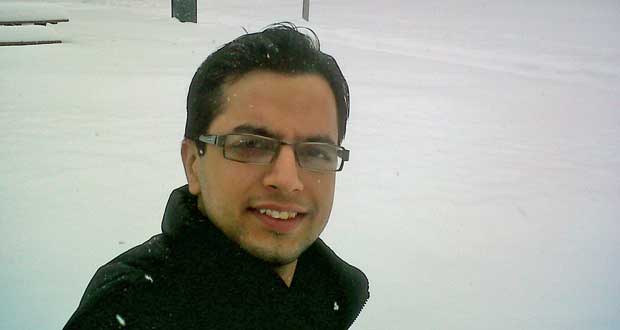
  • Amit Sachdeva, Associate E&Y, USA, on double-LL.M from LSE and NYU and being a noted tax practitioner

    Amit Sachdeva, Associate E&Y, USA, on double-LL.M from LSE and NYU and being a noted tax practitioner

    Amit Sachdeva completed his BA.LLB from GGSIPU after which he went on to pursue an LL.M in Corporate and Commercial Laws. On the successful completion of his degree he worked with Vaish Associates. Thereafter, he pursued his second LL.M from NYU. At present he works an associate at Ernst & Young, US.

    His two most cherished achievements are: successfully taking the Diploma in Private international Law from the Hague Academy of International Law – one of the youngest to do so since 1950 and one of the four in India to have it; and getting recognised in Legal500.com and in Tax Directors’ Handbook as an “up-and-coming lawyer who specializes in tax litigation”.

    In this interview with Amit, he talks about:

    • Completing his bachelors in law from GGSIPU.
    • Being a part of the LSE curriculum as an LL.M student.
    • His working days at Vaish Associates.
    • His Diploma in Private international Law from the Hague Academy of International Law – one of the youngest to do so since 1950 and one of the four in India to have it.
    • His experience of studying at NYU, from where he did his second LL.M.
    • Working at Ernst & Young Associates, USA at present.


    Say Hi! to our readers!

    Hello! I am Amit Sachdeva. I was born and brought up in Faridabad, a suburb of New Delhi. Currently, I work as an M&A Tax attorney at Ernst & Young US. I am an alumnus of GGSIPU, LSE and NYU.


    What motivated you to gravitate towards law, as a discipline and a career? Why did you decide to study law at GGSIPU?

    Law for me was a natural career choice. My father, Mr. Madan Lal Sachdeva, was an advocate. I idealize him. I was always inspired by the respect he commanded in the society, by his ability to reason everything and by his natural passion—which was professionally crafted—to defy “aisahi hotahai” (this is how it works) attitude. These early childhood impressions took full shape when I began to realize the difference a lawyer can make to the society.

    While in Class XII all my friends were aspiring to be doctors, engineers and chartered accountants, I wanted to something that was intellectually stimulating, financially rewarding and socially empowering; something that was constant and dynamic at the same time, something that needed patience and excitement simultaneously. Law was like a perfect blend!

    GGSIPU, in 2002, was the only law school in New Delhi that offered a law course straight after high school. I didn’t want to move out of New Delhi—that’s the place we have the Parliament, the Supreme Court and the Ministries. I thought there couldn’t be a better place to study law than in New Delhi. And, as I reflect on it; I don’t disagree.


    Please tell us about your time at GGSIPU. What experiences during these five years would you think particularly helped you shape as a law professional?

    GGSIPU School of Law and Legal Studies was a treat. My experience was very fulfilling. The fact that ours was the second batch had its own challenges and fun. The challenge was that we had to steer our own way. And the fun was exactly that. There is no better way of learning than pioneering. Each day was an experience. Classroom discussions, moot court competitions, summer internships, cricket matches, canteen time, all of them had a part to play in how I got shaped. I think GGSIPU was an experience in itself.


    You have been an outstanding student throughout your school and college years. It’s not every day that someone achieves an academic laurel in each year of school! Please give us a few actionable tips on managing good grades.

    Well, I think there is no mantra to good grades. Quite honestly, I think while grades aesthetically matter, it is the passion for your work that matters more. If you ask me for a tip, it will be this: try to understand a rule for a lifetime, not commit it to memory for an exam. There is a reason behind why a rule is what it is. If you try following the reason, law school exams are not hard to score on.


    Soon after graduation, you went on a full tuition scholarship to London School of Economics and Political Science for an LL.M in Corporate and Commercial Laws. What was the decisive factor that prompted you to choose LSE from amongst the options available?

    As I grew up at law school, I realized the relevance of a fuller education and an international experience to our profession. It was in the early part of the fourth year of law school that I decided to apply for an LL.M. degree. Of the various options, the ones that I was seriously considering were Oxford University and LSE. Although Oxford has an impeccable legal tradition, I decided to join LSE primarily for the very reason I got drawn to GGSIPU five years ago: what better place to study law than the capital city. LSE is in London. Besides, LSE also has, I think, a better reputation for corporate, commercial, and international business laws than Oxford does. Of course, there is an element of subjectivity around it. But that is what I thought. The other reason was that Oxford offered me a partial-scholarship; LSE, a full. I didn’t apply to any law school in the US.


    What should one do differently in college if he/she wants to pursue higher studies after graduation? What according to you is a good profile for securing scholarships and funding?

    Following an LL.M straight after school, or spending a little time at work and then pursuing a master’s degree, is really a matter of personal choice. A lot of factors play in, such as availability of finances, family commitments, etc. Having pursued an LL.M directly after school and then another one after some work ex, I would second that work experience does put a lot of things in perspective.

    As far as admissions are concerned, I think finding an admission in a top LL.M program is hard. And, finding a scholarship is harder. I think the trick is to demonstrate two things. First, an all-round personality and, second, a commitment to the field you want to pursue. Participating in moot court competitions, debates, mock parliaments, summer internships, besides good grades and writing articles should go a long way. Publications are often viewed as synonymous with academic excellence and commitment. A handful of international publications and I think you jump the queue of applicants for a place at a top LL.M program. I must however hasten to emphasize that a reviewer spends a few minutes reviewing a case for a scholarship. So, if you get one, thank your stars; if you don’t, there is no reason to be disheartened… the decision may not be a reflection of your potential. There is just no exact science out there.


    amit-sachdeva-3

    Please tell us about your time at LSE. Tell us about the academic pressure, faculty and campus life. What differences did you find between the education systems of India and the U.K.?

    The UK system is as close to the Indian as it can be. An overwhelming majority of our statutes and court decisions are based on or drawn from those of the UK. So, adjustment was not much of an issue. What was however a surprise—a pleasant one of course—was to first-hand experience the level of legal scholarship. I had the opportunity to be a student of some of the most respected scholarsacross the globe. Prof. Paul Davies (author of Gower and Davies, Principles of Company Law), Prof. Trevor Hartley (Private International Law) or Prof. Christopher Greenwood (since appointed as Judge, ICJ), the list is endless; they are scholarship-personified. I think the Indian education system needs two things—sincerity and funding.


    Meanwhile, you were also awarded a Diploma in Private International Law from The Hague Academy of International Law. How did you go about achieving this? Please tell us about the procedure to apply and the course.

    Yes, and I was also one of the youngest persons in the world to achieve this feat since the Diploma was incepted in 1950 and one of the only four Indians to hold this Diploma.

    Every year The Hague Academy of International Law organizes a summer school. The school has two sessions: one in Public International Law and the other in Private International Law. The sessions are taught by some of best professors and practitioners in the world. Each session attracts about 300 students. The applications are announced on their official website. Based on the performance of the students, some of the students sit for the Diploma exam. Although there is no cap, roughly about 10 students take the exam each session. There is a written test and then take an extempore oral test on a topic of international law. This is followed by the panel interviewing the student with questions, some related and some unrelated to the assigned topic. At the end, one or sometimes two students are awarded the Diploma.


    After coming back to India, you started your career at Vaish Associates. How did your appointment take place? Please walk us through your work profile.

    I joined the Direct Taxes team of Vaish Associates in September 2008. I had emailed the HR there. Vaish was one of the most welcoming law firms I came across. They acknowledged my email—something we don’t see too often. I had two rounds of interviews. After the interview with partner I was extended an offer to join their tax litigation team. I grabbed the opportunity.

    As a member of the tax litigation team, I attended client meetings, drafted petitions and appeals, appeared before tax officers and represented matters before the courts. I had the opportunity to handle work for many of the Fortune500 companies. In my first year, my work was more domestic tax focussed, but as I spent more time with the practice, international tax occupied my plate more and more. My partners often engaged me on assignments that involved intensive research into dense regulations, engagements that required knowledge and understanding of laws other than tax law, and matters that challenged constitutional validity of tax statutes. I handled a large number of writ petitions challenging the validity of reassessment proceedings. In addition, I would write tax opinions for our clients and render other advisory services.


    Tell us what did you like the most about your days at Vaish Associates.

    I had some of the best time of my life at Vaish. I worked long hours, made great friends, learnt tax law and partied. Besides, I helped the firm organize conferences, published papers, conducted team trainings, etc. It was a wholesome experience. What I liked the most about the place was the open-door policy. This meant that professionals at all levels, starting from associates and all the way up, had full access to all the partners at all times. Mr. Ajay Vohra, Mr. Rupesh Jain and Mr. Neeraj Jain personally ensured that this work ethic percolated all the way down. Mr. Rupesh Jain continues to be my mentor. I do reach out to him even today for discussions—both at personal and professional levels.


    amit-sachdeva-2

    In 2013, you were noted in Legal500.com and in Tax Directors’ Handbook as an “up-and-coming lawyer who specializes in tax litigation”. How did you feel about it?

    “It must be a misprint!” were the first words that I uttered when a colleague of mine at Vaish Associates came to my desk and broke the news to me. I had no idea about it. There was no application process … no submission … no request from my side. I understand that Legal500 and TDHB undertake an independent survey of the market and clients, and report their findings impartially. Once it sank in that my name was noted, I was overwhelmed. On the lighter side, I continue to believe that it was a misprint! By far, this and The Hague Academy Diploma are two achievements that are closest to my heart.


    You were briefly a Visiting Faculty at NLU, Delhi where you taught a semester-long Certificate Course on Direct Taxation. How did you manage to eke out time?

    I have a passion for teaching. I have always wanted to be an adjunct professor. NLU Delhi offers semester long certificate courses. I think these students were some of the most self-motivated ones I have come across. In order to accommodate my professional commitments, my students sometimes sat in classes starting 9 in the evening and going well past midnight. One weekend they travelled all the way from Dwarka to the Vaish office in central Delhi. I think they managed, I did not. All I did was: talk! If any of my former students is reading this interview, I want to say: thank you!


    You left your job to pursue a second LL.M. degree., this time at NYU. Considering that you had already earned an LL.M degree, what prompted you for this?

    My first LL.M was in Corporate and Commercial Laws. But, as it turned out I began practicing tax law. So, the primary motivation was to understand the theoretical underpinnings of the rules I invoked so often in practice. I always believed that there is much to learn from the US and the UK systems, and knowing their laws would boost my practice. Besides, I also wanted to develop an international network of professionals working in the same field as I was. So, that led me to apply for another LL.M. I already had an LL.M. from the UK, I decided to cross the Atlantic and try my luck at some US universities. With God’s grace, I was offered an admission with a scholarship I couldn’t turn down. My mother and my elder brother supported my decision to go.


    Currently you work as an Associate at Ernst & Young, Houston, USA. Which events led to your induction into EY, USA?

    NYU School of Law makes a significant investment in its careers office. There are a couple of job fairs that NYU organizes. The careers office also invites employers from across the country to the law school to interview NYU students. I applied for a number of job interviews, had call back interviews with a few. EY Houston office had also participated in one such interview program. I had a telephonic interview followed by an on-campus interview, and a round of four interviews during office visit. Shortly after the office visit, I was offered a position. The entire recruitment process spanned over three/four weeks.


    What does your current work profile at EY consists of? Share with us a few of the most challenging problems you have faced thus far?

    I work with the M&A Tax team at EY. My practice entails conducting tax due diligence, writing tax memoranda and tax structuring. Typically, a tax DD is like a health check-up from a tax perspective. Tax memoranda are a narrative of what the legal position on an issue is. Tax structuring, which is my favourite, involves informing clients of the different structuring options in which a transaction may be done.

    The complexity of the US tax law is the most challenging part of my work. But, that is also the part I enjoy the most about my practice.


    Tell us a bit about work culture in USA. How is EY, USA different from an Indian company/firm in terms of their working?

    I think as we brisk walk more into this millennium, our practices, behaviours, languages, cultures, ethics are converging. I don’t see too much of a difference between the work culture in the US and India. My friends and colleagues who work EY India endorse this. My personal experience at Vaish was no different.


    Lastly, what would be your parting message for our readers?

    Law School is perhaps the best time one can have in a lifetime. Enjoy it to the fullest. At the same time, be mindful of your goals, and of what you want. Also remember that lawyers are never out of work. If the economy is doing well, there is more corporate activity like M&A, IPOs, project finance, etc.; if it slows down we get involved in a different type of legal work like distressed debts, reconstructions, hedging, asset management, etc. The problem is that our education system focuses so heavily on traditional legal courses, and so little on these more modern ones. My suggestion would be that students should focus on these areas too.

  • Ajay Chandru, Associate, Nishith Desai Associates, on LL.M from George Washington Univ and specialising in IPR

    Ajay Chandru, Associate, Nishith Desai Associates, on LL.M from George Washington Univ and specialising in IPR

    Ajay Chandru graduated from GNLU in 2009 with a B.Sc.LL.B. degree. During his days at GNLU, he attended various summer schools including George Washington University Summer Program, Munich, Franklin Pierce Summer Program, Cork, Ireland, Intellectual Property Summer Program, Macau, World Intellectual Property Organization’s Summer program at Bangkok, Thailand. Soon after graduation, he joined Lakshmikumaran & Sridharan as an Associate and worked there for two years. Thereafter, he went on to pursue Masters in IPR law from George Washington University. Currently, he works as an Associate at Nishith Desai Associates.

    In this interview, he talks about:

    • Summer schools during under-graduation
    • Work experience at LKS
    • LL.M experience at The George Washington University
    • Induction and work at Nisith Desai Associates


    What brought you into studying law? Was it fate or planned?

    I had taken up Science as my stream in eleventh and twelfth standard. Like all science students I followed the herd and joined coaching classes for IIT. However, I and my parents realised after my coaching class IIT test results, I was definitely not cut out for IIT. My dad then spoke to the director of HR at his company to discuss what will be the most in-demand professionals in the next five to ten years. One of the professionals in demand he said would be corporate lawyers.

    I had no clue at that time what corporate lawyers were. I actually wanted to be a pilot and was keen on going to flying school but I realised while looking at the job market in India for pilots back in 2004 that it was not practical. I then googled for the best law schools in India and then I came across the ever so misleading India Today rankings.

    I also came across Law School Tutorials (“LST”) and started solving the entrance exam papers, I found it very easy as compared to IIT entrance exam papers, so I thought law entrance exam would be pretty easy to crack. I used to solve the law school entrance papers even in my free time because I especially loved the General Knowledge section. My Mom thought I was spending too much time in solving these papers and not focusing on my twelfth exams, so she hid the LST prep material and did not give it to me until two weeks before the law school entrance exam. In conclusion you can say that me being a lawyer was a mix of fate and plan.


    Did you take part in moots when at GNLU or indulge in academic legal writing?

    I was never an avid mooter. However, I did take part in a couple of moot courts. I was always focused on Intellectual Property Rights law since the first year of my law school. I never bothered to concentrate on a moot court which was not related to Intellectual Property Law. I think it was in the third year that we first had an internal moot on an Intellectual Property Law issue. I took part in it and actually topped the whole law school in that internal round.

    Looking back, I do feel that I should have taken part in more moot court competitions, especially the international ones because they give you a lot of exposure and you do hone your oral and drafting skills.

    When it came to writing I did end up writing some articles on the subject of Intellectual Property Law. I do think writing academic articles is important. However, it has to be done the right way. The article should contribute or develop the existing legal jurisprudence on a particular subject. Articles should not be written just for the heck of putting that in a resume. It can actually backfire against you. All the big law firms and even companies have started asking for writing samples or published articles for recruitment purposes. It is very easy to identify the quality of the article by briefly reading it on the first go itself. Plus, if you have written an article on a subject, it is presumed your fundamentals on the subject including the leading case laws are within your knowledge off hand.


    During your days at GNLU, you attended various summer schools. What was the reason behind pursuing these programs?

    I attended George Washington University Summer Program, Munich, Franklin Pierce Summer Program, Cork, Ireland, Intellectual Property Summer Program, Macau, World Intellectual Property Organization’s Summer program at Bangkok, Thailand. All these Summer Programs were on the subject of Intellectual Property Rights. I pursued these summer programs mostly from an academic standpoint. It also helps from a recruitment point of view as it shows that you have command on the subject.


    How do you think such summer schools are beneficial for a law student?

    The method of teaching in these summer programs is different. They are very practical and assignment oriented, which make you think on these subjects. This kind of academic exposure I did not get in GNLU. Further, you tend to meet a lot of people from different countries with the same kind of academic mind set. This exposes you to a different kind of thinking, which results in expanding your cultural and academic horizons.


    ajay-chandru-2

    Right after graduating, you joined Lakshmikumaran & Sridharan as an Associate where you worked for two years and then went for LL.M. Why did you decide to go for higher studies?

    I honestly wanted to go for my LL.M right after college. However, I realised it made more sense to go for LL.M after gaining some work experience because I would have a better grasp on the subject by then. This was important, if I wanted to make the most out of my LL.M. Also, work experience gave me a different practical perspective of the subjects I undertook in my LL.M. I ended up taking a lot of practical and very specific interest oriented subjects within Intellectual Property Law and did not undertake a lot of foundation courses on Intellectual Property Law, as I was already familiar with fundamentals on the subject.


    Tell us something about your LL.M year at The George Washington University. How did this influence your career?

    It was an exciting and probably one of the best years of my life. I did study a lot because I was genuinely interested in the subjects I undertook. I did also party a lot I have to confess. Plus, the LL.M programmes are structured in such a way that you so many events to party and most of which are actually funded by the Student Bar Associations of the college, this is apart from the partying that you would do with friends.

    I think if you want to pursue LL.M in Intellectual Property Law, George Washington is the best place to study. One, because of its reputation in Intellectual Property Law and second, is because of its location in Washington DC. The Federal Circuit Court (the appellate court for patent matters), USPTO, the US Copyright Office and the Supreme Court are all located in Washington DC. Because of this most law firms and institutions dealing with Intellectual Property have a presence in Washington DC. This gives George Washington unparalleled access to a lot of resources including excellent part time lecturers.


    Do you think it makes sense to students to go overseas to study law when they want to work/practice in India?

    Honestly, I don’t think so. If you are thinking of doing an LL.M from overseas just to get a job overseas, it’s a bad idea. You need to have a genuine interest in the subject that you want to focus on. The chances are pretty slim that you will get a job overseas. It might be still possible to get a job overseas but the question is what kind of job you want to do. If you have worked in a law firm in India and worked on high profile litigations and transactions or a law firm in India is giving you that opportunity then would you want to do work for a contract management firm or discovery firm overseas, if you are okay with doing this kind of a job chances are you might ending up getting a job overseas, if you try.

    However, what an LL.M does is irrespective of your job prospects, the exposure that you get in an LL.M when you make friends and hang out with people from different countries is extremely invaluable that can’t be quantified by any amount of money. This exposure makes you so culturally aware and shapes your personality, which is very important in your professional careers.


    You have also worked as an intern at Boehmert & Boehmert, Germany. What kind of work did you come across?

    Boehmert & Boehmert, Germany is a law firm specializing in Intellectual Property Law. The kind of work I came across was patent prosecution, trademark related litigation research, European Pharma regulatory research work and trademark prosecution work.

    Working in a German law firm is very different than working in an American or Indian law firm. The working atmosphere was very relaxed. People generally never stayed longer than 6.00 p.m. in the firm. However, people did not waste a single minute while working in the office. The efficiency of the associates, interns, secretaries and paralegals in time management was extremely good.

    The interns in the law firm were treated almost like associates. We had our own cabin and even secretaries assigned to us to help with the backend work and you directly reported to a partner and the work was assigned to you by a partner and not an associate. The responsibility that you are given is also equivalent to an associate. In this way it was completely different than an internship in an Indian law firm.


    You are working as an Associate at Nishith Desai Associates. Tell us about the nature of work you’re entrusted with therein.

    At Nishith Desai Associates (“NDA”) I primarily focus on Patent prosecution, Intellectual Property litigation, Intellectual Property centric transactions, Pharma regulatory litigation, General commercial law litigation and General Commercial Law related documentation.

    At NDA we have 70:20:10 philosophy; wherein you need to spend every year 70 percentage of your time in your core area, 20 percentage of your time in related core area and 10 percentage of your time in an entirely non-related core area. So I do end up doing work, which is not related to Intellectual property law.

    NDA being a research oriented firm, a substantial amount of my time is also spent on drafting research articles and hotlines that get circulated to the NDA external mailing list or get published in national and international publications.


    ajay-chandru-3

    How do you say one can gain expertise in IPR? What does it take to be a good IPR lawyer?

    The first and foremost thing you need to decide if you want to gain expertise in IP is whether you are genuinely interested in the subject, does it excite you, does it make you want to read more and gain knowledge in the subject. If the answer is yes, then you should decide to gain expertise in the subject. As, a student the best way to again expertise in IP would be to intern with a law firm specializing in IP. I think this is one of the best ways of gaining exposure and experience on the subject and it also increases your chances of recruitment. Another is attending summer programs to gain exposure and to have comparative understanding of the subject, which is very helpful as it gives you a broader perspective on the subject. You should also be abreast with the latest development in the subject area by reading blogs and major case laws on the subject.

    To be a good IP lawyer, you need the same qualities as any other lawyer. However, it does help very much if you have an inclination to understand and better grasp the fundamentals of science especially if you want to do patents. Plus, if you have science degree even if from National Law School such as GNLU you are eligible for giving the Patent Agent Exam in India. Having this qualification is also very helpful, if you want to focus on patents.


    Nishith Desai Associates takes on interns as well. What do you feel makes an intern stand out and is very important for him to do to have a chance of getting a call back or even a PPO?

    Interns at NDA generally work across teams. So it is important to have a mindset where you are open to work across subject areas. You should be able to work anywhere, be it in Intellectual Property or corporate or tax or litigation. Dedication to your work, time management, meeting deadlines and consistency in the quality of work are also important. In addition to NDA being a research oriented law firm, we also look for good drafting and analytical thinking skills in a potential recruit. Analytical skills are essential; for example, if you are drafting an article on the latest case law, you need to understand the broader implication of the judgment on the jurisprudence and the industry and your critical analysis of the judgment.


    Is there any success mantra that you follow which you would like to share with our readers?

    I think be it any field or any kind of work, according to me, if you need to be successful, dedication, hard work and time management are the most important. You can’t achieve success without possessing any of these qualities.


  • Ankit Sinha, Associate, Juris Corp, on LL.M from QMUL, and work experience in Banking and Finance Laws

    Ankit Sinha, Associate, Juris Corp, on LL.M from QMUL, and work experience in Banking and Finance Laws

    Ankit Sinha is one of the most diligent and illustrious scholars of the 2012 batch of School of Law, Christ University. He has a noteworthy academic record as he ranked in the top 5% of his batch during his college years. He had always planned to pursue Masters since his days in law school and therefore soon after graduation, he went on to pursue Masters in Banking and Finance Law from Queen Mary, University of London. After coming back to India, he started working at Juris Corp and is currently working as an Associate there.

    In this interview, he talks about:

    • Law school experience at School of Law, Christ University
    • LL.M experience at Queen Mary
    • Induction and work at Juris Corp


    How will you introduce yourself to our readers?

    The first question and I find myself lost for words. As human beings, it’s always so much more difficult to talk about yourself. Nonetheless, I’ll try. I come from a family of lawyers, tracing back to my great grandfather. I have lawyers on both my paternal and maternal side. Safe to say it didn’t take me long to fit into the scheme of things and the offerings of this profession. Outside the field of law, I’m like any other mid twenty year old- I love playing sports. I am a diehard Manchester United fan. In my spare time I love listening to music and am also an amateur photographer. I also sing and play the bass guitar.


    How did you gravitate towards law? Why law and not engineering or medical studies?

    Law wasn’t my first choice. Surprisingly, neither was engineering or medical. I loved Economics as a subject whilst I was in school. Unfortunately, as much as I loved Economics, I had an aversion towards Mathematics. Post my 12th board examinations, and once my results were announced, given that my result in Mathematics wasn’t good enough to secure a place in any Delhi University College, I decided to pursue law for a year. My father wasn’t okay with me dropping a year. My sister was pursuing law at the time, and hence I decided to follow suit.

    I appeared for a few entrance examinations, and landed up at Christ College. Within the first few years at law school, I had, during various internships, worked briefly in the field of Banking and Finance. I saw glimpses of Economics in banking and that’s where I developed my love for the subject. So much so that I went on to do my Masters in it as well. Was quite a journey from not wanting to do law, to ending up with a Masters in it.


    Tell us about your law school experience. Share some highlights from your college days that shaped you as a lawyer.

    Five years is a long time. I made some of the best friends and have some of the best memories of my life attached to law school. Like most teenagers, going to law school away from home meant freedom for the first time. Living alone and fending for yourself. In this profession, somewhere down the long winding path, you’ll find yourself stranded and alone. My five year stint at Bangalore made me independent. It made think on my feet. It made me realise that knowing that a problem exists isn’t good enough. Finding solutions was the key. Even today, the fact that I spent those years away from home, away from my parents, made me stand up on my feet. It made me see the world from a different viewpoint. I honestly believe one cannot learn the law, one can only prove to be prudent enough to find it. I developed my research abilities throughout my five years at law school and during my internships.


    How did you fare in your academics at Christ University? Would you say a great CGPA is a necessity to kickstart a good career in the legal profession?

    I ranked in the top 5% of my batch during my years at Christ College and subsequently ended up with a merit during my Masters. So safe to say I was good at studies. If it matters to kick-start your legal career, well, it does to some extent. Most law firms prefer students who excel in studies as it depicts sincerity. It’s not the only criteria, but it may help you land at interview with a prominent law firm. Once there, if you’re good enough, consider the battle won.


    Which subjects did you enjoy during your qualifying degree? What about co-curricular activities?

    Economics and Banking law! I didn’t so much so as have an iota of doubt in my mind that I wanted to pursue a career in Banking. I wasn’t interested in mooting to be honest. I spent a lot of my time playing cricket and football for the College team. In my 4th year I was appointed the convenor of the sports committee and I’m proud to say that under my stewardship, Christ College won its first ever law school sports fest when we visited NUJS, Kolkata that year. I was also an avid counter-strike fan and had the opportunity of being a part of the gaming team at Christ College as well.


    What was your motivation behind pursuing LL.M. right after your under-grad? How did you finally decide that you need to do masters?

    In my 2nd year itself I had made up my mind that I wanted to pursue my Masters in Banking and Finance. I had done my homework on the best Universities in UK for an LL.M. in Banking and Finance and had already sent across my applications by mid 4th year. Throughout law school I worked towards the requirements that each of the 5 colleges I had narrowed down on, stipulated, for an entry into their Banking and Finance programme.


    How did you choose Queen Mary, University of London over others? How did you go about choosing a university?

    I applied to five Colleges. Four of them were Colleges affiliated to the University of London. Queen Mary seemed to have the most concrete Banking and Finance programme and it fit my needs perfectly, making the final decision relatively easy.

    As a heads up to those who wish to pursue higher studies, make sure you do your homework. Rankings are attractive, but there’s a lot more to a Master’s abroad than just that. Don’t blindly follow the herd. Some colleges have better programmes than others. It’s important to narrow down the best Colleges as per your specific needs, the programme you wish to pursue and the professors conducting the relevant modules you intend to take up.


    How did you go about writing your SOP? Are there any key factors which one should keep in mind before writing the SOP?

    A statement of purpose is the driving force behind why you wish to undertake a specific programme at a specific College. It’s not meant to be a glorified version of your curriculum vitae. Keep it short and simple. Avoid flowery language. No one is judging your creative ability. Most College websites abroad specify the length of an ideal statement of purpose. Stick to the word limit. Also, and most importantly, if you intend to apply to more than one College, avoid writing a common statement of purpose. Each statement has to be specific to the College it is intended to be addressed to, keeping in mind the programme they are offering.


    How about recommendation letters? Who all recommended you to pursue LL.M?

    Two professors that I always admired at law school were more than willing to write a letter recommending me. Needless to say, one of them had taught me Banking law. If you’re planning to do a Masters, make sure at least two of your professors admire you.


    Tell us something about your LLM year at Queen Mary, London? How did this influence your career?

    It’s a different ball game altogether. In India the education system mandates that one learns the law instead of learning how to find and apply it. At Queen Mary you’re not expected to know the law, you’re expected to find answers to queries and apply the law as per the given situation at hand. This helped me immensely when I joined Juris Corp. I may not always know the law, but I know where to find it on most occasions and how to apply it appropriately.


    ankit-sinha-2

    What was your topic of research for LL.M? Why did you choose that subject for research?

    My dissertation was titled “Electronic Banking: Boon or Bane?”. During my stay at the United Kingdom I noticed how everyone would just book products online. No one really took the pain to go to a Sainsbury’s or a Tesco’s. Not during the winters at least! That’s how I ended up with a dissertation on electronic banking. My topic was a comparative analysis of the usage of electronic modes of banking by people in India and in the United Kingdom.


    After returning to India, you started working at Juris Corp as an Associate. How did you go about bagging this job?

    Juris Corp, as most know, has a very prominent banking practice. So the decision wasn’t very difficult. I sent in my resume and within a few weeks got a call from the HR department. That was followed by a series of interviews, some telephonic, some personal. The questions were primarily based on my LL.M. modules and my past internship experiences. Within two weeks I had landed myself a job at the firm, well before completing my LL.M.


    How was the job interview? Do you remember any of the questions asked to you? Please give our readers some tips to nail a law firm interview.

    I don’t remember exactly what was asked, but I do remember that a lot was asked from what I had mentioned in my curriculum vitae. Knowing your curriculum vitae inside out is of utmost importance! I was also asked specific questions on my LL.M. modules and my dissertation. The interviewer, who now happens to be the Partner I work under, kept taking lead from my answers while asking her next line of questions.


    How tough were the first six months at your workplace?

    Not at all! I am very lucky in that sense. I had a very welcoming and warm team. My Partner, who heads the Banking and Finance practice at the firm, is one of the most understanding and calmest people to work under. She has, from the inception ensured that I am at par with my peers. She along with a lot of others helped me during the initial few months. Within the first 3 months I was already in the thick of things. Tough is not a situation I experienced. It was challenging, but definitely not tough!


    What are your day-to-day responsibilities? What is the most challenging aspect of your job? How is the experience so far?

    There’s no set day-to-day responsibility. The only responsibility entrusted upon all of us is to ensure that we keep learning every day, widening our scope in the field of Banking and Finance and delivering to our client’s expectations.


    Your main practice area covers Banking and Finance Law. What prompted you to choose these practice areas? Please share with our readers.

    As monotonous as it may sound, I knew I wanted to pursue a career in Banking and Finance as early as 2008. Since then it’s been my dream and today I’m living that dream.


    How do you manage the workload and your personal life?

    That’s not always easy. Some days the workload is a lot more than on others. When you’re still new in the profession, the aim is to strive to be better and work hard. Having said that, once in a while your mind needs to take a break. We get Sundays and alternative Saturdays off. On those days I meet friends or go on road trips. That helps. Week days are all about work! On those few days when I leave office early, I prefer going home and watching television or listening to music.


    How do you keep yourself abreast with latest industry news and trends?

    We have internal FYI’s and bulletins circulated by all teams to help us keep at pace with the industry news and trends. In addition, on a weekly basis one or two associates make an internal presentation on the latest developments in their respective fields. All this helps keep at pace with the latest developments. I also track the Reserve Bank of India website on a daily basis. This further helps augment my knowledge in the field of Banking and Finance.


    What are the primary professional ethics you follow while at work? What has been your strategy to deal with errors and mistakes?

    There’s no replacement to sincerity. I make sure that I’m putting my 100% in every assignment entrusted upon me. I ensure I take up every task and perform it to the best of my ability. Errors and mistakes are inevitable. It makes us learn. It improves the way we think. Unless you really make a blunder, you’ll never end up really learning. Once I make a mistake, the next time round, while drafting that particular clause or opining on that particular aspect of law, I pay that much more attention to the finer details.


    Do you feel that higher education helps a person to have a successful legal career? What would be your word of advice to students who wish to go for higher studies?

    To each his own! There’s no sure shot formula to a successful career. Every individual has his or her own strengths, weaknesses and limitations. It’s best to abide by those because you know yourself best. As for me, yes the 18 month stint abroad did help me. Not just as a lawyer, but also as an individual. It made me a stronger person. More humble to my own shortcomings and towards life in general. So my advice would be, do what you think is best for you. Don’t follow the crowd. Be different, be unique, be yourself.


    What do you feel makes an intern stand out and is very important for him to do to have a chance of getting a call back or even a PPO?

    If I assign work to an intern, on most occasions I don’t expect him or her to find me the answer to my query. It’s not always a simple straightforward answer. For me what counts is the effort. If I’m convinced that a particular intern has the ability to learn and improve if nurtured, I always give him or her a positive feedback.


    The question that whether one should specialise in a particular area of law or be more of a general lawyer often comes up before law students. What is your opinion on the same?

    You must have heard the saying- jack of all trades, master of none! In this field and in my honest opinion, specialism is of vital importance. 10 years into the profession one will recognize you for the area of law you have a strong hold in. Having a forte is essential. The earlier you start, the better off you will be.


    What do you cherish most about the experience you’ve had over the past two years?

    I wouldn’t be able to pick one specific experience or moment. Every day has had its share of glimpses that are etched in my memory.


    Last but not least, what’s next for you?

    I’ve just started. It’s a long winding road ahead. Every day is a challenge. Every day is an opportunity to better yourself. The past is the past and the future is too far. I hope my present and every single day of it I have a new memory to cherish. I intend to take each day as it comes and strive to be the best at what I do. As once said by Steve Jobs- Stay hungry stay foolish!

  • Subhradipta Sarkar, Assistant Professor, ITM Law School, on research acumen and being an academician

    Subhradipta Sarkar, Assistant Professor, ITM Law School, on research acumen and being an academician

    Subhradipta Sarkar graduated from Calcutta University with a BA LL.B degree in 2003. He then specialised in Human Rights Law while pursuing his Masters at National Law School of India University, Bangalore. His internships include the National Human Rights Commission as well as the United Nations High Commissioner for Refugees. Before becoming an academician, he worked as a Law Research Officer at People’s Watch, a human rights NGO where he worked for around two and a half years. He also had the opportunity to work as a Lecturer at BILS and as Assistant Professor at MATS Law School.He is currently teaching at ITM Law School, while pursuing a Ph.D from NLSIU on Crisis/Emergency/Disaster Management.

    In this interview he talks about:

    • Specializing in Disaster Management and Human Rights
    • Working at People’s Watch
    • Being a teacher and academician


    Tell us a bit about your childhood and pre-college life as well as educational background.

    I hail from Balurghat, a small town in West Bengal. I am the only child of my parents. Incidentally, my father is a lawyer who has a long experience of practice in the District Court. My mother was a strict disciplinarian and was very concerned about my studies and future. And today whatever I have achieved, I owe a great deal to my mother’s sacrifice and tenacity during my school days. I went to a Bengali medium Government High School. During my school days, my reasonably decent academic achievements might have prompted my mother to dream of me becoming a doctor. To be honest, coming from a small town with no concept of career counselling I am not sure whether I was geared up for a career as a doctor. However peer pressure and family pressure compelled me to go ahead. Fortunately and expectedly, I failed to clear the medical entrance exams. Otherwise I could have never gotten the opportunity to study law.


    How did your interest gravitate towards law?

    I never found interest in the core science subjects even though I continued to score marks. I was more interested in debates and reading newspapers/magazines for enhancing general knowledge. I always wanted to utilise my interest in pursuing my studies. Of course, I never got encouragement from home in pursuing law despite coming from a lawyer’s background. I remember when I first expressed my wish to become a lawyer, my mother started crying. My intuition told me that I would enjoy this course and I went ahead on my chosen path. Since then, I have never regretted for that decision.


    Having graduated from Calcutta University and pursuing LL.M from NLSIU what were your areas of interest? How did you go about developing expertise and knowledge in these areas?

    My graduation from Calcutta University is B.A.LL.B. without any specialisation. However, I found interest in IPR and Corporate Law. After clearing NLSIU Entrance Exam for LL.M., I got myself registered as a Corporate Law student. While doing a book review as an assignment in Research Methodology in the first semester, accidently, I picked up Neera Burra’s book Born to Work: Child Labour in India and that changed my interest and vision altogether. This book prompted me to read more books on Human Rights. My interest in Corporate Law diminished and I wrote to the PG Council to change my specialisation to Human Rights Law. Subsequently, I went on to have invaluable experiences interning at National Human Rights Commission and United Nations High Commissioner for Refugees. Particularly, the UNHCR internship provided me with practical exposure to deal with human rights issues including interviewing Afghan refugees through interpreters. This was something I have always treasured. In fact, my LL.M. dissertation is on refugee law.


    Before becoming an academician, you worked as a Law Research Officer at People’s Watch, a Human Right NGO. How was the experience?

    Excellent. Working at People’s Watch gave me an edge which many of my counter parts in academics never got. While doing my LL.M., I wanted to work with UN agencies and for that I wanted to start in the real world with Human Rights NGOs. Professor Vijayakumar recommended me to People’s Watch. Hence, it was kind of campus placement for me. I ended up in Madurai. I was extremely fortunate to work under the guidance of Mr. Henri Tiphagne, who is the Executive Director of the organisation. He is an extremely good strategist, with superlative oratory and writing skills and one who knows the law very well. I am thankful to him for shaping my early career. I had the opportunity to work with some socio-legal issues like the STF (constituted to nab Veerappan) violence, caste atrocities, custodial violence, post tsunami relief and rehabilitation, etc. Had I not gone for that job, I would never have the opportunity to witness the actually working of law in the real world.


    subhradipta-sarkar-2

    How did you decide to go into academics?

    After working for a couple of years with People’s Watch, a few things were bothering me as I was increasingly getting annoyed at the donor driven agendas of NGOs. Secondly, eulogising hardcore criminals and advocating for their protection of human rights were somewhere pricking my conscience me as I believed that it was a partial view of the entire truth. Furthermore, I was also not visualising long term growth in my career by confining myself to Madurai as I neither had roots nor knew the local language. I was getting suffocated by work with predetermined agendas and wanted to express myself more freely and independently. Those things prompted me to leav Madurai and migrating to Bangalore to join academics. Additionally, I always felt that many teachers cared little for our issues/problems from our perspective rather they imposed theirs on us. They did not travel an extra mile in making studying law easier. I wanted to change this attitude and that is only possible if I take up teaching.


    What do you like best about teaching at ITM Law School? Which subject(s) do you teach? Which one interests you the most? Why?

    ITM is a very professional organisation. There is always a pressure to achieve more as they always push you to go further in enhancing your academic capabilities. There is academic freedom with accountability. I teach Law of Torts and Jurisprudence. This semester I am offering a course, namely, Disasters, Development and Human Rights, to LL.M. I like teaching Jurisprudence.

    This is a subject which law students generally hate and I like the challenge to make an all out effort to make them love the subject. I feel that if one can understand the fundamentals of law then understanding any kind of law will never be a problem. I am glad that every year I have been successful in influencing a bunch of students to study the issues analytically utilizing legal theories of various jurists. I even started a Facebook group called ‘Jurisprudence for Fun’ where I post many legal news and opinions. I encourage students to comment on them. I also have a Whatsapp group with students where I discuss about many legal problems outside the class hours. They help me to stay connected with them.


    You have authored various papers in many reputed Law journals. What role do publications play in the life of an academician?

    I strongly believe in the saying for academicians: ‘Publish or Perish’. This is more appropriate for law teachers and researchers. Unlike our counterparts in engineering or medicine, we do not have labs or equipments for demonstrating our research skills; and therefore, publication is arguably the best method to demonstrate our novel ideas. One example I may provide from my own experience. In 2006, I published a critique of the Disaster Management Act, 2005 in Economic and Political Weekly. This was well-taken by many and brought recognition to me because at that time very few scholars had researched in this emerging area from legal point of view. The article was even cited by the 2nd Administrative Reforms Commission in its report on ‘Crisis Management’. It enhanced my interest in the area too. Subsequently, I was asked to do a book review and write monographs in disaster management. I did my M.Phil. in the area and now I am also pursuing my Ph.D.


    What, in your view, are the few most important skills that law students should strive to acquire in order to write research papers effectively?

    Good oratory and writing skills are sine qua non for a good law student. When you write you tend to think logically in an organized manner and endeavour to make others understand and appreciate your contribution. Keep those things in mind when you write a research paper. You can write in any area of law you have interest. Just don’t write for the sake of writing or to add a line in your CV. The reason is that if you have interest in an area, you tend to undertake elaborate literature review to find the missing links to contribute. Then focus on one problem in the area and go ahead with the same. That’s the way you develop expertise. I have come across academicians who write in numerous areas – from space law to land law. They add up to their publication number list but I don’t find them in contributing meaningfully in any area and they are not considered as ‘experts’ in any of them. So limit your areas of research and expertise because that is actually feasible for most of us.


    In the meantime, you managed to pursue Master of Philosophy in Crisis/Emergency/Disaster Management from NLSIU. When did you realise the importance of an M.Phil. in your professional profile?

    M.Phil. happened to me by accident. I was involved in various field researches in post-tsunami context. At the same time, law and policy regime in India regarding disaster management was in its nascent stages. So, Prof. Vijayakumar of NLSIU advised me to put down all the work I was doing in form of academic work. I went on to comply with his advice. M.Phil. helped me in numerous ways. Besides adding an academic degree, while undertaking the research, I read significantly about various aspects which certainly enhanced my knowledge. It also laid the foundation and encouragement for further research including my Ph.D.


    At present, along with teaching at ITM Law School, you are a Doctoral Candidate at NLSIU. What made you pursue a Ph.D.?

    Most importantly, Ph.D. is essential for promotion in academics as per UGC norms. There is also a demand for good law teachers with Ph.D. Besides career advancement, I wish to make a genuine contribution in disaster management – an area in which I have developed keen interest. Moreover, there is no book available in India from the law and policy perspective. I aspire to become one of the earliest and meaningful contributors in this regard.


    What is your topic of research for Ph.D.? What was your motivation behind the selection of that topic?

    Natural disaster management and implication of international law. As already explained, I have worked in coastal areas of Tamil Nadu after the Tsunami of 2004, wrote research articles and monographs on this issue, and pursued my M.Phil. in this area, so it became an obvious choice.


    How do you manage your research for Ph.D. with your work?

    It was a bit difficult and stressful. I try to utilize the time after a day’s work. Working for few hours every day is helpful. I have certain plans to do some empirical research during the holidays of the university.


    Describe an outstanding teacher. What do you think makes this educator outstanding?

    The most important quality of an outstanding teacher is command over the subject. Essential qualities includes excellent oratory skills, ability to explain very difficult concepts in a lucid manner, approachable, good understanding of students’ psychology, and fiercely impartial in judging students’ affairs. He must be an inspiration for the students to follow in their lives. I have come across few teachers, especially Prof. Vijayakumar, Prof. M K Ramesh (both from NLSIU), Prof. Shanthakumar (my mentor), whom I consider as outstanding. May be each of them did not possess all the qualities that I have mentioned but indeed I learnt a lot of things from them and I have endeavoured to put them in practice in my case.


    Do you think students should behave with the professors like friends, or is it necessary to maintain a disciplined environment to create a good classroom environment?

    Both are important. While friendly relationship is required in facilitating the students in asking questions and clarifying their doubts without any inhibitions, maintaining a disciplined environment is also important. Students have to realize that probably a true teacher is the only person other than their parents who selflessly strive for their successful future. The only thing we look forward to in return is respect.


    What do you think is wrong with public education today?

    Where is public education? Everything has become private. Be it school or college, it has become so expensive that public cannot afford it. Despite being state institutions, even the National Law Universities charge through the roof. I would have expected the State to pump in more money in education so that more and more students from the middle class get an opportunity to get the highest quality of education. Otherwise in a wrong run, we will lose many smart brains only because of enormous educational fees.


    Also do you feel any changes need to be introduced in the current legal education system of our country? What do you, as a law professor feel has scope for improvement?

    More emphasis should be given to the component of clinical legal education in all subjects. Teachers must be given credit hours of teaching for their involvement in such activities and students should be assessed for their part in such activities. As of now, Drafting, Pleading and Conveyance, and Professional Ethics are considered as clinical subjects which essentially become taught courses. Besides, the simulation exercises are included which are not concerned with real cases. Rather, I would prefer students being attached with legal services authorities assisting the courts, consumer forums, government departments, public bodies in dealing with legal problems or even paralegal works in various fields and that would have a social impact. Otherwise, whatever we do in the law schools have no impact outside the boundaries. And if we can formally integrate them in the course curriculum, then it would not be left to few enthusiastic students but the whole student community would be involved.


    Any important things which law school didn’t teach you but ‘teaching’ did?

    Law school helped me to comprehend any legal topic for my own consumption alone but as a teacher, I have to put myself in the shoes of almost all the students including the worst student in the class. Now I have a responsibility for the performance of the entire batch.


    What are your long-term goals? What do you plan to accomplish in the coming five years?

    First of all, I aspire to complete my Ph.D. Then I would prefer to leave academics for a while and go and work in the field for any governmental/non-governmental/UN organizations dealing with disaster management. Subsequently, equipped with considerable practical knowledge, I want to come back to the classes. I guess such amalgamation of theory and practice would make my lecture delivery more meaningful and real.


    What would be your advice for law students who want to take up the profession of teaching?

    Take up teaching only if you have a passion for it. You should be prepared to learn throughout your life and study systematically for that. Well-read teachers are revered the most by the students. No part of the subject which you are going teach can be earmarked as more or less important. Students may ask you anything to quench their thirst of knowledge. Be bold to admit that you don’t have an appropriate explanation for a student’s enquiry. Come out of the class and try to find the answer. Relax, you are not God but a human being after all. Don’t try to trick the students through elusive explanations. They will soon find out the truth and paint a negative picture of yours. Remember, teaching is a unique job where you will primarily be apprised all your life by people who are junior to you in all aspects. You need to be an efficient manager to control a diverse group of students who are in the class for varying reasons. If you fail to manage the class, you will always be a failure despite all the knowledge you may possess. And never hesitate to act in just and fair way, even if it makes you unpopular for time-being, you will always gain in a long run.

  • Sheela Yadav, Law Officer, SUN Pharma, on taking out time for LL.M, work in litigation and IPR

    Sheela Yadav, Law Officer, SUN Pharma, on taking out time for LL.M, work in litigation and IPR

    Sheela Yadav was born and brought up in a conservative atmosphere, one that is not very encouraging for girls to study, but that did not stop her from pursuing her dream of studying law. Encouraged by her father, she completed her graduation in sociology and enrolled herself for the three-year LL.B course in SNDT University. Upon graduating, she started working at the chambers of Preeti Shah, and completed an LL.M alongside her work. After developing an interest in IP laws, she switched to Sun Pharma where she currently works as Legal Officer.

    In this interview, she talks about:

    • The initial experiences of her life which made her want to study law
    • Her work in litigation and experience working under Advocate Preeti Shah
    • Her current work profile at Sun Pharma


    Why did you decide to study law? What inspired you to do so? How did you get through to SNDT Law School?

    I belong to a place in North India where girls are not allowed to study much but my family gave me a chance to study. One day, the panchayat of my village gave a wrong decision in a dispute regarding division of property. The dispute was between my father and my uncle, and I wanted to say something but wasn’t allowed to, being a girl. There were many other instances like this, which inspired me to study law in order to know the rights I and other girls hold. My father motivated me to join SNDT Law School.


    What were your areas of interest during your graduation? How did you go about developing expertise and knowledge in these areas?

    During my graduation my area of interest was sociology. Being a sociology student, I had to participate in various surveys where I came to know that there are a lots of people who don’t enjoy benefits of public policies, mainly due to lack of knowledge and awareness about the same. This, again, gave me a push to study a law.


    As a law student which activities did you participate in?

    During law school, I participated in various conferences, seminars, essay competitions and workshops which enhanced my knowledge and deepened my interest in law. I have also participated and presented a research paper in the “World Peace Congress 2008” a UNESCO chair program, on the role of youth in promoting the “Culture of Peace in the World” held at World Peace Centre (Alandi), Maeer’ MIT Pune. I was also awarded for participation in Alternative Dispute Resolution project by Indian Law Institue in 2008. In 2010, I secured First Rank in LL.B. examinations in the University.


    What kind of internships did you do while you were a student?

    I have done various internships during my law school. However, the internships at Haresh Jagtiani & Associates and Divya Shah & Associates are very close to my heart. These were the internships where I majorly worked with the litigation team of the firms. These firms allowed me to understand the roots of litigation and law.


    Do you feel that there is a perception of difference among NLU and non-NLU students?

    Yes, when you are a student from an NLU, everyone treats you like you know everything. While applying for internships, college name plays a vital role. This name gives better and easy exposure to top law firms. It’s because of the kind of education and facilities there. However, in traditional universities, we have to do everything ourselves. They are preferred even when a student from a traditional university is more talented because at the first glance the employers notice the name of the college.


    After graduating from SNDT Law School, you started working at the Chambers of Preeti Shah as a Junior Associate. What kind of responsibilities you were entrusted with?

    I wanted to get experience in litigation and court procedure. I heard about her and therefore directly approached her. She appointed me in spite of the fact that I did not have any references. I have learned a lot from her. She has given me lots of opportunities to appear in court and argue matters. She is the best teacher, in a way, because she taught me the basics of post-graduation experience, guided me and supported me in my highs and lows.


    You left the Chambers of Preeti Shah and had joined Agnihotri & Jha Associates. What led to this shift? How was your experience working there?

    During my work period with Preeti Shah I found my area of interest in IPR laws and therefore shifted to Agnihotri & Jha Associates. There, I handled IP matters including application of registration for Trademark, Copyright & Design along with other litigation matters. However, this place taught me that everything that glitters is not gold.


    sheela-yadav-2

    How did you eke out time for the LL.M from Mumbai University while still working at Chambers of Preeti Shah? Please share your experience with our readers.

    As I already said, Preeti Ma’am is one of the best people I have ever met. She supported me at every stage of my career and guided me throughout. I always wanted to do a Master’s and therefore asked her regarding the same. She allowed me, supported me and encouraged me to do so. After finishing my work, she used to ask me to go and attend my lectures. She has been an angel in my life.


    Currently, you work as a Law Officer at Sun Pharma. How did the switch from Agnihotri and Jha take place?

    To get better exposure, I wanted to switch and join a new company. As far as I think, FMCG & pharma companies are one of the best places to gain experience in IP laws. I am keen user and follower of LinkedIn and one day, I came to know that there’s a vacancy in Sun Pharma. I wanted to switch and therefore applied through LinkedIn. After various procedures, I was recruited.


    What does your current work profile at Sun Pharma consists of?

    My work profile in Sun Pharma is majorly Trademark searches including drafting Applications, Oppositions, attending Show Cause hearings, Special drives, and other follow ups in the registry including Online filings.


    What has been your strategy to deal with errors and mistakes? How would you suggest a young associate to deal with them?

    The first step to deal with your errors and mistakes is to accept them and the fact that you have committed those mistakes. The next time you deal with the same or similar matter, approach it with a clear understanding of the concept and also with the mistakes committed earlier. It will increase your chances of winning.


    Tell us about a case that you are particularly proud of.

    Being an employee of Sun Pharma I can cannot disclose information about matters which are still going on. To crack a difficult case, always think from the other side and only then can one understand what difficulties are faced and how to tackle them. To prepare for a difficult case, deep study of the matter including the applicable laws and study of relevant provisions, remedies, penalties as well case laws is required. For example- if you are preparing for trademark infringement case : criteria for analysing trademark infringement required to be known viz. is likelihood of confusion about the origin of the defendant’s goods or service and the plaintiff should first show that it has developed a protectable trademark right in a trademark. The plaintiff must then show that the defendant is using a confusingly similar mark in such a way that it creates a likelihood of confusion, mistake and/or deception with the consuming public. The confusion created can be that the defendant’s products are the same as that of the plaintiff, or that the defendant is somehow associated, affiliated, connected, approved, authorized or sponsored by plaintiff.


    What are the key qualities one should possess for becoming an IP and FMCG lawyer? What is the earning potential?

    FMCG law is a new and emerging area which give lots of opportunities to learn new things every day. Deep understanding of the consumers and areas covered under the FMGC laws are the only essential and key qualities which one should possess for becoming an FMCG lawyer. Earning potential depends of the person’s hard work and knowledge.


    Many lawyers would say that the actual learning takes place in the years of practice. What was the case in your situation?

    Yes definitely that was true in my case as well. Practical life is totally different from theoretical and college life and day to day practice and challenge expands your knowledge and improves the skills to tackle the situation better.


    Lastly, what would be your parting message for our readers?

    Believe in yourself, and never give up. There is no substitute for hard work and keep patience.

  • Athira Nair, Director Centre for Intellectual Property, NUALS, on academics and extra-curricular activities

    Athira Nair, Director Centre for Intellectual Property, NUALS, on academics and extra-curricular activities

    Athira P.S.is currently an Assistant Professor at the National University of Advanced Legal Studies, Kerala. She completed her graduation, post-graduation, and presently she is pursuing her Ph.D from University of Kerala. She has won several Awards and Gold Medals for her top-ranked academic performance every time. She was also adjudged the Best Speaker at the Stetson International Environmental Law Moot Court Competition in 2004. Athira has authored several papers and is also a member of professional organizations like Global Alliance for Justice (GAJE).

    She is also the Director of the Centre for Intellectual Property Rights and the Centre for Parliamentary Studies and Law Reforms at NUALS. In this interview she talks about:

    • Acing academics during graduation, post graduation as well as Ph.D
    • Winning Best Speaker at Stetson’s and the importance of mooting
    • Pursuing teaching as a career


    How would you like to introduce yourself? Tell us a bit about your childhood and educational background.

    I am Athira P.S., currently an Assistant Professor at the National University of Advanced Legal Studies, Kerala. I have been working at NUALS since 2012. I am extremely passionate about the positive effects of law on the society and believe that legal education is as much about a proper value-system as about anything else.

    About my childhood- As a student of a CBSE school in a non-Metro city, I led a very secure and non-confrontational academic and personal life. During my school days, though the norm among middle-class parents in Kerala was to incline their children towards opting for Engineering/Medicine, I was fortunate that my parents left the career choice to me. Though an above-average student, I spent most of my time pursuing extra-curricular reading, avidly going through fiction and non-fiction.


    How did your interest gravitate towards law?

    Law has always been of interest to me. The lives of people and the way law influences them had been a part of classics such as Bleak House by Charles Dickens, or To Kill a Mocking Bird by Harper Lee, The Black Arrow by Robert Louis Stevenson, or even the John Grisham legal thrillers. As such, I was fascinated by law and remain till date a humble student of it.

    After my XIIth, while I did get admission for engineering as well as an adequate rank for medicine, I was able to convince my parents that I would do well in law better than any other discipline. As a graduate in law himself, my father encouraged this decision. After 11 years of being a student of law, I find that I am still fascinated by it.


    You have done your graduation, post-graduation and also pursued Ph.D. from University of Kerala. How did your University help you mould your goals?

    Though national law schools, especially NUALS was an option, as my family was based in Trivandrum, my parents urged me to join Kerala Law Academy, University of Kerala. During the five years that I was a graduate there, I participated consistently in Moot courts, both national as well as international. The exposure that mooting gives you while you are in the beginning phase of your legal studies is significant. During my post-graduation, the Department of Law, University of Kerala, provided me with the environment in which to develop critical thinking and a capacity for legal research. I later cleared the UGC-Junior Research Fellowship and joined for research.

    While today there is no doubt that the tag of a ‘national law school’ seems to be extremely important, the fact that you hail from a non-national law school does not act against you, unless you allow it. I have come to realize from the careers of many of my batch-mates and alumni from the University of Kerala that the most important ingredient to success is building up one’s knowledge through hard work, awareness of the various opportunities in your field of interest and diligent effort at unremittingly pursuing your goal.


    athira-nair-2

    You have secured 2nd rank on graduation, secured 1st rank with distinction at LL.M and also qualified with 1st Rank in Law in the Ph.D. Entrance Exam from the University of Kerala. Please give us a few actionable tips on managing higher grades.

    It has been my experience that attainment of ranks and real substantial knowledge of a particular legal area can be entirely different things. While I do not disparage ranks as a system for ascertaining academic excellence, I am not entirely convinced it is the only germane measure of appraisal. At the level of graduation in law, once you identify what the examiners are looking for, it is possible for one to write the exams to the best of one’s ability by preparation, including a scan of past years question papers, constant updating of case laws in the subjects, as well as reference to latest articles and relevant books on the subject in your answer sheets. However, personally, if one does not update oneself on subjects of law continuously (even after the semester in which the subject featured has concluded) ranks need not necessarily correspond to actual knowledge or understanding.


    You currently work as an Assistant Professor at National University of Advanced Legal Studies, Cochin. What prompted you to choose teaching as a career?

    To be a teacher was my earliest ambition. As a student, I have experienced first-hand the influence that a teacher has in moulding and inspiring his/her students. As a UGC-Junior Research Fellow in law, I had the opportunity to teach PG students at the Department of Law, and I realized that teaching is truly my vocation. I joined the National University of Advanced Legal Studies in 2012 and I truly cherish my profession as a teacher.


    Tell us about your teaching methodology. Do you encourage students to take notes or do you engage your students in active class participation?

    I have read somewhere that every teacher is a performer; success of every performance depends on its audience. Just like individuals, every class has its own pulse and rhythm. From my limited experience as a teacher, I have the impression that classes are the most enjoyable wherein the occupants, including the teacher, participate fully and animatedly in the discussion. If the teacher can bring the attention of the whole group of students to a focus point, even teaching by lecture method results in active class participation, especially when the Socratic method is employed. Additionally, other teaching methods such as moots, debates, and impromptu group discussions ensure that the class is lively and engaged. I personally prefer an inquisitive active class to a quiet, note-taking class.


    What subjects are you currently teaching? What are your current research interests?

    As the junior-most member of the faculty at NUALS, I have had a variety of subjects to handle. I currently teach Law of Insurance, Public International Law, Intellectual Property Rights, etc. I have taught subjects such as Legal History, Professional Ethics, Conflict of Laws, Law of Property, Society, Science and Law, Public Interest Lawyering as well as Income tax. Of these, teaching the subjects of IPR and Society, Science and Law (a flagship programme of NUALS) have helped me in the pursuit of my research on the legal instruments on regulation of stem cell research. In fact, some of my students were part of the empirical study undertaken on the subject.


    athira-nair-3

    Do you think students should treat their professors like friends, or is it necessary to maintain a disciplined environment to create a good classroom environment?

    Today’s students are very bright- they realize that if it is pure information that they need from their studies, they need not even come to class-it is available from other sources. Necessarily, the role of the teacher has evolved to become a facilitator of gaining knowledge and a medium of value-conveyance, by supplementing the traditional teaching methodology with novel means of learning. Therefore, I advocate a via media response to the question here. In the vein of what Justice Cardozo opined, the psychological make-up and personality of the teacher is reflected in their class rooms and in the discourse with their students. In a primarily residential National University such as NUALS, where the students are of the age-group 17-22, it is important that they should be able to approach teachers and confide in them in case of any doubt or trouble; herein the teacher has to play the role of personal and professional mentor. Also, while I feel that the relationship between the teacher and her student must be friendly, it must not compromise a disciplined class room atmosphere.


    Tell us about your achievements in academics. How did you go about achieving several awards?

    I have been the recipient  of  Merit Scholarship to do LL.M. by the University of Kerala, Gold medallist and recipient  of  Justice Muthunayagom Memorial Prize, 2005  and also other  awards like  Sachivothama Shashtiabdapurthi Memorial Prize, 2005, Justice T Krishnan Nair Memorial Gold Medal Endowment, Justice M. Fathima Beevi Endowment, Malloor K. Govinda Pillai Gold Medal for Law.

    These awards were for securing highest marks for various subjects of graduation- I did not take any conscious efforts to obtain these and was unaware of their existence until I was awarded them. Nevertheless, I am grateful for these and they were helpful while applying for the teaching posts, as they build up one’s resume.


    athira-nair-4

    Having participated and won Best Speaker award and 4th Best Memorial award in Stetson International Environmental Law Moot Court Competition in 2004,what are the important skills and knowledge one must possess in order to be a good mooter?

    As a graduate student of law, mooting helps the student in getting a real feel of the life that he/she has chosen for himself. Moots give students the opportunity to familiarise themselves with the various sources of law, the methods of citation, the effective forms of address at Court, as well as skills of legal writing. Apart from the opportunity to practically explore the nuances of the various theories and provisions, the practice of mooting builds confidence as well as expands the avenues of learning.


    Besides Stetson, you have also participated in many national and international Moot Court Competitions during your law school days. Tell us how important is mooting and what effect does it have on one’s CV?

    As I already stated, the 5 years of graduation must be taken as a continuous learning process-if you are involved in moots, it helps you to develop in particular spheres of law and hone your skills of legal research, writing as well as argumentative skills. While impressive wins and accolades add to one’s CV, in my personal opinion, the personal development opportunities inherent in the process of mooting are far more relevant.


    You have presented research papers in various national and international seminars since college days till now. Are there any key factors which one should keep in mind before presenting a paper in any national or international seminar?

    As a student of law (to be a teacher is to be a perennial student), I find that the mind benefits from being taxed academically. So, wherever possible, I attend seminars, especially on topics of my academic interest, and have been fortunate to participate in international and national seminars both as resource person and presenter of research papers.

    If you aspire to be a law teacher or a researcher in law, such seminars are important; they help you develop a scientific and analytical process to defend your position on a particular question/situation of legal relevance. Also, as a meeting place of active members of the legal community and academic fraternity, such Seminars provide you with recognition and familiarity as well as networking opportunities that may prove helpful at some point in your career.


    You have authored various papers in many reputed Law journals. What role do publications play in the life of an academician? What, in your view, are the few most important skills that law students should strive to acquire in order to write research papers effectively?

    Publications are very important, not just for academicians, but also for aspiring academicians. Alongside good academic records and UGC-NET/JRF, publications in peer-reviewed journals are essential in the research repertoire of every aspiring academic. Even after one has entered into the field of law teaching, ‘publish or perish’ mandate dictates that teachers persevere with research publications.

    In order to publish a research paper, a topic of current significance must be identified. Thorough literature review is essential. Originality of thought and expression is of paramount importance. It is fundamental that a synopsis of the article/paper is prepared at the outset so that the scaffold and outline of the article is fool-proof. Once the draft is completed, it is helpful to run the paper through Viper or other plagiarism-proof software. Any mentors or experts in the particular area of law may be approached for review.


    You have been appointed as the Director of Centre for Intellectual Property Rights (CIPR), Co-director of Centre for Parliamentary Studies and Law Reforms at NUALS and also a member of professional organizations like Global Alliance for Justice Education (GAJE). What are the responsibilities you are entrusted with in each of these organizations? Please share with our readers.

    As NUALS aims to encourage legal research in significant arenas of law, many centres of learning were established. I am fortunate to associate with the Centre for Intellectual Property Rights (CIPR) as well as the Centre for Parliamentary Studies and Law Reforms. As the Director (i/c) of the CIPR inaugurated earlier this year, I am entrusted with organizing Seminars, workshops, special lectures as well as other programmes and to bring the CIPR as a centre of excellence. The Centre had organized a Panel Discussion on the Draft IPR Policy, DIPP on 11th March, 2015 at NUALS and intends to follow up with training programmes involving various stakeholders. Our next venture shall be a national-level essay writing competition around April 26th, the World IPR day.

    As the Co-Director of the Centre for Parliamentary Studies and Law Reforms, I had organized a National Workshop on Legal Status of Sexual Minorities: The Indian Perspective and Need for Reform on February, 2014. It was attended by legal activists in this field such as Adv. Anand Grover and Adv. Arvind Narrrain, and was hailed as the first of its kind in conservative Kerala.


    You have attended and organized a number of Conferences and Workshops, how has your experience been so far being associated with NUALS?

    The National University of Advanced Legal Studies, Cochin is a law school that can claim many distinctions. A relatively young national law university, we have to achieve greater momentum, and the students as well as faculty aims for greater heights. The University has been fortunate to be under the guidance of various visionaries at various points of its existence, and can be said to be at its most developmental stages currently. Whether it is the expansion of infrastructure, larger intake of students, evolving of additional specializations for graduation in law as well as efforts to establish dedicated and productive centres of intensive research and learning, NUALS is right now at its golden age. I am fortunate to be a member of the NUALS family and hope that it rises to even greater heights.


    A common perception in the student community is that the curriculum in most NLUs is outdated and does not equip the students with the skills that they need to solve real life problems. What are your thoughts about this perception?

    While one of the very reasons highlighted for inception of NLUs was the need for stronger and practical objective-based curriculum and stress on solving of real-life issues in law as one goes along learning, the question remains-how far has this objective been realized. One reason may be the fact that curriculum is not revisited or reviewed as timely as it should be; or that the additional inputs necessarily required from the side of the participants of the learning process are not forthcoming as they should. NUALS has, as a possible solution to part of this problem, updated its entire LL.B and LL.M curriculum through an extremely intensive workshop, wherein pioneers in the field such as Dr. N.R. Madhava Menon, Dr. N.K. Jayakumar, Dr. Rose Varghese, Dr. Chandrasekhara Pillai, Dr. P. Leelakrishnan, contributed heavily. Yet, for the entire problem to be resolved, the only solution is diligent efforts on the part of the teachers as well as students to ensure that the curriculum as well as its application caters to standards par excellence.


    Any important things which law school didn’t teach you but ‘teaching’ did?

    As a relative newcomer to the vocation of teaching, I have come to realize that teaching and studying law, to paraphrase late Justice Krishna Iyer, is a way of life. When one’s students are as bright and inquisitive as mine are, I find myself preparing as best as I can and questioning myself conscientiously as to the potential questions, especially when I am entrusted a subject that I do not specialize in. So teaching law has taught me that a good student can be a great teacher, and more importantly, that a good teacher has to essentially be a great student.

    Lastly, what would be your message to people who want to take up a career in teaching?

    While doing your Post-graduation, alongside the curriculum, train yourself for clearing the UGC-NET/JRF examinations. Simultaneously publish research papers in peer-reviewed journals, participate in seminars that come your way and generally be as active as you can as a PG student of law.

    In my personal opinion, these above are technicalities that favour you. However, what is mostly required is a burning passion for the subject and the unrelenting pursuit of personal and academic excellence as well as the strong desire to become a good teacher. With more law schools coming up every day and the academic community being so vibrant at the moment, I believe that the choice to be an academic is a promising and exciting one.

  • Pearl Boga, Associate, Rajani Singhania & Associates, on LL.B after B.Com and work experience

    Pearl Boga, Associate, Rajani Singhania & Associates, on LL.B after B.Com and work experience

    Pearl Boga completed her B.Com degree from H.R. College of Commerce and Economics, Mumbai in 2007 and went on to study the three-year law course from University of Mumbai. She graduated in law in 2010. She was part of a number of committees and societies in college and after graduation, she also holds a Diploma in Tourism and Travel Management.

    Pearl started working at Advani & Co., Mumbai in the corporate department of the firm. After four years at Advani, she currently works at Rajani Singhania & Associates and is also actively pursuing her masters in law from Mumbai University.

    In this interview, she talks about:

    • Pursuing LL.B after B.Com
    • The advantages of being part of organisational work in law school
    • Maintaining a work-life balance in the corporate sector.
    • Work experience at Advani and Co.
    • Appointment and work at RSP


    Though it’s one of the most asked questions but yet, why law?

    Well, to be absolutely honest, law was my back-up career option, post my graduation in commerce from H.R. College of Commerce and Economics. I was inclined towards travel and tourism and looking for an alternate degree. However, once my course was ending it seemed to be a lucrative career choice.  So here I am!


    Tell us about your college life. What all activities did you participate in?

    College life was a mixed bag – from attending and participating in moots to participating in extra-curricular college activities andperforming arts and the jazz. My college life extended from my B.Com graduation to an Advanced Diploma in Tourism and Travel Management to a post -graduation degree in Law. I only happened to intern in my final (third) year of law.


    What were your areas of interest during your graduation? How did you go about developing expertise and knowledge in these areas?

    Initially, I was more interested in litigation and also interned at Vigil Juris in the litigation team. My work there involved a lot of reading of drafts of plaints and understanding the way the written statement was to be drawn. I gained a lot of experience seeing how the courts actually function as compared to simply reading about it. Also, interactions with the counsels helped me understand and be updated about the stage at which the matter currently was.


    At Mumbai University, you were associated with a lot of student committees. What skills did you acquire while serving various committees?

    During my graduation years, I was involved in extra-curricular activities like performing arts, moots and environment protection. Participating and preparing for moots usually helped me in the way I carry out research pertaining to my matters. Also, being a part of the organising as well as participating committee was a wonderful experience as it helped in building team spirit. This trait has proved to be very important now as being a part of a corporate M&A team, it is important to work with your team on a transaction and the same involves a lot of understanding on how your team mate works and the thought that goes behind the work put forth. It is much simpler to work when you know how the people in your team think!


    How did you fare in your academics? Would you say a great CGPA is a necessity to kick-start a good career in the legal profession?

    I was fairly above average in academics. To kick-start a career in any profession in India, I guess a good score is required. A great CGPA would definitely help securing decent internships during campus placements which would go a long way in determining the law firm you end up at.


    Do you think participating in co-curricular activities helps a student in the long run?

    Personally, I feel mooting does not help much if you are planning on taking up corporate law. However, it helps in developing certain skill sets which do help in your law career. Also, the research work undertaken in order to help you for a moot helps in understanding how one needs to prepare for a particular case. Mostly it is the recruiters’ discretion at the time of an interview to decide whether to lay emphasis on a particular candidate’s mooting experience depending on which legal field they are to be placed in.As I said before, my extra-curricular activity experience did help in building teamwork.


    What kind of internships did you do while you were a student?

    I only interned in my final (third) year of college at Vigil Juris in the litigation department and thereafter changed my field preference to corporate law.


    After graduation, you joined Advani and Co. as an Associate. What did you contribute towards this appointment?

    My main area of practise at Advani & Co. was corporate and commercial law. I was mainly involved in documentation for transactions pertaining to project finance, real estate, media and entertainment, intellectual property rights management. Further my scope of work included advising on miscellaneous issues relating to incorporation of companies, corporate governance, inbound and outbound investment, transactions related to equity market instruments, SEBI, etc. as well as conducting statutory compliance audit for various companies, specifically in relation to the labour laws as well as environmental laws and advising on the process for rectifying the lapses in compliances.


    After having worked at Advani & Co. for almost four years, how did the shift to Rajani, Singhania and Associates take place? Did you get an offer or did you apply for RSP?

    My experience at Advani & Co. was very fruitful; however I was looking for further exposure in the corporate field. The same being so diverse, I wanted to explore the other aspects of corporate law. So, when I got a call from RSP for an interview, I thought of taking the chance.


    What does your current work profile at RSP consist of? Tell us about the nature of work you’re entrusted with therein and what’s a typical day like?

    My current profile at RSP mainly involves a lot of M&A transactional work in varied sectors from the due diligence to the documentation, negotiation and finalisation of the deal stage. My scope of work also involves advising clients for drawing up schemes of arrangements for corporate restructuring, advising on issues relating foreign investment, corporate governance, etc.

    A typical day usually consists of reading emails received from the clients, having a team discussion pertaining to the same and allocation of the day’s work to the respective team members.


    pearl-boga-2

    Corporate law comes with a humongous workload. What made you gravitate towards this field? How do you manage the workload and your personal life?

    A good balance is always essential for any healthy relationship. Prioritising your work and personal life in a balanced manner is a very important attribute one needs to possess in order to not get stressed out. I usually have self made targets and checklists for the work I need to complete. Whenever there is time for a breather between my work, I usually cut-off and have a small conversation over the phone or interact with my colleagues.


    What would be the one misconception you’d say you’d always held about real life legal work till the time you were an intern but changed once you started working as a lawyer?

    Whilst doing my internship I was assigned with very limited responsibilities. That definitely changes once you start working full fledged. You have to take responsibility for your work, for your juniors, working with a team or even working independently. It involves taking a lot of onus for the work you put forth and there is generally no scope for error.


    Would you say your B.Com degree has been helpful in your career?

    My B.Com degree has definitely helped me. Especially when it relates to conducting due diligence for M&A transactions, the review of a lot of the financial documents is much easier since I have a background in accounts. Also, my B.Com course had contract law as a subject which made it relatively easier for me to study the same for my law degree.


    RSP takes on interns as well. What do you feel makes an intern stand out and is very important for him to do to have a chance of getting a call back or even a PPO?

    A very important quality for an intern is to have impeccable research and drafting skills. Also a pro-active and go getter attitude would help them go a long way in the legal field.


    What skills would you say is a sine qua non for an intern who wants to excel at work?

    An important ingredient for an intern to excel would be to remain focussed and complete their work within the time frame provided in the manner and with the quality expected from them. Also their work needs to be backed by solid accurate research and they should be updated with the current changes taking place in law.


    Where do you see yourself five years from now?

    I am currently pursuing my LL.M (Master of Laws) in Business Law from Mumbai University along with my work. As I have only finished 5 years of my experience in this field, I would want to continue in the same space for the next few years to gather more expertise in this varied field of corporate law since there is so much more to learn.


    Lastly, what would be your parting message for our readers?

    I would like to say stay focussed, follow your dream, have a passion and pursue it (be it law or otherwise). The more you like what you do, the more you enjoy doing it. Make your career choice your passion and there will be no looking back J

  • Megha Bhagat, Independent Consultant, Human Rights in the non-profit sector, on a career in research

    Megha Bhagat, Independent Consultant, Human Rights in the non-profit sector, on a career in research

    Megha Bhagat graduated from Army Institute of Law, Mohali. She pursued an LL.M in Human Rights from NLSIU, Bangalore before going on to work at NASSCOM Foundation. She has received a Certificate of Recommendation from HRLN for extraordinary participation in the National Convention on Human Rights and Mental Health, a Certificate of Recommendation from the Supreme Court Bar Association and a Certificate of Appreciation from Amnesty International. She currently works as an independent consultant in the non-profit sector.

    In this interview, she talks about:

    • Law college experience at Army Institute of Law, Mohali.
    • Masters in Human Rights from NLSIU, Bangalore.
    • Interning and working at the NASSCOM Foundation.
    • Being an independent consultant in the non-profit sector.


    Please introduce yourself to our readers. How did you decide to take up law?

    I grew up as a typical military brat with schooling all over the country. This probably formed the foundation for making career choices that varied over the years since I got to meet different role models while moving schools. I can never answer “how” or “why” I decided to take up law but I distinctly remember saying to my history teacher back in the 9th grade that I will either be a lawyer or a journalist. I think the need to know how systems work triggered the decision to study law.


    You graduated with a BA.LLB from Army Institute of Law, Mohali. How was your law school experience? Looking back, what would you do differently?

    When I got into law college I was another 18 year old who had just gotten her first sense of academic freedom. The first year was about figuring out what was it about the subject that really fascinated me and this also typically meant not being a student who scored high grades. While the style of academics remained pretty much like school system, I started exploring the practical world of law and started embarking on internships and legal workshops. Since the college provided the option of specialising in human rights, corporate law or litigation in the 4th year I started building my understanding of what I really wanted to do.

    For the first 3 years I interned at all forms of legal offices- be it criminal lawyers in Punjab & Haryana High Court, Khaitan & Co for the corporate experience, district courts in Lucknow or Human Rights Law Network in New Delhi. This was to ensure that I knew with absolute certainty what kind of law inspired me to work in a particular sector. By the time 4th year happened it was clear that I wanted to study human rights law and interestingly I was the only student not only in the college but the complete university that opted to pursue human rights law! I spent the last two years being on my own (no faculty, no peers), not only studying the intricacies of law but also working on workshops and seminars outside the academic circle. That built my overall exposure to the various facets of options I had set for myself and created role models from the sector.

    I gave up on the idea of mooting pretty early in law college and that is one thing I would love to go back and change for myself! I think being a law student, it is a critical skill to evaluate yourself as a court room lawyer, so it’s something I missed out on.


    You received extraordinary accolades while still in law school. Please tell us about these.

    I received a Certificate of Recommendation by HRLN for extraordinary participation in the National Convention on Human Rights and Mental Health in October, 2004, a Certificate of Recommendation by the Supreme Court Bar association in April, 2005, and a Certificate of Appreciation by Amnesty International in August, 2007.

    One thing I was clear about was that I wanted exposure beyond academic life and therefore remained very active in social circles beyond law college. I worked on making long lasting professional connections at the internships I pursued and I was able to get access to opportunities that existed outside college. Since human rights was already my preferred area of expertise, I was able to find mentors very early in college who groomed me in the sector and that led to participating in sector-specific work with organisations like HRLN and Amnesty.

    I was involved in curating content for the mental health convention and leading a panel on mental health discourse. With Amnesty I was involved in working on the campaign against death penalty in India and wrote a paper on the same while at college. The Supreme Court Bar Association organises an annual conference which nominated students also attend and I was nominated by the college to take part in a discussion on changing trends in human rights discourse globally.


    You interned at the NASSCOM Foundation while in law school and were offered a job there upon finishing your studies. What should one do to get noticed in a large organisation during a short, month-long internship?

    It is very important that you are clear about how far off you see yourself in an organisation when you intern there. This gives you clarity in terms of your role in the organisation as an intern and leads you to make a better impression. In a large organisation it is critical that your interview has already hallmarked you as a different intern over others. For me, that has been my absolute strength- to have distinguished myself with specific skill sets over other interviewees. This impression is typically shared by your supervisor with other seniors in the organisation and that also defines the kind of work you will be doing as an intern.

    Secondly, it is important you join an internship with an inherent zeal and capacity to learn and unlearn. While the “interns fetch the coffee” mechanism may apply at most places I find that most organisations are looking at an intern as a nimble footer who can move between projects easily and effortlessly. I actually joined NASSCOM Foundation and before that GMR Foundation on program management roles which had nothing to do with law at all and yet I entered with a simple mantra of “it is never too late to learn new subject matters and skills”, this trait was duly recognised at both the organisations.

    You have to ensure that you have made a few solid skills of yours noticed and recognised. You can be a good researcher, a fantastic orator, a fabulous report writer, an awesome draftsman- you need to ensure that your work has made this known to the supervisor and also senior folks. They hire you back for skill sets they believe are missing in others and you have to figure that out while you are a part of the team. Lastly, socialise with the organisation! I have always believed that anybody is a person first and bosses/colleagues/peers later, so they are looking to know your working style as a person. Create/use opportunities to meet the seniors in the organisation, have personal conversations with them giving them a peek of where you come from and why you are working with them, pick up a few projects that are outside your work role and talk about those projects to the folks in the organisation. While at NF I was handling various projects from very varied perspectives and I had made my relationship building skills known to the organisation for them to hire me back to lead programs.


    You pursued an LL.M in Human Rights from NLSIU, Bangalore immediately after graduating. What were your reasons for doing so?

    I personally think it is an individual choice to pursue higher studies and their motivation to do so. My motivation was simple- I had deep dived deep into human rights studies during my under grad period without any faculty or guide support and I was deeply interested in rigorously studying the nuances of the subject under able guidance. I went on to pursue an LL.M immediately because I did not want a break in my studies and went on to specialise again in human rights at NLSIU. For me it was the best decision I ever made simply because I spent the next two years dissecting closely the working nuances of various human rights mechanisms and gathering more experience through trainings etc.


    Is it better to work for a couple of years and then go for an LL.M or do one immediately after graduating?

    Every law student should prioritise their 2 year plan right after law school early on. If you are interested in getting on with the job, then by all means pursue work immediately after law school. If you are interested in an LL.M adding specific specialities to your resume, then you should have either figured out by your final year of under-grad what subject excites you (through internships) or you can work for a few years and figure out what speciality makes the most sense to you. And of course if you are a learner like me then join an LL.M to explore what else you can extract from theoretical knowledge about the legal systems.


    You were a Research Assistant for a period of ten months on the topic of “Common Resources of Mankind”. Can you tell us the experience of taking part in this conference?

    This was for a Conference on “Commons” held in January, 2011 under the chairmanship of Nobel Laureate Elinor Ostrom. This was a huge opportunity that came along while I was pursuing my masters at NLSIU. We were chosen to participate in the research for the conference and the papers that would be presented thereof. I was a part of a small working group that was collecting global evidence of the “Common knowledge” and sharing growth stories. We worked on putting together data that indicated that not only were resources to be shared amongst nations but also that knowledge shared across nations was more conducive and relevant to the globalised world order.It was personally a very exciting and fulfilling experience since it added to my overall learning growth under such an esteemed academician.


    After graduating, you joined the NASSCOM Foundation, New Delhi as a Business Responsibility Officer. What was your work profile like? What were your main tasks?

    My work profile included program management for CSR, research and publication on relevant CSR subjects and support for the Disability Program of the organisation.

    In the first year I was tasked to build regional industry forums on Corporate Social Responsibility. I was leading 3 regions: Bangalore, Hyderabad and Chennai, and building working groups from within the IT industry to lead social impact projects within the cities. It was an interesting space to work in since it meant that I had to become well versed with all the IT/BPO companies in those regions and curate projects based on the skills that each company possessed and also work with CXO levels to change mindsets around CSR and social impact footprint of the industry.

    In the 2nd year two changes took place- I was handed the responsibility to set up operations for the organisation in Bangalore and also handed the Program Management responsibility for an internationally funded project by the Rockefeller Foundation. I moved to Bangalore to successfully start the Foundation’s south regional office and also worked on new skills of writing funding proposals, managing an international donor and pretty much moved towards program management work. I did stay in touch with the law with the Planning Commission’s work on the 5 year plan where Iwas representing the industry on the change in the disability schemes and law. Similarly, I stayed connected with policy making work while working with the Karnataka government on amending the policy for Rural BPO’s within the state and creating more inclusive policies for small entrepreneurs.


    After two years at NASSCOM, you joined the Fellowship Program at The Rockefeller Foundation. How did you secure your appointment as a Social Innovation Fellow? How was your experience there?

    The Social Innovation Fellowship at the Rockefeller Foundation was a nomination led process. All 18 fellows were selected and nominated by the Rockefeller Foundation based on our areas of specialisation and backgrounds. I was at that point of time also leading a project for the Foundation in India and working on creating a report for the global BPO industry.

    Like most fellowships this was a life changing experience. I was one of the youngest fellows in the cohort and this was especially exciting since I got to learn from very inspiring senior folks from the social impact sector. We were travelling every 3 months to a new country to look at social innovation on the ground and to learn theoretical tools from our faculty from University of Waterloo, Canada and Stockholm Institute of Resilience. The travelling diaries made the beautiful countries seem so much more closer and catered to the travel bug in me.

    It was riveting being amongst social change makers and witnessing NGO’s on the ground that were implementing social impact on a large scale and under various dynamics. At a personal level it made me introspect about my vision for myself and what else I wanted to do to change the world. I not only went on to make great friends but I’m also still inspired by the passion for social change that these amazing social innovators carry. I moved on from NASSCOM Foundation at the end of my fellowship program and started my own journey of creating social impact via various projects and organisations instead of limiting myself to one organisation.


    Please tell us about your current occupation. What do your main tasks and assignments include?

    Presently, I work as an independent consultant in the non-profit sector consulting with the International Institute of Education and Advisor at Education for Development, a non-profit organization in the education sector. I started consulting for non profits and start ups earlier this year. I currently lead operations for IIE’s new project called We Tech (Women Enhancing Technology) and led the foray of the program in India. I primarily work with the IT companies on mentoring high school girls to enter the coding space. The program is just going into its second year and I am working closely with the industry to scale the program.

    In my role with E4D I am working with a very inspiring youngster who graduated from college and decided to change the way learning systems run in the country instead of taking up a plush job. E4D set up a “maker space” on the outskirts of Bangalore and provides an alternative learning system to anybody who wants to learn from making. I work with the start up on business development, outreach to partners and organisation visioning.


    Your interest areas have been education, policy research and business strategy. How did you pursue these interest areas while still in law school?

    I have always been interested in pursuing different subjects and gaining new skills through that exploration. While at law school I was involved with various research organisations like HRLN, Amnesty, etc. and worked on research papers for various human rights subjects including education. I had a lot of time on my hand to write articles based on changing policies and utilised my professional circle to gain access to opportunities to present the research or work on new and developing research. While I interned with foundations of corporate houses I picked up the nuances of business strategy by working closely with the corporate, business development teams of the parent organisation. I was always interested in how one could integrate social responsibility within the DNA. The wide range of exposure got for myself gave me ample playing field to pursue my interests.


    You have been commended by your previous and current employers for being a people’s person and building strong working relationships. How important are social skills for a lawyer and how does one cultivate them?

    Personally I am a typical military girl, which means I am used to forming relationships where ever I go. Add to it the fact that all through my seven years of legal education I dabbled with varied institutions and organisations thus leading to an overall understanding of different industries and professionals.

    As a lawyer, I think social skills are extremely relevant if you want to grow out of your shell at a regular desk job! If you are looking to grow further up in the legal field or diversify later into varied sectors you need to socialise beyond the circle and form learning relationships with various professionals. It is important to go out of your comfort zone and interact with professionals in different fields, to have a childlike curiosity to learn something new and if there is one thing every human likes it is the opportunity to share knowledge. In my experience forming people relationships is an important component to grow as a professional and seeking out collaborators is useful in the long run. Whoever you meet through work should connect with you at a personal level too and that goes a long way in staying on as strong professional networks.


    It is a common belief that working in the areas of human rights and policy research doesn’t pay well or at least as much as a law firm does. How true is that notion and how much of a hindrance is it for people joining this area of work?

    Unfortunately the social impact sector does not have pay grades like law firms. This grim reality has led to keeping fresher level talent away from this sector. The growth in the sector takes place after the initial 4-5 years and “social work” “policy research work” haven’t picked up as mainstream skilled professions leading to much less people joining the sector. The other side of the coin is that the growth is phenomenal if you stay put for initial 3 years and learn the sector well enough. The sector requires nuanced expertise and once you have created a network for yourself and become a subject matter expert it doesn’t take much to grow from post to post.


    What are your plans for the future? What advice would you give to the students reading this interview?

    I intend to keep working in new subject areas and utilise my skills to work on solving varied social problems. I would hate to stay put in a specific area and therefore I see myself drifting from education to technology to urban development challenges to art and literature as forms of ending violence. The variety in the subject matter keeps me excited and thus will move from one project to another keeping my insane urge to travel also satisfied.

    I would say to the students that: Don’t restrict yourself to one particular field of study just because you entered a particular sector. Figure out for yourself what excites you the most and then pursue that ambition with or without law. There are amazing opportunities that exist outside the framework and as a lawyer you are already well equipped to be a rockstar in most of the nuanced sectors! Pursue a particular field because that is what inspires you every day otherwise you will just end up being another lawyer in the country!

  • Zameer Nathani, Director-Legal, Raymond, ex-Head-Legal of Balaji Telefilms on being an in-house corporate lawyer

    Zameer Nathani, Director-Legal, Raymond, ex-Head-Legal of Balaji Telefilms on being an in-house corporate lawyer

    Mr. Zameer Nathani is one of the most notable legal luminaries within the corporate fraternity. He holds a Master’s Degree in Law and Certifications from World Intellectual Property Office Academy, United Nations.

    Zameer’s corporate career began when he joined Mallar Law Consulting right after graduation. Thereafter, he was the Digital Businesses Associate Vice President-Legal at Reliance Entertainment. He later joined Balaji Telefilms where he worked as Head-Legal. In the meantime he has managed to pursue an Executive MBA from NMIMS.

    While at Balaji, he had personally handled the case for the movie “Dirty Picture” and won before Bombay High Court making it a landmark judgment on brand name, a judgment in the film industry after 1977 Movie “Sholay”.

    Zameer is currently the Director-Legal at Raymond Limited and is also the Honourable Chairman of Entertainment and Media Section at Indian National Bar Association.

    In this interview he talks about:

    • Pursuing an executive-MBA from NMIMS
    • A career in corporate law as an in-house counsel
    • Working at corporates like Reliance, Balaji and Raymond


    Given that most of our readers are law students and young lawyers, how will you introduce yourself to them? What motivated you to choose law as a career?

    My inspiration, that which made way for my decision to choose law as a career was marked by a small yet significant incident, whereby my father made me sign a contract at the age of 21 years for a business property and it made an everlasting impression on my mind of just one sentence that “Everything is about Law”.

    I then decided to pursue a career remarkably different from my family business and that has made me the ‘self-made’ man, I am today. I started working at an early age of 25 and marked the beginning of my career timeline with a lauded law firm and facilitated legal assignments for clients across diverse industry categories.


    Tell us something about your college life? Which activities did you participate in? How did you go about developing expertise and knowledge in your areas of interest?

    Apart from academics, I have had a flair for extracurricular activities always. I used to participate and have won awards for the best speaker in moot court competitions at different levels, best organizer in various inter-college moot courts, quiz contests and compeered college festivals. Developing expertise comes through practice and expediency, and it has been no different for me.


    zameer-nathani-1

    Generally the first year after graduation is the most defining time for a fresh law graduate. What would you suggest a fresh law graduate?

    Be dynamic, you have to push yourself to make sure that you grow in the profession. Be wise, learn to prioritize and distinguish between what is relevant and irrelevant. Be patient and success and growth will come gradually.


    What led to your shift from Mallar Law Consulting to Reliance?

    It is not that I wouldn’t prefer working in a company. Once you have grown as an external counsel, you can have a good role as an In-House Counsel. It is a different business environment with different challenges, but you still deal with the legal affairs of that Company.


    Thereafter you joined Balaji Telefilms as Head-Legal. What does it take to get the position of Head-Legal at that stage?

    When you have a challenging role in India’s conglomerate, you are able to pursue new challenges and thereby seamlessly take care of legal affairs as Head-Legal.


    Recently you have joined Raymond Limited as Director-Legal. What qualities do you think helped you to achieve this status?

    I would take the liberty to shorten it into three words, which are: Experience, knowledge and expertise.


    We would love to hear about your work profile. Tell us about the nature of work you’re entrusted with at Raymond.

    I work towards growth and dynamism in managing the legal affairs of this iconic and the historic group, which is the day to day management. My work profile is to supervise and manage legal affairs of Raymond Limited and its Group Companies.


    What changes has being Director-Legal brought into your life? How do you manage to strike a balance between your personal and professional life?

    I join any corporate considering the opportunities and challenges, and I love that. Work is at par with positions till date. I get up at 4:30 am, meditate and maintain a healthy life and food with a morning walk and begin the day very early for work to be completed by 8 p.m. or 9 p.m. I do not let lethargy set in and come in the way. However, I schedule a vacation once a year with my family. I even organize office outings once in six months where we socialize and have team building exercises.


    What are the primary essentials of a good corporate lawyer? How do you say a fresh graduate can work on building these skills?

    Be prepared to face challenges that come your way. Always absorb challenges and face problems as opportunities.


    Have you ever considered litigation or starting up on your own? Would you say the opportunity a firm provides for a young lawyer is worth the trade off in building a reputation?

    I have been a litigation lawyer in the past, which gives me an experience even when I am in the corporate fraternity in strategy making and arguments. No plan right now to start my own law firm.

    But yes, a reputation in my law firm earned me a job at Reliance- ADAG at a young age.


    In the meantime, you managed to pursue Executive MBA from NMIMS. How do you think an MBA can prove to be useful in a lawyer’s career in the current as well as future market?

    The importance of MBA is to know business management, financial management, team management and alignment of your leadership skills to team up with business.


    So for you, why did you feel MBA is a good option for a lawyer and why now?

    Because understanding overall management skills and functioning is necessary, especially when you are at a leadership position.


    Would you recommend Management and Marketing professionals to learn the law?

    Some knowledge of law is essential for every professional in business management.


    What would be your message to our readers who are budding lawyers and law students?

    Get your law education from good Indian and/or foreign Universities (U.K, U.S.A etc). Be dynamic, upright, and energetic. Get knowledge from wherever you can. Pertaining to local and international laws, attend seminars organised by Lex Witness, meet new people, and get on international forums for discussion on various laws (local and foreign), and I am sure growth and success shall follow.