Ma’am, could you please share your journey and how you ended up pursuing a career in law? What motivated you to choose this profession?
From a young age I was very bold and would always speak my mind. I also had a very strong desire to help people. I felt like I gravitated towards Law as my elder brother also chose Law as his career path. At that age you are extremely influenced by your siblings. When I started reading different law subjects, I became more and more curious and continue to be curious about everything law has to offer.
I remember feeling so overwhelmed on my first day in court. But I kept accompanying my colleagues / seniors and I slowly became familiar with all the court procedures etc.
My journey has been full of surprises. I have experienced the highest of highs and lowest of lows, but I keep showing up and never despair. I would say litigation is very unpredictable as you never know what will happen in court.
With your extensive experience in handling commercial and civil disputes, insolvency cases, and matters under the Industrial Disputes Act, can you highlight a particularly challenging case that stands out in your career and how you navigated through it?
I represented a company in a case wherein there was an injunctive order against termination of an employee. It was challenging as the company was forced to continue his employment. However, we took the aid of section 14 and section 16 of the specific relief act and were able to demonstrate that contracts solely dependent on personal qualifications cannot be enforced.
Your work involves representing clients in intellectual property rights cases. Could you discuss a memorable case where your skills in IP law played a crucial role in achieving a favourable outcome?
In one of the Intellectual property rights cases there was an ex-parte order operating against our client restraining them from infringing the plaintiff’s trademark. We relied on section 30 of the trademarks act and were able to demonstrate that there was no infringement of trademark as our client was merely showcasing products and was in no way “using the plaintiff’s trademark”. This case was challenging as it is difficult to get an interim order vacated.
From your time at Poovayya & Co., you were involved in representing organizations in electronic and print media. Can you share an interesting experience or case related to media law that you found particularly intriguing or challenging?
An interesting experience was regarding injunctive reliefs against publications (electronic or media) from telecasting defamatory articles / news. In such cases, the plaintiffs tend to include all media channels irrespective of whether they had published defamatory articles. We were representing media houses who were unnecessarily dragged to court who had nothing to do with the alleged defamatory articles. It was an uphill task to demonstrate that the media houses were only reporting facts / actual events that took place.
As someone who has also worked with a Judge of the Supreme Court, could you shed light on how that experience influenced your perspective and approach to practicing law?
This experience was immensely valuable as it gave me first-hand experience as to what the Judge expects from a lawyer irrespective of who he is representing. It made me realise that the arguments must be presented in a manner which can easily be grasped in a short period of time. It also taught me the importance of keeping the pleadings precise and using simple language as opposed to complex sentences.
You’ve been involved in consumer matters and divorce cases. Can you discuss a case that had a significant impact on your understanding of these areas of law, and perhaps a lesson you learned from it?
We had filed a consumer case for an individual wherein the complaint was allowed in part and half of the compensation amount claimed was granted. Although we had good grounds for appeal, it made commercial sense for the client to accept the part compensation considering the costs and time it would take for the Appeal to be decided, finally.
This case provided me with a different perspective of the importance of balancing between the desire to win a case and a feasible remedy for the client.
Your role as an Associate Partner at Klaw involves providing legal advice to various e-commerce platforms. How do you approach the unique challenges and legal issues that arise in the rapidly evolving landscape of e-commerce?
The law pertaining to e-commerce is rapidly evolving and new guidelines are released from time to time. I constantly keep myself updated on the law regarding intermediaries and its interpretation by different courts which equips me with providing the best solution to the client.
Given your diverse experience, what advice would you offer to law graduates who are just starting their careers in the field? What key lessons or insights have you gained that you believe would be valuable for them?
To anyone who is just starting their career, I would advise that gaining practical experience at an early stage would give them an edge over their peers. Exposure to court procedures, being involved in evidence and cross examinations is what they should be aiming at the early stages of their career. They should eagerly look out for opportunities to present arguments be it at the stage of interim hearings or final arguments.
Can you share the story of how you embarked on your career in law? What initially drew you to corporate commercial law, litigation, and alternate dispute resolution?
The prompt cause of getting into the legal profession is associated with my father who drew my attention towards this profession in my childhood. While I was growing up I witnessed my father working hard while being always surrounded by his clients and juniors, studying case files, researching All India Reporter, and giving dictation to his typist of cases till late at night. I think those were the facts that played a pivotal role in developing my deep interest in the legal profession.
Immediately, after completing my law from Banaras Hindu University, I started practicing Criminal law before the Hon’ble High Court of Allahabad, at Allahabad Bench, and with the grace of God and my mother’s well wishes I soon presented my very first case and secured the desired order in the form of Direction given by the Hon’ble High Court of Allahabad which boosted my confidence as a lawyer and the journey never stopped after that. While I was practicing in Allahabad High Court, I had opportunities to handle a few corporate matters before the Apex Court which made me realize that I needed to explore my practice to other aspects of law which led me to practice in various Delhi Courts where I explored my practice into the Corporate side of law and matters related to Dispute Resolution since these are new in demand in our industry and becoming primary option of corporates.
Your profile reflects an extensive background in various legal domains, from real estate litigation to corporate litigation at the Supreme Court. How did you navigate these diverse areas, and what motivated you to explore such a wide range of legal practices?
What best worked for me as motivation, is my willingness to learn which I have had from my childhood and I still have so much to learn and I am quite sure that learning will take me to a whole new level of my practice. The pursuit of learning and exploring different aspects of the law have kept me open to the matters of other different dimensions in my law practice where I could deal with the various nature of work including corporate matters such as finalizing Tender with government bodies including RFP/RFQ, LOI, Agreement assimilation, Criminal, Civil, RERA, Consumer matters, matrimonial cases, matter of NDPS, ARMS Act, Environmental issues and especially my Pro Bono works for the Labours.
With a core expertise in winning cases for your clients, can you highlight a specific instance or case that you consider a significant achievement in your career so far?
There have been multiple significant cases that I consider as achievements in my career so far in the duration of the last 10 years, however, I would like to share one of my experiences which has been a milestone case for me till present. I once had the chance to represent a husband who was a victim of false charges under section 308 of IPC and was not able to get released on bail for a long time. Wherein I had the opportunity to Argue before the Hon’ble High Court, extensively based on the medical report of the informant elaborating Medical Jurisprudence related to the Court, and successfully secured the release of my client from jail by filing 3rd Bail Application. Another enthralling experience in the journey of my law practice so far has been pro bono cases that I have been doing across the country for construction laborers whose daily wages are illegally kept by their contractors and sometimes by their principal employer.
Balancing legal management, risk analysis, and project delivery across the country is no small feat. How do you manage such a diverse set of responsibilities, especially when it comes to litigation and arbitration for the company?
I have been blessed with Balancing different dimensions of work with the help of my team in different roles and liabilities as per the requirement of the client. Working across the country on various contracts and projects requires not only a better understanding of the task but also a team effort and leadership. I would say, more than an individual, it is always a collective skill of my team who channelize their expertise and capabilities into their assigned task of legal management and risk analysis of various projects.
Reflecting on your journey from the Bar Council enrollment to your current role, how has your education, including LLB from Banaras Hindu University, contributed to your professional growth?
A lawyer’s journey from the Bar Council Enrollment is always a roller coaster and mine as well is no different as it’s been more than a decade that has passed in this journey which has given me millions of experiences, be it better or worse, complex or simple, all it does is adds up value to my profession as more and more I polish myself into this profession. I still remember being a second-generation lawyer. I started practicing law with nothing in my hand and I kept struggling relentlessly for cases but I made it all meaningful when I got my first case. Even at present, I feel bound to give my best ever effort to every single case I represent before the Court. I would say most lawyers would actually agree when I say that what we study as law students in Law Schools is completely different from what we experience in reality but what remains embedded and enclosed to us during our entire professional journey is the spirit of being a lawyer that has brought us to this journey.
Throughout your career, you’ve worked on diverse cases, including real estate litigation and criminal matters. Can you share a challenging experience that provided valuable lessons and shaped your approach as a lawyer?
In a decade’s journey of practicing law, I would say a few cases were challenging to the level that completely impacted my perspective. I had the opportunity to witness the remarkable change in the Consumer Protection Act while experiencing massive real estate exposure with cases against the Supertech Builders which started from NCDRC with only one client as a home buyer and ended up with a huge bulk of them against the builder before the Hon’ble Supreme Court leading the landmark judgment against Supertech.
Another challenging experience I would say was a pro-bono case when I was approached by a poor laborer for a matter of recovery of his daily wages that were maliciously kept on hold by the Contractor. I took on his case but later on, I started receiving requests from a massive group of laborers for the same issue which made me act on their behalf against not only one big-shot company but a lot of reputed construction companies which were beyond my expectation. Then I realized that the labor class needs representation before big companies for their grievances to get resolved by someone prudent at the ground level because not everyone can gather the courage to file a case before the court and contest it. As a lawyer, I deeply felt it is a big challenge for our fraternity to contribute our service to those classes who are important parts of our society and building our houses but are unable to feed their own family because of lack of knowledge and forced hunger on them.
Drawing from your experiences, what advice would you like to give to fresh law graduates aspiring to build successful careers in law, considering the diverse landscape of legal practice and the dynamic nature of the profession?
Considering the diverse landscape of my legal practice, the only advice I would pass on to the fresh law graduates is that along with building their careers in the legal fraternity they must build up their personalities which reflect their smart work and prudency of the legal knowledge along with its better usage in the society.
Congratulations on the success of your book The Law of Goods and Services Tax: A Comprehensive Internet Age Commentary. Tax is primarily an auditor’s topic and a territory of Chartered Accountants. Why did you choose to write a book on GST Laws?
I started my practice in the 1980’s in an age of information scarcity. I had a degree in commerce and then a law degree. I worked under my maternal uncle who was a tax lawyer. I enjoyed the complexity of tax practice and specialized in tax litigation, appearing before various tribunals. My exposure to accounting and accounting principles in my commerce degree was a huge advantage in commercial and tax litigation. In my experience, judges and lawyers without an accounting background feel challenged by accounts and accounting entries. Understanding these is essential for tax litigation . Much of my advocacy in the High Courts and the Supreme Court is to simplify accounting principles and concepts and explain them in a legal language acceptable to the legal mind. .
After GST laws were enacted in 2017, I saw tax lawyers and practitioners instructing me struggle with the complexities of GST legislation. Unlike the Income Tax Act, GST Laws did not have any standard commentary. I decided to do something about it and began writing. My book is a focused and penetrative commentary, an original writing on GST laws . It took me four years to complete my book.
I wrote a commentary in simple language avoiding legal jargon and overflow of citations. Considering the daily information overload on tax practitioners, I wanted to write a book which tax lawyers and practitioners could read on the way to the court or the tribunal and succeed in their arguments.
It is an internet age commentary which avoids copious extracts from judgments, circulars, and GST notifications to the greatest extent possible. The book refers to a large number of decisions of the courts and rulings of the advanced ruling authorities. However, these references are given only as footnotes to the commentary. The relevant page and para number is given in the footnote. This will make it easier for the reader to locate the relevant para and cite the decision. The book also points out defects and deficiencies in judgments of the courts and advance rulings. It gives possible answers to legal issues (such as betting, racing and online gaming) which have not been decided by the courts so far. My book is gender neutral. I avoided using ‘he’ or ‘she’ unless absolutely necessary.
Your involvement at the National Judicial Academy, conducting sessions for newly elevated High Court Judges and Judges from other jurisdictions is unique and commendable. How has this experience influenced your own perspective on the legal profession?
These experiences have made me deeply sympathetic and understanding of the plight of an average judge. Judges face enormous pressure disposing of matters, sitting in committees and simultaneously handling tons of administrative work. I am no longer irritated when a judge does not read the papers fully or adjourns a matter for want of time. Lawyers must understand that judges are also human beings. Judges also feel hunger, body pain and tiredness. Mental fatigue and irritability set in any judge, any human being after hearing arguments day after day, week after week without time to recover or recoup energy.
My advocacy has become judge-centric. I now see myself as a senior advocate assisting the court rather than arguing before the court. The best of arguments should be made in a manner helpful for the judge to write the judgment in the client’s favour. Good advocacy should give the judge a quick and easy solution to the dispute. No judge anywhere is interested in long arguments showcasing the lawyers’ erudition.
You’ve authored publications, conducted sessions on law for judges, and played a role in drafting rules. Could you share the motivations behind your contributions to legal literature, legal education, and rule-making, and how do you believe these efforts contribute to the legal community?
I did not have any specific motivation to do all of these. The legal profession rewards good work with more work. My first book was on the Madras High Court Letters Patent, Appellate and Original Side Rules. The book was successful and resulted in the Chief Justice appointing me on the Court Fees Rationalisation Committee. The committee’s well drafted report was accepted by the government and by the High Court without modifications.
This led to my appointment on the Madras High Court Arbitration Committee and on the Madras High Court Rule Committee. My contributions here were kindly appreciated and I continue to be on the Rule Committee although I have shifted to the Supreme Court. Similarly, the success of my first book led to publishers inviting me to more books.
There are two lessons from all of these. Firstly, one must grab every opportunity that presents itself. Secondly, most opportunities lie outside the comfort zone. Therefore, having grabbed the opportunity, one must struggle, overcome discomfort and grow to the level of the opportunity.
How have you seen yourself evolving as a Senior Advocate from a raw young law graduate? What role do you believe mentorship plays in your development as a legal professional?
As a young lawyer, I thought precedents were all important and tried to support every argument with some case law. Now, I realise persuasion is all-important. Arguments with too much case law are like over spicy food. They turn away judges. Arguments must be garnished with minimum case law, just enough to make it attractive and presentable but not beyond. As a young lawyer, I thought I could succeed in my arguments without too much hard work once I became a senior. Now, I realise hard work is a part of the process even as a senior advocate. I had appeared in common-law jurisdictions across three continents. I found hard work was an essential requirement for success at the Bar throughout the world.
Mentorship is essential for improving the quality of the justice delivery system. I have seen retired judges mentoring sitting judges at the National Judicial Academy. Similarly, advocates must mentor junior advocates. Mentoring must be professional and must meet the needs of the mentee. Mentoring does not mean placating the mentor’s ego by listening to the mentor’s war stories. Real-life examples from the mentor’s past offer valuable guidance but must be fine-tuned towards the mentee’s requirements.
Sir, could you please share a bit about your background and journey that led you to become a Barrister at Law, practicing in both India and London? What inspired you to pursue a career in law?
I completed my bachelor’s degree in commerce. Then, I had the option of pursuing management, accounting or law. I applied for an MBA and was offered admission by two prestigious colleges in Mumbai. My father felt I was temperamentally suited for a profession rather than a corporate job. He suggested I could become a chartered accountant or a lawyer. My paternal great-grandfather, my maternal and paternal grandfathers and my uncle were lawyers. Law seemed to be a more attractive choice. I felt I would be bored with accounting. I studied law and became a lawyer.
I became a barrister at law by accident. An English barrister met me for legal advice on Indian law. She was impressed by my legal skills and suggested I should become an English barrister. By then, I had put in 25 years as a lawyer in India. I felt becoming a barrister did not add any value to my practice in India.
A couple of years later, she convinced me to sign the application papers. Amidst hectic professional life, I studied English law like a maniac and passed the difficult test. I was called to the Bar by the Honourable Society of Inner Temple where Mahatma Gandhi was also called to the Bar. I wanted to return to India after becoming a barrister. However, the Sub-Treasurer of Inner Temple insisted that I should complete my pupillage in England and obtain rights of audience before the English courts. I stayed on, pupilled in barristers’ chambers in London and obtained my practising certificate as well.
Your educational background is quite diverse, including degrees from the University of Edinburgh, NALSAR University, and the University of Bangalore. How did these experiences shape your approach to law, especially in the areas of international arbitration and commercial litigation?
LLM from the University of Edinburgh was a game changer for three reasons. Firstly, since I joined LLM after 25 years as a lawyer, I could understand and implement in my practice many legal concepts taught in the course. This would not be possible had I joined LLM immediately after my LLB.
Secondly, my writing skills improved enormously. I needed to write concisely and with precision. I could not simply fill up the pages and expect to pass. Almost everything I wrote in my dissertation needed to be supported by citations. The high quality of writing I learnt from LLM helped me write three books on law.
Thirdly, a degree from one of the top universities in the world gave me entry to many places.
One of the courses in LLM was on international commercial arbitration. The course was taught by a reputed international arbitrator. Learning the nuances of international commercial arbitration helped me become a Fellow of the Chartered Institute of Arbitrators, teach arbitration as an accredited tutor, argue international arbitration matters in Indian courts and finally sit as an international commercial arbitrator abroad.
Exposure to foreign legal systems such as English law, Scottish law and continental jurisprudence in Europe helped me to think out-of-the-box in identifying new lines of arguments in Indian commercial and tax litigation.
You’ve been involved in significant matters under the Insolvency and Bankruptcy Code and commercial litigation. Could you share some insights into the challenges and complexities you’ve faced in these areas, especially when dealing with issues such as avoidance applications, corporate liquidation, and company petitions for oppression and mismanagement?
I have only one insight. The task of an advocate in any complex litigation is to break the complexity into simplicity. Judges hate complexity and love simplicity. Justice Oliver Wendell Holmes said “For the simplicity on this side of complexity, I wouldn’t give you a fig. But for the simplicity on the other side of complexity, for that I would give you anything I have.” It requires enormous hard-work to reach this simplicity.
As a Fellow of the Chartered Institute of Arbitrators, you’ve been involved in numerous domestic and international arbitrations. Can you discuss some of the key aspects of your experience in arbitration, including any notable cases or challenges you’ve encountered?
The glaring contrast between domestic and international arbitration is the professionalism in international arbitration. Timelines for pleadings, witness examination and arguments are scrupulously followed by the lawyers in international arbitration. The arbitral tribunal is also well prepared, having studied the pleadings and the evidence well ahead of the hearing. International arbitrators do not have a sense of loyalty to the party appointing them. Domestic arbitration has to travel a long way to catch up with international arbitration. Sitting as an international arbitrator, I see Indian lawyers and Indian law firms rise up to international standards. However, this is absent in domestic arbitrations.
Lastly, considering your wealth of experience, what advice would you offer to law graduates who are just entering the profession? Are there any key lessons or principles that you wish someone had shared with you at the beginning of your career?
First, take care of your health. Eat correctly and exercise regularly. Aim to live active and to ripe old age.
Secondly, set one small goal, reach the goal. Then set another small goal and so on. Do this consistently. Small goals always trump large goals.
Thirdly, remember the journey never ends. Thirty-eight years at the Bar, I am still learning law and improving my skills, daily.
Fourthly, be kind to yourself (but not indulgent).
Can you tell us about your journey and how you ended up pursuing a career in law, specifically focusing on securities law and debt capital markets?
Certainly! My journey in the legal field began at Government Law College, Mumbai, where I cultivated a passion for corporate law and legal intricacies. Early on, I worked as a Senior Executive-Legal at SBICAP Trustee Company Ltd, gaining valuable experience. This laid the foundation for my transition to Juris Corp, where I’ve spent over eleven years honing my skills. My interest in securities law and debt capital markets grew organically as I navigated through various roles, ultimately leading me to head the Securities and Capital Markets Team at Juris Corp.
Debt capital markets can be quite complex and dynamic. What initially drew you to this particular area of law, and what aspects of it do you find most fascinating?
The complexity and dynamism of debt capital markets always intrigued me. I was drawn to the challenge of understanding intricate financial structures and regulations. What fascinates me most is the strategic interplay between legal frameworks and financial transactions. It’s a realm where law and finance converge, and I find the synergy between the two truly captivating.
You’ve played a pivotal role in advising and strategizing on various complex debt capital markets transactions. Could you share an example of a particularly challenging transaction and the key insights you gained from that experience?
One notable transaction that comes to mind is the issue of global medium term notes by Reliance Industries Limited which was guaranteed by Export Import Bank of India. It was the first transaction guaranteed by Exim Bank. The transaction involved navigating intricate regulatory hurdles and devising innovative structures to meet client objectives and coordinating with various onshore and offshore parties. The challenge was in ensuring compliance while optimizing the financial outcome. This experience reinforced the importance of adaptability and creative problem-solving in the ever-evolving landscape of debt capital markets.
Your expertise includes representing various foreign portfolio investors, financial institutions, and alternative investment funds. How do you navigate the unique challenges that arise when dealing with international clients and regulatory frameworks?
Dealing with international clients demands a nuanced understanding of diverse regulatory landscapes. Communication is key. I ensure transparent and open lines of communication, fostering a collaborative approach. Staying abreast of international regulatory changes and having a global network aids in effectively navigating challenges and providing comprehensive solutions.
You’ve been recognized in various publications and directories as a leading lawyer in debt capital markets. What strategies have you employed to consistently deliver high-quality service to your clients and earn such accolades? Consistency in delivering high-quality service involves staying attuned to clients’ needs and industry trends. I prioritize ongoing education to stay ahead of the curve. Building strong client relationships based on trust and transparency has been pivotal. Recognition stems from a client-centric approach and a commitment to delivering value in every transaction.
The financial and legal landscape is ever-evolving. How do you stay updated with the latest developments and trends in the debt capital markets to ensure your clients receive the best advice possible?
Staying informed is non-negotiable in our field. I dedicate time to continuous learning through seminars, industry publications, and networking events. Collaborating with colleagues and experts helps exchange insights. Being proactive in monitoring regulatory updates ensures that my advice is not only sound but also aligned with the latest market dynamics.
In your articles and publications, you’ve covered a wide range of topics related to securities and capital markets. How do you approach breaking down complex legal concepts into easily understandable insights for your readers?
Simplifying complex concepts is an art. I aim to bridge the gap between legal jargon and accessibility. Analogies, real-world examples, and a step-by-step breakdown are my go-to methods. The goal is to empower readers with a clear understanding, fostering a broader appreciation for the intricacies of securities and capital markets.
India’s legal and financial environment can present unique challenges. Could you share a specific instance where you had to devise a creative solution to navigate regulatory complexities and achieve your client’s objectives?
Certainly, there was a case where regulatory hurdles threatened the feasibility of a transaction. is a complex trade involving asset reconstruction companies issuing non principal protection where the returns are linked to security receipts. I proposed a novel structure that adhered to the spirit of the law, we successfully navigated the complexities, achieving the client’s objectives. This reinforced the importance of innovation in problem-solving within the Indian legal landscape.
You’ve been highly appreciated by your clients for your dedication and determination. How do you maintain a balance between your professional commitments and personal life?
Maintaining balance is crucial. I prioritize tasks, set realistic expectations, and delegate effectively. Quality, not quantity, is key. Regular breaks and personal time are non-negotiable. It’s about discipline, efficiency and effectiveness in both professional and personal spheres, ensuring that dedication is balanced with a healthy lifestyle.
As a successful lawyer with substantial experience, what advice would you give to fresh graduates who are considering a career in law, particularly in the field of debt capital markets?
For fresh graduates entering the legal arena, my advice is to cultivate a deep curiosity for the subject matter. Embrace challenges as learning opportunities, and don’t shy away from interdisciplinary knowledge, especially in finance. Building a strong network, staying adaptable, and continually educating yourself will set a solid foundation. Remember, success in debt capital markets requires a blend of legal acumen and financial understanding.
Could you please share with us how your journey into law began? What inspired you to pursue a career in the legal field?
In my hometown, lawyers were not looked at with respect due to the low fees they used to command in the twentieth century. It was believed that those who could do nothing else, do LL.B. Hence, it was not a childhood dream fascinated by observing a successful lawyer in my neighbourhood or from some scenes in Bollywood movies.
I was living in a hostel while pursuing B.Com. Simultaneously, I was doing an articleship with a CA firm namely AAG & Associates as I wanted to become a Chartered Accountant as we knew only about being doctors, engineers, and CAs at that time. In December 2000, I unearthed a financial scam in the hostel management. However, the administrators of the hostel connived with the grifter and asked me to prove the charge after forging his confession letter. That day, I argued before the influential people to prove the clerk’s wrongdoing but they let him off scot-free. That was one of the worst days of my life when I got harassed despite being a whistle-blower. The proverb “Every cloud has a silver lining” became true to me. That night while introspecting the entire incident with my younger brother Naveen, I realised I had argued very confidently and logically before so many persons in authority. I also underwent the pain of false accusations and injustice done to me. They say “जाके पांव न फटी बिवाई, वो क्या जाने पीर पराई”. I realised getting justice was one of the most basic human rights. That was the night when I decided to stand for others in their pursuit of justice.
I sought time to meet Shri Ravi Sharma, Advocate, before leaving the hostel who portrayed a very good picture of lawyers in society and advised me to do LL.B. from the University of Delhi. As luck had it, the next day one of the articles of that CA firm called me to come to Delhi as he needed someone to share room rent. I immediately came to Delhi with a small briefcase in hand and cleared the entrance test of the Faculty of Law, DU and that’s how my journey commenced in law. This has turned out to be the best decision of my life to choose law as my profession and I heartily thank God for that incident.
How did you end up specialising in arbitration and litigation?
As far as my entry into the arbitration field is concerned, it was in 2005 when I was working in Amitabha Sen & Co., we filed an application u/s 11 of the Arbitration & Conciliation Act, 1996 before the “Chief Justice of India” for appointment of the Arbitrator in an international commercial arbitration titled: Secit S.P.A. vs. NTPC. I signed that application myself without engaging an AOR and approached the Registrar (Judicial) to take it on record who asked me to file it at the filing counters. But I tried to convince him that it was to be filed before the Registrar (Judicial) only as I was not approaching the “Supreme Court of India” but the “Chief Justice of India” in his administrative capacity as per the judgement in the case of Konkan Railway Corporation Ltd. and Anr. v. Rani Construction Pvt. Ltd. (2000)2 SCC 388.
After several rounds of persuasion, the Registrar (Judicial) called me to his office and informed me that Hon’ble Mr. Justice RC Lahoti, the then Chief Justice of India, had allowed the filing of our application without engaging an AOR that too through the Registrar (Judicial) for the first time and the last time as his Lordship had directed him to amend the paragraph 10 of “The Appointment of Arbitrators by the Chief Justice of India Scheme, 1996” whereby all applications thenceforth would be filed at the filing counter of the Supreme Court only. A few months after his retirement, I joined the late Justice Lahoti’s office as his Legal Assistant. I used to assist his Lordship during arbitral hearings and in writing legal opinions by doing research and preparing drafts. Just after I commenced my independent practice in April 2008, I was engaged in an international commercial arbitration. Advocates from other states and Clients started approaching me thereafter for their arbitration cases. Several cases related to arbitration law were marked to me by the Litigation Incharge, Ministry of Law & Justice when I became Senior Panel Counsel of the Union of India in December 2014 for cases before the Hon’ble High Court of Delhi. To date, I have already argued in approx 100 cases related to arbitration law before the High Court of Delhi and approx 50 arbitration cases before the Arbitral Tribunals consisting of former Chief Justices of India, former Judges of Supreme Court & High Courts, and former officers of CPWD/ MES, etc. Today, I am handling a number of high-stakes international commercial arbitrations and construction arbitrations for several ministries of the Central Government, PSUs, autonomous bodies, and private companies. That’s how my practice heavily tilted towards arbitration law.
You had the privilege of gaining first hand training from the Late Hon’ble Mr. Justice R.C. Lahoti, Former Chief Justice of India. How did this experience shape your professional life?
I was his Lordship’s first junior post-retirement who got the privilege of getting first hand training under his tutelage. His Lordship was very humble and soft-spoken and would never admonish or scold his staff for any mistake whatsoever. His Lordship was very meticulous in doing his day-to-day personal and professional work which deeply influenced me. He was fond of exclusive stationery and the latest gadgets. He guided me to read the autobiographies of legal stalwarts, classic literature, and even stories of Singhasan Battisi, Baital Pachchisi and Panchatantra as they develop decision-making abilities and have hidden messages of imparting justice. I imbibed the habit of gifting books from his Lordship only. So far, I have gifted hundreds of books to my interns, associates, friends, and libraries. The lesson I learned from his way of working was “जिन खोजा तिन पाइया, गहरे पानी पैठ” meaning thereby the one who keeps trying deeply gets the desired results. He would always ask me to examine even the repealed Acts and overruled judgments before drafting any opinion or award to find out the reasons for the development of present-day laws. He used to discuss with an open mind and would allow me to change his drafts if gets convinced by my viewpoints. Likewise, I encourage all my associates and interns to come up with ideas that may seem even absurd to make them learn the art of thinking out of the box.
Could you share insights into the international commercial arbitration case you handled before the ICC International Court of Arbitration, France in 2008-09? What challenges did you face, and how did it contribute to your professional growth?
I started my independent practice in April 2008 and obviously did not have that much work to do. After the elevation of its counsel as a judge of the High Court of Delhi, an Indian company having business in 70 countries approached me in July 2008 for its international commercial arbitration in which the tribunal consisted of three arbitrators from different countries, the seat of arbitration was in Geneva and laws of UK/ India were applicable as per the arbitration clause. Despite my lack of experience in doing international arbitrations under the aegis of the ICC International Court of Arbitration, one of the Directors of the company who used to take a deep interest in that arbitration, entrusted the case to me. So I had to study many laws at that time including the arbitration rules of the ICC, and the laws of the UK and India. I invested in buying many latest commentaries including Chitty’s Contract, Benjamin’s Sale of Goods, Kluwer’s Yearbook Commercial Arbitration, Buhler Webster’s Handbook of ICC Arbitration, Black’s Law Dictionary, etc which were very expensive for a lawyer who had just come into independent practice. I had written an email to a legal giant of that time to give me a written opinion on a particular issue which he declined by citing the reason that giving an opinion would disable him from appearing in the matter at a later stage. I briefed 3-4 other senior advocates but somehow my client did not get enough satisfaction; hence, asked me to handle the case myself. For final arguments, my client engaged Shearman & Sterling LLP, one of the largest law firms in the USA and asked me to hand him my passport so that he could get a Visa issued to participate in the arbitral hearings in Geneva. Today I regret and laugh at the same time that I had not even heard of passports by that time. Though I immediately applied for a passport but due to no change in the schedule, my client had to leave without me. Though we lost the case, the client again approached me to draft the application u/s 34 of the A&C Act, 1996 to challenge the arbitral award. This case considerably enhanced my interest, experience and confidence in international commercial arbitrations and gave me the opportunities to read laws of different jurisdictions and to brief several senior advocates which helped me in my ensuing practice. No doubt I earned handsome fees which enabled me to get established during those initial times. Of the above incident, I wish to convey to the fresh graduates that you should always be positive and hopeful as God has its mechanism to help you through unexpected ways.
Your profile mentions the publication of several critical articles and the delivery of speeches/ lectures to law students and professionals. How do you balance your practical legal work with academic pursuits, and how has this dual engagement enriched your legal practice?
Mr. Vinay Vaish, Managing Partner of Vaish Associates, encouraged me to write my first article titled: Should Capital Punishment Be Given Capital Punishment – A Capital Question” while I was interning in his law firm in June 2004. That article was published in Delhi Law Review – the annual journal of the Faculty of Law, University of Delhi. Thereafter, I wrote many articles that were published in the journals of NLU Jodhpur, Indian Law Institute, the Institute of Company Secretaries of India, Indian Social Institute, CNN magazine, etc. By writing articles, you not only learn to identify the legal issues but also how to do multidimensional research and develop your arguments; particularly when you seek to differ with a judgement of the Supreme Court/ High Court. Further, I have never declined invitations to deliver speeches and lectures to law students and professionals. The latest one was in December 2023 to the serving officers of Military Engineer Services, Ministry of Defence. I have also delivered lectures to 4th year students at a law school in Delhi as a guest faculty during my early days of practice.
There is no dual engagement and nothing to be balanced to write legal articles. I identify the conflicting issues while researching to argue in my forthcoming cases and shape them into articles/ case comments. I feel grateful to the late Hon’ble Mr. Justice RC Lahoti, Mr. Jagdish Sagar, Advocate, and Professor Alka Chawla, PIC of Campus Law Centre, for vetting my all articles with keen interest by taking time out of their busy schedules.
Due to publications, I have got many new clients who read my articles and approached me for their cases. One army man from Kolkata came to my chambers to engage me for his brother-in-law’s case as he believed that an advocate who dares to author and publish articles critical of the Supreme Court’s judgement would be dead honest. Senior Vice President of a pharmaceutical company came down from Bangalore to engage me in his several cases after reading one of my articles. During those days, law students from NLUs approached me to intern in my office after reading my articles as there were no online platforms at that time. I also got appreciation from my peers, seniors, and judges.
You’ve been representing various government departments, PSUs, and autonomous bodies since 2014. Could you share some highlights or challenges faced while representing them before the Delhi High Court and Arbitral Tribunals?
Representing the Central Government for me is a matter of gratification and a sense of fulfilment as well. Being the government’s counsel, you are expected to be thoroughly prepared and more responsible than the opposite party in your conduct before the court. You are appointed in cases of a wide range and having issues of national importance which is an exceptional opportunity to learn and get noticed by the judges and others present in the courtroom. Further, you get a close opportunity to learn how the government functions. I might have never appreciated how much effort the government officers make with utmost honesty and sincerity to safeguard the public money had I not been engaged by different government organisations in the last 9-10 years. However, there are certain practical and common challenges that I encounter while representing the government:
There is no monetary reward for winning the cases for the government. You need to have a strong purpose and abundant willpower that will propel you to keep burning your midnight oil.
Sometimes, you don’t get proper and timely instructions due to frequent transfers of the concerned officers or their heavy workload.
Difficult to find the concerned officers of different ministries as sometimes the cases get marked in late evening and you have to appear before the High Court the next morning when the opposite party might be seeking some urgent relief.
Very low fee irrespective of your standing at the Bar and the nature of cases which makes it difficult to run the office. No clerkage is paid even though you have to file ten thousand pages of documents with applications u/s 34 of the A&C Act, 1996. Payment of bills gets delayed routinely.
Had a good private practice; particularly, before the Supreme Court, prior to getting panels, which suffered due to heavy workload before the High Court of Delhi and arbitral tribunals. I couldn’t appear before other High Courts also which I used to do earlier.
Your focus has been on defending various ministries of the Government of India in construction and engineering arbitration cases. What complexities do these cases typically involve, and how do you navigate them successfully?
Construction law is a specialised field that has its highs and hindrances. Site managers who get the work executed are not available for briefing due to transfers or retirements, and documents related to the site like works diary, site order book, cement register, steel register, test register, drawings, etc are not made available due to non-maintainability of the record properly or lack of coordination between the headquarter and the site offices. Officers briefing me and sending comments to draft pleadings have generally not visited the site. Lack of trained and separate staff leads to delayed drafting and filing which sometimes results in imposition of costs or closure of the right to place on record the pleadings. A few arbitrators held hearings at venues out of Delhi where we could not go due to the lack of provision to reimburse the actual expenses. Some of the officers are unwilling to appear as a witness as they apprehend that in case their answers turn out to be favourable to the claimant, that may land them in the soup or they may be exposed to their inadequate knowledge. There is an acute deficiency of supporting staff and logistics required for efficient conduct of arbitral hearings. Officers as well as I are overburdened which makes us have late-night conferences in the office almost every day to prepare for the arguments the next day. The claimants engage a team of lawyers led by seniors, whereas the government does not have provision for paying a minimal fee to even a single associate of its counsel.
Further, a few of the sole arbitrators consisting of former judges may not have that much sound technical knowledge while the sole arbitrator being an engineer may not be able to appreciate the basic concept of ‘burden of proof’ and generally get completely baffled by the judicial precedents as to which one to be followed. Having a tribunal consisting of three arbitrators makes it unaffordable and the proceedings get delayed due to the non-availability of matching dates.
To encounter some of the above difficulties, I deploy my additional staff and I have also visited a few project sites to learn the quality and status of the executed works. I insist on the presence of project managers and site staff who have contemporaneous personal knowledge. Despite so many challenges, we have finished final arguments in more than 12 big construction arbitrations in 2023 out of which 8 awards have been published. All the cases filed by the contractors have either been dismissed, including two wherein our statement of defence not taken on record, or a small percentage of the claimed amount has been allowed. In one case, we have just been awarded 35 crores for counterclaims by a former judge of the Supreme Court. Such successes and genuine appreciation from the court/ tribunal alleviate all hurdles and make you stride with added vigour.
You’ve consistently pursued professional development, including obtaining a PG Diploma in ADR and currently pursuing an LL.M. in ADR. How do you believe these additional qualifications enhance your capabilities as a legal professional?
I firmly believe in continuous education in the form of participating in conferences, writing articles, and enrolling in specialised professional courses in which you are practising or intend to practise. I was greatly influenced by the fact that my mentor Justice Lahoti was looking for a tutor to learn Sanskrit language to read the untranslated literature in its original form just after his retirement, showing that age is just a number. Undoubtedly, doing an LLM/ PhD is not the recipe for becoming a good advocate but may help you learn the art of doing in-depth legal research, develop the habit of reading law books for long hours, explore the law library, learn the art of legal writing in the form of research articles and projects, if you have not done all the above in your law school due to the factors of you being in part employment or for lack of guidance, etc at that time. However, you would get to learn theoretical aspects of law and may make new lifelong friends and professional connections in the classroom. Further, additional diplomas and degrees in the same field you are practising in give a little extra credibility to your profile. Moreover, I have seen some government organisations and arbitration centres give added weightage at the time of empanelment if you have done LL.M.
Further, my father, who has earned three master degrees, always encourages us to go for higher studies by saying that no degree remains irrelevant and it may come to your aid in future. One of the reasons for attending the classes is that Generation Z keeps me updated with the technology and young at heart.
Lastly, considering your extensive experience and varied roles, what advice would you like to give to law students or fresh graduates who are just starting their legal careers, especially those interested in arbitration and litigation?
Ours is such a wonderful profession where all lawyers help each other without having any kind of competition or jealousy. You ask a query in any lawyers’ WhatsApp group and solutions will start pouring in. I would advise fresh graduates to not gripe about being first-generation lawyers or from small towns or being Hindi medium/ non-NLU students – “Count your blessings, name them one by one; Count your blessings, see what God hath done”. After coming into independent practice, I surprisingly realised that grey hair or lineage no longer convinces a client of you being a competent lawyer.
Never believe in the cries of nepotism and favouritism. Had it been so, I would not have won so many cases against eminent senior advocates and big law firms. The first case I won before the Supreme Court was where Ld. ASG was appearing for UOI and the recent one is against a senior known for his international arbitration practice. No judge has snubbed me for coming from a humble background. Please understand that every profession has its incomparable gestation period. For establishing in litigation you may have to ‘live like a hermit, work like a horse’ during the initial years.
Always be grateful to society for giving us affordable education – Most of us have got education in government schools and colleges at a negligible fee.
“Stay hungry, stay foolish” is perhaps the most apt quote for Advocates. Keep reading the A&C Act, Contract Act, Specific Relief Act, Partnership Act, Sale of Goods Act, Limitation Act, CPC, Suit Valuation Act, Stamp Duty Act, Registration Act, Bhartiya Sakshya Adhiniyam and General Clauses Act while waiting for your turn in the courts as many cases get dismissed for the technicalities prescribed in the above Acts.
Pay special attention to the art of cross-examination, which is done by your seniors and even by other advocates – with this skill alone you can batten down the hatches.
Finally, love your profession, it loves you back. Be proud of being an advocate – you are on an eternal quest of securing justice for the helpless and hapless people – sometimes the animals and nature even. God is always with you!
The following aspects greatly contributed to the growth of my practice:
One should undergo training for at least 5-6 years before establishing own chamber.
Invest in buying good commentaries and study the relevant provisions before doing any drafting or making arguments in the court.
As a matter of lifestyle make life-long relationships with your clients, classmates, and opposite counsel who often refer clients to you.
Write articles; particularly, for legal news & views websites and professional bodies like Chartered Accountants and Company Secretaries.
Read autobiographies of legal stalwarts and interviews on websites like www.superlawyer.in
Don’t waste your time in cafeteria gossip, at least during the initial years.
Try to grab the opportunities to argue the cases of your seniors. Most of the judges do not pass adverse orders if you fumble but they expect and appreciate good preparation at your end.
Do the same level of work for a fee of rupees one thousand as you would do for a fee of rupees one lakh – this will raise your default standards of working.
It is such a fast-paced profession that if you don’t realise you knew nothing 6 months back then you have wasted your last 6 months. Keep upgrading your skills by adopting technology, attending conferences, and doing specialised courses.
Honesty and Integrity will grow your practice like bamboo after 8-10 years.
It is not your last day in the court, it is not your last case – do your best and leave it to the fate of the client. Don’t get tempted to take a shorter route – it leads nowhere.
Have good terms with your seniors who may refer some cases to you when you leave their chambers. Mr. Vaish and the late Justice Lahoti have referred a few good cases to me.
Develop the habit of reading literature. Late Justice Lahoti used to emphasise upon reading books every day. Many times, I have referred to incidents from Ramayana, Mahabharata, Bhagawad Gita and stories of Munshi Premchand/ Ravindra Nath Tagore and recited Dohe & Sher to cut across my viewpoints which significantly impacted the judges/ arbitrators. I listen to classics on Audible these days.
Last but not the least, पहला सुख निरोगी काया. Please take care of your health to be in this unending marathon.
Can you share with our listeners the journey that led you to pursue a career in law, especially considering your impressive academic achievements at Amity Law School?
The journey that led me to law began in 11th standard when I chose Science with Computers only to realize that I have an interest in neither. Like many others, I was merely following the herd. Fortunately, my computer science teacher at Modern School sat me down and encouraged me to start law school training while pursuing science at school. The days I spent in law school training were most interesting and made me realize that I may have a genuine liking for legal subjects and reasoning. By the end of my final year at school, my entire section and my teachers knew that I was a science student preparing to become a lawyer.
I joined Amity Law School, Delhi (IP University) which at that time was in the top 10 law schools in India. I would prepare for my classes, ask way too many questions (sometimes even got punished for it), and worked hard for my exams. I would take time out to represent the law school in a few national and international moots and MUNs every year. After the first semester, I had topped the University, which was extremely encouraging and subsequently I received the Raja Rai Best Student of the Year award for all 5 years at law school. It was the first time I understood the meaning of the word aptitude. I was excited to move forward on this path.
How did your experience as a Law Clerk to Hon’ble Mr. Justice Sanjay Kishan Kaul and as an intern with HMJ (retired) S Muralidhar shape your perspective on the legal profession?
Working as an intern with Justice Muralidhar and as a clerk with Justice Sanjay Kishan Kaul allowed me to gain insight into the life and cycle of arbitration cases at the Delhi High Court. While Justice Muralidhar handled the original side arbitration cases amongst others, Justice Kaul was handling the arbitration appeals. I had a front row seat in the Delhi High Court that enabled me to witness some of the best orators/Senior Advocates presenting their cases before some of the brightest legal minds.
In my internship with HMJ Muralidhar, I was responsible for preparing a Compilation of summaries of judgments delivered by the Hon’ble Delhi High Court in that calendar year that contributed to the development of law. This proved to be an excellent exercise for a newly graduated law student as it provided me with further training in reading lengthy judgments in a short period of time and extracting its essence in a few short paragraphs. This, I believe, is a skill to be honed in every lawyer.
As a clerk to Justice Sanjay Kishan Kaul, my roster of responsibilities was a bit wider as I was responsible for checking the daily orders, sat in Court to hear arguments while noting important cases quoted, conducted extensive legal research in order to assist the Judge in dictating judgments and prepared the odd speech to be delivered by the Judge.
My experience at the Delhi High Court, working with two brilliant Judges allowed me to carefully observe court craft and court etiquette. It gave me a unique opportunity to understand the considerations that weigh with judges while deciding cases and also allowed me to stay updated with the latest caselaw on various legal issues, as they would be regularly quoted in the Court. It was helpful to maintain a diary of daily case proceedings and important notes during the course of my clerkship.
Your Master’s in Law at the University of Cambridge focused on International Law & EU Competition Law. How did this international exposure contribute to your understanding of the legal landscape?
To be a Masters student at one of the oldest most prestigious Universities in the world – (with arguably the most beautiful campus) – was a matter of great privilege as well as pride for me. It has contributed significantly to my growth, not just as a professional but also as a person. I was fortunate to be in a multicultural environment and to be taught by highly respected professors such as (late) Prof. James Crawford whose small groups sessions at the Lauterpacht Centre for International Law would be riveting to say the least.
It was a remarkable opportunity to understand the various facets of EU Competition law from experts such as William Allen, a former competition law partner at Linklaters, which I have consistently relied on in competition law cases in India. The masters not only contributed to my understanding of the legal landscape, but it broadened my horizons allowing me to be more confident and self-assured as a litigator in India.
At Cambridge, I was elected as the Student Council Representative at Darwin College which enabled me to voice the concerns of the students at Darwin and stand up for issues that mattered. After coming back from Cambridge, I have also been closely associated with the Oxford and Cambridge Society of India (having been elected on three successive Committees) organizing academic, social, cultural and sporting activities with Oxbridge alumni in Delhi.
How do you stay updated on the latest legal developments, especially in the dynamic field of competition law?
In order to stay updated with legal developments in competition law, I read some important competition law journals (Indian and foreign) as well as judgments from India, EU and US. I spent 2 months in Brussels in 2023 attending multiple conferences pertaining to the developments in EU competition law and competition law globally.
You transitioned from working in the Chambers of Aditya Narain to establishing your independent practice. What were the pivotal moments that led to this decision, and how has the experience been for you?
After completing my masters, I worked with Mr. Aditya Narain, Advocate (as he had a very strong background in antitrust) for 5 years and I was primarily involved in cases pertaining to competition law and consumer disputes. In fact, during the very first week back in India, I was assigned the Ericsson vs Intex/Micromax (Standard Essential Patents) case where Mr. Narain was appointed the Amicus Curiea by the Hon’ble Delhi High Court. It was the first case of such a nature dealing with the conflict between competition law and IP law.
Thereafter, I sat for the AOR exam in 2019, as I had always aspired to practice at the Supreme Court of India, even as a young law student. Once I cleared the prestigious AOR exam, I started my journey as an independent counsel and an Advocate on Record. To be an Advocate on Record, in my honest opinion, is one of the most fulfilling experiences for a lawyer as it presents you with opportunities to develop and present high stakes cases in the highest Court, pertaining to all subjects whether civil, criminal, constitutional etc. Often, the AOR dons different hats i.e. of a lawyer, clerk, typist, translator and that can be a bit exhausting. I have been fortunate to have been involved in some extremely interesting cases before the Supreme Court that have contributed to the development of law. This was always my dream.
Your current practice involves handling a variety of cases, including competition law, consumer disputes, constitutional law, insolvency & bankruptcy, and more. How do you manage to navigate such diverse legal areas effectively?
As an Advocate on Record practicing before the Supreme Court of India, one has to be open to learning diverse and complex laws in a limited amount of time. Not just learn, but with the right doses of legal research, one has to often master those laws in order to argue the case at the highest Court or even brief Senior Advocates on the matter. One needs to retain a sense of being a generalist. But as a law graduate, there cannot be a better avenue to learn and practice across such a diverse variety of legal subjects.
With the aid of some brilliant and hard-working colleagues, support from mentors as well as effective time management skills, it is possible to practice across such a wide array of legal subjects. It would be apposite to mention that with the evolution of technology and e-filing software’s/virtual courts, it has become much more convenient to practice as a litigator.
You recently represented a leading tire company in a significant challenge to a Competition Commission of India decision, resulting in one of the largest fines imposed by CCI. Can you share the key challenges you faced and lessons learned from this case?
It is indeed an honour to be a part of the tyre cartel case as I have had the opportunity to brief the brightest most well respected seniors such as Mr. Fali S Nariman and Mr. G Masilamani in the matter and work alongside some of the best competition law firms in the country. The matter is pending before the Supreme Court and therefore I would not be able to comment in detail about the case. However, I can say that the Competition Commission of India is one of India’s most robust and active regulators responsible for maintaining fairness in both the retail and online marketplace in India regulating matters pertaining to abuse of dominance and anti-competitive agreements. It is equipped with an investigative arm i.e. the Director General’s office that comprehensively and meticulously investigates matters pertaining to abuse of dominance and anticompetitive agreements.
In the tyre cartel case, unfortunately, the investigation report of the DG found evidence of existence of a cartel and the CCI passed a penalty order of around Rs. 1788 Crores against 5 tyre companies in the market for Truck and Bus bias tyres. This was one of the largest fines imposed by the CCI. The biggest challenge was to impress upon the Hon’ble National Company Law Appellate Tribunal, that this is one case where the DG and the CCI, both, have made some serious errors in calculating and comparing prices. Ordinarily, the decision of an expert body such as CCI is hard to challenge before the NCLAT, and even harder to have annulled by the Appellate Tribunal. However, in the tyre matters, we were above to demonstrate that the case set up by the DG and accepted by the CCI of price parallelism and cartel was ill-founded and factually incorrect. The DG and CCI had overlooked certain crucial details and numbers and those errors clearly demonstrated that no price parallelism existed and therefore no cartel existed in the market. It was one of the rare cases when the CCI admitted to making those errors (which seldom happens, as regulatory bodies such as the CCI are meticulous and comprehensive in their investigations). However, the NCLAT, while setting aside the CCI penalty decision, remanded the case back to the CCI for deciding the matter afresh in light of the errors made in the CCI decision. In my view, the NCLAT may have considered finally disposing of the matter instead of remanding it and therefore we have filed a limited challenge to the remand of the matter back to CCI. The CCI, of course, has challenged the entire decision of the NCLAT and both cross appeals are pending before the Hon’ble Supreme Court.
To sum up, the biggest challenge we faced in the matter was to show that the decision of the CCI was contrary to the facts as well as the settled law. We had briefed two of the leading seniors to argue on our behalf i.e. Mr. Mukul Roahatgi and Mr. Krishnan Venugopal who successfully represented our case before the NCLAT. What I learnt in the process was that in order to challenge any decision of any expert regulatory body, one must have tremendous research and preparation skills. The briefing for both the Senior Advocates was rather different and our team had to be attuned to their queries and styles prior to the briefing.
Having worked with notable judges, senior advocates, and in various legal capacities, how has mentorship played a role in shaping your career, and what advice would you give to aspiring lawyers on finding the right mentors?
Mentorship is a vital aspect of our profession, especially in litigation. I have had the good fortune of working with some of the best legal minds in the country, and I have most certainly learnt something from each one of them. There have been lessons on patience, legal ethics, hard work, humility, legal research, oration etc which have helped shape me, not just as an Advocate but also as a person.
I draw inspiration from Mr. Fali S Nariman, Sr. Adv (as do most lawyers) who I have had the opportunity to brief multiple times. Briefing Mr Nariman, as many would know, is never about fancy conference rooms and coffee machines. It is about hard facts, in-depth research into the law, reading your brief, re-reading your brief, re-re-reading your brief and culling out the crux of it. Until, every word of every sentence of every paragraph is not crystal clear, no pleading or note ought to be presented to the Court in his name. A clarity of thought, I learnt, is a crucial aspect for a lawyer, as only then can the pleading reflect such a clear thought and move a Judge to rule in one’s favour.
I learnt another very valuable lesson while briefing Mr. Nariman, something that he also writes in his book. It is that we must take the time out to think about our cases. What that means is that our level of commitment and passion should be such that whenever we have any spare time, we must think about our cases, discuss with colleagues and try and figure out whether there was a better way to present it or even develop it, whether there was an argument that we missed or an argument we took that may not work, how to respond to an argument the other side may make etc. This self-analysis forms the foundation of growth in the profession, in my view.
If an aspiring lawyer gets the luxury to choose a mentor, he/she should choose one who not merely knows the law well, but also encourages junior lawyers, gives them opportunities to argue and research, who is transparent and ethical in his/her conduct, discusses cases with his/her juniors, shares anecdotes and occasionally gives notes on how to improve.
For those who do not get the luxury of choice, just begin! Take any opportunity and start working. Regardless of how your mentor or senior is, there will be a lot to learn provided you are receptive, observant and inquisitive. Learn what you can and move on.
Considering your achievements and diverse experiences, what advice would you like to offer to fresh law graduates who are embarking on their legal careers today?
I remember briefing an extremely well respected Senior Advocate in Chennai High Court in a cartel case and I was convinced that a particular argument ought to be made by him. The Senior sensed my conviction and excitement but felt that the argument could be detrimental to our case. Only, I failed to understand his point and kept arguing to the contrary.
Young lawyers are often full of energy and confidence, ready to fight the fights and in that endeavor often become less receptive and flexible to other (often opposing) arguments. Sometimes we don’t know when to stop. Being too rigid may have some adverse effects in a Court of law, especially when a Judge strongly disagrees with your viewpoint. It is then that you must acknowledge the opposing argument and redirect yourself in order to meet that argument. Such versatility to maneuver ensures longevity as an orator and a litigator.
I would also add that in order to be a successful lawyer, one must read the latest judgments, and foreign Court decisions in an attempt to stay abreast. Maintaining a diary of relevant cases is something I have learnt from my seniors and it has saved me on a number of occasions. We must be polite and assertive in Court and never go to Court without reading the brief, even if it is to take a postponement on behalf of another lawyer because if experience has taught me that, on the day that you don’t prepare and go to Court, it is exactly on that day that the Judge will want to hear you argue. Last but not least, one of the most relevant pieces of advice I learnt from seniors and mentors, was not to lose hope in this profession, especially litigation. Litigation will test you, there will be days when you learn nothing (and more days when you will earn nothing) but the litigator must remain passionate, inquisitive and steadfast in his/her pursuit. ‘Just keep swimming’
Your academic journey includes studying law both in India and the USA. How did these diverse educational experiences shape your perspective on the legal profession, and how do you think it contributed to your success in the field?
While the principles of law are more or less the same everywhere, the manner in which the law is taught varies. It is however the overall experience that enriches you. In India, we studied law from the perspective of the statute and its applicability in different kinds of situations; in the USA we did case studies and advanced our reasoning of the applied law on such cases. What was different was the vast networking opportunities offered even at the institutional level in the USA when compared to India. Some of the friends I made then are now well established and recognized in the legal field and at senior positions in some of the top law firms and in-house.
With expertise spanning commercial litigation, arbitration, consumer protection, real estate, and more, how did you decide on such a diverse legal practice? Can you share a pivotal moment or experience that influenced your decision to specialize in these areas?
My initial interest as a student of law was on the corporate side. I was during the time fascinated (like many students) of the work that corporate lawyers did, the transactions, the numbers etc. But as destiny would have it, after enrolling at the Bar and working for one year as a corporate lawyer, one day in court was all it took. Since that first day in court, I have not looked back while I may admit that I still do general corporate work as well. With respect to specialization, while there was no specific pivotal moment as such, I never wanted to be limited to only one particular area. I have enjoyed all that the learning that the profession has had to offer me. While some may argue a specialization has its own advantages, which I do not doubt, I know that there are many people who feel limited in their ability/outreach because of the specialization whereas I on the other hand am very comfortable appearing before various judicial and quasi judicial fora in different kinds of matters. I am as comfortable appearing before a Consumer Commission in a consumer matter as I would be before the National Green Tribunal in an environment related issue or before the High Court or Supreme Court for a commercial/contractual dispute.
As the head of the “Japan Desk” at your Firm, you handle the firm’s Japanese practice. Could you elaborate on the challenges and rewards of managing international legal matters, and how does it tie into your broader practice areas?
Japan has been very close to my heart for a number of reasons. Not only is the country a close ally of India, the two nations have seen significant growth in bilateral relations through trade and commerce, culture and in the recent few years – cuisine. Anyone who has had the good fortune of being connected or has worked with Japan one way or the other would agree that the experience completely changes the person for the better. From the time I started more than 10 years ago to now, I can confidently say that it has been a rewarding experience. The Japanese build their relationships on trust and respect. If you can earn the respect of a Japanese person, you have earned yourself a lifelong friend. They are very thorough and extremely professional in their approach, which is what is also expected by them from their counsel. Unlike in India, where being late by 10 – 15 minutes for a business meeting and by almost an hour at parties is considered normal, Japanese value and respect your time. You will always see them arrive 10 minutes before the scheduled time so as to timely start the meetings. In case you require assistance, they will go out of their way to ensure that they can help you. Every trip to Japan or my interaction with a Japanese person has taught me something new. At the Firm we follow the policy of ‘Kaizen’ which means continuous improvement. We believe in the combined and collective talents of all our team members irrespective of position or rank, to propel growth of the Firm and to continuously improve ourselves in order to better cater to the needs of our clients. We advise and represent from time to time many Japanese companies including the sogo soshas in their business activities in India apart from hand holding companies that wish to come to India. Japan has a significant investment in the Indian market which is only going to grow with time and we are proud to be a part of this growth story.
You’ve had notable achievements, such as being one of the youngest Additional Advocate Generals and receiving recognitions like the 40 Under 40 Rising Star (2023) by Legal Era and 40 Under 40 (2022) recognized lawyer by BW Legal World. How do you balance leadership responsibilities with the demands of your legal practice, and how has this contributed to your professional growth?
What I am today is the blessing of my seniors who mentored me and my peers who gave me their wholehearted support. Like you cannot clap with one hand, similarly every success story cannot involve only one individual. I have been very fortunate to have been honed by some of the best mentors and seniors in the profession. Growth is never constant and every turn brings with it a new meaning. I was taught to take responsibilities head on from a young age and with such responsibilities also came leadership positions. After a certain stage in life, professional growth does not remain limited only to how well you can execute or how much business you can develop. Professional growth is how you are perceived by your peers and seniors in the profession, by your clients and friends from various walks of life, how much you have contributed back to society and how well you trained your juniors. Ultimately all these and more factors will shape and determine the growth of an individual.
As far as balancing leadership responsibilities with demands of the legal practice is concerned, it is all inter connected and you cannot fix timelines in a day for either one of them. As the great Mr. Fali Nariman, Ld. Sr. Advocate has said, for lawyers there is no start and end time. You cannot look at the watch and say it is time to go home.
Given your involvement in diverse leadership roles and professional activities, including being a former Member of the World Economic Forum’s Global Shapers Community and young leader of the Science & Technology in Society Forum (STS Forum) of Japan, how do you see the intersection of law and broader societal issues? How has this influenced your approach to your legal practice?
Law is one of the most noble professions, second only to that of medicine/doctor. To a great extent our legal system is based on our societal values and beliefs. Today our societal norms and values are seeing rapid changes and thanks to technological advances and social media, people are voicing their concerns more openly and are constantly connected. The Judiciary plays a very critical role in keeping a fine balance between past, present and future requirements of the evolving society. As officers of the court, it is our duty to the best of our ability, to represent and raise the voices of concern of our society, to be the voice of those who are unheard or have limited or no access to justice. The World Economic Forum as well as the STS Forum act as a strategic partner and platforms respectively for world leaders, policy makers, members of the business and professional community to come together, discuss and debate on a host of issues concerning our global society as a whole. The Global Shapers Community was promoted by Klaus Schwab to encourage and train the young leaders of tomorrow. We discussed, debated, raised concerns, held key discussions and representations with those in power, on a number of issues. The result was that we as individuals also got more sensitized to the ills of society and in one way or the other pledged to ourselves to try to make a difference. Similarly, the STS Forum is an excellent platform which discusses the environment, carbon footprint and the rapid growth of technology and AI all of which require regulations and safeguards. These discussions are important from a legal perspective as well as we are able to look at law concerning these areas not only from the point of view of what the law says but holistically for the larger good of society.
You’ve successfully represented the State of Rajasthan before the Supreme Court of India and the High Court of Delhi. Can you share a challenging case you’ve worked on and the strategies you employed to secure a favorable outcome for your client?
You need to do your best for the client. The outcome is the destiny of the client. There have been many challenging cases. But to briefly share, two in specific – one of the first cases that I had handled and was led by Dr. Manish Singhvi, Ld. Sr. Advocate, pertained to the exercise of powers of the Government in creation / demarcation/ reorganization of the boundaries of gram panchayats and panchayat samities under the provisions of the Rajasthan Panchayati Raj Act, 1994. A constitutional question was involved as the Hon’ble High Court, contrary to the clear bar under Article 243(O), had interfered with the powers of the State Government to perform such exercise. As there was more than one notification, however all notifications connected with each other, the Hon’ble High Court in the impugned order while taking cognizance of the bar under Article 243(O) for one notification, held the other notifications to be void, therefore making the impugned judgment mutually contradictory. We had successfully argued in the Supreme Court that the constitutional bar would equally apply to all notifications and since the elections were around the corner had also obtained a stay on the order of the Hon’ble High Court. This was a matter of critical importance given the significance as well as the timelines. I remember the entire team had worked day and night to get the SLP ready and filed before the winter vacations of the Hon’ble Supreme Court.
Another interesting matter inter alia involved the argument on the applicability of the doctrine of “proof beyond reasonable doubt” / rules of evidence which govern a criminal trial, in a disciplinary/departmental enquiry. On behalf of the State, I had argued that unlike in a criminal trial, a disciplinary enquiry was not mandated to be governed by the rigor of the said doctrine and that only “preponderance of probabilities” was sufficient to establish guilt in a departmental enquiry. It was argued by the Respondent that since he was acquitted in a criminal trial therefore he should be reinstated in the services. On behalf of the State, while arguing on the applicability of the doctrine above mentioned to departmental enquiries a distinction was also made on the basis of an acquittal which was “honorable” and one which was on the basis of “benefit of doubt”. On the basis of law and arguments on facts, a favourable order was obtained for the State.
The strategy adopted for every matter is simple. Know your facts well. Read every document line to line, word to word and understand the implication. Once the facts have been mastered, read and analyze the law and then the judgments both in favour as well as against. Once all three things have been done, you will be in a better position to frame your arguments. I have always made hand written notes for my arguments by bifurcating various arguments and supporting each argument with relevant facts and case law. As an officer of the court it is also your duty to inform the court of any law (judgment) which may be against you and also to do our best to try to distinguish the facts of that matter from yours. Additionally, I always look at the Supreme Court first for judicial precedents. Being the top most court, the decisions are binding on all courts below. Further, in case you are relying on a judgment/order of a High Court or a Tribunal/Commission for matters before such forums, it is imperative to do a check on whether the order/judgment relied upon has been challenged/appealed or stayed or upheld. You do not want to be caught in a situation where you are relying on some law which is no longer applicable. But the first principle is to know your facts. If you are not fully aware of your facts you cannot apply the law. Last but not the least, you have to wear the hat of your client and think why certain contracts/clauses (in case of a commercial matter) were drafted. What was the intention? Once you understand this, you will be able to better understand and appreciate a document in the context of the issue at hand.
In addition to your legal pursuits, you are passionate about technology, automobiles, AI, and space science. How do these interests intersect with your legal career, and do they influence your approach to handling cases or advising clients in specific industries?
Not everything of interest or passion needs to intersect with the career. Having said that, AI is fast gaining importance in the legal field and we all need to be updated with the rapid changes in the field of technology as well as adopt them. AI is a great facilitator with respect to time management, case management and research. However, in the argument of AI vs the human brain, the latter will always prevail. Through technology, it has become easier to get more information to keep one better informed and better prepared. Since time is precious, we have consciously been using various interfaces for virtual conferences to avoid the need to travel either for the client or for the Firm’s counsels, unless absolutely necessary. The Chief Justice of India is a great source of inspiration and encouragement when it comes to technology. Thanks to his persistent efforts to make our judicial system technologically sound, we are able to represent more clients in multiple forums in a timely manner, clients sitting in far away places can participate in the proceedings and see first hand how their matter is progressing instead of solely relying on the word of the counsel, the pressure on physical infrastructure will also with time ease as more and more judicial and quasi judicial fora get technologically sound. With respect to advising clients in specific industries, since I like to understand about technology, I make a special effort to study and understand how my client’s business, machines, industry etc. works. If you are a commercial practice lawyer, it is very important for you to first understand your client’s business and its functioning. Once this is understood you will find yourself in a better position to represent the facts before a court. My other passions, such as automobiles or space science have nothing to do with the profession. I love cars from classic to modern. But I feel that automobile designers in their pursuit for making something different are losing the touch of designing beautiful cars that are pleasing to the eyes as they once were. The study of space and life beyond what we know, the thought that there are other life forms somewhere far away more advanced in every sense than us, has always fascinated me.
Finally, drawing from your diverse experiences and achievements, what advice would you give to law graduates entering the field today, especially those interested in pursuing a path similar to yours?
No path is easy or difficult. You need to have patience and give yourself time to grow. Today I see a trend where law graduates tend to quickly shift from one place to another within a span of 6 months to a year if not less. There is an assumption that one has learned everything one could in this time span. This is not correct. Knowing a particular section or 10 cases for reference is not knowing the law. To evolve as a lawyer you need to be consistent and stable. The sections will always remain, what will change is how you interpret and apply them to different fact situations. That is when you will derive a new meaning. Litigation is an exciting field. Everyday is a new day to learn, to absorb, to experience. My advice to the law graduates looking to enter into this practice would therefore be that they do not restrict themselves to only one court. They should gain experience in all courts. If someday you do not have a matter assigned, take out time and just sit in a courtroom and absorb the proceedings. Understand how the Courts are seeking clarity/asking questions, how the counsels are arguing, how the law is being applied. Specially sit in your respective High Court’s and if possible the Supreme Court and hear the arguments of some celebrated Senior Counsel’s. There is a great deal of learning. The more hands-on experience you will have the better you will learn. In addition to this, never stop reading. We have very good reference books on all areas of practice and subjects which explain concepts clearly. Take out at least one hour every day to spend on reading reference books as well as new cases to enhance your knowledge. Further and most importantly, practice your oratory and legal writing. No amount of knowledge will be beneficial if you cannot fluently put it on paper or argue in court. Last but not the least, take criticism or review in a positive way. The fact that your mentor/senior/colleague has taken out time to point out mistakes is a blessing in disguise meant for you to reflect on and improve.
Could you share a bit about your professional journey, from your early days in the legal field to your current role as General Counsel at Kotak Alternate Asset Managers?
I still remember that when I started my career as an intern, the first task assigned to me was to draft a joint venture agreement and I had no clue what to write in the contract other than the name of the parties ! Unfortunately there was no google to help so it took me a week to do my research and then draft my first contract at work which was quite appreciated.
I’ve grown up with middle class values and started my professional journey from ground up, whether it was drafting contracts or plaints, attending courts, doing legal research or conducting due diligence exercises.
Subsequently, my international experience of leading complex cross border M&As as well as handling litigations in foreign courts further helped me in taking a more holistic approach on various legal issues.
Legal profession has gone through a sea change in the last two decades. Advent of technology and evolving regulatory framework has made the profession quite interesting. While complexities may have increased, the fundamental principles remain the same.
As someone who has successfully navigated the realms of litigation, dispute resolution, and complex investment banking transactions, how do you approach the challenge of balancing these contrasting worlds, and what strategic approaches have you found effective in doing so?
It’s just like when we are in school, we learn all the subjects with the object of excelling in each one. As a chartered accountant I love finance and numbers that helps me understand complex business transactions, while law has been my passion. So I’ve always adopted a holistic approach towards managing litigations as well as investment banking transactions. I believe that every contract, at inception itself needs to be analysed with the “what if this were to test the courts” scenario to ensure it is robust.
You’ve been a key player in numerous cross-border M&A deals, private equity transactions, and capital market transactions. What insights can you share about the evolving landscape of such transactions, and how do you stay ahead of the curve in this dynamic environment?
M&A and private equity deals have definitely become more complex and that is because the business landscape is dynamic and the regulatory framework has to keep up with the changing pace. But the root of even the most complex deal is a simple business transaction. The effort should be to understand that underlying basic transaction and the rest will fall in place.
Technology is another aspect that one needs to imbibe in the legal profession, as early as possible, to stay ahead of the curve. Use of central repositories, data analytics tools, AI have become a necessity for developing and analysing various alternatives for strategic decision making.
Your involvement in the CII panel for insolvency and bankruptcy laws showcases your thought leadership. How do you contribute to industry forums, and what motivated you to recently publish a research paper on IBC in the Insolvency & Bankruptcy Board’s publication “Anusandhan” (2022)?
I regularly contribute to various industry forums through paper presentations in various seminars and conferences, writing articles in books and journals, providing my inputs on policy matters to market regulators and government bodies through discussion papers etc. This also helps me in staying updated on the latest market as well as regulatory trends.
I have been actively practising and advising on matters relating to the Insolvency and Bankruptcy Code (IBC) for quite some time now and my research paper on IBC, which got published, was an attempt to discuss the emerging trends in the bankruptcy law.
You’ve achieved notable success in NPAs recovery and litigation at Kotak Mahindra Bank. What challenges do you typically face in these areas, and what principles guide your approach in dealing with complex cases?
Litigations whether in relation to contractual breaches or NPA recoveries are like edge of the seat thrillers which keeps you hooked on to them till the climax i.e till a final court verdict is not received. One has to pursue each matter diligently on its own merits till the last. Like one of my seniors once aptly put it “there are only a few arrows available with you in your armoury, the trick is to know which one to shoot and when to shoot”.
Apart from your professional achievements, you’ve been awarded the “Super Mentor” in the ‘Evolve’ Mentoring Program at Kotak Mahindra Bank. How do you approach mentorship, and what advice do you offer to mentees aspiring to succeed in the legal and banking industries?
“Evolve” was an excellent initiative by Kotak Mahindra Bank, in which there was a mentor assigned to each mentee for a year. The aim was to create an informal, meaningful and interactive relationship between the mentor and the mentee to ensure that the mentee is able to utilise the practical insights from the learnings and experience of the mentor.
I believe it’s very important that one constantly shares one’s learnings and experiences with their team members and younger colleagues. This is a two way process in return one also gets to learn from their experiences.
Now, as the General Counsel at Kotak Alternate Asset Managers, what aspect of your current position excites you the most, and how do you foresee the future of PE in India evolving?
Being a part of the strategic decision making process and acting as a business enabler is quite exciting. The role of the General Counsel is that of a “solution provider” and not that of someone who merely “identifies a problem”. Everyday brings new challenges and learnings, so I feel like a student going to school and eager to learn something new.
The PE industry has just started shaping up in India and galloping its way to stand in line with banks and NBFCs as a major source of capital for the industry. A lot can be credited to the “India Story” and the continuous economic reforms coupled with conducive regulatory framework that has drawn the investors towards alternate assets (PE investments). Kotak Alternate Assets, being the largest domestic asset managers today manages assets way over USD 18 billion ( AUM exceeding USD 18 billion). What is now required is that this momentum should carry on.
How do you unwind or indulge your personal interests to maintain a healthy work-life balance, and could you share a bit about your hobbies or leisure activities?
I like reading and watching movies. One can relate to a lot of work life scenarios from books and movies and they can serve as a good break out from the monotony. My other passion is sports, and whenever I get a chance, I play badminton and squash. It’s a natural stress buster.
Given the evolving landscape, how do you see technology influencing the legal profession, especially in areas like alternative assets?
Technology now plays a key role in the legal profession and alternative assets is no exception. We leverage standardized templates for most of the routine contracts and maintain centralized repositories. Proactive communication with all stakeholders is a must to ensure clarity and consistency throughout the investment lifecycle. With continuous risk analysis, transparency, and data-driven insights, we optimize efficiency and resource allocation. One can remain ahead of the curve by continuously learning and embracing emerging technologies.
Given your extensive experience and expertise, what suggestions or advice would you offer to the upcoming generation of legal and financial professionals, especially those aspiring to take on leadership roles in the industry?
I believe that to be a successful professional one has to have a fire in the belly and eyes on the target. A constant hunger for work and learning and by working I mean working smartly, hard work is a given.
Can you provide a brief overview of your journey in the field of law, from your educational background to your current role as an in-house Legal Advisor?
My journey began with a passion for Indian civil services, steering my interest towards law despite an initial background in mechanical engineering. Pursuing a law degree from the University of Pune, I prioritized learning over grades, delving deep into various legal dimensions through diplomas, certifications, and practical experience. Working extensively in real estate law before completing LLB, I continued to expand my expertise in diverse legal areas—Civil, Criminal, Family, Consumer, Cooperative, Commercial, Labour, and Finance.
Joining a Pune-based law firm with a broad spectrum of cases but limited manpower allowed me to rapidly acquire extensive knowledge. Transitioning to a corporate role in a Singapore based company, specializing in commercial, legal, and financial advisory for startups, exposed me to a new realm of laws such as Corporate, Intellectual Property Rights (IPR), and Cyber Law.
Currently, as a Legal Advisor in a cluster of companies, I handle multifaceted legal responsibilities spanning litigation management, corporate agreements, Real Estate law, IPR, Data Privacy, compliance, and due diligence.
In your experience at Bluebox Consulting Pte. Ltd. in Singapore, how did you handle entity creation, management, and dissolution, especially in the context of startup operations?
During my tenure at Bluebox Consulting Pte. Ltd. in Singapore, I navigated entity creation, management, and dissolution within the startup landscape. Singapore’s legal and corporate procedures are notably straightforward, featuring user-friendly applications and streamlined processes that were quick to grasp and integrate into operations. Compared to India, the procedures are notably simpler and less cumbersome. Working closely with government agencies like ACRA & IRAS was a delight; their support further emphasized Singapore’s business-friendly ecosystem, which I found particularly favourable.
How have skills such as Legal Research, Due Diligence, and Litigation Management been crucial in your day-to-day Work, and can you share a specific example where these skills were instrumental?
In my current role, the company faces diverse litigations including SCC under section 138 of NI Act 1881, labor law cases, Special Civil suits, RCAs, among others. An instance that highlights the importance of my legal research skills occurred during a specific litigation where we needed case law to challenge the plaintiff’s authority to file the suit. Despite involving external counsel, my legal research proved pivotal. I uncovered relevant Case Laws that not only addressed the pertinent legal points but also showcased instances where the same individual involved in our case had committed a similar act in different cases across various High Court jurisdictions. This comprehensive research significantly contributed to our case strategy and defence.
As someone with expertise in Contracts & Negotiation, what advice would you give to professionals entering negotiations for international agreements?
For professionals entering negotiations regarding international agreements, I would emphasize the critical role of dispute resolution and jurisdiction clauses. Litigation costs in foreign countries such as the US and Singapore can be exceptionally high. Hence, incorporating arbitration clauses can significantly save on expenses and prove to be a more cost-effective solution.
You have pursued various certifications, including a diploma in “US Corporate Law & Paralegal Studies.” How have these certifications enhanced your legal knowledge and skills in practice?
These certifications I pursued, particularly the diploma in “US Corporate Law & Paralegal Studies,” have been immensely beneficial both in my current role and in my freelance endeavours. In my job, I frequently handle a diverse range of corporate agreements, many originating from foreign countries, necessitating a deep comprehension of international laws and procedures. This certification has served as a strong theoretical foundation that greatly supports and informs the practical work I undertake on a day-to-day basis.
Pursuing a Diploma in Mergers & Acquisition is an interesting choice. How do you see this specialization shaping your future roles or contributions to your current position?
Enrolling in a Diploma in Mergers & Acquisitions is a strategic investment in futuristic skills and opportunities. With India experiencing rapid growth, witnessing a surge in startups and companies undergoing transformations, there is a burgeoning demand for M&A and related expertise. I foresee this specialization playing a pivotal role in future roles or contributions, as M&A, being an extensive domain, already contributes, to some extent, to my current role, and I anticipate it will continue to be an asset as the complexities of M&A transactions become more prevalent in the professional landscape.
Working at Prof. Vijayrao Kale & Associates, you dealt with a variety of litigation matters. Can you share an experience that significantly impacted your approach to legal advocacy?
Sometimes, circumstances unexpectedly come to one’s aid. Learning directly from senior lawyers can be challenging, especially for first-generation lawyers like myself. In such situations, one must proactively seek opportunities and glean as much knowledge as possible despite facing repeated denials, frustration, and dissatisfaction.
Fortunately, during my tenure at Prof. Vijayrao Kale & Associates, I encountered a wealth of diverse litigation cases at various stages. Despite the limited number of Advocates available to handle these cases, this situation placed a substantial burden and responsibility on me as a newcomer in the field. This pressure, however, became a catalyst for my intense learning process, and I embraced it wholeheartedly. Within a remarkably short span, I absorbed an extensive amount of knowledge and procedural insights. I acquired insights that an average lawyer might not gain even after five years in the field, all within a mere 1-2 years.
While the pay scale was disappointing, the experience and knowledge gained were invaluable. This challenging environment became the breeding ground for exponential growth in my understanding and practical experience within the legal sphere.
Considering your diverse experience in law, what general advice would you give to fresh graduates entering the legal profession today?
Considering the diversity of experiences in law, my advice to fresh graduates venturing into the legal profession today revolves around the distinction between theoretical knowledge and its practical application. While understanding substantive law might seem more accessible, grasping procedural laws—often intricate and challenging to remember—poses a hurdle for beginners, especially first-generation lawyers.
Newcomers commonly struggle in acclimating to law practice due to insufficient revision of procedural laws. In my view, it is crucial for budding legal professionals to focus on memorizing procedural laws—prioritizing the relevant and frequently used ones—right from the outset of their practice. This foundational understanding significantly eases the comprehension of court procedures and accelerates progress towards higher levels of learning within the field.
Lastly, I would like to quote Roy Bennett for the first-generation lawyers,
“Your hardest times often lead to the greatest moments of your life. Keep going. Tough situations build strong people in the end.”
Could you share your journey into becoming a legal and social work professional, emphasizing how your professional and personal experiences have shaped your path?
My journey into the fusion of law and social work has been intertwined with personal experiences, academic pursuits, and a deep-rooted desire to effect positive change in society. I started my career in 2013, after completing a degree in Law and Post-Graduation in Social Work. Over the last decade I have had the opportunity to work with government organisations, NGOs, private sector organisations and law firms in various capacities which has made my professional journey more meaningful & richer and quintessentially varied from most people in our line of work.
My perspective has been significantly shaped by my parents, who have consistently demonstrated a strong commitment to giving back to society. Witnessing their compassion and advocacy for what is right has deeply influenced my own values and beliefs. Further I always believed and has been quoted by Oprah Winfrey that “the key to realising a dream is to focus not on success but significance, and then even the small steps and little victories along your path will take greater meaning”
Since joining Law Veritas: North in 2021, you’ve independently led the litigation department of the Firm. Share insights based on your personal experience regarding the journey towards attaining professional success.?
I hold the belief that the success of individuals within an organization is directly correlated with the quality of the work environment. Upon joining Law Veritas: North in 2021, I initially had reservations about committing to a law firm, uncertain about exclusively focusing on litigation, especially the one that predominantly dealt with banking and insurance. However, adhering to the notion that nothing happens by chance but rather as preparation for greater things, I embraced the opportunity.
Initially, my decision to work at Law Veritas: North was rooted in logistical convenience. As a new mother, proximity to home was a priority for maintaining flexibility in my professional pursuits. Since joining Law Veritas North, I’ve experienced a work environment that is both challenging and supportive. I’ve received substantial support in achieving my professional goals within the organization, and my mentors have not only acknowledged but also actively promoted and encouraged my specific area of interest. Additionally, the trust and acknowledgment extended to me by my seniors served as a catalyst for improved performance. This, in turn, strengthened my commitment to steering the litigation department towards success.
I also hold the view that passion and authentic interest in one’s work are essential and serve a pivotal role in setting goals and achieving success. Additionally, the continuous refinement of skill sets has become vital in reaching professional goals, particularly in areas such as networking, knowledge enhancement, technological adaptation, effective communication, leadership, initiative, and persistent hard work and dedication.
Managing diverse responsibilities, from civil and criminal litigations to community development initiatives, requires effective balance. How do you navigate these various roles, and what challenges have you encountered?
The process that may appear as navigating between roles actually, feels organic to me. In litigation, being selective about the type of work one engages in can be challenging. Regardless of the nature of the case, every case and every story holds numerous perspectives and untold truths about human life.
Navigating between cases as an advocate presents a multitude of challenges that require careful consideration and adept management. One such challenge lies in the diversity of legal matters an advocate encounters. Each case comes with its unique set of facts, legal intricacies, and client needs. This necessitates a constant need for adapting one’s approach, strategies, and legal arguments to suit the specific nuances of each case. Furthermore, the time constraints imposed by multiple cases can be demanding. Effectively managing and prioritizing cases while ensuring each client receives the necessary attention requires strong organizational and time management skills. Juggling the intricacies of various legal issues, court appearances, and client interactions requires a delicate balance to ensure the best possible outcomes for each case. However, it’s crucial to bear in mind that achieving this balance often involves the collaborative efforts of a team, and success is truly achieved when all members work in harmony.
Additionally, the emotional toll of dealing with diverse and often sensitive legal matters is a substantial challenge. Advocates frequently encounter clients facing distressing situations, and maintaining empathy while remaining professional is crucial. Striking this balance requires emotional resilience and a nuanced understanding of the human aspects intertwined with legal issues. Moreover, staying updated on the evolving legal landscape, precedents, and statutory changes across different areas of law is vital. This continuous learning process ensures that advocates are well-equipped to provide the most effective representation and counsel to their clients.
Beyond the legal realm, your passion lies in advocating for social causes. Could you share a specific initiative or project that is particularly close to your heart, and why?
I have a profound passion for social issues, particularly with respect to child rights, which holds a special place in my heart. To advance this cause, I have actively involved myself in initiatives related to education, child health care, adoption etc. Through my efforts, my aim is to foster a fair and inclusive social environment for children across all segments of society.
What adds to the significance of children for me is their vulnerability and complete dependence on others. Children have the potential to instigate positive change in numerous aspects of life. With appropriate guidance, education, and nurturing, they can evolve into responsible and compassionate individuals, making positive contributions to their communities and the global society. Ensuring their safety and creating a nurturing environment are fundamental societal responsibilities. To echo the words of Kailash Satyarthi, the Nobel Peace Prize laureate, “Every single minute matters, every single child matters, every single childhood matters.”
Can you elaborate on the specific aspects of CSR and adoption that have had a notable impact on your approach and understanding of the legal landscape?
In the realm of Corporate Social Responsibility (CSR), companies often align their practices with legal requirements, recognizing that adherence to laws and regulations is an essential aspect of responsible business conduct.
Furthermore, ensuring compliance with local, national, and international laws becomes imperative for businesses to fulfil their CSR commitments. As they embark on CSR activities, business entities must be cognizant of and adhere to these legal frameworks. The integration of CSR commitments into contractual agreements and legal documents further underscores the connection between CSR and law. For example, companies may incorporate specific clauses related to environmental sustainability, fair labour practices, or community engagement in their contracts. Failure to meet these CSR obligations carries the potential for legal consequences. Therefore, the relationship between CSR and law is intricate, encompassing various facets such as legal compliance, regulatory frameworks, contractual obligations, and the management of legal risks associated with social and environmental impacts. By incorporating CSR into their business practices, companies align themselves with legal expectations, fostering a more responsible and sustainable business environment.
My tenure at the Central Adoption Resource Authority (CARA) provided a structured environment where I consistently prioritized children’s safety and well-being. Managing the entire litigation and legal aspects of inter-country adoptions added an exciting dimension to my role. It exposed me to intricate legal issues, particularly from a foreign policy perspective, and involved collaboration with external affairs agencies and international organizations.
Legal safeguards in adoption extend protections to adopted children, guaranteeing them equivalent rights and privileges to those of biological children. These rights encompass inheritance, medical access, and the entitlement to information about their adoption history, maintaining confidentiality, and more. Moreover, adoption agencies, whether public or private entities globally, are bound by legal regulations. These laws describe licensing prerequisites, ethical standards, and procedures that adoption agencies must adhere to, ensuring the legality and ethical integrity of the adoption process. It is crucial to highlight that the legal procedure extends to post-placement supervision, a measure taken to ascertain the well-being of the child within the adoptive home.
Hence personally these experiences have helped to broaden my overall understanding of various laws, different approaches and strategies involved in the procedure.
In your profile, proficiency in legal technology is mentioned. How do you see the integration of technology impacting the legal profession, and how have you embraced it in your practice?
The fundamental transformation of the legal profession is underway through the integration of technology, giving rise to a wave of innovations that amplify efficiency, precision, and accessibility. This impact extends across multiple aspects of legal practice, including a revolution in legal research, the automation and management of documents, enhanced communication and collaboration, and an increased focus on cybersecurity and data protection. Adapting to this changing technology is an essential need of the hour for professional as personal growth.
You’ve received a scholarship for an international workshop on “End Of Life Care” and have diverse experiences. Can you elaborate on your experience and learning?
At the Summer University in Lausanne, Switzerland, where I was awarded a scholarship, I delved into a comprehensive study of ‘End of Life Care,’ exploring its social, psychological, and legal dimensions. Exposure to this program at the University enlightened me about the rights of individuals facing the end of life, regardless of whether it was due to old age, critical illness, or other reasons. Key topics included diverse legal frameworks, varied end-of-life care practices in different countries, honoring the wishes of the dying, palliative care, socio-psychological support for family members, and the dignified treatment of deceased individuals. These discussions and exchanges not only highlighted the current global health practices and legal considerations but also emphasized the need for a systemic approach in addressing the care of vulnerable individuals, considering the cultural nuances of each country.
With your diverse experiences, what advice do you have for aspiring lawyers and professionals looking to make a positive impact on society through their legal careers?
Addressing ICFAI University, Jharkhand as a Keynote Speaker representing Law Veritas: North in a panel discussion on ‘Advocacy as a Profession: Prospects & Challenges’ on the eve of Advocate’s Day last year, I highlighted advocacy’s pivotal role amid today’s information complexities. Advocates serve as catalysts for change, bringing attention to issues that may otherwise be overlooked or ignored or miscommunicated. The use of legal technology, artificial intelligence, and online platforms can streamline legal research, improve case management, and facilitate communication between advocates and their clients.
In present scenario a whole lot more skills are required to establish yourself like:
Effective Communication skills: Mastering the art of communication is fundamental. It involves not just speaking but also active listening and empathetic understanding.
Creative Problem Solving: In the complex legal world, creative solutions often pave the way for resolving intricate issues. A flexible, innovative approach is invaluable.
Analytical and observational skills- Attention to detail is key. The ability to analyze information critically and observe nuances can significantly impact legal strategies and outcomes.
Reading- Cultivating a habit of continuous learning through reading is invaluable. It not only expands knowledge but also refines approaches to various legal challenges.
Networking- Building professional networks is crucial for success. Collaborations, mentorships, and connections can open doors to opportunities and growth.
Negotiation Skills: The art of negotiation is a powerful tool. It involves finding common ground while advocating for your client’s interests.
My father’s insightful advice resonates deeply,“In this profession, be prepared to work harder than the money you receive.”Hard work, dedication, and a commitment to the cause are vital.
As advocates, our approach to these challenges should embody unwavering determination and resilience. Let us continue to champion the voices advocating for positive change, working together towards a more equitable and just future for all.



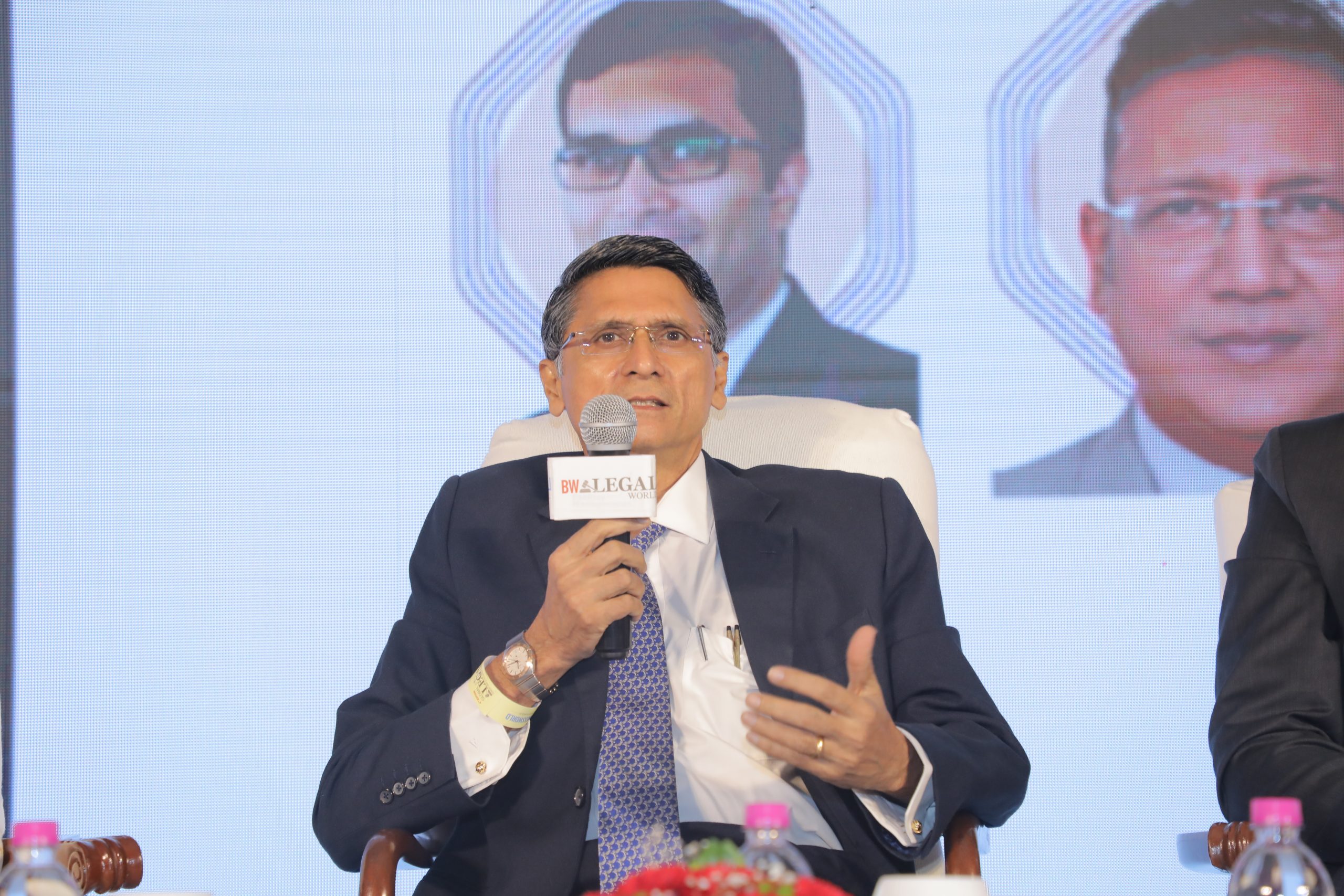


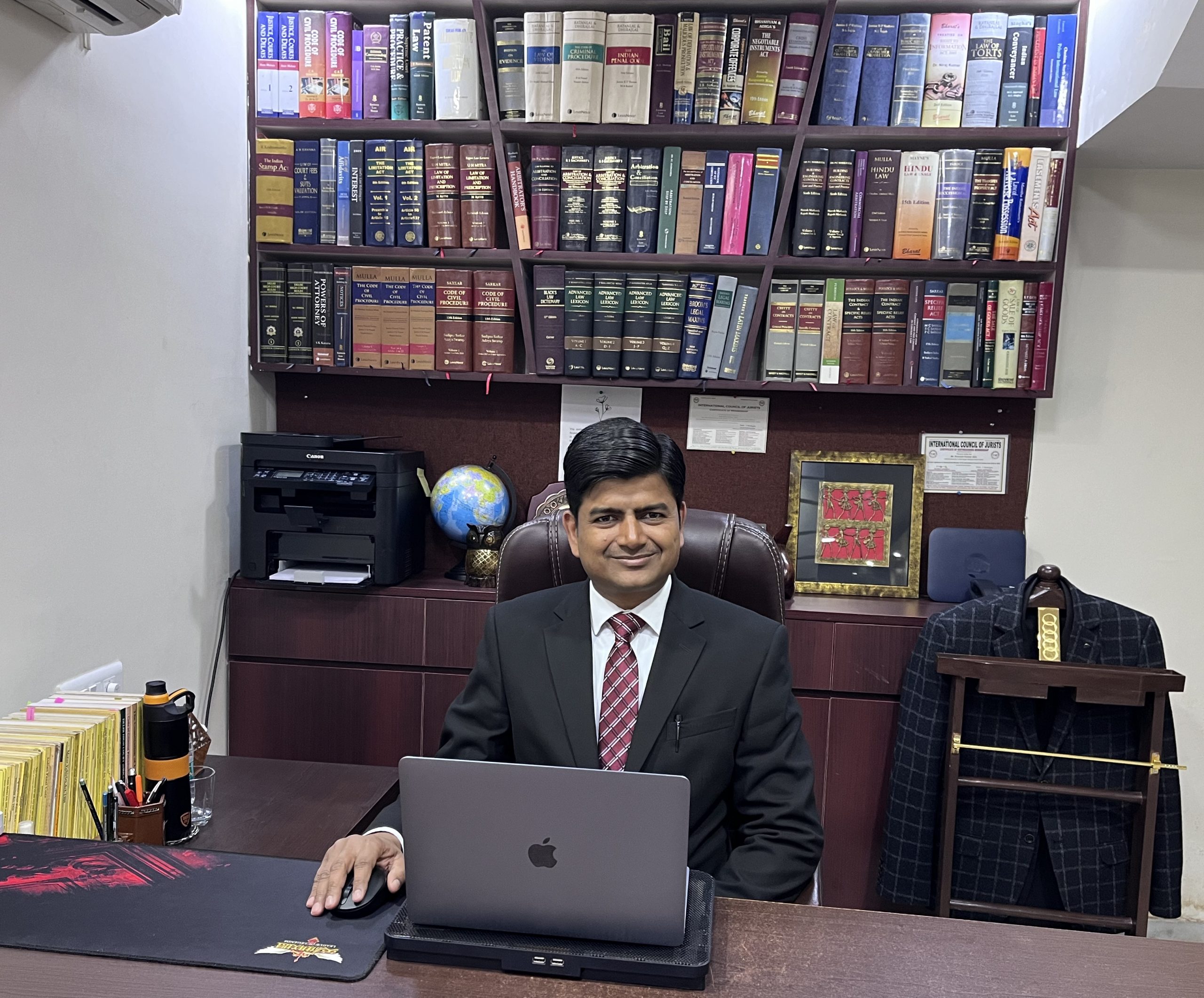

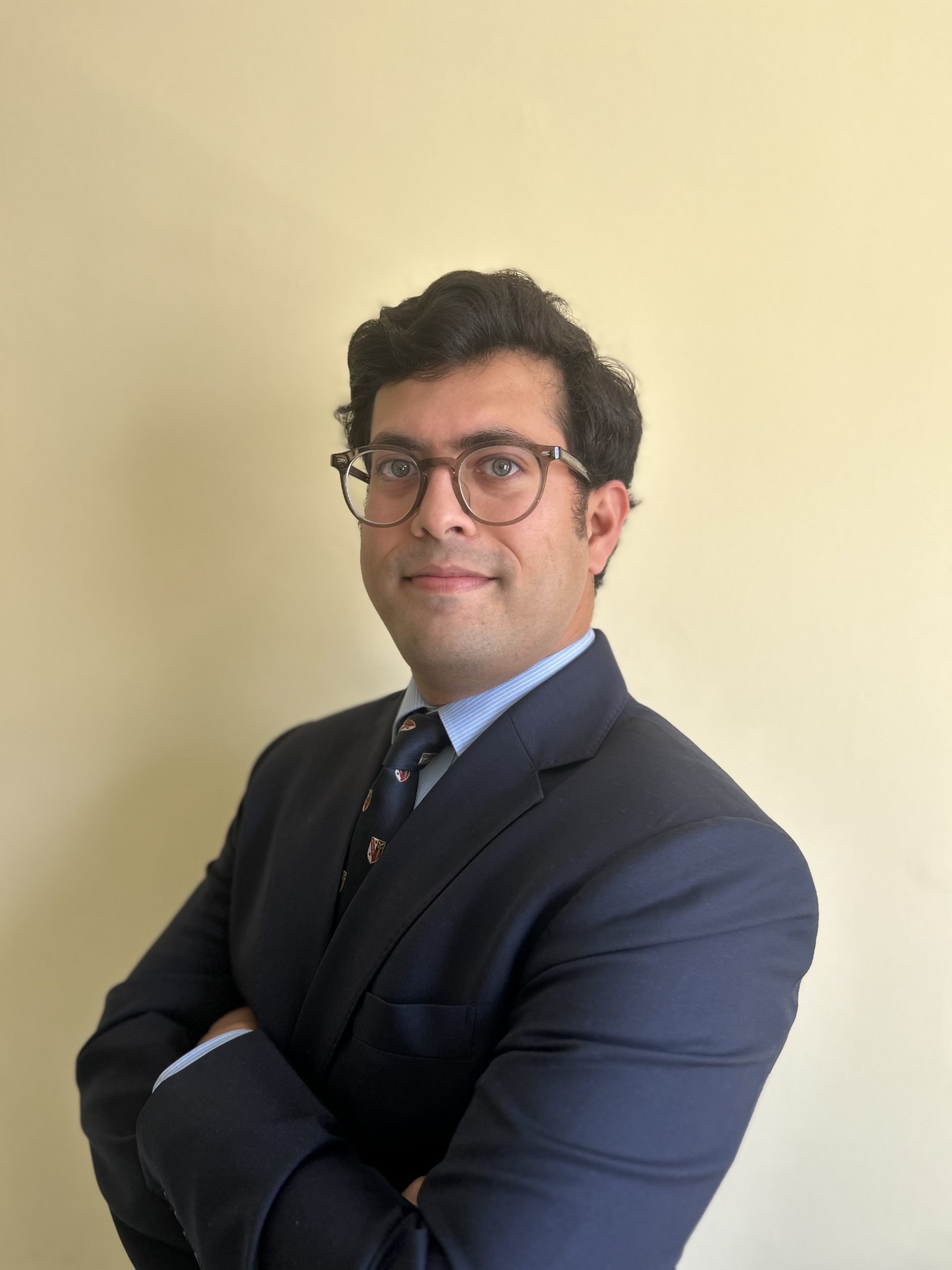

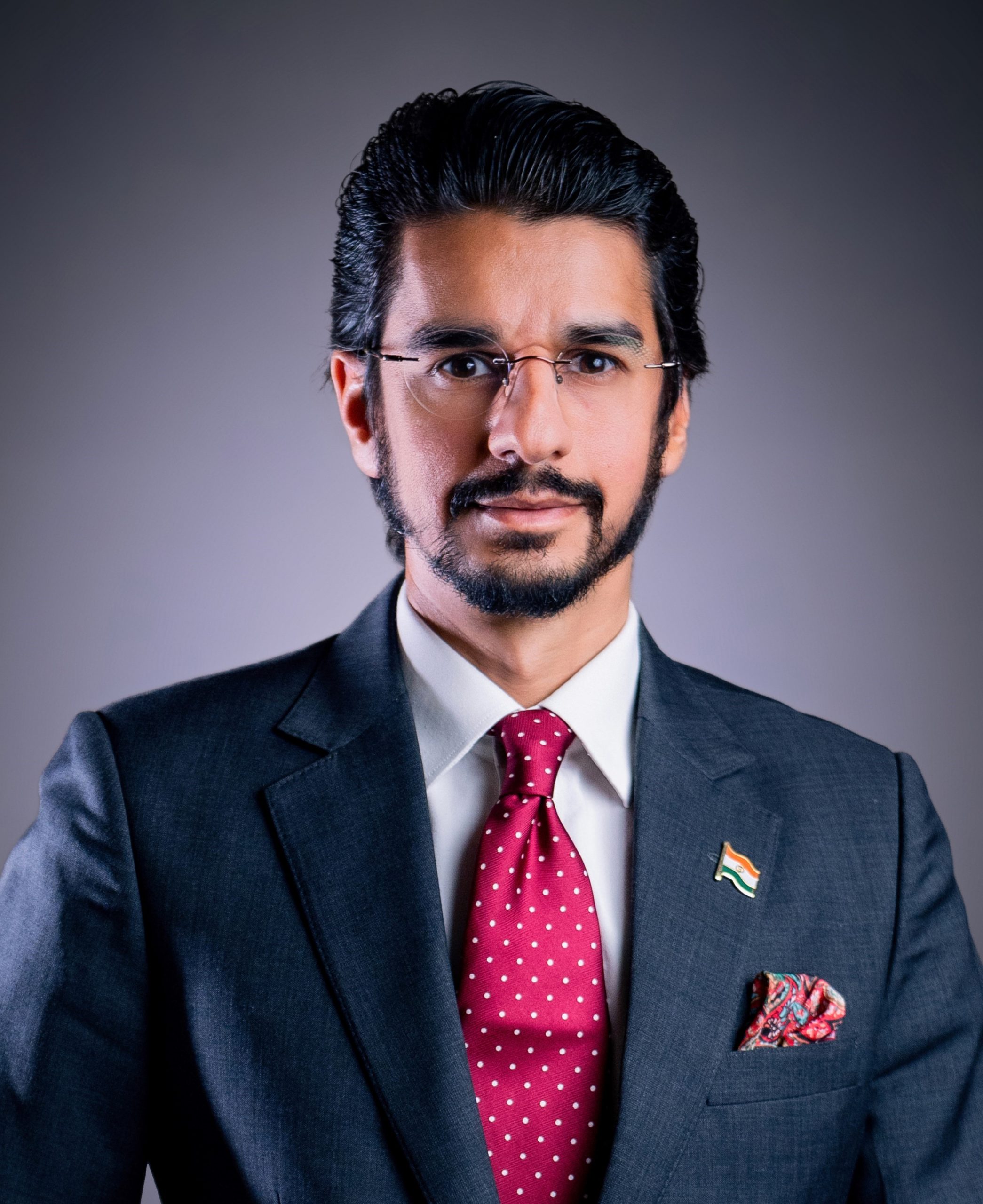






 Allow notifications