Tag: Litigation

  • From addressing safety concerns on railway tracks to environmental issues, his cases underscore the substantial impact on people’s lives – Jamshed Mistry, Independent Counsel and Founder of Internationallegalalliance.com Shares Two Decades of Legal Prowess, Innovation, and Social Impact

    From addressing safety concerns on railway tracks to environmental issues, his cases underscore the substantial impact on people’s lives – Jamshed Mistry, Independent Counsel and Founder of Internationallegalalliance.com Shares Two Decades of Legal Prowess, Innovation, and Social Impact

    This interview has been published by Priyanka Karwa and The SuperLawyer Team

    Sir, over 2 decades you have such an amazing professional journey. During this you must have seen different varieties of legal domain. You have excelled in so many of them. I would love to hear your introduction, and also to know what inspired you to embark on this journey of law, particularly in the areas of international law, media and entertainment law and medicine.

    I appreciate your patience as I delve into the intricate details of my journey. Born and raised in the vibrant city of Mumbai, I initially pursued my education in Vienna, Austria, before returning to complete my commerce studies at Hr. College in Mumbai. Following this, I embarked on a journey into the world of cost and work accountancy.

    However, fate took an interesting turn when my maternal grandmother passed away, leading me to a chartered accountant. This changed the course of my life as he suggested exploring law as a career. Despite my initial reluctance, I enrolled at the KC Law College and later transferred to the Government Law College. The journey into the legal realm was unconventional but intriguing.

    A turning point arose when the chartered accountant insisted on me gaining practical experience. He guided me to Mulla and Mulla, Cragie Blunt and Caroe a prominent law firm, where I began my professional journey. Despite my resistance to the idea of working, I found myself donning formal clothes and stepping into the legal world.

    My initial years were a blend of studying, interning, and navigating through life. A significant challenge emerged in 1995 due to a legal matter that affected our exam results. This setback altered my plans for pursuing LLM, a unique twist in my academic and professional trajectory.

    Undeterred, I sought guidance from the head of the law department, eventually enrolling in a postgraduate diploma in labour law. This period of exploration and learning laid the foundation for my legal career, which officially began in 1996 when I joined another law firm and thereafter to independent Counsel practice.

    The advice to accept diverse legal work by my senior Mr. Sudhir Talsania, proved invaluable as I handled civil cases, ranging from Admiralty law to Motor accident claims. In 1998, involvement in a public interest litigation case marked my entry into this impactful aspect of law.

    My foray into media and entertainment law began post-college, where my interest in fashion and film grew. Organizing inter-college fashion competitions with friends and working backstage for shows provided insights into the industry. Back then, media and entertainment law was not a subject covered in academic curricula. Driven by curiosity, I took the initiative to approach these artists and request copies of their contracts. Surprisingly, in those days, there was a lack of privacy concerns, and artists willingly handed over their contracts. I accumulated contracts, including Michael Jackson’s, to gain insights into the intricacies of these agreements.

    As my legal studies progressed, I encountered instances where former Miss India sought advice from legal experts. This sparked a realization of the correlation between the fashion and media/entertainment industry and the legal intricacies involved. Amidst this exploration, the prevalent issue of entertainment tax emerged as a significant challenge, coexisting alongside the vibrant and dynamic world of fashion and entertainment. The journey of unravelling the legal aspects intertwined with glamour and creativity has indeed been both enlightening and entertaining.

    A significant milestone occurred in 2010 when I was sent to Canada for corporate work, marking the beginning of an association with the Canadian Bar. This international exposure broadened my perspective on legal practices and introduced me to the concept of transcripts.

    In 2016, recognizing the barriers geography posed to legal collaboration, I initiated the International Legal Alliance. The response from lawyers across 153 countries exceeded expectations, leading to the formation of a global network.

    Adopting a practical and economical approach, we leveraged virtual tools well before the pandemic, establishing a network that seamlessly operated across borders. Today, our initiatives extend beyond legal practice, including legal heritage walks and collaborations with Chambers of Commerce.

    This journey, spanning over a decade, has been a continuous learning experience, breaking barriers and embracing the evolving landscape of law. As we move forward, the possibilities seem limitless, and the blend of practicality and innovation remains the cornerstone of our endeavours.

    It’s truly fascinating how you’ve become an international presence in the legal realm, almost like a “doctors without borders” concept but tailored for lawyers, operating seamlessly in a virtual space. We’re keen to delve deeper into this innovative venture. However, before we proceed, I’d also like to explore your insights on the issues related to live streaming and transcripts. when did the idea for this platform emerge, and how did you envision such a unique space? Additionally, could you share the type of support and impact you’ve witnessed so far?

    Understanding how lawyers collaborate is key. My approach is unique – I cover the cost of the domain name and don’t charge our network members a fee. The goal is to bring colleagues together globally, recognizing the limitations of traditional law firms in covering vast geographical areas. Working across borders eliminates such restrictions, fostering collaboration on diverse cases. For instance, we recently handled a case involving a British national in Poland, showcasing the efficiency and cost-effectiveness of our approach.

    During the pandemic, we aided a businessperson in validating a contract with an African entity. Collaborating with our network, we conducted due diligence and uncovered fraudulent activities, saving the individual significant financial loss. This highlights the practical benefits of our global legal alliance.

    Regarding live streaming and transcripts, the idea struck me while watching a news report on the case filed by Senior Advocate Indira Jaisingh in the Supreme Court. I realized the need for legal transcription, having previously written about its importance during the Kulbhushan Jhadav case in the International Court of Justice. The Karnataka State’s subsequent endorsement and implementation of guidelines underscored the significance of transparency. Demonstrating the functionality of transcripts using a free AI app for the Supreme Court Committee garnered positive results. Now, with the government funding a multi-year plan, we anticipate positive changes in our legal system, emphasizing the crucial role of transcripts in preserving court proceedings.

    Delving into legal history, I discovered the earliest transcribed judgment in Para 6 of Bal Gangadhar Tilaks case in 1908!! This finding prompted me to advocate for the revival of transcripts, essential for legal accuracy and accountability. Impressively, our efforts have inspired change beyond borders. A colleague from Pakistan embraced our model, leading to their Supreme Court adopting live streaming and transcripts. These endeavors exemplify how small initiatives can influence legal practices globally.

    What kind of impact has your career had on society, and how it has brought in a lot of milestones in your career, emphasizing the wealth of knowledge you’ve accumulated rather than just financial gains? Could you share insights into your journey as an independent counsel and the experiences that have shaped your professional trajectory?

    Returning to my journey, I was clear about my aspiration to be an independent practitioner and counsel, realizing the importance of autonomy. While this path offers flexibility, it also brings challenges, requiring self-guidance. In the initial stages, having a mentor was beneficial, but being your own master is a unique experience. Aligning with various lawyers and law firms in Bombay broadened my exposure, allowing me to learn different styles and crafts.

    My practice, especially in public interest litigation, addressed various crucial issues. Cases ranged from safety concerns like people falling off suburban railway tracks to environmental issues such as air pollution. Advocating for persons with disabilities became a significant focus, addressing gaps in facilities and recognition under the Disabilities Act. I even argued against my own school in a case concerning learning disabilities, leading to important guidelines.

    Among the impactful cases was one involving poor and indigenous patients denied treatment in a public charitable hospital. Through legal intervention, we established a scheme where a percentage of monthly income was set aside for indigent patient care. Another noteworthy case was Nikita Mehta’s abortion case in, where we had to rely on British precedent to persuade the court to form a committee. What we argued then, eventually became the law several years later.

    Currently, I am involved in the ongoing “potholes case,” addressing road safety issues. While the impact of these cases on people’s lives is substantial, I believe that, collectively, lawyers should strive to contribute positively to society, upholding the notion of law as a noble profession.

    I couldn’t help but notice your involvement in various social causes and organizations beyond the courtroom. Could you shed some light on the causes that hold a special place in your heart and the initiatives you’re particularly passionate about? Additionally, I’m curious to understand how your commitment to these endeavors impacts both your career and personal life.

    First and foremost, I owe a huge thank you to my wife and children who have been incredibly understanding and supportive, allowing me the freedom to engage in all these pursuits. Balancing family life while being deeply involved in various causes is crucial, and her support has been invaluable.

    As the kids have grown, finding this balance has become more manageable. Enjoying both work and personal life is essential. Personally, I find solace in the traditional approach of using hard copies and making notes, a practice not everyone may agree with in this digital age. There’s a unique magic in handling physical documents.

    Public interest litigation has enriched my understanding of diverse areas I was previously unfamiliar with. The ability to rapidly assimilate information, honed through legal practice, has proven invaluable. I still relish reading up on legal matters while travelling, bringing that knowledge straight to the courtroom.

    I’m an avid music listener, finding it to be a relaxing escape. I used to play a musical instrument not too long ago, adding another layer of enjoyment to my life. Maintaining a conscious separation between courtroom intensity and personal life is crucial. Once a case concludes, it’s essential to leave any conflicts or stress within the courtroom or, at most, within the professional sphere.

    Over time, I’ve learned to manage stress and worries associated with cases. Experience has taught me not to carry the burden beyond its necessary scope. Engaging in various organizations, from the Lions Club to the Rotary Club and Chambers of Commerce, has provided a broader perspective and added value to my life. I’ve come to view these engagements on par with the significance of my law practice.

    Exploring spirituality and relishing good food are additional aspects I find joy in. These facets contribute to a well-rounded life and play a role in making important decisions. Overall, the blend of professional commitment, personal interests, and active engagement in various communities has made my journey truly fulfilling and interesting.

    Your expertise and involvement with the South Asian Fashion Week and the international South Asian Film Festival have become apparent, especially considering your background in media and entertainment law. You’ve shared about reviewing contracts for renowned stars. How did this passion for fashion and film evolve, and how do you envision the future intersection of law with these dynamic creative industries, especially in the rapidly evolving landscape of AI and technological advancements?

    Starting from my college days, I’ve had a keen interest in working with fashion, initially at an amateur level and later professionally. I even did backstage work for a renowned choreographer like Hemant Trivedi many years ago. It’s quite amusing to reflect on it now, realizing that there might be very few lawyers who have experience working backstage in the fashion industry.

    What’s fascinating is that the law itself is remarkably creative. It’s a misconception to label it as mundane; there’s an inherent creativity to it. Learning from the creative industries is crucial, and there’s a significant balance required, especially for someone like me working in media and entertainment law. As a media and entertainment lawyer, I cover a wide range of areas, including intellectual property rights, contracts, design, arbitration, mediation, and even criminal law aspects.

    Some of the highest-paid lawyers globally are in the media and entertainment sector. Additionally, there’s a remarkable international similarity in this field, transcending jurisdictional boundaries. The dynamics of the industry bring forth unique challenges and opportunities. I’ve been involved in notable initiatives, such as facilitating the audio-visual co-production treaty between India and Canada. These experiences involve engaging in discussions and negotiations, contributing to what can be considered a form of soft skills diplomacy. Cultural arbitration and mediation might be the next significant developments in resolving disputes between countries.

    You’ve shared your journey into the field of law with us, detailing how you arrived here. Undoubtedly, along the way, you encountered various challenges. Can you elaborate on how you successfully navigated through those obstacles? Furthermore, what advice would you offer to individuals treading a similar path? Considering that anyone venturing into law is likely to encounter certain challenges, what guidance would you provide for overcoming them?

    Each individual possesses unique talents, areas of expertise, or gifts that define them. Identifying and acknowledging these aspects swiftly is crucial. It is imperative to align your pursuits with your intrinsic interests and inclinations. In the early stages, exploring diverse areas of interest within the legal domain is advisable. The legal profession is dynamic and ever-evolving; what holds true today may not necessarily be applicable tomorrow.

    As a law student, the primary objective is to immerse oneself in the learning process, absorbing as much knowledge as possible. Post-education, there are varied career paths available, such as joining a legal chamber, opting for corporate law, pursuing litigation, or combining elements of both. Even for those in smaller towns, there is immense potential to excel as a trial lawyer and contribute significantly to the legal landscape.

    Indians, in particular, possess an innate ability to think on their feet, a valuable trait in legal practice. Unlike some international counterparts who strictly adhere to established practices, our legal system often demands quick thinking and adaptability. Exposure to courtroom proceedings is invaluable. Nowadays, with the convenience of online platforms like YouTube, observing court sessions globally is more accessible than ever.

    Experience remains unparalleled in its educational value. The ability to navigate unforeseen challenges, drawing from a reservoir of past encounters, is the essence of true expertise. Reflecting on previous cases and applying lessons learned adds a layer of depth to one’s legal acumen. Knowing when to assert an argument, when to yield, and when to remain silent are indispensable skills acquired through experience. In essence, experience equips a legal professional to handle any situation, whether or not they had the foresight to prepare for it.

    Looking ahead, how do you envision your professional and personal pursuits unfolding in the next few years? Could you shed light on specific goals you have in mind, particularly considering your deep involvement in social causes and other facets? Given your leadership role in the international legal alliance, what projects do you anticipate spearheading in that capacity? Your insights on the future trajectory of your endeavors would be greatly appreciated.

    I consider myself a go-with-the-flow kind of person. While I can’t predict the future with certainty, I am optimistic about the progress we will make, particularly in India’s legal landscape. It seems we are on the brink of something significant, especially in terms of fostering international collaborations and constant interaction between nations. My vision involves exposing a greater number of young lawyers to diverse legal practices worldwide, which I believe would be a remarkable achievement.

    Additionally, there is a need to establish a legal resource centre distinct from traditional legal aid services. This centre could serve as a comprehensive online platform, offering resources such as law journals and information on various legal domains. Many individuals faced with legal issues often struggle to categorize them under criminal or civil law, let alone identify specific areas like consumer disputes or matters falling under the NCR. This lack of clarity can be overwhelming for those unfamiliar with the legal system.

    While such resources are available online, there is a crucial need to correlate and organize them comprehensively. This would significantly ease the process for litigants, allowing them to approach lawyers with a clearer understanding of their issues, thereby reducing the time spent explaining their situation to legal professionals. Establishing such a system across India would prove immensely useful and beneficial for both lawyers and those seeking legal assistance.

    Get in touch with Jamshed Mistry-

  • “One must be passionate about their work. If law is something, that you are passionate about, I am sure that everything else will follow” – An illuminating interview with Saurabh Bindal, Partner at Fox Mandal & Associates LLP

    “One must be passionate about their work. If law is something, that you are passionate about, I am sure that everything else will follow” – An illuminating interview with Saurabh Bindal, Partner at Fox Mandal & Associates LLP

    This interview has been published by Namrata Singh and The SuperLawyer Team

    Could you introduce yourself and share a brief overview of your journey from college to becoming a Partner at Fox Mandal & Associates LLP?

    I am Saurabh Bindal, a Partner at Fox Mandal & Associates LLP, heading the Disputes and Litigation practice of the Firm in Delhi. I did my Engineering and thereafter, decided to pursue Law from the reputed Indian Institute of Technology, Kharagpur, India. Thereafter, I started practicing in a reputed Intellectual Property Law Firm in National Capital Region. After a short stint at the Firm, I realized my calling to be a litigation and disputes Lawyer. Subsequently, I have worked with different Law Firms in the past in various capabilities.

    In my current role, I render dispute resolution support to clients on issues relating to Arbitration law, Intellectual Property law, Privacy law, Information Technology law, Constitution, Company Law, Contract Law, Employment Law, Electricity Law, Insolvency and Bankruptcy Code.

    I have eight books to my name and several publications in leading journals. I like to speak on different facets of law and have had the opportunity to represent my clients in different forums, in India and abroad.

    With significant experience in diverse areas of law, including Arbitration, Intellectual Property, and Employment Law, what inspired you to pursue such a multifaceted legal career?

    Well, you know, I firmly believe that the practice of law is based on continuous learning. I try to learn each day. The inspiration to learn is something that keeps me motivated in life. I have worked on different facets of law as that motivates me to grow. One must find a purpose in life. For me, I tend to believe now that my purpose was in the practice of law. Once, you start practicing law, you must be internally inspired to keep the channels of learning open.

    As a Partner at Fox Mandal & Associates LLP, you lead the Alternate Dispute Resolution and Litigation practice. Could you share some insights into the challenges and successes you’ve encountered in this role?

    The role I am currently engaged in is quite challenging. Each day there are new hurdles, and you have no other option but to live it up to them. As a leader, one must take everything as a part and parcel of life. In life, your failures become your teachers and your success your enemy. I believe it will be very difficult to point out every challenge faced by an individual in her or his role. However, after some point of time, with one’s hard work, every challenge a person faces in life sometimes becomes an opportunity to strive forward. The only insight I could share with the challenges faced by me in my role is that each challenge has taught me new ways to live a meaningful life.

    Aside from being a legal expert, you’re also an author, having written several books on intellectual property law, arbitration law, and privacy law. What inspired you to delve into writing, and how does it complement your legal practice?

    The person who brought me pen and paper was Dr Uday Shankar, a Professor at the prestigious Indian Institute of Technology, Kharagpur. It was he who asked me to assist him with a submission. When I look back, I give all the credit in my writing to him for his patience with me. He has been my friend, philosopher, and guide.

    I would also like to give credit for my writing to Eastern Book Company. Eastern Book family, and more particularly Mr. Sumeet Malik has been very kind in holding my hands. Majorly, all my books are thoroughly reviewed by him personally and he has contributed much to my life.

    You’ve been recognized as an expert public speaker. What’s your favorite topic to speak about, and do you have any memorable experiences or anecdotes from your speaking engagements that you’d like to share?

    Like the practice of law, public speaking is also a lifetime learning experience. The more you do it, the more you learn about engaging the audience. I have been constantly trying to master the art. Each event I speak at, makes me realize that speaking in public is also an art, at which, I am just a novice.

    Having worked with various law firms, including Desai & Diwanji and Singhania & Partners, what lessons have you learned throughout your career, and how have these experiences shaped your approach to legal practice?

    I have only learnt that your hard work will get recognized in life. You will always have people around you to pray for you in life, if you are good. I have always maintained good relationships with every Firm I have left. It is a very important learning in life. This has certainly helped me in shaping my legal practice. A legal practitioner must deal with different clients and as an officer of the Court must assist the Court. I believe, my experiences in life have taught me how to interact with clients and make a long-lasting relationship with them. My work in all the past firms has also taught me that it is only your work which will define you.

    Apart from your legal expertise, your profile mentions that you are an insightful writer. When you’re not writing legal pieces, do you have any personal writing projects or genres you enjoy exploring in your free time?

    Frankly speaking, I used to read a lot of fiction. Lately, I don’t get time to read fiction and that is something that I miss.

    As a lawyer with a keen interest in technology, what’s your take on the evolving landscape of privacy and data protection, and how do you think legal professionals can stay ahead in such a dynamic field?

    Intersection of law and technology is always appealing. COVID-19 pandemic taught all the lawyers to accept that intersection. Privacy as a concept is relatively new to India. We are still to see the rules being made under the Digital Data Protection Act, 2023. For legal professionals, it will be my advice that to stay ahead in this dynamic field, they must embrace the change which the Act has brought to India. I am sure that there will be a lot of work which will flow from the Act as it has recognized right of individual to keep his digital data private and talked about the repercussions if sharing of such data leads to any breach.

    As someone who has excelled in both professional and personal life, receiving accolades such as the India Business Leader Award and the Young Alumni Achiever Award, what advice would you offer to young legal professionals aspiring to achieve similar success?

    My advice to young legal minds would be to read, write, laugh, and enjoy life. One must be passionate about her or his work. If law is something, that you are passionate about, I am sure that everything else will follow. It is only work that will take any person ahead in life.

    Get in touch with Saurabh Bindal-

  • “Delegating responsibilities, ensuring clear communication, and fostering a collaborative environment are all aspects of managing a team which will run as a well-oiled machine”- Manish Kumar Mishra, Partner at Inttl Advocare

    “Delegating responsibilities, ensuring clear communication, and fostering a collaborative environment are all aspects of managing a team which will run as a well-oiled machine”- Manish Kumar Mishra, Partner at Inttl Advocare

    This interview has been published by Priyanka Karwa and The SuperLawyer Team

    Can you share the pivotal moments or experiences that led you to pursue a career in law, specifically specializing in Intellectual Property Laws?

    It is said that every person has their own destiny. I had come to Delhi to crack Civil Services. Failure to crack civil services pushed me to try law. It is also true that the interest of the students in particular subjects depend upon the teacher teaching the subject. While pursuing law in Campus Law Centre, University of Delhi the discussions and interactions were very interesting, engaging and different from all the other subjects. That is what piqued my interest in the IP laws and how I decided to pursue my career in IP. My interest further grew when I started PG Diploma in Intellectual Property from Indian Law Institute and then I saw how important it was to protect ideas and creations. This realization further motivated me to explore IP laws.

    This journey has not only shaped my career goals but also fueled my passion for advocating the significance of intellectual property. I am eager to use my legal skills to support and defend the innovations that drive our society forward. 

    Given your extensive experience in handling more than 200 litigations, could you highlight a case that significantly shaped your approach to legal practice or left a lasting impression on you?

    One time, during the early days of my career, I was appearing before a Single Judge of Hon’ble Delhi High Court in an appeal against the order of the Copyright Board. I was assisting my senior who was to argue the matter and was thoroughly prepared with the matter myself. However, when the matter was called, my senior was before another court appearing in another matter. The Passover request was declined by the court and I was asked to argue the matter. I was a bit nervous but presented the facts of the case with energy. However, the Ld. Judge wanted to hear from me the application of ‘Principle of Comity’ to the case which I was unable to. The Ld. Judge then not took the time to explain the principle but also taught the same to me like a teacher. The Ld. Judge definitely sympathized with a junior caught off-guard but that experience taught me that it is not sufficient to only know the facts of your case. It is also important to know how the law applies to those facts and that there is a manner in which laws and facts should be presented before the court for understanding of the judge. I have never forgotten the ‘Principle of Comity’ since and have applied the judgment passed by the Ld. Judge in my favour in various cases handled thereafter.

    You’ve been involved in various contentions cases related to trademarks, copyright, and designs. What drew you to these specific areas within Intellectual Property, and how have you seen these fields evolve over your 15 years of practice?

    I was drawn to specializing in trademarks, copyright, and design within intellectual property because of their dynamic nature and the real-world impact they have on businesses and creativity. These areas require a delicate balance between protecting original ideas and allowing for innovation and competition.

    Over my 15 years of practice, I’ve witnessed significant evolution in these fields. The advent of the digital age has transformed the landscape of IP laws. During my journey, just as an example, I have seen issues about exhaustion of rights in physical sale of products raised for the first time. We then reached an era of online sales and issues such as those of intermediaries and jurisdiction in cases of online sales etc. cropped up before the courts and now, we are discussing the impact of AI in all domains. The changes are not only with respect to the law but also the procedures before the courts. The advent of Commercial courts, special IP Division, digital filings etc. have also made litigation for litigators and litigants hassle-free.

    The ever-changing technological and business landscape continually presents new challenges, making it imperative to stay at the forefront of legal developments. I find it both professionally rewarding and intellectually stimulating to navigate these complexities and contribute to the evolving dialogue within IP laws.

    Being a regular guest on All India Radio and a guest faculty at the Indian Law Institute, can you tell us about the role of education and public outreach in your legal career and how it contributes to your professional growth?

    Being a regular guest on All India Radio and serving as a guest faculty at the Indian Law Institute apart from various other Universities has been instrumental in shaping my legal career.

    Engaging with the public through All India Radio allowed me to simplify legal concepts and make them accessible to a broader audience. My appearances at the AIR were not only limited to talking about IP Laws but also on various other laws which are relevant for socio-economic conditions of society.

    As a guest faculty at universities, I have the opportunity to interact with aspiring legal professionals. Teaching not only allows me to share my practical experiences but also keeps me abreast of the latest developments in legal academia. The exchange of ideas with students fosters a two-way learning process, enhancing my own understanding of legal principles.

    These educational and outreach activities complement legal practice providing a unique perspective about various issues and challenges faced by students and members of the public which I might not have the opportunity to otherwise encounter.

    You’ve been a panelist at the Conclave of Dharmashastra National Law University on the topic of AI and Intellectual Property. How do you see emerging technologies impacting the field of law, specifically in Intellectual Property, and what challenges and opportunities do you foresee?

    As a panelist at the Conclave of Dharmashastra National Law University on AI and Intellectual Property, I had the privilege of discussing the impact that emerging technologies have on the field of law, particularly IP. The intersection of AI and IP presents both challenges and opportunities.

    The advent of AI has streamlined certain aspects of IP processes, such as patent searches and prior art analysis, significantly enhancing efficiency. However, it also raises challenges in addressing issues like AI-generated creations and the attribution of intellectual property rights.

    Opportunities lie in leveraging AI for more robust IP protection mechanisms and the development of innovative solutions to combat piracy and infringement. Additionally, the use of AI in data analysis has proven invaluable in identifying patterns of IP violations.

    On the flip side, challenges include the need for updated regulations to address the unique aspects of AI-generated content and the ethical considerations surrounding AI in the legal landscape. Striking a balance between fostering innovation and safeguarding IP rights in this evolving technological landscape is a complex but essential task.

    Overall, embracing these technological advancements is crucial for the evolution of IP law, and navigating these challenges presents an exciting opportunity to shape a more resilient and adaptive legal framework.

    Having conducted numerous civil and criminal raids, can you share a particularly challenging enforcement situation you encountered and how you navigated through it?

    There was a civil raid in Meerut in around 2014 which comes to my mind. I along with a court appointed Commissioner was visiting a wholesaler engaged in the sale of infringing coffee. Initially, we went to the police station wherein we were declined assistance. However, considering the Commissioner had orders from the Court and there were chances of goods being removed now, since we had given information to the Police, we reached the premises directly. The entire process was obstructed and delayed by the female family members of the shop owner and during that period several nearby shopkeepers and market leaders gathered. We were surrounded by around 80-100 people who all turned aggressive and did not allow us to conduct the seizure or even go back to our car. I then spoke to the president of the market association who was leading the mob and explained to him that the infringing activity that the wholesaler was involved in was not only harming the reputation of the client but the low quality products being sold by the party was also being consumed by the public including the families of various members of the mob. After some explaining and a cool temper kept by us throughout, the mob allowed us to invent the stock, prepare a report and leave without seizing the products.  

    Though I must add, not all civil and criminal raids have such interesting stories. While this story does not paint a pretty picture of how sometimes civil or criminal actions turn out, this also reminds me of how a calm mind, quick thinking and easy communication can help you overcome challenging situations.

    As a lawyer with strengths in team management, litigation, and public speaking, how do you balance these diverse skills in your day-to-day practice, and which aspect do you find most fulfilling?

    As a lawyer and working with an esteemed organization one learns to strike a balance between these and various other aspects of being a professional. In my view, the job of a lawyer demands an all-round capability and one is tested everyday with challenges on these fronts. It is not only required of me to manage the team or prepare for various court cases or attend public speaking sessions but also to participate in other activities such as management of the Firm, attending conferences for business development etc. 

    Delegating responsibilities, ensuring clear communication, and fostering a collaborative environment are all aspects of managing a team which will run as a well-oiled machine. This allows me to streamline workflows and gives me the chance to undertake other works and projects. In order to achieve the same, a robust motivated team is a must. It is my philosophy that my team should pass on the complete knowledge which I possess in all fields, and that is one of the most fulfilling experiences as a professional. I also ensure that my team is motivated and properly trained to effectively complete the delegated works which not only allows me time for other endeavors but also allows them to grow independently.

    Litigation requires meticulous preparation, attention to detail, and the ability to think on my feet. Prioritizing tasks, managing timelines efficiently, and staying adaptable to the evolving nature of legal proceedings are the pillars of effective advocacy. On the other hand, public speaking allows me to not only advocate for my clients but also contribute to legal education and public understanding of the law.

    Looking back at your journey from law school to moderating a topic at INTA in Atlanta in 2024, what advice would you give to fresh law graduates aspiring to specialize in Intellectual Property or follow a similar path in their legal careers?

    My advice to the fresh law graduates aspiring to specialize in IP or pursuing a similar path would be to (i) Build a Strong Foundation by focusing on learning and gaining practical experience in initial years of practice; (ii) Keep yourself updated with the latest legal developments and familiarize yourself with technological tools used in the legal field; (iii) Develop Communication Skills as effective communication, both written and verbal, is crucial for a lawyer. This also includes honing your networking skills which open up various opportunities for one; (iv) Be flexible to adapt to the demanding situations and conditions of the profession.

    Remember, each step contributes to your growth, and perseverance is key in building a successful career.

    Get in touch with Manish Kumar Mishra-

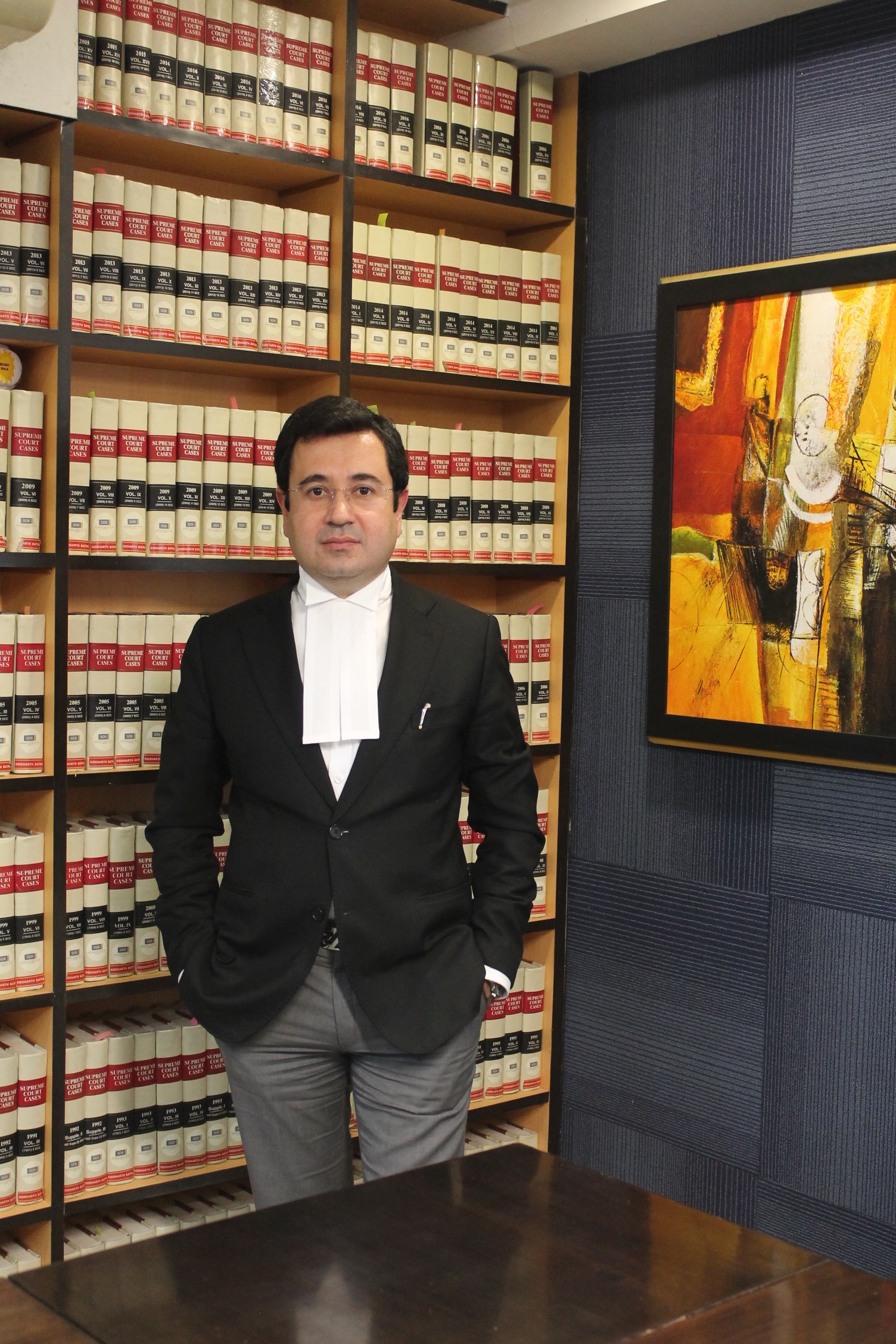
  • “A good lawyer is not one who knows the law, rather one who knows where the law is”- An In-Depth Conversation with Siddharth Batra, Advocate-on-Record, Supreme court of India

    “A good lawyer is not one who knows the law, rather one who knows where the law is”- An In-Depth Conversation with Siddharth Batra, Advocate-on-Record, Supreme court of India

    This interview has been published by Namrata Singh and The SuperLawyer Team

    From your diverse experience in the legal arena to your recent recognition with the ‘BW 40 Under 40’ award, can you share a bit about what motivates you in your legal journey?

    My journey in the legal field has been fueled by a combination of factors. At its core is a deep-seated passion for justice and equality, using the legal platform to advocate for these values in individual cases and broader policy realms. The legal profession’s intellectual demands and ever-changing landscape provide ongoing challenges and learning opportunities, which I find stimulating and rewarding.

    The impact of legal work on society is a significant motivator for me, as I aim for excellence and integrity in all my endeavors, understanding the substantial influence my work can have on people’s lives and societal norms. 

    The recognition and achievements, such as the ‘BW 40 Under 40’ award, validates my efforts and propel me to continue contributing meaningfully to the field. 

    Being part of a community of legal professionals and mentoring emerging talents enhances my journey, helping to shape the next generation of lawyers. This amalgamation of personal passion, intellectual curiosity, societal impact, professional recognition, community engagement, personal growth, and advocacy for change continues to drive my legal journey.

    You’ve had an extensive legal career, from district courts to the Supreme Court. How has your approach to cases evolved over the years, and are there any experiences from your early days that significantly shaped your legal philosophy?

    Reflecting on my extensive legal career, which has spanned from district courts to the Supreme Court, I have noticed significant change in my approach to legal cases. I moved to the Supreme Court in 2014 before which, I was at the Punjab and Haryana High Court at Chandigarh for 10 years. I essentially started my practice in 2004 at the District Courts Rohtak and later moved to Chandigarh when I got the opportunity to become an Assistant Advocate General in 2005. I left the office of the Advocate General in 2008 to start my own private practise and became retainer to the Haryana Urban Development Authority. In 2011, I became Additional Advocate General, Haryana.

    In my early days, my focus was primarily on learning and applying basic legal principles. However, as I delved deeper into the intricacies of law, my understanding and approach became more nuanced, especially when arguing before the Supreme Court.

    One of the most profound changes has been in my analytical skills. Initially, my approach was straightforward, centering on the direct application of the law. But with time and experience, I’ve shifted towards more complex legal reasoning and constitutional interpretation, considering various legal precedents.

    Moreover, my legal philosophy has evolved considerably. Landmark cases and mentorships in my early career significantly shaped my views. 

    I treat every new case with a new perspective and fresh outlook. My first major trial as a young attorney remains an experience that has definitely shaped my legal philosophy. It taught me the importance of thorough preparation and the profound impact of the legal system on an individual’s life. My father’s advice – “a good lawyer is not one who knows the law, rather one who knows where the law is” captures a profound truth about the practice of law. Over time, I realised that what mattered more was developing the skill to research efficiently, understand the context of the laws, and apply them appropriately to different scenarios. It is not just about what you know, but how you use your knowledge to find solutions. 

    You have worked as an Additional Advocate General for the State of Haryana in the past and presently you have an independent counsel practice at the Supreme Court. What do you think is the difference in both the kinds of practice? Would you go back to being a government counsel?

    Transitioning from being an Additional Advocate General (AAG) to an independent counsel practicing at the Supreme Court in India marks a notable shift in roles and responsibilities within the legal profession.

    As an AAG, my primary focus was on representing the State’s interests in various legal matters. It involved offering legal advice to government departments, handling constitutional issues, and representing the state in litigation proceedings. Working closely with government agencies, providing legal opinions, and defending the government’s stance in court were key aspects of this role.

    In contrast, as an independent counsel at the Supreme Court, I’ve had the opportunity to represent private clients or organizations across a wide spectrum of cases. This entails a broader range of legal issues spanning constitutional law, civil matters, criminal cases, and public interest litigations. The autonomy to select cases and clients and the diversity of legal subjects have been enriching aspects of this practice.

    The transition has brought about a shift in focus and clientele. While government counsel primarily revolves around serving the state’s interests, independent practice offers a more varied landscape, allowing me to choose cases aligned with diverse interests and work across multiple areas of law.

    The decision to return to government counsel or continue as an independent practitioner depends on various factors. While government service offers a sense of duty and the opportunity to serve the public, independent practice provides flexibility, a wider scope of cases, and personal career growth. My decision would be guided by a balance between these factors and my aspirations within the legal profession.

    As a legal professional with a commitment to growth and development, how do you balance your role as an Advocate-on-Record with your position as a Visiting Faculty and your involvement in various professional and academic bodies? How do these diverse roles contribute to your overall professional fulfillment?

    Balancing my roles as an Advocate on Record with my position as a Visiting Faculty  and an active membership of various professional and academic bodies is indeed challenging but immensely fulfilling. Each role complements and enriches the other. As an advocate on record, I deal with complex legal issues firsthand, which I then bring into my role as a Visiting Faculty, making my lectures more relevant and dynamic. On the other hand, interacting with students keeps me abreast of fresh perspectives and emerging legal theories, which informs my practice. My involvement with various professional and academic bodies allows me to keep myself updated with the latest legal development and professional standards. My diverse roles provide me with opportunities for networking with legal professionals, academicians and students. At times, these interactions lead to collaborative projects, thereby enriching my professional experience and contributing to my growth. Juggling these roles is not just about career advancement; it’s deeply fulfilling. Teaching allows me to give back to the legal community, shaping future legal minds. My court practice keeps me grounded in the practical realities of law, and my involvement in professional bodies lets me contribute to the legal profession’s evolution.

    Beyond the courtroom, you’ve been recognized as a BW 40 Under 40 Best Lawyer and Legal Influencer. How did it feel to receive such an award, and what does this recognition mean to you personally and professionally?

    I remember quite vividly that I received the email stating that I had won the BW 40 under 40 at 1:30 am at night and I felt extremely elated and joyous. I remember feeling extremely grateful for people who have supported me throughout my career and have pushed me in the right direction. Receiving an award of high stature indeed brings numerous rewards, including recognition and visibility, both personally and professionally. On a personal level, such an honor serves as a validation of my hard work and dedication. It’s a tangible acknowledgment of the countless hours, effort, and perseverance that I have put into my legal career. This recognition goes beyond mere professional achievement; it resonates with my commitment to excellence and the values I uphold in my practice.

    Professionally, an award of this nature symbolizes the high standard I have set as a lawyer. It enhances my credibility and reputation in the legal community, signaling to peers, clients, and the industry at large that my contributions are significant and impactful. This visibility can open doors to new opportunities, collaborations, and professional growth.

    Moreover, such recognition can serve as an inspiration to others in the legal field, especially emerging lawyers who may see in my journey a path to aspire to. It is a reminder that dedication and quality work are noticed and appreciated.

    In essence, while the award is a personal achievement, its implications extend far beyond, enriching my professional journey and potentially influencing the broader legal community.

    Your involvement in the Indo-French Chamber of Commerce & Industry highlights your connection to international matters. How do you navigate the legal landscape when working with French companies, and what unique challenges or rewards does this bring to your practice?

    My involvement with the Indo-French Chamber of Commerce & Industry indeed adds an international dimension to my legal practice, particularly in navigating the legal landscape when working with French Companies. Working with French companies requires an appreciation of cultural differences in business and legal practices. This includes understanding formalities, negotiation styles, and the general approach to contracts and disputes. Being culturally sensitive and adaptable is key to building strong professional relationships and trust. This provides an opportunity to work on diverse and often complex international legal matters, enhancing my expertise and broadening my professional horizon. It also allows for significant networking opportunities fostering a global perspective. 

    Outside the legal realm, what activities or hobbies do you engage in to unwind and recharge? Is there a particular hobby or interest that you find complements your legal profession in unexpected ways?

    Outside the legal realm, I engage in several activities and hobbies that help me unwind and recharge. 

    I used to be captain of my University Lawn Tennis Team at the time I was pursuing BA LLB. I really enjoy playing sports, whether it is Lawn Tennis or Cricket or Badminton. I regularly take part in SCBA Cricket Tournaments. 

    One of my favorite pastimes is reading. Delving into various books, without any specific genre preference, allows me to explore a wide range of ideas, cultures, and philosophies. “Tuesdays with Morrie” by Mitch Albom is a personal favourite of mine. It’s narrative is centered around Morrie’s reflection on life as he confronts ALS, and it provides invaluable lessons on the essence of human existence and relationships. 

    Apart from this, I greatly enjoy watching movies. They offer a complete escape into different worlds and narratives, providing a mental break from the rigors of law. My favourite movie is The Godfather.

    Each of these hobbies, in their own unique way, complements my legal career. They provide balance, enhance skills relevant to my profession, and keep me grounded and focused.

    With over two decades in law, what advice would you give to young lawyers starting their journey in the legal field, especially those who aspire to make a significant impact?

    The best advice I would give someone who is just starting their legal journey is that there is no substitute for hard work and there is no shortcut to success. A legal professional should always work hard and have faith in what he/she does. 

    Arguing in court is what every law student strives for. However, initially the focus should be entirely on honing your drafting skills and developing the skills of doing extensive and exhaustive research. In law, learning never ends. Even today, after practicing for 20 years, I continue to learn something new every single day. Law is constantly evolving and changing and you should try to keep yourself updated. Whether it is through legal news apps such as SCCOnLine or LiveLaw or following your mentors and senior lawyers on LinkedIn or through conferences and seminars. 

    When it comes to arguing in court, it’s okay to stumble occasionally. Everyone has ups and downs. The goal isn’t always to be the best but to make your point clear. Judges often understand and are patient with newer lawyers. Prepare well and present your case in simple terms. A solid grasp of the relevant law and case facts is essential.

    Get in touch with Siddharth Batra

  • A luminary in the legal realm with a diverse portfolio, shares his transformative journey from litigating lawyer to acclaimed General Counsel – “A Riveting Conversation with Dr. Mukul Shastry, Renowned General Counsel and Executive Director of Cube Highways”

    A luminary in the legal realm with a diverse portfolio, shares his transformative journey from litigating lawyer to acclaimed General Counsel – “A Riveting Conversation with Dr. Mukul Shastry, Renowned General Counsel and Executive Director of Cube Highways”

    This interview has been published by Priyanka Karwa and The SuperLawyer Team

    Dr. Shastry,  We are extremely delighted to have you with us for this interview.  Could you please introduce yourself for our readers and share the pivotal moments that led you to pursue a remarkable career in law, leading to your current role as the General Counsel and Executive Director at Cube Highways?

    At the outset let me thank Super Lawyer, it is absolutely my pleasure to be here with you. As regards my journey, I belong to a family of lawyers and judges. My father was a judge (District Judiciary), other uncles too judges and lawyers. Therefore, doing law was something in the blood. Post my studies I started as a litigating lawyer before Rajasthan High Court, Jaipur handling cases such as criminal bails, civil miscellaneous appeals, arbitration petitions, MACT appeals etc. As I was bright in academics, I completed my Masters (securing second rank across university) and also cleared UGC-Net in my first attempt. Hence, I was given a part time teaching assignment in Rajasthan University, Jaipur. 

    During that time Competition Act, 2002 was enacted which intrigued me as to why we need a law to regulate competition in the market and I enrolled myself in Ph.D. working on the hypothesis whether Anti-dumping duties would be relevant once Competition law comes to force. However, as there wasn’t much material in Jaipur at that time, my Ph.D. supervisor guided me to go to National Law University, Jodhpur. 

    At that time in NLU, Jodhpur, Prof. A.K. Kaul was the Vice-Chancellor who was an expert of Trade & Competition Law. He was kind enough not only to guide me but also to tell me what all materials I must read to understand the conundrum in other countries before I can start researching Indian markets. 

    Prof. Kaul goaded me that I must not sail in two boats. On one hand, I was practising law in Jaipur and on weekends was coming to Jodhpur to do my research. He insisted that I focus on one thing and I chose academics. At that time there was a vacancy in NLU, Jodhpur and I applied and cleared it. This is how my academic journey started. 

    After spending three and half years at NLU, Jodhpur and post completing my Ph.D. I wanted to work with a regulator. As during my research, I understood that the regulators’ perspective is the most important to execute the sector specific legislations. This was 2009 and at that time Competition Commission of India where I wanted to go did not have any vacancies, but RBI came out with Legal Officers vacancy. I applied and wrote the exam. I topped the All-India RBI Legal Officer – Grade-B, 2009 examination. 

    This is how my journey as a central banker started. In RBI I spent time giving legal advice to different departments such as Foreign Exchange Dept., Banking Supervision Dept. (DBS) etc. I spent around five and half years in RBI. After that I took a sabbatical and prepared for GMAT. I applied to IIM, Ahmedabad (India’s premier B-School) and got through. I did my MBA from IIMA (PGPx – One-year full time) and from there I was placed in RPG group, Mumbai.

    This is how my corporate journey started around a decade back. In the RPG group I used to handle the legal profile as well as the SPOC for a DBFOT project – Bikaner Sikar 440 KV line. I learnt the nuances of corporate life and applied my learnings from litigation, academics and regulator mixed with knowledge learnt at IIMA. 

    From RPG I went to Adani Group handling ports and logistics legal matters and then to Welspun Enterprises as Head Legal and now the General Counsel for Cube Highways.  

    Your journey includes a diverse range of roles from litigating lawyer to teaching criminal and competition law, and now as the General Counsel and Executive Director of Cube Highways. How has this varied experience shaped your perspective on legal practice, and what unique insights do you bring to your current role?

    An interesting question. The experience as a litigator turned academician turned central banker and then General Counsel has taught me different things. I understand how the court systems work and thus it helps in giving those advice from the perspectives of court practices. At times despite one’s case being strong on merits, it can have technical glitches and that can be disastrous. Therefore, I am extremely cautious as to how not to give those technical lose points whether it be laches, delay, non-response to a letter, conflict etc. 

    The academic knowledge helps me in doing in-depth research and those theoretical questions and acumen laced with practical prism helps in zooming in to minutiae details. The experience of a central banker helps in understanding how a bureaucrat will look into the decisions taken by a corporate. 

    Thus, the advice which I provide is holistic from litigator, academic, regulator and a GC’s perspective. This helps in much nuanced and sophisticated advice. 

    You’ve achieved a remarkable academic milestone with qualifications like LL.M, Ph.D. in Trade & Competition Law, MBA from IIM Ahmedabad, CS, and CAIIB. If you could go back to your early academic years, what advice would you give to yourself, considering the wealth of experience you’ve gained over the years?

    Well, if I sit in a time machine and go back, the advice I would give is that at times in pursuit of the different academic knowledge one loses focus on other good things in life. I now see my younger colleagues who are in college and along with being bright in academics are also focusing on hobbies such as sports, drama, singing, writing, playing some instrument etc. I still rue that I have not developed any such hobby that is necessary in shaping up your personality. 

    Thus if I could rewind, maybe I will pursue one or two courses less but would love to learn acting or singing or dancing or maybe play some sport like cricket, chess or badminton and  a much more engaging level. 

    Apart from your legal prowess, you have an extensive academic involvement, serving as Chairman, Industry Advisory Board at Amity and as a Ph.D. guide at two National Law Schools. What drives your passion for academic engagement?

    The youth attract me a lot. Whenever I am with young minds, I feel a kind of vibrance which otherwise is missing in the drudgery of corporate life. Whenever I interact with them their pointed questions, their free-wheeling attitude and the fireside chat intrigues me. The kind of questions they pose at times challenge me to re-think about my own knowledge and practices. That gives the biggest kick which even the astronomical salary and posh perks of corporates cannot give. 

    That’s why I make it a point to always find time to spend with young minds, to interact with them, share my life experience, learn from their perspective, and enjoy the vibrant energy all around. 

    Beyond the legal realm, you’ve been awarded Forbes Top General Counsel, BW Business World Top 100 GC, and Atal Achievement Award. How do you balance the demands of a high-profile legal career with such accolades and recognition, and what do these honors mean to you personally?

    Well, I have to thank Forbes, Legal 500, Business Worlds and Atal Award (Govt. of India) who have now started to recognize the General Counsels for the work they have done. It was not long back that General Counsels were not recognized, and many did not consider them lawyers. These recognitions have changed the perception in the past decade or so and I am extremely thankful to them. 

    Therefore, these recognitions mean a lot and more than me personally it helps the younger people to opt for in-house roles which have different challenges than faced by a litigating lawyer or a transactional lawyer in a law-firm.

    As regards balancing the demand, I must say that is the most difficult thing to do. But I make it a point that I allocate some time for these too as it is not only for personal satisfaction, but these inspire my younger colleagues to do great. Whenever, I have received any award it has inspired the people who know me that they must also strive harder to achieve such awards and to do good quality work. 

    Your commitment to contributing to positive change is evident. In what ways do you believe legal professionals can actively contribute to making a positive impact on society and the business environment?

    Nowadays legal professionals play a major role in any corporate. Their attitude, their approach to work, their work ethics play a critical role in shaping up the society they live in. Especially in a democracy, the stronger the legal fraternity, the stronger would be the democracy. To establish a rule of law and who better to ensure that than the lawyers and legal professionals themselves. 

    Whenever, a legal professional handles a matter whether it be of environmental violation, bad business practice, corrupt or fraudulent act, tortious conduct etc. if the same is handled with full devotion and keeping in the mind the fundamental principles enshrined in our constitution and legal jurisprudence, it not only impacts the society or business but the culture and legacy. 

    A wrong decision by the Supreme Court can shake up the investor confidence and wipe up the entire investment, which a developing country like ours requires. The government needs to be kept informed about the impact of the policy and bureaucracy approach and this primarily becomes the responsibility of legal professionals who along with handling litigation, transactional contracts are also responsible for regulatory interface. 

    Every successful journey faces challenges. Can you share a specific challenge or struggle you encountered during your career and how you overcame it?

    That is absolutely true. There can be no journey without its fair share of peaks and troughs. Well let me begin with sharing the biggest challenge. After spending a fair time in the government or regulatory sector when I joined the corporate sector the biggest problem was that now as a legal head, I was required to give solutions. Unlike the previous avatar of regulator or academician I was required to only put the legal position but now the task was to find the right and legitimate ways of getting the business done. 

    The senior management would require the solutions to the given business problem and that required not merely to state what the law is but to devise solutions, sometimes out of the box to achieve the business objectives. The most important thing to be kept in mind was that the solutions still had to be within the four corners of the legal and regulatory framework. 

    This required a sea-change in approach. I must say the learning at IIMA came absolutely handy. The syndi-approach of IIMA where the students were divided into a syni of 5 or 6 and they had to brainstorm and come out with solutions helped me in developing a wider horizon. Like in my IIMA days I had to interact with people who had worked in NASA or had come from a political background and that helped me understand differing perspectives. 

    This helped me in quickly adapting to the needs of the corporate sector and slowly and gradually I started delivering. Like Cube Highways which is a Private Equity run platform, and the issues that I faced here are different from that of an Indian promoter company, however due to the ability to understand different perspectives and angles, I more often than not am in position to solve them. 

    Away from the legal complexities and academic commitments, how do you unwind and recharge? Do you have any personal hobbies or activities that provide a break from the demands of your professional life?

    Well, my hobby is to read fiction, especially good science fiction or thriller murder mystery. I have read all types of top sci-fi novels starting from The Foundation, Dune, Leviathan Wakes etc. My current favourite is Marissa Mayers’ Renegade. 

    So, to unwind, I spend time reading these good prose while sitting at the comfort of my home. Sometimes, I switch off my phones and spend an entire weekend just lying down on the bed reading my favourite fiction novels. When I am not reading novels, I love to play gully cricket with my friends. 

    Your work involves connecting with industry stalwarts and senior counsels. Outside of professional networking, what’s one piece of advice you would give to young legal professionals who aspire to build meaningful connections in the legal and business world?

    Well for all my younger colleagues and legal professionals I have two pieces of advice. Firstly, as you yourself has stated, they must attend at least two or three conferences in a year and try to make as many connects as possible. Secondly, publish regularly and remain connected. I have always said that in legal field one has to publish or perish. Whether it is writing a simple piece on LinkedIn post or an editorial in news paper or in any magazine or on law blogs or anywhere, one must keep on publishing one’s thoughts. This helps in keeping you updated and build a network with like minded people. This also showcase your understanding of issues and at times these are seen by the senior general counsels and who’s who of the industry. That can help you land at your dream job.  

    Get in touch with Dr. Mukul Shastry-

  • “From Mumbai Courts to High-Profile Cases: A Chronicle of Legal Excellence and Advocacy Leadership,” Also known for his unwavering commitment to justice, innovative approach, and diverse expertise – Advocate Hitesh Ramchandani

    “From Mumbai Courts to High-Profile Cases: A Chronicle of Legal Excellence and Advocacy Leadership,” Also known for his unwavering commitment to justice, innovative approach, and diverse expertise – Advocate Hitesh Ramchandani

    This interview has been published by  Priyanka Karwa and The SuperLawyer Team

    Hitesh your legal journey has taken you to various courts and forums, representing clients at a national level. If you were to encapsulate your advocacy career in a tweet length summary what would it say?

    Being a Second generation lawyer, I persuaded my family that I want to be a lawyer and make a good career in law. To be very frank, I must say the journey in this legal profession has been a roller coaster ride for me. Let’s dive back in time to know more about why and how I chose the legal profession as a career. In the year 2005, I did my schooling from St. Pius X High School.  I was least interested in accounts so it was easy for me to make up my mind about not pursuing CA/CS Course for sure. I always had dreamed to pursue Law from top law Schools either from KC Law College or Government Law College in Mumbai. With Parents Blessings, in the year 2010 I pursued my Law from KC Law College, Churchgate Mumbai and I graduated law in the year 2013. In the Year 2013, I was enrolled as an Advocate with the Bar Council of Maharashtra & Goa.

    I have dedicated my career to defending the rights of individuals and organizations across India’s diverse legal landscape. My unwavering commitment to justice has earned me a reputation as a formidable force in the courtroom.

    My Expertise spans a broad spectrum of legal domains, including corporate law, Criminal law, Family Law, Consumer law, Labour Law and constitutional law.

    A staunch proponent of the rule of law, I am renowned for my meticulous preparation, persuasive arguments, and unwavering dedication to my clients’ best interests. 

    Beyond the courtroom, I am actively engaged in shaping the legal landscape through my contributions to legal education and professional development initiatives. I am always a speaker and mentor, inspiring aspiring lawyers to uphold the highest standards of legal practice.

    My legal journey is an embodiment of unwavering commitment to justice and a deep-seated belief in the power of law to transform lives. I stand as a beacon of hope for those seeking legal recourse, demonstrating the transformative impact of a dedicated legal professional.

    Your practice covers a diverse range of legal areas. From Family courts to National company Law Tribunal. Is there a specific type of case or legal matter that you find particularly intriguing or challenging ? Could you share an experience that stood out in your career?

    One intriguing type of case in family court involves navigating complex child custody disputes in the context of international relocation. These cases often arise when one parent wishes to move abroad with the child, potentially impacting the other parent’s access and involvement in the child’s life. They entail multifaceted considerations, including the child’s best interests, maintaining relationships with both parents, cultural adjustments, and legal complexities across different jurisdictions. The intricacies of international law, cultural factors, and the emotional dynamics involved make these cases both challenging and fascinating from a legal standpoint. Finding a resolution that prioritizes the child’s welfare while addressing the rights of both parents within an international context requires a delicate balance and often involves creative legal arguments and mediation strategies.

    As someone who has conducted lectures and served as a judge in Moot court Competitions, what’s one legal misconception you’ve encountered that you find yourself debunking frequently.

    One legal misconception that often requires debunking is the belief that the law operates in absolute black-and-white terms. The reality is that the law is often nuanced and context-dependent, shaped by various factors including precedents, legislative intent, and evolving societal norms. Encountering the misconception that legal matters always have a clear-cut right or wrong solution is common. In educating aspiring legal minds, I emphasize the importance of understanding the complexities within the law, acknowledging that interpretations can vary, and advocating for the exploration of multiple perspectives to arrive at a well-reasoned and just conclusion.

    As the President of the Maharashtra Mediation Cell at IEFCI (International Economic Forum for Commerce and Industry), you’re involved in Alternative Dispute Resolution (ADR). What drew you to this field and how do you approach mediating disputes to achieve amicable settlements

    I am drawn to the field of alternative dispute resolution (ADR) because I believe it is a more efficient and effective way to resolve disputes than traditional litigation. ADR processes are typically less adversarial and more collaborative than litigation, which can help to preserve relationships between the parties involved. Additionally, ADR processes are often more cost-effective than litigation.

    When mediating disputes, I use a facilitative approach. This means that I help the parties to identify the issues in their dispute and to develop their own solutions. I do not impose my own solutions on the parties, but rather I help them to reach a mutually agreeable resolution.

    ADR’s appeal lies in its capacity to facilitate constructive dialogue and foster mutually beneficial resolutions outside the courtroom. My interest in this field stems from a belief in the power of mediation to empower parties in dispute by providing them with a voice in the resolution process. I approach mediation by prioritizing active listening, fostering empathy, and encouraging open communication. By creating a conducive environment for dialogue, I aim to identify common ground, encourage collaborative problem-solving, and guide parties toward crafting their own, mutually acceptable solutions, ultimately aiming for amicable settlements that address the interests of all involved.

    Handling cases involving Bollywood celebrities and public interest litigations against regulatory authorities is quite unique , Can you share a bit about experience of handling high profile cases and how do you navigate the intricacies that come with such cases?

    Handling such cases demands a unique approach due to media scrutiny, public interest, and often, heightened emotions involved. Maintaining confidentiality while managing public perception is key. Detailed preparation, strategic communication, and a focus on legal nuances are crucial. Building strong client relationships and ensuring clear expectations help manage the complexities. Navigating these cases requires a delicate balance between legal expertise, public relations, and a thorough understanding of the industry’s dynamics.

    Outside the legal realm, what hobby or activity that brings you joy and relaxation serving as a counterbalance to the intensity of legal proceedings?

    Outside the legal realm, one activity that brings me immense joy and serves as a perfect counterbalance to the intensity of legal proceedings is photography. Capturing moments through a lens allows me to immerse myself in the beauty of the world, offering a serene escape from the intricacies of the legal sphere. The creative aspect of composing shots and exploring different perspectives brings a sense of calm and rejuvenation, offering a much-needed balance to the demanding nature of legal work. 

    Your commitment to providing the best legal representation to your clients is evident Outside the courtroom, what’s one piece of advice you find yourself frequently giving to individuals facing legal challenges whether they are corporations or private parties.

    One recurring piece of advice I often offer to individuals, whether they’re part of a corporation or private parties, when facing legal challenges is to prioritize communication and documentation. Clear and open communication between all involved parties is crucial in navigating legal matters effectively. Documenting every interaction, agreement, or important detail ensures a comprehensive record that can be pivotal in resolving disputes or presenting a strong case in court if needed. Whether it’s emails, meeting minutes, or formal agreements, maintaining a detailed record significantly strengthens your position and can serve as a valuable asset in achieving favourable outcomes. In Legal matters, patience is a must. Legal matters can take time to resolve. Be Patient with your Advocate / Counsel and trust that they are working in your best Interest. The Parties should also consider the Alternative Dispute Resolution process to resolve legal disputes without going to Court. This can be a more cost effective and efficient way to resolve your legal issues. The parties should not panic in any situation, it is normal to feel stressed and overwhelmed when you are facing legal challenges. However it is important to stay calm and rational. I always advise everyone that if you think the legal issue is simple, it is always best to consult with an Advocate. An Advocate can help you avoid making mistakes that could jeopardize your case.  

    As a seasonal advocate how do you see the current generation of legal professionals contributing to the evolution of traditional legal practices? What advice would you give to young advocates navigating the modern legal landscape? 

    The current generation of legal professionals is actively reshaping traditional legal practice through technological integration, diversified skill sets, and a dynamic approach to client representation. Embracing advancements in legal tech, they’re leveraging AI-powered research tools, online platforms for case management, and virtual courtrooms to streamline processes and enhance efficiency. Moreover, this generation is recognizing the importance of interdisciplinary knowledge, incorporating business acumen, technology expertise, and communication skills into their legal repertoire. To young advocates navigating this modern landscape, I advise embracing technological advancements while maintaining a strong foundation in legal principles. Continuously upskill by learning about emerging technologies and their applications in law. Cultivate a diverse skill set, including negotiation, critical thinking, and adaptability. Building a strong network within and outside the legal sphere can also be pivotal for career growth and opportunities in this evolving legal landscape. One more thing, everything progresses at its own pace, so never feel frustrated/agitated if something is not happening at your whims/desires time and destiny will certainly make it happen for you if you are honest and keen about it.

    Get in touch with Adv. Hitesh Ramchandani –

  • Legal Strategy is one of the most critical aspects in litigation.  A good legal strategy acts as the bedrock on which the entire case is constructed – Embark on an insightful journey with Shaurya Sahay, a seasoned Advocate-on-Record and Standing Counsel for the State of Uttar Pradesh.

    Legal Strategy is one of the most critical aspects in litigation. A good legal strategy acts as the bedrock on which the entire case is constructed – Embark on an insightful journey with Shaurya Sahay, a seasoned Advocate-on-Record and Standing Counsel for the State of Uttar Pradesh.

    This interview has been published by  Priyanka Karwa and The SuperLawyer Team

    Shaurya, your journey from being a law student to Advocate on Record and Standing Counsel for the State of Uttar Pradesh is quite remarkable. How do you recall your starting years as a legal professional? Please share your insights and struggles which you came across to reach here.

    Being a first generation lawyer, I knew little to nothing about the legal profession when I stepped into law school. My early internships exposed me to the hallowed corridors of the Supreme Court and that is when I was truly motivated and determined to someday have a practice of my own in the Supreme Court. My starting years as a legal professional included some of the cliched’ travails of having a low salary, extremely long working hours, and the existential dread of how I would ‘make it’ in the profession. 

    As luck would have it however, I was blessed with a wonderful mentor, Mr. Amit Kumar, Sr. Advocate who took me under his wings and it is under his tutelage that I gained invaluable experience as a practicing advocate. I never refused any assignment that came my way and I learnt to always be prepared in each matter, and be ready to grasp any opportunity.  On certain occasions when my requests for Passovers in matters were turned down, and I was requested to argue the matter by the Bench, I found myself prepared and equipped to handle the matter. This led to initial successes and brought with it much needed optimism and motivated me to keep going. In my view, the biggest struggle for a first generation lawyer in litigation is to remain motivated, however, I overcame this challenge by remaining disciplined and focused on improving my skills. Eventually, my skill sets improved, and with it came more work and a steady flow of income.  

    While hard work is often the answer to most of the challenges in the profession, it is also important to give the required importance to other facets of personal life such as physical and mental health. Having a close circle of friends in the early days of the profession helped me maintain a balance between the personal and the professional aspects of life and proved instrumental in helping me navigate the more challenging days of the profession.

    As the Standing Counsel for the State of Uttar Pradesh, you handle a wide range of litigations, from criminal disputes to matters related to Housing, Stamps, and Registration. What aspects of your role do you find most challenging and rewarding?

    Being the standing counsel for a State as large as Uttar Pradesh is a challenging but rewarding assignment. The biggest challenge being the sheer volume and diversity of cases one has to handle.  On most days, the assignment of Standing Counsel requires drafting multiple drafts, apart from having to argue several cases before different benches of the Supreme Court, therefore it is also important to keep abreast with the latest developments in the legal field.  Having to prepare for a heavy docket of matters, particularly on admission hearing days, i.e. Mondays and Fridays requires a strong support system. The importance of a good team of lawyers, clerks and office staff therefore cannot be overstated. In my personal opinion, one must try and identify a good team of colleagues, juniors and support staff as early as possible and invest in creating a team as early as possible. The diversity of cases to be handled also poses quite a challenge as the preparation of criminal cases requires a different approach when compared to civil cases. In particular, Land acquisition disputes are usually voluminous and therefore require rigorous preparation. 

    The most rewarding aspect of the assignment is the sheer exposure that it provides before the Supreme Court. As Standing Counsel, one gets to appear and argue before almost all courts of the Supreme Court, brief Senior Advocates, all of which helps gather invaluable experience.  The role of a Standing Counsel also provides an in-depth insight into the functioning of the Government. These are all extremely rewarding aspects of practice as Standing Counsel before the Hon’ble Supreme Court. To have the opportunity to handle such an assignment at a relatively young age is proving to be an extremely humbling experience.  

    As a Panel Counsel for the Government of Meghalaya, you were part of the team that successfully lifted the ban on coal mining. How do you approach high-profile cases, and what role does legal strategy play in influencing policy changes?

    Legal Strategy is one of the most critical aspects in litigation.  A good legal strategy acts as the bedrock on which the entire case is constructed, therefore considerable efforts must be spent in working out an effective strategy before proceeding with any case.  The issue concerning the ban on illegal coal mining in the State of Meghalaya is one of the most unique cases I have handled till date.  The issue pertained to the practice of indigenous mining techniques by the tribal residents of the State of Meghalaya which was deemed unsafe and environmentally harmful, resulting in the imposition of a complete ban by the Hon’ble National Green Tribunal in 2014. When the matter was earmarked to our team, before proceeding with the matter, we examined the historical aspects of the land tenure system in the State and its implications on the constitutional rights of the tribal residents of the State of Meghalaya. We were able to chalk out a legal strategy which indicated that the tribals are the absolute owner of the land and also the minerals extracted from the land, due to the constitutional status conferred to the State of Meghalaya as a 6th Schedule State, and also due to the land tenure system. Consequently, the Hon’ble Supreme Court upheld the contention that the both the land and minerals belong to the tribals, and therefore lifted the absolute ban on coal mining in the State, by permitting the mining to resume under the applicable legal regime of the Mines and Minerals (Development and Regulation) Act, 1957. The said judgment is a watershed moment, particularly for the State of Meghalaya, as nowhere else in the country has the Supreme Court recognised the right of the landowner over the minerals that may be found in his land. I personally do not distinguish between ‘high profile’ cases and other cases in terms of my approach to the matter. Surely, the pressure in ‘high profile’ cases is higher as the stakes involved for the clients are usually higher. However, I try to approach the matter like any other matter since I believe that as professionals, lawyers must remain objective in their assessment of a case.  

    Beyond the courtroom, you contribute to legal academia and write columns for popular legal websites. What motivates you to engage in these activities, and how do they complement your personal & professional life?

    My motivation for engaging in academic activities comes from my family background. My mother has been an educator for over 30 years and therefore I have always had a keen interest in academia. I still make time to write regular articles on various issues that I come across during my practice as I find that writing articles only solidifies the understanding of a particular area of law. Writing articles encourages discussion and debate on contemporary topics of law and I find that sharing of views is the best way to contribute to the development of the law.  

    Your academic achievements include winning Best Memorial in the Oxford Media Law Moot Court Competition. How has participating in moot court competitions shaped your advocacy skills, and what advice would you give to law students interested in mooting?

    Mooting was one of the most engaging activities during law school. It cultivated several habits which I till date implement in my professional life. Mooting required extreme discipline and dedication as it required one to gain subject matter knowledge on the topic involved to effectively deal with the issues raised in the moot proposition. This often involved our team staying up several nights reading up on new areas of law and refining our understanding of these areas. So far as helping shape advocacy skills is concerned, mooting trains one to develop arguments. It requires you to put your best argument first and find simple ways of explaining relatively complicated concepts. These aspects of mooting are very helpful in shaping advocacy skills. In my view, mooting, debating and other such activities are also a good way to gain confidence in public speaking which is an important skill required by any lawyer. 

    Coming to the personal side, what makes you happy personally other than Law? What keeps you motivated and inspired? 

    Music is a great source of solace and happiness for me. In particular, I enjoy collecting vinyl records and old cassettes.  

    Looking ahead, Are there any specific aspirations or goals you’re aiming to achieve in the coming years?

    If I were asked the same question a few years ago, I may have answered with a specific career goal in mind, but over the years if experience has taught me anything, it is that being happy, healthy and enjoying each day as it comes is the most important facet. I hope to focus on finding a good work life balance going forward.  

    Reflecting on your journey, what advice would you offer to law students and young legal professionals aiming to build a successful career in litigation, especially in the evolving legal landscape of India?

    One must have a voracious appetite for reading as it is the only way to stay abreast of the ever evolving legal landscape. A career in litigation is more of a marathon than a sprint. Pace yourself. While there is absolutely no substitute to hard work, but it’s important to find balance between the personal and professional.

    Get in touch with Shaurya Sahay-

  • A multifaceted lawyer managing diverse practices, as he shares tips on maintaining a work-life balance in the challenging realm of litigation. Gain valuable lessons on planning, preparation, and keeping calm amid the demands of a bustling legal career – Ankit Agarwal, Standing Counsel for the Election Commission of India & Advocate-on-Record at Supreme Court of India

    A multifaceted lawyer managing diverse practices, as he shares tips on maintaining a work-life balance in the challenging realm of litigation. Gain valuable lessons on planning, preparation, and keeping calm amid the demands of a bustling legal career – Ankit Agarwal, Standing Counsel for the Election Commission of India & Advocate-on-Record at Supreme Court of India

    This interview has been published by  Priyanka Karwa and The SuperLawyer Team

    Could you share a bit about your journey into law, especially being a first-generation lawyer? What inspired you to take this path?

    Well, this question takes me down the memory lane. I must admit that law was not the first career option I forayed into. I belong to a family of Chartered Accountants and it was expected that I also follow the footsteps of my father and eventually join the family firm. After completing my schooling, I did brush through the entrance exam for CA i.e., CPT exam. However, numbers never interested me. There was a subject in the syllabus for CPT exam – Mercantile Law which had topics like Contracts, Sale of Goods Act, Partnership Act etc. While reading the subject, I was intrigued. Thereafter, I started researching on law as a profession and gained more interest while reading about renowned seniors in newspaper articles and their interviews on TV, which helped me in taking the decision to pursue law.

    As someone managing a diverse practice, from private clients to standing counsel for Election Commission and various authorities, how do you maintain a work-life balance? Any unique strategies you’ve developed?

    Great Question! Managing work life balance is always a debated topic in any field of work. I must admit that initially it was very overwhelming for me but as a first-generation lawyer, I had the grit and determination to manage my work efficiently. Everyone has a different style of maintaining work-life balance. For me, better planning, thorough preparation and the ability to keep calm, even when there is are last-minute listing of cases or urgent drafting, is something I’ve learnt out of practice over the years. 

    Since my decision to litigate and develop my own practice was clear to me very early on in my career, I had accepted that the journey ahead would not be a cake walk. At the end of the day, the satisfaction I gain from my work is what pays off and makes me strive harder. 

    It would be wrong for me to paint a rosy picture and say that there is a good balance of work and life in the field of litigation. The balance does come, but not very early on in this path. One should always make the most out the moment. According to me, the best way to maintain work life balance is to unwind whenever one can and has time to. 

    Can you share a funny or memorable moment from your early days in the legal field that taught you a valuable lesson or made you laugh in hindsight?

    After completing my course in law, I was placed with the litigation department of J. Sagar Associates, one of the leading law firms in India. Being a fresher with zero work experience, it was a very proud moment for me and at the same time, it was nerve-wracking. Working in a law firm that to one of the leading law firms, you are expected to be professional and crisp with your work.

    In the first week of my joining the firm, I was given an assignment of drafting. According to me, drafting is something which nobody can teach you and you only get better at it with practice. So I had prepared a draft to the best of my ability and limited knowledge at the inception of my career. My reporting partner in the firm made me sit with him and explained that the synopsis which we make in the petitions is what makes or breaks your case. He explained that one should always make sure that the synopsis of the petition should ensure that your story reaches the Judge and it should be as short as possible. This valuable lesson which I got early in my career has helped me a lot while drafting petitions.

    Starting your career at one of India’s top law firms and then transitioning to individual practice is quite a journey. What inspired you to take the leap and start your independent practice, and how has the experience shaped your approach to the legal profession?   

    Coming from a family of Chartered Accountants, I was always expected to become one as-well. Albeit my interests were always aligned towards law and I never imaged joining the family firm. But being brought up in this environment I saw my father build his practice from scratch. This instilled in me the principle of working for self and building one’s legacy (or at-least making an honest attempt). I learnt that in order to achieve the same, not only did it require patience, but also consistency.

    Upon graduating I joined one of India’s top law firm’s only to realise that the structure, methods, and expectations were supportive/ aligned with the goal in my mind. Surely, I did learn a lot in the short span I worked in firm, but keeping in mind my ultimate objective, I pivoted and took a huge risk by going independent. This risk I took early on in my career was something I am thankful for today. Initially it was tough to develop clientele and I was surrounded by negativity. But with time it has only taught me that one needs to trust their instinct, stay consistent and put their best foot forward.

    As the Standing Counsel for the Election Commission of India and representing industrial development authorities, your work spans various domains. What’s a case or project you’ve worked on that you are particularly proud of, and why does it hold significance for you?

    To me, every case is important and challenging and has taught me something or the other which remains with me for a long time. Every case that I have done either before the Hon’ble Supreme Court of India or other High Courts are dear to me. It is difficult for me to pin point a specific case but I must tell you that being a Standing Counsel for the Election Commission of India comes with its own challenges. Why I say this is because Election Commission of India is a constitutional body which is entrusted with conducting the elections of the largest democracy in the world along with the legislatures of the States as well as the Hon’ble President and Hon’ble Vice President of India.

    Of late much has been said about the Election Commission of India in the social media, however, when you appear for the Commission before any Court, it is expected that that you represent the Commission fairly and independently. The Courts also take your word for it because at the end of the day, you are representing a body which is the watchdog of free and fair elections in the country.

    We know you’re deeply involved in legal matters, but when you step out of the courtroom, what’s Ankit Agarwal’s go-to way to unwind? Any hobbies or activities you indulge in to relax?

    For me the best way to unwind is spending time with my family. Whenever I get the time to unwind, I make sure that I go out with my family for a meal or a movie. One thing that the Covid-19 pandemic has taught me is that there is nothing better to spend time with your loved ones.

    For young aspiring lawyers looking up to your journey, what piece of advice would you offer to help them navigate the early years of their legal careers?

    My advice to the young aspiring lawyers will be hat the journey is difficult but it’s not impossible. You need a lot of patience, hard work and zeal but later on in your career, you reap the results of the hard work put in in the initial years of your career. Litigation is not only limited to drafting and arguing in court but knowledge and awareness of law plays a pivotal role. Do not succumb to fear of judgment and pessimism which is very common in our profession. Work hard, trust your instincts and try to be as consistent as you can.

    Get in touch with Ankit Agarwal –

  • Uncover the secrets to professional recognition and success as this accomplished legal expert shares her journey, emphasizing the significance of thinking outside the box, proactive collaboration, and continuous learning, offering valuable advice to fresh graduates – Apurva SHETYE, Senior Manager at Mahindra & Mahindra Limited

    Uncover the secrets to professional recognition and success as this accomplished legal expert shares her journey, emphasizing the significance of thinking outside the box, proactive collaboration, and continuous learning, offering valuable advice to fresh graduates – Apurva SHETYE, Senior Manager at Mahindra & Mahindra Limited

    This interview has been published by  Priyanka Karwa and The SuperLawyer Team

    You have an extensive career in the legal field, spanning various industries and positions. Can you share your personal journey and what initially sparked your interest in law?

    To talk about my background, I was born and brought up in Mumbai and I come from a family of doctors and engineers.  No one from my family has worked in the field of corporate law and hence I am a first-generation corporate lawyer. My parents, now retired, were both hardworking individuals and were working. My father worked as a CS (Company Secretary) in various companies and my mother was in government service. Hard work and a zeal to learn was thus instilled in me from a very young age, since I grew up watching my working parents. I have completed my B.com and LLB from the Mumbai University along with a couple of additional diplomas and certifications. I was initially interested in being a Company Secretary (CS) which is a professional course, however my inclination towards being a corporate lawyer grew once I started studying law. 

    It was only after studying law alongside CS, I realized that it is of my interest and I would want to pursue it as my career. Law can be complex and challenging due to its interpretation at times and I enjoyed decoding its interpretation and studying its application. I cannot really point to a specific reason for choosing law – I just had a sense that in future the legal profession would gain importance & distinction, and I am very glad that it did.

    As a seasoned professional with experience in law firms, manufacturing, and FMCG sectors, can you tell us about the most significant challenges you’ve encountered in each sector and how you navigated them?

    That’s a very good question! A general perception about lawyers is that we know and do everything under the sun. However, one must know that the skills required for every vertical and industry differ from each other and while we know the foundation, many times it’s more of learning on the go for us. 

    I started my career with a law firm named, Oasis Counsel & Advisory (Chambers of Senior Counsel, Mr. Haresh Jagtiani) and I must say that my first taste of practical applicability of law and litigation was very exciting. Like every other law student, I too started my internships with law firms and while at Oasis, as an intern, my work mainly focussed on researching on case laws, finding precedents and drafting short documents like affidavits and letters. I qualified as a lawyer in 2014 and was lucky enough to be absorbed as an associate at Oasis. The kind of work that is handled at law firms is completely different than at corporates. At Oasis the challenges that I faced related to drafting court documents and handling clients at such a nascent stage of my career. I was blessed with amazing mentors during my tenure there who guided me to the right path and taught me the intricacies of practicing law. I would say that starting my career with a law firm was the best decision since this made my foundation of understanding law and the interpretation of it very strong. 

    Post this came my biggest challenge of transitioning from a law firm to a corporate since there is vast difference in the working culture and the system in general. For eg. In a law firm you deal with one client at a time, at a corporate you deal with multiple stakeholders which involves business partnering. One needs to align their goals with the vision and values the organization holds. The manufacturing sector is pretty compliance specific, and my role at PPG Asian Paints as well as Blue Star Limited, being a generalist one, included everything right from drafting contracts, identifying and ensuring compliances, handling trademarks and patents and business advisory. Wearing multiple hats and getting work done was challenging here, but then again my seniors helped me out and ensured that along with getting the work done it also gives me a good learning and enriching experience. 

    Post PPG Asian Paints, I worked with Bajaj Consumer Care Limited (BCCL) for a short while. BCCL is the FMCG wing of the Bajaj Group. It was a different industry than PPGAP and that’s what made it interesting. I worked extensively with the marketing and R&D teams on product claims and product packages, distributor contracts and IPR. It was during my time here, I learnt about product development and all the groundwork that happens on the same – on the legal front this was my first time working with and learning the workings of The Drugs & Cosmetics Act, The Advertising Standards Council of India (ASCI) guidelines, The Legal Metrology Act and International Trademarks. Quite an exciting space to be in. The challenge here was meeting tight deadlines before product launches. This included drafting of the product claims along with the R&D team, approving artworks, approving advertisement scripts in line with the ASCI guidelines and then gearing up for the product launch. The best way to overcome any challenge is to get adapted to the environment that you are in. Also, asking people around really helps. The business teams here were collaborative and hence the challenge no longer seemed like one. 

    You’ve been involved in areas such as consultation and advisory, civil and commercial law, and corporate and cyber law drafting. How do you balance such a diverse skill set, and how has it contributed to your success in the legal profession?

    Working in multiple sectors helped me build acumen on the diverse skill set that I possess today. Even after a decade of experience in this profession, I am still as curious as a beginner and that helps me in honing my skills and learnings further. In house roles do require wearing multiple hats and catering to the needs of various divisions in the company, therefore, one cannot limit themselves to only one stream of law. My observation has been that most of the mid/large cap companies in India prefer having a counsel with a generalist experience rather than a specialised one and that’s what sets you above the rest. Balancing a diverse skill set can be challenging, but staying up to date with amendments and changes in your field is a must, especially, when the field is as dynamic as the legal gamut in India. 

    Could you share some notable milestones and achievements from your career, especially in your current role at Mahindra & Mahindra Limited?

    Of course! As an in-house counsel, simply knowing the law is not enough. In-house counsels deal with a lot of complex transactions which need a deeper understanding of the business and its technicalities. Therefore, the first step that a corporate lawyer needs to excel in is business partnering. All my milestones have been possible due to business partnering in all the projects that I worked on and I cherish each of these milestones equally. However, if I have to point out specific ones, it would be implementation of compliance tools at two of the organizations I worked with. While I was working with PPG Asian Paints and Blue Star, I got the opportunity to digitize compliance reporting and monitoring. This helped the companies to a great extent since we transitioned from manual work to robust softwares. It involved a lot of effort and time since we had to coordinate with multiple functions and stakeholders before finalizing the compliances. I was recognized and rewarded for this effort at both the organizations and hence it’s one of my close memorable experiences. I have also handled and closed POSH complaints as a member of the IC committee at one of the organizations which was a huge learning experience and which I consider as a milestone too. 

    At Mahindra & Mahindra Limited (M&M), I am a part of the business legal team for the farm equipment sector. I have been a part of various benchmarking exercises through which we implemented anti-counterfeit strategies in the Agri space. Also worked extensively on the Drone Rules, 2021 and on drone operations in India. Since we have a lot of exposure to international markets, we devised a risk mitigation matrix for our contracts in Europe & China. That’s the benefit of working for large conglomerates, the diversity of the work that one can handle has no bounds.   

    You’ve held positions involving compliance, policy development, and risk mitigation. How do you approach the complex task of ensuring legal compliance for your organizations, and what advice do you have for legal professionals working in this area?

    As we are aware, ESG (Environmental, Social, and Governance) is the buzzword in our field currently. ESG is a framework used to assess an organization’s business practices and performance on various sustainability and ethical issues. It also provides a way to measure business risks and opportunities in those areas. Organisations worldwide are becoming ESG compliant for their investors and shareholders. Be it in the form of disclosures in the board reports, accountability to the shareholders or the reputation of an organization, ethics & compliance are the two very important aspects of conducting any business these days. 

    Having said that, I believe that ensuring ethics & compliance is never a one man’s job – the compliance manager therefore has to collaborate with every function of the organization, create awareness, conduct training and instill the importance of compliance in every employee working at the ground & top level. There has to be constant talk about compliance in the organization along with tone from the top. I am fortunate enough to have worked with leaders who have always kept compliance at the forefront and this helped me drive compliance at all the organizations I worked with. 

    My advice to professionals working in the area of compliance would be to stay updated with the changing laws and rules. Implementation of a digital tool helps and supports in this regard. Compliance training and awareness sessions are equally important, be it in the form of mailers, quizzes, celebrating compliance week etc. One can start with a compliance audit as a dipstick to check where their organisation stands today. A good starting point could also be to go through the ISO 37301:2021 for Compliance management systems. This document specifies requirements and provides guidelines for establishing, developing, implementing, evaluating, maintaining and improving an effective compliance management system within an organization. 

    As someone who’s been recognized for your efforts and contributions, what key factors have contributed to your professional recognition in the field of law, and what advice do you have for others aspiring to make a meaningful impact in their legal careers?

    In my case, thinking outside the box has immensely helped me. Especially as in house counsels, we need to constantly think about initiatives that will reduce manual work and move towards digitization. Being proactive and actively partnering with the business teams always gets recognized. For example: conducting knowledge sharing sessions for awareness, standardising templates, making risk mitigation matrixes helps the cross functional teams and also reduces future efforts, so that you can focus on more important things at work. Everything counts when one gets recognized, with a primary focus on the change that you have brought about in the organization. Recognition comes in when you move out from your comfort zone and do more than just your KRA’s. My advice would therefore be don’t limit yourself. Do whatever work that comes your way, it’ll certainly not go unnoticed and will be a learning experience for you!

    As you’ve achieved success in your career, what advice would you like to offer to fresh graduates who are just starting their legal journey or considering a career in law?

    I get asked a lot, especially by young law students, on whether they should start their career as an in-house counsel or with a law firm. It’s of course their preference, however I would suggest starting out with a law firm. Corporates in India do not really have many entry level vacant positions for freshers. They are always on the lookout for someone with law firm experience or someone shifting from another corporate. Also, as I mentioned earlier, a law firm experience would give a good foundational base of law which would really help fresh graduates at a later part of their careers. 

    Other than this, a few takeaways for aspiring fresh lawyers are as below:

    Unless you ask, the answer is always no: we as humans, have the fear of being rejected. And this fear holds us back from taking the first step. I would say take the step anyway. You’ll either succeed or fail. Same goes with asking people for help at organizations. For being a successful corporate lawyer, knowing law alone is not enough. You need to collaborate with business teams effectively for valuable inputs and commercial reasoning. Therefore, be curious, ask multiple questions and most importantly, ask for help whenever required. 

    While at work, do anything and everything that comes your way: In the initial years, do not be picky with the kind of work that is handed over to you. Every assignment comes with a learning curve which will help you in some way or the other in the long run. Experiment with whatever comes your way and be a lifelong student!

    Do not take up a profile which matches 100% with your previous role: Taking up a profile exactly similar to the previous one limits your growth. There should always be room for learning and doing more. Growth starts when you move out of your comfort zone.  

    Wishing all the readers a rewarding and fulfilling career!

    Get in touch with Apurva Shetye –

  • Explore the diverse legal experiences of Rohit, from international exposure in Israel to influencing cases in India, and his current excitement for delving into corporate governance and ESG regulations – Rohit Kumar, Advocate-on-Record

    Explore the diverse legal experiences of Rohit, from international exposure in Israel to influencing cases in India, and his current excitement for delving into corporate governance and ESG regulations – Rohit Kumar, Advocate-on-Record

    This interview has been published by  Priyanka Karwa and The SuperLawyer Team

    Rohit, your journey from the chambers of Mr. Anand Grover to representing major players like Google and Snapchat is truly remarkable. Can you take us through a memorable moment in your career that shaped your approach to the legal profession?

    My journey has been a roller coaster ride, full of ups and downs, making it hard to recall. As a first generation lawyer getting a first job was very difficult. However, in 2013, I joined Anand Grover as a fresh law graduate. I got this job primarily because of my graduation in Life Science and not because of law. When I joined his chamber he was representing generic pharmaceutical companies before the IPAB and High Court in matters related to pre-grant patent oppositions and compulsory licences.  My job at his chamber was related to finding the prior art of a contentious patent application thus the focus was more on researching chemical compounds of the drugs and tried to simplify enough to submit before courts, during this period I worked on many important drugs like Nexavar (Compulsory Licences case) and Sofosbuvir. After leaving his chamber in 2014 I joined MKSS (Mazdoor Kisan Shakti Sangathan) as a fellow where my job was focused on representing indigent litigants and groups on right based litigation related to NREGA, RTI, panchayat elections etc. This gave me the opportunity to work with two very good lawyers, Senior Advocate Prashanto Chandra Sen and Dr Yug Mohit Chaudhary, I learnt a lot from both of them. Yug is known for his work on Death Penalty cases and thus appeared with him in several death row cases. 

    Later, in 2015 I joined Advocate-on-Record Chirag M Shroff and then joined the excellent chambers of Mr Ramesh Singh Senior Advocate, an outstanding corporate lawyer, where I had the opportunity of assisting him in various arbitration and commercial cases. I learnt the art of articulation and gained confidence in handling complex legal issues from Mr Singh. It was the most significant period of my career, however I had to take a break due to some inevitable things at home and later in 2017 started my own practice. It was a very tough period with no or low monetary gains. 

    In 2019, a recruiter approached me to interview with Bytedance. After a few rounds, I was hired, and the rest is history. Bytedance, the parent company of TikTok, and it was the most challenging job so far for me. When I joined TikTok was facing regulatory issues and  it also was a time when intermediary liabilities and content regulation laws were also developing in India, and as a pioneer in short video format with tendency to become viral TikTok faced many challenges and court cases related to bad content on platform, however, these challenges provided me avenues to learn on the job and grow as as lawyer and as an individual too. Google and Snapchat were settled and very slow companies and hardly a challenging situation occurred when I was there. Now after resigning from my corporate job I am back to pursue my career as a litigating lawyer, I cleared the AoR exam this year and practising primarily before the Supreme Court. 

    We often see lawyers in the courtroom, but what’s something about the legal profession that people might not know? Any behind-the-scenes aspect or interesting anecdote you’d like to share?

    Lawyers in the courtrooms come with huge preparation, background study and efforts of many people involved. In 2019 I got an opportunity to represent the plaintiff in a suit for injunction filed before Bombay High Court against Ayushmann Khurana, the allegations of the plaintiff were that he had stolen his story and made a film called Bala. We had strong evidence to prove the allegations before the court, and his lawyer did not file any convincing reply in initial hearings and somehow we managed to convince the judge for personal appearance of Mr Khurana, however, after several requests made by his lawyer the court dispensed his personal appearance, but it was an exciting day for us in the court, my associate and junior were especially happy in hope to see the glimpse of the bollywood star. 

    You’ve been deeply involved in shaping content policies and legal strategies for social media platforms. With your background, what advice would you give to someone trying to navigate the fine line between freedom of expression and responsible content moderation in the digital age?

    Social media is a powerful medium to communicate. After notification of Intermediary guidelines and digital media code 2021, social media companies are using AI tools and human moderators to curb the obscene and pornographic material however real challenges are related to political speeches and dissent voices, such content shall be dealt with utmost caution and platforms shall not remove any content that does not breach the Article 19 (2) of the Constitution of India, similarly MEITY shall also exercise its power under section 69 A of IT Act 2000 in rare cases and not as a normal routine. As a society we should aim at making the internet safe and secure for everyone. 

     In India the main problems is that some think tanks are over romanticising the “safe harbour” protection and wrongly interpreting the intermediary liabilities. Such protection cannot be granted or taken away by the statute as many policy practitioners and lawmakers think, it’s just an affirmative defence against the liabilities of the platform and only the court can use it to punish or protect the platforms against any liability.  Therefore, I believe that facets of freedom of speech and expressions shall be dealt within the ambit of Article 19 (1)(a) read with Article 19(2). 

    You’ve navigated through roles as Legal Counsel for Snapchat, Google, and Bytedance, offering you a front-row seat to the tech industry’s evolution. What’s the most fascinating or unexpected aspect of tech law that you’ve encountered, and how do you stay ahead in a field that’s constantly evolving?

    While at TikTok I encountered many unexpected and complex legal issues. Most fascinating issues were related to content crawling wherein TikTok content was crawled by competitor apps and they started monetizing it. However, TikTok had a state of art watermarking system on its content that helped the TikTok team to identify its content on other platforms and enforce its legal rights. During Google days most challenging work was related to revenge porn, as per Intermediary Guidelines 2021 platforms have an obligation to remove such content within 24 hours hence, sometimes I had to work beyond office hours to help the trust and safety team to remove content within time. Social Media and new age platforms are posing a new threat towards user safety, issues like deep fakes, AI generative and application of virtual currency in online gaming are some matters that need urgent attention. 

    Your educational journey includes a diverse set of courses, including a recent one on Fintech. How do these ongoing learning experiences contribute to your legal expertise, and is there a specific area of law or topic that you’re currently excited to explore further?

    I am a big fan of MOOCs and distance learning courses. I feel that once we complete LLB, we do not need a master degree especially when we want to be in litigation, therefore I did not want to waste time and money in doing LLM hence, opted for distance learning specialised programs like Fintech, Media Law, CopyrightX etc. These courses played a significant role in getting jobs and recognition. Presently, I am quite fascinated with the changes happening in corporate governance and ESG regulations, and I am excited to explore this area and consider doing specialised training. 

    Your international exposure is quite impressive. How has your experience with diverse legal systems influenced your approach to cases in India? Any notable contrasts or lessons learned?

    I was fortunate to work closely with lawyers from different countries. When TikTok was banned in India I was asked to support other jurisdictions like the UK, Israel and Sri Lanka, whereas  while at Google I was responsible for west Asia litigation and worked with law firms of Pakistan and Bangladesh. Among all these, the best learning experience was with Israeli law firm Fischer Behar Chen Well Orion & Co (FBC) . I was very impressed with their drafting skills. Their team was trained to draft the long brief in a few pages in simple and plain English, a skill which Indian lawyers lack. Now, I am an Advocate-on-Record and I am trying to follow the learning from FBC. 

    We’ve covered your legal prowess, but what’s a hobby or interest you turn to when you’re not immersed in the world of law and litigation? Any hidden talents or passion projects you’d like to share?

    When I am not in court, I like to go to the local market and eat street food, I also spend some time with my plants and I also have interest in collecting samples of leaves from different locations after drying them. I make herbarium. 

    With your background in Intellectual Property Rights and technology law, what’s a piece of legal advice you find yourself frequently sharing with friends, family or upcoming generation, especially in today’s digital age?

    I usually advise my colleagues and friends to understand your client’s business before providing legal advice, to remain quiet and let your client speak more during meetings. I feel that all lawyers are competent to advise but there are very few lawyers who understand the business of the clients. Once we understand the business it will become easy to advise the clients.  In today’s competitive world, start ups are coming with disruptive technologies and products, and if we do not understand their product and business properly, we may not be able to advise our client properly

    Get in touch with Rohit Kumar –