Category: Founder

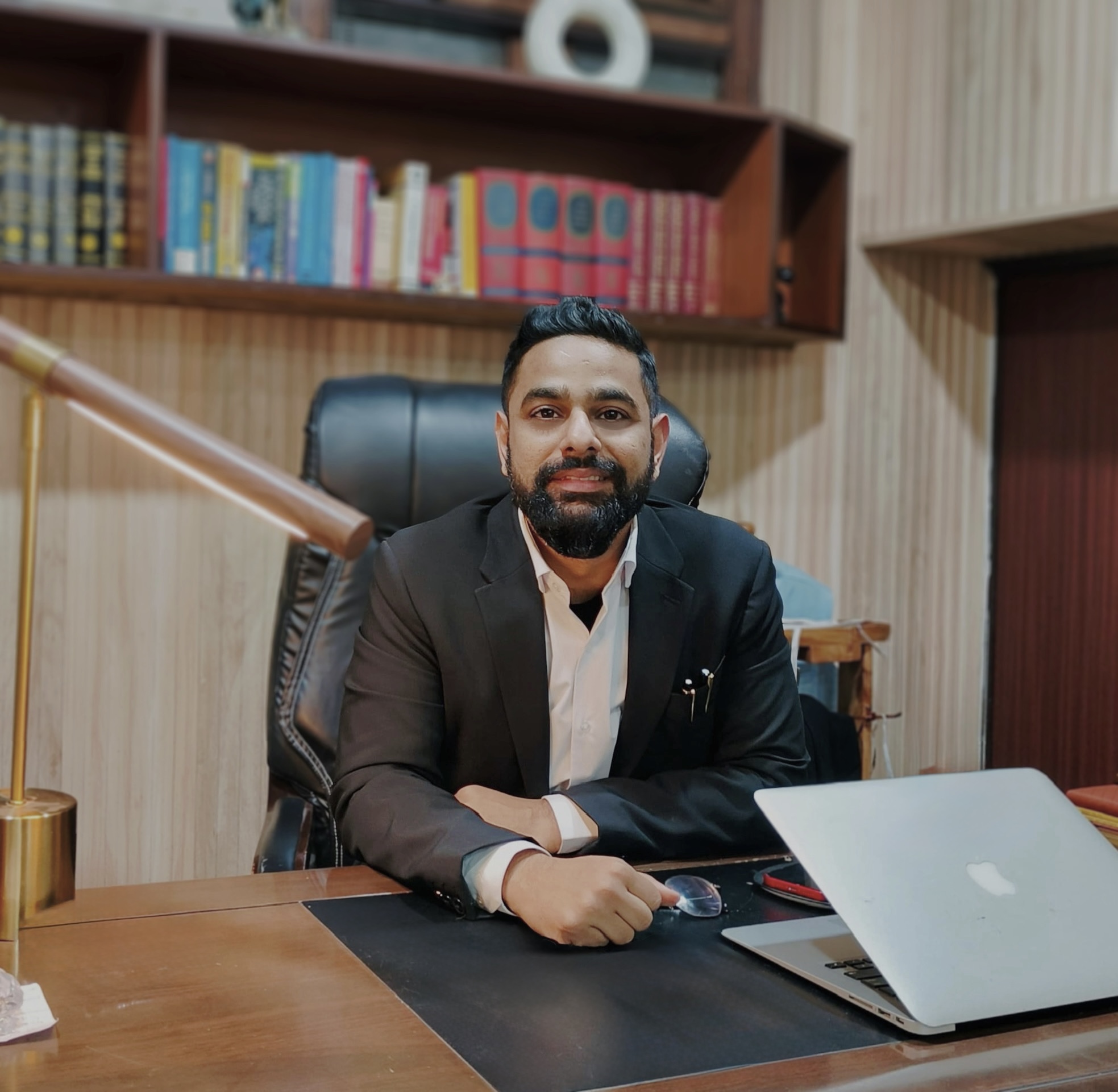
  • “As a first-generation lawyer, my journey into law was driven by a deep sense of purpose to stand up for justice and help those in need and underprivileged.” – Kunal Gosain, Founding Partner at KG Law Offices.

    “As a first-generation lawyer, my journey into law was driven by a deep sense of purpose to stand up for justice and help those in need and underprivileged.” – Kunal Gosain, Founding Partner at KG Law Offices.

    This interview has been published by Anshi Mudgal and The SuperLawyer Team

    As a first-generation lawyer, what inspired you to pursue law as a career? Were there specific moments or experiences that motivated you to take this path?

    As a first-generation lawyer, my journey into law was driven by a deep sense of purpose to stand up for justice and help those in need and underprivileged. I lost my father at the age of 16 which was a transformative moment for me personally. It taught me the value of resilience and perseverance, hard work and determination which eventually became guiding principles in my life. 

    To be honest, I initially aspired to become an actor or a journalist, as I have always been a creative and artistic person with a deep appreciation for creative pursuits and  finer things in life.I remember that in school days we used to perform street Theatre in Association with “Jan Natya Manch”(Founded by Safdar Hashmi), Yuva Ekta Foundation(An initiative of Tehelka) for social causes and spreading awareness like Child Labour, Education and its importance, HIV, Corruption, Right to Information, Right to Education, Child marriage to name a few. I always wanted to do something for the society and I did not want to just stop at spreading awareness but also wanted to empower the underprivileged, give them a voice and make a difference in our society. 

    The vast experience I gathered from interacting with people from all walks of life and looking at their lives and challenges closely, coupled with the unwavering support of my mother and brothers, instilled in me a sense of purpose and determination to carve out my own path in the legal field. It would not have been possible without my family which is my biggest strength.

    I believed I possessed the necessary skills that this profession demands and once introduced to courts and law as a field I felt a deep sense of belonging within the courts. This made law the ideal profession for me to channel my passion and drive to create a meaningful impact in society.

    In the early stages of your career, you likely encountered both valuable learning opportunities and challenges. Can you share some key experiences that helped you build a strong foundation in law and influence your career path?

    The initial years of my legal career were pivotal in shaping my understanding of the profession. I had the privilege of working under some of the most accomplished legal minds, each of whom contributed significantly to my growth. Starting in the chambers of Senior Advocate K.K. Manan provided me with a solid grounding in criminal law. During my time there, I learned the essentials of court craft and the nuances of legal practice, which played a crucial role in helping me overcome my initial hesitation in appearing before the High Court. This early exposure instilled confidence and prepared me for the challenges of litigation.

    Later, my time with Mr. J Ajay Digpaul  (before his elevation) and Ms. Arti Bansal allowed me to represent the Union of India/Central Government in significant High Court matters, further refining my skills in drafting, argumentation, and handling complex procedural frameworks. Working with them deepened my understanding of litigation and advocacy, while also reinforcing the importance of meticulous preparation and clarity in legal reasoning.

    A defining phase of my career was working with my mentor, Mr. Saurabh Prakash, a disciple of the revered Shri Paramhansa Yogananda and an accomplished IIT Kanpur graduate in Chemical Engineering who transitioned to law. Under his guidance, I gained insights into diverse practice areas, including civil disputes, employment law, and writ petitions and diverse disputes including a Fake encounter case. He emphasized the importance of thorough preparation, reading files meticulously, conducting in-depth research, and crafting well-drafted pleadings, which he often described as the backbone of any case. During this period, I had hands-on experience drafting writ petitions, suits, SLPs, and contracts, among working on other diverse cases.

    What truly stood out about Mr. Prakash was his unwavering commitment to maintaining the highest level of morals and ethics in the practice of law. He not only emphasized these principles but lived by them, setting an example for those under his guidance. He frequently reminded me to “always take the longer route in approaching a case, don’t look for shortcuts. While it may take more time, the learning it brings is invaluable.” This philosophy has been instrumental in shaping my approach to legal practice and my outlook on the profession.

    Before entering the profession, I received valuable advice from a Judicial Officer, now a High Court Judge, who emphasized the importance of mastering civil law, drafting, and research before delving into criminal law. This guidance helped me lay a strong foundation for my career. Additionally, during a judicial internship with a now-retired judge of the Delhi High Court, I had the rare opportunity to view cases from the bench’s perspective. This experience gave me a deeper understanding of judicial reasoning and the critical role of precision and clarity in legal arguments.

    These formative experiences taught me to approach every case with diligence, empathy, and unwavering integrity, laying the groundwork for a career defined by commitment to excellence and ethical practice.

    After gaining significant experience with various law firms, what prompted you to establish your own practice? What were the driving forces behind this decision, and what challenges did you face when starting out?

    Establishing KG Law Offices was born out of a desire to serve clients with a personalized and solution-driven approach. I wanted to build a space, a niche for myself that reflected my principles, provided personalized legal solutions, and addressed clients’ challenges with integrity and commitment and while having a relief-oriented approach. 

    Truth be told, starting out on my own and establishing independent practice was not without its hurdles, I literally had not many cases or briefs when I decided to go independent! While there were many raised eyebrows and my friends and colleagues being apprehensive about the step being too early to start out on my own , I was determined and had faith in God and myself. I just kept going on one day at a time.    

    There were significant challenges; right from building a client base, making a place for yourself, generating enough money to sustaining the practice, earning trust as a first-generation lawyer in this highly competitive environment, getting recommendations which I faced and had to overcome by sheer hard work and having a client centric and relief-oriented approach and needless to say delivering results and relief to clients. 

    The driving force behind this decision were all these experiences which reinforced my determination to carve a niche and create a firm where professionalism, empathy, and excellence guide every decision. 

    In this odyssey of self-discovery and finding my calling, I must say that every step of it has been equally humbling and rewarding, allowing me to contribute meaningfully to the profession and society which gives me a sense of satisfaction and fulfilment. I do not have any regrets or would not want to have it any other way.

    This is one of my favourite quotes I live by ! “Be Among Those who dare to follow their dreams”

    Over the years, you’ve represented high-networth individuals (HNIs), NRIs, and international corporations. Could you share one of the most memorable cases and the strategies you employed to achieve successful outcomes?

    One of the most memorable cases I handled involved an intellectual property rights dispute related to the works of a revered spiritual figure associated with one of the most prestigious Ashrams or monastic orders. This case was complex, as it spanned multiple jurisdictions and involved overlapping Indian laws, including personal laws, intellectual property rights law, and international law. Additionally, there was a critical need to balance the protection of intellectual property with the sensitivity of cultural and religious considerations, especially since the dispute had international implications.

    A particularly valuable aspect of this case was the opportunity it gave me to engage closely with the lives of Sanyasis and Monks, allowing me to gain insights into their practices and teachings. This personal experience enriched my understanding of the subject matter and gave me a deeper appreciation of the spiritual context in which the legal dispute arose.

    The complexity of the case was heightened by the fact that the legal framework governing Sanyasis, Monks, and Sadhus is relatively limited, especially when it comes to intellectual property disputes. The dispute was not related to immovable property, which is more commonly associated with religious institutions, but rather to intellectual property rights. In this context, the Sri Krishna Singh vs. Mathura Ahir case (1979) –AIR 1980 SUPREME COURT 707 which became the locus classicus on the laws concerning Sadhus, Yatis, and Sanyasis – proved to be pivotal. This landmark judgment of the Supreme Court of India extensively discusses various aspects of the legal status of Sanyasis and Yatis, and it provided critical guidance on how to approach cases involving religious figures and their intellectual property rights.

    The decision of the Apex Court in Mathura Ahir became essential in shaping our strategy, as it was a key reference point for understanding the legal standing of the individuals involved and their rights. The judgment clarified multiple legal aspects that were directly relevant to our case, including the succession and rights of Sanyasis, and it provided invaluable precedents for addressing the unique challenges we faced.

    The strategy we employed was comprehensive and meticulous. It involved in-depth legal research, careful documentation, and the alignment of the client’s objectives with the applicable laws. Our approach also emphasized clear communication and teamwork, with each team member contributing to the development of a strong case.

    This case and how we evolved the strategy regarding the said case was a testament to the importance of hard work, thorough legal preparation, and collaboration. It underscored how a deep understanding of the legal and cultural context, coupled with a strategic use of relevant case law can resolve the most complex and sensitive legal matters.

    It was a collaborative effort, where clear communication and attention to detail played a critical role. The successful resolution of this case reinforced my belief in the importance of clear communication, hard work, meticulous preparation, and team work. 

    You have handled cases for various clients, including public sector undertakings (PSUs). Can you describe a particularly complex issue you’ve dealt with while representing PSUs, and how does your approach differ in dealing with private clients?

    One of the more challenging cases I handled for a PSU involved coordinating with multiple departments spread across different states, each with its own set of processes and jurisdictional hurdles. It was a test of patience and persistence, as aligning everyone on the same page while ensuring all legal and procedural requirements were met was no small task.

    What made it particularly complex was managing the flow of communication between the PSU’s central office, regional branches, and external parties, all while adhering to tight timelines and keeping in mind the courts directives. To navigate this, I relied on a systematic approach, breaking the problem into manageable parts, using technology to stay organized, and maintaining open and frequent communication with everyone involved.

    Ultimately, we achieved a favorable outcome, and the experience taught me the value of teamwork, clear communication, and strategic planning when representing organizations with such intricate structures. It’s cases like these that remind me how important it is to approach such cases with a steady hand and a collaborative mindset and how paying attention to detail becomes crucial.

    Working with PSUs often involves a more structured and procedural approach. There are layers of approvals, formalities, and timelines that require careful management. On the other hand, private clients usually expect faster, more flexible, and tailored solutions. With private clients, it’s about being agile and adapting strategies to their specific needs, while with PSUs, it’s about patience, meticulous planning, and ensuring that everything aligns with institutional frameworks.

    Each approach has its own challenges, but both have taught me to balance efficiency with attention to detail, which is essential in delivering the best outcomes.

    In addition to your legal practice, you’re involved in social causes. Can you tell us more about your work with organizations like Jan Natya Manch and Yuva Ekta Foundation, and how you use your influence to raise awareness of important social issues?

    My involvement with Jan Natya Manch, founded by the late Safdar Hashmi, was one of the most enriching experiences of my life. Under the guidance of Moloyshree Hashmi, I performed street plays addressing critical social issues like child labor, education, HIV awareness, corruption, the Right to Information, and child marriage, among others. Similarly, my association with the Yuva Ekta Foundation, an initiative of Tehelka Magazine, allowed me to connect with young minds and raise awareness about pressing societal concerns while pursuing my creative passions.

    During my college years, I continued to explore my artistic side, performing in street theatre and full-length drama productions. I even ventured into professional acting and worked on a few ad films. However, as I approached the completion of my studies, I realized that my true calling was in the legal field. The sense of purpose and belonging I felt in courts and within the legal profession inspired me to fully dedicate myself to this path. Over the years, my passion and admiration for the field have only deepened.

    As a legal professional, I firmly believe that our responsibility extends beyond the courtroom. Advocacy isn’t just about arguing cases—it’s about raising awareness and inspiring change in the society we serve. My involvement with these organizations was an expression of that belief.

    Recently, my legal team and I worked on a significant case against a renowned educational institution in Delhi that had unlawfully expelled 30 students belonging to the Economically Weaker Section (EWS) category. We secured a favorable interim order, ensuring the students’ reinstatement. The judgment not only upheld the rights of these children under the Right to Education (RTE) Act but also sent a strong message to all schools in Delhi about the sanctity of a child’s right to education. No one should be denied their right to education—it’s a fundamental and valuable right that must be protected at all costs.

    Such cases reaffirm my belief in using the law as a tool to bring about meaningful societal change and to stand up for those whose voices often go unheard.

    Having faced numerous challenges along your journey, what keeps you motivated to continue striving for excellence in your legal career and contributing to the legal community?

    My motivation comes from a deep sense of responsibility toward my clients and the legal profession. Throughout my journey, I have faced numerous challenges, but fortunately with the unwavering support of my mother and two elder brothers, and the blessings of my late father. Their encouragement, combined with the mentorship of individuals like Mr. Saurabh Prakash, has played a pivotal role in shaping my career due to which I was able to overcome these adversities and pursue my passion for law, charting my own path. 

    My family, faith, and mentors provide constant strength and guidance. An ardent devotee of Lord Shiva, I attribute my strength and success to my mother, my family, my guru (Shivji), my late father’s blessings, and the invaluable mentorship of Mr. Saurabh Prakash.

    I find immense inspiration in knowing that my work can bring tangible relief and justice to my clients. Whether it involves mentoring young lawyers, addressing societal inequities, or advocating for those in need, every success reaffirms my dedication to the principles of fairness, integrity, and service. 

    This blend of professional purpose and personal fulfillment fuels my determination to continue growing and making a positive impact on both the legal profession and the community at large

    With nearly a decade of experience, how do you foresee the future of the legal profession, particularly with the rise of technology? What steps are you taking to adapt to these changes?

    Technology is transforming the legal landscape, making processes more efficient and accessible. At KG Law Offices, we embraced digitization early, moving away from traditional diaries to digital case management systems a long time ago, that is much before COVID, therefore we have evolved a system of case management of our own and don’t need expensive “Case management” Softwares and tools. We have leveraged technology and use Tools like e-filing, cloud storage, Digitization of case files and paperless operations. Some of the steps like “Efiling”,”Digital e- inspection” and “Video conferencing have really increased productivity and have showcased transparency and accountability but these are just limited to the metro cities and not remote areas of our country which are in dire need of a robust justice dispensation system and lack basic infrastructure. Its surprising that while we live in Metro cities and we see courts being digitised and everything available on a click of button, the remote areas and the rural areas are deprived of even basic infrastructure and are still in the archaic era and leveraging technology In such areas can really bring in a lot of progress and change the whole scenario.

    While AI and automation are valuable tools, it is important to recognize their limitations. However, technology can only complement human intervention, it cannot replace the insight and empathy lawyers bring to their work. For instance, AI can streamline research but lacks the nuanced judgment required in legal decision making. We are committed to using technology responsibly to enhance transparency and accountability while ensuring that the human element remains at the forefront. Our goal is to use these advancements not just for operational efficiency but also to contribute to a more inclusive and effective legal system, bridging the digital divide

    What advice would you give to aspiring lawyers, particularly those from non-legal backgrounds, who wish to follow a career path like yours? Additionally, could you recommend any resources that help them stay informed about the latest developments and trends in the legal field?

    Aspiring lawyers, particularly those from non legal backgrounds, should approach the legal profession with patience, perseverance, and a deep commitment to continuous learning. Establishing oneself in this field requires resilience and a long term vision, much like planting a bamboo tree, which takes years to grow strong roots before it flourishes. Similarly, the initial 3-5 years in law are crucial for laying a solid foundation, building skills, and understanding the nuances of the profession.

    It is important to acknowledge that practicing law can be challenging, especially for those without financial support. The profession often demands a substantial investment of time and effort before yielding tangible rewards. Salaries for fresh graduates are often modest, and the competition in the legal field is intense, with a significant increase in the number of practicing lawyers over the years. However, these challenges should not deter determined individuals from pursuing their dreams. With dedication, strategic planning, and a genuine passion for justice, success is achievable.

    For those starting their journey, Staying up to date with Judgments , reading Judgments delivered by the Supreme Courts and High Courts of our country readily available on websites is an excellent resource for honing skills and staying informed about recent developments in law, you need not have expensive subscriptions to reporters , you can also effectively use the Libraries of the courts which are well equipped these days. Additionally, reading case law regularly, attending legal seminars, participating in moot courts, and engaging with experienced mentors can provide invaluable insights and most importantly being mindful of your company and who you hang out with also matters a lot. Aspiring lawyers should also focus on cultivating soft skills such as communication, negotiation, PR skills, client counselling, critical thinking, which are indispensable for a successful legal career.

    Most importantly, never lose faith in your ability to make a difference, no matter your background. The legal profession is one of service and impact. Stay grounded, work hard, and remember that your integrity and dedication to the cause of justice will define your legacy in this noble profession. One should approach the profession with humility and a sense of service. Remember that our work is about helping people and assisting the courts as we are officers of the court and a crucial part of the justice dispensing system, it is not just about winning cases or making money solely.

    Aspiring lawyers must always remember that integrity and principles are the foundation of this profession. Never compromise on your character or values for material gains, this is the golden thumb rule I firmly believe in and follow. 

    I have a guiding philosophy which I have devised and live by, which emphasizes not only professional success but also the ethical conduct and higher purpose of the legal profession. 

    As per me broadly speaking, the cases a lawyer handles can be categorized into three types, each serving a distinct purpose and contributing to one’s growth:

    • Cases for Name and Reputation: These cases, in essence, translate to “Ek kaam naam ke liye karo”—One of the goals is to work for reputation and recognition. These are cases that may not bring immediate financial rewards but provide unparalleled exposure and recognition. Handling such matters puts you in the spotlight, allowing you to showcase your talent and build credibility. I always advise aspiring lawyers that you could be the most talented individual, but without a platform and opportunity, your abilities might remain unnoticed. Moreover, as I often say, “Your network is equal to your net worth.” Lawyers must develop excellent PR skills to build connections and relationships in the profession. 
    • Cases for a Cause or Pro Bono Work: These cases, as I see them, translate to “Ek kaam seva ke liye karo kisi ki madad ke liye”work for service and for making a difference.  Taking on cases to help those who are in need and are underprivileged without expecting financial compensation, is one of the most fulfilling aspects of this profession.The exposure and sense of fulfillment that comes from empowering someone through legal support are unmatched. Pro bono work reminds us of the higher calling of our profession—to seek justice and uplift the underprivileged. 
    • Cases for Financial Empowerment : These cases translate to “Ek kaam paise ke liye karo”—work to earn and build your financial independence. While name and service are important, financial independence is equally vital. Handling cases that offer significant monetary compensation empowers you economically and boosts confidence, especially for first-generation lawyers. There is no greater joy than being self-made and financially secure. This is why I encourage young lawyers to begin accepting briefs even while working under a senior, provided the senior is supportive. I also urge mentors and seniors to provide opportunities to the younger generation, as it helps them grow professionally and personally. 

    Balancing these three types of cases in your career ensures not only professional growth but also personal satisfaction and a meaningful contribution to society. As lawyers, we must aim to uphold the nobility of our profession, maintaining a fine balance between serving others, earning a livelihood, and building a reputation that lasts a lifetime.

    Get in touch with Kunal Gosain –

  • “It was not just the big-ticket cases that defined my journey—it was the groundwork, the nuts and bolts of practice and procedure, that shaped me.” – Nakul Gandhi, Founding Partner at NG Law Chambers.

    “It was not just the big-ticket cases that defined my journey—it was the groundwork, the nuts and bolts of practice and procedure, that shaped me.” – Nakul Gandhi, Founding Partner at NG Law Chambers.

    This interview has been published by Anshi Mudgal and The SuperLawyer Team

    Considering your background and early life experiences, how did those factors shape your understanding of the role of law in society and what made you eventually decide to pursue a career in law? Was there a specific event, experience, or person that influenced your decision to enter the legal profession?

    I was the quintessential mischievous kid—the kind who was always on a teacher’s radar for all the wrong reasons. Academically, I was average, but I had a natural flair for connecting with people and forming relationships. I credit my family for seeing beyond the chaos and recognizing that my energy could be channelled into something meaningful and encouraged me to pursue law.

    Coming from a business family with no legal background, I became a first-generation lawyer—a leap into the unknown. Stepping into the legal profession felt like finding the missing piece of a puzzle. The law, with its vast landscape and limitless opportunities for growth, resonated with me. It wasn’t just a career; it became a calling. Law, with its endless possibilities and avenues for growth, gave me hope that I could use my abilities to carve a small space for myself in this landscape.

    During the initial phase of your career, you handled disputes for major corporate clients. Could you share some of the formative experiences that enhanced your understanding of the law and helped you to enhance your career trajectory?

    I was fortunate enough to have worked with reputed litigation law firms throughout and have a diverse start in my career, experiencing the depths of civil, criminal, and commercial law. However, I sincerely believe that it was not just the big-ticket cases or influential clients that defined my journey—it was the groundwork, the nuts and bolts of practice and procedure, that shaped me.

    I made it a point to immerse myself in the procedural workings of courts and tribunals—not just in Delhi but across other states too. This hands-on exposure is my strength, and has added layers to my understanding of legal practice.

    A standout highlight of my journey has been regularly briefing some of the most prominent senior counsels across India on a variety of disputes. This experience led me to develop a deeper understanding of law, sharpened my skills and gave me the confidence to handle complex challenges with ease.

    One of the greatest blessings in my journey was working under bosses who were absolute masters of their craft. They set the bar high and demanded nothing less than excellence. Their mentorship wasn’t just about honing my legal acumen—it was about instilling discipline and a drive for excellence. That rigorous training has been the cornerstone of the lawyer I am today.

    After gaining valuable experience across different law firms and practice areas, what inspired you to take the leap and start your own law firm? What were some of the key challenges you encountered during the process of establishing your firm, and how did you overcome them?

    I always knew I had the skills and drive to start and manage my own law firm. While my career trajectory was steady and promising in my previous roles, the entrepreneurial itch was impossible to ignore. It was not just about ambition—it was about carving out my own space and building something from the ground up. So, when the moment felt right, I took the leap of faith.

    Starting out, the biggest challenge was managing expectations—both my own and those around me—and embracing the inherent uncertainty of going independent. The move from the steady comfort of a law firm job to the uncertainty of running my own practice was both challenging and exciting.

    I knew the key to survival and growth lay in two things: generating work and delivering results. So, I channeled all my energies into building trust with clients in the smallest of assignments, ensuring every case I handled spoke for itself and turning every challenge into an opportunity to prove myself. As someone from outside Delhi with a non-legal background, establishing a full-service law firm here, has been a proud achievement for me. The desire to excel as an outsider fuels my determination even further.

    You represent several prominent social media influencers, helping them navigate the legal complexities of the digital age. Could you share how the legal landscape for content creators has evolved, and how you support influencers in managing legal risks?

    Social media influencers are the celebrities of the digital age, and the legal landscape around them is evolving rapidly—touching everything from IT and IP laws to even fundamental rights. With their massive follower base, influencers have a unique power to shape public opinion, making their actions resonate far beyond their screens.

    My role is to help them navigate this complex terrain by ensuring they understand their rights, responsibilities and laws governing their space. The challenge lies in balancing freedom of speech with the legal and ethical boundaries of content creation. As online content becomes more unfiltered, conflicts are inevitable, and managing them goes beyond simply applying the law. I advise them on content and how to strike the right balance—protecting the integrity of their content while ensuring it doesn’t cross legal boundaries. In disputes, the focus shifts to safeguarding their fundamental right to free speech and the right of the public to have access to different perspectives.

    One of your notable cases involved defending a prominent youtuber against Dabur India Limited’s allegations related to a video critiquing. Could you elaborate on the approach towards this case and how you balanced freedom of expression with addressing the company’s concerns?

    This case highlighted the delicate balance between a content creator’s freedom of speech and the rights of others. For me, it was crucial to ensure that the YouTuber’s right to free expression wasn’t compromised. I was fortunate to work with a client who was not just willing but determined to fight for this right, recognizing its larger significance for creators and his audience.

    At the same time, I understood the importance of avoiding unnecessary litigation that could drain resources and prolong conflict—something neither the YouTuber nor the company wanted. The natural and necessary path was to pursue an amicable resolution.

    My focus was on preserving the educational value of the YouTuber’s video, which provided important insights on food and health to the public. After multiple rounds of rigorous negotiation from both sides, to achieve a settlement, we agreed to remove a few minor portions of the video that were the subject of the company’s IP disparagement claims, without prejudice to our client’s right to free speech. These changes did not affect the video’s core message or structure, allowing us to protect both the creator’s voice and the broader value of the content for society. This proposition was also acceptable to the Company, which led to a win-win situation for both sides.

    You have advised and represented clients in high-profile criminal cases, such as the CBI chargesheet concerning a PSU tender scam. What are the critical factors you focus on when advising clients in such complex criminal matters, and how do you approach preparing for these high-stakes cases?

    In criminal cases, even when companies stand accused, it’s the individuals who bear the weight, as the corporate veil often falls to reveal the human cost. The stakes couldn’t be higher, and this pressure is unlike anything else.

    My first priority is to extract every minute detail from the client about the case—no matter how trivial it may seem. In criminal law, even the smallest piece of information could turn out to be a smoking gun or a declaration of innocence.

    I also believe that it is equally important to manage expectations and give the client a realistic picture of the situation. Trust between client and counsel takes on a whole new level of significance in criminal matters. It’s not just about building a defense—it’s about standing calm and firm in the face of uncertainty, ensuring that every decision is informed and strategic. 

    A senior counsel once gave me advice I hold as gospel: to ensure the best defense, preparation must begin on day one. You should envision how the story ends for your client and craft the entire trial strategy around that vision.

    What advice would you give to aspiring lawyers who wish to follow a career path like yours? Additionally, could you recommend any resources that help them stay informed about the latest developments and trends in the legal field?

    Always see yourself as a student of law, not a master of law. The law evolves with society, and staying curious and adaptable is key. It’s just as crucial to understand your client’s needs as it is to understand the intricacies of a legal case. True innovation in legal practice comes when you bridge the gap between business realities and business laws. Equally, knowing how to connect with a judge’s perspective is vital. Sometimes, a case is not won by citing more precedents but by presenting solutions that create a win-win outcome.

    Another important skill worth developing is the art of networking—it’s all about fostering meaningful relationships that can provide fresh perspectives and open doors to many opportunities.

    For aspiring lawyers, staying updated and informed is easier than ever. Social media, news outlets and online legal platforms provide relevant updates on legal trends, making it simple to stay current. It is imperative to keep a close eye on these developments because a solid understanding of the world around you is essential—not just to stay updated but to offer sound advice to your clients.

    With your career balancing both high-profile legal work and professional responsibilities, how do you manage your work-life balance? What strategies or practices help you maintain personal growth and stay motivated to excel in such a demanding and fast-paced field?

    Speaking candidly, in our field—especially for independent practitioners—work-life balance often feels like a distant dream. However, with increasing awareness about its value, it’s worth making an effort to incorporate it, even in small ways. I personally am health conscious; I make it a point to monitor what I eat and stay consistent with my workouts to an extent, which keeps me disciplined and supports the demands of my rigorous professional life. During the court vacations, I like to travel. I also have a close-knit group of friends I regularly meet and spend time with. 

    Get in touch with Nakul Gandhi –

  • Bridging Science and Law: A Unique Approach to Legal Practice and Emerging Technologies – Alishan Naqvee, Founding Partner at LexCounsel, Law Offices.

    Bridging Science and Law: A Unique Approach to Legal Practice and Emerging Technologies – Alishan Naqvee, Founding Partner at LexCounsel, Law Offices.

    This interview has been published by Anshi Mudgal and The SuperLawyer Team

    With more than two decades of legal experience and background in physics, what was the inspiration for you to transition to law and how has your scientific education, specifically related to physics, influenced your approach to legal practice?

    I consider myself an accidental lawyer, as law was not my original ambition during school or while pursuing my graduation in physics. However, circumstances led me to take the law entrance exam, where I was selected. Interestingly, I had also appeared for other entrance exams, including one for mass communication. Before moving into law, I also spent some time training as an Assistant Commander in the Indian Armed Forces. My background in science has been very useful in my legal career, as it has helped me develop strong analytical and problem-solving skills, which are key in law. These skills have made it easier for me to understand and address legal issues.

    When I started practising law in 1998, the telecom and IT outsourcing sectors were in their infancy in India. My scientific background enabled me to grasp the technical aspects of these fields with ease. For instance, I worked on matters involving leased lines, the introduction of VOIP (Voice Over Internet Protocol), and regulations like the prohibition on terminating internet calls over PSTN (landline) connections, which required separate devices at the time. This technical knowledge gave me an advantage early in my career, enabling me to work closely with clients and gain valuable experience. Even now, my scientific background remains crucial, especially in emerging fields like AI, machine learning, and medical devices, where a solid understanding of science is often essential in areas like data privacy, data protection and competition law.

    While many assume that a lawyer with a science background would naturally gravitate towards intellectual property or patent law, my career path has been far more diverse, involving criminal cases, civil disputes, and regulatory matters across multiple sectors. My science background has been valuable in helping me interpret and analyse complex information accurately. Although I never expected my physics education to connect so closely with my legal work, it has sharpened my analytical skills and allowed me to handle a broader range of issues. My journey has shown that science and law can complement each other in meaningful ways.

    Given your background in science, law, and ethics, what is your perspective on the challenges we may face as emerging technologies like AI, IoT, and blockchain become integrated into our legal and societal systems? Specifically, how do you see AI influencing forensic evidence and the practice of law? What ethical dilemmas do you anticipate arising from these technologies, especially considering their potential impact on society and the legal framework in a populous country like India?

    With my background in science and law, I see the integration of emerging technologies like AI, IoT, and blockchain into legal and societal systems as both a challenge and an opportunity. AI has the potential to revolutionize legal practice and judicial processes, but its adoption must balance the benefits of innovation with addressing ethical concerns and ensuring societal well-being, especially in a diverse and populous country like India. 

    India is uniquely positioned to lead in the global AI landscape, with much of the development in generative AI and software engineering being driven by Indian professionals, both domestically and abroad. As a hub of global IT leadership, India has the expertise and resources to shape the future of AI responsibly. This role comes with the responsibility to establish ethical frameworks that ensure AI acts as a tool for justice and societal progress, rather than a source of harm or inequity.

    AI’s application in the legal field can be divided into three stages: 

    1. Basic Automation: At the most basic level, AI can handle routine tasks and manage high-volume cases, such as traffic violations, where penalties can be automatically issued based on photographic evidence. Bulk cases like recovery suits, small financial claims and builder disputes can also be streamlined, with AI drafting basic judgments. A “maker-checker” system can ensure accuracy and save judicial time for more complex matters.
    1. Case Categorization and Prioritization: The second stage involves AI helping to categorize and prioritize cases, allowing the judiciary to focus on critical matters involving life, liberty, privacy, and public policy. Courts already use categorization for bail matters, and AI could streamline less critical cases. This would free judges to focus on high-stakes issues like corruption and white-collar crimes, improving judicial efficiency without compromising the need for human compassion in decision-making.
    1. Complex and Sensitive Cases: The third stage is AI’s role in supporting complex and sensitive cases, such as those involving fundamental rights or criminal offenses. Ethical dilemmas require nuanced understanding and empathy, which AI cannot replicate. Judges must retain ultimate authority in such matters to ensure justice is served with compassion and context. AI can help with research, analysis, and gathering evidence, but final decisions should be made by humans to ensure fairness and to uphold the law.

    AI is set to change the way lawyers work by automating tasks like documentation, research, and drafting. This might reduce the need for some entry-level tasks but opens up opportunities to focus on skills like analysis, strategy, and argumentation. For young lawyers, especially those impacted by the pandemic, the key will be adapting to these changes while building courtroom skills and upholding ethical practices that technology can’t replace.

    Ethical dilemmas are a major concern in the use of AI, especially generative AI, which can create false information that may be misused in courtrooms if not carefully monitored. Over-reliance on AI could also lead to decisions being made without adequate human oversight. While AI can be a valuable tool, it must serve human objectives, not replace human judgment. To ensure justice and fairness, India’s legal framework must adapt to technology with regulations that balance innovation and safeguards against its misuse. Training for lawyers and judges on AI’s capabilities and limitations is essential for responsible use. By embracing AI cautiously and ethically, India’s legal system can benefit while ensuring that compassion and fairness remain at the heart of justice.

    Given your experience in healthcare, where AI and robotics are increasingly used in elder and newborn care, ethical concerns about privacy, data misuse, and autonomy are growing. Neuroethics, particularly around “brain rights,” is becoming a global issue, yet India lags in addressing it. With India’s focus on fundamental rights, when do you foresee lawmakers accelerating discussions and legislation to protect cognitive liberties and ensure AI respects privacy, autonomy, and dignity?

    Unfortunately, what we observe globally, and particularly in India, is that legislation often emerges as a reaction rather than proactive action. Laws, especially key ones, tend to be overhauled only in response to significant events or crises. Whether it pertains to criminal laws or other sectors, this reactive approach delays progress. AI is already prevalent, and we need to regulate it now. If we don’t, we’ll always be reacting to its effects rather than shaping its development. Importantly, no law is cast in stone; even our Constitution permits amendments. 

    A key example of delayed regulation is the medical device industry, which was initially governed by the Drugs and Cosmetics Act but took years to develop a dedicated framework. As medical devices increasingly incorporate AI, such as blood glucose monitors that use real-time data for more personalized care, the need for timely regulation becomes more urgent. While AI enhances precision, ethical concerns about autonomy and accountability arise. Robust regulation is essential to ensure safety, fairness, and accountability as these technologies evolve.

    Neurosciences represent a frontier where technology and ethics intersect, with initiatives like Neuralink, led by Elon Musk, showcasing both promise and controversy. Technologies that bridge physical or neurological impairments, allowing the brain to communicate directly, offer hope for individuals with conditions like neurodegeneration or spinal cord injuries, enabling them to “speak” through neural interfaces. These advancements could also change how we understand patients in vegetative states, distinguishing between natural responses and conscious communication. 

    Also, the concept of brain preservation opens exciting possibilities, such as preserving the brains of great minds like Einstein or Stephen Hawking to continue their problem-solving and creativity even after their deaths. Breakthroughs in tissue generation, like replicating tumours to test treatments, are already improving healthcare outcomes and paving the way to cure diseases like cancer. Combining brain preservation with AI could extend the knowledge of exceptional individuals, allowing their wisdom to guide future generations and drive progress long after their lifetimes.

    Ethical concerns are natural, especially in fields like neuroscience and AI, dealing with issues such as consent, privacy, and misuse. However, these concerns should guide progress, ensuring that innovation aligns with society’s values. Throughout history, humanity has advanced by tackling ethical challenges. The integration of AI, neuroscience, and related technologies offers huge potential, but it must be regulated carefully. By embracing these innovations responsibly, we can push boundaries and ensure technology benefits humanity, with compassion, ethics, and human oversight at the core, especially in medicine and law. Technology should remain a tool in human hands, not the other way around.

    Starting LexCounsel early in your career, you’ve worked extensively in litigation and dispute resolution. What challenges have you faced in these areas, and how have you proven your expertise? Additionally, for newcomers entering the field, what advice would you offer on balancing specialization with broader growth opportunities?

    When I began my career as a junior advocate, I saw law as a professional degree that offered the unique opportunity to start an independent practice right away, unlike many professions that require applying for jobs. Although law wasn’t my original plan, I knew I wanted to build my own practice. I gave myself six to eight months to try it independently, and fortunately, my first client’s payment covered my expenses, allowing me to grow. Looking back, running my own law firm has been a highly rewarding experience.

    In the early years of my career, I intentionally took on a wide range of work because I believed that diverse experience is key to intellectual and professional growth. I handled litigation matters that law firms often take on selectively, such as winding-up petitions, cheque bounce cases, and white-collar crimes. Law offers no one-size-fits-all path to success; some lawyers excel by specializing in a single area or focusing on one court, while others diversify into areas like litigation, arbitration, and regulatory work in forums such as the NCLT or NCDRC. In my view, the early years should be about embracing any work that comes your way, as these formative years are vital for understanding the nuances of different practice areas.

    One of the key lessons I have learned is that drafting should always follow a structured approach. Whether you are preparing a reply or initiating a case, it is essential to start by understanding the facts of the case, identifying the key issues, and conducting thorough legal research. Only then should you proceed with drafting, ideally in consultation with a senior or mentor. A common mistake among young lawyers is starting with assumptions and drafting without proper research, which often results in errors. Developing a disciplined approach to drafting and research is a skill that pays dividends throughout your career.

    The legal profession demands relentless hard work and dedication. Unlike other fields, there is no concept of a Monday-to-Friday workweek, weekends off, or a casual start to the week. The profession is highly competitive and unforgiving. One of my seniors used to say that law is a “jealous profession.” If you neglect it or treat it as secondary, it will leave you. Success requires consistent effort, particularly in the early years. Moreover, knowledge acquisition is non-negotiable in this field. If a lawyer fails to build a strong foundation of knowledge in the initial years, their career will face significant challenges after seven to ten years. A solid start is critical for long-term stability and growth in the profession.

    Hard work is essential, both in law school and in practice. While some believe law is learned only through practice, I’ve seen that students with strong academic discipline tend to perform better professionally. Law school builds skills like hard work and achieving results, which are crucial in the field. Those who neglect assignments or skip classes often struggle later on. In the early years, you may rely on family support or modest earnings, but without a solid knowledge base and experience, meeting expectations becomes challenging. My advice to young lawyers: embrace learning, build a strong foundation, and dedicate yourself to the profession. There is no greater embarrassment than being unprepared, and no greater satisfaction than mastering your craft and earning the respect of your peers and clients.

    Could you share your experience representing multinational corporations, which have unique legal needs compared to individuals or smaller companies? How have you navigated complex corporate transactions, dispute resolution mechanisms, and international arbitration systems? Given the importance of international law in these areas, how have you incorporated these learnings into your practice, and what advice would you give to learners on the significance of studying international law, especially with emerging technologies in mind?

    In the early 2000s, Indian employees of multinational corporations faced challenges due to the casual approach to bribery and facilitation payments, as the US Foreign Corrupt Practices Act allowed small facilitation fees to expedite routine government actions. However, the introduction of the UK Bribery Act, which banned such payments, marked a shift toward stricter compliance. I’ve witnessed teams being asked to resign due to violations of these laws, often from unintentional actions. Over time, with stronger anti-corruption laws, increased media scrutiny, and corporate training programs, compliance levels have improved. Today, employees understand the importance of following these rules, even if it means losing business, helping create a culture of integrity and reducing issues with non-compliance.

    In terms of litigation, our journey began when we established ourselves as a corporate and commercial law firm in 2004. Initially, our work was centred on corporate transactions, but clients began approaching us with disputes related to their franchise agreements, international contracts, and other business dealings. Since we understood their businesses and agreements, they preferred us over others to handle these disputes. 

    At first, we relied on senior advocates for court appearances, but this approach had limitations, such as difficulties in coordinating with external counsel and a lack of accountability. This led us to take a more hands-on approach, handling many hearings ourselves while engaging while reserving senior counsels only for crucial arguments. This shift improved responsiveness, reduced litigation costs, and built client confidence, with many now trusting us to handle cases independently or to decide when a senior counsel is needed.

    This approach has helped us build trust with our clients by ensuring clear communication, accountability, and adherence to timelines. This level of organisation and transparency, combined with our ability to represent clients directly in court, has been a winning formula. However, success in the legal profession doesn’t follow one path. Some lawyers thrive by specialising, while others succeed by maintaining a broad practice. For us, a mix of client trust, responsiveness, and adaptability has been key to building our practice.

    The legal profession has evolved significantly over the years. How has this change, particularly in terms of ethical implications and AI, impacted legal practice during your decades of experience? Additionally, with the shift towards a more “glocal” mindset, how do you see this influencing the Indian legal profession and its professionals?

    The legal profession has changed a lot over the years, especially with technology, ethical challenges, and AI. In my early days, technology wasn’t as important. Clients would sometimes comment on my youth, which I initially took as a compliment but later realized it was also a sign of their concerns about my experience. Over time, however, the profession embraced technology, especially during the pandemic, which pushed the legal system to adapt to virtual platforms and digital filing systems. Courts, like the Delhi High Court, took the lead in this digital transformation. Today, senior advocates confidently argue complex cases using tablets, with neatly organised digital files. It’s remarkable how the profession has not only adapted to these changes but has also become more environmentally conscious.

    This change extends beyond technology. There has also been a generational shift towards more pragmatic and socially conscious thinking within the legal fraternity. Whether it’s landmark judgments advancing the rights of the LGBTQIA+ community, the decriminalisation of outdated laws, or lawyers taking up environmental and social causes, we are witnessing a progressive evolution in our profession. Many lawyers actively assist the judiciary by initiating public interest litigations, serving as court commissioners, or bringing matters before forums like the National Green Tribunal. This heightened social responsibility is not new—lawyers have historically led battles for freedom and human rights worldwide—but it is heartening to see the Indian legal community continue this tradition with renewed vigour and adaptability.

    The progress of the legal profession in India is commendable, especially considering the complexity of our multi-religious, multicultural society. The legal community has shown an impressive ability to adapt, turning challenges into opportunities. Advancements such as digitally indexed Supreme Court judgments and QR codes on Delhi High Court rulings, while seemingly small, collectively mark a significant transformation in making the profession more efficient, accountable, and responsible. The evolution of India’s legal fraternity, driven by technological adaptation, environmental awareness, and a commitment to social justice, is inspiring and reflects the resilience of the community in upholding core values in a rapidly changing world.

    Given the wide range of portfolios that you manage. How do you see keeping yourself motivated, keeping others around you motivated and keeping the positive environment going as you were talking about?

    I have an intellectual drive within me that pushes me to constantly challenge myself and pursue new opportunities, whether in personal growth, financial decisions, my child’s education, or my legal practice. This mindset has shaped my professional journey, where I’ve continually sought to expand into new practice areas and learn something different. Over time, this curiosity has helped me, and my firm evolve into a multi-faceted legal practice, combining both interdependent and independent areas. For example, clients from the healthcare sector may start with litigation services but eventually need help with regulatory matters like medical device registration or navigating the complexities of drug pricing under the Drug Price Control Order (DPCO). This has allowed us to diversify and grow while developing unique expertise in each area.

    Adaptability has been key to my journey. Early on, I worked in corporate law, handling tasks like drafting resolutions and conducting due diligence. While important, I found these tasks lacked the creativity I wanted. To stay engaged, I started taking on litigation work, eventually branching out into areas like white-collar crimes and insolvency under the IBC. The constant changes in law, like updates to the Companies Act and the introduction of the IBC, kept me learning. Our firm has always embraced new challenges, which has helped us build a diverse and exciting portfolio of work, which has kept our work dynamic and exciting.

    What keeps me going is the constant opportunity to learn. In law, no one can claim to be a master; we’re all lifelong students. I embrace this mindset, viewing every challenge as a chance to grow. This approach has not only shaped my career but also the ethos of our firm. The pursuit of intellectual curiosity and a willingness to adapt have been the foundations of my journey, helping me expand into diverse practice areas and maintain passion for my work. As a student of law, I remain committed to learning and evolving, ensuring my journey is as dynamic as the field itself.

    Get in touch with Alishan Naqvee –

  • “Law as a profession is highly demanding and if one learns to train their minds and control their desires in the nascent stages of their careers, the journey becomes much easier.” – Randeep Sachdeva, Partner at Verbis Legal LLP.

    “Law as a profession is highly demanding and if one learns to train their minds and control their desires in the nascent stages of their careers, the journey becomes much easier.” – Randeep Sachdeva, Partner at Verbis Legal LLP.

    This interview has been published by Anshi Mudgal and The SuperLawyer Team

    As someone without a legal background, what inspired you to pursue a career in law? Was there a specific event or experience that influenced your decision to enter this profession?

    Although I didn’t initially have a legal background, my journey into law was driven by a deep desire to create a meaningful change. One defining moment for me was witnessing how many individuals and businesses face barriers in accessing effective legal support. That realization made me see the legal profession not just as a set of rules and procedures but as a vital tool for problem-solving and advocacy.

    • What also drew me to law was its ability to shape systems and create fairness. I’ve always been passionate about finding solutions to complex challenges, and I saw law as a way to channel that passion into tangible outcomes. It’s a field where you can truly combine intellect with empathy—strategizing to solve problems while making a positive impact on people’s lives.
    • This inspiration eventually led to the creation of my own law firm, Verbis Legal LLP. Founding Verbis Legal at the peak of COVID was not just about starting a business—it was about creating a space where legal services are not only accessible but also deeply personalized. My goal has always been to provide clients with clarity and confidence, especially when they are navigating difficult or uncertain circumstances.
    • What excites me most about this profession is how it constantly challenges you to think critically, adapt, and grow. Every client and case is unique, which means every day is an opportunity to learn something new and make a difference. Starting my own practice has been a deeply rewarding journey, and it’s reinforced my belief that law is not just about cases; it’s about building trust, fostering relationships, and being a dependable advocate for those who need it most.

    In the early stages of your career, you likely encountered numerous challenges. What were some of the key lessons from that period that helped shape your professional growth?

    Honestly, I was lucky enough to have good mentors and have had the privilege to work with some of the finest names in our profession. But just at the top of my head would be that I was not used to spending hours and sometimes even nights on one brief. I would say that Law as a profession is highly demanding and if one learns to train their minds and control their desires in the nascent stages of their careers, the journey becomes much easier.

    After working with several lawyers and law firms over the years, what motivated you to establish your own practice? What initial hurdles did you face, and how did you overcome them?

    After working with several lawyers and law firms over the years, I realized that while each experience enriched my understanding of the legal profession, there were aspects I wanted to approach differently. Establishing my own practice, Verbis Legal LLP, was driven by a vision to create a firm that prioritizes personalized client relationships, streamlined processes, and innovative problem-solving. I wanted to build a space where clients feel heard, empowered, and confident in the legal support they receive.

    • The decision to start my own firm was not without its challenges. One of the initial hurdles I faced was transitioning from a structured, established environment to building everything from the ground up. From defining the firm’s mission and values to managing operational details like compliance, staffing, and client acquisition—it was a steep learning curve. Additionally, stepping into an entrepreneurial role required me to balance legal expertise with business acumen, which was a new but rewarding challenge.
    • To overcome these hurdles, I focused on three key strategies. First, I leaned on the network I had built over the years, seeking mentorship and guidance from experienced professionals. Second, I invested in understanding the business side of running a law firm, from financial management to leveraging technology to improve client services. Lastly, I stayed committed to the principles that motivated me—providing accessible, efficient, and empathetic legal solutions—which served as my compass during difficult times.
    • Establishing Verbis Legal LLP has been one of the most fulfilling journeys of my career. It has allowed me to create a practice that aligns with my values while offering clients the kind of personalized, results-driven support that I believe makes a lasting difference.

    In your role as an Empaneled Advocate at the Supreme Court, you have represented various cases before the Constitution Bench. Could you share an especially interesting case and describe your approach to handling it?

    • While I was working with Additional Solicitor General of India, Mr. Jayant K. Sud, I assisted him on a very important constitutional bench issue which was “Whether the Demand can be proved through circumstantial evidence in the absence of direct evidence under the Prevention of Corruption Act, 1988?”. This case had a huge impact on all the trials under the Prevention of Corruption Act in our country. I recollect assisting Mr. Sud at this point in time, and his meticulous approach and the hours he put in on the brief was extremely inspirational.
    • I believe working and assisting the lead counsels on various Constitution Bench cases was a one of a kind experience, and honestly the experience of a lifetime which I can say was a privilege which I got to experience. The learning and experience that I gained from such cases was invaluable.
    • Another case I had the privilege of working was the case of N.N. Global III where a Seven Judge bench of the Hon’ble Supreme Court was debating a very interesting question of law. It involved very basic but yet unresolved technicalities of Arbitration Law in India.
    • I also got a very rare opportunity to assist the lead counsel in a Nine Judge Constitutional bench in the matter of State of Uttar Pradesh v Lalta Prasad Vaish, this is a very distinct opportunity which not all lawyers get so in a way I would consider myself extremely lucky. This case settled a significant question of Federal structure of power sharing that the Indian Constitution entails.
    • Working on all these cases was a great opportunity and a huge learning curve for me. Learning from the best counsels and senior counsels in India and being part of these historic landmarks in the Indian legal system has been a proud moment for me.

    In a high-profile case where you represented the Union of India, how did you contribute to the creation of the new protocols for managing motor accident claims? What key changes were introduced, and how do they enhance the efficiency?

    So, Bajaj Allianz General Insurance filed a petition before the Hon’ble Supreme Court of India seeking the streamlining of the process of Claims before Motor Accident Claim Tribunals all over the country. Bajaj Allianz General Insurance Co. Ltd. Vs. Union of India & Ors., [W.P. (C) No. 534 of 2020]. At this point I was assisting Mr. Jayant K. Sud who was the Additional Solicitor General of India at the Hon’ble Supreme Court of India.

    To give a gist, the key reforms that the came to light because of the said petition were:

    • Digitalization of Processes: Introducing a centralized, digital platform for filing and processing motor accident claims through a mobile application, which the Central Government is about to introduce to streamline procedures, reduce delays, and ensure transparency.
    • Direct Payment Mechanisms: In case of motor accident claims, the victims are often made to run pillars to post for getting compensation. However, the Supreme Court directed implementing systems for direct payment of compensation to claimants via insurers, minimizing delays caused by bureaucratic or legal processes.
    • Establishment of a Motor Accident Mediation Authority (MAMA): Setting up a mediation body to facilitate faster resolution of disputes through alternative dispute resolution (ADR) methods before matters proceed to MACT.
    • Fixation of Standardized Compensation: Creating a framework for uniform compensation calculations, reducing subjectivity and litigation over quantum disputes.
    • Improved Coordination Among Stakeholders: Strengthening coordination between insurers, law enforcement, and healthcare providers to ensure timely access to accident reports, medical records, and other critical information.
    • Reduction in Pendency of Cases: Specific measures to address the backlog of pending motor accident cases in MACTs through enhanced case management and procedural reforms.
    • Introduction of a Mobile Appellant by the parent body of all Insurance Companies, i.e. GIC which was a one stop shop for all stakeholders be it the Local Police, the Insurance Company, the Claimant or anyone else.

    What is one core practice you consistently follow when preparing for a case? What resources do you rely on, and how do you stay informed about the latest developments in law?

    One core practice I consistently follow when preparing for a case is meticulous research and strategic planning. I believe that understanding every nuance of a case—whether it’s the facts, applicable laws, or the client’s objectives—is critical to building a strong foundation. My approach involves breaking down the case into its key components, identifying potential challenges, and crafting a strategy that addresses both the immediate and long-term implications. There are times when you need to become the devils advocate to anticipate the questions you may receive from the Bench or things you may need to be prepared for in court.

    • I rely heavily on a combination of resources to ensure thorough preparation. Legal research platforms like SCC, Livelaw and Bar and Bench are indispensable for accessing statutes, case laws, and precedents. In regards to staying informed about the latest developments in law, I honestly would want to give credit to my colleague Dhruv who actually showed me the ropes when I joined this profession, and it was him who got me into the habit of reading 5 new case laws every week, so that made a huge a difference eventually. 
    • There are times when I also prioritize direct engagement with clients to gather context and insights that may not always be apparent from the documentation. This helps me align the legal strategy with their unique goals and circumstances.
    • Ultimately, preparation for me is about blending research with foresight. It’s not just about knowing the law but about anticipating how it will apply in the specific context of the case. This disciplined approach ensures that I’m always ready to advocate effectively and deliver the best possible outcomes for my clients.

    What advice would you give to young, aspiring lawyers who aim to follow a career path similar to yours and achieve success in the legal field?

    • If I look back at my journey in the field, I have worked with a lot of young, aspiring lawyers or for that fact even interns. From my observations and experience I have always advised my fellow colleagues to cultivate resilience. A career in law can be demanding, with long hours and tough challenges. It’s important to develop the ability to learn from setbacks and keep your perspective intact. Success in this field is a marathon, not a sprint, and your perseverance will be as important as your skills.
    • Secondly, an aspiring lawyers must remain endlessly curious not just about the law but about your clients, their industries, and the broader world. A deep understanding of your clients’ needs and the context in which they operate is what sets great lawyers apart. 
    • Last and most importantly I would say young lawyers must invest in relationships. The legal profession is built on trust, collaboration, and mentorship. Seek out mentors who can guide you, colleagues who can inspire you, and clients with whom you can build long-term partnerships. Equally, be generous with your time and support for others; relationships are a two-way street. 

    Balancing a demanding legal career while managing your own firm requires a significant amount of responsibility. How do you maintain a balance between your professional obligations and personal life, and what strategies do you use to achieve that balance?

    • It is certainly a challenging process, but I’ve learned that it’s less about achieving a perfect balance and more about being intentional with your time and priorities. For me, it starts with understanding that there will be seasons—sometimes when work demands more of me and others where I can lean more into my personal life. For me the key is making sure neither is neglected for too long.
    • One of the major principles that I rely on is maintaining clear boundaries. I’ve learned to be present in whatever I’m doing—whether that’s a client meeting or dinner with my family. I make an effort to avoid letting work bleed into personal time unnecessarily. Technology is a double-edged sword, but I use it to my advantage by setting specific times to check emails and stepping away when I need to recharge.
    • Another key is delegation and trust. As much as I want to be hands-on, I’ve learned to rely on my team. Empowering others not only helps me manage my workload but also creates opportunities for them to grow. My team Dhruv, Vedant and Shivaang deserve all the credit in the world for helping me achieve what I have and for making sure to take on all the pressure so I get to spend that time with my family.
    • Ultimately, balance is about being honest with yourself about what’s most important in the moment and giving yourself permission to adapt. It’s a constant work in progress, but the rewards are worth it.

    Get in touch with Randeep Sachdeva –

  • “Our mind learns a lot by observation, sometimes without us even being aware of it; and there is no better place to see the law actually play out than in the trial courts.” – Aman Vijay Dutta, Arbitration & Disputes Lawyer at Chambers of Aman Vijay Dutta.

    “Our mind learns a lot by observation, sometimes without us even being aware of it; and there is no better place to see the law actually play out than in the trial courts.” – Aman Vijay Dutta, Arbitration & Disputes Lawyer at Chambers of Aman Vijay Dutta.

    This interview has been published by Anshi Mudgal and The SuperLawyer Team

    With nearly a decade of experience across various areas of law, do you feel that law was always your intended path, or were there specific factors that guided you towards this profession?

    Strangely, the practice of law was the last thing I thought of as a child. I was never very studious and never really sat down to think of what I wanted to pursue as a career. My mother, who is a scientist, was insistent that I must obtain a professional qualification. And it was my father, who is a businessman, who first suggested I study law; he’s in the business of real estate and saw potential in the practice of law. In a nutshell, both my parents were of the view that I obtain a professional qualification, and then do whatever I deem fit, provided it was constructive. And I’ve seen that, law or anything else, this emphasis on professional qualification is arguably one of the most important things that a child can be directed towards in the absence of any pre-disposition or pre-existing plan. But after joining law college, and seeing students work as hard as they did with moots, debates, research papers, and internships, I began to lose interest; it seemed like a lot of work. In fact, around the 3rd year in law college, I even toyed with the idea of leaving the law all together with a BSL Degree. I didn’t realise it back then but, sub-consciously, my plan was to join my father’s business. It seemed like the easy way out. I even did an internship of sorts with his firm – he was a task master and I was a complete misfit because of my indiscipline. Once I saw that I’d have to work equally, or maybe even more hard with him, I decided to give law a shot. 

    In other words, I was a very dull and unambitious student until my 4th year; it was only around this time that I began to consider giving things a shot; I began to read and participate in moots. That changed a lot for me. And the moment I surrendered myself to the law, I couldn’t imagine going back. In hindsight, I can’t see how I’d been doing anything but practicing law. This profession has re-moulded me in ways that were so necessary but impossible anywhere else.

    You began your career in the Litigation team at a law firm. What were the key learning experiences during that time that shaped your legal perspective and influenced your career path?

    The first key learning was that come what may, the trial courts offer learnings that no other forum can offer in litigation; trial work is trial work. My first year of law practice (at Hariani & Co.) was exclusively restricted to trial courts, or tribunals of first instance. While it got boring at times, it was the most enriching overall experience. The reason for this is simple: Our mind learns a lot by observation, sometimes without us even being aware of it; and there is no better place to see the law actually play out than in the trial courts. That one year set a solid foundation in my mind about what the practice of law was at its very essence; facts first, procedure next, and then, the substantive law. 

    The second learning was that the more time you spend with a matter (mentally), the more you seem to get it. I have no doubts that –although my foray into arbitration was not to happen until 2 years after– I would not have gotten into this space, had it not been for my time at Hariani & Co., Pune. My time there, also showed me the tremendous potential that lay in establishing a trial practice, contrary to popular beliefs. When it came to civil law, everyone wanted to be in the Higher Courts or in the Big law ecosystem, perhaps, because they haven’t seen the plus sides of a career as a trial lawyer. And a lot of your baselining of what the future might hold, takes place during your first two or three years. So it’s important that your environment during these first few years gives you hope. There was not a single big case in the city that the firm wasn’t involved in. I was lucky that way. Hariani & Co., ingrained a think big mentality of sorts in my mind.

    During your time at AZB & Partners, you worked on a significant arbitration case against a Japanese conglomerate. What were some of the unique challenges you faced, and what strategies did you employ to successfully navigate those challenges?

    The things I learnt whilst working on that matter were probably my biggest learnings in practice until then. While it did concern a foreign entity, the opponent in the matter was an Indian subsidiary of that foreign entity – so it was a domestic arbitration through and through; that’s for context. What made that case challenging was the sheer volume of the records; the matter revolved around disputes between a contractor and sub-contractor over civil and mechanical work done at India’s largest thermal power plant. Although up to that point, I had worked on cases where the monetary stakes were even higher than those involved in this arbitration, the volume of the records in the previous cases was nowhere close. So the biggest challenge for me was to get a grip on the documents and the facts. I remember my boss repeatedly laying emphasis on the list of dates being as accurate as possible. It was overwhelming and I found myself lost almost every day. So the biggest takeaway from that arbitration was the importance of organizing your brief, getting a grip on facts, and your thoughts. In one sentence, I’ve learnt that the only strategy to focus on in any case, is to simply have a command over the facts. If you do that one thing right, the rest of it somehow seems to fall in place almost automatically. If you’ve done a good job with organizing and presenting the facts, transparently (emphasis added), to a Judge or an Arbitrator, then you have done half the job. If you’ve been honest and precise in your presentation, the decision maker’s work load is considerably reduced. They need not spend as much time ascertaining or weeding out each and every fact; that frees up mental space for them to apply the law accurately. The output will almost always depend on the input. 

    After working with two prestigious firms, you chose to establish your own practice. What motivated you to take this step, and what were some of the initial challenges you encountered while setting up your practice?

    I was always clear that if I practiced law, in the long term, it was going to be on my own; else, I’d give up practicing all together. I couldn’t see myself being a transactional lawyer or sitting in house, or only briefing other counsel. To do it any other way, was not something I could get myself to do willingly. It isn’t like I didn’t try to restrain myself and stay a little longer within the law firm ecosystem. But it was not in my DNA, and I was not doing justice to the jobs at hand; it was either leaving that ecosystem or leaving the law altogether. I decided to leave the former, albeit on an impulse, and initially regretted the decision a lot. But it is, in hindsight, the best thing that I’ve done. Initially after commencing independent practice, fear was the motivation. But I was fortunate that I got good work and opportunities from almost the first week, if not day, of my independence. Plus, I had no responsibilities and my parents were there to support me in every possible way. I could wax lyricals about “struggle” or challenges but there wasn’t any; there was a lot of self-doubt, many long hours, a lot of being alone as opposed to having colleagues, and so on. But that’s just nitpicking; I had work, my clients were fair, my parents were supportive, and I had no responsibilities. So no challenges. I only had to show up, and the rest somehow took care of itself. 

    Since launching your independent practice in January 2019, you have represented clients in various courts and arbitration tribunals. Could you share one of your most memorable or impactful cases, and what valuable insights did you gain from handling it?

    Come to think of it, strangely, it’s not an arbitration matter. I’ve had some extremely memorable experiences: my first argument – before a Small Causes Court; my first arbitration in which I was part of a team that appeared before 3 retired judges of the Supreme Court, against some of the finest arbitration lawyers of the country; my first ever cross examination – against a prominent German automobile manufacturer, an arbitration I won, albeit not as thumpingly as I’d like; representing Rapido against an obstinate State Government; my first brief as an arguing counsel. But the matter that stands out is a case that I did before the National Green Tribunal against an environmental clearance granted to a slum rehabilitation scheme which was being constructed by a prominent developer and the Pune Municipal Corporation. My client had challenged this clearance and other permissions and, incredibly, had lost before every forum including the Supreme Court; that is when he came to me. I spent months on the case and managed to pull out one seemingly small but actually significant violation which had not been agitated before or adjudicated by any court or tribunal. We managed to succeed based on the law laid down in the Forward Foundation. After the matter was disposed off, my opponent became my client. I could think of no better end to that litigation. That will always be special. 

    You have represented Roppen Transportation Services Private Limited in multiple forums. Could you describe the key complexities of this case and the challenges of representing a transportation company in such matters? How did you approach the legal strategy?

    What made this case peculiar was that something new kept happening almost every day. I’m based out of Poona but was practically living in Bombay for almost three whole weeks – afternoons were usually spent in my car at Horniman circle, waiting for the next call while populating the ever expanding list of dates. Before you knew it, you had to file something before the State Transport Appellate Tribunal, the Regional Transport Authority, and the Bombay High Court – things were on extremely short notice. Plus, there was some FIR or the other being registered against new employees every day. Added to that was the volatility of autorickshaw drivers. I was even threatened once. It was exciting and intimidating at once. 

    The matter hinged on the Motor Vehicles Law in Maharashtra, the Constitutionality of the State Government’s prohibitive actions, and Roppen’s right to ply in the absence of specific regulations for bike taxis; the complexity was owed to the fact that the grievance that Roppen had, on first blush, was more to do with policy making which is almost exclusively within the domain of the executive. All the same, there was no express embargo on plying of bike taxis. In fact, the central government had recognized the right to use motorcycles as contract carriages, as far back as in the year 2004. But the state government had nothing in place; and this being a concurrent list subject, the State maintained that it had absolute dominion to call the shots. All the same, there was an aggregator’s policy in place in Maharashtra but the Government kept insisting that bike taxis were illegal. It was a mish mash of law, both for and against us. 

    The strategy was simple: ensure compliance of the aggregator policy, and exhaust all alternative remedies before approaching the High Court and finally mounting a challenge to the constitutionality of the state law. We worked on the issue as a whole for almost a whole year, and in November 2022, even managed to convince the High Court to set aside an order of the RTO Pune, without having gotten into the merits. The matter was primed for us to move with this part of the challenge – the constitutionality, coupled with the fact that the government of Maharashtra had not obtained presidential assent to do away with the central law. But at the last minute, the clients decided to refrain from mounting this challenge on advice of other counsel, who had different ideas and took a different route; Roppen was ordered to shut down on 13 January 2023.. But the state government has finally come up with a policy; that was a relief. 

    The experience was incredible because I was the lead Advocate for the longest time. Drafting representations, appeals, petitions, overall strategy, understanding the views of the GCs, the stakeholders, and even appearing in a few matters and briefing Senior Counsel in others. It was a lot to take in. A different kind of learning. 

    As a guest lecturer at several universities, including your alma mater, what do you find most rewarding about teaching? How do you incorporate your practical experiences into your lectures, and how do you foresee the future of Alternative Dispute Resolution (ADR) evolving with the rise of technology in the legal field?

    The satisfaction of seeing someone understand a particular point or provision of law based on your expression of it, is the most rewarding aspect of teaching. Added to that, is the fact that if you’re serious about doing a good job as a professor, you need to be thoroughly prepared and really understand the subject deeply. This, in turn helps in expanding your own stock of knowledge, which is key to a good law practice. Teaching that way is a win-win for all concerned. I am of the firm opinion that any practicing / litigating Advocate cannot be at his or her best without being in constant touch with his or her academic or theoretical –some might even say– impractical or idealist side. I make it a point to explain threadbare the details of cases I’ve handled, while explaining a particular issue and I try to correlate the case with the provision we are studying; trying to draw out as many parallels as possible. I’ve found that to be one of the most effective ways of reaching into the minds of the students or recipients. As far as technology in ADR goes, of course, we aren’t at par with many foreign jurisdictions. And even things like virtual hearings and email filings have come into the mainstream in India, only post the pandemic. So while there is certainly a lot going on in that space, I don’t think India is ready yet. A lot of legislative groundwork needs to be laid before we can think of using advanced technology in India’s ADR ecosystem. 

    You have expressed a strong interest in philosophy, psychology, and history. How do these interests influence your approach to law and contribute to your professional growth? Do you find these subjects shape your views on justice and conflict resolution?

    My interests in philosophy and psychology stemmed from my need to find myself answers when I’d hit a rough patch. I was lost and miserable, both, personally and professionally. I’m glad that that happened very early on in my career. I think self-awareness is key for persuasion skills; one can only try to understand others, if they’ve looked within and understood their own self. Plus, it helps you deal with negativity a lot more effectively. I also think cognitive biases and heuristics should be taught in every school; things like the Pygmalion effect, the Confirmation bias, the Sunk Cost fallacy, and so on. These are aspects of everyday life, both in and out of court. And unless we understand the fallacies which are inherent in our thoughts as human beings, we can’t do justice to our jobs as Advocates. It also helps to keep the ego in check. All things equal, I think that an Advocate with a better stock of knowledge on psychology, has an edge over another with lesser of it. Philosophy is more to keep yourself on course when you’re despondent or face a setback, whether in or out of court. 

    I’ve always been interested in history. And, again, I don’t think there’s a better way to understand the future than by first understanding the past. They say every thought or idea that you might have, has already been thought of by someone else. That, in and of itself, should answer to its significance. And if that isn’t enough, even in our work as Advocates, we’re guided by case law – which is another piece of history. I’ve learnt that history also improves your Court craft in an unexplainable & intangible way. I can’t point out exactly how, but it does. 

    What advice would you give to young lawyers aiming to specialize in arbitration and build a successful practice like yours? Additionally, what resources or strategies would you recommend to help them stay updated on the latest legal trends?

    I think that inherent within the idea of being updated, is the presumption that we know what the law was or has been. I think therefore that staying updated on the law, begins with going back to its very origins. The history of the law is what will help you effectively understand the present. And so, focus on reading law reports (they’re freely available on ESCR now); the further into the past you go, the easier it becomes to keep up with the latest developments. 

    Coming to building a law practice, I don’t think I’m successful, given where I’d thought of getting by now, when I was a student. But yes, given where I began, I’m satisfied; much more than that actually. This is to say that I don’t think I’m qualified enough to  talk about building a successful practice, just yet. What I can offer, however, is advice in the form of a few eternal truths that I’ve come to know,  not understand. Know. 

    1) Your ability to succeed at anything is no small measure, directly proportionate to your ability to stick it out. There’s a reason they say that a rolling stone gathers no moss. 

    2) The more you read, the luckier you get. Especially the bare text of the law. 

    3) Procedure and Evidence are the keys to any door when it comes to civil and commercial work; and,

    4) You are your biggest resource. Never sell yourself short.  

    Get in touch with Aman Vijay Dutta –

  • “My advice for aspiring lawyers is to focus on three core principles: master the basics, stay informed about legislative changes, and remember that work ethics, integrity, and perseverance are non-negotiable and key to building trust.” – Nitin Parihar, Founding Partner at Meridian Law Chambers.

    “My advice for aspiring lawyers is to focus on three core principles: master the basics, stay informed about legislative changes, and remember that work ethics, integrity, and perseverance are non-negotiable and key to building trust.” – Nitin Parihar, Founding Partner at Meridian Law Chambers.

    This interview has been published by Anshi Mudgal and The SuperLawyer Team

    As a highly experienced legal professional with over 12 years in the field,  what initially inspired you to pursue law, and how did your early years shape this decision? Kindly reflect on your time at law school.

    My decision to pursue law was driven by a strong sense of justice and a desire to help people understand their legal rights in a system that can often feel overwhelming. Growing up in a family where my grandfather was a police officer and my father an advocate, I witnessed situations where legal awareness and timely assistance could have made a difference. This understanding inspired me to become an advocate. My early years were marked by an interest in understanding human conflicts and resolving disputes fairly.

    However, my experience at the law school was transformative. My professors played an important role in cultivating my curiosity for constitutional and dispute resolution matters, which remain central to my practice today. Looking back, I can say the early learnings and guidance shaped my analytical abilities, sharpened my understanding of the legal system, and introduced me to the practical side of the law. Indeed, the experience served as a foundation that gave me the knowledge and the confidence to enter this profession.  

    How did working with Senior Advocate Mr. Sunil Sethi impact your early career, and what key lessons did you learn?

    Working with Senior Advocate Mr. Sunil Sethi was a defining period in my career. He taught me how to develop a meticulous eye for detail and the importance of presenting a case with clarity and conviction. He has a very calm personality, which has influenced my attitude towards life and my profession significantly. Under his guidance, I learned to build strong legal arguments rooted in logic and evidence, which proved invaluable in courtrooms.  

    Mr. Sethi’s dedication to his clients and ethical practice further taught me the significance of trust and professionalism in the legal field. Additionally, watching him handle complex cases with precision inspired me to adopt a similar approach in my independent practice.

    What inspired you to establish Meridian Law Chambers in 2022, and what were your main goals for founding the firm? 

    After years of experience in independent practice and working with senior legal stalwarts, I founded Meridian Law Chambers in 2022. I started the venture with a vision of creating a law firm that offers effective legal solutions while maintaining personalised client attention. When I began, I wanted to build a team capable of addressing modern legal challenges across sectors like infrastructure, banking, real estate, and defence. However, my primary goal was to address the gap between specialised legal services and a client-centric approach. Today, I am proud to bring the vision to reality. The team has been adept at leveraging expertise across litigation, arbitration, and advisory to deliver tailored solutions to all our clients. 

    How do you balance leadership responsibilities with your advisory and consultancy roles as Head of Meridian Law Chambers?

    During my journey, I have learned that balancing leadership and legal roles requires an effective time management strategy and a collaborative team structure. This insight encouraged me to ensure that responsibilities are well-delegated within the firm so that every case and client receives undivided attention. I oversee major cases personally while empowering my associates to handle specific aspects of litigation, advisory, and due diligence.  

    Over the years, by maintaining open communication, mentoring my team, and prioritising strategic matters, I have tried to balance my leadership responsibilities alongside my advisory roles. Hence, you can say that the journey so far has been about trusting the team while staying deeply engaged with the firm’s overall direction.

    Can you describe your role as Standing Counsel for the Reserve Bank of India in Jammu & Kashmir and Ladakh and the challenges you face? 

    As Standing Counsel for the Reserve Bank of India, my role involves representing the RBI in key litigation matters, protecting its interests, and ensuring compliance with changing financial and regulatory frameworks. The primary challenge I often face pertains to addressing complex financial disputes and the need to stay ahead of changing legal and economic landscapes.

    Throughout my career, my go-to approach to face these challenges has been through proper research and clear advocacy. I have always believed that it is vital to understand the nuances of financial regulations and their interplay with the judicial process to defend a client’s interest. The approach continues to help me uphold the institution’s interests and its beliefs successfully.

    What are the significant legal challenges faced by hydropower and infrastructure projects in India, and how do you ensure compliance as a consultant?

    Historically, hydropower and infrastructure projects in our country face several challenges, particularly those related to regulatory clearances, land acquisition disputes, environmental concerns, and contract enforcement issues. 

    Additionally, delays in obtaining permits and disputes over compensation often create hurdles for such projects. As a legal consultant, it is my duty to ensure compliance by conducting comprehensive due diligence, analysing risks, factoring in evolving environmental laws, and advising clients on regulatory frameworks. This approach has helped me draft contracts that account for contingencies to mitigate risks while maintaining compliance with legal and environmental mandates.

    Could you share your approach and strategies in the case pertaining to the termination of the Chairman of Jammu and Kashmir Bank? 

    In this particular case, I had the opportunity to represent the Reserve Bank of India, which is a proud and significant assignment. Since the matter pertained to the termination of the chairman of a reputed bank, it was a high-stakes case for me with wide-reaching implications. Typically, in high-stakes litigation, there is little to no room for errors. So, I had to be extra cautious with my approach.

    I focused my strategy on the legal and regulatory framework governing the case and combined the findings with detailed research. However, I made sure my strategy inclined more towards presenting a clear and factual argument for this sensitive case without jeopardising procedural and substantive legal principles. 

    What advice would you give aspiring lawyers to succeed in today’s competitive legal environment? 

    My advice for aspiring lawyers is to be confident about your abilities and focus on three core principles: first, master the basics like how to start legal research, draft documents, and conduct court procedures. Next, you must stay informed about the legislative changes and legal trends. Lastly, remember that work ethics, integrity, and perseverance are non-negotiable and key to building trust with clients. Above all, I advise them to be open to challenges and learn from both success and failure to ensure a successful career in the legal profession. 

    How do you maintain a healthy work-life balance, and what motivates you to write alongside your busy practice?

    To be honest, it is quite challenging to balance work and personal life in this profession. However, I try to prioritise spending quality time with my family and indulge in activities that help me rewind and recharge. Over time, maintaining clear boundaries, delegating tasks, and managing time efficiently have helped me strike a much-needed balance in my life. 

    Writing and researching contract law, consumer law, and cyber law is my passion, which I take seriously. However, what excites me the most is that my insights and contributions to legal discourse could help others understand their legal struggles better.

    Get in touch with Nitin Parihar –

  • Navigating Dual Legal Systems: From Civil Litigation in India to Criminal Defense Law in Canada, A Journey of Transitioning Between Legal Cultures and Building a Successful Practice – Jasminder Singh, Barrister & Solicitor at Jaslegals Professional Corporation.

    Navigating Dual Legal Systems: From Civil Litigation in India to Criminal Defense Law in Canada, A Journey of Transitioning Between Legal Cultures and Building a Successful Practice – Jasminder Singh, Barrister & Solicitor at Jaslegals Professional Corporation.

    This interview has been published by Anshi Mudgal and The SuperLawyer Team

    You are an accomplished lawyer and you are practicing in both of the countries. How did you build this particular process for yourself, that you studied in India and then moved to Ontario, Canada and built a law practice over there?

    I studied law from Panjab University, the five-year law department UILS, and once I finished, I moved to Delhi to study for competitive exams for some time. I stayed there in Delhi then after that I started practicing in Patiala district court in Punjab. I practiced there for more than a year and my parents live in Chandigarh. I am from Chandigarh, but I used to work in Patiala because I got an opportunity to work under a very good, very senior lawyer there. And I used to do civil litigation there in Patiala because my inclination was towards civil litigation.

    Then one of my friends told me that there’s this program, you can go to Canada, you can become a permanent resident directly based on points, so I calculated my points. I was eligible and I applied for the permanent residency and I became a PR. I moved to Canada in 2019.  And, after a few months, I was lucky enough to get a job in a criminal law firm in Canada. I started working there as a legal assistant and then slowly and steadily I cleared my NCA exam. For any person who wants to become a lawyer in Canada and who has not done law from Canada, the first step is to do the NCA exams. There are five, six exams. Basically, those are equivalency exams. Once you clear them and then you enroll yourself in the lawyer licensing process.

    In the lawyer licensing process, you have to do three things. You have to clear the barrister exam, the solicitor exam, because in Canada, lawyers are called barristers and solicitors.  We can practice as both barristers and solicitors the way we like and also complete a 10-month internship period with a lawyer, which is called an articling. So, I did all of that. Once I cleared my bar exams, I started working in the same firm as an articling student. And once I completed my articling, I was called to the bar in Ontario in February, 2022. the day I got called to the bar, the next day I opened my own practice, I started practicing on my own.

    And I think I got called to the bar on February 26th, and I registered my firm on February 27th.  And I used to do immigration law and criminal defense law in the beginning. I did immigration for a couple of months, but my focus, my interest, my inclination was towards criminal defense law, because I was lucky enough to get a mentor here in Canada as well. He’s a very senior criminal lawyer practicing for more than 40 years in Canada, only criminal law, and I got to learn the ropes of criminal law from him. My inclination was to practice criminal law in Canada. I stopped taking immigration files after a couple of months. After that, I’ve solely focused my practice on criminal defense law. And primarily I’m based in the GTA, which is the greater Toronto area, but I practice all over Ontario. I appear in all courts in Ontario and I deal with every kind of criminal case that exists in Canada.

    How has your career in law or rather your decision to do law been instrumental in giving you this much confidence? You of course do a law degree to practice, but still confidence comes from many other sources as well. How have you done that for yourself?

     I think mainly, especially in the legal field, your first mentor matters a lot. If you get a good mentor in the beginning, because invariably you become like them.  When you start practicing, you pick up the traits of your first mentor you have. Your temperament becomes like them, you, your ethics, everything you copy from them, basically.

    Because that’s your starting point. Unless your father is a lawyer, you have a family of lawyers, then that’s different. But if you’re a first-generation lawyer, your mentor is everything for you, in the beginning. I was lucky enough to get a very good mentor in India as well, in Patiala. And then I was very lucky to have a mentor here in Canada.

    Who treated me like his son.  He was the managing partner of the firm. They have 12 offices in Ontario. It’s a very big criminal law firm. I used to be with him all the time. Before COVID, we used to go to all courts in Ontario in person, every day. We used to devise a route in such a way, if I give you an example, an Indian example, you’re practicing in Patiala and you have a few court appearances on Monday, then we will devise a route in such a way that we will do Patiala, we will do Ropar, we will do Ludhiana and we can go to Hisharpur next. So, in that way. One day we are going in the other direction towards Delhi, one day we are going in the other direction. So, we used to cover all of Ontario in one week before COVID. But after COVID, everything started happening virtually. Now we do court appearances virtually. We’re doing this interview virtually.

    Everything is virtual now and which is convenient for us as well because today also, I have a court date in Brampton, and I have a court date in a city which is 100 kilometers away, I have a court date in a city which is 200 kilometers away in the other direction. So, just because of these virtual appearances and zoom and everything, I would say it’s better for the justice system because we’re able to defend clients, access to justice is readily available now. And it is less expensive for clients as well because traveling costs and everything used to add up. So, I would say, getting a good mentor is crucial. I think he trained me in a way that after about two years of working with him, I was confident enough that I can start my own practice and I can do criminal law.

    As you were discussing how you transitioned from India to Canada, is there any checklist that you could share with us and our learners? How did you do it in a stepwise manner? If that’s possible.

     I would say there is only one way and it is not easy. I mean, the legal field is already competitive. Whether it’s India, Canada, US or England, wherever, the legal field is a competitive field. And if you’re changing countries, you’ve done law from another country, and you’re going to practice in another country, you have to learn their system, learn law, learn the procedure, learn everything that is there to learn.

    And people are new, they won’t give you a chance very easily because you’re not a lawyer who’s done law from their country, you’re a foreign trained lawyer. Initially it is not easy. You have to be mentally tough; I would say it was easier because of the support of my parents. I moved to Canada.

    I’m the only son and they were very supportive of my move to Canada. And initially, I would just say, anybody who comes to Canada. I would like to talk about Canada because I’m here. I can’t say about other countries. Don’t go astray. Don’t go into other areas. Stick to the legal field. People start driving, for example, trucks, taxis, and work in restaurants. Anybody who is not able to make ends meet, that’s a different scenario for them. But if you can afford, stick to the legal field, clear your exams as soon as possible, and then try to find a good mentor and find a good job.  Getting the first job in the legal area, in the legal field is, I would say, one of the toughest things.

    Once you get your first job in Canada, then you start building experience, you start learning things, you get the required skills that you need for your second job or to further your career in law. I would say getting the first job is crucial, and getting it as soon as possible is even more crucial because if you don’t get the first job in time, a few months pass. It is very difficult to survive in Canada without a job or without a proper job. That is why people tend to go to other areas to just survive which is okay given everybody’s circumstances, but if you can stick to the legal field, clear your exams, get your first job and it is also important to get a job where the mentor is good. Because the first job is not about money, it is all about learning. So, if you can get a job, get in that door, work for six months, learn something out of it, then getting a second job would be very easy for you.  People start expecting money in the beginning. If the minimum wage is this, I should be getting this but that’s, I would say, especially in the legal field That’s not how it works.

    Not everybody wants to pay. Not everybody wants to pay you well. So, if you are very lucky if you find an employer who’s paying you well or who’s treating you well, to get a first job, doing volunteer work is the best way and quickest way to get your job. Don’t worry about money if you work for them for one or two months. They like you; they like your skills, they like the hard work you put in and your mentor is good. They will definitely start paying you. Nobody wants to have a person who’s a hard-working person and nobody wants to have them work for free. Once you show them that you were really worth something, money will follow.

    As a criminal defense lawyer, what has been one of the most or some of the most challenging cases that you may have handled, if it is possible for you to share any particular case or the outcome of that particular case, which has actually significantly influenced your approach towards criminal law?

     I have handled a variety of cases, but the difficulty I think is in the client. Law is the same. If there is a case which pertains to an area of criminal law, which I’m not very familiar with. I can read up, I have books, there are so many resources, judgments, everything.

    You can learn those things. I think it depends on the client. Sometimes clients are difficult. For example, now primarily, most of my clients are immigrants. They come from South Asian backgrounds, Indians, Pakistanis, Afghanis, Iranian, Middle Eastern people, Southwest Asian people, Southeast Asian people, Filipinos, all of those. So mostly immigrants, plus local people. The majority of my practice consists of immigrants. Immigrants come from countries where there is corruption, where you know you can manage things in your own way. They come with this expectation to Canada that if they get charged with a criminal offense. They will hire a lawyer and the lawyer will do some magic and the lawyer can get them out of it. In some cases, it’s possible.

    It’s not possible and the main difference between Indian and Canadian legal systems, especially in criminal law is we do plea bargaining a lot. In India there is provision in the CRPC for plea bargaining, but it’s not done very often In Canada, most cases resolve by getting a plea bargain. I would say 20, 25 percent cases go to trial. In Canada, if the evidence is against you, the crown, we call prosecutors crown attorneys here because Canada is a constitutional democracy. So the crown attorneys have enough evidence against you, they think they will be able to prove the case against you, then there is no other way out. You cannot bribe the crown attorney.

    You cannot bribe the judge and neither the police. But I think people come with an expectation that our lawyer will manage everything. They will just get us out of everything. Unscratched. So, I think managing people’s expectations is most difficult. Because if you tell your client in the beginning just to get retained that, okay, your case is very easy.

    I will do this and this, I will do wonders in your case. Then you’ve created such expectations that once you also know that those are not true because when the case ends, your client is bound to be dissatisfied with you. They are bound to be unhappy with you because you gave them expectations which are not real. So, managing the client’s expectations.  It’s not true for immigrants only. It’s true for everyone, but I’ve seen a tendency of immigrants who think like this.  They’re more in number. I would say that is the most difficult task. If you manage your client’s expectations appropriately, I think there’s nothing to worry about.

    And now there comes this issue of credibility as well. As a new lawyer. If I start telling my clients, okay, these are the pros, these are the cons. This can be done. This cannot be done. They will most probably go to another lawyer who gives them better expectations or who promises better things.

    In the beginning, it is very difficult to manage expectations and on the same hand get yourself retained. But as you, your practice grows older you get credibility. People start trusting you, they believe what you say and they trust you. Now it is easier for me at this stage. Whatever I tell my clients they trust me, they believe me. But in the beginning, it was very difficult. When you tell clients that this cannot be done, they will go to another person who promises better things. Now you have to promise also and you have to execute your plan and get what you promised.

    As you were mentioning during your answer about the difference between the way we practice law in India and the way you practice law in Canada, you are a dual license lawyer, with your experiences in both of the countries. How have you seen the difference between the legal system and the kind of function it has in each country? Is there any particular reason for you to choose especially criminal law practice? And also, what are the particular differences between these two jurisdictions? As you mentioned, Canada is a constitutional law country.

     I think I chose criminal law by chance, because in India I was practicing civil litigation. When I came to Canada, I got my first job in a criminal law firm. I learned criminal law. I got experience. I developed the skillset for a criminal defense lawyer. That is why I got into criminal law. I wouldn’t say it was planned. It was just by chance. But there are differences also in Indian and Canadian legal systems.

    There are similarities as well. I would say, in India, we have a very good legal system as in Canada, but I think the difference is in the implementation. Police have all the powers, but police cannot implement their powers, execute their powers. due to various reasons.  Similarly, when the case goes to the court, the prosecutors, judges have lots of powers, but the implementation, especially the delay. Justice delayed is always justice denied.

    I would say the main problem in Indian courts is the delay. In Canada, there’s a Supreme Court judgment that you have to finish a criminal case in 18 months. If it’s not finished in 18 months and the delay is unreasonable, the court will withdraw your charges. They will throw the case out of the court and your charges will be stayed or withdrawn. So, this is how serious they are with regards to timelines. A criminal case gets finished in one and a half years to two years. That’s the maximum. On an average, a criminal case gets finished, I would say six, seven months, eight months. When you get justice in time, justice seems to have been done.

    But when you don’t get justice for years, even if justice gets done in the end, I don’t think it’s of any use to the person who’s been fighting for justice for so many years.  Second thing is I found a lot of difference in sentencing and how people are sentenced. For example, you are found guilty of any offense or you plead guilty to something and then a sentencing hearing is scheduled.

    Before the sentencing hearing, we provide all the information about our client’s background to the judge, including any counseling that they’ve done, any background reference letters, any immigration consequences they may have, a lot of different things depending on the charges and the situation. And when the sentence hearing takes place, the prosecutor, the crown attorney, they tell the judge what sentence they are asking for and the reasons for the sentence. Then it’s our turn, we make our submissions, and when the judge sentences the person, they talk to the person, they tell them that we are imposing this sentence on you.

    These were the aggravating factors that I considered. These were the mitigating factors that I considered. And this is the reason that I’m imposing this sentence on you, and this is what you have to do. They take their time, they take half an hour, one hour, two hours, to explain everything to the person so that that person knows why this sentence was imposed on me, what were the things that were against me, what were the things that were in my support. And the result is that the person is usually satisfied with the result, with the sentence and they have faith in the criminal justice system. They don’t think that the sentence is arbitrary or they don’t think that the judge was biased or they just imposed a sentence which was not appropriate in the circumstances. So this process taking time to explain things to the person I think has a great impact on that person and that person usually doesn’t come before the court again. They’re usually done because the main sentencing principle in Canada usually is rehabilitation.

    You have to give a sentence in a way so that the sentence should not be too harsh, that the person goes to jail and becomes a criminal in jail. Otherwise, he’s not a criminal. And the sentence should not be too lenient so that the person thinks, okay, I can get away with everything. The sentence should be balanced enough to take care of all the sentencing principles. I would say sentencing in Canada is very thorough and is very important and everybody gives it importance.

    You have also mentioned about your passion of spreading awareness related to law, especially not only criminal law, but obviously about these kinds of differences as well. What kind of advice would you like to give to the young and aspiring lawyers who are actually dreaming to become international practitioners like you?

    I think the way to success in the legal profession is the same in every country. It doesn’t matter if you’re in Canada, India, US, wherever. Initially, you have to focus on learning. Don’t focus on money. Focus on developing your skill set for the initial four or five years or less or more depending on your circumstances.

    Money will follow after that. If you start focusing on money, focusing on glamour, focusing on other things in the beginning, your practice may not go in the direction that you want it to go to.  But if you focus on learning, getting a good mentor, I think nothing beats it. Nothing beats hard work. There is no shortcut to anything.

    You have to be uncomfortable; you have to go out of your comfort zone. If you don’t become uncomfortable, if you don’t take risks, smaller risk or big, you don’t have to take a very big risk initially, it’s all about smaller risks that you take on a daily basis. Taking up a case, which you don’t know much about, then researching and finding out everything about it and going to court, speaking in a court which is packed with lawyers, people on Zoom, judges listening to you, your client is listening to you. The other party is listening to you. Sometimes you become weak in your legs, sometimes you start shaking, you are very nervous, but you cannot show that to the judge. You cannot show that to the crown.

    You cannot show that to other lawyers, your client, anybody else. I think hard work, research, and preparation is the only, only, and only way to get success in the legal profession. Without preparation or hard work, if you don’t know your file, you’ll make a laughing stock of yourself in court. I would just say that.

    When you started Jaslegals, which now operates across five office locations in the Greater Toronto area itself, can you tell us more about your vision for the firm and how you effectively manage the operations and maintain a consistent workflow across these multiple locations?

     First of all, most things happen virtually. That helps. Because we’re able to do everything virtually sitting in one place because Ontario, I think it’s larger than Punjab, Haryana and Rajasthan combined or even larger. It is impossible to go everywhere physically.

    I have five different offices in different locations in the greater Toronto area. My main office is in Mississauga. I am based in Mississauga, but I go to my other offices by appointment. If somebody wants to meet me in Waterloo, Toronto, Scarborough, Hamilton, I go there by appointment. Now, I have a team working for me.

    I have my office managers, legal assistants working for me. My wife is a big support. She’s been working with me since day one. She handles the firm’s marketing and social media aspect of the firm and every kind of marketing. She does everything. She’s made the logo. She’s made the website She’s made our flyers everything that she does.

    I don’t know anything about those things so without her that site wouldn’t have been possible and yes, we have five locations and usually we do things virtually, but if somebody, if the client insists that I meet them in person in a different city, then I go wherever they need me to come.

    But yes, we have a system. We have employees working for us. We have streamlined everything. And recently, I posted an ad for a lawyer. I wanted to hire a lawyer. I finalized somebody, our team is growing. And my vision is for the firm to practice criminal law across Canada, to open up offices in different provinces of Canada and just focus on criminal law and just focus on imparting knowledge about criminal law because like I told you mostly my clients are immigrants and immigrants do not know about criminal law. Everybody in Canada knows about real estate law or immigration law because they’ve been through that process. But criminal law impacts them on a daily basis and the consequences of getting into trouble with criminal law are deputation, jail term, getting a criminal record, which are very serious.

    You lose your job, lose your family, lose the country. I thought when I started that it’s very important for people to know about criminal law so that they don’t get into trouble with criminal law unintentionally. So that is my goal and I’m very active on social media. I make videos in English and Punjabi, which is my mother tongue, so that people understand what criminal law is and how to stay out of trouble with criminal law.

    We would love to understand how you balance between your personal and professional commitments as both of you are working professionals and also the kind of professional demands that you have because of the five locations. How soon do you see yourself being spread all over Canada?

     I would say, first of all, I try to balance my personal and professional life. Spending time with my family is very important to me. We have a dog as well. We don’t have a child, but we have a dog which is like our child.

    I make sure that I’m home from the office about four o’clock, which is my dog’s dog park time. He’s waiting for me to take him. Then we spend about two hours together, my wife and our dog, we go on hikes, we go to the dog park. I’m usually not available between four to six. So, my assistants or my associates, they answer my phone calls and everything. Then I resume work. Because I get phone calls a lot. I get phone calls 24×7. People get stuck. People keep getting arrested. People have troubles late at night. I’m always on the phone. I resume my work after that, but I make it a point to come home in time so that we’re able to spend our evenings together.

    And my wife and I have no issues spending time together because we are always together. We go to the office together.  We are at home together in the evening also. We try to cook and stay together. We like staying in. We don’t like going out that much because of your dog also. And because it’s just what we prefer. I think balancing is no problem.  And I stress on it a lot because my parents, my mother especially used to emphasize the importance of balancing different things in life. She used to say, don’t do anything extreme, balance everything. If you balance everything, that’s better in the long run.

    I would like to ask you about the kind of issues that are coming up with not only lawyers, but other professions also related to mental health. What are your views about that as you are so keen on spreading awareness about criminal law in immigrants. So how do you see that one can actually go ahead and try and help these kinds of issues or address these issues at least because these have become very evident right after COVID as well?

     Absolutely, I would say the legal profession is a tough profession and especially criminal law because when a person gets charged with a criminal offense, they come to you with their problem. They are in trouble. They are panicking.  If you are dedicated to your practice. Over time, you start thinking that your client’s problems are your problems.

    You treat their problems as your own because they tell you, their problems. They tell you everything about their life. You know, everything about their life, their challenges, if they have any money problems, if they have any family problems, partner problems, anything else. So eventually when people are telling you their problems, 24/7, you start thinking that their problems are your problems and you start taking the stress of their problems. It happened to me as well. I used to get stressed a lot. I used to get anxious sometimes in the mornings when I wake up.

     But I identified this and I told myself that I will not let troubles of my clients take the better of me. It is okay till a point to understand their problems, but to take on their problems as your own is, I would say a negative thing, which I’ve learned very recently. I would say at the end. You’re just doing your job. You’re a professional. You’re being paid to do your job, do your job properly. If you’re not doing your job properly, sometimes then you get stressed because you’re not putting in the work in the file that the file demands. Sometimes you are not looking after your clients’ demands, but if you are doing your job properly, I think you should not be stressed about the outcome because you are not the judge, you are not God, you are not anybody else. You are just an advocate for your client. If you advocate for your client to the best of your ability, I think there’s nothing to worry about. Result doesn’t matter. Even if the result is not what you expected I think the client will be happy with you because you put in a lot of hard work and it will show to the client. I think balancing your life and separating your professional problems or professional demands from your personal life is very important, especially in criminal law.

    I would say this kind of stress real estate lawyers do not experience, immigration lawyers do not experience, or may not experience to the level, because my client, if I don’t do a good job, that person can be in jail for years. That person will get a criminal record. That person will lose his job. And if that person is not a Canadian citizen, they will also be deported. Sometimes they have their family, their kids here. And if the husband gets deported or the wife gets deported, it can break up their family.  I think it takes time to learn all those things. That doesn’t come on day one. But as you grow, as you get more experienced, you tend to learn how to separate these things.

    Get in touch with Jasminder Singh –

  • From Vision to Perspective: A Journey of Innovation, Growth, and Lasting Social Impact in the Legal Industry. – Harshavardhan Bhende, Founder & Principal Advocate at Regulus Advocates & Consultants.

    From Vision to Perspective: A Journey of Innovation, Growth, and Lasting Social Impact in the Legal Industry. – Harshavardhan Bhende, Founder & Principal Advocate at Regulus Advocates & Consultants.

    This interview has been published by Anshi Mudgal and The SuperLawyer Team

    With over 13 years of experience in various courts, including high courts NGT and Supreme Court as well. What were the personal experiences that may have influenced your decision to build your career in the legal fraternity and how was the path? How did you intend to follow it and how have you built your practice around it?

    My journey in the field of law honestly started purely by chance. I was never supposed to be in the field of law, but it happened purely by chance. And as soon as I got into it, I started developing interest. In fact, I would say I’m more a product of reverse engineering than anything else, where my interest developed as I started working in the field. I predominantly come from a business family and as every person born in the business family, your first inclination is towards the family business. But as I started working in the field of law, as I started interning and thereafter, once I graduated and I started working with some law firms and some senior lawyers, it set out this kind of a feeling in me that  I could work in this field and I could succeed in it. And it also enabled me to create my own niche, to create my own identity. And the rest is, as they say, is history.

    You have also done MSc in management from Bradford University. What was the motivation behind doing this degree after law? And how has management degree or management education helped you in not only running your law firm, but actually working in the business operations field?

    Because usually we have hardly seen lawyers doing management degrees. So how has it turned out for you?

     As I came from a business family, I needed something to fall back upon because, you know, I joined the five year law course. So, obviously I had no knowledge about our business administration per se, apart from the practical side of things, which I saw how my family business was being run. So I believed that I needed some backup. Just in case my legal career doesn’t take off, I should have something to fall back upon.  But, to be honest, my decision to do an MSc in management, and especially from the UK has reaped amazing rewards for me in my legal field, simply because, you know, when you are into corporate advisory or you work closely with companies.

    A lot of times as lawyers, it is very difficult to understand the mindset behind doing business. And you normally would only look at the business or you would look at the company from the purview of what the statute says or what the law says. What the MSc basically helped me do is to differentiate and understand the business of my clients better. And, hence the advice that I would give them was more in terms of enabling them or rather giving them a better footing for them to do their business and to also help them create a more solid foundation while doing business.  As lawyers, a lot of times we tend to be a little pessimistic towards things  that’s an occupational hazard I would say. 

    That being said, if you are able to understand your client and your client’s requirements, especially somebody who has either got a startup or is well established entity, you are able to guide them in the proper manner and basically just enable the law to become more like a safety net for them rather than being an impediment. So, that’s how the MSc has really helped me.

    Sir, before starting your career you have worked with several advocates, senior advocates as well. How was that journey helpful in shaping your career as well as if you could share some key learning experiences from the time when you were practicing with them, learning the nuances of the trades. Also, before you started your own practice, how did you make up your mind? Or how did you decide that now I can go independent?

    I started interning with a senior lawyer here in Pune and what he helped me understand is that when you’re in practice, every little task that is given to you is of great importance. As I always tell even my juniors who work with me, my first task was, for the first maybe two or three months, not only stapling the notices, but also how the staple should be done, and how the letter should be folded.  These are little little things. Then when it comes to the aspects of court, a lot of times you have to make applications which are handwritten. How the paper needs to be folded, how those decreases need to be done.  All these little, little things were taught to me. So, law requires a lot of patience and I was lucky that I had mentors like the seniors that I had, who basically enabled me to  understand the final nuances of law. See, when you are practicing, especially in the field of litigation, you come across various aspects. Simple things like, you are in court, you need to file a particular bunch of applications or a bunch of documents. They have to be threaded or you have to drive that thread  through the top corner of how do you do that?

    How do you go about it? A lot of times, you know, you’re privileged if you have a clerk with you, but if you don’t, how do you fend for yourself?  And these smaller nuances helped me a lot. Even today if you leave me alone in my office, I can still operate on my own without anybody’s help. So, learning all these final nuances. Then came the aspect of the art of advocacy, how to present yourself in court. One of my seniors would often tell me this, that lawyers are like stage actors. The courtroom is your stage and everything that you do is noticed. Every word that you speak, everything that you cite, it gets you your attention.

    Ensure that you’re well prepared with what you’re doing. You know what you’re saying. You can’t just go blabbering what you want over there. So even simple things like the way you would appear in court or your entire getup, whether you’re well taken care of. How your coat is, how your band is, if your shoes are polished or not. For men, if you’ve shaved or not, these are little, little things that even matter because at the end of the day, you’re  creating an impression. 

    You’re creating an impression in the eyes of the judge, you’re creating an impression with the opposite side lawyer, and you’re creating an impression, not just with your client, but also with the other members of the fraternity. So, learning these little, little things is very important. I see a lot of times, the newer generation does not have the patience, they want to get from point A to point B in a jiffy.  So law doesn’t work like that.  It’s a process. You have to experience every element of that process. And if you are able to enjoy that process,  the field of law really ensures that you’re well taken care of.  If you start getting impatient, you will realize that a lot of people leave the field of law or they get into things like corporate practice or they get into things like joining some company. Litigation is tough, but it’s fun. And you have to enjoy it. You have to enjoy being in the court. You have to enjoy every moment of being in court. Just as is when it comes to non litigation practice. It also requires a lot of patience because you are restricted to your office. You have to understand what your client requires.

    You have to understand how the market is behaving. You have to understand the field in which your client is currently operating. How does that field operate? What are the global ramifications of what you’re doing? So you have to understand all these nuances while applying the various facets of law to a particular document. You have to be well aware about everything around you.  See you learn from every person that you meet. So it’s not just your seniors. I think I’ve learned a little bit from everybody that I’ve either seen in court or I have come across during my entire 13, 14 year journey. But yeah, my seniors have played a massive role in shaping me as to where I am today. And I credit them for that.

    What was the inspiration behind establishing Regulus Advocates & Consultants after years and years of practice, what factors actually influenced you or your decision to start your own practice? And how was it that you built the resources for the same? 

     When I decided to go independent, it was a very tough decision because what happens is when you’re working with a senior, you’re living a life in a cocoon. Even if you make a little mistake, you know that you have somebody who’s covering up for you.

    You know that a little here and there is fine because your senior is going to take care of it. But when you’re breaking out on your own, you are the whole and soul of whatever you’re doing. You’re responsible for every action that either you or your juniors are doing. So that being said. A lot of people find it tough going independent one is predominantly because, especially if you’re in the field of litigation, that work comes in slowly, and the gratification for that work comes in even later.

    So a lot of times, you will have lawyers who work for minuscule fees just so that they can get to work, but that doesn’t mean that it keeps their cash flows going.  And a lot of times it’s like working at a loss, but you do it for the experience. Going independent  is like diving into the deep ocean. The moment you feel that, yes, you’re well equipped intellectually and with a little bit of experience to back you up, that’s the time you should start thinking of going independent. And so far as starting Regulus was concerned. I am a strong believer in the fact that consolidation is very important.

    If you can bring various people together and work as one unit, it helps serve the purpose better than working as a lone wolf.  You can’t behave like an individualistic person, when it comes to this, you have to think that collectively what you can offer to people.  And that is what Regulus is all about.

    We basically believe in providing a one stop shop solution for all our clients. So a lot of times we have clients who come to us with a particular legal requirement. And during the course of handling that client. The client itself realizes, Oh, I have another issue that needs to be taken care of. Now, they need not go out to any other lawyer because they know that my office is well equipped to take care of that. So that is what was the thought process behind starting Regulus. And, we’ve been able to do that to a large extent, I would say we’ve been able to do that. Where we helped clients in various walks of life, whether they’re individual clients or whether they’re companies.

    So we’ve really been able to help them, secure them, and that’s how we want to keep working.  So even whether it’s me or whether it’s my partner, our singular focus is to ensure that we don’t treat law like a business, but we treat law as something that we are passionate about. And through that passion is what we generate business. So it doesn’t work the other way around.

    You have been involved in many cases at the Supreme Court as well.  If you will be able to share or shed some light on the particular airline ticket refund case which has had bigger implications, what strategies did you follow or how was it that you planned and you had that particular favorable outcome for yourself and your client obviously? Also, how has your management degree helped you in building that particular strategy over here in this particular case?

     To be very honest,  I was the second lead on the matter. I was not leading the case. This case predominantly was happening during the lockdown and post lockdown scenario during Covid, it was in 2020  when the government had basically put a stop on all air travel. And when that happened, you had a lot of people who were either passengers or travel agents,  facing tremendous losses because they had paid for their tickets for the travel during those months when the airlines had stopped operations and they were unable to get their money back.

    And there was a notification by the central government saying how the money will be returned back to the passengers and things like that. Now, there was a petition that was filed by one organization. In the Supreme Court.   I happened to be representing a travel agents association and  it was tasked upon me to see whether we could intervene in this particular case.

    I was lucky that I had the guidance and support of a very senior lawyer in Delhi. Who today is a sitting judge of the Bombay High Court, Dr.Neela Gokhale  who was basically engaged by us to lead the entire matter. Now, interestingly, what happened was there were two other senior lawyers who were representing other organizations and then the airlines came all guns blazing with creme de la creme of the legal field where you had people like Hari Salve, Arvind Dada, Mukul Rohatgi and you know, the works. And you obviously had the Solicitor General also appearing for the Union of India.

    Honestly, for me, that was extremely intimidating because I had never appeared in the matter where you had such a star studded opposition and people who I have looked up to in this field. So, it so happened that on the day of the arguments, Dr.Neela Gokhale’s mic couldn’t work and that was the only opportunity we were given for arguments. And it was absolutely magnanimous on her part where she said, look, you know, the case, just go ahead and argue. And I argued and I was plain lucky that the bench of the Supreme Court heard me out in detail. And see what happened was till date, till that case,  The element, or rather, who is a travel agent was never really explained to any other court. But travel agents were always treated like a middleman or a dalal, as you would say.

    But I basically went forward and explained the role of a travel agent and how that entire thing worked which struck a chord somewhere. And when the judgment came, the court basically put down all the suggestions and all the points that I had argued as a part of the judgment, which was tremendous. I mean, for me, that was incredible because the court mentioned my name in that, that because I have stated.

     So it was a wonderful experience. And, I would say it’s a feather in my cap because it ended up being a reported judgment, and which was  the only reported judgment right now that I have to do my entire work.

    Over the years of your experience, how have you seen the legal landscape change and take shape, especially when it comes to corporate advisory or tech law or all these fields which are very emerging ones and how have you worked around  your own role and how do you think all these technologies are going to play any role in future of your legal practice and of others, keeping in mind the way it is changing?

     I would say that you have to look at law or rather any field for that matter in a pre COVID vis a vis a post COVID scenario, because what the pandemic really did was it changed the landscape of how work is done across the world.

    Now, if you were looking at a pre COVID scenario, this interview would be happening face to face. I don’t think any of us were even aware about a platform called Zoom or Webex or any of that nature till before the pandemic came into play. I mean, I remember only using platforms like Skype. I was completely unaware about things like Zoom till the pandemic really came about. 

    And in the legal field, what it did was, It brought about a sizable revolution in so far as how the courts function.  So a lot of the courts, like the High courts and the Supreme courts, the NCLT or the NGT for that matter are going virtual.  I remember during that time we would appear in the NCLT in various matters.

    And we would be appearing in various cities. So I would be sitting in my office in Pune,  appearing in the morning, maybe in Mumbai, in the afternoon session, maybe in a place like Ahmedabad or Delhi.  So what they did was that enabled people like me sitting in places like Pune to appear across India.

    Even that Supreme Court case that I could handle,  it was a virtual case, all the councils were appearing virtually. So what they did was it brought about a revolutionary change. Also, it brought about something which is known as e-Filing. Like all documents which are filed in the court are e-Filed today. Where in the past we would, you know, go and submit everything in the court. Now, it is all uploaded onto a platform and it is submitted there. So what happens is, it brings in technology to a large extent and it helps various people from various walks of life to also be involved in this field. 

    Now in the state of Maharashtra, you have the Bombay High Court, which is located in three places. You have it in Mumbai, you have it in Aurangabad, in Nagpur and then you have also one in Goa.  But let’s keep Goa aside for the moment, we look at these three places. Now, each of these three benches have certain districts which have their jurisdiction to the Bombay High Court.

    A lot of these people who are from these districts which are far away from Mumbai or from Aurangabad or from Nagpur have to travel every time to the respective places to attend the matters.  Today, what happens is I’m able to sit in Pune, or the lawyer is able to sit in a place like Kolhapur or in Solapur, attend the matter in Mumbai virtually, without having the trouble of traveling all the way there.

    So it is less time consuming, it is more productive.  And it also enables a person who’s sitting in a remote place to have the experience of appearing before the High court. So, what technology has done is, it’s broken down the entire monopoly of certain lawyers in certain places that If it is a matter in the High court, only those lawyers will handle it.

    That’s not the case anymore. So technology is making way for the Superb revolution in the field of law. You’re seeing it even in business  and it is also bringing about a lot of complications with it. It  has its advantages. It also has its disadvantages.  You’re seeing cybercrime, you’re seeing all these things happen.

    But that is also enabling a new generation of lawyers to come into play who are focusing more on these activities. We had the Information Technology Act, which was passed way back in the year 2011 2012, or even before that. But the actual implementation is actually happening now. In a post COVID scenario, you are seeing cybercrime, you’re seeing scams happening over using information technology, you’re seeing all these things happen.

    And law is playing a huge role in that lawyers are playing a huge role in helping agencies understand how to work on it. Till about three, four years ago, you would not have any lawyers in India understanding what the GDPR guidelines  were. But now you have a lot of lawyers who are understanding that, taking courses in that, and working in that field, advising companies on those fronts. 

    So, the post pandemic scenario has been, I think, great for the field of law. Yes, for the older generation, it has been quite a setback because they’ve had to unlearn a lot of things and relearn a lot of things, but it has helped them to a large extent as well because they have engaged juniors who understand the usage of technology. But for the newer generation, it’s become like a cakewalk.

     There are skepticisms that there are chances that AI will take over all the work, we will not be left with much of the work. How do you see that particular fear and how would you like to suggest some ways of overcoming that fear and making sure that even if technology is coming in head on, still we have better chances of not only surviving, but thriving in those practices?

    The way technology is an advantage, it’s bringing its disadvantages hand in hand. Now, you have a lot of the newer generation of lawyers or this newer generation of clients who come to you with solutions that they find on platforms like chatGPT.  Now, even if you put an input on Chat GPT that drafts me an entire petition, it does that for you in a matter of seconds. You tell it, give me a case law on a particular subject. It gives you about 5, 10 case laws on a particular subject.  But the problem lies in how much reliance do you base on it? 

    See finally, you can use these tools as mere reference points rather than being your primary source of information, they can be used as enablers  of making your work simpler than being used as a primary source of drafting or creating a document. And unfortunately, I’m seeing a lot of people doing that. I’m seeing a lot of people using it in a manner in which they’re so reliant on that platform, on AI, which is not the best thing to do. For a simple reason is because the AI is also still learning. 

    It is, I would say,  still at an infancy stage, it is also learning, it will take its time for it to understand what inputs and what it’s supposed to really give out as an output. But that does not take away from the fact that as a lawyer, your primary source of information has to be the books of law.

    It has to be the statutes that are there available, and they have to be the commentaries and the various precedents set out by the various courts in the country. Yes, it is going to create a scenario where future generations of lawyers may have to face certain hardships. But I always say this, that when you look at it not as a problem, but you look at it as an opportunity. It also brings about various elements of opportunities to do different types of work. And you should use AI to work on a global stage then.  You have to then aim higher and AI is only there to enable that for you. If you can do it, that’s the best, you should.

    You actually juggle in your legal practice, then your firm management, then also with your social contribution with Drishaan Charitable Trust. How do you actually prioritize your responsibilities? How do you have that work life balance? And how do you make time for yourself? How do you make sure that you are in absolute perfect shape for your practice for yourself as well?

     So far as my philanthropic work is concerned, that is something that I started about 15 odd years ago. So even before I got into the field of practice of law, I had started my organization and we’ve done a lot of work since then. Obviously, prior to me getting into the field of law, the amount of attention and work I could do in the field was much greater than what I can do today.

    But that being said,  our primary focus today is to ensure that we are able to provide financial assistance to anybody, any underprivileged child out there. Whether he or she requires medical aid or whether he or she requires educational help. So we are working towards that.

    We’ve helped a lot of kids. In fact, just a couple of days ago, we conducted a massive eye camp just on the outskirts of Pune with the assistance of another organization, where we treated close to about, 4 and a 1/2, 5, 000 people, students, basically from the underprivileged backgrounds. And we did free eye checkups and we gave glasses off to whoever required it. So, this is something that we do. The reason we keep doing this or rather I keep doing this is basically it helps me have a different perspective about how the world is. That’s number one.

    Number two, it also enables me to get my mind off the regular work kind of things. And, it is extremely satisfying. As I always say to my friends that you know, it is something that gives me a massive kick and I do it for that. But when you talk about things like mental health, a lot is said about it these days.

    I think my generation or the generation before that were not really so bothered about our mental health and things like that, because we were made to grind our teeth to the very core and because we were made to work extremely hard,  you know, there was nothing like saying no to any task.

    So because of that, this element of feeling entitled to a particular thing never really arose for us. I feel a lot of the newer generation of the students that I see are always in  this entitlement trap and because they feel that they are entitled to a particular thing and when they don’t get it, it starts putting a mental pressure on them. 

    Yes, there are a lot of people out there who work in some toxic places where they’re made to work, where the remunerations are not as good and the entire environment is not really good.  Yes, in such places, there are cases of mental breakdowns, but at the same time,  what the field of law really does is if you really grinded your teeth well enough, it toughens you out. And it helps you take on the world like no other profession can  because see what happens, especially if you’re in litigation, you learn the art of talking to the lowest person in the court to the highest person who is the judge.

    If you have to get your work done, how do you convince the lowest person in that, from say the person who calls out the case to the bench clerk, to anybody else, how do you work around it? That’s also an art.  And it teaches you this, it enables you to learn these things. So people understand, human resource understanding is something that gives you a lot of insight.

     All that is not that easy as well the way you were saying that even people do understand that we have to work hard but sometimes the work itself takes a different kind of toll. Don’t you think?

     Yes, But to these people I’ll always say that you need to have a hobby that you can pursue, whether it is music, whether it is sport, anything else.

    I mean, there are people who just like to take maybe a Sunday off and just go drive somewhere or cycle somewhere or take the motorcycles and go somewhere. You need that little bit of me time that you need to give yourself. And that is quite a lot to rejuvenate your mind and body. And it is important that you stay away from unnecessary vices.

    I’m not saying you should not have a vice, but you stay away from the unnecessary ones. So, that will also help you keep your mind alert and be focused. Like, you know, I have a simple rule that if I’m going to be socializing over the weekday, I will ensure that I will never have any alcoholic beverages. It’s a rule because it can unnecessarily tamper with your mind. So you need a little bit of self discipline as well. And that nobody else can do for you that only that individual can do for himself.

    What kind of key skills or mindsets that you emphasize while you are mentoring the young law students or your interns or your juniors and what kind of advice do you give them in order to make sure that it helps them stand out in the kind of competitive environment and the legal market that we are currently in?

    The most important aspect for any young lawyer or any lawyer, I would say, young or old, new or experienced is the ability or the thing that you have to read, if you are averse to reading, then you’re not meant for this field. So even whether it means, reading the statute,  whether it is reading the case law or whether it is reading your case file,  a young lawyer or any lawyer has to have the ability to read .  The second thing is reading between the lines is very important. So a lot of times you’ll come across documents which are running through thousands of  pages. But how to have a quick read, how to read in a jiffy yet grasp and understand what is said in there so that you can give your inputs on it and give your advice on it in the proper manner.

    That is most important. Another skill that I always emphasize upon is the use of technology. So, basic things like how to use your Microsoft Words or Excels or PowerPoint presentations, these are very important. Your command of the English language, especially if you want to practice in the higher courts is very important. In fact when you’re practicing in law, you need to have command all  the languages that you either speak, but having knowledge and command over English is very important because if you get an opportunity, especially if you’re practicing in the lower courts and you get an opportunity to practice or conduct a matter before the High court or the Supreme court, you should have the to speak over there.

    That also goes for, if you get a job or an opportunity to work with a law firm, and you’re going to be drafting contracts, your contracts are going to be in English. And therefore your command over that language is very important. That being said, the command over your native language is also important, because when you practice in the lower courts, which is the trial courts, A lot of times you will use your native language, which is like in Maharashtra, you’ll use Marathi or  up North, you’ll use Hindi, down south, you’ll use any of those four or five languages that they speak there. 

    But if you’re going to be living in those places and practicing in those areas, you need to know the language there for sure.  So that is another skill set that is very important and the most important aspect of it all is the,  I won’t say the ability, but rather the desire to work hard. So if you can work hard, you can definitely excel in this profession.

    While reading about you and the kind of work which Drishaan has done. How did you pick up that you have to work in the eye department because you started with Drishaan Charitable Trust in order to make sure that you work for not only students, but also those who need help with the eye and it’s not very easy for a non doctor to organize such big camps. How did you do that?  

     You don’t need to be a doctor or you don’t need to be  equipped with that particular skillset to do that kind of work, to be very honest. I was all of 18 years old when I started doing this work, and it started off by me, to be very honest, using the money that I had collected during my 18th birthday, and I decided that I will utilize it to help one child get their eyesight back.

    How I came to work on the aspect of the blind is predominantly because the college that I was studying in at that time would have these blind students there, and I would often see their struggle. So I said that if I can help one, maybe I can help start something with that. What happened was, when I did that particular activity, and I did it purely for myself, I didn’t do it for publicity, I didn’t do it for anybody’s attention.

    It so happened at the hospital that I helped this child get operated in and things like that, they informed the local newspaper and that  newspaper kept asking me to do an interview, which I rejected for a very long time  until the editor in chief himself gave me a call one day and said that, look, I would like to speak to you regarding what you’ve done. 

    And it so happened that by then my next birthday had come up, I’d again helped another child.  So they said, look, you want to know who you are and what you’re doing. So I went there for a regular chat. And I just spoke about what I’m doing and why I’m doing what I’m doing. Interestingly, without me knowing, he actually wrote an entire editorial about me in the local newspaper and that paper got circulated in various parts of Maharashtra and it created a position for me where I had people from across the state of Maharashtra coming to see me.

    And meet with me and basically contribute to what I was doing. And that basically laid the foundations for Drishaan because by then I’d collected so much money from so many people that I could not obviously retain that money for myself. So then I formed a trust and  through that trust since 2010, we’ve restored the eyesight of over 150,  175 odd kids till date. We’ve conducted various eye camps.

    So what happened was we started working in this field and we realized that there is a disease called rubella. So, I started doing my own research on this.  And then I started understanding that there is nobody who’s really working towards this. And it so happened that I realized that there’s no immunization program for it as well. 

    So I started writing to the government and I was writing to various authorities saying that they should start immunization  programs. So that we can eradicate this disease out of India. Interestingly, in 2014, when the present dispensation came into power, I happened to write to the Honorable Prime Minister and in about three, four months, I got a response from the Ministry of Health saying that  whatever I have stated out is being forwarded to the nursery departments and they are working on an immunization program.

    So, that was extremely satisfying. And since then, because I also got busy with my work and things like that. My fieldwork reduced and my focus changed toward more of, helping kids or rather the underprivileged kids by way of financial help. So in order to do that we conduct small little programs where they’re more like fundraisers and things like that.

    And it also creates awareness amongst people. And my logic behind it is simple, so in Hindi, as we say, “sirf drishti nahi drishtikon dena hai” That’s how we are doing it. So, what we are doing is, we are working with the underprivileged children, on one side, and at the second side, we are also now, we started a new program, where we’re calling various thought leaders to come and speak on certain subjects, because we want to change and imbibe the feeling of nationalism and patriotism in the youth.

    So we are working on that as well now, slowly. So we recently did a program in the month of March or April, where we had various speakers come and speak on the subject of Savarkar. So we’re going to organize more programs in the future to speak about various other people and basically instill a sense of nationalism and patriotism in the youth.

    What that also does is that also inspires them to carry on the work that I’m also doing because finally what we are doing is helping the children of the nation. And we are creating them for tomorrow.

    Get in touch with Harshavardhan Bhende –

  • “Legal profession in a dynamic profession and is ever evolving and thus one needs to be always thorough and updated with all the requisite skills i.e. legal skills, IT skills etc. in order to achieve the desired goals and to remain relevant.” – Anant Sharma, Founder of My Lawyers Advice.

    “Legal profession in a dynamic profession and is ever evolving and thus one needs to be always thorough and updated with all the requisite skills i.e. legal skills, IT skills etc. in order to achieve the desired goals and to remain relevant.” – Anant Sharma, Founder of My Lawyers Advice.

    This interview has been published by Anshi Mudgal and The SuperLawyer Team

    Looking at your impressive career in corporate law, what initially inspired you to pursue a legal career, and what piqued your interest in areas like Cross-Border Transactions, International Trade, and FDI?

    From my childhood days, I always looked forward to pursuing a career in law. Further, my inclination for corporate law started from the days when I was in my seventh semester of the five-year law course. Subsequently, in the initial years of my practice, I had the privilege of working with some of the biggest corporates globally, handling their legal matters. These experiences solidified my passion for corporate law, particularly in Cross-border Transactions, International Trade and Foreign Direct investment they offer dynamic challenges and opportunities to contribute to the global business landscape. So far, I have successfully executed five multi-million dollars foreign direct investments (FDI) in India, providing strategic support to foreign investors in navigating the complexities of Indian market. Further, with respect to International Trade numerous disputes have been handled by me and my law firm/office and amicably resolved, consistently achieving favourable outcomes for a niche and discerning clientele. These experiences have underscored the immense potential for growth, both in terms of professional learning and financial opportunities, in practicing corporate law within specialized areas such as Cross-Border Transactions, International Trade, and FDI in India. This niche focus has allowed me to develop a deep understanding of the legal and commercial nuances in these domains, further enhancing my ability to deliver tailored and effective solutions.

    Having gained significant experience with various law firms early in your career, what were the most valuable lessons you learned that deepened your understanding of this profession?

    Working with various law firms, the most valuable lessons I learnt are to be thorough with research and respect the timelines. These lessons shaped my approach to providing reliable and timely solutions in my legal practice. Apart from these, one has to follow a proper schedule and endeavour to develop a robust system not only within himself/herself but also within the organisation. One has to be always updated with respect to the latest developments in the legal arena and especially with respect to the practice areas where the Advocate is offering legal services. Court visits are must throughout the career as it gives in depth insights with respect to the constant evolution of the legal system. Certifications and courses should be availed and completed with respect to the particular practice area where the Lawyer choses to specialise or opt for in his/her career path.

    At My Lawyers Advice, with your vast expertise in debt recovery, how do you navigate the complexities of cross-border debt recovery in India, particularly when working with multinational clients?

    As the Founder of My Lawyers Advice (www.mylawyersadvice.com) I leverage my experience to navigate the complexities of cross-border debt recovery in India, offering customised boutique legal services to our esteemed niche clients. This involves working in close liaison with their in-house legal teams. Our approach involves crafting bespoke legal documents and maintaining a work schedule of 24×7 while duly considering the working time zone of the client. Not only these, we at My Lawyers Advice offer a plethora of legal services to International clients which includes legal services to Non-Resident Indians (NRIs) with respect to addressing legal issues with respect to customs compliances and violations, representation before the Reserve Bank of India and the Ministry of Corporate Affairs, Enforcement Directorate and other Investigating Agencies for FEMA compliances and violations, rendering legal advisory services for foreign institutional investors with respect to legal audit and forensic audit before they invest in Indian companies and other corporate related issues and matters.

    With your extensive background in Arbitration, especially dealing with prominent organizations, how do you approach the arbitration process to resolve disputes and what do you see as the future of Arbitration in India?

    Arbitration already has a global acceptance and undoubtedly has a bright future in India. I approach the arbitration process with a specific strategy wherein our clients’ claims or counterclaims are strategically presented to be well-placed in the case. Further, continuous efforts for amicable resolution of disputes and entering into firm negotiations are equally important. The Arbitration & Conciliation Act of 1996 has seen requisite amendments and the Union Parliament is making endeavours to make the arbitration process more friendly and swift. Further, International Arbitration Centres are already set up and working in Delhi and Mumbai and the entire arbitration process is being streamlined in such a way to achieve the objective of the Act. The future of arbitration is bright and young Lawyers should endeavour to explore career opportunities. There are also specific certification courses offered by Colleges, Universities and several online platforms which can be definitely pursued by young Lawyers to attain deep knowledge and skills.

    After working with several prominent firms and legal entities, what motivated you to establish your own practice, and what were the initial hurdles you faced when setting up My Lawyers Advice?

    Motivation to Establish My Own Practice: The idea of starting my own practice wasn’t something that came up overnight. During my college days, my batchmate, Mr. Rituraj Kumar, and I had already decided that one day we’d set up our own firm and work together. We shared a lot of milestones graduating together, enrolling with the Bar Council of Delhi, taking the AIBE exam, and clearing it in one go.

    Afterward, we intentionally took separate paths, working with different firms and legal entities to gain as much experience as possible. These years were about sharpening our skills and understanding the profession better. In 2014, we finally took the leap and started our independent practice with a small office in Connaught Place, Delhi. While many have joined and moved on from our team, Rituraj and I have remained a constant, working together as partners since day one.

    Initial Hurdles in Setting Up My Lawyers Advice: One of the biggest challenges we faced was figuring out how to create meaningful, value-driven content for the public. My Lawyers Advice (https://mylawyersadvice.com/blog/) was launched as an online platform to provide free legal knowledge through blogs, but producing consistent, high-quality content was a daunting task at first.

    This hurdle was overcome thanks to our partnership with LawSikho, which provided us with talented law students who worked as researchers and sometimes even co-authors. With their support, we’ve managed to publish over 750 blogs in the last four years. Today, we still work with fantastic interns from LawSikho and collaborate with their Legal Freelance Team to create top-notch, research-based solutions for our readers.

    Looking back, those initial challenges were tough, but they pushed us to grow and innovate, laying a strong foundation for what My Lawyers Advice has become today.  

    Given your experience in structuring Foreign Direct Investment (FDI) and advising international clients on entering the Indian market, how do you navigate the complexities of aligning foreign businesses with India’s legal regulations, especially in the context of complex cross-border investments?

    The Modi Government has streamlined things for foreign Corporations and foreign Investors to set up their businesses in India. However, there exists the ease of doing business in India, yet in some places, it still needs improvement. For India Business Entry/India Market Entry, we work in close liaison with the foreign Attorneys and CPAs of our client and ensure they understand the legal, financial and taxation related compliances before sharing them with the Directors and Founders.

    Undoubtedly the Indian legal system and the tax regime stands deeply embedded with complexities and the same needs to be dealt with a lot of caution and care. Now from an Investor’s point of view he/she does not want to involve themselves into such complexities. Here comes the challenge, to balance out compliances and investments. The entire process involves numerous and tedious rounds of dialogues and discussions before a consensus is reached. Once we are on the same page then the actual work commences. Over here I would like to thank our Associates and Partners for their commitment and long-standing support.

    What advice would you give to aspiring legal professionals who wish to follow a career path similar to yours?

    Young and aspiring legal professional should always substantiate their words and work with proper research. They should decide which practice area of law they want to work in and then put their heart, body and soul into it, and success shall definitely come to them. In the initial three years of career, they should concentrate on learning over earning. Once they are able to attain top notch skills and decide their practice area and career path then earnings shall eventually follow. Next best thing is to team up with likeminded people and work in conjoin and commence practice. Legal profession in a dynamic profession and is ever evolving and thus one needs to be always thorough and updated with all the requisite skills i.e. legal skills, IT skills etc. in order to achieve the desired goals and to remain relevant. One cannot afford to lose relevancy because irrelevant people don’t matter to anyone.

    Given the demanding nature of your work, how do you manage to strike a balance between your professional responsibilities and personal life?

    A work-life balance is important, but many times it is hard to maintain. The legal profession is always very demanding and time is of utmost essence. There is no straight jacket formula for work-life balance, but for me, short trips in 3-4 months are mandatory. Indeed, it is very difficult to maintain an adequate work life balance and especially when you are working on maximum time zones yet endeavours are definitely made to attain equilibrium. I cannot say that I am perfectly able to maintain a work life balance but I can definitely say that I love doing my work to the fullest and am happily enjoying my life. Yes, sometimes there are ups and downs but they are necessary for a joyful living as things will become monotonous. The basic idea is to enjoy work and life together.

    Get in touch with Anant Sharma –

  • “I firmly believe that by embracing these two principles: maintaining patience during the foundational years and being open to diverse cases, young litigation lawyers can build a successful and fulfilling career in law.” – Amit A. Tungare, Managing Partner at Asahi Legal.

    “I firmly believe that by embracing these two principles: maintaining patience during the foundational years and being open to diverse cases, young litigation lawyers can build a successful and fulfilling career in law.” – Amit A. Tungare, Managing Partner at Asahi Legal.

    This interview has been published by Anshi Mudgal and The SuperLawyer Team

    You completed your Law degree while also pursuing a CS qualification. What inspired you to undertake both of these courses simultaneously and how has CS qualification helped you in your career?

    My interest in corporate law first sparked during my 12th standard commerce studies, specifically through the organization of commerce subject. But the real turning point came during my law school admission day at ILS Law College. While waiting in the long admission queue, a chance conversation with a fellow aspirant introduced me to the Company Secretary (CS) program and its potential to enhance a legal career. This serendipitous encounter proved to be life-changing.

    What made pursuing both qualifications simultaneously possible was the supportive environment at ILS Law College, which actively encouraged students to pursue additional professional qualifications. My hostel mates who were also pursuing their CS qualification became my support system and study partners. Their presence and mutual encouragement created an atmosphere of healthy competition and motivation. Looking back, I realize that the company you keep during your academic journey plays a crucial role in achieving your goals.

    The combination of these qualifications has proven invaluable in my litigation practice. I draw upon my CS knowledge almost daily while handling corporate cases. For instance, in one significant case, I had to cross-examine a company director regarding shareholder interests. My CS background provided me with deep insights into directorial duties and corporate compliance, enabling me to conduct a thorough and effective examination. In another case, I successfully defended an independent director by demonstrating that they weren’t involved in day-to-day operations, leveraging my understanding of corporate governance structures and directorial responsibilities.

    Today, I view both my law degree and CS qualification as equally vital to my career. They complement each other perfectly, providing me with a comprehensive understanding of both legal principles and corporate governance, which has significantly enhanced my effectiveness as a litigator.

    After enrolling as an advocate, how did your early career experiences help you navigate the challenges of becoming a prominent legal professional?

    After enrolling as an advocate, I made a strategic decision to first gain experience in a corporate legal environment before committing to litigation. This led me to join ESSAR’s legal and company secretarial department, where I simultaneously completed my mandatory 15-month company secretary articles. This dual experience proved invaluable, as it provided me insight into the workings of an in-house legal counsel while fulfilling my professional requirements. My time at ESSAR actually reinforced my original inclination toward litigation, with my senior colleagues strongly encouraging me to pursue this path despite its initial challenges.

    Following my stint at ESSAR, I began my litigation career under the mentorship of my father, Mr. Atul Tungare, who has established a respected practice in civil and criminal law at the Mumbai City Civil Courts. Working alongside him, I gained comprehensive exposure to both civil trials and criminal law. This apprenticeship was instrumental in teaching me the nuances of case management – from gathering client instructions and developing litigation strategies to representing clients from trial through appeal. Perhaps most significantly, working directly with clients from day one helped me understand their expectations and taught me an invaluable lesson: sometimes, the best service we can provide isn’t necessarily litigation, but rather counseling clients and helping them find alternative dispute resolution methods they might not have considered.

    What factors have motivated you to establish your own practice and what were the initial challenges you faced while establishing Asahi Legal?

    My journey as an independent practitioner has been deeply rewarding, particularly because it has allowed me to pursue a diverse range of legal matters without being constrained by conventional fee structures. This flexibility has enabled me to expand my expertise across multiple domains – from criminal and civil litigation to corporate law and cooperative societies.

    While I’ve thrived as an independent practitioner for the past decade, the decision to establish Asahi Legal stemmed from a desire to provide my existing clients – including corporate NBFCs, banks, and individuals – with comprehensive, tier-one legal services through a structured firm environment. In fact, the impetus to transition from an individual practice to a law firm came largely from my existing clients, who recognized that a formal firm structure would enhance the professional services they were already receiving.

    Looking back at the six months since establishing Asahi Legal, I realize this transition could have been made earlier. However, I’m gratified to see how the firm has evolved exactly as envisioned. With the invaluable support of my team and colleagues, we’re successfully meeting the needs of our growing clientele while maintaining the high standards of service that have always been central to my practice.

    You have significant expertise in handling cases under the Insolvency and Bankruptcy Code (IBC). Could you discuss one of the most challenging cases you’ve worked on in this field and the strategies your team employs to navigate the complexities of the IBC?

    One of my most challenging cases involved representing a Resolution Professional in the early days of the IBC, around 2016-17. The case centered on a resolution plan that had been approved by the Committee of Creditors but included several unusual requests – specifically, relief and concessions from prosecution by various government authorities.

    The primary challenge we faced was the relative novelty of the IBC at that time. With minimal precedent to draw upon – there were few reported judgments from either appellate benches or coordinate benches in other cities – we had to craft innovative legal strategies. This scarcity of case law required us to think creatively about how to present our arguments.

    Our breakthrough came when we decided to deeply examine the parliamentary debates that preceded the IBC’s implementation. These debates proved crucial in demonstrating Parliament’s true intent behind the legislation. Our key argument was that denying these concessions would effectively revert us to the previous Companies Act regime, where government dues took precedence over creditors’ claims – precisely the situation the IBC was designed to reform.

    Initially, we faced considerable skepticism from the bench, as courts were traditionally reluctant to grant such broad concessions. However, we successfully demonstrated how approving these reliefs aligned with the IBC’s core objectives of maximizing asset value and ensuring efficient resolution. We also emphasized the potential precedential value of this decision for similar cases across the country.

    Ultimately, the NCLT approved the resolution plan with all requested reliefs and concessions intact. This case was particularly significant for my team, as it later became a valuable reference point for similar matters we handled before the NCLT.

    This experience reinforced a crucial lesson in legal strategy: when dealing with novel legislation where precedents are scarce, parliamentary debates can serve as powerful tools to illuminate legislative intent. Sometimes, the most compelling arguments lie not in the letter of the law, but in understanding and articulating its underlying purpose.

    Given your experience with the Companies Act, how do you approach corporate disputes and regulatory matters, especially when dealing with large corporate entities? Could you share a case where your legal strategy resulted in a significant outcome for your client?

    In my legal practice, I maintain a fundamental principle: every client deserves equal dedication and professional expertise, regardless of whether they’re an individual from a modest background or a listed corporate entity. This approach has been crucial in building trust and delivering consistent results.

    My methodology for handling corporate disputes and regulatory matters follows a structured approach. First, I conduct a thorough analysis of each case’s merits and challenges. I believe in absolute transparency with clients from the outset. Before taking on any case, I ensure the client fully understands the potential outcomes, legal precedents, and applicable regulations. This upfront honesty serves two purposes: it allows clients to make informed decisions and enables me to proceed with complete ethical clarity.

    Let me share a particularly illustrative case. We handled an appeal for a corporate client where the stakes were significant. What made this case successful wasn’t just the favorable outcome, but our approach to it. Because we had established clear expectations with the client from the beginning, our team could focus entirely on the legal merits without the burden of managing unrealistic expectations. This strategic transparency allowed us to channel our entire energy into developing and executing a robust legal strategy.

    I’ve found that this approach – combining thorough preparation, transparent communication, and unwavering professional dedication – consistently leads to optimal results, whether we’re dealing with complex corporate disputes or regulatory challenges. It allows us to maintain both ethical integrity and peak performance throughout the litigation process.

    As an advocate with experience in both civil and criminal law, how do you balance representing clients across such different legal domains, and how do you stay updated with developments in each area?

    In my experience, civil and criminal law are more complementary than different. While there are distinct procedural aspects to master, having expertise in both areas has actually enhanced my ability to develop comprehensive litigation strategies for my clients. This dual perspective often allows me to identify innovative solutions that might not be apparent when viewing cases through a single lens.

    I often hear from law students who believe they must choose between civil and criminal practice. However, I strongly disagree with this perspective. As a litigation lawyer, having a thorough understanding of both areas is invaluable. A narrow focus on just one domain can potentially limit the solutions we can offer our clients, preventing them from achieving the best possible outcomes.

    As for staying current with legal developments, the digital age has made this task significantly more manageable. Our firm subscribes to several national legal publications, and I actively encourage our associates to make use of these resources. Staying informed about the latest precedents isn’t just good practice – it’s essential to effective advocacy. Missing a recent ruling relevant to a client’s case could significantly impact the outcome, regardless of how strong the underlying position might be.

    With the wealth of legal information now freely available online, there’s really no excuse for not staying current, whether you’re a seasoned practitioner or a newly qualified lawyer. I believe this commitment to continuous learning is fundamental to providing excellent client service and maintaining high professional standards.

    Having represented clients at some of the most prestigious forums in the country, what personal values and principles have guided your career, and how do you ensure that these values are reflected in the work done by Asahi Legal?

    When I began my litigation practice, my primary motivation wasn’t financial gain but rather the opportunity to gain diverse experience across various legal forums. I deliberately kept my fees minimal, just enough to cover costs, because I was driven by the chance to represent clients in different jurisdictions and forums across the country. I’m deeply grateful to my clients who trusted me with their cases, as these opportunities have been instrumental in building my practice.

    This fundamental value – prioritizing experience and growth over immediate financial rewards – is something I actively instill in every associate at Asahi Legal. We emphasize that regardless of a client’s size or the fee structure, each case presents a unique learning opportunity. As litigation lawyers, we believe that the chance to appear before a new forum or handle a novel type of case adds invaluable experience to our professional growth, something far more precious than immediate monetary compensation.

    This philosophy continues to guide our firm’s approach today. At Asahi Legal, we remain enthusiastic about taking on unusual or challenging cases, including matters in forums where we haven’t previously appeared. We view such opportunities as chances to expand our expertise while delivering favorable outcomes for our clients. This openness to new challenges, combined with our commitment to excellence, has been crucial in shaping both our firm’s culture and our success in the legal field.

    What advice would you give to young law students and aspiring lawyers who wish to excel in the field of law?

    Based on my experience, I believe patience is the most crucial attribute for young lawyers starting their careers in litigation. Whether you’re practicing independently or working under a senior lawyer, it typically takes 4-5 years to truly gain mastery over your field. These initial years can be challenging, but it’s essential to embrace this period with optimism because it fundamentally shapes your entire career trajectory.

    During this phase, you might notice your peers in corporate law or working as in-house counsel earning significantly higher compensation. However, maintaining faith in your chosen path is crucial. Once you successfully navigate this learning period, litigation becomes an incredibly rewarding career. Unlike more routine legal work, litigation offers the excitement of handling diverse cases daily, challenging you to think creatively and keeping you intellectually stimulated.

    Additionally, I strongly advise young litigation lawyers to diversify their case portfolio, even if some cases don’t offer substantial fees initially. Each case, regardless of size, provides valuable courtroom experience and opportunities to develop your advocacy skills. Often, these seemingly modest cases can lead to connections with larger clients and more lucrative opportunities. Therefore, I encourage young lawyers not to dismiss cases solely based on immediate financial returns, provided they cover basic costs.

    I firmly believe that by embracing these two principles – maintaining patience during the foundational years and being open to diverse cases – young litigation lawyers can build a successful and fulfilling career in law.

    Get in touch with Amit A. Tungare –