Blog

  • D Divyanshu, Counsel, Star India, on job interview and experience in media laws

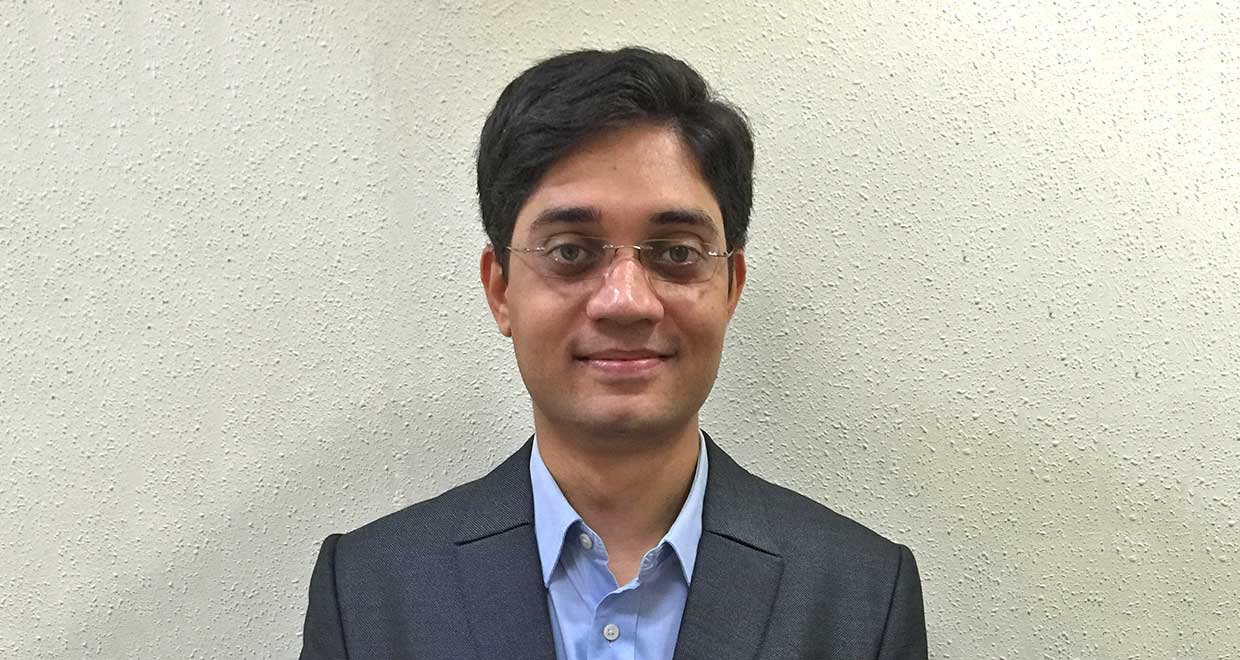
    D Divyanshu, Counsel, Star India, on job interview and experience in media laws

    Divyanshu is a graduate of NUJS (2015 batch). Divyanshu interned in various law firms and also successfully completed an internship period in Vodafone India Limited, Legal Department, New Delhi. Divyanshu is largely interested in Media and Broadcasting laws and have landed a job at Star India on graduation.

    Divyanshu is also a great performer of Theatre and Music, and have performed in many events, in this interview we talk about:

    • The journey through five years of NUJS
    • Being a performer of theatrics and music
    • Experience of interning with Vodafone and various law firms
    • Getting through to Star India as an in-house counsel


    What caused your inclination towards law? Was it an event of chance or an affect of deliberate effort?

    Growing up in Jamshedpur, the career choices that were shoved down our throats, to mildly put it, were very limited. Everyone expected a student to clear any of the numerous engineering entrance tests, get a B Tech degree and THEN decide what he/she wanted to do with his/her lives. In fact thinking of pursuing medical was considered rebellious. Hence I was never really fully exposed to the so called “alternative” career choices. But thankfully, I had a senior who had given CLAT and informed me about the concept of national law schools in general. With a rough understanding of the curriculum and the lucrative job prospects that were reflected in the placement records of the national law schools, my interest piqued. For the sake of my mother’s peace of mind I maintained that I will give all the standard engineering entrance exams and keep CLAT as a backup even though I knew my aptitude was more in line with CLAT. This was eventually reflected in my results where all my engineering entrance tests results made people question my intelligence while in CLAT I managed to get one of the best colleges in the country. Convincing my family became a lot easier. They are still under the presumption that it was an event of chance which just proves they had low expectations.


    Law Schools provide a plethora of opportunities – from moot courts to legal journalism to corporate operations to litigation. How do you think a student should select the right by himself?

    The good thing about law schools is that the five years give you enough time and traction to set your goals straight and decide definitively what you want to do in life. You really don’t need to have a set career path chosen in the first year of college itself. There is nothing wrong if you do but don’t be scared if you don’t. At the end of the day, that is what law schools are for, to throw enough experience at your face over the course of five years that you are able to make the right choice or at least land around the vicinity of what you want. Internships will always provide you with the seminal moments in which you would understand the kind of work you are comfortable with. So a student has to smartly utilize his/her vacation periods and try to have as many different internship experiences as possible.


    Tell us about your timeline at NUJS. How do you think it put your growth in progression?

    The biggest advantage of studying in such a law school, in addition to the celebrated faculty members, or the myriad of opportunities that the college provides, is the presence of intellectual and hard working peers. I was actually terrified by the fact that I was surrounded by a bunch of over-achievers but it turned out to be a good thing for me as it taught me the value of hard work. And it was not one of those crippling and cut throat competitive environments, people were there to help you out in a moment’s notice. The environment prompted me to moot, to write, to debate, to voice my opinion or to simply have an opinion on a matter. While such things might not sound much to our readers, for a guy like me whose biggest concern for the day was to ensure that I downloaded the latest episode of whichever series I was hooked on that week, it was a much needed change that prepared me for professional life.

    Another important aspect of NUJS was the active involvement of its students in extra-curricular activities. I was the convener of the Cultural Committee as well as the Fest-Coordinator for one of the best cultural fests in the law school circuit, Outlawed. The immense experience of working in a team or leading a group for a common cause that I got while holding these two positions can definitely be termed as one of the most enriching in my college life.


    d-divyanshu-3

    The ratio of students moving towards corporate houses as opposed to litigation is high as ever. What do you think are the reasons for it?

    While at the outset it does look like the classic case of people opting for the more materialistic stuff in life, you can’t really blame the students for choosing a financial stable alternative. Law schools are an expensive affair. Unlike our fellow IIT-ians and their elite institutes, we are not provided with that level of concessions and financial aids by the government, leaving most of the national law schools with little choice but to charge almost two lacs per annum as fees. Many of my classmates, including me, have taken educational loans, which with its exorbitant interest rates, requires us to sway towards the well paying corporate jobs. I personally am intrigued by the work ethics and environment in corporate houses and I count my lucky stars (pun intended) that I got a big media house like STAR India, but many of my friends who wanted to litigate were bound simply by their apprehensions of financial instability and had to opt for the so called cushiony offers.

    But thankfully, there has also been recent increase in the number of national law school alumni setting up their private practices and recruiting young, hard working individuals with decent pay, which has at least solved the problem of the so called need of “connections” of getting good work in litigation.


    You have interned at Vodafone India Limited, Legal Department, New Delhi. Tell us about your work there.

    My internship in Vodafone was timed perfectly. I was appointed in the regulatory office in New Delhi where most of my days were spent in the Telecom Dispute Settlement and Appellate Tribunal where one of the biggest telecom disputes between the government and telecom operators was undergoing. It was the Adjusted Gross Revenue matter in which the telecom operators wanted the exclusion of certain revenue heads from the total license fee which is given to the government for the usage of the spectrum.

    The who’s who of the legal world was a part of this matter, most of the bigger names being on the side of the telecom operators. I was the only intern in that office and was privileged enough to accompany my mentor in all of the conferences with the senior advocates.

    Another memorable part of the internship was when the company sent me to Jammu High Court for a labour law related matter. There I understood the importance of alternative dispute resolution in a sensitive matter involving employees of a company and how negotiation can go a long way in achieving the desired results without the hassle of litigation.

    The internship was very fruitful, given the fact that it exposed me to the working of an in house legal team which had premised itself to a hands on approach to all its work contrary to the popular opinion people have of in house work. The internship also helped me in learning a lot about the broadcasting laws and legal policy which was immensely helpful for my STAR India interview as well.


    Through your years of law school, you have worked with various law firms. Which subjects do you think have most relevance for working with such firms?

    I really believe that ensuring that you are in sync with the work given to you during internships in law firm depends more on the ability of the student to use legal resources at his/her disposal than any previous knowledge on any subject. It is all about working smart rather than working hard. While subjects like Corporate Law and Securities Law do seem to come in handy for many of the corporate law firm internships, the vastness of these subjects render it difficult to be prepared for all kinds of problems that might be hurled at you. Hence according to me the most relevant thing for working in such law firms would be subjects like Legal Methods where the student understands the art of legal research and methodology.


    Companies of every industry have certain mutual professional ethics. What would you say are the mutual ethics of law firms?

    Based entirely on the internships that I have done in various law firms, I am of the opinion that recent trend in many law firms in general is to adopt the methods and practices of corporate governance prevalent in many industries. The ethics pretty much reflects the ones present in companies, and such instances are even present in small firms. I think that customer satisfaction which is now reflected on various online firm rating portals has prompted the firms to consider ethics as a strong image building tool.


    Do you think acquiring great grades is a necessity to be placed in the top-tier law firms?

    Yes, it is and frankly speaking there is nothing wrong with that. Good grades are the surest way a top-tier firm can ascertain whether the candidate is dedicated and suitable for the environment present in these firms. If a student has managed to maintain good grades over the five years of college, his/her hard work is recognised by these firms. Having said that, the top-tier firms solely do not depend on grades for their selection but it definitely constitutes a major aspect in their decision. On the flipside, if one has average grades, chances are he/she will not find work in top-tier firms according to his/her liking.


    d-divyanshu-2

    Please share your experience of performing at different college fests. Have you ever thought of pursuing it professionally?

    Theatre and music always fascinated me and thankfully I was provided with a lot of opportunities during my college years to pursue it. I was never really great so pursuing it professionally was a thought that never crossed my mind (except during certain exhilarating periods in my life). But yes, any chance to perform on a stage was an exhilarating experience and I believe it all culminated in helping me understand the importance of team work and social skills in any kind of work I do. I am certain that these experiences will help in the professional world as well. Additionally, the connections between the legal profession and theatricality are often quoted to be strong.


    How did you bag your current job at Star India? Please walk us through your appointment procedure and interviews.

    Our Campus Recruitment Committee was contacted by Star India intimating their interest in hiring new recruits from our college. The Committee arranged for interviews of the shortlisted candidates.

    Having interned in Vodafone India, I was well versed with broadcasting laws and the regulatory system in place as it was similar to the ones governing the telecom industry. This proved to be helpful during the interview. Additionally I was sure about my decision of starting my career as an in house counsel and was effectively able to convince them of the same.

    Star India shortlisted candidates on the basis of their CVs. Subsequently the shortlisted candidates had their interview taken by an HR personnel and a member of the legal team of the company. They started off with the general questions regarding myself and my family. The subsequent questions were mostly related to my previous internships. The discussion centered mostly on my Vodafone internship. One important question on which I was grilled the most was the reason for my choosing a corporate house over a firm for starting my career. I was also teased by them on the fact that I loved theatre and hence my ulterior motive for wanting this job was looking for opportunities to meet actors which I profusely denied albeit unconvincingly. All in all it was a fun and relaxed interview.


    What all does your work profile at Star India include?

    The first nine months in Star India would be a training period in which I would be working in every sub group of the legal team. Hence my work profile for now is amorphous and I have to engage in all kinds of projects from litigation to regulatory work to contract drafting. It is after the completion of this training period that I will be given a definite work profile.


    If you could rewind the clock, are there things which you would have undone? How do you advice our readers to make the most in their law school tenure?

    No, I would not change a thing. I strongly believe that the mistakes that I might have committed over the last five years were equally, if not more, important in the overall development of my personality. While the clichéd-ness of the previous line even made me roll my eyes, it is true. Hence I would like to advice the readers, to take risks during your law school tenure, try everything from mooting, to debating, to writing; you never know what might click for you. And of course, partying is an important aspect of law school life because all work and no play… you know how it ends.


    How do you see the bigger picture five years from now? Are you looking forward to LL.M from abroad?

    While I have a set answer for this question from when I was preparing for all my interviews, frankly I don’t have a concrete thought for where I picture myself in five years. I am currently excited about starting my career in STAR India and hopefully over the course of my time there I will be able to fructify a successful picture for myself. Yes, I have given thought to LL.M abroad, but not before three years of working. But I do keep finding myself on different universities websites, looking at their scholarships.


    What would be your parting message to our readers who are mostly law students, law aspirants and lawyers?

    For all the readers, congratulations, you have taken the step in the right direction. Where many fail to even understand the concept of career choices, you have chosen one which provides immense opportunities. And almost all of these opportunities will not dilute the importance of the things that you will learn over the course of five years. Hence be happy with the certainty that you have added in your life. Just remember to have fun while you are at it.

  • Rishabh Chopra, Senior Consultant, Vahura on requirements of the industry and work in Legal recruitments

    Rishabh Chopra, Senior Consultant, Vahura on requirements of the industry and work in Legal recruitments

    Rishabh Chopra graduated in BBA.LL.B (Hons.) from National Law University, Jodhpur in 2010. Thereafter, he worked at Amarchand Mangaldas (Delhi office) for a year and then switched over to Vahura, a legal talent recruitment and management company as Senior Consultant in Private Practice & Funds. During his college days, he had participated in several national and international moots, and has been a judge at prestigious moots such as Oxford Price (South Asia), BCI moots and Willem C. Vis (East) moot in Hong Kong.

    In this interview, we cover his journey as a lawyer till date, while focusing on:

    • His experience in law school.
    • Importance of moot court activities.
    • His work experience at Amarchand and Vahura.
    • Industry requirements for Vahura placements


    Please introduce yourself to our readers. Where did you grow up and attend school? How did you decide to take up law?

    I grew up in Ambala and finished my schooling from Army Public School, Ambala Cantt. At APS, I always kept myself engaged in various co and extra-curricular activities such as Debates, Declamations, Quizzes, Music etc and topped the commerce stream in Class XII because of my interest towards accountancy and economics. This helped me gain admission into one of the top 5 colleges in University of Delhi where I pursued B.A. (Honors in Economics) for a year before taking the law school entrance exams. Although I come from a family of lawyers, law as a career option was not very fascinating (because of this entire notion of doing something different!) until I witnessed the finals of the Raj Anand Moot in 2004. That experience helped me get in touch with Sachin Malhan (founder of LST) who in turn encouraged me to take the law school entrance exams.


    You graduated from NLU Jodhpur in 2010 with a B.B.A. LL.B (Hons) in Business Law and Management. Please tell us about the Honours program and your general law school experience?

    One of the key reasons for taking up a course at NLU, Jodhpur (or NLU-J, as people like to call it now J) over another premier law school was a dual degree in law and management. Given that I always had a bent of mind towards management, a degree with this combination was exactly what I was looking at. I definitely enjoyed the managements subjects like accountancy, managerial economics, human resource management and marketing to name a few. As far as my honours program is concerned, I am glad I took up the business law subjects in my penultimate and final years of study as I was able to study the fundamentals of investment laws, mergers and acquisitions, banking and finance. I will be honest- it would have been better if these subjects were taught in a more practice-oriented manner but nevertheless the course helped me understand the basics of corporate law which were quite useful when I joined Amarchand.


    rishabh-chopra-2

    You have had considerable mooting experience in law school. Tell us about your achievements. What, according to you, are the essential skills of a good mooter?

    As you may have noticed, it was the Raj Anand moot’s experience as an audience member that convinced me to go to law school and thus, I took up mooting quite seriously. Mooting was extremely competitive at NLU, Jodhpur- which always meant that we all had to work hard in most of our court room exercises (intra section moots) to reach the intra university competition. In total I did 5 moots- ranging from public international to competition law, from CISG and international commercial arbitration to IPR and then international humanitarian law. I have really fond memories of all these moots not only because of the amount of knowledge I gained by participating in them but also because of the fantastic team members in each of these competitions.

    Going for the Vis East moot (Hong Kong) in my second year of law school was quite an achievement back then and so was being adjudged runner’s up at a competition law moot (which in turn helped me secure an internship at a prominent law firm in my 3rd year of study). Then came the Jean Pictet competition, where our team was the only Indian team to qualify for the international rounds that took place in Evian, France- this competition was definitely a very interesting one- very different from a regular moot and I would strongly recommend it to all law students (for the kind of practical experience and exposure it provides in the field of IHL).

    During my final year of study, I still wanted to be connected to mooting and hence, took up a national moot in Delhi (since the top 10 international moot we were supposed to participate in got postponed for the next year)- where we were adjudged winners. Apart from one moot, I was quite fortunate to receive a citation (individual and/or team) in every competition.

    As far as I am concerned, I could only moot well, if the research was thorough and I knew the loopholes from both sides of the problem. This strategy helped me in preparing for any kind of question that could have been posed during the various rounds of the competition and the same was also helpful from ‘thinking on one’s own feet’ perspective. In addition, one of the biggest takeaways for me from mooting was team-work and organisational skills- I consider these two as the foremost essentials to be a successful mooter apart from presenting your case in a confident and persuasive manner. Using a little bit of wit in arguments and rebuttals is also not a bad idea as long as it doesn’t embarrass the bench or the opposing counsel in any way whatsoever!

    To be fair, mooting is still close to my heart- it’s just that I have moved to the other side now. I have been a regular judge at the Oxford Price (South Asia) and BCI moots and this year also went on to judge/arbitrate at the Willem C. Vis (East) moot in Hong Kong. I personally feel whosoever has enjoyed mooting in law school, should done the hat of a moot court judge- it’s just like giving back to the legal community.


    rishabh-chopra-3

    What was your work profile at Amarchand Mangaldas? What did an average day of work look like?

    At the Delhi offices of Amarchand Mangaldas, I worked as an Associate in the General Corporate, M&A and Insurance team. I was quite fortunate to work in this team as I really learned a lot from my partner (Shailaja Lall) and colleagues (Deepa Mookherjee and Ashish Teni) and those learnings have helped me to a great extent so far. Just like any other corporate lawyer, I worked on various corporate transactions (M&A, JV transactions), incorporation, entry and exit strategies apart from providing clients with general corporate advisory in relation to foreign investment laws, corporate and commercial laws, stamp duty regulations and insurance laws. The reason I say I was quite fortunate to work in this team was because the team gave me tremendous scope to grow as a corporate attorney- I was client facing, was able to speak with clients with minimal supervision from the partners on corporate and insurance matters and because of this trust had a good learning curve from a practice perspective,. In short, I really enjoyed my team and the matters I worked on during my stint at Amarchand even if it meant working for really long hours (thanks to technology)!


    After a year at Amarchand Delhi, you joined Vahura, a legal talent recruitment and management company as Senior Consultant in Private Practice & Funds. What does your work at Vahura mainly consist of?

    As I mentioned earlier, I really enjoyed my experience at Amarchand Delhi but I really wanted to be on the business side of the law ever since I met Sachin Malhan (who used to run Law School Tutorials (LST) back then). When he moved and co-founded Rainmaker, I was really intrigued and followed the team’s entire journey from MyLaw.net to Mootopia (similar to what we call Mooting Premier League now). One day, when I noticed Vahura spinning off from Rainmaker only to focus on the legal talent space in India- I knew I wanted to be a part of this journey!

    At Vahura, I lead the search practice for law firms in the northern region. I typically focus on partner and pre-partner level recruitments for our law firm clients and so far have helped law firms grow organically and inorganically. I am also a key member of the law firm recruitment group that focuses on recruiting mid and senior level legal, IP and tax professionals for law firms and funds in the APAC and MEA regions. We now have various top international and regional law firms looking to recruit Indian legal talent as our clients in Dubai, Bahrain, Singapore and Hong Kong. On the research and consulting side, I closely work with top law firms and In-House legal teams on consulting reports on strategy, practice structuring, business development, remuneration structure and partnership restructuring.


    What do law firms in Asia-Pacfic,Middle-East & Africa look for in potential candidates? What must an Indian law student do to get hired in these regions?

    In the law few months, we have seen various foreign law firms show keen interest in the Indian legal talent again (thanks to the Modi wave internationally, probably!). On a serious note, this interest has been on the capital markets side as well as on the M&A side. Laterally, most requirements need a US/UK LL.M and a top law firm experience in the past.

    As far as a training contract is concerned, a law student by the end of his/her penultimate year of study, should definitely have good (and consistent) grades apart from being involved in various law school committees/centres. Publications in journals of repute along with laurels in international and domestic moots definitely add to the credentials of an applicant as they showcase his/her good research and oratory skills. Hence, importance of a well rounded and drafted CV cannot be emphasized much. Moreover, what is also critical is the clarity of thought apart from good written communication skills- these two skills can be easily judged from the applicant’s application material (generally in form of a questionnaire) and a well drafted application material therefore is a battle half won (another small tip- be consistent with your answers/responses, when you respond to the questionnaire as well as during your interview). Additionally, students should not only be aware of what is happening around the globe but also understand the implications those changes can have on the business and regulatory environment domestically as well as internationally- this awareness can help them in fetching some brownie points during group discussions and interviews. As far as internships are concerned, it is not important to have 10 or 12 internships on the CV- a few (say 5 or 6 in number) quality internships (ranging between 4 to 8 months) are more beneficial than a lot of 2 week internships.


    What essential skills are required to work as a legal talent and management specialist at Vahura? Does an MBA after law help in this regard?

    If someone is considering this role/profile, it becomes imperative for that person to have a consultative mindset towards approaching a situation (it probably comes naturally after having spent five years in a law school with so many negotiations/ consultations/ dialogues/ debates/ discussions with faculty, administration and peers). Also, it would be disastrous to make a move from the industry to the talent management industry by considering the profile of a recruiter as cushy- you not only have to be aware of the changes in the legal talent market and be great at mapping but also need to have that “hunter’s mentality” enabling you to work 24×7- yes, I tend to clock in more hours at work (not necessarily in office) than I used to at my previous organisation. The main reason for this is that you need not be just social but also be able to cultivate, build and leverage relationships (which is easier said than done and takes considerable time especially from a trust building perspective). Another key thing to remember is that apart from having great marketing skills (to market your own organisation in front of prospective clients, to create a marketing pitch for your candidates in front of your clients, and to also promote yourself/your organisation in various social events/social media- you got to do it all!), you need to be a great listener (as a recruiter you should not just listen but “hear” your clients and candidates extremely well).

    As far as an MBA degree is concerned, I don’t consider it a must but it definitely assists you in honing your strategic and managerial skills. But remember, it’s favourable to do an MBA only after gaining some experience in the industry- this is exactly what I did this year when I successfully completed an executive program in management from a leading Indian B-school with a specialisation in HR.


    Lastly, what are your plans for the future? What advice would you give law students wishing to work in the same sector as you?

    My definite aim has been to create a positive difference in the Indian legal talent management market and this was a key reason to join the young and dynamic team of Vahura after gaining some experience at Amarchand. As a team, we have been able to successfully achieve this objective in India and hence, are now also concentrating on the APAC and MEA regions. My plans are so far in sync with the vision we all share at Vahura- to make it the sought after ‘Indian legal and governance talent management and consulting firm’ not only in India but internationally as well. So that is exactly what I am working towards- to be the go-to source for Indian legal talent requirements- domestically as well as internationally (which is going to be challenging and exciting at the same time).

    In case anyone is inclined to work in the same sector as mine, I would advise them to take it up only if they are passionate about it and that too after gaining some experience in the legal industry- this industry’s experience definitely helps a lot during as well as after the transition- from being aware about the legal ecosystem in a holistic manner to understanding client’s requirements in an excellent manner for leveraging the network one creates while working! My good wishes to all those who aspire to work in this field and I am happy to connect over LinkedIn for any queries that you may have towards the opportunities in this sector.

  • Akshay Sewlikar, Trainee, Linklaters, on being a star mooter and law school life at NUJS

    Akshay Sewlikar, Trainee, Linklaters, on being a star mooter and law school life at NUJS

    Akshay Sewlikar is a fifth-year law student of WBNUJS, who has been recruited by Linklaters for a TC. In his five years of law school, Akshay pursued a course on Acquisition and Merger under NUJS Summer School Programme. He also participated in various moot court competition amongst which are Fiat Justitia Moot Court Competition, Frankfurt Investment Arbitration Moot Court Competition Pre-Moot, 12th Henry Dunant Moot Court Competition. He also successfully completed a tenure of internship at Linklaters LLP, London.

    In this interview, we talk about –

    • His journey as a sojourner in WBNUJS
    • Pursuing the Acquisition and Mergers course and its credentials.
    • The strategies he acquired after mooting in various moot court competitions.
    • His period of internship at Linklaters LLP, London.
    • The procedure for application in Linklaters LLP, London.


    What inclined you in the pursuit of law? Was it an event of chance or was it an effect of deliberate measures?

    I had opted for science after the 10th standard but realised soon enough that it was not my cup of tea. I started looking for options. I realised that law perfectly suited my interests, and it had always been at the back of my mind as an option. I switched mathematics for psychology, although I carried on with science.

    After we had moved to Mumbai in my 12th standard, I joined a CLAT coaching centre and prepared for the exam. So, all in all, choosing law was a very deliberate, thought out process for me.


    Tell us about your pre-college life as well as educational background. Do you come from a legal lineage?

    My pre-college life was pretty normal, although it involved a lot of moving. I did most of my schooling from various small towns and districts in Maharashtra, except my 12th that was from Mumbai. I did my 11th and 12th from junior colleges, as is the norm in Maharashtra. I am a third generation lawyer. My father is a serving judge and my grandfather also retired as a judge before him.


    akshay-sewlikar-2

    Tell us about your experience of WBNUJS. Is there any specific event you would like to share?

    NUJS has been a wonderful experience. I have had the opportunity to learn from some of the best professors who are experts in their subjects. The opportunities that the college provides are also endless. I have had the chance to represent the institution in a number of national and international competitions, interact with internationally renowned experts in various fields and learn from them.

    NUJS offers students a level of freedom that is unparalleled and this is what distinguishes it from other law schools. This freedom extends from the courses – a number of optional subjects and credit courses are available, to what students do in their free time. This freedom allows students to develop their interests fully and definitely helped me.

    Although I cannot pinpoint any particular experience, the course on Law and Impoverishment offered by Prof. Saurabh Bhattacharjee was something that changed my approach towards the law. The way the poor and impoverished are treated in society as well as by the law is something that every law student should be taught. It is courses like this that have moulded my approach and I have NUJS to thank for it.


    How was your experience of learning Mergers and Acquisitions by Prof. Umakanth Varottil under NUJS Summer School Certificate Programme (June 2013)?

    Prof. Umakanth needs no introduction. Although he teaches at the National University of Singapore (“NUS”), he often takes time to come to India and teach students here. He was regularly associated with the NUJS-NUS Summer School and offered a three credit course on Mergers and Acquisitions there over a period of two weeks.

    The course not only dealt with mergers and acquisitions, but covered corporate law as well. He explained highly complicated concepts and issues to students with no grounding in corporate law in an incredibly simply manner. I learned almost all the corporate law I know through this course. The course taught me almost the whole of the little corporate law that I have been able to understand throughout the five years at law school.


    What do you think are the traits of a successful speaker?

    (Akshay has participated in various moot court competitions including Fiat Justitia Moot Court Competition, Frankfurt Investment Arbitration Moot Court Competition Pre-Moot, 12th Henry Dunant Moot Court Competition and many others.)

    The most important thing about mooting is hard work and preparation. You do not need to be a stellar orator to be a good speaker. However, you should know all the aspects of the problem at hand – the law, the facts as well as any probable arguments that might be used by the other side. All this does take up time, but the experience of delivering an argument well is very exhilarating.

    On top of all of this, the oft repeated idiom, practice makes man perfect also applies to moots. Practicing with friends, teammates, seniors and even professionals helps a lot. During speaking, one has to be very polite when dealing with judges. Cultural sensibilities have to be accounted for in international moots, where each judge on your panel could be from a different country. Being prepared for and answering any questions that are thrown your way is one very important aspect that cannot be ignored. However, the most important thing is to have fun while speaking.


    What are the essentials for a moot team should to do while preparing for a moot court competition?

    (Akshay is also the Coach of the moot team representing WBNUJS in ELSA WTO Law Moot Court Competition 2015 and Willem C. Vis Arbitration Moot 2015.)

    There are two aspects that need to be looked at during moots viz. memo writing and the speaking rounds. Teams need to prepare well for both. The memo usually counts towards the marks during most moots, with notable exceptions such as the Vis moots. A memo should be well researched, should cover all the issues and be well formatted. Taking help from seniors and others who have done the moot before you is usually quite helpful.

    Once the memo has been submitted, the entire team (researcher included) has to focus on the speaking. At the cost of sounding repetitive, practice is very important. Teams must also keep in mind that like any other competition, luck plays an important role in moots. Not losing heart after a bad round or a bad competition is also an important aspect that should not be ignored by teams.


    You have also authored publications of exemplary content. Can you tell our readers the protocols you follow to write such articles?

    I do not have a specific process or protocol that I follow while writing articles. I find an issue that I am interested in and just write about it. However there are a few things that I am particular about. I make sure that the article is up to date on the day I send it for publication. Any new case, article etc. should be discussed, otherwise the article remains incomplete. I personally do not enjoy reading articles that use unnecessarily complicated language. So I avoid prolixity and keep it short.

    Other than that, there is nothing in particular that I follow, except any guidelines that have been issued by the journal or publishers.


     In a brief, what are your views on Labour Standards in Investment Arbitration?

    There is a reference to labour standards in most Bilateral Investment Treaties (“BITs”). However, this reference is mostly aspirational and does not create any binding obligations on States. However, I think that labour standards can be introduced in investment arbitration through human rights. Although this inter-disciplinary linkage has its own set of difficulties, the introduction. You can find my views on this issue here:

    http://kluwerarbitrationblog.com/blog/2014/03/18/introduction-of-labour-standards-in-investment-arbitration/.


    You have also interned with Linklaters, London. Tell us about your experience of working there.

    Working with Linklaters was a wonderful experience. Known as vacation schemes, a large number of training contracts for most English firms are offered through these programs. During the scheme I was working with two different teams. At both these “seats” I was exposed to international deals and disputes from various parts of the world. The work was challenging and interesting and permitted me to gain an insight into the way that Linklaters functioned as a law firm.

    The vacation scheme differs from most internships we do in India with respect to the kind of events that are organized for the students. Known as socials, they allow to you interact with a range of people who work at the firm, from senior partners to trainees. These socials also encouraged interaction between the vacation schemers themselves and involved activities such as drinks on the London Eye, dinners at Michelin star restaurants and learning to cook pizzas and sushi. These socials also allowed the vacation schemers to interact with each other in a more informal setting.

    Overall, the Linklaters internship was a really enjoyable experience because of the atmosphere in the firm which was very cordial and genial. You could approach anyone for any doubts you had or just an informal chat without harbouring any second thoughts. Plus, the three weeks in London are an added bonus!


    Can you tell our readers how you prepared for this internship?

    I actually did not prepare for the internship in London as such – it was more for the interview. Getting a place on a vacation scheme is a long drawn out process which lasts around two months approximately. You have to fill a form (a lengthy one at that) which is then scrutinized by the firm. You also have to appear for an IQ test known as the Watson-Glaser test. If you qualify after this test you may be shortlisted for the interview by the firm. Linklaters holds this interview for students from all law schools together in Mumbai. The interview itself consists of four parts – a Watson Glaser test, an e-tray exercise, the HR interview and the technical interview.

    It is for these interviews that you need to prepare. I did a few practice sessions of the Watson Glaser tests and try a few sample e-tray exercises.

    The technical interview is based on a problem that you have to solve during the e-tray exercise. The facts deal with a proposed merger and acquisition, with issues that face the company with respect to this merger. General commercial awareness, knowledge about the firm is also tested during this interview. For this, reading the newspapers such as the Live Mint, Economic Times regularly helped me a lot. I also read up about  the firm and its history.


    Do you think the professional ethics of London differ from what we experience within the nation?

    The cultural difference does make a little difference when it comes to work ethics. All the people I spoke to were courteous and were always ready to talk to you about anything. Everyone is very punctual and events seemed to be planned to the second. I did not notice anyone being hauled up for mistakes in front of others – a welcome departure from Indian firms where everyone has stories about associates being yelled at in front of everyone.


    Any tips and caveats on how to frame a CV?

    The only tip that I would like to offer is to not plan your CV. A lot of people do a moot, try writing an article or join a committee in college just to increase CV value – with specific goals for each year. Instead of just running after a perfect CV, try and explore avenues in areas of your choice. The CV will develop automatically.

    Experiencing all the activities in law school – be it writing articles, debating or mooting helps in realizing what one is passionate about. Interning with a variety of organizations also helps in figuring out where your interests lie. There are also a variety of courses offered by a number of universities both in India and abroad, which would help in cultivating these interests. Most of these courses provide scholarships to students and are wonderful opportunities to network and build contacts.


    Last but not the least, what is your message for our readers?

    Enjoy the five years in law school and make the most of them! To quote Dr. Seuss:

    “You have brains in your head. You have feet in your shoes. You can steer yourself, any direction you choose.”


  • Samkit Sethia, Associate, Trilegal, on managing seven papers and twelve internships

    Samkit Sethia, Associate, Trilegal, on managing seven papers and twelve internships

    Samkit Sethia is a graduate of 2015 Batch of NUJS, Kolkata. He has had an exemplary timeline with the publications of seven papers, completing from twelve internships and has held a series of designations at WBNUJS. He has been chosen to work as an Associate at Trilegal, New Delhi.

    In this interview we talk about:

    • Lessons learn from the chronicles of his law school journey.
    • His idea on how to write papers.
    • How he managed his timeline to successfully complete twelve internships.
    • Experience acquired from moot court competitions.


    Tell us about your life before beginning law school. What inspired you for the pursuit of law?

    I went to a boarding school and thus, I remember always enjoying being challenged and sustaining my diverse interests. Learning outside the classroom interested me more and being an avid reader, writer and debater—I felt it was important to think in terms of arguments and develop an individual standpoint. This avenue of growth is what propelled me to pursue law.


    Do you come from a family of legal background or are you the first generation lawyer?

    I will be the first lawyer in my family. I come from a family where everyone is ultimately expected to join and contribute to the family business; this determinacy also fed into my interest for choosing a career that allows me to be creative with it.


    Tell us about the chronicles of your law school journey so far. Is there is specific incident which you would like to share?

    Being extremely busy works for me and that is how I managed my time in college.

    I kept myself extremely busy throughout most of law school. I was part of many societies and committees at NUJS and that kept me occupied for the most part. In addition, time permitting I interned during the semesters (online research work) and wrote a few papers.

    I didn’t compromise on having my share of fun in college; just like everyone else, I always found time for that.


    samkit-sethia-1

    You held a series of designations at WBNUJS. How has been your experience of working with the community?

    The most important thing is that it was always a community interacting with the larger community, it could never be just about the individual—which is something I learnt over the years through our experiences in various college societies and committees. Everyone brings so much to the table that it always a wonderful learning experience. You learn to appreciate different perspectives and different types of intelligence as well.

    Specifically speaking academic societies allowed me to develop and further my interests in niche areas of law and allowed me to work on something which I enjoyed outside of the stipulated college curriculum.

    Being Coordinator of the Recruitment Committee gave me a different kind of exposure; pursuing recruiters, handling administrative tasks and an overall HR lesson.  It was a great learning experience and while it took up an awful lot of time, I’d definitely do it all over again.


    You have authored seven papers of great content. Which amongst them is your personal stalwart and why?

    I’d say working on the paper on the Problems, Pitfalls and Perspectives on Public Interest Litigation in India because I was just not collating information on the paper but constantly bearing in mind the comparative angle vis-a-vis China. This paper was written while I was interning with the Danish Institute of Human Rights and the Legal Aid Society of West Bengal as part of a Study Tour comprising Chinese lawyers who were visiting to analyse how PILs function in India. This forced me to broaden my approach, yet remain nuanced in my reading of the Indian situation.


    What do you think are the core qualitative measures of writing an exemplary publication?

    Broadly, quality comes from grounded research, your own input and a cogent argument. The most significant for me is relevance for often it turns out that it is easy to get published in specialised areas or spin off a paper on a pivot that you think is “fresh” or “new”, but the real challenge is being able to do that while remaining socially relevant, accessible and cogent. Especially so at the university level when your engagement with the world outside and the discipline is unfettered—which is not the case when you are professionally placed and have demands of work wearing you down.


    samkit-sethia-4

    How do you think every law student should proceed while moving ahead in the timeline of law school?

    I think the “professional” nature the degree has acquired given the higher education scenario in India is detrimental to a spontaneous engagement with the subject. I have seen my college mates blindly following the herd when it comes to setting out a fixed plan of internships to do and the kind of brownie points to collect for your CV. While being practical about gaining experience is important, it is also important to indulge yourself by doing whatever interests you so that you can make an informed decision about what you’re suited best to do once you graduate.


    You have successfully completed twelve internships in your five years of law school. How did you manage your time alongside all the moot court competitions, paper publications and semester examinations?

    I enjoy being busy so this is the kind of schedule that worked best for me. Some of my close friends chose to focus on just a few gruelling internships, or academics and so on. It is all about taking the first couple of years to figure out a rhythm that works best for you. For example, I interned every break but also chose virtual internships during the semesters when my coursework and other activities weren’t too many.


    Moot court competitions have held a supreme position in your college life. What are the experiences you would like to share with our readers?

    I found it to be a valuable experience because I realized that while reading, researching and prepping for the moots, I learnt an enormous deal about specific areas of law that gets elided in class. Further, while speaking in public in a competitive scenario, it demands you to be thorough, coherent and articulate—seminal skills of a good lawyer!


    samkit-sethia-2

    If left at your discretion, which would you chose foremost – paper publications or moot court competitions?

    Paper publications because the curriculum and assessment pattern rarely allows one such creativity and individuation of ideas. Both have their advantages in their own right, but paper publications helped me have a better understanding of the topics I researched as opposed to moots.


    What do you think are the epithets of a successful speaker of a moot team?

    Brevity and cogency are important skills to me because they stand for a thorough research base and an effortless command over the subject matter. This in turn helps make the argument more convincing.

    In a flashback, what are they benchmark achievements did law school have to offer you?

    Law school allowed me to nurture friendships, write papers, moot, enjoy most of my weekends, land a job, learn law, intern, travel and otherwise have a fantastic college life. I couldn’t have asked for more!


    Last but not the least, what is your message to our readers?

    Keep reading Superlawyer!

  • Paramita Dasgupta, Policy Analyst and Academician on LL.M in IPR from QMUL and experience in research

    Paramita Dasgupta, Policy Analyst and Academician on LL.M in IPR from QMUL and experience in research

    Paramita Dasgupta graduated from WBNUJS, Kolkata in 2007 and started working in the litigation department of Amarchand & Mangaldas & Suresh A. Shroff, Mumbai. After working there for two years, she felt the need to change her field and completed an LL.M in Intellectual Property Laws from Queen Mary University London. After working abroad for a few years, she came back to India. Currently, she works as a policy analyst at a government think tank and is a faculty member at NUJS.

    In this interview, she talks about:

    • Her work at AMSS and the skills she took away from there
    • How to nail the foreign universities’ admission process
    • Her love for teaching and academia


    Could you please introduce yourself, professionally and academically, to our readers, who are mostly law students and young lawyers?

    A graduate of NUJS Kolkata (Batch of 2007) and an alumna of the University of London (Batch of 2010), – I started off in the profession as a litigator, to very gradually veer into academics, after what can only be called multiple epiphanies. The most truthful description however, would be: a student of law with particular interest in the interface between international human rights and intellectual property laws – an incredibly dynamic area of study, defined and shaped by the continuously evolving political and economic determinants in society.


    What motivated you to gravitate towards law, as a discipline and a career?

    Even though I happen to come from a family where almost everyone has been associated with the legal profession, either as a judge, a barrister or an academic, – pursuing Law, while neither an obvious nor a foregone conclusion for me, – was nevertheless one of the various options to be considered. What served as the proverbial clincher however, was the fact that the West Bengal NUJS was assigned the stewardship of none other than the legend that is Professor N.R. Madhava Menon; ergo, from being a nebulous ‘back-up plan’ at best, it immediately assumed pride of place among my career options. Little did I know then, what a complete U-turn life, as I knew it, was poised to take!


    Please tell us about your time at NUJS. What experiences during these five years would you consider key?

    While it is indeed true that nostalgia tends to lend that added element of sepia-tinted romance to otherwise prosaic facts and details, looking back, those five years do hark back to a whole different time, and certainly, a very different life.

    Academics aside, there were always multiple initiatives / events (ranging from music, dance, dramatics, art, literary oeuvres, debates, moots – all the way to regional and national seminars, workshops and an exhaustive gamut of pro-bono activities) that used to be afoot at NUJS, at any given point in time, – and all were welcome to participate to the extent their existing work-load would allow. Ergo, pitching in and immersing oneself therein served to help discover one’s key aptitudes and strengths, while immeasurably adding to the quality of the overall ‘undergraduate experience’, – and if nothing else, made for priceless memories to take away for keeps.


    Do you feel co-curricular activities played a role in shaping your personality and in forming your subsequent career choices?

    Most certainly.

    One of the biggest contributions of NUJS in the shaping of our academic aptitudes, social conscience, and thus eventual career choices – was the fact that it provided each one of us with a plethora of platforms and avenues to try out for size, as it were. What fit me most snugly, incidentally, were fora with a direct and palpable social connect, if one may call it that, such as the Society for Human Rights & Citizenship Studies, the Society for Gender Justice, the Environmental Law Society, and most prominently, the Legal Aid Society – each of which, in their own way, served to nudge and shape my personal, hence, professional priorities.


    You graduated with a B.Sc.-LL.B. degree. Would you say this confers any sort of an added edge on one?

    One wouldn’t wish to generalise, but I can speak for myself and perhaps also for those who are desirous of embarking on a course which demands a sound grasp over the interface between Science, Technology and the Law, when I say that, I do feel that going forth – be it applying for niche higher education courses, or introducing oneself as a litigator specialising in Intellectual Property Law – it does help in terms of asserting one’s credibility professionally.

    That said though, I would never go so far as to say, that one stands to be in any way handicapped in any of these arenas, should he/she be armed with a BA-LLB degree instead. I am personally acquainted with several extremely promising and successful practitioners who bear testimony to this.

    How did you plan your internships? Were they all meticulously planned or did they just happen to you as you went through law school?

    A bit of both, really. While it is wise to keep oneself as open to various instructive experiences and opportunities as possible, at least during the early years, it would also make sense, particularly as one moves up through law school,- to try and sample as many internships at organisations / firms / chambers as possible, which correspond with one’s core area(s) of interest.


    Right after graduation you got to join the Litigation team of AMSS. How did the appointment take place?

    Along with several of my batch-mates, I too was recruited by way of a PPO based on my performance during previous internships there. But, the one thing that I was always very clear about was what I did not wish to end up as – and that, with all due respect – was the quintessential corporate lawyer. It was this rather dogged adamance on my part, I believe, more than any other reason, – which resulted in the management acquiescing to my demand, and my being assigned to the Litigation & Dispute Resolution team.


    Is it true that it is difficult to make it to the top-tier law firms without being a topper and an all-rounder? Any tips you would like to share with people who want to intern at top-notch firms?

    Well, I would say, it is largely a myth, but with a grain of substance. Allow me to elaborate:

    From the perspective of a large multi-service national-level/high-street law-firm, a student’s CV serves as the only comprehensive ‘snapshot’ of his/her overall candidature. While this may be far from ideal, – it is by far, the most practical and time-effective approach given their peculiar logistical constraints. However, that is not to say that this is a completely opaque mechanism, by any means.

    My suggestion to students therefore, would be, – identify the individual practice areas within these large premier law-firms, that correspond with your personal long-term aspirations, and work to ensure that, if not your overall GPA, – your performance in at least those specific subjects, reflects your preference for the same; try to bolster this wherever possible, with relevant internships or other appropriate scholastic exercises (e.g., taking a course/boosting your qualifications, writing a paper, participating in/presenting at a seminar, etc.). It hardly begs elucidating that, when you present yourself thus, in the ‘best light’, as it were, – making a strong case as to how you would clearly be the best person to be invested in, for the purposes of a particular practice area, – people with such specifically honed profiles would in no way lose out to these aforementioned toppers and/or all-rounders.


    Please share some of your experiences as an Associate in the Litigation & Dispute Resolution team of AMSS.

    I would say that I was hugely fortunate to have been assigned to Mr. Marezban Bharucha, under whose inimitable guidance I cut my teeth in litigation, albeit in the capacity of a lawyer associated with a firm. While it was indeed a rather steep learning curve, as is only to be expected in the early stages – the process was considerably eased by the able mentoring of Mr. Justin Bharucha and Mr. Manvendra Kane – and what’s more, I had the rare privilege of observing a legend at work and to learn from his example, the best I could.

    Further, the firm’s ethos of stringent quality-consciousness and professional integrity, were lessons which, I am happy to say – continue to stand me in firm stead to this day.

    In sum, while my roughly two-year-long tenure at Amarchand & Mangaldas may not have been the longest of stints, it nevertheless, helped ensure crucial professional growth and the inculcation of a core work ethic that I shall always be grateful for.


    What prompted you to leave India’s largest law firm and consider venturing into practice/academia?

    As stated above, while Amarchand & Mangaldas’ contribution to the first few years of my career can never be overrated, it is equally true, that after the first year or so, it became increasingly evident that this was certainly not what I could see myself doing for the rest of my days. I was hungry for a lot more than my capacity as a lawfirm associate would ever allow: I was keenly desirous of functioning as a free agent and hopefully, some day, of contributing in however small a way, at a policy-level where the law is conceived, fashioned and moulded. This, I realised, would be impossible to ever realistically aspire to, with my then-existing level of academic qualifications, and so I decided to remedy that without further ado, which resulted in my leaving the firm for higher studies.


    In your pursuit of higher studies, which universities did you apply to for LL.M? Any pointers for our readers as to how should one go about choosing a university?

    I was quite sure that I wished to earn my Master’s Degree in Intellectual Property Laws from within a Common Law jurisdiction, which automatically put American universities out of the reckoning. The next step was to zero-in on those schools/faculties under individual universities, whose graduate and post-graduate departments boasted of a truly avant garde and demonstrably consistent track record in my specific area of preference. I shortlisted three universities, viz: Edinburgh, London and Cambridge, and ended up accepting the more than generous offer made to me by the Centre for Commercial Law Studies at Queen Mary, University of London.

    When choosing a university, while there can be no blanket formula and my advice would be to first consider the concerned university’s strength in the precise area/department that you wish to enrol yourself in. This can be gauged by looking at just how detailed and niche a curriculum they can afford to offer one, the stature of the scholars who feature among the faculty, the nature of relevant research projects that the university has been engaged in, the impact of such research, etc. Thus, while popular surveys and league tables may provide one with a broad idea, in my considered opinion it would be rather myopic to limit oneself to the overarching ‘brand value’ without scratching the surface in order to ascertain just how compatible the programme(s) may be with one’s personal goals.

    What should one do differently in college if he wants to pursue higher studies after graduation? Would you suggest having a brief work experience before applying for LL.M.?

    That depends entirely on the individual, and the demands of a particular course/programme. For some, like myself it made more sense to work for a while, before heading off for an LL.M, because it allowed me to buy a little more time to be absolutely sure about what I did / did not wish to do, and hence make a perfectly informed decision. It allowed me valuable insight into, and a very real perspective on all the avenues that were open to me on graduation, and this made it that much easier for me to opt for one of those.

    Further, since the subject that I had set my heart on, was something that was as steeped in classical jurisprudence as it was ruthlessly political and dynamic, – a uni-dimensional approach, I feel, would have severely limited my appreciation of the course components and its myriad applications.


    What was the decisive factor that prompted you to choose Queen Mary from the plethora of options available?

    Like I mentioned above, I had gone about short listing and eventually selecting my school in what many would consider a rather roundabout fashion. I had very clear ideas as to what I expected from my course, and set about looking for institutes of repute which could best cater to those. While each of the shortlisted faculties were, in broad strokes, easily a cut above the rest, I was principally concerned about the university’s strength in the precise department that I wished to enrol myself; and this is where Queen Mary College under the University of London (hereinafter ‘QMUL’) stole a march over the others. The sheer depth, detail, extent and variety of specialisations that its curriculum in the International & Comparative Intellectual Property Law LL.M programme offered were nothing short of breathtaking. To gild the lily, the stature of the professors who were slated to teach us, the level of research and allied scholastic initiatives that they had been engaged in was stellar by any standard. That I was additionally offered a complete tuition waiver was, of course, the cherry on the cake.


    You secured a full tuition waiver for your entire course at QMUL. How did you structure your SoP? What according to you is a good profile for securing scholarships & funding?

    A ‘Statement of Purpose’ (hereinafter, ‘SoP’) is one of the key (if not the single most important) document(s) that can, quite literally, make or break one’s application. There have been instances galore, where slightly ropey grades, or a lop-sided résumé, have been more than brilliantly compensated by spectacular SoP.

    While there aren’t any particular dos and don’ts to it, the one thumb-rule that I would nevertheless advise is: to please be as honest as you could possibly be. A generic approach towards all applications would be most counter-productive. Set aside a good chunk of time just for this exercise. Research, not just the university, but the individual school (and if required, key members of the faculty, as well, who are involved in your area of interest), programme curricula, research (and/or relevant pro-bono) initiatives in minute detail, have a good think about just how it is, that this particular programme uniquely responds to your particular academic/professional/personal goals, – and then put it down in writing as sincerely and lucidly as possible.


    Please tell us about your time at QMUL. Please share with our readers, the details about the academic pressure, faculty and campus life.

    I have, and shall always maintain unqualifiedly, that my year as a graduate student at QMUL was easily one of the very best years of my life. It gave me a lot more than just a degree: I had arrived to join a year-long course and to earn myself an added qualification, – but left after almost five years, with an incredible experience, priceless professional growth, lifelong friends and some great memories.

    Academically, it was nothing short of an eye-opener in that it introduced me to a whole new approach to, and take on legal education, than what I had been accustomed to back home. Intellectually, it ceaselessly challenged, pushed, goaded, tantalised, stimulated, forced me to simultaneously learn and unlearn, and stretched my horizons to help birth perspectives and concepts I wouldn’t hitherto have considered myself capable of. Professionally it offered me a glimpse into utterly unknown and uncharted vistas, and provided me with a launch-pad into an entire world of opportunities, which again, I had never believed to be within my reach.

    Now, to answer your question, adjusting to the British system wasn’t really ever an issue. In fact, it happened so organically and seamlessly, that one realised just how well one had fit in to the scheme of things only much later. The credit for this, in my opinion, would be squarely attributable to the superlative teaching and selfless mentoring we received from our professors.

    So, while I would certainly call the experience amazingly intensive, I wouldn’t quite stretch it to “pressure”. Jadedly clichéd as it may sound, rarely before, had learning been such fun! And while I was no stranger to a boarder’s life on campus, this was truly an unrivalled experience and being based in the heart of London, as one can well imagine, only added to it.


    Please share your experience of being a student delegate at WIPO with our readers.

    (During the course of Paramita’s LL.M, she was selected as a student delegate to attend the prestigious Inter-Governmental Conference on Intellectual Property Rights, Traditional Knowledge & Genetic Resources at the WIPO Headquarters in Geneva, Switzerland.)

    That was without question an incredible opportunity and a singularly educative platform.

    I happened to be selected as part of the UK student delegation that year (2009) to the IGC at the WIPO headquarters in Geneva. To the star-struck student that I was then, this was nothing short of a wonderfully surreal experience. It allowed me a peep into international policy-drafting exercises, and brought home in a way that nothing had before – exactly how inextricably inter-dependent we were as a ‘global community’. It also provided an exciting ringside view into the subtle yet razor-sharp machinations of political negotiations, executed with a level of finesse, and at a scale that served to instantly bring to life the years and years of theories and doctrines that one used to be taught in class- and underscored the essential nature, constitution and multi-disciplinary ambit of law.


    Please share with our readers, your experiences of being associated with policy-framing and multi-jurisdictional research exercises at a cutting-edge international level.

    The limited research experience that my LL.M dissertation requirement afforded me with, only served to whet my appetite for more of such experiences. It was merely a well-timed stroke of luck, which placed me in the right place at the right time, I suppose, when I came across an advertisement on the University notice-board inviting young scholars to apply for freelance researcher/policy analyst positions. I put in an application as did many of my peers, and I guess I just got lucky. One thing led to another, and before I realised, I was being summoned for project associations by not just UK-based bodies, but also those further afield, with assignments coming in from various EU nations as well. As expected, this aided invaluably in broadening, layering and enriching my perspective, and allowing me a marvellous opportunity to apply some of the ideas and concepts I had developed in class, in the course of my LL.M lectures.


    You are now back in India, working as an Advocate specialising in IPR. What prompted this decision?

    While it may not sound like a very long stretch of time, the Indian IP law scene has changed palpably during my five-year long absence. While I had not been able to monitor it nearly as closely as I would have wanted to, I had nevertheless, tried to keep abreast of key developments back home. Accordingly, around 2013, the environment seemed optimally receptive to the contributions of people such as myself, in terms of the bulk as well as the variety of IP-related legal services that had begun to be provided. Ergo, I surmised that time was indeed ripe to head back and take that plunge.

    IP Law is a discipline which, like all such niche ‘specialised’ fields, demands just as much in terms of core skills and expertise, as it requires a genuine interest for the same. Thus, having an innate aptitude is a very important attribute for someone looking to make a lifelong career in this sphere. An analytical bent of mind, with a sound grasp over basic scientific and technological concepts also come in handy. The rest, i.e., diligence, sincerity, industriousness, an eye for detail, quick comprehension skills, and an uncompromising personal work ethic, etc are, I would imagine, are common pre-requisites for any practice area.


    You continue to be involved with national-level policy-framing exercises. Could you share some of your experience in this area? How different is this from your prior experiences in the UK and the EU?

    I can only say that this is as much of a singular privilege, as it is an incredibly learning experience, to be even the tiniest of cogs selected to assist this élite  think tank constituted under the aegis of the Department of Industrial Policy & Promotion, Government of India – in their endeavour to conceive and draft a comprehensive National Intellectual Property Law Policy.

    This is a multi-disciplinary exercise, unique unto itself in its scope, ambition and inclusiveness, the very first of its kind for India (at least in this field of law), – and has witnessed the coming together of some of the best minds and the most experienced hands that our nation could boast of.

    While the rigour and the involvement required by all, regardless of hierarchy – is the identical to any similar exercise abroad, – I would say, it is our peculiar domestic reality and consequentially, the stakes and imperatives that drive and underpin the same, – which lend this experience its very own complexion and flavour.


    paramita-dasgupta-2

    You are also currently associated with NUJS Kolkata as a Faculty. How does it feel to be back at your alma mater, but as a teacher?

    It is an indescribably wonderful feeling of homecoming, of revisiting one’s roots, as it were, and what makes it extra-special, is the opportunity to be able to give back a little to the institution that shaped our formative years.

    While teaching is a completely new experience for me, – I must admit that it really is incredibly addictive, rivalled only (and that too, in just some aspects) by practising in court. The feeling of having even the most meagre of roles to play in helping shape some of the brightest and most promising young minds in the country, is tremendously humbling, gratifying, and frankly irreplaceable.


    What prompted you to take the plunge into academics? What are the main essential qualities of an academician? What do you think differentiates between lawyers who chose academics from those of other professions?

    While I had always had what can be called a ‘research bent of mind’, it really was a decision informed by my varied work experience which helped me identify what my basic temperament and ‘core competencies’ really were. This received a further shot in the arm, thanks to the LL.M experience and the years that followed, when it was finally clear, that it was indeed academics where my heart, and my future, lay.

    That is not to say, however, that, the prospect of trying my hand at teaching was anything short of a truly daunting proposition. But here again, my professors, both, at NUJS and abroad, were a lot more confident than I was, and fortunately for me I decided to trust their expertise and took this enormous leap of faith. What followed is something I can only describe as a very happy accident, and one that I am truly grateful to have happened to me.

    In terms of key defining traits, having dabbled in various other capacities before joining academics, I would say that the basic requisites for excelling are the same everywhere. One needs to be deeply in love with what they do, bring with themselves a basic degree of sincerity, responsibility, personal involvement, and an element of curiosity – and these, I would say, suffice to act as the basic fuels that help to keep one striving to grow, to better oneself, and to continue to give the very best of oneself to one’s discipline and of course, one’s students.


    What do you like best about teaching at NUJS? Which subject(s) do you teach? Which one interests you the most? Why?

    My students.

    If principles are what make the soul of an academic institution, students are its very heart; it is they, their keenness and their often very touching response which makes every effort worthwhile.

    Regardless of how uphill or cumbersome it may be to get proposals or initiatives off the ground  once a course is live, the sheer energy of a class can compensate for it all. The quality, enthusiasm and sheer promise that I see, is enough to keep one going ad infinitum, and inspires me to keep improving myself with every passing day, to ensure that I continue to do justice to this responsibility that I have been so fortunate to have been entrusted with.

    Thus far, I have offered papers on Biotechnology Law, Medicine & Public Health Law, and most recently, on IPRs, International Trade & International Human Rights. My area of specialisation, as mentioned earlier, being roughly the sphere of global IP governance, involves the interface of various subjects, which allows me to try out fresh vantage points into often familiar territory, – and the enthusiastic responses I have received thus far have only served to encourage me to come up with more such courses, topics and discussions that live up to the students’ expectations.


    What do you feel about the Indian legal education system? Do you think that the Indian law universities need a change to match up to the standards of foreign universities?

    We are second to none when it comes to human capital and sheer intellectual prowess. The only thing that has held us back in some respects, I believe, is our basic approach to education. Therefore, a fundamental shift in attitude, in my humble opinion, is the only catalyst we require to match up to the established international universities.

    But that said, I am very pleased to report that, since my return to India in 2013, I have noted some very positive changes already taking root in the system. With more and more young scholars taking up teaching, such trends (which, hitherto used to be practised only by a tiny handful of our professors), can and shall, only be more and more reinforced, and it would only be a matter of time before the entire environment will begin to reflect these cumulative changes, and the results too, will be there for all to see.


    What would be your advice for law students who want to take up teaching as a profession?

    I can only speak for myself when I say that it would be a fallacy to treat teaching as a ‘profession’ in the sense most of us law-school products are trained to think, or even as a stereotypical career. It is all of that surely, but a lot, lot more; I would even go so far as to call it a vocation. Ergo, anyone who may be considering moving into academics, would be well advised to make sure it is an utterly informed choice, and should therefore choose to opt for it consciously and for the right reasons; I can personally vouch for the fact that, there exist very few professions indeed, which can prove to be nearly as addictive and as rewarding at every level as this.


    Your parting message for our readers?

    Follow your heart, dream big, do what really makes you come alive. Above all else, – be true to yourself… and the world’s your oyster.

  • Vinitha Johnson, Assistant Policy Analyst, CUTS International, on LL.M from WTI in International Law and Economics

    Vinitha Johnson, Assistant Policy Analyst, CUTS International, on LL.M from WTI in International Law and Economics

    Vinitha Johnson graduated from National Law University, Jodhpur in 2011. She worked for two years as an Assistant Policy Analyst at CUTS International, Jaipur. Prior to that, she interned exclusively in law firms. She then decided to pursue Masters in International Law and Economics from World Trade Institute, University of Bern, Switzerland. In this interview she talks about:

    • Working at CUTS International as an Assistant Policy Analyst
    • Masters in International Law and Economics at WTI
    • Tips on SOP, Recommendation letters and scholarships


    Most of our readers are law students and young lawyers. How will you introduce yourself to them?

    I graduated from the National Law University, Jodhpur, India in 2011, after which I spent two years working at CUTS International, a non-governmental organization engaged in economic policy formulation. Prior to that, I worked, and extensively interned in law firms in commercial law, private equity and international trade.


    How did you gravitate towards law? How would you describe your time at NLU, Jodhpur?

    Very little aptitude for math, and a huge fetish for drama. My time at NLU, Jodhpur was very well-spent. I genuinely started enjoying research during my fourth and fifth year in NLU Jodhpur.


    How is your work profile at CUTS International, Jaipur as an Assistant Policy Analyst?

    My work experience in CUTS was life-changing! I was engaged in developing domestic and international economic policy, providing negotiation assistance, and being engaged in providing of capacity-building programs. I worked closely with economists, statisticians and people with different skill sets.

    An economist who is well read, who can play with excel, and who can model, is a force to reckon with, and is most likely to actually propose a solution to a policy problem! They have incredibly brilliant minds, and I was constantly inspired by the people I worked with.

    We worked on a  project which evaluated the impact of India’s trade policy instruments on poverty alleviation – it changed the way I looked at research was one, and I made some of my best friends while working with my team mates on that project. I vividly remember being stranded (quite happily) in the Pulwama district in Kashmir, which produces the highest quality Saffron in the world after interviewing scientists who were working on preserving the brand value of Saffron from Kashmir..

    I realised that producing academic journal articles are a very, very long way from actually inducing change, and I would have to change who I was as a person, and massively expand my skill-set, before I even begun scratching the surface of “making a difference”.


    You have numerous publications in various renowned journals. How should one go about writing papers and getting the same published?

    Journals have provided me with a lot of critical feedback about conceptualising my ideas, and improving my writing skills – I know I have a long way to go! From my experience, journals value a badly-written paper with an original idea more than they value a well-written paper which regurgitates what other people have said.

    Don’t publish simply because it is a fad in academia. Aim to provide an input to policy-making. It is easy to come up with innovative ideas when you step out of your comfort zone and attempt interdisciplinary research.

    Ideally, you should get published when you add value to a policy debate. Once you have something to say, you should find a way to say it. Try various forums – international journals, newspaper op-eds, blogs, videos, infographics and tweeting! The surest way to add value in social sciences is by collecting primary data – however, that is not always feasible. So the next thing is to identify a trend which is changing, and analytically discuss what implications this could have – should legal instruments regulating the trend be modified? Should new institutions be put in place?


    vinitha-johnson-2

    How did you prefer Masters at WTI over your job?

    (After having worked at CUTS for almost two year, you joined World Trade Institute, University of Bern, Switzerland to pursue Masters in International Law and Economics.)

    I wanted to study in the World Trade Institute since I was in the fourth year of college. I was advised to obtain significant work experience prior to pursuing a Master’s degree. In any case, I enjoyed work at CUTS so much that I delayed applying for a Master’s degree during my first year there.


    How did you choose WTI over others? How did you go about choosing a university?

    I had applied to universities which offered a specialisation in economic policy formulation. I was offered the Emile Boutmy Scholarship by Sciences Po, but I chose to pursue the specialisation at WTI. The WTI is excellent for building a career in trade as it combines excellent faculty and a very supportive alumni network.


    How did you go about writing your SOP? Are there any key factors which one should keep in mind before writing the SOP?

    Applying for a course in the US and one in the EU may require slightly different approaches – while the US might value a very emotively drafted SOP, the EU values facts which are well contextualised.

    While writing the SOP, focus on coherence and adding depth to the specific points that you put forth. After identifying three traits which distinguish you from other candidates (could be moots, publications, work experience, leadership), coordinate your CV, your SOP and your letters of recommendation, so that these documents reiterate and triangulate these three main traits, in three different voices, in a cohesive narrative. Further, identify three distinctive facets about the university you are going to, and match them to how you intend to develop your three distinctive traits.

    The strategy is this: the CV lists facts and achievements, the SOP describes your motivation behind those achievements, and your recommender is the voice of a senior person with more credibility than you, who validates your achievements, and further comments on your character traits.


    How about recommendation letters?

    I found dealing with recommendation letters to be the most challenging part of completing my application. This is my honest suggestion for anyone applying for education abroad.

    Building relationships with people is integral to building your career, and it is not always the same as schmoozing. There are two types of people – powerful people, and people who like you – these two subsets may, or may not overlap.

    Have SIX recommenders in place – it will save you a lot of stress around the application deadline. These should be a mixture of senior, mid-career, junior professionals and faculty members. You should be friends with some of them, especially the young professionals, because they are the people who will step in when you are crying hours before your deadline when the other recommenders disappear.

    Have four/five drafts of a recommendation for yourself in your application folder. Do all the work for them. Make it as painless as possible. If you are asked to write a draft, contextualise your work experience, and let your recommender comment on your abilities.


    Why did you choose International Law and Economics for research?

    Frankly, early on in law school, the only professor who thought I had it in me to be exceptional, administered Trade and Investment law. So I blindly chose Trade law for research. I have not regretted it ever since.

    I moved into trade policy formulation very early in my career, and it was even more exciting than trade law. You wake up in the morning knowing the problems you are working on are quite real, there are real stakeholders – farmers and artisans involved, and you are pretty damn fortunate to even sample work which has the potential to be highly impactful. I sometimes feel I would do it all my life for minimum wage if I had to (this attitude of mine definitely infuriates the stakeholders in my life)!


    Please tell us a little about your academic schedules and the general experience of studying abroad.

    The WTI has structured a very intensive ten-month program where you study one subject in considerable depth in one week. A subject-matter expert flies in for the week, and highlights what we should know as future practitioners.

    If one studies the subject before classes commence, and then interacts with the faculty members with a slightly elevated level understanding, you really do gain a lot, because these faculty members are either negotiators, or WTO dispute settlement lawyers or economists who develop international economic policy.


    Does WTI provide students with scholarships? Are there any other institutions, which provide scholarships?

    Yes, the WTI does provide students with scholarships, as does SECO. If you are keen on applying to the WTI, you will be pleased to know that the University of Bern offers a Master’s scholarship with a much earlier deadline in the month of November.


    How is your experience so far? Tell us about the faculty and facilities. Anything memorable that is stuck in your mind?

    WTI has an amazing network of alumni and faculty members, and they are genuinely committed to helping you build your career. A few weeks back, I requested the Director of my Program if she could advise me on how to start a social entrepreneurship venture. She discussed my ideas with me, and proceeded to put in touch with very important people in international organisations, who could help me develop my ideas. The WTI then assigned me a mentor, who had worked with the Indian government, and was involved in social entrepreneurship ventures. I feel very humbled, and I am very grateful.


    Where do you see yourself five years from now?

    So, five years from now… Living in a tree-house (with hi-speed internet connectivity, no reptiles), managing a development consultancy that is well-regarded by the researcher community and policy practitioners, coming up with innovative research products and solutions geared at enhancing export revenue for farmers and artisans. It would be ideal if the consultancy could conceptualise real solutions, tap into well-constructed networks in industry and government, and effectively organise agricultural and artisanal lobbies. It would be even better if we could call government officials (have them answer the phone and reply to emails?!), and discuss the feasibility of possible policy options with them…  Yes, that would be good.


    Lastly, what would be your parting message for our readers?

    Do not play safe in the first three years of your career. Start with a small law firm, or think-tank which will let you do all the work – don’t worry about the money at that stage. I would highly recommend working on assignments which “you are too young” to be involved with, so you are forced to grapple with lots of new things to learn, and so the learning curve is incredibly steep.

    Ideally, you should be gasping for air as you work on new, exciting assignments. Don’t confuse “gasping for air” with mindless, bulky assignments which are repetitive, and which possibly drain you. It is not the same thing.

    If you want to work in policy-making, learn the wonders of Excel!

    If you want to start a venture of your own at some point, learn to code, or make friends with people who know how to code 🙂

    Be very honest with yourself about what motivates you. Is it money, stability, status, recognition, or an opportunity to be part of something bigger than yourself? What your peers around you want may not always be what you want/need, and running with the crowd does is not the safest option.


  • Neha Thakur, Senior Associate (Indirect Tax), Luthra & Luthra, on work experience in tax firms

    Neha Thakur, Senior Associate (Indirect Tax), Luthra & Luthra, on work experience in tax firms

    Neha Thakur is a graduate from NLIU,Bhopal (batch of 2007). During college, she was quite active in co-curricular activities and has excelled in them. She has also managed to pursue Diploma Course in Corporate Law offered by ASCL, Pune. Soon after graduation, she worked at Vasan Associates for a short period of time and thereafter switched to Economics Law Practice. She has also worked at Ernst & Young. Currently, she works as a Senior Associate (indirect tax) at Luthra & Luthra Law Offices.

    In this interview she talks about:

    • Specializing in Indirect Taxation
    • Working at Vasan Associates and ELP
    • Being a Senior Associate at Luthra & Luthra Law Offices


    How would you like to introduce yourself to our readers who are mainly law students and lawyers?

    Destined to be a lawyer, is how I see my life in retrospect. I have been fortunate to have worked under some outstanding lawyers who guided me through my career so far. It’s extremely important to define what you want in life in order to draw a path to achieve it. My first stint as a legal trainee was at Yahoo!India’s Bangalore office where my mentor Mr. Amitabh Lal Das gave me some of the most important tips to make the right decisions regarding my career path. My first legal engagement after law school was with Mr. R. V. Prasad (Vasan Associate) whose impression as a professional on me will continue for a life time. It was under him that I’ve learnt the most important lessons of life, to never compromise with principles and be very professional in your approach to work.


    What brought you into studying law? Was it fate or planned?

    As I earlier mentioned it was destiny’s play, supported by some favourable turns in life. I started my career much before I actually got through law school. Being a second generation lawyer, I used to visit my father’s chambers regularly and was engaged in some or the other work by his colleagues. This resulted into an early orientation in the field of law. My mother believes in aiming for the moon as even if you miss you’ll land among the stars. She inspired me to take the entrance exam and was the push behind the decision to make a career in the legal field.


    What were your areas of interest during your graduation? How did you go about developing expertise and knowledge in these areas?

    My exposure to tax laws was due to the fact that my father is a tax advocate. Although he practices Direct Taxes and I practice Indirect Taxes, my inclination was always towards tax laws. However, IPR laws did interest me. During my college days I’d done an internship with Kris & Kolloth, Bangalore which is an IPR firm and it was a great learning experience. Subsequently at Yahoo!India I had some more exposure to IPR laws. However, as luck would have it, I got internship opportunities with LKS Bangalore and Delhi office thrice during my 5 years at Law school and it set the path for the future in tax. I also did a diploma course in Corporate Laws through ASCL, Pune.


    Right after graduating, you worked for a year at Vasan Associates as an Associate and then joined Economic Laws Practice as an Indirect Tax Associate. How would you describe you experience at both these places?

    My mentor at Vasan Associates, Mr. R V Prasad is a practising Advocate at the High Court of Karnataka at Bangalore and deals mainly with tax laws. His systematic litigation strategies make him an outstanding lawyer; my foundation in the profession was laid during my tenure with him. It’s very important to have a good mentor in the beginning of one’s career as that characterizes your entire professional life. His approach towards clients and cases is focussed and his emphasis on efforts to excel in one’s subject was a lesson I’d learnt under him.

    I continued to be a part of the litigation team at ELP which furthered my inclination into litigation. It is thrilling to argue your own case. It was a very exciting phase; ELP is one of the market leaders in the field of tax and has a great team to work with. Their knowledge base helps you to learn the subject better with each passing day.


    After one and half year of work as an Associate at ELP, you joined Luthra & Luthra Law Offices as Senior Associate (Indirect tax). What qualities do you think helped you to achieve this status?

    Each firm has set parameters for each role. For example, for the position of a Senior Associate the person should have certain relevant work experience, then again relevant work experience may or may not include your independent legal practice. It all depends on the firm’s policy. So essentially it was the relevant experience because of which the firm decided that position for me.


    neha-thakur-2

    What’s a typical day at work like? How  can one gain expertise in Indirect Tax? What does it take to be a good Indirect Tax lawyer?

    Well, I’ve done a mix of litigation and advisory from Indirect Tax perspective. Both are a different ball game I must confess, although the common string to sail through is regularly updating your knowledge in the field. Once the clients develop a relationship with you as their lawyer, they do not always restrict themselves to ask questions related to your expertise. To a tax lawyer they might ask something to do with evidence law, you are the go-to person for them and you have to obtain answers. My first read at Vasan Associates was a book on human psychology as recommended by Mr. Prasad, which I realise was the best first step taken. In this field we have to understand the human psychology since you are dealing with them at all levels, be it your clients, colleagues, judges, staff etc. You cannot afford to lose patience with clients in a service industry. I would highly recommend all new lawyers some good reading before you start in the profession, it’ll take you a long way. Always remember “be kind, for everyone you meet is fighting a hard battle”.

    Also as you move up in your career, responsibilities increase, you need to watch your act as you’re grooming your juniors. Setting a good example as a lawyer is something all of us should maintain to have a better professional world. As an indirect tax practitioner a lawyer’s competition is mainly with the Chartered Accountants, who are very thorough with their knowledge in this field as they put in long and hard years to be the professionals they are. The only way we stand on the same footing is by systematically updating yourself on a regular basis. Read the relevant journals; stay aware of the recent judicial precedents and statutory procedures. Make networking your strong point, knowledge acquired should be put to use by practice.


    What has been your strategy to deal with errors and mistakes? How would you advise a young associate to deal with them?

    The best thing about mistakes is that you can correct them. It goes on to show that you made an effort in the first place. So have a positive outlook, perspective matters a lot. Consider every error as a step forward and you’ll be better with each one of them.


    What changes has being a Senior Associate brought into your life? Do you ever feel that there is excess of work load on you? How do you manage to strike a balance between your personal and professional life?

    Growing up professionally ensures that you are at the middle of the pyramid and have a team which helps you with matters. Delegation is possible at this stage and also you start getting a better grip on your domain and take less time to complete a task. We start grooming the young lawyers at this stage while still trying to get better ourselves. This stage is hectic and requires a lot of multitasking since you are in the middle of a lot of change at all levels. To be very honest, the personal life definitely takes a hit being a legal professional. Being in client service industry wouldn’t be any different. My suggestion is to be mentally prepared and make the most of your initial years and make a strong base for yourself while you are free of personal responsibilities. Lawyers across the globe work long hours (Harper Lee and John Grisham would agree). By this I’m definitely not suggesting that you do not socialize. Networking is an important aspect of our profession, we cannot survive in isolation. Manage your time well and make time for people who matter, it keeps you sane.


    Tell us about a case that you are particularly proud of. What steps do you take to prepare for a difficult case?

    The burden of Indirect Tax is ultimately borne by the end users. The seller adds the tax to the goods and every unfavourable order adds to that cost. So every favourable order makes me proud to have saved some cost for the common man i.e. us. In my limited tenure so far while there are several matters worth being mentioned, the one which is in my recent memory is that of Mumbai International Airport Ltd. (MIAL). On behalf of the client we appeared along with Senior Adv. Mr Sridharan before the Customs Excise and Service Tax Appellate Tribunal (CESTAT). The point of contention was whether Service Tax is applicable on the development fees collected by MIAL as per the statutory requirement under the Airport Authority of India Act. Development fees is the amount which the passengers pay for the future development of Airport facilities, it may be used for construction of another terminal after a decade. It is in the nature of statutory fees therefore levy of Service Tax on this fee will essentially mean tax on tax and extra cost to the passenger. The final decision is pending and therefore we cannot discuss it any further at this stage. Everyone who’s spent even one year more than you in the profession has something to learn from. Be a sharp observer and try and learn as much as you can. There is always a better way to staple papers, prepare paper books, drafting, dealing with clients & officers of the department and doing research for the matter. While appearing with seniors just by observing them or reading judgments in cases argued by them, you may learn immensely.


    You must have guided several interns. How would you say that an intern can generate a positive feedback in the limited time they have?

    Put yourself in the shoes of the counsel who’s delegating work to you, while they entrust the research they expect you to be sincere and responsible. If I work with an intern I want to believe every word they tell me about a particular topic, I believe they have exhausted every possible source of information and I will not have to confirm facts. There are no short cuts in life. You are a crucial resource for the counsel as an intern, you save them time with accurate information. Before you start, ask as many questions as you want, understand the point well, make notes and do an exhaustive job. Be responsible with the work which has been delegated to you, don’t abandon the counsel uninformed. There are so many times that interns do not count themselves as a vital part of the system and tend to be careless. This often results into double efforts both of the counsel and that of the intern.


    You have excelled in your academics, interned at top-notch Indian law firms. Do you ever feel that you missed out on the fun part of your college life? Could you tell our readers how you managed to excel as a law student and enjoy your college life?

    I believe that I had all the fun I could in my student days. I participated in all extra curricular activities, internal moots, mock UN, world youth conference, was an active member of ATHENA (the culture cell of NLIU). I do not think I missed upon the fun part of those times. I didn’t lose focus of what I wanted at the end of those five years and still had a gala time. My internships were in cities I hadn’t been before like Bangalore. And I loved exploring it. Take your internships as a learning experience both professionally and personally. You explore a new place and make new friends, so you should consider yourself lucky. It’s the perspective which matters.


    What would be your message to our readers who are budding lawyers and law students?

    It’s a great decision taken to be a part of the noble profession. Reading is an integral part of our field, and by reading I don’t mean legal reading alone. Keep your knowledge updated in the area that you practice primarily. General reading, autobiographies such as “Roses in December”, “Before Memory fades” are great for insights. Groom yourself well socially, it’s a service industry and we all need to keep improvising. I wish luck to all of you.

  • Prateek Shanker Srivastava, Sr. Legal Executive, Hindustan Unilever Ltd., on job profile at Vahura and work experience in FMCG

    Prateek Shanker Srivastava, Sr. Legal Executive, Hindustan Unilever Ltd., on job profile at Vahura and work experience in FMCG

    Prateek Shanker Srivastava graduated from RMLNLU, Lucknow in 2012. After graduating, Prateek joined the Vahura Legal Talent Specialists in the Law School Engagement Team. During his work period there he helped to build the Campus Placement Consulting vertical of Vahura. At present, he works at Hindustan Unilever Ltd. as a Senior Legal Executive.

    In this interview we talk about his:

    • Law school experience at RMLNLU, Lucknow
    • Work with the Vahura Legal Talent Specialist
    • What recruiters look for in future employees (the Vahura perspective)
    • His present work profile at Hindustan Unilever Ltd.


    How would you introduce yourself to our readers? How did you gravitate towards law?

    To introduce myself, this is Prateek Shanker Srivastava, having graduated in 2012 from RMLNLU, Lucknow with a B.A. LLB. (Hons.) Degree and currently employed with HUL as a Sr. Legal Executive.

    I was indecisive of my career path till the fag end of 12st Std, but I was very certain that I did not want to follow the line for pursuing Engineering as a career option, although being a science student by choice. I was always fascinated by the study of Civics as a subject in school, which somewhat provided the knowledge base to my career in law. After passing out from school, I was on a hunt for courses in Management as I believed I had an entrepreneurial steak within me. This search guided me to the B.B.A. LLB (Hons.) courses at various reputed colleges and in turn exposed me to the relevant study material solely focused on elementary knowledge of law. Soon I felt that with the limited knowledge of the field I could gather, it was my calling.


    You graduated from RMLNLU, Lucknow in 2012 with a B.A.LL.B (Hons) degree. Tell us about your extracurricular activities. Is there anything you wish you had done differently?

    My experience at law school was such that by the end of the course it made me tired but proud. There is a popular belief that the choosing to study at the budding NLUs is not a safe career bet especially when eyeing placements with top tier law firms/PSUs/in-houses etc. However through my personal experience I see a silver lining to this dark cloud. These fairly newer law schools nurture talent in its innate form. In the surge to compete with the best law schools across the country and adapt best practices these newer law schools give its students both competitive exposure and motivation from the initial years of study.

    In law school, I was not an outspoken student. Instead I preferred being nestled and working within my close friends and other resources. I had participated in various national moot court competitions, a few conferences but the most engaging co-curricular activity for me was writing and getting my articles published both in print and online journals. Writing and publications gave me further motivation to pursue when some articles even fetched an honorarium.


    Please tell us about your most influential internships. How important is it to have big names on your CV?

    Throughout my tenure of study, I had interned with various top tier law firms such as AMSS, Luthra, Anand & Anand, DM Harish etc. These gave me an edge over my peers, but the feather in the cap was my internship with RBI Legal Cell. This certainly was special because the criterion for selection was not only the resume of the candidate, but it was to be followed by a panel interview chaired by the Regional Director, RBI. More so, the competition was not only between law students but also graduates/students from other streams such as management and engineering, all placed in a single selection pool. Around 35 candidates were contesting for five slots and I was fortunate to earn one for myself.

    Tables have turned since then, and now I am involved in selecting interns for my office. What I have learnt out of this transition is that our legal fraternity is a very small world. Wherever you intern irrespective of the fact that it is one of the Big Six or not, the review of your work is not contained in that firm. It shall be available to the legal community as a whole.

    Hence the key is to give every internship your fullest, and unlearn, learn, and relearn during your internship. Your prospective recruiter will be more interested in gauging the knowledge capital that you have on offer with your candidature for the relevant opening than the flashy names of your resume.


    Upon graduating, you secured a placement with Vahura Legal Talent Specialists in the Law School Engagement Team. What does Vahura look for in potential candidates before recruiting them? What consisted of your work profile?

    With sole individual interest I developed a habit of preparing a database of all possible avenues for placements for law graduates and relevant contacts in that organization. This activity helped me immensely to understand the legal recruitment landscape for the country. Further I aligned with fellow law students across all major law schools either through personal interactions in competitions or through social media or collaborative forums like Lawctopus and the likes to understand the recruitment committee setup, recruitment scenario and recruiter engagement initiatives at their college. By the end of my course, I had gained substantial knowledge about the ‘what and how’ of this process.

    Vahura at the same time was branching into the business of counselling students and managing recruitments for law schools in India. A blueprint of the proposals to various colleges was being sketched, and maybe that necessitated the need for a database and student perspective. The Vahura team, with whom I had earlier had certain formal interactions through of me as the guy best for the job and on-boarded me to the ambitious venture, this was certainly an ad-hoc skill based opening, and hence there are no set guidelines to follow to land a position within this team.

    My primary role at Vahura was to sync and develop my database using the recourses of the team and its brand. I was an integral part in framing SOPs and guidelines’ for the clients over recruitment and capability building.


    You helped build their Campus Placement Consulting vertical. Please give some advice on CV-building, extracurricular and internships that law students must keep in mind.

    I have always believed that in a law school you are not in simpliciter taught the law but what you learn is the art of reading the law. In my view, we may have a personal preference to reading a branch of law within/beyond our curriculum and that should always be developed. However, while drafting the resume one should give an impression of oneself as a generalist rather than a specialist with focus on the practice area of the intended organization. This gives the prospective recruiter a holistic understanding of your legal acumen and better flexibility to fit you within the available openings.

    The common mistake that students often make is to make exhaustive resumes running into multiple pages. The ideal resume should not be more than two pages. Also, the contents should be objective, bulleted and well formatted to catch the eye.


    After a few months, you joined Hindustan Unilever Ltd. as Senior Legal Executive. What consisted of the recruitment process?

    My resume was referred to through one of my acquaintances to HUL. Upon passing the screening process, I got a call for an interview. The opening on offer was of a Sr. Legal Executive to be working out of the West Branch. The process involved a three-tier interview with the top-brass of the legal team. The selection process at HUL is an industry benchmark as it not only tests your functional skills but also your virtues and ethics that should sync with the well guarded values of this company.


    What consisted of your work at Hindustan Unilever Ltd.? What does an average workday look like?

    My primary responsibility in the current role is defined on three pillars namely, litigation management, overseeing statutory compliances and business partnering with various verticals of the organization such as sales, finance, supply chain, HR etc. My ideal day involves interaction with advocates spread across states handling cases about civil, criminal, labour, consumer, functional (LMA/FSSA,D&C) profiles and strategising them towards disposal. My job involves frequent travel to courts. The other vertical of work is advising the business on all issues with legal implications and ensure the compliance of the relevant laws in all activities.


    It is a common notion that in-house counsels of companies are not given as much responsibility or work as law firm lawyers. Do you think this is true?

    This notion needs to be dispelled in the light of the prevailing legal landscape. We are now in a time when all major in-houses are expanding their legal teams and substantially reducing their outsourcing operations. This is being done to save costs and at the same time not to compromise on the quality of deliverables. The in-house lawyer is in that sense has an edge of better understanding of business and priorities that are to be met.


    prateek-shanker-2

    What should an employee do to get noticed in a big company like HUL, out of thousands of other employees?

    (In 2014, Prateek was awarded a Certificate of Appreciation in recognition of contribution towards reduction of high risk / personal liability cases for the company, and he was also the recipient of the Regional Manager’s West Dream Team Award for outstanding performance in the September Quarter.)

    Recognition in any form motivates you to develop and think out of the box. There is no set rule to achieve it. In my view timely delivery of the goals set by you or delegated to you backed by realistic and practical planning becomes your USP and makes you visible to the stakeholders.


    Tell us about your experience in publications.

    Out of the many articles that I have succeeded in getting published, only a few were researched ad-hoc. I had always followed the principle to extend the scope of the assigned curriculum project or internship assignment to my articles/research paper. Thus, it helped me save a lot of time and not reinvent the wheel every time.


    Lastly, what advice would you give to law students interested to make a career in the FMCG sector?

    If someone is desirous of serving in the FMCG/Manufacturing sector, the focus should be on the functional legislations like the Legal Metrology Act, Foods Standards & Safety Act, Drugs & Cosmetics Act and Intellectual Property Laws. Knowledge of Labour laws and its procedure will set you apart from the rest at any given day.

  • Amitabh Lal Das, Director and Head – Legal, Max Life Insurance, on his journey as a lawyer, work experience in litigation, transactional work and in corporate bodies

    Amitabh Lal Das, Director and Head – Legal, Max Life Insurance, on his journey as a lawyer, work experience in litigation, transactional work and in corporate bodies

    Amitabh Lal Das graduated in B.A.(Hons.) from St. Stephen’s College, DU in 1990, thereafter he pursued M.A. in 1992 and then completed his legal degree by 1995 at Campus Law Center.

    With his qualification in law he started working with firms such as Vaish Associates and A. S. Chandhiok Associates. During the six-month long strike of lawyers that began in January 2000, Amitabh decided to pursue the British Chevening Scholarship, irregardless of his prior apprehensions he got successfully selected for it.

    With his scholarship he was appointed at Morgan & Walker, Solicitors, London and after returning from his exposure to the English law firms he decided to join transactional work at Kochhar & Co. In 2004, he was accepted for the LL.M programme in Securities and Financial Regulations at the Georgetown University Law Center (GULC). He had to discontinue it due to intervening concerns of expenses.

    Later he moved on to Sapient in their Regulatory and Compliance team. After Sapient, he is known as the General Counsel of Yahoo! for seven years. He is the Director and Head – Legal, Compliance & Regulatory Affairs currently at Max Life Insurance from July, 2014.

    In this interview, we cover his journey as a lawyer till date, while focussing on:

    • His first few years after graduating in law
    • Successfully achieving the British Chevening Scholarship
    • Varied work experience in litigation, transactional work and as in-house counsel
    • Senior work profiles at Sapient, Yahoo! and Max Life Insurance


    Tell us a bit about your childhood and pre-college life as well as educational background.

    I was born in Patna and lived in Hazaribag (formerly in Bihar, now in Jharkhand) till class Xth, which I completed in 1985. After Class Xth, my parents put me in the Delhi Public School (DPS), Mathura Road, where I lived in the hostel. In 1987, I passed out of DPS with a top position in Humanities at the All India Senior School Certificate Examination (AISSCE).

    Thereafter, I pursued B.A (Hons) in History at St. Stephens’s College, Delhi University, from 1987 till 1990 and secured a first division. I then joined M.A. (History) at Delhi University Arts Faculty, and continued to be resident at St. Stephen’s. I completed M.A. in 1992 and cleared the first Law Entrance exam for the LL.B programme (1992-1995) at the Campus Law Centre, Delhi University. I completed law in 1995.

    After some years of work, in 2000, I was awarded the British Chevening Scholarship by the Foreign and Commonwealth Office of Great Britain for the Young Indian Lawyers Programme. I was one of the twelve Indian lawyers selected by the British Government for this short duration programme for a certificate course in British and EC Commercial Laws and Practice from the College of Law, York. The programme further entailed a short stint with a London Law Firm. I successfully completed the course and the internship in 2000.

    In 2004, I was accepted for admission by the Georgetown University Law Center (GULC) in its prestigious LL.M Program in Securities and Financial Regulations. I deferred joining the program by a year but eventually did not attend it as I could not arrange to pay for the expenses. Not being able to do the LL.M program at GULC is a big regret of my life.


    Before pursuing law, you completed your Masters in History. How did your interest gravitate towards Law?

    I had chosen Humanities after Class Xth. Although I was a topper in Class XIIth, I chose History over Economics because of two reasons. Firstly, in the assessment of my quantitative aptitude, which would be the key to success in an Economics major, was quite weak and, finally, History was considered a better, more manageable subject with higher success rates in those days at the IAS exams and I had aspirations to become an IAS officer. As per the age thresholds and the IAS exam calendar, the earliest I could have written the IAS exam was a year after completing my graduation (B.A.), and if I pursued M.A. I could continue to live in St. Stephen’s College Residence. So, M.A. in History was a natural extension of the earlier decision to chase the dream of becoming an IAS, and in my view at that time, there was no place better than St. Stephen’s College to nurture and execute that dream.

    After my first brush with the IAS exam, coupled with the realization that after reservations in Civil Services jobs, which had been increased, I would be competing only for 50% seats, I did think about a Plan B if Plan A of getting into the IAS did not work out. Law seemed exciting, full of prospects for learning and having potential for success.

    There was also a flexibility that Law could afford a good second main subject for me at the IAS exam if I did not do well in Public Administration, which was my chosen subject for a few of the attempts I took at that exam. In sum, my gravitation towards History was more as a means towards an end as I was clear that I would not want to become a History academician.

    Similarly, my gravitation towards Law after a Masters in History was more rooted in realism, dictating the need for an alternative career plan.


    What difficulties did you face while starting your private practice? How did your prior experience help in this regard?

    (Amitabh worked in the litigation department of many firms such as Vaish Associates, A.S. Chandhiok & Associates, A.Y. Chitale & Associates before deciding to start his private practice.)

    At Vaish Associates, I got some exposure to Tax litigation but most of my assignments there fell under the corporate legal advisory type of work. In fact, the urge to shift from Vaish to a pure litigation outfit was driven by this quest to understand litigation better since it dawned upon me that comprehending the mechanisms for dispute resolution and justice delivery must form the bedrock of an initiation into a career in Law. This realization came to me because my ignorance about the practical connotations of litigation terms like “suit”, “writ”, “mentioning,” etc. would come into sharper relief when I would discuss my day with my flat mates, all of whom had joined litigation practices. I then had a good fortune to work with Mr. Chandhiok, where I became familiar with the fundamentals of litigation. At this chamber, the exposure was primarily in the Delhi High Court and I also assisted him in some matters at the Debt Recovery Tribunal and the District Court.

    In those days, opportunities for lawyers were not of the same breadth and order as they are today and it would become evident to young lawyers early in their careers that they would need to branch out on their own and, therefore, needed to think constantly of the path for the eventual branching out. As I thought then, this decision would involve substantial capability building in terms of gaining experience in different forums and then taking a call as to what the scope (which courts/tribunals) of the private practice could be.

    Thinking on those lines, it was my belief that I needed a stint with a lawyer in the Supreme Court of India to buttress my learning at Mr. Chandhiok’s chamber and also to reach the point of making the decision about the scope of the private practice. Atul and Suchitra Chitale were kind enough to provide me that opportunity.

    For me it was daunting, without any social roots in Delhi and being a first generation lawyer, the prospect of having to compete with scions of established families in this profession as well as other members of the fraternity whose families had been in the profession for generations in Delhi. So, another deciding point was whether to stay back in Delhi or go to practice in the Ranchi High Court, which I easily ruled out in favour of continuing in Delhi. It struck me that if I got on to the panels and got work from government bodies or public sector companies to begin with, that would give me opportunities to work on early breakthroughs. Although I had initially thought that ten years of experience would be the threshold for setting up a private practice, as luck would have it, I got on to panels of several public sector enterprises between 1998 and 1999. Owing to conflicts that my empanelment, requiring my personal time and commitment, created with my working with Atul and Suchitra, I had to take the plunge of starting a private practice earlier than I had initially thought.

    The problems I faced were when I set up my practice related to management of an enterprise; of running a business. In a way, a lawyer’s practice is an exercise in entrepreneurship, which requires a skill-set that I had not developed at all by then. As a lawyer, one needs, not only a law degree, some knowledge and experience in advising, drafting and arguing matters but lots and lots of more. The enterprise requires a set up, a business pipeline and hence business development, multiple hands and minds to collaborate, administrative help (e-mail/billing and filing systems, etc), client dealings, knowledge management, etc. The other problem that I faced was to get work from the corporations that had empanelled me; empanelment did not mean automatic flow of work to me from them as at times there were certain unsavoury dynamics involved. The biggest roadblock I experienced, even as I was learning to deal with the other issues, was six-month long strike of lawyers that began in January 2000, from which I never recovered (I went to England instead) and did not return to litigation.


    How and when should a young lawyer decide to begin his/her own private practice?

    Of course, each young lawyer must chart her or his own path based on their individual circumstances. I might sound conservative but my belief is that a young lawyer may do well to start on a self enterprise journey at a point of convergence between a fair degree of legal competency acquired over working with good seniors for a reasonable period of time and a decent preparedness for handling the wherewithal of a private enterprise. For some, this may take longer than others but each must identify that point of convergence on their own and it would be superfluous for me to prescribe a time frame.


    What type of skills should a law student strive to develop while in law school to succeed in the field of litigation?

    My primary advice would be to develop skills beyond just academic excellence. Any skill that would help in giving comfort to the client, and to the court, would help in achieving success in litigation. In my observations of some of the great litigation lawyers of our times, I would say, the skill of understanding human dynamics, the skill of observation, the skill of getting deep into the plot of a story that is the subject matter of litigation and living its characters, as perhaps in theatre; the skill of always imagining things to the last possible mile so that what one proposes is not open ended and has a resolution one way or the other. All of these will help develop an approach for thinking and building on thoughts that would be beneficial to possess as a litigator. As law students, when they do internships or summer placements, these budding young lawyers should validate their thinking approaches by observing seniors they work with or by observing other stalwarts in courts or briefing sessions.


    In 2000, you were offered Chevening Scholarship Placement in Morgan & Walker, Solicitors, London. Please tell us about it.

    This was the time of the six-month long strike of lawyers that began in January 2000. A mentor pointed out to an advertisement for applications for the Chevening Scholarship. At first instance, it looked way out of the league for me. The requirements were stringent; essays, statement of purpose, recommendations from legal luminaries, and an eligibility criterion that required a minimum of five years of experience – I was just making the cut on that. I heard that tens of thousands of young lawyers from across the country would apply. I did not even have a passport in 2000.

    Had it not been unusual times for me and my practice owing to the inordinate strike, I may not have thought about the scholarship at all. However, in my circumstances, it could not hurt at all to apply for it. I wrote the essays and the statement of purpose and was truly honoured that Mr. O.P. Vaish and Justice Mukul Mudgal agreed to write recommendations for me. I was one of the forty-eight people who were called for the final interview by a board that included a team from the College of Law, York, the officers of the Foreign and Commonwealth Office and Indian Legal stalwarts (in my case, it was Mr. Raian Karanjawala). I had the most disastrous interview and had no hopes of making it. Despite my pessimism, a cousin of mine who had helped me get the recommendation from Justice Mudgal insisted that I check the final list. My name was on the top of the list, perhaps because of an alphabetical arrangement.

    Once the list was finalized, the same was sent by the College of Law to all the law firms in London who had agreed to participate in the Young Indian Lawyers Programme. Given that I was in private practice, a boutique law firm on New Bond Street in London expressed the intent of having me work with them with the objective that we could augment each other’s cross border practice. I was the first to receive the offer and it meant that if I accepted the offer I would not be considered by the other law firms, including the Magic Circle firms. As I was, at that point of time, inclined to come back (this was a precondition for the scholarship) and continue my private practice, I gladly accepted the offer from Morgan and Walker that was acting in a number of arbitration and litigation matters for or connected with large corporate clients in India.

    At the end of the scholarship programme my world view had changed and I wanted to specialize in transactional legal practice. I went off to the U.S. for three months and on the recommendations of some of my batch mates from Campus Law Centre, who had done LLMs from institutions like Harvard, tried for the International Associate Programs at a few law firms in New York and Washington, D.C. but nothing materialized. I came back to India with a new found passion of joining a law firm to work on transactional matters.


    You also pursued a Certificate course in U.K. and EU Commercial Laws and Practice from College of Law of England and Wales, York. How useful is this course for those who wish to be enrolled as a Solicitor in England and Wales?

    The Certificate course was not meant or designed to prepare anyone for the process for enrolment as a Solicitor of England and Wales. I became eligible to be enrolled five years after completing this certificate course and my preparation for it did not draw even an iota from this course. For lawyers from India, in those days, a successful score at the Qualified Lawyers Transfer Test (QLTT) would get them the eligibility to be enrolled as a Solicitor in England and Wales. I took the QLTT conducted by BPP in London and relied upon the course materials that they provided as well as one full day of counselling a couple of days prior to the test. I have to thank my Lawyer-cum-Company Secretary wife who is strong in accountancy for thoroughly reading through all the accountancy materials, which constituted almost 50% of the test papers and coaching me for a few months.


    What prompted you to make shift from transactional work at Kochhar& Co. to the regulatory & compliance work of Sapient?

    (In 2004, Amitabh joined Sapient, a marketing and consulting company as Director Legal after his work experience at Kochhar & Co.)

    Kochhar & Co is a full-service law firm and in those days used to advice some of the biggest Fortune companies on investing in India and leading their transactions. My role there was more focussed on corporate transactional work although owing to my strong litigation background, I did dabble in some high profile litigation and arbitration matters.

    At Kochhar & Co, I did have a great learning experience working on complex transactions as well as participating in conferences of global legal networks across the world, an opportunity that no other firm afforded at that time. Nevertheless, after three years, stimuli to evaluate career progress came both from the internal environment as well as extraneous developments. Law firms in India were still largely one man shows or family run outfits that provided very limited scope for true partnership status as in the U.S or in England. Further, at the global conferences that I attended I met with a number of people who had moved from law firms to work as in house lawyers and in discussions with them I developed in my mind the goal to be a complete business lawyer.

    As an external legal advisor, I was offering advice but I did not know how the advice was being implemented at the client’s end and that kept compelling me to think that I was only a 50% business lawyer. As these ideas were taking root in my mind, the MNCs were also reconsidering their strategies of being completely reliant on law firms for their India operations and it occurred to them that in-house lawyers would be dedicated unlike law firms and would even end up reducing costs and building bridges within the leadership team. Such companies were also realizing that the regulatory and compliance landscape was complicated in India and even though they may have missed out on focussing on these in their initial years, they needed someone to strongly drive such a culture so that the parent company did not have unwarranted risk exposures in India.

    Sapient, having gone through management crisis in India of dire proportions, which it believed in hindsight, could have been averted if it had a strong legal leader as part of the Sapient team, was looking for a senior lawyer to join it. Sapient’s internal staffing team sourced me out and after nearly a dozen rounds of interviews, I was one of the two shortlisted candidates who had to go to the Cambridge, Mass. Headquarters of Sapient for the final interviews conducted formally as well as informally over lunch and dinner as well, for two days. They made the offer to me a few days after I returned to India and I did accept it as it was attractive. I joined as a Senior Manager and got promoted to Director.


    How different was the experience of working as an in-house counsel from previous work?

    Working as an in-house counsel was dramatically different from working in a law firm. In the law firm, each one of us propagated the business of the law firm, which was getting more legal matters to handle. In contrast, a company would execute on its business goals which were very different from that of a law firm and hence it was crucial to understand the role a lawyer plays in-house in furtherance of the business goals of the company as well as its vision and missions statements.

    From being a decision maker in the law firm, an in-house counsel needs to adapt to being a contributor to the decision making process of the company. In that sense it becomes a role of a facilitator of the business alongside helping the company manage risks, a role of a guide for doing business ethically and within the four corners of the law, a co-creator of solutions instead of proffering advice without having the onus or ownership to implement the same.

    I learnt that the implementation in a company of external legal advice is the more complex part of the exercise. As an in-house counsel, one has to counsel the business in the language that they understand as they couldn’t care less about the legalese and the fine principles and nuances of law that lawyers pride themselves on talking about. Business just needs discrete action items on things to be done such that their actions are legally fine.

    The implementation process requires consensus building in a diverse group, each group – business verticals as well as different support services – would have their own views, ideas and perception of things. It is crucial for an in-house lawyer to comprehensively and minutely understand the business, its nuances, its processes, work systems, ecosystems, the dynamics and nature of interactions within the ecosystem, the history, the trends, et al, in order to be able to make meaningful contributions. That is the only way for an in-house lawyer to earn the trust of the business and without such trust it is difficult to play the role of a valued business partner, which essentially is the crux of the role of an in-house counsel.

    As one of the senior-most members of the in-house legal community in India aptly said to the Yahoo India Legal Team during an interaction which I facilitated for the benefit of my team members, “an in-house counsel is a business executive with a legal qualification, not just a lawyer”.


    What were your responsibilities and duties at Yahoo!?

    (At Yahoo!, apart from handling regulatory, compliance and litigation matters, Amitabh was also responsible for Government Relations and was a member of Global Virtual IP Council.)

    I joined Yahoo at a time when the tremors in the Internet industry in India caused by the incarceration of the CEO of Bazee.com had not died down, and the industry was simmering. There was a crusade on to drive the law makers to consider making substantive amendments to the Information Technology Act, 2000 (“IT Act”), particularly aligning the liability of the intermediaries with international best practices. Quite naturally, as the General Counsel in India of the Internet pioneer, a company with the deepest experience and knowledge of policy and regulatory issues that the evolution of Internet industry had witnessed in different jurisdictions, it was my onus to spearhead the amendment to IT Act movement, as well as issues relating to the digital aspects under the Copyright Amendment Act, the Privacy Bill, and the like.

    I had the opportunity to depose before the Parliamentary Committee on Copyright Amendment, work closely with the Ministry of Information Technology, work with industry associations like Internet and Mobile Association of India (IAMAI), Confederation of Indian Industries (CII), Federation of Indian Chambers of Commerce (FICCI), US-India Business Council (USIBC), and work with policy firms like The Cohen Group and APCO Worldwide.

    Additionally, government relations required helping the government and its agencies understand the limitations of the Indian entity of Yahoo to get user information from Yahoo entities in other parts of the world. The broad remit of this particular aspect of my role was to promote freedom of speech and expression, resist curbs on online content, prevent illegitimate disclosure of user information and impress upon Indian law enforcement authorities the need for government to access in the right spirit, multi lateral agreements such as the Mutual Legal Assistance Treaty.

    In fact, as part of handling the public policy and government relations role at Yahoo, I was unanimously elected to be the Chair of the Government Relations Committee of IAMAI for 2013-15.

    As part of the Virtual IP Council, my role was to assist in the creation of patentable ideas in the Yahoo R&D Center in Bangalore, which had established significant leadership in contributing such ideas.


    amitabh-lal-das-2

    You recently shifted to Max from Yahoo! What prompted you to take this move? Do you find work at Max filled with newer challenges or is it similar to your work at Yahoo?

    It was an extremely fulfilling journey at Yahoo of seven years plus but I had also reached a point where newer challenges in a different industry looked like the way forward for continuing to make impact, acquiring newer domain expertise, thereby broad basing my experience profile, and keeping myself excited. From that perspective, my drivers were to work at the corporate headquarters of a public company in an industry that had immense potential, had scale, and was regulated. I was also clear that the people culture and the focus on ethics and compliance had to be of the highest standards. Max Life Insurance met with all my career drivers and more.

    Max Life Insurance is a respected brand, has an outstanding reputation, is a powerhouse of talent and has set the highest benchmarks in corporate governance and ethics and compliance. It is the leading private life insurance company in India and is amongst the top four life insurance companies. It has a JV with Mitsui Sumitomo Insurance Company, is totally board driven, and is abuzz with activity where everyone is demonstrably driven towards shaping the contours of this industry for the betterment of consumers and the economy.

    It has been gratifying that under my stewardship of the Legal, Compliance and Regulatory Department, Max Life’s Legal team was adjudged by an eminent jury as the best In-house Legal Department in the Insurance industry at the Legal Era Awards, 2015.

    The work at Max Life is filled with newer challenges as compared to my work at Yahoo. The magnitude of those challenges is of a higher order since I am at the Headquarters and am also part of the Executive Management Team, which is essentially the group of people that effectively runs the company. In that regard, the expectation from me is not just providing functional leadership but much more than that, in helping the company achieve its goals.


    After working at a place for seven years, is it difficult to move out and settle in a different workplace? How do experienced professionals go about this?

    In a way, the assumption may have some merit. After seven years, it is not easy to move because it implies leaving behind strong relationships that one built over the years but the truth is that if relationships are strong, they transcend work space and will always bloom because of the professional connect. In my case, it was important that I chose to work with an organization that had similar professional, purpose driven values that I had developed a preference for and had been trained in at Yahoo. I did have other options but I chose Max Life because I assessed that there was a values match with me and that gave me the optimism that I will integrate and settle here very well. In sum, there will be a lot of positives that will often drive such a shift and professionals will make the decision work by being objective, earnest and thoroughly professional.


    Having experienced work in litigation, law firms and corporate houses, what would you say are the major differences between them? Is it easy to shift laterally between them? What has been your experience?

    This question may elicit different responses based on perspectives. In my perspective, the core in all of these ostensibly different areas of legal services is the same: professionalism based on expertise. These can be seen as a cycle feeding into one another.

    At a law firm, one advises clients and structures deals for them such that there is very little possibility of dispute but also making sure that in the event there is dispute, the same can be dealt with and resolved without becoming a permanent bottleneck for the parties involved.

    Litigation happens when a dispute happens and when that takes place; the litigating lawyer draws upon the legal documents the law firm created for facilitating the relationship that went sour.

    In a role at a corporate house, it is imperative to have the ability to weigh in on both the dimensions of a strongly and objectively documented creation of a relationship and a win-win break away in the event of a dispute on the strength of having pre-assessed what could go wrong and pre-agreed how the parties would deal with such anticipated situations.

    I believe it is possible to shift from litigation to law firm to in-house and I see quite a few examples of such lateral shifts. I regard such progression as most desirable in senior legal roles at corporate houses because of the sheer value that such lawyers can bring to the table in corporate environments. However, it is not common for lawyers who started their careers in-house to shift to litigation while there are more cases of such lawyers successfully shifting to law firms.


    What course of action do you follow when your juniors commit mistakes or errors? Is it possible to avoid errors completely as a lawyer? Please share your advice on this.

    Making mistakes or errors creeping in, is not unheard of. I would positively view junior colleagues making mistakes because of the immense learning value that comes from such instances. However, I believe that training and practice of lawyers should be rigorous enough so as to minimize errors.

    It has been my experience that if the team members work collaboratively and have meaningful debates and discussions on assignments they handle; the prospect of both mistakes and errors diminishes. I believe in encouraging discussions since collective outputs most often are superior to individual outputs and collective work increases the learning opportunities for all involved.


    Does Max Insurance offer internship opportunities to law students? What would you look for in a cover letter and a C.V.?

    Max Life currently does not have a framework for offering internship opportunities to law students but we will be open to evaluating the pros and cons of the same.

    I would look for sharpness in a cover letter and CV, something that strikes me instantaneously and suggests a bright spark!


    What do you think an intern should do to get noticed?

    In my view, doing something just to get noticed may be counterproductive and could have unintended consequences. On the contrary, my suggestion would be for the intern to be herself/himself. It may be a good idea to explore how one could seek better integration at the place of internship so that basis such interactions, the intern may have a recall value and may be called back for a permanent assignment.


    What can a law student learn by interning in an in-house legal department of a company?

    An in-house legal department of a company will surely teach the intern the value of weighing pros and cons in the decision-making process, particularly in matters involving legal, compliance or regulatory. It will also provide exposure to the intern on the need for consensus building to get approval even for the best proposals. Most importantly, it will teach the intern on how to convert legal, technical language and jargon into simple, comprehensible propositions rooted in the context of business and sprinkled with clarificatory examples and analogies.


    There is a surge in students wishing to pursue higher studies from abroad. Do you think higher studies are a necessity for a successful legal professional? What would be your advice to law students who plan to go for higher studies?

    I am a big fan of and believer in pursuing higher studies from abroad. I have already confessed that not being able to pursue the LL.M program at the GULC for which I was accepted is a big regret of my life. I think that understanding the legal framework of an advanced jurisdiction by spending time in that culture adds to the skills repertoire that makes one a sharper professional, affords navigability across cultures and provides extraordinary opportunities at networking and building professional bridges that can even help advance careers. Having said that, there is no gainsaying the fact that there are several extremely successful legal professionals, whether in litigation, law firms or in in-house roles who do not have such higher degrees from abroad.

    For students planning to go abroad for higher studies, I would advice that they start planning early, identify and build relationships with faculty that will give them apt recommendations, do their research early, and work hard at preparing their essays and statements of purpose. Review and vet these outputs several times before finalizing and it may even be helpful if students got these reviewed by several people in a position to guide. I would also recommend that the aim should be to go to the top law schools instead of the lesser known ones. Finally, students must chart out a plan on how to leverage such higher studies and act on such plan.


    What would be your advice to our readers?

    Just follow your dreams and everything else will fall into place.

  • Somasekhar Sundaresan, Partner, J. Sagar Associates, on work of a transactional lawyer, responsibilites of a Partner, and his transition from Journalism to Law

    Somasekhar Sundaresan, Partner, J. Sagar Associates, on work of a transactional lawyer, responsibilites of a Partner, and his transition from Journalism to Law

    Somasekhar Sundaresan graduated in B.Com and then chose to study LL.B from GLC, Mumbai. He graduated in Law in 1996. He joined Times of India as an Assistant Editor in the Business Editorial section as a law student and had continued his work there for two and half years after graduation.

    With his experience in Journalism he moved on to the practice of law. His legal career began after joining work under Berjis Desai who was then a founding partner of Udwadia, Udeshi & Berjis. He worked at UUB as a partner and then moved on to his current role at J Sagar Associates, as their practice at UUB got merged with JSA.

    He started work as a port sector lawyer and later built up his practice in Securities Law and Financial Sector Regulatory at J. Sagar. It has been almost twelve illustrious years of his practice at J. Sagar, we have taken this opportunity to talk about a few very pertinent questions about the law and legal practice from his experience.

    We ask him about his:

    • Law school journey through GLC, Mumbai.
    • Work with Times of India and transformation from being journalist to a lawyer
    • Years of work experience in transaction, securities and the financial sector
    • Work at UUB and JSA as a partner and a core practitioner.
    • Necessary skills of a lawyer which can transform an Associate into a Partner


    Tell us a bit about your pre-college life as well as educational background. Did you have lawyers in your family?

    I have a Bachelor’s degree in Commerce, majoring in accountancy. I am a first generation lawyer. My father was a communications professional in the Tata Group while my mother is a major in English literature and a home-maker. I did not have other lawyers in my family.


    How did you decide to study law?

    I enrolled to study law because that is something I believe every human being should do. For me, the study of law was not really driven by a choice of career. Each one of us should be fully conversant with the rules of life, which is what law is. I got into journalism within months of enrolling for law, and thereafter my study of law was driven by the need to be a better-informed-and-more-legally-aware journalist. Over time, when things changed in journalism, I wanted to test my professional skills before it got too late. I thought I could always go back if the legal practice did not turn out to be good for me. I was lucky to meet the right person at the right time – Berjis Desai, now the Managing Partner of JSA. He is an extraordinary mentor, nurturer of human values and an open-minded leader who can promote, spawn and manage multiple lawyers without the slightest tinge of insecurity. His acceptance of my proposal to try my hand at law, and entrusting me with opportunities, was a motivating factor too, particularly when I was a complete stranger to the profession and to its noted and reputed members.


    Please share your law school experience at GLC, Mumbai. What do you think law schools, in general, can do to increase career-readiness among law students?

    GLC is an excellent institution and has given birth to many notable jurists who have served India’s legal system well. This ranges from the likes of Dr. B.R. Ambedkar to Mr. N.A. Palkhivala, and then to more recent alumni who sit or have sat on benches of many a high court and the Supreme Court of India. There was a sense of awe about the heritage when one walked into the college portals – to see Dr. Ambedkar’s name in the list of principals. GLC has had its challenges, of being a state-owned institution but some motivated faculty members and the students of the college keep its flag flying.

    When I studied law, a new national law school had been set up in Bangalore, and it had gained a strong reputation for its teaching infrastructure and the scale of its campus.

    GLC had two batches – one that would start very early in the morning until about 9:30 am and another that would start then and go on until a little around noon. Studying jurisprudential concepts so early in the morning, participating in moot courts, class debates and studying the library, marked the student life in GLC. I was part of the Legal Aid Clinic, and exposure to poor people without legal aid was an eye-opener component of the training.

    Study of law in Mumbai could be very solution-driven with pre-digested examination-oriented tools such as “Three Test Papers” and law summaries published in “Jhabvala” editions being in vogue. GLC was pretty much accepting of all – those who would choose these tools to getting past exams; and equally, those who would want to sit in the library and pull out case law and pore over treatises and come up with studied propositions.

    I think law schools today are already very “career-oriented”. The success of a law school is determined by the placement of its students in institutional employers or law firms. Some Vice Chancellors are focussed on getting star placements for their students and seem focussed on gaming the recruitment system. The relatively expensive fee for studying law drives students towards being focussed on money as a driver of career choices. The good students who get good placements in good firms and in institutional employers such as banks that pay large remuneration, are therefore becoming typical employees doing a day job that helps recover the considerable expense of getting educated.

    The practice of law is now less of a profession and more of a day job. Therefore, the law course resembles an MBA in more ways than one.

    I would, therefore, say law schools have to make some interventions to nudge the student’s mind slightly away from single-minded career focus.

    Law schools also need to engage with law firms and work out a reasonable institutionalised means of providing internships and practical training to students from varying backgrounds. It pains me to see the old-boy-network ruling the roost in internships now, just the way it did for the law as a career in the 1990s. Today, the entire process is very unscientific. Students are busy picking up internships with two or more firms in every vacation, gathering names of multiple law firms on their CV without any reasonable or realistic learning in that short time. For law firms too, such internships mean nothing, and truly the students gain nothing concrete spending just a few weeks in one firm. This clearly is an area that the profession needs to work on to improve matters for the state of the ecosystem.


    What were the biggest hurdles and challenges in your legal career in the first few years of graduation? How different would you say it was from those who had graduated a decade earlier?

    For about two and half years after I graduated, I continued working as a journalist. I made the shift late. This came with its package of challenges and hurdles. When I began, I had not truly spent a single day in a law firm even as an intern. Every challenge pushes one to realise one’s own inner strengths and helps in gaining confidence. I read old files and opinions voraciously. I read different types of agreements in varying situations.

    The Internet had become more widely available by then, and one could read agreements from across the world that were publicly filed with regulatory agencies. There are websites that provide so many precedents of real documents that have actually been executed by real parties in real-life situations. Therefore, the challenges were lower than what lawyers, say five to ten years elder to me would have faced when they had graduated.


    Please tell us about the transition from working as an Assistant Editor at The Times of India to working as a lawyer.

    The transition was tough and fun all at once. As a journalist, I used to focus on breach of trust by human beings, harming other human beings and the rest of society. The healthy scepticism expected of journalists played a major role in moulding my psyche, and I would treat everyone with distrust. Moving to practise law in real life taught me that one must presume bona fides in the conduct of other human beings. I realised that commerce can only occur when there is trust in one another, no matter how well one drafts the agreements that one signs. Contrary to popular belief about law and lawyers, real-life practice of law exposed me to a different dimension of human behaviour and I realised how truly trusting one has to be of others, and indeed be trustworthy, to be able to do well in the world of commerce. Accepting and acknowledging the pain of the counterparty is the only way one can bring about a reasonable bargain and balance of rights and obligations in transactions one handles as a lawyer.

    On the personal front, being an Assistant Editor in one of India’s largest newspapers brought with it a considerable reputation, recognition, and even fearsomeness. Chucking it all up overnight to start from scratch in a new profession required one to bring to bear one’s humility and abandonment of some delusions of grandeur that a powerful position tends to bring into one’s character. The transition was also eased by the fact that my “beat” as a journalist had been securities regulations. I had spent a lot of time and energy in understanding this area of law even as a journalist. Seeing the real impact of these regulations on businesses from close quarters as a journalist helped the transition to be a smooth one.


    somasekhar-sundaresan-1

    What were your responsibilities at Udwadia, Udeshi & Berjis? How did you move on to J. Sagar Associates later on?

    (Somasekhar worked at Udwadia, Udeshi & Berjis for the first four years of his legal career before joining J. Sagar Associates.)

    I had joined Berjis Desai who was one of the founders of UUB. He had told me that I should absorb as much as possible in my initial time and soon I would sink or swim along with my clients. He used to read all the drafts of the documents I initially wrote in that phase of my career. I learnt a lot from his revisions and corrections. He had his own style of handling inter-personal conflicts in aspirations among team members. Studying how he resolved them or even watched as they resolved themselves, helped me learn how to appreciate conflicting aspirations of other people.

    I began as a port sector lawyer and did a lot of work on container terminals managed by P&O Ports, a smart and commercially-savvy private ports operator led by an aggressive business leader called Captain Jimmy Sarbh. I learnt enormously from this relationship and it helped build my confidence. While I was earning my bread and butter from port-sector work, I also got many opportunities to represent clients in relation to securities laws, with appearances before the Securities and Exchange Board of India led by the then Chairman D.R. Mehta, and before the Securities Appellate Tribunal, then presided over by Mr. C. Achuthan, a remarkable judge. Each of these individuals was as compassionate as strict, and their treatment of cases I represented taught me a lot. My first very own client was the National Securities Depository Ltd., whose Managing Director C.B. Bhave, I had interacted a lot with as a journalist when he had been Senior Executive Director in SEBI. He reposed confidence and trust in me and encouraged me to focus on securities laws. He gave me my first “own” assignment, indeed trusting the firm I had joined, and me to do justice to his work.

    Over time, I got to build up the securities law practice thanks to the operational freedom that Berjis gave me. In 2002, Berjis met Jyoti Sagar of J. Sagar Associates. Their values and culture resonated so well that they decided to merge their practices. We were being wooed by other peer firms too, but the value fitment with JSA was wonderful, and remains so till date. Our team led by Berjis moved our practice into JSA, which gave us a national platform. At that time, JSA was present in Delhi and Bangalore, with a fledgling presence in Mumbai. We got a national platform to build on, and Jyoti, another exceptional human being, chaired the firm as a Founder while Berjis became the Managing Partner of the merged practice. Since then, it has been a long journey at JSA, a truly unique professional Indian law firm that has built and nurtured itself on certain core inner strengths to meet the typical challenges that any Indian law firm would face.


    What, according to you, are the skills required of an advocate aspiring to build a successful career in corporate law? How do we boost the faith clients keep on us?

    The first and foremost is to appreciate that the client is at the core of the practice. All that we do is linked to the existence of the client. Without the client, there is no practice possible, even in hard-core non-commercial litigation. Every lawyer should internalize the principle that the profession is not about himself but about the client. Yet, this does not mean pleasing the client against the client’s interests. This is a profession where you are paid to watch out for the client and tell him that he is wrong. Building this strength and the capacity to resist being a yes-man is the second critical skill that one has to develop. Third, it is important to build a pleasant and firm approach to negotiation. Be it litigation practice of transactional practice, being pleasant to other lawyers both within your firm and to those doing their job for your client’s counterparty, is a very important skill for success in law. When clients and counterparties see that you have a method to your approach and that you are not wasting time trying to win brownie points, they will enable you to succeed.


    When you see that a candidate you are considering to hire, is good at mooting, debating and has a few publications, how does it influence your decision?

    These are important skills because they would help me determine if the candidate is articulate, figure out how he thinks and what measure of professional circumspection he is able to bring to bear.


    How much noteworthy would you say CGPA is? Can work experience replace grades? Would you consider people who have worked efficiently but had a few repeat papers?

    Grades are merely a screening tool for entry into the profession. At JSA, we have never been big recruiters on campus in any case. To me, nothing can replace real work experience. One knows of academic toppers who are bad practitioners, and equally, of lawyers with unspectacular academic credentials having built enormous professional skills. This is not to say that those with academic proficiency are necessarily misfits for a good practice. One also knows of some delightfully academically-proficient lawyers, who are extremely successful and effective practitioners. If you are really good at your work, over time, it would show. After five to seven years in the profession, whether you had had a few repeat papers when you were in school would be irrelevant. Although, I must caution that the profession is headed in a direction that getting a good break into a career path would get increasingly difficult if you have repeat papers on the CV.


    somasekhar-sundaresan-3

    What are the skills that you look for when you hire lawyers under you? How do you reckon that law students should develop these skills?

    Apart from looking for the skills that I say above that lawyers need to have to succeed, I would really look for comprehension of core issues that are in vogue and the ability to connect the dots across different segments of laws and across practical factual realities. This is easier said than done. However, what I really look for is a strong emotional quotient. A lawyer is only as good as his emotional maturity. The intelligence quotient and intellectual capacity is to be taken for granted. The most intelligent lawyer who cannot handle others with compassion is of no value to me. Students should develop these skills by simply mingling a lot more with students from completely variant backgrounds and classes of society on campus. Travel and meeting people from around the globe is a critical contributor to emotional maturity.

    When you join a law firm, you earn a lot of money to enable travel. Whether you blow up your money over drinks every weekend or save something wisely to fund travel, is a matter of choice. When you meet people of varying background, you realise the commonality of dreams across humankind, and it will help break down prejudices. The alternative to travel is reading. Reading what others write exposes you to the same experience, and you gain from the story-telling by writers and are able to picture other people’s stories and relate them to your own. I would recommend a self-imposed mandatory quota of non-law reading hours per week, throwing in fiction for good measure.


    What all does a partner at a Law Firm like J. Sagar Associates have to do? What falls within the scope of your responsibility? Please tell us about a typical work day.

    A partner at JSA has to be a multi-dimensional personality to enjoy his work. He has to be able to connect with his team members and their aspirations. He needs to have the right balance between promoting everyone blindly to being so harsh that no one likes to stay back with him. The role ranges from developing trust in clients to be able to command work, to discharging his duties well, and to thinking about the welfare of his attorneys. Unidimensional lawyers tend not to do well at JSA.

    As the head of the securities law practice, I have to lead my team’s efforts in the practice and mentor teammates. I try to lead by example and help observant attorneys to learn by studying how I work.

    A typical work day starts early morning when the phone starts ringing with the Far East having gotten into work. It ends late in the night when the United States is getting neck-deep into the work day. On days when I have hearings at the Securities Appellate Tribunal, there is also a need to orient oneself before the hearing and there can be some uncertainty about when one would finish a hearing. Managing expectations of transactional clients in parallel can be quite demanding. Of course, one can make time for other interests to be accommodated within the work day, with some degree of social media exposure thanks to smartphones, but the profession can be highly demanding. The world normally just sees the glamourous side of the legal practice, choosing not to see the very hard work and effort that it entails to be able to buy the glamour.


    What is the transformation from being a retained partner to equity partner like? Are business development skills mandatory at such higher roles?

    A commercial firm at the end of the day has to run on commercial lines. It has to earn enough for the longevity of the institution and to continue to provide a financially secure environment for its stakeholders. Therefore, it is critical that a leader of a professional firm should have business development skills. If you cannot command the trust of existing clients for getting newer work, or the respect and trust of new clients, how do you run a practice? It is fallacious to think that one can be an equity partner without the capacity to be a thought leader in the market place. Therefore, one should develop the cutting edge skills of improving the command over other people’s trust in you, which is at the core of business development skills.


    When you accept interns under you, what kind of qualities do you look for? How do you say interns should go about their work so as to get noticed in a positive way in the limited time they have?

    I do not screen interns at all. JSA has an internship policy, and we have managed to build a professional HR policy towards internships. Increasingly, this has moved from the old-style of internship being a tool to please clients and stakeholders to one where we can derive value from human resources, and attract new quality talent for future leaders of the firm.

    First, interns should seek out a longer internship. Second, they should do so in advance. Even in this day and age, I get requests in May for internships in June. These are very difficult to accommodate in a manner that is of any meaning to the intern or to the firm. An ideal internship period would be of eight weeks. During an internship, the student should be a sponge and absorb everything that can be absorbed. Even if there is no specific work assignment that one is roped in, the access to a firm provides valuable access to how various professional work streams are handled – due diligence, research for opinions, contract-drafting, litigation filings etc. Interns have to seek to find opportunities to work and learn.


    somasekhar-sundaresan-2

    Tell us about the changes that occurred in your life after you became a partner. Did you ever feel that the workload had increased considerably? How do you maintain the work-life balance?

    The profession has become more and more demanding. The key to being a successful partner is in meticulously planning and working on making oneself redundant by building human resources and future partners who are worthy of clients’ trust. Shunning insecurity is a critical element to enable greater exposure of colleagues to clients and in building clients’ trust in one’s colleagues. Keeping an overall oversight of work delivery and quality is where a partner should focus on. Yet, gauging what the client wants in each situation and ensuring that the expectations are being met is a very important aspect of managing a practice. Even with all this, the workload can only increase, and one has to be disciplined about handling it.

    My work-life balance typically comes from writing my columns (weekly for the Mirror publications and monthly for the Business Standard) through the year, and more importantly from my travel both on work and on vacation. I ruthlessly take two to three weeks off annually without access to telecommunications so that I can recharge and re-balance myself.


    Your core practice area includes securities laws, mergers and acquisitions, and foreign investment in India. How do you keep yourself updated of the recent developments in the same areas of law?

    This is the era of information technology – it is not so difficult to find information on recent developments. Google alerts, RSS feeds and push services even from regulators can ensure that every recent development in your practice area lands up in your inbox every night. One has to keep the discipline of reading what needs to be read and ruthlessly sparing one’s eyeball time by shunning any reading of unnecessary stuff that digresses attention. The power of information technology makes the latter a challenge too. There is so much that social media throws in your direction that you have to be really disciplined in being discerning on what to read and when. This too is easier said than done.


    Please share a few words about your contribution to public policy in the financial sector.

    (As an active contributor to public policy in the financial sector, Somasekhar has been a member of organisations such as the High Level Committee to Review SEBI (Prohibition of Insider Trading) Regulations, 1992 and the Committee to Review Policy on issuance of Global Depository Receipts.)

    I am grateful for these opportunities. I have been lucky to have had excellent Chairmen in each of these committees – Mr. C. Achuthan for the takeover regulations, Justice NK Sodhi for the insider trading regulations, Justice B.N. Srikrishna on work relating to the Financial Sector Legislative Reform Commission, Dr. P.J. Nayak for the committee on corporate governance in the banking sector, to name a few.

    When you write law and policy, you realise how non-partisan one needs to be, and how one has to think of the larger interests of the nation and society. The law and policy govern multiple stakeholders, many of whom have conflicting objectives and desires. Good law is one that is easy to administer and respectful of the interests of various stakeholders. Working with this approach is also a big chance to think of the big picture in everything one does. It makes one a far more responsible professional.


    You’re also an Independent Director at Oxfam India. What has the experience been like so far?

    It is an excellent window of opportunity to do something concrete with the skills picked up in the profession. The lessons one learns at the Board of a well-run-and-intentioned NGO are invaluable. The exposure to professionals in the NGO space and their thoughts and ideas is a refreshing one. At the end of the day, any lawyer worth his salt is one who is conscious of the protections that the law affords to a people. Advocacy in the shaping of the law, enforcement of the law and indeed assistance in the governance of an institution are all complementary to a lawyer’s skills.

    For example, working with the Reserve Bank of India and the Government of India to secure approvals and shape India’s policy towards enabling Indian civil society and NGOs to respond to the calamitous earthquakes in Nepal has been a very rewarding experience. It is intellectually challenging as a matter of law and policy and at the same time, very satisfying emotionally for being able to add value to humankind beyond what one does as a normal commercial lawyer.


    What kind of effort should a young associate put into work to get appreciated? What distinguishes an associate with a partner when it comes to work?

    Attention to detail is the critical element. Research and insight into applicable law is a given. An associate who has basic diligent application to work would stand out. For example, one that weeds out definitions that are not used through a document, or non-capitalised usage of a defined term, cleans up repetition of an entire definitional phrase despite the term having been defined, would stand out for his attention to detail. On the other hand, an associate who does not pick these things up and merely reflects corrections made by the partner without uniformly pro-actively implementing the principle even in instances where the partner misses things out, would stand out as a below average resource.

    To me, the level of attention that an associate gives in a meeting or conference is also very important. If an associate takes no notes, behaves like a senior counsel, does not come back to you after a meeting with what is required to be done by the team, and instead waits to be told what to do, he would stand out as a below average resource.

    There are bright sparks who are really clued in, summarize what was discussed and what needs to be done and assist the partner to deliver value, and they have a bright future with me.


    Please tell us about the work environment at J. Sagar Associates. If a young associate commits a mistake or an error what course of action do you follow as a partner?

    We are considered to be a very benign and chilled-out workplace. To err is human and to forgive is divine. Of course, that does not mean I would not scream and shout when these human propensities in me are provoked. I have increasingly started focussing on teaching youngsters of my team about the specific mistakes they make in their draft documents rather than just clean up and correct the mistakes without investing time in explaining the mistakes. If mistakes are not picked out and explained, the young associates accept all the changes you make, and focus on delivery to the clients rather than learn about what went wrong and how to adapt the lessons for future assignments.

    A leader of the team should make this investment in the youngsters. Indeed, there are days when I could be perceived as being in a dangerous mood. I am told on those days my door is entered with trepidation. Yet, everyone in the team equally knows that my recovery from a temper tantrum is rather rapid!


    As a concluding message, what would be your suggestions to law students?

    Never lose sight of first principles of law. Every single time, go back to the first principles, the objects, intent and purpose of the law that you are handling, and you will never go wrong. Read the bare provisions of an applicable law every single time you consider a situation to which they apply. Do this every single time. Do not adopt the “boss is always right” attitude – it will not get you far and on the contrary it would erode the lawyer in you. This is a profession in which having your well-reasoned concurrence or dissonance is what is expected of you. Do not abandon reason at any time in your approach to the practice. “Because I say so” is one phrase that is alien to this profession.