Blog

  • Barasha Baruah Pathak, Senior Associate, Clasis Law on profile of a corporate lawyer and work experience in multiple law firms

    Barasha Baruah Pathak, Senior Associate, Clasis Law on profile of a corporate lawyer and work experience in multiple law firms

    Barasha Baruah Pathak graduated from Symbiosis Law School in 2003. Soon after graduation she joined Karnik & Karnik as an Associate and later worked with M/s. M.V.Kini & Co., PDS Legal. Thereafter she also had the opportunity to work as a Senior Associate at AM Law, Advocates & Solicitors and Juris Corp. Very recently she has joined Clasis Law, Mumbai as a Senior Associate.

    We have taken this opportunity to ask her about the several decisive moments in her career amongst other things including:

    • Law school experience at Symbiosis
    • Work experience at M.V. Kini, PDS, AM and Juris Corp
    • Induction and work at Clasis Law


    What got you into legal studies? Was it all planned or something that just happened by chance?

    My entry in the legal field was not deliberate. To become a lawyer was one of the career choices available for me but I was focussing on medicine. However, as my score in the medical entrance test did not help me to get into a medical college, I started to seriously consider building my career in law and worked in that direction.


    How was your experience at Symbiosis Law School? What activities were you involved in apart from the regular academic curriculum?

    My experience in Symbiosis Law School was quite enriching and engaging, I didn’t realize how time flew.  It was fun to study and do the many assignments with a group of friends. During those days, I used to participate in seminars organised by our college which provided ample opportunities to listen to the erudite speeches of who’s who of the legal fraternity. Those speeches were enlightening and gave a perspective to us students, which made the legal world all the more attractive and interesting for us.


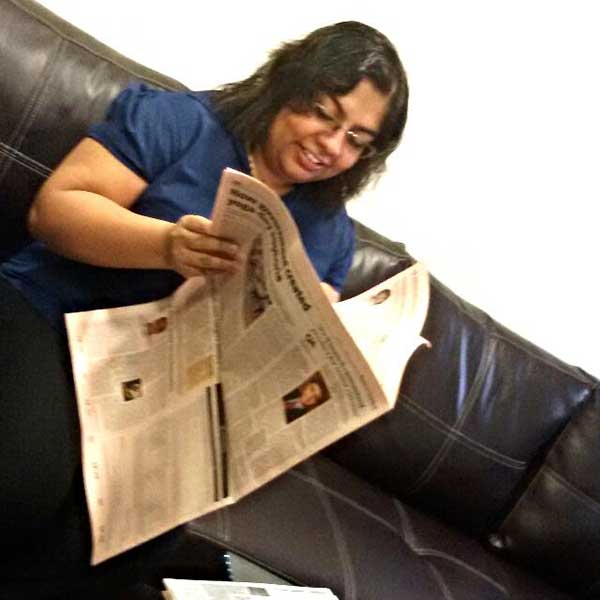
    barasha-baruah-pathak-3

    What were your major interests as a student of law? Any suggestions for the law students on how to deal with Pandora box of laws?

    I was particularly thrilled by Corporate Laws and Criminal Laws. My suggestion for law students will be to keep an open mind and look beyond the obvious. Understanding the legality of any issue in hand requires a wholesome approach and one should be able to correlate diverse aspects to arrive at a proper legal interpretation or analysis of an instance. One needs to be constantly updated on the current happenings particularly in the legal world as well as general current affairs. A daily dose of current affairs with an eye for the legal aspects is an absolute must for anyone wishing to develop a career in law.


    What is your take on academics? How important do you say is a good CGPA for an illustrious career?

    It’s always good to have excellent academics. When your CV carries an attractive CGPA, it will automatically attract the attention of your future employers. Having said that, it does not mean that, anyone not having a great CGPA can’t be good at his work place. Ultimately, your work only will speak at your work place and that is what matters.


    How was your first year after graduation? What do you think were the biggest hurdles and challenges in the early days of your career? How did you deal with them?

    My first year of graduation was overwhelming. I was exposed to the various specialisations and was indecisive and unsure of what will engage me the most. So, I took some time to choose and finally zeroed in on non-litigation and I am currently enjoying every bit of it.

    The early days of my career required me to be very patient with almost all aspects of my job right from the work that I was getting to the remuneration at the end of the month. Adding to this, the psychological challenge of being away from family and friends, trying to settle in a new city alone, made those days tough. For me, being constantly in touch with my family, friends and relatives over phone or meeting them from time to time made things easier to handle. Being patient initially helps and I have come to realise that for me law profession is one that I enjoy more with each passing day.


    What is your opinion when people say that all that they have learnt is in their years of practice?

    I think when one starts practice that is the moment of truth. At this juncture all that one had learnt during their law studies converges and from that point onwards one is expected to interpret on one’s own. Of course there will be references, but there is this immense sense of individuality that one can display in their respective interpretations or analysis of situations / laws. I think this sense of individuality and the freedom to exercise the same is what makes most people perceive actual practice as the only learning medium. I feel that although practice is not the sole learning medium, law practice definitely is a lifelong learning journey.


    In the first three years of your career, you worked at Karnik & Karnik, M/s. M.V.Kini & Co. and PDS Legal. Why did you keep changing your job? How would you describe your working experience at these places as?

    In the first three years of my career, there was not only a change in terms of the firms that I worked for but there was a corresponding change in cities as well. I always wanted to come to Mumbai to build my career and hence all these changes were to ensure that I was able to make a foothold in this city and focus on building a long term career.

    I will be grateful for the learning that I received and also the patience displayed by these law firms. Being my first professional assignments, I had lots to learn and these firms gave me ample opportunity and helped me fine tune my focus on specific areas which later on became my specialisation.


    What kind of responsibilities you were entrusted with AM Law, and Juris Corp? What led to your shift at Clasis Law?

    My responsibilities as a Senior Associate mainly involved transactional and advisory work in the corporate commercial, IPR and media & entertainment domain that include drafting, negotiating and reviewing a variety of documents.

    Joining Classis Law has been career enhancing decision for me. I am looking forward to a wider canvass to practice law.


    What does a Senior Associate at a Law Firm like Clasis Law do? What falls within the scope of your responsibility? Tell us about a typical work day.

    My typical work day starts with making a list of deliverables for the day. This is followed by e-mail browsing / responding to emails and further additions to the to-do list of the day. If need be there are discussions with seniors and team members regarding prioritising work. Once the day’s work is defined, I get on with the work as per priority. My day is full of internal/external meetings and con-calls in addition to my usual drafting & reviewing work.


    What are the primary professional ethics you follow while at work? What has been your strategy to deal with errors and mistakes?

    Integrity and accountability are the two most important professional ethics that I follow.

    Errors and mistakes do happen, but the important thing is to never repeat the same mistakes.

    One should own up, learn from the mistakes and move forward. Once a mistake is made, damage control should be the focus by informing seniors and clarifying the same.


    barasha-baruah-pathak-1

    Corporate law comes with a humongous workload. How do you manage the workload and your personal life?

    I think nowadays all professions are quite demanding not only the legal profession. The important thing is to enjoy what one is doing. For me managing a work – life balance is quite challenging. I am a mother of twins and I do face difficulties at times but the people surrounding me including my family, seniors and my team members support me to overcome those difficulties.  Today’s work environment is very competitive and demanding but at the same time there is empathy too.


    What kind of effort should a young associate put in to work to get it appreciated?

    I think for a young associate, it is very important to understand the norms of the firm that one works in. Additionally, he / she should work towards building and maintaining professional relationships with seniors and colleagues for better team work. A young associate should be proactive and sincere to get appreciation from seniors.


    How is internship helpful for a law student?

    Internships provide the unique opportunity to experience actual working conditions while one is still studying. This is a welcome trend and during my student days we too had internship opportunities that most of us availed. Through an internship a law student can evaluate different facets of the law profession and also explore the real life functions and implications of various specialisations. These experiences can be very helpful for one to choose a particular specialisation within the legal world and also helps in getting the most out of the academic curriculum by being able to relate the theories with the actual real life instances.


    What would be your message to a law student?

    Explore and experience various specializations at your initial days of practice and then decide on the career path.

  • Vishy Vincent, Associate, D.H. Law Associates, on induction and work at a law firm

    Vishy Vincent, Associate, D.H. Law Associates, on induction and work at a law firm

    Vishy Vincent graduated from School of Law, Christ University, Bangalore in 2014. During college, he was always focused on academics and co-curricular activities including moot court and debate competitions. He has also penned down a number of article during college. He was also the winner of 2nd Gurcharan Singh Tulsi Memorial Legal Essay Writing Competition 2012 organised by HNLU, Raipur. Soon after graduation, he joined DH Law Associates and is currently working as an Associate there.

    In this interview he talks about:

    • Law school experience at Christ University
    • Importance of academics, co-curricular activities and internships
    • Induction and work at DH Law Associates


    What motivated you to choose law as a career? How did you get through to School of law, Christ University, Bangalore?

    I wouldn’t say I always wanted to be a lawyer. I was born and brought up in Patna, and as is the case with most people raised in small towns, being an Engineer or a Doctor or an Officer from the Civil Services are the only career alternatives that you are made to see, anything else is a strict “NO-NO”. I too pursued Science till class 12th under the influence of my neighbours. I had always been a good student and I wasn’t too bad at Science either but I didn’t enjoy it. Three to four months before the Board Exams, I made up my mind that I wasn’t going to sacrifice my life just to hear a “Waah Beta” from my neighbours. I had always had an extra liking for the social and political science subjects throughout my school days, I had good command over language, I was into debating, and yet I had no clue where these things would count, which is when I met Mrs. Ragini Singh from Law School Tutorials (LST)-Patna. My understanding of law was totally different back then, I would never have done law if I hadn’t met her. She opened my eyes into the realm and extent of an unbelievably exciting and enthusing challenge called Law. The funny part is, this wasn’t a planned meeting, this one evening I just happened to accompany a friend of mine to LST, which is where I came across Mrs. Singh. Legal studies for me, wasn’t a back-up option but like I said it wasn’t something that I wanted to do right from my early days in school either. I was fortunate enough to meet the right people at the right time but sadly the kind of information/career advice that is required at that age isn’t available to most youngsters in our country, which is why a lot of people end up doing things they utterly despise.

    As for School of Law, Christ University (SLCU) (Bangalore), it was a big chance I had taken back then. The institution was only three years old. I hadn’t performed well in CLAT and I knew it would be foolish to expect admission in the top NLUs. I had cleared the entrance tests of a few Universities that had their own entrance procedures but of the lot that I had in hand, I was most convinced about SLCU, Bangalore. SLCU certainly wasn’t my first preference, but in hindsight, it turned out to be one of the best things that happened to me. I am really proud of, and grateful to my alma mater.


    How did you fare in your academics at Christ University? Would you say a great CGPA is a necessity to kickstart a good career in the legal profession?

    I had always been a good student and it continued to be the same for me in college. I know a lot of people downplay the importance of academics, but I have a completely different take on the subject. I personally think it’s very important. When I say academics is important, I am not necessarily referring to a great CGPA, it is the approach to academics that matters. The effort one puts into read and learn as much as possible during the student years is what counts. A good CGPA may or may not land you with a great job, but if you have worked hard to increase your knowledge base in your student years, you are bound to do well at the start of your career.


    Your internships at law school have all been with top tier firms. Our readers would be quite curious to know how you went about securing these internships.

    Credit for most of my internships goes to the Internships and Placements Committee at School of Law, Christ University, particularly to Ms. Sarah Thomas, the then faculty co-ordinator of the Committee. She would take personal interest in each of our applications. In fact, she never limited her role to overseeing the application process, she would sit with us and discuss how and where our careers were headed, the DOs, the DON’Ts, everything.

    My internships in the first two years were self-arranged. I had prepared a list of contacts and I’d pester those in that list to give me an internship. However, please note that I never spammed anyone on that list. I used to dedicate a week at the beginning of a semester and a week in the last part of the semester to mail/call the concerned persons. It is also important to develop a pool of people who can give you a good reference when required. The people you work with during an internship, your professors, seniors from college, friends/relatives working at senior positions at important organisations etc. can all help you. If you have such people around you already, make use of them. If not, start networking today. Also, I use LinkedIn like an addict, I think it is one of the most useful websites ever made. If you are not comfortable networking in the real world, make the most of LinkedIn.


    How relevant did you find your law school education with the kind of work you were required to do at law firms?

    A good law school primarily teaches you

    • what to look for where (research) and
    • what means what (interpretation).

    Statutes may come, statutes may go and specific law subjects based on such statutes may not mean much over a period of time, but the aforementioned skills of research and interpretation will always stand the test of time. When you start working, all that changes is the approach. Understanding the scheme of things and certain specific requirements becomes all the more important. It is easy to mould into the office environment and grasp the required approach if the aforementioned skill sets are honed in your law school days.


    Did you learn any skills while interning? What are these skills and how did you acquire them?

    Like I said, once you start working, there is a difference in approach. You probably find and read the same things as a law student, but what you take out from what you have read changes. It takes time to grasp that ability to perfection. In hindsight I feel every internship that I did was a step taken towards attaining such skill and capability, and the learning continues even today.


    You have published quite a few papers in various journals. Can you give us a few tips to ace the art of paper writing?

    Clarity of thought matters most. If you are not sure about what you are writing it is unlikely that anyone else would understand or even give your article a complete reading ever. Most people who read the legal articles/papers that we write, read it to find certain answers or to form a certain view on a given subject, irrespective of whether it is a student, academician, professional or whoever. Nobody ever reads an article to appreciate the complex English words or Latin phrases used in such articles. Using big words or inserting a million citations just for the heck of it does not help. The steps are simple, do some background reading, develop a view on the moot question of whatever you propose to write on and then start writing and continue with the research and consolidate your writing with the additional ideas you find or read about whilst writing. Once you start writing and you come across something that changes your view on the whole scheme of things, just ignore whatever you’ve written until then and start from scratch again. Also, I truly believe that the simpler and easier it is for the reader to comprehend your idea, language wise and in terms of how the article is structured, the better it is.


    Amongst other competitions, you were the winner of 2ndGurcharan Singh Tulsi Memorial Legal Essay Writing Competition, 2012 organised by HNLU, Raipur. What does it take to win an essay writing competition?

    Very honestly, I don’t know. It was the first and only legal essay competition I ever participated in. From what I remember, I tried to keep the essay as structured as possible. The flow of thoughts should be smooth I believe. Each paragraph should lead from one idea to another connected/related idea. Like I said before, for any writing clarity is key. Catch hold of people around you, ask them to read your article/essay and try to figure out whether they are able to grasp the key ideas from your writing and whether they are able to appreciate the connectivity in the many ideas that you present. If not, one must rework on the structure of the piece.


    How has your mooting experience been?

    I haven’t done a lot of moots. My first mooting experience was in the university’s own primer for the first year students. I would have barely spoken for 2-4 minutes and I was asked to stop and leave the court-room. It totally disheartened me and I didn’t moot until the third year. In the third year, my teams’ university rank was 18 out of 30 odd teams, which wasn’t great but it was a consolation for me in terms of the disaster I had in my first experience. Our team qualified for a moot organised by S.D.M. Law College, Mangalore and we fared pretty well in that competition. It was a morale booster for me personally. In our next university rounds, my team managed to secure rank 1. It was a big mental victory for me and it gave me an unbelievable sense of confidence. The top rank gave us the good fortune of representing the university at the Jessup National Rounds 2013.  Jessup was an unbelievably incredible experience. Though, we couldn’t make it to the Washington Rounds, the feeling and experience of being there and competing with the best was unreal.


    After graduation, you joined D.H.Law Associates. How did you go about bagging this job?

    I was an intern at D.H. Law Associates, Mumbai and so it wasn’t that difficult. They were familiar with me and my work. I on my part ensured that I was in constant touch with most of associates (senior or junior) and partners I had worked with. After my final year, I pushed in an application for recruitment and I’m sure the associates and concerned partners gave a positive feedback and responded in the affirmative when a call on me was to be taken.


    How tough were the first six months at your workplace?

    It wasn’t tough at all. D.H. Law has a very welcoming environment. We all bonded very soon, and it’s not just the associates I’m talking about, the Partners are equally friendly and encouraging.


    What are your day-to-day responsibilities? How is the experience so far?

    At D. H. Law, each associate is linked to two teams. I am primarily associated with the Banking and Finance Team but also report to the General Corporate and Commercial Team on certain matters. The experience has been very satisfying until now. An important aspect is that D.H. Law exposes you to the business realities of the profession as well. I am also actively involved in the Business Development Programme of the Banking and Finance Team, which in itself has been a big learning experience for me until now.


    How do you manage the workload and your personal life?

    I don’t know if I handle this aspect particularly well but I would say I never think about my work life and personal life simultaneously. When I am working, I am working and when I am with family or with friends, I am with them in body and in mind. I am never half here half there.


    How do you keep yourself abreast with latest industry news and trends?

    I handle the Resources section of the D.H. Law website, so that keeps me aware of what’s happening where. Also, I have subscribed to and read almost all the newsletters released by the major law firms and legal knowledge portals in the country.

    As for the Banking and Finance practice particularly, checking the RBI website once a day has become a habit.


    What are the primary professional ethics you follow while at work? What has been your strategy to deal with errors and mistakes?

    I haven’t really thought through the professional ethics that I will or do follow at work. I just do my work with honesty and love. As for mistakes and errors, the best strategy is to accept it. Some mistakes if revealed on time can help the organisation make amends. Individual cover-ups could turn out to be very expensive for the clients as well as for the firm.


    What do you feel makes an intern stand out and is very important for him to do to have a chance of getting a call back or even a PPO?

    As for what makes an intern stand out, good work is definitely the primary criteria, but good work alone will not help you land a job. Your interpersonal skills matter a lot. Since the time I have been here, there have been some interns who work well but do not communicate and get along with the team well enough, there have been some with whom we get along but the quality of their work is not up to the mark, there have been very few who do good work and give us the confidence that he or she could or should be a part of us.


    The question that whether one should specialise in a particular area of law or be more of a general lawyer often comes up before law students. What is your opinion on the same?

    It is a difficult question. I know people who have tried different things at the start of their career and have figured out where their interest lies and continue from there and have evolved successfully. Alternatively, there are some who’ve tried everything and now find themselves in a mess. Likewise, there are some who’ve stuck to a particular line of practice and have loved it so far and propose to continue with the same, whilst there are few who regret their decision and find it very difficult to move out of the line they picked a few years ago.

    It is too early in my career to pass a judgment on the same, but if I were to pick between the two, I believe one should specialise in a particular area of law, which is what I’m planning to do as well. The reason for me is simple, I love what I’m doing and I don’t see myself wanting to move to a different practice area.


    Lastly, what would be your parting message for our readers?

    ‘Take it easy’ is all I’d like to say. Everyone, everywhere has his/her own set of pressures and tensions, but live each day to its worth, don’t overthink. Definitely plan your career and set targets for yourself but do not lose yourself under the pressure of such targets. A lot of people may disagree, but I live in the present and stay happy. The past is past and nobody knows the future so live each day to its worth and stay happy.

  • Kavya Nagaraj, Associate, Tatva Legal, on an unconventional law school experience and work experience

    Kavya Nagaraj, Associate, Tatva Legal, on an unconventional law school experience and work experience

    Kavya Nagaraj graduated with a BBA.LL.B. degree from National Law University, Jodhpur in 2013. During college, she was on research work and has penned down a number of paper for various seminars. She also has an excellent series of internships with a mix and match of law firms and corporations. Soon after graduation, she joined Tatva Legal and currently works as an Associate there.

    We have taken this opportunity to ask her about the several decisive moments in her career amongst other things including:

    • A unique Law school experience at NLUJ
    • Importance of internships
    • Induction and work at Tatva Legal


    What motivated you to choose law as a career? How did you get through to NLU, Jodhpur?

    Choosing law as a career was definitely not a backup option for me. I used to interact with one of my seniors from school who was then studying in NLSIU, Bangalore. I got to know the mechanics of a law school mainly from him. Later when I discussed this with my parents, they were very supportive and more excited than me; specially my father. There are no lawyers in my family; so I thought I should go for this.

    I wrote CLAT in the year 2008 and according to my ranking, I got through NLU, Jodhpur. I did not attend any coaching classes; I browsed through the newspapers for the current affairs and brushed up with basic knowledge of law.

    According to me, choosing law as career should not be a backup option. It is one of the best career choices anyone can make. One can gain knowledge every day. Law is not constant; it keeps on growing, which is one of the things that make legal studies to stand out from other professions.


    How would you describe your time at NLU, Jodhpur? Please tell us about the manner in which you approached academics while in college.

    NLUJ is one of the best things that have happened to me so far. I have got to learn a lot from this experience, both academically and personally. To be honest, I did not take academics seriously in my first two years of college. Gradually I picked up and started off. Nobody can explain how one can approach academics per se, because everybody has a style of their own in dealing with it. As for me, I gave my best in whatever way I could. I did not go out of my way to do things that would make me dejected just to get highest marks in the subjects. I did not worry much if I sometimes got bad reports, because, hey, there is always a next time. I think that worked well for me. I have a good CGPA and experience in my account.


    Would you say a great CGPA is a necessity to kickstart a good career in the legal profession?

    As I said, I was an average student in NLUJ. I was not among the toppers, but I always gave my best in whatever I did.

    According to me, a great CGPA is not a necessity to kickstart a career, because it’s all about putting the things you learnt in college in force. If you know what you are good at and you can let others know that, that is enough to convince the employer that you are ready for that job.


    What were your areas of interest during your graduation? How did you go about developing expertise and knowledge in these areas?

    I was always interested in corporate law. That is the reason I chose Business Law as my honours course. We had the best faculty in our college. I learnt a lot from them and of course, our college library had every book that we could ask for. I started writing all the projects and seminar papers from scratch and used to take opinion from the faculty members regarding the writings.

    I think one can be an expert in certain area of law only by experience. I cannot say that I am an expert in corporate law, because there is still a lot to learn, all I need is more experience, more exposure and a lot of learning.


    Did you find that your law school education had prepared you for the real world practice?

    Yes, definitely. What the law school provides us is the basic knowledge of law that we require to make use of in whatever field we go into, which is very much necessary. All we have to do is to make use of that knowledge and put it in action. We get a lot of exposure during the internships. That is one of the best things that a law student can experience, as he/she will get to know the mechanics of a legal profession while he/she is still pursuing the studies. They can get a basic picture as to what to chose and how to go about with their career choice.

    The internship experience helps a lot when you finally land up a job. That happened in my case. Since I did most of my internships with law firms, I had a general idea of the work culture. So, it was easy for me to gel in Tatva because of the experience I gained in my previous internships.


    How has your mooting experience been?

    Mooting has not been my cup of tea. I participated in the moot courts held in our college for academic purposes only.


    What would you suggest a fresh law graduate should do to hold spirit and utilise the opportunities available during the first year after graduation?

    Yes, I agree that the first year after graduation is the most defining time of a fresh law graduate. You get immense number of opportunities and choices, when you are fresh out of college. It is the time when you can patiently sit down and decide what you have to choose and how pursue your career. Many people think that one has to have a job at the end of fourth or fifth year or else their life is doomed. I do not believe in this at all.

    It is the time when you have to decide patiently what you want to do and how to make use of your education, rather than to be pressurised by others. At the end of the day, it is not everyone else’s decision; it is yours. So, choose wisely.


    Please tell us about the recruitment process at Tatva Legal?

    The recruitment process at Tatva Legal is very closed. They recruit only when there is a vacancy. I had applied to Tatva Legal through their website, after graduation. Eventually, they called me for an interview and I got selected.


    How was the job interview? Do you remember any of the questions asked to you? Please give our readers some tips to nail a law firm interview.

    The job interview was very professional. I was interviewed by the partners, Mr. N.K. Dilip and Mr. Vasudev. I don’t exactly remember the questions asked by them since it’s been two years, but the questions were about general corporate and mergers and acquisitions.

    There is no tip to nail a law firm interview. It is just as any other interview! You basically have to have knowledge of the areas that you are interested in and of the work that the particular law firm does. As many know, a law firm is a small group of lawyers. There will be no big rounds of interviews like aptitude, group discussion etc.  So, the main thing is having confidence and the ability to convince the interviewer that you know the law.


    kavya-nagaraj-2

    How tough were the first six months at your workplace?

    Since I do work relating to real estate along with corporate, it was pretty difficult to get to know the technicalities of real estate, as it was completely a new field for me. But gradually I picked up and my colleagues helped me a lot in learning. The first six months is the most defining period where you have to be patient and trust yourself that you can do all the tasks. Many give in to the pressure and confusion and end up quitting during this period. That is one of the biggest mistakes one can make. You have to work through this crucial period and emerge. Gradually, you will realize that it was a piece of cake.


    What are your day-to-day responsibilities? What is the most challenging aspect of your job?

    My day-to-day responsibilities include legal due-diligence, both corporate and real estate, along with general drafting and review of agreements and contracts.

    I would rather say that my job is an immense learning process rather than calling it a challenging task. My experience so far has been good; and I hope it will continue the same.


    How do you manage the workload and your personal life?

    I think it is an art to manage the workload and personal life. One should know when to spend time at home and when the work needs to be given priority; and you learn it on the job. Everyone has different parameters and zones. I give priority to my personal life on a different level and professional life on a different level. I avoid mixing them both. There are instances when I have to give more time to my professional life. But I compensate that by taking time off to be with my family and friends. It is all about managing your time efficiently.


    How do you keep yourself abreast with latest industry news and trends?

    Through newspapers, internet and of course, by researching for all the deals that we take up in our firm.


    What are the primary professional ethics you follow while at work? What has been your strategy to deal with errors and mistakes?

    I follow the instructions that I’ll be given by the partners. We are like a family at Tatva. So, if there are any concerns, I openly discuss with my colleagues and sort it out immediately. Errors and mistakes are to be taken into account and learned from so as to not repeat them again. I acknowledge my mistakes, if there are any; and I try my best to correct them and avoid repeating those mistakes in future.


    Please tell our reader about the internship and recruitment process at Tatva Legal.

    As I said, the recruitment process at Tatva Legal is close-ended. Candidates can apply through the official website of Tatva Legal and if the requirement is met according to the available vacancy, they will be called for an interview. As for internships, the candidates can again apply through the website, a month prior to the slot they want to intern.


    What do you feel makes an intern stand out and is very important for him to do to have a chance of getting a call back or even a PPO?

    A basic thing one can do to stand out is to perform well in the tasks that he/she is assigned. If the interns show the ability to handle the tasks assigned efficiently, they will have a chance of getting a call back. But of course, that would happen only if there is a vacancy. Two of the candidates who were interning in Tatva, Bangalore have been given a PPO.


    kavya-nagaraj-3

    The question that whether one should specialise in a particular area of law or be more of a general lawyer often comes up before law students. What is your opinion on the same?

    According to me, that’s a personal choice any lawyer could make. It depends on the individual to specialise in a particular area or be a general lawyer. I chose corporate law because I am interested in the subject and want to grow in this field. It is best to choose what you are passionate about than to give in to the pressure and choose what you are disinterested in and end up disliking your profession.


    Many lawyers would say that the actual learning takes place in the years of practice. How far would you say it is true?

    Yes, that is true. You learn through practice, especially in the field of law. Legal practice is where you put all your knowledge in force. I have experienced the same. I have been given an opportunity to showcase my ability to utilize the knowledge that I have gained. The motto, ‘Practice makes man perfect’, should be adopted by every lawyer. There are no set rules in becoming a lawyer; one has to keep learning and growing.


    What do you cherish most about the experience you’ve had over the past two years?

    I cherish every instance where my work has got appreciated. Appreciation is one of the ways one can show that the other person is good at what they are doing. I have had a wonderful experience in the past two years. I have got to learn a lot from all the people I work with, in one or the other way. I have grown both professionally and personally.


    Lastly, what would be your parting message for our readers?

    The profession of law is a noble calling. It is one of the most brilliant learned and attractive professions. It needs not only high depth of learning but also a sense of social responsibilities which calls for the high and noble conduct. If you have chosen this profession, you are contributing a lot to the society.

    Follow your heart. Never give in to the pressure of others. Choose a field that you would love to build your career in and make your work life blissful.

  • Somrita Ray, Legal Counsel, ICICI Lombard, on research papers and job experience

    Somrita Ray, Legal Counsel, ICICI Lombard, on research papers and job experience

    Somrita Ray graduated with a BBA.LL.B.(Hons) degree from KIIT Law School in 2014. As a student she has been quite active and participated in many parliamentary debates, moot court competitions, MUNs and conferences. She also has an excellent series of internships including UU&AP, Samvad Partners, Tata Motors and Fox Mandal. She also has multiple publications to her name. By the time she graduated, she had received a job offer from ICICI Lombard General Insurance Company Ltd. and is currently working there.

    In this interview she shares with us:

    • Importance of co-curricular activities and internships
    • Extensive experience in Research papers
    • Recruitment and work at ICICI Lombard


    Our readers consist of law aspirants, law students and young lawyers. How will you introduce yourself to them?

    Hi, it’s indeed a pleasure for me to introduce myself to everyone on this forum. I’m a 2014 law graduate from School of Law, KIIT University, Bhubaneswar. I am from Calcutta and was born and brought up there. Presently, I am based out of Mumbai and work for ICICI Lombard General Insurance Company Ltd. as an in-house legal professional.


    Tell us about your pre-college life? When did you decide to take up law as a career? Did you have lawyers in family?

    I did my schooling from Ashok Hall Girls’ Higher Secondary School, Calcutta. By the end of my 10th Standard, I was more or less convinced that pure mathematics and science were not meant for me. I took up Commerce after 10th. However, I did not want to pursue CA or CS. Instead, I wanted to pursue something that would challenge my ability to reason but at the same time would allow me to be creative and flexible. Thus, law appeared to me as the best possible career option.

    I come from a family of Chartered Accountants and Engineers. I am a first generation lawyer.


    somrita-ray-2

    What motivated you to choose law as a career? How did you get through to School of Law, KIIT University?

    The sole motivation to choose law was my innate conviction and the hallmark of prestige attached to the legal profession. A career in the legal profession is both intellectually challenging and personally fulfilling. Besides, no other subject allows you so much dynamism, creativity and flexibility. My admission to the five year Integrated B.B.A LLB (Hons.) program happened post clearing the common all India entrance test organized by KIIT University (KLSAT) in the year 2009.


    As a law student which activities did you participate in? Did you have any guidance on how to go about your academics and co-curricular activities?

    Besides participating in parliamentary debates, I represented the University as a speaker in few all India moot court competitions. I also participated in various workshops, seminars and conferences. Balancing both academics and co-curricular activities at the same time was pretty challenging. However I was lucky to get significant guidance and support from the faculty members and my seniors who happily extended their helping hand at the time of need.


    Our readers would be quite curious to know how you went about securing your internships. Please share your internship experiences.

    (Somrita has interned with Udwadia Udeshi & Argus Partners, Samvad Partners (formerly Narasappa, Doraswamy & Raja), Tata Motors Limited, Fox Mandal Associates, Tata Motors Finance Limited, PUCL.)

    To be honest, besides making timely personal applications, I always remained active on LinkedIn which helped me securing internships at firms like Udwadia Udeshi & Argus Partners and Samvad Partners. LinkedIn is an excellent forum for professional networking and if explored and utilized wisely, it can work wonders. Besides this, I believe a well drafted and tailored CV plays a significant role in fetching an internship. Further, getting an internship through personal application requires one to prepare a well drafted cover letter and vigilant follow up.

    My internship experience with corporate houses and with a law firm was different from one another. During my law firm internships, I was mostly allotted research work relating to company law, securities law, banking law and labour law. Besides, preparing case law dossiers, I had been involved in due diligence exercises being undertaken at these firms and preparing memos on various legal issues. Internships with a Corporate like Tata Motors provided me with a better understanding of the company’s operational aspects. It gave me an insight to the specific legal issues peculiar to the Company and the industry/sector to which it belongs and learning to mitigate the same keeping in mind the need of sector regulator, community and other relevant stakeholders.


    How relevant did you find your law school education with the kind of work you were required to do at law firms?

    I believe what we study at law school more or less forms the basis of the kind of the work that we are expected to do at law firms. However, the practical scenarios that we face at internships are far different from the theoretical situations taught to us at law school. At internships, we are required to look into practical application and interpretation of laws besides the theoretical basis of the same. While at law school we learn the theoretical aspects of law, at internships we inculcate the legal-analytical approach and hence enrich ourselves with the practical application of law. Moreover, internships immensely contribute towards developing a pragmatic approach of a “professional” which alone law school education might not guarantee.


    You have had published papers in various prestigious journals. Can you give us a few tips to ace the art of paper writing?

    The best and the easiest way would be to work sincerely on the projects that one submits as a part of the curriculum or internships. Two of my publications are a result of the topics that were allotted to me during my internships to research on. A well written project can be easily converted into a paper by adding the desired amount of research and structure as per requirement. This can be a good start for the students who have not yet ventured in the field of writing. For those who have already tried and tested their writing skills, they may identify topics of their interest having legal relevance and then pursuing or taking the same to its logical end.

    Some handy tips for writing a paper:

    • Having a thorough understanding of the topic coupled up with proper research
    • Customizing and structuring the flow of the paper
    • Working on areas like grammar formatting and spelling
    • Writing and editing through several drafts to perfect the final piece


    How has your mooting experience been?

    It has been a great learning experience! It helped me think like a lawyer (smiles). I thoroughly enjoyed putting those extra hours and spending those sleepless nights cracking the moot problems and preparing memorials. Mooting tested me on a number of skills like researching, drafting, arguing and keeping my cool under pressure. I would not be able to put in words all that I gained from this experience but among other things it taught me how to work with a team with differing expectations, and unequal levels of execution and opposite countenances.


    You have been a member of multiple committees while in law school. Do you think these enhanced your skill-sets? Please share a few of your memorable experience.

    Definitely it did! Being an active participant in these committees not only helped me to develop an all-round personality and improve my interpersonal skills but also helped me refresh my burdened mind. Talking about few memorable experiences, I thoroughly enjoyed myself planning, structuring, and executing events as a part of the events committee during my law school fest. Besides having fun, I also learnt the importance of team work and the art of management. I was also part of the training and placement committee of my law school and the entire process was immensely rewarding in terms of the quality of interaction, sharing of ideas, discussion on strategies, etc that I had with the prospective recruiters.


    somrita-ray-3

    Soon after graduation, you joined ICICI Lombard as a Legal Manager. How did you go about bagging this job?

    I managed securing a job with ICICI Lombard through the campus placement exercise in December 2013. I believe three simple things worked for me in securing the job…

    • Knowing the basics well
    • Confidence and composure
    • Being sincere in what I was trying to convey


    Please tell us about the recruitment process at ICICI Lombard?

    The recruitment process at ICICI Lombard was quite well structured. In my case, we had a campus recruitment exercise wherein six candidates were shortlisted for the final interview. Based on the interview, the final selection was made.


    How was the job interview? Do you remember any of the questions asked to you? Please give our readers some tips to nail an interview.

    The interview was smooth. As a part of the HR round, I was asked about myself, my strengths and weaknesses and what I knew about the Company. In the technical round, majority of the questions that were asked to me were based on my CV. However, I was also asked certain general questions from the Procedural Laws, Indian Contract Act, IPC, Negotiable Instruments Act, and Arbitration & Conciliation Act.

    Answering your last question, I suggest all job aspirants out there to take time to prepare for an interview. It should not be kept aside for the last day. Next, one should be absolutely through with every single detail mentioned in their CVs to avoid being caught off guard. Lastly, having a well defined, yet simple career narrative in mind is a must, the rest usually follows.


    How tough were the first six months at your workplace?

    Honestly speaking, I was lucky enough to have a very welcoming and a warm team. It did not take me much time to get comfortable as ICICI Lombard has a very positive, supportive and friendly work environment. A year back when I had joined this organization, I had few of my college seniors still working in here. Thus, with them around and with a helpful and well-informed team, things weren’t difficult at all. Right from the start my manager motivated me to deliver my best and he helped me immensely to get better on the job. That’s how within the first 2-3 months I was already in the thick of things.


    What are your day-to-day responsibilities? What is the most challenging aspect of your job? How is the experience so far?

    My day-to-day responsibilities involves assisting the team in monitoring and ensuring compliance by various internal departments as per the compliance program on an ongoing basis; conducting compliance audits and compliance reviews; ensuring regulatory filings within deadlines; providing opinions and clarifications to business divisions on queries pertaining to Anti Money Laundering and other IRDAI mandates; circulating RBI and IRDAI circulars/guidelines/discussion papers/exposure drafts to respective business groups, participating in setting up of new processes/amending existing processes and reviewing business practices in the light of changes in regulations or instructions from IRDAI and vetting Telemarketing scripts, Proposal Forms, Renewal Forms/letters and other form of solicitations by the Company to the customers, clients, intermediaries etc. However, this is a very general version of my routine here, since not every day is same – each day brings new challenges and exciting opportunities to my desk.

    In my view, the most challenging aspect of my job is time management and handling multiple assignments and audits simultaneously without compromising on the quality of delivery.

    By far it has been a great experience. I have learnt what is expected out of a “manager”! (Smiles).


    Are there new challenges everyday or has work settled into a predictable pattern?

    Work at ICICI Lombard is never short of excitement as the challenges keep on changing on a regular basis as each day the nature of issues dealt with and work undertaken are different and hence I would say there is absolutely no scope of feeling stagnant. As to challenges, every day is welcomed by a new challenge!


    What are the primary professional ethics you follow while at work? What has been your strategy to deal with errors and mistakes?

    As a primary professional ethic I ensure to have good working relationship with my colleagues as it helps to maintain healthy working environment. Mistakes and errors are part and parcel of life. It is important to own up to your mistakes, learn from them and to ensure that they are not repeated in the future.


    How do you manage the workload and your personal life?

    While I do enjoy the thrill of leading a fast paced life in Mumbai, I admit that it does get taxing at times. Moreover, in a huge organization, the working protocol which involves multiple layers of review often makes the entire process tedious and time consuming and hence, late hours. So, whenever there is time for a breather between my work, I usually cut-off and have a small conversation over a cup of tea/coffee with my colleagues. Apart from that I unwind by watching movies and listening to music. I am also a big foodie and I try venturing out as often as possible to various eateries and restaurants all across Mumbai. Occasionally, I attend social gatherings and find myself enjoying meeting and networking with people from diverse backgrounds.


    How do you keep yourself abreast with latest industry news and trends?

    I do so by perusing through standard industry journals and following relevant blogs and web portals. Social media today is so strong that it is not at all difficult to reach the nook and corners of latest industry news.


    Does ICICI Lombard take interns? Please tell us about the procedure of same?

    Yes, ICICI Lombard does take interns. Interested candidates can get in touch with the HR for the same.


    What would be the one misconception you’d say you’d always held about real life legal work till the time you were an intern but changed once you started working as a lawyer?

    Two major changes: Sense of responsibility and taking the onus of the work I put forth and team work. Whilst doing my internship I was assigned with limited responsibilities which changed drastically once I started working. Now I am responsible for the work I do whether working with my team or working independently, leaving no scope for errors. I also learnt the importance of team work and that a working as a team helps to deliver any assignment efficiently and accurately.


    If you could re-live your five years in Law school, is there something you would do differently?

    Looking back, I believe that I have always been very headstrong and that I am where I am today because of the choices and decisions that I have made so far. Having said that, I wouldn’t really want to turn back the clock and change a single thing.


    So what’s next for you?

    Well, to be honest, I’ve just started and I a long winding road to travel. I want to simply go with the flow! (Smiles)

  • Sibichen Mathew, Advisor (Joint Secretary level), TRAI, on the role of a Senior IRS officer and being an author

    Sibichen Mathew, Advisor (Joint Secretary level), TRAI, on the role of a Senior IRS officer and being an author

    Dr. Sibichen K Mathew is an Indian Revenue Service (IRS) officer of the 1992 batch. An alumnus of the Indian Institute of Management- Bangalore and the Jawaharlal Nehru University, he currently serves as Advisor to the Telecom Regulatory Authority of India (Joint Secretary Level). Apart from his role as a Senior Civil Servant, he is also a leadership trainer, blogger, author, sociologist, and a policy researcher.

    He is the recipient of the UGC Research Fellowship and has been awarded gold medals from the National Police Academy and National Academy of Direct Taxes. He is the author of the books, “Making People Pay: The Economic Sociology of Taxation” and “When the Boss is Wrong”. He was also the college topper of the Bachelor of Law degree from the Karnataka State Law University.


    What brought you into legal studies after having extensive experience in Academics?

    (Sibichen holds a Bachelors in Chemistry, Masters in Sociology from Kerala University, an M.Phil from Jawaharlal Nehru University and a Ph.D from Bharathiar University, Coimbatore.)

    I believe that learning is a continuous process. It never stops if we are in search of wisdom. The more I learn, I understand that how ignorant I am. That shatters my ego.

    Of all the courses I pursued, one that gave me immense satisfaction was my LLB course. Law is one discipline which instantly gives the student a feeling of empowerment. I always felt that a formal schooling in law can give us tremendous confidence in dissecting the social reality sensibly and will give the necessary courage to fight for justice. Law and justice are inextricably intertwined.


    Being a topper in LL.B please give us a few actionable tips on scoring higher grades.

    (Sibichen has received his LL.B degree from Karnataka State Law University in 2012 where he was a college topper and a rank holder.)

    Once you enrol for an LL.B course, the first thing you need to do is to connect and approach whatever you see, read and hear with a legal perspective. Even when one reads the daily newspaper, an alert and keen law student would link the facts and incidents narrated there with the extant legal provisions and judicial positions he learnt. For example, a typical newspaper contains a number of reports about crimes happened across the world. An easy way to learn the discipline is by linking each such incident of crime with the corresponding sections of IPC, Cr PC, etc and other specific Acts. You will not forget the sections later-on.

    The second tip is to cultivate a habit of quickly glancing at the important decisions of the Supreme Court, various high courts and tribunals reported in the online and offline sources at least once a week if not on a daily basis. By subscribing to various news aggregators, you can get instant access to your chosen fields in your smart phones.

    Thirdly, liberally quote the case laws and the gist of the decisions while answering your questions during the examinations.

    Please note that there is no alternative to bare Acts. One has to read and understand every word used in a particular section. Commentaries can be read later. And, refer the guides only for revision. Prepare your own notes after reading the bare Acts and the commentaries. Include the latest case laws in the answers you prepared. Please quote connected incidents and the judicial observations reported recently by media to illustrate in your answers.


    sibichen-mathew-3

    Tell us about your B-School experience and also give some highlights of your course which you pursued from IIM-B.

    (Sibichen has also pursued a full-time post-graduation in Public Policy and Management (PGP-PM) from Indian Institute of Management, Bangalore (IIM-B).)

    The course at IIM-B really opened up my world view beyond what I learned and did before. It was a course that inducted me deeply to various areas such as international trade, global public policy, international regulatory institutions, public finance, decision making models, business laws, business process flow and human resources management. The teaching methods and evaluation were extremely rigorous but of very high quality.


    Was it a professional requirement to pursue courses in Public Policy and Taxation to enhance more in your career?

    (Sibichen has pursued courses on International Public policy and Corporate Taxation & Advocacy Skills from the Syracuse and Duke Universities respectively.)

    Though it was a professional requirement, I could use the opportunity to gather data on some of my pet subjects such as transnational tax evasion, money laundering and white collar crimes. I could interact with experts during my stay in the universities and there are vast resources available in the libraries of these universities. Law students should try to pursue a post graduate degree in any of the best universities abroad.


    Please comment on the quality and structure of these courses. How much practical knowledge did you gain from it?

    The learning happens in a very liberal academic environment. The process is not one way, from teacher to student. The students learn from each other. The teachers also learn from the insights shared by the students. The nature of evaluation is also based on the choice of the students. One can give weightage to the assignments, projects, written examinations and oral presentations as per their choice. The global exposure is essential for a law student in an increasingly globalized world where businesses and entities function without borders.


    After your graduation, which are the competitive exams you have taken?

    While pursuing my graduation, I started writing many competitive examinations. I qualified a few examinations for jobs offered by the state government. I qualified for the UGC-JRF in my subject and I was the only student to get the fellowship in my subject from my university that year. Though I started preparing for the Civil Services Examination after I completed my graduation, the real push came only when I got admission in JNU as I saw many students studying more than 16 hours every day for it.


    What motivated you to appear for UPSC? How was it cracking the UPSC in the early 90s?

    (Sibichen is an Indian Revenue Service (IRS) officer of the 1992 batch, he is now in the ranks of Commissioner of Income Tax.)

    To pass the civil services, one has to be jack of all trades, but master of none. That means, one should have some idea about all subjects under the sun. One has to open his eyes and ears to whatever happening across the globe. Read whatever you get. Have your own view on the affairs and policies of the institutions and the governments. Be systematic in the preparation. Be focussed while writing the answers.


    Tell us about your experience working with the Income Tax Department of Government of India, in various capacities starting from Assistant Commissioner of Income Tax, which was your first post.

    Indian Revenue Service offers challenging assignments to all the officers. There are diverse jobs within the career: Assessment, Criminal Investigation, Judicial roles, Administration, Systems Management, etc. One will get exposure to all types of businesses, tax laws, economic offences, innovative techniques of investigation, transnational tax practices etc. The job gives tremendous satisfaction and there is a culture of very high level of professionalism within the department. I could succeed in busting large rackets of organized tax evasion and received recognition from the Central Board of Direct Taxes, Ministry of Finance, Government of India consecutively for five years for contributing to the department by way of best practices at work.


    In the meanwhile, you have authored two books titled “Making People Pay: The Economic Sociology of Taxation” and ‘’When the Boss is wrong’’. Please give a brief insight of these two books to our readers.

    My first book, ‘Making People Pay: The Economic Sociology of Taxation’ is the result of about six years of research. My second book, ‘When the Boss is Wrong: Making and Unmaking of the Leader within You’ took about three years to write. It was difficult to get a good publisher for the first book, as it happens for any first time authors. The going was easy once the first book did extremely well in the market.


    Why do you think “Making People Pay” attracted the readers so much? What kind of feedback you are getting regarding this book?

    (Sibichen’s book “Making People Pay: The Economic Sociology of Taxation” has been reprinted thrice and very widely circulated across the globe.)

    It was not clear for me why a country with considerable tax elasticity and tax potentiality found it difficult to attract more people to its tax rolls and gain more money to the direct taxes kitty. So I started my search for the answers and I realized the need for a systematic macro analysis of the issues. I was in fact plunging myself to what many call ‘research’ on the subject. Is tax aversion unique to some countries? My analysis proved not. There are several historical, political and sociological factors that deter people from paying taxes globally. It is not just economic factors that determine tax compliance as it is widely thought off. Attempt in this book was to analyze those factors. It threw open certain valid questions. Why people in some countries comply better than others? Why tax evasion is not frowned upon in some countries and disgraceful in some other countries? Any theoretical analysis on the behaviour of people is incomplete without analysis of primary data. Therefore a unique attempt was also made here to understand tax evasion and tax enforcement through a study of tax evaders (or who were branded so) themselves.. The interviews and case studies with them have, without exception, cumulatively and intellectually enriched me as they helped me to understand the behavioural pattern, attitudes, perceptions and expectations of taxpayers in general.


    sibichen-mathew-2

    Are you planning to publish more books in future? Do you think your books will influence and attract young readers as well?

    (Sibichen’s books were appreciated by M.N. Venkatachaliah, Former Chief Justice of India, Mr. Cyrus P. Mistry, Chairman Tata Sons; Mr. N.R. Narayana Murthy, Chairman Infosys Ltd; Mr. Abhinav Bhaduri, Chief Learning Officer at Wipro Limited; Mr. Anand Surana, Director Micro Labs for your published books.)

    I have got appreciations not only from very eminent people but also from many young persons, students and retired people for both books. In the book, ‘When the Boss is Wrong’, I have presented 50 different dimensions of bad leadership and their ramifications for the people and the organization. There is also an attempt to suggest certain precautions and prescriptions for persons (both in their roles as a team member and a boss) and some precepts for the organizations concerned.

    I have a blog named ‘Cyber Diary’ and I will be focussing on writing more articles in that for popular reading. Many times, blog posts are more powerful than published books.


    How did you go about so many awards in your career?

    (Sibichen is the recipient of a Gold medal from the University of Kerala for topping the Post Graduate Examination, a Gold medal from the National Police Academy, a Gold Medal from the National Academy of Direct Taxes for extracurricular activities, for securing “A” Grade for the post graduate courses which he completed from Jawaharlal Nehru University and Indian Institute of Management, for recognition for his work at Central Board of Direct Taxes for five years consecutively, UGC Research Fellowship and he was also nominated for Commonwealth fellowship and ICSSR /ISEC Fellowship.)

    I don’t know. Maybe it’s a little bit of hard work, some strategic planning and a lot of blessings.


    How was your experience serving as a Deputy Commissioner of Coimbatore as well as the Deputy Director (Investigation), in the Investigations Directorate working in the Tamil Nadu cadre?

    The key duties in the above roles were to investigate tax evasion, detect black money and raise tax demands and penalties. I was successful in unearthing a few complex and organized tax evasion practices.


    Can you share any memorable or interesting experiences in your stint as a Senior Authorized Representative at ITAT?

    (Sibichen has worked mostly on money laundering and tax evasion cases while he was serving as the Senior Authorized Representative of the Department at the Income Tax Appellate Tribunal, Bangalore and as the Additional Commissioner of Bangalore (Investigations))

    More than the opportunity to defend cases for the government, I got benefitted from the unique experience as a counsel. It sharpened my skills in advocacy and acquisition of legal knowledge, and gave tremendous confidence in arguing cases against the submissions of acclaimed legal experts.


    What kind of cases you are dealing with at TRAI? Give some insights on those matters.

    (Currently Sibichen is working as a Regional Head and Advisor in the Telecom Regulatory Authority of India (TRAI).)

    My duties include monitoring of regulatory compliance by telecom, broadcasting and cable companies. I am also in charge of conducting regular meetings with all stakeholders in the states of Maharashtra, Goa, Karnataka and Kerala. Currently, the focus is on digitization of cable TV. We also collect feedback from the public on various policies and issues. Current discussions on platform services and net neutrality are some examples of such consultations with public.


    You have so many landmark achievements in your life. Now, tell us what have been your failures and successes? What were the biggest hurdles and challenges in your life till date?

    If I have failed anytime the blame should go to me only. Proper utilization of time, prioritization, sincerity and devotion to work, and goal setting are the keys to success. I feel that a person can become a successful individual and an acceptable personality in society by acquiring emotional intelligence, social intelligence, communication intelligence and cultural intelligence. These are the four pillars of success. I have mentioned this in detail in my latest book, ‘When the Boss is Wrong: Making and Unmaking of the Leader within You’.


    If someone does not go to a top law school, would you say he still has a shot at a great career in law? What should such a person do to develop necessary skills and profile?

    Please understand that the last time the name of the institution you studied your law matters is only when you get placed for the first time. From the second day of your career, your background is immaterial and irrelevant for all. They look at your: technical competence, professionalism, attitude, managerial and social skills and willingness to learn.

    I am sure, a student who is not from a top national law school can get recognized and excel with the above in right proportion. If you are not from a high ranking law school, you may try to participate in national level law seminars, debates and moot courts and also write a few research papers in national or international journals. You will definitely get good placements.


    What would be your advice to our readers who are budding lawyers and law students?

    Never stop reading articles that can not only enhance knowledge, but also inspire you to achieve your goals. Prioritize your time.

    My motto is ‘Promise Less; Deliver More’. I urge you also to earn a reputation of fulfilling the promises and sticking to deadlines.

    My contact details:

    FB: Sibichen Mathew

    Website: sibichen.in

  • Taniya Malik, Ph.D Scholar, Delhi University, on experience of working at IPR Firm Lall, Lahiri & Salhotra, and teaching at ITM Law School

    Taniya Malik, Ph.D Scholar, Delhi University, on experience of working at IPR Firm Lall, Lahiri & Salhotra, and teaching at ITM Law School

    Taniya Malik graduated in law from CLC, DU in 2009. She is an avid researcher and academician in the field of law. She graduated from Lady Shree Ram College before she decided to join CLC, DU to pursue law.

    After her graduation she worked at Lall Lahiri and Salhotra (“LLS”), one of the most prominent IP firms in India for an year. Thereafter she decided to pursue Masters and therefore joined DU again. With Masters, she managed to clear UGC-NET examination. She also had the opportunity to work as an Assistant Professor at ITM Law School before she joined DU where she is currently pursuing Ph.D. in Water Security in India.

    In this interview she talks about:

    • Law school experience at DU
    • Work experience at LLS and ITM Law School
    • Clearing UGC-NET
    • Pursuing Ph.D. in Water Security in India


    Given that most of our readers are law students and young lawyers, how will you introduce yourself to them?

    I am an avid researcher and academician in the field of law. Currently I am pursuing Ph.D. on Water Security in India from Faculty of Law, University of Delhi. Besides this I have taught law subjects at the Faculty of Law, University of Delhi and ITM University, Gurgaon.


    How did you gravitate towards Law? Tell us about your college life at CLC, DU. What all activities did you partake in?

    Honestly, Law was a backup option. In fact after I finished with my graduation at LSR, DU, I was still quite confused as to my future plans. I had zeroed on Law but I was still figuring out things and buying more time to make up final plans. But initial few classes at CLC made me realize that somehow through all this confusion, I had found my true calling. Since those days, I have never had a second thought about my profession.

    Studying at CLC in itself was an eye opening experience. I had just graduated from LSR, a girls’ college and till then I had been accustomed to a much protected environment. CLC changed all that and made me see some hard realities face to face. I got a chance to interact with people from very diverse backgrounds but most importantly I think it was the study of law that brought about a lot of change in my personality. I started becoming more upfront and confident. As far as activities at law school were concerned, I used to participate in various subject specific discussion committees. I also regularly used to attend talks and seminars held at CLC and was an active member of the Placement Committee. I was also got opportunities to work as research associate under few of my professors at CLC.


    Soon after graduation, you started working at Lall, Lahiri and Salhotra as an Associate. How did your appointment take place? What kind of responsibilities you were entrusted with?

    Immediately after completion of my LL.B., I got an excellent opportunity to work as Legal Associate at LLS (Lall, Lahiri & Salhotra), a Gurgaon based IPR law firm. It was a regular appointment wherein I had sent across my CV and sat through few interview rounds. I worked in the Trademarks Prosecution department of LLS wherein I was involved with the filing for registering of trademarks applications and attending hearings at Trademarks Registry, New Delhi. It was definitely a good experience for a beginner in the field of IPR


    After having worked at LLS for almost one year, you joined Faculty of Law, Delhi University to pursue LL.M. What made you to prefer Masters over job? Did you consider going abroad?

    While spending one year at LLS, I had developed a lot of fascination for higher studies in Law as I constantly used to feel that my studies in law were still incomplete. I discussed it with my parents and they also encouraged me to pursue LL.M. Additionally I wanted to explore judicial services as a career option and for these purposes I decided to undertake full time study of Law. As far as pursuing LL.M from foreign universities is concerned, the thought didn’t inspire me much in those days and infact I didn’t try any university abroad. I was happy with pursuing my LL.M from DU.


    Tell us about the course structure and specialization of Master of Laws at CLC, DU? What was your topic of dissertation for LL.M?

    LL.M at DU is a full time, two year course and the subjects of specialization can be chosen by the candidate himself. My subjects of specialization centred on Constitutional Law and International Law. My LL.M dissertation topic was on the legal regulation of Money Laundering in India. The controversy respecting Black Money was current in those days and this encouraged me to take up a detailed study on this subject.


    You have publications in various renowned journals. How should one go about writing papers and getting the same published?

    So far as publications are concerned, I would suggest that the authors must pick up topics that are current. I think that gives a better success rate in publications. Also I would suggest that the authors must attempt empirical study on legal topics as opposed to a doctrinal one. An empirical study of legal issues is more precise and provides more credibility to the research.


    How did publishing affect your legal career? Apart from academia, does it help one to secure jobs at all?

    Publications are of tremendous importance so far as academics is concerned. Infact one excellent research article has the potential to shape your entire career in academics. Apart from academia, although prima facie it seems that publications are not of much importance, but in fact they do. If legal professional wants to stand out in his field, then he must write on his area of expertise. Writing in itself is a profound activity and many of your own concepts about a particular legal topic will become clear once you start writing about it.


    You have also qualified UGC NET Exam. Could you please tell our reader about the exam and how did you prepare for it?

    UGC NET exam is a national level eligibility test for college level teachers, which is conducted by UGC twice a year. To secure a regular appointment at University level for the role of Assistant Professor, every candidate must clear the NET exam of the concerned subject. Fortunately I did not have to prepare specifically for NET as the syllabus comprised of all the subjects of law that I had already studied in LL.B and LL.M. I basically revised all these subjects two months before the exam and by God’s grace I was successful.


    taniya-malik-3

    You also had the opportunity to work as an Assistant Professor at ITM University, Gurgaon and at Faculty of Law, Delhi University. How did your appointment take place? Please describe your experience?

    My appointment at ITM University as Assistant Professor was a regular appointment. There was an advertisement by the University and I applied. It was followed by few rounds of interviews before the final selection. I was asked to teach Constitutional Law to the students of third and fourth years. Since it was my first teaching assignment, so I found it a bit challenging but in totality it was a great learning experience for me. Whenever my classes went exceptionally well, I always felt so calm and satisfied and that feeling can have no other parallel in the world. My stay at ITM University was followed by another teaching assignment at Faculty of Law, University of Delhi. I taught the subject of Wealth Tax at Law Centre – I. This in itself was a very overwhelming experience for me initially as I was teaching at the same University where I passed out from. I always used to put myself in the shoes of my students. In retrospect, I think I understood by students at DU better but may be this feeling is just psychological.


    Tell us about your teaching methodology? What subjects did you teach there?

    So far as teaching methodology is concerned, I try my best to keep the concepts of law simple for my students. I always preferred my classes to be interactive rather than a mere lecture discourse. Also I have always paid a lot of stress in case law analysis because that is what ultimately consolidates students’ understanding. So far I have had the opportunity to teach Constitutional Law and Wealth Tax.


    What made you to pursue Ph.D.? What is your topic of research for Ph.D.? What was your motivation behind the selection of that topic?

    When I cleared my UGC NET, I was simultaneously awarded a Junior Research Fellowship by UGC to pursue Ph.D. in Law. I realized it was a golden opportunity for me to solely dedicate myself for research in law in my decided field. Ph.D. today is essential if you wish to thrive in academics. Additionally, I was lucky enough to obtain my registration in Ph.D. at Delhi University in my area of interest i.e. Water Law. Water is basic for human survival, yet so far as India’s water resource management is concerned; we still have a lot of legal and policy gaps. Groundwater overexploitation, among other factors and the threat posed by climate change in near future will seriously endanger India’s Water Security. My research is an attempt to identify these legal issues and suggest proper remedies so that India’s water future is secure.


    taniya-malik-2

    Going forward, how do you expect the Ph.D. experience to influence your career?

    I obviously wish to be an accomplished academician and researcher in the field of law. I hope that through my Ph.D. thesis, I am constructively able to contribute so far as the understanding of water law in India is concerned. Further I hope that I come across some good opportunities where I can work with accomplished individuals and organizations in this field. I hope that this Ph.D. thesis will place me amongst the good researchers in the field of Water Law.


    What would be your message to law students reading this interview?

    To all the students of law, I wish, first of all, to congratulate them for the career path they have chosen. You are the leaders of tomorrow and within yourselves lie the potentials to positively impact this country in a way that no other profession can.

    Studying law in itself is a very empowering experience and please make most of it. Now unlike other professions, law has a higher gestation period and it will take you sometime to realize your true interest. So in the process, have patience and don’t get disheartened. Success will surely come with hard work and perseverance. Another important thing is to keep yourself updated and acquire excellent communication skills, as this field is very competitive if you wish to carve a niche for yourselves. Further if the circumstances are favourable, do go for higher studies in law. Although LL.B is sufficient to do well in this field but higher studies in law will open up your mental faculties and give you an very analytical and holistic approach towards law. I wish you all the best.

  • Kunal Kashyap, Legal Counsel, Mahindra & Mahindra Financial Services, on writing essays, on bagging a corporate job and law school experience at KIIT

    Kunal Kashyap, Legal Counsel, Mahindra & Mahindra Financial Services, on writing essays, on bagging a corporate job and law school experience at KIIT

    Kunal Kashyap graduated from KIIT Law School in 2014. He has interned at various top law firms and corporate like Udwadia Udeshi & Argus, DSK Legal and Tata Motors to name a few. During college, He also had the opportunity to work as a Research Assistant at Centre for Disability Studies, NALSAR University of Law and Indian Council of Social Science Research, Gangtok.

    As a law student he has been quite active and participated in various co-curricular activities. He has also won various essay writing competitions including KIIT University NSS Essay Writing Competition and fourth position in Essay Writing Competition organized by the Comptroller and Auditor General of India. By the time he graduated, he had received a job offer from Mahindra and Mahindra Financial Services Ltd. and is currently working there as a Legal Manager.

    We have taken this opportunity to ask him about the several decisive moments in his career amongst other things including:

    • Law school experience at KIIT Law School
    • Internships and co-curricular activities
    • Winning essay competitions
    • Recruitment and work at Mahindra


    How would you introduce yourself to the legal fraternity?

    Warm Hello to all the readers of this wonderful initiative SuperLawyer! I am a corporate lawyer born and brought up in Siliguri, the gateway to the Queen of Hills – Darjeeling. I attained my law degree from School of Law, KIIT University with a specialization in Business Law. I am presently associated with Mahindra Finance as an in-house lawyer for the past 1.6 years. Besides, my interests also flow in areas related to blogging, reading and owning a startup.


    How did you decide to choose law as a career?

    Law in particular was never a path for me to reach my goals which have always been guided by creativity. It all began to fall into place when I was in my 12th standard and this “law firm with huge financial remuneration” bug hit me.  Once I got into the law school, I started understanding the nuances of this field. I saw that I could be creative in this sphere of education and at the same time be independent on its completion, and this is what motivated me to the core.


    As a graduate of School of Law, KIIT University, have you faced any bias? What would you say to the future legal graduates of KIIT?

    I feel bias is a subjective expression, and use of such term is far away from reality. I was placed at the beginning of my final semester.

    The brand NLU gives an edge to students from NLU’s but that has to be looked with positivity and hence, a non-NLU student should always be on his/her toes and become a ideal material for industrial recruitment. The resources available are similar for both sets of recipients and one need to grab the best from them.


    What were your areas of interest during your graduation?

    My area of interest during graduation and still is anything related to the Business of Law. The commercial impact of the application of law is what excites me. I always try to keep myself updated in this area and try to build an opinion on such kinds of news.


    You have worked for Udwadia Udeshi & Argus Partners, Tata Motors, DSK Legal, TRAI, Transparency International India etc. as an intern. Our readers would be quite curious to know about the work you had to do there.

    Internships are an integral part of the development of a law student to a lawyer, and I was very particular about it. Thanks to the great bunch of seniors I interacted with! My internships with such known brands were a result of planned approach and a continuous analysis of what could be good for me.

    You will find my internships at array of areas, which was mainly because I wanted to have a feel of where my interest would ultimately lie. While the work at Udwadia Udeshi gave me a hang of the compliance activity, I gained an experience of drafting and litigation at Tata Motors & DSK Legal. TRAI was more about sharpening my research skills and also to understand how regulatory authority works.

    Every internship had its importance as they were done with a lot of passion & dedication to learn and so was the experience at Transparency International India wherein I worked on the eradication of corruption at PSU’s and on the laws involving the same. (I was also offered a lifetime membership at TII, on starting a successful initiative called “ALAC – Advocacy & Legal Advice Centre” which aims for social empowerment through Legal Awareness).


    You’ve also worked at Centre for Disability Studies, NALSAR and Indian Council of Social Science Research, Gangtok as a Research Assistant. Please tell us about the application process and your experience at both these places.

    Working with CDS, NALSAR under the guidance of eminent Professor Amita Dhanda was one of the best activities that I could do in an around 2nd Year of my law school. I had applied through email, on which I was selected post interview and was a part of a team that assisted in the drafting of First Country Report on the Convention on the Rights of Persons with Disabilities (CRPD).

    Working as a research assistant at ICSSR was more of an inter-college selection wherein I was selected to conduct a survey for the Government of India in the city of Gangtok to understand the functioning and the role of the police machinery and its impact on the common public. It was a great fun and a learning experience.


    Did you find that your law school education had prepared you sufficiently for your internships and job?

    I completely believe that everything I could do or achieve was all because of the kind of training we received at our law school. All thanks to the set of experienced faculty line up that we had and the seniors along with our friends who have become an integral part of the extended family by now.


    Please give our readers few tips on acing essay writing competitions.

    (Among other competitions, Kunal managed to secure the first position in KIIT University NSS Essay Writing Competition and fourth position in Essay Writing Competition organized by the Comptroller and Auditor General of India.)

    I have always loved expressing myself through write-ups. To ace competitions like these, one has to understand the target audience and the most important tip is to be creative while remaining original. It should be an opinionated piece which tends to bring a new thought process and not just re-surfacing the material already published and calling it research.


    How important do you think are mooting, debating, etc. in shaping the legal career of a law student?

    I consider all these activities as confidence-building measures. I believe the skill sets come with time and experience, which is the maturity to handle various situations. I believe what is more important is to have an attitude & passion towards learning. The more one gets into all these activities full throated, the sharper and skilled one becomes and what better place to try than in a Law School!


    kunal-kashyap-1

    How did you go about bagging your job of a Legal Manager at Mahindra and Mahindra Financial Services Ltd? Please tell us about the recruitment process at M&M?

    I was taken at Mahindra Finance through the process of campus recruitment. We had two rounds of interview. In the 1st round we had a situation given to us to check our skill-sets and the 2nd round was more on the confidence element and the attitude to learn. Fortunately, my answers clicked with the recruiters and I bagged the job in my 1st Campus Interview itself.

    We at Mahindra Group have a stable HR Policy. All applications for internship & recruitment are to be routed through the HR Team to the concerned department.


    What kind of legal work do you get there? What is the most challenging aspect of your job? How is the experience so far?

    I believe I represent the most important department of my organization that has a very dynamic role for an In-house Lawyer. My daily activity is to advise the best practices for conduct of businesses and minimise the number of legal risks against the company through an informed legal advice.

    In the company we also look after a portfolio comprising of stressed assets and try to close them through legal tools. This is the most challenging and the interesting part of our role. There is not a single day when we don’t have a new and challenging assignment.


    Many lawyers say that the first year after graduation is the most difficult year. How has been your first year after graduation?

    Frankly, yes it is difficult because it is not easy to change gears from a law student to a potential game changer employee. I was blessed to have my seniors who showed a lot of patience and gave me a chance to learn by myself so that I could explore and find a niche area within the framework which could be my forte.

    The biggest challenge as an in-house lawyer was to understand the culture of an organization and to suggest best legal practices within the framework which was a Win-Win situation for all.


    If you could re-live your five years in Law school, is there something you would do differently?

    The expectations and dreams are never ending phenomena and they will always remain under-achieved. Having said that, frankly speaking, on a personal level, if one thing if I could do differently, that would be to have more FUN.


    Where do you see yourself a few years down the line? Do you aspire to become someone you look upto?

    That’s a difficult question. Ten years down the line I would see myself as an established In-House Lawyer and trying things at something new and exciting as always.

    I don’t aspire to be like somebody but I do believe in continuously analysing my strengths and weaknesses and working hard towards them and becoming a better human being.


    What is your message for our readers?

    Finally, to all the young and dynamic readers mainly law students I would like to say that it was not long ago that I was on the other side of the line. Guys have fun, enjoy and live the moment. Analyse your capabilities and live your life with passion and dedication. Never forget that you are what you are because of your parents. Show some gratitude and try to be as good as them.


    Signing Off! Cheers!!

  • Samim Ahmed Ranju, Senior Legal Counsel, GE Healthcare, on varied work experience at firms, in litigation and in-house

    Samim Ahmed Ranju, Senior Legal Counsel, GE Healthcare, on varied work experience at firms, in litigation and in-house

    Samim Ahmed Ranju belongs to the first batch of WBNUJS and graduated with B.A.LL.B.(Hons.) degree in 2005. Soon after graduation he joined Tata Services Ltd. as a legal trainee. Thereafter he joined Paras Kuhad and Associates, Advocates as an Associate and later switched to Khaitan and Partners. In 2010, he joined GE Healthcare as a Litigation Consultant and currently works as the Senior Legal Counsel there.

    In this interview he talks about:

    • Law school experience at WBNUJS
    • Work experience at Tata, PKA and Khaitan & Partners
    • Journey from a Litigation Consultant to Senior Legal Counsel at GE Healthcare
    • Role of a Senior Legal Counsel at an MNC like GE


    How would you introduce yourself? Could you please share a little bit of what motivated you to pursue law as a career?

    I am currently working as the Senior Legal Counsel for GE Healthcare, India and South Asia (Legal entity name is Wipro GE Healthcare Private Limited) and I am located in Bangalore. I belong to the first batch of The West Bengal National University of Juridical Sciences, Kolkata. I received by B.A.LL.B.(Hons.) degree in the year 2005.

    My father was an Advocate practicing in the Calcutta High Court. Seeing him and his colleagues in the profession, I got motivated mainly by two factors associated with it –

    • Empowerment through knowledge – A good lawyer is much more aware of the rights and obligations of an individual and this knowledge immensely empowers him not only in the professional field but in every sphere of life.
    • The opportunity to connect with people – The profession of law is such that you are always connected with people and trying to help them resolve their problems with your professional ability. In the process a lawyer touches many lives in this career and the amount of social recognition that one can earn is much beyond what other professions can offer.

    However, I was initially sceptical about the quality of legal education imparted in traditional law colleges. As a result, immediately after clearing my board examinations (in 1999), I opted for studying English Literature even after clearing the entrance test for the law department, University of Calcutta. Around the same time, Dr. Madhav Menon, the Founder Director of National Law School of India University, Bangalore (NLSIU) came to Kolkata, my home town, and established WBNUJS. I read a lot about Dr. Menon and his revolutionary success with NLSIU. So when I cleared the entrance test for WBNUJS in the year 2000, I did not think twice before leaving English Literature and taking up law as the career as my future career.


    Tell us about your college life at WBNUJS. Please tell us about the manner in which you approached academics while in college.

    I have spent the best five years of my life at WBNUJS. I was a resident student (WBNUJS was compulsorily residential during our time). Being part of the first batch, it was always special. Apart from the exceptional bonding among the batch mates (which we still maintain), we went through various experiments with curriculum, teaching methods, infrastructure (or the lack of it) etc.  Each one of us not only has seen a great institution coming into reality but we have actually contributed in building its reputation and pedigree. I am extremely proud of my batch mates who are now recognized everywhere as successful professionals.

    Our batch was a vibrant batch and the participation in various activities was spontaneous. The Moot Court Society of WBNUJS did show some phenomenal results in both national level and international moot court competitions in the very first year of its inception. Though I was not a part of the Moot Court teams representing the University, I used to take part in internal moot courts.  I was an active participant in the various activities conducted by the Legal Aid Society – legal awareness camps, street play on legal issues, seminars, legal aid clinic etc. The other student bodies such as Literary and Debating Society, Cultural Society, Sports Society were all very active and I was particularly involved in organising various events throughout the five years I spent at WBNUJS. I had special interest in quizzing and creative writing. I managed the student mess as the co-convenor for almost three years.

    I would categorize myself to be an average student so far as academics are concerned. The good thing about WBNUJS was that (at least during our time) it was not a traditional type of curriculum where you study for the whole year and your performance is dependent on one single examination. Instead, the evaluation was spread over the entire semester and the total marks in a paper was divided into Projects, Presentation, Viva, Mid-term Exams and End-Semester Exams which offered ample opportunity for a student to maintain a decent score even if they did not do well in part of the evaluation process. What also helped me was the analytical and problem based approach towards exam where bare acts were allowed in the exam hall and one was expected to analyse a problem/ situation and write answers as per his analysis. There was no right or wrong answer. I have found this extremely helpful as training for the future professionals. When I joined the profession, I realized that it is not so much important to know or remember a legal provision, rather it is important to know how to find a legal provision which is most appropriate in a given situation and how to actually apply it in reality.


    Did you take part in extracurricular activities?

    As I have already mentioned, I used to take part in Legal Aid, quiz, creative writing and I was always active in organizing events at NUJS. I was responsible for setting up the student mess and running it successfully for three years.

    In my opinion, extra-curricular activities have a very important role to play in creating leadership quality in a student. It is not necessary that you have to be successful only in Moot Courts for becoming a successful lawyer. Any extracurricular activity that you participate in will teach you few important lessons on leadership and that is what is important to build a successful career.

    Frankly speaking, I had very limited knowledge about law as a profession beyond litigation. In the initial years, at least I did not know much about what we know as corporate practice in law firms or in companies. Therefore, all my internships till thefourth year were in the field of litigation and my objective was clearly to become a litigation lawyer (either practicing under a Senior Counsel or in a litigation law firm).


    Do you believe that excellent CGPA is absolutely necessary for success?

    I can say for myself, I never had excellent CGPA but I have still survived. The same is true for some of my other batch mates who are also doing extremely well despite their average or poor CGPA. I would say, excellent CGPA is something ‘good to have’ as it shows your level of commitment which helps you in initial days as some recruiters also prefer it but definitely that’s not absolutely necessary. Especially once you are in the profession (be it in litigation, law firm or in corporate) your performance and your leadership quality are the only things that matter. However, this does not apply if you choose academics as your career in which case excellent CGPA is a must.


    What were your areas of interest during your graduation? How did you go about developing expertise and knowledge in these areas?

    Since I wanted to become a litigation lawyer and was inclined towards a practice in criminal law, I used to find lot of interest in all criminal law papers. I also took up optional papers such as Criminology, Forensic Science which are related to criminal law practice. Apart from that, I was interested in Constitutional Law and Family Laws.

    The only way once can develop expertise in litigation is to have some hands on experience. Reading a lot of case laws help but what really helped me was my close association with practicing lawyer’s chambers (which include my father’s chamber)and reading live case briefs and doing research. During the internships and even while the classes are on, I used to visit various courts on a regular basis. My father also used to give me little bit of drafting (mostly criminal and writ matters) work when I am at home. From these experiences I got to learn a fair amount of procedural law (both criminal and civil) which helped me a lot when I joined litigation law firm later on. In my opinion, procedural law cannot be learned in classroom.


    Did you do any internship during your graduation? Did you receive any assistance from your college?

    Yes, I mostly did litigation internships with practicing advocates at Trial Courts, High Court and the Supreme Court. I did one corporate internship and that was after I completed fourth year.

    Almost all my internships were organized by WBNUJS. We used to have a Placement Committee, mostly run by the students, which did an excellent job in organizing internships and later on the final placement.


    samim-ahmed-2

    Did you find that your law school education had prepared you sufficiently for the many tasks you were required to execute during your internships and later at your job?

    As I have already mentioned, the curriculum and the teaching method followed at WBNUJS did a very good job of preparing us for the real world. Obviously, there are few things which law school cannot teach you which I had to learn only during the internships and later in my jobs. But the law school education created that very foundation which is required to even learn those skills from outside. Another great advantage of being in a premier law school is that you are always surrounded by brilliant minds who will force you to come out of your limitations and one becomes a lifetime member of a great network of successful professionals.


    What led to your shift from Tata to Paras Kuhad? Please share your work experience at both these places.

    (Soon after graduation, Samim joined Tata Group as a legal trainee and after one year of work at Tata, he switched to Paras Kuhad and Associates as an Associate.)

    The Tata job was from the campus and I somehow could not adapt myself to the job. So I went back to my home town Kolkata and joined Paras Kuhad and Associates to do what I liked most – litigation.

    I had a very unique experience in Paras Kuhad and Associates. At that time the Kolkata office was small and going through a transition. Soon after I joined, I was entrusted with a very significant number of high value recovery cases for a bank. Since there was no senior in the office, I started handling these cases almost independently from day one though I had absolutely no prior experience. I am grateful to the Managing Partner who believed in my ability to handle the situation and helped me in gaining huge amount of exposure at a very early stage of my career. Initially I struggled a lot and I could figure out that the client’s legal officers were not very comfortable in dealing with a lawyer who hardly has any experience but within a year’s time I earned the confidence of the biggest client of the firm (a private bank) and it was the client’s same legal officers who started giving good feedback to the Managing Partner. This was the turning point which helped me to re-gain confidence in myself especially after the first job not going right for me. The high point of my career is when I resigned from Paras Kuhad and  the Chairman of the client bank himself requested me to stay back as he was extremely happy with the way I was handling his bank’s cases.


    You left PKA to join Khaitan and Partners as an Associate Advocate. What prompted you to make this choice and what made this shift possible?

    A Partner in PKA (who joined PKA after me) was taking up an assignment to set up and run the Kolkata office of Khaitan and Partners. He asked me if I am willing to join him in his new venture. What excited me was the fact that this would mean starting an office from the scratch and be a part of it while it is growing. I was also very comfortable in working with the Partner who used to give a whole lot of freedom in doing my work. So I took up the offer and the office started in the Partner’s residence and sometime we had to even work from his garage before we moved to a posh office in the Central Business District of Kolkata.


    Currently, you work as a Senior Legal Counsel- South Asia at Wipro GE Healthcare Private Limited. Please tell us about your induction into the company. What worked for you in securing this job?

    I joined GE Healthcare in 2010 initially as a Litigation Consultant on a 2 years’ contract. My only job was to look after all litigation and arbitration matters of the company all over the India region (mostly India, Bangladesh and Sri Lanka). I was interviewed by the General Counsel and the HR Manager over phone and I think what clicked for me was my experience of handling hardcore litigation work for four years in law firms.


    We would love to hear about your work profile. What is a normal workday like? Being a Senior Legal Counsel, what are your responsibilities?

    I had a very interesting career progress within GE Healthcare Legal and Compliance team. As I have already mentioned, I initially joined as a Litigation Consultant where my only job was to manage litigation and arbitration for the company. Soon after joining GE Healthcare I realized that managing litigation for a company especially for a big MNC which believes avoiding disputes in general is not a very challenging job especially for a person who has done hardcore litigation work in a law firm. So I approached the General Counsel and volunteered to take up some amount of corporate work in addition to my role as a litigation consultant. The General Counsel was quite impressed with this pro-active attitude and she was kind enough to slowly entrusting me with responsibilities which were meant for a full time Legal Counsel role. She first made me the ‘go-to’ counsel for the HR Department which gave me an opportunity to handle a lot of Labour and Employment issues. Soon I was looking after all the Supply Chain agreements. GE Healthcare in Bangalore has three manufacturing facilities in addition to its distribution business and hundreds of vendors supply various parts and services to these manufacturing facilities and other commercial offices which means huge number of contracts getting negotiated and executed on a regular basis. This gave me an opportunity to draft and negotiate huge number of contracts. By September 2011, before my contract as Litigation Consultant expired, I was inducted as a full time employee of the company with a designation of ‘Lead Counsel’. Though I continued to look after the litigation matters, corporate advisory and documentation work became my primary focus in the new role. Again in October 2013, when the position of Senior Legal Counsel became vacant, I was promoted to this role which is my current role. Again what went in my favour is that after the previous Senior Legal Counsel left the company, I volunteered and successfully managed his profile for a period of four months in addition to my existing role before I was officially offered the position.

    As the Senior Legal Counsel my work profile mostly includes transactional and advisory work wherein I have to actively take part in business decisions made by the various verticals of the business, advise the business leaders on legal issues, structure and strategize transactions in a way which is commercially viable as well as compliant to applicable laws and regulations, protect the company from any legal or regulatory risk by taking advance steps, drafting whole lot of agreements/ representations/ legal notice and reply to legal notice, resolving disputes, training the employees on compliance etc. The list is very long but in short I can say that any problem/ issue that the business or the stakeholders think has a legal angle to it comes to the Senior Legal Counsel for his expert advice.

    GE believes in flexible working hours and respects work-life balance to the extent possible. There is no fixed time for entry or exit, but I try to be in office by 9:30 am and generally do not get off before 7:30 pm on a normal day. However, sometime I need to stay back much beyond that time if there is some pressing urgency. I generally try to avoid taking work back home or working on weekends, but occasionally I will have to do that especially because for example, I need to support a sales team who are trying to close a deal with a customer on a late evening or on a weekend.


    What were the biggest hurdles and challenges in the first few months? How did you deal with them?

    Since my background was mostly of small litigation law firms, I had faced a huge cultural shock during the first few months in GE. GE is a completely process driven organization as opposed to law firms in which I worked where things used to run mostly on ad-hoc basis. I still remember the sleepless nights I had spent thinking about the power point presentations which I had to prepare in the very first month of joining GE. Also, the biggest learning for a law firm lawyer once he becomes an in-house counsel is that you are not expected just to give a legal opinion on matters brought before you. A legal counsels’ job is to provide a workable and compliant solution to the company and not a mere legal opinion. The other aspect I found most challenging in GE is that GE is a matrix organization which means people working in GE are not answerable only to his boss, instead one has to report to multiple stakeholders and one is answerable to all of them. Managing this huge number of stakeholders was another challenge which even now I sometime struggle with after spending five years in GE.


    What amount of legal work is there? What have been your failures and successes?

    Everything I do is related to ‘legal work’ in some way or the other. The role of in-house counsels in India has undergone a huge amount of change in recent times. Gone are those days when an in-house legal counsel was expected to act only as an intermediary between the external counsels/ law firms and the company. Because of various reasons which include cost constraints, a very large chunk of ‘legal work’ is now done in-house. Large companies and specially the MNCs have a very strong team of lawyers and compliance counsels who go to the external counsels only for specialized advises and very large or critical transactions.

    I think, my tenure in GE has mostly been a success story where I have reached a senior position within a very short period of time.


    What have been the highlights of your job so far?

    I think I already covered this part. I just like to add that GE has recognized me many ways and the number of awards/ recognition I have received in last few years is a testimony of that. I have received the following awards:

    ‘Clear Thinker’ award from the General Counsel, GE India (2012), award for ‘Expertise’ by Global General Counsel, GE Healthcare  (2013), CEO award for “Growth & Compliance” (2014), CEO award for “Delivering Results in an Uncertain World” (2015), award for “Achieving the Right Customer Outcomes” by Global General Counsel, GE Healthcare (2015)

    However, in my opinion the biggest highlight of my tenure in GE is to transform myself from a litigation lawyer to a full-fledged corporate senior legal counsel within a short period of time


    Corporate Law is oft seen as a dry arena of Law, sometimes with humongous workload. What made you gravitate towards this field?

    The word ‘Corporate Law’ no longer means only Companies Act and few related legislations. A corporate lawyer has to provide a wing to wing support to the business and is actually considered a business partner. I can say for GE, no major business or strategic decision is taken without involving the legal and compliance team. Every day you are challenged with new problems and the excitement of working on different things and learning in the process keeps me committed to my profession. Yes, there is huge workload sometime but all depends on how you prioritize and organize your workload to enjoy the benefits of a corporate job.


    What does it take to be a good corporate lawyer? What are the primary essentials of a corporate lawyer? How do you say a fresh graduate can work on building these skills?

    In my opinion a good corporate lawyer is someone who is considered to be an effective business partner by the commercial force. This is possible only when you have a very in-depth knowledge about the business and you are empathetic towards the needs of the other stakeholders in the business who are your clients. A good corporate lawyer is expected to provide solutions which are compliant and at the same time practical for the business to implement.

    My advice to a fresh graduate would be that first of all one should be careful while choosing the first few jobs. The primary focus should be to find out a place to work where you will be exposed to challenges on a regular basis and in the process you will develop your skillsets. I am not saying you can only acquire these skills in a law firm, but spending a few years in a law firm helps to build a solid foundation. The other advise I would have for the youngsters is that you should always stay hungry and be pro-active to grab every opportunity that comes on your way even if that means going beyond your defined scope of work and taking up extra responsibilities. These are better known as ‘stretch assignments’ in the corporate world. Believe me, when you are working in an organization, there is always some extra work which no one wants lap up. My suggestion is that you should keep your eyes open to these opportunities and volunteer to take them up. In corporate world one is valued not only for great execution of a work which are assigned to you, what they expect from a great leader is how much he is doing above and beyond his defined scope of work.


    What are the primary professional ethics you follow while at work? How do you deal with mistakes or errors?

    GE is a great company and globally one of the forerunners in ethics and compliance in the corporate world. One of the most precious things that I have learned in GE is that success is important but not at the cost of ethics, integrity and compliance. You will somehow stand out from the crowd if you do things in the most ethical way. Personally, I try to maintain a great level of transparency in whatever I do and try to do things in the right way by avoiding shortcuts. In today’s corporate world a person with doubtful integrity is never considered for any senior leadership role. With more and more corporates coming under the regulatory lenses, integrity is becoming an important quality that a recruiter likes to see in a potential candidate.

    One thing I have learned in my career through personal experience is that you should always face an error or mistake committed by you head on and the sooner the better. Brushing it under the carpet gives only temporary relief but does help in the long run. At some point of time it comes back and bite you and in a much bigger way. Therefore, if I have committed an error, I try to disclose it to my boss or the stakeholders at the very first opportunity and this helps things no growing out of proportion which cannot be handled later on.


    What is the procedure to apply for an internship and recruitment at Wipro GE? What are the qualities which they look for in their prospective employees?

    GE India Legal and Compliance team has an internship policy which is applicable to all GE businesses in India including GE Healthcare or Wipro GE. The internships in GE is done in a very structured manner wherein an intern is assigned with specific projects as soon as he or she joins the internship and at the end of the internship, the student has to do a report out presentation which is often attended by all GE lawyers. GE Legal and Compliance team generally does not recruit freshers. Lawyers with few years of experience in a reputed law firm or corporate are only considered for any open position. All open positions are posted in the career section of GE website.


    Is there any other tip you would like to give to our budding professionals?

    Success is a function of hard work and opportunity. You should always stay hungry and grab opportunities as and when it is available and do not let it go just because it would mean extra work for you.

  • Prachi Gupta, Legal Adviser, Competition Commission of India, on work experience and building expertise in Competition Law

    Prachi Gupta, Legal Adviser, Competition Commission of India, on work experience and building expertise in Competition Law

    Prachi Gupta graduated from Guru Gobind Singh Indraprastha University, Delhi in 2006. Soon after Graduation she started working as a Law Researcher at Delhi High Court. She has also worked as Secretary (Legal) Review Committee at Ministry Of Home Affairs. She is currently working as a Lawyer at competition commission of India. She has expertise in dealing with standard essential patents, real estate, e-commerce, mergers, wholesale and retail distribution of  drugs and medicines, transportation, mining of coal and minerals and matters related to intellectual property etc.

    In this interview, she talks about:

    • Building a career in competition law litigation
    • Working at competition commission of India
    • Importance of academics, internships and moots


    How would you introduce yourself? Tell us a bit about your pre-college years. When and how did you decide to study law?

    I am a second generation lawyer in my family. My motivation to be a lawyer is of course, my father who has been actively practicing for the last 40 years. As a child, his black coat and gown always fascinated me. When I was in my 12th standard, Guru Gobind Singh Indraprastha University started the LL.B (H) degree, which was the first 5 year law degree program in Delhi at that time. I guess I was destined to be a lawyer.


    What activities were you involved in at Law school? Looking back, is there anything you wish you had done differently?

    Law school at Guru Gobind Singh Indraprastha University was a young institution at that time and apart from academics, students were encouraged to participate in different activities. I was part of teams involved in organising external moot court competitions, Lok Adalats, debates etc. to name just a few. I was also on the editorial board for the law school journal. Law school was one of the most fun yet fulfilling experiences of my life. I don’t think I could have asked for anything more.


    Tell us about your internships which you undertook during your graduation?

    In the legal profession, law schools teach only the theoretical part of law, everything about the procedural aspects has to be learnt on the job. So, it’s always better for a law student to start young. Internships are probably one of the most enriching experiences that a law student goes through. Besides honing researching and drafting skills, internships teach soft skills like time management and prioritising, which, I believe, hold a lot of value in our profession. I did my internships with litigating lawyers since I wanted to get acquainted with the basics and technicalities of the profession.


    How was your experience working as a Law Researcher at Delhi High Court?

    Working as Law Researcher at Delhi High Court was one of the biggest learning experiences for me. I was fresh out of law school then and initially the whole experience of assisting a High Court judge was a bit overwhelming. Within a few days, after I became accustomed to the way things work, I started enjoying the work assigned to me.


    Please tell us about the requisite soft skills which are essential for a young lawyer to build a successful career?

    I think one of the most essential personality traits for a good lawyer is ability to communicate well with everyone. For a litigation lawyer, it helps to effectively communicate with his clients and successfully present his case before the court. For an in-house counsel, getting along well with colleagues and superiors is equally necessary. Apart from excellent communication, every young lawyer should also focus on their drafting and research skills.


    prachi-gupta-2

    Please tell us a bit about your work profile at Competition Commission of India.

    My work profile at the Commission involves a number of things like assisting the Commission on the informations filed, which primarily involves research and analysis of relevant markets, market trends, different players in different sectors, analysing allegations of anti-competitive conduct, studying different sectors for any probable violations, looking into litigation matters of the Commission etc. Work at the Commission is never predictable. One day, I am assigned a case with anti-trust issues in real estate and the next day, there can be a case about allegations of cartels in another sector. The fact that competition law jurisprudence is still evolving in India makes my work more challenging.


    What are the primary essentials of a competition lawyer? How do you say a fresh graduate can work on building these skills?

    The primary essentials of a good competition lawyer are no different than that of a good lawyer i.e. good communication skills – written and spoken. Competition Law is a relatively new law in India and the jurisprudence is still evolving. Indian competition law has adopted certain concepts from other jurisdictions. A law student who wants to pursue a career in competition law should keep himself/herself updated about the decisions of the Competition Commission of India and COMPAT. All the orders are easily available on the official website of the Commission. Developments in anti-trust law in other jurisdictions especially EU and USA will also help young lawyers to gain an in-depth understanding of the competition law.


    When the Indian Competition Law regime is compared to that of the UK / USA Competition Law regime, do you think that there is a lot of headspace for progress in India?

    As I already said above, competition law is a relatively new law in India and the jurisprudence is still evolving, compared to EU and USA where anti-trust laws have been in place for many decades. In USA, anti-trust law came into being in the last decade of 1800. Indian competition law is still evolving but we have the advantage of learning from other jurisdictions. Commission by its recent decisions in several strategic areas like real estate, cement, tyre, coal etc. has made it apparent it will come down heavily on disruptive trade practices. Several trade associations and industry giants already adopted elaborate competition compliance measures to ensure that their activities are in compliance of the Competition Act, 2002


    Do you believe branding of college is something that’s very relevant/ important at any stage in a law student’s career?

    There has been a rise of few elite law schools that focus and prepare students only for a career in top notch law firms. Every law school should focus on a robust curriculum comprising of major substantive and procedural laws. Every law student and young lawyer should have a fair idea about the laws that govern the country, especially the common man. The elite tag may help students secure placements in top law firms and MNCs but few years down the line, the kind of professional exposure and experience one has gained really matters. Law schools should not be about good placements but wholesome legal education. Besides, there is no dearth of good legal education and professors with a passion for academics are there at every law school. I was taught by some of the best teachers at law school.

  • Aniket Ghosh on bagging a job at Lakshmi Kumaran & Sreedharan and law school experience at NUJS, Kolkata

    Aniket Ghosh on bagging a job at Lakshmi Kumaran & Sreedharan and law school experience at NUJS, Kolkata

    Aniket Ghosh is a recent graduate (2015 batch) from NUJS, Kolkata, In his five years he explored a plethora of opportunities. He pursued a course on “Interpretation of Fiscal Statutes” by Mr. Badrinarayan, Partner at Lakshmi Kumaran & Sreedharan (L&S), he also worked as a Teaching Assistant to Prof. Saurabh Bhattacharjee and interned at various law firms including Ernst & Young, Mumbai.

    He has bagged a job at L&S after getting to work with Mr. Lakshmikumaran directly.

    In this interview we talk about:

    • His journey through WBNUJS and his gainful takeaways from these five years.
    • Pursuing “Interpretation of Fiscal Statutes” by Mr. Badrinaravan, Partner at Lakshmi Kumaran & Sreedharan (L&S).
    • Being a Teaching Assistant to Prof. Saurabh Bhattacharjee.
    • Interning at Ernst & Young, Mumbai.


    Tell us about your life before you joined law school. What inclined your decision to study law?

    I grew up in a very positive atmosphere as my parents have always been very encouraging and supportive of all my endeavours and have never pressured me regarding anything.  My father was a Wing Commander in the Indian Air Force and I have grown up all over the country from Jodhpur, Rajasthan in the West to Jorhat, Assam, in the East, and from Bangalore in the South to Delhi and Chandigarh in the North, not to mention the many road trips and excursions that we took to beautiful, untouched, out of the way places in Arunachal Pradesh, Nagaland and Manipur, and in the isolated desert sands of Rajasthan.

    This, I have always felt, gave me a wealth of exposure and knowledge that many of my peers could scarcely imagine.

    I was inspired to study law thanks to my maternal uncle, Mr Sujit Ghosh, who incidentally is a 1995-batch NLS graduate. Seeing him work and the critical problems faced by clients piqued my interest towards law.


    Studying in WBNUJS must have given you an opening to plethora of opportunities. How has been you experience through the law school timeline so far?

    Indeed, NUJS through its curricular, co-curricular and extra-curricular activities provides innumerable opportunities to its students to develop a wide range of skills like general academic development, critical thinking and honing of drafting and speaking abilities. Most importantly, the many competitive and intellectual forums that it provided us, by way of Moot Courts, Parliamentary Debates etc, taught us to ‘think on our feet’, which I am sure, will stand us in good stead in the future. It has been a very enjoyable experience and I believed that I have learned immensely during my time at NUJS, both about legal matters and about life in general


    How would you advice law students in freshman and sophomore years to proceed?

    I would advise them to take all the opportunities provided by the law schools very seriously, curricular, co-curricular and extra-curricular etc. Not many people get the wide range of opportunities that we get at national law schools and this fact must be borne in mind from the first year to the fifth.


    Do you think in recent times legal academia has been distancing itself from the practical aspect of law?

    In my opinion, the degree to which any academic work is distanced from practical aspects is dependent entirely on the context in which it is written. Most of the materials, by academicians, which we studied at NUJS, were written in a specific context which more often than not, discussed commercial, societal and practical ramifications of different legal issues rather than just dry legal rules alone.

    As regards, day-to-day knowledge of laws, rules, drafting etc. there is only so much that can be taught and learnt at law schools, since hands-on knowledge is best learnt and assimilated once one actually enters the profession.


    aniket-ghosh-2

    You have also pursued “Interpretation of Fiscal Statutes” by Mr. Badrinarayan Partner Lakshmi Kumaran & Sreedharan (L&S). Tell us about your course.

    The Interpretation of Fiscal Statutes course was an intriguing course indeed. We learnt about a variety of issues in a very small period of time. Mr. Badrinarayan was an extremely supportive and engaging teacher. He would often discuss current legal issues from various pending cases etc. and would test our critical thinking abilities by requiring us to provide our own opinions on the same. This added a whole new dimension to the teaching and, frankly, made it thoroughly enjoyable.


    You have also been a Teaching Assistant for Professor Saurabh Bhattacharjee in the Legal Method-I Course (2013 & 2014). Can you tell our readers about your experience?

    Being Teaching Assistant required me to assist Professor Bhattacharjee in providing guidance to the First Year students, give them feedback on their work, grade their papers etc. I tried my level best to extract and highlight the core issues from the various problems given to them as case studies, whilst also explaining to them how to do the same, on their own.

    It was a learning experience for me as much as for the first year students themselves, who would make some novel points which may have not occurred to me initially. Further, it gave me a wonderful insight into the pressures, and responsibilities that a teacher faces which I feel I will keep in mind, should I ever change my line of work and seek to become a teacher, in the future.


    What would be your inclusions to make an exemplary CV?

    I feel an exemplary CV would be one that highlights the all-round character of the individual concerned. It should seek to bring out a balance of all his complementary skill-sets be it in areas of academics, co-circular or extra-curricular activities, etc.

    Playing the role of the protagonist in the University Annual Theatre Production (2012) titled “God” by Woody Allen must have been a moment of pride. Tell us about your experience.

    Taking part in the University Theatre Production was a very memorable experience. I participated in the auditions and the subsequent play with the intent to enjoy myself. Admittedly, there were some scenes of the play, which required a bit of hard work from all of us, acting-wise, but with the encouragement of my friends and co-participants it became a thoroughly enjoyable experience.


    aniket-ghosh-3

    How did you garner interest in Tax? Tax being a dry subject, what would be your tips to law students?

    I garnered an interest in tax mainly because of my internship with Mr. Parasaran. I got a chance to work on numerous tax matters and issues with him. Researching, analysing, and discussing them with sir increased my liking for the subject.

    Every subject has some dry area or the other. Tax is no different. Unfortunately, the areas that we are taught in law schools at best give an overview of tax. The more practical issues and nuanced matters are hardly taught. Further, very few people intern in dedicated tax teams of firms. Moreover, even if they do, they intern for four weeks at most, of which unlike other areas of law it takes three weeks to grasp the basics of the subject. Due to these reasons many people tend to have a mental block regarding tax laws and already start on a negative footing with the subject.

    I myself used to feel this way before interning with Mr. Parasaran. Ultimately it comes down to your ability to avoid these mistakes and give the subject a chance.


    How was your work experience of working at Ernst and Young. Mumbai?

    My time at EY Bombay was a new experience because for the first time, I was working in a multi-disciplinary work environment with both lawyers and chartered accountants.  It gave me a perfect insight into the nascent stages of any tax dispute, something that is not usually seen in a law firm or a under a counsel.  I learnt how claims were negotiated with the Department at the initial stages and saw how they escalate into full blown litigations.


    How was it to intern under Mr. Mohan Parasaran?

    I worked under Mr. Parasaran whilst he was still Additional Solicitor General of India in the Supreme Court in 2012.  This internship, I must admit, was the most exciting one that I have done, as I interned at a time when the ASG’s office had innumerable high profile matters in the Supreme Court. To name a few, Mayawati’s DA case, the Enrica Lexcie Matter, the Presidential Reference on Auctioning of Public Resources etc. I got an opportunity to draft, research and discuss on these matters with sir on the  various legal issues involved, having significant ramifications like the Armed Forces Special Powers Act case.  This was also the internship that got me interested in tax laws as Mr. Parasaran handled many tax matters in the Supreme Court as well. One of the more famous ones was the Vodafone dispute.


    How did you bag your job at L&S? Please walk us through your appointment procedure. What is your work profile like at L&S?

    I interned with L&S for about one and half months during the summer break of 2014. I worked on a variety of matters with a variety of teams on the litigation side. There were a couple of matters where I got the chance to work with Mr. Lakshmikumaran directly. Ultimately at the end of the internship, I was informed by the HR, that they would like to hire me. I did not have to give any interview.

    As regards my job profile, I am just starting and we are going through our training period. Therefore I am not in a position to comment on that, at this moment. All, I can say is that I will be doing litigation work before various forums.


    What do you think should be the reasonable standards of a student approaching top-notch law firms?

    I do not believe that there are any specific standards that can be adhered to by a law student to approach a top-notch law firm.  This is because most law firms have their own methods of assessing students and interns. Further, the availability of vacancies, ability to fit into the firm’s work culture etc. also plays a significant role which we as students do not initially, quite understand or realise. Admittedly, having a decent academic score, publications, moots, organisational & extra-curricular achievements behind you do help to increase the options available, and the chances of the student getting suitably placed.

    Further, there are some fundamental qualities such as confidence, a positive and enthusiastic outlook, willingness to work hard diligently etc, that are appreciated across the board, by law firms and counsels alike.

    Nevertheless, ultimately it all depends on the circumstances and how he/she comes across on the day, or period of assessment.


    How do you think a successful speaker should nurture himself/herself? Do you idealise any specific person who his/her power of speech?

    Like developing any other skill-set, speaking skills also develop the most with practice. Further, apart from practicing, adequate and thorough preparation of one’s case also helps one come across as a good speaker. No, I do not idolise anyone but there are some great public speakers & parliamentarians, both historical figures and present day ones, whose abilities have impressed me.


    What is your message to current law students?

    We all should endeavour to enjoy our times in law school to the fullest and never miss an opportunity to learn and grow as individuals and professionals.