Blog

  • Sheela Yadav, Law Officer, SUN Pharma, on taking out time for LL.M, work in litigation and IPR

    Sheela Yadav, Law Officer, SUN Pharma, on taking out time for LL.M, work in litigation and IPR

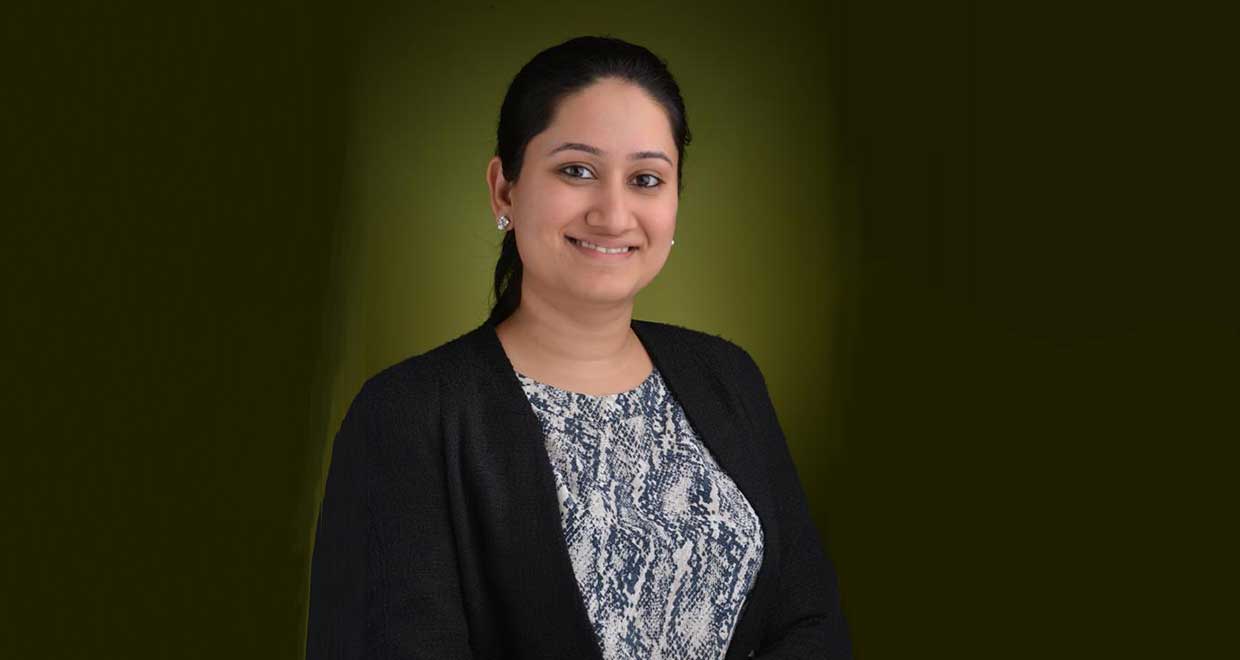
    Sheela Yadav was born and brought up in a conservative atmosphere, one that is not very encouraging for girls to study, but that did not stop her from pursuing her dream of studying law. Encouraged by her father, she completed her graduation in sociology and enrolled herself for the three-year LL.B course in SNDT University. Upon graduating, she started working at the chambers of Preeti Shah, and completed an LL.M alongside her work. After developing an interest in IP laws, she switched to Sun Pharma where she currently works as Legal Officer.

    In this interview, she talks about:

    • The initial experiences of her life which made her want to study law
    • Her work in litigation and experience working under Advocate Preeti Shah
    • Her current work profile at Sun Pharma


    Why did you decide to study law? What inspired you to do so? How did you get through to SNDT Law School?

    I belong to a place in North India where girls are not allowed to study much but my family gave me a chance to study. One day, the panchayat of my village gave a wrong decision in a dispute regarding division of property. The dispute was between my father and my uncle, and I wanted to say something but wasn’t allowed to, being a girl. There were many other instances like this, which inspired me to study law in order to know the rights I and other girls hold. My father motivated me to join SNDT Law School.


    What were your areas of interest during your graduation? How did you go about developing expertise and knowledge in these areas?

    During my graduation my area of interest was sociology. Being a sociology student, I had to participate in various surveys where I came to know that there are a lots of people who don’t enjoy benefits of public policies, mainly due to lack of knowledge and awareness about the same. This, again, gave me a push to study a law.


    As a law student which activities did you participate in?

    During law school, I participated in various conferences, seminars, essay competitions and workshops which enhanced my knowledge and deepened my interest in law. I have also participated and presented a research paper in the “World Peace Congress 2008” a UNESCO chair program, on the role of youth in promoting the “Culture of Peace in the World” held at World Peace Centre (Alandi), Maeer’ MIT Pune. I was also awarded for participation in Alternative Dispute Resolution project by Indian Law Institue in 2008. In 2010, I secured First Rank in LL.B. examinations in the University.


    What kind of internships did you do while you were a student?

    I have done various internships during my law school. However, the internships at Haresh Jagtiani & Associates and Divya Shah & Associates are very close to my heart. These were the internships where I majorly worked with the litigation team of the firms. These firms allowed me to understand the roots of litigation and law.


    Do you feel that there is a perception of difference among NLU and non-NLU students?

    Yes, when you are a student from an NLU, everyone treats you like you know everything. While applying for internships, college name plays a vital role. This name gives better and easy exposure to top law firms. It’s because of the kind of education and facilities there. However, in traditional universities, we have to do everything ourselves. They are preferred even when a student from a traditional university is more talented because at the first glance the employers notice the name of the college.


    After graduating from SNDT Law School, you started working at the Chambers of Preeti Shah as a Junior Associate. What kind of responsibilities you were entrusted with?

    I wanted to get experience in litigation and court procedure. I heard about her and therefore directly approached her. She appointed me in spite of the fact that I did not have any references. I have learned a lot from her. She has given me lots of opportunities to appear in court and argue matters. She is the best teacher, in a way, because she taught me the basics of post-graduation experience, guided me and supported me in my highs and lows.


    You left the Chambers of Preeti Shah and had joined Agnihotri & Jha Associates. What led to this shift? How was your experience working there?

    During my work period with Preeti Shah I found my area of interest in IPR laws and therefore shifted to Agnihotri & Jha Associates. There, I handled IP matters including application of registration for Trademark, Copyright & Design along with other litigation matters. However, this place taught me that everything that glitters is not gold.


    sheela-yadav-2

    How did you eke out time for the LL.M from Mumbai University while still working at Chambers of Preeti Shah? Please share your experience with our readers.

    As I already said, Preeti Ma’am is one of the best people I have ever met. She supported me at every stage of my career and guided me throughout. I always wanted to do a Master’s and therefore asked her regarding the same. She allowed me, supported me and encouraged me to do so. After finishing my work, she used to ask me to go and attend my lectures. She has been an angel in my life.


    Currently, you work as a Law Officer at Sun Pharma. How did the switch from Agnihotri and Jha take place?

    To get better exposure, I wanted to switch and join a new company. As far as I think, FMCG & pharma companies are one of the best places to gain experience in IP laws. I am keen user and follower of LinkedIn and one day, I came to know that there’s a vacancy in Sun Pharma. I wanted to switch and therefore applied through LinkedIn. After various procedures, I was recruited.


    What does your current work profile at Sun Pharma consists of?

    My work profile in Sun Pharma is majorly Trademark searches including drafting Applications, Oppositions, attending Show Cause hearings, Special drives, and other follow ups in the registry including Online filings.


    What has been your strategy to deal with errors and mistakes? How would you suggest a young associate to deal with them?

    The first step to deal with your errors and mistakes is to accept them and the fact that you have committed those mistakes. The next time you deal with the same or similar matter, approach it with a clear understanding of the concept and also with the mistakes committed earlier. It will increase your chances of winning.


    Tell us about a case that you are particularly proud of.

    Being an employee of Sun Pharma I can cannot disclose information about matters which are still going on. To crack a difficult case, always think from the other side and only then can one understand what difficulties are faced and how to tackle them. To prepare for a difficult case, deep study of the matter including the applicable laws and study of relevant provisions, remedies, penalties as well case laws is required. For example- if you are preparing for trademark infringement case : criteria for analysing trademark infringement required to be known viz. is likelihood of confusion about the origin of the defendant’s goods or service and the plaintiff should first show that it has developed a protectable trademark right in a trademark. The plaintiff must then show that the defendant is using a confusingly similar mark in such a way that it creates a likelihood of confusion, mistake and/or deception with the consuming public. The confusion created can be that the defendant’s products are the same as that of the plaintiff, or that the defendant is somehow associated, affiliated, connected, approved, authorized or sponsored by plaintiff.


    What are the key qualities one should possess for becoming an IP and FMCG lawyer? What is the earning potential?

    FMCG law is a new and emerging area which give lots of opportunities to learn new things every day. Deep understanding of the consumers and areas covered under the FMGC laws are the only essential and key qualities which one should possess for becoming an FMCG lawyer. Earning potential depends of the person’s hard work and knowledge.


    Many lawyers would say that the actual learning takes place in the years of practice. What was the case in your situation?

    Yes definitely that was true in my case as well. Practical life is totally different from theoretical and college life and day to day practice and challenge expands your knowledge and improves the skills to tackle the situation better.


    Lastly, what would be your parting message for our readers?

    Believe in yourself, and never give up. There is no substitute for hard work and keep patience.

  • Tapan Chauhan, Legal Manager, Nestlé India, on starting out with litigation and work as in-house counsel in FMCG

    Tapan Chauhan, Legal Manager, Nestlé India, on starting out with litigation and work as in-house counsel in FMCG

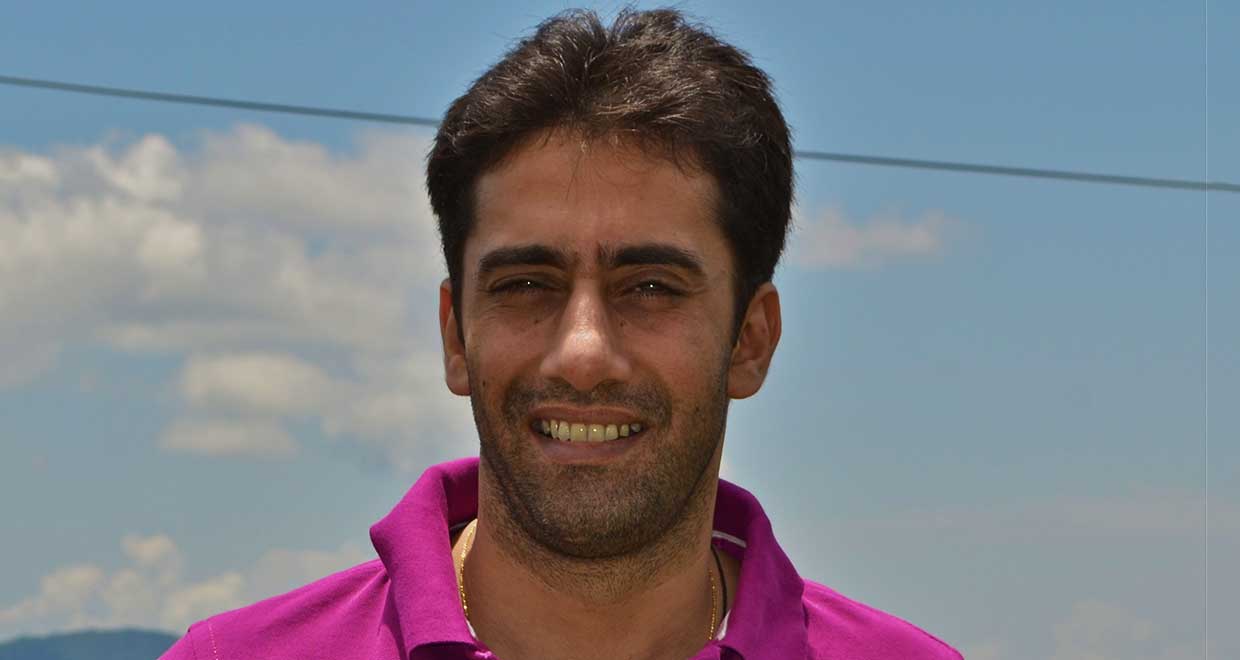
    Tapan Chauhan graduated from Himachal Pradesh University after completing the three-year LL.B course and started his career by practicing in the various district courts, tribunals and High Court in the state. In 2011 he joined Mondelez India Foods Ltd. as Legal Manager. After four years there, he recently joined Nestle India Ltd. as Legal Manager.

    In this interview, he talks about:

    • How to overcome the intial jitters associated with litigation and build a clientele
    • His work profile and responsibilities at Mondelez India
    • The essentials of making it big in the FMCG industry


    Please tell us a little bit about your childhood and your background.

    Hi, it’s a pleasure for me to introduce myself to everyone on this forum. I am a legal professional having a diversified PQE of 8 years in the realm of law. I have my roots in the hill station of Shimla and was born and brought up there. Presently, I am based out of Gurgaon and work for a multinational as an in-house legal professional.


    How did you gravitate towards law?

    My inclination towards the subject dates back to my childhood, when I started following famous personalities and found a large chunk of them making up the ladder through their knowledge of law. Gandhiji’s autobiography was one of the best motivations for me and persuaded me further.
    Like everyone else, I was apprehensive about how well legal education could cater to my needs and support me through the initial years of my life but there were many other motivating factors which kept me going. For all those who believe that this profession is not rewarding enough, must rethink, as the rewards are manifold and fulfilling.


    Tell us a bit about your days at Himachal Pradesh University

    It started off well as I got through the entrance exam with flying colours. The 3 year LL.B. course at the Himachal Pradesh University (HPU) was a great learning experience for me. The HPU in many ways is an exceptional institution with an outstanding faculty. The institution offers a peaceful environment for one to dwell and progress, with plenty of great scholars associated with it. I enjoyed every day I spent at HPU and owe a lot to the institution.


    Soon after graduation, you started practicing before Himachal Pradesh High Court. What were the major challenges faced by you in the initial years of your practice?

    Soon after graduating, I joined the High Court of Himachal Pradesh and started practicing. I assisted a senior counsel for 4 years and embraced the profession. I was fortunate enough to get multiple opportunities to handle and argue sensitive matters before courts ranging from the High Court, State Consumer Commission, District & Session Courts and Consumer Forums etc. However, it all came through with lots of challenges and tough times. The biggest challenge for any new entrant to the Bar is to find out how courts function, that too, as quickly as possible, notwithstanding the fact that even hurry takes some time. Those who intern at law firms should utilize their time to learn how courts function to further expedite their learning when they join the profession real time. Learning in this profession never stops but once you get hold of the procedure, things are a lot easier to understand.


    How did you overcome your initial jitters in a courtroom full of experienced lawyers and judges? Tell us about the highs and lows.

    I was jittery and was embarrassed more than once. It takes time for one to get conversant with the court procedure and people more often than not, tend to question you more than necessary. But the key is how well you prepare yourself to face that and never get dismayed with humiliation. It has been a part of everyone’s life, lest they never reached a high! I remember once having a close dialogue with a veteran judge, who while narrating his initial days of practice said that the key to practice is confidence and knowing what’s written in the rule book! Of course, one cannot discount experience, but rule book gives you a chance to garner experience in the right direction. “Be prepared, always!” were his words which I want to emphatically share with everyone here.


    How did you build up your clientele?

    I did well for myself and have managed a small clientele within these 4 years of practice. I also advised a couple of private companies because of which I got exposed to corporate and labour laws. I found it interesting, however, the opportunities to grow further were getting restricted and though the practice was great, a desire to venture out grew within me strongly.


    How did you get an opportunity to work with Mondelez? How would you describe your experience? What kind of challenges did you face during this job?

    In 2011, I was interviewed at Mondelez (Cadbury) and after three intense sessions, was successful in getting an offer for a job. I was conscious of the fact that it would be a paradigm shift for me but the urge to learn more bridged the gap for me. It turned out to be a rewarding decision, eventually. The span of 4 years that I spent working at Mondelez changed me as a person and a professional. I learned how the industry works and what value an in house legal professional can add to business. And if you were to trust me, it’s way too much!

    At Mondelez, my profile offered me exposure to industry litigation, food laws, compliance and contract management. I also partnered with the supply chain by virtue of which I could understand the nuances of the FMCG business. Overall, I transformed as a professional and today consider myself lucky to have experienced two sides of the profession.


    What does your current work profile at Nestlé consists of? How is a typical workday like? How has been your experience at Nestlé so far?

    In my current profile, I handle Food Laws, Marketing and Consumer Laws. It’s a very challenging profile especially considering the sensitivity around food laws and enhanced focus of good companies towards compliance of the same. A normal day at work is exciting, challenging and brings to me loads of learning, thereby being completely rewarding.


    You’ve recently joined Nestlé India Limited as Manager-Legal. How did the switch from Mondelez take place? Did you get an offer or did you apply for Nestle?

    I have recently joined Nestlé, and about two months of effective working here, I have learnt a lot of new things. It is a great organization with strong values embedded in the people working here and I look forward to progress further both at a professional and personal level. Recruitment at Nestlé happens through a well-defined process with different levels of interviews for different positions.


    How well do you think your education at law school prepared you for real world practice?

    Well, like all other courses, there is immense opportunity for law courses to be customized as per the need of the hour. The way business is happening in the country with increasing globalization, academicians need to match the pace. It’s only going to help speed up the learning and would produce world class efficient legal professionals in the country.

    I compliment every young aspirant of the legal profession and would encourage them to pursue it. I have my credentials and coordinates on the networking sites and should anyone wish to contact me, I would be happy to be of help!

  • Athira Nair, Director Centre for Intellectual Property, NUALS, on academics and extra-curricular activities

    Athira Nair, Director Centre for Intellectual Property, NUALS, on academics and extra-curricular activities

    Athira P.S.is currently an Assistant Professor at the National University of Advanced Legal Studies, Kerala. She completed her graduation, post-graduation, and presently she is pursuing her Ph.D from University of Kerala. She has won several Awards and Gold Medals for her top-ranked academic performance every time. She was also adjudged the Best Speaker at the Stetson International Environmental Law Moot Court Competition in 2004. Athira has authored several papers and is also a member of professional organizations like Global Alliance for Justice (GAJE).

    She is also the Director of the Centre for Intellectual Property Rights and the Centre for Parliamentary Studies and Law Reforms at NUALS. In this interview she talks about:

    • Acing academics during graduation, post graduation as well as Ph.D
    • Winning Best Speaker at Stetson’s and the importance of mooting
    • Pursuing teaching as a career


    How would you like to introduce yourself? Tell us a bit about your childhood and educational background.

    I am Athira P.S., currently an Assistant Professor at the National University of Advanced Legal Studies, Kerala. I have been working at NUALS since 2012. I am extremely passionate about the positive effects of law on the society and believe that legal education is as much about a proper value-system as about anything else.

    About my childhood- As a student of a CBSE school in a non-Metro city, I led a very secure and non-confrontational academic and personal life. During my school days, though the norm among middle-class parents in Kerala was to incline their children towards opting for Engineering/Medicine, I was fortunate that my parents left the career choice to me. Though an above-average student, I spent most of my time pursuing extra-curricular reading, avidly going through fiction and non-fiction.


    How did your interest gravitate towards law?

    Law has always been of interest to me. The lives of people and the way law influences them had been a part of classics such as Bleak House by Charles Dickens, or To Kill a Mocking Bird by Harper Lee, The Black Arrow by Robert Louis Stevenson, or even the John Grisham legal thrillers. As such, I was fascinated by law and remain till date a humble student of it.

    After my XIIth, while I did get admission for engineering as well as an adequate rank for medicine, I was able to convince my parents that I would do well in law better than any other discipline. As a graduate in law himself, my father encouraged this decision. After 11 years of being a student of law, I find that I am still fascinated by it.


    You have done your graduation, post-graduation and also pursued Ph.D. from University of Kerala. How did your University help you mould your goals?

    Though national law schools, especially NUALS was an option, as my family was based in Trivandrum, my parents urged me to join Kerala Law Academy, University of Kerala. During the five years that I was a graduate there, I participated consistently in Moot courts, both national as well as international. The exposure that mooting gives you while you are in the beginning phase of your legal studies is significant. During my post-graduation, the Department of Law, University of Kerala, provided me with the environment in which to develop critical thinking and a capacity for legal research. I later cleared the UGC-Junior Research Fellowship and joined for research.

    While today there is no doubt that the tag of a ‘national law school’ seems to be extremely important, the fact that you hail from a non-national law school does not act against you, unless you allow it. I have come to realize from the careers of many of my batch-mates and alumni from the University of Kerala that the most important ingredient to success is building up one’s knowledge through hard work, awareness of the various opportunities in your field of interest and diligent effort at unremittingly pursuing your goal.


    athira-nair-2

    You have secured 2nd rank on graduation, secured 1st rank with distinction at LL.M and also qualified with 1st Rank in Law in the Ph.D. Entrance Exam from the University of Kerala. Please give us a few actionable tips on managing higher grades.

    It has been my experience that attainment of ranks and real substantial knowledge of a particular legal area can be entirely different things. While I do not disparage ranks as a system for ascertaining academic excellence, I am not entirely convinced it is the only germane measure of appraisal. At the level of graduation in law, once you identify what the examiners are looking for, it is possible for one to write the exams to the best of one’s ability by preparation, including a scan of past years question papers, constant updating of case laws in the subjects, as well as reference to latest articles and relevant books on the subject in your answer sheets. However, personally, if one does not update oneself on subjects of law continuously (even after the semester in which the subject featured has concluded) ranks need not necessarily correspond to actual knowledge or understanding.


    You currently work as an Assistant Professor at National University of Advanced Legal Studies, Cochin. What prompted you to choose teaching as a career?

    To be a teacher was my earliest ambition. As a student, I have experienced first-hand the influence that a teacher has in moulding and inspiring his/her students. As a UGC-Junior Research Fellow in law, I had the opportunity to teach PG students at the Department of Law, and I realized that teaching is truly my vocation. I joined the National University of Advanced Legal Studies in 2012 and I truly cherish my profession as a teacher.


    Tell us about your teaching methodology. Do you encourage students to take notes or do you engage your students in active class participation?

    I have read somewhere that every teacher is a performer; success of every performance depends on its audience. Just like individuals, every class has its own pulse and rhythm. From my limited experience as a teacher, I have the impression that classes are the most enjoyable wherein the occupants, including the teacher, participate fully and animatedly in the discussion. If the teacher can bring the attention of the whole group of students to a focus point, even teaching by lecture method results in active class participation, especially when the Socratic method is employed. Additionally, other teaching methods such as moots, debates, and impromptu group discussions ensure that the class is lively and engaged. I personally prefer an inquisitive active class to a quiet, note-taking class.


    What subjects are you currently teaching? What are your current research interests?

    As the junior-most member of the faculty at NUALS, I have had a variety of subjects to handle. I currently teach Law of Insurance, Public International Law, Intellectual Property Rights, etc. I have taught subjects such as Legal History, Professional Ethics, Conflict of Laws, Law of Property, Society, Science and Law, Public Interest Lawyering as well as Income tax. Of these, teaching the subjects of IPR and Society, Science and Law (a flagship programme of NUALS) have helped me in the pursuit of my research on the legal instruments on regulation of stem cell research. In fact, some of my students were part of the empirical study undertaken on the subject.


    athira-nair-3

    Do you think students should treat their professors like friends, or is it necessary to maintain a disciplined environment to create a good classroom environment?

    Today’s students are very bright- they realize that if it is pure information that they need from their studies, they need not even come to class-it is available from other sources. Necessarily, the role of the teacher has evolved to become a facilitator of gaining knowledge and a medium of value-conveyance, by supplementing the traditional teaching methodology with novel means of learning. Therefore, I advocate a via media response to the question here. In the vein of what Justice Cardozo opined, the psychological make-up and personality of the teacher is reflected in their class rooms and in the discourse with their students. In a primarily residential National University such as NUALS, where the students are of the age-group 17-22, it is important that they should be able to approach teachers and confide in them in case of any doubt or trouble; herein the teacher has to play the role of personal and professional mentor. Also, while I feel that the relationship between the teacher and her student must be friendly, it must not compromise a disciplined class room atmosphere.


    Tell us about your achievements in academics. How did you go about achieving several awards?

    I have been the recipient  of  Merit Scholarship to do LL.M. by the University of Kerala, Gold medallist and recipient  of  Justice Muthunayagom Memorial Prize, 2005  and also other  awards like  Sachivothama Shashtiabdapurthi Memorial Prize, 2005, Justice T Krishnan Nair Memorial Gold Medal Endowment, Justice M. Fathima Beevi Endowment, Malloor K. Govinda Pillai Gold Medal for Law.

    These awards were for securing highest marks for various subjects of graduation- I did not take any conscious efforts to obtain these and was unaware of their existence until I was awarded them. Nevertheless, I am grateful for these and they were helpful while applying for the teaching posts, as they build up one’s resume.


    athira-nair-4

    Having participated and won Best Speaker award and 4th Best Memorial award in Stetson International Environmental Law Moot Court Competition in 2004,what are the important skills and knowledge one must possess in order to be a good mooter?

    As a graduate student of law, mooting helps the student in getting a real feel of the life that he/she has chosen for himself. Moots give students the opportunity to familiarise themselves with the various sources of law, the methods of citation, the effective forms of address at Court, as well as skills of legal writing. Apart from the opportunity to practically explore the nuances of the various theories and provisions, the practice of mooting builds confidence as well as expands the avenues of learning.


    Besides Stetson, you have also participated in many national and international Moot Court Competitions during your law school days. Tell us how important is mooting and what effect does it have on one’s CV?

    As I already stated, the 5 years of graduation must be taken as a continuous learning process-if you are involved in moots, it helps you to develop in particular spheres of law and hone your skills of legal research, writing as well as argumentative skills. While impressive wins and accolades add to one’s CV, in my personal opinion, the personal development opportunities inherent in the process of mooting are far more relevant.


    You have presented research papers in various national and international seminars since college days till now. Are there any key factors which one should keep in mind before presenting a paper in any national or international seminar?

    As a student of law (to be a teacher is to be a perennial student), I find that the mind benefits from being taxed academically. So, wherever possible, I attend seminars, especially on topics of my academic interest, and have been fortunate to participate in international and national seminars both as resource person and presenter of research papers.

    If you aspire to be a law teacher or a researcher in law, such seminars are important; they help you develop a scientific and analytical process to defend your position on a particular question/situation of legal relevance. Also, as a meeting place of active members of the legal community and academic fraternity, such Seminars provide you with recognition and familiarity as well as networking opportunities that may prove helpful at some point in your career.


    You have authored various papers in many reputed Law journals. What role do publications play in the life of an academician? What, in your view, are the few most important skills that law students should strive to acquire in order to write research papers effectively?

    Publications are very important, not just for academicians, but also for aspiring academicians. Alongside good academic records and UGC-NET/JRF, publications in peer-reviewed journals are essential in the research repertoire of every aspiring academic. Even after one has entered into the field of law teaching, ‘publish or perish’ mandate dictates that teachers persevere with research publications.

    In order to publish a research paper, a topic of current significance must be identified. Thorough literature review is essential. Originality of thought and expression is of paramount importance. It is fundamental that a synopsis of the article/paper is prepared at the outset so that the scaffold and outline of the article is fool-proof. Once the draft is completed, it is helpful to run the paper through Viper or other plagiarism-proof software. Any mentors or experts in the particular area of law may be approached for review.


    You have been appointed as the Director of Centre for Intellectual Property Rights (CIPR), Co-director of Centre for Parliamentary Studies and Law Reforms at NUALS and also a member of professional organizations like Global Alliance for Justice Education (GAJE). What are the responsibilities you are entrusted with in each of these organizations? Please share with our readers.

    As NUALS aims to encourage legal research in significant arenas of law, many centres of learning were established. I am fortunate to associate with the Centre for Intellectual Property Rights (CIPR) as well as the Centre for Parliamentary Studies and Law Reforms. As the Director (i/c) of the CIPR inaugurated earlier this year, I am entrusted with organizing Seminars, workshops, special lectures as well as other programmes and to bring the CIPR as a centre of excellence. The Centre had organized a Panel Discussion on the Draft IPR Policy, DIPP on 11th March, 2015 at NUALS and intends to follow up with training programmes involving various stakeholders. Our next venture shall be a national-level essay writing competition around April 26th, the World IPR day.

    As the Co-Director of the Centre for Parliamentary Studies and Law Reforms, I had organized a National Workshop on Legal Status of Sexual Minorities: The Indian Perspective and Need for Reform on February, 2014. It was attended by legal activists in this field such as Adv. Anand Grover and Adv. Arvind Narrrain, and was hailed as the first of its kind in conservative Kerala.


    You have attended and organized a number of Conferences and Workshops, how has your experience been so far being associated with NUALS?

    The National University of Advanced Legal Studies, Cochin is a law school that can claim many distinctions. A relatively young national law university, we have to achieve greater momentum, and the students as well as faculty aims for greater heights. The University has been fortunate to be under the guidance of various visionaries at various points of its existence, and can be said to be at its most developmental stages currently. Whether it is the expansion of infrastructure, larger intake of students, evolving of additional specializations for graduation in law as well as efforts to establish dedicated and productive centres of intensive research and learning, NUALS is right now at its golden age. I am fortunate to be a member of the NUALS family and hope that it rises to even greater heights.


    A common perception in the student community is that the curriculum in most NLUs is outdated and does not equip the students with the skills that they need to solve real life problems. What are your thoughts about this perception?

    While one of the very reasons highlighted for inception of NLUs was the need for stronger and practical objective-based curriculum and stress on solving of real-life issues in law as one goes along learning, the question remains-how far has this objective been realized. One reason may be the fact that curriculum is not revisited or reviewed as timely as it should be; or that the additional inputs necessarily required from the side of the participants of the learning process are not forthcoming as they should. NUALS has, as a possible solution to part of this problem, updated its entire LL.B and LL.M curriculum through an extremely intensive workshop, wherein pioneers in the field such as Dr. N.R. Madhava Menon, Dr. N.K. Jayakumar, Dr. Rose Varghese, Dr. Chandrasekhara Pillai, Dr. P. Leelakrishnan, contributed heavily. Yet, for the entire problem to be resolved, the only solution is diligent efforts on the part of the teachers as well as students to ensure that the curriculum as well as its application caters to standards par excellence.


    Any important things which law school didn’t teach you but ‘teaching’ did?

    As a relative newcomer to the vocation of teaching, I have come to realize that teaching and studying law, to paraphrase late Justice Krishna Iyer, is a way of life. When one’s students are as bright and inquisitive as mine are, I find myself preparing as best as I can and questioning myself conscientiously as to the potential questions, especially when I am entrusted a subject that I do not specialize in. So teaching law has taught me that a good student can be a great teacher, and more importantly, that a good teacher has to essentially be a great student.

    Lastly, what would be your message to people who want to take up a career in teaching?

    While doing your Post-graduation, alongside the curriculum, train yourself for clearing the UGC-NET/JRF examinations. Simultaneously publish research papers in peer-reviewed journals, participate in seminars that come your way and generally be as active as you can as a PG student of law.

    In my personal opinion, these above are technicalities that favour you. However, what is mostly required is a burning passion for the subject and the unrelenting pursuit of personal and academic excellence as well as the strong desire to become a good teacher. With more law schools coming up every day and the academic community being so vibrant at the moment, I believe that the choice to be an academic is a promising and exciting one.

  • Pearl Boga, Associate, Rajani Singhania & Associates, on LL.B after B.Com and work experience

    Pearl Boga, Associate, Rajani Singhania & Associates, on LL.B after B.Com and work experience

    Pearl Boga completed her B.Com degree from H.R. College of Commerce and Economics, Mumbai in 2007 and went on to study the three-year law course from University of Mumbai. She graduated in law in 2010. She was part of a number of committees and societies in college and after graduation, she also holds a Diploma in Tourism and Travel Management.

    Pearl started working at Advani & Co., Mumbai in the corporate department of the firm. After four years at Advani, she currently works at Rajani Singhania & Associates and is also actively pursuing her masters in law from Mumbai University.

    In this interview, she talks about:

    • Pursuing LL.B after B.Com
    • The advantages of being part of organisational work in law school
    • Maintaining a work-life balance in the corporate sector.
    • Work experience at Advani and Co.
    • Appointment and work at RSP


    Though it’s one of the most asked questions but yet, why law?

    Well, to be absolutely honest, law was my back-up career option, post my graduation in commerce from H.R. College of Commerce and Economics. I was inclined towards travel and tourism and looking for an alternate degree. However, once my course was ending it seemed to be a lucrative career choice.  So here I am!


    Tell us about your college life. What all activities did you participate in?

    College life was a mixed bag – from attending and participating in moots to participating in extra-curricular college activities andperforming arts and the jazz. My college life extended from my B.Com graduation to an Advanced Diploma in Tourism and Travel Management to a post -graduation degree in Law. I only happened to intern in my final (third) year of law.


    What were your areas of interest during your graduation? How did you go about developing expertise and knowledge in these areas?

    Initially, I was more interested in litigation and also interned at Vigil Juris in the litigation team. My work there involved a lot of reading of drafts of plaints and understanding the way the written statement was to be drawn. I gained a lot of experience seeing how the courts actually function as compared to simply reading about it. Also, interactions with the counsels helped me understand and be updated about the stage at which the matter currently was.


    At Mumbai University, you were associated with a lot of student committees. What skills did you acquire while serving various committees?

    During my graduation years, I was involved in extra-curricular activities like performing arts, moots and environment protection. Participating and preparing for moots usually helped me in the way I carry out research pertaining to my matters. Also, being a part of the organising as well as participating committee was a wonderful experience as it helped in building team spirit. This trait has proved to be very important now as being a part of a corporate M&A team, it is important to work with your team on a transaction and the same involves a lot of understanding on how your team mate works and the thought that goes behind the work put forth. It is much simpler to work when you know how the people in your team think!


    How did you fare in your academics? Would you say a great CGPA is a necessity to kick-start a good career in the legal profession?

    I was fairly above average in academics. To kick-start a career in any profession in India, I guess a good score is required. A great CGPA would definitely help securing decent internships during campus placements which would go a long way in determining the law firm you end up at.


    Do you think participating in co-curricular activities helps a student in the long run?

    Personally, I feel mooting does not help much if you are planning on taking up corporate law. However, it helps in developing certain skill sets which do help in your law career. Also, the research work undertaken in order to help you for a moot helps in understanding how one needs to prepare for a particular case. Mostly it is the recruiters’ discretion at the time of an interview to decide whether to lay emphasis on a particular candidate’s mooting experience depending on which legal field they are to be placed in.As I said before, my extra-curricular activity experience did help in building teamwork.


    What kind of internships did you do while you were a student?

    I only interned in my final (third) year of college at Vigil Juris in the litigation department and thereafter changed my field preference to corporate law.


    After graduation, you joined Advani and Co. as an Associate. What did you contribute towards this appointment?

    My main area of practise at Advani & Co. was corporate and commercial law. I was mainly involved in documentation for transactions pertaining to project finance, real estate, media and entertainment, intellectual property rights management. Further my scope of work included advising on miscellaneous issues relating to incorporation of companies, corporate governance, inbound and outbound investment, transactions related to equity market instruments, SEBI, etc. as well as conducting statutory compliance audit for various companies, specifically in relation to the labour laws as well as environmental laws and advising on the process for rectifying the lapses in compliances.


    After having worked at Advani & Co. for almost four years, how did the shift to Rajani, Singhania and Associates take place? Did you get an offer or did you apply for RSP?

    My experience at Advani & Co. was very fruitful; however I was looking for further exposure in the corporate field. The same being so diverse, I wanted to explore the other aspects of corporate law. So, when I got a call from RSP for an interview, I thought of taking the chance.


    What does your current work profile at RSP consist of? Tell us about the nature of work you’re entrusted with therein and what’s a typical day like?

    My current profile at RSP mainly involves a lot of M&A transactional work in varied sectors from the due diligence to the documentation, negotiation and finalisation of the deal stage. My scope of work also involves advising clients for drawing up schemes of arrangements for corporate restructuring, advising on issues relating foreign investment, corporate governance, etc.

    A typical day usually consists of reading emails received from the clients, having a team discussion pertaining to the same and allocation of the day’s work to the respective team members.


    pearl-boga-2

    Corporate law comes with a humongous workload. What made you gravitate towards this field? How do you manage the workload and your personal life?

    A good balance is always essential for any healthy relationship. Prioritising your work and personal life in a balanced manner is a very important attribute one needs to possess in order to not get stressed out. I usually have self made targets and checklists for the work I need to complete. Whenever there is time for a breather between my work, I usually cut-off and have a small conversation over the phone or interact with my colleagues.


    What would be the one misconception you’d say you’d always held about real life legal work till the time you were an intern but changed once you started working as a lawyer?

    Whilst doing my internship I was assigned with very limited responsibilities. That definitely changes once you start working full fledged. You have to take responsibility for your work, for your juniors, working with a team or even working independently. It involves taking a lot of onus for the work you put forth and there is generally no scope for error.


    Would you say your B.Com degree has been helpful in your career?

    My B.Com degree has definitely helped me. Especially when it relates to conducting due diligence for M&A transactions, the review of a lot of the financial documents is much easier since I have a background in accounts. Also, my B.Com course had contract law as a subject which made it relatively easier for me to study the same for my law degree.


    RSP takes on interns as well. What do you feel makes an intern stand out and is very important for him to do to have a chance of getting a call back or even a PPO?

    A very important quality for an intern is to have impeccable research and drafting skills. Also a pro-active and go getter attitude would help them go a long way in the legal field.


    What skills would you say is a sine qua non for an intern who wants to excel at work?

    An important ingredient for an intern to excel would be to remain focussed and complete their work within the time frame provided in the manner and with the quality expected from them. Also their work needs to be backed by solid accurate research and they should be updated with the current changes taking place in law.


    Where do you see yourself five years from now?

    I am currently pursuing my LL.M (Master of Laws) in Business Law from Mumbai University along with my work. As I have only finished 5 years of my experience in this field, I would want to continue in the same space for the next few years to gather more expertise in this varied field of corporate law since there is so much more to learn.


    Lastly, what would be your parting message for our readers?

    I would like to say stay focussed, follow your dream, have a passion and pursue it (be it law or otherwise). The more you like what you do, the more you enjoy doing it. Make your career choice your passion and there will be no looking back J

  • Reema Das, Legal Manager, Flipkart, on work of an in-house counsel

    Reema Das, Legal Manager, Flipkart, on work of an in-house counsel

    Reema Das graduated from the Bangalore Institute of Legal Studies in 2009. She started working with CK Nandkumar & Associates, but feeling the need for advisory and transactional work, she switched to Majmudar & Co. After working at Majmudar, she switched to Flipkart and currently works as Legal Manager.

    In this interview, she talks about:

    • Getting good grades in law school
    • Working in the corporate department of a law firm
    • The recruitment policy and her work profile at Flipkart


    How did you gravitate towards law? Tell us about your college life at Bangalore Institute of Legal Studies. What all activities did you partake in?

    I’d be lying if I said I always wanted to become a lawyer. Growing up, I wanted to pursue many a vocation but law was never one of them. It was only in the 12th standard, after multiple career counselling sessions, that I found merit in choosing law as a career. With a little apprehension, I decided to take that giant leap. However, my first year in Law College convinced me that I made the right choice. And since then there’s been no looking back.

    Based on my ISC (XII standard) results, I got admission in Bangalore Institute of Legal Studies. The college offered good faculty and a robust curriculum. As a student, I always focused on academics (honestly, that was my comfort zone). That apart, moot courts, cultural and literary activities, and towards the latter years, organizing seminars and working for the placement co-ordination committee, etc. kept me engaged during college.


    What were your areas of interest during your graduation? How did you go about developing expertise and knowledge in these areas?

    Company law and foreign exchange management laws have always interested me – right from the first time I was introduced to these subjects- till date.

    Internships at corporate law firms gave me hands-on working knowledge. Research and reading outside of text books and study material also helped me gain a fair amount of insight into these laws.


    You were one of the most exceptional students at Bangalore University. You bagged 4th rank among your batch mates in the B.A.LL.B course. Please give us a few actionable tips on managing higher grades.

    Apart from the cliché of understanding your subject well, I’d say the difference lies in stepping into the shoes of the examiner and delivering what he/she is looking for. Well-structured and precise responses are what examiners generally look for.


    You had started working at C.K. Nandakumar & Associates right after graduation, and thereafter you joined Majmudar & Co. International Lawyers. What led to this shift?

    At C.K. Nandakumar & Associates, I was offered a mixed profile of litigation and corporate advisory work. This gave me the much needed exposure to courtrooms. I appeared before various forums and handled arbitration suits, money recovery suits, merger applications, winding up petitions, etc. and at the same time vetted commercial contracts, technology contracts, and provided business advisory.

    I soon realized that my aptitude and inclination was more towards the business advisory and corporate law side. After weighing the choices I took a well-informed decision to focus on corporate advisory work. This led to my shift to Majmudar & Co. At Majmudar, I did corporate advisory and transactional work. It was a great learning experience; giving me first hand exposure to the subjects I loved the most.


    Thereafter, you left Majmudar & Co. to join Indus law. What motivated this shift? How did your appointment take place?

    I wanted to do more work in the PE/VC investment space and IndusLaw was the right place for this. I applied to one of the partners at IndusLaw. Thereafter, I went through a round of technical interview followed by an HR interview. During the technical round, my basic knowledge and understanding of transactions and the applicable law was tested. I was also required to submit a write up on a legal topic. I remember submitting an article on the twin Bombay HC judgments and transferability of shares in a public limited company.

    I would like to believe that my clarity on why I wanted to make the shift, my interest in the PE/VC space and knowledge of the why’s and how’s of the transactions that I had worked on, got me the job. At IndusLaw, my work profile consisted mostly of PE/VC deals and acquisitions. A fairly large amount of the clients were in the e-commerce space.


    Many lawyers would say that the actual learning takes place in the years of practice. How far would you say it is true? What was the case in your situation?

    Well, no amount of academic knowledge can replace real experience. So yes, I agree with this statement to a large extent. Having said this, I feel the seeds of understanding of law and legal concepts are sown during the law school days.


    What qualities do you think helped you for promotion to Manager-Legal at Flipkart?

    Flipkart has a structured appraisal policy in place. If an employee exceeds expectations in his/her key result areas, he/she is considered for a promotion. So I would say it is the overall performance that counts.

    I would like to believe that it is my passion for the work I do and timely delivery of advice/assistance that led to the results.


    Please tell us about the recruitment process at Flipkart.

    I will speak for myself. After the initial screening of the CV, I underwent three rounds of technical interviews before the HR round. The first round was with the Director-Legal, followed by the General Counsel of Flipkart and the last round was with the M&A Business Head. Post the interviews, there is usually a calibration done and the decision of hiring v/s not hiring is a collective one based on inputs from the various interviewers.


    reema-das-2

    Tell us about the nature of work you’re entrusted with therein? Tell us a bit about the company, your typical workday and the overall work/life balance.

    I provide legal support (i.e., advice on structure/strategy/documentation) with respect to financial investments and the acquisitions made by Flipkart.

    Flipkart is a high energy, young company, buzzing with activities. The company is constantly looking for new ideas to explore the unexplored. So on a typical workday, I juggle between 3-4 ongoing acquisitions or investments. Each would be a different stage of completion, requiring my 100% attention. I enjoy the excitement and rush of being a part of such a passionate team. All this keeps me busy.

    As for work/life balance, it is entirely up to the individual. In this day and age, it is in your hands to prioritize and make time for all important and essential activities.


    What were the biggest hurdles and challenges in the first few months? What do you think makes a good in-house counsel?

    Domain-wise it is a familiar space, so I did not have many challenges. However, I was new to the corporate world, its internal systems and protocols. It took me some time to understand them.

    A good in-house counsel is one who is in sync/aligned with the relevant business teams and enables business activities and calls out the rights things.


    What are the primary essentials of a corporate lawyer? How do you say a fresh graduate can work on building these skills?

    Good understanding of business commercials and knowledge of applicable laws are an absolute must.

    Read and keep yourself updated on the business news and legal developments. Read research papers and analyses available on various critical points in the legal areas that interest you.


    Does Flipkart take interns? What is the process for same? What do they look for in their prospective employees?

    I am told there is a policy in place and interns are taken on a need basis. Interested candidates can get in touch with the HR. From what I understand, the qualities they look for are domain knowledge, eagerness, ability to learn and a positive attitude.


    Where do you see yourself ten years down the line? Do you aspire to be like somebody from this field?

    I love the investment/M&A space and see myself involved in the same space.

    I’d wish to imbibe the best from all my mentors and eminent people I work with/have worked with.


    What would be your parting message to law students who want to be successful in corporate law?

    There is only one rule – do what you enjoy doing!


  • Thirupathi Bendram, Manager, IPR Cell, Sun Pharma, on LL.B from Mumbai Univ after M.Pharma from BITS, Pilani

    Thirupathi Bendram, Manager, IPR Cell, Sun Pharma, on LL.B from Mumbai Univ after M.Pharma from BITS, Pilani

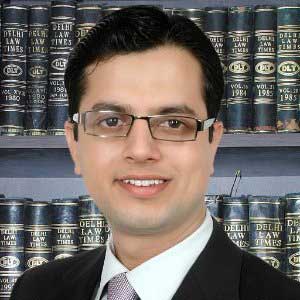
    Thirupathi Bendram grew up in what is now Telangana and completed both Bachelors and Masters in Pharmacy from BITS, Pilani. After a couple of short-lived jobs at smaller pharmaceuticals, Thirupathi finally got his dream job at SUN Pharma, Mumbai, in August 2005. After working in the Intellectual Property department of the company, he felt the need to gain a deeper understanding of legal and regulatory frameworks and enrolled himself for the LL.B degree at University of Mumbai while still working.

    Here, he talks about:

    • Managing a job and evening law classes at the same time
    • His job and work profile at SUN Pharma
    • Combination of Law and Science
    • The importance of specializing in one field of law


    Where did you grow up and attend school? How did you decide to pursue Bachelor in Pharmacy? Please tell us a bit about yourself.

    I was born in Karimnagar, currently in Telangana state. I did my schooling till 10th Class (ICSE Board) from Flaiz Memorial High School, a Christian convent boarding school located in West Godavari District of Andhra Pradesh. I was hardworking and sincere in my school days.

    I later did my 12th standard (AP state board) from Loyola Junior college, Karimnager (Telangana). After scoring highest percentage in my 11th standard board exams, I came to know about BITS-Pilani and its admission process. From that time onwards, I started focussing on securing a higher percentage in my 12 the exams also, so as to get an admission into BITS-Pilani. Soon after the 12th standard, I applied to BITS-Pilani based on my 12th standard percentage (94.1%). Pharmacy was never my first choice and I had applied to many other courses at BITS-Pilani, but I got admission in B.Pharmacy (Hons.). I did not know anything about pharmacy when I joined the college. After completing my B. Pharmacy (Hons), I got admission into M. Pharmacy in the same institute based on merit. I graduated in 2005 from BITS-Pilani with  a masters inPharmacy.


    You started your career as an Officer in the Intellectual Property Cell of Sun Pharmaceutical Industries Ltd., one of the leading pharmaceutical companies in India. How did you decide to join the IP Cell of a company?

    When I graduated with M. Pharmacy in 2005, my sole aim was to secure a job in one of the top pharmaceutical companies of India.  I secured a campus placement in Torrent Pharmaceuticals in Ahmedabad, in the manufacturing department of the company.  I completed an internship at Torrent Pharma, which was mandatory as part of the M. Pharmacy course. I never thought about joining the IP department of any company. I did not have any idea about what IP means and the type of work that I will be doing there. After completing my internship, I got another offer from Promed Research Center, New Delhi, in their Research and Development department. This was the job profile I was looking for and hence joined Promed Research Center.. After completing 15 days at Promed, I received an email from SUN enquiring about my current status and whether I was interested in attending a second round of interview at their Mumbai Office. I was very excited when I read that email. I did not know the job would be in the IP department, and neither did any of my seniors, with whom I enquired, know anything about IP and its future prospects. I only knew that it was an emerging field at that point of time and I decided to join SUN as it was a bigger company than Promed. I took a bold decision and went ahead and joined SunPharma in August 2005.  That single decision changed my whole career as well as my life.


    What did your work profile at Sun Pharma consist of, before you were a lawyer?

    During my initial days at SUN, I was involved in preparing FTO reports and drafting and filing patent applications with Indian IPO and WIPO. Later on I was involved in doing prior art searches and preparing and filing pre-grant oppositions for Indian patent applications. I was also involved in assisting our external attorneys by providing technical support. I gradually learned how to prepare in-house invalidity opinions, understand regulatory laws of US, EP, CA and JP markets. Currently I am involved in providing support to external attorneys in handling SUN litigation happening across the regulated markets with IP support to Research and development teams for product development.


    Tell us about your law school experience.

    My decision to pursue law was also accidental and unplanned. I never dreamt that I would become a lawyer. However,  my career took a dramatic turn when I joined the IP department at SUN. All the work that I was doing was almost related to law in some form or the other. Hence, I thought that doing LL.B would surely enhance my knowledge and would provide me with skills necessary to advance my career in IP. The moment I realised this, I started looking for law colleges in Mumbai. Then I landed up in JCCL, which was an evening college, as  it would suit my timings even if I had to attend all my classes regularly.

    In the first year of LL.B, it was a bit difficult to cope with the legal terminology. However, I was quick to grasp the subjects as I was already working in matters related to law. There was a lot of encouragement and support from colleagues and my immediate boss at Sun Pharma.

    I was not actively involved in any of the college activities as I was mostly focussed on my work. However, I made sure I wrote the exams while simultaneously managing my professional life. My aim was not to score a high percentage  but to get through the LL.B course. Finally I completed my LL.B and now I am quite excited to be called a lawyer by family and friends.


    Is there anything you would like to have done differently?

    Yes, my only regret is that I did not attempt to apply for M.S in USA after completion of my B. Pharm (Hons.) course from BITS-Pilani while most of my classmates tried and succeeded in getting admission to MS and currently settled in USA.


    How did you manage to eke out time for a regular three-year LL.B from Mumbai University while working at Sun Pharma? Please share your experience with us.

    After joining LL.B course, I realised that it was very difficult to manage professional work, personal life and college.  However, there was constant encouragement and support from colleagues and my wife, which motivated me to pursue this course and complete it successfully. I planned well in advance during the exams and made sure that I give my best shot at the exams so that I clear them at the first attempt itself.


    thirupathi-bendram-2

    Currently, you work as a Manager – Intellectual Property Cell at Sun Pharma. What qualities do you think helped you to achieve this status?

    As you might have noticed, I have started at the bottom of the organizational ladder at SUN Pharma. Luckily, I received proper guidance and support from my colleagues who helped me learn the work in a systematic manner. I learned most of my work from them and later on started learning and upgrading myself about the patent laws and pharmacy regulations. The main qualities that helped me to achieve my current position were patience, constant learning, reading, presence of mind and continuous education on current patent laws and pharmaceutical regulations.


    At all the positions you worked, did you have to learn new skills every time you were promoted to a different rank?

    The type of work that I did in each capacity was different but overlapping. As I moved up in the organization, each position demanded and taught me different skills and posed different challenges.


    What is a workday like for you? Has work settled into a predictable pattern or are there new challenges every day?

    The work day is mostly routine for 60% of the time now. However, the remaining 40% of the time, there are new challenges that I face during my everyday professional work which helps me to perform to my potential and grow professionally.


    How important would you say are business development skills at such higher roles?

    Business development skills are very important as one grows higher up in the organization. These skills would help you to get noticed by your peers and other higher officials in the organization which would have an impact on your future roles and professional growth.


    Many lawyers would say that the actual learning takes place in the years of practice. How far would you say it is true? What was the case in your situation?

    Yes, I strongly believe that actual learning takes place in the years of practice. In my case, I was already practising the Indian patent laws in my day to day work while dealing with the Indian patent office while I actually cleared my Patent Agent exam in 2007 i.e. after 2 years of actual practice. Further, I completed my LL.B after actually learning the patent law and practising it all these years since 2005.


    In the meantime, you’ve also managed to pursue MDP, Intellectual Property Management from IIM, Ahmedabad. Please tell us about the program.

    It was a course designed by IIM-A for people working in companies and academics for increasing the awareness of IP management for effective organizational growth. It was brief course and lasted for 3-full days at the IIM-A campus in Ahmedabad. It was attended by delegates from public as well as private sector companies across India.  This program was sponsored by my company and it was very helpful. It taught me different perspectives of IP management in India.


    How do you manage to strike a balance between your personal and professional life?

    Work-life balance is the most difficult aspect to manage. However, I make sure that I do not carry my office work to home. If there is any personal event to be attended, then I make sure that my work does not come in between.


    What do you and other people at Sun Pharma measure success by? What must interns and attorneys do in order to get noticed and/or promoted?

    Sun Pharma usually measure success of its employees by evaluating their contribution to the overall growth of organization and support to cross functional teams in the organization. There is nothing specific to be done, it is only their work that should speak for them.


    What advice would you give to law students who have been science students and wish to pursue law?

    Science students have a lot of scope in the IP field. IP awareness has increased in Indian companies, especially in pharmaceuticals which export their products to foreign countries’ regulated markets like US and EU. More litigation is happening in India related to drugs and pharmaceuticals. Science students with an LL.B degree can provide the right support internally to a company and assist external attorneys during litigation. There is also lot of scope in other areas of patent law especially patent drafting, filing, prosecution, licensing, patent valuation etc. There  is more IP related litigation expected in the future due to changes in international pharmaceutical regulations and patent laws which provide sufficient opportunities to science graduates with an LL.B degree.


    The question that whether one should specialise in a particular area of law or be more of a general lawyer often comes up before law students. What is your opinion on the same?

    All LL.B graduates have a general knowledge of all branches of law. However, that will not help you as a professional. You need to specialize in the area that you are interested in taking up as your career, as it is known that each field or area of law is so vast and there are constant developments in the case laws which would define the law.


    Lastly, what would be your advice to law students and young lawyers reading this interview?

    My advice is that, firstly decide what you want to pursue and then keep your complete focus on that till that goal is achieved.

    Secondly, always keep yourself educated and updated on the recent happenings in the respective areas of law that you are specializing in. This will help you grow in your career.

  • Rajesh Kumar, Legal Associate, Sanjay Leela Bhansali Films, on a legal career in Bollywood

    Rajesh Kumar, Legal Associate, Sanjay Leela Bhansali Films, on a legal career in Bollywood

    Rajesh Kumar is a lawyer who specializes in Media & Entertainment law. He graduated from Symbiosis Law School, Pune in 2011. While in law school, he also pursued a Diploma in Intellectual Property Rights from the Asian School of Cyber Law, Pune. He has interned with the Aditya Birla Group, Singhania and Co. and Mr. Gaurav Pachnanda (Advocate at the Supreme Court). Upon graduating, he started working at Lex Legal Advocates & Solicitors, Mumbai before joining Sanjay Leela Bhansali Films Pvt. Ltd.

    In this interview he talks about:

    • Pursuing a career in Media and Entertainment Law
    • Working at Sanjay Leela Bhansali Films Pvt. Ltd.
    • Litigating the Ram Leela case


    Tell us something about yourself. Where did you grow up and attend school? What were your reasons for taking up law? Explain briefly how you made it to law school?

    I grew up in a village on the border of Jammu (J&K). Despite its geographical location and its political unrest in my region, my parents always believed in education and its power and always encouraged me to break these shackles and my mettle. My father secured my education at the nearest Army school.  It was only an unflinching spirit and ambition to pursue law which was a constant guiding force to educate myself.

    After high school, I had no choice but to leave home in order to pursue law, I had managed to find an institution in Jodhpur that would train me for the entrance examination, although I could not pay their fees upfront but it was only my belief in my ambition to study law that sustained me through huge struggle to educate myself.

    It was not a cakewalk for my parents to teach me at a reputed college like Symbiosis, but it was only their support, encouragement and blessings that could transform me from a village boy to a lawyer in metropolitan city. My law education has undoubtedly instilled in me the confidence to speak out without fear and deal with all the challenges courageously.


    You graduated with a BA.LL.B from Symbiosis Law School, Pune in 2011. How was your law school experience?

    Graduating with a B.A. LL.B, from Symbiosis was a dream come true. Before I was granted my scholarship by the Central Government, my family made tremendous sacrifices to fund my dream education.  Symbiosis Law School has played an important role in shaping me and my career; I would say Law School has changed me. I could see a dramatic transformation in my personality after having perused law education from Symbiosis. I was not merely a dreamer but a real achiever. Law school has been truly instrumental in my education to being a lawyer.

    I would give faculty members the credit for where I am today in my career. Each individual I have met in law school has impacted me in some way, and I cherish the collective experience. Through a combination of hard work, ambition and support I fulfilled my lifelong dream of becoming a lawyer. My experiences have taught me that if I have to achieve something no obstacle can refrain you from achieving success in life.


    rajesh-kumar-1

    In addition to your regular studies, you also completed a Diploma in Intellectual Property Rights from the Asian School of Cyber Law, Pune. What were your reasons for taking up this course?

    I was introduced to the Legal Head of Balaji Telefilms by a mentor during my initial years of law study. Media and Entertainment law is a niche area, which caught my interest after meeting Mr Sidhu. Since then I started working with special dedication towards Intellectual Property Law, leaving no stone unturned to achieve the most in-depth knowledge in this field. Today, due to following my passion, I am a professional Copyright lawyer (Media & Entertainment law). I find that my diploma education has given me a competitive edge over others in this field.


    You interned in the legal department of the Aditya Birla Group, Mumbai. How did you secure your appointment? What should one keep in mind while applying to a conglomerate like ABG?

    I secured my internship with ABG due to my persistence in following up with them. I cannot stress enough how much I learnt through this experience and strongly endorse the same tenacity in every student of law.


    You also interned at Singhania and Co., and later on Mr. Gaurav Pachnanda, Advocate Supreme Court of India, New Delhi. What are the main differences in interning at a law firm and an in-house legal department of a company?

    My internship with Mr. Gaurav Pachnanda was a great learning experience, to describe this personality and my learning from him I must say “a new broom sweeps well but the experienced one knows all the corners”. Under his guidance, I would attend Court, sit in on arbitration matters, and all of this instilled confidence within me. He continues to be my mentor, especially with regard to litigation/arbitration matters. His guidance during the Ram- Leela litigations is truly commendable. I would say, the chief difference interning at a law firm versus interning in a legal department of a company is the first hand litigation experience and the sense of the court room that a lawyer gains.


    Upon graduating, you started working at Lex Legal Advocates & Solicitors, Mumbai, where you assisted them in work pertaining to cases of IPR, media and entertainment laws. Can you please describe your experience?

    Lex Legal gave me exposure to Media and Entertainment work i.e drafting, vetting actors, directors, writers, agree and also co-production agreements, which play an important role in film. I also attended briefs on Intellectual property issues within the Industry, which increased my thirst to know more.


    How is an average day in the life at Sanjay Leela Bhansali Films Pvt. Ltd.?

    My work revolves around drafting agreements, acquisition, assignment of rights, cast and crew, master service agreements, talent management, remake rights, distribution filing for trademarks and dispute resolution work.

    My day starts at 10AM with drafting, vetting and reviewing agreements, keeping an eye on  litigation proceedings (if any), conference with lawyers wherever we have pending litigations, also in advising and representing the company before various forums and courts. My main work focuses on the legal issues surrounding the field of media entertainment, especially films and music. I keep close contact with its developments in and across the industry followed with the Court order on the Film and its releases especially with respect to content of the Film or with Intellectual Property rights related issues. Secondly, after joining SLB Production, I am very much concerned with the maximum protection of IP created at Sanjay Leela Bhansali Films so far including copyright, trade mark etc, specially the trade mark of all our titles. Every fresh day is a good learning experience where I get to learn many new things.


    rajesh-kumar-3

    During the release of the film Ram Leela, there were many stay orders and litigations over the release of the Film, can you share your experience in handling litigation and getting the film released on its scheduled date?

    Ram Leela’s release was a hectic and a stressful time, as there was a fresh case filed against the film and Sanjay Sir, Ranveer, Deepika Padukone and Priyanka Chopra. It was quite a challenging task to handle the litigation, though we fought and finally procured favourable orders for us. Usually, during the release of each film we produce there is a feeling of completeness, accomplishment, as we head on for premier, music launch parties, etc.

    However, the Ram Leela litigations caused me to miss every event we had of the film. I still remember before the release, we had a big premier at night, but unfortunately, there was news on all TV news channels about the stay order being passed by Karkarduma Court, Delhi. On the same day, there was another matter lined up at Bombay high Court. This should give you an idea of how stressful yet rewarding such an experience can be. But I am happy the “Ram- Leela” litigation has set the bar in judging the question of obscenity and the sensitivity of religious sentiment as a matter of pre-release film litigation. Delhi High Court in one of our matters said, “that freedom of expression is of inestimable value in a democratic society based on the rule of law and that the effect of words, title and scenes in a film has to be judged from the standards of a reasonable strong minded, firm and courageous man and not from that of a weak and vacillating mind”.


    Is a strong base in contract law necessary to succeed in media and entertainment, insurance, infrastructure laws?

    Contract law plays an important role in all commercial laws, and is the basis of contracts in the Media Entertainment field too. A thorough study of contract law is much required. One must know the essential elements of a valid contract before even working on any given contract.


    Generally speaking, do you think studying in a non-NLU has placed you at any kind of disadvantage in your career?

    No, not at all once you are practicing law, you are judged based on your knowledge in your chosen speciality and not by the college you attended.


    Lastly, what are your plans for the future? What message would you like to leave for our readers?

    My plans for the future include reaching my potential, and perhaps exceeding it, in the field of Media and Entertainment law.  I have personally experienced that nothing is unachievable in this world. If you can dream it you can do it, therefore one must dream, believe in himself and the rest will follow. Lastly, I would say, to achieve, we must not only act but also dream, not only plan, but also believe.”

  • Harshavardhan Jogdand, Senior Legal Manager, Volkswagen, on being an in-house counsel and pursuing an LL.M while working

    Harshavardhan Jogdand, Senior Legal Manager, Volkswagen, on being an in-house counsel and pursuing an LL.M while working

    Harshavardhan Jogdand graduated from Pune University in 2006. He is currently a Senior Legal Manager at Volkswagen Group. After graduation, he joined Pratap Pardeshi Associates immediately while simultaneously pursuing a regular two-year LL.M from Bharati Vidyapeeth University, Pune. Therafter, he joined Triton Group as Manager-Corporate Legal. He subsequently joined Bata India Ltd. as Legal Manager of the Western Region.

    In this interview he talks about:

    • Pursuing an LL.M while working at Pratap Pardeshi Associates
    • Working at Bata India Ltd.
    • Being Senior Legal Manager at Volkswagen Group


    Given that most of our readers are law students and young lawyers, how will you introduce yourself to them? What motivated you to choose law as a career?

    I’m a passionate, self-motivated and result oriented legal professional working with one of the biggest automobile companies in the world i.e. Volkswagen. Initially, I admitted myself to the three year law course (LL.B) merely as a backup option, while I was preparing for Civil Services Examination (UPSC Exams). However, since the very first lecture of LL.B. I found the legal profession fascinating and it took me very little time to realise that it was my true calling. I never looked back since then and pursued a career in law wholeheartedly.


    Being a science graduate, did you face any difficulties in law school? Can you share with us certain tips to overcome the issues science students face with law?

    That is true to some extent as we Science graduates are not good when it comes to writing long answers. We are tuned to more of 2+2=4 kind of thinking; but on the contrary in the legal field you need to be more elaborative and descriptive. This is the only problem I as science student faced during this change of stream. Apart from this one issue, a science background is in fact a blessing, as Science and Law are both fields which demand logic and analytical skills and Science stream develops these two qualities to their maximum.

    I took help of the technique of creating ‘mind maps’ while studying and preparing notes, which helped me to graphically summarise concepts and laws. It helped me navigate through different concepts and laws, find connections between them and also to comprehend the content from books in a better way. I would also like to say that citing case laws and their Ratio is extremely important and all law students must develop the habit of reading citations and including them while writing answers. This is not only helpful in scoring marks but it is a vital process if you get into litigation as a practising attorney in future.


    Tell us something about your college life. Which activities did you participate in? What were your areas of interest during your graduation? How did you go about developing expertise and knowledge in these areas?

    As we all believe college days are the best days of anyone’s life when it comes to fun, but for me those were also intellectually stimulating days which equipped me to face the professional world after my degree. As a law student one must be open to challenging set ideas and indulge into debates to shape up one’s personality. I participated in moot courts as researcher which helped me to understand the importance of thorough preparation and research. Thankfully I had a bunch of friends who were all very strong individuals and we used to have debates on various topics all days long and I must say all those debates in the classroom and even outside of it over cups of Chai helped us to sharpen our articulation skills.

    Amongst all the areas of law, Criminal law was and is my most favourite area of law till date. I was lucky enough to have eminent practicing lawyers from Pune as my teachers who not only taught me the theory of law, but also dissected the laws and uncovered their actual implementation. Their ‘out of the box’ approach of focusing on ‘application of law in real life situations’ helped me to understand the ‘reality’ beyond books. Once I realised my penchant towards criminal law, I started attending court hearings in Pune on a regular basis. Out of the many trials I attended, I remember Charge Framing in Abdul Karim Telgi’s Case very vividly. Law students must grab every opportunity they get to visit courts during their student years.


    harshavardhan-jogdand-2

    Many lawyers say that the first year after graduation is the most difficult year for young lawyers. How was your first year after graduation? How did you learn the ropes and what were the biggest challenges you faced?

    I agree that the first year is the most difficult year financially if you don’t associate with any law firm which will pay you a remuneration and work with individual attorneys but I would like to assert that the first year is also the most enriching year as far as the learning is concerned. For me, the first year was the most exciting period as I learnt something new about the legal field every day and felt the daily thrill of affixing the logo of attorney on my vehicle; wearing a black coat and appearing before various courts truly fulfilling. One of the biggest challenges for me in this first year was to accept the hard realities of the Court system which largely involved the issue of grass roots corruption and I must say it was not an easy thing for me to accept. I categorically avoided becoming a part of any such transaction and used to walk out of court after my part in court proceedings was over so I somehow managed to avoid the corrupt practices that unfortunately exist at the grass roots level of our judicial system.


    You had started working at Pratap Pardeshi and Associates right after graduation, and thereafter you joined Triton Group as a Manager- Corporate Legal. What led to this shift? Please tell us about your work experience at both these places.

    I joined Pratap Pardeshi and Associates immediately after my graduation. In fact immediately one week after finishing of final year exam as I did not want to miss out on the excitement of attending courts. Funnily enough, I soon found out that it was the vacation time for Court for transfer of various judges, due to which most of the JMFC (Junior Magistrate First Class) and Sessions courts adjourned matters.

    The two years that I worked with Pratap Pardeshi and Associates were very enriching and fulfilling for me as I learnt the ropes of being a practising lawyer. My time with Pratap Pardeshi and Associates still remains the foundation of my career. It is really critical to get a mentor who will give you freedom and also teach you the nuances of the legal field. I will always be thankful to Mr. Pratap Pardeshi who taught me take my first step in the legal field. My two years as a litigation attorney were full of excitement as I got to become part of various trials as defense attorney including one rare Court Martial proceeding wherein I was associate advocate on record along with Mr. Pratap Pardeshi who was the leading Defense Advocate on records of the proceedings.

    After two years I felt that it was time for me to be practical and become financially stable by shifting to an in-house legal job. Opportunity knocked on my doors in the form of a position with Trition which happened to be a multi-million FMCG Multinational which was in the process of setting up its India Operations. It was the first interview of my life and after two thorough rounds I was selected as the first recruit in the Corporate Legal Department of Triton. I was hired as Legal Trainee and rose to level of Manager Legal within a short span of one and half year. My reporting authority Mr. Vincent Fernandez who is the Executive Director of Triton Group not only gave me the freedom to work as per my conviction but also entrusted me with setting up the entire legal department. I was asked not only to consider the legal aspect of work but also the business side of working. Triton provided me exposure to legal work in a corporate which I was completely unaware of as a practicing attorney. In Triton I was instrumental in setting up Contract Management System, litigation management and standardization of various agreements which included Franchisee Agreements, Non-Disclosure agreements, and Employment agreements for locations outside the geographical territories of India more specifically West Africa and Europe. Obviously I had to identify and work with local attorneys which also added invaluable experience of coordinating with foreign attorneys. Considering the growing ambit of work I recruited one Company Secretary and one more legal professional in my team and we effectively handled the Corporate Legal Function for Triton with guidance and effective leadership of Mr. Vincent Fernandez.


    You left Triton Group to join Bata India Ltd. as a Legal Manager of West Region. What motivated this shift? What does it take to a get job at Bata India at that stage?

    After setting up the processes and the entire corporate legal function for Triton Group and working with Triton for more than three years I thought I was ready for a bigger and more challenging position and I was approached for an opportunity with retail giant Bata India, as their Regional Legal Manager (West Region) My two rounds of interviews with Bata were very tough and was a completely different experience from my earlier interview with Triton as the questions were more technical and situation based. I was asked questions based on case studies and it was as they call a “grilling” interview session after which I was selected by then legal and secretarial head of Bata India Mr. A.B. Anand.


    At all the three places you worked, was the work similar or did you have to learn new skills every time you joined a new place?

    Work at all these three places has been completely different. At Pratap Pardeshi and Associates, I was working purely as a litigation attorney wherein I had to undertake court appearance, preparing pleadings, interacting with Police and other agencies.

    Triton was a foray into the corporate sector wherein I had to undertake working within deadlines, drafting/vetting agreements, more of non-lit as we call it, wherein I had to focus more on drafting legal documents, legal research, standardisation of processes etc., which was a completely different experience than the litigation experience I earlier had. I had to increase my reading considerably more to understand the nuances of legal drafting and it proved more than helpful in my growth as a legal professional.

    Working with Bata was extremely challenging as my role in Bata involved more of making strategies in existing litigations and handling legal matters in five states namely Maharashtra, Madhya Pradesh, Gujarat, Chhattisgarh and Goa in the entire region. My profile in Bata involved more of labour laws and rent laws related work which I had never done in my earlier career. I had to revisit all the applicable provisions of relevant Acts applicable to understand the nitty-gritty of these litigations and to define strategies for successfully dealing with them. My profile also had a hint of Industrial relations wherein I was required to communicate and deal with various government authorities including the Hon’ble Labour Minister and secretaries of state etc. However, the most challenging yet interesting part of my tenure in Bata was tactfully handling very aggressive Labour Union representatives and successfully avoiding conflicts with them and conducting a long due domestic enquiry.


    harshavardhan-jogdand-1

    How did you manage to take out time for a regular two-year LL.M. from Bharati Vidyapeeth University, Pune while working at Pratap Pardeshi and Associates? Please share with us.

    I used to visit the University on weekends and meet the lecturers on a regular basis to understand the progress of the syllabus. I relied a lot on self-study, on weekends and also during holidays I would like to mention the role of my mentor Adv. Pratap Pardeshi who was always kind in granting me leaves for attending LL.M. exams. Without his help it would have been very difficult for me to manage practice and LL.M.


    What are the highlights of your career till joining Volkswagen? How did you decide to leave Bata and join Volkswagen?

    As I have mentioned above, participating in the Court Martial proceedings as Associate Advocate on record during my days with Pratap Pardeshi and Associates, setting up the entire Corporate Legal Department in Triton, reducing number of litigations in Bata drastically were few highlights of my career till I joined Volkswagen.

    I have always been very passionate about vehicles/automobiles and Volkswagen is one of largest automobile companies in the world so I couldn’t let the opportunity go and Mr. Vijay Kamath who’s the “Legal Head and Company Secretary” at Volkswagen conducted my interview and after a brief interview I was offered position of Legal Manager at VW.


    You currently work as a Senior Legal Manager at Volkswagen Group. What qualities do you think helped you to achieve this status?

    Being process driven and result oriented has always helped me a lot throughout my career. The same qualities continue to be driving forces for my work. Also being proactive and taking lead in difficult situations gives me an added advantage.

    One must always remember quality of work is more important than the quantity of work. Hence, the quality of work should never be compromised.


    Many lawyers would say that the actual learning takes place in the years of practice. How far would you say it is true? What was the case in your situation?

    It is all about perception and how you look at it. Having exposure to practice is definitely helpful but it is not the only factor that determines the growth of a legal professional. The dynamics of the legal field over the years have changed, the legal field is not only restricted to court room dramas and theatrics therein but it is now also about board rooms and power points. We as legal professionals have to respect both the aspect of our profession. One cannot undermine the importance of other. For me exposure to legal practice is equally important as exposure to in house legal jobs.


    What is a workday like for you? Has work settled into a predictable pattern or are there new challenges every day?

    A typical workday consists of internal meetings with our brand teams (departments) gathering relevant data, information, for preparing pleadings in our litigations as at VW we have a rare practice of preparing pleadings in house which not many in house legal teams follow. It is followed by coordinating with external attorneys and thoughtful and insightful discussions with Mr. Kamath. Work at VW is never short of excitement as the challenges we face keep on changing on a regular basis and hence I would say the feeling of stagnancy has not yet come to surface in last three years.


    How do you manage to strike a balance between your personal and professional life?

    On the days when I’m on leave I do not think about my office or work I enjoy family time thoroughly and when I’m in office I do not let my personal life affect professional choices and decisions. I would like to make a special mention of our Human Resource policies and VW and Mr. Kamath who always encourage us to take our entitled leaves so that we can have a proper personal and professional life balance.


    How important would you say are business development skills at such higher roles?

    Without business development skills it is very difficult to climb up the ladder. Hence, I would say business development skills are equally important as your technical knowledge. Our work as in house legal professionals must serve the business purpose well and we need to be imaginative and creative enough to alter our advice as per the need of the business within the frame work of regulations.


    The question that whether one should specialise in a particular area of law or be more of a general lawyer often comes up before law students. What is your opinion on the same?

    If you see yourself as a practising attorney then it is better to focus on one practice area than focusing on entire legal field. However, if you see yourself as an in-house general counsel you need to be open for doing all the possible work that comes your way.


    Is there anything you would like to have done differently?

    There are many things that come to mind with this question but in particular I would have definitely liked to complete my Master’s Degree from any of the universities in the United Kingdom as it would definitely have increased exposure and knowledge levels.


    What does Volkswagen look for in their prospective employees and interns?

    At the moment Volkswagen Group does not take interns in the legal department. We at VW call ourselves “VW type” which means you need to be technically good, proactive, result oriented and most importantly possess very a strong ethical value system.


    What would be your message to our readers who are budding lawyers and law students?

    Keep your eyes and ears open all the time. Be open to all the new experiences coming your way. Don’t be afraid to challenge set ideas and put forward your opinions strongly irrespective of any amount of criticism you get.

  • Shine Joy, Deputy Manager-Legal, Snapdeal, on work as in-house counsel

    Shine Joy, Deputy Manager-Legal, Snapdeal, on work as in-house counsel

    Shine Joy graduated from Guru Gobind Singh Indraprastha University in 2008 and had thereafter worked with various law firms including MV Kini & Co., Akash Chittranshi & Associates and Ranjan Narula Associates (Part of Rouse & Co. International). He also holds an experience of an Assistant Manager- Legal at DLF Utilities Ltd. He currently works as a Deputy Manager – Legal at Snapdeal.

    Over here, he talks about:

    • The appropriate time in law school to undertake internships
    • Making the switch from a law firm to a company
    • Why it is okay and even desirable to change multiple jobs
    • Working at e-commerce giant Snapdeal


    What got you into legal studies? Was it all planned or something that just happened by chance?

    It was pure chance! I come from a typical south Indian family who would have loved an engineer son; so pursuing law as a career option was never on the table as such. However, a chance interaction with a friend made me think about law as an option.


    How was your experience at GGSIPU? What activities were you involved in apart from the regular academic curriculum?

    College days can never be anything but good; especially when you are in a law college which is located close to CP, GK and other hot spots for youngsters in Delhi

    (GGSIPU and my college – ‘University School of Law and Legal Studies were located in Kashmere Gate Campus when I was pursuing law; it has since been shifted to Dwarka Sec 14.)

    Apart from regular academic curriculum I was involved with the college Moot Court Society because of which I had the privilege of representing my college in four moots court competitions. I was also a member of the editorial board of the University magazine – ‘Adamya’.


    What were your major interests as a student of law? Any suggestions for the law students on how to deal with the Pandora box of laws?

    I was very much interested in Intellectual Property Laws during my college days. Fortunately during those days the law relating to trademarks & copyrights were being constantly debated in the courts across our country. This only fuelled my passion for the same subject.

    I wouldn’t call law a Pandora’s box. It is more of Santa’s sack of toys! What I mean to say is law is such a diverse field with so many subject areas that you have the option of experimenting and zeroing on the one you may fall in love with.


    How should one go about the internships? How important it is for a law student to plan out the course of his internships to successfully gain from the internship experience?

    Internships are important as what we learn in college does not completely prepare us for what happens on the ground. Internships do give us a glimpse into the life an actual lawyer lives on a day-to-day basis. However, I would suggest undertaking internships from the 3rd year (of the 5-year course) onwards only since by then one would have studied both the substantive and procedural law. This gives you a better understanding of what is happening in the practice of law.  The idea is to enjoy the fun side of college and academics for the first two years of college while you are also acquainted to law as a subject, then go on to intern and eventually work as a lawyer.


    After graduation you worked with various firms including MV Kini & Co., Akash Chittranshi & Associates and Ranjan Narula Associates. How was your experience working at these places?

    MV Kini & Co. gave me the opportunity to intern with them and be involved in an Associate’s work profile even before enrolling as a lawyer, so to continue there as an associate after enrolling was an obvious choice. Also, the firm gave me immense exposure to litigation practice, infrastructure and corporate work. However, I had a keen interest in being an IPR lawyer and was motivated me to join Akash Chittranshi & Co. which was a leading firm in copyright laws.

    The time spent at Akash Chittranshi & Co. equipped me and developed my skills as an IPR lawyer. It is then that I got an offer to join Ranjan Narula Associates (which is an associate office of Rouse & Co. International – an international IP law firm). Letting go of an opportunity to work with the best in industry and amazing international clientele was not something I would even dream of doing. My work experience  at each of these firms have enhanced my skills immensely as lawyer and gave me a chance to work under the guidance and with some of the best lawyers in the business.


    Thereafter you joined DLF Utilities Ltd. as an Assistant Manager- Legal. What led to the shift from law firms to a real estate company? How was your experience working there?

    While working as an attorney with Ranjan Narula Associates, I had the privilege of interacting with some of the best in-house counsels in the world. These interactions made me realize that often while advising their clients, lawyers have a myopic view of how businesses look at legal issues faced by them. It is imperative that lawyers should understand the business implications of their advice. So when an opportunity came to work as an in-house lawyer for a leader in real estate business and with seniors who are widely respected for their work, it was difficult to say no.


    Currently you work as a Deputy Manager-Legal at Snapdeal. How did the switch from DLF take place?

    Currently I work as Deputy Manager – Legal (got promoted in Oct 2014). I live by the mantra ‘what next? I believe that one should always strive to learn more and more and gain as much experience one can get so that one is moulded into a better professional who can give the best possible advice to his client. Therefore, when I got an opportunity work with Snapdeal – which was a pioneer in the e-commerce sector, I thought that it would be an immensely enriching experience for me as a professional. I would also get to deal with issues in a sector which was both new and fascinating.

    As Snapdeal had chalked out plans of expansion when I was offered the job, the offer was more like a door to hands-on work in a plethora of legal issues that a growing entity would be involved in.


    How did your appointment take place? Please tell us about the recruitment process at Snapdeal. What do they look for in their prospective employees?

    I was contacted by the HR department of Snapdeal. The company conducts three rounds of interview before extending an offer to a prospective employee.


    What does your current work profile at Snapdeal consist of? How is a typical workday like?

    At Snapdeal I am involved mainly in high stake litigation matters, IPR issues and M&A activities. I also advise on issues pertaining to commercial contracts, advertising and real estate.


    Are there new challenges everyday or has work settled into a predictable pattern? Can you tell us about a few of the most challenging problems you have faced so far?

    To my understanding and experience a lawyer’s day at work can never be predicted, each day the nature of issues dealt with and work undertaken are different. As to challenges, every day is welcomed with a new one.


    What amount of legal work is there? What have been your failures and successes?

    Almost 95% of my work is legal. Recently, we were successful in defending the company against allegation of anti-competition activities before the Competition Appellate Tribunal.


    How do you keep yourself abreast with latest industry news and trends?

    I do so by perusing through standard industry journals, following blogs, attending national and international conferences etc.


    Lastly, what would be your parting message for our readers?

    Work is important but having a ‘life’ outside of work is more important.

  • Abhishek Singh on why he decided to join the test prep industry and not a law firm

    Abhishek Singh on why he decided to join the test prep industry and not a law firm

    Abhishek Singh graduated from Ram Manohar Lohiya National Law University in 2014. He was an avid mooter during law school and has represented at the Phillip C. Jessup International Law Moot Court Competition in Washington in 2013. After graduation, he joined CLAT Possible as VP, Academics and Operations. In this interview he talks about:

    • Law school experience at RMLNLU
    • Representing India at Jessup
    • CLAT Possible and the ‘test prep’ industry


    Where did you grow up and attend school? Why did you decide to take up law?

    My hometown is Lucknow and I spent my entire childhood there. I studied at Seth M.R. Jaipuria School and graduated in the year 2008 from my school. I took up science with maths after class tenth, which is one decision I regret till date. I was into public speaking and writing all through my school days which is why I wanted to take up humanities after my tenth boards, but finally I gave in to peer pressure and the whole stigma and social perception attached with boys studying art subjects. After writing twelfth boards, I had decided to drop science for  good.

    The elitist NLU’s had become quite a rage already and being a public speaker, I thought law is surely my cup of tea.


    You graduated with a degree in law from RMLNLU, Lucknow in 2014. What was your law school experience like?

    My law school experience has been quite exciting and inspiring. My college was three years old when I joined. From being a nascent place which was not very well perceived by the law school fraternity to a point where my college became a respectable and sought after place, the efforts we put in to achieve this milestone is worth a mention. The initial 3-4 batches were the founding stones of my college and we ensured that our juniors reaped the benefits of our endeavours.


    abhishek-singh-2

    What activities were you involved in, in law school? What were your main interest areas?

    I was an avid mooter. I participated in various intra and inter-law school moots. My area of interest has primarily been International Law. At this point, I’d like to thank my mentor and senior from college, Siddhartha Singh and my batch mate and moot partner Mohith Pasham, who were instrumental in brushing my concepts in International Law and have been my pillars of support all throughout law school.


    You represented India at the Phillip C. Jessup International Law Moot Court Competition in Washington in 2013. Please describe your experience of doing an international moot.

    It was my second shot at Jessup in 2013, Previously, I had participated in 2012 where we ended up as quarter finalists. The second attempt did wonders for us and I realized my long standing dream of representing the college at the US rounds.

    Preparation for a moot like Jessup requires utmost dedication and is very taxing. From our first attempt, we learnt a lot vis-a-vis the strategy that best suits a moot of such magnanimity. Right from the written submissions to the podium, we learnt from our mistakes and worked day in and day out to achieve this milestone.


    Please tell us about the internships you completed while in law school.

    My last internship before graduating and taking up a job with CLAT Possible, was with Lakshmikumaran and Sridharan. It was my second stint with the taxation giants and I must say it was a great learning experience.


    Upon graduating you joined CLAT Possible as VP, Academics and Operations. Why did you decide to get into the test prep industry? How did you secure your position at CLAT Possible?

    A few months before graduating, my good friend Mr. Debajyoti Das, who was serving as the CEO of CLAT Possible after spending two years at Amarchand Mangaldass, asked me to join him on a part time basis. With nothing much to do in my fifth year, I gave him a nod. Surprisingly, I loved the experience, much more than a desk job stint at all the firms I had previously interned with. My work was appreciated and applauded and I was offered a PPO from Possible Education Ltd., the mother company. The remuneration was lucrative, future prospects seemed promising and I could foresee great growth both in the terms of learning, exposure and monetarily as well.


    What does an average day look like in the life of a person in the Test Prep Industry? What does your work profile include?

    Well the job is taxing, but comes along with immense satisfaction. My organisation is the second largest institute in the field of CLAT Test Prep.

    My work profile at CLAT Possible is varied. I take classes for legal aptitude, take workshops branding my institute, propagate aspects of law as a career option in schools across the country. I am also into anchoring and facilitating tie ups with different law schools across the country. So, to cut a long story short, I am into Education Marketing and Academics. We have establishments in over 15 cities and hence travelling is frequent. I love the travelling part, where one gets to meet and observe different people from all corners of the country.


    Please tell us the essential skills a law student must possess to work in the test prep industry?

    Well one should have a good command over inter-personal communication and possess the ability to convince and connect with people, especially school students since this industry caters to them.


    What advice would you give to law students wishing to take up an alternative career path?

    I wish to spread awareness regarding a very viable career option for law graduates- the Test Prep Industry. Just like leading MBA and engineering Test Prep institutes are run by ex-IITians and IIMites, the law test prep domain can be a great option for law graduates. The field is rewarding with great prospects and one should definitely think of it as a great career option.