Blog

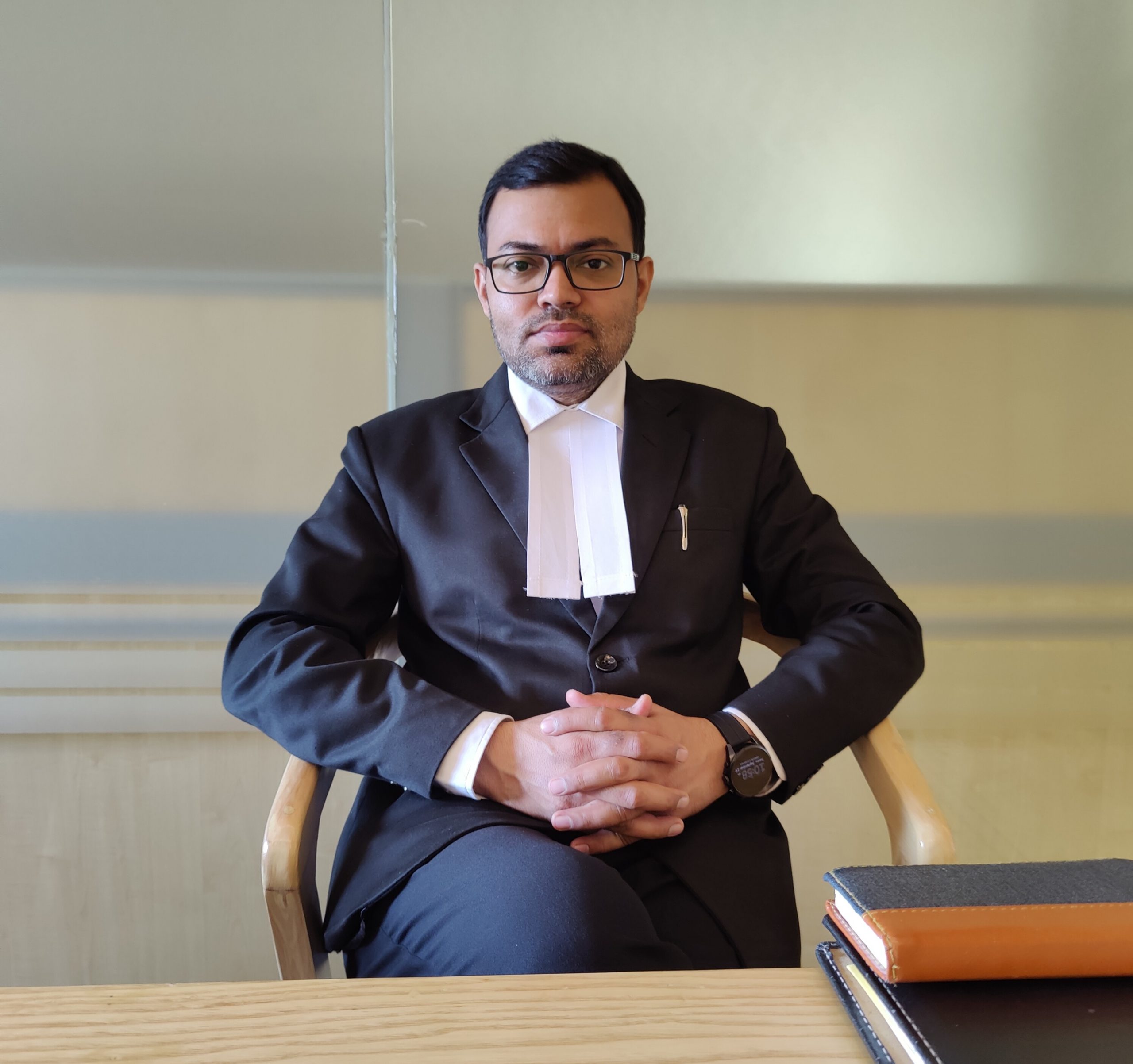
  • “I encourage younger lawyers to develop a deep understanding of the law, cultivate strong communication and advocacy skills, and maintain a high level of professionalism in their practice.” – Ishaan Chhaya, Partner at Revera Legal.

    This interview has been published by Anshi Mudgal and The SuperLawyer Team
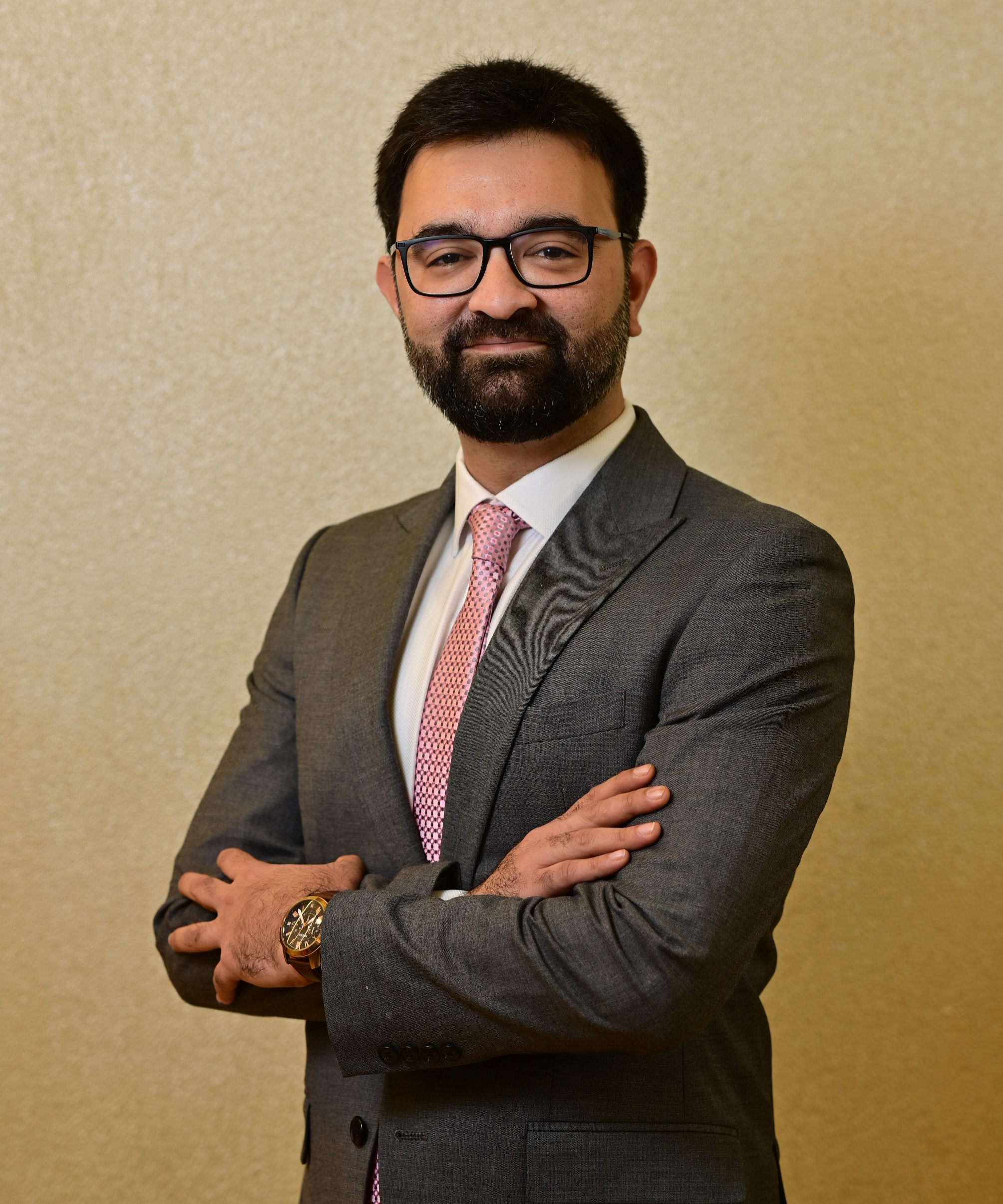
    After over 13 years of experience in representing clients in disputes, through arbitration and court proceedings, can you tell us what initially inspired you to pursue a career in law? What motivated you to establish your professional journey in this field?

    My initial outlook towards law was fraught with ignorance – in school, one never saw it as an option. Law opened up as a career when I fortunately received admission into National Law University, Jodhpur and decided to join on my parents’ insistence. As time passed and as my studies progressed, having already been a voracious reader, I became drawn to the intellectual challenges and problem-solving aspects that the legal profession offers. I realised that law pervades almost every aspect of life and society which leads to learning new and interesting things every day. Once I graduated, the satisfaction of being the means for clients to secure their rights provided (and still provides) the drive for my legal practice..   

    Having gained substantial experience at law firms such as Phoenix Legal, and Tuli & Co., how has your approach to dispute resolution evolved over time? What unique perspectives have you brought to Revera Legal in your current role as Partner?

    Over the years, my approach to dispute resolution has evolved from a purely academic and legalistic approach to a more holistic and practical one. I have come to realize that effective dispute resolution requires not only a deep understanding of the law but also a keen awareness of the commercial and practical realities facing my clients. I believe in taking a proactive and solution-oriented approach, working closely with my clients to develop strategies that not only achieve their legal objectives but also align with their business goals. At Revera Legal, I have brought this perspective, along with my extensive experience in handling complex commercial disputes, to provide our clients with comprehensive and commercially sound legal advice and representation.   

    You’ve handled high-profile arbitration cases, including disputes in an LCIA-administered arbitration. What legal strategies did you employ to address the complexities of fraud and misrepresentation allegations in international arbitration, and how do you navigate challenges arising from differing governing laws and jurisdictions in cross-border disputes?

    Proving fraud requires demonstrating that the person committing fraud acted with intent to deceive, which can be difficult to establish through evidence in a civil trial. Fraud cases often involve intricate fact patterns and transactions, making it challenging to present a clear and concise case to the arbitral tribunal. In arbitrations involving fraud and misrepresentation, I therefore focus on building a strong evidentiary foundation. This includes meticulous document review, financial analysis, and engagement of forensic experts if needed. I also carefully analyse the arbitral tribunal’s procedural rules and the applicable law to tailor my arguments. In cross-border disputes, navigating jurisdictional and governing law issues requires a thorough understanding and crafty application of conflict-of-laws principles. In fact, as I speak, we are currently preparing for a potential dispute which presents an interesting conflict between Indian and US jurisdictions

    In the case of National Insurance’s claim against Chubb European Group under a  reinsurance policy, what challenges did you face when representing the insurer before the National Consumer Disputes Redressal Commission?

    The National Insurance case presented a unique challenge as to whether the scope of consumer disputes includes reinsurance disputes. To address this, our team at the time. I  focused on demonstrating that the reinsurance policy in question was not being used for commercial purpose but rather a means for National Insurance to protect itself from significant losses that may affect its bottomline in the event that it settles a large insurance claim. The challenge was that to an untrained eye it would appear that an insurer, being in the business of providing insurance, was simply leveraging its reinsurance cover for receiving heftier premia in its insurance policies. We drafted submissions based on the specific terms of the policy and reinsurance notes, IRDAI regulations governing reinsurance in India, industry practices, , and relevant case law to show that obtaining a reinsurance policy is not used for generating profit but rather acts as security for unforeseen losses to the insurer. A final decision in the matter is pending I believe and I hope that the foundation that we created in the case years back, leads to the Hon’ble Commission ruling that an insurer is a consumer of reinsurance coverage and therefore can file a consumer complaint against its reinsurer.

    Drawing from your experience in providing pre-arbitration strategic advice for a FIDIC-based contract with the Ministry of Defence, what are the critical considerations when preparing the client for such disputes and future arbitration proceedings?

    A fundamental strength of FIDIC contracts is their emphasis on clearly defining and allocating risks between the employer and the contractor. When advising on FIDIC-based contracts, I first emphasize proactive contract management to mitigate potential disputes. This includes ensuring clear documentation of all project-related communications, adherence to contractual timelines and procedures, and prompt identification and resolution of any ambiguities or disagreements within the framework provided by the contract. However, should the case proceed to arbitration  the focus always remains on building a strong case file,  which needs in depth identification, analysis and organization of evidence much prior to invocation., Successful claims (or counter-claims) in such an arbitration and often depend on lawyers efficiently and accurately synchronizing and linking timelines, technical evidence and contractual provisions before formulating the statement of claims or defence.

    Your commitment to fostering diversity within the legal profession is admirable. How do you ensure that aspiring lawyers receive the mentorship and opportunities needed within your firm? What key qualities do you look for when mentoring young lawyers, and what guidance do you offer them as they navigate their legal careers?

    At Revera Legal, we are committed to fostering a diverse and inclusive work environment. We provide aspiring lawyers with mentorship opportunities, training programs, and challenging assignments to help them develop their skills and advance their careers. When mentoring young lawyers, I look for qualities such as intellectual curiosity, strong work ethic, and empathy with a client’s position. I encourage younger lawyers to develop a deep understanding of the law, cultivate strong communication and advocacy skills, and maintain a high level of professionalism in their practice. Irrespective of personal or professional difficulties throughout their career, lawyers must foremost ensure that their client’s best case is presented.

    Given the demands of your career and leadership position, how do you personally manage to maintain a work-life balance? Additionally, how do you encourage your team to prioritize a healthy work-life balance while excelling in their professional roles?

    Maintaining a work-life balance is crucial for both personal well-being and professional success. Though this appears to be a difficult endeavour in the practice of law, which requires constant attention, reading and mental exertion, do attempt and encourage proper time management,  and distribution of responsibilities amongst the team to the extent possible. Lawyers are always doing a lot of heavy lifting, whether in court practice or transactional negotiations. In such a situation, having a  flexible work environment, rewards and recognition for achievements and drawing boundaries between work and personal life ensures sustainable growth in the profession. 

    In your view, what role will technological innovation play in shaping the future of the legal profession, particularly in the areas of arbitration and dispute resolution?

    Technological innovation is transforming the legal profession as I knew it at the inception of my career, and I believe this trend will continue to accelerate. In arbitration and dispute resolution, we are seeing the rise of online dispute resolution platforms, the use of artificial intelligence for document drafting and review as well as the adoption of virtual hearings by courts throughout the country. I also see that several lawyers and esteemed judges have altogether stopped using paper, instead using tablets and laptops in court, all of which are helpful in organizing, reviewing and carrying voluminous files, and are certainly friendly to the environment. In fact, I believe even notarial services are now being offered online, which are helpful when parties are located in far flung jurisdictions or locations. These innovations have the potential to make the dispute resolution faster, more efficient, cost-effective, and accessible. I am excited to embrace these advancements and leverage them in my firm and practice.

    Get in touch with Ishaan Chhaya –

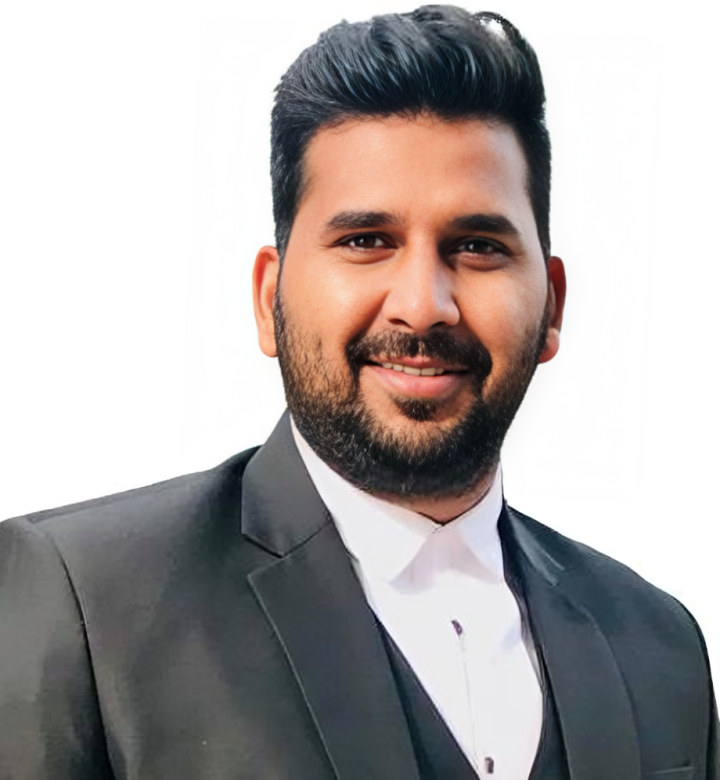
  • “Trial advocacy is story telling. It is the skill of bringing out what really happened and this principle is true no matter the nature of the dispute.” – Mikhail Behl, Counsel, Arbitrator & Mediator at Chambers of Mikhail Behl.

    “Trial advocacy is story telling. It is the skill of bringing out what really happened and this principle is true no matter the nature of the dispute.” – Mikhail Behl, Counsel, Arbitrator & Mediator at Chambers of Mikhail Behl.

    This interview has been published by Anshi Mudgal and The SuperLawyer Team

    Was there any particular experience or realization that solidified your commitment to pursue a legal career?

    Let’s just say that there have been moments in my life as well as in the lives of the people I hold closest to me where we could have benefited from having someone advocate for us. 

    After completing your law degree, you went on to pursue a Master’s at The University of Edinburgh, a highly respected institution. Could you share some insights from your time there and elaborate on why you chose this particular university over others? Additionally, being a recipient of both the University of Edinburgh’s International Masters Scholarship and the R.D. Sethna Memorial Trust Scholarship is an impressive achievement. How did these scholarships impact your academic journey?

    I was considering two schools, Columbia and the University of Edinburgh. Both their LLM programs in IPR were being run by people who I thought were at the forefront of Copyright law, Jane Ginsburg and Charlotte Walde respectively. 

    I opted for the Edinburgh LLM program because I was granted the University’s scholarship for India which together with the RD Sethna scholarship covered tuition. At the time my father who is a veteran of the Armed Forces had just retired from service and honestly without the assistance from these scholarships further studies would not have been possible at all.   

    You were a law clerk in the Bombay High Court. What are your takeaways from your clerkship at the Bombay High Court?

    My clerkship period taught me how important it is to have good people in high office. Ultimately, the justice delivery system is a human agency and as a law clerk in a High Court you will see how immense and immediate an impact it has on the lives of people. 

    After your Masters, you joined the chambers of Senior Advocate Dinyar D. Madon. Describe chamber life and how that period influenced your practice?

    I remember as if it were yesterday walking into Mr. Madon’s Chambers with just my C.V. in hand – no appointment and no references. It was a few days before Courts were to resume after the Diwali vacations and in Mr. Madon walked with his assistant Sanjay bhai carrying his freshly dry cleaned monkey jacket and gown. While I waited for an opportunity to speak with him, I had my first interaction with Cyrus Ardeshir (now himself a Sr. Advocate), his most senior junior at that time. I recall Cyrus stopping the dictation of a draft and speaking to me for a good five to ten minutes. I didn’t know it at the time but I think now that was ‘the interview’.  When I finally had a meeting with Mr. Madon, it was less than a minute and Mr. Madon told me he couldn’t take me in because chambers was full, he told me he had just taken on two more juniors just days before. I asked him to keep my C.V. but resigned myself to this being another rejection. In all, I was probably rejected by 20 chambers across the city most refusing to even see me.    

    A couple of days later, however, I got a call from Mr. Madon asking me to join from coming Monday. I couldn’t believe it, I later learned it was Cyrus putting in a good word for me that convinced Mr. Madon. I treat that moment as the first door that had been opened for me in the profession, every opportunity that I have had thereafter could only have been possible because Mr. Madon and Cyrus took a chance on a young stranger. There was no reason for Mr. Madon to call me back, I was a nobody and had no references to speak on my behalf. But this is who he is at his core, someone who helps. I wish more people knew this about him he is immensely charitable. 

    I know a lot of people probably think Mr. Madon’s chamber is too strict or old fashioned. Chambers had a strictly ‘no stubble’ policy. Interns have been sent away from work for breaking this rule. If we were leaving court for chambers it was bands off and ties on. Ties were mandatory in chambers. I wish I could tell you this was difficult for me, but I come from a very disciplined background, my father is a veteran, his brothers are veterans and his father was a veteran. My grandfather on my mother’s side was also a veteran. I loved it! In a lighter vein being clean shaven came easy for someone who till this day can’t grow a proper beard, so I may have gotten away with just shaving every other day. 

    I think I was very fortunate to join Mr. Madon at that particular phase of his career. He was absolutely flooded with work and would have anywhere between 20 to 40 matters on board on any given day. It was not unusual for evenings to have as many as 10 briefings. Then there was also Cyrus’s work. The juniors in Mr. Madon’s chamber shared a common work area and I think I learned how to draft just by listening to Cyrus dictate his drafts. I probably found my regular briefing attorneys through Cyrus as well who would ask me to fill in if he couldn’t it make it for a matter. All in all the exposure was immense. Chambers had a great library managed by Jairam a savant at whom you could literally throw any random proposition and within minutes he would just magically show up with the citation or source you needed.  

    If you haven’t worked with Mr. Madon, let me tell you he reads vertically and not horizontally and he does this super-fast. Most people think he is just flicking pages until he corrects them about the contents of an Affidavit or pleading. Working with him caused you to develop “coping” or “keep up” abilities that benefit me till this day. For me initially, this meant working very long hours and so I was entrusted with the keys for chambers. I locked up almost every night I was at his chambers. I think my key takeaway however from my period in Chambers was how important it was to develop your first principles. These principles if readily at your disposal are definitive of the fate of a proceeding and obviously also your career.  

    The immense exposure at chambers helped me realise my own strengths, weaknesses and interests. Just being associated with chambers gave me my first opportunities as an arbitrator. Judges knew that I was from his chamber and that everyone from his chambers had both ability and integrity the most important attributes of an arbitrator.  

    With over 50 trials and a breadth of experience across multiple legal domains, what advice would you offer to young lawyers aspiring to develop a diverse practice similar to yours? Which specific skills or qualities do you believe are essential for success in such a competitive and multifaceted field?

    Trial advocacy is story telling. It is the skill of bringing out what really happened. This principle is true no matter the nature of the dispute. Once you understand this things start falling in place. The skills required are actually fairly achievable, I do not personally subscribe to the belief that this is any form of mysterious craft or skill. The ideal trial lawyer builds an understanding of how things should have been or were intended to be and works out the anomalies in the case before them from this understanding. A good trial lawyer should also work on building their intuitive powers, because understanding who they are examining and how those persons think and behave is vital. They will accordingly do well to learn to identify ‘tells’, traits and patters in people as this will help them in any trial. 

    In handling intricate trademark infringement and passing-off cases, you demonstrated remarkable expertise. Can you walk us through your approach in addressing complex issues like packaging similarity, particularly in the context of pharmaceutical products? 

    In these kind of cases, one is really presenting to the Court the likely perceptions of an imperfect and average human being as grounds for granting or refusing relief. Understanding this standard is definitive of success in this area of law.  

    Tell us something about the journey involved in setting up your own chambers and your decision to specialise in ADR?  

    I think setting up one’s independent chambers is fairly universal in the city of Mumbai. The more difficult question is probably the decision to specialise. This requires both introspection and courage. For me mediation and arbitrations fit well into my core skill sets. I think I am a good listener, I actually enjoy listening to people more than I do speaking. I love writing and it is something I think I do well. Over time I think I have developed a very distinct identity in my writing style as well. Writing is the most core ability an arbitrator can possess. Ultimately the entire arbitration is about the arbitrator’s award/order and if this output is lacking the process is meaningless. The fact that the Supreme Court has a constitutional bench mulling over the need for adapting an award is testimony to the importance of a well written award. 

    Balancing a successful legal career with personal life is undoubtedly challenging. How do you maintain this equilibrium? What strategies or routines do you employ to ensure both your professional commitments and personal well-being are well-managed, especially considering the demanding nature of your career?

    I wish I could tell you I have the perfect life. But that would be a lie. I have always wanted to be a “sports and extracurricular dad”. My most recurring dream is me teaching or watching my child learn the sport of their choice. But that dream hasn’t worked out for me. 

    That failing aside, I do have very many interests outside of law and I have no hesitation or shame in saying I am not a slave to the profession. I do not believe law is a jealous mistress. Because I know lawyers benefit from knowing things outside of law! I actively engage with a network of friends outside of the profession. I am always curious to know from them how their businesses’ work and how they deal with variable situations as and when those may arise in their respective fields. This network of friends has given me unimaginable insight into varied areas of commerce and trade. One I could never have obtained from just reading briefs or limiting my interactions to just other lawyers. 

    I am an avid mountaineer and have done several expeditions and treks both solo and through organised treks. My earliest memories are of camping in the Himalayas with my father of learning to pitch a tent probably at the age most kids learn to tie their shoes. I am extremely fond of landscape and architectural photography and have had my photographs featured in exhibitions around the world. 

    Over the last 7 years I have actively invested in learning and becoming proficient in Olympic weightlifting and powerlifting. I have done two accreditation courses as well, though I have no intention of teaching anyone other than myself. This activity in particular is what keeps my health both mental and physical well managed. I wish more lawyers understood the benefits of strength training. It is literally a lifesaving and life enhancing activity. I think most of the stresses lawyers encounter and even the insecurities lawyers have about themselves would disappear if they explored a more healthy life. I have also studied nutrition and follow a good sustainable diet and have a very healthy relation with food. 

    But the number one thing that brings me peace and happiness is spending the weekend with my parents. Every night before I sleep I thank god for my parents, they are truly remarkable people who have overcome such tremendous odds to become extremely well respected and loved people within their community. My father is a renowned oncologist and my mother is an adored educator. Trust me if you knew the circumstances they came from this shouldn’t have been possible. There is pure magic in their spirit. It is such a fortuitous conspiracy that they are my guides in this world. They gave me every opportunity they did not themselves have.  

    As a sole arbitrator in more than 100 arbitral proceedings and a member of several prestigious panels, including those of HKIAC, SIAC, and ADGM, how do you envision the future of Alternative Dispute Resolution (ADR) in India, particularly in relation to complex commercial disputes? How do you see the evolution of ADR in comparison to global institutions?

    I see ADR as the only hope for private dispute resolution in India. The court system is incapable of meeting India’s needs to resolve private disputes efficiently. The court system should in my opinion be limited to a scrutiny of citizen-state actions. The proposed introduction of arbitration appellate tribunals and recognition of emergency arbitrators is a great step towards developing an appropriate eco-system for private dispute resolution. What also needs to be done is to provide a separate execution mechanism and robust measures such as contempt and criminal prosecution against bad actors, both users, lawyers and arbitrators functioning within this private dispute eco-system. 

    Having successfully navigated the Bar Standards Board application process in the U.K. and being granted exemptions based on your experience, how has this international qualification enhanced your legal practice both in India and the U.K.? Furthermore, how has your accreditation as a mediator influenced your dispute resolution strategies and the way you approach conflict in your legal career?

    Becoming a barrister was an ambition I had to put aside for a while as I had to return home after my Masters for personal reasons. For fate to conspire and to later be made a barrister through the accelerated process with full exemptions from all academic and vocational training components was a miracle. Being called to bar at Lincoln’s Inn by none other than the Master of the Rolls was a surreal moment one that is etched in my memory and one I will cherish forever. Being dual qualified now allows me to not only receive instructions as counsel in multiple jurisdictions but to also act as arbitrator in disputes where English law applies. 

    My decision to undergo formal mediation training was born out of past experiences. I have seen far too many likely settlements fail both as counsel and arbitrator to not recognise an underlying failing within me as cause thereof. I am not one to let such failings persist. 

    The mediator training course at the Royal Society of Mediators taught me path breaking techniques that I apply subtly all the time as counsel and arbitrator. I think I am now always silently working away at a likely mediated settlement. When I function as a neutral the pure joy of using these techniques to bring people to a principled dialogue is by far the most satisfying part of my legal practice. To be honest, it has helped me immensely in my personal life as well. It is finely tuned my instincts and improved my communication abilities. An earlier version of me listened to respond and the new me listens to understand.  

    Get in touch with Mikhail Behl –

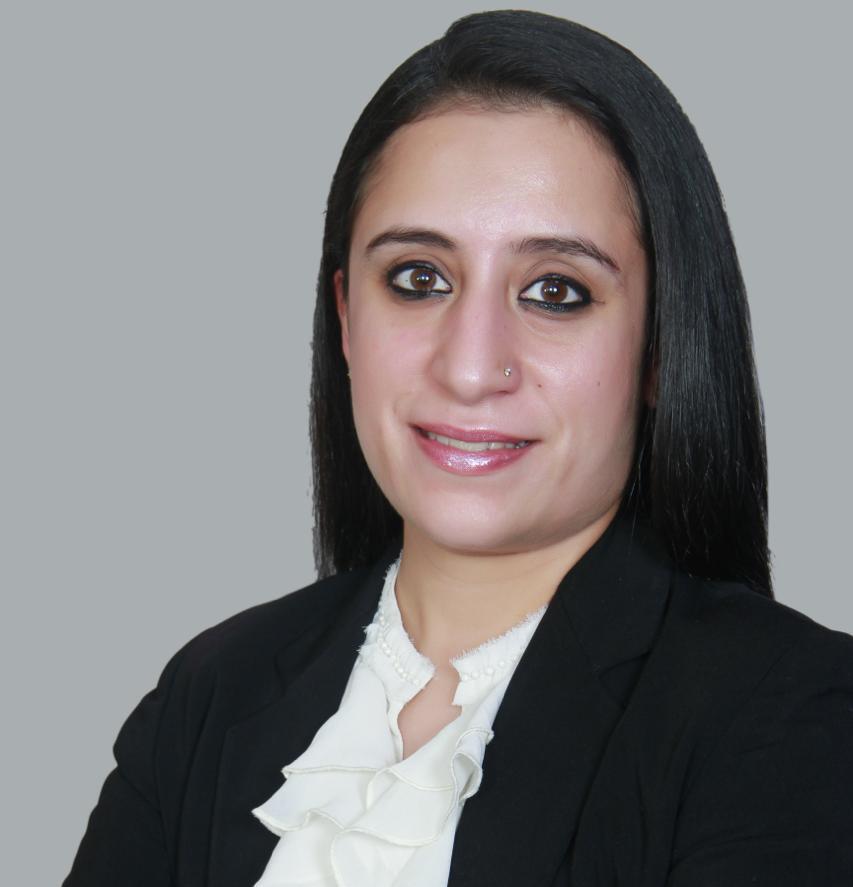
  • “With rapid advancements in technology, particularly with the rise of AI, IP and Data Privacy laws are evolving quickly. Staying updated through IP-specific news, following IP practitioners, and engaging with industry peers will be highly beneficial.” – Isha Gandhi, Senior Legal Associate at R K Dewan & Co.

    “With rapid advancements in technology, particularly with the rise of AI, IP and Data Privacy laws are evolving quickly. Staying updated through IP-specific news, following IP practitioners, and engaging with industry peers will be highly beneficial.” – Isha Gandhi, Senior Legal Associate at R K Dewan & Co.

    This interview has been published by Anshi Mudgal and The SuperLawyer Team

    What initially inspired you to pursue a career in law? What aspects of law sparked your interest and shaped your understanding?

    I chose law as a profession because I’ve always had a passion for writing and speaking. Law provides the perfect platform to combine these interests, allowing me to express ideas clearly through legal writing and to advocate effectively in speaking engagements. The ability to analyse complex issues, craft persuasive arguments, and communicate them both in writing and orally is what truly drew me to this field.

    After completing your law degree, what experiences influenced your decision to specialize in intellectual property law? What were some of the key moments that helped establish your foundation in IP law?

    I developed a strong interest in Intellectual Property Law during my college years, which led me to pursue a specialized diploma in IPR laws from Symbiosis Law School, followed by a course from the World Intellectual Property Organization. The complexity and significance of protecting innovations in an increasingly digital world fascinated me. To deepen my understanding, I also interned with boutique IP firms during my college years, gaining valuable insights into IPR laws.

    When advising multinational corporations on IP protection strategies, how do you navigate the complexities of differing national IP laws and enforcement mechanisms? Can you share an example of a time when you successfully managed cross-border trademark infringement issues?

    Intellectual Property (IP) laws in most countries are largely governed by international conventions and treaties, such as the TRIPS Agreement (Trade-Related Aspects of Intellectual Property Rights), Berne Convention, etc. which establishes a common framework for IP protection. As a result, the fundamental principles of IP law are generally consistent across jurisdictions. However, each country may have its own specific regulations, enforcement mechanisms, and nuances in how IP rights are granted, protected, and enforced. Thus, navigating the complexities of different national IP laws requires a tailored approach.

    A key aspect of advising multinational corporations is understanding the unique regulatory environment in each region and developing a strategy that ensures protection while considering local enforcement challenges. One instance I recall involved a cross-border copyright infringement and trademark passing off issue where the infringer had obtained registration of a concerned trademark in India and the client’s mark was pending for registration. The Trademark laws are territorial in nature and there are multiple cases supporting this principle. In this case we had to establish the malafide adoption by the infringer before the Court and filed multiple rectifications against the fraudulent registrations obtained by the infringer in India. This collaborative approach helped to secure an injunction order in favour of our client.

    With the rise of digital platforms, how has IP infringement evolved over recent years, and what proactive measures can brands take to protect their intellectual property online? Drawing from your experience on the Internet Committee at INTA, which policies do you think are essential in addressing online IP issues, particularly with respect to domain name disputes and cybersquatting?

    The evolution of IP infringement in the digital space has been significant, with an increase in online piracy, unauthorized use of trademarks, and domain name disputes. Brands must adopt a proactive, multi-faceted approach to protect their IP online, including monitoring digital platforms, utilizing digital tools for brand protection, and engaging in vigilant enforcement actions. On the Internet Committee at INTA, we focus on creating policies that balance the needs of IP owners with the realities of the digital space. Policies to address cybersquatting, such as enhancing domain name dispute resolution mechanisms, are critical. Strengthening the cooperation between domain registrars, social media platforms, and IP owners is vital to combatting these challenges effectively.

    As privacy and data protection laws become increasingly significant, how do you incorporate cyber law considerations into your intellectual property advisory, especially when drafting documents such as terms of service, privacy policies, and user agreements?

    With privacy and data protection laws becoming increasingly stringent, especially with regulations like GDPR, it’s essential to integrate these considerations into IP advisory work. When drafting documents such as terms of service or privacy policies, I ensure they reflect both IP protection and compliance with data protection laws. This includes ensuring clear consent protocols for data usage, addressing how user data interacts with proprietary technology, and defining the ownership of data generated by users. The intersection of IP and cyber law is particularly important for tech companies or those with a heavy online presence, as they must navigate these dual concerns with care.

    How do you approach the drafting and strategy behind a commercial suit for trademark infringement or passing off, as well as copyright infringement, considering the complexities of such cases? Can you share an example of a particularly complex matter that required you to appear before the Delhi District Courts or High Court?

    Every case is unique, and before strategizing and drafting a commercial suit, I ensure a thorough investigation of the facts to build a strong case. This includes gathering evidence of use, assessing market presence, and evaluating the likelihood of confusion. Following this, I research the latest legal positions taken by various courts within the country, and in some instances, I also examine international legal perspectives. This ensures that my approach is both methodical and comprehensive.

    One particularly complex matter I worked on involved a copyright infringement case against a well-known global online audio-video streaming platform. The case required a deep dive into copyright infringement on the web and the liability of intermediaries. The research expanded to cover the copyright laws of different countries signatory to the Berne Convention, as well as relevant court decisions from multiple jurisdictions.

    For law students or aspiring lawyers interested in brand protection, what advice would you give them for building a successful career in IP law? Are there specific resources, strategies, or steps they should take while still in law school or right after graduation to get ahead, particularly in the evolving landscape of legal practice and emerging legal fields?

    For law students or aspiring lawyers interested in IP law, I recommend pursuing a specialized course in IP, in addition to thoroughly studying the relevant subjects offered by your college. With rapid advancements in technology, particularly with the rise of AI, IP and Data Privacy laws are evolving quickly. Staying updated through IP-specific news, following IP practitioners, and engaging with industry developments will be highly beneficial. Internships with IP law firms or in-house legal teams, as well as participating in IP-focused Moot Courts and competitions, provide invaluable hands-on experience. Building a solid foundation in both legal theory and practical application is essential as the IP landscape continues to evolve.

    Given the high demands of your profession, how do you manage to maintain a balance between your personal and professional life? What practices do you follow to prioritize your health and well-being while maintaining a successful career in law?

    Achieving the perfect work-life balance is often seen as a utopian ideal that many of us strive for. While there are times when one must prioritize work or personal life, balancing the demands of a legal career with personal life is undeniably challenging. This field is demanding and keeps you constantly on your toes, so it’s essential to make time for regular exercise and prioritize health and well-being.

    Over the years, I’ve learned that delegation is a key part of professional growth, and I make sure to delegate tasks when possible to manage my workload effectively. Having a strong support system—both professionally and personally—also plays a significant role in maintaining this balance.

    In addition to my passion for work, I make time for sports and dance to recharge myself. I’m a Kathak trainee and completed my third-year graduation in the art last year. In 2023, I was the runner-up in both the Singles and Mixed Doubles categories at the Delhi High Court Table Tennis Tournaments. I also practice mindfulness and make it a point to disconnect from work and travel when needed to maintain mental well-being.

    Having been with R. K. Dewan & Co. for nearly a decade, how has your role evolved over the years, and what factors have contributed to your continued growth within the firm? What do you believe has been key to maintaining your passion and motivation while managing such a dynamic and demanding career in intellectual property law?

    Under the mentorship of legal stalwarts Dr. Mohan Dewan, Dr. Niti Dewan, and Mr. N. K. Bhardwaj, my nearly decade-long journey with R. K. Dewan & Co. has shaped me both professionally and personally. Starting as a first-generation lawyer, I have grown to independently advise clients and manage junior lawyers, a progression made possible by the trust the firm has placed in me, which has led to an expansion of my roles and responsibilities over the years. What continues to drive my passion and motivation is the dynamic nature of IP law and the constant challenge of navigating new and complex legal issues.

    Maintaining passion and motivation in such a demanding career comes down to balancing professional challenges with personal interests. I find excitement in solving complex problems for clients, and I stay driven by the impact that intellectual property has on innovation and creativity. Additionally, the opportunity to work on diverse and high-profile cases, along with the trust and responsibility the firm has given me, continues to inspire me. The combination of professional growth, personal development, and a supportive work environment has been key to maintaining my enthusiasm for IP law.

    Get in touch with Isha Gandhi –

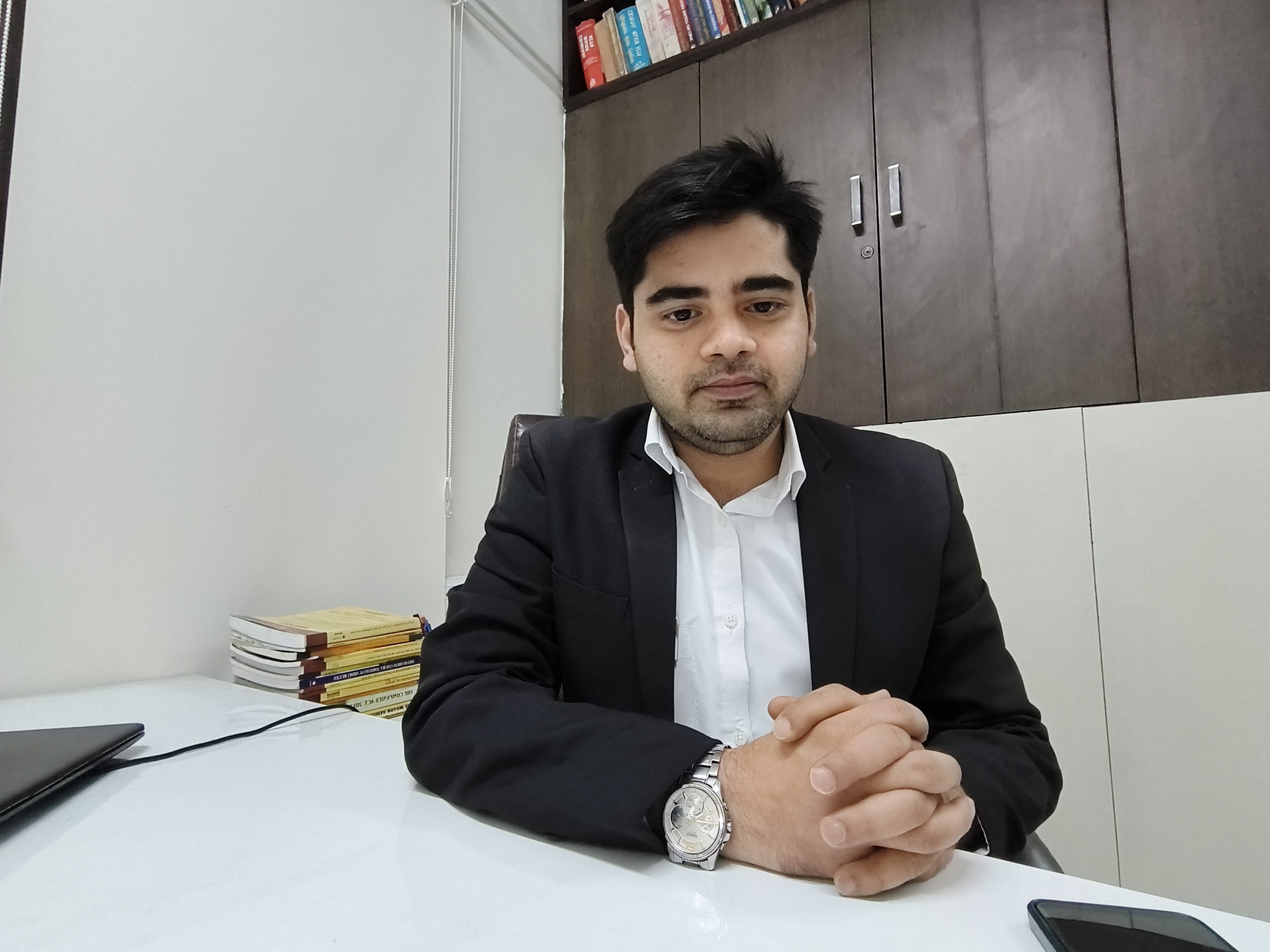
  • “One of the most important lessons Justice A.K. Patnaik (Retd.), taught me was don’t rush after judgments. Read the statute first and try applying the law to the facts before moving on to judgments which explain the grey areas of law.” – Gaurav Rai, Managing Associate at C&S Partners.

    “One of the most important lessons Justice A.K. Patnaik (Retd.), taught me was don’t rush after judgments. Read the statute first and try applying the law to the facts before moving on to judgments which explain the grey areas of law.” – Gaurav Rai, Managing Associate at C&S Partners.

    This interview has been published by Anshi Mudgal and The SuperLawyer Team

    With nearly a decade of experience in law, what first inspired you to pursue this profession? Was it a conscious decision from the start, or did it naturally evolve over time?

    Law did not seem a natural choice for me initially. I pursued science post 10th Boards and was leaning towards a career in engineering. However, within a few months into the 11th standard, I realised I was not made for a career in science. Also, I always wanted to do something different. While I was exploring a few options, based on what was my worldview at that age, one of my close family friends chose law and that is when I tried to imagine if that is something I would enjoy. By 12th standard I knew, law was the way to go. It stunned a lot of people in a small town where engineering and medicine seemed like the only options for science students. But I had made up my mind and haven’t looked back since. 

    After completing your law degree, you went on to pursue an LL.M. in International Banking and Finance Law from University College London. What motivated you to choose this particular university, and how has your academic journey there contributed to your success in your career? Could you also share some experiences or challenges you faced during the admission process or while studying at UCL?

    Initially I had not even imagined that pursuing an LLM abroad would be one of the options I had. But my father encouraged me to seriously consider it. I was clear that I eventually wanted to pursue Litigation and Arbitration back in India. 

    Since the UK is the home to common law and a lot of Indian law has evolved from the British era, choosing to pursue my LLM in the UK became a natural choice. 

    I researched online and had discussions with a few people who had already pursued their education abroad. The general consensus was that I should look for the professor under whose guidance I would want to write my thesis rather than only selecting a college / university. At that time my interest was in International Law of Foreign Investment and Treaty arbitration. Which is why I wanted to pursue my Master’s under Dr. Martins Paparinskis whose profile was something I was drawn to. He taught both these subjects at University College London in 2015-16. 

    The experience at UCL was exhilarating. Their style of teaching taught me the discipline of self study even before the lecture begins. We had the entire curriculum for the semester in our hands even before the introductory lecture. The focus was on discussions on the topics we were already supposed to have read up on and only to clear doubts based on the preliminary reading. Of the 4 subjects I had chosen, we only had only one lecture of two hours per subject in a week, giving us ample time to read before and after the lecture. This encouraged us to think independently which was the biggest takeaway from the course. 

    One of the most important courses I took up at UCL was the Academic English Writing Course. It was open to all and was a course which would help us write our thesis. This course has had immense long term impact on my career, as it was the seed which led to my academic writing bug later on and also for establishing the Arbitration Workshop Blog. 

    Honestly, the admission process was very streamlined. But I would be remiss in saying that I did everything on my own, I was given guidance by an education consultancy service in India. They were very clear that they would only guide me through the process while I focussed on preparing my essay for the selection process. They encouraged me to dig deep and write the essay based on my life and why I was the best candidate to secure a place in the master’s programme at UCL. The actual course work at UCL was enjoyable. Since we were non-europeans, we were also given the first preference in the hostel accommodations run by the University. To some extent the only challenge I faced was preparing my own meals as I chose an accommodation which did not have a mess but had kitchens on individual floors spread between 5 flatmates. But even that became enjoyable over the course of time.  

    Following your master’s, you worked as a legal assistant to Justice A.K. Patnaik (Retd.), Former Judge of the Supreme Court of India. What were your early experiences like in that role, and how did they shape your understanding of the law? Are there any values or insights from that time that you still carry with you today?

    It was the greatest introduction I could have had in the legal profession. I was the first legal assistant he had hired since his retirement from the Supreme Court and since his foray into arbitration. The one-to-one mentorship with him was a great learning experience. I got introduced to the practical aspects of contract law during my tenure with him and that has shaped my expertise. The practice of arbitration is associated more with contract Law rather than arbitration law and the fundamental aspects of contract law that I learnt on the job helped me immensely in my academic writing. 

    He had a terrific library on domestic and international contract law which broadened my horizons. I got into the habit of reading those books during my free time. One of the most important lessons he taught me was don’t rush after judgments. Read the statute first and try applying the law to the facts before moving on to judgments which explain the grey areas of law.

    When drafting arbitration awards for construction contracts, particularly regarding issues like delays in land handover, scope changes, and termination payments, what were some of the key legal challenges you faced?

    The key issues with constructions contracts were liquidated damages clauses which capped the damages for losses that occurred due to breaches on the part of the employer, such as delay in handover of land / right of away. It created a conundrum where an employer who had hopelessly delayed in handing over of the land or was in breach of an obligation under the contract, was still not liable for the damages to the extent sought by the Contractor, as there was either an exclusion clause or a liquidated damages clause. This is an interplay between Section 73, 74 and 55 of the Contract Act read with Section 23 of the Arbitration and Conciliation Act, wherein the terms of the contract, however absurd, governed the jurisdiction of the arbitral tribunal. 

    As far as change of scope of work is concerned, the disagreement stemmed from whether something amounted to change of scope of work or was it within the original scope of work. I can recall a case wherein the contractor had intimated to the employer that as part of the original objective of constructing the road, there was certain additional work that was required to be done such as shifting of certain pipelines which were not contemplated within the original scope of work. The contractor sought for the approval, however, never received the same. But as the same was necessary to move forward with the construction, they carried out the additional work and raised invoices towards it later. The Employer however rejected the invoices as they had not been approved. In such a scenario, arbitral tribunal had to rely on principles of contract law to hold that the Employer had by its conduct approved the changes, as it never objected to the same contemporaneously, and accordingly the contractor was granted the claim towards the additional work done as part of the construction.  

    Termination payment also is a complex issue. Concession agreements provide termination payment to be made to the contractor in the event of a termination of the contract, either rightful or wrongful, the quantum however being different. Such termination payment clauses are unique to concession agreements as in the DBFOT model, the concessionaire is not just responsible for the construction but also the financing among other things. In cases of termination payment, therefore, the issue of liability becomes very highly contested. Also, the quantification of termination payment used to be very complex and used to have certain grey areas, which made the calculation itself difficult. In cases where the parties spent maximum amount of time on the liability, if the issue of quantification was left unresolved, it became a challenge for the arbitral tribunal to understand the calculation methodology under the contract. This could lead to disagreement over the calculation itself and was particularly challenging on a few occasions while drafting the arbitral award in the office of Justice A.K. Patnaik.

    Can you share some of the most difficult aspects of representing public sector insurance companies in arbitration or before the National Consumer Disputes Redressal Commission?

    While dealing with any public sector undertaking, the most crucial aspect is documentation. If contemporaneous documents are available clearly pointing out the issues / approvals etc during the project being carried out, it becomes easy to represent PSU’s. However the lack of documentation / decision making during the project approval / execution stage makes it difficult to successfully represent the PSU. Further, cases of Insurance come within the scope of Consumer Forums which are summary in nature and hence it becomes difficult to protect the interest of the Insurance Companies since the fora generally are established to protect the interests of the consumer. Insurance law is very technical and certain principles of law, such as, uberrima fides or utmost good faith are only applicable to insurance law. A perusal of various judgments and orders from the District and State fora indicate they do not truly apply these special provisions of law relating to Insurance Contracts and therefore the matter has to unfortunately be appealed to the National Commission. Even at the National Commission and Supreme Court level there is a dearth of the judgments which explain in detail the the unique principles of insurance law which should be applicable to various issues which the district and state fora can utilise and apply. This is one of the greatest challenge of defending a PSU Insurance company or any insurance company for that matter. 

    Having worked on complex arbitral awards and challenges involving patent illegality and public policy, how do you craft compelling arguments when challenging such awards, particularly when dealing with contract violations or lack of sufficient evidence?

    The challenge of arbitral awards is very tricky as the scope is extremely limited. Patent Illegality, as the term itself suggests, stipulates that the award should be illegal on the face of it and should not be just an alternate interpretation of the award. When challenging an arbitral award, the argument which is most convincing is, when the arbitral tribunal has gone beyond the contours of the contract or the law and given a conclusion so absurd that it falls foul of the reasonable man standard. It is rare to get a clear contract violation on the part of the tribunal and if there is such a case, the same falls squarely within the scope of the provisions of arbitration law for setting aside the award. 

    In some cases when the tribunal grants a particular award on the basis of equity the same becomes a valid ground to challenge the award when the parties have not permitted the tribunal to do so. In such cases it is best to stick to the point and not beat around the bush about each aspect of the award in an attempt to try all possible challenges and hoping one will stick. The more precise the argument and draft, the easier it is to convince a court of the patently illegal nature of the award. 

    The arbitral tribunal is considered the master of the evidence, and they have the power to decide the admissibility, relevancy, materiality and weight. Insufficiency of evidence therefore is not a ground for setting aside an award. This is because if there is some evidence, the tribunals are allowed to extrapolate and do intelligent guesswork basis the documents available for the merits of the claim and the quantification of the claims. It is only in cases where there is no evidence that an award made by the tribunal can be set aside. Although the Evidence Act (now the (Bhartiya Sakshya Sanhita) is not applicable to arbitration, the well known principles continue to apply. Hence when the tribunal applies some of these principles incorrectly, it gives an additional yet narrow window of opportunity to the judgment debtor to challenge the award. The crafting of the arguments in this regard therefore are on the lines that the principles of evidence which should have been applicable, have either not been applied or have been applied incorrectly. 

    The above are broadly the methods one can follow to challenge an award on the ground of violation of the contract or lack of evidence.   

    Looking back at your career, what project or initiative has been the most rewarding for you? What made it particularly significant, both professionally and personally?

    The Arbitration Workshop Blog, hands down, has to be the most rewarding project of mine. The initial idea and what it has turned into is surreal for both me and Gautam (my co-founder). The positive reviews I have received from people and the recognition it has given me in the legal circles warms my heart every time. We started the blog before the pandemic and consistently delivered through thought provoking deep dive articles, which is why I believe we have received continued patronage from our readers. It has also become a research tool as many of our hits are straight from google search. I hope we are able to carry on the same way and build it into something bigger, while remaining true to our core principles of creating a more informed arbitration bar and to always deep dive on an issue and discuss the entire jurisprudence, to make it a one stop shop for academic and practitioners alike.

    Given the demanding nature of your career, how do you maintain a healthy work-life balance? Also, how do you ensure your well-being safeguarding your personal health and happiness?

    Honestly it has been tough to maintain a work life balance. To put it bluntly, personal health does take a toll. In which case it is important to find ways to find your happiness and make sure you put efforts towards it whether it comes from work itself or from your side project. Also, finding 15 mins to 30 mins a day is only possible if you take a definitive stance that working out or eating right is most important to putting in long hours in this profession. I prefer playing table tennis in the evenings and working out in the morning at my home, so that it gives me the mental toughness of working through the day. Funnily enough, physical activity makes me more energetic. 

    Everyone needs to find their career, fitness and mental health goals and then balance it out. Because one size does not fit all. Most importantly balance does not mean that your day should be balanced. It could also be that you may have 3 hectic days. It is then important to take light on the 4th day and have the regular balanced days thereafter. The above scenario should not be considered as break in the routine, but rather a vehicle moving full speed ahead, which has gone a little off track, post which you take control and steer it back to the centre. 

    What advice would you give to aspiring lawyers who want to make an impact across diverse areas of law, as you have? Are there any resources or strategies you would recommend for staying up-to-date in the constantly evolving legal field?

    My go to practice is reading judgments straight from High Court websites. I track the roster which is currently deciding the matters which are of interest to me and accordingly, read judgments written by them. I start from the bottom so that I know what the court has decided and thereafter read from the top if it is of some interest to me. This has kept me in good stead over the years as I have maintained a digital notebook of these judgments and thereafter used it as a personal repository to research whenever I am faced with an issue of contract law or arbitration. The judgments also give me ideas to write something on a grey area of law which fuelled my writing career. There is no substitute to reading the original judgment, as articles generally are an interpretation of the judgment by the author of the article. The above practice also helps in increasing the speed of reading judgments and to give us a certain comfort while reading judgments. I am sure this practice will help any young professional aiming to improve their professional standing.

    Get in touch with Gaurav Rai –

  • “Don’t just focus on learning law. That is essential and mandatory for the litigation career but not sufficient. Keep your eyes and mind wide open.” – Vishal Sharma, Founding and Managing Partner at Sharma & Associates.

    “Don’t just focus on learning law. That is essential and mandatory for the litigation career but not sufficient. Keep your eyes and mind wide open.” – Vishal Sharma, Founding and Managing Partner at Sharma & Associates.

    This interview has been published by Anshi Mudgal and The SuperLawyer Team

    What inspired you to pursue a career in law despite having a background in science? What drove you to choose law as your profession, and how did your B.Sc. (Hons.) Computer Science contribute to your legal career?

    When I completed my B.Sc. (Hons.) in Computer Science from University of Delhi, some of my friends who had completed their engineering were placed in reputed Patent Analysis firms. A good science background is a mandate to work as a Patent Analyst. I found it interesting too and completed a few online primer courses on Intellectual Property Rights (IPR) from World Intellectual Property Organization (WIPO). I also completed a Patent Analyst training program from an institute and thereafter joined a Patent Analysis firm in Noida. During all this I got a good exposure to IPR laws of India. But after some time, I realised that I needed a degree in law to excel more into this field so that I do not remain confined to the corporate offices and thus I resigned. I cracked the entrance exam and joined the prestigious Campus Law Centre, Faculty of Law, University of Delhi for three-year LL.B. 

    A background in science gives me an edge in IPR practice. Apart from this, a good understanding of Computer Science helps me a lot in handling cases of cybercrimes. 

    How was your experience at Campus Law Centre? When did you decide that you will go for litigation?

    In CLC, within no time I realised that it was not just IPR laws that I was interested in but in all types of laws. From my first semester at CLC and till date there has never been a second thought in my mind about litigation. Some of my classmates used to do corporate internships, some used to prepare for government exams, some were planning for LL.M. and some used to prepare for the judiciary. I did none of these. Whenever I got time, I used to go to various courts. I used to watch court proceedings and meet various advocates. 

    From a first-generation lawyer to the Founding and Managing Partner of Sharma and Associates (S&A), how has been your journey? What early experiences in your career were most influential in shaping your understanding of law and motivating you to establish your own practice?

    Immediately after completing my LL.B., I joined the office of a senior in my home town where I got initial exposure to drafting and court craft. I started going to various district courts of Delhi and Haryana and also Delhi High Court. Luckily, I started getting my personal cases also from my relatives and friends. I started accepting my independent cases side by side from the beginning itself which cumulatively later helped me in taking the decision of going independent. 

    I never went for a corporate office. I worked for a very less time with seniors but whatever work I did initially was completely court litigation from morning till evening. I got a full-fledged exposure to the court atmosphere right from the beginning of my career which included interactions with the judges, advocates and court staff. 

    The kind of work that I got from seniors during initial months of my practice played a significant role in shaping my independent practice. I never used to appear with my seniors in the court. I had to handle cases on my own on the basis of the instructions. This created the platform of self-confidence which later helped me in going independent at a very early phase of my career.

    How has your LL.M. (Professional) in Intellectual Property Rights from USLLS, Guru Gobind Singh Indraprastha University, Delhi, helped you tackle complex legal issues in the realm of intellectual property?

    It proved to be a very good decision for my career. The class consisted of practicing advocates, AORs, legal officers, judicial officers and government officers. All used to discuss their works and experiences with each other which significantly increased my understanding of the legal profession. I got a network worth keeping for a lifetime. 

    It was a weekend programme. All the classes and exams used to take place only on Saturdays and Sundays. Thus, my practice did not suffer at all during this course. I recommend this to all practicing advocates in Delhi who wish to pursue LL.M. along with their practice.

    The course was not theory oriented for me. I used to correlate my experiences of IPR practice with the lectures and discussions of the professors. The valuable insights gained during the classes and discussions enhanced the quality of my IPR practice.   

    How do you see the relationship between Alternative Dispute Resolution (ADR) and traditional litigation evolving? When do you think ADR is a more effective alternative compared to litigation in court?

    ADR and litigation go hand in hand these days. There are mediation centres in almost every court with well qualified mediators and staff. There are arbitration clauses in almost every agreement which we come across. Lawyers are common to ADR and litigation. A lawyer can represent his client before any ADR process or court as per the situation. People don’t come to the court to fight cases, they come to the court for relief and solutions. Mediation takes place in so many cases in the court on a regular basis. So, an advocate these days must have an understanding and skills of ADR.

    We at Sharma and Associates have the objective of providing solution-oriented services to our clients whether it be through litigation or mediation or arbitration. We have this strong philosophy that we charge our client not for the case but for the solution. There is a view that if a case gets settled the advocate will not get the fees which is actually not true. People come to court mostly when initial settlement talks fail. So, if an advocate even then gets the case settled between the parties on the basis of his skills, he can always charge his professional fees.

    I always say to the parties in civil and matrimonial disputes that time is money. ADR saves time and money for the litigants. I have personally seen that in settled cases the relation between the parties remains cordial as compared to decided cases. So, ADR is overall good for society as well.  

    Given your vast experience, what have been the most challenging cases you’ve handled? How did you approach the challenges, and what resources or strategies did you employ?

    I had Successfully argued application seeking cancellation of bail of the rape accused before the Additional Sessions Judge (Fast Track Special Court), Tis Hazari Courts, Delhi in 2021. After being granted the bail, the accused had not only launched an aggressive and defaming campaign on Facebook against the victim but had also circulated the victim’s mobile number to various people to harass her. I had been representing the victim pro bono right from the beginning in that case which involved allegations of rape on false pretext of marriage and cybercrime. It took several rounds of arguments by me and consequent detailed investigation by the police team to satisfy the Hon’ble Court about the misconduct of the accused.

    I had Secured Anticipatory Bail for my client in an alleged cheating case (420 IPC) of Rs. one crore related to FMCG goods in 2023 from the Sessions Court in the very first attempt itself. The complainant in that case was a mighty man with very good connections in the Police department and Court. I started my submissions with the clear facts and concluded with the settled laws through case laws. I addressed and satisfied the Court as to why the Custodial Interrogation of the accused was not required in the case. I also relied on the observation of the Supreme Court in Gagan Banga v. Samit Mandal & Anr. [Criminal Appeal No. 463 of 2022] that continuing trend of projecting purely civil financial dispute as criminal matter despite repeated judgments appears extremely disturbing. 

    Considering the demands of your profession, how do you manage to maintain a work-life balance? What strategies do you implement to safeguard your health and well-being while balancing a busy legal career?

    The issue of work-life balance comes before only those people who either take their work as a mandatory burden or who lack interest in their work. For me work and life are not different things. I don’t agree with people saying their work is their life either. Were you not living when you were not working? Will you not live when you will stop working? Work is a very important element of life but remember it is just one of the elements of life. Indulge in your hobbies, spend time with your family and friends, go on vacations and always spare some time for your body and mind. 

    I always ask my team to complete preparations for the cases of the coming month well in advance. I keep a note of pending works whether it be professional or personal in my phone and keep updating it. It is advisable to include different heads in this note like drafting, calls, research, meetings etc. I keep my clothes, bags and files ready for the next day before going to sleep to avoid hurrying in the morning. To be very honest it is not possible for me to go to the gym every day. I wake up a little early in the morning and do light exercises and meditation every day. I practice gratitude in the morning and evening every day to keep myself away from stress. I avoid using lifts whether it be courts or any other places. I can comfortably use stairs for going to the court rooms even on the seventh floor. 

    For aspiring lawyers who wish to make an impact across various areas of law, what advice would you offer? Are there any specific resources or approaches you recommend to stay current with the ever-evolving legal landscape?

    Don’t just focus on learning law. That is essential and mandatory for the litigation career but not sufficient. Keep your eyes and mind wide open. Observe and understand the society around you. Observe and understand the people around you. Your understanding of the society and the people must keep improving. People of all age groups will come to you for their legal problems. Your personality must reflect a certain level of maturity regardless of your age.  

    Networking is another essential requirement for litigation. Don’t meet and network with people just to expect cases from them. I have seen people doing that but trust me it won’t take you long. Keep building long term meaningful relationships and cases will come to you as a side product. 

    There is always a great emphasis on reading judgments of the Supreme Court and the High Courts. That is essential but not sufficient to excel in trial litigation. When I started my practice in trial courts, I adopted a different approach. I used to arrange and read the judgments of the trial courts where my cases were pending. Judgments of the trial courts contain facts, replies, issues, evidence, chief examinations, cross examinations, laws, arguments, relied citations and conclusions. By reading a trial court judgment, you can learn how to fight that type of case on behalf of either of the parties.  

    During initial years of practice, a young lawyer should accept all types of cases and legal queries. This makes your foundation strong. Later you can narrow down your areas of practice as per your interests and circumstances. Try to join a senior who allows you to take up your independent cases. Remember that the habit of salary is a slow poison if you wish to set up your independent practice. Aim to set up your independent practice at a reasonable early phase because later going independent becomes more and more difficult due to financial and other reasons. Some young advocates start their independent practice in partnership with other advocates which gives many benefits if goes well.    

    Get in touch with Vishal Sharma –

  • “While stubbornness may be a strong word, it is essential to survive in litigation, especially as a first-generation lawyer. The key is never to say NO.” – Dhruv Kumra, Independent Legal Practitioner.

    “While stubbornness may be a strong word, it is essential to survive in litigation, especially as a first-generation lawyer. The key is never to say NO.” – Dhruv Kumra, Independent Legal Practitioner.

    This interview has been published by Anshi Mudgal and The SuperLawyer Team

    With over 17 years of experience, what initially motivated you to pursue a career in law? Was it your first choice, or did you contemplate it later in your academic journey? Additionally, could you share your experience in law school, and how did pursuing your master’s degree further shape your professional path?
    My entry into the field of law was not by chance, it was a well-thought-out decision. From childhood, my teachers and elders use to praise me for my analytical skills and attention to detail. They suggested I consider joining the field of law. When I was in 10th grade, my father took me to various career counsellors, where I underwent aptitude tests. By unanimous recommendation, the field I was advised to pursue was law. That was when I decided for certain that I wanted to pursue career in law.

    After completing my 10th grade, I began preparing for entrance exams. I took entrance exams for various National Law Schools and cleared some of them. My ranking in Guru Gobind Singh Indraprastha University was good, and since I was from Delhi, I decided to pursue law here being home State.

    I graduated with “First Class”. While pursuing law, I also did my PG Diploma in “International Trade and Business Law” from the Indian Society of International Law. I completed a summer course on International Trade Law at the same institution and also earned a PG Diploma in Corporate Law from Amity Law School. I also worked as a Rapporteur at the Indian Society of International Law and contributed to a project with the Ministry of External Affairs in the Legal and Treaties Division.

    I was fortunate to receive a conditional offer for admission to the prestigious London School of Economics (LSE), one of the world’s most esteemed institutions. I also received admission to the National Law School, Bangalore, for an advanced course. However, I couldn’t pursue it because I became deeply involved in litigation.

    I always wanted to pursue my master’s in London, and I collected numerous brochures during seminars. But, as they say, “Destiny” intervened. In my last semester, I had to undergo an internship, and I was fortunate to secure an internship with an Advocate-on-Record at the Supreme Court of India. This was when I decided to postpone my aspirations to study abroad, as I got deeply engrossed in court work, and the desire to pursue a master’s degree faded.

    After almost 15 years in the profession, I finally did my master’s. Alternate Dispute Resolution (ADR) has always been close to my heart, so I pursued an LLM in ADR. Doing my LLM in this field allowed me to go back to the basic textbook style of learning, while my professional experience helped me understand the subject better and connect with it.

    During the early stages of your career, you must have encountered numerous valuable learning experiences. Can you highlight one particular experience that has stayed with you, and how did you navigate through the challenges of those formative years in your profession?

    This is one of those professions where challenges arise every minute, so one has to be ahead of the curve at all times. Even while drafting, you must put yourself in the shoes of the other side to anticipate what their response might be. As they say about the art of cross-examination, “Don’t ask a question to a witness until you know what answer the witness will give.”

    Law is a profession where every day is a new learning experience. One simply has to remain open to it. While “stubbornness” may be a strong word, it is essential to survive in litigation, especially as a first-generation lawyer. The key is never to say “NO”. I’d like to quote Sylvester Stallone from Rocky Balboa (2006): “It’s not about how hard you get hit; it’s about how hard you can get hit, how much you can take, and keep moving forward.”

    Honestly speaking, there is nothing like “formative years” in this profession. You never truly settle, you comparatively settle. Instead, one reaches a point where you become more cautious because more eyes are on you, and one wrong move can be detrimental. As you gain more years in the profession, you become more cautious, as people are watching and waiting for you to make a mistake.

    One learning which I got was, Court is the new class room , try spending as much time possible listening to arguments in matters. Court room is one such place where many facets law and facts are discussed and subconscious mind silently develops legal aptitude.

    What inspired you to establish your independent legal practice, and what were the initial challenges you encountered while setting it up? How did you navigate through these obstacles, and what strategies or lessons learned during this phase have contributed to the growth and success of your practice today?
    The initial challenge is always managing daily expenses, especially in the early days. However, this was not much of an issue for me, as I am a workaholic and found ways to secure work to keep myself going. There is no shortage of work in this profession, but one must be willing to take on challenges and spend sleepless nights.

    The advice I would give is that if you develop a skill, there’s no looking back. There are no shortcuts in law, one must work hard to chisel your abilities.

    In your experience as panel counsel, could you share your experience working with organizations such as the Delhi Development Authority? What variety of cases did you deal with, and were there any particularly interesting cases?
    I have served as panel counsel for various government departments, including the Delhi Development Authority (DDA), Indian Tourism, LIC Housing Finance Limited, Delhi Legal Services Authority, and as Amicus Curiae with the Delhi State Consumer Commission, among others.

    Serving these government departments gave me extensive exposure to a variety of cases, including real estate, consumer, matrimonial, and criminal matters. This experience helped me understand the workings of government departments, particularly how files move within the system and the importance of an internal Office Noting.

    Every case is unique , so talking about one would undermine others. In one case, I was defending a landlord against a tenant who was very intelligent. Before cross-examination, the opposing counsel whispered to his client to deny everything. The opposing counsel was so confident in his client’s preparation that he sat at the back of the courtroom.

    I confronted the witness with his signatures on the suit, and the very natural answer was that they weren’t his. This simple answer won me the case, as it invalidated the plaint. Immediately afterward, the other side tried to file an application to bypass the situation, but the damage was already done.

    With your extensive experience serving both private clients and government departments, how do you manage the differing legal needs of these two client types while upholding the same level of dedication and excellence in your service?
    Whether representing private clients or government entities, the law remains the same. However, there are different demands based on the client type.

    For instance, for a private client, developments in a case can often be communicated via phone, and that would suffice. For a corporate client, each step must be explained in writing, and updates must be communicated via email to all relevant stakeholders. Similarly, when working with the government, you must ensure that every action is recorded in the official file and directed to the correct officer.

    A lawyer dedicated to their work will treat both private and government clients with the same level of service. Both types of clients ultimately want to win and be represented effectively.

    Reflecting on your extensive legal experience, what has been one of the most intellectually challenging or intriguing cases you have handled? How did you approach the case in terms of legal strategy, preparation, and research, and what key insights did you gain from navigating such a complex legal matter?
    All cases are challenging and teach you something new. With each case, we return to the drawing board to research every aspect of it.

    At times, lawyers become so focused on a case that they lose sight of the core issue. For complex matters, we often peel back the layers one by one, only to realize that the issue was simpler than initially thought. The key to cracking a case is to follow the old-school method, read the file carefully without focusing on the law first, understand the facts, and then apply the law.

    In your experience working with corporate entities and managing cases related to real estate laws, what key pitfalls do these entities often encounter? What proactive measures or legal safeguards would you recommend to mitigate these risks from the outset, ensuring smoother transactions and compliance throughout the process?
    Faulty paperwork and inadequate due diligence are common problems in real estate matters. Many clients have projects in different states, and each state has its own peculiarities regarding record-keeping, such as local language requirements or state notifications, which corporate entities may overlook.

    While due diligence is generally conducted when purchasing land, local experts familiar with regional laws should also be involved in the process to ensure proper compliance.

    Balancing a demanding legal career with personal life is undoubtedly challenging. How do you maintain a balance between your professional commitments and personal well-being? What strategies do you employ to preserve your health and overall well-being while excelling in such a demanding profession?
    It is indeed very difficult for a first-generation lawyer to maintain a balance between personal and professional life and give equal attention to both. A first-generation lawyer faces many challenges, such as engaging and retaining competent staff, as well as maintaining an office, which many second or third-generation lawyers don’t face.

    One must work late nights, miss family engagements, and be available even on holidays to meet clients’ needs and deliver timely services. Additionally, corporate clients often work in different time zones, so we must be available 24/7 to respond to queries or emails.

    No doubt, this takes a toll on one’s health—grey hair and signs of aging appear earlier than expected. However, the adrenaline rush that this profession provides compensates for the physical toll. Post-COVID, work has become easier in some ways. Virtual hearings and digital tools have made it possible to work from anywhere in the world, making it more convenient for lawyers, especially first-generation ones.

    With your expertise spanning multiple legal domains, what advice would you offer young lawyers aspiring to develop a diverse practice similar to yours? What essential skills and qualities do you believe are necessary for success in these competitive and multifaceted fields?
    Discipline and consistency are the most important qualities I would recommend to any young lawyer entering the profession. By discipline, I don’t mean waking up at 5 a.m. and working late nights, but maintaining a consistent level of reading. Whether it’s law books, self-help books, or spiritual texts, consistent reading is crucial for any lawyer. Without it, a lawyer will not be able to make a mark professionally.

    So, be consistent with your reading, stay true to your work, and always advise your clients to the best of your abilities—not just to draw money from them, but to provide the right advice. Gone are the days when lawyers could manipulate clients for unnecessary fees; today’s clients often come prepared with knowledge from resources like Google.

    This experience reinforced the idea that litigation is a double-edged sword. Your success or failure often depends on both your preparation and your client’s actions. A well-read lawyer will earn the respect of judges and peers alike, and this silent appreciation will aid your future success.

    Get in touch with Dhruv Kumra –

  • “For legal professionals looking to transition into recruitment, my advice is to cultivate a balanced blend of technical legal expertise and strong interpersonal skills.” – Samridhi Kapur, Senior Consultant(Legal Recruitment) at Yellow Wire Consulting.

    “For legal professionals looking to transition into recruitment, my advice is to cultivate a balanced blend of technical legal expertise and strong interpersonal skills.” – Samridhi Kapur, Senior Consultant(Legal Recruitment) at Yellow Wire Consulting.

    This interview has been published by Anshi Mudgal and The SuperLawyer Team

    With over a decade of experience in the legal field, what initially motivated you to pursue law as a profession? Was it a deliberate decision, or did it unfold naturally over time?

    I took up law because I have always been driven by a deep sense of justice and an innate curiosity about society. From an early age, my fascination with sociology and history opened my eyes to the ways in which laws shape communities and uphold fairness in everyday life. From class 10, I participated in several mock tests that not only sharpened my critical thinking skills but also provided a glimpse into the analytical rigor required in legal studies. These experiences helped me understand that law was not merely an academic discipline—it was a tool for societal transformation and a means to champion fairness. This early foundation instilled in me a commitment to pursue a career where I could contribute meaningfully to upholding justice and influence positive change, a passion that continues to inspire my work every day.

    Why did you shift your focus from traditional litigation to legal recruitment and how have your experiences at your previous organization influenced your approach to recruitment?

    I began my career in 2013 working with an Advocate on Record, and later had the opportunity to collaborate with esteemed lawyers at the Hon’ble Delhi High Court. After five years of invaluable experience, I took the leap into independent practice, primarily serving clients from the IT industry. My focus areas included contract and agreement drafting, negotiations, arbitrations, and litigation. Working alongside Senior Advocates provided me with exposure to high-stakes litigation and complex arbitrations. Observing their dedication, commitment, and in-depth research reinforced my understanding of what it takes to achieve the prestigious status of a designated Senior. Those years were instrumental in shaping my professional perspective and instilling a strong work ethic that I continue to value.

    Over time, while I honed my legal skills in litigation and independent practice, I began to notice a recurring theme: the success of legal teams often hinges not just on individual prowess, but on the collective strength and fit of the team itself. My experience at a US-based IT company, where I served on the core committee alongside HR managers and the country head, exposed me to a more strategic view of talent management. I learned firsthand the importance of aligning a candidate’s technical expertise with the broader cultural and operational needs of an organization. This exposure illuminated the critical role that legal recruitment plays in bridging the gap between raw legal talent and the strategic objectives of law firms.

    Realizing that my background in high-stakes litigation and rigorous legal analysis could be leveraged to identify and place the right talent, I made a deliberate shift from traditional litigation to legal recruitment. I saw an opportunity to combine my comprehensive legal experience with the strategic insights gained from corporate talent management to create a more nuanced, client-focused recruitment process. Today, at Yellow Wire Consulting, I use my in-depth understanding of legal practice to evaluate candidates not just on their technical qualifications but also on their potential to contribute to the unique culture of a firm. This integrated approach ensures that every placement supports both immediate operational needs and long-term organizational growth, reinforcing the idea that a well-matched team is the cornerstone of sustained success.

    Can you describe how your role has evolved since joining Yellow Wire Consulting and the impact its leadership has had on your growth?

    Since joining Yellow Wire Consulting, my role has evolved significantly from a conventional recruiter to a strategic talent acquisition leader. Under the guidance of our founder, Ms. Sarabjeet Kaur, I have been encouraged to look beyond traditional placement methods and develop a holistic recruitment model. Her visionary leadership has been pivotal in reshaping our approach, emphasizing that recruitment is as much about understanding a firm’s cultural and strategic needs as it is about evaluating technical skills. I have had the opportunity to engage in extensive market research, develop comprehensive HR manuals, and lead soft skills training initiatives that prepare both candidates and client organizations for long-term success. 

    This transformation in my role has allowed me to integrate my legal expertise with innovative recruitment strategies, ensuring that every candidate placement is not only a match on paper but also aligns with the broader vision and values of the client firm. The evolution of my responsibilities has led to a more proactive and adaptable strategy, one that is continually refined based on feedback, market trends, and the dynamic needs of the legal industry.

    What key elements do you focus on during the recruitment process to ensure the right match between candidates and client firms?

    At the heart of my recruitment process is a commitment to deep understanding and precision. I begin with detailed consultations with client firms to uncover both the explicit technical requirements and the subtle cultural dynamics that define their work environment. This involves engaging in comprehensive discussions with hiring managers and HR leaders to capture the unique values and operational nuances that make each organization distinct. Following this, I implement a rigorous assessment framework that evaluates potential candidates on multiple dimensions—ranging from their legal expertise and professional demeanor to their adaptability and interpersonal skills. 

    Every candidate is considered holistically, ensuring that the match goes beyond technical qualifications to include a genuine cultural alignment. This integrated approach is continuously refined by incorporating direct client feedback and current market research, allowing me to minimize mismatches and promote long-term retention. Ultimately, my goal is to create placements that serve as strategic partnerships, fostering enduring relationships that contribute to the sustained growth and success of both the candidate and the firm.

    In the competitive landscape of legal recruitment, what challenges do you encounter, and how do you address them?

    The competitive nature of the legal landscape presents several challenges, chief among them being the need to balance the often-divergent expectations of client firms and candidates. Many firms are primarily focused on technical proficiency and proven legal acumen, while candidates increasingly seek roles that align with their personal values, career aspirations, and desired work-life balance. This divergence can lead to mismatches if not carefully managed. To address these challenges, I have refined my recruitment strategies to adopt a more holistic evaluation framework. My approach involves conducting extensive, multi-layered interviews and competency assessments that go well beyond conventional metrics. I invest significant time in understanding the cultural fabric and strategic objectives of each client firm, which allows me to communicate effectively with candidates about the true nature of the roles on offer. 

    Additionally, I maintain an ongoing dialogue with both clients and candidates throughout the recruitment process, ensuring that expectations are continually aligned. By leveraging continuous market insights and detailed feedback, I have been able to adjust my methods dynamically, ensuring that our placements are sustainable and mutually beneficial in an environment where the stakes are high and competition is fierce.

    What advice would you offer to legal professionals aspiring to transition into recruitment and management?

    For legal professionals looking to transition into recruitment, my advice is to cultivate a balanced blend of technical legal expertise and strong interpersonal skills. It is essential to have a thorough understanding of the legal landscape, including the operational dynamics of law firms and the broader judicial ecosystem. This technical foundation enables you to assess candidate qualifications accurately and understand the complex needs of client organizations. Equally important is the ability to communicate effectively, listen attentively, and approach each recruitment challenge with empathy and strategic insight. Skills such as critical thinking, strategic foresight, and an eye for both technical and cultural fit are indispensable. 

    I encourage aspiring recruiters to engage in continuous learning—staying updated with industry trends, seeking out professional development opportunities, and building robust networks. Ultimately, success in legal recruitment depends on your ability to build trust-based relationships and create synergistic matches that benefit both the candidate and the firm in the long run. Embracing this dual focus on legal acumen and human connection will enable you to navigate the complexities of the field and contribute significantly to building strong, cohesive legal teams.

    Could you share a memorable project from your professional journey that significantly shaped your approach to legal recruitment and reaffirmed your commitment to excellence?

    One defining project in my career bridged my early litigation experiences with my current focus on legal recruitment. Early on, while working with an Advocate on Record and at the Hon’ble Delhi High Court, I learned the value of rigorous analysis and dedication. Later, during my independent practice serving IT clients, I recognized that building cohesive teams was essential for success.

    This realization became even more pronounced when I spearheaded a comprehensive project, wherein our aim was not just to fill open positions but to create enduring, value-driven relationships between efficient legal professionals and a leading law firm. I led an in-depth consultation process with multiple client firms to meticulously map out their strategic objectives, work cultures, and long-term visions. By drawing on my extensive background in litigation and independent practice, I was able to identify candidates whose legal acumen, soft skills, and personal aspirations perfectly resonated with the unique needs of the firm.

    Moreover, this project involved developing customized HR guidelines and targeted soft skills training sessions to ensure that candidates were well-prepared to integrate seamlessly into their new roles. The tailored approach we adopted resulted in placements that not only enhanced the operational capabilities of legal teams but also fostered lasting professional relationships and improved team synergy. Witnessing the tangible impact—from enhanced legal operations to the sustained growth of both candidates and firms—was immensely gratifying. This experience has profoundly reaffirmed my belief in a holistic, client-centric recruitment strategy that has been a cornerstone of my journey from the courtroom to legal recruitment.

    With the fast pace of the legal industry, how do you and your team maintain a healthy work-life balance while driving innovation?

    While we work in a demanding environment at Yellow Wire Consulting, we strive for a practical balance between professional responsibilities and personal well-being. Recognizing that the legal industry often requires long hours and focused dedication, we implement clear work processes and regular check-ins to manage our workload efficiently. Rather than promising complete flexibility, our approach emphasizes realistic scheduling, open communication, and setting clear expectations. Under the guidance of Ms. Sarabjeet Kaur, our team is encouraged to recognize when to take a break and to support one another during busy periods. We focus on efficient scheduling and encourage team members to take necessary breaks to avoid burnout. It’s more about realistic adjustments, addressing workload issues as they arise and supporting one another through busy periods. This straightforward approach helps us stay productive and deliver quality candidates for law firms, without compromising our overall well-being.

    Get in touch with Samridhi Kapur –

  • “I believe that studying not only briefs but also judgments, articles, and legal news helps clarify concepts, improve vocabulary, and enhance drafting skills.” – Navin Kumar Jha, Advocate at Delhi High Court.

    “I believe that studying not only briefs but also judgments, articles, and legal news helps clarify concepts, improve vocabulary, and enhance drafting skills.” – Navin Kumar Jha, Advocate at Delhi High Court.

    This interview has been published by Anshi Mudgal and The SuperLawyer Team

    You completed your law degree in 2015. Was pursuing a career in law something you had always planned, or did it develop as an interest over time? What early experiences solidified your decision to pursue a legal career?

    Interest towards law developed during secondary school when we were  introduced to Political Science where we studied about the Constitution and rights.  Since then I have had a keen interest in law. Although at that stage we lacked  information regarding different laws viz. civil laws, criminal laws however I  wanted to dig more into the subject and gain knowledge beyond the syllabus. I  opted for science in my high school but It was only after high school, I decided  to pursue law as a career. 

    Regarding experiences that solidified my decision to pursue law as a career would  more be attributable to the fact that back in late 2000s, engineering was getting  very popular and engineering was the most common career choice. I did not want  to pursue engineering and pursuing law as a career made me stand out from the  general inclination towards engineering. Moreover it was more of a practical  decision to choose law as I believed that engineering as a career had reached its  saturation. 

    In the early stages of your career, you worked as a legal executive. How did this experience shape your understanding of the law, and in what ways did it contribute to your professional growth and career trajectory?

    I joined Sand Legal Services Pvt Limited and we provided compliance services  to our clients. The scope of work was client oriented where in we had to navigate  through the business of the client and understand what statutory compliances are  to be observed by the client so as to avoid any penal repercussions upon the client.  At Sand Legal Services, I understood the importance of due diligence and  compliance for the smooth functioning of any business. At Sand Legal, I had the  first experience of catering to the needs of client myself being a lawyer. Since  the stakes were high, any omission could not be afforded and an eye for detail  developed. At Sand Legal, other developments also happened viz improvement  in communication skills which is an essential part in modern advocacy especially  when you are dealing with corporate clients. At Sand Legal as part of job, I read  bare acts such as Factories Act, Shops and Establishment Act, Legal Metrology  Act, Payment of Wages Act etc line by line and their corresponding state rules.  A habit of reading bare acts and applying the law into the realm is what I would  say was a take away from Sand Legal.  

    I would say my first job at Sand Legal gave me a first hand experience in the field  of law and I was fortunate that my superiors were present to correct my mistakes  but eventually I learned that mistakes while dealing with law are costly which  was handy in my future roles.

    After working in an in-house legal capacity, you transitioned to litigation with a law firm. What motivated this shift, and what cultural differences did you observe between working in-house versus within a law firm environment?

    I had gained two years of experience in due diligence and compliance at sand  legal, although for a subject which is so vast, two years of experience is  negligible. However while working at Sand legal, I had made up my mind that it  would be better for me to build a career around litigation. 

    It would not be possible for me to effectively differentiate my experiences at Sand  Legal and in a Law firm dealing in litigation. Even at Sand Legal, the role was not  purely in-house but more of client-oriented which is as of any law firm. The  striking difference is only that in a Law Firm, focus shifted on litigation, rather  than due diligence and compliance. The Setup at law firm and Sand Legal was in  principle alike. Both the organisation endeavoured towards client services. On one hand where Sand Legal attempted due diligence and compliance which  play a key role in avoiding litigation, at law firm litigations were handled. The  stakes are much higher in litigation as litigation is the last resort, I would say and  therefore the advocates are in a better position to command the strategy and path  for safe exit of the client from the legal conundrum. 

    After gaining valuable experience with several legal entities, you chose to establish your own practice. What inspired you to take this step, and did you face any significant challenges when founding KPNJ LEGAL?

    Starting my own practice had been my objective since the beginning of my career. It was important that I train myself under able guidance so to begin my law firm KPNJ Legal. 

    There were difficulties initially and continue even today. For any person who wishes to start his own setup in any profession or business, finance is the biggest  concern. A profession like law may not need a high capital investment as  compared to any other profession, however for a young advocate who wishes to  setup his own office, he/ she must bear in mind that he may continue bearing  expenses towards his office rent, juniors without any inflow of money and that  may last for months until you land clients who graciously pay. Another challenge  is that landing clients should be regular because you have to maintain an office.  

    The role and focus of a litigator shifts from only being a student of the law to different other roles viz he has to work towards networking so that clients keep  coming and secondly he steps into managerial shoes where he has to manage  affairs of his office, the deputation of his juniors, clerks in various courts etc.  These challenges do not end with time but keep on growing with time if you are  on the right track and if you have a growing practice.

    How do you approach civil litigation cases, especially those involving recovery, damages, and rent control issues? Could you share some of the most notable challenges you’ve faced while handling injunction and declaration suits?

    First thing first, in any case involving civil, criminal or any other sort of litigation  is that I have to get my facts right. By the phrase get my facts right, I mean that I should understand the unfolding of events in chronological order. If only I understood the facts, I would be able to contemplate the relief that I desire from  the courts. Facts and relief are the backbone of draft in civil litigation. Knowledge of law plays along in the process of drafting. Questions such as whether I have  taken adequate measures to curve out the cause of action, court fees, limitation, jurisdiction and whether the relief I am seeking is tenable in law are to be  addressed and envisaged in the draft itself. The challenge is that your case should  not be dismissed for any of the aforesaid reasons. 

    Regarding injunction and declaration, I would narrate a very recent case which is  still ongoing in a civil court in Delhi. Some person whose application for interim  restraint was dismissed approached me and I was given the brief to file an appeal  for the same. The trial court had observed that the possession of the person over  property qua which restrainment order was sought is not prima facie clear. Our  ground of appeal was that the trial court erred in observing that the possession  was not clear. Ultimately the order of the trial court was overturned and interim  stay was granted. Now in this case, the trial court has come up with another issue  that is in regard to its jurisdiction. Since the reliefs are constrained to injunction  and declaration and fixed court fees have been paid, the trial court has questioned us regarding the value of suit for the purpose of jurisdiction. When it comes to recovery cases, damages, rent control where a certain liquidated amount is in  play, the jurisdiction of courts become very clear but with the case in hand which  seeks injunction and declaration, the value of the suit for the purpose of  jurisdiction is to be satisfied to the court. 

    In your arbitration practice, particularly with cases before DIAC, what common issues do you address, and what strategies do you employ to ensure successful resolutions for your clients? 

    DIAC has a large panel of wonderful arbitrators who are competent enough to  understand the complex nature of commercial transactions and adjudicate upon  it. The Infrastructure at DIAC is again State of the art. The deputy counsels are  prompt. The information system regarding dates and orders are also functional.  Overall the dispute resolution experience at DIAC is wonderful. 

    However a major issue which I believe at DIAC is its fee structure which I would  say is on a higher side. When there is a dispute between two corporate giants, they  have budgets to pay the DIAC fees but on the other hand proprietorship firms, 

    MSMEs who prefer Arbitration outside the scope of MSME Samadhan,  individuals, and small businesses may find it difficult to pay the fees at DIAC. No  wonder to maintain a world class centre such as DIAC, enormous money has to  be spent, but then again the purpose of ADR which should be quick and cost effective  resolution is being defeated. 

    The other major issue is that there is no effective way to compel the Defendants  to pay the DIAC fees. In case defendants do not pay his part of fees, the claimant  is burdened to pay the same to keep his case going. Later the claimant can execute  the decree and recover the fees but the fact that a person already in distress has to  pay for the cost of another party seems unfair. 

    Sadly no strategy can be adopted to overcome this situation. However, since you  ask, I would narrate a recent incident at DIAC where the claimant had approached  DIAC and I, being from the defendant side, appeared before the DIAC. Settlement  was reached between the parties and the arbitrator was informed of it. The Arbitrator  ordered that a claim petition should be filed and accordingly consent decree was to  be passed. The claim petition had to be invited to ascertain the DIAC fees. The Claim petition was filed, the DIAC fees was ordered to be paid but subsequently  now the claimant has stopped appearing before the DIAC. The matter is still  pending. It would be interesting to see what methods are adopted to recover the  fees. 

    As global compliance becomes increasingly important, how do you ensure compliance with international legal standards? Could you share an example where global compliance considerations had a significant impact on a case or transaction?

    Global Compliance has several verticals viz ESG Standards, Whistleblower  policy, privacy policy, anti-corruption and bribery policy etc. A corporate should  ensure that he has a functional and well documented policy for all the above. It  should be ensured that the policies are strongly implemented. As an advisor, my  duty is to keep my clients updated of the changes/ updates in the compliance  sector. Framing of policy is a one time thing but keeping the policy updated is a  continuous practice wherein my role becomes significant. Ensuring that the  policies are implemented in letter and spirit is also a continuous process.  Compliance audit is an effective way to ensure compliance. 

    In practical scenarios, a balance has to be drawn between companies’ operation  and growth that sometimes may not align with ESG standards. 

    Balancing a demanding career and leadership responsibilities is challenging. How do you personally maintain work-life balance? Additionally, what steps do you take to foster a healthy work-life balance within your team, while still driving professional success?

    It’s true that leadership responsibilities shift focus from the core nature of work  that is to study and practice law. The focus shifts rather to team members  performing well but it has a positive aspect. We are as good as our team. A well  groomed team makes things simple. 

    To me personally work life balance has never been an issue. Time management and plans made well in advance avoid chaos at the last moment. Yes there are  times when an unplanned meeting comes up or an exigency erupts, court hearings  elongate etc and then I need to prioritize things which may be difficult sometimes 

    The same goes with team members. However a strong team keeps things moving despite challenges and individual  absences. I believe that work is a part of life and one should not draw rigid  boundaries between them. If there is an exigency during the office hours, I would  not see the pending works and the same goes the other way that if there is midnight  call at work of importance, I should attend to it. 

    However such situations are rare and with efficiency, time management and  planning one may need not to bother about work life balance. 

    What advice would you offer to aspiring lawyers looking to make a meaningful impact in diverse areas of law, as you have? Are there any resources or strategies you would recommend for staying current with the constantly evolving legal landscape?

    I am still a young and aspiring lawyer, I would say. But yes, few things have  worked for me which I can share. First of all, study. Not only the brief we have at  hand but also some articles, some judgement, legal news etc which are published.  Read Judgments. That would clarify the concept of law, increase your vocabulary  and enhance your language which will help in drafting. When it comes to artistic literature, there is a popular saying that if you read one thousand lines, you would  be able to write ten lines. Same goes with the profession, If you read, then only  you can draft, either it be a contract or petition. 

    Live law and Bar and Bench are great platforms to know and remain updated with  things happening in Indian Courts. 

    Get in touch with Navin Kumar Jha –

  • “Every Indian-origin professional that I’ve met, who successfully transitioned internationally has had a unique journey marked by rejections, hard work, persistence and resilience.” – Khushboo Deshmukh, Assistant Legal Counsel at Permanent Court of Arbitration (PCA).

    “Every Indian-origin professional that I’ve met, who successfully transitioned internationally has had a unique journey marked by rejections, hard work, persistence and resilience.” – Khushboo Deshmukh, Assistant Legal Counsel at Permanent Court of Arbitration (PCA).

    This interview has been published by Anshi Mudgal and The SuperLawyer Team

    What initially motivated you to pursue a career in law? Could you share your experience at NLIU and what inspired your early interest in Alternative Dispute Resolution (ADR)?

    I knew by the 8th grade that I wanted to be a lawyer. Initially, I aspired to be a corporate lawyer (blame shows like Suits), but my law school internship in the dispute resolution team of a law firm, shifted my focus towards dispute resolution.

    NLIU played a crucial role in shaping my career as this pivotal phase provided me with an opportunity to interact and collaborate with brilliant minds from various backgrounds, an experience that not only enriched me personally but also broadened my perspective as a budding legal professional. I actively participated in co-curricular activities, including parliamentary debates, where I realized I enjoyed adjudicating more than debating. My participation in an investment arbitration moot sparked my interest in international arbitration, a path I have professionally reconnected with in recent years.

    My first mediation competition in my third year was a turning point, when I won my first individual mediator award in INADR Boston, and later represented NLIU in three more international mediation competitions in INADR London, INADR Chicago, and ICC Paris. These experiences, coupled with internships at leading law firms, cemented my passion for ADR. I was also deeply involved in NLIU’s ADR Cell and later served as its Co-Convenor.

    What were the most impactful experiences from your early years as an associate, and how did they shape your legal career?

    Starting my career at M/s Federal & Rashmikant, a boutique law firm (dissolved in 2018), was a transformative experience. I had the privilege of being mentored by highly sought after senior professionals with over 40 years of expertise, which gave me invaluable early exposure to handling complex disputes. I later continued working as a Senior Associate with Rashmikant and Partners. The firm is renowned for handling high-stake and complex disputes where I was exposed to a diverse range of legal matters, from civil and commercial litigation to ad hoc arbitration and mediation, even delving into the intricate realm of financial disputes and white-collar crime.

    Very early-on in my career, I was entrusted with significant responsibilities of handling clients, briefing senior counsels, and managing cases independently under partner supervision. I learned the importance of every step in dispute resolution, from drafting the first correspondence, seeking inspection and discovery of documents, to developing strategy, and ultimately securing the final order. This hands-on experience instilled in me a detail-oriented yet practical approach to legal problem-solving, which has guided my career ever since.

    What motivated you to pursue an Advanced LL.M. in International Dispute Settlement and Arbitration at Leiden University? What challenges did you face during the admission process, and how did the program shape your career?

    Before applying, I ensured that I knew what I wanted to study and why. I was certain I wanted a specialized LL.M. in international dispute settlement rather than a general LL.M., which helped me streamline my choices.

    Leiden University stood out due to its well-balanced curriculum providing the perfect blend of Public International Law, International Investment Arbitration, International Commercial Arbitration, as well as Negotiation and Mediation, all taught by leading experts in the field. This coupled with the university’s proximity to international organisations, courts and tribunals in The Hague offered unparalleled opportunities for practical insights and networking.

    The application process was competitive, requiring a strong academic and professional profile. My time at Leiden University significantly shaped my career, exposing me to diverse legal professionals as peers and professors who helped me in building a strong foundation in international dispute resolution.

    How did you manage the transition from an Indian legal background to an international career? What challenges did you face?

    For an Indian dispute resolution lawyer, transitioning internationally often starts with an international master’s degree. Hence, I researched my options and pursued a specialised master’s. Building an international career has undoubtedly been the most difficult challenge in my legal profession thus far, as there is no red carpet laid out for Indian disputes lawyers. The competition is fierce, and the international market is often saturated and full of international professionals with intimidating profiles.

    The only factors that I had on my side were hard work, persistence and a strong support system in the form of my family and friends, who stayed by my side while I made hundreds of applications and dealt with innumerable rejections. In order to continue upskilling myself and in line with my passion for meditation, I obtained an accreditation from ADR ODR International Ltd. as a Civil/Commercial Mediator. I also ensured that I engaged in networking both in-person and virtually with professionals across Europe, United Kingdom and Asia. Additionally, I offered legal services independently while I looked for positions which helped me to keep testing my legal skills and broadened my industry connections. Lastly, I kept myself abreast with the legal updates, which does not necessarily have to come from paid platforms.

    How has working across multiple jurisdictions—India, the UK, the Netherlands, and Singapore shaped your approach as a legal professional?

    Growing up in Indore, a city in central India which is rich in diversity and tradition, I naturally developed an ability to adapt to different cultures and environments. This adaptability has been instrumental in navigating the complexities of working across multiple jurisdictions.

    Working for five years in the Indian dispute resolution market has undoubtedly given me a strong foundation to build on. At WilmerHale, I gained firsthand experience at a top-tier international arbitration firm, working alongside some of the biggest names in the field of international arbitration. In the Netherlands, I worked independently, deepening my understanding of both common and civil law traditions. Each jurisdiction has its own legal framework, procedural nuances, and cultural approach to dispute resolution. For me, the most compelling aspect of international dispute resolution is that it provides the opportunity to delve into different legal jurisdictions, giving an insight into different ideologies and view-points of international professionals and parties from different nationalities.

    Now, at the Permanent Court of Arbitration, I’ve transitioned from private practice to an intergovernmental organization, which required a shift from an adversarial approach to a more neutral and institutional perspective. This transition has been a process of both unlearning certain practices and acquiring new skills to adapt to a more balanced and procedural role in dispute resolution. Every step in this journey has broadened my perspective, reinforcing the importance of adaptability, cultural sensitivity, and a deep understanding of international dispute resolution mechanisms.

    What advice would you give to aspiring lawyers seeking to make an impact on the international legal stage?

    Beyond academic credentials, one must actively develop skills that align with international legal standards and help you stand out. Networking, gaining practical exposure, and continuously upskilling are crucial. Every Indian-origin professional that I’ve met, who successfully transitioned internationally has had a unique journey marked by rejections, hard work, persistence and resilience.

    Stay informed about emerging legal trends through academic journals, online courses, and professional seminars. Network strategically by connecting with professionals in positions you aspire to be in, and learn what skills are in demand. Be proactive in gaining experience.

    Unfortunately, there is no cookie-cutter formula to this. At the risk of sounding like a broken record – it is only a commitment to keep growing and the willingness to adapt.

    How do you see technology evolving in dispute resolution, and what impact will it have on efficiency and accessibility?

    Technology is revolutionizing dispute resolution, making it more efficient, cost-effective, and accessible. The rapid adoption of virtual hearings, AI-driven legal research, and online dispute resolution platforms has eliminated geographical barriers and enhanced access to justice.

    COVID-19 accelerated this transition, normalizing virtual court hearings and international arbitrations via video conferencing. AI now assists in legal research, document review, and predictive analytics, allowing lawyers to develop stronger arguments faster. However, technology also brings challenges, including cybersecurity concerns and the digital divide, particularly in developing countries.

    Ultimately, while technology enhances accessibility, dispute resolution will likely follow a hybrid model. In-person hearings will remain crucial in certain cases, such as family mediations, where personal interaction is essential. Legal professionals must stay adaptable and embrace technology while ensuring it complements, rather than replaces, critical legal judgment.

    Given the demanding nature of your career, how do you maintain a healthy work-life balance? How do you encourage your team to do the same?

    Work-life balance is one of the biggest challenges for legal professionals worldwide. It’s unrealistic to expect a perfect balance every day. What matters is prioritizing effectively and being fully present in whatever you’re doing.

    I make time for personal life, even in small ways – whether it’s a morning coffee ritual, reading during my commute, or setting aside dedicated time for family and friends. I also enjoy playing the ukulele time to time. Some days work demands more, and some days personal life takes priority, but balance is an ongoing process rather than a daily equation.

    Having a hobby, as simple as reading, playing music and writing helps maintain personal well-being. Most importantly, building a strong support system is key. The legal profession is demanding, with inevitable highs and lows, and a reliable support network of family, friends, and peers is what sustains you through it all.

    Get in touch with Khushboo Deshmukh –

  • “I was drawn to the international aspects of IP law and the potential to make a meaningful impact on a  global scale. Moreover, it allows me to work with innovators, entrepreneurs, and  creatives who are shaping the future.” – Rakesh Tanwar, Equator Law Chambers.

    “I was drawn to the international aspects of IP law and the potential to make a meaningful impact on a  global scale. Moreover, it allows me to work with innovators, entrepreneurs, and  creatives who are shaping the future.” – Rakesh Tanwar, Equator Law Chambers.

    This interview has been published by Anshi Mudgal and The SuperLawyer Team

    What inspired you to pursue a career in law, and what key experiences  during your time in law school had a lasting impact on your professional journey? 

    My inspiration to pursue a career in Law was to Strive for Justice i.e. to make a positive  impact and promote fairness. Also, Law school’s rigorous academic environment and  the complexity of legal issues attracted me as I enjoy problem-solving and critical  thinking. During my time at Vivekananda Institutes of Professional Studies,  participating in clinical programs, such as legal aid clinics or externships, provided  hands-on experience and exposure to real-world legal issues. Also, engaging in moot  court and mock trial competitions helped developing advocacy skills, building  confidence, and fostering a sense of community among peers. Moreover, building  relationships with professors, peers, and practitioners lead to valuable guidance and  lifelong connections. Lastly, I would say, contributing to law reviews and journals  helped develop research, writing, and analytical skills, while also providing a platform  for publishing scholarly work. 

    After completing your law degree, you pursued a Master’s in Intellectual  Property Law at Queen Mary University of London. What led you to specialize in  IP law, and why did you choose this particular institution? Can you share your  experience at the university, and did you face any challenges during the admission  or enrolment process? 

    IP law is a complex and nuanced field, requiring a deep understanding of legal  principles, technical concepts, and industry trends. I enjoyed the challenge of  navigating this intricate landscape and helping clients navigate it. It also involves a high  degree of creativity and problem-solving. I relished the opportunity to think outside the  box, develop innovative solutions, and advocate for clients’ rights. IP law has a global  reach, affecting businesses, artists, and inventors worldwide. I was drawn to the international aspects of IP law and the potential to make a meaningful impact on a  global scale. Moreover, it allows me to work with innovators, entrepreneurs, and  creatives who are shaping the future. I find it rewarding to collaborate with clients who  are passionate about their work and committed to making a positive impact. And lastly,  IP law offers a balance of litigation and transactional work, allowing me to engage in  both contentious and non-contentious matters. I enjoy the variety and flexibility that  this balance provides. I also find IP law to be a field where I could make a tangible  difference in people’s lives and businesses. Protecting and promoting intellectual  property rights gives me a sense of fulfilment and purpose. 

    I chose Queen Mary University of London to pursue my master’s in law for several  compelling reasons. First and foremost, the university’s reputation for academic  excellence was a major draw for me. The School of Law is ranked 7th in the UK and  32nd in the world by QS World University Rankings by Subject. Another significant  factor was the diversity of programs and specializations offered by the university. I had  the flexibility to tailor my degree to my interests and career aspirations. Additionally,  the university’s location in London was a huge advantage. Being in the heart of London,  I had access to numerous barristers’ chambers, law firms, and the Royal Courts of 

    Justice, providing unparalleled opportunities for networking, internships, and job  placements. The expertise of the faculty was also a key consideration. The School of  Law has a team of renowned academics and practitioners who are leaders in their fields,  providing students with cutting-edge knowledge and insights. Lastly, the global  perspective and connections offered by Queen Mary University of London were highly  appealing. With partnerships and collaborations with top institutions around the world,  I knew that I would be part of a vibrant and international community of scholars and  professionals.  

    Despite a few challenges that generally appear while taking admission in a foreign  university as an international student, I persevered, and the experience has been  incredibly rewarding. The UK education system differs from my home countries. I had  to adjust to a new grading system, coursework requirements, and exam formats.  Obtaining a student visa was a complex and time-consuming process. I had to provide  extensive documentation, proof of funds, and English language proficiency. Studying  abroad is expensive. I had to secure scholarships, loans, or financial aid to cover tuition  fees, living expenses, and other costs. However, after immense efforts and  perseverance, I was able to secure a National Overseas Scholarship from the Government of  India that covered tuition fees, living expenses and other costs. 

    In the early stages of your career, you had the opportunity to work with  prominent lawyers and law firms. What were some enlightening experiences that  deepened your understanding of law, particularly intellectual property, and  motivated you to explore this area further? 

    I had several enlightening experiences that profoundly deepened my understanding of  intellectual property (IP) law. I assisted in a patent litigation case involving a complex  dispute over patent validity and infringement. This experience helped me grasp the  intricacies of patent law, including claim construction, prior art, and the role of expert  witnesses. I worked on a case involving the misappropriation of trade secrets by a  former employee. This experience highlighted the importance of protecting confidential  information, the challenges of proving trade secret misappropriation, and the strategic  considerations involved in pursuing litigation. I conducted IP due diligence for a client  acquiring a target company with a significant IP portfolio. This experience taught me  the importance of thoroughly reviewing IP assets, identifying potential risks and  liabilities, and negotiating IP-related provisions in transactional agreements. I worked  with expert witnesses in several IP cases, which helped me understand the importance  of expert testimony in IP litigation. I learned how to effectively communicate with  experts, prepare them for testimony, and use their expertise to build strong cases. I  assisted in several cross-border IP disputes, which highlighted the complexities of  navigating different legal systems, jurisdictions, and cultural nuances. This experience  taught me the importance of considering global IP strategies and coordinating with local  counsel to achieve effective outcomes.I counseled clients on various IP-related issues,  including IP protection strategies, licensing agreements, and dispute resolution. This  experience helped me develop strong client counselling skills, including the ability to  communicate complex IP concepts in a clear and concise manner.

    Having worked on international compliance matters, what are some of the  most common challenges you encounter when interpreting cross-border contracts,  especially between U.S. companies and international partners? Additionally,  could you share your observations on the key differences between common law  contract principles and U.S. statutory law? 

    When interpreting cross-border contracts, especially between US companies and  international counterparts, I commonly encounter the following challenges including  Divergent Legal Systems, Language Barriers, Cultural and Business Practice  Differences, Dispute Resolution Mechanisms and Compliance with Local Regulations.  Staying current with changes in laws, regulations, and court decisions across multiple  jurisdictions is an ongoing challenge when interpreting cross-border contracts. Cross 

    Border contracts often involve IP and data protection concerns and navigating these  issues requires expertise in multiple jurisdictions. Contract drafting styles and  conventions differ between the US and other countries and thus, ensuring consistency  and clarity in contract language is vital. 

    There are few major differences between common law principles and US statutory law  and therefore, the importance of understanding both while drafting, negotiating or  litigating, is highlighted. Firstly, US statutory law does not imply terms into contracts  as extensively as common law. Secondly, US statutory law does not require good faith  performance to the same extent as common law. Thirdly, US statutory law does not  emphasize reasonableness as much as common law and Lastly, US statutory law  provides more guidance on contract interpretation, such as the UCC’s rules for  interpreting contracts. On the other hand, common law emphasis on reasonableness in  contract interpretation and performance.  

    In your current role, you handle trademark infringement cases. What are the  primary challenges you face when navigating trademark infringement issues in  India, and how do you address them? 

    Trademarks in India face various challenges in handling trademark infringement issues.  Some of the common challenges are Complexity of Indian trademark law, Limited  resources, Counterfeiting and piracy, etc. To address these challenges, conducting  thorough searches of existing trademarks and pending applications can help identify  potential infringement issues. Registering trademarks with the Indian Trademark Office  provides legal protection and helps to prevent infringement. Sending cease and desist  notices to infringers can be an effective way to resolve disputes without resorting to  litigation. Using technology, such as trademark monitoring software, can help identify  potential infringement issues and streamline enforcement efforts. Educating the public  about trademark rights and infringement can help prevent unintentional infringement  and promote a culture of respect for intellectual property.

    Given your expertise in both Intellectual Property and commercial law, how  do you approach cases where these areas intersect, particularly those involving  brand protection, and commercial disputes? Could you share an example where  you successfully integrated your knowledge of both fields to provide a  comprehensive legal solution? 

    There are several areas of intersection between brand protection law and commercial  dispute resolution, for instance, Disputes arising from trademark provisions in  commercial agreements, such as licensing or franchise agreements; Allegations of  unfair competition, such as false advertising, in commercial disputes; IP protection in  commercial transactions, such as mergers and acquisitions; Addressing issues related  to gray market goods and parallel imports, which can impact brand reputation and sales. 

    Here’s an example: 

    Case Study: Licensing Agreement Dispute 

    A US-based software company developed a popular software platform for managing  supply chains. They entered into a licensing agreement with an India-based company to distribute the software in India. Later began to modify the software without former’s  permission and sold it to other companies, violating the terms of the licensing  agreement. It was discovered and a cease-and-desist notice was sent to the India based  company. However, they refused to comply claiming that the modifications were  necessary to adapt the software to the Indian market. Hence, a US based company needed  a lawyer who could navigate both intellectual property (IP) and commercial law to  resolve the dispute. By analysing and examining the licensing agreement, I negotiated with an Indian company leveraging the IP and commercial law analysis to reach a  settlement. The resolution also involved mediation between both the companies and the  Indian company was required to cease and desist from further modifying and  distributing the software, and to pay damages for the unauthorized use and distribution  of the software. Finally, I lead the parties to negotiate a revised licensing agreement  that better protected US based company IP rights.  

    What tools, resources, or methods do you rely on to stay updated with the  latest developments in trademark law and other related areas of commercial  law? 

    Online resources like information provided by WIPO Academy on Intellectual  property Rights including trademarks, patents, and copyrights, Industry conferences  and seminar focused on trademark Law and commercial law, legal research tools, legal  research platforms like Lexus-Nexus and West Law, professional associations like,  Inta, etc. Helped us to stay updated on the latest developments. 

    What advice would you give to law students or young professionals aspiring to  specialize in intellectual property law? What key skills and qualities do you believe are crucial for success in this field? 

    For law students aspiring to specialising in the field, engage in intellectual  property-themed moot courts and competitions to develop their skills in this field. Attending conferences, seminars, and networking events to connect with experienced  intellectual property lawyers can also be very helpful. Finally, following intellectual  property blogs, news outlets, and social media to stay informed about the latest trends  and cases is also significant.  

    For young professionals, it is important to develop a niche expertise by focusing on  specific areas of intellectual property law, such as patents, trademarks, or copyrights. It  is equally important to foster strong relationships with clients, colleagues, and mentors  to build a professional network. They can also consider obtaining a certification from  WIPO Academy or other similar organisation. Lastly, professionals must be prepared to  pivot and adjust to new developments, technologies, and trends in the field.

    Get in touch with Rakesh Tanwar –