Blog

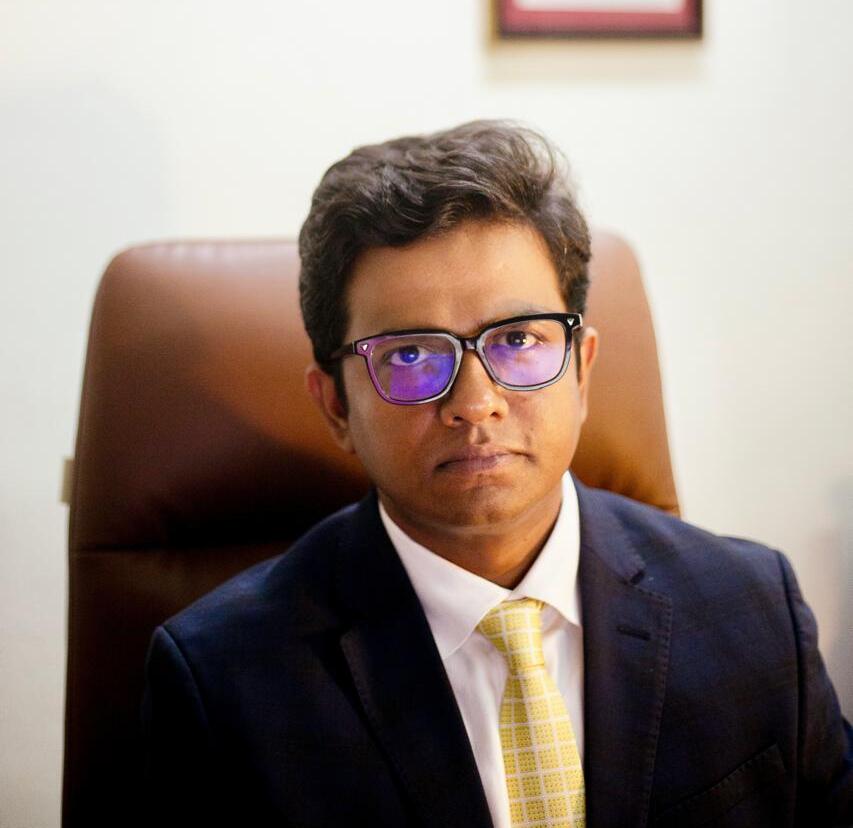
  • “International disputes practice is a highly competitive field in the practice of law. In the long run, this is a game of resilience over brilliance.” – Garv Malhotra, Partner at Skywards Law and Honorary Professor at NLU, Delhi.

    “International disputes practice is a highly competitive field in the practice of law. In the long run, this is a game of resilience over brilliance.” – Garv Malhotra, Partner at Skywards Law and Honorary Professor at NLU, Delhi.

    This interview has been published by Anshi Mudgal and The SuperLawyer Team

    Could you walk us through your educational path from Gujarat National Law University to your LL.M. at the National University of Singapore and Master’s at the Graduate Institute in Geneva. What inspired you to pursue these advanced degrees, and how were you able to secure full scholarships at these prestigious institutions, if you could share with our young readers?

    My legal journey started with a degree in law and commerce from GNLU, Gandhinagar. 5 years in Gujarat were incredible for me thanks to the people I met. I learned a lot and  also developed a fondness for Gujarati language. My law school journey revolved a lot around mooting and internships. I got my first taste of international arbitration through a moot in Frankfurt in 2011. I graduated from GNLU with an all-rounder scholarship and joined the bar. Alongside law school, I had worked with some leading senior counsel including Mr. Mihir Thakore, Mr. Soli Sorabjee, Mr. Siddharth Luthra and Mr. Ram Jethmalani. However, I was guided by my mentors to join a junior counsel office upon my graduation where I would learn written and trial advocacy.

    So fresh out of law school, I had the privilege of being a junior for two incredible lawyers Mr. Debesh Panda and Ms. Amrita Panda. While they are both married and work together, their styles are very different. In addition to their own stellar training as a junior to some of the greats like Mr. AK Ganguly, Mr. Rajshekhar Rao and Mr. Satish Manishinde, both of them had gained advanced academic exposure overseas and this showed in their finesse. I also worked closely with my colleague Mr. Naman Maheshwari who was senior to me and patiently guided me on practical nuances. Inspired by the journey of my seniors, I applied to the MIDS program in Geneva and was fortunate to get awarded a full scholarship to attend the same. 

    Living and studying arbitration in Geneva was amazing. The experience at MIDS is unmatched and the cohort, faculty and alumni go the extra mile in ensuring it. MIDS truly broadened my horizons and made me feel that I had unlocked new levels in a game that I had barely understood before. The chance to study under giants of arbitration like Gabrielle Kauffman-Kohler (my thesis supervisor), Emmanuel Gaillard, Zachary Douglas, Lawrence Boisson de Charzounes, Albert Yan Van Den Berg, George Bermann and others was a sumptuous treat. The learning from other members of the cohort is also enormous. After my time in Geneva, I got the opportunity to continue my education at The Hague Academy of International Law and the National University of Singapore (NUS) on full scholarships. At NUS, I got the chance to study arbitration under leaders like Lucy Reed and M. Sornarajah, and also study subjects like Oil and Gas law. 

    In my view, the key to cracking scholarships is demonstrating a balance between ability and inability to contribute. Ability to contribute positively to the cohort and the larger ecosystem if such an opportunity is given to you; as well as inability to contribute economically to access such an opportunity without assistance. 

    Your career has evolved from starting as an Advocate before the courts at Delhi to key international roles including at Drew & Napier LLC in Singapore. What motivated this transition, and how have these diverse experiences shaped your approach to dispute resolution and international arbitration?

    My stint at Drew & Napier (DN) happened by chance. While I was at NUS, I was working with Dr. Michael Hwang as an intern. He suggested that I also try to gain some experience at one of the leading disputes teams in Singapore. I reached out to my first choice, DN and fortunately got assigned as an intern to the Chairman Mr. Jimmy Yim, SC. I assisted Mr. Yim and his stellar team on a few matters including an arbitration trial. In the middle of a hearing at Maxwell Chambers, Mr. Yim took me out during the lunch break to a nearby restaurant and graciously invited me to join his team full-time after NUS. I was initially hesitant as I had a practice in India to return to but, the world has seen very few charmers like Jimmy Yim. 

    And thus after NUS I joined DN under Mr. Jimmy Yim, SC who was leading the disputes practice. Mr. Yim is one of the fiercest advocates and a master strategist. He is gifted with an unparalleled understanding of people. I think that the incisiveness with which Mr. Yim cuts through to the relevant facts from a bundle of files should be a spectator sport for amateur lawyers. His presence in a room, be it a court, arbitration or simply a meal is unmatched. 

    I also worked under Mr. Mahesh Rai, the youngest ever equity partner in DN’s 130+  year history, and for good reasons. His journey is truly inspirational and I have never seen someone who can handle such large volumes of complex work with such regal finesses, and yet be a good boss and colleague. 

    Even till today I often prepare arguments thinking how would Mr. Yim argue this or think what would Mahesh say if he reviewed this draft of mine. I have tried to train my own team at Skywards Law based on much of what I learned from colleagues at DN.

    During your time at Drew & Napier LLC in Singapore, you dealt with international arbitration and the laws of various countries. Can you share an interesting case or project from that time and how you think the Arbitration landscape in Singapore differs from that of India?

    DN is one of the citadels of disputes practice in Singapore. While I was an International Lawyer at DN, I had the chance to do a variety of matters across sectors like commodities, construction, shipbuilding, oil and gas, aerospace, aviation, hospitality, entertainment and others. 

    I fondly recall being the associate in a 4-member team for an international arbitration against an Indian PSU. Our team which was led by Mr. Jimmy Yim, SC and Mr. Mahesh Rai, acted for a South Korean Chaebol in the matter and the quantum was upwards of 200 million USD. The opposite side was represented by Indian counsel and the tribunal was a mix of retired Indian supreme court judges and a leading British QC (now KC). The arbitration was seated in Singapore, governed by UNCITRAL Rules and Indian Law. The similarities and differences of Indian and Singaporean legal traditions in the background of an intense trial being held in Maxwell Chambers came to the fore repeatedly during that trial. 

    There is much similarity in the letter of Indian and Singaporean arbitration law (both are common law and model law following countries). However, there is a huge difference in the spirit with which it is practiced by lawyers and arbitrators. In my view, Singaporeans have a beautiful pragmatic way of approaching commercial dispute resolution. Everyone conducts their job with military discipline and is respectful of the fact that they are charging by the hour to provide exceptional quality and dedication to the mandate. Timelines are very short and everyone puts their heart into delivering exceptional work within truncated timeframes. 

    Perhaps some of it is also a result of their post degree legal education system. Singaporean legal training is far more rigorous at the start of one’s career than India, and it is an ongoing process throughout one’s professional journey. Their system of admission to the bar is far longer and rigorous than India. Moreover, their CPD points system ensures that lawyers keep up with advancements in the field every single year. 

    Another memorable experience is when Mr. Yim and I supported a client in the entertainment industry in securing a multi-million dollar naming rights agreement i.e. agreement for the name of a theatre, from a leading real estate company.

    Your internship under Dr. Michael Hwang, the former Chief Justice of the DIFC, is a noteworthy achievement. How did working with such a distinguished figure impact your professional development, especially in international arbitration? Can you give an example of how this mentorship influenced your approach to subsequent arbitration cases?

    I had the chance to work under Dr. Michael Hwang for a short while in 2017. My internship was the event that turned my distant admiration for his work into a personal rapport. My learnings from him, over the years, have had a profound impact on my life. 

    Dr. Hwang, who is today one of the most celebrated thought leaders in arbitration, has also been a fierce advocate, an exceptional judge (in Singapore and Dubai), a prolific writer, a teacher of the law and a philanthropist. He is also one of my absolute favorite legal war-story-tellers. 

    In addition to unparalleled credentials, his love for the development of arbitration law is something I resonate very closely. From writing seminal articles which were the genesis of terms-of-art in arbitration (like Guerilla-Tactics), to establishing the Michael and Laura Hwang Chair in International Arbitration at NUS. His actions have truly inspired generations of lawyers, judges and academics, and his singular impact on the practice of international arbitration is outsized. 

    For me, just spending quality time with MH (as he is fondly known in his alumni circles) is a growing experience that shapes perspectives on all cases that my team and I handle. Even till date, I speak to him on videocalls and try to catch an exceptional meal with him every time I am in Singapore. Further, his lessons in written and oral advocacy are ones that have helped our journey the most. We try to emulate parts of his style in the small and big elements of our drafting and speech. 

    Recently, I have had the chance of extending the privilege of Dr. Hwang’s guidance to members of my own firm and my class at NLU, Delhi. Dr. Hwang took the final class of my 55-hour seminar course on the topic Advocacy: The Arbitrator’s Perspective.

    As a Partner at Skywards Law, you lead Dispute Resolution and represent clients in complex multi-party and cross-jurisdictional arbitration cases. Could you discuss your strategy in handling one such high-stakes case?

    Skywards Law is a boutique law firm. Our strategy in every case and situation is bespoke. However, every strategy has to be grounded in a deep understanding of the facts and circumstances. In many cases that also includes developing an understanding of the underlying technical aspects. A mix of our training, experience, teams and specialized technology help us to pre-empt issues and resolve legal matters efficiently. 

    In a recent arbitration involving a coal-related international transaction where we acted for a Singaporean entity, a dispute arose on various issues. The agreement, which provided for a three member tribunal, was governed by Singapore Law and SIAC rules. Upon digesting the facts and numbers we understood the need to balance costs with quantum. So we first got the proceedings converted to an expedited proceeding before a sole-arbitrator. Thereafter, we conducted the procedural hearings virtually and a final physical hearing in Kuala Lumpur (instead of Singapore). Using a few other strategies, we were able to get a favorable award within less than a year at a lower cost than initially estimated with substantial legal costs awarded to the client in the final award. 

    How do you foresee the future of international arbitration in the Indian legal landscape?

    In my view, the future of international arbitration in India appears to be exceptionally bright. As the country emerges as a business hub with massive import and export of capital, goods and services, the preference of companies for arbitration (for international disputes) is clear due to its flexibility and efficiency when compared to alternatives. It is however, an imperfect system with much scope for tactics and abuse. 

    A key driver of this progress is the pool of exceptional lawyers who are not only acting for Indian clients but for global entities, who are acting as arbitrators, leading institutions and becoming thought leaders. Their expertise and dedication is building confidence in India’s arbitration ecosystem and making it increasingly attractive. 

    Legislative and judicial efforts towards bolstering India’s position have played a key role. For example the Arbitration and Conciliation Act has been amended multiple times with a view to fine-tune it and create a robust framework. The appellate courts have pro-actively supported the development of a judicial ecosystem that respects arbitration. 

    The ecosystem is further supported by the efforts of the bar and prominent Senior Advocates such as Mr. Gourab Banerji, our Attorney General and Solicitor General, Mr. R. Venkatramani and Mr. Tushar Mehta respectively, Mr. Gaurav Pachananda, Mr. Shashank Garg and many more.

    While India is far from achieving its goal of becoming a global hub for international arbitration, I believe that it is much closer to this goal than it was just a few years ago. The proliferation of thought-leadership events like the Delhi Arbitration Weekend, the mushrooming of arbitration institutions and the wealth of jurisprudence and literature being developed on the topic are clear indicators of this growth. 

    In 2024, you were appointed as an Honorary Professor at the National Law University, Delhi. Could you kindly share insights about your academic journey with our readers?

    Academia and the progressive development of the law have a special place in my heart. I have been teaching law for over a decade. I started teaching short courses on Investment Arbitration at my alma mater GNLU. I was also involved with some practitioner-oriented sessions at NUS and NALSAR. However, I started dedicating more time to academia after I moved back to India and set up Skywards Law. 

    Initially I taught a 40-hour seminar course on arbitration at the National Law School, Bangalore. Since the last few years, I have been teaching law on Friday evenings at National Law University, Delhi (NLUD) in alternate semesters. I teach a 55-hour seminar course titled “Practical Aspects of International Arbitration”. It is offered to advanced students who have studied arbitration as a subject previously. 

    The University, under the leadership of Dr. G.S. Bajpai was kind enough to appoint me as an Honorary Professor alongside some leading names from India and around the world. In this role, I try to be a catalyst to the University’s broader vision of developing a favorable academic ecosystem for arbitration, business law and international law. I also get the chance to support their thought-leadership initiatives and assist with innovative teaching experiments aimed at grooming young lawyers for the journey ahead. 

    What advice would you offer to young lawyers aiming to excel in International Arbitration, and could you recommend any resources to help them stay updated on the evolving landscape of the field?

    My foremost advice to law students and young counsels is to have fun and enjoy the process rather than fixate on a future destination. International disputes practice is a highly competitive field in the practice of law. In the long run, this is a game of resilience over brilliance. Life is full of ups and downs, focusing on long term progress instead of short term gratification and optics. Focus on ‘doing’ over ‘being’. Excellence is the eligibility criteria for the higher echelons of the game and being a well-rounded personality will help you sustain your journey.

    However, international disputes is a dynamic field with much scope for value addition and innovation in the short term. Young counsels should embrace this spirit and always seek opportunities, however small and try to do their best in it. Another advice would be to find good mentors and build long-term relations. 

    Young counsels can consider gaining practical insights from summer schools such as the Paris Arbitration Academy, Geneva Summer School, Basel Winter School, the Hague Academy of International Law etc. An LL.M. is not essential but goes a long way in building and boosting one’s career by getting you a seat on exclusive tables. Though these courses come with a significant financial commitment, there are various ways to secure funding. In my view, getting into elite programs is often more challenging than securing the funds for it. 

    Given your demanding career and professional obligations, how do you unwind and maintain a healthy work-life balance?

    Maintaining a healthy work-life balance is integral to sustainability in a demanding profession. Temperament and balance are very important for a lawyer to remain objective and efficient. I believe that taking breaks and pauses help a lot. I also believe that philosophical concepts like joie de vivre and pursuit of happiness are very important and thus I intersperse my work life with experiences beyond the law that bring me joy and happiness.

    As an avid traveller, I try my best to take multiple trips every year. Some of these are vacations, some are weekend getaways and some are just extensions to work trips. So far, I have travelled to over 30 countries and over 200 cities. I look forward to exploring more destinations in the Americas and Africa in the near future. I enjoy travelling alone, with my wife (who is a former travel journalist) and with friends and with family. 

    Music is another constant companion in my life. I have a deep love for exploring new musical creations across genres and artists from around the globe. The creative genius in music continually amazes me, reminding me of the boundless possibilities of human expression. Audiobooks have also become an essential part of my routine, especially as they fit seamlessly into busy schedules. Whether I’m driving, waiting for a meeting or at the airport. Skilled narrators made the process of consuming books easy and incredibly relaxing. 

    I also get to maintain a balanced life due to my stellar associates (gratitude shoutout to Eshan Chaturvedi, Arijit Sanyal and Arundhati Kale), and colleagues from other teams at Skywards Law who accommodate my schedules with patience and optimize my time efficiently. 

    Get in touch with Garv Malhotra –

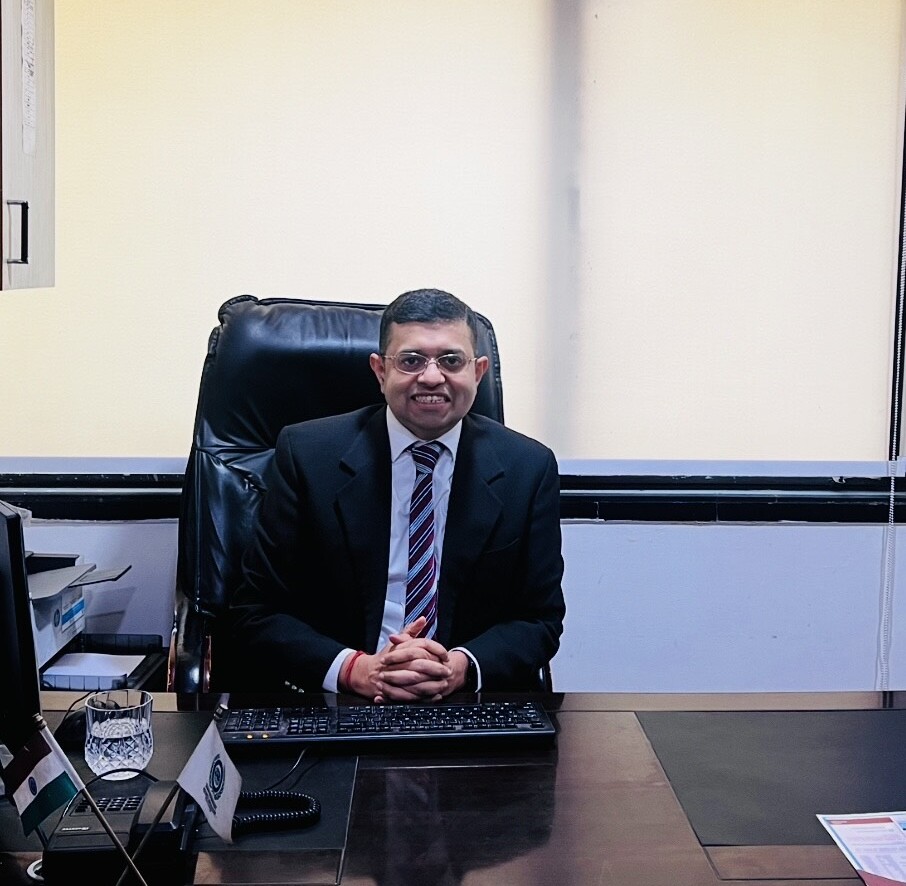
  • “I think the 2 most important skills that a lawyer needs, in order to thrive in the fast evolving legal environment, is preparedness and humility.” – Sugyata Choudhary, Principal Associate Dhaval Vussonji & Associates.

    “I think the 2 most important skills that a lawyer needs, in order to thrive in the fast evolving legal environment, is preparedness and humility.” – Sugyata Choudhary, Principal Associate Dhaval Vussonji & Associates.

    This interview has been published by Anshi Mudgal and The SuperLawyer Team

    With a decade of experience in commercial disputes, what initially inspired you to pursue a career in law, particularly in the area of dispute resolution? 

    So I did not really have it all figured out for me initially when I was making a career choice. Like most teenagers, I was confused and didn’t even know what I wanted to do. I had done 11th and 12th grade in the Science stream and at that point of time I had never fancied a career in law. I was more inclined towards doing either medicine or any other para medical field. Due to some family circumstances at that point in time, I was unable to pursue medicine and had to fall back on the next best career choice. The confusion did not end here. I saw both law and journalism as reasonably good career options. While the power that came with being aware of our rights inspired me to pursue law, I was equally enticed by the power to make a mass impact that came with being a journalist. I wanted to be able to make some sort of impact in what I did, so I secured admission in a journalism college on the same day when the first merit list at GLC was to come out. But as life would have it, something made me realise that I can make an impact even by pursuing law. So I left the admission secured in journalism and signed up for the five year law course instead. That was how I began my journey in law.

    After earning your degree and being designated as a Solicitor, how did your early experiences in litigation at various law firms help shape your approach to handling complex commercial disputes? What were the key lessons you learned during this period? 

    While in my 4th year of college I made an unconventional but conscious choice of signing articleship for 3 years for qualifying as a Solicitor with a small boutique law firm in Mumbai which was primarily into dispute resolution. Even after qualifying as a Solicitor I continued working at this firm for a couple of years before I moved to a bigger firm. I was fortunate to be exposed to some very sensitive matters at this time including arbitrations, suits and writ petitions that were both complex and high value. So right from the start I was directly put into the hot tub and had to find my way into understanding complex commercial disputes and finding ways to resolve them. I believe that it was the training that I received during this time which set an extremely solid foundation for a decade of my career in dispute resolution that lay ahead. Many litigation lawyers are often given the advice that you must start practicing with the smaller courts, because this is where you actually learn the nitty gritty of trial and procedure. I did quite the opposite. I started my career with litigation in the Bombay high court and even supreme court, and quite honestly, I think it worked out beautifully well for me. The precision that is required for handling complex disputes in the higher courts forced me from the very start to pursue accuracy in whatever I was doing. Since the stakes in every matter that I was handling were high, there was very little room for error, which forced me to check, and re-check my work which was, I think, an extremely essential skill that one needs to develop in this profession. As far as nitty gritty of procedure is concerned, in my experience, I did handle a fair amount of disputes in the lower courts as well, and to be honest, I felt that the higher courts followed a more precise way of following the procedure with lesser adjournments and delays and more precision in interpretation of the law. Another key lesson that I learnt in my initial years at law firms was how to handle clients. Client counseling is a skill that is extremely crucial for the purpose of understanding a dispute and then effectively resolving it. Exposure to different kinds of clients, both corporate and individuals, understanding the dispute, understanding what exactly is the remedy that they are seeking, these things were extremely important. A client himself can make or break his own case and to get the right information out of the client is sometimes a very underrated skill. So these were some of the key learnings that I had during my initial years.

    You have significant exposure to both domestic and international arbitration. Can you share how these two spheres differ in terms of legal approach and challenges, and what has been your strategy for effectively navigating both?

    I believe, earlier on, while institutional arbitrations were not as popular in India, and ad hoc would be the natural first choice of parties, there was a vast difference in the way arbitrations were conducted in India and Internationally. Thankfully, the UNCITRAL and CIArb have done so. Post the 2015 amendment and the increasing pro-arbitration jurisprudence in India, the gap has narrowed down quite a fair bit . For example, something as simple as fast track arbitrations or document-only arbitrations was a concept India was oblivious to until recently. Fair to say that on interpretation of the law, there were not much difference in the approach, however International arbitrations have their own challenges when it comes to costs of arbitration. However, more than the arbitration proceeding itself, the major difference, which I believe will always exist, is in the system of the courts of various jurisdictions in challenges to the arbitration award or the arbitration procedure. The best strategy to effectively navigate both kinds of arbitration is to be open to learn, no matter how experienced you are in the profession, to be flexible in your approach to learning and most importantly to be observant of the smallest details.

     As a Fellow at the Chartered Institute of Arbitrators, how has this designation enriched your skills and approach to arbitration? 

    I had taken the Accelerated Route to Fellowship, from CIArb London and I must say it went a long way in widening my knowledge of arbitration. The standards of procedure and conduct of international arbitration was meticulously explained by CIArb and the method adopted to teach during the course was key in building skills which are absolutely essential for a successful career in arbitration. The study was a rigorous one, which contained case study based, and unconventional questions, which forces one to think out of the box and present solutions. It ended with a rigorous award writing assessment, which further trains the mind to think from the arbitrator’s perspective and balance equities in a dispute. CIArb is also an internationally acclaimed standard and exposed me to a network of some of the brightest minds in Arbitration. I highly recommend budding arbitration practitioners to pursue the fellowship from CIArb to widen their knowledge and network. 

    In your current role, you focus on banking/real estate litigation and advisory relating to enforcement of security by Financial Institutions . What are the most common challenges faced by financial institutions in these areas, and how do you tailor your legal strategies to meet their needs?

    In my current role I work on complex matters relating to recovery of stressed assets by financial institutions as well as Banking and real estate related litigation. I have come across cases with large amounts of money which turn into non-performing assets for these financial institutions due to the default of the borrowers. Most commonly, the challenges faced by these financial institutions comprise of dealing with fraudulent transactions made by the defaulting borrowers like multiple sales of their security, siphoning of monies and even forgery. Another major challenge faced by these institutions are the legal complications that arise due to the interplay of various laws in the country like RERA, SARFAESI, Transfer of Property Act, Slum Rehabilitation Law and general laws that sometimes form an impediment in enforcing their security effectively and delay the recovery process. My job in my current role is to work on effectively designing the best legal strategies for helping the clients achieve fast recovery of the stressed assets in the most efficient manner, and thereafter to implement that strategy, which may contain a combination of remedies. The most effective way of doing this is to keep myself abreast with the latest legal developments in banking and real estate related law and applying the latest law to the peculiar circumstances of the given case in order to come up with the best way forward. 

     Given your diverse background, what do you think are the key skills and qualities a lawyer needs to thrive in the fast-evolving legal environment, particularly when dealing with multi-jurisdictional disputes or complex financial matters? 

    I think the 2 most important skills that a lawyer needs, in order to thrive in the fast evolving legal environment, is preparedness and humility. I always believe it is extremely essential to know your brief like the back of your hand. Preparedness in law is a tool that can make a lawyer formidable. This must be coupled with humility. As our senior Mr. Fali Nariman put it, I quote : “The moment you say, you know everything, I’m afraid, that’s the beginning of your downfall.”

    In addition to your demanding legal practice, how do you maintain a healthy work-life balance? Are there any personal habits or practices you find particularly useful in maintaining focus and achieving long-term success in your career? What strategies do you use to remain calm in high-pressure situations? 

    I am sometimes unable to stay consistent, but I do follow some sort of physical exercise for half an hour in the morning. It could be home work outs or yoga or just stretching exercises. Physical movement works wonders to keep the mind balanced and cope with stress. I also try and make it a point to travel whenever I get the opportunity. Also, meditation and spending time with Animals or in nature goes a long way to give the mind the much needed pause and refuel back into action. I read this somewhere and I believe it is so important for everyone in the hustle culture to know this- “Rest is not taking the foot off the gas, it is putting fuel in the tank” .  

    What advice would you offer young lawyers who wish to specialize in arbitration and build a successful practice similar to yours? 

    Few things: 1. Never be lazy to read. Know the difference between just reading something mechanically and understanding what you read. 2. Organise your brief well. We often underestimate the impact organisation has on productivity and when dealing with voluminous papers and proceedings, organisation can sometimes make or break your case 3. Cultivate the practice of updating yourself with the latest judgments. Arbitration as a practice area is evolving very fast with jurisprudence changing almost every day. Keeping abreast with the latest law makes a huge difference when it comes to advising clients.

    Get in touch with Sugyata Choudhary –

  • “Our mind learns a lot by observation, sometimes without us even being aware of it; and there is no better place to see the law actually play out than in the trial courts.” – Aman Vijay Dutta, Arbitration & Disputes Lawyer at Chambers of Aman Vijay Dutta.

    “Our mind learns a lot by observation, sometimes without us even being aware of it; and there is no better place to see the law actually play out than in the trial courts.” – Aman Vijay Dutta, Arbitration & Disputes Lawyer at Chambers of Aman Vijay Dutta.

    This interview has been published by Anshi Mudgal and The SuperLawyer Team

    With nearly a decade of experience across various areas of law, do you feel that law was always your intended path, or were there specific factors that guided you towards this profession?

    Strangely, the practice of law was the last thing I thought of as a child. I was never very studious and never really sat down to think of what I wanted to pursue as a career. My mother, who is a scientist, was insistent that I must obtain a professional qualification. And it was my father, who is a businessman, who first suggested I study law; he’s in the business of real estate and saw potential in the practice of law. In a nutshell, both my parents were of the view that I obtain a professional qualification, and then do whatever I deem fit, provided it was constructive. And I’ve seen that, law or anything else, this emphasis on professional qualification is arguably one of the most important things that a child can be directed towards in the absence of any pre-disposition or pre-existing plan. But after joining law college, and seeing students work as hard as they did with moots, debates, research papers, and internships, I began to lose interest; it seemed like a lot of work. In fact, around the 3rd year in law college, I even toyed with the idea of leaving the law all together with a BSL Degree. I didn’t realise it back then but, sub-consciously, my plan was to join my father’s business. It seemed like the easy way out. I even did an internship of sorts with his firm – he was a task master and I was a complete misfit because of my indiscipline. Once I saw that I’d have to work equally, or maybe even more hard with him, I decided to give law a shot. 

    In other words, I was a very dull and unambitious student until my 4th year; it was only around this time that I began to consider giving things a shot; I began to read and participate in moots. That changed a lot for me. And the moment I surrendered myself to the law, I couldn’t imagine going back. In hindsight, I can’t see how I’d been doing anything but practicing law. This profession has re-moulded me in ways that were so necessary but impossible anywhere else.

    You began your career in the Litigation team at a law firm. What were the key learning experiences during that time that shaped your legal perspective and influenced your career path?

    The first key learning was that come what may, the trial courts offer learnings that no other forum can offer in litigation; trial work is trial work. My first year of law practice (at Hariani & Co.) was exclusively restricted to trial courts, or tribunals of first instance. While it got boring at times, it was the most enriching overall experience. The reason for this is simple: Our mind learns a lot by observation, sometimes without us even being aware of it; and there is no better place to see the law actually play out than in the trial courts. That one year set a solid foundation in my mind about what the practice of law was at its very essence; facts first, procedure next, and then, the substantive law. 

    The second learning was that the more time you spend with a matter (mentally), the more you seem to get it. I have no doubts that –although my foray into arbitration was not to happen until 2 years after– I would not have gotten into this space, had it not been for my time at Hariani & Co., Pune. My time there, also showed me the tremendous potential that lay in establishing a trial practice, contrary to popular beliefs. When it came to civil law, everyone wanted to be in the Higher Courts or in the Big law ecosystem, perhaps, because they haven’t seen the plus sides of a career as a trial lawyer. And a lot of your baselining of what the future might hold, takes place during your first two or three years. So it’s important that your environment during these first few years gives you hope. There was not a single big case in the city that the firm wasn’t involved in. I was lucky that way. Hariani & Co., ingrained a think big mentality of sorts in my mind.

    During your time at AZB & Partners, you worked on a significant arbitration case against a Japanese conglomerate. What were some of the unique challenges you faced, and what strategies did you employ to successfully navigate those challenges?

    The things I learnt whilst working on that matter were probably my biggest learnings in practice until then. While it did concern a foreign entity, the opponent in the matter was an Indian subsidiary of that foreign entity – so it was a domestic arbitration through and through; that’s for context. What made that case challenging was the sheer volume of the records; the matter revolved around disputes between a contractor and sub-contractor over civil and mechanical work done at India’s largest thermal power plant. Although up to that point, I had worked on cases where the monetary stakes were even higher than those involved in this arbitration, the volume of the records in the previous cases was nowhere close. So the biggest challenge for me was to get a grip on the documents and the facts. I remember my boss repeatedly laying emphasis on the list of dates being as accurate as possible. It was overwhelming and I found myself lost almost every day. So the biggest takeaway from that arbitration was the importance of organizing your brief, getting a grip on facts, and your thoughts. In one sentence, I’ve learnt that the only strategy to focus on in any case, is to simply have a command over the facts. If you do that one thing right, the rest of it somehow seems to fall in place almost automatically. If you’ve done a good job with organizing and presenting the facts, transparently (emphasis added), to a Judge or an Arbitrator, then you have done half the job. If you’ve been honest and precise in your presentation, the decision maker’s work load is considerably reduced. They need not spend as much time ascertaining or weeding out each and every fact; that frees up mental space for them to apply the law accurately. The output will almost always depend on the input. 

    After working with two prestigious firms, you chose to establish your own practice. What motivated you to take this step, and what were some of the initial challenges you encountered while setting up your practice?

    I was always clear that if I practiced law, in the long term, it was going to be on my own; else, I’d give up practicing all together. I couldn’t see myself being a transactional lawyer or sitting in house, or only briefing other counsel. To do it any other way, was not something I could get myself to do willingly. It isn’t like I didn’t try to restrain myself and stay a little longer within the law firm ecosystem. But it was not in my DNA, and I was not doing justice to the jobs at hand; it was either leaving that ecosystem or leaving the law altogether. I decided to leave the former, albeit on an impulse, and initially regretted the decision a lot. But it is, in hindsight, the best thing that I’ve done. Initially after commencing independent practice, fear was the motivation. But I was fortunate that I got good work and opportunities from almost the first week, if not day, of my independence. Plus, I had no responsibilities and my parents were there to support me in every possible way. I could wax lyricals about “struggle” or challenges but there wasn’t any; there was a lot of self-doubt, many long hours, a lot of being alone as opposed to having colleagues, and so on. But that’s just nitpicking; I had work, my clients were fair, my parents were supportive, and I had no responsibilities. So no challenges. I only had to show up, and the rest somehow took care of itself. 

    Since launching your independent practice in January 2019, you have represented clients in various courts and arbitration tribunals. Could you share one of your most memorable or impactful cases, and what valuable insights did you gain from handling it?

    Come to think of it, strangely, it’s not an arbitration matter. I’ve had some extremely memorable experiences: my first argument – before a Small Causes Court; my first arbitration in which I was part of a team that appeared before 3 retired judges of the Supreme Court, against some of the finest arbitration lawyers of the country; my first ever cross examination – against a prominent German automobile manufacturer, an arbitration I won, albeit not as thumpingly as I’d like; representing Rapido against an obstinate State Government; my first brief as an arguing counsel. But the matter that stands out is a case that I did before the National Green Tribunal against an environmental clearance granted to a slum rehabilitation scheme which was being constructed by a prominent developer and the Pune Municipal Corporation. My client had challenged this clearance and other permissions and, incredibly, had lost before every forum including the Supreme Court; that is when he came to me. I spent months on the case and managed to pull out one seemingly small but actually significant violation which had not been agitated before or adjudicated by any court or tribunal. We managed to succeed based on the law laid down in the Forward Foundation. After the matter was disposed off, my opponent became my client. I could think of no better end to that litigation. That will always be special. 

    You have represented Roppen Transportation Services Private Limited in multiple forums. Could you describe the key complexities of this case and the challenges of representing a transportation company in such matters? How did you approach the legal strategy?

    What made this case peculiar was that something new kept happening almost every day. I’m based out of Poona but was practically living in Bombay for almost three whole weeks – afternoons were usually spent in my car at Horniman circle, waiting for the next call while populating the ever expanding list of dates. Before you knew it, you had to file something before the State Transport Appellate Tribunal, the Regional Transport Authority, and the Bombay High Court – things were on extremely short notice. Plus, there was some FIR or the other being registered against new employees every day. Added to that was the volatility of autorickshaw drivers. I was even threatened once. It was exciting and intimidating at once. 

    The matter hinged on the Motor Vehicles Law in Maharashtra, the Constitutionality of the State Government’s prohibitive actions, and Roppen’s right to ply in the absence of specific regulations for bike taxis; the complexity was owed to the fact that the grievance that Roppen had, on first blush, was more to do with policy making which is almost exclusively within the domain of the executive. All the same, there was no express embargo on plying of bike taxis. In fact, the central government had recognized the right to use motorcycles as contract carriages, as far back as in the year 2004. But the state government had nothing in place; and this being a concurrent list subject, the State maintained that it had absolute dominion to call the shots. All the same, there was an aggregator’s policy in place in Maharashtra but the Government kept insisting that bike taxis were illegal. It was a mish mash of law, both for and against us. 

    The strategy was simple: ensure compliance of the aggregator policy, and exhaust all alternative remedies before approaching the High Court and finally mounting a challenge to the constitutionality of the state law. We worked on the issue as a whole for almost a whole year, and in November 2022, even managed to convince the High Court to set aside an order of the RTO Pune, without having gotten into the merits. The matter was primed for us to move with this part of the challenge – the constitutionality, coupled with the fact that the government of Maharashtra had not obtained presidential assent to do away with the central law. But at the last minute, the clients decided to refrain from mounting this challenge on advice of other counsel, who had different ideas and took a different route; Roppen was ordered to shut down on 13 January 2023.. But the state government has finally come up with a policy; that was a relief. 

    The experience was incredible because I was the lead Advocate for the longest time. Drafting representations, appeals, petitions, overall strategy, understanding the views of the GCs, the stakeholders, and even appearing in a few matters and briefing Senior Counsel in others. It was a lot to take in. A different kind of learning. 

    As a guest lecturer at several universities, including your alma mater, what do you find most rewarding about teaching? How do you incorporate your practical experiences into your lectures, and how do you foresee the future of Alternative Dispute Resolution (ADR) evolving with the rise of technology in the legal field?

    The satisfaction of seeing someone understand a particular point or provision of law based on your expression of it, is the most rewarding aspect of teaching. Added to that, is the fact that if you’re serious about doing a good job as a professor, you need to be thoroughly prepared and really understand the subject deeply. This, in turn helps in expanding your own stock of knowledge, which is key to a good law practice. Teaching that way is a win-win for all concerned. I am of the firm opinion that any practicing / litigating Advocate cannot be at his or her best without being in constant touch with his or her academic or theoretical –some might even say– impractical or idealist side. I make it a point to explain threadbare the details of cases I’ve handled, while explaining a particular issue and I try to correlate the case with the provision we are studying; trying to draw out as many parallels as possible. I’ve found that to be one of the most effective ways of reaching into the minds of the students or recipients. As far as technology in ADR goes, of course, we aren’t at par with many foreign jurisdictions. And even things like virtual hearings and email filings have come into the mainstream in India, only post the pandemic. So while there is certainly a lot going on in that space, I don’t think India is ready yet. A lot of legislative groundwork needs to be laid before we can think of using advanced technology in India’s ADR ecosystem. 

    You have expressed a strong interest in philosophy, psychology, and history. How do these interests influence your approach to law and contribute to your professional growth? Do you find these subjects shape your views on justice and conflict resolution?

    My interests in philosophy and psychology stemmed from my need to find myself answers when I’d hit a rough patch. I was lost and miserable, both, personally and professionally. I’m glad that that happened very early on in my career. I think self-awareness is key for persuasion skills; one can only try to understand others, if they’ve looked within and understood their own self. Plus, it helps you deal with negativity a lot more effectively. I also think cognitive biases and heuristics should be taught in every school; things like the Pygmalion effect, the Confirmation bias, the Sunk Cost fallacy, and so on. These are aspects of everyday life, both in and out of court. And unless we understand the fallacies which are inherent in our thoughts as human beings, we can’t do justice to our jobs as Advocates. It also helps to keep the ego in check. All things equal, I think that an Advocate with a better stock of knowledge on psychology, has an edge over another with lesser of it. Philosophy is more to keep yourself on course when you’re despondent or face a setback, whether in or out of court. 

    I’ve always been interested in history. And, again, I don’t think there’s a better way to understand the future than by first understanding the past. They say every thought or idea that you might have, has already been thought of by someone else. That, in and of itself, should answer to its significance. And if that isn’t enough, even in our work as Advocates, we’re guided by case law – which is another piece of history. I’ve learnt that history also improves your Court craft in an unexplainable & intangible way. I can’t point out exactly how, but it does. 

    What advice would you give to young lawyers aiming to specialize in arbitration and build a successful practice like yours? Additionally, what resources or strategies would you recommend to help them stay updated on the latest legal trends?

    I think that inherent within the idea of being updated, is the presumption that we know what the law was or has been. I think therefore that staying updated on the law, begins with going back to its very origins. The history of the law is what will help you effectively understand the present. And so, focus on reading law reports (they’re freely available on ESCR now); the further into the past you go, the easier it becomes to keep up with the latest developments. 

    Coming to building a law practice, I don’t think I’m successful, given where I’d thought of getting by now, when I was a student. But yes, given where I began, I’m satisfied; much more than that actually. This is to say that I don’t think I’m qualified enough to  talk about building a successful practice, just yet. What I can offer, however, is advice in the form of a few eternal truths that I’ve come to know,  not understand. Know. 

    1) Your ability to succeed at anything is no small measure, directly proportionate to your ability to stick it out. There’s a reason they say that a rolling stone gathers no moss. 

    2) The more you read, the luckier you get. Especially the bare text of the law. 

    3) Procedure and Evidence are the keys to any door when it comes to civil and commercial work; and,

    4) You are your biggest resource. Never sell yourself short.  

    Get in touch with Aman Vijay Dutta –

  • “My motivation stems from a desire to make a tangible difference through my work. Every case is an opportunity to advocate for justice, contribute to governance, and create a positive impact.” – Amod Kumar Bidhuri, Advocate On Record at Supreme Court Of India.

    “My motivation stems from a desire to make a tangible difference through my work. Every case is an opportunity to advocate for justice, contribute to governance, and create a positive impact.” – Amod Kumar Bidhuri, Advocate On Record at Supreme Court Of India.

    This interview has been published by Anshi Mudgal and The SuperLawyer Team

    What initially inspired you to pursue a career in law? Were there specific factors that shaped your decision?

    The decision to pursue law was driven by a confluence of personal experiences and values. Coming from a family where integrity and public service were paramount, I grew up watching my father, Chaudhary Veer Singh, uphold honesty and credibility in every aspect of life. His example instilled in me a desire to pursue a career that could make a meaningful impact on society.

    During my tenure as Executive Counsellor in the Delhi University Students’ Union (2003–2004), I encountered the real-world challenges of governance and conflict resolution.I saw firsthand how law plays a pivotal role in addressing grievances and maintaining order. Advocating for students’ rights and negotiating with authorities underscored the importance of the law as a tool for empowerment. These formative experiences, coupled with a desire to address societal inequities, solidified my commitment to the legal profession. I realised that law is not just a profession but a tool for creating meaningful change and that realisation became the foundation of my career.

    What pivotal moments helped develop your legal knowledge and skills early on? Did you face any significant challenges?

    Working with seasoned lawyer Sh Charan Singh Verma in District Court, Saket was what laid the foundation of my career but the most pivotal moment in my career was joining the cChambers of Advocate-on-Record Ankur Prakash in Hon’ble Supreme Court of India. His mentorship was instrumental in shaping my understanding of Supreme Court practice. Under his guidance, I learned the art of drafting pleadings, including special leave petitions, writ petitions, and counter-affidavits. His insistence on precision and thorough research helped me develop a strong foundation in procedural law.

    A particularly defining experience was assisting him in a complex constitutional matter that required interpreting conflicting statutes. Through his mentorship, I gained not only technical skills but also the confidence to handle high-pressure situations. Challenges during this period included managing tight deadlines and navigating the intricacies of Supreme Court practice. However, these experiences laid the groundwork for my future success as an independent practitioner.

    What prompted you to establish your own practice, and what initial challenges did you face?

    After years of learning under my senior/ mentor I felt a strong desire to create my own professional identity. Working with mentors like Ankur Prakash gave me the skills and confidence to start my practice. I wanted to take ownership of my career and build a legacy of trust and excellence in the legal field. Establishing my practice allowed me to work on cases that aligned with my values and aspirations.

    The initial challenges were significant—building a client base, gaining recognition in a competitive environment, and managing operational responsibilities were all daunting. However, the lessons I learned under my mentors proved invaluable. For example, in one of my early independent cases—a property dispute involving multiple parties—I applied the negotiation skills and strategic planning techniques I had observed during my time with  my mentor. Successfully resolving the case helped establish my reputation and brought in more clients.

    Could you share an example of a complex case you handled and how you resolved it successfully?

    A particularly challenging case involved representing a government body in a constitutional matter where the validity of a state policy was questioned. Opposing counsel argued that the policy violated fundamental rights, making the case both high-stakes and politically sensitive.

    Drawing on years of my experience with Ankur Prakash, I approached the case with meticulous preparation. I analysed the legislative history of the policy, collaborated with subject-matter experts, and prepared arguments that balanced individual rights with the policy’s public interest objectives. By presenting clear and well-supported arguments, I was able to secure a favourable judgment for my client. This case demonstrated the importance of combining legal expertise with strategic thinking and reinforced my belief in the power of collaboration.

    What are your responsibilities as a Panel Lawyer for the State of Rajasthan and NBCC? What cases do you typically represent?

    As a Panel Lawyer for the State of Rajasthan, I handle constitutional challenges, criminal  & civil appeals, and administrative disputes. These cases often require balancing the state’s interests with broader public welfare considerations. For NBCC, my responsibilities include managing commercial disputes, advising on contractual obligations, and ensuring compliance with regulatory frameworks.

    My responsibilities include drafting pleadings, representing clients in the Supreme Court and providing legal advice on important issues. These roles require me to balance legal acumen with an understanding of policy implications. Ensuring that my clients interests are effectively represented in critical matters. These roles demand not only legal acumen but also strategic foresight, qualities I developed through years of experience and mentorship.

    What motivates you to stay focused and driven, and how do you maintain a balance between work and personal life?

    My motivation stems from a desire to make a tangible difference through my work. Every case is an opportunity to advocate for justice, contribute to governance, and create a positive impact. My long-term aspirations—to become one of India’s leading lawyers and a respected political figure—keep me focused on continuous improvement.

    Balancing professional and personal life is challenging but essential. I prioritise spending time with my family and engaging in activities that refresh and inspire me. Personal time with family and moments of reflection are essential for maintaining perspective and energy. This balance not only keeps me grounded but also enhances my professional effectiveness.

    How has your role as an Advocate-on-Record shaped your approach to handling complex matters in the Supreme Court?

    Being an Advocate-on-Record has deepened my understanding of the procedural and substantive nuances of Supreme Court practice, it also demands accountability and precision. Handling cases before the Hon’ble Supreme Court of India has sharpened my ability to navigate procedural complexities and distill extensive case records into compelling arguments. 

    My time of association with Ankur Prakash prepared me for this responsibility by exposing me to high-profile cases and teaching me the importance of precision and accountability.

    One unique challenge has been dealing with cases involving conflicting judicial precedents. These require innovative legal reasoning and persuasive articulation to guide the court toward a favourable interpretation. My approach involves detailed research, crafting concise submissions and anticipating questions from the bench to ensure comprehensive preparedness.

    What advice would you offer to young lawyers starting out, especially those interested in both criminal and civil law?

    I encourage young lawyers to focus on building a strong foundation in legal principles and honing their research skills. A criminal and civil law require different approaches – criminal law emphasises procedural precision, while civil law demands analytical reasoning and negotiation skills. Networking with peers and senior advocates is essential for gaining insights and opportunities.

    Additionally, I cannot overstate the value of mentorship. My own experience with Ankur Prakash taught me that having a seasoned professional to guide and challenge you can accelerate your growth and open doors to new opportunities. I also advise young lawyers to embrace challenges, maintain ethical integrity and cultivate resilience. Success in the legal profession is a marathon, not a sprint and consistent effort over time is the key to growth which requires perseverance, and early struggles are stepping stones to long-term achievements.

    How do you prepare for high-pressure legal proceedings, and what strategies do you use for effective advocacy?

    Preparation begins with a comprehensive review of the case file and identifying key issues. I invest time in drafting concise submissions, researching precedents and anticipating counter arguments. Revising /rehearsing my submissions ensures clarity and confidence during hearings.

    In high pressure situations, adaptability and presence of mind are critical. I focus on engaging with the court, addressing questions directly and presenting logical well structured arguments and maintaining composure. I view high pressure situations as opportunities to demonstrate my expertise and adaptability. Effective advocacy, in my view, is about crafting arguments that resonate with the court while addressing the clients objectives. 

    Get in touch with Amod Kumar Bidhuri –

  • AI, Mentorship and the Future of Law: Insights on Embracing Change in the Legal Profession – Bill McCormick, Legal Expert and Mentor, Greater Chicago Area, United States.

    AI, Mentorship and the Future of Law: Insights on Embracing Change in the Legal Profession – Bill McCormick, Legal Expert and Mentor, Greater Chicago Area, United States.

    This interview has been published by Anshi Mudgal and The SuperLawyer Team

    In your profile, you described AI as a “young associate” in the legal field. Could you elaborate on how AI is redefining traditional legal roles and the kinds of responsibilities we might pass on to AI? How can lawyers adapt to this shift?

    I came to law from a manufacturing and engineering background, which gave me a unique perspective. The legal industry differed dramatically from manufacturing and engineering—specifically the accountability and lack of measurement. Much of law is learned through apprenticeship, which is vastly different from the formal training in engineering. In fact, I felt law school left me far less prepared for my career compared to the preparation engineering school provided for engineers.

    When I entered the legal field, I realized law practices could be more efficient. I compared it to medicine, where patients now play an active role—researching symptoms, diagnosing themselves (sometimes overly so), and bringing their questions to healthcare professionals. Medicine became somewhat democratized, allowing patients to take ownership of their health, for better or worse. This shift hasn’t happened in law on the same scale.

    Most of my career has been in corporate law, and I observed real changes in other corporate departments, like accounting and finance, which moved away from manual tasks toward insightful, risk-based processes supported by software. By contrast, legal departments stayed static for many years. While there were incremental innovations, such as moving from typewriters to word processors or shepherdizing cases online, none of these fundamentally transformed the legal industry. 

    One significant development came with Alternative Legal Service Providers (ALSPs), which began specializing in areas like eDiscovery in litigation. They didn’t threaten traditional lawyers because these tasks were in untraditional fields. Similarly, in-house legal operations began to introduce the idea of running law as a business, but even that didn’t fundamentally change legal practice, which remained heavily relationship-driven.

    We also saw the rise of skilled paralegals, legal process-outsourcers, and other support, but the core practice of law didn’t evolve significantly. In the U.S., access to justice remains a major issue. A large portion of the population can’t afford legal assistance unless they are at a very high-income level. While many dedicate themselves to justice-based work, the problem persists.

    Where I see generative AI playing a significant role is in finally shifting some of the ways legal services operate. Generative AI has the potential to fundamentally change the role of outside counsel by improving productivity, reducing rote work, and allowing legal professionals to practice at the top of their expertise. It could bring greater satisfaction to legal roles by enabling lawyers to focus on higher-level thinking, problem-solving, and client strategy. I’d like to believe this will make the field more engaging—and even more fun.

    Many lawyers fear AI might take over the legal profession. You’ve been teaching AI engineers to understand “how humans do law.” What surprising or challenging aspects of this collaboration have you encountered? How has your legal and engineering background shaped your perspective?

    I wouldn’t go so far as to call myself a “professional” engineer, but my engineering mindset informs everything I do. Regarding AI, I understand the fear—that it might replace lawyers. But I see it differently. As AI reduces costs and improves productivity, legal services become more accessible. More people will be able to afford legal help, and demand will rise. In turn, lawyers will manage more clients while performing at a higher level.

    AI isn’t going to take over the legal profession. It’s going to be a tool—a partner and an enabler. This means lawyers can focus on preventing problems, conducting root-cause analyses, and understanding systemic issues instead of repeating the same tasks or racing against time. That’s why I encourage younger associates not to fear AI but to embrace it, adapt to the inevitable pace of change, and maintain a mindset of continuous learning.

    What have been the most important skills or mindsets you developed while working on more than 35 M&A deals across 13 countries? How did you navigate the cultural and demographic differences in those deals?

    Every culture, country, and even corporation has its own personality. Two key lessons stand out from my experience: humility and collaboration. I don’t assume I know everything. For example, even if I’ve done M&A work globally, the local counsel advising me always knows far more about the nuances of their jurisdiction. They bring priceless insights that I wouldn’t have on my own. Similarly, I’ve learned to be transparent about my preferences, expectations, and objectives while fostering trust.

    In any negotiation, it’s critical to show truth, trust, and vulnerability to create an environment where others feel safe to reciprocate. That allows for the best possible collaboration and outcomes.

    You’ve negotiated with Fortune 100 companies and Big Four banks. What challenges and rewards have you faced in those negotiations, and how have those experiences influenced your role as a mentor?

    The hardest part of negotiations is working with someone unprepared, especially when you’re doing most of the work for both sides of the deal. It doesn’t make for great results. On the other hand, negotiating with the Big Four banks was challenging but rewarding. They were experts—specialists who deeply understood nuanced regulations like credit reporting laws. Collaboration required me to respect their expertise and remain concise and factual while educating them on where our roles aligned. 

    In negotiations, preparation and confidence are essential. But you must also align closely with your team and communicate openly to achieve success.

    You heavily emphasize mentorship and learning. What’s the most impactful piece of advice you’ve received that you pass on to mentees?

    Be true to yourself. Focus on developing your strengths rather than obsessing over weaknesses. I believe we’re all given unique gifts. While it’s important to address our shortcomings, trying to “fix” them at the expense of our strengths does more harm than good. The key is to leverage your natural abilities while minimizing distractions from your weaknesses.

    You seem to live a life of continuous learning. How do you practice implementing new knowledge in both your personal and professional life?

    The key is repetition. Whether it’s a new skill, concept, or even something as simple as someone’s name, using it consistently helps retain it. Skills, particularly technical ones, are perishable if not employed regularly. Teaching, in particular, has been a way for me to cement what I learn. When I share knowledge with others, I not only reinforce what I know but also open myself to learning from their insights.

    Your profile mentions a love of backpacking. How has that hobby helped you manage stress or shaped your approach to life and law?

    Backpacking forces me to unplug. It takes me back to the essentials of life: reaching the destination, managing supplies, and supporting those hiking alongside me. The simplicity is both grounding and rejuvenating. It reminds me to keep stress in perspective and appreciate the privilege of the work I do.

    You’ve had a diverse career across industries like fintech, MedTech, and law. How has this versatility shaped your perspective?

    My career has been a journey of curiosity and learning from diverse environments. Moving between fields allowed me to bring insights from one industry into another. For example, working across corporate governance allowed me to see how brilliant leaders approach complex issues. These experiences have helped me ask better questions, foster collaboration, and apply versatile approaches to newer challenges.

    Ultimately, people matter more than tasks. Empathy, kindness, and respect guide my interactions, whether I’m working with a Fortune 500 CEO or a junior colleague. Maintaining humility and staying true to these principles is essential.

    As technology and societal shifts disrupt the legal profession, how are you preparing for the next decade? How do you mentor others to adopt a similar mindset?

    The legal profession is undergoing the most significant inflection of my lifetime, and I’m excited to be part of the generation ushering in this change. To prepare, I focus on continuous learning—keeping up with technology, gaining simulation-based experience, and staying abreast of fast-paced changes.

    Personally, I see the democratization of justice as a key issue for the next decade. I hope to leverage my skills and technology to support pro bono efforts and improve access to justice. While the system is imperfect and broadcasts its flaws, history shows us that societies cannot exist without the rule of law. Ensuring we uphold and adapt that system responsibly is a challenge I’m ready to embrace.

    Get in touch with Bill McCormick –

  • “Be consistent, work steadily, even when success seems distant and most importantly, remain determined, litigation is not an easy path, but it is one that rewards those who persevere.” – Kunal Kumar, Independent Counsel.

    “Be consistent, work steadily, even when success seems distant and most importantly, remain determined, litigation is not an easy path, but it is one that rewards those who persevere.” – Kunal Kumar, Independent Counsel.

    This interview has been published by Anshi Mudgal and The SuperLawyer Team

    What motivated you to pursue a career in law, and what factors influenced  your decision to enter this field? 

    While I was a PCM (Science with Mathematics) student in school, I always knew  that engineering or any science-related field wasn’t my calling. At the same time,  my family never imposed their aspirations on me, thus allowing me to focus on  what truly resonated with me. 

    What stood out to me about the law was its dynamic nature and its potential to  impact society. During my senior year of school, I had the opportunity to meet  one of my father’s friends, now a reputed senior advocate. He shared how the  profession is not just about arguing cases in court but about shaping the law,  resolving disputes, and bringing meaningful changes to people’s lives.  “Curiosity, consistency, and determination,” he said, “are the pillars of success  in the legal field.” Those words struck a chord with me and broadened my  understanding of what a career in law could entail. Choosing law was not just  about ambition; it was about aligning my interests with my strengths. I’ve always  been drawn to structured reasoning, persuasive communication, and finding  creative solutions to challenges. 

    Looking back, my decision to pursue law feels both deliberate and intuitive,  shaped by personal experiences, influential encounters, and the freedom to  chart my own course. It wasn’t a single moment but a combination of factors that  made me realize that law was where I could thrive and make a meaningful  impact. 

    You went on to pursue your LL.M. in Dispute Resolution from the Straus  Institute at Pepperdine University, California (2015), where you were  awarded the prestigious Straus Fellowship Award of USD 25,000. What was  the driving force behind choosing this institution for your Masters? 

    During my bachelors in law, I had the privilege of interning with Mr.  Veeraraghavan Inbavijayan, one of the foremost arbitrators in the field, who  became both a mentor and an influential figure in my professional growth. This  internship, although conducted online in 2013—when digital internships were  not as widely recognized as they are today—was an incredibly rewarding  experience. Mr. Inbavijayan tasked me with researching and preparing detailed  notes on various case laws pertaining to construction, maritime, and  commercial disputes, areas in which he was actively serving as an arbitrator. The  real value of this internship came not just from the legal research, but from the  unique opportunity to observe the intricate process of arbitration from a neutral,  impartial perspective.

    This exposure gave me invaluable insights into how arbitration operates as a  mechanism for dispute resolution. What stood out to me the most was the  flexibility inherent in the process, which allows parties to resolve conflicts in a  more streamlined, cost-effective manner compared to traditional litigation. The  freedom arbitration affords to the parties, especially when it comes to choosing  the governing laws and procedural rules, deeply fascinated me. This flexibility  allows for the customization of the proceedings, making it an appealing choice  for complex, multi-jurisdictional disputes that require tailored solutions. The  dynamic nature of arbitration, coupled with its efficiency, was exactly what I was  looking for in the field of law. 

    It was during this time that I became certain that arbitration and dispute  resolution were the areas I wanted to specialize in. This passion led me to pursue  an LL.M. in Dispute Resolution from the Straus Institute at Pepperdine University  in California. I chose Pepperdine not only because of its reputation as a leading  institution in the field of dispute resolution and its leading ranking, but also  because of its practical, hands-on approach to teaching and its strong emphasis  on international arbitration and resolving disputes. The Straus Institute’s unique  curriculum, combined with its faculty of esteemed professionals who have made  significant contributions to the field, made it the ideal place for me to further my  knowledge and skill set. The opportunity to study under experts in the field, while  also engaging with a diverse, international student body, further solidified my  decision. My experience at PepperdineUniversity, particularly being awarded the  prestigious Straus Fellowship Award of USD 25,000, gave me both the academic  foundation and the practical tools to excel in this field. It was a pivotal step in  shaping my career as a dispute resolution professional, and I look back on it as  one of the most transformative periods of my professional life. 

    During your early career, what valuable insights did you gain from your  internships in Dubai, particularly regarding international arbitration? How  were they different from the law firms in India? 

    During the early stages of my career, I had the opportunity to intern at several  prominent law firms in Dubai, which provided me with invaluable insights into  international arbitration, particularly in the context of the Middle East and cross border disputes. These internships were pivotal in shaping my understanding of  the practical aspects of arbitration and the unique challenges faced by  practitioners in a globalized legal environment. 

    One of the most significant takeaways from my time in Dubai was the exposure  to the complexity of multi-jurisdictional arbitration cases. Unlike India, where  many arbitration matters are still in the process of evolving, Dubai is known for  being a hub for international arbitration due to its strategic location and modern  infrastructure. The Dubai International Financial Centre (DIFC) and the Dubai  International Arbitration Centre (DIAC) offer a dynamic and highly regulated  environment for resolving disputes that involve parties from different legal systems. I had the opportunity to work on cases involving international  commercial disputes, construction contracts, and trade agreements, often  involving parties from diverse backgrounds and legal traditions. This taught me  the importance of understanding and navigating the cultural, legal, and  procedural differences that impact the way arbitration is conducted in different  parts of the world. 

    The most striking difference I noticed between law firms in Dubai and those in  India was the level of global exposure and the emphasis on handling cross border disputes. In Dubai, arbitration is seen as a preferred method of dispute  resolution, and the legal landscape is highly international, with professionals  from all over the world practising together. This globalised atmosphere made it  clear that international arbitration requires not just expertise in local law but also  a deep understanding of international conventions, and the nuances of various  national legal systems. The law firms in Dubai, where I interned, placed a  significant emphasis on teamwork and collaboration with international partners,  which helped me develop a more holistic view of the legal process. 

    In contrast, the firms in India, while still handling complex arbitration cases, were  more focused on domestic laws and issues that were more localised,  particularly due to the legal framework in India being still relatively in its  development phase compared to more established jurisdictions. Arbitration in  India often involved navigating a system that had a more procedural and  statutory focus, with a stronger emphasis on litigation and court involvement in  certain cases. This made the experience in Dubai refreshing, as I was exposed to  a more streamlined and flexible approach, where the role of arbitration centres  and the autonomy of the arbitrators were much more pronounced. 

    Overall, these internships in Dubai not only broadened my knowledge of  international arbitration but also deepened my appreciation for the importance  of adaptability, cultural sensitivity, and global legal practices in today’s  interconnected world. The exposure to both global legal practices in Dubai and  the evolving legal landscape in India has given me a comprehensive  understanding of how arbitration can function on both local and international  stages. 

    How was your experience at Pepperdine University, California? Were there  any other courses which were not strictly related to arbitration? How was the  experience of learning different from the law school you attended in India? 

    My time at Pepperdine University in California was an enriching and  transformative experience. Studying at the Straus Institute for Dispute Resolution exposed me to a world of legal education that was dynamic,  interdisciplinary, and practical. One of the courses which was not strictly arbitration  related, and which I truly enjoyed was ‘Mediation – Theory and Practice’, which  was taught by one of the most reputed professors at Pepperdine. The professor’s expertise and real-world experience made the class not only intellectually  stimulating but also deeply insightful. I came to appreciate how mediation, as a  dispute resolution process, can often be more valuable than arbitration,  especially in cases where preserving relationships and finding mutually beneficial solutions are paramount. While arbitration is structured and often  adversarial, mediation allows the parties to have greater control over the  outcome. In mediation, the role of the mediator is not to impose a decision but  to facilitate a dialogue that helps the parties reach their own resolution. This  process, which emphasizes collaboration, negotiation, and empathy, is  especially valuable in disputes involving long-term relationships, such as family  businesses or international partnerships. I found that in many cases, mediation  can help preserve ongoing relationships that could be irrevocably damaged  through arbitration or litigation. For example, in a commercial dispute between  two family-owned businesses, mediation could have been a better approach to  help the parties maintain their business relationships while resolving their legal  issues amicably. 

    Another course that had a profound impact on me was Cross-Cultural Conflict  and Dispute Resolution, which taught me the importance of understanding how  culture influences the way people approach conflict and resolution. This course  was particularly relevant in the context of international arbitration, where the  parties often come from diverse cultural backgrounds. I learned that cultural  differences can significantly impact negotiation styles, communication, and  even perceptions of fairness. For instance, I discovered that in some cultures,  maintaining harmony and avoiding confrontation is more important than directly  addressing the issue, while in others, a more direct, assertive approach is  preferred. A great example of this is the difference in conflict resolution  approaches between Western and Eastern cultures. In the West, particularly in  the United States, a direct, problem-solving approach to conflict is common,  with a focus on resolving issues quickly and efficiently. In contrast, many Asian  cultures, such as those in Japan and China, place a higher value on maintaining  face and relationships, often preferring a more indirect, collaborative approach  to resolving disputes.  

    The educational experience at Pepperdine was vastly different from the law  school I attended in India. In India, while the legal education is rigorous, it tends  to be more focused on theoretical learning and the application of Indian law, with  a strong emphasis on preparing students for the Indian legal system. The  approach at Pepperdine, on the other hand, was much more interactive,  practical, and globally oriented. The emphasis on skills like negotiation,  mediation, and understanding cross-cultural differences was something that  added a whole new dimension to my legal education. I appreciated the  interactive classroom environment, where we engaged in simulations, role playing exercises, and discussions with peers from diverse legal backgrounds.  This collaborative learning approach was a refreshing change from the more  traditional, lecture-based style that I was accustomed to in India.

    Moreover, the diverse student body at Pepperdine University, representing  various nationalities and legal systems, provided a unique opportunity to learn  not just from professors but also from peers. This multicultural environment  enriched my understanding of international dispute resolution and made me  more aware of the complexities involved when resolving conflicts between  parties from different legal traditions and cultural contexts. 

    What motivated you to establish your independent litigation practice in  2020, particularly during the COVID-19 pandemic? How did the transition  from large firms to independent practice unfold, and how did you manage the  shift? 

    Since the beginning of my law career, I was certain that I wanted to eventually  establish my independent practice. While working with several reputed law firms  and distinguished lawyers, I gained invaluable insights into the intricacies of legal  practice, but I always envisioned carving my own path. By 2020, I felt confident  that the time was right to take this step. 

    Launching an independent practice during the COVID-19 pandemic presented  its own set of challenges. The legal landscape had shifted dramatically, with  virtual hearings becoming the norm and access to clients and courts being  heavily restricted. Yet, I saw this as an opportunity to adapt, innovate, and build  a practice rooted in resilience and client-centric solutions. 

    I distinctly remember my first case under my independent practice—a  matrimonial dispute. A wife approached me after her husband had filed a divorce  petition on the grounds of cruelty and had even gone so far as to challenge the  legitimacy of their child. It was an emotionally charged and legally complex case,  especially since the opposing counsel presented substantial evidence to  support their claims. 

    With a methodical approach, I focused on crafting a strategy that emphasized the inconsistencies in their arguments while drawing attention to the factual and  emotional dimensions of my client’s situation. After meticulous research,  evidence collation, and persuasive arguments, we succeeded in securing  reasonable maintenance for both the wife and child. Additionally, we were able  to successfully defend the allegations regarding the child’s legitimacy as well as  the grounds he had taken for filing the divorce petition. Eventually, the parties  resolved their differences amicably and opted for a mutual consent divorce. 

    That case was pivotal for me—not just because it was my first as an independent  lawyer, but also because it reinforced the realization that independent practice  requires a broad-based approach. While arbitration had always been a key focus  for me, this experience made me realize the importance of diversifying my areas  of expertise to serve a wider spectrum of clients. The transition from large firms to independent practice wasn’t without its hurdles. From setting up an office and building a network of clients to manage administrative responsibilities single handedly, it required immense dedication and adaptability. However, the sense  of autonomy and the ability to directly impact clients’ lives made the journey truly  fulfilling. 

    Could you describe some of the arbitration cases you handled in your experience over the years?  

    Throughout my legal career, I have had the opportunity to handle a diverse array  of arbitration cases spanning commercial, maritime, construction, and other  specialized disputes. My work has taken me across various jurisdictions and  arbitration forums, including proceedings governed by the rules of SIAC, LCIA,  ICC, and DIAC, among others. 

    One notable segment of my practice involves construction disputes, which often  require a deep understanding of technical issues, contractual frameworks, and  project-specific challenges. Many of these disputes are governed by FIDIC  contracts, where issues such as delays, price variation, cost overruns, defective  work claims, and contract terminations frequently arise. For instance, I  successfully represented a client in a complex arbitration concerning a multi million-dollar infrastructure project. The dispute revolved around delay penalties  and other related issues and allegations under the FIDIC Silver Book. My  approach combined a meticulous analysis of technical reports with a robust  presentation of the contract’s terms, ultimately securing a favourable arbitral  award for my client. 

    Another compelling case I worked on involved an international arbitration under  LCIA Rules. This dispute was unique, revolving around the ownership and  authenticity of a painting by a renowned artist. It was a fascinating blend of legal  and art historical issues, requiring close collaboration with art experts,  authentication agencies, and valuation professionals. Navigating through  conflicting expert testimonies, I was able to establish the authenticity of the  artwork and protect my client’s ownership rights, leading to a successful  resolution of the dispute. 

    My experience also extends to maritime arbitration cases, where I have dealt with disputes involving charter party agreements, cargo claims, and shipbuilding  contracts. One such case involved a dispute over demurrage claims under a  charter party agreement, where my ability to interpret contractual clauses and  maritime regulations proved critical in achieving a favourable award for my  client. In addition to these, I have handled several high-stakes commercial  arbitrations, often involving breaches of contract, shareholder disputes, and  joint venture agreements. Each case has contributed to my understanding of  arbitration as a dynamic and multifaceted process. I remain committed to delivering effective and pragmatic solutions for my clients in this ever-evolving  field.

    Having handled various matrimonial cases in your independent practice,  what significant trends or changes have you noticed in matrimonial laws? 

    In my experience handling a wide array of matrimonial cases, one of the most  frequent inquiries from clients revolves around questions like, “Do I have to pay  alimony to my wife?”, “Can I file for divorce?”, “How much maintenance can I  expect?”, etc. While these questions are valid, the answer is often one of the  most quintessential lawyerly responses: “It depends.” Matrimonial law does not  operate on a one-size-fits-all formula. Alimony, maintenance, and divorce  settlements hinge on a variety of factors, including but not limited to: The  financial standing and status of the families involved, The standard of living  enjoyed by the couple during the marriage, The financial needs of the wife and  children (if any), The income sources and earning capacities of both parties.,  Educational qualifications and professional opportunities are available to both. 

    It is crucial to emphasize that just because a wife earns more than her husband,  it does not automatically disqualify her from seeking maintenance. The courts  adopt a balanced approach, taking into account the overarching principles of  fairness and justice. One recurring question I encounter, particularly from male  clients, is: “Why are matrimonial laws so wife-centric?” This perception is  shaped, in part, by social media narratives/influencers that often paint a one dimensional picture. It’s important to understand that laws like the Protection of  Women Against Domestic Violence Act are designed to address systemic and  pervasive issues of abuse that continue to exist across many regions in India,  especially in non-urban areas where such incidents frequently go unreported. 

    At the same time, I acknowledge that not every case filed by a wife is genuine.  Instances of misuse of these laws do occur, leading to false allegations against  husbands. However, this does not undermine the broader objective of such  legislation. Trusting the judiciary to scrutinize and differentiate between genuine  and false claims is imperative. A case that exemplifies this nuanced approach  involved a husband with negligible income compared to his wife, who was a high earning professional. Despite the apparent disparity, the court granted  maintenance to the husband (and not the wife!) under the Hindu Marriage Act,  recognizing his genuine financial dependence and needs. The takeaway here is  that matrimonial disputes are inherently complex, and the determination of  alimony, maintenance, or grounds for divorce varies significantly from case to  case. It is always advisable for individuals to consult a qualified lawyer for  tailored legal advice, rather than relying solely on information found online or  anecdotal accounts. 

    Reflecting on your journey, what advice would you offer to students and/or young lawyers who are just starting out in their legal journey? 

    A piece of advice I’d offer to young lawyers and students embarking on their  legal careers is this: “Follow the law, not the money.” In the initial stages,  particularly in litigation, the financial rewards may seem modest compared to other legal fields. But the real value lies in the experience you gain, the lessons  you learn, and the skills you develop during these formative years. Litigation demands hard work, patience, and resilience. You may take on cases that  don’t pay much, or even refer cases to seniors or colleagues, but ensure that you remain actively involved. Follow up, understand the intricacies of each matter, and use every case as a learning opportunity. Remember, the more  cases you immerse yourself in, the sharper and more seasoned you’ll become  as a litigator. 

    I was once told: “Curiosity, consistency, and determination are the pillars of  success in the legal field.” These words have stayed with me throughout my  career. Stay curious, delve into the nuances of the law. Be consistent, work  steadily, even when success seems distant. And most importantly, remain determined, litigation is not an easy path, but it is one that rewards those who  persevere. 

    So, to all young lawyers: don’t give up. The early years may feel overwhelming,  but with time, effort, and a genuine passion for the law, you will find your place in this profession. Success in litigation is not measured overnight; it’s a  journey of constant growth, built one case, one argument, and one lesson at a  time.

    Get in touch with Kunal Kumar –

  • “I was always sure since beginning that I wanted to be a Litigating Lawyer and be in the Courtroom throughout my Career.” – Rahul Totala, Independent Counsel at RT Legal – Advocates & Consultants.

    “I was always sure since beginning that I wanted to be a Litigating Lawyer and be in the Courtroom throughout my Career.” – Rahul Totala, Independent Counsel at RT Legal – Advocates & Consultants.

    This interview has been published by Anshi Mudgal and The SuperLawyer Team

    With over a decade of extensive practice, what initially inspired you to pursue a career in law and what factors led you to choose this profession?

    My father, Mr. Rameshwar Totala, who is practising at Bombay High Court since 1985, inspired me to pursue a career in law. Since my childhood, I have seen this profession very closely. Since my school days, I accompanied my father and his juniors to courts and spent evening time at his office, so choosing this career came very naturally to me.

    What was your area of specialization during your LLM at Bharti Vidyapeeth University, Pune, and what motivated you to choose that particular field of study?  

    During my LLM at Bharti Vidyapeeth University in Pune, I specialized in Corporate Law. I recognized that expertise in Corporate and Commercial Law would not only enhance my professional capabilities but also allow me to assist clients effectively in navigating complex commercial disputes, making it a strategic choice for my career development especially when you are practising at the financial capital of the country, Mumbai.

    Following law school at ILS Law College, Pune, you interned and worked with several prominent advocates and law firms. Could you describe your formative years and the key lessons and experiences that influenced your career path?

    My formative years at Law School included internships with esteemed advocates such as Shri Harish Salve, Senior Advocate, Supreme Court of India and Shri Vineet Naik, Senior Advocate, Bombay High Court. I also got an opportunity to intern in my final semester at Lakshmikumaran & Shridharan firm, Delhi, which specialises in indirect taxation. I also actively participated in moot court competitions and got the opportunity to represent ILS Law College both nationally and internationally. I was also an active participant in cultural events during college in drama and music, which also helped me connect with students from 1st  year to 5th year and I am proud that I have friends today from college, not only my batch but throughout all the batches of 2005 to 2010. All these experiences were instrumental in opening a new horizon for me in the legal profession. Working closely with the best professionals in the world allowed me to gain practical insights into various legal strategies and the nuances of litigation, which have been invaluable throughout my career. I have been in touch with all seniors and colleagues whom I met during my internship even today, who helped and guided me during my formative years and I take it as my responsibility to pass on the same learnings, tips and methods to the interns and juniors who intern and work at our chambers.

    You’ve been an independent counsel for almost a decade and what challenges did you face during this transition after you switched from a law firm? 

    My journey from working as a Legal Associate at Vidhii Partners, Mumbai after ILS Law College from 2010 to 2011, then working as a Junior Counsel with Shri Chetan Kapadia, Senior Advocate, Bombay High Court  from 2011 to 2017, and then to an Independent Counsel at RT LEGAL chambers since then has been both demanding and deeply fulfilling and I am eternally grateful to my seniors, because of whom, I am able to litigate effectively in courts and tribunals across the globe. I was always sure since beginning that I wanted to be a litigating lawyer and be in the Courtroom throughout my Career. I was fortunate to work at Vidhii Partners after college, where I got the exposure to work at every possible court and tribunal at Mumbai thereby understanding the procedural niceties and the said experience helped me throughout my career till today. 

    Given your extensive experience in arbitration, how do you prepare for representing clients in arbitral tribunals, particularly in international commercial and contractual disputes? 

    Preparing for representation in arbitral tribunals involves comprehensive case analysis and strategic planning. Our aim is to have the client bring us all the minute details, which may be either in the form of documentary evidence or oral evidence and then we try to understand the factual scenario after keeping ourselves in the shoes of our client. This fact discovery exercise with the client, prior to initiation of legal proceedings is very important, to avoid any surprises from the other side during the course of trial. In the evolving global landscape, arbitration throughout the globe has become the “new normal” for resolution of disputes and I try and keep myself updated with the best international practices in order to effectively represent my clients. Also, my first effort is to try and convince the client to mediate, if that is an option in the given facts and circumstances. In the last 24 months, despite initiation of Arbitral Proceedings in multiple cases, we have been able to effectively settle half a dozen cases through mediation for our clients to their utmost satisfaction. Out of court settlement brings respite to the client and reduces the litigation at all future stages, thereby saving the burden on our judicial system which is already reeling under the pressure of pendency.  

    What do you consider to be the primary challenges companies face when dealing with Insolvency petitions and liquidation matters, and how do you assist them?

    I have represented and advised several companies in Insolvency and Liquidation matters. The primary challenge faced by the companies, who find themselves in such a position, is lack of legal awareness. I assist these companies by providing tailored legal advice which helps them navigate their rights and obligations under the law so that further damage could be controlled and if required, options for restructuring or liquidation of such companies while ensuring compliance with relevant regulations could also be worked out. I have been fortunate enough to have worked on several large insolvency cases which the country has witnessed since 2017.

    What advice would you offer to law students aspiring to build a successful career like yours? Are there any resources or tools you regularly refer to while navigating the legal profession?

    For law students aspiring to build successful careers, I recommend seeking diverse experiences through internships and actively networking within the legal community. They should explore different areas of practice in Law before choosing a niche area of practice. Engaging with mentors can provide invaluable guidance. Staying updated on legal developments through journals, books, online resources is also crucial for continuous professional growth. The field of law is vast and offers numerous opportunities. Through internships, students can explore and determine their preferred career paths, whether it be litigation, corporate law, serving as In-House legal Counsel, being a part of Judiciary or pursuing a career in academia. Last but not the least, litigation is a marathon race, in which you will succeed only if you stick around. After COVID, Virtual hearings are the new normal and most of the courts have also begun to live stream the proceedings. It is a great opportunity for the law students and lawyers to regularly witness these proceedings virtually in the comfort of your home/office and follow the cases, which are of national importance or involve an interesting question of law. 

    With the demanding nature of your career and responsibilities, how do you manage to unwind and maintain a healthy work-life balance? What strategies or activities help you cope with stress and stay focused?

    Our work often demands frequent travel to different cities for court hearings, client meetings, or case preparations. Amidst the relentless pace of this profession, I strive to carve out moments to unwind. Music, one of my cherished hobbies, becomes a sanctuary where I can momentarily escape the pressures of legal battles. It allows me to slow down, regain my composure, and reconnect with myself and approach my responsibilities with renewed focus and energy. If I would not have been a lawyer, I surely would have been in the music profession.

    Get in touch with Rahul Totala –

  • “Law is a vast and multifaceted discipline, offering a myriad of opportunities. Maintaining an open mindset regarding career paths early in one’s legal career is essential.” – Nikhil Ramdev, Senior Associate at MRP Advisory.

    “Law is a vast and multifaceted discipline, offering a myriad of opportunities. Maintaining an open mindset regarding career paths early in one’s legal career is essential.” – Nikhil Ramdev, Senior Associate at MRP Advisory.

    This interview has been published by Anshi Mudgal and The SuperLawyer Team

    Looking back on your early career, was law a profession you always intended to pursue, or was there a specific experience or event that led you to choose this path? Additionally, what sparked your interest in specialising in Arbitration Law?

    Reflecting on my journey, while a lifelong fascination with law wasn’t my initial trajectory, a personal experience profoundly influenced my decision to pursue this path. Witnessing the impact of a significant business dispute within my family during my 12th grade board exams instilled in me a deep appreciation for the importance of legal knowledge and the power of the law. As it is said knowledge is power and therefore, law was the natural choice. 

    Although I initially enrolled in Economics Hons. from Delhi University, my burgeoning interest in the law led me to pursue a law degree at Amity Law School (affiliated to GGSIPU), a decision that was met with both support and a degree of apprehension from my family, as I was the first in my family to venture into the legal profession.

    Regarding your second question, my initial foray into the world of arbitration occurred during my internship with Mr. Shaiwal Srivastava at Paras Legal. The intricacies of arbitration practice, the flexibility it provides to parties and counsel, captivated my imagination. This early exposure ignited a deep and enduring passion for this specialized field, ultimately shaping my professional trajectory.

    During the early stages of your practice, you were involved in India-seated arbitration for various Public Sector Undertakings (PSUs). What key lessons did you learn from that phase that helped shape your reputation in the field and contributed to your career growth?

    My early career involved significant engagement in India-seated arbitrations for various Public Sector Undertakings (PSUs), an experience that proved invaluable in shaping my professional trajectory. This formative period under the mentorship of Mr. S.K. Maniktala, my first mentor, instilled crucial lessons that continue to guide my practice today.

    One of the most significant takeaways was the paramount importance of rigorous legal research. As a junior lawyer, I was deeply involved in researching case law, not only from Indian jurisdictions but also from other common law countries, recognizing that certain legal concepts were relatively nascent in India in the field of Construction law like Concurrent delay. Mr. Maniktala imparted a valuable piece of advice: if a particular legal argument/proposition cannot be found through thorough research, it is crucial to question whether the situation is truly unprecedented, if not then further research is required. This guidance has consistently challenged me to delve deeper and ensure comprehensive analysis.

    Furthermore, this period underscored the critical role of meticulous drafting. Under Mr. Maniktala’s guidance, I learned to pay close attention to the structure and language of legal documents. His meticulous review of my drafts, often involving hours of discussion, instilled a deep appreciation for the precision and clarity required in legal writing.

    Finally, this experience reinforced the ethical obligations of legal practice. Mr. Maniktala emphasized the importance of honesty and transparency before the court. He instilled the principle that a lawyer’s duty is to assist the court in arriving at a just outcome, which may sometimes involve presenting arguments that may not be entirely favorable to their client’s position. This emphasis on ethical conduct has been a cornerstone of my legal career. If a fact or law is not in our favour, it is the responsibility of the lawyer to show that the said fact or law is not relevant or other considerations hold more importance.

     After working with a Law Firm in your initial years, what made you switch to Chambers of Senior Advocates Mr. Pravin H. Parekh and Mr. Ramji Srinivasan and what were the key differences that you came across while working in a law firm and Chambers?

    After gaining valuable experience in a law firm, I made a conscious decision to transition to the Chambers of Senior Advocates Mr. Pravin H. Parekh and Mr. Ramji Srinivasan. While my time in the law firm provided a strong foundation in procedural aspects, drafting, and legal research, I observed a significant difference in the approach to legal practice between the two environments.

    In the law firm setting, I often found myself involved in presenting a considerable amount of information to Senior Advocates. However, I witnessed how Senior Advocates possess an exceptional ability to distill complex legal arguments, identify the core issues, and present them in a concise and impactful manner. This acute analytical ability, honed through years of experience in high-stakes litigation, particularly resonated with me, given the limited time available for oral arguments before courts in comparison to arbitral tribunal.

    This realization, coupled with my deep admiration for the expertise and experience of Senior Advocates like Mr. Fali Nariman, who famously described the above practice as “The School of the Hard Knocks,” led me to pursue this path. My time in the Chambers of Mr. Ramji Srinivasan and subsequently Mr. Pravin Parekh proved to be an invaluable and intellectually stimulating experience and enriching in honing my advocacy skills. I had the privilege of assisting them on matters of national significance, including the landmark Sabrimala case before the nine-judge bench and the AGR matter, gaining invaluable insights into the highest levels of legal advocacy.

    Presently, you are working with MRP Advisory. Could you please share more about your experience managing various legal disputes across different legal areas you work in?

    I am currently a Senior Associate at MRP Advisory, where I have the privilege of working under the esteemed leadership of Mr. Adarsh Ramakrishnan. My role involves a diverse portfolio of international and domestic disputes, encompassing seat of arbitration in India, UAE, Singapore, Qatar, Oman, London, and Nepal.

    The firm specializes in high-stakes international and domestic arbitration matters, primarily focusing on construction/infrastructure and complex contractual disputes. This challenging and rewarding work environment provides ample opportunities for professional development and contributes significantly to my legal career.

    This exposure to a wide range of legal systems, including both common and civil law, presents a unique and intellectually stimulating environment. The constant engagement with different legal frameworks and cultural nuances fosters continuous learning and prevents professional stagnation.

    Furthermore, collaborating with foreign legal counsel from various jurisdictions provides invaluable insights into international legal practices and fosters a deeper understanding of cultural diversity.

    MRP Advisory empowers its associates to grow independently, allowing for significant autonomy and minimal supervision. I am particularly proud to have led the firm’s initiative on discussions concerning construction law and policies in both the Middle East and India, through Podcasts/Webinars and assisted in Dubai Arbitration Week.

    Given your extensive experience in handling arbitrations across different jurisdictions, how do you stay current with the evolving trends in this field? What advice would you give to newcomers aspiring to build a career similar to yours, and what resources do you rely on to stay informed?

    Reading and keeping abreast with the current trends and law is sine qua non. For this my advice would be:

    1. Jurisdictional Focus: Selecting a specific jurisdiction (or a few) is crucial. This allows for deeper specialization and a better understanding of the nuances of that legal system. 
    2. Leading Professionals: Following prominent figures on LinkedIn is invaluable. Platforms like LinkedIn, Twitter, and even blogs provide insights into current debates, case developments, and industry events. 
    3. Key Institutions: Staying informed about the activities of major arbitral institutions (ICC, SIAC, LCIA, MCIA etc.) is essential. Their websites, publications, and events offer valuable resources and insights into evolving trends. Along with this, regional institutions of the particular jurisdiction must be followed as well.
    4. Legal Databases and Publications: Utilizing platforms like Kluwer Arbitration, Westlaw, LexisNexis, and specialized journals is crucial for in-depth legal research and analysis. 
    5. Conferences and Workshops: Attending conferences and workshops is vital for networking, learning from experts, and staying abreast of the latest developments in the field.
    6. Professional Associations: Utilize the resources available on International Bar Association (IBA), Chartered Institute of Arbitrators (CIArb), Society of Construction Law etc.

    Advice to new comers:

    While I feel I am too junior to offer advice to newcomers on building a career in international arbitration, I would like to emphasize the importance of maintaining an open mindset regarding career paths early in one’s legal career. Law is a vast and multifaceted discipline, presenting a myriad of opportunities.

    Internships and the initial years of practice should be approached as a time for exploration across various legal domains. Personally, I have gained experience in diverse areas such as domestic and international arbitration, commercial and civil litigation, insolvency, and constitutional law. Furthermore, I continually seek to expand my knowledge in technology law whenever I have the opportunity.

    It is essential to recognize that each individual’s career journey is unique. Rather than simply following in the footsteps of others, I encourage you to carve your own path in the legal profession. Enjoy the process and always be a student of law. 

    Get in touch with Nikhil Ramdev –

  • “I think multi-jurisdictional careers are going to be the norm. It is very doable and in fact, some jurisdictions in the US, such as California, enable foreign trained lawyers to apply to the Bar without further education.” – Chidambara Sastry Sarva, Dual Qualified Lawyer and Advocate at the High Courts of Telangana and Andhra Pradesh. 

    “I think multi-jurisdictional careers are going to be the norm. It is very doable and in fact, some jurisdictions in the US, such as California, enable foreign trained lawyers to apply to the Bar without further education.” – Chidambara Sastry Sarva, Dual Qualified Lawyer and Advocate at the High Courts of Telangana and Andhra Pradesh. 

    This interview has been published by Anshi Mudgal and The SuperLawyer Team

    Reflecting on your extensive experience of over a decade, what initially inspired you to pursue a career in law, and what was your journey like during law school at NLU Jodhpur?

    I’ve always been fascinated by how the law shapes societies and protects individual rights. Growing up, dinner conversations always revolved around legal and political issues. My father’s stories about his day at Court or a case often left an impression on me. However, it was not until Class 12, that I finally decided to pursue law. Preparing for the Common Entrance Test with Mrs. Sheela Reddy, who trained a handful of students pro bono, cemented my interest in law. She followed a Socratic method of teaching which I came to appreciate even more when I was at UC Berkeley. She would often quip that training with her, we had already covered all the subjects that would be covered till the third year of law school. She was not entirely wrong. 

    Choosing NLU Jodhpur was a turning point—it was challenging, exciting, and rewarding in equal measure. The curriculum was rigorous, and opportunities like mooting and journal editing pushed me to think critically and hone my legal acumen. Brief Writing for Moot Court Competitions gave me an opportunity to really experiment not just with legal writing but also with legal research. Although, when I look at those Briefs now, they seem silly, they have played a huge role in exposing me to various facets of advocacy. I was always clear that I wanted to pursue Litigation, probably because that is all that I had seen growing up. 

    Having completed your LL.M. at UC Berkeley, California, what led you to choose this institution and specialize in areas such as Constitutional Law and International Commercial Arbitration? How did the teaching methodology at Berkeley differ from what you experienced in India?

    Berkeley popularly is known for its IP program. However, I wanted to study with Professors like Erwin Chemrinsky and Neil Popovich who are well known in the fields of Constitutional Law and International Commercial Arbitration respectively. During my time at Berkeley I also opted for some IP course which focused on Federal Litigation which helped me a great deal when I later worked in the US. One Senior Advocate I worked with used to refer to Constitutional Law as the divine law. I agree with him. For me the genesis of any legal system flows from its constitution and constitutional theory. Even during law school, constitutional philosophy appealed to me a lot. The socratic approach of dissecting seminal Constitutional Law cases at Berkeley, gave me new insights into constitutional philosophy and the critical approach to  reading any case law. I also had the opposite to explore the field of Administrative Law, an offshoot of Constitutional law during my time at Berkeley. Comparing the evolution of Administrative Law in India and the US gave me a new perspective about how Indian Courts dealt with this subject. The compare and contrast approach along with the socratic approach, I believe has a lasting impact on anyone who studies as such institutions. The exposure the Institution offered is unparalleled. The multi national perspective you get to experience aids one in thinking from different perspectives as well.

    As a dual-qualified lawyer in both India and California, how has this qualification shaped your practice? How do you handle multi-jurisdictional disputes, particularly those involving private international law?

    Being qualified in both jurisdictions allows me to work seamlessly on matters in both jurisdictions and also cross-border matters, especially in cases involving overlapping jurisdictions. Like Courts in India, most Courts in the US have also gone digital during the COVID-19 pandemic. That change has further helped me appear virtually in matters in the US. Doing cases in both jurisdictions simultaneously offers me a unique way to compare both the systems, the laws, the manner of interpretation, and the approach. This has helped me in doing multi-jurisdictional matters as well. I am able to anticipate how different aspects could play out in the two jurisdictions.

    Managing each multi-jurisdictional dispute is unique. For instance, in a corruption case involving Indian and foreign entities, understanding the nuances of both legal systems was crucial. Managing such disputes often involves coordinating with subject experts, local counsel, and understanding the  differing legal frameworks. One has to anticipate how any stance taken in one jurisdiction may impact the other jurisdictions. 

    In your litigation practice in India, you’ve worked on intricate cases in Administrative Law, Company Law, and Constitutional Law. Could you share an example of a particularly challenging case and how you navigated it?

    I was fortunate to work on a few white collar offences and was successful in defending the independent directors of the Company. However, as an offshoot of the main offence, the SFIO had initiated proceedings before the NCLT against all the directors. Ultimately, it took us close to 14 years to have the matter resolved. All through this period, the case was heard by different benches of NCLT – some time in New Delhi and then in Hyderabad. Navigating the voluminous record running into several thousand pages each time we had to argue the matter and then to have the matter placed before a different bench was initially disheartening. Several other directors, considering the time it was taking, admitted their guilt and agreed for the punishment. However, we advised our client not to take such a plea and to fight it out. Ultimately, our client was the only one who was successful in defending the charges and the case was dismissed against him. The case was a learning experience not just on the skill of advocacy but also on the overlapping legal issues between criminal law and Company law. 

    Transitioning from the Indian legal system to the U.S. must have presented its challenges. What were the key differences in litigation practices between the two systems, and what were the most difficult aspects of passing the California Bar exam?

    While I noticed a lot of similarities between the two systems, the biggest difference I noticed is the approach to Litigation. All the stake holders in a dispute, including the Lawyers and Judges always try to settle the matter either before going to court or before trial begins. The attempt to settle disputes is not limited to civil matters but extends to criminal matters as well in the form of plea bargains. The other aspect that I noticed is the time it takes to get a dispute / case heard. There have been occasions where we would complete a trial in half a day and the judgement is also delivered immediately. 

    The most difficult part about the Bar exam, especially for foreign lawyers, is to be able to study for 14-16 hours a day for at least 50-60 days. That is the amount of time it takes to go over the 14 odd subjects that you get tested on. Most courses for the preparation are designed keeping in view this requirement. If one were to put in the long hours without giving into exhaustion, then clearing the exam is not that difficult. I think lawyers with some amount of practical training fare better in the exam because they are able to compare and contrast the systems to make it easier to remember a large amount of information.

    In both the corruption case and shareholder dispute you handled, you faced complex, multi-jurisdictional issues. How do you manage the intersection of domestic and international law in such cases?

    These cases require a fine balance between understanding the specifics of domestic law and the broader implications of international treaties or foreign regulations. In one of those instances, we had to attend court proceedings in three different jurisdictions carefully monitoring the stand being presented to avoid adverse results in any other jurisdiction. Trying to coordinate with lawyers from two other jurisdictions was very enriching in the sense that it gave us an opportunity to understand how they viewed and dealt with such disputes. Sometimes, the discussions would see no end as we differed on the strategy to be adopted in each jurisdiction. Thankfully those were very few instances.

    Can you elaborate on your role and the specific challenges you face while representing institutions like the Tirumala Tirupati Devasthanam (TTD) before the Andhra Pradesh High Court?

    While representing institutions like TTD a nuanced approach is required that takes into account the complexities of the case and the specific context of religious institutions. One of the primary challenges is balancing the legal aspects of the case with the deep religious sentiments of the millions of devotees associated with TTD. 

    When addressing legal issues, it’s crucial to be sensitive to the cultural and spiritual importance of TTD, as any decisions made can significantly impact the faith and emotions of the community. This requires not only legal expertise but also an understanding of the social and religious dynamics at play.

    Additionally, I focus on looking at the larger picture. This means considering the long-term implications of legal decisions, not just for TTD, but for the broader community and the heritage it represents. It’s important to advocate for solutions that not only resolve immediate legal challenges but also promote the greater good and ensure the continued functioning of the institution in a way that respects and upholds the values of the devotees.

    Overall, navigating these challenges requires a careful balance of legal strategy, cultural sensitivity, and a commitment to the wider implications of our work.

    What advice would you give to law students and professionals who aspire to build a career like yours, with a focus on international practice and successfully clearing the California Bar Exam?

    I believe that going forward there would be a globalisation of the legal industry. Lawyers with training in other jurisdictions are needed in all fields of law. For instance, when we represent Indian origin clients in the US, the client and the lawyers there prefer to have an Indian lawyer on the team. This would ensure a more robust representation for the client. I think multi-jurisdictional careers are going to be the norm. It is very doable and in fact some jurisdictions in the US enable foreign trained lawyers to apply to the Bar without further education. California is one such jurisdiction. 

    For those preparing for the California Bar, practice is key—focus on understanding patterns and writing concise, analytical answers. Legal writing is what most candidates find difficult.

    With your numerous professional commitments, how do you manage to maintain a balance between your personal life and your demanding legal practice?

    Balancing a demanding legal practice with personal life is indeed very difficult. One of the key strategies I employ is setting clear boundaries. This means making a conscious effort to separate work from personal time, ensuring that I dedicate specific hours to my legal practice while also carving out time for my personal life and family.

    Additionally, I maximize my time in court. Court appearances can be time-consuming, but I use that time efficiently. By preparing thoroughly and organizing my schedule around court dates, I can minimize the amount of time spent on related tasks outside of court, which helps free up more time for my personal commitments.

    Overall, while the challenge of maintaining this balance is significant, being disciplined about boundaries and strategic about my court-related time helps me manage both my professional responsibilities and personal life more effectively.

    Get in touch with Chidambara Sastry Sarva –

  • “Be unreasonable, dream big, take risks, and stay true to what feels right for you. Your journey may not always follow a straight path, but that’s where the real growth happens.” – Surpreet Kaur, Global Impact Strategy & Partnerships Manager at Beiersdorf, Germany.

    “Be unreasonable, dream big, take risks, and stay true to what feels right for you. Your journey may not always follow a straight path, but that’s where the real growth happens.” – Surpreet Kaur, Global Impact Strategy & Partnerships Manager at Beiersdorf, Germany.

    This interview has been published by Anshi Mudgal and The SuperLawyer Team

    After completing your Bachelor of Science at St. Stephen’s College, Delhi University, you chose to pursue a law degree at the Faculty of Law, Delhi University. What inspired you to transition from a science background to law?

    Growing up, I couldn’t help but notice the inequalities that shaped the lives of those around me, especially the women in my family and community. It was clear that opportunities were often more accessible to men, while women struggled to break through societal barriers. I wondered why this was the case, and why these disparities seemed to be reinforced by the very structures that shaped our daily lives. These questions sparked a desire in me to understand and challenge the systems that perpetuated such inequalities igniting a passion for social justice that would go on to define both my academic and professional journey.

    Like many young people, I didn’t initially know what path to take. With limited exposure to different fields, I chose science, as it seemed like the natural route at the time. However, as I progressed in my studies, I began to feel a growing sense that my true calling lay in something that could directly address the inequalities I had observed. My involvement in student activism during my undergraduate years was a turning point. Working with others who shared my drive for change, I saw how collective action, combined with legal frameworks, could lead to real impact. I started to see the power of law—not just as a career, but as a tool for social change. The more I learned, the more I realized how law could be used to challenge injustices, shape policies, and drive societal transformation. This experience solidified my belief that law was the right path for me—not just to build a career, but to actively contribute to advancing justice and creating lasting change.

    You completed your Master’s in Law at the London School of Economics and Political Science, specializing in Public International Law with a focus on International Law. What motivated you to choose this particular specialization, and why did you decide to study at LSE?

    My career began as a litigator, and later as theLaw Clerk (Research Assistant) to the then Chief Justice of India, Hon’ble Justice Dr. T.S. Thakur. These formative experiences provided me with invaluable, hands-on exposure to the inner workings of the domestic legal system. I gained a deep, practical understanding of how law operates on the ground—how cases unfold, which strategies are employed, and, most importantly, the profound impact legal decisions have on individuals and communities.

    However, as I spent more time in the field, I began to feel a growing sense of unease. While domestic law certainly plays a pivotal role in shaping society, I found myself drawn to the larger, more complex global issues that transcend borders—issues that require solutions beyond the scope of national legislation. The pressing challenges of our time—climate change, human rights abuses, and systemic inequality—are not confined to one nation or jurisdiction; they demand a global response. It was through this realization that I became captivated by the potential of international law to address these global concerns.

    The more I learned, the more convinced I became that international law was the key to understanding and influencing these global systems. I saw how it shapes the legal frameworks governing the relationships between nations and people, and how it holds the power to tackle some of the world’s most urgent challenges. This growing fascination inspired me to specialize in international law, with the aim of acquiring the knowledge and skills needed to contribute meaningfully to resolving these complex issues and working towards a more just, sustainable, and equitable future.

    To pursue this passion, I sought an academic environment that would challenge me and equip me with the necessary tools to navigate the intricacies of international legal systems. The opportunity to study at the London School of Economics (LSE) felt like a natural next step. Renowned for its interdisciplinary approach to legal education, LSE emphasizes combining rigorous academic analysis with practical, real-world application. This approach resonated deeply with my aspirations and offered exactly what I was looking for—an education that would push me to think critically about global legal challenges and develop holistic solutions by providing me not only quality education but also complementing the same with work experience in the UK, Türkiye and Austria.

    I was humbled and honored to be awarded the prestigious Chevening Scholarship by the British Foreign, Commonwealth, and Development Office. This scholarship not only provided the financial support I needed to study at one of the world’s leading institutions but also connected me to a network of passionate, like-minded individuals from diverse backgrounds. The exposure to a broad range of perspectives and experiences enriched my academic journey, broadened my worldview, and deepened my commitment to addressing the world’s most pressing challenges.

    Looking back, my journey from a domestic litigator to an international law scholar has been driven by a single, unwavering conviction: to challenge systemic inequalities and create a lasting impact toward a more just and equitable world.

    Having worked with various advocates and judges in different roles and forums, you eventually chose to pursue a career in the judiciary. What motivated you to take this step, and how did you approach preparing for the Delhi Judicial Services (DJS) exam, ultimately securing second rank nationwide?

    My decision to pursue a career in the judiciary was shaped by two deeply personal influences: my family history and my professional journey.

    My father grew up in a small village in Uttar Pradesh, where educational opportunities were nearly nonexistent. He walked miles barefoot to attend school and defied the odds to ensure his children had access to the opportunities he was denied. He often recounts how, in his community, the birth of a daughter was met with pity—a reflection of the deep-rooted gender biases that continue to persist. My mother, too, came from a traditional background where her decision to work full time faced resistance. Despite these challenges, my parents led by example, instilling in me a sense of resilience, perseverance and dedication towards public service. Throughout my career, I made decisions that were unfamiliar and, at times, difficult for my parents to understand. One such decision was my shift from science to law. This was a major transition, and at first, they were unsure about it. However, once they understood my motivations, they fully supported my choice. My parents then encouraged me to pursue the judiciary, seeing it as the perfect blend of public service and my desire to make a meaningful impact on the world.

    Further, as a litigator and later a Law Clerk, I saw firsthand the judiciary’s vital role in society. For many, the courts represent the last hope when all other avenues have failed. Witnessing people place their trust in the system during moments of vulnerability left a profound impact on me. These experiences fueled my desire to contribute to a system that provides fairness and resolution to those in need. Joining the judiciary wasn’t just a career choice; it was an opportunity to serve, learn, and grow while making decisions that had tangible impacts on people’s lives.

    Reflecting back, becoming the first judge from my father’s village remains a proud moment, not just for my family but for the community as well. It symbolized a shift, however small, in a deeply ingrained cultural narrative—the idea that daughters can rise to fulfill their potential and become agents of change. My father’s journey, from being pitied for having a daughter to celebrating her success, serves as a testament to what can happen when one refuses to be defined by societal limitations.

    As far as the preparation of the judiciary goes: it taught me the importance of strategy and focus. Instead of overwhelming myself with an excess of resources, I prioritized the quality of information over quantity. Having clear and solid fundamentals was the key to my preparation. I relied on one or two trusted resources, studying them thoroughly rather than spreading myself thin across multiple materials. This approach not only deepened my understanding but also saved valuable time. When it came to writing the mains, I realized that efficiency mattered more than perfection. Focusing on presenting well-structured, concise answers was far more effective than chasing unattainable flawlessness.

    As a Metropolitan Magistrate, you had a wide range of responsibilities. Could you describe some of your key duties in this role? Afterclose to three years in the judiciary, what factors led you to transition out of this career and move into your current position?

    My journey in the Delhi judiciary began as a Metropolitan Magistrate in the Negotiable Instruments Court, where my primary responsibility was adjudicating cases under Section 138 of the NI Act. However, like most judicial roles, the work extended beyond just the allotted cases. As a duty magistrate, I handled interim orders, bails, and applications across various laws, including POCSO, IPC, and NDPS. The COVID-19 pandemic further shifted the landscape, introducing new responsibilities like regular prisonvisits to ensure the safety and health of inmates. Alongside this, the shift to digital hearings became a steep learning curve—not just for judges, but for all involved and it was fascinating to witness and be a part of that transformation. Throughout my tenure, I learned not just legal principles, but valuable life lessons. The responsibilities were not just about legal questions; they extended to understanding the deeper ethical and human aspects of justice. It reminded me of the words of the Alexandrian philosopher, Philo: “A judge must bear in mind that when he tries a case, he himself is on trial.”

    After more than two and a half fulfilling years as a judge, I made the difficult decision to leave judiciary. It wasn’t an easy choice, but it was a necessary one for my personal growth stemming from a desire to expand my horizons and contribute on a larger scale. The experiences I had on the bench taught me that justice is not just about the law – it’s about transforming lives, and I wanted to create a broader, systemic change.

    I recall a moment when I went back to my village after clearing the judiciary exam. I was greeted by a group of 30-40 men from my father’s and the surrounding villages – the first time they had ever seen a judge from their community. In a place where women traditionally cover their faces in the presence of men, this was an extraordinary scene. They had no questions for me, just a deep curiosity as to “what does a judge look like?” I found myself responding to them with a question of my own asking “If you had allowed girls to attend school, perhaps we would have had a judge from this village long ago.” There was a deep silence, and I could feel the weight of their realization. They had never considered the connection between education and opportunity.

    It was a moment that profoundly impacted my perspective on the societal barriers we often overlook. It made me realize that systemic issues are deeply interconnected and cannot be solved in isolation. I saw firsthand how societal change requires addressing multiple levels—be it education, social equity, or gender norms. If I wanted to create lasting true societal and systematic change, it had to go beyond the courtroom. My parents’ own struggles to, against all odds, ensure my educationtaught me the power of challenging conventions and pushing boundaries. It became clear to me that the change I sought wasn’t just about interpreting laws; it was about creating environments where every person, regardless of their background, could thrive. This was not just about personal achievement—it was about changing the narrative for future generations.

    How did your legal background and experience in the judiciary and litigation influence your shift into the field of corporate sustainability and social impact? What skills and insights from your previous roles have proven most valuable in your current position?

    Ruth Bader Ginsburg famously said, “Fight for the things that you care about, but do it in a way that will lead others to join you.” For me, this wisdom became a guiding principle. During my second masters, I saw corporate sustainability as a way to channel my passion for justice into a broader, more integrated approach that not only held businesses accountable but also empowered them to make a positive impact. I knew that by shaping corporate practices to be more socially responsible, I could help create a future where both people and the planet were prioritized—not as an afterthought, but as a core part of business operations.

    This transition wasn’t something I planned, but in many ways, it felt like a natural evolution. My time in the judiciary had always been about questioning the status quo—about examining how systems could be more just, inclusive, and equitable. The move into corporate sustainability felt like the next step in challenging conventional narratives. I wanted to challenge the notion that justice is confined to the courtroom, or that sustainability is just a buzzword used in boardrooms to appease shareholders. I believed it was time to reshape these narratives and make them more inclusive, impactful, and aligned with the needs of society and the planet. The skills I honed as both a judge and a lawyer have proven invaluable in my current position. As a judge, I learned how to critically analyze complex situations, weigh diverse perspectives, and make reasoned decisions with fairness and equity at the forefront. These skills are essential in navigating the complexities of corporate responsibility, where the stakes are high, and solutions require a delicate balance of stakeholder interests. As a lawyer, I gained a deep understanding of legal frameworks, negotiation tactics, and advocacy—tools that are indispensable when driving systemic change within corporate structures. My experience in the law and judiciary has shaped the way I think about systems and change. And now, through my present position at Beiersdorf, I believe I have the opportunity to drive that change in ways that are both impactful and lasting.

    Looking back, I strongly believe that my journey from judiciary to corporate sustainability was rooted in my deep belief that meaningful change requires us to look beyond traditional roles and systems. More than the skills, it is my core values that have driven this transition. I’ve always believed in challenging conventional narratives, pushing boundaries, and seeking innovative, holistic solutions. In the end, this shift was about embracing a bigger vision of justice—one that extended beyond the courtroom and into the communities, and global marketplaces that shape our future.

    During your time at the UNODC, you worked on the United Nations Convention against Transnational Organized Crime. How did this experience shape your understanding of global governance, and how does it inform your current approach to driving social impact at Beiersdorf?

    My experience with the United Nations Office on Drugs and Crime (UNODC), in the field of organized crime, significantly shaped my approach towards my future endeavors including the present one in corporate sustainability. At the UNODC, I gained insight into the complex, global nature of transnational crime and its profound social, economic, and environmental effects. I learned how systemic issues—such as poverty, corruption, and inequality—are interconnected, and addressing them requires coordinated, multi-dimensional solutions across borders, sectors, and institutions. I realized that social impact, whether through law enforcement or corporate responsibility, is not about solving isolated issues but addressing them holistically.

    Furthermore, working at the UNODC taught me how to navigate complex international frameworks and collaborate with diverse stakeholders. This experience has been invaluable in my present position, where cross-sector collaboration is essential. Whether working with governments, NGOs, or businesses, I understand the power of collaboration in driving systemic change—just as international organizations do in addressing global challenges.

    In summary, my time at the UNODC taught me the importance of a comprehensive, multi-stakeholder approach and a commitment to ethical practices. In my current role as Global Impact Strategy & Partnerships Manager at Beiersdorf, I draw heavily on these experiences. I leverage my understanding of interconnected challenges to design and implement strategies that integrate social impact into the corporate framework.The comprehensive perspective I gained at the UNODC ensures that the initiatives I work upon are rooted in a deep understanding of systemic challenges and guided by a commitment to ethical collaboration. By leveraging strategic partnerships, data-driven insights, and a focus on long-term change, I aim to contribute meaningfully to building a more just and inclusive society through corporate social impact.

    Reflecting on your career so far, what has been the most rewarding project or initiative you’ve been a part of, and what made it particularly meaningful to you?

    My career journey has been shaped by a range of diverse experiences that have both challenged and inspired me such as supporting landmark rulings during my time as a Law Clerk (Research Assistant) to then Chief Justice of India and supporting refugees, particularly women, with their integration process during my internship with the Afghanistan and Central Asian Association in London. These experiences, among others, have been both professionally rewarding and personally transformative for me.

    However, when thinking about the most rewarding initiatives of my career, two specific projects stand out—both of which have impacted me and reaffirmed my passion for meaningful work.

    The first initiative is a deeply personal experience I had while serving as a judge. I was tasked with adjudicating a more than six-years-old negotiable instrument (NI) case involving a senior citizen complainant, who was over 80 years old. This case had been delayed through the tenure of three judges, including myself, and was delayed further due to the COVID-19 lockdown. Throughout the trial, I witnessed the deep emotional toll that the long wait for justice had on the complainant. When the judgment was finally announced, it took him several moments to grasp that the case had come to a close in that court. He stared at me from a distance for several minutes; with tears and disbelief in his eyes. The case highlighted how complex legal processes, while necessary, can often obscure the truth, leaving the common person to struggle through a maze of procedural stages. For me, this case was a poignant reminder of the judiciary’s role in untangling these complexities and ensuring that true justice is served. The profound impact this experience had on me gave me a deeper understanding of the power the law holds in changing lives, particularly for those who need it most.

    The second initiative that has had a deep and lasting impact on me is the Empowering Girls program I’ve worked on for the past two years at Beiersdorf. Focused on providing girls and young women in Africa, Asia, and Latin America with the resources and opportunities to unlock their potential, this initiative resonates deeply with me. Over the course of this initiative, I’ve seen firsthand how corporations can contribute to positive change by applying their resources, expertise, and networks in ways that support long-term development. Despite the challenges, the lessons my team and I have learned about the transformative power of this work have been invaluable. What makes this initiative so rewarding is not just the direct impact on our project participants, but the ripple effect it has had on their families and communities.

    While these two projects may seem to come from different worlds—one from my role in the judiciary and the other from my work in the corporate sector—they both embody the same underlying principle: that meaningful impact doesn’t always follow a conventional path. Both experiences have reaffirmed my commitment to creating change and providing opportunities for others, no matter the sphere of influence. These initiatives have been incredibly rewarding, not only because they allowed me to make a difference but because they have been formative in shaping my understanding of how true impact is made: through persistence, compassion, and a commitment to justice.

    With your unconventional career trajectory, what advice would you give to young professionals just starting out in their careers, particularly those interested in blending law, international relations, and corporate sustainability?

    Like my career, my advice to young professionals—especially young lawyers—is a bit unconventional. Instead of focusing on exams or internships, I want to emphasize something more fundamental: your approach to your career as a whole.

    Socrates once said, “The unexamined life is not worth living“. This idea has always resonated with me because I believe real growth happens when we question our paths, reflect on our choices, and dare to push beyond the limits that others set for us.

    When I started my career, I faced a constant stream of advice telling me to take the “safe” and “secure” route—a government job, something stable and predictable. Coming from a middle-class family, the pressure to follow this path was immense. My family, like many others, also believed that a government job would guarantee security, respect, and a clear future. The idea of a secure, stable career was so ingrained in my surroundings that for the longest time I simply didn’t know there was any other way. But as I progressed in my career, I wanted to push the boundaries of what was possible. I wanted to step beyond the confines of what people around me thought I could achieve and challenge the very notion of what was “expected.” My ambition was to make an impact not just within a local or national framework, but on a global scale—something that would allow me to contribute to change at a broader, more meaningful level. I didn’t just want to follow the traditional path laid out for me—it was about following the one that aligned with my own passions and values.

    This led to a significant turning point. I made the bold decision to leave my position as a judge, a role that many saw as secure and prestigious, and chose to pursue something far less conventional: corporate sustainability. This decision come with its challenges—leaving behind a stable, respected career to start anew in a foreign country was a huge leap. There were moments of doubt. I faced resistance from those who believed I was throwing away a secure future. But it has also been one of the most fulfilling decisions of my life. Every step of this journey has been an opportunity to learn, to grow, and to discover a deeper sense of purpose. It’s shown me that sometimes, the path less traveled holds the most rewarding experiences.

    My advice to young professionals—especially young women—is simple, though it might not always be easy: trust your own journey. Growing up, there’s often pressure to follow the “safe” path—specific jobs, predictable roles, and stability. But the truth is, those paths don’t define your worth or your potential. I know many of us feel boxed in by societal expectations.

    But here’s something I’ve learned from my journey: many of the limitation’s society places on us—especially on women—are simply the consequence of restrictive viewpoints. We are told which careers are “appropriate,” which dreams are “too big,” and which ambitions are “unrealistic”. But your potential is yours to define. The journey might not always be straightforward—there might be struggles, financial challenges, or familial expectations—but there’s immense value in questioning, reflecting, and finding your own way, no matter how unconventional it may seem. Yes, stability is important, but success isn’t just about job security. It’s about finding a path that aligns with your values, passions, and strengths. And if that path feels risky, even unreasonable, then so be it.

    As George Bernard Shaw famously said, The reasonable man adapts himself to the world; the unreasonable one persists in trying to adapt the world to himself.” I’ve always believed that the world needs the “unreasonable ones”—the ones who persist in trying to shape the world to their vision rather than simply conforming to what’s expected.

    So, be unreasonable. Dream big, take risks, and stay true to what feels right for you. Your journey may not always follow a straight path, but that’s where the real growth happens. Embrace the unknown and let it shape you into the person you’re meant to become.

    Get in touch with Surpreet Kaur –