With your extensive experience in law, what initially inspired you to pursue a career in this field, and what factors contributed to your growing interest in Intellectual Property Rights, Technology, and Commercial Contracts?
I am a bibliophile, and I enjoy listening to music. Growing up, I often heard stories about beloved authors and musicians who struggled to protect their rights. This sparked my passion for Intellectual Property Rights, as it directly addresses the protection of creators’ rights. Additionally, the rapid technological advancements over the past decade have led to evolving legal frameworks, such as the IT Act of 2000 and ongoing discussions around generative AI and online privacy. This dynamic nature of IPR captivated my interest and motivated me to work in this field.
When I was studying at GNLU during each vacation I was interning with a law firm or a company and getting exposure to various fields of law such as competition law, corporate laws, labour laws, banking and finance etc and I thoroughly enjoyed each of my internships but when I participated in the G.H, Raisoni IP Moot Competition and thereafter interned at K&S Partners, Gurgaon, I knew that this was the field of law that aligned with my personal interests and therefore, will be a practice area that I would want to pursue my career in.
After earning your law degree from NLU Gujarat, what motivated you to pursue an LLM in IP & Technology Laws at the National University of Singapore? How did the teaching methods there differ from other law schools you’ve experienced?
Pursuant to earning my law degree at NLU Gujarat, prior to joining the work force for good, I wanted to study intellectual property rights and technology laws in detail since we only had the said subject for 1 semester which is a very brief period to deep dive into the subject. NUS offered a rigorous LLM course in Intellectual Property and Technology Laws with some of the most renowned faculty members teaching the subjects. When I was successful in securing a seat at NUS, it was a dream come true for me.
At NUS the Socratic teaching method fostered critical thinking among students. The professors would often nudge us into diving deeper into a legal issue presented and encourage creative solutions to legal problems. The diverse classroom environment allowed students from various backgrounds to share unique perspectives, enhancing our learning experience.
You began your career at Linklaters Singapore Pte. Ltd.,, and later worked with top law firms in India. What were your early years of practice like, and what are some key lessons you learned that you would like to share with our readers?
My early years at Linklaters Singapore were invaluable. While pursuing my LLM, I worked in their banking and finance team, where I learned the importance of diligence and comprehensive involvement in transactions. My seniors (Mr Michael Vanaselja and Mr Beelee Seah) emphasized the significance of understanding the entire lifecycle of a deal. Upon returning to India, I joined R.K. Dewan & Co., where I was fortunate to work closely with Dr. Mohan Dewan and Late Mr. M.R. Nair (head of Mumbai office). Dr. Dewan is my mentor because he shaped my understanding of Indian IP Laws, he was kind enough to let me lead various IP matters when I was still quite “green” in the field while of course guiding me whenever I required assistance. He and Mr. Nair taught me to approach legal issues from multiple angles and reinforced the need for continuous learning.
At Khaitan & Co., I focused on legal advisories and high-value transactions, learning to deliver quality services evenunder tight deadlines while appreciating the value of teamwork.
You have had an impressive career trajectory. What factors led to your decision to start your independent practice at Willow Legal, and how do the experiences of working at large firms like Khaitan & Co. compare to running your own practice?
After nearly a decade in practice, my partner Vikramaditya and I decided to establish our boutique firm, Willow Legal. We recognized a gap in the market where startups often lacked adequate IP protection, which affected their valuations during funding rounds. Similarly, since Vikramaditya and I are fond of arts and music, we wanted to work closely with independent artists to help them negotiate fair contracts with music labels/producers.
Working at Khaitan & Co. offered the convenience of having a dedicated paralegal team that handled much of the administrative workload, such as couriering documents, managing invoices, and tracking payments. In contrast, at our practice, we must attend to these details ourselves. However, this shift comes with greater freedom in managing our workloads and deliverables. We can foster stronger relationships with our clients by being readily available for meetings and calls when needed. We also have the flexibility to choose the matters we wish to pursue, evaluating them not solely based on billable hours. If certain cases require more time due to their complexities, we embrace that challenge. Additionally, we engage with a diverse range of issues and dynamic entrepreneurs, making this journey both exciting and worthwhile despite the minor inconveniences.
Having worked on high-profile IP due diligence, what are some of the crucial aspects of IP due diligence that companies tend to overlook?
In the music and media related transactions, we often notice that the contracts are not comprehensive to protect one’s IP ownership, specifically copyright. Very often the contracts do not even have the appropriate clauses ensuring the assignment of IP from the artist to the producer, inadequate stamping is a very common issue that is often noticed in the contracts for these industries. With reference to other transactions, we note that very often the employment contracts, founder contracts, consultant contracts also do not have appropriate IP ownership clauses or clauses pertaining to ownership of IP created during the appointment of services of the consultant. Furthermore, in many cases IP is owned by the founders of the company and is being used by the Company without appropriate licenses in place; in many cases IPs filed with the respective authorities are not prosecuted correctly (and applications are abandoned or on the verge of abandonment).
With over nine years of experience in Intellectual Property, what trends do you foresee emerging in IP law, especially in India, in the coming years?
Generative AI is the buzz word everywhere and it also applies to IP laws, with the increased use of Generative AI, it is only a matter of time when more disputes pertaining to the use of content developed using Generative AI or copyrights over the content that is fed to AIs to generate the results will arise. Last month we saw the first such dispute filed before the Delhi High Court (ANI v Open AI). This will definitely be an interesting space to watch. Even in the media industry, the recent case filed by Mr. Jackie Shroff seeking to enforce his personality rights has an important area of copyright law being discussed i.e. parody as an exception to copyright infringement. Furthermore, with the increased focus on clean and green technology, it is safe to say that sustainability and green technology innovations will gain prominence, and there may be more patents filed pertaining to the same.
Given the demands of your profession, how do you manage to strike a balance between your personal life and professional responsibilities?
It is extremely important to have discipline in one’s life. Even in our independent practice we ensure that we have fixed work timings, working days and in all of this we ensure that we continue pursuing our hobbies come what may. Many people underestimate the importance of having hobbies, but it is extremely important for one to make time for their hobbies and it can be something as simple as reading a book or meditation. When work demands spill over into personal time, we compensate by taking breaks on non-working days to recharge.
What advice would you give to law students who aspire to build a successful career in law like yours? Are there any particular resources or tools you regularly rely on when navigating the legal profession?
I encourage law students to pursue diverse internships to discover their true interests rather than simply following trends or lucrative paths. Every area of law has potential for success if one remains committed to continuous learning and adaptability. Embrace challenges as opportunities for growth; mistakes are part of the journey toward improvement. I would also recommend young lawyers to not be afraid of taking chances, to be a solution provider and if in the process you make mistakes, it is alright everyone has been there, we just have to learn from them and be better as each year goes by. Most importantly, have a close circle of family and friends, sometimes the work may get overwhelming and tiresome at such times your loved ones will help you bounce back with rigour.
With over a decade of experience in the legal field, what was the initial inspiration that motivated you to pursue a career in law?
Honestly, I joined law school primarily because I didn’t want to pursue a career in medicine or engineering, as my parents had hoped. Convincing them that there could be a respectable career outside these two professions was challenging. However, with their blessings, it has turned out to be a better choice for all of us.
You began your professional journey in law during your final year of law school under the mentorship of Mr. A.P. Singh. How did this early exposure to infrastructure arbitration shape your career path, and what key lessons did you learn from working with him that have influenced your approach to legal practice?
For any professional, and particularly for a first-generation lawyer, mentorship is crucial in shaping their skills and understanding of the trade. While time and experience help hone one’s abilities, a professional’s approach often reflects the quality of mentorship they receive and the kind of people and environments they work with.
I began my professional journey in the 4th year of law school under the guidance of my first mentor, Mr. A.P. Singh. I worked with him in my final year of college and continued after obtaining my degree and enrollment for over a year. Working with him provided my initial exposure to infrastructure arbitration, which became the foundation of my early practice—frequenting arbitration tribunals in venues like Neeti Bagh Club, India Habitat Centre, and five-star hotels more than the courts. This unique start gave me a different perspective on legal practice, which proved invaluable later. Mr. Singh has been a constant guide in my professional journey and continues to be so to this day.
After your initial experience, you moved to Fox Mandal to gain experience at a law firm. Could you describe how your time there expanded your legal horizons, especially with regard to high-profile international arbitrations?
My time at Fox Mandal was immensely enriching, offering me the opportunity to work on high-profile, high-value international arbitrations and litigations. The experience of engaging in contests against magic circle firms significantly broadened my understanding of the global legal profession and deepened my knowledge of the complexities involved in cross-border disputes. In fact, I chose to decline higher paying job offers from Tier-1 law firms, opting to remain at Fox Mandal because of the exceptional quality of work and exposure it provided—an opportunity I deeply valued for its impact on my professional growth.
Having worked in a smaller firm environment at Lotus Law Partners, how did this experience differ from working in larger firms like Fox Mandal? What specific aspects of working in a smaller firm did you find most beneficial for your development?
My stint with Lotus Law Partners, led by Mr. Keshav Mohan, was brief but insightful. At the time, Mr. Mohan, counsel for Sahara Chief Mr. Subrata Roy, had recently gained prominence. Tragically, we lost him to the COVID pandemic.
In my experience, smaller offices foster stronger friendships and closer collaboration. They offer greater access to the overall strategy, as well as the finer details of decision-making processes, providing a more holistic understanding of legal practice.
Your time at Jaitley & Bakhshi must be pivotal in honing your leadership skills. Can you elaborate on how your role at the firm helped you develop the skills necessary to lead a team and understand corporate clients’ needs?
There’s a significant difference between executing an assignment and effectively getting it executed by a team. The latter is a critical leadership skill that builds upon mastering the former. My time at Jaitley & Bakhshi challenged me to step into this role, helping me develop the ability to lead a team, manage responsibilities, and understand corporate clients’ needs from a leadership perspective.
What makes my tenure at Jaitley & Bakhshi more special is its personal connection to why I chose law in the first place—my admiration for Mr. Arun Jaitley. His charismatic oratory and debating skills left a lasting impression on me during my younger years. To work with his family office and have the opportunity for personal interactions with him was nothing short of a dream come true. I am deeply grateful to Sonali Jaitley and Jayesh Bakhshi, the firm’s partners, for their invaluable support and mentorship.
In 2018, you made the bold decision to start your independent practice, Alt India Legal, despite being in a stable position. What motivated you to take this leap, and how did you prepare yourself for the transition from working within established law firms to running your own practice?
My decision to start independent practice surprised many, given my stable professional and financial position at the time. However, I had come to realize that true growth only happens when you step outside your comfort zone. This belief motivated me to take the leap, and looking back, I’m glad I did. The transition from working within established law firms to running my own practice was undoubtedly challenging, but it has been incredibly fulfilling. Drawing on the experiences from my previous roles, I focused on building a practice that serves clients across key sectors, striving to deliver practical and effective solutions.
Specializing in contractual and commercial disputes, employment litigation, insolvency, and infrastructure arbitrations, can you share an example of a particularly challenging case from your career, and how you navigated the complexities involved?
There have been many challenging and interesting cases which are worth mentioning here but I would stick to a very recent case wherein the Supreme Court has agreed to consider the issue of lack of procedural guidelines in investigating the crime of fake/ counterfeit drugs being rampantly sold in Indian markets including private and government hospitals.
The background stems from the Supreme Court’s 2020 judgment in Union of India vs. Ashok Kumar & Ors. (AIR 2020 SC 5274), which removed the power of investigation in such cases from the police and entrusted it to drug inspectors. While the decision was well-intentioned, it has led to significant practical challenges. Drug inspectors, primarily functioning as licensing and regulatory authorities, lack the necessary wherewithal to investigate complex criminal activities.
We are representing an association of 23 leading pharmaceutical companies in India, united in their fight against this menace. This case is not only about protecting the rights and business interests of these companies but, more importantly, about safeguarding the right to life of citizens. Counterfeit drugs pose a direct threat to consumers, who are often unaware they are the ultimate victims of such counterfeiting.
Given your extensive career, what advice would you give to law students and young professionals aspiring to succeed in the legal field, particularly those interested in arbitration, insolvency, and corporate law?
I understand that law schools have become more expensive, and students feel pressured to recoup these costs early in their careers. However, it’s important to approach the profession realistically and recognize that it differs from conventional jobs. My advice is to value mentorship and focus on acquiring the right skills—money is merely a by-product. Trust me, in the long run, this profession is financially rewarding and socially empowering.
Balancing the demands of managing your firm, practicing law, and personal commitments, how do you prioritize self-care and find time to unwind?
Balancing the demands of managing my firm, practicing law, and personal commitments is undoubtedly challenging, especially given the constant urgency the profession demands. However, I recognize the importance of allocating time for health and family, making it a non-negotiable aspect of my life. I am fortunate to have a very supportive spouse, an adorable son, and very caring parents who constantly inquire about my health, much like the most diligent clients following up on their assignments.
With over 13 years of experience in various courts, including high courts NGT and Supreme Court as well. What were the personal experiences that may have influenced your decision to build your career in the legal fraternity and how was the path? How did you intend to follow it and how have you built your practice around it?
My journey in the field of law honestly started purely by chance. I was never supposed to be in the field of law, but it happened purely by chance. And as soon as I got into it, I started developing interest. In fact, I would say I’m more a product of reverse engineering than anything else, where my interest developed as I started working in the field. I predominantly come from a business family and as every person born in the business family, your first inclination is towards the family business. But as I started working in the field of law, as I started interning and thereafter, once I graduated and I started working with some law firms and some senior lawyers, it set out this kind of a feeling in me that I could work in this field and I could succeed in it. And it also enabled me to create my own niche, to create my own identity. And the rest is, as they say, is history.
You have also done MSc in management from Bradford University. What was the motivation behind doing this degree after law? And how has management degree or management education helped you in not only running your law firm, but actually working in the business operations field?
Because usually we have hardly seen lawyers doing management degrees. So how has it turned out for you?
As I came from a business family, I needed something to fall back upon because, you know, I joined the five year law course. So, obviously I had no knowledge about our business administration per se, apart from the practical side of things, which I saw how my family business was being run. So I believed that I needed some backup. Just in case my legal career doesn’t take off, I should have something to fall back upon. But, to be honest, my decision to do an MSc in management, and especially from the UK has reaped amazing rewards for me in my legal field, simply because, you know, when you are into corporate advisory or you work closely with companies.
A lot of times as lawyers, it is very difficult to understand the mindset behind doing business. And you normally would only look at the business or you would look at the company from the purview of what the statute says or what the law says. What the MSc basically helped me do is to differentiate and understand the business of my clients better. And, hence the advice that I would give them was more in terms of enabling them or rather giving them a better footing for them to do their business and to also help them create a more solid foundation while doing business. As lawyers, a lot of times we tend to be a little pessimistic towards things that’s an occupational hazard I would say.
That being said, if you are able to understand your client and your client’s requirements, especially somebody who has either got a startup or is well established entity, you are able to guide them in the proper manner and basically just enable the law to become more like a safety net for them rather than being an impediment. So, that’s how the MSc has really helped me.
Sir, before starting your career you have worked with several advocates, senior advocates as well. How was that journey helpful in shaping your career as well as if you could share some key learning experiences from the time when you were practicing with them, learning the nuances of the trades. Also, before you started your own practice, how did you make up your mind? Or how did you decide that now I can go independent?
I started interning with a senior lawyer here in Pune and what he helped me understand is that when you’re in practice, every little task that is given to you is of great importance. As I always tell even my juniors who work with me, my first task was, for the first maybe two or three months, not only stapling the notices, but also how the staple should be done, and how the letter should be folded. These are little little things. Then when it comes to the aspects of court, a lot of times you have to make applications which are handwritten. How the paper needs to be folded, how those decreases need to be done. All these little, little things were taught to me. So, law requires a lot of patience and I was lucky that I had mentors like the seniors that I had, who basically enabled me to understand the final nuances of law. See, when you are practicing, especially in the field of litigation, you come across various aspects. Simple things like, you are in court, you need to file a particular bunch of applications or a bunch of documents. They have to be threaded or you have to drive that thread through the top corner of how do you do that?
How do you go about it? A lot of times, you know, you’re privileged if you have a clerk with you, but if you don’t, how do you fend for yourself? And these smaller nuances helped me a lot. Even today if you leave me alone in my office, I can still operate on my own without anybody’s help. So, learning all these final nuances. Then came the aspect of the art of advocacy, how to present yourself in court. One of my seniors would often tell me this, that lawyers are like stage actors. The courtroom is your stage and everything that you do is noticed. Every word that you speak, everything that you cite, it gets you your attention.
Ensure that you’re well prepared with what you’re doing. You know what you’re saying. You can’t just go blabbering what you want over there. So even simple things like the way you would appear in court or your entire getup, whether you’re well taken care of. How your coat is, how your band is, if your shoes are polished or not. For men, if you’ve shaved or not, these are little, little things that even matter because at the end of the day, you’re creating an impression.
You’re creating an impression in the eyes of the judge, you’re creating an impression with the opposite side lawyer, and you’re creating an impression, not just with your client, but also with the other members of the fraternity. So, learning these little, little things is very important. I see a lot of times, the newer generation does not have the patience, they want to get from point A to point B in a jiffy. So law doesn’t work like that. It’s a process. You have to experience every element of that process. And if you are able to enjoy that process, the field of law really ensures that you’re well taken care of. If you start getting impatient, you will realize that a lot of people leave the field of law or they get into things like corporate practice or they get into things like joining some company. Litigation is tough, but it’s fun. And you have to enjoy it. You have to enjoy being in the court. You have to enjoy every moment of being in court. Just as is when it comes to non litigation practice. It also requires a lot of patience because you are restricted to your office. You have to understand what your client requires.
You have to understand how the market is behaving. You have to understand the field in which your client is currently operating. How does that field operate? What are the global ramifications of what you’re doing? So you have to understand all these nuances while applying the various facets of law to a particular document. You have to be well aware about everything around you. See you learn from every person that you meet. So it’s not just your seniors. I think I’ve learned a little bit from everybody that I’ve either seen in court or I have come across during my entire 13, 14 year journey. But yeah, my seniors have played a massive role in shaping me as to where I am today. And I credit them for that.
What was the inspiration behind establishing Regulus Advocates & Consultants after years and years of practice, what factors actually influenced you or your decision to start your own practice? And how was it that you built the resources for the same?
When I decided to go independent, it was a very tough decision because what happens is when you’re working with a senior, you’re living a life in a cocoon. Even if you make a little mistake, you know that you have somebody who’s covering up for you.
You know that a little here and there is fine because your senior is going to take care of it. But when you’re breaking out on your own, you are the whole and soul of whatever you’re doing. You’re responsible for every action that either you or your juniors are doing. So that being said. A lot of people find it tough going independent one is predominantly because, especially if you’re in the field of litigation, that work comes in slowly, and the gratification for that work comes in even later.
So a lot of times, you will have lawyers who work for minuscule fees just so that they can get to work, but that doesn’t mean that it keeps their cash flows going. And a lot of times it’s like working at a loss, but you do it for the experience. Going independent is like diving into the deep ocean. The moment you feel that, yes, you’re well equipped intellectually and with a little bit of experience to back you up, that’s the time you should start thinking of going independent. And so far as starting Regulus was concerned. I am a strong believer in the fact that consolidation is very important.
If you can bring various people together and work as one unit, it helps serve the purpose better than working as a lone wolf. You can’t behave like an individualistic person, when it comes to this, you have to think that collectively what you can offer to people. And that is what Regulus is all about.
We basically believe in providing a one stop shop solution for all our clients. So a lot of times we have clients who come to us with a particular legal requirement. And during the course of handling that client. The client itself realizes, Oh, I have another issue that needs to be taken care of. Now, they need not go out to any other lawyer because they know that my office is well equipped to take care of that. So that is what was the thought process behind starting Regulus. And, we’ve been able to do that to a large extent, I would say we’ve been able to do that. Where we helped clients in various walks of life, whether they’re individual clients or whether they’re companies.
So we’ve really been able to help them, secure them, and that’s how we want to keep working. So even whether it’s me or whether it’s my partner, our singular focus is to ensure that we don’t treat law like a business, but we treat law as something that we are passionate about. And through that passion is what we generate business. So it doesn’t work the other way around.
You have been involved in many cases at the Supreme Court as well. If you will be able to share or shed some light on the particular airline ticket refund case which has had bigger implications, what strategies did you follow or how was it that you planned and you had that particular favorable outcome for yourself and your client obviously? Also, how has your management degree helped you in building that particular strategy over here in this particular case?
To be very honest, I was the second lead on the matter. I was not leading the case. This case predominantly was happening during the lockdown and post lockdown scenario during Covid, it was in 2020 when the government had basically put a stop on all air travel. And when that happened, you had a lot of people who were either passengers or travel agents, facing tremendous losses because they had paid for their tickets for the travel during those months when the airlines had stopped operations and they were unable to get their money back.
And there was a notification by the central government saying how the money will be returned back to the passengers and things like that. Now, there was a petition that was filed by one organization. In the Supreme Court. I happened to be representing a travel agents association and it was tasked upon me to see whether we could intervene in this particular case.
I was lucky that I had the guidance and support of a very senior lawyer in Delhi. Who today is a sitting judge of the Bombay High Court, Dr.Neela Gokhale who was basically engaged by us to lead the entire matter. Now, interestingly, what happened was there were two other senior lawyers who were representing other organizations and then the airlines came all guns blazing with creme de la creme of the legal field where you had people like Hari Salve, Arvind Dada, Mukul Rohatgi and you know, the works. And you obviously had the Solicitor General also appearing for the Union of India.
Honestly, for me, that was extremely intimidating because I had never appeared in the matter where you had such a star studded opposition and people who I have looked up to in this field. So, it so happened that on the day of the arguments, Dr.Neela Gokhale’s mic couldn’t work and that was the only opportunity we were given for arguments. And it was absolutely magnanimous on her part where she said, look, you know, the case, just go ahead and argue. And I argued and I was plain lucky that the bench of the Supreme Court heard me out in detail. And see what happened was till date, till that case, The element, or rather, who is a travel agent was never really explained to any other court. But travel agents were always treated like a middleman or a dalal, as you would say.
But I basically went forward and explained the role of a travel agent and how that entire thing worked which struck a chord somewhere. And when the judgment came, the court basically put down all the suggestions and all the points that I had argued as a part of the judgment, which was tremendous. I mean, for me, that was incredible because the court mentioned my name in that, that because I have stated.
So it was a wonderful experience. And, I would say it’s a feather in my cap because it ended up being a reported judgment, and which was the only reported judgment right now that I have to do my entire work.
Over the years of your experience, how have you seen the legal landscape change and take shape, especially when it comes to corporate advisory or tech law or all these fields which are very emerging ones and how have you worked around your own role and how do you think all these technologies are going to play any role in future of your legal practice and of others, keeping in mind the way it is changing?
I would say that you have to look at law or rather any field for that matter in a pre COVID vis a vis a post COVID scenario, because what the pandemic really did was it changed the landscape of how work is done across the world.
Now, if you were looking at a pre COVID scenario, this interview would be happening face to face. I don’t think any of us were even aware about a platform called Zoom or Webex or any of that nature till before the pandemic came into play. I mean, I remember only using platforms like Skype. I was completely unaware about things like Zoom till the pandemic really came about.
And in the legal field, what it did was, It brought about a sizable revolution in so far as how the courts function. So a lot of the courts, like the High courts and the Supreme courts, the NCLT or the NGT for that matter are going virtual. I remember during that time we would appear in the NCLT in various matters.
And we would be appearing in various cities. So I would be sitting in my office in Pune, appearing in the morning, maybe in Mumbai, in the afternoon session, maybe in a place like Ahmedabad or Delhi. So what they did was that enabled people like me sitting in places like Pune to appear across India.
Even that Supreme Court case that I could handle, it was a virtual case, all the councils were appearing virtually. So what they did was it brought about a revolutionary change. Also, it brought about something which is known as e-Filing. Like all documents which are filed in the court are e-Filed today. Where in the past we would, you know, go and submit everything in the court. Now, it is all uploaded onto a platform and it is submitted there. So what happens is, it brings in technology to a large extent and it helps various people from various walks of life to also be involved in this field.
Now in the state of Maharashtra, you have the Bombay High Court, which is located in three places. You have it in Mumbai, you have it in Aurangabad, in Nagpur and then you have also one in Goa. But let’s keep Goa aside for the moment, we look at these three places. Now, each of these three benches have certain districts which have their jurisdiction to the Bombay High Court.
A lot of these people who are from these districts which are far away from Mumbai or from Aurangabad or from Nagpur have to travel every time to the respective places to attend the matters. Today, what happens is I’m able to sit in Pune, or the lawyer is able to sit in a place like Kolhapur or in Solapur, attend the matter in Mumbai virtually, without having the trouble of traveling all the way there.
So it is less time consuming, it is more productive. And it also enables a person who’s sitting in a remote place to have the experience of appearing before the High court. So, what technology has done is, it’s broken down the entire monopoly of certain lawyers in certain places that If it is a matter in the High court, only those lawyers will handle it.
That’s not the case anymore. So technology is making way for the Superb revolution in the field of law. You’re seeing it even in business and it is also bringing about a lot of complications with it. It has its advantages. It also has its disadvantages. You’re seeing cybercrime, you’re seeing all these things happen.
But that is also enabling a new generation of lawyers to come into play who are focusing more on these activities. We had the Information Technology Act, which was passed way back in the year 2011 2012, or even before that. But the actual implementation is actually happening now. In a post COVID scenario, you are seeing cybercrime, you’re seeing scams happening over using information technology, you’re seeing all these things happen.
And law is playing a huge role in that lawyers are playing a huge role in helping agencies understand how to work on it. Till about three, four years ago, you would not have any lawyers in India understanding what the GDPR guidelines were. But now you have a lot of lawyers who are understanding that, taking courses in that, and working in that field, advising companies on those fronts.
So, the post pandemic scenario has been, I think, great for the field of law. Yes, for the older generation, it has been quite a setback because they’ve had to unlearn a lot of things and relearn a lot of things, but it has helped them to a large extent as well because they have engaged juniors who understand the usage of technology. But for the newer generation, it’s become like a cakewalk.
There are skepticisms that there are chances that AI will take over all the work, we will not be left with much of the work. How do you see that particular fear and how would you like to suggest some ways of overcoming that fear and making sure that even if technology is coming in head on, still we have better chances of not only surviving, but thriving in those practices?
The way technology is an advantage, it’s bringing its disadvantages hand in hand. Now, you have a lot of the newer generation of lawyers or this newer generation of clients who come to you with solutions that they find on platforms like chatGPT. Now, even if you put an input on Chat GPT that drafts me an entire petition, it does that for you in a matter of seconds. You tell it, give me a case law on a particular subject. It gives you about 5, 10 case laws on a particular subject. But the problem lies in how much reliance do you base on it?
See finally, you can use these tools as mere reference points rather than being your primary source of information, they can be used as enablers of making your work simpler than being used as a primary source of drafting or creating a document. And unfortunately, I’m seeing a lot of people doing that. I’m seeing a lot of people using it in a manner in which they’re so reliant on that platform, on AI, which is not the best thing to do. For a simple reason is because the AI is also still learning.
It is, I would say, still at an infancy stage, it is also learning, it will take its time for it to understand what inputs and what it’s supposed to really give out as an output. But that does not take away from the fact that as a lawyer, your primary source of information has to be the books of law.
It has to be the statutes that are there available, and they have to be the commentaries and the various precedents set out by the various courts in the country. Yes, it is going to create a scenario where future generations of lawyers may have to face certain hardships. But I always say this, that when you look at it not as a problem, but you look at it as an opportunity. It also brings about various elements of opportunities to do different types of work. And you should use AI to work on a global stage then. You have to then aim higher and AI is only there to enable that for you. If you can do it, that’s the best, you should.
You actually juggle in your legal practice, then your firm management, then also with your social contribution with Drishaan Charitable Trust. How do you actually prioritize your responsibilities? How do you have that work life balance? And how do you make time for yourself? How do you make sure that you are in absolute perfect shape for your practice for yourself as well?
So far as my philanthropic work is concerned, that is something that I started about 15 odd years ago. So even before I got into the field of practice of law, I had started my organization and we’ve done a lot of work since then. Obviously, prior to me getting into the field of law, the amount of attention and work I could do in the field was much greater than what I can do today.
But that being said, our primary focus today is to ensure that we are able to provide financial assistance to anybody, any underprivileged child out there. Whether he or she requires medical aid or whether he or she requires educational help. So we are working towards that.
We’ve helped a lot of kids. In fact, just a couple of days ago, we conducted a massive eye camp just on the outskirts of Pune with the assistance of another organization, where we treated close to about, 4 and a 1/2, 5, 000 people, students, basically from the underprivileged backgrounds. And we did free eye checkups and we gave glasses off to whoever required it. So, this is something that we do. The reason we keep doing this or rather I keep doing this is basically it helps me have a different perspective about how the world is. That’s number one.
Number two, it also enables me to get my mind off the regular work kind of things. And, it is extremely satisfying. As I always say to my friends that you know, it is something that gives me a massive kick and I do it for that. But when you talk about things like mental health, a lot is said about it these days.
I think my generation or the generation before that were not really so bothered about our mental health and things like that, because we were made to grind our teeth to the very core and because we were made to work extremely hard, you know, there was nothing like saying no to any task.
So because of that, this element of feeling entitled to a particular thing never really arose for us. I feel a lot of the newer generation of the students that I see are always in this entitlement trap and because they feel that they are entitled to a particular thing and when they don’t get it, it starts putting a mental pressure on them.
Yes, there are a lot of people out there who work in some toxic places where they’re made to work, where the remunerations are not as good and the entire environment is not really good. Yes, in such places, there are cases of mental breakdowns, but at the same time, what the field of law really does is if you really grinded your teeth well enough, it toughens you out. And it helps you take on the world like no other profession can because see what happens, especially if you’re in litigation, you learn the art of talking to the lowest person in the court to the highest person who is the judge.
If you have to get your work done, how do you convince the lowest person in that, from say the person who calls out the case to the bench clerk, to anybody else, how do you work around it? That’s also an art. And it teaches you this, it enables you to learn these things. So people understand, human resource understanding is something that gives you a lot of insight.
All that is not that easy as well the way you were saying that even people do understand that we have to work hard but sometimes the work itself takes a different kind of toll. Don’t you think?
Yes, But to these people I’ll always say that you need to have a hobby that you can pursue, whether it is music, whether it is sport, anything else.
I mean, there are people who just like to take maybe a Sunday off and just go drive somewhere or cycle somewhere or take the motorcycles and go somewhere. You need that little bit of me time that you need to give yourself. And that is quite a lot to rejuvenate your mind and body. And it is important that you stay away from unnecessary vices.
I’m not saying you should not have a vice, but you stay away from the unnecessary ones. So, that will also help you keep your mind alert and be focused. Like, you know, I have a simple rule that if I’m going to be socializing over the weekday, I will ensure that I will never have any alcoholic beverages. It’s a rule because it can unnecessarily tamper with your mind. So you need a little bit of self discipline as well. And that nobody else can do for you that only that individual can do for himself.
What kind of key skills or mindsets that you emphasize while you are mentoring the young law students or your interns or your juniors and what kind of advice do you give them in order to make sure that it helps them stand out in the kind of competitive environment and the legal market that we are currently in?
The most important aspect for any young lawyer or any lawyer, I would say, young or old, new or experienced is the ability or the thing that you have to read, if you are averse to reading, then you’re not meant for this field. So even whether it means, reading the statute, whether it is reading the case law or whether it is reading your case file, a young lawyer or any lawyer has to have the ability to read . The second thing is reading between the lines is very important. So a lot of times you’ll come across documents which are running through thousands of pages. But how to have a quick read, how to read in a jiffy yet grasp and understand what is said in there so that you can give your inputs on it and give your advice on it in the proper manner.
That is most important. Another skill that I always emphasize upon is the use of technology. So, basic things like how to use your Microsoft Words or Excels or PowerPoint presentations, these are very important. Your command of the English language, especially if you want to practice in the higher courts is very important. In fact when you’re practicing in law, you need to have command all the languages that you either speak, but having knowledge and command over English is very important because if you get an opportunity, especially if you’re practicing in the lower courts and you get an opportunity to practice or conduct a matter before the High court or the Supreme court, you should have the to speak over there.
That also goes for, if you get a job or an opportunity to work with a law firm, and you’re going to be drafting contracts, your contracts are going to be in English. And therefore your command over that language is very important. That being said, the command over your native language is also important, because when you practice in the lower courts, which is the trial courts, A lot of times you will use your native language, which is like in Maharashtra, you’ll use Marathi or up North, you’ll use Hindi, down south, you’ll use any of those four or five languages that they speak there.
But if you’re going to be living in those places and practicing in those areas, you need to know the language there for sure. So that is another skill set that is very important and the most important aspect of it all is the, I won’t say the ability, but rather the desire to work hard. So if you can work hard, you can definitely excel in this profession.
While reading about you and the kind of work which Drishaan has done. How did you pick up that you have to work in the eye department because you started with Drishaan Charitable Trust in order to make sure that you work for not only students, but also those who need help with the eye and it’s not very easy for a non doctor to organize such big camps. How did you do that?
You don’t need to be a doctor or you don’t need to be equipped with that particular skillset to do that kind of work, to be very honest. I was all of 18 years old when I started doing this work, and it started off by me, to be very honest, using the money that I had collected during my 18th birthday, and I decided that I will utilize it to help one child get their eyesight back.
How I came to work on the aspect of the blind is predominantly because the college that I was studying in at that time would have these blind students there, and I would often see their struggle. So I said that if I can help one, maybe I can help start something with that. What happened was, when I did that particular activity, and I did it purely for myself, I didn’t do it for publicity, I didn’t do it for anybody’s attention.
It so happened at the hospital that I helped this child get operated in and things like that, they informed the local newspaper and that newspaper kept asking me to do an interview, which I rejected for a very long time until the editor in chief himself gave me a call one day and said that, look, I would like to speak to you regarding what you’ve done.
And it so happened that by then my next birthday had come up, I’d again helped another child. So they said, look, you want to know who you are and what you’re doing. So I went there for a regular chat. And I just spoke about what I’m doing and why I’m doing what I’m doing. Interestingly, without me knowing, he actually wrote an entire editorial about me in the local newspaper and that paper got circulated in various parts of Maharashtra and it created a position for me where I had people from across the state of Maharashtra coming to see me.
And meet with me and basically contribute to what I was doing. And that basically laid the foundations for Drishaan because by then I’d collected so much money from so many people that I could not obviously retain that money for myself. So then I formed a trust and through that trust since 2010, we’ve restored the eyesight of over 150, 175 odd kids till date. We’ve conducted various eye camps.
So what happened was we started working in this field and we realized that there is a disease called rubella. So, I started doing my own research on this. And then I started understanding that there is nobody who’s really working towards this. And it so happened that I realized that there’s no immunization program for it as well.
So I started writing to the government and I was writing to various authorities saying that they should start immunization programs. So that we can eradicate this disease out of India. Interestingly, in 2014, when the present dispensation came into power, I happened to write to the Honorable Prime Minister and in about three, four months, I got a response from the Ministry of Health saying that whatever I have stated out is being forwarded to the nursery departments and they are working on an immunization program.
So, that was extremely satisfying. And since then, because I also got busy with my work and things like that. My fieldwork reduced and my focus changed toward more of, helping kids or rather the underprivileged kids by way of financial help. So in order to do that we conduct small little programs where they’re more like fundraisers and things like that.
And it also creates awareness amongst people. And my logic behind it is simple, so in Hindi, as we say, “sirf drishti nahi drishtikon dena hai” That’s how we are doing it. So, what we are doing is, we are working with the underprivileged children, on one side, and at the second side, we are also now, we started a new program, where we’re calling various thought leaders to come and speak on certain subjects, because we want to change and imbibe the feeling of nationalism and patriotism in the youth.
So we are working on that as well now, slowly. So we recently did a program in the month of March or April, where we had various speakers come and speak on the subject of Savarkar. So we’re going to organize more programs in the future to speak about various other people and basically instill a sense of nationalism and patriotism in the youth.
What that also does is that also inspires them to carry on the work that I’m also doing because finally what we are doing is helping the children of the nation. And we are creating them for tomorrow.
What initially inspired you to pursue a career in law, and what factors influenced your decision to enrol at the National Law Institute University in Bhopal, Madhya Pradesh?
When I decided to pursue a career in law, my understanding of the legal profession was limited to what happens in courtrooms. The idea of litigation seemed quite appealing to me. While I have since discovered a number of other facets of the legal profession, I remain enamoured with a disputes oriented practice.
The decision to enrol at NLIU Bhopal was quite an easy one. When I was applying to law schools, it was ranked in the top five universities in the country. They also had an excellent faculty and a vast alumni network.
After 3 years of practice, what motivated you to pursue an LL.M. at Columbia Law School? Additionally, could you elaborate on the admission process, particularly for young aspirants in the field of law?
While an undergraduate program provides a broad survey of the various areas of law, a postgraduate degree such as the LLM enables one to dive deeper into specific areas and even undertake a comparative analysis. Practising for a couple of years before applying to universities allowed me the opportunity to narrow down my areas of interest through a process of elimination. I was keen to attend Columbia Law School because of its flexible approach to its curriculum. Students get complete freedom to choose any of the courses offered by the Law School and even other schools at the University. Given my interests in arbitration law, I was also quite keen to take the International Commercial Arbitration course taught by the legendary professor George Bermann.
From what I understand, most law schools look for candidates who have a clear vision of their academic and professional goals and are able to describe exactly how the LLM can help them achieve those goals. It also helps to have a balanced CV that can demonstrate a mix of academic excellence, extra-curricular interests and work experience.
Having worked with a prestigious law firm for three years before pursuing your Masters, how did this experience contribute to your professional development and shape the trajectory of your legal career?
In my opinion, the first few years of practice greatly influence your career trajectory. This is the time when you develop a work ethic which inevitably tends to mirror that of your seniors. I spent three years at Wadhwa Law Chambers in the team led by Mr. Anirudh Wadhwa, who has been a great mentor to me. Working in his team exposed me to a wide range of cases and provided ample opportunities to take independent charge of cases. He also encouraged me to apply for the LLM. It is a testament to our rigorous professional training that all my colleagues from WLC continue to excel in different roles, most of whom have now set up successful independent practices. I still enjoy a great relationship with Mr. Anirudh Wadhwa and we often brief him as counsel in several cases.
In 2021, after gaining vast experience you decided to establish your own practice. What inspired you to take this step, and what were the initial challenges you faced when setting up your own legal practice?
Starting my own practice was always part of the plan, but timing a major decision such as this is quite tricky. Everyone has different ideas about it. I set up C&S Law Chambers with Surbhi Sharma when we felt confident in our ability to effectively advise clients without supervision.
It has been rewarding and challenging in equal measures. On the work front, the challenges were along expected lines. But we were also confronted with unexpected challenges across the other dimensions of running a practice, such as managing client relations, building a team, setting up office infrastructure, hiring staff, etc. We are constantly learning and finding ways to navigate such challenges.
Clearing the Advocate on Record (AOR) examination is a remarkable accomplishment. What aspects of the AOR exam did you find most challenging, and what steps did you take to successfully prepare for this prestigious examination?
The AOR exam is considered challenging for a couple of different reasons. First, you become eligible for it only after 5 years of practice. This means that you are now entering that phase in your career where you are expected to take independent responsibility for the cases you are working on, whether or not you run your own practice. Finding the time to study for the exam becomes the primary challenge. The second challenge is that the exam is a handwritten one. This can seem insignificant but plays a huge role. After spending years mastering typing speed and accuracy, one has to now go back to writing by hand. Even the petitions for the drafting exam have to be written by hand. It took a lot of practice to get used to writing by hand while maintaining speed and legibility. I started preparing for the exam around 2 months in advance and whenever possible, tried to spend a couple of hours studying for the exam in the evening after completing the work for the day.
You have represented parties in both international and domestic arbitration. Could you provide an example of a particularly complex arbitration case under ICC or VIAC rules? What was your role in the process, and what were the key challenges you faced in navigating international arbitration laws?
I can discuss a recent case where we secured a favourable award for an Indian company against a Vietnamese company in a Vietnam seated arbitration. This was a case for recovery of certain unpaid dues arising out of a contract for supply of equipment for a hydropower plant. Since the agreement was governed by Vietnamese law, we had to first engage a Vietnamese firm to represent the client. We also had to spend a fair amount of time trying to understand the structure of Vietnamese commercial law and the remedies available to parties so as to assist the client in taking the right call.
We advised the client to institute arbitration proceedings under the arbitration rules of the Vietnam International Arbitration Centre (VIAC). Interestingly, the VIAC Rules permit the parties to invite witnesses to attend the hearing and even submit fresh documents or evidence during the final hearing. During a marathon final hearing that went on for 11 hours from 7 AM (IST) to 6 PM, the Respondent introduced several fresh factual arguments in an attempt to suggest that the equipment supplied by my client was failed to meet the technical specifications. Rather than seeking time to respond, we took the collective call to address these new submissions in the same hearing. I had to then act as a real-time link between the client’s team in India and the Vietnamese lawyers who were addressing the Tribunal. We were able to work with the client to provide point wise response to all the fresh submissions – all within the 2 hour lunch recess. Thankfully, the Tribunal passed the award in our favour.
Now we are navigating the fresh challenges that arise with enforcement of the award. I think the key take away is that each case comes with its own unique challenges and there are no easy cases. But that is what makes our work so engaging.
You were involved in challenging the constitutionality of the Haryana State Employment of Local Candidates Act, 2020. How did you approach preparing for such a challenging case, and what strategies led to a favourable outcome?
It would not be proper to go into the merits of this case since an SLP is still pending before the Hon’ble Supreme Court. I can only discuss my involvement in the case, which was one of the best learning experiences of my career so far.
We were representing one of the two main petitioners (both associations of industries in different districts of Haryana) who had challenged the Act before the Hon’ble Punjab and Haryana High Court. Working on cases such as this is always a team effort. We must credit the client for taking a bold decision and promptly providing us with the necessary instructions and supporting documents. At the time of drafting the Petition, we had to do a broad review of all the possible arguments and incorporate them as grounds of challenge. Then we worked with our colleagues practising in Chandigarh, who advised us on the applicable procedures and helped us in briefing the senior advocate. Finally, the most important role was that of the senior advocate, Mr. Akshay Bhan. He quickly grasped the case and was excellent in his arguments. He also guided our research in the right direction and we learned a lot working with him.
Given the demanding nature of your practice, how do you manage to maintain a balance between your professional responsibilities and personal life?
I like to limit the number of hours that I work in a given day, since there is a noticeable dip in my productivity beyond that. Of course, there are situations of extreme urgency where we need to file applications seeking interim relief and time is of the essence. But those situations are exceptions rather than the rule.
It also helps that we run a digital office with little to no requirement for any physical documents. There is no need to stay in the office, even where urgent work requires putting in a few extra hours. I can always go home for the day, spend some time with my family, reset mentally and then continue my work from where I left it. I advise our associates to follow a similar approach to the extent possible.
What advice would you offer to law students aspiring to build a successful career in law? Are there any specific resources, tools, or practices you regularly rely on when navigating the complexities of the legal profession?
Anyone who seeks to build a career in law must learn to master time management, particularly in a dynamic field such as litigation. Your plan to work on a given task is always in tension with time spent in courts, the timelines imposed by courts and tribunals in different cases, response time of clients, instructions of senior advocates and the case load of your own team members. You have to constantly reassess what requires your immediate attention and how much time you can afford to spend on a given task. I like to plan all the work that needs to be done for a given month, then split the tasks into different weeks and take a call on a daily basis as to what requires immediate attention on a given day. This allows sufficient flexibility to work on any urgent tasks that may come up while still meeting my weekly goals.
Law school certainly provides a flavour of this time management dilemma through the challenge of juggling your time between course readings and other activities such as competitions, sports, clubs, etc. One can get better at time management by thinking more intentionally about it and testing out different strategies.
Your extensive experience and diverse areas of practice are highly admirable. What motivated you to choose a career in law, and what factors influenced your decision to pursue this profession?
Choosing a career in law was a decision driven by both inspiration and a deep sense of purpose. Over the years, my journey in this profession has only deepened my appreciation for its intellectual rigor and dynamic nature. The legal field is an ever-evolving landscape, and even after a decade of practice, I find myself constantly learning and adapting. Whether it’s interpreting new statutes, analysing evolving precedents, or crafting arguments, the law demands a mindset that embraces lifelong growth and curiosity.
What continues to motivate me is the unparalleled opportunity to think critically, solve complex problems, and make a meaningful impact on society. The challenges posed by each case remind me of the importance of staying engaged, asking questions, and honing my skills. This profession is not just about mastering the law but about continuously striving to better understand its nuances and applications in a changing world. For me, the beauty of being a lawyer lies in the constant pursuit of excellence and the privilege of contributing to a profession that holds justice at its core.
After completing your Law degree, what led you to choose the University of Glasgow for your LL.M. in Intellectual Property and Digital Economy? What aspects of this specialization interested you, and how did the university’s teaching approach stand out to you?
After completing my 5 year course from Institute of Law, Nirma University, I started practising before the Rajasthan High Court and gained some valuable experience. It was during this time that I realised that it was the right time for me to devote some additional time towards academics. Since Intellectual Property was my major subject in law school and I had developed a peculiar interest in it I decided to look for universities offering post graduate degree course in this subject. A few major considerations for me while deciding the university were firstly of course the curriculum and the professors but as I started with my list of universities, apart from the above the next few considerations which came were the cost of living and the expenses to be incurred apart from the tuition fee. While I got offers from University of Manchester, Edinburgh and Warwick, I finally selected the University of Glasgow for it having the most advanced course module which dealt with Intellectual Property in Digital Economy. My course included subjects of brand protection, moral rights in copyright which was also the subject of my thesis at the University.
As far as the teaching pedagogy of the University of Glasgow I should admit that I was literally taken aback in the initial weeks as the classrooms were more of discussions where students coming from different backgrounds used to share their insights and their understanding of the subjects. The professors used to share articles and course materials beforehand and the classes usually happened in a manner where the floor was left open for discussion on the understanding of the subject and for sharing the analysis of the material. A significant part of the discussions in the class was having students from different backgrounds where they would shed light on the laws as in their respective countries. I had the privilege of discussing the Indian IP laws and I should say that some of our judgments particularly on fair use of copyrighted material specially course books and patents applications for generic medicine were quite a hit amongst the class. I believe the type of teaching approach followed at the University was absolutely outstanding as in most of the discussions there were no wrong answers, just observations, analysis and critiques by students which helps in gaining a new perspective, something which cannot be done if the classes are merely discussing the views of the authors.
As you were starting your career, what were some key experiences that served as valuable learning moments and have stayed with you throughout your journey?
When I had just begun my practise, a very kind senior of mine told me that as a lawyer, its your duty towards the client as well as the Court that you should always be thoroughly prepared, you should know the facts of the case, the applicable substantive and procedural laws and the relevant judgments on the subject. This commitment to diligence has been my guiding principle. One of the most valuable lessons I’ve gained is that no two cases are alike, and each case presents an opportunity to learn and grow. Whether it’s through direct mentorship, observing senior counsel in court, or engaging in discussions with colleagues, every experience has contributed to honing my legal acumen.
These experiences, coupled with the guidance from mentors, have shaped the lawyer I am today, and I continue to carry them with me in every matter I handle.
What inspired you to establish your own practice, Arcas Law? What were some of the early challenges you faced, and how did you overcome them?
This is something I believe every first generation lawyer dreams of the moment they enter the profession. I have been blessed to have worked with some of the most brilliant minds in this profession who were kind enough to not just help me grow but also taught me the nuances of practice of law and more than anything the art of advocacy. I truly and most humbly believe that having a good senior by your side is the single most important thing in this profession. There are numerous occasions where you just want someone to guide you to the right direction and that is what inspired me. I have been closely associated with people who I have seen working very hard in established law offices and firms and I have seen them set up their own offices and that just lit a spark in me that I too wanted to follow their path. Now that I think of it, I just wanted to be like them because I admired them so much.
Initially, yes there are few things which need attention and once you make the switch from being in an office to having your own office it is only then that you figure them out. I was lucky that my colleagues and staff were very accommodative and adjusted well to the change. From day one in our office we had a few ground rules which I carried forward from my previous office where the work is aptly delegated and divided amongst the staff, we have regular meetings to discuss the ongoing work and to also discuss about the functioning in the office, and all of which helps in streamlining and getting work done at the right pace.
With your extensive experience as an AOR before the Supreme Court of India and representing high-profile clients such as Mahindra & Mahindra and ICICI Bank, is there one case that particularly stands out as memorable? If so, could you share your experience dealing with that case and how you prepared for it, with our readers?
I have always believed that no matter is ever big or small and that every case or brief deserves the same amount of respect and dedication. As a matter of practise at our office we always strive to strike a balance between the type of cases that we take up, so on one hand while we are dealing with matters relating to commercial interest of companies and other matters involving substantial transactions, on the other hand we also have matters which we take up on pro -bono basis and more often than not that it is the latter type which always stands out for me in terms of being memorable.
I can tell you about a few recent ones that our office dealt with and I am very happy to share that in one of them the Hon’ble Supreme Court settled the law with respect to the offense of abetment vis-à-vis the offense of bigamy. In this matter we were appearing for the wife whose husband allegedly got married for the second time. However, the Hon’ble High Court allowing the petition filed by the relatives of the second wife held that bigamy is not an offense of wider amplitude and thus there can be no question of its abetment and allowed the Petition thereby setting aside the summoning order. Interestingly, the Petitioner in this case first approached the Legal Services Committee which rejected her case saying that there are no grounds to interfere with the judgment of the High Court as it is on sound principles of law.
When the Petitioner approached us we ran through the papers and found that the observations of the High Court were completely uncalled for. We decided to take up the case pro bono and during its preparation our entire office was busy collating judgments and going through commentaries on abetment and bigamy and once we were done we had judgments ranging from 1902 to 2024 covering the subject. We argued our case before the Hon’ble Apex Court and the Bench of the Hon’ble Chief Justice was pleased to note that the observations of the High Court on bigamy were in teeth of the judgments of this Court and further also set the principle that the offense of abetment to bigamy is applicable and can be imposed when conditions are met.
Similarly we had another case where we were appearing pro bono for a deaf and mute person and our challenge was that the disability of the person cannot be used as a ground to deny him his basic rights. In order to research for the same we went through a lot of literature on sign language and even the different types of symbols & signs and also learnt how the same sign used can have different meanings as this sign language varies in regional languages. I would say it is always the preparation of these cases that is the most memorable part for me.
Given your specialization in Intellectual Property law and the growth of e-commerce and technology-driven businesses in India, how do you envision the future of intellectual property protection in the digital economy?
Every industry player, be it in any kind of industry, wants to make sure that their product or service be associated with their name or mark or their brand and that the customer should not come looking for the service or the product but should come for the name. This is where the role of intellectual property comes in. It is a very vast subject and the implications it can have on one’s business are huge.
The digital economy is characterised by its global outreach which involves innovations at a rapid pace and places huge reliance on intangible assets. Thus, having a robust and strong IP presence is at the heart of every business strategy.
In this dynamic environment, the most important thing that people or consumers look for is authenticity and trust. Intellectual property is literally the backbone of these attributes as it creates a foundation that allows business to distinguish themselves in this crowded digital marketplace.
A strong mark creates that bridge of trust between a business and its consumers which is more relevant than ever in the e-commerce era and technology driven sectors as the physical interaction with the product is almost zero and the decision hinges particularly on the reputation and goodwill associated with the brand.
But when we talk of the future of IP in this digital economy it hinges on and is intrinsically tied to the ability of stakeholders to adapt to new challenges. On one side we have the global reach of the digital marketplace but we also need to keep an eye on the amplified risks associated with IP infringement in the digital space and as we witness the evolution of AI, there is no dearth of methods that can be used to exploit the gaps in IP protection. I would say that any business that takes Intellectual property as a strategic asset will not only be in a position to safeguard its innovations but will also be able to cement its place in the digital economy.
In your experience with real estate law, what do you believe is the biggest challenge facing developers and homeowners in India today?
I think the aspiration of owning a home contributed a lot towards the development of real estate laws. In fact there was a time when everyday the newspapers used to be filled with advertisements of new housing and commercial projects coming up which would boast about their spacious apartments, extra facilities like gyms, spas, and landscaped gardens. Homebuyers and investors, lured by these promises, poured significant resources into these projects, often viewing them as secure and high-yielding investments.
However, the real estate market is not immune to macroeconomic factors. Over time, rising inflation, increasing construction costs, and growing interest rates created a ripple effect that significantly impacted the financial ecosystem of this sector. One of the most critical challenges that emerged was the cyclical nature of defaults. A delay or default in payments by homebuyers often strained the liquidity of developers, causing them to default on their financial obligations, including project completion. Conversely, when developers failed to deliver on time, homebuyers faced financial distress, particularly those servicing home loans.
The result is a pervasive sense of mistrust and financial instability, which has triggered a flood of legal disputes between developers and homeowners and the same has thus manifested across various legal forums like consumer commissions, RERA and even NCLT.
A key challenge that becomes a major issue in the real estate sector is the financial interdependence of buyers and developers. Sometimes delays in payment can cause a domino effect and the entire project suffers. Additionally this sector is also exposed to certain broader economic and policy issues such as land acquisition, inflation, market fluctuation which add to the complexity.
Another key challenge for developers is navigating the different regulatory frameworks. While legislations such as the Real Estate (Regulation and Development) Act, 2016 (RERA) aim to ensure transparency and accountability, compliance can be burdensome, particularly for smaller developers. On the other hand, homeowners often face the challenge of enforcing their rights in the face of delays, substandard construction, or outright abandonment of projects. For many, the legal process can be daunting, time-consuming, and financially draining.
What advice would you offer to young lawyers who aspire to have a successful career like you as an AOR? How can they best prepare for success in these fields, and what challenges should they anticipate?
The transition from law school to practice can be very overwhelming. Early in the career, lawyers may often feel that the financial returns are not to be commensurate with the effort that is being put in. To all the young lawyers and students reading this I would say patience and perseverance are very crucial in this phase. Litigation demands unwavering commitment, discipline and adaptability. A litigation office often operates like a fire brigade where unexpected challenges arise and immediate action is required. Litigation often involves juggling multiple cases with overlapping deadlines. Time management and prioritization are critical.
As an AOR, drafting pleadings and petitions is a significant part of your role. Meticulous research and clear, concise drafting can make or break a case. Cultivate the habit of reading judgments critically and understanding the reasoning behind them. At the same time, young lawyers need to work hard to familiarise themselves with the emerging technologies and be savvy with legal research platforms, case management software, e-filing systems, and virtual court proceedings.
To build a successful career as an AOR or as a lawyer preparation and persistence are key. While preparation will always remain first, the art of presentation is as important. Pay attention to how senior lawyers argue their cases in court. Learn the art of persuasion, and work on your confidence and communication skills.
Given the demands of your profession, how do you manage to unwind and maintain a healthy work-life balance?
The profession has its perks. Many would agree that as lawyers, we are fortunate to have the benefit of scheduled vacations—once during the summer, once in the winter, and a handful of breaks throughout the year. While our work philosophy is firmly grounded in the “work comes first” principle, we are also mindful of the challenges posed by such a demanding profession. Balancing personal well-being alongside professional responsibilities is essential.
For me personally, travel plays a significant role in unwinding and recharging. I’ve discovered that I am more of a “lazy traveller,” someone who eagerly looks forward to new destinations but ends up spending most of the vacation relaxing, sleeping, and taking it slow. This approach allows me to truly disconnect from the pressures of work and focus on re-energizing myself. Whether it’s exploring a new place or simply enjoying a change of scenery, taking time off helps me return to my practice with a renewed sense of purpose and clarity.
What inspired you to pursue a career in intellectual property law immediately after completing your Master’s in Organic Chemistry? How has your technical background contributed to your expertise and effectiveness in the patent field?
After finishing my Master’s in Organic Chemistry, I was all set to dive into a Ph.D., but then a surprising opportunity at an IPR law firm came up. What I thought would be a short-term role quickly turned into a real passion. The idea of taking lab research and turning it into something commercially viable really sparked my interest, and before long, I realized patent law was where I wanted to build my career. My chemistry background turned out to be a huge advantage, helping me dive deep into life sciences and chemical inventions. It gave me the understanding I needed to break down the science behind patents, draft clear claims, and spot potential challenges during prosecution and litigation.
What challenges did you face when you first entered the patent field, especially coming from a non-legal technical background? How did you overcome these obstacles, and what strategies helped you adapt?
When I first jumped into the patent field, it felt like diving into the deep end—legal jargon everywhere, and I had no idea how the whole process worked! Coming from a technical background, the legal side was completely foreign to me. But I wasn’t about to back down. I threw myself into learning—devouring books, joining training sessions, and reaching out to my seniors. I remember spending extra hours at the office, diving into patent files and getting the hang of everything—from drafting to filing and grants. I made it a point to ask tons of questions and have lively conversations with my peers/seniors or other industry experts. I didn’t just stick to technical-legal side of patent either; I took on filing, invoicing, client communication, and really got a feel for how the entire patent system runs. That hands-on experience gave me the confidence I needed and helped me build a solid foundation in this new field.
In your journey from a patent scientist to the Director of Patents at Adastra IP, how have your personal values and work ethics evolved?
My journey from a patent scientist to the Director of Patents has been a big shift for me, both professionally and personally. Early on, I realized how important it was to get the technical details right and really understand patent law. This strong foundation helped me move forward in my career. As I took on more responsibilities, I also focused on networking, connecting with others, and collaborating with experts from all over the world—things that have helped me grow and expand my knowledge.
A big part of my growth has been my commitment to lifelong learning. The patent world is always changing, with new technologies and legal updates popping up all the time. Staying open to learning—whether through reading, mentorship, workshops, or industry events—has given me fresh perspectives and helped me take on new challenges. Through it all, the idea of “work is worship” has been my guide. It’s a reminder to put my best effort into everything I do. Integrity has also become a key part of my work. By sticking to high ethical standards, I’ve been able to stay true to my commitment to the profession.
What is a piece of advice you received early in your career that has stuck with you and continues to guide your decisions and actions in the patent law space?
Early in my career, I can’t pinpoint one specific piece of advice, but I’ve learned so much from my mentors, and I’m still learning now. One key lesson that has always shaped how I approach my work in patent law is “Always put yourself in your client’s shoes.” This shift in mindset was a game-changer for me. It moved my focus from just understanding the technical details to truly considering my clients’ needs and goals. By viewing things from their perspective, I’ve been able to offer more practical, tailored solutions that truly add value.
Another principle that has been my lifelong guide is, “There’s no substitute for hard work, and never stop learning.” This really resonated with me, especially in a field like patent law that’s always evolving. It’s easy to get comfortable with what you know, but this mentality keeps me pushing myself to stay ahead of new trends and developments. It’s a mindset that’s helped me grow both professionally and personally—because when you’re in a field that never stands still, neither can you!
How crucial is it for professionals to maintain a healthy balance between their work and personal lives, and what impact can this balance have on their overall well-being and performance?
Finding balance outside of work is super important, especially for professionals. It’s so easy to get lost in the hustle of your career, but taking time for yourself actually makes you better at what you do. For me, spending quality time with family, traveling, and diving into hobbies like designing help me recharge and come back to work with fresh ideas and a lot more energy. It’s all about keeping your mind and emotions in check, which keeps you focused, creative, and productive. Without that balance, burnout can creep in, and both work and personal life can take a hit.
And honestly, health is everything. Your body is your temple, right? Regular exercise, yoga, and just taking care of yourself physically isn’t just about staying fit—it helps clear your mind and manage stress too. In a fast-paced field like patent law, finding time for personal care is key to staying sharp. So, no matter how busy you are, always make your health a priority. It’s the foundation for everything else.
Having worked with Indian and Malaysian firms, how have your experiences differed in terms of patent ecosystem, cultural dynamics, and work approach? What insights can you share from navigating these diverse environments?
Working with Indian and Malaysian firms has been an enriching experience, with both offering unique strengths. In India, the patent system is well-established, and you get to dive into complex cases that require a lot of technical and legal detail. It’s a structured and thorough process. Malaysia, meanwhile, has this fresh, evolving energy. The processes are streamlined, and there’s a clear push to align with global standards, which is exciting to be part of.
Both experiences have been invaluable, showing me different ways to approach challenges and deliver solutions. I genuinely value what each brings to the table.
With the rapid advancements in technologies such as artificial intelligence, how do you envision these developments influencing the future of patent law? In particular, how might emerging technologies like AI impact the way patents are filed, granted, and enforced?
AI is moving at lightning speed, and it’s shaking up patent law in ways we couldn’t have imagined just a few years ago. On one hand, it’s a game-changer. Tasks like patent searches and prior art analysis that used to take weeks can now be done in hours. It’s even assisting with drafting to some extent. But it’s not without its challenges. For one, how accurate are AI’s outputs? Can we always trust the data it presents?
And then there’s the bigger question: what happens when AI creates something genuinely new? Does the AI get credited as the inventor, or do we need to completely rethink what inventorship means? We all have seen the DABUS case, current laws don’t quite fit, so do we need to revisit the framework or create new legislation?
And let’s not forget the ethical side. If AI starts influencing decisions, how do we ensure it’s fair and transparent? These are tricky issues, and they’re not just legal questions—they touch on technology, policy, and even philosophy.
This is why collaboration is going to be crucial. Lawyers, tech experts, and policymakers will all need to work together to keep the system fair and relevant. I think we’re heading into a phase where patent law will become more flexible and open to innovation, not just in tech but in the way we approach regulation itself. It’s an exciting time, but it’s definitely a space where we need to tread carefully and thoughtfully.
With your elaborate experience in Patent Law what message would you like to convey to aspiring patent attorneys or professionals considering a career in intellectual property?
To aspiring patent attorneys or professionals considering a career in intellectual property, my advice would be to be patient and persistent. Patent law can be a rewarding career, but it requires dedication and continuous learning. Building strong technical and legal skills is essential, and don’t be afraid to seek mentorship. Finding a niche that excites you and developing expertise in that area will set you apart in the field. Lastly, always stay curious and open to new knowledge, as the world is evolving rapidly, and so is the law that governs it.
Given your extensive expertise in the field, are there any resources: books, or organizations that you would recommend for those starting a career in patent law?
If you’re just starting in patent law, there are a few resources that can really help you get a solid foundation. For books, Patent Law by Hon’ble Justice Prathiba M. Singh, the recently launched Patent Law by Adarsh Ramanujan, and Patent Law by P. Narayan are all excellent choices for understanding the Indian patent system. If you’re coming from a technical background, Legal Writing by Bryan A. Garner is a great resource for honing your legal writing skills. Beyond books, it’s essential to regularly read the Patent Act—think of it as a novel. WIPO Academy’s online courses are good for your basic understanding of patent law. Finally, make sure to stay up to date with court judgments and attend seminars or networking events when you can—it’s a great way to stay connected and keep learning from the latest developments in the field and advance your knowledge.
Being a first-generation lawyer coming from a completely non-legal background, how did you manage to switch from a computer science background to practising law? What motivated you to pursue a career in law? Has your scientific background enhanced your legal career? Tell us more about your journey into legal practice.
When I first pursued a qualification in computer science, it was due to crumbling to parental expectations. Coming from a non-legal background, my parents valued practical, well-defined career paths as a sensible choice to shape one’s future. However, From an early age, I’ve always been deeply intrigued by the role of law in shaping society. Growing up, I was fascinated by how laws, policies, and constitutions are the backbone of societal order, and how they impact every aspect of life—whether it’s the protection of individual rights, the regulation of business, or the principles of justice that guide decisions in courts. Upon Completion of my Bachelor in Computer Science, I defied all advice and pursued law. At the time, this shift wasn’t easily understood by my family. They couldn’t foresee the future potential in me pursuing a legal career. Their lack of faith created significant obstacles, both emotional and practical. Yet, it was through overcoming these challenges that I gained a clearer understanding of my own strengths and aspirations. The process of standing firm in my decision—despite the resistance—instilled in me a confidence that pursuing law was not just a professional choice but the right path for me. Today, I am certain that transitioning into law was the best decision I could have made, both for my personal growth and for my long-term professional fulfillment.
One may say, that adamance motivated me to enter and continue my legal practice till date. Additionally, I feel that time spent in obtaining my graduation in science has only made me a more analytical and less presumptive kind of a person. Fortunately, today sitting at the cusp of the tech and law amalgamation in terms of AI intervention, I see myself at least being adequately qualified to address both aspects.
Generally, most students decide to pursue higher studies immediately upon graduating, what made you decide to embark on a Master’s Degree almost 8 years into legal practice? What led you to choose World Maritime University (WMU) for your LLM, and how does it stand out from other universities offering the same specialisation?
Upon becoming a qualified lawyer, I was eager to dive straight into practice. I wanted to gain real-world experience and court craft as well as build a foundation of professional expertise. Over the years, as I grew in my legal career and personal life with a wonderful wife and children, I realised practical experience is invaluable, however, there are areas of law—particularly in specialised fields—that require a deeper academic understanding. I have always believed that lifelong learning is essential in a profession like law, where the landscape is always changing. Gaining new perspectives, learning from leading experts, and engaging with academic research would not only enhance my legal practice but also contribute to my professional development. A Master’s degree would provide me with the opportunity to focus on these areas and refine my skills in a way that a purely practice-based career may not easily provide. Taking up this step amidst work commitments and a growing family was not just difficult but also tasking, however, superlative support from my wife helped me breeze past the course. Looking back, I think the support and time I received from my wife was also one of the main reasons I could dedicate my attention which returned with being awarded as the valedictorian of my batch.
Several universities of international repute and industrial recognition offer the expertise I was to pursue. WMU being one of only two affiliated and endorsed universities by the International Maritime Organisation not only seemed the right choice at this time in my professional career but also seemed to be the one aligning the most with my requirements. Today, WMU’s illustrious alumni includes dignitaries like the Secretary General of the apex authority; International Maritime Organisation and several King’s Counsel conducting maritime law matters across the world. Enrolling at WMU has provided for an unparalleled and second-to-none network of individuals strategically placed in the Maritime Industry which today has boosted my legal practice not just in India but internationally as well.
You were awarded the coveted Richard Charvet Scholarship at WMU, could you share the significance of receiving the Richard Charvet Scholarship and the criteria for this recognition, especially for aspiring students?
The Worshipful Company of World Traders, London annually awards the Richard Charvet Scholarship, and it is awarded to the best student specialising in Maritime Law and Policy. The criteria are based on the efforts infused into the dissertation submitted which is evaluated for the potential contribution the dissertation offers to the International Maritime Community. My dissertation was based on the future of International Collision Regulations and their applicability on Autonomous Ships and potential recommendations Fault Recognition for Apportionment of Liability and deviation from traditional practices once Autonomous Vessels start plying the seas. This dissertation was largely supported by Retired Admiralty Judge of English High Court, Sir Richard Teare and the Western Command of the Indian Navy. My dissertation seemed to align with the criteria, and I was awarded the scholarship.
In your years of practice, you have worked with various lawyers and law firms early in your career, what experiences during this time were particularly formative, and how did they shape your legal practice?
My early years in legal practice were crucial in shaping the lawyer I am today. The diverse range of experiences I have had working with different lawyers and law firms in both Mumbai and Delhi have been instrumental in that development. Each firm and each mentor offered something unique which I have inculcated in my practice and at times, these traits of my seniors are even obviously visible in my conduct, practice and preparation.
“Choose your first boss” was Mr. Sameer Tapia’s life changing advice during my interning days at ALMT Legal commenced my legal career at an esteemed law firm with excellent exposure. He mentored me as to how to conduct oneself as a lawyer, this singular aspect itself has taken me multitudes ahead in my practice. My official communication resonates with his style and poise even today. Another particularly formative experience was my apprenticeship under Senior Counsel, Mr. Vineet B. Naik. A lawyer with an exceptional ability to view cases not just from a technical or procedural perspective, but with a focus on the broader strategic goals of providing necessitated and/or favourable orders. I learned from him the importance of considering the long-term implications of legal decisions and yes, impeccable court craft. I have learned the skills of Negotiations and Assessment of risks from Mr. Zulfiquar Memon from my time at MZM Legal. This holistic view of advocacy helped me to understand that the role of a lawyer extends beyond simply providing legal advice; it’s about guiding clients through complex situations with foresight and creativity.
I quickly learned that the legal profession is as much about human interaction as it is about legal knowledge. The ability to translate complex legal concepts into clear, actionable advice for clients has been one of the most valuable skills I’ve developed over time.
Each of my associations in the past have only made me a stronger and legally balanced lawyer.
You have conducted matters in international jurisdictions like representing cargo interests in Egypt for a vessel arrest and assisting a foreign entity in setting up its Indian Shipping business. Could you describe your approach to handling such varied nature cross-border matters and how do you prepare for the same?
Let me be candid, most of my international mandates are not closed by me alone. I have always believed that if someone is better experienced than you at something, accept it abreast, learn from the experience and be ready to tackle it individually on the next occasion. The representation of Indian cargo interest in Egypt was a product of the latter attitude and the Directorate of Shipping compliant shipping business in India is a product of the former attitude. Thankfully, for both of these mandates, my counterparts in the relevant international jurisdictions were fellow WMU Alumni and this made everything much easier than expected.
My approach is fairly simple; transparency, honesty and clear expectations from one another, including the clients. However, preparation is altogether a different ball game. Handling a cross-border case requires a unique blend of legal expertise, quick grasping of new jurisdictions and laws, strategic thinking, and cultural awareness. The complexity of such cases often involves navigating multiple legal systems, jurisdictions, and varying regulatory environments, all while considering the interests of clients. The first step in preparing towards handling a cross-border assignment is to conduct a detailed analysis of the legal frameworks in each relevant jurisdiction. Application of international treaties, national regulations, or bilateral agreements—and assessment of any potential conflicts of law or political/geopolitical implications. I always recommend local counsel collaboration to ensure seamless and favourable completion of international mandates.
Despite specialising in Maritime Law and Commercial Disputes, you have often conducted matters arising from various other aspects of law like Energy Law, Testamentary matters and General Litigation, how do you still generate specialisation specific business?
While I do handle a diverse range of legal matters across different areas, my focus remains on building a strong reputation within my core areas of specialisation—Maritime Law and Commercial Disputes. The breadth of my experience complements my specialisation and helps me generate business in these areas by showcasing my versatility and ability to offer a more comprehensive legal service to my clients. The key is not just to handle diverse types of legal work but to be available to resolve all legal issues faced by your clients. I continue to pursue academic and professional learning in my sphere of interest to remain relevant both professionally and commercially.
After working with several law firms, what inspired you to start your own practice, and what were the initial challenges you encountered in establishing it?
Legal practice is dynamic in nature. Each of my decisions have always been towards ensuring I conduct my practice more efficiently. I also feel that legal practice, per se, inherently, is always individualistic and it is only how you contribute with it that matters. Either collaboratively through firms or individually through independent practice. My dream, from the time I nurtured the fantasy of pursuing law, is rocking in a leather bound chair in my chamber. Even today, that vision inspires each of my decisions. However, this may change if I am able to serve my purpose better by collaborating my practice. I dare say that in time spent in the firms I have lost my individuality.
With regard to challenges one may encounter in independent practice, they are too many to enumerate. Financial instability, near depression level when work stress surmounts are only tips of the iceberg. Business generation itself is one of the strongest walls to break. Individual practice suffers from a palindrome like curse. Only when business is garnered will a lawyer excel but how will business be garnered without the lawyer getting a chance to show his skills? Patience is the biggest virtue that independent legal practice teaches. I have seen my nails grow waiting for work to come in. On the other hand, As you sow, so shall you reap is something that has never resonated better with Independent Practice. Each honest day’s effort will be rewarded in multiples.
What has been the most intriguing case you’ve handled in your career by far, and how did you prepare for it?
Each case brings its elements of intrigue with it. However, from my recent assignments, pursuing a vessel for fraudulent delivery of cargo in South American port of Brazil seems to top the list. As an individual representing a partial load of cargo on a bulk carrier, I had to embark on a journey of investigations, detections and seek constant support of local authorities to be able to track the defaulting vessel. While the matter remains to be resolved, the initial part of lodging a maritime claim in an absolutely blindfolded manner seems the most challenging for me. I cannot thank my client who placed their trust in me to pursue this.
As someone who conducts workshops and lectures on legal awareness, what advice would you give to young lawyers and law students aspiring to excel in maritime law?
Maritime law, in the coming years, undoubtedly is set to witness major transformations. As an aspiring maritime lawyer, it will be important to not only master the centuries old prevailing foundational principles of maritime law but also stay ahead of the curve and anticipate the significant changes that will reshape the industry. Autonomous ships, digitalisation of shipping processes, and the implementation of electronic bills of lading are poised to fundamentally alter the landscape of the industry.
For any young lawyer entering maritime law, understanding these technological changes and being well-versed in the legal implications of these innovations will be essential to staying relevant in the field. With the growing emphasis on environmental sustainability, stricter regulations on emissions, and the push for decarbonization, maritime law is becoming more intricate than ever before. As a young lawyer, one must be prepared to constantly adapt to these changing regulations.
In addition, geopolitical issues like piracy and regional conflicts, which are seeing an unusual rise, require maritime lawyers to be highly adaptable. These conflicts not only affect shipping routes and security but also raise complex legal challenges in areas like insurance, risk management, and international law. Being ready to adjust your approach based on evolving legal frameworks and political situations is critical. Young maritime lawyers must develop the ability to think flexibly, keep abreast of international regulatory changes, and understand how these shifts can impact shipping operations and dispute resolution. The future successful maritime practice will mean pursuing matters pertaining to sustainability, electronic data fraud and the sci-fi fantasy man vs machine conundrum almost becoming reality.
With such demanding work commitments, what are your go-to methods for unwinding and relaxing after a busy day?
A reassuring warm smile from my wife and the chirruping of my children calling out my name! Although beyond my practice, I love travelling and taking road trips whenever I can and, yes, Pink Floyd.
With over 10 years of experience in commercial litigation and arbitration, what initially inspired you to pursue a career in law, and how has your professional journey evolved over time?
My parents were not from a legal background, and as such, the inspiration to take up law did not come from my immediate environment. However, during my formative years, I found that my acquaintances in the legal profession always displayed an unwavering sense of purpose. I also remember getting inspired by the views that Mr. Rajeev Dhavan, Senior Advocate, would express on public issues, all rooted in constitutional values, and without any fear of the popular opinion. This, coupled with a deep disinclination towards pursuing a career in engineering, made law a natural choice.
During my time at NLIU Bhopal, I developed a particular interest in international arbitration, which is reflected in my dissertation on jurisdictional aspects of international investment arbitration. What truly drew me to this field was its dynamic nature and the intellectual challenge of navigating intricate commercial disputes.
Over the years, my practice has evolved from focusing purely on arbitration to encompassing a broader spectrum of dispute resolution. My experience at Luthra & Luthra helped shape my approach to complex commercial litigation. When we started EP Advocates in 2020, I focused greatly on disputes involving insurance law and insolvency, which is something I had already extensively undertaken in the past as well. Now, my role as an Advocate-on-Record at the Supreme Court has added another dimension to that practice. The evolution has been organic, driven by a desire to provide comprehensive dispute resolution services to clients.
You completed your LLM at Queen Mary University of London, specializing in International Commercial Arbitration among other areas, what drew you to this specialization, and how was your experience at the university?
My choice to pursue an LLM at Queen Mary was deliberate, given its renowned reputation in international arbitration. QMUL and MIDS Geneva are the only programmes that I had applied for. The program’s focus on comparative and international dispute resolution perfectly aligned with my academic interests and professional aspirations. I particularly valued the exposure to diverse perspectives, studying under leading practitioners and scholars in the field. The experience was transformative – I graduated with distinction in my dissertation on ‘The Relevance of Local Remedies in ICSID arbitration,’ and the program’s practical approach to complex international disputes has significantly influenced my practice. The modules provided insights that I apply to this day.
With respect to your current focus, could you share some of the most challenging disputes you’ve encountered and how you managed the complexities of those cases?
Some of the recent disputes, where we have prevailed include: (i) in insolvency, we were able to negotiate a settlement for certain homebuyers whose rights had been extinguished by the Resolution Plan, when the matter was pending before the Supreme Court – the challenge was that the Resolution Plan had already been approved by the NCLT and NCLAT; and
(ii) in insurance, before an arbitral tribunal, we were able to successfully defend an insurance company against a commercial entity on the quantum of claims that had to be paid – the challenge for our team was more with respect to adopting the best strategy for our arguments, given that the case involved various issues of ‘industry practice’ and voluminous documentation.
In these cases, and even otherwise, I have found that one does not have to ‘manage’ complexities, if they are avoided. I believe complexities can be avoided if:
you can anticipate and discuss with your clients, the difficulties in their case, and explore the possible arguments and solutions;
simplify the case, present facts and arguments in a manner that is holistic but concise, and do not present a complicated picture without a solution;
stick to first principles throughout the case and justify your arguments and pleadings using those principles.
Having worked with a leading law firm for over six years before establishing your own practice, what were some key lessons learned early in your career, and what motivated you to start your own firm?
My six years at L&L Partners were instrumental in shaping my understanding of dispute resolution and law practice. Leading a young disputes team at the Mumbai office taught me invaluable lessons about team management, client relationships, and strategic dispute resolution. One key lesson was the importance of understanding not just the legal aspects, but also the commercial implications of every dispute for the client. The decision to establish my own practice stemmed from a desire to provide a more personalized service to clients. The experience of independently handling major mandates under the Insolvency & Bankruptcy Code and leading significant arbitrations in areas of construction law gave me the confidence to take this step.
What were some of the initial challenges you faced while founding your practice at EP Advocates, and how did you navigate them?
Starting EP Advocates in 2020 came with its unique set of challenges. The primary challenge was establishing a new practice during the pandemic, which required adapting to remote working while maintaining the highest standards of legal service. We focused on building a lean, technology-driven practice that could deliver sophisticated legal solutions efficiently.
Another significant challenge was transitioning from a large law firm setup to building systems and processes from scratch. However, this also presented an opportunity to implement modern practice management techniques and create a more agile organization. Within two years, we successfully built a strong client base including major entities like National Insurance Company Limited, Dish TV India Limited, BSNL, and NTPC Limited, validating our business model and approach.
Given that you are an Advocate-on-Record before the Supreme Court of India, could you share with us some significant cases ?
Being qualified as an Advocate-on-Record has been a significant milestone. Even prior to becoming an AOR, I was a part of teams that handled significant arbitration-related cases. One notable matter involved advising the Petitioner on issues relating to appointment of arbitrators given the inter-connected nature of several agreements, each of which had a separate arbitration clause. The judgment in that case is now a leading decision on appointment of arbitrators in international arbitrations under Section 11 of the Arbitration Act.
Recent cases, as an Advocate-on-Record, have involved representing a leading bank in Special Leave Petitions (SLPs) filed by debtors challenging eventual court-ordered auction of properties. With respect to insolvency, I recently had the privilege of representing one of the impleadment parties in a Civil Appeal titled Ayush Agarwal v. Jaypee Infratech Limited & Others, where the Supreme Court’s intervention ensured that rights of certain active homebuyers did not get extinguished by a Resolution Plan.
You have represented major clients in complex disputes. What are some unique legal challenges faced during long-drawn litigation, and how do you help navigate these?
Long-drawn litigation presents multiple challenges, particularly in maintaining consistency in approach while adapting to evolving circumstances. One key challenge has been managing the intersection of public policy considerations with commercial interests.
We help clients navigate these challenges through:
regular strategic reviews and updates on regulatory changes;
proactive risk assessment and mitigation strategies;
maintaining clear communication channels.
For instance, in insurance matters, we’ve developed specialized approaches for handling claims under various policies, from Standard Fire & Special Perils to Bankers’ Indemnity Policies, always keeping in mind the evolving regulatory landscape.
What advice would you give to law students or young professionals aspiring to build a career in areas of insurance or insolvency law? How should they prepare to handle high-stakes disputes and gain expertise in this area?
My advice would be threefold:
First, develop a strong foundation in commercial laws. Understanding the business aspects is as crucial as knowing the legal provisions.
Second, gain practical exposure through internships and hands-on experience. The field of insolvency law, in particular, requires understanding practical aspects of business operations. Insurance law requires a good understanding of how insurance companies handle claims, and what regulations apply, and one must know these irrespective of the side they appear for.
Third, stay updated with evolving regulations and judicial interpretations. Both insurance and insolvency laws in India are rapidly evolving, and staying current is crucial.
I would also emphasize the importance of developing strong analytical skills and the ability to handle pressure, as these areas often involve time-sensitive, high-stakes matters.
With your extensive professional commitments, how do you manage to balance your personal life with the demands of your legal practice?
Maintaining work-life balance in a demanding practice requires disciplined time management and efficient delegation. Technology has been a great enabler – we’ve implemented systems that allow for effective remote working while maintaining high service standards.
I believe in building strong teams and empowering them to handle responsibilities effectively. This not only ensures better service delivery but also helps maintain a sustainable work environment. Regular team meetings and clear communication channels help manage workload efficiently.
Additionally, I make it a point to stay involved in academic activities, such as conducting lectures at law schools. These activities provide a refreshing break from practice while contributing to the legal community.
Looking at your impressive career in corporate law, what initially inspired you to pursue a legal career, and what piqued your interest in areas like Cross-Border Transactions, International Trade, and FDI?
From my childhood days, I always looked forward to pursuing a career in law. Further, my inclination for corporate law started from the days when I was in my seventh semester of the five-year law course. Subsequently, in the initial years of my practice, I had the privilege of working with some of the biggest corporates globally, handling their legal matters. These experiences solidified my passion for corporate law, particularly in Cross-border Transactions, International Trade and Foreign Direct investment they offer dynamic challenges and opportunities to contribute to the global business landscape. So far, I have successfully executed five multi-million dollars foreign direct investments (FDI) in India, providing strategic support to foreign investors in navigating the complexities of Indian market. Further, with respect to International Trade numerous disputes have been handled by me and my law firm/office and amicably resolved, consistently achieving favourable outcomes for a niche and discerning clientele. These experiences have underscored the immense potential for growth, both in terms of professional learning and financial opportunities, in practicing corporate law within specialized areas such as Cross-Border Transactions, International Trade, and FDI in India. This niche focus has allowed me to develop a deep understanding of the legal and commercial nuances in these domains, further enhancing my ability to deliver tailored and effective solutions.
Having gained significant experience with various law firms early in your career, what were the most valuable lessons you learned that deepened your understanding of this profession?
Working with various law firms, the most valuable lessons I learnt are to be thorough with research and respect the timelines. These lessons shaped my approach to providing reliable and timely solutions in my legal practice. Apart from these, one has to follow a proper schedule and endeavour to develop a robust system not only within himself/herself but also within the organisation. One has to be always updated with respect to the latest developments in the legal arena and especially with respect to the practice areas where the Advocate is offering legal services. Court visits are must throughout the career as it gives in depth insights with respect to the constant evolution of the legal system. Certifications and courses should be availed and completed with respect to the particular practice area where the Lawyer choses to specialise or opt for in his/her career path.
At My Lawyers Advice, with your vast expertise in debt recovery, how do you navigate the complexities of cross-border debt recovery in India, particularly when working with multinational clients?
As the Founder of My Lawyers Advice (www.mylawyersadvice.com) I leverage my experience to navigate the complexities of cross-border debt recovery in India, offering customised boutique legal services to our esteemed niche clients. This involves working in close liaison with their in-house legal teams. Our approach involves crafting bespoke legal documents and maintaining a work schedule of 24×7 while duly considering the working time zone of the client. Not only these, we at My Lawyers Advice offer a plethora of legal services to International clients which includes legal services to Non-Resident Indians (NRIs) with respect to addressing legal issues with respect to customs compliances and violations, representation before the Reserve Bank of India and the Ministry of Corporate Affairs, Enforcement Directorate and other Investigating Agencies for FEMA compliances and violations, rendering legal advisory services for foreign institutional investors with respect to legal audit and forensic audit before they invest in Indian companies and other corporate related issues and matters.
With your extensive background in Arbitration, especially dealing with prominent organizations, how do you approach the arbitration process to resolve disputes and what do you see as the future of Arbitration in India?
Arbitration already has a global acceptance and undoubtedly has a bright future in India. I approach the arbitration process with a specific strategy wherein our clients’ claims or counterclaims are strategically presented to be well-placed in the case. Further, continuous efforts for amicable resolution of disputes and entering into firm negotiations are equally important. The Arbitration & Conciliation Act of 1996 has seen requisite amendments and the Union Parliament is making endeavours to make the arbitration process more friendly and swift. Further, International Arbitration Centres are already set up and working in Delhi and Mumbai and the entire arbitration process is being streamlined in such a way to achieve the objective of the Act. The future of arbitration is bright and young Lawyers should endeavour to explore career opportunities. There are also specific certification courses offered by Colleges, Universities and several online platforms which can be definitely pursued by young Lawyers to attain deep knowledge and skills.
After working with several prominent firms and legal entities, what motivated you to establish your own practice, and what were the initial hurdles you faced when setting up My Lawyers Advice?
Motivation to Establish My Own Practice: The idea of starting my own practice wasn’t something that came up overnight. During my college days, my batchmate, Mr. Rituraj Kumar, and I had already decided that one day we’d set up our own firm and work together. We shared a lot of milestones graduating together, enrolling with the Bar Council of Delhi, taking the AIBE exam, and clearing it in one go.
Afterward, we intentionally took separate paths, working with different firms and legal entities to gain as much experience as possible. These years were about sharpening our skills and understanding the profession better. In 2014, we finally took the leap and started our independent practice with a small office in Connaught Place, Delhi. While many have joined and moved on from our team, Rituraj and I have remained a constant, working together as partners since day one.
Initial Hurdles in Setting Up My Lawyers Advice: One of the biggest challenges we faced was figuring out how to create meaningful, value-driven content for the public. My Lawyers Advice (https://mylawyersadvice.com/blog/) was launched as an online platform to provide free legal knowledge through blogs, but producing consistent, high-quality content was a daunting task at first.
This hurdle was overcome thanks to our partnership with LawSikho, which provided us with talented law students who worked as researchers and sometimes even co-authors. With their support, we’ve managed to publish over 750 blogs in the last four years. Today, we still work with fantastic interns from LawSikho and collaborate with their Legal Freelance Team to create top-notch, research-based solutions for our readers.
Looking back, those initial challenges were tough, but they pushed us to grow and innovate, laying a strong foundation for what My Lawyers Advice has become today.
Given your experience in structuring Foreign Direct Investment (FDI) and advising international clients on entering the Indian market, how do you navigate the complexities of aligning foreign businesses with India’s legal regulations, especially in the context of complex cross-border investments?
The Modi Government has streamlined things for foreign Corporations and foreign Investors to set up their businesses in India. However, there exists the ease of doing business in India, yet in some places, it still needs improvement. For India Business Entry/India Market Entry, we work in close liaison with the foreign Attorneys and CPAs of our client and ensure they understand the legal, financial and taxation related compliances before sharing them with the Directors and Founders.
Undoubtedly the Indian legal system and the tax regime stands deeply embedded with complexities and the same needs to be dealt with a lot of caution and care. Now from an Investor’s point of view he/she does not want to involve themselves into such complexities. Here comes the challenge, to balance out compliances and investments. The entire process involves numerous and tedious rounds of dialogues and discussions before a consensus is reached. Once we are on the same page then the actual work commences. Over here I would like to thank our Associates and Partners for their commitment and long-standing support.
What advice would you give to aspiring legal professionals who wish to follow a career path similar to yours?
Young and aspiring legal professional should always substantiate their words and work with proper research. They should decide which practice area of law they want to work in and then put their heart, body and soul into it, and success shall definitely come to them. In the initial three years of career, they should concentrate on learning over earning. Once they are able to attain top notch skills and decide their practice area and career path then earnings shall eventually follow. Next best thing is to team up with likeminded people and work in conjoin and commence practice. Legal profession in a dynamic profession and is ever evolving and thus one needs to be always thorough and updated with all the requisite skills i.e. legal skills, IT skills etc. in order to achieve the desired goals and to remain relevant. One cannot afford to lose relevancy because irrelevant people don’t matter to anyone.
Given the demanding nature of your work, how do you manage to strike a balance between your professional responsibilities and personal life?
A work-life balance is important, but many times it is hard to maintain. The legal profession is always very demanding and time is of utmost essence. There is no straight jacket formula for work-life balance, but for me, short trips in 3-4 months are mandatory. Indeed, it is very difficult to maintain an adequate work life balance and especially when you are working on maximum time zones yet endeavours are definitely made to attain equilibrium. I cannot say that I am perfectly able to maintain a work life balance but I can definitely say that I love doing my work to the fullest and am happily enjoying my life. Yes, sometimes there are ups and downs but they are necessary for a joyful living as things will become monotonous. The basic idea is to enjoy work and life together.
As an Advocate-On-Record (AOR) and with over a decade of experience in the field of law, what initially inspired you to pursue a career in law, and how did your passion for the legal field evolve over the years?
Honestly speaking, it was destined for me to become a lawyer! I had been a Civil Services aspirant after my Graduation and had also reached till the Interview stage the Civil Services Exam (CSE) conducted by UPSC. In 2005 I joined Law Centre-II (at that time evening classes at Atma Ram Sanatan Dharma College) of the Faculty of Law, University of Delhi, Delhi during the later period of my CSE preparations. However, in the same year I once again cleared the Prelims and had to write my UPSC Mains and the dates coincided with my First Semester Law exams and I had to make a choice. I chose the UPSC Mains over the law exam and so did not attend the law classes resulting in shortage of attendance and my not being able to fill the form and appearing in the exams.
Later on in 2009, I again joined the Faculty of Law, but this time the Campus Law Centre (CLC), Faculty of Law, University of Delhi, Delhi.
Coming from a relatively small city i.e., Gorakhpur (UP), I, for the first time, realised during my preparation period in Delhi that law is just not only a respectable career option, but also Delhi is the best place for anyone who has no other support system/ a first generation lawyer, apart from her/his own hard work and competence.
Also, from the college days, my friends used to tell me that I was good at communication- both oral as well as written, and once my attempts at CSE were over in 2006, I was faced with a grim situation and I was required to find a career option, where I could utilise my strengths to support my choice of career. And at this time law as a carrier option looked to me as the best career option, looking at my ability to study for long hours (honed during my CSE preparation days) and a good communication skills, especially in English, and having my earlier small brush with the study of law made the decision to pursue law as a career option a forgone conclusion.
In the early stages of your career, you worked with trial court seniors and also managed your independent practice, handling cases across all the three tiers of the courts in Delhi-trial, High Court and the Supreme Court of India. What were the most valuable lessons you learned during this phase that helped shape your career path?
In my 2nd year at the CLC became the Student Convenor of the Seminar & Discussion Society of the CLC, apart from being one of the Student Editors of the Delhi Law Review (DLR), the renowned Journal published by the Faculty of Law, University of Delhi, Delhi, and I was also one of the Student Convenors of the Legal Aid Society of CLC. This gave me enough exposure and opportunity to meet and initiate an informal conversation with some of legal legends and top jurists of the country. It was during those discussions and interactions, I realised that being a first generation lawyer, I must know the basics and go for an organic growth and progression in my career- from trial works to appellate works. When all my Batchmates were planning to join some of the top lawyers and chambers in the Supreme Court and the High Court, I was searching for a good trial court senior, by the time I completed my course.
Building a career in litigation can be challenging, especially as a defense lawyer dealing with white-collar crimes. What were the initial obstacles you faced, and how did you navigate and overcome them to establish yourself in this competitive field?
Usually in any case involving allegations of a white collar crime, the accused is a well to do person having all the facilities, including a battery of lawyers. In such a scenario, initially it was difficult to make such risk aversion taking people to convince that I can handle their case well and have the requisite competence and skills, however I think what worked for me was the fact that in the courts whenever I was acting as a defense counsel, even in smaller cases, I used to give my 100% and used to put more hard work than many of the established lawyers would have put. This became noticeable not only to the Presiding Officers, Additional Public Prosecutors, Niab Courts and the police officials, but also to the litigants waiting for their cases to be called. This gave me visibility. Also, I enlisted myself with the South District Legal Aid Society (DLSA-South) in the initial days and rendered my services to the best of my abilities as a Legal Aid Counsel (LAC) in those matters where the poor accused persons, because of lack of wherewithal, were unable to get good representation in the courts.
When handling both ad-hoc and institutional arbitration cases, what core skills and strategies do you rely on? Can you share an example of a particularly difficult arbitration case that you were able to resolve successfully?
I would honestly say that Arbitration is akin to an exalted Civil Trial. And if one doesn’t have the experience of conducting trials, especially in civil cases starting from drawing up the case from the scratch and skill in cross-examination of witnesses, that is going to be a big handicap for the lawyer intending to succeed in the field of arbitration. Fortunately, I started my career in the beginning years in trial courts, apart from frequent appellate and HC/ SC/ NCDRC works. And this decision to start from the trial courts was only because I was fortunate enough to interact with the stalwarts and who and who of the Indian legal system during my Law Faculty days as the Student Convenor of the Seminar & Discussion Society of the CLC. It was one unanimous piece of advice, as a student of law, I had received from them, i.e., to know the basics and to learn the trial works, especially being a first generation lawyer and an outsider in Delhi.
In my first Arbitration case, the seat of which was in Kolkata, West Bengal, before the Ld. Sole Arbitrator Sh. Sushanta Chatterjee (who recently passed away), former Judge Calcutta High Court, where the Respondent had, citing a big theft at their site because of the alleged deficiency of service and dereliction of duty on the part of my client (a Manpower Supplier), had withheld payments of my client. Much depended on the veracity of the story of theft as alleged by the Respondent. At that point of time, my first-hand experience at cross-examination stood in good stead in Kolkata and I was able to show/ expose that the alleged theft never took place and it was a just ploy on the part of the Respondent to not to pay the dues of my client. This clinched the case in my favour and I won the Award for my client.
In defending clients in cases involving economic offenses, such as those handled by the EOW, CBI, or ED, what do you believe are the key considerations in crafting an effective defense strategy? Could you highlight a case that was particularly interesting to you?
Usually, and if I may say, invariably, the EOW and CBI has a penchant for filing voluminous chargesheet and enlist 30/50/85 witnesses, if not more. And here there is enough scope of contradictions and loopholes. As a defense lawyer representing an accused, I am not required to prove that my client is innocent beyond reasonable doubt, since the same is the burden of the Prosecution and not the accused. A careful reading of the chargesheet and statements particularly of the key witnesses, gives sufficient points and opportunities to show to the Court that there is difficulty in accepting the case of the prosecution and there are doubts and contradictions and there are two views possible and after that I leave the rest to the Court to decide. In fact in many EOW cases, I have got my clients discharged at the initial stage itself. Obviously, the knowledge about the latest judgment is something, inter alia, which clinches the decision in your favour. In an interesting case being tried u/s 420 IPC, the CBI has summoned on a single day a number of witnesses. The trial had started almost 6/7 years after the case was registered. By that time many witnesses were not traceable and those who had come had shifted to different places outside Delhi and had travelled to Delhi from distant places. That very day, due to the sheer number of witnesses (complainants) and the heavy board of the court concerned, matter was getting adjourned. The witnesses showed reluctance to come again for the examination in chief and cross-examination. At that point of time, I was able to get them to compromise and get their statements recorded. On that single day most of the witnesses compromised with the accused and the case became very weak. Later on, in the cross examination of the few remaining witnesses, I was able to show that the prosecution was not able to prove its case beyond reasonable doubt.
You are highly regarded for your expertise in matrimonial disputes and family law. How do you view the changing landscape of women’s rights in matrimonial cases, and what are the major challenges you come across while dealing with matrimonial cases?
Unfortunately, matrimonial disputes are one of the fastest increasing legal disputes in India, at least in Metropolitan cities like Delhi. The ability to adjust and let go of certain things, which at the first place should not have been an issue at all, I am sorry to state, has become more and more scarce these days. Intervention of the family members, especially because of the instant calls and the tendency of the people to “create evidence” has weekend the mutual trust and faith a couple ought to have for any marriage to work. I am happy to see that the Courts in Delhi have become more and more gender neutral, especially in the matters instituted under the various provisions of the Hindu Marriage Act, 1955. The same is the situation in cases instituted under s.144 of the Bhartiya Nagarik Suraksha Sanhita (BNSS) (old s. 125 CrPC). Over implication of the relatives and distant relatives in DV Act matters by the aggrieved are being frowned upon by the Judicial Magistrates.
The major challenge, I think, is the lack of cogent and convincing evidence in matrimonial disputes, since most of the allegations pertain to something which had happened within the four walls of the matrimonial home. And this many a time, gives opportunity to a party to level baseless and sometimes ridiculous allegations! I am also especially sad to see how the children suffer due to the mutual fight between their own parents. I strongly feel that any lawyer handling such matrimonial cases must be a sensitive person herself/ himself because that is the only thing which might help the litigating couple who are blinded by their mutual distrust and hate towards each other and who would go to any extent to prove that the other person was wrong and he/she has been wronged.
As the founder and managing partner of Actus Legal Associates, how do you effectively manage a team of 7-10 lawyers while ensuring consistent performance and a steady flow of work across the firm?
I believe in self-control and believe that no one can help a person who is not willing to help herself/ himself. So, I always try to make my colleagues and juniors realise that they have to take responsibility and deliver the results. Litigation, among other legal areas of practice and when compared with other areas of practice in law, is very demanding. Only highly motivated people can survive in litigation.
I believe in situational leadership and delegation. Once the expectations are clear and one is clear with the facts of the case at hand, I trust my team to deliver the results. Discussions and deliberations and constant evaluation of the progress of the cases we are handling through our own internal mechanism, I think helps us to ensure consistent performance and steady flow of work across the firm.
For young lawyers aspiring to specialize in litigation, arbitration, or criminal defense in India, what advice would you offer? What key skills and personal qualities do you believe are essential for success in these areas of law?
Your this question is precisely the same question, which as a law student and the Student Convenor of the Seminar & Discussion Society of the CLC, I used to ask the Legal Luminaries, since I was one coordinating and inviting those Supreme Court and High Court Judges and the doyens of the Bar to the CLC for events, lectures and conferences and many a time, I used to get some free time with these seniors in the profession. Since many of them were alumni of CLC, the chats were pretty friendly. I was told invariably by everyone I had put this question, that I must know the basics and spend some initial years learning trial work, both civil and criminal and this is what I will advise the young lawyers aspiring to specialize in litigation, arbitration or criminal defense in India.
Inter alia, the ability to work hard, good recollection capacity, vivacity, positive attitude and what I feel are some of the most important qualities for a litigation lawyer, I also feel that a litigation lawyer must be ready and be there in the court much before the court starts. Being before time, gives sufficient time to once again go through your file, talk to the client and be abreast with facts of the case at hand. Many times, your ability to keep an open mind and not acting only as per your strategy made last evening, just being alive to the requirements and queries of the court, carries the day for you. Ability to network with people outside your profession is also one of the important skills and qualities, I believe are essential for success in these areas of law.
Looking back at your career, what has been your most fulfilling case, and what were the learning experiences that you’d like to share with us?
In one of the matrimonial disputes cases, where both the parties had married with each other after their unsuccessful first marriage and had a baby born out of this second marriage, I played a crucial role to ensure that the matter is settled through mediation in which there was no intervention of the families of both the parties. Actually, I sensed during the initial days of my engagement as a counsel for one of the parties that the real culprit for the impasse were the parents of both the parties and the couple were having almost cordial relationship and it was only because of the unintended but damaging interference by the parents from both the sides, the relations had become strained to the extent that one of them had filed a petition for divorce on the ground of cruelty. I impressed upon the Ld. Family Court to send the matter (despite I having been drafted the WS and carrying the same in my hand to the Court) to the Mediation Centre and be taken up under the supervision of the most experienced Mediator and the parents of both the parties be strictly barred from entering the Mediation Room. That worked! The moments the parents were barred from interfering, the couple was able to come to an amicable settlement and resolve their grievances. I am happy to inform you that as on date those warring couples are living happily together with their beautiful child.
The experience which I gained here was that a lawyer must also be a good listener, especially in family matters and the best way to resolve a matrimonial dispute is amicable settlement. Dehors the din, usually matrimonial matters are more about small issues generally connected with adjustments and if one is able to point out and target and resolve those small issues, many families may be saved from disintegration and ending up in divorce.

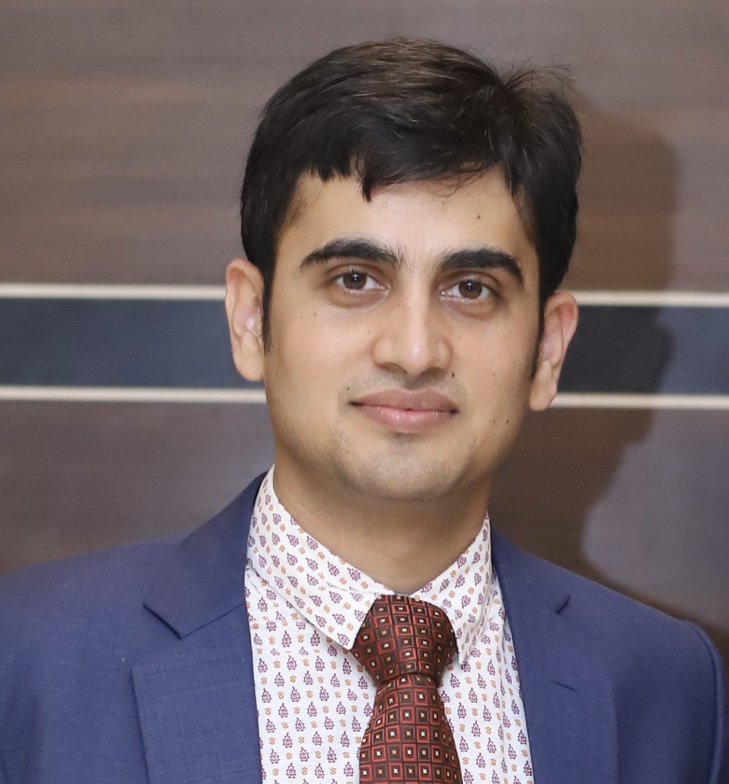



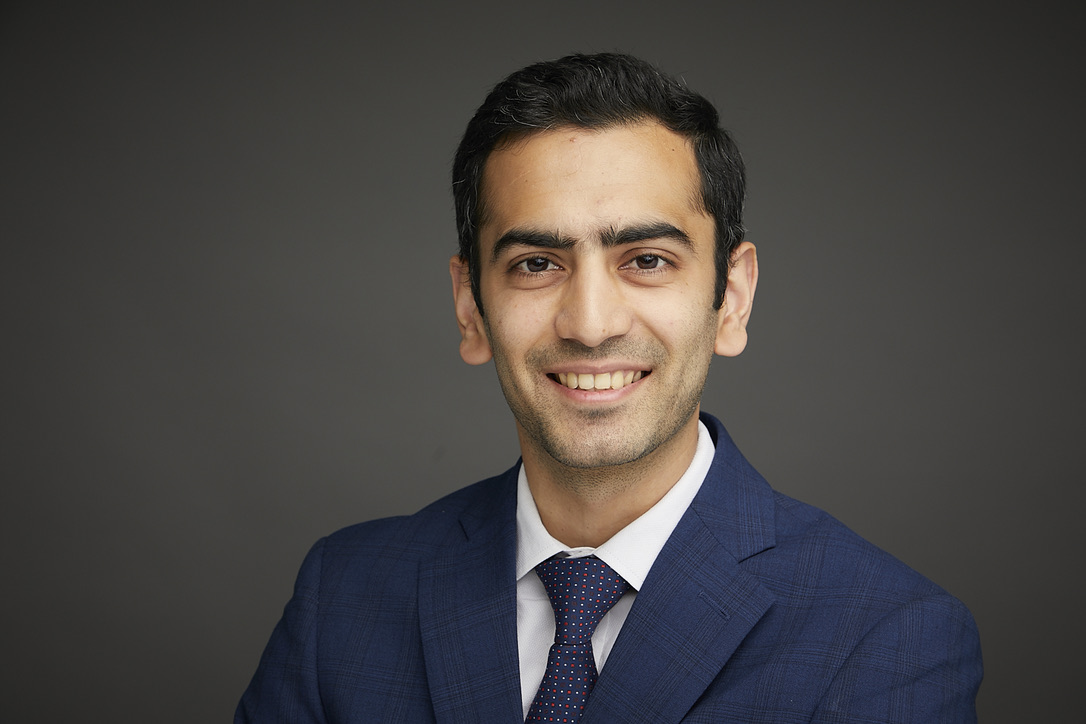

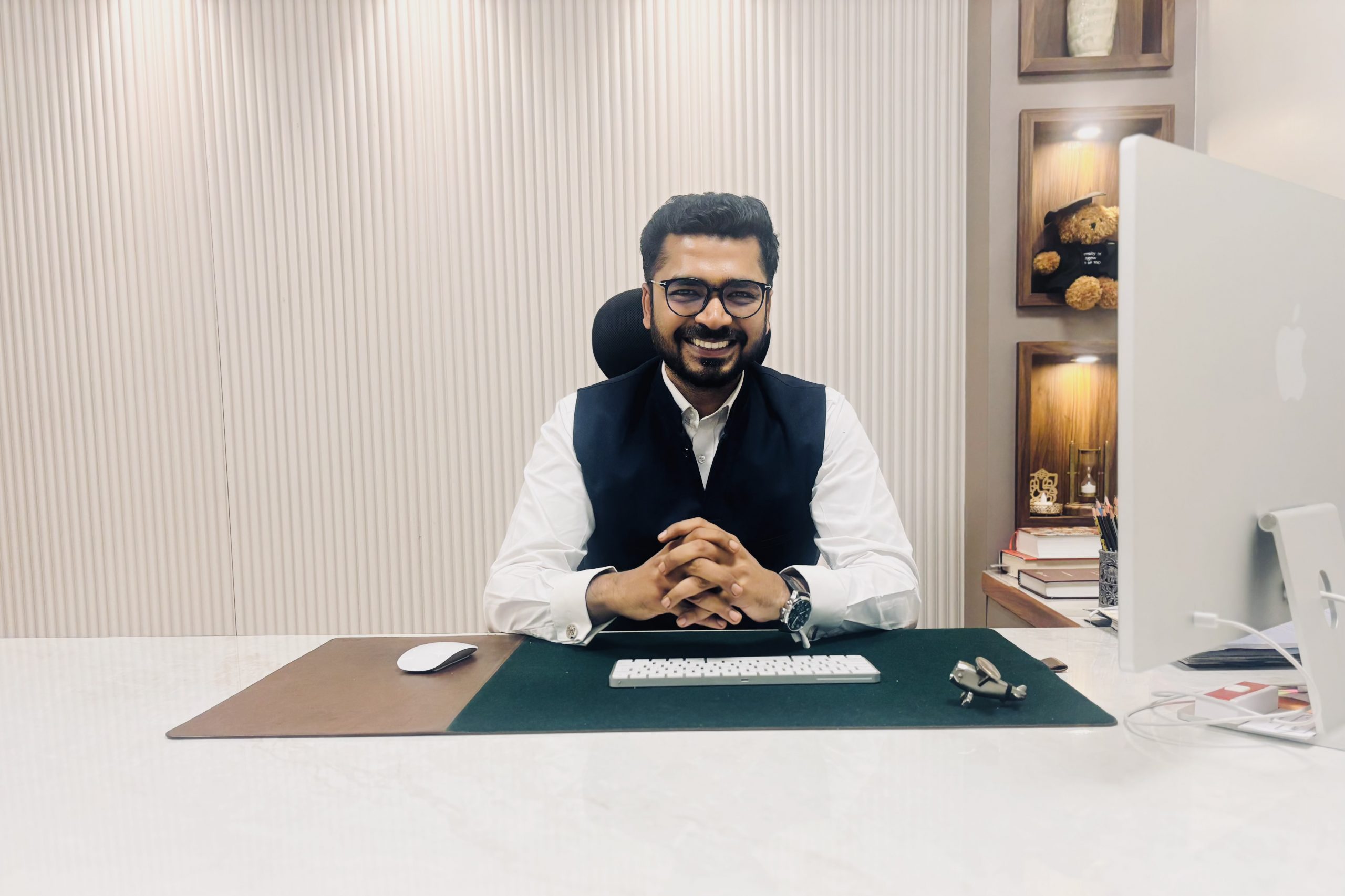



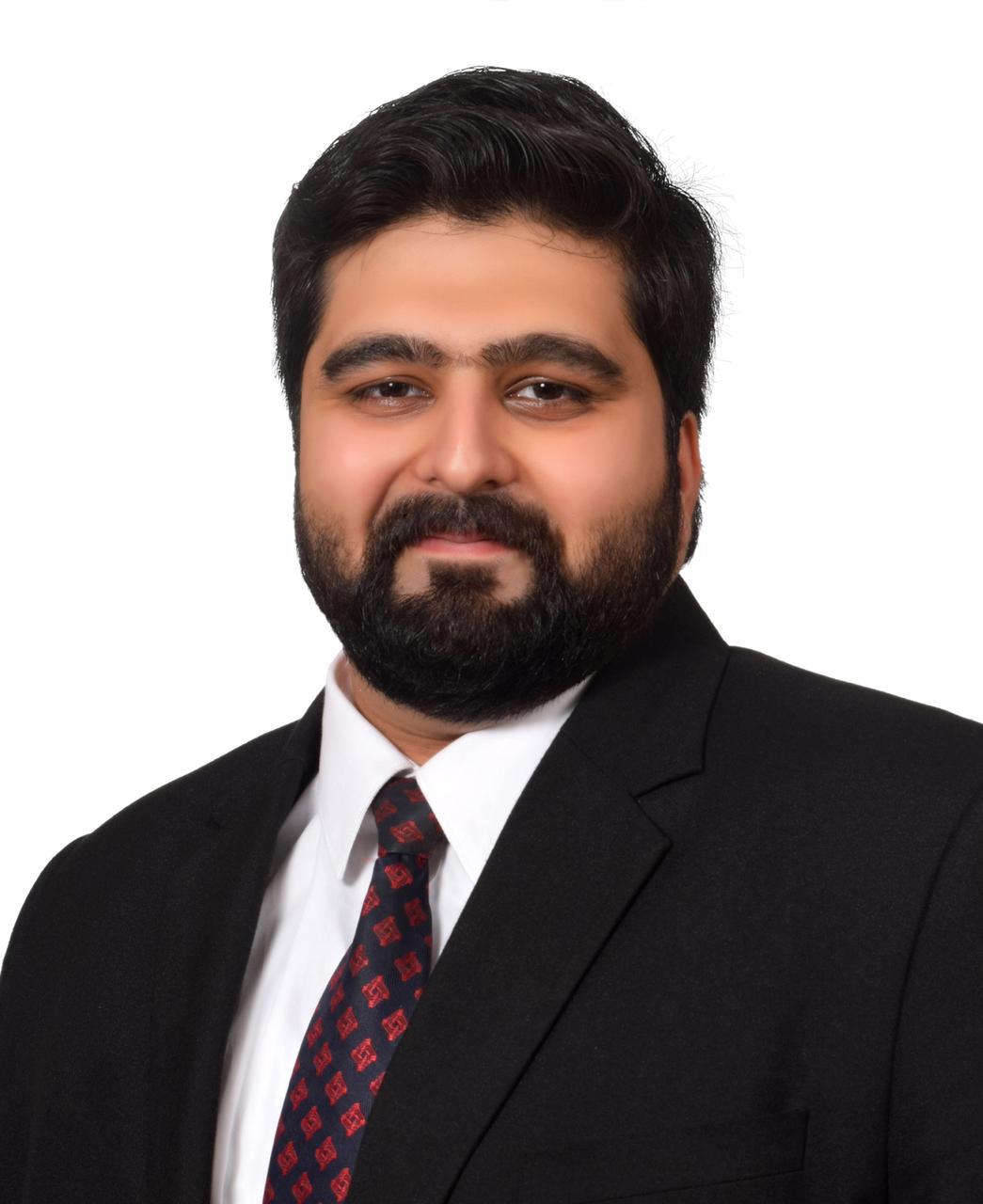

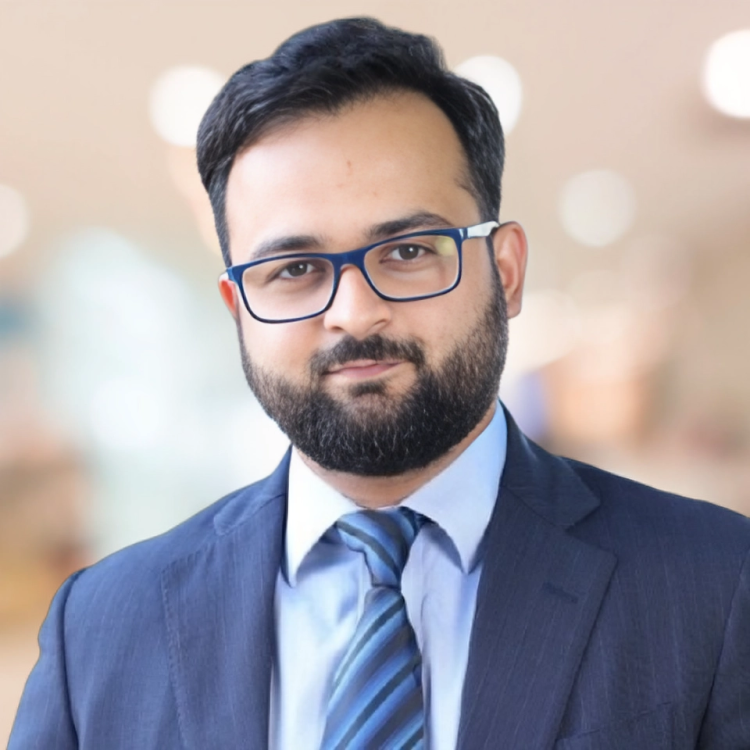

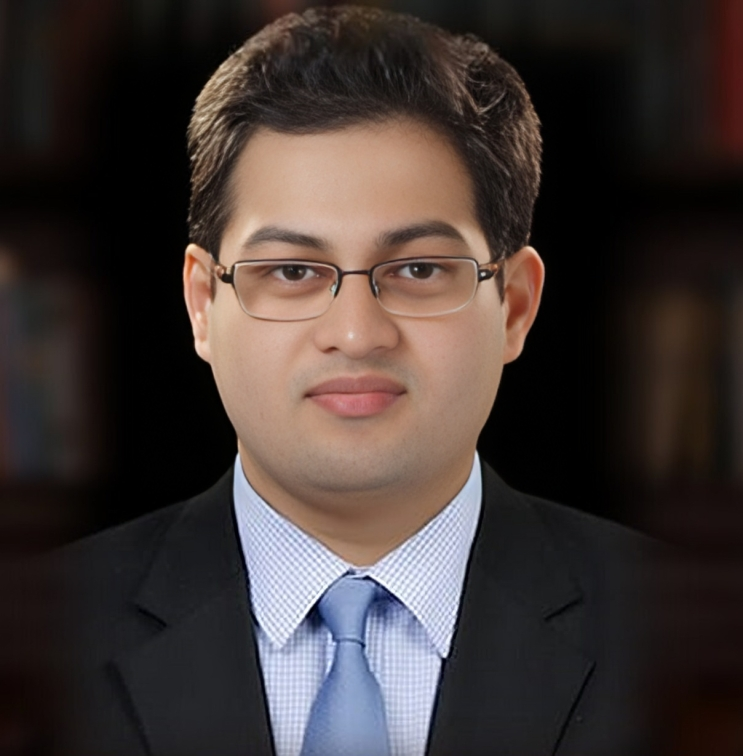

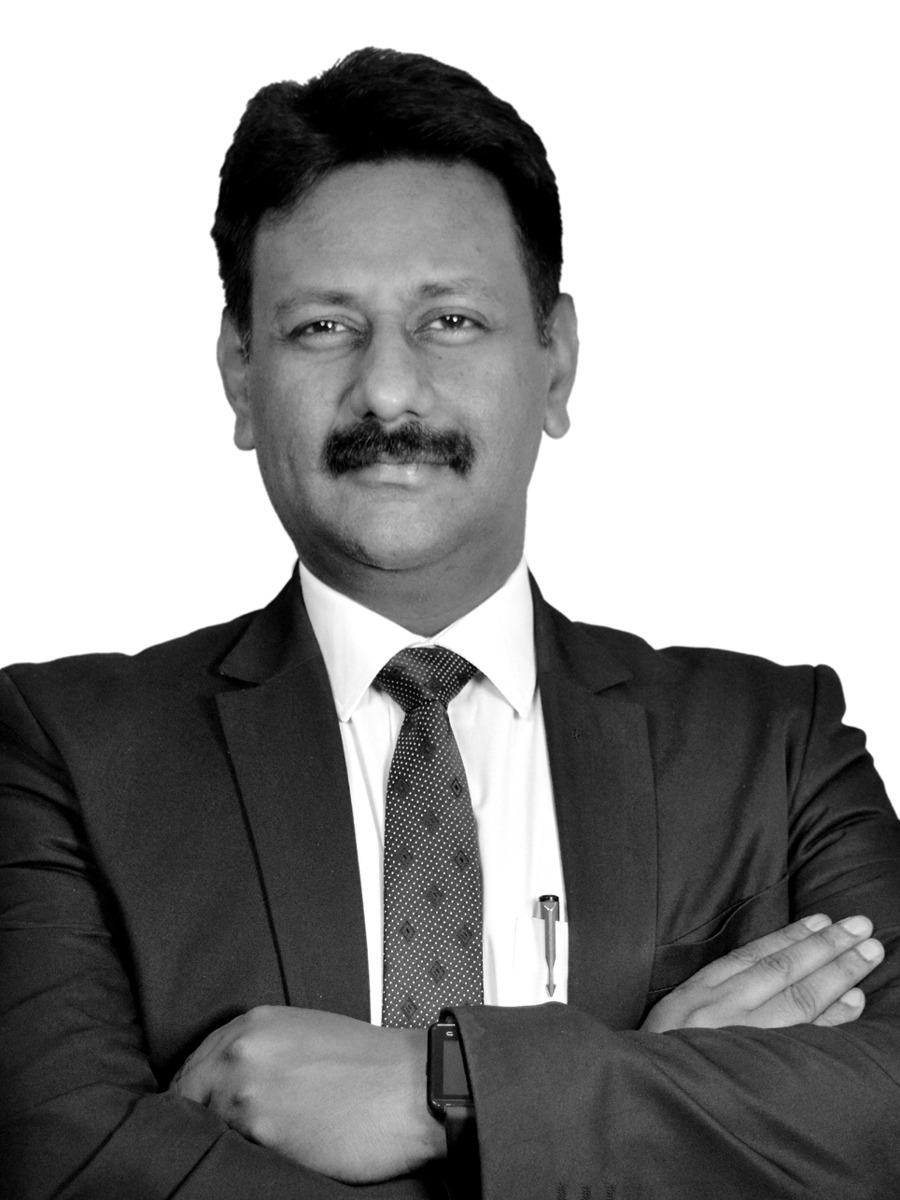


 Allow notifications