Tag: IPR

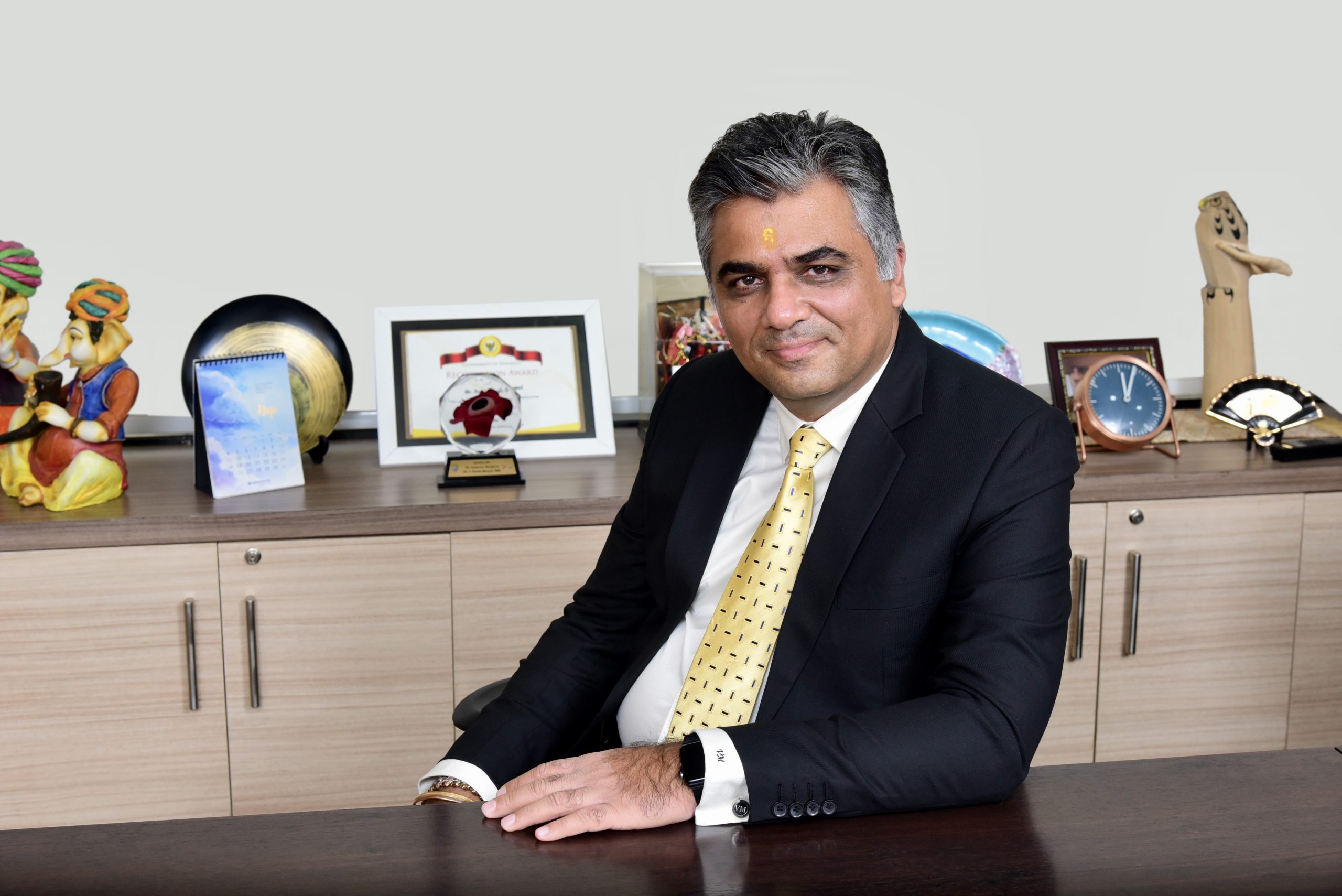
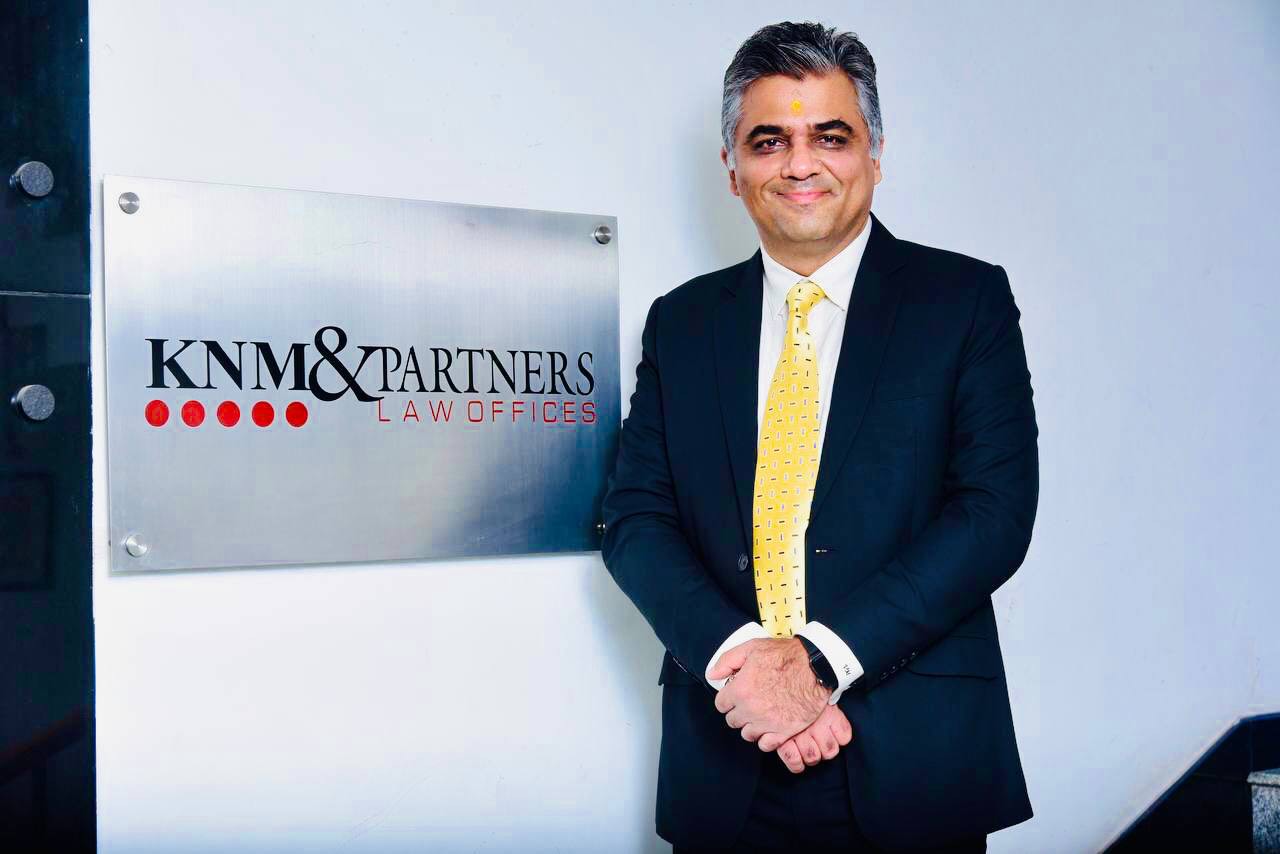
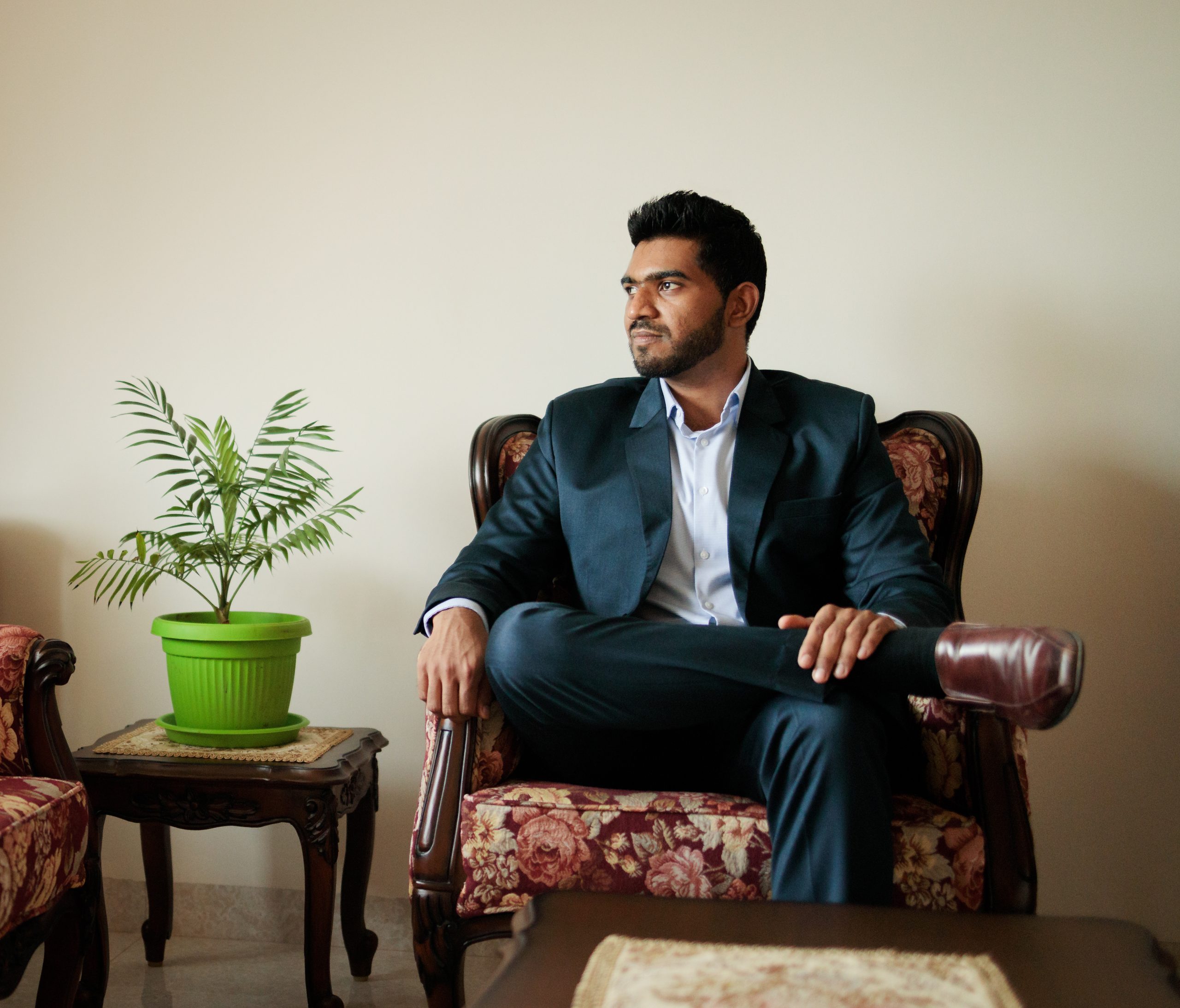
  • In Conversation with: Vipender Mann, Co-Founder & Senior Partner at KNM & Partners, Law Offices

    In Conversation with: Vipender Mann, Co-Founder & Senior Partner at KNM & Partners, Law Offices

    This interview has been published by Prabhjot Singh, Priyanka Karwa and The SuperLawyer Team

    Tell us about yourself-what motivated you to choose law as a career path.

    My roots are in the countryside and the farming community. My parents both worked for the government, so my family and I moved to the city of Karnal, Haryana where I attended school and eventually went to college, even though our hometown was only six kilometres away from our village. Due to our proximity to the village, we felt a strong sense of belonging to our heritage.

    When it comes to school and college, I’ve done about as well as average. However, my life experiences are quite varied. While in college, I joined the National Cadet Corps. (NCC). For my flight training, I went to the Karnal Aviation Club in Haryana, India. In Rajasthan, India, I assisted my brother in turning around a failing emery powder production facility.

    By riding around in a truck my brother owned, I got a taste of what it’s like to be a truck driver and learned about the ins and outs of the transportation industry and the difficulties truck drivers face.

    Due to my insatiable curiosity and desire to broaden my skill set, I decided to pursue a career in law school. In the field of law, you can expect to expand your knowledge every day. In 1998, I began practicing law in Delhi, India.

    Do you think being a Non-NLU student creates several obstacles in one’s professional life? If yes, how can one overcome that to build oneself in the industry?

    Whether we like it or not, branding plays a significant role in every aspect of our lives. A non-NLU student may find it more difficult to break into the legal profession, either by being hired by a prestigious firm or given a position in the chamber of a well-known senior advocate.

    However, that is only significant in the very early stages. These days, one can find many excellent job prospects among the many law firms and attorneys. Each law student, in my opinion, should make the most of his or her time in school by participating in as many internships as possible. It’s important that internships offer a wide range of experiences to their participants.

    The district court, the high court, the supreme court, the tribunals, the forensic laboratories, in-house departments, central/state govt. legal departments, pro bono/NGO etc. This variety will increase one’s horizons, education, and self-assurance.

    A lawyer ought to be well-rounded, with broad knowledge and deep expertise in specific areas. Experiences in the real world are the best teacher, and the more you gain from them, the more you can apply to your career. When someone needs legal advice, they automatically put their lawyer on a higher tier.

    Therefore, it is essential that he is well-versed in more than just the law. To put it another way, law students attending schools other than National Law Universities should focus on developing their own personal brands in order to compete with NLU.

    How has your experience been working with mid-sized firms and MNCs? What do you consider matters when it comes to having the right skill set for working with MNCs?

    Since multinationals usually only go to large law firms for complex legal matters, working with them can be challenging. It’s not that smaller or medium-sized businesses can’t handle legal matters; rather, they can point to their decision to hire a large law firm as proof that they did everything possible to secure a favourable outcome for the company in the event of a legal dispute.

    In-house attorneys I’ve worked with have trusted me with their personal lives, but they’re hesitant to refer me high-stakes cases because they don’t want to be held responsible if we lose. In spite of this, a law firm of medium size still has room for making a significant impact.

    Even though they may be outnumbered by larger firms in some practice areas, small and medium-sized law firms can stand out in their own right. As an example, we have been collaborating with a number of multinational corporations on a wide range of projects, from the mundane to the highly complex.

    M & A deals have boomed in these 2-3 years; what would be some of the challenges for legal professionals to deal with such transactions? And how do you cope with the same presently?

    In light of the rapid evolution of technology, it would be foolish to try to create everything in-house. An excellent illustration of the rapidity of change is what happened to Nokia when Android first appeared on the market. Recent years have seen a proliferation of merger and acquisition deals, as companies have realised that acquiring technological resources is the best way to maintain a competitive edge. The number of merger and acquisition deals will continue to rise in the years to come. To keep up with the rapid pace at which technology is advancing, legal professionals face a significant challenge in the current environment.

    You need to close the deal quickly because you can’t afford to miss out on this M&A opportunity. The opportunity cost of these M&A deals is high, so lawyers involved in them need to be well-versed in both the law and the business. 

    An attorney involved in such a deal will need to communicate with multiple parties, including those in upper management and business who have higher expectations than those of the legal team.

    They count on their attorney to provide them with business advice as well. Therefore, it is recommended that legal professionals also keep them updated on the commercial side of their clients’ interests.

    How far do you consider the role of LinkedIn in building a personal brand and great networks wrt the legal industry?

    If you know how to maximize LinkedIn’s potential, I think it’s a great platform for your business. The legal profession imposes many limitations on our ability to promote our services or to contact potential clients.

    In this case, you can use LinkedIn to meet people from all over the world. In addition, sharing your thoughts on any legal issue on LinkedIn is a great way to show off your knowledge and expertise in the field.

    I can’t promise you’ll see immediate results from your time spent on LinkedIn, but if you commit at least a little time each day to expanding your network there, you’ll soon begin to grasp the site’s value.

    Though, don’t be a spammer or ask for things like jobs or work directly. In other words, you have the option to ask for help. People are usually happy to offer assistance or advice, but it’s not a good idea to just blast them with your CV or a generic “Hi How are you?” Instead, you can ask for help or advice, and if you get a positive response, you can possibly move forward with your plan. You need to make sure you have a good profile and don’t treat it lightly. Without a profile at all is preferable to a sloppy one.

    Avoid combining your LinkedIn and other social media profiles. Don’t get too close to the subject or use personal language. You are welcome to share updates about your academic or professional pursuits, but please keep the personal details to yourself.

    What is your life mantra to work stress-free?

    Because of my extensive study of philosophy and spirituality, I am well-equipped to address many of the pressing concerns you may have about your life. The reason we experience stress is because we can never see more than a few steps ahead. For me, the study and practise of philosophy and spirituality facilitates this ability to look beyond when I am afforded a bird’s-eye view of a given situation.

    Thus relieving some of my stress. If we can look ahead and beyond, there will be no need to stress, and that is entirely up to our conditioning.

    I once worked with a client who, at 75 years old, still had a lot of pep in his step. We were tackling an extremely difficult problem that required us to put in long hours. When I inquired as to the source of his boundless vitality, he simply replied, “Stay stupid and drink lots of green tea.”

    Any last piece of advice that you would like to give to the upcoming generation of corporate professionals?

    I’ve also learned the hard way that you can’t give good legal advice to a client if you don’t try to put yourself in their shoes. The complicated legalese found in statutes need not be repeated in your legal advice. It is important that the legal advice you provide is clear, brief, and to the point. Be as specific as possible about what must be done, what must not be done, and what cannot be done. 

    Final thoughts: You are what you think, so think like an owner, act like an owner, and present yourself like an owner, and you will one day be an owner. 


    Get in touch with Vipender Mann-

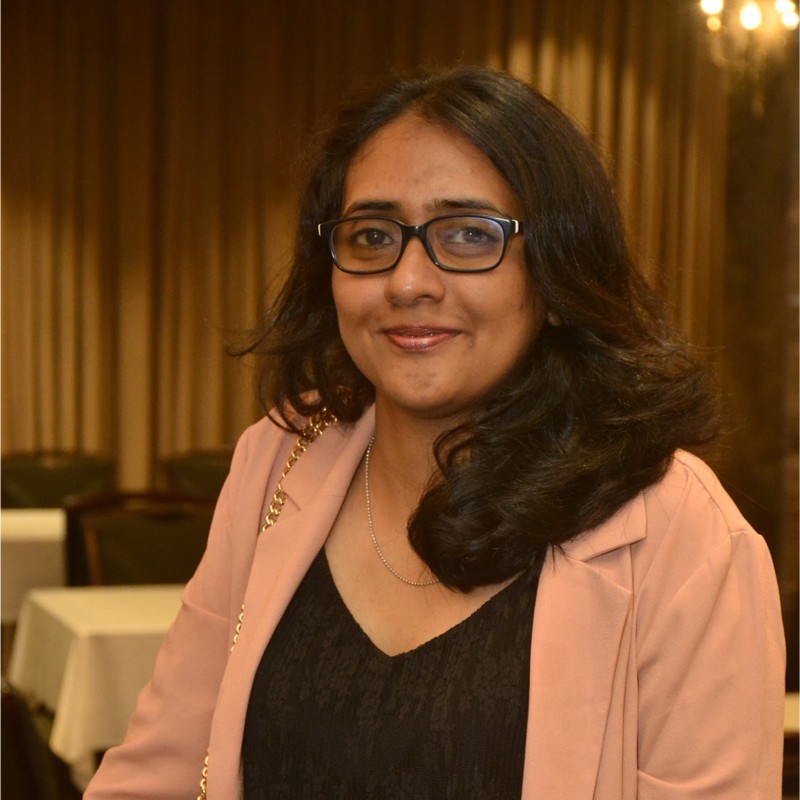
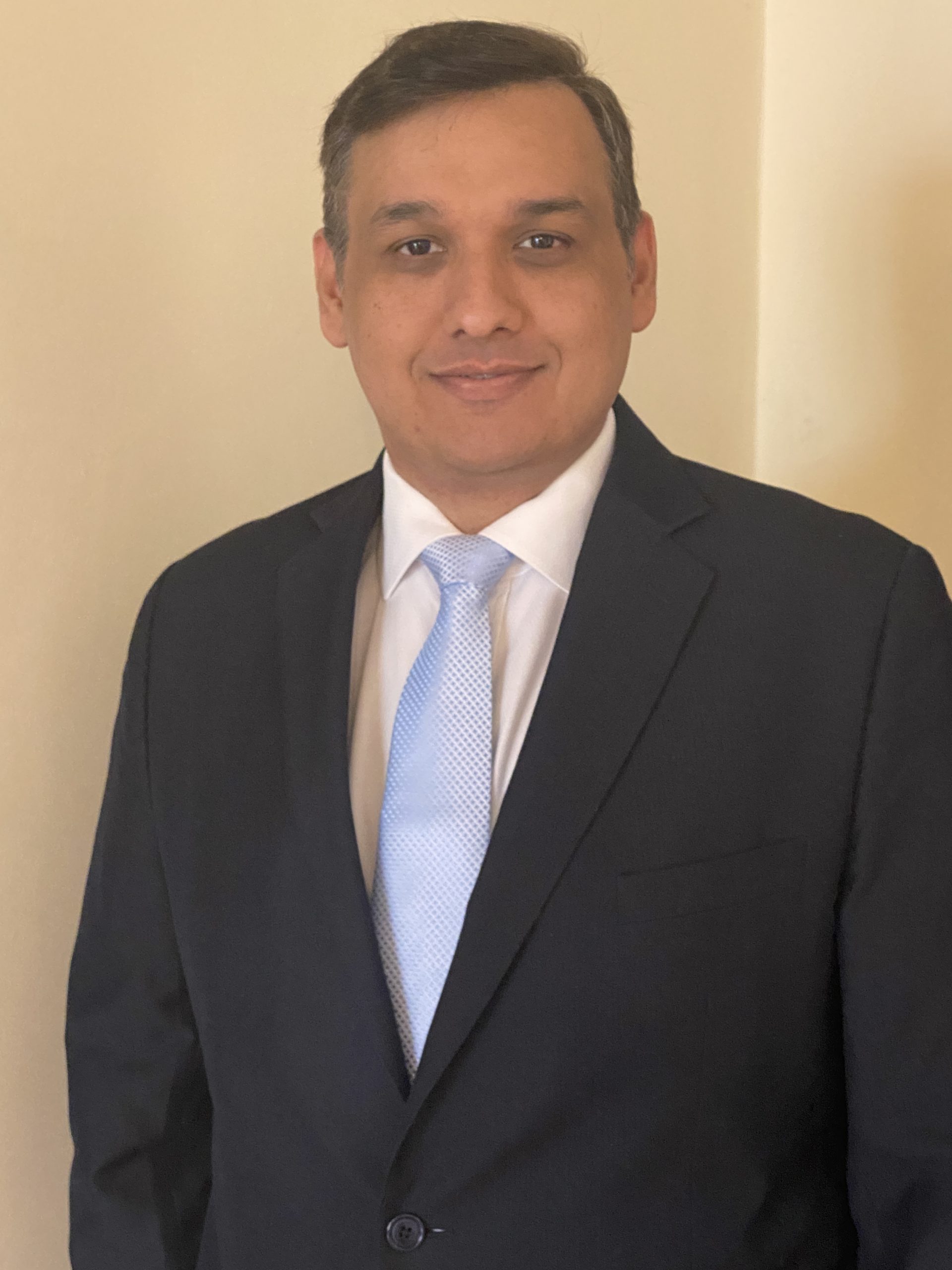
  • In Conversation with: Deeksha Malik, Senior Associate (Employment Labour and Benefits) at Khaitan & Co and Founder (Editor) at IRCCL

    In Conversation with: Deeksha Malik, Senior Associate (Employment Labour and Benefits) at Khaitan & Co and Founder (Editor) at IRCCL

    This interview has been published by Prabhjot Singh, Priyanka Karwa and The SuperLawyer Team

    Let’s start from the beginning, what inspired you to pursue a career in law? And how would you describe your journey thus far?

    Frankly, I had no plan of becoming a lawyer. I was always more inclined to pursue civil services and had thought that the 5-year B.A.LL.B (Hons.) course would help me in my preparation for one of the toughest exams in the world. However, from my third year in law school, I was exposed to several important subjects in law including constitutional law, and it was then that I realised how interesting the legal practice can be. I always had an analytical mind and immense love for writing, and it dawned on me that my new-found interest in law generally coupled with my capabilities could help me make a good career in this field.

    About my journey thus far, well, it has been a roller-coaster ride. I always say this in interviews because when I joined Khaitan & Co, I was assigned to the capital markets practice where, over a period of time, I realised how mis-aligned my interests are vis-à-vis the said area of law, and while I was already struggling in terms of finding an interest in the subject, I did meet people who were not always kind to me; and yet, the same place introduced me to the subject which I now love the most, which is employment law.

    Khaitan & Co gave me a platform to thrive, not just within the firm but outside as well, as I explored my love for pro bono work, teaching (through guest lectures in law school), and writing (through my blog). I am very grateful for all I have been able to achieve through a fantastic support system at the workplace and beyond. My parents have been absolute gems in this journey.

    Receiving an offer from the University of Cambridge and turning it down to pursue practise has to be one of the most crucial choices you have made at the beginning of your career and making such a decision requires a great deal of confidence in oneself. What advice would you want to give out to the readers to help them make better decision early in their careers?

    I am not exaggerating when I say that choosing between my law firm life and a masters at the University of Cambridge has been nothing but a Sophie’s choice. I spent days and nights discussing my options with my parents and preparing a pros-and-cons list. However, what I have realised is that you can mark in your field only if you are true to yourself and understand yourself completely.

    I knew very well that I was considering masters in corporate specialism at the University of Cambridge only because everyone around me told me that I would be a fool to lose something this prestigious and exclusive, and I knew deep down that I wanted to explore employment law and make my niche in a subject that is still underrated as an area of practice. My parents told me to follow the latter and forget the world for a while, and I did exactly that.

    My advice to law students and those starting out as young professionals is to stick to what you really desire. Hear everything that others have to offer but listen to yourself.

    You happen to specialize in Employment Labour and Benefits practice group at Khaitan & Co. Can you tell us a bit as to what prompted you towards this field of law? When did you realize you wanted to work in the field of employment?

    I wish I had a more interesting story about this than what I am going to say just now. I never liked employment law as a law student, perhaps because we had a trimester system of examination back then and we were expected to explore the vastness of the subject in a span of three months. Then again, our seniors were securing placements at the corporate practice groups in Tier-1 law firms, and we were made to believe that this really is the be-all-and-end-all.

    When I was allotted capital markets as the area of practice at Khaitan & Co, I gave it a sincere try. However, while not intending to sound critical here, I do note that working in this subject area cannot be everyone’s cup of tea. The subject entails heavy transactional work, much of which could get repetitive over a period of time especially for a young professional.

    I did have an amazing time there learning about different deal processes, but I knew it was time for me to move on to a practice area where I could better use the kind of analytical capabilities that I always had. The human resources team at the firm then allotted the Employment Labour and Benefits practice to me quite randomly, and I have never looked back since. It was – like I mentioned earlier – the most random and unpredictable move and yet the best one I had till date.

    People-centered issues are often overlooked and undervalued. What, in your opinion, is lacking in addressing the issue of equal representation, given your specialization in employment-related issues?

    I can think of two reasons. Labour laws have not kept pace with changing times. The laws provide bare minimum standards of compliance for employers. If I may, the law on persons with disabilities directs a private-sector employer to frame an equal opportunity policy for employees with disabilities, but it does not lay down a more direct set of guidelines to ensure that such employees are reasonably accommodated at the workplace.

    Also, while there is an increasing realization of the importance of diversity and inclusion at the workplace, it is definitely an expensive affair. For example, the law on maternity benefits requires employers to set up their own creche facility for allowing women-employees to take care of their children in close proximity, but no flexibility is afforded in the form of arrangements with third-party day care centers, nor any financial support offered by the government for such critical compliance.

    Even if one convinces oneself about the business case for a diverse and inclusive workplace, these compliance requirements, in their rigid form, could get too technical and impractical to fulfill.

    Would you like to talk about the new opportunities in law for aspiring and budding lawyers? Especially in the aftermath of pandemic?

    I am not sure if there is any correlation with the COVID-19 pandemic, but a positive sight I have noticed lately is the growing realisation among young professionals is that there are many ways to become successful in the legal profession. More young professionals are willing to try in-house practice or niche practice areas within law firms (such as employment law, data privacy law, etc.).

    Some young professionals are also setting up career counselling / consultancy organisations (such as LLM Wizards) or doing business strategy / knowledge management / learning and development work within law firms. We are living in a world where there is a greater realization of following the heart and maintaining work-life balance to the extent we can in this otherwise demanding profession.  

    Is it possible to pave one’s own path and succeed in life without proper guidance? How would you like to motivate our readers to be more determined and enthusiastic?

    Yes, this is possible. As much as I am grateful to my alma mater for what I have achieved, I have also faced slightly unfair treatment from certain seniors who preferred mentoring my batchmates who appeared to be promising because of their affluence and background (there was actually a “metro” group in my batch that was guided by seniors even during intra moot court competitions!). I learnt to carve my niche in those situations.

    For instance, when I realised that some of the seemingly popular individuals in my batch were not inclined to collaborate with me for a moot court competition because I was not part of THE “metro” group, I started looking for competitions that did not require group participation.

    I won a couple of writing competitions in the process, honed my writing skills along the way, and then aimed at and got published by some of the leading international publications. I continued to focus on academics because this again was something that only required my hard work and dedication without any specific guidance from anyone. A good academic performance helped me secure good internships and even an acceptance from the University of Cambridge.   

    Point is, if you seek guidance but do not always get one, become your own counselor and develop a fighting spirit that does not get overwhelmed by unpleasant circumstances.

    What do you like to do in your spare time when you’re not at work? Do you have any interests or hobbies that you’d like to pursue?

    Oh yes. I love biking and I am also a trained classical dancer. I along with my team also run a blog called The Indian Review of Corporate and Commercial Laws, which has received an insane amount of love and following over the years.

    Finally, do you have any parting words of wisdom for our readers who are still trying to figure out their path?

    As I mentioned before, one should stay true to oneself. There is no single path to success, hence we must all stop drawing parallels with the journeys of people who have traveled through the career path before us. But before we decide to follow what our gut feeling suggests, we must ensure that we have all the resources available with us to make an informed choice.

    This is possible only when we reach out to experienced professionals through professional / alumni networks and strike a candid conversation.


    Get in touch with Deeksha Malik-

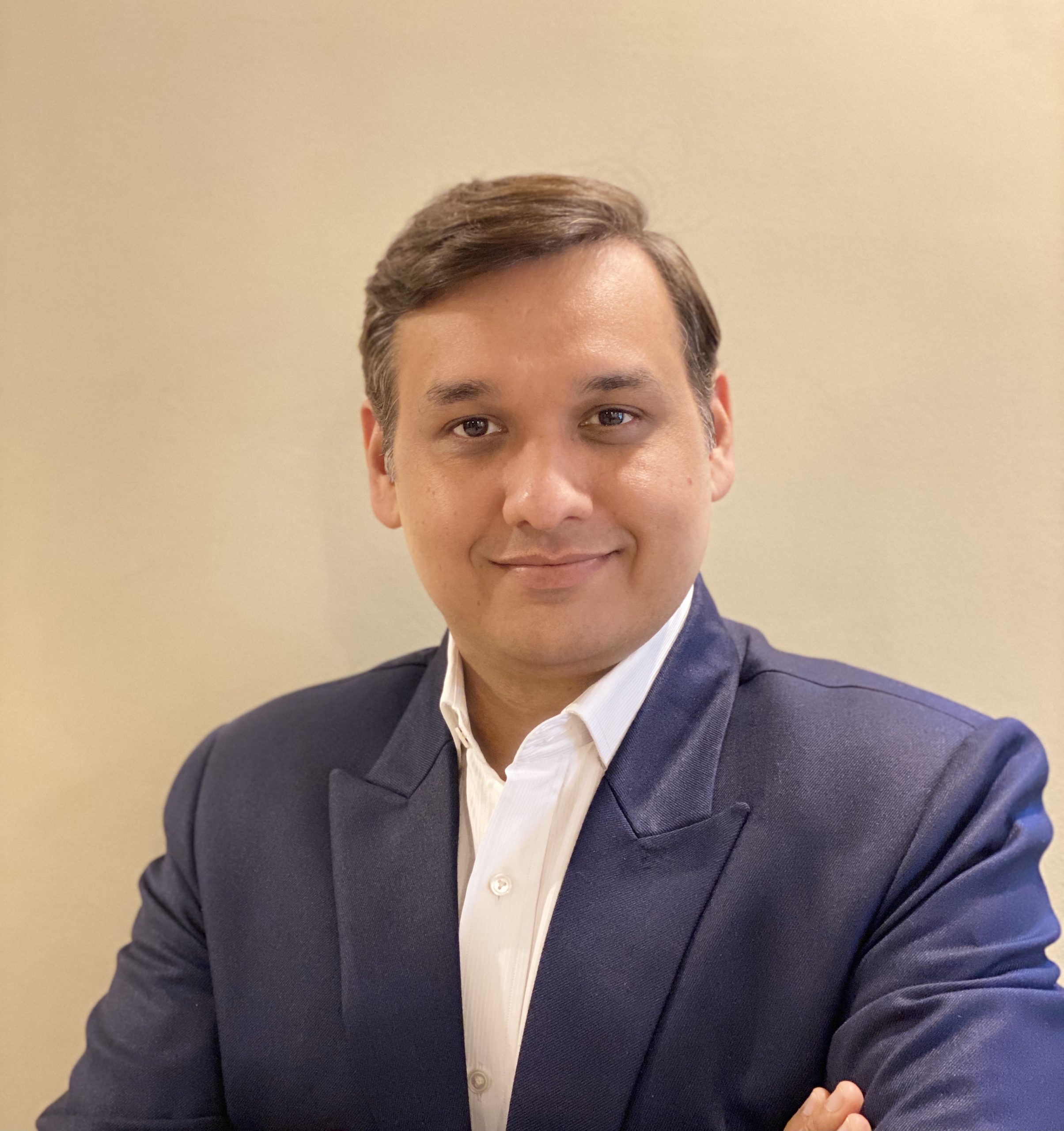
  • In Conversation with: Dhruti Kapadia, Arguing Counsel , AOR SC of India , International Arbitrator , Lecturer , Trained Mediator , Policy Analyst, Writer & Corporate Trainer

    In Conversation with: Dhruti Kapadia, Arguing Counsel , AOR SC of India , International Arbitrator , Lecturer , Trained Mediator , Policy Analyst, Writer & Corporate Trainer

    This interview has been published by Prabhjot Singh, Priyanka Karwa and The SuperLawyer Team

    What was your “slam-book career aim”? How well did it go?

    My Slam Book Career Aim was to be a lawyer since the time I was around 8 years old. I studied in ICSE SCHOOL  QUEEN MARY , I  enjoyed literature and that fascinated me to get into law . I liked the English Lawyer style. I was from my early teen days involved in social work and have worked on multiple causes in slums and also have uplifted few transgender by providing skill center to them. I always liked questioning if I saw something wrong I could not stop objecting. I planned my career from my school days as I opted to choose commerce as an option in school and economics instead of maths and science .

    My career plans from my secondary school had already started towards law. I did my BLS LLB from government law collage, church gate , I must reveal I had done my first year law from Pravin Gandhi Law Collage at Juhu and topped that college WITH HIGHEST SCORES BOTH THE SEMESTERS to get transferred in GLC  which was the best collage in my times in Mumbai. SO JOURNEY HAS BEEN ADVENTUROUS – from academics to  article ship and to be a solicitor which is like the toughest exam to crack , I think was very fortunate and I owe a big thank you to my family and best friend(my buddy who was with me in my toughest phase of life –he was there for  me  in my struggle phase and helped me  to be what I wanted to be).

    I also took up courses from my first yea example r of law for diploma in cyber law while studying first year of law in 2005 and I studied MASTERS IN INTELLECTUAL PROPERTY RIGHTS AND INFORMATION TECHNOLOGY. I took my second master’s degree in MASTERS IN PUBLIC POLICY.

    I was always a court person so I chose to be a Counsel and I got to see reality of  arguing before fantastic judges in my junior days gave me glimpse of court craft.I got my first appearance before Justice S J.Kathawalla it boosted my confidence , Justice Rajesh Ketkar who appreciated my hard work in his order made me feel I can do better and Justice Shantanu Kemkar who corrected me on a point when I was arguing made me feel there is lots to learn with every matter in hand.

    Three to four experiences from the bench I personally experienced -made me  feel more hard work more better results.  It was learning experience and it still is. I also got best opportunity to be junior Justice B.N. SRIKRISHNA  and I must say with pride he has been a fantastic mentor.I joined him to get exposure in arbitration and I absolutely got to gain lot of knowledge working with him.

     I also decided to take up matters which meant to make difference in the society like national level matters METOO MOVEMENT where I appeared pro bono for Vinta Nanda. I also took up social issues in covid-19 times pertaining to door to door vaccination for bed ridden people and  senior citizen and succeeded as couple of policies were framed by state and centre by the directions in my PIL. From High Court Litigation to matrimonial DISPUTES in Family Courts made me get my focus on mediation and I established myself into trained mediation. I am empanelled International Arbitrator as well which makes me feel it is good journey so far.

    I have taught law from 2012 in various colleges in Mumbai and even now I teach law and train students on various academic subject . It is like what you have that is knowledge must be shared is what I believe in . Many times I am appointed as amicus curie in matters where courts feel I can be of good assistance. I also appear for civic bodies and government bodies apart from my private practice. I am also doing transactional work and that keeps me happy. Being an ADVOCATE-ON-RECORD, SUPREME COURT OF INDIA –I ENJOY APPEARING IN APEX COURT OF OUR COUNTRY. I have experienced appearing   for all kind of individuals including politicians to celebrities to pro bono matters and that has been my complete hard work that’s been put in for than 13 years now as a lawyer and 12 years as a solicitor.

    What can be the real challenges while establishing a career in the field of law?

    To get a nice chamber to join , or  a branded law firm to join is not easy for first generation lawyer and then to prove your talent and ability is hard core competitive market is a major challenge.

    Sometimes as juniors you may get less opportunities so one must be patient. Invest 5 to 10 years in profession to make your name by doing honest work. Fees are compromised unless you have a brand created.

    How was your experience while judging during the moot competitions?

    I feel the young talent pool of brilliant to be lawyers are there -while I judge them , I feel all of them work too hard as to do their best . Sometimes it gets difficult to actually give marks and gives you a feel of a sitting judge to decide either one way or the other. I enjoy momentary pleasure of being a judge and I feel I too have learnt a lot from students who have participated. It is enriching experience.

    How challenging has it been maintaining a work-life balance and how young legal professionals can learn to strike that balance in their professional lives?

    I have my own chamber where I usually meet attorneys/clients after court hours. I owe my time for my family during dinner I make it a point I am with family on dinner table so 9pm-10pm no one can disturb me on calls or messages.

    Weekends I get into my relaxing mode I partially work and I catch up with friends. I keep some ME TIME .. I LIKE FREE TIME TO CHILL OUT, travel , music therapy and sports. Balancing your physical health vis a viz mental health with luxury of what you like is a must and that will help bring out quality work.

    Follow this- work time work-play time play . Vacations are for experiencing new things-learn , evaluate your work performance, try out good food if you like it will give you happy refreshing feeling to join back and perform better.

    According to you, how crucial is Psychology in matrimonial matters and how sufficiently it can be used there?

    It plays a vital role I would say counselling –psychology works there. Take an example A wants Y amount as alimony, B desires to give nothing yet A wants it -how do you make A get Y AMOUNT OF X Amount? . You got see what will TEMPT A’s mind and how will he/she come up to negotiation for something rather than nothing and how that something would make A feel I have got something close to Y . That juggling in minds and art of negotiation is inter-related with human psychology and as lawyer to know clients mind and psychology is essential.

    YOU LEARN IT WITH EXPERIENCE.

    As digital platforms are consistently increasing, such as Metaverse, Do you think there would be a large scope for lawyers because of this?

    Yes indeed. Global world will be here right before us . Experience we had in covid-19 times and e-concepts talks volumes. We have seen the success rates of performance which is booming up. BUSINESS WORLD GETS CLOSER AND EASILY CONNECTED AND THAT BRINGS GLOBAL CLIENTS IN THE MARKET WHICH DEFINITELY WILL BOOM COMMERCIAL MARKETS IN LEGAL INDUSTRY.

    What were the activities, curricular and extra-curricular, that you undertook during your law school days which helped to shape your career? / What kind of internships did you undertake during your law school?

    I took up courses and moots I participated in .  article ship  3 years I did it as that’s mandatory for me to get trained to appear for solicitors exams that kept me too busy and internship molded me practically. I worked on the grass root level to understand public policy and socialism. I started writing articles which are published in newspapers as well.

    Do you think it is crucial to have a career plan beforehand or one should move with the flow?

    Certainly you must have some plan MAY BE 5 YEARS PLAN IN HAND TO EXECUTE. AFTER 5 YEARS JUST GO WITH THE FLOW.

    What would be your parting message to our readers and the young budding lawyers?

    Believe in yourself, If I can do it you too can do it! Have confidence and please never ever get bullied by anyone. You are best in your own way. Don’t mix with negative people if you get positive vibes with people you associate with be there or leave. Them There are many opportunities waiting for you. Be honest and go ahead and do your best and leave the rest. Take compliments but don’t get elated.

    You still have miles to go before you sleep so keep working hard as that’s the only key to success. Live a dignified life as that ultimately  holds you high.


    Get in touch with Dhruti Kapadia-

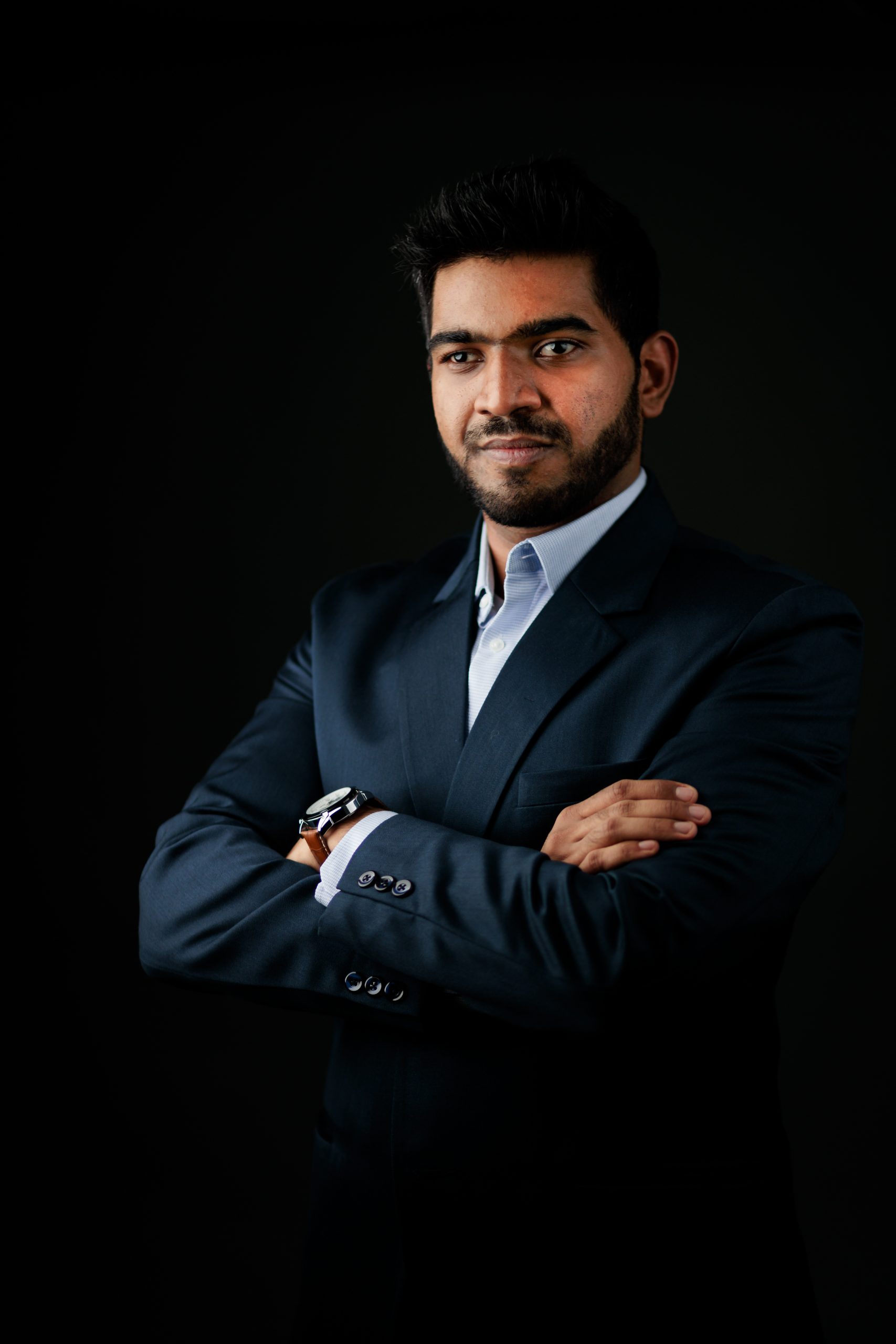
  • In Conversation with: Ryan Mendonca – A startup legal counsel who left his job at a tech startup to start an innovative concept of being Your Virtual Legal Counsel, under his Virtual Law Firm

    In Conversation with: Ryan Mendonca – A startup legal counsel who left his job at a tech startup to start an innovative concept of being Your Virtual Legal Counsel, under his Virtual Law Firm

    This interview has been published by Prabhjot Singh, Priyanka Karwa and The SuperLawyer Team

    Tell us about yourself-what motivated you to choose law as a career path?

    I was interested in law early on in my childhood as would watch legal dramas like “Boston Legal”, “Law & Order” and ofcourse my all-time favourite legal show “Suits”. What interested me was how the lawyers helped their clients, fought for them in & out of court and delivered justice in some way shape or form.

    Its ironic how back then I saw these lawyers as superheroes and fast-forward a decade or so, and I am being interviewed as a Super Lawyer, its funny how life comes full-circle.

    However, besides the legal dramas, I also realised, very early on, that there were laws for everything and at every milestone in one’s life, right from birth certificates, to school rules, to employment law once you start a job, to corporate law if and when you start a business, to when you get married and buy a house, until you’re “dead and gone” or “6 feet under”.

    The Law is interwoven into the fabric of life and I felt that learning the law and my knowledge in the legal domain would give me that edge in life and would always be advantageous.

    Ryan, you worked as a remote lawyer during covid, how was that experience and what type of difficulties did you faced?

    Yes, I did work remotely in Dubai, as an in-house counsel for a high-powered, VC-backed Indian based startup, it was an eye-opening experience to say the least, whilst it was one of the most testing and unsure time for me, career-wise, mentally and physically. It was not easy doing and getting what I needed to get done.

    I do feel that it was an absolute privilege and once-in-a-lifetime experience to be the Sole Legal Counsel, setting up the legal operations, running it for a good 6 months, and then shutting it all down post-lock-down.

    On the bright side it did give me the confidence to open my own shop and accelerated my career into the natural progression of being a lawyer and starting my own virtual law firm, in this new-remote-friendly world we live in.

    What was and is the main USP behind your firm “YVLC”, and how do you manage your work since you have clients with different time zones? Do you believe the remote work model is going to stay in the future?

    Offering the service of an experienced in-house legal counsel on a fractional basis for multiple startups allowed startups to operate with the mental freedom that their legal is being taken care off, this was YVLC’s USP starting out.

    Now that we are on-boarding multiple Virtual Legal Counsels who are subject matter experts in their respective tech niche, such as E-commerce, Food-tech, Blockchain, Ed-tech and Prop-tech, we are creating a “Justice League” (pun intended) of Super Lawyers that will advise clients in their field of tech with relative ease and offer a more specialized legal advisory.

    All while being fully-remote, fully-autonomous and with the necessary tech infrastructure in place to do what we legal counsels do best. Provide legal solutions that are commercially viable.

    What is the biggest hurdle most attorneys face in bringing in new business at present times?

    This is a tough question for me to answer as I dont feel there’s just one main challenge, it is a mix of the following in no particular order and may not apply to all attorneys: Building a strong online presence, having a healthy pipeline of new client meetings, being very personable and impressive to new clients such that they close with you, pricing their services or hourly rates and lastly doing all of this successfully through a screen or on audio only meetings or at times without even speaking to the client at all.

    What’s the biggest threat to a solo or small law firm’s survival over the next 10 years? What should they be doing now to prepare?

    Investing in Tech, Building a Brand, Not getting caught up in the day to day wins and losses and instead having a long term goal, vision and plan to make it a reality. Most solo lawyers or small law firms start for the sake of starting and making something for their own selfish intentions of having a bigger slice of the pie or more like having their cake and eating it too.

    What are your future plans with YVLC academy and how can professionals be benefited with this initiative?

    We are planning to provide legal professionals the tools and teach them the tricks of the trade of how to be a solo digital lawyer. We want to help them reach their potential and achieve their goals no matter how small or gargantuan they may be.

    We want to empower lawyers and give them the tech infrastructure, a starting platform and the motivation and inspiration to have a successful legal career.

    Law students often get confused between these big tech platforms such as Fintech, agritech and other startups, what advice would you give to them for having a better sense of clarity wrt same?

    Read about them from credible sources, watch interesting you tube videos, listen to popular niche tech startup podcasts and last but not least work in those tech spaces that interest them and that they want to learn more about. There is no better way to learn something than by doing it.


    Get in touch with Ryan Mendonca

  • ABHISHEK SHARMA, MANAGING PARTNER AT PULASTYA LEGAL, ON ESTABLISHING HIS FIRM AND WORKING AS AN IP LAWYER, HIS STRUGGLES DURING COLLEGE & TAKING RISKS IN LIFE

    ABHISHEK SHARMA, MANAGING PARTNER AT PULASTYA LEGAL, ON ESTABLISHING HIS FIRM AND WORKING AS AN IP LAWYER, HIS STRUGGLES DURING COLLEGE & TAKING RISKS IN LIFE

    This interview has been published by Maaz Akhtar Hashmi and The SuperLawyer Team.


    You had a wholesome experience at law school which included good grades, internships and social connections. How would you summarize your law school journey, and how did it prepare you for your LLM and practice ahead?

    My law school journey was a mix of reasonable opportunities being provided by my law school and a lot of self-exploration. Since we were the first batch of our newly formed law school, we were privileged to be taught by some exceptional visiting faculty as well. I was always in love with general law and order around me, but law school structured it for me to understand how the law works in society and opened my avenues of thinking. My deep interest in law took me to many conferences, seminars and regularly allowed me to have a rendezvous with legal luminaries. I spent a lot of time reading judgments, and legal language always fascinated me. Believe it or not, I wasn’t very good at English, but I took it as a challenge to speak only in English everywhere I went. I participated in several Moot Courts and learned the art of drafting and oral arguments through moot courts. I particularly identified my interest in Intellectual Property Laws in the 3rd year and started paying more attention to IP related news and events. I subscribed to almost all literature available in the libraries and became a keen consumer of knowledge. In my 5th year, I even enrolled for a Post Graduate Diploma in Intellectual Property Laws, from FICCI, where I learned about global IP laws, which took me a step closer towards my LL.M. Overall, I was in love with my law student life and given a chance I would do it all over again.

    You pursued an LLM in Intellectual Property Law from one of the best colleges in the world, i.e., UNH Franklin Pierce School of Law. Could you please tell our readers how the international exposure has helped you gain perspective to improve your skills in the legal field?

    To me, it was no less than a miracle that I ended up in Franklin Pierce School of Law at the University of New Hampshire in the United States. I came from a lower-middle-class background where bread and butter didn’t go together as butter was considered a luxury. However, I dared to dream of pursuing my LL.M. from the US, something that was unheard of in my family. I knew it would be an uphill task as the Indian ways would not be of help in the US. For example, the way we are taught in law schools in India is very different from the US. We are mostly spoon-fed, given notes, taught in a classroom-like structure, with attendance being taken daily.

    The US methodology: In the US, things were very different. Maturity was presumed, and you were expected to pretty much self-study. Classrooms were not for teaching; rather, they were for discussing what everyone had read. We never discussed the black letter law but discussed why the judge decided a certain way—different ways and why the minority opinion should have made more sense. For someone coming from an Indian education setup, it was an eye-opener. Within the first week itself, it taught me that no one would make things happen for me. I am told which books to read and am given access to the world’s largest IP library, but it is only upon me to decide how I want to make the most of it. I was no longer a frog-in-the-well and was exposed to a different methodology of studying and practising law. The hunger to learn more took me to moot courts in the US, where I spent substantial time learning to present a case smartly by juxtaposing the Indian and American art of advocacy.

    Cultural learnings: The legal professional serves the people, and to serve them better, I found it important to understand how the people in the US were. Being a foreigner, I had to learn how they behave, their culture, societal systems, interpersonal ways of dealing with each other and much more. I interacted with a lot of locals and took all opportunities to participate in any social event. This ended up adding to my legal skills while dealing with people later on and assists me even now.

    Studying with international students: In addition to all this, since I was studying with many international students, it was interesting to see how they were taught and in their jurisdictions. I made deeper connections by comparing their legal systems with ours in a foreign land.

    All these combined, I felt my skills were massively upgraded from what I had in my bag when I left India. Eventually, when I landed a job in California, I was a ready resource as I had learned the American ways of legal practice. 

    In law school, you often visited the law offices of Mr. MK Miglani, a renowned IP lawyer in Delhi whose son studied alongside you. You have often spoken about how the impetus of being an IP lawyer began with your conversations with Mr. Miglani. Could you recollect some of the valuable points and advice he gave you during that time?

    The beauty of a lot of things often lies in their simplicity. In the crazy world of music, a flute is often the most soothing sound. Sometimes, it is not just the lesson that makes an impact but the person delivering it or the way it is delivered that makes all the difference. Mr. MK Miglani is a self-made man, and his life lessons were simple. They were not imposed on a 20-something-year-old and were only shared when asked. Being a lawyer, my father told me simple things such as: “Stay true to the work” or “Don’t run after the money“. Mr. Miglani’s teachings were on the same lines. He taught me general principles of the legal profession that perhaps my father taught me but somehow, they made sense to me as they were from a been-there-done-that IP attorney.

    I remember, once he was meeting a client and I was waiting to just say ‘Hi’ to him in the conference room. Fortunately for me, I could overhear some part of the conversation. In a world where lawyers would do anything to bill the client, he advised the client not to file a case and take an alternate route. The way he treated his clients was remarkable. He even introduced me to many publications like PTC (Patent and Trademarks Cases), Kerly’s Law of Trademarks and many more. He even suggested that I should go to Indian Law Institute’s law library in New Delhi. Every session with him, even if it were a casual one at his home, was a discussion of his ongoing litigation that he used to teach us a principle of law and how he framed arguments in that case. The way he prepared for final arguments was super impressive, and he invited me multiple times to High Court to see him argue. All this was a jackpot for an IP enthusiast like me, and I still follow his teachings. I still counsel a client to the best of my abilities without thinking about the billings, and I still hold a ‘thank you’ from a client much more than a paid invoice. 

    Having completed your LLM, you started working in a technology platform dealing with trademarks named Trademarkia in California. Could you share your experiences working in a law firm abroad and a few snippets of dealing with multiple jurisdictions at once?

    Allow me to be candid, and I will tell you that I was very lucky to end up with a job in the US. Of course, I worked towards it; I sent resumes (email and print) to all possible job postings, followed up hard and kept going. Finally, I got a job offer from a California-headquartered IP law firm, Raj Abhyanker LLP and moved to California. I learned the US and International patent filings and patent docketing and assisted the Managing Partner in growing the Firm’s trademark practice. Trademarkia.com, another parallel venture of my the-then boss, was the world’s largest trademark database was conceived to make the trademark registration process simple and easily accessible to the public at large. It grew exponentially, and I was managing the operations of the company. Like a typical start-up, I was a part of hiring, training and scaling the operations. This was my first shift towards managing an enterprise and taking critical decisions that were backed by the CEO. Also, dealing with multiple jurisdictions also opened new avenues of learning. Taking to global law firms, understanding their jurisdiction’s legal processes and presenting to the customers in a simpler D-I-Y format posed its challenges. Still, we were committed way too much for these things to stop us. Trademarkia.com, with its own adaptation, continues to grow.

    Having completed 6 years at Trademarkia, you joined LegalForce RAPC Worldwide, where you rose from a senior associate in the California office to being a Partner at the Firm’s India offices. Could you share some striking characteristics which helped you with this meteoric rise?

    The law firm Raj Abhyanker LLP that I joined in 2006 was renamed to LegalForce RAPC Worldwide later, and Trademarkia.com was a by-product of the Firm’s trademark practice. Since I joined the Firm first, I was an integral part of the Firm’s legal practice and grew within the Firm. I soon became an integral part of the Firm and had all plans to stay in California for a much longer period. However, for reasons best known to God, my work visa got rejected. Turning this situation into an opportunity, I volunteered to take over the Firm’s India operations and expand to include multiple practice areas. We started with an office in Bangalore and later expanded to Nagpur, where we ended up hiring 75+ local attorneys.

    Hard work still has no replacement. I worked day and night to sign up clients, train people in India, travel to the US as and when needed, and scale up things for the Firm. I was blessed to have someone at the top who recognized the value that I created, and soon, I was made a Partner in the India office. I was surprised and motivated like never before to keep going. Apart from hard work, I did not pay much attention to the hierarchy of the law firm or my job profile and was soon the go-to person for almost everything. I did everything that I could in my capacity to see the Firm grow. I did give up on a lot of things on the personal front and don’t regret that at all.

    The other characteristic that came in handy was the people management skills. I came from Delhi, where being socially passive wasn’t an option. Being an introvert was seen as being anti-social and almost rude. On top of it, if you chose the legal professional, dealing with people was a way of living. Hence, I would rate my people management skills as a top characteristic that helped me rise professionally.

    Being a partner for LegalForce RAPC in India, you oversaw global intellectual property matters. Could you share one of the most interesting transactions you witnessed during your time with the Firm? Did you feel any pressure prior to the commencement of such deals?

    One of the best transactions I witnessed was during the first week of my joining. We represented a client based in San Francisco who wanted to buy a global trademark portfolio from an entity based in South Africa. This required me to conduct a global legal audit, negotiate the terms of the transfer with the South African attorneys, and arrive at a fair price. We worked with a London based IP valuation firm to arrive at a fair price. The negotiations were hard, penny driven, and I felt that the trust was being lost during the negotiations. However, since I billed time on this personally, I was able to make it work for the benefit of our client and seal the deal for him. And yes, the pressure is always there. It is natural to feel nervous or have butterflies in your stomach, but the butterflies eventually fly away, and you feel confident handling such deals. The confidence comes from your preparation knowledge and practice. 

    Pulastya Legal is a boutique law firm engaged in providing high-quality Intellectual Property and corporate legal services to its clients. When did the entrepreneurial seed start to grow, and was this a calculated approach or simply a gut decision? Would you please share with our readers the array of work you handle at the Firm?

    As I have shared in my stories on Medium.com, the decision to start with my own law firm was a calculated risk that I/we took. I feel decisions like this cannot be based on one’s gut feeling as there are clients’ legal rights on the line. Yes, there were times when I felt that I would not be able to manage the Firm, but my Partner-stint at LegalForce RAPC Worldwide helped me immensely. I want to credit my younger brother, Mayank Sharma, who is also my Partner in Pulastya Legal came up with the idea of starting something of our own. It was his idea that this would be the right time to take the plunge. However, being the senior one, it was left to me to make and implement a plan. So, the seed of entrepreneurship was unknowingly planted by my Partner at LegalForce as he was a serial entrepreneur with multiple US patents to his credit. He was a rare mix of a lawyer, engineer, and entrepreneur. However, not everyone who worked with him was bitten by the entrepreneurial bug. My grit and the confidence of having my brother next to me motivated me big time.

    As a Managing Partner at Pulastya Legal, I focus on advising several Indian and US-based clients on IP protection, licensing and technology transfer related issues. I am also responsible for originating and managing clients at the Firm. Since I have done hiring and training for my previous ventures, I am also actively involved in nurturing new talent and moulding them to the Firm’s needs. I also speak at law schools (virtually now) and am an active speaker at events at TiE. I, with my team, also offer pro-bono legal advice to entrepreneurs and small businesses on identifying their Intellectual Property and creating effective in-house IP incentive programs. 

    At Pulastya Legal, besides advising clients over various legal matters, you also offer pro-bono legal services to entrepreneurs and small businesses on identifying their Intellectual Property. How much do you think it is essential for a lawyer to provide pro-bono services and what are the effects of such initiatives?

    Law is an exciting profession where we can make a major difference in someone’s life. Our clients’ interests take priority over ours, and it is important that we preserve the nobility of this great profession. Being a second-generation lawyer and being taught by some of the best professors and advocates at some of the best law schools, it only makes sense for me to continue to add to the righteousness of the profession. Yes, it is about billings and all that but never have I ever compromised the best interest of a client or a potential client. Just because they are not able to pay me for my services has never stopped me from providing the best of my counsel. Pro-bono service is a great way to give back to the society that looks up to you for their legal solutions. There is a larger interest that we are expected to serve that to make money out of our time. I feel this is a moral responsibility of every lawyer, and it must continue. One of the best stories that I cite everywhere is my counsel to a company when they needed me the most but made it clear that they won’t be able to afford my services. A few years later, this IT company got funded, moved to a big office, and remembered me for my time back in the day and gave me a 6-figure monthly retainer for my services. The best effect of such pro-bono initiatives is that it creates deeper relationships with the receiver of such services, and they always come back to you for the good that you did. 

    Intellectual Property is an emerging field of law globally. How do you think the Gaming, Entertainment, and Information Technology sectors benefit from it, given the rise of legal protection these invoke?

    It is an understatement that the gaming, entertainment, and IT sectors gain from intellectual property laws. These sectors are driven by creativity, and nothing in these sectors will bear any relevance if IP laws are loose and do not cater to the needs of these sectors. No scriptwriter will ever write, no coder will ever create a game, and there will be no motivation for innovation. In fact, I have been a strong advocate for better implementation of IP laws, both at the administrative and judicial levels, even though our judiciary has been super active in reinforcing the rights of the IP owners. Nevertheless, the IP literature and judicial pronouncements have increased a lot over the last few years, and there is enough support for IP owners in these industries to feel secure in knowing that the law is on their side. 

    India’s Parliamentary Standing Committee on Commerce released a report on Intellectual Property reforms. The committee urged that the recent abolishment of the Intellectual Property Appellate Board (IPAB) be reversed. How do you think this will impact the Intellectual Property field?

    I welcome the recommendation to reverse the abolishment of the Intellectual Property Appellate Board (IPAB). However, I have seen the IPAB work in person, and there is so much more to be achieved there. I agree that abolishing the IPAB will burden the courts immensely but having a system makes no sense if it does not solve the purpose. For me, the delays, the administrative inefficiencies, and the paucity of resources will always be a concern until they are resolved effectively. Particularly, when we represent foreign clients, it becomes difficult to explain to them the delays and inefficiencies of the IPAB, almost to the point that they think we are not managing their matters properly. Hence, simply reversing the decision to reinstate IPAB is not enough. If we are relooking at IPAB’s existence, we might as well make it impactful this time.

    The pandemic has affected people, work, businesses, etc., around the world. How did you cope with the challenges entailed?

    In these testing times, one of the first things that we did was to ensure that our team was taken care of. My Partner and I gave up our salaries and ensured that our attorneys and staff were fully paid on time. Money made so much less sense to us during these times, and we all realized how much we value each other. I was stuck in the US for over 3 months, in March to May 2020, and I had to be evacuated under the Vande Bharat Mission by the Government of India. My team ensured that they spoke to me regularly and showed great concern, and we all grew closer to each other. However, as Managing Partners, we kept a buffer for emergency situations for up to six months, so there was some relief. Our main priority was to stay safe and assist our team in staying safe. Hence we offered whatever help we could.

    Workwise, the billings dried up, many of our legal retainers were put on hold, some cancelled, and it was indeed tough times as the Firm’s income took a nose-dive. Since we had some time at hand, we started preparing for work when we resumed to a state of normalcy. However, little did we know that it would take this long. We focussed on mental and physical health and got to learn some new skills. Fortunately, our relationships with our clients were intact, and as soon as they could, our retainers were reinstated. Hence, with the support of a great time, we sailed through the tough times with sanity and, in fact, we’re not that badly hit. Things are on their way back, and we hope to continue on our path of growth.

    You have always advocated for “more risk, more gain” in life, and your decisions have consistently shown that you aren’t afraid of taking risks. What would be your advice to our readers who believe in stability and want to set off in a similar direction?

    I have always advocated for taking calculated risks. I agree that stability is important, but risks are not bad. Not taking the first step is a big risk. Not having a plan is the biggest risk. Life is all about risks – isn’t it? Risks often come with a negative connotation; hence I always say more calculated risks should be taken. I also believe that one needs to try the following:

    Stay focussed: In the day and age of instants gratification, a lawyer needs to stay focused on his tasks at hand. I often get asked about my career, and I always say, focus on your Daily Tasks, and you will end up with a great career.

    Don’t overthink, just begin: No matter how much you prepare, things can still go wrong. Have faith in your abilities and take the plunge as you can never be 100% ready for everything. There is no guarantee that all seeds will blossom into flowers, but that does not mean we don’t plant seeds or we stop watering them. Life is all about figuring things as we go along. Educate yourself to make informed decisions. Take the first step, and the rest will follow.

    I hate a backup plan: Having a backup plan takes my attention from Plan A, so I am not a fan of Plan B. Unfortunately, we are always taught to have a backup plan, but I personally don’t prepare for it. When we think of having a backup plan somewhere, we are already presuming that our Plan A will not work, and unknowingly, we put less effort into our Plan A.

    Have Fun: Crack a joke, smile at work, and make friends along your journey. As a lawyer, always go the extra mile for your client. Serve them well and thank them for the opportunity to serve their legal needs. Ultimately, we all want to sleep better – right?


    Get in touch with:

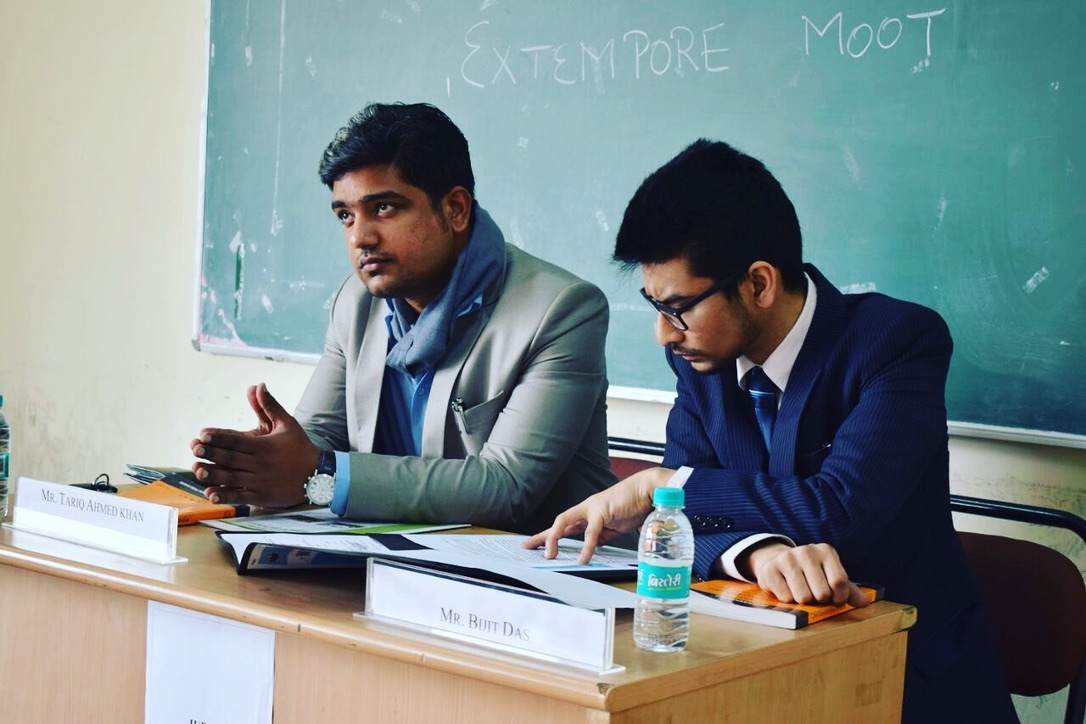
  • BIJIT DAS, LEGAL COUNSEL AT OYE RICKSHAW, SHARES HIS VALUABLE INSIGHTS FROM THE FIELD OF IP LAW AND TRANSACTIONAL CORPORATE LAW

    BIJIT DAS, LEGAL COUNSEL AT OYE RICKSHAW, SHARES HIS VALUABLE INSIGHTS FROM THE FIELD OF IP LAW AND TRANSACTIONAL CORPORATE LAW

    This interview has been published by Isam Kabir and The Super Lawyer team .

    How would you like to introduce yourself to our readers in your own words? 

    I am a legal counsel presently working with OYE! Rickshaw. I have been working in the legal industry for the past seven years and was a graduate of NLU Odisha, 2014 batch, the very first batch that the college had. The college gave me many good experiences, which I have nurtured and replicated in my professional life. 

    Did you ever consider litigation as your career option?

    Yes, I was litigating for the very first year of my professional life. Still, I eventually realized that it did not suit my aspirations, so I mainly shifted to intellectual property and corporate transactional law.

    You were a Humanities student in high school. Did the subjects you study then help you choose law as a career, or were you aware of your interest in the legal field from an early point? 

    It’s a bit of both and neither of both. I took humanities back in high school purely out of self-interest. I was never good with mathematics and numbers and mainly was into literary and other creative things. I loved reading books, and I have been a voracious reader throughout my life. On the other hand, I always have been inclined towards social science subjects like Political Science, Sociology, History, etc. I liked reading social science subjects quite a lot, which is why I selected Humanities. I generally did not have law as a career path in mind at that point in time. In the last ten years, the law has picked up quite a lot among the masses, but it wasn’t an obvious choice for me. I thought I would become a journalist or be in a profession with something to do with creative writing, pursue English Honors and then take it forward from there. But one last push from my parents and I got enrolled at a one-month CLAT crash course with a friend. When I did that, I realized that I already possess a unique skill set for the subjects that are in CLAT like General Knowledge, analytical reasoning, writing and comprehension. And with just one month of a crash course, I cracked CLAT and made it to NLU Odisha. At that point in time, I was also exploring B.A. in English or Sociology. Still, when I went through the course curriculum at NLU Orissa, I realized that law itself is like a social science subject, and for the first two years, I will study a lot of social science subjects. Therefore, it appealed to me, and that is why I went for NLU Odisha.

    You recently joined Oye Rickshaw during the pandemic, so what has been the significance of this change during this time, and how would you like to elaborate on the work that OYE rickshaw essentially does?

    Just a brief background about the Company, Oye! Rickshaw is a shared, electric, micro-mobility marketplace redefining how the honest Bharat commutes. It was founded in 2017, and since then, Oye! Has raised $10Mn in Series A funding and $1Mn in Seed funding from investors like Matrix Partners, Chirate Ventures, Xiaomi, Pawan Munjal etc. With an employee base of 250+ and 7000+ Drivers, the Company is working towards making the most suitable, convenient, environment-friendly, and pocket-friendly mobility option for the people of India.

    I am currently working as a Legal Counsel at the Company, and I report to the Head of Finance. My job here is to standardize all legal processes because it is a growing company, and I manage and coordinate all the legal and regulatory aspects related to the business, and perform a highly cross-functional role which entails providing product and business counsel; structuring, drafting and negotiating commercial transactions; managing Intellectual Property (IP), real estate/lease and employment-related matters of the Company. 

    You have majored in Criminal Law at NLU, Odisha. Could you elaborate upon your experience?

    I majored in criminal law mainly because of our first Vice-Chancellor, Mr Faizan Mustafah, the current vice-chancellor of NALSAR. When he started university, he wanted to do a lot of experiments with the course curriculum. What generally happens these days at NLUs, barring a few, is that the BA LLB degree that you get is a very generalized BA LLB. You study everything, it’s optional, and you study whatever subjects are being offered, but what happened back then was that they wanted to experiment with specialized LLBs. What they did was they gave us few options like constitutional law, corporate law, criminal law, and intellectual property law. So I took up criminal law in this context. Criminal law offered a lot of diverse subjects which were not strictly related to law per se. For instance, as a part of this course, I studied a separate paper on criminology, penology, prison conditions, forensic psychology and other allied fields. That decision I had to take in the third year itself. At that time, I chose criminal law exclusively because it offered subjects I was interested in studying. Unfortunately, after coming into professional life, I realized that it’s tough to be a criminal lawyer the way I like my life to be governed. So, the knowledge of criminal law I had, I was never able to apply. I went into a completely different field. 

    Despite majoring in criminal law, you’ve interned and worked almost exclusively with law firms in the corporate field. What factors affected your choice? 

    Once I entered the profession, it was about earning a stable income and making a living and living independently. At that point in time, I was 25, and that is what mattered to me. So, a criminal practice at that time, from a non-legal background, will not fetch you a good standard of living. So, unfortunately, I couldn’t pursue it.

    Having worked both with a law firm and as an in-house counsel, what are the significant differences in the work of representation by a senior associate at a firm and an in-house counsel?

    Over here, the significant difference that I have perceived as a law graduate is the feeling that we have. The perspective that we have is we need to learn every day. We need to draft something. We need to go to courts daily, and we need to go to tribunals and keep ourselves busy. So this is one difference that I have found over here. As an in house counsel, my job is not more of a conflict generator but more of a conflict mediator. In the Company, the trend that I have noticed for the last 4-5 months, whenever there is a conflict that arises, the first thing is to mediate it, resolve it and put an end to it internally and only as a last resort go to Courts. 

    BIJIT DAS

    You mentioned that at SS Rana, one of your roles was generating work as well. So, that means you were actively involved in procuring clients?

    The firm operates because the people at the partner level encourage every person to be a working generator. Right from the 1st year itself, the firm gives you a good exposure so that while you enter the 3rd year or 4th year, you independently get to manage a lot of clients of your own also. In the second year itself, they had started sending me to conferences abroad. In the field of Intellectual Property, there are many organizations like INTA, APAA, AIPPI, etc. Year-round, every month someone has a conference somewhere around the world, and through that, everyone gets a lot of exposure. 

    You have outstanding work experience to your credit. What kind of skill set did you have to develop to adapt to diverse work environments at your workplace, be it at Axiom or a firm like UnitedLex? 

    When it comes to the skill set that I’ve developed over the years, the most important one is being an effective communicator and articulates better. This refers to both verbal communication as well as written communication through your drafts and your submissions. Another virtue that I feel is important is patience. This profession demands high levels of tolerance from you, especially in the initial two to three years, which helps you find your mojo. The third skill required is good networking skills. At any point in time, you need to have a group of people you could rely upon for professional and personal help. To have a positive growth trajectory in the law firm sector, you can’t just show up, work and then leave. You need to have a corresponding level of growth in your network each year. These three are the most critical skills, in my opinion. 

    You have been contributing as an author at Lexology, conducted workshops on trademark laws, and judged a moot court at Jamia Islamia; do you think it is essential for established members of the legal industry to interact with young law students?

    Yes, these are just those events published in an online forum, but I have spoken at multiple conferences. Jamia Islamia happened through the firm that I used to be associated with, and at that point, we used to get a lot of requests to speak at these seminars. I saw some of my colleagues taking it as a burden or an extra day of work, but I approached it differently because I just loved communicating and talking to people. I was offered to speak on IP at a conference held by Lovely Professional University. Post that, I realized that speaking at such places is an empowering experience that you do not get to enjoy every day. Most of the requests that came through were for the partners, and the rest, I used to take up. I realized that it was a chance to make your presence felt productive, so I engaged with these conferences a lot.

    I believe it is essential for established members of the legal industry to interact with young law students. I think students must see different flares in life. They should witness an advocate from the Delhi High Court as a partner at a law firm or even a CA working at a law firm. They should also interact with established academics or even members of non-legal fields to get an idea of what is possible with the education they’re getting. 

    Since you have worked with technology firms, how do you reckon the developments in the field of AI are affecting technology laws? 

    I got to practice IP at a firm and could witness the path-breaking changes it was bringing to the legal field. IP as a practice involves a lot of administrative work like maintaining an excel sheet, doing trademark searches or looking up if any new mark has been registered, which is identical to your client’s signature. Earlier, all of this was done manually, and you had to follow this chain of reporting to finish the task. However, these days I have witnessed a change that many startups, especially in the legal field, are offering automated alternatives with more accessible online forms to fill, quick search options, etc. Due to the effective utilization of technology, a lot of time has been saved for a lawyer, which can now be used on more critical tasks like brainstorming or litigating. 

    BIJIT DAS

    If given a chance, what would be one piece of advice you would give to your younger self or change one professional decision you made and why? 

    I think I would like to go back to college and study more commercial law subjects rather than criminal law. This is strictly because the work that I am doing pushes me to improvise a lot. I think I would have been in a better position if I studied these things academically before working on them.  

    Finally, any parting words of advice to young lawyers and law students? 

    I understand that it is a difficult time for everyone but even though we’re locked in our houses, try to get in touch with people, network and have a ‘can-do attitude’. Just explore the different walks of life, sit back and introspect to see what is better suited for you and pursue the same. 

    Get in touch with

  • Yashvardhan Rana, on building his career in Intellectual Property Law being a top emerging lawyer and his passion for writing

    Yashvardhan Rana, on building his career in Intellectual Property Law being a top emerging lawyer and his passion for writing

    Yashvardhan Rana graduated from Symbiosis Law College, Pune in the year 2013 after which he pursued LLM in IPR from QMUL. He also pursued a certificate course in International Commercial Litigation and Arbitration from London School of Economics and Political Science. He is currently working with Inttl Advocare as an Associate.

    In this interview we speak to him about:

    • His Master’s degree from QMUL, London;
    • Tips on application requirements, procedure and writing SOPs;
    • His role and responsibilities as Associate at Inttl Advocare


    HOW WOULD YOU INTRODUCE YOURSELF TO OUR READERS?

    What matters is what you are from inside not something that can be portrayed by a bunch of adjectives attached to a string of sentences. You would have all witnessed the usual introductory lines till date. By now you must be thinking that I am trying to be different from my peers. But NO. I wouldn’t pull of some set of words out of my hat to describe myself and ask for your indulgence to know about me, but rather I would like to draw your attention to the various experiences that have shaped me as a human being. Human, first. Being myself, later. Being Human, is it? To cut the long story short – a hard worker like everyone else (smart work is the “in” thing – getting there..), believer of karma, football fanatic, adventure sports enthusiast, a law abiding citizen of this country – leaving out the sins committed in college life and the one who manages to show his passion for the world and for exploring it. Above all, what matters is how much you give back to the society (in terms of bringing about social impact and attitudinal change across all sectors), how much name and fame one can accumulate – social status, and the color of money you’ve stacked up for your descendants. Out of all the aforementioned indicators, I stand pretty meek as compared to the visionaries out there.


    WHY DIDN’T YOU OPT FOR THE CONVENTIONAL DEGREES IN ENGINEERING OR MEDICINE?

    “Have you got what it takes to lead in a diverse world?” Well, to start off with I chose law as my undergraduate degree to enrich myself of varied laws governing us and but of course – analytical skills.

    My academic and professional choices were driven by my continuous search for a fulfilling academic and professional life and what better way to take the path of law as opposed to the conventional degrees in Engineering or Medicine – as rightly pointed out. One other major factor was the sight of my father all dressed up as a lawyer and witnessing his gleaming personality – day in and day out since boyhood. My father’s hard labor and his savoir faire as an advocate appealed to my childhood dreams. My perspective on life changed when I closely observed my father, Mr. Mahendra Rana, work as an advocate in his Delhi High Court chambers and the one attached to our house.

    My entrance into this profession began after pursuing B.B.A., LL.B. (five year integrate course) from my Alma meter Symbiosis Law School, Pune in the year 2008. My yearning for specialised legal knowledge persuaded me to attain an LL.M. from Queen Mary, University of London, one of the top universities in the World in the field of Intellectual Property Law.


    ARE THERE ANY MEMORABLE MOMENTS OF LAW SCHOOL, WHICH YOU WOULD LIKE TO SHARE?

    I wish I could travel back in time to be with my friends with whom I cherish fond memories. At the risk of stating the obvious, I would say I had the time of my life at college. Not only because Symbi is a very good academic institution, but especially the diverse culture, unrestricted environment and the open-mindedness to learn which helped us to assimilate over a period of 5 years, was second to none. I was an introvert before college; the place played an important role in shaping my individuality, ethics, and set of values. I particularly savor the amiable camaraderie, especially at display in our apartments and college canteen (also the one at yards length from our college); all of us would bond together with our collaborative efforts through the chaos of assignment submissions and last minute exam preparations. I owe a lot of credit to these beautiful people for what I am today.


    HOW WAS YOUR FIRST YEAR AFTER GRADUATION AND WHAT WERE THE CHALLENGES THAT YOU FACED AS A YOUNG ASSOCIATE?

    In our ever-more inter-disciplinary world, innovations and laws inform and influence each other, ultimately emerging in response to each other. Generally speaking, Law is an ever-evolving subject of expertise and it takes a few months before a fresh graduate is of any use for an experienced lawyer. There is a fair bit of truth in the first half of this reason. The irony however is that the Bar Council of India, which is a body of several accomplished lawyers, regulates law schools. So basically, lawyers decide what/how law will be taught, only to (rightly) claim later that the training imparted by a system they regulate isn’t good enough. To enter this so-called world of uncertainty, I prepared myself for this and approached the IP Law firms I had interned with along with some other notable law firms. I would say that I got lucky with the firm that I had interned with and got through that, in turn becoming a trainee associate over there for a period for 2 years approximately. I got an overview about how to climb the ropes of law and the continuous persistence required to become a successful lawyer. I was involved in matters pertaining to Trade Mark and Copyright Law particularly and from the very start I was given the chance to accustom myself of what lies ahead being thrown in the deep blue sea comprising of big fishes catering to hungry sharks involving high stake matters. I also got to brief the owners of Haldiram’s and an eminent lawyer like Mr. Shanti Bhushan, along with my senior as Mr. Amarjit Singh was unavailable and, which in itself were enriching experiences.

    In the stifling hustle-bustle inside and outside the courtrooms, inspiration from stalwarts, restless clients, and legal professionals, I found my place. In countless other landmark judgments, I found my inspiration. And in the field of IP, I believe I can find the knowledge, and thus the power, to make my cause a reality.


    WHAT MADE YOU GO FOR FURTHER STUDIES?

    After amassing adequate knowledge about the rudiments of law through the various cases I was involved in over the first 2 years as an Associate as part of an Intellectual Property Firm, and having a small taste of how the law shapes its’ citizens, I planned to undertake a much more critical examination of the written words that were crafted to dictate our behaviour by involving myself handling varied contentious and non-contentious matters. Being fortunate enough to acquire the necessary expertise and acclimatising myself through Work experience, Diploma and Certificate courses from various avenues that beckon, I realised that I need to build up a sense of intellectual ability in me and arm myself with the various techniques of analysis and develop a sense of multi-disciplinary approach in a diverse environment that would in turn help me grow and broaden my perspective. That is what I yearned for to happen to me and to become a part of a university wherein I encountered the best minds engaged in immutable discussions whilst intrigued in understanding not just the theoretical foundations of law and society but also its new and emerging trends. This urge led me to search for an edifying journey with a stellar reputation for producing the best minds in the world of Intellectual Property Law. It did not come as much of a surprise that “Queen Mary University of London” fits that criteria, and, in one of the more surreal twists in my life, I decide to take the plunge and thus, applied for further studies.


    SHARE SOME ADVICE ON ACING THE APPLICATION REQUIREMENTS AND PROCEDURE FOR QMUL?

    Applying to an LL.M., whether at QMUL or elsewhere, requires some amount of dedication to craft and connect the dots. The key is just to start early (by early I mean – at the very beginning) in the admission cycle – get the referees to send in their recommendation letters (from a notable professor, judge or your college principal would go a long way) and the universities in India to send in the transcripts etc. After that, it’s about writing a solid statement of purpose. I think the SOP requires painting a vision about your future and how well you are aware on how to tread the path of endless opportunities without blinking your eye. Also, writing an SOP requires demonstration of a certain skill set, aptitude and coherence to be able to delineate and sell what you envision for in about 2-3 pages.


    WHAT LED YOU TO CHOOSE IPR AS YOUR SPECIALISATION?

    The world of brands have always fascinated me since my childhood as I’ve seen my father patronising various well-known brands from multifarious departmental stores in every nook and corner all over the world on his vacations (he does not like to shop in India). This routine was followed on every vacation that he took us to and I accidentally got immersed and it had further captivated me to dwell into the world of brands like never before. On another note, I also used to read his files at night in our house chamber of matters pertaining to high stake trade mark law matters almost twice or thrice a week in my college holidays. Since I also had an inclination to become a lawyer from my boyhood days and Intellectual Property Law was booming in India, I chose IPR as my specialisation and further wanted to create a niche for myself in this ever-intriguing field of law.


    TELL US ABOUT YOUR INTERNATIONAL EXPOSURE AND EXPERIENCE.

    In my view, it was an exhilarating experience as it broadened my horizons/perspective to a next level altogether. I met a lot of people from diverse backgrounds and countries. It also gave a deep insight into the workings of different legal regimes in different jurisdictions.

    I have, and shall always maintain unconditionally, that my year as an LL.M. student at QMUL was easily one of the very best years of my life. It gave me a lot more than just a degree: I had arrived to join a year-long course and to earn myself an added qualification with an incredible enlightenment, priceless personal growth, lifelong friends and long lasting memories. Intellectually, it endlessly challenged me to simultaneously learn and unlearn, and amplified my personal growth to help birth a broader view and perception I wouldn’t hitherto have considered myself capable of.


    PLEASE TELL US ABOUT YOUR CERTIFICATE COURSE IN INTERNATIONAL COMMERCIAL LITIGATION AND ARBITRATION FROM LONDON SCHOOL OF ECONOMICS AND POLITICAL SCIENCE. IS IT USEFUL IN YOUR PRACTICE.


    It definitely is! I quote “It takes a distressing incident for us to step back and retrospect. Until then, we relish being one among the herd.” It feels comforting having someone resonate your outlook. It was this moment when I realized the importance of having an all-round approach when it comes to learning. The subject “International Commercial Litigation and Arbitration” per se did not directly cater to my growth as an IP lawyer; however, it invoked a sense of understanding the law in its complete sense. Litigation and Arbitration play a key role in delivering speedy justice and what better way to supplement my knowledge in IP and have an added advantage over my peers. This course offered a concise introduction to the legal challenges relating to the international dimension of litigating commercial disputes, both before state courts and in arbitration. London being one of the most important centres for commercial litigation and arbitration in the world, the course focuses on the relevant English and European Union law, invoking experiences from other jurisdictions where useful.


    PLEASE TELL US HOW DID YOUR APPOINTMENT TAKE PLACE AT INTTL ADVOCARE.

    I joined Inttl Advocare in April 2017 after working at Amarjit & Associates (IP Litigation) and Lall, Lahiri and Salhotra (Trade Mark prosecution department), as an Associate, Trade Mark, Copyright and Design Prosecution, and have been with this stellar firm ever since. I had zeroed down on Inttl when I was applying to the best of IP firms in India and applied without any further delay. The doyens of IP law namely – Mr. Hemant Singh, Managing Partner and Mrs. Preetika Singh, Senior Partner and Head of Trade Mark, Copyright and Design Prosecution, instilled more confidence in me to apply here blindly without taking a second opinion. Thus, I got a call from there after my interview was conducted which comprised of a basic questionnaire, writing a short essay on a contemporary topic in the field of IP Law and 2 hour long face to face interview. I assure you of that this is the best place where one can hone their skills and concepts to the maximum in the field of IP in India, thus enabling you to reach greater heights within that setup in order to deliver results effectively and efficiently in turn making you into a versatile IP Attorney.


    AS AN ASSOCIATE IN INTTL ADVOCARE, WHAT ARE YOUR ROLES AND RESPONSIBILITIES?

    Being an Associate in one of the leading IP firms in the country is obviously very demanding involving challenging tasks on a daily basis that push you to your limit. It, however, encourages you to focus, grow, adapt and respond to new challenges and opportunities every day. I am a part of the Trade Mark, Copyright and Design Prosecution team and contribute religiously to this practice of the firm for multinational corporations based out of abroad and Indian clients across the board. I am currently responsible for conducting availability search for the purpose of registrability of trademarks along with providing legal opinion paving the way for smooth adoption and use of the trade mark by the clients. Also, I advise clients on trademark protection strategies, including drafting and filing reply to objections raised by the Trade Marks Registry, Copyright issues, Rectifications, filing and renewals of trade mark applications, attending hearings, Legal research and specific tasks relating to Design Law, Assignments etc. before the Trade Marks Registry. All this has to be executed in a timely and effective manner & to the satisfaction of our clients.


    HOW WOULD YOU SAY THAT AN INTERN COULD GENERATE A POSITIVE FEEDBACK IN THE LIMITED TIME THEY HAVE?

    Be committed, sincere, trustworthy, reliable and one should have the willingness to learn along with a host of other qualities to be an all round intern. Researching capabilities and thinking on your feet when asked a question are one of the major qualities that an intern should posses. There are no short cuts in life. Please try and get over the CV padding exercise do not end up interning with big firms without learning or contributing much. Before you start, ask as many questions as you want, understand the point well, make notes and do an exhaustive job. Be responsible with the work which has been delegated to you, don’t abandon the counsel uninformed. There are so many times that interns do not count themselves as a vital part of the system and tend to be careless. This often results into double efforts both of the counsel and that of the intern. Do not cut copy paste; rather analyze a point of law and discuss. If you get free time, spend some of it in the library or going through available precedents of past transactions.


    WHAT WOULD BE YOUR PARTING MESSAGE TO OUR READERS?

    You all would have heard about many great examples to follow. However, as a parting message, I would like to borrow a brief excerpt from an article titled as “The Path of the Law” written by Oliver Wendell Holmes, Jr. (was an American jurist who served as an Associate Justice of the Supreme Court of the United States from 1902 to 1932) published by the Harvard Law Review (10 Harvard Law Review 457 (1897)):

    To an imagination of any scope the most far-reaching form of power is not money, it is the command of ideas. If you want great examples, read Mr. Leslie Stephen’s History of English Thought in the Eighteenth Century, and see how a hundred years after his death the abstract speculations of Descartes had become a practical force controlling the conduct of men. Read the works of the great German jurists, and see how much more the world is governed to- day by Kant than by Bonaparte. We cannot all be Descartes or Kant, but we all want happiness. And happiness, I am sure from having known many successful men, cannot be won simply by being counsel for great corporations and having an income of fifty thousand dollars. An intellect great enough to win the prize needs other food besides success. The remoter and more general aspects of the law are those which give it universal interest. It is through them that you not only become a great master in your calling, but connect your subject with the universe and catch an echo of the infinite, a glimpse of its unfathomable process, a hint of the universal law.

    This thought again brings me back to the question that what I am going to do next and voila! The feeling of uncertainty and confusion is back. But just as law says – “Truth and Justice shall find its way through obstacles”, I definitely hope so would I.

  • Prashant Mali, Cyber Law Expert and President, Cyber Law Consulting on his varied experience in Cyber Law

    Prashant Mali, Cyber Law Expert and President, Cyber Law Consulting on his varied experience in Cyber Law

    Prashant Mali qualified in Law from Mumbai University in the year 2009, thereafter he pursued his Masters in Law from the Mumbai University itself. Prior to 2009 he had gained a Masters in Computer Science and had been working in the domain of Software, Networking and IT security for about a decade.

    Having various accolades to his name like the “Best Cyber Lawyer of 2017″ by India Legal Summit & Awards and Cyber Security Lawyer of the Year: India in 2016 by Financial Monthly Magazine of UK, he is the chairperson for Cyber & Law Foundation (an NGO for Cyber Policy, Research and Awareness) and at the Cyber Law & Security Committee of Indian National Bar Association.

    As a professional he is the President and Founder of Cyber Law Consulting (Advocates & Attorneys) where he deals with Cyber crimes, E-commerce, Privacy and Intellectual Property Issues.

    Prashant is also a regular speaker at national, international conferences and seminars and occasionally takes up training workshops for Mumbai University professors, Maharashtra police, Indian Air-force, Boards of Directors of various Companies and Law enforcement agencies as well.

    In this interview, he talks to us about:

    • His fascination with Cyber and IPR Law.
    • Some of the high profile cases he’s dealt with.
    • The skills to become an effective litigator.
    • The importance of cyber awareness in the digital world.

    How would you like to introduce yourself to our readers?

    I am a human being trapped in lawyer’s robes often caught in trivial decisions of taking or rejecting a case on moral grounds though professionally it is not proper. Shiv is my Guru and the light shown by him via intuitions and thoughts are my essence of being what I am today. I often dream first and then try to achieve the same, my people around now are aware of what my next big dream in terms of work and social work is.


    What motivated you to pursue a career in the legal field?

    (Prashant is the only distinguished Cyber Security & Cyber Law Expert Lawyer in India to have Masters in Computer Science and Masters in Law with prior working experience in the field of S/W, Networking & IT security.)

    As said earlier, after I finished my Yoga & Marshall Art education something in my mind pointed towards combining technology and Law, it clearly said you have a judicial mind with confidence and you need to get formal education to practice and I rightfully followed the same.


    Were you always fascinated by the field of Cyber & IPR Law?

    I had joined Law to be practicing only in Cyber Law, IPR and whatever has technology in combination with the Law. I was never junior to any lawyer, I started my own practice in my own purchased office which I bought by selling my investment in land and in shares. My first client was UTI Technology Services Limited and that time the issue I handled was of fake PAN Card. My first passion is cyber and I am living my dream for that I am thankful to the Almighty.


    What were the challenges you have faced in building your career as it stands today?

    (Prashant has an experience of twenty years.)

    Even if I had  ten years’ experience working in IT industry and working at CMC Limited in my last job, when I started my Law firm specialising in Cyber, IPR & Tech Law, I had no work as people failed to understand what I do and what cases should come to me. I realised that the police and judiciary both are not well acquainted with the implication of Cyber Law for cybercrime. I figured out that Policing in cyber is also in hunky dory state so I have converted the Information Technology Act, 2000 in Marathi the local language which the police use in the State of Maharashtra. The complete first edition of the Act in Marathi was distributed free to police across Maharashtra. I also wrote a book in Marathi “Cyber Gunhe va Cyber Kayda” which is now in 5th edition. The idea was to create awareness among civilians and police. This simplified book I converted into English i.e. Cyber Law Cyber Crimes Simplified which is forwarded by Justice Madan Lokur of Supreme Court and remains one of the highest selling books on Amazon. Hindi version of the book is also available for masses. The biggest challenge I faced was fewer clients and which I continue to face so as awareness levels are low and frankly my fees I have kept premium since day one.


    What are your views on the importance of higher education?

    The LL.B. qualification in India, I feel is the beginning of legal education that one acquires. To develop a judicial mind one has to do his specialisation via a master or a PG degree and has to give minimum 2-3 years of practical’s, to understand the field of his choice. I advise that law students should follow two principles for making career in Law-One; while starting their career identify their passion or interest and Two; is choose a stream of Law which is expected to mature in next 3-5 years.


    Congratulations on being accorded the “Best Cyber Lawyer of 2017” award by the India Legal Summit & Awards and also the “Cyber Security Lawyer of the Year: India” 2016 by Financial Monthly Magazine of UK! What do you think has led to these recognitions?

    Every award I have won has weighted me on my success of professional assignments in litigation, my authorship work, my social work of spreading awareness amongst judges, police, defence forces, bureaucrats, ministers, teachers, corporates, and students. My social work for the society which includes taking pro bono cases and standing as an intervener lawyer. My cyber policy & Law related inputs to the Government, which are implemented. My mentorship efforts are for the young and uninitiated.


    What are the skills that one needs to develop an effective litigator?

    An effective litigator in cyber and technology related cases is not the one who understands technology & Law but who understands and reproduces it in the simplified format and put up your case before the courts keeping in mind Rule of Law and procedures of various courts. I feel a good litigator needs confidence and confidence comes from knowledge and understanding of the matter in hand. A tech lawyer needs to study double i.e. technology as well as Law and then understand concepts which intersect, compliment and interfere. I recommend students to participate in moot, practice with the drafting, read different kind of judgments and attend courts during college. English speaking, body language, grooming, using gadgets, using the internet are some of the other soft skills a good litigator should be equipped with.


    As the Chairman of Cyber & Law Foundation, what are your roles and responsibility?

    Cyber & Law Foundation is an NGO registered in 2004-2005. We are involved in Policy Research and Awareness work. I am the founder and chairman of the NGO and as of now, I finance the NGO from my personal earnings even though we plan to get funded in future. We formulate and send new policy related suggestions to the Government of India. We have conducted independent research on cyber terrorism, revenge porn, internet safety etc. We are co-partner to an event inaugurated by Chief Minister of Maharashtra called National Conference on Cyber Psychology. We conduct various cyber-related awareness workshops across India in schools, colleges for police and citizens.


    As a proponent of academia, do you feel that law schools produce socially relevant lawyers equipped to handle the real world practice of Law?

    Absolutely! Just that the percentage of such socially relevant lawyers is below ten per cent. Specifically, law schools have the minuscule percentage of below five per cent who come in practice as these law schools and students studying in law schools eye for campus placement and it is always for the corporate job or in law firms which do very less litigation work. I feel the law students eye for the package after their graduation and such packages are never offered in first two years of practice by a practicing lawyer or a law firm in pure practice. I am appalled that even NLSIU graduates and masters are not interested in practice. Law ministry & Bar council should do something about this. I feel compulsory internship for students and compulsory quota for lawyers to keep interns can solve this problem to some extent.

    Since you used the word “As a proponent of academia” I need to mention that Amity University has conferred upon me title of “Professor”. But I am not using the same as my name would be crowded as I am also shortly due to get my Ph.D. in International Cyber Law & Cyber warfare.


    You have quite a lot of publications to your name, how do you find time to write in your busy schedule?

    Books, articles, quotes in newspapers and interviews on television help me dissipate my knowledge and experience and I feel I am morally obliged to make society cyber safe and cyber aware. I am passionate about speaking and writing about tech & Law topics. My style is simplified writing, which common man understands. I write everywhere whenever an idea strikes me, I have written many articles on my iPhone while travelling. Early morning or late evenings are the best time when I start writing, till my writings are relevant to the society for spreading awareness I am going to keep writing without any monetary expectations. Every amount I get out of my books goes only for charity. The best research papers, I have authored till date are the one published this January, where I have proposed a landmark Definition for Cyber Weapon in Techno-legal context published in International Journal of Cyber Warfare and Terrorism (IJCWT) Volume 8, Issue 1 by IGI Link: https://www.igi-global.com/journal/international-journal-cyber-warfare-terrorism/1167 , the other paper is titled “Privacy Regulatory & Legal Framework in India” for Jan 2018 Volume 7 Number 1 of International Journal of Law and Policy Review (IJLPR) published by NUJS. Link: http://www.ijlprnujs.com/ijlpr_2018_vol_7_no_1 .

    The best one for Law & Enforcement is on Cyber Forensics or Digital Forensics titled as Low Cost And Ultra Low Cost Digital Forensic Imaging Devices published in International Journal for Science and Advance Research In Technology (IJSART) Volume 4 Issue 1 Link : http://ijsart.com/Home/IssueDetail/19491 .


    What kind of cases do you handle?

    (Prashant has been involved in various landmark cases that have shaped the Law relating to Cyber Law in India.)

    My team and I, handle cases on 5 fronts namely 1. Criminal Courts (Bail, Court trial, Arguments, expert opinion, Drafting and filing cases with police, lodging FIR, etc.) 2. Civil Courts (filing complaints & suits for damages and compensations, getting blocking orders etc.) 3. Arbitration (Arbitrating matters involving data theft, source code theft, trademark theft, copyright violation, Bitcoin issues, e-commerce issues and matters involving technology or Electronic evidence) 4. Intellectual Property related cases (Registration of the Trademark and Copyright, infringement litigation at WIPO or in courts, arbitration etc.) 5. Legal Consulting and Expert Opinion in my office for all court & non-court matters.

    I have handled cases of Shapoorji & Pallonji Vs Mahada, NIC & Ors in HC & SC which talks about e-tenders and Digital Signatures. I have handled Naaptol Versus Big Deal (A Raj Kundra & Akshay Kumar’s Company) and Ors a sensational case of source code theft. I am handling India’s first case of Identity Theft i.e. Rita Basu case. I helped prosecution side in two important matters the one of Palghar Case of Section 66A and the other case of Panvel Court where for the first time in India 5 Nigerians were convicted of cyber fraud. I have handled landmark case of Sunny Leone of her porn website. I have taken the highest number of favourable orders before The Adjudication Officers Court for online banking fraud (i.e in common man’s lingo cybercrime civil court for matters till Rs. 5 crores).

    Bitcoin is the new buzzword, how will the future be affected by it?

    Bitcoin and crypto currencies are the favourite investment destination for the uninitiated, but let me tell you, I am handling various clients who either want to make an ICO or those who have bitcoins, their bitcoins are stolen or people who are being scammed by bitcoin scamsters who lure people with bitcoin for further appreciation with various schemes. Even the common is lured with various MLM schemes around bitcoin, where often bitcoin is the name used for namesake and actually no bitcoin trading is involved. I see BlockChain and the new competitor to BlockChain. Hash graph both have future in the security market. I have my reservations about using bitcoin as a currency in a country like India where digital literacy and Law and Order in cyberspace is an issue.


    As a parting message, what would be your advice to the next generation lawyers?

    There is a need for techno legal trial lawyers today like no other, and the future will require great techno legal trial lawyers even more than the present as fewer and fewer lawyers these days are given the opportunity to try cases. Never get discouraged by someone telling you “you can’t do it this way”. A smart, hard-working junior associate can single-handedly win the case if he or she works hard, thinks creatively and refuses to take no for an answer.

    Prepare, Prepare, Prepare (And Then Prepare Some More). When the time comes for your first trial (or any trial, for that matter), there is no substitute for preparation. Just because you are a newer lawyer does not mean you cannot know every document, every fact, and every witness better than anyone else involved with the case. Use Information Technology as an aid for your profession, wear confidence on your body and specialize on the day one of your practice that will make you a winner in some time to come.

  • Santanu Mukherjee, Founder, Ex Lege Chambers, and his involvement in multilateral negotiations at the global level

    Santanu Mukherjee, Founder, Ex Lege Chambers, and his involvement in multilateral negotiations at the global level

    Santanu Mukherjee graduated in Law from South Calcutta Law College, Calcutta University in the year 1998. He is an Advocate and an accredited Mediator practicing in New Delhi. He is currently the founder and Head of Ex Lege Chambers, Advocates and Regulatory, Policy Advisors, a boutique law office.

    Over the past twenty years of his work experience he has worked in Statutory and Regulatory Policy, Commercial Mediation and Litigation practice while specializing in Intellectual Property Rights, Competition Law and International Trade Law. His clientele comprise of entities from governments and large corporations to start-ups.

    Recently he has been awarded the prestigious Intellectual Property Lawyer of the Year Award 2017 from the Indian National Bar Association.

    In this interview, he gives us insights into:

    • The importance of extra-curricular in shaping your personality.
    • His international work at the South Centre.
    • Setting up his own firm- Ex Lege Chambers.
    • Honing one’s legal research and communication skills.


    How would you like to introduce yourself to our readers?

    I would like to introduce myself as a legal professional and a mediator, who is passionate in seeking solutions to legal problems and ready to go deep into a matter that I take up. Someone who is passionate to continuously learn, be a thoughtful leader and a change agent, someone who does what he believes in.


    Tell us a bit about your childhood and pre-college life as well as educational background. Do you have lawyers in your family?

    My childhood and college days had been fascinating, I was always interested in extra-curricular, was extremely disciplined and loved to do social work. I studied in Don Bosco Bandel School and was very active as a boys scout. It was long time back but I still cherish the memories of public cleanliness initiatives we took up and volunteering activities in community fairs and traffic rules awareness programmes. Of course the adventure activities were fun, hiking, rock climbing, trekking and the competitions. It developed a deep bond of brotherhood that is still live; I am in touch with many of my childhood friends and my scout brothers even now. Finally an acknowledgment for life, it was a great honour to be awarded by the Hon’ble President of India as a President’s Scout.

    Then came the college days, at South Calcutta Law College, studies were as one could expect in a Law college those days, no frills of moots but occasional debates. However, here again I was focused on some different type of extra-curricular, I enrolled with No. 2 Bengal Air Sqn, National Cadet Corps (NCC) and was the only student from a Law college at the NCC unit. It was again another wonderful memory, the weekly parades, the skeet shootings, the glider flying, the extempore preparing for the best cadet competition, it was a unique experience. In the three years of Senior Division NCC, I rose to be the Senior Under Officer, a learning of leadership that is a training for life. Preparing for the Republic Day camp was an ordeal; I was selected as the West Bengal and Sikkim contingent senior and with it came a sense of responsibility, fellow feeling. The camaraderie was unbelievable, the contingent was tight even during challenging moments, and these thoughts still make me nostalgic. The love and support of my trainers, fellow cadets enabled me to work hard and get the Best Cadet of West Bengal and Sikkim Directorate medal from the Hon’ble Governor of West Bengal. My childhood was adventurous and full of activities of rather unconventional outdoors. I am sharing these thoughts since I want to make a point that there is learning in everything, in sports, in community work, in adventure activities, all can contribute to making our personality.

    I do not have lawyers in my immediate family, my father was a polymer technologist and my mother is an artist and home maker and both of them have always been a great inspiration for me. My only sister has not taken up legal profession either, however my maternal cousin, who is elder to me, had been a practicing lawyer at the Calcutta High Court. She inspired me a lot but I specialized in IPR early hence professionally could not gain much when she was a general litigator.


    In India there is bit of resistance towards legal education even now. What motivated you to choose law as a career?

    Yes, very true, legal education was not at all promoted; some people even had a very negative perspective of legal professionals. Things have changed now to a certain extent and is improving every day. I think a lot of credit goes to structured legal education that has been introduced, the contribution of the National Law Schools and entry to legal education through Common Law Admission Test.

    Typically when one talks of Law as a career, one thinks of becoming a lawyer who would interpret Law and of course aspire to be elevated to the bench one day. In my days as a student, my Law career goals were similar, only that I always wanted to work on international issues and wanted to be an expert. I was exposed to Intellectual Property Rights (IPR) at an early phase, when I was preparing for the NCC Best Cadet competition; I read about the General Agreement on Trade Tariffs (GATT) and the negotiations on IPR, discussion on the ‘Dunkel Draft’ was in the newspapers. My curiosity made me read more and I liked the IP Law discipline and at the final stage of my Law studies was already more aware than most practising lawyers (those not practicing IP law). However, gradually what really intrigued me was ‘Law making’ and this has been a constant motivating factor, to be able to draft a Law from scratch and the grand finale perhaps to be able to move it as a Law maker.
    You have a varied work experience, how did you start, how was your initial days of law practice?

    It’s true that I have a varied work experience, in fact I always wanted to get a 360° exposure to different works in Law. Having started as an Advocate at the Calcutta High Court, I moved beyond whenever I got an opportunity. I started as a Law trainee at S. Jalan and Company, a leading Solicitors’ chambers in Kolkata and was fortunate to be under the tutelage of Mr. Shyamanand Jalan. He was one of the leading corporate and commercial lawyers of the time in Kolkata at that time and I will always be indebted to his guidance towards meticulous drafting and his pragmatic approach. The GATT 1995 was already signed and the World Trade Organization was formed. The Agreement on Trade Related aspects of Intellectual Property Rights (TRIPS) was one of the pillars of the WTO multilateral trade regime. My interest in IPRs landed me at D. P. Ahuja and Co., one of the leading IP Attorneys at Kolkata. I was quickly drawn into IP litigation work, new learning experience amidst some of the legal experts in IPR practice, one of whom was later elevated to the Bench at the Calcutta High Court. I was bonded to IPR domain for ever while gradually expanding to different other areas in the days to come. Later I went to York England to read Law at the College of Law of England and Wales, now University of Law, York, UK.


    You were a British Chevening scholar in UK, can you let us know how was your interview to give our readers some tips to nail the scholarship. What did you study and how was it helpful in your career? During this time you were also a visiting lawyer at the Littleton Chambers, Inner Temple Bar, London, how was your experience?

    Indeed, I attended the British Chevening Programme for Young Indian Corporate, Commercial Lawyers 2000 at the College of Law of Engaland and Wales at York, now University of Law, York, U.K. I understand that this programme is not continued any longer, I am told that instead the number of LL.M. Chevening scholarship offers have been increased. I qualified in the preliminary interview at Kolkata and appeared before the final interview in New Delhi. It was a panel interview of five members which included a Supreme Court practitioner, two academic faculty members of the College of Law, one of who was also a qualified British barrister and the other a solicitor and I think there were members from British Council and the High Commission in New Delhi. I enjoyed the interview which was more of a discussion about my career plans, IPR issues and a tricky trademark infringement matter and some generic questions.

    The scholarship programme was a customized for legal practitioners and touched on laws of England and Wales and the European Union as well, often drew comparison with the Indian laws. A number of corporate and commercial Law subjects were covered but what I really found fascinating was the trainings in lawyering skills. The Woolf Reforms and the Civil Procedure Rules of 1998 had just come into effect the year before we went to England. The legal drafting style in England and Wales had already experienced a sea change, crisp lucid language was in vogue. We were quite taken by surprise but the unlearning of the Indian legal drafting style and adapting to the new style was perhaps necessary. The drafting sessions and the courses on negotiation and advocacy which I attended in the programme were excellent and definitely helped me later on as a lawyer.

    I had already gained some experience in drafting and negotiating skills working at the Solicitor’s firm in Kolkata hence wanted to get some exposure to good advocacy. This made me split my practical attachments between Beresford and Company an IP Attorney Firm well known for their hi-tech practice (now Beresford Crump LLP) and Littleton Chambers, Inner Temple Bar. At that time Littleton Chambers was not one of the leading chambers for IPR matters but had quite a wide variety of matters. I wanted to gain maximum from this wide exposure hence opted for the Littleton Chambers to get a real life experience of advocacy in English courts. I could join different barristers at the Royal Court of Justice in London, the Employment Tribunal in Leeds and watch them plead. They had also arranged a visit to the Old Bailey (the central Criminal Court of England and Wales) for me; it was quite a unique experience. I liked the work culture of the chambers, the discussions and the warmth. I could also get a ticket to attend a lecture of Lord Rt Hon Lord Woolf who was the author of the legal reforms, it was quite a treat.


    You have spent some time in doing legal research work and policy work, how did you get interested in such works?

    The founding stone to my interest in doing legal research is actually my master’s studies at Bern, Switzerland. The IPR related issues that I worked on were interesting but I was interested to understand the interface issues between IPR and international trade laws as established under the WTO regime. The first five years of the transition period for developing countries to adopt TRIPS was over and India had already suffered a setback at the first IPR case. The Panel of the Dispute Settlement Body (DSB) of the WTO found India’s Patent law not in compliance with its WTO commitment. I felt that for a developing country like India, WTO regulations would be important for the coming future and it would be worth studying it deeper.

    At that time, a friend informed me of the World Trade Institute in Bern, Switzerland providing a Master’s programme in International Law and Economics with exclusive focus on WTO regulations. Although initially I was reluctant since it was a new institute but given the reputation of Bern University and having some of the leading names from Yale, Oxford, Columbia Universities and many others as members of faculty I was convinced. I managed to get a scholarship from the Institute and successfully complete it and I gained immensely from our Managing Director, Prof. Thomas Cottier who was also the chairman of the first IPR case decided by the WTO between USA and India. I had already done an internship at the WTO Secretariat in Geneva which gave me an inside view of how the WTO worked. Further, it also gave me an opportunity to sit in the TRIPS Council meetings and understand the importance of strategy and the play of tactics in multilateral negotiations.

    My master’s studies involved significant legal research and actually it also opened my door to policy work which involved critically analysing laws, recommending changes and took me to a step ahead of my interest in drafting laws. It gave me a feeling that I can contribute in works that can have mass effect and encouraged me to undertake deeper legal research based policy work rather than rhetorical advocacy. By now I had already noticed that in continental Europe, lawyers dedicate time doing legal research while in India such research is only taken up by academics. I decided to adopt this model and try for some fellowship at some renowned research institute and my exploration led me to the Max Planck Institute for Intellectual Property and Competition Law (MPI) in Munich, Germany. At MPI, I worked on interface between IPR and multilateral trade regulations under the WTO and the Indian Patent Law and protection of traditional knowledge and the research foundation helped me all through later. Based on my work published an article at their peer-reviewed journal, IIC and made presentations including at the Global Salzburg Seminar on Trade, Aid and Development.


    Tell us about your international work at the South Centre, what was the nature of your work and your return to India.
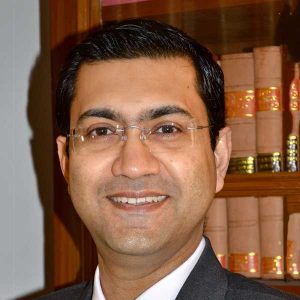
    After completing my research at the MPI I was contemplating moving back to full time legal practice when I got an interesting opportunity. The South Centre, an intergovernmental organisation of developing countries based in Geneva working along the UN organizations and chaired by Dr. B.B. Ghali, former Secretary General of the UN was looking for a Fellow with IPR practice and research background. I was familiar with the Centre’s works and also that our former Prime Minister Dr. Manmohan Singh was its chairman when it was still in the form of South Commission, I was quite excited when I cleared the interview to join the South Centre. As a Fellow I worked in the capacity of a consultant and enjoyed certain perks as an international civil servant similar to the UN staff which itself was a new experience.

    My main work was on pharmaceutical patents and how developing countries could draft examination guidelines in a manner helpful to their developmental needs, but remaining within the TRIPS Agreement. I was also deeply involved in preparing negotiating texts for on-going IPR negotiations at the WIPO and WTO including those on geographical indications. It was quite an unique opportunity to prepare draft laws and amendments to patent laws for member countries that lacked capacity and it’s very satisfying to note that some became laws in those countries. I worked very closely with WIPO, WTO UNCTAD and other IGOs on different international issues. South Centre used to hold training sessions for commerce ministry officials of member countries regularly, it was absolute pleasure to model such training courses and teach these trade diplomats. One of the new learning was to present technical matters in a non-lawyerly manner since the bureaucrats were seasoned generalists but not always familiar with legalistic approach. Once my project was complete, instead of waiting for some other project, I thought that I should return to India and explore opportunities back home.


    You have been working in Delhi for about 10 years now and have started your own Law office, how did it come by?

    Many friends had advised me against leaving Geneva, they tried to convince me that I would be able to contribute more by being there rather than returning. However, I took the decision to return to Kolkata and after an initial year moving back to legal practice and consulting, I realised that if I want to continue working on policy, I needed to move to Delhi.

    Once I decided to move to New Delhi, I started discussing work possibilities with some Law firms when Qualcomm, an advanced wireless technology company based in San Diego, California approached me for a lawyer role. I was not aware that Qualcomm’s presence in India was big enough for an India-based role and that too they were looking for someone who had a background in IPR and a deep understanding of the international trade regime. Initially, I was not that convinced for the position since had never expected myself in any in-house role but as it happened with me, “never say never”. After some thoughts and discussing with some seniors whom I consider as mentors, I concluded that this would be a new experience for me and fulfil my aim of getting exposed to law at 360°.

    I tried to chalk out what should be my learning in the three to five years that I intend to stay and thought that it would be worth understanding how to form legal strategies, manage outreach and learn how they engage with governments. It was a great experience as I moved in with the global team within a short time. I was a part of an international team with lawyers from different countries all working in synergy. The experience of working with multiple internal clients in different jurisdictions in a wholesome manner considering the business impact is something unique and completely different from that of an external counsel. As I engaged in different works I never realised that even when I had thought that I will transit out after five years, I continued for 8 years enjoying every bit of my work.

    Finally, I decided that it is time for me to return to mainstream legal practice and discussed my intent of moving back to practice with friends and family. It was a difficult decision since I was a family man and the corporate legal work comes with some leisurely perks and a different work style. I talked to some senior lawyer friends and finally took the decision to join Luthra and Luthra Law Offices after talking to Mr. Rajiv Luthra, Manging Partner. I joined as Partner and Head of International Trade and Policy Advisory practice and enjoyed the policy advisory work including trade matters working closely with different governments as well as private corporate clients. However, I soon realised that I would not be able to introduce a number of prospective clients even when they have approached me and I have an excellent relationship with them given the conflicts problem that affect large firms across the globe. I understood that with the firm’s established clients, it would be difficult for me to create my own clientele and felt an urge to be independent. As it has always been, once decided I have never looked back, I started Ex Lege Chambers, a boutique law chambers, an independent effort with strong support from close friends.


    You have founded Ex Lege Chambers and call it a boutique chambers, how is it different from any other law firm?

    Always fascinated with my experience at Littleton Chambers in London, when I introduced this concept to a dear friend, a litigator at the Supreme Court and Delhi High Court, he was game to it. From day one he supported me as a co-founder and I established Ex Lege Chambers, Advocates and Regulatory, Policy Advisors in New Delhi. Typically like chambers legal practice elsewhere and distinguished from law firms, the lawyers are independent members and share costs and not profits. Keeping costs as low as possible, our aim as a boutique chambers is to provide complete support to our clients in a dedicated manner rather than be in a hurry to scale up.

    At present we are mainly focused on Dispute Resolution, Alternate Dispute Resolution (ADR) and Policy Advisories as well as corporate legal support. We aim to increase our commercial mediation work within the ADR services and hopefully make our mark in deal mediation. Given the global move for resolving conflicts quicker, mediation plays and will increasingly play a major role and I think that India would gain from adopting mediation in a major manner. Being a boutique chambers has also helped us to address needs of the start-up clients providing complete legal service package for all their needs.

    The chamber does not follow the concept of hiring lawyers at any level. A client work would be supervised by a lead counsel (as of now the founders) and considering client requirements, a team of counsels at two levels. The first level with around five to seven years’ experience is retained as members and the second level with three to five years’ experience as junior members. Depending on the nature of work freshly qualified Advocates can also find a place as trainee members. Trainee members are exposed to close mentoring and get an opportunity to learn.


    You have been involved in multilateral negotiations at the global level can you share your experience.

    Apart from my involvement in WTO, WIPO, UNCTAD and ITU while working in Geneva, while working with Qualcomm too, I was actively involved in some multilateral negotiations. One such experience is at the United Nations Framework Conference on Climate Change (UNFCCC) Conference of Parties (COP). Interesting to note that in these negotiations only governments can be negotiating parties while the decisions taken affect many stakeholders including private sector. To address private sector concerns, it is possible for private sector to engage in track 1.5 / track 2 negotiations, i.e. attend the COP as observers and hold parallel negotiations with country delegations. I was part of the delegation of Business Council of Sustainable Energy which held an observer status at UNFCCC and attended the COPs at Copenhagen (2009), Durban (2011) and Doha (2012).

    I was focused on the technology-transfer negotiations related to climate change mitigating technologies. The debate on access to patented clean energy technologies negotiations through track 1.5 track 2 at a number of COPs with extreme positions being taken by negotiating parties.

    Like any other multilateral negotiations, the engagements started early in the morning and went on until late in the evenings. Just to give an idea of the works, we would access country positions that were published in UNFCCC documents and changed as the negotiations proceeded, analyse them considering client needs and as needed, prepare alternate texts. Then we used to hold parallel meetings with different relevant delegations to explain our position substantiating with data and valid reasons so that once convinced, they can raise these at their negotiating meetings.

    In between there were different meetings and briefings to attend, Among the COPs that I have attended, I will remember the Copenhagen COP vividly because of its administrative collapse when I waited for eight hours at minus 12°C to get an entry pass. There were also massive protests and police action against demonstrators. The negotiating styles of different countries were also worth noting and how these styles actually manoeuvred the results of the negotiations.


    Many lawyers are submerged in work most of the time and often find it challenging to juggle between your personal and professional life? How do you look at work-life balance?

    Lawyers’ work demands a considerable bit of time, I think that in the initial years’ lawyers would need to work very hard and long hours would be normal. However, there seems to be a growing trend in law firms to stay back for long hours to create a perception that one is working hard, this unfortunately brings no dividend and I think should be avoided. For me, being independent gives me the flexibility to take up work that I can manage and can give sufficient attention without compromising on my other interests. Apart from spending time with family, my other interests include lecturing at law schools at times engage in public discourses in seminars and conferences and writing articles.


    The trend is now on gathering various internship experiences at different places. Was the scenario same while you were pursuing law?

    I believe that internships are mandatory in the five years law curriculum hence the students spend time interning at different law firms during their vacations. While I think internships are important, I do not think that doing a month’s internship at a place during vacations allow the students to gain any meaningful exposure. Although some are very hardworking and able to gain some good experience, I think one would need at least for two or three months to get a good exposure. However, since the setup is such that students would hardly get few months’ time, the students should plan well in advance and try to learn different lawyering skills through their practical exposure while being attached to work related to the discipline that they like.

    During my law college days there was no concept of internship although those coming from lawyer’s families usually spent time at the firms and chambers. I realised that since I was not from a lawyer’s family, getting practical experience was essential hence managed to join a law firm as legal trainee and worked there beyond college hours.


    As a concluding message, what would be your suggestions to law students / younger corporate commercial lawyers?

    Law students while they are still at school/college need to make sure that they improve their listening skills, communications skills, both written and verbal and legal research skills. All the rest can be developed while working as freshly qualified lawyers. If they are interested in any particular legal domain, they should put in an extra effort to know more about the subject through reading of learned articles, following good blogs and also writing articles at law journals. In addition they should also read news and current affairs in a manner that they are well aware about what’s happening around them. This would help them engage in any pertinent discussion without difficulty. The skill of being able to initiate and engage in a conversation is always helpful for a lawyer. I wish all law students and young lawyers to be able to put in their best to contribute in whatever field they pursue, as I stated earlier, law is a discipline in which a 360° approach is not just possible, it can be rewarding.

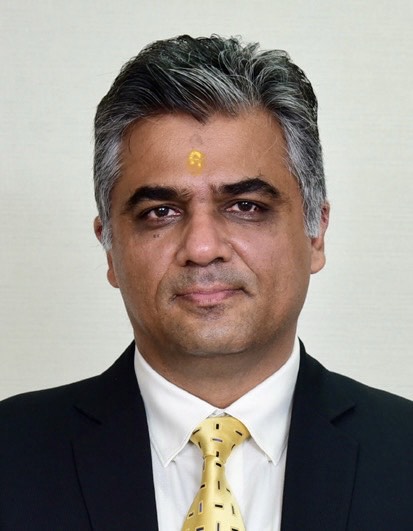
  • Veena Poolakal, Partner, Lall Lahiri & Salhotra, and her illustrious fifteen years of experience in the IPR

    Veena Poolakal, Partner, Lall Lahiri & Salhotra, and her illustrious fifteen years of experience in the IPR

    Veena Poolakal completed her graduation in Law from Government Law College, Calicut in the year 2000. Post completion of her Master’s degree in Intellectual Property Rights she started her legal practice in May, 2003 with Singhania & Co., Mumbai as an Associate. After a brief stint of two months with Singhania & Co., Mumbai, she joined the trademarks team of Lall Lahiri & Salhotra, Attorneys-At-Law, as an Associate in August, 2003. Since then she has been involved in Trademark Prosecution work and had represented many Fortune 500 companies. She was promoted to Head Trademarks Prosecution in the year of 2006 and thereafter as a Partner in 2011.

    She was recently ranked by the World Trademark Review in the top 1000 Individuals: Prosecution & Strategy Category.

    In this interview she talks to us about:

    • Her specialisation in IPR.
    • Work experience in Trademark Prosecution
    • Her responsibility as Partner- Trademarks at Lall Lahiri & Salhotra, Attorneys at Law.


    How did your interest gravitate towards law?

    Law was one of the desired career options for me. Perhaps, the liveliness of this particular discipline and the confidence and empowerment that a legal career would offer, comparing to any other field, might have attracted me towards this option. As far as my exposure to the legal fraternity is concerned, the same was very limited prior to joining of law school.


    You completed your LLB from the Government Law College, Calicut, in 2000. Please do share with us some memories from your years in college.

    The law school has given me fairly a sound understanding on most of the conventional legal areas. But, more importantly, the days I spend in law school remain as the most cherished memories in my life mainly for the pleasant and cheerful campus. The law school had always maintained a liberal approach towards the students’ political activities which contributed a lot to maintain the liveliness and enthusiasm in the campus and also helped many to reinvent themselves as more independent and rational humans. Either as a part of a particular political ideology or otherwise, an active involvement in the general issues was a part of our campus life. I believe that my law school experience have played a great role in the later part of my life. The years spent in law school has not only helped me to become a lawyer but also has helped a lot in the overall development as a person. The extracurricular activities of the law school days were limited to legal aid clinics, moot court participations etc.

    What were your major interests in law school?

    The teachings in the law school were mainly centred on the conventional areas like Constitutional Law, Law of Contract, Administrative Law, Criminal Law, Tax Law etc. The more specialised areas like IPR, in which I had done my specialisation later, or various laws relating to the economic offences which turned to be of extreme practical importance now etc. where not part of our law school syllabus. As a law student, I found Constitutional Law and Administrative Law as the most interesting areas, which still I believe to be of extreme importance, both from the academic and professional perspectives.


    What according to you can make law students more interested in studying Intellectual Property Rights in comparison to the much sought after Corporate Law?

    Needless to say, either of these areas would not be complete without the other. However, I feel that, the Intellectual Property Rights (IPR) being a subject that prominently deals with the substantive rights of the person as against a subject which concentrate more on the procedural aspects, may be attractive for a student of Law. Further, the interplay between the private and public rights and the State’s indulgence in recognising the just and required monopoly in each of the ever expanding areas of IPRs depending upon what is conducive for the growth of the concerned country/society and to maintain a balance of conflicting interest in its peculiar socio-political and economic conditions, would certainly be of extreme importance.  Further, we are witnessing a time where the whole world has equated the intellectual property with the conventional types of property and this spectrum which originally consists of conventional areas of patent, copyright, trademark and designs now been added with new property rights  in the area  like  geographical indications, plant varieties, semiconductor chips etc. Even the extent and scope the conventional areas are being expanding day by day. As one would see, the rights and obligations associated with intellectual properties are now well recognised across the globe and various trans-national regimes are also in place. Thus, even from a perspective of a practitioner, IPR is one of the prominent areas which are still in short of enough dedicated resource persons and professionals.


    How did your forte in IPR develop?

    As I said, the IPR was not part of my LL.B. I was first introduced to IPR as a subject during my Master’s degree in IPR at Cochin University of Science & Technology (CUSAT). I was really fortunate enough to receive the lectures and patronage of Dr. N.S. Gopalakrishnan, one of the leading experts/ academician in IPR. It was during this time, my initial interest in IPR law turned out to be a serious career option.

    Upon completion of LL.M., I started my career as an Associate with Lall Lahiri & Salhotra (LLS), one of the pioneer IPR law firms in the country.

    In LLS, I was fortunate enough to be mentored by Mrs. Anuradha Salhotra. The exposure, opportunity and guidance that I was able to get at LLS helped me to develop myself in the areas of trademark law.


    In the year 2006, you were promoted as Head -Trademarks Prosecution and as a Partner of Lall Lahiri & Salhotra in the year of 2011.Can you give us an insight into the type of work you handled?

    From a practitioner’s point of view, IPR practice is all about acquisition of rights, its maintenance and enforcement as per the statutory mechanism. An IPR professional cannot deal with any of these areas in complete isolation from the other as it very often needed a holistic and comprehensive approach and strategy. But, still, categorising one’s main area of work under a separate department seems to be of many advantages, which bring more clarity, focus, precision, responsibilities and responsiveness in the assignments and thus brings out better results. Ever since I joined LLS, I have been the part of trademark prosecution department and search department, which includes the board areas of providing opinion and advises to the clients on availability of trademarks, strategizing the acquisition of trademarks, advising and assisting clients securing the trademark registration, taking timely steps requiring for the protection of the their rights, advising and rendering transactional assistance in relation to trademark acquisitions, transfers and compliances of statutory requirements in this regard etc.


    Congratulations on being ranked under Individuals Prosecution & Strategy Category in the 2017 Edition of WTR 1000! Please elaborate on this milestone.

    For this, I owe to the extensive, continuous support and faith that LLS’s sole owner & Managing Partner Mr. Rahul Chaudhry has bestowed upon me. Also, I owe this to my team who has been a great support throughout my career so far. I have been fortunate to render the professional service to many of the noted commercial houses, both domestic and foreign and to deal with so many complex legal issues in my career till date. In rendering the professional services, we follow a sound and uncompromising professional approach to the cause of our clients. We represent the cause of client with highest level of commitment, dedication and professional expertise to achieve an exhaustive, expeditious and effective solution. For achieving the goal, we resort to meticulous and realistic strategies/ methods and implement the same effectively through the existing legal framework. Perhaps, this approach towards each assignment that is followed by LLS might have helped me to achieve said position in Prosecution & Strategy Category.

    How can students wishing to intern under your valuable guidance get in touch with you?

    The students who wish to intern with us can contact us at gpo@lls.in. Every year, we try to accommodate the students from different institutions. An intern is no way different from a student and as such, what we look in an intern is also not different from the qualities required for a student. The foremost thing which we would prefer in an Intern is his or her seriousness in approach to the subject, willingness to learn new things and discipline and the never let go attitude.


    Were you interning after college hours? How did you manage the internship with studies?

    During our days in law school, the concept of internships was not too prominent. The main objective of the course was theoretical study and it was in final year we were given practical experience through Court visits, legal aid cells, attending lawyer’s office etc. It is really good to see that the law courses of today are a blend of theoretical and practical knowledge. As a law student, it is very important to have an early practical exposure. This, would not only enhance his understanding of law and the legal sector, but also would help him to make an early decision as to the particular segment in the vast field of law in which he wants to be engaged in.


    What hurdles should one expect in a career in law firm and what are your tips to tackle the same?

    As every profession/career, career in a law firm too is not free from hurdles. Each law firm may have different culture. In the initial days in a law firm, a lawyer may find it hard to mend himself with the work culture of the firm, which one may adapt within few days.  Besides this, I don’t think, there are any particular issues that one may have to face in law firms which he or she may not see in any other offices. From my experience, the best way to avoid any sort of hurdles that one may face in career is to stay committed and sincere to the work. Your work and commitment will speak loud for you.


    Please share with us your daily responsibilities.

    It is difficult to define daily responsibilities as each day has a different call. A day is structured according to the meetings, hearings, deadlines we have on that particular day. The prime focus of a day is to ensure that we are attending to all clients ‘queries, meeting deadlines and providing the legally sound opinions to our clients to their needs. As far as the work profile is concerned, as I already told you, I lead the LLS Trademark prosecution and searches team which is responsible for the a wide spectrum of services that ranges from providing opinion on the acquisition of trademark to securing the statutory protection for the trademark. Being Head of the Team, I have the professional responsibility to supervise each assignment, guide the other team members and associates in work, ensure that the required professional services are done satisfactorily and in time, etc.


    What would be your parting message to law students and lawyers who want to establish their career in IPR?

    A lawyer entering into the trademark practice has to bear in mind that this area of law is extremely competitive and you have to compete with well-established trademark professionals to make a mark of yourself in this field of law. Making yourself established in trademark practice is not a cake walk and it requires lot of patience, dedication and hard work. Be sincere and dedicated to the work you do, be focused on your goals and don’t be swayed by short term monetary/professional gains.