Tag: IPR

  • Savitha Jagadeesan, Partner, Kochhar & Co., on Intellectual Property Law, and being a Corporate Lawyer

    Savitha Jagadeesan, Partner, Kochhar & Co., on Intellectual Property Law, and being a Corporate Lawyer

    Savitha Jagadeesan graduated from NLSIU, Bangalore, in 1997. Previously she’s held position of Partner at K. R. Chawla & Co., and Khaitan & Partners. She is currently Partner-Intellectual Property Chair at Kochhar & Co. Her expertise includes Transaction and Negotiation, Corporate advisory services. She is passionate about cyber crime and security issues. Further areas of expertise are in corporate law, commercial law, India Investment Strategies, which include providing legal advice on investments abroad by Indian companies, and companies seeking to invest in India, cyber laws and intellectual property law.

    In this interview we speak to her about:

    • Her time at NLSIU
    • Her internship experience
    • Her role at Kochhar & Co.

    How would you like to introduce yourself to our readers?

    The legal profession is a particularly demanding profession on the time front as well as work front. This was fine for me as long as I was single. However, post marriage and especially after having my boys, I have tried to work as well as do justice on the personal front, something a lot of us grapple with, especially women. I like to look back and reflect that am glad I took on a full family life, yet refused to give up my profession and have been successful in both. I would encourage young lawyers, especially women, that despite the demands of our profession, there are choices we can make that enable us to have a full career as well as family.
     

    What are your areas of specialization?

    I am a general corporate lawyer and have worked on diverse matters, from labour law to infrastructure matters. However, Intellectual Property law and cyber laws are my specialised areas.


    How would you describe your time as an undergraduate at NLSIU,Bangalore?

    The five years at NLSIU were personally very enriching. Coming from a conservative background, the diversity on the NLSIU campus truly exposed me to an experience that enabled me to interact with people across the board. Another very crucial experience one gets at NLSIU is the immense confidence you derive through the years, that holds you in good stead across the board. The NLS experience enables you to study various streams of law, exposes you to legal studies, that I feel might not be possible in a routine college. Moreover, the curriculum as well as co-curricular activities create greater avenues for us to explore.


    Did you participate in co-curricular activities?

    Yes, I did. Cultural activities and the inter college fests were definitely fun times, especially the NLS had a cultural week which also was great fun and a wonderful experience. I would encourage all to step up and be part of these activities as much as the moot court experience.


    How did you select the internships you got yourself engaged with in your student years?

    One of the foremost thoughts I had in mind  was that I wanted a well rounded experience to decide which path I would take upon graduation. Therefore, I chose litigation firms, corporate houses, independent counsel and corporate firms as my learning ladder. I picked big firms and companies as well as small lawyers. The former enabled me to see how the big firm/big company culture worked, and the latter meant I had direct experience on the work I would be required to handle. I would encourage young lawyers to give some thought to  their internships. Especially because they have a lot more opportunities we did.


    Could you please give our readers some advice regarding internships?

    I think it’s important to choose diverse paths to understand what we would like to do; the same is in case of internships. I do recommend varied internships for those who are confused. However, if you have decided the city you want to work with and it is a firm/corporate house/NGO, choose those only throughout the years of internship. However I would encourage many to definitely do internships with lawyers and litigation firms, because one of the cornerstones of being a good lawyer is that you should know the procedural aspects of law. In fact, I feel that lawyers should get some litigation experience in their career as it’s a lot easier to identify issues with their corporate work before hand. Now many firms have internships programs, therefore apply early. Choose firms, according to your growth trajectory, speak to your peers, do research on the firms that do provide good, well rounded internships, and of course, as already said, apply early.


    What would you like to say about the initial years as a corporate lawyer?

    Loved it. My first experience was with Mulla and Mulla, Craigie Blunt and Caroe and we had to do both litigation and corporate. It was not some air conditioned office, but we all sat in a room, but we had plenty of work, so plenty to do. It was intense, and there was no excuse of how many hours were spent in court, we still had to complete our corporate work and send out reporting letters the same day of the matter.


    Would you please enlighten the readers about how you came to choose your fields of specialization and suggest them the proper time to do so?

    This is an era of specialisation and is crucial to one’s growth path. I think it is imperative that through the years as you are dabbling in varied aspects of law, you also look into reading into various specialisations. Depending upon the curriculum if you are exposed to specialisation in courses in the fourth and fifth year, you choose the electives not purely based on interest, but its applicability in the outside world. I would also recommend choosing specialised firms, if you are looking at being specialised. Even though many of us might know what we want, I would recommend experimenting with these courses before you earmark a singular one, so  you do not regret the decisions later on. I would also speak to specialised lawyers to get an insight into the area, choose internships and write articles, this enables and exposes us to the idea, if our interest in these specialised areas is retained. For those unsure, read, research, speak to others. This will enable to get the dialogue going with us on what we would like to do.

     

    Did you have any mentor or inspirational figures along your eventful journey?

    Not really, although, I had excellent bosses who have played crucial roles in moulding me as a lawyer. From my first boss I learnt meticulousness and listening to detail. From my second boss I learnt the importance of working hard and reaching deadlines at all cost and identifying what sets you apart from others. My present stint brought out the business person in me and I realised presentation and branding is equally important, and most importantly your clientele is worked on your work skills and people skills.


    When was the time you decided to pursue an LLM?

    This was many years into my profession and the need to pursue the LLM was mainly because I wanted to pursue my Ph.d in India, where the LLM is a  requirement. However, I think there are two crucial junctures you can pursue your LLM; straight from law school (I would recommend doing it in UK and USA) or few years down the line, but only if it adds value to your specialisation.


    How would you describe your experience as a partner in a Tier-I company like K.R. Chawla and Co.?

    It was truly a learning experience for me. I was exposed to varied matters especially regulatory matters. Mr. Harvansh Chawla was a wonderful person to work for, as he exposed me to all kinds of work, gave me a free hand on how I executed the work and also encouraged me from all fronts. I think the work that I did here was some of the best in my career and it was here that I also learnt to interact with clients first hand. It was also this experience that enabled me to be an open colleague. By that I mean, for all my colleagues I work with, I give them a free hand on how they want to execute the work, including client interactions. I am but a stickler for timelines and feel that all work should be turned around fast irrespective of client deadlines.


    What is your advice to young aspiring interns about the Tier-1 firms?

    Learn, learn, learn. Some internships might be boring. However, if you take an initiative, you will find that many a firm will be willing to be expose you to their daily work and will use you. Don’t take your internships for granted. Work hard at the work you are given, even if research, because there is a chance you will be offered a position there and you might get noticed. Being a lawyer is not just about knowing the law, but also bringing out the confidence in your client. Never fib, if you do not know something check it up and then advice. Research is an imperative part of your learning curve. Write articles and be exposed to changes in the areas of law. And last but not the least, it is imperative that through the years you study the trends in the profession, and your choices are marked by this as your future will be shaped out to be due to these choices.


    Did you ever imagine that you would become Partner some day?

    Yes, I knew from the very beginning that I would be part of the law firm culture and I had already envisaged that being a partner was definitely going to be on my bucket list. I think its an aspiration we should all keep, to reach the top, that keeps the adrenaline rushing, and we do not get bored of our profession. Pick challenges in whatever you do, and do not rest with one.


    Could you tell us what a typical work day entails for you?

    Well, I do a lot of my business meetings in the first half of the day. We have administrative decisions to be taken which we do through the day.  Most of my day goes in conference calls, meetings and tackling work. My time is divided between intellectual property and corporate queries. I also do a fair bit of business development for the firm and hence, meeting and sitting on committees also takes some time.


    How do you stay updated on the latest legal developments?

    I read a lot of judgments and articles. Reading legal books are more when doing opinions. However, I do make it a policy to subscribe to various legal updates that come to me. Recently, with technology, legal Whatsapp groups are in, and this exposes are fairly quickly to the latest law developments.


    Lastly, what would be your tips to aspiring lawyers?

    1. Work hard.
    2. Take initiative.
    3. Do court work, you will see a definite difference in your attitude as a lawyer.
    4. Read.
    5. Never say no to any kind of work, more the experience the better the lawyer you will be.
    6. Never say no to a client, even if it is a small matter, take it up and execute it with equal gusto as a big matter, you are in the business of building relationships so every bit counts.
    7. If you are thinking of a company job/NGOs your organisation comes first, never substitute the hard work for the company for anything else. Integrity will always see you a long way.

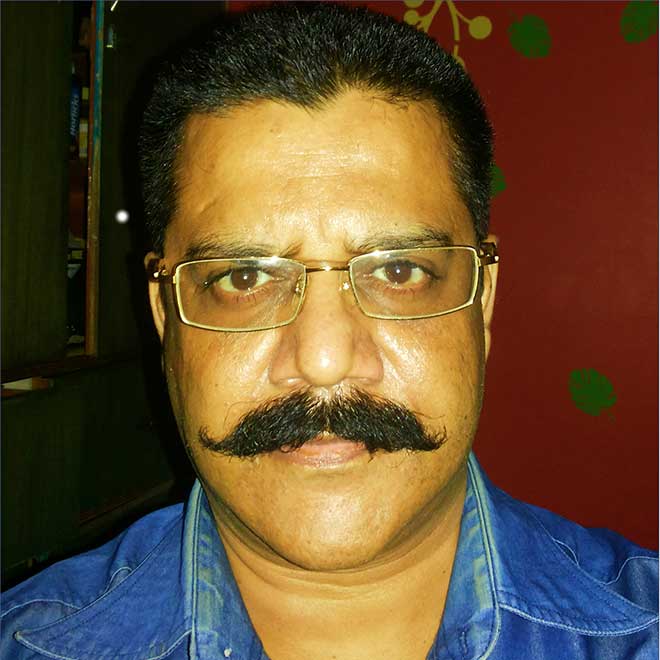
     

  • Dr. Rishi Kulshresth, IPR Consultant, on his diverse experience and his work in IP Law

    Dr. Rishi Kulshresth, IPR Consultant, on his diverse experience and his work in IP Law

    Dr. Kulshresth graduated in law from Chaudhary Charan Singh University, Meerut in 2010. Prior to that, he held a degree in Commerce from Delhi University. He is an IPR consultant and Brand Protection Expert with over twenty years of experience. He also takes up legal cases at all district courts in Delhi and the Delhi High court. He has worked with corporates like Pinkerton Consulting (USA), Suzlon Energy Ltd, Finolex Cables, Finolex Pipes, among others. He is an active contributor to popular law journals in the country. He is currently writing his book on Brand Protection.

    In this interview we speak to him about:

    • His inclination towards IP Law
    • His experience thus far
    • His plans for the future

    What motivated you to pursue law?

    In this modern age countries invade other countries through business. They purchase properties in other countries to establish their offices and channel the money back to themselves. These invaders can be controlled only by law. You cannot attack them in any other way to save yourselves. Even on a personal level if someone is doing something wrong, you have only the law to protect yourself. Wars/fights are now won or lost in courts all over the world. So I decided to join the only real force i.e, law. I think I did take the right path.


    What motivated you to choose IPR as your area of expertise?

    Many years back I used to run a business promotion company in east Kailash. I got an order from a law firm called Dua Associates.They wanted me to collect evidence for a PIL. I did an excellent job and in the process I realized that lot of duplicates/counterfeits are regularly selling in the market. The only way to stop it was through legal channels. I found it fascinating. That was the time when I decided to take law as my future profession specializing in IPR Brand Protection.

    You need to devote time to this niche. If you put your fingers in a lot of pies then you will not be able to do justice. Today we are in the age of super specialization. So, specialise.


    What according to you be the way of coming out from the maze of conflict?

    Feel the zing while reading different case laws of different fields. You know you’ve found your calling when your bell rings and heart says, “I find this field very interesting!” 


    What are the other areas of study which you think a law student wanting to excel as a professional in the field of IP should be proficient in?

    Designs Act and GI are the two fields which are starving and crying out for more professionals. Patents is another evergreen field.  


    How do you manage to strike a balance between your personal and professional life?

    I‘m very passionate about my work. I have seen days when I worked for fourteen hours a day for two weeks straight but I enjoyed it. IPR and law gave me prosperity and name. I had to neglect my family but that’s unavoidable as I was travelling 24 days a month all across India. I learned to live like this and so did my family. You cannot have everything.


    What are the primary professional ethics you follow while at work?

    No bribes while conducting raids and honest reporting to the client always. Plus, I always prepare my cases very properly.


    How does the application of intellectual property differ in the case of litigation or practice at firms?

    Not much difference. You need to intern in an IPR only specialist law firm and then grow into a professional by working alongside veteran lawyers. Corporates have very good opportunities but they prefer only those who bring value to the table having worked in a specialist firm for few years. Corporates pay better in case you do not have your private practice. In my last job I was drawing 50 lacs p.a. Then I decided to move on and establish my own practice.  


    Where do you see yourself ten years down the line?

    I would be teaching Law/IPR in some University and would still take up cases but only those which will interest me. I also hope to write more books.


    What would be your message to our readers who are mostly young law students and lawyers?

    IPR is a stream which is going to grow in to a torrent. If you find this field interesting then super specialize in it by joining some IPR specialist Firm like Anand and Anand or RK Dewan, etc. I’m still associated with such top law firms as an external adviser.


  • Ayush Sharma, Advocate-on-Record, Supreme Court, on IPR, and starting independent practice

    Ayush Sharma, Advocate-on-Record, Supreme Court, on IPR, and starting independent practice

    Ayush Sharma graduated from NLUJ in 2006. He started his career in 2006 as legal associate in a KPO Quislex Legal Services Pvt Ltd., Hyderabad where  worked on technology agreements.  After a few months in Hyderabad, he moved to IPR Litigation Division of LakshmiKumaran & Sridharan where he worked on Intellectual Property litigation (primarily Patent Litigation) at various High Courts, IPR Tribunals and Supreme Court. He subsequently decided to pursue independent practice. He is currently Advocate-on-Record under the Supreme Court and a registered Patent and Trademark Agent.

    In this interview we speak to him about:

    • Being a fifth generation lawyer
    • His expertise in Trademark and Patent Law
    • Starting independent practice

    How would you like to introduce yourself to our readers?

    I am an independent litigator, patent agent and Advocate on Record. I have been practising law for more than a decade (class of 2006 of NLUJ), specializing in intellectual property and civil litigation.


    What motivated you to pursue law?

    Though neither of my parents are lawyers, I come from a family of lawyers. Growing up, whenever I visited my grandfather’s and uncle’s chambers, I was extremely fascinated by the law books in there and always wanted to have my own chamber and library of books there. Of course, at the time I did not know how much hard work it would take to reach there.


    Give us a brief overview of your life at NLUJ.

    Five years at NLUJ were some of the best years of my life. I not only found lifelong friends but also learnt so much from the teachers therein. I would specially want to thank Prof. N. L. Mitra and Mr. Sanjay Pandey for being guiding lights during my time at NLUJ. Everyone in the legal circle knows our first Vice chancellor Prof. N. L. Mitra and what a visionary he is. It was he who saw the future of IPR law in India and wanted NLUJ to produce best patent lawyers in the country. Back in 2004, at NLUJ, we were taught patent drafting by two US Patent Attorneys, which in my opinion was very progressive and way ahead of the time. I still remember discussing Prof. Mitra’s vision (regarding patent law) during internships with students from other law schools and they would not take it, but I am really grateful to him and his vision that if it wasn’t for him I would not have been a patent lawyer.

    Well, I cannot really comment on other universities as I have only studied at NLUJ. However, I have worked with some brilliant lawyers who did not go to NLUs. Therefore, I feel its more about a person, their hard work and zeal than the law school they attend. Having said that, the NLU tag really helps in getting better internships and may be the first break in profession but then you are on your own and only your hard work coupled with luck can make you reach where every law students hopes to reach.


    What are the subjects that you took particular interest in, during your law school days?

    Since I studied science subjects in schools, they drove me towards picking up B.Sc.LLB (Hons) at NLUJ. Once I started studying B.Sc. subjects, I developed interest in patent law because that’s where I could combine science with law. That is what drove me to pursue a in the IPR department of LakshiKumaran & Sridharan and wrote the exam to become a patent agent. Thereafter, I did multiple patent litigations as part of the LKS team which contributed immensely to my learning and gave me confidence and courage to start my independent practice.


    In your opinion, what are the law school centric activities that you would recommend as necessary experiences for every law student?

    In my opinion, one must participate in all the opportunities that are present at the law school because everything shapes up the professional you finally become. By participation in moot courts and writing papers one can really hone their research skills which come in handy when one starts practicing. Surprisingly, I still remember most of the key legal points I researched for my class projects and otherwise and they come in handy at times to know what direction to take in a matter.


    What are your areas of specialisation in law? 

    I specialize in patent and trademark litigation, along with that I do fair bit of civil litigation and IPR prosecution. My decision was based on my interest in the niche practice area and having a background in science.

    Where does this passion for IP law stem from?

    As I mentioned that I was interested in both science and law, and IP law particularly patents was an opportunity to combine both my interests.


    What internships would you recommend to a student who also aspires to pursue studies in IPR?

    One must aim to intern with a law firm/ individual that does fair bit of both litigation and prosecution work so that one can get a fair idea of the kind of work it will entail if one decides to pick it up as a subject. One should also work with the legal department of a corporate which has a good IP Portfolio because this will give you a perspective about in-house counsels and the business problems they deal with everyday. My internship at Cadila healthcare (Zydus) gave me a wonderful opportunity to understand the problems from the perspective of in-house counsel as what they need from law firms/lawyers. If you are able to think the issues from the perspective of in-house counsel you are well equipped to solve the issues in better way.      


    How were the first few years after your graduation? 

    It’s a myth that law school teaches you everything about law and legal practice and prepares you for the real world; but it does get you accustomed to the long hours and the hard work. Since day one in law school, I used to work hard for mandatory moot courts for each subject, internal projects and practical exams (science subjects), etc. which made me tough enough to work in any circumstances.  

    As soon as I joined LKS, I found myself working in two of the most high profile patent contentious matters, but five years in law scohol had prepared me to to work fourteen to sixteen hours on weekdays and even more on Sundays. All one needs is some Maggie and cheese toast for company. During that time, I learned from my partner Mr. Parthasarthy that you need to work smart and work hard at the same time. Each day at LKS was a great learning experience to observe and learn from my superiors about analysing the problems and conceiving their solutions.

    LKS gave me lot of responsibilities and freedom where early in my career I got the opportunities to represent clients in various courts and tribunals ranging from district courts to IPAB, and for this I will always be thankful to Mr. LakshmiKumran and Mr.  Parthasarthy.


    Are you from a legal background?

    Yes. I am from legal background, actually I am the fifth generation lawyer of my family. I have always heard intriguing stories from my grandfather about his grandfather working in Courts of Bharatpur’s king. I still remember one of the talks with my grandfather about law and society and that day I decided to be a litigator.   

    Legal background always plays a crucial role in taking up litigation as a career because you have a fair idea about the difficulties you would encounter in the field and how to be patient because if you are honest and good with your work it will all be worth the initial pain.


    What does it take to bag a job at a Tier-I firm like LKS?

    All law firms look for legal acumen, quick thinking and problem solving abilities in the candidate because time is money, after all.     


    When did you decide to take up independent practice?

    As I mentioned earlier, I always wanted to be a litigator, it was just a matter of time when I decided to jump into the uncharted territory of being an independent litigator. When I took the decision I was very well prepared for the same (at least handling clients and matters), the only thing that was of concern was the finances. It was a tough decision going from a well paying law firm job to not knowing how much work will come my way and how much I will get paid, but I was willing to give it a shot. I would like to thank my wife for being there backing me, every step of the way and today I am glad I made that decision.


    Give us a peek into what a regular working day looks like for you now.

    Being an independent litigator does not give you the comfort of weekends and time. I start my day at 6:30 AM in the morning revising my notes for courts and working on emails from foreign associates as my team does a lot of IPR prosecution for foreign clients. I suggest all the lawyers to start their day early as I believe that one hour of morning work is equivalent to two hours work in the evening. On a normal Court day, I usually work for fourteen to fifteen hours and around nine to ten hours on weekends, which of course depends on the work.   


    What is your message to our readers?

    Never doubt yourself even for a second and you will be able to achieve what you aimed for and working smart is as important as working hard.


  • Raddhika Singh, Managing Partner, Aletheiaa Legal, on being a first generation lawyer, studying at King’s College London, and starting her own firm

    Raddhika Singh, Managing Partner, Aletheiaa Legal, on being a first generation lawyer, studying at King’s College London, and starting her own firm

    Raddhika Singh graduated from Campus Law Center, batch of 2006. She then went on to pursue her Masters from Kings College London, University of London. Since then she has worked with Remfry & Sagar, K&S Partners, and Luthra & Luthra Law Offices before starting out on her own.  She is currently Managing Partner at Aletheiaa Legal, an Intellectual Property and Corporate law firm.

    In this interview, we speak to her about:

    • Studying at Kings College London
    • Working at Tier I firms in India
    • Starting her own firm.


    How would you like to introduce yourself to our readers?

    I am a first generation lawyer and entrepreneur. I am the Founder and Managing Partner of ALETHEIAA LEGAL an Intellectual Property and Corporate Law Firm. I was enrolled with the Bar Council of India in August 2006 and over a decade have had the privilege of working with India’s Tier 1 law firms like Remfry & Sagar; K&S Partners and Luthra & Luthra Law Offices.

    I did my schooling from The Army Public School, Dhaula Kuan. I pursued History Hons. from Hindu College and LL.B from Campus Law Centre, Delhi University. Thereafter, I completed my Masters in Intellectual Property Law from Kings College London.

    On a personal front, I belong to a family with four generations in the Indian Army. My father retired as a Brigadier from the Army and my mother is a PGT English who taught for nearly 35 years in India and Bhutan. My elder sister is an Assistant Vice President, Corporate Transitions with a global business process management and services and IT corporation. I am married to Bharadwaj Jaishankar, who is an Associate Partner with an Intellectual property and Commercial Law firm.


    What motivated you to take up law as your choice of career?

    While I was growing up I was inspired and captivated by the way lawyers’ especially criminal lawyers were portrayed and the role they played in delivering justice. I was an avid reader and enjoyed books authored by John Grisham especially The Runaway Jury and The Pelican Brief. I loved watching thrillers, murder mysteries and legal dramas and enjoyed predicting and resolving cases before they were solved in the serials/movies. I was out spoken, possessed good communication and analytical skills and enjoyed interacting with people… so choosing law as a career came naturally to me.


    Could you tell us about the internships you took up, and what you learnt from those experiences?

    Internships are extremely important as you get first hand practical experience. I started interning from the first year itself. In my three years, I interned at the National Human Rights Commission, Delhi, at Tees Hazari with a senior lawyer practising on the criminal side, with Rajinder Narain & Company and lastly with J. Sagar Associates. Hence, I got to experience diverse fields of law ranging from Human Rights, Criminal and Civil litigation, Corporate Commercial law and Intellectual Property law which played a significant role in helping me choose my area of specialization. There could be a major difference between the area of law that intellectually stimulates you and what you enjoy practicing on a daily basis. My advice to students would, therefore, be to intern with law firms/organizations practising different areas of law so that ultimately you can identify the area where your interest lies. That is why internships are very important as they expose you to the diverse facets of law.


    What advice would you give students in avoiding a decision paralysis?

    Majority of law students on graduating are faced with a dilemma on whether to pursue higher studies or start working. This is a very personal decision and would depend upon several factors that every student must consider while taking the decision. The most important parameters that must be considered while making the decision are, inter alia, do you wish to practise in India/abroad? Do you have the funds/scholarship to finance studies abroad? Do you know the area of law that you wish to specialize in? Do you wish to work in India after graduating from Masters, if yes then how do you plan to pay back the loan? Do you plan to work for other law firms or do you wish to start your own law firm or independent practise in future? Which are the colleges that you have applied to or received acceptance from and what are the courses? How are the employment opportunities in that country?

    Speaking from my personal experience, I chose to pursue my Masters in Law after completing my LLB as I was clear that I wanted to start my own law firm in the future and doing Masters from Kings College London would give me a competitive advantage. I also believe that pursing your Masters from a reputed foreign university is a life changing experience. You not only grow professionally but also personally. The kind of exposure students get when they are competing with lawyers from across the globe is a very enriching experience.


    What was the application process like for the King’s College London?

    The Application process for King’s College London was quite straight forward. I was required to submit a Statement of Purpose where I had to write about myself, my strengths, reasons for pursuing Masters and most importantly stating how King’s would benefit by offering me a seat. I applied for Masters in Intellectual Property to Kings College London as it is a premier university in the world and is amongst the top three colleges in London to pursue Masters in Intellectual Property Law. The parameters for choosing Kings was its ranking, the courses it offers, the outstanding faculty and its location.


    What did you enjoy most about studying at King’s College London?

    The LLM programme I pursued at Kings was a specialization in Intellectual Property Law. We got to study courses relating to Comparative Trademarks and Copyright laws in United States, United Kingdom, France and India which gave us an insight into the diverse and completely differing schools of thought pertaining to protection and enforcement of Intellectual Property Rights in different jurisdictions. At that time, we had the distinct advantage that Kings College, Queens College and SOAS were all part of University College London and we had classes with students from all these colleges. What was an added benefit was that we had the privilege of being taught by world renowned professors like Professor Sir Hugh Laddie who was considered one of the leading English judges and academics in the field of intellectual property law and Professor David Llewelyn who has co-authored the book International Trademarks Law Intellectual Property: Patents, Copyright, Trade Marks and Allied Rights Cornish, W. & Llewelyn, D. 2007. What I found challenging at the beginning but which turned out to be the most rewarding experience was the entire educational system. At Kings, we were expected to think independently, out of the box and develop analytical and problem solving skills. These skill sets played a very significant role in developing my career.


    What activities were you involved in as a student at King’s College London?

    At Kings, I was elected as the Vice President of the Kings LLM Society. As the Vice President I had to organize social events such as Christmas, New Year and boat parties and seminars to enable students pursuing different courses to interact with each other.

    The year 2007-2008 was a defining moment in my life. I learnt how to be totally independent, self reliant as I had to take all the major day to day decisions myself. It was an enriching experience as I forged friendships of a lifetime with students from diverse countries and cultures. I will always cherish the experience I had at King’s and the friends I made there.


    Post your LLM, did you consider staying back to write the bar exam there?

    At the time of applying for my Masters, I was clear that I wanted to return to India to work with Tier-1 Intellectual Property Law firms and eventually start my own law firm. With that in mind, I didn’t consider staying back in London.


    What prompted you to take up a position with Remfry & Sagar and then K & S Partners?

    While I was pursing my Masters, I was clear that I wanted to specialize in Intellectual Property Law in India. In April 2008, I applied to Remfry & Sagar and was extremely lucky to get a call for an interview in May 2008 when I was visiting India for the summer break. The interview was successful and I was made an offer to join Remfry & Sagar in October 2008. I was one of the few LLM students who had a pre-placement offer before completing their Masters.

    Remfry & Sagar is India’s oldest Tier-1 Boutique Intellectual Property Law firm. One of the things I learnt at Remfry was Trademark prosecution i.e. conducting pre-filing searches, advising clients on registrability of Trademarks, developing strategies for overcoming objections posed at the time of examination/hearings, advising on assignment and licensing of trademarks etc. The prosecution experience I acquired at Remfry & Sagar played an important role in my securing a position at K&S Partners. After spending two years at Remfry & Sagar I wanted to practise different aspects of Intellectual Property like Copyright, Geographical Indications and work on contentious matters like oppositions, rectifications, litigation.

    At K&S Partners, I got the chance to be involved in handling post registration aspects including enforcement of IP Rights through civil and criminal proceedings; border enforcement measures through the Indian customs offices; IP licensing; advising on copyright law in the areas of software, motion pictures, literary and artistic works. I was part of the team and played an active role in protecting and enforcing some of India’s and the world’s well-known Geographical Indications. I also had an opportunity to travel to the United States of America to represent the concerns of traders of an Indian Geographical Indication before the US Food and Drug Administration Agency (USFDA) and Environment Protection Agency, USA (EPA). At K&S Partners, we were encouraged to think out of the box and express our opinions freely. Senior Partners and other senior colleagues took time out of their busy schedules to share their knowledge with us and to answer all the questions we had. At K&S Partners, lawyers are nurtured and mentored to give their best and grow personally and professionally.


    How would you describe your experience working at Luthra & Luthra?

    After having worked with Boutique IP law firms, I wanted to experience working with a Full service law firm. The reason I applied to Luthra & Luthra is because it was a small team of around eight lawyers who worked on all aspects of Intellectual Property Law from prosecution, opposition, enforcement, litigation, advisory and transactional work. At Luthra, I enhanced my drafting and research skills. I also worked on a portfolio for a leading Indian Company in the two wheeler sector by coordinating filings and enforcement of Intellectual property rights across several jurisdictions around the world. That was a learning experience where I honed my skills and felt that I was now well equipped to start my own practise.


    Did you have a mentor or guide during the formative years of your career?

    Being a first generation lawyer, I didn’t have any mentor to guide me in my early years in college. I, however, throughout my career and even till date have had the advantage of being mentored by several seniors in the profession. At the time when I was deciding whether to pursue my LLM or start working, I was advised by my mentor to follow my dream and pursue my LLM from Kings College London. His advice was to pursue my studies before I start working as it would give me the right exposure and advantage over my colleagues.  At each juncture in my career, when I changed jobs from Remfry to K&S and then to Luthra & Luthra I had mentors who guided and advised me. I spoke to several Senior Lawyers in the profession and Founders and Managing Partners at leading law firms when I was evaluating my decision to start my own law firm. Majority of them advised me to pursue my dream and I decided to fulfil my dream so that I never look back and say, “what if…”


    What made you decide to start your own law firm Aletheiaa Legal?

    Having devoted nearly eight years in the profession and worked with India’s leading Intellectual Property law firms, I believed that I had achieved the requisite experience and acquired the necessary skill sets to start my own law firm. During my stint with the above law firms, what I enjoyed most was interacting with clients, understanding their business requirements, developing and implementing strategies to protect, enforce and commercially utilize their IP assets. With this interest in mind, I took a leap of faith and founded “Aletheiaa Legal” on August 6, 2014 and have enjoyed the journey thus far.


    On what parameters do you choose the projects you work on?

    At the beginning, the assignments I undertook were restricted to Intellectual Property law i.e. filing, prosecuting, enforcing and drafting of agreements pertaining to licensing and assigning of Trademarks, Copyrights, Patents and Designs. Thereafter, like every law firm, I consciously decided to expand my scope of work and started accepting work relating to vetting or drafting of commercial/business contracts. With the Start-Up boom in India I have started actively advising start-ups and providing them a one stop legal solution. The body of work keeps growing with time.


    What are the challenges and learning opportunities that you were/are faced while heading Aletheiaa Legal?

    There have been several opportunities and challenges along the way from which I have learned and grown personally and professionally. When I started Aletheiaa Legal I had only three clients who were friends and family and today I have 90+ clients.

    The biggest challenge which every law firm faces is generating clients and revenue. I had to wear several hats of networking, generating business, advising clients, delivering before deadlines, raising invoices and following up with clients for new assignments and payments. I have learnt how to work with different types of clients and on diverse aspects of law ranging from Intellectual property rights, Information technology, Commercial and Corporate transactions, Media and entertainment, Dispute Resolution. The other challenge and learning opportunity is to keep pace with the latest developments in diverse fields of law.


    What are the key attributes that one must develop in order to excel as a lawyer?

    Key attributes that a good lawyer must possess are he/she must be articulate, have an eye for detail, work hard and possess good drafting and analytical skills. In addition to the above, a lawyer must be a good listener so that he/she can hear and clearly understand what the client wants and deliver the desired result. Another important skill is having the ability to build relationships through networking. I developed these skills by reading judgements, articles, seeking advice and asking questions from seniors in the profession and attending networking events.


    How do you manage your time between your professional and personal interests?  

    One of the advantages of having your own practise is that you can easily balance between your professional and personal life. In addition to work, I love travelling to new destinations in and outside India and experiencing diverse cultures; I enjoy sketching, watching plays and eating out at new places.


    What are the challenges you have faced in building up your career as it stands today?

    I believe every challenge is an opportunity to grow in life. When I chose law as a profession my parents were sceptical as I was a first generation lawyer and didn’t know anyone in the legal fraternity. When I completed my LLB I scored very well but didn’t get placed in the Tier 1 law firms and was very disappointed. This was a big challenge as I didn’t know whether to pursue my Masters in Law or work with a law firm. I saw this challenge as an opportunity to pursue my Masters and was fortunate to get through King’s College London. Upon completing my Master’s with specialization in Intellectual Property Law, I was amongst the few students who got a pre-placement offer before completing their Masters. I achieved my dream to work in a Tier 1 law firm when I was offered a position with Remfry & Sagar. There was no looking back thereafter, throughout my career I worked with Tier 1 Law firms like Remfry & Sagar, K&S Partners and Luthra & Luthra. Another challenge that I faced in my career was when I decided to start my own law firm and only had three clients. With hard work, dedication, passion for my work and spirit to succeed today Aletheiaa Legal has over 90+ clients. In the next ten years I want Aletheiaa Legal to be counted amongst the leading Intellectual Property and Corporate Law Firms of India.


    What advice would you like to give our readers, who are mostly law students and young lawyers?

    Believe in yourself and pursue your dreams…have the faith, courage and conviction to make them a reality because if you have the ability to see those dreams, you have the ability and capability to achieve them.


  • Aditi Ranjan Ojha, Legal Manager, NDTV, on IPR enforcement, litigation, and her diverse experience

    Aditi Ranjan Ojha, Legal Manager, NDTV, on IPR enforcement, litigation, and her diverse experience

    Aditi Ranjan Ojha graduated from Symbiosis Law University, in 2009. She went on to work for Luthra and Luthra as Associate for four years before venturing into independent practice at the Delhi High Court. She is currently Legal Manager at NDTV, where her role entails IPR enforcement.

    In this interview we speak to her about:

    • Her experience in litigation
    • Her role at NDTV
    • Striking work-life balance


    What would you like to say to our readers in the manner of an introduction of yourself?

    I am the first born to a bureaucratic father and a home maker mother. I did my schooling from Delhi (DPS Mathura Road) in the humanities since I was never interested in science and commerce. Thereafter, I did one year of history honours from Daulat Ram College, North campus. In the interim I gave my law entrance exams and joined Symbiosis Law School, Pune. I graduated in 2009 and joined Luthra and Luthra law offices, New Delhi in 2010. Was working there till December 2014. In 2015 I joined NDTV and I am presently here as Manager-Legal.


    What motivated you to take up law as your choice of career? 

    Law was by choice. I was the first one from my family, however there were no challenges as such. Though there were times when what to do and in what manner was a task, however people around me were very supportive especially my parents.


    Did you take part in co-curricular activities while in college? 

    I have done good amount work for some local charitable institutions in Pune outside college, specially working with underprivileged children, Kashmiri immigrants, and sex workers. Even during my short college stint at North Campus I was part of an NGO called Hriday. I have also participated for legal aid services through college.

    In my understanding co-curricular activities can teach you the practicality of the situation which otherwise a college lecture or the lecturer may not be in a position to teach.


    What kind of activities did you undertake in law school that helped you nurture this interest in litigation?

    My interest in litigation was there even before I started studying. I have been a decent orator throughout my student life which also played a pivotal role. Law school nurtured my strengths.


    Could you tell us about the internships you took up, and what you learnt from those experiences?

    Largely I had interned with Luthra & Luthra Law offices only. One of the few thing colleges don’t teach is the manner of drafting. I learned all minor drafting work in Luthras. Also since Luthra offer services in all spheres of law, as interns we were given lot of research work from all legal sectors. These further strengthen overall knowledge.

    From a law student to a lawyer, how will you describe the transition?

    The transition has not been smooth but has been very interesting. I had to put in double the effort as a lawyer in the beginning. Handling clients  and meeting deadlines were not taught in college. Pun intended ;-).  However this also helped me to understand my weaknesses and gave me time to work on it. As a student our prime concern was to clear the papers. Understanding the nature of work, how to interpret law and use it accordingly was taught only once I started working.


    Tell us about your early professional experiences at the Luthra and Luthra. 

    Luthra’s was a wonderful experience both professionally and personally. Since I joined freshly after college, I had no practical experience of the manner in which court functions, how to present an argument or even for that matter how to take an adjournment etc. Luthras gave me the confidence to appear in court. Unlike other law firms Luthra and Luthra believed in crediting junior for their achievements and that was a bonus factor. We were at liberty to do work at our own pace (till my stint their) and this gave us time to analyse things at depth.


    In deciding between Corporate and Litigation practice, what are the parameters that you considered? 

    I have always been interested in wearing the black gown, to voice my opinion, to fight against injustice and since childhood court rooms fascinated me. Corporate was never my choice. Being born in the family of bureaucrats I was always fascinated with litigation. To watch my father discuss provisions of criminal law made me inclined towards litigation all the more.


    On what parameters do you choose the projects you work on? 

    There are no specific parameters. I usually try to do justice with whatever comes my way. I have done matters within different spheres in  litigation as well. From matrimonial matters to copyrights to negotiable instruments I have tried my hand at everything. I believe that one or two matter or ‘interesting cases’ as you have put cannot build your career. I am the kind of person who measures career graph not only through professional growth but also personal growth. One needs to have not only the professional aptitude but also an attitude. Attitude for a litigation lawyer works very well. And by attitude I don’t mean anything negative.


    Given the dynamic nature of the field you practice in, how do you keep yourself updated about the latest developments in the law?

    I read legal journals regularly. Working in a media agency has also played a pivotal role. I now have four lawyers in my immediate family and so they keep me updated at times by choice at times forcefully.


    What books, judgements that you have read would you say have played an integral role in shaping your legal philosophy?

    Philosophy is in itself very vast and talking of legal philosophy being shaped up by way of book and judgments is not just and proper. I am still reading, understanding and still shaping it.


    What are the causes you feel strongly about? 

    No matter how progressive we become Indian mind-set is still patriarchal. Harassment at workplace is one such cause which I feel strongly about. By harassment I not only mean physical, but mental and emotional as well. I am yet trying my best to work towards it.


    As the Legal Manager at NDTV, what does a typical working day look like for you?

    Working in NDTV is exciting and challenging as well. From attending court matters to analysing proposals and moulding them into agreements, I undertake whatever is assigned to me. NDTV is not only into news broadcasting but also indulges in lifestyle channels to creating web platforms for various services. So the nature of work is diverse.


    What does the scope of work you undertake include at NDTV Legal? 

    I am dealing with court matters which are inclusive of defamation, copyright, telecom disputes etc. I also handle agreements such as service, media collaboration agreement, etc. The working atmosphere is very nice. People in NDTV are really helpful and supportive, specially my team. Had it not been for my team I wouldn’t have survived here.


    How do you manage your time between your professional and personal interests? 

    I write poems and also sing, though I am not a trained singer. I do as I am passionate. I also like reading.

    Where would you like your career to take you five years down the line?

    I live each day as it comes. So have never really thought about where will life take me five years from now. I would rather give 100% at present to whatever I am indulging in professionally. This I think would pave a smooth way for the times to come.


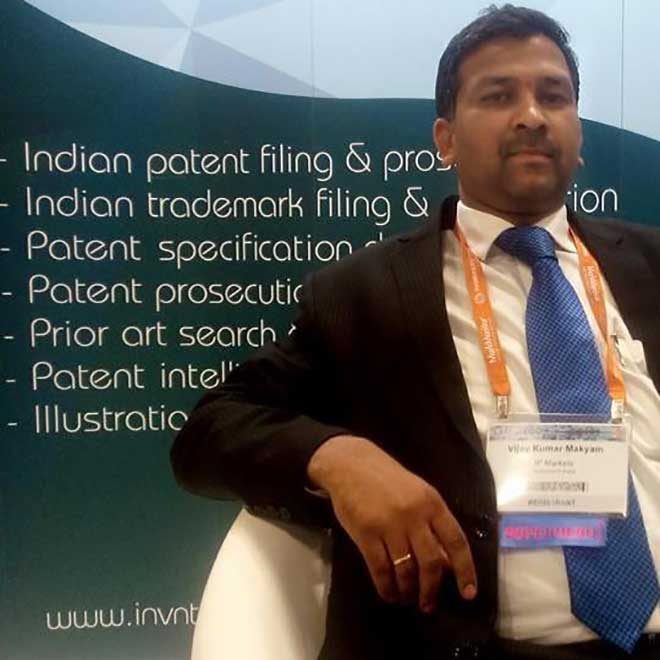
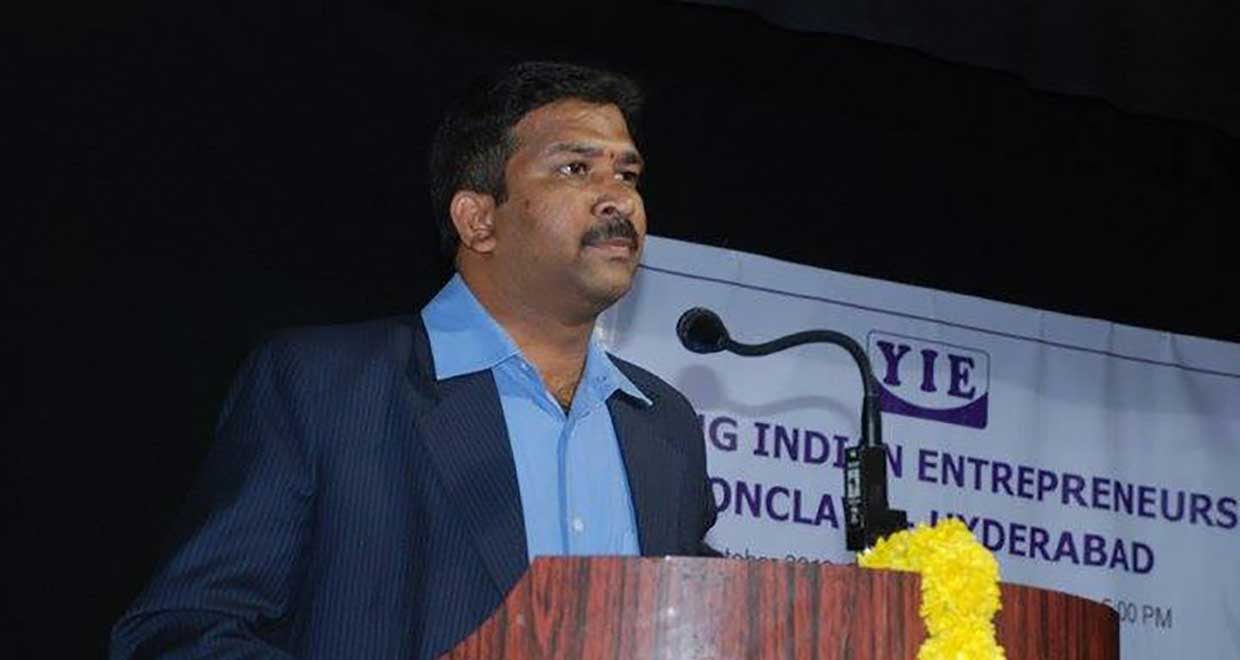
  • Vijay Kumar Makyam, IPR Attorney, I-WIN IP Services, on IPR in India, his diverse experience, and plans for the future

    Vijay Kumar Makyam, IPR Attorney, I-WIN IP Services, on IPR in India, his diverse experience, and plans for the future

    Vijay Kumar Makyam graduated in law from Osmania University in 2003. He then went on to pursue his Masters in 2013, with a specialisation in Alternative Disputes Resolution. He has been a Senior Trademark Analyst at Brain League IP Services, and Guest Faculty at National Institute of Pharmaceutical Education and Research, Hyderabad. He is founding member at I-WIN IP Services and IP Markets. where he heads Patents and Trademarks. His role entails handling  procedures like registration of copyrights and trademarks, filing patent application and processing in India and coordinating filing and prosecution at USPTO, European Patent office, etc.

    In this interview we speak to him about:

    • Being an IPR lawyer
    • His teaching experience
    • Plans for the future

    How would you like to introduce yourself to our readers? 

    I would like to introduce myself as IPR Attorney; Apart from registered Patent and Trademark Agent, I am a litigating lawyer, appearing for my clients in District Courts and High Courts in various parts of the country.  Yes, my education went into different streams like wind blow, I have pursued the courses as per the need of hour. Apart from the regular main stream education, I have also pursued P.G. Diploma in Intellectual Property Rights from NLSIU, Bangalore and computer skills in that I have done PG Diploma in Computer Applications, Diploma Client Server Applications, Diploma in Desk Top Publishing. Someone has rightly quoted “Education moulds the person”, my personality and career has certainly been moulded by Education. In simple words whatever I am today is because of the education I pursued.  When I was studying B. Com, I was unhappy in with the fact that I am not going through a professional course and that prompted me to pursue LL.B., since I am qualified only for Law; Medicine and Engineering were not possible because of my financial conditions existing then and my parents wanted me discontinue education to support the family.


    What motivated you to pursue law?

    I am first generation lawyer in my family. As I earlier answered, it is only that I wanted to pursue some professional course, I pursed LL.B., as otherwise I was more interested in Computer Science and that is the reason why I did M.S. in Computer Science. Though I had a law degree, I did not want to practice law, since I believed in a myth that lawyers are liars and I would have to support false cases largely. I was also under an impression that truth followers never knock the doors of the court. Thus, I was looking for some chamber practice. Intellectual Property Rights protection was an area I felt was perfect for such chamber practice and I Registered myself initially as Trademark Agent. There was no guidance to me, since no one in our family were lawyers. So, I was guided by my law school seniors and professors in choosing this career.


    Did you take part in co-curricular activities while in college? 

    Yes, I have attended about eight National Moot Court Competitions; all of which enhanced my research skills. We were unaware of internship programs those days and as such I have not taken up any internship. However, I believe Moot Court Competitions coupled with Internship programs can provide real time experiences to the law students.


    What triggered your interest in IPR law?

    I attended the 5th Raj Anand Moot National Court Competition, which introduced IPR Subject to me, which until then I was unaware about. Thereafter I attended several national seminars on IPR topics and most importantly my law school super senior who attended FPLC for his LL.M encouraged me to get into IPR.


    Could you tell us about the internships you took up, and what you learnt from those experiences?

    As I stated earlier, we were unaware of the internship programs during our law school days. So, I did not get an opportunity to work as an intern. However, the first firm where I worked is a start-up IPR Firm, where all the processes are established from the scratch and the team specifically is quite qualified that helped us in brain storming sessions and coming up with greater ideas for providing specialized services in IPR.


    From a law student to a lawyer, how will you describe the transition?

    Yes, it was huge difference. From novice to an expert lawyer.  Five important things that shaped me as a good lawyer today are 1) Language 2) Vocabulary 3) Presentation 4) Dressing sense 5) Spontaneity. These five aspects I have not learned in law school, but during my practice.


    Tell us about your early professional experiences at the Brain league IP Services. 

    Yes, Brain League gave me an opportunity to build my career as it stands today. Brain League was one of the early IPR Start-ups in India, at that point of time we had no clients interested in the services that we offered, services such as IP Audits, IP Valuation, IP Licensing, IP Monetization etc., since IPR itself was new to Indian Society at that time. So, Brain League chose IP Training as its main stream services and slowly developed various services which helped them in creating a market for their core services being IP Audits, IP Valuation, IP Licensing, IP Monetization. I played an important role in implementing Brain League’s Services as we were very small team, we had no restrictions on what work we took up. I was also involved in administration, marketing of Brain League services which helped me setting up my own firm latter.


    Having worked at I-WIN IP Services for over eight years, how would you describe your work experience there? 

    I-WIN IP Services was started in the year 2009, we were three team members when we started I-WIN IP Services, Being the founder I had to establish all the procedures in I-WIN IP Services, my work experience at Brain League helped me a lot in doing so. I enjoyed working on Trademark Opposition proceedings, participating invention disclosure meeting with the clients and implementing Training programs.


    As a guest faculty at NIMSME, how do you find the Indian legal education standards? 

    At NIMSME, I teach international students on Indian IPR as well as entrepreneurs on effectively protecting and managing their IPRs. The difference I can point out in regular academics is that they lack practical exposure. The law Professors are not practitioners as such they will not interpret the law the way practitioner interpret for the benefit of their clients. I have seen couple of law professors updating themselves by reading law journals or taking inputs from practising lawyers; however, that will not create the knowledge for dissemination to students. Further Indian legal education need to be streamlined from text book oriented education to practical approaches. While teaching at NIMSME I provide lot of practical examples that my clients faced and overcome; this makes the audience interesting then reading a provision of law and citing an example.


    What is the academic background and qualification necessary to become a patent agent in India?

    Section 127 of Patent Act, 1970 prescribes any Science or Engineering degree to be qualified to take up Patent Agent Examination. This is precisely why I did M.S. in computer Science. I was into IPR Domain from long time and I was taking assistance of Registered Patent Agent for filing Patent Applications of my firm. Thus, I was determined to become a Patent Agent and pursed M.S. Computer Science before taking up Patent Agent Examination.


    Given the dynamic nature of the field you practice in, how do you keep yourself updated about the latest developments in the law?

    Technology helped me a lot in keeping myself updated. I browse through blogs, youtube videos and Whatsapp Groups to keep me updated with the latest updates. Seminar and Training programs that I frequently attend will help me to keep myself updating updated. Further, the cases I handle will also make me to read on particular provision of the law and brain storm on those specific topics. Finally our interns also contribute to my knowledge.   


    What are the causes you feel strongly about? 

    The knowledge and awareness on IPR is still quite low in Indian Society as well as in lower courts judiciary. There had been occasions when the lower Court Judges were not even aware of what I was arguing while handling an IPR Matter. It was left up to us to educate them initially in the subject then latter put forth the factual positions to obtain an order.


    As the Senior IP Analyst at IP Markets, what does a typical working day look like for you?

    I need to attend Courts every day. By 9:30 AM I shall be in office picking up the bundles necessary for the day in various courts, by 10.30 we will be in the Court Rooms, sometimes we need to await for our case to be called or else we shall advance our arguments and return to office by 2:30 PM and work on next day cases either research on a particular point of law or drafting affidavits, counters and written arguments etc., till evening 5:30 PM; post which we will have couple of client meeting till 8:30 or 9.30 PM to conclude the day.


    How do you feel about the present IPR regime in India? 

    IPR is still at a nascent stage in India; this is primarily because Indian system has not been developed to adapt to the IPR regime. Thank fully the National IPR Policy and its one of the objective to create IPR Awareness in the country and is helping India to shape its IPR Regime. To the extent of legislations, yes, we are sought of created enough legislations, however, we still need advanced law to tackle various situations prevailing in Information Technology, Biotechnology, Nanotechnology etc., that apart we are still at a novice stages in IP Licensing, Technology commercialization, IP Insurance etc., are concerned. Competition law, Standards in Patent System etc., are few concerns we are trying to address. However, still in most of the Indian industry IPR Centres are considered as cost centres than Innovation hubs. We don’t have proper mechanism where we can connect the innovation to industry in proper line; our academic research is all going in drain or exported to foreign countries. We don’t have specialized laws tackling knowledge exports. In conclusion I would say that we have just begun our journey in the IPR Regime and there is a long way to go.


    On what parameters do you choose the projects you work on? 

    We specifically concentrate on all or any IPR issues. Thus our parameters is to choose only those projects wherein some IP issue is involved. Given the present team size we have no specific body constituted for specific work; I also believe when the team size is small every one gets to learn everything. One interesting case we handled for one of our Pharma Client where two big MNC companies fighting Patent Infringement suit in US Delware Court obtained stipulated protected orders and directed a Letter Regoratory,  enforcement letter seeking confidential data of our local pharma client. The Honourable High Court appointment Commissioner and issued enforcement directions. We had to oppose enforcement of the orders because the data was confidential and it cannot be compromised even though there is a court Stipulated Protective Order. This is more so since the information and data is sought from a third party i.e., my client who was not even impleaded in the litigation at US Courts.  


    How do you manage your time between your professional and personal interests? 

    In spite of my demanding professional life, I still manage to keep my personal life unaffected and I spend time with my family and friends as and when it is needed. Social networking and Travelling are my other interests. Travelling and exploring new places excite me. My work allows me to travel different places and thus my personal interests are also satisfied with my professional Life.


    Where would you like your career to take you five years down the line?

    I would like to be called one of the top IP Lawyers in the country and I would like to use this position to benefit of my country in protecting its Intellectual Capitalism.


    What advice would you like to give our readers, who are inclined to developing a proficiency in IP Law?

    There are no short-cuts to the success, Hard work, dedication and using technology to the core are mantras to success; every case gives an opportunity to learn a new aspect; don’t judge yourself to be experts of any subject and further every day reading of the law and the case law will keep you abreast with the latest developments.

  • Ronojoy Basu, LLM Graduate, University of Toronto, on academic writing, IPR, and his diverse experience

    Ronojoy Basu, LLM Graduate, University of Toronto, on academic writing, IPR, and his diverse experience

    Ronojoy Basu graduated from Symbiosis International University in 2008. Since then he has worked with Khaitan and Co. as Associate, before moving to Rediffusion Y&R where he was engaged in their project on advertising, corporate communication, and branding. He went on to head the IPR department at Abhay Nevagi & Associates, where he supervised all IP related work done by the firm, mentored juniors in IP related matters and advised Partners on key IP issues.

    Ronojoy is a LLM graduate from University of Toronto, batch of 2016, with a specialisation in IPR, brand protection and entertainment law.

    In this interview we speak to him about:

    • His time at Symbiosis
    • His internship experience and working in IPR
    • Taking time out to pursue his interests outside of law

    How would you like to introduce yourself to our readers?

    I am a recent LLM graduate from the University of Toronto, I have extensive experience and keen interest in matters relating to Trademark, Copyright and Brand Protection strategy.


    What motivated you to pursue law?

    I grew up Bengali and in an all-science family, it was thus expected of me to naturally gravitate towards engineering or medicine. I, however, had an unyielding love for English literature and history and wanted to have nothing to do with chemicals, calculations and circuits. After eliminating journalism and media studies – for back then, journalists were considered badly paid and media studies wasn’t really that well known to be reliable – law became that one field that, we assessed, would enable me to write and make money at the same time. The obsession with science, I believe, has faded over the last decade. If you simply see the number of law graduates the universities churn out nowadays, it’s a tell-tale sign of the times that are. In India, out of every five youngsters I meet today, two are law students and one is interested in IPR. However, with time, I am afraid this too shall hit a plateau like engineering has.

    There was no resistance from my family; in fact my parents were most supportive. What I did get were raised eyebrows from relatives, most of whose children eventually ended up taking law.


    Tell us a bit about your time studying law as an undergraduate student at Symbiosis.

    A significant part of being a lawyer, I realise, is being a matured, unbiased and informed individual, someone with a strong sense of identity and respect for that of others. It was not so much the studies as it was life in Pune and Symbiosis that, I believe, shaped my personality. I met lifelong friends from different corners of the country in Symbiosis and it was the experiences had with them and the exchanges that prepared my mind to accept different perspectives and world views.


    Did you take part in co-curricular activities while in college?

    We at Symbiosis had a set syllabus every semester with a few choices for subjects here and there. Thus, the colour amidst all the black and white, if I may say so, came from co-curricular and extra-curricular activities. One must understand that co-curricular activities don’t mean only moot court competitions. There are Model United Nations debates, legal/non-legal essay writing competitions, human rights activism and a whole bunch of other fun options. Although I did my share of ‘mooting’, I was not the regular law school ‘mooter’ and instead went for Model Unites Nations debates, joined book clubs, attended guest lectures and what not. These experiences are indeed important as, not only do they serve as a respite from academics; they expand your horizons. For instance, my first knowledge of geo-politics came from the MUNs, which eventually encouraged me to take a course on International Law from the Indian Institute of International Law, New Delhi. My point is to gather as many experiences as possible in the time you have because a variety of life experience will go a long way in making you a better professional.


    What were your areas of interest during your legal education?

    I have a bit of a creative bend and so the branch of law that essentially had to do with the protection of creative endeavours would almost organically go on to capture my interest. Initially it did occur to me that IPR, in general, was the area I was interested in but it wasn’t until my internships at Khaitan & Co., that I really knew I wanted a career in it. This realisation pretty much pushed me to get a Diploma in the subject even if it meant an extra set of exams in addition to my regular semester exams. I might add here that I enjoy compliance work as well (thanks to my years at Abhay Nevagi & Associates where I inter alia carried out labour law compliance with my good friend and colleague, Mr. Partha Pati, who is now a partner of said firm). I am someone who does well what he enjoys, I instinctively compare the shapes of products, peer closely into prints and labels to see if they are aligned properly, try to call to mind if I’d heard certain lines on a song or a guitar riff elsewhere – that’s substantially why I favour IP law.

    I would, however, like to add that while it’s good to know what you want to specialise in, initially, I was sagely advised to take whatever work came my way, for the simple reason that having overall knowledge of the workings of courts and procedural law is an incomparable asset for any legal professional.


    Could you tell us about the internships you took up, and what you learnt from those experiences?

    Out of all my internships, my time with Khaitan & Co., Kolkata and British Oxygen Company were most memorable. I had the pleasure of working under Mr. Arvind Jhunjhunwala, Partner, who made sure I was given as much work in other fields of law as I was in IPR. During my initial internships with Khaitan I first encountered the wonders of online legal databases and got to leaf through foreign legal journals. I would attend court almost every day and once in a while get to witness the likes of Arun Jaitley argue. It was here that I learnt court etiquettes and for the first time encountered jargon such as ‘briefs’ and ‘settling’. In the subsequent years, I was allowed to draft legal opinions and attend counsel briefings. At BOC, I had the quintessential in-house experience where I would help the then legal chief plan strategies in pending litigations and carry out researches and I would draft scathing legal notices for issues ranging from breach of contract, trademark violation to unfair competition. The most valued lesson, though, that I learnt from both organisations was not to hang around the espresso machine for too long!


    What advice would you give students caught in a decision paralysis?

    Bearing in mind that everyone’s situation is unique, my advice may sound generic but I speak from experience. I would advise against taking too many opinions and doing your own research and introspection – you have the right to pursue what you enjoy and do not get drawn towards big names and numbers. The digits will follow when you love your job. Do not be afraid to experiment with career options, the world is getting smaller and professional spheres are overlapping more than ever. It is important to acquire skills as you go along, learn a foreign language if you can manage the time, volunteer at an NGO, do that two-week diploma, do not be afraid to diversify your knowledge, every experience is a plus! Lots of people I know are in entirely different careers after graduating from law school and I am here to say, that is okay, it’s what keeps their boat afloat!


    From a law student to a lawyer, how will you describe the transition?

    I received a pre-placement offer from Khaitan & Co. after graduating, sat for interviews and was finally accepted on 16 May 2008. Suffice it to say that in the first week itself I knew that life would never be the same. It’s a lot to adjust to in the first few months; you have responsibilities that now have real consequences, you come face to face with stress and learn to deal with it, you learn to deal with people, clients – it’s like any other job, really. You quickly realise that some skills are relevant to any profession – effective and to-the-point communication, both verbal and written, thorough perusal of documents, attention to detail and people management.


    Tell us about your early professional experiences at Khaitan & Co. 

    Working at Khaitan & Co., was indeed very rewarding; one of the first things I was made familiar with was the trademark filing and prosecution process, which was followed by drafting plaints and petitions in copyright infringement suits for our clients, one of which was a prestigious recording label. Subsequently, I started assisting another associate in civil and criminal matters. Additionally, I was given the opportunity of working extensively on corporate due diligences and property matters. If you are a junior at Khaitan you can always expect to enjoy a smorgasbord of different experiences.


    What motivated you to quit your job at Khaitan & Co. to take up a position with Rediffusion Y&R?

    Early 2010 I decided to take a bit of a detour from the regular law firm life to try something else. Inspired by a cousin who is a poet in the UK and another one, an advertising copywriter also working abroad, I interviewed with Rediffusion and was immediately hired as a writer and trainee. I spent a year at Rediff living the life of a typical advertising creative, I would spend my days writing ad campaigns, punch-lines, TV/radio ads, jingles and street play scripts. I also learnt about the business of advertising, interacted with clients and participated in pitches. It was a wonderful experience and I met some of the most colourful and inspiring individuals ever. It would give me unbridled joy to see my ads playing on radio and on print. What’s interesting was that I also got to advise them on IP matters and sundry legal issues, which made my role in the agency rather unique.

    How did you come to take up a position with Abhay Nevagi and Associates?

    Rediffusion taught me a great deal about brands and that for any brand to avoid dilution or damage to its reputation, apposite brand protection activities had to be undertaken. This was a great bridge between my two great loves, brands and IPR! It was also around this time that I was encouraged to interview with Abhay Nevagi & Associates which was looking to start its own IPR cell. I began at ANA mainly working for the general advisory and labour law teams and gradually, by 2014 began heading their IPR department. At ANA I had the pleasure of working on some ground breaking IP work and with the help of my colleagues, Partha and Bikram, sharpen cease and desist notices, responses and litigation documents with an extra cyber-law edge!


    What was the application process like for your Master’s course?

    The University of Toronto, like any other University of its standing has its set of stringent requirements. IELTS scores, recommendations and grades apart, the Statement of Purpose, I had read, was an exceptionally important determinant. Mine took about four days and fifteen odd drafts to get done! I also remember having had to submit a document outlining my professional achievements. Aside from the UofT, I had considered Osgoode Hall Law School and the IPR program at Franklin Pierce Centre for Intellectual Property. I settled for UofT simply because the faculty included the reputed, Professor Ariel Katz taking charge of IPR and the top guns of Canadian entertainment law, like Tara Parker taking up Entertainment Law and Agreements. Also, UofT granted me a generous scholarship which definitely helped me make up my mind!


    Could you share with us your experiences from the LLM programme you pursued at University of Toronto?

    It was an intense ten to eleven months! All my courses had to do directly with IPR or were related to it and I was happy I made those choices. In our batch, which consisted of Canadian, Latin American and South East Asian candidates, myself and another student from ILS Law College were the only ones representing India. Our instructors were some of the heaviest hitters in the international academic scene like Michael Trebilcock, Matthew Rimmer, Ariel Katz, Simon Stern etc. and hearing them speak was a treat! My most memorable experiences were debates and exchanges had with my colleagues on issues ranging from academics to politics, race, religion, freedom of expression and such like. We also had inside jokes; like one of the pubs within the University campus which was frequented by law students called, ‘Prenup’, got a lot of laughs for obvious reasons.


    What tips would you give students and young lawyers who are inclined to research and academic writing?

    There’s no one method for writing a paper. As for me, I try not to conform to the traditional dos and don’ts simply because I like my papers to be approachable and fun. I, however, do take very seriously issues of attribution and precautions against academic plagiarism. I am not very conscious about the system of citations I use – some journals have their own while others insist on the Harvard Bluebook nineteenth or twentieth Edition – which has cost me a prestigious publication contract in the past, so, that’s a lesson for everybody, make sure you have the Bluebook handy. Have fun with your papers, they need not be a bore; my latest one, ‘Copyright Law and the Drummer’, published on SSRN (I am awaiting responses from other publications too) raises a few relevant questions and also serves as my ‘legal tribute’ to drums and drummers.


    What books, judgements, etc. that you have read would you say have played an integral role in shaping your legal philosophy?

    There are simply too many to mention. Off the cuff, the following come to mind; the US Supreme Court’s decision in Feist Publications, Inc. v. Rural Telephone Service Company [499 US 340 (1991)] and the Canadian Supreme Court’s decision in CCH Canada Ltd. v. Law Society of Upper Canada [2004 SCC 13], [2004] 1 SCR 339 with respect to Copyright law, with respect to trademark law, Mattel, Inc. v. 3894207 Canada Inc. [2006 SCC 22] (also known as the ‘Barbie’ case), the recent personality rights dispute concerning the TV series, Mad Men had also held my intrigue. Two books deserve mention, To Kill a Mockingbird by Harper Lee and The Merchant of Venice by William Shakespeare.


    How do you manage your time between your professional and personal interests?

    It’s hard. I have more interests outside of law than inside. I used to be a pretty good drummer; I wish to get back to it soon. I am passionate about writing, I am a voracious devourer of fiction, a Salman Rushdie fan and harbour ambitions of writing novels someday. I’ve written plays for children that have been performed in schools in India and abroad and I enjoy sketching too. And finally, I am keen on taking up archery at some point in my life!


    Where would you like your career to take you five years down the line?

    To a happy place.


    Given the dynamic nature of the field you practice in, how do you keep yourself updated about the latest developments in the law?

    I read. But I also make sure it’s not always about law, where’s the fun in that? I scour blogs – both legal and otherwise, online journals and magazines like The Economist and The Caravan.


    What advice would you like to give our readers, who are mostly law students and young lawyers?

    1. It’s okay to be lost, do not panic, it’ll come to you.
    2. Do not be afraid to experiment with your career but do your best in whatever you’re doing now.
    3. Communicate clearly.
    4. Stress is a real thing, learn to deal with it early on.
    5. The answer is often in the documents before you.
    6. If you have trouble understanding, ask.


  • Somnath De, Advocate, Delhi High Court and Supreme Court, on practice in IPR and Cyber Law

    Somnath De, Advocate, Delhi High Court and Supreme Court, on practice in IPR and Cyber Law

    Somnath De graduated from Kalyani University in 2011 he went on to pursue his higher studies from Symbiosis Law School, Pune and completed his post-graduation in Intellectual Property Rights in the year 2014. During his college days, he actively took part in conferences and has completed several certificate courses in Cyber Laws. Post graduation, he started working under the guidance of Adv. Pavan Duggal in his renowned firm Pavan Duggal Associates. During his stint at Pavan Duggal Associates he handled a number of cases pertaining to his specialization of Cyber Law and IPR. Currently he is working at an IPR law firm, Vohra and Vohra. He is a senior consultant of Astrea Legal in Delhi Region in the IP and Cyber Law matters. Based out of Delhi, Somnath practises in both the Supreme Court and Delhi High Court.

    In this interview Somnath talks about –

    • His college days
    • Importance of mooting in college
    • His reason behind the decision of practising in IPR and Cyber law
    • National IPR Policy
    • His work-experience


    Hello Somnath, how would you like to introduce yourself to the readers of Superlawyer?

    I am an Intellectual Property and Cyber Law attorney. My work is to help people protect their ideas, inventions, and identity, and I deal with counterfeiting and online rights and responsibilities towards clients. I help them, protect them from competitors and establish them in the market place.


    Kindly tell us something about your childhood, school and college days.

    I was born and brought up in Bengal. I come from a business family, and therefore, I have no legal pedigree. I completed my primary and secondary school education in Bengal. Subsequent to completing school education, I completed my B.A.LL.B (Hons.) from Kalyani University, W.B. I pursued my LL.M. from Symbiosis Law School, Pune with specialization in Intellectual Property Law. My almae matres , both for LL.B and LL.M, laid great emphasis on extra-curricular activities. I was an active debater and presenter, and loved playing sports. I was very lucky to find good friends with whom I have the warmest of memories.


    Did you ever take part in any co-curricular activities while being in college? Can you please share with us your experience and opinion on the importance of them in a law student’s life?

    I participated in a few moot court competitions as well as numerous national and international conferences during my college tenure. I have also penned a number of legal articles which were published in various national and international journals. However, apart from improving my legal skills, I love to play cricket and badminton, and to even engage in dramatics sometimes.


    How beneficial do you think mooting is for litigation?

    Practicing in court as a litigation counsel is a different ball game altogether. However, participating in moot court competitions can provide you with a very good idea as to what kind of lawyer you think you want to be. Writing skills and speaking skills are invaluable not only as a student but also when you enter the work force. Having to face a panel of well prepared and demanding judges in a courtroom setting can become an addictive experience. Therefore, participating in moot court competitions lays the roots to become a successful lawyer. A law student must make the most of these opportunities and should participate in as many competitions as possible.


    What exactly prompted you to take up law as a profession?

    Actually, there was no affirmed decision to take law on my part. It happened by accident and not by design. However, previously, i.e. during the time of my school days, I had already been introduced to subjects such as Philosophy, Reasoning, Logic, and Political Science, and this drew my fascination towards Law. Apart from that, I was fond of debating and reasoning. I felt that this would come in handy when I had to stand in court and argue on point.


    You have been practising in the cyber law and ipr law domain for quite some time. What made you choose these fields as the relevant areas of your practice?

    (Somnath has done his LL.M in IPR and is a certified cyber crime investigator and digital forensic investigator)

    I chose these particular fields because I am a strong believer in the digital format crucially shaping the future of the world. We are in an information age. We all are living in the digital world. The impetus came when I was in the 2nd year of finishing my LL.B. I used to read journals and numerous technological blogs and it was the complicated technicalities gradually surfacing including that of legal challenges faced by companies that motivated me to get into this nascent legal ecosystem.  In contrast to other disciplines of law, Cyber Law and Intellectual Property law was constantly evolving. I was fascinated by it and decided to concentrate my efforts in that direction. Then, I perused my Diploma in Cyber Law and after one year I became a Certified Cyber Crime Investigator and Digital Forensic Investigator.

    However, the advent of cyber space has brought newer parameters. The digital ecosystem that exists today has seen a dramatic increase in the scope of Intellectual Property Rights and Cyber Laws. Technology has become an integral part of our day-to-day lives and, consequently, the legalities pertaining to the Internet assume extra significance. The legal ramifications pertaining to Intellectual Property and Cyber security are being rediscovered regularly. Therefore, Cyber Law and Intellectual Property are emerging disciplines, as its contours are yet to be defined. The quantum of Cyber security breaches keeps on increasing with each passing day. That is what, even more than other factors, makes it such an exciting time to be specialising in Cyber Law and Intellectual Property Law as a new discipline of law.


    Apart from Cyber laws and IPR, what are the other areas of law that you are interested in?

    Apart from the Cyber Law and Intellectual Property, I am interested and am currently practicing in the fields of Media Law, Corporate Law, Completion Law and Constitutional Law.


    Can you please share with the readers your work profile so far? What is your average daily worktime like?

    After passing my LL.M, I got the opportunity to work with Mr. Pavan Duggal who had specialised in Cyber Law and Intellectual Property Law. After that, I joined Vohra and Vohra, which is a full service law firm, in the field of Intellectual Property and Cyber Law. Apart from this, I am an IPR and Cyber Law consultant to numerous organisations across India. As a legal professional, I have never declined any case or client however small and was least bothered about fees and other attending monetary issues. I think that such a mindset is instrumental for excelling in this field. As a lawyer, I feel, you should give sixteen to eighteen hours per day. As for me, after court matters, I come back to office. After completing my meetings, I prepare for matters which are listed to be heard the very next day. I believe you should plan out your day in such a way that you have about, say, four to five hours of unperturbed time when you can completely apply your mind to the case. I give two to three hours for my independent research works every day and staying up to date with current legal trends and international developments in my field.

    Law students seemed to remain confused on which particular field of law they should choose for his/ her career. What according to you should be the way of coming out from this maze of conflict?

    One of the key challenges is to match the pace of development in law. During your college days, you should do regular reading and be aware of legal developments, amendments to the law in India and elsewhere, cases, precedents and other development in the industry. I must say that you should absolutely listen to your heart in respect of which field you should choose to practice in. It must be something obviously which you are passionate about and have an ardent interest in; that is the key to build up one’s potential in this field and achieve your motive. Every arena of law has its own beauty. While it is true that should you opt for litigation you should possess a great level of patience, but the scope for litigation practice is widening day by day. Be focused, never lose hope and always keep trying. I also advise that you should choose carefully who you work for. Find someone who will teach you, groom you, pay you decently and mentor your practice after you leave.


    From a law student to a lawyer, how will you describe the transition?

    The beauty of this filed is that you will always remain a ‘student of law’. For me this is just the start of my journey, and there is still a long way to go. Things are harder than when I was in college. However, I enjoy my work and the challenges that I face every single day. Nevertheless, I definitely missing the life I once had with my friends.


    Your experience with the Bar Exam

    Well, the Bar exam, formally AIBE, was fun and totally relaxing for me. Apart from the actual examination and its concomitant experiences, it was also a kind of reunion with my friends. I was really pumped; questions were simple and only just needed a little application of mind. It was not a difficult encounter very much at all.


    Red letter day, so far

    I cannot discuss any specific case in detail due to confidentially. However, the classically antique day for me was when I dealt with a very high-profile case in mid-February, 2015, when we had to take an order at midnight from the Delhi High Court. I remember how there was no single restaurant open at the time to serve us any food. At last, we had food at a Gurudwara near Red Fort, Delhi. I had not slept that night and the next day I had to report early to the office to prepare for the subsequent hearing. Another one was when I started my practicing career. I had gotten the opportunity to deal with a matter independently. It was about setting aside an order and the matter was placed before the Division Bench of the Delhi High Court. The first item listed on the day of the showdown was my case. The case was really challenging. I was thoroughly prepared, and argued for twenty to twenty five minutes, faced numerous questions and clarifications as put forward to me by the Honourable Judges. During my argument, the Court Room was completely silent except the reverberation of my own voice and at the end of the arguments I had bagged an order in my favour.


    Any unpleasant or difficult case/ situation in the courtroom or outside

    There are ups and downs, which is part of this profession. Sometimes, really closely listed matters can become nightmares. To read voluminous documents and then complete the draft within time is a difficult situation. Therefore, it’s very important to manage time smartly and to be well versed with all the intricacies pertaining to the concerned matter.


    somnath-de-2

    Your take on National IPR policy

    I applaud the Government for effectively bringing this far reaching document which kindles creativity and innovation across sectors and also facilitates a stable, transparent and service-oriented intellectual property rights administration in the country. The said policy is enormously relevant for a country like India, being a repository of indigenous creativity and traditional knowledge. Further, by this policy, the Government is attempting to resolve the adjudicatory delays in the newly designated commercial courts. The policy further advocates generation of IPR, which will encourage start-ups and safe guard their Intellectual Property, which is the need of the hour given India’s massive strides towards a digital society. However, the said policy should not remain as a paper tiger; the Government should implement the goals envisaged in the practical world in full phase and plan out for proper mechanism, as the same policy is in a comparative context a directive that needs a fresh look.


    Your opinion on the challenges before IPR regime in India

    At the very outset, there is lack of awareness about Intellectual Property protection among many stakeholders. I must stress that a detailed annual plan ought to be there on spreading awareness about Intellectual Property Rights and the involved legalities alongside interactions with all possible stakeholders. There should be a quicker approach to reduce delays in clearing Intellectual Property applications to encourage innovation and entrepreneurship, which are also one of the seven pillars of the National IPR Policy. Furthermore, India faces challenges to its IPR regime as developed countries try to put in place an even stronger framework through mega regional trade agreements such as the Trans-Pacific Partnership. India needs to create its own culture of innovation for its people and grow at a rapid rate. Apart from that, India is facing challenges of online piracy, data protection, vulnerability of trade secrets etc.

    Where do you want to see yourself five to ten years from today?

    My first aim is to build my expertise in my domain. I would like to be an attorney who will make sure every client who comes to me is satisfied with the quality of services and gains trust. I would also like to earn the respect of my seniors, peers and colleagues. Since I love to interact with people, I would additionally like to become an academician in my field of expertise alongside practicing as an attorney.

    Any piece of advice you would like to pass on to the readers?

    You should have the right kind of attitude towards the legal profession. It’s always advisable to think out of the box and be innovative in order to develop the culture and personality of a true legal professional. One should be determined, patient and remember that there is no alternative to hard work. You should always have faith in yourself and should never be disappointed, as failure is an integral key to success. It’s always advisable to stay up-to-date with both the national and international developments of your chosen field of law.


  • Samar Inam Khan, Matrimonial lawyer, Divorce Mediator and Arbitrator, on establishing Legal Experts India

    Samar Inam Khan, Matrimonial lawyer, Divorce Mediator and Arbitrator, on establishing Legal Experts India

    Samar Inam Khan graduated from Jamia Millia Islamia in 2003. At present, he is a Matrimonial Lawyer, divorce mediator, Arbitrator and a Criminal and Civil Lawyer as well. He is also a chairman of his own founded Law Firm which is still Sole Proprietorship Firm namely Legal Experts India.


    In this interview he talks to us about:

    • His law school experience.
    • Why he chose matrimonial matters.
    • His own law firm- Legal Experts India.
    • Most challenging part of being a chairman at his own founded law firm.


    How would you like to introduce yourself to our readers?

    I am a Matrimonial Lawyer, divorce mediator, Arbitrator and having Criminal and Civil Lawyer as well, touched almost all spheres of law including IPR, thoroughly saw how law manipulated by lawyers and also saw how judges do injustice in many cases.

    Judges sometimes do not recognize law and misses or try to miss the citations and give relief to the party who do not deserve to get such relief, these things usually happens in lower courts and when the other person goes for higher court by way of appeal or revision, they get actually justice.

    In many cases party lose faith in judicial system which in my own opinion, citizen of India believe in.

    What motivated you to gravitate towards law? If not law, what other options would you have considered for your career?

    Law is always my first choice and I never been gravitated because it is such a procedure in which I believe citizen will actually get justice.

    If I was not a Lawyer I chose to be a real Journalist.


    Tell us about your law school experience. Share some highlights from your college days that shaped you as a lawyer.

    I graduated Law from Jamia Millia Islamia, the experience was wonderful but what I saw or experienced was there was a split; politics was something attracted by many students because of faculty, the senior faculty member were not into any split hence there was three major splits, one and other against each other and the third one was neutral.

    These things made students more mature so that as and when they entered into practice, they knew they will face similar approach within the court between the lawyers, and exactly the same happened, many of pass outs after few years left and joined some corporates as their representatives, only few left who had patience. Patience is the most important tool to get into practice.


    Why did you choose matrimonial matters? What motivated you to choose that?

    Marriages are broken, love birds get married and after love and affection in three- four months, expectations increases, the result of which one or the other partner gets frustrated, which causes disturbances, fights between families starts, It is the emotional and the physical needs of a man and a woman that bring them into a relationship which then culminates in a marriage. In days gone by, couples were more tolerant of each other and let go many matters to save their marriage because it was unacceptable for a marriage to breakup.

    Physical and/or mental abuse: This is one of the major factors which finally bring about a breakup of a marriage. This is caused by the sadistic attitude of one of the partners which was kept covered up before a marriage. The spouse who gets the brunt of it, is kept under control, and is intimidated and manipulated. There is less chance for such a relationship to continue for long.

    Attraction towards another of the opposite gender: This happens because of one spouse does not give time enough for his/her partner. Communication gap, in words or physically, may develop between the two which, as it widens, paves the way for attraction of one spouse/partner towards another person of the opposite gender.

    Cheating and Infidelity: When a spouse begins to get attracted towards an unmarried person or one who is married, intimate relationships between the two develop and deepen and if the developing intimacy is not noticed by any one, it may end up in infidelity. This may go one for a long time till it is discovered causing devastation to the marriage/s and breakups.

    Constant humiliation before others: One spouse/partner may be less empathetic than the other; they have no inhibitions in speaking ill of their partner/spouse before other people. The targeted spouse is always made to feel that s/he is ‘good for nothing’; there is no regard for his/her dignity and sentiments. This is because of the selfish attitude of the targeting spouse who shows off to people that life of the two together would never be as good as it is at present without her/him. The suffering partner is invariably made to feel inferior. S/he may even have to undergo humiliation by his/her spouse before others about his/her inability to bear children.

    Constant nagging: This is again an attitude of a partner/spouse to keep the other at his/her beck-and-call. The targeted partner has to bear up with the other partner’s constant fault-finding, complaints, scolding, criticisms and frequent sarcastic remarks. There is no concern for the feelings or the respect of the partner. The tendency to nag is more common with women than with men. This is done in an effort to adjust their partner to their standards of living. When the targeted partner does things to please his/her partner, s/he comes up with new ‘points of improvements’. The suffering partner may tolerate it for a long or a short time but the breakup is inevitable.

    Repeated comparison of one’s partner with another man or woman: One partner may constantly compare his/her spouse/partner with others simply belittling them, trying to tell them that their lifestyle is not of a calibre which s/he desires. The targeted spouse/partner generally ends up developing an inferiority complex; s/he tries to match up to the standards of their partner to maintain peace and keep the relationship/marriage intact but it is of little use and it ends up in a breakup.

    These things causes break-up between the couple, as and when any family intrude in a matrimonial life, things will go away, and causes number of litigations, fake allegations which actually crafted and drafted by a lawyer, many of lawyers only works for their greed to earn more fee/income.

    I first try to resolve the issues between the couple, if fails, try to let the couple go for pre-litigation before trained mediator, if that fails, only then I try to get things go as it should.

    There are number of fake cases registered under section 498-A, wives try to conceal their income in PWDV Act and 125 Cr.P.C cases, such things actually motivated me to be a matrimonial expert to get the truth before the Court.


    What skills and qualities do you think have helped you achieve your current position and stature?

    Hard work, Patience, mediation, preparing cases at my own/self-drafting, being a good listener, Sharp memory, making arguments at my own, self-reliant, self-dependent, creating like-minded team and team work.


    Please tell us something about your own law firm- Legal Experts India.

    Legal Experts India was started by me as Sole-Proprietor in 2004, where I was alone in the said year, I took the risk of not getting any penny, thereafter I connected with few corporates for Arbitration, I myself designated as Sole- Arbitrator, and then the firm started working, now we have litigants, Arbitrators, IPR specialists lawyers at different parts of the country on Panel basis, at New Delhi itself we have Six Associates and we have base at Uttar Pradesh and Uttarakhand as well.

    Legal Experts India is at glooming stage and now we are expanding at faster pace.


    What falls within the scope of your responsibility? Tell us about a typical work day.

    I as Chairman of the firm designate my associates what matters he/she should engaged into, I myself argue in the cases, be it any case, I try to boost up my interns and new associates, I try to gauge their mind-set what they actually wants to do, I let my juniors be free of any stress and call them associate only, I never let them call me Sir, I ask them to call me by my name only, so to feel easy.

    My typical work day is to reach court directly, ask associates whether they are prepared for the case, if not I myself appear before the court because I usually get myself prepared a night before, guide them what to do, then in chamber I starts drafting and checking out citations, same I direct to my associates to do, in the end of day I check all files, get prepared myself for other day and then tell my associates in which case and court they are required to appear.

    I do not try my associates to have so much stress; we at Legal Experts India leave office by 5 Pm so my associates also have social life as well.


    What is the most challenging or stressful part of being a chairman at your own founded law firm?

    The most challenging one was the start-up, I started it without having too much knowledge of all the spheres of law, I stood against few very senior lawyers those days, but courage and patience wins the game.

    Thereafter choosing the right associates was another challenge and I chose only few, but those days were as stressful as I was apprehended if I chose the right ones or not.


    What do law firms in India look for in potential candidates? What must a law student do to get hired in a top-tier law firm?

    Be it top-tier or mediocre, to get into a law firm students need to read about the law firm a day or two before, what they actually wants, and be just on topics,  student should show curiosity to join and work without any time boundations, students should also know whether their work will be admired, they must not expect too much salary in start.

    At the time of interview be just and proper, wear formal cloths, and never show from which background they are, at the time of interview they should have eye to eye contact, and never approach indirectly.

    What should be your parting message to our readers?

    Struggle is not just word, it speaks and its sounds louder, a Legal Practitioner practicing for more than 5 years and not earning too much, never underestimate him, he is having much more knowledge to gauge and perform.

    As and when he starts earning good the people around who underestimated him will only watch, and he will not turn back to them.

    In short never underestimate a practicing lawyer.


  • Nidhishree Venugopal, Independent Practitioner, on building a career in litigation

    Nidhishree Venugopal, Independent Practitioner, on building a career in litigation

    Nidhishree Venugopal graduated from the University Law College, Bengaluru in the year 2005 and has been practicing as an Advocate before the Trial Courts, High Court of Karnataka and various other forums within and outside the State, ever since. She is a gold medalist and rank holder of the batch of 2005 across Bangalore University. Additionally, she has a post graduate diploma in Intellectual Property laws from the National Law School of India University, Bengaluru and a post graduate diploma in Media Laws from the National Academy of Legal Studies and Research, Hyderabad.

    She has an independent law practice that focuses mainly on civil, constitutional and commercial cases. These include matters relating to constitutional law, civil law, company law, arbitration, intellectual property, contracts & tenders, employment law, succession, etc. She is on the panel of the Karnataka State Legal Services Authority, High Court of Karnataka and a visiting faculty at COMMITS Institute of Journalism & Mass Communication teaching post graduate students Constitution and Media Law.


    In this interview she talks to us about:

    • What should a law student do to shape up his profile for litigation?
    • Necessity of a mentor or guide to handhold a young lawyer.
    • Her experience when she appeared in the court for the first time.
    • Difficulties faced in the early days of practice.


    What prompted you to think of law as a career?

    As I finished school, I gravitated towards writing and journalism. I contributed regularly to the youth pages of the Indian Express and the Times of India. I was a reporter for a couple of years at a local fortnightly magazine called ‘Nagar Life’. I applied and got accepted to the Communicative English graduate program in Mount Carmel College. Just a three year ‘B.A.’ did not seem like a strong enough degree to hold its own and I settled on law as a ‘safe’ option, with a 5 year ‘B.A.L., LL.B’, which sounded more robust to me, at that time. I also thought I could do a masters in journalism and switch streams, at a later point, if need be. So, law happened as a safety measure!


    How were your years in college? Did your study prepare you in any way for real life practice in courts?

    My batch was the last batch of ULC that had its campus in the heart of Gandhinagar, Bengaluru. Attendance was not too stringent and I made the most of it. I worked part-time with my drama teacher from school, going to various schools in the city, teaching them drama techniques. I was part of a student organization AIESEC, which is an international student exchange programme run exclusively by students. I mooted right from the first year to my final year. I did only two internships in college and both lasted a year. I interned with Poovayya & Co. in my fourth year and with Mr. Aditya Sondhi, Advocate (as he was then), in my final year. These internships were quasi-jobs, travelling beyond research and Court visits. I guess, it helped that I stayed on beyond a month (as is the regular tenure of an internship), making it easier for both to entrust me with more than piece-meal work.

    The syllabus that one studies does not exactly prepare one for practice in Courts. This was the case then, I suspect it is the case even now. We had practical subjects such as client counseling, moot court and court visit in our fourth and final year, which was not sufficient exposure, in my opinion. But then, Court is a different beast. No amount of theory/ academic inputs can prepare one for actual practice. Every day is different.

    How did you decide to pursue litigation? Were you considering any other opportunities?

    In college, I briefly thought of getting into corporate law. Both my internships were litigation internships. A month before my final year exams, I decided to stop interning, to study. On the last day of my internship, I asked Mr. Sondhi if he would consider offering me a position in his chambers. He said yes, my decision to litigate was made. Whether this decision was something I would stick by, was not clear to me, at that point.

    I told myself that I would give litigation a year and move to the corporate side if it did not agree with me. The first two years of litigation were overwhelming and exhausting. The long hours and the pressures of Court took a while to adapt to. It was not easy drawing a modest salary, when one’s corporate peers were earning 5 times that. The fact that your actions could determine the outcome of cases was also daunting.

    As I settled into the rhythm of litigation, practice was fun. The work varied from day to day and the excitement was unfailing. I enjoyed interacting with clients, meeting people from different strata of society and the thrill of appearing in Courts. My favourite analogy for litigation is a medical doctor’s practice- a patient comes to you with a problem, you diagnose the illness, you treat the illness, you cannot always guarantee that the same treatment would work for all patients- it works for some and it doesn’t for others, and you accordingly alter the course of treatment- the goal is to treat your patient successfully, within accepted professional parameters.

    It has been a little over 11 years and litigation still holds my interest.


    What should a law student do in your opinion to shape up his profile for litigation?

    Choose litigation internships. Moot. Read extensively. Having said that, I know of good practicing Counsel who have not interned or mooted during their student days but who are stellar at their work now. It is like learning to swim, the baby pool / floaters will only get you so far. You can only swim when you are in the deep end. Litigation internships may tailor your aptitude for the real thing.

    How important do you think mooting and academic writing are for a law student aspiring to become an advocate?

    Mooting may give a student a glimpse into Court, in that it involves preparing memorials, formulating points of law, formulating arguments and finally ‘presenting’ this before ‘judges’. Academic writing may equip the student with research and analysis skills, in examining a point of law thoroughly.

    However, in Courts it is very rare that the Advocate gets an uninterrupted period of time to present her case and questions posed by the Bench may not be part of one’s brief and are not in sequence. Also, unlike in a moot, in practice, the interest of your client will weigh heavily on your strategy and approach. Further, pleadings in a case are to be concise and to the point, with verbosity being its death knell. It is important to recognize the difference in actual practice. As an aside, if your peers and seniors at the Bar and Bench label your submissions as ‘Moot-court’ style of submissions, it would be a left-handed compliment, which you would quickly want to lose!

    Many students aspire to practice at the Supreme Court and High Courts. Should a student first practice at the trial court to learn the nuances, or is it fine to start at a High Court itself?

    I earned my stripes in the Trial Courts, right from drafting of pleadings to the conduct of full-fledged trials to final arguments. This has helped me tremendously now in my own practice. No matter where one starts her practice, it would be extremely useful to know how original trial jurisdiction works.


    How necessary is it to have a mentor or guide to handhold a young lawyer while still in the formative years of the profession? Did you have one?

    Since I joined Mr. Sondhi’s chambers when he had just started out independently, I had the accidental opportunity of being involved in building a practice, file by file. A lot of my values and beliefs have been shaped in the time I worked with him and he continues to be my mentor and friend, to this day. The profession is fulfilling and honourable, but at times, can prove to be treacherous. So it is important to have the right moral compass instilled to navigate it. There have also been several senior members of the Bar and colleagues who have in some way or the other helped me in my initial years and continue to guide me. You will find mentors and friends in the unlikeliest of unlikely places. I have found that members of the Bar are ready to help, if you approach them. One just has to break the ice.


    Describe your experience when you appeared in the court for the first time?

    I was given a service matter in the High Court, where all I had to submit was that my client was a formal party and no relief could be granted against my client. The case was called out. I entered appearance for my client. The Counsel for the Petitioner argued. The Counsel for the contesting Respondent argued. The Judge proceeded to allow the petition, granting reliefs against my client as well. I remained standing, and mute. Much to my horror, a month later, the Petitioner filed a contempt petition against both my client and the contesting Respondent and I had to face the ignominy of cowering behind my Senior, while he extricated the client from the pickle I had put it in.

    What were the difficulties you faced in the early days of your practice?

    Practice is challenging. Independent practice, moreso. An independent practitioner is a Counsel, an entrepreneur, an office manager, an HR executive, an accountant all rolled into one. I don’t think these challenges go away. With time, you just learn to adapt to these challenges, better and better. On my first day of independent practice, the Judge asked me to bring my ‘senior’ for arguments, when I stood up to argue a case. It is a different matter that even when I was attached to my Senior’s chambers, he was confident enough to entrust the conduct of the entire case to me! Just a few days ago, a client who came to meet me for the first time candidly said, ‘I expected you to be a lot older.’ I have had a few experiences where prospective clients have been hesitant to entrust their matters to me, as I am a woman. However, these instances have been few and far between and I have been fortunate enough to have clients who have looked at my abilities, rather than my age or gender. It is not that the profession is stacked against women or young lawyers, but it is that there has been a status quo-ist state of affairs, for decades now. More women are coming in. More young lawyers are striking out on their own. Slowly, things are changing. We are learning to adapt.


    What would be your parting advice to our readers?

    While I understand that litigation is not the only career option for a law graduate these days, I also find it saddening that an increasing number of students are opting out of practice, a tad too hastily. Litigation is hard, yes. But if our medical students said studying medicine takes too long, practicing medicine is hard and the pay is too meager, we would have no doctors. Litigate and engage with the judicial system.