Tag: IPR

  • Taniya Malik, Ph.D Scholar, Delhi University, on experience of working at IPR Firm Lall, Lahiri & Salhotra, and teaching at ITM Law School

    Taniya Malik, Ph.D Scholar, Delhi University, on experience of working at IPR Firm Lall, Lahiri & Salhotra, and teaching at ITM Law School

    Taniya Malik graduated in law from CLC, DU in 2009. She is an avid researcher and academician in the field of law. She graduated from Lady Shree Ram College before she decided to join CLC, DU to pursue law.

    After her graduation she worked at Lall Lahiri and Salhotra (“LLS”), one of the most prominent IP firms in India for an year. Thereafter she decided to pursue Masters and therefore joined DU again. With Masters, she managed to clear UGC-NET examination. She also had the opportunity to work as an Assistant Professor at ITM Law School before she joined DU where she is currently pursuing Ph.D. in Water Security in India.

    In this interview she talks about:

    • Law school experience at DU
    • Work experience at LLS and ITM Law School
    • Clearing UGC-NET
    • Pursuing Ph.D. in Water Security in India


    Given that most of our readers are law students and young lawyers, how will you introduce yourself to them?

    I am an avid researcher and academician in the field of law. Currently I am pursuing Ph.D. on Water Security in India from Faculty of Law, University of Delhi. Besides this I have taught law subjects at the Faculty of Law, University of Delhi and ITM University, Gurgaon.


    How did you gravitate towards Law? Tell us about your college life at CLC, DU. What all activities did you partake in?

    Honestly, Law was a backup option. In fact after I finished with my graduation at LSR, DU, I was still quite confused as to my future plans. I had zeroed on Law but I was still figuring out things and buying more time to make up final plans. But initial few classes at CLC made me realize that somehow through all this confusion, I had found my true calling. Since those days, I have never had a second thought about my profession.

    Studying at CLC in itself was an eye opening experience. I had just graduated from LSR, a girls’ college and till then I had been accustomed to a much protected environment. CLC changed all that and made me see some hard realities face to face. I got a chance to interact with people from very diverse backgrounds but most importantly I think it was the study of law that brought about a lot of change in my personality. I started becoming more upfront and confident. As far as activities at law school were concerned, I used to participate in various subject specific discussion committees. I also regularly used to attend talks and seminars held at CLC and was an active member of the Placement Committee. I was also got opportunities to work as research associate under few of my professors at CLC.


    Soon after graduation, you started working at Lall, Lahiri and Salhotra as an Associate. How did your appointment take place? What kind of responsibilities you were entrusted with?

    Immediately after completion of my LL.B., I got an excellent opportunity to work as Legal Associate at LLS (Lall, Lahiri & Salhotra), a Gurgaon based IPR law firm. It was a regular appointment wherein I had sent across my CV and sat through few interview rounds. I worked in the Trademarks Prosecution department of LLS wherein I was involved with the filing for registering of trademarks applications and attending hearings at Trademarks Registry, New Delhi. It was definitely a good experience for a beginner in the field of IPR


    After having worked at LLS for almost one year, you joined Faculty of Law, Delhi University to pursue LL.M. What made you to prefer Masters over job? Did you consider going abroad?

    While spending one year at LLS, I had developed a lot of fascination for higher studies in Law as I constantly used to feel that my studies in law were still incomplete. I discussed it with my parents and they also encouraged me to pursue LL.M. Additionally I wanted to explore judicial services as a career option and for these purposes I decided to undertake full time study of Law. As far as pursuing LL.M from foreign universities is concerned, the thought didn’t inspire me much in those days and infact I didn’t try any university abroad. I was happy with pursuing my LL.M from DU.


    Tell us about the course structure and specialization of Master of Laws at CLC, DU? What was your topic of dissertation for LL.M?

    LL.M at DU is a full time, two year course and the subjects of specialization can be chosen by the candidate himself. My subjects of specialization centred on Constitutional Law and International Law. My LL.M dissertation topic was on the legal regulation of Money Laundering in India. The controversy respecting Black Money was current in those days and this encouraged me to take up a detailed study on this subject.


    You have publications in various renowned journals. How should one go about writing papers and getting the same published?

    So far as publications are concerned, I would suggest that the authors must pick up topics that are current. I think that gives a better success rate in publications. Also I would suggest that the authors must attempt empirical study on legal topics as opposed to a doctrinal one. An empirical study of legal issues is more precise and provides more credibility to the research.


    How did publishing affect your legal career? Apart from academia, does it help one to secure jobs at all?

    Publications are of tremendous importance so far as academics is concerned. Infact one excellent research article has the potential to shape your entire career in academics. Apart from academia, although prima facie it seems that publications are not of much importance, but in fact they do. If legal professional wants to stand out in his field, then he must write on his area of expertise. Writing in itself is a profound activity and many of your own concepts about a particular legal topic will become clear once you start writing about it.


    You have also qualified UGC NET Exam. Could you please tell our reader about the exam and how did you prepare for it?

    UGC NET exam is a national level eligibility test for college level teachers, which is conducted by UGC twice a year. To secure a regular appointment at University level for the role of Assistant Professor, every candidate must clear the NET exam of the concerned subject. Fortunately I did not have to prepare specifically for NET as the syllabus comprised of all the subjects of law that I had already studied in LL.B and LL.M. I basically revised all these subjects two months before the exam and by God’s grace I was successful.


    taniya-malik-3

    You also had the opportunity to work as an Assistant Professor at ITM University, Gurgaon and at Faculty of Law, Delhi University. How did your appointment take place? Please describe your experience?

    My appointment at ITM University as Assistant Professor was a regular appointment. There was an advertisement by the University and I applied. It was followed by few rounds of interviews before the final selection. I was asked to teach Constitutional Law to the students of third and fourth years. Since it was my first teaching assignment, so I found it a bit challenging but in totality it was a great learning experience for me. Whenever my classes went exceptionally well, I always felt so calm and satisfied and that feeling can have no other parallel in the world. My stay at ITM University was followed by another teaching assignment at Faculty of Law, University of Delhi. I taught the subject of Wealth Tax at Law Centre – I. This in itself was a very overwhelming experience for me initially as I was teaching at the same University where I passed out from. I always used to put myself in the shoes of my students. In retrospect, I think I understood by students at DU better but may be this feeling is just psychological.


    Tell us about your teaching methodology? What subjects did you teach there?

    So far as teaching methodology is concerned, I try my best to keep the concepts of law simple for my students. I always preferred my classes to be interactive rather than a mere lecture discourse. Also I have always paid a lot of stress in case law analysis because that is what ultimately consolidates students’ understanding. So far I have had the opportunity to teach Constitutional Law and Wealth Tax.


    What made you to pursue Ph.D.? What is your topic of research for Ph.D.? What was your motivation behind the selection of that topic?

    When I cleared my UGC NET, I was simultaneously awarded a Junior Research Fellowship by UGC to pursue Ph.D. in Law. I realized it was a golden opportunity for me to solely dedicate myself for research in law in my decided field. Ph.D. today is essential if you wish to thrive in academics. Additionally, I was lucky enough to obtain my registration in Ph.D. at Delhi University in my area of interest i.e. Water Law. Water is basic for human survival, yet so far as India’s water resource management is concerned; we still have a lot of legal and policy gaps. Groundwater overexploitation, among other factors and the threat posed by climate change in near future will seriously endanger India’s Water Security. My research is an attempt to identify these legal issues and suggest proper remedies so that India’s water future is secure.


    taniya-malik-2

    Going forward, how do you expect the Ph.D. experience to influence your career?

    I obviously wish to be an accomplished academician and researcher in the field of law. I hope that through my Ph.D. thesis, I am constructively able to contribute so far as the understanding of water law in India is concerned. Further I hope that I come across some good opportunities where I can work with accomplished individuals and organizations in this field. I hope that this Ph.D. thesis will place me amongst the good researchers in the field of Water Law.


    What would be your message to law students reading this interview?

    To all the students of law, I wish, first of all, to congratulate them for the career path they have chosen. You are the leaders of tomorrow and within yourselves lie the potentials to positively impact this country in a way that no other profession can.

    Studying law in itself is a very empowering experience and please make most of it. Now unlike other professions, law has a higher gestation period and it will take you sometime to realize your true interest. So in the process, have patience and don’t get disheartened. Success will surely come with hard work and perseverance. Another important thing is to keep yourself updated and acquire excellent communication skills, as this field is very competitive if you wish to carve a niche for yourselves. Further if the circumstances are favourable, do go for higher studies in law. Although LL.B is sufficient to do well in this field but higher studies in law will open up your mental faculties and give you an very analytical and holistic approach towards law. I wish you all the best.

  • Paramita Dasgupta, Policy Analyst and Academician on LL.M in IPR from QMUL and experience in research

    Paramita Dasgupta, Policy Analyst and Academician on LL.M in IPR from QMUL and experience in research

    Paramita Dasgupta graduated from WBNUJS, Kolkata in 2007 and started working in the litigation department of Amarchand & Mangaldas & Suresh A. Shroff, Mumbai. After working there for two years, she felt the need to change her field and completed an LL.M in Intellectual Property Laws from Queen Mary University London. After working abroad for a few years, she came back to India. Currently, she works as a policy analyst at a government think tank and is a faculty member at NUJS.

    In this interview, she talks about:

    • Her work at AMSS and the skills she took away from there
    • How to nail the foreign universities’ admission process
    • Her love for teaching and academia


    Could you please introduce yourself, professionally and academically, to our readers, who are mostly law students and young lawyers?

    A graduate of NUJS Kolkata (Batch of 2007) and an alumna of the University of London (Batch of 2010), – I started off in the profession as a litigator, to very gradually veer into academics, after what can only be called multiple epiphanies. The most truthful description however, would be: a student of law with particular interest in the interface between international human rights and intellectual property laws – an incredibly dynamic area of study, defined and shaped by the continuously evolving political and economic determinants in society.


    What motivated you to gravitate towards law, as a discipline and a career?

    Even though I happen to come from a family where almost everyone has been associated with the legal profession, either as a judge, a barrister or an academic, – pursuing Law, while neither an obvious nor a foregone conclusion for me, – was nevertheless one of the various options to be considered. What served as the proverbial clincher however, was the fact that the West Bengal NUJS was assigned the stewardship of none other than the legend that is Professor N.R. Madhava Menon; ergo, from being a nebulous ‘back-up plan’ at best, it immediately assumed pride of place among my career options. Little did I know then, what a complete U-turn life, as I knew it, was poised to take!


    Please tell us about your time at NUJS. What experiences during these five years would you consider key?

    While it is indeed true that nostalgia tends to lend that added element of sepia-tinted romance to otherwise prosaic facts and details, looking back, those five years do hark back to a whole different time, and certainly, a very different life.

    Academics aside, there were always multiple initiatives / events (ranging from music, dance, dramatics, art, literary oeuvres, debates, moots – all the way to regional and national seminars, workshops and an exhaustive gamut of pro-bono activities) that used to be afoot at NUJS, at any given point in time, – and all were welcome to participate to the extent their existing work-load would allow. Ergo, pitching in and immersing oneself therein served to help discover one’s key aptitudes and strengths, while immeasurably adding to the quality of the overall ‘undergraduate experience’, – and if nothing else, made for priceless memories to take away for keeps.


    Do you feel co-curricular activities played a role in shaping your personality and in forming your subsequent career choices?

    Most certainly.

    One of the biggest contributions of NUJS in the shaping of our academic aptitudes, social conscience, and thus eventual career choices – was the fact that it provided each one of us with a plethora of platforms and avenues to try out for size, as it were. What fit me most snugly, incidentally, were fora with a direct and palpable social connect, if one may call it that, such as the Society for Human Rights & Citizenship Studies, the Society for Gender Justice, the Environmental Law Society, and most prominently, the Legal Aid Society – each of which, in their own way, served to nudge and shape my personal, hence, professional priorities.


    You graduated with a B.Sc.-LL.B. degree. Would you say this confers any sort of an added edge on one?

    One wouldn’t wish to generalise, but I can speak for myself and perhaps also for those who are desirous of embarking on a course which demands a sound grasp over the interface between Science, Technology and the Law, when I say that, I do feel that going forth – be it applying for niche higher education courses, or introducing oneself as a litigator specialising in Intellectual Property Law – it does help in terms of asserting one’s credibility professionally.

    That said though, I would never go so far as to say, that one stands to be in any way handicapped in any of these arenas, should he/she be armed with a BA-LLB degree instead. I am personally acquainted with several extremely promising and successful practitioners who bear testimony to this.

    How did you plan your internships? Were they all meticulously planned or did they just happen to you as you went through law school?

    A bit of both, really. While it is wise to keep oneself as open to various instructive experiences and opportunities as possible, at least during the early years, it would also make sense, particularly as one moves up through law school,- to try and sample as many internships at organisations / firms / chambers as possible, which correspond with one’s core area(s) of interest.


    Right after graduation you got to join the Litigation team of AMSS. How did the appointment take place?

    Along with several of my batch-mates, I too was recruited by way of a PPO based on my performance during previous internships there. But, the one thing that I was always very clear about was what I did not wish to end up as – and that, with all due respect – was the quintessential corporate lawyer. It was this rather dogged adamance on my part, I believe, more than any other reason, – which resulted in the management acquiescing to my demand, and my being assigned to the Litigation & Dispute Resolution team.


    Is it true that it is difficult to make it to the top-tier law firms without being a topper and an all-rounder? Any tips you would like to share with people who want to intern at top-notch firms?

    Well, I would say, it is largely a myth, but with a grain of substance. Allow me to elaborate:

    From the perspective of a large multi-service national-level/high-street law-firm, a student’s CV serves as the only comprehensive ‘snapshot’ of his/her overall candidature. While this may be far from ideal, – it is by far, the most practical and time-effective approach given their peculiar logistical constraints. However, that is not to say that this is a completely opaque mechanism, by any means.

    My suggestion to students therefore, would be, – identify the individual practice areas within these large premier law-firms, that correspond with your personal long-term aspirations, and work to ensure that, if not your overall GPA, – your performance in at least those specific subjects, reflects your preference for the same; try to bolster this wherever possible, with relevant internships or other appropriate scholastic exercises (e.g., taking a course/boosting your qualifications, writing a paper, participating in/presenting at a seminar, etc.). It hardly begs elucidating that, when you present yourself thus, in the ‘best light’, as it were, – making a strong case as to how you would clearly be the best person to be invested in, for the purposes of a particular practice area, – people with such specifically honed profiles would in no way lose out to these aforementioned toppers and/or all-rounders.


    Please share some of your experiences as an Associate in the Litigation & Dispute Resolution team of AMSS.

    I would say that I was hugely fortunate to have been assigned to Mr. Marezban Bharucha, under whose inimitable guidance I cut my teeth in litigation, albeit in the capacity of a lawyer associated with a firm. While it was indeed a rather steep learning curve, as is only to be expected in the early stages – the process was considerably eased by the able mentoring of Mr. Justin Bharucha and Mr. Manvendra Kane – and what’s more, I had the rare privilege of observing a legend at work and to learn from his example, the best I could.

    Further, the firm’s ethos of stringent quality-consciousness and professional integrity, were lessons which, I am happy to say – continue to stand me in firm stead to this day.

    In sum, while my roughly two-year-long tenure at Amarchand & Mangaldas may not have been the longest of stints, it nevertheless, helped ensure crucial professional growth and the inculcation of a core work ethic that I shall always be grateful for.


    What prompted you to leave India’s largest law firm and consider venturing into practice/academia?

    As stated above, while Amarchand & Mangaldas’ contribution to the first few years of my career can never be overrated, it is equally true, that after the first year or so, it became increasingly evident that this was certainly not what I could see myself doing for the rest of my days. I was hungry for a lot more than my capacity as a lawfirm associate would ever allow: I was keenly desirous of functioning as a free agent and hopefully, some day, of contributing in however small a way, at a policy-level where the law is conceived, fashioned and moulded. This, I realised, would be impossible to ever realistically aspire to, with my then-existing level of academic qualifications, and so I decided to remedy that without further ado, which resulted in my leaving the firm for higher studies.


    In your pursuit of higher studies, which universities did you apply to for LL.M? Any pointers for our readers as to how should one go about choosing a university?

    I was quite sure that I wished to earn my Master’s Degree in Intellectual Property Laws from within a Common Law jurisdiction, which automatically put American universities out of the reckoning. The next step was to zero-in on those schools/faculties under individual universities, whose graduate and post-graduate departments boasted of a truly avant garde and demonstrably consistent track record in my specific area of preference. I shortlisted three universities, viz: Edinburgh, London and Cambridge, and ended up accepting the more than generous offer made to me by the Centre for Commercial Law Studies at Queen Mary, University of London.

    When choosing a university, while there can be no blanket formula and my advice would be to first consider the concerned university’s strength in the precise area/department that you wish to enrol yourself in. This can be gauged by looking at just how detailed and niche a curriculum they can afford to offer one, the stature of the scholars who feature among the faculty, the nature of relevant research projects that the university has been engaged in, the impact of such research, etc. Thus, while popular surveys and league tables may provide one with a broad idea, in my considered opinion it would be rather myopic to limit oneself to the overarching ‘brand value’ without scratching the surface in order to ascertain just how compatible the programme(s) may be with one’s personal goals.

    What should one do differently in college if he wants to pursue higher studies after graduation? Would you suggest having a brief work experience before applying for LL.M.?

    That depends entirely on the individual, and the demands of a particular course/programme. For some, like myself it made more sense to work for a while, before heading off for an LL.M, because it allowed me to buy a little more time to be absolutely sure about what I did / did not wish to do, and hence make a perfectly informed decision. It allowed me valuable insight into, and a very real perspective on all the avenues that were open to me on graduation, and this made it that much easier for me to opt for one of those.

    Further, since the subject that I had set my heart on, was something that was as steeped in classical jurisprudence as it was ruthlessly political and dynamic, – a uni-dimensional approach, I feel, would have severely limited my appreciation of the course components and its myriad applications.


    What was the decisive factor that prompted you to choose Queen Mary from the plethora of options available?

    Like I mentioned above, I had gone about short listing and eventually selecting my school in what many would consider a rather roundabout fashion. I had very clear ideas as to what I expected from my course, and set about looking for institutes of repute which could best cater to those. While each of the shortlisted faculties were, in broad strokes, easily a cut above the rest, I was principally concerned about the university’s strength in the precise department that I wished to enrol myself; and this is where Queen Mary College under the University of London (hereinafter ‘QMUL’) stole a march over the others. The sheer depth, detail, extent and variety of specialisations that its curriculum in the International & Comparative Intellectual Property Law LL.M programme offered were nothing short of breathtaking. To gild the lily, the stature of the professors who were slated to teach us, the level of research and allied scholastic initiatives that they had been engaged in was stellar by any standard. That I was additionally offered a complete tuition waiver was, of course, the cherry on the cake.


    You secured a full tuition waiver for your entire course at QMUL. How did you structure your SoP? What according to you is a good profile for securing scholarships & funding?

    A ‘Statement of Purpose’ (hereinafter, ‘SoP’) is one of the key (if not the single most important) document(s) that can, quite literally, make or break one’s application. There have been instances galore, where slightly ropey grades, or a lop-sided résumé, have been more than brilliantly compensated by spectacular SoP.

    While there aren’t any particular dos and don’ts to it, the one thumb-rule that I would nevertheless advise is: to please be as honest as you could possibly be. A generic approach towards all applications would be most counter-productive. Set aside a good chunk of time just for this exercise. Research, not just the university, but the individual school (and if required, key members of the faculty, as well, who are involved in your area of interest), programme curricula, research (and/or relevant pro-bono) initiatives in minute detail, have a good think about just how it is, that this particular programme uniquely responds to your particular academic/professional/personal goals, – and then put it down in writing as sincerely and lucidly as possible.


    Please tell us about your time at QMUL. Please share with our readers, the details about the academic pressure, faculty and campus life.

    I have, and shall always maintain unqualifiedly, that my year as a graduate student at QMUL was easily one of the very best years of my life. It gave me a lot more than just a degree: I had arrived to join a year-long course and to earn myself an added qualification, – but left after almost five years, with an incredible experience, priceless professional growth, lifelong friends and some great memories.

    Academically, it was nothing short of an eye-opener in that it introduced me to a whole new approach to, and take on legal education, than what I had been accustomed to back home. Intellectually, it ceaselessly challenged, pushed, goaded, tantalised, stimulated, forced me to simultaneously learn and unlearn, and stretched my horizons to help birth perspectives and concepts I wouldn’t hitherto have considered myself capable of. Professionally it offered me a glimpse into utterly unknown and uncharted vistas, and provided me with a launch-pad into an entire world of opportunities, which again, I had never believed to be within my reach.

    Now, to answer your question, adjusting to the British system wasn’t really ever an issue. In fact, it happened so organically and seamlessly, that one realised just how well one had fit in to the scheme of things only much later. The credit for this, in my opinion, would be squarely attributable to the superlative teaching and selfless mentoring we received from our professors.

    So, while I would certainly call the experience amazingly intensive, I wouldn’t quite stretch it to “pressure”. Jadedly clichéd as it may sound, rarely before, had learning been such fun! And while I was no stranger to a boarder’s life on campus, this was truly an unrivalled experience and being based in the heart of London, as one can well imagine, only added to it.


    Please share your experience of being a student delegate at WIPO with our readers.

    (During the course of Paramita’s LL.M, she was selected as a student delegate to attend the prestigious Inter-Governmental Conference on Intellectual Property Rights, Traditional Knowledge & Genetic Resources at the WIPO Headquarters in Geneva, Switzerland.)

    That was without question an incredible opportunity and a singularly educative platform.

    I happened to be selected as part of the UK student delegation that year (2009) to the IGC at the WIPO headquarters in Geneva. To the star-struck student that I was then, this was nothing short of a wonderfully surreal experience. It allowed me a peep into international policy-drafting exercises, and brought home in a way that nothing had before – exactly how inextricably inter-dependent we were as a ‘global community’. It also provided an exciting ringside view into the subtle yet razor-sharp machinations of political negotiations, executed with a level of finesse, and at a scale that served to instantly bring to life the years and years of theories and doctrines that one used to be taught in class- and underscored the essential nature, constitution and multi-disciplinary ambit of law.


    Please share with our readers, your experiences of being associated with policy-framing and multi-jurisdictional research exercises at a cutting-edge international level.

    The limited research experience that my LL.M dissertation requirement afforded me with, only served to whet my appetite for more of such experiences. It was merely a well-timed stroke of luck, which placed me in the right place at the right time, I suppose, when I came across an advertisement on the University notice-board inviting young scholars to apply for freelance researcher/policy analyst positions. I put in an application as did many of my peers, and I guess I just got lucky. One thing led to another, and before I realised, I was being summoned for project associations by not just UK-based bodies, but also those further afield, with assignments coming in from various EU nations as well. As expected, this aided invaluably in broadening, layering and enriching my perspective, and allowing me a marvellous opportunity to apply some of the ideas and concepts I had developed in class, in the course of my LL.M lectures.


    You are now back in India, working as an Advocate specialising in IPR. What prompted this decision?

    While it may not sound like a very long stretch of time, the Indian IP law scene has changed palpably during my five-year long absence. While I had not been able to monitor it nearly as closely as I would have wanted to, I had nevertheless, tried to keep abreast of key developments back home. Accordingly, around 2013, the environment seemed optimally receptive to the contributions of people such as myself, in terms of the bulk as well as the variety of IP-related legal services that had begun to be provided. Ergo, I surmised that time was indeed ripe to head back and take that plunge.

    IP Law is a discipline which, like all such niche ‘specialised’ fields, demands just as much in terms of core skills and expertise, as it requires a genuine interest for the same. Thus, having an innate aptitude is a very important attribute for someone looking to make a lifelong career in this sphere. An analytical bent of mind, with a sound grasp over basic scientific and technological concepts also come in handy. The rest, i.e., diligence, sincerity, industriousness, an eye for detail, quick comprehension skills, and an uncompromising personal work ethic, etc are, I would imagine, are common pre-requisites for any practice area.


    You continue to be involved with national-level policy-framing exercises. Could you share some of your experience in this area? How different is this from your prior experiences in the UK and the EU?

    I can only say that this is as much of a singular privilege, as it is an incredibly learning experience, to be even the tiniest of cogs selected to assist this élite  think tank constituted under the aegis of the Department of Industrial Policy & Promotion, Government of India – in their endeavour to conceive and draft a comprehensive National Intellectual Property Law Policy.

    This is a multi-disciplinary exercise, unique unto itself in its scope, ambition and inclusiveness, the very first of its kind for India (at least in this field of law), – and has witnessed the coming together of some of the best minds and the most experienced hands that our nation could boast of.

    While the rigour and the involvement required by all, regardless of hierarchy – is the identical to any similar exercise abroad, – I would say, it is our peculiar domestic reality and consequentially, the stakes and imperatives that drive and underpin the same, – which lend this experience its very own complexion and flavour.


    paramita-dasgupta-2

    You are also currently associated with NUJS Kolkata as a Faculty. How does it feel to be back at your alma mater, but as a teacher?

    It is an indescribably wonderful feeling of homecoming, of revisiting one’s roots, as it were, and what makes it extra-special, is the opportunity to be able to give back a little to the institution that shaped our formative years.

    While teaching is a completely new experience for me, – I must admit that it really is incredibly addictive, rivalled only (and that too, in just some aspects) by practising in court. The feeling of having even the most meagre of roles to play in helping shape some of the brightest and most promising young minds in the country, is tremendously humbling, gratifying, and frankly irreplaceable.


    What prompted you to take the plunge into academics? What are the main essential qualities of an academician? What do you think differentiates between lawyers who chose academics from those of other professions?

    While I had always had what can be called a ‘research bent of mind’, it really was a decision informed by my varied work experience which helped me identify what my basic temperament and ‘core competencies’ really were. This received a further shot in the arm, thanks to the LL.M experience and the years that followed, when it was finally clear, that it was indeed academics where my heart, and my future, lay.

    That is not to say, however, that, the prospect of trying my hand at teaching was anything short of a truly daunting proposition. But here again, my professors, both, at NUJS and abroad, were a lot more confident than I was, and fortunately for me I decided to trust their expertise and took this enormous leap of faith. What followed is something I can only describe as a very happy accident, and one that I am truly grateful to have happened to me.

    In terms of key defining traits, having dabbled in various other capacities before joining academics, I would say that the basic requisites for excelling are the same everywhere. One needs to be deeply in love with what they do, bring with themselves a basic degree of sincerity, responsibility, personal involvement, and an element of curiosity – and these, I would say, suffice to act as the basic fuels that help to keep one striving to grow, to better oneself, and to continue to give the very best of oneself to one’s discipline and of course, one’s students.


    What do you like best about teaching at NUJS? Which subject(s) do you teach? Which one interests you the most? Why?

    My students.

    If principles are what make the soul of an academic institution, students are its very heart; it is they, their keenness and their often very touching response which makes every effort worthwhile.

    Regardless of how uphill or cumbersome it may be to get proposals or initiatives off the ground  once a course is live, the sheer energy of a class can compensate for it all. The quality, enthusiasm and sheer promise that I see, is enough to keep one going ad infinitum, and inspires me to keep improving myself with every passing day, to ensure that I continue to do justice to this responsibility that I have been so fortunate to have been entrusted with.

    Thus far, I have offered papers on Biotechnology Law, Medicine & Public Health Law, and most recently, on IPRs, International Trade & International Human Rights. My area of specialisation, as mentioned earlier, being roughly the sphere of global IP governance, involves the interface of various subjects, which allows me to try out fresh vantage points into often familiar territory, – and the enthusiastic responses I have received thus far have only served to encourage me to come up with more such courses, topics and discussions that live up to the students’ expectations.


    What do you feel about the Indian legal education system? Do you think that the Indian law universities need a change to match up to the standards of foreign universities?

    We are second to none when it comes to human capital and sheer intellectual prowess. The only thing that has held us back in some respects, I believe, is our basic approach to education. Therefore, a fundamental shift in attitude, in my humble opinion, is the only catalyst we require to match up to the established international universities.

    But that said, I am very pleased to report that, since my return to India in 2013, I have noted some very positive changes already taking root in the system. With more and more young scholars taking up teaching, such trends (which, hitherto used to be practised only by a tiny handful of our professors), can and shall, only be more and more reinforced, and it would only be a matter of time before the entire environment will begin to reflect these cumulative changes, and the results too, will be there for all to see.


    What would be your advice for law students who want to take up teaching as a profession?

    I can only speak for myself when I say that it would be a fallacy to treat teaching as a ‘profession’ in the sense most of us law-school products are trained to think, or even as a stereotypical career. It is all of that surely, but a lot, lot more; I would even go so far as to call it a vocation. Ergo, anyone who may be considering moving into academics, would be well advised to make sure it is an utterly informed choice, and should therefore choose to opt for it consciously and for the right reasons; I can personally vouch for the fact that, there exist very few professions indeed, which can prove to be nearly as addictive and as rewarding at every level as this.


    Your parting message for our readers?

    Follow your heart, dream big, do what really makes you come alive. Above all else, – be true to yourself… and the world’s your oyster.
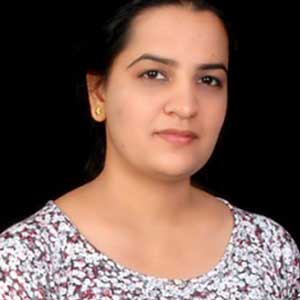
  • Aditya Gupta, Senior Associate, Anand & Anand, on an LL.M in IPR from Harvard Law School and a career in Intellectual Property

    Aditya Gupta, Senior Associate, Anand & Anand, on an LL.M in IPR from Harvard Law School and a career in Intellectual Property

    Aditya Gupta is an intellectual property litigator and currently works as a Senior Associate at Anand and Anand. He graduated from NLU, Jodhpur in 2010 and is a gold medallist. He has been a recipient of the prestigious Microsoft Intellectual Property Rights Scholarship, 2009.

    Soon after graduation, he started working as an Associate at Anand and Anand and after three years of works, he joined Harvard Law School to pursue Masters in Intellectual Property Rights.

    While at Harvard, he worked as a Research Associate to Professor William W. Fisher III for a period of six months. After coming back to India, he again joined Anand and Anand but this time as a Senior Associate. He has also been a Visiting Faculty at National Law University, Delhi for a semester and taught a seminar course on Practicing IP law’ to students pursuing undergraduate degree in law.

    In this interview, he talks about:

    • His decision to chose NLU, Jodhpur
    • His experience of working with Anand and Anand
    • His days at Harvard Law School and LL.M experience in IPR
    • The skills of an Intellectual Property lawyer


    How would you like to introduce yourself to our readers who are mainly law students and lawyers?

    I am a litigator with a keen interest in intellectual property law and new ventures. I am currently working as a Senior Associate at Anand and Anand.


    When and how did you decide to study law? How did you settle for NLU, Jodhpur?

    My decision to study law was not a planned one. I was preparing for pre-medical examinations till late into my XII standard when I suddenly realized that I did not want to be a doctor. For one, I did not have the patience to study for twelve years! Anyhow, purely on instinct and gut feeling, I decided to pursue legal studies. It was decision fraught with risk, especially since I am a first – generation lawyer. As I was quite late into the application process, I only applied for NLU, Jodhpur, NALSAR, NLS and Amity Law School. NLU, Jodhpur was the highest ranked law school that I could get through and that’s why I settled for it!


    After graduating from NLUJ, you joined Anand and Anand as an Associate. How did the appointment take place? What comprised your work at Anand and Anand?

    I had interned twice at Anand and Anand during my third year and had received positive feedback. In my fifth year, I applied for a job at the firm through the HR department. I was called for a personal interview with the Head of Department and a few days later I was told that I had been selected. Since I was in the litigation department, during my first two – three years, a lot of my work comprised of drafting court documents, research work and assisting seniors within the firm and Senior Advocates during arguments in Court. I was particularly lucky to work on some high-profile cases with very high stakes which exposed me nascent and as yet undeveloped areas of law.


    aditya-gupta-2

    How difficult were the first few months of Anand and Anand given that it focuses mainly on a specific field of law?

    I did not find the initiation period very difficult since I had taken a keen interest in IPR ever since third year of college and had interned at IP firms, took courses related to IP at NLUJ and written papers on intellectual property. The quantum leap that one takes after joining the profession is not on substantive law but the way the Courts function and the realization that substantive law is a tiny (though of course important) part of legal practice. Thus while I felt reasonably confident of my ability to handle areas of substantive IP law, I did find that the practice in Courts requires skills in addition to reading and understanding the law, which students are not exposed during law school.


    You have specialized in IPR. What made you interested in the same?

    Innovation and creativity are, in my view, the two most awe–inspiring facets of human life. While intellectual property litigation may appear to be a battle between large corporations it is, at its heart, about protection of the innovative/ creative genius of an individual. That intellectual property law endeavours to foster this genius generated my interest in the subject and practicing this field of law for the past three years has only fuelled my passion for it.


    Thereafter you went on to pursue Masters in Intellectual Property law from Harvard Law School. Was it a professional requirement to enhance more in your career?

    I had decided that I will pursue a master’s degree in law during my undergraduate studies itself. I wanted to be exposed to the pedagogic methodologies in foreign universities and always dreamed of being taught by the top professors in the world. Once I chose IPR as my career choice, it made even more sense for me to pursue a master’s degree since IPR in India borrows several concepts from IPR across the world.

    The experience at Harvard was everything that I had imagined and much more – libraries providing access to nearly every book in the world, the opportunity to interact with world-class professors who know their subject (and much more) inside out and forming bonds with students from over 60 countries – I think it helped me broaden my horizons both as an individual and a professional.


    While at Harvard, you worked as a Research Associate to Professor William W. Fisher III. What kind of work you were entrusted with?

    I worked with Professor Fisher on a specific project that pertained to a multi-jurisdictional analysis on the role that intellectual property law plays in the fashion industry from a policy perspective. Since the project is ongoing, I would not like to discuss much about its details.


    After coming back to India, you  rejoined Anand and Anand, and this time as a Senior Associate. What does it take to be appointed as a Senior Associate?

    The firm pre-defines the expectations from members at a particular designation level and consistent performance across various metrics is assessed by the management before taking the decision on whether to promote an ‘Associate’ to a ‘Senior Associate’. Unlike many other firms, the number of years in the firm is not the only criteria and other factors such as interpersonal skills and ability to handle pressure are equally important in determining one’s progress in the firm.


    What are the primary essentials of an IPR lawyer? How do you say a fresh graduate can work on building these skills?

    I think keeping abreast with the latest case-law is absolutely critical for practicing IPR. Unlike many other areas of the law, IPR is fast-developing and Courts are exploring new doctrinal areas on a very frequent basis. An Intellectual Property lawyer must also understand the space IP enjoys within a particular company – for instance, IP may form the core of the business for a music production company but it may not be so for an e-commerce company (though of course most e-commerce companies also rely heavily on their brand valuation). It is becoming increasingly important for lawyers to appreciate the business of their clients and clients appreciate lawyers who act as facilitators of their business rather than merely providing a legal opinion.

    Since IPR is a technical subject, it is also important for fresh graduates to understand the basics so that they are able to communicate with their clients in a language which they can understand – without legalese.


    Tell us a bit about work culture at Anand and Anand and the life of a Senior Associate. What is your current work profile like? Please tell us about the responsibilities you are entrusted with.

    The work culture at Anand and Anand is very excellent – it not only fosters free and independent thinking but in fact rewards people with fresh and creative ideas. The firm is ambitious and one is driven by this constant desire to deliver a world-class work product. Though the learning curve is very steep, the senior members of the firm are supportive and they help you grow as a lawyer.

    My current work profile involves developing litigation strategy, interacting with clients on a daily basis, arguing matters in Court and assisting others in arguing matters and client management and development.


    What has been your strategy to deal with errors and mistakes? How would you suggest a young associate to deal with them?

    I believe that errors and mistakes are a part and parcel of providing any service. Mistakes happen and while one should not keep moping about them, it is important not to have a lackadaisical approach. It is absolutely critical that you learn from each error/ mistake and not to repeat them.


    People often complain about the highly skewed work-life balance at the top law firms. What is your usual workday like?

    I am still figuring this one out! For me, I enjoy my work a lot and I do not recall the last time I woke up in the morning and did not want to go to work.

  • J. Sai Deepak, Associate Partner, Saikrishna & Associates, on studying Law after Engineering, experience in IPR, and taking landmark cases to success

    J. Sai Deepak, Associate Partner, Saikrishna & Associates, on studying Law after Engineering, experience in IPR, and taking landmark cases to success

    J. Sai Deepak graduated from Anna University with Bachelors in Mechanical Engineering, after which he went on to pursue LL.B from IIT Kharagpur. After completion of law he joined Saikrishna & Associates as an Associate in 2009, where presently he has been promoted to an Associate Partner. He won the 2008 Legal Writing Competition of the International Association for the Advancement of Teaching and Research in Intellectual Property (ATRIP) as a student and writes for his blog “The Demanding Mistress”. He has also authored papers in various exemplary journals.

    As a litigator at Saikrishna & Associates he led the team to many successes including the reading down of S.79(3)(b) of the Information Technology Act and the Intermediary Rules; representing Greenpeace India successfully in Tata Sons v. Greenpeace International & Anr.

    In this interview we talk about:

    • Choosing law after completing engineering at Anna University.
    • Work profile at Saikrishna & Associates
    • Winning the 2008 Legal Writing Competition of International Association for Advancement of Teaching and Research in Intellectual Property (ATRIP)
    • Leading the team which represented the Internet and Mobile Association of India before the Supreme Court.
    • Representing Indian mobile brands such as Micromax and Intex in the suits for patent infringement filed by Ericsson


    Given that most of our readers belong to the legal fraternity, how would you introduce yourself to them?

    I am a first generation lawyer, an engineer-turned-general litigator with core competence in Intellectual Property Law and allied areas.


    j-sai-deepak-2

    Having graduated with a Bachelors in Mechanical Engineering, what motivated you to switch streams and pursue law at IIT Kharagpur?

    My dream was to pursue a Masters in Aeronautical Engineering after under-graduation, but in the penultimate semester of engineering (2005), I was in IIT Kharagpur to present a paper in a technical symposium organized by its Industrial Engineering department. It was in the inaugural speech by the then Director of IIT Kgp, Shri Shishir K. Dube, that I first heard of the new LL.B. programme which was set to commence the following year, in 2006, in IIT Kgp’s Law School known as the Rajiv Gandhi School of Intellectual Property Law. I read up more on law and realized that although I took up engineering by choice, my future lay outside of it in a profession which involved understanding and dealing with people. This was perhaps because I have always had a deep interest in history, current affairs, politics and policy and I wanted to contribute in some tangible way to at least one of these areas.

    These interests, coupled with my passion for debating and public speaking, made law seem like the logical choice. The choice did not seem that logical to quite a few well-wishers. In fact, the Head of the Mechanical engineering department of my college was utterly shocked and urged me to reconsider my decision. But by then the legal bug had bitten and today I am happy I took the headlong plunge into law. As for the choice of Law School, most engineers have a soft corner for the IIT brand and this may have sub-consciously influenced my decision to study at IIT Kgp, despite the fact that the LL.B. programme was nascent.


    How did you get through to the LL.B programme of IIT Kharagpur?

    The LL.B. programme at IIT Kgp is limited to graduates with a first degree in science or technology or medicine. For the first batch in 2006, a Statement of Purpose had to be sent along with the application form for the entrance exam, then known as the National Aptitude Test. The Test had sections on quantitative aptitude, verbal aptitude, GK and a few fundamental questions related to the law. This was followed by a Personal Interview and candidates were selected based on cumulative scores. This being the first entrance exam for a newly established Law School, I am not sure the number of applicants was remotely comparable to other post-graduate entrances in India like GATE and CAT. I got through the entrance and the other rounds based on my preparation for engineering placements. The current process of admission to the Law School, I believe, is different.


    Our readers would like to know briefly about your blogpost which made you popular in the legal fraternity. Also, what made you take up blogging as a law student?

    (Sai frequently writes on his blog “The Demanding Mistress”. As a law student, his blogpost on the Bajaj-TVS patent dispute was quoted and was relied upon by a Division Bench of the Madras High Court to reverse the findings of the Single Judge.)

    Blogging happened to me in a very serendipitous way and largely because of dearth of opportunities to moot. Since we were students of the first batch of a fledgling Law School, there wasn’t a mooting culture back then and it was a challenge to kick-start one given the teething troubles anynew Law School typically faces. So three of us, Nikhil Ranjan, Ashwani Balayan and I,thought it would help to organize a moot court competition (“Verdict”) in our second year in our Law School (2008) and learn from the participants by observing them moot. In the process of inviting people to judge the moot, I was directed by Yogesh Pai (now a Professor at NLU,Delhi) to SpicyIP. I came across a few posts on the Bajaj-TVS patent dispute. However, no techno-legal analysis had been undertaken in those posts.Being a mechanical engineer with a tentative understanding of the law, I volunteered to write my first post on SpicyIP analysing the issues in dispute, keeping both technical and legal jargon to the minimum.In the process, I realized that blogging, and writing in general helped me unclutter the thoughts in my head and helped me articulate my views with greater clarity. Also, compared to mooting which requires a fair amount of resources on a regular basis which I couldn’t have afforded, all that blogging needed was access to the internet and the will to read up and write.Importantly, I felt blogging gave me access to a much wider audience. All these got me hooked to it.

    After my graduation from Law School when I was back home preparing to leave for Delhi to join the profession, I got a call from a friend of my mine from Law School, Arindam Roy Chowdhury, who congratulated me for being cited in a decision by the Madras High Court, which I dismissed as a prank. When I opened my email account later in the day, it was flooded with congratulatory mails and messages. It turned out that my maiden blogpost had indeed been relied upon to vacate the interim injunction granted against TVS Motors. I was told (although this hasn’t been verified) that this was one of the few instances where a law student’s work had been relied upon by a Court.

    In December 2010, I founded my own blog “The Demanding Mistress” where I continue to write on innovation, IP Laws, Competition Law and policy.


    What role do publications play in the life of a lawyer? What, in your view, are the few most important skills that law students should strive to acquire in order to write papers/articles effectively?

    (As a law student, Sai won the 2008 Legal Writing Competition of the International Association for the Advancement of Teaching and Research in Intellectual Property (ATRIP). He has also authored various papers in many reputed journals such as Max Planck Institute’s International Review of Intellectual Property Law and Competition law.)

    I think clear writing is a skill that every lawyer is expected to possess and must possess. Writing really tests the degree to which one has internalized a subject and its spirit, because the clarity with which you write is reflective of your grasp of the subject. Publications in peer-reviewed journals convey the message to prospective employers and clients that you are confident of articulating your views and subjecting them to the scrutiny of a better-informed audience. It also prepares you for legal drafting when you start practicing.

    I strongly believe voracious and rigorous reading is imperative for effective writing. If you write more than you read, your writing will suffer from paucity of depth and eventually you are bound to run out of topics to write on.Also, a lawyer must know how to cater to different kinds of audiences. After all, writing for a newspaper on a legal issue is not the same as writing on a specialist blog. Importantly, when a lawyer reads or writes, his/her individual personality and training as a lawyer must come to the fore.


    Soon after graduation, you joined Saikrishna & Associates in 2009 and were made Associate Partner recently. How did you secure your appointment?

    My entry into the Firm was not through campus placements. In fact, I sat out of the campus placements because at that time, no litigation firm approached the Law School for recruitment. Fortunately, two things happened- first, through a combination of circumstances in which the founder of SpicyIP, Shamnad Basheer, had a role to play, I was working on the Firm’s first two patent matters in my final year in Law School. So Mr. Saikrishna Rajagopal had an opportunity to assess the quality of my work and was kind enough to offer a position in the Firm’s litigation team. Second, around the time I graduated, Mr. Gopal Subramanium, who was the Solicitor General then, too had offered a position in his Chambers. Since I wanted to gain experience in trial practice and was already familiar with Mr. Saikrishna’s style of functioning, I accepted Mr. Saikrishna’s offer.


    For a law student, it’s very difficult to think of becoming an Associate Partner under six years of joining the profession. What would you say helped you gain recognition?

    I’d largely credit my learning to the opportunities Mr. Saikrishna has been large-hearted enough to share. He believes in teaching through empowerment, which is at the heart of the Firm’s culture. Although this means greater responsibility in the initial years, it helps you understand the ropes of the profession faster. Plus, what I am particularly thankful for is the freedom I have, to write on any issue I wish to, so long as there is no conflict of interest. This freedom matters a lot to me personally and professionally, and I am aware of the fact that this is hard to find in a law firm set up.

    I would be remiss if I did not mention how fortunate I am to have had brilliant colleagues right from my first year who enjoy discussions on the law. No question or issue is dismissed as being “too academic” or trivial. It’s a very vibrant atmosphere which is what attracts interns and makes them want to be part of the Firm. Also, one of the key strengths of the Firm is the camaraderie shared by its members, which makes one look forward to go to the Court or office each day. To me, each of these factors affects individual success when you work in a law firm.


    What does an Associate Partner at a Law Firm like Saikrishna and Associates do? What falls within the scope of your responsibility? Tell us about a typical work day.

    At least 3-4 days in a week, I am in the High Court for the better part of the day when the litigation season is on. After I am done with my matters for the day, I usually stay back in the Chamber to prepare for the next day or to send out opinions to Clients or to meet them. The advantage of the Firm’s flexible work hours is that one’s time is productively spent in attending to work regardless of where one is, instead of wasting it in commutation. Apart from handling matters that have been assigned to me, I contribute my mite to diversifying the litigation practice of the Firm by taking up matters which may have nothing to do with IP at all. For instance, I have a personal interest in taking up criminal matters, particularly those that relate to economic offenses, before CBI Special Courts. Fortunately for me, the Firm encourages such initiatives and my efforts on this front have thus far been reasonably successful.


    You have a few landmark judgments to your credit, two of which are Tata Sons v. Greenpeace and Basmati Geographical Indication case. Kindly elaborate in brief on these two cases for the benefit of our readers.

    We were engaged by Greenpeace India to represent it in Tata Sons v. Greenpeace International & Anr. in 2010, which was my second year of practice. The Suit revolves around Greenpeace India’s use of the Tata trademark in its Pacman-styled game Tata v. Turtles as part of its awareness campaign on the dangers posed by the Dhamra Port in Odisha to the nesting grounds of Olive Ridley turtles. Tata Sons alleged infringement of its trademark and defamation. The case throws up fascinating issues relating to interplay between free speech and IP rights, apart from an examination of the defense of fair comment under Indian law to an allegation of defamation. In January 2011, Justice Ravindra Bhat dismissed Tata Sons’ prayer for interim injunction and upheld the defense of fair comment on the issue of defamation and Greenpeace India’s right to use the Tata trademark in exercise of its free speech. Subject to correction, I think this decision was the first of its kind in an IP context in India and has been hailed as a landmark in several advanced IP jurisdictions. The matter is set to be taken up for final arguments in the near future.

    The Basmati Geographical Indication case relates to oppositions filed by the State of Madhya Pradesh and private entities from MP to the application for GI on Basmati filed by Agricultural and Processed Food Products Export Development Authority (APEDA). The oppositions were based on non-inclusion of the State of Madhya Pradesh as part of Basmati-cultivating regions in India. On December 31, 2013, the GI Registry upheld the contention of the opponents and directed the inclusion of the State of Madhya Pradesh in the GI Application on grounds that APEDA’s basis for identification of Basmati cultivating areas in India was flawed and not rooted in history and facts. The decision has been appealed against by APEDA before the Intellectual Property Appellate Board (IPAB), which is pending adjudication.


    You are also representing Indian mobile brands such as Micromax and Intex in the suits for patent infringement filed by Ericsson. Could you give our readers a broad overview of the suits?

    Broadly the suits relate to Ericsson’s allegation of infringement of what it claims are “Standard Essential Patents” relating to the GSM standards used in mobile telecommunication. The validity of the patents asserted and the claim of essentiality have been challenged by the defendants. Critically, the conduct of the patentee has come under scrutiny by the Competition Commission of India for prima facie abuse of dominance under Section 4 of the Competition Act, 2002. The suits and the proceeding before the CCI are sub-judice. These suits raise issues which Indian Courts and the CCI have never had the occasion to deal with in the past. In the process of handling these matters, we have discovered several facets of IP and anti-trust law and their relationship. Personally, the learning has been great.


    Section 79(3)(b) of the IT Act has been read down by the Court in the Shreya Singhal decision. Could you share with our readers the significance of the decision for internet companies?

    (Sai led the team which represented the Internet and Mobile Association of India before the Supreme Court in the constitutional challenge to the intermediary liability regime under Section 79(3)(b) of the Information Technology Act and the Intermediary Rules. Mr. Saikrishna Rajagopal was the counsel for the petitioners.)

    Ours was the only petition which challenged the constitutional vires of Section 79(3)(b) of the IT Act. Under the original provision prior to it being read down by the Hon’ble Supreme Court, an intermediary was expected to take down content based on “actual knowledge” received from private parties of the unlawfulness of the content hosted by it. Given the vague nature of the term “actual knowledge” and the onerous obligation cast on intermediaries by the use of the term, the Apex Court read this down to mean actual knowledge of a Court order which directed take down of the content. This ensures that intermediaries do not have to act like Courts and adjudicate on the legality of content hosted on their sites.

    The second limb of the challenge was to the ability of the Government to seek take down of content which was used for commission of an “unlawful act”. The term “unlawful act” went beyond the limitations imposed by Article 19(2) of the Constitution on the Government’s power to curb free speech and expression. Consequently, the scope of “unlawful act” in the context of free speech was limited to categories of prohibitions spelt out in Article 19(2).

    The reading down of Section 79(3)(b)is significant owing to the integral nature of intermediaries to the internet ecosystem and the role they place as disseminators of free speech and expression of internet users. Importantly, certainty in the application of the law is important for any business, and the business of intermediaries is no exception to this requirement.


    How does it feel to have landmark judgments to your credit? Do you think achievements like this can change one’s recognition drastically?

    It certainly feels good to have been part of such decisions. I’d like to clarify that each of these decisions is the consequence of the collective effort of the team.

    Yes, decisions such as these help increase one’s credibility as a litigator and make it relatively easier to be considered for matters involving higher stakes. That said, regardless of the outcome, what truly helps improve one’s credibility and visibility is the quality of preparation and execution in the Court since the result in beyond your control.


    You have been invited by several forums in India and abroad to present your views on IP developments in India. Please share your experience in speaking on various platforms.

    Based on my experience, I think, similar to writing, the nature of the audience must be taken into account when you address a forum. I have also realized that to connect effectively with a non-legal audience, it is important to keep the legalese at a minimum and highlight the broad policy implications of a legal issue. Also, as litigators, it helps to listen to multiple viewpoints from members of the industry, academics and policy analysts because these may come handy in lucidly putting forth a complex issue before the Court.


    Would you say you have “specialized” in IP law? What made you interested in the same? How do you say one can gain expertise in IP Law? What does it take to be a good IP lawyer?

    I’d never say that I have “specialized” in IP Law, which is why I introduced myself as an engineer-turned-general litigator with core competence in Intellectual Property Law and allied areas. For me, IP law is just another branch of commercial law with its own peculiarities like any other area of the law. The path to attain proficiency in IP law is similar to any other branch of law, which is to read as widely and deeply as possible, and to develop the ability to apply the law to the factual matrix of a given case. Critically, for anyone to acquire expertise in commercial litigation, strong foundations in property jurisprudence and common law are a must, along with command over procedural law.


    How different has the three-year program been when it comes to internships? How are internships helpful for a law student?

    Since ours was a three year program, there weren’t as many opportunities to intern as in a five year integrated program. Plus, I never interned in a law firm because I had very little understanding of the concept of a firm and the option didn’t sound great to me. However, I did make it a point to acquire diverse experiences by first interning at IIM Ahmedabad and National innovation Foundation, followed by GE’s John F. Welch Technology Centre in Bangalore. These internships helped me understand the theoretical and practical aspects of innovation. I do believe internships, if rightly chosen, help a student understand her/his own strengths, weaknesses and career aspirations.


    What are the qualities which Saikrishna & Associates look for in a typical CV? What do you feel makes an intern stand out and is very important for him/her to do to have a chance of getting a call back or even a PPO?

    At Saikrishna & Associates, the pedigree of the Law School does not matter, nor do the achievements claimed in a CV. What matters to us are initiative, conceptual clarity, the ability to write/draft crisply and the ability to marshal arguments in support of a proposition through research and logic. If a student performs well on at least some of these counts, subject to vacancy, we offer a position in the Firm. Most of our litigators have come through internships and not campus placements.


    What would be your advice to students interested in litigation?

    For anyone who wishes to take up litigation, I’d say patience and hard work are equally important because unlike transactional practice, litigation takes time to reward. But when it does, the thrill is just incomparable. In a nutshell, treat litigation as a marathon run and not a 100-metre dash. Also, it would help to be comfortable with general areas of practice and be good at atleast one area of practice, which is not the same as restricting oneself to a specialist area.


  • Munish Mehra, Partner, Saikrishna and Associates, on specialising in IPR, changes in career, tips to associates and interns

    Munish Mehra, Partner, Saikrishna and Associates, on specialising in IPR, changes in career, tips to associates and interns

    Munish Mehra belongs to the first batch of NLIU, Bhopal (Batch of 2003). After graduation he joined AMSS as an Associate for 9 months before switching to Anand and Anand where he subsequently became a Managing Associate. Thereafter, he joined Luthra & Luthra Law Offices as a Managing Associate. In January 2014, he joined Saikrishna and Associates and within 11 months, he was promoted to Partner. In this interview he talks about:

    • Academics and specializing in IPR Laws
    • Working at full service law firms and boutique law firms
    • Tips on converting internships to a PPO


    What brought you into studying law? Was it fate or plan?

    My foray into studying law was totally unplanned as I do not come from a legal background and am a first generation lawyer. I heard of the National Law School at Bangalore for the first time in 1998 through a friend who happened to be studying there. As luck would have it, the National Law Institute University was set up at Bhopal in the same year that I graduated from school i.e. 1998. I gave the entrance exam for the university, got through and things moved ahead from there.


    Please tell us a little about your law school days at the National Law Institute University, Bhopal? How were you at academics?

    As a part of the first batch of NLIU, Bhopal, I think all of us were a little sceptical about how the university would develop in the future. I still remember the first day of the academic session in September 1998 when we started from a premises which had been rented by the Government for the University and we set up the tables and chairs ourselves in a little classroom and got down to studying law. What helped in the initial trimesters was the inclusion of various BA subjects such as sociology, history etc which helped us to get into the groove so to speak before moving onto hardcore legal subjects. I was a relatively good student through my years at the University and finished in the top five of my class when we graduated.


    How important do you say is a good CGPA for an illustrious legal career?

    The importance of a good CGPA has increased over the years with the advent of numerous law schools coming up in various other states. However, I firmly believe that to have a good career in the legal profession, a good CGPA is just one element which plays a part in the making of a good lawyer.


    You have specialized in IPR law. What made you interested in the same? How do you say one can gain expertise in IPR Law? What does it take to be a good IPR lawyer?

    In the first couple of years at the University, a few seminars and moot courts were organized focusing on IPR law which played a major part in me developing an interest in IPR law. We had not yet studied IPR law till then as they were a part of the 4th year subjects. I then did two internships with Anand & Anand at the end of my 2nd and 3rd years which give me an insight into how IPR law actually works in the real world. The process of gaining expertise in IPR law or becoming a good IPR lawyer is no different from any other branch of law and requires one to be able to grasp the issues involved in the case at hand which forms the basis of your claim or defence, as the case may be, and presenting a well drafted and argued brief before a Court.


    You started your career at AMSS as an Associate. How did you secure your appointment? How would you describe your experience working there?

    I was recruited by AMSS pursuant to the first campus placement which happened at the University at the time the first batch was about to pass out. In fact, AMSS was the only law firm which came for the placement of our first batch and two people were recruited by the Firm. Working at AMSS was an interesting experience as even at that time it was considered to be the best full service law firm in India. My area of work involved general corporate commercial advisory and transactions. I think the biggest takeaway from my tenure at AMSS was that it made one realise that there is a sizable difference between studying subjects theoretically in law school and their application in real world deals and transactions as there are so many practical facets and situations which one is not exposed to while studying subjects in law school.


    After 9 months of work at AMSS, you switched to Anand and Anand as an Associate and later worked as a Managing Associate there. You also had the oppurtunity to work at Luthra & Luthra Law Offices as a Managing Associate. Please share your experience at both these place.

    It was a conscious decision to make the shift from AMSS to Anand & Anand as after a while I realised that my real interest lay in practising IPR law even though the initiation into the real legal world through AMSS held me in good stead in the coming years. I worked at Anand & Anand for nearly six years during the course of which I led the anti-piracy and anti-counterfeiting practice at the firm and had a wonderful time doing so. Luthra & Luthra posed a new challenge in terms of setting a new practice area from the ground up and it was an interesting experience to go back to a full service set from a boutique firm.


    Also, was there any difference in the work environment of these two law firms, considering the fact that Anand and Anand mainly deals with IPR law whereas Luthra & Luthra is a full service law firm?

    The work environment of a full service and boutique firm does vary to a large extent. The environment in a boutique firm tends to be more informal and due to a lesser number of individuals, helps in developing interpersonal relationships faster. A full service firm environment on the other hand is much more regimented and necessarily so because of the sheer number of people working there. Therefore, it does take some time to get used to it if you have joined from a smaller setup.


    What qualities do you think helped you for promotion to Managing Associate at Anand and Anand & Luthra and Luthra Law Offices?

    It was a combination of factors such as developing an expertise in my practice area and being able to handle matters competently and independently relatively early in my tenure at Anand & Anand. Most importantly, it helped that I was able to develop a rapport with the clients I worked with regularly so that when the time came for elevation to Managing Associate, clients were more than happy with me leading their matters on a regular basis without requiring a supervising partner. Consequently, my team reported directly to the Managing Partner of the firm.


    You were made a partner at Saikrishna and Associates in just Eleven months of work. What would you say helped you to join the ranks of a Partner?

    In January, 2014, I joined Saikrishna and Assciates as an Of-Counsel and within 11 months, I was promoted to the ranks of a Partner. So to say, yes, I was made a partner in Eleven months.

    Well I was a lateral hire from Luthra & Luthra having spent three years independently handling my own team and servicing the clients which had given me work when I shifted from Anand & Anand. I guess the ability to service clients professionally, train a team from the ground up, manage them and independently run successful campaigns on behalf of various clients were factors which led to me being elevated at a Partner at Saikrishna & Associates.


    munish-mehra-3

    What kind of effort should a young Associate put in to work to get it appreciated? What distinguishes an Associate with a Partner when it comes to work?

    At an associate level, the requirements are relatively simple in terms of being totally aware of the factual matrix of the matter, doing diligent and through research, being reasonably acceptable at drafting and being disciplined at the work place. If an associate is able to display the abovementioned qualities, any firm would be more than happy as nothing more is expected. The deliverables as expected from a Partner are totally different as he or she is expected to provide strategic advice and guidance to a client on a particular matter or campaign, monitor and supervise the work done by associates, and also ensure that billing targets as given by the Firm are met by his team and recoveries happen in a timely manner.


    What does a Partner at a Law Firm like Saikrishna and Associates do? What falls within the scope of your responsibility? Tell us about a typical work day.

    A Partner at Saikrishna & Associates is responsible for supervision of matters handled by his or her team, appearances before various Courts, providing strategic advice in relation to matters, reviewing opinions and memos as required by clients from time to time on various legal aspects, ensuring that billing targets are met by the team and also developing and bringing new work into the Firm. A typical day involves either going to Court for matters as listed, or coming into the office and handling various miscellaneous work such as reviewing opinions, legal pleadings, client meetings and telecons. The Firm does a lot of outstation matters which usually involves travelling to various courts across states and either a Partner or Senior Associate/Associate does that depending upon the importance of the hearing and the complexity of the matter.


    How important is it for a Partner of a law firm to be good at business development, or are great lawyering skills enough to become a partner? What separates the people who become Partner from those who don’t?

    Different people have different skill sets and not every Partner in a law firm is a rainmaker. It is of course beneficial for a Partner to be good at business development as that helps in the overall growth of a Firm but at the same time it is important to have senior people in the Firm who are able to handle the day to day supervision and functioning of their respective departments thereby contributing to the overall efficiency and quality of work done by a Firm. I think the ability to handle and supervise complex matters, manage teams independently, provide strategic but practical advice to clients and having the ability to develop long standing relationships with clients which generate revenues for the Firm is what separates people who become Partners from those who don’t. That is not to say that other individuals are not equally important as human talent and expertise is the most valuable resource of a law firm and that is what gives a firm its “reputation”.


    munish-mehra-1

    How is the work culture at Saikrishna and Associates? If an Associate commits a mistake or an error what course of action do you follow?

    Saikrishna & Associates has a great and innovative work culture which is quite different from the regimented schedules which some firms insist upon. The focus of the Firm is on “client delivery” and empowering individuals to be responsible for their work product. The result is that you find Associates as well as Partners being happily available to clients 24/7 which is much appreciated. I think the way a Firm deals with a mistake by an Associate is reflected by how its senior people deal with such a situation and in that sense the Firm has preferred to explain the error rather than “shout” at an Associate for committing a mistake.


    What are the other areas of study which you think that a law student wanting to excel as a professional in the field of IPR should be proficient in?

    I think it’s important for a lawyer to keep abreast of as many developments in law as possible as you never know on which facet a client may need urgent advice. An IPR matter may involve a taxation or royalty aspect one day or a criminal law aspect another day. Therefore, it’s very difficult to pinpoint any other branch of law which a lawyer must focus on to be proficient in the field of IPR.


    What changes has being a Partner brought into your life, do you ever feel that there is excess of work load on you? How do you manage to strike a balance between your personal and professional life?

    Being a Partner does bring added responsibility as you are ultimately responsible to the client for the work product turned out by your team. A Partner, as mentioned earlier does have to make efforts to bring in new clients into the Firm for its overall growth and development. The culture of the workplace makes a huge difference in being able to maintain a balance between work and personal life while a lot of firms may say that they place a great emphasis on the work life balance of their lawyers, our Firm does actually walk the talk so to speak.


    The trend is now on gathering various internship experiences at different places. Was the scenario same while you were pursuing law? How is internship helpful for a law student?

    The number of internships as done by students now, are a lot more as compared to when I was in law school. It’s not uncommon to find ten to twelve internships on a CV these days while we used to do one internship a year. An internship is very useful for a law student as you are exposed to so many practical facets of actual legal practice which is impossible to experience in law school. However, it is important to focus on the type of internships which a law student does during his law school years as the quality of internships are more important than the quantity on a CV.


    What is the procedure to apply for an internship or recruitment at Saikrishna and Associates? What are the qualities which they look for in their prospective employees?

    We have a Partner who is in charge of internships at the Firm. Prospective internees send their resumes to our HR department pursuant to which the Partner decides the internships to be granted for a particular period. We take special care not to overstuff the firm with a lot of interns at any given time to ensure that all interns get quality exposure to the work being done at the firm.


    What do you feel makes an intern stand out and is very important for him to do to have a chance of getting a call back or even a PPO? How do you think interns can get noticed in a positive way in the limited time they have?

    It’s important for an intern to be diligent and disciplined at his or her work. Reasonable oral and written skills, a decent knowledge of first principles and the ability to research properly is what makes an intern stand out from the crowd so to speak. It’s also important for internees to do at least a one month internship to enable the Firm to assess their capabilities as a 10 or 15 day internship, which some students do today to increase their tally of internships doesn’t really help in them either learning anything about the Firm or increasing their chances of getting a PPO.


    What would you suggest to someone who is preparing to work with an IPR law firm? What are the basic subjects which one should read and have understanding of before sitting for an interview?

    If an individual is interested in working for an IPR boutique firm then it’s advisable to be aware of the “first principles” and basics of IPR law in relation to Copyrights, Trademarks, Patents etc. An awareness of recent developments in the field of IPR is also very helpful and there are various online blogs and commentaries which regularly report such developments and recent case law.


    The question that whether one should specialise in a particular area of law or be more of a general lawyer often comes up before law students. What is your opinion on the same?

    It depends on the type of practice an individual wants to do. As an independent practitioner, it’s necessary to be conversant with various areas of law be it civil, criminal or even company/corporate law litigation and advisory. A lawyer in a law firm will typically specialize in a few areas and will be known in the profession for his expertise in those areas. I have come across very few lawyers working in law firms who can claim to be masters in all fields.


    Is there anything you would like to have done differently?

    I think every experience and decision teaches you something new which makes you a better person and professional. So to sum it up, I really would not have done things differently. There is still a long way to go and lawyers never retire anyways!!


    Where do you see yourself ten years down the line? Do you aspire to be like somebody from this field?

    Ideally sitting on a beach and relaxing!! On a more serious note, one would like to be someone known in the profession as an individual who is dependable, experienced and sought after. Every lawyer likes to be well known and let them not tell you otherwise. I really don’t aspire to be like someone. I would rather be known as myself ten years down the line.


  • Ajay Chandru, Associate, Nishith Desai Associates, on LL.M from George Washington Univ and specialising in IPR

    Ajay Chandru, Associate, Nishith Desai Associates, on LL.M from George Washington Univ and specialising in IPR

    Ajay Chandru graduated from GNLU in 2009 with a B.Sc.LL.B. degree. During his days at GNLU, he attended various summer schools including George Washington University Summer Program, Munich, Franklin Pierce Summer Program, Cork, Ireland, Intellectual Property Summer Program, Macau, World Intellectual Property Organization’s Summer program at Bangkok, Thailand. Soon after graduation, he joined Lakshmikumaran & Sridharan as an Associate and worked there for two years. Thereafter, he went on to pursue Masters in IPR law from George Washington University. Currently, he works as an Associate at Nishith Desai Associates.

    In this interview, he talks about:

    • Summer schools during under-graduation
    • Work experience at LKS
    • LL.M experience at The George Washington University
    • Induction and work at Nisith Desai Associates


    What brought you into studying law? Was it fate or planned?

    I had taken up Science as my stream in eleventh and twelfth standard. Like all science students I followed the herd and joined coaching classes for IIT. However, I and my parents realised after my coaching class IIT test results, I was definitely not cut out for IIT. My dad then spoke to the director of HR at his company to discuss what will be the most in-demand professionals in the next five to ten years. One of the professionals in demand he said would be corporate lawyers.

    I had no clue at that time what corporate lawyers were. I actually wanted to be a pilot and was keen on going to flying school but I realised while looking at the job market in India for pilots back in 2004 that it was not practical. I then googled for the best law schools in India and then I came across the ever so misleading India Today rankings.

    I also came across Law School Tutorials (“LST”) and started solving the entrance exam papers, I found it very easy as compared to IIT entrance exam papers, so I thought law entrance exam would be pretty easy to crack. I used to solve the law school entrance papers even in my free time because I especially loved the General Knowledge section. My Mom thought I was spending too much time in solving these papers and not focusing on my twelfth exams, so she hid the LST prep material and did not give it to me until two weeks before the law school entrance exam. In conclusion you can say that me being a lawyer was a mix of fate and plan.


    Did you take part in moots when at GNLU or indulge in academic legal writing?

    I was never an avid mooter. However, I did take part in a couple of moot courts. I was always focused on Intellectual Property Rights law since the first year of my law school. I never bothered to concentrate on a moot court which was not related to Intellectual Property Law. I think it was in the third year that we first had an internal moot on an Intellectual Property Law issue. I took part in it and actually topped the whole law school in that internal round.

    Looking back, I do feel that I should have taken part in more moot court competitions, especially the international ones because they give you a lot of exposure and you do hone your oral and drafting skills.

    When it came to writing I did end up writing some articles on the subject of Intellectual Property Law. I do think writing academic articles is important. However, it has to be done the right way. The article should contribute or develop the existing legal jurisprudence on a particular subject. Articles should not be written just for the heck of putting that in a resume. It can actually backfire against you. All the big law firms and even companies have started asking for writing samples or published articles for recruitment purposes. It is very easy to identify the quality of the article by briefly reading it on the first go itself. Plus, if you have written an article on a subject, it is presumed your fundamentals on the subject including the leading case laws are within your knowledge off hand.


    During your days at GNLU, you attended various summer schools. What was the reason behind pursuing these programs?

    I attended George Washington University Summer Program, Munich, Franklin Pierce Summer Program, Cork, Ireland, Intellectual Property Summer Program, Macau, World Intellectual Property Organization’s Summer program at Bangkok, Thailand. All these Summer Programs were on the subject of Intellectual Property Rights. I pursued these summer programs mostly from an academic standpoint. It also helps from a recruitment point of view as it shows that you have command on the subject.


    How do you think such summer schools are beneficial for a law student?

    The method of teaching in these summer programs is different. They are very practical and assignment oriented, which make you think on these subjects. This kind of academic exposure I did not get in GNLU. Further, you tend to meet a lot of people from different countries with the same kind of academic mind set. This exposes you to a different kind of thinking, which results in expanding your cultural and academic horizons.


    ajay-chandru-2

    Right after graduating, you joined Lakshmikumaran & Sridharan as an Associate where you worked for two years and then went for LL.M. Why did you decide to go for higher studies?

    I honestly wanted to go for my LL.M right after college. However, I realised it made more sense to go for LL.M after gaining some work experience because I would have a better grasp on the subject by then. This was important, if I wanted to make the most out of my LL.M. Also, work experience gave me a different practical perspective of the subjects I undertook in my LL.M. I ended up taking a lot of practical and very specific interest oriented subjects within Intellectual Property Law and did not undertake a lot of foundation courses on Intellectual Property Law, as I was already familiar with fundamentals on the subject.


    Tell us something about your LL.M year at The George Washington University. How did this influence your career?

    It was an exciting and probably one of the best years of my life. I did study a lot because I was genuinely interested in the subjects I undertook. I did also party a lot I have to confess. Plus, the LL.M programmes are structured in such a way that you so many events to party and most of which are actually funded by the Student Bar Associations of the college, this is apart from the partying that you would do with friends.

    I think if you want to pursue LL.M in Intellectual Property Law, George Washington is the best place to study. One, because of its reputation in Intellectual Property Law and second, is because of its location in Washington DC. The Federal Circuit Court (the appellate court for patent matters), USPTO, the US Copyright Office and the Supreme Court are all located in Washington DC. Because of this most law firms and institutions dealing with Intellectual Property have a presence in Washington DC. This gives George Washington unparalleled access to a lot of resources including excellent part time lecturers.


    Do you think it makes sense to students to go overseas to study law when they want to work/practice in India?

    Honestly, I don’t think so. If you are thinking of doing an LL.M from overseas just to get a job overseas, it’s a bad idea. You need to have a genuine interest in the subject that you want to focus on. The chances are pretty slim that you will get a job overseas. It might be still possible to get a job overseas but the question is what kind of job you want to do. If you have worked in a law firm in India and worked on high profile litigations and transactions or a law firm in India is giving you that opportunity then would you want to do work for a contract management firm or discovery firm overseas, if you are okay with doing this kind of a job chances are you might ending up getting a job overseas, if you try.

    However, what an LL.M does is irrespective of your job prospects, the exposure that you get in an LL.M when you make friends and hang out with people from different countries is extremely invaluable that can’t be quantified by any amount of money. This exposure makes you so culturally aware and shapes your personality, which is very important in your professional careers.


    You have also worked as an intern at Boehmert & Boehmert, Germany. What kind of work did you come across?

    Boehmert & Boehmert, Germany is a law firm specializing in Intellectual Property Law. The kind of work I came across was patent prosecution, trademark related litigation research, European Pharma regulatory research work and trademark prosecution work.

    Working in a German law firm is very different than working in an American or Indian law firm. The working atmosphere was very relaxed. People generally never stayed longer than 6.00 p.m. in the firm. However, people did not waste a single minute while working in the office. The efficiency of the associates, interns, secretaries and paralegals in time management was extremely good.

    The interns in the law firm were treated almost like associates. We had our own cabin and even secretaries assigned to us to help with the backend work and you directly reported to a partner and the work was assigned to you by a partner and not an associate. The responsibility that you are given is also equivalent to an associate. In this way it was completely different than an internship in an Indian law firm.


    You are working as an Associate at Nishith Desai Associates. Tell us about the nature of work you’re entrusted with therein.

    At Nishith Desai Associates (“NDA”) I primarily focus on Patent prosecution, Intellectual Property litigation, Intellectual Property centric transactions, Pharma regulatory litigation, General commercial law litigation and General Commercial Law related documentation.

    At NDA we have 70:20:10 philosophy; wherein you need to spend every year 70 percentage of your time in your core area, 20 percentage of your time in related core area and 10 percentage of your time in an entirely non-related core area. So I do end up doing work, which is not related to Intellectual property law.

    NDA being a research oriented firm, a substantial amount of my time is also spent on drafting research articles and hotlines that get circulated to the NDA external mailing list or get published in national and international publications.


    ajay-chandru-3

    How do you say one can gain expertise in IPR? What does it take to be a good IPR lawyer?

    The first and foremost thing you need to decide if you want to gain expertise in IP is whether you are genuinely interested in the subject, does it excite you, does it make you want to read more and gain knowledge in the subject. If the answer is yes, then you should decide to gain expertise in the subject. As, a student the best way to again expertise in IP would be to intern with a law firm specializing in IP. I think this is one of the best ways of gaining exposure and experience on the subject and it also increases your chances of recruitment. Another is attending summer programs to gain exposure and to have comparative understanding of the subject, which is very helpful as it gives you a broader perspective on the subject. You should also be abreast with the latest development in the subject area by reading blogs and major case laws on the subject.

    To be a good IP lawyer, you need the same qualities as any other lawyer. However, it does help very much if you have an inclination to understand and better grasp the fundamentals of science especially if you want to do patents. Plus, if you have science degree even if from National Law School such as GNLU you are eligible for giving the Patent Agent Exam in India. Having this qualification is also very helpful, if you want to focus on patents.


    Nishith Desai Associates takes on interns as well. What do you feel makes an intern stand out and is very important for him to do to have a chance of getting a call back or even a PPO?

    Interns at NDA generally work across teams. So it is important to have a mindset where you are open to work across subject areas. You should be able to work anywhere, be it in Intellectual Property or corporate or tax or litigation. Dedication to your work, time management, meeting deadlines and consistency in the quality of work are also important. In addition to NDA being a research oriented law firm, we also look for good drafting and analytical thinking skills in a potential recruit. Analytical skills are essential; for example, if you are drafting an article on the latest case law, you need to understand the broader implication of the judgment on the jurisprudence and the industry and your critical analysis of the judgment.


    Is there any success mantra that you follow which you would like to share with our readers?

    I think be it any field or any kind of work, according to me, if you need to be successful, dedication, hard work and time management are the most important. You can’t achieve success without possessing any of these qualities.


  • Piyush Kumar, Retainer Counsel, Krishna & Saurastri Associates, on building a career in IPR

    Piyush Kumar, Retainer Counsel, Krishna & Saurastri Associates, on building a career in IPR

    Piyush Kumar graduated from CLC, Delhi University. After graduation, he started working with Legal Knights Law Firm, followed by S.S. Rana and Co., a boutique IP firm in Delhi. He pursued a Masters in Business Law from NLSIU while working at S.S. Rana and Co. He later joined Krishna & Saurastri Associates as a Retainer Counsel where he currently works. In this interview he talks about:

    • Pursuing litigation and IPR
    • Working and pursuing a Masters course simultaneously
    • Internship and recruitment at Krishna Saurastri Associates


    How would you introduce yourself? Could you please share a little bit of what motivated you to pursue law as a career?

    I am Piyush Kumar, a lawyer dealing with cases under Intellectual Property Laws & Commercial Laws and working in New Delhi. My work involves a lot of communication with clients, negotiations and meetings. My role encompasses that of an in-house counsel as well as a litigator because I handle a lot of Court Cases also.  My father, who is at present a District Judge is my inspiration to enter this field to pursue law as a career. I am happy that I could do what I really wanted to do in my career. Motivation according to me is something that is the culmination of your zeal and determination.


    How would you describe your time at Delhi University? How important do you think extra-curricular activities are to a law student?

    College times are always the best part of one’s life; so for me it was the best time to learn the basics of the profession. Being in CLC, you have to take part in extracurricular activities such as Moot Court Societies, Seminar & Group Discussions Committee, Legal Aid Societies, Intellectual Property Right Cell, Women Empowerment Cell and other committees. I was Convenor of the Seminar & Group Discussions Committee where we organised seminars and group discussions on relevant topics of law and invited legal luminaries to enlighten us from their experiences. I was also actively participating in Moot Courts, Legal Aid and other Societies of the College.  For law students, extra-curricular activities are very important as it gives them insights / exposure to the work / areas they have to work in the coming future.


    A lot of law students promise to take up pro-bono work and do some socially relevant work. Have these ideas ever crossed your mind?

    Pro-bono / voluntary work is always good to do. In law college days I was associated with YMCA, New Delhi and was organizing legal awareness programmes in slums and helping them sort their legal problems. Even today, when I get free time I love to do the same.


    How was your first year after graduation?

    In 2010, after completing my graduation I started working with Legal Knights Law Firm as  a litigation advocate. Litigation, which was my first girlfriend of the profession, taught a lot about the profession and helped me a lot in developing myself and articulating myself with new ideas of professional world. Even my seniors in the firm helped me a lot in developing legal skills such as drafting, court appearances, negotiations etc. For me, when you start preparing your brief for the next day, first jot down the defences you have to put forth for the laches you have to provide during the course of hearing. As in litigation, the safest defence is complete preparation of the case.


    piyush-kumar-2

    How did you appointment take place at Legal Knights take place? How would you describe your work experience there?

    I was lucky enough to get two offers within the last month of our last semester; one from Manupatra as Legal editor for their journals and one from the Legal Knights as Associate, Litigation. As I already said litigation being my first girlfriend, I preferred working as an Associate and joined the Litigation Practice in the firm. Although, that was a difficult move for me being a young law graduate because there was the pain of being paid less in comparison to what was being paid by Manupatra. But now, I believe my decision was right as I started working extensively on Commercial Laws ; further my Seniors also helped me to articulate myself as in In-house work. I started on the balance with In-house as well as Litigation profile.


    What contributed towards your appointment at S.S.Rana and Co., a boutique IP law firm in Delhi? How did that go?

    When I joined S.S.Rana & Co.; I was barely aware of the legal technicalities of IP. However, as I was in Court Practice, my basics of law are good. I worked hard to learn the technicalities of IP. Even at present I am learning and developing myself better day by day as you know in this profession you have to learn and develop yourself day by day. As the mantra in this profession is Darwin’s Theory of Survival of the Fittest.


    How did you manage to eke out time for pursuing Masters in Business Law from NLSIU while working at S.S.Rana and Co.? Please share your experience with our readers.

    After enrolling myself in the Master of Business Laws from NLSIU, the Mecca of law schools in India, for the first time I felt that working and pursuing a course together are one of the hardest things to do. As you have to work hard for your firm being in Litigation Profile most of the time you have no time for doing other things when you complete one assignment/case you get another. Although MBL is under DED, NLSIU, Bangalore but the same is a tough nut to crack. Since, my basics concepts were clear and I had a passion to be updated on the legal issues the same helped me pursue MBL from NLSIU.


    Have you ever considered litigation or starting up on your own?

    I am happy to do litigation as a choice not per force. I may start my own work but there is time for it. Certainly, the law firm provides good opportunities and exposure to a young individual lawyer as you have to deal on variety of issues and more volume of work shall mean more opportunities to brush up one’s professional skills.


    After having worked with S.S.Rana and Co. for almost two years, how did you join Krishna & Saurastri Associates as a Retainer Counsel?

    I was made a good offer by Krishna & Saurastri both in terms of exposure and monetisation which appealed to me leading to joining them.


    You have specialized in IPR. What made you interested in the same?

    For me, I am not specialised yet. I am in process of learning as I said that in this field you learn every day. Once your zeal/passion to learn ends I think it ends you also.  Since I am a Science Graduate and also my inclination towards science is a bit more, it made me interested in IPR laws as creations of the human intellect fascinate me.


    How did you build up your expertise in IPR?

    Having already said “I am no expert”, nonetheless it may be noted that IPR is a niche field with a lot of dynamic areas which are being crystallised with time. I feel most of the IP firms are doing a great job of nurturing their young associates in IP laws.


    What is a normal workday like Krishna & Saurastri? Being a Retainer Counsel, what are your responsibilities?

    Handling work of the Litigation & Prosecutions team simultaneously does not have the comfort of workday and times. For me it starts at about nine in the morning and depending upon the work, varies from ten-twelve hours each day. I, along with my able colleagues are responsible for taking care of prosecutions, courts cases, counterfeit actions and related advisory works.


    What has been your strategy to deal with errors and mistakes? How would you suggest a young associate deals with them?

    Error / mistakes play a crucial role in our professional life, as a counsel’s single mistake sometimes not only ruin their clients but also jeopardises your professional life. As the scope of error / mistake in professional life of lawyer is very negligible they must proof read their work, they must have a checklist to reduce the chances of errors / mistakes. Further, factual position of the drafts must be verified by the clients.


    Tell us about a case that you are particularly proud of. What steps do you take to prepare for a difficult case?

    I believe I am proud of all the cases I have dealt with because each case / matter teaches me a lot and the same is added to my professional skills. But, I really remember arguing a NDPS bail matter before the Hon’ble High Court of Delhi in my recent days of joining the profession. One has to know the facts and read all the papers/ documents of their case. Also, research on various aspects of the matter is also very important.


    What is the current scenario of studying IP law as a career option in India?

    With the development of the Indian economy, competition has become intense with brands bending over backwards to achieve sales.  IPRs are now being used not only as a tool to protect creativity and generate revenue but also to build strategic alliances for socio-economic and technological growth. Industries are now dealing with IPRs in different situations in the competitive world. Similarly, domestic industries are also more watchful to ensure that their IPRs are not infringed in India and in other countries. Hence, there is always a vast option in IP law field.


    What is the procedure to apply for an internship and recruitment at Krishna & Saurastri? What do they look for in their prospective employees?

    Students can apply for internship or recruitment by logging on to the link http://www.krishnaandsaurastri.com/?p=careers_employee. Like any other IP firm they look for basics of law especially IP Law. And being computer savvy surely helps.


    What would you suggest to someone who is preparing to work with an IPR law firm?

    When you are preparing for the interview you must be well acquainted with the basics such as C.P.C., Cr.P.C, Arbitration, Contract etc. Further, he/she must also be well versed with established precedents and doctrines of IPR law nationally and internationally.


    Please give our readers a few tips in order to land a job in IPR firm.

    Sciences combined with law are a great combination for patent and for the other aspects of IP doing internship with IP law firm may also go a long way in getting the coveted assignments.


    What would be your parting message to our readers?

    Take positive approach and choose your field as per your personal bent of mind.

  • Avijit Sharma, Associate, Saikrishna & Associates, work at IAMAI, winning moots and balancing studies

    Avijit Sharma, Associate, Saikrishna & Associates, work at IAMAI, winning moots and balancing studies

    Avijit Sharma graduated with a degree in Anthropology from Hans Raj College, Delhi, later he graduated in law from CLC, Delhi University in 2009. While in college, he earned several awards at moot court competitions including the award for the Best Speaker at the 27th National Bar Council of India Moot Court Competition. He was also the Convenor of the Moot Society at Delhi University. He began his legal career as Assistant Manager-Legal Affairs at Internet and Mobile Association of India. He is currently an Associate at Saikrishna & Associates. In this interview he talks about:

    • Balancing academics and mooting
    • Working at IAMAI and Saikrishna & Associates
    • Specializing in IPR Laws


    You have a Bachelor’s degree in Science (Anthropology) from Hans Raj College, DU. Could share with us any specific incident which motivated you to pursue law as a career?

    Law was always a career option for me. Law could be studied as a five year program after XII Boards, or a three year program after a graduate degree. Graduate degrees in English, Business Administration, Economics and commerce are considered useful for a career in law. However, after going through the syllabus for B.Sc. Anthropology I felt that it should provide an ideal foundation for a career in law – in no other discipline is one simultaneously exposed to the study of biological, sociological, cultural, economic and political growth of human beings and societies, as well as immediately useful subjects – such as human anatomy and forensic science. For me law was a logical progression from Anthropology.


    How was your experience at CLC, DU?

    I had a wonderful time at CLC, DU. The crowd was good. The faculty is great. The intellectual environment is stimulating. I focused on constitutional law, intellectual property and environmental law. I found criminal law fascinating and law of evidence absorbing, but tried not to neglect any major branch. I cannot presume to be able to advise anyone, but would suggest that one should try to explore every major branch of law.


    What is your take on academics?

    Academics are very important. A consistently good CGPA is a reflection of one’s attitude and habits of regularity, inner discipline and capacity for organized work. I believe that these qualities are equally essential for a good career in the legal profession. In addition, a good CGPA makes your CV impressive in the eyes of Law Firms and prospective employers.


    What skills did you get to hone as the Student Convener of your Moot committee?

    Being the student convener of the Moot Court Society was a cherished moment. The Moot Court Society was all about close looping with the senior and junior batch-mates and learning to present arguments at moot court fixtures. I am greatly in debt to Prof. Alka Chawla for recognising my time management skills, and entrusting me with various important decisions to manage the Moot Court Society.


    You have participated and won various moot court competitions. What is your advice to budding mooters?

    Yes, I have won various moot competitions and also won a scholarship and the Best Speaker award in the 27thNational Bar Council of India Moot Court Competition and in a few others.

    One has to be better prepared for the ‘competition’. It requires thinking through both sides of the ‘problem’, being conscious of the strengths and weaknesses of both sides of the case and an anticipation of the possible queries of the judges. In short, one should be prepared enough to be able to argue from any side of the case at a moment’s notice. My advice to a budding mooter would be – never to be aggressive at any moment, but to be assertive at all times. It is important to carefully listen to the arguments of the opposite side and the questions asked by the Judge.


    avijit-sharma-2

    How does one make a winning memo? According to you, what is the difference between a great and an average memo?

    My answer would be the same as in response to the previous question. Plus, a winning memo should be crisp and brief, without missing out on anything essential. A great memo would reflect the fullness of legal research, and a keen focus on the essential issues. An average memo would be comparatively lacking in these properties.


    How important do you think are co-curricular activities in shaping the legal career of a law student?

    Mooting, debating and publication in journals are the best intellectual pleasures for a law student and very effective preparation for a life in law. I’d say that it’s the time best spent.


    What are the tips and strategies you would like to share with our readers who are currently law students?

    Academics are very important, since they reflect one’s inner discipline and attitude towards work, and it would be foolish to sacrifice them for the sake of anything, including a good performance in a moot court competition. It is to be understood that the theory of law itself has resulted into various codified laws and landmark judgements. The great Nani Palkhiwala attained a tall stature at the bar on the foundation of a strong academic background. In short, one has to excel at both, which requires good time management – an advice which is easy to give but hard to follow. Nevertheless, a good CGPA can never hurt.


    How was your first year after graduation?

    The first year after graduation was a tad difficult, since I could not find congenial work at the very outset. It was important to have a proper start by finding a suitable opening with a law firm of repute.


    You started your legal career as an Assistant Manager – Legal Affairs at Internet and Mobile Association of India. How did your appointment take place? What was the nature of your work there?

    I applied for a position at Internet and Mobile Association of India (“IAMAI”), and was fortunate to have been offered the said position. I believe that it was due to the combined effect of my academic and extra-curricular record. As the Assistant Manager, Legal Affairs, in addition to the other things, the most interesting part of my duties was to watch and document the developments taking place in the cyber world – in India as well as globally, be they legislative, judicial, social, political or commercial.

    The tipping point came when I as a co-petitioner along with IAMAI decided to move the Supreme Court of India in a writ proceeding, challenging various provisions of The Information Technology Act, 2000 and the Rules framed thereunder. The Writ has recently been decided by the Supreme Court (reported as Shreya Singhal vs. Union of India) and is considered as a milestone in Internet Jurisprudence.


    Currently you work as an Associate at Saikrishna & Associates. Please tell us the recruitment process at Saikrishna. Tell us about your induction into the firm.

    S&A is always open to the induction of fresh associates. They look for young professionals having the ability to work smart as well as hard, in keeping with its professional requirements. I assume that in addition to a creditable performance at the graduate and law school level, the firm also gives weightage to the extracurricular as well as professional exposure and confidence in a prospective associate. I came in touch with Mr. Saikrishna Rajagopal and Mr. J. Sai Deepak in relation to my law related responsibilities at IAMAI. S&A and IAMAI were collaborating over several matters of mutual interests, including the above-mentioned writ petition. I must have left a good impression upon them and they were gracious enough to offer me the position of an associate in the firm.


    What kind of work and responsibilities does an associate at Saikrishna deal with?

    The Associates in the litigation department deal with subject matters pertaining to IP enforcement, regulatory litigation, competition law litigation, pharmaceutical advisory and litigation, entertainment, media and software anti-piracy campaigns. The gamut of work includes preparing briefs, drafting pleadings, researching relevant case laws, client meetings, court appearances. The firm provides ample work related opportunities, professional exposure and a conducive environment to enable its members to fully utilize their potential to the maximum, thereby enabling them to shape their standing and professional career.


    How did you build up your expertise in IPR?

    The study of law is a never ending process. A lawyer remains a student forever and only the finest and sharpest of minds can claim to be an expert in any given department of law. In all humility, I would say that I have been barely able to scratch the surface of IPR Jurisprudence. The primary essential of an IPR lawyer or for that matter a lawyer in any other field of law is his thirst for knowledge and an open but critical mind.


    What kind of internship applications do you think stand out positively?

    Interns are meticulously and rigorously coached at the Firm which offers to them invaluable insight into the professional lives of the lawyers conducting cases and appearing before the various courts and tribunals. The interns are given a range of responsibilities which includes research upon various propositions, preparing case notes and attending mediation sessions. The firm has an internal department which evaluates the applications keeping in mind various objective standards. I understand that interns having a working knowledge of the substantive and procedural laws usually do well with the firm.


    Given a chance to turn back the clock would you have done anything differently from what you’ve done?

    The study and of law and its practice has so far been an exciting journey. It has taught me ways of life. Given a chance, I would want to revisit my graduation days to attend and discuss study lectures of Prof. Kamla Sankaran on constitutional law and jurisprudence.


    Lastly, what would be your message to a law student who is yet to decide his/her career?

    The study of law is more than chalk and talk, so it is important to meet people, patiently listen to their ideas and to socialise. As an advice to law students, I would first stress upon the importance of academics and theory and thereafter making career decisions after evaluating the stream of opportunities which may come their way.

  • Sheela Yadav, Law Officer, SUN Pharma, on taking out time for LL.M, work in litigation and IPR

    Sheela Yadav, Law Officer, SUN Pharma, on taking out time for LL.M, work in litigation and IPR

    Sheela Yadav was born and brought up in a conservative atmosphere, one that is not very encouraging for girls to study, but that did not stop her from pursuing her dream of studying law. Encouraged by her father, she completed her graduation in sociology and enrolled herself for the three-year LL.B course in SNDT University. Upon graduating, she started working at the chambers of Preeti Shah, and completed an LL.M alongside her work. After developing an interest in IP laws, she switched to Sun Pharma where she currently works as Legal Officer.

    In this interview, she talks about:

    • The initial experiences of her life which made her want to study law
    • Her work in litigation and experience working under Advocate Preeti Shah
    • Her current work profile at Sun Pharma


    Why did you decide to study law? What inspired you to do so? How did you get through to SNDT Law School?

    I belong to a place in North India where girls are not allowed to study much but my family gave me a chance to study. One day, the panchayat of my village gave a wrong decision in a dispute regarding division of property. The dispute was between my father and my uncle, and I wanted to say something but wasn’t allowed to, being a girl. There were many other instances like this, which inspired me to study law in order to know the rights I and other girls hold. My father motivated me to join SNDT Law School.


    What were your areas of interest during your graduation? How did you go about developing expertise and knowledge in these areas?

    During my graduation my area of interest was sociology. Being a sociology student, I had to participate in various surveys where I came to know that there are a lots of people who don’t enjoy benefits of public policies, mainly due to lack of knowledge and awareness about the same. This, again, gave me a push to study a law.


    As a law student which activities did you participate in?

    During law school, I participated in various conferences, seminars, essay competitions and workshops which enhanced my knowledge and deepened my interest in law. I have also participated and presented a research paper in the “World Peace Congress 2008” a UNESCO chair program, on the role of youth in promoting the “Culture of Peace in the World” held at World Peace Centre (Alandi), Maeer’ MIT Pune. I was also awarded for participation in Alternative Dispute Resolution project by Indian Law Institue in 2008. In 2010, I secured First Rank in LL.B. examinations in the University.


    What kind of internships did you do while you were a student?

    I have done various internships during my law school. However, the internships at Haresh Jagtiani & Associates and Divya Shah & Associates are very close to my heart. These were the internships where I majorly worked with the litigation team of the firms. These firms allowed me to understand the roots of litigation and law.


    Do you feel that there is a perception of difference among NLU and non-NLU students?

    Yes, when you are a student from an NLU, everyone treats you like you know everything. While applying for internships, college name plays a vital role. This name gives better and easy exposure to top law firms. It’s because of the kind of education and facilities there. However, in traditional universities, we have to do everything ourselves. They are preferred even when a student from a traditional university is more talented because at the first glance the employers notice the name of the college.


    After graduating from SNDT Law School, you started working at the Chambers of Preeti Shah as a Junior Associate. What kind of responsibilities you were entrusted with?

    I wanted to get experience in litigation and court procedure. I heard about her and therefore directly approached her. She appointed me in spite of the fact that I did not have any references. I have learned a lot from her. She has given me lots of opportunities to appear in court and argue matters. She is the best teacher, in a way, because she taught me the basics of post-graduation experience, guided me and supported me in my highs and lows.


    You left the Chambers of Preeti Shah and had joined Agnihotri & Jha Associates. What led to this shift? How was your experience working there?

    During my work period with Preeti Shah I found my area of interest in IPR laws and therefore shifted to Agnihotri & Jha Associates. There, I handled IP matters including application of registration for Trademark, Copyright & Design along with other litigation matters. However, this place taught me that everything that glitters is not gold.


    sheela-yadav-2

    How did you eke out time for the LL.M from Mumbai University while still working at Chambers of Preeti Shah? Please share your experience with our readers.

    As I already said, Preeti Ma’am is one of the best people I have ever met. She supported me at every stage of my career and guided me throughout. I always wanted to do a Master’s and therefore asked her regarding the same. She allowed me, supported me and encouraged me to do so. After finishing my work, she used to ask me to go and attend my lectures. She has been an angel in my life.


    Currently, you work as a Law Officer at Sun Pharma. How did the switch from Agnihotri and Jha take place?

    To get better exposure, I wanted to switch and join a new company. As far as I think, FMCG & pharma companies are one of the best places to gain experience in IP laws. I am keen user and follower of LinkedIn and one day, I came to know that there’s a vacancy in Sun Pharma. I wanted to switch and therefore applied through LinkedIn. After various procedures, I was recruited.


    What does your current work profile at Sun Pharma consists of?

    My work profile in Sun Pharma is majorly Trademark searches including drafting Applications, Oppositions, attending Show Cause hearings, Special drives, and other follow ups in the registry including Online filings.


    What has been your strategy to deal with errors and mistakes? How would you suggest a young associate to deal with them?

    The first step to deal with your errors and mistakes is to accept them and the fact that you have committed those mistakes. The next time you deal with the same or similar matter, approach it with a clear understanding of the concept and also with the mistakes committed earlier. It will increase your chances of winning.


    Tell us about a case that you are particularly proud of.

    Being an employee of Sun Pharma I can cannot disclose information about matters which are still going on. To crack a difficult case, always think from the other side and only then can one understand what difficulties are faced and how to tackle them. To prepare for a difficult case, deep study of the matter including the applicable laws and study of relevant provisions, remedies, penalties as well case laws is required. For example- if you are preparing for trademark infringement case : criteria for analysing trademark infringement required to be known viz. is likelihood of confusion about the origin of the defendant’s goods or service and the plaintiff should first show that it has developed a protectable trademark right in a trademark. The plaintiff must then show that the defendant is using a confusingly similar mark in such a way that it creates a likelihood of confusion, mistake and/or deception with the consuming public. The confusion created can be that the defendant’s products are the same as that of the plaintiff, or that the defendant is somehow associated, affiliated, connected, approved, authorized or sponsored by plaintiff.


    What are the key qualities one should possess for becoming an IP and FMCG lawyer? What is the earning potential?

    FMCG law is a new and emerging area which give lots of opportunities to learn new things every day. Deep understanding of the consumers and areas covered under the FMGC laws are the only essential and key qualities which one should possess for becoming an FMCG lawyer. Earning potential depends of the person’s hard work and knowledge.


    Many lawyers would say that the actual learning takes place in the years of practice. What was the case in your situation?

    Yes definitely that was true in my case as well. Practical life is totally different from theoretical and college life and day to day practice and challenge expands your knowledge and improves the skills to tackle the situation better.


    Lastly, what would be your parting message for our readers?

    Believe in yourself, and never give up. There is no substitute for hard work and keep patience.

  • Athira Nair, Director Centre for Intellectual Property, NUALS, on academics and extra-curricular activities

    Athira Nair, Director Centre for Intellectual Property, NUALS, on academics and extra-curricular activities

    Athira P.S.is currently an Assistant Professor at the National University of Advanced Legal Studies, Kerala. She completed her graduation, post-graduation, and presently she is pursuing her Ph.D from University of Kerala. She has won several Awards and Gold Medals for her top-ranked academic performance every time. She was also adjudged the Best Speaker at the Stetson International Environmental Law Moot Court Competition in 2004. Athira has authored several papers and is also a member of professional organizations like Global Alliance for Justice (GAJE).

    She is also the Director of the Centre for Intellectual Property Rights and the Centre for Parliamentary Studies and Law Reforms at NUALS. In this interview she talks about:

    • Acing academics during graduation, post graduation as well as Ph.D
    • Winning Best Speaker at Stetson’s and the importance of mooting
    • Pursuing teaching as a career


    How would you like to introduce yourself? Tell us a bit about your childhood and educational background.

    I am Athira P.S., currently an Assistant Professor at the National University of Advanced Legal Studies, Kerala. I have been working at NUALS since 2012. I am extremely passionate about the positive effects of law on the society and believe that legal education is as much about a proper value-system as about anything else.

    About my childhood- As a student of a CBSE school in a non-Metro city, I led a very secure and non-confrontational academic and personal life. During my school days, though the norm among middle-class parents in Kerala was to incline their children towards opting for Engineering/Medicine, I was fortunate that my parents left the career choice to me. Though an above-average student, I spent most of my time pursuing extra-curricular reading, avidly going through fiction and non-fiction.


    How did your interest gravitate towards law?

    Law has always been of interest to me. The lives of people and the way law influences them had been a part of classics such as Bleak House by Charles Dickens, or To Kill a Mocking Bird by Harper Lee, The Black Arrow by Robert Louis Stevenson, or even the John Grisham legal thrillers. As such, I was fascinated by law and remain till date a humble student of it.

    After my XIIth, while I did get admission for engineering as well as an adequate rank for medicine, I was able to convince my parents that I would do well in law better than any other discipline. As a graduate in law himself, my father encouraged this decision. After 11 years of being a student of law, I find that I am still fascinated by it.


    You have done your graduation, post-graduation and also pursued Ph.D. from University of Kerala. How did your University help you mould your goals?

    Though national law schools, especially NUALS was an option, as my family was based in Trivandrum, my parents urged me to join Kerala Law Academy, University of Kerala. During the five years that I was a graduate there, I participated consistently in Moot courts, both national as well as international. The exposure that mooting gives you while you are in the beginning phase of your legal studies is significant. During my post-graduation, the Department of Law, University of Kerala, provided me with the environment in which to develop critical thinking and a capacity for legal research. I later cleared the UGC-Junior Research Fellowship and joined for research.

    While today there is no doubt that the tag of a ‘national law school’ seems to be extremely important, the fact that you hail from a non-national law school does not act against you, unless you allow it. I have come to realize from the careers of many of my batch-mates and alumni from the University of Kerala that the most important ingredient to success is building up one’s knowledge through hard work, awareness of the various opportunities in your field of interest and diligent effort at unremittingly pursuing your goal.


    athira-nair-2

    You have secured 2nd rank on graduation, secured 1st rank with distinction at LL.M and also qualified with 1st Rank in Law in the Ph.D. Entrance Exam from the University of Kerala. Please give us a few actionable tips on managing higher grades.

    It has been my experience that attainment of ranks and real substantial knowledge of a particular legal area can be entirely different things. While I do not disparage ranks as a system for ascertaining academic excellence, I am not entirely convinced it is the only germane measure of appraisal. At the level of graduation in law, once you identify what the examiners are looking for, it is possible for one to write the exams to the best of one’s ability by preparation, including a scan of past years question papers, constant updating of case laws in the subjects, as well as reference to latest articles and relevant books on the subject in your answer sheets. However, personally, if one does not update oneself on subjects of law continuously (even after the semester in which the subject featured has concluded) ranks need not necessarily correspond to actual knowledge or understanding.


    You currently work as an Assistant Professor at National University of Advanced Legal Studies, Cochin. What prompted you to choose teaching as a career?

    To be a teacher was my earliest ambition. As a student, I have experienced first-hand the influence that a teacher has in moulding and inspiring his/her students. As a UGC-Junior Research Fellow in law, I had the opportunity to teach PG students at the Department of Law, and I realized that teaching is truly my vocation. I joined the National University of Advanced Legal Studies in 2012 and I truly cherish my profession as a teacher.


    Tell us about your teaching methodology. Do you encourage students to take notes or do you engage your students in active class participation?

    I have read somewhere that every teacher is a performer; success of every performance depends on its audience. Just like individuals, every class has its own pulse and rhythm. From my limited experience as a teacher, I have the impression that classes are the most enjoyable wherein the occupants, including the teacher, participate fully and animatedly in the discussion. If the teacher can bring the attention of the whole group of students to a focus point, even teaching by lecture method results in active class participation, especially when the Socratic method is employed. Additionally, other teaching methods such as moots, debates, and impromptu group discussions ensure that the class is lively and engaged. I personally prefer an inquisitive active class to a quiet, note-taking class.


    What subjects are you currently teaching? What are your current research interests?

    As the junior-most member of the faculty at NUALS, I have had a variety of subjects to handle. I currently teach Law of Insurance, Public International Law, Intellectual Property Rights, etc. I have taught subjects such as Legal History, Professional Ethics, Conflict of Laws, Law of Property, Society, Science and Law, Public Interest Lawyering as well as Income tax. Of these, teaching the subjects of IPR and Society, Science and Law (a flagship programme of NUALS) have helped me in the pursuit of my research on the legal instruments on regulation of stem cell research. In fact, some of my students were part of the empirical study undertaken on the subject.


    athira-nair-3

    Do you think students should treat their professors like friends, or is it necessary to maintain a disciplined environment to create a good classroom environment?

    Today’s students are very bright- they realize that if it is pure information that they need from their studies, they need not even come to class-it is available from other sources. Necessarily, the role of the teacher has evolved to become a facilitator of gaining knowledge and a medium of value-conveyance, by supplementing the traditional teaching methodology with novel means of learning. Therefore, I advocate a via media response to the question here. In the vein of what Justice Cardozo opined, the psychological make-up and personality of the teacher is reflected in their class rooms and in the discourse with their students. In a primarily residential National University such as NUALS, where the students are of the age-group 17-22, it is important that they should be able to approach teachers and confide in them in case of any doubt or trouble; herein the teacher has to play the role of personal and professional mentor. Also, while I feel that the relationship between the teacher and her student must be friendly, it must not compromise a disciplined class room atmosphere.


    Tell us about your achievements in academics. How did you go about achieving several awards?

    I have been the recipient  of  Merit Scholarship to do LL.M. by the University of Kerala, Gold medallist and recipient  of  Justice Muthunayagom Memorial Prize, 2005  and also other  awards like  Sachivothama Shashtiabdapurthi Memorial Prize, 2005, Justice T Krishnan Nair Memorial Gold Medal Endowment, Justice M. Fathima Beevi Endowment, Malloor K. Govinda Pillai Gold Medal for Law.

    These awards were for securing highest marks for various subjects of graduation- I did not take any conscious efforts to obtain these and was unaware of their existence until I was awarded them. Nevertheless, I am grateful for these and they were helpful while applying for the teaching posts, as they build up one’s resume.


    athira-nair-4

    Having participated and won Best Speaker award and 4th Best Memorial award in Stetson International Environmental Law Moot Court Competition in 2004,what are the important skills and knowledge one must possess in order to be a good mooter?

    As a graduate student of law, mooting helps the student in getting a real feel of the life that he/she has chosen for himself. Moots give students the opportunity to familiarise themselves with the various sources of law, the methods of citation, the effective forms of address at Court, as well as skills of legal writing. Apart from the opportunity to practically explore the nuances of the various theories and provisions, the practice of mooting builds confidence as well as expands the avenues of learning.


    Besides Stetson, you have also participated in many national and international Moot Court Competitions during your law school days. Tell us how important is mooting and what effect does it have on one’s CV?

    As I already stated, the 5 years of graduation must be taken as a continuous learning process-if you are involved in moots, it helps you to develop in particular spheres of law and hone your skills of legal research, writing as well as argumentative skills. While impressive wins and accolades add to one’s CV, in my personal opinion, the personal development opportunities inherent in the process of mooting are far more relevant.


    You have presented research papers in various national and international seminars since college days till now. Are there any key factors which one should keep in mind before presenting a paper in any national or international seminar?

    As a student of law (to be a teacher is to be a perennial student), I find that the mind benefits from being taxed academically. So, wherever possible, I attend seminars, especially on topics of my academic interest, and have been fortunate to participate in international and national seminars both as resource person and presenter of research papers.

    If you aspire to be a law teacher or a researcher in law, such seminars are important; they help you develop a scientific and analytical process to defend your position on a particular question/situation of legal relevance. Also, as a meeting place of active members of the legal community and academic fraternity, such Seminars provide you with recognition and familiarity as well as networking opportunities that may prove helpful at some point in your career.


    You have authored various papers in many reputed Law journals. What role do publications play in the life of an academician? What, in your view, are the few most important skills that law students should strive to acquire in order to write research papers effectively?

    Publications are very important, not just for academicians, but also for aspiring academicians. Alongside good academic records and UGC-NET/JRF, publications in peer-reviewed journals are essential in the research repertoire of every aspiring academic. Even after one has entered into the field of law teaching, ‘publish or perish’ mandate dictates that teachers persevere with research publications.

    In order to publish a research paper, a topic of current significance must be identified. Thorough literature review is essential. Originality of thought and expression is of paramount importance. It is fundamental that a synopsis of the article/paper is prepared at the outset so that the scaffold and outline of the article is fool-proof. Once the draft is completed, it is helpful to run the paper through Viper or other plagiarism-proof software. Any mentors or experts in the particular area of law may be approached for review.


    You have been appointed as the Director of Centre for Intellectual Property Rights (CIPR), Co-director of Centre for Parliamentary Studies and Law Reforms at NUALS and also a member of professional organizations like Global Alliance for Justice Education (GAJE). What are the responsibilities you are entrusted with in each of these organizations? Please share with our readers.

    As NUALS aims to encourage legal research in significant arenas of law, many centres of learning were established. I am fortunate to associate with the Centre for Intellectual Property Rights (CIPR) as well as the Centre for Parliamentary Studies and Law Reforms. As the Director (i/c) of the CIPR inaugurated earlier this year, I am entrusted with organizing Seminars, workshops, special lectures as well as other programmes and to bring the CIPR as a centre of excellence. The Centre had organized a Panel Discussion on the Draft IPR Policy, DIPP on 11th March, 2015 at NUALS and intends to follow up with training programmes involving various stakeholders. Our next venture shall be a national-level essay writing competition around April 26th, the World IPR day.

    As the Co-Director of the Centre for Parliamentary Studies and Law Reforms, I had organized a National Workshop on Legal Status of Sexual Minorities: The Indian Perspective and Need for Reform on February, 2014. It was attended by legal activists in this field such as Adv. Anand Grover and Adv. Arvind Narrrain, and was hailed as the first of its kind in conservative Kerala.


    You have attended and organized a number of Conferences and Workshops, how has your experience been so far being associated with NUALS?

    The National University of Advanced Legal Studies, Cochin is a law school that can claim many distinctions. A relatively young national law university, we have to achieve greater momentum, and the students as well as faculty aims for greater heights. The University has been fortunate to be under the guidance of various visionaries at various points of its existence, and can be said to be at its most developmental stages currently. Whether it is the expansion of infrastructure, larger intake of students, evolving of additional specializations for graduation in law as well as efforts to establish dedicated and productive centres of intensive research and learning, NUALS is right now at its golden age. I am fortunate to be a member of the NUALS family and hope that it rises to even greater heights.


    A common perception in the student community is that the curriculum in most NLUs is outdated and does not equip the students with the skills that they need to solve real life problems. What are your thoughts about this perception?

    While one of the very reasons highlighted for inception of NLUs was the need for stronger and practical objective-based curriculum and stress on solving of real-life issues in law as one goes along learning, the question remains-how far has this objective been realized. One reason may be the fact that curriculum is not revisited or reviewed as timely as it should be; or that the additional inputs necessarily required from the side of the participants of the learning process are not forthcoming as they should. NUALS has, as a possible solution to part of this problem, updated its entire LL.B and LL.M curriculum through an extremely intensive workshop, wherein pioneers in the field such as Dr. N.R. Madhava Menon, Dr. N.K. Jayakumar, Dr. Rose Varghese, Dr. Chandrasekhara Pillai, Dr. P. Leelakrishnan, contributed heavily. Yet, for the entire problem to be resolved, the only solution is diligent efforts on the part of the teachers as well as students to ensure that the curriculum as well as its application caters to standards par excellence.


    Any important things which law school didn’t teach you but ‘teaching’ did?

    As a relative newcomer to the vocation of teaching, I have come to realize that teaching and studying law, to paraphrase late Justice Krishna Iyer, is a way of life. When one’s students are as bright and inquisitive as mine are, I find myself preparing as best as I can and questioning myself conscientiously as to the potential questions, especially when I am entrusted a subject that I do not specialize in. So teaching law has taught me that a good student can be a great teacher, and more importantly, that a good teacher has to essentially be a great student.

    Lastly, what would be your message to people who want to take up a career in teaching?

    While doing your Post-graduation, alongside the curriculum, train yourself for clearing the UGC-NET/JRF examinations. Simultaneously publish research papers in peer-reviewed journals, participate in seminars that come your way and generally be as active as you can as a PG student of law.

    In my personal opinion, these above are technicalities that favour you. However, what is mostly required is a burning passion for the subject and the unrelenting pursuit of personal and academic excellence as well as the strong desire to become a good teacher. With more law schools coming up every day and the academic community being so vibrant at the moment, I believe that the choice to be an academic is a promising and exciting one.