Tag: IPR

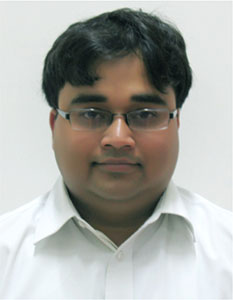
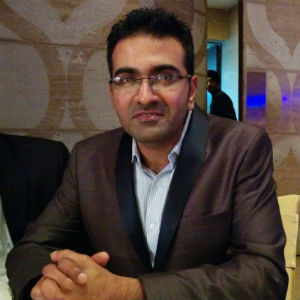
  • Rajesh Kumar, Legal Associate, Sanjay Leela Bhansali Films, on a legal career in Bollywood

    Rajesh Kumar, Legal Associate, Sanjay Leela Bhansali Films, on a legal career in Bollywood

    Rajesh Kumar is a lawyer who specializes in Media & Entertainment law. He graduated from Symbiosis Law School, Pune in 2011. While in law school, he also pursued a Diploma in Intellectual Property Rights from the Asian School of Cyber Law, Pune. He has interned with the Aditya Birla Group, Singhania and Co. and Mr. Gaurav Pachnanda (Advocate at the Supreme Court). Upon graduating, he started working at Lex Legal Advocates & Solicitors, Mumbai before joining Sanjay Leela Bhansali Films Pvt. Ltd.

    In this interview he talks about:

    • Pursuing a career in Media and Entertainment Law
    • Working at Sanjay Leela Bhansali Films Pvt. Ltd.
    • Litigating the Ram Leela case


    Tell us something about yourself. Where did you grow up and attend school? What were your reasons for taking up law? Explain briefly how you made it to law school?

    I grew up in a village on the border of Jammu (J&K). Despite its geographical location and its political unrest in my region, my parents always believed in education and its power and always encouraged me to break these shackles and my mettle. My father secured my education at the nearest Army school.  It was only an unflinching spirit and ambition to pursue law which was a constant guiding force to educate myself.

    After high school, I had no choice but to leave home in order to pursue law, I had managed to find an institution in Jodhpur that would train me for the entrance examination, although I could not pay their fees upfront but it was only my belief in my ambition to study law that sustained me through huge struggle to educate myself.

    It was not a cakewalk for my parents to teach me at a reputed college like Symbiosis, but it was only their support, encouragement and blessings that could transform me from a village boy to a lawyer in metropolitan city. My law education has undoubtedly instilled in me the confidence to speak out without fear and deal with all the challenges courageously.


    You graduated with a BA.LL.B from Symbiosis Law School, Pune in 2011. How was your law school experience?

    Graduating with a B.A. LL.B, from Symbiosis was a dream come true. Before I was granted my scholarship by the Central Government, my family made tremendous sacrifices to fund my dream education.  Symbiosis Law School has played an important role in shaping me and my career; I would say Law School has changed me. I could see a dramatic transformation in my personality after having perused law education from Symbiosis. I was not merely a dreamer but a real achiever. Law school has been truly instrumental in my education to being a lawyer.

    I would give faculty members the credit for where I am today in my career. Each individual I have met in law school has impacted me in some way, and I cherish the collective experience. Through a combination of hard work, ambition and support I fulfilled my lifelong dream of becoming a lawyer. My experiences have taught me that if I have to achieve something no obstacle can refrain you from achieving success in life.


    rajesh-kumar-1

    In addition to your regular studies, you also completed a Diploma in Intellectual Property Rights from the Asian School of Cyber Law, Pune. What were your reasons for taking up this course?

    I was introduced to the Legal Head of Balaji Telefilms by a mentor during my initial years of law study. Media and Entertainment law is a niche area, which caught my interest after meeting Mr Sidhu. Since then I started working with special dedication towards Intellectual Property Law, leaving no stone unturned to achieve the most in-depth knowledge in this field. Today, due to following my passion, I am a professional Copyright lawyer (Media & Entertainment law). I find that my diploma education has given me a competitive edge over others in this field.


    You interned in the legal department of the Aditya Birla Group, Mumbai. How did you secure your appointment? What should one keep in mind while applying to a conglomerate like ABG?

    I secured my internship with ABG due to my persistence in following up with them. I cannot stress enough how much I learnt through this experience and strongly endorse the same tenacity in every student of law.


    You also interned at Singhania and Co., and later on Mr. Gaurav Pachnanda, Advocate Supreme Court of India, New Delhi. What are the main differences in interning at a law firm and an in-house legal department of a company?

    My internship with Mr. Gaurav Pachnanda was a great learning experience, to describe this personality and my learning from him I must say “a new broom sweeps well but the experienced one knows all the corners”. Under his guidance, I would attend Court, sit in on arbitration matters, and all of this instilled confidence within me. He continues to be my mentor, especially with regard to litigation/arbitration matters. His guidance during the Ram- Leela litigations is truly commendable. I would say, the chief difference interning at a law firm versus interning in a legal department of a company is the first hand litigation experience and the sense of the court room that a lawyer gains.


    Upon graduating, you started working at Lex Legal Advocates & Solicitors, Mumbai, where you assisted them in work pertaining to cases of IPR, media and entertainment laws. Can you please describe your experience?

    Lex Legal gave me exposure to Media and Entertainment work i.e drafting, vetting actors, directors, writers, agree and also co-production agreements, which play an important role in film. I also attended briefs on Intellectual property issues within the Industry, which increased my thirst to know more.


    How is an average day in the life at Sanjay Leela Bhansali Films Pvt. Ltd.?

    My work revolves around drafting agreements, acquisition, assignment of rights, cast and crew, master service agreements, talent management, remake rights, distribution filing for trademarks and dispute resolution work.

    My day starts at 10AM with drafting, vetting and reviewing agreements, keeping an eye on  litigation proceedings (if any), conference with lawyers wherever we have pending litigations, also in advising and representing the company before various forums and courts. My main work focuses on the legal issues surrounding the field of media entertainment, especially films and music. I keep close contact with its developments in and across the industry followed with the Court order on the Film and its releases especially with respect to content of the Film or with Intellectual Property rights related issues. Secondly, after joining SLB Production, I am very much concerned with the maximum protection of IP created at Sanjay Leela Bhansali Films so far including copyright, trade mark etc, specially the trade mark of all our titles. Every fresh day is a good learning experience where I get to learn many new things.


    rajesh-kumar-3

    During the release of the film Ram Leela, there were many stay orders and litigations over the release of the Film, can you share your experience in handling litigation and getting the film released on its scheduled date?

    Ram Leela’s release was a hectic and a stressful time, as there was a fresh case filed against the film and Sanjay Sir, Ranveer, Deepika Padukone and Priyanka Chopra. It was quite a challenging task to handle the litigation, though we fought and finally procured favourable orders for us. Usually, during the release of each film we produce there is a feeling of completeness, accomplishment, as we head on for premier, music launch parties, etc.

    However, the Ram Leela litigations caused me to miss every event we had of the film. I still remember before the release, we had a big premier at night, but unfortunately, there was news on all TV news channels about the stay order being passed by Karkarduma Court, Delhi. On the same day, there was another matter lined up at Bombay high Court. This should give you an idea of how stressful yet rewarding such an experience can be. But I am happy the “Ram- Leela” litigation has set the bar in judging the question of obscenity and the sensitivity of religious sentiment as a matter of pre-release film litigation. Delhi High Court in one of our matters said, “that freedom of expression is of inestimable value in a democratic society based on the rule of law and that the effect of words, title and scenes in a film has to be judged from the standards of a reasonable strong minded, firm and courageous man and not from that of a weak and vacillating mind”.


    Is a strong base in contract law necessary to succeed in media and entertainment, insurance, infrastructure laws?

    Contract law plays an important role in all commercial laws, and is the basis of contracts in the Media Entertainment field too. A thorough study of contract law is much required. One must know the essential elements of a valid contract before even working on any given contract.


    Generally speaking, do you think studying in a non-NLU has placed you at any kind of disadvantage in your career?

    No, not at all once you are practicing law, you are judged based on your knowledge in your chosen speciality and not by the college you attended.


    Lastly, what are your plans for the future? What message would you like to leave for our readers?

    My plans for the future include reaching my potential, and perhaps exceeding it, in the field of Media and Entertainment law.  I have personally experienced that nothing is unachievable in this world. If you can dream it you can do it, therefore one must dream, believe in himself and the rest will follow. Lastly, I would say, to achieve, we must not only act but also dream, not only plan, but also believe.”

  • Shabnam Khan, Head – Trademark, Lall Lahiri and Salhotra, on a career in Intellectual Property Rights

    Shabnam Khan, Head – Trademark, Lall Lahiri and Salhotra, on a career in Intellectual Property Rights

    Shabnam Khan graduated in English Hons. before deciding to pursue law at Delhi University. She graduated in law from Delhi University in 2003. Her journey as an IPR professional started when she joined Evalueserve.com Pvt. Ltd. as an Associate. Thereafter, she joined Lall Lahiri and Salhotra as a Senior Associate in 2007. She was subsequently promoted to Head – Trademark Applications in 2013. In this interview she talks about:

    • Specializing in IPR Laws
    • Working at one of the foremost IPR Firms
    • Being Head – Trademark Applications at Lall Lahiri and Salhotra


    What brought you into studying law? Was it planned?

    I had always been captivated by the legal fraternity and the zeal with which they pursue the path of providing justice for their clients. Honestly, the biggest push came after I saw few movies such as “A Few Good Men”, “The Accused” and “A Civil Action” which brought me to realize that this profession had the power to change people’s lives. With that thought during my last year of English Hons. I decided that if there was a career which I wanted to pursue it had to be in the legal domain and thereafter once I started with my course work there was no looking back. The entire subject was and is still captivating.


    Please tell us a little about your law school days at the Delhi University? How were you at academics?

    The entire course was so gripping that it was difficult to miss a single day at college. The biggest positive of the Delhi Law University is the excellent professors and their teaching methodology. The sessions were interactive, lively and always buzzing with arguments and counter arguments on various topics. I was also elected as the student counsellor during my time at the college. I would rate myself as a hard working student who participated in various college activities while securing very good grades in a few semesters.


    You have specialized in IP law. What made you interested in the same? How do you say one can gain expertise in IP Law? What does it take to be a good IP lawyer?

    The journey to being a IP professional started when I joined Evalueserve.com Pvt. Ltd. where I was required to work with legal attorneys who handled various activities related to IP matters. I received tremendous guidance from attorneys from across the globe, especially those who were involved with USPTO (US Trademark and Patents Office). I was thereafter trained in patent writing and filing matters. This is when I developed an irrevocable interest in the subject. The expertise in the subject comes with the right guidance, practise and continuous dealing with matters related to the subject. To be a good IP lawyer requires one to have broad understanding of various industries, business nuances so that you can suggest creative and out of the box solutions to the clients for their legal matters.


    You started your career at Evalueserve.com Pvt. Ltd. as an Associate. How did you secure your appointment? How would you describe your experience working there? What kind of challenges did you face during this job?

    I started as an Associate handling the legal part of the patent filings for the IP department of Evalueserve. That was my first step in the world of IP. I got a lot of guidance from my seniors, went through patent drafting training and learnt quite a lot about what patents are all about and how any invention is required to be protected and secured in the best possible manner. Challenges were numerous, IP was new, and the domain was technical which required me to have conversations in different time zones with IP Attorneys in the US and across the globe. The job entailed that I was always abreast with the latest happenings and was always a step ahead of the deadlines as there was no room for errors. I developed various skills to manage things and made sure nothing falls through the cracks.


    Thereafter, you joined Lall Lahiri and Salhotra as a Senior Associate in 2007 and became Head – Trademark Applications in 2013. For a law student it’s very difficult to think about becoming a Head in just six years of joining work. What would you say helped you succeed?

    Joining Lall Lahiri and Salhotra came after a stint of over three years of dealing with Patents. Since I did not have a technical background, I found myself being limited to looking at the legal part of Patents which at that point in time did not have considerable opportunities. As I was interested in Intellectual Property, I wanted to look into other aspects of IP as well. The trademarks division of LLS gave me the much needed exposure and opportunities to grow. The seniors and partners were very educative and supportive towards me since trademarks was an uncharted territory. I learnt, made a few mistakes, but always pushed constantly by learning and guidance provided by my seniors. The process of learning and growing never ceases at LLS, therefore it was after years of working there that I was bestowed upon with the responsibility of heading the department. The openness to accept challenges, hard work and eagerness to learn helped me join the ranks of being the Head of the department.


    What kind of effort should a young associate put in to work to be appreciated? What distinguishes an associate from a partner when it comes to work?

    A young associate should be all about learning and gaining knowledge of their domains. Reading and keeping yourself abreast of any developments happening in the field are a must. Hence, it is a must for the associate to focus on his professional path of enrichment as these initial years will differentiate him from others in the future. An associate, in the initial years of their induction should always have an attitude of being a go-getter, ready to accept challenges and should be able to think out of the box. Every matter will enrich the associate with greater depth of knowledge and equip him in handling various matters in the future.


    shabnam-khan-2

    What does a Head at a Law Firm like Lall Lahiri and Salhotra do? What falls within the scope of your responsibility? Tell us about a typical work day.

    The work of a Head of department entails a large number of activities and cannot be categorized into specific key responsibility areas. However, some of the key tasks include – speaking with clients on active and fresh mandates, understanding their legal problems and suggesting actionable solutions, managing deadlines, resource & project planning amongst various other tasks.

    A typical day starts with reading the emails received from the clients, prioritizing what needs to be done, what needs to go out to the clients on that day and what needs to be started to be able to meet the future deadlines. Advising clients, providing them with your opinions both from a legal and a commercial perspective, recommending the best ways forward and assisting them in achieving the same are the highlights of a typical day.


    How is the work culture at Lall Lahiri and Salhotra? If an associate commits a mistake or an error what course of action do you follow?

    Work culture at LLS is very cohesive. It has great learning environment for everyone, be it an associate or a senior person. There are no limits to work and you can grow as much as you want, of course with the right abilities and attitude. The firm promotes in people thinking out of the box, finding solutions and hence in the process, mistakes are expected from juniors. However, it is also expected that with the right guidance from the seniors he/she is able to amend and learn from the same.


    What are the other areas of study which you think that a law student wanting to excel as a professional in the field of IP should be proficient in?

    In case you want to excel in IP, certain other related fields of law also come into the picture. Associated areas of law include corporate law, criminal law and law related to other aspects of IP such as copyrights and Patents. An expertise is not desired, but working knowledge of these fields will assist and help you rise above the rest.


    What changes has being the Head – Trademark Applications brought into your life, do you ever feel that there is an excess of work load on you? How do you manage to strike a balance between your personal and professional life?

    Work never stops, the interesting bits of queries received from the clients keeps you going and exploring more. Work can and never should be treated as a burden but as a challenge, the more you have, greater the chances that you will become a better and refined professional. As no two assignments are the same, it helps a person in exploring uncharted territories and subject matters resulting in understanding the applicability of law in greater detail.


    The trend now is to gather various internship experiences at different places. Was the scenario the same while you were pursuing law? How are internships helpful for a law student?

    While I was pursuing law, the concept of gathering internships was in the nascent stage. At the most, students would get attached to someone they know or their family knew or start as assisting lawyers in various courts. While ensuring you intern with good and varied law firms is a necessity of the current time, however, an intern should be thoughtful of not overdoing the same. It is advisable to spend time in a few law firms than a large number of law firms as it would leave the intern confused and not being able to understand any subject in detail. The same is crucial in making future career decisions.


    What are the qualities which Lall Lahiri and Salhotra look for in one and his/her CV?

    The firm hires interns, however, the selection process is stringent and thus only a few make it through the selection process. It is important for the intern to exhibit qualities such as – knowledge of current happenings in the IP world, understanding on key/ famous IP litigations, attitude, openness to learn and the desire to go extra mile, proficiency in spoken and written English, etc.


    What do you feel makes an intern stand out and is very important for him to do to have a chance of getting a call back or even a PPO?

    As I said earlier, it is about your attitude and willingness to learn. A lot depends on how fast you pick up things, and deliver results in a limited time.


    What would be your message to our readers who are budding lawyers and law students?

    Have the right attitude and never think any work is small, give your 100% to whatever you do. This will take you high on the ladder where all you can see is success.

  • Gaurav Singhal, Director and Principal IPR Attorney, Patracode Services, on his journey from Engineering to Law and a career in IPR

    Gaurav Singhal, Director and Principal IPR Attorney, Patracode Services, on his journey from Engineering to Law and a career in IPR

    Gaurav Singhal graduated with B.Tech degree from UPTU in 2006. His interest in IPR law led him to join Rajiv Gandhi School of Intellectual Property Law (IIT, Kharagpur) and pursue an LL.B.

    While in college, he co-founded Siddhast Intellectual Property Services. After graduation, he was placed at Siemens Information Systems Ltd. as Strategic IPR Counsel.

    Gaurav Singhal is currently the Director and Principal IPR Attorney at Patracode Services Pvt. Ltd.

    In this interview he talks about:

    • Law school experience at Rajiv Gandhi School of Intellectual Property Law
    • Co-founding Siddhast Intellectual Property Services and entrepreneurship
    • Working at Siemens Information Systems Ltd.


    Given that most of our readers belong to the legal fraternity, how would you introduce yourself to them?

    I’m a techno-legal professional living his dream to be an entrepreneur. My practice largely runs around Intellectual Property Rights, more specifically towards Patents. My approach is always problem-solution. I identify my customer’s requirement first and then give my best to solve it through the tools of law and business consulting. If the client is bootstrapping, I provide him certain lean strategies to protect his business interest, in spite of going pro-bono. Business Rights are commercial in nature, and are quite different from general civil rights, hence I believe that the client should bear the protection cost, as he shall be reaping commercial benefits from it in due course.


    Having done B.Tech from Uttar Pradesh Technical University, what motivated you to choose law as a career at Rajiv Gandhi School of Intellectual Property Law?

    My entry to law was well-planned, however the motive to be in law, was never to practise the law. When I was doing my B. Tech, I was an aspiring entrepreneur and had been practising entrepreneurship at a very small level, while still being at my engineering college. A friend and I had tried multiple fields like other engineering students, they were in and around education programmes, technology project installation, website design handling, business consulting, etc. However, none appeared to be lucrative to us as a business. During the same time we were attending various Business Conferences, and a few of them were based on Intellectual Property Rights. We found Intellectual Property Rights quite fascinating and had decided to pursue as our entrepreneurial career. The decision was validated by doing some mock business development activities with real prospects, which were highly successful.

    However, at that time, we were not sure about how to get the required skills to be in the area of Intellectual Property Rights. We knew that many LPO’s and KPO’s, even law firms take engineers as associates to practise Patents. But, we were sure that for a broader perspective we must do law. At that same time during 2006, IIT Kharagpur started the law school for technical graduates and science post-graduates. I considered that this law school was the right avenue for me to change my career’s direction.


    gaurav-singhal-2

    How did you get through to Rajiv Gandhi School of Intellectual Property Law?

    Getting through to IIT Kharagpur’s law school is another dramatic story. If certain  incidents had not occurred then, may be my career path would have been absolutely different.

    When I made the application for Law School, my final semester engineering exam schedule was not out yet. Had it been out, I would not had applied for Law School at all, as one of my final semester exams was in conflict with the Law School entrance exam dates. Once the schedule for final semester exam was out, I came to know about this conflict. I was almost hopeless at that time. However, suddenly some Public Sector Unit had announced their employment examination date, which was conflicting with my final semester exam date, which was conflicting with Law School entrance examination date.

    Hence, under pressure from lot of students, the UPTU had shifted the conflicting examination date to a later one. Now, the dates were not conflicting, however another problem was still there. The Law school entrance examination was being held at IIT Kharagpur, which was atleast 24 hours away from Ghaziabad, where my engineering institute was based. And between two final semester examinations, only 3 days were there, which means less than 72 hours. The law school entrance examination was placed exactly at one day’s gap from the end semester examination. So 48 hours of train journey, written examination, group discussion, personal interview of Law school entrance examination, and preparation for the end semester examination had to be done in less than 72 hours. A very tight situation was there. Even few hours of delay of anything may have jeopardized my future in some way or another. I had decided to take this risk and was eventually successful in both my end semester examination and as well securing a seat for me at Law school.


    What were your areas of interest during your graduation? How did you go about developing expertise and knowledge in these areas?

    During law graduation, my area of interest was purely mostly on Intellectual Property Laws with emphasis on Patents. Even the college was more focused on IP Laws and division of a number of permanent faculties towards other laws and IP Laws was also like giving a weightage to IP Laws. As IP laws, especially the case laws, are more matured in the US, our focus during studies was more towards studying US laws. Even for practical scenario understanding, we had a few visiting faculties coming from US too.


    As a law student which activities did you participate in?

    One of the prominent activities which I supported was a student group called Technology Transfer Group whose focus was enabling transfer of technologies developed by professors and researchers at IIT to the industry. One of the aspects of this group was that it supported increasing Patent filings from IIT Kharagpur, which dramatically increased during the year I was handling it. To practise IPR laws and especially patent laws, the guidance was very limited, as we had very limited exposure to practising IP Lawyers during graduation. Even my internships was planned by myself.


    What kind of internships did you do while you were a student? Tell us about your law school journey.

    I had been through a total of three internships. The first two were at a small IP services firm, Siddhast Intellectual Property Services, where I was a co-founder and had founded it during first year of Law School itself. After the first year, it was an obvious decision to do an internship in my own venture, because the business was not shaped up.

    I was still two years away from my Law school graduation, so it was obvious that we cannot start with legal services or legal support services. Hence, during those 2 months, my focus was to turn it into a technology transfer company.

    However, in the first 15-20 days itself we started getting the notion that India is still too immature for transfer of patents and technology. So, a steer of focus was required. We required choosing something, where legal services were not involved at all and even legal support should not be required, even it should be close to IP laws and allied area. At that time, we did a lot of market research of the Intellectual Property market and identified an area where legal support was not required, and it was Intellectual Property database, more specifically patents.

    At that time, there was not much competition for Patent database in Indian market and few players had not even entered the market. At that time, we carried out partnership development exercises with a few players and boiled down to Questel Orbit. I worked out my next internship too at Siddhast after 3rd semester’s end. By my second internship Siddhast was running as resellers to Questel’s database and starting getting recognition in National market too.

    However, for my summer internship after 4th semester, I decided to do it in legal services, as by that time I had received substantial exposure to IP Law. This internship I did at Marico’s legal department. When I entered as intern, the legal department was looking towards me more as an expert, as the in-house team was more focused to general commercial laws and very minutely to IP Laws. During these two months, I utilized all my knowledge gained at law school to structure their Trademark portfolio. However, for Patents, there was exposure, which was quite minute.


    Did you find that your law school education had prepared you sufficiently for the many tasks you were to required to execute during your internships and later at your job?

    My education at law school had surely prepared me for various activities at my internships and at my job. However, at my job with Siemens, I had to undergo a specialized traineeship to work as Patent drafter and prosecutor, which was my major responsibility. For advising on IP Laws and managing other IP portfolios, like Patents and Designs, my education at Law school had helped me a lot.


    How has your mooting experience been?

    Mooting I did majorly as part of college curriculum. However, mooting exposure had helped me to develop and present arguments, which as a practitioner I have to do in day-to-day business.


    You started your career at Siemens Information Systems Ltd. as Strategic IP Counsel. How did your appointment take place? Please share you experience with our readers.

    This phase was equally dramatic.  Siddhast, the company which I had co-founded was doing well, rather to say it’s turnover was around 50 Lakhs in 2008-09. I was in double-minds, whether to get an industrial exposure and then join Siddhast or shall I do it right away after school. I had not even applied for the campus placement program. During that time, I was just enjoying the placement process of my classmates.

    On 3rd or 4th day of the process, it was announced that one of my classmates and I were selected for the placement process of Siemens. I was quite amused about it. I was not expecting it, as I have not applied for the process at all. I had moved to my placement coordinator faculty regarding it, to which he mentioned that Siemens was looking for someone who has done graduation in Computer Science and there were only 2 profiles in school, including mine.

    As it was the first year for the college and it was about college’s reputation building, he wanted me to take part in the recruitment process of Siemens. He mentioned that after 6 months, if I do not like it, I may leave Siemens and join my own outfit. At that time, I thought if it is for my alma mater’s reputation, I will take part in the process and also perform. From Siemens, we were told that we shall be tested on Patent Claim drafting. We studied it academically; however the exposure was surely very limited to clear such test. To practise it, I had read through Landis on Patent Claim drafting thoroughly.

    On the test day, we were provided with a test based on European Patent Agent Qualifying examination. Surely, it would have been difficult to do it, if I hadn’t not read well. Almost after 15 days of writing the test, I received a surprise call from the Head of Intellectual Property Department, India of Siemens early at 7:30 am. It was a wakeup call which made my day. I was asked to visit Bangalore for final processing and it was a sponsored trip with flight tickets also sponsored. It was my first exposure to flights. Really, Siemens had given so much to me, at that time; it was not possible for me to say “No”. And, in this way my final induction into Siemens happened.


    Later, you switched to Patracode Services Pvt. Ltd. and currently work as Director and Principal IP Attorney. How did your appointment take place? How has your experience at Patracode been so far?

    I am entrepreneur at heart, and that is the reason a Corporate like Siemens was not able to hold me back for long. When I was on the verge of completing four years, I was sure that my further development shall be inhibited in a controlled structure of a Corporate and then I decided to leave. However, Patracode was started much earlier. After leaving Siddhast, I was in touch with our first employee at Siddhast, Kavita Poddar, who was also leaving Siddhast soon after her marriage. Kavita wanted to start an outfit and she was interested to partner with me for that. With Siemens Policies, I was not seeing a harm to start with her, I had nodded “Yes” to her with a condition that I shall be only able to invest, but may not be able to provide much input beyond Management inputs. So, in Patracode, for few years I was just an investor and later on I actively joined it as part of the Management and its Principal IP Attorney.

    In Patracode, I am a free bird and able to steer my ideas easily. Exposure to bootstrapping startups has also given another variation to my advice which are now more lean and yet unconventional. Even my learning path is quite stronger now. I am doing lot more new things every day.


    What kind of work and responsibilities does the Director and Principal IP Attorney of Patracode deal with?

    I would say that there isn’t a typical day, as we are very client specific. Someday, I shall  have a full day meeting with clients and attend conferences, some days I am with clients solving their problems, some days I shall be at office training my staff, or planning future strategies. The activities are too diverse and may even involve technical or business consultancies to the client.


    What type of cases do you deal with? What amount of legal work is there? How often is legal work outsourced and in what type of cases?

    The cases which we deal with are generally non-contentious and revolve around filing and prosecuting Patent, Trademark, Copyright and design applications. We do not outsource our work in general. However, where we provide legal support, we may outsource it, like in the case of legal and patent translations. We work almost as in-house IP Counsels to our clients.


    Does Patracode take interns? What is the process for same?

    Yes, we do take interns. The process is simple. A candidate should apply with his aspiration to achieve during the internship period. If we feel that we can do justice to his aspirations, we may accept him, based on space available with us.


    Many lawyers would say that the actual learning takes place in the years of practice. How far would you say it is true? What was the case in your situation?

    As they say, it is very correct that learning happens when you do it. However, grooming for receiving that learning happens at law school, where your gurus enable you with the tools to be a receptor of that learning.


    If you could list out 3 activities which on a scale of priority, should be at the top in any law student’s school-life what would those be?

    • Make your passion your career.
    • Be disciplined in following your passion.
    • Till the time you have tried very hard, don’t believe that you cannot achieve it.


    Lastly, what would be your parting message for our readers?

    Just don’t dream, live them. I am sure success lies in living your dreams. Also, don’t do anything which may look career promising, rather just make career in what you like to do. If you will live your passion, success shall follow.

  • Shantanu Sahay, Partner, Anand & Anand, on work experience in IPR and journey from Associate to Partner

    Shantanu Sahay, Partner, Anand & Anand, on work experience in IPR and journey from Associate to Partner

    Shantanu Sahay graduated from National Law Institute University, Bhopal in 2007. With an in-depth knowledge and interest in IPR laws, he joined the litigation team of Anand and Anand as an Associate in 2007. With his work, acumen and diligence, he was quickly elevated to the rank of a partner in June, 2014. We asked him to share his work experiences and career moves with us.

    In this interview, he tells us about:

    • Law School experience at NLIU, Bhopal
    • The journey from an associate to becoming a partner at Anand & Anand
    • Work at a top IPR Law Firm
    • Important skills of a lawyer and a partner


    What brought you into studying law? Was it fate or plan?

    I belong to a family of lawyers. In fact, I am the fifth generation lawyer from my father’s side. My father is still a practicing advocate at the Patna High Court. Also, both my grandfathers have been lawyers. Being born in a family full of lawyers, I definitely had some sort of a natural inclination towards this field and in view of this; it was very much a matter of fate too.

    However, I was also impressed by the concept of five years integrated law school course such as NLS, NLIU, NALSAR etc and thus I decided to sit for law school entrance examinations.

    I had the chance to score rank one at the all India entrance examination for NLIU, Bhopal in 2002 and therefore I decided to join it.


    Please tell us a little about your law school days at the National Law Institute University, Bhopal?

    I was in NLIU from 2002 to 2007 and it was one of the finest days of our lives.

    NLIU offered everything which we aspired as law students. From academics, sports, library and other infrastructural facilities, NLIU was just fantastic. It was five years full of fun and was a world in itself. I made a lot of friends at law school.

    Also, because it was an on campus residential set up, we used to have a lot of activities after college hours. Debating, sports, dramatics, moot courts etc gave us a lot of exposure in shaping our outlook towards life in general and legal profession is particular.


    shantanu-sahay-2

    How important do you say is a good CGPA for an illustrious career in legal?

    I would say fifty-fifty. Obviously, good CGPA is an indicator of how much hard work you put in into your academics at law school.

    Also, from the perspective of campus placement, having a good CGPA always stands to be an advantage. But that does not mean that a good CGPA will guarantee an illustrious career.

    Your performance at the law school is totally independent of your performance as a professional. In fact, there have been a lot of cases where a lot of law students who were not that high graders in law school performed really well after they joined the profession.


    You have specialized in IPR. How do you say one can gain expertise in it? What does it take to be good in IPR?

    I got interested in IPR from my first year itself. In the boys hostel during my first year I used to live around my seniors who were interested IPRs. They used to write various articles and do a lot of research work in various field pertaining to IPRs.

    Initially, I used to help them with their researches and it is from there my interested in this particular field of law took off.

    All my internships, publications, moots etc used to be in IPR. In fact, my resume was so much IP specific that I was not even short listed for any corporate based law firms during my final year. I interned at Anand and Anand in 2007 and joined the firm that very year.


    You joined Anand and Anand as an Associate in 2007 and became a Partner in 2014. For a law student it’s very difficult to think about becoming a partner in just seven years of joining work. What would you say helped you to join the ranks of a partner?

    I was inducted in the litigation department at A&A and was involved with the IT and E-commerce law practice group. The partner who was heading this vertical went on to become a client. From 2010, I started heading this practice and in 2014, I was called into partnership as the partner-in-charge of this vertical.


    What kind of effort should a young associate put in to work to get it appreciated? What distinguishes an associate with a partner when it comes to work?

    Execution of the assignments in a diligent manner is the mantra. Hard work and dedication really pays well and associates are recognized very well in terms of their visibility and their importance in a team.


    What does a partner at a Law Firm like Anand and Anand do? What falls within the scope of your responsibility? Tell us about a typical work day.

    As an in-charge of this practice, come a lot of responsibilities, targets and travels. You are responsible to the clients as well as the internal senior leadership. To add, there are also expectations in terms of getting new clients to the firm. These tasks are challenging but fun at the same time.

    Normally in the first half, I go to the Delhi High Court where I attend to my matters along with the team. Then I come back to office (which is in Noida) around lunch time. Post lunch is usually allotted for client meetings and conference calls. In the evening, I respond to all my emails and prepare for the matters listed the coming day. I try to leave office by 9 pm.


    How important is it for a law firm partner to be good at business development, or are great lawyering skills enough to become a partner? What separates the people who become partner from those who don’t?

    As a partner, it is important to engage in Business Development. Especially, as in charge of the vertical, I have been doing BD for a long time now. Rain makers in these law firm structures are always valued by the senior leadership and also increase chances for further promotions. One has to understand that partnership also has its own growth path.


    How is the work culture at Anand and Anand? If an associate commits a mistake or an error what course of action do you follow as a partner?

    Anand and Anand has a fabulous work culture. This is one place where performance takes precedence over seniority. Associates work in a relaxed environment and have a lot of independence and exposure to various challenging legal issues.


    What changes has being a Partner brought into your life, do you ever feel that there is excess of work load on you?

    Not much difference I should say. Work load remains same but responsibilities have increased. Travels have increased and so have client interactions.


    How is internship helpful for a law student? Esp. from the viewpoint of Anand & Anand?

    Anand & Anand in true sense takes internships very seriously and for us an intern is a potential recruit. Internships are important as they can give the real world experience to a law student as to how their life would somewhat be after they pass out from college.

    Internships, if done diligently can result in recruitment as has been my case.


    What are the qualities you look for in an intern at Anand & Anand?

    Hard work, dedication and having a right kind of attitude in terms of taking on assignments from their reporting teams. More than possessing the knowledge of law, it is important to have the right kind of aptitude in terms of knowing where to look for an answer to a legal proposition. Possessing soft skills, knowledge of how to use legal search databases such as SCC online, Manupatra etc. Overall the ability to work hard towards completion of an assignment.


    What do you feel makes an intern stand out and is very important for him to do to have a chance of getting a call back or even a PPO?

    Good performance is always noticed and a second application is accepted or a PPO is offered.


    What would be your message to our readers who are budding lawyers and law students?

    • Have the right kind of attitude towards profession.
    • Money should not be the first criteria in terms of choosing a particular field of law.
    • Give time to your profession and follow your professional ethics.
    • Be persistent and patient. Read a lot.
    • Keep informed about what is happening also at the policy and economic level which has bearing on your field of law.
    • Most importantly, work hard.
  • Bharat Kumar, Senior Associate, Saikrishna & Associates, on work in litigation and pro bono commitments

    Bharat Kumar, Senior Associate, Saikrishna & Associates, on work in litigation and pro bono commitments

    Bharat Kumar graduated from Amity Law School, Delhi with a B.A.LL.B degree in 2009. He started working as an Associate in the litigation team of Saikrishna & Associates right after graduation and currently works as a Senior Associate there. He is also an empanelled counsel and counsellor for the Delhi State Legal Services Authority. In this interview he talks about:

    • Law school experience at Amity Law School, Delhi
    • Internship and recruitment at Saikrishna and Associates
    • The importance of pro bono work


    How would you introduce yourself? Could you please share a little bit of what motivated you to pursue law as a career?

    I was born and raised in Delhi and did my schooling from Ahlcon Public School. Essentially, I was a science student. Being from a typical ‘tam-bram’ family (and to be very honest with you!), I was rather fine-tuned since my childhood by my family members to someday become an engineer. Law, although, always fascinated me. I guess it was finally a couple of court excursions, which I did in the final days of my schooling that compelled me to pursue legal studies and become a (successful) advocate someday.


    bharat-kumar-3

    How would you describe your time at Amity Law School, Delhi? Did you take part in extracurricular activities? How important do you think that extra-curricular activities are to a law student?

    Time spend during college days was fun, yet informative. **Laughingly** Our college had a fairly strict attendance regime, which compelled us all to compulsorily amass knowledge! Internships were a regular during holidays. Guess that gave us all an insight into the area of law we desired to get into.

    Yes, I did take part in moot court competitions and played my hand at ‘Table-Tennis’, as a sport. Extra-curricular activities are quintessential to a law student as I believe they help not only in interpersonal skills, but also aid in nurturing the art of team management.


    A lot of law students promise to take up pro-bono work and do some socially relevant work. Have these ideas ever crossed your mind?

    Absolutely! Paying back to society should be if not our primary, but our next best ulterior motive. I did do an internship in the National Commission for Women (NCW) during my 3rd year in college, wherein I got an opportunity to be involved in a lot of cases concerning social issues. I am also currently an empanelled counsel and a counsellor for the Delhi State Legal Services Authority, whereby I help people belonging to the weaker sections of society by my legal services. My best advice to my younger brethren would be to help out as many needy people as possible, through your expertise or otherwise.


    How was your first year after graduation? What would you suggest a fresh law graduate should do to hold spirit and utilise the opportunities available?

    My first year was rather spent on learning (it continues to be so!). The emphasis was on a number of issues, more like, how to apply the law, be it procedural or substantive, onto a matter; how your senior argues a particular matter or even how interpersonal relations are to be developed in a workplace.

    Totally! I believe it takes a fair bit of time to settle in, in any workplace! I feel one should hold fort and not hold grudges against any fellow worker. Believe in your superior and he shall give you opportunities.


    Right after graduation, you started working in the litigation team of Saikrishna & Associates(S&A) as an Associate. How did your appointment take place? How would you describe your working experience there?

    During my final semester, I started applying in law firms. I was fairly sure that I wanted to pursue litigation only. I did receive interview calls from a few law firms, S&A being one of them. Fortunately for me and pursuant to a couple of interviews, I finally got a call to be a part of the firm.

    Working in S&A has been a delight! One is encouraged to handle matters on your own right from the start! Seniors are helpful with frequent discussions on legal issues. The emphasis is more on learning. I guess its fairly significant for any lawyer to have a good boss. I feel we have that in S&A.


    bharat-kumar-2

    How difficult were the first few months of Saikrishna & Associates(S&A) given that it focuses mainly on a specific field of law?

    Litigation offers one rather a protracted period of learning. Initial days in any organization can be challenging as practise may be reasonably different from what one has read. The first few months of my work was rather spent on learning drafting skills and getting deeper into the subject.


    What is the procedure to apply for an internship and recruitment at Saikrishna & Associates? If I say that I have never interned at Saikrishna & Associates, what should I do to apply for a job there?

    We have a fairly streamlined process of applying for an internship or for recruitment. Interns can mail their CV at interns@saikrishnaassociates.com. Pursuant to a screening of their credentials, they are allotted internships during various months of the year. A potential candidate seeking a place within the firm can apply on hr@saikrishnaassociates.com. This of course is subject to vacancies being present.


    What would you suggest to someone who is preparing to work with an IPR law firm? What are the basic subjects (IP and non-IP subjects) which one should read and have understanding of before sitting for an interview?

    It completely depends on whether one would want to get into prosecution or litigation or even work relating to policy. Considering the fact that one wants to get into litigation, one must have a reasonably good knowledge of the CPC. During college days, I presume we all tend to ignore the subject. Also, looking into the diversifications that have come forth in IP law, one has to be prepared even in the area of law he/she wishes to be in. Say for example, the requirements for a lawyer practicing copyright or trademark law is fairly different from a lawyer practicing patent law. The latter would surely require some expertise in science at a university level, in addition to legal studies. Nonetheless, the person going in for an interview should be updated with the latest developments in law. The recitation of a landmark case, together with your answer, during an interview would surely make an impact.


    Please give our readers a few tips in order to land a job in an IPR firm.

    One needs to make sure that their internship is promising and fulfilling. Working with outmost diligence and hard work will surely help in bagging one with a job.


    You have specialized in IPR. What made you interested in the same?

    IPR is an emerging field with a plethora of opportunities. Moreover, the same is also non-conventional, with an emphasis over the protection of rights concerning modern day issues. I believe IP issues, which I read rather habitually on a few popular blogs, elevated my interest levels and made me interested in the same.


    After four year of work as an Associate, you were promoted to Senior Associate. How did you go about achieving this?

    **Smilingly** Guess the question should rather be put to my supervisor(s)! I just did my bit. One needs to make sure that work’s done efficiently and well within the permitted period of time. Be thorough with your matter and with the subject. That’s what is required.


    Have you ever considered starting up on your own? Would you say the opportunity a firm provides for a young lawyer is worth the trade off in building a reputation?

    No. S&A provides us with the independence of arguing and handling matters all by ourselves. Our managing partner provides us with adequate liberty to handle and/or supervise even big ticket matters with minimal supervision.

    Absolutely yes! Firms currently provide a very good platform to help and make your mark. One gets adequate client interaction even during their initial days. It definitely helps in gaining a lot of exposure.


    What is a normal workday like at Saikrishna & Associates?

    A normal workday usually begins with matters in court. The same is followed by working on client issues together with preparation on matters coming up on subsequent day(s).


    What would be your parting message to our readers?

    College days are the best days of your life. Enjoy them to the hilt! Just make sure that you have above average credentials and good internship experiences. Once you’ve finalized where you would want to work, spend most of your time interning with that office. Give your best to it and believe me, your future’s secure!


  • Sumeeta Sharma, DGM Legal, Benett Coleman & Co., on work experience at Law firms and as in-house counsel

    Sumeeta Sharma, DGM Legal, Benett Coleman & Co., on work experience at Law firms and as in-house counsel

    Sumeeta Sharma is a graduate from K.C. Law College, 2003 batch. Her work experience has been diverse including litigation firms like Sharma and Associates, Vyas and Bhalwal and M/s. Thakore Jariwala and Associates. Thereafter she was an Associate at Krishna and Saurastri, an IPR firm. She was also the Legal and Secretarial Head at Samsonite South Asia Pvt. Ltd. before becoming DGM Legal at Bennett Coleman and Co. Ltd. (Times Group). She has recently completed Masters in Business Law from National Law School of India University, Bangalore.

    In this interview she talks about:

    • The importance of internships
    • Working at litigation firms, IPR firms and in the corporate sector
    • Working at Bennett Coleman & Co.


    What got you into legal studies? Was it planned or something that just happened by chance?

    My father has been in this profession and I was always inspired by his way of life.I was often recognized as a person with good debating skills and somewhere deep down I felt I can be a good lawyer. Though it was not planned and I wanted to be a scientist, I feel extremely lucky that I actually could take up a profession which was crafted for my personality. I would say that being a lawyer was my calling.


    How was your experience at K.C. Law College? What activities were you involved in apart from the regular academic curriculum?

    The experience with college was good and K.C. Law College per se conducts lots of activities for young aspiring lawyers to instil the love and passion for the profession. Yes, a couple of writing competitions and moot courts were the activities I was involved in.


    What were your major interests as a student of law?

    My interest was in Intellectual Property Laws, Laws with respect to Medicine (Medical Laws) and of course, laws with respect to the family. I would suggest young lawyers to take up criminal law, personal laws (family law, succession laws) as there seems to be great change required in the age old formulas and I feel if young lawyers take up these subjects not only can they  explore a lot, but also contribute in amendments by questioning the very basics of old fundamentals.


    How important is it for a law student to plan out the course of his/her internships to successfully gain from the internship experience?

    Every lawyer should start internships right at the start, if they cannot spare more time, at least 4 hours a day. It is extremely important to get your basics strengthened right at the start. Law taught in class and court room working is completely different from each other. Thus, I pay a lot of importance on internships. I would suggest young aspiring lawyers to start with a small time lawyer (younger lot) rather than opting from bigger law firms as they may not be able to teach the core working of the court. So, I suggest they should approach their seniors from the college and request for internships. Once you have interned with such independent practising lawyers and the basics are already in place then the students should approach bigger firms.


    Many believe that students of ‘elite’ law schools have an edge over students from other colleges? Is this true at all?

    Yes, that is completely true. However, most students from elite colleges end up in the corporate sector with firms barely into transactional work. We have not seen many students from these elite colleges taking up litigation as their career. I feel there is a dearth of good quality lawyers in litigation, thus every lawyer should opt for litigation as their career.


    After graduation you worked with various litigation firms including Sharma and Associates, Vyas and Bhalwal and M/s. Thakore Jariwala & Associates. How was your experience working at these places?

    I always wanted to be a Generalist and wanted to know various things in one lifetime. Thus, I worked with various law firms in different specialities. As stated earlier, litigation firms are run on age old formulas thus the experience was enriching and I gained a lot from the pool of knowledge these firms hold.


    Thereafter you had joined Krishna and Saurastri as an Associate. What led to the shift from litigation to an IPR law firm? How was your experience working there?

    As I said, I had to taste law in its different form. The experience was enriching as I was exposed to the dynamically changing IPR norms globally. My experience was fantastic and created an interest and love for IPR Laws.


    You thereafter left Krishna and Saurastri to start working at as Legal & Secretarial Head. What does Samsonite do and what was the nature of your work there?

    Post Krishna and Saurastri, I started working as a legal counsel with Financial Technologies. FT and Samsonite both gave me an opportunity to learn the workings from the corporate end. Thus, it’s not only about thinking as a lawyer but also as a business personnel ensuring the company’s interests are legally well taken care of and helping the business accelerate.


    Currently you work as DGM Legal at Bennett Coleman and Co. Ltd. (Times Group). How did the switch from Samsonite take place?

    The Switch was smooth and as I said, I wanted to be a generalist, thus I opted to gain experience with different business sectors.


    Please tell us the recruitment process at Bennett Coleman and Co. Ltd. What do they look for in their prospective employees?

    The typical process takes 2 to 3 months and comprises 3 interviews (HR, Reporting Manager and the Business Head). They look for domain knowledge primarily.


    What does your current work profile at Bennett Coleman consist of?

    My current work profile at Bennett comprises mainly of (70 percent) transactional work and the rest is litigation and IPR.


    Does Bennett Coleman and Co. Ltd. take interns? What is the process for same?

    Yes, you may apply or request various legal heads. (Bennett is segregated into various companies and each company functions separately)


    What would be your parting message for our readers?

    Read as much as you can. Don’t try to mug. Law is nothing but common sense and once you read and analyse things will automatically come to you. Always take guidance from experienced personnel and buckle up for a tough ride if you want to be a good lawyer as first 5 to 6 years are your investment with absolutely no returns.


  • Janaki Bhide, Associate, W S Kane & Co., on LL.M in IPR from QMUL and work experience in Intellectual Property

    Janaki Bhide, Associate, W S Kane & Co., on LL.M in IPR from QMUL and work experience in Intellectual Property

    Janaki Bhide graduated from ILS Law College, Pune in 2012. Her interest in Intellectual Property law led her to move to London right after graduation and pursue Masters in Intellectual Property law from Queen Mary University London. She also holds a Diploma in Corporate Commercial Law and Mergers and Acquisition Laws. Thereafter, she came back to India and started working as an Associate at W.S. Kane & Co., one of the prestigious IP law firms in India.

    In this interview, she talks about:

    • Her time at ILS amongst co-curricular activities
    • Deciding to pursue Masters in IPR after graduation
    • Law School experience at Queen Mary University of London
    • Induction and work at a top IPR Law firm: W S Kane & Co.


    Most of our readers are law students and young lawyers. How will you introduce yourself to them?

    Hi all! I am a lawyer working with W. S. Kane & Co. as an associate for the past one year. I graduated from ILS Law College, Pune in year 2012. Shortly after my graduation I moved to London to pursue my Masters specializing in Intellectual Property Law from Queen Mary University of London. Presently I am working in Mumbai. My career as a lawyer has only just begun!


    How did you gravitate towards law? Why law and not engineering or medical studies?

    I belong to a family of lawyers. My grandfather and my father are in the same profession. Since my childhood I have had affinity towards law. In school, I particularly enjoyed political science, English literature and science. I was also actively involved in theatre activities, debates and elocutions and cultural activities. I gravitated towards law as it is a very challenging profession. As a lawyer one has to constantly learn and adapt.


    Please tell us about your time at ILS.

    ILS is a great college. It has a great legacy. So personally I believed it was the right choice for me. It was a big step since it was my first time outside my hometown. It took me some time to adjust, but after that I ended up having a great time in Pune! I made some amazing friends.

    Apart from the subjects which were part of my curriculum, I also took up short specialized diploma courses in International Human Rights, Mergers and Acquisition Law and Corporate & Commercial Laws.

    I was greatly involved in college activities, the cultural team and the theatre group in particular. I participated in many inter-collegiate drama competitions. As a part of cultural team I was responsible for organizing a lot of activities in college. Five years spent at ILS were very instrumental in shaping my personality and making me the person I am today.


    Right after graduating, you went for LL.M. When did you finally decide that you need to do masters? What were the considerations you had in mind while looking at various universities?

    Yes, I went for my masters right after my graduation. I think it is a personal decision. I made the decision after a lot of counselling from home and other senior students. It was general opinion of everyone that it gets very difficult to go back to the learning phase after you start working and making money. I started looking out for good universities in my final year of graduation. I was searching for law schools that offered strong courses in Intellectual Property Law.


    janaki-bhide-3

    How did you choose Queen Mary over other colleges? What was the decisive factor? How should one go about choosing a university?

    I think it is very important while choosing a University to carefully go through the courses offered, the faculty teaching the courses and its reputation. You must keep in mind that the highest ranking university might not have the best academicians for the course you are interested in.

    I was really impressed by the courses offered at QMUL. Intellectual Property courses at Queen Mary are some of the best in the world and students get opportunities to learn from the best IP practitioners and luminaries in the profession

    I would also advise students to also get in touch with the Alumni or current students from the University you are interested in and find out more about the academic as well as the cultural atmosphere surrounding it. I contacted a couple of seniors from ILS who were then studying in QMUL and through them I got a lot of information about the culture in the University.

    .

    Would you tell our readers about the application procedure and other requirements?

    The procedure for application in a foreign Law School is quite standard. Every university has specific conditions/factors that they consider while accepting students. Be sure not to overlook them and apply accordingly. Since India is not an English speaking country, clearing International English Language tests such as IELTS or TOEFL is an important criterion. Another important thing would be getting recommendation letters from your professors, lawyers you have worked with in the order of relevance to your planned course of study. Next up is getting your Statement of Purpose (SOP) right. Your SOP needs to be properly written. Apart from these things every university would obviously be looking into your academic background, extracurricular/ co-curricular activities etc.


    What were your areas of interest while you were an undergraduate student and how have they helped in choosing your subjects/courses for the LL.M programme?

    Your graduation curriculum involves a plethora of subjects that you are required to study during your five years. It is only towards the final two years that you are allowed to choose one subject of your interest in a year. I found Intellectual Property very interesting and entertaining when I attended the first orientation class and I took that up as an optional subject. But of course, studying IP for one semester was way too short a time to understand it completely. It was after that semester I decided that this is the subject I would like to explore more and build my career in.


    janaki-bhide-1

    Tell us about your time during LL.M. What kind of activities were you involved in over there?

    Time spent in QMUL was very enriching and enlightening. I was exposed to new experiences, new cultures and a new lifestyle! Education system there quite suited my expectations. Universities in the UK have a more wholesome approach towards studies. There is less classroom teaching compared to Indian Universities. Students are given study material for pre-class reading so that all students enter the lecture with a basic awareness of the subject. All the students are encouraged by professors to share their viewpoints. As a student of QMUL I had access to two libraries which included access to IALS, one of the greatest libraries in the world. I was quite relieved to have only 4 classes per week, which ensured that I had plenty of time to read up, participate in extra-curricular activities and take up a part time job.

    I got a chance to participate in the “Oxford Price Media Law Moot Court”. It was an altogether different experience for me to be part of an International moot team and compete with the chosen teams from the best law schools and be judged by experts from all over the world. Participating in the moot made this otherwise impossible dream come true!

    I also wrote a runner up prize winning essay for Prieskel Prize Essay Competiton 2012-13 on “Open Source Free Software: Current Issues in IP”.


    Soon after Masters, you joined W S Kane & Co. as an Associate. Tell us about your induction into the firm. What does a normal workday entail?

    Yes, soon after I returned from my masters I joined W. S. Kane & Co. I was keen on working here as it is one of the best firms for IP Law in India. Managing partner of the firm, Mr. Himanshu Kane is one of the most knowledgeable people in the IP circle. Working with someone of Mr. Kane’s standing & expertise is providing me with a strong foundation with regards to IP.

    WSK has a good work culture. People are very friendly and there is a lot of encouragement to new entrants to the profession like me from the seniors. One thing I appreciate the most is their open door policy. Anyone can approach any person from the senior management including Himanshu Sir. People are always willing to help out.

    I am passionate about my work and truly enjoy working in the field of IP. I just finished one year at WSK. My career has only just begun!


    Does W S Kane & Co. take interns? What do they look for in their prospective interns/employees?

    Yes, WSK does take interns. I would say sincerity and a genuine liking for the subject is an important criterion apart from a good academic background.


    Many lawyers would say that the actual learning takes place in the years of practice. How far would you say it is true? What was the case in your situation?

    I absolutely agree with that notion. I finished my graduation and went straight to LLM, but I would say that my real education begun last year when I started working. All the subjects you studied at Law School, everything you know is put to test every day. You also get to learn and develop valuable skills such as drafting, communicating with clients so on and so forth. Since the field of IP is so dynamic and ever changing, there is always a lot to keep up with. It is also very important to keep reading and updating yourself.


    What would be your advice to students interested in Intellectual Property Rights?

    Intellectual Property Law in India is growing at an exponential rate. There is tremendous scope for growth. I would advise students who are interested in making a career in IP to keep up with the latest developments and judgements. They should also try and secure internships with good law firms practising IP. It would also help to take up diploma courses in Intellectual Property. All the best!

    In closing, I would like to thank you and congratulate you for this wonderful initiative that is SuperLawyer. I am sure a lot of young students will benefit from this forum.

  • Subhash Bhutoria, Senior Associate, Lall & Sethi on work experience in IPR matters

    Subhash Bhutoria, Senior Associate, Lall & Sethi on work experience in IPR matters

    Subhash Bhutoria graduated from National Law University, Jodhpur in 2009. He started his legal career with Lall and Sethi as an Associate. Later he switced to IPR Litigation and Enforcement team of Lakshmi Kumaran & Sridharan Attorneys where he worked as a Senior Associate. After three and half years of work at LKS, he got an offer from Lall and Sethi to rejoin as a Senior Associate which he could not refuse. Currently, he works as a Senior Associate in the litigation team of Lall and Sethi.

    We asked him to share his experiences and strategies he used over the years. In this interview, he talks about:

    • Law school experience at NLUJ
    • Work experience at LKS and Lall & Sethi
    • How to prepare for an interview with an IPR Law firm


    How would you introduce yourself? Could you please share a little bit of what motivated you to pursue law as a career?

    I am a practicing lawyer, specializing in IPR laws related to litigation and advising. Law was not the first choice as I was preparing for medicals, but the gradual understanding of the subject and experience at NLU, motivated me to pursue this field.


    How would you describe your time at National Law University, Jodhpur? Did you take part in extracurricular activities?

    I owe immensely to NLU, Jodhpur for turning a novice into the lawyer I am today. The elaborate course was well designed and made the legal learning quite an experience. The overwhelming assignments, projects along with compulsory internships, skilled me with able research abilities, which I honestly believe, gave me an edge in the profession. To work under pressure, stick to basics and being involved in every good, bad or ugly task, were the key learning for me at NLU.

    Extra and Co-Curricular activities were integral part of the NLU experience and indeed I was part of  quite a few of them. I was also a part of the cultural committee and could get a better view of what goes behind in organizing and managing such activities at University level. Among other things, we also formed a music group called Alfaaz during law school.

    In addition to adding ‘Hues’ to largely an academically oriented university and student mass, these activities are instrumental in interpersonal interactions and team building. Personally, these activities helped me boost my confidence and maintain calm in adversity, which is of immense help to me as a legal practitioner. In my view, these activities are vital for a comprehensive learning and hence be encouraged both by the universities and the students.


    How was your first year after graduation? Do law schools in India prepare their students for their professional life? What would you suggest to a fresh law graduate?

    Since campus placements did not do any wonders, I was interning with Lall and Sethi Advocates and was retained by the firm thereafter. It took a while to understand the KRAs as an associate, but having being well trained by NLU, I had no apprehension, whatsoever and hence I could learn more and earn well. Honestly, one cannot foresee the outcome and hence every task is an opportunity. It is always to be borne in mind that nothing goes unnoticeable, which is my advice to the fresh law grads.


    subhash-bhutoria-2

    Right after graduation, you started working with Lall and Sethi as an Associate. How did you appointment take place? How would you describe you working experience there?

    Having no job in hand at the brink of the last semester, I was also running helter skelter and was offered a job at an LPO in Pune. In the meantime, my internship with L&S was confirmed and took the risk of letting go the offer at hand for the internship. I was extensively working with the IP enforcement team and it was yet another task and my contribution to the same, which came to the senior’s notice and I was offered an appointment.

    I started with the trademark prosecution team and learned the basics and intricacies of filing and procedure. I later shifted to the litigation and enforcement team and had probably the best time on field, assisting and coordinating with my able colleagues. Having said so, I believe L&S offered me what could not have been expected from any top-tier firm at that instance.


    How difficult were the first few months of Lall and Sethi given that it focuses mainly on a specific field of law?

    With an honours in IPR laws, understanding the laws was not at all difficult and working with learned seniors at L&S, I could understand the practice and procedures well. In particular, the volume of work and clientele, considerably improved my drafting and response time.


    You have specialized in IPR. What made you interested in the same?

    My inclination was always towards sciences and could relate the same more with IPR laws. The fascination with IPR grew further while dealing with well known brands and works at L&S.


    Thereafter you joined IPR Litigation and Enforcement team of Lakshmi Kumaran & Sridharan Attorneys as a Senior Associate. What had contributed towards this appointment? How did that go?

    LKS was a quick decision to explore new possibilities and work. I got to work primarily on both criminal and civil copyright litigation, involving extensive traveling and appearance in various courts and tribunals across India. Undoubtedly, it was a wonderful time working with LKS.


    Have you ever considered litigation or starting up on your own? Would you say the opportunity a firm provides for a young lawyer is worth the trade off in building a reputation?

    I have not considered establishing my own practice as my work profile and association with L&S offers me the same satisfaction. I beg to differ with the trade off comment as a budding lawyer, one should always consider value addition than reputation. In my opinion, smaller firms provide with immense opportunities and in turn you get recognized in the organization and otherwise.


    You rejoined Lall and Sethi as a Senior Associate. How did this opportunity come back to you?

    Let’s just say, I was made an offer to rejoin L&S, which I could not refuse.


    What is a normal workday like at Lall and Sethi? Being a Senior Associate, what are your responsibilities?

    Litigation team does not have the comfort of workday and times. For me it starts at about 9ish in the morning and depending upon the work, varies from 11-13 hours each day. I, along with my able colleagues, are responsible for taking care of courts, counterfeit actions and related advisory works.


    How did you build up your command in IPR? What are the primary essentials of an IPR lawyer? How do you say a fresh graduate can work on building these skills?

    As I always suggest to interns and junior colleagues, reading is the key to excel in any law, let alone IPR. Since IPR laws are largely uniform across the world and Indian jurisprudence has not developed much as yet, the Indian Courts not only refer to, but also rely upon the international precedents. I would advise fresh grads to keep themselves informed and updated about such developments.


    What is the procedure to apply for an internship and recruitment at Lall and Sethi? What are the qualities which they look for in one and his/her CV?

    Students can apply for internship or recruitment through email at hr@indiaip.com. Job is subjective and largely depends upon the requirement at the firm. Although many associates are hired and offered job on the basis of their internships, including me, it is not the primary criteria for hiring at L&S. In addition to being adequately qualified, it is always an advantage if the candidate has prior experience in IPR laws and law firms. Being a paper-less office, good knowledge of computers and operating system is a must.


    What would you suggest to someone who is preparing to work with an IPR law firm? What are the basic subjects (apart from IPR subjects) which one should read and have understanding of before sitting for an interview?

    One must be well acquainted with consumer and contract laws, civil and criminal procedures. IPR practice substantially involves application of doctrines and tests laid down by both Indian and international Courts and hence the candidate must be aware of established precedents and doctrines.


    Please give our readers a few tips in order to land a job in IPR firm.

    IPR firms offer great opportunities and a rewarding career. Interestingly, IPR practice is not limited to consideration of case specific facts and interpretation of the law, but also entails extensive search and research for historical facts and information, scientific discoveries, international and trans-border data and precedents etc. Therefore, the candidates must have an across the board outlook.


    What would be your parting message to our readers?

    Law is a highly rewarding field and all it requires is good understanding of the subject and respect for the due process, that is what a super lawyer is.

  • Leoni Mahanta, Trademark Attorney, AMSS on work experience and LL.M from NUS in IPR

    Leoni Mahanta, Trademark Attorney, AMSS on work experience and LL.M from NUS in IPR

    Leoni Mahanta is currently working as a Trademarks Attorney with Amarchand & Mangaldas & Suresh A. Shroff & Co. (AMSS), Gurgaon. She graduated with a B.A.LL.B. (Hons) degree from National Law Institute University, Bhopal in 2009. She then went on to pursue Masters in Intellectual Property Rights and Technology law from National University of Singapore and has thereafter worked with two boutique IP law firms, initially at ZeusIP and then at Lall, Lahiri & Salhotra.

    In this interview she talks about:

    • Law school experience at NLIU and NUS
    • Work experience at ZeusIP and Lall, Lahiri & Salhotra
    • Work as Trademark Attorney with AMSS


    How would you introduce yourself? Please tell us a bit about how you gravitated towards law.

    Hi, I am Leoni Mahanta and I am currently working as a Trade Marks Attorney with Amarchand & Mangaldas & Suresh A.Shroff & Co. (AMSS), Gurgaon.

    My maternal grandfather was a very big name in the legal fraternity of Assam. As a child, I would hear his great courtroom stories, the stature he enjoyed in the society, and that inspired me to become a lawyer so that I could carry forward his legacy.


    Please tell us a little about your law school days at NLIU? How were you at academics?

    The 5 years I have spent in National Law Institute University (NLIU), Bhopal, are indeed very close to my heart and the whole experience has a major impact on who I am today. Studying at a National Law School gave me the opportunity to interact with the cream crowd of the country. Being a part of the competitive environment at NLIU, I became a goal oriented person at a young age. I was an above average student with a decent CGPA and I actively took part in extra-curricular activities as a core member of Gender Justice Cell and Access to Justice Cell and was involved in UNDP funded projects. My reading was not limited to class-room notes and course materials, and I would read from books which helped me to understand the basics. The purpose was not to cram up the course material to score high grades but to understand and enjoy what I was studying.

    Most importantly, one of the key highlights of my law-school years was travelling all over Madhya Pradesh and beyond, getting to know the culture and enjoying the hostel life with my friends. There was always so much to do – exams, projects, presentations, extra-curricular activities – and coping up with the trimester system taught me mechanisms to multi-task, all of which are now helping me being an associate at AMSS and still maintaining work life balance.


    How important do you say is a good CGPA for an illustrious career in law?

    Good CGPA is definitely very important to be noticed by a potential employer and in securing admission for higher studies at top law or business schools. However, for an illustrious legal career, the marks you have scored in law school exams have no role to play. I believe we should choose to work in the field which interests us, be sincere and honest in our attitude towards all the assignments we are involved in, be it big or small. In short, if we love our work we will naturally put all our efforts and would want to be updated with latest legal developments which in turn will reflect in the quality of our work.


    leoni-mahanta-1

    How do you think internships are beneficial to law students?

    Internships give students the opportunity to experience the practical aspects of law and provide exposure to a professional environment that a law school may not otherwise be able to provide. I would advise law students to intern with Non-Governmental Organizations, National Commissions, Litigators, Corporate Law Firms and as Judicial Clerks so that they can have a fair idea of different practice areas and can gain clarity of what they would want to pursue as a career. Internships also provide great platform to refine legal skills, learn your strengths and weaknesses and to network with legal professionals who may prove to be mentors in finding jobs in the future.


    After your graduation, you went to pursue Masters in Intellectual Property Rights and Technology law from National University of Singapore. How would you describe your experience as?

    Yes, pursuing higher studies was always the plan! I was not mentally prepared to start working right after law school. I felt it was too soon. I wanted to go out in the world, experience different cultures, meet new people and become more independent. Though I was offered Scholarship by Kings College London, I chose National University of Singapore (NUS)because of its global approach to education and research, with a focus on Asian perspectives and expertise. Also, the University is considered to be one of the best in Asia offering diverse course modules which are taught by the professors from the top most universities of the world.

    Studying in Singapore was a life changing experience. Living in a different culture, interacting with people from all over the world helped me discover myself, break down my stereotypes about many things and see the world in new ways. The LL.M. gave me the opportunity to make great friend, meet new professionals and build invaluable relationships with peers from around the world. Also, NUS organises regular professional networking gatherings which helped me to develop networking skills. I also had the opportunity to intern at Drew & Napier LLC which is one of Singapore’s leading and largest law firms.  This experience taught mecross cultural skills and provided an international professional exposure.

    Pursuing an LL.M. abroad may not be a good idea if you are expecting it to be a means to getting a job abroad or top law firm in India. But personally, I believe that studying and living abroad contributes to overall development of one’s personality, preparing to adapt to unfamiliar environments and improve interpersonal skills as a result of interacting with people from diverse backgrounds and cultures.


    After completing your LL.M, you came back to India and started your career at a boutique Intellectual Property Firm. How would you describe your experience working at boutique firms?

    I worked in two boutique IP law firms, initially at ZeusIP and then at Lall, Lahiri&Salhotra.Working at these firms proved to be beneficial as from the very start of my career I got the opportunity to work directly under the supervision of the Partners, work on wide variety of matters due to less compartmentalisation of work, take more responsibilities and directly communicate with clients. Working in boutique set-ups helped me to gain more control on the practise, become responsive and develop management skills.


    Currently, you work as an Associate at AMSS. What prompted you to make this choice and how is your experience so far?

    Working at AMSS was a natural choice as I was looking for varied and challenging work and it is the best platform to experience the cream legal work in the country since it has diverse range of clients comprising world’s top business houses.

    Working at AMSS is a very fulfilling experience. The people that I work with are some of the brightest and most insightful people that I have ever met. AMSS has a very women friendly environment and the firm takes various initiatives for the well-being of the employees.


    What kind of work and responsibilities does an associate at AMSS deals with? What should a student do so that he gets placed in a prestigious firm like AMSS?

    Work and responsibilities of Associates at AMSS differ from team to team. Personally speaking, I believe that if one is sincere, good at work and takes initiatives then opportunities aregiven to work in wide range of matters and take more responsibilities.

    The general notion is that one should be amongst the top 10% of the class for campus recruitment in AMSS. I joined AMSS as a lateral joinee and can only comment on the basis of my personal experience. I believe that a good CGPA is important but AMSS also considers if the candidate has a good grip of the work he / she is doing and the general attitude towards work. AMSS appreciates candidates with well rounded personality and good inter-personal skills. My advice to the prospective job seekers is to develop strong base in their practice area, be honest with the interviewer and develop the spirit to be nothing lesser than the best. Recruiters can read your mind 🙂


    Last but not least, what’s next for you?

    Every day I go to office as if it’s my first day at work with the determination to prove myself and be better than yesterday. I believe the doors of great opportunities will open up if I continue to be true to myself and my work.

  • Suvarna Mandal, Associate, Saikrishna & Associates on specialisation in IPR from Kings College

    Suvarna Mandal, Associate, Saikrishna & Associates on specialisation in IPR from Kings College

    Suvarna Mandal graduated with a BSL.LL.B (Hons) degree from ILS, Pune in 2012. Soon after Graduation, she went on to pursue Masters in Intellectual Property Law from Kings College, London. She has an enviable academic record and an excellent series of internships at top law firms. She has also done Diploma courses in Corporate Laws, Cyber Law, Intellectual Property Law, and Business Laws. Currently, she works as an Associate at Saikrishna and Associates.

    In this interview, she talks about:

    • Law school experience at ILS
    • Pursuing further studies and LL.M from Kings College
    • Appointment at Saikrishna and Associates


    Though it’s one of the most asked questions but yet, why law?

    Well, to be completely honest, I wasn’t planning on doing law when I was in High School. I intended to pursue a career in either medicine or journalism. However, in addition to having a keen interest in public-speaking, I was also an avid follower of legal luminaries like Nani. A. Palkhiwala and Leila Seth, and consequently, a career in law fascinated me. I procured an admission into ILS, Pune and though I had secured admissions into various colleges in Delhi University as well, I was advised by many to definitely look into law as a career option.

    Luckily, I had the chance to attend college at ILS for a month before I had to finally decide my career path, and within a month, I was sure that law is the best career option for me. It is my personal opinion that as a lawyer you are constantly learning and constantly adapting to a dynamic environment, and the knowledge that one procures from their LL.B degree is just the tip of the iceberg. From what I have gathered so far, even a lifetime is not enough to specialise in a particular genre of law. This was one of the deciding factors for my inclination towards law.


    Tell us something about your college life? What all activities did you participate in?

    While in college, academics was always the first priority, and I spent a major portion of my time understanding and studying the subjects that were taught in every semester. In addition to that, in order to expand my knowledge in specialised fields, I had done Diploma courses in Corporate Laws, Cyber Law, Intellectual Property Law, and Business Laws from Asian School of Cyber Laws, Pune and ILS itself. I had also participated in a couple of Moot Courts conducted internally at ILS and also represented my college as a Speaker in the National Round of the Commonwealth Moot Court Competition, 2009, at School of Law, Christ University, Bangalore. My preference for Intellectual Property Law directed me to write a couple of articles on IP related topics. As far as co-curricular activities are concerned, I was part of the Corporate Law Cell and the theatre group “Aahwaan” of ILS.


    You have interned at top-notch law firms including Khaitan, AZB & Partners, Karanjawala and LexCounsel. How did these experiences help mould you as a lawyer?

    My internship experiences at all these firms have been varied as I have had the opportunity to work in different departments and areas of law including IP Law, Corporate Law and basic civil litigation. Personally, internships have benefitted me greatly because my internship with the IP team at Khaitan made me realise that Intellectual Property is definitely my core area of interest. As a law student, it is difficult and in fact premature to make up your mind about the field of law that you would like to practise in. In my view, as a student of law, it is sufficient to just have a general idea about your areas of interest. In this regard, internships help you a great amount because you get to experience first-hand, what it would be like, to work in that particular area of law.


    suvarna-mandal-2

    Right after graduating, you went for LL.M. Please share with us all the decisive moments leading to this.

    Many law students are often torn with the decision of choosing to pursue their LL.Ms soon after their LL.B. or getting some work experience before opting for the same. There are pros and cons in either scenario, and the decision has to finally be taken by the individual. I too had my share of the dilemma and confusion, but I was clear that  Intellectual Property Law was my preferred area of interest and that I wanted to study more for a comprehensive understanding of the subject. This encouraged me to first complete my Masters and then start working as a legal professional.

    Since I was sure that IP Law was the subject I wanted to specialise in, I started looking for LL.M. courses that offer the same, and The Dickson Poon School of Law, Kings College London was one of the premier and top rated institutes in UK for the same. KCL offered a specialist LL.M. Degree that focussed on Intellectual Property law prevalent in various jurisdictions and had modules that helped the prospective students in developing a speciality in the subject in academic as well as practical aspects.

    The faculty was excellent and comprised of the top-names in the field like Tanya Aplin, David Llewelyn and Sir Robin Jacob. Due to all of these reasons, this course was obviously my first choice and I was fortunate to secure an admission at Kings College, London.

    The experience of studying at KCL was enriching on all fronts which gave me the opportunity to learn from the best intellectuals in the sphere of IP, and learn with students of different backgrounds and cultures.

    As of today I can confidently say that my LL.M. at KCL has benefitted me personally and professionally. One of the main reasons for me to apply for an LL.M. outside of India was to understand the manner in which IP laws were interpreted and how they operate at a global level and its comparison with IP Laws in India.


    Please tell our readers about the application procedure and other requirements?

    From personal observation, I had noticed how Universities (especially abroad) gave importance to student profiles that indicated that the student has put in hard work to build a rounded CV representing his interests and activities not only in his law course but also in co-curricular activities of his choice. Internships, publications, involvement with NGO’s and social causes, cultural activities, etc. facilitate in building an overall strong profile. Having said that, a good score is essential to get into a college of your choice as that is the first criterion that Universities look into.

    The applications for LL.M. should be sent out as soon as the Universities commence with registration process as many a times, good candidates are left out merely because of applying late. Very important aspects of your LL.M. Applications are to have a crisp Statement of Purpose and to obtain good Recommendation Letters. If you have decided to pursue your masters then it is essential to start working on your recommendation letters (from faculty and from your internships, if you are not already working) and your SOP.


    What were your areas of interest while you were an undergraduate student and how have they helped in choosing your subjects/courses for the LL.M programme?

    I have been a voracious reader all through and have found that reading has always leaded to my inspirations and aspirations in life by broadening my horizons. As an undergraduate student, in addition to being involved with activities that were offered by my college, I was also involved in Theatre and Music. I was part of an English theatre group of Pune and performed on stage for the same. Music has been a part of my life since I was a child and I have received training in singing in Indian Classical Music and Western Music. This particular interest directed me towards writing my own songs, and after composing a couple of melodies I couldn’t help but wonder how I could protect these compositions. My interest in these creative fields and the element of curiosity to protect my musical compositions made me want to explore the field of Intellectual Property Law.


    Tell us something about your LL.M year. What kind of activities were you involved in over there?

    My LL.M. experience was challenging, enriching and ultimately very rewarding. I was given the esteemed opportunity to study under and interact with internationally acclaimed academicians and practitioners who helped me greatly in my analytical and critical approach to the issues in IP Law. I studied amongst students of different nationalities, some of them were established legal professionals with substantial work experience, and some of them had recently graduated law, just like me.

    As postgraduate students of KCL and University of London we had access to some to some of the best law libraries worldwide, including Maughan Library of KCL, and the law library at the University of London’s Institute of Advanced Legal Studies (IALS). The college encouraged its students to participate in various seminars and workshops by Guest speakers, networking events, etc. organised internally or externally conducted. The students were also given an opportunity to meet legal experts such as Judges, solicitors, barristers, in-house legal counsels, etc. in order to discuss a career in IP Law.


    How difficult was studying abroad in terms of finding accommodation, finances and settling in? Are there any scholarships for studying at KCL?

    There is no denying that living in a city like London may be a little intimidating at first, but eventually you get comfortable. As soon as you are accepted into a college, you are provided with various accommodation options that the college can offer you, and fortunately, I was able to secure a hostel accommodation at KCL even before going to London.

    There are also several options available to students who do not wish to live in accommodations provided by the college and several organisations/websites work towards helping such students. London is a very student friendly city as there are substantial amounts of discounts available to students in public transport, restaurants, grocery stores etc. which is a relief considering that London is an expensive city to live in. As far as scholarships are concerned KCL does offer a couple, however they are extremely competitive and mostly inapplicable to Indian students. The website of the college offers all the details pertaining to the same.


    How was the faculty and academic schedule at KCL? Given your experiences how would you pit Indian students with their foreign counterparts?

    That pretty much depended on your choice of modules. The modules that I chose, required me to attend about 3-4 classes per week with a pre-defined reading list that needed to be studied before the class. This way, the understanding of what you studied from the list became crystal clear when the same was discussed in class with the professors. A glaring difference in the mind-set of the foreign students viz. a viz. their Indian counterparts is that the former believed in a more ‘comprehension based’ education system whereas we believe in memorising our syllabus, sometimes without understanding the underlying concept. I am of the opinion that if we are able to inculcate an application-based and practical method of comprehending the subject in our education system and combine that to the gruelling hard work that Indian students are used to, then we would have the perfect recipe for all round success.


    Was there time enough for non academic pursuits at KCL? How did you find the study-life balance to be?

    Though the LLM course is rigorous and requires commitment, there was enough time to explore London and indulge in the activities that it had to offer. The city has a rich history and culture and there are many places that one could visit in and around London even on a student budget. The recipe for balancing your student life and unwinding in one of the most renowned cities of the world is simple. One should make it a point to study the reading list given to you before classes, regularly attend your classes, engage in discussions with your peers and professors during classes, and always complete the assignments given by your faculty. This will help you greatly for your examinations and at the same time you will also have enough leisure time to relax and enjoy student-life at London.


    Soon after Masters, you joined Saikrishna and Associates as an Associate. Tell us about your induction into the firm.

    Getting absorbed into Saikrishna & Associates is a privilege and I grow and learn as a legal professional every single day. It is truly a terrific opportunity to be able to work with and rub shoulders with the best and the brightest minds in the industry. The seniors of the firm are fantastic mentors and dedicated lawyers that inspire you to work harder and learn more. I have been an Associate at S&A for almost a year now, and have had the chance to work in various verticals and practise areas of the firm such as IP Litigation, Transactions, Company Law Litigation, Advisory and Policy Reform, etc. I have also had the chance to co-author with my seniors, several publications in legal journals and magazines.


    Many lawyers would say that the actual learning takes place in the years of practice. How far would you say it is true? What was the case in your situation?

    Well, knowledge is power and experience enriches our knowledge. A good educational background lays down the foundation to be a good professional. As a lawyer the learning is constant irrespective of what stage you are in, whether a student or a professional, and you never really cease to be a student of law. It is essential to be true to the role that you are currently in and to try and meet the expectations of that role. There is obviously a difference in studying law and practising law, however the comfort level to understand both comes with hard-work, patience and time.


    What would be your advice to students interested in Intellectual Property Rights?

    Intellectual Property Law is a dynamic and constantly growing field. We currently live in a digital and global society and Intellectual Property Rights permeates into our daily lives. IP Law in India is developing at an exponential rate and has tremendous untapped potential. Students who wish to study and understand IP law should try and secure internships in firms that practise the same. In addition to that they should try and take up diploma courses in IP law so as to increase their knowledge base in the subject. It is also essential to stay abreast with the developments and major judgments in the field.