Tag: IPR

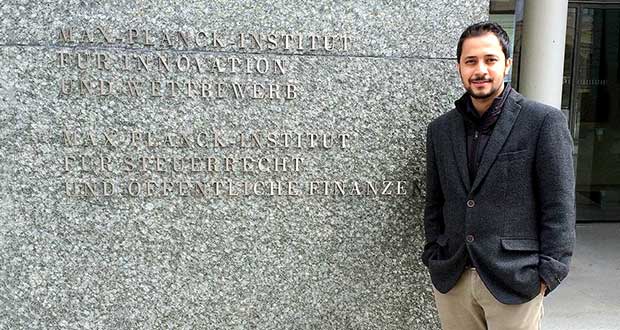
  • Ahmad Shazeb Azhar, Partner, Goswami & Associates, on work experience in litigation at Goswami & Associates

    Ahmad Shazeb Azhar, Partner, Goswami & Associates, on work experience in litigation at Goswami & Associates

    Ahmad Shazeb Azhar graduated from Aligarh Muslim University (2003-2008). He is a lawyer with almost 6+ years of standing at the Bar. He started his career in Delhi in 2010, practising regularly at Supreme Court of India, where he was the panel counsel representing the State of U.P. from 2014 onwards.

    His Core Specialties include litigation, dispute resolution, drafting, rendering advice, contracts and agreements, corporate compliance, arbitration, due diligence and legal research and securities markets.

    In this interview he talks to us about:

    • His experience at internships.
    • Advise for law students who prepare for a career while in college.
    • Value addition of a Masters degree.
    • Difference in practice and litigation at Delhi and Lucknow.


    How would you like to introduce yourself to the legal fraternity?

    I am a lawyer with almost 6+ years of standing at the Bar, at present practicing at the High Court of Judicature at Allahabad, Lucknow Bench. I started my career in Delhi in 2010, practising regularly at Supreme Court of India, where I was the panel counsel representing the State of U.P. from 2014 onwards. I also initially practised on the Original Side of the Delhi High Court, as a junior to Mr. M.R. Shamshad, Adv., dealing with some high profile commercial litigations. At present I am a Partner with a registered law firm called Goswami & Associates, which is an emerging firm, based out of Lucknow, primarily we deal with traditional litigation and dispute resolution, but are delving now into IP and other commercial areas. We have a couple of Government Banks, Insurance Companies, PSU’s and Private Companies as our clients right now.


    How did you decide to choose law as a career? Is there anyone in your family who motivated you to opt law?

    Well I am a first generation lawyer, who had no inkling what the job I was about to get into entailed. Both of my siblings are doctors in US & UK. The reason I chose law as a career was the mystique surrounding it. I had always been fascinated by the working of lawyers, as to what it was that they read on a piece of paper differently than an ordinary man. What gave them that perspective? That is what enticed me into the profession. There weren’t any family members who were already there in the profession, therefore the mystique and the curiosity was compelling enough for me to get in and explore this world of words, letters, sentences and arguments.


    How was your life at Aligarh Muslim University & Dr. RML National Law University? Did you find that your law school education prepared you for your current life?

    Life in Aligarh was completely different than expected. It’s a vast University with around 30,000 students and we used to reside in mixed hostels, wherein students from different streams and courses lived together, so that gave me a very diverse perspective of things. The more you interact with people from different fields and areas, the more your mind opens to diversity of views. The case with Dr. RML National Law University at Lucknow, was different where you get to meet the freshest and the best of the legal minds in the country, here I completed my LL.M thesis on Cartelisation under Competition Law. I was good at writing in college, be it essays, critiques or any such sort. The one thing that I regularly followed in college was to keep reading, whatever I could get my hands on, be it fiction, biographies, Russian socialist literature, History, Mythology and even John Grisham. The best part about reading is that it gives you references, analogies and ideas to construct an argument. Analogies, whether historical or mythological provide simplicity of comprehension to the listener.

    The legal education in India does not remotely prepare you with the realities of the legal profession. Considering the high premium that is placed upon the procedural aspect of law, the court craft and the client dealing aspect, the only thing that can get you prepared is to actually get in there and practice it. A mere understanding of the substantive law is not sufficient to succeed in the profession.


    Could you tell us a bit about your internship experiences?

    The first internship I did was under Dr. Sandeep Pandey, Magsaysay Award Winner and Social Activist. I actually got to stay in a village without electricity in U.P. for a month, preparing a report on the discrepancies in the land allotted under Consolidation regime by the government, which was submitted to the District Magistrate, so that was an experience. Thereafter I interned under Mr. M.R. Shamshad, Adv. whose chamber I later on joined in 2010. I also interned at Desai & Diwanji, Delhi office and under Mr. Niladri Bhattacharjee, Adv. who was gracious enough to actually credit us, the interns, by name on the Due-Diligence Report for a major company we helped prepare.


    How would you advice a law student if one has to start on to preparing for a career while in college?

    By the final year of Law College every student has a slight assumption of his or her own temperament and one’s inclination for the career we would like to choose. If you are prepared for a long meditation, then practice is a good option. But you would have to be mentally and physically prepared to handle the stress that comes with it. A total lack of finances and as a result dwindling motivation everyday is what makes practice really tough. A lot of my colleagues who started practice left it mid way because of these very reasons. Firms are a good option to join, if you have that inclination. Besides now there are so many other options that one can decide and work on right from college, be it getting into judiciary, a private company, a governmental job or even going abroad for higher studies and into academics.


    What is the value addition of a Masters in your career?

    The Masters Degree and the study for it, gives you the opportunity to delve deep into the existential basis of laws. For example for me in BALLB, the most irrelevant part of a statute was the preamble attached to it. Its importance I realised while in Masters. The basis for a statute, why is it there? What prompted its promulgation? And therefore if there is a discrepancy, how could it be filled in are all the jurisprudential questions that I got the answers to while pursuing my LL.M. With that depth of understanding, you yourself feel motivated enough to delve into and apply that knowledge to any filed you wish to pursue post your Masters.


    You have practiced at Delhi & Lucknow. Tell us the difference you feel in terms of practice and litigation between the two places?

    Delhi and Lucknow are completely different places when it comes to litigation. Lucknow being a traditional city, the outlook and perception are still evolving. I still get asked the very same question almost everywhere in Lucknow, as to whose chamber I belong to. Traditionally in Lucknow it isn’t common to see a lawyer below 40 years of age practicing independently or having started independently. Delhi has evolved in that aspect. Also in Delhi the wonderful experience of getting to meet or brief such famous senior counsels, is an experience in itself. Significant amongst them is Mr. Arvind Nigam, Senior Counsel, who had the most impact on my career as well as life. Also of significance is the experience I gained when I shifted to Supreme Court and got a chance to brief such excellent Counsels as Mr. Jethmalani, Mr. Sibal, Mr. Soli Sorabjee, Mr. P.P. Rao, Mr. Harish Salve, Mr. Salman Khursheed, Mr. Mukul Rohatgi, Dr. Dhawan etc. Lucknow bar though puts a very high premium on your knowledge of Law and has some very thorough and learned counsels amongst its members, who are as good as any lawyer in Delhi.


    What would be your parting advice to our readers?

    Be enterprising. Do what you want to do. But the keyword is “Do”. Merely thinking and planning won’t get you far. Mistakes would be made, but the experience gained would be much more beneficial. You will learn much more than what the books can make you aware of.
  • Biplab Lenin, Consultant, Cyril Amarchand Mangaldas, on building up expertise in Intellectual Property Rights

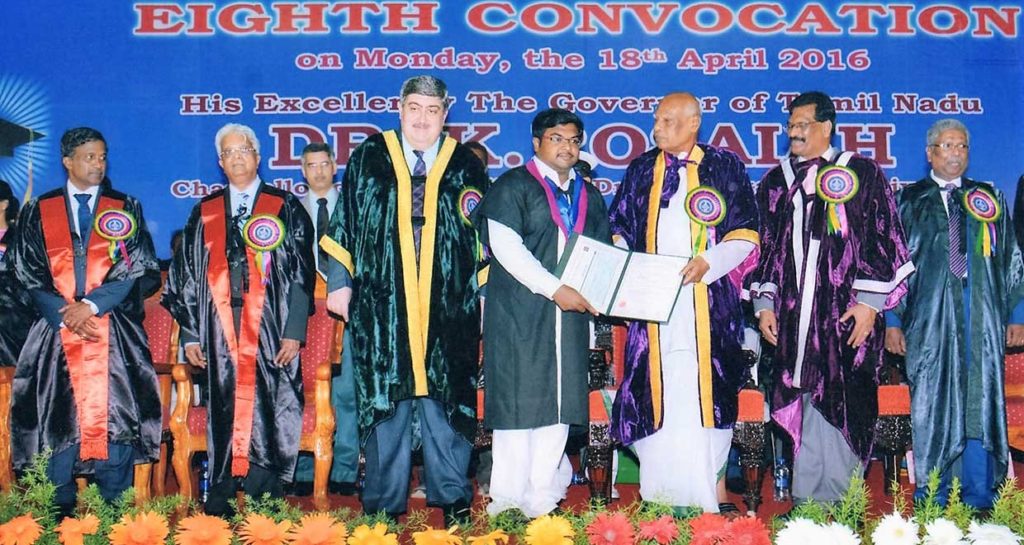
    Biplab Lenin, Consultant, Cyril Amarchand Mangaldas, on building up expertise in Intellectual Property Rights

    Biplab Lenin graduated from Rajiv Gandhi School of Intellectual property law (2009-2012). He is a qualified attorney with more than 4 years of both law firm and in-house experience in dealing with general corporate and intellectual property matters. He is registered to practice before Indian patent office and currently working with Cyril Amarchand Mangaldas at its Delhi office. His core areas of work include wide range of transactions, general advisory and intellectual property matters. He has acted on some of the significant and complex transactions that the intellectual property team has been involved with.

    In this interview he talks to us about:

    • How he build up expertise in IPR.
    • Primary essentials of a corporate lawyer.
    • Professional ethics one should follow while at work.
    • Basic subjects one should understand before sitting for an interview.

    How would you introduce yourself, given that most of our readers are law students, law aspirants or professionals in the legal arena?

    I am currently working as a Consultant with Cyril Amarchand Mangaldas in New Delhi. My practice areas include intellectual property laws and corporate laws. I am a registered patent agent at Indian patent office. I completed my LL.B. from Rajiv Gandhi School of Intellectual Property Law (RGSOIPL) in IIT Kharagpur Campus and also hold a graduate degree in Biotechnology Engineering.

    Were you always as fascinated by the field of IP Law or was it an acquired passion that set in through your college years?

    Since my father is also a lawyer, I was never a stranger to legal discussions which my father often used to do with his friends over evening tea after a long day in Court. Nevertheless, after 12th standard I followed the crowd of students doing engineering. In the last semester of my engineering, there was a subject called ” Intellectual property Rights”. Somehow, it attracted me quite a lot mainly because it involved both technology and law. That led me to apply for the course at RGSOIPL at IIT Kharagpur. I guess I was lucky to have studied under tutelage of good teachers and in a diverse peer group that IIT offers. Though I had an inclination towards IP subjects, at the same time, I wanted to do my internships on other subjects as well. Hence, I did internships with law firms as well as corporate in the domain of general corporate law, taxation, disputes, technology transfer and intellectual property law.

    How did you build up your expertise in IPR? Tell us about your work experience.

    My first hands on training on practical aspects of law happened in my internship at Monsanto. After finishing law school, I joined Mahyco as an in-house Counsel where I worked on different IP laws like patents, trademarks, plant variety, biological diversity and technology transfer. More importantly, interactions with several eminent scientists and stalwarts in the agri-biotech domain helped me realize the importance of understanding the technical nuances of the technology involved in any IP law. My engineering education helped me a lot in this area.

    After completing three and half  years of satisfying work at Mahyco, I joined Cyril Amarchand Mangaldas at Delhi where I am working on matters related to patents, plant variety, biodiversity, transfer & assignment of Intellectual property and general corporate transactions. On litigation front, I am a part of the team which is handling patent infringement and drugs ban litigation before the Delhi high Court

    Tell us about your schooling and early life. What do you think are the habits that you cultivated which help you today?

    I did my schooling from Sainik School in Bhubaneswar from Class 6th till Class 12. I think the values of integrity, camaraderie which are a hallmark of the army, are ingrained in me now. Also, Sainik School gave us a lot of endurance training, which helps me when I have to work for long hours in the Firm! I feel that my school experience was also quite instrumental in putting me at ease in any group with diverse cultural backgrounds, which is helpful for an attorney whose work involves people interaction.

    How are internships helpful for a law student? What are the other options available for someone interested in IP?

    Internships have a role to play in one’s professional career as a lawyer. They help us in learning how the law is practically applied. Also, business aspects of transactions are also better appreciated in internship. Skills like corporate communication are sharpened during internship. For those who are interested in making a career in IP, I suggest doing first internship under a practicing lawyer to get a feel of our justice delivery system. It is also important to look for quality work rather than brand name. There is no point in securing an internship in a big organization where there is little work for an intern. Students can join an IP specialized law firm or corporate for doing internships.

    Having Said that, I also feel that one should not be obsessed with stuffing one’s CV with internships. It is important to remember that in college one is a “professional student”and one’s primary duty as a professional student is to study the law books and the basic concepts. What can be learnt in 10 internships over 5 years in a no-pressure situation can be learnt in 6 months in a pressure situation when one starts actually working after college. Many times these days, interns, who have finished more than 10-12 internships in their first 3-4 years of college, but unclear about fundamental legal concepts, which I believe is injustice to one’s profession as a student.

    How do you maintain your work-life balance?

    I have always had a problem with this concept which pre-supposes that work and life are different and need to be balanced. I believe the first step in achieving work-life balance is to love yourself and love your work. Luckily I do both! Presently my focus is on honing my skills. I believe I’m being paid to learn now so I’m not complaining at all! I also believe that even at a senior level people do get time for themselves while managing work and I feel this should not be a concern for us at least at the beginning of our career.

    Any extra-curricular or co-curricular activities did you take up during your time at RGSOIPL and engineering? How did the same affect your learning experience and prepare you for the legal sector?

    I participated in a few moot court competitions during my college. However, I enjoyed parliamentary debate competitions more and also participated in several case study competitions conducted at IIT Kharagpur. During my engineering days as well, I have participated in several paper and poster presentations.

    However, apart from legal skills, I used extra-curricular activities to build my communication skills and inter-personal skills. I was one of the founding members of moot court society and conducted the first parliamentary debate competition at RGSOIPL.

    During my law school days, I worked as a volunteer in an NGO named “Independent Thought” based in Delhi. The NGO works for the Eradication of Social Disparity and Injustice by promotion of Fundamental and Socioeconomic Rights. I used to assist team in doing research and preparing reports with regard to remedies on issues relating to child labour. This experience showed me the humane side of the law and it still keeps my sensitivity intact and reminds me that beyond all the paper work and legal arguments there are real people who are affected by what I do.

    Generally the first year after graduation is the most defining time of a fresh law graduate. What would you suggest a fresh law graduate should do to hold spirit and utilize the opportunities available?

    I would suggest a two-pronged approach:

    1. Many students are thinking about doing an LL.M, immediately after LLB. I feel that an LL.M. without any work experience is just an LLB with some more semesters and a thesis.
      I strongly encourage fresh graduates to take up some professional assignment of their liking instead of academics, be it with a law firm or corporate or even NGO. You’re bound to be confused, so make sure someone’s paying you in the meantime!
    2. In college, we first pay fees and then we learn. In a job, we get paid to learn. Therefore, as a paid student, learn as much as you can about different areas of law and practice. It is important to remember that most books mention “law” and “practice” separately, for example Banking Law and Practice, meaning thereby that practice is something different from mere legal provisions. This will help you in choosing a particular field or subject for your career.

    What are the primary essentials of a corporate lawyer? How do you say a fresh graduate can work on building these skills?

    I think honesty towards the client and one’s colleagues is of utmost importance. One may be low on information about a legal concept, which can be gained, but honesty must come from inside. This of course is a basic human requirement in any profession, so all law graduates must also try to imbibe these values.

    Patience is also a vital asset. One must not get affected by looking at how others are doing in the profession.

    What are the primary professional ethics you follow while at work? How do you deal with mistakes or errors?

    I believe that honesty is the best policy. If there is a mistake, one should admit immediately. Mistakes are bound to happen especially in areas where human effort is involved. In face of mistakes, first requirement is to maintain a cool head, accept a mistake has been made and then immediately start working on a solution. When I’m the team lead, I own the mistakes of my team. I think clients too appreciate such candidness.

    What are the basic subjects which one should read and have understanding of before sitting for an interview?

    From point of view of legal concepts, basic understanding of the following 5 subjects is a must for any civil lawyer regardless of any interview:-
    1. Contracts (including sale of goods and specific relief)
    2. Transfer of property
    3. Evidence
    4. Registration and stamp duty (basic concepts not details)
    5. Constitution (basic concepts)

    Thereafter, one may try to gauge the requirements of any specific interview and prepare accordingly.

    Where do you see yourself ten years down the line?

    Hopefully still on the line!! Jokes apart, my first aim is to build my expertise in my domain, which is more of an internal process. I haven’t really given a thought to any particular designation as such. But I would like to be a lawyer who has earned atleast two things – complete trust of  clients which  allows them to sleep peacefully as far as their legal worries are concerned; and respect from seniors and peers in the profession regarding my professional ethics and competence. Apart from this, designations are trivia!

    Please compare RGSOIPL with other law schools.

    RGSOIPL is a unique law school because admission itself requires a degree in technology or medicine. Being a part of IIT Kharagpur campus, it has an IIT-style admission process with entrance test, group discussion and interviews, which is a great learning in itself. It attracts students from all over the country, which helps in enriching one’s culture and view of life. Also, studying law in the IIT Kharagpur campus in the midst of the crème-de-la-crème of India’s technical brains, gave me 2 important lessons –

    • Law is an instrument to facilitate business and technology;
    • Law cannot be learnt or applied in isolation without an eagerness to learn the technical dynamics of any business.

    RGSOIPL also benefits from the infrastructure of IIT. We had access to major online legal resources like Westlaw, Manupatra and Hein online apart from books.  There are various co-curricular activities which one can pursue to unwind from demanding course schedule.

    How is your experience in working as In house and then shifting to law firm?

    Being an In-house counsel helps to learn the significance of law as a toll for business. However, I would advise to have law firm and court experience at the initial stages of the career and learn court proceedings and allied matters and then shifting to in-house.

    Shifting from In-house to a law firm is tough from a work pressure point of view. Also, subject experts are readily available when you are working in-house, which may not be the case in a law firm full of mostly lawyers. Anyone who wishes to develop a very particular specialization should work in in-house IP department. Law firm gives you a more diversified work. Needless to say, law firm working hours are more strenuous. However, learning as well as growth is much speedier in a law firm.

    What would be your parting message to our readers?

    An excellent CGPA is always good. However, it is important to co-curricular and extracurricular activities as well. Read as much as you can. Take risks when it is required. It is not necessary that every risk you take will result in success. There will be failures too.

    It is important to not think too seriously about oneself and one’s so-called reputation etc. while taking professional decisions. I think the most vital part is that one should feel good both as a human being and a lawyer.


  • Mahindra Prabu, Asst. Prof. Law (IPR), TNNLS on pursuing a career in Academics and Teaching

    Mahindra Prabu, Asst. Prof. Law (IPR), TNNLS on pursuing a career in Academics and Teaching

    Mahindra Prabu graduated Law from GLC, Tirunelveli (2011) and then pursued his post-graduation course in IPR from TNDALU, Chennai (2013). He was a University Topper in both U.G & P.G courses of Law. After post-graduation he practised as an advocate in trial courts, worked as a Guest Faculty of Law in ‘School of Excellence in Law’, Chennai. He also worked in IIT Madras as a Project Associate in Ministry of Human Resourced Department (MHRD), IPR Chair. Later he joined TNNLS and presently the faculty-in-charge of Internship and Placement Committee of TNNLS.


    How would you introduce yourself to our readers?

    An innovative young academic who loves teaching.


    What incidents, influences or interests prompted you to think of law as a career? What other options would you have considered for a career?

    To pursue a career in law was purely an accident for me. I was in dilemma of what to choose after completing my higher secondary course. I was brought up in a society where B.E, B.Tech & MBBS are considered as main stream ones and many students usually opt either for engineering or for medicine, which is in fact the basic mantra that is being taught in schools. But, I wished to be different and choose a unique career that led me in the process of exploring different career options which eventually made me say YES for Law. I must thank my mother, it was she who suggested and explained me about the oceans of career opportunities in law. This idea of opting for legal career thrilled me and I encountered it as intellectually challenging right from the first day of my law college.


    Tell us about your childhood and pre-college life? Who was your role model?

    Being a single child to my parents, I was gifted with lots of love and affection from my family. My child hood was filled with lot of joyful memories like watching cartoons, cycling, reading comics and book cricket etc. I was good at studies in school with minimal interests in sports. My role model was none other than my parents. They are my pillars of strength. All that I am, or hope to be, I owe all to my parents.


    You did your under graduation from Government Law College, Tirunelveli? Could you tell us about your experience there and what all curricular and extra-curricular activities you were engaged?

    GLC, Tirunelveli is known for its student friendly atmosphere. The college offers more time for self development and encouraged the students to participate in social awareness programmes for rural people. I was actively engaged in internal moots, debates, seminars and legal aid camps. Our campus being adjacent to the District Court of Tirunelveli, it provides an opportunity to witness law in practice in trail court.


    mahindra-prabu-2

    Why did you choose TNDALU to pursue your LL.M instead of going foreign for your Master’s? How was the academic culture there?

    I prefer to do my masters within Tamil Nadu and desired to do a specialization in IPR. TNDALU was the only option available to me to do a post-graduation in IPR. The academic culture in TNDALU was good and very supportive to students. The library had good collection of books for research and learning. Fortunately, my batch mates positively interact, respect each other and value the contributions of each individual. Thus the academic climate prevailed during my college days ensures overall development for participative students.


    What prompted you to choose IPR as your specialisation in your LLM?

    I wished to pursue something really trendy and different. I preferred to invest time on a subject which is interesting and unique. Being aware of some basics of IPR and its effect on international trade and investment, I thought of doing IPR. The academic discussions I had with my professors developed curiosity over the subject and finally I choose IPR as my specialisation in LLM.


    Tell us about your experience as an advocate in the district court?

    I had some good litigation experience at District Court, Thoothukudi. I focused mainly on enriching my drafting skills. From my college days, I used to spend a lot of time in drafting petitions for variety of cases. The district court practice introduced me the basic ABCs of law, procedural aspects and jurisdiction issues which really made life interesting and taught me tons of terms which I never come across in a law book.


    mahindra-prabu-3

    You have been a Research Associate at Ministry of Human Resourced Department (MHRD) IPR Chair, IIT Madras. How did you get a wonderful offer from there and how was your experience there?

    It was an open invitation for aspiring researchers in IPR, which I came to know from ‘Spicy IP’ website. There was a tough competition but luckily with god’s grace I got selected. I would like to thank my professors who clarified my doubts and guided me in each stages. The environment in IIT Madras is novel for any law graduate in the country. During my tenure as an associate of the MHRD IPR Chair, I mostly involved in research, seminar presentations and editorial works etc.


    Why did you opt to be an Academician?

    When I was a student in high school and Law College, I found myself paying attention to not only what was being taught, but also to how my teachers actually taught the lessons. It wasn’t until my third year in Law College that I began to think that I might want to be a teacher. Slowly at first, then more quickly, and with increasing clarity and depth, I began to visualize myself as a teacher. I wanted to make sure that what I learned must reach the society. I believe that teachers individually and collectively cannot change the world, but they can improve it. My teachers were my inspiration and I am proud to be a part of this noble profession.


    Tell us about your experience in School of Excellence in Law (SOEL)?

    SOEL is a bunch of mixed people. You can find students of various levels and categories. The experience that I gained in SOEL inspired me to transform into a full-time academician. The academic culture and working environment in SOEL helped me to master the art of classroom management and laid one of the best foundation for my career.


    You have been a University Rank Holder with gold medal in both U.G and P.G courses of Law? Could you share your tricks and techniques of academic excellence for young law students?

    There are no specific tricks and techniques. I enjoyed while studying and was regular to my classes and mostly believed on my notes that I penned down while listening to the classes and spend equal time in library and for researching. I would say I am punctual in my studies to some extent. That’s it. I never say that I sticked on to the books always or a book bug. I had enough fun and happiest moments with my friends. All of us had the same wave length and we study when we need to and we enjoyed when we want to. After all, I was a normal student who clearly balanced student life between studies and social life.


    Tell us about your experience in TNNLS and your future plans with the institution?

    Being a faculty of the National Law School is always a flagship in my career. And it’s exactly a year since I joined the TNNLS. I taught Constitutional law, Labour Law and now Intellectual Property Rights. The academic culture in TNNLS is very healthy. In spite of the fact, that we were three year old institution, TNNLS campus filled with lot of intellectual young minds with innovative ideas in the field of law. I always say where ever you work, once you start working on something, don’t be afraid of failure and don’t abandon it. People who work sincerely are the happiest. I am happy being part of an institution which gives maximum academic freedom. Finally, my interests are always aligned towards the betterment of academic quality within and outside TNNLS.


    You are currently the faculty-in-charge of ‘Internship & Placement Committee’ in TNNLS. What is your advice to the students for choosing internship at different levels?

    Internship has become a way of life in National Law Schools. It helps students in shaping their future and they will get an insight of the working nature of the legal profession. I personally advise first year law students to go for NGOs wherein they study the social causes and how to address them. In the second year the students are encouraged to pursue internship with the law making body whereas the third year students are advised to enter into the trial court or district court and observe the proceedings. It is the proceedings of the trial court that act as the pivotal pillar of the student’s career building. In the pre-final year once the students are familiar with the trial court I strongly advise them to pursue their internship in appellate court with main focus on the drafting process which the companies and law firms expects as important criteria when they hire. In the final year, the ball is in the student’s court to decide which type of internship he/she needs to pursue as per his/her area of interest.


    What advice would you give to our budding lawyers and law students?

    The mantra is simple, identify your passion, develop your skills and chase your dreams.


  • Akshay Saxena, Associate, Seth Associates and Legal Consultants, on law school experience at IMS Noida

    Akshay Saxena, Associate, Seth Associates and Legal Consultants, on law school experience at IMS Noida

    Akshay Saxena graduated from IMS Law College, Noida in 2015. Presently, he is an Associate at Seth Associates & Legal Consultants, Noida.

     In this interview he talks to us about:

    • His experience at IMS Law College.
    • His remarkable experiences during the internships.
    • A few tips on managing high grades.
    • Status of cyber crime in present scenario.

    Given that most of our readers belong to legal fraternity, how would you introduce yourself to them?

    Hello to all the readers & viewers, I am Akshay Saxena.  I graduated from IMS Law college, Noida in 2015 and I am an Associate at Seth Associates & Legal Consultants, Noida.

    What motivated you to choose law as a career?

    My Father is a lawyer and he is my Idol from the very first day. He did not put pressure on me to pursue anything. He set me free to choose whatever I wanted to do.  I used to admire my father and his work, his skills and secondly I had no other plans after my 12th in my mind. I wanted to make my career in law so I started preparing for CLAT but eventually I couldn’t score much and as I did not want to waste my year so I took admission in IMS Law College.

    How was your experience at IMS Law College? What were your hobbies during your tenure in law school?

    First of all being a Non- NLU student it is very difficult to survive in the legal fraternity. I was a Non – NLU student and it was difficult for me to stabilize myself in this field. But I was aware from the fact that if I work hard and if I keep going without losing hope I will definitely achieve what I want. And coming back to the experience in my College, I used to be the student who was full of energy and was very active and quite known among the faculty. I started participating in debates, seminars, workshops etc. My hobbies were playing cricket and Pool/Snooker. I had a huge friend circle in my college and I used to spend my time with my friends.

    What were your areas of interest during your graduation? How did you go about developing expertise and knowledge in these areas?

    During my graduation I was very much fond of studying Arbitration & Conciliation, Indian Penal Code, Contract, Intellectual Property Rights. I started studying more and more about the core law subjects like Crpc, CPC, Evidence and IPR. When I started reading Arbitration & conciliation somehow I started developing interest in that area and used to study articles related to that. And then in the next semester I had the subject IPR after which I decided to focus on IPR and build my career as an IP lawyer preferably. I used to read books and articles on IPR and started gathering knowledge about this area. Talking about developing expertise and knowledge in these areas came when I realized that it is high time now for me get serious about my career and when I had to choose one area I chose IPR and Cyber.

    What are your thoughts on activities like mooting and debating? What skills do law students acquire by engaging themselves in such activities?

    Mooting and debating are the best platform for a young talent to show their skills in front of many people. Mooting is an experience of a lifetime. One gets immense exposure and experience about the court proceedings. I remember the day when I first started preparing for my first Moot which was “XI All Delhi-NCR Moot Court Competition 2013” in Delhi University, I was very much tensed as I had to research on various issues/Judgments and making memorial and compiling all the relevant things together and one has to prepare for & against as well because you never know on what stance you will be asked to argue in front of High Court Judges. As I was the Researcher in my first moot competition which doubled my worries but my mentor Ms. Surabhi Guleria who gave us confidence and self belief because of which my team ended up winning the Competition. That win gave me ample amount of confidence and then I participated in “1st National Moot Court Competition held in Sharda University 2014”and later my team was declared as winner. I was the speaker in that Moot competition. Mooting & debating gives a person a great confidence to brush up their skills and to acknowledge their positive points and negative points. Mooting and debating is an extra-curricular opportunity for a law student to practice their legal advocacy skills. Mooting and Debating develops group work skills, the skill of argument, the skill of making reasoned judgments and self confidence.

    Any remarkable experiences during your internships that shaped your career?

    First of all let me tell to all the readers and law students that internship plays a very vital role in gathering professional ethics, court proceedings, and the work environment in a law office/chamber. I remember the day when I got the opportunity to meet Mr. Salman Khurshid and I gave a brief to him about the case, plus during Internships every law student gets to see the lifestyle of a lawyer. I witnessed Mr. Harish Salve arguing in the Supreme Court on my first visit to the Supreme Court of India during my internship. During internship I got the opportunity to draft some PIL’s and legal notices which was very interesting and gave me a lot of knowledge and enhanced my research skills altogether. Internships gave me a slight insight of the working environment of a law firm & chambers, which eventually helped me after I joined the current firm as an Associate.

    Share with our readers a few actionable tips on managing high grades.

    Practically law is entirely different from what we learn or read in our college. Whereas to score high marks and good grades one must acquire good knowledge of Sections/Articles/Case laws and everything becomes easy when you read a case related to a particular section. It is difficult to score high marks but not an impossible task. A law student should learn the basic concept rather than mugging up the whole Bare-Act. It becomes easy when a student knows the basics of the subject and if a student has doubts regarding anything he/she should consult his faculty. Read as much as you can, be aware of the latest amendments and pay attention in your class when your faculty teaches you something, well that helps a lot.

    Please share your experience with Advocate Karnika Seth.

    Well it is my pleasure to work with Adv. Karnika Seth. She is a well known cyber lawyer and a cyber expert. It has not been much time since I joined her office but in such a less time I have worked on various cases related to cyber crime and got to learn the basics. She is a great mentor and whenever she assigns some work to me she always make sure that I put my efforts in right direction and always keeps backing her associates which inspires and motivates us to work hard. She never scold or raise her voice if the work she assigned is not upto the mark, she would rather show the right direction and right way to deal with the problem.  Working with the top cyber lawyer gave me an exposure and enhanced my skills. Since she has published numerous books on Cyber crimes/ child pornography etc, it becomes easy for us to consult anything and everything from her regarding any problem related to cyber law and a lot more she is very well versed of the fact that how to get quality work from her associates. She keeps sharing her experience with us and keeps encouraging the young/budding lawyers. So far my experience of working with Advocate Seth is tremendous and full of knowledge. As she also deals with IPR matters, she assigned me some Trademark cases and set me free to handle the case  on my own and gave me the opportunity to appear in TMR hearings which drew my interest towards IPR and I am very much satisfied with the kind of work I am doing with her.

    How did your appointment at Seth Associate and Legal Consultants take place?

    Well Adv. Seth used to speak and give knowledge on the Cyber-laws at various different forums. So she was invited once in my college to give us some knowledge about the cyber laws and cyber crimes, so I knew her since then. It was my last semester and as my final year result came I sent across my CV to her email id and within three days I got the reply and she asked to present a synopsis on any legal topic of my choice and eventually I chose “Cyber crimes” and sent that synopsis to her and then she called me for personal interview and this is how my appointment at Seth Associates and Legal Consultants took place.

    Many law students aspire to secure a job. What do you think most are doing wrong, from your observation?

    As far as my observation is concerned the thing which many law students do wrong during their academics is not doing internships. I would suggest every aspiring law student to do as much internships as they can, in the same area in which they wish to start their career, because internships gives a very deep knowledge and experience to a law student. It becomes easy for a recruiter to appoint you in their firm if you had done internships in the same area as it won’t be difficult for the law students to start working in a firm. During college days every law student must choose their preferred area in which they wish to get expertise and then scrutinize the firm and start applying in the same. The law students should keep this in mind that failures and rejections are the part of a life, for a student rejections are basically the hurdles which makes or breaks the confidence, it is upto you whether you make it or break it. Do not lose hope keep trying and never give up.

    And when you are interning somewhere keep asking for work from the concerned person as it will bring you in notice of the people working with the firm and try to intern with a same firm twice it will make you familiar with the associates and partners, it will help you get a PPO(May be).

    Keep your resume short, simple and up to the mark. Mention your work experience; mention your qualities and your achievements.

    What is the status of cyber crime in present scenario?

    In present scenario the cyber crimes are increasing day by day. The world of Internet today has become a parallel form of life and living. Public are now capable of doing things which were not imaginable few years ago. The Internet is fast becoming a way of life for millions of people and also a way of living because of growing dependence on these machines. Cyber crimes have been reported across the world. It is now amongst the most important revenue sectors for global organized crime.  After introducing the cyber law in our country the cyber crimes are becoming less but still some of the cases are their which changes the public mind about the people of our country. Through cyber law many people got arrested and they are now also behind the bar. After seeing so much safety the people are not creating much violence about this. Because of cyber crime many people had suffered and mainly the rich people and the girls. Therefore Cyber crime system requirements in India are being increasing day by day as per the crimes are increasing. At present there are so many cases of cyber crimes pending in the court and the people are waiting because of the lack of lawyers for cyber crime. So there is a need of cyber lawyers who can support the people and provide them a good assistance and status in the society. There are many cases of hacking other’s account, spreading virus in others system through email, etc. and through this many people are suffering from cyber crime. We as a lawyer need to take up the challenge against cyber crimes and help the people who have been suffering from such crimes. I am sure that our country will definitely come up with some more strict laws in accordance to stop the cyber crimes.

    What should be your advice to our readers?

    I would say keep up the good work, keep reading articles, keep learning and never lose hope. Everyone should believe in themselves and wait for the right moment.

    “BE A LEARNER”


  • Lavin Hirani, Head-Legal Affairs, Red Chillies Entertainments on law and bollywood and importance of IPR

    Lavin Hirani, Head-Legal Affairs, Red Chillies Entertainments on law and bollywood and importance of IPR

    Lavin Hirani, though not a Bollywood actor himself, is a star in his own right. The present Head of Legal Affairs at Red Chillies Entertainments Pvt. Ltd. (Shah Rukh Khan’s Company), he could very well be termed as a mega star in the field of Entertainment and Intellectual Property Rights Law. A graduate of the University of Mumbai (2007), as well as post-graduate from The University of Manchester (2009), he first started off his career as a Litigation Associate with Khaitan & Jayakar, soon moving on to work as a Media & Entertainment Attorney, first with Naik Naik & Co. Advocates, and then with Hariani and Company – leaving the position in August 2015 to join RCE.

    In this interview, he speaks to us about:


    Given that most of our readers belong to the legal fraternity, how would you introduce yourself to them?

    Hello, everyone. My name is Lavin Hirani. I am settled in Mumbai, and have been a practicing lawyer since having graduated from the 3 year LLB course in Mumbai University in the year 2007. I am thrilled to have been given this opportunity to share my modest experience of 8 years as a practising lawyer, with the legal fraternity and readers of Super Lawyer.

    I currently work as the Head of Legal Affairs at Red Chillies Entertainment, a film production studio based out of Mumbai since August this year, prior to which, I was handling the  media and entertainment practice at Hariani & Co.


    Having done B.Com from Mumbai University, what motivated you to choose law as a career from the same University?

    Well, I would love to say that it was an independent decision, however the truth is that I come from a family of lawyers, including my father, who is an active practicing advocate, due to which I was always intrigued by the profession of law. However, I was never sure of the field of law I wanted to specialise in, and therefore I involved myself with different aspects including criminal and civil litigation prior to deciding that I wanted to specialise in Intellectual Property/Copyright and Media Laws.


    Did you find that your law school education had prepared you sufficiently for the many tasks you were required to execute during your internships and later at your job?

    Well, the bitter truth about most of the law schools in India, except for a few of the highly rated national law schools, is that the education and the curriculum never fully prepares you for a career in law.

    Thankfully, I was informed about this by various friends and family members, due to which I went for a law internship even before I started my law education.

    Formal legal education in India can only prepare you so much to help you get an initial background of what the procedural laws / substantive laws in India are all about. The real education starts only once you engage yourself with real life cases, which enable you to realise the intricacies involved in solving the day to day issues faced by clients and how you deal with them.


    Right after graduating, you joined M/s Khaitan & Jayakar as an Associate where you worked for one year, and then went for an LL.M. Why did you decide to go for higher studies?

    I always wanted to pursue a Masters in Law. However, I personally believed that a Masters degree in law would have a greater impact and be more fruitful if I had some kind of practical experience as an advocate before I embarked upon any form of specialised education. And to my credit, it did work for me, as I was better able to imbibe the course and appreciate the finer nuances of law, including the subjects I wanted to specialise in.

    I would also like to add that there is no ideal time to educate yourself. Every opportunity is a good opportunity. I know of several colleagues who waited for 3-4 years after graduating law before enrolling in a Masters degree, and several who jumped into one directly after law school, so there is no real straight-jacket approach to a Masters degree.


    Tell us something about your LL.M year at the University of  Manchester (UOM), United Kingdom. How did this influence your career?

    There are various reasons why one may pursue a Masters degree, especially from a foreign university. Some of the reasons would be – getting a better position with their current employers/law firms, or as the first step in their journey to work and settle abroad, or better earning prospects, etc.

    However, the reason why I chose to pursue my Masters degree abroad, was to get a broader perspective in my chosen career path, and also to gain further expertise in subjects like IPR, Competition and Business/commercial laws, which I was really interested in, with an accredited university like UOM.

    Although I would like to believe that pursuing a Masters degree abroad did help me with my career, I wouldn’t say that a mMasters degree is a must for everyone, as the costs involved are huge, and it may not always directly co-relate to an increased compensation / better position at work once you are back in India, if that’s what one is looking for.


    Soon after Masters, you joined Naik Naik & Company and worked there for two years before joining Hariani & Co. How was your experience working there?

    As I said earlier, one of the subjects I had enrolled in during my masters abroad was intellectual property rights. Naik Naik & Co. was back then and even now one of the few law firms specialising in IP and Media laws and therefore was one of the law firms I interviewed with on my return to India.

    I started working at Naik Naik & Co. from July 2010 for a period of approximately 2.5 years, wherein I got the opportunity of being involved in all kinds of matters ranging from handling transactions related to media and IP related documents to criminal and civil litigation before various courts, commissions, tribunals, CBI, the Supreme Court of India, various High Courts across the country, etc.

    I was involved in several film industry related disputes between producers and broadcasters, guild issues,  issued faced by artists, copyright infringement cases, writ petitions, criminal litigation relating to film personalities, while also being involved in non-media related issues/matters pertaining to land disputes, company petitions, service tax, the Adarsh Scam, etc.

    As a law associate, this was one of the most exciting periods of my professional career back then, as I was engaged in multifarious kinds of litigation and transactions, which is extremely important for any junior starting out in law.


    Since November 2012, you started working with Hariani & Co. Tell us about the nature of work you’re entrusted with therein.

    Hariani & Co. is a full service law firm specialising in real estate, litigation, media & IP laws, with several media and film production companies as clients. Although I was really happy with the kind of work I was doing at Naik Naik & Co., I always had a penchant for transactional IP work, which I was missing out on, due to the humungous litigation practice at Naik Naik & Co. I was entrusted with.

    I joined Hariani & Co. in November 2012, and worked there till August 2015. During my stint at Hariani & Co., I was able to hone my skills and knowledge of IP laws, especially copyright law, due to the substantial film and television related transactional work I was entrusted with, including a fair amount of media related disputes/litigation.

    I would like to mention the name of Mr.Ajay Vazirani, Senior Partner at Hariani & Co., under whose guidance I was heading the M&E practice, where I was given full charge of all media clients including some of the biggest film producers in India.

    I have been fortunate to have worked with a great set of people at both Hariani & Co. and Naik Naik & Co., which I believe is extremely essential for any lawyer, as I believe that the only way one can develop and gain, is from learning from others, including juniors, in addition to keeping yourself abreast with developments in your chosen field of practice.


    You have specialized in IP law. What made you interested in the same? How would you suggestone can gain expertise in IP Law?

    As I said earlier, I was never sure of the field of law I would choose to specialise in, which I think, in today’s world, is extremely important, while also being competent and informed to deal with any other legal issues your client may face.

    I have had the opportunity, at various stages in my career, of dealing with all kinds of laws, including criminal, civil, real estate, commercial, tax, maritime, contracts, customs, etc. However, I, since my college days, have continued to be extremely enamoured with IP laws, especially copyright laws.

    One of the primary reasons I chose to specialise in media and entertainment law is that it is extremely dynamic and ever-changing, and continues to inspire me with so many issues being faced by authors and the industry, in general, especially pursuant to the vast amendments made to the Copyright Act in the year 2012, some of which issues, the film industry continues to battle with.

    In addition to having a special interest in copyright, I am also interested in commercial/business, and contractual laws, which I think is extremely important for any lawyer today. Except for a few branches of law, everything in today’s world is about business and contracts, where another important skill for a lawyer is drafting and negotiation, which also is something I strive to get myself involved with, and improved at, with each passing day.

    Further, I am not aware of how one can gain expertise in IP law, as I do not consider myself to be an expert. However, I believe the best way to get yourself to become an expert in any subject of law, would be to involve oneself with the constant practice of dealing with real world issues of the particular field of law you want to gain expertise in, and also by updating yourself with various developments happening in the said chosen field, including through court judgments, reports and industry specific notifications/updates on a regular basis.


    What are the primary essentials of an IPR lawyer? How might a fresh graduate work on building these skills?

    According to me, the essentials of a good IPR lawyer is knowledge of the acts governing copyright, trademarks, patents and designs, including laws pertaining to contract and specific performance, as most of the acts governing IP provide for the requirement of written agreements recording transfers, assignments and registration of IP.

    It is also good to have some basic knowledge of how litigation works in India, and not just procedural laws governing the subject, as it is very important for a lawyer to understand the difference between probability and possibility of issues arising from any particular clause / agreement negotiated by one, and moving forward accordingly. Every deal/transaction has its own modalities and specifics, and therefore good drafting and analytical skills are an absolute must for a lawyer, as this is something where many lawyers miss the bus.

    I have had the fortune of working with several accomplished lawyers as a junior, and from what I have learnt from watching them from a vantage point over the past several years, I believe the best way to learn for any fresh graduate is to be sincere and spirited, as the only way one can learn is through eagerness and hard work.


    What would be your advice to students interested in Intellectual Property Rights?

    My advice to anyone interested in IPR would be to follow your instinct. There is no right or wrong field in law. There may be ones that are more lucrative than the other. However, you may only succeed if you are interested, and have some form of expertise in your chosen field.


    IPR is also vast, with lawyers specialising in trademarks, copyrights, technology, and also as patent attorneys.


    You have recently joined Red Chillies Entertainment (RCE), which is promoted by Shah Rukh Khan. How did this shift take place?

    Due to my work profile, I was involved with various film production companies, and as some of you may know, RCE has recently adopted a major shift in its strategy towards being a full-fledged film production studio. Knowing my interest and aptitude with film related transactions, and not only as someone having a legal background and approach, but also someone interested in the business end of things, I was offered to join RCE to head the legal department, which, according to me, was an interesting opportunity at this juncture of my career.

    Having known the entire team at RCE, having worked with them closely since the past several years, it wasn’t a difficult decision to make.


    What all falls under your responsibility as Head Legal at Red Chillies? What are the primary requirements for such a role?

    I am engaged in the dual capacity of Head Legal of RCE, and also as a personal in house legal advisor for Mr.Khan’s personal endorsement’s and investments.

    However, in my role as the Head Legal of RCE, I am responsible for all legal issues faced by the company on a daily basis, including being responsible for all transactions pertaining to films produced, and various other IP controlled, by RCE, including acquisition, sale, licensing and distribution of films, brand associations, etc.


    Does specialization in IPR Laws, especially Copyright, help in such a work profile?

    Yes, it does. RCE being involved in the business of production and distribution of films, I deal with issues relating to copyright laws on a daily basis. However, in addition to the same, it is also extremely important for me to delve into various issues concerning the internal workings of the company, for which knowledge of employment and labour laws, corporate, sports, real estate and various other Indian and international laws, is also a must.


    What will be your message to those who aspire to join Bollywood as a lawyer?

    I won’t use the word Bollywood, as it’s an extremely restrictive term, and is used in reference to the film industry in Mumbai, only. However, the media and entertainment space is growing day by day, and furthermore, with the onslaught of entrepreneurial ventures and start-ups in the technology / ecommerce and entertainment space, there is huge potential for IP lawyers in the future, as long as they are willing to be striven towards, and genuinely concerned about IP laws, and not just the sugar coat of the media industry, which fades away in no time.

    As a parting note, all I would like to say is that in addition to having knowledge and experience, it is extremely important that one is pragmatic and enthusiastic about their chosen field of law, including understanding the importance of maintaining inter-personal relationships with fellow lawyers / colleagues, as law is one of the few professions where you are bound to interact, in some form or the other, with your past or present colleagues, seniors, juniors and others, over transactions, deals or some form of dispute/s, and therefore one must not ever under-estimate others or over-estimate oneself, as everyone you interact with will in some way or the other contribute to your being a better lawyer.

    Wishing everyone at SuperLawyer and its readers a very Happy New Year!


  • Kalyan C. Kankanala, Managing Partner, Banana IP Counsels on building a career in IPR and writing novels

    Kalyan C. Kankanala, Managing Partner, Banana IP Counsels on building a career in IPR and writing novels

    Dr. Kalyan C. Kankanala pursued law at Osmania University, graduating in 2001. From there he went on to do an LL.M in Intellectual Property from Franklin Pierce Law Center and a PhD. in Patent Law from the National Law School of India University in 2006. Kalyan is a renowned Intellectual Property attorney in India. He specializes in helping clients maximize business value from their intellectual assets. He is the founder of Brain League IP Services and BananaIP Counsels. He is also the founder of the popular IP Blog, SiNApSE.

    Kalyan is a prolific writer, with several fiction and non-fiction books and publications to his credit. He teaches at premier institutes like National Law School, Bangalore and IIM, Bangalore. He worked as a consultant for the United Nations Industrial Development Organization and is at present a trustee for the Cane Foundation, and a member of the editorial board of the Journal of Intellectual Property Rights, NISCAIR.

    In this interview, Kalyan speaks to us about:

    • His days as a student and motivations during his academic journey.
    • His tryst with Intellectual Property Law and his work as an IP Attorney.
    • His passion for researching, writing and publishing.
    • The future of IP practice in India.
    • The challenges faced while establishing his start up Brain League, and later BananaIP and his views on social welfare.
    • How he balances his personal and professional life.
    • His Legal Thriller novels and other IP works.


    How would you introduce yourself, given that most of our readers are law students, law aspirants or professionals in the legal arena?

    I am an Intellectual Property attorney, who loves to work with creators and inventors. The merger of law, Science/Technology and Business excites me, and I am glad to have chosen this profession. Apart from practicing IP Law and helping clients realize business value from their intellectual assets, I also teach at institutions like National Law School, Bangalore and the Indian Institute of Management, Bangalore.

    I enjoy writing and have published several articles and books. In addition to academic publications, I also write legal thrillers on socially relevant themes. Right now, I am finishing my third book in the IP Law Thriller Series, The Dravidian, a traditional knowledge thriller. Earlier, I published Road Humps and Sidewalks, a Patent Law Thriller, and Pirates of Bollywood, a Copyright Law Thriller.


    What would you say motivated you to take up law as a career, given that it was not a very popular option in India?

    I was never motivated to pursue a career in law. In fact, I never considered it as an option. My entry into law happened by accident. I wanted to be a medical doctor, and therefore, joined a medical school. After six months in school, I had to leave due to the rapid progress of retinal degeneration, which led to a loss of working and reading vision. Then, on a well-wisher’s advice, I joined a law program in Hyderabad.


    How well did your experience in Hyderabad prepare you for a life of academic prestige and professional success?

    Though I did not study at one of the best law schools in the country, my law college at Hyderabad gave me the foundation and encouragement to pursue higher education and research in Intellectual Property. Some of my Professors at the law college were a great source of knowledge and inspiration, and continue to be so even today. Hyderabad was in fact the starting point of my IP career – both academic and professional.


    What were the influences behind your decision to pursue an LLM in Intellectual Property Law from Franklin Pierce?

    The convergence of Science and Technology with law played a major role in influencing me to pursue an LLM in IP. In those days, Franklin Pierce was rated as the best IP School in USA, and therefore I decided to study at that law school. I was fortunate to not only get a good scholarship from Franklin Pierce, but also funding from the Tata Foundation for my LLM program.


    Were you always as fascinated by the field of IP law or was it an acquired passion that set in through your college years?

    As I mentioned earlier, I joined the LL.B. program by accident, and throughout the course, I was looking for an interesting career subject. Intellectual Property Law caught my attention in my fourth year and I was convinced by the end of the academic year that IP would be my area of specialization. Two factors led me to this decision: the role of IP in creativity and the involvement of Science and Technology in IP Law, especially Patent Law. The fascination started only after I started delving deeper into the subject.


    While most opt to end their education at an LL.M, you pursued a PhD in Patent Law from National Law School of India University. What drove you to higher education in your field of interest?

    Initially, I aspired to have a career in academic research and teaching, and therefore, joined the Ph.D. program at NLSIU, Bangalore. In light of my medical background, I chose Genetic Patent Law as my research theme. However, certain circumstances drove me into IP practice. In fact, I co-founded my first firm, Brain League, now BananaIP, when I was at National Law School, pursuing doctoral research.


    Between founding Brain League (now BananaIP Counsels) in 2004, while pursuing a PhD at NLSIU, and subsequently teaching at NLSIU as visiting faculty from 2005 onwards, how did you manage all of these time intensive tasks together, all while publishing research papers in domestic and foreign journals, and writing novels?

    Well, I love to write and teach, and have never faced issues with managing my time between practicing IP, teaching, and writing. Teaching and writing in fact help me do well in my profession as they drive me to learn continuously and keep abreast of IP developments. I enjoy creative writing, and have found time to write at least one novel every year during the last three years.


    Would you attribute any of your success to the types of internships you were exposed to? How would you advise current students to go about the process of finding and targeting internships?

    During my days at law school, interning was not very prevalent. I did not intern anywhere and missed the opportunity to learn the nuances of legal practice during my student days. Internships are a great way of learning the dynamics of legal work and choosing the right field that fits one’s goals. Students must look to intern at firms and companies specializing in different areas of law to get a flavour of the various fields of practice.


    Where does your love for writing come from? What motivates you to write?

    I do not need motivation to write. I write because I thoroughly enjoy writing. Reading and writing give me great happiness. Sometimes, writing helps me learn and understand a concept/issue better.


    What kind of research and work goes into your publishing?

    Normally, to write 500 words I spend at least five hours on research. Having said that, some topics require much longer, and some others, much less time based on my familiarity with the subject. For example, I take much longer to write on Medical Law when compared to patent law.

    Also, there is a difference between fiction and non-fiction writing. While my fiction is largely driven by experiences and observations, non-fiction is based on law, facts, case laws/studies, etc.


    How would you advise students to go about their careers with respect to research and writing, publishing-grade academic papers?

    I wrote my first article during the second year of LLB. It was not published but it taught me a lot about the topic. My first publication came along only during my LLM Program. It required one full semester of research to be eligible for publication. Nowadays, it is not very difficult to get published if one writes a well-researched, articulate paper on a contemporary issue.


    kalyan-kankanala-2

    What sort of an effort did it take to get published by world-renowned publishing houses like the Oxford University Press, Japanese Innovation Foundation, Thomson West, etc.?

    It was quite challenging to get my first book published. I started by identifying appropriate publishers and writing to them. All publishers send you a proposal form, which asks for much more than details of your book. It is basically a pitch document through which one must make a case for acceptance of his work for publication. In addition to book details and sample chapters, it includes market data, marketing and promotional information, author profile, etc.I sent proposals to six publishers and got offers from three of them. Then, I weighed their stature and published with the one that I felt had the best visibility and reach. Once my first book was published with a reputed publisher, it was easy to get good publishers for my subsequent works.


    What are your upcoming novels? Are they also related to IP?

    Two of my books are set for release in 2016. Both of them do not relate to intellectual property. The first novel, The Oath, is a medico-legal drama. The second one, DogMafia, is a short thriller on the dog abduction mafia in Bangalore.

    My next IP Law Thriller is ‘The Dravidian’. This book is expected to hit the stands in 2017 if I finish it as per schedule.


    In setting up Brain League (now BananaIP), what were the challenges and obstacles you faced as a legal start up in the Indian market?

    Unlike start-ups in other areas, legal start-ups cannot market, advertise, and scale up through standard channels. While incubating out of IIMB’s entrepreneurship cell, we ran around the campus brainstorming for different strategies, only to realize that none of them would apply to us. To make matters worse, I was a fresher out of law school, with very little experience. My partner had some technology experience, but no legal experience or background whatsoever. We were probably in the sixth month when the first opportunity came our way. Sasken Technologies, a company based out of Bangalore, was looking for large-scale IP training and we managed to get the contract. Thereafter, for reasons we cannot really pin point, clients got in touch with us at IIMB and wanted to work with us. At that time, most patent lawyers lacked technology backgrounds and we provided that value to clients. By virtue of the said uniqueness, several newspapers and magazines carried stories about us, and things started falling in place.To cut a long story short, I think we were at the right place at the right time. Also, we were fortunate to get the backing of reputed Professors like Prof. Pavan Mamidi (IIMB), Prof. Ramakrishna (NLSIU), Prof. Anil Suraj (IIMB), Prof. Damodaran (IIMB), Prof. Murali (IIMB) and several others.


    What are your views on career choices other than mainstream corporate or litigation streams such as teaching, etc.? How, if at all, have your views on the same been affected by your time spent as visiting faculty at NLSIU and teaching at IIM, Bangalore?

    Today’s law graduates have more choices than before. The practice of law is getting more specialized, and many new opportunities are opening up on a daily basis.

    I once wanted to be in academic research and teaching, but could not take that path owing to certain circumstances. Unlike those days, the salary scale for teachers is now quite decent and it surely is a very good career option. In addition to teaching, students may also consider options like public interest advocacy, policy level lobbying, government positions, judicial services, etc. Starting up is also a very good option for law graduates. When we started Brain League in 2004, joining a corporate was an attractive proposition, and most of my friends preferred to join law firms or companies. Though we initially made several sacrifices by starting up, we were able to build the third largest IP Firm in India by 2012. Today, BananaIP is one of the fastest growing firms in India, and in hindsight, I feel I made the right decision. At present, the ecosystem in India is very conducive for entrepreneurship, and there is a higher probability of success for legal startups.


    What are your views on Intellectual Property as a lucrative and growing area of legal practice in the global scenario today?

    Intellectual Property is one of the fastest growing fields of law in India. Several areas of IP like licensing, open source, portfolio management, technology transfer, valuation, IP Management and even litigation are still in their early stages, and have a long way to go. These areas will have great growth potential in the coming years.

    IP Practice in India has progressed substantially from the filing, prosecution and registration perspectives, both qualitatively and quantitatively, and I foresee some kind of equilibrium in these areas by 2020. Having said that, if the Indian IP filing scenario grows like that of China, there will be tremendous growth in these areas as well.

    Moreover, there are several areas of law, where IP forms a very important component. Such areas include Entertainment Law, Sports Law, Technology Law, Ecommerce Law, Art Law, etc. These areas of law are still largely unexplored, and I foresee great growth potential in the said areas of practice.


    Having spent nearly three years as a National expert on IP at the United Nations Industrial Development Organization, how did your experiences there affect you as an individual and as a lawyer?

    Working with the United Nations Industrial Development Organization (UNIDO) taught us many things. I took up this work in association with my colleague, Soma Shekar, who is a leading Mechanical Patent Expert, and also, a good friend. At some level, we can say that working with UNIDO changed us as individuals. The work with UNIDO cluster companies in machine tools, plastics, and foundry gave us great insights about the said sectors, and how SMEs in those sectors operate. Today, this experience not only helps us understand SMEs better, but also enables us address their needs effectively. During our fieldwork, we met some very special, yet humble individuals, who have been making telling contributions through their innovative activities for more than thirty years. They taught us a lot about their work, and life in general. We feel privileged to have met them and treasure the knowledge they have given us.


    As a Trustee at the Cane Foundation, what motivated you to participate in social welfare for the disabled?

    Well, I always find it difficult to put this across. I am visually disabled, and had to fight the system for almost everything ranging from getting a scribe to travelling on a flight. We started the Cane Foundation to ensure that other disabled persons do not face the same problems and also, to take disability support to the next level. We were fortunate to get support and funding from people like Prof. Ramakrishna (NLSIU) to get the trust going.


    What advice would you give students looking to build a career in Intellectual Property Laws?

    Intellectual Property is a great field to be in. If you like to work with creators and inventors, have the ability to understand business, science and technology, and can adapt to change quickly, go for it. But, note that working with creators is not the same as creating. You will mostly be at the back end of creativity, helping your clients protect, manage, enforce and make money out of their intellectual assets, and may not get the visibility creators get.


    Amongst so many things do you find enough time for a personal life or does that have to be managed separately?

    Time for family and fun has never been a problem. I enjoy doing most things I do, and do not necessarily manage my personal life separately.


    What factors, facets, or traits would you attribute your success to? What, if at all, do you believe still needs work?

    Intellectual Property as a field is vast, and continuously evolving. To be competitive, you must learn on a daily basis and swiftly adapt to change. Over the years, I have been fortunate to work on some cutting edge projects, and learn from some of the best in the field. So far, I have merely touched the tip of the IP iceberg, and have a long way to go before I can call myself successful.


    What would be your parting advice to our readers?

    Pick a career path you enjoy and give it your best, the rest will fall in place.

  • Akshath Goyal, Assistant Legal Manager, PayU Payments on work experience in IPR, mooting and legal career

    Akshath Goyal, Assistant Legal Manager, PayU Payments on work experience in IPR, mooting and legal career

    Akshath Goyal graduated from the National University of Juridical Sciences in 2012. Just after graduating he worked at the Intellectual Property firm Anand & Anand, and thereafter at Shardul Amarchand Mangaldas and Co. He is passionate about Intellectual Property and has interned and worked in IP related matters since qualification. He is currently the Assistant Legal Manager at a PayU Payments Pvt. Ltd.

    In this interview, he talks to us about:

    • His experience at WBNUJS
    • The importance of clarity, networking, and hard-work
    • The experience of working in big firms and start-ups
    • How to prepare yourself for the profession beyond the first placement


    How would you introduce yourself, given that most of our readers are law aspirants, lawyers-in-the-making & young lawyers?

    I am a first generation lawyer and I graduated from WBNUJS. Post-graduation, I have worked with IP boutique firms, full service firms, and now as a counsel for a fin-tech start up company. Over the course of my relatively short career so far, though it feels like a lifetime of work, I have had the privilege of working on subjects/ areas that I enjoy with some of the smartest people in the fraternity.


    What interest or influence propelled you to pursue Law as a career? What other options were you considering apart from Law and how did you make the final decision?

    Growing up in a family of Army doctors, I was neither exposed to law nor did I grow up with any innate disposition towards the same. Prompted by my nervousness with the onset of college admissions, I spoke to my parents, teachers, counsellors, etc. most of whom, surprisingly, suggested that I try law.

    I assume one of the major reasons for that was the Law School Entrance being the only exam that tested General Knowledge and Logic for under grad admissions, and being in my school’s quiz team, they assumed that I would have an edge. I then spoke to a few seniors of mine from school, who were doing their legal studies from Bangalore and Hyderabad, and they were very encouraging. So I took the entrance exam for NUJS, which used to be held in January back then, and even before my board exams started I had gotten an admission result. That pretty much sealed it and I was off to Calcutta.

    I did think of medicine as a career option, primarily because my father is a Doctor, but once I realised that the Medical entrance exam involved extensive rote learning of facts I realised it wasn’t my cup of tea and that law just seemed to be a more appealing option for me.


    You pursued your Law from the WBNUJS. How would you describe the experience? Would you like to do anything differently if given the chance?

    My time spent at Law school was, without doubt, the happiest 5 years of my life. Calcutta was an excellent city to study in and NUJS had a lot of extremely smart and interesting people. Being a tiny campus with a small student body, you invariably ended up knowing almost everyone and befriending people not just from your batch but from batches above and below yours, which provided for a rich and diverse learning experience.

    I essentially used law school as a platform to explore my interests in law. I mooted, debated, wrote papers, joined societies and committees, conducted events and even played football for my batch team (I still think that’s my greatest achievement in college). I tried my hand at everything law school had to offer and loved every bit of it.

    The one thing that I wish had done differently was maybe focus on my grades a bit more. Unfortunately, despite being one of the best law schools in India, NUJS did not have the best faculty and the entire teaching system was geared towards rewarding rote learning rather than actual legal knowledge and acumen and I think that was one of the reasons why I just never did well academically. Looking back, I probably should have been less stubborn and made the best out of the system that was available. I also regret taking Elective courses simply based on what would appeal to potential recruiters, I now wish that I had taken those that I had genuine interest in and wanted to learn about.


    akshath-goyal-2

    How did you perform on a purely academic scale? Which disciplines did you find especially engaging and challenging? What was the reason for the same?

    On a purely academic scale, I don’t think I did all that well. I could have definitely done better, but I was left extremely disappointed with the teaching system there. We, of course, had some fantastic professors such as M.P. Singh, Ruchira Goswami, Shamnad Basheer and Anirban Mazumdar, all of whom who made a lot of effort in their lectures, but overall the system left much to be desired leaving a lot of us feeling a bit disappointed.

    I enjoyed my IP and Legal history lessons the most. In fact it was because of the fantastic set of IP professors at NUJS during my time there that I ended up choosing the field as my career.

    Having said that, grades obviously are an indicator of performance but beyond my first college arranged recruitment interview my grades haven’t really been a factor in my legal journey so far. Once you’re in an organisation and in the industry in general, your work and skills count for more than your grades. Yes, getting good grades makes it easy to get that first job or get you that first interview but beyond that it’s your knowledge, handwork and passion for the subject counts.


    How did you build a CV which could offset your academic performance?

    Grades only form a part of your application. The CGPA system unfortunately is a very unforgiving one. Abad semester and the math goes against you. Even though I started progressively improving my academic performance after my second year, overcoming the deficit created due my prior performances turned out to be extremely difficult. I would assume that’s where my extensive participation in extra-curricular activates and rigorously pursuing internships helped me off set my academic performance. The fact that I had mooted, wrote and presented papers in India and abroad and organised legal seminars and talks probably tilted the decision in my favour. Having said this, I would also like to advise law students, who are in the same boat as I was, to not underestimate the power of networking. Talk to your seniors, your professors, your friends in other law schools, actively seek advice and recommendations, etc. Most of my internships came because I wrote to people and spoke about my interests and why I wanted to work with them.

    Everyone sends a CV and a generic two liner when applying, what will separate you is the fact that your letter should be able to effectively convey why you want to work with the firm or a particular partner, something that you will only get if you invest time and effort into researching an organisation and then choosing to work with them rather than just applying to the big names.

    By all means, apply to the big 6 but know why you want to work with them, which practise area of theirs fascinates you and why. Once you do the basic leg work and convey the same effectively, I don’t see any reasons why firms will not be glad to have you on board.


    Please share with us your experience of participating in in the Surana and Surana Corporate Moot. Did the same help you find your area of interest?

    (Akshath’s team won the runners-up position at the Surana and Surana Corporate Moot)

    I believe that I owe whatever success I had as a mooter to my seniors and team mates from college. I was extremely fortunate that I had a supportive team who never lost faith in me and we ended up working well together and reached the finals of the competition. Since I hadn’t really studied corporate law before the moot, the experience helped me gain confidence in my research skills and ability to understand and solve complex problems without any formal training in the subject.

    Since I did the moot in my first year, it really was too early for it to have an impact on my choice of corporate law as a career. I did, however, enjoy researching the problem.


    What interest led you to write research papers? What research techniques did you adopt and what focal questions did you ask in order to write such a paper?

    (Akshath co-authored a paper titled ‘Freedom of Modern Media & Privacy’ which was published by the University of Thailand.)

    Technology and its interplay with law was always something that fascinated me. Which is why when an opportunity to contribute to an international journal came up, I grabbed it with both hands. The fact that I was then invited to Thailand to present the paper was just a fantastic experience. Besides this, I have also co-authored papers on Sustainable Tourism and the Impact of International Trade and its impact on the environment.

    I really didn’t follow a particular theme with my articles, I simply worked on issues that fascinated me at different points of time.


    Could you tell the readers about your internships, how you searched and applied for them, the experience and diversity of work you received a chance to engage in, the development it led to?

    Internships were something that I was very careful about. Having decided that I wanted to practise IP laws, I worked in firms with extensive IP work. Even when I did intern in full service firms like Amarchand or Karanjawala, I ensured that I worked on IP disputes and transactions.


    You worked as an Associate at Anand&Anand in Noida. What was your work profile like and how did you secure that job?

    Since I wanted to be an IP lawyer, Anand and Anand was an obvious choice. I spoke to my professor, Mr. Basher, who had previously worked at Anand and he had only good things to say about the firm- its culture and practise. Once I had a general sense of the firm, then it was all a matter of applying and interviewing with the firm. Luckily, the firm liked my previous work experiences in the field and took me in.

    Being the biggest IP firm in the country, Anand provided me with an opportunity to work on some fantastic matters for some high profile clients. Being surrounded by some of the best IP practitioners in the country was an insanely enriching experience and ensured that I built a solid foundation.


    You then went on to work as an Associate at Shardul Amarchand Mangaldas & Co, Delhi. (SAM & Co.) What prompted this shift and what was the nature of your work?

    While Anand was a great place to learn, as with all boutique firms, your role tends to get highly specific and specialised. I personally felt that it was too early for me to specialise in one part of IP. I wanted to not just work on the contentious side of IP but also on the transactional side of it. That’s where SAM & Co. with its massive corporate practise and international clientele was the best choice. At the firm, I was exposed to the various aspects of IP practise such as technology transfer agreements, comprehensive IP Protections mechanisms, Patent litigation, Regulations governing Technology and IP valuation etc. all which prepared me for my next role as counsel for fin-tech start up.


    What qualities do you think a lawyer needs to possess beyond pure numbers on paper? What advice can you provide for a more holistic learning process to attain goals?

    Look don’t get me wrong, numbers help, having great grades gives the employers the confidence that at least you have the basics sorted and that they’re not wasting their time interviewing you. However, having said that, I think one of the biggest qualities a lawyer can possess is having an insatiable hunger for knowledge and information. Don’t just stick to the course material, read things that interest you, talk to people who have been in organisations that you see yourself in.

    I think one of the best things about having a five year college life is that it gives you ample time to figure out what your interests are.  Honestly, my only recommendations to the current bunch of students would be to use this time to understand what you want to do and not where you want to be. Moot, debate, travel, network, and use all the tools available to understand what you want to do and why you want to do it.

    Don’t follow the herd if you know you’re not like them. Understand your strengths and leverage them in your favour, figure out your weaknesses and work on them. Take courses not because they are scoring, but because they interest you (if they happen to be both, then it’s a jackpot). Pursue internships not because they will look good on your CV but because you genuinely want to work in those organisations. When I was interning in Amarchand, I was initially placed in the Projects team but I knew that I wasn’t something I liked. I enjoyed IP and so I spoke to the HR department and they were more than happy to accommodate me and because I had already worked with the Partner at AMSS before, getting the shift from Anand to AMSS was extremely smooth.


    In 2015, you left SAM and Co, to work as an Assistant Legal Manager for PayU Payments. Could you tell us a bit about PayU and the nature of your work? What prompted the shift?

    Like I mentioned before, the interplay of law and technology was always something that fascinated me and there is no better industry to watch this relationship unfold than the fin-tech industry.A law firm just cannot provide you with the kind of exposure that a start up can. To be able to sit with the Product Team and conceive and tweak consumer products, to help market the same to your customers, to be part of business strategies of a young company was something that really got me excited.

    At PayU, my work is more than that of a traditional lawyer. At a firm, your job is mostly restricted to legal and regulatory advisory work, but in a company your mandate is so much more. Not only do you have to ensure the product is compliant with the existing legal and regulatory framework, but you also need to figure out how to tweak it in cases where it is not. Plus, by joining a start up, you get to be a part of something from the very beginning and gain a sense of ownership unlike any firm experience.


    Could you describe your journey from your first job to the present one and how they’ve contributed to your knowledge and skill set? What has been absolutely memorable through this period?

    Well as mentioned before, each of my jobs focussed on developing a certain skill set which I felt was necessary for me to develop as a lawyer. Since my first job was a boutique firm, it helped me strengthen my basics in the field. My job in a full service firm helped me use those basics to further expand my knowledge base. Finally at my in house job, I’ve been finally able to use my acquired skills and knowledge to work in an industry that fascinates me and challenges me on aspects of not just law but business as well.

    The fact that I have worked at some of the best firms in the country, under some of the smartest people in the industry, and had the opportunity to work in a field that I wanted to has been the best part. I have always tried to work in places that have fascinated me and so far its going well.


    Which area of law do you think, personally, has the maximum capacity to develop over the coming years and why do you think so?

    At the risk of sounding biased, I think that IP is the most fascinating field of law. It’s still developing in the country and with all the technological revolution that’s going on around us, IP will start becoming more valuable to companies than traditional tangible assets and that’s when good IP counsels will be extremely sought after. In fact, in the mature jurisdictions of US and EU, patent litigation is one of the most lucrative areas of practise and I see no reason why India will not follow suit.


    What is a typical day of work like for you? What interests do you possess outside of the sphere of the workplace?

    Again, the good thing about working in a start-up is that there is no such thing as a typical work day or work profile. Your day can range from working on internal policies for the company, to sitting with the product team and brainstorming on new ideas, or even to negotiating agreements with your business partners, vendors, auditors or your outside counsels. So there’s always a lot going on and it’s always exciting and engaging.


    What is your advice to students in order to strike the right balance in law school life?

    My advice to law students would be to use their time to figure out their interests and passions. After that, everything becomes a lot clearer and achievable. Study hard but college should also be about stepping outside your comfort zone. So, join societies, organise events, moot, debate, quiz, dance, etc., because these things play an extremely important role in shaping who you are as an individual, and while grades will help you get your first interview, the rest will help you succeed in life.


    Lastly, what makes you believe that you are not a one-shot wonder, or just a lucked out by chance lawyer? What message do you have for our readers?

    Quite honestly, I don’t think I am a one-shot wonder. I say this because I refuse to believe that only the top 10 students in a class can make good lawyers. I went to a college where only 100 kids out of the 25,000 who apply are selected. Almost all of those who end up there are extremely intelligent and motivated individuals with their own inherent strengths and weaknesses, and almost everybody from the college is doing well. So career success isn’t a monopoly for those 10 rank holders. Sure, it makes life easier to get that first job, but after that it’s all a level playing field. That’s where your passion, work ethic, knowledge and networking skills come into play. The simple fact is that the harder you work the luckier you get.

    So just because you didn’t get the grades doesn’t mean that your career is over, because 6 months down the line nobody cares about your grades. What they do care about is your work ethic and dedication, and once you have that there’s nothing that’s going to stop you from achieving your goals.


  • Manojna Yeluri, Founder, Artistik License, on IPR awareness and LL.M in Media and IPR from UCLA

    Manojna Yeluri, Founder, Artistik License, on IPR awareness and LL.M in Media and IPR from UCLA

    Manojna Yeluri is a graduate of the 2010 batch of National Academy of Legal Studies and Research University (NALSAR). She started working at the Bangalore office of Amarchand & Mangaldas & Suresh A Shroff& Co. (AMSS), right after graduating. She soon left her job to pursue her Masters in Entertainment, Media and Intellectual Property Law at the University of California, Los Angeles (UCLA), in the year 2011.

    Since returning, she has founded Artistik License, an organisation specialising in the rights of artists, entrepreneurs and other creative professionals. She is also a Business Development Consultant at Vahura, a legal recruitment firm, and this year, she held the post of Content Curator and Co-ordinator at Construkt Festival 2015.

    In this interview, Manojna opens up about:

    • What made her choose to pursue Entertainment and Media Law, despite having a job at the largest law firm, AMSS;
    • The application process to UCLA, as well as the importance of a Statement of Purpose (SoP);
    • Her work experience at Artistik License, Vahura and ConstruktFestival 2015.


    Whatmade you choose Law as your profession? Is there anyone else in your family who works in the legal field?

    To be fair, pursuing a career in law was not my first choice. Growing up, I was led to believe that I could pursue a career in any field so long as I worked hard at it and made a good living from it. By the time I decided to give law school a shot, I had already thought of becoming a biologist (a thought I abandoned after my 10th standard experience with Chemistry and Physics) and later, I sincerely wanted to pursue a career in Sociology and Psychology. Things didn’t quite work out the way I planned, which just goes to show you that you can’t always foresee and plan for everything. Following my 12th standard Board Exams, I ended up moving to Bangalore because of my father’s job, and during a very very brief stint at Mount Carmel College, decided that perhaps law school would provide me the kind of opportunities I wanted, particularly in the realm of Humanities. My father and grandfather (my dad’s father) are both law graduates who did not practice, but ended up using their legal knowledge in their careers as Government officials. My other grandfather (my mum’s dad) is a retired Police officer, who has always had a strong love for criminal law. I do have family in the legal profession – specifically my cousins and my father’s uncle (an astute man and a retired Judge),who have all made, and are continuing to make an impact in the legal world through their own efforts and contributions.

    For all practical purposes though, I really am a first generation lawyer in my tiny nuclear family.


    What was life likeas a law student at NALSAR? How did your five years in the university influence your personal growth?

    My years at NALSAR are definitely some of the most eventful and insightful, and I pretty much carry memories and lessons from my time at law school, into everything I do. When I was studying at NALSAR, things were a bit different  – we were a lot more interested in actually meeting one another and since we were so far away from thecity (nearly 35 kms away) and living on a student budget, I think many of us found ourselves more deeply involved in campus life than we expected to be. For me, it was a wonderful and scary time, since it was the first time I was staying in a hostel, but any hesitations I had were eradicated thanks to the friendships Imade – some of which have evolved into strong relationships that I turn to in times of joy and crisis.

    One of the most important lessons I learnt in NALSAR is that life is what you make of it. As individuals, many of us have access to several opportunities, however,there are only a few who choose to truly make the most of them. Looking back, there are a few things Iwish I had done, and there were many batchmates, seniors and juniors who displayed enthusiasm, initiative and creativity that I never thought was possible – so I have to say that law school can be quite an inspiring place so long as you know where and who to look to.

    As an institution, NALSAR offers its students a wide array of opportunities, but then again, as I mentioned earlier, it’s upto you to make the most of it. Besides my time on campus, I also ended up learning a great deal about myself thanks to a Student Exchange Programme I took part in just as I entered my third year of law school. I had a blast at Griffith University, Brisbane and it was really a professor there and his courses that sowed the seeds for my fascination with entertainment law.


    Did you take part in moot court competitions? How important do you think are such competitions for getting acceptance for Masters in the USA?

    I was not a mooter. I’ve admired mooting, but only from a distance. In my experience, mooting requires a skill set and an emotional endurance that I’m not sure I had, or was really interested in developing. When I was in law school, I remember hearing that conferences and publications were far more important than Moot court competitions when it came to applying for a Masters, however as we all know, that’s not always true. Moot court competitions help develop certain qualities that are very important to a career in law, however, as is the case with everything, I’m not entirely sure that there’s a fixed formula that states that Moot courts or conferences might considerably increase one’s chances of admission into a Masters program anywhere – I think what matters is ensuring that one’s Statement of Purpose is tight, sincere and clear.


    At a time when most people primarily focus either on Litigation or on Corporate Law, what turned you to Entertainment, Media and Intellectual Property Law?

    It’s funny that I embraced my fascination for Entertainment law and IPR only after I left law school, since I might have been able to do more while I was at NALSAR. I did bite the bullet and make the initial foray into the world of corporate law for a very brief period of time. Isat for recruitment and was picked up by AMSS (Bangalore) and believe me when I say that at the time, Iwas overjoyed and excited because I thought “Hey! My life is set now”. Shortly after joining AMSS, I found myself increasingly reading up on Entertainment law and IPR and when finally my curiosity couldn’t take it anymore, I chose to leave to pursue a Masters in either Entertainment or Media law. It wasn’t a very easy decision though – working in corporate law brings with it, its set of privileges, like a solid income and respect, and foregoing that, especially when you’re a fresher in the job market, seems a tad bit risky. However, I did receive a great deal of support from my folks, particularly my mom, who really helped me during such a difficult transition.


    Were your internships mostly related to Media/IPR law? Which was the most enriching internship experience for you?

    Most of my internships were not consciously oriented towards Media/IPR law because all through law school, I had convinced myself that I was probably going to become a corporate lawyer. I had interned in almost every holiday break and because I always wanted to keep my options open and balanced, I ensured I did one corporate internship followed by one NGO internship. My most memorable corporate law internships were at JSA, Bombay and Luthra&Luthra, Bombay because of the kind of experiences and learning that happened. With respect to non-corporate internships, my internship at Majlis, Bombay (run by Flavia Agnes) and Loksatta, Hyderabad were instrumental in teaching me a lot about the interaction between law and content-creation. My serious Entertainment/IPR law internship only happened years later during my time at the University of California, Los Angeles (UCLA), at an independent film studio (NuMedia), run by a lawyer. Nestled in the middle of Hollywood, it was a pretty cool way to learn about entertainment lawyers and the industry.


    How did you choose to pursue your masters at University of California, Los Angeles?

    The University of California, Los Angeles or UCLA is considered the best school in the world for the Entertainment, Media and IPR law programme. To be honest, that’s one of the major reasons I wanted to pursue a masters there. I had applied to two other schools that year – SOAS and LSE, and I was fortunate enough to have gotten accepted into both but my heart was set on UCLA because of how well structured its Entertainment law program and department was.

    I think that it’s always important to choose to pursue a Masters or any degree at an institution that has developed a great reputation and infrastructure to teach the subject that one wants to pursue a higher education/career in. A lot of people wondered why I had chosen UCLA, and the answer is actually very obvious – it’s the best place in the world to study Entertainment law. UCLA had an entertainment law department that had some wonderful faculty who brought years of experience from Hollywood and other international entertainment industries, into the classroom. Imagine being able to study about being a lawyer with a record label from someone who actually worked with Capitol Records and works with Warner Brothers – that’s exactly what UCLA offered me, and in my opinion, it’s that kind of specialized focus and infrastructure that actually helps students gain a more informed and insightful understanding of the area of study they are focussing on.


    How did you go about your application to UCLA? What are the prerequisites to applying to a university in the USA?

    I would love to say moots, conferences, publications, solid recommendation letters, extra-curriculars during law school, internships – the works, but I think at the end of the day what matters the most is clarity. One needs to be very clear about why one wants to pursue higher education at a university in the USA and that clarity needs to translate itself into a well structured, well written and sincere Statement of Purpose. I’ve always been a bit of a nerd and so pursuing a Masters was always something I wanted to do, and perhaps accordingly, I ensured that I had a fair balance (not a lot – emphasis on the word fair) of conferences and internships, however even the greatest recommendation letter in the world cannot substitute for a good Statement of Purpose. I definitely took time out to focus and re-write my SoP which I think also had a huge role to play in securing some financial assistance for my education. It’s also good to understand why you want to study further – a few people I know have referred to their LLM year as a holiday year- I have no idea what they are talking about. Studying abroad is a memorable but potentially difficult experience where you have to get used to studying a whole new jurisdiction while ensuring that you cook edible meals and live on a shoe-string budget.  However, coming back to the prerequisites of applying to a US university, it’s always good to focus on a good SoP, good and relevant recommendation letters and research.


    After having completed your masters in the USA, what made you come back to India, especially since Entertainment, Media and IPR Law is a more established arena there?

    I’ve always been an art-lover at heart and I’ve been fortunate enough to know and meet some wonderful artists living and working in India. While I love to travel and experience new cultures, a part of me always has to come back to India so in a way, I’m a bit of a boomerang. A career in Entertainment law in the US, particularly LA would have definitely been a lot more sensible and exciting in some ways, however there were many practical and cultural factors that influenced my decision to head back. For starters, opportunities in theUS legal market were scarce and I felt that the efforts to pursue a career there far outweighed the benefits. India also offered so many opportunities with its own big entertainment industry, my relationships with artists and creatives back home and most of all, thechallenge of doing something a little different in your own backyard.


    How has your Masters from UCLA affected your career in the long run? Do you think a person without a similar Masters degree from a foreign university would face significantly lower chances of success in the Indian market?

    Contrary to popular belief, there are quite a few Entertainment and Media lawyers in India and we are not an endangered species at all. There’s an age old debate about whether higher education outweighs experience or vice versa, and the truth is the best chance one has is by achieving a balance of the two. My LLM at UCLA has had a profound impact on the work I do because of many things I learnt and experienced during my time in LA. Whether it’s having achieved a deeper appreciation for artist rights, a more wholesome understanding of copyright law and licensing, or just a greater awareness of all thedifferent kinds of law that Entertainment law encompasses (IPR, Labour law, Contracts, OSH, Tax), my masters from UCLA has definitely shaped the way I perceive issues facing my clients and theindustry I work with. Having said that, I can’t say for sure if a foreign degree would necessarily increase the chances of success in the Indian market, but it might provide one with much needed perspective.


    manojna-yeluri-1

    After returning to India, you founded Artistik License. Please tell us more about it. How was the experience of building up your own start-up?

    I’m still building it up, and I think it’s going to be a lifelong project of mine. After returning to India, I chose to work with CLPR – a research think tank based out of Bangalore, in order to gain more experience as a research associate. However, there came a point where I felt I ought to be doing more work in Entertainment law, and while Ilooked out for opportunities in Entertainment law firms and companies, nothing came close to what I really wanted to do – work with content creators, artists and creative entrepreneurs directly. So, after a lot of searching I decided that it was time to take a leap of faith, and start working independently. Artistik License started off as a blog or a repository of legalese for artists working in India – something which it still serves as today, but after some hard work and lessons, has evolved into a consultancy where I advise artists and creative startups on their rights, as well as provide them with specialized legal services. What really makes Artistik License different, is its focus on independent artists and startups. As an organization, it focuses on two tracks – enabling the independent artist and entrepreneur’s business by way of specialized legal advice as well as by empowering artists, and creative entrepreneurs through rights awareness workshops, discussions and research work.

    Although I was really frightened at first, I think entrepreneurship was something that I was designed for. I had a great support system, comprising of my folks and my friends, who shared my fears and joys, and were a great sounding board for all my ideas. Building your own startup from scratch can be scary but rewarding,so long as you don’t bite off more than you can chew. Considering Artistik License’s niche focus, there was, and might always be, a certain amount of risk involved in what I do, however I can’t think of anything else I would rather be doing. The past two years have seen Artistik License’s clientele grow, and I’ve been invited to present my work at various domestic and international music markets, conferences and events.


    Are artists generally aware of their rights? How can such awareness be increased?

    Some are, and some aren’t; even then, the awareness can be incomplete. There are many factors that contribute to this situation of imperfect knowledge, including access to information and the communication of important information. It’s critical to ensure that artists are made aware of the need to understand why rights awareness is important, but then it’s just as important as law people, to enable that awareness in a manner that is chilled out, and not steeped in legal jargon. There are many ways in which awareness can be increased, and I work closely with many non-law organizations who want more artist rights empowerment. Workshops, discussion groups and online articles are a great way to get this valuable information across. Besides the Artistik License blog, I also write frequently for Campus Diaries (for the younger artists and entrepreneurs) and Indiearth (a platform dedicated indie artists in the Indian ocean region), on topics that might be of potential interest to artists and entrepreneurs alike.


    manojna-yeluri-2

    Artistik License also organises workshops for disseminating knowledge on the subject. Would you consider engaging young law students in these workshops to help them learn along with the artists?

    Of course! I can see creativity and entrepreneurship being an integral part of the law school experience, and it’s always a pleasure to engage and talk to law students from anywhere. I’ve been fortunate enough to have a wonderful time with some very intelligent, very quirky young law students from Christ College, Bangalore and NALSAR, who have been wonderful and so helpful by interning with Artistik License.


    In between all this you have also been working at Vahura. When and how did you join Vahura? Please tell us about your work profile there.

    My relationship with Vahura is both a new and old one. A few years ago, I worked with Rainmaker as a features editor, and a few months ago, I had the opportunity to start working with Vahura and its amazing team. At Vahura, I work with the Business Development and Clients Solution vertical, where I especially focus on business in the South Indian region. I enjoy the unique position of being able to interact with some of the smartest legal professionals and some of the best businesses and law firms in thecountry. A great deal of what I do involves networking and making connections – something I can’t get enough of. As an organization set out to help lawyers do good work, Vahura offers many services besides legal, tax, compliance and governance searches. It also provides strong counsel and research through its mentorship and consulting verticals. While we all help each other out at Vahura, another area that I work closely with is Vahura’s Engage vertical, which provides the legal community opportunities to interact with each other through various professional and community events.


    What insights you would like to share with our readers from your experience in legal recruitments at Vahura?

    My insights into legal recruitment are quite limited at this time, because a great deal of what I do concerns the overall legal market and business. There are others at Vahurawho have a more nuanced understanding of legal search business, and I would be more than happy to put any of your readers in touch with them. I can say this much – these are some exciting times for the law graduate, since I think we’re smack in the middle of an era where there really is something for everyone. So whether you want to be a corporate lawyer, a litigator, a legal academic or a legal entrepreneur, the industry is currently offering a lot of opportunities to pursue any career you wish, and if it’s some counsel and direction you’re looking for, we at Vahura are happy to help. This is probably my biggest learning from Vahura so far –an understanding that we’re far more focussed on helping legal professionals discover their full potential rather than simply place them in suitable positions.


    manojna-yeluri-4

    You held the post of Content Curator and Co-ordinator at Construkt Festival 2015. How may startup festivals such as this prove to be important for a law student?

    I was thrilled for the opportunity to work with Construkt 2015 and must express my gratitude to the festival’s founder, ShashiKiran, who is nothing short of an entrepreneurial powerhouse. Working with him and the Construkt team so closely taught me a great deal about entrepreneurship and the ways in which the right kind of platforms and infrastructure can truly help nurture a great innovation eco-system. I definitely think that more law students need to be open about attending such festivals where entrepreneurship is not only encouraged, but celebrated. For instance, Construkt 2014 and 2015 both celebrated legal entrepreneurship and innovation, by hosting talks by lawyers working in the field of law and technology, entertainment law and startup law. As the content curator for this year’s edition, I had a great time sifting through some amazing content by speakers, but it would be super if we could get more inputs and entries from the legal community as well.


    How do you manage time between your two roles? Are you able to find a work-life balance?

    A few days ago I heardsomeone say that we’ve almost taken it for granted that we’re supposed to struggle, hate our bosses and hate work. The truth is, that if we’re doing something we like,then we don’t even think about things like over-time, and being over-worked. At this point in my life, I am extremely grateful for the opportunity to be more than one person, and to do more than one thing. I’m surrounded by a number of inspiring people from the legal and creative communities (not that the two need to be exclusive), and I find a great deal of joy in what I do. Sure, it’s overwhelming at times and there are days when I just want to throw things at people, but I think the key is to achieve balance in whatever one does, and to remember that we are the best judges of our own situations. I also find that taking care of one’s body and mind goes a long way in ensuring that one can get more out of life. I’m not the fittest fiddle in the world, but over the past year, I’ve noticed that I consciously try to eat healthy, lead an active life and pursue my other interests including creative writing, glass painting, accompanying my musician friends to their shows, and understanding how to lead a more cruelty-free life. I’m a bit of a hippie at heart.


    What is the one advice you would like to give our readers?

    There is no formula to success. Years of conditioning in law school teaches us to assume that we need to fit into one mould or the other, but the truth is there really are no restrictions to the kind of opportunities one can tap into these days. It’s important to be brave and to seek good counsel, and to remember that it’s okay if you don’t fit into the traditional structures and expectations created by your family or the legal fraternity. It’s important to be honest in the work that one does, and to push aside the drama, no matter how tempting it is to overanalyse it. You can be a SuperLawyer just by being yourself, and working hard.

  • Pratyush Nath Upreti, Advanced Masters, (LL.M) Intellectual Property Law & Knowledge Management at Maastricht University, on pro-bono work and the KIIT Law School experience

    Pratyush Nath Upreti, Advanced Masters, (LL.M) Intellectual Property Law & Knowledge Management at Maastricht University, on pro-bono work and the KIIT Law School experience

    Pratyush studied law from KIIT Law School, Bhuvaneshwar, he graduated in 2013. Being a citizen of Nepal, he chose India to pursue B.Sc. LLB. After the successful completion of his bachelors, he is pursuing Advance Masters (LLM) in Intellectual Property Law & Knowledge Management from Maastricht University, Netherlands on a scholarship. He had interned extensively through the years of law school and published nearly 30 articles in The Kathmandu Post. In this exclusive conversation with Pratyush, we talk about:

    • Education and experience at KIIT Law School.
    • Selecting the appropriate publishing companies for his journals.
    • Interning at Asian Network for Free Elections (ANFREL), Bangkok,
    • Being a Member of New IP Lawyer’s, a wing of School of Law and its research centre called SCule (Science,Culture and the Law) under the University of Exeter, United Kingdom.
    • Undergoing exchange programmes at The Office for Harmonization in the Internal Market of European Union (OHIM), Spain
    • Pursuing LLM in Intellectual Property Law and Knowledge Managment from Maastricht University, Netherlands.


    Tell us a bit about your pre-college life. How did you choose to study law that too in India? Did you have lawyers in your family?

    I come from the Biratnagar, city of influential leaders in Nepalese politics. Being the youngest child of my parents, I began the journey of my student life by following my elder sister’s footsteps to one of the most prestigious schools of the city. In school, my inquisitive mind as a young student ran into almost all nooks and corners of the colorful life. I was not a great student but lived my life into the realm of education.

    When I finished my intermediary, civil war in the form of a Maoist insurgency ended with the signing of the comprehensive peace agreement and formation of a Constituent Assembly. Nepal was in transitional phase(still in transitional phase), we were taking the first step towards building a constitutional democracy. During the phase, many friends opted to go abroad for higher studies which were never an option for me.

    When I decided to peruse law there were very limited option in Nepal. Moreover, India is also not far away from Nepal, it was a convenient option. I was also attracted by the unique integration of law and science. So, I decided to join the B.Sc.LLB(Hons) stream in KIIT Law school, a newly born law school with a colourful dream, like that of mine of marking a mark of its own in the highly competitive legal arena.

    Yes, I belong from a legal background, my father is a senior advocate practicing in Nepal and my grandfather served as a Judge of Nepal. I think I represent the third generation of lawyers in my family.


    While in KIIT Law School you selected B.Sc. LL.B as your stream. What would be your advice to law aspirants about choosing a stream? Did it give you an edge over B.A. LL.B graduates? Does it have a long lasting effect?

    In recent years, legal education has rapidly changed. The unique integration of law and science is an attractive career option. The law and science offer plenty of opportunity in the sector of forensic science and Intellectual property law. During my short working experience, I have felt that there are high demands for lawyers with scientific/technological backgrounds. Anyone interested in B.Sc.LL.B should keep in mind the course structure of the college offering the course. Make sure they have good science faculty and if you are interested in taking biotechnology as a major then well-equipped laboratory is important. I was the first batch of B.Sc.LL.B(Hons) course in my college, but I had some laboratory works. Fortunately, My university had separate well-equipped Biotechnology faculty which was an additional advantage for me. Since, there is not much of crowd of lawyers with knowledge of both the field, a B.Sc.LL.B(Hons) graduates do have an advantage from a job perspective.


    pratyush-upreti-1

    If I were a young law student who never wrote an article, how would you advise me to get started given that you yourself wrote a lot?

    To be honest, I never pre-planned to write an article. Most of my articles are the outcome of my project which I did during law school or internship. Choosing a topic which is contemporary is important for publishing an article. I suggest law student to identify contemporary legal issues and continue as a project for the course. If you do your research honestly, then certainly you will end up publishing.


    How would you select a specific journal and approach them for publication? What are the things you look for in a journal before sending them your article for publication? Can you tell us the steps involved in researching and structuring an academic paper?

    Selecting a Journal is not easy, there are two important things, which I look before sending an article. Firstly, the journal timeline for a review process. When you research honestly, you get ambitious about the project and really want to publish in good Journal. But sometimes, a long review process of the journal is really frustrating. There were few Journals who replied me after a 15 months. It was really painful! But as a student you should never be discouraged by rejection or late replies. Before sending your article, it is important to know about the Journal well( just email and ask about timeline for review). Secondly, I see the focus area of a journalif your topic matches those area’s or related contemporary issues than your acceptance chances are really high.

    There are generally accepted ways of researching and structuring the paper. For me research is important, I try to gather as much of information from various sources like books, Journal, reports, internet etc. Once I gathered information, I tried to find contemporary issues/problem involved and put my thoughts in a logical way and roughly draft a research outline which will help not to divert from focus area. For any writing may be a newspaper or academic journal structuring is important. Your writing must reflect you thoughts and every section need to clearly link. Mostly importantly for academic writing reference/bibliography/footnote is very important. Generally, accepted standard structure includes Abstract, Introduction, research question, discussion (arguments advanced), conclusion/recommendation and bibliography.


    How did you plan your internships and how did you go about applying for these internships?

    (Pratyush has interned quite extensively through his 5 years at law school. Some noteworthy mentions are Anand and Anand; Asian Network for Free Elections (ANFREL), Bangkok, Thailand; Singh & Associates, Advocates and Solicitors; Sycip Salazar Hernandez & Gatmaitan Attorney At-Law, Philippines; The Ministry of Home Affairs, Parliamentary Affairs, Constituent Assembly and Culture, New Delhi, India; Enviro Legal Defense Firm, New Delhi, India and other places as well.)

    Early planning is very important to secure a good internship. Mostly, I planned my internship at least a 6-8 months before. This is important because, you can never depend on one organization or law firm. You need to file a several application. The application process depends completely on the institute which you intend to apply. Most of the organizations where I interned had similar recruitment pattern, I just applied online with a short cover letter and resume.


    What kind of work did you typically find yourself doing as an intern? Did your experiences vary significantly with the internships?

    I had a diverse internship experience. My task and workload as intern completely depend upon where I was interning. In law firms, I had long working hours and mostly I ended up doing a lot of draftings, research on several issues and assisted litigation team. Some of the research which I did in the law firm was published in law firms in-house Journals. On the other hand, in an organization you mostly do research work, they will make you involved in the ongoing project. During my school, I was fortunate to do two international internships. First, at Sycip Salazar Hernandez & Gatmaitan Attorney-At-Law, one of the biggest law firms in Philippines where I was involved in commercial and Intellectual property division. I mostly assisted the team with the prosecution of trademark, patent registration, review of technology transfer arrangement, franchise and distributorship agreement etc. Second, at ANFREL, I researched on several electoral issues and assisted drafting team of ‘Bangkok Declaration of Free & Fair Elections’. During my stay, I also got an opportunity to observe the election. It was a great learning experience.


    What comprised your work profile as a Legal Researcher at the “Forum for Protection of Public Interest (Pro-Public)”? Please share with our readers.

    Forum for Protection of Public Interest (Pro-Public) is one of the reputed organization in Nepal. It has a long history of contribution to socio-legal development in Nepal. Pro-public gives an opportunity a law student to voluntarily associate with the organization in different capacities. I was fortunate enough to associate myself with the organization during law school.

    During my undergraduate, I had an experience of research work. At law school, I worked as research assistant in University Grant Commission (UGC) main project titled “ Use of Forensic Science in Criminal Justice System: A futuristic Project”. Similarly, I did some research work for Cobalt Business Counsel Professional Corporation, Ontario, Canada for few months. Furthermore, my research internship with Enviro Legal Defense Foundation, Nepal Law Commission, and The Ministry of Home Affairs, Parliamentary Affairs, Constituent Assembly and Culture, was largely based on legal issued related to Nepal. Maybe this gave me an edge than other candidates during the recruitment process.


    Thereafter, you have joined Asian Network for Free & Fair Elections (ANFREL) as their Legal /Liaison Officer. Do you think, it became easier to get appointed because you have interned earlier at ANFREL?

    I don’t think so, internship experience helped me to get the position at ANFREL. ANFREL is a professional organization, they have transparent and heavy recruitment process. I came to know about the vacancy through a Newspaper. I did go through a screening process and had a very long interview by ANFREL Secretariat. Luckily, I got through the interview.


    pratyush-upreti-3

    What kind of work does ANFREL do? Please brief us about the nature of work and responsibilities you were entrusted at ANFREL.

    The Asian Network for Free Elections (ANFREL) was established in 1997, as Asia’s first regional network of civil society organizations focused on elections and election monitoring. It strives to promote and support democratization at national and regional levels in Asia. Since it was founded, it has served towards strengthening the democratization of countries such as Sri Lanka, Nepal, Thailand, Malaysia, Cambodia, Pakistan, Bangladesh, East Timor and Indonesia.It is one of the most trusted and reliable International Election Observation Group globally. They mostly focus on three area: (i) Election observation (ii) capacity building (iii) campaigns and advocacy.As Legal/Liaison Officer, I was involved in providing legal assistance to the ANFREL Election Management/Observer team. During my tenure, I reviewed national electoral law and assisted the ANFREL team in making Observation manual and reports. In addition, I was also involved in organizing and co-ordinating meeting with several stakeholder, civil societies, and politicians and also observed Constituent Assembly Election. I must say, I had a wonderful experience working with ANFREL. They have great working culture and ethics.


    Right after ANFREL, you went for LL.M. Why did you decide to go for higher studies?

    Initially, I wanted go right after my graduation but later decided to take a break of a year. There is no reason as such, I always wanted to continue my studies and then focus in practice.

    How did you go about choosing which college to go to for your LL.M. and did you ever consider Indian colleges? Was it the course or the university which mattered for you?

    I was very clear that I want to do LLM in Intellectual Property Law from abroad. Since, I have spent five years at law school in India so I didn’t want to have similar quality of education. So, never considered Indian colleges. The First thing I did was listing of colleges which offer LLM in intellectual property Law. I applied to three universities; School of Law University of New Hampshire (formerly known as the Franklin Pierce Centre of Intellectual Property) USA, Queen Mary University of London, UK and Maastricht University. I was accepted in all three. I got the scholarship from Franklin Pierce and Maastricht University and opted later.


    Tell us about your LL.M year at The Maastricht University, The Netherlands which you are currently pursuing.

    I am doing Advanced Master in Intellectual Property Law and Knowledge Management. It is a unique master program for lawyers, non-lawyers, and those with a degree in science of technology. It is popularly known as IPKM. The Advanced Masters IPKM are fully accredited by the Accreditation Organization of the Netherlands and Flanders (NVAO). The IPKM MSc is furthermore accredited by the European Patent office (EPO) for EQE remission. In addition, IPKM is a member of the European Intellectual Property Institutes Network (EIPIN) and a founding member of the Pan-European Seal Professional Traineeship Programme.

    Maastricht University is known for the problem-based learning environment where students are personally responsible for their academic education. The IPKM is taught in a very closed group, where the student analyzes the problems through discussions, exchange knowledge. The programme is taught in socratic teaching, often using real-life cases, mock trials and assignment (mind it, it’s not a piece of cake, it will dig you into the subject matter which we need to submit before class). The tasks are further discussed and analyzed along with lectures during class. Basically, it was fun working within a diverse class, amazing study visit. To conclude, IPKM provides a lot of opportunity for learning and networking. If you want to excel in Intellectual property, IPKM is the right choice! Go for it!!


    How difficult was studying abroad in terms of finding accommodation, finances and settling in? Are there any scholarships for studying at the Maastricht University?

    Not at all! Particularly, at Maastricht we have a very friendly student service center (SCC) which helps the international student in finding accommodation if needed. I didn’t have a problem as such, I found accommodation through online. There are facebook pages which provide information on accommodation, and most of them are very reliable. Maastricht University do provide Scholarships for International Students which are available on University Official website. I was lucky enough to get a UM High Potential Student Scholarship, which really made my life easy.


    How is the faculty & academic schedule (your typical day) at Maastricht? Given your experiences how would you pit Indian students with their foreign contemporaries?

    The faculty staff in the IPKM are very diverse and immensely supportive. It includes professor and practitioner from different jurisdictions, most notably Europe, Asia, and the United States of America. We had a very intense module on US Copyright Law taught by Professor Edward Lee, Director of the Program in Intellectual Property Law, Chicago-Kent College of Law, United States. Similarly, some of module was taught by Professor of Queen mary University, the University of Nottingham, and few class were taken by European Patent attorney etc. In addition, we have series of IPKM expert lectures by practitioner’s which enlighten us on contemporary IP issues. My day starts with waking up, and riding to the library, preparing for classes and assignments. There is always a number of readings for class, which are expected to be discussed in class. Generally, I return very late from the library in fact library is my sanctuary) and then I have to try and cook which I really hate.


    Was there time enough for non academic pursuits at Maastricht? How did you find the study-life balance to be?

    Not really! IPKM is very hectic!! (That’s what you expect from competitive course) we get few days off in Christmas. But Maastricht is a beautiful place, there are several things to do besides academic. On balancing study-life, I am the right person to answer that, I always struggle.

    Tell us about the course structure of an Advanced Master (LLM) Intellectual Property Law & Knowledge Management at Maastricht University.

    The Advanced Masters in Intellectual Property Law and Knowledge Management (IPKM ) offered at Maastricht University Faculty of Law are designed to train graduates to work as legal practitioners or management in knowledge-intensive industries and research institutes. The IPKM offers two distinct degrees:

    (1) A LLM degree focusing on comparative IP litigation and/or entrepreneurship, valorization and IP management

    (2) A MSc degree for graduates of science and technology aspiring to become IP specialists, knowledge managers, or patent attorneys.

    The IPKM course is designed in three main pillars

    (1) the common course for both LLM and MSc student are taught together

    (2) mandatory course for both LLM

    (3) mandatory MSc track.

    Some of the intensive modules offered is Intellectual Property in USA and Asia, patent drafting, IP enforcement, Intellectual Property & Life science among others.

    For more information, you can visit

    (http://www.maastrichtuniversity.nl/web/Faculties/FL/AdvancedMasterInIntellectualPropertyLaw).


    How did you benefit from the different programmes you took up after admission to IPKM?

    (Pratyush underwent a couple of training and exchange programmes after he had secured admission at Maastricht University, some of which are Module on Community Trademark at The Office for Harmonization in the Internal Market of European Union (OHIM), Spain; Study visit at European Patent Office, Hague, Netherlands; Attending Congress of European Intellectual Property Institute Network (EIPIN) organized at Maastricht University and Max Planck Institute for Innovation and Competition.)

    IPKM as well designed course which aims to provide plenty of learning opportunities for the student. I had one module in University of Alicante in The Office for Harmonization in the Internal Market of European Union (OHIM), Spain, it was a great experience. The modules were taught by European trademark/design examiner and practitioners. Similarly, Congress of European Intellectual Property Institute Network (EIPIN) held at Maastricht and Max Planck Institute for Innovation and Competition/European Patent Office were two days intense discussion on contemporary Issues of Intellectual property Laws. In both, the event sessions were addressed by scholars from Europe and The United States. Personally, I really enjoyed these events, you get to know emerging issues in IP Law and also an opportunity for networking.


    Please share a few words about you being Member of New IP Lawyer’s, a wing of School of Law and its research centre called SCule (Science,Culture and the Law) under the University of Exeter, United Kingdom.

    New IP Lawyer’s is a network of young academic and practitioner in IPR. It is the initiative of Ph.D. student at the University of Exeter and have network representative at the University of Oxford. The network aims to encourage and facilitate discussion of the issues related to IP law both by lawyers and non-lawyers. Recently, the network successfully held the first annual conference: who owns the Arts and Sciences? At the University of Exeter where renowned academic like Professor Lionel Bently(University of Cambridge), Professor Charlotte Waelde among others were key speakers. The Newtork is relatively new, in a very less time it has received overwhelming support. New IP Lawyer’s is also aiming to organise seminar series and several academic event. Stayed tuned at http://newiplawyers.wix.com/newiplawyers


    Is writing is your hobby? How do you manage to write for newspaper on various issues beside your LL.M studies and other engagements?

    (Pratyush has published approximately 30 newspaper articles till date at The Kathmandu Post& among others, on various issues.)

    I enjoy writing it connects me with readers. I never took writing as a hobby, I started writing during my undergraduate. When I was studying in India, I always wanted to involve in socio-legal issues and give my opinion on such matters. The newspaper was the perfect forum to share my thoughts and involved in several issues happening in Nepal. After law school, I continued writing and still I regularly contribute on socio-legal/political issues in Nepal. It makes me happy when readers send feedback or point of disagreement on issues and it also helps to improve writing. I never take writing as a burden, whenever we come across interesting issues we always have an opinion, just that I gather my thoughts and write. Most important, writing gives me a lot of pleasure; I feel a sense of freedom.


    What is your responsibility as a student member of Maastricht University for European Intellectual Property Institutes Network (EIPIN).

    IPKM is a member of the European Intellectual Property Institutes Network (EIPIN). Every year few students are selected to represent as a student member of EIPIN where we get the opportunity to attend EIPIN congress and participate in the group projects. I was assigned with team project which consists of five student from Queen Mary Intellectual Property Research Institute(University of London), Munich Intellectual Property Law Center (MIPLC), Centre for International Intellectual Property (CEIPI) University of Strasbourg, Magister Lvcentinvs (University of Alicante). My team has already submitted our research project titled “Permitting Transformative Use and Copyright Law: The Case of Parody as Innovation” to EIPIN committee. It had a great time working together with fellow students.


    What are your future plans? How do you plan to use the experience and the knowledge gathered at Maastricht?

    I successfully defended my thesis, just winding up my course at Maastricht. Most probably I will be returning home in August, and practice litigation. Although, Intellectual Property regime is not very well developed back home which makes it more challenging to take IP as a career but again it give an opportunity to participate in the process to develop the field. The experience and knowledge gathered at Maastricht surely have given me in-depth knowledge about global IP practice which will surely help in instituting policy reform in Nepal.


    And any word of advice for all the young law students out there?

    Learn, question and make the most out of the law school. Make sure you enjoy your student life as well. Good luck!


  • Abhilasha Nautiyal, Senior Associate, IPR and Competition Law, Anand & Anand, on LL.M from Harvard and job experience

    Abhilasha Nautiyal, Senior Associate, IPR and Competition Law, Anand & Anand, on LL.M from Harvard and job experience

    Abhilasha Nautiyal graduated from Army Institute of Law, Mohali in 2010. While in law school, during her internship at Anand and Anand, she was offered a job which she accepted and started working there after graduation. Thereafter she went to pursue Masters from Harvard Law School. After coming back to India, she again joined Anand and Anand but this time as a Senior Associate. Currently she practices IP and Competition Law at Anand and Anand.

    In this interview, she talks about:

    • Law school experience at AIL
    • LL.M from Harvard
    • Career in Intellectual Property law
    • Work at Anand and Anand


    Tell us about your profile and how did you decide to study law?

    I work with Anand and Anand and practice IP and competition law.

    Law was a fortuitous choice, and going to AIL was also a matter of chance – I was preparing for med school when a friend introduced me to the idea of going to law school. Being from an army background, Army Institute of Law seemed like a law school I could realistically get into.


    What has been your experience on the NLU and Non-NLU divide?

    Yes, there is some truth in that. Luckily for me, I interned and now work at a firm that doesn’t differentiate amongst its resources on an NLU/Non-NLU divide.


    After graduating from AIL, you joined Anand and Anand as an Associate. How did the appointment take place?

    I was offered a job at Anand and Anand during an internship. As an associate, I assisted senior members of the litigation team. The learning curve of a litigating lawyer is steep and there is of course a lot to catch up with in terms of what the law is and how the legal machinery actually functions as opposed to what one thinks of the legal system in law school.


    How would you describe your experience while studying Masters from Harvard Law School?

    I always wanted to have a more fulfilling academic experience, hence an LL.M. I have come across people in the profession who feel that an LL.M. has very limited value for a litigating lawyer. In my experience, the LL.M. year opened my mind to diverse ideas, which I believe is a great ‘value addition’ for a lawyer irrespective of the field of law he or she is practicing. The LL.M. year is not just about academics but is a great opportunity for personal growth.


    After coming back from Harvard you were offered the position of a Senior Associate at Anand and Anand. How would you say the LL.M affected your career?

    There are several factors involved in the process – time at the firm and ability to handle individual responsibility are examples of criteria the firm may look at. I was directly offered the rank of Senior Associate after my LL.M from Harvard.

    An LL.M., at the very least, does refine ones thinking, which is a great boost. My responsibilities at Anand and Anand have increased over the years. One must bear in mind that foreign education comes at the price and must be prepared to make such an investment.


    Tell us a bit about work culture at Anand and Anand and the life of a Senior Associate.

    I am happy to be working with people who are as passionate, if not more, about the law. We enjoy our work and team work is our strength. I handle matters in consultation with the partners. My responsibilities include handling day to day requirements of clients, advisory work, appearances in court and taking forward the competition law practice of the firm.


    abhilasha-nautiyal-2

    How did you build up your expertise in IPR? Tell us about your work experience.

    I learnt a lot during internships and on the job. Like I said before, there is a huge gap between what we study in law school and how we actually practice law. It is important to bridge that gap – a headstart in college by focusing on quality internships is very important. The role of an IP lawyer may involve several facets like transactional work, consultancy, prosecution or litigation. The key is to do your job and to do it well. Attention to detail is a quality that can help one go a long way in this profession.

    I most enjoy working on matters at the cusp of IP and competition law. This includes FRAND and compulsory licensing problems. At the risk of sounding clichéd, I feel there is no substitute for hard work (and good strategy!)

    If you are passionate about IP, life will be much simpler as an IP lawyer.

    Mistakes happen – it’s fine as long as you learn and move on. As I have learnt over the years, it important to try because most mistakes can be corrected.


    How are internships helpful for a law student? What are the other options available for someone interested in IP?

    Internships are a must. Diligence is well appreciated during internships.

    It’s always helpful to have an idea of the relevant substantive and procedural law. General awareness of burning issues in your field of interest will help.

    Working with start ups, or having your own legal start up, may be a lucrative option in some cases. Alternatively, teaching, clerking with courts, or working for a government agency are other options to explore.


    abhilasha-nautiyal-3

    How do you maintain your work-life balance?

    This is a tough one. My husband is also a lawyer so both of us work long hours. The trick is to take benefit of any break, long or short, that comes our way.