Tag: IPR

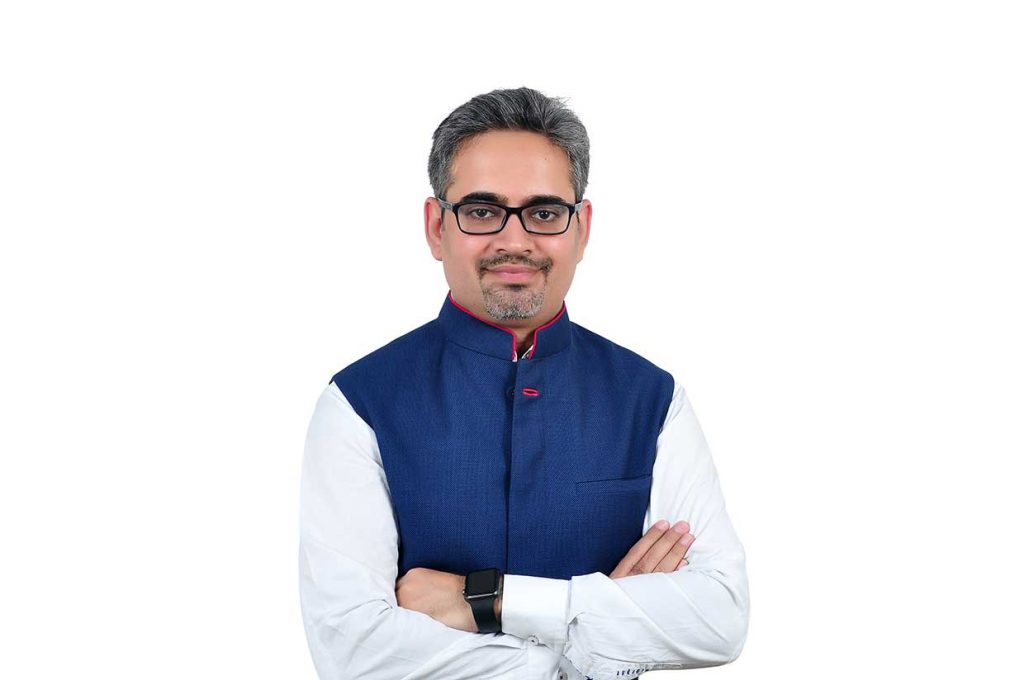
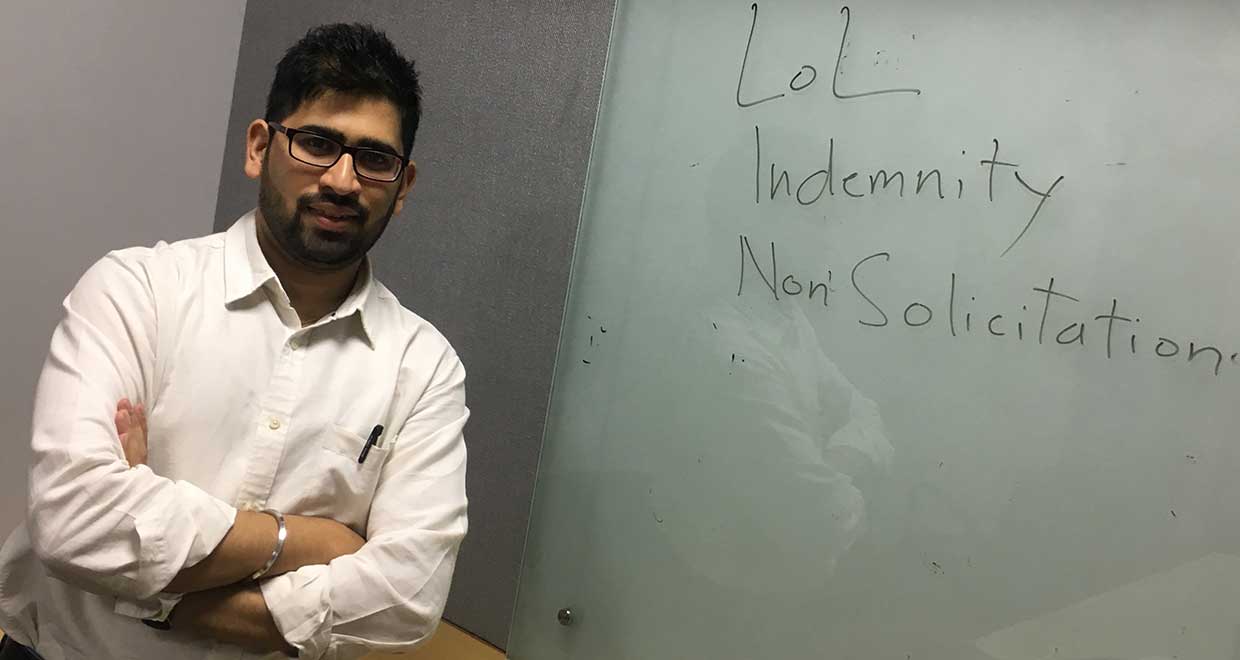
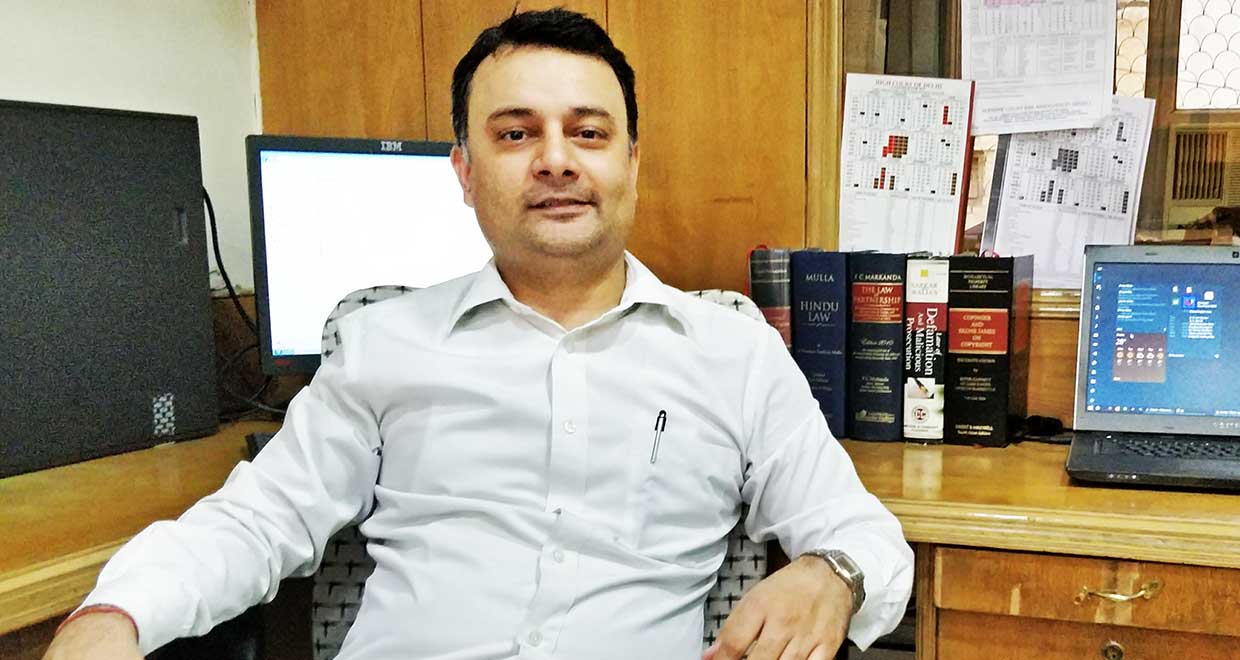
  • Dushyant Mahant, Founding Partner, Mahant and Mahant Advocates on the initial hurdles faced in setting up an IPR firm

    Dushyant Mahant, Founding Partner, Mahant and Mahant Advocates on the initial hurdles faced in setting up an IPR firm

    Dushyant Mahant completed his law graduation from Law Faculty, DU in 2004. He later on went to pursue his LL.M. in IPR from University of Queensland, Australia. His area of expertise lies in IPR. Before setting up his own law firm, he had worked with Hemant Singh for more than two years and then with Chander Lall for two and a half years. He worked in IPR litigation where both the chambers provided him with amazing opportunities.

    Currently, he represents clients in copyright and trademark litigation, commercial disputes pertaining to arbitration and company cases. He also does a considerable amount of pro bono work in High Court and District Courts.

    In this interview, he talks to us about:

    • The importance of mentors in the legal profession.
    • How important grades are in shaping your legal career.
    • The ideal time to pursue an LL.M.
    • His inclination towards IPR Law.

    How would you like to introduce yourself to our readers?

    A lawyer who enrolled in a law school to ensure that no external factors would decide my fate.

    Why did you choose to pursue a degree in law?

    After graduating in 1998, I did float an idea to pursue law but was vehemently opposed by many. Seems like outside the legal fraternity, the profession then was, now also but to a lesser extent, is viewed with less excitement and future prospects. Although I was assisting my father in our family business, I was fascinated with the stock markets since school days. After my graduation, I assisted a National Stock Exchange member for online transactions and portfolio management. I also did a training course in Delhi Stock Exchange in the late 2000 for Derivative and Future Trading since those were the new instrument then.

    In March 2001, a political turmoil crashed the stock markets for consecutive weeks affecting millions of people by eroding their savings. I, then, chose to become a lawyer to manage my career my way. All this could happen because of the immense support of my parents. To them, initially it was more difficult to accept that their stock market trader son had suddenly become a student again. I will not say that those 3 years, from 1998-2001, were wasted; I would have been three batches senior to my peers today.

    What subjects did you take particular interest in during your law school days?

    Constitution, IPR, Criminal Law, Taxation, Muslim Law and Personal Injury Law (Tort) were my favourite. Some were forgettable. Never knew then, can’t figure out still, why we were taught those.

    How did you develop an interest in IP Law?

    Since a very young age, I had a weakness for brands and am loyal to quite a few of them. Selection of a particular name / logo for a brand fascinates me. Since I wanted to practice IP litigation, I was resolved to do an LL. M. instead of a short term diploma course though they are also good. In 2004, when I was about to complete my LL. B., I used to have frequent discussions with a couple of my senior professors, legends in the legal academia, like Mr. B.B. Pandey, Prof. M. P. Singh and Prof. Rajiv Khanna. After much deliberation and research, I finally shortlisted University of Queensland, Australia to do my Masters in IPR. Though I was focused only on US law schools, it was only through sheer guidance I was able to make the best choice for myself.

    What were the activities, academic or otherwise, that you undertook in your law school days?

    Legal Aid Clinics- where we all used to assist Mr. B. B. Pandey. We used to visit slum dwellings and arrange for pro bono work for their requirements. Sir used to take students to Tihar Jail as well for providing assistance to under trial. I still do a considerable amount of pro bono work. Mr. Pandey trained us to help the needy who cannot afford help.

    Who was your mentor, or main source of inspiration?

    In law school it has to be Mr. B. B. Pandey. Since I had joined law school after a stint in commercial world, I made sure to spend entire time in the campus-be it the library or even some lectures which were not so interesting. My attendance was always above 90% and it was always a point of ridicule among friends who were frequenting multiplexes and nearby markets during classes. Since first semester the affection which Sir showed helped all of us greatly.

    What kind of internships did you engage in during your student years?

    I was a unique student. I did no internships whatsoever. Since I am not from a family of lawyers, finding a good lawyer for internship was not easy. No offense but the law school was not of great help in this regard as well for making students busy in great chambers. Without wasting time then, I kept myself busy in law school’s library, a habit which helped me so much in my LL. M. days as well. I lived in Civil Lines, quite close to the law school. Even if the classes got over by 1 PM, I would go home, have my lunch and come back to be in the library till closing the time, daily. It surely improved my reading, grasping and research skills which help me, even today.

    What factors in the CV help a student in seeking admission in a premier university offering an L.L.M program?

    Grades for sure. If a senior professor, who is known abroad can put in a good word then the student is more than lucky. I was lucky enough to be endorsed by Mr. Pandey and Prof. Khanna to UQ. My work during Legal Aid Clinic was also a highlight in my resume. You can never know what clicks. Nowadays, many people do internships with Justices and I am confident that it really bolsters a resume.

    How important are grades, in your opinion?

    Here is the thing. In my first semester, I was a bit disturbed as I did not score well even in certain subjects where I had written fifty one case laws. I spoke to some of the senior professors. Result of the discussion was that if I kept my practice of writing dozens of new and old case laws, grades would not be forthcoming. Precise stereotype answers were the best choice. I chose the road less travelled. Though it also depends on the person checking the papers. I remember my friend Amit Kataria was specially called by a professor since his answers on Environmental Law were phenomenal. I wish there were more teachers like that.

    Job in the top notch firms is available to good grades from good law schools. But grades alone cannot make you excel in those conference rooms and court. I will always advise sharpening research and presentation skills, grades are secondary.

    Which is the ideal time to do an LL.M?

    Once a person enters the profession, she/he will take time to get accustomed to the environment. After spending a year or two in the office/courts, it is really difficult to become a student again. Economics is one factor. Mind-set is another. I, therefore, did not want to get into the same cycle again. I left for UQ immediately after my results were out.

    What motivated you to establish your own law firm? Describe the experience and the initial hurdles (if any).

    After coming to India, I initially joined Mr. Hemant Singh for more than two years and then Mr. Chander Lall for two and a half years, for IP litigation. Both the chambers provided me amazing opportunities for arguing cases on my own. Mr. Hemant Singh is an excellent lawyer in the promotion and training of juniors. Mr. Lall taught me how to argue a case in different circumstances.

    After 5 years in these two impeccable firms and clearing my education loan, I had two options: Either to continue in Lall & Sethi as the litigator or to set up my own small shop round the corner with no savings even to setup a website.

    In this, the credit goes to my wife, Shivani, who is a lawyer herself. Just like my parents supported me for 4 years during my law school days, I needed the same support from Shivani for my private practice. Shivani took a sabbatical from her own good litigation career to manage ourschool going kids and home so that I could focus on work, at unearthly hours at times.

    Initial hurdles were of course fluctuating income each month, some months going better and some worse than previous. Gradually situation improved and after seven years as a private practitioner, with a team of now 5 lawyers with me in 3 separate offices and two chambers in Delhi, I am quite content with my decision to be out of a typical law firm grind. I am handling IP litigation for a couple of big brands and assisting five law firms where I appear for their clients in courts. I am able to attend variety of cases now–like arbitration and criminal matters. I also represent Competition Commission of India in High Court and NCLAT.

    Even in this phase, for guidance, I regularly meet up my lawyer friends like Manu Minocha and a dynamic young lawyer on his own, managing a team of lawyers at Lall Lahiri & Salhotra, Rahul Chaudhry.

    As Ching Chow said, “An hour conversation with a wise man is worth years of study.”

    Do you provide internships at your firm? What are the qualities looked for?

    I do provide internships. I do not look for any particular quality. You cannot understand a law student completely through two A4 sheets. After meeting, I make the intern completely relaxed and focus on researching as many case laws as she can on various propositions. It not only helps her improving her research skills, also prepares her for taking best approach when facing similar cases in future.

    If given an opportunity, what would you do differently in your career journey up to this point?

    I would not change a single thing I have done so far in my legal career. If I was unhappy about a particular thing/format of working/attention to billing hours, once upon a time, that unhappiness is the reason I am currently able to enjoy the attention I give to each client now spending non billing hours at times. We are in service industry. My time is a commodity but I am not. At the end of the day, not spending sufficient time at home cannot be considered as a great career choice. Later at a point of time, when a situation arises where a big law firm hires me and my team, I will surely look for a working culture where I can cater to my family as well.

    An unhappy lawyer can never be productive.

    Students should avoid running after big-shot firms so early in their career. These firms are excellent but it is easy to get disoriented among so many lawyers in a particular floor all chasing their billing for a particular target. If one has an inclination towards litigation, not joining a trial lawyer in the beginning could be fatal. In big firms, focus is on big billing, which is understandable considering the expenses they have to meet and a face to present. However, the mentor to train you for court craft might not be able to devote so much time-since she/he is also on a billing clock.
    Is there any other suggestion you would like to give to our budding lawyers?

    Read. Write. Blog. Tweet. Make sure your interaction is in a far bigger sphere than just lawyers and Judges. We need to be aware about everything to some extent. Never forget that in a courtroom, unless the Judge is upset about something, wit and apart from-legal knowledge are essential requirements. A light moment goes long way.

  • Sanjeeth Hegde, Partner, BananaIP Counsels and his diverse working experience in both US and India

    Sanjeeth Hegde, Partner, BananaIP Counsels and his diverse working experience in both US and India

    Sanjeeth Hegde graduated with a Juris Doctorate from the University of New Hampshire School of Law in 2004. Thereafter, he went on to qualify for a Masters in Intellectual Property, Commerce and Technology (MIP) from the same institute. He is a Partner at one of India’s leading IP consultancies, BananaIP Counsels, where he heads the licensing, commercialization and also IP for start-ups practice. He regularly counsels clients such as Samsung, Mahindra & Mahindra, Yash Raj Films, IIT Madras and start-ups out of IIM Bangalore. He is also the co-founder and Managing Partner of the BIP Group, a technology transfer and IP commercialization firm.

    He is entrusted with the responsibility of client engagement, client relationship management, some aspects of operations such as HR, Marketing and IT for the firm.

    In this interview, we speak to him about:

    • The differences between the working environments between the US and India.
    • His role as Managing Partner of the BIP Group.
    • How to avoid a decision paralysis in career options.
    • The importance of mentors in the legal fraternity.
    • The key attributes that one must develop in order to excel as an IP lawyer.


    Hello Sanjeeth, how would you introduce yourself to our readers?

    I consider this interview by SuperLawyer to be a great opportunity to talk about my somewhat unique legal background.  I’m a Senior Partner at BananaIP Counsels (BIP) where I focus on IP licensing, commercialization and strategy.  All of my higher education has been in the US, including my Juris Doctorate, which after completing I worked for several Fortune 500 companies before returning to India.  I’m passionate about teaching and hope to share some my experience with SuperLawyer’s readers.


    Are you a first generation lawyer? What inspired you to take up law as your choice of career?

    Yes, it is true that I am a first generation lawyer from my family.  I happened to relocate to the US during my school years.  Being raised in the US, the two most respected professions that you learn to aspire towards are Medicine and Law.  In fact, I went to college to pursue Medicine but within a short time realized I wasn’t cut out for the rigors of medical school in the US.  So the next best choice, Law. I foolishly left believing law school would be easier.  I was in for a big surprise.


    How would you describe your time at New Hampshire School of Law?

    I pursued my Juris Doctorate from the University of New Hampshire School of Law (then know as Franklin Pierce Law Center), and a Masters in Intellectual Property, Commerce and Technology.  Law school in the US is three years after your graduation.  I found the first year, when the foundation courses in law are taught such as Contracts, Torts, Civil Procedure, etc. to be incredibly difficult.  But as the years progressed I became more comfortable and started to excel.  At my law school senior students are chosen to assist professors as Teaching Assistants.  I had the privilege to be a Teaching Assistant for courses such as Technology Licensing and Alternative Dispute Resolution.  I was a Member of the Licensing Executives Society an intellectual property club and also served as the President of the Indian Law Student Association.


    What is your advice to students to avoid a decision paralysis in career options?

    I strongly believe that nothing beats practical experience.  One of the biggest weaknesses that I find when hiring new law graduates is legal analysis and writing.  Our law programs unfortunately do not adequately prepare our law graduates for the legal profession’s realities.  First, I would advise students to take maximum advantage of internships, not hop from one month internship to the next, you can hardly learn anything in a month.  Pick a firm or an attorney who is willing to invest their time in you and spend at least three month with them.  If at all possible return to the same firm for additional internships as you progress through law school. This progression in your legal learning and experience will pay rich dividends as compared to multiple one month internships.  Second, I would tell students that a post graduate degree such as an LLM immediately following your basic law degree absolutely doesn’t make you any more attractive a hire than a basic LLB graduate.  Grab a job after graduation even if on an apprentice basis and get the necessary exposure to various areas of practice.  After a couple of years you’ll have a good sense of what specialization you like and would like to make a career out of, then pursue a full time, or my recommendation, a part time graduate degree to specialize.  Why part time? Unless you get admission into a top graduate program either in India or abroad, pursuing a full time program at the cost of work experience adds almost no value to your resume.  So if you are one of those who isn’t lucky enough to get into a top graduate program, then continue working and building your portfolio, and pursue a part time or distance education specialization degree in an area of your interest.


    What are the differences you find in the working environments between the US and India?

    Having lived abroad for many years I had this yearning to return home and make something of myself here. I did my homework and felt there were greater opportunities in India than anywhere else.  Though financially I would have to take a step back in the beginning, in the long run I could more than make up for it.  The sophistication and professionalism of the Indian legal practice improves year on year.  I don’t think it is fair to compare the conditions here with any other country as the working environment can vary drastically based on local circumstances.  India’s legal industry is in a constant evolution as a result of the fast growing economy and continues to reshape itself every day.  This is great for all of us in the legal fraternity as we are the ones determining what our environment looks like.  This however might not be the case in places like the US which as a developed economy has a more stable legal working environment.


    What inspired you to choose IP law as your area of expertise?

    My choices were either International Law or Intellectual Property Law.  I chose to specialize in Intellectual Property Law as University of New Hampshire School of Law (formerly Franklin Pierce Law Center) where I got admission, had one of the leading IP faculty in the world and was a highly ranked program.  So if you ask me honestly, though I went to Franklin Pierce to just study law, my interest in IP grew and I ended up doing a second degree specializing in IP, because I was surrounded by some passionate IP professors and fellow students.


    Tell us about your early professional experiences.

    The economy was quite poor when I was graduating and there weren’t many legal jobs to be had.  I was one of the few lucky ones in my batch, I ended up with a contract position with a large multi-national organization working on financial securities though I had no background in this area.  You had to take what you could get.  Luckily within a few months I was able to move into a full time position with the same organization working on IT and technology licensing.  This started my career and I decided to focus on this area for the first several years.


    How important is to have a mentor or guide during the formative years of one’s career?

    Unfortunately I did not have an appropriate mentor during the formative years of my career.  I’m not sure now, looking back, if I just couldn’t find one or if I was not open to having someone as a mentor.  Nonetheless, it is very critical to have someone play this role in a young lawyer’s career as the journey can be professionally and personally complicated.  During the initial years of my career my primary focus was financial advancement.  I was constantly looking for the next opportunity that would pay me more.  This I realize now was at the cost of some good jobs, with good bosses and colleagues, and great learning opportunity.  Nobody was there at the time to tell me this. When I mentor young attorneys or students today, the first thing that I ask them to do is to choose the right boss and not chase pay.  If you learn the right things in the formative years of your career then pay will automatically follow.  Be patient.


    On what parameters do you choose the projects you work on?

    My focus areas at BananaIP Counsels (BIP) are IP licensing, commercialization, and strategy.  This applies to various sectors such as Media & Entertainment, IT/Software, E-commerce and Manufacturing.  We have a very collaborative approach at BIP and a flat hierarchy.  It isn’t uncommon at our firm to have our associate attorney’s lead projects with support from Partners unlike some firms where the Partner is always at the front.  Therefore a good amount of my time is spent on mentoring associates on projects rather than actually working on them.  I do consciously build a specific body of work and this is dictated by what our clients ask us.  The last few years the sophistication of IP in the Entertainment and E-commerce industries has drastically increased and we at BIP have made the conscious effort to up-skill ourselves to meet the demand and capture the opportunity.


    What are the roles and responsibilities that you are entrusted with as a Senior Partner?

    Most people assume that as an attorney you spend all your time on researching, writing and advising clients on legal matters.  That is partially true.  I spend about half my time on client matters. The other half, I have been entrusted with the responsibility of client engagement, client relationship management, some aspects of operations such as HR, Marketing and IT for our firm.  For me it is a balancing act between client projects and operations, one cannot be ignored for the other.


    Could you share with us some of your experiences from the high profile entertainment litigations you have worked on?

    We at BIP have had the opportunity to represent and advice some of the leading film studios of India.  In their business of content creation and monetization it isn’t uncommon to deal with mis-use and infringement on a daily basis, especially with the prevalent options available to infringers through digital media.  Litigation is a very small part of our work in the Entertainment industry; most of our efforts go into contracts as related to engagement of talent, licensing, merchandizing, distribution, and the provision of legal opinion.


    What are the challenges you have faced in building up your career as it stands today?

    IP is an evolving area of law in India and has gained prominence over the last decade.   When we started out we were somewhat ahead of the times, there wasn’t much of a demand for our specialized legal services.  However in time, we have come to be recognized as one of the pioneers of IP in India.  It has taken a lot of effort, and we have probably spent equal amounts of time in educating the client and industry about IP, as much as working on their projects.  Over the next five years I see myself focusing further on areas such as Entertainment and E-commerce and building a steady set of key clients for this practice.  I also see great opportunity in IP valuations and commercialization and this is an area that I will dedicate time to exploring.


    What are the key attributes that one must develop in order to excel as an IP lawyer?

    IP has the ability to transcend beyond mere interpretation and application of the law.  The commercial and strategic elements of IP practice in my opinion play a larger role.  For example, in a software licensing deal, an IP lawyer has to not only think about what laws to apply to the transaction, but also consider how best to get the business deal through without being a legal show stopper.  For many IP lawyers looking beyond law becomes a challenge.  I fortunately through my first few jobs had the role of a deal maker rather than just a lawyer.  As a part of these roles I had to learn to represent an entire organization’s requirements, from Sales, R&D, Finance, and Legal while negotiating and putting win-win technology licensing and collaboration deals in place.  I still rely heavily on these skills in my practice today.


    How has your experience been as a visiting faculty at Alliance University and IIM Bangalore?

    Based on my experience of having taught IP at various law schools and having hired many law graduates, I would say our legal education should get a little more practical.  There should be a stronger emphasis on teaching students legal research and writing as well as create greater opportunities for first-hand experience.  As I had addressed in a previous answer, I had indicated that multiple one month internships, which is the norm in Indian law schools, practically serves no purpose other than getting you to see the nice chairs and tables at a firm, and before you know it, the internship is over.  Rather, students should be given the opportunity to intern for a minimum of three months at the same firm or company during each year of law school.  Secondly, law schools should create law clinics, which are credited full term courses in areas such as IP or Criminal Law, etc…  Clinics are led by a professor and the students would work as associates managing real cases on a pro-bono basis.  I was lucky enough during my law school days to counsel real clients as a part of my IP and Commercial Transaction Clinics.  Yes, I do have plans to spend more time in academia once certain goals that we have been set for BIP Counsels are achieved.


    How do you manage to maintain a work-life balance as a busy legal professional?

    It becomes easier to achieve work-life balance when you gain some seniority in your profession.   If you don’t break away from thinking about work during some point in the day, for example I stop checking work emails once I reach home in the evening, over time you tend to get worn out and your interest in your work starts to diminish.  These days however it is very difficult to achieve this because of smart phones where you are constantly connected and always reachable.  Sometimes I just make a conscious decision not respond to an email or answer a call when I know that it can wait till tomorrow.


    How do you keep yourself abreast with the latest legal developments and industry news?

    This is a very important aspect of the legal profession, the learning can never stop and if it does you are no longer of value to your clients or your colleagues.  We at BIP Counsels address this in a couple of ways, we actively teach at leading institutions, and we regularly write and publish.   Teaching forces you to keep up with a subject through research and preparation of course materials for smart and inquisitive students who will keep you on your toes.  We also manage one of the world’s top 10 IP publication’s, Intellepedia – IP News Center , where we actively write about IP matters and news.


    What advice would you like to give our readers?

    Your legal career is a marathon and I can guarantee you it will never go just as you planned.  Be flexible and open to new opportunities.  Remember the legal profession in India is still evolving, and the demand for qualified legal professionals is constantly increasing.  We have more options today beyond traditional practice.  Be open to in-house positions, LPOs, academia and others.  The first five years of your legal career should be dedicated to learning.  While a decent salary is very important please don’t make it your primary priority in choosing a job.  In the long run, the bosses and colleagues th

  • Sumit Wadhwa, Partner, IP Litigation, Lall Lahiri & Salhotra on extensive work experience in IPR related issues

    Sumit Wadhwa, Partner, IP Litigation, Lall Lahiri & Salhotra on extensive work experience in IPR related issues

    Sumit Wadhwa graduated from ILS, Pune in 2007. Initially, a B.A Maths (Hons.) from Shaheed Bhagat Singh College, he firmly believes that solving problems, either legal or mathematical is all about using logic and a reliance on logic to solve problems and address issues is crucial in any field. Sumit started his career with Lall Lahiri & Salhotra (LLS) as an Associate in the Prosecution Department and after a year moved to the IPR Litigation and Enforcement team of the firm. He was promoted to Head IPR of the Litigation Department in the year 2015 and later to Partner – IP Litigation

    In this interview he talks to us about:

    • His experience for more than ten years’ in the IP law
    • How with your hard work you can achieve your dream
    • Work ethics which are indispensable for all lawyers in their practice
    • The importance of internships for a law student
    • The discipline of maintaining a work-life balance


    How would you introduce yourself to our readers?

    I am an IP Lawyer, based out of New Delhi, working with Lall Lahiri & Salhotra (LLS) with more than 10 years of experience. I believe that if you work hard, you can achieve your dreams.


    Tell us about your experience at law school?

    The time I spent at ILS was a memorable one and also exceedingly instructive and enlightening. It gave me the tools to become a lawyer, able to look at an issue from differing perspectives and has instilled in me a work ethic that I think is essential for all lawyers in their practice.  During my three years there, I also got the opportunity to meet and interact with people from different cultures and backgrounds, which played a significant role in broadening my outlook and perspective.


    Having done Honours in Mathematics, how would you like to describe your transition from mathematics to law?

    I had decided to pursue Honours in Mathematics but was not sure what will I do after finishing the course. After my last year results, I was not quite clear if I wanted to do Masters in Mathematics and thereafter PhD in Mathematics. The uncertainty also stemmed from my underlying interest in legal studies. Since my family was in the business of law books and my brother was also pursuing law at that time, it did seem like a natural trajectory for me to take. The decision was made easier because my exposure to legal and judicial studies had existed since childhood. I decided to pursue Law and got admission at ILS Law College. While both the courses i.e. Mathematics and Law are totally unrelated, over the course of my time in ILS and later at LLS, I have come to believe that solving problems, either legal or mathematical is all about using logic. I believe that the take away here is that every person does not pursue a fully charted course in their lives and one must be open to making changes and adapting to circumstances. I am quite glad that I made this change since my earlier studies gave me a logical bent of mind and clarity of thought that has helped me in my legal work and also allowed me to pursue the field where my aptitude is more suited. I would advise all students to consider their own interests and if a change is called for, then they should not hesitate in making those changes.


    How do you think your degree in mathematics have helped in your law career?

    As I mentioned earlier, a reliance on logic to solve problems and address issues is crucial in any field. I am of the view that the study of mathematics in which you have to solve problems using deductive logic is excellent training for a lawyer. There exist methodological devices which are used in mathematics that are excellent mental training for addressing issues which correspond to those used in the application of the Law. The ability to look at the big picture while also being able to methodically address smaller components of a problem has been useful to me in the practice of law.


    What all law subjects did you find interest in law school?

    I found the following subjects interesting during my Law course-

    • Intellectual Property Rights
    • Code of Civil Procedure
    • Indian Penal Code
    • Family Law

    I was the Topper in Family Law and was awarded – Shri. D.B Bhopatkar, Certificate; Shri J.R. Gharpure Certificate and Principal Pandit Prizes for scoring highest marks in Family Law-II in LL.B at ILS Law College for Pune University in the year 2005-06. I was also honoured with a gold medal for scoring the highest marks in the subject Civil Procedure Code by the University.


    How did you take a decision to pursue a career in IPR? What in your opinion should a law student keep in mind while choosing a particular domain of law to pursue a career in the same?

    I was fascinated with trademark law. Particularly when you are studying IPR, case studies about different brands and their protection strategies can be very interesting. I found that IPR, which encompasses so many aspects of business and legal areas, allows for a wide range of issues to be addressed and while allowing for specialization, also provides new avenues for challenging one’s mind. This became quite clear during my internships with some of the best IPR law firms. Consequently, I decided to practice IP law and also did a Post Graduate Diploma in Intellectual Property Rights, from National Law School of India University, Bangalore.

    I believe that the student should try to do as much internship as possible while pursuing Law. The internships should be done with Lawyers/Law Firms practicing different fields of Law to obtain maximum exposure to practice in various fields. This will enable a student to make his/her mind about the specialization that attracts that individual. Additionally, one must always keep factors like personal aptitude and interests in mind.


    What is your opinion on grades at law school? Many law firms and organizations look for innovative people and the yardstick they use for short listing people for the job in their organization is the marks. Do you think the system is flawed?

    The grades/marks that a student obtains at law school can be immensely helpful to organisations to ascertain how well the student has studied /knows about the subject. Therefore, such marks and grades are important and cannot be discounted. Having said that, I also believe that these marks are not the only indicators of a student’s merit and there are various factors that need to be considered when selecting a candidate.  If anything, marks or grades should be lower in an organization’s order of priorities when looking at a law student.  Internships are crucial to a student’s resume and the extent of practical knowledge that a student obtains from those internships as well as nature of those internships is vital in selecting a student. Similarly, extra-curricular activities undertaken by the student are very important indicators of certain qualities like initiative, hard work and problem solving, all of which are very relevant criteria for a lawyer. The other important factors that a law firm particularly must prioritize over marks and grades are the ability of the student for rational thinking and problem solving as well as ability to cooperate and work as part of a team. Thinking on your feet is also equally important for a good lawyer and one must be able to address hypothetical problems of law in a cogent manner during an interview.


    What all activities did you take part in your law school?

    I participated in Legal Aid programmes where we had gone to villages and held legal awareness programmes to educate people about their rights.


    Please share with our readers about your experience of transitioning within LLS from an Associate to a Partner of the firm.

    It has been a great working experience at LLS. I have worked under the leadership of Mr. Rahul Chaudhry, Managing Partner; Ms. Anuradha Salhotra, Founding Partner and Ms. Veena Poolakal, Partner.  I have learned a lot at this firm and believe that I truly became a lawyer by working at LLS. Law school can of course give you the tools and education that you need but it is only when you start working that you realize the difference between an academic study of the law and its practical application. LLS is such an organisation for me where I have been allowed to grow and learn. LLS provided me with a team of seniors who are leaders in the field of IP Law and as a new lawyer, I was able to gain insights into the workings of this field of law through their work.

    Over the years, I have had the chance to work at all levels in the team, starting as an associate. As a result, I have been able to understand the scope of responsibilities at each level and the firm has equipped me to handle work with a degree of understanding that I think I would not have otherwise obtained. Having begun my career here, I am able to work in a manner that is in line with the firm’s philosophy and work culture. The importance that the firm places on client satisfaction and flawless work are now also ingrained in my work ethic which echoes the firm’s.


    What all internships do you think a law student must undertake during their time at law school as a student?

    As I mentioned earlier, internships are a vital part of legal education and are also important when considering a candidate for a job. A Law student should undertake as many internships possible while pursuing law and in as many different fields of Law as possible. Even if you are sure of the field of law you want to pursue, I believe obtaining experience of and exposure to other practice areas allows for a student to become better-rounded. The nature of internships is also important and if you want to pursue a career in a particular field then you must try and obtain experience in various aspects of that field. For example, if you want to pursue a career in IP Law, obtain a variety of IP Law experience in internships, such as working on copyright issues, trademark prosecution or litigation. It is also important to intern under Trial Court lawyer to understand the court procedure, functioning, arguments, etc.


    What is your average workday experience like? How do you maintain a work-life balance?

    Work-life balance is important to maintain in order to ensure long term efficiency in your work and also for self-satisfaction with one’s professional life. Since I work in the litigation team and a large part of the day is often spent in court, I have always chosen to live closer to office to reduce time spent in commuting to and from office. This has allowed me to be able to work efficiently while at work but also be available to my family when required.

    For any successful lawyer, certain amount of discipline is also essential. So, time management and prioritising work is vital. Being a litigating lawyer, a typical work day for me starts around 9 at the office after which a few hours are also spent at court. I have found that the scope of my work is quite varied and I work on multiple types of legal actions, such as trademark counterfeiting, IP infringement actions, advertising related matter, customs – registration and enforcement, domain name registration and enforcements. As a result, every day can bring a different challenge and the work is always interesting. As a partner, I also spend time working with members of my team and am fortunate to have seniors who are available to advise my team and me whenever we need any assistance.


    What is your opinion about the concept of mentor and mentee in the legal fraternity?

    In my opinion, this is one of the most important aspects of an individual’s grooming and subsequent growth. Just the way even top professional players (including world’s top most ranked players in Tennis, Badminton, or the teams in football, cricket, hockey etc.) keep experienced coaches, the mentor is an all-time friend, philosopher and guide to be revered as well as a fall back option to seek clarity in complicated matters or conflicting interests and to prevent burn out etc.


    Tell us a bit about the works that you have done so far in the firm.

    I started in the Trade Marks – Protection department of the firm wherein I have drafted replies to the examination reports, attended hearings etc. Thereafter, I was shifted to the Litigation department of the firm – wherein I have undertaken handling of litigation matters, involving the drafting of the pleadings/petitions/applications, attending hearings, conducting civil and criminal raids, briefing seniors, filing domain name actions before the WIPO and .IN registry, Customs applications. I have also done few non IP cases relating to recovery of money, Debt Recovery Tribunal matters.


    How do you stay up to date about the recent developments in all the fields where you work and have an interest?

    I regularly read PTC (Patent Trade Marks Cases) journal, cases on the subject on Manupatra, Linkedln Updates, Spicy IP and other internet websites which provide latest updates on various aspects of the subject. In particular, I try to keep track of some of the most important cases while they are taking place, especially those that contain issues of practical importance or important issues of law.


    What advice or suggestion would you like to give to our readers, who are predominantly law students?

    Pursue your dreams and work hard with full dedication, you will be able to accomplish your dreams. I believe there are no short cuts whether it is in your legal studies or in practice. The legal field involves a continuous study of law and keeping up to date on developments so one must develop a habit of reading new cases and legal precedents, no matter how busy you might be. As an aside, I would like to mention that there can be no substitute for a thorough reading and analysis of all aspects of whatever issue you are tackling, whether at college or in your profession.

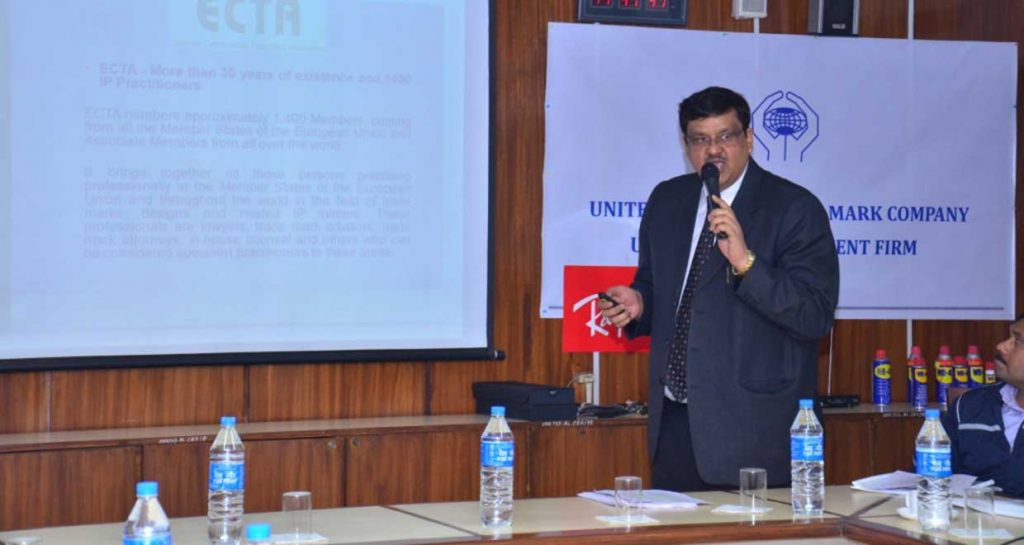
  • Shravan Kumar Bansal, Senior Partner, United IPR on building a successful practice in intellectual property law for over a span of two decades

    Shravan Kumar Bansal, Senior Partner, United IPR on building a successful practice in intellectual property law for over a span of two decades

    Shravan Kumar Bansal qualified in law from the Campus Law Centre, Delhi University in 1989. Shravan is a science graduate in the field of Botany, Zoology and Biotechnology and armed with a degree in Law and substantial expertise in patent litigation he is a renowned expert in IPR litigation, counterfeiting and Anton Pillar actions.

    With experience spanning over two decades in litigation he also has expertise in prosecution and enforcement of patents, trademark and copyright cases. He advises clients on diverse aspects of intellectual property including ownership and enforcement matters in India and abroad. He is on the panel of number of Indian as well as international companies and trade-oriented organizations. He is an active member of accredited International IPR organizations and has to his credit several landmark IPR reported judgments passed by different courts in India.


    In this interview, we speak to him about:

    • His journey as a litigating lawyer
    • Importance of IPR in the contemporary times
    • The task of taking over family legal practice
    • His experience with international IPR organisations and landmark judgments in India


    How would you introduce yourself to our readers? Do you come from a family of lawyers?

    I do come from a  family of lawyers, and I belong to the third generation of lawyers in my family. My grandfather was a leading taxation advocate and the Intellectual Property practice was started by my father in 1954. Practising solely in the field of IP Law since 1954, we happen to be one of the first full-service IPR Law Firms in the country dealing solely and dedicatedly in IP Law.


    What motivated you to pursue law after pursuing the sciences? How did you realise your interest in the legal field? How was your experience at law school?

    Science was a subject of personal interest to me as I have always maintained that studying science opens one’s mind to greater curiosity and spirit of inquiry and develops analytical ability in a person which really helps a person in any and all spheres of life and profession. Studying science at the graduation level in the field of Botany, Zoology and Biotechnology has really helped me in Patent Litigation matters and Patent Filings/Analysis of inventions in my profession. My interest in the legal field developed when I was quite young as I was watching my father argue important matters in the court, which gave me a sense of passion and pride and made me want to follow in his footsteps. My experience at law school was one which is difficult to forget, having a great time with friends enjoying college life and reading interesting subjects of law at law school, followed by my daily visit to my father’s law chamber where I used to spend hours on endafter law school, learning the nuances of this profession.


    What piqued your interest in the field of Intellectual Property Law? Can you describe the relevance of this field today in context of domestic and international law?

    I believe that Intellectual Property Law is one of the very few domains of legal practice (apart from Arbitration Law possibly) which is truly global in its outreach and relevance. Criminal Law, Civil Law matters and other domains of the legal practice I believe are nationalized and localized in their approach and relevance; as such laws are limited and vary/differ from one jurisdiction to another. Intellectual Property Law, as opposed to these, offers a global platform for practice in terms of serving a global clientele for their brand protection and IP matters. This is one of the few factors about the IP practice which captures my interest and imagination.

    As to your question about relevance of Intellectual Property law in today’s scenario with respect to domestic and international law, I believe Intellectual Property law is one of the few domains in today’s time which is playing a pivotal role in shaping national and international polices of nations and legal structures at large. Intellectual Property law is intrinsically related to a country’s economy and commerce. The degree of protection which a country is able to offer to the industry in terms of the legal framework in place to protect and encourage intellectual property directly impacts the level of commerce and innovation taking place in the country, as well as the amount of foreign investment coming in. This is the reason why we can see a marked shift in the policy and intention of the present Indian Government which is taking huge steps in areas such as digitizing IP Registration processes, lowering the time taken to grant trademark, copyright and patent registrations by the government and promoting easier enforcement of IP rights through support of enforcement agencies like the Police, Customs and Courts.


    What are your views on the importance and necessity of higher education? What would be your advice to readers undecided about pursuing further studies?

    “Learning is a treasure that will follow its owner everywhere”, is what I believe. However, I do not believe that learning only comes from higher education such as a master’s degree or further higher studies. Of course a Masters Program or such other higher study programs do add to one’s skill set but so does practical experience in the profession and I believe that if one is armed with a basic bachelor’s degree in law in this country, he has ammunition enough to build on that through his own practice and practical learning experiences in the profession.

    I have seen instances of advocates benefitting from pursuing higher education and have also seen others benefit from using those years to excel and learn during  practice of the profession instead.


    Can you recall the first time you appeared in court in a significant matter? How did you prepare for this? What is the attitude of judges and senior lawyers towards young lawyers?

    In my opinion, the attitude of judges and senior lawyers towards young lawyers in India is highly motivating and encouraging as opposed to the general perception which exists, that the attitude is not very positive and embracing. I believe that if a young lawyer possesses the required legal acumen, is well read with his research and has a positive, accommodative and learning attitude, he would be well received by his colleagues and also by senior lawyers and judges.

    I do recall the first time I appeared in court in a significant matter – It was before the Delhi High Court in a Patent Infringement matter. I had prepared thoroughly for this and was lucky enough to have the relief granted in my favour.


    You have been involved in various landmark cases that have shaped the law relating to IPR in India. How did you prepare you arguments in cases where the law was silent?

    Yes, I do feel privileged to be a part of landmark cases which shape the law relating to this domain in India. Interestingly cases do crop up time and again where the law is silent on a complex situation of fact and for which the statue doesn’t really have a straight answer. I believe the rules of interpretation of statutes and borrowings from international jurispudence/case law come in handy in such situations and I have seen judges in my own cases rely on international jurisprudence and arguments based on suggested interpretation of statutes to grant reliefs in such cases.


    Can you tell us about some landmark matters you have worked on and how the court interpreted the point of law?

    Again, I feel privileged to have have had the honour of working on various landmark cases which have helped shape the Intellectual Property jurisprudence in this country through judgements of the courts in these cases. Some such cases are where the court recognized the rights of my clients in the shape trademarks of their products (non-conventional trademarks) for the purpose of enforcement on the basis of the wide use, reputation, goodwill and trans-boundary use of the marks, even when my clients did not have statutory trademark registrations of these marks. The court interpreted the point of law on the basis of the doctrine of passing off in trademark law.

    In a separate set of cases, the courts recognized the rights of my clients in the colour combinations used on their packaging for the purpose of issuing and injunction against the opposite party, restraining it on account of creating confusion in the market following the doctrines of trademark infringement, passing off and rights in trade dress and colour combinations.


    How are custom duties imposed on IPR? How does this tie to international trade law?

    (Shravan has worked closely with governmental authorities in relation to matters of customs enforcement for intellectual property in India.)

    It is true that my colleagues and I have had the privlege to work closely with the Indian Customs office in relation to enforcement of intellectual property at the borders. We have have been extensively practicing in customs enforcement & conducting capacity building training sessions on IPR laws with the customs officials of India across various land, sea and air ports in the country. India being a signatory to the TRIPS Agreement has an obligation to enforce Intellectual Property Rights at the Territorial Borders. In compliance with the said obligation, India came out with IPR Rules for Customs Enforcement in 2007 after which we were one of the first law firms to register our clients’ Intellectual Property Rights with the Indian Customs to facilitate enforcement. IPR enforcement is an integral part of International Trade Law as it helps in ensuring ‘fair trade’ which is one of the founding principles of the World Trade Organization (WTO) and one of the bed-rock principles guiding International Trade. This it ensures by filtering out counterfeit, sub-standard, spurious and harmful products at the territorial borders thus ensuring that legitimate commerce is promoted and countries are not dumped with counterfeit products which more than anything else, affect a country’s economy by lowering its duty collection at the borders and the investment environment as a whole.


    How significant have WTO negotiations and the TRIPS Agreement been in protecting and enforcing trans-boundary intellectual property rights? Has this interest been balanced with social and distributive justice that is significantly important to developing countries?

    I believe WTO negotiations and the TRIPS Agreement which brought about the origin of an obligation on member countries to enforce IP Rights at the territorial borders has been hugely significant in protecting trans-boundary IP Rights. Further, I believe that the enforcement of IP Rights at the borders has in fact resulted in greater social and distributive justice being served as the Indian consumers have been protected from spurious and counterfeit goods due to this enforcement regime and the Indian Government has also benefitted from prevention of loss of revenue resulting from tax evasion and lesser duties being paid by importers of counterfeit goods, which in my opinion is a boon for a developing economy like India.


    As a proponent of academia, do you feel that law schools produce socially relevant lawyers equipped to handle the real world practice of law?

    I feel this is an immensely relevant question and a topic which needs greater discussion across the industry and I am glad to answer this. Though I believe that law schools produce exciting talent in terms of the potential and energy that fresh law graduates possess, the real world practice does come down hard on everyone which is true not just for the legal industry but in any domain, profession or business. I believe law schools can consider increasing the preparedness they provide to youngsters on how to deal with and what to expect when they land in the real world practice of law, which can help fresh law graduates immensely. As far as imparting the correct information and skills is concerned, I believe law schools in today’s time are doing a great job, especially when you look at the practical exposure they provide in terms of a higher stress on internships, moot court competitions and other such activities.


    You are a member of several international IPR related organisations. What role do such organisations play in the development of IPR law? What role do you play in such organisations?

    I believe that the role played by international IPR related organizations in policy advocacy, development of debate and discussion on important facets of IPR practice and bringing the International community with its various stakeholders closer to each other cannot be expressed in a few words and the importance is huge, to say the least. The credit of the IPR practice today being a truly global practice goes to such organizations which have played an immense role over the years. I happen to be part of such International Organizations for over 3 decades now and share the honour of being one of the first few membership holders from India.

    It has been an honour for me over the years to be a part of and lead various high-level policy advocacy initiatives undertaken by such international organizations in the sphere of proposing policy/legislation change to governments of member countries as far as their IPR Laws and Enforcement Mechanisms are concerned.


    What are the skills that one needs to develop to become an effective litigator and how can students develop such skills?

    Command over the language, confidence to express/speak, presence of mind, ability to hustle and strong preparation of the case are the five skills which if mastered, in my opinion, are enough to become a great litigator.

    A litigating lawyer, apart from concentrating on pleading/arguments in the courts also has to set his office in order, ensure smooth client correspondence, case preparation and follow-up which means that any litigating lawyer has to have the ability to hustle and manage his time in a manner such that he is able to make the most of the time he has in a day.

    Presence of mind, amongst other things, involves reading the mind of the Judge and foreseeing/predicting through observation and convention as to what aspects of a case is a particular Judge more interested in on a general basis and preparing a strong case on such points accordingly.


    What are the challenges you have faced in building your career as it stands today? In this respect, how has your family legacy impacted your success as a lawyer?

    Though there are definite advantages of having a family legacy in the same profession, there are various challenges one faces in taking over the reigns of an entire law firm. Apart from focusing on my legal practice and research, I had the added responsibility of management of the entire firm and the human resources at my hand at a very young age. I faced the task of dividing my day meticulously and managing my time between focusing on my personal law research and litigation with managing the affairs of the entire firm and focusing on its growth.

    Apart from this, another obvious challenge which I believe everyone faces is keeping up with stiff competition. Though this is a common challenge faced by all, it is a challenge nonetheless, and one which keeps you from getting comfortable with your success and pushing you to strive to improve every day.


    What advice do you have for our readers who are primarily college students?

    I believe the time available on one’s hand when one is in college is highly valuable in terms of the information and knowledge one can gather and accumulate from different fields of law and the research one can do. I strongly believe that sincere research done on any point of law during law school definitely helps one later in the profession regardless of whether or not he/she remembers the entire research conclusion after so many years. What it does provide is a sense of confidence and familiarity with a point of law researched on albeit years ago which makes it easier for one to grasp and understand affairs during the practice years when the time available on one’s hand to spend on research is lesser and expectations with speed are greater. Therefore my advice to college students would be to put this time to the best possible use while of course experiencing the fun aspects of college life, which is also very important.


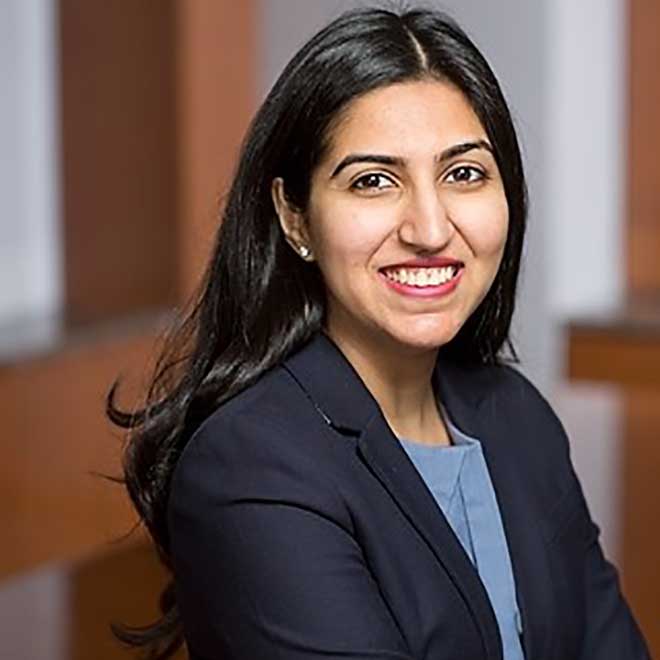
  • Shruti Chopra, Associate, Morrison Cohen LLP, on IP Law, and studying at Berkeley

    Shruti Chopra, Associate, Morrison Cohen LLP, on IP Law, and studying at Berkeley

    Shruti Chopra graduated in law from University of Mumbai, batch of 2011. She then went on to pursue her Masters at the University of California, Berkeley – School of Law, specialising in Law & Technology, Intellectual Property, Privacy Law, Media & Entertainment. She began her career as an Associate with a full service law firm in Mumbai, India focusing on Intellectual Property and Corporate law. Prior to joining Morrison Cohen, she worked at a social enterprise start-up with a focus on devising solutions to complex legal and business issues, and with a civil society non-governmental organization leading policy and advocacy efforts for the organization at the United Nations. Since being admitted to practice in New York, she has also provided pro-bono transactional and legal services to low-income entrepreneurs and start-ups through Volunteers of Legal Service.

    In this interview we speak to her about:

    • Pursuing the unique BSL LLB course at the undergraduate level
    • Studying at Berkeley
    • Her experience in IP law

    How would you like to introduce yourself to our readers?

    In my professional capacity, I am a dual-qualified corporate attorney and specialize in intellectual property, technology and privacy law. In my personal space, I am a food aficionado, who has a food blog on Instagram and love to travel.


    What is unique about the BLS, LLB course and how did it contribute to your career in law?

    The B.L.S, or the Bachelors of Legal Science degree, is similar to the Bachelor of Arts degree offered at most law schools. It is a great way to introduce oneself to the legal system without being overwhelmed with the intricacies of it. While the learnings of law school only lay the foundations of one’s career, the B.L.S course with its emphasis of subjects such as logic, legal writing and political science ensured a smooth transition to the L.L.B degree.


    What subjects did you take particular interest in during your law school days? 

    Very early on I knew that I wanted to do something in the field of intellectual property law. This was, in part, because I come from a family that is very serious about its movies, and because it was (is) a field of law that is still developing, allowing you to be part of the process. Because of this drive, and the lack of opportunities to study intellectual property law before the final year of law school, I went to Harvard University for a summer to study the basics of intellectual property and legal writing. This was certainly a turning point, both in terms of academics as well as extra-curricular activities!

    What kind of internships did you engage in during your student years which you feel were invaluable to you in reaching your current position?

    Unlike the norm at Government Law College, I never did semester or yearlong internships. Instead, I interned during the summer and winter breaks. While my first few internships were focused on getting a feel for corporate law, in my second year and onward, all my internships were focused on strengthening my background in different facets of intellectual property law. During the year, especially during my fourth and fifth year at law school, I worked as a research assistant to Madhavi Divan, who is an exceptional teacher and mentor. She was working on updating her books “Facets of Media Law” and the opportunity to contribute to her research is largely responsible for me heading to Berkeley for my LL.M., and for being deeply invested in new media and privacy law.


    What are your areas of specialisation in law? 

    My areas of specialization are intellectual property, technology and privacy laws. I selected intellectual property laws as an area of specialization in my second year of law school, and the rest followed as I made my way through law school and professional life. The most important factor, in my opinion, is finding something you are truly passionate about. A lot of people say that law is a very dry field, without much excitement. I beg to differ. If you look around, every aspect of our life is touched by law; it is about finding what excites you. For me, since I grew up on steady appetite of movies and television, I was always enamoured by the industry and always knowledgeable about it. Soon, with technology – whether it is mobile communications, software applications, social media platforms or user content – my horizon broadened. We spend so much our day working that it is important to find something that truly motivates and stimulates you, or you risk a burnout.


    Is an L.L.M absolutely necessary for a career in law? 

    The LL.M. degree is certainly not a requirement or necessity; it is, however, a good asset. My decision to pursue the LL.M. degree was based on three things – introduction to a different legal education system, access to people from diverse backgrounds, and the opportunity explore different subjects that didn’t exist in India at the time. I chose Berkeley since it was selective in the number of Indian students it enrolled, ensuring I would be interacting with people from different countries; I met people from 49 different countries. Berkeley also has a stellar faculty for intellectual property and privacy law.

    One should expect to benefit from an LL.M. if one has an open mind; the program will allow you to make friends that will last you a lifetime, expand your professional network, and widen your thinking and adaptability to different situations. The LL.M. program is not only a professional degree; if you allow, it can be instrumental in shaping who you are as well.


    Are there any commendable Indian institutions which you would recommend to a student pursuing an L.L.M, or would you suggest looking only at options abroad?

    Since the LL.M. degree is not a necessity, I wouldn’t recommend someone graduating from an Indian law school to pursue the LL.M. degree in India, unless of course if required to get into academia. The true value of LL.M. lies in its diversity of cultures, people and the law, something better accessed outside your own country.


    Tell us about your work experience at DSK Legal where you’d held the position of Associate.

    My experience at DSK Legal was absolutely wonderful. It was my first job after law school, and I couldn’t have asked for a better set of people to work with. For me, it was absolutely critical to work with people I could learn from, and working with Mr. Anand Desai ensured that. Even though my area of practice has always been related to intellectual property, and therefore everything from entertainment law to M&A transactions to trademark prosecution, DSK Legal gave me the opportunity to work on commercial litigation, to draft memos on companies act provisions, understand real estate transactions, and experience criminal trials. The diversity of experiences is important when you are new because it gives you the ability to view things in a comprehensive manner, and not in silos.   


    You’ve assisted The Walt Disney Company in the capacity of a secondee. What did your job here entail?

    My favourite childhood movies came from Rajshri and Yash Raj; I mentioned how films were integral to my childhood! That aside, DSK Legal gave me a multitude of opportunities to learn, and one of them was the chance to with the gaming division at The Walt Disney Company. My work here comprised of two things – helping the division comply with regulations and polices set up by the Burbank office (HQ) of the company, and advising the business and product teams on legal issues that needed to be addressed in new releases. This experience has stayed with me; it taught me the importance of the commercial aspects of a business when providing legal advice.


    Tell us more about Morrison Cohen LLP. How did you come to work here?

    My path to Morrison Cohen, LLP hasn’t been conventional – to say the least. Unlike most people, I moved to India after my LL.M., worked at DSK Legal for two years, and then moved back to the United States to take the bar exam and work here. Since I was transitioning between countries, I thought it was the opportune time to expand my horizons before heading back to law firm life. I worked with a social enterprise start-up and with a non-profit affiliated to the United Nations, while providing pro-bono legal services to small businesses, all before I began working at Morrison Cohen, LLP in New York. Once I was ready to move back to a law firm, I applied for a position with the firm, and less than six weeks later I was working as an Associate. The path was a long and winding road that involved varied experiences, lots of networking, staying relevant even while not being in the legal field, and a heavy dose of confidence in my abilities.


    What can you say are the notable differences in work culture in Indian and foreign/international firms?

    I don’t think I prefer one culture over the other – both have their pros and cons. The difference in working at a top tier firm in both these jurisdictions (and I would imagine over the world) is fairly minimal. However, depending on the type of firm you choose, your experiences can differ. For example, at a mid-size or boutique firm you will likely have more responsibilities. Obviously, the US being a more mature market, firms are more streamlined in the way they function, which makes day to day life a little easier. That said, Indian law firms allow you cross-over access i.e. a corporate associate can get experiences in litigation, or a real estate associate can work on a purely corporate matter; something like that would rarely happen in the U.S.


    Tell us about your current work profile as an Associate at Morrison Cohen LLP. 

    Since I work in the corporate team but specialize in intellectual property law, a regular work day is diverse. I could begin my day working on an intellectual property and technology due diligence for a corporate transaction, follow that with a trademark application filed with the USPTO, and end with drafting a privacy policy for a start-up. In between, there is working on commercial agreements, both standalone and for transactions. This diversity allows me the opportunity to understand multiple business types, and how aspects of law apply to each. As I said before, it is important to be excited about the work you do, and the assortment of matters ensures that it never gets boring!


    Where do you see yourself ten years from now? 

    My decision to become a corporate lawyer focused on intellectual property, technology and privacy was based on the fact that the industry is ever-changing, and ever-growing, and therefore, always challenging. While a decade ago people were coming to terms with the advent of social media like Facebook and user generated content like YouTube, today it has moved towards security and privacy concerns of big data, impact of blockchain and alternate currencies like bitcoin, and the importance of developing and monetizing intellectual property assets in business. Ten years from now I imagine the industry will still be as dynamic, and by association, my practice, as challenging and exciting. I see myself as a lawyer to individuals and businesses grappling to understand how the legal ecosystem applies to the advancement of technology.


    What is your message to our readers?

    As clichéd as it may sound, believe in yourself. You are always going to be your best advocate, and if you can’t believe in yourself, you can’t expect anyone else to. In our profession, trust and confidence is everything – only if your seniors, peers and clients trust you and believe in your abilities are you able to progress. Always hustle, get up and move ahead; there is no substitute for plain hard work. Lastly, don’t be afraid to reach out, to help and be helped – find mentors, be a mentor, volunteer your time, say yes to a challenge, and allow yourself to grow. And since I believe in practice what you preach, if anyone wants to reach out, I am happy to talk and help in any way I can – I can be reached at schopra@morrisoncohen.com.  

  • Nazneen Ichhaporia, Partner, ANB Legal, on IPR Law, and her diverse experience

    Nazneen Ichhaporia, Partner, ANB Legal, on IPR Law, and her diverse experience

    Nazneen graduated in law from University of Mumbai, in 2009. She is a Partner with ANB Legal since 2014, and heads the Private Equity, M&A, Intellectual Property Rights and General Corporate practice of the Firm. She has expertise in matters relating to venture capital investments, acquisitions of unlisted and listed companies, joint ventures, cross border transactions and structuring, and external commercial borrowings. Nazneen has, in the past, also been a part of various capital markets transactions like Initial Public Offer, Rights Issue and Qualified Institutional Placement.

    In this interview we speak to her about:

    • The Indian IPR regime
    • Her time as Partner at ANB Legal
    • Her experience thus far

    How would you introduce yourself to our readers?

    I come from a family of accountants. My family has not known lawyers for far and wide in our circles. My parents, just like their ancestors had instilled in them, have taught me the philosophy of ‘good thoughts, good words and good deeds’ which is the mantra I try and follow at all times (well, most times, so to speak).  I am the only child and hence have been pampered quite a bit. But that has never prevented me from working hard and going full throttle to achieve what I want. Right from my school days, and through college, I have been very good at academics as well as at various extra-curricular activities. I secured the 7th Merit Rank in Maharashtra State at the HSC exam. I was also the recipient of Maharashtra State Open Merit Scholarship for three consecutive years. I pursued a Diploma in German language from the University of Mumbai in 2004, and secured 2nd merit rank. I was also the recipient of various prestigious awards from my college, such as “Lights Of Podar Award” and the “Principal’s Special Award” in the year 2005-06, for outstanding contributions to various co-curricular and extra-curricular college activities.

    Can you tell our readers how the combination of B.Com and LLB has been beneficial for you in your career?  

    Actually, I started with the three years law course after completing my B.Com, as an interim arrangement while I studied and prepared for my MBA entrance exams.  However, within the first six months of starting the course at Government Law College, Churchgate, I was hooked on to it completely, and decided that this was exactly where I wanted to be, rather than pursuing any management or other degree. B.Com definitely gives you the edge over others, when you have to understand the commercials/financials involved in a transaction, specially an investment or M&A deal. And a better and quicker understanding is the key to help you negotiate and drive the transaction in a particular manner, with the shortest possible turn-around time.  


    Have you ever considered pursuing higher education? 

    In the field of law, your work is your education. I do not think even the most proficient lawyer loses the tag of a student till he/she hangs in his/her boots. Higher education is surely beneficial to a certain extent, but what you learn from practical exposure is what guides you best. To implement what you know and to put it to practice, giving the best way out to the client, is always priceless!


    What were your areas of interest in law school?

    Reading and languages have always been my passion. I have dabbled in both French and German during my college days, in addition to Hindi, Marathi and Gujarati, which I can understand and speak quite fluently. Before joining law school, I had an avid interest in debating, and had won quite a few competitions for my college. This continued in law school, by participating and helping to organize various moot court competitions. I was also an active member of the Social Service League. Pistol shooting is another activity very close to my heart, though I don’t get much time for it these days. I helped coordinate and form the pistol shooting team for our law college, which was ranked among the top five teams from the Mumbai University.


    How did you land your first job?

    One of my good friends, Jayom Shah, who had then recently started practising as an Advocate, helped me with getting my first job as an intern at Kanga & Co., under the senior Corporate Partner, Ms. Preeti Mehta. My work started initially with legal research, opinions and helping out with various legal audits/ due diligence for private equity and M&A transactions. This gradually progressed to learning how to draft and negotiate complex legal documents for such transactions. Since the transactions involved parties across India, I started travelling quite a bit for work, which in turn helped me become more and more independent, and also culminated into my present love for travelling and exploring new places.

    I had a brilliant team when I used to work in Kanga & Co. My colleagues are my friends even today. We discuss legal issues among other stuff and coming from diverse practise areas, help each other whenever need arises. I have a lot to thank this firm for, and am ever so grateful for having landed there with my first internship. The four years that I spent there, from 2007 to 2011, without any doubt, had a very significant influence on me and helped shape up my legal career, leading me to where I am today.


    Can you recall the first time you argued a significant matter?

    Well I am not a litigation lawyer, so my arguments have been in the form of negotiations for various corporate transactions. Having said that, I did appear quite briefly in court, when I did a short stint in the field of litigation with a senior lawyer, Mr. Hakim. He put great faith in me and coaxed me to appear in one of his matters before the Hon’ble Bombay High Court, which I did, and thoroughly enjoyed the experience.


    Can you describe the nature of your work as a young advocate? 

    I have already spoken on the type of work I handled as a young lawyer in the corporate department in Kanga & Co. Being an intrinsic part of various transaction teams while working here, and also getting the benefit of personal interaction and guidance from the Senior Partners of the Firm, helped me to get an inside edge, which I believe has taken me a long way. When I left Kanga & Co., I was again fortunate to be working with another brilliant lawyer, Ramesh Vaidyanathan, at his firm Advaya Legal. I got to learn a lot working with him as well, especially the subtle nuances of dealing with various types of clients, both domestic and international, and always delivering to their satisfaction. He has this amazing knack for simplifying and explaining complex legal issues, to arrive at the most effective/practical solutions, which I have tried my best to imbibe.

    My biggest challenge as a young lawyer, was to step out of my sheltered cocoon, and create an identity for myself, to stand out and hold my own right amidst a brilliant and dynamic set of peers and colleagues. This healthy competitiveness helped me in keeping on my toes during those initial years, and not slackening my pace, which I believe is crucial for all young lawyers. Whatever the odds, you have to keep going at all times if you want to create your own niche.


    How did you come to be a Partner at ANB Legal?

    ANB Legal was the start-up legal venture of one of my good friends, Ashish Bhakta, who is one of the best lawyers I have known. I first met Ashish during my days at Kanga, where he was a Partner when I started my internship. Subsequently, he shifted to London, U.K. and was working there with one of the reputed international law firms. However, due to personal reasons, he had to relocate to Mumbai around the end of 2013. His offer to practice independently with him and his newly started firm ANB Legal, came at just about the right time for me. At that time, I was looking at shifting my practise to part-time independent consultancy, which would give me the discretion and flexibility to manage and devote half of my time for certain family and business interests.

    Today, I am back to full-time legal practice, and am the partner in charge of the corporate practise at ANB Legal. As a part of my role here, I devote equal importance and time to grooming my colleagues and interns, as I do to executing work, and that’s one of the things that I enjoy the most. At ANB Legal, we strongly believe that whoever comes to our Firm has to learn, and benefit from our knowledge and experiences. Our principal and senior associates now handle a lot of independent work, however I make it a point to always be available for them, whenever they require. I also try and keep pace with new knowledge management practices, and strive for constant improvement in all aspects of our work.

    What is your opinion of the Indian IPR regime?

    I think one of the biggest challenges facing our present IP laws, is to keep up with the fast evolving, and ever-changing technology. Blogging, Facebook, twitter and other social media, as also various apps and web-portals for conducting your business online, have put forth a completely new sphere of intellectual property and intellectual property users, that were unheard of earlier.  Owning, managing and exploiting your intellectual property in such scenario, without compromising it, has itself become a challenge. Our IP laws need to be reviewed and updated frequently, to be in sync with these real-time developments and trends. The fact that we have realized this and are initiating steps in the right direction, is evident from the recent move of the Government, by introducing the online filing process for registering Trade Marks and revamping the Trade Mark Rules a few months back. More such updates need to be initiated pro-actively.


    Can you give our readers some advice that will help to increase their chances of getting published?

    Good content, written from the heart and well researched is always appreciated. Do not hesitate in sharing your thoughts and views, merely because they are not in line with the popular opinion. Explain your rationale with logic and illustrations, wherever possible. You never know when a good appreciative reader takes your content higher.


    In your opinion based on your experiences, does law school prepare a student sufficiently for all the things expected from them after graduation?

    No, academic knowledge gained from law schools is necessary, but not entirely sufficient. It needs to be supplemented with practical training and exposure, through various internships and projects.


    Do you think that methods of alternate dispute resolution such as arbitration are the future of dispute resolution in India?

    I think that arbitration as the most effective mechanism of alternate dispute resolution, has great potential and future, specially in India which is a fast growing economy, and likely to be one of the major business hubs of tomorrow. Since I am mainly involved in corporate law and transactional work, I don’t think I am the right person to comment on the required reforms as such. However, I can surely say that I feel the need for an effective ADR mechanism more and more, while being involved in an increasing number of cross-border negotiations and global transactions.


    What is your opinion on the recent proposal to allow foreign law firms to operate in India? 

    If it’s going to be a level playing field, competition is always welcome. We should have faith in ourselves. I don’t see any reason to block them from the legal field in India, specially since they already have been here in other professional fields like tax and accountancy. Professionals who are good, will anyways manage to keep up with the changing times, and don’t really have to worry. Other impact will have to be seen. Whichever way, it should definitely benefit the clients. Let’s wait and watch!


    How do you remain updated about the developments in the numerous areas of law that you deal with on a daily basis?

    Unlike our seniors, we have the advantage of the digital and online world, which makes this task much much easier than the herculean process that they had to adopt to gain knowledge and updates. Today, you have access to various knowledge-share hotlines, websites, apps, etc. which help you keep on top, with minimal effort. Also, conferences and news-letters and magazines on various legal issues and trends are good options to help keep up.


    What advice do you have for our readers who are primarily college students?

    Be true to yourself and the profession, and in turn, the profession will surely give back to you, sooner or later. Don’t have a closed mind and be open/receptive to new opportunities and ideas. You never know where it may lead you. Last but not the least, don’t be intimidated and lose yourself in the jungle out there, forge your own path ahead.  Keep your faith and do not give up, ever!

  • Swapna Sundar, CEO, IP DOME, on Intellectual Property Rights Law, and starting her own firm

    Swapna Sundar, CEO, IP DOME, on Intellectual Property Rights Law, and starting her own firm

    Swapna graduated from Tamil Nadu Doctor Ambedkar Law University, in 2000. She then went on to pursue her Masters from Brussels School of International Studies, University of Kent, in 2002. She is presently the Principal strategist and CEO at IP DOME – IP Strategy Advisors. She co-founded the company with partner, Mr. Raghavendra Ravi, a CEO coach, consultant and expert at operations and supply chain. She has also been teaching European and US patent law at the NALSAR PG diploma course on Patent Laws, in addition to giving guest lectures at different institutions, including the Asian College of Journalism (ACJ), Symbiosis Law School, Vellore Institute of Technology (VIT), IIT-M and Anna University. She also sits on the IP Advisory Committee of the Tamil Nadu Technology Development and Promotion Centre (TNTDPC), an autonomous not-for-profit society of the Government of Tamil Nadu and Confederation of Indian Industry (CII). The TNTDPC helps formulate policies to guide use and protection of IPR in Tamil Nadu.

    In this interview we speak to her about:

    • Starting her own company
    • Her experience in IPR
    • Her teaching experience

    Can you tell our readers about your firm?

    At IP DOME, we work with corporates, MSMEs, research institutions and individual inventors to take their inventions and creations of the mind – books, illustrations, musical works – to the market. We are a multi-disciplinary team, with Hariprasad – a hardware engineer heading operations, Dhanya – a biotechnologist heading analysis, Karthick handling Business Administration, and Prashant – an electronics engineer spearheading market expansion. In addition to being an excellent supply chain expert, Mr. Raghavendra Ravi is a formidable chemist with more than a cursory interest in perfumes and oil. Clients get to meet experts from their area of interest even at the first meeting, besides meeting me or other lawyers at the firm.  Therefore, my work at IP DOME is extremely interesting and I look forward to rewarding discussions and new challenges every day. In the past ten years, we have also learnt how to leverage the opportunities afforded by the bustling Indian market. I am happy to say that our Toolkit for the UK IP Office ‘The IP Smart Approach to Doing Business in India’ has earned us a place as strategic partners of the UK Institute of Exporters’ Doing Business in India Guide.


    What was it that got you interested in the legal field? Do you come from a family of lawyers?

    No, I don’t come from a family of lawyers. My father was a Lieutenant Colonel in the Army. My uncle was a respected public prosecutor at Vellore, but by the time I became a lawyer, he was already semi-retired. I think my interest in law came from my desire to work with people, and I found the logical process of thought required to build arguments fascinating. I do research and teach credit courses on technology law, and then interface between technology and rights.


    Did you participate in extracurricular activities such as moots, debates, etc. in law school?

    I did participate in a couple of moots while at the Madras Law College, but I did not find it very exciting. I have participated in debates while at the Madras Christian College, where I pursued my Bachelor’s degree. I started working in a legal firm from my first year after college hours. I found that very rewarding. I had the opportunity to support a protest by farmers opposing shrimp cultivation, which was destroying the land through inundation of sea water. My task as a (trainee) lawyer was to ensure that the protestors – mostly women and children – were not harmed. Eventually, they were taken to a school where they were made to wait till remand. I took the opportunity to ensure they got water and food, and also taught them a preliminary class on Article 21. Interestingly, the arresting policemen participated avidly in the discussions, pointing out that their human rights were being violated by long hours of ‘bandobast’ duty and unpaid overtime!

    Later, when I was studying for my ML in International Law with International Relations, I worked, as a paralegal, with Monsieur Nicolas Angelet, a lawyer specialising in refugee rights. The cross-cultural work provided me with insights into European governance models, history and notions of nationhood, that I may otherwise not have learnt.


    What was your first job after law school? 

    My first job was that of a junior lawyer, in the very firm where I had interned. I suppose they liked my work and found me competent.


    Can you tell us about being a teaching assistant at the University of Kent where you deliver lectures on British constitutional law and British Human Rights law?

    I studied for my ML at the Brussels School of International Studies (BSIS), which is the European School of the University of Kent at Canterbury. My professor Dr. Wade Mansell, liked my papers on International Relations, where I had explored constitutionalism and colonialism, and how many of the most volatile regions of the earth had been distressed colonies. My papers on the TRIPs agreement were also appreciated. The University of Kent offered me a seat for Ph.D. and a teaching assistantship to help pay the tuition.

    Constitutional law in the books, and Constitutional law on the streets, or in the courts mean different things to different people. UK has no written Constitution; it is derived from many different sources. My background as a lawyer, and my interest in Constitutional law were advantages, since they were looking for someone with practical experience. The British Human Rights Act had been promulgated only in 1998, and not many people were familiar with it. I had an interesting experience giving a lecture on the Act to the Metropolitan Transport Police. They subsequently wrote a very good feedback about my lecture.


    What got you interested in the field of intellectual property?

    Mr. Kamath of Kamath & Kamath strongly recommended that I should register as a Patent attorney and I thank him for that. A patent agent drafts and files the patent application on behalf of the inventor, or the applicant. The role of the patent agent is to capture the invention in its technological brilliance, and fence it with appropriate legal mechanisms. The claims are the most important part of the patent application, although it forms, in general, about 10-15% of the content of the application. Today, my work is largely strategic. I work with our patent engineers and illustrators to communicate a strategic agenda to the application being filed, bringing to it market insights, technology trends and international strategy.

    My exposure to International Economic Law and the macro-economic scene relating to technological advancement, market share, banking and the global development agenda were crucial factors in driving my attention and interest towards IPR. The WIPO course on IP strategy that strengthened my understanding of the connections between Intellectual Property resources, competitive advantage and sustainable growth. It is very interesting to keep track of changes at local and global levels in areas of economics and market, and the volatility keeps us on our toes.


    What caused you to leave teaching and take up a job at a law firm?

    It was always my intention to work. Giving lectures in new and emerging areas is interesting, but I don’t have to grade papers, or guide research. I admire the dedication of law professors, who not only prepare interesting lectures for students, grade papers, and advise on reports, they also find time for their own research and publications, while supporting the institution. I don’t think I could have done it.


    You are currently the CEO of IP Dome Strategy Advisors. What is the nature of your work? 

    As CEO, my job is more administrative than legal. I put out the fires, manage the resources, oversee the operations (without stepping on the toes of competent colleagues), and act as a point of communication between the directors and corporate operations. As a small organisation IP DOME also depends (largely) on me to provide brand visibility, develop markets, reach out to senior associates in India and overseas, and provide expansion plans. As we look to expand into Singapore and USA in the near future, I am also expected to drive the project.

    India is a net importer of technology. I don’t see this changing in the next decade or two. The role of the IP lawyer in India will not remain focused on inventors and research institutions. The IP lawyer or IP firm will have to evolve into market specific entities with wide ranging capabilities, including negotiation, contract management, statistical modelling, data analysis and data management.


    What advice would you give those of our readers who want to pursue a career in the filed of intellectual property?

    It is interesting to note that while young lawyers are interested in IPR, not many are interested in science and technology, or mathematics. I suppose that is why they became lawyers in the first place! We are always looking for whip smart lawyers who are also good in scientific disciplines. Going forward, I foresee a good demand for lawyers with knowledge of science and market or economics and statistics. As the field evolves in India, it would be important to keep track of the changes in IP law and IP regimes across the globe.

    Engineers talk differently from lawyers; biotechnologists and medical professionals use jargon that is incomprehensible to us. Data analysts have a different perspective on an course which we are contemplating. You would be benefited if you learn how to work with people from different scientific disciplines. When contributing your skills or ideas to people from other domains, it helps to be familiar with the jargon or terminology of their discipline. I would also advise learning to read and interpret graphs, trend charts and data models.


    What is your opinion about the importance or necessity of higher education?

    ML at BSIS provided me with an understanding of the market as a powerful agency of amorphous actors, which is nevertheless organised and well-structured. This perspective lends me the ability to identify and re-orient tactically to economic transitions. Higher education, according to me, should enhance competency or skills in a chosen area of work or interest. A lawyer who studies for Master’s with basic knowledge of law supplemented with practical experience, stands to gain the ability to define her role more finely, and align herself with market requirements. Higher education must either drive better understanding of the domain of operations, or help the lawyer to reach professional goals. Choose wisely, both on the basis of what you want to study, and where to study.


    You are a part of the Ethics committees of various institutions. What does this position entail and what kind of matters do you have to deal with?

    I am a member (legal) of the Institutional Human Ethics Committee of the National Institute of Epidemiology, an ICMR body, and a member (legal) of the Ethics Committees of IIT-M, SRM Medical College and Hospital, the National Institute of Siddha and the SRM Institute of Medical Sciences. An ethics committee is an independent body consisting of healthcare professionals and non-medical members, whose responsibility is to protect the rights, safety and wellbeing of human subjects involved in a clinical trial and to provide public assurance of that protection. As member (legal) I keep track of whether the research protocol ensures that the rights of the patients are not violated; at the same time, I also see that the rights of the researcher to conduct research on human participants is not unreasonably curtailed. The other members of the committees look to the lawyers on the committee to ensure that laws are not violated, and that institutions, researchers, contract research organisations and sponsors of trials do not avoid their obligations. We study and comment on the trial protocol, suitability of investigators, adequacy of facilities, significance of number of participants, compensation, consent and waivers, reporting on adverse events and termination of trials.


    What are the measure we should be taking to empower women further?

    In general, we can empower women by promoting gender balance in recruitment and promotions, and by driving a culture of diversity. In India, this includes people from different communities, as well as different states. It is important to realise that if Indian companies fail to recruit and retain talented women, they will only exacerbate the acute shortage of competent personnel. It is necessary to support women by encouraging conversations around gender equity and professional goals in a co-working situation. Women feel valued when their self-assessment of technical competencies, and professional relationships meet and align with the organisation’s assessment of them. An organisation that values its women, promotes a culture that encourages openness, accessibility, collaboration and community, allowing women to contribute with greater confidence. Empowerment also means promoting women to positions of leadership and decision-making.

    At IP DOME, we strive to empower all team members by encouraging a focus on health and wellness, both mentally and physically. We aim to create a workspace and culture that empowers and inspires members to achieve professional excellence. Whether men or women, we encourage team members to ‘be yourself’. This promotes a transparent and balanced company culture. Having a family should not deter either men or women from pursuing a fulfilling career; this means we are prepared to enable flexibility in work schedules and help with education expenses. As a woman CEO, I tell women colleagues to develop a stronger political self, questioning the straitjackets that society may insist on. They should be able to think and act as competent professionals and leaders.


    Do you think law school prepares students for real world challenges?

    The purpose of law schools is to prepare students to pass the Bar Exam and to be responsible and ethical members of the legal fraternity. But I would not say that they are sufficiently prepared for a successful career in law, when they graduate. While a graduate from a good school may meet the knowledge and competency criteria, other crucial skills will have to be learnt from school activities that students participate in, or the internships they take up. Important skills include case management, communications, non-electronic research, drafting, analysis of law and facts, strategies for resolution, and a whole host of client management issues including evaluating potential client engagement, maintaining client trust, arriving at budget and terminating client relationship. In addition, account management, interpersonal skills and working collaboratively – challenges in working any industry, will also have to be learnt by the new graduate.  

    I believe that graduates who allocate sufficient time to planning their careers, and understanding their capacities and competencies stand a good chance of succeeding in their chosen profession. The planning should be a combination of vision and intense, detailed planning. There is one quality that appears to differentiate a successful lawyer from the rest – the ability to be tactically flexible in achieving a strategic goal!


    What are the challenges you have faced in building your career as it stands today? 

    IP DOME entered the market with a clear strategy to promote IP Strategy in India. India’s unique ecosystem – high growth coupled with infrastructural inefficiencies and delays in bureaucracy and judiciary, and the large cost of controlling infringement by many small and micro-unites – call for special measures and strategies. In the last 10 years, we have earned a reputation for strategic IP services. In fact, the UK IP Office commissioned us to write a Toolkit: IP Smart approach to doing business in India, which is available for free download on our website, which has received good feedback.

    The challenges have been in terms of maintaining focus on our core expertise, developing and nurturing a strong network and attracting top talent. Yet another challenge is enabling and encouraging visibility and recognition for our subject matter experts, as many fora recognise only me as a resource person! Brand building requires considerable investment in terms of time and resources from the company as well as the team members, and as we provide highly specialised services, we also invest in education and awareness campaigns in colleges, schools, SME and entrepreneurship development institutes, self-help groups and industry bodies. The experience has taught me that deriving value from IP in India requires tactical planning and strategic deployment of resources from the time of conception of an idea to the launching of it in the market.


    How do you maintain a work- life balance?

    Personally, my method is to apply my mind to many different projects simultaneously; my second book on the Marina pro-Jallikattu Protest – Occupy Marina! will be released in September. I believe that in a balanced life, we must accord equal priority to family, career and other interests that make us who we are. There are a few well-recognised means of ensuring a good work-life balance for the team. The following have worked well for us:

    1. We know we are running a marathon, not a sprint. Endurance as a team is more important than a short burst of speed resulting in burn outs, frustration and high stress levels.
    2. We know we are human, and have limitations. Sleep deprivation, high stress levels, no time to decompress, irregular hours – all these result in less than optimum health. We prefer productive hours to long hours.
    3. Delegation and redistribution. In a sense, we communicate that no one team member is indispensable. This helps us to let people off to take care of family or health matters. When work is distributed evenly, the team feels less burdened, and friendlier towards each other.
    4. Take the help of an organisational consultant. Our organisational consultants, Dr. T.T. Srinath and his colleague, Mr. Sadasivan, encourage a balanced outlook to life, and ensure that we are constantly aware of our current state of stress as individuals, and as members of a team.


    What advice do you have for our readers who are primarily college students?

    OK, here goes: Don’t watch TV. There are other ways to keep yourself informed, and a million things happening around you that will provide you with meaningful entertainment, future visions, opportunities and choices. Don’t get hooked to social media. You will only keep hearing what you like; social media channels, use filters to amplify what you respond to, and filter out what you don’t like. Keep track of trends, but don’t be too quick to specialise. If you have interests in areas like science or fine arts, now is the time to explore. After ensuring good grades, spend more time building relationships. Great marks won’t help you in practice, friends and seniors will. Your free time would be excellently spent if you read a few books, among them, 1984 (George Orwell), The Trial (Franz Kafka), The Social Contract (Jean-Jacques Rousseau), The Handmaid’s Tale (Margaret Atwood), History Will Absolve Me (Fidel Castro), My Name is Red (Orhan Pamuk), Serious Men (Manu Joseph), India after Gandhi (Ramachandra Guha), Clarence Darrow for the Defence (Irving Stone), Midnight’s Children (Salman Rushdie) and One Hundred Years of Solitude (Gabriel Garcia Marquez) – in no particular order.


  • M.S. Bharath, Senior Partner, Anand and Anand, on the Indian IPR regime, and his diverse experience

    M.S. Bharath, Senior Partner, Anand and Anand, on the Indian IPR regime, and his diverse experience

    M.S. Bharath graduated in law from Pune University, batch of 2001. Bharath is a Senior Partner at Anand and Anand, India leads the Chennai City Office practice since June 2009. His practice includes Intellectual Property litigation before Indian High Courts, opposition, cancellation and other related proceedings before the Trademark Office, Intellectual Property Appellate Board (IPAB), Copyright Board and Geographical Indications Office. He has been the lead counsel in numerous appeals, rectification and original proceedings before the High Courts of New Delhi, Chennai and IPAB with several reported decisions to his credentials.

    In this interview, we speak to him about:

    • His time at law school
    • His role at Anand and Anand
    • His experience in IPR

    How would you like to introduce yourself to our readers?

    I am an intellectual property lawyer and a Senior Partner in Anand and Anand based in Chennai.


    Tell us a little about your days in law school.

    The days in law school (in Pune) gave me a hands on experience and exposure to diversity in culture, inclusiveness, collaboration and leadership. For want of hostels, we had to fend for ourselves including arranging for accommodation (which were in the 1990’s either homestays or apartments shared by at least eight to ten individuals), food (either by hiring a common cook or eat out from dhabas) transport and working on budgets. The absence of a structured placement cell compelled us to be innovative to raise monies, collate resumes of those who were interested, design and print a brochure, visit firms across the country to brand the institution and seek placements of the students as well.  Spearheading this initiative helped me gain operational skills but also with much needed exposure to the legal market and understanding of the differences in expectations and work cultures in cities such Bombay, Delhi, Madras, Calcutta and Bangalore as they were known back then.


    How important are grades, in your opinion?

    While grades are important they are definitely not critical. Most lawyers and firms seek law graduates who are committed, hardworking and above all uncompromising on integrity while grades as GPA’s are incidental.  I sincerely hope that students aspiring for a legal career do not seek out only for chances of landing jobs in top firms, as any firm one joins or sets up may soon be one.


    What subjects did you take particular interest in during your law school days?

    As a law student, Jurisprudence and Procedure Codes were quite appealing to me. While these subjects were not decisive in my career choice, they are  indeed the Grund Norm for daily practice.


    Who was your mentor, or main source of inspiration who motivated you all along the way?

    Personally speaking, there can never be just one mentor for an individual for it is likely to take away one’s individuality. I have had many individuals who have inspired me over the years including my father Mr. Subramanian, my late grand uncle Mr. Raghavan, both lawyers and my grandfather Ananthasubramanian who sowed the seeds of grit, independence, integrity, contentment, honesty; my wife Kavita who brought out the extrovert in me; Mr. Anand our Managing partner who continues to share his “Never say die” and “Never say never” attitudes, client handling abilities and vast wealth of IP knowledge; a dear friend and colleague Shamnad Basheer for getting me on board the IP world through Anand and Anand and inspiring many including me to care and share with initiatives such as IDIA (Increasing Diversity by Increasing Access). In fact I find inspirations even from interns and colleagues who bring new ideas and ideologies to the working table.


    What kind of internships did you engage in during your student years which you feel were invaluable to you in reaching your current position?

    It is important that as a student, one identifies their favourite subject and aspirational senior / firm / organisation early on to seek and undertake an internship. This helps both the student and the employer know each other on many levels. I was lucky to undertake an internship in Anand and Anand in the penultimate summer of my law degree. The month long program led to a pre-placement offer and next sixteen wonderful years here.


    How did you develop this keen interest in Intellectual Property Rights Law?

    The zeal to learn new subject and remain a multi disciplinarian drew me towards intellectual property laws. The profession of IP attorney is possibly the only one which touches upon varied subjects of law, arts, science and commerce and in some rare cases all at once. The graduation in commerce prior to law helped me blend in easier.


    What kind of activities did you undertake in law school that helped you nurture this interest in IPR law?

    It was the internship at Anand and Anand which gave me an insight into the world of IPR which am still discovering and exploring after sixteen years. Back in the day we hardly had exciting activities on campus unlike now to nurture interests in IPR.


    Would attending IPR conferences hold any CV value, or would you recommend them anyway for their academic value?

    It is easy to get lost in the host of conferences, which are being organised on IPR related subjects. Of late there are so many, that even practitioners find it difficult to pick the right one or to let go. It is best to seek guidance from seasoned practitioners on which ones are relevant to attend as a student or young practitioner. In any case, while attendance at these conferences may be of academic value it would not have much impact on CV!


    Please give our readers some insights on the leading Indian firms dealing in IPR law, and your recommendations for where and how to secure internships.

    There are quite a number of top quality IPR law firms in India currently, with most based in the cities of New Delhi, Mumbai, Chennai and Bangalore. It would be inappropriate to name only some.

    While most of these firms over the years have gained reputation on one or few verticals within the IPR regime, say trademarks or patents drafting or prosecution or IP Enforcement, there are only a few which are quite interestingly known as “Full service IP firm” excelling in all forms of IP and all forms of prosecution and enforcement. Choosing a firm to intern with is critical and ought not to be done for the sake of merely adding on to resume. Depending on one’s leaning and flair for a subject, firms have to be identified and applications for internship are to be sent in early on.

    In the recent past I increasingly notice students sending requests for being connected on social media such as Linked In and immediately follow up with requests for internship. Such tools are not only easier for students to better understand the organisation and the individual with whom they seek internship but also build a rapport even prior to the internship program.

    Despite all these initiatives, one needs to be lucky, and being lucky according to me is meeting of Preparedness and Opportunity. A person would not be lucky if despite being having an opportunity is not prepared to take it further ahead.


    Tell us about your work experience at Anand & Anand where you currently are a Senior Partner.

    Starting as an intern in 2000, last year I was invited to be a part of our firm’s Council of Senior partners. Early on as a trademarks attorney, I assisted in setting up the firm’s practice before the IP Appeal Board. After several appearances before the Trademark office and Appeal Board, I turned to be a litigator as well. Ever since moving to Chennai in 2009, the city office practice has blossomed well with a current strength of over fifteen members.


    What do leading firms that specialise in IPR such as Anand & Anand look for in prospective candidates for internships, retainerships or recruitment?

    While the love and flair for the subject is a given requisite, we look for candidates who innately put clients’ interests above all and work with high commitment, vigour, and ownership without compromise on integrity. As internship programs help us identify prospects, it is easy to differentiate those who come in only for adding claims on their CV and those who have the IP fire in the belly and eagerness to join us.


    Do you believe in the conception that there is manifest reluctance among law graduates to take up IPR law as there is a scarcity of job opportunities in this area of practice?

    Quite the contrary! With the boom in innovation, manufacturing and consumption in India, the need for IP attorney has gained significant importance and their need is sure to increase in the times to come. The IP field and as an industry has been steadily growing if not exploding in India recently. While there are quite a few IPR boutique firms which have blossomed recently, the Indian and multi-national corporations have also been busy setting up in house IP cells and departments, resulting in need for many IP hands at work.


    Do you feel that there are shortcomings in Indian IPR law that make the practice itself difficult? 

    Every country legislates laws suitable to its own historic, social, economic background each of which undergo change with passage of time. Indian IPR Laws are no different and are quite unique to the land. Practice of these laws and succeeding in it would directly depend on one’s ability to identify practical solutions to clients’ problems within the limits of these laws. There are no short-comings in either the Indian IPR laws or their practice. Innovation is key especially in practice of IPR law. We at Anand and Anand take pride in always staying ahead of the curve to come out innovative solutions to clients. For example one of the largest brewing companies was facing severe waste of resources, as they were one of the few players in the industry to introduce fresh bottles into the commercial stream. As beer bottles are a commodity which are recycled, other players were reaping the benefit of sourcing such bottles from recyclers without having to invest in fresh ones. A simple solution suggested by us of introducing distinctive bottle designs with the brand names embossed on it gave a two layered protection both under designs and trademarks, saving large sums of monies to the client.


    Is it necessary to have a background in General Sciences in order to pursue IPR studies?

    Not at all, though having a science background is indeed a great advantage. Science and Commerce are the Yin and Yang of IP. It is a rarity to find those who understand both the streams well but it is in the intersection of these two subjects where the hearts of IP and its practice reside.


    What moots would you recommend for an IPR law enthusiast to further their interest and what journals would you recommend for someone who’s hoping to get their work published?

    India’s first and most prestigious moot court competition on IPR is Raj Anand Intellectual Property Moot Court, which has had fifteen editions. It is considered the epitome of IPR moots and is a must attend to get a flavour of India’s best competitors mooting on the best IPR problems before the best judges, who are India’s leading IP practitioners and sitting judges of Indian Courts. More information on this can be found at http://ipmoot.org. I would encourage students to publish their work firstly in their own college journals and thereafter reach out to other prominent journals such as PTC (Patent and Trademarks Cases) MIPR (Manupatra IP Reports) which encourage and receive submissions from laws students and scholars. Spicy IP, the popular IP Blog founded by Shamnad also encourages students to be part of their eco system and community to present views and publish works as well.

    What general advice would you give our readers who aspire to stay at the top of their IP game?

    An IP lawyer advising clients on a variety of IP subjects has to necessarily understand their client’s business and commercial standing for each of the subject matters. While standing in their client’s shoes an IP attorney needs to have a perspective of subjects including accounting, statistics, finance, marketing, and advertising. Even if one is not a commerce or a science student there is a much needed foundation for an IP attorney to understand the panorama of how a business is run. To stay ahead of the curve think like a lawyer, science student, commerce student all at once while acting like a business woman / man!

  • Sana Hakim, Partner, POSH, on sexual harassment laws, being legal counsel, and her diverse experience

    Sana Hakim, Partner, POSH, on sexual harassment laws, being legal counsel, and her diverse experience

    Sana graduated in law from Government Law College, Mumbai, in 2009. Since then she has been an independent legal counsel with practice in civil and criminal litigation matters. Her expertise includes negotiable instruments and personal family law, primarily handling matters pertaining to domestic violence, sexual harassment and divorce. She has practised before the Metropolitan Magistrate Court, Sessions Court, Family Court and Hon’ble Bombay High Court. She also holds a Masters in IPR, from Mumbai University.

    In this interview we speak to her about:

    • Being Partner at POSH
    • Her passion for litigation
    • Her interest in IPR

    Given that most of our readers are law students, how would you introduce yourself to them?

    Firstly, many thanks for thinking me worthy of being a part of this commendable and extremely informative magazine, which I am sure is a great knowledge building tool for all your readers. In brief, I would introduce myself as someone who is hardworking, straightforward, and has a never ending thirst for knowledge.


    What motivated you to pursue a career in the legal field after obtaining a B. Com degree?

    Honestly, it was more of a default option as my father, Advocate Hakim Salim A.R is also an Advocate having more than 30 years of experience in the field. I would say he was the biggest motivating factor for me. Having a commerce degree opened various avenues initially and was almost successful in distracting me from becoming an Advocate; however, destiny had other plans.


    Can you share some memorable experiences from you time at law school? 

    I was involved in debates during graduation, and in law school I was more active in social service. I was exposed to the harsh realities up close from volunteering experience in orphanages to even beach cleaning, which I feel creates empathy in a person, which is something every advocate should possess.


    What was your first job after college? 

    I immediately took the plunge in practising law, and I have a good practice in family matters, domestic violence matters, criminal matters, civil matters and also cheque bouncing matters. All these are extremely varied, which gave me a good idea of both sides of law. Of course, for the exposure and initial push into the profession I have my father to thank for, however, it took a lot of initial setbacks to finally understand, that you will not get to hear always what you want to hear, and also that humility and patience can go a long way in the profession.


    What got you interested in IPR?

    I had taken IPR in my LLB days as an option in my third year. At that time the priority was to get good marks as I had heard it was quite scoring. However, I subsequently developed a keen interest in the subject, and went on to specialise in it in my Masters, and also stood third in the Mumbai University. As far as this area of law is concerned, there are many things that you can do, like become a patent or trademark agent, or specialise and take up litigation in IPR laws such as copyright, trademarks and patents. IPR laws are crucial in this day and age of globalisation, added with cyber laws which also is a part of curriculum of Masters. All of the aforementioned are a gold mine, professionally, in case you have keen interest.


    You have an excellent academic track record. How did you maintain a work life balance in law school? 

    I feel that its imperative to have your priorities set. While focus, grit, determination, and of course, hard work are important, spending time with friends and/or family, taking up a hobby or maybe even just going for a walk to clear your head, helps you puts thing in perspective. As far as possible, setting timelines for studying and even spending time with friends, I would say, is the key, as both are required in healthy proportions.


    You were a Partner at POSH at Work which specializes in combating sexual harassment. What motivated you to take up this cause? 

    I am a partner at POSH at Work which stands for Prevention of sexual harassment at the workplace. While the law on prevention of sexual harassment came into existence in the year 2013, all the three partners of POSH, which include a corporate lawyer and a clinical psychologist along with me, had been actively involved in the law individually. As fate had it, we three partners chanced and met, and formed an organisation which assists all kinds of organisations with end to end compliance of the law on Sexual Harassment of Women at the Workplace (prevention, prohibition, redressal) Act, 2013. We have also been empanelled by the Ministry of Women and Child Development , Government of India, to conduct training and awareness sessions on POSH Act, 2013, we are the only organisation in Maharashtra and Goa to be empanelled.

    The motivating factor was the law itself that is the need of the hour in light of horrendous Nirbhaya gang rape case in Delhi, to various instances pertaining to crime against women, and since am actively involved in practising in laws for women, it was also a natural course for me to take.

    Among the root causes of sexual harrasment are the perverse mindsets and behaviour of the people involved in such unscrupulous activity. In order to prevent it,  one needs to inculcate respect of each other’s boundaries irrespective of the gender you or the other person belongs to. We also need to raise more awareness among all about the SH Act 2013 (as mandated by the SH law itself) and  various crucial amendments (in the year 2013) in the Indian Penal Code etc making punishment for Crimes against Women more stringent. Many people are unaware about whom to complaint to and are apprehensive about getting justice if they complain. Therefore, making them aware and instilling the faith for the law, will also be crucial in prevention of sexual harassment . We at POSH at work through our training and awareness sessions spread awareness among as many people as possible , about the law and its implications, in order to ultimately help prevent sexual harassment.


    What motivated you to volunteer for the Teach India Program? 

    Teach India was a wonderful and motivational learning  experience. Before the actual volunteering, all of us selected as volunteers had to undergo a seven-day rigorous yet fun training, wherein we learnt unconventional methods  for teaching English speaking to adults between the ages of eighteen and 30, in backward areas of Mumbai.  My volunteering experience lasted for three months which helped the underprivileged gain a fair chance in the booming private sector, along with giving me sweet memories for life.


    Do you think law schools, especially NLUs, produce socially relevant lawyers, given that many choose to take up firm jobs?

    To be honest, it is not an attractive profession, and initially there is not much monetary gain. But I believe if you can survive at least three years at a stretch, it prepares you for life, irrespective whether you choose to continue or not. I am not aware of the NLUs, but I think practical knowledge and intention to make a difference in the society,  is pertinent and imperative in order to be socially relevant in this field.

    What are your core areas of practice? How do you prepare for court hearings? How did you go about building a client base

    It would be family matters, domestic violence, criminal, civil and criminal writs, revisions and appeals before the Bombay High Court and cheque dishonour matters. I have a judicial diaspora including the Metropolitan Magistrate courts, Sessions Court, Family Court  as well as the High Court.

    I prepare prior to and  as per the stage at which the case is kept at, by reading the relevant portions of the drafts, along with searching for latest case laws adds weightage to my arguments and submissions before the courts.

    As for your question on building a client base; along with the obvious answers which include hard work, grit and confidence, if you do good work and are sincere, the word spreads pretty quickly and forming a client base becomes incidental.


    Tell us something about your teaching engagements.

    I am currently teaching legal language, Indian penal Code, and also teaching trademarks in the Diploma Course on IPR in a Government Aided Law College for four years now.

    My advice to the students would be to attend the lectures. You gain much more than you think you do. Try and keep yourself updated on current affairs, it helps put things into perspective about the law, as the laws are made for the society, and knowing and understanding the society we live in would be critical in understanding the purpose and object of the law.


    In your opinion, does law school prepare students for real world challenges? 

    Well, the answer would be to a great extent, yes, because it teaches you the subject, you get to interact with practising lawyers through internships, lectures etc. However, you are not completely prepared unless you start appearing, preparing drafts and doing the research work yourself.


    How can a law student shape his/her profile for litigation while still in law school? 

    Irrespective of whether you are practising or not, participating in moots have varied benefits as it helps you understand drafting, research about the law as well as the judgments, and adds a practical perspective  to your curriculum.

    What are your views on the importance of higher education? 

    Do what you love. If any subject interests you, even a Ph.D will not be an enormous task.


    What hurdles have you faced in building your career as it stands today?

    If you are passionate about what you wish to build your career in, you should not let any hurdle stop you. There will be hurdles big and small, but a positive attitude and a never say die spirit are not just bookish, but extremely relevant in any field.

    What are the qualities one needs to develop to succeed as an advocate?

    Positive approach that helps you overcome the complacency which may tend to creep in; humility, and loads of hard work.


    How do you maintain a work-life balance?

    At  times I may have to work seven days a week, but I try and limit that as much, and spend some quality time with my friends and family. Going for long walks along the seaside helps my mind refresh to a great extent.


    What advice do you have for our readers who are primarily college students?

    My advice would be take all experiences possible. Studying and participating in co-curricular and extra curricular activities broadens your horizon, through which you learn to deal with various things and multitask early on in your college days itself, which is extremely beneficial in whatever you choose to do in life.


  • Satej Joshi, Legal Manager, Zensar Tech, on his diverse work experience

    Satej Joshi, Legal Manager, Zensar Tech, on his diverse work experience

    Satej graduated from ILS Law College in 2008. Since then, he has been working in the field of corporate law. His first job was with GSPL, Gandhinagar, where he worked for close to two years. His work there was primarily related to exploration laws and laws related to sale and distribution of natural gas. He was also engaged in contracts with respect to natural gas. Post that, he returned to Pune and started working with Zensar Technologies as an Executive. He was involved in negotiating and finalising contracts like MSA, SoW, MoU, NDA, etc. He was also involved in IP and litigation matters. Thereafter, he joined KPIT Technologies in 2013. He then came back to Zensar as Manager in 2016.
    In this interview we speak to him about:
    • His experience at KPIT Technologies
    • His experience at GSPL
    • His role at Zensar

    What would you like to say to our readers in the manner of an introduction of yourself?

    I work as a Manager in legal dept of Zensar Tech in Pune. I primarily look into contracting and IPR.

    What motivated you to pursue law?

    I am first generation lawyer. It was actually my mother who convinced me to get into this profession. I did consult some professionals too before taking up law as a profession.


    Tell us a bit about your college days at ILS Law College. 

    ILS gave me a very fulfilling and enriching five years. I can’t claim that I was particular good in academics. It was around third year of my course I realised that I would pursue Corp Law as area of specialisation. My seniors and faculties helped me a lot in coming to this conclusion. They were always very helpful.   


    Could you tell us about the internships you took up, and what you learnt from those experiences?

    I did my internships in Little and Co. and then at HDFC Bank. Both my bosses were very kind and they taught me various things about the profession. I believe the internships are very important for students. However it is also equally important to prepare yourself for the internship and work really hard.


    What advice would you give students in avoiding a decision paralysis?

    It should be decided on the basis of your strengths and your interest. Discussion with your seniors, faculties and mentors can help a long way. I do believe there is a gap between the academics and the profession. Colleges should do more so that the professionals meet and guide the students. It will help them greatly. I am willing to participate in such programmes. If students benefit from it I will be delighted.


    What areas of law interested you during your legal education?

    Corp law and IPR.


    Tell us about your early professional experiences at GSPL, Gandhinagar. 

    GSPL was a campus placement. It was an exciting place to work. Working in energy company is always challenging and full of learning. I wanted to start my carrier with a stable company. GSPL enjoys a good reputation in market.


    What was the transition like from a law student to lawyer?

    It was a difficult one, I must confess. Suddenly, everybody expects you to be all serious. But as you grow and get accustomed to it you start enjoying it.


    What prompted you to take up a position with Zensar Technologies Limited? 

    I wanted to get hang of IT field. Zensar being in Pune was also one factor. It was a great learning experience. I did get opportunity to work on a few large deals. Also working on IPR matters was great.


    What were the challenges and learning opportunities that you were faced with at Zensar?

    Challenges were aplenty. Also coming to IT from energy sector wasn’t that easy. But apart from that there were many learning opportunities in contracting and IPR.


    How did working with KPIT Technologies help you diversify your work profile?

    Working with KPIT was great. KPIT being heavily present in automobile and smart transportation it was very different working with them.


    On what parameters do you choose the projects you work on?

    I generally don’t get to choose my work. That’s the reality of corporate life. But the plus side is you get to work on everything and it helps building your profile.


    As the Manager –Legal at Zensar Technologies Limited, what does a typical working day look like for you?

    Typical day consists of drafting and negotiating contracts with a few meetings thrown in between.


    What are your interests outside law?

    I like listening to music and travelling. On a typical weekend I for long walks and play TT. Also I am bit of a movie buff.


    Giving the dynamic nature of the field you practice in, how do you keep yourself updated about the latest happenings in the law?

    News, online portals, magazines.


    What advice would you like to give our readers, who are mostly law students and young lawyers?

    I am not sure if I am someone who is entitled to give advice. It surely helps to understand your interest early on in your career. Also, do work on strengths and keep talking to your seniors. But don’t forget to have your share of fun and unwind.