Tag: Law Firm

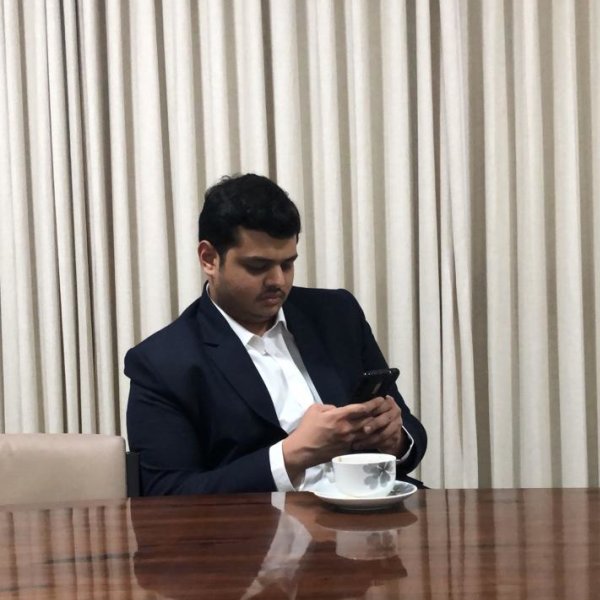
  • Akshay Ubale, Co-founder, Triumvir Law on starting his own law firm and a successful career in International arbitration

    Akshay Ubale, Co-founder, Triumvir Law on starting his own law firm and a successful career in International arbitration

    Akshay is a graduate of National Law School of India University, Bangalore and a co-founder of Triumvir Law. In this interview, he talks about the importance of internships and the grit and determination required to start your own law firm and making it sustain.

    After Founding, Triumvir Law in 2018 in Bangalore. Akshay took the plunge and moved back to Mumbai to start Triumvirs Law’s Mumbai office.

    HOW WOULD YOU LIKE TO INTRODUCE YOURSELF TO OUR READERS? PLEASE TELL US SOMETHING ABOUT YOUR PRE-COLLEGE LIFE?

     I was born and brought up in Mumbai. Most of my family were members of law enforcement, so discussions about law and politics were quite common around the house; I gravitated towards the law because I was comfortable with it. But it was not until much later that I found the reason for why I chose the law and it was simply because I enjoyed understanding the reasoning and tackling concerns of individuals in a structured manner. I think this where I get my affinity towards playing chess.


     WHAT FACTORS INFLUENCED YOUR DECISION TO SPECIALIZE IN INTERNATIONAL COMMERCIAL ARBITRATION AND CORPORATE LAW?

    When I first came to the National Law School of India University, Bangalore (NLSIU), I had come with the mindset of practising criminal law and all my initial law school activity led to that. It was not until the third-year internships that I had a proper look into the world of Commercial Arbitration. In particular, I enjoyed the sheer variety of disputes across practice areas that I had been exposed to, which allowed me to study multiple areas of law that I had not previously considered.

    I decided to pursue International Commercial Arbitration because I enjoyed the sheer difference in every case ranging from the terms and wording of contracts, the intricacies of the interactions between the parties and the resolution process in itself.


    WHAT MOTIVATED YOU TO START THE TRIUMVIR LAW? WHAT WERE THE CHALLENGES YOU FACED AND WHAT IS YET TO BE ACHIEVED?

    The idea of an independent practice was alluring since it allowed me to maintain a better balance between my work and personal life.

    But taking such a step within a year of graduating seemed risky at that time. The most fundamental reason that made me consider taking this step was the rapport that existed between the three Co-Founders (Anubhab Sarkar, Prathik Cheralathammanda and me) and our desire to carve our own path in the practice of International Arbitration.

    In addition to that, the different nature of practice areas that the three of us had come from (Corporate, Intellectual Property and Disputes) and the different types of mandates that it opened us up to handle was something exemplary, in my opinion.

    I feel, the biggest challenge in any independent practice is ensuring that you have a standing in different practice areas, as the first conversation with a client or a prospective client determines whether you have the mandate or not. Once you are able to maintain a dialogue and address the queries that the clients could come up with, most of the issues that arise can be tackled.

    With regards to what is to be achieved is something that I have not set in stone yet, what I shall continue doing is addressing the needs of our clients to the best of our abilities. In my opinion, as long as we keep on that path, the achievements will keep piling.


    WHAT ARE THE SERVICES PROVIDED BY THE FIRM AND HOW IT CATERS THE NEED OF CLIENTS?

     We focus on providing a client with the advice that would ensure the best market practices and their own market position without compromising on the strength of their legal claims. On multiple occasions, this has resulted in us resolving matters without having to put the client through a tedious dispute resolution process.

    The most prominent services that the firm has provided revolve around corporate and commercial advisory, dispute resolution (litigation and arbitration) as well as intellectual property. In addition to the above, we have worked on Investment Treaty Arbitrations, crypto-currencies, mergers and acquisitions, and climate change and forced migration.

    At present, a lot of companies want quality advice but are apprehensive in relation to the fees that would be billed by the Lawyers. By providing a wide variety of services under one roof it has helped us to not only cater to the needs of our clients (which include multiple start-ups as well as established Companies) but it has helped us to develop a suitable model for billing based on mutual understanding for our clients.

    We espouse an idea of a balance in the lives of the members of our team; the same is applicable for our clients as well. We believe that we should have a mandate because we will address the clients’ requirements in the fastest, most efficient and cost-effective way that is possible without any compromise and not solely for our competitive rates.

    HOW CAN A LAW STUDENT APPLY FOR INTERNSHIP AT TRIUMVIR LAW?

    A law student can directly apply for an internship by writing to anubhab.sarkar@triumvirlaw.com. But keeping in mind the nature of the work that we do it is advisable that students who have studied International Commercial arbitration and corporate laws apply to us.

    WHAT WOULD BE YOUR ADVICE TO LAW STUDENTS LOOKING FOR A CAREER IN INTERNATIONAL COMMERCIAL ARBITRATION?

    At the end of the day, Arbitration is a form of dispute resolution. I would advise students to intern in arbitration and litigation teams before making any final determination.

    Further, an arbitration attorney must be equipped to handle a variety of practice areas as the contract can pull you in a direction that you least expect it; hence do not close your options and intern in various practice areas solely for the exposure to different sectors.

    Finally, networking is crucial and it would assist in the formative years of practice, so attending conferences or joining the youth chapters of arbitral institutes would be a good first step.


    PLEASE SHARE WITH US THE UNIQUENESS OF SERVICES PROVIDED BY YOUR LAW FIRM.

    I believe that our philosophy of putting the clients’ needs first at all costs has assisted us in building a rapport based on absolute trust with our clients and that trust is something that I am particularly proud of. We believe in providing personalized services to the client and growing with them through their journey. This has enabled us to understand the client’s needs better and has thereby assisted us to provide quality advice in quick turnaround time.


    WHAT MILESTONES HAVE YOU ACHIEVED TILL NOW?

    We have been running Triumvir for over a year now during the tenure of which we have seen that multiple clients have referred their colleagues to us and that circle has been expanding throughout our tenure. It provides a certain satisfaction at the end of the day that we are doing something we can be proud of.

    This influx of demand also led us to open our Mumbai operations, which is roughly 7 months old now and stable.

    During this period, we are also extremely proud of the fact that we have been able to be a part of quite a few reported transactions and disputes.


    WHERE DO YOU SEE THE FIRM IN THE LONG RUN?

    A message that one of my seniors in practice told me is that setting up a target and a deadline for it, has a different effect on the team. Instead, focus on the task on hand and you will keep growing at a steadfast pace with a solid base.

    At present, we have a long term picture in our mind. However, we try and keep it in our sub-conscience. The next big step for us would be to start our New Delhi/Calcutta operations, which is a crucial step in developing Triumvir into a full-service national law firm.


    WHAT WOULD BE YOUR PARTING MESSAGE TO OUR READERS?

    Seize the day. There will never be a better day to start things nor a better one to follow what you desire. Find the people you would choose to be surrounded with and not settle for anything less.

    At the end of the day, all that is left is what you think of yourself. What others think or believe is frankly out of our control, so the best thing to do so is believing in you and launch into the deep.


  • Pratik Bakshi, Business Development Associate, J. Sagar Associates, on launching World Law Forum, and resolving Business and Human Rights disputes through arbitration

    Pratik Bakshi, Business Development Associate, J. Sagar Associates, on launching World Law Forum, and resolving Business and Human Rights disputes through arbitration

    Pratik Bakshi graduated from National University of Advanced Legal Studies (NUALS), Kochi in the year 2018. He is currently working as a Business Development Associate with J. Sagar Associates, Gurugram. He has founded several organisations, such as World Law Forum, the Network for International Law Students, and The Union Debates (previously, Indian Union Debate Forum). He is one of the few people working extensively on Business & Human Rights in India and is a member of the Sounding Board of the Hague Rules on Business and Human Rights International Arbitration, a committee working on establishing a system to adjudicate business and human rights disputes through arbitration.

    In the past, he has worked with Ram Jethmalani as his PR/Social Media Manager; and advises various law-focused start-ups, including The Negotiation Academy, The European Centre for Career Education etc. Through his latest venture, World Law Forum, he aims to bring a transformation in the world through law. World Law Forum has since its foundation worked on crucial and niche areas, such as Modern Slavery in Australia and Anti-SLAPP Legislation in India.

    In this interview, he talks to us about-

    • His law school experience at NUALS;
    • His internship experiences with Mr Mahesh Jethmalani, Khaitan & Co. and J. Sagar Associates;
    • His experience as the founder of Network for International Law Students and World Law Forum;
    • Prioritising works in law school;
    • His appointment experience as a Business Development Associate with J. Sagar Associates; and
    • His opinion about resolving human rights disputes through arbitration.


    HOW WOULD YOU LIKE TO INTRODUCE YOURSELF TO OUR READERS? PLEASE SHARE YOUR ACADEMIC AND PROFESSIONAL BACKGROUND.

    I like to introduce myself as a lawyer by profession and an entrepreneur by passion. I graduated earlier this year from the National University of Advanced Legal Studies (Kochi) and I am currently working at J. Sagar Associates. Since my first year at law school, I have founded six organisations, half of them were successful and the other half not-so-successful. But I guess, that’s part of being an entrepreneur.

    WHY DIDN’T YOU OPT FOR CONVENTIONAL DEGREES IN ENGINEERING OR MEDICINE?

    To begin with, I wanted to be an automobile engineer and had made up my mind to develop the next cutting-edge car design and technology. I remember being super-excited when we were about to start our Physics lesson on ‘Torque’ in school. Almost needless to say, I didn’t understand anything, and after a few weeks, I made a conscious decision that it was not my thing. Well then, like many others, I chose law because I didn’t fit in elsewhere. I also heard that law graduates made good money compared to other graduates, so that helped me make my mind a bit as well. Looking back, I would say that it was one of the best decisions that I have ever made in my life.


    TELL US A BIT ABOUT YOUR TIME STUDYING LAW AS AN UNDERGRADUATE AT NUALS, COCHIN. ARE THERE ANY MEMORABLE MOMENTS OF LAW SCHOOL, WHICH YOU WOULD LIKE TO SHARE?

    When I started law school, there was absolutely nothing to do there. We had classes for six hours till 04:30 in the evening; and the library would shut at about 06:30 if I remember correctly. There was barely any time and resource for the students to take on any extra-curricular or extramural activities. Things changed and became better after a year or so with some positive reforms coming in, but personally, I had already lost hope/interest in whatever goes on in law school. By then I had already started the Network for International Law Students (NILS), which kept me busy. It was a new organisation then, and I was excited to work with students and lawyers from across the world. Then during my third year, I contested for being the Debate Secretary of the law school and lost (by a huge margin, I remember). I was the most experienced in organising debates, or would I believe, but then you know how things work in an election. So, I started another organisation called the Indian Union Debate Forum along with a classmate of mine, who was equally frustrated with the whole high-drama politics that was going on. The idea was to introduce the Oxford/Cambridge Union-styled debates in India. We had our first debate three to four months later and were thrilled by the response that we got. We got Ram Jethmalani, Subramanian Swamy, Manish Tewari, Madhu Kishwar, KTS Tulsi, Pinky Anand among others as speakers and debate against each other – a never seen before the scene in India. So, it was probably the most engaging and exciting period of my law school life.

    INTERNSHIPS PROVIDE STUDENTS WITH THEIR FIRST EXPOSURE TO THE PRACTICAL ASPECTS OF THE LEGAL PROFESSION. COULD YOU TELL US ABOUT THE INTERNSHIPS YOU TOOK UP, AND WHAT YOU LEARNT FROM THOSE EXPERIENCES?

    Internships are helpful because they help you realise what you are made for. For me, it made me realise that I am certainly not made for transactional law. Of all the internships that I have done, I have enjoyed three of them thoroughly – Mahesh Jethmalani, Khaitan & Co, and J. Sagar Associates. When I was an intern under Mahesh Jethmalani, there wasn’t a lot of work for the interns to be honest, but the aura of watching Jethmalani Jr. in the court and see him argue made up for it. Plus, you got to be involved in all the cases that you see every day in the news, so it was all very exciting. Next up, Khaitan & Co, I was with a great bunch of people and enjoyed all the work that was given to me – primarily disputes matters. And lastly, JSA because it introduced me to the area of business development for law firms in which I am currently involved now.


    YOU ARE THE FOUNDER OF THE NETWORK FOR INTERNATIONAL LAW STUDENTS (NILS), A STUDENT-RUN BODY WHICH HAS ITS PRESENCE IN 26 COUNTRIES. COULD YOU PLEASE TELL US A BIT ABOUT THIS ORGANISATION AND WHAT MOTIVATED YOU TO ESTABLISH THIS ORGANISATION?

    As said earlier, when I joined law school I always felt that one has to take a lot of his/her own initiative to keep herself engaged. I believe it’s the same with most law schools in India and other developing countries. I started NILS with a focus to provide something to students especially from developing countries to farther the exposure and engaging themselves in activities which otherwise they wouldn’t in their law schools. We did some interesting events and exchange programmes which were highly praised and received wide attention. I was fortunate to come across a bunch of enthusiastic students who believed in my idea and took it to the next level; and as you said correctly, currently we have over 5000 members in 26 countries across all continents, except Antarctica of course.


    LATELY, YOU CO-FOUND WORLD LAW FORUM. WHAT STIRRED YOU TO LAUNCH THIS ORGANISATION AND CAN YOU TELL US A BIT ABOUT ITS GOALS?

    I was set to retire from NILS in 2018. Many people advised me not to retire as it was my baby, but then I wanted NILS to grow as a democratic organisation, run by and for law students. Therefore, it did not make sense for me to stay there forever, after ceasing to be a law student. I wanted to take my experience to the next level and founded World Law Forum, along with a colleague of mine who I worked briefly in NILS. The idea behind World Law Forum is to engage people in discussions on areas of law which are rarely discussed upon, either because people are not aware of them or because they think they are not important enough. Therefore, the core-topics that we work on are cutting-edge and will be the most relevant topics in the next decade. We organised the first-ever conference on Modern Slavery in Sydney earlier this year, after the Modern Slavery Act coming into force in the New South Wales. In India, we organised India’s first-ever conference on Strategic Lawsuits Against Public Participation (SLAPP), with over 620 participants. Therefore, the areas of our work are generally the “first-ever” or “among the firsts”, and we try to promote such areas of law, which would be relevant in the future. So far we have got a really good response, with eminent people including Head of States, Noble Laureates, Judges and the most eminent lawyers, journalists and academics having attended our event.

    Another thing that led to the foundation of World Law Forum is that we felt that the legal profession is a bit isolated and most events organised in the legal sector involve mostly members of the profession and barely from other professions or walks of life. However, the law is something which affects everyone and therefore ours is a platform for people from all walks of life to come together and discuss the law.


    WAS IT DIFFICULT FOR YOU TO RUN THESE ORGANISATIONS CONCURRENTLY WITH YOUR LAW SCHOOL WORK? HOW DID YOU MANAGE TO HANDLE BOTH THE WORK SWIFTLY? DID YOU EVER PRIORITISE THESE WORKS OVER YOUR ASSIGNMENTS AT LAW SCHOOL?

    It was not difficult at all. Rather, it was the most fun part of my law school. You have to prioritise your work and that’s what I did. There were some subjects in our curriculum that I was not interested in, so they were low on my priority list. While, there were some subjects and professors I really liked, and I focussed on them. And most students in India cover most of the curriculum a couple of nights before the exam, I was part of the same gang. So, it was all good. At least it helped me learn the skill of multitasking which is very essential.


    DO YOU FEEL THAT HUMAN RIGHT DISPUTES ACROSS THE GLOBE CAN BE RESOLVED THROUGH ARBITRATION INSTEAD OF COURTS? IS ARBITRATION THE PROPER ADJUDICATORY MECHANISM TO RESOLVE THESE DISPUTES?

    I am a member of the Sounding Board of The Hague Rules on Business and Human Rights Arbitration. The Working Group is working on developing this system where Business and Human Rights disputes can be solved via International Arbitration. The Drafting Committee is chaired by Bruno Simma, a former Judge of the International Court of Justice.

    So, most of the Business and Human Rights cases arises from countries or regions where the courts and other mechanisms have failed to deliver justice, which can be because of lack of courts or corrupt courts etc. Even where competent courts are available, Arbitration offers an attractive alternative with speedier procedure and awards that are potentially enforceable throughout the world under the New York Convention.

    We are often asked why businesses would who are accused of human rights abuses chose to submit the disputes to arbitration. We must understand that today, the consumers have started looking into the business ethics of companies before buying products and have in the recent past seen boycotting of products of companies accused of human rights abuses. Therefore, when a corporation’s reputation is questioned, the management might prefer speedy resolution of the dispute, rather than a lengthy litigation in court. In the case of arbitration, the parties may also choose judges with expertise in Business and Human Rights, rather than submitting the matter to the court where the judge is chosen by “the luck of the draw”. An expeditious and fair hearing would limit the reputation damage and can also help the victims in accessing justice faster and more conveniently.


    YOU HAVE WORKED AS PUBLIC RELATIONSHIP MANAGER WITH THE OFFICE OF RAM JETHMALANI AND HAVE BEEN ADVISING THE NEGOTIATION ACADEMY ON ITS BUSINESS EXPANSION. WHEN DID YOU DEVELOP YOUR INTERESTS TOWARDS THESE SORT OF BUSINESS DEVELOPMENT WORKS?

    I have known Mr Jethmalani for a while now, as he was the first Patron of NILS. When he resigned from his own newspaper, The Sunday Guardian after an editorial dispute, I suggested that he should consider having his own blog, considering he already has a mass following. He agreed to the idea and I started running his blog/website, and slowly was assigned the task to handle his media accounts. As far as the Negotiation Academy is concerned, I had invited Claudia Winkler to India for a series of workshops on negotiation targeted at law students. Until then, she had mostly trained lawyers; but after seeing the potential in the student market, we decided that an academy on negotiation with a focus on training students would be great. And so, I’ve been involved with the Negotiation Academy from the scratch and advise on the business strategy.

    For most of the last five years of my life, I’ve been doing business strategy and development for the different organisations I have been involved with – so my interest in it evolved over the years.


    HOW DID YOUR RECRUITMENT TAKE PLACE AT J. SAGAR ASSOCIATES? WHAT DOES A TYPICAL WORKING DAY LOOK LIKE FOR YOU?

    I interned with J. Sagar Associates during the final year of my law school and it seemed to be a great place to work for. As I was deciding on what career path should I choose after law school, JSA seemed to be a great stepping stone as I had always admired the principles on which the firm has been founded – of being democratic and providing equal opportunity to everyone; which is a rare sight in the legal industry in India. And so, I showed my interest to have a permanent position in the firm and after sending my CV etc, and I was selected to work for the firm.

    I am responsible for the submissions that the firm makes to different journals, improving market-visibility, working on proposals and pitches, analysing the business of peer law firms, identifying conferences and events which the firm can participate in, and forming other marketing and branding strategies.


    DO YOU THINK YOU LAW DEGREE PROVIDES YOU WITH AN EDGE IN PURSUING YOUR WORK AT J. SAGAR ASSOCIATES?

    The work at the firm is not directly related to law, but then having studied law always provides you with an edge, since it takes you considerably lesser effort in understanding how a law firm works, what visibility is essential for a law firm and what do the clients look for.


    PLEASE SHARE SOME ADVICE TO YOUNG LAW STUDENTS WHO WISH TO HAVE A CAREER IN ENTREPRENEURSHIP?

    I have always followed the principle of ‘Zero to One’ by Peter Theil, which basically means that to be successful in entrepreneurship, you must be the first in the market. If you are just copying someone else or trying to do what already exists in the market, you are only one in the ‘n’ number of competitors. While if you’re coming with an innovative product or service, you are the only one in the market, you get the first-movers advantage and almost enjoy a monopoly till someone else comes up. Therefore, to be successful in long-term, you must be innovative and work on something which is missing in the market; or provide an out-of-the-world perspective/angle to an existing product or service. This applies to all sectors. Even for law firms, one must show how one’s firm is different from its peer law firms. So, you need to find your USP and start working on it at the earliest. Don’t overthink – just go with the flow. You may want to make your Plan A and Plan B, but in entrepreneurship, mere Plan B is not enough, and you might need to plan yourself until Plan Z or even further. But as you start working on it, you learn to improvise and move on. Patience is supremely important. Don’t worry about funding because if you have a solid plan/idea, money would come in from one side or the other. And the best time to start working on it is while you are studying because there’s not much at stake, you have more time and can take risks.


    WHERE DO YOU SEE YOURSELF TEN YEARS FROM NOW?

    It’s a tough question. I don’t generally think that far away. But I would say I see myself as an entrepreneur who has brought at least something valuable to the world. Ticked off my bucket list. Maybe, politics? But I know that I would be a really bad fit in there.


    WHAT WOULD BE YOUR PARTING MESSAGE TO OUR READERS WHO ARE PRIMARILY LAW STUDENTS AND YOUNG LAWYERS?

    Work towards what defines you. Just because you went to law school does not mean you have to be a lawyer. There are so many more opportunities out there if you can convince yourself that it is worth that tiny risk. Parents are always harder to convince, but then they will be convinced in a few months if they see you making a living and happy with what you are doing.


  • Debanshu Khettry, Principal Associate, Leslie & Khettry, on LLM from UCL and challenges of starting new ventures

    Debanshu Khettry, Principal Associate, Leslie & Khettry, on LLM from UCL and challenges of starting new ventures

    Debanshu Khettry is a fourth-generation lawyer at Leslie & Khettry. He focusses on corporate law, commercial contracts, corporate finance and banking law, securities law, property law, and legal due diligence.

    Debanshu has catered to international clients looking to do business or having business in India through his association with a reputed and one of the best law firms in New Delhi. He has assisted in negotiation and documentation of various inbound investments in India. He has experience in legal due diligence of businesses in various sectors including infrastructure, e-commerce, FMCG, biotechnology, and education. In addition, he regularly advises corporates, sporting bodies, and individuals on issues relating to commercial law and property law.

    He attained LLM with distinction from University College London and graduated from National University of Juridical Sciences, Kolkata (gold medallist).

    He gained wide experience through over a dozen internships in some of the biggest law firms in India; judges of Hon’ble Supreme Court of India and Hon’ble Delhi High Court; eminent lawyers and Members of Parliament; office of additional solicitor general and NGOs. His contribution in all these places was highly appreciated.

    Debanshu co-founded P-PIL, with Dr. (Prof.) Shamnad Basheer, to promote practical advocacy among law students. His extensive empirical research on the constitutionality of a statutory tribunal in India was endorsed by a former High Court Judge. He is a founding member of IDIA (established to promote diversity in law schools by training the deprived) where his co-authored policy paper was accepted by the CLAT Committee. His other initiatives include being the founding executive editor of Journal of Telecommunication and Broadcasting Law (first of its kind refereed journal); co-founder of SILC (India’s first standard legal citation system); and co-founder of Lawctopus (a leading website for law students).

    His articles have been published in refereed international journals and his research has been cited in various books and articles. He also takes a keen interest in developments in the financial markets.

    In this interview, we speak to him about:

    • Importance of LLM
    • Tips on writing SOPs and advice on application requirements
    • Challenges faced in starting his own venture
    • Roles and responsibilities as principal associate at Leslie & Khettry.


    GIVEN THAT MOST OF OUR READERS ARE LAW STUDENTS AND YOUNG LAWYERS, HOW WILL YOU INTRODUCE YOURSELF TO THEM?

    I am a fourth-generation lawyer at my family’s legacy firm, Leslie & Khettry. I graduated from National University of Juridical Sciences (NUJS) in 2013 and then pursued LLM from University College London (UCL).


    TELL US ABOUT YOUR OPTIONS AFTER GRADUATING FROM SCHOOL. DIDN’T YOU THINK OF THE CONVENTIONAL DEGREES IN ENGINEERING AND MEDICINE?

    Any other field of study was never in my mind. Since my forefathers have been lawyers, the legal profession has always been in my blood. I took CLAT tuitions from the eleventh grade and managed to get an all India rank of about 100. My backup plan was to pursue BCom (Hons) from St. Xavier’s College, Kolkata where I gained admission and then do a three year law course in case I did not get into any of the top law schools in India which have a five year integrated law program.


    WHAT CO-CURRICULAR ACTIVITIES DID YOU PARTAKE IN NUJS?

    I was not much into the traditional co-curricular activities in law school such as debate or mooting (except for the compulsory ones). Instead, I was involved in entrepreneurship and practical lawyering.

    Under the aegis of Prof. (Dr.) Shamnad Basheer, I got an excellent opportunity to work for P-PIL (Promoting Public Interest Lawyering) where we provided law students an opportunity to get hands-on experience of practical lawyering. We worked on issues ranging from human rights, education to regulatory lapses.

    Under the able guidance of Prof. (Dr.) Basheer, I also got the opportunity to work in the policy arm of IDIA (Increasing Diversity by Increasing Access) that aims to empower underprivileged children by providing them access to legal education. Pursuant to the policy paper that we submitted to the CLAT Committee, various changes were made in relation to the conduct of the CLAT exam.

    I also started the first of its kind international peer-reviewed Journal of Telecommunication and Broadcasting Law (JTBL) for NUJS. Whilst in college, I ran the journal for two years and we were able to get Lexis Nexis as the publisher.

    Along with another friend, we also conceptualised India’s first legal citation system, the Standard Indian Legal Citation (SILC). Unfortunately, most law schools and journals in India follow legal citation systems that are not indigenously developed and are not comprehensive guides for citing Indian legal sources. The freely available SILC solves that problem.

    Then of course, I also spent time in planning and developing Lawctopus (an online portal dedicated to law students) along with the other co-founders. I feel proud that five students from NUJS were able to produce a website that has helped a large number of students in myriad ways.

    In addition, I worked as a researcher for a global LPO during my spare time. I also tried making NUJS a more prominent institution in the legal industry. For instance, a friend and I were able to convince the Vice-Chancellor in our second year to change the academic calendar of the University to allow for students to do 3 internships in a year which required in-depth study and galvanising great amount of support from the student body and faculty.


    AS A LAW STUDENT, YOU CONSISTENTLY EXCELLED IN ACADEMICS AND BAGGED GOLD MEDAL IN YOUR BA LLB (HONS) COURSE FROM NUJS. WHAT IS THE MOST IMPORTANT TIP THAT YOU WOULD LIKE TO SHARE WITH LAW STUDENTS FOR CONSISTENTLY EXCELLING IN ACADEMICS?

    Discipline, focus and determination are some of the keys to excel in academics. Achieving good grades or being a rank-holder is an important byproduct that helps in numerous ways such as opening several avenues in your career. However, it is not the only means and what matters most is the knowledge that you gain and how you use it.


    YOU SUCCESSFULLY COMPLETED ABOUT TWELVE INTERNSHIPS IN YOUR 5 YEARS OF LAW SCHOOL. PLEASE TELL US HOW FAR DID YOUR INTERNSHIPS HELP YOU IN YOUR CAREER AFTER YOUR GRADUATION? HOW WOULD YOU RECOMMEND THE PRESENT LAW STUDENTS PLAN THEIR INTERNSHIPS?

    I tried to gain wide experience through internships and accordingly interned at a mix of places such as some of the biggest corporate law firms in India, judges of Hon’ble Supreme Court of India and Hon’ble Delhi High Court, eminent lawyers such as Ram Jethmalani, the office of additional solicitor general of India and NGOs amongst others. The variety of places meant doing different kinds of work which helped me get a flavour of the innumerable areas of law and the kind of work that I enjoyed doing. This immensely aided in shaping my career path.

    To law students, I would suggest to try and do as many internships as possible. It will not only help in gaining practical experience but also an understanding of their likes and dislikes. Since the capacity in many places is limited, I would recommend that they plan the internship at the place of their choice well in advance.


    PLEASE TELL US ABOUT YOUR DECISION TO PURSUE AN LLM AT UCL. PLEASE SHARE SOME ADVICE ON ACING THE APPLICATION REQUIREMENTS AND PROCEDURE FOR UCL? DID YOU RECEIVE ANY SCHOLARSHIP OR WHETHER UCL PROVIDE STUDENTS WITH SCHOLARSHIPS?

    Much to my surprise, the partners at various law firms that I interned at, did not agree with the concept of LLM or higher education. According to them, it is a waste of time, money and does not yield any benefit in relation to practice in India where the environment and laws are different. However, my cousin who lives in the UK convinced me of the benefits of a post-graduation degree from the UK such as an opportunity to be part of a global network, acquiring a deeper understanding of the law, better educational qualification, etc.

    As far as the application process goes, I received enormous help from my friends, family, well-wishers and professors. UCL does provide scholarships to students, however, I did not apply for it.

    To fellow applicants, I would advise that they seek guidance from someone who has been through the process with success rather than taking half-baked ideas of those who have never been through the application process. I would also recommend that they spend a great amount of time in preparing their applications meticulously and not work on them in haste.


    YOU HAVE BEEN THE FOUNDER/COFOUNDER OF VARIOUS VENTURES INCLUDING THE LAWCTOPUS, P-PIL, JTBL AND SILC. WHAT INSPIRES YOU TO TAKE UP THESE NEW VENTURES?

    Each venture is the result of efforts of several others and a gap in the industry that needed to be filled. When we started Lawctopus, there was no website that offered information on the various opportunities available to students or an insight into how their internship experiences at various places have been. The portal helps law students and aspirants make informed choices.

    Similarly, for P-PIL, we wanted to create a platform from where students can get an experience of practical advocacy which unfortunately is not fully achieved with the current system of mooting in law schools.

    JTBL was the result of lack of any journals devoted to the ever-growing, vital and complex field of telecommunication and broadcasting laws. SILC was also conceptualised due to the absence of any indigenous citation methodology designed to cater to the reference of Indian legal sources.

    One of the major inspirations behind these ventures was Mahatma Gandhi’s oft-quoted phrase ‘Be the change you want to see in the world’. It is easy to remark that there is a problem or there is a lack of a better solution, nevertheless, each problem or the lack of a better solution is an opportunity that can be seized.


    WHICH SUBJECTS DID YOU TAKE IN YOUR LLM AND WHY?

    I have an enormous interest in finance and the financial markets. This led me to take subjects related to this field (such as regulation of financial markets, corporate finance and corporate governance) during my LLM. I also undertook a thought-provoking subject that focussed (amongst others) on the extraneous factors that influence a judge’s decision-making. Even during my law practice, I give a great deal of emphasis on the psychology of judges and analysing their orders and judgments before advising clients.


    PLEASE TELL US THE CHALLENGES YOU FACED IN STARTING YOUR OWN VENTURES?

    One of the biggest challenges has been to manage the teams and making sure they are performing their responsibilities in a timely manner. In addition, achieving consensus amongst other co-founders becomes challenging at times since they have their own ideas and vision about the venture.


    YOU WORK AS A PRINCIPAL ASSOCIATE AT LESLIE & KHETTRY. WHAT ARE YOUR MAIN TASKS AND WHAT ARE YOUR ROLES AND RESPONSIBILITY?

    Historically, Leslie & Khettry has been based out of Kolkata even though we regularly came to New Delhi for practice. Recently, though, we opened our office in New Delhi also which I am currently managing. My main responsibility is to grow our practice in New Delhi and cater to the needs of those requiring legal assistance in New Delhi.


    WHAT OTHER ACTIVITIES ARE YOU INVOLVED IN BESIDE PRACTICING LAW?

    I devote some amount of time in doing angel investments and meeting entrepreneurs and understanding their needs. I also enjoy engaging in new activities, be it learning a new language or an instrument or taking up a sport.


    WHAT WOULD BE YOUR PARTING MESSAGE TO OUR READERS?

    Always be humble, logical and open to new ideas. Law changes its shape on a regular basis and therefore one must be flexible to adapt to the ever-growing field. I have noticed that professionals often casually call themselves an expert on a subject but there is a reason why lawyers are called practitioners. Also remember, the client is king and therefore their requirements and service to them should take top priority. One must also be ready to toil no what part of the career they are at in order to survive and excel. It is therefore imperative that you enjoy the journey. In spite of best efforts, mistakes may happen but what is important is how you overcome and handle them. There is always scope for improvement in whatever one does.


  • Sachin Malhan, Co-founder and CEO, HumLab on being a good entrepreneur, the challenges of starting your own venture, and his involvement with the Agami Prize

    Sachin Malhan, Co-founder and CEO, HumLab on being a good entrepreneur, the challenges of starting your own venture, and his involvement with the Agami Prize

    Sachin Malhan is the co-founder and CEO of HumLab. Before that he was the Executive Director of the Changemakers global program of Ashoka, the world’s leading social innovation network.

    Before his work at Ashoka, Sachin co-founded three ventures in India – Law School Tutorials, the leading law test-prep outfit, currently present in 60 cities and training over 30,000 students annually; Rainmaker, a learning and talent platform for the legal industry that ultimately spun off Vahura, the leading talent search firm for the legal industry and mylaw.net, the pioneer in online learning for legal and adjacent industries; and Inclusive Planet, a venture focused on greater literary access for the visually impaired, which succeeded in effecting national policy change but failed to sustain the digital platform required to enable that access. For his work in technology, media, social impact and education, Sachin became an INK Fellow in 2010.

    Sachin is a graduate of the National Law School of India University in Bengaluru and began his career with Amarchand Mangaldas in their Mumbai offices.

    In this interview he talks to us about:

    • Studying at NLSIU
    • Converting internships to PPOs
    • Challenges faced as an entrepreneur
    • Ashoka Changemakers, network of social entreprenuers
    • His latest venture HumLab, and their first initiative the Agami Prize


    HOW WOULD YOU LIKE TO INTRODUCE YOURSELF TO OUR READERS?

    In the 21 years since I joined law school I’ve played many different roles, some better than others! I’ve been a law student, a lawyer, a teacher, a business entrepreneur, a social entrepreneur and the CEO of a few different organisations. This is not counting the many more roles I’ve played in my life outside of ‘work’. If I had to pick one way to introduce myself to your readers I’d say I’m someone trying to do work that’s creatively fulfilling, meaningfully impacts other people’s lives and helps me live a life beyond the fears, insecurities and compulsions that otherwise govern our lives.


    WHAT FACTORS INFLUENCED YOU TO CHOOSE LAW AS A CAREER?

    I chose to go to law school in the most bizarre of circumstances. I took the NLSIU entrance exam as a secondary choice in case my admission to medical school didn’t come through. I wouldn’t even had made the examination if a school friend hadn’t taken me to the venue on his scooter at breakneck speed through Calcutta by-lanes. When the results came I was 57th i.e. the last of the selected 57. My medical admission results were pretty poor and I ended up staying in law school. I am so thankful for this series of most fortunate events because I loved the law school experience and the college-mates who shared that experience with me. Law school helped me broaden my understanding of society, develop new skills, and, most of all, put me in touch with a set of peers who helped me develop as a human being.


    YOU HAVE STUDIED IN ONE OF THE PREMIER INSTITUTES IN INDIA. PLEASE TELL US ABOUT YOUR TIME AT NLSIU. WHAT DO YOU THINK MAKES NLSIU STANDS OUT AS COMPARED TO OTHER LAW SCHOOLS IN INDIA.

    I cannot compare NLSIU to other colleges today because I don’t have the facts But I can speak about NLSIU during my time there. I think the single biggest driver of value was the quality of students. The process pulled together students from different streams, skill sets and interests, parts of the country and social backgrounds. What most of us shared was a general uncertainty about who we wanted to become in life. Some of us were very certain about ‘the law’ but most were on a journey of discovery. That explains why the batch produced entrepreneurs, restauranteurs, journalists, a policeman, and a professional poker player, besides many accomplished lawyers themselves. When you put such a group of people together and you give them a pleasant campus on the outskirts a city in big transition (Bangalore), access to curricular and extra-curricular opportunities, and a decent academic experience you usually get good things as a result. Note that I refer to my academic experience as ‘decent’ – which I think it largely was, but there were also islands of excellence, teachers who not just helped us understand a subject in a new way but helped us think better and empathise. Their contribution can never be quantified or compensated. They balanced out other academic experiences that were sub-par. I believe NLSIU still offers the above combination of things.


    PLEASE TELL US ABOUT YOUR RECRUITMENT AT AMARCHAND MANGALDAS. HOW DO YOU SUGGEST SHOULD YOUNG LAW STUDENTS APPROACH LAW FIRMS FOR SECURING A JOB AS ENTRY LEVEL ASSOCIATES?

    I was recruited as a result of an internship in my final year. I was very lucky in that I got to work closely with the senior partner – Mr MP Bharucha – who ultimately recruited me. He was a demanding boss, especially for an intern, but it was quickly clear to me that he was an incredible lawyer and personality who would help me learn and grow. I don’t know if interns today get to work closely with partners but it definitely helped to get him to see that I had the attitude to do well. The market is so competitive now and I know that its hard to get into good law firms. There are many others who are probably much better informed about what it takes for law students to crack good law firms eg. my dear friend Ritvik Lukose who heads Vahura. What I can say is that unless you have the benefit of being the graduate of a top law school and have a great resume you’ll have to use the combination of relationships and differentiators. From early in your law school life you need to start building and nurturing relationships with seniors and others in the field. Being a part of a large community, that you care for and cares for you, is an incredible asset. Skills, knowledge and achievements that differentiate you powerfully are the other key tool. Getting that good job, if that’s what you want, requires you to start early.


    WHAT LED YOU TO LEAVE AMARCHAND MANGALDAS AND START YOUR OWN VENTURE?

    I had already co-founded Law School Tutorials, popularly known as LST, when I was in my third year (1999) at NLSIU. I had tasted the incredible highs and lows of entrepreneurship and had something to compare to my experience as a corporate lawyer. After a year at Amarchand, despite having an incredible mentor in Mr Bharucha, and enjoying a very positive experience at the law firm, I knew that I was an entrepreneur and had to be true to that. I’d come home late from work and despite being pretty wiped out still find the energy to do my LST work – replying to student emails, revising materials, scoring tests etc. I knew that this is what I wanted to do. I could also see that the audience for law schools was growing and that LST could really become something. So when I left I was terrified about what the future would hold, but I was also ecstatic about the creative possibilities.


    YOU HAVE BEEN THE CO-FOUNDER OF VARIOUS VENTURES INCLUDING THE LST AND RAINMAKER. WHAT INSPIRES YOU TO TAKE UP THESE NEW VENTURES?

    To me there are few things more satisfying than helping an idea come to life. Those early steps of imagining something, building a team, creating the first experiences etc are very rewarding. In some ways entrepreneurship is my compulsion. Yes, social impact and market opportunity are drivers of these initiatives but in many ways I’m attracted by the process of creating something lasting with other people who share that passion. The experiences, successes and failures of my ventures have taught me more than a dozen college degrees could ever do. I remember one conversation with a young class 12 student in Allahabad where he spoke so lucidly about what it was like for him to break free from what his father wanted him to study and find his own way. When I asked him why he was willing to fight with his father when so many others just went along, he said ‘because life is more, sir, I can feel it.’ Each venture that I am a part of takes me on a new journey, to meet amazing new people and, hopefully, leave a lasting impact.


    PLEASE TELL US WHAT ASHOKA CHANGEMAKERS IS ABOUT? WHAT WERE YOUR ROLES AND RESPONSIBILTIES IN THE SAME?

    Ashoka is the world’s largest network of social entrepreneurs. It doesn’t market itself very much but it is ranked amongst the five most influential non-profits in the world. In the social impact field it is highly respected. Many Nobel laureates and Magsaysay awardees are Ashoka Fellows – Mohd Yunus, Kailash Satyarthi, Jerry White, Anshu Gupta and Bezwada Wilson, to name a few. More recently it is confused with the excellent Ashoka University but Ashoka is a global organisation in 80 countries that’s been around for 40 years. Out of its headquarters in Washington DC I was the Executive Director of a large international program of Ashoka, Ashoka Changemakers, which was focused on building networks of social innovators around challenging social issues. I had the chance to work with amazing international colleagues and entrepreneurs on how complex social issues can be solved by creating ecosystems that nurture social innovation around those issues. I moved back to India last year to start HumLab, a longtime dream of mine.


    WHAT ACCORDING TO YOU DOES IT TAKE TO BE A GOOD ENTREPRENEUR?

    That’s a tough one, and I answer it with the awareness that I may not be equipped to do so! Here’s what I’ve observed –

    • persistence (trying and trying again);
    • resilience (getting up when you fall down, taking criticism and doubt);
    • working in community, which requires you to trust and to believe in the capability of others;
    • an ability to see possibilities, connect the dots and be comfortable with a certain level of uncertainty;
    • a practical side that helps that problem-solve and mitigate existential risks (no money to live, pay salaries etc.);
    • I’d also add what I think great (as opposed to good) entrepreneurs have –
    • they can empower a lot of other people to discover their full potential;
    • conviction around a certain imagined reality and ability to pass that on to others. Even if that exact vision doesn’t come to pass they still come upon something great by virtue of having sensed the pathways of the future.
    • a healthy disregard for the opinion of ‘experts’, overly convergent or linear thinkers;
    • a connect with younger people who have all the energy.


    PLEASE TELL US ABOUT YOUR LATEST VENTURE HUMLAB INDIA. WHAT IS IT ABOUT AND WHAT SERVICES DOES HUMLAB OFFER?

    HumLab doesn’t have one product or service. It is trying to build an ecosystem to catalyse innovation and entrepreneurship in legal industry, law and justice. An ecosystem is not one thing but possibly a combination of different enabling initiatives, ideally with a strong community layer. So we’re slowly starting to develop these different things in collaboration with different organizations. The Agami Prize, which we are co-creating with justice innovation catalyser Vayam led by former Ashoka co-leader and NALSAR alum Supriya Sankaran, and in partnership with some other amazing organisations including Ashoka and Trilegal, is the first such initiative. A national prize that can showcase innovation and entrepreneurship in the field would have the effect of driving interest in the bigger vision itself. We are hoping that once we establish the Agami Prize we can also look at driving more funding and expertise to new startups and promising ventures in the space.


    HOW CAN A LAW STUDENT APPLY FOR INTERNSHIP AT HUMLAB?

    Just email me at sachin@humlab.in and tell me why you think yourself to be an entrepreneur. Focus on what you’ve built or significant problem you’ve solved – however small – in your life.


    PLEASE TELL US THE CHALLENGES YOU FACED IN STARTING YOUR OWN VENTURES?

    Every kind of problem! Still, the ones that were most persistent were inter-personal. I worked a lot with co-founders, some fantastic entrepreneurs themselves, and we did all sorts of things wrong – didn’t define roles, didn’t clearly align on what the vision was, didn’t talk about about the hard stuff, and so on. I strongly feel that if you’re in a team and you’ve done that bit right i.e. built trusted relationships through strong communication, then everything else is easy. Even then, despite the challenges, my former co-founders remain my closest friends. The adversity brought us closer and our friendship forced us to confront our demons. Because we’ve shared so much we know the challenges that each of us have faced, or our still facing, in growing our ventures.


    WHAT ARE YOUR PLANS FOR THE FUTURE?

    I’ve got my hands full with HumLab. I want to first focus on establishing Agami Prize as a powerful platform for innovators and entrepreneurs, and slowly but surely build a community of people committed to transforming the field. It sounds a bit crazy because law and justice has always been done in a certain way but I think that the big trends of the world – tech, individual empowerment, and the growth of cross-border business and trade – will change things in ways we could’t imagine. I’d like to build HumLab on the learnings I’ve had in the last 20 years of entrepreneurship – develop trust, work with amazing people and organizations, think bold, and have great fun.


    WHAT WOULD BE YOUR WORD OF ADVICE TO YOUNG LAWYERS AND LAW STUDENTS LOOKING TO DO SOMETHING DIFFERENT?

    I have a question for every young law student or lawyer – do you really believe that the jobs we covet will stay the same 10-15 years down the line? In a world where everything is changing so fast we must make change our friend. We must be comfortable with constant learning and initiative-taking. I know its scary but once you embrace the mindset it gives you strength. Trust me on this part. I guess the way I’m trying to answer the question is to say that those who want to do something different are at least half-way into the future versus those who think everything will stay the same. The latter run the greater risk – of not being in control of their destiny.

    To those who want to do something different, I would also say – don’t do it just because its different but because you want to do something fantastically and create value – for yourself and for society. Once you’re convinced of that put all your energy and something good will come out of that.

    I’ll be writing more on this soon!


  • Vibhanshu Srivastava, Founder and Partner, Risis Legal, on challenges of litigation, importance of mooting and maintaining work life balance

    Vibhanshu Srivastava, Founder and Partner, Risis Legal, on challenges of litigation, importance of mooting and maintaining work life balance

    Vibhanshu Srivastava, founder and partner at Risis Legal, has diverse experience in handling a vast array of Litigation and Arbitration matters arising out of corporate/commercial transactions, tender-preconditions and terms, winding up of a company, oppression and mismanagement, intellectual property disputes and real-estate dealings. After having finished his graduation in law, Vibhanshu forayed into litigation by joining the Chambers of Prashant Chandra, a celebrated Senior Advocate based at Lucknow who draws crème corporate clientele of the region.

    Vibhanshu heads the Litigation and Dispute Resolution practice of the firm. He has been frequently appearing in the Hon’ble Supreme Court, the Hon’ble Allahabad High Court and its Lucknow Bench, besides the DRT and CESTAT. Vibhanshu has represented known corporate houses such as Ashok Leyland, Idea Cellular, Meraki Inc.,Omaxe, Xiaomi, Indoways E-Commerce & Sales Pvt. Ltd., NGK Infrastructure, besides several individuals, including public servants, etc.

    Vibhanshu is an alumnus of Chanakya National Law University and is registered with the U.P. Bar Council and the Oudh Bar, Lucknow. His inclination and prolific attraction towards litigation acted as a catalyst to pull him towards the walkways of the Court and set up Risis Legal, which has a robust dispute resolution practice.

     In this interview we speak to him about:

    • Importance of academics, internships, and moots
    • Challenges faced in litigation
    • Maintaining work life balance being a partner of a firm


    HOW WOULD YOU LIKE TO INTRODUCE YOURSELF? PLEASE TELL US SOMETHING ABOUT YOUR PRE-COLLEGE LIFE?

    I am a first generation lawyer based predominantly out of Lucknow. I forayed into litigation immediately after graduating from the Law School. After adjusting into the profession which took a while and once I had the feel of it, I went on to set up Risis Legal, a specialised litigation firm. We are thriving hard to make a mark in our sector by extending seamless and comprehensive dispute resolution solutions to our clients.

    My pre-college life was a lot of fun. I studied throughout in an all-boys school and made friends for life back then. During my pre-college days, I used to volunteer in a lot of social activities and gradually, this interest of mine became the stepping stone for me to become one of the founding members of Alexis Society, an international not-for-profit and non-political organisation which promotes creativity, innovation, peace, harmony and inclusive development.


    WHAT FACTORS INFLUENCED YOU TO CHOOSE LAW AS A CAREER? WHY DID YOU CHOOSE CHANAKYA NATIONAL LAW UNIVERSITY FOR PURSUING LAW?

    I always had a knack for public speaking coupled with the fact that math, physics and chemistry were just not meant for me and thus I found my calling in law. Thankfully the realization that I wasn’t meant for technical education and programmes hit me just at the right time and I chose commerce in my HSC over the dreadful P/C/M. By the time I was in my intermediate, I was pretty sure that I was going to pursue law. However, as they say ‘the beauty of life is that, nothing will go per your plan’, I had to joined the B.com (Hons.) programme at the Delhi College of Arts and Commerce(DCAC), South Campus, Delhi University; and almost gave-up on the idea of pursuing a 5 year law programme for I couldn’t secure a decent rank in CLAT. I just didn’t wanted to waste a year and this is what that prompted me opt for B.Com. It was hard to pursue myself that I will go for a traditional 3 year law programme post my graduation.

    But as were things in store for me, a month into the Delhi University already, I got a call from Amity Law School Delhi affiliated by the Guru Gobind Singh Indraprastha University, followed by a call from CNLU Patna. After giving my interview and securing a seat in the Amity Law School, I rushed to Patna to see things myself and make a fair call. After interacting with the students and faculty I met on campus, I had no second thought and on the same day, I was sitting and studying in the B.A., LL.B. (Hons.)-Batch(2009-2014) classroom.


     WHAT ALL ACTIVITIES DID YOU TAKE PART IN DURING YOUR TIME AT LAW SCHOOL?

    I was into mooting big-time. Besides, I even participated in parliamentary debates, paper-presentations, conferences, legal aid camps, law-fests etc. As my association with Alexis Group was at its pinnacle while I was in the law school, I conceptualized and organized many events under the banner of Alexis Group which focused on youth empowerment, sustainability, policy change and development. Law school was fun, all in all.


    YOU HAVE BEEN ARDENT MOOTER AND HAVE WON THE PRESTIGIOUS BAR COUNCIL OF INDIA MOOT COURT COMPETITION, BESIDES REPRESENTING INDIA IN THE STETSON INTERNATIONAL ENVIRONMENTAL LAW MOOT COURT COMPETITION WHICH WAS HELD AT FLORIDA, USA. HOW DO YOU RECOMMEND ONE SHOULD PREPARE FOR THEM? DO YOU THINK MOOTING IS SIGNIFICANT FOR LAW STUDENTS?

    There is no activity in a law school which is as important as mooting, especially if one wishes to join litigation. To begin with the preparation for a moot court competition, one has to submerge in the moot proposition so much so that he/she is completely though with the facts of the case. Unless, this doesn’t happen, one will not be in a position to cull out the legal issues and controversies involved. This is followed by a robust research work on the legal issues identified. The entire team must make earnest and synchronised efforts in the research and the legal issues identified may be divided amongst the team members. Research should be thorough and broad-enough to ensure that none of facets of the legal controversies involved are missed out. Speakers shouldn’t be pre decided and only once the research is exhausted and the memorial drafting begins, one should start thinking on this aspect. Lastly, team efforts are required to win a moot court competition and hence, the team members must be honest and modest in choosing their roles in the team. Let not egos and personal differences come in your way to win a moot court competition. The thumb rule is, choose a team wisely even before you begin preparing for the competition.


    WHAT ALL INTERNSHIPS DO YOU THINK A LAW STUDENT MUST UNDERTAKE DURING THEIR TIME AT LAW SCHOOL AS A STUDENT?

    This should be designed in accordance with the career preference one holds. For example, if one has aspirations to be into litigation, internships right from the first year must be designed accordingly. Thus, one can begin with an internship with a practicing lawyer from the District and Sessions Court, followed by internships with Senior Counsels in the High Court and the Supreme Court. Likewise, one can also intern with the Litigation and Dispute Resolution teams in the reputed Law-Firms.


    HOW DID YOU GET THE INTERNSHIP AT DSK LEGAL?

    Applied through the regular channel and expressed my interest to work with the Lit. group. They have a dedicated office in Colaba, Mumbai from where the Lit. team operates. I was lucky that my request was accommodated and my internship application was approved. Liked the work so much that repeated 2 more internships with them.


    YOU HAVE ALSO REPRESENTED INDIA AT THE PRESTIGIOUS INTERNATIONAL YOUTH FORUM SELIGER, RUSSIA IN 2011. PLEASE SHARE YOUR EXPERIENCE.

    Ahhhhhh, it incredible! We were a handful of us, representing India at the Forum. We were camping a jungle around a lake, called lake Seliger, about 25O miles from Moscow. Lake Seliger is in fact a system of Lakes and the surrounding was pretty picturesque. There were lots of activities, including talks on various agendas, group discussions, key-note sessions with imminent speakers, morning yoga, swim sessions, evening sport activities and what not. Made friends from all across the globe and thankfully we are still in touch. The memories of IYF, Russia are still fresh, all thanks to Alexis Group without whom my participation was impossible.


    HOW DID YOU DECIDE TO CHOOSE LITIGATION OVER TAKING UP A CORPORATE JOB AT A LAW FIRM? WHAT CHALLENGES YOU FACED IN LITIGATION.

    I had no second thought when it came to choosing litigation over a white collar corporate job. I had dreamt of shining into litigation even before I finished my 5 years in the law school. Frankly speaking, I made a conscious choice to begin a career in litigation from my hometown, needless to say to avoid the initial hardships and struggles of the profession; and the decision proved to be great. Three years down the line I was confident enough to go solo and that’s when the idea of Risis Legal struck me. Having said that, litigation will trust your patience and there’ll be times when you will think of ditching the profession in a jiffy, and that’s where you have to calm your nerves and say to yourself ‘Hey! No, don’t do this. You are here to stay!!”


    WHAT ARE YOUR AREAS OF INTEREST IN THE LEGAL FIELD?

    I love doing education matters, and off lately we have been doing many, representing colleges, students and trainees etc. Besides, I like doing matters arising out of corporate/commercial transactions, tender conditions/preconditions and terms, winding up of a company, oppression and mismanagement, intellectual property disputes and real-estate dealings.


    PLEASE SHARE YOUR EXPERIENCE WORKING AT LUCKNOW BENCH OF ALLAHABAD HIGH COURT.

    It is phenomenal. We have been doing matters both at Allahabad and Lucknow. There’s so much young crowd now in comparison to when I Started. Standing on the dice and delivering your arguments is the best experience.


     WHAT IS THE AVERAGE WORKDAY EXPERIENCE OF A PARTNER AT A LAW FIRM LIKE? HOW DO YOU MAINTAIN A WORK-LIFE BALANCE? PLEASE SHARE YOUR ROLES AND RESPONSIBILITIES AT THE FIRM.

    I have been personally monitoring all the important matters being handled by us, either by way of participating with the clients in the meetings, drafting and vetting the pleadings and making frequent appearances in these matters. The day starts early, with a visit to the Court and ends after long hours of work in the Office.

    I travel extensively doing the Court vacations and that’s how I make sure that I make full utilization of the vacations. Post vacations, I join back the Courts with re-enthused vigor and energy.


    HOW CAN A LAW STUDENT APPLY FOR AN INTERNSHIP AT YOUR FIRM?

    One can go to the ‘Careers’ tab on our website, www.risislegal.com. Apply for an internship with by clinking at the relevant link.


     WHAT ADVICE OR SUGGESTION WOULD YOU LIKE TO GIVE TO OUR READERS, WHO ARE PREDOMINANTLY LAW STUDENTS AND YOUNG LAWYERS?

     There’s no shortcut to hard work. Identify your interest at an early stage; say in the late third year of your law and start working in the right direction. Believe my lawyer and to-be lawyer friends, we have chosen a wonderful profession which has many magical sides and colors to it. We get to know each of it just at the right time.


  • Sameer Tapia, Founder and Senior Partner, ALMT Legal, on starting his own law firm and a successful career in the field of law

    Sameer Tapia, Founder and Senior Partner, ALMT Legal, on starting his own law firm and a successful career in the field of law

    Sameer Tapia is a founding and senior partner of ALMT Legal, which was set up in London in 2000 and now has offices in Mumbai and Bangalore. He has expertise in corporate-commercial matters, dispute resolution with a strong focus on aviation, real estate, and private clients.

    Sameer graduated from Bombay University with a bachelor’s degree in Commerce. He read Law from the prestigious Government Law College, Mumbai.

    He regularly acts for various multinational clients in pursuing their contentious matters in India and has been retained by several corporates where he has advised them on commercial contracts, risk insurance, liability and regulatory matters.

    Sameer has represented clients before various foras including the Supreme Court of India. He has a strong commercial acumen in dealing with disputes in various arbitration proceedings as well. He has also advised clients in high profile family disputes and matrimonial matters and acted as an arbitrator/mediator in settling complex family disputes.

    He regularly speaks at international conferences and has submitted papers on Indian Laws. He is a regular invitee and guest speaker at law schools and other prestigious institutions in India. He has also written articles which have been published in the International Bar News, India Business Law Journal, and various other chamber publications.

    The Indian Lawyer 250, a guide to the leading business law firms of India, has featured Sameer amongst the top 40 individual leading lawyers, under the age of 45 years, in India.


    HOW WOULD YOU LIKE TO INTRODUCE YOURSELF TO OUR READERS? PLEASE TELL US SOMETHING ABOUT YOUR PRE-COLLEGE LIFE?

    Constructive Lawyer, Thinker, Traveler, Foodie, Passionate about Music Art and Culture.

    Pre College – Was an introvert and shy lad, quite an athlete in school, a sprinter!


    YOU ARE ONE OF THE MOST NOTABLE ALUMNI FROM GOVERNMENT LAW COLLEGE, MUMBAI. WHAT ROLE HAS THE COLLEGE PLAYED IN SHAPING YOUR CAREER?

    A number of Legal luminaries have passed out of GLC which is notably one of the most prestigious and oldest institutions in India. The college had some very able professors and strong faculty during my time that helped me along with my theoretical experience with working as a lawyer.


    YOU ARE THE FOUNDING PARTNER OF ALMT LEGAL WHICH HAS GROWN TO BE ONE OF THE INTERNATIONAL BEST LAW FIRMS. PLEASE SHARE WITH OUR READERS ABOUT THE CHALLENGES YOU FACED INITIALLY AND WHAT IS YET TO BE ACHIEVED?

    It was difficult to set up a law firm, though I must say it was the most fulfilling experience I have had professionally the benefits of which I reap today.

    Every generation that goes by, I feel the competition and level of expertise only increase with time. The most challenging experience was to set up ALMT in the UK and then bring our footprints into India.


    HOW DID YOU CHOOSE YOUR SPECIALISATION? HOW DID YOU GO ABOUT ATTAINING EXPERTISE IN THEM?

    It all happened very naturally – Honestly, your first mentor should be the best one! It flows from there…


    WHAT ADVICE WOULD YOU GIVE TO THE YOUNGSTERS IN THE LEGAL PROFESSION, ESPECIALLY TO THOSE WHO PLAN TO SET UP THEIR OWN LAW FIRM?

    It’s not easy to set up a firm as a young lawyer. You must work and train with a senior for at least 10 years before you decide to take the plunge!

    That will give you a good heads start along with experience for anyone to trust you and come to you for sound advise.


    WHAT IS THE PROCEDURE FOR A LAW STUDENT TO APPLY FOR INTERNSHIP AT ALMT LEGAL? HOW DO YOU SUGGEST THE STUDENTS CONVERT THEIR INTERNSHIPS TO PPO?

    They must write to the Office Manager who is also in charge of HR of the firm.


    WHAT IS YOUR TAKE ON THE EFFICACY OF INSOLVENCY AND BANKRUPTCY CODE. DO YOU THINK IBC COULD HELP THE GOVERNMENT AND BANKS DEAL WITH NPA ISSUE?

    It clearly has helped as we read in the press and companies being taken to task on the basis of their non-performance.


    WHAT IS THAT ONE CASE THAT HAS LEFT A LASTING IMPACT ON YOU?

    I cannot put a finger on one! There are so many…


    HOW DO YOU THINK WE COULD IMPROVE THE DISPUTE RESOLUTION PROCESS IN INDIA?

    To start with we need more Courts, Judges and an aggressive judicial system which needs to catch up with the backlog of pending suits – and not allow frivolous litigation in India.


    IN YOUR OPINION, HAS THE RERA ACT HAS SUCCEEDED IN PROVIDING MUCH NEEDED TRANSPARENCY IN REGULATING THE REAL ESTATE SECTOR?

    Terrifically, but it has its own problems enforcing the Act.


    WHAT WOULD BE YOUR WORD OF ADVICE TO YOUNG LAWYERS AND LAW STUDENTS?

    Good reading habit to start with, which most students lack these days, good vocabulary and English if you want to plead and draft documents. Articulate in being well balanced in theory and knowledge of the law.

    There is a right time for everything – Most students try and get into a firm and want to work and miss out on their theoretical experience in College which offers a lot to them by way of bonding studying, moot competition etc.

    They must do a five-year course and temp with firms whilst they study law and then be sure whether they want to pursue law as a counsel or solicitor ( in a law firm ) depending on the field of law they select whilst in college


  • Tejasvini Shirodkar, Partner, Rajani Associates and her expertise in Private Equity and Acquisition (Domestic & Cross Border)

    Tejasvini Shirodkar, Partner, Rajani Associates and her expertise in Private Equity and Acquisition (Domestic & Cross Border)

    Tejasvini Shirodkar graduated in law from New Law College, Matunga in 2003. She passed the Solicitors Examination conducted by the Bombay Incorporated Law Society in June 2006 and has an experience of more than twelve years in Corporate and Commercial Law.
    Currently, she practices as Partner at Rajani Associates and handles various assignments with respect to Private Equity and Acquisition (Domestic & Cross Border).

    In this interview, we speak to her about:

    • Her work profile at Rajani Associates
    • Some tips and tricks for the Solicitors Examination.
    • The challenges of Cross Border Acquisitions.
    • The impact of IBC 2016 on supply contract litigation.


    How would you introduce yourself to our readers?

    Hi, I am Tejasvini Shirodkar and I am a partner at Rajani Associates. At Rajani Associates, I specialize in handling matters related to Private Equity and Acquisition (Domestic & Cross Border). Overall I would say I am fun loving and straight forward in nature. I love to travel and explore new places.


    What influenced you towards the legal profession?

    From childhood I have been a curious and an inquisitive child. Though nobody in my family has been in this profession, the court room dramas shown in English TV Serials have always intrigued me. So I guess that prompted me to join this interesting profession. However, only upon attending law school and after mooting I realized that I had made the right choice!


     How have your formative years helped to shape you as a lawyer?

    While I started my career in litigation in Crawford Bailey & Co and then in Dhru & Co, I gradually developed my interest for corporate matters. I then joined Rajani Associates, where initially I was handling real estate matters and thereafter joined the PE & Acquisition team. I remember initially in Rajani, a senior had instructed me to complete a diligence of a company as old as twenty to twenty five years all by myself. It was my first diligence exercise. That was a complete mind boggling experience, however that helped me learn the basics of diligence exercise and also how important diligence is for any transaction. I would say I was fortunate to work on such wide ranging matters in the early years of my career and also with some great seniors, especially Mr. Rajani (the Managing Partner) who is an excellent tutor. All of this helped me build my foundation to my career.


     What are some of the tips to hone one’s contract drafting skills?

    If you ask me for tips, I would say that while drafting any document, every lawyer needs to be precise and clear in what it needs to capture. During the drafting process, one must always keep in mind to stay within the four corners of Contract Act and such other laws applicable to the subject matter of the contract i.e. Companies Act or FEMA, Transfer of Property Act etc. Care must be taken to ensure that the intent of every clause of the document is conveyed in simple and lucid manner. The reason being at a later stage never should a situation arise where parties have any dispute on interpretation of any clause!


    What is the structure of the Solicitors Examination conducted by the Bombay Incorporated Law Society which you cleared in June 2006?

    There are six papers in total. We had to secure 50% in aggregate and passing of 40 in each subject. Yes, it is a tough examination. It is more practical oriented than theoretical. I was quite thrilled when I cleared this examination. It’s just that you need to know the right method of studying and answering the exam and you are sure you are going to clear this exam.


     Any tips and suggestions to students appearing for the exam?

    The Solicitors Exam requires the student to answer every question in a precise manner. The questions may be answered in two sentence or two words or two paragraphs. Length is never a pre requisite in this exam. However, one should not take the exam questions lightly even if the legal solution may appear simple in some case. Anyone who is pursuing this exam must study each of the subjects in detail. Every question in any subject is framed in such a manner that it tests the students overall knowledge of all the subjects. Hence, there are no short cuts. Overall it’s a great exam which tests your endurance and also you get the chance to study and get an insight of almost every subject of law.


     What would you advise buddying law students to focus on apart from studying their law degree?

    Apart from studying, students should also try to participate in moot court competitions. Such competitions help you build your confidence. I would also suggest that every student should, while they are studying law, do internships in every practice area and not focus on any one area right from start.  Internships give practical knowledge along with theory and also help the students decide the field they would enjoy working and wish to practice after graduating from law school. Along with that each student should also be abreast of the economic developments and changes in law irrespective of the field it relates to.


     Please tell us about your work profile at Rajani Associates?

    I head the Private Equity and the Acquisitions team in Rajani. Acquisition include domestic and cross border acquisitions, joint venture transaction, slump sale transactions and also asset sale.  Private Equity may either be a financial investment by domestic or an offshore fund or a strategic investment or advice on steps towards an effective exit by the investor. Along with PE and Acquisition I also handle, commercial contracts and SEBI diligence matters.

    At Rajani, we handhold our clients right from structuring by working alongside tax experts until closing without leaving any stone unturned. Our USP is personalized attention to a transaction, addressing not just legal issues (which are expected from a lawyer) but also assimilating and providing commercial solutions wherever there is an impasse or if the transaction requires specialized structuring, keeping in mind the end objective of the client.


    How has your experience at Rajani Associates been?

    I have been in Rajani for almost a decade. My experience in Rajani Associates has been quite enriching where I have been fortunate enough to work on wide range of matters right from beginning. My learning curve in Rajani has been great with every transaction different from the previous transaction where each assignment is a like a quest towards a new adventure.


    What are the unique challenges of Cross Border Acquisitions?

    Cross Border Acquisitions are quite interesting. If you ask me for challenges in a cross border acquisition, I would say all acquisitions (domestic or cross border) or more so all transactions, however small in size has its own unique challenges.

    In any Cross Border Acquisition, the challenge is to understand and study the law of the acquiring country and practical issues generally encountered while implementing an acquisition. Since it can, at times, change the parameters of a transaction. For example, acquisitions in Indonesia involve a myriad of laws and regulations. It requires an announcement of the acquisition in an Indonesian newspaper, notification to creditors and employees, creditors and shareholder approval. Further, the Indonesian Government issues a negative list periodically, which lists the relevant sectors (other than banks and companies in the financial sector) that are restricted or prohibited from foreign investment and where participation for local shareholder is compulsory.

    Likewise in Philippines, enterprises with paid up capital of less than USD 2,500,000.00 and engaged in retail trade are to be reserved exclusively to Filipino citizens of corporations wholly owned by Filipino citizens. Further in China too there are certain approval processes from various Governmental Authorities for any inbound or outbound investment process.


     What are the factors driving Private Equity Investment in India from a legal standpoint?

    The Government’s regulatory reforms, such as an overhaul of the archaic company law regime, simplification of investment routes into India, Make in India initiative, Stand up India Start-up India, Digital India, and Demonetization have bolstered investor confidence. Up until few years back, India’s foreign policies were essentially defensive. Apprehending the need for relaxation in foreign investment policies, the Government of India has made various changes in the Foreign Direct Investment Policy to open up the economy and thereby making India an attractive destination for overseas investors. Further with the introduction of regulations governing Real Estate Investment Trust, Alternative Investment Funds and Infrastructure Investment Trusts by the Securities Exchange Board of India, the Government of India has paved way for an internationally acclaimed investment structure in India.


    How has the IBC 2016 impacted supply contract litigation?

    Ordinarily, for any debt due under a supply contract, the claimant would have filed a money recovery suit against the Company. However, now claimants are resorting to relief under Indian Bankruptcy Code, 2016 (“IBC”) more so to threaten the company. Further if you observe the definition of claim under IBC is quite wide.

    As per Section 3(6) “claim” means— (a) a right to payment, whether or not such right is reduced to judgment, fixed, disputed, undisputed, legal, equitable, secured or unsecured; (b) right to remedy for breach of contract under any law for the time being in force, if such breach gives rise to a right to payment, whether or not such right is reduced to judgment, fixed, matured, unmatured, disputed, undisputed, secured or unsecured.

    Further as per Section 3(11) of IBC, Debt means a liability or obligation in respect of a claim which is due from any person and includes a financial debt and operational debt.

    Thus, if there is default under a supply contract for non-payment of an established amount, a creditor can claim under IBC, unless there is an existence of a dispute, if any, and record of the pendency of the suit or arbitration proceedings filed before the receipt of such notice or invoice in relation to such dispute.


    What have been the biggest systemic changes since the implementation of commercial courts?

    Pursuant to the Commercial Courts Act, 2015, it was is mandated to set up commercial courts in India and Commercial division in the High Court for adjudication of commercial disputes of Rs. 1,00,00,000. Commercial divisions have already been set up in Bombay High Court and Delhi High Court. Similarly, Commercial Courts have also been set up in Gujarat, Andhra Pradesh, Rajasthan and Goa. This is a great achievement in light of increasing number of cases pending before the High Courts.


    What would be your parting message to our readers?

    Never forget that every professional is a student at every stage of its life. The key to success is that you should always be receptive, eager to take up new challenges and learn new things and have the quest to perform and succeed. And last but not the least “Success is nothing more than a few disciplines, practiced every day”.


  • Bhumesh Verma, Partner, Link Legal India Law Services, on commercial law, his teaching experience, and the art of writing

    Bhumesh Verma, Partner, Link Legal India Law Services, on commercial law, his teaching experience, and the art of writing

    Mr. Bhumesh Verma graduated from Delhi University in 1994. He was selected as a Chevening Scholar in 2000 by the UK government. During this scholarship, he studied at the College of Law at York and worked with Ashursts in London. Mr. Verma is currently a partner in the corporate and regulatory practice team of Link Legal India Law Services, New Delhi. He began his career at Ajay Bahl & Co. (now part of AZB & Partners) and went on to become a partner at Khaitan & Co and PKA Advocates before joining Link Legal. Mr. Verma has 22 years of experience in domestic as well as international corporate and commercial matters.

    In this interview we speak to him about:

    • His illustrious career, and his diverse experience
    • His passion for teaching
    • Engaging in academic writing

    How would you like to introduce yourself to our readers?

    I am a law student. Having spent some time in the profession with wonderful lawyers and clients, I may know a bit more about law and business than some young law students or lawyers, but that’s about it. In the legal profession, one is always learning and updating.


    What inspired you to take up law? 

    STEM disciplines have always been most popular among parents and even majority students. Being a school topper, I too was expected to pick up science. Maths was one of my favourite subjects. However, I had no interest in medicine, engineering or any other technical course. I picked up commerce and went on to pursue B.Com (Hons) from Delhi University. During my graduation, I got acquainted a bit with business laws.  It sounded interesting and challenging, so I thought pursuing law would be good option for me.

    I come from a humble, salaried class family. There was absolutely no one in my family, nor a friend in the legal profession (I don’t think even today is, besides me). My family never even knew a lawyer. To add to it, immediately after my graduation, I landed up a job as Accounts Executive with a good NBFC. So, all these circumstances were conspiring to drift me away. However, family being sure of my conviction and track record in studies till then, gave in.


    How would you contrast your time as an undergrad at Delhi University with your experience at College of Law, York, England?

    Campus Law Centre, Delhi University used to be among Asia’s top law schools in 1990s. Studying there was fun in those days. Even getting the admission makes it a funny story now. Ours was the first batch for which an entrance exam was introduced in Delhi University. We had absolutely no syllabus, no workbooks, no coaching classes, no preparation. Just appear in an entrance exam one Sunday morning and wait if you are in or not. This is how the first batch got in.

    The classes were held in typical old-school style – black board, chalk and talk. There were no computers or gadgets to help, no online searches available. We had to use the library a lot. Some smaller roadside help books called ‘Dukkis’ were also available and some students used it for last-minute cramming.

    College of Law at York was a different ball game altogether. Use of PPT, computers, interactive sessions, negotiation role-play, drafting skills workshops, interaction with local practicing lawyers, visits to Courts in London, Edinburgh and Employment Tribunal in Leeds to observe the actual atmosphere. It all made a big change in my understanding, perception and presentation skills.

    Although I was already working with foreign lawyers on international assignments before the scholarship, access to foreign educational institution, courts, foreign lawyers’ offices, working in a foreign law firm was a welcome experience. This gave me an insight about ‘where they are coming from’ and bridging the gap between what they expect and what Indian lawyers think they expect.


    What were you areas of interest during your legal education?

    I was always interested in Corporate laws so took up Business laws, labour laws and tax laws as my optional subjects. After joining Ajay Bahl & Co. (now part of AZB Partners) after passing out from college and working on FDI related transactions, incorporating companies, getting into secretarial, statutory, tax compliances etc., providing opinions on corporate law issues, drafting commercial contracts, etc. my conviction about my suitability for corporate practice strengthened. My supervising partners also saw value in my being part of the corporate practice vertical in their firm.


    What are the causes you feel strongly about? 

    I can only speak about the corporate laws perspective. Being transparent in all business deals, optimum compliance with law of the land and expeditious resolution of any issues arising out of non-compliance or otherwise are very close to my heart. Throughout my career, I have been advising clients to adhere to sound legal principles and not take recourse to “fixing”, “managing”, “manipulating” or brushing aside legal issues. As professionals, our stake in any matter is very minimal in terms of money, but immense in terms of reputation. Am proud that I have had the privilege of working with some of most reputed and ethical professionals in the country, who have been insistent on refusing a brief rather than compromising on principles. This is more important in case of foreign clients entering India. The laws pertaining to anti-corruption are more codified and enforceable outside India so we have to be doubly careful while advising foreign clients and not suggest short-cuts or unethical solutions.  

    Could you tell us about the internships you took up, and what you learnt from those experiences?

    Internships were not as structured in my college days as they are now. During my college days, I took up internships with litigation lawyers, learnt about of court practice, drafting, representation in the courts and so on. It helped me learning the basics from a grass root level. Since I had no relation or godfather in the profession, I had to work doubly hard.


    What advice would you give students in avoiding a decision paralysis? 

    On the contrary, I do not see much decision paralysis. In fact, I feel many students have pre-decided what area they wish to pursue even before joining a law school driven by the “packages” their senior friends or family members have got or the numbers they read in economic newspapers or some other sources.

    By the middle of your law course, majority of students are clear about what they wish to pursue. Litigation and corporate practices are complementary to each other but require different soft skills. Some students are very passionate and clear about their respective practice field – i.e., IP, environment, international laws, etc. one should pursue the line what feel confident about and is passionate about. Every practice area is rewarding, but it takes hard work. Some practice may sound remunerative from the first day, but it could saturate if you are not good at it.


    Could you please share with us how you came to be awarded with the prestigious Chevening Scholarship? 

    The British government used to provide scholarship to young Indian lawyers with few years’ work experience to get a feel of UK legal education and work culture. One of my senior colleagues had already been awarded this scholarship, so I was aware of the programme. Out of about 400 applications received in 1999, I was among the sixteen selected for this prestigious scholarship. The competition was so tough that year that instead of normal intake of twelve, they had to take sixteen!

    Scholarships are great means to enhance one’s knowledge and vision. Students should look at scholarships which could be useful in expanding their horizon in totality. One should not limit her quest to finding a job in the country wherein you get the scholarship. I don’t think more than one or two people in my batch would be abroad today. All of us came back with enhanced knowledge, exposure, contacts and confidence and are doing very well.


    What did you enjoy most about studying at College of Law, York?

    As I mentioned earlier, the teaching methods, education tools and exposure was very different. Being foreign students, we were pampered a lot while strictness on attendance and discipline was there. The teachers there were more of friends, unlike the strict and typical guru-shishya system in India.

    We did a lot of interaction based studies, role play for negotiation, drafting skills workshops presentations before the faculty on comparison of Indian vs UK laws, went to various courts within UK, and so on. At the end of the teaching programme, we were placed with law firms in Central London. I worked at Ashursts.

    From a law student to a lawyer, how will you describe the transition?

    I don’t think it is any different from any other profession. As a student, you just study and write or otherwise convey your opinions and views in exams and presentations. You can get marks or grades for providing your opinion one way or the other.

    Once you are out with a degree and registration as a professional, the reality hits you. The buck stops here. Whatever you say or do, has to be very carefully crafted and drafted – be it a pleading, argument, opinion. Your client getting bail or jail depends on your skills. Your clients’ millions in a new project or success in negotiating a deal depends on your skills. So, now the onus starts falling on you. It makes you more careful and responsible.

    Could you take us through the process you adopt while writing?

    There is too much of information available these days. Each one of receives so many phone calls, emails, updates and newsletters that we are sick of it.

    I enjoy tracking developments in corporate and investment laws of India. By now, I have too many professional contacts worldwide and it is very difficult to discuss any new developments with them on a one-to-one basis, nor do I wish to spam anyone not interested. Hence, I thought of formulating useful information in the forms of articles which anyone could read without obligation or interference on my part seems interesting. Now, people who are interested in these topics read, comment, compliment, criticise at their own free will.

    What I do is I track news and developments which in my view could be useful for my contact base and other professionals. I try to put it in simple language so that non-lawyers could also grasp the intent with basic and useful information. For more details and specific advice, the readers can always approach me directly. Due to the simple language I use in my blogs and articles, sometime Indian and international websites request me for republication thereof, which I happily agree to.


    Where does you passion for teaching come from? 

    (Mr.Verma started initiatives to impart legal knowledge and experience to younger lawyers and students at firms where you have worked. He has also been a guest lecturer at various national / international institutions.)

    Unlike money, knowledge increases by sharing. I enjoy sharing my knowledge with younger lawyers and students, so whenever there is an occasion, I am available for mentoring, be it CLE at the firm or guest lecture at an institution or a presentation at a seminar.

    The first professionals a kid has interaction with are doctors and teachers, isn’t it ? Kids are scared of doctors for obvious reasons, so they tend to pick up a teacher as their first role model. I think that has stayed with me forever. I have utmost respect for teaching fraternity and am thankful to the role of all my teachers for shaping me into whatever I am today. Within me too lies a teacher as well, so as and when there is an opportunity to go back to college, I am too happy to oblige. I keep getting offers for writing books and joining as guest faculty, so never know what lies ahead.


    Did you have a mentor or guide during the initial phase of your career?

    I have been very lucky and privileged to have worked with some of the best professionals of our times during last two and a half decades, be it Mr. Ajay Bahl, Ms. Lira Goswami, Mr. Pinto Khaitan, Mr. Paras Kuhad or Mr. Atul Sharma. There are some common traits to all these legendary and successful people. The more experienced and knowledgeable you are, you tend to be more approachable, humble, down to earth and open to new ideas. I am thankful to all these wonderful people for guiding me through my career and still rely on them for guidance. Besides legal acumen, you tend to learn so much from great professionals in terms of ethics, solution-centric attitude and so on.

    So, the importance of a good mentor cannot be underestimated, particularly in the initial phase of one’s career.


    Given the dynamic nature of the field you practice in, how do you keep yourself updated about the latest legal developments?

    Read and discuss.


    What advice would you like to give our readers, who are mostly law students and young lawyers?

    There are no short cuts or free lunches in life. Work hard. Be humble. Be serious about studies and work, but live and enjoy life too.


  • Samar Inam Khan, Matrimonial lawyer, Divorce Mediator and Arbitrator, on establishing Legal Experts India

    Samar Inam Khan, Matrimonial lawyer, Divorce Mediator and Arbitrator, on establishing Legal Experts India

    Samar Inam Khan graduated from Jamia Millia Islamia in 2003. At present, he is a Matrimonial Lawyer, divorce mediator, Arbitrator and a Criminal and Civil Lawyer as well. He is also a chairman of his own founded Law Firm which is still Sole Proprietorship Firm namely Legal Experts India.


    In this interview he talks to us about:

    • His law school experience.
    • Why he chose matrimonial matters.
    • His own law firm- Legal Experts India.
    • Most challenging part of being a chairman at his own founded law firm.


    How would you like to introduce yourself to our readers?

    I am a Matrimonial Lawyer, divorce mediator, Arbitrator and having Criminal and Civil Lawyer as well, touched almost all spheres of law including IPR, thoroughly saw how law manipulated by lawyers and also saw how judges do injustice in many cases.

    Judges sometimes do not recognize law and misses or try to miss the citations and give relief to the party who do not deserve to get such relief, these things usually happens in lower courts and when the other person goes for higher court by way of appeal or revision, they get actually justice.

    In many cases party lose faith in judicial system which in my own opinion, citizen of India believe in.

    What motivated you to gravitate towards law? If not law, what other options would you have considered for your career?

    Law is always my first choice and I never been gravitated because it is such a procedure in which I believe citizen will actually get justice.

    If I was not a Lawyer I chose to be a real Journalist.


    Tell us about your law school experience. Share some highlights from your college days that shaped you as a lawyer.

    I graduated Law from Jamia Millia Islamia, the experience was wonderful but what I saw or experienced was there was a split; politics was something attracted by many students because of faculty, the senior faculty member were not into any split hence there was three major splits, one and other against each other and the third one was neutral.

    These things made students more mature so that as and when they entered into practice, they knew they will face similar approach within the court between the lawyers, and exactly the same happened, many of pass outs after few years left and joined some corporates as their representatives, only few left who had patience. Patience is the most important tool to get into practice.


    Why did you choose matrimonial matters? What motivated you to choose that?

    Marriages are broken, love birds get married and after love and affection in three- four months, expectations increases, the result of which one or the other partner gets frustrated, which causes disturbances, fights between families starts, It is the emotional and the physical needs of a man and a woman that bring them into a relationship which then culminates in a marriage. In days gone by, couples were more tolerant of each other and let go many matters to save their marriage because it was unacceptable for a marriage to breakup.

    Physical and/or mental abuse: This is one of the major factors which finally bring about a breakup of a marriage. This is caused by the sadistic attitude of one of the partners which was kept covered up before a marriage. The spouse who gets the brunt of it, is kept under control, and is intimidated and manipulated. There is less chance for such a relationship to continue for long.

    Attraction towards another of the opposite gender: This happens because of one spouse does not give time enough for his/her partner. Communication gap, in words or physically, may develop between the two which, as it widens, paves the way for attraction of one spouse/partner towards another person of the opposite gender.

    Cheating and Infidelity: When a spouse begins to get attracted towards an unmarried person or one who is married, intimate relationships between the two develop and deepen and if the developing intimacy is not noticed by any one, it may end up in infidelity. This may go one for a long time till it is discovered causing devastation to the marriage/s and breakups.

    Constant humiliation before others: One spouse/partner may be less empathetic than the other; they have no inhibitions in speaking ill of their partner/spouse before other people. The targeted spouse is always made to feel that s/he is ‘good for nothing’; there is no regard for his/her dignity and sentiments. This is because of the selfish attitude of the targeting spouse who shows off to people that life of the two together would never be as good as it is at present without her/him. The suffering partner is invariably made to feel inferior. S/he may even have to undergo humiliation by his/her spouse before others about his/her inability to bear children.

    Constant nagging: This is again an attitude of a partner/spouse to keep the other at his/her beck-and-call. The targeted partner has to bear up with the other partner’s constant fault-finding, complaints, scolding, criticisms and frequent sarcastic remarks. There is no concern for the feelings or the respect of the partner. The tendency to nag is more common with women than with men. This is done in an effort to adjust their partner to their standards of living. When the targeted partner does things to please his/her partner, s/he comes up with new ‘points of improvements’. The suffering partner may tolerate it for a long or a short time but the breakup is inevitable.

    Repeated comparison of one’s partner with another man or woman: One partner may constantly compare his/her spouse/partner with others simply belittling them, trying to tell them that their lifestyle is not of a calibre which s/he desires. The targeted spouse/partner generally ends up developing an inferiority complex; s/he tries to match up to the standards of their partner to maintain peace and keep the relationship/marriage intact but it is of little use and it ends up in a breakup.

    These things causes break-up between the couple, as and when any family intrude in a matrimonial life, things will go away, and causes number of litigations, fake allegations which actually crafted and drafted by a lawyer, many of lawyers only works for their greed to earn more fee/income.

    I first try to resolve the issues between the couple, if fails, try to let the couple go for pre-litigation before trained mediator, if that fails, only then I try to get things go as it should.

    There are number of fake cases registered under section 498-A, wives try to conceal their income in PWDV Act and 125 Cr.P.C cases, such things actually motivated me to be a matrimonial expert to get the truth before the Court.


    What skills and qualities do you think have helped you achieve your current position and stature?

    Hard work, Patience, mediation, preparing cases at my own/self-drafting, being a good listener, Sharp memory, making arguments at my own, self-reliant, self-dependent, creating like-minded team and team work.


    Please tell us something about your own law firm- Legal Experts India.

    Legal Experts India was started by me as Sole-Proprietor in 2004, where I was alone in the said year, I took the risk of not getting any penny, thereafter I connected with few corporates for Arbitration, I myself designated as Sole- Arbitrator, and then the firm started working, now we have litigants, Arbitrators, IPR specialists lawyers at different parts of the country on Panel basis, at New Delhi itself we have Six Associates and we have base at Uttar Pradesh and Uttarakhand as well.

    Legal Experts India is at glooming stage and now we are expanding at faster pace.


    What falls within the scope of your responsibility? Tell us about a typical work day.

    I as Chairman of the firm designate my associates what matters he/she should engaged into, I myself argue in the cases, be it any case, I try to boost up my interns and new associates, I try to gauge their mind-set what they actually wants to do, I let my juniors be free of any stress and call them associate only, I never let them call me Sir, I ask them to call me by my name only, so to feel easy.

    My typical work day is to reach court directly, ask associates whether they are prepared for the case, if not I myself appear before the court because I usually get myself prepared a night before, guide them what to do, then in chamber I starts drafting and checking out citations, same I direct to my associates to do, in the end of day I check all files, get prepared myself for other day and then tell my associates in which case and court they are required to appear.

    I do not try my associates to have so much stress; we at Legal Experts India leave office by 5 Pm so my associates also have social life as well.


    What is the most challenging or stressful part of being a chairman at your own founded law firm?

    The most challenging one was the start-up, I started it without having too much knowledge of all the spheres of law, I stood against few very senior lawyers those days, but courage and patience wins the game.

    Thereafter choosing the right associates was another challenge and I chose only few, but those days were as stressful as I was apprehended if I chose the right ones or not.


    What do law firms in India look for in potential candidates? What must a law student do to get hired in a top-tier law firm?

    Be it top-tier or mediocre, to get into a law firm students need to read about the law firm a day or two before, what they actually wants, and be just on topics,  student should show curiosity to join and work without any time boundations, students should also know whether their work will be admired, they must not expect too much salary in start.

    At the time of interview be just and proper, wear formal cloths, and never show from which background they are, at the time of interview they should have eye to eye contact, and never approach indirectly.

    What should be your parting message to our readers?

    Struggle is not just word, it speaks and its sounds louder, a Legal Practitioner practicing for more than 5 years and not earning too much, never underestimate him, he is having much more knowledge to gauge and perform.

    As and when he starts earning good the people around who underestimated him will only watch, and he will not turn back to them.

    In short never underestimate a practicing lawyer.


  • Rahul Phukan, Legal Director/Head Director of Legal-Real Estate, on his achievements and experiences from a graduate to director

    Rahul Phukan, Legal Director/Head Director of Legal-Real Estate, on his achievements and experiences from a graduate to director

    Rahul Phukan graduated from University Law College, Bangalore University (2000-2005). At present, he is leading legal real estate (Legal Director/Head of Legal-Real Estate) and expanding stores across in India and other countries in South Asia and managing a team of experienced lawyers based on regional offices in India for the purpose of procuring, development, opening and operation of stores in India.


    In this interview he talks to us about:

    • His experience at internships.
    • His career graph.
    • Qualities that helped him to become the head of legal-real estate.
    • Changes in life after becoming the head of legal-real estate.


    How did you choose law? Did you always know that this was what you wanted to do?

    I made up my mind to pursue law pretty early in life- may be around standard eight in school. There were certainly influences in my formative years from the family. The tales of my great grandfather being a pioneer in the field of law and one of the first Indian district court judge in north-east of India (Larger Assam State including East Bengal under British). There were lawyers in the next generation who were also academicians and experts. The generation after had my uncle who was a Supreme Court judge with whom I had spent quite a bit of time- I think enough time to get influenced and convinced! I remember, the family house in Jorhat, Assam, had a library- though I didn’t read much from there but just glancing through the books perhaps also left a mark and fascinated me. Having said that, no one in the family ever told me that I should pursue law, I think the influences were strong enough to shape my decision which my parents definitely appreciated and supported.

    Adding to that, though I knew I would do law for sure, but what would I specialise in was something I was not sure of. But I still pursued it with an intention that I will explore and find my area of interest.


    Tell us something about your college life. Which activities did you participate in? How did you go about developing expertise and knowledge in your areas of interest?

    I am a proud alumni of University Law College,Bangalore. At college we had the liberty to participate in various moot court competitions which I thought was a great way to develop research and analytical skills. I also made it a point that I interned with various lawyers and law firms. I started my internship right from the second year in college. I was fortunate to have the opportunity to spend time with a leading national law firm after college each day. When I look back I realise that the internships which I did gave me a very practical overview of the legal field and by working on various subjects, I could actually test the water and decide what I wanted to do on a long term basis. Besides this, I also made it a point to visit courts every now and then and witness the working of the judiciary. I feel this is important no matter which field of law one chooses -at least to have some knowledge of the courts! As a student, one gets  extremely inclined to certain subjects like IPR, Corporate Laws, Human Rights, etc. but it is the practical experience which helps one to decide where one’s interest lies and sometimes also to discover that the interest is actually on a totally different subject.

    Apart from the extra- curricular activities, interaction with my teachers in class, discussion with peers and seniors in college were something which really helped me understand the legal field better and understand the practicalities. Academically, as a student I was one of the top five rank holders in the University.

    While it is important to enhance expertise and knowledge, it is equally important to have a life beyond college, internships and extra-curricular activities. I continued doing what I always enjoyed doing i.e. play tennis and cricket, read books and listen to music and attend various concerts and events. The idea was to have the right balance of academics and life in general- making both enjoyable!


    Many lawyers say that the first year after graduation is the most difficult year for young lawyers. How was your first year after graduation?

    Yes, I agree for many the first year after graduation is a difficult year. There are numerous colleges in India where in the final year there is no campus placement if one has to opt to work for the corporate world or a renowned law firm.

    For me there was a period of dilemma right around the time I was about to complete my law graduation and few months after. I was unsure on the course of action I should take, though I was certain that I had to work for a corporate eventually. I quickly learnt that to excel in any role I take up, it was important to understand and acquire practical knowledge in the field I like- so as to become an expert in that field. This is when I started applying for law firms as I thought that to learn or experience all verticals of law there is no better place than a law firm. I am glad I was retained by Fox Mandal & Associates as a trainee and for the exposure I got to various aspects of laws – which most certainly helped me shape my career!


    What kind of internships did you do while you were a student? Any remarkable experiences during your internships that shaped your career choices later?

    I must tell you that internships are as important as academics. The more internships or time you spend observing the legal fraternity, the easier it is to make career choices. It is like a discovery trip!

    Right from the second year of college, I made it a point to do formal internships or just spend time every day with law firms or at an advocate’s chamber. My internships were mainly on corporate law practices including FDI, corporate compliance-labour laws and IPR. It involved civil litigation and real estate transactions. While interning with a law firm in Bangalore, I got the first taste of working on the real estate domain which I started to enjoy. What was fascinating for me was that the domain had variety of challenges on a day-to-day level. The number of legislations one is going through for any real estate transaction could vary with the location, ownership, etc. and each real estate project had its own uniqueness and set of challenges- I was intrigued!


    You have a lot of work experience, from working at a vast array of places. Can you tell us a little about your career graph up to this point?

    After college in 2005, I started as a Trainee at Fox Mandal & Associates in Bangalore. Fox Mandal as you may be aware is a full service law firm and hence as a trainee I was fortunate to work on the job with all verticals in the firm which was very intense and a great learning experience. During this time, I interacted a lot with various partners and industry experts to learn more and more about each work-stream practically.

    I continued as an Associate at Fox Mandal Bangalore and joined the real estate and infrastructure team. In the year 2009, I was promoted as a Senior Associate and subsequently, in the year 2010, I was escalated as the Group Head of the Real Estate and Infrastructure Wing at Fox Mandal & Associates, Bangalore. During the course of my retainer-ship with Fox Mandal, I was handling matters relating to real estate and property and had worked with various developers, Indian and international corporate/companies, financial institutions, property management groups/consultants, foreign state government/bodies. The matters mostly involved entry level strategy planning, due diligence, joint ventures, M&A, joint development, project construction and development, facility/built-to-suit campus development, pre/post lease/purchase/sale compliance & documentation(residential & commercial properties) and of course litigation and corporate law support.

    Thereafter, in 2012, I joined Goldman Sachs in Bangalore as Legal Associate for the Corporate Real Estate Legal (CREL) and Commercial and Corporate Contract– Asia Pacific except Japan. My role in Goldman Sachs involved providing legal support to conduct real estate matters, e.g., real estate transactions including investments, capital projects, building operations, critical systems and infrastructure and was also responsible for periodic regulatory, corporate entity reporting and corporate matters related to real estate entities. Further, I did review and draft a wide variety of corporate services and other contracts including: events, travel, technology, consultant, tax & audit engagement letters, market data, subscription, employment, training, procurement and vendor contract and related matters and advised on matters, in collaboration with divisional and other specialist lawyers. Not to forget, my work also involved management of internal corporate authorizations and procedural matters and legal issues as they arise in day-to-day activities.

    In December 2014, I joined Decathlon Sports India Limited as Real Estate Legal Advisor for the South Zone and later in September 2015, I took over as the Head of Legal/Legal Director- Real Estate.


    You are the head of legal-real estate. What qualities helped you to achieve this status?

    To start with, the most important quality is the passion for the field of Real Estate Law.  The passion does drive me to learn each day and come back greedier to work for more. Of course, one has to be hard working and dedicated to ensure that each work stream is done with 100% commitment and integrity. There is no short-cut to gain practical experience, so the more one efficiently works on various fields with an open mind, the bigger the gain is in terms of experience. I also enjoy interacting with people and in that sense I am quite observant as a person too- this helps me a lot in business relationships and negotiations.

    Right from my days at the law firm, I was leading a team- hence leadership and managerial qualities was a key quality as well. Today I lead a team of extremely able and competent lawyers at Decathlon. Also, the nature of work I do involves lot of decision making- hence I would say managerial courage is important too.


    Tell us about the nature of work you are entrusted with at Decathlon Sports India Private Limited.

    Decathlon Sports  is one of the biggest sports retailers and is rapidly growing in India. I lead the legal real estate team at Decathlon. The team is primarily involved with the business and development team right from sourcing of projects to opening of stores in India. There is a variety of legal issues one has to go through including but not limited to property laws for any given projects and as you may be aware that real estate is a complex subject with laws varying from state to state.

    I am also helping certain other regions in Asia for legal matter and store openings, has been one of my expertise.


    What changes came into your life after becoming the legal director / Head of legal-real estate? How do you manage to strike a balance between your professional and personal life?

    For me the change is not drastic- I still continue to enjoy the work I do like I always did. Of course, there is a lot more to handle now, but when one organises work based on the priority and business requirement with the support of an extremely efficient, competent and motivated team, the work flow can be channelized. Since, there is a variety of projects across regions; I do travel now quite a bit now.

    As a young lawyer, it was difficult to manage the work and life balance as we all want to learn and excel quickly. As one grows older- and with experience it is easier to find that balance between work and life to sustain the career growth and to continue and keep the hunger to learn without risking a burn out. Therefore, dedicating time for the family and friends who are my support system especially on the weekends, doing things I like, playing sports when I can is something which really brings that balance. I am also a foodie who likes to eat and cook and I love travelling or going out for drives- I find these things really relaxing and refreshing. Without this facet of life, one cannot get the best out at the workplace- home is where the heart is as they say!


    What are your plans for the future?

    I plan to continue working as a real estate lawyer for sure. Perhaps, I would also like to stretch my wings to the other regions out of Asia- which I really enjoy. What would be also interesting is, apart from being a transactional and business lawyer, to go beyond legal aspects and contribute more to the organisation I am associated with. Definitely, the lawyer in me helps me to be that business partner and the risk manager!


    What would be your message to our readers who are budding lawyers and law students?

    From my experience, I would say that while it is very important to excel academically, it is even more important to experience the legal field from practical point of view. At the beginning, one has to be patient and must only concentrate on the learning and experience. While job tile and remuneration is important but it is not bigger than knowledge- so if a young lawyer is open to learning and only concentrates on harnessing his/her legal skills at the beginning of the career- I can assure you that job title and remuneration shall all fall into place on the long run. Efficiency in work, practical knowledge, transactional experience, managerial and decision making skills are few things no law school can teach!

    Not to forget, while we are all focussed on our career goals- never stop doing things you like doing apart from work or studies or internships. The balance between hard work and life will make the journey complete and enjoyable.

    My good wishes to all budding lawyers- the legal profession is seeing immense change and the younger generation is clearly blending in well and pushing the standards higher.

    All the best and thank you for having me!