Tag: NLSIU

  • Avi Kalra, Founding Partner at Clergy and Wisemen In Conversation With SuperLawyer On Startups, Arbitration and Much More Interesting Aspects

    Avi Kalra, Founding Partner at Clergy and Wisemen In Conversation With SuperLawyer On Startups, Arbitration and Much More Interesting Aspects

    This interview has been published by Prabhjot Singh, Priyanka Karwa and The SuperLawyer Team

    Was pursuing law planned for you or it all happened in a flow? Kindly share with our readers.

    Well to start with, I am a first-generation lawyer, and to be very honest law was never a career option for me until the 10th Grade, I had planned to either join my father’s business or start something of my own. However, it all changed in the year 2012, when my father was involved in a car accident, in which one bike hit his car and the pillion rider died on the spot.

    After this, it was the first time that I ever visited the Local District Court of my city. During court visits, I was highly influenced by the impact the lawyers could have over their clients. Soon after, I developed interest in Criminal Law and the same grew over me and made my belief indeed stronger. So today, I can proudly say that being in the legal fraternity was a well thought decision and didn’t happen by chance.

    What do you think, which specific advice has helped you come thus far in law? What is that one motivation that keeps you going in life?

    The advice that has helped me come this far is that if you roll up your sleeves and decide to do something, nothing in this world is impossible. Everything is doable, you just need to have the courage.

    Frankly speaking, I never participated in any public speaking event in high school and had stage fear. Now came the time in Law School, when I realized the importance of Moot Courts but the continuous insecurity of never being a good public speaker or having no prior experience kept acting as a barrier.

    It was only in the third year when I got the opportunity to participate in the Intra Mock Trial, where although in my opinion, my public speaking was not up to the mark, however, this opportunity gave me a sense of understanding that it was these mental barriers which were stopping me to do something. Since then, I have worked upon my oratory skills, and have never said no to such an event, which has helped me tremendously in becoming a better orator and Advocate.

    Speaking about Motivation, after winning the National Mock Trial Competition in 2017, me and Prateek Lakra made a goal to start our own law firm after completing 3 years at the Bar. In 2021, we started Clergy & Wisemen, and since then there has been no looking back, and taking our Law Firm to the level of top law firms in India is the motivation that keeps me going.

    Could you brief a case you were led on that substantially broadened your knowledge of the legal field?

    From what I have learned while practicing law is that law is nothing but common sense, one should just have the vision to see the answers. It is an art that is learned through experience and wisdom. During the initial years of practice, the most crucial part is to understand the implementation of what we study in the Law School.

    It was in 2019, when a Fraud had been committed by a person, which was worth crores. In the same case, my client was duped for a handsome amount. Initially, we filed a Suit for Specific Performance against one of the properties of the Accused before the Delhi High Court, however, it came to our knowledge that the Accused had created multiple third-party rights over the property, therefore, we also had to move before DRT, since the bank had started proceedings against the accused. Also, there were claims from various entities, due to which there were multiple suits and cross impleadments.

    Parallelly, proceedings under the 156(3) Cr.P.C. were also instituted against the accused, wherein we got favourable order and an F.I.R. was also registered with the Economic Offences Wing (EOW), Delhi Police.

    These proceedings helped me understood various remedies that a person has under both the Civil & Criminal Laws in India and how the Courts and Tribunals function.

    Among all the specialisation, i.e., Administration law, RERA, Taxation, Corporate law and Arbitration, which area of law is the most interesting to you and why?

    I would say that Corporate Law, since Corporate Law can itself be classified into various other sub-specializations, and due to the recent increase of Startups in India, Corporate Law has opened up various opportunities for Young Lawyers.

    Now, with Startups the issue that usually comes up is that they cannot afford Big Law Firms, and it is where young lawyers can step in.

    Further, in Corporate Law, a Lawyer has to get into the shoes of the Founders so as to protect their interests while making agreements such as the Shareholders and Founders Agreement, so that in case the Company goes for funding or dilutes its equity, the founders don’t lose the control over their own company. Moreover, issues like dispute resolution between founders also has to be carefully drafted. With contracts, it is necessary that the Liabilities are limited, indemnification clauses are watertight, and in the case of Intellectual Property, the rights are carefully defined. I can go on with such examples, such is the nature of Corporate Law.

    What would you do if you had taken on a case that went against your values? Any prior experience you could relate with?

    I take cases as per my conscience; however, I am a firm believer in the fact that a person is innocent until proven guilty.

    Yes, there have been certain cases where I had to self-introspect whether I was doing the right thing, however, I tend to keep my personal opinions and professional life apart. As the great Mr. Ram Jethmalanai once said: “A lawyer who refuses to defend a person on the grounds that people believe him to be guilty is himself guilty of professional misconduct.”

    How do you maintain the work-life balance Avi?

    As a Lawyer, I feel that law is that field where once you are at the initial stage you need to spend more hours, drafting, researching, and navigating through documents, but as you practice more and more it gets easier to locate the crux of the case and you exactly know where to hit the nail, so spend in your initial years, it will reap well. Also, law is just like investing, the more you invest in your legal skills right now, the more returns in the later years.

    Personally, for me, what has helped me maintain my sanity with this schedule is waking up early in the day, and having some time to myself before the whole show at the law firm begins. I believe that one must do something that is good for his/her soul once a week. It’s okay to take a break, but you should know when the break ends. The work should not suffer, make yourself that efficient.

    What strategies do you use to ensure that your clients receive the best possible?

    There is no secret sauce to ensure the best possible results. Each case has to be seen in its own strategic manner.

    In my previous experience be it working at chambers of a lawyer or law firms, one thing I saw was that although the Clients were getting reliefs in their cases, however, they were not satisfied by the management. For example, the client would not know what is going around in the case, sometimes they won’t know what is next date, no regular updates, so on and so forth.

    After starting Clergy & Wisemen, we not only ensured that our clients get the best legal services but also focused on the management of the Law Firm, be it the regular updates of their cases, addressing their doubts, having dynamic meeting slots, taking regular follow ups about our services, etc.

    Now with Corporate Clients, we have come out with certain services such as Contract Lifecycle Management (CLM), Legal Manager, which have substantially increased the effectiveness and efficiency of the services provided by us. Recently, we have tied up with certain AI companies, which help us in the drafting of contracts, although each contract is reviewed by either an Associate or Partner at the Law firm, but it has helped us in reducing the TAT and Cost.

    What challenges have you faced as in bank matters with DRT, DRAT, NCLT & NCLAT?

    DRT and NCLT, alongwith their appellate tribunals, were made so that the burden over the courts is reduced and the cases can be fast tracked. Although, the burden over the courts have been substantially decreased, but I would not agree with the fact that the matters have been fast tracked.

    Since, due to a smaller number of benches, the matters usually take a substantial time to be adjudicated, wherein the sitting benches are not able even finish half of the cause list, and requests such as to list the matter at the top of cause list have to be mentioned.

    Moreover, these tribunals are not on par with the High Courts, be it the adjudication process, or the working of the registry.

    Therefore, I believe that the number of Benches in the Tribunals should be increased and only in the rare cases the timeline mentioned under the Code shall be extended.

    Lastly Avi, any advice for our young legal professionals?

    My advise to the young legal professionals would be that they should always be updated with what is going around in the Legal Sector, this would not only help them in increasing their knowledge, but also to strike out a conversation at a relevant place and time, and trust me this helps significantly.

    The other would be that they should understand that whatever service you are giving should be a valuable addition to the client and it must solve their problem, taking care of these would definitely help a professional building up his name, since the person would not only happily pay his/her fees to you, but also would recommend you to others.   

    Lastly, in case someone is planning to start his own practise, then rather than just possessing the legal skills, one must also have the skills of a sales person, it might sound a little different, but Law is a Business until you get a client, one might be a very good lawyer and possess good skills, but till the time he has got no client, those skills would be worth nothing. Therefore, it is advisable that you must know to sell whatever skills and knowledge you possess. 

    All the best!


    Get in touch with Avi Kalra-
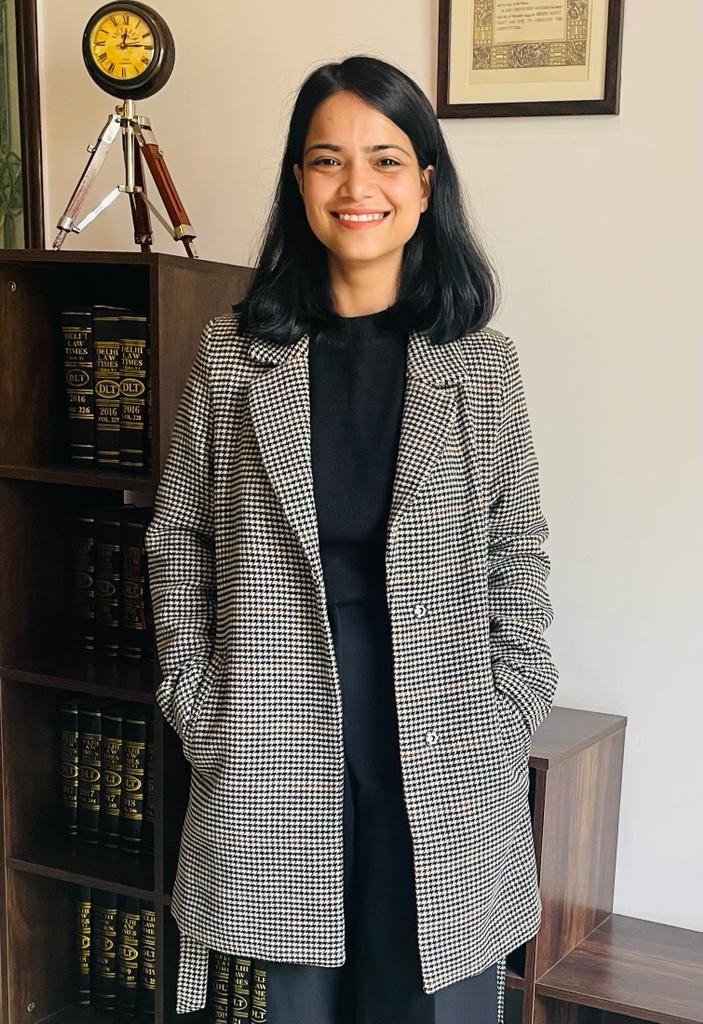
  • Deepika Pokharia, Senior Associate at Saikrishna & Associates In a FireSide Chat with SuperLawyer on IPR, Taxation and Evolution of NFT, AI and Metaverse

    Deepika Pokharia, Senior Associate at Saikrishna & Associates In a FireSide Chat with SuperLawyer on IPR, Taxation and Evolution of NFT, AI and Metaverse

    This interview has been published by Prabhjot Singh, Priyanka Karwa and The SuperLawyer Team

    Was pursuing law planned or did it all happen by chance?

    I would say it was planned for as long as I can remember. When I did not score the desired rank in my CLAT examination, I decided to do law post-graduation. I studied B.Com (Hons) at Shaheed Bhagat Singh College, Delhi University and thereafter, took admission in Campus Law Centre, University of Delhi. I have always been inclined towards litigation and so far I think it is working out well for me.

    Please enlighten our audience about the initial struggles in your career and how you managed to overcome them?

    I have been very fortunate both in terms of having the absolute freedom in my career choices and finding the right opportunities. I started my professional journey with Wadhwa Law Chambers as an IP Associate.

    Despite working in a relatively niche field of law, I was exposed to all kinds of work ranging from general advisory, commercial litigation to transactional work. Additionally, smaller teams ensured significant contribution in every matter.

    I just feel that as a first generation lawyer there is certain lack of insight or clarity one has in figuring out their career goals. That being said, everyone has different journeys and law being the dynamic profession it is, every opportunity irrespective of the organisational structure or area of practice is worthwhile. 

    The only major struggle for me (as well as my peers) has been to achieve a work-life balance, which generally becomes impossible in smaller set ups. This problem is also supplemented by our own deep-rooted conditioning and seeking validation in overworking. I think having a healthy professional relationship with your senior(s) is significant in resolving any such workplace issues.

    What are the most important considerations to keep in mind when dealing with IPR and Tax issues? 

    That’s a very wide question given the range of IP rights and Tax statutes in India.

    To answer it briefly, I would say insofar as IPR is concerned, understanding the overlap between various IP rights is extremely important. Additionally, in any intellectual property issue, whether litigation or transactional, the foremost consideration is determining the scope of the IP right involved.

    Again, taxation has a very wide domain. While having a basic understanding of the tax implications, statutory timelines and compliances is a prerequisite to any tax dispute, one needs to be updated with the ever growing developments, jurisprudence and amendments. Circulars, Press Releases and Notifications also assume a significant role in understanding taxation issues.

    What are the most prominent challenges that you have come across while dealing with Tax and IPR Transactions? 

    Both Tax and IPR happen to be slightly technical fields and as such breaking down the legal issues is always a challenge. Lack of substantial precedents with relatively new enactments such as the GST Act poses another challenge. For that matter, even the concepts of Design law are still not well-settled in India.

    Deepika, how do you ensure that clients’ intellectual property is adequately protected, and what are the basic compliance procedures one has to work upon? 

    I have personally witnessed a growing awareness about the importance of intellectual property (particularly trademarks and copyright) amongst upcoming business and entrepreneurs. Brand protection is finally being considered paramount amongst businesses, who not only seek to protect their brands but also understand the legal consequences of intellectual property violations.

    The basic idea is to start early and secure statutory protections. The importance as well as effectiveness of  IP Prosecution cannot be underestimated.

    What are the most common mistakes you see businesses make in IPR nowadays? 

    Like I said, businesses, irrespective of their size and operations, are increasingly becoming conscious of intellectual property rights. However, not acting early enough both in terms of protection of one’s IP rights and initiating actions for any infringement/violation poses significant problems.

    Besides this, businesses need to be extremely wary of loosely-worded agreements whether it be licensing, settlement or even employment contracts insofar as they pertain to ownership of the IP rights.  

    What resources do you recommend for staying up to date in law? Any blogs that you always keep an eye on?

    Insofar as the general and daily legal updates are concerned, dedicated legal news resources such as Bar and Bench and Live Law already cater to a significant audience which even includes non-lawyers/legal professionals.

    For developments in the field of IP law, I find SpicyIP and IPWatchdog very interesting. For that matter, LinkedIn has now become a great source for legal updates. More often than not, I find myself looking for a case law on LinkedIn because I recall scrolling past something familiar on the platform. What is really great about LinkedIn is that its not just independent practitioners or firms sharing daily updates but law students having an inclination towards IP.

    If your university or office have a PTC subscription, I would always recommend skimming through it.

    Deepika, you’ve been quite active in these IPR dealings, but lately we are witnessing the evolution of Metaverse and NFT, according to you how will it affect the legal industry?

    I feel with every technical development/evolution, comes in the legal disputes. Internet and e-commerce have opened floodgates of litigation with IP disputes constituting a major chunk of it. Similarly, copyright and trademark issues particularly, one concerning the ownership of such IP rights in NFTs seems imminent.

    “As dependency on tech and AI will increase, issues pertaining to security and privacy will also witness an increase”, please throw some light on this statement.

    That goes without saying. Digital footprints and access to personal data invariably leads to security and privacy concerns. While it is impossible not to move along with these technological developments, we will have to educate ourselves of all the possible repercussions.

    Just last week, there has been a lot of discussion on privacy issues concerning the Lensa AI mobile app which is being used by several celebrities/influencers across social media platforms for sharing their AI generated “avatars”.

    Any 5 best pieces of advice that you would love to give to our readers?

    Well, here are the five takeaways from my experience so far:

    Constantly reassess your growth and goals. What gives you work satisfaction today, may not tomorrow.

    Insofar as possible, work on all sorts of matter and do not pigeonhole yourself.

    A law degree does not necessarily translate to litigation so explore your avenues.

    Professional work ethics and accountability goes a long way.

    Lastly and most importantly, break out of your legal circle every now and then. Meet your non-lawyer friends, engage in discussions about anything but law. The idea is to expand your horizons and avoid the burn out.


    Get in touch with Deepika Pokharia-

  • Upasana Singh Chaturvedi, Founder & CEO at Accords International, Arbitrator and Mediator In Conversation with SuperLawyer on Unconventional Careers in Law

    Upasana Singh Chaturvedi, Founder & CEO at Accords International, Arbitrator and Mediator In Conversation with SuperLawyer on Unconventional Careers in Law

    This interview has been published by Prabhjot Singh, Priyanka Karwa and The SuperLawyer Team

    We ask this question to almost everyone, but ma’am looking at your experiences, I would like to flip it a little bit, how did law choose you?

    I come from a family of lawyers, judges, and professors. I think ‘law’ chose me before I was even born. From an early age, I used to sit with my grandfather and used to observe the trials he used to preside over. Also, during my studies in history in my undergraduate course, I realized how a society’s nature is modeled and governed by the legal system that it has. This realization got me interested in exploring law as a professional carrier for myself. The campus law Center, university of Delhi helped me understand law and brush up on my legal and oratory skills.

    What were the struggles you faced in the beginning?

    By ‘beginning’ I believe you mean the beginning of my legal career. I think the biggest struggle is coping with the rigorous work routine and keeping on doing what you like the most. I was always passionate about teaching, so along with my practice, I kept on teaching at Delhi University, IP University, Bennet University, and Sewa Samarpan Samiti, which is an NGO based in India. I think this helped me pursue my dream with passion.  

    Firstly, a big congratulations on starting “Accords International”. Do you mind sharing some obstacles that might come in the way of being a founder at any firm?

    You know I have started to believe in what Elon Musk once said, “starting a company is like eating glass and staring into the abyss”. It is a difficult task to build a company, run it, and earn profits with it. My biggest challenge was to find like-minded people to work with and constitute a team that creates a conducive environment. I have been fortunate to finally find an amazing group of team members. I am liking every bit of it. No doubt you are wearing a crown of thorns, but you are your own boss. Accords International works in mediation and restorative justice. Both these fields are new to India and clients and colleagues are still learning. We provide mediation and restorative services and training regularly.

    When we talk about disputes, most of the time obviously the parties commit the same number of mistakes, and both suffer as well, before even going for conflict resolution, don’t you think there is something out before that? 

    In the event of a disagreement, it is often that the situation escalates to a conflict and then the parties take the matter to the court as a dispute. If the lawyers and other professionals who advise the parties during the initial stages have a non-adversarial mindset, then disputes can be avoided, and disagreements can be amicably settled at very early stages. This is beneficial for all, the clients, the lawyers, the courts, and the society.

    As someone who has also specialized in cybercrimes, bullying, etc, what are the core reasons that these things happen and any unconventional ways to stop the harm?

    Dan Olweus defines simple bullying as ‘unwanted aggressive behavior that is intentional and that involves an imbalance of power. Most often it is repeated over time.  If this is done via an electronic device, then that makes sit cyber-bullying.

    The four Elements of Bullying are- Aggressive Behavior, Power Imbalance, Repeated act, and the players (Perpetrator and victim). If we add a computer, cell phone, and any other electronic device to traditional bullying that will make it cyberbullying.

    The common types of cyberbullying and their reasons are:

    1. Exclusion- Publicly Ostracizing the target from the online world- Possible reason is to make the target vulnerable and lonely.
      1. Flaming- posting personal insults and vulgar texts- possible reasons are power play and intent to humiliate the target.
      2. Impersonation- pretending to be someone else. – possible reason can be entertainment or fraud
      3. Cyberstalking- using the internet and technology to follow someone- (harassment, stalking, revenge, fascination, show-off)
      4. Trolling- to deliberately provoke others- (attention seeking, revenge, boredom, personal amusement, paid by someone else)

    Accords International is working on a model for dealing with cyberbullying and online harm with the help of restorative justice. Teachers, parents, and school management can use restorative practices like regular restorative circles and non-violent communications to de-escalate conflicts at early stages.

    What are the necessary skills to have as a “Trained Mediator”?

    As a mediator, one learns

     To facilitate a conversation between two disputing parties.

    To be objective,

    To be impartial,

    To be an effective communicator,

    To feel empathetic, patient, adaptable,

    To be trustworthy,

    To understand the psychology of conflict,

    To be able to distinguish interests and needs and

    To become a better negotiator.

    “Unconventional careers in law will spoil your degree”, why has this misconception led many people far away from the legal industry revolution and how to excel oneself to reach heights?

    I think this advice worked in the previous century. Today, we live in a world where lawyers are working in tech policy, AI, cyberspace, Outer space, public policy, sustainability, diplomacy, and many other ‘unconventional’ fields. I think law teachers and colleges should update their curriculum on a regular basis and students should not only be exposed to court proceedings but also to the newer developments around the world. Accords International is working with the vision to make such experiences available to Indian students.

     Lastly Upasana, any advice to level up the skill game in this profession?

    I find reading is very important for lawyers to always keep updated and informed. Also, skill-building courses in mediation, drafting, negotiation, tech policy, etc are important to learn about new fields. Accords International has launched its next mediation training for the months of January-February 2023. Training programs like this keep young professionals updated and connected.


    Get in touch with Upasana Singh Chaturvedi-

  • Ashirbad Nayak, Lecturer at JGLS Sonipat,In Conversation with SuperLawyer On Role of Co-Curricular Activities in Law School and Much More

    Ashirbad Nayak, Lecturer at JGLS Sonipat,In Conversation with SuperLawyer On Role of Co-Curricular Activities in Law School and Much More

    This interview has been published by Prabhjot Singh, Priyanka Karwa and The SuperLawyer Team

    How would you like to introduce yourself to our readers?

    Hi, I am Ashirbad, and I am currently a Lecturer at O P Jindal Global University. I love to paint and sketch. You would always find me humming to Sufi music or Eminem, there is no in between. I have a black belt in karate, I used to run 10Ks during my Masters, and most of my free time during the work week is spent watching Instagram reels about puppies, or NFL and UFC matches. And, when I have vacations, I backpack across remote but picturesque destinations.

    Why did you choose to pursue a degree in law after your Class 12 Boards?

    Didn’t really have much of a choice. I was a PCMB student during my 11th and 12th. It was not my cup of tea. I had a disastrous JEE and AIPMT. The only option that I had was CLAT. AIPMT ended on 3rd May, CLAT was on 10th May. I prepared what I could within that and showed up for the exam. Quite fortunately, things have been on a upward trajectory ever since.

    Tell us a little about your days in NLU Odisha?

    I had the time of my life in NLUO. When I joined there really were no campus placements, only a few batches had graduated, no one really gave us guys a shot. So, we as the students, had to build up a fair bit of the institution that it has become, ourselves. Beyond the professional or academic front, I met my closest friends there, I am very fortunate that the friends I had in first year of law school, are still my friends.

    I learnt karate from Akshay, who used to live in the room next to me. I learnt how to write papers from some of my seniors there. Vegadarshi taught me a lot about how to be a Speaker for a moot. More than anything, everyday was a laugh riot in the place. I wouldn’t trade those days for anything

    How did you narrow down on NLU Odisha specifically to pursue your undergraduate legal studies?

    Again, didn’t really have much of a choice. I got through to TNNLS in the third round of CLAT counselling. Two and a half months later, there was a vacancy at NLUO, I applied and got through. The first two months were ludicrously challenging. I was the last guy in, I had joined after the mid-sems had gotten over, I had no clue what to do. Fortunately, I persisted, and things worked themselves out. I often say that the greatest things in my life have happened to me by accident, CLAT, NLUO, my friends, St Catharine’s, and they have had the best impact on me.

    What were the activities, academic or otherwise, that you undertook in your law school days which in your opinion have shaped you and your career?

    Plenty of them. I had a finger in every pie. From college committees, to moots, to papers, conferences, academics, debates, MUNS, I was involved with everything. I am generally quite outgoing, and I made full use of whatever avenues NLUO offered. It went beyond just building a career, and the academic knowledge I gained from them.

    I have always prided on being able to don multiple hats at the same time and juggle multiple things successfully. They have proved to be quite beneficial in life, in general. I knew everyone on campus from the Vice Chancellor to the guards manning the gate.

    Quite fortunately, they all got to know pretty well. That kind of connection is invaluable. It teaches you a lot about fostering and maintaining relationships with people from all walks of life and being a reliable person for them.

    I am particularly proud of the work that I did as the Co-Convenor the College’s Internship Committee, along with Mridul, my Convenor. We lead a team of 10 students, and in our time span, we broke the record of the number of internships that NLUO had ever obtained in a calendar year by a wide margin. We took the total from 4 in the previous year to 59 in our term.

    What kind of internships did you engage in during your undergraduate student years which you feel were invaluable to you in reaching your current position?

    I interned at mostly data protection and general corporate teams of law firms. The most significant of them would be the two stints I had at Khaitan & Co, Kolkata, in the Corp A team with Mr Supratim Chakraborty. I had a blast working with him. I learnt so much from him, Shourya Da, Risa, Pratik Sir and a whole host of other people. I have really good memories of my time there.

    You had been an all rounder in NLU Odisha, because of which you were bestowed with the ‘Shri Bichitrananda Mahanty Gold Medal’. How did you manage your academics, co-curricular and extra-curricular activities at the same time?

    I used every available minute that I had, and I was as efficient I could be. It was a constant drive to be the very best version of myself. I was always occupied with something or the other. And I enjoyed doing it. No one forced me to do those things, I have always been naturally inclined to set high goals and see if I can achieve them. Being engaged in so many things also kept me focused and on track. That and an aptitude to work hard. There is no substitute for the latter. In a way, it was preparation for the future, beyond the limitations of law school. That being said, it was not all work though, I made sure to have enough time to kick back and relax with my friends.

    You had been National Winner and Octa-Finalist of several Indian and International Moot Court Competition. Kindly share your experience as a successful mooter of NLU Odisha.

    I have only done two moots the Oxford Price Media Moot Court and NUJS HSF Moot Court. Quite fortunately I performed well in them both. Price Media 2018 was the first moot that I ever did, and I spent a year working on it. Within that time span, I did not pick up any other assignment or co-curricular activity. We managed to reach the Octa-Finals of the World Rounds and were also adjudged as the Runners-up of the South Asian Rounds. We were the first team from NLUO to qualify for the Worlds in that competition.

    The next year, I took part in HSF, and it was a month of pure sleeplessness. It had some of the most thrilling rounds I have ever been a part of, and we were adjudged as the Winners of the competition.

    Again, we were the first team from our college to win the competition. Of course, along the way for both the competitions we received a tremendous amount of support from friends, alumni and college resources. The only thing I had in mind while preparing for Price Media was to be the very best Speaker I could possibly be, I had always been a debater and never a moot court Speaker, so the transition had some growing pains.

    The secret sauce for success in a moot is to form a team with people you are comfortable working with. That, and a tremendous amount of hard work and sacrifice.

    You had an accomplished record of publishing at renowned journals from publishers like Thomson Reuters, Eastern Book Company, Wolters Kluwer and famous dailies like that of The Indian Express, The Daily Guardian, The Statesman, Deccan Herald, just to name a few. Kindly share your experience of writing papers and articles for the journals and dailies.

    I have always liked to write, so I expanded upon that in law school. I started off with nascent steps, publishing in online blogs and journals, until I garnered enough experience that I felt I could write for reputed publishers. Newspaper articles are always fun, as they are short, precise and reach a much larger audience.

    The books or articles that I have published with the aforementioned publishers, were based on strenuous academic research, structured in a manner that was scholarly to merit publication, but, at the same time engaging enough to keep the reader hooked. I co-authored several articles with my Registrar at NLUO, Professor (Dr) Yogesh Pratap Singh, and, it was always a joy to write with him.

    How important is it for the law students to write research papers while being at the law school?

    It is definitely helpful, but, there is no hard and fast requirement as such. I have often heard stuff like publishing one article in a journal is equivalent to taking part in a moot. That is simply not true. These activities teach you different skills, and a lot depends on the quality of the paper and the journal it is being published in, which is the same as the quality of a moot court and your position in the competition.

    A research paper would not only give you in-depth knowledge about the topic, but also streamline the manner in which you think and present your thoughts. A useful skill for a lawyer, for sure.

    You had been a student researcher of important projects of NLU Odisha, won accolades in debate competitions, youth parliaments and MUNs’. How relevant do you believe are those achievements in your success story, so far?

    Very relevant. I started off with MUNs. It laid the foundation for everything else that was to follow. As regards debates, I have been doing that since my childhood days. Debates taught me to think on my feet and marshal my arguments in a systematic and convincing manner. Debates also had a tremendous role to play in eliminating stage fright for me, and to be an engaging public speaker. My time

    Between the time of your graduation and your post-graduation, you had briefly worked in a renowned law firm at their Gurgaon office. Kindly share your experience of working there in the role in the intervening period between your LL.B. and LL.M.

    I was associated with the General Corporate team of JSA Gurgaon for the period between my undergraduate and my Masters. It was a great experience, and I learnt a lot about transactions. The responsibilities that you are entrusted with at the beginning are immense, and you have to adapt to the needs of the clients with alacrity. It was quite an enriching experience overall.

    What prompted you to opt for LL.M. from University of Cambridge within a year of completing your BA. LL.B. from a renowned National Law University?

    I always knew that I wanted to do a Masters, right from my first day of law school. And I was dead set on two places: Oxford and Cambridge. No other place ever held that charm for me. I wanted to study in a place which had history dating back to centuries, ensconced amongst picturesque medieval architecture and surrounded by the best minds in the world. Safe to say that I found that and much more at Cambridge.

    How relevant would you say higher studies are for a career in law, be it working in law firms / companies or pursuing an academic career?

    Its subjective. People do a LLM for various reasons. Some do it to satisfy their academic curiosity, others to transition into a foreign workforce, a few people I knew did a LLM as a break from their work. But, you do learn a lot during the year you spend studying for the program. Living in a different country, finding your feet amongst new friends and in a new culture teaches you a lot about yourself, and forces you to adapt to challenges. It opens your eyes to how people from different parts of the world live and the stories that they carry with them.

    For an academic career, a LLM is always a big bonus. For law firms, I cannot offer an adequate comment. At the very least, the year you spend for your LLM, if it is at a sufficiently good University, is a year in which you gain a lot of knowledge, so its always a win-win.

    What does the CV of a student seeking admission in a premier university offering an LL.M program have to look like? What are the factors you feel are looked into and what are the activities that the assessors regard favourably?

    At the top of the list are your marks. To get into Oxbridge or relatively similar places, you need a good enough batch rank and marks. There is no substitute for that. Apart from it, excellence in a particular field is very helpful.

    If your CV can demonstrate that you have a certain level of expertise in a particular area of law, you have worked on it extensively, and you are aiming to pursue your Masters in that particular area itself, it helps establish you as a strong candidate for the program. Apart from that, everyone’s CV is different. There is no hard and fast requirements as such.

    You had been the Co-President of MCR (Postgraduate student body) Committee at St Catharine’s College for the Academic Year 2021 – 2022. How was your experience of leading a student body, that too outside the country?

    It was incredible. I was admitted to St Catharine’s College at Cambridge and the college had elections for the position of the Co-President of the MCR Committee. I ran against a PhD candidate and was elected. As an Indian, being elected as the head of a British College was surreal keeping in mind the positions Indians had had in the British empire barely a hundred years ago or so.

    The weight of it all was not lost on me. It was a tremendous amount of responsibility though, almost like a full time job. But, it gave a great opportunity to meet people from different streams: medicine, the sciences, humanities, finance, business; and also to work with the college authorities, and help them all in whatever issues that they had. It was truly a humbling experience.

    You had been a gold medallist at NLU Odisha for Public International Law. Despite your command over the subject, what prompted you go for an LL.M. in Corporate Law?

    I always wanted to work in Data Protection inter-mixed with commercial law. So, most of my internships and activities were geared on that front. I loved studying PIL in NLUO, primarily because of my Professor, Ananya Ma’am, who made the entire subject extremely engrossing. The fact that I got a medal in the subject, gives me immense joy, but my career trajectory has always been centred around commercial and technology laws.

    Please share with our readers how did you narrow down on University of Cambridge for pursuing your LL.M. on Commercial Law along-with data-protection laws as your additional specialisation;

    I have mentioned briefly earlier about my desire to study at Oxbridge. Of the two, Cambridge became an obvious choice because of Professor David Erdos, who teaches the module of Law and Information at Cambridge. He also heads CIPIL, which has done some remarkable work on European Data Protection Law. I knew I wanted to study from him, so, it was quite easy for me to decide to opt for Cambridge.

    You went to Cambridge on full scholarship. You have been a recipient of three scholarships – Prathiba M Singh Cambridge Trust Scholarship (through Cambridge Trust), J N Tata Endowment for Higher Education of Indians Abroad (through TATA Trusts), Kemp-Gooderson Law Award and other Bursary funds (through St Catharine’s College, University of Cambridge). What is the secret of securing three prestigious scholarship at the same point of time for pursuing your LL.M.?

    All of these scholarships are merit-cum-means based, implying that they need a certain calibre of academic standard, and the candidate ought to be in need for financial resources to fund their LLM. I had one objective in mind upon conclusion of my undergraduate program, which was to not ask my family for any funding. And I have been quite fortunate to have achieved that through the cumulative financial commitments of these scholarships. There is no secret as such. Just know your area of law well, be confident, honest and straightforward in the interviews.

    Please share your experience of applying at University of Cambridge and for the scholarships, you had secured. Kindly share your experience of the application process for the LL.M. and the scholarships.

    It was a bit stressful. Balancing a firm job, along with applications is a tall order. I had prepared a table with the last dates for applications of various scholarships along with their required documents. That helped me keep things on track. I had also reached out to my referees well in advance, so, that helped in avoiding any last minute hiccups regarding letters of recommendation and as such.

    My one tip would be, research the Universities you want to get into well in advance, ensure that you have your transcripts and references prepared, and know yourself well for writing the statements of purpose.

    In the year 2022, just after completing your LL.M. from the University of Cambridge you have joined Jindal Global Law School, Sonipat as a Lecturer. What prompted you to take the plunge in the field of academics?

    A: I have always liked academia, being surrounded by young, bright minds. It is always good to give back to the next generation of students. When I was in Cambridge, Jindal came for recruitment, I applied and got through, and here I am. I am still at an early stage of my career, so, lets see where I end up in the next few years-academia, firm, an organisation, or somewhere else.

    Back in your student years, did you ever see yourself becoming an instructor at a prestigious law school, sometime in the future? What did it take to get here?

    Absolutely. In fact I used to teach my batchmates prior to every examination. The night before each exam, there would be an assembly of boys in the Boys Hostel in front of my room, and I would teach them whatever limited things I had read myself. These classes became known in NLUO as ‘Ashirbad classes’, and in fact in my final year, some of my batchmates put up a poster titled ‘Ashirbad Classes’ all around the campus. That was the foundation of my career in academia. So, I knew I had a future in academia for sure.

    Give us a brief capsule of the life of a lecturer in a prestigious law school.

    A: Its an engaging day, comprising of classes and research. It is an important responsibility to instruct students, so, you always have to be prepared for the classes. Apart from that it is always good to be in a University set up where things are quite organised and orderly.

    How is your experience of working with Jindal Global Law School’s legendary instructor, Professor. Arjya B. Majumdar?

    I have learnt so much from Professor Majumdar. He is pioneer of when it comes to teaching commercial law. I cannot describe accurately how much I have enjoyed working with him at Jindal. Apart from being a great educator, he is also an incredible guy. I have sought his advice on quite a few things, and they have always been eye-opening.

    How important are grades, in your opinion, for a student to be eligible for employment, be it in academia or in top tier law firms?

    Quite important. Never mess them up. Grades show one important thing- consistency. And that is an invaluable quality that every employer of institution looks for in a prospective candidate. So, be sure to keep them on track.

    If given an opportunity, what would you do differently in your career journey up to this point?

    Nothing. Not a single thing.

    Is there any other suggestion you would like to give to our budding lawyers?

    Do everything that you want to do. Set high dreams and demand the highest standards of excellence from yourself. There is nothing quite like regret, so make sure that when you look back on your life, you don’t have regrets about anything.

    And always remember these lines “Stick to the fight when you are hardest hit, it’s when things go wrong that you must not quit.”


    Get in touch with Ashirbad Nayak-

  • Zeeshan Ali Khan, Partner-IP Enforcement at Rahul Chaudhary & Partners In Conversation with SuperLawyer On IPR and Networking for First Generation Lawyers

    Zeeshan Ali Khan, Partner-IP Enforcement at Rahul Chaudhary & Partners In Conversation with SuperLawyer On IPR and Networking for First Generation Lawyers

    This interview has been published by Prabhjot Singh, Priyanka Karwa and The SuperLawyer Team

    Being a science student, and then choosing law, what was the idea behind?

    Though I was doing good in science, however somehow, I was not interested in pursuing a career in science and therefore, was looking for options. During this time, my family suggested me to go for a career in law and when I started preparing for entrance exams of different law schools (as we did not have CLAT back then) – it really fascinated me. I started reading about famous lawyers in India and also visited the lower Court in my city, the idea of wearing that collar band and arguing in Court used to give me goosebumps.

    At was during this time that I firmly took a call to make a career and practice law.

    How challenging has it been for you so far in the legal industry?

    It has been a very satisfactory journey so far. I was able to clear the entrance exam of two National Law Universities and two reputation private universities and decided to join HNLU, Raipur. I joined the third batch of HNLU, Raipur in 2004 and was fortunate to have been taught by some of the best faculties at the time. My five year stay at HNLU was both memorable and enlightening at the same time.

    The strict time lines to submit projects and moot court memorials gave me an early introduction of how the legal profession going to be and worked as a solid foundation for later part of my career.

    I joined an IP boutique firm ZuesIP immediately after completing my course and thereafter, my joined current firm Rahul Chaudhry & Partners in 2010.

    My firm and my mentor Mr. Rahul Chaudhry, the Managing Partner of the firm have immensely helped me become the professional I am today. I started as a junior associate in the firm and slowly learned the nuances of IP and law in general. I was designed as Partner – IP Enforcement in 2021 and handles IP Enforcement before the Courts in India, Domain Name as well as Custom Authorities.

    What created your interest in the IP sector? And how did you prepare yourself for everyday challenges in the same? 

    My initial interest in IPR started when we were taught IPR in the second and third years of our law course. The idea of knowing, protecting as well as helping the brands grow attracted me and I decided to intern with IP Firms to better understand the subject. I learned the intricacies of IP as a subject and practical aspects of implementing the same in day-to-day legal practice during these internships.

    Accordingly, I opted for IPR as my honours subject in the university and got a specialization in the same.

    Preparing myself to practice IPR was not a challenge for me as I had a keen interest in the subject. I used to go through all major IP judgments by the Courts to keep myself updated of the latest developments and still try to read as much as I can whenever the schedule permits.

    According to you, what networking strategies should be adopted by the first generation lawyers specifically in corporate?

    Being a first generation lawyer myself, I have never felt any difference in terms of treatment by law firms or corporates. If you have knowledge of the subject and good command over language – you are bound to be noticed. The age old saying that there is no substitute to hard work is absolutely correct. I am a strong supporter of making your work speaks for yourself. If you are getting reliefs for your clients and are being recommended for your work – the world will look for you.

    At the same time, I would suggest one to leverage technology, join industry groups in person or through various social media like LinkedIn and also offer educational resources. Give presentations and educational lectures in various industry gatherings as well as educational institutions.

    What are the most important qualities for an intellectual property lawyer?

    An IP lawyer needs to keep himself updated with latest judgments and industry practices. With the creation of IP Divisions in the Courts, IP has become even more niche practice. Going through PTC on a regular basis and keeping a track of prosecution practice is also very important. I always suggest that to be a successful IP lawyer, one should have a good command over prosecution side as the same forms the foundation of one’s IP practice.

    How a trade mark application is filed, the route it takes for registration and how to overcome the objections raised by the Administrative Authorities (like Trade Marks Registry) are all very important. A wrong advice to the client during prosecution and registration procedure can ruin all future prospects of protecting and enforcing the mark.

    Zeeshan, do these legal tech tools have helped litigants and corporates so far in preparation of different documents or filing and what in the future would be challenges for lawyers in dealing with such tools?

    The tech tools are indeed helpful and I see them playing a greater role in future. Along with saving time, the tools also minimise the chances of an error. Many corporates have started using them to keep a track of their matters pending in the Courts, checking the deadlines and even setting reminders to ensure that no deadlines are being missed. As we all know, deadlines play very important role in our profession.

    The time frame provided by the statues to file pleadings/documents before Courts as well as various administrative authorities are to be strictly followed, specially in IP prosecution. Hence, I believe the tech tools are going to be a game changer in future. With respect to the challenges, I believe the new generation of lawyers will not have any difficulty in handling these tools. I suggest even law schools should start preparing the students to use these tools during their course.

    As a partner of a law firm, how do you manage to balance the work-life aspect?

    Work-life balance is very important to ensure a long-term efficiency in work and a satisfaction in your personal life. My day usually starts at 9 am in the office and then few hours are spent in the Court as well. Being a partner, I also try spending sometime with my team members to interact and discuss work and the general life related aspects. However, one needs to prioritise the work and maintain a discipline during the working hours.

    I am a strong supporter of not carrying the work related stress to home and spend my away time playing with my daughter as well as working out. It is equally important to take care of your health and therefore, I have made it a routine to work out for atleast an hour every morning.

    The same not only helps me stay strong physically but also strengths my mind and helps me to prepare myself for the day.

    Lastly, any advice for our young law generation?

    Legal field requires continuous study and keeping yourself updated of the latest developments. So, it is very important to make an early habit of reading latest judgments as well as precedents. Young lawyers should also visit Courts and hear established legal practitioners argue the cases in Court.


    Get in touch with Zeeshan Ali Khan-

  • Manav Gecil Thomas, Partner at Thomas George and Associates Shares his Thoughts on Networking Strategies in Litigation and Role of Tech and AI in Legal Operations

    Manav Gecil Thomas, Partner at Thomas George and Associates Shares his Thoughts on Networking Strategies in Litigation and Role of Tech and AI in Legal Operations

    This interview has been published by Prabhjot Singh, Priyanka Karwa and The SuperLawyer Team

    What motivated you to take law as a career and how has been the decision so far?

    As all students, I was also confused during my school days as to which profession I should choose. Thereafter, my mom suggested me to take up law in lines of the profession of my father as he has already established a base. I did not qualify CLAT, however, I qualified for UPES, LAWCET and ILS Law College, Pune.

    Keeping the long standing reputation and I decided to join ILS Law College, Pune. All throughout my college life, I enjoyed participating in Moot Court competitions. After completing my law, I immediately joined my father’s law firm i.e., THOMAS GEORGE & ASSOCIATES. Thereafter, my mom was instrumental in insisting me to complete my LL.M.

    I did LL.M in Constitutional Law from O.U.P.G. College, Basheerbagh and secured a Gold Medal which was a lifetime dream come true. My father has been an amazing mentor as he not only trained me in drafting, filing procedures, clerical works but he also gave me the freedom to take up matters and handle them independently from day one …!

    My first appearance itself was arguing a final hearing before the then united Hon’ble Andhra Pradesh High Court of a Criminal Revision Case pertaining to 2008. Ever since then, I have never stopped and I hope to argue many more important cases in the years ahead of my life.

    Arguing the law and interpreting the law are two important facets of my litigation life which I will always cherish. So, though law happened by accident, I am happy to go the way it carries me. There is a unique unexplained sense of happiness that, I feel while arguing cases before different judicial and non-judicial fora throughout the country. With all the tremendous pressures that we as advocates undergo, it is only, that joy that I get, after arguing different kinds of matters that keeps me going ahead…!

    Your internship experiences are filled with reputed Advocates and Judges, was there any roadmap for the same or all did was in flow? How would you guide students in choosing internships?

    As a law student after participating in few moot court competitions, I was inclined towards litigation. My first internship was with my father and mentor who taught me the basic art of advocacy, that includes drafting, filing procedures etc.

    Thereafter, I went on to intern with Designated Senior Counsel Late Padmanabha Reddy where I was mesmerised to see sir argue different kinds of matters at length on his legs from 10:30 AM to 04:30 PM…! I would observe, sir argue most complex matters with utmost patience and he was always calm and composed, the most essential art I learnt. Subsequently, I interned with Adv. S. Niranjan Reddy now Designated Senior Counsel/ Member of Parliament, at whose offices I learnt corporate litigation and its nuances.

    Thereafter, I had the unique opportunity of working with Honourable Justice Kurian Joseph (Retired), Former Judge Hon’ble Supreme Court of India and while interning with his Lordship, I was able to understand what all goes in the minds of the judges post arguments since, I was also involved in the legal research that would assist judges in arriving at their decisions. I was able to see the judicial process closly that goes on after the arguments and before the judgement is pronounced.

    This experience has channelised my arguments in a slightly different manner and I am dedicated His Lordship for imparting this knowledge in me. Thereafter, I had a short stint with late Advocate Lily Thomas who had shown me no matter whatever hurdles and challenges life throws at us one must keep moving. Lastly, in my final year, I interned with Designated Senior Counsel & Hon’ble R. Basant sir Former Kerala High Court Judge. During this internship I received unique lessons of life & law, wherein I learnt how a mentor can treat his associates, juniors and interns with patience & care and at the same time learnt how hard work and dedication plays an important role in the life of an advocate. Students are not always sure as to what kind of an advocate they want to become after graduating, so it is always beneficial to intern at different places where there are variety of matters.

    Students should always start their internships with advocates who have a variety of trial court matters. In trial courts, students can learn about procedural laws, they can observe Cross Examinations and trial advocacy skills.

    Thereafter, students must intern with advocates practising in the High Courts and then the Supreme Court if possible. After this I would suggest students to intern with different corporate law firms. By the end of their internships, I would say with utmost surety, that, the students will be able to decide their career paths…!

    Manav, any specific reason for choosing litigation over corporate, what created your interest in that?

    I hope my answer to this question does not create any controversy amongst corporate law practitioners. I do not feel that I am made up for only drafting contracts or due diligence as I like to see the law in motion and that, only happens in the courts of law. In litigation, one see and meets different types of clients with different issues and in pursuing those issues one has to appear before different judicial and non-judicial fora and convince the Honourable Judges on unique points of laws and facts. Litigation requires a unique skill of being able to put forth your points with absolute clarity and conviction.

    For the same, one has to be well versed and well abreast with the laws and case laws. In corporate law, there are different nuances of law which are being explored on a day-to-day basis but none of the corporate lawyers are able to see their documents being interpreted in the courts of law. That is why, I choose litigation over corporate law.

    However, one must understand that even though I am a litigating lawyer, on a day-to-day basis, I am dealing with various aspects of corporate law which we cannot avoid being a lawyer. Thus, I believe that the so-called difference between a corporate lawyer and a litigating professional is a grey area which cannot be compartmentalised. So, I fix no label to myself….I leave it to the readers to categorise me as any lawyer they feel based on the work I execute.

    As lawyers, society depends on us in a lot of situations and pro-bono matters is one of them. How far do you resonate with this?

    Society depends on a number of aspects that keeps evolving and law is an important part of this evolving society. The changing needs of the society requires dynamic changes by the practitioners of law. In today’s world where everyone is in the rat race to earn, a lot of poor litigants suffer with inefficient representation as the fees that they can pay is less. I completely believe that in the background of the unique requirements of the society as of today, pro bono matters would definitely assist and help the people in need in a unique and effective manner.

    Many a times, I come across poor litigants who are not guided in the right direction due to which they faced unpleasant consequences. In this background all the us at THOMAS GEORGE AND ASSOCIATES believe in helping the really needy clients and when the situation demands we do take up pro bono matters. In criminal matters I observed that the people arrayed as accused in many matters do not have the necessary sources to finance their litigation expenses and tend to seek help from legal aid.

    Many a times, legal aid is not providing effective and efficient representation thereby rendering the whole purpose futile. Thus, professionals with experience taking up pro bono matters really helps the litigants in need.

    According to you, what networking strategies should be adopted by the first-generation lawyers specifically in litigation?

    The struggles of first-generation lawyers are untold in today’s world. There is no secret mantra that can be told as to the strategies that can be adopted, however, these are a few tools which may come handy in the years to come. Networking is a very important part of litigation which one will understand as they progress in their profession. One must always bear in mind that every person one meets in any walk of life can be one’s prospective client and thus one should interact with people and make them know that one is a practising lawyer.

    There is an apt example for the aforementioned statement of mine; once while I was in a club and while I was on the way to the washroom, I met an acquaintance of mine and in a casual conversation made him know that I am practising in Hyderabad. After a year I received a call by this acquaintance who had referred a very big company for coming on board as their retainer. So, one can land up with a client in any place.

    Keeping in touch with your alma mater and alumni will also help you in being referred matters from different states pertaining to your jurisdiction. Being active on social media can also help to a certain extent. Giving internships to students, is a way of giving back to the society and in return over the years to come, one will see the benefit from the same. Also, one must always remember that hard work pays off and the reason I say so, is your work must speak for yourself and that in turn would result in receiving the due benefits of networking.

    Please elaborate for us your current role

    I am currently the Name Partner at THOMAS GEORGE & ASSOCIATES, Hyderabad. The Managing and Founding Partner of the firm is my father, Advocate Thomas George and the Senior Partner is my mother. This being the background of my firm, the positions that we hold really does not matter for us internally. That being said, on a day-to-day basis I appear on various matters before various Judicial and Non-judicial fora throughout India with my base practice in Hyderabad.

    My entire day goes in arguing matters before different courts of law and in the evening, I spend my time in preparing for matters listed either on the immediate next day or for the days to come and also meet my clients. I supervise the administrative matters of the firm.

    I delegate matters to the juniors/associates at the firm, teach/assign work/cross check the drafts assigned to the Associates/Virtual/Non-virtual interns. I brief the Managing and Founding Partner and Senior Partner of the firm on matters that needs to be argued. I also help my Associates in practising their presentations before the courts scheduled for the next day, so that, they do not face any difficulty.

    So far we’ve seen employees being harassed at workplace wrt different situations, how well do you consider the role of employment laws in the same?

    It is always beneficial for employees to research about the firm where they seek employment before scheduling any interview. I also think it will be beneficial if one can speak to people who worked in the said place prior to joining. The role of employment laws is not very effective as, the internal committee for any kind of harassment consist of members of the same firm.

    Furthermore, if any employee raises a complaint and leaves the organisation the next organisation will always look at this employee with a speck in their eyes and thus there is a fear in employees from making any complaints whatsoever.

    How does AI play a significant role in helping lawyers and what are the consequences for the same?

    AI is already playing a significant role in lives of lawyers. As on today we can see AI’s tremendous use in research while comparing to our senior generation lawyers. The search engines have been extremely helpful in researching for case laws as well as to know overruled decisions, landmark decisions et cetera. Case management has become very simple with the help of various digital applications that provides the statuses of all the matters of the firm with the click of a button. Dictation and drafting have become 10 times easier than what it was with the usage of the software that types out whatever we dictate with almost 90% perfection.

    Another application that I have come across in the recent times is a scanner pen which can be used to copy paste contents from various hard copy of agreements/drafts into the word document. AI will always remain a tool in the hands of a lawyer but can never replace mankind especially lawyers, because, the brain used to interpret law in a unique manner is not AI but it is that unique skill of that lawyer. Furthermore, convincing a judge is done by advocates who present their matters in ways they deem fit which again cannot be substituted by AI. For people who disagree then mankind itself will be overtaken by AI.

    There are also applications that are being developed for taking queries from clients through chat boxes and these apps help in consolidating the client consultations to a certain extent. Such client consultations would in a way save the precious time of lawyers. However, how much ever technology advances, if it lacks  human touch in the works of a lawyer then I believe there will not be effective representation in those cases.

    Manav, we’ve been witnessing students shifting from litigation to corporate or most of the times they dont even take litigation as an option, what can be the reasons for the same?

    Personally, I would like to disagree. In the recent years I have seen many students in fact choosing litigation over corporate law firms. The ground reality is that, as on date, there are no vacancies in many chambers as they are already flooded with young students who have just graduated. However, students do prefer a comfortable and stable life with heavy packages which corporate law firms provide and that can be the only reason that students would prefer corporate law firms over litigation.

    Once litigating lawyers start paying their juniors at least the amounts that are required for the basic survival in the cities they practice, students will definitely choose litigation. What I have observed in corporate law firms is that due to tremendous burn outs over the period of time people shift back to litigation thereby losing their initial precious years of the experience. Students must understand that litigation is like an investment which grows manifolds.

    The life of a corporate lawyer or a judicial officer or a lecturer usually ends upon attaining the age of superannuation, however, the life of an advocate has no age limit and in a lighter note; when all your fellow colleagues are retiring, the practising lawyers start earning even more…!

    Lastly, any piece of advice for our young lawyers

    Repeating what you would have already heard from various stalwarts in the profession, I would like to say that there are no shortcuts to success.

    Hard work, dedication, diligence, perseverance, patience are the keystones to success. We must always remember that success cannot be achieved overnight but it requires tremendous hard work.

    Whenever, we see successful professionals, we only tend to see their achievements without knowing the amount of pain, sacrifices, compromise that they had to undergo to reach the place that they are at today.

    Having patience will definitely play a great role in reaching those heights of success that are channelled for you. One must always remember to maintain a work – life balance which everyone has been talking about in the recent times. One must take time off work, spend time with family and friends as well, which are very important.

    I always tell my hardworking interns not to forget to chill in life. All the best!!!


    Get in touch with Manav Gecil Thomas-

  • In conversation with Mira Banga, a Corporate Lawyer and the Founder of Lawssistance, an online legal service provider

    In conversation with Mira Banga, a Corporate Lawyer and the Founder of Lawssistance, an online legal service provider

    This interview has been published by Sonali ParasharOjuswi Sahay and the SuperLawyer Team


    How did you decide upon choosing law as a career? What adjective would describe your professional journey up until now?

    I was always into public speaking and passage writing in my early school days. I used to score well in subjects like English and computer science in high school. It was my father who pushed me to choose law as a career as he felt I had the knack in me to eventually turn my skills into a profession and become a good lawyer. He always taught me that communication as a skill set is very rare and people spend years polishing it. As per him, I was born with it as he would see me argue and fight by giving logic to my friends or family during any discussion. 

    The adjective which would define my law journey up till now would be ‘Progressive’. My learnings, practice and thinking have been nothing but progressive all these years. I have managed to start my own office only in the 6th year of my practice and I managed to get clients and people to trust me and to go forward with the engagements only through the additional skill sets which I hone on a daily basis. I practice and read about not only law or legal developments but I also continuously work on how I can become a better communicator, a better writer or a better listener. 

    How challenging was establishing yourself first, as an independent practitioner, and then, establishing your own firm- Lawssistance?

    It was very difficult for me to make a decision to start my own practice or to leave my job at that time in 2020. The pandemic had just struck and it was pretty unpredictable as to how the legal ecosystem will be impacted in terms of work and payments. At that time, I was very comfortable working under a boss and doing what I was told but I used to notice that there were clashes when it came to choosing the right method of doing or steering a transaction. I used to face a lot of backlash for having different views and ways of taking up a certain assignment. I used to share these things with my family and they used to ask me to either learn a new way of taking up things or doing the assignments or find a way to do things the way I would want to, as I felt very strongly about what I wanted to do about the work I was given. I slowly started to feel that I must start my own office and practice so that I can further sharpen my skills and my macro-view towards transactions. I could realise that maybe I should try my hand at doing transactions independently and start my own practice. This was my 10-year plan and I eventually wanted to open my own independent law office wherein I would assist clients as per the expertise and skills which I would have gained over the years. This misalignment at work led to the birth of ‘Lawssistance’ in November 2020. 

    In terms of challenges, initially, I did not have an office space and I worked out of my living room because I was still exploring how I would start the practice, how certain policies would be required to be built, and how I would have guidelines for work etc. It was tedious as I was scared and thrilled at the same time. I worked on making a strong LinkedIn page, an Instagram page and a google pin for my office. This way people would recognise me, my office as well as my expertise. I kept posting and continuously adding information on my pages so that I could build a presence. It was a lot of work as I was doing it single-handedly while looking for clients to start working with.

    I will give to my father, who believed in me, guided me through this and supported me through every hurdle on the way. I clearly remember my first client call which I took sitting next to him wondering what to say and how to convince him to trust me with their work or transactions. My father would give me constructive criticism and help me grow into a better communicator and a better lawyer as a whole. I was not a known name in the market or the daughter of a  famous lawyer who would easily get people to trust me. I used to feel like I was being auditioned when the clients would ask me about my team or my office or how much I can handle in terms of the scope of work requested by them. Slowly and gradually I started to become more confident when it came to negotiating commercials with my clients and the rest is just history. We are now turning 2 years in November 2022 and we have built a strong presence in the market as well as in the start-up ecosystem. 

    You know how they say ‘Rome was not built in a day’! I am still working hard and will continue to, until I build my Rome or something even better. 

    Was pursuing Business law always in line with your vision? Tell us about your experience at NLSIU, Bengaluru during your LLM in Business Laws degree?

    You will be surprised to learn that I want to still study more and pursue a philosopher’s degree in law. I have had an interest in books, reading, learning, writing and understanding various concepts and digging deeper into the history of each phenomenon. I certainly enjoy reading and learning about the law. After finishing my Bachelor in Law I wanted to study more and wanted to do a course in LLM from the same college. I then found out that if one has an interest in corporate laws then the same can be studied and explored by pursuing the course, Masters in Business Laws. I tried to find colleges online and applied at various universities and then one day I received an intimation from the NLSIU Bangalore that I could join the course on a distance learning basis as I had already started working with a law firm. 

    Your firm Lawssistance deals with an array of contract management services amongst others. How relevant do you believe this domain of legal service is in the present time and space?

    Every business owner needs to understand the importance of a legal contract. It is pertinent for a growing business to enter into legally binding engagements or partnerships as it can lead to a more consistent and reliable manner of relationship building when it comes to growing at a larger scale as a business. When parties enter into a legal contract they are prepared and sure about what they have to deliver and what would be the repercussions if they breach the obligations stated in a written contract. Without a contract, it becomes very difficult for an entity to control how the other party performs and whether they stick to the terms they have discussed orally. It becomes important after a certain point to always have things written in a legally binding manner and vetted by a lawyer, to protect the interests of each party who is involved. Businesses grow better when there are legally binding contracts signed on the way with each partner or every entity which is playing a crucial role in building a business be it an employee, a co-founder, a manufacturer, a supplier, a distributor or the like. 

    Your firm specialises in dealing with Sports Contracts as well. We would love for you to share with us a few nuances of this domain.

    Yes, we specialise in sports and media contracts as well. It essentially includes agreements like Sponsorship Agreements, Endorsement Agreements, letters of Intent, Artist Agreement etc. These contracts are executed between brands and artists who are obligated to perform as per the terms of the contract. The performance duration and the payment milestones are the two crucial points of negotiation between the parties. I have been doing sports and media contracts for 7 years now and have had a great hold on the drafts in these years. 

    We are seeing that a lot of law students are heading towards Media and Entertainment Law practices recently. What should they be expecting to deal with upon entering this domain?

    As you enter this domain, one needs to understand that they will deal with clients like production houses, producers or artist management companies. Such entities need work to be done fast and sometimes on the same day. The drafts and basic structures of such agreements should be ready and one should be prepared to work at odd hours sometimes because as a practice, the producers, production houses or even artists, all have meetings late in the night after their shoot(s) and mostly require legal assistance in the second half of the day. One should stay prepared and active when it comes to delivering the contracts timely or even on short notice. 

    Tell us about your experience in dealing with clients for wills and succession services? How different is this line of practice from the others for you?

    Due to the pandemic, we have had more clients who have requested will drafting or succession management services, in this domain, one needs to be cautious while drafting the wills. The will must clearly specify the succession decision conveyed by the client and the executant and the beneficiary should be clearly mentioned. We recommend our clients have their wills registered so that there is no issue in executing the instructions stated in the will after their death. It is a very different area of practice as we connect to the client in terms of their savings and hard-earned money distributed amongst their family members. We provide will drafting services for both Hindus and Muslims as per the Indian Succession Act. I started my office solely for the purpose of providing will drafting services, then I gradually included other domains and started to provide all sorts of corporate legal services. 

    Lastly, as a woman in law, what would your advice be for the upcoming female legal practitioners and professionals?

    I treat myself as a lawyer and see all men and women as my colleagues. Just as being a man in law makes no difference to the nature of work, amount of effort or hard work one has to put in their work as a lawyer, similarly being a woman in law is no different. Our country has this practice of bifurcating between entrepreneurs as women entrepreneurs or a lady in business or woman lawyers. One needs to understand that a lawyer is a person who knows the law and practices the law in our country, be it a man or a woman. To all the ladies who are in a similar line of business to mine, please continue to work hard, read a lot, practice communication skills and be confident. I have had the privilege of working with many male entrepreneurs who approach me with full confidence despite me being a woman in law. We are past this classification and we are beyond this categorisation of women and men in any professional service. 


    Get in touch with Mira Banga –

  • In conversation with Mr Arush Khanna, Co-Founder and Partner at Numen Law Offices, and India’s Former National Representative at the International Bar Association in 2019, currently holds two officer positions in the Young Lawyers Committee.

    In conversation with Mr Arush Khanna, Co-Founder and Partner at Numen Law Offices, and India’s Former National Representative at the International Bar Association in 2019, currently holds two officer positions in the Young Lawyers Committee.

    This interview has been published by Sonali ParasharOjuswi Sahay and the SuperLawyer Team


    How did choosing law as a career come into the picture for you? What were your law school days like at Symbiosis Law School and NLSIU?

    Truth be told, Law came in as a default option after I cleared my 12th standard. During my school days, I had aspirations of pursuing a career in cricket. I missed an opportunity of getting into the Delhi Under-17 team in the 11th grade and injured myself soon after which made the cricket option too risky for me to pursue. Since I hadn’t nurtured any other ambition by then and coming from a family of lawyers (persuasive ones at that), I was positively influenced into taking up law as a career. 

    I will always cherish the 5 years I spent at the Symbiosis Law School, Pune. Being away from home and living by myself contributed immensely to my growth as a person. I made some amazing friends who I consider as family. Once in a while, we all get together and regale ourselves by reminiscing our time in Pune. 

    The Master’s program offered by NLSIU was predominantly a distance learning program which I pursued after having spent 3 years at the Bar.  I would only have to visit Bangalore once a year for my examinations. Aligned with NLSIU’s unmatched standards, it was a challenging course especially since I was working professionally and had limited time to devote to academia. I look back with great satisfaction for having taken up this challenge. Getting my degree from the Chief Justice of India, who by convention is also the Chancellor of the College was a special feeling. 

    Being a fifth-generation lawyer, you have been fortunate to have your grandfather, Dr Lalit Bhasin, the President of the Society of Indian Law Firms and also the Managing Partner of Bhasin & Co; along with Senior Advocate Mr Sanjeev Anand, as your mentors. How essential do you believe a role model plays in one’s legal journey?

    Darius Khambatta, one of the finest lawyers at the Bombay Bar once told me that in law, you learn most through Osmosis, which means by observation. He couldn’t have put it better! 

    As a young lawyer, one longs for a sense of direction, purpose and the wisdom to know when to speak your mind and also, when to mind your speech. Ours is a heavy profession and every now and then, we need a dose of inspiration. That is why it is quintessential to have a mentor(s) in our line of work. I am indeed fortunate to have mentors like Dr Bhasin, Mr Karanjawala and Mr Anand. They have guided me at every important junction in my professional career and (*touching wood*) continue to do so. I hope I can make them proud one day. 

    You have had great wins in your litigation journey, including TGIF judgement at Hyderabad, title dispute at the Bombay High Court, and your regular appearances before the Supreme Court, amongst others. What motivates you to scale bigger heights in dispute resolution?

    The TGIF case was an inflection point in my career for it gave me the self-confidence to handle big-ticket litigation independently. I was 26 years old at the time and I still remember that I sought a passover, however, the Ld. Bench of the High Court of Judicature at Hyderabad refused to grant me one and directed me to present my submissions. There was a lot of public glare to this matter as the restaurant was alleged to have served liquor to underage persons which resulted in a fatal accident. It was heartening to get a favourable order whereby the HC quashed the liquor licence suspension order inter-alia on the ground that it was passed in violation of the principles of natural justice. 

    Similarly, the title dispute before the Bombay HC was a memorable experience. Interestingly, we preferred a writ petition in this case and not a civil suit as the PSU had rejected our client’s bid for setting up an Ethanol Plant by stating that the land did not belong to the company but to the Director. I remember working tirelessly on this matter alongside my Partner, Chaitanyaa Bhandarkar and we were pleased to be rewarded by a favourable finding given by a bench of Justice Gautam Patel and Justice Madhav Jamdar after hearing us for two consecutive days. 

    Dispute Resolution (Litigation and Arbitration) has always been my primary area of practice. It is a demanding line of work and one has to learn how to burn the midnight oil.  I make sure I consistently keep motivating (and hopefully, inspiring) my team to keep pursuing excellence in what they do. Notwithstanding the result, which is not in our hands, it is about enjoying the journey, finding the strategic nuances, researching for that clincher point and giving it our best before the Court or Tribunal.  

    Let’s talk about your firm, Numen Law Offices, which you have co-founded and are a partner at. We’d love to know about the conception of this idea of establishing your own office and how have you been taking it forward?

    Back in 2018, I would visit Mumbai almost on a fortnightly basis for work. As cliche as it may sound, I remember telling my cousin while we were driving down from Walkeshwar overlooking the Marine Drive that I wish to have an office here one day. I am glad that I connected with like-minded professionals during my adventures at the Bombay High Court. Everyone understood the need to collaborate as then we would be able to provide more services under one roof. Law is a vast profession and clients prefer specialists. We started Numen Law Offices with 4 Partners, all of whom bring different skill sets to the firm’s repertoire. We currently have two offices, one in New Delhi and the other in Mumbai. We have tried our best to incorporate the best practices, be it in our core legal work or in the managerial side of the firm. We have a dedicated HR, Accounting and IT team all of whom contribute immensely to the running of the firm. It has been a challenging yet rewarding journey thus far but as Robert Frost once famously wrote, “the woods are lovely, dark and deep but I have promises to keep and miles to go before I sleep”

    You also hold a strong association with the International Bar Association, where you were appointed as India’s National Representative in 2019 and currently hold two officer positions in the Young Lawyers Committee. Tell us about your experience at the largest bar association in the world, and how it has helped pave your journey forward?

    My appointment as a National Representative could have been a case of being at the right place at the right time. In 2017, I was selected as a scholar to speak at the IBA Annual Conference in Sydney. A day before the main conference, I attended the Young Lawyers Training Program where I was introduced to the then chair of the YLC by my friend Pranav Srivastava, who, after speaking to me for 10 minutes, suggested that I should apply for the NR position.  I did apply and as luck would have it, my candidature was approved by the YLC Board. That’s where my journey with the IBA began. I was soon appointed as an Officer at the YLC and now hold the position of the Asia Pacific Regional Forum Liaison Officer as well as the Scholarship Officer of the Committee. It’s really been a great journey with the IBA. 

    Our profession has transcended national boundaries and as young lawyers, we must look at opportunities to synergise with our global brethren. In addition to one’s core practice areas (litigation/corporate law etc.), it is important to devote time to increase your bandwidth as a professional. This not only forges life-long relationships but embellishes one’s own profile as well. 

    Amongst your various areas of specialisation including, Commercial Disputes in the field of Arbitration, Insolvency, Real Estate, Projects & Infrastructure, which area of practice excites you the most personally?

    I ventured into independent practice at a fairly young age as a result there were many days when I would not have much work to do. So any new matter coming my way got me excited. I am fortunate to be slightly busier now but that sentiment of excitement about getting a new brief or opinion is still the same as it was 6 years back. 

    All types of commercial disputes excite me. I am involved in some construction arbitrations and also doing noteworthy work in the Insolvency sector. Recently, I have also been instructed to give legal opinions on contractual issues arising out of complex infrastructure projects. They require a very nuanced yet pragmatic approach which aligns with the objectives of the company. I have some white-collar cases on my docket which makes for a great interplay between commercial and criminal jurisprudence. I am happy to be doing good work but it is still very much a work in progress. 

    Not only law practice, but legal academia is your strong suit, with over 25 publications in both national and international journals. How essential do you believe research and writing are in a lawyer’s career?

    I have always believed that legal academia and writing embellish your profile as a professional. Especially for us litigators as it allows us to express our thoughts in a non-confrontational and non-adversarial manner. It improves one’s research, analytical and drafting skills, that too on a far wider canvas as opposed to our briefs, which have several strategic restrictions. 

    At Numen Law Offices, we have started a monthly newsletter wherein our members are mandated to write one short article on a topical issue covering their area of practice. I also encourage my juniors to give lectures/talks at law schools and I do so when the opportunity arises. We try to imbibe a culture that encourages us to look and think beyond our respective briefs. 

    Finally, with so many experiences that you have gathered so early on in your career, what would your advice be for the up and coming legal professionals?

    The first advice would be that one should always feel that they are ‘up and coming’. A sense of satisfaction with one’s position at the bar leads to complacency for which there is no room in our profession. Every day there is something new to learn. We are all tenants of success and need to give our dues regularly to stay in the game. 

    However, what is most important in life, and more so in this profession is to love what you do. Some say the law is a jealous mistress, others call it a lifelong marriage. Whatever it may be, it is quintessential that one is passionate about their work. With the advent of the metaverse and the boom in IT, several new regulations and laws are likely to surface giving opportunities to young lawyers to develop new areas of expertise. The legal services sector has transcended national boundaries so young lawyers today have several opportunities to practice anywhere across the world. It is a great time to be a part of this profession so treat every day as an adventure and every conversation as an opportunity. There is a proverbial saying that if the best time to plant a tree was 20 years ago, the second-best time is now!


    Get in touch with Arush Khanna –

  • Kunal Endait, Head Litigation & IP, Mintkart India, on career in media law, and experience as an in-house counsel

    Kunal Endait, Head Litigation & IP, Mintkart India, on career in media law, and experience as an in-house counsel

    Kunal Endait completed his graduation from ILS Law College, Pune. He then went on to pursue his LL.M from NLSIU. He is currently in-house counsel (Head Litigation & IP) at Mintkart India Pvt Ltd (formerly EBay India and a Flipkart group company). He has over ten years of professional experience and has experience of working in media and newspapers industry. He is skilled in litigation, negotiation, and transactions along with corporate advisory. He shares his experience as a lawyer, in house counsel and a writer.

    In this interview, we speak to him about:

    • Roles and responsibilities as chief manager-legal at Bennett, Coleman & co. Ltd
    • Experience as an in-house counsel at various organisations
    • Choosing a career in media law
    • Importance of writing research papers.


    HOW WOULD YOU LIKE TO INTRODUCE YOURSELF TO OUR READERS?

    A lawyer, born and brought up in a lawyer’s family. I did my graduation in law from ILS and post-graduation from NLSIU. Law comes to me as heredity and I always knew right from the beginning that I wanted to become a lawyer as I had observed my father’s efforts, dedication, knowledge and respect he commended by his popularity as a successful advocate, which were sufficient considerations for me to decide my career path at the very threshold. Frankly, I never thought of any other conventional courses and my goal was fixed right from the beginning.


    PLEASE TELL YOU SOMETHING ABOUT YOUR COLLEGE LIFE? HOW INSTRUMENTAL HAS YOUR COLLEGE BEEN SHAPING YOUR CAREER?

    While I always wanted to opt for law, my parents had a fair expectation that I should make all endeavours to secure my candidature in premium law institutes. To my luck, I secured my seat in one of the best institutes, ILS, Pune. Let me also be candid here, coming from then under developed part of the country and that too from vernacular medium (I belong to Dhule district, Maharashtra), I was skeptical if I would be able to continue with ILS, but then I interacted with my faculty, who all guided me throughout my law curriculum and also made some of my best lifetime friends, who all have always supported me throughout my journey. I was a sport rather cricket follower and would often participate in the various intercollege/university tournaments and that also added to my confidence. Internet and other online resources were yet impact the market then, hence I could spend quality time with books and library of my college. ILS has one of the best law books collection and luckily, I was benefitted. I was not much of bookish person, but always loved reading legal texts, if not literature. I would also like to mention my professors Shri. Deshmukh, Shri. Jaybhay, Bhadbhade Madam, Bhatia madam, who are all known to be the best and they indeed added a lot to my life as their student.


    WHAT MOTIVATED YOU TO GO FOR A MASTERS PROGRAMME?

    It was my father, who suggested that I should contemplate taking up further studies. I was looking at multiple options at that time, including civil services, foreign studies and assignments, however, I found my father’s suggestion quite convincing, though he insisted that I should make efforts to take up my masters in the premium law school. Around the same time I came across NLSIU masters program advertisement in newspaper and I applied for their entrance test. I did not have much of time to prepare for entrance exams, however, my final year of LL.B studies helped me and I got through the entrance test and that’s how I got into NLSIU. I must acknowledge contribution of my professors Prof. Viaykumar, Prof. M K Ramesh, Prof. Devidas, Prof. Ajjappa and others for their kind guidance.


    PLEASE TELL US ABOUT YOUR TIME AT LAWYER’S COLLECTIVE. WHAT LED YOU TO SHIFT TO AN IN-HOUSE ROLE AFTER WORKING IN LITIGATION?

    I owe Lawyer’s Collective as it taught me extensively post academic life and helped me grow as a professional. When I was about to submit my dissertation for my masters, Lawyers Collective happened. I joined them with their HIV/AIDS unit as Legal Officer and was looking into litigation matters for their clients. HIV/AIDS Unit was providing pro bono legal support to the deprived and discriminated people. This came across as the best opportunity I could have asked for. I got to handle plethora of matters involving constitutional issues, writs, criminal issues, civil and property related disputes etc. Nevertheless, the best part was to work directly with Mr. Anand Grover (Sr. Counsel), who was heading the team and the guiding force behind the strategy we would devise to contest matters for our clients then. Gradually, I started handling firm’s matters and that’s when I received extensive exposure to constitution and writ side issues. Mr. Grover is very particular and would often make us read common law judgements, because of which the team also received exposure to common law authorities. Lawyers Collective offered me an opportunity to work on the projects involving property and inheritance rights of women in Indian sub-continent. I visited Sri Lanka and Bangladesh sometimes around 2008, met lawyers, NGOs, Human rights activists etc and that added immense value to me not only as a lawyer but as human too. Working with Mr. Anand Grover as an honour. I would like to also acknowledge contribution of my then Manager, Mr. Vijay Hiremath, who also guided and supported me throughout my stint, he is a successful counsel and continues to guide me even now.


    YOU HAVE DIVERSE EXPERIENCE AS IN-HOUSE COUNSEL AT VARIOUS ORGANISATIONS. WHAT IS THE NATURE OF WORK OF AN IN-HOUSE COUNSEL?

    I feel in-house lawyer cannot really summarise his/her work in a short one page write up. It is always the variety of issues that the in-house counsel needs to address to on a regular basis. Mind you, unlike other sectors, in-house legal team needs to be on its toes as any issue impacting your employer’s interest would have to first run past through the legal team and therefore opinions and advises are required to be issued with real rapid pace, that too ensuring correctness in the advice.

    In my small span of in-house I have handled litigation (civil, criminal, consumer, IP, constitutional etc.), contracts, corporate advisory, notices (private, law enforcement), HR related issues, business transfers along with variety other.

    WHAT WOULD BE YOUR WORD OF ADVICE TO STUDENTS INTERESTED IN MEDIA LAW?

    Being a media lawyer is a responsibility, not only towards your organisation but society at large. Your advice would have bearing on your reader/viewer’s right to know, a fundamental right that enables every individual to have access of every affair that is taking place around him/her in the society and country. Importantly, working into media sector is almost 24/7 assignment and you must always act proactively. Media law is a key sector and those who wish to choose this as their career must bear in their mind that the constitution of India is extremely instrumental in this field along with media and broadcast, press laws. I have enjoyed my time with multiple media entities and I am extremely proud of that. As an in-house, one should indeed explore media opportunity, I feel.


    AS CHIEF MANAGER-LEGAL AT BENNETT, COLEMAN & CO. LTD WHAT WERE YOUR ROLES AND RESPONSIBILITIES?

    I was a team member of their litigation portfolio for the western region of India. Simultaneously was responsible for corporate advisory, property related issues, checking legal compliance, engagement with law enforcement agencies, variety of contracts and the most importantly working with Mr. Amit Rai directly under his guidance. I would like to mention Mr. Rai especially as he is my Guru, who has taught me extensively on the media laws, apart from being a great professional, he’s extremely caring boss and you have a lot to learn from him, particularly his leadership skills and his in-depth hold on law subjects and related issues. It was a fulfilling experience working under Mr. Rai’s leadership at Bennett, Coleman & Co. Ltd.


    IF ANY STUDENT WISHES TO INTERN WITH BENNETT, COLEMAN & co. Ltd WHAT IS THE PROCEDURE FOR APPLICATION?

    Bennett, Coleman & Co. Ltd has its own legal department and the students may approach the team through HR department, who will guide them in a better manner.


    YOU HAVE RECENTLY MOVED TO MINTKART INDIA PVT LTD (FORMERLY EBAY INDIA AND A FLIPKART GROUP COMPANY) AS IN-HOUSE COUNSEL (HEAD LITIGATION & IP). WHAT FACTORS INFLUENCED YOU TO MOVE TO EBAY?

    I think e-commerce is a fast paced sector and would present multiple legal challenges, opportunities for learning as well value addition for a lawyer. It is a privilege to be associated with the market leader, Flipkart, particularly when I will have an opportunity to explore global scenarios through the platform. It is also interesting to work closely with the team in the wake of recent takeover of Flipkart by Walmart.


    HOW CAN A LAW STUDENT APPLY FOR INTERNSHIP AT THE LEGAL DEPARTMENT OF MINTKART INDIA?

    I would advise students to get in touch with HR team of the company and they will guide you through the process.


    YOU HAVE AUTHORED NUMEROUS RESEARCH PAPERS. WHAT SHOULD BE THE APPROACH OF A STUDENT WHILE TAKING UP THE TASK OF AUTHORING A RESEARCH PAPER. WHAT ADVICE WOULD YOU GIVE TO LAW STUDENTS TO IMPROVE THEIR LEGAL WRITING SKILLS?

    I firmly believe, the research papers/thesis cannot be carried out based on hear say or for that matter using internet resources. Most of my research papers were based on empirical research and experiences. For instance, I had authored a research paper on the plight of refugees and legal remedies for them, and for the said project, I had spent 3 days in a refugee camp and interacted closely with the victims and aggrieved people. Getting firsthand knowledge is extremely crucial and one must not rely solely on the third party data. I had implemented similar methodology during my visits to Sri Lanka and Bangladesh.


    YOU HAVE THE EXPERIENCE OF BOTH LITIGATION AS WELL AS IN-HOUSE ROLES. PLEASE TELL US ABOUT THE DIFFERENCE IN BOTH FIELDS. WHAT FACTORS SHOULD A YOUNG LAWYER/LAW STUDENT KEEP IN MIND BEFORE DECIDING WHICH FIELD TO CHOOSE?

    I feel there isn’t much difference, its just that the terminologies very from external clients to internal clients/stakeholders. While I have worked as a practicing counsel as well, in-house has little difference that you must have all round industry knowledge and that yours advises require should be self-sufficient. By that I mean to say that in-house counsel’s advice should be extremely helpful for your external counsels that they merely have to argue the matter based on the in-house advice. Both complement each other.


    WHAT WOULD BE YOUR PARTING MESSAGE TO OUR READERS WHO ARE PRIMARILY LAW STUDENTS AND YOUNG LAWYERS?

    Go for it. Law is a sector, which does not only offer you monitory growth, but will also offer you feeling of adding values to society at large as the core purpose of legal system in our country has this basis. Time is changing, law is no longer what it was, we have ample opportunities, please join the league.


  • Sachin Malhan, Co-founder and CEO, HumLab on being a good entrepreneur, the challenges of starting your own venture, and his involvement with the Agami Prize

    Sachin Malhan, Co-founder and CEO, HumLab on being a good entrepreneur, the challenges of starting your own venture, and his involvement with the Agami Prize

    Sachin Malhan is the co-founder and CEO of HumLab. Before that he was the Executive Director of the Changemakers global program of Ashoka, the world’s leading social innovation network.

    Before his work at Ashoka, Sachin co-founded three ventures in India – Law School Tutorials, the leading law test-prep outfit, currently present in 60 cities and training over 30,000 students annually; Rainmaker, a learning and talent platform for the legal industry that ultimately spun off Vahura, the leading talent search firm for the legal industry and mylaw.net, the pioneer in online learning for legal and adjacent industries; and Inclusive Planet, a venture focused on greater literary access for the visually impaired, which succeeded in effecting national policy change but failed to sustain the digital platform required to enable that access. For his work in technology, media, social impact and education, Sachin became an INK Fellow in 2010.

    Sachin is a graduate of the National Law School of India University in Bengaluru and began his career with Amarchand Mangaldas in their Mumbai offices.

    In this interview he talks to us about:

    • Studying at NLSIU
    • Converting internships to PPOs
    • Challenges faced as an entrepreneur
    • Ashoka Changemakers, network of social entreprenuers
    • His latest venture HumLab, and their first initiative the Agami Prize


    HOW WOULD YOU LIKE TO INTRODUCE YOURSELF TO OUR READERS?

    In the 21 years since I joined law school I’ve played many different roles, some better than others! I’ve been a law student, a lawyer, a teacher, a business entrepreneur, a social entrepreneur and the CEO of a few different organisations. This is not counting the many more roles I’ve played in my life outside of ‘work’. If I had to pick one way to introduce myself to your readers I’d say I’m someone trying to do work that’s creatively fulfilling, meaningfully impacts other people’s lives and helps me live a life beyond the fears, insecurities and compulsions that otherwise govern our lives.


    WHAT FACTORS INFLUENCED YOU TO CHOOSE LAW AS A CAREER?

    I chose to go to law school in the most bizarre of circumstances. I took the NLSIU entrance exam as a secondary choice in case my admission to medical school didn’t come through. I wouldn’t even had made the examination if a school friend hadn’t taken me to the venue on his scooter at breakneck speed through Calcutta by-lanes. When the results came I was 57th i.e. the last of the selected 57. My medical admission results were pretty poor and I ended up staying in law school. I am so thankful for this series of most fortunate events because I loved the law school experience and the college-mates who shared that experience with me. Law school helped me broaden my understanding of society, develop new skills, and, most of all, put me in touch with a set of peers who helped me develop as a human being.


    YOU HAVE STUDIED IN ONE OF THE PREMIER INSTITUTES IN INDIA. PLEASE TELL US ABOUT YOUR TIME AT NLSIU. WHAT DO YOU THINK MAKES NLSIU STANDS OUT AS COMPARED TO OTHER LAW SCHOOLS IN INDIA.

    I cannot compare NLSIU to other colleges today because I don’t have the facts But I can speak about NLSIU during my time there. I think the single biggest driver of value was the quality of students. The process pulled together students from different streams, skill sets and interests, parts of the country and social backgrounds. What most of us shared was a general uncertainty about who we wanted to become in life. Some of us were very certain about ‘the law’ but most were on a journey of discovery. That explains why the batch produced entrepreneurs, restauranteurs, journalists, a policeman, and a professional poker player, besides many accomplished lawyers themselves. When you put such a group of people together and you give them a pleasant campus on the outskirts a city in big transition (Bangalore), access to curricular and extra-curricular opportunities, and a decent academic experience you usually get good things as a result. Note that I refer to my academic experience as ‘decent’ – which I think it largely was, but there were also islands of excellence, teachers who not just helped us understand a subject in a new way but helped us think better and empathise. Their contribution can never be quantified or compensated. They balanced out other academic experiences that were sub-par. I believe NLSIU still offers the above combination of things.


    PLEASE TELL US ABOUT YOUR RECRUITMENT AT AMARCHAND MANGALDAS. HOW DO YOU SUGGEST SHOULD YOUNG LAW STUDENTS APPROACH LAW FIRMS FOR SECURING A JOB AS ENTRY LEVEL ASSOCIATES?

    I was recruited as a result of an internship in my final year. I was very lucky in that I got to work closely with the senior partner – Mr MP Bharucha – who ultimately recruited me. He was a demanding boss, especially for an intern, but it was quickly clear to me that he was an incredible lawyer and personality who would help me learn and grow. I don’t know if interns today get to work closely with partners but it definitely helped to get him to see that I had the attitude to do well. The market is so competitive now and I know that its hard to get into good law firms. There are many others who are probably much better informed about what it takes for law students to crack good law firms eg. my dear friend Ritvik Lukose who heads Vahura. What I can say is that unless you have the benefit of being the graduate of a top law school and have a great resume you’ll have to use the combination of relationships and differentiators. From early in your law school life you need to start building and nurturing relationships with seniors and others in the field. Being a part of a large community, that you care for and cares for you, is an incredible asset. Skills, knowledge and achievements that differentiate you powerfully are the other key tool. Getting that good job, if that’s what you want, requires you to start early.


    WHAT LED YOU TO LEAVE AMARCHAND MANGALDAS AND START YOUR OWN VENTURE?

    I had already co-founded Law School Tutorials, popularly known as LST, when I was in my third year (1999) at NLSIU. I had tasted the incredible highs and lows of entrepreneurship and had something to compare to my experience as a corporate lawyer. After a year at Amarchand, despite having an incredible mentor in Mr Bharucha, and enjoying a very positive experience at the law firm, I knew that I was an entrepreneur and had to be true to that. I’d come home late from work and despite being pretty wiped out still find the energy to do my LST work – replying to student emails, revising materials, scoring tests etc. I knew that this is what I wanted to do. I could also see that the audience for law schools was growing and that LST could really become something. So when I left I was terrified about what the future would hold, but I was also ecstatic about the creative possibilities.


    YOU HAVE BEEN THE CO-FOUNDER OF VARIOUS VENTURES INCLUDING THE LST AND RAINMAKER. WHAT INSPIRES YOU TO TAKE UP THESE NEW VENTURES?

    To me there are few things more satisfying than helping an idea come to life. Those early steps of imagining something, building a team, creating the first experiences etc are very rewarding. In some ways entrepreneurship is my compulsion. Yes, social impact and market opportunity are drivers of these initiatives but in many ways I’m attracted by the process of creating something lasting with other people who share that passion. The experiences, successes and failures of my ventures have taught me more than a dozen college degrees could ever do. I remember one conversation with a young class 12 student in Allahabad where he spoke so lucidly about what it was like for him to break free from what his father wanted him to study and find his own way. When I asked him why he was willing to fight with his father when so many others just went along, he said ‘because life is more, sir, I can feel it.’ Each venture that I am a part of takes me on a new journey, to meet amazing new people and, hopefully, leave a lasting impact.


    PLEASE TELL US WHAT ASHOKA CHANGEMAKERS IS ABOUT? WHAT WERE YOUR ROLES AND RESPONSIBILTIES IN THE SAME?

    Ashoka is the world’s largest network of social entrepreneurs. It doesn’t market itself very much but it is ranked amongst the five most influential non-profits in the world. In the social impact field it is highly respected. Many Nobel laureates and Magsaysay awardees are Ashoka Fellows – Mohd Yunus, Kailash Satyarthi, Jerry White, Anshu Gupta and Bezwada Wilson, to name a few. More recently it is confused with the excellent Ashoka University but Ashoka is a global organisation in 80 countries that’s been around for 40 years. Out of its headquarters in Washington DC I was the Executive Director of a large international program of Ashoka, Ashoka Changemakers, which was focused on building networks of social innovators around challenging social issues. I had the chance to work with amazing international colleagues and entrepreneurs on how complex social issues can be solved by creating ecosystems that nurture social innovation around those issues. I moved back to India last year to start HumLab, a longtime dream of mine.


    WHAT ACCORDING TO YOU DOES IT TAKE TO BE A GOOD ENTREPRENEUR?

    That’s a tough one, and I answer it with the awareness that I may not be equipped to do so! Here’s what I’ve observed –

    • persistence (trying and trying again);
    • resilience (getting up when you fall down, taking criticism and doubt);
    • working in community, which requires you to trust and to believe in the capability of others;
    • an ability to see possibilities, connect the dots and be comfortable with a certain level of uncertainty;
    • a practical side that helps that problem-solve and mitigate existential risks (no money to live, pay salaries etc.);
    • I’d also add what I think great (as opposed to good) entrepreneurs have –
    • they can empower a lot of other people to discover their full potential;
    • conviction around a certain imagined reality and ability to pass that on to others. Even if that exact vision doesn’t come to pass they still come upon something great by virtue of having sensed the pathways of the future.
    • a healthy disregard for the opinion of ‘experts’, overly convergent or linear thinkers;
    • a connect with younger people who have all the energy.


    PLEASE TELL US ABOUT YOUR LATEST VENTURE HUMLAB INDIA. WHAT IS IT ABOUT AND WHAT SERVICES DOES HUMLAB OFFER?

    HumLab doesn’t have one product or service. It is trying to build an ecosystem to catalyse innovation and entrepreneurship in legal industry, law and justice. An ecosystem is not one thing but possibly a combination of different enabling initiatives, ideally with a strong community layer. So we’re slowly starting to develop these different things in collaboration with different organizations. The Agami Prize, which we are co-creating with justice innovation catalyser Vayam led by former Ashoka co-leader and NALSAR alum Supriya Sankaran, and in partnership with some other amazing organisations including Ashoka and Trilegal, is the first such initiative. A national prize that can showcase innovation and entrepreneurship in the field would have the effect of driving interest in the bigger vision itself. We are hoping that once we establish the Agami Prize we can also look at driving more funding and expertise to new startups and promising ventures in the space.


    HOW CAN A LAW STUDENT APPLY FOR INTERNSHIP AT HUMLAB?

    Just email me at sachin@humlab.in and tell me why you think yourself to be an entrepreneur. Focus on what you’ve built or significant problem you’ve solved – however small – in your life.


    PLEASE TELL US THE CHALLENGES YOU FACED IN STARTING YOUR OWN VENTURES?

    Every kind of problem! Still, the ones that were most persistent were inter-personal. I worked a lot with co-founders, some fantastic entrepreneurs themselves, and we did all sorts of things wrong – didn’t define roles, didn’t clearly align on what the vision was, didn’t talk about about the hard stuff, and so on. I strongly feel that if you’re in a team and you’ve done that bit right i.e. built trusted relationships through strong communication, then everything else is easy. Even then, despite the challenges, my former co-founders remain my closest friends. The adversity brought us closer and our friendship forced us to confront our demons. Because we’ve shared so much we know the challenges that each of us have faced, or our still facing, in growing our ventures.


    WHAT ARE YOUR PLANS FOR THE FUTURE?

    I’ve got my hands full with HumLab. I want to first focus on establishing Agami Prize as a powerful platform for innovators and entrepreneurs, and slowly but surely build a community of people committed to transforming the field. It sounds a bit crazy because law and justice has always been done in a certain way but I think that the big trends of the world – tech, individual empowerment, and the growth of cross-border business and trade – will change things in ways we could’t imagine. I’d like to build HumLab on the learnings I’ve had in the last 20 years of entrepreneurship – develop trust, work with amazing people and organizations, think bold, and have great fun.


    WHAT WOULD BE YOUR WORD OF ADVICE TO YOUNG LAWYERS AND LAW STUDENTS LOOKING TO DO SOMETHING DIFFERENT?

    I have a question for every young law student or lawyer – do you really believe that the jobs we covet will stay the same 10-15 years down the line? In a world where everything is changing so fast we must make change our friend. We must be comfortable with constant learning and initiative-taking. I know its scary but once you embrace the mindset it gives you strength. Trust me on this part. I guess the way I’m trying to answer the question is to say that those who want to do something different are at least half-way into the future versus those who think everything will stay the same. The latter run the greater risk – of not being in control of their destiny.

    To those who want to do something different, I would also say – don’t do it just because its different but because you want to do something fantastically and create value – for yourself and for society. Once you’re convinced of that put all your energy and something good will come out of that.

    I’ll be writing more on this soon!