Tag: Partner

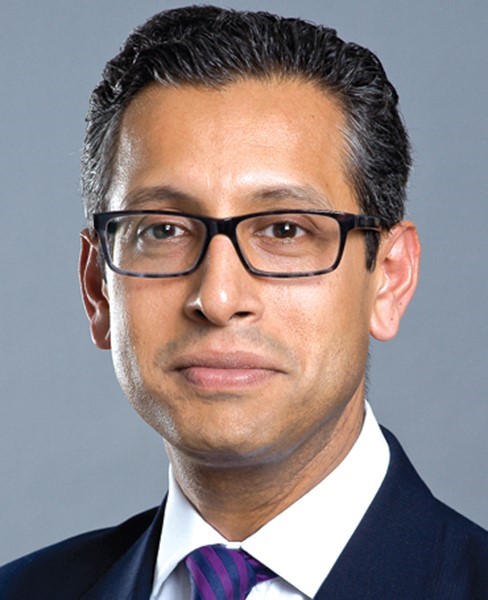
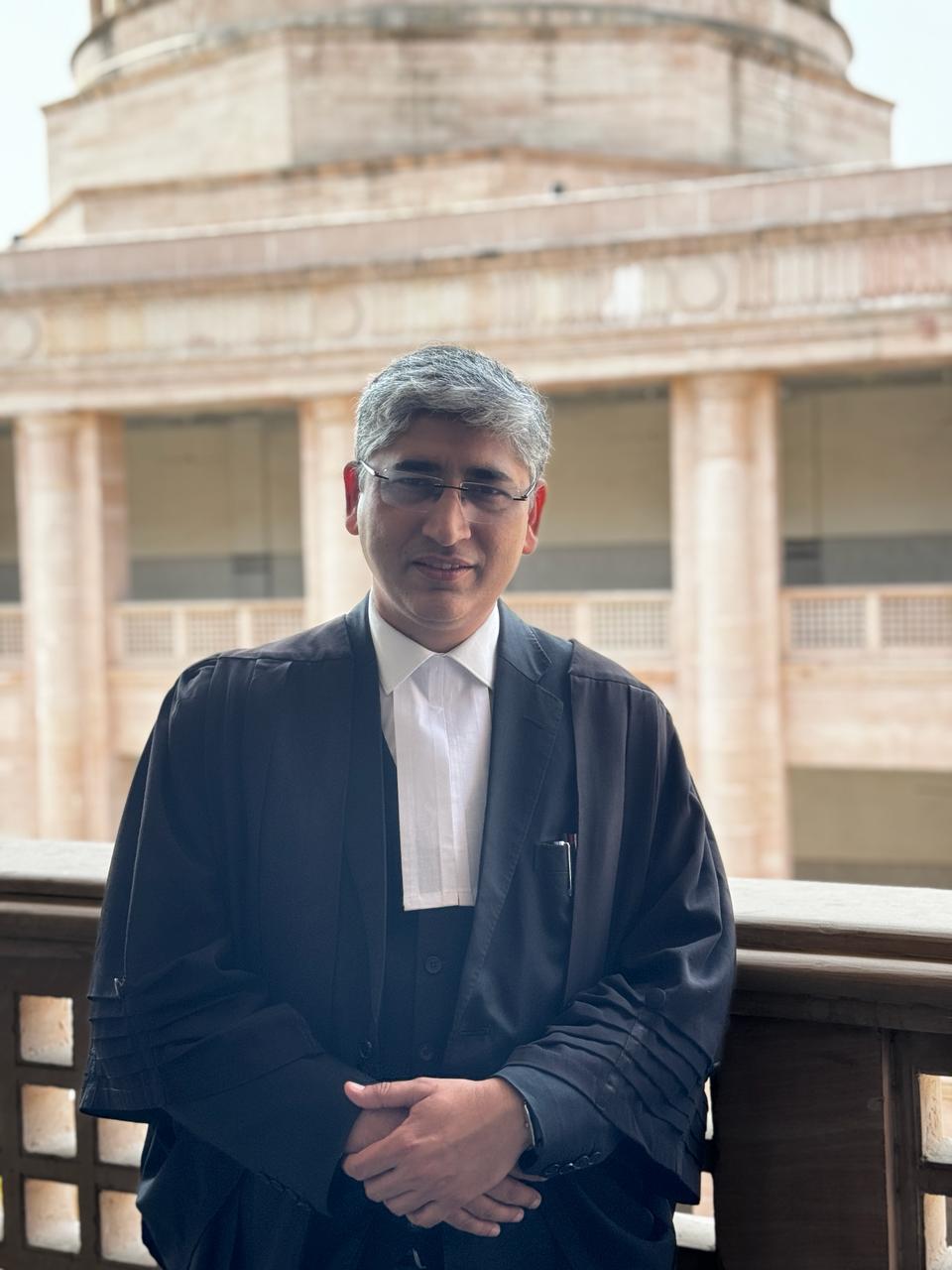
  • “Success in litigation is a journey that demands dedication, patience, perseverance, and a genuine passion for the field.” – Nadeem Murtaza, Partner at Amicus Demos

    “Success in litigation is a journey that demands dedication, patience, perseverance, and a genuine passion for the field.” – Nadeem Murtaza, Partner at Amicus Demos

    This interview has been published by Namrata Singh and The SuperLawyer Team
    Can you take us through the journey of your career, from your early days as a law student to becoming a Partner at Amicus Demos? What were some of the challenges you faced along the way, especially in the initial stages of your career?

    I pursued my B.A. LL.B. (Hons) at the Faculty of Law, Lucknow University, from 1998 to 2003. Throughout my five years in law school, I actively participated in court proceedings as an intern, keenly observing the accomplished lawyers and stalwarts of the Oudh Bar Association, presenting cases before various courts. Post-graduation, I started my legal practice on the criminal side, appearing before the High Court at Lucknow and handling matters in Magistrate Courts and Sessions Court. Despite facing the common challenge of limited briefs at the beginning of my career, I recognized the importance of patience. Early on, the pressure to succeed was intense, but I firmly believed in focusing on developing the necessary skills for effective courtroom advocacy, rather than solely chasing briefs and financial gains, I prioritized honing my talents and improving the quality of my work. It was a challenge to decline cases where a case was not made out, but this approach paid off over time. With time my skills grew, so did the quantity of work, leading to a subsequent increase in remuneration.

    You’ve had extensive experience practicing in the criminal side of law. What drew you to this field initially, and how has your perspective evolved over the years?

    I had the privilege of growing up in a family of legal luminaries. My grandfather, Late Justice Murtaza Hussain, embarked on his legal journey in 1944, ascending from Munsif to the esteemed position of District Judge by 1968. His illustrious career continued with elevation as a Judge of the Allahabad High Court, Lucknow, in 1976. Thereafter, he also served twice as the Lokayukta of Uttar Pradesh from 1983 to 1989. My father, Late Jawed Murtaza, thrived in a flourishing civil practice in Lucknow. Meanwhile, my uncle, Justice Imtiaz Murtaza, made a mark as a prominent lawyer in the criminal side. His trajectory led him to become a Judge of the Allahabad High Court in 2001, culminating in his retirement as the senior most judge in 2015.

    During my college days, I regularly interned at my uncle’s office, immersing myself in the dynamic realm of criminal law. His bustling chamber provided ample opportunities to engage with criminal cases, interact with clients, and witness the intricate interplay of legal provisions such as the Indian Penal Code, CrPC, and Evidence Act. This experience ignited my passion for criminal law, shaping my perspective and fostering a profound interest in the complexities of legal practice.

    As a partner at Amicus Demos, what do you find most rewarding about your role? Are there any particular aspects of your work that you find especially fulfilling or challenging?

    Mr. Gaurav Mehrotra is the senior/managing partner at Amicus Demos. Mr. Gaurav Mehrotra specializes in civil, constitutional, and commercial matters, while I exclusively handle criminal cases within the firm. Our professional collaboration is deeply rewarding, and the law firm feels like an extended family. Dealing with criminal matters presents a unique challenge due to its direct impact on an individual’s life and personal liberty. The stakes are inherently higher, often involving questions of life and death. As a defence lawyer, our focus extends beyond client representation; we strive to protect the rights of the accused and assist the court in uncovering the truth. One particularly challenging role for me was serving as a Special Public Prosecutor in a case involving high-profile officials and public representatives. This role demanded a distinct preparation and approach compared to our usual stance as defence counsel.

    Given your experience as a panel arbitrator for stock exchanges, could you highlight some key differences between arbitration proceedings and traditional courtroom litigation?

    There are some inherent advantages in arbitration proceedings. These proceedings are more expeditious and can be conducted in a manner to suit the better need of the parties.

    Arbitration proceedings differ from courtroom exchanges in several key aspects. Arbitration offers a private setting, allowing for confidentiality, and enables parties to choose arbitrators for a neutral stance. 

    However, there is limitation to arbitration proceedings as the same are limited to inter se parties to an agreement or contract whereas traditional trial or courtroom proceedings are more accessible and cater to the needs of the public at large. The nature and result in an arbitration is only limited to either monetary claims or breach of a contractual obligation and therefore the proceedings are limited to that extent. 

    As an arbitrator on the panel for stock exchanges, my role involves resolving disputes between market participants in a fair and impartial manner. I assess evidence, review financial regulations, and consider market practices to make informed decisions. It’s crucial to maintain transparency and uphold the integrity of the stock exchange. The dynamic nature of the financial markets requires adaptability and a deep understanding of the industry. Serving on the panel has provided me with valuable insights into the intricacies of trading and the importance of fostering trust within the financial community.

    The process is generally less formal, faster, and more cost-effective than courtroom proceedings. Arbitrators often possess industry-specific expertise. Decisions are binding with limited rights to appeal, contributing to a quicker and more final resolution compared to the traditional system.

    You’ve represented some prestigious corporations. What are some common legal challenges these corporations face, and how do you approach addressing them?

    Representing corporations in criminal matters presents unique challenges. One major issue is balancing legal obligations with the corporation’s reputation. Managing public relations during a criminal investigation is delicate, as negative perceptions can harm the company’s brand. Additionally, coordinating communication among various internal departments and legal teams can be challenging. Maintaining attorney-client privilege while interacting with corporate employees adds to the complexity. Lastly, corporations often face potential financial repercussions, including fines and regulatory sanctions, making strategic legal counsel crucial to navigate these challenges effectively.  

    Corporations often face problems due to local law and order situations as well. One such example is that a kisan (farmers’) union once lodged an FIR against a sugar mill and its officials alleging manipulation in quantity of sugarcane purchased. Often, criminal proceedings are sometimes instituted to settle civil and consumer disputes. A fitting example of such abuse is that once a criminal complaint was filed against a leading direct-to-home (DTH) television company and its directors by a consumer for some issue with respect to discontinuation of service. The proceedings were finally stayed by the High Court exercising powers under Section 482 CrPC.  

    As someone who has actively appeared before the Supreme Court of India, can you share any insights or experiences from handling cases at such a prestigious level?

    Handling cases before the Supreme Court is a demanding yet rewarding experience. The process involves intricate knowledge of Constitutional and legal principles. The Court deals with matters of national importance and the stakes are quite high. At times, though we represent a specific client, the question of law involved in the matter affects the public at large and has pan India ramifications. 

    In one of my matters one old and ailing accused who had suffered brain stroke was denied bail by Sessions Court and was sent to custody, at that time there was a Rule in Allahabad High Court to give 10 days advance notice to State before filing bail, we filed SLP before Supreme Court directly challenging the order of sessions court and the Court was apprised about the prevailing rule, Supreme Court not only granted bail to accused but also issued notice to High Court, the same led to amendment of Rules and notice period in bail matters was reduced from 10 days to 2 days in the Allahabad High Court, which hugely benefited the public at large. Similarly, I also appeared in the proceedings before the Supreme Court in the Satender Kumar Antil matter and apprised the Court regarding the laxity in implementation of the guidelines and directions issued by the Court in the State of U.P. In one of the IAs, the Court took stern view of the practice prevalent in Uttar Pradesh where the Magistrate or the Sessions Court would simply deny the grant of anticipatory bail holding that there was no apprehension of arrest since the offences entailed less than seven years of imprisonment and was thus covered by the direction issued in Satendra Kumar Antil case. The Supreme Court strongly deprecated such a practice and since then, there has been a paradigm shift in the matters regarding grant of bail and anticipatory bail in the State of U.P. in consonance with the law laid down by the Supreme Court.  

    In your experience, what would you say is the most difficult or challenging aspect of handling criminal cases, and how do you navigate through those challenges to ensure the best possible outcome for your clients?

    As a criminal law attorney, one of the most challenging aspects is navigating the emotional and personal nature of criminal cases. One of the challenges I feel is informing the client about an adverse order. As these matters relate to the life and liberty of the individual, it is emotionally challenging to inform them that the outcome was not favourable. Balancing legal representation with the human aspect of the client’s predicament requires empathy and a nuanced approach. Engaging with clients who may be facing serious consequences, emotionally charged situations, or societal stigma demands effective communication and understanding. The challenge lies in managing expectations while ensuring a robust legal defence. As a matter of principle, I always give my honest advice and opinion and inform them about the likely outcome of the case without giving them any false hope. I always advise my clients to cooperate with the investigation and trial and never abscond from the judicial process. The adversarial nature of criminal proceedings and the burden of proving innocence can be daunting. To overcome these challenges, maintaining open communication with clients and managing expectations realistically are some crucial aspects necessary in criminal law practice. Crafting a thorough defence strategy, staying abreast of legal precedents, and adapting strategies to suit the unique circumstances of each case are key elements in securing the best possible outcome for clients in the complex realm of criminal law.

    Outside of the courtroom, what are some of your personal interests or hobbies that help you unwind and recharge?

    Outside of the courtroom, I find solace in indulging my passion for poetry. Exploring the intricate beauty of language and the emotional depth of poetic expressions serves as a creative outlet. Traveling is another cherished pursuit, providing a break from the legal intricacies and allowing me to explore diverse cultures and landscapes. Spending quality time with my family is paramount; their support is my anchor amidst the challenges of court. These not only help me unwind and recharge but also contribute to a well-rounded perspective that enhances my legal practice.

    Looking back at your journey from being enrolled as an Advocate to becoming a Partner, what advice would you give to young lawyers aspiring to build a successful career in law?

    Reflecting on my journey so far, my advice for aspiring young lawyers is to embrace continuous learning, nurture a robust professional network, and cultivate a strong work ethic. Sharpen your communication skills, consider specializing in a specific legal niche, and stay adaptable to changes in the legal landscape. Uphold the highest ethical standards, persist through challenges, and strive for a healthy work-life balance. Community involvement and pro bono work not only contribute to society but can also enhance your professional reputation. Remember, success in litigation is a journey that demands dedication, patience, perseverance, and a genuine passion for the field. 

    Get in touch with Nadeem Murtaza-

  • “My diverse practice is a result of experience with a diverse set of clients and colleagues doing niche work, exposure to the start-up community of Bangalore, and constant learning and growth”- Aditi Verma Thakur, Senior Partner at Ediplis Counsels

    “My diverse practice is a result of experience with a diverse set of clients and colleagues doing niche work, exposure to the start-up community of Bangalore, and constant learning and growth”- Aditi Verma Thakur, Senior Partner at Ediplis Counsels

    This Interview has been published by Pragya Chandni and The SuperLawyer Team

    Ma’am, could you please share with our listeners how your journey into the field of law began? What sparked your interest in pursuing a career in intellectual property and corporate commercial law?

    My fascination with the legal field began when I witnessed my father’s dedication to law. He pursued his law during my teenage years. Though at that young age, I never thought of being a lawyer myself. Before entering the field of law, I explored different options. However, I lacked a sense of connection with what I was doing. Eventually I tried my hands at legal studies by enrolling myself in B.A. LL.B. (Hons.) course at Devi Ahilya University. I found law and arts subjects quite interesting, focussed on my law education, and enjoyed exploring diverse avenues of law, with strong inclination towards constitutional law, criminal law, contractual law, and intellectual property. I consistently excelled in my studies, and was recognized as the university topper in my graduating class.

    Upon completing my undergraduate studies, I pursued a Master of Laws in Intellectual Property at National Law University, Jodhpur, where I delved deeper into the intricate world of IP law. Through focussed internships, I was fortunate to see different sides of IP practice, such as advisory, litigation, valuation and commercialization of IPs. Additionally, my interest in international technology transfer drove me to undertake a university dissertation on the subject, further enriching my understanding of this domain.

    My first role as a full-time IP role at Krishna & Saurastri culminated from an earlier long-term internship at the firm. At K&S, I learnt the basics and practical aspects of trademark and copyright law practice, sharpen my drafting and documentation as well as hone skills, such as, communications, critical analysis, and attention to detail. While working on contested and uncontested IP matters at my first firm, I developed a keen interest in commercial and contractual IP work, and generally in contractual law too. 

    Your profile mentions that you have a versatile practice, covering soft IP, corporate commercial, technology, data protection, and media law. How did you develop expertise in such diverse areas, and what motivated you to explore these different facets of law? How do you balance these differences in your practice?

    I’ve been fortunate to encounter exceptional opportunities throughout my professional journey. Following my initial role at my first law firm, where I handled various contested matters under the mentorship of seasoned industry professionals, I transitioned to corporate firms, where I further refined my legal skills and broaden my expertise. At IndusLaw, I was entrusted with leading then-growing IP practice, which allowed me to deepen my understanding and proficiency in this area.

    My tenure in corporate firms played a pivotal role in sharpening my legal acumen and skills. Collaborating across different practice teams within these firms, I had the chance to engage in diverse projects tailored to meet our clients’ specific needs. While my primary role was to manage IP and IP litigation assignments, I also had the opportunity to delve into a wide range of commercial, IP, technology, data, and media contracts, both independently and as part of larger transactions. This collaborative environment facilitated a continuous exchange of knowledge and expertise, contributing significantly to my professional growth and development.

    Throughout my tenure in Bangalore, I have had the privilege of serving a diverse clientele, ranging from foreign firms and large multinationals to investors, universities, and small enterprises across various industry sectors. Given Bangalore’s status as a hub for niche tech start-ups seeking comprehensive legal support, a significant portion of my work revolves around providing a wide range of commercial legal and intellectual property services to tech and media enterprises, including start-ups in these domains. My responsibilities within the management committee of Ediplis Counsels (which began as an IP boutique firm focussing on technology and related domain, and now has evolved into a full-service national firm) have been pivotal in expanding my expertise. My role at the firm has provided me with a nuanced understanding in the legal domains of technology, media, data, and corporate commercial laws, allowing me to provide more comprehensive and tailored solutions to our clients. 

    In addition to my client-facing responsibilities, I am actively engaged in thought leadership initiatives. Collaborating with other senior partners at the firm, I participate in discussions concerning the policies and governance of Ediplis. Moreover, I dedicate time to mentoring young lawyers and contributing to both national and international publications, drawing from my experience as the former editor of a bi-monthly IP newsletter. These initiatives foster knowledge-sharing and professional development.

    So, my diverse practice is a result of experience with a diverse set of clients and colleagues doing niche work, exposure to the start-up community of Bangalore, and constant learning and growth. 

    I believe the different aspects of my practice have synergies and that is the core strength of my practice. For instance, my experience in contentious work has provided valuable insights that inform my advisory role, allowing me to anticipate and address potential legal challenges proactively. Similarly, my understanding of technology and media law enables me to advise clients on both the creation and commercialization of intangible assets, ensuring compliance, and mitigating risks effectively. 

    Congratulations on being recognized as the ‘Copyright Lawyer of the Year’ and achieving various accolades. Clients have praised your problem-solving skills and transparent communications. How do you think these recognitions have shaped your career, and what impact have they had on the way you approach your work?

    Many thanks for your kind wishes. I am sincerely grateful for the recognition that I have received from esteemed industry bodies, both in India and internationally. It is truly an honour to have one’s work acknowledged in such a manner, especially when such recognitions are also tied with positive feedback from clients. These industry recognitions provide credibility to my practice to a great extent, and there is an underlying sense of serving better to clients. I have also been told by several lady lawyers that my work and achievements motivate them to excel. I remember one of my neighbours trying to motivate his daughter citing my achievements. It is incredibly rewarding to know that my journey has had a positive impact, and it encourages others to excel in their own endeavours.

    However, I believe it is essential to maintain a balanced perspective on industry awards and accolades. While they provide validation and encouragement, it is crucial not to allow them to overshadow the primary focus of our work. For me, maintaining a sense of humility and dedication to my craft is paramount. I approach each day with the energy and enthusiasm of a newcomer, eager to learn and grow, while also drawing on my experience and sense of responsibility in handling both my work and relationships.

    Ultimately, my goal is to continue delivering high-quality legal services to my clients. By remaining focused on the task at hand and staying true to my values, I hope to uphold the trust and confidence that clients place in me and my abilities.

    You’ve served as a guest faculty at premier law schools and contributed to national and international publications. What value do you see in sharing your knowledge with others?

    I have always held a deep interest in teaching and writing, recognizing them as invaluable tools for personal and professional development. Besides this, I view teaching and writing as essential means of giving back to the broader community. 

    Whether engaging with colleagues or clients, I make it a priority to share insights, perspectives and anecdotes from my own experiences. For instance, I regularly share legal and practical knowledge with my colleagues, promoting a culture of continuous learning and growth within our team. Similarly, I ensure that my clients are equipped with a comprehensive understanding of the legal landscape relevant to their matters, empowering them to make informed decisions. My mentors’ willingness to share their wisdom and perspectives – both on work-related matters and broader life topics – has instilled in me a deep appreciation for the value of knowledge exchange. 

    What role have your mentors played in your career growth? What is the importance of mentorship and guidance in one’s career and growth? 

    I am incredibly grateful for the guidance and mentorship I have received from various individuals throughout my professional journey. From my parents, seniors at Krishna & Saurastri and IndusLaw, my husband and now my peers at Ediplis, I have been fortunate to have wise mentors who have played a pivotal role in shaping my professional and personal life. Their mentorship has been multifaceted, encompassing everything from learning the fundamentals of law and drafting to navigating complex professional challenges and finding a balance between work and family life. Each mentor has provided invaluable insights and guidance, contributing to my growth and success in different ways.

    I feel mentorship plays a huge role in one’s success. If you get a wise mentor early on and they also are willing to invest in you, you can advance well in your professional life. It’s certainly important to find and believe in good mentors. 

    What are your thoughts on work-life balance? Are you able to achieve that considering the kind of work you do? 

    I believe if you don’t have a healthy work-life balance, you have stress, fatigue and burnouts. I understand a good work-life balance is very difficult to achieve when you want to also grow professionally, but one has to keep trying to achieve that state for your physical and mental being. 

    In fact, we at Ediplis encourage our firm members to focus on their work and well-being both. We try and ensure a good work culture at the firm. Members are able to spend time on their interests and hobbies. We support working parents at our firm so that they are able to devote time to their families while managing their professional responsibilities. These efforts have resulted in well-organized and productive teams who are able to thrive both personally and professionally.

    In the past, I have experienced first-hand the challenges of balancing work and personal life. There was a time when I prioritized work over everything else, believing that it was necessary for career growth. However, I realized that neglecting my personal well-being had adverse effects on my health and overall happiness. 

    Since then, I have made a conscious effort to establish boundaries and prioritize self-care. While maintaining work-life balance can still be challenging at times, I am committed to making consistent efforts to achieve it. I have found that by taking care of my physical and mental health, I am able to work more efficiently and mindfully, ultimately leading to greater overall satisfaction.

    As a lawyer and a mother, I recognize the importance of finding a balance between professional responsibilities and personal commitments. While there may be moments when work pressures demand more of my time, I remain optimistic and resilient, knowing that I am continually striving to do better.

    Lastly, considering your extensive experience, what advice would you offer to law graduates who are just starting their careers in the legal field?

    My advice to the younger pool of lawyers is to remain focussed, patient, persistent and consistent; seek out mentorship; and embrace lifelong learning. By adhering to these mantras, young lawyers can build a solid foundation for a successful and fulfilling career in the legal profession.

    Get in touch with Aditi Verma Thakur-

    Website of the firm: https://www.ediplis.com/

  • “AI would be a game changer in national security, personal privacy and the job market in general”- Anandh K, Advocate-on-Record, Supreme Court of India and Partner at SA Law

    “AI would be a game changer in national security, personal privacy and the job market in general”- Anandh K, Advocate-on-Record, Supreme Court of India and Partner at SA Law

    This Interview has been published by Pragya Chandni and The SuperLawyer Team

    Can you tell us about your journey into the field of law, particularly what motivated you to pursue an LL.M. in Corporate Law & Governance after your B.S.L., LL.B. degree?

    As far back as I can remember, law as a profession had always piqued my interest. My mind was set on law and ILS Law College, Pune was ranked No. 1 in a popular survey around the time I finished 12th standard. There I was in Pune. I loved that city from the moment I reached the Pune railway station. I had learnt Hindi in school, but it was bookish and my friends thought I was showing off speaking like a poet. The illusion was dispelled quickly when they realised bookish or not, my Hindi was below average. If my Hindi teacher (Late Ms Usha Rajagopalan) had known, she would have quit teaching twice over – once for people thinking I spoke chaste Hindi and once for making it known to the world that all her efforts on me were rather wasted. But there I learnt law, bits and pieces of Hindi and Marathi. I am very fond of my professors from Pune; they were all great mentors. Dr. Jaya Sagade and Ms. Smita Sabne hold a special place in my heart. I also have some of my most cherished memories with friends in Pune.

    I decided to complete my post-graduation before entering into the profession. I wasn’t sure I would be able to take a break for further education once I started working. I was naturally inclined towards taxation and corporate law, perhaps due to my commerce background in school. I got into NALSAR University of Law. There I met some great professors and made great friends. I was also happy about extended college life. 

    How did your educational background, including your diploma in National Security and International Relations, influence your approach to practicing law, especially in the areas of corporate governance and international investment law?

    Pune is a city of world-class colleges and educational institutes. I joined as many courses as I could. I was and am fond of politics, international relations and national security. The IR course taught me to see the big picture of domestic policies and regulations. India’s economy and its growth is inextricably linked with a whole set of factors and even a minor difference in the mix would have far reaching ramifications. IR opened my eyes to the consequences and effects (primary, second order and tertiary) of each policy and regulation within the country, their interplay with India’s foreign relations. 

    Investment law was part of my LL.M. instructed by Professor V. Balakista Reddy. After class, I used to assist him in several of his assignments which gave deeper insights on the subject and the influence it holds over the domestic affairs of India.

    Even as we as a nation are growing from strength to strength, I find myself going back to the lessons learnt from these courses. I draw upon these to contribute to the general legal discourse in the country in my own small way. And in my own practice, it helps me ruminate over the wider aspects of any given case.

    From my own experience, I would advise every student of law to actively seek and acquire knowledge from diverse disciplines and not restrict oneself to law books alone.

    As the managing partner of SA Law, you handle a wide range of legal matters. Could you share with us some memorable cases or experiences that have shaped your perspective on the legal profession?

    I have been fortunate to work in a range of cases across several forums and cities. Rather than go into specific instances I will share what I have learnt or what has been reinforced in me.

    I have and will always consider myself a student of law. Not just my experiences in managing a Firm, but my experiences even as a junior advocate in the profession have influenced my thoughts and approach to my practice.

    I always bear in mind the wisdom imparted by several seniors over the years – be ethical, one’s reputation is more valuable than the money one makes in a matter or a lifetime, be humble and honest with the court, do not hide facts which may be against you and always read and review your own work. These are the broad principles which have guided me. Each day, I realise more and more the importance and truth in these pearls of wisdom. 

    Be thorough with the facts; prepare to present the matter as if the judges do not know anything and at the same time as if they know everything, that way one will eliminate the room for lacunae in preparation; cross-check every work product prepared by one’s team and also have one’s own work product carefully reviewed; these are the other thoughts which influence my approach to work.

    You’ve been involved in advising tech-based businesses and startups on legal and regulatory aspects. What unique challenges do these clients face in terms of technology laws, and how do you navigate them?

    In India, we suffer from too much regulation in certain areas and too little regulation in certain others. We are evolving as a nation in this regard. Both the legislature and the judiciary are wise to the regulatory quagmire. There are some promising steps being taken. Technology as an interface will also mitigate several of the challenges faced by both clients and lawyers. 

    Some clients have to find a way in the labyrinth of regulations and stay on the right-side of law without the burden of compliance sounding the death knell to the business. Some clients have to be told that what is not regulated does not mean that it is prohibited. Especially, newer kinds of business find themselves without any regulatory guidance and often these companies liaison with the regulators to bring about a law to govern their industry. Fintech is a classic example of industry-led regulation. It also has the danger of bias when business lead the way of regulations. But India has done well in that department overall. Of course, one can always improve. 

    Tech based companies making a foray and disrupting the finance, education or medicine industries find themselves facing unique business as well as legal challenges. Some of these issues were deliberated upon by experts from various fields in the Vichaar 2024 Conclave organised by our Firm. Right from designing the contracts that govern the relationship of the clients inter se, with their vendors and users, to the regulatory obligations under the law, new-age companies present issues which may not have any precedence and defy the template-model of transaction and conveyance practice. Without understanding the business there is no way one can find the thin line between legal and illegal business operations. The first step for any technology lawyer is to first understand the technology and the business. Then one must revisit the principles of law. I always find it useful to re-read the provisions of law and their interpretation before providing any advice. I feel this is especially important for start-ups as any misstep may cost dearly to not only the clients and their investors, but may also adversely impact the technical solutions piloted by such start-ups. And never cut corners.

    Cyber law is not a new expression in India’s legal system. But as technology evolves, tech-law also has to keep pace. We are all waiting for life to be breathed into the Data Protection Act. Fast evolving technology like AI is full of possibilities, opportunities and at the same time massively disruptive capabilities. AI would be a game changer in national security, personal privacy and the job market in general. This presents a huge challenge to everyone with stakes in the law and policy field to anticipate, prepare and adapt for the changes while safeguarding the core constitutional promises to citizens.

     Your experience includes handling pro bono cases for individuals with meagre incomes and working with NGOs like SEWA Bharat. How has this aspect of your work impacted your overall legal career?

    Every case is satisfying in its own way, be it contesting the unsustainable tax demand, bringing defaulting corporate debtors to books, dealing with breach of service law, championing the cause of unjustly terminated labour in getting justice, or representing the parties involved in the criminal justice system. 

    By nature, I have never been particular about money – not a great quality when you are managing your own practice, but that is what it is. So when I help someone in need, I do not feel altruist or special about it. It is what I am and what I do. But these cases also humble me, and they make me realize more and more the nobility of the profession.

    At the same time I would add this: ask any senior in any court and they will tell us to work harder on pro bono cases or cases where we are advocating the cause of some social organisation. These are cases which can shatter the delicate reputation that any lawyer has to build with great diligence and time. I take these words of caution with utmost seriousness.  

    Could you discuss your role as a senior associate at Lakshmikumaran & Sridharan, particularly your involvement in indirect tax matters and your appearances before various authorities and courts?

    I had one of the most enriching experiences of my life at LKS. It was a great learning experience. A large firm like that gives one the opportunity to work with seasoned and consummate professionals at the top of the game. One learns from individuals with great differences in style and approach. Where one senior demands perfection in the draft another would require extensive research even on issues tangential to the matter, just to be thorough and to leave nothing unprepared. I also had the opportunity to work from some of best Senior Advocates involved in indirect tax cases, from Mr. Harsih Salve, Mr. P. Chidambara, Mr. Arvind P. Datar, Mr. Santosh Bagaria, Mr. N. Venkataraman to Mr. V. Sridharan. 

    I worked closely with Mr. V. Lakshmikumaran during the time the Supreme Court constituted a special tax bench to speedily dispose of long-pending tax cases, including assisting him before the 9-judge bench Entry Tax matter. That was my first constitution bench matter. Thanks to him, I honed my ability to quickly navigate any brief, anticipate the questions and prepare for the same. Under him, I learnt the importance of preparing to explain the most basic points of a subject and at the same also to present the most nuanced and sophisticated points of the same subject. During the time the special tax bench was there, I was fortunate to have worked on more than 200 final hearing cases, which is a very rare opportunity for anyone in the profession. I must say this – the pace of Justice A.K. Sikri and Justice R.F. Nariman on the tax bench kept all of us on our toes and the entire team working on Supreme Court matters would have worked for close to 16 hours a day!

    Apart from appearing in the Supreme Court, I have handled cases before the Delhi High Court, CESTAT and at Commissionerate level. In all these, I have been the beneficiary of guidance and friendship of several lawyers of the firm. In no particular order, I am grateful for the time and guidance of Mr. B.L. Narasimhan, Mr. Amit Jain, Mr. Hemant Bajaj, Mr. MP Devnath and Ms. Jenny Verghese. Some of my former colleagues are today friends beyond and outside the profession.

    You’ve been actively engaged in conducting seminars and talks on legal issues for law students and professionals. What inspired you to take on this educational role, and what do you hope participants gain from these sessions?

    While in college, I read somewhere that the best way to learn a subject is to teach it. I started making presentations purely to learn topics, but I soon realised that I enjoyed the process of learning, sharing what I learnt and learning more in that process. I have since carried on with conducting such sessions with students. It is a way for me to learn more and to also give back to my profession.

    I also feel that due to the nature of the profession and the enormous syllabus which needs to be covered in college, nuances and practical aspects cannot be taught solely by the law institutions. Seminars and conferences which bring practical experience to the classroom serve to fill the gap of what can be taught in a traditional environment and what is expected/ required in the market. So our endeavour at the Firm is to bring the niceties of legal practice across to the students and aspiring young professionals.

    Lastly, based on your journey from law school to becoming a managing partner and advocate-on-record, what advice would you give to fresh graduates aspiring to enter the legal profession, especially in the areas of corporate law and governance?

    Legal profession is a rewarding and at the same time a highly demanding profession. The foremost demand placed by the profession is on the health of the individual, both physical and mental. Focusing on maintaining good health and creating a daily routine around which to organise every aspect of your life comes first. There are time-tested and well-respected qualities expected from any lawyer and law student – commitment, professional knowledge, professional competence, hard work, attention to detail and being well-informed about the developments in the society. By professional competence I don’t mean only written and oral communication skills, but I include adherence to ethical standards and providing honest advice to clients, even if such advice is unpalatable to the client. These are necessary but not sufficient conditions for success in the profession. Consistency, professional and personal integrity, steadfast adherence to professional ethics and building a good network are factors which make or break a career. To add a few words about personal integrity – a lawyer is somewhere between the society at large and the centres of power (though often the roles overlap) and hence, must bear the extra weight of responsibility to the society more so than most other professions and at all times conduct themselves as an ambassador of the profession.

    Speaking specifically about corporate law – keeping pace with business and economic development, learning about the evolving business trends, training to put oneself in the shoes of an entrepreneur – these are the qualities one must develop.

    I have saved the best for the last. Patience and unwavering self-confidence. These are, of course, empty shells if one doesn’t check all the boxes above. 

    Get in touch with Anandh K-

  • “The asset management domain is undergoing rapid expansion in a highly dynamic and competitive environment”- Anita Jain, Partner at IC Universal Legal

    “The asset management domain is undergoing rapid expansion in a highly dynamic and competitive environment”- Anita Jain, Partner at IC Universal Legal

    This Interview has been published by Pragya Chandni and The SuperLawyer Team

    Can you share with us the pivotal moment or experience that led you to pursue a career in law, especially considering your initial inclination towards marketing and sales?

    As a teenager, I was very keen to pursue a career in the field of sales & marketing and enrolled for a specialized course in marketing & sales. The course was being conducted by the esteemed Narsee Monjee college of commerce & economics. It was a certificate course at the Higher Secondary school level for the academic session 2005-2007. I was all set to pursue bachelor’s in management studies and to follow it up with a master’s in business administration. It couldn’t have been a mere coincidence that my dad had to file a special leave petition in supreme court at around the same time. He so strongly wished we had a lawyer in our family who would manage all the family’s legal matters. Dad would narrate to us siblings the regular courtroom happenings in that matter. The narrations stirred in me a great interest in the profession of lawyering. Around the time I was wrapping up my junior college, dad was fully convinced that I would make a fine lawyer. Thus, I enrolled for a five years integrated law programme at Government Law College fulfilling my dad’s long held wish. 

    Transitioning from a specialized vocational course in marketing and sales to pursuing a degree in law must have been quite a shift. How did you navigate this transition, and what motivated you to embrace it wholeheartedly?
    Contrary to the popular belief, one really doesn’t need a grounding in law as a sine qua non for maturing perfectly. Honestly, the first year in college was completely orientational. Towards the beginning of the second semester all my scarcely precious lawyering skills were severely tested in an intra-college Moot Court event. I enjoyed studying law and shared the commonly found eagerness amongst law college nestlings – to apply all freshly earned knowledge to the various real-world situations at the drop of a hat. Much like my new peers I too quickly realised that the procedural aspects of the real courtroom made it a different place and the experience was overwhelming.
    In my early days, the prevalent myth was that courtrooms would be the eternal resting place for lawyers. It wasn’t late when after only a handful of interactions with the college seniors and professors alike, I realized that a degree in law would rather open up a wide range of career opportunities across sectors viz private practice, government sector, academia, nonprofit organizations and corporate world to name a few. All of that really motivated me to gain a deeper understanding and knowledge of business laws. Consequently, I also enrolled for the company secretary course to gain a deeper understanding about the corporate laws. 


    Your journey seems to have been influenced significantly by your father’s vision of having a lawyer in the family. How did his guidance shape your perception of the legal profession, and what role did it play in your career decisions?
    Precisely as the words ‘a lawyer in the family’ convey, his longing stemmed from the need he felt as a common man to successfully negotiate the turns and bends of the tortuous legal system. The trust you have on family you would not find anywhere even though you entrust your wellbeing into the hands of professionals. The missing link was the element of trust. Thus, he secured in his daughter a legal professional of utmost competence and trust. As a lawyer I hold these two virtues above anything else. My father was a businessman and ethics formed the bedrock of his enterprise. He believed that
    one shall pour his/her heart and soul into whatever he or she does”. I have been unconditionally following that belief to this day. He instilled in me a sense of propriety and wisdom. For him lawyering was not merely about securing judgments but much more about securing the larger interests of the common man and the wellbeing of the society as a whole. Two wrongs don’t make a right. Balance of time and resources is optimised through informed legal reasoning. Conciliation and mediation were the approaches rooted in my father’s vision of law as a means for rapprochement in the never-ending wrangle of lis and I have borrowed heavily from him to strike a fine balance between approaches hawkish and dovish without actually lending myself to either.

    Your sabbatical to focus on well-being and completing a Vipassana course is intriguing. How did this break impact your professional outlook and approach towards your legal career?
    Initially, I was very hesitant to take a break and had few concerns about taking a sabbatical from a career progression perspective. I was worried that taking time off would lead to falling behind in the field or missing out on opportunities for advancement. I had addressed these concerns and weighed them against the potential benefits of a sabbatical.
    Vipassana is one of India’s ancient techniques of meditation. It is this observation-based, self-exploratory journey to the common root of mind and body. The entire practice is actually mental training. The human body is not a machine. We have a mind and a soul. You can’t be good to your calling unless you are good to yourself. Your mind has to free itself for new ideas to sink in. The fourth dimension of spiritual creativity widens your field of view. Just as we use physical exercises to improve our bodily health, Vipassana can be used to develop a healthy mind.
    My outlook towards life (including professional goals) completely changed during that sabbatical. I realized that it was important to focus on one’s well being to do a long marathon rather than aiming at a short sprint.

    Having worked with various esteemed firms and handled significant projects, could you highlight a particular project or accomplishment that has been the most fulfilling or impactful for you so far? Invariably every completed project gives you a happy feeling. However, one unforgettable experience at IC Universal Legal, which has simultaneously been the most fulfilling & impactful, was of getting an opportunity to assist a committee of experts on investment funds, constituted by the International Financial Services Centres Authority (IFSCA) to review global best practices in making recommendations to the IFSCA on the roadmap for the industry. It was another great opportunity to have been able to contribute to the development of the investment funds regime at IFSC. The regular advocacy initiatives undertaken at IC Universal Legal makes my association very enriching and highly rewarding.

    Your expertise lies in funds practice, particularly in the asset management domain. What are some key challenges you face in this area, and how do you approach addressing them? 

    The asset management domain is undergoing rapid expansion in a highly dynamic and competitive environment. It brings forth challenges hitherto unseen and the scales and stakes involved are of epic proportions. One of the biggest challenges being faced by the contemporary asset management industry is that of the continuously evolving and somewhat complicated regulatory landscape. The industry functions subject to various regulations and guidelines issued by the SEBI & RBI, to name a few. Asset management lawyers need to remain ever updated and familiar with the continuously evolving regulatory framework. An in-depth understanding of the regulatory working mechanism is another indispensable requisite to say the least. At IC Universal Legal, we have detailed biweekly sessions entirely focussed on the latest legal developments, regulations and industry best practices. My role entails collaboration with clients, legal professionals and other industry stakeholders for the exchange of knowledge, sharing of best practices, and addressing common challenges collectively. 

    In addition to your professional journey, we’re curious to know if you have any hobbies or interests outside the work zone? 

    I have a passion for traveling. I enjoy traveling for leisure, engaging in adventure sports, outdoor activities such as scuba diving, river rafting, sea walking etc. My Wishlist is to catch northern lights soon and also cover major rafting zones across the world. 

    On weekends, I love exploring cafes across Mumbai to find the best smoothie bowl and hot chocolate. My friends call me Zomato and ping me for instant recommendations

    As a seasoned professional in the legal field, what advice would you give to fresh graduates who are aspiring to build a successful career in law, especially considering the evolving landscape of the industry?

    • Be Yourself‘. Don’t benchmark your aim and purpose of life against someone else’s life achievements or goals. Draw inspiration from other people’s achievements. Introspect upon what you really want in life; define your goals wisely. Don’t participate in the rat race or glorify the hustle culture. Have your own vision and road map for your career goals. 
    • Track the latest developments in the legal field, especially in areas of law that interest you the most. 
    • Along with Intelligence Quotient, focus on soft skills such as communication, negotiation, problem-solving, and emotional intelligence. These skills are crucial for building relationships with clients, colleagues, and stakeholders and navigating complex legal situations.
    • Don’t take shortcuts, be honest and commit to learning to gain in-depth knowledge about the field. 
    • Attend legal conferences, events and sessions as this will help in building some great network and add to the learning curve. 

    Get in touch with Anita Jain-

  • “Resilience and adaptability are crucial especially in a rapidly evolving field like law”- Arun Visweswaran, Partner, Addleshaw Goddard

    “Resilience and adaptability are crucial especially in a rapidly evolving field like law”- Arun Visweswaran, Partner, Addleshaw Goddard

    This Interview has been published by Pragya Chandni and The SuperLawyer Team

    Sir, could you please share the pivotal moments or experiences during your academic journey, from studying Electronics and Communication Engineering at Anna University to pursuing Law at King’s College London? What influenced your decision to transition to law?

    I enrolled in Engineering as I always had an interest in the sciences and intended to pursue a career as an Engineer. However, both during school and later during my Engineering degree, I found myself consistently drawn to activities such as debating and writing and taking on leadership roles representing my peers. This led me to explore other career opportunities and law presented a perfect confluence of speaking, reading and writing skills which attracted me greatly more so given its impact on every aspect of society.  I also realised that the analytical and problem-solving skills I had developed while studying engineering would be an asset in legal practice and provide a unique perspective on legal issues.

    Studying law at King’s College London was a transformative experience. It not only provided me with a solid foundation in law (and confirmed my decision to switch paths) but also exposed me to a diverse and dynamic legal environment in one of the world’s leading legal hubs. 

    How did your early experiences as a trainee at Clifford Chance shape your career path? 

    My early experiences as a trainee at Clifford Chance were invaluable and played a significant role in shaping my career path. During my training, I was exposed to a broad range of practice areas including transactional work and disputes. This gave me a well-rounded understanding of the legal profession and allowed me to identify the areas I was most passionate about.  It also gave me many life-long friends who continue to inspire me.

    Being part of a global law firm also offered me the opportunity to work on complex and high stakes matters in three different jurisdictions being the UK, Dubai and Singapore. This experience was instrumental in developing my skills in navigating cross-border legal issues and managing diverse client relationships.

    The firm’s approach of providing the highest quality of service to clients and its emphasis on continuous learning and development have greatly influenced my approach to legal practice. These early experiences laid a strong foundation for my subsequent roles and continues to guide me in my current position as a Partner at Addleshaw Goddard LLP.

    How has your experience evolved with your recent transition to Addleshaw Goddard LLP as a Partner in their disputes team?

    I am grateful for the opportunity to join the talented team of lawyers at Addleshaw Goddard LLP who are a leading global law firm. I joined them at a time of unprecedented growth for the firm which has been built on a solid platform of expertise and providing exceptional legal services to clients. These principles resonate strongly with my approach to legal practice, and I look forward to growing further with them. 

    You’ve been involved in many high-value and complex cases throughout your career. Could you walk us through a specific case that stands out to you and share the challenges you faced and lessons learned? 

    The first construction dispute I handled as an associate was also a memorable one due to the challenges it posed to me personally and the lessons learned. This was a large infrastructure dispute valued at over USD 200 million and I was leading all aspects of the matter from drafting the pleadings, handling witnesses and experts to conducting a large part of the advocacy.  

    While I had participated in various moots during law school, this was my first experience of advocacy (after law school) where I had to cross-examine three fact witnesses and the delay expert. In the process of preparing my questions, I came across one of the clearest expositions of the art of cross-examination in Irving Younger’s lecture from the 1970’s (which is available on Youtube). Taking his “10 commandments” as a guide, I carefully prepared my strategy for cross-examination and delved into technical questions with the assistance of our delay expert. It was therefore entirely satisfying to have effectively cross-examined the expert’s opinion and challenged their credibility such that the Tribunal dismissed their report entirely.  It was particularly gratifying when the other side personally congratulated me on a very good cross-examination. 

    This case taught me the importance of thorough preparation and the value of a well-planned cross-examination. It also reinforced my focus on construction disputes where my engineering background brings an ability to delve into both the legal and technical issues.  

    With your extensive experience across the Middle East how has working in diverse legal systems and cultures shaped your approach to dispute resolution, and what unique challenges have you encountered?

    Working in diverse legal systems and cultures in the Middle East has significantly shaped my approach to dispute resolution. It has taught me the importance of understanding the local business culture, legal landscape, and the unique dynamics of each jurisdiction. 

    Each country in the Middle East has a unique legal system and regulatory framework. For instance, the DIFC Courts in Dubai and the ADGM Courts in Abu Dhabi operate on a common law framework, while other parts of the UAE follow civil law. Understanding these differences and being able to operate effectively within these diverse legal systems requires adaptability and has been an opportunity for professional growth.

    Overall, my experience in the Middle East has enriched my legal practice and provided me with a broader and more nuanced perspective on dispute resolution.

    Given your role in tech disputes, how do you navigate the intersection of technology and law? Can you share a notable case or challenge you faced in this realm and how it was resolved?

    Navigating the intersection of technology and law requires a good understanding of both fields. It’s about being able to understand the technical aspects of a case, as well as the legal implications. This is where my background in engineering combined with my legal expertise comes into play.

    One notable case I handled involved advising a global tech company on a multi-million-dollar software licensing dispute with a global software/cloud service provider. The case was complex as it involved intricate details of software licensing, cloud computing and IP rights. The challenge was to understand the technical aspects of the software provided and how that interacted with the contract terms and the facts which were quite complex. 

    Our advice allowed the client to successfully conclude a settlement with more than 90% reduction of the claim amount. The case was a testament to the importance of understanding both the technology and the law in tech disputes. It also highlighted the value of negotiation and mediation skills in resolving complex disputes.

    How has sharing your insights through publications contributed to your professional growth, and how do you stay updated on the latest developments in your areas of expertise?

    Sharing insights through publications has been a vital part of my professional growth. It has not only allowed me to contribute to the broader legal discourse but has also helped me clarify my own understanding of complex issues. Furthermore, my publications have also been a valuable tool for engaging with clients and other professionals in the field.

    Staying updated on the latest developments in my areas of expertise is a continuous process. I regularly read legal articles, attend seminars and conferences, and participate in professional networks and associations. I also engage in regular discussions with colleagues and other professionals in the field, who often provide valuable insights into emerging trends and issues.

    Drawing on your experience, what advice would you give to recent law graduates who are just starting their legal careers? What key lessons have you learned that you believe would be valuable for those entering the legal profession today?

    1. Find your passion: Law is a broad field with many specializations. Try to gain exposure to different areas of law early in your career to identify what truly interests you. Once you find your passion, dive in and become an expert in that area.
    2. Never stop learning: The law is constantly evolving, and it’s important to stay updated on the latest developments in your field of practice. Regularly read legal journals, attend seminars and webinars, and participate in professional associations.
    3. Develop strong relationships: Building strong relationships with colleagues, mentors, and clients is crucial for advancement in the legal profession – and this starts right from law school!  
    4. Work on communication skills: Effective communication is key in the legal profession. Whether you’re advocating for a client in court or drafting legal advice the ability to convey your ideas in a simple, structured, and persuasive manner is crucial. 
    5. Embrace technology: Technology is transforming the legal profession. Be open to learning about new legal tech tools (e.g.AI) and how they can enhance your practice.

    As for key lessons, one of the most important I’ve learned is that resilience and adaptability are crucial especially in a rapidly evolving field like law and one should remain curious about developments rather than shun them altogether. The other lesson imparted to me by a senior counsel I admire is that of the 3 P’s – Preparation, Preparation, Preparation – which is critical to success in any case.

    Get in touch with Arun Visweswaran-

  • “Each case mainly has one or two arguments on which the entire case hinges, rest are all mainly fillers. So to ensure accuracy and effectiveness in the arguments, I mainly focus on these and try developing it more and in a better way.”- Ramnath Prabhu, Associate Partner at TLC Legal

    “Each case mainly has one or two arguments on which the entire case hinges, rest are all mainly fillers. So to ensure accuracy and effectiveness in the arguments, I mainly focus on these and try developing it more and in a better way.”- Ramnath Prabhu, Associate Partner at TLC Legal

    This Interview has been published by Pragya Chandni and The SuperLawyer Team

    Can you share with us what initially sparked your interest in pursuing a career in law, particularly specializing in indirect tax litigation and international trade policies?

    My father and his brother both practice as Sales Tax Consultants in the city of Mangalore. Back in the early 2000’s, their work involved a lot of attendant work such as visiting the Sales Tax Department for filing monthly returns and yearly assessments etc. Nothing was online then, so when I was at school, I used to visit them during these rituals to assist. However, it was more for the customary lunch at a hotel that followed. 

    When I was studying at college for my degree in commerce, I got more involved in the work. This allowed me to get to know about the legal proceedings that follow, such as issuance of proposition notices, appeals and tribunal proceedings etc. For this we would rely on advocates at Bangalore, which sparked my interest in indirect tax litigation and so I ended up studying law.

    With your extensive experience in handling cases across various sectors like oil and gas, telecommunication, banking, and more, what motivated you to focus on these specific areas within the legal field?

    Taxation is a very niche area of practice. So once you decide to pursue a career in it, you have to deal with a variety of cases relating to different sectors. It also depends on the place where one practices. For example, at Bangalore you may find more service tax litigations because of the place primarily being an IT hub. Whereas, when it comes to excise and customs, it is Mumbai and Gujarat because of the large manufacturing industries, customs ports and corporate offices of leading companies being located here. So bigger cities have their own advantages. 

    Could you walk us through your journey from your early days as a law student to your current role as an Associate Partner at TLC Legal, one of India’s leading law firms in indirect taxes and international trade policies?

    I did my law at SDM Law College, Mangalore. After I completed my law, I joined the law chambers of Mr.K.S.Ravi Shankar, Senior Advocate at Bangalore who practices at the High Court of Karnataka, in the areas of Indirect Taxation.

    Then when I moved to Mumbai, I got the opportunity of working as an associate at TLC Legal, which specialises in indirect tax litigation and advisory. Working at TLC Legal has been very fulfilling as I had the opportunity of working on some of the interesting as well as complex cases. I got the opportunity to work with some of the best legal minds of the country. 

    You’ve had the opportunity to work with esteemed legal practitioners such as Mr. K.S. Ravi Shankar. How did these experiences shape your approach to legal practice and influence your career trajectory?

    I had the fortune of working at the law chambers of Mr.K.S.Ravi Shankar, who is not only a distinguished lawyer but also a revered scholar on vedas and other scriptures. He is an exceedingly well read man, bestowed with great skills of advocacy. His chamber had good work in indirect taxation that immensely helped me build my interest in the subject. Working with him taught me how to be disciplined at work (he would begin his day in the office at 7 in the morning!), which to a large extent I try to practice. His one piece of advice to me, which I still vividly remember, is to cultivate the habit of reading, and that I should spend 10% of what I earn on buying books.   

    As someone who regularly appears before the Supreme Court, High Courts, and Tax Tribunals, what are some of the unique challenges you face in representing clients in complex indirect tax cases?

    Taxation as such is not a very interesting subject, and I have been told this by many. It can be humdrum particularly with cases that involve too many numbers. A lawyer needs to sit with the client or his accountant and understand it clearly. This is where knowing a bit of basic accounting and reading financial statements would come in handy. 

    But the real challenge is presenting the case before a Judge. Some of them are extremely patient, some are quick tempered, some are very vocal – they keep asking questions, and they will not move an inch further till they are satisfied. Therefore, I follow the rule of reading the brief thoroughly from the first page to the last, as you never know how things go on in the Court. 

    One thing I learnt from my senior Mr.Vipin Jain is to think about how to make the case interesting for a judge. One way of doing this can be by giving real life examples – even abstruse questions can be explained interestingly with simple examples and anecdotes.

    Can you share some insights into your approach to drafting appeals, petitions, and providing legal opinions under GST/indirect tax laws? How do you ensure accuracy and effectiveness in your legal arguments?

    Drafting is an art and one needs to put in conscious efforts to improve this. My approach has always been not to be too verbose in appeals and petitions, but brief and concise. I don’t find any point in making long written arguments or citing several case laws. 

    One part which I take utmost care while drafting an appeal or petition is the drafting of synopsis and the dates and events. Synopsis is the soul of any petition or appeal, and sometimes the judges skim through it to understand the case before coming to the Court. Preparing a two or three page succinct synopsis helps organise and put the thoughts onto paper for whatever may be the complexity of the matter. This would also help recollect the matter for when it is revisited after several years down the line.

    Each case mainly has one or two arguments on which the entire case hinges, rest are all mainly fillers. So to ensure accuracy and effectiveness in the arguments, I mainly focus on these and try developing it more and in a better way. 

    With your background in international business, trade, and tax law, how do you stay updated with the evolving landscape of indirect taxes and international trade policies, and how does this knowledge benefit your clients?

    Yes, it is important to stay abreast in the legal profession. For this I read mails sent by a few subscriptions which track these developments. 

    Finally, what advice would you offer to law graduates who aspire to specialize in indirect tax litigation and international trade policies, based on your own experiences and insights gained throughout your career journey?

    I always believe in “each to their own”, meaning what worked for me, may not work for others. But since you have asked this, here are a few points that I can think about:

    • Focus on communicating effectively. Lawyers always communicate, either written or oral. You may know your facts and the law well, but you can’t make an impact unless you are able to communicate effectively. Reading helps with this. 
    • Make use of online resources. Today many courts are live streaming on YouTube. There are other YouTube channels as well, like the Justice Nariman Official Channel, which is immensely resourceful. Listening to these would help understand how great legal minds work.

    Get in touch with Ramnath Prabhu-

  • “Being close to the core legal principles, practical developments, different viewpoints from commentators and possible areas for reform are essential to make the most of practising the law”- Gautam Bhattacharyya, Partner at Reed Smith LLP

    “Being close to the core legal principles, practical developments, different viewpoints from commentators and possible areas for reform are essential to make the most of practising the law”- Gautam Bhattacharyya, Partner at Reed Smith LLP

    This Interview has been published by Pragya Chandni and The SuperLawyer Team

    Sir, could you please share with us a bit about your journey into the field of international commercial arbitration and litigation? What initially drew you to this area of law?  

    I did my two year training contract between 1991-1993 at the London office of a law firm then called Denton Hall Burgin & Warrens, and, as was customary, did 4 seats each of 6 months duration.  My seat in the dispute resolution group led by a partner called Bob Goldspink opened my eyes to the world of international commercial arbitration and litigation.  Although Bob is now long retired, he was a great mentor to me and remains one of the biggest influences in my career.  Bob made the practice area fun and dynamic, and I thoroughly enjoyed the challenge of solving commercial problems through the analysis of the facts and application of the law, the close interaction with clients, the global nature of the disputes, considering the best strategies to adopt and thinking about how our opponents might act.   When I qualified as a solicitor in 1993, I became an associate in Bob’s team and continued to learn from him through working on a broad mix of arbitrations and litigations.   He also gave me a lot of responsibility and independence from the outset.

    You’ve had an extensive career with Reed Smith, including serving on the global board and executive committee. Can you highlight a few key milestones or cases that have been particularly significant in shaping your career? 

    My time at Denton Hall Burgin & Warrens from 1991-1997 will always be special as that was the first law firm I worked at and we should never forget where we all started.  Apart from Bob Goldspink, I shall always be indebted to two other partners there; Virginia Glastonbury, who interviewed me for a training contract in 1989 and believed in me, and Bill Anderson, another disputes partner, who taught me how to really think through issues.  

    Shortly after I joined Reed Smith in 1997, I became the lead associate on a major litigation acting for the BBC in defending the arrangements it had entered into with the Premier League to acquire the exclusive rights to broadcast highlights of English Premier League football matches on its flagship Match of the Day programme. The BBC was ultimately successful in that litigation following a trial in 1999.  Not only was that a fascinating and high profile case to work on, but it also enabled me to work very closely with Sarah Jones, then the BBC’s head of litigation, and who for many years now has been the BBC’s General Counsel.  Sarah is both a formidable lawyer and wonderful person, and remains one of my very best friends in the law.   Since that Premier League football case,  I have been very fortunate to advise the BBC and its group entities on many significant matters, right through to the present day.  

    In the course of my now almost 27 years at Reed Smith, I have also been very fortunate to have worked with many colleagues on arbitrations and litigations involving clients and disputes all round the globe including India, Africa, the US, the Middle East, Singapore and SouthEast Asia, Mongolia, Kazakhstan and South America, amongst others.   Those matters have all been great learning experiences, and have involved a wide range of industry and business sectors.  The ability to work with clients and lawyers in those jurisdictions has been a real privilege as has being able to travel to so many countries as part of those cases.  I genuinely did not think that I would visit so many countries when I was growing up in London.   It has also been uplifting to see several lawyers who have worked with me on those cases achieve promotion at Reed Smith;  a number are now my partners and a number have moved to prominent in-house roles.   The success of each of my mentees has been a key milestone.   

    I shall always be thankful for being made a partner at Reed Smith in 2000,  being asked to serve as the founding managing partner of Reed Smith’s Singapore office and being based in Singapore from 2012-2015, and for being a member of Reed Smith’s global board, its Executive Committee, from 2017-2023.  

    Looking at the list of representative matters, you’ve represented clients in a wide range of industries and jurisdictions. How do you navigate the unique challenges presented by different sectors and legal systems?

    The variety is stimulating and, as every case is different, each is always a great learning experience.  There is inevitably a core skill set which all disputes lawyers need to have, but being able to adapt, take things in stages, and think flexibly is important.  There is also never a monopoly on wisdom, and everyone on the case team has an essential and valuable role to play.  Working in a wide range of industries has given my colleagues and I the ability to interact closely with a broad spectrum of clients and form several long-lasting relationships.   Almost invariably the external legal team and the client team become a seamless unit, looking out for each other and working towards common goals.   Working on matters involving lawyers in other jurisdictions, apart from my home jurisdiction of England and Wales, is a fabulous way to expand our minds and to think even more broadly.  When you also throw expert witnesses into the mix, that adds to things even further. We all learn a lot from each other, work symbiotically and continually appreciate that there are different ways to approach issues.  That sums up what it means to be involved in international litigations and arbitrations.        

    How has your experience as an educator informed your approach to complex legal matters, and do you see any intersections between teaching and practicing law?

    A phrase I read many years ago is that the legal profession graces lawyers, and lawyers do not grace the legal profession.   It is therefore important to give back and to share knowledge, experience and expertise. I have always enjoyed giving talks on legal topics, speaking at conferences, teaching occasional classes, writing articles and contributing to legal publications.  None of us stops learning.   The law is dynamic and constantly evolving, and being as up-to-date as possible is essential.  Being close to the core legal principles, practical developments, different viewpoints from commentators and possible areas for reform are essential to make the most of practising the law.   Clients also expect us to not only have excellent judgment but to always be on top of legal learning, and so there is no substitute for that.        

    Balancing responsibilities as a former managing partner of Reed Smith’s Singapore office and chair of the India Business Team must have been challenging. How do you balance leadership roles with your legal practice?

    With the support of incredible colleagues.  Doing what we do is all about teamwork and supporting each other.  It is rightly expected that senior lawyers should give back to their firms in a tangible and meaningful way through leadership roles, but no one can do everything.  I am very fortunate to have so many amazing colleagues with whom I have worked closely over the years, and with whom I continue to work, who have enabled me to do what I do.         

    You’ve received numerous honors and awards, including being ranked in Chambers UK and listed as a ‘Leading Individual’ in The Legal 500. How do such recognitions impact your approach to your work, if at all?

    Any recognitions are of course hugely appreciated but they truly primarily reflect on my colleagues with whom I work.  It is also a broad team – my executive assistant, paralegals, trainee solicitors, associates, of counsel, and other partners.   As a mentor,  the objective should not be to have my mentees equal me but instead for them to surpass me.

    Coming towards the end of this conversation, what advice would you give to law students or fresh graduates who are considering a career in international commercial arbitration and litigation?

    Do it.  Go for it.  International commercial arbitration and litigation is an incredible practice area. Working on the resolution of major global disputes and advising clients, be it through arbitration, litigation or mediation or other types of proceedings,  in a mix of industry sectors, will stimulate, challenge and test you,  but it will in equal measure bring great satisfaction, sharpen your legal skill set and continuously broaden your learning.

    Get in touch with Gautam Bhattacharyya-

  • As I’ve gained experience, honed my skills, and discovered my areas of expertise, I’ve found a sense of fulfillment in my work that I may not have anticipated earlier in my career- Shivam Sinha, Partner (Commercial Disputes & Regulatory) at Sagus Legal

    As I’ve gained experience, honed my skills, and discovered my areas of expertise, I’ve found a sense of fulfillment in my work that I may not have anticipated earlier in my career- Shivam Sinha, Partner (Commercial Disputes & Regulatory) at Sagus Legal

    This Interview has been published by Pragya Chandni and The SuperLawyer Team

    Can you walk us through your journey from starting as an Assistant Manager, Legal at Jindal Steel and Power Ltd. to becoming a Partner at Sagus Legal? What were some pivotal moments that shaped your career path?

    Allow me to capture my professional journey so far as succinctly as possible (don’t want to bore the readers). I am from the first B.A LLB batch of Jindal Global Law School which graduated in 2014. During the placement cycle I ended up getting an offer from JSPL and a lucrative one for that matter. At JSPL, I majorly worked on the corporate side along with handling a few electricity generation related matters. 

    After this initial phase of 2 years, I transitioned to a law firm, marking a pivotal juncture in my career trajectory. Embracing the dynamic environment of firm practice, I embarked upon a journey characterized by specialization yet having experience of diverse work, client engagement, and the relentless pursuit of delivering desired results to the clients. Over the subsequent 7 years, I immersed myself into having a core specialization along with having experience in diverse practice areas, honing my expertise and assuming progressively substantive roles within the firms I was part of, which eventually led to me becoming a Partner in Sagus Legal last year. However, I sincerely believe that ‘Partner’ is a designation outlining my roles/responsibilities and nothing more than that. My career graph as a professional has only begun and hopefully, I am able to contribute much more.

    You’ve had experience working both in-house and in law firms. How did these different environments influence your approach to practicing law and the type of work you pursued?

    Working in-house versus at a law firm is like comparing apples and oranges – they’re both fruits, but they have their own unique flavours. When I was in-house, the role demanded both managerial and legal acumen. I worked closely with folks from different departments, understanding their needs, and figuring out how legal could support them. It was like being the legal quarterback, always strategizing to keep the company moving forward while avoiding legal pitfalls.

    Whereas in law firms, one needs to have a much more holistic understanding of law. You strive to become the go-to person for that slice of legal expertise, whether it’s corporate law, litigation, or something else entirely. It’s intense, with tight deadlines and high stakes, but it hones your skills like nothing else and it’s also incredibly rewarding to see your expertise in action. Plus, there’s a strong emphasis on client service. You’re not just a lawyer; you’re a trusted advisor, making sure your clients feel supported every step of the way.

    Overall, both experiences have shaped me into a more versatile and adaptable lawyer. But if a fresher is inclined to go in-house straight after law school, I would suggest that she or he should first spend a few years in law firms or a chamber of some experienced lawyer. That ways’ you will be able to contribute much more as an in-house lawyer. 

    Could you share some highlights or memorable cases from your time representing major corporate houses?

    In the past few years, I have had the privilege of doing matters which are of sectoral importance. The most recent one would be the Judgment passed by Appellate Tribunal for Electricity where I was representing Distribution Companies of State of Odisha in one of the appeals in the batch. I won’t get into technicalities but to give a brief, in this matter Indian Railways was seeking status of Deemed Distribution Licensee status, and the Distribution Companies were opposing the same as that would be against the framework of the parent statute governing the electricity sector i.e. The Electricity Act, 2003. APTEL dismissed the appeals and did not allow the status being sought by Indian Railways. The Judgment has a nationwide impact as in case APTEL would have granted the status of Deemed Distribution Licensee to Indian Railways, there would have been a consequential impact on energy charges being paid by all the other set of consumers across India.  

    You’ve been recognized for your work in handling complex projects and energy disputes across various forums. Can you share some insights into the strategies you employ when dealing with such high-stakes matters?

    In handling complex projects and energy disputes across various forums, my approach is rooted in thorough preparation, strategic planning, and effective communication. Before delving into any matter, I ascertain the client’s goals and objectives, as much as possible. This enables me to develop a tailored strategy aligned with their desired outcomes and anticipate potential challenges. Throughout the process, I maintain open lines of communication with clients, keeping them informed of progress, developments, and potential risks or opportunities. Collaboration is also key, as I leverage the expertise of colleagues to address complex legal issues from multiple perspectives. Flexibility and adaptability are also important aspects, allowing me to navigate evolving challenges. By employing these strategies, I strive to achieve the best possible outcomes for my clients while mitigating risks and maximizing opportunities in high-stakes matters.

    What has been the most rewarding aspect of your career thus far, and what motivates you to continue practicing law in your areas of expertise?

    The most rewarding aspect of my career journey so far has been the evolution from uncertainty to clarity. While I may not have initially been clear about my career trajectory, the process of exploration and self-discovery has been immensely rewarding. As I’ve gained experience, honed my skills, and discovered my areas of expertise, I’ve found a sense of fulfillment in my work that I may not have anticipated earlier in my career.

    Finally, what advice would you give to recent law graduates aspiring to make a mark in the field of energy law or law in general, based on your experiences and journey?

    Law as a profession is very dynamic and engaging. It demands a lot out of you but rewards you with constant intellectual stimulation and knowing that your work has a meaningful impact is incredibly fulfilling. There is no straight jacket formula for making a mark though one necessarily has to keep at it, day in and day out. Experimenting in early years of a career is fine but frequent jumping of ships doesn’t really help in the long run. 
    The journey of a lawyer is a long one. Don’t rush into things. At times things will work in your favour, at times it won’t but in the end, you will end up learning something out of the entire process. I would like to conclude by quoting the famous statement of Justice Joseph Story “The law is a jealous mistress and requires long and constant courtship. It is not to be won by trifling favors, but by lavish homage.

    Get in touch with Shivam Sinha-

  • “While dealing with complex criminal matters, the main challenge one faces sometimes is the lack of knowledge when it comes to these specific subjects”-Lakshmi Raman, Co-Founder & Partner – Criminal Litigation at Numen Law Offices 

    “While dealing with complex criminal matters, the main challenge one faces sometimes is the lack of knowledge when it comes to these specific subjects”-Lakshmi Raman, Co-Founder & Partner – Criminal Litigation at Numen Law Offices 

    This Interview has been published by Pragya Chandni and The SuperLawyer Team

    Can you share with us what inspired you to pursue a career in law, especially specializing in criminal law?
    Being a 1st generation lawyer, the only law I was privy to was on television. I have to confess that it was in my 9th or 10th Standard that the television was what got me intrigued into pursuing law, solely for the reason that a lawyer got to wear a blazer and a gown that looked like Batman’s cape. After my first corporate internship behind a desk all day, I knew corporate law was not meant for me and the court was where I would want to be. I was lucky enough to get an internship under Mr. Satish Maneshinde in my second year of Symbiosis Law School, Pune, and that was where my fondness and passion for criminal litigation began growing. I interned for a brief period with Mr. Siddharth Luthra as well in Delhi and thereafter continued my internship under Mr. Maneshinde until I graduated in the year 2013. It was these periods of my internships wherein I used to observe the court proceedings and arguments, that made me realize that I want to practice criminal litigation.

    With your extensive experience working under Advocate Satish Maneshinde and handling high-profile cases, how did those experiences shape your approach to practicing law?

    Immediately upon graduation, I joined the Chamber of Mr. Satish Maneshinde as a Junior Advocate and that is when I realized, what was studied in college in our CrPC syllabus was 5% of the learning of criminal litigation. It is not the books that will help you practice law in this field, but it is the experiences, practical teachings and observing advocates in court. I was fortunate enough to assist Mr. Maneshinde in various High Courts across the country and the Supreme Court and I realized how the practice is very different in each state, be it inside Maharashtra itself or in Karnataka, Delhi, Hyderabad, Tamil Nadu or Uttar Pradesh. From these experiences I learnt the soft skills which are very important in our practice area.  With respect to the high profile cases, those experiences taught me how important it is to keep calm and no matter who your client may be, in your head, he or she should remain just a client. In high profile cases the stress will be greater, there are people watching you at all times, and thanks to the new generation of paparazzi, your every move can be tracked. It taught me how sometimes it is important to stay shut and just say no comment when the media comes at you, because publicity is not how one should practice law, and sometimes anything that you say or do can be used against your client at a later stage.

    What motivated you to co-found Numen Law Offices, and how does your firm differentiate itself in the legal landscape?

    I always had it in my head to go independent one day, so that motivation was there from the beginning and I was grateful enough to have a boss and colleagues in my chamber who supported and helped me spread my wings, and till date cheer me on. I initially wanted to set up my own chamber practice but then a common friend of Arush, George, Chaitanyaa (my partners) and mine, got the 4 of us together and I guess, we were all at the same page in life so we decided to throw in our personalities and practice areas together and establish Numen Law Offices. We created a Firm wherein the Partners were young, the enthusiasm and passion was high and the determination was shared. Our firm, as of now, captures the best of the two cities in India when it comes to litigation – Bombay & Delhi. After more than 6 years of practice, when we started Numen Law Offices, I had learnt the ropes of dealing with varied criminal cases where the work started from the police station and went all the way up to the Supreme Court. I take up all kinds of criminal cases ranging from serious offences of murder, and rape to cheque bouncing and PMLA, EOW, MPID and other white collar crime matters. My idea was to bring criminal litigation into the law firm space and have all the work done within the firm, instead of outsourcing it. Basically have a mix of chamber practice and a law firm. I myself conduct trials that involve IPC, NIA, CBI, EOW, MPID, POCSO, and cheque bouncing.  

    Apart from having its own specific criminal litigation team that deals in various facets of criminal law including white collar crime, our Firm is truly unique owing to what each Partner brings to the table. We have Arush Khanna who is an officer of the International Bar Association’s Young Lawyers Committee and India’s first ever Ambassador of the Vienna International Arbitral Centre, apart from his regular practice in courts. There is George Thomas, who is an Advocate on Record (a tough exam to crack) in the Supreme Court and deals with all subject matters of law, be it civil, criminal, tax, etc. And there is Chaitanyaa Bhandarkar who practices a variety of commercial law, real estate, arbitration and private clients among other areas. Owing to this wonderful combination of what I would like to call “”the Fantastic 4”, we being a new law firm with very young partners managed to survive covid and are successfully managing to grow our Firm and win various accolades and recognitions from IBLJ, ALB, Legal 500, Benchmark Litigation and Legal Era, apart from getting orders and reported judgements. 

    Could you discuss some of the key challenges you’ve faced while representing clients in complex criminal matters, and how you’ve overcome them?

    Each case in criminal litigation is different and has to be approached and tackled differently. It will hardly ever be the same route as another case. Apart from knowing the law, it is very important to know various other fields such as accounts, medicine, etc. While dealing with complex criminal matters, the main challenge one faces sometimes is the lack of knowledge when it comes to these specific subjects. Without understanding these subjects, it will be difficult to find the right strategy for your client. In the beginning, there were times where I was faced with a challenge of being unable to comprehend some accounting work or unable to understand a doctor’s analysis with medical jargon on a post mortem report and that’s when I turned to my friends. Friends who are CAs or doctors, who I can question time and again and in the manner I would need to in order to find the correct path to get my client out of the mess, which Google and textbooks could not provide. With respect to white collar crime, another challenge has been “how and why has the client done this” because it may make no sense to you at first. To overcome this, I realized, it is as easy and basic as just learning how to get correct instructions from your client and get them to open up and narrate their thought process to you. 

    You’ve been involved in a variety of cases, including white-collar crimes, sexual offenses, and drug-related offenses. Can you walk us through a particularly challenging case and how you navigated through it?

    This would have been 3 years into practice, where I was approached in court by an accused who was standing trial under the POCSO Act and he was requesting me to represent him and it was a pro bono matter. I of course enthusiastically said yes and later got to know the victim was 10 years old at the time of the incident. Then came the court date wherein the child had to be examined by the prosecutor and cross examined by me. Under POCSO, the recording of evidence is dealt with differently. The prosecutor, the defence lawyer and the judge sit on the same table next to the victim. None of us wore our bands or coats or gowns and there was candy on the table for the child to feel comfortable. I think this scenario enabled me to also be comfortable and my human side just kicked in and I was able to ask the questions I wanted to without affecting the child and at the same time carrying out my duty towards my client. Post court, I had a conversation with my sister about it and we discussed the emotions going through me and I realized being an officer of the court is all about representing a person who has a right to be defended. As lawyers we need to perform to the best of our ability for our client, but before everything else, we are officers of the court and we can maintain our humanity while doing so. I did have a candy as well and chose not to be hard on myself for having to do this, because at the end of the day, every person has a right to be defended, so it’s better you do it ethically than another lawyer who may not have been so kind to the child. 

    As a recognized legal leader, you’ve been acknowledged in prestigious lists such as “India’s Future Legal Leaders” and “India’s Rising Stars.” How do you maintain your professional excellence and stay at the forefront of the legal industry?

    It is all about hard work, consistency, being a good lawyer not only in court but towards your clients as well. I am always punctual, be it in court or when it comes to delivering work to a client and updating the client about the status of the case. I realized after getting into the law firm space that networking is integral and I try my best to work on that. At the same time it is crucial to keep reading the latest judgments so I ensure I take time out to read. And sometimes driving my car while blasting music to blow some steam off definitely helped maintain professional excellence. 

    Can you share some insights into your role as an external member of the Internal Complaints Committee under the POSH Act and its importance in ensuring workplace safety and gender equality?

    One of the main advantages of implementing the POSH Act is the establishment of safe and inclusive workspaces. When employees are assured that their workplace is free from sexual harassment, they feel more comfortable and confident. This improved sense of security encourages more women to actively participate in the workforce, leading to better gender representation across all levels of the organization. When carrying out the work as an external member, you have to be responsible as you have a very crucial role to play in the Internal Complaints Committee. This is the member that needs to act as a neutral third party that keeps the bias of the ICC in check and ensures that the management does not influence the decisions. Both parties involved are counting on you to carry out your job independently.

    Lastly, drawing from your rich experiences, what advice would you give to recent law graduates who are embarking on their legal careers, particularly those interested in criminal law?

    Be patient and first train under a senior for a considerable period of time. The only way to ace this field is by observing in court and gaining practical experiences. No book will be able to tell you how to cross-examine. Only observing our seniors in court when they are conducting trials will educate you. Start from the lowest level and learn the procedures upwards. One cannot directly start practicing in the High Court as a criminal lawyer. You need to know the procedures right from the time that a FIR is registered. If you are interested in criminal law you need to know that it does not start and end with white collar crime.

    Get in touch with Lakshmi Raman-

  • “Having the right to file pleadings before the Hon’ble Supreme Court of India, an AOR is an integral connecting tissue between the aggrieved party, the arguing counsel and the highest court of the land”- Vikash Kumar Jha, Partner at Cyril Amarchand Mangaldas and  Advocate-on-Record at the Supreme Court of India

    “Having the right to file pleadings before the Hon’ble Supreme Court of India, an AOR is an integral connecting tissue between the aggrieved party, the arguing counsel and the highest court of the land”- Vikash Kumar Jha, Partner at Cyril Amarchand Mangaldas and Advocate-on-Record at the Supreme Court of India

    This Interview has been published by Pragya Chandni and The SuperLawyer Team

    Can you share with us what inspired you to pursue a career in law, particularly in the field of dispute resolution and arbitration?

    Funnily enough, I would have to say that my entry into the law school and eventually into the legal profession was not all planned and happened by accident. I was initially a Zoology (Hons.) student at North Campus, Delhi University, where through the internet, peers, and friends, I found out about the various national law schools in India. I was instantly intrigued; decided to leave zoology behind; and apply to law schools. It was at NLIU Bhopal, that I realised the emancipatory potential of law; my inclination and ability towards analytical thinking and its capability of a positive impact on society and human civilization at large. Further, during the 5 years I spent at Bhopal as well as the various internships I completed during that period, I realised and accordingly decided that dispute resolution would be the practice area for me. 

    I started my journey as a lawyer in 2011, upon graduating from NLIU, Bhopal and joining the disputes practice of Amarchand & Mangaldas & Suresh A. Shroff & Co. (AMSS), at its Mumbai Office. I thereafter shifted my base to Delhi in 2016, and presently, I am a Partner at Cyril Amarchand Mangaldas, at its Delhi, NCR Office.

    Now, 13 years later, I am a qualified Advocate-on-Record and endeavouring to build and develop a practice in advising and representing both Indian and foreign clients in a diverse spectrum of areas under the disputes and arbitration umbrella.

    You have a specialization in various areas such as complex, civil and commercial disputes; contractual disputes; securities laws; white-collar crimes; and environmental matters. What drew you or motivated you to pursue such diverse practice areas within dispute resolution?

    The preference for a super specialised practice versus a more general one, of course, differs from practitioner to practitioner. However, for me, personally, having a more holistic and well-rounded practice and knowledge in the age of specialisation, is definitely an important arrow in my quiver. I would credit my early curiosity to learn and explore more than one area of a law, as well as the various opportunities which my firm has provided me – as equipping me to effectively advise and represent clients in a diverse variety of matters.

    As a gold-medalist graduate from NLIU, Bhopal, what pivotal moments during your education shaped your interest in dispute resolution and arbitration? 

    Numerous peers, professors and mentors and my experiences have shaped the interest I have and which I continue to learn on a daily basis in dispute resolution and arbitration. I would have to give due credit to my colleagues at my firm, college seniors, who were already placed in various law firms and who regularly advised me on various aspects of practice; my professors, who were instrumental in developing my keen interest in disputes; the various internships and clinical courses I completed which helped create a sound foundation of procedural and substantive law and of course, the people around, who constantly reinforced my desire and determination to use my legal knowledge to help people, create a more aware surrounding, and whatever I can contribute towards building a just world, the best I can. 

    Could you discuss some of the key matters you’ve worked on, such as advising and representing premier associations, international publications, and major infrastructure projects? How have these experiences influenced your approach to dispute resolution?

    During my time at Cyril Amarchand Mangaldas, I have been fortunate enough to work on a variety of high profile and very interesting matters. Whilst it may not be advisable to get into specifics, I have advised big conglomerates, reputed developers and builders, cricket bodies, tech companies etc. I have recently advised and represented a premier association of private sugar mills, on inter alia challenging the implementation of a state policy by way of writ proceedings instituted before the High Court of Allahabad. I have also advised and represented a highly reputed international magazine and multi-platform publication, in a civil defamation suit in Delhi; a major tea estate before the Madras High Court as well as the Supreme Court of India; a leading steel plant in various critical matters before the National Green Tribunal, Principal Bench; as well as the court appointed Administrator of a club/association before the Supreme Court, High Court, NCLAT and NCLT – amongst many other varied cases.

    These matters, like all my others, greatly influence my approach to dispute resolution. They reinforce what I believe is a prerequisite to any matter being effectively handled – first, very frankly evaluating the needs and requirements of my client in a solution-oriented approach, and then dynamically exploring the strengths and weaknesses of their case, i.e., whether they would benefit from alternate dispute resolution methods, if at all, etc. I have found that this enables me to best, realistically advise my clients and have their expectations managed from the get-go. In my view, it is very important to have a long-term vision and to have a solution based and practical approach.

    As an Advocate-on-Record, Supreme Court of India, what unique challenges and opportunities do you encounter while representing clients in the highest court of the country?

    I believe an AOR has to be cognisant of the immense responsibility that accompanies its title. Having the right to file pleadings before the Hon’ble Supreme Court of India, an AOR is an integral connecting tissue between the aggrieved party, the arguing counsel and the highest court of the land. Almost on a fortnightly basis, one hears of directives and observations passed by the SC that an AOR cannot merely be a signing authority and file meritless or frivolous petitions. Thus, being an AOR is a balancing act between the needs of the client and the responsibility towards the court, which must be exercised responsibly. It is in fact a privilege. 

    In your opinion, what are some of the critical skills and qualities necessary for a successful career in dispute resolution and arbitration, especially when handling complex cases involving multiple jurisdictions and legal nuances?

    Good question. In my opinion, the first critical quality that is necessary for a successful career as a dispute resolution practitioner is hard-work, hard-work, and hard-work! It is also imperative that no matter how many years of practice have gone by, as a lawyer, one must stay abreast of developments in the legal arena and open to new and challenging ideas. This will greatly facilitate one’s capability to strategize and effectively advise the client. It is also important that one is aware of the changing needs and aspirations of the people of India, the corporate world and the nation as a whole – it will only help in molding one into a lawyer for today and for tomorrow. It is of course also important to have basic ideas about other jurisdictions and build good and reliable contacts with lawyers and experts in varied jurisdictions. The ability to learn fast and on the go is also very critical.  

    Always remember that dedicated hard-work, perseverance, and good relationships will never steer you astray! 

    Lastly, what advice would you offer to recent law graduates aspiring to excel in the field of dispute resolution and arbitration, based on your years of experience and expertise?

    Borrowing, from what I have said above, broadly I would like to synthesise my advice to law students/recent graduates as follows:

    • Sustained hard work and regular reading are your most powerful allies, whether you are a fresh entrant into the practice or a seasoned veteran. It is important to carve out the time to stay updated, accordingly.
    • Stay in touch with your alumni; your mentors; and your peers and seniors at your internships – those who are already practising and take ‘on ground’ practical advice from them. 
    • Further, do not dismiss procedural aspects or courses to the peripheries of your studies. Knowing the ins and outs of CPC is just as important as Constitutional Law or Contracts Law, if not more. Having sound procedural knowledge is vital and will provide for an excellent base/first principles knowledge, when practicing. 

    Get in touch with Vikash Kumar Jha-