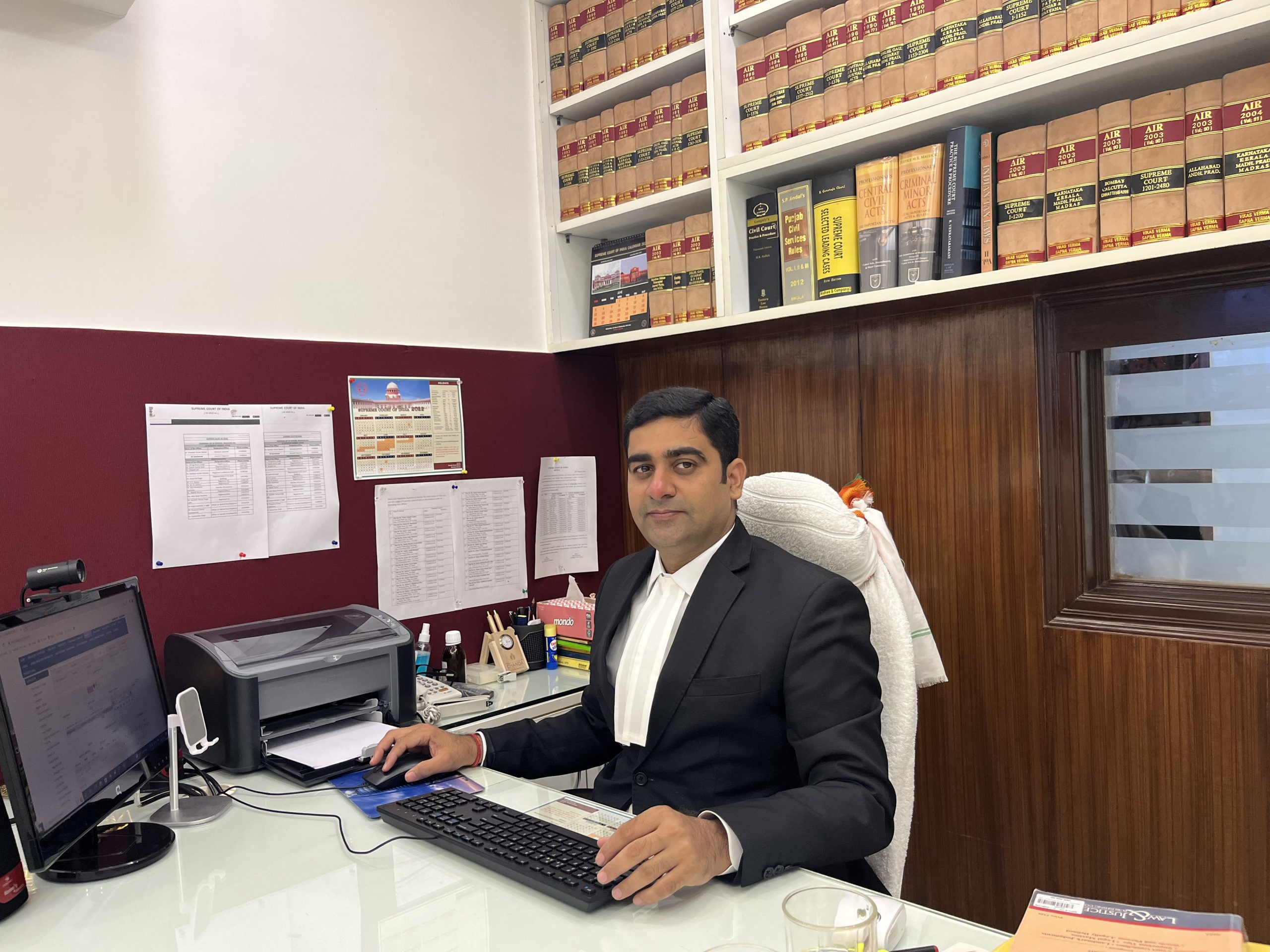
Tag: Supreme Court of India

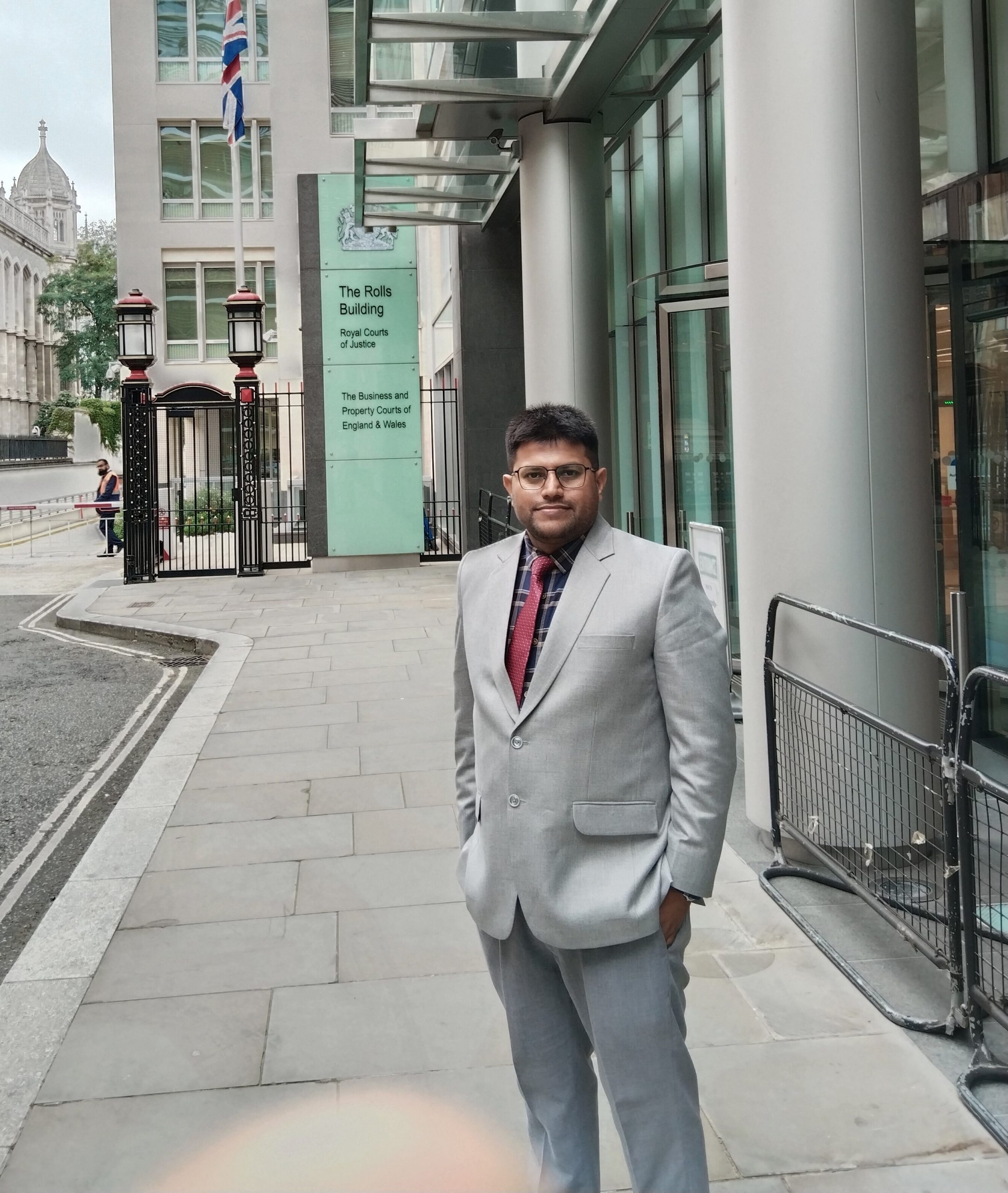
  • “AI would be a game changer in national security, personal privacy and the job market in general”- Anandh K, Advocate-on-Record, Supreme Court of India and Partner at SA Law

    “AI would be a game changer in national security, personal privacy and the job market in general”- Anandh K, Advocate-on-Record, Supreme Court of India and Partner at SA Law

    This Interview has been published by Pragya Chandni and The SuperLawyer Team

    Can you tell us about your journey into the field of law, particularly what motivated you to pursue an LL.M. in Corporate Law & Governance after your B.S.L., LL.B. degree?

    As far back as I can remember, law as a profession had always piqued my interest. My mind was set on law and ILS Law College, Pune was ranked No. 1 in a popular survey around the time I finished 12th standard. There I was in Pune. I loved that city from the moment I reached the Pune railway station. I had learnt Hindi in school, but it was bookish and my friends thought I was showing off speaking like a poet. The illusion was dispelled quickly when they realised bookish or not, my Hindi was below average. If my Hindi teacher (Late Ms Usha Rajagopalan) had known, she would have quit teaching twice over – once for people thinking I spoke chaste Hindi and once for making it known to the world that all her efforts on me were rather wasted. But there I learnt law, bits and pieces of Hindi and Marathi. I am very fond of my professors from Pune; they were all great mentors. Dr. Jaya Sagade and Ms. Smita Sabne hold a special place in my heart. I also have some of my most cherished memories with friends in Pune.

    I decided to complete my post-graduation before entering into the profession. I wasn’t sure I would be able to take a break for further education once I started working. I was naturally inclined towards taxation and corporate law, perhaps due to my commerce background in school. I got into NALSAR University of Law. There I met some great professors and made great friends. I was also happy about extended college life. 

    How did your educational background, including your diploma in National Security and International Relations, influence your approach to practicing law, especially in the areas of corporate governance and international investment law?

    Pune is a city of world-class colleges and educational institutes. I joined as many courses as I could. I was and am fond of politics, international relations and national security. The IR course taught me to see the big picture of domestic policies and regulations. India’s economy and its growth is inextricably linked with a whole set of factors and even a minor difference in the mix would have far reaching ramifications. IR opened my eyes to the consequences and effects (primary, second order and tertiary) of each policy and regulation within the country, their interplay with India’s foreign relations. 

    Investment law was part of my LL.M. instructed by Professor V. Balakista Reddy. After class, I used to assist him in several of his assignments which gave deeper insights on the subject and the influence it holds over the domestic affairs of India.

    Even as we as a nation are growing from strength to strength, I find myself going back to the lessons learnt from these courses. I draw upon these to contribute to the general legal discourse in the country in my own small way. And in my own practice, it helps me ruminate over the wider aspects of any given case.

    From my own experience, I would advise every student of law to actively seek and acquire knowledge from diverse disciplines and not restrict oneself to law books alone.

    As the managing partner of SA Law, you handle a wide range of legal matters. Could you share with us some memorable cases or experiences that have shaped your perspective on the legal profession?

    I have been fortunate to work in a range of cases across several forums and cities. Rather than go into specific instances I will share what I have learnt or what has been reinforced in me.

    I have and will always consider myself a student of law. Not just my experiences in managing a Firm, but my experiences even as a junior advocate in the profession have influenced my thoughts and approach to my practice.

    I always bear in mind the wisdom imparted by several seniors over the years – be ethical, one’s reputation is more valuable than the money one makes in a matter or a lifetime, be humble and honest with the court, do not hide facts which may be against you and always read and review your own work. These are the broad principles which have guided me. Each day, I realise more and more the importance and truth in these pearls of wisdom. 

    Be thorough with the facts; prepare to present the matter as if the judges do not know anything and at the same time as if they know everything, that way one will eliminate the room for lacunae in preparation; cross-check every work product prepared by one’s team and also have one’s own work product carefully reviewed; these are the other thoughts which influence my approach to work.

    You’ve been involved in advising tech-based businesses and startups on legal and regulatory aspects. What unique challenges do these clients face in terms of technology laws, and how do you navigate them?

    In India, we suffer from too much regulation in certain areas and too little regulation in certain others. We are evolving as a nation in this regard. Both the legislature and the judiciary are wise to the regulatory quagmire. There are some promising steps being taken. Technology as an interface will also mitigate several of the challenges faced by both clients and lawyers. 

    Some clients have to find a way in the labyrinth of regulations and stay on the right-side of law without the burden of compliance sounding the death knell to the business. Some clients have to be told that what is not regulated does not mean that it is prohibited. Especially, newer kinds of business find themselves without any regulatory guidance and often these companies liaison with the regulators to bring about a law to govern their industry. Fintech is a classic example of industry-led regulation. It also has the danger of bias when business lead the way of regulations. But India has done well in that department overall. Of course, one can always improve. 

    Tech based companies making a foray and disrupting the finance, education or medicine industries find themselves facing unique business as well as legal challenges. Some of these issues were deliberated upon by experts from various fields in the Vichaar 2024 Conclave organised by our Firm. Right from designing the contracts that govern the relationship of the clients inter se, with their vendors and users, to the regulatory obligations under the law, new-age companies present issues which may not have any precedence and defy the template-model of transaction and conveyance practice. Without understanding the business there is no way one can find the thin line between legal and illegal business operations. The first step for any technology lawyer is to first understand the technology and the business. Then one must revisit the principles of law. I always find it useful to re-read the provisions of law and their interpretation before providing any advice. I feel this is especially important for start-ups as any misstep may cost dearly to not only the clients and their investors, but may also adversely impact the technical solutions piloted by such start-ups. And never cut corners.

    Cyber law is not a new expression in India’s legal system. But as technology evolves, tech-law also has to keep pace. We are all waiting for life to be breathed into the Data Protection Act. Fast evolving technology like AI is full of possibilities, opportunities and at the same time massively disruptive capabilities. AI would be a game changer in national security, personal privacy and the job market in general. This presents a huge challenge to everyone with stakes in the law and policy field to anticipate, prepare and adapt for the changes while safeguarding the core constitutional promises to citizens.

     Your experience includes handling pro bono cases for individuals with meagre incomes and working with NGOs like SEWA Bharat. How has this aspect of your work impacted your overall legal career?

    Every case is satisfying in its own way, be it contesting the unsustainable tax demand, bringing defaulting corporate debtors to books, dealing with breach of service law, championing the cause of unjustly terminated labour in getting justice, or representing the parties involved in the criminal justice system. 

    By nature, I have never been particular about money – not a great quality when you are managing your own practice, but that is what it is. So when I help someone in need, I do not feel altruist or special about it. It is what I am and what I do. But these cases also humble me, and they make me realize more and more the nobility of the profession.

    At the same time I would add this: ask any senior in any court and they will tell us to work harder on pro bono cases or cases where we are advocating the cause of some social organisation. These are cases which can shatter the delicate reputation that any lawyer has to build with great diligence and time. I take these words of caution with utmost seriousness.  

    Could you discuss your role as a senior associate at Lakshmikumaran & Sridharan, particularly your involvement in indirect tax matters and your appearances before various authorities and courts?

    I had one of the most enriching experiences of my life at LKS. It was a great learning experience. A large firm like that gives one the opportunity to work with seasoned and consummate professionals at the top of the game. One learns from individuals with great differences in style and approach. Where one senior demands perfection in the draft another would require extensive research even on issues tangential to the matter, just to be thorough and to leave nothing unprepared. I also had the opportunity to work from some of best Senior Advocates involved in indirect tax cases, from Mr. Harsih Salve, Mr. P. Chidambara, Mr. Arvind P. Datar, Mr. Santosh Bagaria, Mr. N. Venkataraman to Mr. V. Sridharan. 

    I worked closely with Mr. V. Lakshmikumaran during the time the Supreme Court constituted a special tax bench to speedily dispose of long-pending tax cases, including assisting him before the 9-judge bench Entry Tax matter. That was my first constitution bench matter. Thanks to him, I honed my ability to quickly navigate any brief, anticipate the questions and prepare for the same. Under him, I learnt the importance of preparing to explain the most basic points of a subject and at the same also to present the most nuanced and sophisticated points of the same subject. During the time the special tax bench was there, I was fortunate to have worked on more than 200 final hearing cases, which is a very rare opportunity for anyone in the profession. I must say this – the pace of Justice A.K. Sikri and Justice R.F. Nariman on the tax bench kept all of us on our toes and the entire team working on Supreme Court matters would have worked for close to 16 hours a day!

    Apart from appearing in the Supreme Court, I have handled cases before the Delhi High Court, CESTAT and at Commissionerate level. In all these, I have been the beneficiary of guidance and friendship of several lawyers of the firm. In no particular order, I am grateful for the time and guidance of Mr. B.L. Narasimhan, Mr. Amit Jain, Mr. Hemant Bajaj, Mr. MP Devnath and Ms. Jenny Verghese. Some of my former colleagues are today friends beyond and outside the profession.

    You’ve been actively engaged in conducting seminars and talks on legal issues for law students and professionals. What inspired you to take on this educational role, and what do you hope participants gain from these sessions?

    While in college, I read somewhere that the best way to learn a subject is to teach it. I started making presentations purely to learn topics, but I soon realised that I enjoyed the process of learning, sharing what I learnt and learning more in that process. I have since carried on with conducting such sessions with students. It is a way for me to learn more and to also give back to my profession.

    I also feel that due to the nature of the profession and the enormous syllabus which needs to be covered in college, nuances and practical aspects cannot be taught solely by the law institutions. Seminars and conferences which bring practical experience to the classroom serve to fill the gap of what can be taught in a traditional environment and what is expected/ required in the market. So our endeavour at the Firm is to bring the niceties of legal practice across to the students and aspiring young professionals.

    Lastly, based on your journey from law school to becoming a managing partner and advocate-on-record, what advice would you give to fresh graduates aspiring to enter the legal profession, especially in the areas of corporate law and governance?

    Legal profession is a rewarding and at the same time a highly demanding profession. The foremost demand placed by the profession is on the health of the individual, both physical and mental. Focusing on maintaining good health and creating a daily routine around which to organise every aspect of your life comes first. There are time-tested and well-respected qualities expected from any lawyer and law student – commitment, professional knowledge, professional competence, hard work, attention to detail and being well-informed about the developments in the society. By professional competence I don’t mean only written and oral communication skills, but I include adherence to ethical standards and providing honest advice to clients, even if such advice is unpalatable to the client. These are necessary but not sufficient conditions for success in the profession. Consistency, professional and personal integrity, steadfast adherence to professional ethics and building a good network are factors which make or break a career. To add a few words about personal integrity – a lawyer is somewhere between the society at large and the centres of power (though often the roles overlap) and hence, must bear the extra weight of responsibility to the society more so than most other professions and at all times conduct themselves as an ambassador of the profession.

    Speaking specifically about corporate law – keeping pace with business and economic development, learning about the evolving business trends, training to put oneself in the shoes of an entrepreneur – these are the qualities one must develop.

    I have saved the best for the last. Patience and unwavering self-confidence. These are, of course, empty shells if one doesn’t check all the boxes above. 

    Get in touch with Anandh K-

  • “Prioritizing and adjusting based on circumstances is key to achieving balance, Set goals, stay focused, and embrace the journey, – Nandini Gore, Senior Partner at Karanjawala & Co. Advocates

    “Prioritizing and adjusting based on circumstances is key to achieving balance, Set goals, stay focused, and embrace the journey, – Nandini Gore, Senior Partner at Karanjawala & Co. Advocates

    This interview has been published by Namrata Singh and The SuperLawyer Team

    Ms. Gore, could you share with us some insights into your journey from your college days at Campus Law Centre, New Delhi, to becoming a Senior Partner at Karanjawala & Co. and an Advocate on Record at the Supreme Court of India? What were some of the challenges you faced along the way, and how did you overcome them to achieve your current level of success?

    One of the most enriching experiences of my life was my time at the University of Delhi. My alma mater, Campus Law Centre, Faculty of Law is where I received a holistic understanding of the subject and the guidance I received from my professors helped in shaping the lawyer I am today. I believe apart from theoretical knowledge of the subject, my passion and inquisitive nature as regards law and its practical application, helped me in becoming an Advocate on Record. Being an Advocate on Record pushed me further towards learning and growth. My perseverance and dedication through this journey along with a commitment to professional standards helped in my growth in the profession. A combination of leadership skills, effective teamwork and delegation abilities helped me reach the position of a senior partner at Karanjawala & Co. Earlier the legal profession, especially litigation, was a male dominant profession. Being a female, the major challenge I faced was balancing work and family responsibilities together. I believe the support from my family and the innate skill of women to multi-task helped me smoothly sail through such challenges. 

    As a distinguished mediator and advocate, you’ve handled a wide array of cases, including complex constitutional matters and high-conflict mediations. How do you maintain a balance between these different areas of law, and what drives your passion for mediation?

    The most crucial aspect for maintaining a balance between different areas of law, especially litigation and mediation, is adaptability. Dispute resolution is dynamic and I believe being a lawyer who wishes to practice and work in different fields of law, adapting to the medium of resolution and identification of the requirement of that particular case is extremely essential. The pendency of cases and the time taken in administration of justice led to my interest in mediation. I firmly believe that where justice is administered at a belated stage is as good as denial of justice. Through mediation, there is a sense of fulfilment in helping the clients to reach a mutually agreed solution in an efficient manner. Witnessing the positive impact on the lives of the clients is a driving force too. Further, being a certified mediator I feel my communication and negotiation skills have improved which is not only valuable in mediation but also in various legal contexts. My passion for mediation has culminated in the form of a book named as “Handbook on Mediation”. 

    Your expertise extends beyond the courtroom, with a focus on training sessions, guest lectures, and judging competitions. What motivates you to engage in these activities, and how do you believe they contribute to the legal community?

    Having an experience of over 30 years, I feel it is my duty to give back to my professional legal community by sharing my knowledge and mentoring aspiring legal professionals. In my opinion, continuous learning is important to maintain high professional standards and engaging in training sessions helps in staying updated on latest legal developments and emerging trends. Such training sessions, lectures and judging competitions are platforms to share insights and practical advice with law students and fellow professionals. I believe by active participation in such activities I can make a small contribution towards shaping the future of the legal profession. 

    In your distinguished career, you’ve handled over 350 private and court-annexed mediations. Can you reflect on one particularly challenging mediation session and how you navigated through it to achieve a successful resolution?

    Yes, I have handled commercial, matrimonial and religious matters for mediation.  The first key in mediation is confidentiality therefore, it would not be appropriate for me to mention the factual matrix, but I can certainly say that in mediation sessions a lot of brainstorming is required, sometimes the high emotional healing process is required in a mediation and sometimes transformative solutions are required. A mediator has no advisory role in a mediation and acts like a third party and is a neutral party who just facilitates resolution of disputes between the contesting parties through negotiation and communication skills.  Mediation is a structural process in which a Mediator can use his / her own styles and with the passage of time once you are experienced enough, involves active listening, confidentiality, voluntariness, neutrality, empowerment and creative solutions.  A Mediator is incharge of the mediation sessions and can use this power to foster a collaborative approach settling the matter.   

    As a senior partner at Karanjawala & Co. and an advocate on record at the Supreme Court, you’ve been involved in landmark cases and constitutional matters. Can you share a bit about your experience in handling such high-profile cases and the unique challenges they present?

    Having more than two decades of experience in the profession, I have worked and handled a wide array of cases ranging from complex constitutional matters, commercial disputes, partnership disputes, employment disputes, mining law, real estate to other complex civil lawsuits. We successfully represented a subsidiary of Tata Power in a constitutional matter which involved the question of whether a foreign company could assert fundamental rights under the Constitution of India. We have successfully represented big companies like Tata Motors, Tata Steel, Bharti Shipyard, GVK EMRI in a wide variety of matters ranging from mining, taxation and property disputes to name a few. We have successfully represented our clients in medical negligence cases. With so many years of experience, it is not possible to list down the cases I have handled and worked on. I firmly believe that whether it is a high-profile matter involving huge stakes or an individual matter, or matter relating to admission of a visually impaired student or any pro-bono matters, public interest litigation pertaining to environmental causes or personal liberties, what matters for a lawyer is to work with perseverance, diligence and successfully representing the client with best of the legal knowledge. I strongly feel that every lawyer at some stage in the initial years of his practice should work with some NGO for some time and try to do legal aid matters which is the best way to give back to the society. 

    In your opinion, what are some of the key qualities or skills that aspiring lawyers should cultivate to excel in the legal profession, particularly in areas such as litigation, arbitration, and mediation?

    In my opinion, the most important qualities as mentioned earlier that aspiring lawyers should cultivate to excel in the profession are continuous learning, adaptability and perseverance. Strong research and drafting skills are imperative for a lawyer. I believe analytical thinking to construct robust strategies and ability to persuasively present arguments are essential in litigation. Apart from these qualities, to excel in arbitration, a feel it is important to have deep understanding of the arbitral procedures and to have advocacy in arbitration, one should hone his/her skills in presenting evidence. In mediation, I feel the mediator must possess active listening and communication skills, able to balance the power play between the parties along with the ability to set aside personal biases. Mediation process will only be effective if the mediator can cultivate persistence to guide the parties through the process, build trust in the process of mediation, a Mediator works as a bridge between the parties to facilitate a dialogue between them and help them reach an amicable settlement. 

    Your work has been recognized by prestigious organizations and publications, earning you numerous awards and accolades. How do you stay grounded amidst such recognition, and what values do you prioritize in your legal practice?

    I am extremely grateful for the recognition I have received by my community. The recognition and accolades push me to achieve work even harder and with more diligence. I have the willingness to learn and grow and it is a never ending process. Having reached such a position, I still feel it is a dynamic profession with always something or other to learn and imbibe from my fellow professionals including my juniors. Apart from diligence and hard work, prioritizing the interests of the clients is of utmost importance and values like integrity and empathy help in building trust with clients. Lastly, commitment to ethical conduct and professionalism is essential and adds to your credibility. 

    Your commitment to continuous learning is evident through your participation in various international conferences and training programs. How do these experiences influence your approach to practicing law and mediation in an evolving legal landscape?

    Participating in international conferences and training programs helps in getting a perspective of the legal system, practices and challenges worldwide. These conferences and programs are great opportunities for networking and exchange of ideas. It also gives exposure to new technologies and innovative legal practices along with emerging trends in the legal field. Alternate dispute redressal mechanisms, especially mediation techniques are discussed in such conferences. It helps in being aware of the evolving legal landscape globally. 

    Outside of your professional pursuits, do you have any personal hobbies or interests that you enjoy? How do you find balance between your career and personal life?

    It is very important to have a life outside the office which includes having hobbies and interests. Hobbies outside the professional pursuits help in unwinding and provide a break from work pressure. Apart from a source of relaxation, hobbies also help in personal development and help in maintaining mental and physical health. I enjoy oil-painting and water-painting and it is therapeutic for me. The best way to balance between career and personal life is prioritising and adjusting based on the circumstances and situation. 

    Looking back at your journey, from your education at Campus Law Centre, New Delhi, to becoming a distinguished legal professional, what advice would you offer to the current generation aspiring to build successful careers in law?

    The most important advice I would give to the current generation aspiring to have a successful legal career would be to stay committed to learning and working hard and be resilient as progress is impossible without hard work. It is crucial to have a vision and one should always set short term as well as long term goals as they act as a driving force or motivation to grow in your career. I believe one should always be open and looking for the right opportunities. The new generation is way more aware, connected, focused and intelligent. I wish them all the best in this noble profession. 

    Get in touch with Nandini Gore-

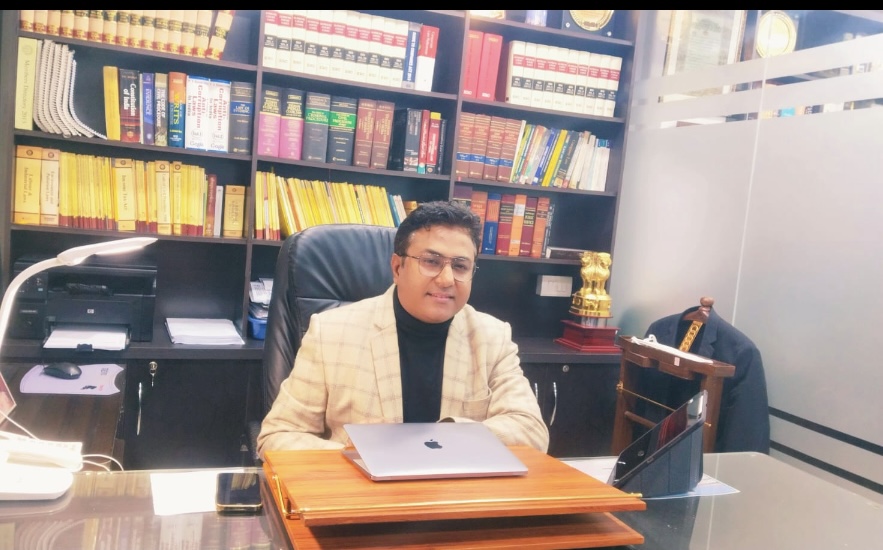
  • “The realm of sports law encompasses a spectrum of legal facets, including trademarks, sex discrimination, tax issues, criminal matters, player selection, employment issues, marketing strategies, doping disputes, and various other aspects relating to sports governance and athletes’ rights”- Prof Dr Amaresh Kumar, Advocate Supreme Court of India and Sports Lawyer & Arbitrator

    “The realm of sports law encompasses a spectrum of legal facets, including trademarks, sex discrimination, tax issues, criminal matters, player selection, employment issues, marketing strategies, doping disputes, and various other aspects relating to sports governance and athletes’ rights”- Prof Dr Amaresh Kumar, Advocate Supreme Court of India and Sports Lawyer & Arbitrator

    This Interview has been published by Pragya Chandni and The SuperLawyer Team

    Sir, could you please share with us the journey that led you to pursue a career in law, particularly focusing on your transition from academia and Sports Management to becoming an Advocate in the Supreme Court of India ?

    My journey toward a career in law, particularly my transition from academia and sports management to becoming an advocate in the Supreme Court of India, is rooted in a pursuit of justice and a refusal to succumb to bureaucratic injustices. The pivotal force behind this shift was my late wife, Smt. Mrinal Amaresh. She began her career as an Advocate in the High Court of Madhya Pradesh, Gwalior, and eventually became a leading female advocate in Gwalior. She encouraged me to challenge the discriminatory practices I faced in academia.

    Having completed my Masters at the Lakshmibai National Institute of Physical Education (LNIPE), Gwalior, I joined as a Research Assistant in 1984. Despite sincere dedication, I faced neglect in promotions due to the lack of political connections. Frustrated by the injustice, my wife suggested pursuing a law course to challenge the system. We sought advice from legal stalwarts, including Shri R.C. Lahoty and Shri Arun Mishra, who advised me to focus on the principle of “equal pay for equal work.

    In 1988, Shri Arun Mishra filed a writ petition on my behalf, challenging the unjust selection process. The High Court of Madhya Pradesh, in 1990, ruled in my favor, directing my appointment as a Lecturer from December 1, 1987. However, the government, instead of complying, terminated my services, leading to further legal battles. Shri R.K. Jain defended me in the Supreme Court, where the SLP filed by the authorities was eventually dismissed.

    In 1998, the Central Administrative Tribunal directed LNIPE and Sports Authority of India to consider my appointment as a Lecturer without open competition. Despite this, the authorities attempted to evade the order, leading to contempt petitions. Shri R.K. Jain’s guidance was crucial during these legal battles, culminating in my reinstatement in July 1999 with all consequential benefits.

    Following my reinstatement, I assumed dual responsibilities at LNIPE, showcasing my proficiency in both sports sciences and law. The then Cabinet Minister, Sadhvi Uma Bharti, entrusted me with the task of reviewing and negotiating settlement for numerous cases against LNIPE. I successfully settled over 91 cases out of court, demonstrating the effectiveness of alternative dispute resolution.

    Throughout this journey, my mentors, including my late wife, Shri Arun Kumar Mishra, and Shri R.K. Jain played pivotal roles in guiding and motivating me. Their mentorship and support were instrumental in shaping my career trajectory from academia and sports management to advocacy in the Supreme Court of India.

    You’ve had a diverse range of experiences, from serving as an academician in Sports Management to practicing law. How have these different roles influenced your approach to legal consultancy, especially in the realms of Sports Law and Academic Institutions?

    Over the course of my career, I have had the privilege of engaging in a diverse array of roles, ranging from academia in Sports Management to actively practicing law. This multifaceted journey has significantly shaped my approach to legal consultancy, particularly within the dynamic intersections of Sports Law and Academic Institutions.

    As a sports enthusiast and a legal scholar, my passion for researching sports laws has been a driving force, especially in my capacity to handle legal matters for various institutes, sports players, and governing authorities. Initially, my understanding of sports law was limited to the regulations directly influencing the gameplay. However, a pivotal moment in my exploration was the realization, through interaction with experts such as those at the International Sports Law Centers of the TMC Asser International Law Institute in The Hague, that sports laws extend far beyond mere rules of play.

    I attended the 2nd Workshop of the Court of Arbitration for Sports organised jointly by FIFA and the Swiss Bar Association in Lausanne, Switzerland. There, I found two hundred and ten Sports Lawyers from around the world. They all were either players or Olympians turned to Sports Lawyers. Similarly, while attending the 16th World Congress of Sports Law at Seoul, South Korea, there were 25 Chinese Sports Lawyers in attendance. To my surprise, all of them were former sports players and Sports Teachers in Colleges, Universities and Schools and then turned to Sports Law. With Physical Education and Sports qualifications for high level Sports Participation, like Olympic or International Sports, you can experience the requirement of Sports Persons and Sports disputes.

    Broadly speaking, the realm of sports law encompasses a spectrum of legal facets, including trademarks, sex discrimination, tax issues, criminal matters, player selection, employment issues, marketing strategies, doping disputes, and various other aspects relating to sports governance and athletes’ rights. The breadth of topics spans contracts related to sports events, player associations, and clubs, intellectual property rights, broadcasting rights, tort laws, and the expeditious resolution of sports disputes—a critical consideration given the relatively short peak performance span of players and athletes.

    In the context of India, where I have primarily operated, it’s noteworthy that most sports-related disputes find their way to traditional courts, resulting in prolonged resolution times. This protracted legal process can inadvertently diminish the essence and spirit of sports, a concern that underscores the importance of seeking quicker and more efficient methods of dispute resolution within the realm of sports law.

    Could you tell us about a significant case or project you’ve worked on that stands out to you the most in your career, whether it’s in the field of Constitutional law, Sports Disputes, or Educational Consultancy ?

    Undoubtedly, the Madhya Pradesh Triathlon Association case marked a watershed moment in my legal career, showcasing my proficiency in navigating complex legal landscapes. The Supreme Court’s directive, emphasizing structured dispute resolution mechanisms within sports federations, not only underscored my involvement in high-stakes cases but also highlighted my commitment to upholding the integrity of sports governance.

    Similarly, my contribution to the intervention application in the matter involving Kalyan Chaubey showcased my dedication to ensuring fair play and transparency in sporting organizations. By advocating for the lifting of the stay on the All India Football Federation’s elections, the court’s decision set a precedent for restoring democratic processes within sports bodies after an extended hiatus.

    In the realm of legal innovation, I played a key role in shaping the Code for Sports Arbitration for the Indian Olympic Association in 2012. Responding to a call from Dr. Randhir Singh, the Secretary-General at the time, this initiative demonstrated my forward-thinking approach to address challenges within the National Olympic Movement. The subsequent adoption of the code in 2018 reflected not only legal acumen but also a commitment to international standards of sports governance.

    These experiences collectively underscore my versatility and effectiveness in handling diverse legal challenges within the dynamic field of sports law.

    These are just a fraction of the broader spectrum of legal complexities I’ve encountered and successfully managed in the field of sports law and constitutional matters. My diverse portfolio includes cases for Universities, student unions and teachers handling a myriad of cases, each presenting unique nuances and demanding a tailored legal approach. This breadth of experience has not only honed my legal skills but has also equipped me with a comprehensive understanding of the intricacies inherent in sports-related disputes.

    Your involvement with various International Sports Law Organizations and Institutions is quite impressive. How have these Global Experiences shaped your perspective on Sports Law, especially in the context of Indian Regulations and Practices ?

    Absolutely, my engagement with various International Sports Law Organizations has been a transformative journey that significantly impacted my understanding of Sports Law, particularly in the context of Indian regulations and practices. One pivotal opportunity arose in 2010 when Dr. Randhir Singh, the Secretary of the Indian Olympic Association, entrusted me to represent the association at the 2nd Workshop on “CAS Jurisprudence and New Developments in International Sports Law” organized by the Court of Arbitration (CAS) and the Swiss Bar Association in collaboration with FIFA in Lausanne, Switzerland.

    Attending this workshop was an eye-opener as I interacted with 223 advocates, including eminent sports personalities and graduates in Sports Sciences or Physical Education from Member National Olympic Committees. Exploring the library of the International Olympic Committee, I discovered that the Statutes of the Court of Arbitration for Sports (CAS) were ratified by the International Olympic Committee in India in 1983. 

    As a legal advisor to numerous Educational Institutions and Sports Organizations, what are some common challenges you’ve encountered, and how do you navigate them effectively ?

    Challenges and negativity serve as the roadmap to success in life. We must transform these challenges and negative experiences into opportunities. As the challenges during the coronavirus pandemic have taught the human beings a lot. Due to the challenges faced during the coronavirus pandemic, the judiciary has developed a new mode of filing cases, arguing the matters, and judgments being uploaded online meaning thereby there has been a complete digitization of the Judiciary. I was persuaded for a long time when I had an opportunity to visit the International Court of Justice at the Hague in the year 2010. But this has now become practical after 2020. 

    Similarly, the challenges and negativity in my life, both as an individual and as the legal advisor of numerous educational institutions, have been encountered and effectively shaped. Especially noteworthy is the constant advocacy for the cause of the national language Hindi in my alma mater by way of Legal Activist through a PIL before the Madhya Pradesh High Court referred to as, “AIR 1997 MP:43 Dr. Amaresh Kumar Vs. Lakshmibai National College of Physical Education” now is being advocated by the Prime Minister of India Shri Narendra Modi and Chief Justice of India Shri D.Y. Chandrachud in their Speeches and Practice in various High Courts and Supreme Court of India. Whereas, on 29th October, 2018, I was invited to present my advice and suggestions related to, “Strengthening the Justice Delivery Process before the Department Related Standing Committee on Personnel, Public Grievances, Law and Justice” headed by Shri Bhupendra Yadav, M.P. Rajya Sabha comprised of 31 Members of Parliament of both the houses, where I have suggested followings :

    (i). I suggested that all hearings should be video recorded, a practice that has been initiated due to the coronavirus pandemic. The Hon’ble Chief Justice of India is now giving more weightage to the digitization of the court. 

    (ii). I suggested the selection and promotion of Judges after the Training of Judges/Judicial Officers – which has been started for the Judges as well as for the Advocates

    (iii). The language of courts shall be allowed to file, plead, and argue in their National Language Hindi. – This has been supported by the Prime Minister of Bharat, Shri Narendra Modi during the Conferences of the Chief Justices of the High Courts and Chief Ministers of the States and also during the Dimond Jubilee celebration of the Supreme Court. The Chief Justice Hon’ble Mr. Justice D.Y. Chandrachud has also bated the need to teach Law in Hindi. Speaking at Prayagraj, UP, after inaugurating the maiden academic session of Dr Rajendra Prasad National Law University (RPNLU), Prayagraj, UP, the CJI said, “I appeal to the authorities of the National Law University here at Prayagraj to ensure that the medium of instruction takes place in Hindi, so that the best students from Uttar Pradesh will become the best lawyers that will practice in the high court. I am therefore of firm belief that as in other countries like Russia, Germany and France etc. language of the Courts is of their National Language. In the Amrit Kal of the Swatantra Bharat the Language of the Indian Courts and especially the Supreme Court will be of our National Language. Because nowadays translator machines can be used by Judges who do not understand Hindi in their regional languages. 

    (iv). I suggested that there are no relevancies of the so many Tribunals in the Judiciary systems without there being the Judicial Members. – The Supreme Court of India comprising of the Hon’ble Mr. Justice Surya Kant, Hon’ble Mr. Justice Dipankar Datta and Hon’ble Mr. Justice K.V.Viswathan had advocated for the presence of Judiciary Members in the Tribunals and the Government is also trying to cut short the numbers of the Tribunals. 

    (v). I also suggested the development of ICT support for filing of Petition/Plaint, Summon or issue of Notices to other Parties, Recording of Evidence and Arguments during the Arguments for easy and quick access to the Justice System by the Clients. – The Government and the Chief Justice of India are also of the same view now. 

    (vi). Strengthening Legal AID system and Promoting Alternate Dispute Redressal Mechanism – The Hon’ble Chief Justice of India, the Judges of the various High Courts of India are nowadays putting more stress on the ADR System. Even the Government of India has enacted the Mediation Act, 2023, for advocating the ADR for the Resolution of Disputes. The same will also be encouraged by the AMAMRI Lawyers LL.P. for evolving the ADR in the Resolution of the Sports Related Disputes in Bharat. Which can be availed by Athletes, Sports Persons, Sports Organizations, National Sports Federations, State Olympic Associations, Indian Olympic Association and Sports Business Organizations. 

    You’ve authored several books and publications on Sports Law and related subjects. Could you highlight some key insights or principles that you believe are crucial for understanding the intersection of the law of Sports ?

    Throughout the process of crafting authoritative works on Sports Law and related subjects, my overarching goal was to disseminate a profound understanding of the multifaceted legal landscape to a diverse spectrum of stakeholders. This includes athletes, sports entities, such as sports organizations, national sports federations, state Olympic associations, the Indian Olympic Association, and businesses operating within the sports industry. These publications intricately explore a myriad of legal dimensions governing sports within the Indian context, providing a comprehensive overview encompassing the management and organization of sporting events.

    One of the primary focuses has been to enlighten athletes and sports organizations about the inherent challenges posed by doping and to instill a vigilant approach against the use of prohibited substances. The works also serve a crucial role in educating individuals on the intricacies of contesting doping charges, particularly those initiated by the National Anti-Doping Agency (NADA). It is noteworthy that these publications address the perceived gaps in NADA’s efforts to adequately inform Indian athletes about the potential legal ramifications associated with doping charges.

    In essence, the books aim to act as a beacon of knowledge, empowering individuals within the sports community to navigate the complex legal landscape effectively. By offering comprehensive insights into the legal intricacies of sports, these publications stand as valuable resources for those seeking a nuanced understanding of the legal dimensions governing the dynamic and evolving field of sports law.

    Throughout your extensive career, you’ve actively engaged in social-legal activism, championing causes like advocating for the use of Hindi in examinations and promoting the establishment of Sports Dispute Arbitration Tribunals. How do you manage to strike a balance between your professional legal work and these broader societal initiatives?

    I perceive myself more as a nationalist than merely a professional advocate. I’ve always believed in the importance of contributing to broader societal issues alongside my professional legal work. Advocating for the use of Hindi in examinations and promoting the establishment of Sports Dispute Arbitration Tribunals are causes that align with my values and passion for social-legal activism.

    To strike a balance between my professional legal work and these societal initiatives, I prioritize effective time management and organizational skills. I allocate specific time slots in my schedule dedicated to these causes, ensuring that my professional commitments are not compromised. Having an organization AMAMRI LAWYERS with like-minded peoples helps me to pursue my desires of social activism allowing for a more efficient and impactful approach.

    Furthermore, I integrate aspects of social-legal activism into my professional work wherever possible. This synergy not only allows me to address societal issues but also enhances the relevance and effectiveness of my legal contributions.

    In summary, balancing professional legal work and social-legal activism requires meticulous planning, collaboration, and a strategic integration of these two aspects to create a harmonious and impactful approach.

    As someone who has transitioned between Academia, legal practice and Advocacy, What advice would you offer to law graduates who are just starting their careers, particularly those interested in specializing in Sports Law or pursuing similar interdisciplinary paths?  

    The young advocates aspiring to specialize in Sports Law are embarking on a promising journey within the legal field. Throughout human history, sports have been an integral part of our lives, evolving from personal entertainment to a global industry valued at over $486.61 billion USD in 2022. Projections indicate further growth, with expectations reaching $512.14 billion USD by the end of 2023 and $623.63 billion USD by 2027. The sports industry, one of the largest revenue-generating sectors globally, is poised for even more rapid expansion, fueled by the Internet and other media forms. In India, the sports industry witnessed a remarkable 49% growth in 2022, totaling Rs 14,209 crore, with sponsorships increasing by an impressive 105% to reach Rs 5,907 crore, according to the Financial Express Report. With the industry’s pervasive global presence and worth billions of dollars, it naturally gives rise to disputes, leading to the establishment and evolution of sports law as an independent discipline. My advice to law graduates is to embrace this dynamic field, recognizing the immense opportunities it presents and positioning themselves strategically to contribute effectively to the resolution of legal challenges in the ever-expanding realm of Sports Law.

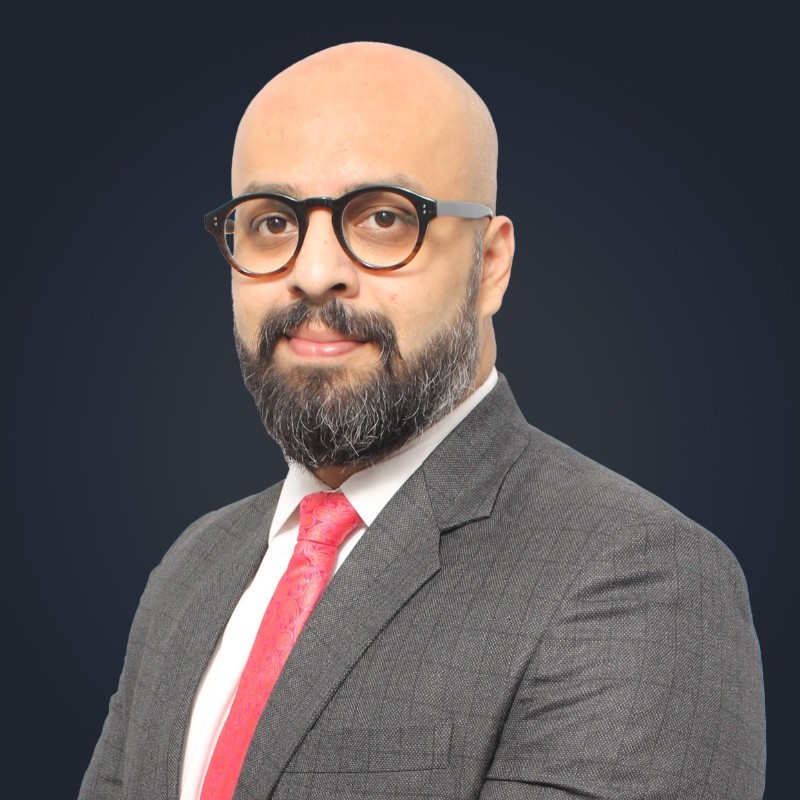
  • “Litigation is more than just a career and livelihood source. I believe that by this work I can contribute positively to society and bring about good changes in lives which I come in touch with.” – Amit Dwivedi, Supreme Court Litigator and Pegasus Scholar

    “Litigation is more than just a career and livelihood source. I believe that by this work I can contribute positively to society and bring about good changes in lives which I come in touch with.” – Amit Dwivedi, Supreme Court Litigator and Pegasus Scholar

    This interview has been published by Namrata Singh and The SuperLawyer Team

    Amit, could you take us through your journey and share how you embarked on your career in law? What inspired you to pursue this path, and how did your early experiences shape your professional trajectory?

    I come from a humble village background. I pursued my schooling from the government residential school of rural Madhya Pradesh, Navodaya Vidyalaya. Thereafter, I studied in the North campus of Delhi University for six years i.e., my graduation and law degree. These years have, indeed, been trans-formative for me. I made friends coming from myriads backgrounds and learnt to adjust in different environments. I started to participate in extracurricular activities including debating competitions during my graduation and soon found that I would like to spend the rest of my life doing the same as a litigation Lawyer.

    For the last six years, I have been working in various Courts and Tribunals of Delhi and across India. For me litigation is more than just a career and livelihood source. I believe that by this work I can contribute positively to society and bring about good changes in lives which I come in touch with. Since September 2022, I have been working independently.

    Having worked extensively in various legal domains, from real estate disputes to representing marginalized sections of society, what drives your passion for justice and advocacy?

    Besides being an Advocate, I am a citizen of this country. There are so many things which bother me on a day-to-day basis. Lack of access to quality healthcare services to most of the population of our country troubles me a lot. However, there is little I could do about it. 

    At the same time, this profession gives me an opportunity to right a wrong. Be it a street vendor harassed by police officials, a homebuyer robbed by a builder or a contractual employee working without any job security, I can feel their pain and wrong committed upon them agitates me a lot. Being a lawyer gives me a position to do something for them and it is my primary motivation to strive for another day. On some occasions, raising a voice means everything!    

    You’ve recently returned from the UK after participating in the Pegasus Scholarship program. How did this international experience influence your perspective on legal practice, especially in comparison to your work in India?

    My inspirational senior Ms. Namita Wali nudged me to apply in the first place, she deserves the complete credit. After the initial screening process, I was interviewed by Senior Advocate Aman Hingorani and seasoned Mediator Dr. Shweta Hingorani. Thankfully, I was selected as a KNH Foundation-Pegasus Scholar for the year 2023. I was the only lawyer with five years standing who was selected for the said scholarship in the year 2023 from India. This scholarship is a world-renowned international lawyer exchange program run by Hon’ble Society of Inner Temple, England. My fellow scholars came from different jurisdictions like the United States, Australia, and New Zealand. As a scholar, I spent Eight weeks in England and Scotland working in esteemed Barrister chambers like Blackstone, Lamb and 39 Essex. I attended court hearings in the Supreme Court of the United Kingdom, Court of Appeal, High Court, Crown Courts, and County courts. I participated in conferences held among barristers, solicitors, and clients. I interacted with judges, jurists, and policy makers. It was a life-changing experience, and I could see a different way of life and working.

    The United Kingdom has a comparatively small population and for that reason alone, they do not encounter a lot of nagging logistical issues as we in India do. The number of cases listed per day before a judge is not in two digits most of the time in the UK and in India, you might even see a three-digit cause list peculiarly on the criminal side in High Courts and consequent crisis of pendency, matters not getting heard and a bit of chaos. However, the zeal of the advocate community keeps the access to justice smooth in India and that is indeed a great achievement.

    In your role as a Panel Advocate with Counsel to Secure Justice (CSJ), you’ve been advocating for child survivors of sexual violence. What unique challenges do you face in such cases, and how do you navigate them?

    CSJ has taught me a lot. Sexual violence against a child is not only inhumane, barbaric, and brutal but it also creates multidimensional problems. The child suffers physically and emotionally. Family also finds it difficult to handle the situation. There are a lot of social stigmas attached to it as well. So, meeting a survivor and his/her family requires a lot of preparation. Most of these people have suffered at the hands of the system also so making a connection with them requires some genuine effort. However, when they see your sincerity, they rely on you, and you start working as a team. It was my affectionate senior Ms. Arushi Anthwal who guided me on this pro bono panel. She heads the CSJ’s lawyer’s team. Her commitment to the welfare of women and children is unimpeachable.    

    I have observed an unfortunate pattern in such cases. Reporting from poor strata of society against child sexual violence is good but the middle and upper classes are still finding it difficult to report this violence and they try their ‘best’ to save their shallow ‘honor’ as in these cases, usually, the perpetrator is a person of trust. Efforts to encourage reporting of child sexual violence are needed on a large scale. It is a silent pandemic!

    You’ve authored articles and participated in webinars on diverse legal topics. What motivates you to share your expertise through writing and speaking engagements?

    We all are part of a shared world. We do not exist in isolation and interdependence is the order of our society. I believe in a democratic society; exchanges of ideas have potential to bring much needed changes in society. The Right to Information (RTI) Act was born out of such efforts and it has served society so well. An ordinary citizen can file a simple application and ask for information which might unearth wrongdoings in public offices. So, I make it a point to speak and write about issues which are important and need our attention like universal access to healthcare and misery of undertrial prisoners. I believe and hope these discussions are small steps which will bring about great changes.  

    Your journey includes working with different legal mentors and chambers. How have these experiences contributed to your growth as a lawyer, and what valuable lessons have you learned along the way?

    As a first-generation lawyer, I had great difficulty finding mentors. Formally, I worked as an associate with two Advocates. My first senior was Mr. Amit Bhagat. He works on the Civil and Commercial side. He taught me how to navigate hearings and insist on reliefs. His energy was unmatchable.

    My Second senior was Advocate on record Mr. Joel. He taught me how to keep patience in tough situations and client handling. He has exceptional skills to mediate a complex dispute and I found his calm approach imitable.

    I interned under Mr. Madhav Khurana in 2017 and since then, he has always been there to support and guide me. He is very organized and conducts his cases with plans and strategies. Working with him as a briefing counsel is always a delight.

    Advocate on record Mr. Vikram Hegde is a known lawyer and his writing skills keep twitter and newspapers warm. In my independent practice, he has been a constant guide. If I lose a case in high court, then I know he would help me to take it to the Supreme Court and get the necessary relief.  

    Mr. Adarsh Priyadarshi is a guide on the criminal side. His skills to puncture a prosecution’s story is great and he has been kind enough to allow me to argue his criminal matters in Delhi High Court.  

    As a Pegasus Scholar, you had the opportunity to immerse yourself in the legal system of the United Kingdom. Were there any striking differences or similarities you observed between the UK and Indian legal systems that surprised you?

    Legal systems in both the countries are similar and have been made by the same people for obvious reasons. So, on paper we are almost the same. But, on the grounds, the situation is different. Their courts are strictly formal at all levels and in India, the informal nature of trial courts gives a breathing space to Indian masses. 

    In the UK, Civil trials get completed in three to five days, I witnessed an eviction trial getting completed and judgement pronounced in four days in Central London County Court. With due respect, such expeditious disposal in India is nearly impossible. Due to the strict cost rules, frivolous litigations and appeals get discouraged a lot there. Due to lax rules, in India litigation, at times, becomes an adventure and all disputes eventually reach the supreme court, destroying decades of people’s lives and leading to docket explosion.  

    With the rapid advancement of technology, how do you see the role of AI and automation shaping the future of legal practice, and what implications do you foresee for young lawyers entering the profession?

    Let’s look at the past to appreciate the future developments. When Covid came, almost no one was relying on e-filing and virtual court hearings were not even part of our imagination. But a small virus nudged us to use technology which was already with us. Soon, we all were filing online and appearing online. This transition has been significant.

    As far as filing and defects in court registries are concerned, I hope AI will make life easier for lawyers and court staff. I hope there will be a day when ‘defect in file’ will be a thing of the past. At the same time, I believe that there will never be a substitute for earned human experience and wisdom. So, technology will help us but eventually, human prudence will decide how it will be used.  

    Balancing personal interests and professional responsibilities can be demanding. How do you manage to find time for hobbies or leisure activities amidst your busy schedule?

    Being self-employed is not as rosy as it sounds. Being away from work means a loss of income in that situation. So, working slowly becomes a part of your life. And this is how eventually things start to find a place in your life. I like stories. I have become a bit lazy to read books for leisure, so I watch movies and tv series and these things happen at the end of day most of the time. I like watching theater and Delhi offers a good variety for the same. Being a foodie gives me the opportunity to explore new places and tastes.

    Finally, Amit, if you could offer one piece of advice to the upcoming generation of lawyers, what would it be, considering the evolving landscape of the legal industry and societal challenges?

    Decide your priorities. If you come from a humble background, then joining a law firm and having a steady income is a fairly good idea in the initial years. Such a way of functioning ensures exposure and income for you. The way litigation is structured in India, it is not very welcoming for an outsider without significant resources and infrastructural support. So, calculating and managing expectations is important. 

    The position of legal researcher in High Courts and Supreme Court is something to aspire to. It gives you a steady income in the initial years and the exposure is unparallelled. These places are likely to motivate you to pursue academic endeavors abroad on scholarships. 

    Arbitration is here to stay as India has become the focus of global trade due to its huge population. World creates and India consumes, as the joke goes! So, there would be a lot of disputes, even of an international nature, in such a setup. This field could show you the world and teach you how to look beyond your self-created boundaries. Opportunities to work abroad may also cross your way and the sky’s the limit.

    So, my advice would be to plan your way out and be brave to walk on that path!

    Get in touch with Amit Dwivedi-

  • “Don’t ever lose hope, be patient, and focus on your work, as there are no shortcuts in this profession.” – Himanshu Tyagi, Advocate-on-Record at the Supreme court of India

    “Don’t ever lose hope, be patient, and focus on your work, as there are no shortcuts in this profession.” – Himanshu Tyagi, Advocate-on-Record at the Supreme court of India

    This interview has been published by Namrata Singh and The SuperLawyer Team

    Your journey from Meerut to becoming an Advocate On Record at the Supreme Court is quite inspiring. Could you share some pivotal moments or challenges you faced during your early years in Delhi, and how you overcame them to establish your practice?

    Once you step out of your comfort zone every first thing seems to have its own challenges. However, on the professional front I can say that I decided to take the plunge to the Capital with dreams and hope to make it big, in spite of not having any significant father figure in the field of law. Initially the first question which was required to be answered was from where to start as there was hardly anyone to suggest or guide what are the choices one could make while entering the profession. I made my choice and started with litigation as I had attained little experience while being associated with the chambers of Mr. Ravi Shanker Tyagi for a very brief period in Meerut Bar which was initially very helpful as Courts in Delhi are much more refined in terms of infrastructurally and in other avenues as well.

    Your journey as a first-generation lawyer is truly commendable. What were the key principles or values that guided you in your career, especially during the initial stages when the path might have been more challenging?

    Yes, being a first generation lawyer is a very difficult choice to make especially when you are in litigation. But all that I can say is don’t ever lose hope, be patient and focus on your work, as there are no shortcuts in this profession, the only way you can accelerate is through your abilities to make hard choices and by burning midnight oil.

    Becoming an Advocate On Record involves rigorous training and experience. How was your time with Retd. Justice S.R. Singh shaped your understanding of the legal field, and what key lessons did you carry into your independent practice?

    I was fortunate enough to join the Chambers of Retd. Justice S.R Singh ( Retd. Judge from Allahabad High Court) Sr. Advocate in the year 2009.  After working with Mr. Singh for almost two years and having gained opulent experience by understanding the nuances and intricacies of legal field along with drafting, filling and everything that the field entails.

    One judicious adage told to me by my very veteran Senior was that “ Vakalat is your first wife” if you want to do justice to your profession and I have ever since imbibed this in my practice till date and I am always grateful to all my seniors and colleagues from the chamber and outside the chamber for always guiding me in the profession. 

    As Ex. Additional Advocate General for the State of H.P., you’ve handled significant cases. Can you share an experience where your role had a meaningful impact on the state’s legal representation, and what insights did you gain from that experience?

    It was a very enriching journey while discharging my duties as AAG for state government before the Hon’ble Supreme Court as such opportunities help you bring the best out of you. As while holding such an esteemed office one has to be very candid with all the briefs while representing the State before the Court.

    Handling cases involving state entities like the Himachal Road Transport Corporation (HRTC) requires a nuanced understanding of administrative and constitutional law. Could you elaborate on the challenges faced and strategies employed in representing HRTC in various legal matters?

    It is always challenging to represent Road Corporation before the Hon’ble Courts as the mostly the matters pertaining to the Corporation is of higher monitory significance be it MACT matters or service matters. What I can say from experience is that you are required to be more updated with the law and recent judgments so that you can provide better assistance to the Hon’ble Court.

    Handling criminal matters requires a different set of skills. Can you share an experience from a criminal case you’ve worked on, discussing the complexities involved and the strategies adopted for a successful outcome?

    Through my experience in handling criminal matters I must say one should have a very fair understanding of criminal jurisprudence as most of the criminal matters involve personal liberty which is of utmost importance.  During my time at bar I have done several criminal trials, appeals but what always challenges me is the stage of cross examination as in my view Cross examination in any criminal matter is the heart and soul of the Trial.

    Apart from your legal pursuits, do you have any personal hobbies or interests that you find to be a great source of relaxation or inspiration?

    I can say visiting places and spending time with family and friends keeps me motivated other than work. 

    Coming from a small town like Meerut and making a mark in the legal profession in Delhi is undoubtedly a significant achievement. Could you share some extra efforts or unique strategies you employed in your journey to overcome any perceived challenges or biases associated with being from a smaller town?

    Once you make your mark , and in this industry that is possible only when you garner some accomplishments in your name. The bias associated with a small town only remains so long as you let it affect your mental make up. If you are determined enough, the tag of coming from a small town and making it big in the capital only adds to your reputation , which at the same time works as an inspiration for people coming from the same background, and are hesitant in pursuing their goals. My only advice to the budding generation of lawyers is to fight your demons and always be hopeful and take each day as it comes. The road to success may seem endearing but it sure is fruitful at the end.

    You emphasize the importance of hard work and dedication in your career. What advice would you give to the current generation of aspiring lawyers to navigate the challenges of the legal profession and build a successful practice?

    I can vouch for the fact that hard work is the key “what you are seeking is seeking you”. I make my juniors understand that to be candid with clients and accurate in analysis and strict in study, you will achieve whatever you aim for as there are no shortcuts in this profession.

    Having experienced both your own student journey and now interacting with the current generation, what notable differences do you observe in the approach and mindset of today’s law students compared to your time? Are there specific areas where you believe current students could focus on improvement to excel in the legal profession?

    The major shift that I witnessed in the mindset of the students in comparison to when I was one, is the availability of resources and better infrastructure that can help them achieve their goals with a lot of help which is easily available, of which there was a dearth during our college  days. Accessibility and availability are the major factors that determine the early years in one’s legal career as initially apart from all the teachings done at college level, the practical learning is also very vital if you wish to stay in this field.  

    Get in touch with Himanshu Tyagi-

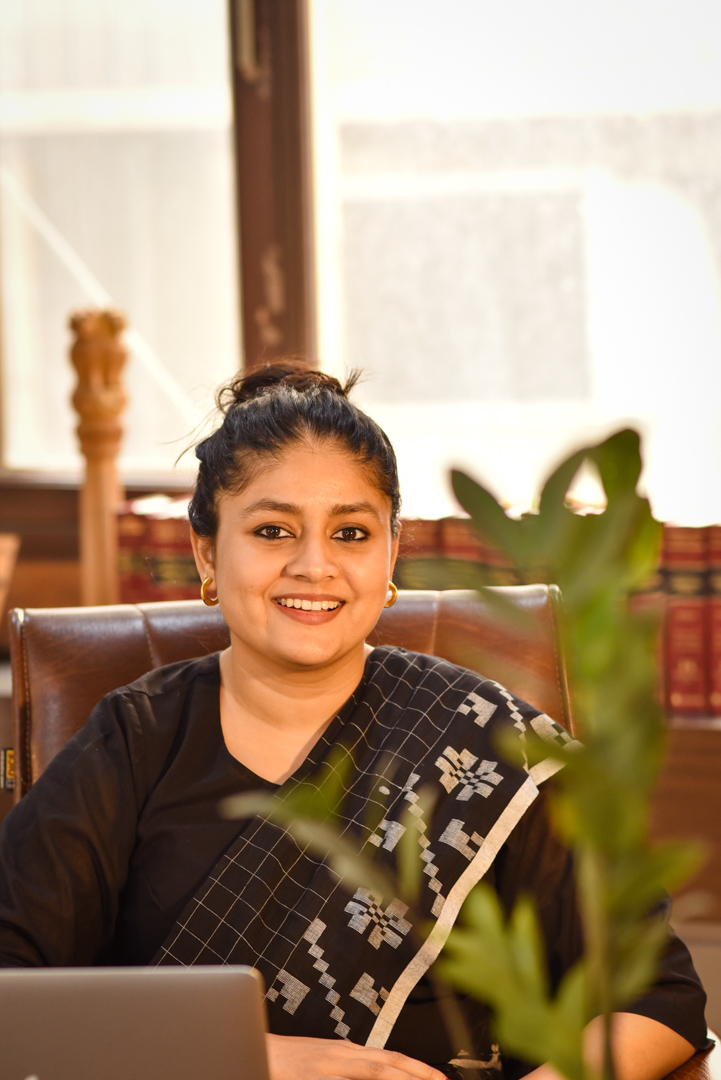
  • “As a cyber security advocate, I strive to strengthen laws and policies to combat emerging threats and safeguard digital ecosystems.” – Media Persona and Legal Luminary Dr. Shruti Bist, Advocate-on-Record at the Supreme Court of India

    “As a cyber security advocate, I strive to strengthen laws and policies to combat emerging threats and safeguard digital ecosystems.” – Media Persona and Legal Luminary Dr. Shruti Bist, Advocate-on-Record at the Supreme Court of India

    This interview has been published by Namrata Singh and The SuperLawyer Team

    For our readers who might be encountering you for the first time,  could you share a bit about your journey in the legal profession and your  various roles in the realms of cyber law, corporate law, and advocacy? Also what made you choose law as your career. 

    I am LLM in Corporate laws, I started my legal career as legal executive at  Thomson Reuters in 2015. I then shifted from Corporate to litigation and  worked with Seth associates under guidance of karnika Seth mam in field of  Cyber laws, arbitration and litigation .Then I joined AOR training under guidance  of Senior Advocate Supreme Court S Janani mam and started my independent  practice in Supreme Court from 2020 and qualified my AOR as well. I had  passion for law since the scope of law is very vast and also legal awareness  empowers women to exist with respect in society. 

    In addition to your legal practice, you are actively involved in media  as a TV panellist and public speaker. How do you balance these different  roles, and how has being a media personality influenced your work in law  and advocacy? 

    Yes I am a media panellist and have appeared on various legal issues and debates in DD  news, Republic Bharat, Zee News, TV 100, Nation live and others. I believe it’s also important for lawyers to increase awareness on legal issues to prevent crimes  from happening .We can balance our media work when we are free from court  hearings and being a media personality certainly adds on to your communication  skill and confidence . 

    You are an international arbitrator and mediator accredited in  London and Singapore. How does international arbitration differ from  domestic cases, and what challenges and opportunities does it present? 

    Yes I am an international arbitrator and mediator both and the work of International  mediation and arbitration certainly is more accountable since you have to  generate work for yourself and also meet International standards. In domestic  mediation matrimonial and commercial disputes are handled comfortably and are having good and huge scope to grow. The challenges of young lawyers entering  is high since big corporates prefer Singapore as base and also retired judges are  preferred as arbitrator hence new arbitrators find it tough. International arbitration is a new arena in India and Singapore leads. We look forward to improving  international arbitration in India as well. 

    As the President of the National Cyber Security Council for Women’s  Indian Chamber and Commerce Industry, you play a key role in policy making for cyber laws. What are the most pressing cyber threats faced by  individuals and businesses today, and how can one stay vigilant in the digital  age? 

    As president of the Cyber Security Council ,WICCI I actively forward  representations to PMO and various ministries for better implementation of cyber  laws in India. I worked on regulations of OTT platforms and drafting on  Intermediary Guidelines And Digital Media Ethics Code Rules 2021. I believe  further amendment on Broadcasting Services (Regulation) Bill, 2023 is must and  provision of cable Tv Act and TRAI regulation to further make the regulations  of OTT platforms stringent is must .Cyber threats such AI crimes Deepfakes;  driverless vehicles as a weapon; tailored phishing; disrupting AI-controlled  systems; large-scale blackmail; AI-authored fake new s are latest threat and is  must to prevent . 

    By going through news on various crimes happening and latest measures to  prevent crime available on google such as internet security, unique passwords etc  can help prevent crimes . 

    Your expertise was sought during the drafting of Information  Technology (Intermediary Guidelines And Digital Media Ethics Code Rules  2021. Can you share a bit about your role in shaping these regulations and  the key considerations that were addressed? 

    Yes representation forwarded to the Ministry on adding Singapore based guidelines  on age gradation in content of programmes shown on OTT platform was accepted  and also the Writ filed before Supreme Court through our Council assisted in  regulation of further provision on Intermediary Guidelines And Digital Media  Ethics Code Rules 2021. 

    Please Describe Work Of IEFCI And Also Your Roles As IEFCI  President.

    The International Economic Forum of Commerce And Industry is one of the  leading business organizations, enabling business to secure peace, prosperity and  opportunity for all. IEFCI is the institutional representative of various leading companies across the globe. A non-government, not-for-profit organization, IEFCI is  the voice of international business and industry. From influencing policy to  encouraging debate, engaging with policy makers and civil society, IEFCI  articulates the views and concerns of industry. Our Mission is to make business  work for everyone, every day, everywhere. We provide networking forums for  Industries, Dispute resolution forum that includes international Court of Arbitration and Mediation, legal consultancy in cyber laws, corporate laws and  other legal issues, Policy forum, and various Online Courses to empower the  Entrepreneurs and professionals to learn better skills. 

    As President and founder of Forum I have responsibility to appoint various people  to prestigious posts and also implement ideas across India through conferences  and seminars and coordinate with people apart from handling ADR and ODR  disputes. 

    Please Explain About The International Council Of Artificial Intelligence,  Cyber Security, Research And Development (ICAI CARD) And Your Role As  Founder And President  

    International Council Of Artificial Intelligence, Cyber Security, Research and  development (ICAI CARD) is an umbrella organization that provides wide ambit of  AI and cyber security solutions to Industries and Government and also works  towards attaining goals on UN Sustainability. It’s an initiative of Shruti Bist Socio  Legal Foundation registered u/s S 8 of Company Act 2013 , Ministry of Corporate  Affairs ,India .www.caics.in 

    Our mission is to attain a high standard of AI and cybersecurity in the country and  attain sustainable development goals that require cyber peace and capacity  building for cyber resilient development. Technologies of 5G and AI (Artificial  Intelligence) have the potential to revolutionise a variety of industries, including  medicine, education, and agriculture. We have a dedicated team to research the latest AI related crimes and technology. Our mission is to provide cyber security  to Industries and government via legal and tech team and ensure Cyber Swachh  Bharat. 

    As president of Council I am working towards attainment of our goals and  mission and make India Cyber safe. I am working designing innovative courses on AI and Cyber laws in collaboration with other Universities and also implementing innovative challenges in AI and Cyber laws to promote the professional skills and  campus recruitment in the field . 

    In your extensive media appearances and speaking events, you’ve covered topics ranging from women’s rights to cybersecurity. Is there a  particular cause or issue that you are most passionate about, and why? 

    Cybercrime related topics and other topics relating to women’s rights in property, Article 370, women’s role in politics and law are my keen areas of interest since it helps women empower themselves and also defend themselves from the latest  crimes happening to them.

    You’ve received several awards, including the Virangana Award and  the Inspiring Citizens Award. Which recognition holds a special place in your  heart, and how have these accolades impacted your professional journey? 

    Certainly the accolades assist in morale boost, social recognition and also inspires  us to work further towards attaining the goals of life . 

    Being a prominent figure in the field of law, how do you unwind and  relax in your personal time? Any hobbies or activities that you find  particularly rejuvenating? 

    I like writing Books, listening to music,Yoga, walking and cooking. Its mind refreshing activities. 

    As someone deeply involved in legal education, having contributed to  conferences, e-books, and online courses, what advice do you have for law  students and young professionals looking to build a successful career in law?

    I advise them to learn law and co relate various laws together in a way that when they read IPC they should also know the provision of CrPc and Evidence applicable and  join an internship to learn practical. Joining courses enhances skills they should learn  more through distance mode forums available it increases employability in  companies.

    Get in touch with Dr. Shruti Bist-

  • “E-commerce in India is moving forward by leaps and bounds. With it , there are  bound to be cyber crimes”- Aviral Saxena, Advocate-on-Record at Supreme Court of India

    “E-commerce in India is moving forward by leaps and bounds. With it , there are  bound to be cyber crimes”- Aviral Saxena, Advocate-on-Record at Supreme Court of India

    This Interview has been published by Pragya Chandni and The SuperLawyer Team

    Can you share the journey of how you decided to pursue a career in law,  especially with a focus on Government Litigation ? 

    Firstly I would like to thank Superlawyer for this interview and convey  my deep appreciation for their endeavor. Law graduates would find my insights  useful while planning their professional journey. 

    Being the second generation lawyer, law was the obvious choice as I have been  watching my father attending court. Also the fact that law is one such mechanism  which touches human lives .It is one such avenue which can bring about positive  changes in this inequitable world. 

    I got through the National Law Institute University , (NLIU) Bhopal in 2007.I  started my practice at Allahabad High Court. After the elevation of my father as a  High Court Judge, I shifted to Delhi to practice at the Supreme Court in 2013.  One does not start with government litigation in the  formative years . I landed with ‘government panels’ after spending considerable  time in private practice. By God’s grace , I have been continuing the work for the past many years before the Supreme Court and different tribunals across Delhi. It’s  indeed a privilege to be part of a competent team of government lawyers where I  get to work on complex and high profile cases. I have gained considerable  experience while representing State Governments and Corporations. 

    With extensive experience in dealing with both State Governments and  Corporations, can you highlight a particular case that has been the most  challenging or memorable in your career so far?

    I have been extremely fortunate to have worked on a wide range of  cases.While every case I argue is close to my heart , but the one that stands out is  the service matter in which I appeared as a standing counsel on behalf of the Delhi  Transport Corporation before Delhi High Court. An Employee had resigned after  rendering 29 years of service.The court was inclined to grant relief on equitable  ground. I could successfully convince the court that the word “resignation” and  “voluntary retirement” cannot be used interchangeably in the case of an employee  and thus not entitled to retiral benefits. 

    Another satisfying case has been of a gazetted government officer wherein I was  able to secure the quashing of criminal proceedings as well as divorce under  Article 142 of the constitution from the Supreme Court . There were multiple cases lodged by his wife in different districts. 

    I have had the opportunity to assist the Senior Advocate/Advocate-on-Record(s) in several high profile cases like CBI autonomy ,Triple talaq Article 370 etc to  name a few. 

    How did your academic background shape your perspective and  approach towards practicing law

    Apart from my legal background , I believe my law school NLIU  played an important role in shaping my personality.Be it moot court participation or time bound completion of research papers involving rigorous research or  internships with top law firms have all contributed to my professional growth .  The interdisciplinary approach taught there has also enabled me to develop a  broader perspective which is helping me to diversify my practice .No wonder , I  never found any hurdles in adapting to the distinct practice culture of the Supreme  Court after shifting to Delhi from Allahabad (now Prayagraj) in 2013. I cracked  the Advocate-on-Record (AOR) exam in my very first attempt in 2019.

    It has been an enriching experience to represent the Government of India ,Uttar  Pradesh and Uttarakhand before the Supreme Court of India. I also appear before  different High Courts like Allahabad , Chandigarh etc frequently. 

    You have an LL.M. in Cyber Laws and have published articles in  prestigious journals. How has the specialization in Cyber Laws influenced  your practice, and what challenges do you often face in this dynamic field

    After some years of practice, I wanted to pursue post-graduation  However it was not possible to leave active practice and pursue studies.  Coronavirus Pandemic provided me an opportunity to pursue a two year masters’  program in Cyber Laws from School of Law and Legal Studies, Guru Gobind  Singh Indraprastha University [GGSIPU], Delhi. These two years not only gave  me invaluable insights, but also provided me with an alternative perspective  that is going to benefit my career as a lawyer. 

    E-commerce in India is moving forward by leaps and bounds. With it , there are  bound to be cyber crimes.We all have seen critically acclaimed web series  ‘Jamtara-Sabka Number Ayega’ where the phishing, a type of cybercrime, is undertaken in an organized manner by the village teenagers . I believe that the role of  Artificial Intelligence (AI) in the realm of cyber security looks promising.The  challenge remains to be seen in respect of effective implementation of AI systems  given the fact that such systems are going to be trained in safeguarding data. 

    As an Advocate-on-Record, you’ve appeared before various courts and  tribunals, including the Supreme Court and High Courts. Could you share  some insights into the differences in presenting cases in these forums and  how you navigate through them?

    I believe the approach varies from court to court.This is due to the fact that  the jurisdiction of each court is different . For instance, the Supreme Court is not  only the highest court of the land but also the final court of appeal.This mandates lawyers taking a different approach which one would not take before High Court  or Tribunal(s). It is like identifying the error committed by Court /Tribunal below  and presenting it in a limited time frame before Supreme Court judges. The case  with the High Court(s) is different as lawyers have the liberty to argue at length. 

    Practice in Trial courts involve more procedure laws while Higher courts involve  mostly appellate or writ jurisdiction dealing with legal issues relating to  substantive law. Facts are the main weapon of choice before the Trial courts  while Higher courts deal with nuances of law.However, I would add a caveat.  Facts are the backbone of every case irrespective of courts involved and lawyers should always be well versed with them .If left to me , I would say that every case  is decided on the facts and law helps in unearthing the truth and reaching at the  correct conclusion to promote justice. 

    Given your interest in writing articles and being invited by universities  to judge legal events, how do you balance your advocacy work with these  academic pursuits, and how do they complement each other in your  professional growth

    Being an Advocate actually provides the satisfaction of directly  representing the ‘aggrieved’ before the court. Whereas writing legal articles or  mentoring law students reflect my commitment of giving back to the legal  fraternity. 

    Both Advocacy and Academic pursuits might be distinct but they are essentially  complementary. Writing articles or mentoring allow me to engage with burning  legal topics on a broader scale. It provides me a platform to share my knowledge 

    and insights with my peers. It would be wrong If I don’t admit that writing brings  about an in-depth understanding of the legal principles. Meeting ‘like-minded’ professionals is another advantage. 

    Thus balancing practice with academic pursuits is challenging but immensely  fulfilling. 

    You’ve worked with different government bodies, including the  Government of India and various state governments. What unique  challenges or considerations arise when representing government entities  compared to private clients

    I have been appearing before the Supreme Court of India , Delhi High  Court, NCLT, NCLAT, and NCDRC. With over a decade of experience, I  personally feel that the case of Government bodies is often strong legally but  lacks either professional advice or proper representation. For instance, crucial  evidence is not adduced or documents vital for adjudication of the case are  not annexed before the Court/Tribunal(s) .Such instances have led to the  dismissal of cases before Supreme Court having financial ramifications. 

    When entrusted with a case , I try my best to go through the records thoroughly  and ensure superfluous claims are nipped in the bud and genuine claims, if any ,  remain for adjudication. Professional fee offered by the Government bodies is although meager but the volume of cases give consistent opportunity to appear before the Courts which enhances one’s nuanced understanding of law , not to  forget court craft. 

    Private clients on the other hand approach lawyers after taking painstaking  research about the reputation one enjoys in the market. I found such clients smart and attentive. But the problem crops up when it comes to managing their 

    expectation especially at a place like the Supreme Court where the dismissal rate of  cases is high at the admission stage. 

    I have been fortunate enough to get the best of both worlds. It has been so far a  transformative experience that has broadened my horizons and equipped me with  the skills necessary to handle extremely challenging propositions. 

    As a Managing Partner of Avika Law Offices LLP, and with reported  judgments to your credit, what advice would you offer to law graduates  entering the profession, particularly those interested in government  litigation ? 

    My journey from a law student to Managing Partner of Avika Law  Offices LLP has been a rewarding experience. I would urge law graduates aspiring to enter this dynamic profession to look for good mentors. It is extremely  important to have a good chamber in initial years which lays down a strong  foundation. Embrace lifelong learning considering the vastness of law as a  discipline. Constant updation is sine qua non .Go for additional qualifications to  hone skills .There are no shortcuts in this profession. Always uphold integrity.  

    Lastly, frequent interaction with peers and legal professionals is a fruitful idea as

    It provides both guidance and opportunities in the profession.

    Get in touch with Aviral Saxena-

  • ” I like the variety that comes with being a practising advocate. I did not deliberately choose these practice areas, most lawyers don’t get that choice– at least not initially when you’re starting out”- Devyani Gupta, Advocate-on-Record, Supreme Court of India

    ” I like the variety that comes with being a practising advocate. I did not deliberately choose these practice areas, most lawyers don’t get that choice– at least not initially when you’re starting out”- Devyani Gupta, Advocate-on-Record, Supreme Court of India

    This Interview has been published by Pragya Chandni and The SuperLawyer Team

    Could you please share with us the pivotal moments or experiences that led you to pursue a career in law, particularly your journey from your undergraduate studies at National Law Institute University, Bhopal, to earning an LL.M. from Cornell Law School?

    I just went with the flow and ended up where I did. When I was in school, I was very sure that I’ll be studying English Hons. in Delhi University. Most of my classmates in school were heading to DU and I felt like that is where I want to be as well. But I cleared CLAT and allowed myself to be talked into studying law – and boy, am I glad I did! Although I was quite average academically, the five years I spent at Bhopal were very fulfilling. The decision to apply for Masters was also one without a lot of planning behind it –I was in the final year of my course, I had no job and I had no idea what I wanted to do. I made a last minute decision to apply for LL.M.. In fact, some of the admission deadlines for colleges had already passed by the time I got around to applying. My LL.M. year was very enriching and I thoroughly enjoyed it.

    As an Advocate-on-Record at the Supreme Court of India, you have a diverse range of experiences, including representing political parties and government departments. What motivated you to specialize in areas such as commercial law, service law, constitutional law, and election law?

    I like the variety that comes with being a practising advocate. I did not deliberately choose these practice areas, most lawyers don’t get that choice– at least not initially when you’re starting out. You say yes to all kinds of work. For me, this diversity is what keeps the work exciting and interesting.

    During your time at Cornell Law School, you served as an Associate Editor for the Cornell International Law Journal and as a Researcher for the Center on the Death Penalty Worldwide. How did these roles shape your perspective on the legal profession, and how do they contribute to your current work?

    My work as an Associate Editor for the Cornell International Law Journal felt like a natural extension of my work at the NLIU Law Review when I was in Bhopal. I had been a part of the journal since the first year, and continued up till my final fifth year when I was effectively in-charge of the Editorial Board – Content Review. At CILJ, I had an exposure to how much more professional these journals are; you work on tight deadlines, the articles and publications are by well-known academics, the editing is strict, the citations must always be as per the Bluebook. I feel like my editing experience helps me write and draft better. It instills an ability to discern good writing quickly.  

    My time as a Researcher with the Death Penalty Worldwide was shorter. I felt like I had taken on too much, what with all the credits and extra-curricular activities, and could not continue it for longer. 

    Drafting and researching constitute a big chunk of my professional responsibilities, so I’d say, yes, these experiences definitely help me now.  

    From your extensive internship experience, including working at Parekh & Co., Amarchand & Mangaldas & Suresh A Shroff & Co., and others, which experiences had the most significant impact on your development as a legal professional, and how did they influence your career choices?

    I did not do as many internships as some of my classmates and colleagues. But from the ones I did, I got a fair look into the workings of litigation chambers, litigation law firms and corporate law firms. I also got to work with an Intellectual Property Rights team, specifically the patents team of a law firm. Through these experiences, I realised that (A) I’m probably better suited as a litigating lawyer over a transactional one, and (B) I’d rather work with a small team of a few colleagues than with a large team of people. The internship experiences brought that clarity at some point.

    You’ve been involved in varied cases relating to Constitutional matters, and also many election disputes involving RP Act, symbol order etc. Can you share a specific case or experience that challenged you professionally and how you navigated through it?

    I think each case is a new challenge in itself. I cannot think of anything specific at the moment but I am looking forward to a few 7-judge bench matters that are scheduled to be listed where I am involved as the Advocate-on-Record. 

    What made you decide to take the New York Bar Exam? Have you had the experience of handling cases before US Courts as an Attorney and Counselor-at-Law in the State of New York. 

    Most international students in my LL.M. cohort were very keen on taking the New York Bar Exam. On finding that I can easily fulfil the eligibility requirement by taking certain credits from a list of a few select courses, I decided that I will also take the exam and see where it takes me if I pass. I was open to exploring work opportunities outside but I didn’t know what kind of law I wanted to practise. 

    I passed the NY Bar, but I came back to India soon thereafter and joined the litigation chamber of an Advocate-on-Record. The NY Bar qualification is now just an embellishment on my CV. My feet – and practice – are firmly planted in the Supreme Court of India.

     Lastly, considering your rich and varied experiences, what advice would you give to recent law graduates who are embarking on their legal careers?

    There is no straight line to success and everybody’s experiences are different. Don’t compare your path to others’. Stay motivated and stick it out. Showing up is half the battle.

    Get n touch with Devyani Gupta-

  • “Since Insolvency Law is still at a fairly nascent stage, every case brings with it a new set of challenges giving you the opportunity of contributing towards the Insolvency Jurisprudence as a whole”- Himanshu Chaubey, Partner, Edictum Law & Co.

    “Since Insolvency Law is still at a fairly nascent stage, every case brings with it a new set of challenges giving you the opportunity of contributing towards the Insolvency Jurisprudence as a whole”- Himanshu Chaubey, Partner, Edictum Law & Co.

    This Interview has been published by Pragya Chandni and The SuperLawyer Team

    Can you share the journey that led you to pursue a career in law, starting from your education at Hidayatullah National Law University? What motivated you to choose law as a profession?

    Honestly speaking I stumbled upon law by chance. I was always interested in humanities and social sciences but took up a Science in my plus 2. But I soon realised  that I was not very good at it. A friend of mine then informed me that there are these institutions called the National Law Universities and people graduating for these institutions are getting well-paying jobs. It was the first time that CLAT was being conducted for admission to these colleges. I did some research and thought that it might suit my interest. So I must admit candidly that I chose law to avoid doing Engineering and was lured by the promise of a Fat Pay Cheque .  

    As an Advocate-on-Record at the Supreme Court of India, you’ve handled matters of constitutional and national importance. Could you discuss a specific case that stood out to you, and how it shaped your perspective on legal practice?

    Ans. As an AOR one matter which really stood out for me was a case wherein My Client, who is an RTI Activist, was not being allowed to reside within the confines of a District on the basis of false FIR’s registered against him. The FIR’s were registered by the same people against whom action was being taken on the basis of representations made by My Client. The Supreme Court while allowing the Appeal observed and reiterated that the fundamental right of Free Movement and Residence across the Country cannot be curtailed on flimsy grounds. 

    Your experience involves representing clients in various High Courts, dealing with matters related to the Arbitration and Conciliation Act, 1996. Can you share insights into the challenges and strategies you often encounter in this area of law?

    Ans. An Arbitration is nothing but a trial being conducted by a judge chosen by the parties and as per rules chosen by the parties. Therefore every Arbitration has to be approached in the same manner as one would approach a Trial before a Court of First Instance. As is the case with any Trial, even in Arbitration, it is of utmost importance that all the documents and facts, which are essential for establishing the claim, are brought on record. Even though it is said that one should not hide any facts from a doctor and a lawyer, however it is also a part of Human Nature to narrate only those facts which are beneficial to us. Therefore it is our job as lawyers to even extract those facts and documents, which are harmful to us so that we are not blindsided by them during the Arbitration. If you are thorough with your facts then all other challenges are manageable.  

    In your independent practice, you’ve represented clients before the National Company Law Tribunal and drafted appeals before the National Company Law Appellate Tribunal. How did this experience contribute to your understanding of corporate law and insolvency matters?

    As a firm our primary focus is towards commercial litigation and naturally that includes litigation before the NCLT and the NCLAT. Since Insolvency Law is still at a fairly nascent stage, every case brings with it a new set of challenges. That also gives you the opportunity of contributing towards the Insolvency Jurisprudence as a whole. One case that stand out for us, which also then became a landmark judgment with respect to powers of NCLT under the IBC, is the case of E.S. Krishnamurthy v. Bharath Hi-tech Builders Ltd.  We handled that case from the NCLT uptill the Supreme Court and therefore it is very close to our Hearts. 

    As an Associate at Gohil and Singh Law Chambers, you were involved in drafting and researching on petitions before the Supreme Court. Can you share a memorable case and the legal issues you tackled during that time?

    Mr. Pradhuman Gohil, has played a big role in my development as a lawyer. I worked with him for four years and extensively worked on matters before the Supreme Court. There were several cases which helped me to hone my skills as a lawyer. However one case which stands out was a Criminal Appeal in which we were defending a person convicted for murder. The case was based purely on Circumstantial Evidence and primarily based on statements of witnesses. We prepared for that matter for over six months and the hearing went on for 3 weeks. That case had all the issues can can think of a in a Criminal Case, ranging from importance of a Statement under Section 313 CrPC, Completion of Chain in a case of Circumstantial Evidence, Veracity of the testimony of a Hostile Witness, etc. 

    During your association with the office of Mr. Ajit Kumar Sinha, Senior Advocate, you were involved in researching matters before the Supreme Court and High Courts. Can you elaborate on the types of cases you worked on and the legal principles you engaged with?

    Mr. Ajit Kumar Sinha is my mentor in the profession. I did majority of my internships under him and eventually started my career with him. I worked under his guidance for 2 and a half year. During my time with Mr. Sinha, I had the opportunity to work on matters pertaining to mining laws, service laws, Land Laws, Tender Matters etc. I also had the opportunity to assist him in the Coal Scam Matter and the NJAC matter. 

    Given your diverse legal background, from constitutional matters to criminal law and commercial transactions, what advice would you offer to recent law graduates aspiring to build a versatile legal career and those interested in practicing law at a high level and dealing with matters of constitutional significance?

    My Advice to recent law graduates to not restrict themselves to practising only in one area of Law. The Beauty of the profession lies in its diversity and therefore one must try and grab onto all the work that comes their way. One must be a jack of all trades, because that goes a long way at retaining clients. The aim has to be that for your Client you should be the one stop shop. 

    Every person has a different journey and one advice that a friend of mine once gave me is to not compare my journey with that of others. Law, and especially litigation, demands perseverance. You just need to stick around and give your hundred percent, and at the cost of sounding preachy, I must say that there are no short cuts.

    Get in touch with Himanshu Chaubey-

  • “Advocacy is a blend of dedication, strategy, and continuous learning, and I believe in mastering every facet of this noble profession.” – Vikas Verma, Advocate-on-Record at Supreme court of India & founder of KMS Law Firm

    “Advocacy is a blend of dedication, strategy, and continuous learning, and I believe in mastering every facet of this noble profession.” – Vikas Verma, Advocate-on-Record at Supreme court of India & founder of KMS Law Firm

    This interview has been published by Namrata Singh and The SuperLawyer Team

    What initially sparked your interest in pursuing a career in law, and could you share the motivation or experiences that led you to take the Advocate-on-Record (AOR) exam after already having an extensive 15-year career in the legal field?

    From the initial stage of my career, legal profession was passion for me, after passing my LLM, I was involved in Judiciary Coaching, then after that I was appointed as Assistant Advocate General by the Government of Haryana from 2011 to 2014, but I feel that Advocate-on-record is a prestigious position in the Supreme Court and has its own charm.

    Establishing and leading KMS Law Firm is a significant accomplishment. Could you share some insights into the challenges you faced during the initial stages of starting the firm and what motivated you to embark on this entrepreneurial journey in the field of law?

    At KMS Law Firm we have a research-oriented approach and highly experienced team which ensures a quality assistance with an assortment of legal business solutions, ranging from complex transactions. I started my journey with dedication & Hard work. 

    As the Co-Chairman of the All India Lawyers Forum, you likely engage with a diverse legal community. What initiatives or activities do you find most rewarding in fostering connections among the legal professionals across the country?

    As Co-Chairman of AILF, I have organised about 40 webinars during lockdown on different topics of law which were most significant for legal fraternity with sitting and former judges of the Hon’ble Supreme Court of India. I learnt a lot from the experiences from different speakers/guests who gave valuable insights on legal topics. 

    In your role as Emeritus Assistant Advocate General for the Government of Haryana, what are some of the legal and constitutional issues you advised on, and how did they contribute to the governance of the state?

    As the Assistant Advocate General of Government of Haryana, I was a younger officer of the court in the State of Haryana. I attended and presented before the constitutional court and divisional benches and dealt with different types of cases of Government during the tenure. I took an active part in proceedings of court in state matters.

    As the Managing Partner of KMS Law Firm, you’ve been involved in a diverse range of legal areas, from criminal law to constitutional Law. Can you share a case or experience that stands out to you, something that was particularly challenging or rewarding in your career?

    It was a great experience when I dealt with the most difficult cases of NDPS and argued before the Supreme Court and Justice Indira Banerjee gave good judgement on reducing the sentence and even waived off the fines also. 

    As a firm has a Research-Oriented Approach, could you elaborate on how this approach translates into delivery quality legal assistance to clients? How does the firm ensure its team stays well-informed and updated on legal developments?

    The firm boasts of a Highly Qualified Team to assist the clients with the legal and regulatory framework. The mindset of our team is a special mix of integrity, intelligence, energy, and strategy which is the backbone of our firm. It is this conspicuous character that makes our associates different from others. It is what enables us to be the best for our clients, – their guiding star, and their trusted legal advisor.

    In your extensive experience navigating litigations across various high-profile forums, including the Supreme Court of India and the High Courts, can you share a situation where the courtroom dynamics were particularly challenging, and how did you navigate through it to secure a positive outcome for your client?

    When I dealt with a civil case regarding a land dispute before the court of Hon’ble The Chief Justice of India and the court had made up its mind to deliver the verdict that the land could be divided amongst the parties to the suit. Even our case was on strong footing as the order of the lower court was in the favour of my client, but I tried to give my best before the court and the court finally passed an order in favour of my client.

    For law students aspiring to intern in the legal field, what suggestions would you give them to make the most out of their internship experiences? Additionally. Could you share insights into the types of internship your firm, KMS Law Firm, typically offers and skills you look for in potential interns?

    During the internship experiences, students should do research work and discuss the file, read the bare acts with interpretation and should attend court proceedings so as to know the practical nuances of law. Good communication and drafting skills is what we seek in our prospective interns.

    Balancing a career in law can be demanding. How do you unwind or pursue personal interests outside of your legal commitments? Any hobbies or activities that you particularly enjoy?

    Social Engineering is the best theory in the legal field. I am involved in yoga & Meditation which I enjoy after work. Generally, I like to visit new places for holiday breaks.

    Considering your extensive experience in the legal field and as a mentor to aspiring lawyers, what advice or suggestions would you offer to the coming generation of legal professionals? In your opinion, what can they do differently or better to thrive in the dynamic legal landscape and contribute meaningfully to the field?

    Seven lamps of advocacy are the most significant for every lawyer i.e., honesty, courage, wit, industry, eloquence, legal judgement and fellowship. One should always try to master these all. Also, with the advancement in technology in research work and filing it is necessary to be conversant with the developments in them and use them for one’s progress. Also reading judgment and discussing with seniors gives immense jurisprudential understanding of law. 

    Get in touch with Vikas Verma-