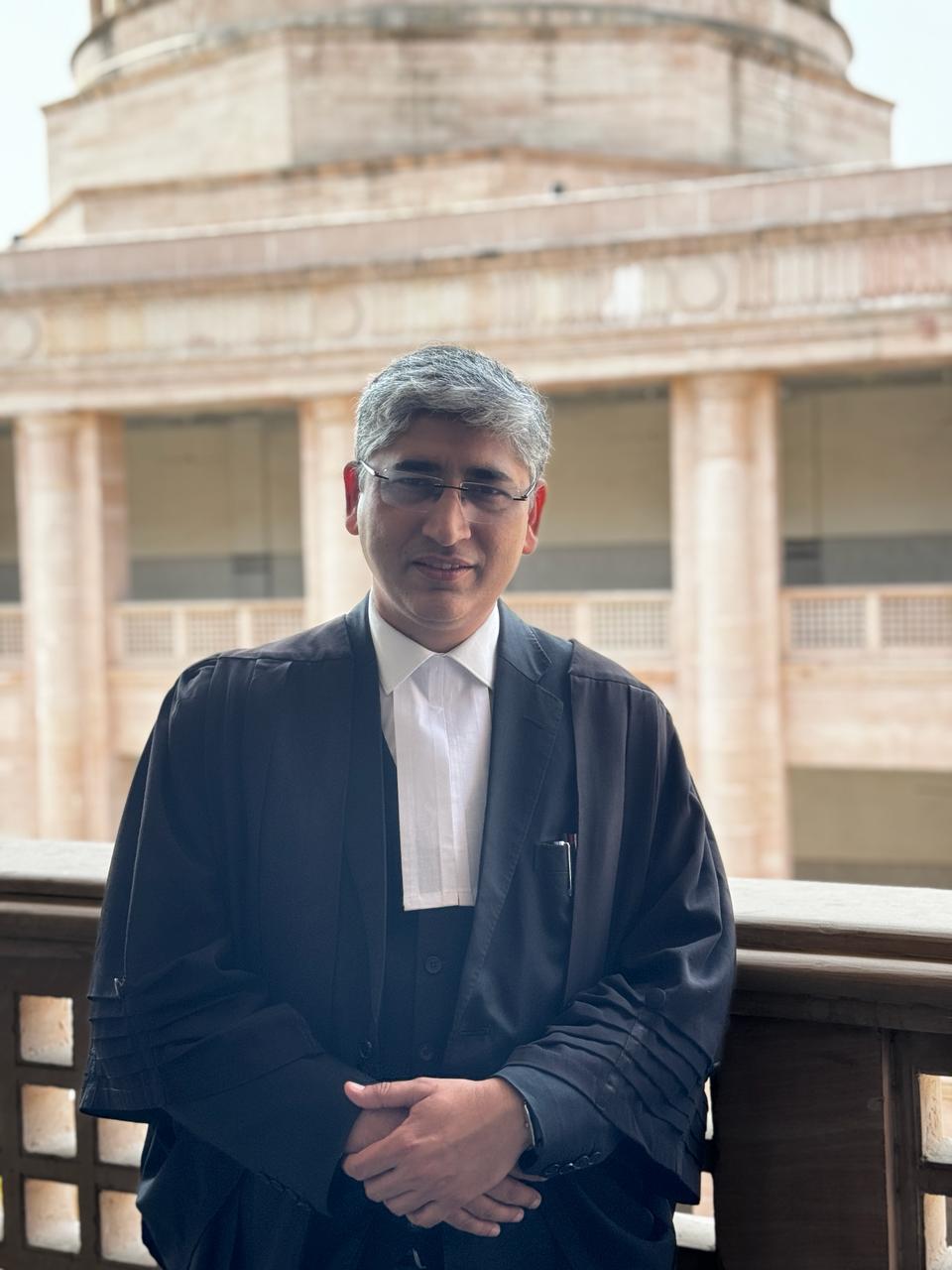
Tag: Supreme Court of India

  • “Becoming an AOR transformed my attitude towards law, underscoring the newfound confidence and passion that drove her career trajectory” – Pallavi Pratap, Advocate-on-Record, at the Supreme Court of India

    “Becoming an AOR transformed my attitude towards law, underscoring the newfound confidence and passion that drove her career trajectory” – Pallavi Pratap, Advocate-on-Record, at the Supreme Court of India

    This interview has been published by Namrata Singh and The SuperLawyer Team

    Hello and welcome everyone to Super Lawyer. Today, we have with us, Ms.Pallavi Pratap, who has been named BW Top 40 Under 40 Lawyer She is a legal influencer. She is a women’s rights activist, health enthusiast, and managing partner of Pratap and company. She is a legacy in herself.

    Ma’am, our first question would be to understand how you enter the legal field. And what made you pursue this path? Then how did you come up with your Pratap and company and make it such a big name in this legal background? What were the challenges? Would you like to share it with us?

    The challenges I think were stupendous, but, how it started, I am an accidental lawyer. It was not that it was something that was planned as a matter of fact. I remember that when people would talk about being a lawyer, at least in my generation. That was for people who had done nothing in their life. So because you’ve not achieved anything. So you become a lawyer. That is how, you know, a lawyer was perceived then. So my law happened because after graduation, I was preparing for UPSC.

    And so I did my law, one year, I think I did then.  Then, because I was not able to crack UPSC, my parents thought that you know, I should go abroad and maybe do an MBA, and back then MBA was like how it is right now, LLB. So everybody was doing MBA, so I went to Australia, and I did my MBA there. Then I did my research in France. I came back and then I started to work in a small investment banking company and, that was going okay. It was all right. By the time I think I was married also. So I had two years of law left. So I had to finish off my law and then pursue my investment banking career.

     It was long, and it was difficult at that moment because I think the dot com bubble had just happened. Subprime mortgages that entire 2008, and 2009 time when the economy was not doing very well. We all had challenges then, especially since. I had done my MBA and I was looking at the corporate side to work in. Then interestingly, what happened was since I was married, my husband and I thought that, it had been some years and that we should go the family way.  And so the job I was doing was not so easy to continue, because, with the kind of pressure that we had on the corporate side, it was not possible.

    So, my father suggested that then, why don’t you pursue law? Because it will be easier. You won’t have to put in so many hours and just take it slowly. So I just started working with an AOR.  And, I remember it was around 2011, 12, something like that, when I started.  Went on for four, or five years, but I was never serious about pursuing law as a career.

    I thought that I would go back to the private sector. Because at that time when I shifted, I was already associate vice president. I was associate vice president at the age of 28. So the next in line was VP, which is what I was due for. And then I would have been the CEO of the company that I was in.

    At one point, I had aspirations of becoming a CEO by the age of 32 or 33. However, life has a way of throwing unexpected challenges our way. At that time, my husband and I were facing difficulties conceiving naturally, leading us to explore IVF options, which involved hormone injections and a break from my career.

    During this hiatus, I began studying law, initially considering it a temporary measure until circumstances improved and I could return to my original career path. Life, however, had other plans. In 2015 or 2016, my husband and I decided to separate.

    Around the same time, I found employment in an Advocate-On-Record’s office. It was a demanding role where I was the sole junior, responsible for a wide range of tasks—from clerical duties to drafting and translation. My workdays were long, often stretching from 9 AM to 8:30 or 9 PM, with additional work at home, particularly for translations.

    Despite the challenges, this experience proved invaluable. Working on translations, especially for criminal cases, provided me with a deep understanding of the legal system. I vividly recall translating extensive criminal appeal files, including everything from FIRs to witness statements, which significantly enhanced my knowledge of the Criminal Procedure Code (CRPC). Despite initially viewing translation as a mundane task, it ultimately became a vital learning opportunity, enriching my understanding of legal proceedings.

    So, I found myself in a unique position where I witnessed the entire trial unfolding before me. It’s interesting, as you mentioned, how the younger generation seems less inclined towards traditional legal tasks. Many shy away from such responsibilities, deeming them beneath a lawyer’s stature. I never viewed any task as beneath me. Perhaps it was my genuine interest or simply a lack of concern about status. However, I’ve encountered individuals who readily embrace tasks like using Google Translate, yet hesitate when faced with last-minute requests for simple tasks.

    Everyone has their preferences, and I don’t expect anyone to work for free. However, these experiences taught me invaluable lessons, especially in service matters. Translating documents provided insights into the intricacies of drafting annual confidential reports, sending notices, and crafting representations. While building something akin to SAM or CAM was never my ambition, I recognized my limitations and aimed to excel within them.

    I aspired to establish a reputable litigation firm, one that keeps me consistently engaged with meaningful cases. Initially, the thought of becoming a counsel didn’t even cross my mind. Yet, over time, everything seemed to naturally fall into place. Through gradual progression, I honed my skills in argumentation and management, embracing unforeseen opportunities as they arose.

    Earlier today, I had a conversation at NCLAT with a fellow law firm owner, where we delved into the intricate challenges of managing multiple aspects simultaneously. Balancing client needs, court proceedings, and financial matters poses a significant challenge for all of us in the legal profession.

    My background in MBA has played a pivotal role in navigating these complexities. From my early days in India, I’ve been deeply involved with startups, often spearheading new verticals or assisting nascent companies. This experience instilled in me a knack for cost-cutting and efficient work practices.

    Despite the perception that our workload necessitates a large team, we operate with a lean staff of three to four individuals. Remarkably, my colleagues typically wrap up by early evening without the need to carry work home. Our ability to manage substantial workloads with minimal resources is a testament to our strategic approach.

    This proficiency in streamlining operations and maximizing productivity stems from my understanding of running a small company or startup. While the journey has been challenging, it has also been immensely rewarding. As I reflect on our progress, I’m intrigued by what the future holds.

    Could you elaborate on how your MBA background aided you in navigating the challenges of establishing and managing your law firm, especially during the initial stages when resources were limited? Many lawyers don’t possess an MBA, so it would be insightful to understand how this unique combination of qualifications has influenced your approach to addressing the complexities of running a law practice efficiently.

    Let me share a personal anecdote that shaped my perspective early in life. During my MBA days in Australia, despite having financial support from my father, I chose to work part-time. In Melbourne, there’s a bustling spot called Victoria Market where I found myself selling a product called a spilling remover—a simple solution for common clothing woes like pilling or pet hair. Standing on a podium, I’d invite passersby to experience its effectiveness, selling it for $25 apiece. Essentially, it was just sandpaper in a plastic box, but to foreigners, it was a valuable solution, earning me commissions and teaching me the art of salesmanship.

    My MBA background, particularly in finance, proved invaluable during this time. It equipped me with the skills to calculate ROIs, analyze top and bottom lines, and assess a company’s sustainability. These skills became especially relevant when I ventured into investment banking, where projections and financial viability are paramount in securing investments.

    With my prior experience in startups, I quickly identified areas for improvement in my work. However, having faced challenges before, I knew how to navigate them efficiently. I attribute much of my success to the incredible support system I had. Individuals like Kunal, my office manager, and Anshini bhaiya, my clerk, played pivotal roles, often handling tasks beyond their responsibilities, which allowed us to achieve more with fewer resources. Their dedication and support were instrumental in overcoming obstacles and propelling our endeavors forward.

    The backbone of any endeavor lies in its team and resources. Since the inception of our journey, our staff has been integral to our success. Through thick and thin, from the earliest filings to the present day, they have remained steadfastly by my side. While we may engage in spirited debates and disagreements, our loyalty and commitment to one another have never wavered. I am confident that this bond will endure for as long as we continue on this path.

    Reflecting on my MBA experience, I came to realize the true essence of networking. Contrary to popular belief, simply meeting people at conferences or social events does not guarantee professional opportunities. People seldom recall such encounters, let alone entrust you with work. Recognizing this, I adopted a sales-oriented approach. Rather than passively networking, I embraced the role of a salesperson, focusing on promoting my skills and capabilities.

    In the world of sales, one must shed inhibitions and relentlessly advocate for oneself. I vividly recall my time in Australia, where I worked for a charity, going door-to-door soliciting donations. It was a challenging task, compounded by cultural differences and occasional hostility. Despite the hurdles, I persevered, driven by a sense of purpose and determination to succeed.

    I recall my experience working in a call center, specifically in Australia, where my role involved selling gas connections and DTH connections similar to Tata Sky. This exposure to sales was invaluable, as it instilled in me a sense of confidence and fearlessness when approaching potential clients. I never hesitated to assertively offer my services, knowing that showcasing my expertise was essential in securing work opportunities.

    Even during challenging times, like the onset of COVID-19, the emergence of social media platforms provided a new avenue for me to showcase my skills. Despite facing skepticism and criticism from some quarters, I remained undeterred. I understood that to thrive in a competitive environment without the backing of a “Godfather,” I needed to directly engage with clients and demonstrate the value I could bring to their projects.

    Over the past decade, I have accumulated significant experience and expertise. This journey has allowed me to reach a point where I can afford to take a step back and explore other interests while still maintaining a strong professional foundation.

    But those 10 – 11 years. When I was putting in the effort, there was nothing else that I ever thought of.  Nothing else except for work.

    when did you decide to become an AOR?

    As I mentioned earlier, I was struggling with my legal career at one point. I was employed in an AOR’s (Advocate-On-Record) office, and around 2010 or 2011, when I enrolled for a five-year program, I was disinterested in learning. I had convinced myself that returning to the private sector was my goal and that the legal work I was doing felt beneath me.

    However, my perspective shifted when I began working in the AOR’s office in December 2015. Almost impulsively, I decided to fill out the AOR examination form. By May 2016, with just six months of experience in the AOR’s office and 15 days of preparation, I attempted the AOR examination and passed it on my first try.

    Some may argue that the paper that year was easier, attributing my success to luck. Yet, passing the AOR exam gave me a newfound confidence. I realized that achieving such a feat, especially in my first attempt, meant I possessed a deeper understanding of the law than I had previously acknowledged. Many struggle to pass this examination even after multiple attempts, but I succeeded on my first try, affirming my competence in the legal field.

    Becoming an AOR transformed my attitude towards law. Before this achievement, I had contemplated returning to the private sector, disliking my work in law. However, my success in the AOR exam propelled me into taking my legal career more seriously. I no longer viewed legal practice as beneath me; instead, I embraced it wholeheartedly.

    This experience taught me the importance of self-belief and determination. It was a turning point in my career, marking the moment when I transitioned from a disillusioned legal professional to a committed and passionate advocate.

    Given your passion for your company, how do you envision your plans for the next five to seven years, particularly considering the increased responsibility that comes with holding an AOR position? How do you intend to align this responsibility with your commitment to societal causes over the next three to five years?

    To be honest, there isn’t as much involvement in societal causes for me anymore. It used to be more prevalent when I was handling those types of cases. Unfortunately, it seems now people view me more as a criminal lawyer, and I’m fine with that too. If such cases come my way, I won’t deny them. However, my passion still lies in issues related to women. It’s something that has always been close to my heart, stemming from my own experiences, and I believe it will continue to be so.

    Looking ahead, my focus for the next three to five years is to engage more in courtroom arguments. It’s something I’ve grown to enjoy, albeit it took me some time to overcome certain inhibitions. Learning the art of effective argumentation—knowing when to speak, when to stay silent, and how to present without offending the judge—is an ongoing process for me. I’m still refining these skills, recognizing that I have much more to learn.

    On the business front, I’m content with where our firm stands currently. While I naturally aspire to increase our turnover and the number of cases we handle, I’m grateful that growth seems to be happening organically. Our caseload is steadily increasing, almost on its own accord. This year, one of my resolutions is to travel extensively, aiming to visit at least one high court every month.

    In January, I traveled to Bangalore, and this weekend, I’ll be heading to Indore. My purpose isn’t solely work-related; I’m eager to connect with more people, understand the challenges they face, and perhaps offer solutions where I can. Over the past year, I’ve noticed an intensification of challenges, particularly with the heightened competition in our field. It’s become overwhelming for many of us, prompting me to strategize on how best to navigate these obstacles.

    Moreover, at 41, I find myself contemplating life goals and priorities. Having dedicated over two decades to work since 2006, I’m now at a juncture where I seek to carve out time for personal pursuits that have taken a backseat for far too long. I aim to pave the way for the next decade to embrace endeavors beyond the confines of immediate obligations.

    Undoubtedly, there are struggles. Despite societal shifts, challenges persist, especially for individuals like us. As a woman in the legal profession, I continue to encounter hurdles in what is still largely a male-dominated arena. The landscape may have evolved, but the inherent obstacles remain, requiring perseverance and resilience to navigate effectively.

    How do you approach supporting individuals, particularly women, who are encountering challenges in today’s rapidly evolving landscape, both in the physical and online realms? What strategies do you envision employing to navigate these dual challenges effectively?

    You know, it’s been overwhelming. My Instagram feed is flooded with hateful messages. If I were to delve into each one of them, it would undoubtedly take a toll on my mental health. Not that it isn’t already suffering. But being on social media with an open profile invites all sorts of comments, and learning to brush them off is a skill I’m still struggling to master.

    Unfortunately, it’s not just confined to social media. Even within the corridors of the Supreme Court, women are often objectified and subjected to gossip. For someone like me, with a past that seems to precede me, it feels like my right to exist is constantly under scrutiny.

    No matter how many times people express admiration or claim to find inspiration in my social media presence, it’s that one negative comment that sticks, lingering and gnawing at my self-esteem. It’s a daily battle to overcome these obstacles, and for someone who has endured their fair share of hardships, it’s particularly draining.

    I’m sure many other women can relate to this struggle. Moreover, there’s this tendency to label women who speak out as playing the victim card. Frankly, it’s disheartening. That’s why I’ve become increasingly selective about engaging online. This interview marks a significant departure for me, as I’ve largely refrained from public appearances due to the incessant accusations of victimhood.

    I want to share with you the unfiltered truth about my life experiences. It’s not about playing a victim card – that won’t put food on my table, pay my bills, or sustain my livelihood. The notion of a victim card is dismissive; it doesn’t address the real struggles we face. Some may perceive my openness about challenges as playing a victim, but that’s far from the truth. I’m simply acknowledging the hurdles I’ve encountered.

    It’s incredibly tough for people to grasp your reality. Instead of understanding, they’re quick to judge, criticize, and spread rumours. They’ll label you as overly emotional, assertive, or worse, without considering the battles you’ve fought and the strength it took to overcome them. It’s disheartening when your personal struggles are overshadowed by baseless gossip and scrutiny.

    The most painful part is the lack of acknowledgement of your journey. Nobody talks about the countless hours spent preparing for battles in court, the mental health challenges conquered, or the physical changes and hormonal shifts that women face as they age. Society tends to brush these issues aside, reducing individuals to mere stereotypes, ripe for gossip and condemnation.

    As a 41-year-old woman, I’m acutely aware of the changes my body undergoes and the societal pressures that accompany them. Yet, these struggles are often dismissed or exploited for gossip fodder. It’s a reminder that despite our accomplishments and resilience, society’s perception of us remains narrow and judgmental.

    Many women in the legal profession, particularly those in the Supreme Court, encounter similar challenges. However, I must acknowledge a positive shift in recent times. The judges have become notably supportive and accommodating. It’s truly remarkable. They allow us to present our arguments and make our points heard, even in cases where they ultimately dismiss them. Regardless of the outcome, they ensure that we have a platform to voice our perspectives.

    This newfound environment is instrumental in bolstering our confidence. We no longer feel scrutinized or judged based on our gender or professional standing. Instead, the emphasis is on fostering an inclusive space where everyone, regardless of gender, feels empowered to express themselves. Even if we falter or struggle to articulate our arguments convincingly, the judges still provide us with the chance to speak up and be heard.

    For women practicing law, this shift has certainly made our journey smoother. We now have a supportive framework that encourages us to participate actively in legal proceedings without fear of bias or discrimination.

    How can individuals facing similar situations find support? It’s essential to reach out and seek solace, even if it’s challenging. In my experience, friends outside India often find comfort in supportive communities that share their grief. This support, although seemingly small, can make a significant difference, especially for those from different generations.

    This generation possesses a remarkable clarity of vision that I find truly inspiring. I often marvel at how certain they are about their aspirations; a quality I wish I had when I was their age. In my workplace, I am surrounded by exceptionally talented colleagues, particularly women, who exude confidence and decisiveness in their pursuits. Their directness and self-assurance are qualities I deeply admire, especially as I continue to grapple with moments of self-doubt.

    I have always had a special admiration for women who excel in their fields. I recall my own approach to work—when a task was assigned to me, it became my responsibility, my challenge to conquer. This same work ethic is evident in the remarkable women I work alongside today. Take, for example, one of my juniors who is currently navigating a challenging phase in her career. Despite the obstacles she faces, I am immensely proud of her resilience and determination. Witnessing her growth and perseverance fills me with pride, and I am confident that she is destined for great success.

    You’re deeply committed to mentoring, which is commendable. Have you extended this mentorship to your siblings, given that you’ve essentially established a legal dynasty within your family? Your journey must have been inspiring for them. Could you share more about how you’ve influenced and motivated your sister and brother in their legal pursuits?

    My brother and sister, if you were to ask them independently, they would both attest that their successes were entirely self-made. They’ve each carved out their own paths without needing much guidance from me. It’s remarkable how they’ve managed to flourish independently. In our household, everyone is quite aware of each other’s endeavors.

    However, collaborating with individuals from diverse backgrounds and mindsets has been a transformative experience for me. Working with these incredible women has been an eye-opener. Take Muskan, for example, she’s sitting right here. She has taught me invaluable lessons. I merely have to express what needs to be done, and somehow, she accomplishes it effortlessly. Her efficiency has significantly lightened my workload, allowing me to breathe more easily since she joined the team.

    Then there’s Kinjal. What sets her apart is her laid-back demeanor. She effortlessly integrates modern slang and vibes into her work. It’s truly refreshing to witness their relaxed approach. I’ve always envied their ability to stay cool under pressure. Even now, I find myself bogged down by stress. Yet, these young individuals produce impeccable work effortlessly. Their talent and composure never cease to amaze me. I wish I possessed their level-headedness and skill.

    Muskan, even though I had been practicing in NCLAT for a long time when Muskan came, she told me so many things about NCLAT procedures that I had no idea about. And similarly, when Kinjal came. She taught me so many things about lower court proceedings that I had no idea. So it’s just that you learn so many things from them.

    Now, shifting gears, could you share how you unwind and manage stress? Specifically, what hobbies or activities do you engage in for your mental well-being? Additionally, given your dedication to fitness, could you elaborate on your workout routine and its impact on your personal and professional growth?

    Let me share a bit about my journey. When my husband and I were trying to conceive, I underwent hormone injections, and I was around 80 kgs at that time—I mean, significantly overweight. This led to a myriad of issues, including depression, body image concerns, and a lack of confidence. It was a challenging period.

    However, I gradually discovered the power of exercise. The endorphins released during workouts made me feel happier and more content with myself. It became a habit—one that I’ve maintained to this day. Even if I take a short break from the gym, I find myself back there on the fourth day, even if just for some cardio. While I haven’t transformed into a thin person, due to my genetic makeup, exercise has become a cornerstone of my routine.

    Starting my day with a workout sets a positive tone that lasts until at least four o’clock. Achieving small victories in the gym, like lifting my body weight during a deadlift, instills a sense of pride and confidence that carries over into other aspects of life.

    I’ve been open about having a therapist, and I speak with them once a week. It’s essential to address mental health issues, whether it’s depression or anxiety, which are prevalent among lawyers. Seeking help is crucial; you can only do so much on your own. Since the onset of COVID, I’ve maintained this routine, seeing my therapist regularly.

    As for my reading habit, it’s part of my daily schedule. By 8 o’clock, after the kids are occupied, I dive into work, reviewing files and preparing for the next day. By 9 o’clock, I wrap up, and that’s when I look forward to the highlight of my day—relaxing in bed with a book. It’s a simple pleasure that keeps me grounded.

    Previously, before I incorporated reading into my routine, I’d anticipate watching a show like Frasier or any comedy series at 9 o’clock. Having something to look forward to at the end of the day helped me navigate through it. That’s been my survival strategy.

    How do you tackle the challenge of motivating first-generation lawyers and aspiring legal professionals to take their roles seriously and enhance their skills? How can they overcome obstacles such as lack of mentorship and difficulty in establishing connections within the legal community? What advice would you offer to these newcomers to the profession?

    Look, I’ll be the first to admit that I sometimes struggle to keep up with emails and messages. Frankly, we receive an overwhelming volume of them every single day. Ideally, I’d love to have a larger team to ensure every email gets a prompt response. However, the reality is, we operate with limited resources.

    As much as I’d love to have a team of interns, our resources simply don’t stretch that far. It’s not about lacking the space; it’s about ensuring that if we do take on interns, we can provide them with a valuable learning experience. I wouldn’t want to bring on interns only to find we can’t offer them adequate stipends or meaningful guidance.

    Internships here are rare occurrences, happening perhaps once every couple of months. The main challenge isn’t space but our court commitments. Until 4 o’clock, we’re typically tied up in court proceedings, and even if interns were to join us, the complex nature of legal proceedings means they wouldn’t gain much insight. Understanding court proceedings takes years, not months.

    While it’s possible to observe court sessions virtually, it doesn’t necessarily translate to meaningful learning. Instead, I believe interns would benefit more from gaining hands-on experience in lower courts where they can actively engage and learn the ropes of legal practice.

    Maybe you can go to the High Court and see how the original side works.  But coming directly to the Supreme Court, I think the challenges are huge and very difficult.  You can maybe learn bail applications and how they are being argued, but I still think that there’s just so much to learn that in five years you can’t learn all of that.

    The other thing I think is that, see, you get to know whether you’re good at it or not. You know, you are always true to yourself. So the moment you know that you’re good at it, and you’re able to generate work, and you think you will be able to do it, you will be able to put in the hours, do it. Do litigation.

    But if you think that you’re not cut out for it, don’t waste your time trying to prove something that, you know, is not possible.  If I were to be a corporate lawyer, maybe that’s not something that I would have been able to do. I enjoyed litigation and that’s why I’ve been able to do it.

    And I think the last thing that I would want to say to the interns. I honestly feel that internship is not the most important thing. Believe me, an internship is no way that one would want anything to happen. Not true. It’s not the internship. But it is primarily what you make of yourself after law school.

    You are studying in law school, but once you are out of law school, how willing are you to work in court and learn?  You know, there have been kids who’ve come to me and they’ve said that we want work-life balance. I said, that’s fine. My office gives you a work-life balance because it’s quarter to seven.

    My office is empty. And this is a Thursday. Why? Because there is always a work-life balance in my office. Nobody has to come into the office in the morning. Everybody comes to the court at 10 o’clock and then by 6.30, everybody’s out. So if then you are coming and telling me that you can’t even put in eight hours or nine hours of work, then I think, then you are not cut out for this profession.

    Because the office is closed, now my staff is gone, I have put in 8 hours already, and now I have to put in 6 more hours, be it in the morning 2 hours and 4 hours in the night, to figure out how to do the billing, to figure out, briefing for tomorrow’s matters, like I have a conference at 8.30, now nobody else is going to do it, I will only have to do it, so you have to be prepared that you can work 14 hours a day.

    Get in touch with Pallavi Pratap–

  • “Adapt to change, embrace continuous learning, and maintain a strong ethical foundation—the pillars for a successful legal career.” – Siddharth Krishna Dwivedi, Advocate on Record at the Supreme Court of India

    “Adapt to change, embrace continuous learning, and maintain a strong ethical foundation—the pillars for a successful legal career.” – Siddharth Krishna Dwivedi, Advocate on Record at the Supreme Court of India

    This interview has been published by Namrata Singh and The SuperLawyer Team

    Could you share with us the pivotal moment or series of events that led you to  pursue a career in law? Additionally, how has the support of your family  influenced your journey, and what challenges did you encounter during your  formative years in the legal profession? 

    I got acquainted with law quite early in my life. My father laid down the  foundation of law in our family. During my school days, my father picked me up after school and I used to spend time at his office – Central Agency, Supreme  Court of India before heading back home. So, since class IV, I have been  visiting the Supreme Court. After completing my school education, I pursued  law for graduation and the interest developed. I kept pestering my father about  the legal propositions and understanding of judgments. His library became my favourite place to put what I was taught to test. The like came but love happened later. I joined the chambers of Shri Uday U. Lalit (later elevated as  Judge of Hon’ble Supreme Court of India and appointed as Chief Justice of  India) firstly as an intern and then as a junior, I saw him mastering the art of  reading thick paper-books, applying the legal principles and arguing the matter  the next day with utmost precision. Over the years I fell in love with the  profession. 

    My family, especially my father, kept pushing me to venture out of his office and  explore the diversity which the profession carries. So I developed the habit of  sitting in court and observing seniors argue the matters, preparing notes, noting down judgments advanced and later waiting to read that judgment whenever  pronounced. I recollect that sometime in 2012-13 I was in Court No. 2  (Supreme Court) and a trademark suit was being heard at its appellate stage  about a matrimonial site saying the other one infringed its right. As the  question involved online infringement the Ld. A Senior Advocate assisting the court was asked a question as to how the claim is maintainable. Though I was a  mere spectator it clicked me to online search on my mobile phone and see what happened and there it was. I explained it to his associate, the senior was  impressed immediately and handed the mobile phone to Hon’ble Judges who noticed the issue and granted relief. These experiences keep pushing you and  help you think on your feet. 

    This profession is a hard task master in many ways. One has to keep learning  and being updated about the judicial pronouncements while simultaneously  managing clientele and keeping the ethics above all. I find the legal profession  to be enthralling and at the same time keeping you resilient.  

    Your reported judgments span various legal domains. Could you share a  particularly memorable case and the legal principles it involved?

    There are a few, but I guess I have to refer to Awadhesh Kumar v. State of Uttar  Pradesh reported as (2019) 10 SCC 323 wherein the High Court had erred in  applying Exception 4 to Section 300 IPC and set aside the judgment passed by  Trial court which had found the accused guilty under 302 IPC. The accused  persons tried to kill the mother of complainant Awadhesh Kumar (whom I was  representing) and a case was initially registered under Sections 307, 504, 506/34  IPC, however, subsequently on the death of Awadhesh’s mother, the case was  converted into one under Section 302 IPC. The Trial court had found it to be fit  case for 302 IPC and had passed life sentences against one of them and acquitted  the other three. The convicted accused moved the High Court which modified  the conviction to Section 304 Part I IPC sentencing him to 10 years rigorous  imprisonment. I filed a Special Leave Petition on behalf of the complainant, who  was not a party before the Trial court or the High Court. My submission was that the High Court committed a grave error in modifying the conviction from that of  Section 302 IPC to that of under Section 304 Part I IPC as exception 4 to Section  300 IPC would be attracted only when there is a fight or quarrel which requires  mutual provocation and blows by both sides in which the offender does not take  undue advantage. Hon’ble Supreme court allowed my appeal and set aside the  judgment passed by High Court and modified the conviction from Section 304  Part I IPC to Section 302 IPC and the accused were directed to surrender before  the Court concerned to undergo life sentence as was imposed by the trial court.

    Mr. Awadhesh had tears in his eyes when the judgment was passed as the  accused almost got away with his crime but was finally brought to justice. 

    As someone who successfully cleared the Advocate-on-Record Examination,  could you shed some light on the preparation process? What strategies or  resources did you find most helpful in preparing for such a rigorous exam? 

    This I get to answer a lot. The daily court grinding works as a manure and itself  becomes part of preparation. If you are regular to the Supreme Court and  involve yourself in all the process, right from researching to preparation to  drafting to filing, listing and arguing the matter, you are already preparing  yourself for the examination. 

    I guess the difficult part isn’t the examination itself but the transition from a  professional to a student all in the same day as you have to do everything  above mentioned during work hours and study like a student during the rest of  the day.  

    To the advocates taking this exam, I would suggest taking your time but read  thoroughly the Supreme Court Rules, Leading cases, Bar council rules and  practice writing as by the time you are preparing for the exam this habit starts  fading away. 

    Beyond your legal career, you’ve been involved in guest lectures and events  related to broader societal issues. How do you see your role as a legal  professional intersecting with your broader interests and social  responsibilities? 

    As a person practicing law, you automatically become an activist fighting for  a cause, a critic of the government, a benefactor of humankind and with it comes  responsibilities. I had the privilege of being invited on women’s day to speak  on ‘Women Laws in India’ at an event hosted by Vayu Sanginis (Indian Air Force). Amongst the guest lectures, I recollect one at Rashtriya Raksha  University, Gandhinagar, Gujarat which was an enriching experience speaking  on the topic of Legal Dimensions of Serial Killers. 

    During the legal rigmarole, we come across certain individuals who are in need  of justice but are economically weak and by default I try helping at least a few  by taking up cases pro bono. So, whenever I am approached to educate or help someone needy, I try to serve  the society with my limited knowledge. 

    See we are called ‘officers of the court’ and our foremost duty is towards the  court and so the demeanour of a lawyer outside court is more important than  his obvious humility towards court. It is our collective duty to allocate time  while being committed to the cause. 

    How does the role of an Advocate-on-Record differ from other legal positions,  and what unique responsibilities does it entail? Also what are some common  misconceptions about the Advocate-on-Record role, and how would you  clarify or debunk them? 

    The Supreme Court Rules provide for an Advocate-on-Record to plead and file an appearance or act for a party in the Supreme Court of India. The rules  further say that no advocate other than an advocate-on-record can appear  and/or plead before the Supreme Court unless instructed by an Advocate-on Record. So yes, as you become the natural pleader before the Supreme Court, it  is a big responsibility. 

    Misconceptions are quite a few and I would address one of the most common of them: that only Delhi NCR based lawyers can appear in the AOR exam, this is so far from the truth. Any advocate enrolled with the bar council of any state and  having completed four years at the bar and having undergone training from an  Advocate-on-Record of at least 10 years standing is eligible to appear in the  examination. Yes, having an office within 16 km radius of the Supreme Court and appointing a registered clerk comes later but if one is keen on taking up  the exam and practicing before the Supreme Court, this is a given. 

    Outside of your legal profession, what hobbies or personal interests do you  pursue to unwind yourself? 

    I am glad you asked this, as most people think lawyers are hermits. Someone said that it is very necessary to have vices. The legal profession is daunting  and requires passionate commitment but unwinding becomes a necessity to give tranquility to the otherwise pandemonium-infused mind. I love to travel,  watch movies and I have an ear for music. During my college years I used to  do weightlifting for fun and then couldn’t carry on but I recently developed a  penchant for weightlifting. I feel it provides peace and relaxes the brain. My  wife and I often play badminton in the evenings. 

    Given your experience, what advice would you give to young lawyers aspiring  to practice at the Supreme Court level or aiming to become an Advocate-on Record? 

    Equip yourself with the knowledge, experience and procedure as much as you  can. Young lawyers often think about practicing directly before the Supreme Court,  me included, nothing wrong in it. But from my experience I can say that the  command on law required at the Supreme Court is at a much higher pedestal. It  would not be wrong to say that there is no scope for error. So, my advice to  upcoming advocates would be what I actually did. That is to work with an  advocate who appears regularly before the Supreme Court for some time. Later  find a chamber which allows you to hone up your skills. And finally  associate yourself with a senior who lets you argue to again develop that art  too. I am grateful to my father and Shri Santosh Kumar Tripathi (Standing  Counsel, Delhi High Court) who helped me develop that art.

    As a law officer for the Government of Uttar Pradesh, could you shed some  light on the specific duties and responsibilities that come with your role, and  how these duties contribute to the effective functioning of the government and  the administration of justice? 

    As I have said earlier, assisting the court is our primary duty and being a lawyer, you become a critic of the policies of the government. Being a law officer, one has  to walk the sharp sword of fulfilling both the responsibilities. A lawyer  appearing for a State or any institution bears the load of conveying the cause  behind the action brought in question by the litigant and in some cases bringing  justice where the State acts as a bridge to the society. 

    The balance of power is needed for effective functioning of the government and there comes the administration of justice, we lawyers in our duty as law officers for the government serve as the escapement ensuring that the wheels  never collapse and there is a constant transmission between the government and the justice system. 

    You’ve experienced both independent practice and working within legal  teams. What differences do you notice between the two, and do you find  yourself missing aspects of teamwork when working independently, or vice  versa? How do these experiences shape your approach to collaboration and  autonomy in your legal practice? 

    Litigation itself involves at least three heads, the applicant, the defendant and  the judge. We three work together to bring justice to the aggrieved. Now each  of the three heads have their own way of working and have a team which helps  them fulfill their tasks. So independent practice basically means where you are  heading the show and working within a legal team may or not necessarily mean  spearheading. No doubt working with a legal team supplements your approach  towards a case but if you are not the decision maker sometimes you just wonder  whether there could have been a different outcome. Working independently, you have that liberty albeit risk to proceed forward with your school of  thought.

    Get in touch with Siddharth Krishna Dwivedi-

  • “By combining meticulous preparation and a strategic approach to litigation, we can effectively represent our clients’ interests and achieve favorable outcomes in high-value litigation cases.” – Sunav Rastogi, Advocate-on-Record at the Supreme Court of India.

    “By combining meticulous preparation and a strategic approach to litigation, we can effectively represent our clients’ interests and achieve favorable outcomes in high-value litigation cases.” – Sunav Rastogi, Advocate-on-Record at the Supreme Court of India.

    This interview has been published by Namrata Singh and The SuperLawyer Team

    Could you please introduce yourself to our readers and share your journey from growing up in a family of lawyers to becoming an Advocate-On-Record at the Supreme Court of India? Additionally, given your family background, did you ever contemplate pursuing a career outside the legal profession, or was the path of becoming a lawyer a natural and predetermined choice for you?

    My name is Sunav Rastogi, and I am an Advocate-On-Record at the Supreme Court of India. Presently, I am a practising Advocate based in New Delhi. My journey into the legal profession was deeply influenced by my family background, as I grew up in a family of Advocates. From a young age, I was surrounded by legal discussions and immersed in the world of law.

    As the allure of the law was so strong, I, at an early age, have decided to follow in the footsteps of my family members. My academic pursuits led me to pursue a Master of Laws (LLM) degree from Nottingham University, which further solidified my passion for the legal profession. 

    After completing my education, I embarked on my journey as an Advocate, starting from the District Court and gradually progressing to the High Court and eventually becoming an Advocate-On-Record at the Supreme Court of India. It has been a challenging yet rewarding journey, filled with opportunities to advocate for justice and uphold the rule of law.

    Overall, while the path of becoming an Advocate may have been somewhat predetermined by my family background, it was ultimately my passion for justice and legal advocacy that drove me to pursue this career with dedication and determination.

    You have extensive experience in handling high-value litigation cases. Could you elaborate on a specific strategy or approach you’ve used that yielded particularly favorable outcomes for your clients in litigation? What difference can we see in banking cases compared to other cases?

    In handling high-value litigation cases, a key strategy that has often yielded favorable outcomes for my clients is thorough preparation combined with a deep understanding of laws and regulations.

    This means early case assessment and strategic planning. This involves conducting a comprehensive analysis of the facts, legal issues, and potential risks associated with the case at the outset. By understanding the strengths and weaknesses of the case at an early stage, we can develop a tailored strategy to maximize our chances of success.

    Additionally, in banking litigation, it’s crucial to leverage specialized knowledge of banking laws and regulations. Banks operate within a highly regulated environment and legal disputes involving banks often entail complex financial transactions, regulatory compliance issues, and intricate contractual arrangements. Therefore, having a deep understanding of banking laws and regulations allows one to navigate the complexities effectively and present a compelling case on behalf of the clients.

    Furthermore, in banking cases, the stakes are often higher compared to other types of litigation. Financial institutions deal with substantial assets and liabilities, and the outcome of a legal dispute can have significant implications for their business operations, reputation, and financial standing. As a result, there is often a greater emphasis on resolving disputes efficiently and minimizing potential financial losses.

    To conclude I say by combining meticulous preparation and a strategic approach to litigation, we can effectively represent our clients’ interests and achieve favourable outcomes in high-value litigation cases.

    Your educational journey took you from Bangalore to Nottingham, shaping your understanding of both Indian and international legal systems. How has this dual perspective influenced your approach to legal practice, especially in cases with cross-border implications?

    My educational journey from Bangalore to Nottingham has indeed provided me with a unique perspective on both the Indian and international legal systems. This dual perspective has significantly influenced my approach to legal practice, particularly in cases with cross-border implications.

    Firstly, studying in both India and the UK has equipped me with a comprehensive understanding of different legal frameworks, procedures, and jurisprudence. This broad perspective allows me to draw upon diverse legal principles and methodologies when addressing complex legal issues, including those with cross-border elements. By leveraging insights from both the Indian and International legal systems, I can develop innovative strategies tailored to the specific needs of each case.

    Moreover, my educational background has instilled in me a deep appreciation for the importance of cultural sensitivity and global legal competence. It has also honed my skills in cross cultural communication and collaboration.  In cases with cross-border implications, cultural nuances and differences in legal traditions can play a significant role and my learning thus far has proven invaluable in legal practice, particularly in cases involving multinational clients, cross-border transactions, or disputes spanning multiple jurisdictions. By fostering open communication and understanding between parties from different cultural and legal backgrounds, I can facilitate smoother negotiations and achieve more favorable outcomes for my clients.

    As a seasoned professional, you’ve likely encountered situations where the law may not provide a clear solution. How do you approach such scenarios, and what guiding principles do you rely on to navigate legal gray areas effectively?

    Encountering situations where the law may not offer a clear-cut solution is indeed a common challenge in legal practice. In such scenarios, I rely on several guiding principles to navigate legal gray areas effectively:

    Firstly, thorough research and analysis are paramount. When faced with ambiguity in the law, I invest time and effort into researching relevant statutes, case law, legal commentary, and precedents. By conducting comprehensive research, I strive to identify any applicable legal principles or analogies that may shed light on the issue at hand.

    Secondly, consultation and collaboration with colleagues and legal experts can be invaluable. Consulting with colleagues and experts provides diverse perspectives and alternative strategies.

    Additionally, ethical integrity is paramount. In navigating legal gray areas, I remain committed to acting in the best interests of my clients while also ensuring compliance with ethical standards and legal obligations. Upholding the principles of fairness, justice, and honesty is essential in maintaining the integrity of the legal profession and fostering trust with clients.

    In order to sum up, I approach legal gray areas with diligence, collaboration, ethical integrity, and strategic foresight, upholding the highest standards of legal professionalism and advocacy.

    Your work involves representing clients in diverse legal forums, from District & Sessions Courts to the National Company Law Tribunal. How do you adapt your advocacy style to suit the nuances of each forum while maintaining consistency in legal arguments?

    Adapting advocacy style to suit the nuances of diverse legal forums, from District & Sessions Courts to the National Company Law Tribunal (NCLT), requires a keen understanding of the unique procedural rules, judicial dynamics, and audience expectations in each forum. While maintaining consistency in legal arguments across different forums is essential, it is equally crucial to tailor the delivery and presentation of those arguments to resonate effectively within each specific context.

    To achieve this balance, I employ several strategies such as:

    Comprehensive Understanding: Thorough understanding of the procedural rules, judicial preferences, and prevailing practices of each forum. This enables me to anticipate procedural requirements and adapt my advocacy style accordingly.

    Strategic Emphasis: While maintaining consistency in legal arguments, I strategically emphasize aspects of the case that are particularly relevant or compelling within the specific forum. This involves highlighting jurisdictional issues, procedural matters, or legal precedents that resonate strongly with the Tribunal or Court.

    Flexibility and Agility: Legal advocacy often requires flexibility and adaptability in response to unforeseen developments or judicial inquiries. Being prepared to adjust arguments in real-time while staying true to core legal principles.

    Professionalism and Respect: Regardless of the forum, I uphold professionalism and respect for the judiciary, opposing counsel, and all parties involved. This includes adhering to courtroom decorum, presenting arguments cogently and respectfully, and engaging in constructive dialogue with the court or tribunal.

    By integrating these strategies into my advocacy approach, I can effectively navigate the nuances of diverse legal forums while maintaining consistency in legal arguments. This adaptive approach maximizes the persuasive impact of my advocacy and enhances the likelihood of achieving favorable outcomes for my clients across various legal proceedings.

    As someone deeply entrenched in the legal profession, what advice would you give to aspiring lawyers looking to carve out a successful career in today’s competitive legal landscape?

    Aspiring lawyers face a competitive legal landscape today. Here are key tips for a successful career:

    Invest in Education: Prioritize continuous learning to stay updated on legal developments. 

    Develop Strong Legal Skills: Hone your legal research, writing, analytical, and advocacy skills early on. These are the backbone of legal practice and are crucial for providing effective representation to clients.

    Gain Practical Experience: Join law firms or independent chambers for hands-on learning and insights into legal practice.

    Build Professional Networks: Develop and Maintain relationships with seniors, mentors, and professionals within the legal community. Networking can open doors to opportunities, provide guidance and support, and facilitate professional growth and development.

    Embrace Technology and Innovation: Stay current with tech tools to enhance efficiency and client service.

    Maintain Professionalism and Integrity: Uphold ethics and integrity for long-term success.

    Be Resilient and Persistent: Embrace challenges as opportunities for growth and learning.

    Prioritize Work-Life Balance: Cultivate hobbies, interests and relationships for well-being and sustainability.

    Given your experience in drafting and vetting consortium documents for loan accounts involving substantial sums, what measures do you take to ensure legal compliance and mitigate potential risks for all parties involved?

    Drafting and vetting consortium documents for loan accounts involving substantial sums requires meticulous attention to detail, thorough legal analysis. To ensure legal compliance and mitigate potential risks for all parties involved, I implement the following measures:

    Comprehensive Legal Review: Conduct a thorough legal review of all consortium documents, analyzing terms, rights, obligations, and dispute resolution mechanisms to ensure compliance with laws and standards.

    Risk Assessment and Mitigation: Identify and mitigate potential legal risks such as compliance issues, contractual ambiguities, and credit risks through clear drafting and robust due diligence.

    Customized Legal Solutions: Tailor consortium documents to meet the specific needs and concerns of all parties involved, drafting clear provisions to minimize disputes.

    Clear Terms and Conditions: Ensure clarity in all terms related to loan disbursement, repayment, interest rates, collateral, and default provisions.

    Documentation Accuracy: Ensure accuracy and completeness in drafting all consortium documents. Any ambiguity or inconsistency in the documents could lead to disputes or legal challenges in the future.

    By adopting this proactive and systematic approach, I aim to ensure legal compliance and mitigate risks for all parties involved in consortium arrangements. 

    Away from the courtroom, what hobbies or personal interests do you pursue to maintain a healthy work-life balance, and do you find any parallels between these activities and your legal work in terms of skills or mindset?

    Maintaining a healthy work-life balance is crucial for well-being and productivity. I recharge by pursuing hobbies like traveling, which broadened my horizons and fosters cultural appreciation. Mindfulness and meditation help me cultivate mental clarity and resilience amid the demands of legal work, enhancing focus and decision-making. Engaging in physical activities like playing squash and cycling not only promotes physical health but also reduces stress and boosts energy levels. These hobbies enrich my life, fostering qualities essential for success in both my personal and professional endeavors.

    Your dissertation focused on the analysis of non-conventional trademarks. How do you see the evolving landscape of intellectual property law influencing commercial practices, especially in the digital age?

    The evolving landscape of intellectual property (IP) law, particularly in the realm of non-conventional trademarks, is profoundly shaping commercial practices, especially in the digital age. As technology advances and consumer behavior evolves, businesses are increasingly relying on innovative branding strategies and creative forms of intellectual property protection to differentiate themselves in the marketplace and safeguard their competitive advantage. Several key trends in IP law are influencing commercial practices in the digital age:

    Expansion of Non-Conventional Trademarks: Beyond traditional marks, businesses now use smell, color, sound, motion, and holograms for unique branding experiences.

    Digitalization and Online Branding: E-commerce and social media have transformed how brands engage consumers, with trademarks crucial for product distinction, brand loyalty, and fighting online infringement.

    Globalization and Cross-Border IP Protection: Global trade demands international IP protection, requiring businesses to navigate complex legal frameworks for safeguarding brands and innovations across borders.

    Emergence of New Technologies: AI and VR bring new IP challenges and opportunities, necessitating proactive legal strategies for ownership, licensing, and enforcement.

    Focus on Brand Experience and Consumer Engagement: In an increasingly competitive marketplace, businesses are prioritizing brand experience and consumer engagement to drive customer loyalty and retention. Trademarks are not just symbols of origin but also catalysts for immersive brand experiences that resonate with consumers across digital touchpoints.

    Adaptation to Evolving Legal Frameworks: Regulatory changes and court rulings are continually shaping the landscape of IP law, particularly in areas such as copyright, patent, and trademark law. Businesses must adapt to evolving legal frameworks, stay compliant with regulatory requirements, and anticipate future developments to protect their intellectual property rights effectively.

    Overall, businesses that embrace innovative IP strategies and adapt to evolving legal and technological landscapes will thrive in the dynamic digital marketplace.

    In your opinion, what are some of the key challenges facing the legal profession in India today, and how do you think they can be addressed?

    Certainly, the legal profession in India faces several challenges that require collaborative efforts from legal professionals, policymakers, regulators, and the judiciary. Some of the key challenges include:

    Access to Justice: Marginalized communities need better access to justice. This requires expanded legal aid programs, alternative dispute resolution methods, improved legal literacy, and technological innovations. 

    Quality of Legal Education and Training: Legal education needs improvement, including updated courses, better teaching methods, enhanced practical skills training, and continuous professional development for lawyers.

    Ethical Standards and Professional Conduct: Upholding high ethical standards is crucial. This involves strengthening disciplinary mechanisms, promoting transparency, and increasing awareness of ethical responsibilities among legal professionals.

    Legal Reforms and Policy Advocacy: Policymakers and regulators need to undertake legal reforms to address outdated laws, streamline legal procedures, and enhance access to justice. Legal professionals play a crucial role in advocating for legislative and policy changes that promote the rule of law, protect fundamental rights, and advance social justice

    Technology and Innovation: Embracing technology and innovation can enhance the efficiency and effectiveness of legal services delivery.

    Collaborative efforts from legal professionals, policymakers, regulators, the judiciary, civil society, and the private sector are essential to overcome these challenges and advance the rule of law for all.

    Get in touch with Sunav Rastogi-

  • “In the face of adversity, resilience and perseverance, become invaluable assets. Embrace setbacks as opportunities for growth and learning” – Dr Meenakshi Kalra, Advocate-on-Record at the Supreme Court of India

    “In the face of adversity, resilience and perseverance, become invaluable assets. Embrace setbacks as opportunities for growth and learning” – Dr Meenakshi Kalra, Advocate-on-Record at the Supreme Court of India

    This interview has been published by Namrata Singh and The SuperLawyer Team

    💡 Reflecting on your journey, what inspired you to choose law as a career, and could you share about your journey, challenges you faced during your academic and professional pursuits, as well as how you overcame them?

    Choosing law as a career was a natural progression for me, deeply ingrained in my family’s legacy. Growing up surrounded by legal discussions, court visits, and a lineage of esteemed lawyers and judges, I developed an innate passion for the field from a young age. Witnessing my parents’ dedication to justice and advocacy instilled in me a profound sense of purpose to follow in their footsteps and contribute to the legal profession.

    However, embarking on this path was not without its challenges. Throughout my academic journey, I encountered rigorous academic demands and navigated through complex legal concepts. Balancing academic commitments with extracurricular activities and personal responsibilities posed its own set of challenges. Additionally, as a young woman entering a predominantly male-dominated profession, I encountered skepticism and occasional resistance.

    Yet, every challenge became an opportunity for growth. I embraced each obstacle as a chance to learn and evolve. I sought guidance from mentors, drew strength from my family’s support, and remained steadfast in my determination. Perseverance, resilience, and a relentless pursuit of excellence became my guiding principles. Through dedication and hard work, I overcame academic hurdles, excelled in my studies, and honed my legal acumen. Each milestone, whether securing prestigious awards, representing clients in landmark cases, or contributing to legal education and advocacy, reinforced my passion for the law and reaffirmed my purpose.

    Moreover, I recognized the importance of championing diversity and inclusion within the legal profession. I seized opportunities to advocate for gender equality, promote access to justice, and challenge systemic barriers. By leveraging my voice and platform, I endeavored to pave the way for future generations of aspiring lawyers, especially women, to thrive in the legal arena. In essence, my journey embodies the transformative power of resilience, determination, and unwavering commitment to one’s passion. Every challenge I faced served as a stepping stone towards personal and professional growth, reinforcing my conviction to make a meaningful difference in the legal landscape.

    💡 Your family has a strong legal background, with your grandfather serving as the Judge of Punjab & Haryana High Court. How has this legacy influenced your journey in law, and what values do you carry forward from this lineage?

    Growing up in a family with a profound legal legacy has been both a privilege and a source of inspiration for me. The influence of my grandfather, who served as the Judge of Punjab & Haryana High Court, and my parents, who are accomplished lawyers, has been profound in shaping my journey in law.

    From a young age, I was immersed in an environment where discussions on legal principles, courtroom strategies, and the pursuit of justice were commonplace. Witnessing their unwavering commitment to upholding the rule of law, advocating for the marginalized, and fostering integrity and ethics in legal practice instilled in me a deep sense of reverence for the profession.

    The values instilled by my family’s legacy serve as guiding principles in my own legal journey. Integrity, honesty, and professionalism are non-negotiables in my practice. I carry forward the legacy of upholding the principles of fairness, justice, and equity in every case I undertake.

    Moreover, the legacy of my family has instilled in me a profound sense of responsibility to use my legal knowledge and skills to serve society. I strive to emulate their dedication to public service and make a positive impact in the lives of those in need.

    Overall, my family’s legal background has not only shaped my career but also imbued me with a deep appreciation for the law’s transformative power and the importance of using it as a tool for social justice and change. Their legacy continues to inspire me to strive for excellence and uphold the highest standards of legal practice.

    💡 As a partner at “S N KALRA & CO.,” you’ve been actively involved in handling diverse cases, from civil and recovery matters to corporate and criminal issues. Could you elaborate on the challenges and rewards of managing such a varied caseload, and how do you approach ensuring the best outcomes for your clients across these different legal domains?

    Managing a diverse caseload spanning civil, corporate, and criminal matters indeed presents both challenges and rewards. The spectrum of legal issues demands a multifaceted approach, requiring adaptability, diligence, and a deep understanding of each client’s unique needs and circumstances. 

    One of the primary challenges lies in navigating the complexities inherent in each area of law. From intricate corporate transactions to high-stakes criminal defense cases, each matter requires meticulous attention to detail and a comprehensive understanding of relevant legal frameworks. Moreover, staying abreast of evolving laws and precedents across multiple domains necessitates continuous learning and professional development.

    However, it is precisely this diversity that makes the practice of law so rewarding. Each case presents a new opportunity to apply legal expertise creatively, strategize effectively, and advocate zealously on behalf of our clients. Whether it’s securing a favorable judgment in a civil dispute, crafting innovative solutions to complex corporate challenges, or safeguarding our clients’ rights in criminal proceedings, the satisfaction of achieving successful outcomes is unparalleled.

    To ensure the best possible outcomes for our clients across these diverse legal domains, we adopt a client-centric approach rooted in collaboration, communication, and proactive problem-solving. We begin by gaining a comprehensive understanding of our clients’ objectives, concerns, and constraints. By forging strong client relationships built on trust and transparency, we can tailor our legal strategies to align with their goals effectively. Moreover, our firm’s interdisciplinary team comprising legal experts from various practice areas enables us to leverage collective knowledge and resources to address multifaceted legal issues comprehensively. We prioritize open communication and regular updates to keep our clients informed and empowered throughout the legal process.

    Furthermore, our commitment to excellence drives us to continuously refine our skills, stay updated on emerging legal trends, and leverage innovative technologies and methodologies to enhance our legal services. By embracing a holistic approach that integrates legal expertise with practical insights and a deep understanding of our clients’ industries, we strive to deliver superior outcomes and exceed our clients’ expectations consistently.

    In essence, while managing a diverse caseload presents its share of challenges, the rewards of making a positive impact in our clients’ lives and contributing to the administration of justice far outweigh the obstacles. By approaching each case with dedication, professionalism, and a relentless pursuit of excellence, we endeavor to achieve optimal results and uphold the trust placed in us by our clients.

    💡In addition to your legal practice, you actively engage in public activism, championing gender equality, and fighting for students’ rights. Could you share a bit about the causes you’re passionate about and the role you believe lawyers play in societal change?

    Certainly. Beyond my legal practice, my engagement in public activism stems from a deep-seated commitment to advocating for social justice and equality. Gender equality, in particular, holds a special significance for me, given the persistent disparities and injustices faced by women and marginalized communities.

    As a female advocate in a profession historically dominated by men, I recognize the importance of amplifying the voices of women and advocating for equal opportunities and rights. Whether it’s challenging discriminatory practices in the workplace, advocating for gender-sensitive legal reforms, or promoting women’s empowerment through education and economic opportunities, gender equality remains a central tenet of my activism. Moreover, my advocacy extends to championing students’ rights, recognizing the pivotal role education plays in shaping future generations and fostering societal progress. From advocating for inclusive education policies to addressing systemic issues such as bullying, harassment, and discrimination within educational institutions, I strive to create a conducive learning environment where every student can thrive and fulfill their potential.

    As lawyers, we occupy a unique position of influence and responsibility in society. Beyond our role as legal practitioners, we serve as advocates for justice, agents of change, and guardians of the rule of law. Our expertise in navigating legal frameworks, understanding complex issues, and advocating for the rights of individuals and communities equips us with the tools to effect meaningful societal change. Lawyers play a critical role in shaping public discourse, influencing policy decisions, and holding institutions and individuals accountable for their actions. By leveraging our legal knowledge, skills, and platforms, we can drive positive change across diverse spheres, whether it’s advancing human rights, promoting environmental sustainability, or combating systemic injustices.

    Furthermore, lawyers have a duty to uphold the principles of fairness, equity, and access to justice. By providing legal assistance to marginalized communities, representing underserved populations pro bono, and advocating for systemic reforms to address structural inequalities, we can contribute to building a more just and equitable society.

    In essence, lawyers have a profound obligation to use their legal expertise and advocacy skills to advance the common good and promote positive societal change. By embracing our role as catalysts for progress, we can harness the power of law to create a more inclusive, equitable, and just world for all.

    💡You’ve filed a PIL against Live Surgery Broadcast by Doctors. What prompted you to take on this specific issue, and what do you hope to achieve through this legal action?

    The decision to file a Public Interest Litigation (PIL) against the broadcast of live surgeries by doctors was driven by a profound concern for patient welfare, medical ethics, and the sanctity of the doctor-patient relationship. The practice of live surgery broadcasts, while ostensibly intended for educational purposes, raises significant ethical and legal concerns regarding patient consent, privacy rights, and professional conduct.

    First and foremost, live surgery broadcasts entail inherent risks to patient privacy and confidentiality. Broadcasting surgical procedures without adequate consent not only violates patients’ right to privacy but also undermines their dignity and autonomy. Moreover, the potential for exploitation or sensationalization of vulnerable patients for entertainment or commercial purposes further compounds the ethical dilemmas associated with this practice.

    Furthermore, live surgery broadcasts raise serious questions regarding medical ethics and professional conduct. Physicians have a duty of care towards their patients, which includes respecting their privacy, maintaining confidentiality, and prioritizing their well-being above all else. Broadcasting surgeries without explicit consent not only breaches these ethical obligations but also undermines public trust in the medical profession.

    Additionally, the potential for medical errors or complications during live surgeries poses risks to patient safety and quality of care. The pressure to perform flawlessly in front of a live audience may incentivize surgeons to prioritize spectacle over patient welfare, leading to suboptimal outcomes or adverse events. Through this legal action, my aim is to challenge the legality and ethical implications of live surgery broadcasts and advocate for stricter regulations and guidelines governing this practice. I hope to raise awareness about the potential risks and consequences associated with broadcasting surgeries without adequate safeguards in place.

    Ultimately, I seek to uphold the principles of medical ethics, protect patient rights, and safeguard the integrity of the doctor-patient relationship. By holding accountable those who engage in unethical or exploitative practices, I aim to promote a culture of accountability, professionalism, and patient-centered care within the medical community.

    In essence, this PIL represents a commitment to advancing the interests of patients, upholding ethical standards in healthcare, and ensuring that medical practices prioritize patient welfare above all else. Through legal advocacy and public awareness, I hope to effect meaningful change and contribute to a healthcare system that is grounded in principles of integrity, compassion, and respect for human dignity.

    💡 As the Chairperson of the Legal Wing at NCDWDC, what initiatives or projects are you currently focusing on to promote legal awareness and women’s rights?

    As the Chairperson of the Legal Wing at NCDWDC (National Child and Women Development Council), my primary focus is on implementing initiatives and projects aimed at promoting legal awareness and advancing women’s rights, particularly for differently-abled women.

    One of the key initiatives we are currently focusing on is legal literacy and empowerment programs tailored specifically for differently-abled women. These programs aim to educate women about their rights under various laws, including those related to disability rights, gender equality, protection against discrimination, and access to justice. Through workshops, seminars, and outreach activities, we seek to empower differently-abled women with the knowledge and tools to assert their rights and navigate the legal system effectively.

    Additionally, we are actively engaged in advocacy efforts to raise awareness about the unique challenges faced by differently-abled women and advocate for policy reforms to address their needs. This includes advocating for the implementation of inclusive policies and programs that promote equal access to education, employment, healthcare, and social services for differently-abled women. Furthermore, we are working to establish support networks and resource centers specifically for differently-abled women, where they can access legal assistance, counselling services, and other forms of support tailored to their needs. These centers serve as safe spaces where women can seek guidance, connect with peers, and access resources to address their legal and socio-economic challenges.

    Moreover, we are collaborating with government agencies, non-profit organizations, and other stakeholders to mainstream disability rights and gender equality considerations into existing policies and programs. By fostering partnerships and collective action, we aim to create a more inclusive and equitable society where differently-abled women can fully participate and thrive.

    Overall, our efforts at NCDWDC’s Legal Wing are guided by a commitment to promoting legal awareness, protecting the rights of differently-abled women, and advancing gender equality and social justice for all. Through our initiatives and advocacy, we strive to create a more inclusive and empowering environment where every woman, regardless of ability, can live with dignity, autonomy, and respect for her rights.

    💡 You’ve recently completed your PhD in Law, focusing on the Harmonization of Indian arbitration with UNCITRAL. What inspired you to embark on this academic journey, and how do you envision this research contributing to your career and the legal landscape in India?

    Embarking on a PhD in Law, with a focus on the Harmonization of Indian arbitration with UNCITRAL (United Nations Commission on International Trade Law), represents a natural extension of my passion for law and my commitment to advancing the field of arbitration in India.

    The inspiration for this academic journey stems from a recognition of the critical importance of arbitration as a mechanism for dispute resolution in the globalised world. As India continues to emerge as a hub for international commerce and investment, it is imperative that our arbitration framework is aligned with international best practices and standards. UNCITRAL, being a leading authority in the development of international trade law and arbitration rules, serves as a benchmark for effective dispute resolution mechanisms.

    By focusing my research on the harmonisation of Indian arbitration with UNCITRAL, I aim to contribute to the ongoing discourse on arbitration reform in India and promote the adoption of internationally recognized arbitration principles and procedures. This research is particularly timely given the recent amendments to India’s arbitration laws and the country’s efforts to position itself as a preferred destination for international arbitration.

    Furthermore, I envision this research contributing to my career by enhancing my expertise in arbitration law and positioning me as a thought leader in this field. As a practicing advocate, specializing in commercial and corporate disputes, a deep understanding of arbitration principles and procedures is essential for effectively representing my clients’ interests and advocating for fair and efficient dispute resolution.

    Moreover, this research has broader implications for the legal landscape in India. By advocating for the harmonization of Indian arbitration with UNCITRAL, I hope to promote transparency, efficiency, and enforceability in arbitration proceedings, thereby enhancing investor confidence and facilitating the resolution of cross-border disputes. Ultimately, my research endeavors to contribute to the development of a robust and internationally competitive arbitration framework in India, which is essential for fostering economic growth, promoting investment, and ensuring access to justice for all stakeholders.

    In summary, my pursuit of a PhD in Law, focusing on the harmonization of Indian arbitration with UNCITRAL, is driven by a desire to contribute to the advancement of arbitration law in India, enhance my professional expertise, and promote the interests of my clients and the broader legal community. Through rigorous academic research and engagement with key stakeholders, I aim to make a meaningful impact on the legal landscape and contribute to the realisation of a fair, efficient, and globally competitive arbitration regime in India.

    💡Your mission emphasizes the importance of women’s entrepreneurship in the legal field. How do you envision fostering a more inclusive landscape for women in law, especially in leadership roles?

    Fostering a more inclusive landscape for women in law, particularly in leadership roles, requires a multi-faceted approach that addresses systemic barriers, promotes mentorship and support networks, and advocates for policy reforms to create a level playing field for women in the legal profession.

    First and foremost, it is essential to address the structural inequalities and biases that inhibit women’s advancement in the legal field. This includes challenging gender stereotypes, promoting equal opportunities for career advancement, and eliminating discriminatory practices in hiring, promotion, and compensation.

    Moreover, fostering a culture of mentorship and support is crucial for empowering women to pursue leadership roles in law. Providing mentorship programs, networking opportunities, and professional development initiatives tailored to the needs of women lawyers can help cultivate the next generation of female leaders and provide them with the guidance and resources they need to succeed.

    Additionally, advocating for policy reforms and institutional changes is essential for creating a more inclusive and equitable legal landscape. This includes implementing measures to promote work-life balance, such as flexible work arrangements and parental leave policies, as well as promoting diversity and inclusion in leadership appointments and decision-making processes.

    Furthermore, raising awareness about the importance of women’s entrepreneurship in the legal field and highlighting the contributions of women leaders can help challenge stereotypes and inspire other women to pursue leadership roles. By showcasing diverse role models and success stories, we can break down barriers and create a more inclusive environment where women feel empowered to excel and lead.

    Ultimately, fostering a more inclusive landscape for women in law requires a collective effort from all stakeholders, including law firms, legal organizations, government agencies, and individual practitioners. By working together to address systemic barriers, promote mentorship and support, advocate for policy reforms, and celebrate the achievements of women leaders, we can create a more equitable and inclusive legal profession where all individuals have the opportunity to thrive and succeed.

    💡In addition to your legal pursuits, what are your personal hobbies or interests that you turn to for relaxation and rejuvenation outside the courtroom?

    Outside the courtroom, I cherish moments of relaxation and rejuvenation by indulging in a variety of personal hobbies and interests that nourish my mind, body, and soul.

    One of my favorite pastimes is immersing myself in the world of literature. Whether it’s curling up with a captivating novel, exploring thought-provoking non-fiction, or delving into poetry that stirs the soul, I find solace and inspiration in the written word. Reading not only transports me to different realms of imagination but also broadens my perspectives and enriches my understanding of the world around me.

    In addition to reading, I have a deep appreciation for the arts, particularly music and painting. I find joy in attending concerts, exploring diverse genres of music, and discovering new artists whose melodies resonate with my spirit.

    Nature serves as a source of solace and serenity for me, and I often seek refuge in outdoor activities such as hiking, gardening, or simply taking leisurely walks amidst natural landscapes. Connecting with the beauty of the natural world rejuvenates my spirit and instills a sense of peace and harmony within me.

    Moreover, I am passionate about wellness and holistic health practices that promote balance and vitality. Whether it’s practicing yoga to cultivate mindfulness and inner peace, indulging in spa treatments to pamper myself, or savoring nutritious meals that nourish my body, I prioritize self-care and well-being as essential components of my lifestyle.

    Finally, spending quality time with loved ones, whether it’s engaging in meaningful conversations, sharing laughter and joy, or creating cherished memories together, brings me immense happiness and fulfillment. Cultivating strong relationships and fostering a sense of connection with others is an integral part of my personal journey. In essence, my personal hobbies and interests encompass a diverse array of activities that nourish my mind, body, and soul, allowing me to find balance, relaxation, and rejuvenation outside the demands of the courtroom. These pursuits not only bring me joy and fulfillment but also contribute to my overall well-being and resilience in navigating life’s challenges with grace and gratitude.

    💡Being one of the youngest female practicing advocates on record at the Supreme Court, what advice do you have for the current generation aspiring to make a mark in the legal field?

    As one of the youngest female practicing advocates on record at the Supreme Court, I find myself often reflecting on the journey that brought me to this point and the lessons I’ve learned along the way. To those who aspire to make a mark in the legal field, I offer insights gleaned from my own experiences and observations.

    My first piece of advice is to pursue your passion with unwavering dedication. The legal profession is vast and multifaceted, offering myriad opportunities for specialization. Whether your interests lie in corporate law, human rights advocacy, environmental law, or any other area, follow your heart and commit yourself wholeheartedly to your chosen path.

    However, the road to success in the legal profession is rarely smooth or straightforward. It is marked by challenges, setbacks, and moments of self-doubt. In the face of adversity, resilience and perseverance become invaluable assets. Embrace setbacks as opportunities for growth and learning, and never lose sight of your goals, no matter how daunting the obstacles may seem.

    Furthermore, success in the legal profession is not solely determined by individual talent or expertise but also by the strength of your professional relationships and networks. Invest time and effort in building strong connections with peers, mentors, clients, and other stakeholders in the legal community. These relationships can open doors to new opportunities, collaborations, and mentorship relationships that can accelerate your career growth and development.

    Moreover, diversity and inclusion are fundamental principles that should guide your journey in the legal profession. Embrace diversity of thought, perspective, and background, recognizing the value of different experiences and viewpoints in shaping a more equitable and just legal system. Advocate for diversity and inclusion within your workplace and the broader legal community, and strive to create environments where everyone feels valued, respected, and empowered to succeed.

    Throughout your career, stay true to your core values, principles, and ethics. Uphold the highest standards of integrity, professionalism, and ethical conduct in all your professional interactions and decision-making. Let your values be your guiding light, even in the face of difficult choices or ethical dilemmas.

    Lastly, remain adaptable and open-minded in your approach to problem-solving and decision-making. The legal profession is dynamic and constantly evolving, requiring practitioners to embrace change as an opportunity for growth and innovation. Be willing to explore new ideas, technologies, and methodologies that can enhance your effectiveness as a legal professional and position you for success in an ever-changing world

    Get in touch with Dr. Meenakshi Kalra-

  • “Your attention is your most valuable asset, Focus on mastering corporate law and industry knowledge; it’s the cornerstone of expertise in handling complex cases.” – Tanu Priya Gupta, Advocate-on-Record at the Supreme Court of India and Founding Partner of Sarvagya Legal

    “Your attention is your most valuable asset, Focus on mastering corporate law and industry knowledge; it’s the cornerstone of expertise in handling complex cases.” – Tanu Priya Gupta, Advocate-on-Record at the Supreme Court of India and Founding Partner of Sarvagya Legal

    This interview has been published by Namrata Singh and The SuperLawyer Team

    Can you take us through your journey from college to becoming an advocate-on-record at the Supreme Court of India? What inspired you to pursue this path and take the Advocate on Record exam, and what challenges did you encounter during the initial stages of your career?

    Law was not an obvious choice, and in fact, I didn’t really fully comprehend what it entails when I opted to study law at CLC, Delhi University. My friend’s father was a sitting judge in Tis Hazari Court. His encouragement to take the DU Law entrance, along with my active involvement in DU student politics, paved the way for my legal career. After this, I can say that I pursued my career in law with the utmost loyalty, and the journey has been fulfilling and enriching so far. 

    College internships provided practical insights into the legal profession and a glimpse of courtroom procedures. While my peers gravitated towards the lucrative corporate world, I naturally gravitated towards traditional litigation. After completing my law degree, I joined reputed litigation firms, where I had the opportunity to work on diverse cases and regularly and independently appear before courts and tribunals. In late 2016, I decided to go on my own and continued so until last year, when I, along with two other partners, decided to join hands and form a law firm.

    Regarding my decision to become an AOR, I can confidently say that almost every lawyer, including myself, aspires for the privilege to appear before the highest court of this country. As my professional trajectory advanced, I decided to become an AOR so that I could independently represent my client and do the filings in my own name.

    As far as encountering challenges in the initial stages of my career, I must state that working in law firms has its own set of advantages. Consequently, apart from meeting deadlines and managing court cases with diligence and effectiveness, I encountered no typical initial challenges, especially those concerning sustainability. Having said that, there are challenges that are inherent to this profession, such as the constant need to perform, obtain relief, look out for your client’s best interests, and strive for legal excellence. These challenges are timeless, and I still face them today, every day, and in every matter. 

    As a co-founder of Sarvagya Legal, what inspired you to establish your own law firm, and what unique perspective do you bring to the table?

    I have come from a law firm culture and have always felt most at ease in an environment where people collaborate, a structure is in place, roles are defined, and responsibilities are shared.

    After going independent and facing some initial resistance and hiccups, I was able to establish a comfortable practice. However, I still missed the camaraderie and support network that come with being part of a firm. This led to the need to look out for my comrades. Besides this, I have first-hand witnessed the difficulties that individual lawyers face when navigating legal matters. This experience, together with my personal preferences, strengthened my resolve to have a firm that unites like-minded people who prioritise legal excellence and professional ethics. Sarvagya Legal is all I really hoped for. Plus, Mr. Abhishek Birthray and Ms. Reeta Mishra, my partners, have a great deal of experience and expertise. Though Sarvagya Legal is only a year old, I believe the noteworthy standing of its partners is the reason our Firm has already gained a lot of credibility in the fraternity, and I couldn’t be prouder. 

    One of the unique perspectives I bring to the table is a rational approach to legal representation. I believe that the integration of legal proficiency, client-centricity, and a practical mindset leads to successful outcomes. 

    With your forte in infrastructure and construction arbitration, could you share a memorable case that taught you significant lessons about navigating such disputes?

    For me, each case was memorable and had its own set of learnings and takeaways. One case taught me that in construction arbitration, which is primarily document-driven and involves admitted inordinate delays and cost overruns, a thorough cross-examination of cost overrun claims can reveal duplications and discrepancies. This, in turn, can aid in the huge reduction of overrun claim amounts.

    Large-scale construction arbitrations generally involve a multitude of documents and contributory breaches by parties. There, the devil lies in the details. Thus, familiarising oneself with this multitude of documents is crucial. 

    I have also realised that even though in arbitration one is able to extensively introduce and argue its case and cite innumerable documents, it is a story that sticks. Therefore, introduce your case as a story and then substantiate it with supporting documentation.

    Being an advocate-on-record at the Supreme Court of India, what challenges do you face in representing clients before such a prestigious institution, and how do you overcome them?

    The first and foremost challenge is that there is intense pressure to secure a favourable outcome for your client, as it is generally the last resort. Clients often have high expectations when their cases reach the Supreme Court. It’s important to manage client expectations realistically and communicate clearly about the legal process and potential outcomes.

    The Supreme Court has high standards of advocacy. Every minute that the Supreme Court provides is valuable. Thus, keeping arguments persuasive and succinct is often challenging, especially considering that a case that has already travelled this far involves complex issues and a gamut of facts. 

    To overcome this challenge, I ensure that I have a thorough understanding of the facts and legal principles involved, so that I can crystallise relevant issues in the simplest form possible. In addition, I attempt to mentally prepare myself to respond to difficult inquiries by practicing potential answers.

    You’ve been actively involved in academia, speaking at law colleges and conducting online courses. How does this blend of academic engagement enrich your legal practice?

    Maintaining a lifelong commitment to learning is critical, and being actively involved in academia helps me achieve it. Engaging with law students and professionals from non-legal backgrounds allows me to delve deeper into legal propositions from different perspectives. Moreover, these engagements allow me to contribute to the profession in my own little way.

    Given your extensive experience, what advice would you offer to young lawyers aspiring to build a successful career in corporate-commercial litigation?

    Your attention is your most valuable asset. So pay attention to developing a solid understanding of corporate law and industry knowledge. This foundation will serve as the basis for your expertise and confidence in handling complex cases.

    Pay attention to the facts and legal principles involved in the matter. Precision and accuracy are crucial in corporate-commercial litigation, where even small errors can have significant consequences.

    Pay attention to maintaining high ethical standards, and remember that trust and respect in the fraternity will be your professional legacy.

    Lastly, pay less attention to the noise around you, and remember that there is no strait jacket formula for success; there is no singular definition of success. We all have different paths; what matters is whether we gave it our all.

    Could you share a pivotal moment or mentor who significantly influenced your journey as an advocate-on-record?

    It’s difficult to narrow down any particular pivotal moment or mentor who significantly influenced my journey. However, I have been fortunate enough to work closely with brilliant professionals and legal luminaries. Their wealth of experience, strategic insights, and dedication to the profession left a lasting impact on me. Their guidance continues to influence my journey, reminding me of the profound impact mentorship can have on one’s career in law. Perhaps that is one of the reasons that I actively dedicate my time to the world of academia.

    With your involvement in various government organizations and public sector units, how do you navigate the intersection between legal intricacies and bureaucratic procedures?

    While representing government organisations before constitutional courts is a matter of prestige, it comes with its own set of challenges owing to bureaucracy. Therefore, navigating this intersection requires a nuanced approach that involves understanding the organisational workings and a realistic approach, keeping red tapism and bureaucratic barriers in mind. Over the years, I have come to understand that maintaining records of everything in writing, effective communication, and conducting consistent follow-ups are the most effective approaches.

    Considering your role as a guest faculty member, what fundamental skills or knowledge do you believe the current generation of law students should focus on to excel in their careers?

    I believe the current generation of lawyers is far more committed to the profession, which helps them hit the ground running right after their law college. I was recently extended an invitation to serve as a judge in an international moot, and the calibre of advocacy exhibited by law students was tremendously impressive. Even in my engagement with law students as a guest faculty member, I can see how their legal acumen has evolved given their access to a huge digital database. Considering the availability of such an abundance of information, my advice would be to stay inquisitive and think critically and analytically. Also, read and understand Bare Acts first before delving into the ocean of articles, blogs, research papers, reels, etc.

    Beyond your professional endeavors, what personal hobbies or interests do you pursue to maintain balance and rejuvenate?

    Outside of my professional endeavours, I prioritise maintaining a healthy work-life balance. As I prefer to start my day at least by 6 a.m., my constant endeavour is to finish my work by 7-8 p.m. Morning strolls, reading literature from different genres, listening to podcasts, and travelling allow me to unwind. Whether it’s a weekend getaway to a nearby destination or an international adventure, I believe that experiencing the world outside of my professional sphere enriches my overall well-being and keeps me motivated.

    Get in touch with Tanu Priya Gupta–

  • “Education knows no bounds – Specialization has its strengths, but exploring diverse branches enriches one’s legal knowledge” – Neeraj Malhotra, Senior Advocate at Supreme Court of India

    “Education knows no bounds – Specialization has its strengths, but exploring diverse branches enriches one’s legal knowledge” – Neeraj Malhotra, Senior Advocate at Supreme Court of India

    This interview has been published by Namrata Singh and The SuperLawyer Team

    Reflecting on your college days, what prompted you to pursue a career in law, and could you share some fond memories or experiences from your time as a law student? Also Can you share with us some pivotal moments or experiences that shaped your career, especially during your early years of practice? 

    My decision to pursue Law and become a lawyer was not planned. Upon completion of my matriculation from Delhi Public School, R.K. Puram, New Delhi, I opted for the Commerce stream as I had intended to pursue Chartered Accountancy and become a Chartered Accountant. In furtherance of the same, I took up the B.Com (Hons.) course in Delhi University in 1986 and persuaded the same till 1989. During the said period, I came in contact with another student in my college, whose father was a practicing advocate in the District Courts and the Delhi High Court. During my frequent visits to my friend’s residence in that period, I also had the occasion to communicate and interact with my friend’s father and he encouraged me to pursue a career in law and become a lawyer. That shaped the trajectory of my career and I  decided to travel the path towards becoming an advocate. 

    Talking about my time as a Law Student in the Campus Law Centre, Delhi University makes me feel all nostalgic. The three year period was filled with excitement, hard-work and also the apprehension about the future which the legal profession would hold for me. I was anxious and happy at the same time. However the entire period of my graduation in law was very informative, enriching and satisfying wherein I was taught by best legal brains and scholars in multifarious subjects of law, which included Professor Upendra Baxi, Professor Mata Din, Professor Tahir Mahmood and Professor M.P. Singh. As a student, I was always zealous to learn and gain knowledge. I remember an instance when Professor Upendra Baxi did not come to the college on a particular day. Determined, not to miss a class and the passion to learn , I attended another class which was being taught by Professor Mool Chand Sharma, despite the fact that I was not a student of Professor Sharma’s class. I am also reminded of the fact that during that period we had wooden benches and tables in our classroom and had a small canteen, unlike a café today, where I used to have my tea during the Class breaks, along with some of my batchmates. We hardly had any moot courts at that point of time. My travel used to be in a DTC Bus on a monthly pass of Rs. 12.50 and the journey to and fro my residence and my college is still fresh in my mind. 

    During my initial and formative years as a Lawyer, I learned invaluable lessons from my seniors. I had the benefit of being mentored and guided by two seniors viz Mr. Justice Sanjay Karol, an incumbent Supreme Court Judge, who was a practicing advocate at that point of time and Mr. Sanjay Jain, Senior Advocate and ex-Additional Solicitor General of India. They taught me to be work centric and being meticulous in my work. I was asked to prepare my cases at least a week in advance of their hearing dates. I was also briefed about the manner in which case notes were to be prepared and how to undertake and execute quick and effective legal research qua any particular subject of law and dig out the most appropriate legal precedents . I also learnt the invaluable lessons of being “all ears to one’s clients”, to read the relevant statute(s) before venturing out to draft any pleadings, to be respectful towards the judges and practice ethically in the profession. 

    One instance which I would like to share with my readers relates to a judgment which had been passed by the Delhi High Court against one of our Clients. My Senior asked me to assail the same but without specifying whether the same should be done by means of a Review Petition or an Appeal. I drafted and filed an Appeal and when the same was listed for hearing , I apprised my Senior that I had drafted and filed an Appeal before the Division Bench of the High Court. After reading the judgment under Appeal , my Senior pointed out that the appropriate remedy was a Review Petition and not an Appeal. Though I attempted to convince him legally that an Appeal was the appropriate remedy instead of a Review, he was apprehensive that the Appeal would not be entertained and asked me to appear before the Appellate court. I appeared reluctantly and argued the Appeal for Admission . The Division Bench on the first hearing itself allowed the Appeal in our favour and disposed of the matter . The reward was prompt and my Senior took me out for lunch the very same day.  

    ​​Your expertise spans across various branches of law including Arbitration, Capital Market, Electricity, Environment, Insolvency, Insurance, Intellectual Property (specially Patents) and Telecom. What inspired you to diversify your practice, and how do you manage to stay updated with the ever-evolving legal landscape in multiple domains?

    I had the advantage of undertaking myriad and multitudinous cases for drafting, research and arguments in different Courts and Forums including the Supreme Court, High Court, MRTPC, NCDRC, Press Council of India, CAT, DRAT, DRT, CLB , during my initial years of practice , as my Seniors practice spanned over multifarious courts and Tribunals.  I owe my knowledge and expertise in the niche subjects of law to the work which  was entrusted to me during my period as a Junior Advocate / Associate and also to my decision to be acquainted with varied branches of law, instead of specializing in one branch which would have curtailed my legal knowledge. Specialization in a particular branch of law comes with its strengths but also has its disadvantages. It ultimately depends on the personal choice of a lawyer as to whether he wishes to attain specialization in a particular branch of law or specific branches of law or explore all branches of law. I chose to specialize in some upcoming and niche branches of law and to delve in other branches of law also. 

    After the grooming in my formative seven (7) years as a Junior Lawyer / Associate , I decided to venture out on my own and resultantly I joined hands with another lawyer and expanded my practice in diversified branches of law which included Arbitration Law, Banking Laws, Commercial Laws, Capital Market Law, Competition Law, Corporate Law, Criminal Laws, Electricity Law, Environmental Laws, Indirect Taxes, Insolvency Law, Insurance Law, Intellectual Property Rights related laws, Mining Law and Telecom Law, whereafter I was designated as a Senior Advocate in 2017. 

    It is very important to keep oneself abreast of the latest developments in all branches of laws including the amendments in various statute(s) and the latest judicial pronouncements on various branches of laws . Since I am an avid reader, I have subscribed to various online legal softwares besides different legal journals , which keeps me updated about the latest developments in law. Besides the above , I also read books and commentaries on various subjects of law in which I specialize . Legal Conferences also give me an insight to the latest developments as well as the changing trends around the globe and I actively participate in Indian and International Conferences. Additionally, I also run through articles on different subjects of law and articles which critically examine the interpretation of various judgments. 

    Your contribution to the development of competition law in India, especially through challenging the levy of pre-payment penalties by banks, is noteworthy. Could you share some insights into the challenges you faced during such landmark cases and how they have influenced your approach to similar matters?

    Answer: In the year 2009, I filed a Complaint in my name under Section 19(1) of The Competition Act, 2002 against various Banks and the Indian Banks Association. My Complaint alleged that various banks were indulging in the practice of imposing prepayment penalty charges for the premature closure of housing loans which was ranging from 1 – 4 % , either on the entire principal amount of the loan or on the outstanding balance of the loan and this practice was creating a deterrent to a borrower from switching over and migrating to another Bank offering a lower rate of interest which could enable a borrower to avail of a reduced rate of interest and thereby a cheaper loan (also called refinancing the loan) from the other Bank . This practice was thus anti competitive and anti consumer as the same indirectly determined and controlled the price of the services and also created a barrier for new entrants in the market. Thus as per my Complaint, the Banks were contravening the provisions of Sec 3(1), 3(2), 3(3) (a) and 3(3) (b) and Sec 4(1), 4(2) (a) (i) of The Competition Act, 2002. My complaint was numbered as Case No. 5/2009 and was titled as Neeraj Malhotra, Advocate V/s Deutsche Post Bank Home Finance Ltd. & Ors.

    The Commission after hearing me as the informant and considering the information and the documents filed by me arrived at a prima facie finding that a case of appreciable adverse effect on Competition existed against the Banks as mentioned in my Complaint and ordered investigation by the Director-General, CCI (DG) vide its order dated 10.09.2009​.

    The DG in his report recorded the finding that the allegations pertaining to the Banks imposing prepayment penalty/charges were found to be correct . Further, concerning my allegations of violation of Section 3(3) (a) & Section 3(3)(b) of the Act, the DG recorded his finding that Section 3(3) (b) of the Act was violated. The DG investigation further revealed that in the context of Section 19(3) of the Act, levying of prepayment penalty created a barrier to a new entrant in the market in a way that if the new entrant was providing competitive/lower interest rates, better services etc, the borrower of  the existing banks could only avail the services of the new entrant by incurring an additional cost in the form of prepayment charges. The levy of prepayment penalty by banks made the exit expensive and thus acted as a deterrent to the borrower. It was further stated by the DG in his report that the group of banks (under the IBA) had come together and taken a collective decision to limit market competition and to generate fee-based income. The said collective decision of the bank was beneficial to the banks but on the contrary, was anti-consumer and anti-competitive. Given above, the DG came to a finding that levy of prepayment charges by the banks violated the provision of Section 19(3) (a) (c) and (d) also.

    However, by a majority judgment of 4:2 pronounced on 02.12.2010, the Commission held that there was no contravention of Sections 3 and 4 of the Competition Act. The minority decision however dissented from the majority judgment and held that the Banks could not enter into any agreement for charging the above prepayment penalty. 

    I think the major takeaway from the above case was that after the passing of the above judgment, the Reserve Bank of India took up the said issue and clarified that the Banks and NBFCs could not impose prepayment penalties on loans sanctioned to individual borrowers.,  After the same, a substantial number of Banks waived off the prepayment penalty. 

    The biggest challenge faced by me while researching and drafting the above case was the collection of data pertaining to the banks which were levying the prepayment penalties, the rates of the penalties, the extent of loans  availed of by the borrowers who intended to switch over to other banks ,the percentage of such borrowers etc. In addition to the same the law which was prevalent in other jurisdictions across the Globe pertaining to levy of prepayment loan penalty had also to be unearthed . During the stage of arguments , the tough queries put to me by the 6 member bench of the Commission , which consisted of experts on the subject , were also very challenging.         

    Being an avid writer and reader, how do you think literature and the habit of reading have enriched your legal practice? Are there any particular books or authors that have had a profound impact on your professional journey?

    I have always been a very avid and a keen reader and devote a substantial part of my time on reading books relating to law. I believe that all of us, irrespective of being lawyers or not, must inculcate a habit of reading in any form whatsoever. Literature, viz. Written works are a form of human expression and have a high and lasting value on a human mind, be it Classical Literature, Modern Literature or Legal Literature. The benefit of reading enables a reader to understand the form of expressing an idea and also to improve one’s vocabulary and his manner of speech. Speaking about myself, I can say that the habit of reading has immensely contributed to my development as a lawyer. I attribute a significant part of my proficient drafting and oratory skills to my habit of reading . Literature has also contributed to my learning the art of cross-examination and I take pride in the fact that I am one of the few lawyers who have and are being engaged specially to cross-examine witnesses , including expert witnesses in highly complicated and high value disputes , before courts and in Arbitrations.  

    I have in the past two decades focused on books primarily pertaining to conducting cross examination, law lexicon with maxims, conducting civil and criminal trials besides books discussing aspects of articulating arguments, the thinking of judges, the idea of justice and the due process of law. In addition to the above, the autobiographies and biographies of various Legal Eagles including Nani Palkhivala, Fali S. Nariman, Moti Lal Setalvad, Justice Rajinder Sachhar have also been my favourite reads. 

    My favourite authors have been Lord Alfred Denning, Fali S. Nariman, Bhawani Lal, Moti Lal Setalvad, M.K. Gandhi, Richard A. Posner and Micheal S. Lief. Some of the books, which have contributed to my successful legal journey, include –  My Life – Law & Other Things, How Judges Think, The Articulate Advocate, The Idea of Justice, You Must Know Your Constitution, The Due Process of Law, Courtroom Genius, The Devil’s Advocate and Extraordinary Trials. 

    You’ve authored a handbook on the Capital Market Laws. What motivated you to undertake this initiative, and what insights have you covered in this book?

    Answering: My association with the Capital Market Regulator viz. Securities & Exchange Board of India (SEBI) relates back to the year 1997 when I got empaneled with SEBI and started conducting cases for SEBI in the Delhi High Court. Due to my proficient handling of their cases, I was assigned further matters by SEBI in other courts and Tribunals in the following years and my scope of work increased. I was one of the few lawyers who was handling important and sensitive matters of the Capital Market Regulator before the High Court of Delhi , Special Criminal Court, Central Information Commission , Company Law Board etc. 

    Due to my long and continuous association with SEBI, my expertise in the said Branch of Law and on account of my frequent appearances before the Delhi High Court, I was asked by one of the sitting judges of the Delhi High Court in early 2016 to author a  handbook on SEBI for a better and holistic understanding of the law pertaining to the Securities Market, as the same was a Specialized branch of law. Taking a cue from the same and also considering the fact that knowledge was meant to be disseminated for the benefit of the Institution ,  I ventured on the job of penning down a basic hand-book on SEBI which I titled as “Securities & Exchange Board of India – A Broad Overview – 2016”. 

    The said hand-book  gave a broad overview of the Securities Market Regulator wherein I traced the origin of the Securities Market in India, dealt with the history of the regulator of the securities market prior to the birth of SEBI viz, the Controller of Capital Issues, elucidated SEBI’s objectives, duties and powers, cited the key Regulations governing the securities market, touched upon other statutes which are interconnected with the SEBI Act, referred to the  significant developments in the securities market, adverted to some important legal precedents and finally culled out the notable achievements of SEBI since its inception. 

    After printing the said hand-book , I presented a copy of the same to all the sitting judges of the Delhi High Court.

    With the legal profession undergoing rapid changes, especially in the digital era, what advice would you give to aspiring lawyers looking to build a successful career in today’s dynamic legal landscape?

    The legal profession is very challenging and equally competitive. In the past two decades, the legal profession has witnessed a large number of aspiring as well as practicing lawyers going abroad for studies to hone their knowledge in the legal field. The aspiring lawyers should realise that the legal profession has benefited immensely from the advancement in technology in the last two decades and the accessibility to the legal software on the mobiles and laptops has enabled them to be more aware and informed about the latest developments in law while being on the move and they should take advantage of the same . Aspiring lawyers  should participate in moot courts and take up regular internships so as to build up their confidence and also get more exposure to real time practice in Courts and Tribunals. They should also make the optimum use of legal softwares and develop a strong aptitude for legal research. They should also endeavor to host webinars on different legal subjects by calling reputed lawyers from diversified fields of law. They should   participate in legal conferences and widen their legal spectrum. They should be mindful of their objective and interests while  choosing a Seniors chamber and should endeavour to associate themselves with a Chamber which aligns with the areas and branches of law of their interest and the courts/ forums where they intend to practice in the future. They must watch and observe the manner in which their Senior addresses arguments in the courts. They should remember that there is no substitute to hard work. They must be strong, be determined , be focused and be ethical. 

    Balancing a successful legal career with personal interests and hobbies can be challenging. How do you manage to maintain this balance, and are there any activities or hobbies that you find particularly rejuvenating outside the courtroom?

    It is very important but equally difficult to balance one’s professional career, his hobbies and family commitments at the same time. The balance attains importance in view of the facts that a lawyer cannot put his professional guard down and has to be dedicated to his professional career. At the same time, he has to devote ample time towards his family and also has to cull out time for himself to pursue his hobbies in   his areas of interest. 

    I balance my work, my hobbies and my family time to the best of my abilities. I ensure that I wind up my work by 9.00 PM and thereafter I spend quality time with my family till 11.00 PM. Hereafter again I read my briefs till around 1.00 AM. I manage to rise by 7.00 AM and thereafter go out for my walk / jog or play badminton. What I find very rejuvenating is to go out on a small vacation for 3-4 days and spent a relaxing time during the said sojourn by going out for walks or simply by reading my favourite books. 

    Your involvement in addressing sitting Judges from various High Courts on different aspects of law is commendable. Can you share some insights from these experiences and how they have influenced your perspective on legal education and awareness?

    Answer: I have had the occasion to address sitting judges from various High Courts in the National Judicial Academy, Bhopal on more than one occasion. The first address by me was on the law pertaining to the Capital Markets and the said address was co-chaired by me along with Mr. U.K. Sinha, the then Chairman of SEBI. The second address was on the law pertaining to the Partnership Act, which I co-chaired along with Justice (Retd.) Sanjay Kishan Kaul, an erstwhile judge of the Supreme Court of India. 

    The experience of addressing sitting High Court Judges was very unique and interesting. The fact of a lawyer being on the dias and speaking on a branch of law in front of sitting High Court Judges actually reverses the role of a judge and  lawyer , as otherwise the judges usually address lawyers on legal issues in legal conferences and seminars. The experience in the Academy was very meaningful inasmuch as the sitting judges actively participated in the session and put various queries to the Speakers. This was a manifestation of the fact that  law is ever evolving and one is always a student of law, be it a lawyer or a judge . It should be understood that there are always areas to be explored in different branches of law and one can never be a jurist unless he reads, listens , queries and explores. The informal interaction by the sitting judges after the session was over was very encouraging and equally heartening as the judges praised the speakers for their in depth knowledge of the particular branch of law . This further evidenced the simplicity of the judges and their openness to become aware of the specialized branches of law. As the saying goes – Education is not subject to the law of diminishing returns. 

    As someone who has mentored and guided numerous aspiring lawyers, could you share your perspective on the importance of internships for law students? What advice would you give to students seeking meaningful internships to enhance their legal education and practical skills?


    There is no substitute for hard-work, dedication and commitment in the legal profession. If you are focused on your work, you will succeed. An aspiring lawyer must have the zeal and enthusiasm to train oneself and emerge as a formidable lawyer. The stream of practice and the chamber which a lawyer joins, determines the trajectory of the career of lawyer. 

    Internships are a very important facet in the career of a lawyer. Internships give an aspiring lawyer a real feel of being on the job. Aspiring lawyers should prefer undertaking online internships instead of offline and should juxtapose legal research along with  attending courts and observing court proceedings during their internships. During this period, they should also emphasis on writing legal articles on different aspects of law, which would enable them to improve their thinking, writing and research skills. They should be part of the conferences which takes place between their Seniors and Clients so as to learn the art of dealing with and handling of, the clients. They must have a full overview of the case before they go to the Court and should observe how their seniors argue in the Court. During their entire college tenure, they should endeavor to undertake internships in different chambers viz; with an individual lawyer, a designated senior lawyer, a law firm and also with Arbitrators,  so as to have a myriad experience of different chambers of law . 

    Get in touch with Neeraj Malhotra–

  • “Being a lawyer is not merely a vocation. It is a public trust, and each of us has an obligation to give back to our communities” – Adv Anjana Sharma,  Founder of Anjana Law Offices

    “Being a lawyer is not merely a vocation. It is a public trust, and each of us has an obligation to give back to our communities” – Adv Anjana Sharma, Founder of Anjana Law Offices

    This interview has been published by Namrata Singh and The SuperLawyer Team

    Your journey from a small village in Bengal to becoming a leading figure in the legal industry is truly inspiring. Can you take us back to when you first started your law education and share some of the challenges you faced during those initial stages of your career? How did you overcome them, and what lessons did you learn along the way that have shaped your path to success today? 

    Yes it’s always a difficult journey for everyone who hails from a small area with no opportunities, less exposures, no proper infrastructures and so was mine being  born in a Family where  providing best of educations to girl child ( specially in the legal field) and sending them to English Medium or even to  different cities like Mumbai, Kolkata, Delhi, Varanasi  etc  for getting Higher Education  was so very financially , socially difficult and challenging even for my parents that time.  Gratitude to them. Through sheer perseverance and determination, I’ve managed to carve out a path for myself in this profession. Visualisation, Full Commitments and love towards your work  Resilience and believing in your dreams can take you places. You don’t need to come from a family of lawyers to make it in this field 

    Journey has  been filled with challenges and triumphs that I never could have imagined.  When Arjun asked for guidance, Krishna said the Gita. In it he went to the root of all conflict: the conflict between the human will and the divine will.  See the omniscient has the best plan for everything; When we willingly and intelligently play our part in His plan, we enjoy the fulfillment of love and the achievement of success and that’s what I am doing till date amidst all my challenges and conflicts in this life  Initially, my Father had this vision of me going into civil services or judiciary, but fate had other plans for me. When I  was in Delhi preparing for my UPSC my social passion  in my heart  that we are born on this earth for some purpose,  pulled me towards the law and appeared for the entrance and then did my LLB from Faculty of Law University of  Delhi.  The law faculty days were also  challenging at the same time they were a great life learning lessons from attending faculty classes, contesting Student Union Elections, attending Seminars,  conferences etc  in ISIL,   working with Professional Book Publishers , to  going to  learn basics  Tis Hazari Courts to Supreme Court of India  to gain practical knowledge. I remember it was difficult during those days to get internships in big law firms, with big dignatories in the legal arena as compared to now in this easy digitally approached world.  I was opposed and obstructed by many when I thought after completion of law  to start independently initially Anjana Law Offices from Delhi  many factors were there like  being underestimated ,no family background /generations also initial stage  who will give cases and how will  I manage finances and everything   but I just  went with the Flow as I believe in the Super Power who is there to guide and enlighten and make our path  we are not the doers everything is destined only we have to enlighten ourselves in such a way that we get that light which will show that path and we just have to walk on with our full  dedication by believing in ourselves. 

    Journey as a first-generation and also a female  lawyer to face in a profession that was earlier dominated by men for so long  has been quite a rollercoaster ride 

     Initial struggle days were same like many first generation lawyers from starting with no work no money (not getting clients, cases,  initially with no office space, as it was hard to get one without money and somehow getting both ends meet) and many other issues   to reaching out to this level after 15 years I am living in gratitude always.  With Benedictions of God and well wishers and family we  have now expanded our wings. Deciding to have a law firm office in commercial city Mumbai in Maharashtra, that was also a whole different ball game.  I mean, grappling with a new language, dealing with financial constraints, and not having any family background in law—it was tough, to say the least. But I wasn’t about to let any of that hold me back. I dove headfirst into learning the language, worked tirelessly, often without even getting paid, and I made some incredible connections with fellow enthusiasts along the way.

    As the founder of Anjana Law Offices, you’ve expanded your practice across multiple cities, recently launching a branch office in Chandigarh. What motivated you to establish such a widespread presence, and what challenges did you face along the way?

    As someone who’s deeply connected to spirituality, I have this unwavering belief in the vastness of the world around us. It’s like echoing the timeless wisdom of Sanatan, where even the cosmos itself is in a perpetual state of expansion. I see myself as just a tiny part of this grand essence of Brahma, playing my role in the greater unfolding of things.

    And speaking of expansion, our decision to grow Anjana Law Offices into multiple cities, including our recent branch in Chandigarh, wasn’t merely a strategic move. It was a deep commitment to providing top-notch legal services. Sure, we faced some hefty challenges along the way, like maintaining our high standards and navigating through complex regulations. But our expansion is fueled by a fierce determination to reach out to diverse communities and make a positive impact.

    Through sheer perseverance and a steadfast dedication to our core values, we’ve managed to overcome these obstacles. It’s a testament to our unshakable commitment to ethical excellence in everything we do.

    Your dedication to social causes, especially your work with senior citizens, women, children, and the differently-abled, is commendable. Can you tell us about a particularly impactful case or initiative where your legal expertise made a significant difference in the lives of those you’ve helped?

    Our Constitution of India also ensures that  everyone regardless of their background or financial status has the ability to have their legal rights and grievances properly heard, represented and addressed. However despite its importance, access to justice for many people we see while practicing is a challenge altogether.   Role of lawyers is very important. I firmly believe in this quote “Being a lawyer is not merely a vocation. It is a public trust, and each of us has an obligation to give back to our communities”. 

    In one of my recent case in  the Supreme Court  wherein it  held that the Sessions Court or High Court that would have the power to grant interim/transit anticipatory bail, when the FIR is not registered within the territory of a particular State but in a different State has not only impacted our client life but also will have an impact in many innocent people’s lives  Earlier different courts had different views on such issue but now after this judgment there is a clarity so far as this bail criminal jurisprudence is concerned.
    At our office we also give time in helping people who are really needy  and are victims too to help them come out of their legal problems to the best of their capacity. Through our social projects we have been able to  help many needy people through law. Many times I have even faced threats to my life and limb. I am  grateful for having a great team who is my ALO Pariwar I call who always assists me wholeheartedly whether it be my social initiatives or may it be our corporate business commitments.  Well  there are many cases which  were landmark in  my and my firms growth  covering almost all spheres of laws and cannot be shared in details here  There is a  case which comes to my mind  where a  Senior Citizen  was admitted by children to a renowned Hospital for treatment,   she never had imagined that she would be lying there  for almost 8 months with no visible improvement in her health and also was a victim of medical negligence her health has only become worsen but somehow the hospital managed to rack up a bill of Rs more than 30  lakh  She left to the heavenly abode though but the legal entanglement faced by children is still going on and we are still fighting for her rights. As in medical negligence cases so far as our country is concerned  the fight is real tough the way we find the views of Courts recently MP High Court had quashed petition of medical negligence in case of three doctors, then Karnataka High Court quashed similar petition for want of expert opinion. One divyangjan who lost his life at a port trust his family  got compensation  Recently  I  fought for rights of a victim who was just 36 years old and  he was forced to burn himself alive  before the DSP office for not registering the FIR against culprits and he also had released a video. Beyond legal help we also tried to help him get blood and other requirements when he was admitted. Such cases involves lot of risk to life and limb as it’s a fight with the system is very challenging specially 

    Your commitment to social engineering and providing pro bono legal services to the needy is remarkable. Could you share a story or experience that touched your heart and reinforced your belief in the power of law to bring about positive change in society?

    Indeed Law is a powerful tool if effectively used to spread peace and humanity throughout. Well  at the end justice matters and lawyers are the  powerful social engineers who can bring great transformation to the society.  However though  in practice many times it is seen that justice is delayed however not denied. This happens because when we talk about rule of law and democracy there are wide gaps between policies and practical procedures and also lack of awareness of  basic laws  The Supreme Court of India has priorities and bolstered legal aid by forging a crucial link between Article 21 of the Indian Constitution and the right to free legal assistance, particularly highlighted in the Hussainara Khatoon v. State of Bihar case it was commitment to empower marginalized communities and enhance legal awareness, the Supreme Court established the Supreme Court Legal Services Committee also 

    Well I remember one matter where  helping one girl child from Bihar  and her family trapped in a  false Child Labour Offence case is worth mentioning. I remember not sleeping for a couple of days when we were at this  project with goose bumps. It gave us practical hands-on experience with the darker side of an 94 year old NGO institution whose administration involved abusing physically, mentally and sexually abusing the children. It was a real tough legal battle where we used our  legal knowledge with par excellence and strategizing the case Well  the basic objective of the Child Labour (Prohibition & Regulation) Act, 1986, was  to ban employment of children below the age of 14 years in factories, mines and hazardous employments, and to regulate the working conditions of children in other employments, however how  some syndicates are operating whereby genuine people are trapped also is a big question mark on the government , administration, policy and implementations system. 

    Your authored book, “The Art of Managing Housing Society,” is a notable achievement. What inspired you to write this book, and could you provide us with an overview of its contents and the key insights it offers to readers, particularly those involved in housing society management? 

    “The Art of Managing Housing Society” was inspired by the need to address the unique challenges faced by housing societies in India.  I was  involved in a few society matters where people came to me  to take legal help both from  management committee against their members and members against their management committee corruption exposures.During that time only I had taken a stay order against one management committee notification given to a third party  parking contractor. So I realized that people  are entangled in legal issues from various spheres and most of the cases occurred due to lack of legal knowledge  towards society’s laws. This book offers practical insights tailored to the Indian context, covering legal compliance, administrative best practices, financial management, conflict resolution, and community engagement. Readers gain practical guidance on effectively managing housing societies, promoting harmonious living environments, and fostering a sense of community. Through this resource, I aim to empower readers to navigate the complexities of housing society management and promote a culture of cooperation and well-being.

    Having represented various high-profile clients, political figures, media professionals, and Bollywood personalities, among others, what are some key lessons you’ve learned about navigating the complexities of legal representation in such cases?

    Representing high-profile clients, including political figures, media professionals, and Bollywood personalities, has provided me with valuable insights into navigating the complexities of legal representation in such cases.  Here are key lessons learned: Confidentiality: Strict adherence to privacy and discretion builds trust and credibility. Media Management: Clear communication strategies help shape public perception and protect the client’s reputation. Legal Strategy: Thorough analysis and strategic planning are essential for achieving favourable outcomes. Ethical Standards: Upholding professional ethics safeguards the lawyer-client relationship and the integrity of the legal process. Effective Communication: Transparent communication fosters trust and collaboration between the legal team and the client. Crisis Management: Swift action and proactive planning are crucial for mitigating potential damage. Collaborative Approach: Leveraging diverse expertise ensures comprehensive support tailored to the client’s needs

    As someone who has conducted numerous workshops and training sessions on law and legal awareness, what do you think are the most pressing legal issues facing society today, and how can individuals contribute to addressing them?

    Here are the most pressing legal issues facing society today and how individuals can contribute to addressing them: Access to Justice: Many face barriers in accessing legal services. Individuals can support legal aid organizations and advocate for equal access to justice for all. Discrimination and Gender-Based Violence: Promoting awareness of laws against discrimination and gender-based violence and supporting initiatives that address these issues are crucial steps in protecting human rights. Environmental Protection: Advocating for stronger environmental regulations and supporting conservation efforts can help address environmental challenges such as climate change and pollution. Cybersecurity and Data Privacy: Increasing awareness of online risks and advocating for robust data protection laws are essential in safeguarding individuals’ privacy and security in the digital age. Criminal Justice Reform: Supporting efforts to address systemic inequalities in the criminal justice system, advocating for police accountability, and promoting restorative justice practices are vital for reform. By educating themselves, supporting advocacy efforts, engaging in legal advocacy, and promoting dialogue and collaboration, individuals can contribute to addressing these pressing legal issues and promoting justice and equality  in society.

    You’ve been recognized for your persuasive communication skills and spiritual quotient. How do you incorporate spirituality into your legal practice, and how does it influence your approach to advocacy and mentorship?

    Incorporating spirituality into my legal practice is integral to my approach to advocacy and mentorship. As someone who practices yoga and pranayama techniques and reads spiritual philosophy, I prioritize maintaining a clear head, good health, and spiritual wellbeing. These practices help me rise above stress and short-term thinking, allowing me to approach legal matters with a calm and centered mindset. Spirituality influences my advocacy by fostering empathy, compassion, and a deep understanding of human nature. I strive to connect with clients on a deeper level, recognizing their inherent dignity and worth. This approach enables me to advocate for their rights and interests with authenticity and conviction, seeking outcomes that align with principles of justice and fairness. In mentorship, spirituality guides my interactions with aspiring legal professionals. I emphasize the importance of integrity, ethical conduct, and mindfulness in their legal practice. Through mentorship, I encourage them to cultivate a sense of purpose and meaning in their work, empowering them to make a positive impact in the lives of others. Overall, spirituality infuses my legal practice with a sense of purpose, mindfulness, and compassion. By integrating yoga and pranayama techniques into my daily routine and engaging with spiritual philosophy, I strive to maintain balance, clarity, and spiritual well-being, enriching both my professional and personal life. 

    Apart from your impactful work in the legal field and your dedication to social causes, what activities or hobbies bring you joy and relaxation outside of your professional life? How do you unwind and recharge after a busy day of advocating for justice and supporting those in need?

    Outside of my demanding professional life, finding time for relaxation and rejuvenation is crucial. Though my schedule leaves me with limited free time, I prioritize spending quality moments with my loved ones which brings me immense joy and provides a sense of balance amidst the demands of my work. Additionally, I find solace and fulfillment in pursuing my personal interests, even within the realm of law. I devote time to reading legal texts out of my own volition, continuously seeking to expand my knowledge and deepen my understanding of the field. Furthermore, I am drawn to Indian spiritual and philosophical texts, which offer profound insights and nourishment for the soul. Engaging with these texts not only enriches my spiritual journey but also provides a source of inspiration and perspective beyond the realm of law. In essence, while my professional commitments are demanding, I prioritize finding moments of relaxation and enrichment outside of work. Whether spending time with loved ones, delving into legal literature, or exploring spiritual texts, these activities allow me to unwind, recharge, and find fulfillment beyond the courtroom.  

    Your dedication to mentoring youth and first-generation lawyers is commendable. Can you share a piece of advice or a mantra that has guided you throughout your career and that you pass on to those you mentor?

    For young juniors entering the field of law, trust, confidentiality, patience and diligence are paramount. In advocacy your good behaviour and your communication skills  also matters as people who come to you to seek justice are already in trouble.  Working under a seasoned senior provides invaluable guidance and a platform for learning. Curiosity about the ever-evolving landscape of law is essential, especially in the face of advancing AI technologies and the consequential social and political shifts. Developing strong drafting skills begins with being a voracious reader. Reading extensively about law and related subjects not only enhances knowledge but also hones the ability to craft articulate arguments and documents. With the convenience and accessibility of e-books and smartphones, there’s never been a better time to cultivate a habit of reading. I believe big dreams become pure only after overcoming big difficulties. This is the truth. There is never a shortcut to anything in life. It is necessary to apply it with the spirit of human welfare Your company also matters with whom you sit, it is very important that intention is important, with what intention you are doing the work, it is necessary to surrender to the Master all your acts, be spiritually dedicated towards your work , make it your love  and worship, only then will you  get a stable success and blessings will pour like anything in all  forms  no matter what you do, he will always be with you.

    Get in touch with Anjana Sharma-

  • Change is never brought about overnight, it is small efforts made by various people across professions genders and age groups which contribute to the growth of a country – Shohit Chaudhry, Advocate-on-Record at the Supreme Court of India

    Change is never brought about overnight, it is small efforts made by various people across professions genders and age groups which contribute to the growth of a country – Shohit Chaudhry, Advocate-on-Record at the Supreme Court of India

    This interview has been published by Namrata Singh and The SuperLawyer Team

    Shohit, could you take us through the beginnings of your career in law? What inspired you to pursue a career in law, and what were some of the initial challenges you faced as you embarked on this journey?

    I graduated from National Law University Jodhpur, in 2008. I was very clear that I wanted to do litigation. I joined the offices of Mr. Neeraj Malhotra, (now a Senior Advocate), in Delhi. I worked with him for a year and learnt the basics of litigation. Thereafter, I worked as the member of the legal team of Central Vigilance Committee on Public Distribution System of food grain, a committee appointed by the Hon’ble Supreme Court of India under the chairmanship of Justice (Retd.) D.P. Wadhwa, retired judge of the Supreme Court in the Right to Food Case. The Committee was required to submit a report on the functioning and maladies of the PDS in the entire country and suggest remedies in order to improve the system. The Committee was required to visit the States and prepare a report on each State separately. I visited a total of 9 states across the country in a period of 7 months. The exposure was immense, however, it took me away from litigation.

    I then worked with Zeus Law Associates for 1.5 years and started getting experience in high-stake matters. In August, 2011, I left and started taking on independent work. Alongside, I worked with The Chambers of Law under Mr. Dinesh Chand Mathur, Senior Advocate and Mr. Mohit  Mathur (now a Senior Advocate). This office taught me all the criminal law I know today. In May 2012, I became independent, completely. 

    The challenges I faced in my journey were all to do with the real world. Thanks to the curriculum of our University, we were taught laws, public speaking and were comfortable in appearing in Court from the first day itself. However, I did not know networking, how to get a new Client or how to retain a Client. I am a first-generation litigator and have had to happily work for everything I have. I always believe that there is space for merit and that is the quota I target. I was taught to question everything and seek advice from subject-matter experts. Thus, I did. I spoke to parents, friends, colleagues, and coaches on all that our formal education does not teach us. 

    As the President of the NLUJ Alumni Association, you play a significant role in fostering connections and opportunities for alumni. What inspired you to take on this responsibility, and what initiatives have you undertaken to strengthen the alumni network?

    The National Law University, Jodhpur, is a relatively young institution and we are a very young alumni body. Our first batch passed out in 2006 and our oldest alumni may not be over the age of 41. In June, 2020, when we had a lot of time on our hands, our alumni, a number of whom were in a WhatsApp group, started debating on the usefulness and outreach of the Alumni Association. It is then when I realised the generational difference in the thought process of a graduate of 2006 and that of 2020. The only way to keep such a diverse group united was to bring them under the umbrella of the Alumni Association. 

    Our first election was in 2021. I had the option of becoming the President, however, I chose to become the Secretary, as I realised that the maximum amount of work was to be done by the Secretary. In the next elections, in 2023, I became President. The work that we undertook on behalf of the National Law University Jodhpur Alumni Association (NLUJAA) was – 

    But this is just the beginning. We are in the process of raising our game and increasing the number of activities of the Association. 

    Your work profile spans across various areas of law, from civil and criminal to corporate and constitutional matters. Which aspect of law do you find most challenging yet rewarding to navigate, and why?

    I most enjoy the challenge when the chips are stacked against me. The field of law does not matter. It so happens, I mostly represent the underdog – the parents against the school, the pilot against the airline, the homebuyer against the real estate giant, the poor man in judicial custody, the person seeking to enforce the right against the State and so on.

    A lot of times you have a very tough case and the Court is against you and the other side is packed with senior lawyers. It is at such times when your preparation and court craft matters, when as you argue and contest the case, you actually see the expression of the Court change, the opposing lawyers fumble, and the Court realising that you actually have made out a good case where perhaps there was none. 

    The beauty of matter is the journey it undertakes – how each step in a litigation contributes to the victory at last. 

    You’ve been involved in drafting and amending rules for the Delhi High Court, among other prestigious appointments. Can you share some insights into the challenges and opportunities you encountered during these processes?

    Being part of the team which drafted the Delhi High Court (Original Side) Rules, 2018, has been an honour and the most rewarding assignment of my career, so far. I was the youngest in a team comprising the then Acting Chief Justice of the Hon’ble High Court of Delhi, the Hon’ble Judges presiding over the Original Side of the Hon’ble High Court of Delhi and Senior Advocates. When we litigate, we only represent the interests of one side. However, when we legislate, like we did with these Rules, you have to strike a balance with all sides – the bar, the bench, the litigant, the system and of course, the country. 

    It was a massive learning process. For about 6 months, I used to spend a few hours every day on the formulation of these Rules.  It was a privilege, having got an opportunity to do this after spending only 9 years at the bar. I was the point of contact for all the constituents of the Committee and had to keep the answers handy at all times. I used to prepare for the meetings of the Committee like we prepare final arguments for our matters. Queries used to fly thick and fast and we were required to be ready with answers. 

    I had an opportunity to understand, perceive and observe how Judges and senior lawyers, all with a wealth of experience, discuss and debate the nuances of law. 

    I was rewarded with being Nominated by the Hon’ble High Court of Delhi as Counsel to represent the Hon’ble High Court of Delhi, before various fora. 

    In your media coverage, you’ve addressed significant legal issues ranging from aviation safety to real estate disputes. How do you approach communicating complex legal concepts to the public and media, ensuring accuracy and clarity?

    Simple. People don’t read. You have to make them read. One of my seniors said, your draft should be so simple, even a common man can read it. That is what my endeavour is. Every time a journalist calls me to understand something, I try and break it down in a manner that even a common man with a non-legal background can understand. 

    Your contributions to landmark judgments like ‘Pioneer Urban Land and Infrastructure Limited v. Union of India’ have had a profound impact. What role do you believe legal professionals play in shaping societal norms and policies through such cases?

    The success of Pioneer Urban Judgment ultimately led the government to amend the Insolvency and Bankruptcy Code, 2016. I believe all lawyers do their fair share of work which is towards a cause or an advancement of society. However, influencing policy in an evolving system is the best gift we can give in our profession. 

    Change is never brought about overnight. It is small efforts made by various people across professions, genders and age groups which contribute to the growth of a country. Law is one of the most powerful professions in the world. Apart from doing their day-to-day work, a number of lawyers wear several hats. They are part of societies, boards of Companies, political bodies, governments, sports associations, charitable organizations etc. and are often at the helm of these organizations. One way is to influence society by their actions in each of these organizations. Another is changing the legal system for the bar, bench, litigants and legal professionals by participating in various exchanges of ideas when invited by the Government, the Courts and organizations working in this space. It is easy to complain, however, very few reach out to the system and bring to the knowledge of the relevant person, the challenges being faced. The moment you do so, very often a solution presents itself. The system is designed to work, however, it always requires a fresh perspective. 

    As someone deeply involved in legal education and mentorship, what steps do you believe law schools can take to better prepare students for the practical aspects of legal practice?

    Universities must endeavour to bridge the gap between the theoretical aspects of education and practical use in the real world. They must increase interaction between alumni and students from the perspectives of different fields. This is applicable to all professions and more so, in law. 

    Law Schools must make internships mandatory as that provides exposure to the life of a real professional. Fortunately, our University has a robust system for internships. However, sometimes 5th year students of certain Law Schools have come for internships who have never entered Court. It is their first legitimate internship and they appear clueless. Mentoring them is tougher as they have lesser exposure. 

    For our University, we are in conversation and are in the process of increasing the number of guest lectures by our alumni who are leaders in their respective fields. We are also attempting to increase the exposure of our students to fields of law which are not taught in detail in law schools or are barely touched upon. 

    Could you share a memorable experience from your journey as an advocate-on-record, perhaps a case that presented unique challenges but ended with a satisfying outcome?

    Few instances come to mind – 

    1. A landlord despite being successful in the High Court was unable to get his property vacated from his tenant. We were before the Hon’ble Supreme Court of India having assailed an interim order. The Court stated that the matter had to go back to the High Court. I politely pleaded but to no avail. However, the other side was anxious and in their impatience they said that the matter does not even deserve to go to the High Court. The Judges were not happy and enquired as to the reasons. They then heard the entire matter. They were not satisfied with the arguments of the tenant; were satisfied with mine. Directed the tenant to vacate within a year. My Client was pleasantly shocked. He had been waiting for his property to be vacated for decades. 
    1. We were representing the minority Directors of a Board who were being oppressed and suppressed by the majority in their Company. When the file came to me, in 2012, we had been under fire from the Delhi High Court and the Company Law Board and had various orders passed against us. We were fire-fighting every day. We spent the first two months only getting our house in order, filing replies, filing Applications, and making various compliances, as directed by the Court. We then started going on the offence, filing positive Applications and securing small relief(s) for our Client. After 4 months, we got an order by which our Client got hold of certain valuable information and was able to change the composition of the Board of Directors. For the first time, my Client had the upper hand. The other side settled immediately. 
    1. 5 students were made to sit in the library because their parents were opposing the illegal increase of fees by the School. Matter was ongoing before the Court. An Application was prepared overnight and filed. I argued that everything can be compensated or made good later, however, students missing their classes on the issue of fees was simply not acceptable. The Court ripped into the School and reinstated the students.  
    1. The audit by the Comptroller and Auditor General (CAG) of India of the accounts of the Commonwealth Games Village (CWG) was directed by the Hon’ble High Court of Delhi on our insistence. It revealed a lot. The matter is still pending in Court, so no more comments on that. 
    1. Getting directions to conduct the elections of the Boxing Federation of India, when the people in power were refusing to do so.  

    Outside of your legal practice, do you have any hobbies or interests that help you unwind or maintain a work-life balance?

    I am someone who gets bored very easily. So every now and then I take up a new project. I always believe we should always do something which is bigger than ourselves. Work is constant but variety makes it interesting. In litigation, the diverse fields that I work in, ensure that no day is boring. 

    Beyond litigation, I was part of an international networking organization for 2.5 years (2014 to 2016). In 2014, I did a personal development course which is modelled on life transformation. It opened my mind to the endless possibilities in my life. Since then I have not stopped working on myself. For more than 10 years now, I have been consulting a Life Coach.

    The Delhi High Court (Original Side) Rules, 2018, was a project that came my way in 2017-2018. Thereafter, I try to contribute to the Hon’ble High Court in whichever way possible and as and when I am called upon. It has been a wonderful opportunity to work for the Delhi Arbitration Weekend, 2023 and now 2024. I have now started getting involved in my school alumni group. I also have a few things in the pipeline, however, I will share once they happen. 

    Other than this, I love to travel, however, the details of the same will probably be longer than this interview. I love watching Cricket and follow the game passionately. I am a movie-buff and extremely social. 

    Given your vast experience and success in the legal field, what suggestions or advice would you offer to aspiring law students who are just beginning their journey into the legal profession?

    My constant advice to students is that their decision should be based on 3 criteria – (i) Location (ii) Area of Work and (ii) Money. Please consider what is important for you and decide accordingly. 

    If you want to practice in the Supreme Court, however, you are required in your home city as your parents have certain medical needs, then compromise on your location. Once that is resolved then make the move. Similarly, in case you want to do litigation, however, money is important for you, it is not a bad idea to work for a couple of years doing transactional work with a law firm or work in-house, save your money and then move on litigation. 

    It is likely that at a given point of time, you may not get all three, but that’s fine. Prioritise. Bide your time. You will eventually get where you want to be. 

    Get in touch with Shohit Chaudhry-

  • “One should always state the truth before the court and making incorrect statements or half truths before the court should be completely avoided”- Advocate Chandrachur Bhattacharyya

    “One should always state the truth before the court and making incorrect statements or half truths before the court should be completely avoided”- Advocate Chandrachur Bhattacharyya

    This Interview has been published by Pragya Chandni and The SuperLawyer Team

    Could you please share with us what motivated you to pursue a career in law, particularly specializing in areas such as consumer protection, banking disputes, and money laundering prevention?

    The idea of arguing in a court of law fighting for justice for the client appealed to me. It is a powerful profession wherein the work you do can have a huge impact positively on others as well.  The judgments which are rendered by the courts have the potential of having an all India impact and it gives a sense of satisfaction. 

    Your work has had a significant impact on consumer rights, as seen in numerous landmark cases handled by you.  What inspired you to champion the cause of consumer protection in your legal practice?

    When you are taking up cases for consumers against a service provider which are large corporate entities , you are essentially fighting for the weaker party against a stronger party having superior bargaining power. The service providers  have more financial resources at their disposal and often engage the best of lawyers and have the best in-house legal teams,  thereby making it tough for consumers to get speedy and good quality of  justice. This is one of the reasons why I take up cases for consumers. It is a challenge  to fight cases against a party with more financial strength. 

    With your expertise in navigating complex legal frameworks like the Prevention of Money Laundering Act, could you shed some light on the challenges and strategies involved in handling such cases effectively?

    The only strategy is to go fully prepared to court on facts as well as law for each and every hearing and avoid taking unnecessary adjournments. Completion of pleadings in time is another important aspect. If one has completed the pleadings in time and one is  fully prepared to argue, the bench also appreciates it and it creates a positive impact on the court. 

    You’ve been involved in several high-profile cases that have garnered attention from the press. Can you share any insights or lessons learned from these experiences that have shaped your approach to legal advocacy?

    The lesson learnt is that a laid back attitude is to be avoided and one has to be constantly alert and on one’s toes. Having an enthusiastic approach to work also helps. One should always state the truth before the court and making incorrect statements or half truths before the court should be completely avoided. This helps in gaining the trust of the court. 

    The legal landscape is constantly evolving. How do you stay abreast of changes in legislation and judicial precedents to ensure the best representation for your clients?

    There are many good legal websites like Livelaw,  Barandbench and other newspapers which keep lawyers and the public in general  informed about the latest judgments being delivered by the courts. One must keep reading the articles published in these websites and newspapers to stay updated about the latest judgements and the development in law.  

    One of your notable achievements includes a Supreme Court judgment which laid down the law in favour of homebuyers’ rights overturning the earlier law which was against the homebuyers. Can you walk us through the process of advocating for such a significant legal shift and the impact it has had on consumer rights protection?

    One of the  landmark cases which I handled  was earlier the law. Once a homebuyer accepted possession or executed the sale deed/ conveyance deed, he would lose his right to claim delay compensation from the builder. I was a part of the  SC judgment where this law was reversed in the homebuyer’s favour where homebuyers’ right to claim delayed compensation even after accepting the possession or executing sale deed survives. This judgment was passed in view of the fact that in a consumer dispute the service provider has a superior bargaining power and it often bulldozes its way to get things done the way it wants which are sometimes prejudicial to the rights of consumers. Many service providers have a take it or leave it approach thereby leaving very little for the consumers to bargain on or negotiate with including unfair terms of contract. This judgment will change that. 

    Your career spans 14 years in legal practice. What have been the most rewarding aspects of your journey so far, and what challenges have you faced along the way?

    The most rewarding aspect is the fact that we get the opportunity to be part of judgments which have the potential of having an all India impact and positively affect and impact the rights and lives of  others.  The challenges are that sometimes delays happen in the adjudication of a case and clients get frustrated. This can be solved by appointing more judges and filling up the large number of vacancies in judicial offices. 

    As someone with extensive experience in the legal field, what advice would you offer to fresh graduates who are considering a career in law, especially those interested in specializing in consumer protection, banking disputes, and commercial litigation?

    The advice is to be patient and keep  working  hard. To be fair to your client as well as to the court. Go to court fully prepared for every hearing and be courteous to the court and put your point across forcefully but  in a respectful manner. Making incorrect statements on facts should be completely eschewed.  This will also help earn the trust of the court. 

    Get in touch with Chandrachud B-

  • “Success in litigation is a journey that demands dedication, patience, perseverance, and a genuine passion for the field.” – Nadeem Murtaza, Partner at Amicus Demos

    “Success in litigation is a journey that demands dedication, patience, perseverance, and a genuine passion for the field.” – Nadeem Murtaza, Partner at Amicus Demos

    This interview has been published by Namrata Singh and The SuperLawyer Team

    Can you take us through the journey of your career, from your early days as a law student to becoming a Partner at Amicus Demos? What were some of the challenges you faced along the way, especially in the initial stages of your career?

    I pursued my B.A. LL.B. (Hons) at the Faculty of Law, Lucknow University, from 1998 to 2003. Throughout my five years in law school, I actively participated in court proceedings as an intern, keenly observing the accomplished lawyers and stalwarts of the Oudh Bar Association, presenting cases before various courts. Post-graduation, I started my legal practice on the criminal side, appearing before the High Court at Lucknow and handling matters in Magistrate Courts and Sessions Court. Despite facing the common challenge of limited briefs at the beginning of my career, I recognized the importance of patience. Early on, the pressure to succeed was intense, but I firmly believed in focusing on developing the necessary skills for effective courtroom advocacy, rather than solely chasing briefs and financial gains, I prioritized honing my talents and improving the quality of my work. It was a challenge to decline cases where a case was not made out, but this approach paid off over time. With time my skills grew, so did the quantity of work, leading to a subsequent increase in remuneration.

    You’ve had extensive experience practicing in the criminal side of law. What drew you to this field initially, and how has your perspective evolved over the years?

    I had the privilege of growing up in a family of legal luminaries. My grandfather, Late Justice Murtaza Hussain, embarked on his legal journey in 1944, ascending from Munsif to the esteemed position of District Judge by 1968. His illustrious career continued with elevation as a Judge of the Allahabad High Court, Lucknow, in 1976. Thereafter, he also served twice as the Lokayukta of Uttar Pradesh from 1983 to 1989. My father, Late Jawed Murtaza, thrived in a flourishing civil practice in Lucknow. Meanwhile, my uncle, Justice Imtiaz Murtaza, made a mark as a prominent lawyer in the criminal side. His trajectory led him to become a Judge of the Allahabad High Court in 2001, culminating in his retirement as the senior most judge in 2015.

    During my college days, I regularly interned at my uncle’s office, immersing myself in the dynamic realm of criminal law. His bustling chamber provided ample opportunities to engage with criminal cases, interact with clients, and witness the intricate interplay of legal provisions such as the Indian Penal Code, CrPC, and Evidence Act. This experience ignited my passion for criminal law, shaping my perspective and fostering a profound interest in the complexities of legal practice.

    As a partner at Amicus Demos, what do you find most rewarding about your role? Are there any particular aspects of your work that you find especially fulfilling or challenging?

    Mr. Gaurav Mehrotra is the senior/managing partner at Amicus Demos. Mr. Gaurav Mehrotra specializes in civil, constitutional, and commercial matters, while I exclusively handle criminal cases within the firm. Our professional collaboration is deeply rewarding, and the law firm feels like an extended family. Dealing with criminal matters presents a unique challenge due to its direct impact on an individual’s life and personal liberty. The stakes are inherently higher, often involving questions of life and death. As a defence lawyer, our focus extends beyond client representation; we strive to protect the rights of the accused and assist the court in uncovering the truth. One particularly challenging role for me was serving as a Special Public Prosecutor in a case involving high-profile officials and public representatives. This role demanded a distinct preparation and approach compared to our usual stance as defence counsel.

    Given your experience as a panel arbitrator for stock exchanges, could you highlight some key differences between arbitration proceedings and traditional courtroom litigation?

    There are some inherent advantages in arbitration proceedings. These proceedings are more expeditious and can be conducted in a manner to suit the better need of the parties.

    Arbitration proceedings differ from courtroom exchanges in several key aspects. Arbitration offers a private setting, allowing for confidentiality, and enables parties to choose arbitrators for a neutral stance. 

    However, there is limitation to arbitration proceedings as the same are limited to inter se parties to an agreement or contract whereas traditional trial or courtroom proceedings are more accessible and cater to the needs of the public at large. The nature and result in an arbitration is only limited to either monetary claims or breach of a contractual obligation and therefore the proceedings are limited to that extent. 

    As an arbitrator on the panel for stock exchanges, my role involves resolving disputes between market participants in a fair and impartial manner. I assess evidence, review financial regulations, and consider market practices to make informed decisions. It’s crucial to maintain transparency and uphold the integrity of the stock exchange. The dynamic nature of the financial markets requires adaptability and a deep understanding of the industry. Serving on the panel has provided me with valuable insights into the intricacies of trading and the importance of fostering trust within the financial community.

    The process is generally less formal, faster, and more cost-effective than courtroom proceedings. Arbitrators often possess industry-specific expertise. Decisions are binding with limited rights to appeal, contributing to a quicker and more final resolution compared to the traditional system.

    You’ve represented some prestigious corporations. What are some common legal challenges these corporations face, and how do you approach addressing them?

    Representing corporations in criminal matters presents unique challenges. One major issue is balancing legal obligations with the corporation’s reputation. Managing public relations during a criminal investigation is delicate, as negative perceptions can harm the company’s brand. Additionally, coordinating communication among various internal departments and legal teams can be challenging. Maintaining attorney-client privilege while interacting with corporate employees adds to the complexity. Lastly, corporations often face potential financial repercussions, including fines and regulatory sanctions, making strategic legal counsel crucial to navigate these challenges effectively.  

    Corporations often face problems due to local law and order situations as well. One such example is that a kisan (farmers’) union once lodged an FIR against a sugar mill and its officials alleging manipulation in quantity of sugarcane purchased. Often, criminal proceedings are sometimes instituted to settle civil and consumer disputes. A fitting example of such abuse is that once a criminal complaint was filed against a leading direct-to-home (DTH) television company and its directors by a consumer for some issue with respect to discontinuation of service. The proceedings were finally stayed by the High Court exercising powers under Section 482 CrPC.  

    As someone who has actively appeared before the Supreme Court of India, can you share any insights or experiences from handling cases at such a prestigious level?

    Handling cases before the Supreme Court is a demanding yet rewarding experience. The process involves intricate knowledge of Constitutional and legal principles. The Court deals with matters of national importance and the stakes are quite high. At times, though we represent a specific client, the question of law involved in the matter affects the public at large and has pan India ramifications. 

    In one of my matters one old and ailing accused who had suffered brain stroke was denied bail by Sessions Court and was sent to custody, at that time there was a Rule in Allahabad High Court to give 10 days advance notice to State before filing bail, we filed SLP before Supreme Court directly challenging the order of sessions court and the Court was apprised about the prevailing rule, Supreme Court not only granted bail to accused but also issued notice to High Court, the same led to amendment of Rules and notice period in bail matters was reduced from 10 days to 2 days in the Allahabad High Court, which hugely benefited the public at large. Similarly, I also appeared in the proceedings before the Supreme Court in the Satender Kumar Antil matter and apprised the Court regarding the laxity in implementation of the guidelines and directions issued by the Court in the State of U.P. In one of the IAs, the Court took stern view of the practice prevalent in Uttar Pradesh where the Magistrate or the Sessions Court would simply deny the grant of anticipatory bail holding that there was no apprehension of arrest since the offences entailed less than seven years of imprisonment and was thus covered by the direction issued in Satendra Kumar Antil case. The Supreme Court strongly deprecated such a practice and since then, there has been a paradigm shift in the matters regarding grant of bail and anticipatory bail in the State of U.P. in consonance with the law laid down by the Supreme Court.  

    In your experience, what would you say is the most difficult or challenging aspect of handling criminal cases, and how do you navigate through those challenges to ensure the best possible outcome for your clients?

    As a criminal law attorney, one of the most challenging aspects is navigating the emotional and personal nature of criminal cases. One of the challenges I feel is informing the client about an adverse order. As these matters relate to the life and liberty of the individual, it is emotionally challenging to inform them that the outcome was not favourable. Balancing legal representation with the human aspect of the client’s predicament requires empathy and a nuanced approach. Engaging with clients who may be facing serious consequences, emotionally charged situations, or societal stigma demands effective communication and understanding. The challenge lies in managing expectations while ensuring a robust legal defence. As a matter of principle, I always give my honest advice and opinion and inform them about the likely outcome of the case without giving them any false hope. I always advise my clients to cooperate with the investigation and trial and never abscond from the judicial process. The adversarial nature of criminal proceedings and the burden of proving innocence can be daunting. To overcome these challenges, maintaining open communication with clients and managing expectations realistically are some crucial aspects necessary in criminal law practice. Crafting a thorough defence strategy, staying abreast of legal precedents, and adapting strategies to suit the unique circumstances of each case are key elements in securing the best possible outcome for clients in the complex realm of criminal law.

    Outside of the courtroom, what are some of your personal interests or hobbies that help you unwind and recharge?

    Outside of the courtroom, I find solace in indulging my passion for poetry. Exploring the intricate beauty of language and the emotional depth of poetic expressions serves as a creative outlet. Traveling is another cherished pursuit, providing a break from the legal intricacies and allowing me to explore diverse cultures and landscapes. Spending quality time with my family is paramount; their support is my anchor amidst the challenges of court. These not only help me unwind and recharge but also contribute to a well-rounded perspective that enhances my legal practice.

    Looking back at your journey from being enrolled as an Advocate to becoming a Partner, what advice would you give to young lawyers aspiring to build a successful career in law?

    Reflecting on my journey so far, my advice for aspiring young lawyers is to embrace continuous learning, nurture a robust professional network, and cultivate a strong work ethic. Sharpen your communication skills, consider specializing in a specific legal niche, and stay adaptable to changes in the legal landscape. Uphold the highest ethical standards, persist through challenges, and strive for a healthy work-life balance. Community involvement and pro bono work not only contribute to society but can also enhance your professional reputation. Remember, success in litigation is a journey that demands dedication, patience, perseverance, and a genuine passion for the field. 

    Get in touch with Nadeem Murtaza-