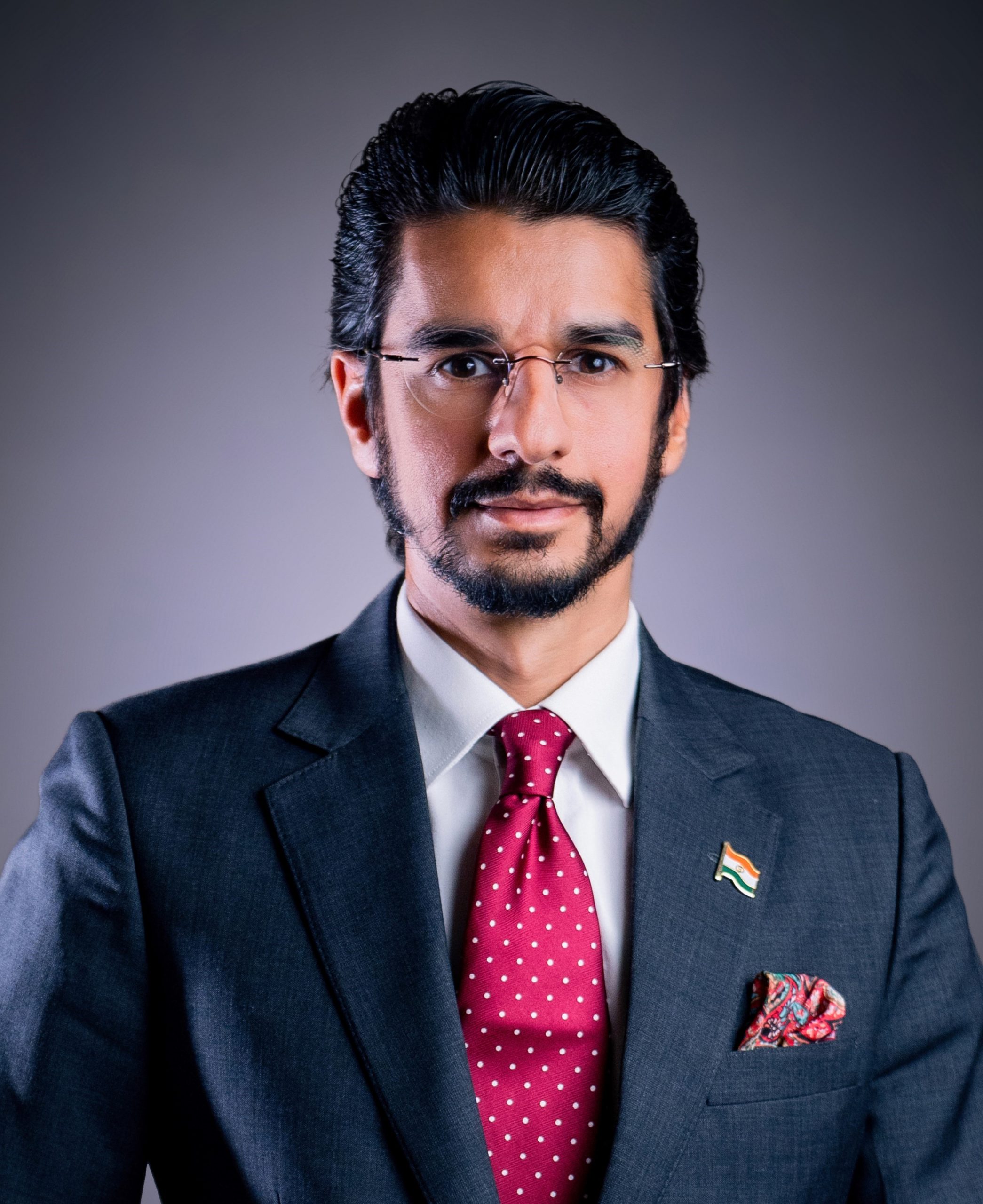
Tag: Supreme Court of India

  • “While specialization is necessary, I strongly believe this approach is prejudicial to the interest of fresh graduates or ones with a couple of years of experience”- Anuj Bhandari, Advocate-on-Record, Supreme Court of India

    “While specialization is necessary, I strongly believe this approach is prejudicial to the interest of fresh graduates or ones with a couple of years of experience”- Anuj Bhandari, Advocate-on-Record, Supreme Court of India

    This Interview has been published by Pragya Chandni and The SuperLawyer Team
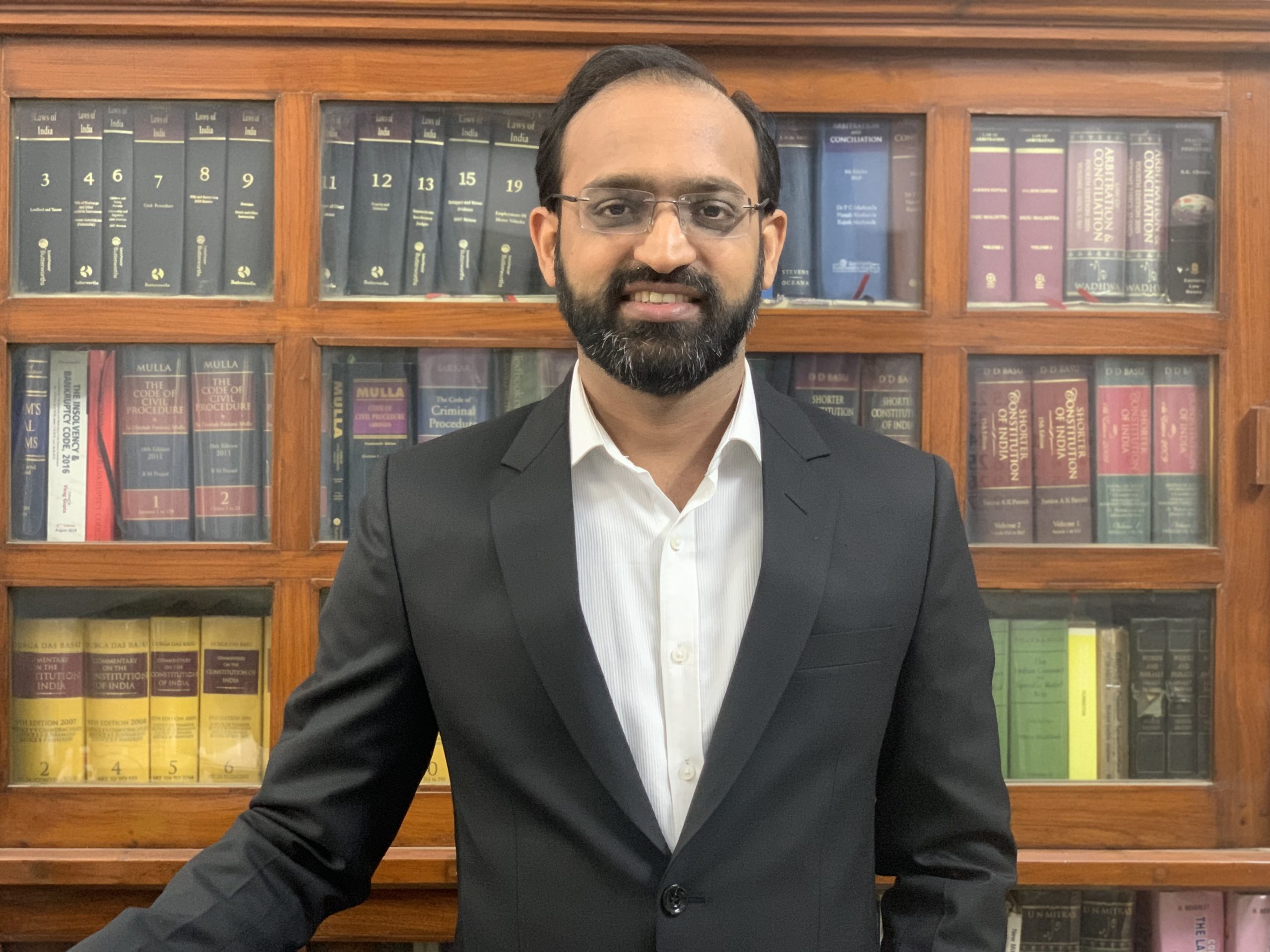
    Could you please share with our listeners how your journey in law began? What inspired you to pursue B.Sc. LL.B. (Corporate Law Hons.) from the National Law University, Jodhpur?

    It’s a fairly interesting story. To be true, being from a family of lawyers and judges, my father never wanted me to be a lawyer. For the final two years of my schooling I was preparing for engineering and did not even fill the forms for law entrance examinations. After clearing the entrance test for Engineering, while depositing the fee in an engineering college in Bangalore, I felt that I don’t want to be an Engineer and rather, want to become a lawyer. Hence, I requested my father to not deposit the fee and expressed my willingness to prepare for the law entrance examination. Being from Rajasthan, NLU Jodhpur was my first preference and luckily, I cleared the entrance next year. 

    Your experience spans both litigation and corporate law. What led you to choose a career path that includes extensive practice in the Supreme Court and various other courts and tribunals?

    After my graduation from NLUJ, I was fortunate to get placed with Amarchand Mangaldas, Mumbai. I was part of the Funds Team and was involved in structuring venture capital funds. One year in Amarchand gave me hands-on experience and confidence to take up corporate work which would benefit me later in my career. However, I couldn’t see myself doing only corporate work for the rest of my life and shifting to litigation was better sooner than later. I therefore shifted to Delhi and started with a litigation journey. 

    Beauty about having an independent practice is that one is not confined to a particular forum or field of law and can push boundaries. Delhi being hub of litigation work, there are ample of opportunities in various courts and tribunals. One has to rather restrict himself from taking up work in multiple forums. I try to confine myself to the Supreme Court, but work naturally spills over to the High Court and various Appellate Tribunals. 

    You’ve worked in diverse areas such as banking, arbitration, constitution, consumer, debt recovery, and more. Could you elaborate on how you found your niche within the legal profession and the areas that resonate with you the most?

    Trend lately has been on super specialization in law. The law firms have dedicated teams to handle one subject or even one area of the subject. This trend is seen more in Tier-1 and Tier 2 law firms.  While specialization is necessary, I strongly believe this approach is prejudicial to the interest of fresh graduates or ones with a couple of years of experience.  In my view, any young lawyer should not specialise at an early stage of his career, rather a lawyer should have an experience to deal with as many subjects, fields and branches of law as possible. It not only gives an overall better understanding of law but also gives the ability to apply principles, precedents, and concepts from one field to another. Interplay of various subjects of law is an important tool which needs to be understood and applied both in courts and while undertaking advisory work. 

    I encourage my juniors to take up matters across various forums and subjects and not confine themselves to any particular field. While allocating work as well, I  ensure that my team gets to work on different subjects. I believe it not only helps them to have confidence in undertaking new assignments but will also aid them later on in their career.

    From being an associate at Amarchand Mangaldas & Suresh A. Shroff & Co. to becoming a partner at Pricus Legal LLP, can you discuss the pivotal moments and experiences that shaped your career trajectory?

    Getting through Amarchand in college placement was one of the most memorable moments of my life. It was nothing short of a dream coming true, and of course it was financially highly rewarding. I was awed by the corporate culture, high profile clients and of course the stakes involved. However, having worked there for a year, I couldn’t find my calling in corporate work. As a result, I took the difficult decision of resigning from the firm and shifting to Delhi.

    I was fortunate to get a chance to work in the chamber of Mr Parag Tripathi, Senior Advocate, who was also Additional Solicitor General of India at the time. He is one of the finest orators and sharpest minds in the legal fraternity. I am proud to be part of his chamber and couldn’t have prayed for a better ‘Guru’. Working in his chamber gave me a chance of working on thousands of cases. Every day over 20 matters were listed which were split amongst 4–5 juniors. On an average each junior had to brief sir in 4 to 5 cases everyday. Every briefing used to be like a short moot court for us where we had to be ultra precise and to the point in our briefing yet making sure we don’t miss out anything relevant and at the same time answer a volley of questions. Doing this for nearly 4 years prepared us well for anything the future had to offer. 

    I took yet another difficult decision to leave the chambers of Mr. Parag Tripathi and started my practice in the later part of 2012. Subsequently,  I also cleared the Advocate-On-Record exam in 2015. 

    Having handled litigation both for individuals as well as companies, over the years, I started getting corporate advisory work as well. As we were getting corporate advisory and transactional work alongside litigation, we decided to formally incorporate Pricus Legal LLP to better manage and handle corporate work.

    Being from a litigation background, I find that the way a litigating lawyer perceives things even in any corporate transaction or documentation is very different from a corporate lawyer. Experience in litigation comes in handy to foresee possible disputes and loopholes. Therefore, as a matter of practice in our firm all corporate advisory/transaction has to go through the litigation team as well.

    As a registered Advocate-on-Record in the Supreme Court of India, you have been involved in several landmark judgments. Could you share one or two cases that you found particularly challenging or significant in your career?

    An interesting case which comes to mind is that of Bhagwan Singh v. Dilip Kumar where son of sitting MLA was involved in gang rape of a minor and was granted bail by the High Court on the ground that FIR was lodged nearly over a year after the incidence and there was no direct evidence to connect the accused with commission of alleged crime. I was representing the minor victim who approached the Supreme Court against grant of bail by the High Court. We were able to persuade Hon’ble Supreme Court to set aside the bail on the ground that High Court can’t look into the evidence at the stage of bail and should confine itself to criteria like seriousness of offence, statement of prosecutrix, likelihood of influencing the trial et cetera while deciding the bail. Judgement makes an interesting read.

    Another decision which I recollect is that of Ravi Khandelwal versus Taluka Store in which we challenged an order passed by the Larger Bench of the High Court in a reference involving question of interpreting Section 14(3) of Rajasthan Rent Control Act which provided a protection to the tenant against any suit for eviction for the first five years of tenancy. The Supreme Court overturned the conclusion of Larger Bench of High Court holding that even if a suit is filed within five years of commencement of tenancy, but during the pendency of suit five years lapse, the defect in the suit stands cured and the protection granted is achieved. However, what was more interesting was that the Hon’ble Supreme Court directed eviction of premises directly even when the appeal of the tenant was pending before the Single Judge of the High Court. Direction of eviction directly by the Supreme Court even while appeal on merits was pending before the High Court to my mind is unprecedented.

    You’ve been a panel lawyer for various esteemed organizations. How did these associations come about, and how does being a panel lawyer for such entities impact your legal practice?

    Getting any panel is fairly difficult, particularly in initial years of practice. Working in the office of ASG, all of us were empanelled with the Union of India which opened the doors for panels of other PSUs. One panel thereafter led to another over the years. Even though these panels are not usually financially very rewarding, they give an opportunity to appear and argue before the court and provide a constant source of work. In initial stages when individual clients are scarce, panel work comes in handy and ensures regular appearances before the court. 

    With your extensive experience in various legal domains, including banking, insurance, constitutional law, and more, how do you balance staying versatile with the need for deep specialization?

    There is a saying that clients choose lawyers specialization. As I mentioned earlier, I strongly believe that lawyers, particularly in litigation, should not get specialised early in their career. It is only after a few decades of practice and incidentally handling a particular kind of cases more than others, that lawyers would get specialised on their own in a particular field. Personally, I would any day choose to do a variety and different kind of work every day rather than get super specialised in any particular field. One of the reasons why I shifted from corporate to litigation was to do a variety of work, but I think that’s a very personal choice.

    Lastly, considering your journey and achievements, what advice would you like to give to fresh law graduates who are about to embark on their legal careers? What are the key lessons you’ve learned that you would like to share with them?

    I would strongly advise young lawyers to explore different fields of law for the first few years of their career before choosing and settling into one which matches their aptitude and liking. Fresh graduates should not be reluctant to change their field, particularly in the first few years of their career and do something which they can call their calling. As one progresses into his career it becomes exponentially difficult to venture into these experiments.

    I also highly recommend that every fresh graduate should start his career with litigation and rough it out in courts at least for sometime. It is only then one understands actual application of law and gives a perspective completely different from mere theoretical understanding. Even if eventually, they decide to move into a corporate setup, the experience in litigation will give them immense confidence. Getting into a super specialized team right out of college is not something I would recommend. Legal Profession is not a 5 year long but a 50 years long career and the initial few years should be an investment on oneself.

    Get in touch with Anuj Bhandari-

  • “In the legal profession, I see myself more than a lawyer—I’m a provider of comprehensive solutions. From environmental concerns to individual rights, the legal realm is inclusive.” – Praveen Pathak, Managing Partner of Praveen Pathak & Associates.

    “In the legal profession, I see myself more than a lawyer—I’m a provider of comprehensive solutions. From environmental concerns to individual rights, the legal realm is inclusive.” – Praveen Pathak, Managing Partner of Praveen Pathak & Associates.

    This interview has been published by Namrata Singh and The SuperLawyer Team

    Sir, what inspired you to make your career in law? while you did that, you became a managing partner at Praveen Pathak, and Associates so would love to hear about your journey.

    Allow me to provide you with some context initially. I didn’t start my professional journey as a lawyer; I was a financial consultant at ICICI Prudential and other financial institutions. My perspective shifted during the aftermath of the 2008 Lehman Brothers collapse, witnessing individuals earning substantial annual incomes suddenly losing their jobs. The realization that our profession lacked job security prompted me to reevaluate my career.

    As someone accustomed to starting my day early and returning home late, the prospect of idleness after losing my job was challenging. Despite facing this situation, I didn’t share my predicament with my family. It was during this time that I stumbled upon information about the legal profession, which intrigued me. Although I had heard during my studies that law was a demanding field, my background in understanding people’s needs and navigating complex situations made it seem less formidable.

    Being solution-oriented has always been my approach, and I bring this mindset to the legal profession. I see myself as a provider of comprehensive solutions, not just for individuals but for entire families and the corporate world. Many people, especially newcomers, lack a clear understanding of what they are getting into when pursuing a legal career. I take it upon myself to guide them and emphasize that the legal profession is inclusive, extending to everything from environmental concerns to the rights of individuals, unborn children, and even those who have passed away.

    In discussing our current conversation, conducted over the internet, I highlight the universality of legal solutions. Where there are rights, there are remedies, applicable to every individual seeking solutions. Despite the observed gap in training within the Bar Council of India, I believe organizations like LawSikho play a crucial role in bridging that divide with their wealth of knowledge. I express this sentiment genuinely, independent of the fact that I’m being interviewed by someone associated with LawSikho.

    How was it when you were with ICICI Prudential? And then all of a sudden, you had to switch jobs you rather had to switch professions. What kind of impact does it have on you? I would say mentally, and professionally. And how is it that your family cooped up with it?

    To be completely candid, the impact of certain events has a profound influence on one’s life. The pivotal question is: How do you choose to navigate that impact? Is it a stumbling block that knocks you down, or do you transform it into a stepping stone for reaching new heights? Personally, I have always viewed every impact as a stepping stone, an opportunity for growth and learning. Life itself is a series of impacts—from the moment of birth when we know very little, to the present moment where I find myself being interviewed, answering questions about my experiences.

    Life, much like a movie, unfolds, and through its narrative, it imparts valuable lessons. The key lies in our readiness to comprehend and appreciate the teachings that life imparts. The collapse of Lehman Brothers, for instance, presented me with a golden opportunity. It wasn’t just a setback; it was a chance to glean essential insights and evolve. Life constantly provides opportunities for learning, and recognizing them can lead to remarkable personal and professional development.

    Could you provide insights into your legal responsibilities in your role as Vice President at P&P Advisory? How do you manage the dual responsibilities of being a Managing Partner and a Vice President simultaneously? You are essentially an authority figure in these roles. Moreover, how do you ensure effective outreach to a broad audience, serving as a guide and mentor to the maximum number of individuals? Can you shed light on your approach to fulfilling these mentoring responsibilities?

    I attribute the perceived success that people recognize in my journey to the dedicated networking efforts spanning over 15-20 years. Many individuals, who started their endeavors at various points in time, found a connection with me at some intermediate level, and our relationships flourished. I offered my services, and one key takeaway for anyone reading or hearing this is the importance of nurturing relationships at every stage of your life and career.

    Regardless of your current status or level, if you foster meaningful connections and contribute value to those relationships, the network you build over time will become increasingly robust. I emphasize the significance of evaluating and offering solutions within your relationships. When you place your solutions or products on this network platform, the people connected to you will embrace them with open arms.

    Throughout my career, I cultivated connections with individuals in advertising agencies, corporate companies, financial institutions, home loans, and banks. The welcoming reception I received was a result of the commitment and assurance I consistently provided. When I made promises and commitments, they were backed by the legacy of 20-25 years of experience. Venturing into the legal field without a specific legal background or a legal “Godfather” was made possible through my strong connections with corporates and individuals. This network enabled a rapid and successful transition for me.

    Transitioning from a finance background to law was facilitated by your network, but the aspect of your humble behavior—how has that contributed? These insights must reach new learners so they can understand the significance of humility, positivity, and perseverance in building a successful network and career. Your views on this would be invaluable, and if you could share a motivational message—whether it’s two lines or ten—I believe it would greatly resonate with those seeking inspiration.

    For all the learners out there, here’s a piece of advice: Take a moment to look around, find ten people on your left and another ten on your right. Say hello, introduce yourself as a lawyer, and commit to standing by them through thick and thin. Building a network is not just about connecting; it’s about being there when they need you. Regardless of your background—whether in law, finance, or any field—the key is to be a good human being.

    In every interaction, be considerate rather than demanding. Adopt a solution-oriented approach; be a problem solver. When someone approaches you with a legal issue, don’t jump straight into litigation—consider alternative solutions like amicable settlements. By becoming someone who provides solutions, you not only gain respect but also establish yourself as a reliable and valuable resource.

    Understanding people’s problems is crucial. Everyone faces challenges, and your role as a solution provider extends beyond legal matters. A practical example is akin to a pharmacist directing a customer to another store for a specific medication. By doing this, you not only solve the problem but also position yourself as a one-stop solution for various needs, be it financial or otherwise.

    If you aspire to specialize, focus on areas that interest you. Form a team with like-minded individuals who share your passion, especially if you are pursuing a practice rather than traditional employment. For those seeking self-employment, your value is paramount—you are your own shop. Be considerate, offer valuable solutions, and remember that sometimes people simply need affirmation, even when they already know the solution. A sincere and valuable presence is often all that’s needed.

    What insights would you offer to newcomers, especially in terms of patience? Could you share your personal experience, the struggles you encountered, and the valuable lessons you gleaned?

    One crucial aspect to note is the shift in perspective from using the term “struggle” to “challenges.” In a world where effective communication is a skill set we possess, with a vast market and numerous products available, the issue is not about selling itself. The real challenge lies in approaching the right objectives. Rather than struggling to make a sale, the focus should be on meaningful connections. Starting with a goal of meeting 50 people is a simple yet effective way to initiate this process.

    A significant challenge many face is reluctance to discuss legal matters due to shyness or a lack of confidence. Building this confidence is a critical step. It involves addressing challenges systematically, step by step, just like counting from 1 to 5. For newcomers, starting with straightforward legal matters like negotiable instruments or straightforward divorces is a practical approach. These areas do not require rocket science to understand, and I extend an invitation for anyone eager to learn to visit my office for a week of free lessons.

    Offering free services in areas like recovery matters or consumer cases serves a dual purpose. Firstly, it allows individuals to learn through practical application, and secondly, it creates a lasting impression. By providing a solution free of cost, you become imprinted in their minds as a reliable resource.

    Importantly, the challenges are not external but internal. It’s about being open to adopting new approaches and being willing to learn. The real battle is not against external forces but within oneself, and the key is to stand up, confront those internal challenges, and keep moving forward.

    If we step into your shoes as an individual practitioner collaborating with startups and corporates, what new challenges emerge, and what insights have you gained from these experiences? Do you believe that encountering these challenges contributes to personal and professional growth, irrespective of whether one is a first-generation or second-generation lawyer? Moreover, how do you perceive these challenges shaping you as an individual beyond your role as a lawyer?

    Let’s approach it as challenge number one, not a struggle. Challenge number two: proactively engage in tasks. Reach out and express your willingness to assist, saying, “I’d like to do this for you. Can I help?” In an environment where everyone seeks help and wants someone to handle their responsibilities, spending time working diligently for others becomes crucial. However, a significant hurdle arises—there seems to be a shortage of students who are willing to adapt, choose to work, and invest time.

    I apologize for being candid, but the reality is that only about 10% of individuals exhibit a serious commitment. The remaining 80% may talk about struggles but often fail to take meaningful action. It’s essential for individuals to reflect on their choices and question whether they are truly dedicated to the work.

    Personally, I believe that 20% of people are inherently eager and capable of comprehending and implementing the tasks discussed here. For the remaining 80%, a common pattern emerges—expressing a desire for progress without corresponding action. This might sound straightforward, but it’s crucial for people to evaluate whether they are genuinely aligned with the work they’re pursuing.

    I never instruct my juniors or interns to handle my files, as they are not clerks. Instead, I encourage them to spend time understanding the workings of a clerk, as it forms the foundation of their background. Clerks are invaluable resources and are willing to share their insights and solutions. Regarding the assignments provided by LawSikho, completing them is a significant step—accomplishing them means covering 70% of the necessary groundwork.

    Commendably, LawSikho is doing remarkable work, and its impact should extend to a broader audience. I believe that 70% of individuals who may not have completed half of the assignments would significantly benefit from the institution’s initiatives. The world is replete with opportunities for those willing to explore, but success requires genuine willingness and dedication.

    Reflecting on your global presence, can you elaborate on the notable differences you’ve observed between the local world, particularly around 2005-2006 before the Lehman Brothers crisis, and the transformed global landscape that emerged afterward? What broader societal impacts have you witnessed, particularly in the context of India opening up to the world?

    Understanding the world today is far more accessible and straightforward than it was in 2019, let alone in the early 2000s. The transition from the graduating class of 2000 to the present generation is marked by the significant introduction of artificial intelligence, shaping an era where answers to virtually every question are readily available. The abundance of opportunities may appear daunting to some, but it’s essential to recognize that every perceived threat carries an inherent potential for benefit.

    Embracing new technologies and staying informed is crucial. Even a tenth-grade student from a reputable public school can guide you through these innovations. In the context of COVID times, I recall having a busy schedule while many were not yet comfortable with Zoom meetings. Surprisingly, more than 50% of lawyers were sitting at home, and I had a substantial workload during that period.

    Staying informed about your surroundings and current market trends is now easier than ever. Regularly reading newspapers allows you to engage in meaningful conversations about ongoing events. Keeping yourself updated through specific magazines or newspapers tailored to your field is equally important. Additionally, being part of a peer group or a community of lawyers provides valuable insights and support. Networking within a group of legal professionals creates an environment where lawyers can share experiences and knowledge, contributing to collective growth.

    Highlighting the significance of research, how crucial do you consider it for individuals, whether they are lawyers or chartered accountants? You mentioned that during the COVID period, you experienced an increase in workload beyond expectations. Could you elaborate on how research played a pivotal role during that time and how it contributes to your knowledge, especially in areas such as artificial intelligence? What has been your approach to learning and staying informed in these domains?

    I firmly believe that there’s no substitute for hard work, and by hard work, I mean rigorous research. Often, we overlook the importance of taking the time to thoroughly read the complete orders passed by the Supreme Court. Understanding why a single judgment spans multiple pages and carries various connotations is essential. It demands patience, dedicating long durations to continuous reading, sometimes up to 30 or 45 minutes for a single judgment. Complaining about the length becomes invalid when you realize that this comprehensive approach is critical to the legal profession.

    In the legal realm, research should be an integral part of your daily routine. Just as a chef deals with spices and ingredients, a lawyer should engage with extensive reading. This practice provides a wealth of material to discuss and forms the foundation for constructing well-informed opinions. The readings you engage in essentially lay the groundwork, making reading and researching indispensable elements in the legal profession with no substitutes whatsoever.

    You’ve consistently emphasized positive changes extending beyond the legal fraternity and the legal realm. Could you share insights into the initiatives and activities you’re involved in? Additionally, how do you envision your contribution to creating a better world for Homo sapiens, as you often express? What specific proposals or strategies do you have in mind to achieve this vision?

    Survival hinges on three essential elements: air, earth, and water. Understanding the crucial link between our well-being and the environment, I emphasize the importance of giving back. Unfortunately, in the pursuit of development, the environment often faces exploitation with limited legal intervention. Those studying law or engaging in environmental materials must recognize this responsibility.

    To address these concerns, I’ve initiated the JAL THAL VAYU Foundation. While its success may be uncertain, the aim is to inspire action. JAL represents the need to cleanse rivers and oceans, emphasizing water harvesting. Simultaneously, we encourage tree planting and other earth-centric activities under THAL. It’s a simple call to action – if you’re a lawyer, plant five trees. Engage in climate movements. This is not just charity; it’s a shared responsibility for everyone, you, me, and the entire community. The interconnectedness of air pollution, water, and soil underscores the significance of every action we take. By planting a tree, we contribute to supporting all three vital elements.

    Get in touch with Praveen Pathak-

  • “Adaptability is key in the legal profession. From District Courts to the Supreme Court, preparation and versatility are crucial for success.” – Prabhat Kaushik, Advocate-on-Record at the Supreme Court of India

    “Adaptability is key in the legal profession. From District Courts to the Supreme Court, preparation and versatility are crucial for success.” – Prabhat Kaushik, Advocate-on-Record at the Supreme Court of India

    This interview has been published by Namrata Singh and The SuperLawyer Team

    Could you take us through your journey from your college days to becoming an Advocate on Record at the Supreme Court? What inspired you to pursue law as a career?

    During my college days, I used to study and make friends who were like-minded and interested in studying and understanding law. I used to make friends whom you could find in the library only or after professors asked questions. Most of our freedom fighters were Lawyers of course that motivates me and of course, the respect a lawyer gets in Society.

    Being the AOR for the Hon’ble Chief Minister of Sikkim is a distinctive role. How did this association come about, and what are some of the challenges and rewards of representing such a high-profile client in the Supreme Court?

    I got the chance to represent the Hon’ble chief minister of Sikkim before the honourable Supreme Court through the Standing Counsel for the state of Sikkim in the Supreme Court who had previously engaged me in many of his cases and therefore gave me a chance. the rewards are always high but the expectations are also high.

    In your extensive career, you’ve handled cases related to Builder-Buyer disputes, Recovery of Refunds by RERA, Criminal Cases, and more. What motivates you to take on such diverse cases, and how do you stay well-versed in multiple areas of law?

    From the beginning of my law career, I, used to handle builder buyer cases as many of my close friends and relatives were cheated by builders and providing them good results brought me many cases. I have offices and associations in Delhi NCR and many of my associates, friends and lawyers keep me engaged in their cases and that keeps me updated with all kinds of cases.

    As someone who has dealt with international companies and MNCs, what nuances or differences do you find in representing their cases compared to domestic ones?

    Cases of MNCs and international companies are not of a very different sort but their challenges are also as same as those of a domestic company for example for a Japanese company I got an FIR registered against the top brass of management in Gurugram a complaint filed by their Parent Company and a Ukrainian company was cheated by Transport vessel company and for other Dubai and Japanese companies facing trouble because of Labour, Employees, Tax and POSH cases.

    Your practice spans different courts and forums. How do you adapt your approach when dealing with cases in various jurisdictions, from District and Session Courts to the Supreme Court?

    The only thing I keep in my mind while approaching any Courts from Distt. to Supreme Court is that I should be well-versed and well-prepared with my case.

    Becoming an Advocate on Record involves a rigorous examination process at the Supreme Court. Can you share your experience preparing for and clearing the AOR exam? What advice do you have for aspiring lawyers who aim to achieve this milestone in their careers?

    I really put all my efforts into clearing the same and was a herculean task. the only mantra is hard work and study plus one should join lectures delivered by examiners THEMSELVES conducted at ILI.

    Your chamber plays a crucial role in shaping the professional journey of budding lawyers. Can you tell us about the work culture and environment in your chamber? Additionally, how do you approach mentoring and guiding interns who join your team?

    Yes, it plays a very important role but I like my colleagues to enjoy work within spheres of discipline in my chamber. I don’t like the late-night work culture. Law interns, they really enjoy a lot because We expose them to every court and forum of Delhi-NCR which enhances their knowledge in unravelling intricacies of Law.

    Having seen the evolution of legal education and the influx of interns and upcoming lawyers, what differences or challenges do you observe in the skill set or approach of students today compared to when you were starting your career? Are there specific areas where you think interns or young lawyers might need additional focus or development?

    Yes, nowadays the legal profession is in vogue. It’s very difficult for a beginner to earn bread and butter in this profession in their initial days. There is a misconception floating around about a lot of money in this profession and therefore the students are choosing this profession but no one tells about the struggle which breaks them. The legal profession is a very noble profession. But not an easy money-making profession. In our days we knew what we were doing and how we would do it and were prepared to face struggles mentally and physically. I used to attend courts by using Public Buses and Trains, which for a modern new Lawyer is not possible if he/she belongs to a humble family and puts a financial burden on their parents.

    Beyond your demanding legal career, everyone needs some downtime. Could you share with us what passions or activities you pursue in your free time? What brings you joy and relaxation outside the courtroom?

    I really enjoy gossiping with friends and of course travelling to the hills.

    Having pursued an LL.M., yourself, could you share your perspective on how further academic specialization contributes to a legal career? What advice would you offer to young lawyers considering pursuing an LL.M. and how can they maximize its benefits for a successful legal career?

    Well, higher studies always help boost your confidence and add a new chapter to your success story. For young lawyers I advise them to pursue all sorts of courses available to help boost their knowledge and enhance confidence, there are so many diploma courses and LL.M helps new lawyers to shape their career by specialising in some chosen field. 

    Get in touch with Prabhat Kaushik-

  • “The legal system plays a pivotal role in addressing economic and social disparities, with ongoing efforts to create a more inclusive and equitable society”- Siddhant Sharma, Advocate-on-Record

    “The legal system plays a pivotal role in addressing economic and social disparities, with ongoing efforts to create a more inclusive and equitable society”- Siddhant Sharma, Advocate-on-Record

    This Interview has been published by Pragya Chandni and  The SuperLawyer Team

    Can you share a bit about your background and upbringing, especially how you ended up pursuing law as a career?

    My journey into the field of law is somewhat unconventional, rooted in an upbringing that seamlessly blended athleticism and a commitment to education. Hailing from Himachal Pradesh, I was born in Bangalore and received my education in Patiala, Chandigarh, and Delhi, reflecting the diverse cultural influences that shaped my worldview.

    My parents, with my father being a Dronacharya Award Winner in Judo and my mother serving as the Chief Judo Coach with Sports Authority of India for over 35 years, instilled in me the values of humility and hard work. The mantra that ‘hard work has no substitute’ became a guiding principle, thanks to my father’s wisdom.

    Initially immersed in a promising career in sports, representing Himachal Pradesh in various BCCI tournaments from U-15 to U-23 levels, my trajectory took an unexpected turn due to a sports-related injury. This setback prompted a moment of introspection, leading me to re-evaluate my career path.

    Amidst the contemplation, the decision to transition into law emerged organically. Inspired by a desire to push beyond my comfort zone and propelled by the encouragement of my parents, I embarked on the journey to become an advocate. This shift was marked by rigorous preparation for the Delhi University entrance exam, which I successfully cleared, ultimately choosing to enrol at Campus Law Centre, Delhi University.

    It was during my time at CLC that I discovered the rich legacy of its alumni, further deepening my appreciation for the profession I had serendipitously found myself in. In retrospect, I didn’t so much choose law as it chose me, a realization that has fuelled my commitment to excellence and continuous growth in the legal field.

    I am profoundly grateful for the opportunities that shaped my journey, and I carry forward the invaluable lessons of discipline, resilience, and dedication instilled in me through my unique blend of experiences. Today, as a seasoned lawyer with nine years of experience, I draw upon both my sporting and legal backgrounds to approach challenges with a well-rounded perspective and unwavering determination.

    You completed your LLB from Campus Law Centre, Delhi University. What factors influenced your decision to study law, and were there specific experiences during your academic years that shaped your interest in the legal field?

    Honestly, after cricket I had no other option but to choose law, there is no specific reason or any decision that influenced me to study law.
    I pursued my LLB at Campus Law Centre, Delhi University, and my journey into the legal field was somewhat unconventional. Having initially aspired to pursue a career in cricket, the transition to law emerged organically.

    In my first year, following the advice of my seniors to enjoy the initial phase, I focused on grasping the fundamentals and keeping a balance between academic studies and my passion for cricket. It was during this time that I discovered a genuine interest in Criminal Law, sparking the beginning of my journey in the legal domain.

    As I progressed into my second year, subjects such as Criminal Procedure, Evidence, and Civil Procedure captivated my attention, deepening my understanding and enthusiasm for the legal intricacies. An internship experience further exposed me to the practical aspects of legal work, where I engaged in clerical tasks, gaining invaluable insights into the operational side of the profession.

    The turning point came in my third and final years of college when I made a conscious decision to fully commit to my legal studies. Realizing that my cricketing aspirations were taking a back seat, I explored potential career paths. A pivotal moment occurred in March 2015 when a senior connected me with an internship at Luthra and Luthra, providing me with a firsthand experience of the legal profession.

    Simultaneously, a subsequent internship with Mr. KTS Tulsi, Senior Advocate, in April further solidified my interest in law. The dynamic and challenging nature of the work at both offices fueled my passion, ensuring that each day was intellectually stimulating.

    The opportunities I got was only because of cricket which landed me to my internships, which shaped my professional trajectory. These experiences have not only enriched my legal knowledge but have also instilled in me a deep sense of commitment and enthusiasm for the legal field.”

    You’re currently engaged in independent legal practice, handling a diverse range of cases. Can you walk us through the pivotal moments that led to your decision to transition from working with law firms to establishing your independent practice?

    Embarking on my legal journey, my initial exposure to the legal profession unfolded through internships at Luthra and Luthra, a prominent law firm, and later under the guidance of Mr. KTS Tulsi, Senior Advocate. These experiences, though disparate, were pivotal in shaping my journey as a lawyer.

    During my stint in a law firm, the routine was structured, demanding undivided attention to assigned tasks within the confines of an office. However, my subsequent internship with Mr. Tulsi, Senior Advocate, introduced me to a different world—a dynamic blend of courtroom advocacy and after court management. Witnessing the strategic use of skills, experience, and court craft to win cases ignited a profound fascination within me.

    Despite the allure of firm remuneration, I recognized a deeper passion for the courtroom. The prospect of being confined to an office space without the vibrancy of court experiences did not resonate with my vision for a fulfilling legal career. Driven by a belief instilled in me since childhood—that hard work paves the way to success—I transitioned to LawRato, where I honed my communication skills with clients. However, the confinement of a firm environment eventually led me to seek a more dynamic setting.

    Gratefully, I found mentorship under Mr. Jaspreet Singh Rai, a period that contributed significantly to my growth and gave me a fair bit of experience in Trial Court. Destiny smiled upon me when I secured a position at the Chambers of Mr. Tulsi, a dream opportunity by the support of Mr. Amit Sharma and Mr. Raj Kamal. 

    Before venturing into independent practice, I had the privilege of working with Mr. Karan Bharihoke, Advocate-on-Record who played a transformative role in shaping me from a novice into a confident, independent lawyer. His mentorship instilled in me the courage to appear before the court and the resilience needed to pursue my goals.

    You’ve had significant experience in handling high-profile cases, including criminal matters, civil matters, and more. Could you share a challenging or notable case that you’ve worked on and the lessons you learned from it? 

    In my not so extensive legal career spanning nine years, I’ve had the privilege of handling some high profile cases, each carrying its own weight of significance. High-profile cases, in particular, demand a heightened level of diligence and responsibility, given the elevated stakes involved for both the client and the legal representative.

    Throughout my journey, I’ve had the honor of collaborating with seasoned advocates and independently handling noteworthy cases. One such pivotal experience that stands out is my involvement in the Nirbhaya Case (Appeal) at the Supreme Court, where I assisted my senior who was representing the parents. The magnitude of this case not only underscored the gravity of criminal law but also provided me with a profound insight into the nuances of Supreme Court procedures.

    This experience served as a springboard for my subsequent work, notably in preparing and drafting the Petition in the Arushi Talwar Case. The lessons gathered from these high-profile cases have been instrumental in deepening my understanding of criminal laws and honing my legal skills.

    I am deeply appreciative of the trust placed in me by seniors, which has been a constant source of motivation throughout my career. Every case, regardless of its nature, has been a stepping stone for my professional growth. I firmly believe that embracing and learning from each experience is imperative for continuous development as legal professionals.

    In essence, my journey has been shaped by a commitment to excellence, a deep appreciation for the opportunities afforded to me, and an unwavering belief in the transformative power of every legal experience.

    You’ve worked with esteemed advocates such as Mr. KTS Tulsi, Mr. Harin P. Raval, and others. How has mentorship played a role in shaping your career, and what advice do you have for young lawyers in finding the right mentors?

    In this profession finding the right mentor is what every young lawyer would dream. In my legal career, the significance of mentorship has been profound and instrumental. I have had the privilege of working alongside distinguished advocates such as Mr. KTS Tulsi, Mr. Harin P. Raval, Mr. Karan Bharihoke, and Mr. Raj Kamal, each of whom has played a pivotal role in shaping my professional journey.

    The mentorship I received from Mr. Bharihoke and Mr. Kamal, spanning the entirety of my career, has been invaluable. Their guidance has not only illuminated the path but has been a constant source of support during challenging times. I consider them beacons of wisdom, always approachable for clarifications, and ready to provide insights into the intricacies of the legal profession.

    Reflecting on my experience, I would advise young lawyers to seek mentors who not only possess exceptional legal acumen but are also genuinely invested in nurturing the next generation of legal professionals. The essence of a good mentor lies in their ability to impart knowledge, offer constructive criticism, and share their practical experiences. A mentor should be someone who sees beyond the professional competition, taking the time and effort to contribute to your growth.

    I am deeply appreciative of the guidance I have received, and it has instilled in me the importance of paying it forward. As a seasoned practitioner, my advice to young lawyers is to actively seek mentorship, be receptive to constructive feedback, and cultivate relationships with mentors who prioritize your professional development. In doing so, not only will you acquire valuable skills and insights, but you will also contribute to the perpetuation of a culture of mentorship within the legal community.


    From your perspective, how would you describe the current legal landscape in India, especially in areas like economic offenses, commercial dispute litigation, and recent legal developments? How has technology impacted the practice of law in recent years?

    Thank you for the opportunity to share my perspective on the current legal landscape in India, particularly in the areas of economic offenses, commercial dispute litigation, and recent legal developments.

    The landscape of economic offenses in India has seen significant changes in recent years. The country has witnessed legislative developments aimed at addressing white-collar crimes, with a focus on laws such as the Prevention of Money Laundering Act, 2002, and the Prevention of Corruption Act, 1988. These laws, along with the Companies Act, 2013, and the Indian Penal Code, 1860, form the backbone of India’s regulatory framework against economic offenses. In 2023, pivotal judicial decisions brought clarity and precision to the nuanced aspects of money laundering, including territorial jurisdiction, bail eligibility, and the procedural obligations of enforcement agencies.

    Commercial dispute litigation in India has also evolved, with the establishment of specialized commercial courts designed to provide efficient and timely resolution of conflicts. These courts employ case management techniques to streamline proceedings and encourage parties to explore alternative dispute resolution methods such as mediation and arbitration before proceeding to trial. The trend towards alternative dispute resolution methods is increasingly being embraced by companies in India.

    Recent legal developments in India have been multifaceted, reflecting the complexity of the challenges faced by the nation. The legal system plays a pivotal role in addressing economic and social disparities, with ongoing efforts to create a more inclusive and equitable society. The Supreme Court and High Courts have been active in shaping the legal landscape, with rulings on a wide range of issues.

    Technology has had a profound impact on the practice of law. It has streamlined processes, improved access to legal resources, and enabled more efficient communication. In the context of commercial courts, technology integration has been instrumental in promoting a more effective dispute resolution process.

    Drawing from my nine years of experience in the legal field, I would advise aspiring lawyers to stay abreast of these evolving trends and developments. It’s crucial to understand the interplay between law and technology, and to adapt to the changing dynamics of the legal profession. Always strive for excellence, but remember that the pursuit of justice should be at the heart of all we do as legal professionals.

    In conclusion, the legal landscape in India is dynamic and evolving, shaped by legislative developments, judicial precedents, and the integration of technology. As legal professionals, we must navigate these changes with diligence, adaptability, and a steadfast commitment to justice.

    You’ve been involved in cases that have gained public attention, such as the Aarushi Talwar Murder Case. How do you manage the pressure and public scrutiny that comes with handling high-profile matters?

    Each case, regardless of its prominence, brings unique challenges and learning opportunities. Drawing from my sports background, I understand the importance of timing – knowing when to start and when to stop. This philosophy translates into legal practice, emphasizing a focus on the task at hand.

    Handling high-profile cases, like the Aarushi Talwar Murder Case, demands a blend of professional poise and personal resilience. Recognizing the inevitable pressure and public scrutiny, my approach revolves around a practical mindset.

    I prioritize client objectives over the name of the case, steering away from unnecessary pressure. Overthinking is counterproductive. Trust in thorough preparation and professional competence forms the foundation of my approach.

    Anytime you appear before a court, you always have butterflies running through your stomach. But my only mantra is not to think  much and deal with every case as it comes. My experience in high-profile cases underscores the need for a strategic and composed outlook. Success hinges on maintaining professional rigor while navigating the intense scrutiny, much like delivering a top-tier performance in sports.

    Having excelled academically, how do you balance the theoretical knowledge gained in law school with the practical challenges faced in the legal profession? What advice do you have for fresh law graduates entering the field?

    Honesty, Patience and Hard Work is the advice I shall give fresh law graduates entering the field. In my experience, I’ve noticed a shift among interns and young lawyers, with some placing undue emphasis on stipends and remuneration rather than on learning and professional growth. (I know the younger generation would not like this part). Patience is paramount in our field; the legal profession offers boundless opportunities for those who approach it with dedication and a long-term perspective. 

    Hard work, another cornerstone of success, involves staying focused on your goals, mastering procedural intricacies, understanding the law thoroughly, and presenting your cases with unwavering commitment. Success, I believe, is an outcome of consistent, diligent effort.

    Addressing the evolving nature of law, it’s imperative to keep abreast of daily developments in statutes and judgments. However, the true essence of this profession manifests in the courtroom—where legal theories transform into practiced skills, confidence, and court craft.

    For aspiring legal professionals, my advice is to approach each day as an opportunity to learn, adapt, and refine your skills. Embrace courtroom experiences as they come; there’s an undeniable beauty in the synthesis of theory and practice. As you navigate this dynamic field, you’ll discover the profound fulfilment that stems from a genuine passion for the law.

    I encourage new entrants to the legal field to embrace this journey wholeheartedly, with humility, and to derive satisfaction not only from personal achievements but also from contributing positively to the legal community.

    Considering your achievements and experience, what advice would you like to offer to fresh law graduates who are embarking on their legal careers today? If there’s one piece of advice you wish you had received at the beginning of your career, what would it be?

    I am still learning and I have a lot to achieve in life. As a friend who possesses a little bit of experience over the others who would be graduating soon or have entered the profession.

    Reflecting on my own journey, if there’s one piece of advice I wish I had received at the outset of my career, it would be to find joy in the process of learning. This profession is dynamic and ever-evolving, presenting opportunities for growth at every turn. By immersing oneself in the school of learning, one not only acquires knowledge but also cultivates a mindset that views every experience as a valuable lesson.

    I often share the sentiment that in the legal profession, you never truly lose – you consistently gain insights that contribute to your professional evolution. Aspiring legal professionals should approach their careers with a clear vision, a full commitment to the journey, and an unwavering determination to learn from every experience. In the words of a mantra I hold dear, ‘Clear Eyes, Full Heart Can’t Lose.’ 

    Get in touch with Siddhant Sharma-

  •  “I have come to the conclusion that in the intensely dynamic environment that we live in where the laws are revolving on a constant basis, it is imperative to have at least the bare minimum knowledge of all fields of law, so as to best advise your client” – Shashwat Tripathi, Advocate on record at the Supreme Court of India

     “I have come to the conclusion that in the intensely dynamic environment that we live in where the laws are revolving on a constant basis, it is imperative to have at least the bare minimum knowledge of all fields of law, so as to best advise your client” – Shashwat Tripathi, Advocate on record at the Supreme Court of India

    This Interview has been published by Pragya Chandni and The SuperLawyer Team

    Can you share with us how your journey in law began, and what inspired you to pursue a career in litigation and dispute resolution?

    Specialization and Expertise: Commercial Litigation, Insolvency and Arbitration. 

    To be honest, I belong to a family of lawyers, my father and my elder brother are both lawyers, although both have worked/work in starkly different fields. One (my elder brother), being a hardcore IPR expert and the other (my father) who has seen the growth of litigation in the once colonial town of Allahabad and been actively involved in service matters before various High Courts. 

    As they say, you sooner or later become a victim of your surroundings. However, in my case, it worked for the best and I can turn the statement around and say, “I am a true by-product of my enriching and encouraging surroundings”!

    I would often as a child accompany my father to the court or interact with his colleagues and associates at home as well as in social spheres. In my opinion (of course as lawyers we are bred in a manner to specify our opinions !) my liking and fondness towards the profession began then itself, in my formative years. Thereafter I saw my brother go to law school as well, which is when my intentions to pursue a career in law solidified and I was sure that I wanted to become a lawyer. 

    My decision to pursue litigation is however a result of my internships and work experiences at various law offices. The irony is that my first job offer and might I add, with a hefty pay in a big firm, was NOT in litigation but the General Corporate  team. However, even then, I refused to take up that opportunity and decided to start all over with the process so long as I was given Litigation. Thus, inherently, my brain and heart were always drawn towards litigation. 

    With expertise in civil and commercial disputes, arbitration, intellectual property, and more, what specific aspects of law drew you in, and how did you develop such a diverse skill set over the years?

    My personal favourite has always been the constitution, which is why I was driven to even appear for the Advocates-on Record examination, which I successfully cleared in the year 2022!

    However, over the last couple of years, I have come to the conclusion that in the intensely dynamic environment that we live in where the laws are revolving on a constant basis, it is imperative to have at least the bare minimum knowledge of all fields of law, so as to best advise your client. Let’s say you have a client who approaches you for a simple case of corporate fraud, your advice however will start on the basic provisions of companies act in the north pole and span to filing a criminal complaint in the south pole. For the naked eye, one is a civil remedy and one is criminal, but for me, both are equally important. Thus, I feel, skill sets also develop over the years based on the kind of matters and briefs you receive or work on as well as the happenings  and trivia in the legal fora, which in my view, every budding lawyer should keep pace with. 

    Establishing your own law firm is a significant accomplishment. What motivated you to form Aeddhaas Legal, LLP, and how has the experience of working with accomplished legal professionals influenced your approach to legal practice?

    From the time I decided I wanted to pursue a career in litigation, I had my eyes on like a hawk!! on opening my own law firm and setting up my practice. 

    I was fortunate to have met people who I connected and bonded well with, who echoed the same feeling as mine, and thus, we all got together and created Aeddhaas. 

    One thing I learnt the most from all the stalwarts at the bar as well as all the accomplished legal professionals I have worked with is the golden rule of always being prepared. One thing I preach to every lawyer is that you must always read your brief to the fullest  (of course over time you learn the art of swiftly navigating ) as well as prepare your draft after a detailed research to seal any/all loopholes. A good draft in my opinion is not one which runs into 100 pages but one which briefly summarizes the issue in question. At the same time, a good argument is not the one which involved showing to the court every document (in most cases pleadings exceed 10000 pages!!), but one where the advocate runs through the essentials, to touch the heart of the case. 

    I also learnt the benefits of team work and how to be calm and patient even in the time of an urgency to take the right decisions. 

    Thus, Aeddhaas for me is the final dish, of all such ingredients, hard work, team building, patience (most important virtue of a lawyer) and attentiveness! 

    Your experience in handling matters under the Insolvency and Bankruptcy Code is extensive. Can you share insights into the complexities involved in such cases and the strategic considerations one needs to keep in mind?

    Insolvency and Bankruptcy code is now one of the most commonly invoked statutes in our country. I have always had an affinity towards commercial laws and hence, once the code was published, I was naturally drawn towards the same. 

    To be frank, as it is still fairly new as a law in our country, it still keeps evolving. It’s an extensive statute with various regulations and rules made thereunder. 

    I would recommend that to be abreast, the best way is to read the recent judgments and monthly updates released by various legal media. Nowadays live law and bar and bench upload updates even before the judgments are released online! Life has become easy because of them. So, we must use these mediums to our benefit. 

    For handling matters under the IBC, strategy planning with regard to the end goal at the very initial stage, whether you are for the corporate debtor or the creditors, goes a long way.  

    With a focus on arbitration matters, including those related to construction contracts and commercial agreements, what role do you see arbitration playing in resolving disputes, and how has the landscape evolved during your career?

    Arbitration is the need of the hour. In my opinion an arbitration clause has become as important as a confidentiality clause in any agreement/contract and there has been a paradigm shift worldwide towards arbitrating disputes viz entering into long drawn litigation battles, which in case of international commercial contracts is a nightmare, be it in the initial stages of overcoming the hurdle of jurisdiction or seeking the enforcement of a decree. 

    Having said this, even though the Indian Arbitration Act was enacted to be time bound, today, realistically speaking the Appellate courts are burdened with appeals and challenges to the awards passed by arbitrators, leading to a delay in execution. All in all however, the interim reliefs and ease of dispute management are unparalleled with arbitration. 

    Unlike courts that are often overwhelmed with a high volume of cases each day, comparatively, arbitration provides parties with more time and opportunities to present their arguments. In arbitration proceedings, parties have more flexibility in scheduling hearings and presenting evidence, which can result in a more efficient and streamlined resolution of disputes. This is because arbitration is a private and confidential process, and the parties have more control over the proceedings, including the selection of the arbitrator (who can be a specialist in case of subject matter being technical in nature). As such, arbitration can be a more attractive option for parties seeking a faster and more cost-effective resolution of their disputes.

    Reflecting on your career, what would you consider as the key milestones or turning points, and how have any challenges or setbacks contributed to your growth as a legal professional?

    Well I am fortunate to not come across any setbacks as yet and I hope it continues to be the same. My journey so far has been exactly the way I thought it would be. Turning point is of course setting my own practice and qualifying the Advocates-on Record examination.

    The transition from working for someone else or a law firm to establishing one’s own practice presents numerous challenges beyond just completing tasks. In addition to securing new clients and meeting their expectations, there are other obstacles to overcome such as financial management, marketing, and building a reputation in the legal community. These challenges can be overwhelming, but successfully navigating them is a significant milestone for any lawyer.

    As a legal professional, it is my duty to provide my clients with the most effective solution within a specific timeframe. So far, I have been doing justice to my work and that I think the actual growth one should be aiming for.

    As someone with a wealth of experience, what advice would you offer to law graduates entering the field today, especially those aspiring to build a successful career in litigation and dispute resolution?

    Law is a dynamic field. You could be making policies sitting in the parliament  or  challenging their implementation. You could be the mastermind behind a watertight contract or the person whose job is to find ways to read into the clauses. You could be the one because of whom we resonate a tick to Nike and an apple to Apple) or the one because of whom an acquisition or merger failed.

    My advice is simple, whatever it is that you intend to do, be it corporate, litigation (civil or criminal), be it IPR or policy, one should begin planning their way forward the day you step foot in law school. I am sure there are days when confusion is bound to occur, however, the sooner you surpass that, you will be way ahead of many others by the time you graduate. You would get the advantage of taking up internships in the specific field and building your CV, additional courses, writing papers and attending conferences in the field of your preference. This way, by the time you graduate out of law school, you are not a ripe student looking for direction, but someone who would add value to the place which hires you.

    Get in touch with Shashwat Tripathi-

  • “Conducting cross-examinations is the true test of a disputes lawyer. It tests your drafting, critical thinking, articulation, strategic ability, presence of mind, knowledge of human behavior and much more. The foremost challenge lies in the exhaustive groundwork that precedes the actual cross examination.”- Rohan Batra, Partner, Anagram Partners

    “Conducting cross-examinations is the true test of a disputes lawyer. It tests your drafting, critical thinking, articulation, strategic ability, presence of mind, knowledge of human behavior and much more. The foremost challenge lies in the exhaustive groundwork that precedes the actual cross examination.”- Rohan Batra, Partner, Anagram Partners

    This Interview has been published by Pragya Chandni  and The SuperLawyer Team

    Can you please share the story of how you decided to pursue a career in law, and what specific factors or experiences led you to specialize in disputes, particularly company and commercial disputes?

    The decision to pursue law was not a straight choice but a process of elimination and discovery. Given my family background and as someone who opted for commerce, I was presented with two choices: follow my father’s footsteps as a chartered accountant or pursue my studies in commerce. Right after my boards, I enrolled myself in esteemed colleges like CBS and SRCC.

    In this time, I had developed a keen interest in analysing and comprehending intricate concepts, coupled with a passion for engaging in public speaking. It was during this period that I had the privilege of witnessing the legendary, Late Ram Jethmalani, showcase his extraordinary oral advocacy skills. This experience left an indelible impression, and my intuition directed me to the pursuit of law. Once I decided to pursue law, I naturally gravitated towards disputes or as we litigators colloquially refer to where the real “juice” of the legal profession is. Immediately after the last term, I explored a corporate position placement. However, I ultimately declined, much to the bemusement of my peers who continue to jest about my decision till day.

    With over 12 years of experience in the field, can you walk us through the key milestones and challenges in your career, from joining Shardul Amarchand Mangaldas & Co. to founding your boutique litigation chambers in Delhi in 2019?

    My journey commenced with a stint at a tax litigation firm, Economic Laws Practice. Under the mentorship of Mr. Tarun Gulati, today a distinguished tax senior counsel, who led the Delhi tax litigation practice at the time, I learnt the basics of basics. Transitioning to SAMCO marked a pivotal juncture. Here, I was exposed to the world of arbitration and commercial litigation. I was fortunate to be guided by Mr. Dhruv Dewan, my supervising partner at the time. Under his guidance, I refined my legal acumen and navigated the landscape of challenging yet intellectually stimulating work. In those days, burning the midnight oil was not just a phrase but a frequent reality. I vividly recall a period where I was given the opportunity to single-handedly manage three high stake live arbitrations, overseeing cross-examinations, evidence, and final hearings in a span of twelve months—an arduous yet immensely rewarding experience. Personally, my involvement in the Tata-Mistry legal battle was a watershed moment that transformed my perspective on legal strategy, which was akin to playing a highly strategic chess game. SAMCO, for me, was an institution where every case became a classroom, and every challenge was an opportunity for growth. I am grateful to Mr. and Mrs. Shroff and all my former colleagues for this immensely enriching experience.

    In hindsight and given that I hail from a non-legal background, the decision to establish my boutique litigation chambers in 2019 was characterized more by audacity than meticulous planning. Gratefully, the leap of faith bore fruit. This transition has been instrumental in introducing me to the practice of law, its diverse challenges and putting me on an entrepreneurial journey.

    Your profile mentions your involvement in a 5 Judge constitutional bench, Cox and Kings, before the Supreme Court of India. Could you provide insights into the significance of that case and how it reflects your expertise in arbitration and company disputes?

    My involvement in the constitutional reference before a 5-Judge bench of the Supreme Court of India in Cox and Kings was unexpected. I had the honor of closely working with Mr. Darius Khambata, Senior Advocate, a renowned arbitration expert, in shaping our strategy and articulating our case. Mr. Khambata aptly coined our approach as establishing “guardrails” to manage the expanding purview of the Groups Company Doctrine (GCD)- a legal doctrine rooted in the Chloro Controls India (P) Ltd. v. Severn Trent Water Purification Inc. & Anr. case.

    In the field of arbitration, we observed a concerning trend wherein GCD was being indiscriminately applied to bind non-consenting parties to arbitration. Our task was to conduct a comprehensive analysis of global practices pertaining to the application of GCD, presenting a legal threshold, and spell out safeguards for invoking and applying GCD within the context of arbitration. It is personally gratifying to note that majority of arguments put forth by Mr. Khambata were accepted by the constitutional bench in the Cox and Kings case, which is now the authoritative ruling on GCD in arbitration. For me, this experience underscores the challenge of navigating complex constitutional issues whilst balancing the contemporary challenges in the field of arbitration.

    Congratulations on your Amazon bestseller, “Monk Your Mind: 10 Secrets to Transform the Mind.” What inspired you to write a book, and how do you see the connection between your legal expertise and the themes explored in your book?

    While the direct connection between my legal practice and my debut book is not overt, the book reflects a convergence of two key elements. Firstly, my training as a lawyer played a crucial role in honing the skills necessary for writing a book. Secondly, the professional challenges inherent in my legal career significantly influenced the themes I chose to explore in the book.

    The book fundamentally emphasizes the notion that each individual possesses the capacity to transform their mind and leverage it to achieve their goals. Drawing from the rigors of legal practice I experienced, the book advocates embracing trials in life. It underscores the principle that undertaking difficult endeavors is the catalyst for personal growth and simplifying life, challenging the conventional notion to the contrary.

    What motivated your move to Anagram Partners, and how does your current role differ from your previous experiences, especially in terms of handling alternative dispute resolution, commercial and corporate litigation, insolvency, and bankruptcy?

    Joining Anagram Partners marked the initiation of a new chapter in my professional journey, and the motivation behind this transition was multi-faceted. From a workplace, Anagram Partners distinguishes itself through exemplary work practices- a candid feedback system, constant pursuit of excellence and a focus on executing superior legal strategy.

    Since the inception of Anagram Partners, I have had the privilege of being deeply involved in the disputes practice. Working alongside partners who are eminent legal experts in their respective domains has contributed immensely to my professional growth. It’s here I transitioned from a practice of law to “business” of law. As a firm, we operate as a cohesive unit, and leverage cross-practice expertise. This helps in providing a comprehensive and nuanced approach to handling matters, thereby enriching the quality of advice provided to clients. With its diverse disputes profile, Anagram Partners has not only afforded me the opportunity to refine my legal skills but has also instilled in me a profound understanding of the holistic dimensions involved in legal practice. I am immensely grateful to all my partners for this opportunity.

    Given your proficiency in conducting cross-examinations of witnesses before courts and tribunals, could you share some insights into the strategies you employ and the challenges you face in the process?

    Conducting cross-examinations is the true test of a disputes lawyer. It tests your drafting, critical thinking, articulation, strategic ability, presence of mind, knowledge of human behavior and much more. The foremost challenge lies in the exhaustive groundwork that precedes the actual cross examination. Achieving proficiency in this aspect requires an in-depth understanding of the case from both sides’ perspectives. Prior to formulating questions, I try to wear the hat of not just a lawyer but that also of the witness, the opposing counsel, and even the presiding judge or arbitrator. Although time-consuming, this comprehensive approach not only fosters a nuanced understanding of the case but also provides a strategic edge over potential challenges in the cross-examination process.

    You’ve published pieces on commercial laws, arbitration, and foreign investment. How does your commitment to writing contribute to your legal practice, and how do you approach speaking engagements at both domestic and international fora on arbitration?

    Writing on topics related to commercial laws, arbitration, or the field of law I practice is driven by a genuine desire for self-expression. It is my belief that speaking and writing are strong mediums through which one can articulate, share and influence perspectives on various issues. While the external perspective may be to positiononeself as a thought leader, the intrinsic motivation should stem from the joy of writing and speaking itself. Rather than focusing solely on establishing oneself as a thought leader, authenticity and a true desire to contribute valuable legal insights should guide these endeavours. This is especially if the objective is to be consistent.

    Considering your journey and accomplishments, what advice would you like to share with law graduates who are just entering the field? Are there specific skills, mindsets, or lessons that you believe are crucial for success in the dynamic and challenging world of legal disputes?

    Reflecting on my journey and looking at what lies ahead, thriving in this field requires a combination of specific skills, mindsets, and lessons::

    1. Strong work ethic: The ability to work hard and consistently put in the effort cannot be overstated.
    2. Kaizen Mindset: Embrace a Kaizen mindset- focusing on constant and relentless improvement of your craft. This mindset is key to adapting to the ever-evolving legal landscape.
    3. Openness to learning-  Be willing to learn from everyone, whether they are younger or more senior colleagues. Cultivate the humility of a perpetual student, as there is valuable knowledge to be gained from diverse sources.
    4. Acceptance of Mistakes: Acknowledge and accept mistakes. Ego should not stand in the way of learning and growth.
    5. Ambition: Foster a strong ambition to achieve your goals.

    One thing is certain- a lawyer in a family means the entire family is part of the legal profession. Managing personal and professional aspects, thus, requires constant calibration. There is no optimum work-life balance- it’s the balance that suits you the most.

    In the end, these are only my personal views, which are shaped by my life experiences and observations. Take them with a pinch of salt!

    Get in touch with Rohan Batra-

  • “To be well-prepared, one must consider all aspects of the file. While you may have read it, meticulous attention to every minute detail is essential, depending upon the nature of the case being argued.” – Ayush Negi, Advocate-on-Record, Supreme Court of India.

    “To be well-prepared, one must consider all aspects of the file. While you may have read it, meticulous attention to every minute detail is essential, depending upon the nature of the case being argued.” – Ayush Negi, Advocate-on-Record, Supreme Court of India.

    This interview has been published by Namrata Singh and The SuperLawyer Team

    Your family has a rich legal legacy, with your grandfather being the first Advocate General of Uttarakhand. How has this legacy influenced your journey as a third-generation lawyer, and what values or lessons have you carried forward from your family’s legal background?

    I have always been around lawyers at my house and have had the opportunity to be inspired by my grandfather and my father. My grandfather always used to tell me that all I can give you is the family name and the rest is upon you what you make out of it, so till date, I’m trying to live up to his legacy and be a better lawyer every day. The lesson I have learnt is that hard work is the key to success no matter what generation you are if you don’t work hard you will not get work one needs to constantly keep working on his advocacy skills and perform better every day.

    Transitioning from a small law firm to establishing your own practice is undoubtedly a significant step. Can you share a memorable experience or a turning point in your early career that shaped your approach to building your practice from the ground up?

     I learnt the basics of drafting and working with a small team at the law firm. I still remember my senior used to always ask us where do you see yourself in 5 years and I told him that I see myself as an Advocate on Record at the Supreme Court of India, so that was my manifestation and somehow with the grace of god I could achieve it in my first attempt. Thereafter I started hustling and doing small matters at the trial court and kept working constantly at honing my drafting and argument skills. I would like to especially thank Adv Dattatrey Vyas who was my immediate senior in the law firm for constantly helping me by vetting my drafts and guiding me through the drafting process while I was at the firm and later when I was away. I think I was lucky to have good mentors like Adv. Anurag Tomar who gave me constant opportunities to argue and appear before various forums right from the beginning of my career which paved the way for me to argue matters before the Supreme Court of India. One of the few instances I remember is while arguing an admission matter before a division bench presided by Justice Gyan Sudha Mishra at the Supreme Court, it was a MACT matter and I argued all the aspects and informed the court about the injuries on the lower part of the left leg of the petitioner, the court after hearing me asked about the exact part of the leg and the nature of the injury which at that point of time was not very clear in the documents as there was some medical term used which was not known to me or the court. The court then passed over the matter to enable me to take instructions about the same and eventually when the matter was heard I was able to answer the query of the court and notice was issued in the matter. The lesson I learnt is that one has to be well prepared from all aspects of the file no doubt you may have read the file, but one has to be careful about every minute detail depending upon the nature of the case being argued.

    You’ve been practicing law across various courts, including the Supreme Court of India and the National Green Tribunal. How do you manage the dynamics of different legal forums, and do you have a preference for any particular type of cases?

    Practicing across various forums can be tiresome at times as we have a lot of running around to be done apart from the preparation for the matters to be argued at various stages. But having a good team of associates around who help ease the burden by holding the fort while I can travel from one court to the other at times. But yes we have over time developed an effective way of taking separate dates for various courts so there is no clash between cases. But I constantly motivate my juniors to start arguing applications before the trial courts or tribunals so that they build up the confidence and eventually pave way for them to start their own practise later in life. Though I am most comfortable at the Supreme Court of India, but yes I love appearing before trial court and have had the opportunity of appearing before Trial courts and High courts across states like U.P, Uttarakhand, Punjab etc. There is a whole lot of thrill in the process of cross-examination which I truly love about trial court advocacy which requires a different skill set especially compared to appellate court advocacy and appearing before trial court is always enriching.

    As Counsel for the State of Uttarakhand at the National Green Tribunal, you’ve been involved in cases related to environmental issues. How does your role contribute to your personal commitment to environmental sustainability, and do you have any personal initiatives in this regard?

    I have been on the panel of State of Uttarakhand at the National Green Tribunal, Principal Bench Delhi right from 2017 and have been appearing regularly. After the retirement of Retd Justice Swatatantra Kumar from the post of Chairperson the approach of NGT of dealing with matters had changed drastically as they started the process of letter petitions the filing of Original Applications came down drastically and reduced the role of counsels to a large extent which in one way made the court more accessible to the common man, but yes the role of state counsels and other counsels was reduced to very minimal until and unless a specific response was called from a particular authority on an issue. Rest we keep assisting courts as and when we are called upon to file Joint inspection reports or filing responses and explaining the stand of the authorities. Further with regard to my personal view on sustainability I as an individual try to save water and electricity and follow basic civic rules of not littering around on highways or public roads etc. I think if all the citizens of the country follow these rules strictly then our country will be a much cleaner place. I think awareness amongst people about waste management can take our country a long way towards environmental sustainability.

    Balancing criminal trials along with civil trials is not common among lawyers. What motivated you to diversify into criminal trials, and how do you approach the unique challenges they present?

    As I have already mentioned my love for trial court advocacy, especially the part of cross-examination of a witness, so I have done my fair share of civil trials and  Criminal Trials under section138 Negotiable Instrument Act cases and had never thought of delving into criminal trials but, recently in 2021 one client approached me for conducting a criminal trial under POCSO Act at Ghaziabad Sessions court, after going through the file and as the matter was at evidence stage in the peculiar facts and circumstances I took up the matter and eventually the Prosecutrix a 11-year-old girl went hostile which led to the conviction of my client after the incarceration of 3 years. My experience in this trial was worth sharing first and foremost is the non-adhering to the basic principles of an In-camera trial as envisaged under the Section 37 of the Protection of Children from Sexual Offences Act 2012, though the same is followed to the teeth in the trial courts in Delhi, but I was shocked to see that the evidence of the prosecutrix including the examination in chief and the cross-examination was all done in open court.

    After this trial, I have taken up a few more matters including a trial under SC/ST act before the Rohini Court and another matter under section 376/354 of the IPC on behalf of the accused before the Dwaraka Sessions Court. But, yes for the readers I have to clarify that while I have taken up these matters I did thorough research on the subject matters of these cases and did a lot of consultation with senior colleagues who have had long experiences in handling these matters before the trial court, it is very crucial that we know the finer nuances of such trials before we start conducting one as life and liberty of person depends on us.

    Apart from this some basic things that I felt were a problem in other states was the lack of judicial infrastructure like stenographers for judges and in some courts, the courts even didn’t have a computer system. I think little changes in the whole justice administration system would affect the quality of the justice being delivered across all courts, especially trial courts.

    Your 45-day judicial internship with Justice Dalveer Bhandari seems to have been a turning point. How did this experience influence your perspective on legal practice, especially in the Supreme Court, and set the course for your career?

    The internship with Retd Justice Dalveer Bhandari is where it all started and it was my first experience at observing the practice and procedure at the Supreme Court of India. I along with my friend had the special privilege back then to join this internship as then the clerkship and the internship program was only for the students of the National Law Institutes and we would have had no chance at getting the internship if our Professor Ms Deesha Meshram had not provided us this opportunity. We were in our 8th Semester of 5-year Integrated law Course and had the basic knowledge of the subjects such as CPC, CRPC, Evidence etc, but this internship changed our perspective. During the internship our tasks included reading briefs of admission hearing matters and preparing a brief note and then finally presenting the matter before Justice Bhandari just like we do now in the Supreme court before the Hon’ble Judges, he would then ask us basic questions about the case about findings in the trial court judgement and things like issue involved etc. This exercise majorly helped me to see up close how the mind of a Supreme judge works and a brief idea of the kind of queries that can entail in a fresh matter. Our tasks also included providing the law clerk with research materials in the after-notice matters apart from observing the matters that we had briefed sir on being argued in court. It was truly an enriching experience and it was only after this internship that I made up my mind about settling down in Delhi and practising before the Supreme Court of India. Some of my positive takeaways from this internship were learning the basic skill of reading an SLP and the relevant papers, preparing a note and relevant case research on the subject matter and knowing how the synopsis and list of dates play a very crucial role in the fate of the matter before the Supreme Court.

    You’ve represented organizations like the National Institute of Technology, Srinagar (Garhwal), and provided litigation support to companies on a retainer basis. How do you navigate the dual role of legal advisor and litigator, and what challenges and rewards come with this multifaceted approach to legal practice?

    Over the span of 12 years of being a litigator i have had the opportunity to represent many corporations and companies before various courts some of them would be Uttarakhand University, NIT Uttarakhand,Transunion CIBIL, Carnival Cinemas etc. the key to working with big organisations and corporations is timely delivery of work and adhering to high professional standards. I completed my 1-year Post Graduate Diploma in Entrepreneurship Administration and Business Laws from NUJS, Kolkatta in 2016 which helped me equip myself with practical skills related to business laws. Later in time, I ventured into providing my services on the advisory side related to Contract Drafting and allied services related to day to day functioning of the companies so that the companies could avoid or at least try to keep their disputes and litigation to the minimum. Time management and organising the work schedule between courts and the advisory work is the key to balancing the work between both the fields and rest having a good team to assist me helps me a lot. The benefit of playing the dual role of litigator and legal advisor helps one to broaden one’s horizon and then you are never short of work.

    In addition to your legal responsibilities, you’ve represented the Cricket Association of Uttarakhand. Are you an avid cricket fan yourself, and if so, do you have a favourite cricket memory or player that you hold dear?

    I like the game of Cricket and follow all the major tournaments, IPL etc., but no I have not played cricket at any level as such. I have been appearing for the CAU before Uttarakhand HC, District Courts and before the Hon’ble Ombudsman which is an internal dispute mechanism at the Association. Associating with the CAU has also been a great learning experience in getting to know the nuances involved in the cricketing field and kind of dispute and the resolution process before the Ombudsman which all is done in terms of the Constitution of the Association which is framed under the aegis of BCCI.

    Clearing the AOR exams is a significant accomplishment. How has being an Advocate on Record at the Supreme Court impacted your career, and what advice would you give to aspiring lawyers aiming for a similar milestone?

    As I mentioned earlier, clearing the AOR Exam was my dream from the day I started practising because I had fair knowledge about the role that is played by an AOR in the Supreme Court of India through my previous internship experience with Retd Justice Dalveer Bhandari. Nowadays we see a lot of people who have not practised at the Supreme Court or intend to practice at Supreme Court think that it’s crucial for one to be an AOR to appear before the Supreme Court which is not the case. The fact of the matter is merely clearing AOR exam doesn’t help one start practise at Supreme Court, but yes my advice would be that one should join some chamber and get to know the basic procedures of the court and functioning of the court and then try to clear the exam it would really help to make the mark may be in your first attempt. Further with regards to the exam I would advise all those who are preparing to start with the Supreme Court Rules and practising drafting petitions on paper as with the advent of computers we are more used to typing on our laptops you may be thorough with drafting but it’s really a difficult task when comes to doing the same manually, so the key is to try and time yourself in solving the previous year’s drafting problems that will give you an edge while you write your paper. My last word of advice is that try and keep the presentation of your answer neat considering the time you have to write the paper and answer all the questions.

    Get in touch with Ayush Negi-

  • “Grey hair or lineage no longer convinces a client of you being a competent lawyer”- Praveen Kumar Jain, Managing Partner of Parens Patrice

    “Grey hair or lineage no longer convinces a client of you being a competent lawyer”- Praveen Kumar Jain, Managing Partner of Parens Patrice

    This Interview has been published by Pragya Chandni and and The SuperLawyer Team

    Could you please share with us how your journey into law began? What inspired you to pursue a career in the legal field?

    In my hometown, lawyers were not looked at with respect due to the low fees they used to command in the twentieth century. It was believed that those who could do nothing else, do LL.B. Hence, it was not a childhood dream fascinated by observing a successful lawyer in my neighbourhood or from some scenes in Bollywood movies. 

    I was living in a hostel while pursuing B.Com. Simultaneously, I was doing an articleship with a CA firm namely AAG & Associates as I wanted to become a Chartered Accountant as we knew only about being doctors, engineers, and CAs at that time. In December 2000, I unearthed a financial scam in the hostel management. However, the administrators of the hostel connived with the grifter and asked me to prove the charge after forging his confession letter. That day, I argued before the influential people to prove the clerk’s wrongdoing but they let him off scot-free. That was one of the worst days of my life when I got harassed despite being a whistle-blower. The proverb “Every cloud has a silver lining” became true to me. That night while introspecting the entire incident with my younger brother Naveen, I realised I had argued very confidently and logically before so many persons in authority. I also underwent the pain of false accusations and injustice done to me. They say जाके पांव न फटी बिवाई, वो क्या जाने पीर पराई”. I realised getting justice was one of the most basic human rights. That was the night when I decided to stand for others in their pursuit of justice. 

    I sought time to meet Shri Ravi Sharma, Advocate, before leaving the hostel who portrayed a very good picture of lawyers in society and advised me to do LL.B. from the University of Delhi. As luck had it, the next day one of the articles of that CA firm called me to come to Delhi as he needed someone to share room rent. I immediately came to Delhi with a small briefcase in hand and cleared the entrance test of the Faculty of Law, DU and that’s how my journey commenced in law. This has turned out to be the best decision of my life to choose law as my profession and I heartily thank God for that incident.

    How did you end up specialising in arbitration and litigation?

    As far as my entry into the arbitration field is concerned, it was in 2005 when I was working in Amitabha Sen & Co., we filed an application u/s 11 of the Arbitration & Conciliation Act, 1996 before the “Chief Justice of India” for appointment of the Arbitrator in an international commercial arbitration titled: Secit S.P.A. vs. NTPC. I signed that application myself without engaging an AOR and approached the Registrar (Judicial) to take it on record who asked me to file it at the filing counters. But I tried to convince him that it was to be filed before the Registrar (Judicial) only as I was not approaching the “Supreme Court of India” but the “Chief Justice of India” in his administrative capacity as per the judgement in the case of Konkan Railway Corporation Ltd. and Anr. v. Rani Construction Pvt. Ltd. (2000)2 SCC 388.

    After several rounds of persuasion, the Registrar (Judicial) called me to his office and informed me that Hon’ble Mr. Justice RC Lahoti, the then Chief Justice of India, had allowed the filing of our application without engaging an AOR that too through the Registrar (Judicial) for the first time and the last time as his Lordship had directed him to amend the paragraph 10 of “The Appointment of Arbitrators by the Chief Justice of India Scheme, 1996” whereby all applications thenceforth would be filed at the filing counter of the Supreme Court only. A few months after his retirement, I joined the late Justice Lahoti’s office as his Legal Assistant. I used to assist his Lordship during arbitral hearings and in writing legal opinions by doing research and preparing drafts. Just after I commenced my independent practice in April 2008, I was engaged in an international commercial arbitration. Advocates from other states and Clients started approaching me thereafter for their arbitration cases. Several cases related to arbitration law were marked to me by the Litigation Incharge, Ministry of Law & Justice when I became Senior Panel Counsel of the Union of India in December 2014 for cases before the Hon’ble High Court of Delhi. To date, I have already argued in approx 100 cases related to arbitration law before the High Court of Delhi and approx 50 arbitration cases before the Arbitral Tribunals consisting of former Chief Justices of India, former Judges of Supreme Court & High Courts, and former officers of CPWD/ MES, etc. Today, I am handling a number of high-stakes international commercial arbitrations and construction arbitrations for several ministries of the Central Government, PSUs, autonomous bodies, and private companies. That’s how my practice heavily tilted towards arbitration law. 

    You had the privilege of gaining first hand training from the Late Hon’ble Mr. Justice R.C. Lahoti, Former Chief Justice of India. How did this experience shape your professional life?

    I was his Lordship’s first junior post-retirement who got the privilege of getting first hand training under his tutelage. His Lordship was very humble and soft-spoken and would never admonish or scold his staff for any mistake whatsoever. His Lordship was very meticulous in doing his day-to-day personal and professional work which deeply influenced me. He was fond of exclusive stationery and the latest gadgets. He guided me to read the autobiographies of legal stalwarts, classic literature, and even stories of Singhasan Battisi, Baital Pachchisi and Panchatantra as they develop decision-making abilities and have hidden messages of imparting justice. I imbibed the habit of gifting books from his Lordship only. So far, I have gifted hundreds of books to my interns, associates, friends, and libraries. The lesson I learned from his way of working was “जिन खोजा तिन पाइया, गहरे पानी पैठmeaning thereby the one who keeps trying deeply gets the desired results. He would always ask me to examine even the repealed Acts and overruled judgments before drafting any opinion or award to find out the reasons for the development of present-day laws. He used to discuss with an open mind and would allow me to change his drafts if gets convinced by my viewpoints. Likewise, I encourage all my associates and interns to come up with ideas that may seem even absurd to make them learn the art of thinking out of the box.

    Could you share insights into the international commercial arbitration case you handled before the ICC International Court of Arbitration, France in 2008-09? What challenges did you face, and how did it contribute to your professional growth?

    I started my independent practice in April 2008 and obviously did not have that much work to do. After the elevation of its counsel as a judge of the High Court of Delhi, an Indian company having business in 70 countries approached me in July 2008 for its international commercial arbitration in which the tribunal consisted of three arbitrators from different countries, the seat of arbitration was in Geneva and laws of UK/ India were applicable as per the arbitration clause. Despite my lack of experience in doing international arbitrations under the aegis of the ICC International Court of Arbitration, one of the Directors of the company who used to take a deep interest in that arbitration, entrusted the case to me. So I had to study many laws at that time including the arbitration rules of the ICC, and the laws of the UK and India. I invested in buying many latest commentaries including Chitty’s Contract, Benjamin’s Sale of Goods, Kluwer’s Yearbook Commercial Arbitration, Buhler Webster’s Handbook of ICC Arbitration, Black’s Law Dictionary, etc which were very expensive for a lawyer who had just come into independent practice. I had written an email to a legal giant of that time to give me a written opinion on a particular issue which he declined by citing the reason that giving an opinion would disable him from appearing in the matter at a later stage. I briefed 3-4 other senior advocates but somehow my client did not get enough satisfaction; hence, asked me to handle the case myself. For final arguments, my client engaged Shearman & Sterling LLP, one of the largest law firms in the USA and asked me to hand him my passport so that he could get a Visa issued to participate in the arbitral hearings in Geneva. Today I regret and laugh at the same time that I had not even heard of passports by that time. Though I immediately applied for a passport but due to no change in the schedule, my client had to leave without me. Though we lost the case, the client again approached me to draft the application u/s 34 of the A&C Act, 1996 to challenge the arbitral award. This case considerably enhanced my interest, experience and confidence in international commercial arbitrations and gave me the opportunities to read laws of different jurisdictions and to brief several senior advocates which helped me in my ensuing practice. No doubt I earned handsome fees which enabled me to get established during those initial times. Of the above incident, I wish to convey to the fresh graduates that you should always be positive and hopeful as God has its mechanism to help you through unexpected ways.

    Your profile mentions the publication of several critical articles and the delivery of speeches/ lectures to law students and professionals. How do you balance your practical legal work with academic pursuits, and how has this dual engagement enriched your legal practice?

    Mr. Vinay Vaish, Managing Partner of Vaish Associates, encouraged me to write my first article titled: Should Capital Punishment Be Given Capital Punishment – A Capital Question” while I was interning in his law firm in June 2004. That article was published in Delhi Law Review – the annual journal of the Faculty of Law, University of Delhi. Thereafter, I wrote many articles that were published in the journals of NLU Jodhpur, Indian Law Institute, the Institute of Company Secretaries of India, Indian Social Institute, CNN magazine, etc. By writing articles, you not only learn to identify the legal issues but also how to do multidimensional research and develop your arguments; particularly when you seek to differ with a judgement of the Supreme Court/ High Court. Further, I have never declined invitations to deliver speeches and lectures to law students and professionals. The latest one was in December 2023 to the serving officers of Military Engineer Services, Ministry of Defence. I have also delivered lectures to 4th year students at a law school in Delhi as a guest faculty during my early days of practice.

    There is no dual engagement and nothing to be balanced to write legal articles. I identify the conflicting issues while researching to argue in my forthcoming cases and shape them into articles/ case comments. I feel grateful to the late Hon’ble Mr. Justice RC Lahoti, Mr. Jagdish Sagar, Advocate, and Professor Alka Chawla, PIC of Campus Law Centre, for vetting my all articles with keen interest by taking time out of their busy schedules. 

    Due to publications, I have got many new clients who read my articles and approached me for their cases. One army man from Kolkata came to my chambers to engage me for his brother-in-law’s case as he believed that an advocate who dares to author and publish articles critical of the Supreme Court’s judgement would be dead honest. Senior Vice President of a pharmaceutical company came down from Bangalore to engage me in his several cases after reading one of my articles. During those days, law students from NLUs approached me to intern in my office after reading my articles as there were no online platforms at that time. I also got appreciation from my peers, seniors, and judges.

    You’ve been representing various government departments, PSUs, and autonomous bodies since 2014. Could you share some highlights or challenges faced while representing them before the Delhi High Court and Arbitral Tribunals?

    Representing the Central Government for me is a matter of gratification and a sense of fulfilment as well. Being the government’s counsel, you are expected to be thoroughly prepared and more responsible than the opposite party in your conduct before the court. You are appointed in cases of a wide range and having issues of national importance which is an exceptional opportunity to learn and get noticed by the judges and others present in the courtroom. Further, you get a close opportunity to learn how the government functions. I might have never appreciated how much effort the government officers make with utmost honesty and sincerity to safeguard the public money had I not been engaged by different government organisations in the last 9-10 years. However, there are certain practical and common challenges that I encounter while representing the government: 

    1. There is no monetary reward for winning the cases for the government. You need to have a strong purpose and abundant willpower that will propel you to keep burning your midnight oil.
    1. Sometimes, you don’t get proper and timely instructions due to frequent transfers of the concerned officers or their heavy workload.
    1. Difficult to find the concerned officers of different ministries as sometimes the cases get marked in late evening and you have to appear before the High Court the next morning when the opposite party might be seeking some urgent relief.
    1. Very low fee irrespective of your standing at the Bar and the nature of cases which makes it difficult to run the office. No clerkage is paid even though you have to file ten thousand pages of documents with applications u/s 34 of the A&C Act, 1996. Payment of bills gets delayed routinely. 
    1. Had a good private practice; particularly, before the Supreme Court, prior to getting panels, which suffered due to heavy workload before the High Court of Delhi and arbitral tribunals. I couldn’t appear before other High Courts also which I used to do earlier.

    Your focus has been on defending various ministries of the Government of India in construction and engineering arbitration cases. What complexities do these cases typically involve, and how do you navigate them successfully?

    Construction law is a specialised field that has its highs and hindrances. Site managers who get the work executed are not available for briefing due to transfers or retirements, and documents related to the site like works diary, site order book, cement register, steel register, test register, drawings, etc are not made available due to non-maintainability of the record properly or lack of coordination between the headquarter and the site offices. Officers briefing me and sending comments to draft pleadings have generally not visited the site. Lack of trained and separate staff leads to delayed drafting and filing which sometimes results in imposition of costs or closure of the right to place on record the pleadings. A few arbitrators held hearings at venues out of Delhi where we could not go due to the lack of provision to reimburse the actual expenses. Some of the officers are unwilling to appear as a witness as they apprehend that in case their answers turn out to be favourable to the claimant, that may land them in the soup or they may be exposed to their inadequate knowledge. There is an acute deficiency of supporting staff and logistics required for efficient conduct of arbitral hearings. Officers as well as I are overburdened which makes us have late-night conferences in the office almost every day to prepare for the arguments the next day. The claimants engage a team of lawyers led by seniors, whereas the government does not have provision for paying a minimal fee to even a single associate of its counsel.

    Further, a few of the sole arbitrators consisting of former judges may not have that much sound technical knowledge while the sole arbitrator being an engineer may not be able to appreciate the basic concept of ‘burden of proof’ and generally get completely baffled by the judicial precedents as to which one to be followed. Having a tribunal consisting of three arbitrators makes it unaffordable and the proceedings get delayed due to the non-availability of matching dates.

    To encounter some of the above difficulties, I deploy my additional staff and I have also visited a few project sites to learn the quality and status of the executed works. I insist on the presence of project managers and site staff who have contemporaneous personal knowledge. Despite so many challenges, we have finished final arguments in more than 12 big construction arbitrations in 2023 out of which 8 awards have been published. All the cases filed by the contractors have either been dismissed, including two wherein our statement of defence not taken on record, or a small percentage of the claimed amount has been allowed. In one case, we have just been awarded 35 crores for counterclaims by a former judge of the Supreme Court. Such successes and genuine appreciation from the court/ tribunal alleviate all hurdles and make you stride with added vigour.

    You’ve consistently pursued professional development, including obtaining a PG Diploma in ADR and currently pursuing an LL.M. in ADR. How do you believe these additional qualifications enhance your capabilities as a legal professional?

    I firmly believe in continuous education in the form of participating in conferences, writing articles, and enrolling in specialised professional courses in which you are practising or intend to practise. I was greatly influenced by the fact that my mentor Justice Lahoti was looking for a tutor to learn Sanskrit language to read the untranslated literature in its original form just after his retirement, showing that age is just a number. Undoubtedly, doing an LLM/ PhD is not the recipe for becoming a good advocate but may help you learn the art of doing in-depth legal research, develop the habit of reading law books for long hours, explore the law library, learn the art of legal writing in the form of research articles and projects, if you have not done all the above in your law school due to the factors of you being in part employment or for lack of guidance, etc at that time. However, you would get to learn theoretical aspects of law and may make new lifelong friends and professional connections in the classroom. Further, additional diplomas and degrees in the same field you are practising in give a little extra credibility to your profile. Moreover, I have seen some government organisations and arbitration centres give added weightage at the time of empanelment if you have done LL.M. 

    Further, my father, who has earned three master degrees, always encourages us to go for higher studies by saying that no degree remains irrelevant and it may come to your aid in future. One of the reasons for attending the classes is that Generation Z keeps me updated with the technology and young at heart.

    Lastly, considering your extensive experience and varied roles, what advice would you like to give to law students or fresh graduates who are just starting their legal careers, especially those interested in arbitration and litigation?

    Ours is such a wonderful profession where all lawyers help each other without having any kind of competition or jealousy. You ask a query in any lawyers’ WhatsApp group and solutions will start pouring in. I would advise fresh graduates to not gripe about being first-generation lawyers or from small towns or being Hindi medium/ non-NLU students – “Count your blessings, name them one by one; Count your blessings, see what God hath done”. After coming into independent practice, I surprisingly realised that grey hair or lineage no longer convinces a client of you being a competent lawyer. 

    Never believe in the cries of nepotism and favouritism. Had it been so, I would not have won so many cases against eminent senior advocates and big law firms. The first case I won before the Supreme Court was where Ld. ASG was appearing for UOI and the recent one is against a senior known for his international arbitration practice. No judge has snubbed me for coming from a humble background. Please understand that every profession has its incomparable gestation period. For establishing in litigation you may have to ‘live like a hermit, work like a horse’ during the initial years.

    Always be grateful to society for giving us affordable education – Most of us have got education in government schools and colleges at a negligible fee. 

    “Stay hungry, stay foolish” is perhaps the most apt quote for Advocates. Keep reading the A&C Act, Contract Act, Specific Relief Act, Partnership Act, Sale of Goods Act, Limitation Act, CPC, Suit Valuation Act, Stamp Duty Act, Registration Act, Bhartiya Sakshya Adhiniyam and General Clauses Act while waiting for your turn in the courts as many cases get dismissed for the technicalities prescribed in the above Acts.

    Pay special attention to the art of cross-examination, which is done by your seniors and even by other advocates – with this skill alone you can batten down the hatches.

    Finally, love your profession, it loves you back. Be proud of being an advocate – you are on an eternal quest of securing justice for the helpless and hapless people – sometimes the animals and nature even. God is always with you!

    The following aspects greatly contributed to the growth of my practice:

    1. One should undergo training for at least 5-6 years before establishing own chamber.
    1. Invest in buying good commentaries and study the relevant provisions before doing any drafting or making arguments in the court.
    1. As a matter of lifestyle make life-long relationships with your clients, classmates, and opposite counsel who often refer clients to you.
    1. Write articles; particularly, for legal news & views websites and professional bodies like Chartered Accountants and Company Secretaries.
    1. Read autobiographies of legal stalwarts and interviews on websites like www.superlawyer.in
    1. Don’t waste your time in cafeteria gossip, at least during the initial years.
    1. Try to grab the opportunities to argue the cases of your seniors. Most of the judges do not pass adverse orders if you fumble but they expect and appreciate good preparation at your end.
    1. Do the same level of work for a fee of rupees one thousand as you would do for a fee of rupees one lakh – this will raise your default standards of working.
    1. It is such a fast-paced profession that if you don’t realise you knew nothing 6 months back then you have wasted your last 6 months. Keep upgrading your skills by adopting technology, attending conferences, and doing specialised courses.
    1. Honesty and Integrity will grow your practice like bamboo after 8-10 years.
    1. It is not your last day in the court, it is not your last case – do your best and leave it to the fate of the client. Don’t get tempted to take a shorter route – it leads nowhere. 
    1. Have good terms with your seniors who may refer some cases to you when you leave their chambers. Mr. Vaish and the late Justice Lahoti have referred a few good cases to me. 
    1. Develop the habit of reading literature. Late Justice Lahoti used to emphasise upon reading books every day. Many times, I have referred to incidents from Ramayana, Mahabharata, Bhagawad Gita and stories of Munshi Premchand/ Ravindra Nath Tagore and recited Dohe & Sher to cut across my viewpoints which significantly impacted the judges/ arbitrators. I listen to classics on Audible these days.
    1. Last but not the least, पहला सुख निरोगी काया. Please take care of your health to be in this unending marathon.

    Get in touch with Praveen Kumar Jain-

  • “As an Advocate on Record practicing before the Supreme Court of India, one has to be open to learning diverse and complex laws in a limited amount of time”- Arnav Narain, Advocate-on-Record, Supreme Court of India

    “As an Advocate on Record practicing before the Supreme Court of India, one has to be open to learning diverse and complex laws in a limited amount of time”- Arnav Narain, Advocate-on-Record, Supreme Court of India

    This Interview has been published by Pragya Chandni and and The SuperLawyer Team

    Can you share with our listeners the journey that led you to pursue a career in law, especially considering your impressive academic achievements at Amity Law School?

    The journey that led me to law began in 11th standard when I chose Science with Computers only to realize that I have an interest in neither. Like many others, I was merely following the herd. Fortunately, my computer science teacher at Modern School sat me down and encouraged me to start law school training while pursuing science at school. The days I spent in law school training were most interesting and made me realize that I may have a genuine liking for legal subjects and reasoning. By the end of my final year at school, my entire section and my teachers knew that I was a science student preparing to become a lawyer.

    I joined Amity Law School, Delhi (IP University) which at that time was in the top 10 law schools in India. I would prepare for my classes, ask way too many questions (sometimes even got punished for it), and worked hard for my exams. I would take time out to represent the law school in a few national and international moots and MUNs every year. After the first semester, I had topped the University, which was extremely encouraging and subsequently I received the Raja Rai Best Student of the Year award for all 5 years at law school. It was the first time I understood the meaning of the word aptitude. I was excited to move forward on this path.

    How did your experience as a Law Clerk to Hon’ble Mr. Justice Sanjay Kishan Kaul and as an intern with HMJ (retired) S Muralidhar shape your perspective on the legal profession?

    Working as an intern with Justice Muralidhar and as a clerk with Justice Sanjay Kishan Kaul allowed me to gain insight into the life and cycle of arbitration cases at the Delhi High Court. While Justice Muralidhar handled the original side arbitration cases amongst others, Justice Kaul was handling the arbitration appeals. I had a front row seat in the Delhi High Court that enabled me to witness some of the best orators/Senior Advocates presenting their cases before some of the brightest legal minds. 

    In my internship with HMJ Muralidhar, I was responsible for preparing a Compilation of summaries of judgments delivered by the Hon’ble Delhi High Court in that calendar year that contributed to the development of law. This proved to be an excellent exercise for a newly graduated law student as it provided me with further training in reading lengthy judgments in a short period of time and extracting its essence in a few short paragraphs. This, I believe, is a skill to be honed in every lawyer. 

    As a clerk to Justice Sanjay Kishan Kaul, my roster of responsibilities was a bit wider as I was responsible for checking the daily orders, sat in Court to hear arguments while noting important cases quoted, conducted extensive legal research in order to assist the Judge in dictating judgments and prepared the odd speech to be delivered by the Judge.

    My experience at the Delhi High Court, working with two brilliant Judges allowed me to carefully observe court craft and court etiquette. It gave me a unique opportunity to understand the considerations that weigh with judges while deciding cases and also allowed me to stay updated with the latest caselaw on various legal issues, as they would be regularly quoted in the Court. It was helpful to maintain a diary of daily case proceedings and important notes during the course of my clerkship.

    Your Master’s in Law at the University of Cambridge focused on International Law & EU Competition Law. How did this international exposure contribute to your understanding of the legal landscape?

    To be a Masters student at one of the oldest most prestigious Universities in the world – (with arguably the most beautiful campus) – was a matter of great privilege as well as pride for me. It has contributed significantly to my growth, not just as a professional but also as a person. I was fortunate to be in a multicultural environment and to be taught by highly respected professors such as (late) Prof. James Crawford whose small groups sessions at the Lauterpacht Centre for International Law would be riveting to say the least.

    It was a remarkable opportunity to understand the various facets of EU Competition law from experts such as William Allen, a former competition law partner at Linklaters, which I have consistently relied on in competition law cases in India. The masters not only contributed to my understanding of the legal landscape, but it broadened my horizons allowing me to be more confident and self-assured as a litigator in India. 

    At Cambridge, I was elected as the Student Council Representative at Darwin College which enabled me to voice the concerns of the students at Darwin and stand up for issues that mattered. After coming back from Cambridge, I have also been closely associated with the Oxford and Cambridge Society of India (having been elected on three successive Committees) organizing academic, social, cultural and sporting activities with Oxbridge alumni in Delhi. 

    How do you stay updated on the latest legal developments, especially in the dynamic field of competition law?

    In order to stay updated with legal developments in competition law, I read some important competition law journals (Indian and foreign) as well as judgments from India, EU and US. I spent 2 months in Brussels in 2023 attending multiple conferences pertaining to the developments in EU competition law and competition law globally. 

    You transitioned from working in the Chambers of Aditya Narain to establishing your independent practice. What were the pivotal moments that led to this decision, and how has the experience been for you?

    After completing my masters, I worked with Mr. Aditya Narain, Advocate (as he had a very strong background in antitrust) for 5 years and I was primarily involved in cases pertaining to competition law and consumer disputes. In fact, during the very first week back in India, I was assigned the Ericsson vs Intex/Micromax (Standard Essential Patents) case where Mr. Narain was appointed the Amicus Curiea by the Hon’ble Delhi High Court. It was the first case of such a nature dealing with the conflict between competition law and IP law.

    Thereafter, I sat for the AOR exam in 2019, as I had always aspired to practice at the Supreme Court of India, even as a young law student. Once I cleared the prestigious AOR exam, I started my journey as an independent counsel and an Advocate on Record. To be an Advocate on Record, in my honest opinion, is one of the most fulfilling experiences for a lawyer as it presents you with opportunities to develop and present high stakes cases in the highest Court, pertaining to all subjects whether civil, criminal, constitutional etc. Often, the AOR dons different hats i.e. of a lawyer, clerk, typist, translator and that can be a bit exhausting. I have been fortunate to have been involved in some extremely interesting cases before the Supreme Court that have contributed to the development of law. This was always my dream.

    Your current practice involves handling a variety of cases, including competition law, consumer disputes, constitutional law, insolvency & bankruptcy, and more. How do you manage to navigate such diverse legal areas effectively?

    As an Advocate on Record practicing before the Supreme Court of India, one has to be open to learning diverse and complex laws in a limited amount of time. Not just learn, but with the right doses of legal research, one has to often master those laws in order to argue the case at the highest Court or even brief Senior Advocates on the matter. One needs to retain a sense of being a generalist. But as a law graduate, there cannot be a better avenue to learn and practice across such a diverse variety of legal subjects. 

    With the aid of some brilliant and hard-working colleagues, support from mentors as well as effective time management skills, it is possible to practice across such a wide array of legal subjects. It would be apposite to mention that with the evolution of technology and e-filing software’s/virtual courts, it has become much more convenient to practice as a litigator.

    You recently represented a leading tire company in a significant challenge to a Competition Commission of India decision, resulting in one of the largest fines imposed by CCI. Can you share the key challenges you faced and lessons learned from this case?

    It is indeed an honour to be a part of the tyre cartel case as I have had the opportunity to brief the brightest most well respected seniors such as Mr. Fali S Nariman and Mr. G Masilamani in the matter and work alongside some of the best competition law firms in the country. The matter is pending before the Supreme Court and therefore I would not be able to comment in detail about the case. However, I can say that the Competition Commission of India is one of India’s most robust and active regulators responsible for maintaining fairness in both the retail and online marketplace in India regulating matters pertaining to abuse of dominance and anti-competitive agreements. It is equipped with an investigative arm i.e. the Director General’s office that comprehensively and meticulously investigates matters pertaining to abuse of dominance and anticompetitive agreements.

    In the tyre cartel case, unfortunately, the investigation report of the DG found evidence of existence of a cartel and the CCI passed a penalty order of around Rs. 1788 Crores against 5 tyre companies in the market for Truck and Bus bias tyres. This was one of the largest fines imposed by the CCI. The biggest challenge was to impress upon the Hon’ble National Company Law Appellate Tribunal, that this is one case where the DG and the CCI, both, have made some serious errors in calculating and comparing prices. Ordinarily, the decision of an expert body such as CCI is hard to challenge before the NCLAT, and even harder to have annulled by the Appellate Tribunal. However, in the tyre matters, we were above to demonstrate that the case set up by the DG and accepted by the CCI of price parallelism and cartel was ill-founded and factually incorrect. The DG and CCI had overlooked certain crucial details and numbers and those errors clearly demonstrated that no price parallelism existed and therefore no cartel existed in the market. It was one of the rare cases when the CCI admitted to making those errors (which seldom happens, as regulatory bodies such as the CCI are meticulous and comprehensive in their investigations). However, the NCLAT, while setting aside the CCI penalty decision, remanded the case back to the CCI for deciding the matter afresh in light of the errors made in the CCI decision. In my view, the NCLAT may have considered finally disposing of the matter instead of remanding it and therefore we have filed a limited challenge to the remand of the matter back to CCI. The CCI, of course, has challenged the entire decision of the NCLAT and both cross appeals are pending before the Hon’ble Supreme Court.

    To sum up, the biggest challenge we faced in the matter was to show that the decision of the CCI was contrary to the facts as well as the settled law. We had briefed two of the leading seniors to argue on our behalf i.e. Mr. Mukul Roahatgi and Mr. Krishnan Venugopal who successfully represented our case before the NCLAT. What I learnt in the process was that in order to challenge any decision of any expert regulatory body, one must have tremendous research and preparation skills. The briefing for both the Senior Advocates was rather different and our team had to be attuned to their queries and styles prior to the briefing.  

    Having worked with notable judges, senior advocates, and in various legal capacities, how has mentorship played a role in shaping your career, and what advice would you give to aspiring lawyers on finding the right mentors?

    Mentorship is a vital aspect of our profession, especially in litigation. I have had the good fortune of working with some of the best legal minds in the country, and I have most certainly learnt something from each one of them. There have been lessons on patience, legal ethics, hard work, humility, legal research, oration etc which have helped shape me, not just as an Advocate but also as a person. 

    I draw inspiration from Mr. Fali S Nariman, Sr. Adv (as do most lawyers) who I have had the opportunity to brief multiple times. Briefing Mr Nariman, as many would know, is never about fancy conference rooms and coffee machines. It is about hard facts, in-depth research into the law, reading your brief, re-reading your brief, re-re-reading your brief and culling out the crux of it. Until, every word of every sentence of every paragraph is not crystal clear, no pleading or note ought to be presented to the Court in his name. A clarity of thought, I learnt, is a crucial aspect for a lawyer, as only then can the pleading reflect such a clear thought and move a Judge to rule in one’s favour.

    I learnt another very valuable lesson while briefing Mr. Nariman, something that he also writes in his book. It is that we must take the time out to think about our cases. What that means is that our level of commitment and passion should be such that whenever we have any spare time, we must think about our cases, discuss with colleagues and try and figure out whether there was a better way to present it or even develop it, whether there was an argument that we missed or an argument we took that may not work, how to respond to an argument the other side may make etc. This self-analysis forms the foundation of growth in the profession, in my view. 

    If an aspiring lawyer gets the luxury to choose a mentor, he/she should choose one who not merely knows the law well, but also encourages junior lawyers, gives them opportunities to argue and research, who is transparent and ethical in his/her conduct, discusses cases with his/her juniors, shares anecdotes and occasionally gives notes on how to improve.   

    For those who do not get the luxury of choice, just begin! Take any opportunity and start working. Regardless of how your mentor or senior is, there will be a lot to learn provided you are receptive, observant and inquisitive. Learn what you can and move on.  

    Considering your achievements and diverse experiences, what advice would you like to offer to fresh law graduates who are embarking on their legal careers today?

    I remember briefing an extremely well respected Senior Advocate in Chennai High Court in a cartel case and I was convinced that a particular argument ought to be made by him. The Senior sensed my conviction and excitement but felt that the argument could be detrimental to our case. Only, I failed to understand his point and kept arguing to the contrary. 

    Young lawyers are often full of energy and confidence, ready to fight the fights  and in that endeavor often become less receptive and flexible to other (often opposing) arguments. Sometimes we don’t know when to stop. Being too rigid may have some adverse effects in a Court of law, especially when a Judge strongly disagrees with your viewpoint. It is then that you must acknowledge the opposing argument and redirect yourself in order to meet that argument. Such versatility to maneuver ensures longevity as an orator and a litigator.

    I would also add that in order to be a successful lawyer, one must read the latest judgments, and foreign Court decisions in an attempt to stay abreast. Maintaining a diary of relevant cases is something I have learnt from my seniors and it has saved me on a number of occasions. We must be polite and assertive in Court and never go to Court without reading the brief, even if it is to take a postponement on behalf of another lawyer because if experience has taught me that, on the day that you don’t prepare and go to Court, it is exactly on that day that the Judge will want to hear you argue. Last but not least, one of the most relevant pieces of advice I learnt from seniors and mentors, was not to lose hope in this profession, especially litigation. Litigation will test you, there will be days when you learn nothing (and more days when you will earn nothing) but the litigator must remain passionate, inquisitive and steadfast in his/her pursuit. ‘Just keep swimming’

    Get in touch with Arnav Narain-

  • “Today our societal norms and values are seeing rapid changes and thanks to technological advances and social media, people are voicing their concerns more openly and are constantly connected”- Ashish Kumar, Partner, Jurisperitus Law Offices

    “Today our societal norms and values are seeing rapid changes and thanks to technological advances and social media, people are voicing their concerns more openly and are constantly connected”- Ashish Kumar, Partner, Jurisperitus Law Offices

    This Interview has been published by Pragya Chandni and and The SuperLawyer Team

    Your academic journey includes studying law both in India and the USA. How did these diverse educational experiences shape your perspective on the legal profession, and how do you think it contributed to your success in the field?

    While the principles of law are more or less the same everywhere, the manner in which the law is taught varies. It is however the overall experience that enriches you. In India, we studied law from the perspective of the statute and its applicability in different kinds of situations; in the USA we did case studies and advanced our reasoning of the applied law on such cases. What was different was the vast networking opportunities offered even at the institutional level in the USA when compared to India. Some of the friends I made then are now well established and recognized in the legal field and at senior positions in some of the top law firms and in-house. 

    With expertise spanning commercial litigation, arbitration, consumer protection, real estate, and more, how did you decide on such a diverse legal practice? Can you share a pivotal moment or experience that influenced your decision to specialize in these areas?

    My initial interest as a student of law was on the corporate side. I was during the time fascinated (like many students) of the work that corporate lawyers did, the transactions, the numbers etc. But as destiny would have it, after enrolling at the Bar and working for one year as a corporate lawyer, one day in court was all it took. Since that first day in court, I have not looked back while I may admit that I still do general corporate work as well. With respect to specialization, while there was no specific pivotal moment as such, I never wanted to be limited to only one particular area. I have enjoyed all that the learning that the profession has had to offer me. While some may argue a specialization has its own advantages, which I do not doubt, I know that there are many people who feel limited in their ability/outreach because of the specialization whereas I on the other hand am very comfortable appearing before various judicial and quasi judicial fora in different kinds of matters. I am as comfortable appearing before a Consumer Commission in a consumer matter as I would be before the National Green Tribunal in an environment related issue or before the High Court or Supreme Court for a commercial/contractual dispute. 

    As the head of the “Japan Desk” at your Firm, you handle the firm’s Japanese practice. Could you elaborate on the challenges and rewards of managing international legal matters, and how does it tie into your broader practice areas?

    Japan has been very close to my heart for a number of reasons. Not only is the country a close ally of India, the two nations have seen significant growth in bilateral relations through trade and commerce, culture and in the recent few years – cuisine. Anyone who has had the good fortune of being connected or has worked with Japan one way or the other would agree that the experience completely changes the person for the better. From the time I started more than 10 years ago to now, I can confidently say that it has been a rewarding experience. The Japanese build their relationships on trust and respect. If you can earn the respect of a Japanese person, you have earned yourself a lifelong friend. They are very thorough and extremely professional in their approach, which is what is also expected by them from their counsel. Unlike in India, where being late by 10 – 15 minutes for a business meeting and by almost an hour at parties is considered normal, Japanese value and respect your time. You will always see them arrive 10 minutes before the scheduled time so as to timely start the meetings. In case you require assistance, they will go out of their way to ensure that they can help you. Every trip to Japan or my interaction with a Japanese person has taught me something new. At the Firm we follow the policy of ‘Kaizen’ which means continuous improvement. We believe in the combined and collective talents of all our team members irrespective of position or rank, to propel growth of the Firm and to continuously improve ourselves in order to better cater to the needs of our clients. We advise and represent from time to time many Japanese companies including the sogo soshas in their business activities in India apart from hand holding companies that wish to come to India. Japan has a significant investment in the Indian market which is only going to grow with time and we are proud to be a part of this growth story.      

    You’ve had notable achievements, such as being one of the youngest Additional Advocate Generals and receiving recognitions like the 40 Under 40 Rising Star (2023) by Legal Era and 40 Under 40 (2022) recognized lawyer by BW Legal World. How do you balance leadership responsibilities with the demands of your legal practice, and how has this contributed to your professional growth?

    What I am today is the blessing of my seniors who mentored me and my peers who gave me their wholehearted support. Like you cannot clap with one hand, similarly every success story cannot involve only one individual. I have been very fortunate to have been honed by some of the best mentors and seniors in the profession. Growth is never constant and every turn brings with it a new meaning. I was taught to take responsibilities head on from a young age and with such responsibilities also came leadership positions. After a certain stage in life, professional growth does not remain limited only to how well you can execute or how much business you can develop. Professional growth is how you are perceived by your peers and seniors in the profession, by your clients and friends from various walks of life, how much you have contributed back to society and how well you trained your juniors. Ultimately all these and more factors will shape and determine the growth of an individual.

    As far as balancing leadership responsibilities with demands of the legal practice is concerned, it is all inter connected and you cannot fix timelines in a day for either one of them. As the great Mr. Fali Nariman, Ld. Sr. Advocate has said, for lawyers there is no start and end time. You cannot look at the watch and say it is time to go home.

    Given your involvement in diverse leadership roles and professional activities, including being a former Member of the World Economic Forum’s Global Shapers Community and young leader of the Science & Technology in Society Forum (STS Forum) of Japan, how do you see the intersection of law and broader societal issues? How has this influenced your approach to your legal practice?

    Law is one of the most noble professions, second only to that of medicine/doctor. To a great extent our legal system is based on our societal values and beliefs. Today our societal norms and values are seeing rapid changes and thanks to technological advances and social media, people are voicing their concerns more openly and are constantly connected. The Judiciary plays a very critical role in keeping a fine balance between past, present and future requirements of the evolving society. As officers of the court, it is our duty to the best of our ability, to represent and raise the voices of concern of our society, to be the voice of those who are unheard or have limited or no access to justice. The World Economic Forum as well as the STS Forum act as a strategic partner and platforms respectively for world leaders, policy makers, members of the business and professional community to come together, discuss and debate on a host of issues concerning our global society as a whole. The Global Shapers Community was promoted by Klaus Schwab to encourage and train the young leaders of tomorrow. We discussed, debated, raised concerns, held key discussions and representations with those in power, on a number of issues. The result was that we as individuals also got more sensitized to the ills of society and in one way or the other pledged to ourselves to try to make a difference. Similarly, the STS Forum is an excellent platform which discusses the environment, carbon footprint and the rapid growth of technology and AI all of which require regulations and safeguards. These discussions are important from a legal perspective as well as we are able to look at law concerning these areas not only from the point of view of what the law says but holistically for the larger good of society. 

    You’ve successfully represented the State of Rajasthan before the Supreme Court of India and the High Court of Delhi. Can you share a challenging case you’ve worked on and the strategies you employed to secure a favorable outcome for your client?

    You need to do your best for the client. The outcome is the destiny of the client. There have been many challenging cases. But to briefly share, two in specific –  one of the first cases that I had handled and was led by Dr. Manish Singhvi, Ld. Sr. Advocate, pertained to the exercise of powers of the Government in creation / demarcation/ reorganization of the boundaries of gram panchayats and panchayat samities under the provisions of the Rajasthan Panchayati Raj Act, 1994. A constitutional question was involved as the Hon’ble High Court, contrary to the clear bar under Article 243(O), had interfered with the powers of the State Government to perform such exercise. As there was more than one notification, however all notifications connected with each other, the Hon’ble High Court in the impugned order while taking cognizance of the bar under Article 243(O) for one notification, held the other notifications to be void, therefore making the impugned judgment mutually contradictory. We had successfully argued in the Supreme Court that the constitutional bar would equally apply to all notifications and since the elections were around the corner had also obtained a stay on the order of the Hon’ble High Court. This was a matter of critical importance given the significance as well as the timelines. I remember the entire team had worked day and night to get the SLP ready and filed before the winter vacations of the Hon’ble Supreme Court.

    Another interesting matter inter alia involved the argument on the applicability of the doctrine of “proof beyond reasonable doubt” / rules of evidence which govern a criminal trial, in a disciplinary/departmental enquiry. On behalf of the State, I had argued that unlike in a criminal trial, a disciplinary enquiry was not mandated to be governed by the rigor of the said doctrine and that only “preponderance of probabilities” was sufficient to establish guilt in a departmental enquiry. It was argued by the Respondent that since he was acquitted in a criminal trial therefore he should be reinstated in the services. On behalf of the State, while arguing on the applicability of the doctrine above mentioned to departmental enquiries a distinction was also made on the basis of an acquittal which was “honorable” and one which was on the basis of “benefit of doubt”. On the basis of law and arguments on facts, a favourable order was obtained for the State. 

    The strategy adopted for every matter is simple. Know your facts well. Read every document line to line, word to word and understand the implication. Once the facts have been mastered, read and analyze the law and then the judgments both in favour as well as against. Once all three things have been done, you will be in a better position to frame your arguments. I have always made hand written notes for my arguments by bifurcating various arguments and supporting each argument with relevant facts and case law. As an officer of the court it is also your duty to inform the court of any law (judgment) which may be against you and also to do our best to try to distinguish the facts of that matter from yours. Additionally, I always look at the Supreme Court first for judicial precedents. Being the top most court, the decisions are binding on all courts below. Further, in case you are relying on a judgment/order of a High Court or a Tribunal/Commission for matters before such forums, it is imperative to do a check on whether the order/judgment relied upon has been challenged/appealed or stayed or upheld. You do not want to be caught in a situation where you are relying on some law which is no longer applicable. But the first principle is to know your facts. If you are not fully aware of your facts you cannot apply the law. Last but not the least, you have to wear the hat of your client and think why certain contracts/clauses (in case of a commercial matter) were drafted. What was the intention? Once you understand this, you will be able to better understand and appreciate a document in the context of the issue at hand. 

    In addition to your legal pursuits, you are passionate about technology, automobiles, AI, and space science. How do these interests intersect with your legal career, and do they influence your approach to handling cases or advising clients in specific industries?

    Not everything of interest or passion needs to intersect with the career. Having said that, AI is fast gaining importance in the legal field and we all need to be updated with the rapid changes in the field of technology as well as adopt them. AI is a great facilitator with respect to time management, case management and research. However, in the argument of AI vs the human brain, the latter will always prevail. Through technology, it has become easier to get more information to keep one better informed and better prepared. Since time is precious, we have consciously been using various interfaces for virtual conferences to avoid the need to travel either for the client or for the Firm’s counsels, unless absolutely necessary. The Chief Justice of India is a great source of inspiration and encouragement when it comes to technology. Thanks to his persistent efforts to make our judicial system technologically sound, we are able to represent more clients in multiple forums in a timely manner, clients sitting in far away places can participate in the proceedings and see first hand how their matter is progressing instead of solely relying on the word of the counsel, the pressure on physical infrastructure will also with time ease as more and more judicial and quasi judicial fora get technologically sound. With respect to advising clients in specific industries, since I like to understand about technology, I make a special effort to study and understand how my client’s business, machines, industry etc. works. If you are a commercial practice lawyer, it is very important for you to first understand your client’s business and its functioning. Once this is understood you will find yourself in a better position to represent the facts before a court. My other passions, such as automobiles or space science have nothing to do with the profession. I love cars from classic to modern. But I feel that automobile designers in their pursuit for making something different are losing the touch of designing beautiful cars that are pleasing to the eyes as they once were. The study of space and life beyond what we know, the thought that there are other life forms somewhere far away more advanced in every sense than us, has always fascinated me.   

    Finally, drawing from your diverse experiences and achievements, what advice would you give to law graduates entering the field today, especially those interested in pursuing a path similar to yours?

    No path is easy or difficult. You need to have patience and give yourself time to grow. Today I see a trend where law graduates tend to quickly shift from one place to another within a span of 6 months to a year if not less. There is an assumption that one has learned everything one could in this time span. This is not correct. Knowing a particular section or 10 cases for reference is not knowing the law. To evolve as a lawyer you need to be consistent and stable. The sections will always remain, what will change is how you interpret and apply them to different fact situations. That is when you will derive a new meaning. Litigation is an exciting field. Everyday is a new day to learn, to absorb, to experience. My advice to the law graduates looking to enter into this practice would therefore be that they do not restrict themselves to only one court. They should gain experience in all courts. If someday you do not have a matter assigned, take out time and just sit in a courtroom and absorb the proceedings. Understand how the Courts are seeking clarity/asking questions, how the counsels are arguing, how the law is being applied. Specially sit in your respective High Court’s and if possible the Supreme Court and hear the arguments of some celebrated Senior Counsel’s. There is a great deal of learning. The more hands-on experience you will have the better you will learn. In addition to this, never stop reading. We have very good reference books on all areas of practice and subjects which explain concepts clearly. Take out at least one hour every day to spend on reading reference books as well as new cases to enhance your knowledge. Further and most importantly, practice your oratory and legal writing. No amount of knowledge will be beneficial if you cannot fluently put it on paper or argue in court. Last but not the least, take criticism or review in a positive way. The fact that your mentor/senior/colleague has taken out time to point out mistakes is a blessing in disguise meant for you to reflect on and improve.

    Get in touch with Ashish Kumar-