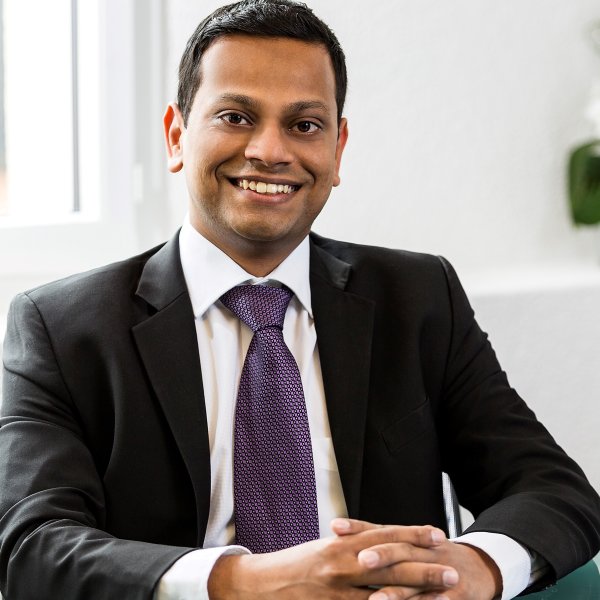
Category: Featured Insights

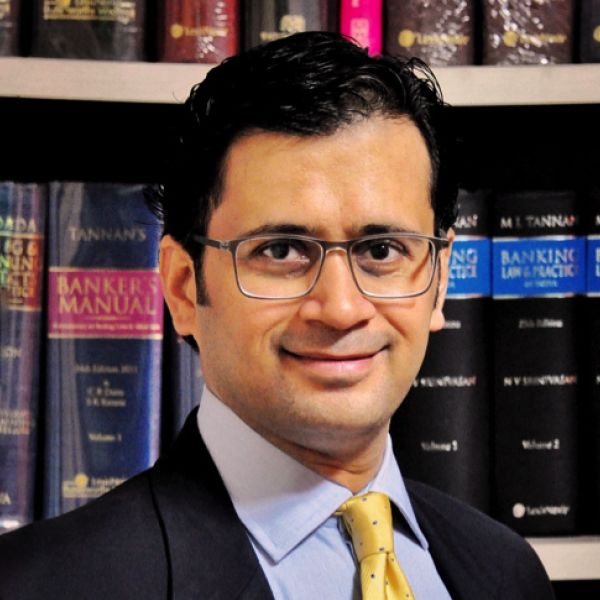
  • Dr.Kabir Duggal on working as an Arbitrator in the US, being a Harvard-Oxford-Leiden-NYU scholar and being an inspiration to thousands.

    Dr.Kabir Duggal on working as an Arbitrator in the US, being a Harvard-Oxford-Leiden-NYU scholar and being an inspiration to thousands.

    This interview has been published by Isam Kabir and The Super Lawyer Team. The Interview was taken by Priyanka Cholera.


    Dr Kabir Duggal is a Senior International Arbitration Advisor in Arnold and Porter’s New York office focusing on international investment arbitration, international commercial arbitration, and public international law matters, He is a graduate of the University of Mumbai (Gold Medal), University of Oxford (DHL-Times of India Scholar), NYU School of Law (Hauser Global Scholar), Leiden Law School (2018 CEPANI Academic Prize), and is currently pursuing an SJD Degree from Harvard Law School.

    1. Your accolades and achievements are known to the world, the career trajectory you have witnessed is one everyone dreams of but only a few achieve apart from all these. What is something the media or the world at large doesn’t know about you?

    I am delighted to be here. And very grateful for the kind words. I think two things that people don’t realise, and this is true for everybody, is that we need to be a little more sensitive and give ourselves a little more of a break. Second, there is a lot of hard/smart work behind the scenes but there is going to be a fair bit of failures. For every ten things you do, nine times the answers will be a ‘NO’ but the tenth answer might be a yes! So, you need to keep trying. Keep the good fight on! 

    Further, you need a little bit of the right time and right place and so we must not take for granted the opportunities. In India, in particular, there is so much talent. You need the opportunity to channel it and that sometimes is not fully within your control. But always try and grab opportunities whenever you can.  CaRPE dIEM.

    2. Let’s start from the beginning: why law out all the career choices available?

    I got into law, unlike a lot of people today. Most people today get into law right after high school. I did not. I did the three-year course after I had an undergraduate degree. The decision to enter law was not one that I had taken lightly. This is what I encourage everyone to do: think about your skill set, think about things that make you happy and try to find a career that combines both of these. So I realised that I like speaking, debating, writing and I thought that that skill set fills itself nicely with the legal profession. When I got into law school, I realised – this is fun! 

    3.In your academic trajectory, right from GLC to Harvard, routing through NALSAR, NYU, Oxford, Leiden, you have been denoted as a scholar, rightfully so, what about academia or research kept you going?

    As noted above, my decision to get into the law was a conscious choice. So I got into something I enjoyed, I mean no one is compelling me to do all this. I do it because I enjoy the process–getting to read things that are fun, getting to talk to people who are very smart. Different people can look at the same thing very differently. I think in Jain philosophy, it is the Anekantavada philosophy, where the same thing can be understood in so many different ways. I do feel particularly privileged to have been affiliated with some of the best universities and study with the best minds. 

    4. How has your experience before venturing into arbitration i.e as Judicial Clerk, Honorable Justice Sujata Manohar, Consultant, Development Research Group – At The World Bank Group, Legal Consultant To The Child Protection Unit – Unicef has shaped you and can you share an experience or two?

    Justice Sujata Manohar is a pioneer, a truly remarkable person. She was able to study law at a time when women did not have equal opportunities (and this is true all over the world). She became a Supreme Court Judge but her humanity and compassion made her stand out. I look at her as a mentor and a role model even today. And if I can become half the person that she is, I will consider that a success. 

    My interest when I got into higher education was in the areas of public international law and in human rights. And that’s where UNICEF and the World Bank came in. And both of them were very different but very amazing experiences which are really hard to come by. You really do feel quite privileged to have had those opportunities. UNICEF began as an unpaid internship. It started off that way and became a two and a half year stint. In fact, they invited me to come back after my masters at Oxford and before I started at NYU.  

    While I was at NYU, the World Bank Group offered me a consultancy and that is how that position happened.  Again another fascinating experience. 

     They were very different areas of law. One was looking at child rights and child protection while the other was looking at socio-economic rights in the developing world. This experience has been pretty remarkable because it exposed me to a wide range of areas within international law. 

    5. One of the most interesting observations we have noticed is you have kept human rights in the centre of your academics, what inspired the shift to arbitration? 

    My interest has always been in public international law.  International arbitration, particularly investor-state arbitration, allows me to pursue my interest in public international law and human rights because the cases often involve an intersection between several areas of public international law.  But, my interest in human rights still continues. I am part of a team that has created a global non-profit to increase access for arbitration lawyers from all over the world (https://letsgetrealarbitration.org/) and I work as a consultant for the UN office for Least Developed Countries. 

    6. How has your time at Curtis, Mallet-Prevost, Colt and Mosle LLP, Baker McKenzie, honed you in the arbitrator you’re today?

    It’s been a very exciting journey to work on some of the largest and most prominent disputes. Every firm has a different culture. Every firm has a different way of looking at things. In the investor-state context, in particular, some firms focus more on state work, some focus more on investor work, some do a hybrid of both. So getting exposed to different people, different ways of doing things, I think challenges you and helps you appreciate things in a variety of different ways. Indeed, you can get very comfortable doing the same thing the same way every day. I think having something to challenge you helps you learn a different skill, a different way of doing things.
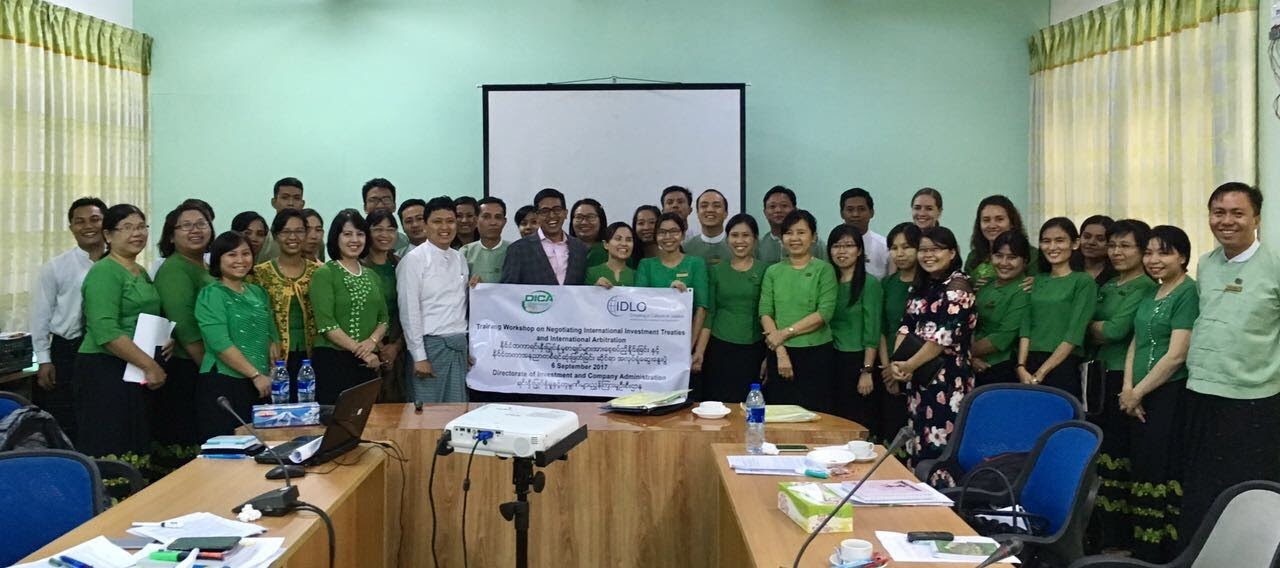
    Undertaking training for the Government of Myanmar

    7. Can you tell us about your PhD thesis on Investor-State Arbitration at Harvard as well as Leiden?

    Investor-State Arbitrations, sometimes you call Investment Arbitration, is a specialised form of International Arbitration. This is arbitration between a foreign investor and a sovereign state. Your Respondent is always going to be a Country or a State and the Claimant is a foreign investor. Here the foreign investor alleges violations of international law that often arise out of investment treaties or (domestic) foreign investment laws. And the dispute is resolved before an arbitral tribunal. Some examples in India are like Vodafone which brought its case against India arising out of a tax measure. This was under the UK-India investment agreement. That would be one example. These are cases against the sovereign so by nature, they tend to be highly political and long-drawn. It’s a lot of fun but there is a lot at stake. 

    At Leiden, my focus was on evidentiary standards in investor-state arbitration. This is a fascinating topic because international arbitration seeks to avoid detailed rules of procedure and evidence.  However, a tribunal is still bound by certain evidentiary rules.  The process was to identify what principles of evidence could be derived from the general practice of states and from public international law that would bind tribunals.  I was very privileged to receive the Academic Prize from the Belgian Arbitration Center for my research.

    My current research at Harvard looks at the intersection of human rights law and investor-state arbitration. Investment disputes often tend to implicate human rights.  For example, an investor may allege that a state policy implicates the right to fair and equitable treatment but the state may seek to justify its actions on human rights considerations.  My research seeks to unpack this tension between investor protection and human rights. 
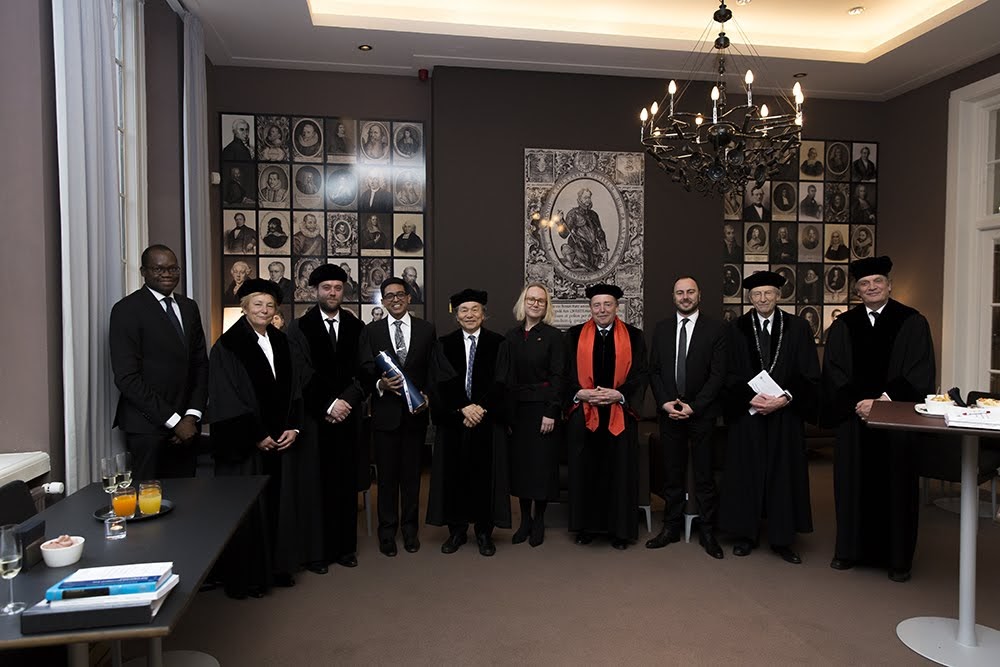
    The Leiden Defense
    The image is following the Leiden Defense

    8. You have been teaching at Columbia for nearly a decade now, and have taught at Madrid, Georgetown University, India, Harvard to name a few that pulled you towards it as given your qualifications you could have easily taken a corporate job or started practising given that you are qualified to practice in New York (U.S.), Washington D.C. (U.S.), England & Wales (Solicitor), Maharashtra and Goa (India)?

    I have always wanted to teach. As of this year, I have completed twelve years of teaching. Indeed, when I had started some of the students at Columbia University were older than I was. I enjoy it. It is something that I enjoy. I am a big believer in people doing things that make them happy. If something makes you happy, go for it. 

    9. You are a part of the Rising Arbitrators executive board, Consultant for the United Nations Office of the High Representative for Least Developed Countries, Landlocked Developing Countries and Small Island Developing States (UN-OHRLLS), you have published over 40 articles and spoken at over 300 arbitration events across the globe, what inspires these endeavours?

    Thank you, All these are things that are fun, I enjoy them. I like writing, speaking, and meeting new people. When you do something you enjoy, it does not seem like work. Some of these activities are also opportunities to make a difference and so I feel particularly privileged to have the opportunity to do so.
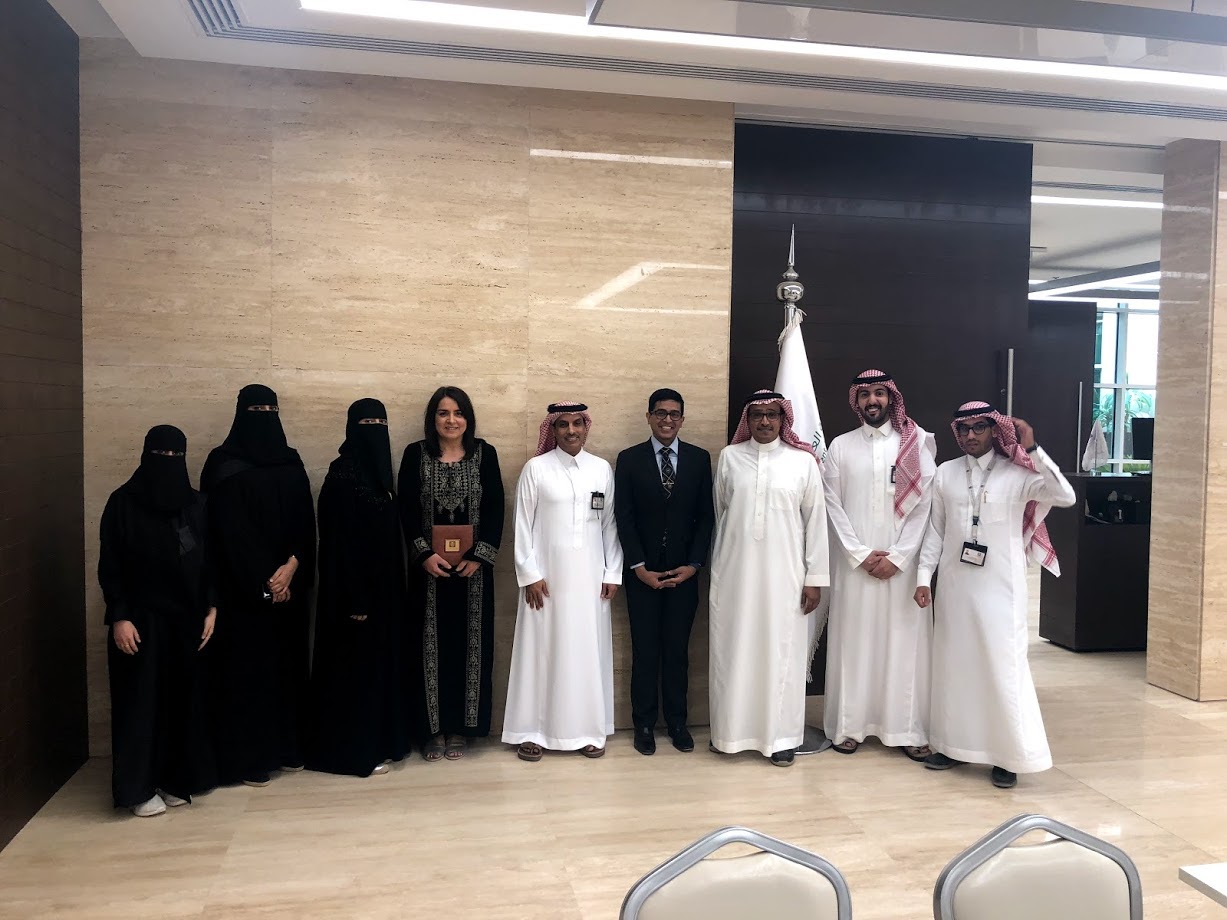
    Undertaking a Government Training with Representatives from Saudi Arabia (which is my country of birth)

    10. You started your journey as a law student in 2001, in GLC you have been part of this fraternity for 20 years now. What has changed for you in this passage of time?

    When I went to law school there was only one national law school.  NALSAR & NUJS had started and they still hadn’t had even the first set of students who had graduated. If we look at the legal landscape in India today it is very competitive. With the proliferation of law schools and people with ambition, it is a rather different reality. 

    Indeed, when I was in law school,  there was some amount of stigma in studying law- “You can’t do anything. So, you’re doing the law.” So, I think that would be the biggest change. There’s a lot more dynamism. The law students are a lot more dynamic and are a lot more willing to be enterprising and that’s a good thing. We are seeing the market evolve as well– for example, we are seeing greater think-tanks, non-profits, academic avenues in India. All this is great for our profession. When I graduated, legal education was still in the nascent stages. I look at it now though, you have people who are very thoughtful scholars today; people who are really engaged. That’s good for India at large. The profession is in better shape than when I was in it. So I look at it as a good thing. It’s becoming quite similar to the American model- very competitive, but the people who get into big law, so to speak, have a very steady career path set for them.

    11. How often have you been the only Indian in the room? Do you think silent racism towards Indians or Asians still persists or they’re still underrepresented in board rooms and classes?

    I think this is a great question and is worth addressing. Does racism exist? The answer is yes. Does racism exist against Indians in the law field in the west? I think the answer to that is also yes. It may not always be direct or overt but it does exist. If we look at the United States, Indian Americans have done extremely well in business, science, technology, engineering. That has still not been the case for the legal profession. But hopefully, things will change and we should always strive to do two things. First, we should always be aware of the privileged position that we are in and we should try, whenever we see bad things happening, to stop it. We’re lawyers and we are in a privileged position to stand up to injustice. There are people who don’t have that, both in India and in the US, and it’s important for us to stand up for injustice (this can often be taking a stand against innocuous sexist or offensive stereotypes). The second point I would just mention is, last year in the US (although this is not unique to just the US), you looked at violence against African Americans and then Asian Americans, which really got us to reflect on the inequities that exist even in our profession. We, therefore, launched an initiative called REAL- Racial Equality Arbitration Lawyers and one of our goals there is to advocate and give access opportunities to people who otherwise don’t get it. We give a lot of scholarships to attend arbitration events which can often be very expensive. I would encourage the viewers to look at this if they’re interested in arbitration, these are put on our LinkedIn Page: https://www.linkedin.com/company/real-racial-equality-for-arbitration-lawyers.  We are free to join the organization so if you are interested, consider signing up.

    12. What are a few pieces of advice you’d like to give to students or lawyers who want to pursue foreign education through scholarships?

    First, You need to start the planning process early. There will be an academic component and there will be an extracurricular component, both are important. Make sure you’re not doing one at the cost of the other. Sometimes you see people who have done like 15 moots, leadership positions in many organizations but grades are mediocre or you see people who’ve only focused on grades and done nothing else. So my suggestion is to find a good balance. 

    Second, have a nice consistent narrative to tell. Can your narrative change? Yes, it can. Tell it in a manner that’s interesting, that’s personable, but reflect a little bit on your story. 

    Third, pay particular attention to scholarships and see the requirements that they have as well as the deadlines. 

    Fourth, access your financial situation and make an individual assessment of whether or not it makes sense for them to pursue higher education if you have to take out a loan. Be prepared for the best and worst-case situation. Jobs outside India are few and far between and highly competitive.

    Finally, consider the visa reality. This is probably one of the areas that are not within your control. This is increasingly becoming harder and harder, as countries are restricting immigration. So when you’re doing your pros and cons, you really need to factor in this reality.

    13. It is known to us that apart from Hindi and English, you are fond of Urdu and have learned Spanish and Sanskrit as well, what are some of your favourite reads?

    I think with time my interest has been becoming greater and greater in reading books on history. And my specific focus, not exclusive, but the specific focus has been on reading about different aspects of Indian history. When you don’t live in India this is one way to remain connected with your heritage. I am currently reading the Age of Wrath by Abraham Early that discusses medieval India (even though the book focuses on the Delhi Sultanate there is a very interesting discussion on the Vijayanagara empire as well). 

    14. In your opinion, how will pandemic change the way we perceive education? Do you think it has achieved the philosophy of the world being a big classroom?

    The pandemic has definitely caused a lot of suffering. I will acknowledge that at the outset. Having said that, some good things have come out of it. And one good thing that has come out has been embracing technology. There is something to be said for in-person meetings but there’s something to be said for having opportunities like this where you can talk to people across time zones, across different countries. So, hopefully, post-pandemic, we keep some of this alive. The world has become a lot closer.  

    15. How does it feel to be a source of inspiration for so many people? 

    I am very grateful to hear this and am touched that people feel inspired.  I believe that my journey has still just only started 🙂 

    16. What would be your parting advice to students and everyone dares to dream big?

    Have a plan and go for it. Dream big and also be realistic. But there’s nothing wrong with aspiring. Take advantage of avenues around you. Avenues like Law Sikho didn’t exist when I was in Law School. Take advantage and be positive, failures will happen and that’s fine. To quote Kelly Clarkson- ‘What doesn’t kill you, probably makes you stronger. Therefore, take charge of your career.  

  • Pavan Duggal, Advocate, Supreme Court, shares his views on protecting privacy, cyber security issues and enforcement of cyber laws in India

    Pavan Duggal, Advocate, Supreme Court, shares his views on protecting privacy, cyber security issues and enforcement of cyber laws in India

    Pavan Duggal is an Advocate specialising in the field of cyberlaw and e-commerce. He has been recognised as one of best cyber lawyers around the world. He has made a tremendous impact with an international reputation as an expert and authority on Cyberlaw, Cyber Security Law and e-Commerce law.

    His empanelment as a consultant to UNCTAD and UNESCAP on Cyberlaw and Cyber crime respectively, membership of the AFACT Legal Working Group of the UN / CEFAT, consulting as an expert with the Council of Europe on Cyber crime, inclusion in the Board of Experts of European Commission’s Dr. E-Commerce and his work as an expert authority on a Cyberlaw primer for e-ASEAN Task Force and as a reviewer for Asian Development Bank speaks volumes of his worldwide acceptance as an authority. He is the President of Cyberlaw Asia, Asia’s pioneering organisation committed to the passing of dynamic Cyber laws in the Asian continent. He is also a member of the WIPO Arbitration and Mediation Center Panel of Neutrals.

    He has been associated with the Ministry of Communication and Information Technology, Government of India on Cyberlaw and Electronic Governance legal issues. He is a member of Advisory Committee on E-Governance in Karnataka constituted by the Government of Karnataka. Pavan is a member of Information Forensic Working Group on e-Information Systems, Security and Audit Association.

    He heads his niche law firm Pavan Duggal Associates, which has practice areas, amongst others, in Cyberlaw, Business Process Outsourcing Law, Intellectual Property Rights and Information Technology Law, Information Security Law, Defence, Biotech and Corporate Law.


    HOW WOULD YOU LIKE TO INTRODUCE YOURSELF TO OUR READERS? PLEASE TELL US SOMETHING ABOUT YOUR PRE-COLLEGE LIFE?

    I would like to introduce myself as a student of Cyberlaw.  A person who is constantly trying to discover new nuances pertaining to legal, policy and regulatory aspects pertaining to the Internet, Cyberspace and the newly emerging technologies.  A scholar who has dedicated more than 23 years of his life in this space and who still believes that he is at the outside periphery of knowledge.  A person who believes that the Internet is a game-changing paradigm, which is potentially the most significant, that human civilization has seen after the advent of fire.  I have been working on various issues on the intersection of law and technology.  Hence, my path has not been like traditional lawyers.  I have chosen to create my own path on the road to discovery.  In fact, it is strange that you could never even think while in school what you will ultimately land up doing in life.  I have been the student of Delhi Public School, Mathura Road, New Delhi and did my entire schooling from that school, excelled in academics and topped the school in Humanities and was also in the merit list.  As a student, I was extremely active in extra-curricular activities including debating, music, theatre, dance, essay writing, quizzes and various other kinds of extra-curricular activities.  I won a record number of prizes in school.


    YOU ARE FAMOUS AS A CYBER LAW EXPERT. WHAT KIND OF WORK DO YOU CURRENTLY DO?

    It is true that today I am known as a Cyberlaw expert.  This is primarily so because of the kind of super specialization that I have acquired the area of Cyberlaw. I have worked for more than the last 2 decades in this space. I have been extensively working on the intersection of law and technology. Currently, I do various kinds of works. I advise clients on nuances pertaining to cyberspace transactions, compliances under the applicable provisions of the Indian Cyberlaw, advise on cyber/electronic transactions and the legal nuances, help companies to protect and preserve their domain names and their web presence online, do litigation for variety of clients so as to protect their legal interests, whether in the form of plaintiffs or defendants.  I write extensively and have written 102 books on various aspects of Cyberlaw and connected nuances.  I teach extensively in select law colleges and international and national institutions including the National Police Academy, National Judicial Academy, Delhi Judicial Academy and various state judicial academies.  I extensively interact with various international stakeholders on the nuances of cyberspace.

    I had been contributing a column entitled “Brief Facts” for 8 years in the Economic Times. I have extensively featured in various international and national media.  My different columns published in various media, news portals and columns include The Economic Times, The Hindustan Times, The Business Standard, The Pioneer, The Deccan Chronicle, and The Mint etc.  I have launched a Course on Cyber Security Law last year, which today has more than 9750 students from 157 countries.  I speak at various conferences, seminars and workshops.

    I am the Conference Director of the International Conference on Cyberlaw, Cybercrime &Cybersecurity which is the world’s unique Conference looking at the intersection of Cyberlaw, Cybercrime &Cybersecurity.  I am chairing the International Commission on Cyber Security Law which is looking at collating legal principles governing cybersecurity at a global level.  I am also heading the Artificial Intelligence Law Hub which is looking at the examination of cutting-edge nuances concerning Artificial Intelligence.  I am also heading the Blockchain Law Epicentre which is also looking at legalities concerning Blockchain. I am extensively working with international organizations including UNESCO, ITU, ICANN, Council of Europe, INTERPOL and many other organizations so as to contribute to the evolving jurisprudence on Cyberlaw, Cybercrime &Cybersecurity. In my humble manner, I have been trying to contribute my small inputs to pushing the envelope of evolving jurisprudence on Cyberlaw, Cybercrime and Cybersecurity.  In a nut-shell, I try to do the variety of activities all surrounding the Internet, cyberspace and legal, policy and regulatory issues connected therewith.   I advise the Government of India and its various Ministries especially the Ministry of Electronics & Information Technology, Government of India on various issues concerning Cyberlaw and am part of various governmental bodies.  I have also been part of G Gopalakrishna Working Group on Electronic Banking formed by the Reserve Bank of India which determined and set the cybersecurity standards for Banks in India.


    WHAT SORT OF CASES DO YOU USUALLY HANDLE?

      I handle a variety of cases on diverse issues. These cases invariably involve data thefts in the corporate sector, unauthorized transmission of data, violation of trade secrets, breach of privacy of individuals, disputes concerning electronic contracts, cybercrime prosecution and defence. I also do cases pertaining to liability arising from contravention under the law.  I advise on domain name disputes and try to get domain names back from the squatters.  I do a lot of cases for protection of reputation.  I do cases concerning cyber defamation, cyber nuisance, cyber harassment, cyberstalking and trolling and help affected persons and provide advisories.  I also do various cases pertaining to breaches of cybersecurity and the potential ramifications emerging therefrom.  I also advice intermediaries, in terms of their respective compliances on how they can limit their liability for third-party data.  I do cases pertaining to abuse of Over The Top Applications and also the social platforms like Facebook, Twitter, Instagram etc.   I also do cases for protecting and preserving digital rights of netizens.  I also file Public Interest Litigations (PIL) on legal aspects concerning cyberspace which impact the public interest at a broader level.


    HOW IS CYBER LAW AND ENFORCEMENT SYSTEM IN INDIA? IS IT ADDING TO THE CHALLENGES OF TIME?

    The Cyberlaw system in India has been put in place by virtue of the Information Technology Act, 2000.  India enacted this law, keeping in mind the UNCITRAL Model Law on Electronic Commerce.  The said legislation is indeed historic as it not only legalized the electronic format but also paved the way for the growth of electronic commerce and electronic governance in the country.  It also sought to cover various cybercrimes.  This law also elaborated the liabilities of intermediaries. However, in the year 2000, this law did not specifically cover the mobiles, despite the fact that mobiles had already emerged as a major factor in mainstream society.  The Information Technology Act, 2000 was amended by the Information Technology (Amendment) Act, 2008, after 26/11 Mumbai attacks.  The said amendments sought to enhance the scope and applicability of the Indian Cyberlaw to be applicable to all kinds of mobiles and communication devices. Various new cybercrimes were added and also the concept of intermediaries and their liability was more specifically well defined. Cybersecurity as a concept was distinctly added in the said law and various provisions concerning the same were also adequately put in the same.  It has been for the last more than 10 years since the amendments have taken place. However, when one looks at the cyber legal regime in the country, one finds that it has not been effectively implemented.  First and foremost, it needs to be understood that the Information Technology (Amendment) Act, 2008 effectively watered down the deterrent effect of the previous law.  This is so because, barring few cybercrimes, almost all cybercrimes were transformed into bailable offences where the accused is entitled to bail.  I was the counsel for the complainant in India’s first cybercrime conviction in the year 2003.  We had hoped that this first conviction could be the precursor of more convictions to follow. However, with the change of law and given the sloppy enforcement of the law, cybercrime convictions have effectively dried up. Today, India is seeing a famine of cybercrime convictions.  This is also primarily so because enforcement of provisions of law has not been very effective.  The way the Police is detecting, investigating and prosecuting cyber crimes, leaves a lot of potential gaps.

    Electronic evidence is not given the right kind of legal treatment, as is mandated by the Hon’ble Supreme Court of India in its various judgments. Consequently, there is a big gap between the registration of such cybercrimes and final prosecution. Majority of electronic evidence has not been able to be put in the right manner that further complicates the entire scenario.   Further, it needs to be understood that technology is a constantly growing target and technology invariably leaves the law 10 steps behind.  The problem in the Indian Cyberlaw is that despite various shortcomings, it is not effectively amended, given the newly emerging challenges that have already come up, which have not been appropriately addressed under the law.  Social media as a paradigm has not been adequately addressed.  Further, issues like cyber stalking, cyber trolling and cyber harassment are not effectively detailed in the said law.  The advent of Over The Top Applications has brought forward new challenges, which are not adequately covered under the law.  Further, the coming of new technologies like Blockchains, Artificial Intelligence and the Internet of Things have further highlighted the inadequacy of the Indian Cyberlaw. There is a need for appropriate amendments in the same so as to make it topical and relevant to the requirements of today’s times.  While it is indeed laudable that the Indian Cyberlaw has provided the legal framework for the legal validity, sanction and growth of electronic commerce and electronic governance, the fact remains that there is lot more work that is required to be done.  India as a country needs to provide utmost focus and priority to Cyberlaw frameworks since the Indian Information Technology Act, 2000 is special legislation and it supersedes any other law prevailing for the time being in force.  Currently, I do feel that due to the advent of emerging technologies, the inadequacy of the Indian Cyberlaw has not been effectively brought forward. It is high time to make the Indian Cyberlaw more topical and relevant, by updating it and incorporating new offences so as to deal with new technological challenges.


    HOW DID YOU BUILD YOUR PRACTICE? THREE STEPS YOU HAVE TAKEN THAT MADE THE DIFFERENCE.

     I began as a civil and corporate lawyer.  I started practice in Tis Hazari Court, Delhi and then moved on to the High Court and Supreme Court.  I was initially interested in technology. In the early 1990s, I got certain software clients and that retriggered my interest in technology.  The advent of the Internet provided a completely new game-changing moment in my life.  After being overwhelmed by the media in the first couple of months, I quickly realised that there are a lot of legal, policy and regulatory issues that need to be appropriately addressed and I started working on the same.  At that time, there was not much work happening in India and I started working with the international players.

    Towards the end of 1990s, the Government of India was preparing the Information Equipment Bill, 1999.  I got active and started working with various stakeholders including the Parliamentarians and the Government of India so as to give inputs on the Bill.  I also started working with the Ministry of Electronics & Information Technology, Government of India on Cyberlaw issues.  All this time, I had started doing work on domain name disputes.  The coming of the Information Technology Act, 2000 provided a new area to focus on, where I focused. As time passed by, clients came back and said that they wanted us to expand the scope of services that we were providing. So, I swam with time and kept on expanding the bouquet of services that were provided to clients and slowly, the practice grew. Today, I am primarily known because of my super-specialization in Cyberlaw, Cybercrime and Cybersecurity.  My law firm PavanDuggal Associates, Advocates also does commercial and civil litigations as well.

    As regards three steps that I have taken that made the difference, I believe that Almighty has got its own ways of getting work done from us. I distinctly believe that we all are puppets on the stage of life, for whom all work has been predetermined.  Looking back, the three steps that made the difference for me would include the following:

    I was driven with my passion for technology and its intersection of law and technology.  I followed my passion and my heart and landed up where I am currently standing.

    My perseverance and hard work.  A lot of people only try to see the glossy side of legal career.  However, it takes a huge volume of untiring effort to make one’s position and contribution.  I have been extensively doing hard work which potentially could also be a contributing factor to my current position.

    Patience is also one factor that has helped me. A lot of people often run out of patience and do not have the patience to pursue their passion for their dreams, if they don’t get early success. There were numerous hiccups and massive earlier failures that I actually experienced but I felt that cyber is the next domain of the future and I need to focus. I patiently waited and kept on working silently in this space.


    COULD YOU TELL OUR READERS ABOUT THE FIRST TIME THAT YOU APPEARED IN COURT?

     I remember the first time when I appeared in the Court. That was immediately after passing out from LL.B. My first appearance was in the Tis Hazari Court, Delhi.  I was nervous.  I was appearing before a Trial Judge and while I was reading the case, I was slightly confused as to how to address the Judge, whether the Judge should be addressed as Your Honour or My Lord.  I had done a lot of preparations for the case and ultimately, when the hearing of the case happened, it took a couple of minutes.  I did fail initially because of the slight nervousness but as the case began, I confidently stated what I had to state and the Judge also asked the other side about the proposition and thereafter proceeded to pass an order.  That particular appearance is still vivid in my mind.  It was a completely different experience from the traditionally filmy legal appearances that we are used to seeing in the Bollywood and Hollywood films.  However, I distinctly remember extensively reading the file prior to my first appearance. I also told myself that I need to be most updated with all the aspects of the file, and worked towards that direction. It was my very interesting first appearance.


    WHY DID YOU CHOOSE CYBER LAW AS YOUR SPECIALISATION?

     I chose Cyberlaw as my specialisation because I felt that cyberspace is the paradigm of the future.  I was very clear that the world is increasingly going more and more digital and therefore if I have to look in the future, I must be fully prepared for the same. Hence, I chose Cyberlaw as my specialisation since I felt that over a period of time, my specialisation will increasingly have to grow very significantly and will even land up having a large impact, on other specialisation as well.


    MANY LAWYERS ARE INTERESTED IN CYBER LAW. WHAT WOULD BE YOUR ADVICE TO THOSE WORKING AS CYBER LAWYERS?

     My advice to lawyers who are interested in working as cyber lawyers is that there is a lot of scope in Cyberlaw in the coming times.  However, everything is not as rosy, as it appears.  There is a lot of hard work, required before one can achieve the desired destination.  There is an increasing need for cyber lawyers as more and more stakeholders are increasingly using the digital format and are using cyberspace as a central theme point for all their operations, activities and initiatives.  As time passes by, the volume of work is constantly going to increase. So if you are interested in Cyberlaw, this is the right time to get started and be involved in this area.


    HOW IMPORTANT IS IT TO HAVE MENTORS FOR A YOUNG LAWYER IN STARTING HIS CAREER? WHO WERE YOUR MENTORS AT THE START OF YOUR CAREER?

     It is very important for a young lawyer in starting his career to have mentors.  Mentors are not just pillars of strength but also inspiration, encouragement and source of advice.  One should not believe that one knows everything in the starting of the career. On the contrary, after passing out from the law college, it is very important to unlearn what you have learnt and then relearn aspects in the profession.  Mentors help guide and supervise young lawyers and also put them in the right direction.  The brilliant aspect about mentors is that mentors can use their lifetime experience to guide youngsters to reach their best potential.  My mentor in the starting of my career was my father and he still continues to be my mentor.  My father is a practicing Advocate.  I looked upto him as my hero, as my idol and as my mentor.  Consequently, I started looking up to him for all advice and inputs to get started and what to do in important cases that I am doing. My father still plays a very significant and invaluable role in my evolution as a lawyer. He is the rock-solid pillar to whom I always go back in the event of any challenge.  He appropriately guided me in the right direction and also warned me on how to face various challenges that lie ahead in my legal practice.


    PRIVACY HAS BECOME VERY FRAGILE. HOW INDIA SHOULD PROTECT PRIVACY OF CITIZENS?

     Privacy is an integral part of our human existence.  No wonder, when the Hon’ble Supreme Court has declared the right to privacy as an integral part of the fundamental right to life, it is effectively ventilating the hopes and aspirations of millions of Indians.  India needs to do extensive homework to protect and preserve the privacy of its citizens.  Currently, India does not have a dedicated law on privacy.  The Indian Information Technology Act, 2000 is not a law on privacy and only has provided lip service to privacy.  There is a need for a dedicated law on privacy that would help define the roles, duties and responsibilities of various stakeholders. Personal and data privacy needs to be adequately specifically addressed.

    As a nation, we should not confuse privacy with data protection. Data protection is important but privacy is critical to human existence, human dignity and human life.  As a nation goes forward, we need to have specific courts who only look at privacy related violations so that privacy violation matters are handled with utmost care in a very gentle manner and with distinctive victim friendly approach. With now increasingly the Government being straddled with the duty to ensure that the right to privacy is effectively implemented, the Government has also a lot of work to do.   India is currently in the process of coming up with a new Personal Data Protection Bill. While that could address some aspects of privacy, but India needs to do far more. Privacy would require the adoption of distinctive new approaches for the purposes of adequately addressing it.  Also, stringent, effective and efficacious remedies need to be provided to victims whose privacy, both data privacy and personal privacy is infringed or violated.  India needs to provide for a regime of exemplary damages so as to give a right message to all stakeholders, that privacy of citizens cannot be taken for granted and is a value of human dignity that needs to be respected and handled with utmost care, caution and regard.


    WHAT IS THE CURRENT STATE OF CYBER SECURITY IN INDIA?

     Today, India as a nation has not been giving its best efforts to the cause of cybersecurity. In fact, India as a nation is giving only lip service to cybersecurity.  India did come across with its National Cyber Security Policy, 2013 which was a remarkable document containing good motherly statements and the Policy of the Indian nation on cybersecurity. However, the last 5 years have shown that the National Cyber Security Policy of 2013 has only remained as a paper-tiger. In addition, we need to appreciate that India does not have dedicated legislation on cybersecurity, in comparison to a large number of other countries.  The Indian Information Technology Act, 2000 is not a cybersecurity legislation.  This is despite the fact that cybersecurity as a concept has been defined and introduced under the Indian Information Technology Act, 2000 by virtue of the Information Technology (Amendment) Act, 2008.

    At a time when countries like China, Singapore, Vietnam, Egypt etc. are racing miles ahead in terms of coming up with detailed and elaborate cyber security legislation, India as a nation has been left behind.  Further, as a nation, we are also not clear as to whose responsibility is cyber security.  A large number of people in India believe that cyber security is a governmental responsibility, without realising that it is not a correct picture. Cyber security is a collectively shared responsibility for all stakeholders. The Government has to play an important role in cyber security, but other shareholders have to increasingly also play a very significant role in this direction.  India as a nation needs to define the rights, duties and responsibilities of various stakeholders. Indian networks and systems are constantly under attack and as a nation, we have not been very effective in terms of repelling those attacks.  There is a need for a dedicated cyber army in India who can actually protect and preserve cyber security attacks, both in the actual world and also in cyberspace on a 24/7 basis.   We still don’t have a dedicated cyber security authority in the country.  Cyber security is a shared baby and is a subject of turf war amongst various ministries.  India as a nation needs to quickly realise that in case if we are not effectively working on protecting and preserving cyber security, it could potentially start adversely affecting the sovereignty, security and integrity of India in the coming times.


    WHAT IS YOUR OPINION IS ON ONLINE DISPUTE RESOLUTION. DO YOU THINK IT WILL BECOME REALITY ANYTIME SOON IN INDIA.

     I feel online dispute resolution is the way going forward.  We have seen the success of online dispute resolution for protection of domain names with the effective implementation of Uniform Domain Name Dispute Resolution Policy (UDRP) of the Internet Corporation for Assigned Names & Numbers (ICANN).  We have also started seeing the beta use of online dispute resolution. It will become a reality very soon with the coming of a few years in India.  In fact, cyber arbitration should be an important element in online dispute resolution in the coming times.


    WHAT IS THAT ONE CASE THAT HAS LEFT A LASTING IMPACT ON YOU?

     The one case that has left a lasting impact on me is the case that I did for an online card processing company. The company suffered a cybersecurity breach and the said breach was extremely complicated and sophisticated. The breach led to not just theft of data but also subsequent cloning of credit cards of some high net worth individuals. The said cards were subsequently cloned and sent to different countries. In more than 2 dozen countries, the said cards were used in massive global operations all aimed to physically withdraw millions of dollars from ATMs across the world.  Our client lost millions of dollars. The client was however insured. This case demonstrated to me the enormity of cybercrimes through various highly professionally organised and ultra sophisticated cybercrime gangs.  It also showed the inadequacy of organisations and companies to deal with cybersecurity breaches and new challenges of cybercrimes. This case brought to my attention the enormous manipulations of ATMs and planning done by cyber criminal gangs and also showed me the ground reality that in the present and in the coming future, there is nothing known as complete security and that nobody is secure. This case further sensitised that everybody is capable of being hacked and therefore now the new norm has to be to accept the fact that breaches of cybersecurity will be a part of our day-to-day lives. How can we concentrate on cyber resilience and how can we be up and about after being breached by the cyber attack, has to be the new focus area.  This case has been an important case which made me understand the impermanence of today’s present scenario.  Just because everything is going fine, there is no guarantee that these things will keep on going fine tomorrow. On the contrary, change is constant and will be so, in the lives and times of stakeholders in the digital and mobile ecosystem.


    HOW CAN A JUNIOR WISHING TO WORK UNDER YOU GET IN TOUCH WITH YOU? WHAT QUALITIES WILL YOU LOOK FOR HIRING A JUNIOR?

     Any junior who wishes to work under me could get in touch with my law firm PavanDuggal Associates, Advocates.   He/she could contact us at email ID info@pavanduggalassociates.com or could also reach out to me personally at my email ID pavan@pavanduggal.com and pduggal@vsnl.com.  I am looking for the hunger and passion to learn as important qualities of any junior that could work for me. A lot of juniors today are not willing to learn.  They come out under the presumption that they know everything and due to overconfidence, often land-up missing important milestones.  Hard work, perseverance, patience, dedication, discipline and good interpersonal relations are important attributes and qualities that I look forward to while hiring a junior.


     WHAT INSPIRES YOU TO WRITE? HOW DOES BEING AN AUTHOR OF NUMEROUS BOOKS AND ARTICLES HELP YOU IN YOUR CAREER?

     I believe that life is short.  We will all be dead and gone tomorrow. Hence, it is very important to write your thoughts and express them in print so that they can be your contribution to society.  I get inspired to write because I believe that my thoughts must be well captured and communicated to other stakeholders.  I have had a flair for writing from the very beginning.  I love to write as I feel that writing is the best way of sharing experience, knowledge, perspectives and opinions.  I write rigorously and regularly. Over the last more than 2 decades, I have authored 102 books on different aspects of Cyberlaw, Cybercrime &Cybersecurity and connected legalities.  In addition, I have written a number of articles that have appeared in various newspapers, online media platforms, websites and other publications.

    Being an author of articles and books will help you in your career. People see you with a different perspective and in a different light, once you become an author.  They start giving you more respect and regard and also your books then become ambassadors of your capacities and capabilities. Also, writing books demonstrates your authoritative command on your subject and hence contributes to your career.


     YOU ARE A PROLIFIC WRITER. DOES IT HELP A LAWYER TO WRITE ARTICLES AND BOOKS?

    As a prolific writer, I believe that it does help a lawyer to write articles and books.  We have to traditionally change our mindsets about the legal profession. The perception that lawyer must only go and argue matters in courts is an old perception and needs to be slightly changed with the times. Today, lawyers are expected to do multi-dimensional roles. Hence, they must not only have people friendly soft skills but also have appropriate contributions to give back to society. Writing books and articles is one such contribution that one can make in terms of giving back to society.  Your books and articles could get read by members of the public who will then become your potential clients and will start forming an opinion about you.  In the event of any challenge and issue, they would come back and seek your opinion.  So over a period of time, a lawyer which writes books and articles not only tends to enhance his/her capability but also tends to contribute to the growth of evolving jurisprudence.  Having authored 102 books and numerous articles, I believe that it definitely helps lawyers to write articles and books.

    In the end, I would just like to say that the world is a constantly changing paradigm. Everything is in a constant state of flux. Hence, the focus of any lawyer has to be to try to update his/her skill-sets. We must unlearn, relearn, unlearn, relearn all the time.  This is so because the coming times are very challenging times ahead. The advent of new technologies will bring in, not only new challenges but far more opportunities as well. It requires a vision to understand and identify some key opportunities that the coming future will bring across. The legal profession has been one of the best professions in the world. I believe that with the advent of technology and cyberspace, it will continue to grow by leaps and bounds.  Cyberlaw, as a discipline, will increasingly contribute in the evolving digital law jurisprudence at global and national levels.


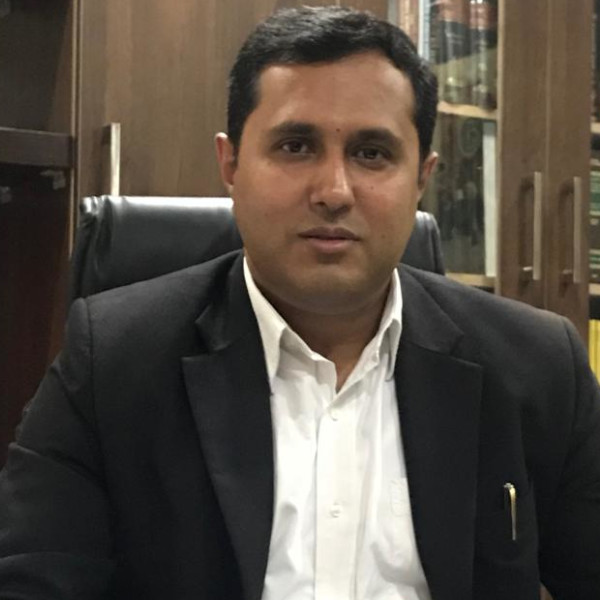
  • Ashok K. Gupta, Senior Advocate, Supreme Court of India, on the AOR exam, life in litigation and being on panel of union government

    Ashok K. Gupta, Senior Advocate, Supreme Court of India, on the AOR exam, life in litigation and being on panel of union government

    Ashok K. Gupta  graduated in B.A. (Hons. – Political Science) from University of Delhi in the year 1976.  Then he completed LL.B. from Campus Law Centre, University of Delhi in 1979.

    He enrolled as an Advocate with Bar Council of Delhi in January, 1981.  After practicing in District Court, Delhi for two years, shifted to Supreme Court & joined the chamber of Mr. P.H. Parekh, Advocate Supreme Court of India. He passed the Advocate-on-Record Examination conducted by Supreme Court of India in November, 1986.  And started his Independent Practice in 1987.

    He practices primarily before the Supreme Court, various High Courts like Jabalpur and Indore Benches of MP High Court, High Court of Odisha at Cuttack and Punjab & Haryana High Court, and before various statutory fora like National Consumer Disputes Redressal Commission (NCDRC), National Green Tribunal (NGT) & Appellate Tribunal for Electricity (APTEL) .

    He was appointed Counsel by Delhi High Court (to conduct its cases on the administrative side) before the Supreme Court in the year 2000. The he was appointed Senior Panel Counsel for UOI in Delhi High Court, in January 2001. He was designated as a Senior Advocate in April, 2012. He was the appointed by the supreme court as chairman of three-member committee under the Right to Education Act to report on compliance with various stipulations contained in the Right to Education Act in April, 2014. And also, other pro-bono committees.

    He is also the member of Supreme Court Bar Association, Delhi High Court Bar Association, Odisha High Court Bar Association, Madhya Pradesh High Court Bar Association and International Law Association. Life member of All India Women’s Education Fund Association and in that capacity was elected as member of the Governing Body of Lady Irwin College, University of Delhi during the Academic Year 1996-1997 and 1997-1998. Life member and Treasurer of Confederation of Indian Bar.

    In this interview, we talk to him about:

    • Being a first generation lawyer: college life, internships and interest in litigation;
    • Establishing his independent practice;
    • Cracking the Supreme Court Advocate on Record examination;
    • His wide range of practice encompassing various courts, tribunals and;
    • As Panel of Union Of India for Delhi High Court.


    HOW WOULD YOU LIKE TO INTRODUCE YOURSELF TO OUR READERS?

    I would like to be known as a quintessential Delhi-06 person, who loves his family, puts in honest, hard work, never ceases to learn and practice, and yet, enjoys all the good things of life: food of Old Delhi, and theatre at Mandi House in the evening, to name a few. This is my typical middle-class perception of myself.


    YOU ARE A FIRST GENERATION LAWYER. WHAT LED YOU CHOOSE LAW AFTER GRADUATION IN POLITICAL SCIENCE?

    Right, I am a first-generation lawyer. After my graduation in political science from Delhi University way back in the year 1976, I chose law not because it fascinated me; I chose law because I thought firstly, it would help me in my Civil Services examination, and shall be my second subject apart from political science. The other feeling was that, in case, I fail to make it to the Civil Services (as indeed, I did), I won’t be unemployable and could always do something as a professional lawyer. So, this was with a view to ensure that I don’t remain unemployed and/or unemployable.


    YOU STARTED YOUR CAREER WITH PRACTICE IN DISTRICT COURTS. HOW IMPORTANT IS IT FOR YOUNG LAWYERS TO KNOW BASIC DISTRICT COURT PRACTICE BEFORE MOVING TO THE HIGH COURT AND SUPREME COURT.

    It is correct that I started my career in district courts. Knowing that the nitty-gritty of practice in the Districts Courts is an absolute must for a young lawyer, I’m not suggesting that a lawyer should not aspire to become a High Court/ Supreme Court practitioner. All that I’m suggesting is that one should be fully familiar with the procedural parts of the legal practice, both on the criminal as well as the civil side. At the genesis of one’s career, it is your known circle of acquaintances who approach you, say, for a recovery suit, section 138 complaint, some accident or insurance case, matrimonial disputes and such matters which primarily emanate at the district court level. The ideal situation would be, of course, where one joins a chamber, which handles district court work, besides work in the constitutional courts.


    YOU JOINED THE CHAMBER OF SENIOR ADVOCATE PH PAREKH. PLEASE SHARE YOUR EXPERIENCE WORKING WITH HIM.

    Way back in the early eighties, the experience of working in my senior’s chamber was very fascinating and exhilarating. We were about a dozen junior colleagues at that time and it was not unusual for one junior to be doing two-three cases each day. The day would normally begin with a conference with a Senior Counsel like Mr. Fali Nariman, Mr. Sorabjee, Mr. Mridul or Mr. Tarkunde at around 8:30 A.M in the morning, court thereafter, after which we would be immediately heading towards office for drafting work and, again, the cause list would come around 6:30 P.M, whereupon our senior would allocate matters; the office of Senior Counsel would be informed and conferences fixed for next day morning. Then you head towards home around 9 PM and read the brief for the next day morning conference. But we had great fun; lot of outings and birthday celebrations, with legal conferences and seminars thrown-in between.


    HOW DID YOU DECIDE TO COMMENCE YOUR INDEPENDENT PRACTICE WITHIN A SHORT SPAN OF SIX YEARS AFTER GRADUATION?

    I decided to commence my independent practice once I realised that one cannot be somebody’s junior eternally. By the time I commenced practice, I had already passed my AOR examination and knew that one has to setup his own practice one day.


    WHAT WOULD BE YOUR ADVICE TO LAWYERS APPEARING FOR AOR EXAM NOW?

    I can really advise that a lawyer should thoroughly prepare with case law, latest judgements and equip himself with precise and concise drafting skills. One should know that on the account of the very heavy work load, the Supreme Court judges very much like and appreciate if the pleadings are to the point, not verbose and the point arising in the case is neatly stated. I keep emphasising and reinforcing to my juniors and briefing counsels: “don’t miss the forest for the trees”.


    WHAT ARE THE CHALLENGES IN STARTING INDEPENDENT PRACTICE?

    Challenges in starting independent practice are no different from starting any new venture in any new sphere of activity. But, then, if you put in sufficient quality work, you are bound to be noticed. You have to build up reputation for being an upright and a committed professional. Of course, all this would take time. Nothing good was ever achieved in a short time.


    YOU ALSO TAKE UP AND ARGUE ARBITRATION CASES. HOW IS PRACTICE IN ARBITRATION DIFFERENT FROM LITIGATION PRACTICE IN INDIA?

    I was first introduced to arbitration way back in the mid-eighties when I appeared alongside a noted junior counsel (now, a respectable Judge of the Supreme Court) in an arbitration proceeding pertaining to claims and counter-claims arising out of the 1982 Asian Games held in New Delhi. The Arbitral Tribunal was headed by Justice (Retd.) A.C. Gupta of the Supreme Court. He was a very quiet and taciturn arbitrator, unlike the majority of present-day arbitrators. For a successful arbitration practice, it is indispensable for one to know the basic essentials of handling suits, even though the technicalities of CPC and Evidence Act do not apply to arbitration proceedings. Surely, one must know about admission and denial of documents, framing of issues (not all arbitral tribunals frame issues), and the proof of documents in case of denial by other side, etc. Also, the art of cross-examination assumes a lot of significance and seriousness in an Arbitration proceeding. An arbitration claim is no different from a claim in a suit, except that the procedure is shorn of all the technicalities, and there is much less stress because of less pressure of time.


    YOU HAVE ALSO BEEN ON THE PANEL OF UNION OF INDIA FOR DELHI HIGH COURT. WHAT IS THE MODUS OPERANDI WORKING FOR THE CENTRAL GOVERNMENT?

    This was the first time ever that I worked for any government (Central/ State). I was, hitherto, primarily appearing for private clients and some PSUs. It was, initially, difficult for me to adjust to the role of a government lawyer, inasmuch you hardly receive timely instructions, proper records are not maintained, and most of the time you cut a sorry figure before the Court, not on the account of any lack of professional skill or competence on your part. That said, it is, indubitably, a matter of pride, prestige and honour for any lawyer to be empaneled as a government lawyer.


    WHAT ARE THE SKILLS REQUIRED FOR A LAWYER AIMING TO BE A SENIOR ADVOCATE IN HIS CAREER?

    First, one has to be a competent and honest lawyer and the other, one should totally abjure sharp practices as a lawyer. There have been several instances, where very skilful and competent lawyers were not given the designation of a Senior Advocate by the Court, on account of the perception of lack of ethics on the part of such lawyer. Now, of course, the Supreme Court in the judgement of ‘Ms.Indira Jaising vs. Supreme Court of India’ has laid down the entire procedure for designation of a lawyer as a Senior Advocate.


    BEING A LAWYER, IS IT DIFFICULT TO MAINTAIN WORK-LIFE BALANCE?

    Work-life balance is difficult but not impossible to achieve, just like in any other business or employment. Here the complexities are of a different nature, in the sense, that in the early years as a lawyer, money is hard to come by, hours are uncertain and stress is a little too much to handle. The reason being that the client is primarily concerned with the outcome of his case, not really concerned with your legal knowledge and the hard work put in by you. This does take its toll on one’s health and impacts work life balance.


    WHAT IS THE REQUIRED SKILL-SET OF BEING A SUCCESSFUL LAWYER?

    Being successful in the profession requires no set of different rules than the ones you require in other spheres of activities of life. It is talent, hard work and luck – an amalgamation of all the three.


    PLEASE LET US ABOUT YOUR MOST MEMORABLE CASES.

    I have appeared in hundreds of cases in my career as a lawyer spread over 38 years, as an instructing advocate in the early years of practice, and as a counsel thereafter, and a senior advocate in later part of life. A government-tender matter, wherein I had engaged and instructed Mr. S.S Ray, Sr. Adv. (now deceased) and Dr. Shankar Ghosh, Sr. Adv. to appear before the Jabalpur High Court in 1991-1992 stands out in my mind. The other case that I fondly remember of the nineties was a very complex trademark case before Justice Ajay Noth Roy of the Calcutta High Court against NALCO Chemicals, USA. I found Justice Roy to be an outstanding and brilliant judge, though the Supreme Court collegium, perhaps, thought otherwise. Among the arbitration matters, I have a proclivity towards my case, ‘National Aluminium Company vs. Pressteel & Fabrications Pvt. Ltd.’: (2004) 1 SCC 540, which paved the way for the Supreme Court to rule on the applicability of the 2015 Arbitration Amendment Act in ‘BCCI vs. Kochi Cricket Pvt. Ltd.’. In recent years, in the cases, ‘National Aluminium Company Ltd. vs. Ananta Kishore Rout’: (2014) 6 SCC 756, ‘Chairman-cum-MD vs. Bharat Chandra Behera’: (2013) 16 SCC 622 and ‘Kalinga Mining Corp. vs. UOI’: (2013) 5 SCC 252, I was able to persuade the Supreme Court to sustain my view point.


    HOW CAN JUNIOR WISHING TO WORK UNDER YOU GET IN TOUCH WITH YOU? WHAT QUALITIES WILL YOU LOOK FOR HIRING A JUNIOR?

    A junior wishing to work with me can directly approach me, no need for an intermediary. The only quality I look for in a junior is that he should be hardworking. I have always maintained and continue to maintain till this date, that a talented person might fail but a hardworking person never fails.


    WHAT WOULD BE YOUR WORD OF ADVICE TO YOUNG LAWYERS AND LAW STUDENTS AIMING TO MAKE CAREER IN LITIGATION?

    My advice to young lawyers would be no different than what I received in the early eighties, and it is: “work like a horse, live like a hermit”. Now, a word of unsolicited advice: I would very much like if young lawyers take to politics as well, even as they continue to practice law. There is such a dearth of good people- professionally employed people in Politics. This way you contribute to the well-being of the society, as also enhance your own prospect in the profession. The success achieved by the likes of P. Chidambaram, Arun Jaitley and Kapil Sibal is attributable, in part, to their being seen in politics.

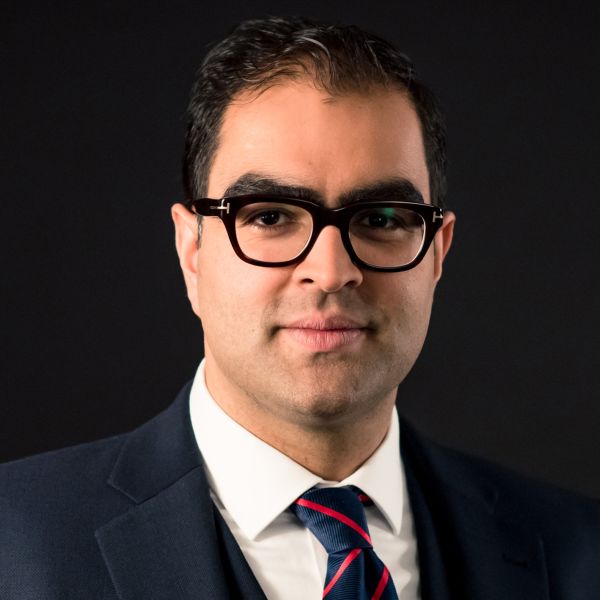
  • Manu Beri, Advocate, on setting up independent practice; litigation at NCLT and urgent need for reforming judicial system

    Manu Beri, Advocate, on setting up independent practice; litigation at NCLT and urgent need for reforming judicial system

    Manu Beri graduated from Campus Law Centre, University of Delhi, in 2000. With over eighteen years of experience in litigation, he has handled a variety of matters in different forums including the Supreme Court, Delhi High Court, National Company Law Tribunal, National Consumer Commission and Arbitration Tribunals.

    In this interview we speak to him about:

    • His early years as lawyer in litigation practice
    • His experience in various courts
    • Challenges of a litigation lawyer
    • Building independent practice


     HOW WOULD YOU INTRODUCE YOURSELF TO OUR READERS?

    I practice in the Supreme Court, Delhi High Court, National Company Law Tribunal, National Consumer Commission and before Arbitration Tribunals. Have been doing a variety of legal matters both in Corporate and Criminal law (Economic Offences) for clients in India and from abroad, including large and medium size corporations in FMCG, Logistics, and Infrastructure sectors etc.


    PLEASE TELL US ABOUT YOUR COLLEGE LIFE. WHAT MOTIVATED YOU TO TAKE UP LAW AS A CAREER?

    I did my LL.B from Campus Law Centre, Faculty of Law, University of Delhi in the year 2000. Spending three years during my LL.B course in the North Campus of DU was quite good. The best part of it was that Senior Lawyers would come to our Faculty to share their experiences and interact with the students. I had the opportunity to listen to stalwarts like Mr. Ram Jethmalani, Mr. Harish Salve and many others. Likewise, some practicing lawyers used to take our classes. In addition to regular faculty, teaching by visiting/guest faculty helped us to know the practical aspects of the legal profession while studying Law. I hope they are continuing with this system and other Law schools have also introduced this.

    My initial interest to do law came from studying subjects like Political Science in which I got to know of constitutions of many democracies in the World. Out of all other professions, I found law intellectually challenging and stimulating. Unlike many other professions, it gives you a chance for lifelong learning. A Lawyer can help develop or change the policy making not only in his client’s businesses but Government policies as well. Law helps you constantly learn and grow.

    My uncle Mr. Sandip Beri is in the legal profession. After having practiced in the Supreme Court of India and then having done a long stint with law firms and corporations in the USA and India, he is presently a partner with a large Corporate Law firm in Delhi. He was the guiding force behind my decision to take up law as a career. Through him I had a fair idea of what the legal profession was all about.


    PLEASE TELL US ABOUT YOUR INITIAL YEARS OF PRACTICE.

    After working for about a year and a half as a Junior Lawyer, I started my own independent practice a little early in my career. However, I think I should have worked for a few more years as a Junior lawyer. But luckily for me in my initial years of practice I was able to get good work from some Companies and I learnt a lot from the work I did for them by handling various legal issues for them in Courts and otherwise. Also, briefing Senior Counsels in the High Court and Supreme Court on important matters has been a good learning experience for me. I think learning in this profession comes from handling maximum cases and arguing in Courts. The more cases you work on, the more you will enhance your knowledge, skills and consequently increase your confidence as a litigation lawyer. When I started my law practice, I was advised to specialize in any one branch of law rather than doing a variety of legal work but I somehow did not like this idea and I knew what I wanted to do. It is very exciting to work on cases involving different legal issues. I have had the opportunity to represent clients in a variety of matters like IPR Suits, Writ Petitions, Arbitrations, Consumer matters, Company Petitions and Criminal matters in the higher Courts. I hate monotony in professional work; hence getting to do cases from different branches of law has only enhanced my knowledge and skill set.


    AS A LITIGATION LAWYER, THE TOUGHEST CHALLENGE IS TO GET CASES – WHAT WOULD BE YOUR TIPS TO LAWYERS WHO HAVE JUST STARTED OUT IN THEIR CAREER.

    Public relations are very important in legal profession. But more than that if you work with sincerity for your clients and give them positive results in a time bound manner, then one client will naturally lead to another through word of mouth and there cannot be a better publicity or advertisement than this for a lawyer.


    YOU CHOSE TO WORK IN TRIAL COURTS AND DISTRICT COURTS INSTEAD OF MOVING DIRECTLY TO THE HIGH COURT AND SUPREME COURT. HOW IMPORTANT IS TRIAL COURT PRACTICE IN THE INITIAL YEARS OF ONE’S CAREER?

    In the initial years of practice one may not get big and high stake matters and even if one gets such matters in higher courts then the clients prefer Senior Counsels to argue these matters. Therefore, Trial Courts give junior lawyers a chance to conduct depositions and argue the cases themselves which is a great learning experience and confidence building measure.


    YOU HAVE SUBSTANTIAL NCLT PRACTICE AS WELL. PLEASE TELL US HOW CAN ONE GAIN EXPERTISE IN COMPANY AND INSOLVENCY AND BANKRUPTCY LAW.

    Well, as I said for gaining expertise one needs to handle maximum cases in that field of law. Mere theoretical knowledge of any law subject is not going to help. In my view, to gain expertise in any branch of law it is important to read and understand the statute with the relevant judgments passed by the courts and then handling cases in courts/tribunals. Also, one should keep oneself updated with the latest news in the corporate world through print and electronic media. In corporate litigation practice, in addition to understanding the law, a lawyer has to understand his client’s business. This has helped me to learn so much about different businesses and industries, as well as the diverse areas of law that impact my clients.


    WHAT IS THE ONE IMPORTANT LESSON YOU HAVE LEARNT IN YOUR CAREER AS A LITIGATION LAWYER?

    One thing I have realised over the years is that one should also listen with an open mind to what clients have to say about their case in addition to the facts, rather than being dismissive about their logic and opinion. Sometimes, their ideas based on their life and business experience can really help in developing a case.


    HOW DO YOU RECOMMEND A FRESH LAW GRADUATE INTERESTED IN LITIGATION START THEIR CAREER?

    I started my own independent practice a little early in my career. However, I think I should have worked for a few more years as a junior lawyer. My advice to budding lawyers, who intend to enter into litigation, is that they should spend at least two-three years as a junior in a law office having lot of drafting work and reasonable number of appearances in courts and after that if they get a chance to work in the office of a good Senior Counsel, they should spend a couple of years in the Senior’s office as well.


    HOW CAN ONE APPLY FOR INTERNSHIP UNDER YOU? HOW CAN AN INTERN STAND OUT DURING HIS INTERNSHIP?

    I generally keep one intern at a time so that we can have maximum interaction with each other. I invite CVs from interns and then decide. At this stage of their legal education the interns are expected to do the research work and read case files. I think an intern can stand out by doing good research work and finding judgments for the ongoing cases.


    WHAT QUALITIES DO YOU LOOK FOR IN A JUNIOR?

    A junior should be hardworking having the ability to put in long working hours, sincere, reliable and courteous.


    WHAT ARE YOUR THOUGHTS ON THE JUDICIAL SYSTEM.

    It amazes me how under the given circumstances the Judges in this country work tirelessly to decide cases and write judgments by spending extra hours to deal with pendency of cases. It is very challenging to properly hear and decide so many cases on the board in a single day. There is an urgent need to increase the number of judges so that the justice delivery system is quick and more efficient.


    WHAT WOULD BE YOUR WORD OF ADVICE TO YOUNG LAWYERS AND LAW STUDENTS?

    For young budding lawyers it is very important to plan their career path right from the law school years, by doing extensive internships with Judges, litigation lawyers, Law Firms, and in-house lawyers etc twice a year which can be really helpful as they plan their future in the profession.


  • Satvik Varma, Litigation Counsel, on establishing Independent practice, studying LLM from Harvard Law School, and authoring a book

    Satvik Varma, Litigation Counsel, on establishing Independent practice, studying LLM from Harvard Law School, and authoring a book

    Satvik Varma is a Litigation Counsel and Corporate Attorney. Prior to setting up his private practice, Satvik was a partner at India’s premier law firm, (undivided) Amarchand Mangaldas and also served as the Vice-President and Counsel in the corporate law group at Lehman Brothers (2003-2005) headquarter in New York. Satvik started his career as a litigator (1998-2001) at the Supreme Court of India and the High Court of Delhi. While practicing in Courts, Satvik had the opportunity to participate in and argue various constitutional laws, insurance and family law related cases.

    Satvik holds a Bachelor of Arts (with Honours) in History and a Bachelor in Law (LL.B.) from the University of Delhi. He earned a Master of Law (LL.M.) from Harvard Law School, where he was a part of the South Asian Lawyers Association. He is dual qualified and licensed to practice in both India (1998) and the State of New York (2003).

    Satvik is a frequent speaker at various panels, seminars and workshops and is often featured on television debates for his views on legal matters. He writes regularly on corporate governance, legislative matters, economic and trade policy and current legal affairs for most of India’s leading business newspapers, magazines, and journals.

    In November 2017, Satvik released an anthology of his essay’s titled “Yes, I’m Opinionated” – “Musings of a Lawyer on Governance, Law and Policy” published by Lexis Nexis. The book has received advance praise from sitting judges of the Supreme Court of India and the Delhi High Court and leading Senior Counsel in India. 

    Satvik has a keen interest in global and regional affairs and serves on the advisory board of the Asia Society India Centre, a United States not-for-profit. He has been selected from amongst many as an Asia 21 Young Leader, where he actively engages with others from the Asia-Pacific to discuss issues of common interest to the region. He is also a member of the Young Indians, an initiative operating under the aegis of the Confederation of Indian Industry (CII), to help motivate the youth to shape the economic and social agenda of India. Recently, he was selected from a very large and diverse group of candidates as an Aspen India Leadership Fellow and is cohort of the Aspen Global Leadership Network.

    In this interview we speak to him about:

    • Challenges of setting up his independent firm
    • Experience of studying at Harvard Law School
    • Importance of Internship
    • Being a prolific writer and authoring several articles and now a book
    • Maintaining a work life balance


    HOW WOULD YOU LIKE TO INTRODUCE YOURSELF TO OUR READERS? PLEASE SHARE YOUR ACADEMIC AND PROFESSIONAL BACKGROUND

    I am a litigation counsel and corporate attorney based in New Delhi. My practice focusses mainly on corporate commercial litigations, shareholder and company disputes, breach of contract and specific performance disputes, competition law and telecom/satellite law related litigation and domestic and international arbitrations.

    I also regularly contribute to most leading Indian newspapers on topics related to law. Recently, I released a book- “Yes, I’m Opinionated” – Musings of a lawyer on Governance, Law & Policy. I am addicted to current affairs and a keen observer of politics.

    I graduated from Campus Law Centre, Delhi University in 1998 and immediately joined the chambers of Mr. Kailash Vasdev (currently Senior Advocate). In fact, I had been associated with Mr. Vasdev’s chambers for some time and had worked there through most of my LL.B. days. While at Mr. Vasdev’s chambers, I would often share notes with my brother who was working in the financial sector in London and would hear about M&A and Joint Ventures and Securities, all of which were topics I knew nothing about. So in 2001, I decided to make the transition from Litigation to Corporate law and joined, for a very brief period, Dua Associates in their Corporate Transactions/M&A team. Prior to joining Dua, I had already applied for an LL.M. overseas and went on to pursue my Master in Laws at Harvard Law School, graduating as the Class of 2002 or what was then termed as the 9/11 Class. This was because in the “normal” preceding years, of the 150 students that graduate HLS, well over a 100 students would get a job upon graduating. But in our batch only around 8 students got placements, in what was termed as the “foreign lawyers program”, for a brief stint in the States followed by them returning to their home country to work with the same firm. Regardless of not having secured employment I decided to write the New York State Bar Exam which, admittedly, was one of the most gruelling experiences of my life. Like most students, one enrolled for the BARBRI classes, which lasted through the day and then there was homework to be completed before the next day. On an average, preparing for the Bar was a 16-18 hour day and one was often reminded of the low pass percentage for first time takers. I was fortunate and blessed to have passed the Bar in the first attempt, but still didn’t have a job. In fact, in 2002, there were very few entry level positions available in New York and I didn’t even manage to secure a single interview in over seven months. I was adamant to work and live in New York and hence I persisted. I still remember a particular time when I was called to an interview and spent the day with the recruiter distributing flyers for an attorney who was contesting for a Selectman’s post (equivalent to municipal councillor) and those were the first $40 I earned in America. Eventually, I got lucky when the legal head of TCS, who I had been introduced to by a dear friend and had kept in touch with through the Indo-American Lawyers Association, referred me for a temporary lawyers position at the investment bank of Lehman Brothers that had just signed up an outsourcing agreement with TCS and Wipro. Like most Wall Street positions, I went through five rounds of interviews (the first I had had since graduating HLS seven months prior) and was eventually hired as a temporary lawyer for an eight week assignment. I was lucky that five weeks into my assignment, I was confirmed in the position and given the title of Vice-President Corporate Law at Lehman Brothers. Asides from the title, I was delighted to have a huge office on Park Avenue in New York and went on to work for Lehman for a few years before eventually returning to India.

    Upon my return, my former partner from Dua Associates had just moved to Amarchand Mangaldas (undivided) and proposed I join his team. I was slightly undecided at what to do as it was my initial desire to start my own litigation practice but eventually decided to join Amarchand as a Senior Associate in the M&A & Private Equity team. I eventually rose from amongst the ranks at Amarchand and was announced as Partner in 2010, at which time I decided to start my own private litigation practice. Many people thought I was foolish to be giving up such a lucrative position and the comfort of being under the umbrella of India’s premier law firm. But I was exhilarated with my decision to return to litigation practice and being back in Courts was something that excited me.

    Since 2010, I have been developing my practice as an arguing counsel in Courts and Tribunals all across India focussing primarily on corporate- commercial disputes, and I have to say that I have loved each and every day since setting up my own law chambers.


    HAVE YOU ALWAYS BEEN INCLINED TO A CAREER IN LAW? ARE YOU A FIRST GENERATION LAWYER?

    I am actually a fourth generation lawyer with many in the legal profession both from my mother’s and father’s side of the family. In fact, my paternal grandfather was amongst the first lawyers from Bihar to have relocated to the Supreme Court and was, what was then called, an “agent” of the Supreme Court of India. He was one of the 23 agents present at the inauguration of the Supreme Court of India on 28.01.1950. But there was never any pressure on me to pursue a career in law especially since my older brothers first degree is in law, but he’s always worked in the investment banking and finance sector. Consequently, while my interest to pursue law has been influenced by my family background, the real inclination stems from my compelling desire to work amongst people, to help “resolve” matters and to play a role in helping shape policy and the legal landscape in India. Now, after being admitted for almost 21 years I can say without a doubt that practising law is not just my profession, it’s something I’m extremely passionate about, it excites me and its something I greatly enjoy doing.


    TELL US A BIT ABOUT YOUR TIME STUDYING LAW AS AN UNDERGRADUATE STUDENT AT THE UNIVERSITY OF DELHI

     Having earned an Honours degree at Hindu College I was very familiar with North Campus and, in many ways, Campus Law Centre was an extension of that joyful experience of being at Delhi University. We had some excellent professors at CLC but really the emphasis was on the discussions outside classrooms and the interaction amongst the students. During my time pursuing an LL.B. there was no requirement for internships, however I had started attending Mr. Vasdev’s chambers from my second year and was, hence, able to comprehend the practical application of what was being taught at Law Faculty.


    WHAT WERE YOU AREAS OF INTEREST DURING YOUR LEGAL EDUCATION? HOW DID YOU DECIDE THE FIELD OF LAW THAT YOU WANTED TO SPECIALISE IN CAREER-WISE?

     The late 1990’s were when the period of liberalisation really accelerated and one was seeing more and more international businesses set-up in India. One was were constantly reading about trade and investment policy developing in the country. As a consequence, at Law Faculty, I was drawn towards Law of Contracts, Law of Torts, Constitutional Law and Criminal Law. My initial many years were spent primarily at the Supreme Court of India and hence my interest in Constitutional Law grew. But ultimately, given my professional experience of having worked both as a litigator and a corporate lawyer, I developed a great interest for corporate-commercial laws. I find this area of law challenging, exciting and forever developing, remoulding itself to the changing economic scenario in the world. It’s also the field where I am able to make meaningful contributions having worked on both ends of the spectrum.


    INTERNSHIPS PROVIDE STUDENTS WITH THEIR FIRST EXPOSURE TO THE PRACTICAL ASPECTS OF THE LEGAL PROFESSION. COULD YOU TELL US ABOUT THE INTERNSHIPS YOU TOOK UP, AND WHAT YOU LEARNT FROM THOSE EXPERIENCES?

     The curriculum at Law Faculty did not prescribe mandatory internship, hence one took up internships voluntarily. I had started working from my second year at Law Faculty, i.e. 1996, and one of my greatest takeaways from working at a chambers was the need for lawyers to have an attention for detail. In 1998, the Bar Council introduced the compulsory apprenticeship program for law graduates, which eventually got overturned. During that period I had the chance to hear senior members of the Bar present to the Constitution Bench and was fascinated by the practical examples which lawyers presented to juxtapose the law with its application. It has been my attempt to carry forward and apply both of these early experiences in everything I do.


    LAW GRADUATES ARE FACED WITH HAVING TO CHOOSE FROM SEVERAL CAREER OPTIONS AND THE CHOICE OF STUDYING FURTHER. WHAT ADVICE WOULD YOU GIVE STUDENTS IN AVOIDING A DECISION PARALYSIS?

     Many of the choices available to law graduates today didn’t exist 20 years ago, but it’s absolutely fascinating to see these young lawyers opt for different career paths, where their law degree can be used. For example, I recently met a lawyer with just a few years of experience who had joined a think-tank to work on policy papers. This was not an option when I had graduated, but it’s a great development and also a testament of how the core skills acquired while studying law are transferable skills and can be utilised across a variety of professions.

    Law graduates need to be patient, and not jump the gun to hastily back-pedal from any decision they may have taken if they don’t seem immediate results. The legal profession is more like a cricket test match, with two innings, and not a T20 game where one need to score on every ball. Take a decision and stick by it because too many changes reflect badly on your resume.


    PLEASE SHARE WITH US YOUR LLM EXPERIENCE AT HARVARD LAW SCHOOL. HOW WOULD YOU SAY YOUR PRIOR EXPERIENCE AS AN ADVOCATE AIDED YOU IN YOUR MASTER’S DEGREE?

     My experience at Harvard and then working on Wall Street has in many ways shaped my professional discipline, my work ethic and lawyering skills. Most good law schools today require at least two to three years of work experience before they will even consider your application and I believe that prior work experience in many ways will prepare you for a fairly rigorous and intensive 1 year Master’s program.

    Personally, I strongly urge all young lawyers to pursue an LL.M. and explore ways of studying overseas. Aside from the international exposure, and learning from experiences of those from across the world which adds to one’s overall personality development, the LL.M. program also exposes one to many areas of the law that one doesn’t study in India. For example at Harvard I took a course called Analytical Methods for Lawyers which included Game Theory, Statistics, Accounting and Decision Analysis in Contracting matters which I found fascinating. I also studied other topics I had no exposure to in India like Entertainment and Media law, Alternative Dispute Resolution methods and got an opportunity to study Negotiations from the Gurus of Negotiation Theory – William Ury, Roger Fisher, Bob Mnookin etc.


    WHAT ARE THE CHALLENGES THAT YOU FACED STUDYING AT ONE OF THE PREMIER UNIVERSITIES FOR LAW IN THE WORLD? HOW DID YOU KEEP UP WITH HARVARD’S ACADEMIC RIGOUR?

    While the academic schedule at Harvard, and for that matter in most LL.M. Programs, is quite intense, it’s also a lot of fun and at the end. What is paramount is what one wants to take away from the program. At Harvard for example, some of the greatest discussions took place outside of the classroom; at student events or informal discussions. As a place of learning Harvard encourages that, so one doesn’t really face any “challenges” in such a structured program. The program allows one to pursue other interests and activities across all Harvard campuses and that is a good way to balance the academic schedule along with the non-academic activities on campus.

    I would also like to share that while I was at Harvard Law School, my older brother was at Harvard Business School and if I remember correctly, we are the third or fourth set of brothers to have graduated Harvard University on the same day, at the same time but at different ceremonies. So on graduation days my mother was at my ceremony and my father attended my brother’s ceremony.

    HOW DID YOU COME TO TAKE UP A POSITION WITH LEHMAN BROTHERS? WHAT ARE THE MAIN TAKEAWAYS FOR YOU FROM THIS EXPERIENCE?

    As I mentioned above, my introduction to Lehman Brothers was made by the General Counsel of TCS Americas. It was the only interview I got after graduating from Harvard and I started as a temporary worker and was made Vice-President Corporate Law in five weeks of working with them. In this role, I was supporting the global procurements team on all their contracts and handled everything from negotiating the bank’s Bloomberg Data contract to the acquisition of Private Jets that were undertaken. I also worked very closely with the Benefits team and worked on re-negotiating the global health benefits and insurance program for 14,000 employees. My greatest take-away from working at Lehman was how to understand the business and commercial interest of your client, in this case the bank itself, and balance those interests with the law to make sure the deal goes through. I was also able to put to immediate use the negotiation skills I had acquired while at Harvard and see them bear results. That is something that has held me in great stead in all my client dealings.


    WHAT MOTIVATED YOU TO JOIN AMARCHAND MANGALDAS? COULD YOU TELL US ABOUT YOUR JOURNEY TO BECOMING A PARTNER AT ONE OF INDIA’S LEADING LAW FIRMS?

    Upon my return to India, my former partner from Dua Associates had joined Amarchand Mangaldas (undivided) and while I was keen to start my private practice, he asked me to join and it was an offer I found very tough to refuse. In retrospection I am thrilled to have accepted that offer as I learnt immensely from working at India’s premier law firm. Amarchand had a great brand value and I remember when I shared with my Harvard colleagues that I had joined Amarchand, almost everyone had heard of it in their home country. During the time at Amarchand, it was in the process of charting out its course for further growth and I really enjoyed being a part of the journey which eventually led to my selection as a Partner at the firm. This was an especially happy moment for me as I was one of the 19 Partners at the Delhi office. It would be my strong recommendation to junior lawyers to, at some stage, work at a large law firm to understand the mechanics of an Indian law firm and only post that experience decide their long term career goals.


    WHAT ARE THE CHALLENGES AND LEARNING OPPORTUNITIES THAT YOU ARE FACED WITH IN YOUR INDEPENDENT PRACTICE?

    Independent practice is an all in one process – you’re the originator of the work, the executor, the teacher and mentor, the researcher and sometimes also the office manager! But it’s a lot of fun and while I recognise that independent practice may not be for everyone, I would not trade independent practice for anything else. One of the most difficult things for me while returning to litigation and independent/private practice was to try to re-establish my brand, which one had to do from scratch. Amongst the best things about private practice is the freedom to do all kinds of different things and work across various practice areas, which one is not able to do while in the structured confines of a law firm. As a result, one is constantly evolving and learning something new every day which makes independent practice a lot less monotonous or repetitive.


    GIVEN THE DYNAMIC NATURE OF THE FIELD YOU PRACTICE IN, HOW DO YOU KEEP YOURSELF UPDATED ABOUT THE LATEST DEVELOPMENTS IN THE LAW?

     One of the best ways to stay updated about the latest developments in the law is through leading law journals and the various other online law portals which come up with an analysis and bring to one’s attention the developments in the law across the country. Given that I write almost every week and invariably choose topics outside of my area of work, I always learn through the process and make it a point to read the latest Court decisions. Despite the latest cases being available at the press of a button, I urge all young lawyers to maintain their personal case journal and update the same regularly.

    Additionally, the entire chamber eats lunch together on Saturdays and we have a rule where one of my Juniors is expected to have read up on a case and is required to share details of that with the others. We do this in a relaxed environment not to make it overly burdensome and keep it fun, yet not lose sight that it’s a work assignment.


    WHAT DOES A TYPICAL WORKING DAY LOOK LIKE FOR YOU?

    Most litigators and more so those in private practice work 7 days a week. Weekends tend to be the busiest as one is catching up on drafting, vetting drafts and settling pleadings. On most days I’m in office till past 10 pm. But the advantage of private practice is that post Court hours one is the master of one’s own schedule and can plan one’s day accordingly. So on most days, I would try to get back home to be with my Son during his dinner time and also try to eat with my wife and then come back to office to work late into the night.


    HOW DO YOU MANAGE YOUR TIME BETWEEN YOUR PROFESSIONAL AND PERSONAL INTERESTS? WHAT ARE YOUR INTERESTS OUTSIDE LAW?

     I’m extremely fond of art and fashion, love food and travel and greatly enjoy listening to new-age jazz and lounge music. There is often music playing in the office. I am also fond of photography and many photos taken by me adorn by chamber walls. I also have a great interest in theatre and drama having worked for many years at India’s leading professional theatre group. So if there’re any plays in town, I make it a point to try and see them. The good part is that in private practice one is able to manage one’s own schedule and create one’s own personal- professional work life balance. I equally urge all my Juniors to definitely engage in some sporting or other activity on a daily basis.


    WHAT WOULD BE YOUR PARTING MESSAGE TO OUR READERS WHO ARE PRIMARILY LAW STUDENTS AND YOUNG LAWYERS?

    Today, a law degree offers many alternative career options for law students. My parting message both to law students and young lawyers is – Choose wisely, the career path you’d like to pursue, but then follow it with dogmatic determination. Follow your dreams, chase your heart and be passionate about your work doing it with utmost honestly and all sincerity. Don’t draw comparison with your peers or classmates and don’t jump-ship just because you feel your friend is ‘doing better’ or is ahead. Once you’ve chosen a path, give it lots of time and all your energies. The practice of law, whether at a law firm or as a litigator requires one to put in a lot of hard work and long hours. One must have the mental strength and resolve to deal with 14-16 hours days. Even if they don’t produce immediate results, its like making a deposit in a bank, all those hours will eventually yield results. As a U.S. Supreme Court Judge said “The law is a jealous mistress and requires a long and constant courtship. It is not to be won by trifling favors, but by lavish homage.” But above all, , remember to have fun along the way, its not always the destination, but also the journey that matters.

  • Sachin Malhan, Co-founder and CEO, HumLab on being a good entrepreneur, the challenges of starting your own venture, and his involvement with the Agami Prize

    Sachin Malhan, Co-founder and CEO, HumLab on being a good entrepreneur, the challenges of starting your own venture, and his involvement with the Agami Prize

    Sachin Malhan is the co-founder and CEO of HumLab. Before that he was the Executive Director of the Changemakers global program of Ashoka, the world’s leading social innovation network.

    Before his work at Ashoka, Sachin co-founded three ventures in India – Law School Tutorials, the leading law test-prep outfit, currently present in 60 cities and training over 30,000 students annually; Rainmaker, a learning and talent platform for the legal industry that ultimately spun off Vahura, the leading talent search firm for the legal industry and mylaw.net, the pioneer in online learning for legal and adjacent industries; and Inclusive Planet, a venture focused on greater literary access for the visually impaired, which succeeded in effecting national policy change but failed to sustain the digital platform required to enable that access. For his work in technology, media, social impact and education, Sachin became an INK Fellow in 2010.

    Sachin is a graduate of the National Law School of India University in Bengaluru and began his career with Amarchand Mangaldas in their Mumbai offices.

    In this interview he talks to us about:

    • Studying at NLSIU
    • Converting internships to PPOs
    • Challenges faced as an entrepreneur
    • Ashoka Changemakers, network of social entreprenuers
    • His latest venture HumLab, and their first initiative the Agami Prize


    HOW WOULD YOU LIKE TO INTRODUCE YOURSELF TO OUR READERS?

    In the 21 years since I joined law school I’ve played many different roles, some better than others! I’ve been a law student, a lawyer, a teacher, a business entrepreneur, a social entrepreneur and the CEO of a few different organisations. This is not counting the many more roles I’ve played in my life outside of ‘work’. If I had to pick one way to introduce myself to your readers I’d say I’m someone trying to do work that’s creatively fulfilling, meaningfully impacts other people’s lives and helps me live a life beyond the fears, insecurities and compulsions that otherwise govern our lives.


    WHAT FACTORS INFLUENCED YOU TO CHOOSE LAW AS A CAREER?

    I chose to go to law school in the most bizarre of circumstances. I took the NLSIU entrance exam as a secondary choice in case my admission to medical school didn’t come through. I wouldn’t even had made the examination if a school friend hadn’t taken me to the venue on his scooter at breakneck speed through Calcutta by-lanes. When the results came I was 57th i.e. the last of the selected 57. My medical admission results were pretty poor and I ended up staying in law school. I am so thankful for this series of most fortunate events because I loved the law school experience and the college-mates who shared that experience with me. Law school helped me broaden my understanding of society, develop new skills, and, most of all, put me in touch with a set of peers who helped me develop as a human being.


    YOU HAVE STUDIED IN ONE OF THE PREMIER INSTITUTES IN INDIA. PLEASE TELL US ABOUT YOUR TIME AT NLSIU. WHAT DO YOU THINK MAKES NLSIU STANDS OUT AS COMPARED TO OTHER LAW SCHOOLS IN INDIA.

    I cannot compare NLSIU to other colleges today because I don’t have the facts But I can speak about NLSIU during my time there. I think the single biggest driver of value was the quality of students. The process pulled together students from different streams, skill sets and interests, parts of the country and social backgrounds. What most of us shared was a general uncertainty about who we wanted to become in life. Some of us were very certain about ‘the law’ but most were on a journey of discovery. That explains why the batch produced entrepreneurs, restauranteurs, journalists, a policeman, and a professional poker player, besides many accomplished lawyers themselves. When you put such a group of people together and you give them a pleasant campus on the outskirts a city in big transition (Bangalore), access to curricular and extra-curricular opportunities, and a decent academic experience you usually get good things as a result. Note that I refer to my academic experience as ‘decent’ – which I think it largely was, but there were also islands of excellence, teachers who not just helped us understand a subject in a new way but helped us think better and empathise. Their contribution can never be quantified or compensated. They balanced out other academic experiences that were sub-par. I believe NLSIU still offers the above combination of things.


    PLEASE TELL US ABOUT YOUR RECRUITMENT AT AMARCHAND MANGALDAS. HOW DO YOU SUGGEST SHOULD YOUNG LAW STUDENTS APPROACH LAW FIRMS FOR SECURING A JOB AS ENTRY LEVEL ASSOCIATES?

    I was recruited as a result of an internship in my final year. I was very lucky in that I got to work closely with the senior partner – Mr MP Bharucha – who ultimately recruited me. He was a demanding boss, especially for an intern, but it was quickly clear to me that he was an incredible lawyer and personality who would help me learn and grow. I don’t know if interns today get to work closely with partners but it definitely helped to get him to see that I had the attitude to do well. The market is so competitive now and I know that its hard to get into good law firms. There are many others who are probably much better informed about what it takes for law students to crack good law firms eg. my dear friend Ritvik Lukose who heads Vahura. What I can say is that unless you have the benefit of being the graduate of a top law school and have a great resume you’ll have to use the combination of relationships and differentiators. From early in your law school life you need to start building and nurturing relationships with seniors and others in the field. Being a part of a large community, that you care for and cares for you, is an incredible asset. Skills, knowledge and achievements that differentiate you powerfully are the other key tool. Getting that good job, if that’s what you want, requires you to start early.


    WHAT LED YOU TO LEAVE AMARCHAND MANGALDAS AND START YOUR OWN VENTURE?

    I had already co-founded Law School Tutorials, popularly known as LST, when I was in my third year (1999) at NLSIU. I had tasted the incredible highs and lows of entrepreneurship and had something to compare to my experience as a corporate lawyer. After a year at Amarchand, despite having an incredible mentor in Mr Bharucha, and enjoying a very positive experience at the law firm, I knew that I was an entrepreneur and had to be true to that. I’d come home late from work and despite being pretty wiped out still find the energy to do my LST work – replying to student emails, revising materials, scoring tests etc. I knew that this is what I wanted to do. I could also see that the audience for law schools was growing and that LST could really become something. So when I left I was terrified about what the future would hold, but I was also ecstatic about the creative possibilities.


    YOU HAVE BEEN THE CO-FOUNDER OF VARIOUS VENTURES INCLUDING THE LST AND RAINMAKER. WHAT INSPIRES YOU TO TAKE UP THESE NEW VENTURES?

    To me there are few things more satisfying than helping an idea come to life. Those early steps of imagining something, building a team, creating the first experiences etc are very rewarding. In some ways entrepreneurship is my compulsion. Yes, social impact and market opportunity are drivers of these initiatives but in many ways I’m attracted by the process of creating something lasting with other people who share that passion. The experiences, successes and failures of my ventures have taught me more than a dozen college degrees could ever do. I remember one conversation with a young class 12 student in Allahabad where he spoke so lucidly about what it was like for him to break free from what his father wanted him to study and find his own way. When I asked him why he was willing to fight with his father when so many others just went along, he said ‘because life is more, sir, I can feel it.’ Each venture that I am a part of takes me on a new journey, to meet amazing new people and, hopefully, leave a lasting impact.


    PLEASE TELL US WHAT ASHOKA CHANGEMAKERS IS ABOUT? WHAT WERE YOUR ROLES AND RESPONSIBILTIES IN THE SAME?

    Ashoka is the world’s largest network of social entrepreneurs. It doesn’t market itself very much but it is ranked amongst the five most influential non-profits in the world. In the social impact field it is highly respected. Many Nobel laureates and Magsaysay awardees are Ashoka Fellows – Mohd Yunus, Kailash Satyarthi, Jerry White, Anshu Gupta and Bezwada Wilson, to name a few. More recently it is confused with the excellent Ashoka University but Ashoka is a global organisation in 80 countries that’s been around for 40 years. Out of its headquarters in Washington DC I was the Executive Director of a large international program of Ashoka, Ashoka Changemakers, which was focused on building networks of social innovators around challenging social issues. I had the chance to work with amazing international colleagues and entrepreneurs on how complex social issues can be solved by creating ecosystems that nurture social innovation around those issues. I moved back to India last year to start HumLab, a longtime dream of mine.


    WHAT ACCORDING TO YOU DOES IT TAKE TO BE A GOOD ENTREPRENEUR?

    That’s a tough one, and I answer it with the awareness that I may not be equipped to do so! Here’s what I’ve observed –

    • persistence (trying and trying again);
    • resilience (getting up when you fall down, taking criticism and doubt);
    • working in community, which requires you to trust and to believe in the capability of others;
    • an ability to see possibilities, connect the dots and be comfortable with a certain level of uncertainty;
    • a practical side that helps that problem-solve and mitigate existential risks (no money to live, pay salaries etc.);
    • I’d also add what I think great (as opposed to good) entrepreneurs have –
    • they can empower a lot of other people to discover their full potential;
    • conviction around a certain imagined reality and ability to pass that on to others. Even if that exact vision doesn’t come to pass they still come upon something great by virtue of having sensed the pathways of the future.
    • a healthy disregard for the opinion of ‘experts’, overly convergent or linear thinkers;
    • a connect with younger people who have all the energy.


    PLEASE TELL US ABOUT YOUR LATEST VENTURE HUMLAB INDIA. WHAT IS IT ABOUT AND WHAT SERVICES DOES HUMLAB OFFER?

    HumLab doesn’t have one product or service. It is trying to build an ecosystem to catalyse innovation and entrepreneurship in legal industry, law and justice. An ecosystem is not one thing but possibly a combination of different enabling initiatives, ideally with a strong community layer. So we’re slowly starting to develop these different things in collaboration with different organizations. The Agami Prize, which we are co-creating with justice innovation catalyser Vayam led by former Ashoka co-leader and NALSAR alum Supriya Sankaran, and in partnership with some other amazing organisations including Ashoka and Trilegal, is the first such initiative. A national prize that can showcase innovation and entrepreneurship in the field would have the effect of driving interest in the bigger vision itself. We are hoping that once we establish the Agami Prize we can also look at driving more funding and expertise to new startups and promising ventures in the space.


    HOW CAN A LAW STUDENT APPLY FOR INTERNSHIP AT HUMLAB?

    Just email me at sachin@humlab.in and tell me why you think yourself to be an entrepreneur. Focus on what you’ve built or significant problem you’ve solved – however small – in your life.


    PLEASE TELL US THE CHALLENGES YOU FACED IN STARTING YOUR OWN VENTURES?

    Every kind of problem! Still, the ones that were most persistent were inter-personal. I worked a lot with co-founders, some fantastic entrepreneurs themselves, and we did all sorts of things wrong – didn’t define roles, didn’t clearly align on what the vision was, didn’t talk about about the hard stuff, and so on. I strongly feel that if you’re in a team and you’ve done that bit right i.e. built trusted relationships through strong communication, then everything else is easy. Even then, despite the challenges, my former co-founders remain my closest friends. The adversity brought us closer and our friendship forced us to confront our demons. Because we’ve shared so much we know the challenges that each of us have faced, or our still facing, in growing our ventures.


    WHAT ARE YOUR PLANS FOR THE FUTURE?

    I’ve got my hands full with HumLab. I want to first focus on establishing Agami Prize as a powerful platform for innovators and entrepreneurs, and slowly but surely build a community of people committed to transforming the field. It sounds a bit crazy because law and justice has always been done in a certain way but I think that the big trends of the world – tech, individual empowerment, and the growth of cross-border business and trade – will change things in ways we could’t imagine. I’d like to build HumLab on the learnings I’ve had in the last 20 years of entrepreneurship – develop trust, work with amazing people and organizations, think bold, and have great fun.


    WHAT WOULD BE YOUR WORD OF ADVICE TO YOUNG LAWYERS AND LAW STUDENTS LOOKING TO DO SOMETHING DIFFERENT?

    I have a question for every young law student or lawyer – do you really believe that the jobs we covet will stay the same 10-15 years down the line? In a world where everything is changing so fast we must make change our friend. We must be comfortable with constant learning and initiative-taking. I know its scary but once you embrace the mindset it gives you strength. Trust me on this part. I guess the way I’m trying to answer the question is to say that those who want to do something different are at least half-way into the future versus those who think everything will stay the same. The latter run the greater risk – of not being in control of their destiny.

    To those who want to do something different, I would also say – don’t do it just because its different but because you want to do something fantastically and create value – for yourself and for society. Once you’re convinced of that put all your energy and something good will come out of that.

    I’ll be writing more on this soon!


  • Rahul Bajaj, Associate, Trilegal, on being awarded prestigious Rhodes Scholar, and making the Legal Ecosystem Disabled-Friendly

    Rahul Bajaj, Associate, Trilegal, on being awarded prestigious Rhodes Scholar, and making the Legal Ecosystem Disabled-Friendly

    Rahul Bajaj graduated in law from the  University of Nagpur in 2017. He has also secured the first position in the B.A. LL.B. course. He is the 2017 recipient of the prestigious Rhodes Scholarship. This scholarship is awarded only to five Indians each year to pursue their postgraduate education at the University of Oxford. He is currently working with Trilegal as an Associate.

    In this interview, Rahul talks about: –

    • His journey towards becoming a Rhodes’ Scholar;
    • Encouraging more persons with disabilities to join the legal profession and;
    • His recruitment at Trilegal


    HOW WOULD YOU LIKE TO INTRODUCE YOURSELF TO OUR READERS?

    First of all, thank you very much for giving me the opportunity to share my thoughts on your wonderful platform. I have never been one for crisp and pithy writing, but I’d say that I’m a 24-year-old lawyer from Nagpur. I enjoy reading, travelling, acting a little silly from time to time, learning about new cultures and swimming (although I barely know how to swim).


    WHAT WAS YOUR FIRST REACTION ON LEARNING THAT YOU ARE BEING AWARDED THE PRESTIGIOUS RHODES SCHOLARSHIP? DO YOU RECALL THE FIRST FEW DAYS AND THE INTERVIEW? WHAT INSPIRED YOU TO APPLY?

    You’ve packed a lot of things into that question. Let me answer your question in a chronological order, based on the order in which each of these events took place.

    I had no plans of applying for the Rhodes when the application window opened last year. In fact I didn’t even know when the application window opened until I decided to apply. While I have always viewed myself as someone who is sure-footed and confident about their abilities, I didn’t think I had any chance of getting the Rhodes. This was principally because of two reasons. First, I didn’t go to an NLU, and almost all Rhodes Scholars from the field of law, in the last two decades have been NLS or NALSAR graduates, with some notable exceptions. Second, I wasn’t sure if the selection committees were prepared to select a student with a disability, not just because of stereotypes, but also because of the very concrete limitations my disability poses and tackling them, even in Oxford, would entail time and effort. I think my inhibitions are best captured by what James J. Barnes, the first blind person to get the Rhodes says in his memoirs:

    “… I know that I can take no credit for blazing the trail, but I have always given my selection committee members, both at the regional and state levels, much appreciation for not eliminating me out of hand. Clearly they looked behind the superficial but very real limitations I possessed and judged the whole personality.”

    My friend, Dhruva Bhat, who got the Rhodes in 2016 was the first person who encouraged me to apply. I then consulted another close friend who told me that there was no one more deserving to get the Scholarship. So I figured that there was no harm in applying and, given that the Scholarship had been awarded to a student from a relatively low-ranked NLU the previous year, my chances were not unquestionably foreclosed.

    The interview panel for the final round was headed by Gopal Krishna Gandhi who went out of his way to make all interviewees feel comfortable and at ease. I had prepared very rigorously for the interviews, with many rounds of mock interviews, so I found the actual interview to be quite manageable from that standpoint.

    My first reaction was one of complete disbelief, followed by unrestrained elation, followed by the recognition that this is just one milestone on a long road.


    HOW DID YOU GO ABOUT WRITING YOUR RÉSUMÉ AND MOST IMPORTANTLY, YOUR STATEMENT OF PURPOSE FOR RHODES SCHOLARSHIP? WOULD YOU LIKE TO SHARE YOUR SOP WITH US?

    Insofar as the resume is concerned, I just modified the resume that I already had to fit their requirements; I structured it in such a way as to make good the point that I meet the four criteria that they look for. Insofar as the SoP is concerned, I thought long and hard about how I wanted it to be. Instead of sharing the text itself, I think it would be more helpful if I share the process of crafting it.

    I wanted to not only highlight my accomplishments and successes, but also make the point that they were all achieved despite being blind since birth. Some might read this and think that I was playing the ‘blindness card’, but my thinking is that someone who has achieved the things that bring you within the zone of consideration for the Rhodes despite being blind has definitely had to work a lot harder to mitigate the impact of a significant objective impairment. So I began my SoP by talking about the challenges that I faced as the first blind legal intern at the Supreme Court working for a judge, through an anecdote. Against that backdrop, I outlined my relevant accomplishments in the areas of IP and constitutional law, in which I am most deeply interested, and closed by trying to drive home the point that my accomplishments, coupled with the odds that I have had to face in achieving them, make me a great fit for the Scholarship.


    DO YOU NEED TO HAVE RECOMMENDATIONS AS WELL? WHAT KIND OF PROFILE IS NEEDED WHILE APPLYING FOR THE SCHOLARSHIP?

    Yes, you need six letters of recommendation – preferably three academic and three extracurricular. I chose my referees in such a way as to be able to make a cogent and compelling case for the proposition that I met all the four criteria that they look for – intellectual ability, ability to use your energy to the full, ability to empathise with and protect the weak and moral force of character and instincts to lead. My referees were Professor Shamnad Basheer, Swaraj Barooah, Justice UU Lalit, Professor Shirish Deshpande, one of my law professors who is himself blind, my constitutional law professor who I’ve described in response to a subsequent question, Professor Varsha Deshpande and my school principal.

    I think anybody who feels that they meet these four criteria should give it a shot, despite whatever grave flaws they might feel their profile suffers from.


    WAS THERE ANY INTERVIEW ROUND? IF YES, HOW WERE YOU PREPARED TO FACE THE PANELISTS? WHAT KIND OF QUESTIONS WERE YOU ASKED?

    Yes, there were two interviews – one technical and one final. The technical interview focuses on questions about: (a) your areas of interest in the field of law; (b) your general legal ability; and (c) your awareness of topical legal and sociological issues. As I mentioned earlier, I had done a lot of mock interviews – in fact with three of the five scholars from the previous year that were very invaluable.

    In the technical interview, I was asked such questions as a question about a piece of research that I did in my internship with Justice Shakdher of the Delhi HC; why I got involved in IDIA’s programme for students with disabilities and what structural barriers they faced; how I thought IP and human rights could be balanced, based on a paper that I had written; if I thought that studying in my home town was a compromise that I had to make; and if my disability should form part of the calculus when assessing my candidature.

    In the final round, I was asked such questions as my views on the right to be forgotten which I had written about and unenumerated rights in general; my internship for Justice UU Lalit of the Supreme Court; the one fundamental transformation in society that I’d like to see; what my future plans were; and my interest in learning languages.


    WHAT WAS THE SELECTION PROCESS LIKE? WHAT WAS THE MOST CHALLENGING PART OF THE PROCESS? HOW DID YOUR LAW SCHOOL EXPERIENCE HELP YOU IN THE PROCESS?

    The process is divided into three parts – written submissions, followed by two rounds of interview, the details of which I have sketched above. The most challenging part, for me, was making the decision that I wanted to apply.

    As for my law school experience, I got a lot of flak when I said in my interview to Bar and Bench after getting the Rhodes that my college, Dr. Ambedkar College of Law, has a lot of scope for improvement and the manner of functioning leaves a lot to be desired. While I continue to maintain that belief, I think I would be doing a huge disservice and injustice to some teachers in law school if I don’t make a mention of their contribution in shaping my thinking as a lawyer. We had an excellent constitutional law professor, who, despite the dispiriting college environment, taught constitutional law with a tremendous amount of energy and passion and unparalleled power of articulation and helped cultivate my love for the subject. We had another great professor who taught us legal language and writing and labour law and devoted significant effort into helping us appreciate the nuances of the subject matter that we were taught. We had a couple of other good professors, too.

    Notwithstanding the above, I think traditional law colleges, such as mine, are characterised by institutionalised mediocrity, as Dr. Manmohan Singh once said. For a student of law who is interested in honing their legal skills and acquiring a deeper appreciation of the law, nothing can be more demotivating and frustrating than having to return home day after day after day because the college doesn’t want to conduct classes for some or the other specious reason or the students and teachers who help perpetuate this culture aren’t taken to task. I don’t say this to demean anyone or because I have an axe to grind, but because I think that there’s no point in the platform that I have been privileged to have been given by virtue of getting this Scholarship if I can’t use it to make a contribution, howsoever insignificant, in helping foster conversation on the issues that I care deeply about and sow the seeds of change.


    WHAT ARE YOUR PLANS AFTER YOUR POST-GRADUATION? WHAT KIND OF CAREER DO YOU ENVISAGE AFTER GRADUATING FROM OXFORD?

    I’d like to litigate in the areas of constitutional law and IP law. I’d also like to pursue a career in policy formulation alongside litigation.


    WHAT FIELD OF LAW DO YOU INTEND TO PURSUE AT OXFORD AND WHY?

    Constitutional law, human rights and intellectual property. These are the areas that I have developed maximum interest in, by dint of the opportunities that I have had in my career thus far.


    DOES THE UNIVERSITY OF NAGPUR PROVIDE EQUAL OPPORTUNITIES TO PERSONS WITH DISABILITIES?

    You see, back in 2012, my family and me didn’t think that an NLU would have the wherewithal to accommodate a student with a disability. The only example of this happening was Moiz Tundawala, who had gone to NUJS and is in fact a resident of Calcutta, so he was a day scholar there. I have always attached great importance to maintaining high standards of excellence in academics. I was not sure an NLU would have an enabling environment to facilitate this. As we saw it, the choice was between being relegated to the fringes at a leading law school and thriving at a lesser known law college where I would have easier access to resources and more time to build my career in the manner in which I wanted to. Further, while it may have been possible for me to adjust, as I eventually did in the Supreme Court, the Delhi High Court, and several other places where I have interned, I was not the person then that I am now, so I didn’t really push the envelope on going to an NLU as assertively as I perhaps should have, in hindsight.

    Our concerns back then weren’t unfounded. Even today, the students with disabilities who are at the NLUS aren’t exactly welcomed with open arms. From faculty members who grudgingly accommodate disabled students at best and make them objects of pity or refuse to accommodate them at worst to registrars and staff members who adopt an adversarial approach when dealing with their needs; from peers who quietly distance themselves from you and are unable to embrace someone who is difference due to ignorance or prejudice to inaccessible infrastructure, the challenges faced by the disabled are large in number.

    That said, change is afoot in many places and we will hopefully see things improve. NLSIU recently admitted the first totally blind student in its 32-year-history and their Law and Society Committee has taken the lead on sensitising all stakeholders about the needs of the disabled.

    Insofar as my own college experience is concerned, as I studied in my hometown, I had access to all the resources I needed to study independently, which is what my legal education mostly boiled down to. My professors were also as helpful as they could be.


    WHAT IMPROVEMENTS DO YOU SUGGEST THAT THE COURTS NEED TO MAKE FOR ENCOURAGING MORE PERSONS WITH DISABILITIES TO JOIN THE LEGAL PROFESSION?

    That’s a very loaded question and probably warrants a separate interview. The challenges are many, and most notably include: (a) inaccessibility of documents, even digital documents; (b) inaccessibility of legal databases; (c) accessibility barriers on court websites; (d) absence of an institutionalised frame work to accommodate disabled lawyers; and (e) inaccessible physical infrastructure, lack of human assistance in courts and overcrowded courts in which even a sighted lawyer would struggle to find their way, let alone someone who is blind. People tell me: now you have digital access, doesn’t that solve your problems? The answer is that digitisation, if not configured with accessibility in mind, can help create and perpetuate barriers rather than breaking them down.

    I have filed an application in the Supreme Court to help effectuate some of these changes. You will hopefully hear about it soon.


    HOW DID YOUR RECRUITMENT TAKE PLACE AT TRILEGAL? IS TRILEGAL A DISABLED FRIENDLY PLACE?

    My recruitment happened by virtue of a PPO that I got after my internship at Trilegal. The answer to your second question would unequivocally be in the affirmative. I can cite several examples of the initiatives that they have taken for me: buying for me a more efficient OCR software; a computer that works better with my screen reader; and encouraging me to figure out ways of doing all the things that my able-bodied counterparts are expected to do.

    As a disabled legal professional, one obviously faces a variety of challenges, given that the working of the profession and the courts is not structured with you in mind. Despite this, Trilegal has done everything possible to accommodate me as fully as they can.


    WHAT WOULD BE YOUR ADVICE TO OUR YOUNG READERS WHO WOULD LIKE TO APPLY FOR RHODES SCHOLARSHIP IN FUTURE?

    I am not old or wise enough to give career advice to anyone. What I would like to close with is this beautiful quote from Marianne Williamson, which more eloquently and forcefully conveys my thinking:

    “Our deepest fear is not that we are inadequate. Our deepest fear is that we are powerful beyond measure. It is our light, not our darkness that most frightens us. We ask ourselves, Who am I to be brilliant, gorgeous, talented, fabulous? Actually, who are you not to be? … Your playing small does not serve the world. There is nothing enlightened about shrinking so that other people won’t feel insecure around you. We are all meant to shine, as children do… And as we let our own light shine, we unconsciously give other people permission to do the same. As we are liberated from our own fear, our presence automatically liberates others.”

    You may dismiss that as a lofty and cheesy expression of sentiment, divorced from the way the world actually works. But I think it conveys a profound message which is this: unless we are able to come to terms with the proposition that we have within us the capacity to achieve our goals and break down the barriers holding us back, how can we ever hope to convince others or translate it into reality?

    So my short message would be that, instead of focusing too much on the cards that you are dealt, try focusing on how best to play them; instead of focusing on what you cannot do, try focusing on what you can. This can hold one in good stead for pursuing any meaningful endeavour, and the Rhodes is no exception.


  • Shriya Maini, Advocate, Supreme Court of India, on Independent practice in law, studying an International LLM from the University of Oxford, and writing research papers

    Shriya Maini, Advocate, Supreme Court of India, on Independent practice in law, studying an International LLM from the University of Oxford, and writing research papers

    Advocate Shriya Maini practices at the Supreme Court of India, the Delhi High Court and District Courts at New Delhi. She specialises in Dispute Resolution and as an unabashed feminist particularly enjoys criminal litigation.

    Ms. Maini is a graduate of Gujarat National Law University, Gandhinagar. She joined the Dispute Resolution team of erstwhile Shardul Amarchand Mangaldas and Suresh A. Shroff, as an Associate in their law firm. Subsequently, she went ahead to pursue her Bachelors in Civil Law (LLM) on a full scholarship namely Dr. Ms. Ambuti Salve Scholarship 2014-2015 at the University of Oxford, United Kingdom. Ms. Maini is also a recipient of the Oxford Global Justice Award for Public International Law, 2015 – 16 which gave her the opportunity to assist the President of International Residual Mechanism for the Criminal Tribunals (“MICT”) at The Hague, Netherlands. Currently, she serves as Visiting Faculty at National Law University, Delhi and Lloyd Law College, Noida. Ms. Maini is an independent consultant for International Law and Legal advisor at the LexQuest Foundation.

    Oxford is a dream college for any law graduate. However, what is life at Oxford like? What happens once you have earned your Oxford degree? Is Independent Practice an option? Being an independent litigator or founder of a firm, in the bubble of the bar, is a pretty big deal. Most who step foot in litigation, often only on nominal remuneration (if any) doled out by well-paid senior lawyers, the dream of the day they can finally set up their own shop. While it might seem to outsiders like all it may take to become a successful advocate is talent and passion, the skills required lie in the business realm more often than in legal.

    In this interview we speak to Ms. Maini about:

    • Tips on writing SOPs and Recommendations required to bag scholarships for foreign LLMs;
    • Masters in Law from the University of Oxford focussing on full scholarship;
    • Transition from a law firm job to Independent Practice;
    • Importance of writing research papers.

    HOW WAS YOUR EXPERIENCE AT GUJARAT NATIONAL LAW UNIVERSITY (“GNLU”) AND WHAT WOULD YOU SAY THAT YOU DID DIFFERENTLY FROM THE REST OF THE STUDENTS TO GRAB FOUR GOLD MEDALS AND EVENTUALLY ADMISSIONS IN BOTH OXFORD AND CAMBRIDGE?

    GNLU was a lovely experience, not only in terms of my professional and academic learning but also personal growth. In college, one is straight out of school and is looking for an avenue where he/she wants to achieve the skies, learn something new, besides of course, making new friends. Hostel life and classroom studies can be real tough taskmasters especially in a place which is far away from what we all call our comfort zone – home. What GNLU taught me was how to adjust well in hostile situations and share my knowledge with possibly everyone around. I also think the quality of the law school really matters, be it their faculty, teaching style or available course options. A great idea would be to speak to as many seniors and alumni and gather information online as to what each law school distinctly offers. When you are picking your college even while filling in your CLAT preferences, be very sure of what you want and where do you want to go. Don’t just follow the names, see for yourself what you want to do, be it social work or firm job or Court practice. For instance, I was very sure that I wanted to litigate and hence, I chose a college closer to my hometown and made a conscious choice that Courts in Gujarat and Delhi could perhaps, help me find plausible internships.

    As for your second question, I didn’t do anything different particularly but I think the one thing that I plausibly did differently was that I paid attention in class. There is a current trend of sleeping through law school classes or being very casual about attending classes thinking that during exams, one can read right at the end and score well. However, I believe it is a great exercise to listen in class and make your own notes, supplementing them with a book perhaps for each subject – for instance say Kelkar for Criminal Law or C.K. Takwani for CPC. These individual notes for me turned out to be best possible sources to study for end-term exams which were subjective in nature. This is in my opinion is one of the easiest ways to score very well in almost every subject in law school (be it civil, criminal or corporate law) and achieve a very high CGPA!

    Another thing that I incessantly followed was writing well researched papers when I was doing assignments or projects at law school. I have converted a lot of them today into top quality publications which have been read world – wide and have helped me garner some great work as an Independent Practitioner and Consultant in Public International Law. So I would say take your projects very seriously and critique the law that’s currently in place. Pick a topic which is perhaps a grey area of law or a burning topic for that matter. These could also help you create some cutting edge research ideas which could set you apart from the rest in class.

    HOW DID YOU GET INTO OXFORD, WHAT ALL DID YOU DO?

    I think for admissions to Oxford and for that matter Cambridge as well, it’s very important that you plan well in advance. Should you want to start your studies the next year, I think it’s important that you start gearing up from August-September this year itself. Start collecting your recommendations, prepare a well-researched Statement of Purpose and apply before the scholarship deadline. To sum up, time management is one thing that you must keep in mind while making Applications to foreign Universities for the LLM course. I suggest it’s a great idea to make a chart or table of all the deadlines of various Universities (with and without scholarship) so that the application process becomes far more coherent and crisp. This is what I personally followed, besides carefully monitoring my Statement of Purpose and Recommendations.

    Another aspect to keep in mind is that when you are applying to a stalwart University like Oxford, it is always advisable to research well about the University and its courses offered. Another suggestion would be to speak to a lot of seniors and alumni who have been to Oxford because these are the only few who seem to know the things at the grass-root level. A quick Google search say of the University, any of the past Statement of Purposes uploaded therein could benefit you manifolds. This would give you a wide array of options to pick from and you could then craft an SOP or Recommendation Letter, suited to your own specific needs, depending upon the college. For instance, Oxford Recommendations and SOPs are very academic unlike a London School of Economics, which focuses more on the practical side of law. I had made up my mind for an Ox-Cam degree and hence, I prepared all my documents accordingly. My SOPs and Recommendations were very specific, academic and crisp alongside, distinctly explaining why I wanted to read which course at a foreign University only.


    WHAT WERE THE OTHER ACTIVITIES THAT YOU UNDERTOOK OTHER THAN WRITING AND PUBLISHING RESEARCH PAPERS?

    That’s a great question! I think these activities which you are referring to – that we undertake at law school form the very basis of the contents of any LLM application. Foreign Universities do not decide Applications solely on the basis of academic scores (which are fairly important) but they look for something extra, what I like to call the “X” Factor. These could be moot court competition, research publications, book or commentary writings etc. I was primarily focussed on mooting for public speaking came rather very easy to me. I participated in two moot Court Competition, the Manfred Lachs and Nani Palkhivala – both which dealt with my interest area – Public International Law. So, mooting for me was like learning the law and enjoying myself while doing just that. Infact, Public International Law is a field that I now constructively engage with on a daily basis. So, I would say, keep your focus intact and start preparing step by step, right from the first year depending upon where you see yourself in the next five years. Focus on your interest areas, be it civil, criminal, corporate or tax. This is how I used the mooting process to my advantage – I researched and learnt the law, developed court mannerisms and soft skills besides inculcating team spirit. Additionally, it is also advisable to engage in atleast one extra circular activity, be it painting, dance or music.

    Another activity that I undertook was attending conferences and research based events. This extensively helped me network and realise how communication is the key to success in this profession. I applied for internships and sought answers to my queries by sending e-mails to my seniors. Today, I receive requests on Social Media on a daily basis requesting information on a plethora of topics, be it my work at the United Nations or Oxford or the LLM Application process in general. I make it a point to take out some time and try and respond to as many students as possible.


    WHAT WERE YOUR CONSIDERATIONS WHILE APPLYING AT THE FOREIGN UNIVERSITIES AND WHAT MADE YOU CHOOSE BCL FROM OXFORD OVER AN LL.M. FROM CAMBRIDGE AND HOW ARE THE TWO ANY DIFFERENT?

    One of the most important considerations apart from academic scores is finding scholarship options while making LLM Applications to foreign Universities. Another consideration for me was place of convenience (England being closer to India than America), a specific law you want to study (International Law for me) or place where you want to practice eventually. Let’s go step by step: While applying for both Oxford and Cambridge, I was categorically focussed on applying for a common law university. It’s a good idea to keep your options open if you are not sure what you really want to major in. Apply for a general LL.M unless you are very keen to practice in a niche area of law, such as International Tax or Intellectual Property Law. I too opted for a general LL.M. with 50 subjects on the table so that I could pick my four most preferred subjects.

    As for differences between Oxford and Cambridge – the BCL course at Oxford looks at the law from a very academic point of view unlike Cambridge, which is more practice oriented. Oxford in general has a very theoretical approach to the law because you have a lot of Queen’s Counsels and Professors teaching on campus who have literally helped lawmakers create the law. So, Oxford in effect teaches you why the law i.e. the reasoning behind the formulation of a law. This is a very interesting approach because the same inculcates critiquing abilities in a student and help form arguments and questions of law subsequently in filing Special Leave Petitions for instance. Again said, the Tutorial system in both these Universities is a fantastic model from which our Indian Universities could benefit manifolds. During the tutorials, one writes a research paper critiquing the law, and the tutor gives him/her individual feedback in person. This teaches the students the art of formulating legal arguments, besides describing how the papers must be structured.


    YOU PUT A LOT OF STRESS ON RESEARCH PAPERS AND PUBLICATIONS. HOW MUCH IMPORTANCE DOES PUBLISHING OF A BLOG OR AN ARTICLE ON INDEPENDENT BLOG WEBSITES HOLD?

    Today, blogging has given the power and leverage to almost everyone to put their thoughts onto paper. When used effectively, this could be an easy and inexpensive gain for any Independent practitioner’s work. Like persuasive and binding value of judgements, if you publish an article in a legal journal, it carries more weightage than an independent publication on a blog-site. Hence, I would suggest either you write something so strikingly different on your own blog or write for a blog – site which has a good readership and is well known in the market. For Example – there is a very famous peer-review blog called EJIL which was started by the University of Oxford students. Today, the blog is very highly regarded and every two months, stalwarts share their views on International Humanitarian Law and International Criminal Law. If you have a publication on EJIL, that’s more prestigious than some of the journals as well. I believe, blogs – sites are the way forward – they are the best spaces for Advocates to work on, to enhance their knowledge and clientele.


    COULD YOU PLEASE TALK ABOUT YOUR APPLICATION FOR THE PRESENT STUDENTS?

    Out of the many who apply to Oxford, only a handful are selected, not because the others don’t have the marks or academic prowess but because their applications starkly lack content and structure. It is essential to be aware of the International standards and approaches when one is making such applications. The most important feature of your Application for an International course is an SOP – “Statement of Purpose”. When you draft an SOP you must state clearly why you want to join a particular University, the subjects you want to study or why do you want to study those subjects in that particular University only, perhaps, because the same are not available in an Indian University. Before making my Application, I thoroughly researched about the Universities that I was keen to apply to, their course modules and current as well as adjunct faculty. I request all of you to decide well in advance which are the subjects you wish to pick for your LLM – so you must know before making your Application which course modules you intend to read in which College. This process immensely helped me craft tailor-made Applications for different Universities and their courses. Additionally, I read my Application twice over prior to submission and applied well in advance, within the Scholarship deadline.


    WHAT IF A PERSON WANTS TO PURSUE THE SAME COURSE WHICH IS AVAILABLE IN A GOOD UNIVERSITY IN INDIA? WHAT SHOULD A STUDENT DO IN THAT CASE?

    I think it is important to realise and fathom the fact that we are still miles away to go when it comes to legal education. There’s a reason why people go out and study. I won’t say that there’s no good faculty in India but what they are doing out there is very different and there is no harm in learning from the foreign Universities how and what they teach. Today, many Indian Universities are collaborating with foreign ones for exchange programmes for their undergraduate students. There must be cogent reasons for the same. Should you compare the course modules that an Indian University offers vis-à-vis a foreign University, you will realize how far ahead they are in terms of teaching innovative subjects, hiring excellent practitioners to teach academic subjects and characteristically bright methods of teaching, such as the tutorial system.


    IS AN LL.M. FROM THE UNITED STATES OF AMERICA BETTER OR FROM THE UK? WHAT ARE THE MAIN DIFFERENCES BETWEEN THE TWO?

    The two are essentially very different in their approaches. The UK LL.M. is based totally on Common Law perspectives, though we study a fair bit of Civil Law. On the contrary, the US LL.M. is totally based on Civil Law teachings. This limits the scope of those who want to come back to India at some point in time and practice. So if you want to come back to the Indian Courts, I’d suggest it is always better to go for the United Kingdom. However, many believe that the American market is currently way more welcoming when it comes to hiring Indian students who write the American Bar exam post their LLM. Again said, they both have their own pros and cons.


    HOW IS THE PEDAGOGY AT OXFORD DIFFERENT FROM THE TOP UNIVERSITIES IN INDIA?

    My most favourite memory of the last few years is my time spent at the University of Oxford. This because studying at Oxford is a once in a lifetime opportunity. The environment is intellectually stimulating to the extent that it pushes you to excel, should you take it in the right spirit. It is a student’s city, full of the best minds from all across the globe, bubbling and bursting with knowledge. Even the Pubs and Bars have students lounging and discussing the law. My experience at Oxford taught me how to question and critique the law, without simply accepting and applying it. The teaching methodology at Oxford comprised of lectures and seminars (classroom discussions wherein questions were released a week in advance). We had a system of tutorials wherein we were supposed to write papers every month on topics for subject, only to be assessed and given feedback on in person by our teachers. This personalized attention in a Masters course is what makes Oxford the best of the best. It was inspirational for me to witness how the best University in the world functions, alongside keeping its humanitarian approach intact.


    HOW DID THE 100% SCHOLARSHIP AT OXFORD HAPPEN? COULD YOU TALK ABOUT WHAT HELPED YOU GAIN THAT SCHOLARSHIP?

    I think this is one question I can answer out of sheer experience and nothing else. I never had a Plan A or a Plan B when it came to doing the LLM. I had always decided that I was going to go out and study, and as far as the money was concerned, I knew it was a big amount but I really did not think too much about it while I was making the Application. The best advice that I can pass on is – Do not fret about the funding before applying for a Master’s course. Make your Applications first and alongside or subsequently figure out the funding options available. And the best way to do that is – APPLY EVERYWHERE POSSIBLE FOR SCHOLARSHIPS! This is what I tell all the students who come and ask me about any kind of scholarship questions. The best way to get a scholarship is to apply everywhere because what matters is that one YES, not those numerous NOs. A cent per cent scholarship (including tuition fees and living expenses) may not be easy, but it’s not impossible if you try hard. Almost every University application has a separate scholarship section. So, keep an eye out for these alongside the bursaries and grants that are doled out towards the end of the Application process. There are also numerous Indian donors who can help you out – be it Inlaks or Aga Khan. Please remember all the University linked scholarships have early bird application deadlines with an automatically linked funding application. Also, Universities like Oxford have multiple colleges, be it Exeter or Sommer ville. So, check if any Scholarships are specifically linked to your College. For instance, the Dr Mrs Ambruti Salve Scholarship was linked to Exeter College at the University of Oxford. I was indeed blessed to have received a full grant which included my tuition fees, travel and living expenses.

    Another tip that I give students is that your SOP must in a line or two stress on the need for funds factor. Make it clear and evident even when you are applying to the University that you are looking for funding. Do not feel shy or embarrassed about the fact that you are coming from a third world country, and probably you could do with some monetary help.


    HOW CAN ONE MAKE THE MOST OF A SHORT SUMMER SCHOOL COURSE AT OXFORD UNIVERSITY, MAY BE A MONTH’S COURSE? ARE THEY BENEFICIAL THESE KINDS OF SCHOOLS, OR IS IT BETTER TO GO ON A SCHOLARSHIP?

    I realize that I am on a public platform and I may be quoted if I say this, but I am going to be very brutally honest about it. From a very personal experience, I believe spending money on a month long summer school at a University in England or America is definitely not worth it, unless you have the funding available. I think one can easily enrol for diploma courses online or offline that are available at much cheaper costs in India, instead of these expensive foreign location based summer schools. Please do not spend your parents’ hard earned money, or even your own accumulated money on a summer school option which is only a month long. So, hold on to those green notes for a wiser option, maybe an LL.M.


    WE KNOW FOR A FACT THAT YOU HAVE WORKED AT AMSS BEFORE GOING FOR YOUR BCL. HOW DID YOU UTILISE YOUR TIME AT AMSS TO STEP INTO PRACTICE ?

    The workings of a law firm are very different from how independent practice works. The law firm culture teaches you qualities that practice wouldn’t and vice versa. The most important skill that I acquired from the law firm environment was communication. I learnt how to send out and receive formal e-mails to clients and arbitrators, how to make contacts, how to interact with people, especially client interviews. This is one skill I now utilise in my practice, a lot.

    The second skill which is law firm specific is meeting deadlines. In an independent practice set up, one can get pretty lazy and relaxed, seeking multiple dates for submissions. But the law firm environment teaches you to stick to deadlines because you have a senior to report to. The inherent structural hierarchy teaches you effective time management and smart client billing. These acquired skills are a boon for a practitioner who finds it hard to not only procure work but also bill decently well. I have purely used these skills to grow from one client into fifty more in an ongoing builder-investor dispute. Lastly, the law firm as a junior teaches you how to be resilient and churn out the first draft so that the same can be edited over a series of corrections. Now being in independent practice, I ensure that my drafts are read over and copyedited atleast thrice in the office/chambers before their submission in Court.


    IS THERE ANY POINT IN DOING AN LLM, IF YOU ACTUALLY WANT TO LITIGATE IN INDIA?

    I’m always asked this question because almost all those who cannot make it to an Oxford or Cambridge at the Masters level criticise it thoroughly, saying there is no use wasting a year, better practice in the Indian Courts. However, I do not at all agree with their views. This because the education standards, legal knowledge, command over language and critical thinking are approaches that are best developed at the Masters Level, for the focus becomes very specific on a single subject or topic. This tremendously enhances the aura of a lawyer for he learns how to question why the law. This is why most of the better Supreme Court lawyers in India have a foreign LLM degree. I can proudly say that I draft all my petitions from scratch, analysing precedents and even critiquing them at times, without cut copy pasting judgements. Small skills can go a long way in making a great lawyer. Foreign LLMs train you exactly in that direction and for that purpose. Additionally, foreign LLMs do give you special knowledge which general practice in Court would never. I was fortunate to read International Criminal Law during the BCL at Oxford and today, I teach that subject in Indian Law schools, be it Lloyd Law College or National Law University, Delhi. Indian Court practice wouldn’t have ever taught me the same!


    WHAT CHALLENGES DID YOU FACE DURING THIS TRANSITION FROM THE TOP MOST LAW FIRM TO INDEPENDENT PRACTICE ?

    While at Amarchand, I had waited too long to litigate and appear in Court. The law firm may be a great place for some but I had long realised it was not my calling. When I reached Court, I very well know that I was young and fresh. Noone would so easily entrust me with a brief right at the outset. So I taught myself how to run after work and not money. It took me a few months initially to find my feet but I think I managed rather very well. I was also in an advantageous position because I was a second generation lawyer. These privileges (as much as we shy away from them) do give us a Launchpad and I can never thank my father enough for the same. The best tip is – Do not run after money; lots of money will definitely come to you, at the maximum within a year or two if you’re passionate, hard – working and slightly lucky. Today, I am happy to pass on certain briefs due to paucity of time, only because I was initially hungry for good work and not just good money. Another challenge that one faces is finding work. Now this is the tricky bit. I would suggest you join a boutique law firm or maybe a senior counsel (though for only a few months) before you network for some good work.


    IS THERE ANY EDGE THAT YOU GET OVER THE PEOPLE WHO HAVEN’T DONE AN LLM SPECIFICALLY IF YOU ARE LOOKING FOR A JOB AT THE LAW FIRMS?

    Law firms and I have a very cynical relationship. Don’t get me wrong when I say this – law firms are essentially looking for those who can mechanically deliver on a daily basis what is required of them, may be a contract draft or a petition draft. So, they do not really look at an LLM or a Masters in depth knowledge with any respect because all they want is research and finding out almost every possible detail, without analysing or doing anything path breaking. Many enjoy the economic comforts and benefits of a law firm job and for all those, you can easily get the same with a Bachelor’s degree from India.


    HOW MUCH GPA IS REQUIRED FOR SECURING A PLACE IN A TOP LAW SCHOOL LIKE OXFORD?

    Good question! GPA scores are very important if you are amongst the top three or five in your college. During your Application process, play to your strength and do not forget to mention the same in your Statement of Purpose and Scholarship Application. I wrote almost everywhere that I stood first in my class and this turned out to be a great conversation starter during all my scholarship interviews, besides giving me a cutting edge and good impression. I stressed on how having a high GPA meant that I was one of the best students at my University and I too could bring something unique to the Oxonian high table. On the contrary, if your GPA scores are low, do not mention them unless asked and stress on other aspects such as extra – curricular achievements or books or publications.


    COULD YOU PLEASE GIVE AN ADVICE EACH FOR THOSE WHO ARE APPLYING FOR AN OXFORD LLM; THOSE WHO ARE TRYING TO GET INTO LAW FIRMS AND THOSE WHO INTEND TO UNDERTAKE INDEPENDENT PRACTICE?

    For Oxford Applicants, manage your time effectively and apply well in advance, and of course, flag your scholarship deadlines. Be consistent in your efforts to procure great recommendations from academicians and draft a heartfelt Statement of Purpose. The BCL is a course which you’ll never be able to undertake again in your life, so make the most of it once you are there.

    For Law Firm aspirants, intern at reputed firms all through law school and in a variety of subjects, be it civil, criminal or corporate law. Pick the one that you are most keen in for you have to practice it for a fairly long period of time, once in the firm.

    For Independent Practitioners, dream big to make it happen. Find your feet by interacting with seniors and lawyers alike, network well and be patient. Just run after work and not the money. The latter is bound to follow suit, that too soon.


    Credits : Mr. Manthan Nagpal for transcribing the interview.


  • Vivek Kapoor, International Disputes Lawyer, Stephenson Harwood on LLM from Northwestern University and a career in International arbitration 

    Vivek Kapoor, International Disputes Lawyer, Stephenson Harwood on LLM from Northwestern University and a career in International arbitration 

    Vivek Kapoor is an alumnus of Panjab University (Chandigarh) and Northwestern University (Chicago). He specializes in international commercial and investment treaty arbitration. He acts as counsel and advocate in international arbitrations conducted under the LCIA, ICC, SIAC, and UNCITRAL rules and ad-hoc arrangements, and arising from diverse industry sectors, particularly energy, mining and natural resources, infrastructure and construction, telecom and technology sectors.

    He advises and represents both private and state-owned entities from multiple jurisdictions in Asia, Europe, CIS, Africa, and Middle East in disputes governed by a variety of common and civil law regimes, and public international law.

    He also advises foreign investors on issues pertaining to investment protection notably under bilateral investment treaties and investor-state contracts, and the interaction between international law and domestic law in relation to international projects. He is recognized for his experience in post-award remedies, enforcement, jurisdictional challenges and conflict of laws issues.

    He has undertaken significant advocacy before international tribunals. He also has full rights of audience in the Indian courts, and has successfully represented private parties, both Indian and Fortune 500 multinational corporations, before the Supreme Court of India and the High Courts of various States in India.

    He is empanelled as an arbitrator with the International Centre for Alternative Dispute Resolution (working under the aegis of Ministry of Law & Justice, Government of India). He also serves on the editorial advisory board of LexisNexis Arbitration and the management committee of the Asia-Pacific Forum for International Arbitration.

    He also regularly speaks at various forums on diverse issues of international law and international arbitration and has published widely on this area of law.

    In this interview, he talks to us about:

    • LLM from Northwestern University (US)
    • On choosing specialisation
    • A career in international arbitration


    HOW WOULD YOU LIKE TO INTRODUCE YOURSELF TO OUR READERS?

    I am an International Disputes Lawyer based in London – an advocate (India) and a barrister (England & Wales). Well, that is my professional introduction; outside of the profession I am an adventurer, nomad at heart, an art aficionado, a two am friend – a social bandito!


    WHAT MOTIVATED YOU TO PURSUE A CAREER IN LAW AFTER DOING BACHELORS IN ARTS (ECONOMICS AND MATHEMATICS) FROM PANJAB UNIVERSITY?

    I come from a family with a strong tradition in law, law enforcement to be precise. I was intrigued by the profession right from a young age; my initial interaction with law being centered on its societal impact and importance. As I grew up the philosophy of law became an area of keen interest for me.

    Law was always on the cards. When I finished my schooling at St. Columba’s (Delhi) I wanted to broaden the horizons of my knowledge and develop a more mature worldview before I embarked on a degree that would form the basis of my career. Panjab University with its glorious history and rich tradition gave me a wonderful choice to pursue Economics and Mathematics simultaneously.


    PLEASE TELL US SOMETHING ABOUT YOUR LAW SCHOOL LIFE?

    Law school, both at Panjab University (India) and then Northwestern University (US), played a critical role in shaping my thought and disposition. I had the opportunity to read law under the guidance of some of the most celebrated professors in India and US. I interacted with some of the best minds in the profession – leading lawyers, judges, and politicians elected to public office.


    WHAT WAS YOUR MOTIVATION BEHIND DOING AN LLM ABROAD? HOW DID YOU CHOOSE TO SPECIALIZE IS INTERNATIONAL ARBITRATION?

    The motivation behind the LL.M. was to develop both a global perspective of law and practice and a skill based and practice-oriented understanding of law. Being admitted to one of the best universities in the world, Northwestern in Chicago, gave me the perfect opportunity.

    The focus of my LL.M. was broader than international arbitration. I completed 31 credits instead of the 20 credits that were required and completed by most. Though I completed my LL.M. when I was fairly young, I was already a litigator with experience of some very significant and complex cases. International arbitration was a natural progression.


     WHAT WOULD BE YOUR WORD OF ADVICE TO STUDENTS LOOKING FOR A CAREER IN INTERNATIONAL ARBITRATION?

    Don’t focus on the gloss; try to develop a sound understanding of law and the ability to work through a diverse set of factual matrices. Above all, try to attain as much practical, hands-on experience as possible.


    CAN YOU PLEASE TELL US ABOUT YOUR EXPERIENCE APPLYING FOR YOUR MASTER’S DEGREE? DO YOU BELIEVE IT IS MORE DIFFICULT FOR NON-NLU STUDENTS TO GET THROUGH INTO FOREIGN UNIVERSITIES?

    I am not a NLU student so I really can’t comment on whether they have it any easier. For me, it was a relatively straightforward process. In my view, the best way to deal with this process is to know what exactly you want out of the course and present your true and best self in the application. I don’t think the foreign universities show any preference towards NLU. They are more focused on the quality of candidates, what they bring on to the table, how they contribute to the brand and the values the university stand for.


    WHAT LED YOU TO CHOOSE TO STAY ABROAD AND NOT RETURN TO INDIA AFTER COMPLETING YOUR LLM? HOW DID YOU JOIN A REPUTED FOREIGN LAW FIRM AFTER YOUR MASTER’S COURSE?

    India has always been and continues to be a key focus for my work.

    In today’s day and age, a person’s postal address has ceased to be of great significance. Where you live no longer determines what work you do. Foreign law firms all over the world have many talented lawyers from India. For me, personally, it was not a deliberate decision. My objective is to do quality work and location is secondary to it.


    DO YOU BELIEVE THAT A MASTERS IS A MUST FOR LAWYERS SEEKING INTERNATIONAL EXPOSURE, AND JOINING A FOREIGN LAW FIRM?

    It is hard to make a definitive statement whether LL.M. is a must for foreign law firms. In my view, LL.M. is a matter of personal choice. Each person seeks something different from the course and therefore has different motivations to pursue a course.

    Any good law firm seeks candidates that in addition to a good academic record, exhibit a holistic personal development and an enthusiasm to learn and grow further.


    HOW IS THE WORK CULTURE ABROAD DIFFERENT FROM THE WORK CULTURE IN INDIA?

    In my view, the work culture of the legal profession both in India and abroad is broadly driven by the same set of values and focus on doing quality work which is intellectually stimulating.


    WHAT IS AN AVERAGE WORK-DAY AT STEPHENSON HARWOOD?

    This is perhaps one of the most interesting aspects of the life of a disputes lawyer – no two days are alike.


    DO YOU THINK THAT SINGAPORE IS GRADUALLY BECOMING THE HUB FOR ARBITRATION IN ASIA, ESPECIALLY FOR INDIAN ARBITRATIONS? WHAT ARE YOUR THOUGHTS ON THIS? WHAT ARE THE OPPORTUNITIES FOR INDIAN LAWYERS IN ARBITRATION?

    Undoubtedly, Singapore has become a hub for arbitrations in Asia. Having lived and worked there I have experienced this phenomenal growth. I continue to represent clients in Singapore-sited arbitrations and am impressed with the high level of innovation.

    As for India-related arbitrations, I think India has become a significant economic player in the global economy. As a consequence, all major international seats are seeing Indian arbitrations. And this is vastly increasing the opportunities available to Indian lawyers.


    WOULD YOU HAVE ANY PARTING WORDS OF ENCOURAGEMENT FOR OUR READERS WHO WOULD LIKE TO FOLLOW YOUR FOOTSTEPS?

    That’s a very generous question – I think I am still far from being a role model for anyone.

    My two cents – each day brings with itself new learnings and new experiences, what matters is how you imbibe them and grow!


  • Rahul Donde, Senior Associate, Lévy Kaufmann-Kohler on a career in International arbitration and being appointed arbitrator by ICC

    Rahul Donde, Senior Associate, Lévy Kaufmann-Kohler on a career in International arbitration and being appointed arbitrator by ICC

    Rahul Donde is an alumnus of GLC Mumbai and specializes in international commercial and investment arbitration. He acts as arbitrator, counsel, secretary, and assistant of the arbitral tribunal in international arbitration proceedings under both ad hoc (UNCITRAL, Swiss PILA, Indian Arbitration Act, 1996) and institutional arbitration rules (ICC, LCIA, ICSID, CEPANI).

    He has specific experience in disputes relating to utilities, natural resources (water, oil, gas, renewable energy) and joint venture/shareholder agreements in different jurisdictions. He has been involved in high-profile disputes arising under the NAFTA and BITs as well as under complex long-term contracts. He has specialization in energy law with focus on oil, gas and renewable energy.

    Prior to joining Lévy Kaufmann-Kohler in 2012, Rahul worked in the arbitration department of a large European firm. Before that, he was an associate for several years in the dispute resolution team of a major Indian law firm. Rahul has acted as counsel in numerous commercial disputes before arbitral tribunals and domestic courts in India and has specialized knowledge of the idiosyncrasies of dispute resolution in multiple jurisdictions.

    Rahul is the co-editor of the first-ever TDM Special on dispute resolution in India, and he is the country reporter for India for the IBA Report on Arbitrability under the New York Convention. He has been appointed to the Advisory Board of the Thailand Arbitration Center and the Center for Advanced Research in Dispute Settlement. He is a Steering Committee Member of the young arbitration practitioners groups of the Chartered Institute of Arbitrators and the Mumbai Center for International Arbitration. He is regularly invited to speak at conferences and conduct training programmes and workshops organized by UN organizations, the ICC World Business Institute, the Chartered Institute of Arbitrators, Young ICCA, the Asian Society of International Law and others. His publications cover topics of current interest in water, energy law and international arbitration

    In this interview, he talks to us about:

    • applying for LLM abroad
    • a career in international arbitration
    • being the youngest ever Indian arbitrator to be appointed by ICC


    HOW WOULD YOU LIKE TO INTRODUCE YOURSELF TO OUR READERS?

    As I am! Bookworm, technogeek, football and swimming enthusiast.


    PLEASE TELL US ABOUT YOUR TIME AT GLC MUMBAI.

    I thoroughly enjoyed my time at GLC. Lectures by Prof. Pithawalla, Prof. Daswani, and many others were particularly memorable. My seniors described GLC as a “buffet” early on, and I must say that I took full advantage of that. I was a member of a number of student committees – the Moot Court Association, the Debating Society, the Law Review Committee, Rotaract Club, and others, many of which I also had the pleasure of leading. I co-founded Students for the Promotion of International Law (SPIL), the first international law association in Mumbai and helped set up GLC’s computer research center. I am very happy that GLC has moved from strength to strength over the years.


    YOU HAVE PURSUED A LOT OF ADDITIONAL COURSES IN CYBER LAW, ADR, ETC. WOULD YOU RECOMMEND THESE COURSES TO LAW STUDENTS?

    I strongly recommend pursuing specialized courses to law students. Pursuing such courses exposes you to the finer details of a subject, so you can be sure that you are truly interested in it (without incurring the cost of an LL.M.!). For instance, my ADR and International Trade law courses led me to conclude that my interest lies in international dispute settlement. Besides, pursuing such courses could help to get admitted to an LL.M., and for getting scholarships.


    WOULD YOU SAY WORK EXPERIENCE BEFORE A MASTER’S DEGREE HAS AN ADDED ADVANTAGE?

    Definitely. Work experience allows for a better appreciation of the higher level of education dispensed at the LL.M. level. It also enables you to gain more from your classes: with the help of your professors, you can test how your instruction would apply to real-world situations rather than engaging in purely theoretical discussions. Besides, some universities value work experience for admissions to LL.M. programs.


    WHAT WAS YOUR MOTIVATION BEHIND DOING AN LL.M. ABROAD? HOW DID YOU CHOOSE TO SPECIALIZE IS INTERNATIONAL ARBITRATION?

    I always wanted to do an LL.M. abroad. Foremost, I wanted to experience different methods of instruction than what I was exposed to at GLC. I was also keen on doing project-work rather than simply writing annual exams. The idea of sharing thoughts and experiences with fellow students across the world (it’s a big world!), was all too enticing! I’m happy to say that my LL.M. experiences far exceeded my expectations.

    As for choosing international arbitration, I’ve always been a disputes lawyer, right from my very first internship in Mumbai. As I mentioned, I took courses in ADR and international trade law, and soon realized that international dispute settlement would be the ideal field for me to merge these subjects along with my interest in public international law.


    WHAT WOULD BE YOUR WORD OF ADVICE TO STUDENTS LOOKING FOR A CAREER IN INTERNATIONAL ARBITRATION?

    Beware! International arbitration is a particularly unique field as it attracts students from many different disciplines. Those intending to make a career in international arbitration should be prepared to go the extra mile to stand out from their peers. As I mentioned, I recommend pursuing specialised courses in international arbitration before pursuing an LL.M. degree in the field. Also, students should think of writing on the subject too – articles, blog posts and the like. Further, students should attend arbitration conferences – a great way to keep abreast of latest developments as well as connect with leading practitioners. While such conferences were rare (and expensive), we’re changing that now: an international conference I organized in Mumbai last year saw students attending in large numbers. Finally, students should think of offering to help senior practitioners in their ongoing projects or research. This not only helps increase awareness of “real” arbitration work but also helps create (valuable) relationships in the field, besides bolstering your resume of course! I work with several research assistants myself for my academic pursuits and hope that the experience is as educative and useful for them as it is for me.

    CAN YOU PLEASE TELL US ABOUT YOUR EXPERIENCE APPLYING FOR YOUR MASTER’S DEGREE? DO YOU BELIEVE IT IS MORE DIFFICULT FOR NON-NLU STUDENTS TO GET THROUGH INTO FOREIGN UNIVERSITIES?

    I completed my first LL.M. in 2011 – an LL.M. in Dispute Settlement offered jointly by the Graduate Institute, Geneva and the University of Geneva. I completed my second LL.M. via distance education this year – an LL.M. in Oil and Gas law from the Robert Gordon University, Aberdeen. Applying for my first LL.M. was quite challenging. I remember spending hours drafting and redrafting my Statement of Purpose (SoP). Organizing other documents was tough too – recommendation letters, transcripts etc., all while working full time. I would strongly recommend setting aside some time for making applications, it’s quite a job! And do spend time on your SoP; I can say from experience that it will be read, and the success of your application may well depend on it!

    I do not believe it is difficult for non-NLU students to get through foreign universities. Each law school has its own strengths and weaknesses, students have to maximise all available opportunities, and have good grades. From experience, I can say that while admissions committees do take into account an applicant’s university, the SoP, grades, co-curricular activities and the like carry far more weight.


    WHAT LED YOU TO CHOOSE TO STAY ABROAD AND NOT RETURN TO INDIA AFTER COMPLETING YOUR LL.M.? HOW DID YOU JOIN A REPUTED FOREIGN LAW FIRM AFTER YOUR MASTER’S COURSE?

    I always looked at an LL.M. as a two-part project – foreign education and foreign work experience. The latter was particularly important given that I chose to do an LL.M. in international dispute settlement – something that at the time was not very common in India. I choose to stay abroad now because I still have a lot to learn and a long way to go to become the global dispute resolution professional I aspire to be. Moreover, I enjoy my work in an exceptional environment that is intellectually stimulating and nurturing in equal measure. In any event, I travel back to India at least 3-4 times every year to meet clients, friends and organize arbitration events. In some senses, I never left!

    Joining a foreign law firm took some effort. Besides being actively contributing in class, I volunteered to work on small projects for my professors, which I did to the best of my abilities. Their recommendations, coupled with my work experience and grades, got me here. It also helped that I interned at a law firm while pursuing my LL.M. – 15-hour workdays for nearly six months, but well worth it in the end.


    DO YOU BELIEVE THAT A MASTERS IS A MUST FOR LAWYERS SEEKING INTERNATIONAL EXPOSURE, AND JOINING A FOREIGN LAW FIRM?

    I would say that some form of foreign education is useful for those seeking employment outside their home jurisdiction, as well as those seeking to have international exposure while remaining in their home jurisdiction. This could be a full-fledged LL.M. degree or any other program. There are so many unique programs out there these days that a targeted short course may be valued more than a generic LL.M.


    HOW IS THE WORK CULTURE ABROAD DIFFERENT FROM THE WORK CULTURE IN INDIA?

    I think we should be careful not to generalize the working culture in India and abroad. There are firms all across the spectrum everywhere. Dedication is required everywhere but perhaps not understood the same. Professionalism is rewarded here, not benchwarming. There is no requirement to spend long hours in the office unless there is a real need to do so. Another difference is personnel development. Foreign firms are more open to their associates engaging in career development activities. There seems to be some hesitation towards this in India.


    WHAT ARE YOUR ROLES AND RESPONSIBILITIES AT LÉVY KAUFMANN-KOHLER? WHAT IS THE AVERAGE WORK-DAY LIKE?

    Lévy Kaufmann-Kohler (LKK) specializes in international dispute resolution, particularly international commercial arbitration and investment arbitration. I’m happy to say that I play a role in all aspects of the arbitral process: I sit as arbitrator, act as counsel, and also act as secretary to arbitral tribunals.

    The average work-day varies tremendously depending on what work comes up. I could be issuing procedural orders in cases where I sit as arbitrator, drafting legal memos, and/or brainstorming strategies for use in current cases – anything goes. Its why I love my job! I also try to spend some time each day reading on current developments, not only on international arbitration – continuous training is important.


    WHAT IS THE SKILL SET REQUIRED TO BECOME AN ARBITRATOR?

    One needs a varied skill set to become an arbitrator. In my view, the most important skill is truly listening to what the disputing parties are saying. All too often one hears/reads what one wants and not what is said/written. It is equally important to be diligent – the devil is nearly always in the details! I could go on, but I find these to be the most important skills, common to the top arbitrators in the world.


    YOU HAVE BEEN THE YOUNGEST-EVER INDIAN TO BE APPOINTED BY THE ICC. PLEASE TELL US ABOUT YOUR JOURNEY FROM BEING A FRESHER TO BEING AN EXPERT IN ARBITRATION?

    A long journey, with a long way to go! Sitting in a classroom at GLC I never thought that I would one day work in Switzerland with the leading international arbitrators of the day. As I mentioned above, working hard and working well eventually pays off! I’ve received (and continue to receive) plenty of support and encouragement, especially at LKK, for which I am extremely grateful. Its been a tremendous learning experience so far, and the journey continues!


    WOULD YOU HAVE ANY PARTING WORDS OF ENCOURAGEMENT FOR OUR READERS WHO WOULD LIKE TO FOLLOW YOUR FOOTSTEPS?

    There are much bigger and better footsteps for others to follow!

    I would only say that nothing really replaces diligence and hard work. If you work hard and work well, results will follow. Also – and this is particularly relevant as I’ve often seen Indian students being intimidated in a foreign environment – don’t be afraid to step up. Just because something has not been thought of before doesn’t mean it can’t be done. And finally, always keep an eye out for opportunities – you never know what can happen!