Tag: Law Firm

  • In Conversation with: Paul J. Campson, Managing Partner at Campson & Campson, Personal Injury Attorney and Seasoned Litigator

    In Conversation with: Paul J. Campson, Managing Partner at Campson & Campson, Personal Injury Attorney and Seasoned Litigator

    This interview has been published by Prabhjot Singh, Priyanka Karwa and The SuperLawyer Team

    How would you describe your job and yourself to a 10 year old?

    I am a lawyer who helps people who were hurt in an accident get money for their pain.

    Paul, as we read about you, being a member of the carpenters’ union (United Brotherhood of Carpenters) , how did it help you in your law career?

    Being a member of the Carpenter’s Union taught me the value of hard work and the importance of an education. Being a carpenter is a physically challenging occupation and often very dangerous, so the importance of following rules, particularly safety rules, is very important.

    Appearing before various law tribunals and forums needs extra effort, how do you plan your work to be super-efficient? 

    Planning is the secret ingredient to success and efficiency. Even if I handle a case many times, I always write an outline and emphasize the points I need to make.

    This keeps me focused because it is very easy to become distracted and be thrown off track by a smart adversary, so thinking how I might lose a case is the best preparation for victory.

    You have been actively taking up Pro-Bono cases and have done a lot of free service in your career trajectory? How important is it for Law Students and professionals to take up Pro-Bono cases and help the needy? 

    Pro-Bono cases are very rewarding. Volunteering time and expertise to those who cannot afford top legal representation is the hallmark of our justice system.

    Pro bono cases provide attorneys with the chance to work with other lawyers in their firms who they would not otherwise know, as well as practice in areas outside of their day-to-day work. This fosters collaboration and increases future cross-firm prospects. It also assists attorneys in forming networks with other lawyers who work for legal assistance foundations. Networking leads to business development, which helps the firm as well.

    As we all are aware of the 9/11 incident, how was your experience wrt getting justice for the victims? Please elaborate it

    9/11 was a very difficult time for the entire nation. Being able to represent victims pro-bono was very special. At the time, no one understood the long term health ramifications connected to 9/11.

    To delve into the medical records of these victims and come up with creative ideas to get them the maximum compensation, was a stand out moment in my legal career.

    How hard is the bar exam to be passed in New York and how can one prepare with a well curated road map?

    The NY State Bar Exam is one of the hardest in the country. To pass it, you have to prepare for it as a full time job. Get on a schedule, study 9-5 and take lunch everyday at the same time, just like a job.

    Again, preparation is the key to passing the bar. Do the hard work in the morning and the rest of the day will fall into place.

    Lastly Paul, what tips are you likely to give to students willing to practice as a Personal Injury lawyer in the US?

    Personal injury is a very competitive field. tell everyone you meet and family and friends that you are a personal injury lawyer. To be successful you need cases. A great trial lawyer is useless without cases to try. 


    Get in touch with Paul J. Campson-

  • In Conversation with: Paras Jain, Partner at KZJ Partners and Founder at Whistle for Public Interest-WHIP

    In Conversation with: Paras Jain, Partner at KZJ Partners and Founder at Whistle for Public Interest-WHIP

    This interview has been published by Prabhjot Singh, Priyanka Karwa and The SuperLawyer Team

    Paras, please tell us how it feels to achieve so much at such a young age marking your presence globally?

    It gave a sense of great pride, as I won my first legal battle against a giant company misleading and selling fairness creams in India. It boosted my confidence to handle high stake and complex legal disputes single handedly. But now, it acts as a motivational force to work for public causes.

    Generally, complex matters are so critical that advocates fear not even taking them, but you have ferociously fought and won too. What keeps you going with these matters?

    I do not think that advocates have any fear of not taking complex matters. It is a personal choice of one whether to take such matters or not. For example, I have personally fought cases dealing with Right to Information (RTI) Act involving critical questions of law. This has both positively & negatively impacted public at large in getting information from authorities.

    Being a responsible citizen and an advocate, I understand the importance of protecting right to information. This is what keeps me going with these matters.

    Our audience is keen to hear your landmark legal battle against ICAI, ICSI, ICWAI, CBSE and DU

    As ICSI student, I requested ICSI to provide me copies of answer-sheets at cost of Rs. 2 per page as per RTI Act. But ICSI was adamant in charging        Rs. 500/- per subject from all examinees. This was causing wrongful loss to examinees and wrongful gain to ICSI. Case was litigated at all levels and was ruled in my favor by the Supreme Court of India in                             ICSI Vs. Paras Jain, Civil Appeal No. 5665/2014

    Subsequently, the ruling has been followed in letter and spirit by professional and educational institutions ICAI, ICWAI, CBSE and DU which all were charging exorbitant fee from examinees.     

    In nutshell, this landmark judgment has been beneficial for student community in India

    What obstacles have you faced in acing your career in litigation and shining with true colors, tell our audience the accurate road-map?

    Though there have been many obstacles but certainly the crucial obstacles were to get the family support and to find the right seniors to mentor in the process of litigation. I wish to thank my parents and my wife who stood by my choice of pursuing career in litigation. I also wish to thank my seniors Mr. Rajiv Mohan, Mr. Jayant K. Mehta, Mr. Abhimanyu Kampani, Advocates, who have been the guiding force in my career.

    For accurate road-map, I would say that law students must participate in moot court, debates, writing competitions and undergo different internships. This enables law students to analyze & to know their area of interests, and helps them in pursuing their career in a particular field.

    We have read that you are the founder of Whistle for Public Interest-WHIP, our audience is excited to hear from your end, what’s it all about?

    Whistle for Public Interest-WHIP is a group of law students and young lawyers founded in 2015 when I was in law school. Group has been working consistently for transparency, legal reforms and environmental protection. Group has been successful in bringing use of A4 Size Paper in legal proceedings, use of Mic-System & setting up of Online RTI Portal in Supreme Court of India.

    The group has also intervened and assisted the Supreme Court of India and High Courts on questions of law relating to right to information.

    Group has also been providing internships to law students through “Intern from Home” Program.  Under this program, law students interact with subject experts on issues of public interest and understand ground realities & its impact. Group efforts have also been recognized and appreciated by former Chief Justice Akil Kureshi, High Court of Rajasthan. 

    Truly speaking, there’s been a lot of misconceptions regarding litigation in India right now, what piece of advice would you like to give to our young law students?  

    Law colleges and law students have a major misconception that only Corporate & Arbitration laws can assure law students lucrative career in law. But today every law has its own significance and its impact on clients and the society. In my opinion, law students should explore other areas of law as well and practice litigation according to their interest and passion.

    Law students can easily do these things by attending conferences, seminars & court hearings. Ultimately, the purpose of life is to secure joy and the Comparison is the thief of joy.                     


    Get in touch with Paras Jain-

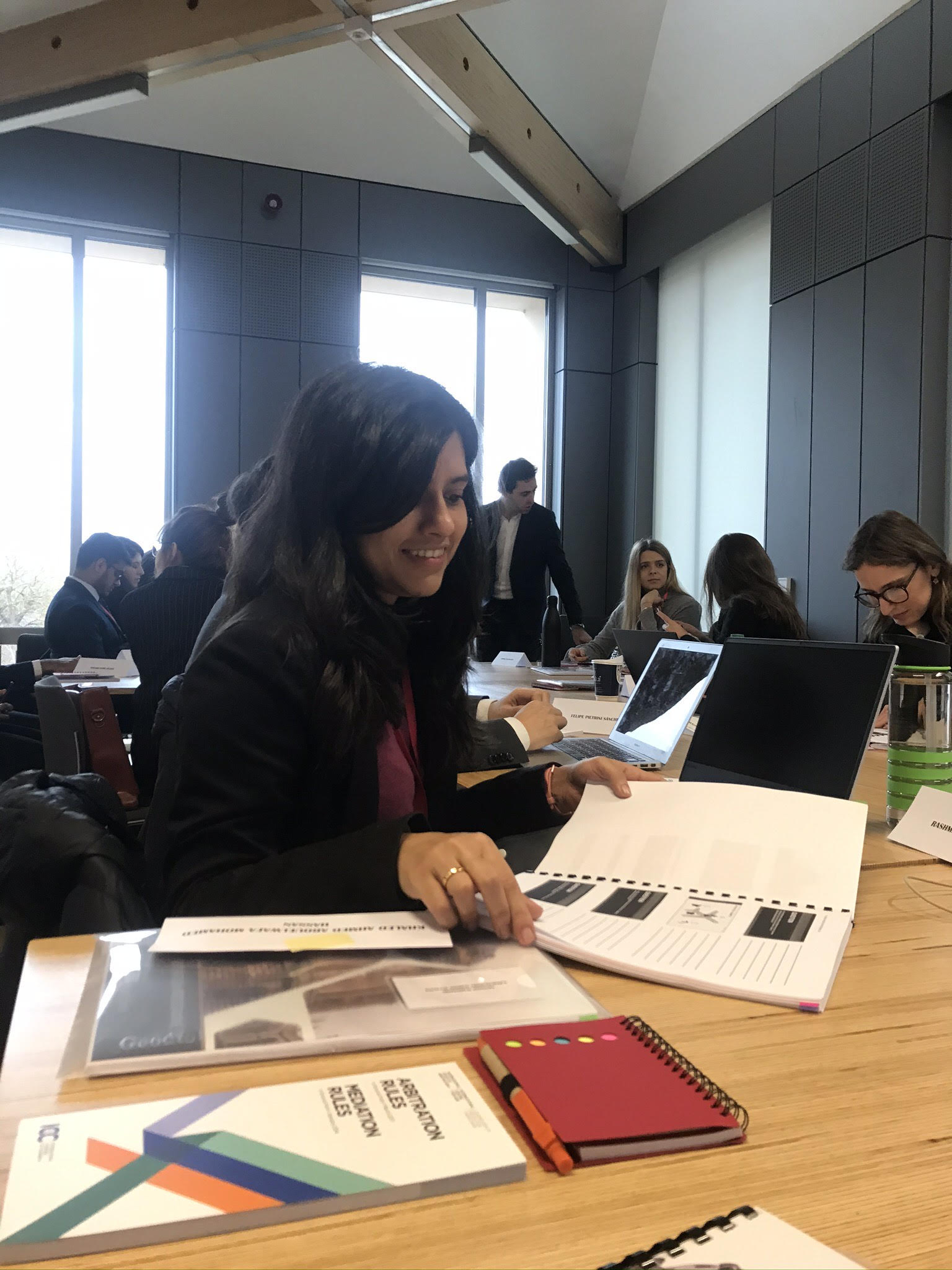
  • In Conversation with: Rashmita Roy Chowdhury, Commercial Disputes Solicitor at Womble Bond Dickinson (UK) LLP,  Dual Qualified (India and England & Wales)

    In Conversation with: Rashmita Roy Chowdhury, Commercial Disputes Solicitor at Womble Bond Dickinson (UK) LLP, Dual Qualified (India and England & Wales)

    This interview has been published by Prabhjot Singh, Priyanka Karwa and The SuperLawyer Team

    Let us begin with the most important question, did you always dream of becoming a lawyer or, did it  happen by chance?

    First of all, I would like to thank the team for featuring me in this editorial. I think it is so important for other people reading this editorial to understand that they are not alone in this journey and that many other people have either gone through or are going through similar journeys.

    To answer your question in short – No. I come from a family full of doctors and wanted to be one myself till my ICSE. However, during my ICSE preparation I realised that I was not interested in Physics and Chemistry at all and to be honest Maths wasn’t my strongest suit.

    This led to me choosing Humanities (Arts stream) in grade 11 and 12. However, the desire to become a lawyer all started when I was exposed to and witnessed the difficulties shared by the underprivileged through the woman who was employed to be my caregiver since birth. 

    In today’s world, it is clear that legal professionals can significantly help mobilize otherwise muted populations by representing their cases, providing them with the knowledge of the welfare schemes they are entitled to and help them receive the same. While I was India, I always tried to provide free legal advice and draft pleadings pro bono for them.

    This was my little way of giving back to the community.

    Students often go numb about LL.M options from abroad,  is it really worth it? Are most of the students able to leverage such opportunities, of you were an exception?

    There are two essential questions to answer here:

    (i) Whether it is important or relevant to pursue an LL.M at all?

    (ii) Whether one needs to pursue an LL.M abroad and whether they are able to leverage such opportunities?

    It is not a strait jacket formula that fits all. Deciding to pursue an LL.M takes months maybe years of planning. Many students decide to pursue their LL.M right after their undergraduate degree. This might work for many students if they are certain that they want to practice a niche area of the law or they want to finish their LL.M before they start their professional career.

    However, in my case I was sure I wanted to pursue litigation but I decided to gain some practical experience before deciding what I wanted to specialize in.

    It took me a whole year to plan my colleges and decide what I wanted to pursue. I decided to pursue my LL.M after three years of working and I cannot express how grateful I am for that exposure. It not only allowed me to take my time to choose the LL.M I wanted to pursue but also helped me gain more in terms of how I would be able to utilise that knowledge practically.

    The second question of whether to pursue an LL.M abroad is also a very personal choice. However, one should never make the mistake of incurring huge debts just to pursue an LL.M abroad in the hope of getting a job right after their LL.M.  

    An LL.M is not a gateway or the answer for securing a job abroad. It is only a platform that helps you network and provides you with a truly multicultural cohort for cross-learning. Furthermore, I am no exception to securing a job in the UK after my LL.M.

    There are a lot of opportunities provided by the college and London as a city. But to ensure one makes the most of their LL.M abroad, they should be willing to think out of the box and network as much as possible.

    Can you give our readers a brief idea of what they need to prepare for if they want to climb the corporate ladder based on your experience representing international commercial arbitration in a variety of matters?

    They say preparation is key. However, in my experience I thought being persistent and consistent was the key to success. Cases will differ and you will be faced with multiple obstacles in your career some bigger than others but if you are consistent in learning from your mistakes and persistent in overcoming them, then, no matter what, you will always end up succeeding. 

    The other thing which is extremely important is inculcating the habit of asking questions. As junior lawyers, we tend to be shy of asking questions thinking we may come across as being less bright or not equipped enough to execute the task. Most often I have found that no matter how banal the question is it has helped me understand the task better and in return provide a better outcome of the task given to me.

    What was the one learning experience throughout your entire career that you’d credit to have shaped your career and brought you to this point?

    I do not think I can pinpoint one learning experience, but I guess always being curious has helped shape my career a lot. I am a curious person in general and I guess that always leads to asking all the when’s, how’s and what’s in the world. This inadvertently helps you broaden your horizon not just in the legal field but also your surroundings. Being aware of your surroundings allows you to be abreast of the worldly affairs which in turn helps you to hold a better conversation with any given person.

    Whether it be with the client or your own team. It is also key in networking. Basically, what I am trying to say is that it is all a chain reaction and curiosity has definitely been my guiding factor.

    How tough is to qualify the bars for enrolling as a solicitor? And what can be the right methodology or road map for the same?

    First let me mention that there is no right or wrong way to qualify as a Solicitor. Some foreign lawyers take years to finish while some complete it within a year. It really depends on that individual’s capacity to study and understand the study material. No two people can have the exact same bandwidth. Therefore, I will explain what worked for me. I qualified as a Solicitor through the Qualified Lawyer Transfer Scheme (QLTS) which has now been replaced by the Solicitors Qualifying exam (SQE).

    I feel both the systems test the same practical and theoretical knowledge, but the two main differences are that the SQE is universal i.e. it applies to UK as well as foreign lawyers and that it requires 2 years qualifying work experience.

    For my case, the first part of the QLTS was multiple choice questions and I had to study 11 modules to name a few Constitutional Law & Judicial Review, Professional Conduct & Solicitors’  Accounts, Financial Services, Money Laundering & Taxation, Property Law, Contract Law, Torts, Criminal Law etc. I studied for 6 months, two hours after work and 4-5 hours over the weekend.

    For the second part of the exam, which is more hands on as it includes advocacy, client interviewing, legal drafting, research  and writing, I studied for three months 2-3 hours after work and 6-7 hours over the weekend. It is important to mention that there are great service providers to help you prepare for the exam and boost your confidence.

    Having said that, I just wanted to highlight that it really takes commitment to complete this exam. It challenged me multiple times and it is a very tedious process. However, it is also one of the few foreign qualifying exams that do not require you to first pursue a legal degree in the country to be eligible to take the exam. 

    At last, I would mention that one can get all the opinions and advice from other people who have taken the exam but don’t compare yourself to them. Make yourself a road map if you do wish to pursue it.

    Are there any preparations prior to pursuing LL.M from the UK and how students can make themselves ready for the same?

    As I have mentioned earlier that pursuing an LL.M should be a personal and planned decision. There are many factors in play before you take the decision. A few questions you should ask yourself before making that decision are:

    Why are you really pursuing the LL.M?

    Are you sure you want to pursue that specialisation?

    Are you ready to pursue more academia in the UK?

    Will it help you professionally to achieve your goals?

    Will you be able to utilise the benefits of an LL.M in your career?

    Having asked few of these questions and many other that you may alternatively have, make a planned choice to pursue an LL.M. Now if you are absolutely sure about the LL.M, the next thing you need to chalk out is the niche area of law and the colleges that offer that specific LL.M.

    There will be multiple colleges offering the LL.M you want to pursue therefore, your next step should be to check the modules offered and the professors teaching them. There are well-known professors in many colleges therefore, I would say choose the course that is tailor fit for you. Having the ability to mix and match the modules you think will help you grow is a big advantage. Always re-check whether the modules are being taught the year you are planning to join as sometimes the modules do not run for a few years. After having made that choice, go and have the best year of your life.

    Finally, would you mind offering some advice to our readers?

    I do not think I am that far experienced in my career to give great advice. However, I can definitely help you with the do’s and don’ts so that you do not make the same mistakes I did. I graduated from a non-national law school and I always thought that was my biggest disadvantage and I allowed it to make the decisions for me. If someone told me earlier that I would be dual qualified and practicing law in the UK, I would laugh at that person.

    But here I am! Therefore, I think most often than not our thoughts are the main impediments in our path of success.

    We tend to see the smaller picture and cannot sometimes fathom the idea of what or how our life can change. So always think you can achieve whatever you set your mind to.

    I would like to end by saying practice:

    • Resilience – No matter how many rejections you receive, always learn to pick yourself up and fight back. Rejection is a part and parcel of this journey and it allows you to recognise and rectify the mistakes you have made previously.
    • Patience – You will need lots and lots of it. Ensure you do your bit to the best of your abilities and be patient for the rewards to follow. Don’t worry, they will come to you.
    • Kindness – Always make sure you are kind to others and help anyone you can in the process. Kindness goes a long way and you will never know how much your kind words will help another person.

    In the end,  we are all part of a long game and the only thing that truly matters is the journey.

  • In Conversation with: Neeraj Vyas, Principal Associate at Samvad Partners specialized in M&A and PE/VC Transactions

    In Conversation with: Neeraj Vyas, Principal Associate at Samvad Partners specialized in M&A and PE/VC Transactions

    This interview has been published by Prabhjot Singh, Priyanka Karwa and The SuperLawyer Team

    Let us start from the beginning, what drove you to choose law? What other career options would you have considered, if not law?

    A legal career happened to me by chance. I had not thought about becoming a lawyer till the time I passed the 12th standard. During that time, CLAT had just started and it seemed interesting to me as I didn’t want to go for a conventional job.

    I come from a non-lawyer family but my parents supported me fully in my decision and hence, I ended up where I am today. If not for the law, I might have tried my hand at being a chartered accountant.

    From Bangalore to Mumbai to Hyderabad, how do you adjust with this Job Relocation and did it work well for you in the legal journey? Please tell our audience in brief!

    All these locations are hubs of law firms and there is a big legal fraternity in all these places. I don’t think I faced any professional issues due to these relocations. I have been fortunate enough to be surrounded by awesome colleagues and friends who always made my life easier. More than different cities, I think the place of work determines your legal journey.

    Initially, I was in ICICI Bank as an in-house counsel, and later on, I moved to law firms (Samvad Partners and Indus Law), this has helped me in getting great exposure to different kind of work style, work expectations etc. The learning at these places have helped me immensely in moving forward.

    Recently a huge bunch of cases in Mergers and other related deals were shared, do you think this area will keep on growing while creating opportunities for lawyers as well?

    India is a huge market and that’s why we are seeing an increase in investments in India. This is just a start, the market is going to expand further in the years to come and therefore, we will see a lot more M&A deals, PE/VC deals, etc.

    At present, I don’t think, students in India are taught enough about M&A or PE/VC investments and therefore, my advice to all the students would be to read up more about this area or do certification courses in this aspect, especially, if they are interested in a corporate law career.

    Can you tell us a bit about your current role and responsibilities as a M & A and PE/VC lawyer

    As a transactional lawyer who works quite a bit on M&A and PE/VC transactions, my job is to ensure that the deal is successfully concluded while keeping the interest of my client in mind.

    Being a senior team member, it is my job to draft, negotiate, and review the transaction documents on behalf of my client and also oversee my team’s work.

    Before you moved into Samvad again, you worked at Indus Law as well, kindly tell our audience about your experience at both these places.

    Samvad Partners is like a home to me. I have spent almost 5 years with the firm in aggregate and I think it is one of the best firms in the market to work at. A lot of my professional growth is because of the amazing partners and seniors that I have worked with during these years at Samvad Partners.

    Indus Law, Bangalore was a good learning experience. Even though most of my time at Indus Law was during Covid and we worked from home most of the time, I met some hard-working and driven colleagues who made my whole experience enriching.

    It is said that getting a mentor is the first step towards attaining success. How true do you think the saying is? Do you think a mentor plays a crucial role in the growth of a person? What type of mentor would you suggest for a law student?

    Absolutely. A good mentor can make a huge difference in your career. I have been fortunate enough to have some amazing mentors during my professional career who took out time from their busy schedules to advise me whenever I needed their advice. I have had mentors who guided me on specific tasks and also taught me skills that have helped me a lot. A good mentor helps you in achieving your career goals by guiding you correctly.

    What are your views on the work life balance and mental health issues that off late lawyers have been raising?

    A good mentor will always give you honest feedback and thereby help you in improving yourself.

    I think it is high time that we, as an industry, start taking cognisance of the mental health issues that lawyers are facing. There is a great scope in our industry for improvement of work life balance.

    As more and more lawyers are speaking about these issues, we can see lot of firms taking note of these issues and undertaking actions to improve the situation for its lawyers. In my opinion, that’s a good start but we still have a long way to go.

    What would be your parting message to our young readers?

    Use your time during your internships wisely. Try and figure out what areas of law you like and you don’t like. It will help you in carving your career path.


    Get in touch with Neeraj Vyas-

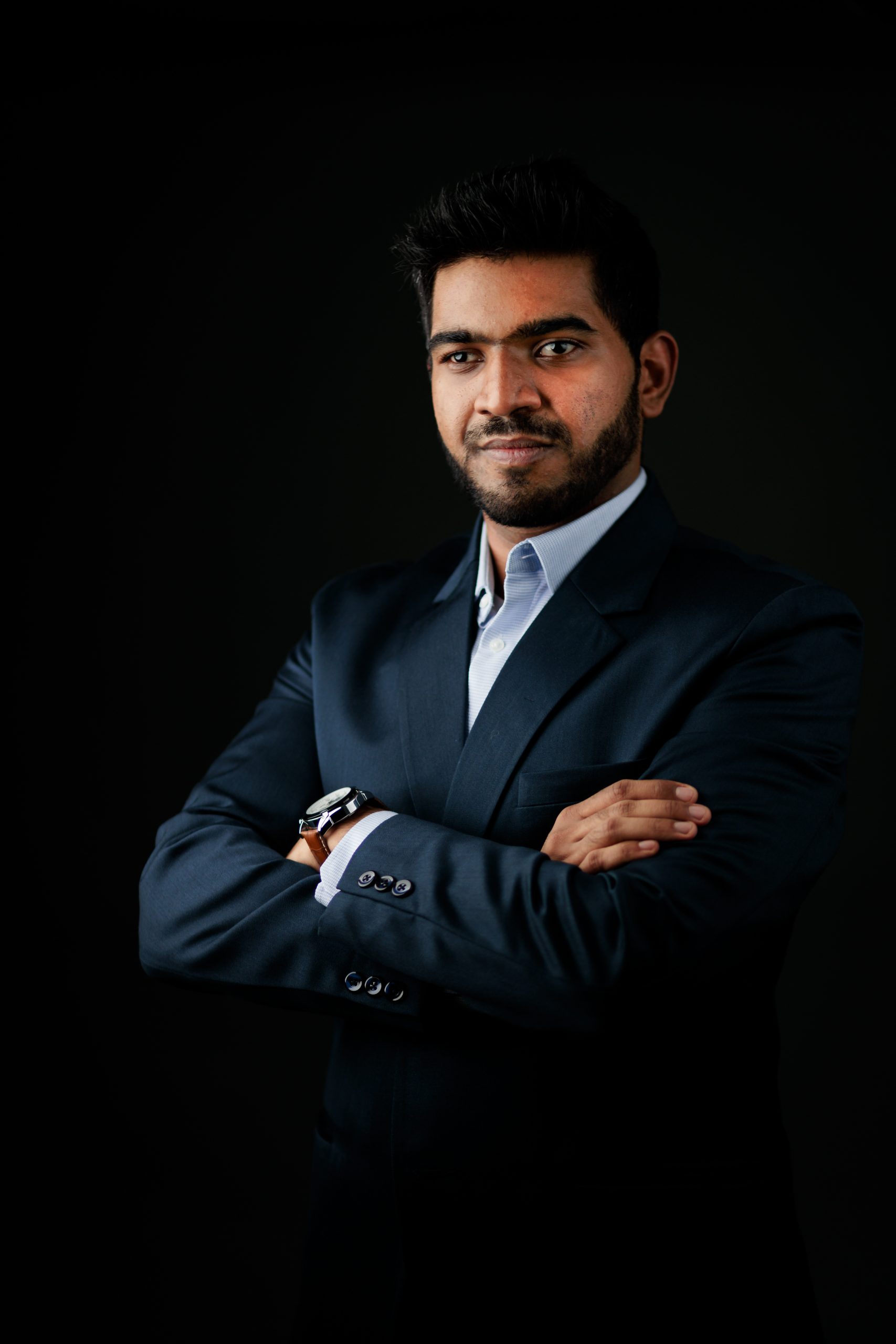
  • In Conversation with: Ryan Mendonca – A startup legal counsel who left his job at a tech startup to start an innovative concept of being Your Virtual Legal Counsel, under his Virtual Law Firm

    In Conversation with: Ryan Mendonca – A startup legal counsel who left his job at a tech startup to start an innovative concept of being Your Virtual Legal Counsel, under his Virtual Law Firm

    This interview has been published by Prabhjot Singh, Priyanka Karwa and The SuperLawyer Team

    Tell us about yourself-what motivated you to choose law as a career path?

    I was interested in law early on in my childhood as would watch legal dramas like “Boston Legal”, “Law & Order” and ofcourse my all-time favourite legal show “Suits”. What interested me was how the lawyers helped their clients, fought for them in & out of court and delivered justice in some way shape or form.

    Its ironic how back then I saw these lawyers as superheroes and fast-forward a decade or so, and I am being interviewed as a Super Lawyer, its funny how life comes full-circle.

    However, besides the legal dramas, I also realised, very early on, that there were laws for everything and at every milestone in one’s life, right from birth certificates, to school rules, to employment law once you start a job, to corporate law if and when you start a business, to when you get married and buy a house, until you’re “dead and gone” or “6 feet under”.

    The Law is interwoven into the fabric of life and I felt that learning the law and my knowledge in the legal domain would give me that edge in life and would always be advantageous.

    Ryan, you worked as a remote lawyer during covid, how was that experience and what type of difficulties did you faced?

    Yes, I did work remotely in Dubai, as an in-house counsel for a high-powered, VC-backed Indian based startup, it was an eye-opening experience to say the least, whilst it was one of the most testing and unsure time for me, career-wise, mentally and physically. It was not easy doing and getting what I needed to get done.

    I do feel that it was an absolute privilege and once-in-a-lifetime experience to be the Sole Legal Counsel, setting up the legal operations, running it for a good 6 months, and then shutting it all down post-lock-down.

    On the bright side it did give me the confidence to open my own shop and accelerated my career into the natural progression of being a lawyer and starting my own virtual law firm, in this new-remote-friendly world we live in.

    What was and is the main USP behind your firm “YVLC”, and how do you manage your work since you have clients with different time zones? Do you believe the remote work model is going to stay in the future?

    Offering the service of an experienced in-house legal counsel on a fractional basis for multiple startups allowed startups to operate with the mental freedom that their legal is being taken care off, this was YVLC’s USP starting out.

    Now that we are on-boarding multiple Virtual Legal Counsels who are subject matter experts in their respective tech niche, such as E-commerce, Food-tech, Blockchain, Ed-tech and Prop-tech, we are creating a “Justice League” (pun intended) of Super Lawyers that will advise clients in their field of tech with relative ease and offer a more specialized legal advisory.

    All while being fully-remote, fully-autonomous and with the necessary tech infrastructure in place to do what we legal counsels do best. Provide legal solutions that are commercially viable.

    What is the biggest hurdle most attorneys face in bringing in new business at present times?

    This is a tough question for me to answer as I dont feel there’s just one main challenge, it is a mix of the following in no particular order and may not apply to all attorneys: Building a strong online presence, having a healthy pipeline of new client meetings, being very personable and impressive to new clients such that they close with you, pricing their services or hourly rates and lastly doing all of this successfully through a screen or on audio only meetings or at times without even speaking to the client at all.

    What’s the biggest threat to a solo or small law firm’s survival over the next 10 years? What should they be doing now to prepare?

    Investing in Tech, Building a Brand, Not getting caught up in the day to day wins and losses and instead having a long term goal, vision and plan to make it a reality. Most solo lawyers or small law firms start for the sake of starting and making something for their own selfish intentions of having a bigger slice of the pie or more like having their cake and eating it too.

    What are your future plans with YVLC academy and how can professionals be benefited with this initiative?

    We are planning to provide legal professionals the tools and teach them the tricks of the trade of how to be a solo digital lawyer. We want to help them reach their potential and achieve their goals no matter how small or gargantuan they may be.

    We want to empower lawyers and give them the tech infrastructure, a starting platform and the motivation and inspiration to have a successful legal career.

    Law students often get confused between these big tech platforms such as Fintech, agritech and other startups, what advice would you give to them for having a better sense of clarity wrt same?

    Read about them from credible sources, watch interesting you tube videos, listen to popular niche tech startup podcasts and last but not least work in those tech spaces that interest them and that they want to learn more about. There is no better way to learn something than by doing it.


    Get in touch with Ryan Mendonca

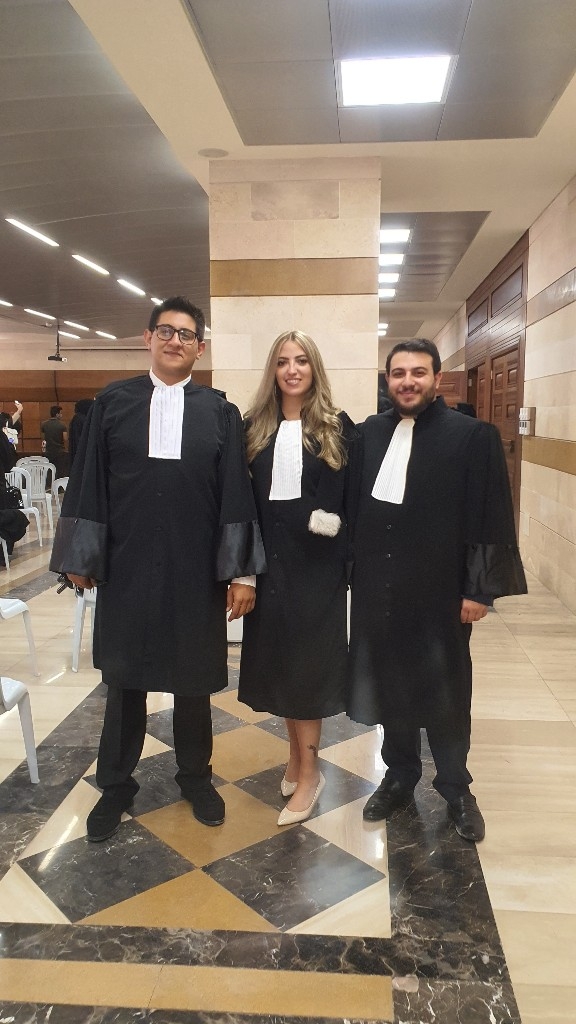
  • In Conversation with: Jessica Zakhour, Legal Counsel at Roger Najjar Law Firm and Member at United Nations Association of Lebanon

    In Conversation with: Jessica Zakhour, Legal Counsel at Roger Najjar Law Firm and Member at United Nations Association of Lebanon

    This interview has been published by Prabhjot Singh, Priyanka Karwa and The SuperLawyer Team

    Could you please share with us about your inclination towards law, when you were passionate about literature, how did you decide to make a career out of law?

    As I was growing up, discovering myself and watched my personality develop, and being an empathetic person in a world full of injustices, I found out at a very early age that Law was and still is an excellent match for my personality and strengths.

    I have a great memory, excellent communication and argumentation skills, I am also extremely ambitious, I tend to strive to always get what I want and have a strong moral codex; all of which I believe to be a good combination for any lawyer.

    I am an ecumenical abuser and enjoy talking to people, especially from the Tech world, and what made me decide to make a career out of law, besides my personality and passion for the law, is that I strongly believe in what was said by the Human Rights Watch in 2016 : “The same rights that people have offline must also be protected online”. That is why I am specializing in Cyber Law and Cybercrimes.

    How did you envision your career while you were at law school and how did that turn out?

    Every Law student strives of becoming partner at a top firm, daydreams about saving the world, thinks that the practice of law is all about nice suits and good office views. That is exactly how I had envisioned it when I was a law student.

    It turned out to be quite disappointing and yet fulfilling at the same time: The world cannot be saved in a day, month, or year. The most basic human rights are being violated right before our eyes and the journey to change the world into what we believe in and want to fight for is a long way ahead.

    But, the journey to getting there is the most fulfilling. I surely worked hard, but clearly had not foreseen to be filling big seats at such a young age and having many accomplishments.

    That means I am where I need to be, and that I am each and every time one step closer to reaching what I am fighting for and what I believe in ever since I was “that” law student back then. 

    You are a young generation lawyer, you must have enjoyed your graduation. Would you like to share any “funny-legal” memories of student life?

    Law school passed on by pretty quickly. I did a lot of studying, made lifelong friends, and have innumerous fond memories.

    But my funniest-legal memories would be in practice, at court hearings I would say: The best one that comes to mind was when I was at a hearing as an appointed lawyer and the plaintiff’s counsel had asked a witness the following question “What is your relationship with the defendant?” to which the witness answered “he is my son” and then counsel asked “was he your son on August 8th, 2018?” – The entire courtroom burst out laughing.

    How crucial it is for a legal professional to learn different languages, does it really help in one’s professional growth?

    Oh, I think it is extremely crucial for a legal professional to learn different languages, especially for the ones who want to become consultants on an international level.

    Attorneys who only choose litigation do not see learning different languages as a must.

    But in my personal opinion, whether in the legal profession or not, I think languages are extremely important to one’s self growth, because with languages, you are at home anywhere.

    A different language is a different vision of life, it’s another way of thinking, it’s another sign of bravery and it is also another way of helping people.

    What differences do you see practicing in Lebanon as compared to Brazil? Is it an easy sail or more of a challenging role?

    There are a lot of differences between practicing in Lebanon and in Brazil. For instance, Brazil is a federal country, and Lebanon is a unitary multiparty republic with a parliamentary system of government.  

    Lebanon is a mixed legal system based on a combination of civil law, Islamic, Ottoman legal principles, and the Lebanese Legislature, highly inspired by the French civil law, as where Brazil is based on civil law “sprinkled” with common law.

    Lebanon is a confessional country, which a lot of laws are highly based on confessionalism, whereas Brazil isn’t.

    When the rules of law are different, the practice of law reflects on that too.

    What are the main functions of the United Nations Association in Lebanon? 

    The main functions of the United Nations Associations in Lebanon are first and foremost, collaborating with the UN and its agencies to achieve their goals, producing activities and studies that relate to the code of the UN, working to help achieving international peace and understanding on the basis of justice, equality and respect of human rights, cooperating with other NGOs for economical and social progress.

    Since members of UNA of Lebanon share the same aims and principles of the UN charter and work on fulfilling them; they cooperate with UN agencies and organizations and with other NGOs that share the same goals to spread their beliefs.

    As cybercrimes are on a rapid increase, what steps do you think are considerable to control them?

    They say that sometimes the answer to a question is right in front of you. And that is what I believe applies to cybercrimes.

    The answer to that question is based on some of the most basic steps that need to be taken: Collecting data, spreading awareness, promoting cyber peace and implementing laws, especially in matters of collaboration between states.

    Last, what piece of advice would you like to give to our young legal commanders? 

    The most important career advice to young legal commanders is to take risks. At this point, the old model – joining the firm, sticking to it for seven years, making partner, then working there until you die- has to be essentially gone for most graduates. Your career as a lawyer can go a million different ways. The only way you’re going to find true happiness and fulfillment is to take chances and pivot when necessary.

    You may start your legal career as a prosecutor, then decide that you really enjoy child support enforcement cases and pivot to family law.

    Or you may start as a litigator and realize that you really prefer deal making and would rather get involved with transactional work.

    Or maybe, you will create the next great legal startup. Give yourself time, don’t be afraid to take risks, and most importantly, enjoy the ride !


    Get in touch with Jessica Zakhour-

  • In Conversation with: Adv. Ripple Hamza, Founder and Legal Consultant at Confrere Global Legale and an Empanelled Arbitrator at Thailand Arbitration Center (THAC)

    In Conversation with: Adv. Ripple Hamza, Founder and Legal Consultant at Confrere Global Legale and an Empanelled Arbitrator at Thailand Arbitration Center (THAC)

    This interview has been published by Prabhjot Singh, Priyanka Karwa and The SuperLawyer Team

    Could you please share with us about your inclination towards law,  what inspired you to work in the corporate sector?

    As a young student I was inclined to become a corporate lawyer as I had seen my father who worked in a shipping company in Dubai speak about the role of lawyers in Maritime law and trade .

    The company he worked for was having a number container ships which were often having advice and legal intervention from Lawyers . 

    I believed lawyers as heads of nation did more than just a politician everywhere in the world .

    The lawyers who turned to politicians have been remembered by majority of the people in the world for their productive good deeds and have changed the world a lot . 

    Your experiences are diverse in many aspects, but what creates curiosity in our minds right now is “Maritime Law”, kindly explain this niche for our audience

    Maritime law is a very important law with regards to the trade of the world . The majority of cargo movement happens through the sea . Nations have changed their faces and development happened to a great extent with Maritime law and logistics. 

    There are more ships at sea than all the ships in ports carrying various products for all the countries . 

    Maritime law has played a major part in avoidance of conflicts and delays of good transit around the world . 

    We assume that such expanded work requires smart people in the room. So are you a team player or is it a “one-man show”?  

    I have a good team to back me up with my juniors and associates from different countries .

    They are people of high learning capacity and quick in finding solutions .

    Confrere Global Legale was made with integration of most of them so that an international association would make things happen quicker.

    The core team of CGL are people of good research and learning in their fields of legal practice . 

    Most often dealing with different countries comes with its own challenges and unavoidable hurdles. How do you manage that and what has been your game plan so far?

    We have the best influential and informative lawyers to support and joint venture with us where ever we practice law beyond the boundaries of our nation.

    Their capacities, knowledge and influence with various departments and organisations have helped us get into solutions without delays.

    Your profile takes us to the next interesting angle, being an investor in startups, how do you see these startups scaling employment opportunities for law students ahead?

    The startups create innovations and employment opportunities. Lawyers who are innovative and fast in  adaptive technologies have an advantage over others in advising these startups ans taking them ahead . 

    Young lawyer are more adaptive to technologies and becoming legal advisers to such innovative startups. 

    What thin lines you observed between Indian laws and European law dealing with different transactions?

    European law is more modernized and technologically adaptive to users as for trade and diplomacy . Indian laws have a lot to be changed and we are on the changing phase with many of them .

    The present laws brought out are a fine example of our changing phase in legislative enactments to suit our needs on par with the rest of the world . 

    Young law professionals still often choose hard work over smart work, what do you think about this aspect? How can this be changed?

    Today the legal world needs smart work more than the hard work . So young lawyer who are doing the smart work gain a lot in comparison with those who do the hard work . 

    Smart work can also be called effective work . This is needed to take trade ahead into greater heights for an example . 

    The recent CEPA signed between UAE and India is a fine example for it .

    The hard work of making it is over but to get its benefits to people of trade, smart work of knowledge spreading and practical usage needs to be done which is yet to be done .

    So hard work alone will not suffice today smart work plays a major role for young lawyers especially in trade law . 


    Get in touch with Adv. Ripple Hamza-

    RELATED ITEMS: COUNSELFEATURED INSIGHTSFOUNDERLAW FIRMLAWYER,  

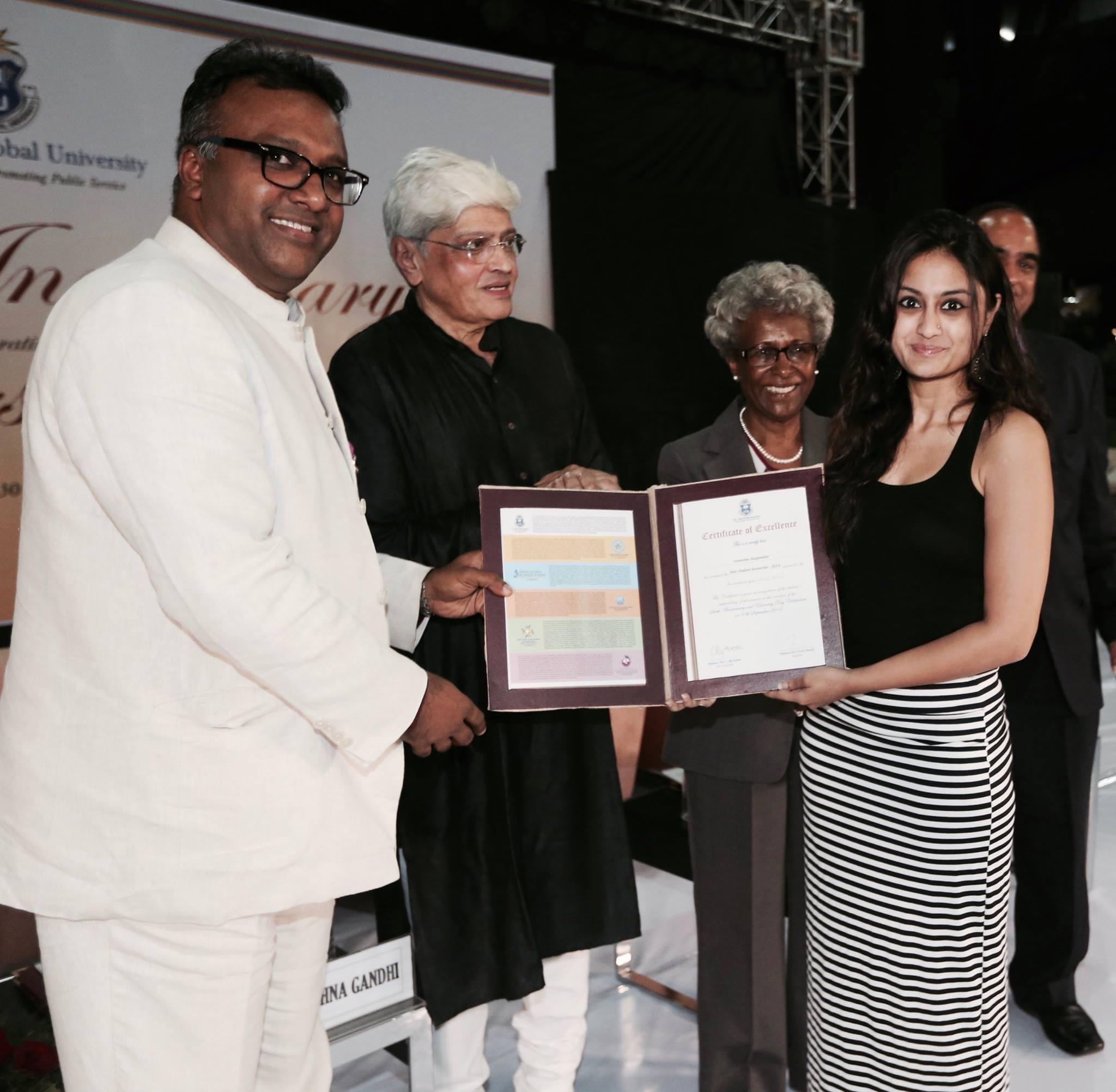
  • In conversation with Anweshaa Majumdar, Corporate Lawyer at Trilegal, talking about her current role and her experiences in different areas of the Corporate law practice.

    In conversation with Anweshaa Majumdar, Corporate Lawyer at Trilegal, talking about her current role and her experiences in different areas of the Corporate law practice.

    This interview has been published by Sonali ParasharOjuswi Sahay the SuperLawyer Team


    Tell us about yourself and why you chose law as a profession. What other professions would you have considered if not law? 

    I have always known that I am a people person and communication is a strong skill that I possess, and I knew I wanted to pursue a career wherein I could hone this skill further. Despite taking science as my stream for my 11th and 12th, I knew my calling was not in the science or engineering stream. The career paths that I was keen on pursuing were law and journalism. I had, in fact, gotten into my preferred colleges for both these degrees. However, my parents were insightful about the potential of Jindal Global Law School, even though at that time there was no placement matrix to rely on. They felt that Jindal was a law school of the modern era and I also took the leap of faith and joined. My parents’ insight, has always proved to be correct as now, JGLS is known to be the best private law school in India. I personally feel I would have thrived in journalism as well, but I always knew that I would be a better lawyer than a journalist.

    You have worked extensively on succession planning and wealth restructuring/ management with a lot of experience working with Family Businesses. What drew you to this field in the first place? Would you like to tell us about your journey to this point?

    Honestly, I joined PwC as a fresher from college and when I was told that I would be joining a team which primarily focuses on succession planning and wealth restructuring, I was intrigued as it was a very niche and lucrative field. When I graduated from college, I knew I wanted to be in the corporate field, and being in the succession planning space, I was able to network and interact with various high net-worth families in India Bangladesh as well as Sri Lanka. When you work in a Big4 as a lawyer, your learning goes beyond the technical legal aspects, and you get a lot of exposure to various business building/continuity strategies. Working in PwC also allowed me to gain insight into tax-related aspects of a business and pointers to consider during corporate restructuring. I started in PwC as an Associate and left as an Assistant Manager.

    Other than the above mentioned,  you also hold expertise in General Corporate, Transactions, Mergers & Acquisitions, and Drafting Agreements. What, in your opinion, are the upcoming corporate trendsetters? It would be an excellent compass for our readers.

    In my opinion, an upcoming trendsetter is a simplified style of drafting. Drafting is a skill which will be required in whichever field one is part of, whether it is M&A, private equity, venture capital etc. The documents are essentially the same, but the context of the transaction is different. A trend that I have seen evolving in the legal space is the moving away from verbose legal language to simple language which is understandable to the clients as well as the counterparties. This is a trend I definitely stand by, as I have seen that by simplifying the drafting of contracts, it is possible to keep the rights intact and it also reduces the back and forth between the counsel and the client and even the client and the counterparty, and therefore significantly reducing the transaction closing timeline. My team follows a mantra of “draft the way you speak formally”.

    I have always believed in this concept, and I am elated to see that it is being practiced widely now. Further, I also believe that the M&A, private equity and investment structuring field is a phenomenal space to be in, as one gets to work on different kinds of deals which involve different strategies, negotiation points and consideration structures. After being in fields like this for a while, you are able to anticipate any plausible push-backs from counterparties, push for rights which will be beneficial to your client, address different options of consideration structuring and are able to identify any potential risks and advise to rectify them accordingly. The transaction space such as these typically does have heavy workloads, but the learning curve is steep and the effort you put in along with your experience does positively contribute towards your individual value as a lawyer.

    You are currently working at Trilegal. Previously, you were associated with Cyril Amarchand Mangaldas, and before that, you were with PwC. How different it is to work at these three behemoths?

    After my stint at PwC, my entire team moved out with the Partner as he wanted to start his own ventures – one of them being a venture capital fund called Turbostart. At Turbostart, I was designated as Corporate Counsel and assisted with all the legal documentation required when the fund identified start-ups to invest in. After this stint, I decided that I wanted to move back to a core legal practice and that is when I got into Cyril Amarchand Mangaldas, in the legal advisory team in their General Corporate practice. From there, I was selected for the Transactions team at Trilegal where I am today. At Trilegal, I work on high net worth deals in the M&A and private equity space. In these three behemoths, I have learned different things which I will carry with me throughout my career.

    At PwC, I got to work with many incredible chartered accountants outside my core team on various deals, I was able to get over my irrational fear of numbers and was able to understand various tax and business-related aspects of a transaction. At CAM, as I was in an advisory team, I was able to work on various opinions and memos relating to different aspects of the law, and was able to further my knowledge in these domains and re-connected with the process of legal research and statutory interpretation.

    In Trilegal, I am now working with an incredible team, in a very dynamic field. As we work on different kinds of deals at one time, one gets exposure to many drafting and negotiation strategies, front-ending deal closures, as well as exposure to transactions in various sectors. I would definitely say that during my formative years in PwC and during my time in CAM and now Trilegal, the learning curve has been steep, the professional exposure has increased, along with responsibilities and accountability and I feel that all 3 places have largely contributed to the professional I am today.

    You earned your Diploma in Entrepreneurship Administration and Business Laws from the West Bengal National University of Juridical Sciences after graduating from JGLS. In what ways does entrepreneurship aid a lawyer’s understanding of business?


    Especially in today’s day and age, where entrepreneurship is the theme of the market, I feel entrepreneurship increases a lawyer’s scope of understanding beyond the law itself. As someone who has had exposure to both, I think entrepreneurship is essential in understanding the business, which as a result will improve your legal advice as there is a much more holistic perception rather than a singular focus on a legal point. Once you have a decent understanding of the business, its operations, pain points, and strategies you are in a better position to align your legal advice and anticipate the outcomes of your recommendations which could be both legal and business-centric.

    Are you able to carve out time for your other interests or hobbies given the nature of the legal profession?

    I would not say that it is easy to take out time. But I would definitely say it is essential and sometimes you have to really push yourself to take out time for your hobbies. I choose to unwind with music as I play the ukulele or travel (either to work from out of the station or as a normal vacation). These little breaks are quite important to rejuvenate your mind and especially in this fast-paced profession, it should definitely take precedence to avoid burnouts.

    You are a young and well-established legal professional. What is your success mantra?


    My success mantra actually took some time to build, and now when I look back, it all boils down to “believe in yourself”.  Do not be afraid to take challenging career shifts, if you think it is the right thing to do – and even if it doesn’t work out, at least you tried it. Bounce back up and move on. I also believe in the aspect of not halting the process of learning – I have learnt from every case/matter I have handled and from the people I have interacted with and built a network even after. Another thing that I regularly follow, is self-introspection. It is extremely insightful to honestly connect with yourself, as it helps you figure out what you want, what your priorities are and how to achieve your goals.

    What career advice do you have for our readers?

    Never pay heed to people who discourage you. There are various kinds of people that you will have to encounter during your professional life, there will be people who will think that you do not have it in you to make it big. My advice – do NOT listen to them. Other people’s perceptions do not define who you are or what you can do. In today’s day and age of social media and seeing the career milestones of your peers might lead you to pressurise yourself, but don’t let it. Personally, back in 2020-21, I had found myself in a situation which required an immense amount of self-motivation to get out of. I would urge everyone to find that within themselves. The imposter syndrome is a self-created construct, break it down and thrive. Another piece of advice I would give, especially to people who are starting off their career – is never be afraid to burn bridges if you are not being respected. Put yourself first, know your worth and your path will find you one way or the other.

    Work on your soft skills as much as you would work on your technique. Believe it or not, both are equally important. Build your network, keep reading up, keep working on your communication skills (written and spoken) and always keep in touch with people who have impacted your career path in any positive way.


    Get in touch with Anweshaa Majumdar –

  • Mr Vipul Maheshwari, a prominent and established Advocate and an Author, talking about his latest publications and his love for Law.

    Mr Vipul Maheshwari, a prominent and established Advocate and an Author, talking about his latest publications and his love for Law.

    This interview has been published by Sonali ParasharOjuswi Sahay and the SuperLawyer Team


    Having both a stellar legal career and being a celebrated author, how would you like to introduce yourself to our readers?

    I am a practising Supreme Court Advocate and have a keen interest in our polity. As an advocate and responsible citizen of society, I always feel that I have a duty towards the society to elaborate the comprehensive survey of our Indian democracy and rule of law. 

    What was your Law School journey like? Was Law School where you first tried a hand at writing?

    I had a wonderful journey in my college as a political science student and thereafter as a student leader in Law College. I had lots of opportunities to raise my voice on different platforms but not as a writer.

    Tell us about the book “Ramayana Revisited – An Epic through a legal prism”. What was the idea behind choosing this subject? 

    The Idea has come up with my uncle who is a co-author of the book. We discussed a unique idea which had never been thought about in the legal world. After discussion with him, I was excited and immediately started preparing the defence and prosecution of the characters of Ramayana and we decided to leave it to the readers to decide the culpability. Supreme Court and High Courts Judges, Parliamentarians, Mythologists, Journalists and Vice-Chancellors have appreciated the book.

    You have also written about elections in India in the book titled, “The Power of Ballot”. Was this idea always in your mind or was it something you and your co-author Anil Maheshwari together came up with?

    I have seen personally the election process very closely and hence was always keen to write about the theoretical law and practical reality. I have read and keenly monitored lots of elections and their processes in the country. The writing of the book was there in my mind for almost a decade. In fact, I had petitioned before the Supreme Court for admissibility of the Internet voting on mobiles but those were the days when the Court did not deem it fit to admit the writ petition. Another writ petition on similar lines has been admitted and is under process in the apex court. We have given details of the admitted case in the book.  

    You seem to be deeply interested in History amongst other disciplines. How do you believe writing on this subject is essential in today’s time and age?

    The idea to write on a subject which is very close to every citizen of India as I have always seen that Indians love elections which have become a sort of national festival across the castes, communities and regions in the country. Secondly, I have seen that elections in India in always been dominated by patronage, money, fake news and prediction which made me think to write about the book. Despite all these weaknesses, elections in India are the symbol of a thriving democracy even after seven decades since its introduction way back in 1952 after we attained independence. Let us discuss its shortcomings and make efforts to remove them. 

    You have been a member of the National Executive Committee of FICCI and PHD Chambers of Commerce and Industry in India and have received many accolades from different sections of the society for your literary achievements side, we would like to know what got you interested in Commercial Laws as practice area?

    This is not a variation as I have done the constitutional, civil and criminal litigation for almost three decades; lately, I started enjoying the commercial litigation of corporates. As a student of political science and law, this has always been my first choice and as an active lawyer and political analyst I always think that it would be good to pen my thoughts on law, the festival of democracy, duties, the exercise of the ballot by more than 910 million electors, management of the largest electoral process by the ECI and lastly the lifeline of democracy will be a good idea to share with the readers in the form of a book.

    You have served as the former Additional Advocate General of Haryana and Senior Central Government Standing Counsel of various state governments in the Supreme Court of India. If you had to choose between litigation and writing, what would you choose and why?

    As a lawyer, my first love is my profession and fortunately, it involves a thought process in drafting, therefore both litigation & writing go hand in hand and I would like to continue my passion for writing. 

    You are a founder of the law firm Maheshwari & Co., Advocates and Legal Consultants, a full-service law firm known in India and internationally dealing with corporate, commercial, transactional, mergers and acquisitions, and intellectual property. Please share about the challenges of your role and the advice you have for the next generation.

    As a founder of a Law firm is a big responsibility on one’s shoulder which involves hard work, integrity, dedication, transparency & accountability and lastly the tender job of nurturing young lawyers and help explore their talents. I feel in any sphere of life one should always aspire and try to do a larger good for society.


    Know more about Vipul Maheshwari –

  • In conversation with Mr Arush Khanna, Co-Founder and Partner at Numen Law Offices, and India’s Former National Representative at the International Bar Association in 2019, currently holds two officer positions in the Young Lawyers Committee.

    In conversation with Mr Arush Khanna, Co-Founder and Partner at Numen Law Offices, and India’s Former National Representative at the International Bar Association in 2019, currently holds two officer positions in the Young Lawyers Committee.

    This interview has been published by Sonali ParasharOjuswi Sahay and the SuperLawyer Team


    How did choosing law as a career come into the picture for you? What were your law school days like at Symbiosis Law School and NLSIU?

    Truth be told, Law came in as a default option after I cleared my 12th standard. During my school days, I had aspirations of pursuing a career in cricket. I missed an opportunity of getting into the Delhi Under-17 team in the 11th grade and injured myself soon after which made the cricket option too risky for me to pursue. Since I hadn’t nurtured any other ambition by then and coming from a family of lawyers (persuasive ones at that), I was positively influenced into taking up law as a career. 

    I will always cherish the 5 years I spent at the Symbiosis Law School, Pune. Being away from home and living by myself contributed immensely to my growth as a person. I made some amazing friends who I consider as family. Once in a while, we all get together and regale ourselves by reminiscing our time in Pune. 

    The Master’s program offered by NLSIU was predominantly a distance learning program which I pursued after having spent 3 years at the Bar.  I would only have to visit Bangalore once a year for my examinations. Aligned with NLSIU’s unmatched standards, it was a challenging course especially since I was working professionally and had limited time to devote to academia. I look back with great satisfaction for having taken up this challenge. Getting my degree from the Chief Justice of India, who by convention is also the Chancellor of the College was a special feeling. 

    Being a fifth-generation lawyer, you have been fortunate to have your grandfather, Dr Lalit Bhasin, the President of the Society of Indian Law Firms and also the Managing Partner of Bhasin & Co; along with Senior Advocate Mr Sanjeev Anand, as your mentors. How essential do you believe a role model plays in one’s legal journey?

    Darius Khambatta, one of the finest lawyers at the Bombay Bar once told me that in law, you learn most through Osmosis, which means by observation. He couldn’t have put it better! 

    As a young lawyer, one longs for a sense of direction, purpose and the wisdom to know when to speak your mind and also, when to mind your speech. Ours is a heavy profession and every now and then, we need a dose of inspiration. That is why it is quintessential to have a mentor(s) in our line of work. I am indeed fortunate to have mentors like Dr Bhasin, Mr Karanjawala and Mr Anand. They have guided me at every important junction in my professional career and (*touching wood*) continue to do so. I hope I can make them proud one day. 

    You have had great wins in your litigation journey, including TGIF judgement at Hyderabad, title dispute at the Bombay High Court, and your regular appearances before the Supreme Court, amongst others. What motivates you to scale bigger heights in dispute resolution?

    The TGIF case was an inflection point in my career for it gave me the self-confidence to handle big-ticket litigation independently. I was 26 years old at the time and I still remember that I sought a passover, however, the Ld. Bench of the High Court of Judicature at Hyderabad refused to grant me one and directed me to present my submissions. There was a lot of public glare to this matter as the restaurant was alleged to have served liquor to underage persons which resulted in a fatal accident. It was heartening to get a favourable order whereby the HC quashed the liquor licence suspension order inter-alia on the ground that it was passed in violation of the principles of natural justice. 

    Similarly, the title dispute before the Bombay HC was a memorable experience. Interestingly, we preferred a writ petition in this case and not a civil suit as the PSU had rejected our client’s bid for setting up an Ethanol Plant by stating that the land did not belong to the company but to the Director. I remember working tirelessly on this matter alongside my Partner, Chaitanyaa Bhandarkar and we were pleased to be rewarded by a favourable finding given by a bench of Justice Gautam Patel and Justice Madhav Jamdar after hearing us for two consecutive days. 

    Dispute Resolution (Litigation and Arbitration) has always been my primary area of practice. It is a demanding line of work and one has to learn how to burn the midnight oil.  I make sure I consistently keep motivating (and hopefully, inspiring) my team to keep pursuing excellence in what they do. Notwithstanding the result, which is not in our hands, it is about enjoying the journey, finding the strategic nuances, researching for that clincher point and giving it our best before the Court or Tribunal.  

    Let’s talk about your firm, Numen Law Offices, which you have co-founded and are a partner at. We’d love to know about the conception of this idea of establishing your own office and how have you been taking it forward?

    Back in 2018, I would visit Mumbai almost on a fortnightly basis for work. As cliche as it may sound, I remember telling my cousin while we were driving down from Walkeshwar overlooking the Marine Drive that I wish to have an office here one day. I am glad that I connected with like-minded professionals during my adventures at the Bombay High Court. Everyone understood the need to collaborate as then we would be able to provide more services under one roof. Law is a vast profession and clients prefer specialists. We started Numen Law Offices with 4 Partners, all of whom bring different skill sets to the firm’s repertoire. We currently have two offices, one in New Delhi and the other in Mumbai. We have tried our best to incorporate the best practices, be it in our core legal work or in the managerial side of the firm. We have a dedicated HR, Accounting and IT team all of whom contribute immensely to the running of the firm. It has been a challenging yet rewarding journey thus far but as Robert Frost once famously wrote, “the woods are lovely, dark and deep but I have promises to keep and miles to go before I sleep”

    You also hold a strong association with the International Bar Association, where you were appointed as India’s National Representative in 2019 and currently hold two officer positions in the Young Lawyers Committee. Tell us about your experience at the largest bar association in the world, and how it has helped pave your journey forward?

    My appointment as a National Representative could have been a case of being at the right place at the right time. In 2017, I was selected as a scholar to speak at the IBA Annual Conference in Sydney. A day before the main conference, I attended the Young Lawyers Training Program where I was introduced to the then chair of the YLC by my friend Pranav Srivastava, who, after speaking to me for 10 minutes, suggested that I should apply for the NR position.  I did apply and as luck would have it, my candidature was approved by the YLC Board. That’s where my journey with the IBA began. I was soon appointed as an Officer at the YLC and now hold the position of the Asia Pacific Regional Forum Liaison Officer as well as the Scholarship Officer of the Committee. It’s really been a great journey with the IBA. 

    Our profession has transcended national boundaries and as young lawyers, we must look at opportunities to synergise with our global brethren. In addition to one’s core practice areas (litigation/corporate law etc.), it is important to devote time to increase your bandwidth as a professional. This not only forges life-long relationships but embellishes one’s own profile as well. 

    Amongst your various areas of specialisation including, Commercial Disputes in the field of Arbitration, Insolvency, Real Estate, Projects & Infrastructure, which area of practice excites you the most personally?

    I ventured into independent practice at a fairly young age as a result there were many days when I would not have much work to do. So any new matter coming my way got me excited. I am fortunate to be slightly busier now but that sentiment of excitement about getting a new brief or opinion is still the same as it was 6 years back. 

    All types of commercial disputes excite me. I am involved in some construction arbitrations and also doing noteworthy work in the Insolvency sector. Recently, I have also been instructed to give legal opinions on contractual issues arising out of complex infrastructure projects. They require a very nuanced yet pragmatic approach which aligns with the objectives of the company. I have some white-collar cases on my docket which makes for a great interplay between commercial and criminal jurisprudence. I am happy to be doing good work but it is still very much a work in progress. 

    Not only law practice, but legal academia is your strong suit, with over 25 publications in both national and international journals. How essential do you believe research and writing are in a lawyer’s career?

    I have always believed that legal academia and writing embellish your profile as a professional. Especially for us litigators as it allows us to express our thoughts in a non-confrontational and non-adversarial manner. It improves one’s research, analytical and drafting skills, that too on a far wider canvas as opposed to our briefs, which have several strategic restrictions. 

    At Numen Law Offices, we have started a monthly newsletter wherein our members are mandated to write one short article on a topical issue covering their area of practice. I also encourage my juniors to give lectures/talks at law schools and I do so when the opportunity arises. We try to imbibe a culture that encourages us to look and think beyond our respective briefs. 

    Finally, with so many experiences that you have gathered so early on in your career, what would your advice be for the up and coming legal professionals?

    The first advice would be that one should always feel that they are ‘up and coming’. A sense of satisfaction with one’s position at the bar leads to complacency for which there is no room in our profession. Every day there is something new to learn. We are all tenants of success and need to give our dues regularly to stay in the game. 

    However, what is most important in life, and more so in this profession is to love what you do. Some say the law is a jealous mistress, others call it a lifelong marriage. Whatever it may be, it is quintessential that one is passionate about their work. With the advent of the metaverse and the boom in IT, several new regulations and laws are likely to surface giving opportunities to young lawyers to develop new areas of expertise. The legal services sector has transcended national boundaries so young lawyers today have several opportunities to practice anywhere across the world. It is a great time to be a part of this profession so treat every day as an adventure and every conversation as an opportunity. There is a proverbial saying that if the best time to plant a tree was 20 years ago, the second-best time is now!


    Get in touch with Arush Khanna –